

Before you go
When should you go to Brazil?
Some part of Brazil is in season every month of the year. Pick a month to see which part, or pick a place to see its whole year.
- Best — The one or two peak months
- Good — A real recommendation
- Trade-offs — Workable, with a catch
- Jan January , 0 at their peak and 11 of 33 worth visiting
- Feb February , 5 at their peak and 13 of 33 worth visiting
- Mar March , 1 at their peak and 18 of 33 worth visiting
- Apr April , 3 at their peak and 17 of 33 worth visiting
- May May , 1 at their peak and 18 of 33 worth visiting
- Jun June , 2 at their peak and 20 of 33 worth visiting
- Jul July , 9 at their peak and 20 of 33 worth visiting
- Aug August , 5 at their peak and 25 of 33 worth visiting
- Sep September , 1 at their peak and 27 of 33 worth visiting
- Oct October , 9 at their peak and 24 of 33 worth visiting
- Nov November , 3 at their peak and 21 of 33 worth visiting
- Dec December , 1 at their peak and 16 of 33 worth visiting
Brazil in
January
Peak summer and peak holiday season. The coast is hot, wet and full, the Pantanal is flooded and the Lençóis lagoons are empty. The Northeast coast is in its dry window and Noronha is at its best.
Festivals and holidays 2 in January
-
Lavagem do Bonfim
Thursday 14 January 2027
Bahian women in white wash the steps of the Bonfim church at the end of an eight-kilometer procession. One of Salvador's three great days, with Carnival and Iemanjá.
-
Natal Luz, Gramado
22 October 2026 to 17 January 2027
Brazil's largest Christmas festival, in its 41st edition, in a town that already looks like a Bavarian film set. Eighty-eight days of it, and the weekends sell out.
Best in January 0 places · The one or two peak months
- Nowhere hits its peak in January. Every place here has only one or two peak months in the year, so most months have few and some have none. Plenty is still good: open the next list.
Good in January 11 places · A real recommendation
- Búzios & Arraial do CaboBúzios & Arraial do Cabo
Hot and bright, 104 mm on eight rain days with 234 hours of sun, and peak Brazilian summer. The sea is warm, with the caveat that a northeast blow can turn it cold for a few days at any point in this stretch.
-
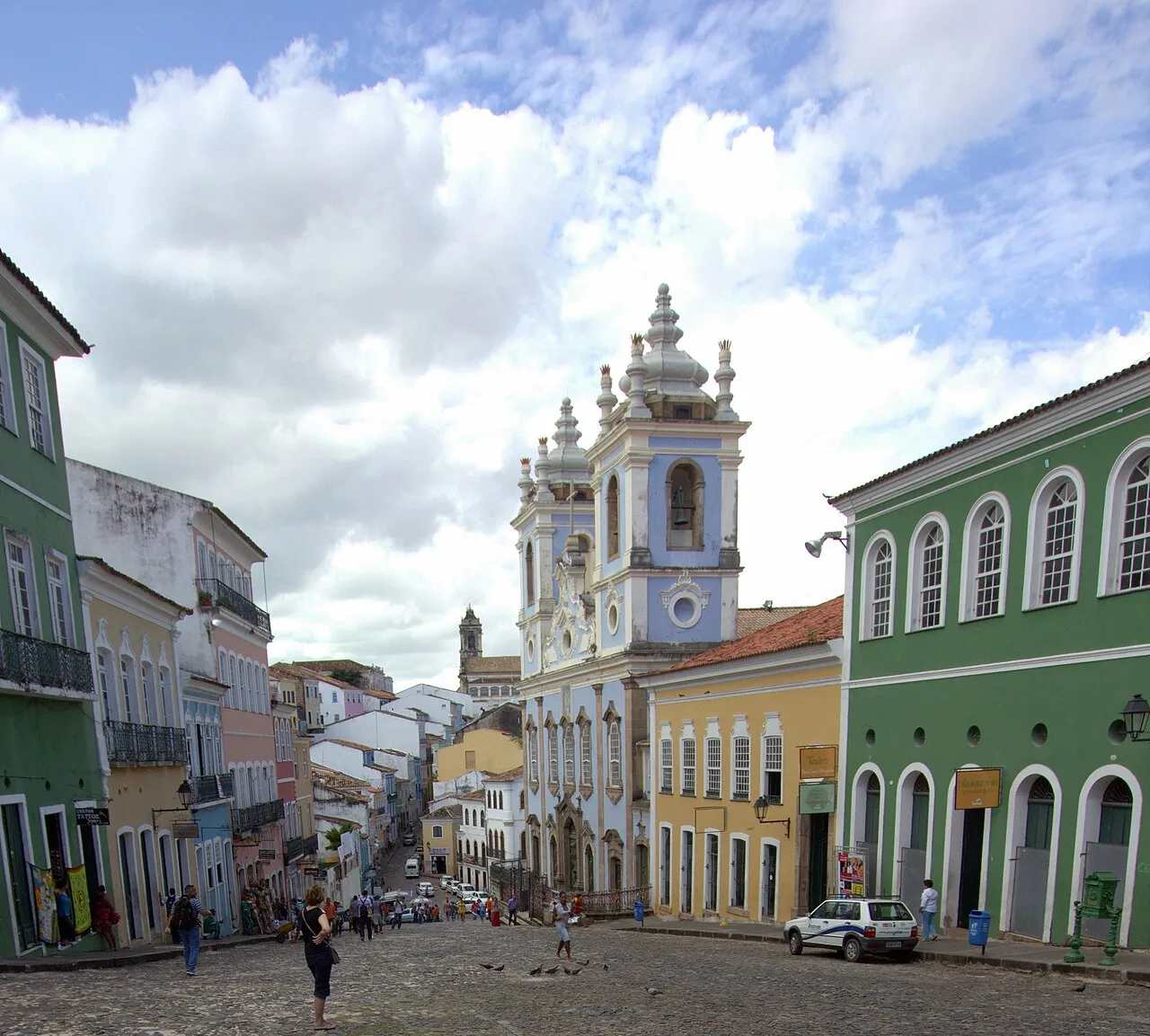 Salvador
Among the driest months, hot and bright. Peak beach season, and the run-up to Carnival.
- Morro de São PauloMorro de São Paulo
Hot, bright and well inside the dry season. Peak beach season, and the village is full.
- Porto Seguro & TrancosoPorto Seguro & Trancoso
The sunniest month of the year at both coastal stations, 241 and 251 hours, and among the drier ones at about 100 mm. It is also the fullest and the priciest: this is Brazilian summer.
-
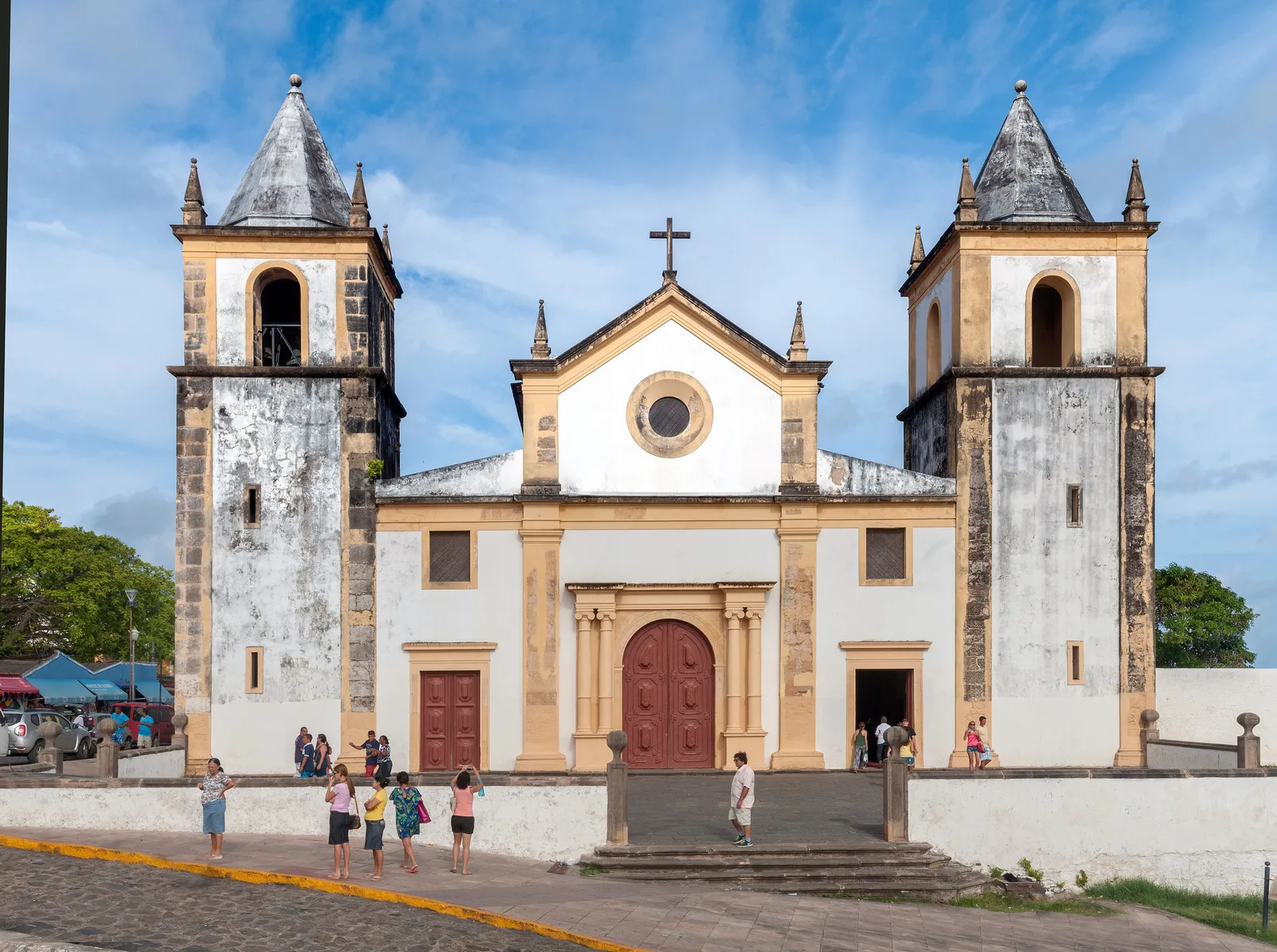 Recife and Olinda
Hot and mostly dry, with the whole city warming up for Carnival at weekend street previews. Peak-season prices.
- Porto de GalinhasPorto de Galinhas
Hot and mostly dry at 108 mm on eleven days, and the resort strip at peak-season prices.
- Maceió and MaragogiMaceió and Maragogi
Hot and dry, with rain on nine days and a calm sea. Peak summer prices.
- Natal & PipaNatal & Pipa
Hot and dry, 81 mm on seven rain days with 256 hours of sun. Brazilian summer holidays fill Ponta Negra and Pipa.
-
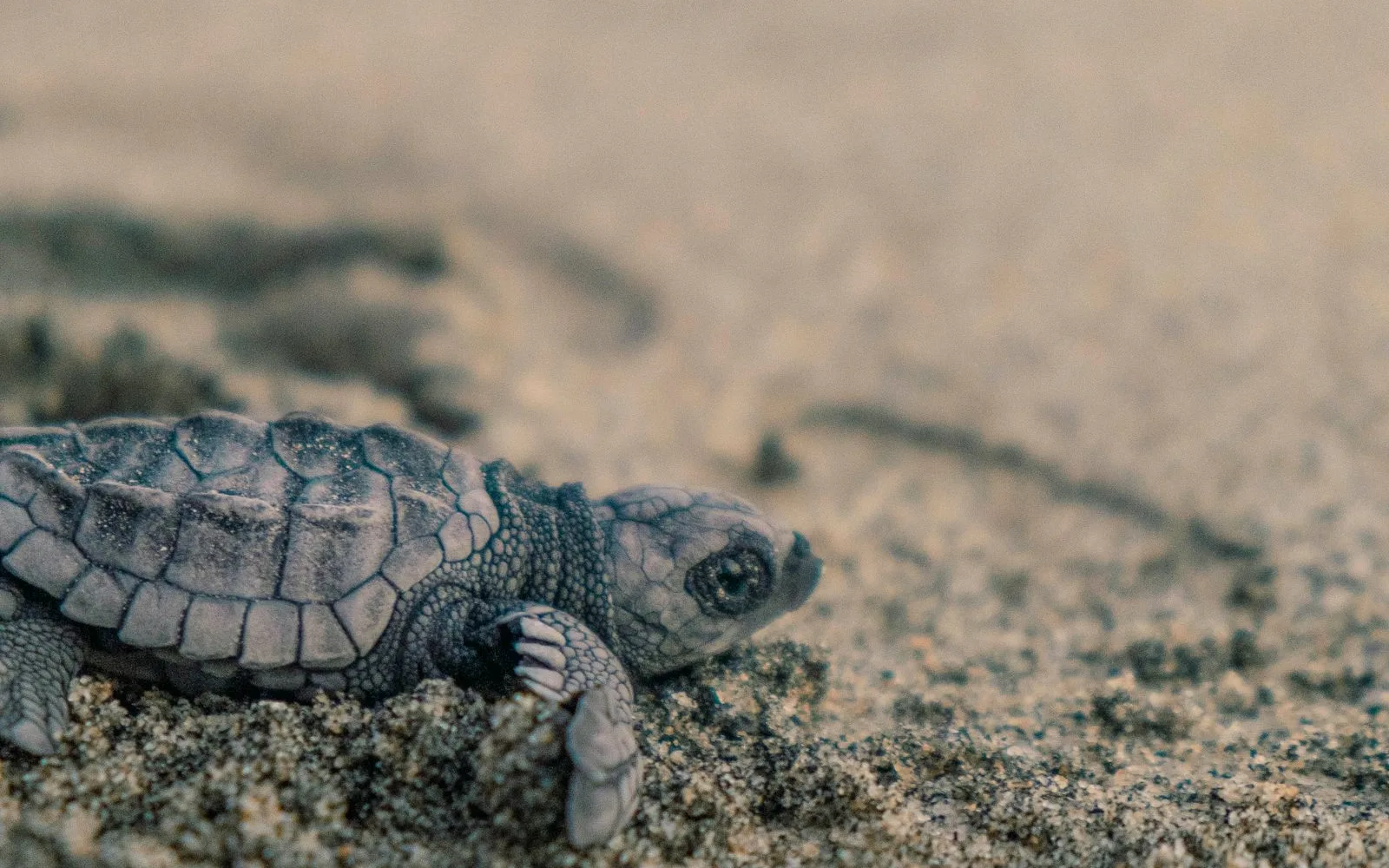 Praia do Forte and the Bahian coast
Hot, low rain, warm sea, and turtle hatchlings reaching the beach most evenings.
-
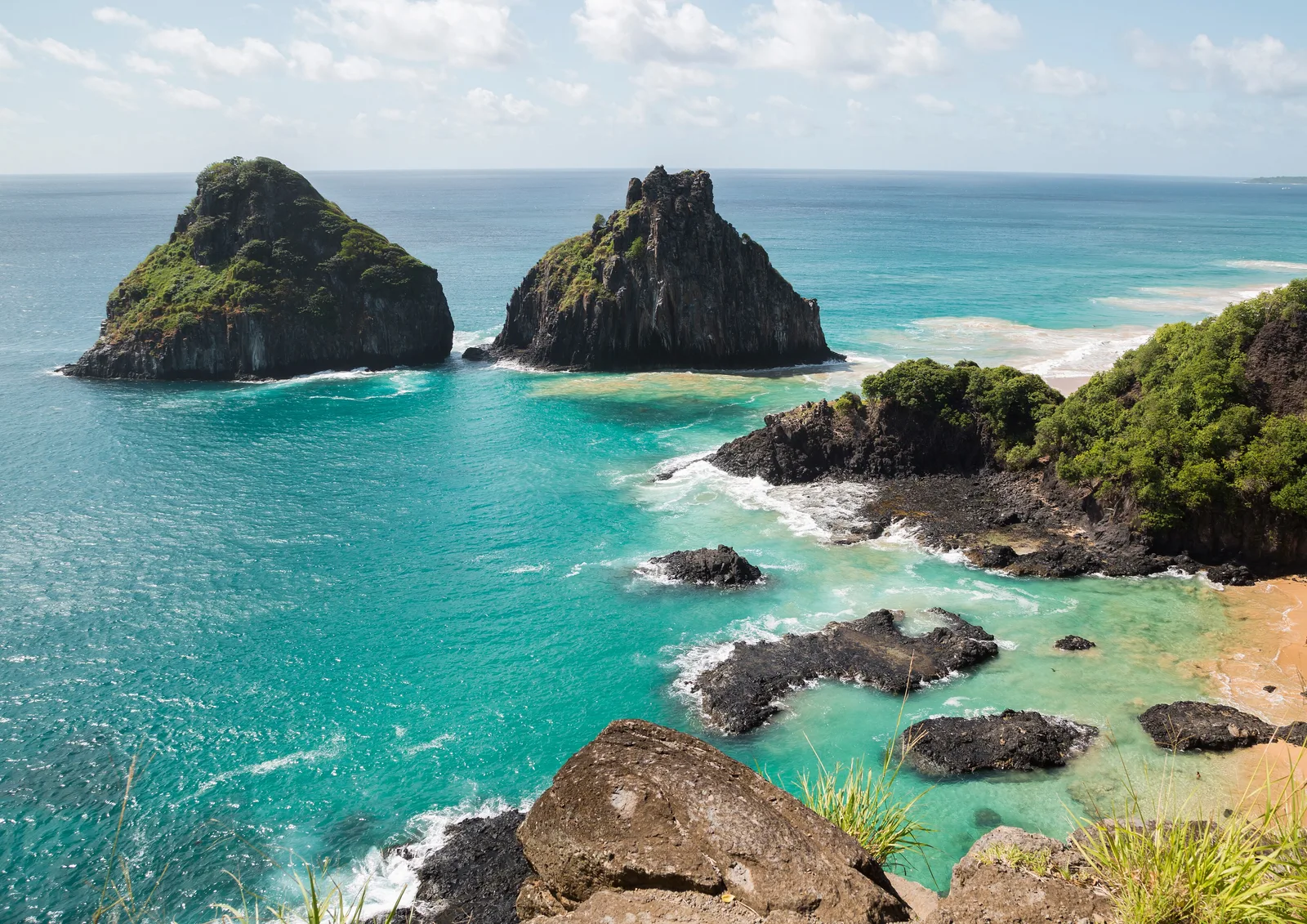 Fernando de Noronha
The tail of the dry season, hot, and the surf running. Busy over the holidays.
-
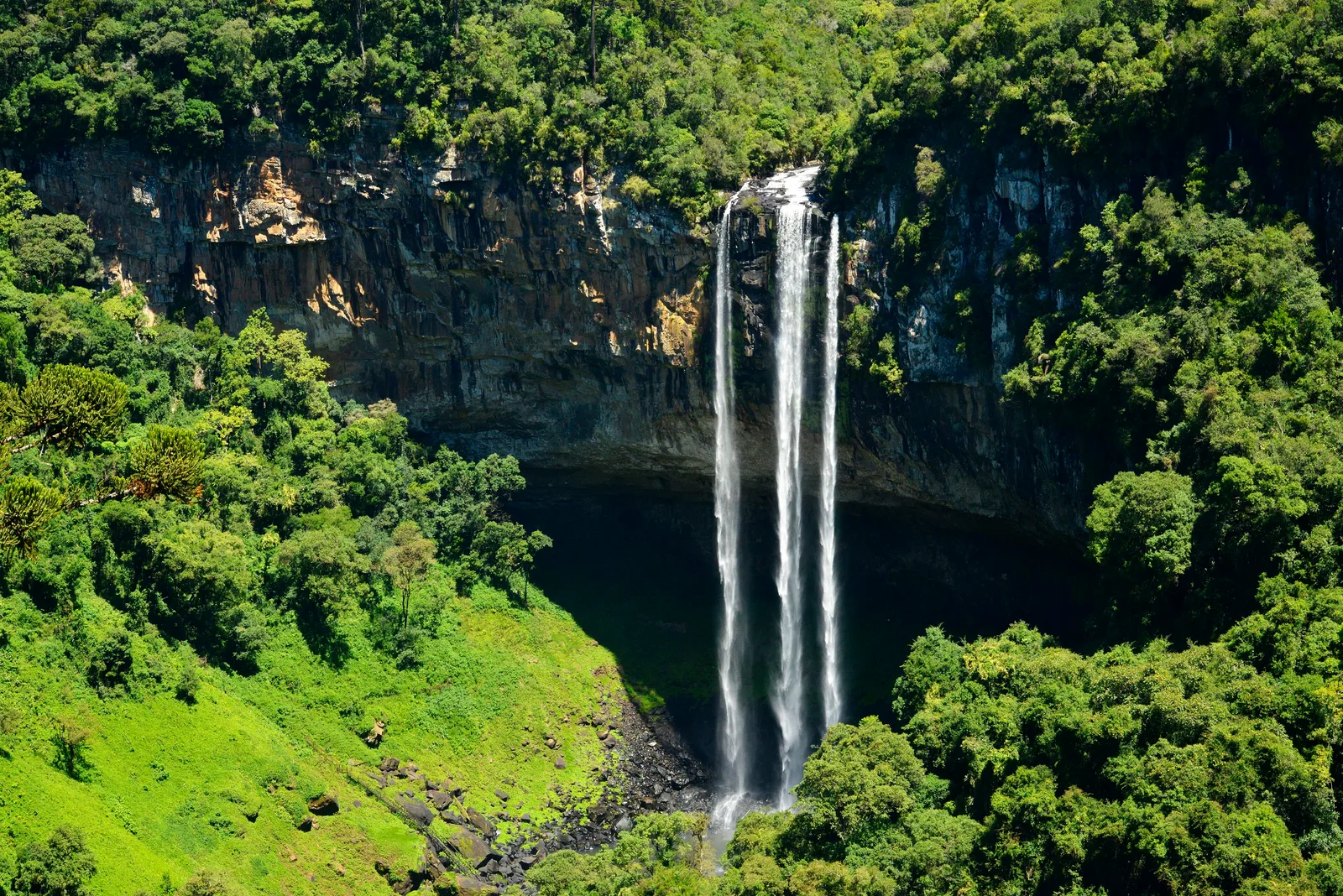 Gramado & Canela
Warm summer days at 26°C and little fog, but rain on about 13 days, the most of any month. Natal Luz runs in Gramado until 17 January 2027.
Trade-offs in January 22 places · Workable, with a catch
-
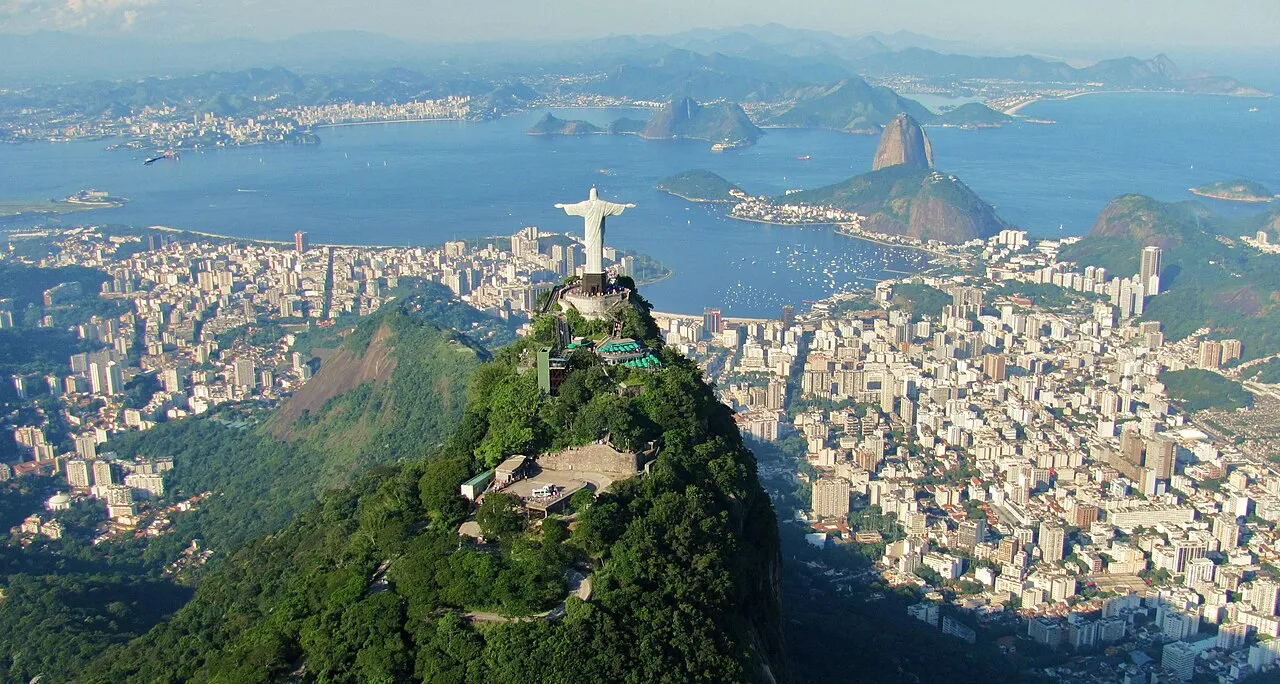 Rio de Janeiro
The wettest month of the year at 137 mm, and also the sunniest, at 212 hours of sun: the storms build in the afternoon rather than settling in. Peak prices, and the beaches at their fullest.
-
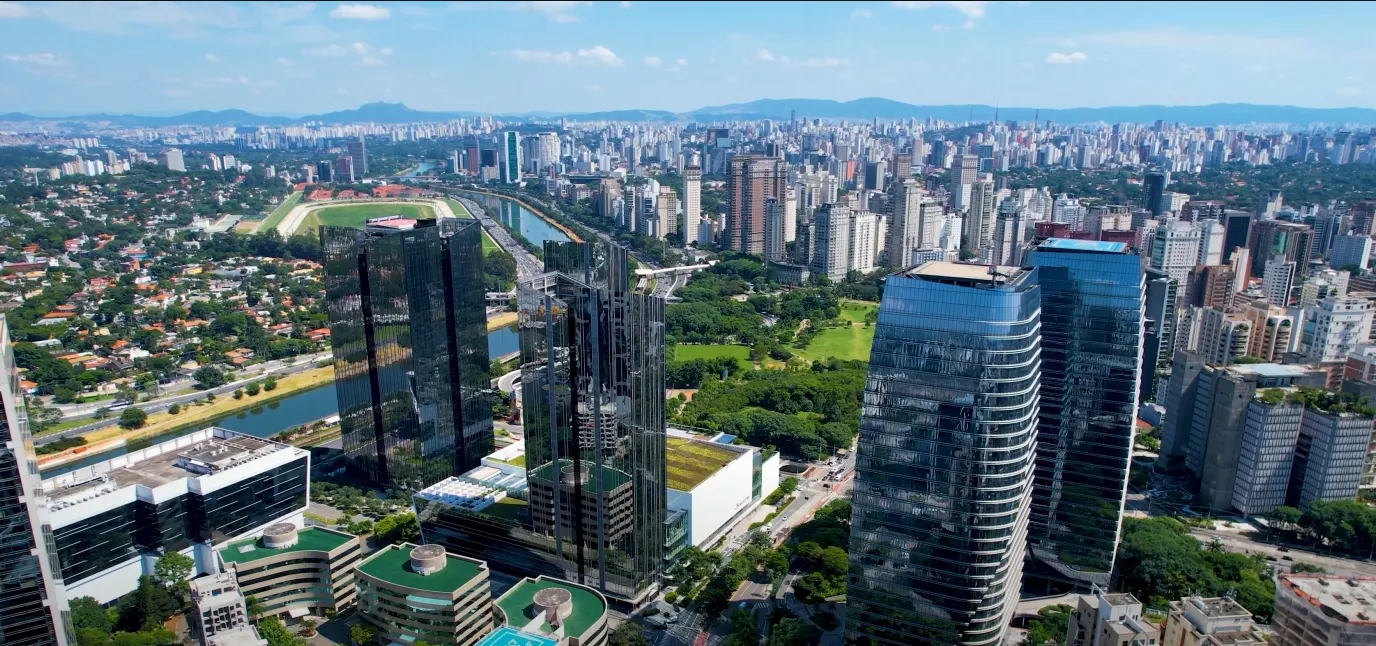 São Paulo
One of the two wettest months, with heavy afternoon storms. Fine for museums and restaurants, less so for walking.
-
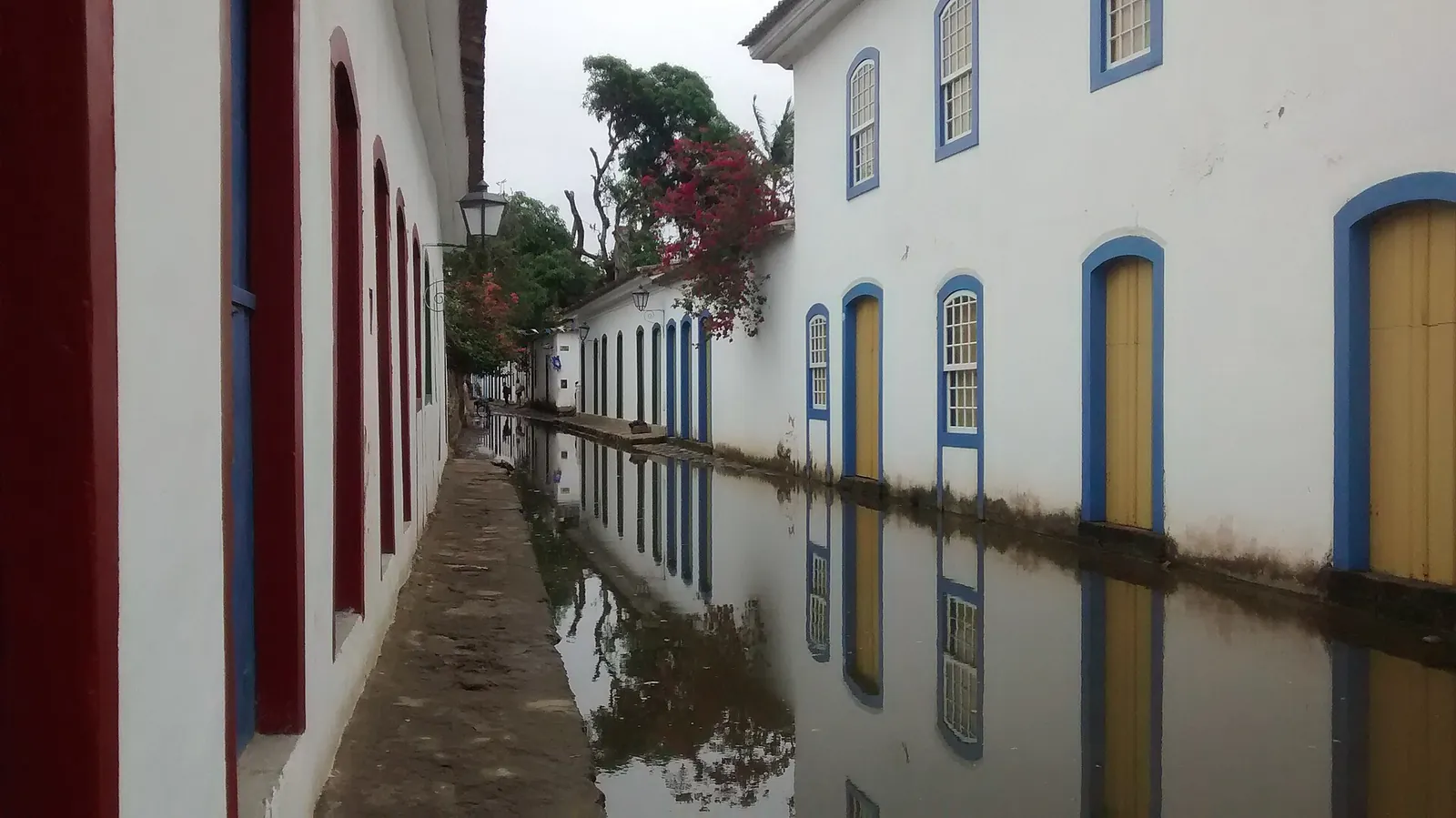 Paraty and the Costa Verde
One of the two wettest months of the year. Warm sea, cobbled streets that flood, and summer crowds.
-
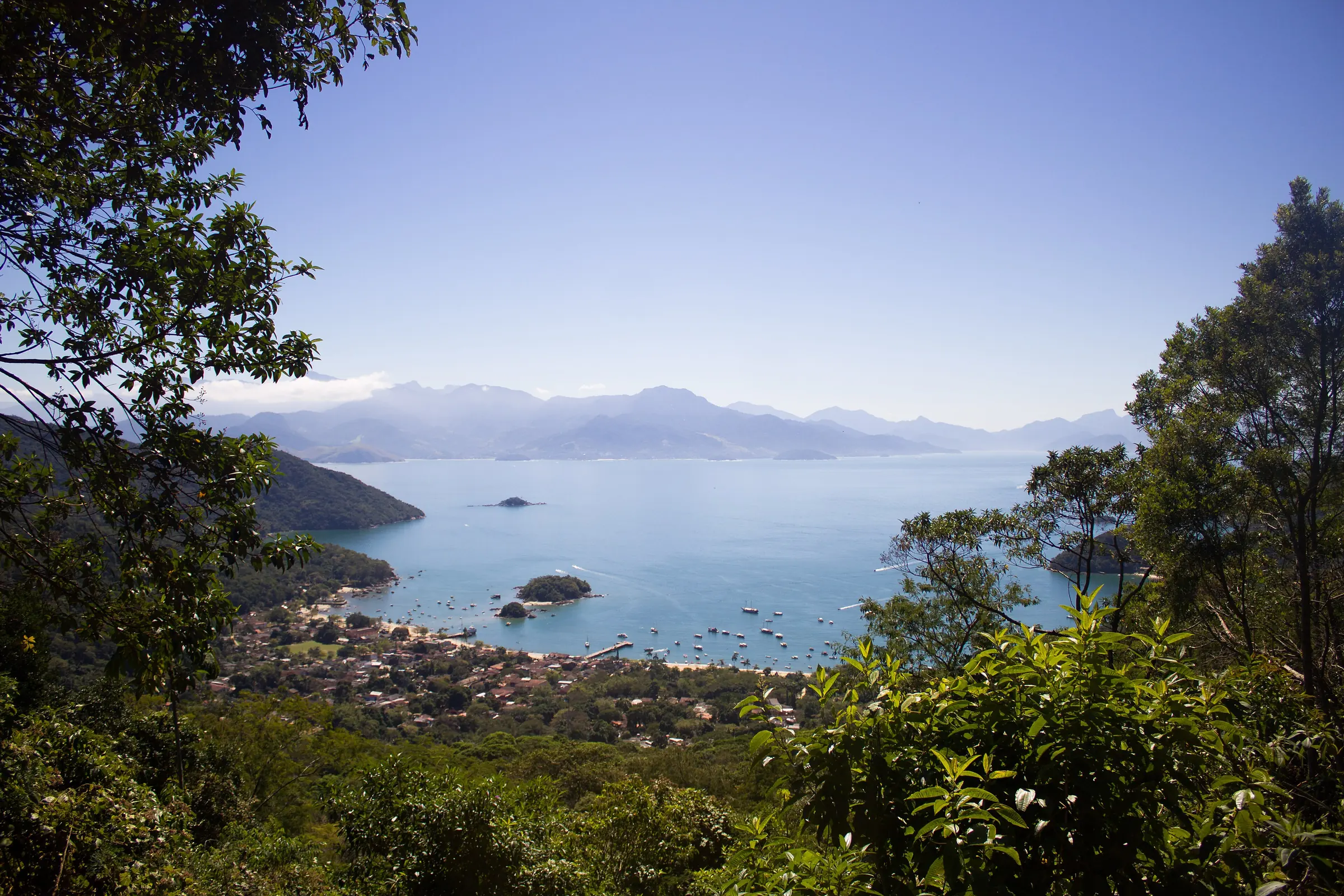 Ilha Grande
The second-wettest month, hot and humid, and the island at its most crowded after New Year's.
- Belo HorizonteBelo Horizonte
The wettest month at Brumadinho and a close second in the city, 331 mm on fifteen rain days, with highs of 28.7°C. A month for the city’s museums and restaurants rather than a day in the gardens.
-
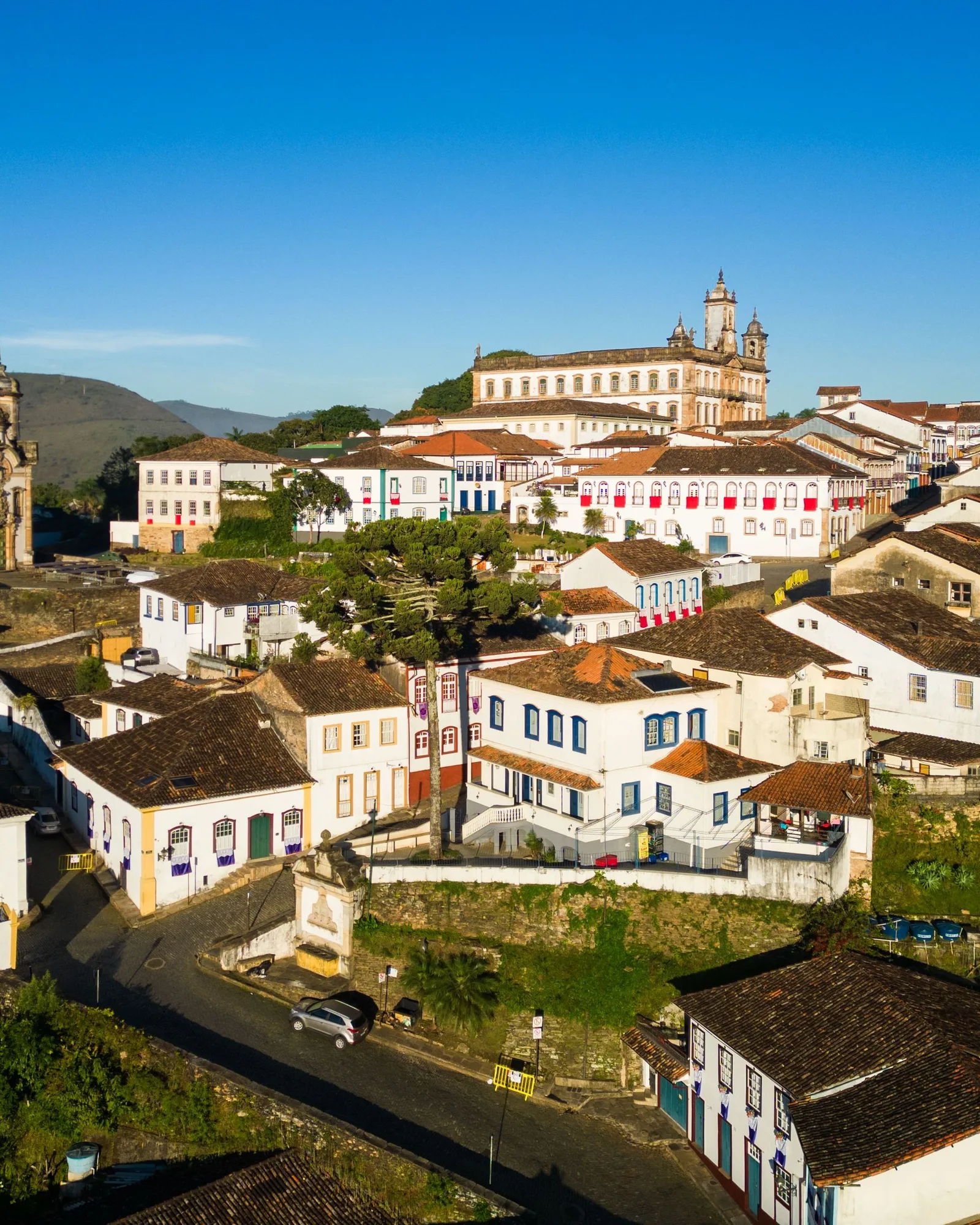 Ouro Preto
Hot and one of the wettest months. Afternoon storms most days.
-
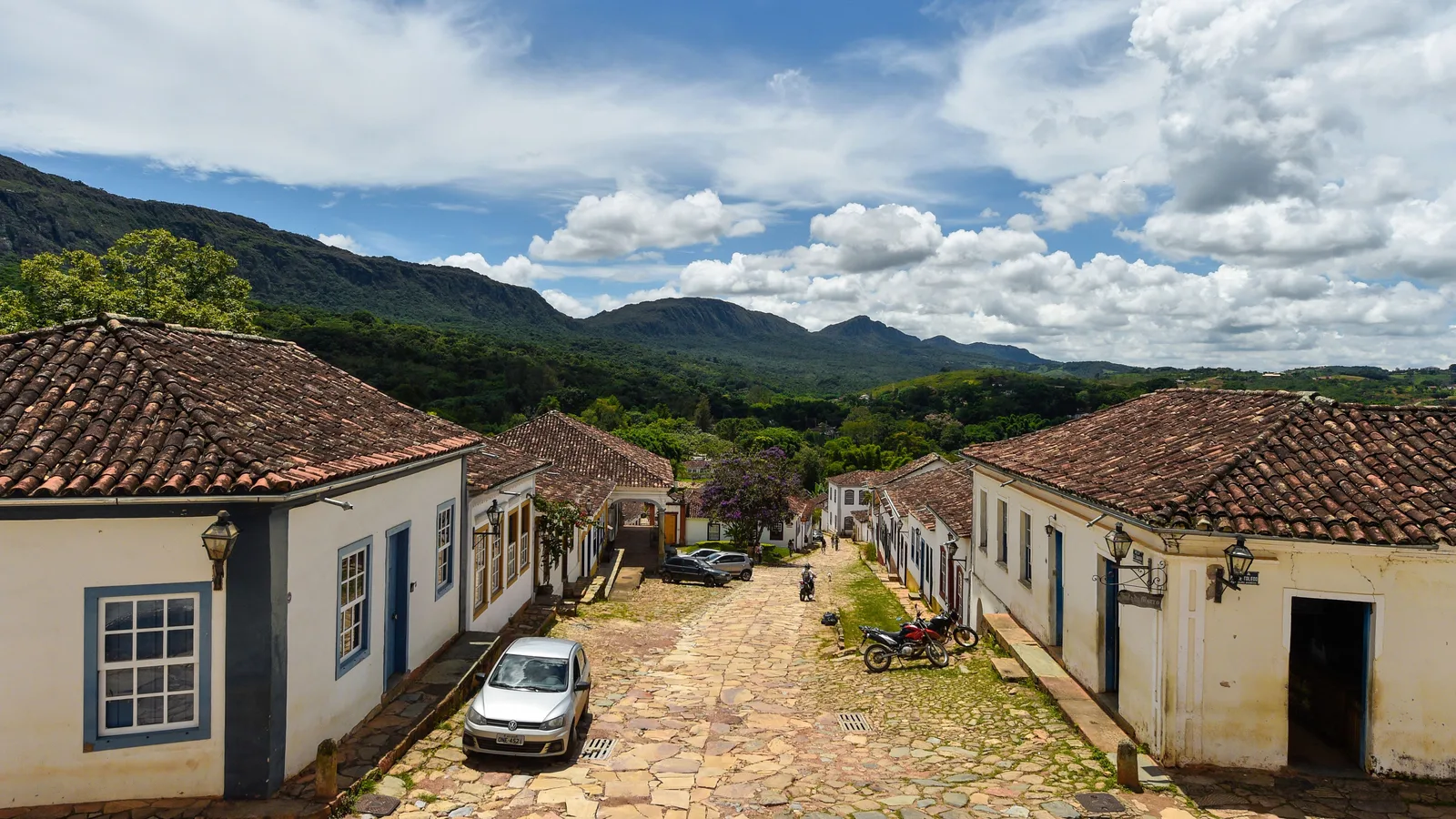 Tiradentes and São João del-Rei
Hot and one of the wettest months, with storms most afternoons. The Mostra de Cinema fills Tiradentes for nine days late in the month, and the whole program is free.
-
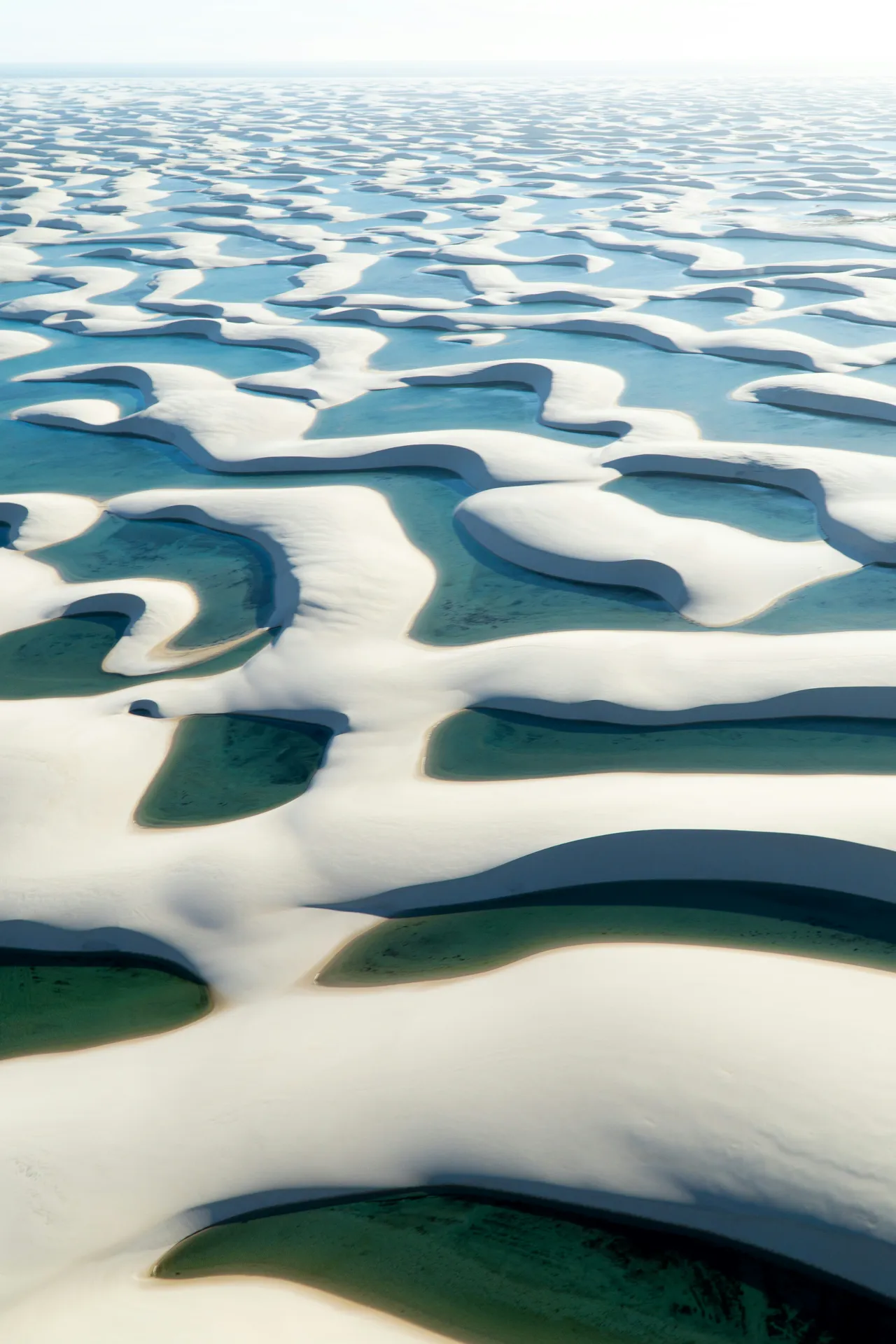 Lençóis Maranhenses
The rains start. Roads begin to deteriorate and the lagoons have barely begun to fill.
- Chapada das MesasChapada das Mesas
The wet season at full strength, 303 mm on seventeen rain days, the wettest month at Carolina on the 1991-2020 record. The rivers are rising toward their peak in March and April.
-
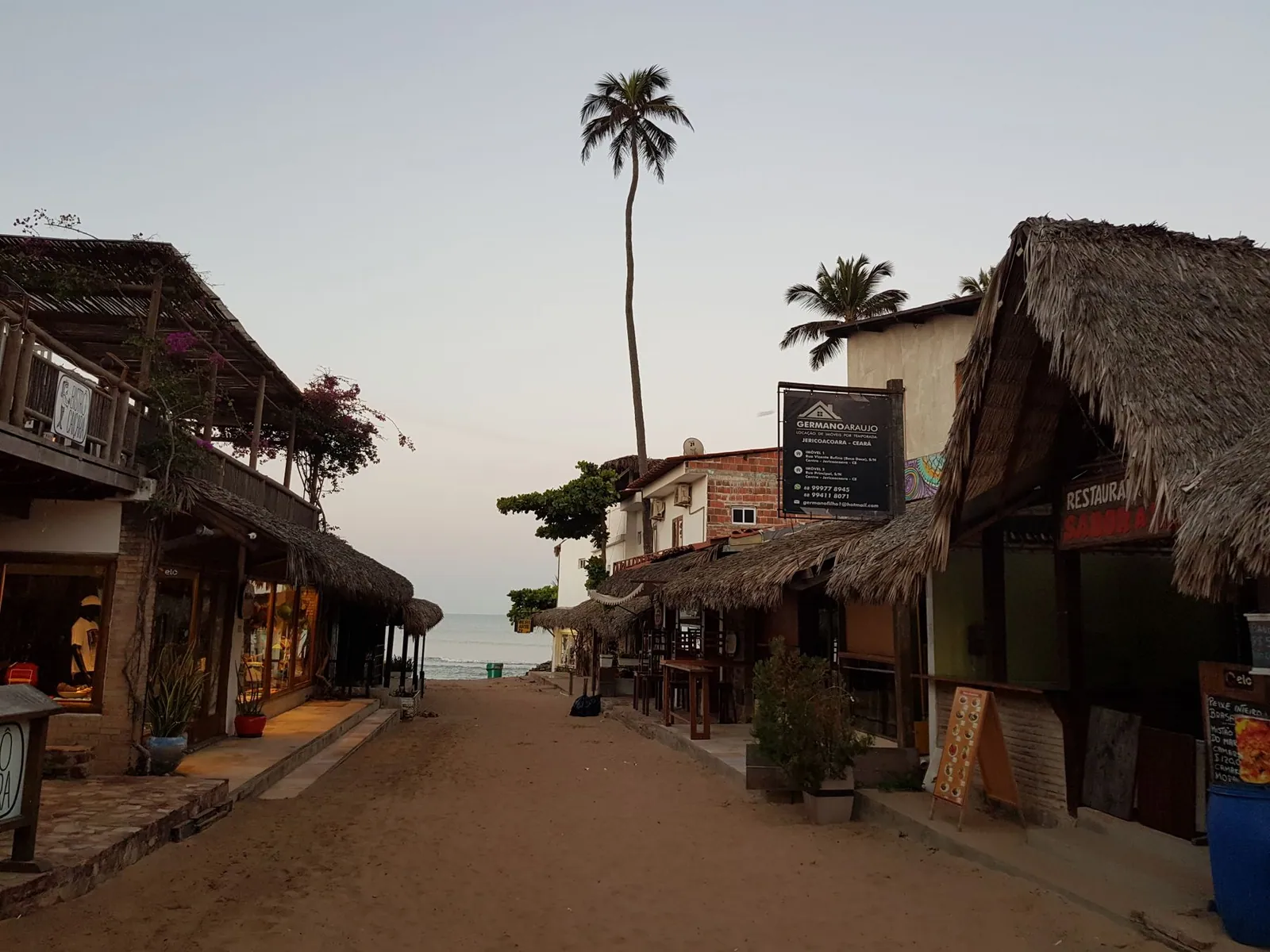 Jericoacoara
Rainy season starting, hot, wind fading.
- FortalezaFortaleza
The rains are arriving and the wind is fading. Hot, and busy with Brazilian summer holidays.
-
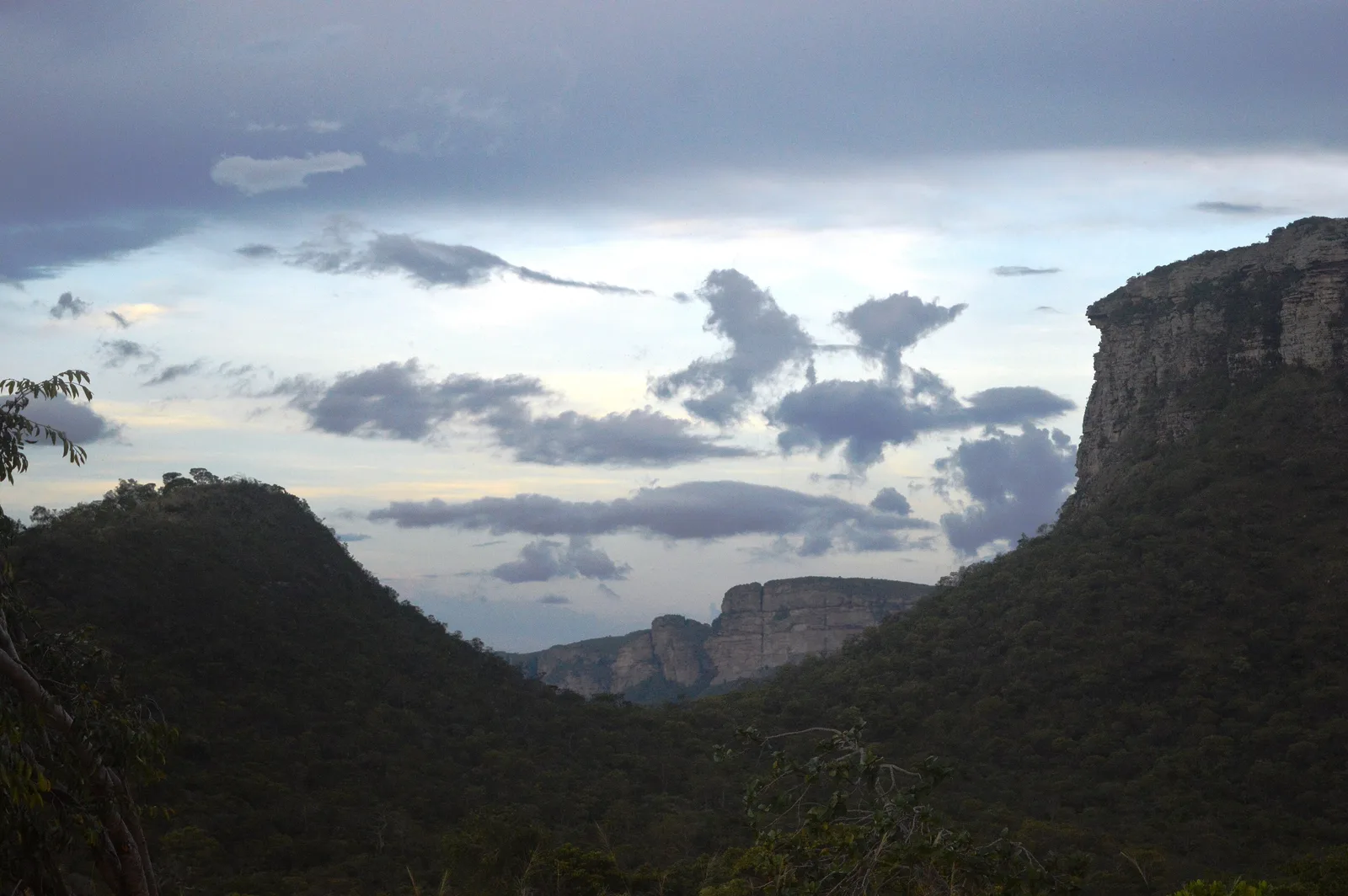 Chapada Diamantina
Deep in the rainy season. Waterfalls thunder; trails are muddy and some close.
-
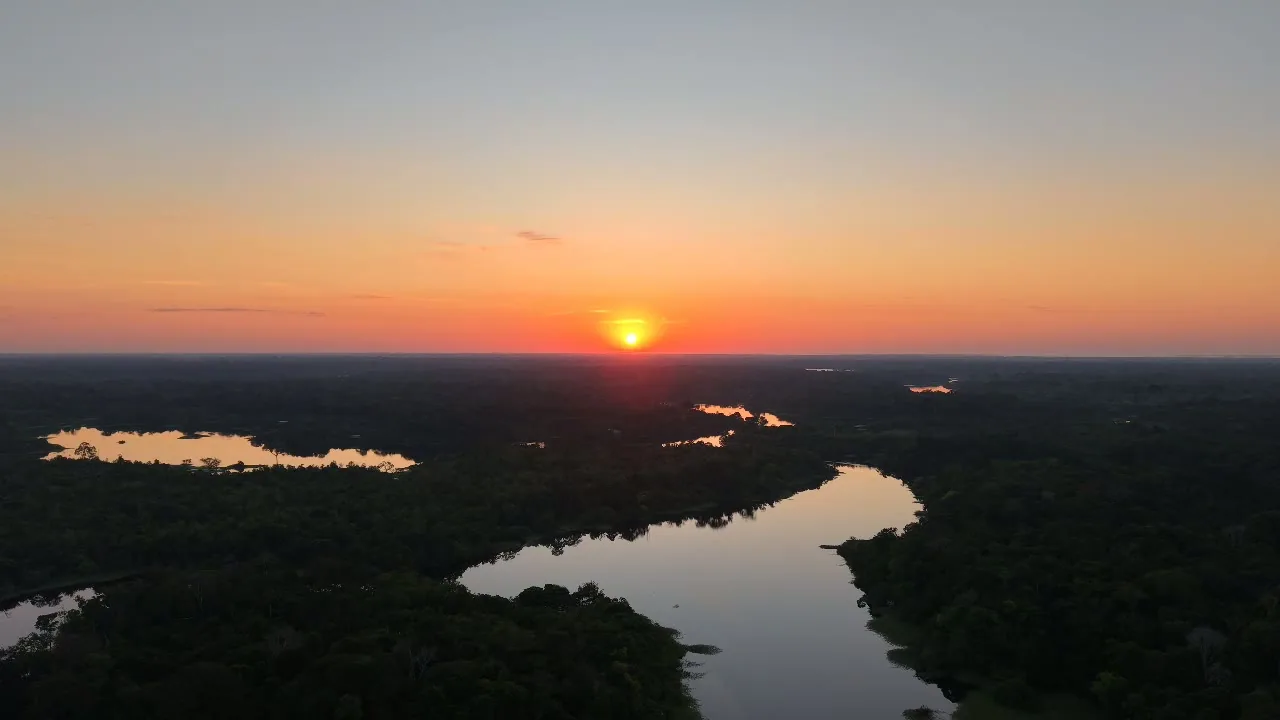 The Amazon and Manaus
The wet season at full strength and the river climbing fast. Green, dramatic and very quiet, but expect to get wet daily.
-
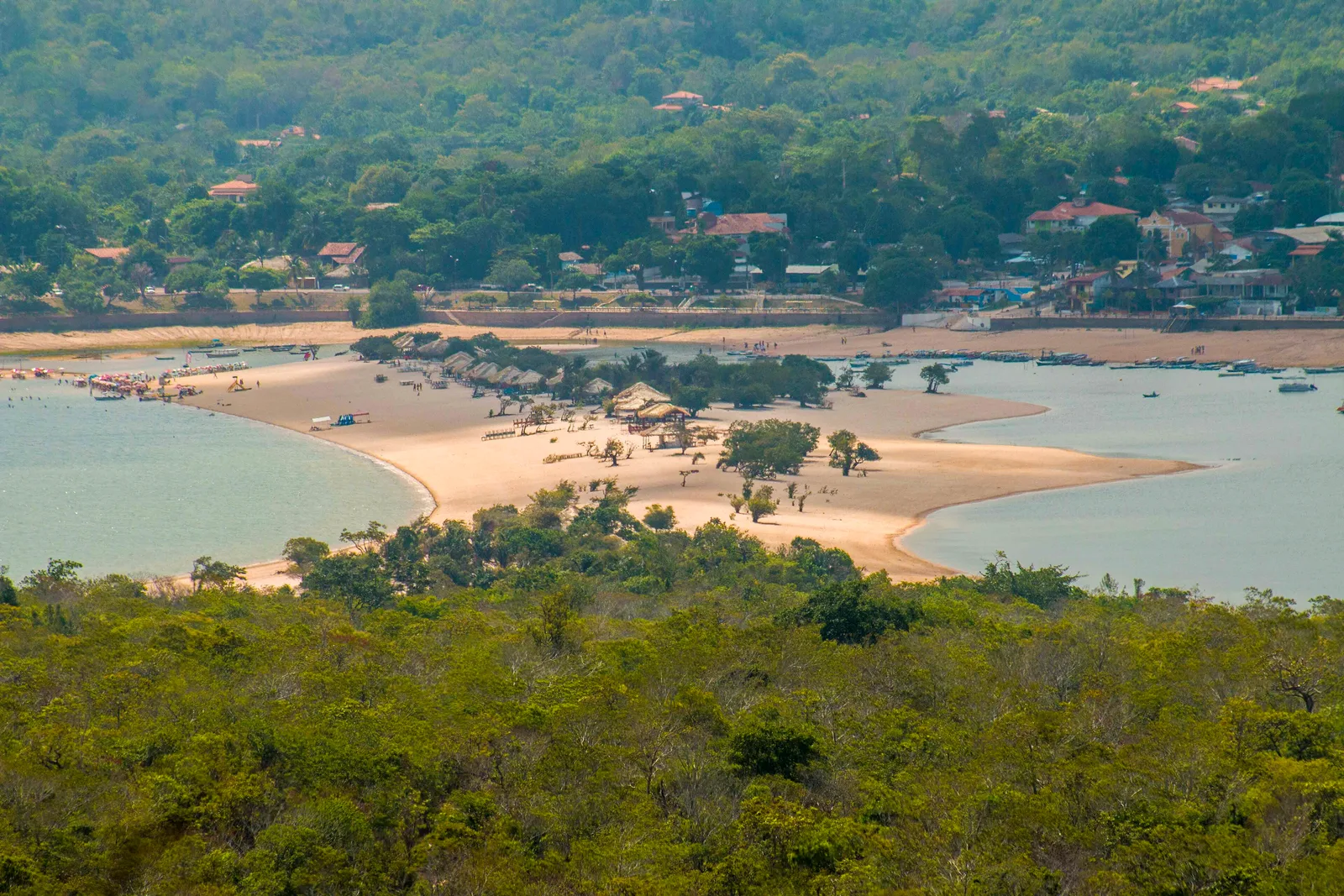 Alter do Chão and the Tapajós
The rains are back in force, 222 mm on fifteen days, and the river climbing more than a meter over the month.
-
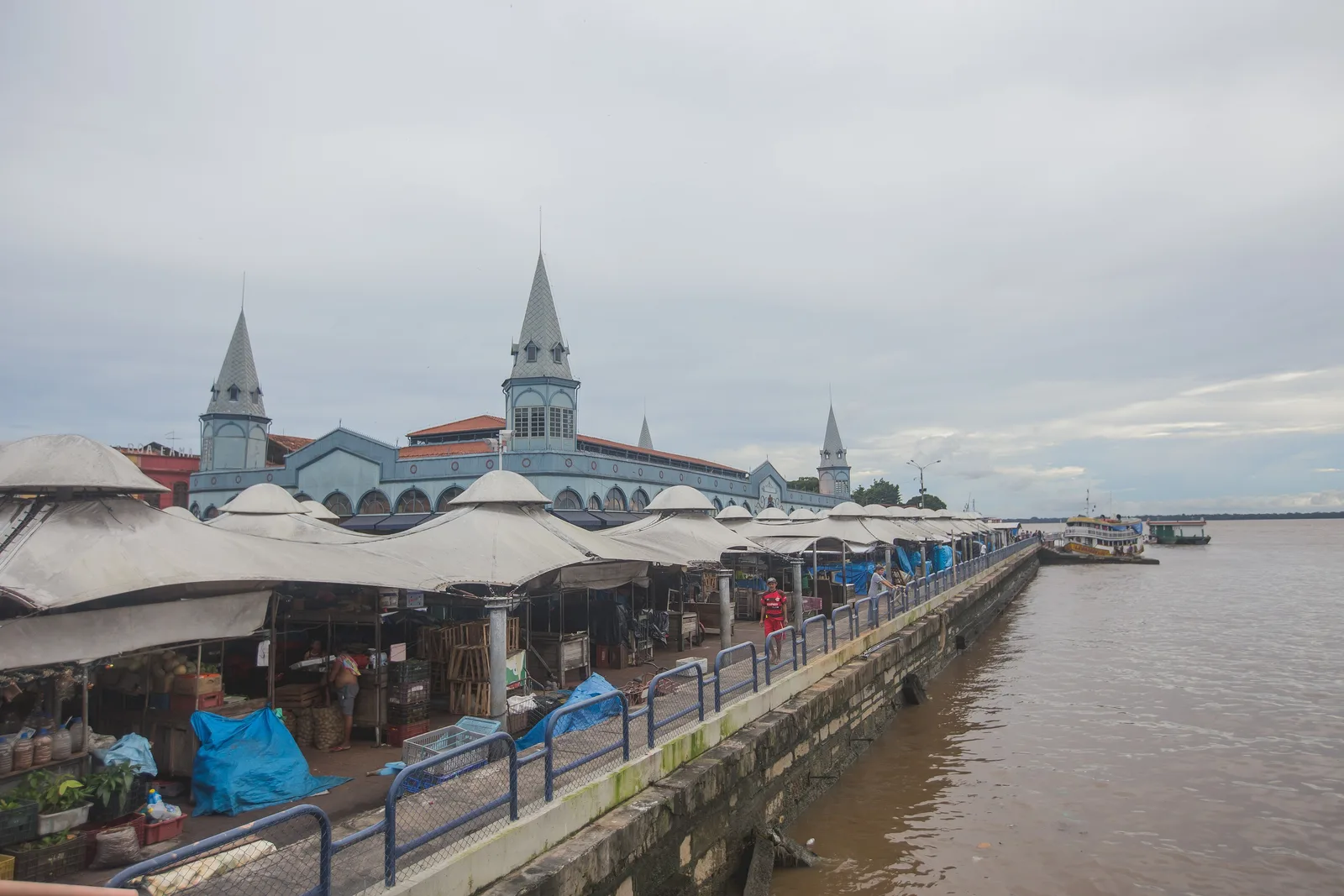 Belém
Deep in the wet season. Heavy rain most days.
-
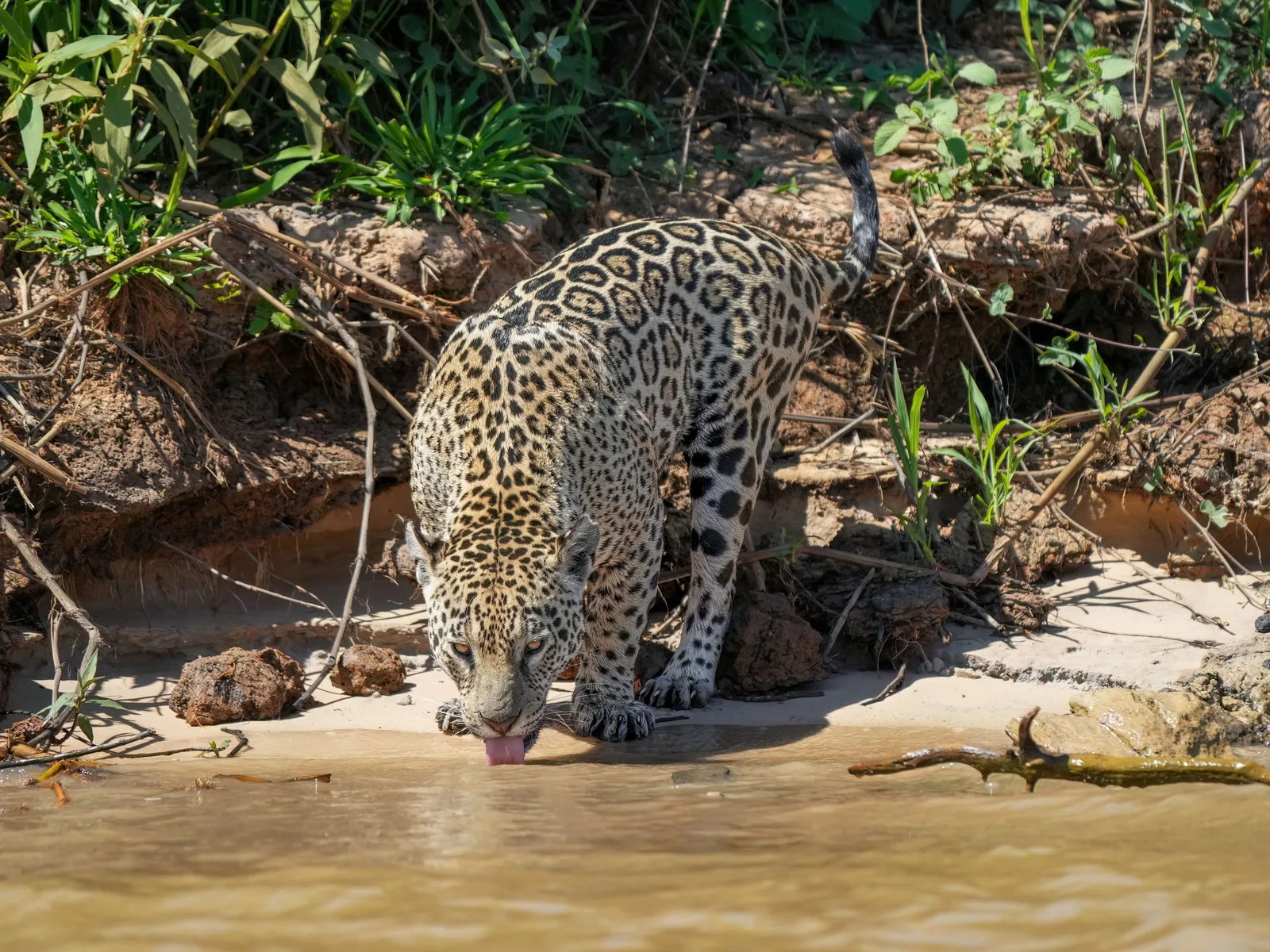 The Pantanal
The wettest month of the year, with rain on twelve to fourteen days. Roads flood and wildlife scatters across the plain.
-
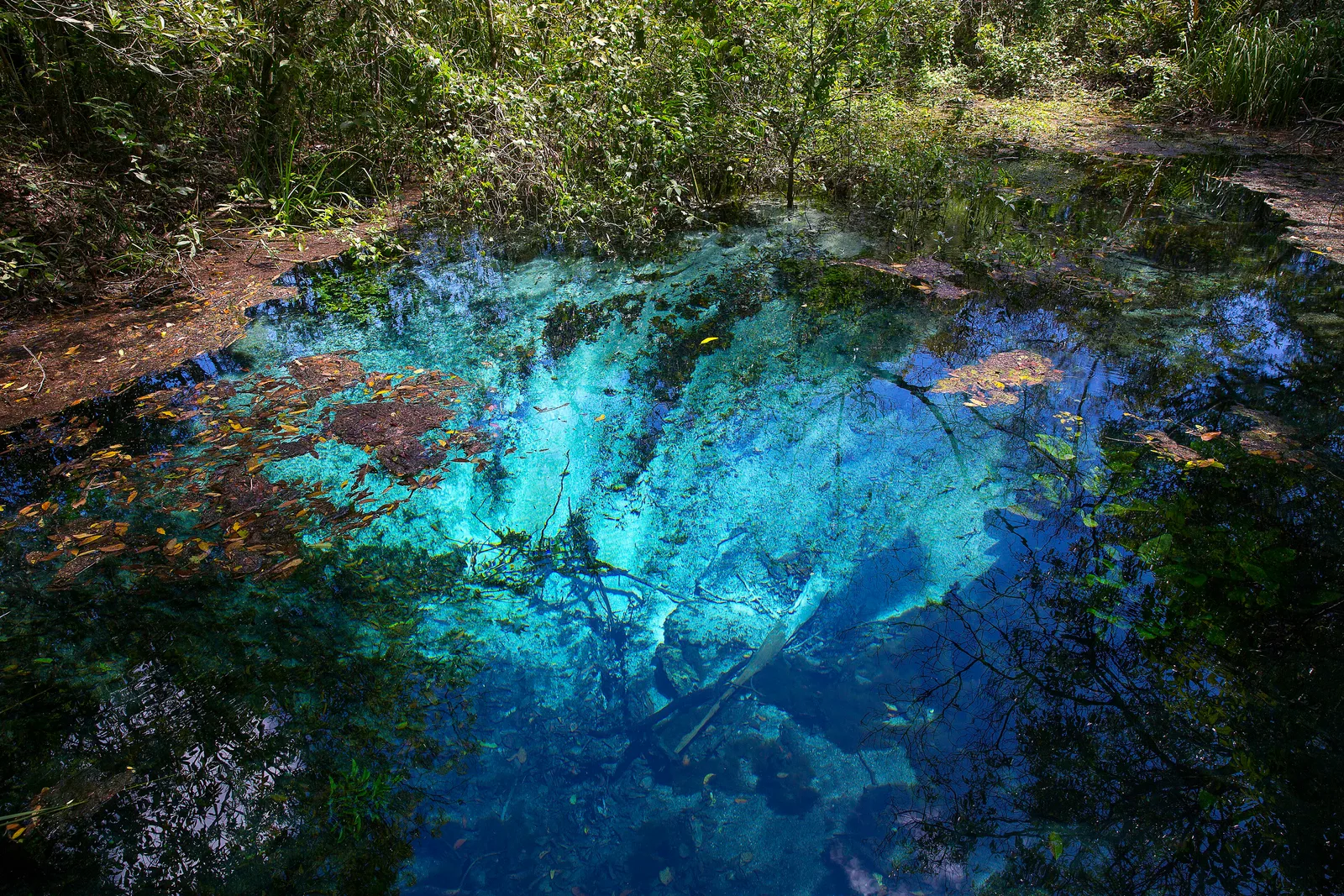 Bonito
One of the two wettest months at 230 mm, hot, and the rivers carrying run-off.
-
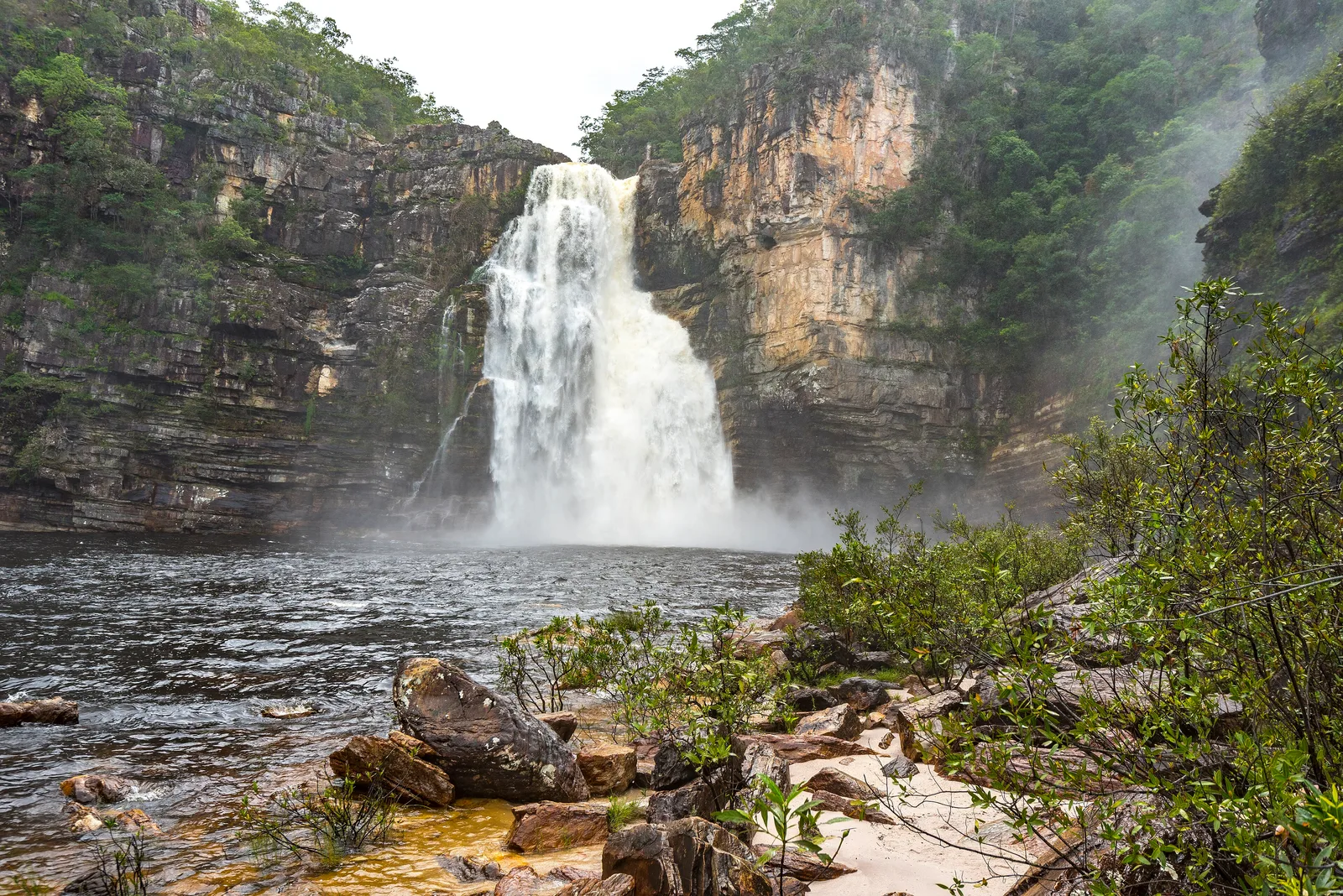 Chapada dos Veadeiros
Rain on about 16 days, 196 mm at Alto Paraíso, and the Rio Preto at its highest flow of the year, so the falls are at their fullest.
-
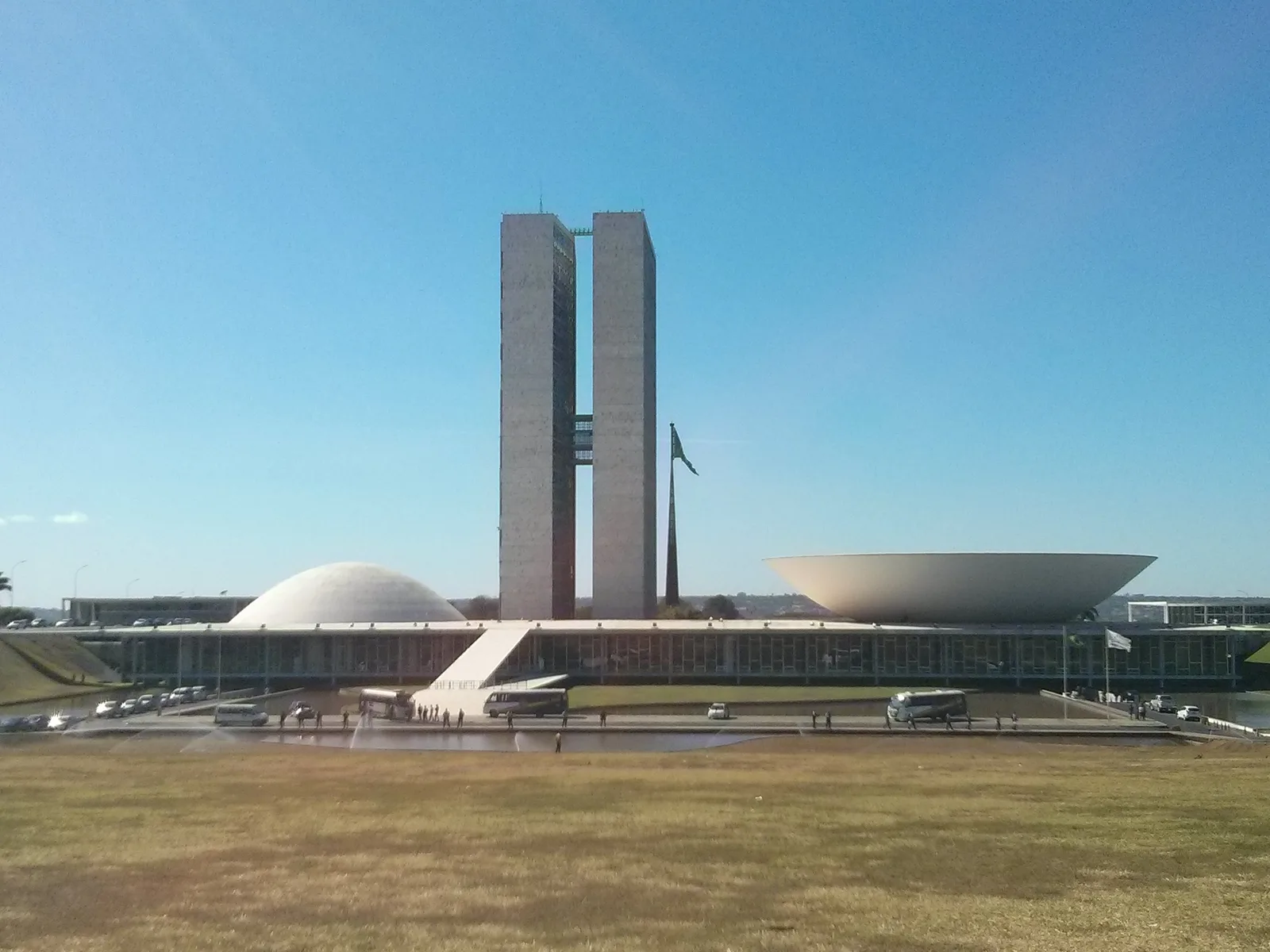 Brasília
The rainy season, 206 mm on 16 days.
-
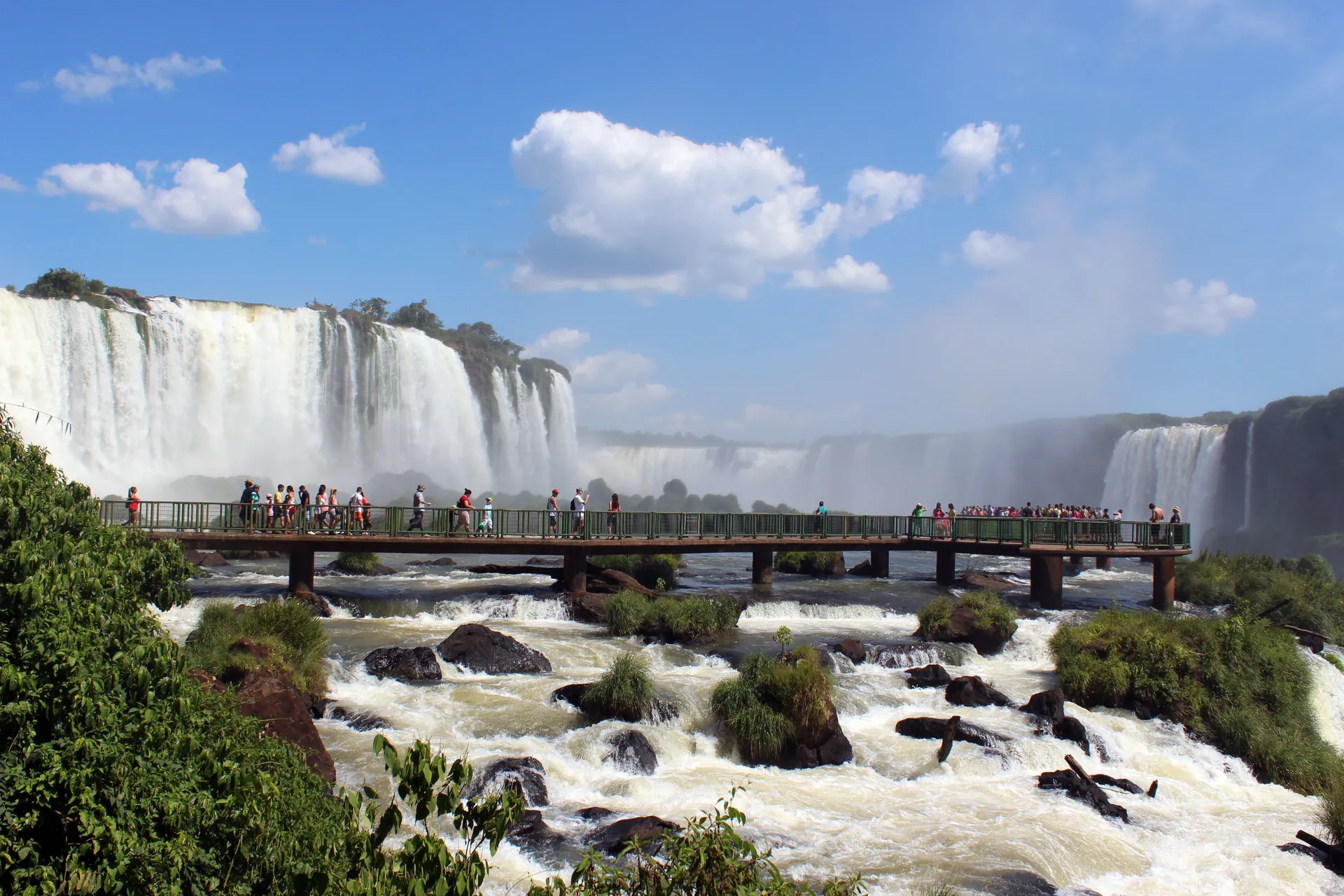 Foz do Iguaçu
Hot and humid, 196 mm on nine rain days, and the second-sunniest month of the year at 231 hours. This is high season despite the heat.
-
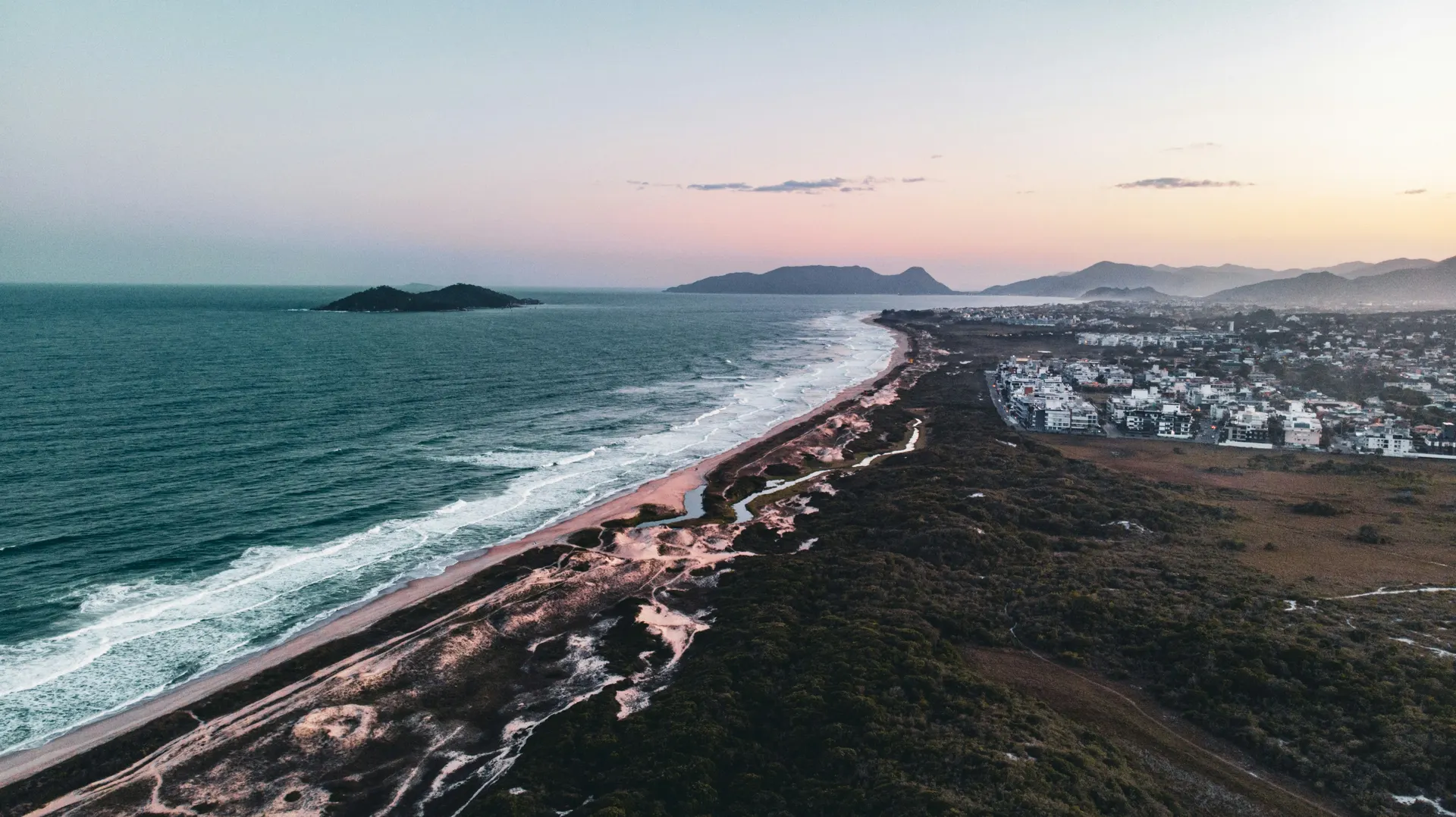 Florianópolis
The wettest month of the year at 241 mm: warm sea, afternoon thunderstorms, and the island full of Argentines and Paulistas at peak prices.
-
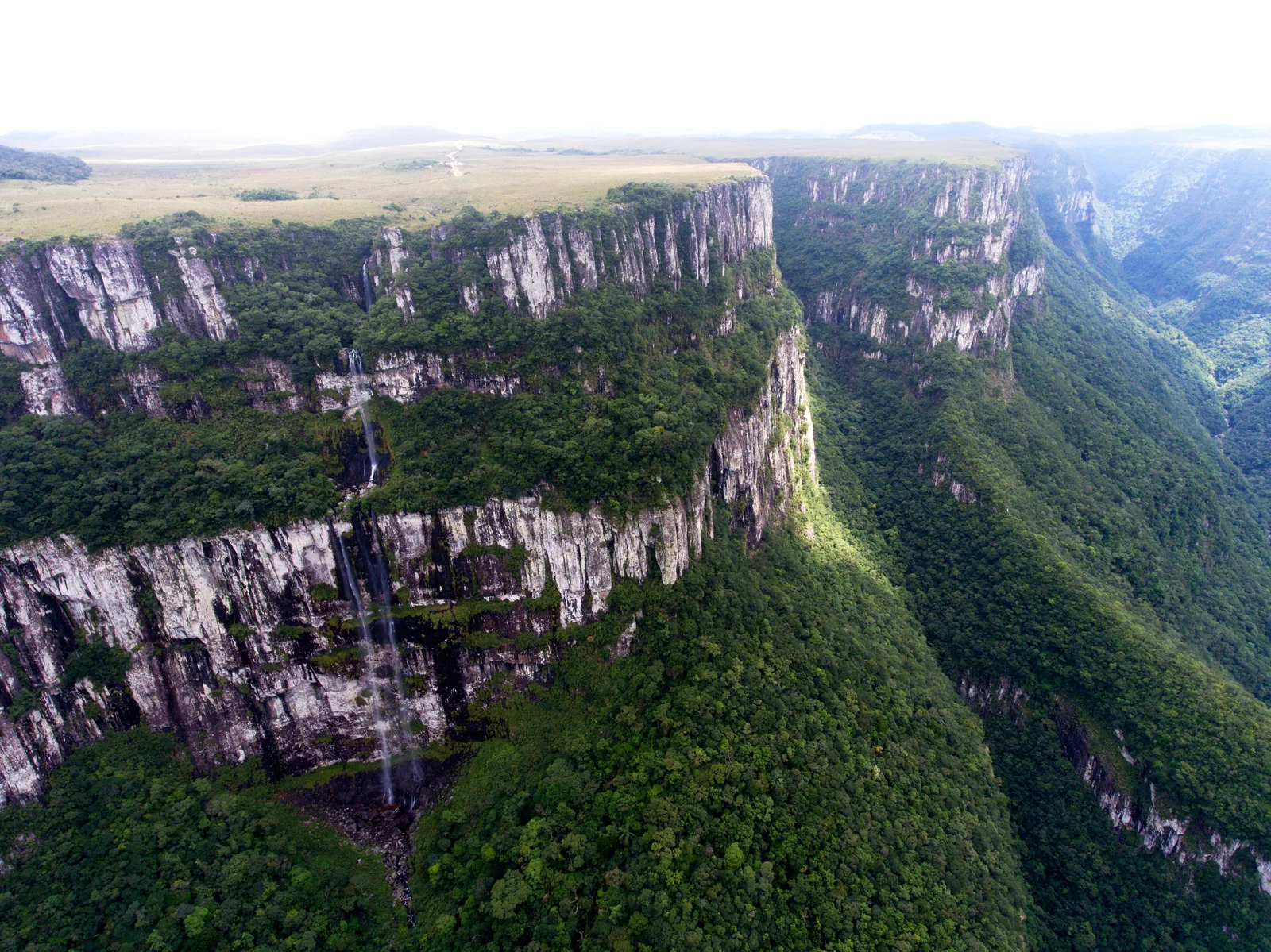 Aparados da Serra canyons
Warm at 25°C, but the wettest stretch of summer, with rain on 13 to 15 days, and only about 14 clear days at the Cambará station, the fewest of any month.
Brazilian calendar Public holidays and school breaks in Brazil in January
- Confraternização Universal January 1 New Year's Day, and the one date the whole country is certainly off
- Summer school holidays Schools are out; most restart between late January and early February Dates vary by state, by network and by school. Coastal prices are at their peak all month.
Itineraries that work in January
Routes we have already worked out that are in season this month. Follow them as they are, borrow the bones for your own plan, or ask us to handle the whole thing.
- Roots of Bahia
Ilhéus to Salvador along the cacao coast, with the people who make it.
Brazil in
February
Carnival month. Rio, Salvador and Recife are the reason to come and the reason to book a year out. Elsewhere the Amazon's high water begins and the Northeast coast is still dry.
Festivals and holidays 2 in February
-
Carnival
5 to 10 February 2027
Rio's Sambadrome parades run 7 to 9 February. Salvador's is a street party with no stadium and runs a day longer, Thursday 4 to Wednesday 10. Recife's Galo da Madrugada, the largest parade block on earth, goes out on Saturday 6 February, and Olinda's giant puppets meet on the Tuesday. Book close to a year out and expect double prices.
Rio de Janeiro · Salvador · Recife and Olinda
Learn more about Carnival -
Festa de Iemanjá
2 February
Offerings to the sea goddess carried into the water at Rio Vermelho, Salvador. The city calls it the largest Afro-Brazilian religious celebration in Bahia; local fishermen began it in 1923, and it has been listed as intangible heritage of the city since 2020.
Best in February 5 places · The one or two peak months
- Southeast Rio de Janeiro
Go now for Carnival Hot, wet and expensive, and on weather alone a trade-off month. It's a Go now for one reason: Carnival, the biggest party on earth. Book close to a year out.
- Southeast Búzios & Arraial do Cabo The peak. The sunniest month of the year at 237 hours and the hottest at 32.2°C, on 61 mm across six rain days, which is dry for high summer here. The sea is in its warm half and Carnival falls in it.Búzios & Arraial do Cabo
- Northeast Salvador
Go now for Carnival On weather alone a good month, hot and fairly dry. Carnival makes it a Go now: the biggest street party in the country, with no stadium and no tickets.
- Northeast Porto Seguro & Trancoso The driest month at Porto Seguro’s own station, about 75 mm on nine rain days, the fewest of the year, and as hot as the year gets at 31°C, with the sea near its warmest at about 27°C. Carnival falls in February in most years, so Porto Seguro is loud, Trancoso is expensive, and both are booked.Porto Seguro & Trancoso
- Northeast Recife and Olinda
Go now for Carnival Hot, humid and fully booked, and on weather alone merely good. Go now for Carnival: the Galo da Madrugada in Recife, Olinda's giant puppets on the hill, and frevo everywhere.
Good in February 8 places · A real recommendation
- Morro de São PauloMorro de São Paulo
Hot and fairly dry. Carnival empties the island toward Salvador and fills it again straight after.
- Porto de GalinhasPorto de Galinhas
Hot and still dry. The town empties toward Recife and Olinda for Carnival and fills again straight after.
- Maceió and MaragogiMaceió and Maragogi
The second-fewest rainy days of any month, seven, and hot. Carnival pulls the crowds north to Recife and Olinda and south to Salvador.
- Natal & PipaNatal & Pipa
Still in the dry half of the year, 100 mm on eight rain days, and the last easy month before the rains.
- Praia do Forte and the Bahian coast
Hot with some showers. Hatchlings most evenings at the TAMAR project.
- The Amazon and Manaus
High water begins, and the rain is still heavy at 297 mm. Quiet on the river, and green.
- Florianópolis
Summer continues. Warm, showery, and the beaches busy.
- Gramado & Canela
Still warm at 26°C, the least fog of the year at the Canela station, and rain on 11 to 12 days.
Trade-offs in February 20 places · Workable, with a catch
- São Paulo
Hottest days of the year and still very wet.
- Paraty and the Costa Verde
Still very wet and hot. Warm water for swimming, and Carnival in the old town.
- Ilha Grande
The hottest month. Rainy, busy, and Carnival often falls here.
- Belo HorizonteBelo Horizonte
About half January’s rain, 178 mm on ten days, and the hottest afternoons of the year in the city at 29.1°C. Still the wet season.
- Ouro Preto
Still hot and wet, though a little less so.
- Tiradentes and São João del-Rei
Still hot and wet, though a little less so.
- Lençóis Maranhenses
Rainy season. Lagoons filling but far from full.
- Chapada das MesasChapada das Mesas
Still fully wet, 289 mm on seventeen rain days, and the waterfalls filling fast.
- Jericoacoara
Rain increasing.
- FortalezaFortaleza
Rainy season, and among the least sunny months of the year.
- Chapada Diamantina
Rainy, but usually in short bursts rather than all-day rain.
- Fernando de Noronha
The rainy season begins.
- Alter do Chão and the Tapajós
Heavy rain, 252 mm on seventeen days, and the river still rising by more than a meter a month.
- Belém
Among the wettest months.
- The Pantanal
Still fully wet. Birdlife and spectacular skies, but few mammals visible from roads or boats.
- Bonito
Hot and rainy, water clarity still reduced.
- Chapada dos Veadeiros
Still the rainy season, 185 mm on about 14 days, with the falls running close to their January peak.
- Brasília
Still the rainy season, 180 mm on 14 days.
- Foz do Iguaçu
Still hot and rainy at 180 mm, and humid.
- Aparados da Serra canyons
Tied for the wettest month at Cambará, 192 mm, but the fewest foggy days of the year: cloud sat on the plateau station on only about 5 days.
Brazilian calendar Public holidays and school breaks in Brazil in February
- Carnaval Monday and Tuesday, moving with Easter: February most years, early March in some A federal ponto facultativo rather than a national holiday, but the country stops anyway. Ash Wednesday is a half day on top. Rio, Salvador and Recife sell out close to a year ahead and roughly double their prices.
- Quarta-feira de Cinzas Ash Wednesday, moving with Easter A federal ponto facultativo until 2 p.m. Much of the country works a half day; the Carnival cities sleep.
- School year begins Classes restart between late January and early February in most states Weekday beaches empty out from then until Carnival.
Itineraries that work in February
Routes we have already worked out that are in season this month. Follow them as they are, borrow the bones for your own plan, or ask us to handle the whole thing.
- Roots of Bahia
Ilhéus to Salvador along the cacao coast, with the people who make it.
Brazil in
March
The end of summer. Rain is still heavy on the southeast coast, but crowds and prices fall after Carnival. The Serra Gaúcha harvest and Ouro Preto's Holy Week are the draws.
Festivals and holidays 1 in March
-
Semana Santa (Holy Week)
21 to 28 March 2027
Ouro Preto is famous nationally for its processions and the painted sawdust carpets laid on the streets.
Best in March 1 places · The one or two peak months
Good in March 17 places · A real recommendation
- Rio de Janeiro
The second-wettest month by volume, but with rain on only eight days and the warmest sea of the year at 26.5°C. Crowds thin and prices ease after Carnival.
- São Paulo
Rain easing, temperatures easing. A workable month.
- Ilha Grande
A local favorite: still warm and swimmable, but the rain and the crowds have eased and prices drop.
- Búzios & Arraial do CaboBúzios & Arraial do Cabo
The warmest sea of the year, and the wettest of the three summer months at 109 mm across eight days. Still 30.9°C with 218 hours of sun.
- Ouro Preto
The wet tail of summer, easing. Holy Week falls in March in some years — 2027 is one — and it is the reason to pick this month in Ouro Preto: processions, and painted sawdust carpets laid on the streets overnight before Easter.
- Tiradentes and São João del-Rei
The wet tail of summer, easing. Holy Week falls in March in some years — 2027 is one — and São João del-Rei’s processions date from the 18th century, with its bell-ringing registered by IPHAN as national heritage.
- Salvador
Rain climbing as the wet season approaches. Still hot.
- Morro de São PauloMorro de São Paulo
Rain climbing as the wet season approaches. Still hot.
- Porto Seguro & TrancosoPorto Seguro & Trancoso
Wetter at about 165 mm, but still summer-warm at 30.7°C and the holiday crowds have gone. One of the better trades on this coast.
- Recife and Olinda
Still summer-warm and the crowds have gone home, but the rain is ramping up. Fine for beaches, cheaper than February.
- Porto de GalinhasPorto de Galinhas
Still summer-warm and much cheaper than February, but the rain is ramping up: 194 mm on fifteen days, against 130 mm in February.
- Maceió and MaragogiMaceió and Maragogi
The hottest month of the year at 31.5°C, and the rain starting to build. The Carnival crowds have gone.
- Praia do Forte and the Bahian coast
Rain building. Still hot, still swimmable.
- The Amazon and Manaus
Deep in the flooded season. Canoes run far into the flooded forest, over ground you could walk in September.
- Foz do Iguaçu
Late summer, a little less rain, still hot.
- Florianópolis
Autumn begins. Rain easing, the sea still warm, and the crowds thinning.
- Aparados da Serra canyons
Still warm at 24°C, with less rain than January at two of the three plateau stations and about 17 clear days.
Trade-offs in March 15 places · Workable, with a catch
- Paraty and the Costa Verde
Rain still heavy, crowds thinning after Carnival.
- Belo HorizonteBelo Horizonte
Still wet at 198 mm on eleven rain days, and still warm at 28.4°C. The last of the rainy months.
- Natal & PipaNatal & Pipa
The rains arrive, 201 mm across thirteen days. Days are still 30.7°C and the summer crowd has gone.
- Lençóis Maranhenses
The wettest month of the year, with rain on about twenty days. Not the month for this trip.
- Chapada das MesasChapada das Mesas
Level with January at 293 mm, on eighteen rain days, the most of any month. The waterfalls run at their fullest from March into April.
- Jericoacoara
Among the heaviest rain months.
- FortalezaFortaleza
One of the two heaviest rain months.
- Chapada Diamantina
The wettest month of the year. Waterfalls still full.
- Fernando de Noronha
Rain building fast.
- Alter do Chão and the Tapajós
The wettest month of the year, 326 mm with rain on twenty days, and the river still rising.
- Belém
The wettest month of the year.
- The Pantanal
Still fully wet and the water near its peak. Green, hot and hard to move around in.
- Bonito
The tail of the wet season. Rivers clearing slowly.
- Chapada dos Veadeiros
The wettest month at Alto Paraíso, 228 mm on about 17 days, and the falls still full.
- Brasília
226 mm on 15 days, the wettest month of the first half of the year.
Brazilian calendar Public holidays and school breaks in Brazil in March
- Carnaval Falls in early March in years when Easter is late Same event as February's, moved. A federal ponto facultativo, and the biggest week of the Brazilian year.
- Paixão de Cristo Good Friday, moving with Easter: late March or April On the federal government's own national holiday list, though in law it is a religious holiday under Lei 9.093/1995. Semana Santa fills Ouro Preto and São João del-Rei.
Brazil in
April
The turn. Rain drops across the Southeast and the Pantanal's roads begin to dry. Foz do Iguaçu, the Amazon at peak high water and the southern canyons are the strongest picks.
Festivals and holidays none of note in April
A quiet month on the festival calendar. Prices and crowds tend to be quieter too.
Best in April 3 places · The one or two peak months
- South Florianópolis The peak: 115.8 mm on nine rain days, the fewest of the year alongside May, with 180 hours of sun and the sea still at 24.5°C. The only month that puts a summer sea and autumn rainfall in the same week.
- South Gramado & Canela The peak, with March: the driest month at the Canela station, rain on about 9 days at Caxias do Sul, as few as any month, and mild at 21°C by day and 13°C at night.
- South Aparados da Serra canyons The peak for walking the rims: the driest month at Bom Jesus and São José dos Ausentes and the second-driest at Cambará, 114 mm, mild at 21°C by day and 12°C at night, with about 17 clear days. It pairs with August, the clearest month, which is colder.
Good in April 14 places · A real recommendation
- Rio de Janeiro
Rain drops off, the humidity lifts, and the city empties out. The start of the good stretch.
- São Paulo
Rain drops sharply and the air cools. A good month for the city on foot.
- Paraty and the Costa Verde
Rain drops sharply. Warm days, the schooner trips run, and the town is calmer.
- Ilha Grande
Warm, drying out, fewer people. Good for both the trails and the beaches.
- Búzios & Arraial do CaboBúzios & Arraial do Cabo
Mild and bright, 65 mm on six rain days with 213 hours of sun and days still at 29.4°C. The water is still warm and the summer weather is holding.
- Belo HorizonteBelo Horizonte
The rain falls by more than half, to 82 mm on seven days, and the heat eases to 27.6°C. The dry stretch begins.
- Ouro Preto
The dry season begins. Clearer, cooler, and Holy Week processions when Easter falls here.
- Tiradentes and São João del-Rei
The dry season begins. Clearer and cooler, and the Holy Week processions in São João del-Rei when Easter falls in April.
- Chapada Diamantina
Rain easing toward the dry season. A good compromise month.
- The Amazon and Manaus
The wettest month of the year by rainfall at 331 mm, and the river still climbing hard. Strong for boat-based exploring and for birds, a step below June.
- Bonito
The dry season begins and the water clears.
- Chapada dos Veadeiros
The rains ease to 101 mm on about 10 days, and the falls still carry close to half their January water.
- Brasília
The rains ease to 145 mm on 9 days, with 201 hours of sun.
- Foz do Iguaçu
Autumn: comfortable days at 28.2°C, cool nights at 15.4, and the rain easing to 151 mm.
Trade-offs in April 16 places · Workable, with a catch
- Salvador
One of the two heaviest rain months. Expect real downpours, not passing showers.
- Morro de São PauloMorro de São Paulo
The wet season sets in: rain on about sixteen days, and the sea starting to turn unreliable for the crossing.
- Porto Seguro & TrancosoPorto Seguro & Trancoso
One of the two wettest months of the year at both coastal stations, about 180 mm. Warm, green, cheap and empty.
- Recife and Olinda
The rainy season sets in: showers most days, gray skies, but a warm sea and low prices.
- Porto de GalinhasPorto de Galinhas
The rainy season sets in: showers most days, and the first jangada trips get called off.
- Maceió and MaragogiMaceió and Maragogi
The wet season sets in: 208 mm across sixteen days, and the Maragogi boats start getting weather-dependent.
- Natal & PipaNatal & Pipa
Wet season proper, 241 mm across sixteen rain days, and the lightest wind of the year at 3.5 m/s. The month most likely to keep you off the sand.
- Praia do Forte and the Bahian coast
Heavy rain begins in earnest.
- Lençóis Maranhenses
Nearly as wet as March, but the lagoons are visibly filling.
- Chapada das MesasChapada das Mesas
The rains easing to 206 mm on thirteen days, the waterfalls still close to full, and the heat starting to build at 32.1°C.
- Jericoacoara
One of the two wettest months of the year.
- FortalezaFortaleza
The wettest month of the year, and the least sunny.
- Fernando de Noronha
The wettest month of the year.
- Alter do Chão and the Tapajós
Still very wet, 300 mm on nineteen days, with the river nearing its peak.
- Belém
Still very wet.
- The Pantanal
A transition month: rain easing and the roads in the north drying out.
Brazilian calendar Public holidays and school breaks in Brazil in April
- Paixão de Cristo Good Friday, moving with Easter: late March or April A four-day weekend for most of the country, and the Minas colonial towns book out for it.
- Tiradentes April 21 National holiday for the Minas independence martyr, executed in 1792. Biggest in Ouro Preto and in the town named for him.
Brazil in
May
The dry season opens across the interior: the Pantanal, Minas, Bonito, the Chapadas and Brasília. The Bahian coast is at its wettest.
Festivals and holidays 2 in May
-
Festa do Divino, Paraty
The nine days ending on Pentecost Sunday, 16 May 2027
Three hundred years of processions, masses, folk dancing and free food in the colonial center. Small, local, and the town at its most itself.
-
Cavalhadas, Pirenópolis
16 to 18 May 2027
A mock medieval battle between Moors and Christians on horseback, with masked riders, in the colonial town of Pirenópolis, two hours from Brasília.
Best in May 1 places · The one or two peak months
Good in May 17 places · A real recommendation
- Rio de Janeiro
Warm, drier, comfortable. Christ the Redeemer and Sugarloaf without the haze.
- São Paulo
Cool nights, moderate rain, pleasant days.
- Paraty and the Costa Verde
Much drier and comfortable. Cool evenings start.
- Ilha Grande
Warm and increasingly dry, with few visitors.
- Búzios & Arraial do CaboBúzios & Arraial do Cabo
27.0°C and 195 hours of sun on 75 mm. The sea begins to cool and the evenings drop to 19.3°C.
- Belo HorizonteBelo Horizonte
Dry and bright: 28 mm on three rain days, 215 hours of sun and days at 25.7°C. Comfortable for the city on foot and for the gardens at Inhotim.
- Ouro Preto
Dry, cool, clear. The hill towns at their best.
- Tiradentes and São João del-Rei
Dry, cool, clear. The hill towns at their best.
- Chapada das MesasChapada das Mesas
The rain more than halves, to 92 mm on seven days, and the dry season starts. The waterfalls still carry about half their March flow, which makes this a good compromise month.
- Chapada Diamantina
The dry season begins. Trails safe and comfortable.
- The Amazon and Manaus
The river holds high, the rain starts easing, and the forest is at its greenest.
- The Pantanal
The dry season begins. Roads improving, water receding, animals returning to the rivers.
- Bonito
Cooling, drying, clearer rivers.
- Chapada dos Veadeiros
The dry season opens: 36 mm on about 4 days, warm afternoons near 26°C, and the falls down to about a sixth of their peak.
- Brasília
The dry season begins: 27 mm on 3 days and 238 hours of sun.
- Florianópolis
Late autumn, cool. The beach season is over.
- Gramado & Canela
Cooler at 18°C, nights near 10°C, rain on about 9 days, and fog settling in: about 3 days a month spent mostly in it.
Trade-offs in May 15 places · Workable, with a catch
- Salvador
The single wettest month of the year.
- Morro de São PauloMorro de São Paulo
The wettest month of the year, and the sea often too rough for the direct crossing. The catamaran is usually rerouted the long way through Itaparica and Valença rather than canceled, which adds about an hour.
- Porto Seguro & TrancosoPorto Seguro & Trancoso
About 150 mm, and the cooling starts. Quiet, and the quiet is the reason to come.
- Recife and Olinda
Deep rainy season. Cheap and quiet; expect several wet days a week and murkier water.
- Porto de GalinhasPorto de Galinhas
Deep rainy season, 289 mm on nineteen rain days. The rain can run for days rather than passing in bursts.
- Maceió and MaragogiMaceió and Maragogi
Deep wet season, 297 mm across eighteen rain days. Cheap and quiet, and the Maragogi boats turn weather-dependent.
- Natal & PipaNatal & Pipa
Still wet, 222 mm across fifteen rain days, and still 29.8°C.
- Praia do Forte and the Bahian coast
The wettest month of the year.
- Lençóis Maranhenses
The tail of the rains. Lagoons close to full and the crowds not yet here. A gamble that often pays.
- Jericoacoara
Rain easing but still substantial.
- FortalezaFortaleza
The tail of the rains: easing, but still substantial.
- Fernando de Noronha
Still very wet, though diving visibility often holds.
- Alter do Chão and the Tapajós
The river at its highest of the year, and still wet at 242 mm on eighteen days.
- Belém
Rain beginning to ease. A transition month.
- Aparados da Serra canyons
Autumn turns foggy: on about 4 days the plateau station sits in cloud through most of the daylight hours, the most of any month with June. Cooler at 18°C, nights near 9°C.
Brazilian calendar Public holidays and school breaks in Brazil in May
- Dia do Trabalhador May 1 Labor Day. A national holiday, and a long weekend when it falls near one.
- Corpus Christi Sixty days after Easter: late May or June A federal ponto facultativo rather than a national holiday, and usually a four-day weekend once the Friday is added.
Itineraries that work in May
Routes we have already worked out that are in season this month. Follow them as they are, borrow the bones for your own plan, or ask us to handle the whole thing.
- Western Pantanal Safari
Jaguars and cowboys along the Rio Paraguai, half afloat and half in the saddle.
Brazil in
June
One of the two best all-round months. Dry and mild in Rio and São Paulo, the Amazon at its hinge, the Pantanal and the Lençóis coming into season, and Festa Junina everywhere.
Festivals and holidays 3 in June
-
Bumba Meu Boi, São Luís
June into early July, with the big nights 23 to 30 June
Maranhão's own June festival: drumming, dancing and an ox that dies and comes back to life, in the streets of São Luís, the gateway to the Lençóis. The state runs it as a seventy-day season with more than 700 acts across twenty-five arraiais. It peaks on 30 June, the national bumba-meu-boi day, when the matraca groups fill Avenida São Marçal.
-
Festa Junina
Throughout June, peaking 23 and 24 June
Bonfires, forró and quadrilha dancing. Salvador and Bahia run their own huge season; Recife's neighbor Caruaru and nearby Campina Grande claim the single biggest parties in the country; the Minas Gerais towns are the prettiest. Spills into the first days of July.
Salvador · Recife and Olinda · Ouro Preto · Tiradentes and São João del-Rei
Learn more about Festa Junina -
Festival de Parintins
Last weekend of June (25 to 27 June 2027)
A stadium-scale folk opera on an island in the middle of the Amazon, staged by two rival groups. One of the strangest and best things in Brazil.
Learn more about Festival de Parintins
Best in June 2 places · The one or two peak months
- Northeast Chapada das Mesas The peak: 13 mm on a single rain day, 286 hours of sun, and at 33.9°C the mildest afternoons between June and September. The waterfalls are past their best but still running at more than a third of their March flow.Chapada das Mesas
- North The Amazon and Manaus The first peak, for high water: the Negro at Manaus tops out in June in most years, and the rain is already down to 117 mm. Flooded forest by canoe, without the rain.
Good in June 18 places · A real recommendation
- Rio de Janeiro
Winter begins: dry, with highs near 27°C and 43 mm of rain in the month. Clear skies for the views.
- São Paulo
Winter: cool, dry, sunny. The city at its most walkable.
- Paraty and the Costa Verde
Winter: low rain, cool nights, and clear light on the cobbles.
- Ilha Grande
Winter begins: drier, cooler, and quiet. Good for the long trails.
- Búzios & Arraial do CaboBúzios & Arraial do Cabo
One of the two driest months of the year, 41 mm on five rain days. Cool evenings at 18.3°C, and swimming is for the hardy.
- Belo HorizonteBelo Horizonte
Dry and mild, 11 mm on a single rain day, with highs of 24.9°C. Cool nights in the city at 15.4°C, and colder ones out toward Inhotim.
- Ouro Preto
Dry and cold at night, occasionally near frost. Bring layers for the evenings.
- Tiradentes and São João del-Rei
Dry and cold at night, occasionally near frost. Bring layers for the evenings.
- Lençóis Maranhenses
The dry season begins at 69 mm and the lagoons are full. The start of the window.
- Jericoacoara
Rain drops sharply and the wind starts to build.
- FortalezaFortaleza
Rain drops by nearly half from May, and Festa Junina fills the state.
- Chapada Diamantina
Dry, with cool nights at altitude. A jacket is needed in the valleys.
- Belém
The dry season begins and the rain drops off.
- The Pantanal
Dry, with the mildest days of the year. Jaguar season getting underway in the north.
- Bonito
Core dry season: 47.4 mm at Campo Grande on four rain days. Cool, and the rivers running low and clean.
- Chapada dos Veadeiros
Dry, 6 mm in a typical June, with nights down to about 13°C. The falls carry half again as much water as in July.
- Brasília
Dry, 3 mm on a single day, with the coolest afternoons of the year at 25°C and mornings around 14°C.
- Foz do Iguaçu
Mild days, cool nights, moderate rain.
Trade-offs in June 13 places · Workable, with a catch
- Salvador
Rain easing but still substantial. Festa Junina fills the state with bonfires and forró.
- Morro de São PauloMorro de São Paulo
Still deep in the rains, and the sea is still unreliable. Festa Junina fills the coast with bonfires and forró.
- Porto Seguro & TrancosoPorto Seguro & Trancoso
The coolest stretch opens, with days around 27°C, which is as cool as southern Bahia gets. Rain lands in the middle of the pack.
- Recife and Olinda
The wettest month on the coast. São João in Caruaru, inland, is one of Brazil's biggest parties if forró is your thing.
- Porto de GalinhasPorto de Galinhas
The wettest month on this coast, 321 mm on twenty-two rain days. Cheap and quiet, and the tide table is the only thing that will hand you a good pool day.
- Maceió and MaragogiMaceió and Maragogi
The wettest month of the year at 354 mm, and the least sunny. São João fills Alagoas with bonfires and forró.
- Natal & PipaNatal & Pipa
The wettest month of the year at 349 mm across eighteen rain days, and the least sunny at 199 hours. Festa Junina fills the whole Northeast with bonfires and forró.
- Praia do Forte and the Bahian coast
Still very wet, a little cooler.
- Fernando de Noronha
Still wet, and the rain only just starting to ease.
- Alter do Chão and the Tapajós
The rain drops to 139 mm on fourteen days, but the river holds close to its May high.
- Florianópolis
Winter: cool and windy, but the southern right whales arrive at Praia do Rosa.
- Gramado & Canela
Cold and gray: the least sun of the year at 141 hours, highs of 16°C, and about 3 days spent mostly in fog.
- Aparados da Serra canyons
The cloudiest month at the Cambará station, in cloud for at least an hour on about 10 days, with the least sun of the year at Bom Jesus, 124 hours. Highs of 17°C and frost on about 2 mornings.
Brazilian calendar Public holidays and school breaks in Brazil in June
- Corpus Christi Sixty days after Easter: late May or June Domestic flights and coastal hotels fill for the long weekend. Not a national holiday in law.
- Winter school holidays begin From about mid-June in the earliest states The break runs two to four weeks somewhere between mid-June and late July, and the start date varies by state.
Itineraries that work in June
Routes we have already worked out that are in season this month. Follow them as they are, borrow the bones for your own plan, or ask us to handle the whole thing.
- Lençóis Maranhenses Crossing
Three days on foot across Brazil's white-sand sea, sleeping in the oases.
- Western Pantanal Safari
Jaguars and cowboys along the Rio Paraguai, half afloat and half in the saddle.
- Rota das Emoções
São Luís to Jericoacoara by 4x4 and boat, through the Lençóis and the Parnaíba delta.
- Pantanal Expedition Cruise
Eight days aboard, Cáceres to Porto Jofre, through the land of the jaguar.
Brazil in
July
The other best month, and the busiest, with Brazilian winter holidays. Dry almost everywhere except the far north coast and the South's cold, wet winter. Book early.
Festivals and holidays 2 in July
-
Festa Junina
Throughout June, peaking 23 and 24 June
Bonfires, forró and quadrilha dancing. Salvador and Bahia run their own huge season; Recife's neighbor Caruaru and nearby Campina Grande claim the single biggest parties in the country; the Minas Gerais towns are the prettiest. Spills into the first days of July.
Salvador · Recife and Olinda · Ouro Preto · Tiradentes and São João del-Rei
Learn more about Festa Junina -
Festival de Parintins
Last weekend of June (25 to 27 June 2027)
A stadium-scale folk opera on an island in the middle of the Amazon, staged by two rival groups. One of the strangest and best things in Brazil.
Learn more about Festival de Parintins
Best in July 9 places · The one or two peak months
- Southeast Rio de Janeiro The peak: 41.9 mm on four rain days, the driest month of the year and the fewest wet days in it, with 189 hours of sun and humidity at its annual low of 77 percent. The clearest month of the year for Christ the Redeemer and Sugarloaf. Cool sea, perfect city weather.
- Southeast Belo Horizonte The peak: 5 mm on a single rain day, the driest month of the year, with 237 hours of sun and highs of 24.9°C. Ibirité, the weather station nearest Inhotim, averages 26°C afternoons and 10°C nights this month, so bring a layer for the morning.Belo Horizonte
- Southeast Ouro Preto The peak: 15 mm, the driest month of the year, with cold nights and bright days. The Festival de Inverno runs the whole month.
- Southeast Tiradentes and São João del-Rei The peak: 11.5 mm on two rain days, the driest month of the year, with cold nights and bright days. UFSJ's Inverno Cultural fills São João del-Rei for nine days, and all of it is free.
- Northeast Chapada Diamantina The peak: 41.5 mm, and the coolest month of the year at a 21.3°C mean with nights at 16.6°C. On a long day in the sun, that is what decides the walk.
- Central-West The Pantanal The peak: 23.1 mm at Corumbá and 16.5 at Cáceres, on two rain days and one, and the sunniest month of the year at both, 236 and 221 hours. Water limited to the riverbeds, the wildlife packed around it, and the mildest afternoons of the dry season.
- Central-West Bonito The peak: the driest and the coolest month at both nearby stations, 35.7 mm and 15.3°C at Campo Grande, 52.3 mm and 11.7°C at Ponta Porã. Rain is what puts sediment in these rivers, and July has the least of it.
- Central-West Chapada dos Veadeiros The peak: effectively rainless at 0.2 mm, clear sunny skies on about 28 days, and the coolest nights of the year at 12.7°C. The falls are down to about a twentieth of their January flow, so this is the month for hiking and views rather than torrents.
- Central-West Brasília The peak: 1.5 mm and no rain days on the 1991-2020 normals, 268 hours of sun, and the coolest mornings of the year at 13.9°C.
Good in July 11 places · A real recommendation
- São Paulo
The coldest month, with mornings around 13°C. Dry, sunny, and the peak of Brazilian school holidays. Pack a jacket.
- Paraty and the Costa Verde
The coldest month of the year, dry and bright, and the week FLIP takes over the whole town. Ideal for the town, cool for the sea.
- Búzios & Arraial do CaboBúzios & Arraial do Cabo
The coolest month, 26.0°C by day and 17.8°C at night, dry and breezy. Walking weather rather than swimming weather.
- Lençóis Maranhenses
Dry at 27 mm and the lagoons full, but this is the busiest and priciest month of the year with Brazilian school holidays.
- Chapada das MesasChapada das Mesas
The sunniest month of the year at 307 hours, and effectively rainless at 7 mm on a single rain day. Hotter afternoons at 35.0°C, but the coolest nights of the year at 20.4°C.
- Jericoacoara
Dry, hot, and the reliable wind season begins.
- FortalezaFortaleza
The dry season opens and the trade wind starts to build. Brazilian winter holidays fill the beaches.
- The Amazon and Manaus
Dry, warm and bright. Trails open as the water falls. Brazilian holidays fill the lodges, so book ahead.
- Belém
Rain continues to fall away.
- Foz do Iguaçu
The driest month in Foz itself at 84.4 mm on six rain days, and the coldest, with nights at 9.7°C. What the falls are doing is a separate question: the concessionaire's own 2024 peaks were in May and July.
- Aparados da Serra canyons
The coldest month, 17°C by day and 7°C at night with frost on 2 to 4 mornings, but the most clear days of the year at the Cambará station, about 20.
Trade-offs in July 13 places · Workable, with a catch
- Ilha Grande
Cool and reliably clear, but Brazilian winter holidays make it the busiest, priciest stretch of the year for boats and beds.
- Salvador
Rain continuing to ease, with nights around 21°C, as cool as Salvador gets. Festa Junina spills into early July.
- Morro de São PauloMorro de São Paulo
Rain beginning to ease, and busy anyway with Brazilian school holidays. The crossing is still the thing that can go wrong.
- Porto Seguro & TrancosoPorto Seguro & Trancoso
Cool by local standards and quiet, on about 145 mm, with the most rain days of the year at the town’s own station, seventeen. Still not the washout the English-language tables make of it: November is the wettest month by a distance.
- Recife and Olinda
Still rainy and windy on the coast, and Brazilian winter break fills hotels anyway. Garanhuns's winter festival is inland.
- Porto de GalinhasPorto de Galinhas
The most rainy days of any month. Brazilian winter break fills the pousadas anyway.
- Maceió and MaragogiMaceió and Maragogi
The most rainy days of any month, twenty-three, and the coolest, with highs around 28°C. Brazilian winter break fills the hotels anyway.
- Natal & PipaNatal & Pipa
254 mm across sixteen rain days, and the Brazilian winter break fills the hotels anyway.
- Praia do Forte and the Bahian coast
Less rain by volume than June, but just as many rainy days: frequent short showers.
- Fernando de Noronha
The transition to the dry season. Surf swells have gone quiet.
- Alter do Chão and the Tapajós
Drier, 101 mm on eleven days, and the river starts to fall, but it is still within a meter of its peak at the end of the month.
- Florianópolis
The coldest month, with highs around 21°C. Whale season in full swing down the coast.
- Gramado & Canela
The coldest nights of the year at 8°C, with frost on about 1 morning, the second-wettest month at 184 mm, and the most fog of the year.
Brazilian calendar Public holidays and school breaks in Brazil in July
- Winter school holidays Most of July, varying by state and by school Public schools usually take fifteen to twenty days, private schools up to thirty. Domestic travel peaks: Pantanal and Amazon lodges, Ilha Grande boats, Foz hotels and Gramado all fill.
Itineraries that work in July
Routes we have already worked out that are in season this month. Follow them as they are, borrow the bones for your own plan, or ask us to handle the whole thing.
- Western Pantanal Safari
Jaguars and cowboys along the Rio Paraguai, half afloat and half in the saddle.
- Pantanal Expedition Cruise
Eight days aboard, Cáceres to Porto Jofre, through the land of the jaguar.
- Lençóis Maranhenses Crossing
Three days on foot across Brazil's white-sand sea, sleeping in the oases.
- Rota das Emoções
São Luís to Jericoacoara by 4x4 and boat, through the Lençóis and the Parnaíba delta.
Brazil in
August
The dry season at its peak across the middle of the country. Jaguars, full lagoons, clear rivers and whales on two coasts.
Festivals and holidays none of note in August
A quiet month on the festival calendar. Prices and crowds tend to be quieter too.
Best in August 5 places · The one or two peak months
- Southeast São Paulo The peak: 20.3 mm on four rain days, the driest month by a wide margin, against 48.4 mm in July, the next driest. Still cool, warming through the month, and the best time to walk the city.
- Southeast Paraty and the Costa Verde The peak: the driest month at both nearby stations, 74.4 mm at Ubatuba and 54.0 at Angra, on eight rain days, and warming back up from July. The best month for the long trails.
- Southeast Ilha Grande The peak: 54.0 mm on seven rain days, the driest month of the year and about a fifth of December's 258 mm. The best hiking window.
- Northeast Lençóis Maranhenses The peak: 5.9 mm on a single rain day and 305 hours of sun, the sunniest month of the year, with the lagoons still holding.
- South Aparados da Serra canyons The peak for the views: about 19 clear days at the Cambará station, the least cloud of the year on NASA's satellite record, drier than July, and the driest air of the year. Cold, 18°C by day and 7°C at night, with frost on about 2 mornings. It pairs with April, which is milder but less clear.
Good in August 20 places · A real recommendation
- Rio de Janeiro
A hair behind July on every count: 44.5 mm on five rain days, 185 hours of sun, the same 77 percent humidity, and half a degree warmer. A strong month for the hikes and the lookouts.
- Búzios & Arraial do CaboBúzios & Arraial do Cabo
The driest month of the year at 35 mm on five rain days, with 210 hours of sun. Bright, quiet and cool.
- Belo HorizonteBelo Horizonte
Still dry, 11 mm on a single rain day, and the sunniest month of the year at 245 hours. More than a degree warmer than July at 26.3°C, with the driest air of the year at 54 percent humidity.
- Ouro Preto
Still dry, still cool at night. A strong month.
- Tiradentes and São João del-Rei
Still dry, still cool at night. The Festival de Cultura e Gastronomia runs ten days at the end of the month in Tiradentes, most of it free.
- Porto Seguro & TrancosoPorto Seguro & Trancoso
About 105 mm, in the coolest stretch of the year with days around 26°C, and the coolest sea of the year at about 25°C.
- Natal & PipaNatal & Pipa
The hinge: rain drops by more than half to 119 mm and the sun climbs back to 254 hours, but it still falls on twelve days. The trade wind picks up to 4.7 m/s.
- Chapada das MesasChapada das Mesas
The hottest month of the year at 36.4°C, with the driest air, 48 percent humidity, on 9 mm of rain. The waterfalls are close to their lowest. Start early and stay out of the middle of the day.
- Jericoacoara
One of the driest months. Strong, steady wind.
- FortalezaFortaleza
Effectively dry — rain on three days in the month — with the July crowds gone and the wind steady.
- Chapada Diamantina
Dry and excellent for walking.
- Fernando de Noronha
Dry season and the start of peak diving visibility.
- The Amazon and Manaus
The driest stretch. River beaches appear and wildlife concentrates along the banks.
- Belém
One of the driest months.
- The Pantanal
Still the heart of the dry season, 26.9 mm at Corumbá and 20.8 at Cáceres on two rain days, with the water low and the wildlife on it. The heat is building: afternoons run 30.5 and 33.1°C against July's 28.6 and 31.1.
- Bonito
Dry, clear water, comfortable temperatures.
- Chapada dos Veadeiros
Still dry at 4 mm and warming to 27°C, with the falls near their lowest and very dry air: daytime humidity averages 34 percent.
- Brasília
The sunniest month at 274 hours, with the driest air of the year: humidity averages 44 percent, and about 34 percent through the day. Drink water.
- Foz do Iguaçu
Still dry and warming up, 107 mm on eight rain days.
- Gramado & Canela
Still cold, 19°C by day and 9°C at night, but the clearest month: tied with December for the most clear, fog-free days at the Canela station, about 18, and the least cloud on NASA's satellite record.
Trade-offs in August 8 places · Workable, with a catch
- Salvador
The tail of the rains. Warm, showery, quieter.
- Morro de São PauloMorro de São Paulo
The tail of the rains. Warm, quiet, cheap, and the last month the crossing is regularly rerouted.
- Recife and Olinda
Rain eases sharply through the month, from 315 mm to 187 mm, and prices fall — but there is still rain on nineteen days.
- Porto de GalinhasPorto de Galinhas
Rain eases through the month and prices fall, but there is still rain on about nineteen days, the same count as May.
- Maceió and MaragogiMaceió and Maragogi
The tail of the rains, easing to 202 mm but still twenty rainy days.
- Praia do Forte and the Bahian coast
The tail of the wet stretch. Cooler nights, humpback whales offshore.
- Alter do Chão and the Tapajós
Dry, and the sunniest month of the year at 251 hours, on 48 mm and six rain days. The river drops about a meter, but it is still closer to its May high than to its low.
- Florianópolis
Cold and windy, still dry. The whales stay.
Brazilian calendar Public holidays and school breaks in Brazil in August
- School year resumes Early August in most states The July crowds go home and prices fall while the weather holds. One of the best-value months of the year.
Itineraries that work in August
Routes we have already worked out that are in season this month. Follow them as they are, borrow the bones for your own plan, or ask us to handle the whole thing.
- Lençóis Maranhenses Crossing
Three days on foot across Brazil's white-sand sea, sleeping in the oases.
- Rota das Emoções
São Luís to Jericoacoara by 4x4 and boat, through the Lençóis and the Parnaíba delta.
- Western Pantanal Safari
Jaguars and cowboys along the Rio Paraguai, half afloat and half in the saddle.
- Pantanal Expedition Cruise
Eight days aboard, Cáceres to Porto Jofre, through the land of the jaguar.
Brazil in
September
Arguably the single strongest month. Still dry inland, the Northeast coast turning dry again, Noronha and Jericoacoara at their best, and whales at their peak in the South.
Festivals and holidays 1 in September
-
Festa do Sairé, Alter do Chão
17 to 21 September 2026
The village's own festival: processions, floats and two rival river-dolphin folk groups. Catholic and Amazonian at once. The Prefeitura de Santarém opens the program earlier, with the Busca dos Mastros on 12 September.
Learn more about Festa do Sairé, Alter do Chão
Best in September 1 places · The one or two peak months
Good in September 26 places · A real recommendation
- Rio de Janeiro
Spring: warming up, a little more rain, and the least sunny month of the year. Still pleasant and uncrowded.
- São Paulo
Spring begins with a little more rain, still comfortable.
- Paraty and the Costa Verde
Rain more than doubles from August, but the days are warm and the town is quiet.
- Ilha Grande
Warming, with the rain starting to return, and shoulder-season prices still holding.
- Belo HorizonteBelo Horizonte
Warming to 27.9°C, with the first rain back, 49 mm on four days. Still a strong month for a day at Inhotim.
- Ouro Preto
Warming up, a little rain returning. Still good.
- Tiradentes and São João del-Rei
Warming up, a little rain returning. Still good.
- Salvador
The dry season resumes. Warm, bright, uncrowded.
- Morro de São PauloMorro de São Paulo
The dry season resumes. Warm, bright, uncrowded, and the boats run.
- Porto Seguro & TrancosoPorto Seguro & Trancoso
About 105 mm on twelve rain days, a degree warmer than August at around 27°C, and quiet before the summer.
- Recife and Olinda
The dry season arrives: sun most days, prices still low, and Olinda hosts the free MIMO music festival.
- Porto de GalinhasPorto de Galinhas
The dry season arrives: 105 mm on twelve days, down from 191 mm in August. Sun most days, and prices still low.
- Maceió and MaragogiMaceió and Maragogi
The rains break. Rain on about thirteen days, the sea settling, and low-season prices.
- Natal & PipaNatal & Pipa
The dry season resumes, 54 mm across eight rain days with 267 hours of sun, and the windiest month of the year at 5.1 m/s.
- Praia do Forte and the Bahian coast
The rains are over. Turtle nesting season begins, and the whales are still passing.
- Lençóis Maranhenses
Effectively rainless, and the lagoons still hold. The last reliable month.
- Jericoacoara
Effectively rainless, and the start of peak wind season.
- FortalezaFortaleza
Almost no rain, close to ten hours of sun a day, and the wind at its most reliable.
- Chapada Diamantina
Dry, and the rivers and pools still hold good water.
- Fernando de Noronha
One of the driest months. Superb visibility underwater.
- Alter do Chão and the Tapajós
The driest month of the year, 33 mm on four rain days, and the river falling faster than in any other month, almost two meters from the first to the last. The Festa do Sairé fills the village in the third week of the month.
- Belém
Often the single driest month.
- The Pantanal
Dry season holds. Excellent access, and the heat starting to build.
- Bonito
The last of the dry season, 77.6 mm, and the rivers still running low.
- Brasília
The hottest month at 29.1°C, and still dry at 38 mm on 4 days.
- Foz do Iguaçu
Spring, warming, and the rain picking up. The least sunny month of the year at 146 hours.
Trade-offs in September 6 places · Workable, with a catch
- Búzios & Arraial do CaboBúzios & Arraial do Cabo
The coldest sea of the year, and one of the two grayest months at 177 hours of sun.
- Chapada das MesasChapada das Mesas
As hot as August at 36.3°C, the waterfalls at their lowest of the year, and the peak of the fire season: INPE’s satellites detect more fires in the municipalities around the park in September than in any other month. The first rains come in the second half.
- Chapada dos Veadeiros
The hottest month at 29.5°C, the driest air of the year, the falls at their lowest, and the most fire detections inside the park of any month.
- Florianópolis
The least sunny month of the year at 141 hours, with 147 mm of rain and the sea down to 19.5°C. Instituto Australis, which runs the Projeto Baleia Franca research on this coast, puts the southern right whale peak here, an hour south at Praia do Rosa. Worth a morning if you are already on the island; not worth the flight on its own.
- Gramado & Canela
Rain picks up to 163 mm, the second-least sunny month at 152 hours, and the fewest clear days of the year at the Canela station, about 14.
- Aparados da Serra canyons
The wettest month at São José dos Ausentes and tied for wettest at Cambará at 192 mm, with about 14 clear days, among the fewest. A cold snap can still bring snow: it fell on the Fortaleza canyon trail on 6 September 2026.
Brazilian calendar Public holidays and school breaks in Brazil in September
- Independência do Brasil September 7 National holiday. A military parade in Brasília and civic parades everywhere else.
Itineraries that work in September
Routes we have already worked out that are in season this month. Follow them as they are, borrow the bones for your own plan, or ask us to handle the whole thing.
- Rota das Emoções
São Luís to Jericoacoara by 4x4 and boat, through the Lençóis and the Parnaíba delta.
- Lençóis Maranhenses Crossing
Three days on foot across Brazil's white-sand sea, sleeping in the oases.
- Western Pantanal Safari
Jaguars and cowboys along the Rio Paraguai, half afloat and half in the saddle.
- Roots of Bahia
Ilhéus to Salvador along the cacao coast, with the people who make it.
- Pantanal Expedition Cruise
Eight days aboard, Cáceres to Porto Jofre, through the land of the jaguar.
Brazil in
October
The interior turns toward the rains and Iguaçu hits its wettest month, but the whole Northeast coast is dry, hot and quiet. Círio de Nazaré fills Belém.
Festivals and holidays 3 in October
-
Oktoberfest Blumenau
7 to 25 October 2026
The second-largest Oktoberfest in the world, in a German-founded town two hours from Florianópolis. The 2025 edition drew 689,201 people over three weeks, its biggest crowd since 2009. Dates confirmed with the Prefeitura de Blumenau.
-
Círio de Nazaré
Second Sunday of October (11 October 2026, 10 October 2027)
Two million people process through Belém. One of the largest religious gatherings on earth. Book the city months ahead.
Learn more about Círio de Nazaré -
Natal Luz, Gramado
22 October 2026 to 17 January 2027
Brazil's largest Christmas festival, in its 41st edition, in a town that already looks like a Bavarian film set. Eighty-eight days of it, and the weekends sell out.
Best in October 9 places · The one or two peak months
- Northeast Salvador The peak for conditions: 91.0 mm on eight rain days and 226.6 hours of sun, second only to January, and clear of the April-to-July rains in both directions.
- Northeast Morro de São Paulo The peak: 91.0 mm at Salvador and 85.8 at Camaçari, on eight and seven rain days, with 227 and 209 hours of sun. Warm, bright, and the crossing is reliable again.Morro de São Paulo
- Northeast Natal & Pipa The peak, and it is not close: the driest month of the year at 20.6 mm on five rain days, and the sunniest at 295 hours. Hot, bright and still windy. At Pipa, pick a day whose low tide falls in daylight and walk around to the dolphins.Natal & Pipa
- Northeast Praia do Forte and the Bahian coast The peak: 85.8 mm on seven rain days and 209 hours of sun, second only to January, and the one month when the humpbacks are still offshore and the turtles have already started nesting.
- Northeast Jericoacoara The peak: 2.1 mm of rain, 305 hours of sun and the steadiest wind of the year. Driest, sunniest and windiest, all in the same month.
- Northeast Fortaleza The peak: 9.5 mm and 294 hours of sun, the driest and the sunniest month of the year, with the trade wind at its strongest.Fortaleza
- Northeast Fernando de Noronha The best month of the year: 9.5 mm on three rain days and 285 hours of sun, the sunniest month, and no swell on the mar de dentro to stir the visibility up.
- North Alter do Chão and the Tapajós The peak: the fewest rain days of the year, three, on 54 mm, with 221 hours of sun and the hottest afternoons at 32.9°C. The river drops another 1.3 meters, and by the end of the month it is down at its annual low.
- North Belém
Go now for Círio de Nazaré The peak: 136 mm against September's 120, a gap inside the noise in a city that takes 506 mm in March, so the Círio de Nazaré breaks a tie between two equal months rather than overruling a better one. Two million people process through the city, one of the largest religious gatherings on earth.
Good in October 15 places · A real recommendation
- Rio de Janeiro
Warm and lively, with showers starting to build toward summer.
- São Paulo
Warm with rain building. Still fine for a city stay.
- Paraty and the Costa Verde
Warmer, wetter, still good for the beaches and the bay.
- Ilha Grande
Moderate rain, warming toward summer, a good balance.
- Belo HorizonteBelo Horizonte
The rains return, 110 mm on eight days, with highs of 28.7°C. Workable, with rain on about one day in four.
- Ouro Preto
Rain clearly returning but still workable.
- Tiradentes and São João del-Rei
Rain clearly returning but still workable.
- Porto Seguro & TrancosoPorto Seguro & Trancoso
About 130 mm and warming, and still well before the summer rush.
- Recife and Olinda
Dry, sunny, warm, uncrowded. The sweet spot for beaches and the natural pools before summer prices.
- Porto de GalinhasPorto de Galinhas
Dry and calm at 59 mm on nine days, with the crowds still away. Second only to November.
- Maceió and MaragogiMaceió and Maragogi
Dry, warm and calm, with rain on seven days. The reef pools come back into their own.
- Chapada Diamantina
Hot, and the turn toward the rains. Still modest rainfall.
- The Amazon and Manaus
Still low and dry, and the Rio Negro beaches are at their widest.
- The Pantanal
Late dry season, still good, getting hot. Jaguar season runs to the end of the month.
- Florianópolis
Warming, and often gray — the second-dullest month. Good for excursions, and the whales are still down the coast.
Trade-offs in October 9 places · Workable, with a catch
- Búzios & Arraial do CaboBúzios & Arraial do Cabo
Still in the upwelling stretch, 185 hours of sun and cold water, in a month that looks like spring on land.
- Lençóis Maranhenses
Lagoons receding for most visitors. Some years they last into October, most years they do not.
- Chapada das MesasChapada das Mesas
The rains return, 117 mm on eight days, and the fires carry on: inside the park itself, October has the most fire detections of any month.
- Bonito
The wet season resumes and sediment builds.
- Chapada dos Veadeiros
The rains return, 117 mm on about 10 days, still hot at 29°C, and the second-busiest month for fires in the park.
- Brasília
The rains return, 142 mm on 10 days, and the days stay hot at 29°C.
- Foz do Iguaçu
The wettest month of the year here, and the month that has produced the biggest recorded flows. Frequent, sometimes heavy rain.
- Gramado & Canela
The wettest month at Caxias do Sul, 192 mm on 12 days, and the grayest at the Canela station. Natal Luz opens in Gramado on 22 October 2026.
- Aparados da Serra canyons
Spring, but gray: the most cloud of the year on NASA's satellite record, the fewest clear days at São José dos Ausentes, about 12, and 159 mm at Cambará.
Brazilian calendar Public holidays and school breaks in Brazil in October
- Nossa Senhora Aparecida October 12 National holiday for Brazil's patron saint, and Children's Day on the same date. Oktoberfest Blumenau is timed around it.
Itineraries that work in October
Routes we have already worked out that are in season this month. Follow them as they are, borrow the bones for your own plan, or ask us to handle the whole thing.
- Roots of Bahia
Ilhéus to Salvador along the cacao coast, with the people who make it.
- Western Pantanal Safari
Jaguars and cowboys along the Rio Paraguai, half afloat and half in the saddle.
- Rota das Emoções
São Luís to Jericoacoara by 4x4 and boat, through the Lençóis and the Parnaíba delta.
- Pantanal Expedition Cruise
Eight days aboard, Cáceres to Porto Jofre, through the land of the jaguar.
Brazil in
November
The Northeast coast's best stretch continues, turtles nest at Praia do Forte, and prices stay sane before December. The interior is wet.
Festivals and holidays 2 in November
-
Formula 1 São Paulo Grand Prix
6 to 8 November 2026
Interlagos, famous for its atmosphere and its rain. Hotels near the circuit fill early.
-
Natal Luz, Gramado
22 October 2026 to 17 January 2027
Brazil's largest Christmas festival, in its 41st edition, in a town that already looks like a Bavarian film set. Eighty-eight days of it, and the weekends sell out.
Best in November 3 places · The one or two peak months
- Northeast Recife and Olinda The peak for conditions: 39.0 mm on seven rain days, the driest month of the year and one of the sunniest.
- Northeast Porto de Galinhas The peak: 48 mm at Ipojuca and 39.0 at Recife, the driest month of the year, on seven rain days.Porto de Galinhas
- Northeast Maceió and Maragogi The peak: 46.9 mm on five rain days, the fewest of any month of the year.Maceió and Maragogi
Good in November 18 places · A real recommendation
- Rio de Janeiro
Warm with more rain. Prices are still sane before the December rush.
- São Paulo
Warm and increasingly wet, but not yet summer.
- Paraty and the Costa Verde
Warm with rain climbing toward summer. Prices still reasonable.
- Ilha Grande
Warm with rain building, still calm before December.
- Salvador
A touch more rain, still comfortable and hot.
- Morro de São PauloMorro de São Paulo
A touch more rain, still hot and comfortable.
- Natal & PipaNatal & Pipa
The fewest rain days of any month, four, with 286 hours of sun.
- Praia do Forte and the Bahian coast
Hot, with a little more rain than October, and both nesting turtles and hatchlings on the beach.
- Jericoacoara
Dry, hot, the tail of peak wind season.
- FortalezaFortaleza
As dry as October, still at low-season prices, and the last month before the holidays.
- Fernando de Noronha
The driest month on paper, 9.3 mm on two days, and ahead of the holiday pricing. Sources split on the diving: one Brazilian reference calls the water crystalline and the conditions excellent in November, another dates the swell that stirs up the mar de dentro from November rather than December.
- The Amazon and Manaus
Low water ending. The rain returns in the second half of the month.
- Alter do Chão and the Tapajós
The river at its lowest in most years, but the rain picks up to 74 mm on five days, and INPE’s satellites record more fires in Santarém and Belterra in November than in any other month.
- Belém
Still dry, and the last month of the good stretch.
- Foz do Iguaçu
Warm at 31°C, a little less rain at 154 mm on seven days, and 231 hours of sun.
- Florianópolis
Warming toward summer, whale season winding down.
- Gramado & Canela
The sunniest month of the year at 209 hours, warming to 23°C, rain on about 10 days, and Natal Luz lighting Gramado.
- Aparados da Serra canyons
Warming to 22°C, clear days back up to about 16, and the second-sunniest month at Bom Jesus, 201 hours.
Trade-offs in November 12 places · Workable, with a catch
- Búzios & Arraial do CaboBúzios & Arraial do Cabo
The most rain days of any month, ten, 112 mm of rain, and the fewest hours of sun at 175. The sea is on its way back up.
- Belo HorizonteBelo Horizonte
The wet season is back: 236 mm with rain on fourteen days, nearly every other day, and highs of 27.7°C.
- Ouro Preto
Hot, humid and wet. The rainy season is properly underway.
- Tiradentes and São João del-Rei
Hot, humid and wet. The rainy season is properly underway.
- Porto Seguro & TrancosoPorto Seguro & Trancoso
The wettest month of the year at the coastal station south of here, at 214 mm, and about 190 mm between the two. Warm and very quiet.
- Lençóis Maranhenses
Dry, and the lagoons shrinking fast.
- Chapada das MesasChapada das Mesas
The rainy season building, 174 mm on ten days, and the waterfalls starting to fill again.
- Chapada Diamantina
The rains settle back in.
- The Pantanal
The rains return and the wetland starts to fill. Still hot, and the wildlife disperses.
- Bonito
Hotter, wetter, rivers increasingly cloudy.
- Chapada dos Veadeiros
Fully rainy again, 197 mm on about 15 days, and the falls filling: the Rio Preto runs at three times its October flow.
- Brasília
One of the two wettest months, 253 mm on 17 days.
Brazilian calendar Public holidays and school breaks in Brazil in November
- Finados November 2 All Souls' Day. A national holiday, and families go to the cemeteries.
- Proclamação da República November 15 National holiday. Often a long weekend alongside the 20th.
- Dia Nacional de Zumbi e da Consciência Negra November 20 A national holiday only since Lei 14.759 of December 2023; before that it was marked in six states and about 1,200 municipalities. Biggest in Salvador and in Minas.
Itineraries that work in November
Routes we have already worked out that are in season this month. Follow them as they are, borrow the bones for your own plan, or ask us to handle the whole thing.
- Rota das Emoções
São Luís to Jericoacoara by 4x4 and boat, through the Lençóis and the Parnaíba delta.
- Roots of Bahia
Ilhéus to Salvador along the cacao coast, with the people who make it.
Brazil in
December
Summer arrives: holidays, Réveillon, full beaches and higher prices. The Northeast coast and the southern beaches are the picks; the interior and the Pantanal are wet.
Festivals and holidays 2 in December
-
Réveillon (New Year's Eve)
31 December
2.6 million people dressed in white on Copacabana for the midnight fireworks, out of more than 5.1 million across thirteen stages citywide. Guinness World Records recognizes it as the largest New Year celebration on earth. Salvador, Florianópolis and Recife all celebrate on the sand.
Rio de Janeiro · Salvador · Florianópolis · Recife and Olinda
Learn more about Réveillon (New Year's Eve) -
Natal Luz, Gramado
22 October 2026 to 17 January 2027
Brazil's largest Christmas festival, in its 41st edition, in a town that already looks like a Bavarian film set. Eighty-eight days of it, and the weekends sell out.
Best in December 1 places · The one or two peak months
Good in December 15 places · A real recommendation
- Búzios & Arraial do CaboBúzios & Arraial do Cabo
Hot again at 30.3°C, but 112 mm across nine rain days, the second wettest month of the year. The Brazilian summer holidays start late in the month.
- Salvador
Among the driest months of the year. Hot and quiet until about the 20th, then the holidays and Réveillon arrive.
- Morro de São PauloMorro de São Paulo
Among the driest months of the year. Dry and hot, and quiet until about the 20th — then Réveillon takes over the island.
- Porto Seguro & TrancosoPorto Seguro & Trancoso
Hot, about 140 mm, and the last quiet weeks of the year. Both towns fill from about the 20th.
- Recife and Olinda
Dry and hot. Réveillon on Boa Viagem is a huge free beach party. Prices jump after Christmas.
- Porto de GalinhasPorto de Galinhas
Dry and hot. Quiet until about the 20th, then the holiday crowd arrives and prices jump.
- Maceió and MaragogiMaceió and Maragogi
The driest and sunniest month of the year. Hot and clear, and quiet until about the 20th, when the holiday crowd and the prices arrive.
- Natal & PipaNatal & Pipa
Dry and hot, 29 mm on five rain days. The Brazilian summer holidays start late in the month.
- Praia do Forte and the Bahian coast
The driest month of the year, hot, and the start of peak beach season, with the prices to match.
- Jericoacoara
Still dry and windy, and busy over the holidays.
- FortalezaFortaleza
Still dry and windy, and busy over the holidays.
- Fernando de Noronha
Dry, 10.4 mm on two rain days, and the swell arrives at Cacimba do Padre. Good if you surf, but the same swell cuts the underwater visibility the island is known for, and it is the most expensive fortnight of the year.
- Alter do Chão and the Tapajós
The rain returns at 89 mm on eight days and the river turns, climbing about a meter through the month, so early December sits lower than late.
- Gramado & Canela
Warm at 25°C, 193 hours of sun, about 18 clear days at the Canela station, and Natal Luz running through the holidays.
- Aparados da Serra canyons
Warm at 25°C, the sunniest month at Bom Jesus, 202 hours, about 18 clear days at the Cambará station, and one of the drier months at 125 mm.
Trade-offs in December 17 places · Workable, with a catch
- Rio de Janeiro
Hot and rainy at 134 mm on eleven days, and at peak holiday prices. Réveillon is the exception: 2.6 million people in white on Copacabana for the midnight fireworks, the largest New Year's party in the world.
- São Paulo
Hot, rainy summer sets in. The city empties for the holidays, which some people prefer.
- Paraty and the Costa Verde
Hot, wet summer begins and the town fills for the holidays.
- Ilha Grande
The wettest month of the year. Quiet and hot until about the 20th, then the island fills completely — book boats and rooms early.
- Belo HorizonteBelo Horizonte
The wettest month of the year in the city, 339 mm on seventeen rain days, the most of any month. Plan a day at Inhotim around the forecast.
- Ouro Preto
The wettest month of the year. Lush but soaked.
- Tiradentes and São João del-Rei
The wettest month of the year. Lush but soaked.
- Lençóis Maranhenses
Lagoons at their lowest, just before the January rains restart the cycle.
- Chapada das MesasChapada das Mesas
Fully into the rains, 231 mm on thirteen days, with the rivers rising toward their March peak.
- Chapada Diamantina
Heavy rain, and the waterfalls and pools at their most dramatic.
- The Amazon and Manaus
The wet season sets in and the river starts climbing. Hot, humid and heavily green.
- Belém
Rain roughly doubles as the wet season returns.
- The Pantanal
Wet season resuming, roads starting to flood.
- Bonito
The wettest month of the year at 238 mm, with strong waterfalls and the most run-off of the year in the rivers. From about 15 December the morning sun reaches the lake inside the Gruta do Lago Azul.
- Chapada dos Veadeiros
214 mm on about 17 days, the second-wettest month, and the falls back near full.
- Brasília
The other wettest month, 241 mm, with the most rain days of the year, 18.
- Foz do Iguaçu
Summer: hot and rainy at 189 mm, and the sunniest month of the year at 232 hours.
Brazilian calendar Public holidays and school breaks in Brazil in December
- Summer school holidays begin From about mid-December The coast fills from about the 20th and stays full through January.
- Natal December 25 National holiday. Christmas Eve is a federal half day before it.
- Véspera do Ano Novo December 31 A federal half day, and Réveillon that night: two million people in white on Copacabana.
Itineraries that work in December
Routes we have already worked out that are in season this month. Follow them as they are, borrow the bones for your own plan, or ask us to handle the whole thing.
- Roots of Bahia
Ilhéus to Salvador along the cacao coast, with the people who make it.
33 places and the five regions, each with its whole year.
Southeast
Rio de Janeiro
Rio works in any month. The choice is between a hot, crowded, expensive summer with the big events and a dry, mild winter when the views are clearest.
Best: July for the driest air and the clearest views, February for Carnival
- Jan , Trade-offs
- Feb , Best
- Mar , Good
- Apr , Good
- May , Good
- Jun , Good
- Jul , Best
- Aug , Good
- Sep , Good
- Oct , Good
- Nov , Good
- Dec , Trade-offs
Hover a month for the reason. Click one to see everything in season then.
Month by month The reason behind every color
- Jan
The wettest month of the year at 137 mm, and also the sunniest, at 212 hours of sun: the storms build in the afternoon rather than settling in. Peak prices, and the beaches at their fullest.
- Feb
Hot, wet and expensive, and on weather alone a trade-off month. It's a Go now for one reason: Carnival, the biggest party on earth. Book close to a year out.
- Mar
The second-wettest month by volume, but with rain on only eight days and the warmest sea of the year at 26.5°C. Crowds thin and prices ease after Carnival.
- Apr
Rain drops off, the humidity lifts, and the city empties out. The start of the good stretch.
- May
Warm, drier, comfortable. Christ the Redeemer and Sugarloaf without the haze.
- Jun
Winter begins: dry, with highs near 27°C and 43 mm of rain in the month. Clear skies for the views.
- Jul
The peak: 41.9 mm on four rain days, the driest month of the year and the fewest wet days in it, with 189 hours of sun and humidity at its annual low of 77 percent. The clearest month of the year for Christ the Redeemer and Sugarloaf. Cool sea, perfect city weather.
- Aug
A hair behind July on every count: 44.5 mm on five rain days, 185 hours of sun, the same 77 percent humidity, and half a degree warmer. A strong month for the hikes and the lookouts.
- Sep
Spring: warming up, a little more rain, and the least sunny month of the year. Still pleasant and uncrowded.
- Oct
Warm and lively, with showers starting to build toward summer.
- Nov
Warm with more rain. Prices are still sane before the December rush.
- Dec
Hot and rainy at 134 mm on eleven days, and at peak holiday prices. Réveillon is the exception: 2.6 million people in white on Copacabana for the midnight fireworks, the largest New Year's party in the world.
Important dates Seasons, festivals and crowds at Rio de Janeiro
-
Festival
Carnival
5 to 10 February 2027
Rio's Sambadrome parades run 7 to 9 February. Salvador's is a street party with no stadium and runs a day longer, Thursday 4 to Wednesday 10. Recife's Galo da Madrugada, the largest parade block on earth, goes out on Saturday 6 February, and Olinda's giant puppets meet on the Tuesday. Book close to a year out and expect double prices.
-
Festival
Réveillon (New Year's Eve)
31 December
2.6 million people dressed in white on Copacabana for the midnight fireworks, out of more than 5.1 million across thirteen stages citywide. Guinness World Records recognizes it as the largest New Year celebration on earth. Salvador, Florianópolis and Recife all celebrate on the sand.
-
Holiday
Brazilian winter school holidays
Roughly mid-June to late July, usually two to four weeks
Domestic travel peaks. Lodges in the Pantanal and the Amazon, boats to Ilha Grande and the Lençóis pousadas all fill; Foz do Iguaçu's hotels sell out and Gramado in the Serra Gaúcha becomes one of the country's single most popular winter getaways. Dates vary by state, by network and by school: public schools usually take fifteen to twenty days, private schools up to thirty.
-
Holiday
Brazilian summer school holidays
Mid-December to late January or early February
Brazil goes to the beach. Coastal prices peak, and the popular islands and beach towns book out. Dates vary by state, by network and by school; the law fixes a floor of 200 school days rather than fixed holidays, so classes restart anywhere from late January to early February.
Southeast
São Paulo
A city trip, so weather matters less than elsewhere. Winter is dry and sunny and the best time to walk it; summer brings afternoon downpours.
Best: August, with June and July close behind
- Jan , Trade-offs
- Feb , Trade-offs
- Mar , Good
- Apr , Good
- May , Good
- Jun , Good
- Jul , Good
- Aug , Best
- Sep , Good
- Oct , Good
- Nov , Good
- Dec , Trade-offs
Hover a month for the reason. Click one to see everything in season then.
Month by month The reason behind every color
- Jan
One of the two wettest months, with heavy afternoon storms. Fine for museums and restaurants, less so for walking.
- Feb
Hottest days of the year and still very wet.
- Mar
Rain easing, temperatures easing. A workable month.
- Apr
Rain drops sharply and the air cools. A good month for the city on foot.
- May
Cool nights, moderate rain, pleasant days.
- Jun
Winter: cool, dry, sunny. The city at its most walkable.
- Jul
The coldest month, with mornings around 13°C. Dry, sunny, and the peak of Brazilian school holidays. Pack a jacket.
- Aug
The peak: 20.3 mm on four rain days, the driest month by a wide margin, against 48.4 mm in July, the next driest. Still cool, warming through the month, and the best time to walk the city.
- Sep
Spring begins with a little more rain, still comfortable.
- Oct
Warm with rain building. Still fine for a city stay.
- Nov
Warm and increasingly wet, but not yet summer.
- Dec
Hot, rainy summer sets in. The city empties for the holidays, which some people prefer.
Important dates Seasons, festivals and crowds at São Paulo
-
Festival
Formula 1 São Paulo Grand Prix
6 to 8 November 2026
Interlagos, famous for its atmosphere and its rain. Hotels near the circuit fill early.
Southeast
Paraty and the Costa Verde
A colonial town between mountains and sea, with one of the rainiest summers on the coast and a dry, cool winter that suits it.
Best: August, with June, July and September close behind
- Jan , Trade-offs
- Feb , Trade-offs
- Mar , Trade-offs
- Apr , Good
- May , Good
- Jun , Good
- Jul , Good
- Aug , Best
- Sep , Good
- Oct , Good
- Nov , Good
- Dec , Trade-offs
Hover a month for the reason. Click one to see everything in season then.
Month by month The reason behind every color
- Jan
One of the two wettest months of the year. Warm sea, cobbled streets that flood, and summer crowds.
- Feb
Still very wet and hot. Warm water for swimming, and Carnival in the old town.
- Mar
Rain still heavy, crowds thinning after Carnival.
- Apr
Rain drops sharply. Warm days, the schooner trips run, and the town is calmer.
- May
Much drier and comfortable. Cool evenings start.
- Jun
Winter: low rain, cool nights, and clear light on the cobbles.
- Jul
The coldest month of the year, dry and bright, and the week FLIP takes over the whole town. Ideal for the town, cool for the sea.
- Aug
The peak: the driest month at both nearby stations, 74.4 mm at Ubatuba and 54.0 at Angra, on eight rain days, and warming back up from July. The best month for the long trails.
- Sep
Rain more than doubles from August, but the days are warm and the town is quiet.
- Oct
Warmer, wetter, still good for the beaches and the bay.
- Nov
Warm with rain climbing toward summer. Prices still reasonable.
- Dec
Hot, wet summer begins and the town fills for the holidays.
Important dates Seasons, festivals and crowds at Paraty and the Costa Verde
-
Festival
Festa do Divino, Paraty
The nine days ending on Pentecost Sunday, 16 May 2027
Three hundred years of processions, masses, folk dancing and free food in the colonial center. Small, local, and the town at its most itself.
-
Holiday
Brazilian summer school holidays
Mid-December to late January or early February
Brazil goes to the beach. Coastal prices peak, and the popular islands and beach towns book out. Dates vary by state, by network and by school; the law fixes a floor of 200 school days rather than fixed holidays, so classes restart anywhere from late January to early February.
Southeast
Ilha Grande
A car-free island of trails and beaches. Winter is the dry hiking season; summer is warm-water beach season with the crowds to match.
Best: August, with April to June close behind
- Jan , Trade-offs
- Feb , Trade-offs
- Mar , Good
- Apr , Good
- May , Good
- Jun , Good
- Jul , Trade-offs
- Aug , Best
- Sep , Good
- Oct , Good
- Nov , Good
- Dec , Trade-offs
Hover a month for the reason. Click one to see everything in season then.
Month by month The reason behind every color
- Jan
The second-wettest month, hot and humid, and the island at its most crowded after New Year's.
- Feb
The hottest month. Rainy, busy, and Carnival often falls here.
- Mar
A local favorite: still warm and swimmable, but the rain and the crowds have eased and prices drop.
- Apr
Warm, drying out, fewer people. Good for both the trails and the beaches.
- May
Warm and increasingly dry, with few visitors.
- Jun
Winter begins: drier, cooler, and quiet. Good for the long trails.
- Jul
Cool and reliably clear, but Brazilian winter holidays make it the busiest, priciest stretch of the year for boats and beds.
- Aug
The peak: 54.0 mm on seven rain days, the driest month of the year and about a fifth of December's 258 mm. The best hiking window.
- Sep
Warming, with the rain starting to return, and shoulder-season prices still holding.
- Oct
Moderate rain, warming toward summer, a good balance.
- Nov
Warm with rain building, still calm before December.
- Dec
The wettest month of the year. Quiet and hot until about the 20th, then the island fills completely — book boats and rooms early.
Important dates Seasons, festivals and crowds at Ilha Grande
-
Holiday
Brazilian winter school holidays
Roughly mid-June to late July, usually two to four weeks
Domestic travel peaks. Lodges in the Pantanal and the Amazon, boats to Ilha Grande and the Lençóis pousadas all fill; Foz do Iguaçu's hotels sell out and Gramado in the Serra Gaúcha becomes one of the country's single most popular winter getaways. Dates vary by state, by network and by school: public schools usually take fifteen to twenty days, private schools up to thirty.
-
Holiday
Brazilian summer school holidays
Mid-December to late January or early February
Brazil goes to the beach. Coastal prices peak, and the popular islands and beach towns book out. Dates vary by state, by network and by school; the law fixes a floor of 200 school days rather than fixed holidays, so classes restart anywhere from late January to early February.
Southeast
Búzios & Arraial do Cabo
Two beach towns on the coast east of Rio, Arraial do Cabo for the diving and Búzios for the restaurants and the evenings. The catch nobody mentions is the upwelling: a spell of northeast wind pulls cold water up from below, so the sea here can turn cold at short notice even in high summer, and it is at its coldest in September rather than in winter.
Best: February, the sunniest and hottest month of the year
- Jan , Good
- Feb , Best
- Mar , Good
- Apr , Good
- May , Good
- Jun , Good
- Jul , Good
- Aug , Good
- Sep , Trade-offs
- Oct , Trade-offs
- Nov , Trade-offs
- Dec , Good
Hover a month for the reason. Click one to see everything in season then.
Month by month The reason behind every color
- Jan
Hot and bright, 104 mm on eight rain days with 234 hours of sun, and peak Brazilian summer. The sea is warm, with the caveat that a northeast blow can turn it cold for a few days at any point in this stretch.
- Feb
The peak. The sunniest month of the year at 237 hours and the hottest at 32.2°C, on 61 mm across six rain days, which is dry for high summer here. The sea is in its warm half and Carnival falls in it.
- Mar
The warmest sea of the year, and the wettest of the three summer months at 109 mm across eight days. Still 30.9°C with 218 hours of sun.
- Apr
Mild and bright, 65 mm on six rain days with 213 hours of sun and days still at 29.4°C. The water is still warm and the summer weather is holding.
- May
27.0°C and 195 hours of sun on 75 mm. The sea begins to cool and the evenings drop to 19.3°C.
- Jun
One of the two driest months of the year, 41 mm on five rain days. Cool evenings at 18.3°C, and swimming is for the hardy.
- Jul
The coolest month, 26.0°C by day and 17.8°C at night, dry and breezy. Walking weather rather than swimming weather.
- Aug
The driest month of the year at 35 mm on five rain days, with 210 hours of sun. Bright, quiet and cool.
- Sep
The coldest sea of the year, and one of the two grayest months at 177 hours of sun.
- Oct
Still in the upwelling stretch, 185 hours of sun and cold water, in a month that looks like spring on land.
- Nov
The most rain days of any month, ten, 112 mm of rain, and the fewest hours of sun at 175. The sea is on its way back up.
- Dec
Hot again at 30.3°C, but 112 mm across nine rain days, the second wettest month of the year. The Brazilian summer holidays start late in the month.
Southeast
Belo Horizonte
The capital of Minas Gerais, and the base for Inhotim, the art museum and gardens in Brumadinho, about 55 km southwest by road. The year splits in two: a dry, sunny winter from May to September and a wet summer from November to March. Much of Inhotim’s art stands in the open, so rain decides the day there, and the stations nearest it run warmer by day and far colder at night than the city.
Best: July, with June and August close behind
- Jan , Trade-offs
- Feb , Trade-offs
- Mar , Trade-offs
- Apr , Good
- May , Good
- Jun , Good
- Jul , Best
- Aug , Good
- Sep , Good
- Oct , Good
- Nov , Trade-offs
- Dec , Trade-offs
Hover a month for the reason. Click one to see everything in season then.
Month by month The reason behind every color
- Jan
The wettest month at Brumadinho and a close second in the city, 331 mm on fifteen rain days, with highs of 28.7°C. A month for the city’s museums and restaurants rather than a day in the gardens.
- Feb
About half January’s rain, 178 mm on ten days, and the hottest afternoons of the year in the city at 29.1°C. Still the wet season.
- Mar
Still wet at 198 mm on eleven rain days, and still warm at 28.4°C. The last of the rainy months.
- Apr
The rain falls by more than half, to 82 mm on seven days, and the heat eases to 27.6°C. The dry stretch begins.
- May
Dry and bright: 28 mm on three rain days, 215 hours of sun and days at 25.7°C. Comfortable for the city on foot and for the gardens at Inhotim.
- Jun
Dry and mild, 11 mm on a single rain day, with highs of 24.9°C. Cool nights in the city at 15.4°C, and colder ones out toward Inhotim.
- Jul
The peak: 5 mm on a single rain day, the driest month of the year, with 237 hours of sun and highs of 24.9°C. Ibirité, the weather station nearest Inhotim, averages 26°C afternoons and 10°C nights this month, so bring a layer for the morning.
- Aug
Still dry, 11 mm on a single rain day, and the sunniest month of the year at 245 hours. More than a degree warmer than July at 26.3°C, with the driest air of the year at 54 percent humidity.
- Sep
Warming to 27.9°C, with the first rain back, 49 mm on four days. Still a strong month for a day at Inhotim.
- Oct
The rains return, 110 mm on eight days, with highs of 28.7°C. Workable, with rain on about one day in four.
- Nov
The wet season is back: 236 mm with rain on fourteen days, nearly every other day, and highs of 27.7°C.
- Dec
The wettest month of the year in the city, 339 mm on seventeen rain days, the most of any month. Plan a day at Inhotim around the forecast.
Southeast
Ouro Preto
A baroque hill town at about 1,150 m. The dry season runs April to September, and July is the driest month in it: cool, clear and the time to come. Summer is hot, humid and very wet.
Best: July, with May, June and August close behind
- Jan , Trade-offs
- Feb , Trade-offs
- Mar , Good
- Apr , Good
- May , Good
- Jun , Good
- Jul , Best
- Aug , Good
- Sep , Good
- Oct , Good
- Nov , Trade-offs
- Dec , Trade-offs
Hover a month for the reason. Click one to see everything in season then.
Month by month The reason behind every color
- Jan
Hot and one of the wettest months. Afternoon storms most days.
- Feb
Still hot and wet, though a little less so.
- Mar
The wet tail of summer, easing. Holy Week falls in March in some years — 2027 is one — and it is the reason to pick this month in Ouro Preto: processions, and painted sawdust carpets laid on the streets overnight before Easter.
- Apr
The dry season begins. Clearer, cooler, and Holy Week processions when Easter falls here.
- May
Dry, cool, clear. The hill towns at their best.
- Jun
Dry and cold at night, occasionally near frost. Bring layers for the evenings.
- Jul
The peak: 15 mm, the driest month of the year, with cold nights and bright days. The Festival de Inverno runs the whole month.
- Aug
Still dry, still cool at night. A strong month.
- Sep
Warming up, a little rain returning. Still good.
- Oct
Rain clearly returning but still workable.
- Nov
Hot, humid and wet. The rainy season is properly underway.
- Dec
The wettest month of the year. Lush but soaked.
Important dates Seasons, festivals and crowds at Ouro Preto
-
Festival
Semana Santa (Holy Week)
21 to 28 March 2027
Ouro Preto is famous nationally for its processions and the painted sawdust carpets laid on the streets.
-
Festival
Festa Junina
Throughout June, peaking 23 and 24 June
Bonfires, forró and quadrilha dancing. Salvador and Bahia run their own huge season; Recife's neighbor Caruaru and nearby Campina Grande claim the single biggest parties in the country; the Minas Gerais towns are the prettiest. Spills into the first days of July.
-
Festival
Festival de Inverno de Ouro Preto
Throughout July
Arts, music and theater across the town through the driest, coldest month of the year. First held in 1967 and revived in 2004, and now run by the Prefeitura with FAOP and the federal university.
Southeast
Tiradentes and São João del-Rei
Two colonial towns 13 km apart, a little lower and warmer than Ouro Preto. The same pattern: dry, clear winters and wet summers.
Best: July, with May, June and August close behind
- Jan , Trade-offs
- Feb , Trade-offs
- Mar , Good
- Apr , Good
- May , Good
- Jun , Good
- Jul , Best
- Aug , Good
- Sep , Good
- Oct , Good
- Nov , Trade-offs
- Dec , Trade-offs
Hover a month for the reason. Click one to see everything in season then.
Month by month The reason behind every color
- Jan
Hot and one of the wettest months, with storms most afternoons. The Mostra de Cinema fills Tiradentes for nine days late in the month, and the whole program is free.
- Feb
Still hot and wet, though a little less so.
- Mar
The wet tail of summer, easing. Holy Week falls in March in some years — 2027 is one — and São João del-Rei’s processions date from the 18th century, with its bell-ringing registered by IPHAN as national heritage.
- Apr
The dry season begins. Clearer and cooler, and the Holy Week processions in São João del-Rei when Easter falls in April.
- May
Dry, cool, clear. The hill towns at their best.
- Jun
Dry and cold at night, occasionally near frost. Bring layers for the evenings.
- Jul
The peak: 11.5 mm on two rain days, the driest month of the year, with cold nights and bright days. UFSJ's Inverno Cultural fills São João del-Rei for nine days, and all of it is free.
- Aug
Still dry, still cool at night. The Festival de Cultura e Gastronomia runs ten days at the end of the month in Tiradentes, most of it free.
- Sep
Warming up, a little rain returning. Still good.
- Oct
Rain clearly returning but still workable.
- Nov
Hot, humid and wet. The rainy season is properly underway.
- Dec
The wettest month of the year. Lush but soaked.
Important dates Seasons, festivals and crowds at Tiradentes and São João del-Rei
-
Festival
Semana Santa (Holy Week)
21 to 28 March 2027
Ouro Preto is famous nationally for its processions and the painted sawdust carpets laid on the streets.
-
Festival
Festa Junina
Throughout June, peaking 23 and 24 June
Bonfires, forró and quadrilha dancing. Salvador and Bahia run their own huge season; Recife's neighbor Caruaru and nearby Campina Grande claim the single biggest parties in the country; the Minas Gerais towns are the prettiest. Spills into the first days of July.
-
Festival
Mostra de Cinema de Tiradentes
Nine days in late January
Brazil’s showcase for independent film takes over the town for nine days, and the whole program is free. The 29th edition ran 23 to 31 January 2026 with 137 films; 2027 dates are not out yet.
-
Festival
Inverno Cultural UFSJ
Nine days in the second half of July
The federal university’s winter arts festival fills São João del-Rei with music, theater and exhibitions, all of it free, in the driest and clearest stretch of the year. The 36th edition ran 17 to 25 July 2026.
-
Festival
Festival de Cultura e Gastronomia de Tiradentes
Ten days at the end of August
Forty-odd chefs cooking across the Largo das Forras and the squares around it, most of the program free and the ticketed Festins dinners sold separately. The 29th edition ran 21 to 30 August 2026.
Northeast
Salvador
Warm all year. The only variable is rain, and Salvador's falls in autumn and early winter, the opposite of Rio.
Best: October for the weather, February for Carnival
- Jan , Good
- Feb , Best
- Mar , Good
- Apr , Trade-offs
- May , Trade-offs
- Jun , Trade-offs
- Jul , Trade-offs
- Aug , Trade-offs
- Sep , Good
- Oct , Best
- Nov , Good
- Dec , Good
Hover a month for the reason. Click one to see everything in season then.
Month by month The reason behind every color
- Jan
Among the driest months, hot and bright. Peak beach season, and the run-up to Carnival.
- Feb
On weather alone a good month, hot and fairly dry. Carnival makes it a Go now: the biggest street party in the country, with no stadium and no tickets.
- Mar
Rain climbing as the wet season approaches. Still hot.
- Apr
One of the two heaviest rain months. Expect real downpours, not passing showers.
- May
The single wettest month of the year.
- Jun
Rain easing but still substantial. Festa Junina fills the state with bonfires and forró.
- Jul
Rain continuing to ease, with nights around 21°C, as cool as Salvador gets. Festa Junina spills into early July.
- Aug
The tail of the rains. Warm, showery, quieter.
- Sep
The dry season resumes. Warm, bright, uncrowded.
- Oct
The peak for conditions: 91.0 mm on eight rain days and 226.6 hours of sun, second only to January, and clear of the April-to-July rains in both directions.
- Nov
A touch more rain, still comfortable and hot.
- Dec
Among the driest months of the year. Hot and quiet until about the 20th, then the holidays and Réveillon arrive.
Important dates Seasons, festivals and crowds at Salvador
-
Festival
Carnival
5 to 10 February 2027
Rio's Sambadrome parades run 7 to 9 February. Salvador's is a street party with no stadium and runs a day longer, Thursday 4 to Wednesday 10. Recife's Galo da Madrugada, the largest parade block on earth, goes out on Saturday 6 February, and Olinda's giant puppets meet on the Tuesday. Book close to a year out and expect double prices.
-
Festival
Lavagem do Bonfim
Thursday 14 January 2027
Bahian women in white wash the steps of the Bonfim church at the end of an eight-kilometer procession. One of Salvador's three great days, with Carnival and Iemanjá.
-
Festival
Réveillon (New Year's Eve)
31 December
2.6 million people dressed in white on Copacabana for the midnight fireworks, out of more than 5.1 million across thirteen stages citywide. Guinness World Records recognizes it as the largest New Year celebration on earth. Salvador, Florianópolis and Recife all celebrate on the sand.
-
Festival
Festa de Iemanjá
2 February
Offerings to the sea goddess carried into the water at Rio Vermelho, Salvador. The city calls it the largest Afro-Brazilian religious celebration in Bahia; local fishermen began it in 1923, and it has been listed as intangible heritage of the city since 2020.
-
Festival
Festa Junina
Throughout June, peaking 23 and 24 June
Bonfires, forró and quadrilha dancing. Salvador and Bahia run their own huge season; Recife's neighbor Caruaru and nearby Campina Grande claim the single biggest parties in the country; the Minas Gerais towns are the prettiest. Spills into the first days of July.
-
Holiday
Brazilian summer school holidays
Mid-December to late January or early February
Brazil goes to the beach. Coastal prices peak, and the popular islands and beach towns book out. Dates vary by state, by network and by school; the law fixes a floor of 200 school days rather than fixed holidays, so classes restart anywhere from late January to early February.
Northeast
Morro de São Paulo
A car-free island village two and a half hours south of Salvador. Warm all year; the rain, and the sea crossing, are the variables.
Best: October, with September, November and December close behind
- Jan , Good
- Feb , Good
- Mar , Good
- Apr , Trade-offs
- May , Trade-offs
- Jun , Trade-offs
- Jul , Trade-offs
- Aug , Trade-offs
- Sep , Good
- Oct , Best
- Nov , Good
- Dec , Good
Hover a month for the reason. Click one to see everything in season then.
Month by month The reason behind every color
- Jan
Hot, bright and well inside the dry season. Peak beach season, and the village is full.
- Feb
Hot and fairly dry. Carnival empties the island toward Salvador and fills it again straight after.
- Mar
Rain climbing as the wet season approaches. Still hot.
- Apr
The wet season sets in: rain on about sixteen days, and the sea starting to turn unreliable for the crossing.
- May
The wettest month of the year, and the sea often too rough for the direct crossing. The catamaran is usually rerouted the long way through Itaparica and Valença rather than canceled, which adds about an hour.
- Jun
Still deep in the rains, and the sea is still unreliable. Festa Junina fills the coast with bonfires and forró.
- Jul
Rain beginning to ease, and busy anyway with Brazilian school holidays. The crossing is still the thing that can go wrong.
- Aug
The tail of the rains. Warm, quiet, cheap, and the last month the crossing is regularly rerouted.
- Sep
The dry season resumes. Warm, bright, uncrowded, and the boats run.
- Oct
The peak: 91.0 mm at Salvador and 85.8 at Camaçari, on eight and seven rain days, with 227 and 209 hours of sun. Warm, bright, and the crossing is reliable again.
- Nov
A touch more rain, still hot and comfortable.
- Dec
Among the driest months of the year. Dry and hot, and quiet until about the 20th — then Réveillon takes over the island.
Northeast
Porto Seguro & Trancoso
Southern Bahia, where Porto Seguro is the airport and the Carnival, Arraial d’Ajuda is across the river and Trancoso is the quiet, expensive one people actually come for, and all three are districts of the same municipality. The thing nobody says is that this coast has no dry season at all: at the town’s own station it rains on nine to seventeen days in every month of the year.
Best: February, the driest and hottest month at Porto Seguro’s own station
- Jan , Good
- Feb , Best
- Mar , Good
- Apr , Trade-offs
- May , Trade-offs
- Jun , Trade-offs
- Jul , Trade-offs
- Aug , Good
- Sep , Good
- Oct , Good
- Nov , Trade-offs
- Dec , Good
Hover a month for the reason. Click one to see everything in season then.
Month by month The reason behind every color
- Jan
The sunniest month of the year at both coastal stations, 241 and 251 hours, and among the drier ones at about 100 mm. It is also the fullest and the priciest: this is Brazilian summer.
- Feb
The driest month at Porto Seguro’s own station, about 75 mm on nine rain days, the fewest of the year, and as hot as the year gets at 31°C, with the sea near its warmest at about 27°C. Carnival falls in February in most years, so Porto Seguro is loud, Trancoso is expensive, and both are booked.
- Mar
Wetter at about 165 mm, but still summer-warm at 30.7°C and the holiday crowds have gone. One of the better trades on this coast.
- Apr
One of the two wettest months of the year at both coastal stations, about 180 mm. Warm, green, cheap and empty.
- May
About 150 mm, and the cooling starts. Quiet, and the quiet is the reason to come.
- Jun
The coolest stretch opens, with days around 27°C, which is as cool as southern Bahia gets. Rain lands in the middle of the pack.
- Jul
Cool by local standards and quiet, on about 145 mm, with the most rain days of the year at the town’s own station, seventeen. Still not the washout the English-language tables make of it: November is the wettest month by a distance.
- Aug
About 105 mm, in the coolest stretch of the year with days around 26°C, and the coolest sea of the year at about 25°C.
- Sep
About 105 mm on twelve rain days, a degree warmer than August at around 27°C, and quiet before the summer.
- Oct
About 130 mm and warming, and still well before the summer rush.
- Nov
The wettest month of the year at the coastal station south of here, at 214 mm, and about 190 mm between the two. Warm and very quiet.
- Dec
Hot, about 140 mm, and the last quiet weeks of the year. Both towns fill from about the 20th.
Northeast
Recife and Olinda
Pernambuco's capital and the colonial town on the hill next door. Warm all year, wet from April to July, and home to the Carnival Brazilians call the real one. Boa Viagem in the city has a real shark problem, so swim inside the reef line and nowhere else; for beach days, Porto de Galinhas is an hour south.
Best: November for the weather, February for Carnival
- Jan , Good
- Feb , Best
- Mar , Good
- Apr , Trade-offs
- May , Trade-offs
- Jun , Trade-offs
- Jul , Trade-offs
- Aug , Trade-offs
- Sep , Good
- Oct , Good
- Nov , Best
- Dec , Good
Hover a month for the reason. Click one to see everything in season then.
Month by month The reason behind every color
- Jan
Hot and mostly dry, with the whole city warming up for Carnival at weekend street previews. Peak-season prices.
- Feb
Hot, humid and fully booked, and on weather alone merely good. Go now for Carnival: the Galo da Madrugada in Recife, Olinda's giant puppets on the hill, and frevo everywhere.
- Mar
Still summer-warm and the crowds have gone home, but the rain is ramping up. Fine for beaches, cheaper than February.
- Apr
The rainy season sets in: showers most days, gray skies, but a warm sea and low prices.
- May
Deep rainy season. Cheap and quiet; expect several wet days a week and murkier water.
- Jun
The wettest month on the coast. São João in Caruaru, inland, is one of Brazil's biggest parties if forró is your thing.
- Jul
Still rainy and windy on the coast, and Brazilian winter break fills hotels anyway. Garanhuns's winter festival is inland.
- Aug
Rain eases sharply through the month, from 315 mm to 187 mm, and prices fall — but there is still rain on nineteen days.
- Sep
The dry season arrives: sun most days, prices still low, and Olinda hosts the free MIMO music festival.
- Oct
Dry, sunny, warm, uncrowded. The sweet spot for beaches and the natural pools before summer prices.
- Nov
The peak for conditions: 39.0 mm on seven rain days, the driest month of the year and one of the sunniest.
- Dec
Dry and hot. Réveillon on Boa Viagem is a huge free beach party. Prices jump after Christmas.
Important dates Seasons, festivals and crowds at Recife and Olinda
-
Festival
Carnival
5 to 10 February 2027
Rio's Sambadrome parades run 7 to 9 February. Salvador's is a street party with no stadium and runs a day longer, Thursday 4 to Wednesday 10. Recife's Galo da Madrugada, the largest parade block on earth, goes out on Saturday 6 February, and Olinda's giant puppets meet on the Tuesday. Book close to a year out and expect double prices.
-
Festival
Réveillon (New Year's Eve)
31 December
2.6 million people dressed in white on Copacabana for the midnight fireworks, out of more than 5.1 million across thirteen stages citywide. Guinness World Records recognizes it as the largest New Year celebration on earth. Salvador, Florianópolis and Recife all celebrate on the sand.
-
Festival
Festa Junina
Throughout June, peaking 23 and 24 June
Bonfires, forró and quadrilha dancing. Salvador and Bahia run their own huge season; Recife's neighbor Caruaru and nearby Campina Grande claim the single biggest parties in the country; the Minas Gerais towns are the prettiest. Spills into the first days of July.
-
Holiday
Brazilian summer school holidays
Mid-December to late January or early February
Brazil goes to the beach. Coastal prices peak, and the popular islands and beach towns book out. Dates vary by state, by network and by school; the law fixes a floor of 200 school days rather than fixed holidays, so classes restart anywhere from late January to early February.
Northeast
Porto de Galinhas
Reef pools an hour south of Recife, on the same warm, sharply seasonal Pernambuco coast. The pools only exist at low tide, so the tide table decides more about this trip than the month does.
Best: November, and in any month a daylight low tide near the new or full moon
- Jan , Good
- Feb , Good
- Mar , Good
- Apr , Trade-offs
- May , Trade-offs
- Jun , Trade-offs
- Jul , Trade-offs
- Aug , Trade-offs
- Sep , Good
- Oct , Good
- Nov , Best
- Dec , Good
Hover a month for the reason. Click one to see everything in season then.
Month by month The reason behind every color
- Jan
Hot and mostly dry at 108 mm on eleven days, and the resort strip at peak-season prices.
- Feb
Hot and still dry. The town empties toward Recife and Olinda for Carnival and fills again straight after.
- Mar
Still summer-warm and much cheaper than February, but the rain is ramping up: 194 mm on fifteen days, against 130 mm in February.
- Apr
The rainy season sets in: showers most days, and the first jangada trips get called off.
- May
Deep rainy season, 289 mm on nineteen rain days. The rain can run for days rather than passing in bursts.
- Jun
The wettest month on this coast, 321 mm on twenty-two rain days. Cheap and quiet, and the tide table is the only thing that will hand you a good pool day.
- Jul
The most rainy days of any month. Brazilian winter break fills the pousadas anyway.
- Aug
Rain eases through the month and prices fall, but there is still rain on about nineteen days, the same count as May.
- Sep
The dry season arrives: 105 mm on twelve days, down from 191 mm in August. Sun most days, and prices still low.
- Oct
Dry and calm at 59 mm on nine days, with the crowds still away. Second only to November.
- Nov
The peak: 48 mm at Ipojuca and 39.0 at Recife, the driest month of the year, on seven rain days.
- Dec
Dry and hot. Quiet until about the 20th, then the holiday crowd arrives and prices jump.
Northeast
Maceió and Maragogi
The capital of Alagoas, a base with calm reef-lined city beaches, and the Maragogi natural pools 125 km up the coast as a full-day side trip. Warm all year, and wet from April to August. The Maragogi trip runs on the tide rather than the month: the pools only surface at low water.
Best: November, and for Maragogi a daylight low tide near the new or full moon
- Jan , Good
- Feb , Good
- Mar , Good
- Apr , Trade-offs
- May , Trade-offs
- Jun , Trade-offs
- Jul , Trade-offs
- Aug , Trade-offs
- Sep , Good
- Oct , Good
- Nov , Best
- Dec , Good
Hover a month for the reason. Click one to see everything in season then.
Month by month The reason behind every color
- Jan
Hot and dry, with rain on nine days and a calm sea. Peak summer prices.
- Feb
The second-fewest rainy days of any month, seven, and hot. Carnival pulls the crowds north to Recife and Olinda and south to Salvador.
- Mar
The hottest month of the year at 31.5°C, and the rain starting to build. The Carnival crowds have gone.
- Apr
The wet season sets in: 208 mm across sixteen days, and the Maragogi boats start getting weather-dependent.
- May
Deep wet season, 297 mm across eighteen rain days. Cheap and quiet, and the Maragogi boats turn weather-dependent.
- Jun
The wettest month of the year at 354 mm, and the least sunny. São João fills Alagoas with bonfires and forró.
- Jul
The most rainy days of any month, twenty-three, and the coolest, with highs around 28°C. Brazilian winter break fills the hotels anyway.
- Aug
The tail of the rains, easing to 202 mm but still twenty rainy days.
- Sep
The rains break. Rain on about thirteen days, the sea settling, and low-season prices.
- Oct
Dry, warm and calm, with rain on seven days. The reef pools come back into their own.
- Nov
The peak: 46.9 mm on five rain days, the fewest of any month of the year.
- Dec
The driest and sunniest month of the year. Hot and clear, and quiet until about the 20th, when the holiday crowd and the prices arrive.
Important dates Seasons, festivals and crowds at Maceió and Maragogi
-
Holiday
Brazilian summer school holidays
Mid-December to late January or early February
Brazil goes to the beach. Coastal prices peak, and the popular islands and beach towns book out. Dates vary by state, by network and by school; the law fixes a floor of 200 school days rather than fixed holidays, so classes restart anywhere from late January to early February.
-
Season
Low tide at the Galés de Maragogi
Around every new and full moon, in any month
The reef pools sit about six kilometers offshore and only surface at low water, so the boats run on the tide table rather than the calendar: operators want a predicted low under about 0.6 m, in daylight. Maragogi has no tide station of its own — the Navy's Centro de Hidrografia da Marinha publishes Porto de Maceió as the reference port for this coast. Check it before you fix the dates, or you can arrive to four days with no usable low tide.
Northeast
Natal & Pipa
Rio Grande do Norte's coast: Natal for the airport, the city beach at Ponta Negra and the Genipabu dunes, and Pipa, a cliff-backed village about 85 km south by road, for the coves and the resident dolphins. One weather story covers both, and the thing nobody warns you about is the wind, strongest from August to November, straight through the driest and sunniest half of the year. At Pipa the day is decided by the tide rather than the month: the Baía dos Golfinhos is reached on foot along the sand and only at low water.
Best: October, the driest and sunniest month of the year
- Jan , Good
- Feb , Good
- Mar , Trade-offs
- Apr , Trade-offs
- May , Trade-offs
- Jun , Trade-offs
- Jul , Trade-offs
- Aug , Good
- Sep , Good
- Oct , Best
- Nov , Good
- Dec , Good
Hover a month for the reason. Click one to see everything in season then.
Month by month The reason behind every color
- Jan
Hot and dry, 81 mm on seven rain days with 256 hours of sun. Brazilian summer holidays fill Ponta Negra and Pipa.
- Feb
Still in the dry half of the year, 100 mm on eight rain days, and the last easy month before the rains.
- Mar
The rains arrive, 201 mm across thirteen days. Days are still 30.7°C and the summer crowd has gone.
- Apr
Wet season proper, 241 mm across sixteen rain days, and the lightest wind of the year at 3.5 m/s. The month most likely to keep you off the sand.
- May
Still wet, 222 mm across fifteen rain days, and still 29.8°C.
- Jun
The wettest month of the year at 349 mm across eighteen rain days, and the least sunny at 199 hours. Festa Junina fills the whole Northeast with bonfires and forró.
- Jul
254 mm across sixteen rain days, and the Brazilian winter break fills the hotels anyway.
- Aug
The hinge: rain drops by more than half to 119 mm and the sun climbs back to 254 hours, but it still falls on twelve days. The trade wind picks up to 4.7 m/s.
- Sep
The dry season resumes, 54 mm across eight rain days with 267 hours of sun, and the windiest month of the year at 5.1 m/s.
- Oct
The peak, and it is not close: the driest month of the year at 20.6 mm on five rain days, and the sunniest at 295 hours. Hot, bright and still windy. At Pipa, pick a day whose low tide falls in daylight and walk around to the dolphins.
- Nov
The fewest rain days of any month, four, with 286 hours of sun.
- Dec
Dry and hot, 29 mm on five rain days. The Brazilian summer holidays start late in the month.
Northeast
Praia do Forte and the Bahian coast
The beach stretch north of Salvador. Warm all year; the rains run April to August, the dry and bright stretch is September to January, and sea turtles nest right through it.
Best: October, with September, November and December close behind
- Jan , Good
- Feb , Good
- Mar , Good
- Apr , Trade-offs
- May , Trade-offs
- Jun , Trade-offs
- Jul , Trade-offs
- Aug , Trade-offs
- Sep , Good
- Oct , Best
- Nov , Good
- Dec , Good
Hover a month for the reason. Click one to see everything in season then.
Month by month The reason behind every color
- Jan
Hot, low rain, warm sea, and turtle hatchlings reaching the beach most evenings.
- Feb
Hot with some showers. Hatchlings most evenings at the TAMAR project.
- Mar
Rain building. Still hot, still swimmable.
- Apr
Heavy rain begins in earnest.
- May
The wettest month of the year.
- Jun
Still very wet, a little cooler.
- Jul
Less rain by volume than June, but just as many rainy days: frequent short showers.
- Aug
The tail of the wet stretch. Cooler nights, humpback whales offshore.
- Sep
The rains are over. Turtle nesting season begins, and the whales are still passing.
- Oct
The peak: 85.8 mm on seven rain days and 209 hours of sun, second only to January, and the one month when the humpbacks are still offshore and the turtles have already started nesting.
- Nov
Hot, with a little more rain than October, and both nesting turtles and hatchlings on the beach.
- Dec
The driest month of the year, hot, and the start of peak beach season, with the prices to match.
Important dates Seasons, festivals and crowds at Praia do Forte and the Bahian coast
-
Holiday
Brazilian summer school holidays
Mid-December to late January or early February
Brazil goes to the beach. Coastal prices peak, and the popular islands and beach towns book out. Dates vary by state, by network and by school; the law fixes a floor of 200 school days rather than fixed holidays, so classes restart anywhere from late January to early February.
-
Season
Humpback whale season, Bahia
July to October
Humpbacks calve off Praia do Forte and the Abrolhos bank. Boat trips leave from the beach in front of Projeto TAMAR, and only through operators credentialed by the Projeto Baleia Jubarte, whose institute counts more than 30,000 animals against about 1,000 when it started in 1988. No source names a peak month within the window.
-
Season
Sea turtle nesting, Praia do Forte
Nesting from September to March; hatchlings November to April
Praia do Forte is the headquarters of Projeto TAMAR, which reports nesting from September and hatchlings emerging from November through April on this stretch of coast. Guided evening turtle walks run in nesting season. TAMAR names no peak month, so this row does not either.
Northeast
Lençóis Maranhenses
The dunes are there all year; the lagoons are not. They fill with the rains of the first half of the year and are at their best from June to September.
Best: August, with June, July and September close behind
- Jan , Trade-offs
- Feb , Trade-offs
- Mar , Trade-offs
- Apr , Trade-offs
- May , Trade-offs
- Jun , Good
- Jul , Good
- Aug , Best
- Sep , Good
- Oct , Trade-offs
- Nov , Trade-offs
- Dec , Trade-offs
Hover a month for the reason. Click one to see everything in season then.
Month by month The reason behind every color
- Jan
The rains start. Roads begin to deteriorate and the lagoons have barely begun to fill.
- Feb
Rainy season. Lagoons filling but far from full.
- Mar
The wettest month of the year, with rain on about twenty days. Not the month for this trip.
- Apr
Nearly as wet as March, but the lagoons are visibly filling.
- May
The tail of the rains. Lagoons close to full and the crowds not yet here. A gamble that often pays.
- Jun
The dry season begins at 69 mm and the lagoons are full. The start of the window.
- Jul
Dry at 27 mm and the lagoons full, but this is the busiest and priciest month of the year with Brazilian school holidays.
- Aug
The peak: 5.9 mm on a single rain day and 305 hours of sun, the sunniest month of the year, with the lagoons still holding.
- Sep
Effectively rainless, and the lagoons still hold. The last reliable month.
- Oct
Lagoons receding for most visitors. Some years they last into October, most years they do not.
- Nov
Dry, and the lagoons shrinking fast.
- Dec
Lagoons at their lowest, just before the January rains restart the cycle.
Important dates Seasons, festivals and crowds at Lençóis Maranhenses
-
Festival
Bumba Meu Boi, São Luís
June into early July, with the big nights 23 to 30 June
Maranhão's own June festival: drumming, dancing and an ox that dies and comes back to life, in the streets of São Luís, the gateway to the Lençóis. The state runs it as a seventy-day season with more than 700 acts across twenty-five arraiais. It peaks on 30 June, the national bumba-meu-boi day, when the matraca groups fill Avenida São Marçal.
-
Holiday
Brazilian winter school holidays
Roughly mid-June to late July, usually two to four weeks
Domestic travel peaks. Lodges in the Pantanal and the Amazon, boats to Ilha Grande and the Lençóis pousadas all fill; Foz do Iguaçu's hotels sell out and Gramado in the Serra Gaúcha becomes one of the country's single most popular winter getaways. Dates vary by state, by network and by school: public schools usually take fifteen to twenty days, private schools up to thirty.
-
Season
Lençóis lagoon season
June to September
The rains end in May and September is effectively rainless, so the lagoons fill through the first half of the year and draw down through the second. The ones near Atins dry out first and the deeper ones on the Santo Amaro side hold longest, sometimes into October. Outside this window the dunes are still there but most of the water is not.
Northeast
Chapada das Mesas
Tabletop cerrado and waterfalls in southern Maranhão. The catch nobody mentions is that the dry season here is also the hot season and, at its end, the fire season: August and September afternoons average 36°C, the waterfalls run lowest in September, and September is the peak month for fires around the park.
Best: June, with May, July and August close behind
- Jan , Trade-offs
- Feb , Trade-offs
- Mar , Trade-offs
- Apr , Trade-offs
- May , Good
- Jun , Best
- Jul , Good
- Aug , Good
- Sep , Trade-offs
- Oct , Trade-offs
- Nov , Trade-offs
- Dec , Trade-offs
Hover a month for the reason. Click one to see everything in season then.
Month by month The reason behind every color
- Jan
The wet season at full strength, 303 mm on seventeen rain days, the wettest month at Carolina on the 1991-2020 record. The rivers are rising toward their peak in March and April.
- Feb
Still fully wet, 289 mm on seventeen rain days, and the waterfalls filling fast.
- Mar
Level with January at 293 mm, on eighteen rain days, the most of any month. The waterfalls run at their fullest from March into April.
- Apr
The rains easing to 206 mm on thirteen days, the waterfalls still close to full, and the heat starting to build at 32.1°C.
- May
The rain more than halves, to 92 mm on seven days, and the dry season starts. The waterfalls still carry about half their March flow, which makes this a good compromise month.
- Jun
The peak: 13 mm on a single rain day, 286 hours of sun, and at 33.9°C the mildest afternoons between June and September. The waterfalls are past their best but still running at more than a third of their March flow.
- Jul
The sunniest month of the year at 307 hours, and effectively rainless at 7 mm on a single rain day. Hotter afternoons at 35.0°C, but the coolest nights of the year at 20.4°C.
- Aug
The hottest month of the year at 36.4°C, with the driest air, 48 percent humidity, on 9 mm of rain. The waterfalls are close to their lowest. Start early and stay out of the middle of the day.
- Sep
As hot as August at 36.3°C, the waterfalls at their lowest of the year, and the peak of the fire season: INPE’s satellites detect more fires in the municipalities around the park in September than in any other month. The first rains come in the second half.
- Oct
The rains return, 117 mm on eight days, and the fires carry on: inside the park itself, October has the most fire detections of any month.
- Nov
The rainy season building, 174 mm on ten days, and the waterfalls starting to fill again.
- Dec
Fully into the rains, 231 mm on thirteen days, with the rivers rising toward their March peak.
Northeast
Jericoacoara
A sand-street beach village with a long, hot dry season and one of the most reliable winds in the world for kitesurfing.
Best: October, with September, November and December close behind
- Jan , Trade-offs
- Feb , Trade-offs
- Mar , Trade-offs
- Apr , Trade-offs
- May , Trade-offs
- Jun , Good
- Jul , Good
- Aug , Good
- Sep , Good
- Oct , Best
- Nov , Good
- Dec , Good
Hover a month for the reason. Click one to see everything in season then.
Month by month The reason behind every color
- Jan
Rainy season starting, hot, wind fading.
- Feb
Rain increasing.
- Mar
Among the heaviest rain months.
- Apr
One of the two wettest months of the year.
- May
Rain easing but still substantial.
- Jun
Rain drops sharply and the wind starts to build.
- Jul
Dry, hot, and the reliable wind season begins.
- Aug
One of the driest months. Strong, steady wind.
- Sep
Effectively rainless, and the start of peak wind season.
- Oct
The peak: 2.1 mm of rain, 305 hours of sun and the steadiest wind of the year. Driest, sunniest and windiest, all in the same month.
- Nov
Dry, hot, the tail of peak wind season.
- Dec
Still dry and windy, and busy over the holidays.
Important dates Seasons, festivals and crowds at Jericoacoara
-
Holiday
Brazilian summer school holidays
Mid-December to late January or early February
Brazil goes to the beach. Coastal prices peak, and the popular islands and beach towns book out. Dates vary by state, by network and by school; the law fixes a floor of 200 school days rather than fixed holidays, so classes restart anywhere from late January to early February.
-
Season
Kitesurf wind season, Jericoacoara
July to January, peak September to November
Northeast trade winds, blowing almost every day from July into January. The peak months, roughly August to November, bring 20 to 35 knots most afternoons, which is why the kite schools are here.
Northeast
Fortaleza
Ceará's capital and the biggest beach city in the Northeast. The year splits almost exactly in two: rain through the first half, and from August a dry season as reliable as any in Brazil.
Best: October, with August, September, November and December close behind
- Jan , Trade-offs
- Feb , Trade-offs
- Mar , Trade-offs
- Apr , Trade-offs
- May , Trade-offs
- Jun , Good
- Jul , Good
- Aug , Good
- Sep , Good
- Oct , Best
- Nov , Good
- Dec , Good
Hover a month for the reason. Click one to see everything in season then.
Month by month The reason behind every color
- Jan
The rains are arriving and the wind is fading. Hot, and busy with Brazilian summer holidays.
- Feb
Rainy season, and among the least sunny months of the year.
- Mar
One of the two heaviest rain months.
- Apr
The wettest month of the year, and the least sunny.
- May
The tail of the rains: easing, but still substantial.
- Jun
Rain drops by nearly half from May, and Festa Junina fills the state.
- Jul
The dry season opens and the trade wind starts to build. Brazilian winter holidays fill the beaches.
- Aug
Effectively dry — rain on three days in the month — with the July crowds gone and the wind steady.
- Sep
Almost no rain, close to ten hours of sun a day, and the wind at its most reliable.
- Oct
The peak: 9.5 mm and 294 hours of sun, the driest and the sunniest month of the year, with the trade wind at its strongest.
- Nov
As dry as October, still at low-season prices, and the last month before the holidays.
- Dec
Still dry and windy, and busy over the holidays.
Northeast
Chapada Diamantina
Bahia's hiking country of tabletop mountains, caves and waterfalls. Dry season for the trails, wet season for the waterfalls at full flow.
Best: July, with May, June, August and September close behind
- Jan , Trade-offs
- Feb , Trade-offs
- Mar , Trade-offs
- Apr , Good
- May , Good
- Jun , Good
- Jul , Best
- Aug , Good
- Sep , Good
- Oct , Good
- Nov , Trade-offs
- Dec , Trade-offs
Hover a month for the reason. Click one to see everything in season then.
Month by month The reason behind every color
- Jan
Deep in the rainy season. Waterfalls thunder; trails are muddy and some close.
- Feb
Rainy, but usually in short bursts rather than all-day rain.
- Mar
The wettest month of the year. Waterfalls still full.
- Apr
Rain easing toward the dry season. A good compromise month.
- May
The dry season begins. Trails safe and comfortable.
- Jun
Dry, with cool nights at altitude. A jacket is needed in the valleys.
- Jul
The peak: 41.5 mm, and the coolest month of the year at a 21.3°C mean with nights at 16.6°C. On a long day in the sun, that is what decides the walk.
- Aug
Dry and excellent for walking.
- Sep
Dry, and the rivers and pools still hold good water.
- Oct
Hot, and the turn toward the rains. Still modest rainfall.
- Nov
The rains settle back in.
- Dec
Heavy rain, and the waterfalls and pools at their most dramatic.
Northeast
Fernando de Noronha
A small island with a strict visitor cap, the best diving in Brazil, and a dry season from August to January.
Best: October, for the diving
- Jan , Good
- Feb , Trade-offs
- Mar , Trade-offs
- Apr , Trade-offs
- May , Trade-offs
- Jun , Trade-offs
- Jul , Trade-offs
- Aug , Good
- Sep , Good
- Oct , Best
- Nov , Good
- Dec , Good
Hover a month for the reason. Click one to see everything in season then.
Month by month The reason behind every color
- Jan
The tail of the dry season, hot, and the surf running. Busy over the holidays.
- Feb
The rainy season begins.
- Mar
Rain building fast.
- Apr
The wettest month of the year.
- May
Still very wet, though diving visibility often holds.
- Jun
Still wet, and the rain only just starting to ease.
- Jul
The transition to the dry season. Surf swells have gone quiet.
- Aug
Dry season and the start of peak diving visibility.
- Sep
One of the driest months. Superb visibility underwater.
- Oct
The best month of the year: 9.5 mm on three rain days and 285 hours of sun, the sunniest month, and no swell on the mar de dentro to stir the visibility up.
- Nov
The driest month on paper, 9.3 mm on two days, and ahead of the holiday pricing. Sources split on the diving: one Brazilian reference calls the water crystalline and the conditions excellent in November, another dates the swell that stirs up the mar de dentro from November rather than December.
- Dec
Dry, 10.4 mm on two rain days, and the swell arrives at Cacimba do Padre. Good if you surf, but the same swell cuts the underwater visibility the island is known for, and it is the most expensive fortnight of the year.
Important dates Seasons, festivals and crowds at Fernando de Noronha
-
Holiday
Brazilian summer school holidays
Mid-December to late January or early February
Brazil goes to the beach. Coastal prices peak, and the popular islands and beach towns book out. Dates vary by state, by network and by school; the law fixes a floor of 200 school days rather than fixed holidays, so classes restart anywhere from late January to early February.
-
Season
Peak diving visibility, Noronha
August to October
Visibility up to 50 meters, which the island government does publish. The months here are our own reading of the swell and rain seasons, not a published window. The swell runs the opposite way, November to April, most reliably December to March.
North
The Amazon and Manaus
There is no bad season, only two different trips. High water floods the forest and you travel by canoe; low water opens trails and river beaches and pulls wildlife to the banks.
Best: June for high water, September for low water
- Jan , Trade-offs
- Feb , Good
- Mar , Good
- Apr , Good
- May , Good
- Jun , Best
- Jul , Good
- Aug , Good
- Sep , Best
- Oct , Good
- Nov , Good
- Dec , Trade-offs
Hover a month for the reason. Click one to see everything in season then.
Month by month The reason behind every color
- Jan
The wet season at full strength and the river climbing fast. Green, dramatic and very quiet, but expect to get wet daily.
- Feb
High water begins, and the rain is still heavy at 297 mm. Quiet on the river, and green.
- Mar
Deep in the flooded season. Canoes run far into the flooded forest, over ground you could walk in September.
- Apr
The wettest month of the year by rainfall at 331 mm, and the river still climbing hard. Strong for boat-based exploring and for birds, a step below June.
- May
The river holds high, the rain starts easing, and the forest is at its greenest.
- Jun
The first peak, for high water: the Negro at Manaus tops out in June in most years, and the rain is already down to 117 mm. Flooded forest by canoe, without the rain.
- Jul
Dry, warm and bright. Trails open as the water falls. Brazilian holidays fill the lodges, so book ahead.
- Aug
The driest stretch. River beaches appear and wildlife concentrates along the banks.
- Sep
The second peak, for low water: 79 mm on six rain days, trails open, wildlife packed onto the banks and far fewer mosquitoes. The opposite trip to June's.
- Oct
Still low and dry, and the Rio Negro beaches are at their widest.
- Nov
Low water ending. The rain returns in the second half of the month.
- Dec
The wet season sets in and the river starts climbing. Hot, humid and heavily green.
Important dates Seasons, festivals and crowds at The Amazon and Manaus
-
Festival
Festival de Parintins
Last weekend of June (25 to 27 June 2027)
A stadium-scale folk opera on an island in the middle of the Amazon, staged by two rival groups. One of the strangest and best things in Brazil.
-
Holiday
Brazilian winter school holidays
Roughly mid-June to late July, usually two to four weeks
Domestic travel peaks. Lodges in the Pantanal and the Amazon, boats to Ilha Grande and the Lençóis pousadas all fill; Foz do Iguaçu's hotels sell out and Gramado in the Serra Gaúcha becomes one of the country's single most popular winter getaways. Dates vary by state, by network and by school: public schools usually take fifteen to twenty days, private schools up to thirty.
-
Season
Meeting of the Waters
Year-round
The black Rio Negro and the sandy Solimões run side by side for kilometers below Manaus without mixing, and the line is there in every month. No source ranks it by month, and the river's own peak is June rather than the February-to-April window this row used to claim, so no best month is given.
North
Alter do Chão and the Tapajós
White-sand river beaches on the Tapajós that only exist when the water is low, and the river runs months behind the rain. It peaks in May, falls fastest in September and bottoms out between late October and late November, more than five meters below its May high, then rises again from December.
Best: October, with September, November and December close behind
- Jan , Trade-offs
- Feb , Trade-offs
- Mar , Trade-offs
- Apr , Trade-offs
- May , Trade-offs
- Jun , Trade-offs
- Jul , Trade-offs
- Aug , Trade-offs
- Sep , Good
- Oct , Best
- Nov , Good
- Dec , Good
Hover a month for the reason. Click one to see everything in season then.
Month by month The reason behind every color
- Jan
The rains are back in force, 222 mm on fifteen days, and the river climbing more than a meter over the month.
- Feb
Heavy rain, 252 mm on seventeen days, and the river still rising by more than a meter a month.
- Mar
The wettest month of the year, 326 mm with rain on twenty days, and the river still rising.
- Apr
Still very wet, 300 mm on nineteen days, with the river nearing its peak.
- May
The river at its highest of the year, and still wet at 242 mm on eighteen days.
- Jun
The rain drops to 139 mm on fourteen days, but the river holds close to its May high.
- Jul
Drier, 101 mm on eleven days, and the river starts to fall, but it is still within a meter of its peak at the end of the month.
- Aug
Dry, and the sunniest month of the year at 251 hours, on 48 mm and six rain days. The river drops about a meter, but it is still closer to its May high than to its low.
- Sep
The driest month of the year, 33 mm on four rain days, and the river falling faster than in any other month, almost two meters from the first to the last. The Festa do Sairé fills the village in the third week of the month.
- Oct
The peak: the fewest rain days of the year, three, on 54 mm, with 221 hours of sun and the hottest afternoons at 32.9°C. The river drops another 1.3 meters, and by the end of the month it is down at its annual low.
- Nov
The river at its lowest in most years, but the rain picks up to 74 mm on five days, and INPE’s satellites record more fires in Santarém and Belterra in November than in any other month.
- Dec
The rain returns at 89 mm on eight days and the river turns, climbing about a meter through the month, so early December sits lower than late.
Important dates Seasons, festivals and crowds at Alter do Chão and the Tapajós
-
Festival
Festa do Sairé, Alter do Chão
17 to 21 September 2026
The village's own festival: processions, floats and two rival river-dolphin folk groups. Catholic and Amazonian at once. The Prefeitura de Santarém opens the program earlier, with the Busca dos Mastros on 12 September.
North
Belém
The city at the mouth of the Amazon, with the best food in the North and a very wet first half of the year.
Best: October, with August, September and November close behind
- Jan , Trade-offs
- Feb , Trade-offs
- Mar , Trade-offs
- Apr , Trade-offs
- May , Trade-offs
- Jun , Good
- Jul , Good
- Aug , Good
- Sep , Good
- Oct , Best
- Nov , Good
- Dec , Trade-offs
Hover a month for the reason. Click one to see everything in season then.
Month by month The reason behind every color
- Jan
Deep in the wet season. Heavy rain most days.
- Feb
Among the wettest months.
- Mar
The wettest month of the year.
- Apr
Still very wet.
- May
Rain beginning to ease. A transition month.
- Jun
The dry season begins and the rain drops off.
- Jul
Rain continues to fall away.
- Aug
One of the driest months.
- Sep
Often the single driest month.
- Oct
The peak: 136 mm against September's 120, a gap inside the noise in a city that takes 506 mm in March, so the Círio de Nazaré breaks a tie between two equal months rather than overruling a better one. Two million people process through the city, one of the largest religious gatherings on earth.
- Nov
Still dry, and the last month of the good stretch.
- Dec
Rain roughly doubles as the wet season returns.
Important dates Seasons, festivals and crowds at Belém
-
Festival
Círio de Nazaré
Second Sunday of October (11 October 2026, 10 October 2027)
Two million people process through Belém. One of the largest religious gatherings on earth. Book the city months ahead.
Central-West
The Pantanal
The world's largest wetland runs on a flood cycle. The dry season from May to October is when the roads open, the wildlife gathers at the water, and the jaguars show themselves.
Best: July, with May to October all good, and jaguars July to October
- Jan , Trade-offs
- Feb , Trade-offs
- Mar , Trade-offs
- Apr , Trade-offs
- May , Good
- Jun , Good
- Jul , Best
- Aug , Good
- Sep , Good
- Oct , Good
- Nov , Trade-offs
- Dec , Trade-offs
Hover a month for the reason. Click one to see everything in season then.
Month by month The reason behind every color
- Jan
The wettest month of the year, with rain on twelve to fourteen days. Roads flood and wildlife scatters across the plain.
- Feb
Still fully wet. Birdlife and spectacular skies, but few mammals visible from roads or boats.
- Mar
Still fully wet and the water near its peak. Green, hot and hard to move around in.
- Apr
A transition month: rain easing and the roads in the north drying out.
- May
The dry season begins. Roads improving, water receding, animals returning to the rivers.
- Jun
Dry, with the mildest days of the year. Jaguar season getting underway in the north.
- Jul
The peak: 23.1 mm at Corumbá and 16.5 at Cáceres, on two rain days and one, and the sunniest month of the year at both, 236 and 221 hours. Water limited to the riverbeds, the wildlife packed around it, and the mildest afternoons of the dry season.
- Aug
Still the heart of the dry season, 26.9 mm at Corumbá and 20.8 at Cáceres on two rain days, with the water low and the wildlife on it. The heat is building: afternoons run 30.5 and 33.1°C against July's 28.6 and 31.1.
- Sep
Dry season holds. Excellent access, and the heat starting to build.
- Oct
Late dry season, still good, getting hot. Jaguar season runs to the end of the month.
- Nov
The rains return and the wetland starts to fill. Still hot, and the wildlife disperses.
- Dec
Wet season resuming, roads starting to flood.
Important dates Seasons, festivals and crowds at The Pantanal
-
Holiday
Brazilian winter school holidays
Roughly mid-June to late July, usually two to four weeks
Domestic travel peaks. Lodges in the Pantanal and the Amazon, boats to Ilha Grande and the Lençóis pousadas all fill; Foz do Iguaçu's hotels sell out and Gramado in the Serra Gaúcha becomes one of the country's single most popular winter getaways. Dates vary by state, by network and by school: public schools usually take fifteen to twenty days, private schools up to thirty.
-
Season
Jaguar season
July to October
Sightings along the Cuiabá and Três Irmãos rivers in the northern Pantanal as low water pushes the cats to the banks. Research on Porto Jofre puts the chance of a sighting at 0.94 in high season against 0.52 in low, but names no peak month, so this row does not either.
Central-West
Bonito
Spring-fed rivers you snorkel through. The point is the water clarity, and rain stirs up sediment, so the dry season is the season.
Best: July, with April to September all good
- Jan , Trade-offs
- Feb , Trade-offs
- Mar , Trade-offs
- Apr , Good
- May , Good
- Jun , Good
- Jul , Best
- Aug , Good
- Sep , Good
- Oct , Trade-offs
- Nov , Trade-offs
- Dec , Trade-offs
Hover a month for the reason. Click one to see everything in season then.
Month by month The reason behind every color
- Jan
One of the two wettest months at 230 mm, hot, and the rivers carrying run-off.
- Feb
Hot and rainy, water clarity still reduced.
- Mar
The tail of the wet season. Rivers clearing slowly.
- Apr
The dry season begins and the water clears.
- May
Cooling, drying, clearer rivers.
- Jun
Core dry season: 47.4 mm at Campo Grande on four rain days. Cool, and the rivers running low and clean.
- Jul
The peak: the driest and the coolest month at both nearby stations, 35.7 mm and 15.3°C at Campo Grande, 52.3 mm and 11.7°C at Ponta Porã. Rain is what puts sediment in these rivers, and July has the least of it.
- Aug
Dry, clear water, comfortable temperatures.
- Sep
The last of the dry season, 77.6 mm, and the rivers still running low.
- Oct
The wet season resumes and sediment builds.
- Nov
Hotter, wetter, rivers increasingly cloudy.
- Dec
The wettest month of the year at 238 mm, with strong waterfalls and the most run-off of the year in the rivers. From about 15 December the morning sun reaches the lake inside the Gruta do Lago Azul.
Important dates Seasons, festivals and crowds at Bonito
-
Season
Clearest rivers, Bonito
April to September, driest in July
Rain is what puts sediment into the Rio da Prata and the Sucuri, so the dry season is the season to snorkel them. It opens in April and bottoms out in July, the driest month at both nearby stations. Nobody publishes a measured water clarity for these rivers by month, so this row goes on the rainfall.
Central-West
Chapada dos Veadeiros
High cerrado plateau of canyons and waterfalls, about just under four hours by road north of Brasília. The rains fill the falls from December to March. The dry season, May to September, brings clear skies and much thinner falls, and by September the heat and the fire season.
Best: July, with April, May, June and August close behind
- Jan , Trade-offs
- Feb , Trade-offs
- Mar , Trade-offs
- Apr , Good
- May , Good
- Jun , Good
- Jul , Best
- Aug , Good
- Sep , Trade-offs
- Oct , Trade-offs
- Nov , Trade-offs
- Dec , Trade-offs
Hover a month for the reason. Click one to see everything in season then.
Month by month The reason behind every color
- Jan
Rain on about 16 days, 196 mm at Alto Paraíso, and the Rio Preto at its highest flow of the year, so the falls are at their fullest.
- Feb
Still the rainy season, 185 mm on about 14 days, with the falls running close to their January peak.
- Mar
The wettest month at Alto Paraíso, 228 mm on about 17 days, and the falls still full.
- Apr
The rains ease to 101 mm on about 10 days, and the falls still carry close to half their January water.
- May
The dry season opens: 36 mm on about 4 days, warm afternoons near 26°C, and the falls down to about a sixth of their peak.
- Jun
Dry, 6 mm in a typical June, with nights down to about 13°C. The falls carry half again as much water as in July.
- Jul
The peak: effectively rainless at 0.2 mm, clear sunny skies on about 28 days, and the coolest nights of the year at 12.7°C. The falls are down to about a twentieth of their January flow, so this is the month for hiking and views rather than torrents.
- Aug
Still dry at 4 mm and warming to 27°C, with the falls near their lowest and very dry air: daytime humidity averages 34 percent.
- Sep
The hottest month at 29.5°C, the driest air of the year, the falls at their lowest, and the most fire detections inside the park of any month.
- Oct
The rains return, 117 mm on about 10 days, still hot at 29°C, and the second-busiest month for fires in the park.
- Nov
Fully rainy again, 197 mm on about 15 days, and the falls filling: the Rio Preto runs at three times its October flow.
- Dec
214 mm on about 17 days, the second-wettest month, and the falls back near full.
Important dates Seasons, festivals and crowds at Chapada dos Veadeiros
-
Season
Chapada dos Veadeiros waterfalls at full flow
December to March
The high-water months on ANA's gauge on the Rio Preto, the river behind the park's best-known falls. Spectacular flow, but some trails close after heavy rain, so check with the park before committing to a hike.
Central-West
Brasília
The modernist capital, usually a day or two on the way to the Chapada. Dry and sunny from May to September, thunderstorms the rest of the year.
Best: July, with April to September all good
- Jan , Trade-offs
- Feb , Trade-offs
- Mar , Trade-offs
- Apr , Good
- May , Good
- Jun , Good
- Jul , Best
- Aug , Good
- Sep , Good
- Oct , Trade-offs
- Nov , Trade-offs
- Dec , Trade-offs
Hover a month for the reason. Click one to see everything in season then.
Month by month The reason behind every color
- Jan
The rainy season, 206 mm on 16 days.
- Feb
Still the rainy season, 180 mm on 14 days.
- Mar
226 mm on 15 days, the wettest month of the first half of the year.
- Apr
The rains ease to 145 mm on 9 days, with 201 hours of sun.
- May
The dry season begins: 27 mm on 3 days and 238 hours of sun.
- Jun
Dry, 3 mm on a single day, with the coolest afternoons of the year at 25°C and mornings around 14°C.
- Jul
The peak: 1.5 mm and no rain days on the 1991-2020 normals, 268 hours of sun, and the coolest mornings of the year at 13.9°C.
- Aug
The sunniest month at 274 hours, with the driest air of the year: humidity averages 44 percent, and about 34 percent through the day. Drink water.
- Sep
The hottest month at 29.1°C, and still dry at 38 mm on 4 days.
- Oct
The rains return, 142 mm on 10 days, and the days stay hot at 29°C.
- Nov
One of the two wettest months, 253 mm on 17 days.
- Dec
The other wettest month, 241 mm, with the most rain days of the year, 18.
Important dates Seasons, festivals and crowds at Brasília
-
Festival
Cavalhadas, Pirenópolis
16 to 18 May 2027
A mock medieval battle between Moors and Christians on horseback, with masked riders, in the colonial town of Pirenópolis, two hours from Brasília.
South
Foz do Iguaçu
A year-round destination. The trade-off is between comfortable weather in autumn and spring and hot, wet summers. The flow over the falls answers to rain across a basin more than 600 km upstream, not to the weather in Foz, so no month guarantees you a big one.
Best: May for the most comfortable weather; the falls run high in any month the upper basin has had rain
- Jan , Trade-offs
- Feb , Trade-offs
- Mar , Good
- Apr , Good
- May , Best
- Jun , Good
- Jul , Good
- Aug , Good
- Sep , Good
- Oct , Trade-offs
- Nov , Good
- Dec , Trade-offs
Hover a month for the reason. Click one to see everything in season then.
Month by month The reason behind every color
- Jan
Hot and humid, 196 mm on nine rain days, and the second-sunniest month of the year at 231 hours. This is high season despite the heat.
- Feb
Still hot and rainy at 180 mm, and humid.
- Mar
Late summer, a little less rain, still hot.
- Apr
Autumn: comfortable days at 28.2°C, cool nights at 15.4, and the rain easing to 151 mm.
- May
The peak: 127.6 mm on six rain days, the equal-fewest of the year, with comfortable days, cool nights and none of July's cold.
- Jun
Mild days, cool nights, moderate rain.
- Jul
The driest month in Foz itself at 84.4 mm on six rain days, and the coldest, with nights at 9.7°C. What the falls are doing is a separate question: the concessionaire's own 2024 peaks were in May and July.
- Aug
Still dry and warming up, 107 mm on eight rain days.
- Sep
Spring, warming, and the rain picking up. The least sunny month of the year at 146 hours.
- Oct
The wettest month of the year here, and the month that has produced the biggest recorded flows. Frequent, sometimes heavy rain.
- Nov
Warm at 31°C, a little less rain at 154 mm on seven days, and 231 hours of sun.
- Dec
Summer: hot and rainy at 189 mm, and the sunniest month of the year at 232 hours.
Important dates Seasons, festivals and crowds at Foz do Iguaçu
-
Holiday
Brazilian winter school holidays
Roughly mid-June to late July, usually two to four weeks
Domestic travel peaks. Lodges in the Pantanal and the Amazon, boats to Ilha Grande and the Lençóis pousadas all fill; Foz do Iguaçu's hotels sell out and Gramado in the Serra Gaúcha becomes one of the country's single most popular winter getaways. Dates vary by state, by network and by school: public schools usually take fifteen to twenty days, private schools up to thirty.
-
Season
Iguaçu's flow
No reliable season: the flow answers to rain across the whole upper basin
Biggest flow means biggest spray, and the walkways get soaked. But the Iguaçu rises behind Curitiba and runs more than 600 km before it reaches the falls, so the flow follows rain across the whole basin rather than the weather in Foz. The concessionaire's own record puts the all-time maximum, sixteen times the average, in October 2023, and the 2024 peaks in May and July. Average flow is about 1.5 million liters a second.
South
Florianópolis
An island city with real seasons. April is the quiet peak, a summer sea with autumn rainfall; December brings the beach season and Réveillon. Winter is cool and windy.
Best: April for the sea and the quiet, December for Réveillon
- Jan , Trade-offs
- Feb , Good
- Mar , Good
- Apr , Best
- May , Good
- Jun , Trade-offs
- Jul , Trade-offs
- Aug , Trade-offs
- Sep , Trade-offs
- Oct , Good
- Nov , Good
- Dec , Best
Hover a month for the reason. Click one to see everything in season then.
Month by month The reason behind every color
- Jan
The wettest month of the year at 241 mm: warm sea, afternoon thunderstorms, and the island full of Argentines and Paulistas at peak prices.
- Feb
Summer continues. Warm, showery, and the beaches busy.
- Mar
Autumn begins. Rain easing, the sea still warm, and the crowds thinning.
- Apr
The peak: 115.8 mm on nine rain days, the fewest of the year alongside May, with 180 hours of sun and the sea still at 24.5°C. The only month that puts a summer sea and autumn rainfall in the same week.
- May
Late autumn, cool. The beach season is over.
- Jun
Winter: cool and windy, but the southern right whales arrive at Praia do Rosa.
- Jul
The coldest month, with highs around 21°C. Whale season in full swing down the coast.
- Aug
Cold and windy, still dry. The whales stay.
- Sep
The least sunny month of the year at 141 hours, with 147 mm of rain and the sea down to 19.5°C. Instituto Australis, which runs the Projeto Baleia Franca research on this coast, puts the southern right whale peak here, an hour south at Praia do Rosa. Worth a morning if you are already on the island; not worth the flight on its own.
- Oct
Warming, and often gray — the second-dullest month. Good for excursions, and the whales are still down the coast.
- Nov
Warming toward summer, whale season winding down.
- Dec
Summer opens: highs of 28.3°C, 191.2 hours of sun (more than April) and 177.2 mm on twelve days, well short of January’s 241. And Réveillon, which on this island is the reason to come: the beaches fill for it and it is worth planning a trip around.
Important dates Seasons, festivals and crowds at Florianópolis
-
Festival
Oktoberfest Blumenau
7 to 25 October 2026
The second-largest Oktoberfest in the world, in a German-founded town two hours from Florianópolis. The 2025 edition drew 689,201 people over three weeks, its biggest crowd since 2009. Dates confirmed with the Prefeitura de Blumenau.
-
Festival
Réveillon (New Year's Eve)
31 December
2.6 million people dressed in white on Copacabana for the midnight fireworks, out of more than 5.1 million across thirteen stages citywide. Guinness World Records recognizes it as the largest New Year celebration on earth. Salvador, Florianópolis and Recife all celebrate on the sand.
-
Holiday
Brazilian summer school holidays
Mid-December to late January or early February
Brazil goes to the beach. Coastal prices peak, and the popular islands and beach towns book out. Dates vary by state, by network and by school; the law fixes a floor of 200 school days rather than fixed holidays, so classes restart anywhere from late January to early February.
-
Season
Southern right whale season, Santa Catarina
June to November, with the peak in September
The whales calve in the bay at Praia do Rosa, an hour south of Florianópolis, close enough to watch from the cliffs. Instituto Australis, which runs the Projeto Baleia Franca research on this coast, puts the breeding season at July to November with the peak in September; in 2026 the first whales were sighted on 7 June.
South
Gramado & Canela
Two mountain towns 8 km apart on the edge of the Serra Gaúcha plateau, where the Canela weather station sits at 830 m, with Bento Gonçalves and the Vale dos Vinhedos about two hours away for a day of wine. Rain is spread through the year, so the real choice is warmth: summer afternoons in the mid-20s °C, or cold, foggier winters with highs in the teens and the odd frost. Natal Luz lights Gramado from 22 October 2026 to 17 January 2027.
Best: March and April, the driest pair of months, with November to February, May and August good too
- Jan , Good
- Feb , Good
- Mar , Best
- Apr , Best
- May , Good
- Jun , Trade-offs
- Jul , Trade-offs
- Aug , Good
- Sep , Trade-offs
- Oct , Trade-offs
- Nov , Good
- Dec , Good
Hover a month for the reason. Click one to see everything in season then.
Month by month The reason behind every color
- Jan
Warm summer days at 26°C and little fog, but rain on about 13 days, the most of any month. Natal Luz runs in Gramado until 17 January 2027.
- Feb
Still warm at 26°C, the least fog of the year at the Canela station, and rain on 11 to 12 days.
- Mar
The peak, with April: the driest month at Caxias do Sul, 121 mm, the second-sunniest at 196 hours, still warm at 24°C, and little fog. It is also the last month of the grape harvest in the Vale dos Vinhedos.
- Apr
The peak, with March: the driest month at the Canela station, rain on about 9 days at Caxias do Sul, as few as any month, and mild at 21°C by day and 13°C at night.
- May
Cooler at 18°C, nights near 10°C, rain on about 9 days, and fog settling in: about 3 days a month spent mostly in it.
- Jun
Cold and gray: the least sun of the year at 141 hours, highs of 16°C, and about 3 days spent mostly in fog.
- Jul
The coldest nights of the year at 8°C, with frost on about 1 morning, the second-wettest month at 184 mm, and the most fog of the year.
- Aug
Still cold, 19°C by day and 9°C at night, but the clearest month: tied with December for the most clear, fog-free days at the Canela station, about 18, and the least cloud on NASA's satellite record.
- Sep
Rain picks up to 163 mm, the second-least sunny month at 152 hours, and the fewest clear days of the year at the Canela station, about 14.
- Oct
The wettest month at Caxias do Sul, 192 mm on 12 days, and the grayest at the Canela station. Natal Luz opens in Gramado on 22 October 2026.
- Nov
The sunniest month of the year at 209 hours, warming to 23°C, rain on about 10 days, and Natal Luz lighting Gramado.
- Dec
Warm at 25°C, 193 hours of sun, about 18 clear days at the Canela station, and Natal Luz running through the holidays.
Important dates Seasons, festivals and crowds at Gramado & Canela
-
Holiday
Brazilian winter school holidays
Roughly mid-June to late July, usually two to four weeks
Domestic travel peaks. Lodges in the Pantanal and the Amazon, boats to Ilha Grande and the Lençóis pousadas all fill; Foz do Iguaçu's hotels sell out and Gramado in the Serra Gaúcha becomes one of the country's single most popular winter getaways. Dates vary by state, by network and by school: public schools usually take fifteen to twenty days, private schools up to thirty.
-
Season
Grape harvest, Serra Gaúcha
January to March
Bento Gonçalves and the Vale dos Vinhedos run tastings, vineyard lunches and harvest festivals. The town's own Bento em Vindima program ran from 10 January to 29 March in 2026.
-
Festival
Natal Luz, Gramado
22 October 2026 to 17 January 2027
Brazil's largest Christmas festival, in its 41st edition, in a town that already looks like a Bavarian film set. Eighty-eight days of it, and the weekends sell out.
South
Aparados da Serra canyons
Canyons cut into the edge of the southern plateau, seen from the rim near Cambará do Sul or from the canyon floor around Praia Grande, about an hour below by road. Cloud on the rim is the thing to plan around: the plateau stations sit in it most often in May, June, September and October, and the clearest, sunniest days come in the cold of July and August. The rim trails stay open in rain and fog; the Rio do Boi trail on the canyon floor closes when the weather or the river is up. Winter brings frost, and a hard cold snap can bring snow.
Best: April for mild, dry walking and August for the clearest views, with March, July, November and December good
- Jan , Trade-offs
- Feb , Trade-offs
- Mar , Good
- Apr , Best
- May , Trade-offs
- Jun , Trade-offs
- Jul , Good
- Aug , Best
- Sep , Trade-offs
- Oct , Trade-offs
- Nov , Good
- Dec , Good
Hover a month for the reason. Click one to see everything in season then.
Month by month The reason behind every color
- Jan
Warm at 25°C, but the wettest stretch of summer, with rain on 13 to 15 days, and only about 14 clear days at the Cambará station, the fewest of any month.
- Feb
Tied for the wettest month at Cambará, 192 mm, but the fewest foggy days of the year: cloud sat on the plateau station on only about 5 days.
- Mar
Still warm at 24°C, with less rain than January at two of the three plateau stations and about 17 clear days.
- Apr
The peak for walking the rims: the driest month at Bom Jesus and São José dos Ausentes and the second-driest at Cambará, 114 mm, mild at 21°C by day and 12°C at night, with about 17 clear days. It pairs with August, the clearest month, which is colder.
- May
Autumn turns foggy: on about 4 days the plateau station sits in cloud through most of the daylight hours, the most of any month with June. Cooler at 18°C, nights near 9°C.
- Jun
The cloudiest month at the Cambará station, in cloud for at least an hour on about 10 days, with the least sun of the year at Bom Jesus, 124 hours. Highs of 17°C and frost on about 2 mornings.
- Jul
The coldest month, 17°C by day and 7°C at night with frost on 2 to 4 mornings, but the most clear days of the year at the Cambará station, about 20.
- Aug
The peak for the views: about 19 clear days at the Cambará station, the least cloud of the year on NASA's satellite record, drier than July, and the driest air of the year. Cold, 18°C by day and 7°C at night, with frost on about 2 mornings. It pairs with April, which is milder but less clear.
- Sep
The wettest month at São José dos Ausentes and tied for wettest at Cambará at 192 mm, with about 14 clear days, among the fewest. A cold snap can still bring snow: it fell on the Fortaleza canyon trail on 6 September 2026.
- Oct
Spring, but gray: the most cloud of the year on NASA's satellite record, the fewest clear days at São José dos Ausentes, about 12, and 159 mm at Cambará.
- Nov
Warming to 22°C, clear days back up to about 16, and the second-sunniest month at Bom Jesus, 201 hours.
- Dec
Warm at 25°C, the sunniest month at Bom Jesus, 202 hours, about 18 clear days at the Cambará station, and one of the drier months at 125 mm.
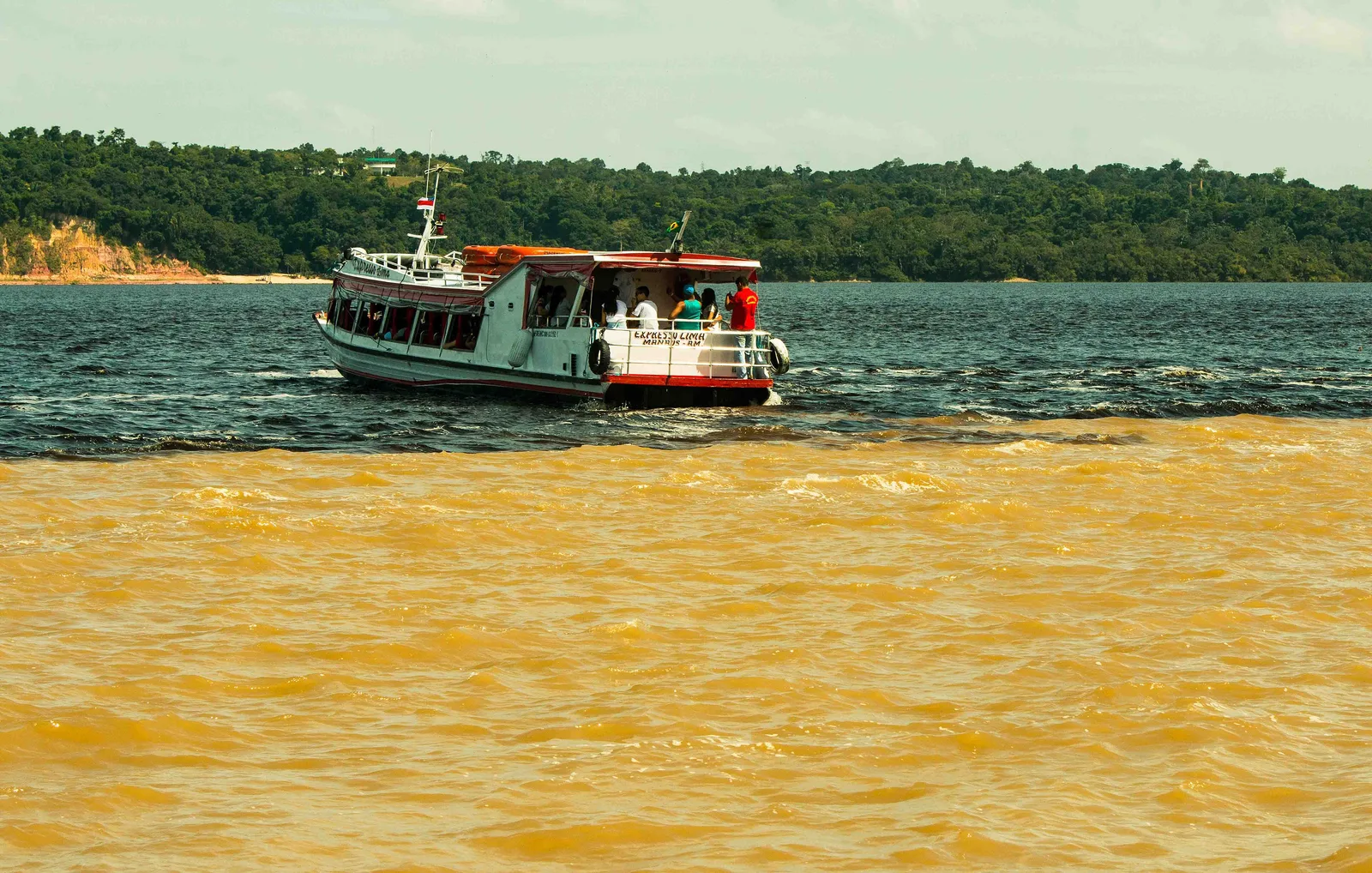
Whole region
The North
The Amazon
The Amazon has no bad season, only two different trips. High water floods the forest and you travel by canoe among the treetops; low water exposes river beaches and forest trails and pushes wildlife down to the banks. It rains in both - this is a rainforest. September is the one month the whole region is at or near its best; the high-water trip peaks three months earlier in June, and Belém peaks a month later in October for the Círio.
Month by month The reason behind every color
- Jan
Rain at its heaviest and the river climbing. Green, dramatic and very quiet, but expect to get wet daily.
- Feb
High water begins and the rain is still heavy at 297 mm. Quiet on the river, and green.
- Mar
Deep in the flooded season. Canoes run far into the igapó forest, over ground you could walk in September.
- Apr
The wettest month of the year at Manaus, 331 mm, and the river still climbing hard. Strong for boat-based exploring and for birds.
- May
The river holds high, the rain starts easing, and the forest is at its greenest.
- Jun
The high-water peak: the Negro at Manaus tops out in June in most years and the rain is already down to 117 mm. Flooded forest by canoe, without the rain. The opposite trip to September's, and the Amazon's other star.
- Jul
Dry, warm and bright. Trails open as the water falls. Brazilian holidays fill the lodges, so book ahead.
- Aug
The driest stretch at Manaus, 56 mm. River beaches appear at Alter do Chão and wildlife concentrates along the banks.
- Sep
The peak, and the one month the whole region lines up: low water on the Amazon at 79 mm and six rain days, the Tapajós beaches wide at Alter do Chão, and Belém often at its driest month of the year. Trails open, wildlife on the banks, far fewer mosquitoes.
- Oct
Still low and dry, and the Rio Negro beaches are at their widest. Belém's own peak: the Círio de Nazaré fills the city.
- Nov
Low water ending. The rain returns in the second half of the month.
- Dec
The wet season sets in and the river starts climbing. Hot, humid and heavily green.
Important dates Across the North
-
Festival de Parintins
Last weekend of June
A stadium-scale folk opera on an island in the middle of the Amazon, staged by two rival groups. One of the strangest and best things in Brazil.
-
Círio de Nazaré
Second Sunday of October
Two million people process through Belém - one of the largest religious gatherings on earth.
-
Meeting of the Waters
Year-round
The black Rio Negro and the sandy Solimões run side by side for kilometers below Manaus without mixing. Nothing published ranks the sharpness of the line by month, so go on whichever day you are there.
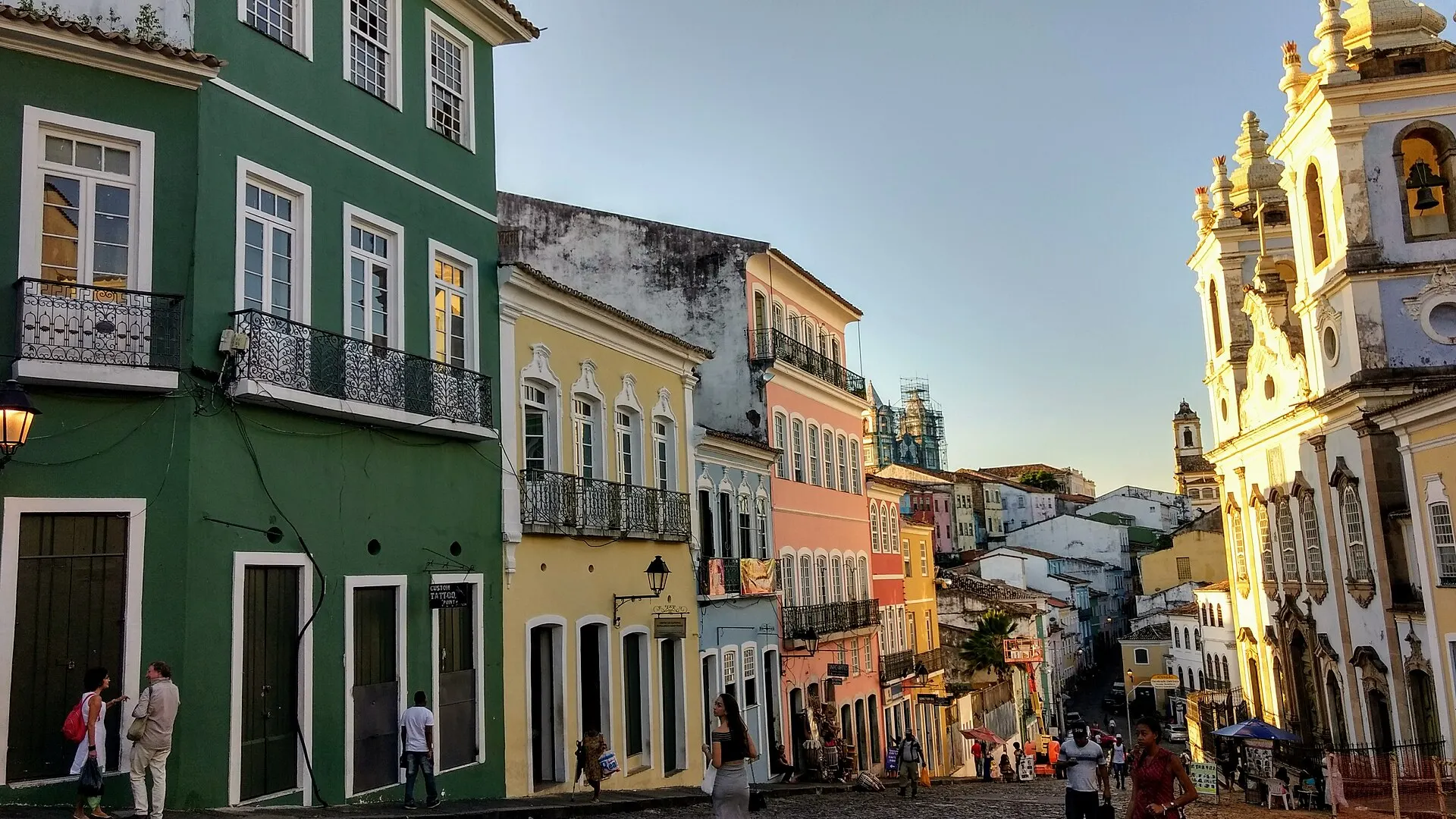
Whole region
The Northeast
Beaches, dunes and Afro-Brazilian culture
The Northeast is warm all year - the variable is rain, and it does not fall at the same time along the whole coast. Salvador and Recife are wettest from April to July; Ceará and Maranhão from January to June. The Lençóis lagoons run on their own clock, filling after those northern rains. October is the region's peak because most of the coast is at its driest and brightest then, but Pernambuco and Alagoas do not peak until November, and the Lençóis and the Chapada Diamantina peak in August and July.
Month by month The reason behind every color
- Jan
Hot, dry and festive in Bahia, wet further north in Ceará and Maranhão. Peak Brazilian holiday season.
- Feb
Salvador's Carnival is the largest street party in the world. Sunny in Bahia, rain building in the north.
- Mar
Still warm and mostly dry in Bahia. The northern coast stays wet.
- Apr
Rain arrives on the Bahia and Pernambuco coast. Cheaper and quieter, with real sunshine between showers.
- May
The wettest stretch for Salvador and Recife. The Lençóis lagoons begin filling.
- Jun
Rain eases, Festa Junina takes over the interior, and the Lençóis lagoons come up.
- Jul
The Chapada Diamantina's own peak, at 41.5 mm and the coolest month of its year. Lagoons full in the Lençóis, humpbacks off the Bahian coast, and dry weather from Ceará north. Brazilian holidays, so book ahead.
- Aug
The Lençóis Maranhenses' own peak: 5.9 mm on a single rain day and 305 hours of sun at Chapadinha, the sunniest month of its year, with the lagoons still holding. Whales off Bahia, and the wind building at Jericoacoara.
- Sep
Dry and clear almost everywhere, and the last of the lagoons still holding around Santo Amaro.
- Oct
The peak: the driest, brightest month on most of this coast. Salvador at 91 mm and 227 hours of sun, Fortaleza at 9.5 mm and 294 hours, Jericoacoara at 2.1 mm with the steadiest wind of its year, and Noronha's dive visibility at its best. Praia do Forte is the one place the last humpbacks and the first nesting turtles overlap.
- Nov
Pernambuco and Alagoas peak now rather than in October: Recife at 39.0 mm on seven rain days and Maceió at 46.9 mm on five, the driest months of their year. Dry and hot the whole way along.
- Dec
Bahia is glorious and filling up. Prices climb hard after the 20th.
Important dates Across the Northeast
-
Salvador Carnival
5-10 February 2027
Two million people and the trios elétricos. There is no ticketed stadium - it happens in the street, and you either join a bloco or watch from a rented balcony.
-
Humpback whale season
July to October
Praia do Forte and the Abrolhos bank. The official Praia do Forte whale page gives July to October, and neither it nor the Instituto Baleia Jubarte names a peak month, so this does not either.
-
Lençóis lagoon season
June to September
ICMBio's own page for the park names no months for when the lagoons are full, so this window is the rainfall's rather than the park's: the water goes in over the first half of the year and drains through the second. The lagoons near Atins dry out first and Santo Amaro holds longest.
-
Festa Junina
Throughout June
Caruaru and Campina Grande run the biggest June festivals in the country.
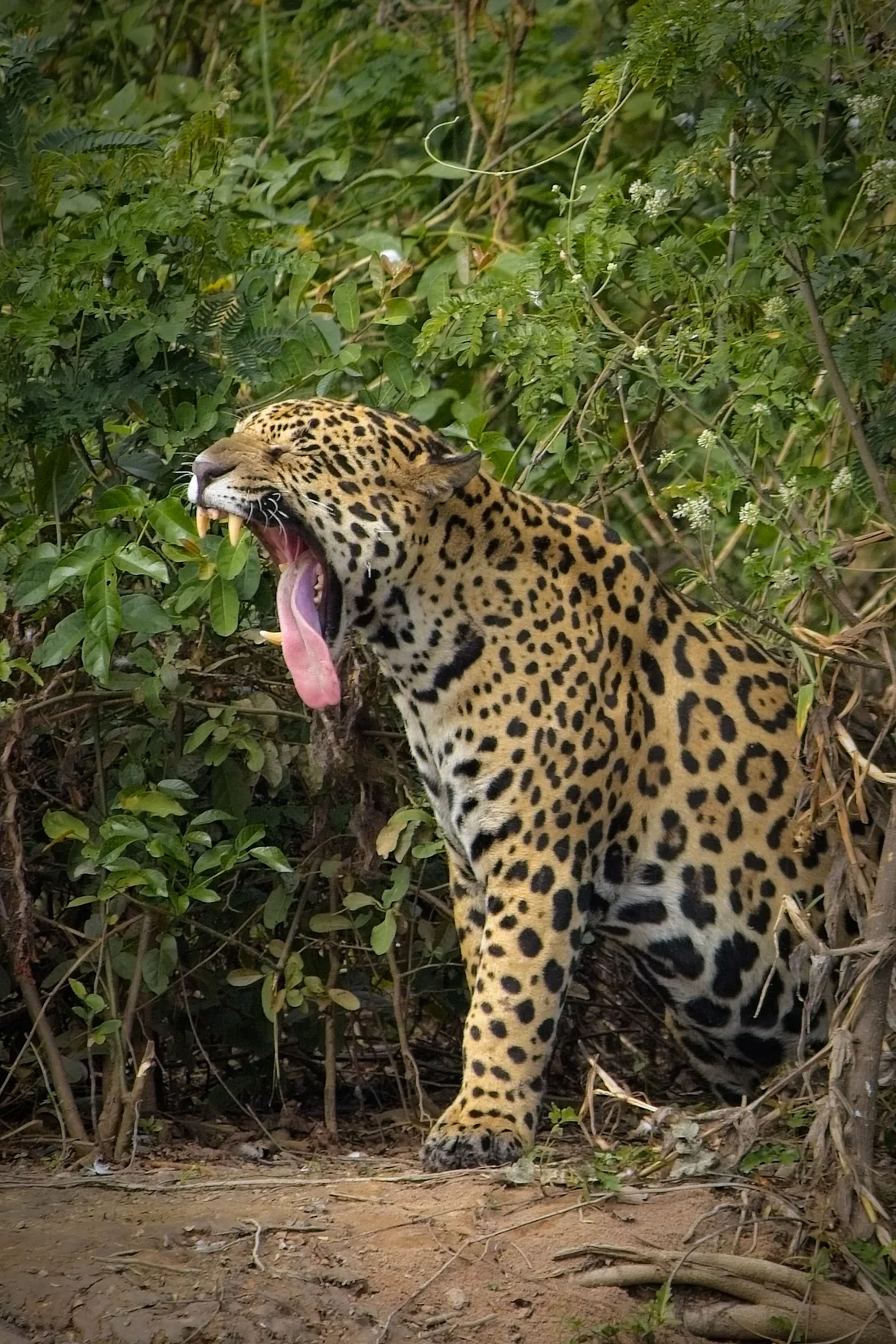
Whole region
The Central-West
The Pantanal, the cerrado and Brasília
The Central-West runs on the Pantanal's flood cycle. From November to March the wetland fills, turning green and loud with birds but scattering the mammals across thousands of square kilometers. From May the water drops and the animals concentrate along the remaining rivers, which is when jaguars become findable rather than theoretical. All four places in this region peak in the same month, July, which is rare enough here to be worth saying.
Month by month The reason behind every color
- Jan
Peak flood and peak heat. Superb for birds, hard for mammals, and some lodge roads become impassable.
- Feb
Still flooded and very hot. February is one of Bonito's wetter months too, and it is rain that puts sediment in those rivers.
- Mar
Rain easing. The Chapada dos Veadeiros waterfalls are past their December-to-March high water.
- Apr
The water starts dropping and the roads firm up. Green, quiet and far cheaper than the peak.
- May
Dry season begins. Comfortable temperatures and wildlife starting to concentrate.
- Jun
Clear skies, cool nights and good sightings - the shoulder month before prices rise.
- Jul
The peak, and all four places agree on it: the Pantanal at 23.1 mm and 16.5 mm at its two stations and the sunniest month of the year at both, Bonito the driest and coolest month of its year, Alto Paraíso at 2.3 mm and Brasília at 1.5. Cool mornings, dry days, and the Pantanal's animals pinned to the riverbanks.
- Aug
Still the heart of the dry season and still excellent, with the heat starting to build: Pantanal afternoons go from 28.6 and 31.1°C in July to 30.5 and 33.1.
- Sep
Dry and hot, with the wildlife still on the water. Also fire season in bad years - worth checking conditions before you book.
- Oct
Good wildlife right up to the first storms, and the last month of the window. Hot, and the light is superb.
- Nov
The rains return and the wetland begins filling. Mammals disperse; the birdlife takes over.
- Dec
Hot, wet and green. Bonito is at its best for waterfalls, the Pantanal at its hardest for big cats.
Important dates Across the Central-West
-
Jaguar season
July to October
Sightings along the Cuiabá and Três Irmãos rivers in the northern Pantanal as low water pushes the cats to the banks. The one peer-reviewed study of Porto Jofre puts the chance of a sighting at 0.94 in high season against 0.52 in low, but names no peak month, so this does not either. Multi-day trips give you far better odds than a single outing.
-
Bonito river visibility
Driest April to September
Nobody publishes a measured water clarity for the Rio da Prata or the Rio Sucuri by month, so this window is the rainfall's: rain is what puts sediment in these rivers, and July is the driest month of the year at 58 mm against December's 238.
-
Chapada dos Veadeiros waterfalls
Fullest December to March
The four wettest months on the Alto Paraíso rain record are December, January, February and March, at 258.6, 246.6, 205.4 and 197.7 mm; by April it has fallen to 71.6. Spectacular flow, but some trails close after heavy rain - check with the park before committing to a date.
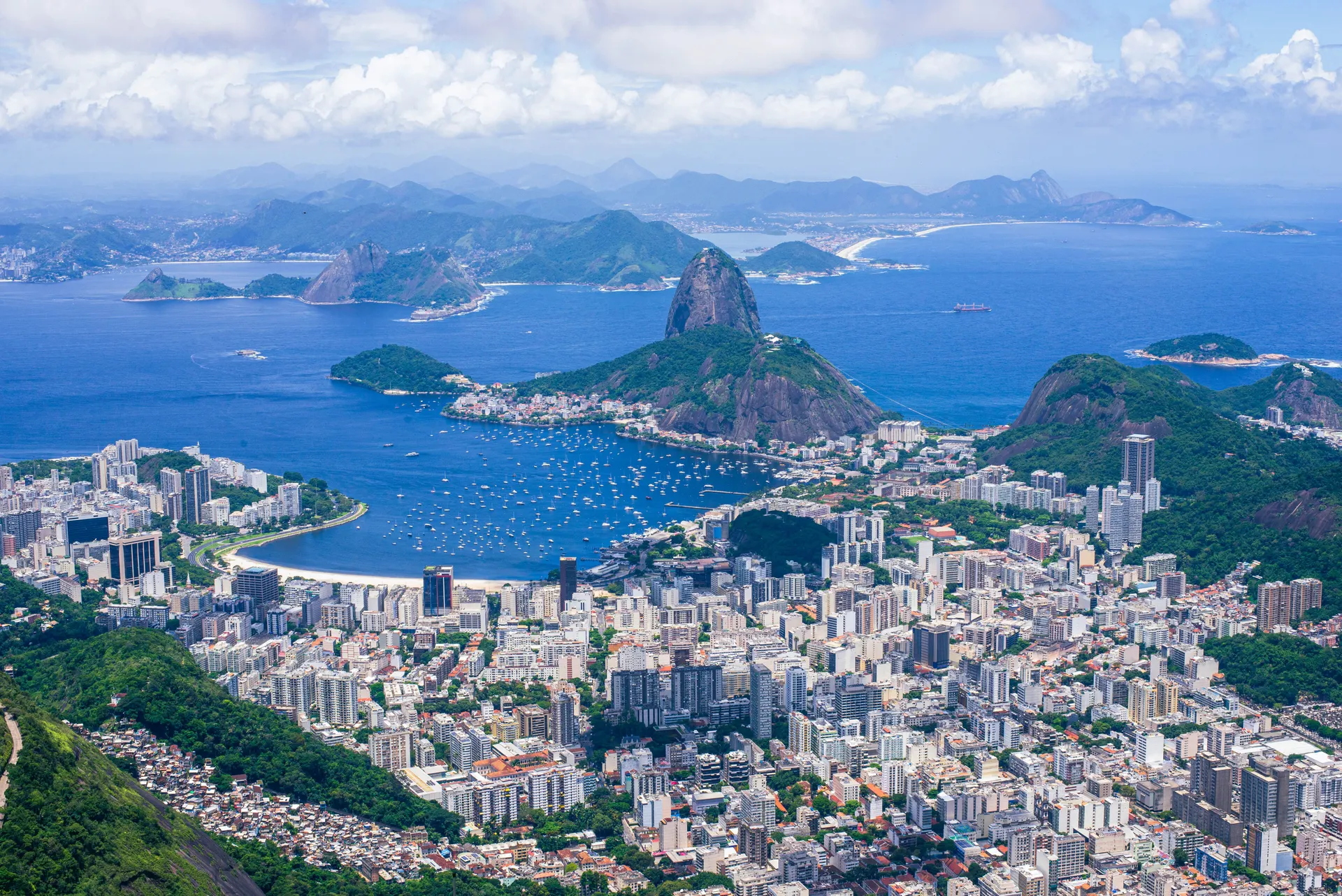
Whole region
The Southeast
Rio, São Paulo and the colonial interior
The Southeast's season is the dry winter, and it splits by a month. Rio and the Minas hill towns are at their driest in July; São Paulo and the Costa Verde coast, Paraty and Ilha Grande, in August. Summer is hot, humid, expensive and wet, and Carnival is the one reason to take it on.
Month by month The reason behind every color
- Jan
Peak summer. Hot, humid, expensive, and Rio is at its busiest. Wonderful beach energy if you can take the heat.
- Feb
Carnival month. Extraordinary if that is what you came for, brutal on prices and crowds if it is not.
- Mar
The heat starts to break and the crowds thin. Rain is heavier but usually arrives as a short afternoon storm.
- Apr
Warm and drying out, and the sea is still warm enough to swim in. The start of the good stretch.
- May
Clear mild days and low humidity. Comfortable for walking Rio and for the Minas towns.
- Jun
Cooler but bright and dry. Festa Junina fills the Minas interior with bonfires, food and music.
- Jul
The peak for Rio and the Minas hill towns: Rio's driest month at 41.9 mm on four rain days with humidity at its annual low, Ouro Preto's at 15 mm, Tiradentes' at 11.5. The clearest month of the year from Sugarloaf and Corcovado.
- Aug
The peak for São Paulo and the Costa Verde: São Paulo's driest month by a wide margin at 20.3 mm, Paraty's at 54 to 74 mm across its two stations, and Ilha Grande's at 54 mm on seven rain days. Dry and mild, and the sea is chilly.
- Sep
Spring. Warm days return without the summer humidity, though September is Rio's least sunny month of the year at 146 hours.
- Oct
Warm and green after the first rains, with the rain building steadily through the month.
- Nov
Warm and increasingly humid, with afternoon rain building. Still good value.
- Dec
Hot and busy, and prices climb steeply toward New Year. Copacabana on the 31st is worth doing once.
Important dates Across the Southeast
-
Carnival
5-10 February 2027
Rio's Sambadrome parades run 7-9 February. Book accommodation close to a year out and expect four-night minimums.
-
Réveillon
31 December
2.6 million people dressed in white on Copacabana beach for the midnight fireworks, the largest New Year's party in the world. That is the Prefeitura's own count for 2026.
-
Festa Junina
Throughout June
At its best in the Minas Gerais towns: bonfires, quadrilha dancing and hot corn dishes.
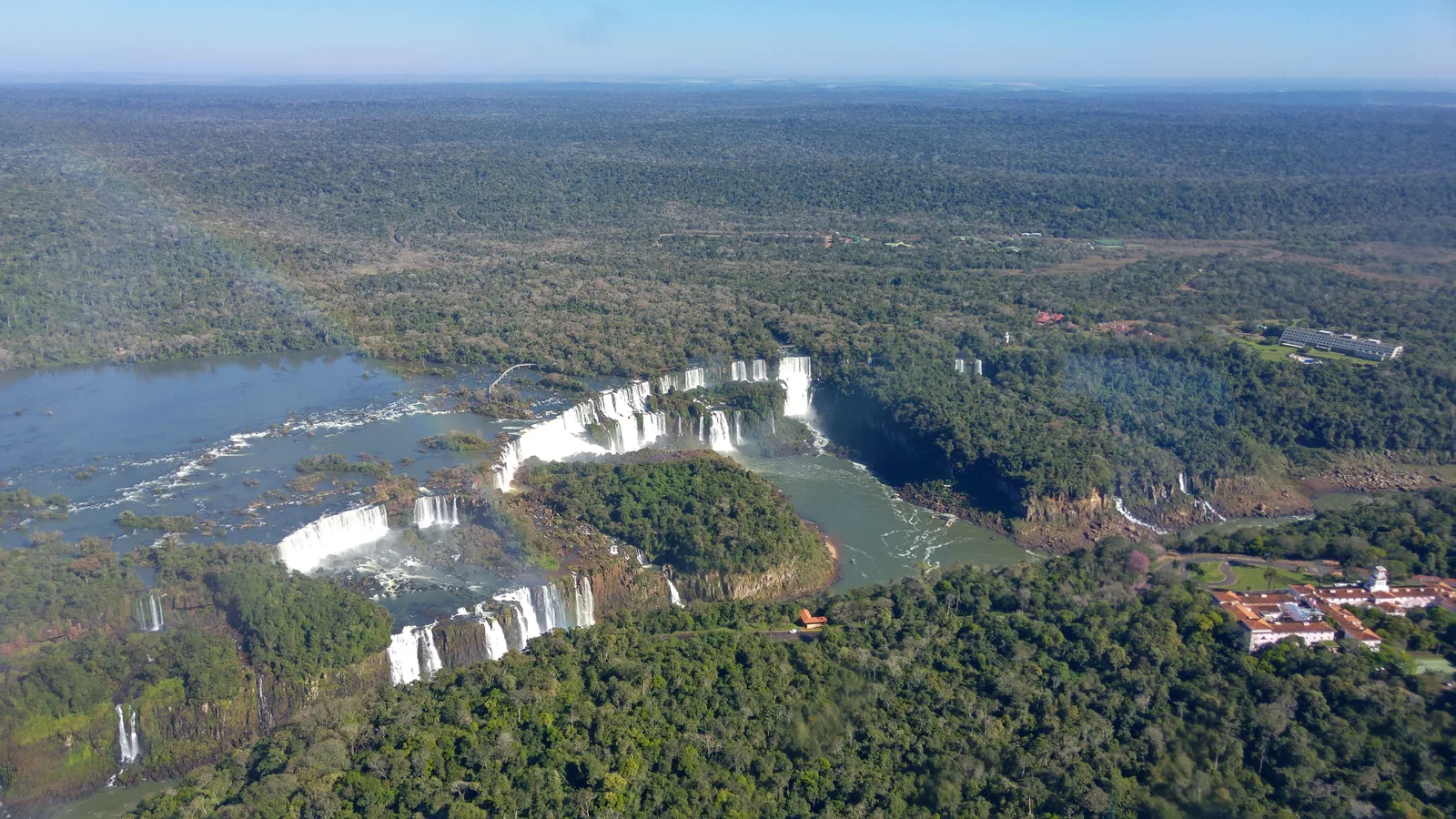
Whole region
The South
Iguaçu, Florianópolis and a cooler Brazil
The South has real seasons - it is the one part of Brazil where winter means something. April is the month most of it agrees on, mild and dry on the coast and on the plateau. The Serra Gaúcha peaks a month earlier with the harvest, Foz do Iguaçu a month later, and winter brings whales, wine and, in the highlands, frost.
Month by month The reason behind every color
- Jan
Peak summer. Florianópolis is packed and brilliant, and at its wettest of the year, 241 mm. Iguaçu is hot and humid.
- Feb
Still summer, still busy, and the sea is at its warmest. Prices ease once Carnival passes.
- Mar
The Serra Gaúcha's own peak: one of the driest and sunniest months in the hills, still warm, with the harvest wrapping up in the Vale dos Vinhedos. On the coast the sea is still at 26°C, though Florianópolis takes 180 mm across fourteen days.
- Apr
The peak: Florianópolis at 115.8 mm on nine rain days, the fewest of its year, with the sea still at 24.5°C, and Cambará do Sul at 113.8 mm, one of its two driest months, before the plateau's frost sets in. Mild and clear at Iguaçu too, and the first autumn color in the Serra Gaúcha.
- May
Foz do Iguaçu's own peak: 127.6 mm on six rain days, the equal-fewest of its year, with comfortable days and cool nights. Autumn in the wine country.
- Jun
Cold in the highlands, sometimes frosty. The whales arrive at Praia do Rosa.
- Jul
The coldest month. Gramado does the full winter-resort thing, with the coldest nights of the year and the most fog. Whales down the coast at Praia do Rosa.
- Aug
Still cold inland, still whales on the coast. Iguaçu is one of its own two driest months and comfortable to walk, though what the falls are doing depends on rain 600 km upstream, not on Foz.
- Sep
Spring, and everything reopens. Florianópolis is at its least sunny, 141 hours, and Cambará do Sul is tied for its wettest month.
- Oct
Warm days and green highlands, with the whales still down the coast. Florianópolis takes 153 mm on thirteen days and it is the second-dullest month there.
- Nov
Warm and bright, with the sea back up to 22.5°C and 180 hours of sun at Florianópolis, its best outside summer. Still 147 mm across thirteen rain days.
- Dec
Summer arrives and so does everyone else. Florianópolis peaks here on Réveillon rather than on the weather — 191 hours of sun and 177 mm, against January’s 241. Book the coast well ahead of the 20th.
Important dates Across the South
-
Southern right whale season
June to November
The whales calve in the bay at Praia do Rosa, close enough to watch from the cliffs. Instituto Australis, which runs the Projeto Baleia Franca research on this coast, puts the peak in September. Worth a morning if you are already here; it is not a reason to fly to Brazil.
-
Grape harvest, Serra Gaúcha
January to March
Bento Gonçalves and the Vale dos Vinhedos run tastings, vineyard lunches and harvest festivals throughout.
-
Natal Luz, Gramado
Late October to January
Brazil's largest Christmas festival, in a town that already looks like a Bavarian film set. Book months ahead.
-
Iguaçu's flow
Any month
The falls answer to rain across a basin more than 600 km upstream, not to the weather in Foz, so no month guarantees you a big one. The concessionaire's own record puts its largest recent flow in October 2023, at sixteen times the average, and its 2024 peaks in May and July.
Every destination here carries one or two starred months and no more. That is the whole scale: the star is the peak, green is a real recommendation for the rest of the year, and amber is the months with a catch the note names. Green is meant to be the common color, because most of Brazil is worth visiting most of the time. Carnival, Holy Week and the other moving dates are checked every January. Last checked 2026-09-07.
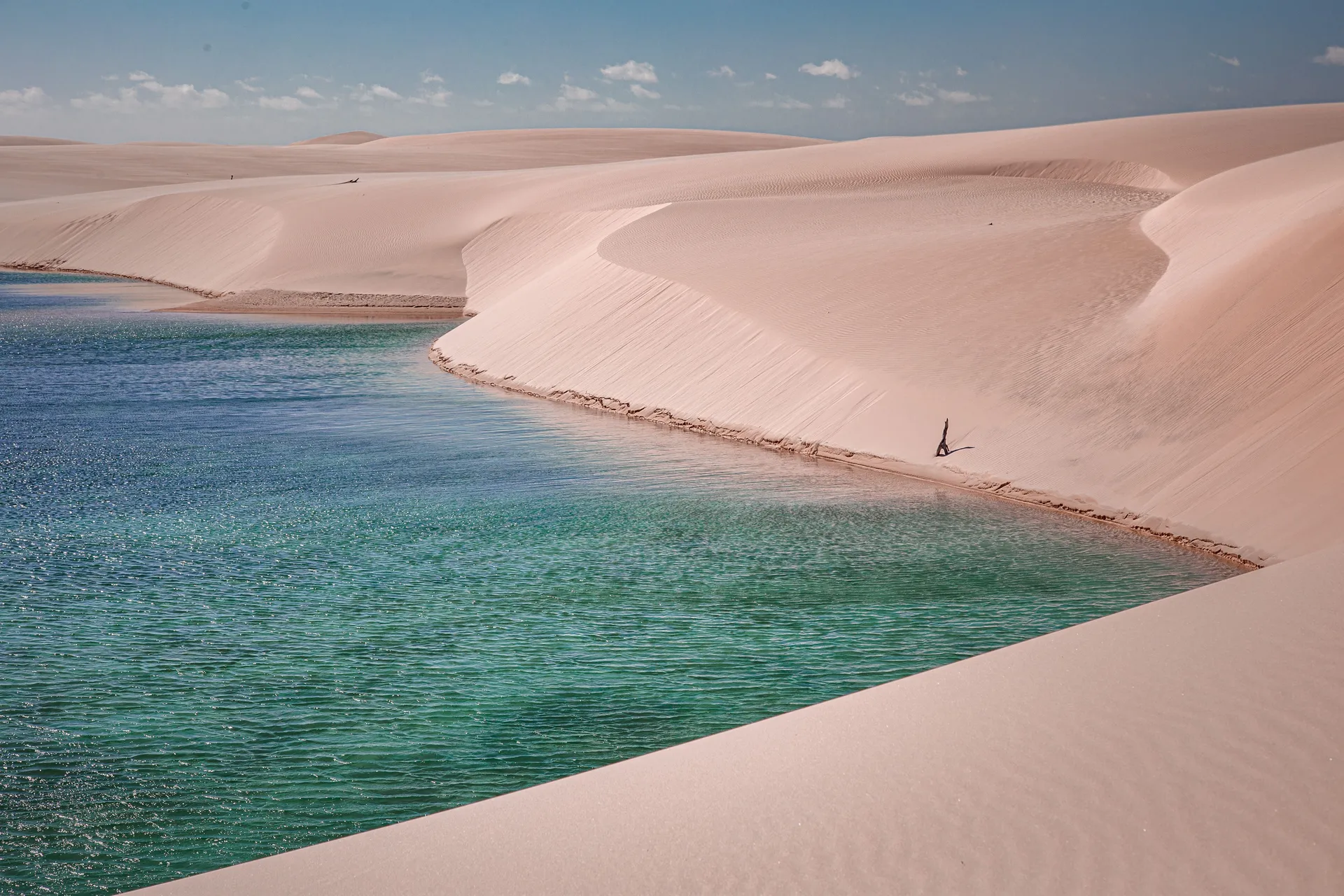 Free · 29 pages
Free guide
Beginner's Guide to Brazil
A free 29-page guide to everything a first-time visitor should know before landing: visas, safety, money, getting around, where to go, and what to eat.
We'll email you a link to confirm your address. Click it and the guide opens right away.
I am offering free consultation calls for anyone that’s interested in traveling to Brazil. Learn directly from someone that has traveled throughout Brazil. Even if you have no ideas for your trip, let’s talk about it!
Get trip advice