
Skip to content
Wide aerial view over Florianópolis island: green coastline, beaches and blue ocean

Santa Catarina

Florianópolis

  • Wide aerial view over Florianópolis island: green coastline, beaches and blue ocean
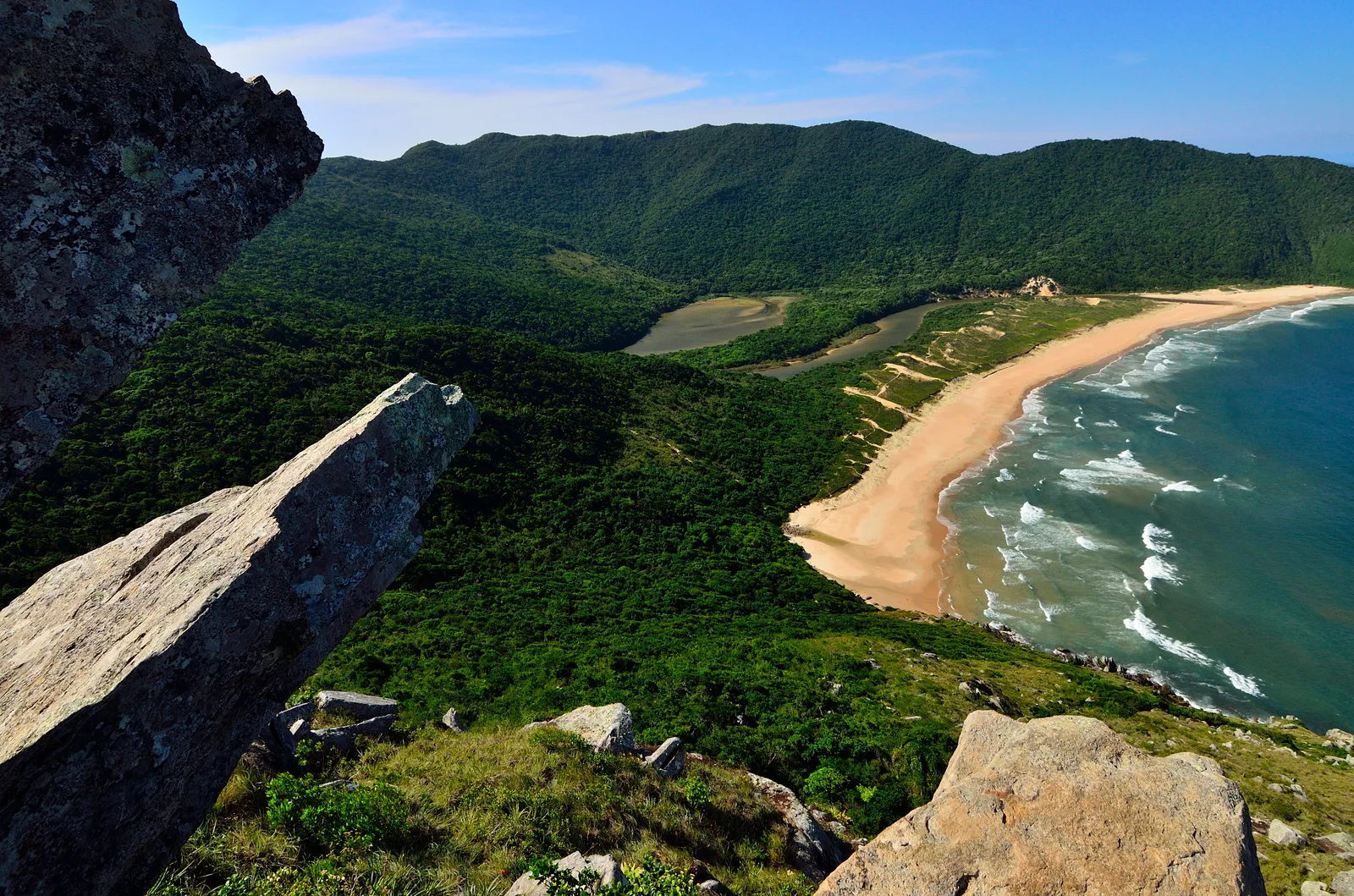
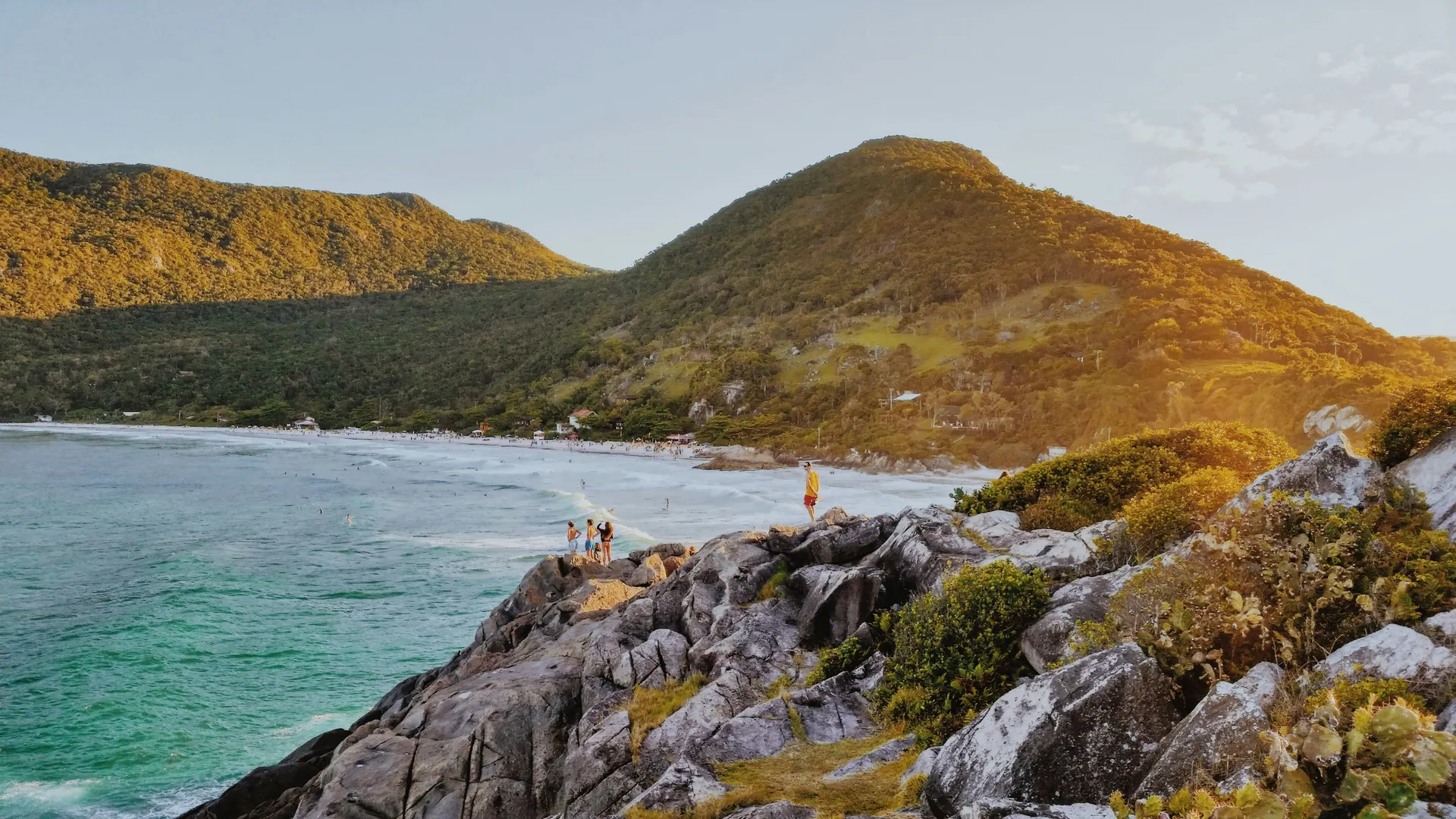
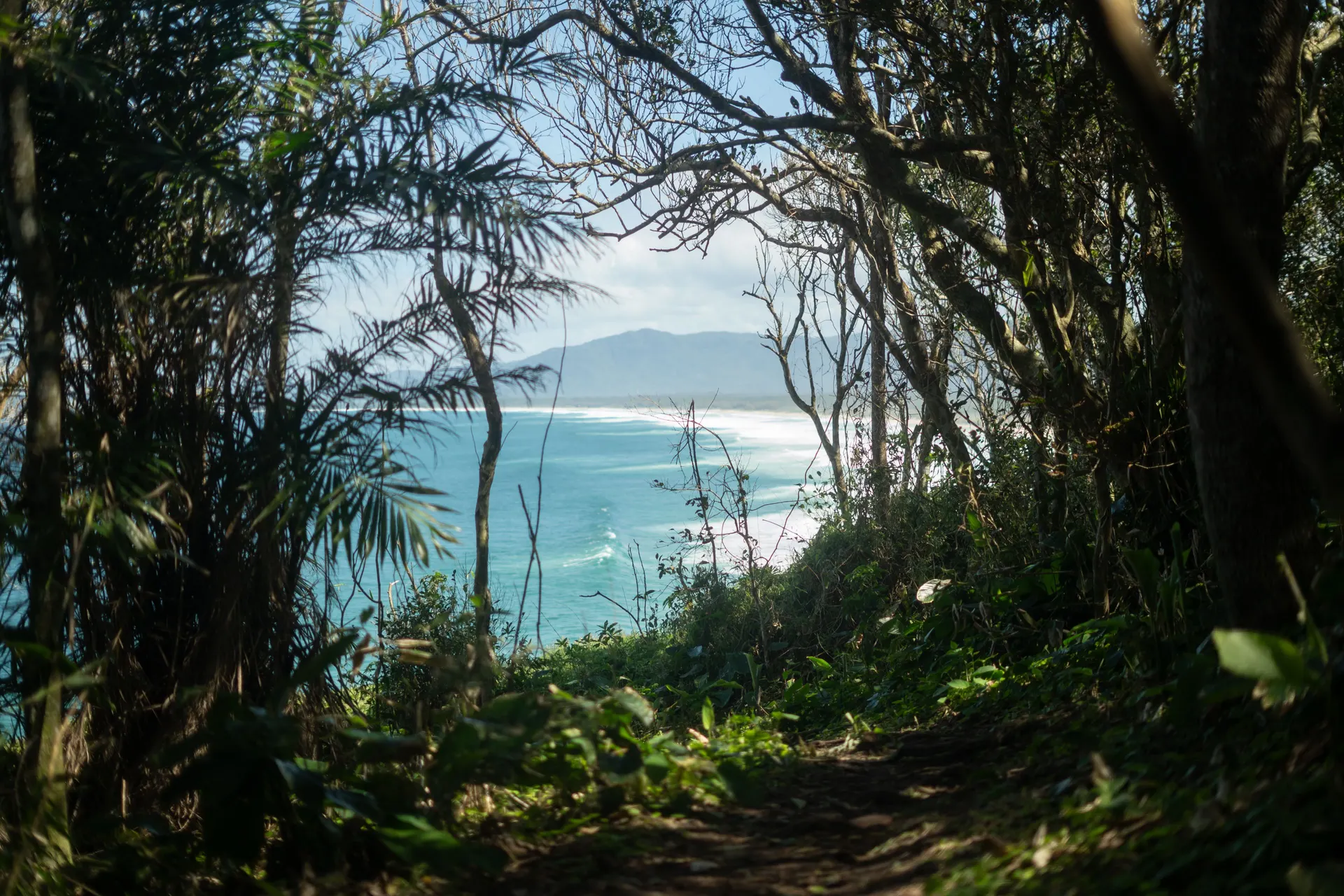
  • Lagoinha do Leste beach and its lagoon seen from the ridge trail high above
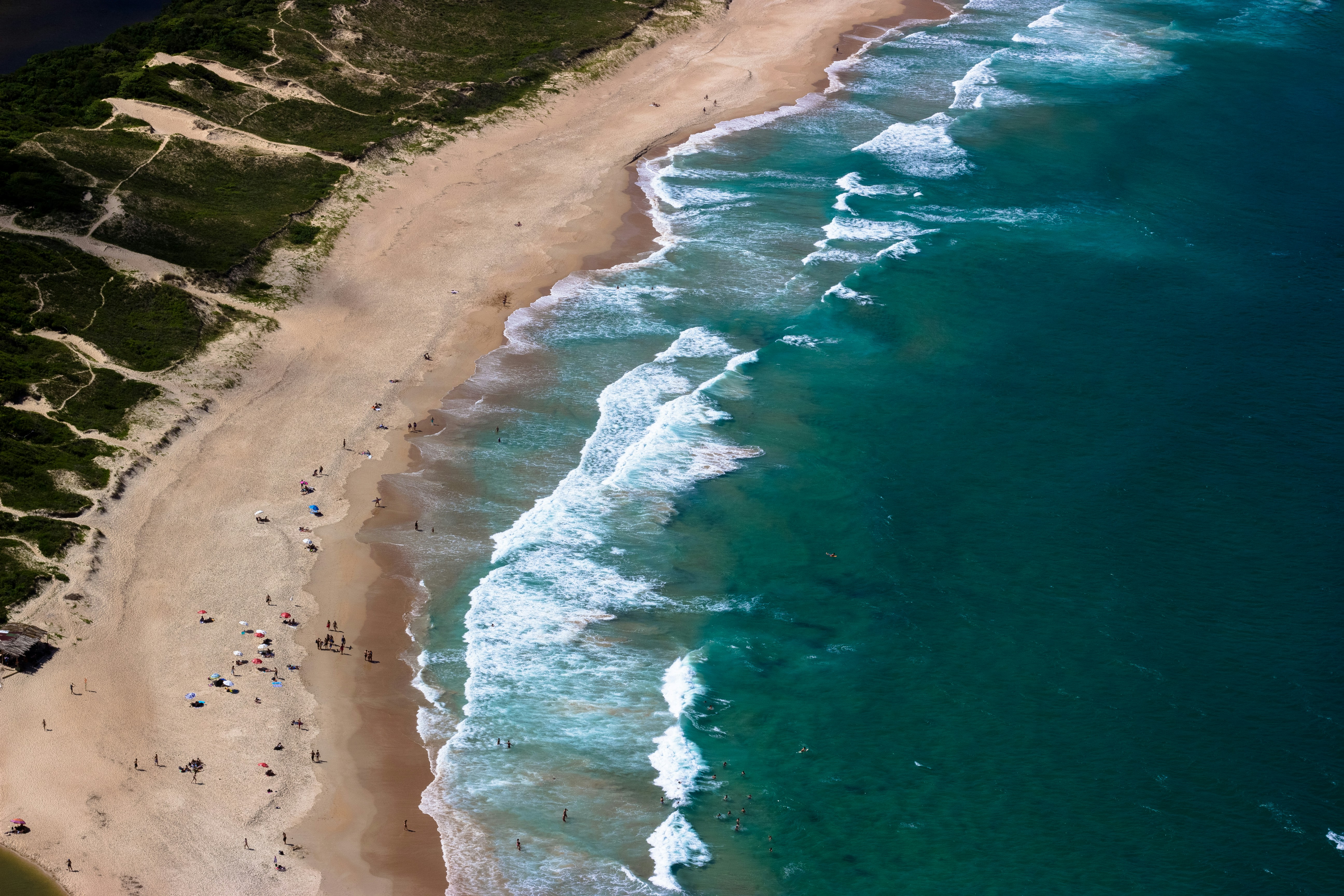
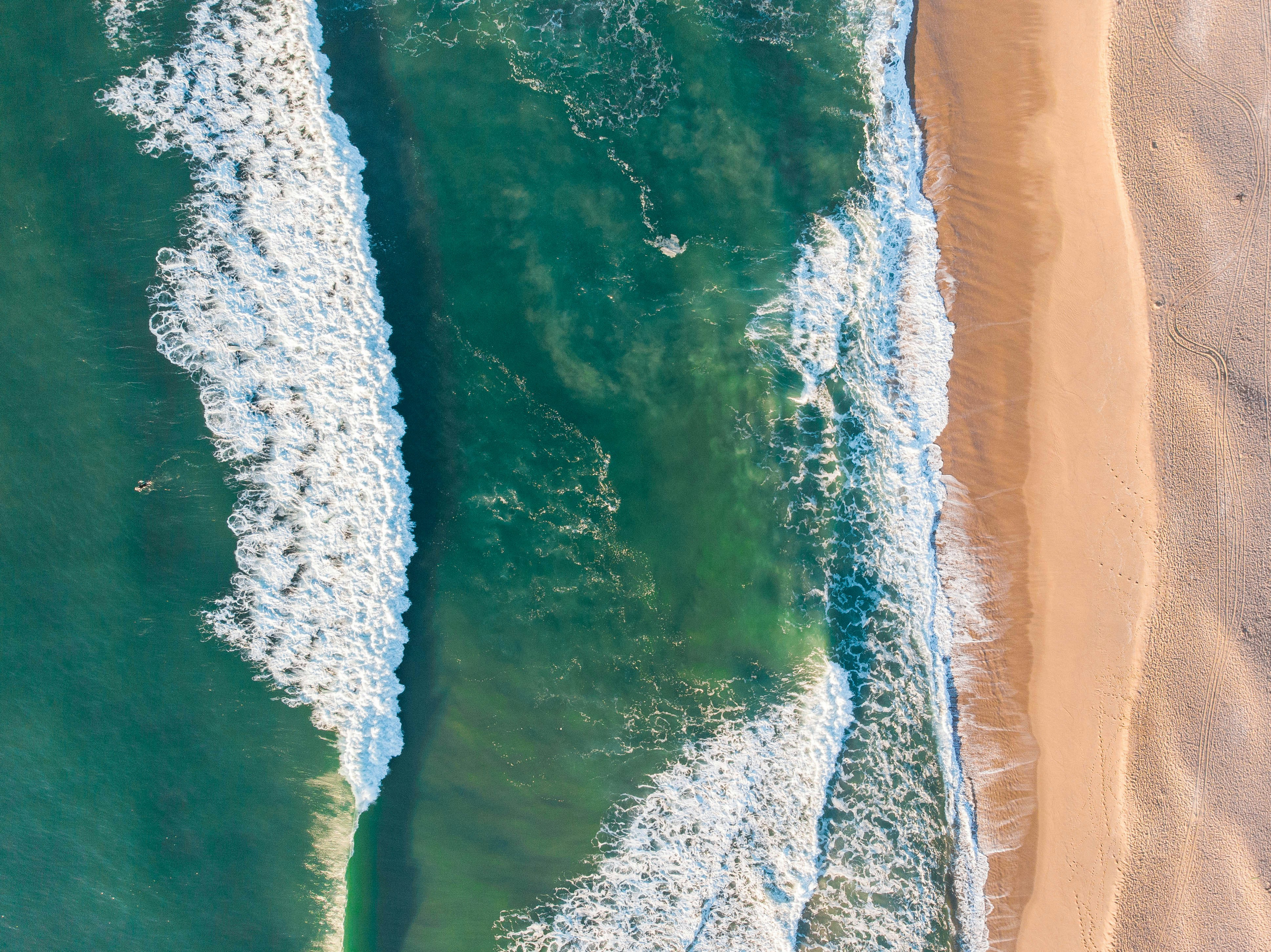
  • A straight-down aerial view of turquoise waves breaking along a Florianópolis beach, dune-backed sand dotted with sunbathers and colorful umbrellas
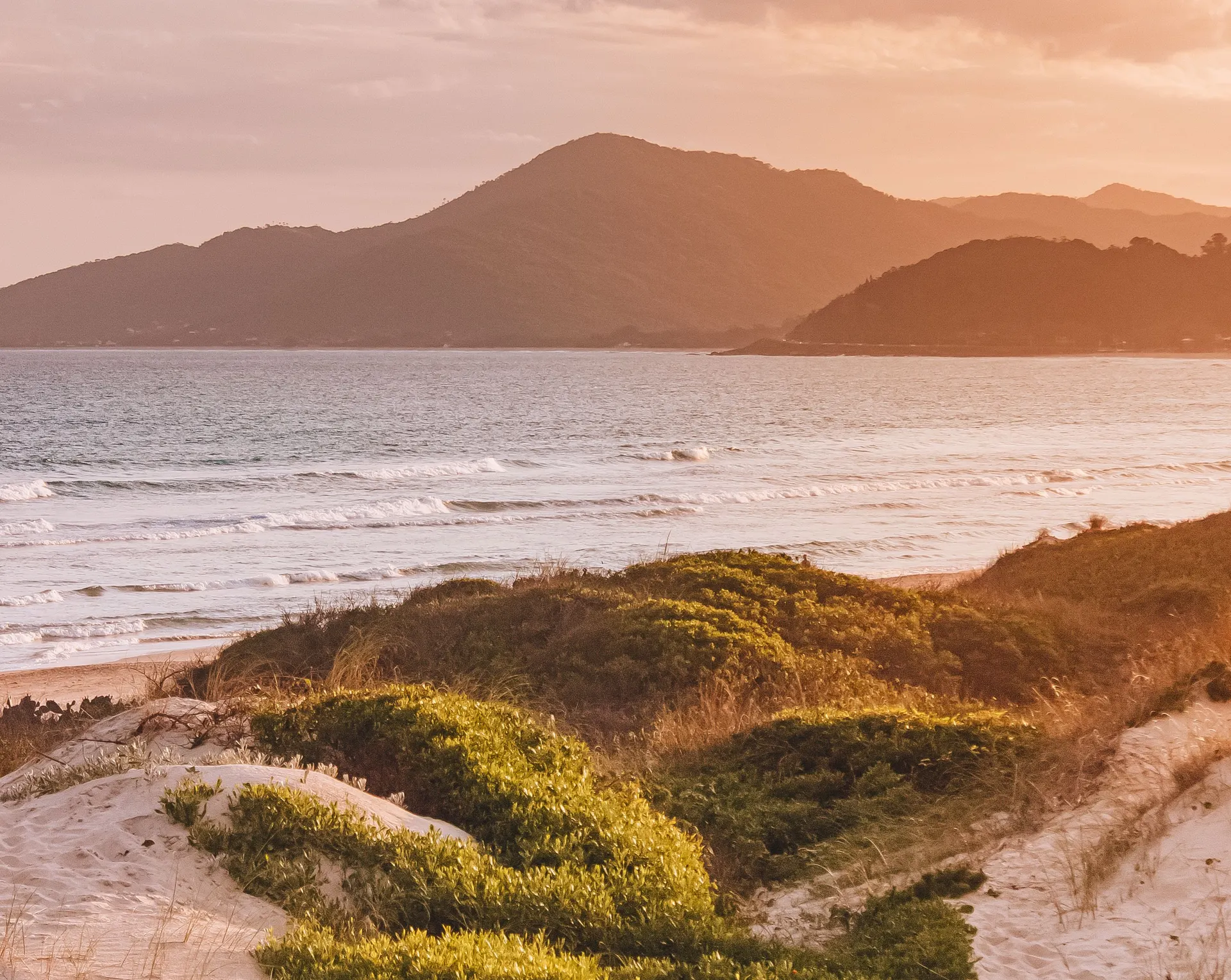
  • Surfers in the waves at Joaquina with the tall pale sand dunes rising behind the beach
  • Colorful Azorean colonial fishing village with a whitewashed church on the island coast
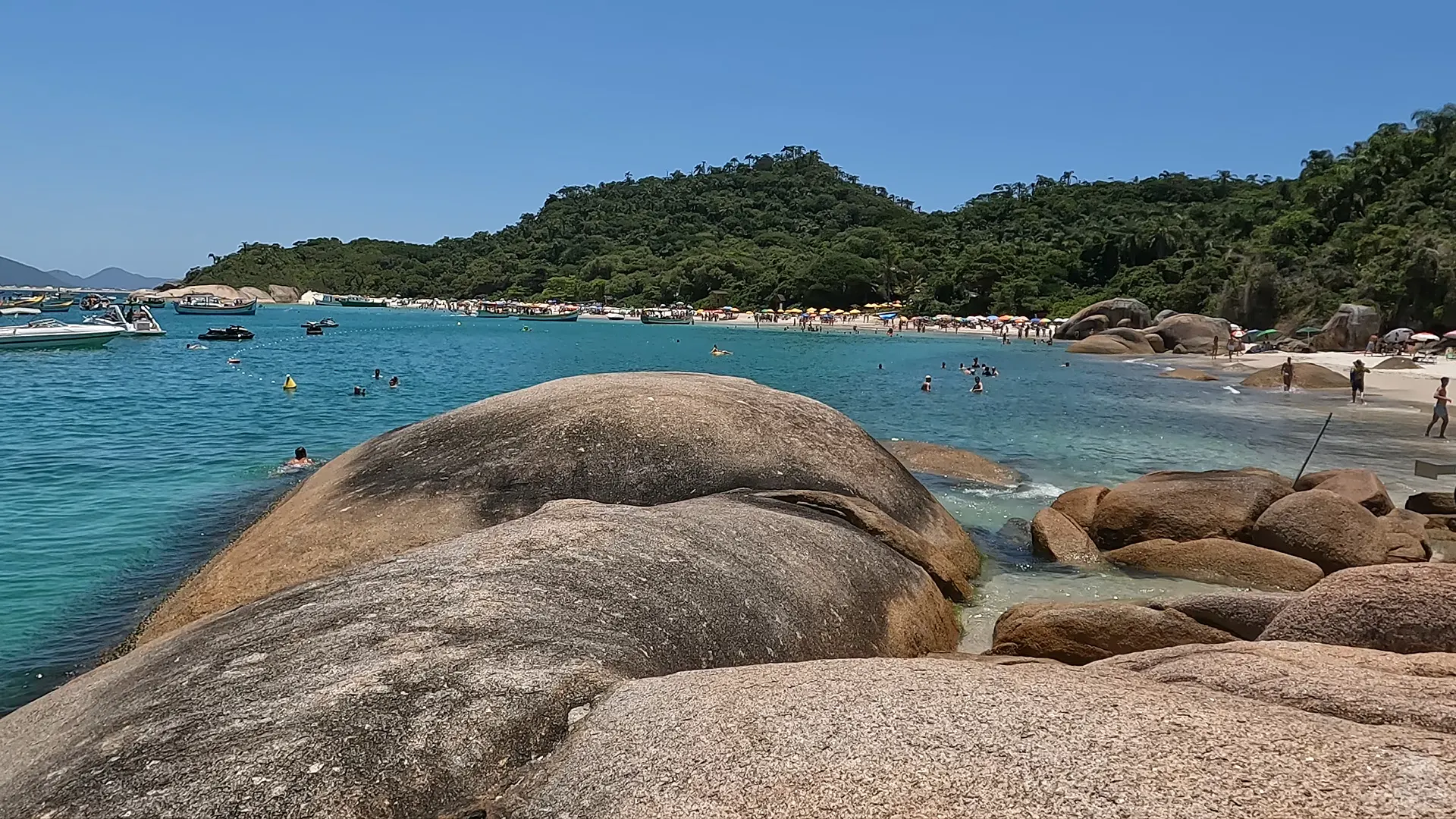
  • Brilliant turquoise clear water off Ilha do Campeche with a boat anchored offshore
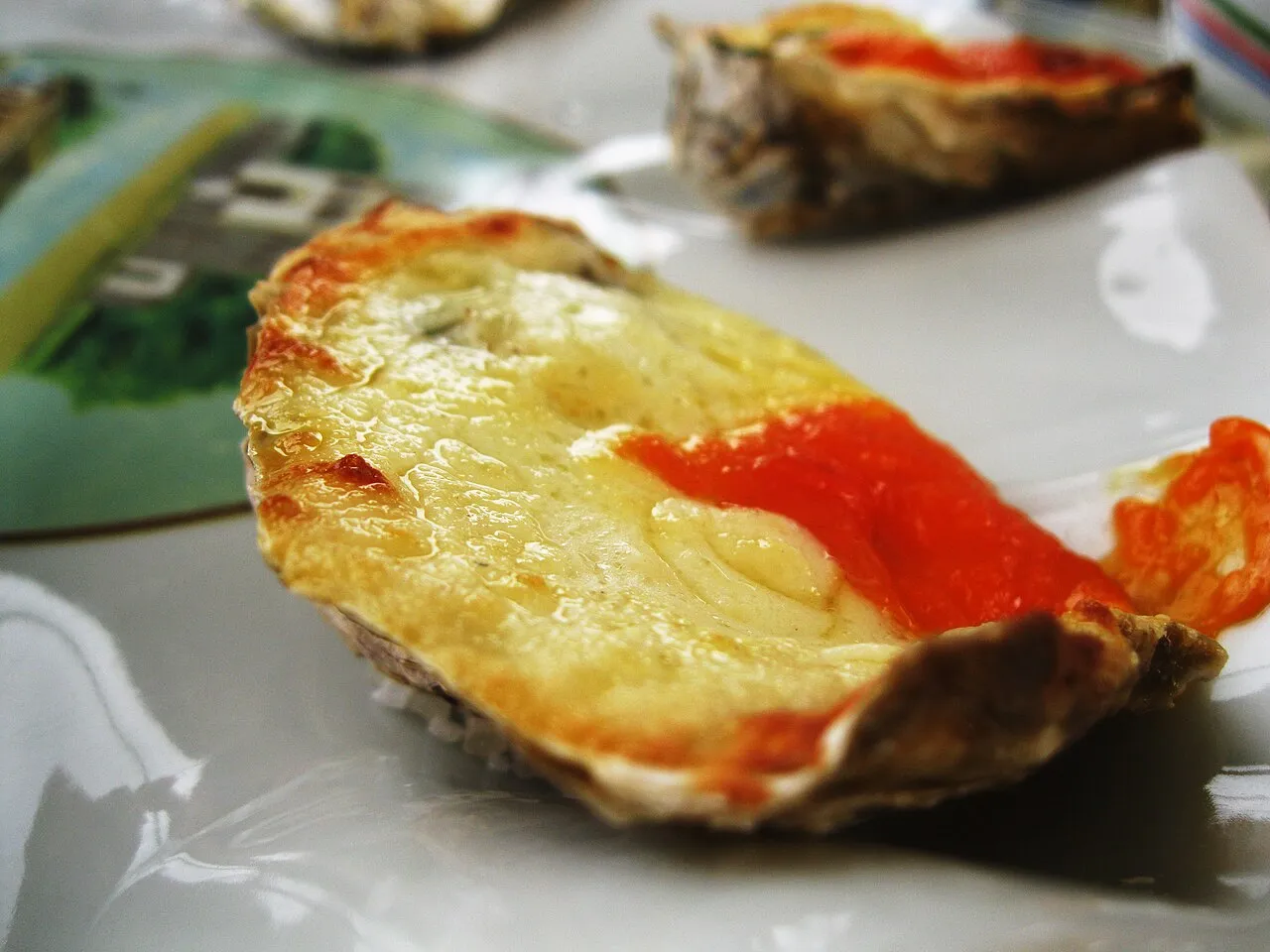
  • Fresh oysters on a plate at a waterside table in Ribeirão da Ilha, oyster farm in the channel behind
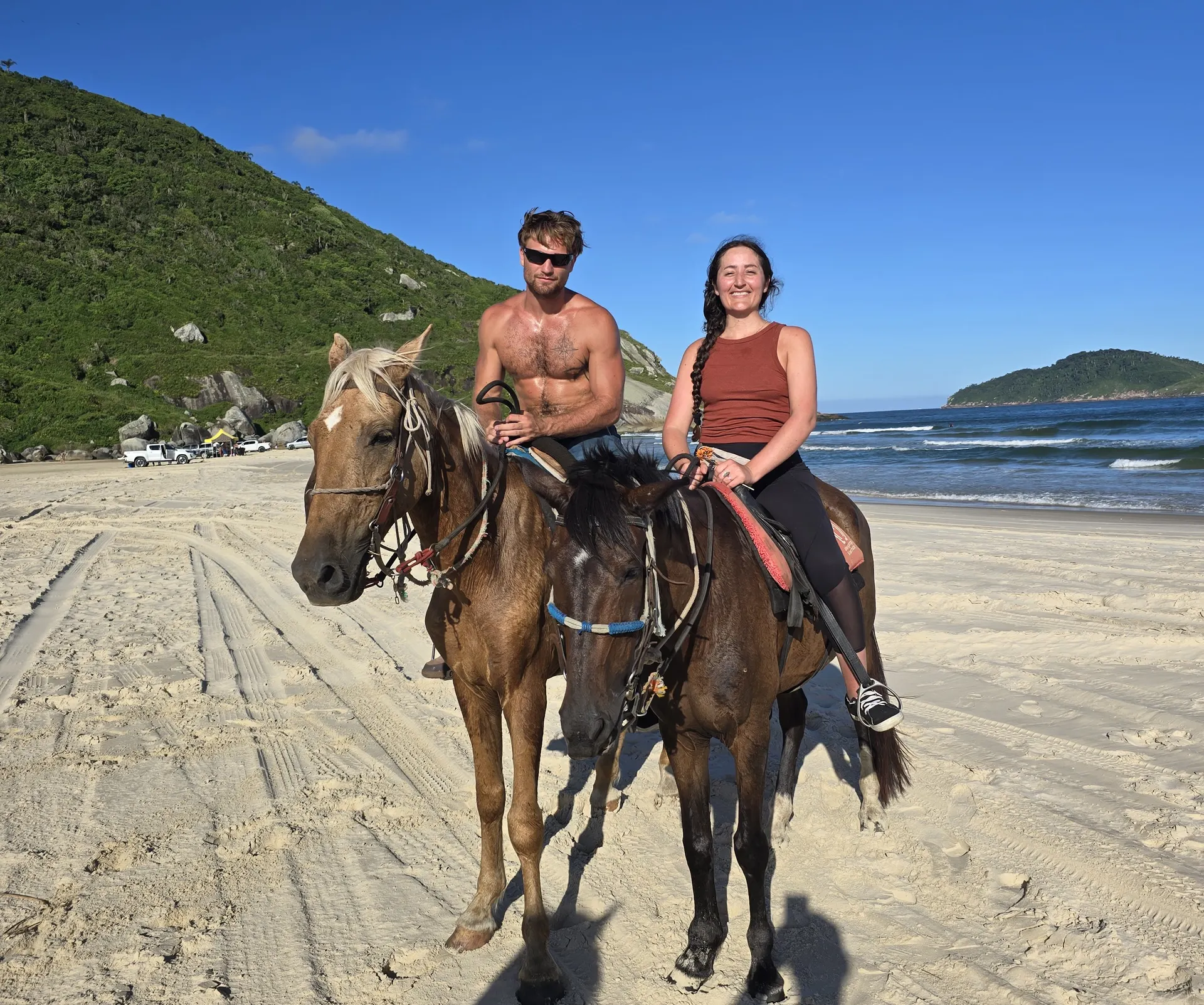
  • Horseback riding along the water’s edge on the long, empty sand of Praia do Mocambique
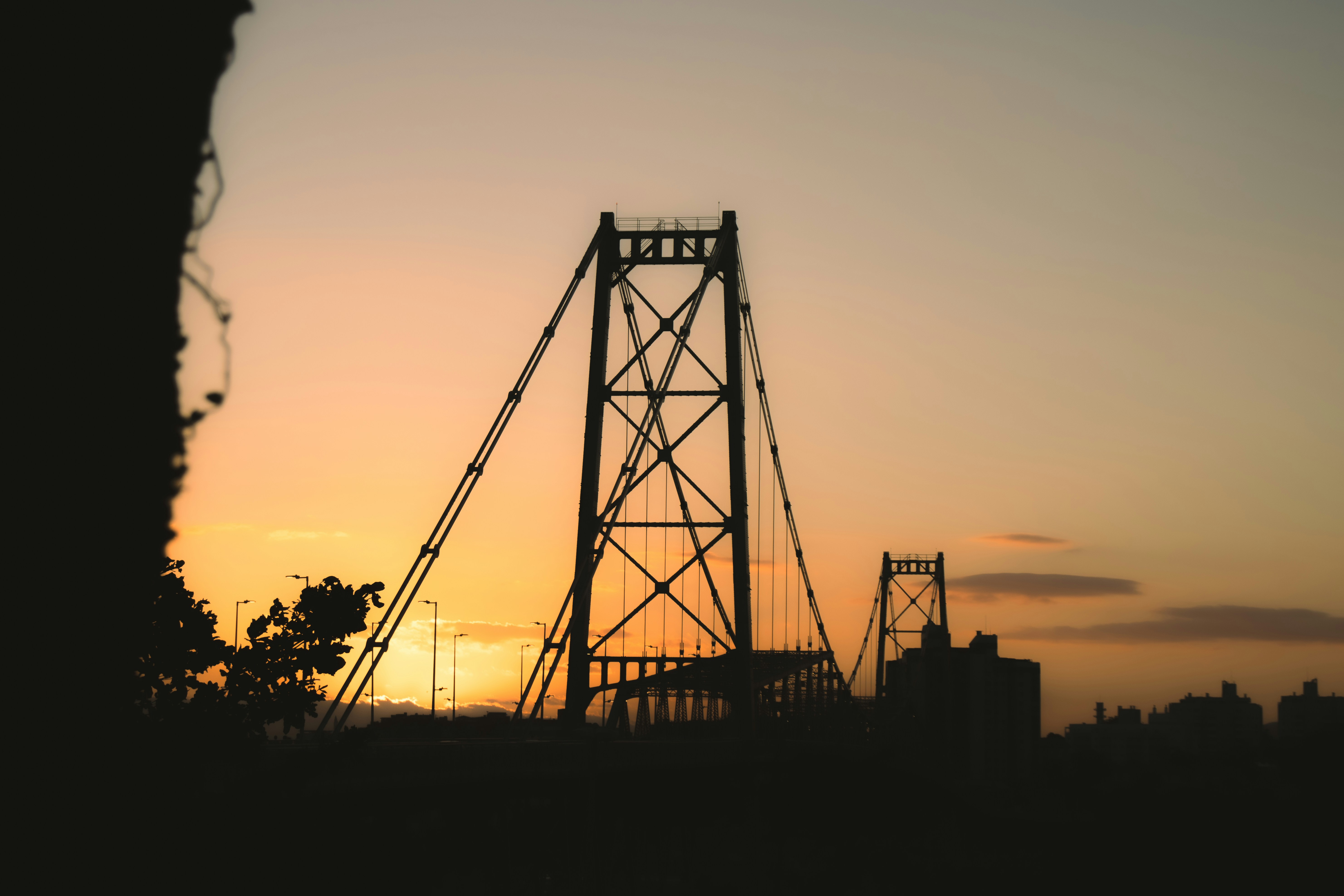
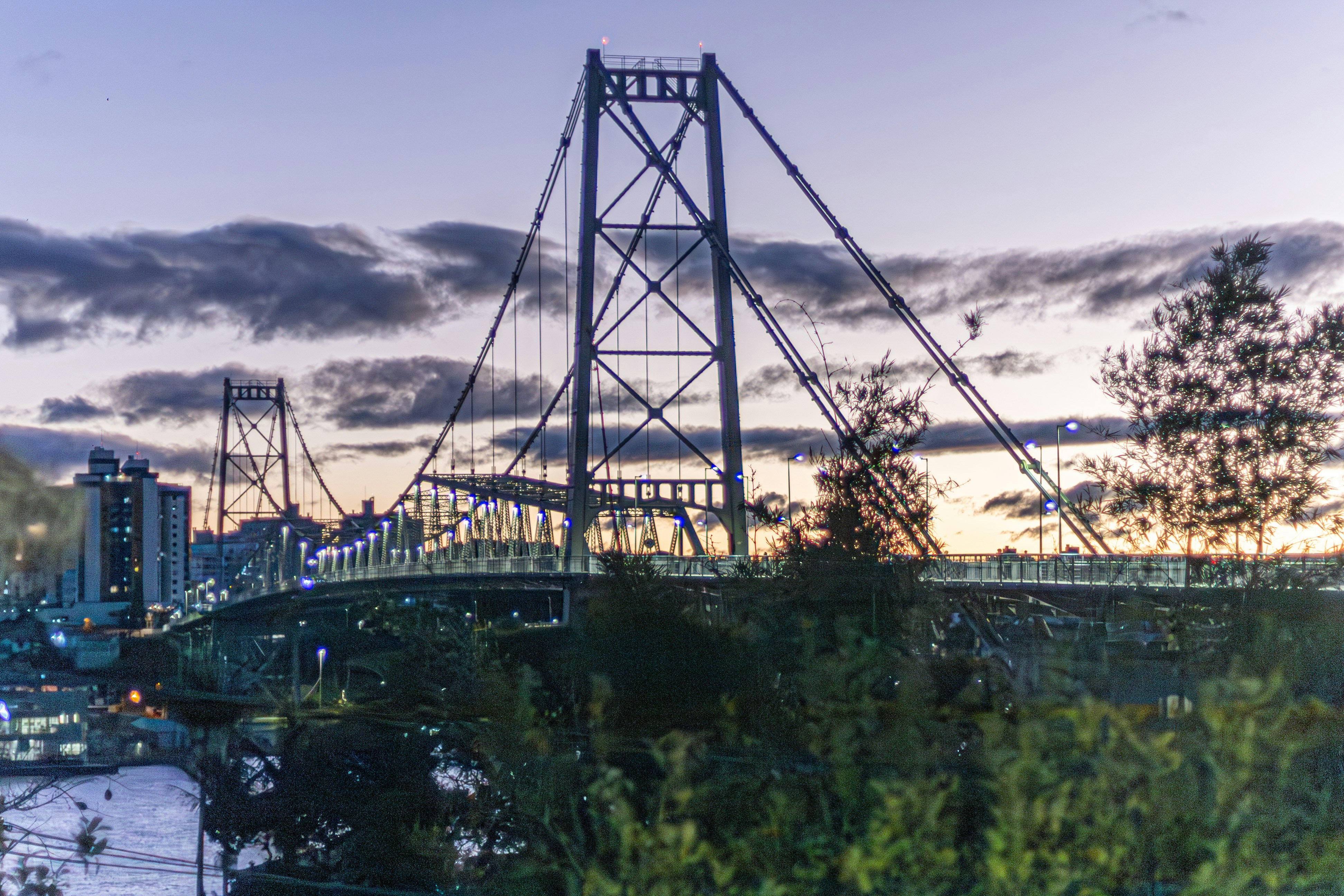
  • The Hercílio Luz Bridge in silhouette against a warm Florianópolis sunset
  • The green Lagoa da Conceição lagoon ringed by hills, seen from a hilltop lookout
  • Upscale beach-club scene with calm water and stylish loungers at Jurerê Internacional
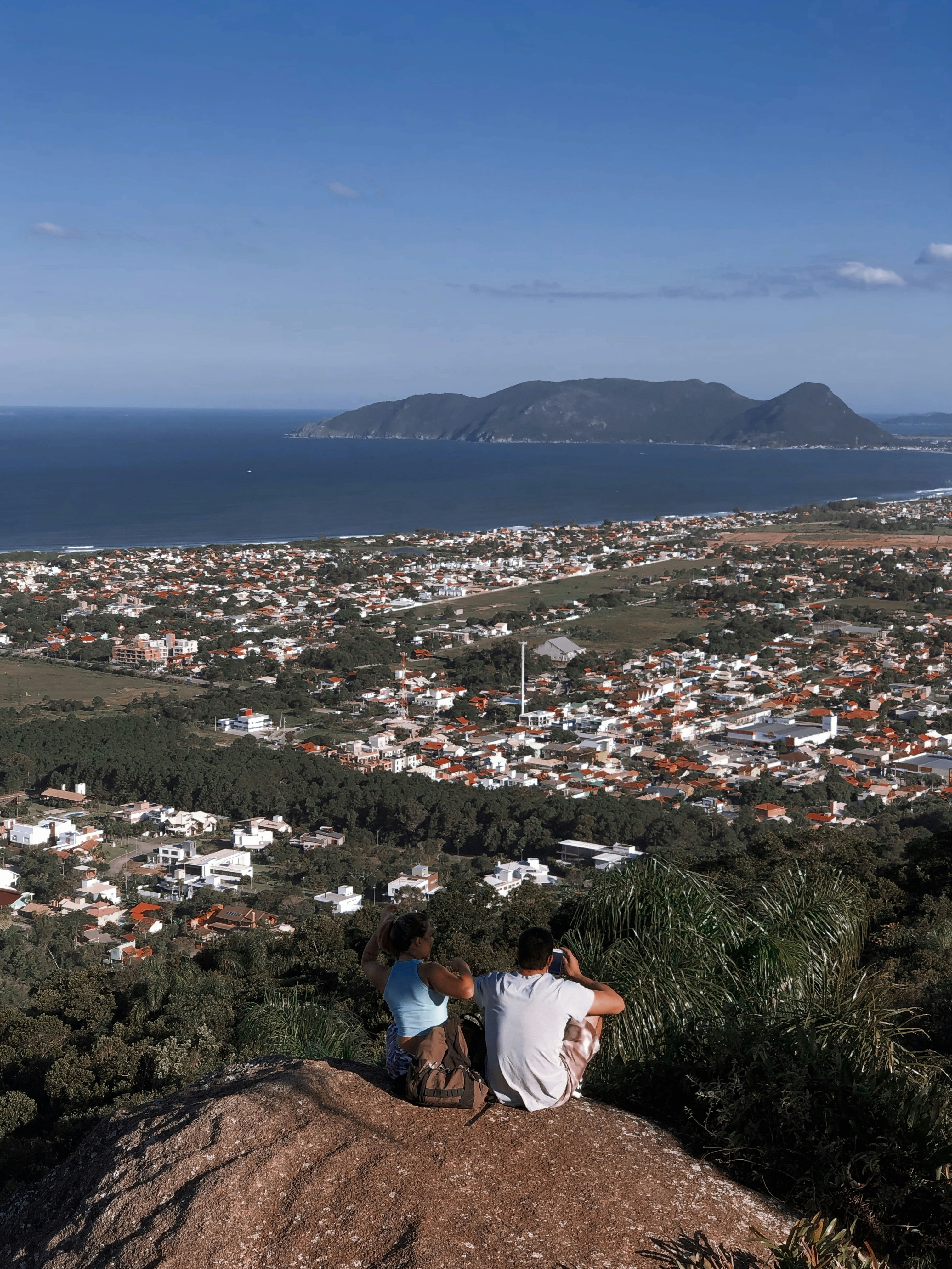
  • Panoramic view over the Florianópolis coastline from a high lookout

Orientation

The island in one screen.

Everything logistical, before the pretty pictures start.

General Info

What makes the island famous

Florianópolis — Floripa to everyone who lives here — is a single island of 42 beaches linked to the mainland by three bridges, and one of Brazil’s most famous escapes for a reason: a wild surf coast, a string of 250-year-old Azorean fishing villages, and a booming remote-work scene all share a strip of land you can drive end to end in about ninety minutes.

The island splits almost exactly down the middle. The south stays undeveloped on purpose — dirt roads, Atlantic forest running to the sand, and beaches you often reach only on foot — while the north is calmer and more social, with warmer, flatter water, family beaches, and the island’s most polished beach clubs. Most first visits base in the north and detour south for a day; people who fall for the island tend to do the opposite.

It’s also one of Brazil’s best-known surf destinations — Praia Mole and Joaquina have hosted national and international competitions for decades — and from about July to November it sits inside one of South America’s best whale-watching seasons, as southern right whales come in close to the Santa Catarina coast to calve. Sightings happen right off the island’s own beaches some winters, though the dedicated whale-watching boats run from Praia do Rosa, about two hours south.

Where It Is

South Brazil, just offshore

Florianópolis is the capital of Santa Catarina, in Brazil’s far south — an island of 424 km² joined to the mainland by three bridges. It sits roughly 700 km south of São Paulo and 1,100 km south of Rio.

Florianópolis Florianópolis

27.60° S, 48.55° W

See the South on the interactive map

Safety

One of Brazil’s easiest cities

10 /10

Our rating — Florianópolis is about as easy as Brazil gets for a first-time visitor.

Florianópolis consistently ranks among the safest state capitals in Brazil and carries one of the country’s highest human-development scores. It is the single biggest reason the expat scene took root here.

  • Normal city sense is enough: watch your things on busy beaches, and do not flash a phone or camera at night.
  • Use Uber or 99 after dark rather than walking unlit stretches between beach districts.
  • The Atlantic here has real currents. Swim on flagged beaches in the north, and treat the south coast as a surf coast rather than a swimming one.
  • Tap water is treated and safe in the city, though most locals still drink filtered.

Getting There

FLN, and one connection

Hercílio Luz International (FLN) sits 12 km south of downtown, with a terminal opened in 2019 that is comfortably the nicest small airport in Brazil.

  • From the US there is no nonstop. Connect through São Paulo (GRU) — the onward hop is about an hour — or through Panama City.
  • From Rio de Janeiro (GIG) it is roughly 1h30m.
  • Seasonal direct flights link Buenos Aires, Montevideo and Santiago over the southern summer.
  • Airport to Lagoa da Conceição is about 30 minutes; to Jurerê in the north, closer to 50.

Getting Around

Rent the car. Really.

The island is long and its best parts sit at opposite ends. Buses between them route through a central terminal and can turn a 40-minute drive into a two-hour errand.

  • A rental car is what makes the wild-south-morning, social-north-evening rhythm possible. Book well ahead for January.
  • Uber and 99 work well across the developed areas and are cheap by US standards.
  • Inside one district — Lagoa, Jurerê, Campeche — you can happily go carless for a few days.
  • Two roads do most of the work: SC-401 north, SC-405/406 south. In January, both crawl.

The big four

The landmarks worth building days around.

Not a top-ten list. These are the four places that, if you left the island without seeing them, you would not really have seen Florianópolis.

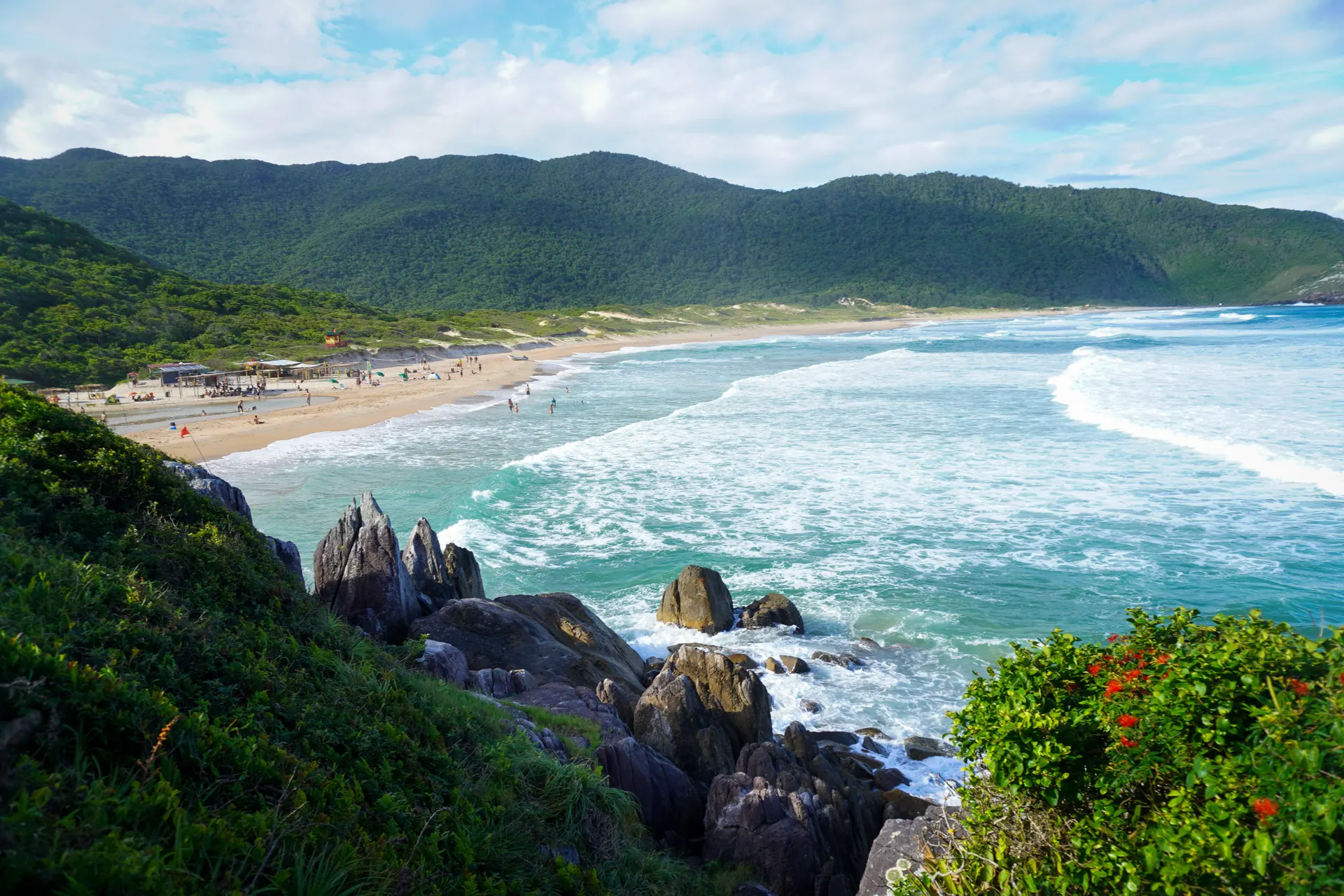
Lagoinha do Leste beach and its lagoon seen from the ridge trail high above 01

The hike-in beach

Lagoinha do Leste

Getting in
On foot only, 3.5 km each way
Time
1.5h in from Pântano do Sul
Best at
Early morning, before the heat

One of the most photographed beaches in Brazil, and the reason it stays that way is that no road reaches it. You earn it. The classic trail climbs through Atlantic forest and over a ridge before dropping onto a wide, empty crescent of sand with a freshwater lagoon behind it.

Two ways in: the main trail from Pântano do Sul is longer and gradual; the Morro da Coroa route from Matadeiro is steeper, shorter, and has the better view from the top. Carry more water than you think you need — there is nothing to buy at the other end.
Brilliant turquoise clear water off Ilha do Campeche with a boat anchored offshore 02

The island off the island

Ilha do Campeche

Getting in
Small boat, 20–30 minutes
Leaves from
Armação, Campeche or Barra da Lagoa
Note
Daily visitor cap — book ahead in summer

You leave the main island entirely, cross a short stretch of open water, and land somewhere with shallows clear enough to see your feet. Campeche is a protected conservation and archaeological site, so visitor numbers are capped by law — which is exactly why it still looks the way it does.

Guides run short walks to the prehistoric rock inscriptions carved into the boulders inland, and they are worth the twenty minutes. Half beach day, half small expedition, and the crossing itself is a good part of it.

The steel span of the Hercílio Luz bridge crossing the channel into Florianópolis 03

The symbol of the city

Ponte Hercílio Luz

Opened
1926 — reopened 2019 after restoration
Length
819 m of steel
Best at
Dusk, when the lights come up

The steel bridge on every postcard, every fridge magnet and the city’s own coat of arms. When it opened in 1926 it was the largest eyebar-chain suspension bridge in the world. It closed in 1982, spent nearly forty years shut, and reopened in December 2019 after one of the longest restorations in Brazilian engineering.

Traffic uses the two newer bridges alongside it, so this one now belongs to people on foot and on bikes. Walk out onto it at dusk when the lighting comes on and the whole span turns into the best free thing to do in the city.

The green Lagoa da Conceição lagoon ringed by hills, seen from a hilltop lookout 04

The island’s living room

Lagoa da Conceição

Size
~20 km² of brackish lagoon
Why stay here
Most central base on the island
Do not miss
The Morro da Lagoa lookout

A huge brackish lagoon in the middle of the island, ringed by hills, with a small town — the Centrinho — packed along one shore. It is the island’s social and geographic center, and if you are only picking one base, this is usually it: everything is within thirty minutes.

Stop at the Morro da Lagoa lookout on the way in for the view that makes the whole island make sense. On the water, flat conditions mean paddleboards in the morning and kitesurfers by afternoon; on the far shore, Costa da Lagoa is a village with no road to it at all, reachable only by boat or a 7 km lakeside trail.

What to actually do

Four islands’ worth of days.

Pick a category and the grid re-filters underneath. Every one of these is a realistic half-day, not a bucket-list fantasy.

Beaches

  • Surfers in the waves at Joaquina with the tall pale sand dunes rising behind the beach

    East coast · half day

    Surf and sandboard Joaquina

    The island’s loudest surf identity: a competition beach for decades, and on the right swell the lineup is serious. Even if you never touch a board, come for the dune field piled up behind it, which people sandboard down and which turns gold in late-afternoon light.

  • East coast · half day

    Watch the paragliders land at Praia Mole

    The island’s scene beach, hemmed by green headlands. Pilots launch off Morro da Lagoa above and touch down on the sand in front of you — and you can fly tandem yourself with a school, no experience needed.

  • Aerial view of the pale dune field behind a Florianópolis beach

    North-east · half day

    Praia do Santinho and its rock carvings

    A long north-east beach with its own dune field and, at the northern end, boulders carved with prehistoric inscriptions you can walk right up to. A rare Floripa combination: a genuine beach day with an archaeological site at one end of it.

  • Horseback riding along the water’s edge on the long, empty sand of Praia do Mocambique

    East coast · half day

    Ride horseback down Praia do Mocambique

    The longest beach on the island — a straight run of open sand backed by protected forest with almost nothing built on it. Riding along the waterline is a genuinely local thing to do here, and far better than it sounds.

Active

  • A canoe on the calm water of Lagoa da Conceição with the surrounding hills behind

    Lagoa da Conceição · 2 hours

    Paddleboard the flat water at sunrise

    The lagoon is glass before about nine in the morning. Rental shacks along the Centrinho shore hand you a board for a few reais an hour, and the far shore is close enough to make crossing it a genuine outing rather than a lap.

  • Lagoa da Conceição · half day

    Kitesurf the afternoon thermal

    By early afternoon the wind fills in reliably and the lagoon becomes one of the best flat-water kite spots in southern Brazil — shallow, no waves, and forgiving in a way the open Atlantic is emphatically not. Schools on the north shore run beginner courses.

  • Lagoa da Conceição · half day

    Boat to lunch at Costa da Lagoa

    A fishing village on the far shore with no road to it — the boat is the road. Small public launches leave from the Centrinho, take about forty minutes, and drop you at a string of waterside restaurants where lunch is whatever came out of the lagoon.

  • Lagoa da Conceição · 2 hours

    Sunset from the top of the dunes

    The sand dunes between the lagoon and Joaquina sit high enough to watch the sun go down over the water from the crest of them. It costs nothing, takes twenty minutes to climb, and is the closest thing the island has to a nightly ritual.

  • Far south · 4–5 hours round trip

    Hike the Trilha da Lagoinha do Leste

    The island’s signature hike, and the only way to reach its most famous beach. Forest, a ridge crossing, then an empty crescent of sand with a lagoon behind it. Go early, carry water, and budget more time than the distance suggests.

  • Lagoa da Conceição · 3 hours one way

    Hike the Trilha da Costa da Lagoa

    Seven kilometers along the lagoon shore to the boat-only village, through forest and past a handful of waterfalls. The trick everyone uses: walk in, eat lunch, and take the boat back rather than doing it twice.

  • A clifftop lookout over the ocean and coastline of southern Florianópolis

    Southern tip · half day

    Walk out to Naufragados and the lighthouse

    The very bottom of the island: a forty-minute walk through forest from the end of the road to a small beach almost nobody reaches, with an 1861 lighthouse on the point above it and the mainland hills across the strait.

  • Panoramic view over the Florianópolis coastline from a high lookout

    Central · 2 hours

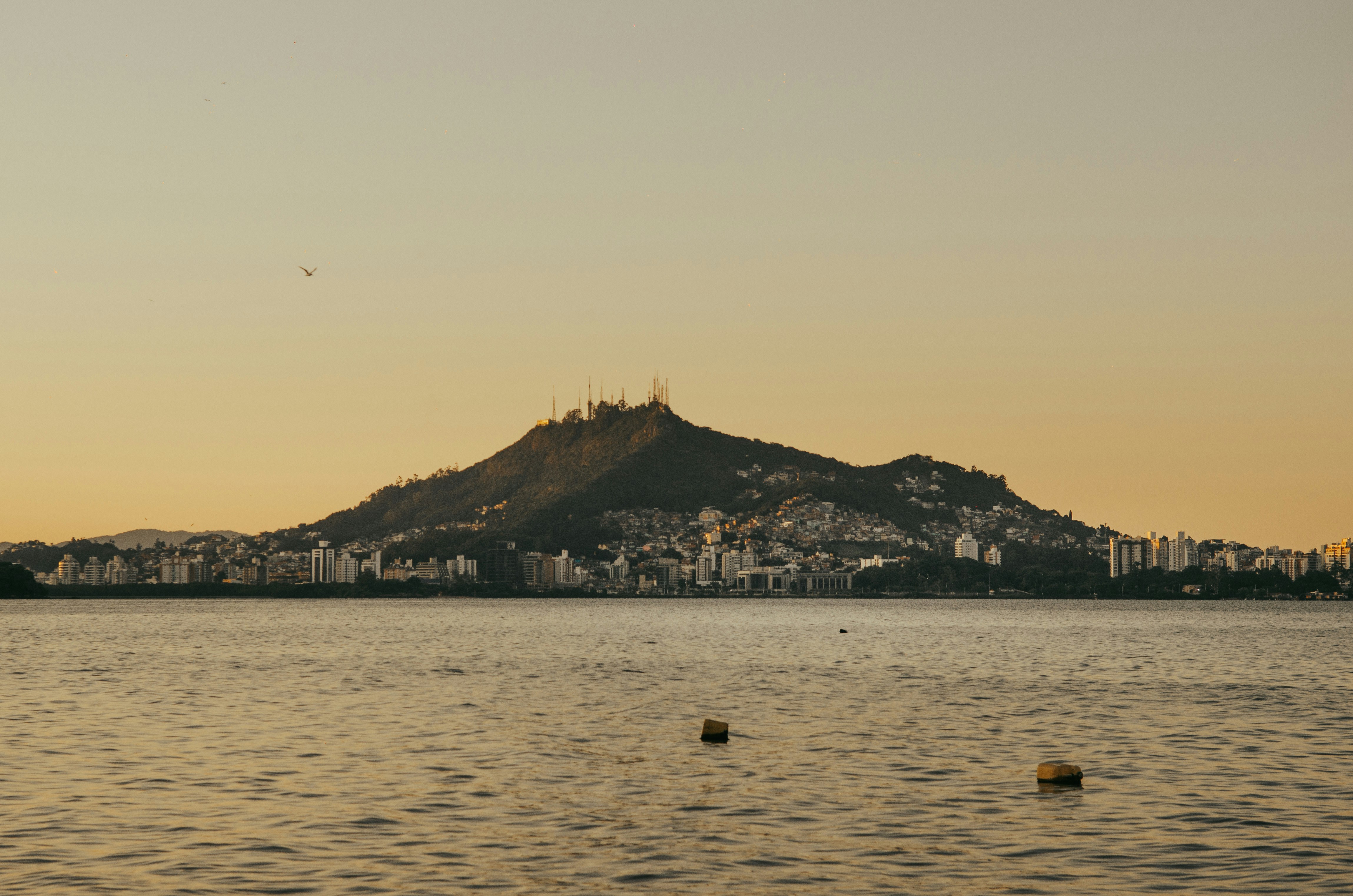
    Climb Morro da Cruz for the whole island at once

    The hill directly above downtown, and the fastest way to understand the geography you have been driving around all week: the bridges, the bay, the lagoon and both coasts laid out in a single turn. Best in the last hour of light.

Boat Tours

  • From Armação or Campeche · full day

    Day crossing to Ilha do Campeche

    The best boat day on the island. Twenty-odd minutes across open water to a capped-entry protected island with water clear enough to snorkel straight off the sand, plus guided walks to the rock inscriptions inland.

  • From Canasvieiras · full day

    Schooner to Anhatomirim and the dolphin bay

    A classic north-island day trip: a wooden schooner out to the 18th-century Santa Cruz fortress on Ilha de Anhatomirim, with a slow pass through the bay where resident dolphins are regularly spotted on the way.

  • South-west coast · 2 hours

    Oyster-farm boat in the Ribeirão channel

    Short, calm and genuinely interesting: out into the channel among the floating racks that produce the overwhelming majority of Brazil’s farmed oysters, usually with the grower doing the talking. It ends the way you would hope.

  • North of the island · full day

    Dive the Arvoredo marine reserve

    The clearest water within reach of Floripa. Arvoredo is a protected marine biological reserve north of the island, and licensed operators run dive and snorkel trips into the permitted zones — the one place around here that feels tropical rather than Atlantic.

Food

  • Fresh oysters on a plate at a waterside table in Ribeirão da Ilha, oyster farm in the channel behind

    Ribeirão da Ilha, south-west coast

    Eat oysters straight off the farm in Ribeirão da Ilha

    The island produces the overwhelming majority of Brazil’s farmed oysters, and here you eat them a few meters from the racks they came off. Raw with lime, or gratinadas under cheese — order both and settle the argument yourself.

  • Pântano do Sul and Barra da Lagoa

    Work through a sequência de camarão

    Not a dish — a sequence. The same shrimp arrives at your table five or six ways in a row: breaded, in garlic and oil, as a fritter, folded into a pastry, with rice, pirão and salad underneath it all. Ordered for two, defeats three.

  • The southern fishing villages, May–July

    Catch tainha season on the coals

    When the mullet run arrives in winter, whole villages still turn out to haul the nets in from the beach by hand. The fish goes straight onto the coals, split and salted. If you are here between May and July, this is the meal to plan a day around.

  • Mercado Público, downtown

    Grab a pastel at the Mercado Público

    The 1898 covered market downtown is where the island eats lunch. A shrimp pastel and a glass of pressed sugarcane juice at one of the counter stalls costs almost nothing, and a cold chope afterwards at Box 32 is practically municipal policy.

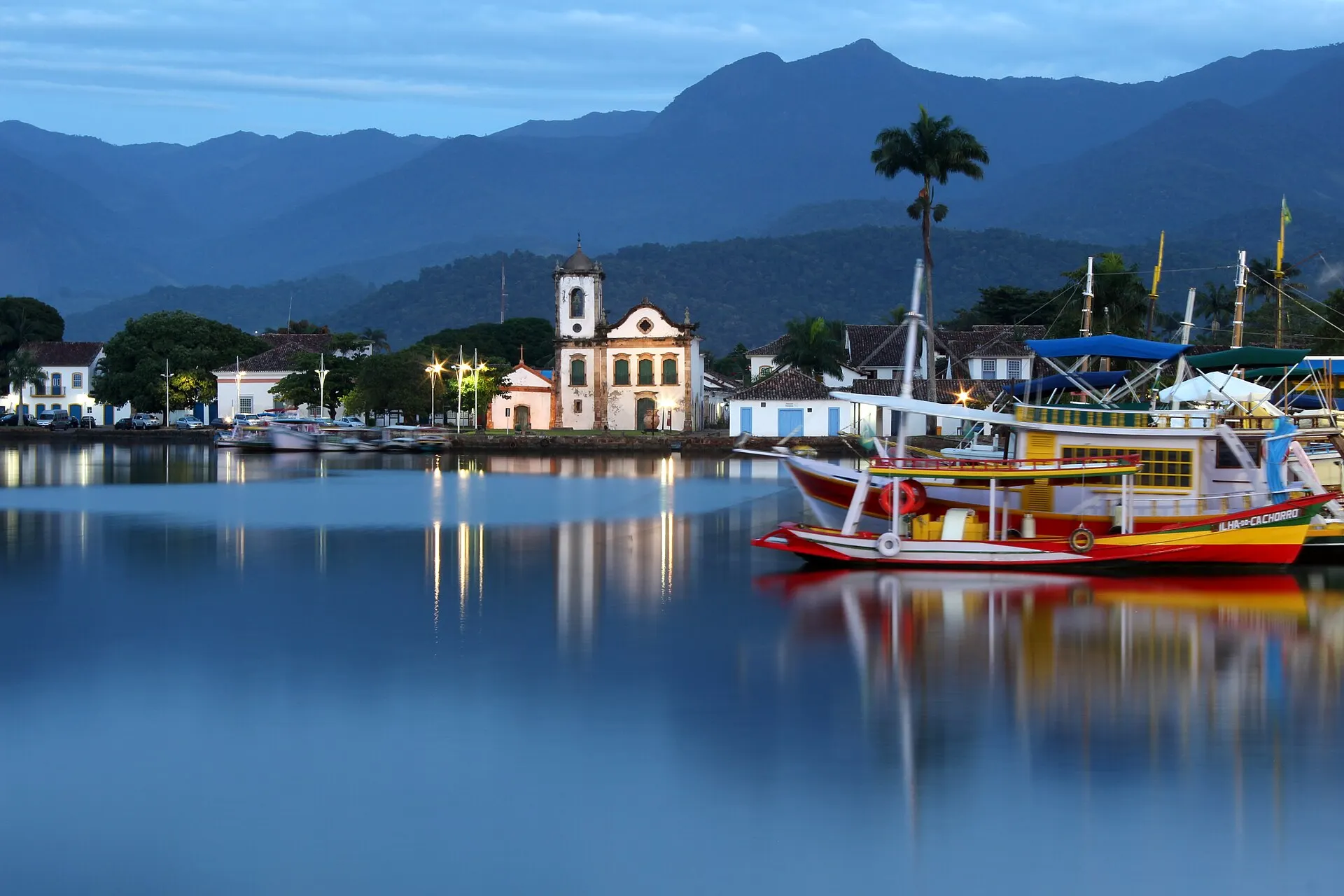
  • Colorful Azorean colonial fishing village with a whitewashed church on the island coast

    Santo Antônio de Lisboa, north-west coast

    Watch the sunset over berbigão in Santo Antônio de Lisboa

    The most Portuguese corner of the island — whitewashed 18th-century houses along a calm channel that faces west, so this is where you go for the sunset. Berbigão, the local cockle, comes steamed with garlic, and is what everyone at the next table is eating.

  • Every beach kiosk on the island

    Cool down with açaí straight off the sand

    Frozen açaí served thick in a bowl with banana and granola, eaten with a spoon while still salty from the water. On this island it is genuinely what people eat after a session, not a tourist prop.

  • Upscale beach-club scene with calm water and stylish loungers at Jurerê Internacional

    Jurerê Internacional, north coast

    Linger over a beach-club lunch in Jurerê

    The island’s polished half does food too: beach clubs on the sand where lunch runs from noon to sunset and the seafood is excellent, served with a DJ. Not the authentic island — but a genuinely good day, and a deliberate contrast to the south.

Picture-Perfect

  • Surfers in the waves at Joaquina with the tall pale sand dunes rising behind the beach

    East coast · half day

    Surf and sandboard Joaquina

    The island’s loudest surf identity: a competition beach for decades, and on the right swell the lineup is serious. Even if you never touch a board, come for the dune field piled up behind it, which people sandboard down and which turns gold in late-afternoon light.

  • East coast · half day

    Watch the paragliders land at Praia Mole

    The island’s scene beach, hemmed by green headlands. Pilots launch off Morro da Lagoa above and touch down on the sand in front of you — and you can fly tandem yourself with a school, no experience needed.

  • A canoe on the calm water of Lagoa da Conceição with the surrounding hills behind

    Lagoa da Conceição · 2 hours

    Paddleboard the flat water at sunrise

    The lagoon is glass before about nine in the morning. Rental shacks along the Centrinho shore hand you a board for a few reais an hour, and the far shore is close enough to make crossing it a genuine outing rather than a lap.

  • Lagoa da Conceição · 2 hours

    Sunset from the top of the dunes

    The sand dunes between the lagoon and Joaquina sit high enough to watch the sun go down over the water from the crest of them. It costs nothing, takes twenty minutes to climb, and is the closest thing the island has to a nightly ritual.

  • Far south · 4–5 hours round trip

    Hike the Trilha da Lagoinha do Leste

    The island’s signature hike, and the only way to reach its most famous beach. Forest, a ridge crossing, then an empty crescent of sand with a lagoon behind it. Go early, carry water, and budget more time than the distance suggests.

  • Panoramic view over the Florianópolis coastline from a high lookout

    Central · 2 hours

    Climb Morro da Cruz for the whole island at once

    The hill directly above downtown, and the fastest way to understand the geography you have been driving around all week: the bridges, the bay, the lagoon and both coasts laid out in a single turn. Best in the last hour of light.

  • From Armação or Campeche · full day

    Day crossing to Ilha do Campeche

    The best boat day on the island. Twenty-odd minutes across open water to a capped-entry protected island with water clear enough to snorkel straight off the sand, plus guided walks to the rock inscriptions inland.

A working plan

5 day sample itinerary

Built around the island’s geography, not a checklist — one focus a day, kept simple.

  1. 01
    The green Lagoa da Conceição lagoon ringed by hills, seen from a hilltop lookout

    Lagoa da Conceição

    Land, and learn the lagoon

    Touch down, drop your bags, and ease into island time — a lookout view, a warm swim, dinner over the water. Everything else can wait until tomorrow.

  2. 02
    A jutting rock ledge overlooking Lagoinha do Leste’s beach and lagoon from high on the ridge trail

    Pântano do Sul

    The wild south, on foot

    Hike through forest and over a ridge to a beach with no road to it — one of the most photographed stretches of sand in Brazil, and you earn every step.

  3. 03
    Brilliant turquoise clear water off Ilha do Campeche with a boat anchored offshore

    Ilha do Campeche

    Off the island entirely

    A short boat crossing to water so clear it barely looks real. Snorkel, wander to centuries-old rock carvings, and call it a rest day.

  4. 04
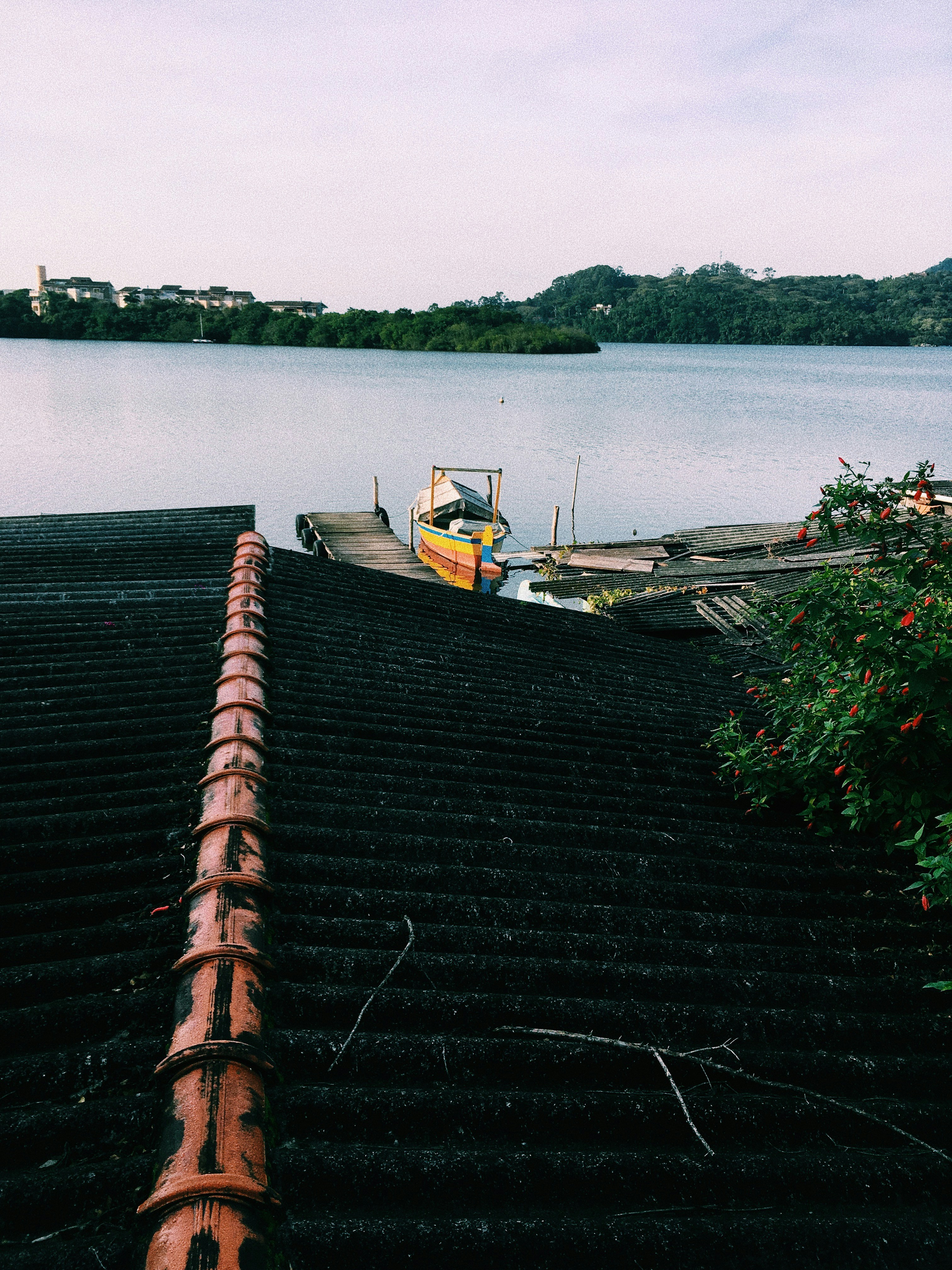
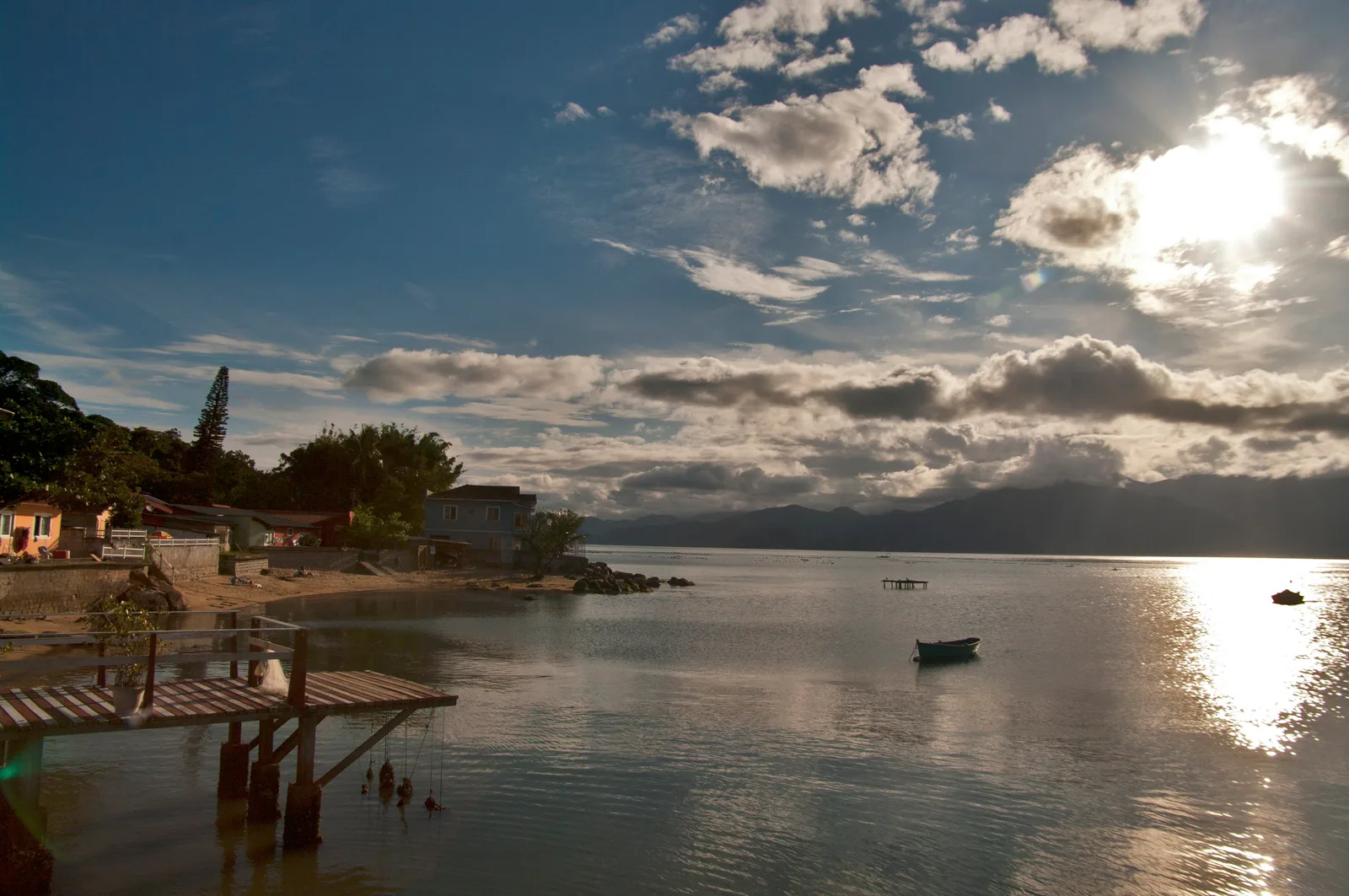
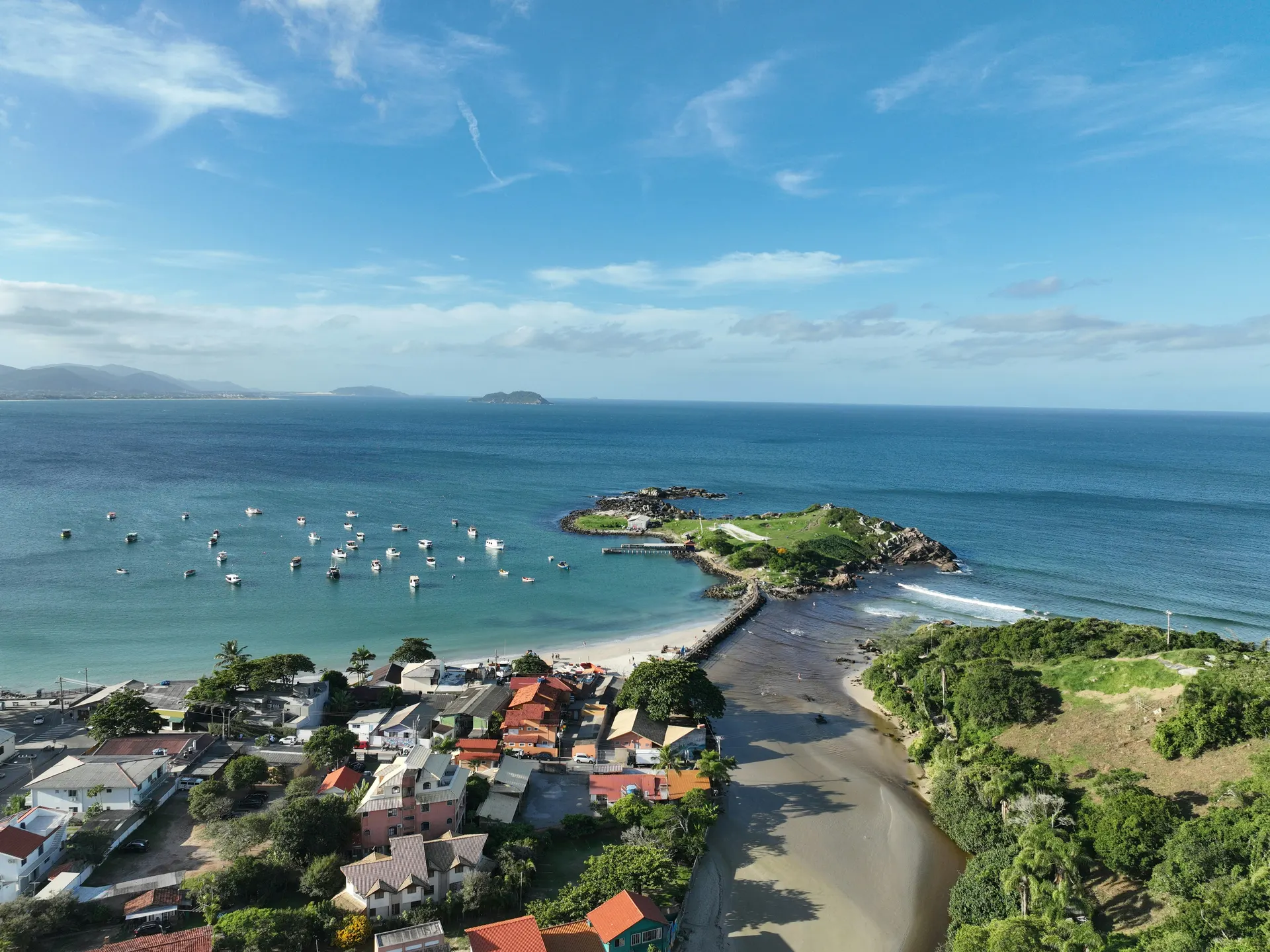
    Golden-hour light over the calm channel at Ribeirão da Ilha, colorful houses and a small boat on the water

    Ribeirão da Ilha

    Azorean coast, oysters, sunset

    Oysters pulled from the channel an hour before lunch, a 250-year-old fishing village, and a sunset over the water that ends the day exactly right.

  5. 05
    Upscale beach-club scene with calm water and stylish loungers at Jurerê Internacional

    Jurerê & Centro

    The social north, then the bridge

    Trade wild for warm — calm water, a long beach-club lunch, then the island’s steel bridge lit up at dusk. The last image worth taking home.

This is a starting shape, not a fixed departure — we rearrange it around your dates. Have it built for you

Timing

When to come, and when not to.

The season runs November to April. Inside it, the two ends are quietly better than the middle — and the middle is when everyone else comes.

How busy each month is in Florianópolis, with average air and sea temperatures.

Jan

Feb

Mar

Apr

May

Jun

Jul

Aug

Sep

Oct

Nov

Dec

  • Peak — book early, pay more
  • Shoulder — the sweet spots
  • Off-season — cool, green, cheap

Our pick

March–April

The sea still has all of summer stored in it, the light turns golden, and the trails are empty.

Runner-up

November

The season just opening. Warm, green and still quiet, before December fills the island up.

Go in knowing

January

Peak of peak. Best energy, worst traffic, highest prices, and every beach full.

The dates worth planning around

Réveillon (New Year’s Eve)

December 31

New Year’s Eve is the island’s biggest night by a distance. White clothes, fireworks over the bay, and beach parties along the north coast at Jurerê, Canasvieiras and Praia Brava. Accommodation goes months ahead and carries minimum stays.

Carnaval

February or early March — the dates move with Easter

Smaller and less formal than Rio’s, and far more beach-based: street blocos downtown, parties along the north coast, and a long-running LGBTQ+ celebration that has made Floripa one of Brazil’s most popular Carnaval destinations outside the big three.

Whale-watching season

Roughly July to November, peak August–September

Southern right whales come in close to the Santa Catarina coast every winter to calve, and it’s one of the best whale-watching seasons anywhere in South America. Sightings happen right off the island’s own beaches some years, but the dedicated whale-watching boats run from Praia do Rosa, about two hours south, where sightings are close to guaranteed in peak weeks.

Good to know

Before you come

When is the best time to visit Florianópolis? +

We live here, so take this as the local answer rather than the guidebook one: the season runs from November all the way through April. That whole stretch is beach weather. Inside it, December to March is the Brazilian summer, the warmest water and the liveliest scene, but also the busiest, especially in the north and especially in January. The two ends of the season are the ones we would pick for ourselves. November is warm and still quiet, and April is our favorite month on the island: the sea has all summer stored in it, the light turns golden, the trails are perfect and the crowds have gone home. Winter, June to August, is cool and green and good for hiking, but you will not want to swim much.

Do I need a car on the island? +

For a proper visit, it helps a great deal. The best spots are spread from the far south to the far north, and public transport between them is slow. A car (or a private driver) is what makes the wild-south-in-the-morning, social-north-at-night rhythm possible. Within a single walkable district like Lagoa or Jurerê you can manage without one for a few days, and ride apps work well in the developed areas, but to actually see the island you want wheels.

Is Florianópolis safe? +

Florianópolis is consistently ranked among the safest state capitals in Brazil, and it is one of the main reasons the expat scene has grown here. It feels relaxed, and normal big-city common sense is usually all you need: keep an eye on your things on busy beaches, do not flash valuables, and use ride apps late at night. It is one of the easier places in Brazil for a first-time visitor to feel at ease.

How many days do I need? +

Five is the honest minimum to see both halves of the island without spending the whole time driving, which is why the itinerary above is built that way. Three works if you accept that you are picking one half. Beyond a week, Floripa turns from a stop into a base, which is exactly what happens to a lot of people who come here, and it is worth knowing that going in.

People keep saying they moved here. Is that realistic? +

It is common enough that there is a whole ecosystem around it. Florianópolis has real digital infrastructure, a well-known tech and startup scene, and enough coworking spaces and English-speaking services that a foreigner can land and be functional within a week. Brazil offers a digital nomad visa and other longer-stay routes, and plenty of people test the idea with a one to three month stay before committing to anything. If relocation is the real reason you are curious about the island, it is worth planning the trip with that in mind from the start.

Keep going

Where Floripa fits in a bigger trip.

Almost nobody flies to Brazil for one island. These three pair naturally with Florianópolis — one short flight north, and a coastline that keeps getting better.

The Hercílio Luz Bridge in silhouette against a warm Florianópolis sunset

Skip the planning

Come see the island the way locals live it.

Tell us your dates, your pace, and whether this is a visit or a test run for something more permanent. We will shape a private Florianópolis itinerary around exactly that — the right base, the right half of the island on the right days, and the boat trips booked before they sell out.

  • One person, living in Brazil, replying to you directly
  • A reply within one business day — no call center, no bots
  • No cost to plan, and no obligation to book
  • Built around your dates, not a fixed departure