

Skip to content
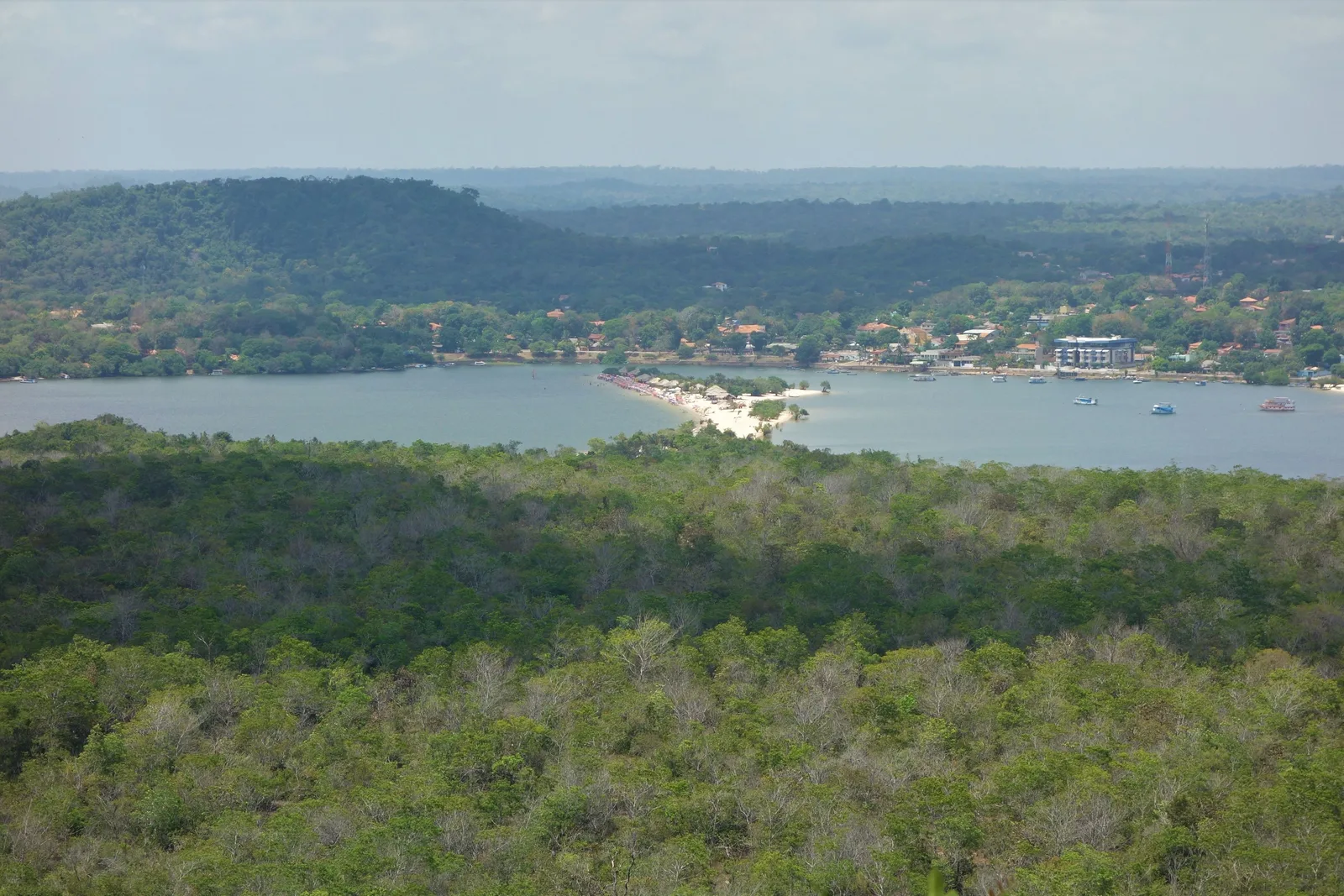
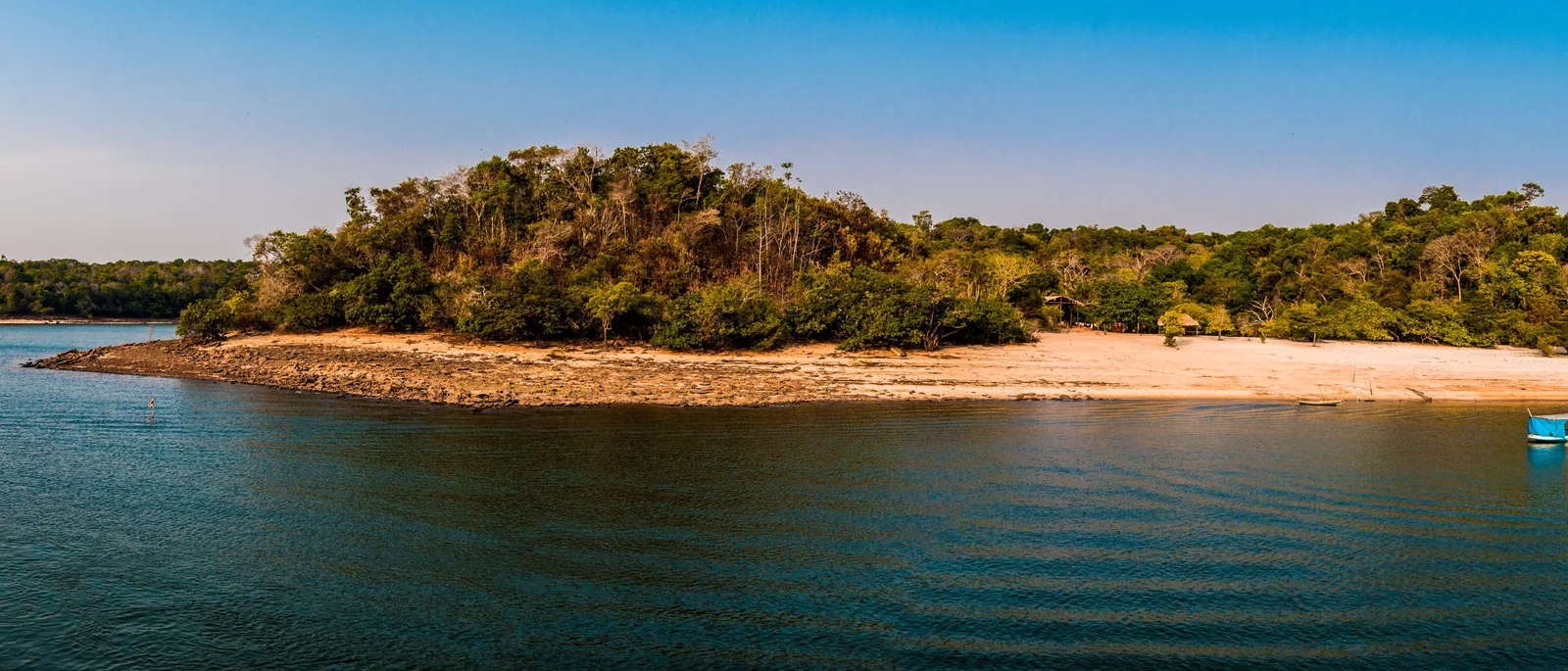
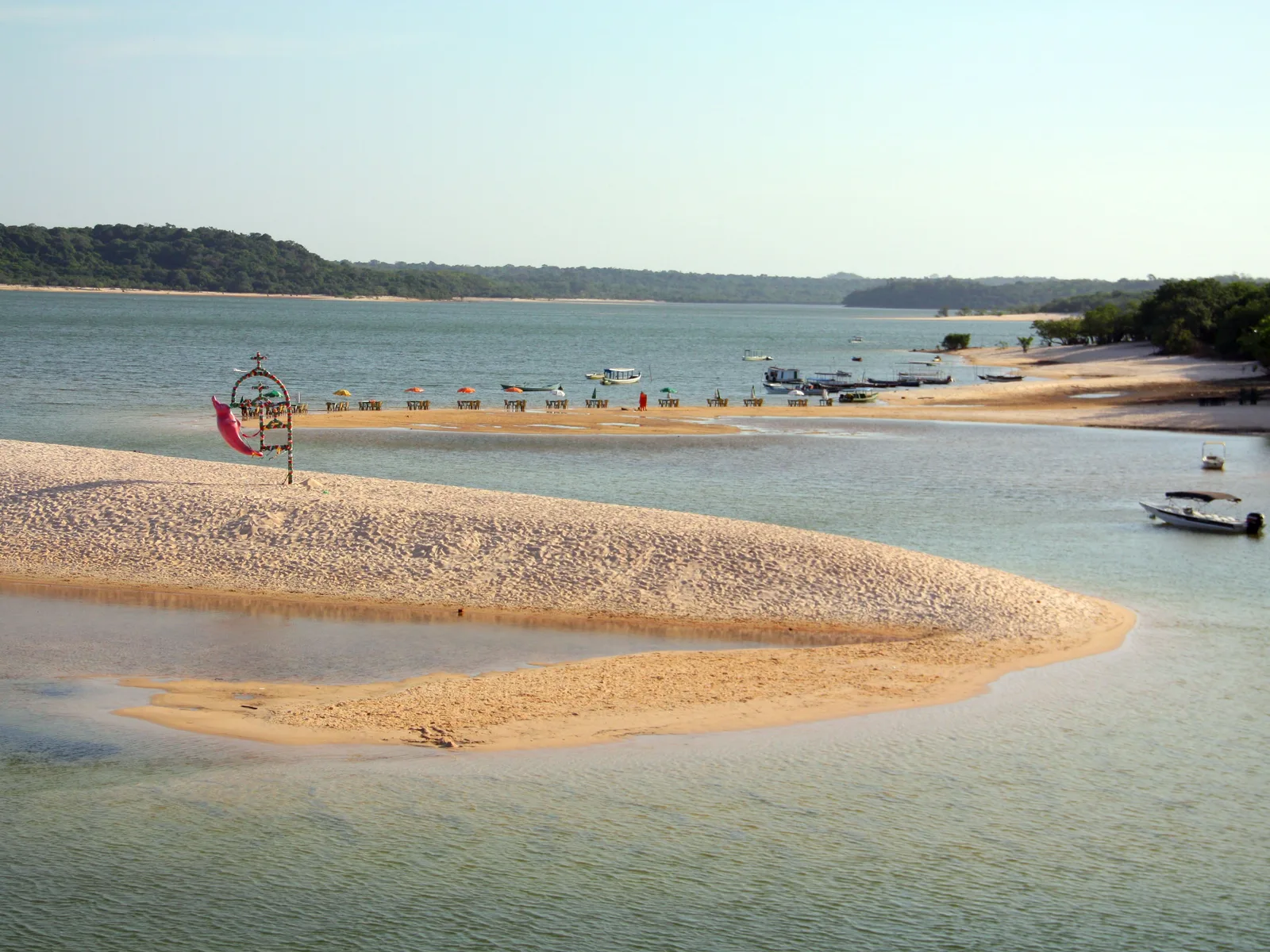
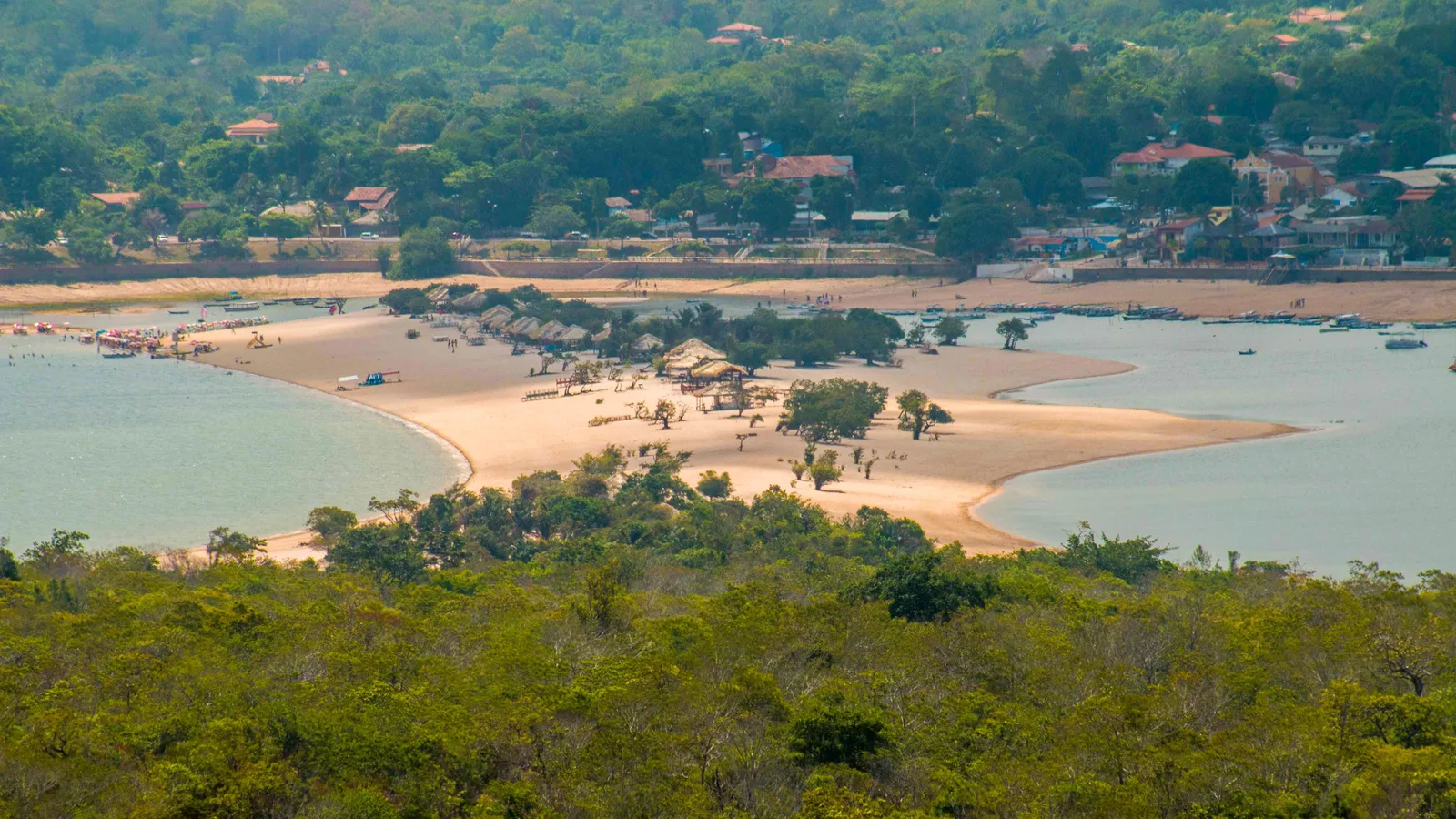
Alter do Chão from the hill across the water: a long curved spit of pale sand with thatched shelters and a few trees on it, pale green river water on both sides, and the village’s red roofs among trees on the far shore

Pará

Alter do Chão

White river beaches that come and go with the water.

Last checked October 2026

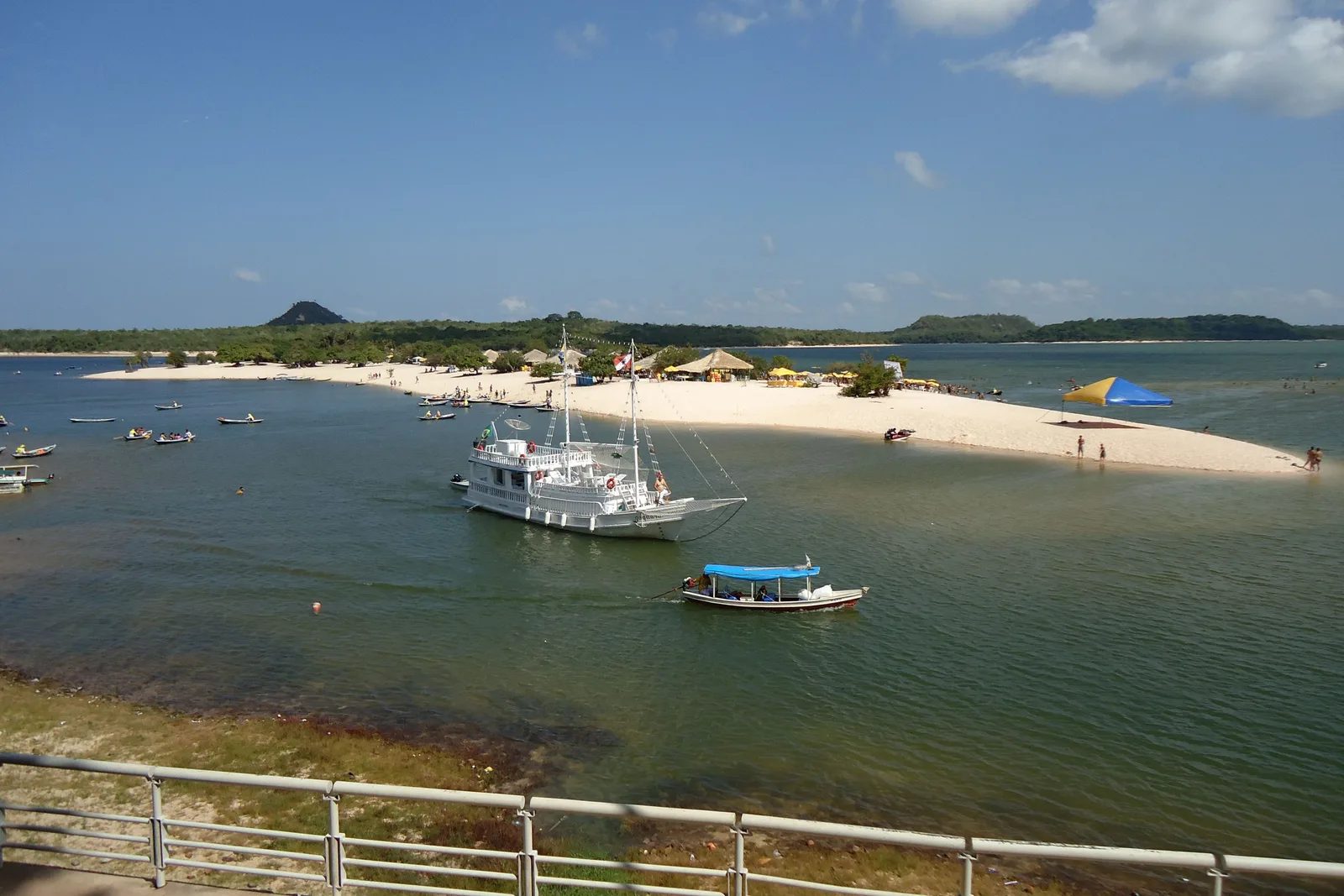
  • Two white sailboats and a small blue boat moored in green water off a strip of pale sand, a railing in the foreground and a low cone-shaped hill on the horizon
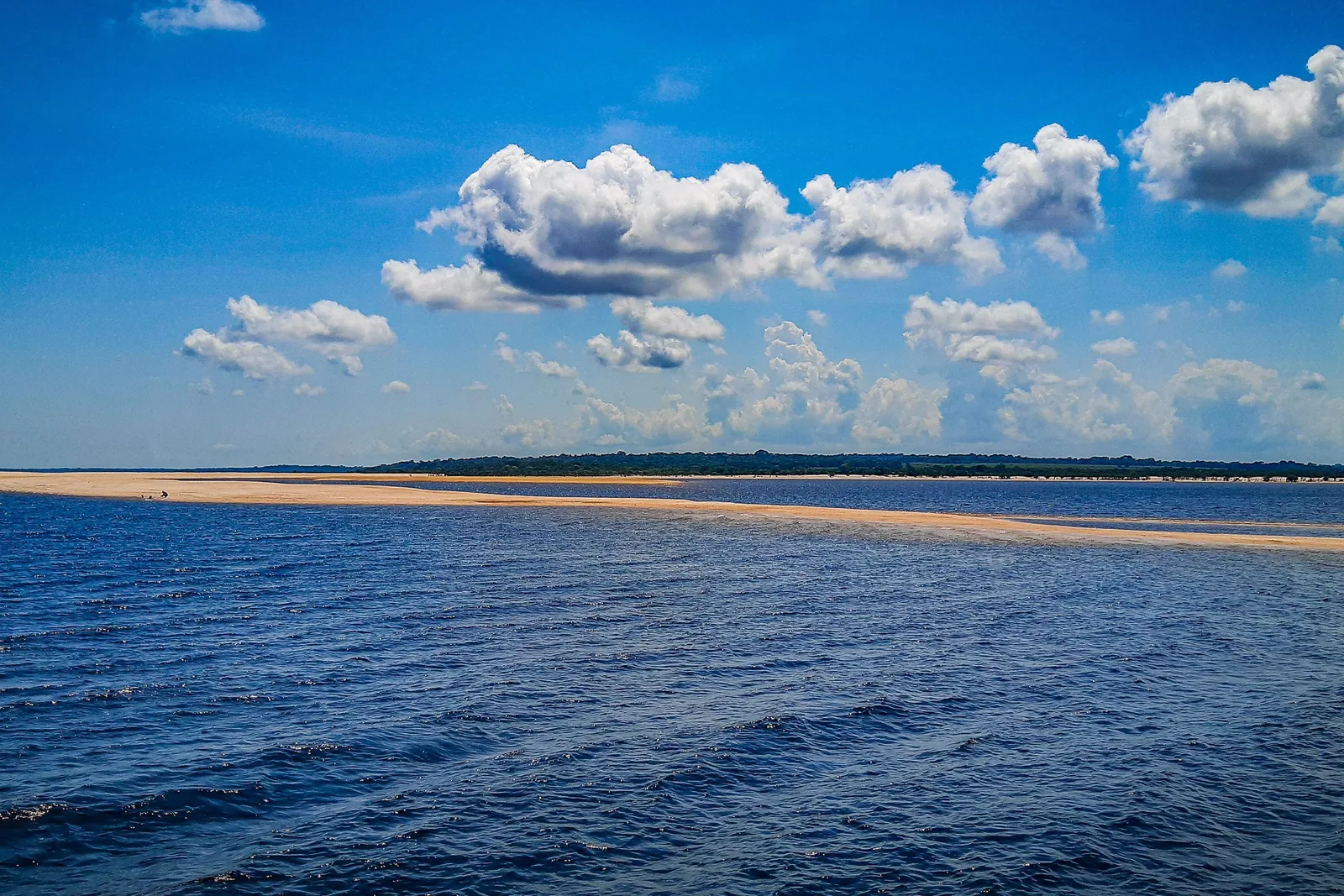
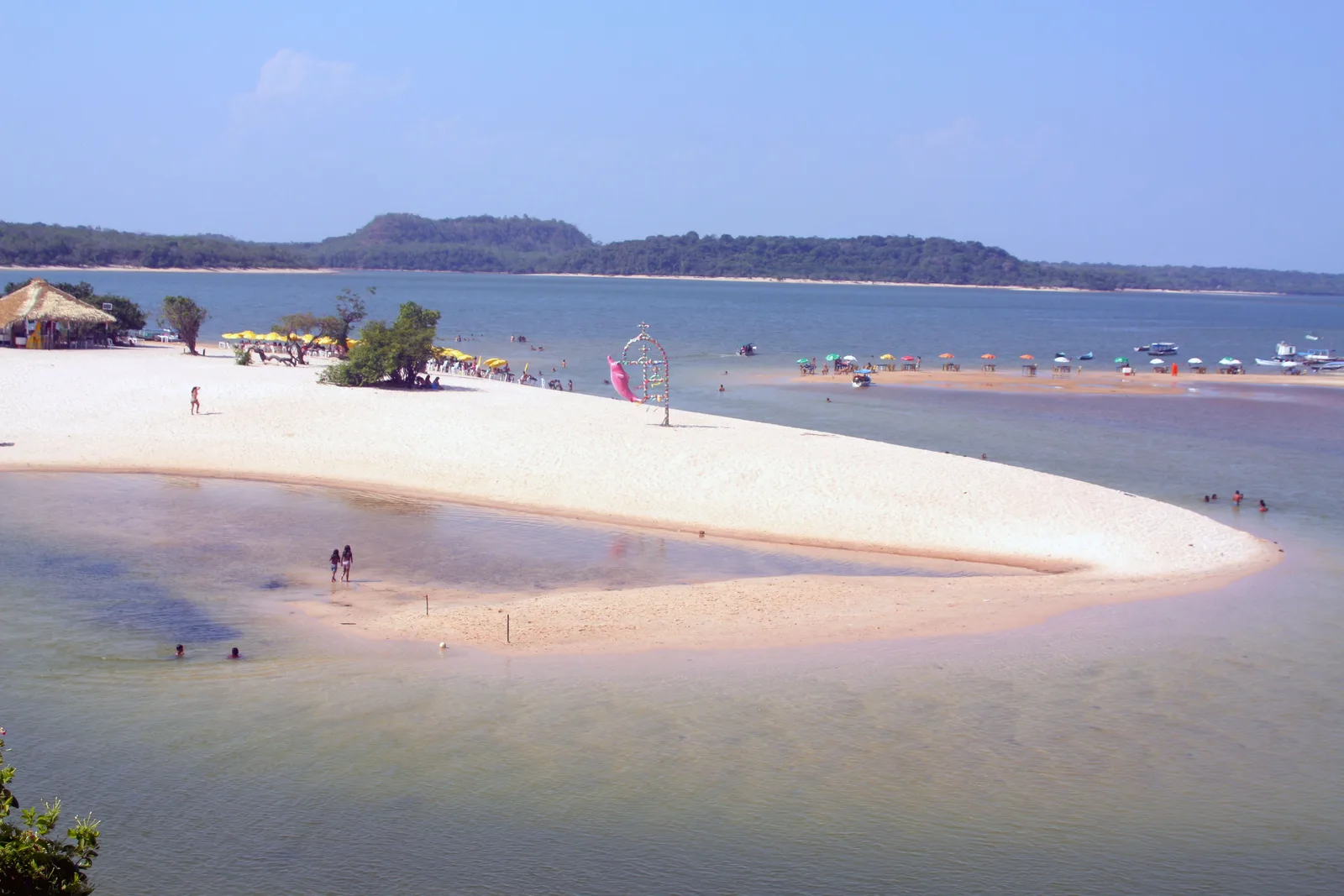
  • A long, bright white sandbar curving out into shallow river water, people standing far out on it and a line of low flat-topped hills along the far shore
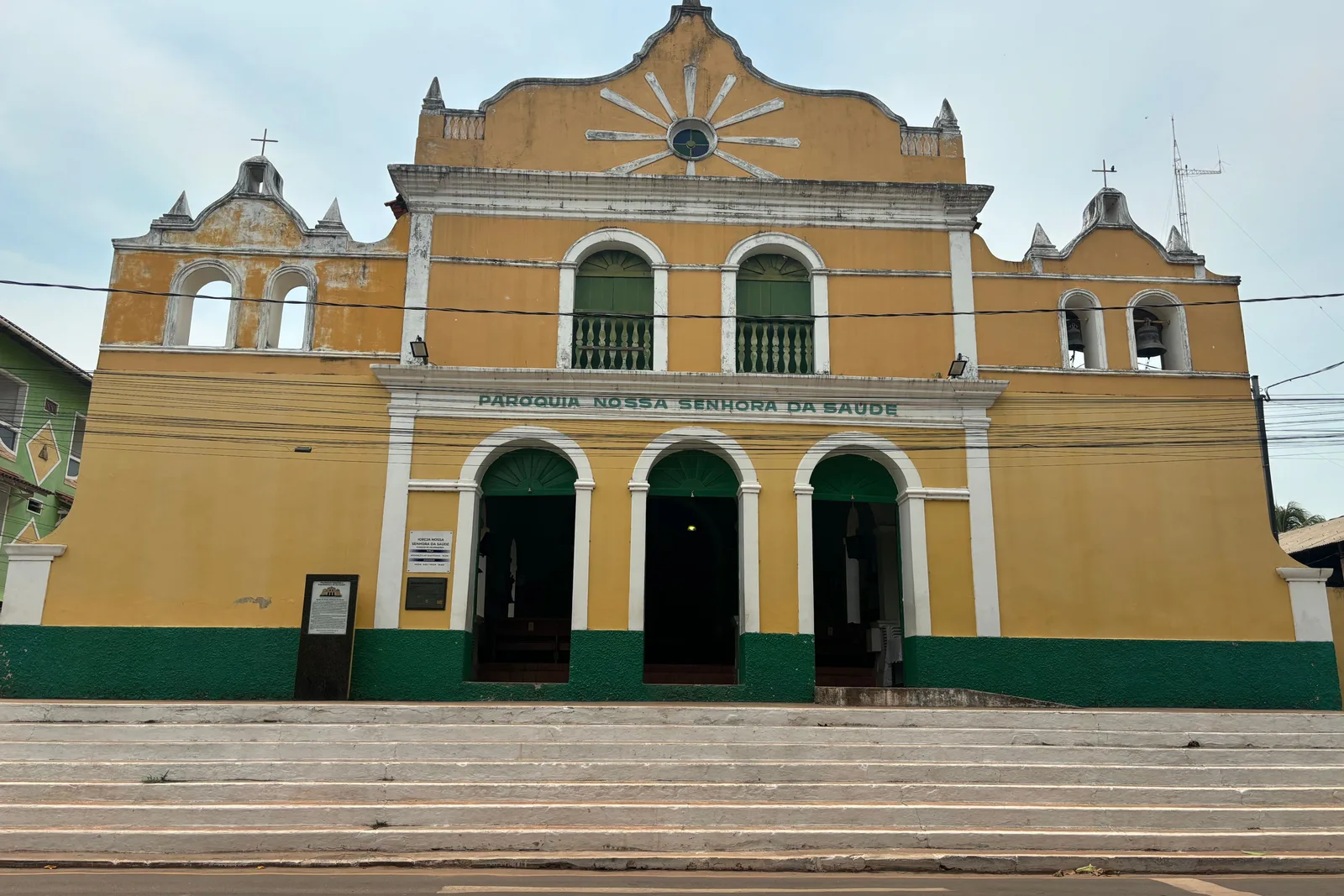
  • The yellow and green front of the village church in Alter do Chão, three arched doors under a curved gable and two small towers, at the top of a flight of steps
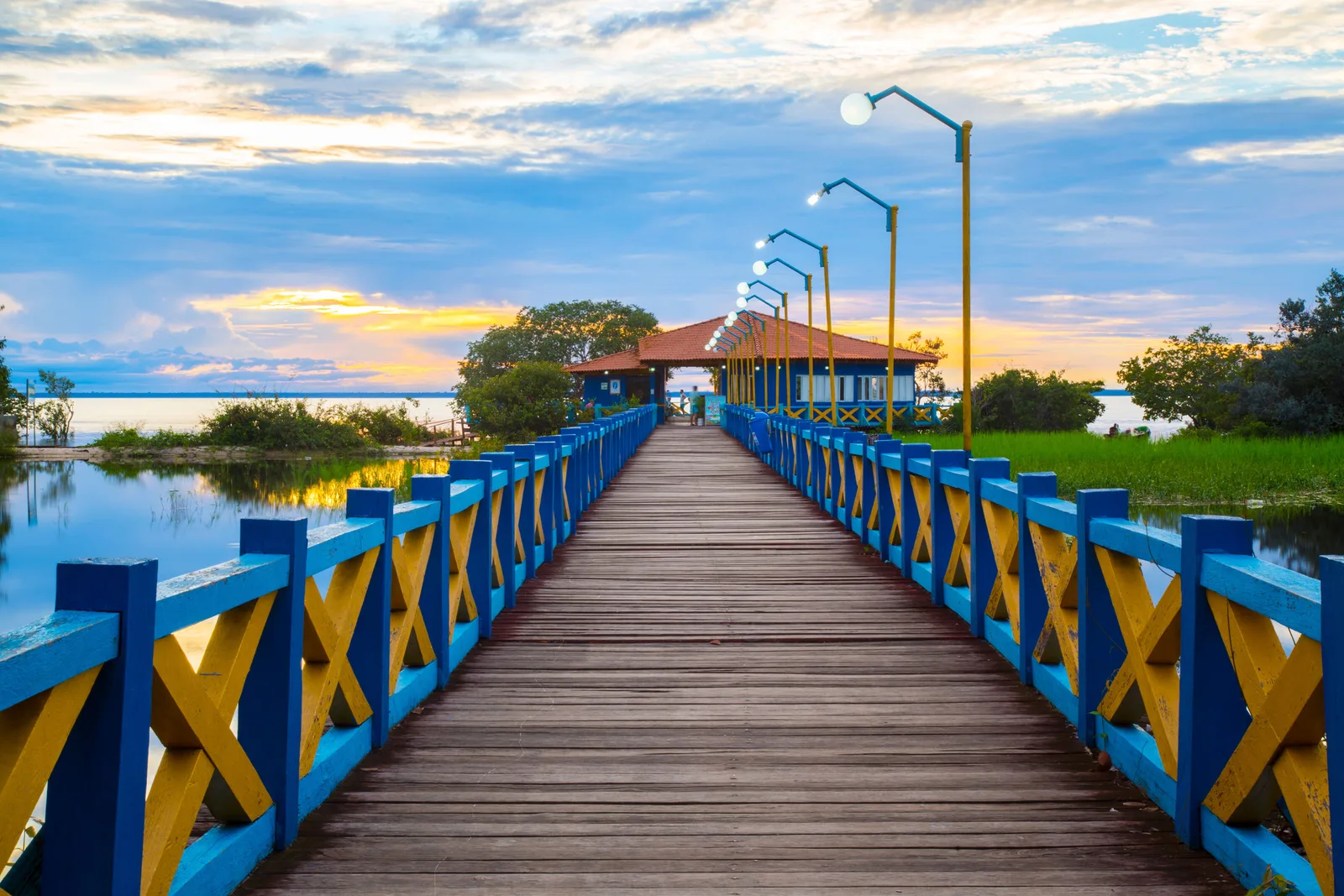
  • A wooden pier with blue and yellow railings running out over the water to a small roofed shelter, streetlamps along it and a bright evening sky behind
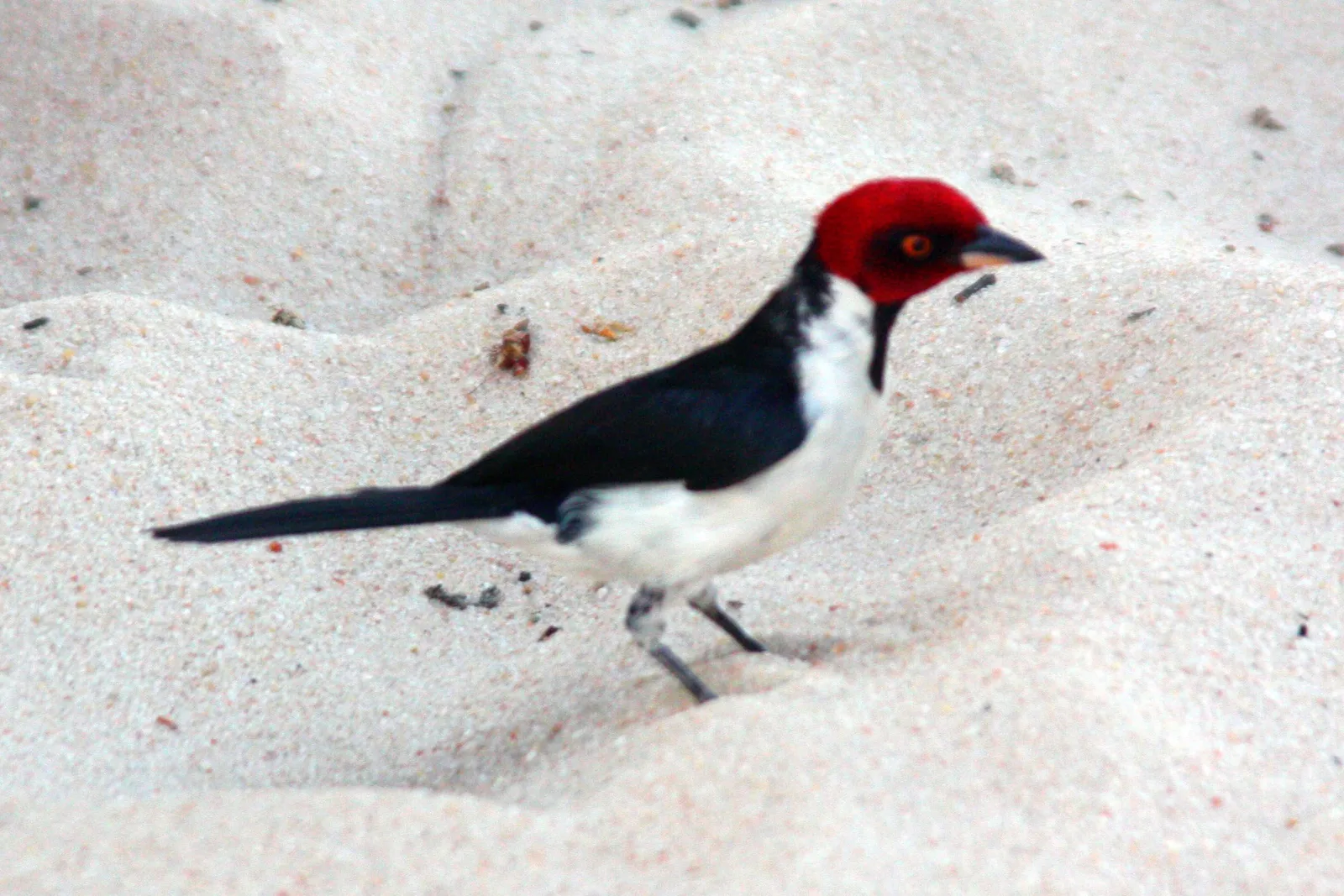
  • A small bird with a bright red head, black back and white belly standing on white sand
  • A woven basket heaped with small dark purple açaí berries, set on a cobbled pavement
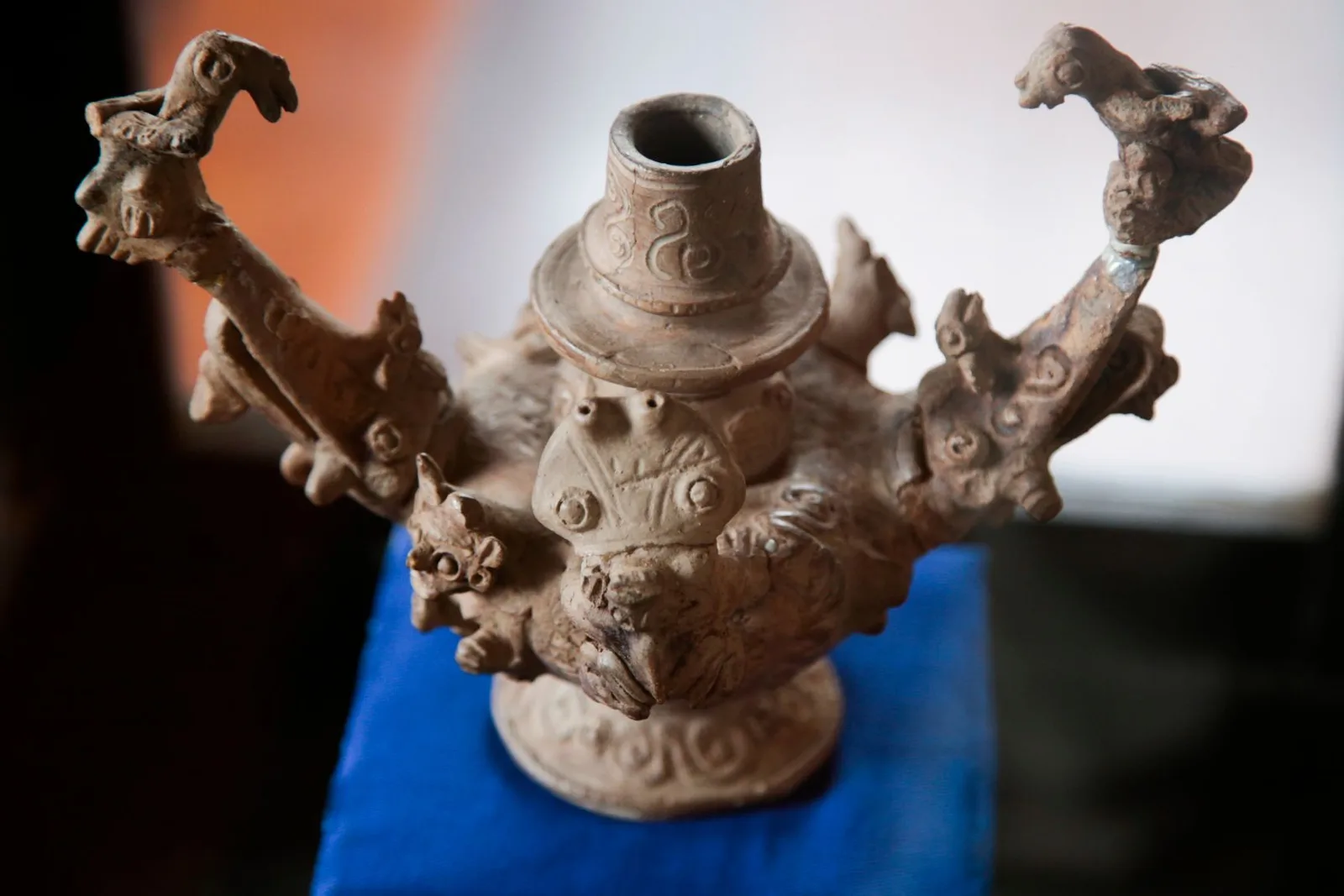
  • A pale clay vessel with a narrow neck and sculpted animal figures rising from its rim, photographed against a dark background
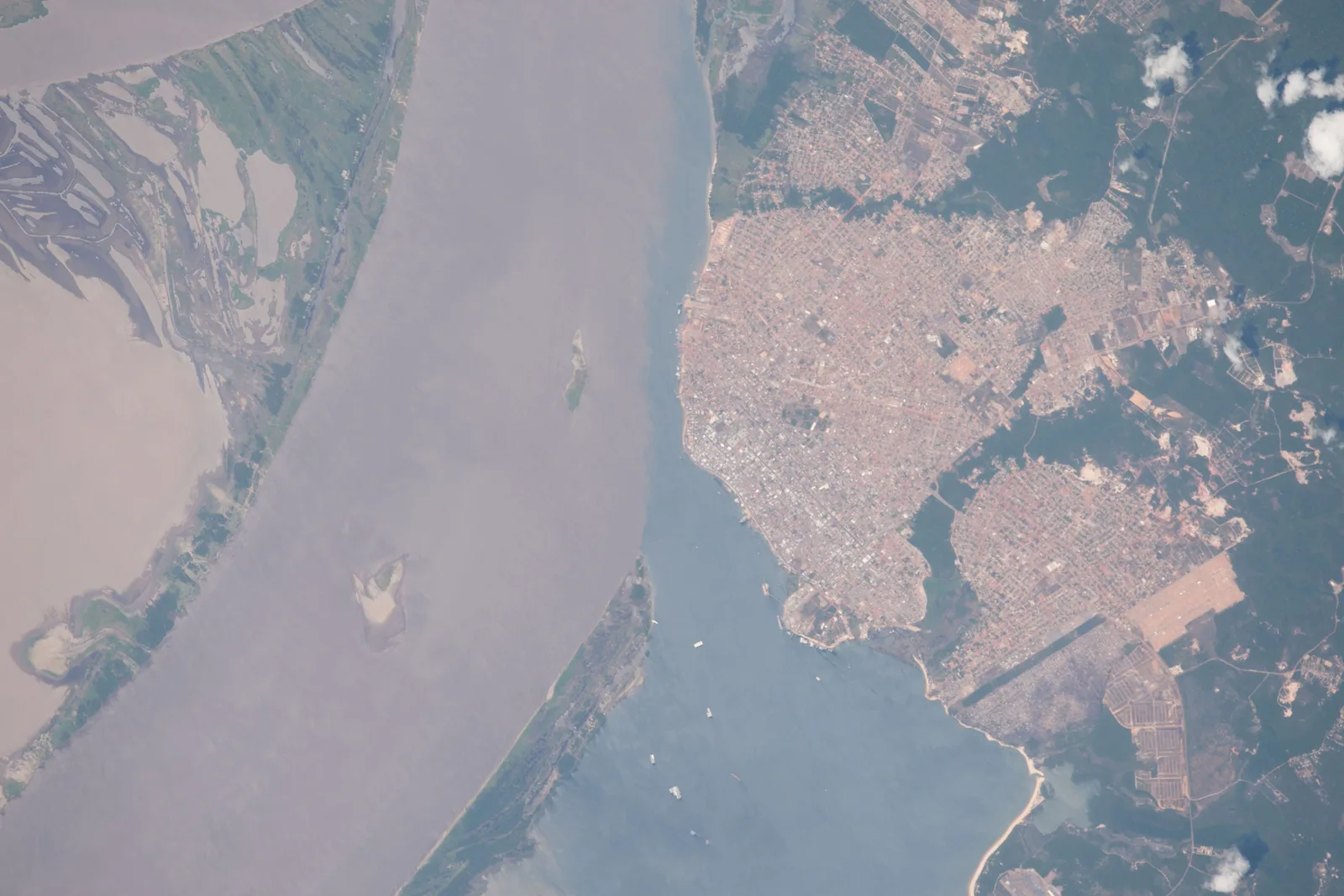
  • A photograph from the International Space Station: a wide, pale brown river running past the grid of a city on its bank, with the darker water of a second river meeting it
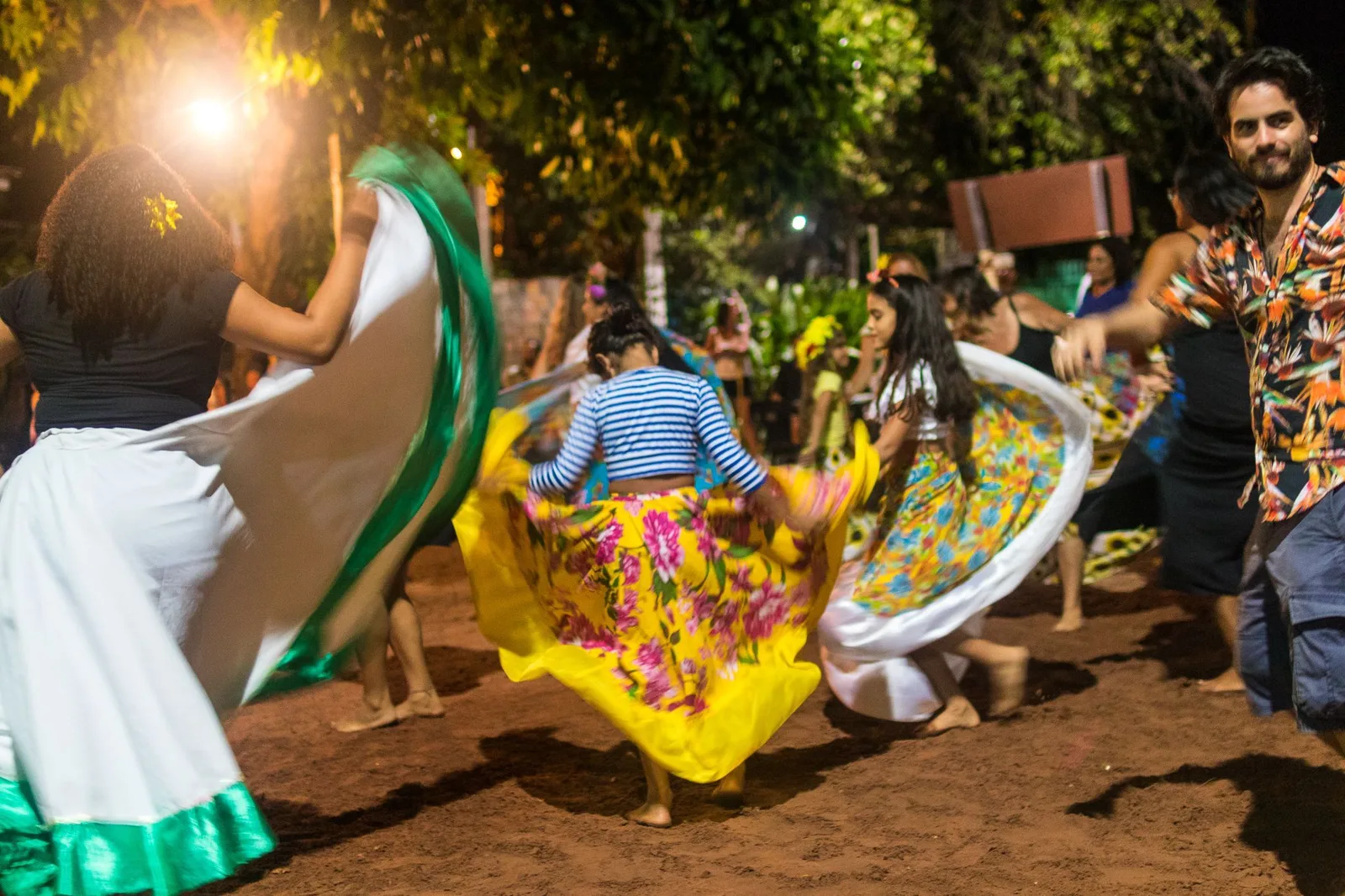
  • Dancers in long, full yellow and white skirts spinning on a sandy floor at night under string lights, a man in a patterned shirt dancing beside them
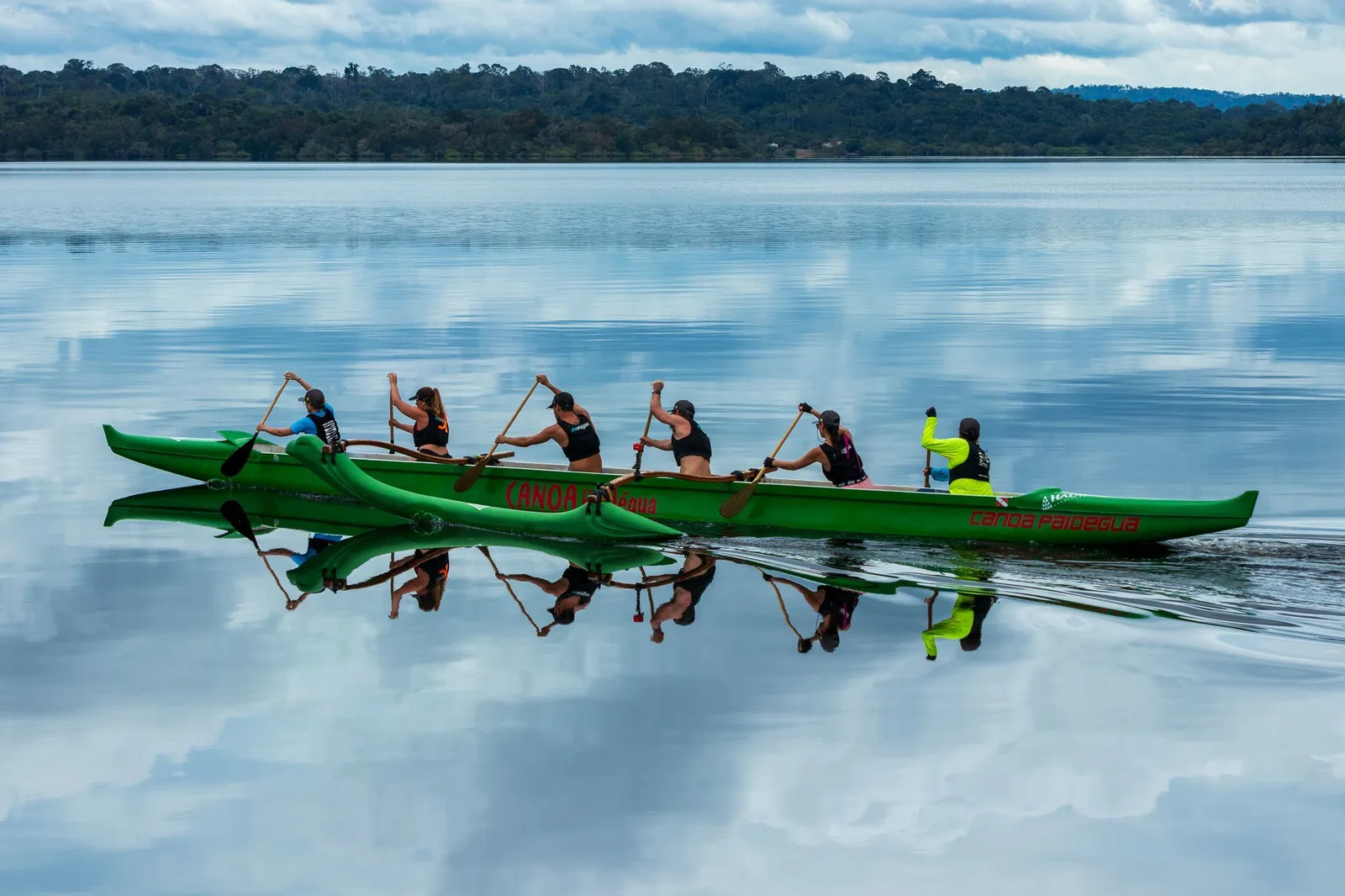
  • A long green outrigger canoe with six paddlers racing across flat water that mirrors the clouds and the forest on the far bank
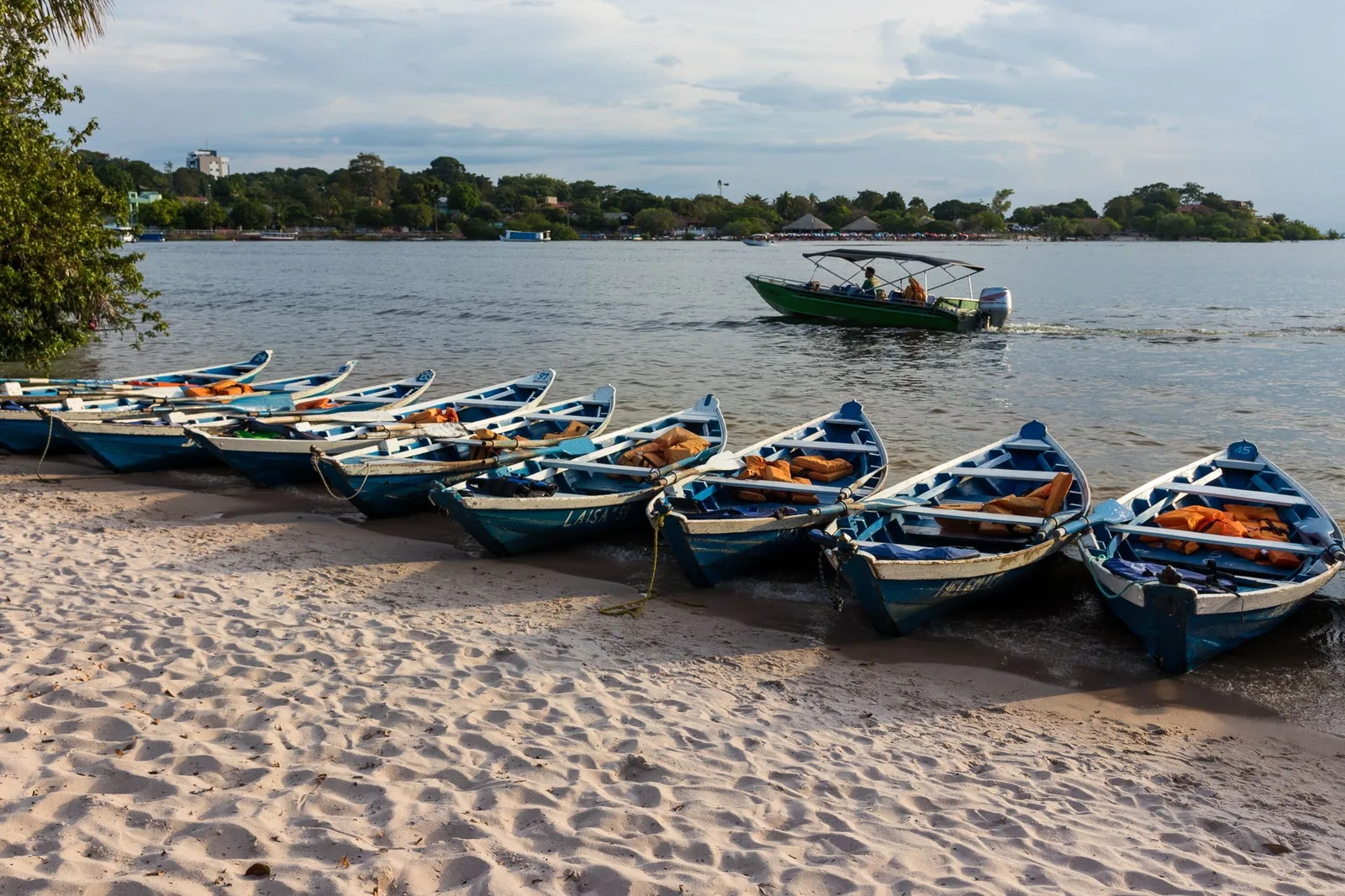
  • A row of small blue wooden boats pulled up on a sandy beach, a motorboat crossing the river behind them and roofs and a taller building among the trees on the far shore
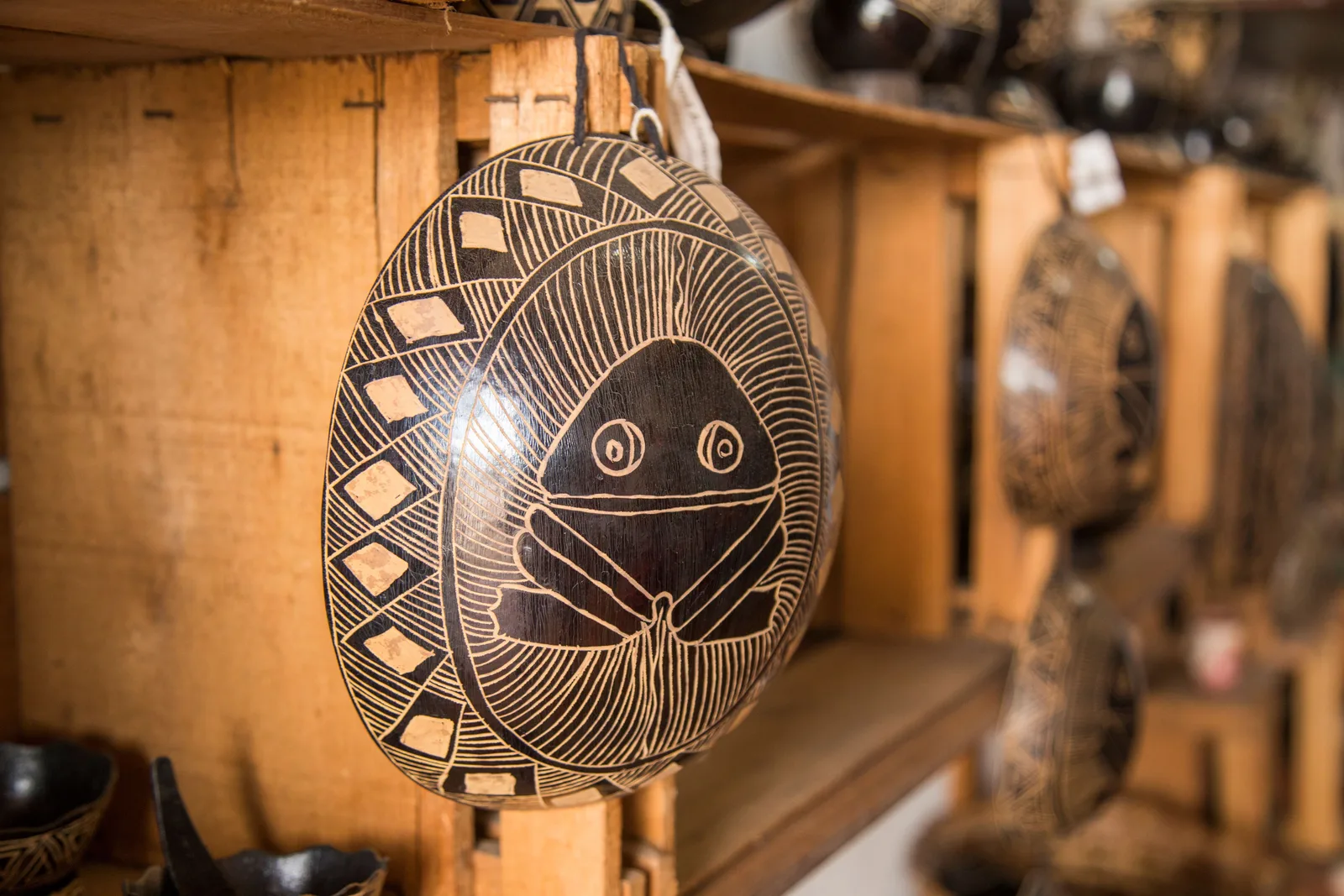
  • A dark gourd bowl carved with a pale geometric pattern of lines and a stylized face, hanging in a craft shop with more pieces on wooden shelves behind

Orientation

The village, before the pictures.

What this place is, where it is, what it costs and how you get to it.

General Info

A beach village on an Amazon river

Alter do Chão is a village on the right bank of the Tapajós, one of the great clear-water tributaries of the Amazon, about 37 km by road from the city of Santarém in western Pará. It is a district of Santarém rather than a town of its own, with about 9,800 people across the whole district at the 2022 census. It began as a village of the Borari people, which the Portuguese made into a colonial vila, and the sandbar in front of it is still part of Borari territory.

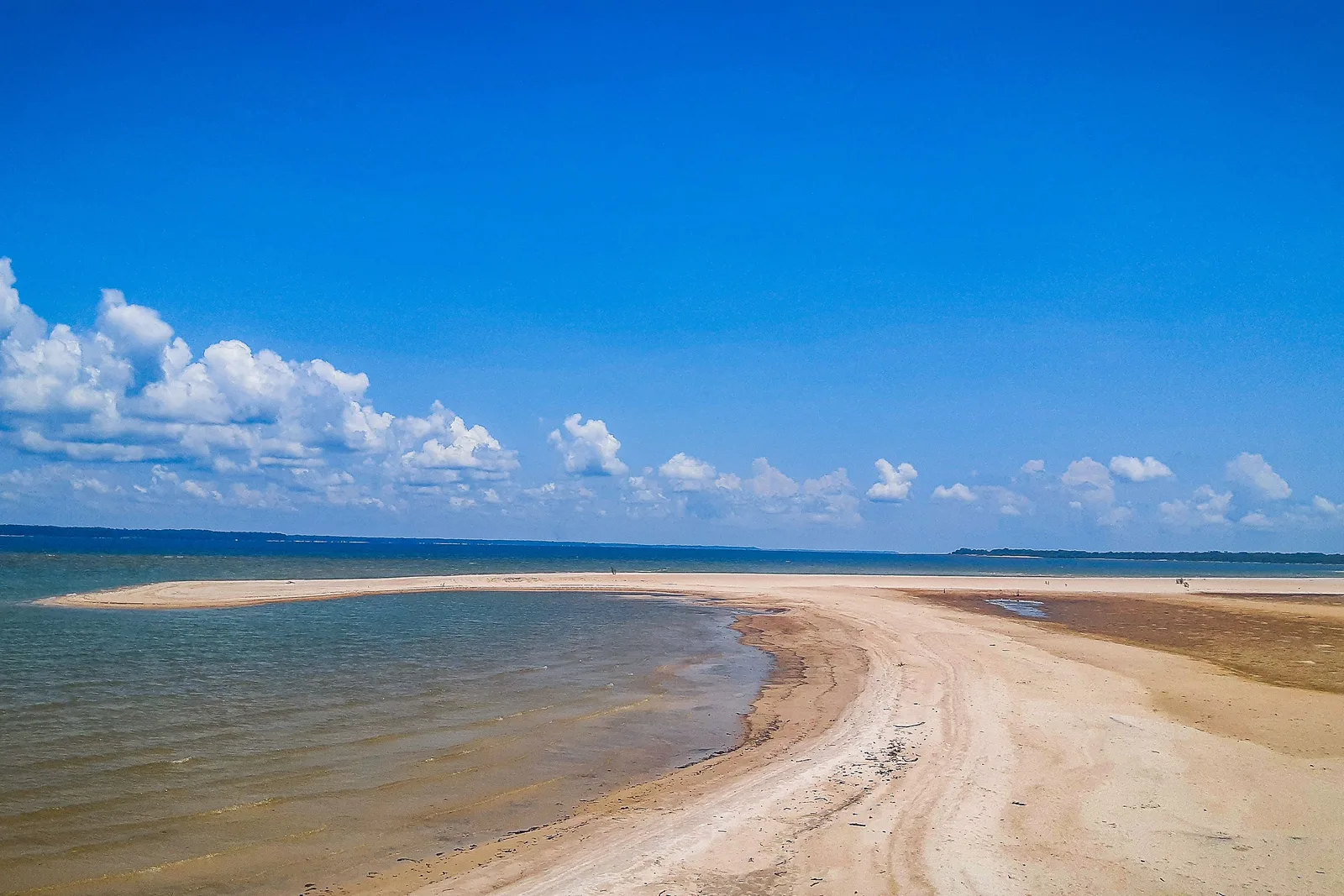
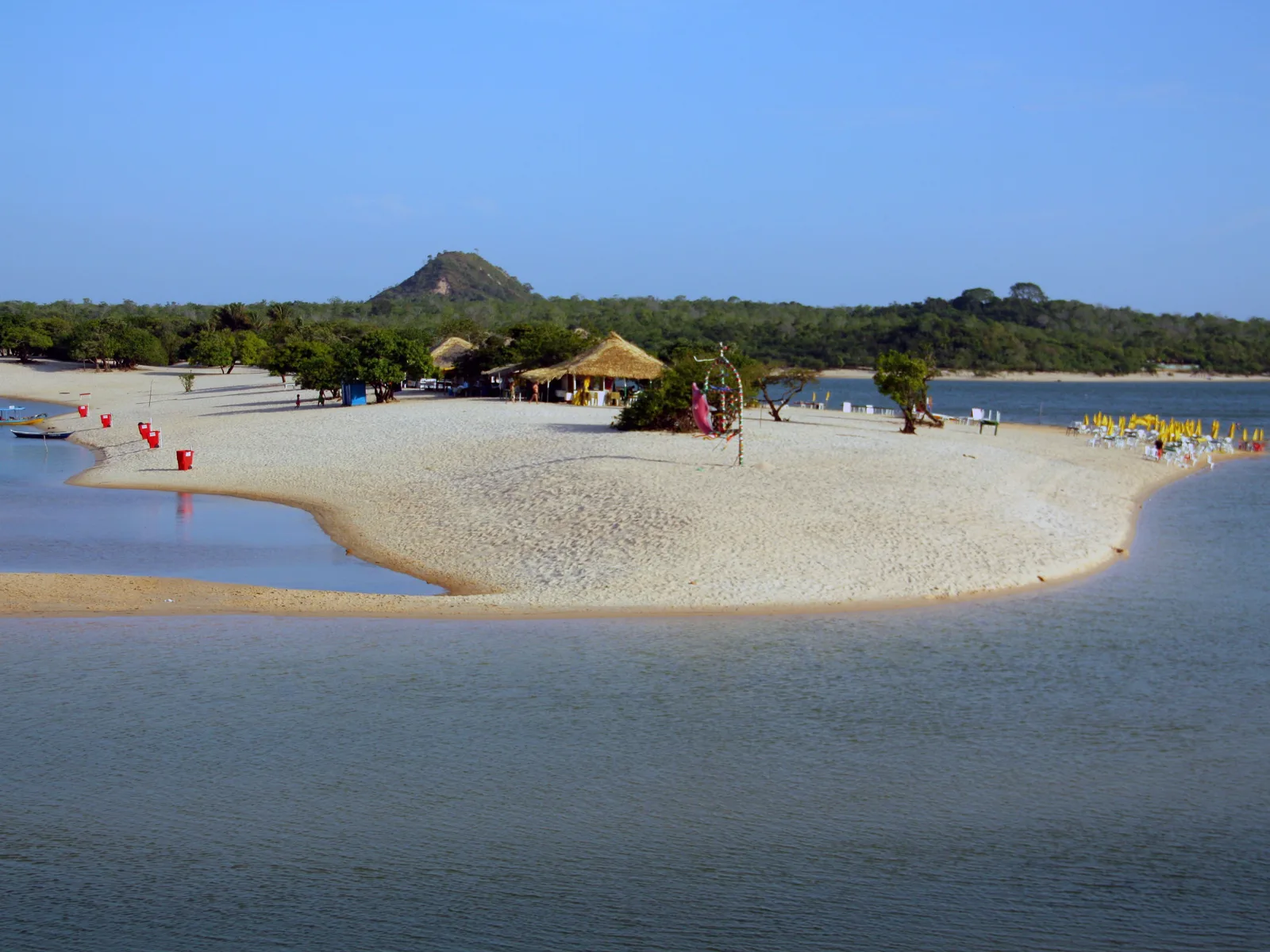
The reason to come is the water. The Tapajós drains low rainforest and carries almost no sediment, so it runs clear and blue where the Amazon runs brown, and when the river drops each year it leaves white sand beaches all along its banks. The most famous of them, the Ilha do Amor, is a sand spit that rises out of the river opposite the village and disappears under it again a few months later.

That cycle is the whole logic of a visit. The river at Santarém peaks in May and bottoms out in November, about five and a half meters lower, so the same trip in April and in October looks completely different: flooded forest you can canoe through in one, a beach you can walk out onto in the other. Around the village are a national forest with communities that take visitors, a river of white beaches and hammock guesthouses, and Santarém itself, where the Tapajós meets the Amazon.

Where It Is

Halfway down the Amazon, on the Tapajós

Alter do Chão sits in western Pará, on the Tapajós a short way upstream of where it meets the Amazon at Santarém. Santarém, on the Amazon between Manaus and Belém, has the airport that serves the village: about 32 km by road, or about 40 minutes.

Alter do Chão Alter do Chão

2.50° S, 54.95° W

See the North on the interactive map

Cost

Cheap to stay, and the boats are the budget

Beds and food in Alter do Chão are inexpensive. What moves the budget is the river: nearly everything worth doing beyond the village beach is a boat trip, priced per boat and split between however many people are in it. A couple and a group of seven pay very different amounts for the same day out.

Estimated daily budget, per person

Budget

$45 / day

A simple double in the village split two ways, meals at the square and simple restaurants, the bus from Santarém, and the canoe across to the Ilha do Amor.

Mid-range

$100 / day

A comfortable pousada with breakfast, a boat day out most days shared with a few others, and restaurant meals.

Comfortable

$200 / day

The best rooms in the village, private boats instead of shared ones, guides booked ahead, and a night or two in a community guesthouse.

Per person per day once you are in Alter do Chão, flights not included. Boat prices fall steeply per head as the group grows, so a group of four or more lands well under these numbers.

What things cost

  • Simple double room in the village, per night $32–53 R$164–270
  • Comfortable pousada with breakfast, per night $56–70 R$286–359
  • Top hotels in the village, per night $114–147 R$583–748
  • Bus, Santarém to Alter do Chão $1.15 R$5.90
  • Airport taxi to Alter do Chão $25 R$130
  • Canoe across to the Ilha do Amor $1–2 R$5–10
  • Sunset boat to Ponta do Cururu, per person $12–18 R$60–90
  • Boat day to the FLONA or the Arapiuns, per person $41–59 R$210–300
  • Community guide in the FLONA, per group of up to five $39 R$200
  • Meal at a simple restaurant in the village $6–12 R$30–60
  • Riverboat hammock, Santarém to Manaus $43 R$220
  • Riverboat hammock, Belém to Santarém $71 R$360
  • Belém–Santarém flight, round trip from $239 from R$1,217
  • São Paulo–Santarém flight, round trip from $367 from R$1,870

The bus fare is the city’s published fare. The room prices are a single November night from a booking site, and the boat, food and taxi prices come from travel guides rather than from any official price list, so treat them as the shape of a budget.

Boat trips leave from the village waterfront, run by the boatmen’s association and by independent boatmen. The price is per boat, so ask about joining other people before you book a whole boat for two.

Community stays on the Arapiuns are priced per trip, not per night. The cooperative that runs them sends its tariff once you fill in a booking form, and asks for about a week’s notice.

Checked October 2026 and converted at R$5.10 to the dollar. Estimates, not quotes: the shape of a budget rather than a price anyone can be held to.

Safety

The river asks more of you than the people do

8 /10

Our rating: a calm village in a low-crime part of Pará, where the real risks come from the water, the sun and the forest.

Alter do Chão is a small, easygoing place, and Santarém, the city that serves it, had an estimated homicide rate of 11.5 per 100,000 in 2024, about half the national benchmark. The things that hurt visitors here are mostly natural: freshwater stingrays in the shallows, the equatorial sun, small boats, and the mosquitoes. Take those seriously and it is one of the easier places in Brazil to relax.

  • Shuffle your feet when you wade. Freshwater stingrays lie on the bottom in shallow water across the Amazon, and Brazil’s Ministry of Health advises dragging your feet without lifting them, which moves the fish away before you step on one. Pará’s health department recorded 899 stingray injuries in the state in 2024; a sting is very painful, has no antidote and needs a hospital, and the last point on this list says where to go.
  • Decide about swimming knowing what the CDC says. Its general advice for Brazil is to avoid swimming in fresh, unchlorinated water, such as lakes, ponds or rivers, because of schistosomiasis, a parasitic infection spread in fresh water. Brazil’s Ministry of Health lists Pará among the states where transmission is focal rather than widespread, and neither names the Tapajós either way. Make that call with a travel clinic.
  • Get the yellow fever vaccine. The CDC recommends it for travel anywhere in Pará, so see a travel clinic well before you fly.
  • Plan for malaria. The CDC lists malaria as present in Pará outside Belém and recommends prescription medicine to prevent it there, so see a travel clinic well before you fly, and use repellent at dusk either way.
  • Swim where the lifeguards are, and stay sober in the water. Pará’s fire brigade names alcohol, currents and swimming out of your depth as the usual causes of drownings at the state’s beaches, and asks that children stay within arm’s reach.
  • The sun is strong all year. Highs run 30 to 33°C every month and there is little shade on a sandbar. Hat, water and sunscreen, and plan the middle of the day under a roof.
  • Watch the air late in the dry season. Fires burn around Santarém from September, peaking in October and November, and in bad years the smoke is heavy: in late 2024 the city declared an environmental emergency and banned all use of fire for 180 days. Check an air-quality app if you have asthma or a heart condition.
  • Book with established operators. Use the boatmen’s association or a guide your pousada knows, wear the life jacket you are handed, and book rooms through a platform with reviews rather than a stranger’s message.
  • Know where care is. The village has a 24-hour public health unit, the Unidade de Saúde da Família de Alter do Chão, on Rua Nossa Senhora da Saúde. The hospitals are in Santarém, about 40 minutes by road: the Hospital Municipal de Santarém and the Hospital Regional do Baixo Amazonas, both open around the clock, and the city has a 24-hour emergency unit, the UPA on Avenida Curuá-Una. From the FLONA, Belterra’s municipal hospital, open 24 hours, is nearer. Travel insurance is not optional.

Getting There

Fly to Santarém, then 40 minutes by road

Santarém’s airport, Maestro Wilson Fonseca (STM), is run by Aena Brasil and handled about 507,500 passengers in 2025. It sits about 15 km from the city center and about 32 km by road from Alter do Chão, so you do not need to stay in Santarém at all.

  • There is no direct flight from the US. The cities with nonstop flights to Santarém are Belém, Manaus, Brasília and, since September 2026, Belo Horizonte, and three of them put Santarém one stop from Florida: Gol flies from Miami to Belém and to Manaus, and Azul from Fort Lauderdale to Belém in season and from Orlando to Belo Horizonte.
  • Belém and Manaus are the short hops, each about an hour and a quarter: Azul and Gol fly nonstop from both. LATAM flies nonstop from Brasília, and Azul’s Belo Horizonte flight runs three times a week and lands in Santarém at 1:45am.
  • From São Paulo there is no nonstop: expect one or two stops and seven to ten hours.
  • Riverboats are the slow alternative. Belém to Santarém takes three days in hammock class or a cabin, and Santarém to Manaus about 48 hours. It is a real way to travel, and a long one.
  • From the airport to the village, take a taxi from the airport cooperative or a pre-booked transfer, or go into Santarém and take the Alter do Chão bus from town.

Getting Around

Walk the village, take a boat for everything else

The village is small enough to walk end to end, and almost everything you come for is across water. Nobody needs a car.

  • The Alter do Chão bus runs from Santarém about every 30 to 35 minutes and costs $1.15 (R$5.90), and it goes through the city first; by car the drive is about 40 minutes.
  • Rowing canoes called catraias ferry people across to the Ilha do Amor from the village beach.
  • Longer trips go by motorboat from the waterfront, through the boatmen’s association or independent boatmen. The FLONA is about 40 minutes away, the nearest Arapiuns community about 30, and Ponta do Cururu about 15.
  • The foot of the Serra Piroca is reached by boat or canoe, and on foot when the river is low.
  • The FLONA can also be reached by road, through ICMBio checkpoints at São Domingos and at km 67 of the BR-163, and one bus a day runs to the communities from Santarém, Monday to Saturday.
  • The Arapiuns is river only. Scheduled boats also run there from the Mercadão 2000 waterfront in Santarém, about four hours to Coroca.

The big four

One beach, one forest, one river, one meeting.

The sandbar the village is known for, and the three places around it that turn a beach stop into a trip: a national forest you can sleep in, a river of white beaches and working communities, and the spot where two rivers of different colors meet.

The Ilha do Amor sandbar curving out into calm blue water, thatched shelters and red flags on the sand, and a small cone-shaped hill rising from the forest behind 01

A beach that is only there half the year

The Ilha do Amor

Where
Opposite the village beach
Getting there
A short canoe crossing
When it is there
Only when the river is low

When the Tapajós falls each year, a spit of white sand rises out of the river directly in front of the village, and that is the Ilha do Amor, Love Island. It sits inside the traditional territory of the Borari people, and from the village beach it is a short crossing by rowing canoe. The water around it is clear and shallow for a long way out, and the sand is white.

It is also temporary. At high water the sandbar goes back under the river, and what is left is open water lapping at the village. That is the thing to understand before you book: the beach in every photograph you have seen exists in the low-water months and not in the high-water ones. In 2009 The Guardian’s Brazil correspondent, asked for his favorite, chose Alter do Chão as Brazil’s best beach and pointed out that it is not even on the coast.
A small child in a blue shirt standing against the base of an enormous gray tree trunk, its buttress roots taller than the child and lianas hanging down around it in the forest 02

A national forest with people living in it

The Floresta Nacional do Tapajós

Area
530,620 hectares
Protected
Since 1974
From Alter
About 40 minutes by boat

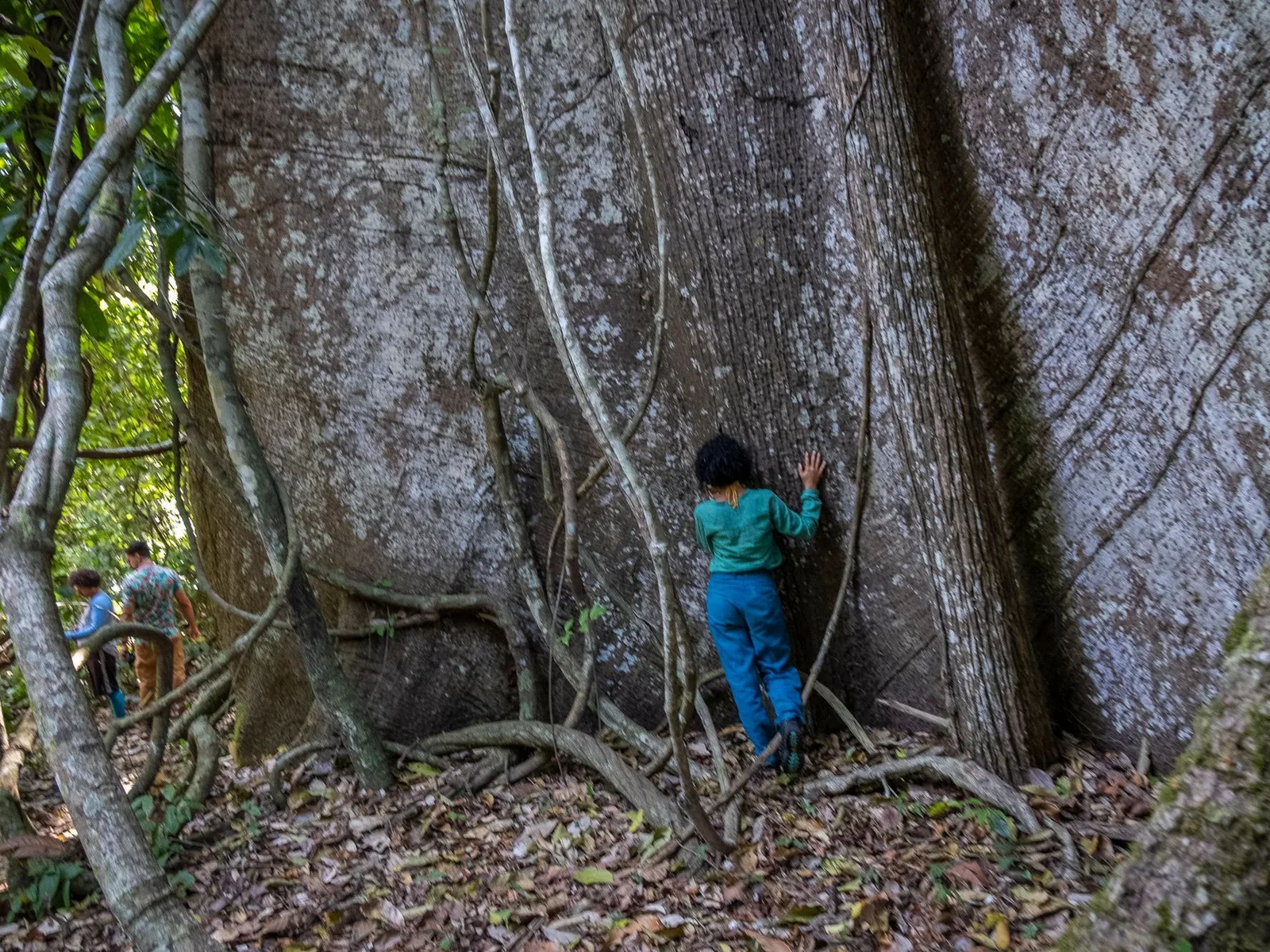
The FLONA, as everyone calls it, begins about 50 km south of Santarém along the Tapajós. It is a national forest rather than a national park, which means people live in it: about a thousand families in 23 communities and three Indigenous villages. A handful of those communities, Jamaraquá, Maguari and São Domingos among them, receive most of the visitors, with community guides, small guesthouses, craft shops and trails into the forest.

The trails are the reason to go. They lead to samaúmas, the giant buttressed trees of the Amazon, to Brazil nut and piquiá trees, and to creeks you can swim in. ICMBio, which runs the forest, lists the white-cheeked spider monkey, the giant anteater, the giant armadillo, the giant otter and the jaguar among the threatened animals living here. You are unlikely to see most of them, and the trees alone are worth the day.

A low wooded island with a white sand beach along its edge, reflected in still blue river water under a morning sky of blue and scattered cloud 03

White beaches and the communities that live on them

The Rio Arapiuns

Reserve
677,513 hectares, since 1998
From Alter
30 to 80 minutes by speedboat
Stay
Community hammock houses

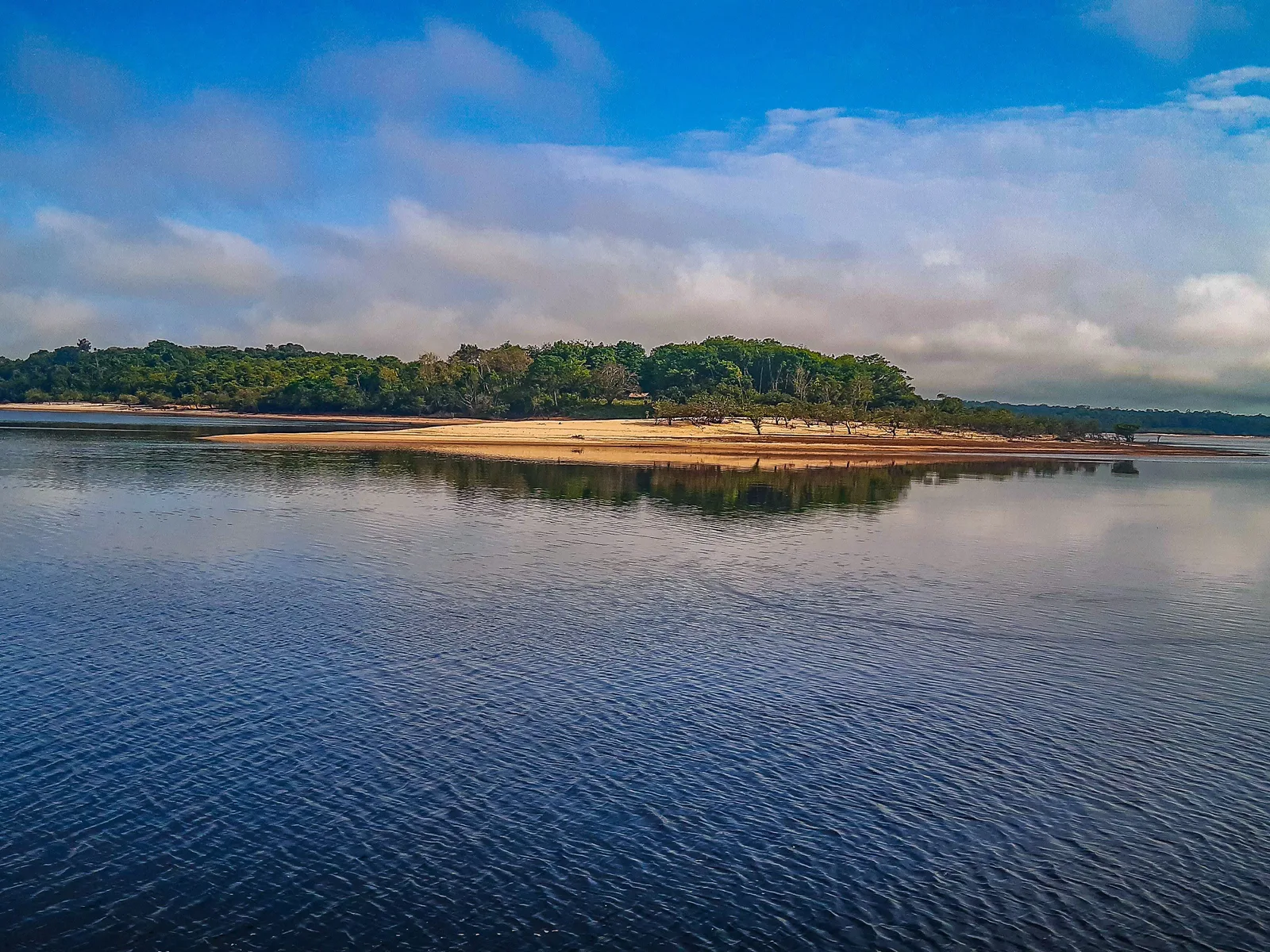
Across the Tapajós from the village, the Arapiuns joins it, and its banks are the beaches people mean when they talk about the ones beyond the Ilha do Amor: long points of white sand in clear water. Many of its communities sit inside the Tapajós-Arapiuns Extractive Reserve, created in 1998, and the only way in is by water.

What makes it different from a beach day is the community tourism. Anã was the first community to organize it, and in 2015 a cooperative of Arapiuns communities, Turiarte, formed to run visits of three to five days: nights in a shared hammock house, swims in the river and its creeks, forest walks, and time with the projects people actually live from, from cassava flour to stingless bees to baskets woven from tucumã palm straw. Day trips from the village stop at the beaches; the stays are where the river makes sense.

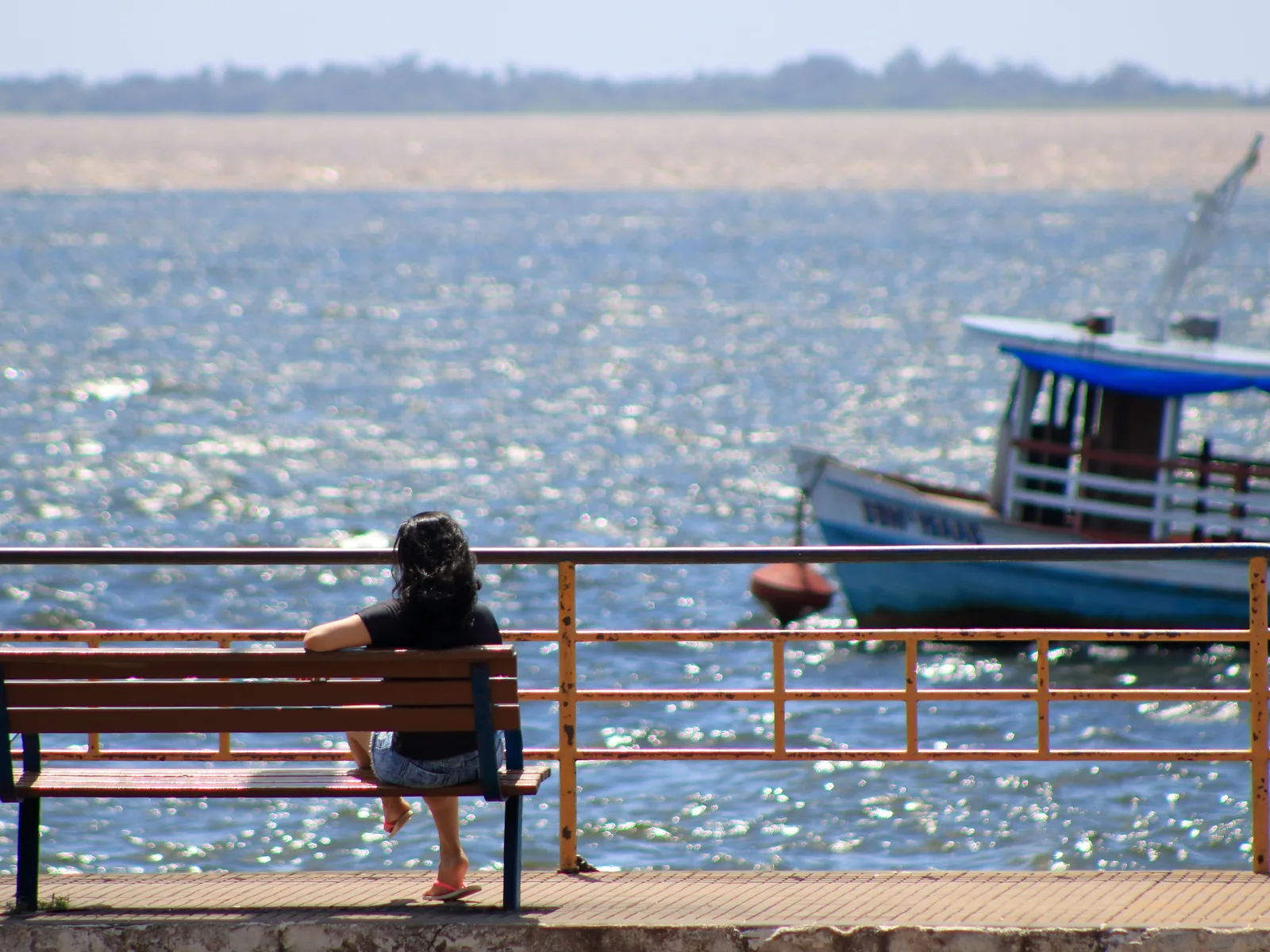
A woman sitting on a bench at a waterfront railing, looking out over sparkling blue river water toward a band of pale brown water along the horizon, a wooden riverboat moored to one side 04

Clear water against brown

The meeting of the waters at Santarém

Where
Santarém’s waterfront
From Alter
About 40 minutes by road
Port
Ocean ships, 600 km inland

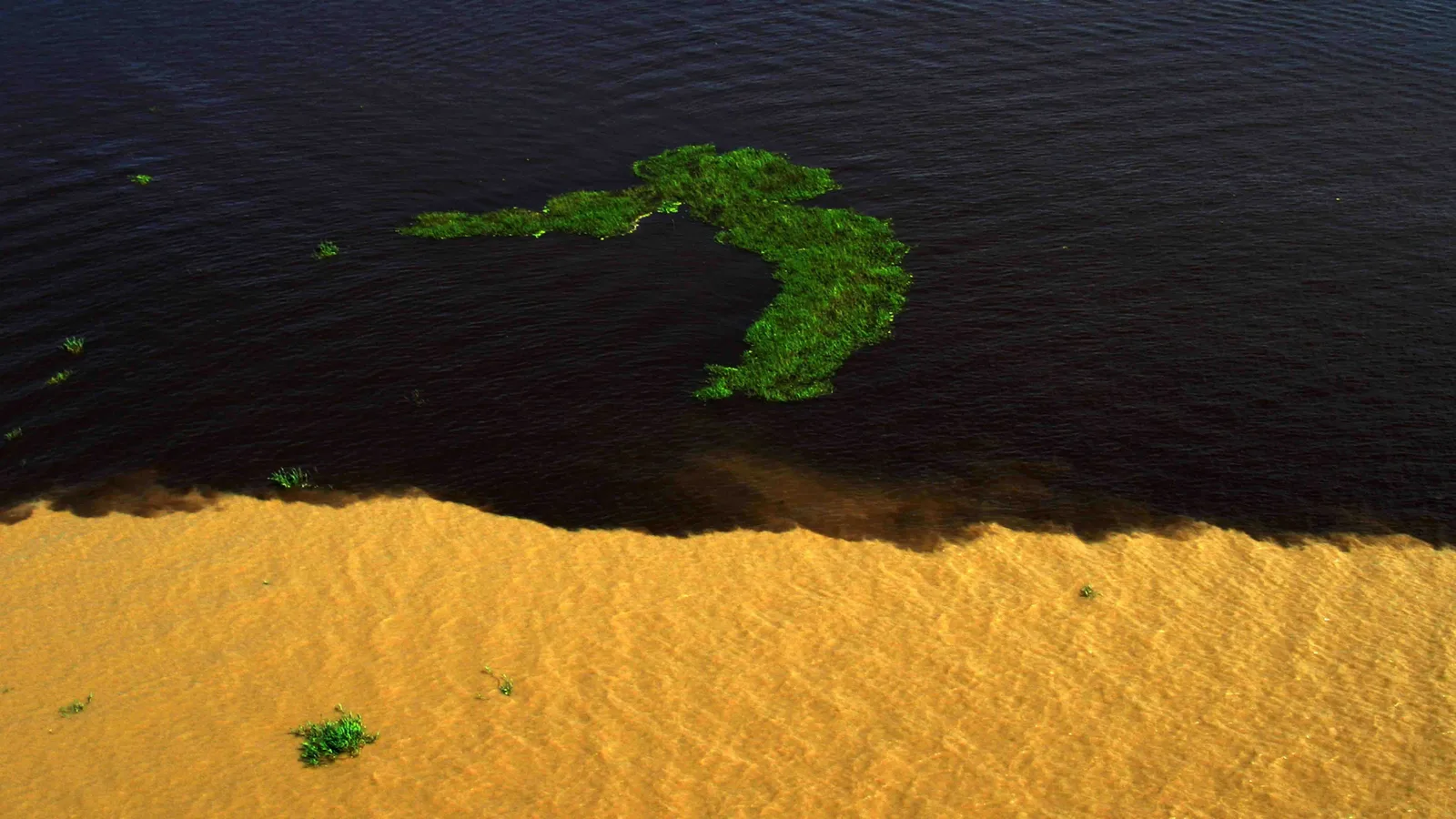
Santarém sits where the Tapajós flows into the Amazon, and from the city waterfront you can see the line between them. The Amazon is light brown because it carries enormous quantities of fine sediment washed down from the Andes, more than 2,000 km upstream. The Tapajós drains low rainforest and carries almost none, so it runs clear and blue. Where they meet, the colors sit side by side in the river.

The waterfront is the city’s postcard and the place to watch it, especially toward sunset. Santarém itself grew from a Jesuit mission set up in the village of the Tapajós people on 22 June 1661, and it is still a working river port: ocean-going ships dock here even though the Atlantic is 600 km away. At the city’s fish market, a fishmonger throws fish into the river for a small fee and river dolphins come in to take them.

What to actually do

Four ways to spend a day on the Tapajós.

Most of these start with a boat from the village waterfront. Pick a category and scroll sideways through it.

River beaches

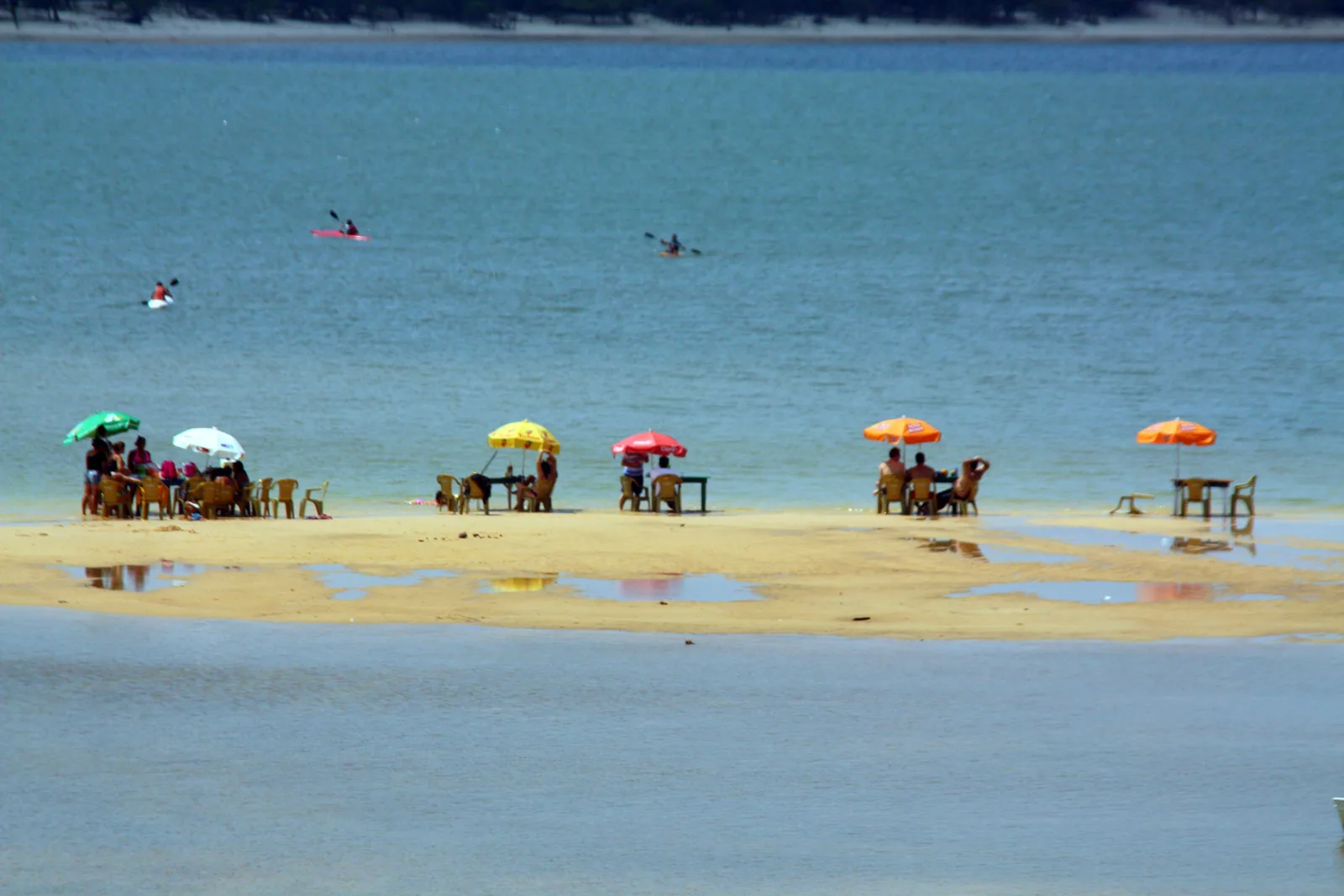
  • Tables and bright umbrellas set out on a strip of sand in the middle of clear turquoise river water, a few kayaks on the water beyond

    Opposite the village · a full day

    A day on the Ilha do Amor

    Cross by rowing canoe from the village beach and spend the day on the sand and in the shallows. In the dry season tables and umbrellas stand in the water itself, and the water stays shallow and warm far out from the spit. Shuffle your feet as you wade, take more water than you think you need, and stay for the light going down over the river.

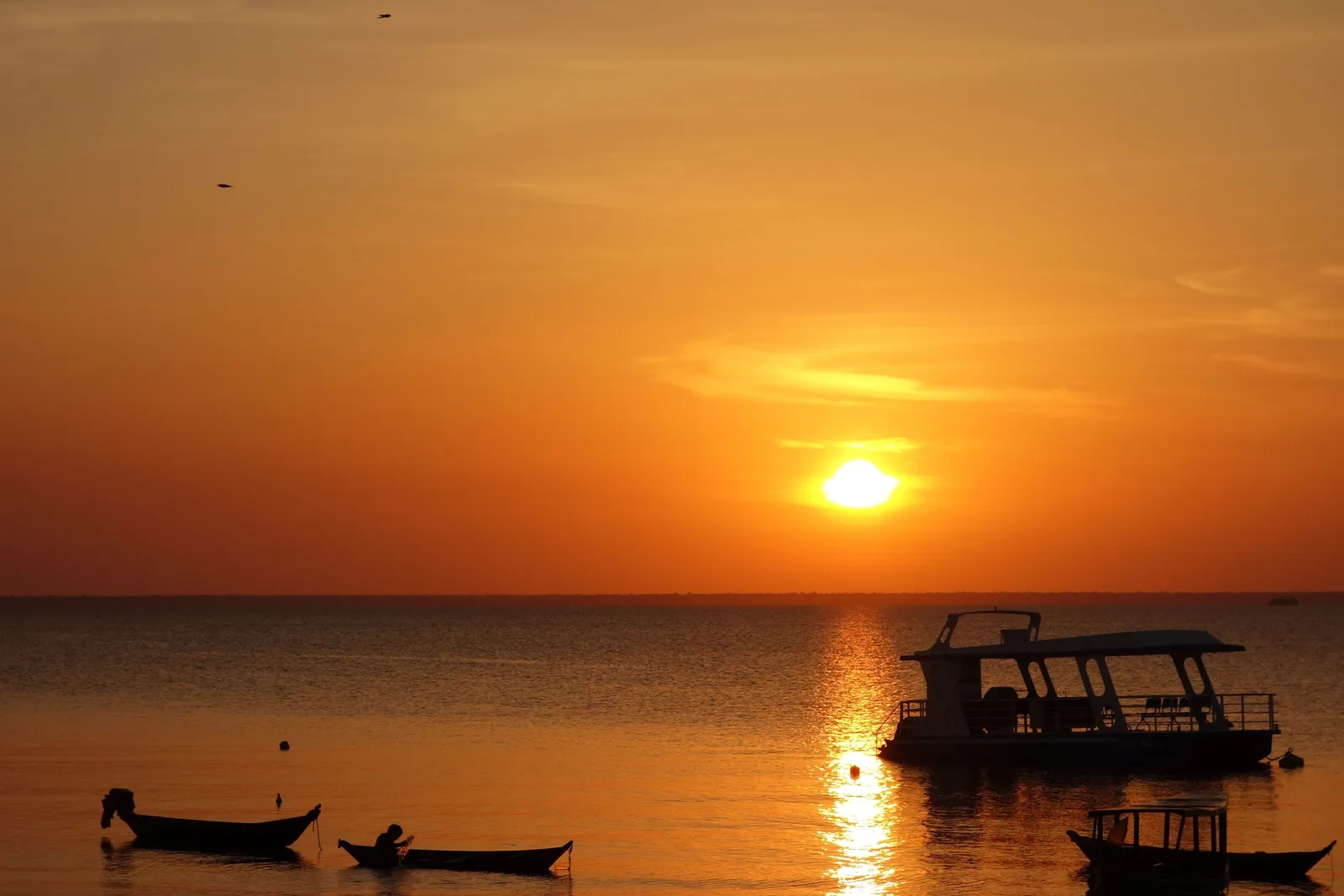
  • The sun setting in an orange sky over a wide, calm river, a small double-decker riverboat and two canoes silhouetted on the water

    Near the village · 15 minutes by speedboat

    Sunset at Ponta do Cururu

    A long, thin point of white sand on the Tapajós near the village, 15 minutes by boat or about two hours on foot along the shore from the Ilha do Amor, with no kiosks and no buildings on it. The sand only appears in the dry season, and the reason everyone goes is the sunset over the open river. Boatmen in the village run sunset trips.

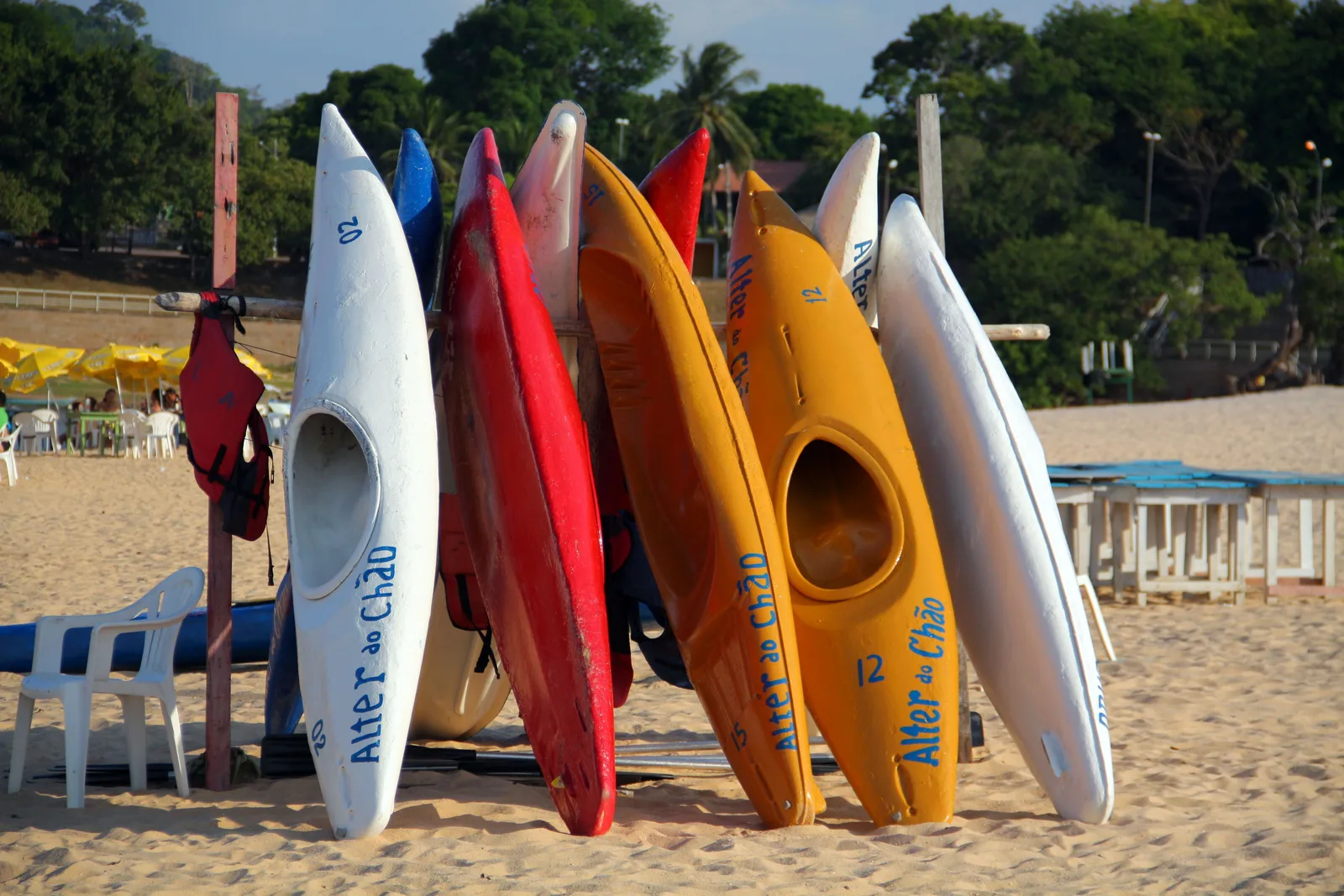
  • A row of white, red and yellow kayaks with “Alter do Chão” painted on them, standing on end against a rack on a sandy beach

    Alter do Chão · half a day

    Paddle the Lago Verde

    The Lago Verde is the calm lake at Alter do Chão, and its beach is the quiet alternative to the busy sandbar. Rent a kayak or a canoe and paddle along the shore. At high water the same lake is the way into the Floresta Encantada, the flooded forest.

  • A narrow white sand point curving out into deep blue water under a bright sky with small clouds

    The Arapiuns · a full day from Alter

    Ponta do Icuxi and Ponta Grande

    The long sand points of the Arapiuns, with water so blue it looks like the sea. The boatmen’s association runs a day trip to the community of Coroca that leaves the village at 9:00am, stops at Ponta do Icuxi, Ponta Grande and Ponta do Cururu, and is back in the late afternoon, six to seven hours in all. The easiest way to see the Arapiuns without staying the night.

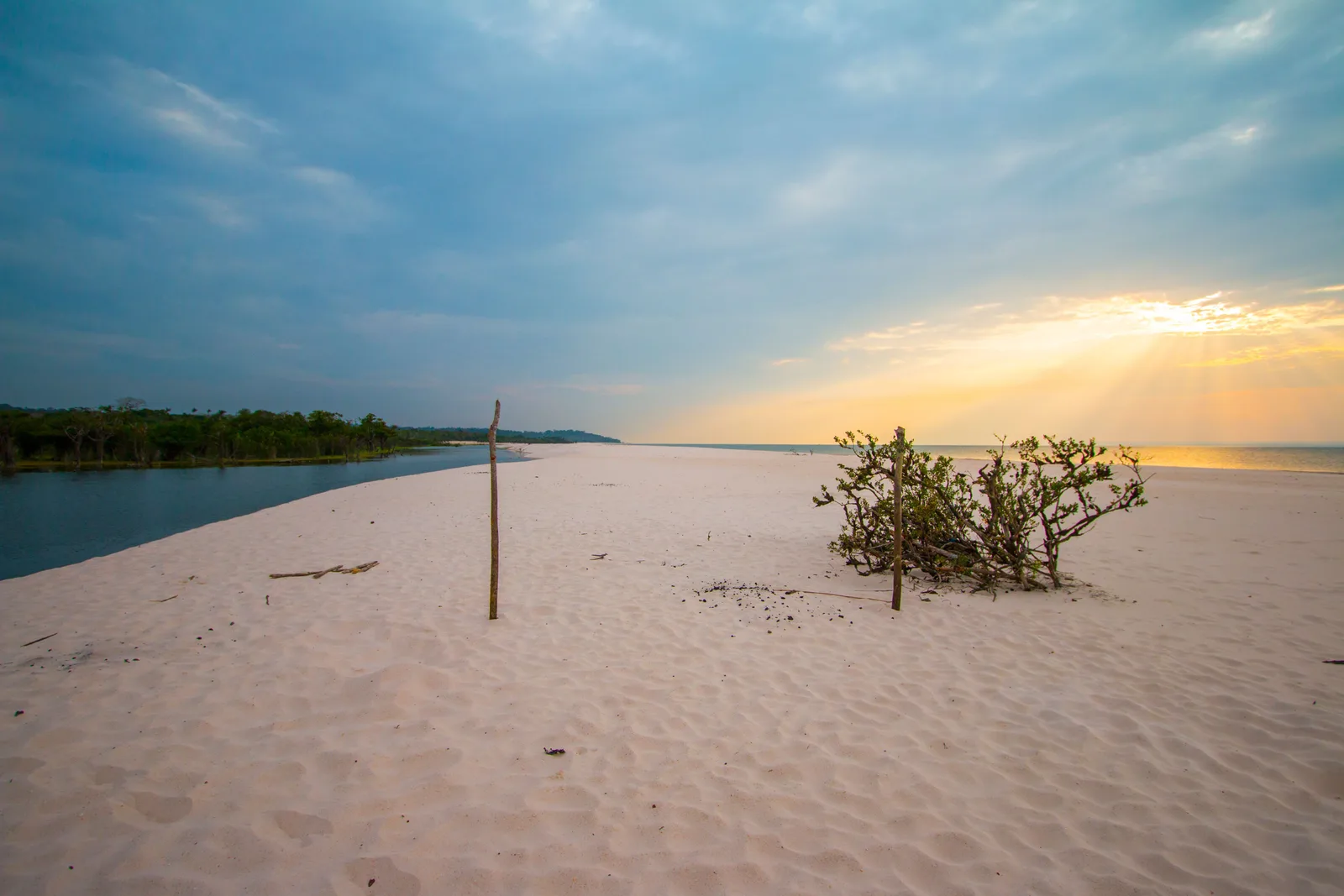
  • A wide, empty white sand beach with a single green shrub and a wooden pole, the river and a low line of forest under an evening sky

    Maguari and Jamaraquá · with a forest day

    The beaches of the FLONA

    The communities inside the national forest have their own white beaches on the Tapajós, out in the dry season. Pair one with a forest trail: walk in the morning, swim in the afternoon, and eat in the community before the boat back.

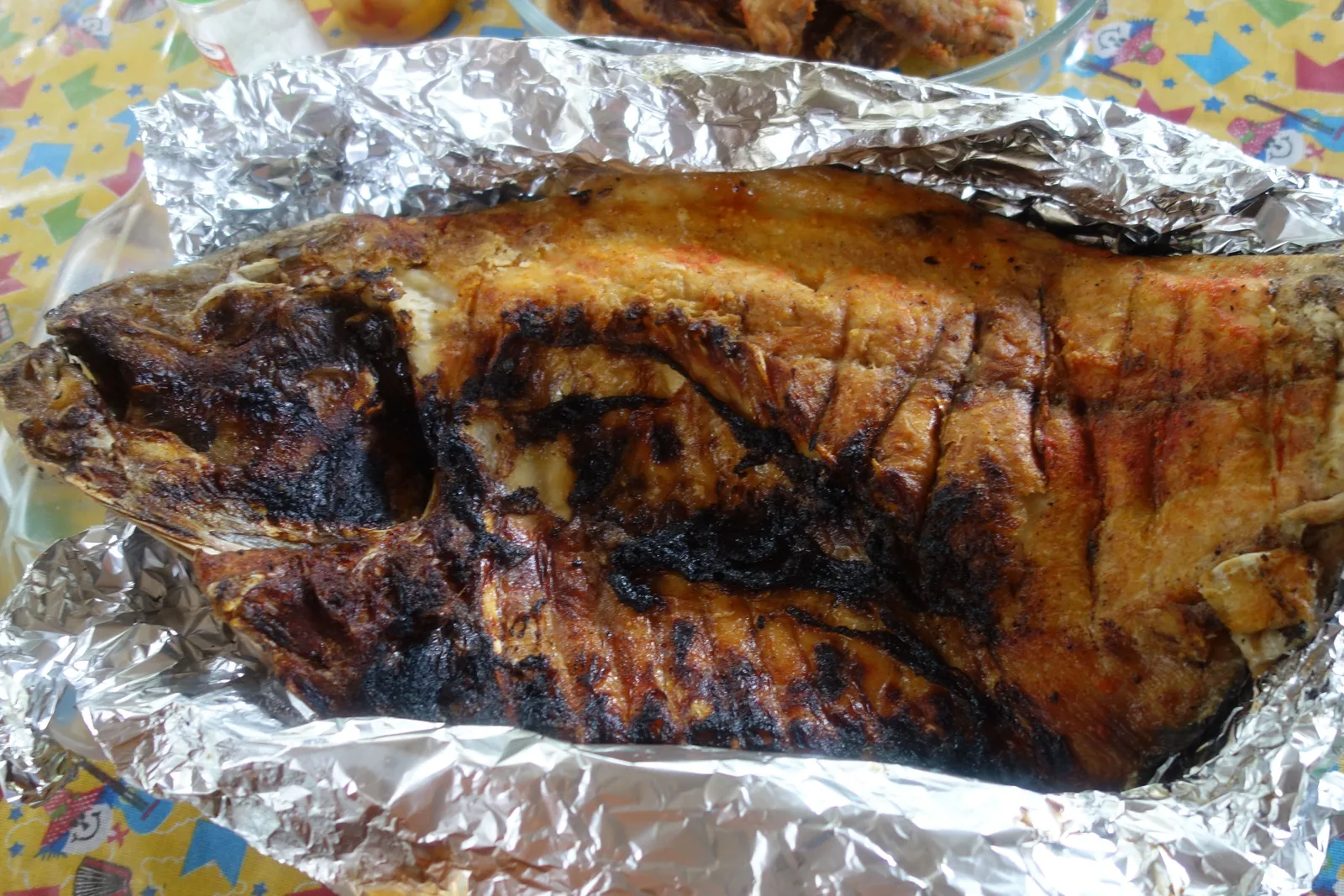
  • A whole grilled river fish, charred and split open, lying on a sheet of crumpled foil

    FLONA and Arapiuns communities · lunch

    Piracaia: fish grilled on the beach

    A piracaia is river fish grilled over a fire on the beach, and the communities that take visitors serve it as the meal of the day out. It is simple and fresh, and the reason to say yes when a boatman offers lunch in a community rather than back in the village.

Forest

  • A row of white, red and yellow kayaks with “Alter do Chão” painted on them, standing on end against a rack on a sandy beach

    Alter do Chão · half a day

    Paddle the Lago Verde

    The Lago Verde is the calm lake at Alter do Chão, and its beach is the quiet alternative to the busy sandbar. Rent a kayak or a canoe and paddle along the shore. At high water the same lake is the way into the Floresta Encantada, the flooded forest.

  • A wide, empty white sand beach with a single green shrub and a wooden pole, the river and a low line of forest under an evening sky

    Maguari and Jamaraquá · with a forest day

    The beaches of the FLONA

    The communities inside the national forest have their own white beaches on the Tapajós, out in the dry season. Pair one with a forest trail: walk in the morning, swim in the afternoon, and eat in the community before the boat back.

  • Looking down from a hilltop over dense green forest to a wide bay of blue water, a strip of sand and a village spread along the far shore under flat-topped hills

    Across the lagoon · about 2 hours round trip

    Hike the Serra Piroca

    The hill behind the Lago Verde, 110 meters high, has a trail of about 2 km that climbs to a 360-degree view over the lake, the Floresta Encantada, the creeks around them and Ponta do Cururu. It is an easy walk with one steeper stretch near the top. Go with an accredited guide, which is required, early or late in the day when it is cooler. The name means “bare hill,” from the top that once had little growing on it.

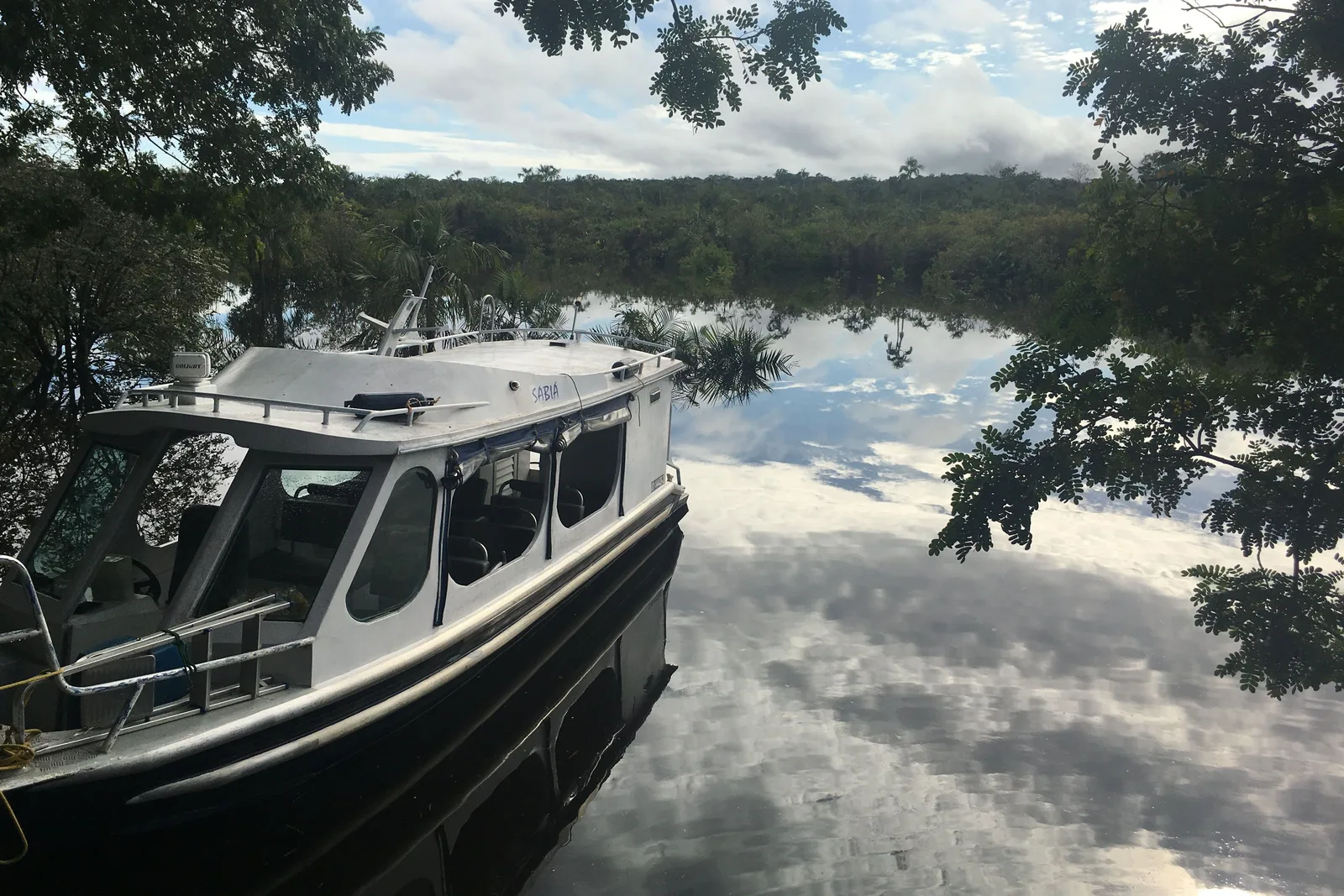
  • A white motorboat moored among trees standing in still, mirror-like floodwater, branches overhead and clouds reflected in the water

    Caranazal · high water, from late March

    Canoe the Floresta Encantada

    The Enchanted Forest is a stretch of igapó, forest that floods every year, near the community of Caranazal. When the Tapajós is high the trees stand in clear water and you move between them by canoe, which is the high-water season’s answer to the beaches. Santarém’s city government says it is at its best from the second half of March. Reach it by road from Santarém or by boat from the village.

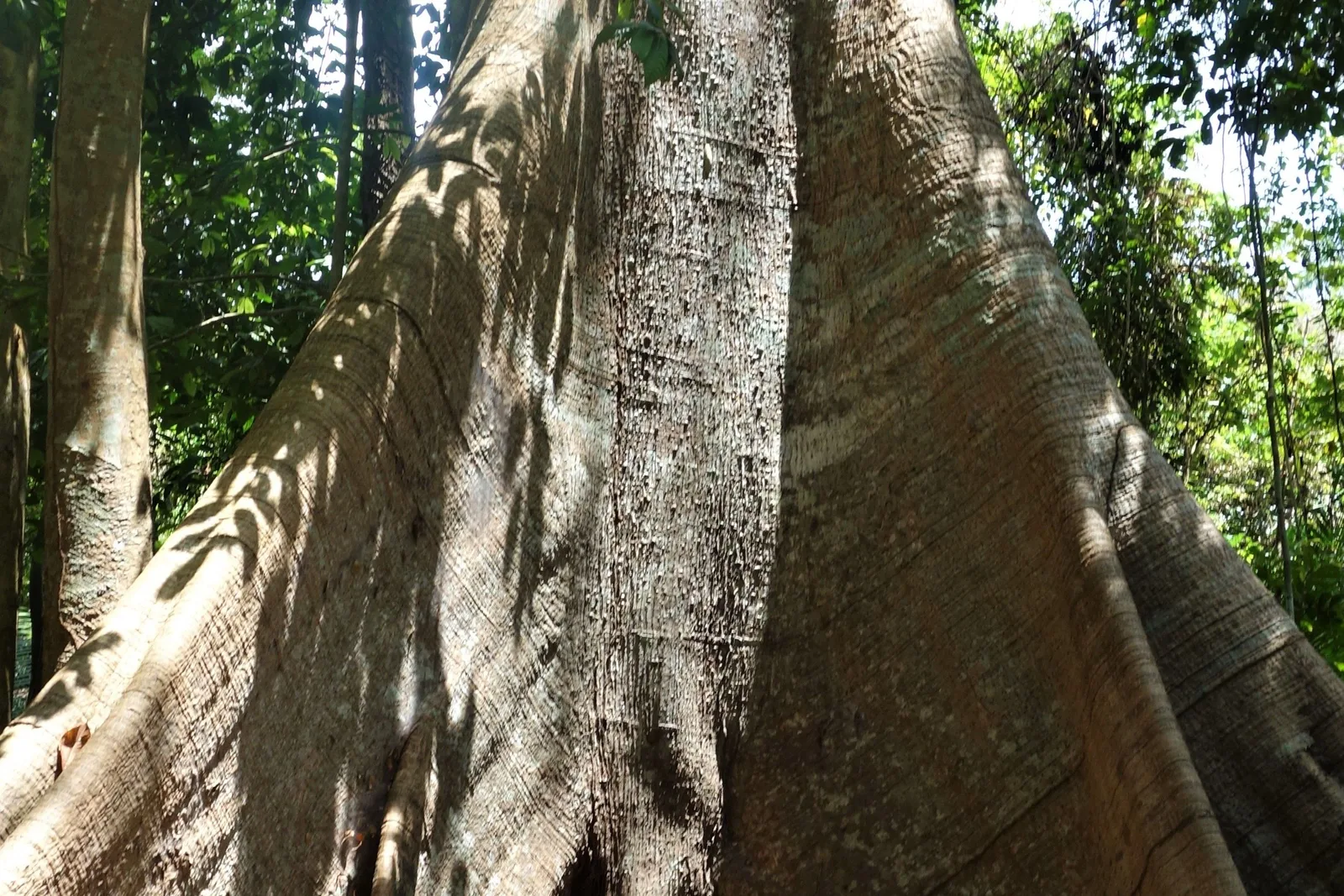
  • Looking up the pale, ridged trunk of a giant tree where it splits into tall buttress roots, forest crowding in on either side

    FLONA communities · most of a day

    Walk to the giant samaúmas

    The FLONA’s classic walks. Jamaraquá’s giant samaúma is its best-known sight, and from there community guides lead groups of up to five on a trail of about 8 km to stands of Brazil nut and piquiá trees, about four hours. From Maguari the trail to the tree locals call the Vovózona, the big grandmother, is 14 km there and back, and guides there put her at about a thousand years old. Start early and carry water.

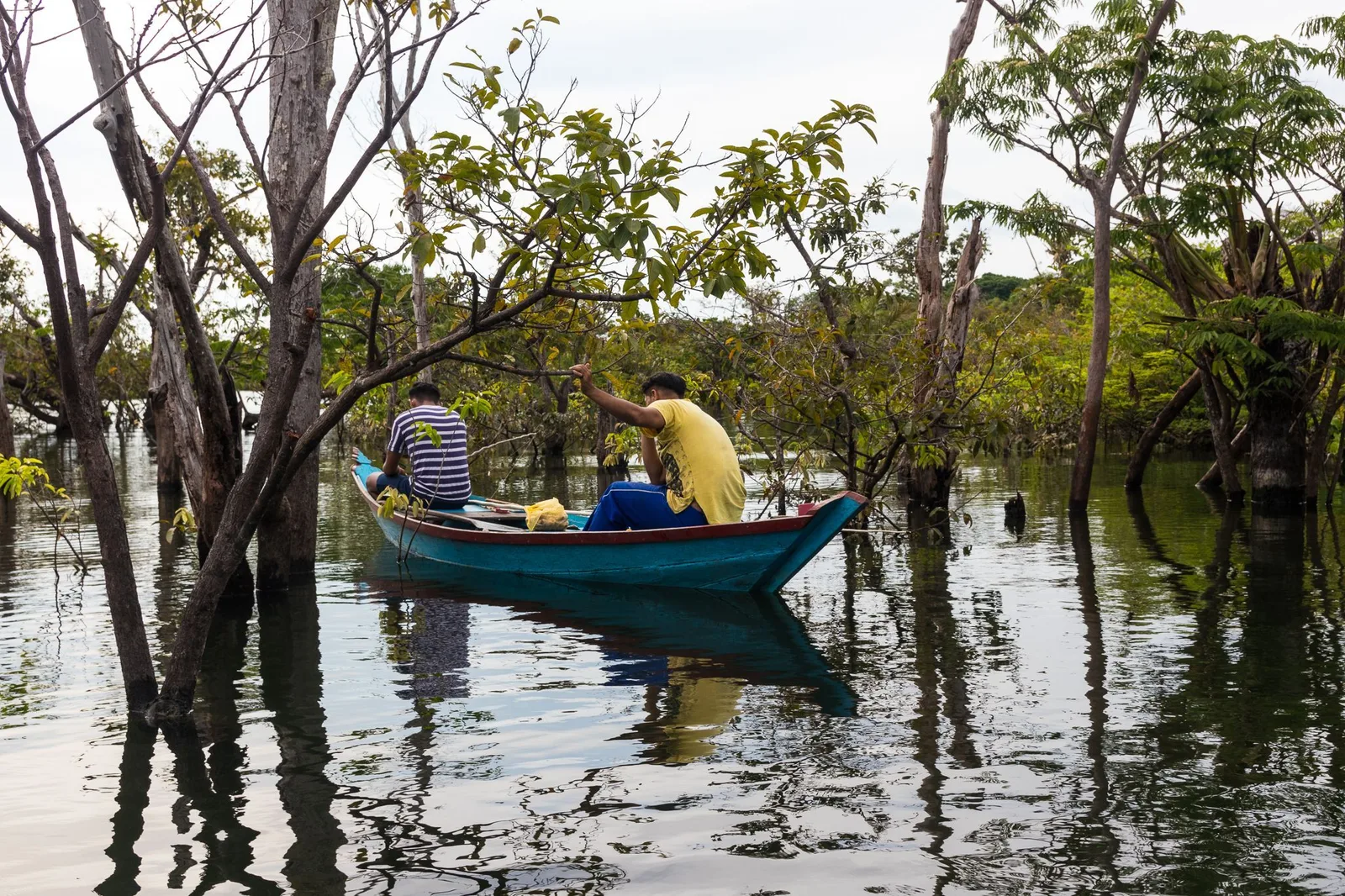
  • Two men paddling a small blue canoe between the trunks of trees standing in flooded forest, green leaves above them and the water dark and still

    Jamaraquá and Maguari · a couple of hours

    Canoe trips from the FLONA communities

    Community tourism in the FLONA is more than trails. The communities run canoe trips on the lakes and creeks, take visitors out at night to spot caimans, and lead walks to their favorite trees. Ask what is running when you book, because the water level changes which trips make sense.

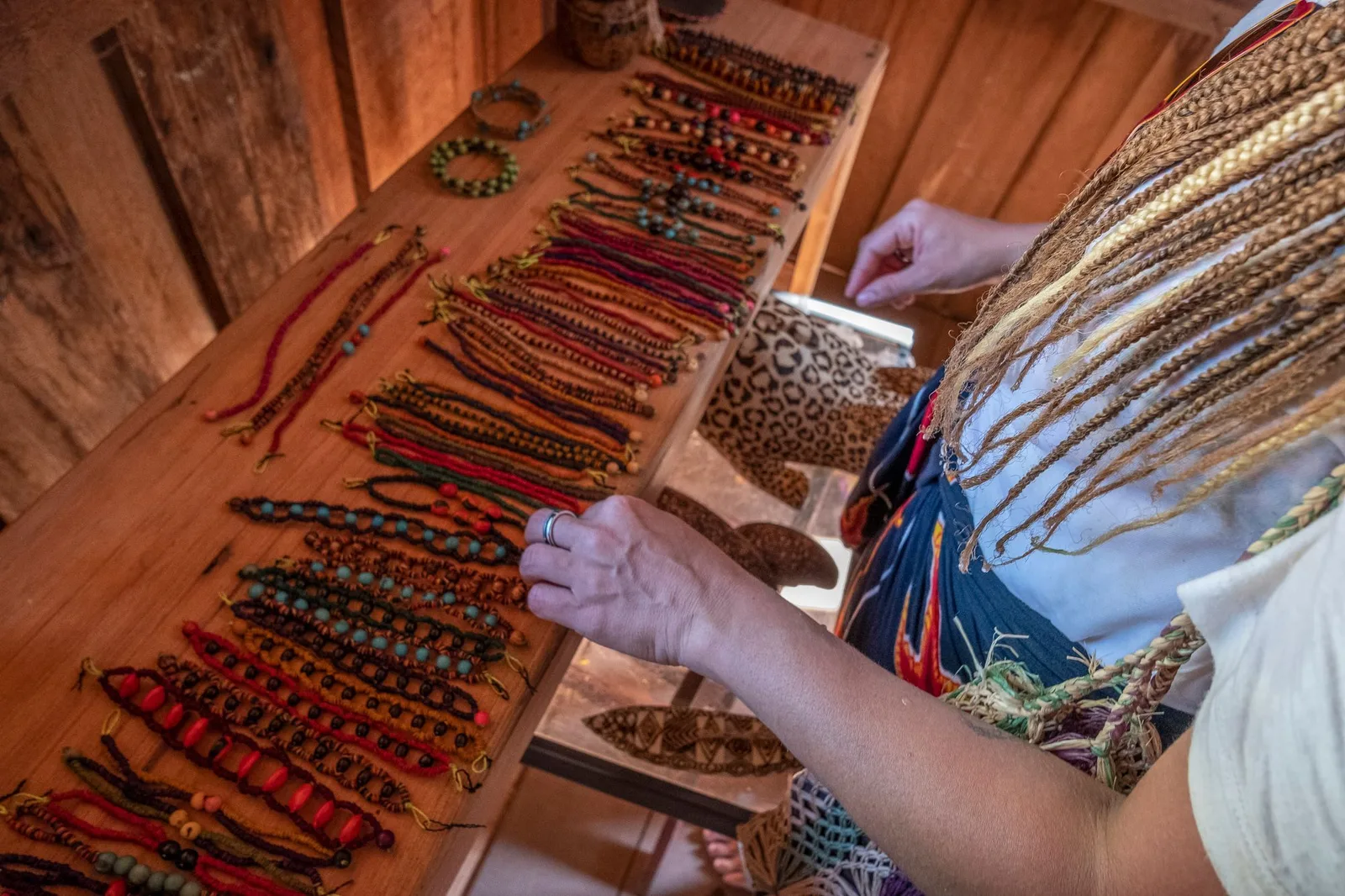
  • Hands reaching over a wooden counter lined with rows of handmade bracelets and necklaces of red and brown seeds, a woven bag hanging beside them

    Jamaraquá and Maguari · an hour

    Latex and crafts in the FLONA

    The forest still has rubber trees, and in the rainy season, when they are ready for tapping, visitors can follow the tappers as they collect the latex and make rubber by hand. Some of it becomes the “ecological leather” sold, with seed jewelry and other crafts, in the communities’ craft shops at Maguari and Jamaraquá.

Communities

  • A narrow white sand point curving out into deep blue water under a bright sky with small clouds

    The Arapiuns · a full day from Alter

    Ponta do Icuxi and Ponta Grande

    The long sand points of the Arapiuns, with water so blue it looks like the sea. The boatmen’s association runs a day trip to the community of Coroca that leaves the village at 9:00am, stops at Ponta do Icuxi, Ponta Grande and Ponta do Cururu, and is back in the late afternoon, six to seven hours in all. The easiest way to see the Arapiuns without staying the night.

  • Two men paddling a small blue canoe between the trunks of trees standing in flooded forest, green leaves above them and the water dark and still

    Jamaraquá and Maguari · a couple of hours

    Canoe trips from the FLONA communities

    Community tourism in the FLONA is more than trails. The communities run canoe trips on the lakes and creeks, take visitors out at night to spot caimans, and lead walks to their favorite trees. Ask what is running when you book, because the water level changes which trips make sense.

  • Hands reaching over a wooden counter lined with rows of handmade bracelets and necklaces of red and brown seeds, a woven bag hanging beside them

    Jamaraquá and Maguari · an hour

    Latex and crafts in the FLONA

    The forest still has rubber trees, and in the rainy season, when they are ready for tapping, visitors can follow the tappers as they collect the latex and make rubber by hand. Some of it becomes the “ecological leather” sold, with seed jewelry and other crafts, in the communities’ craft shops at Maguari and Jamaraquá.

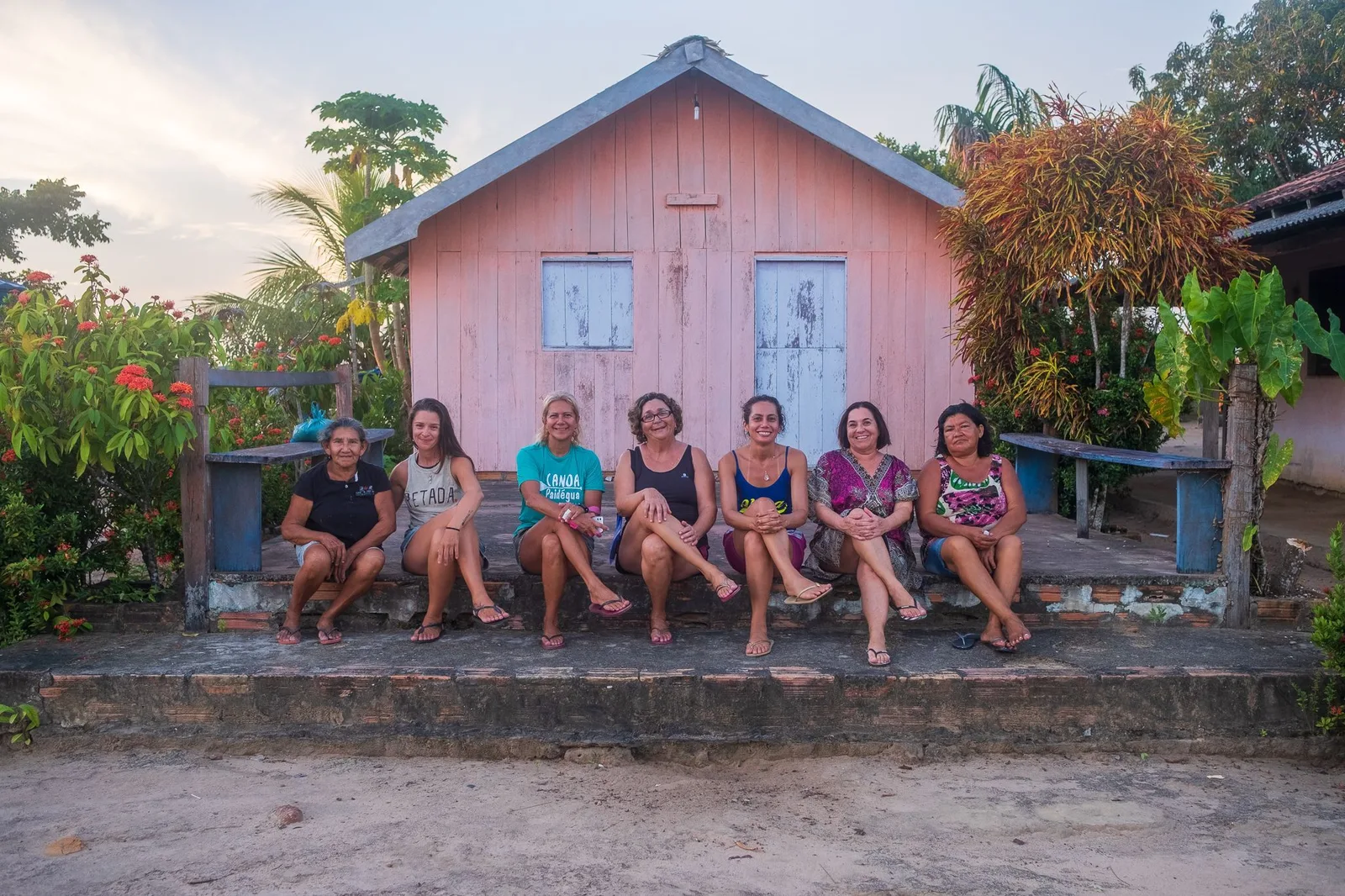
  • Seven women sitting in a row on a low wall in front of a pink wooden house, flowering plants and trees around it

    The Arapiuns · three to five days

    Stay with a community on the Arapiuns

    The Turiarte cooperative runs stays of three to five days in its member communities: a hammock in a shared guesthouse, meals with the community, river swims, forest walks and visits to the projects people live from. Anã has a hammock house with room for more than 40, and Maripá and Atodi have their own. Prices come as a tariff after you fill in the booking form, and they ask for about a week’s notice.

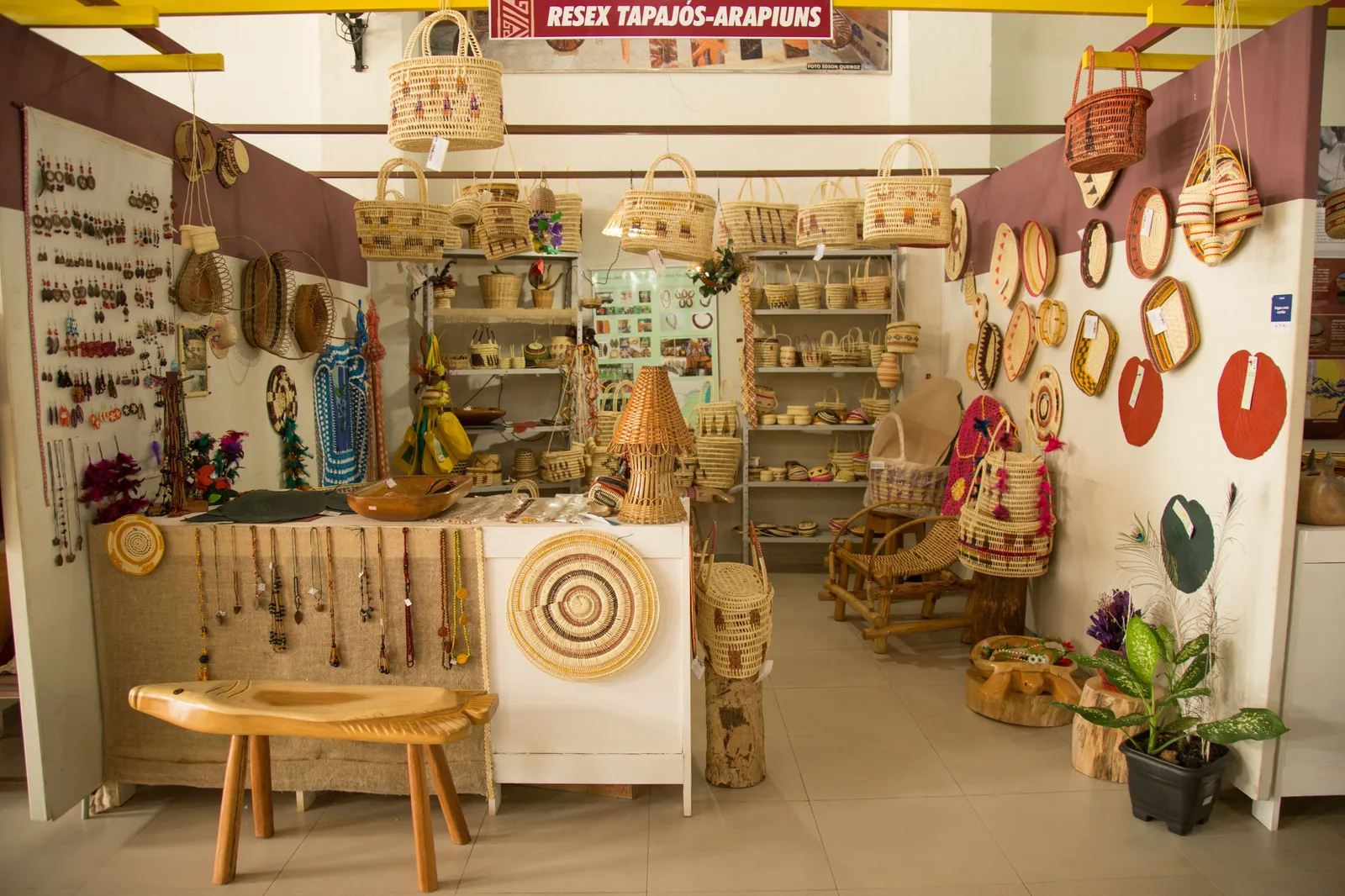
  • A small craft shop crowded with woven straw baskets, bags and mats, round woven trivets on the walls and a wooden stool in front, under a sign reading “Resex Tapajós-Arapiuns”

    The Arapiuns and Santarém · an hour

    Tucumã-straw crafts from the Arapiuns

    The Arapiuns communities weave baskets and other pieces from the straw of the tucumã palm, a craft revived from the mid-1990s as a source of income. Coroca’s gallery gathers pieces from eight communities, and Urucureá has weavers who have worked the straw for thirty years and more. Buy it on the river, from the people who made it.

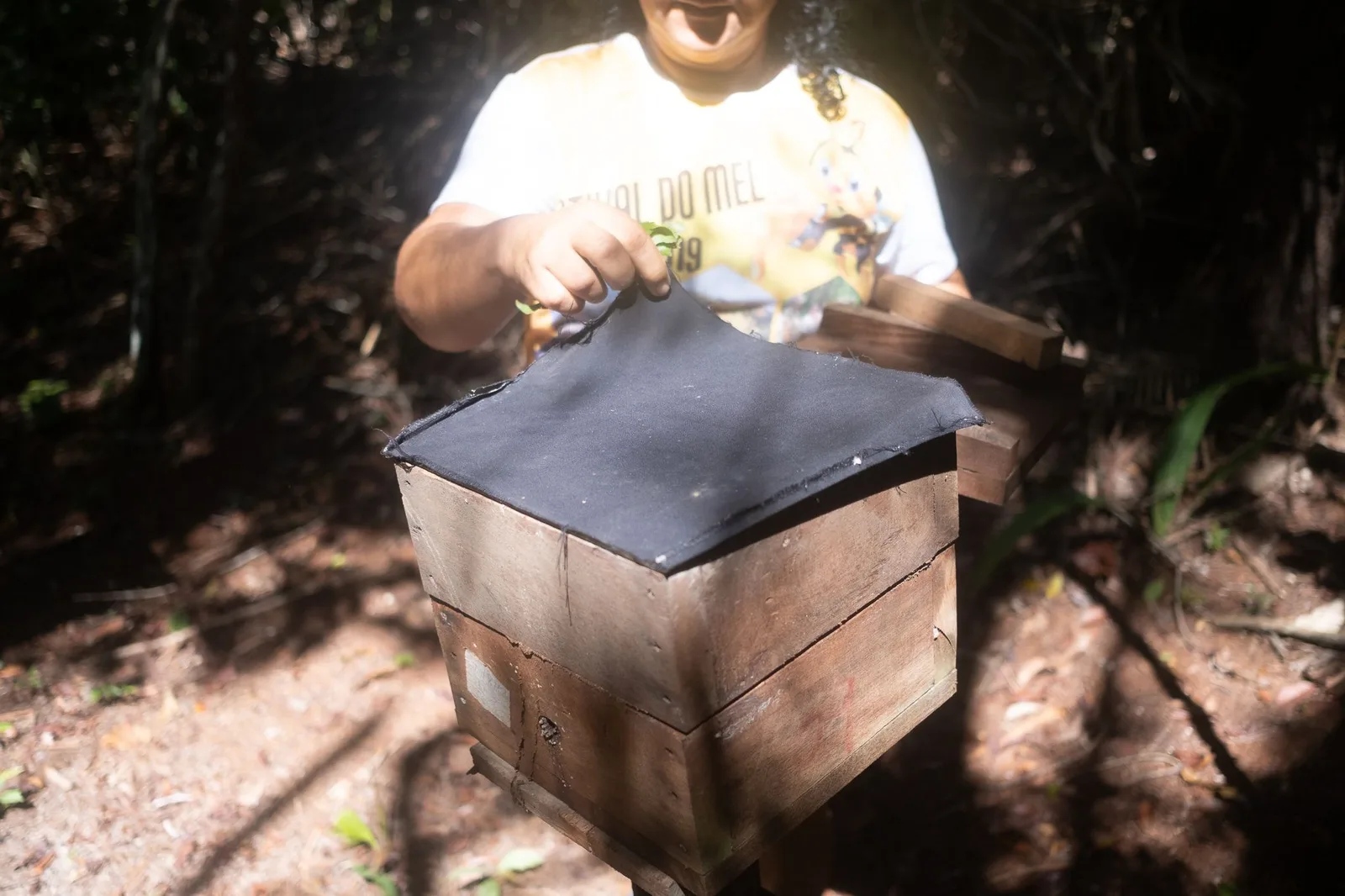
  • A person in a white shirt lifting the lid of a small wooden bee box on a stand in dappled forest shade

    Anã and Coroca · an hour

    Stingless bees on the Arapiuns

    Several Arapiuns communities keep native stingless bees, and the visits are guided. At Coroca the tour starts with a forest trail to the bee house, where species like the jandaíra make a mild honey; at Anã the bees sit alongside the community’s fish farming in the lake. The bees have no sting, so nobody needs a veil.

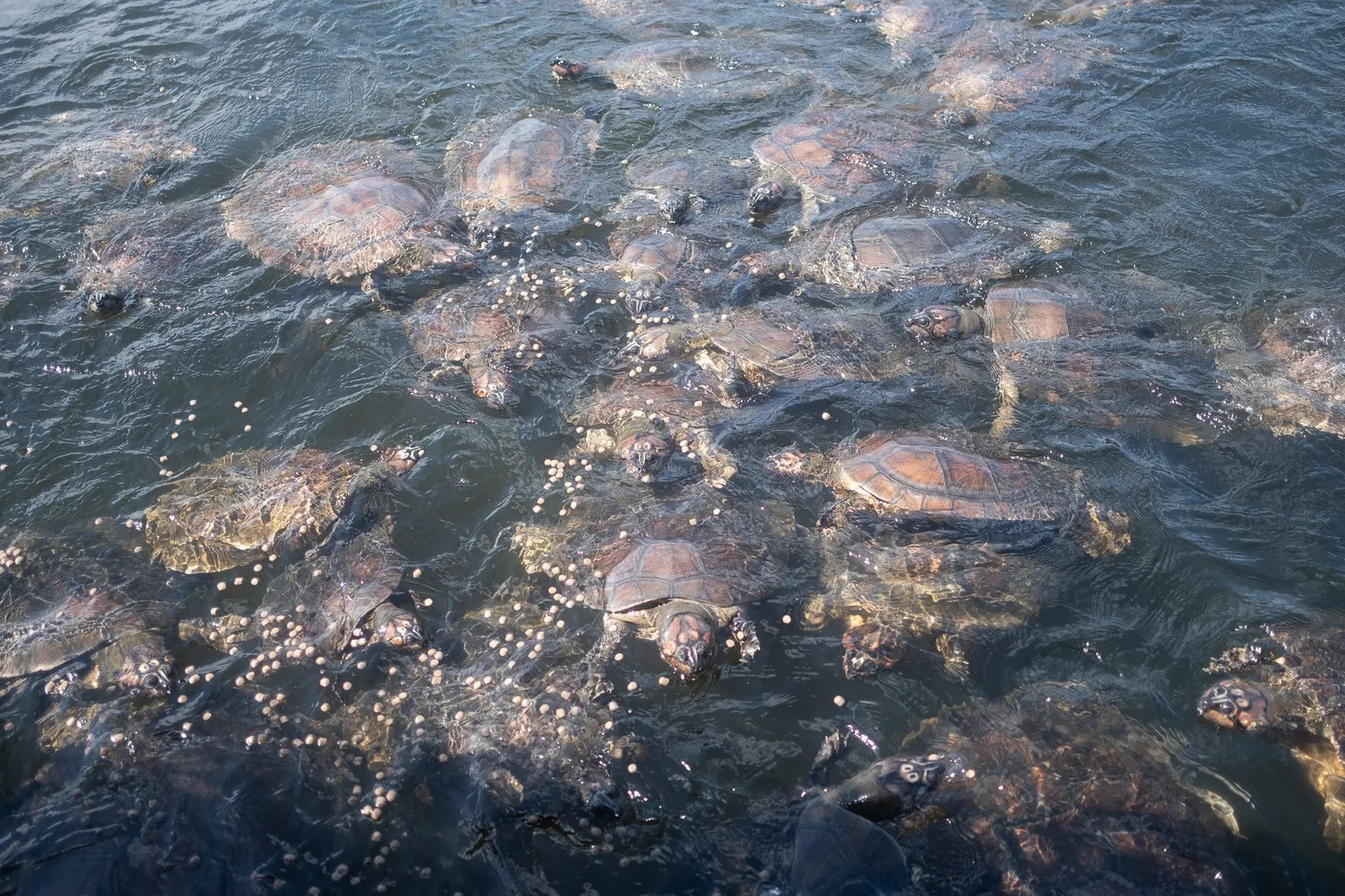
  • Dozens of river turtles crowded together at the surface of dark water, their shells and heads breaking through the ripples

    Coroca · on the Arapiuns day

    Turtle Lake at Coroca

    Coroca, on the far bank of the Arapiuns, runs a turtle conservation project with Ibama on its own lake, which everyone now calls the Lago das Tartarugas. The turtles crowd the surface of the lake, and the community releases young ones into the wild every year on the second Saturday of February. A private boat from the village takes about an hour and a half.

  • A whole grilled river fish, charred and split open, lying on a sheet of crumpled foil

    FLONA and Arapiuns communities · lunch

    Piracaia: fish grilled on the beach

    A piracaia is river fish grilled over a fire on the beach, and the communities that take visitors serve it as the meal of the day out. It is simple and fresh, and the reason to say yes when a boatman offers lunch in a community rather than back in the village.

Santarém & around

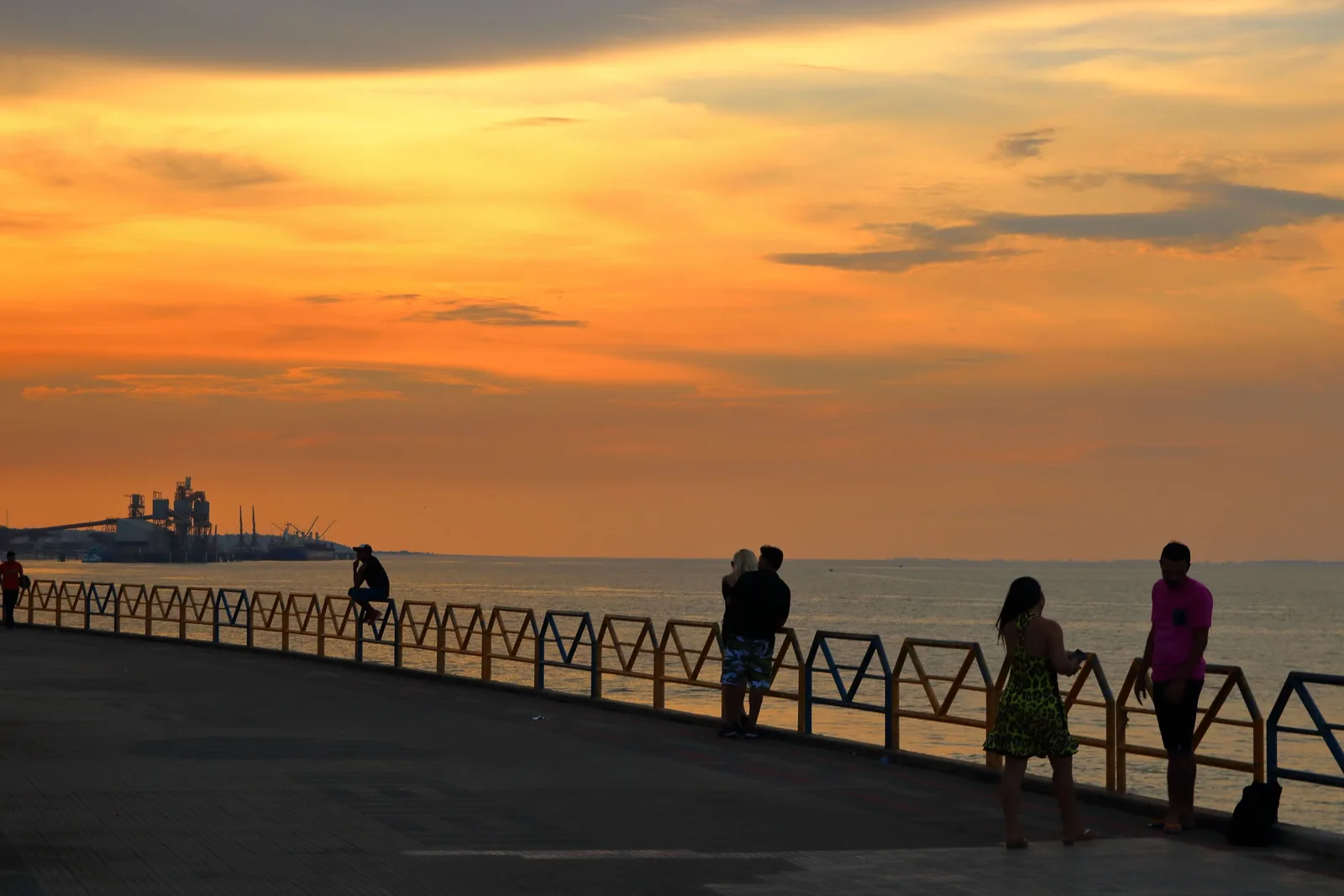
  • People standing at a railing along a riverside promenade at sunset, silhouetted against an orange and gold sky with a ship on the river

    Santarém · an evening

    Sunset on the Santarém waterfront

    The orla runs along the river in Santarém, and it is the city’s postcard and its evening walk. The sun goes down over the water, and in daylight this is the place to see the two rivers meeting. Pair it with dinner in town on the way back from the airport, or on a day in the city.

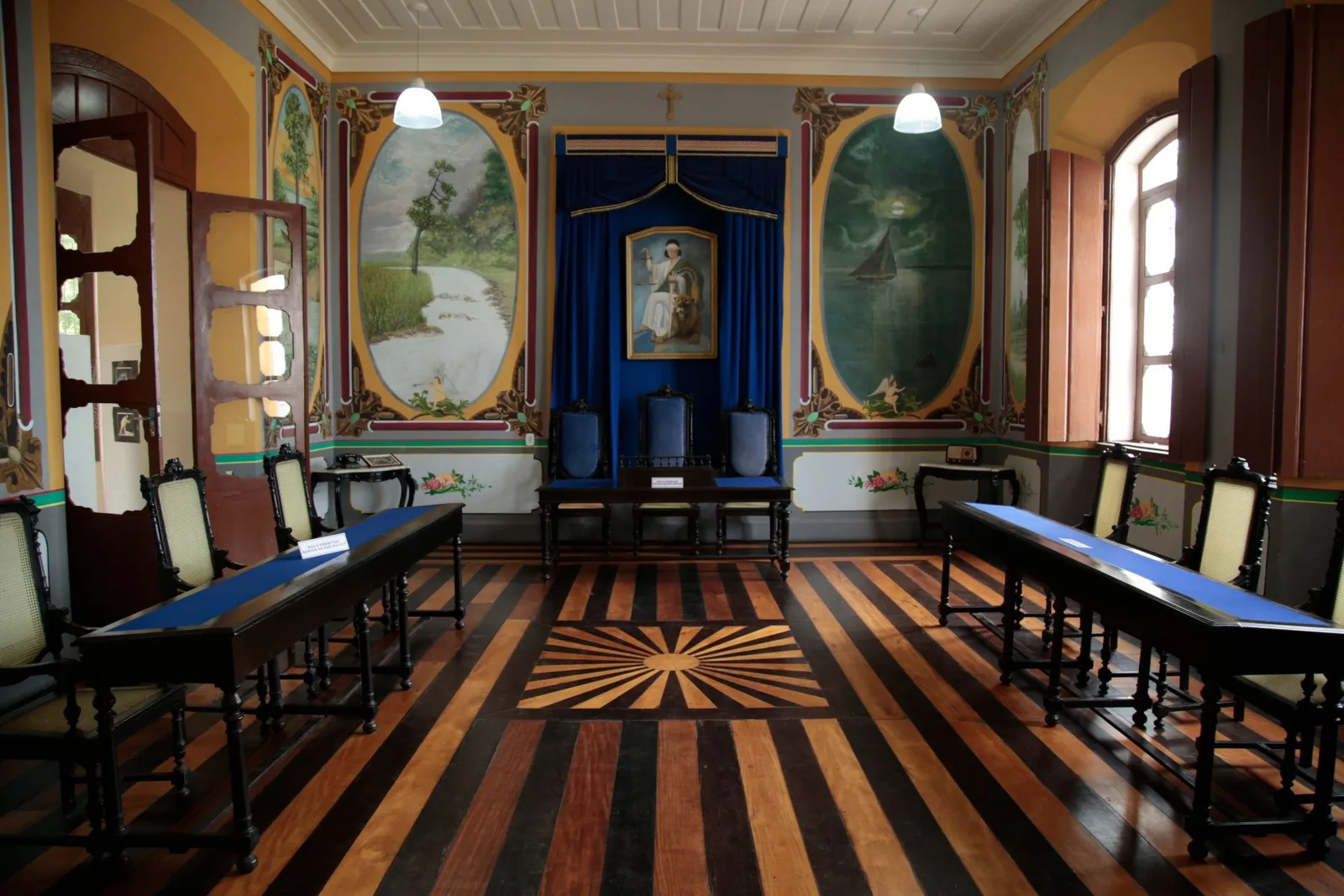
  • A formal room with a striped inlaid wooden floor, long blue-topped tables with cane chairs, painted landscape panels on the walls and a portrait under a blue canopy at the far end

    Santarém waterfront · an hour

    The Centro Cultural João Fona

    Santarém’s museum and cultural center, on the waterfront in the Praça Barão de Santarém, named since 1991 for the painter João Fona, whose work is on the building’s own walls. The collection tells the region’s story through historical pieces, artworks and fragments. Opening hours change from season to season, so check before you go.

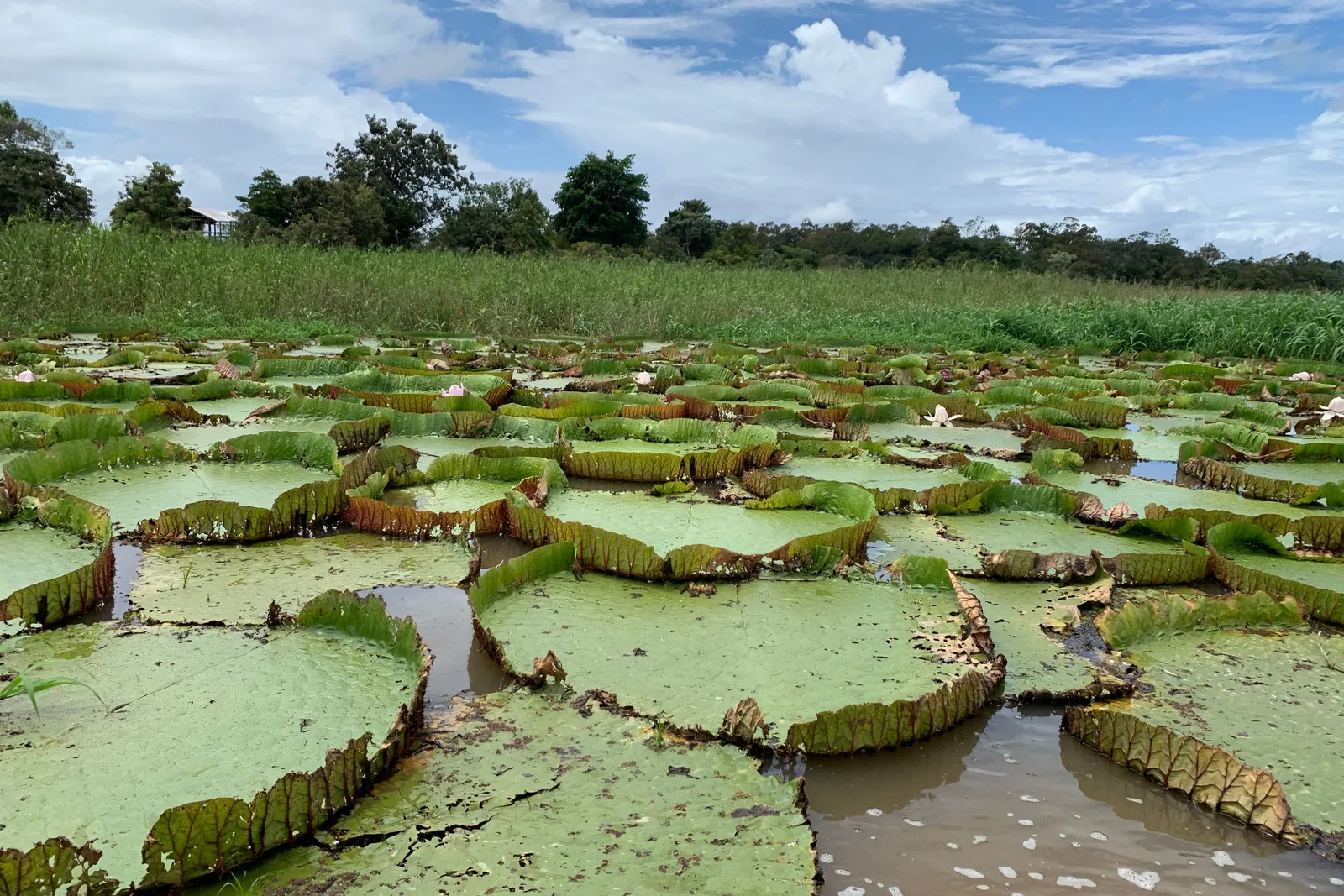
  • Dozens of giant round water lily pads with upturned rims floating on brown water, tall grass and trees behind under a cloudy sky

    Arapixuna · 35 minutes by speedboat from Santarém

    Water lilies and sloths on the Canal do Jari

    On the Amazon side of Santarém, the community of Jari do Socorro runs a short walk, or a canoe trip when the water is up, through floodplain forest where sloths live, for $5.90 (R$30) a person. Further along, at Alto Jari, a family grows giant Amazon water lilies, visited Tuesday to Saturday from 10:00am to 2:00pm for $7.80 (R$40). River access only.

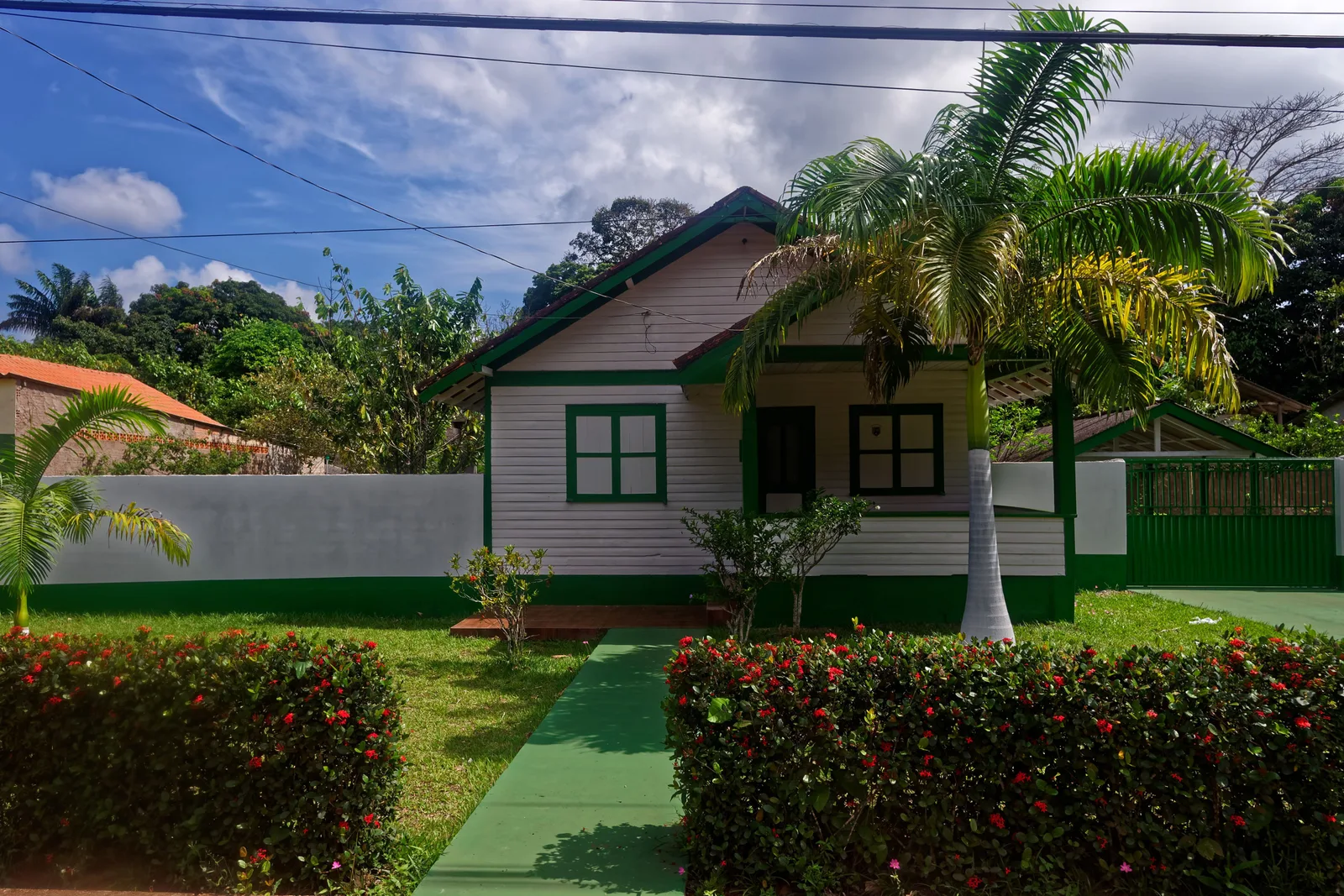
  • A white wooden bungalow with green trim and a pitched roof behind a clipped hedge and a short green path, a palm tree beside it

    Belterra · half a day, about 49 km from Santarém

    Henry Ford’s town at Belterra

    In 1927 Henry Ford was granted a million hectares on the Tapajós to grow rubber for his cars. His first plantation, Fordlândia, was crippled by leaf disease and pests, and from 1933 the company moved its effort to a flatter site downstream and built Belterra, with planned streets, plumbing and houses meant to feel like an American suburb. Ford sold out to the Brazilian government for $250,000 in 1945.

  • Several white multi-deck passenger riverboats moored side by side at a busy quay, people and a small kiosk on the dock in front

    Santarém port · two days or more

    A riverboat to Manaus or Belém

    Santarém is a stop on the big river between Manaus and Belém, and the passenger boats still run. Sling a hammock on deck or take a cabin; the trip upstream to Manaus takes about 48 hours. Bring your own hammock, and food in case meals are not included. It is the slowest way to leave, and for some people the best part of the trip.

Where to stay

The village, and three nights away from it.

Almost everyone bases in Alter do Chão itself and goes out by boat. The other three are not alternatives to it so much as additions: Santarém for an awkward flight or a riverboat, and a night or two in the forest or on the Arapiuns for the part of the trip that day boats cannot reach.

Drag and zoom to explore.

Tap an area to open it and see it on the map

  • Our pick

    Best for: The base for everything

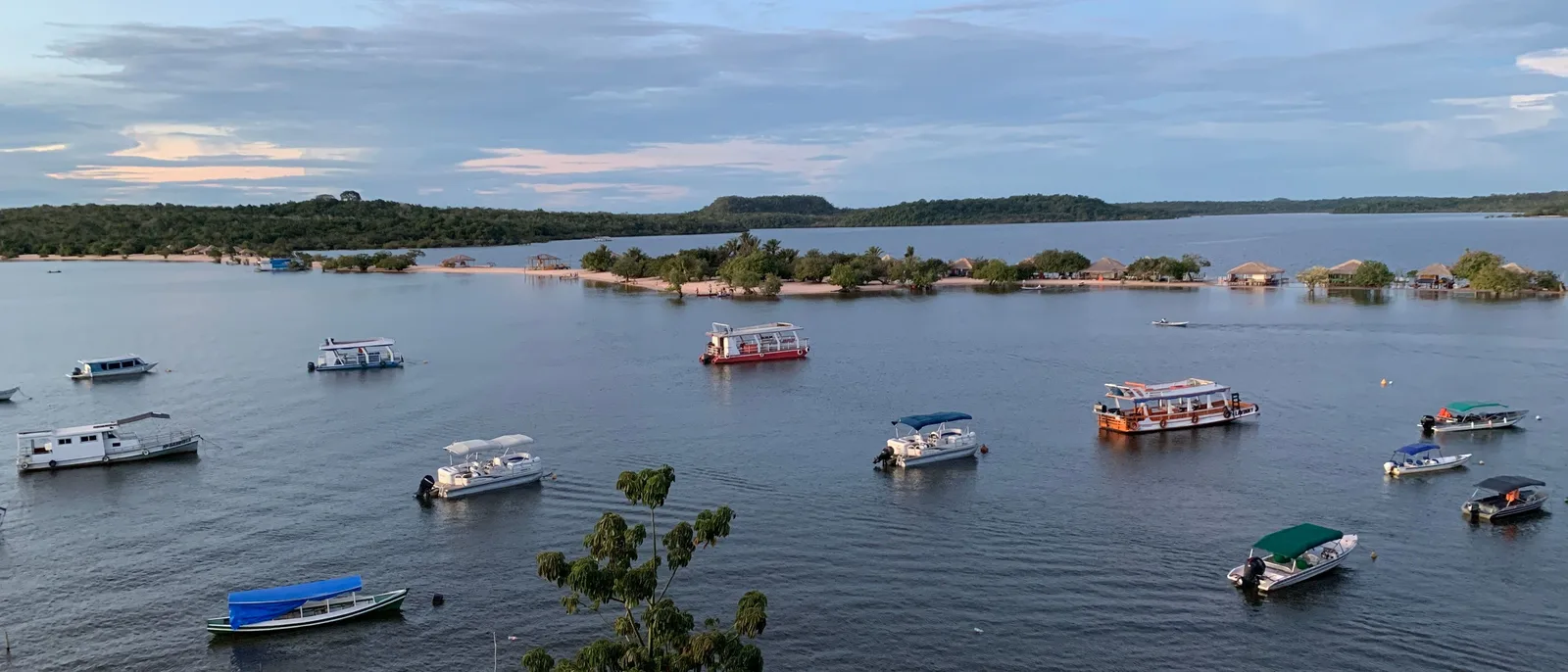
    Small motorboats and canopied passenger boats moored in a wide bay seen from above, a low wooded island and a flat horizon behind

    The village is where the pousadas, the restaurants, the canoes to the Ilha do Amor and the boats to everything else all are, within a few minutes’ walk of each other. Rooms range from simple doubles to a handful of hotels. It is small, walkable, and the obvious place to sleep for all but a night or two of the trip.

    • Most rooms
    • Boats on the doorstep
    • Walkable
    • Quiet at night
  • Best for: A late flight or a riverboat

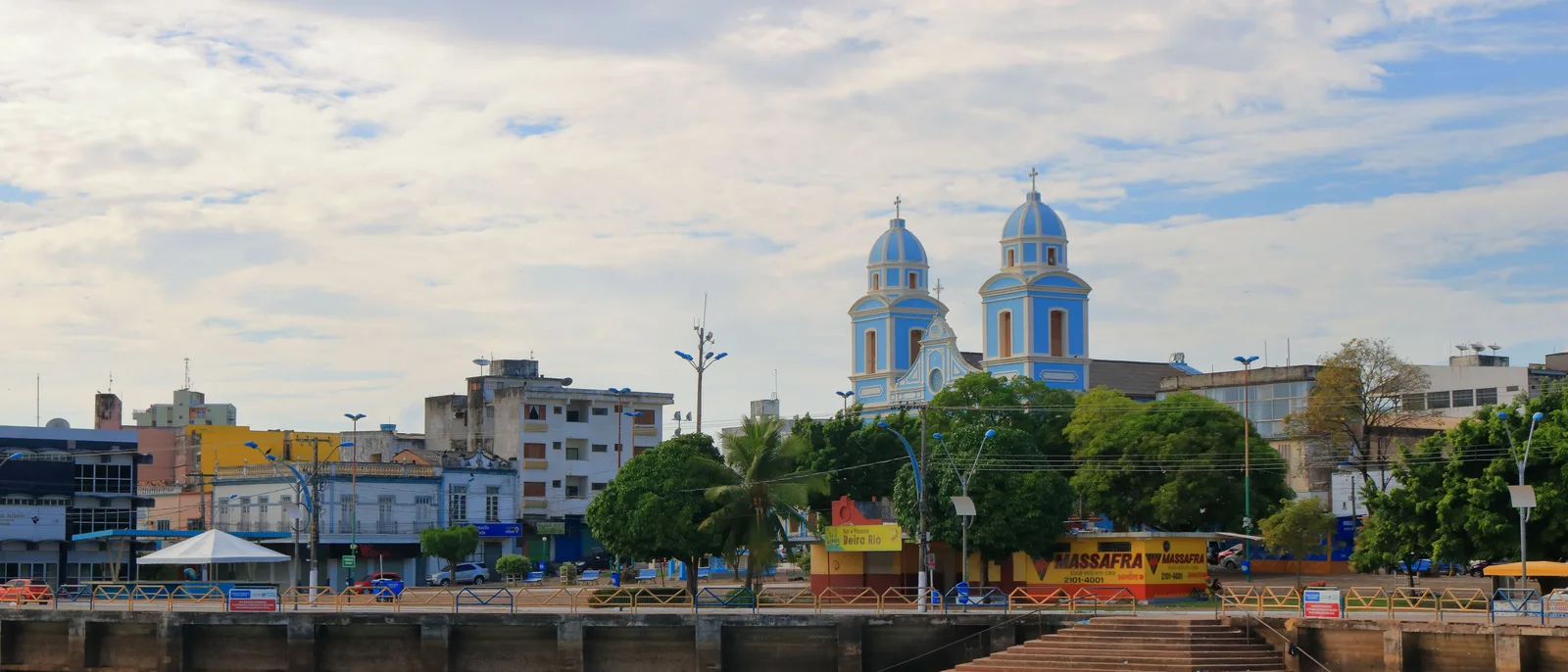
    The Santarém waterfront from the quay: a pale blue cathedral with twin domed towers behind trees and a row of low buildings

    A river city of about 350,000, about 40 minutes from the village by road and 15 km from the airport. There is no reason to base here, but it is the sensible bed for a flight that lands late or leaves early, for the night before or after a riverboat, or for a day spent on the waterfront, the museum and the meeting of the waters. It is a real working city, so take taxis after dark.

    • Near the airport
    • Riverboat port
    • Waterfront
    • One night
  • Best for: A night inside the forest

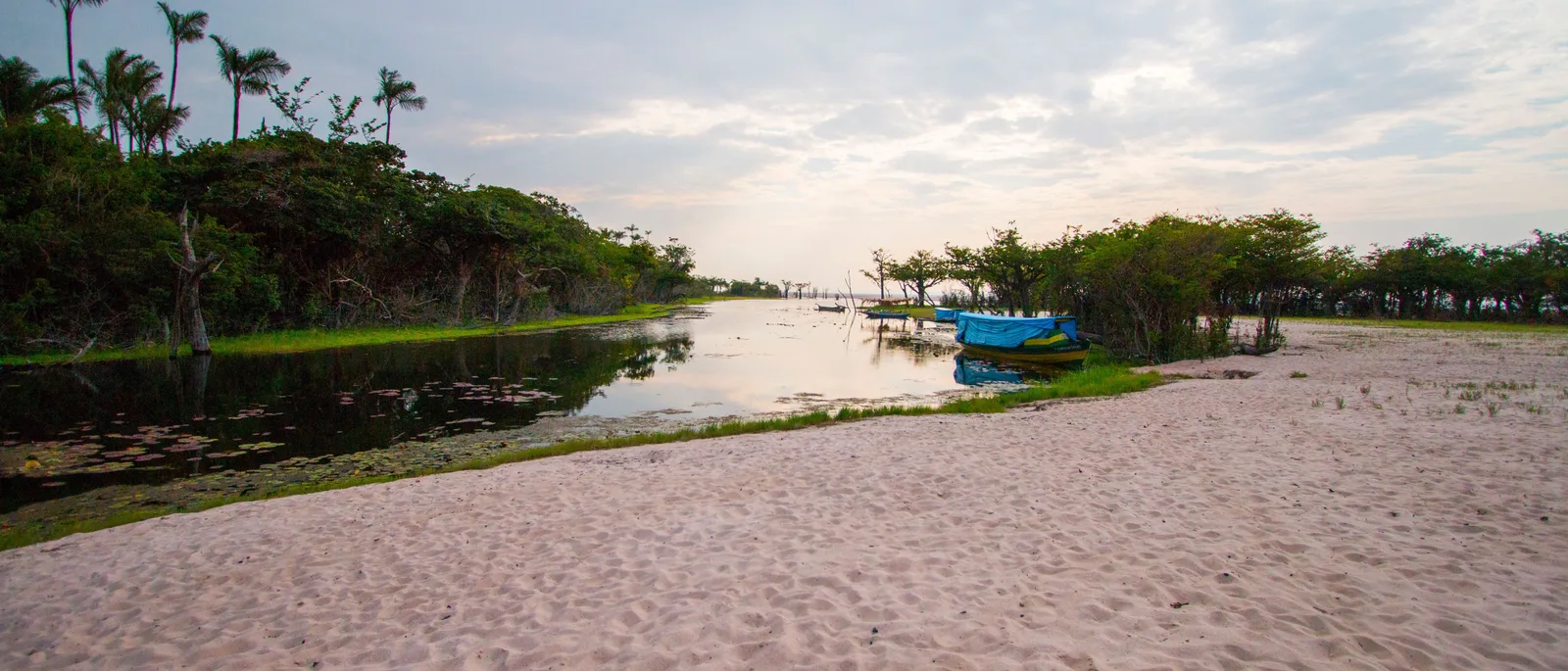
    A white sand beach curving along a calm creek mouth, low forest and palms on the far side and small blue boats moored by the trees

    Jamaraquá and Maguari have small community-run guesthouses and hammock houses, simple and inexpensive, with meals cooked in the community. Sleeping here means you can start the long samaúma walk at first light, swim in the afternoon, and go out after dark with a guide. You sign in at ICMBio’s access control on the way into the national forest, so ask how it is arranged when you book. Expect basic rooms.

    • Community-run
    • Hammock houses
    • Early trails
    • Very simple
  • Best for: Living on the river for a few days

    A wide panorama of a forested island fringed with white sand, set in calm blue water under a clear sky

    The shared hammock houses of Anã and Maripá inside the reserve, and Atodi’s on the other bank, booked through the Turiarte cooperative as part of a stay of three to five days. You sleep in a hammock, eat with the community and spend the days on the river and in the forest. It is the least comfortable bed on this page and the one most people remember. Book about a week ahead.

    • Hammock houses
    • Meals included
    • Three nights or more
    • Book ahead

A working plan

Five days, one river a day.

Built for the low-water months, when the beaches are out. Every day starts with a boat from the village waterfront except the last, which ends at the airport by way of Santarém. Come at high water and swap the sandbar for a canoe through the flooded forest.

  1. 01
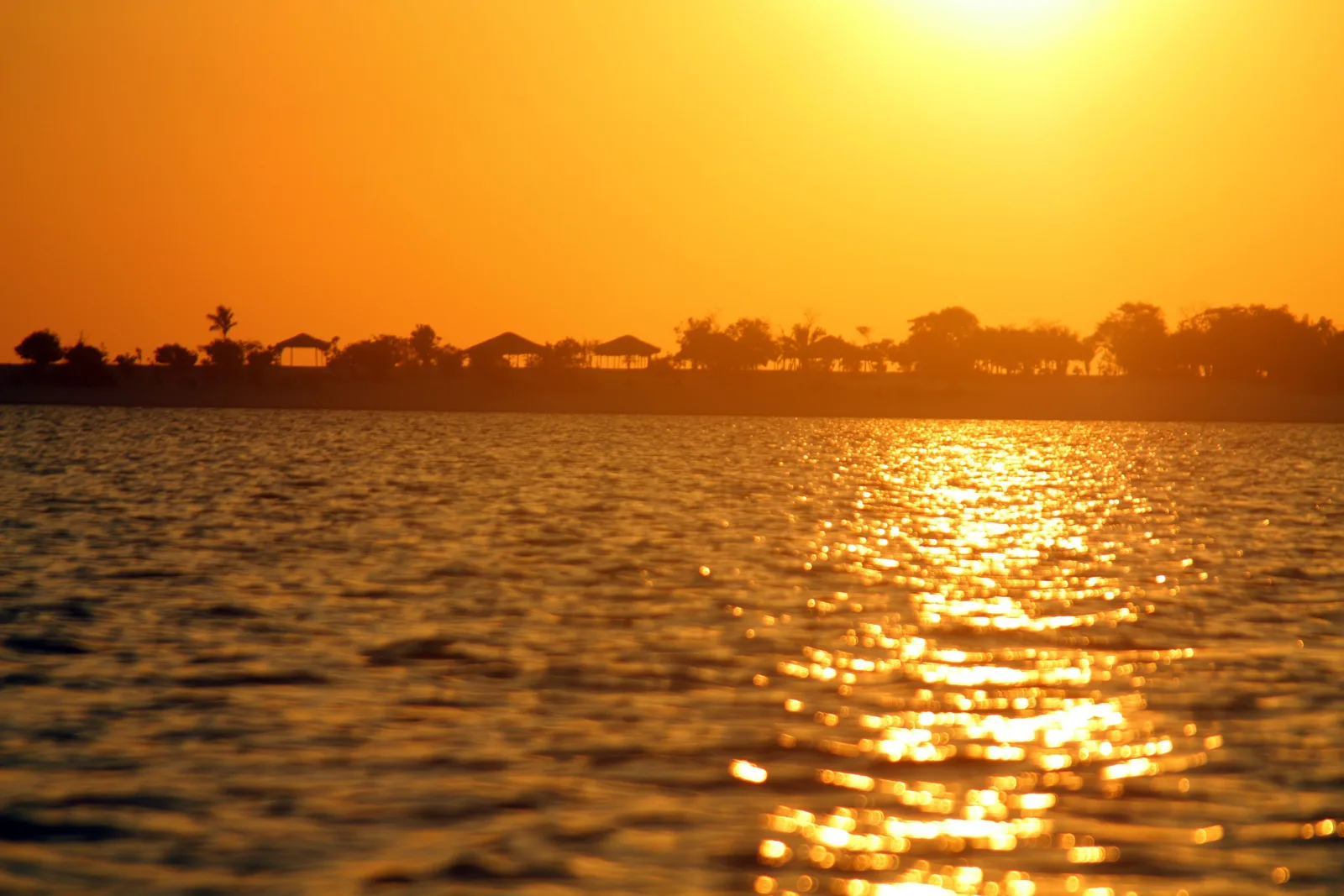
    The sun low over a river in a blazing orange sky, a line of trees and thatched roofs silhouetted along the far shore and the water glittering gold

    Alter do Chão & the Ilha do Amor

    Arrive and cross to the sandbar

    Forty minutes from the airport to the village. Drop your bags, take a canoe across to the Ilha do Amor, and stay on the sand until the sun goes down over the river.

  2. 02
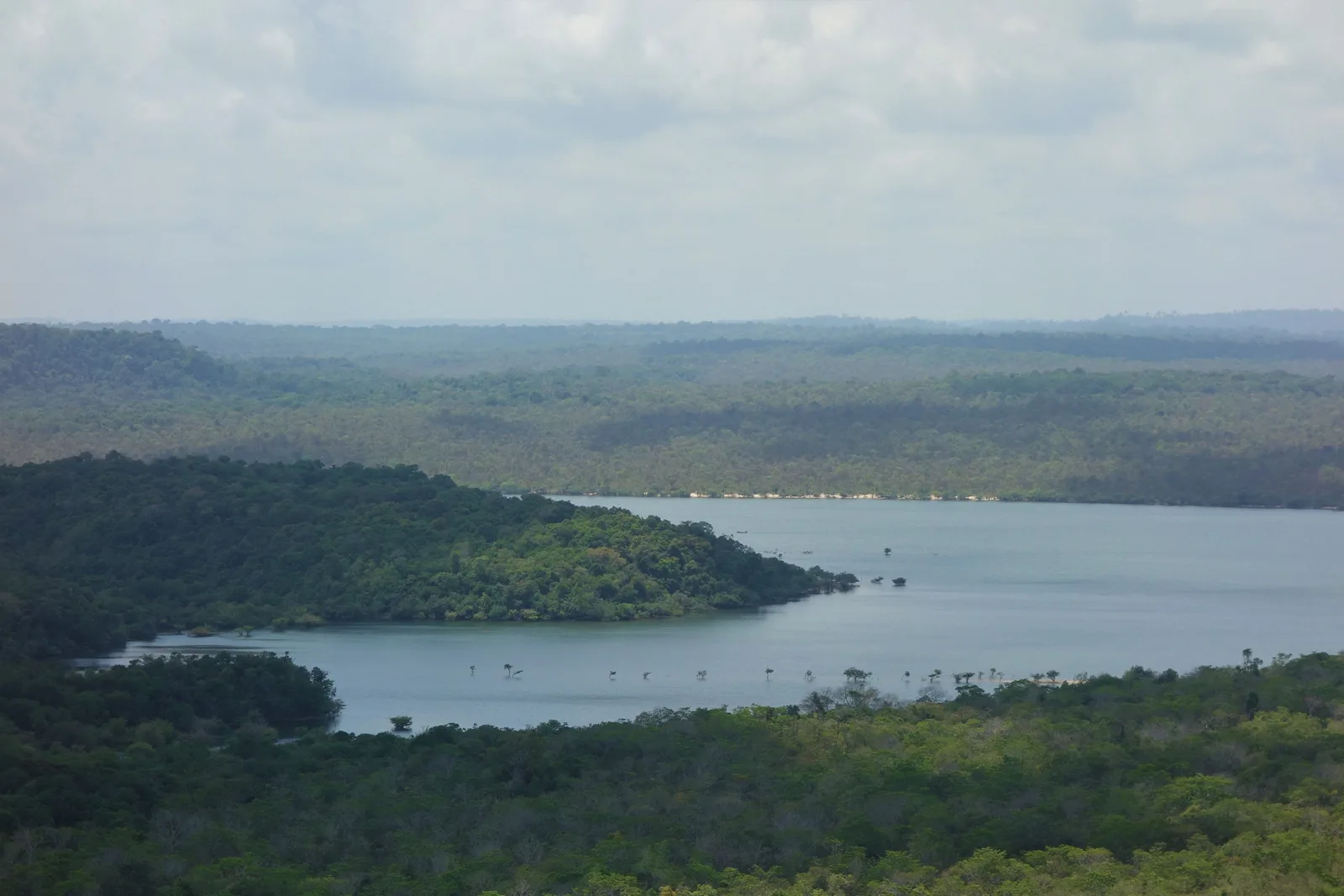
    Looking down from a forested hilltop over a winding lagoon of pale blue water, low green forest all around it and the land fading into haze

    Serra Piroca & Lago Verde

    The hill and the lake

    Up the Serra Piroca with a guide in the cool of the morning, then a kayak on the Lago Verde. Sunset boat to Ponta do Cururu in the evening.

  3. 03
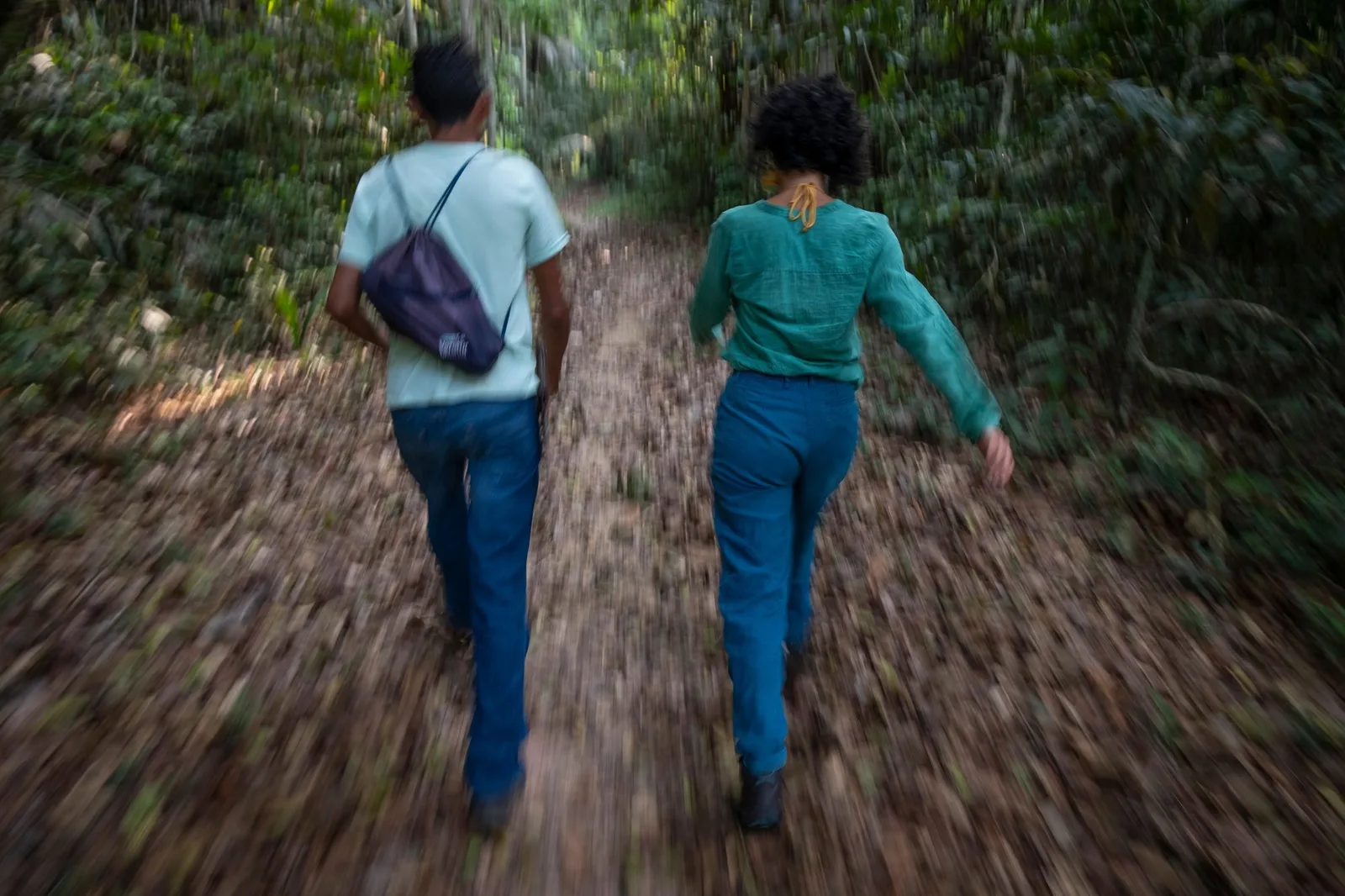
    Two people walking away down a narrow trail through dense green forest, one carrying a small backpack

    FLONA do Tapajós

    Into the national forest

    Forty minutes by boat to Jamaraquá or Maguari. The samaúma trail with a community guide, a piracaia on the beach, and a swim before the boat home.

  4. 04
    A long, thin line of white sand stretching across deep blue water under a bright sky full of white clouds

    Rio Arapiuns

    The white beaches of the Arapiuns

    The full-day boat to Ponta do Icuxi and Ponta Grande, with turtles, bees and tucumã weaving at Coroca. Or start a two-night community stay here instead.

  5. 05
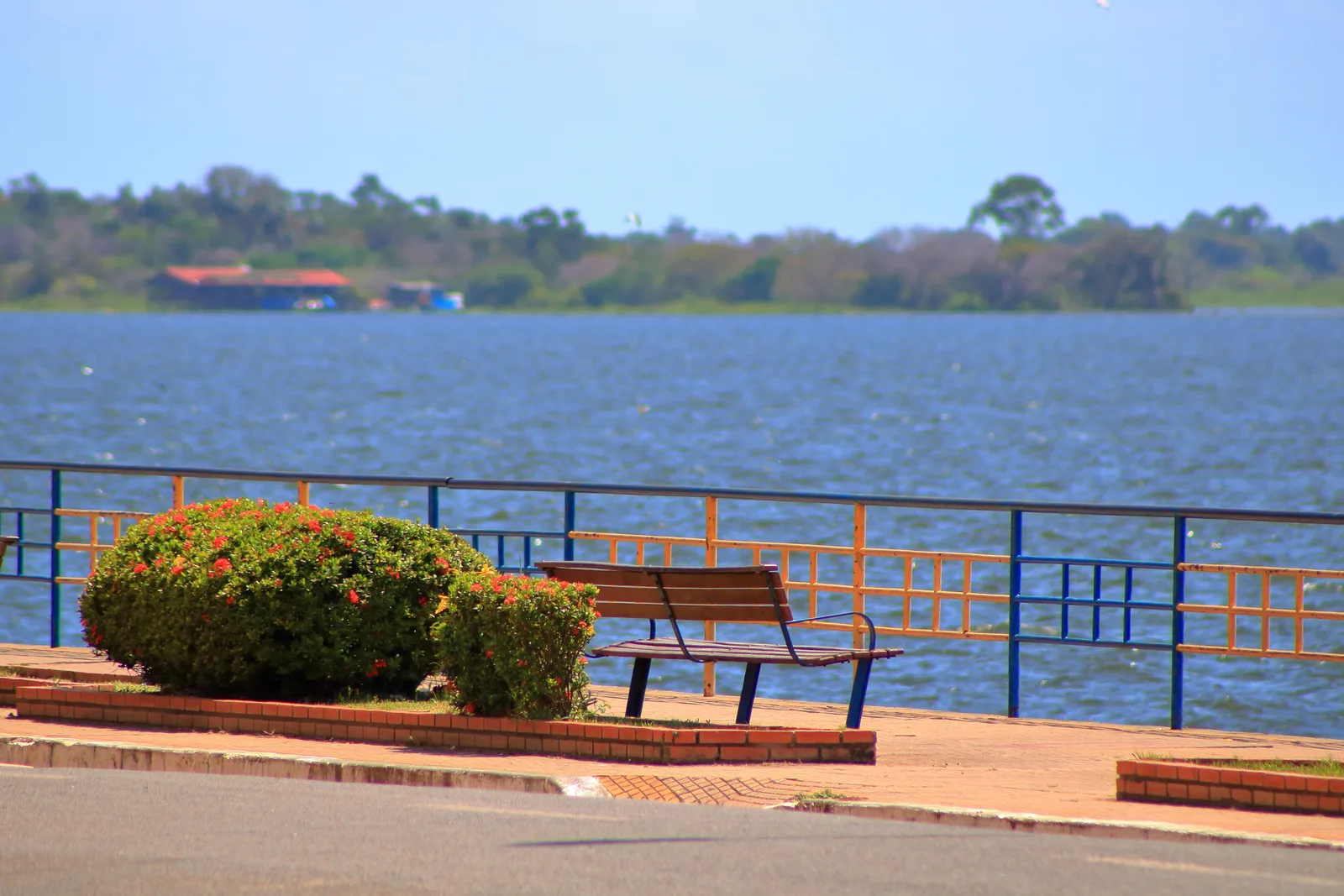
    A riverside promenade with a bench, a red flowering shrub and a blue railing, wide blue water beyond and a low green shore on the far side

    Santarém

    The meeting of the waters, then home

    Into Santarém for the waterfront, where the clear Tapajós meets the brown Amazon, and the Centro Cultural João Fona. The airport is 15 km from the center.

This is a starting shape, not a fixed departure — we rearrange it around your dates. Have it built for you

Timing

Come for the low water.

The temperature here barely moves: highs of 30 to 33°C and nights around 22°C, every month. What changes the trip is the river. It rises from December, peaks in May and falls through the second half of the year to its low in November, about five and a half meters below the May high. The white beaches only exist on the way down and at the bottom, which is why the calendar points at the last months of the year.

Rainfall, rain days, temperature and UV for Alter do Chão, month by month, with what the river is doing. Choose a month to see it.

January

Trade-offs
Air
22–31°C 72–88°F
UV
9 Very high
Rain
15 days 222 mm / 8.7 in

The rains are back in force, and the river is climbing fast.
February

Trade-offs
Air
22–30°C 72–86°F
UV
10 Very high
Rain
17 days 252 mm / 9.9 in

Heavy rain, and the river still rising by about a meter over the month.

March

Trade-offs
Air
22–30°C 72–86°F
UV
10 Very high
Rain
20 days 326 mm / 12.8 in

The wettest month of the year. The flooded forest begins to open for canoes in the second half.

April

Trade-offs
Air
22–30°C 72–86°F
UV
9 Very high
Rain
19 days 300 mm / 11.8 in

Still very wet, with the river close to its peak and the beaches under it.

May

Trade-offs
Air
22–30°C 72–86°F
UV
8 Very high
Rain
18 days 242 mm / 9.5 in

The river at its highest of the year. Flooded forest by canoe, and no sandbar.

June

Trade-offs
Air
22–31°C 72–88°F
UV
9 Very high
Rain
14 days 139 mm / 5.5 in

The rain eases off, but the river holds close to its May high.

July

Trade-offs
Air
21–31°C 70–88°F
UV
9 Very high
Rain
11 days 101 mm / 4.0 in

Drier, and the river begins to fall, but it is still near its peak.

August

Trade-offs
Air
22–32°C 72–90°F
UV
10 Very high
Rain
6 days 48 mm / 1.9 in

Dry and the sunniest month of the year, with the river dropping but still high.

September

Good
Air
22–33°C 72–91°F
UV
11 Extreme
Rain
4 days 33 mm / 1.3 in

The driest month, and the river falls faster than in any other. The Festa do Sairé fills the village in the third week.

October

Best
Air
22–33°C 72–91°F
UV
10 Very high
Rain
3 days 54 mm / 2.1 in

The pick: three rain days, the hottest afternoons, and the river down at its low by the end of the month.

November

Good
Air
22–33°C 72–91°F
UV
9 Very high
Rain
5 days 74 mm / 2.9 in

The lowest water of the year, a little more rain, and the worst of the smoke from farm fires in dry years.

December

Good
Air
22–32°C 72–90°F
UV
9 Very high
Rain
8 days 89 mm / 3.5 in

The rain returns and the river turns, so early December sits lower than late.

  • Best The one or two peak months
  • Good A real recommendation
  • Trade-offs Workable, with a catch
See Alter do Chão on the Brazil calendar

UV is the monthly average of the daily peak, 2022 to 2025, calculated from Copernicus Atmosphere Monitoring Service data. Weather data by Open-Meteo.com, CC BY 4.0.

For the beaches

October

The fewest rain days of the year, three, on 54 mm, with highs of 33°C, and the river falling to its annual low by the end of the month. The sandbars are out and the days are reliably dry.

Close behind

September, November, December

September is the driest month, but the river is still well up and falling fast. November has the lowest water of the year, with a little more rain and the most fires. Early December is still low before the river turns.
Beaches under the river

February–July

High water. The Ilha do Amor and most river beaches are submerged, and March is the wettest month at 326 mm. The trade is the flooded forest, best by canoe from late March.

About the rain

There are two seasons here and they are both about water. From January to May it rains on fifteen to twenty days a month and the river climbs steadily toward its May peak, flooding the forest along its banks and swallowing the beaches. From August to November it barely rains at all, three to six days a month, and the river drops four to five meters, leaving white sand behind it. The rain and the river are out of step: the driest month is September, but the lowest water comes two months later, in November.
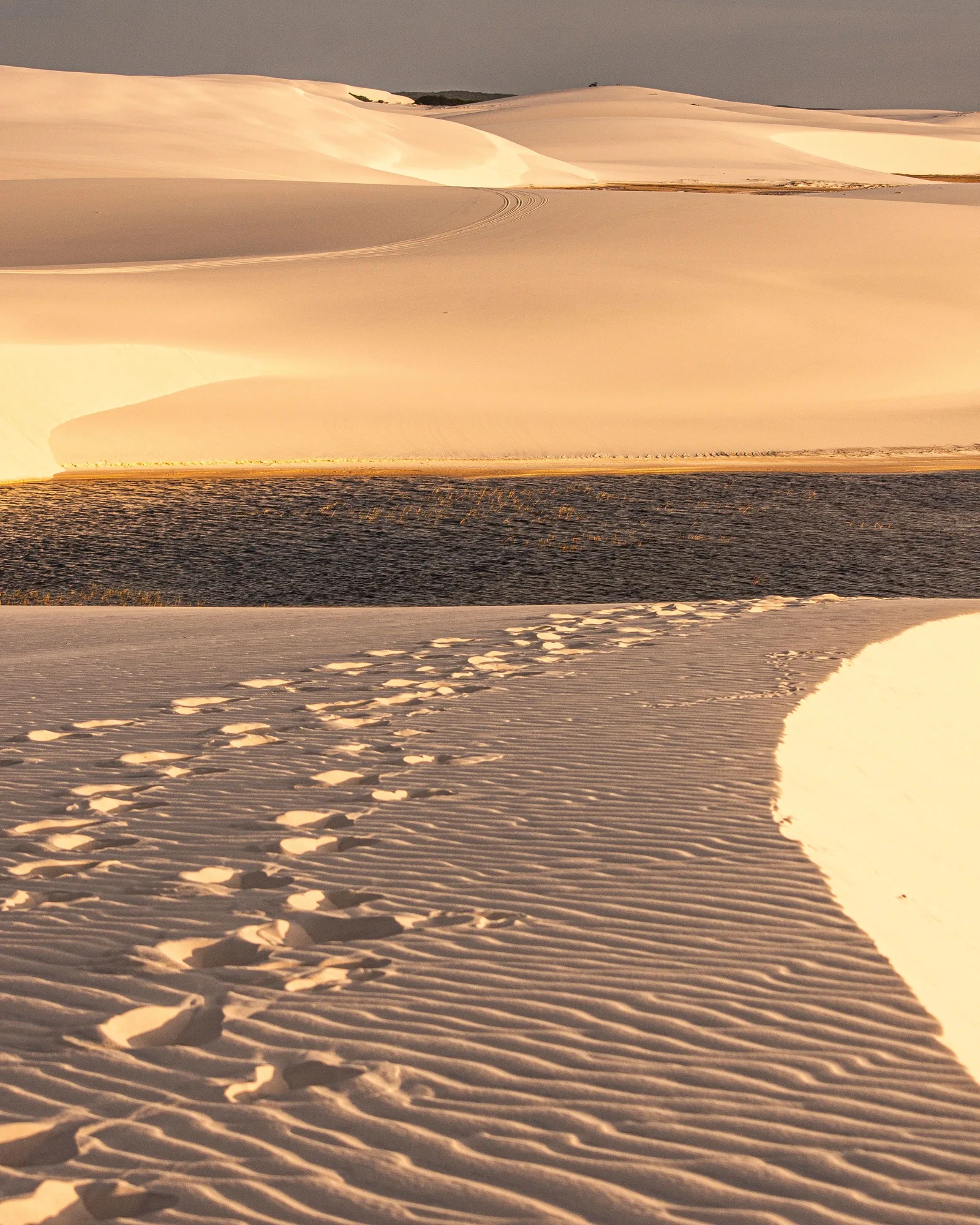
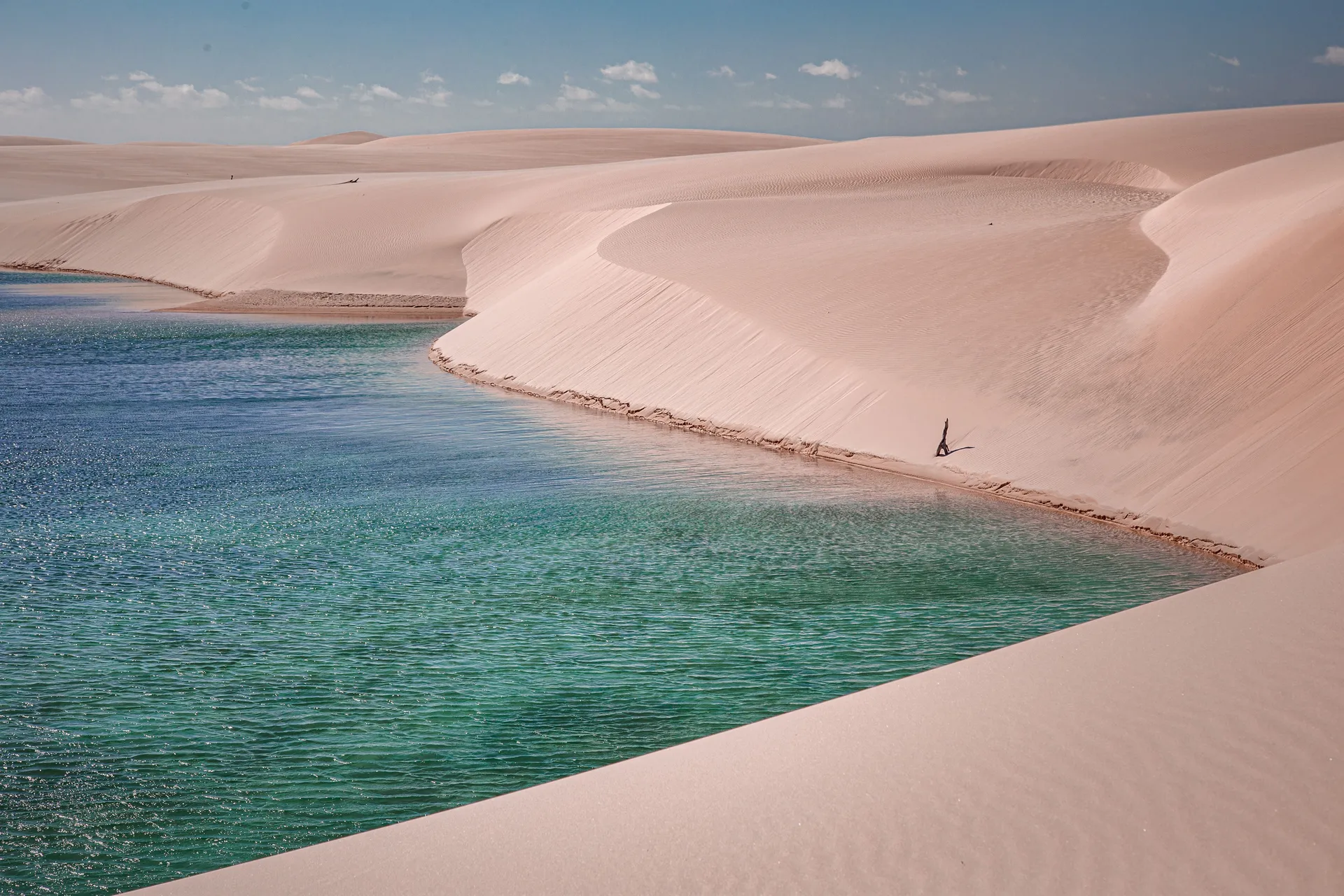
Low water is not the only good time to come, just the beach time. In the high-water months the trips change rather than stop: canoes go into the flooded forest at the Floresta Encantada and in the FLONA, and the river is wide and full. The catch late in the dry season is smoke. Fires burn around Santarém from September, peaking in October and November, and in late 2024 the air was bad enough for the city to declare an environmental emergency.

The dates worth planning around

A performer in a jeweled crown and an elaborately beaded costume kneeling with her arms outstretched on a float, sparks and smoke rising behind her on a lit stage at night

Festa do Sairé

Third week of September (17–21 September in 2026; 2027 dates not yet announced)

Alter do Chão’s own festival, recognized in federal law in 2024 as part of Brazil’s national culture. It joins a religious rite, born from the meeting of Indigenous song and dance with the Christianity the Jesuits brought in the 17th century, to the Festival dos Botos. The rite is centered on the sairé, a decorated semicircular arch carried in procession. The program opens a few days earlier with the fetching of the ceremonial masts, and ends with the masts coming down. Officially spelled Sairé; Çairé is an older spelling still used locally.

A dancer in a bright yellow dress kneeling on a stage beside a huge gray river-dolphin figure carried by a performer in silver, spotlights and sparks behind

The Festival dos Botos

The Saturday night of the Sairé

The competitive half of the festival: two rival groups, Boto Tucuxi and Boto Cor de Rosa, named for the river’s two dolphins, stage enormous performances against each other in the festival arena, the Lago dos Botos. The story is the Amazon legend of the boto who comes ashore as a seductive young man on full-moon nights. The festival has been part of the Sairé since the late 1990s, and the two groups perform back to back late into the night.

A long tongue of pale sand exposed in shallow, clear river water, a decorated pole on the sand and boats moored off a beach lined with umbrellas behind

Low water

The river’s low falls between late October and late November

Not an event, but the date that decides the trip. In most years the Tapajós at Santarém hits its lowest day of the year between the third week of October and the end of November, and in the weeks around it the river is at its narrowest and the sandbars at their largest. In drought years it drops further still; in 2024 it fell to the fourth-lowest level on record at Santarém.

Good to know

Before you come

When are the beaches at Alter do Chão actually there? +

When the river is low, which means the second half of the year. The Tapajós at Santarém peaks in May and reaches its lowest point in November, about five and a half meters lower, and the Ilha do Amor and the other river beaches only emerge as it falls. October is the month to aim for: the fewest rain days of the year and the river down at its low by the end of the month. September, November and early December are close behind. From roughly February to July the beaches are underwater. That is still a beautiful time to come, for canoe trips through flooded forest, but it is not the beach trip in the photographs.

How do I get to Alter do Chão from the US? +

Fly into Santarém (STM), the nearest airport, about 32 km by road from the village. There is no direct flight from the US, so you connect in Brazil. The quickest routes are one stop from Florida: Gol flies from Miami to Belém and to Manaus, Azul flies from Fort Lauderdale to Belém in season and from Orlando to Belo Horizonte, and all three cities have nonstops to Santarém. Belém or Manaus is the shortest hop, about an hour and a quarter on Azul or Gol, and Brasília has a nonstop too. From the airport it is about 40 minutes to the village by taxi or ride app, or you can take the Alter do Chão bus from Santarém for $1.15 (R$5.90). The slow alternative is a riverboat: about three days from Belém, and about two days on to Manaus.

How many days do I need? +

Four or five. One day for the Ilha do Amor, one for the Serra Piroca and the Lago Verde, one for the national forest, one for the Arapiuns, and half a day in Santarém on the way out. Three days covers the village, the sandbar and one boat trip. If you want to stay with a community on the Arapiuns, which is the most rewarding thing to do here, add two or three nights to that.

Should I stay in Alter do Chão or Santarém? +

Alter do Chão. The beaches, the pousadas, the canoes to the Ilha do Amor and the boats to the forest and the Arapiuns all leave from the village, and the airport is only about 40 minutes away. Santarém is a working river city of about 350,000 and worth a half day for the waterfront and the meeting of the waters, or a single night if a flight or a riverboat makes it convenient. It is not a base.

Is it safe to swim in the river? +

That is your call, and here is what the authorities say. The CDC’s general advice for Brazil is to avoid swimming in fresh, unchlorinated water, such as lakes, ponds or rivers, because of schistosomiasis, a parasitic infection spread in fresh water. Brazil’s Ministry of Health lists Pará among the states where transmission is focal rather than widespread, and neither source names the Tapajós either way. Swimming in the Tapajós is what everyone here comes to do, so make that call with a travel clinic. If you swim, shuffle your feet when you wade, because freshwater stingrays lie on the sandy bottom, which is what Brazil’s Ministry of Health advises; a sting is very painful and needs a hospital, and the Safety tab under Quick facts lists the clinic in the village and the hospitals in Santarém. Swim near lifeguards where there are some, stay within your depth, and do not drink and swim. Beyond the water, get the yellow fever vaccine, which the CDC recommends for all of Pará, and plan for malaria: the CDC recommends prescription medicine to prevent it in Pará outside Belém, so see a travel clinic well before you fly.

Keep going

Where the Tapajós fits in a bigger trip.

Alter do Chão sits halfway down the Amazon, so the natural pairings are the two ends of the same river. Manaus and the Rio Negro lodges are the forest trip, a nonstop flight away. Belém, at the river’s mouth, is the food trip and one of the two short hops to Santarém. And the Lençóis Maranhenses, along the coast from Belém, is the other place in northern Brazil where the water draws the map.

Free · 29 pages

Free guide

Beginner's Guide to Brazil

A free 29-page guide to everything a first-time visitor should know before landing: visas, safety, money, getting around, where to go, and what to eat.

We'll email you a link to confirm your address. Click it and the guide opens right away.

See what's inside
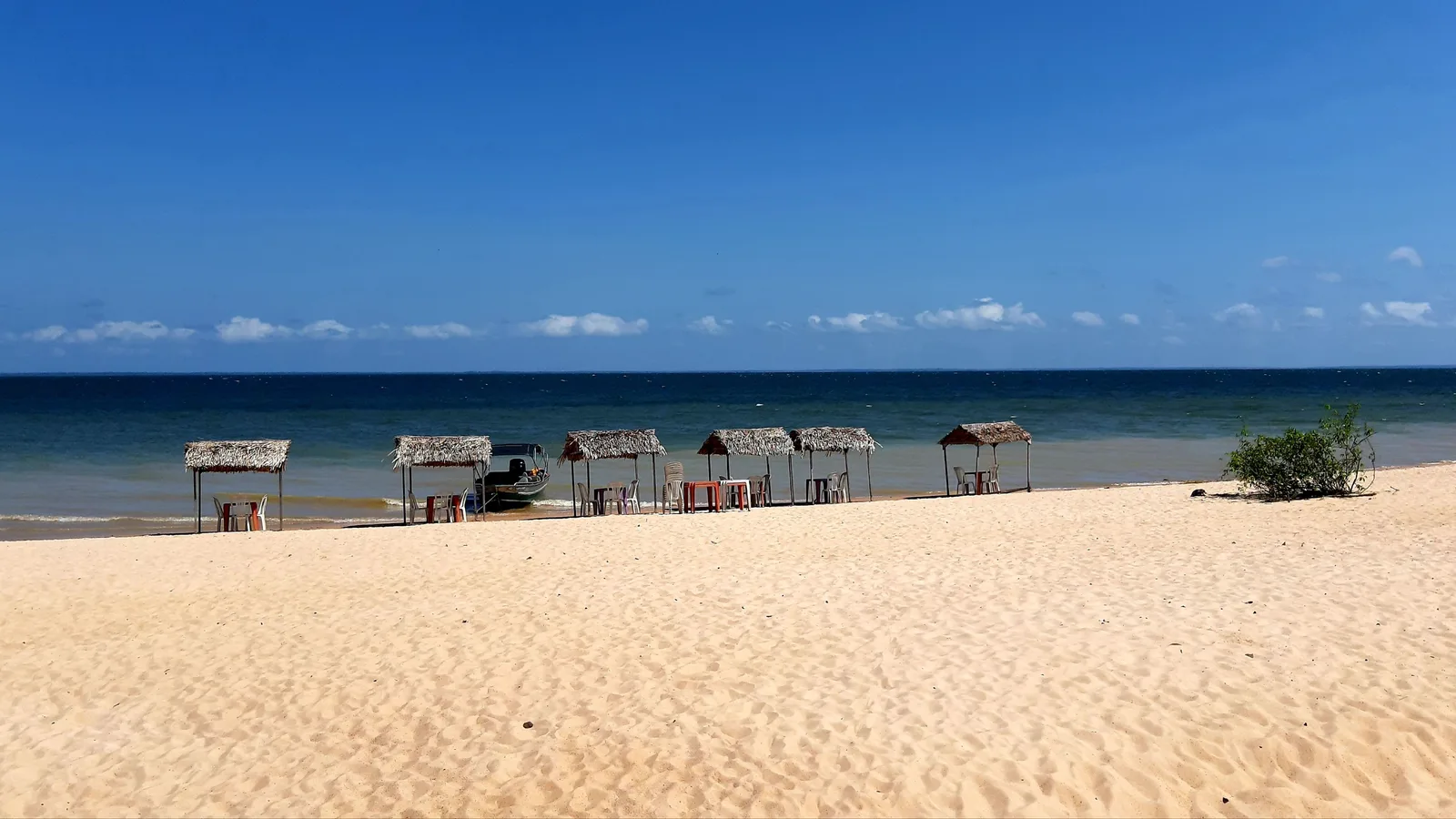
A wide river beach of pale, ridged sand under a deep blue sky, a row of small thatched shelters along the waterline and the river stretching away like a sea

Skip the planning

Get the river level right before you book.

Tell us your dates and what you want from the Tapajós: the beaches, the forest, a few nights in a community, or all three. We will tell you plainly what the river will be doing when you land, whether your dates hit the Sairé, and how to fit Alter do Chão in with Manaus or Belém without wasting a day in the air.

  • One person, living in Brazil, replying to you directly
  • A reply within one business day, with no call center and no bots
  • No cost to plan, and no obligation to book
  • Built around your dates, not a fixed departure