



Skip to content
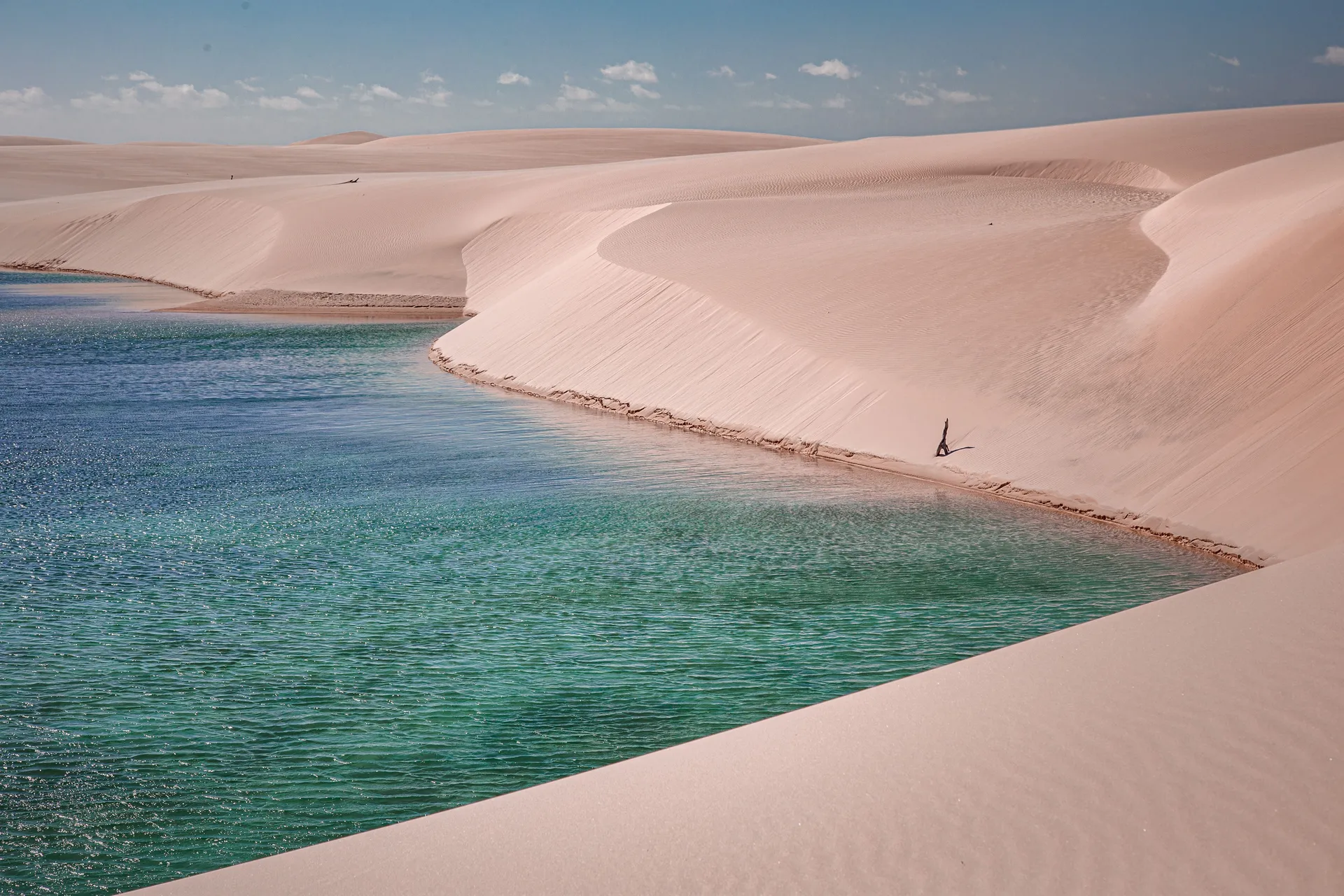
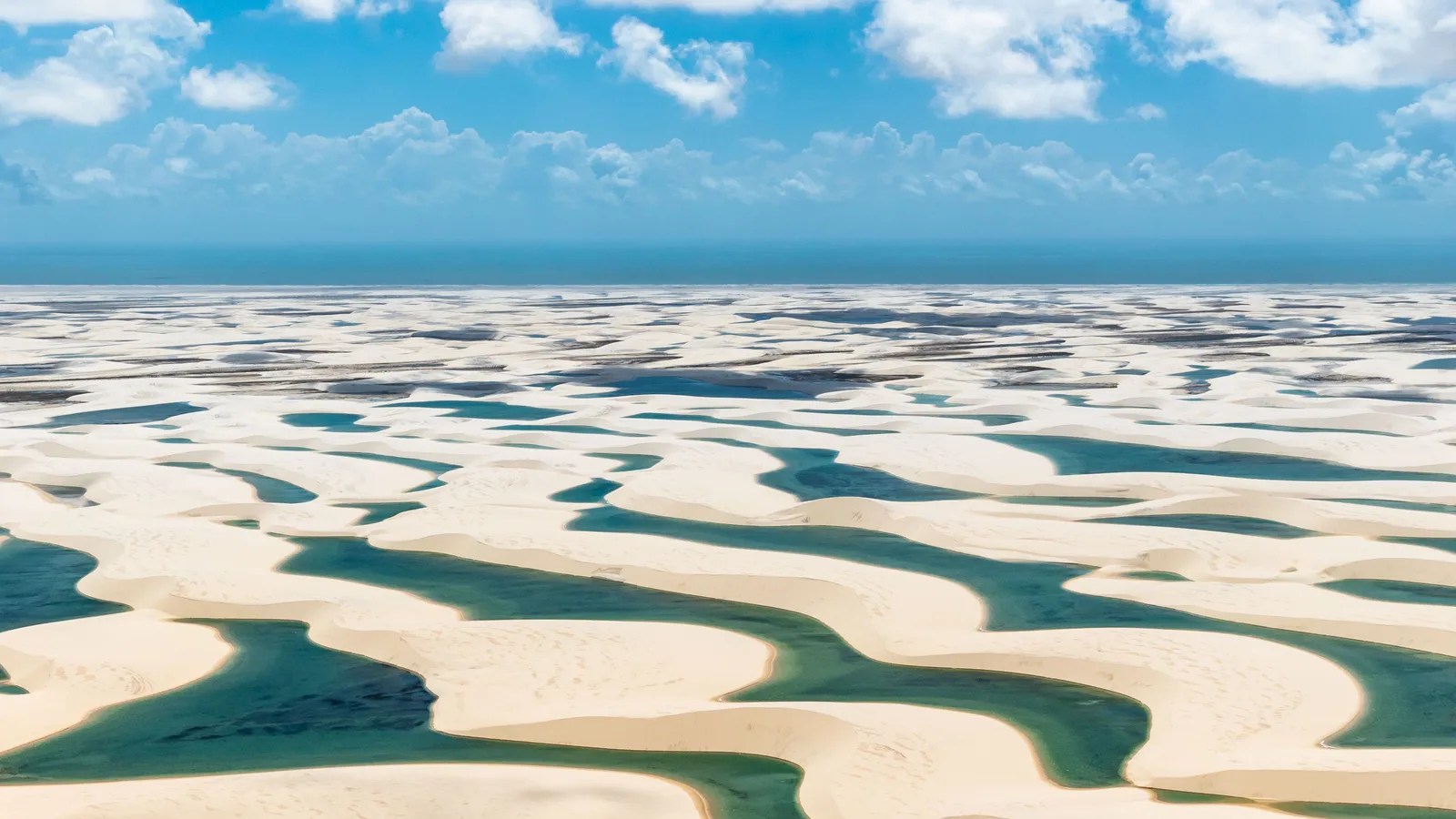
The Lençóis Maranhenses from the air: rank after rank of white sand dunes running to the horizon, with long green and turquoise lagoons lying in every trough between them and the Atlantic as a dark blue band along the top of the frame

Maranhão

Lençóis Maranhenses

A field of white dunes that fills with rainwater, and then empties.

Last checked September 2026

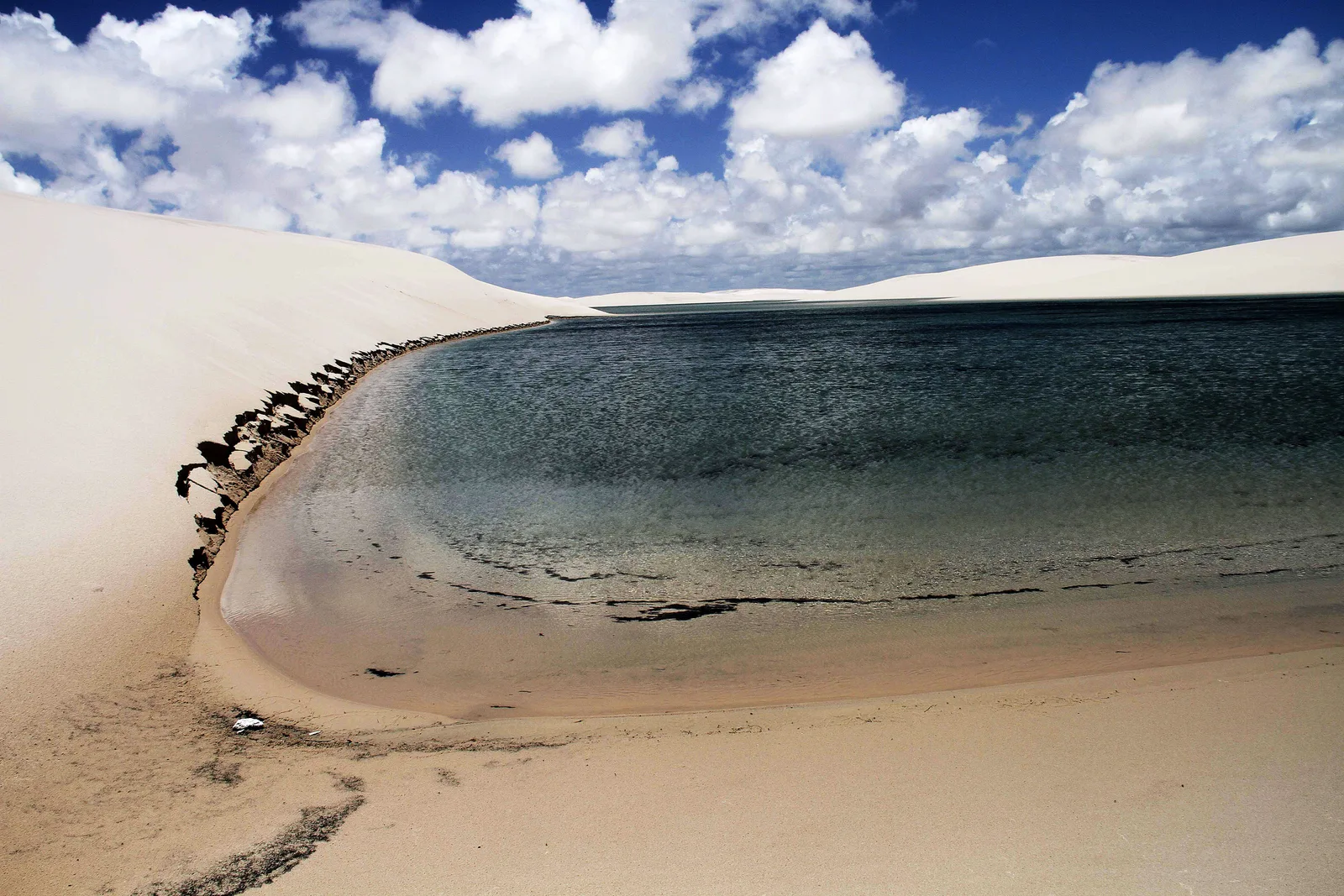
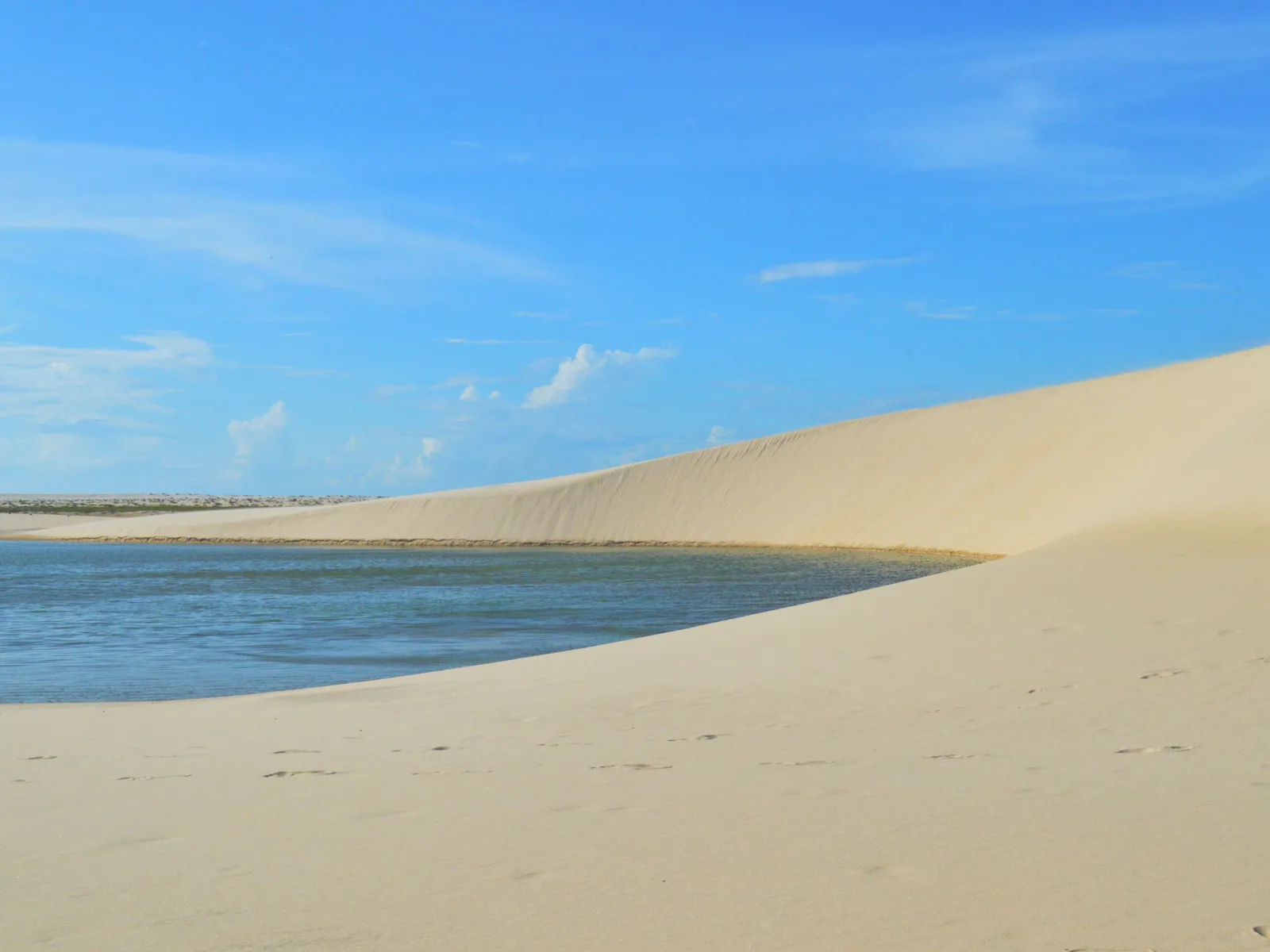
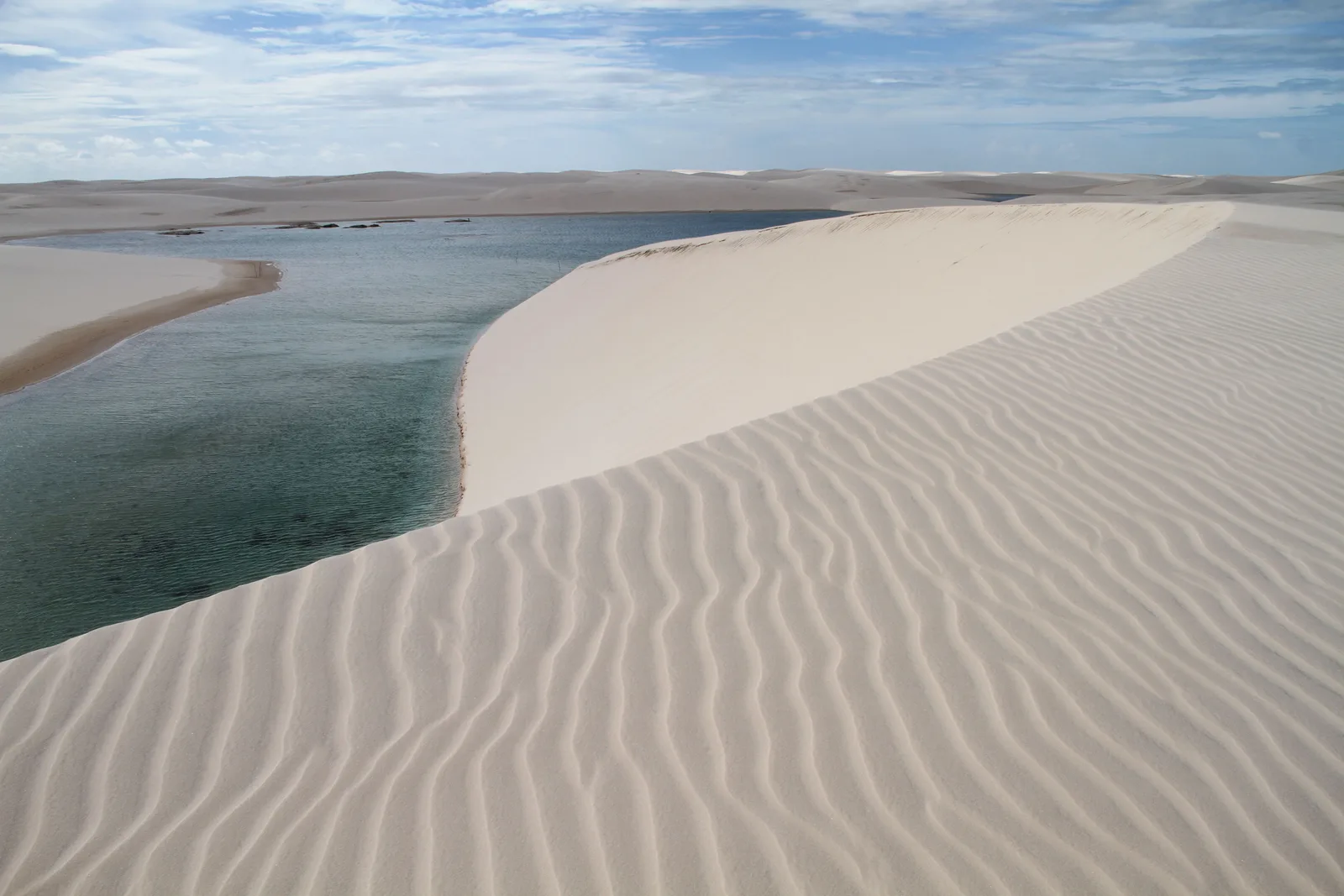
  • A steep white dune curving around a turquoise lagoon under a deep blue sky, the sand ridged by the wind
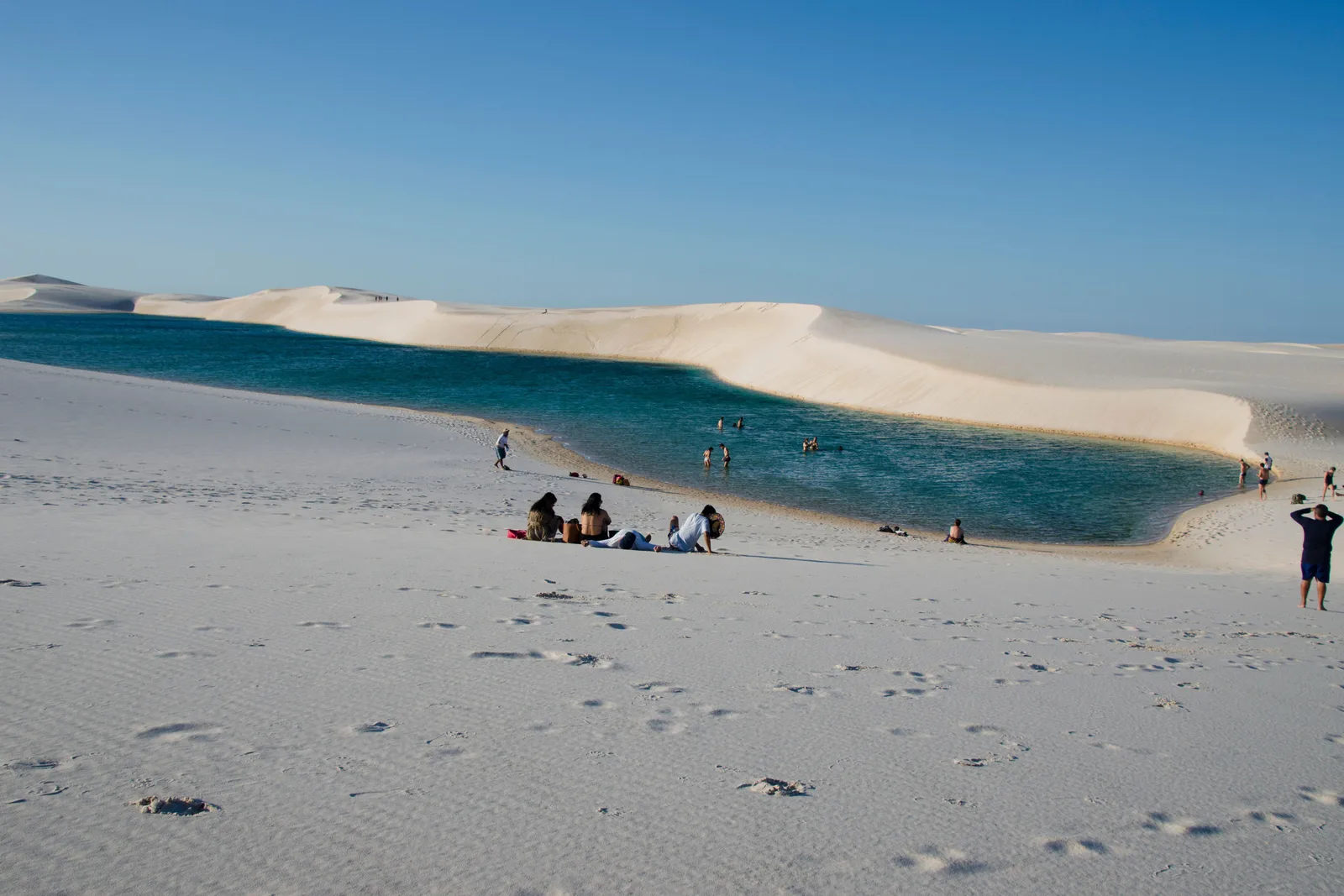
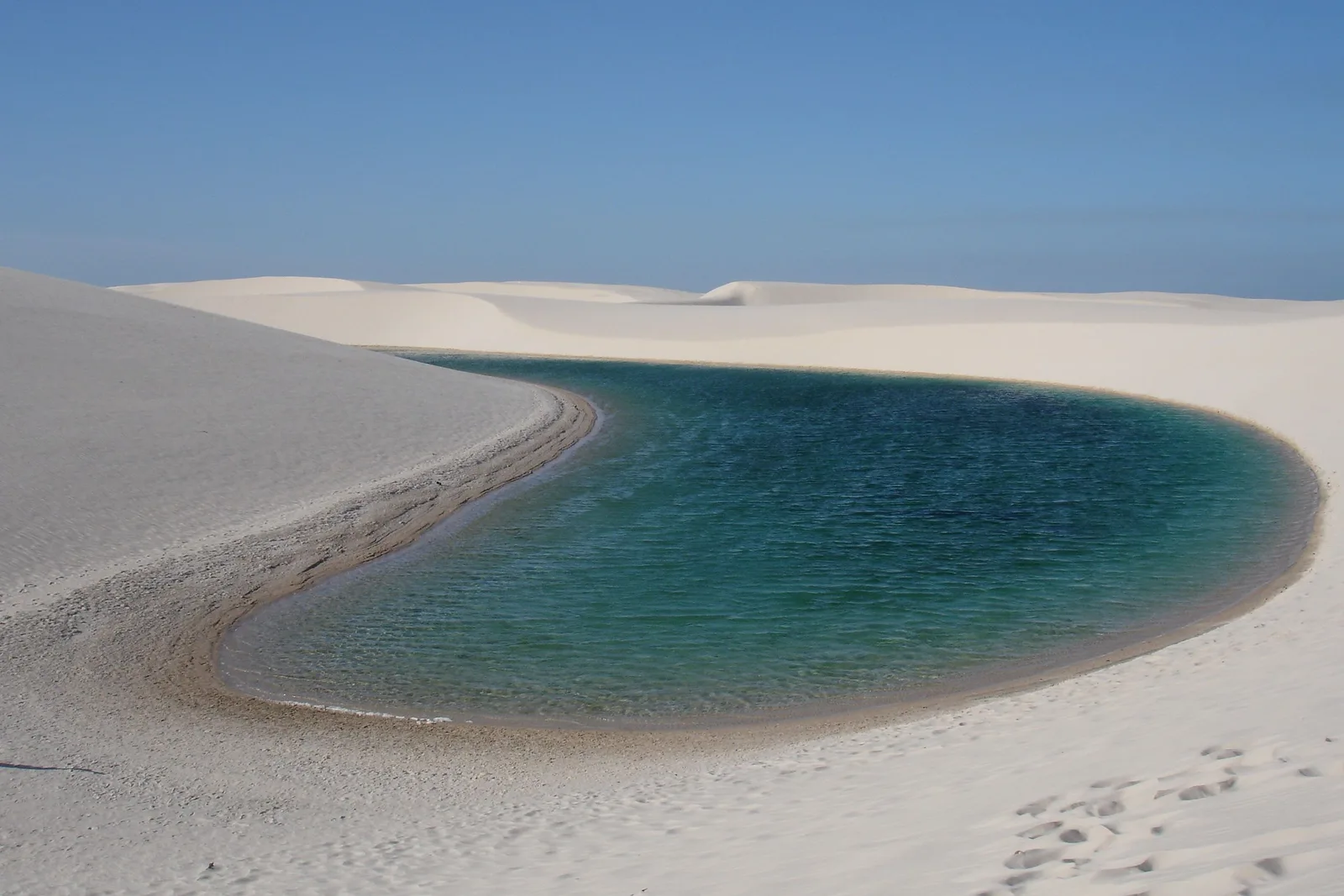
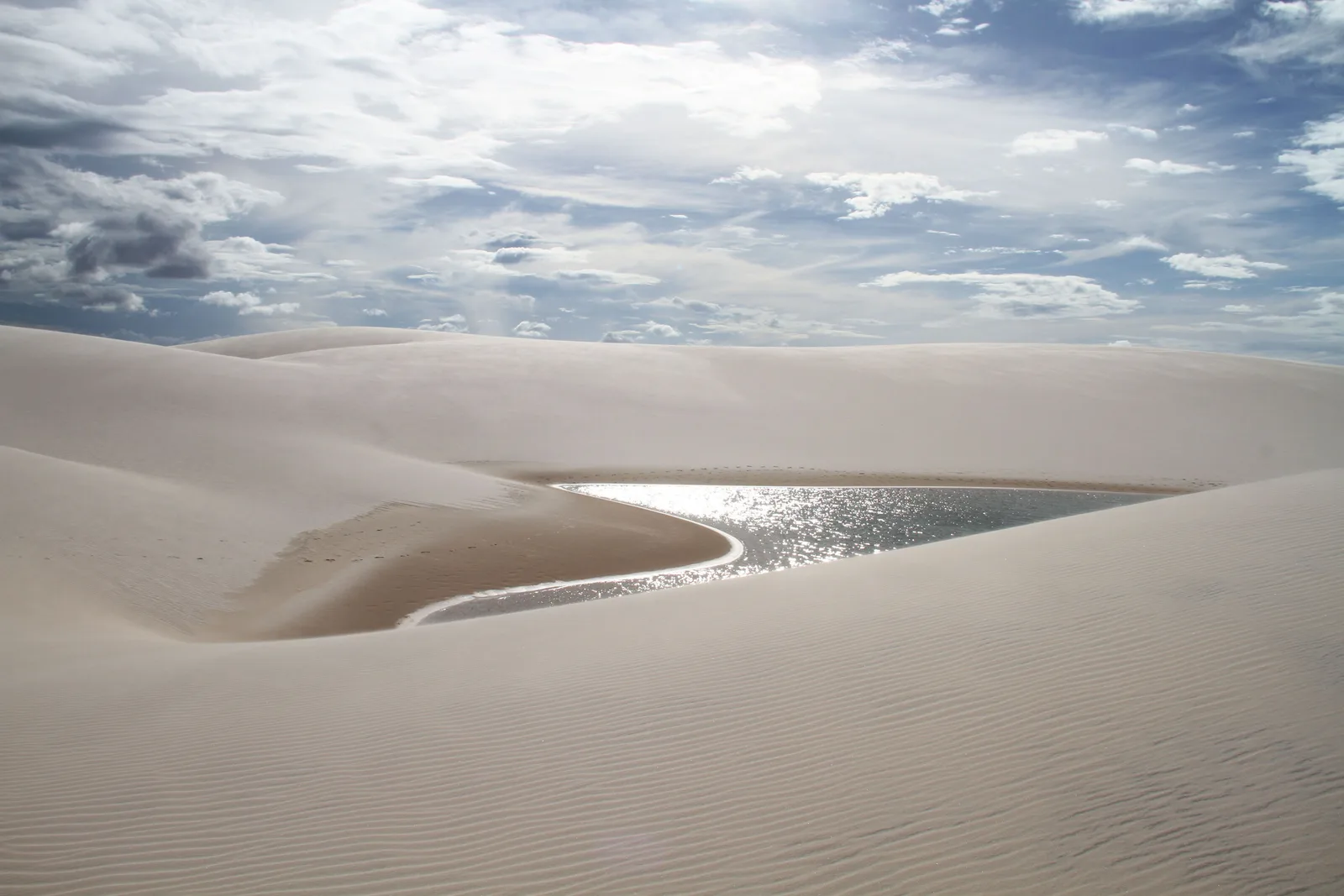
  • An oval lagoon of clear green water held between two white dunes, footprints crossing the sand toward it
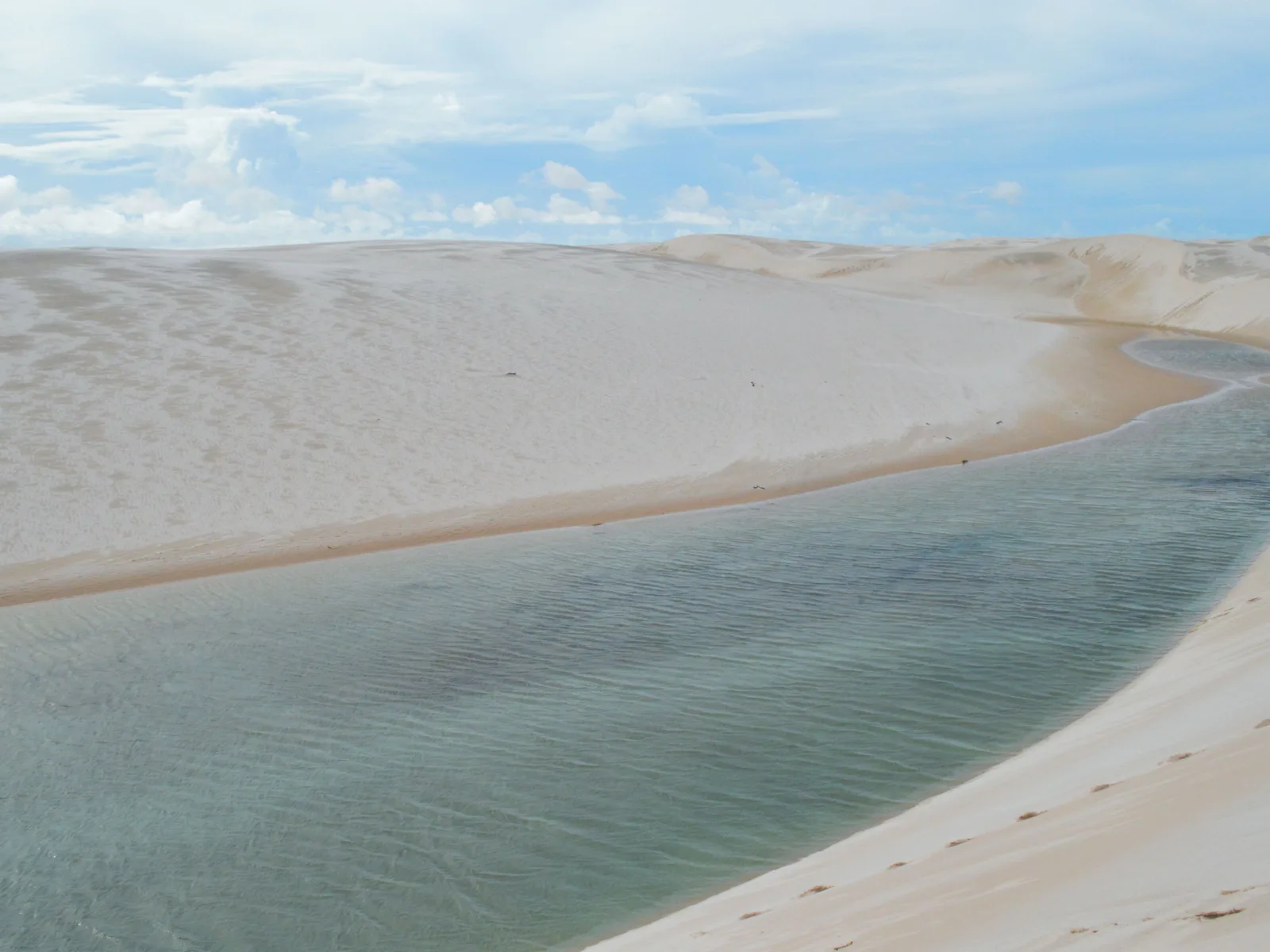
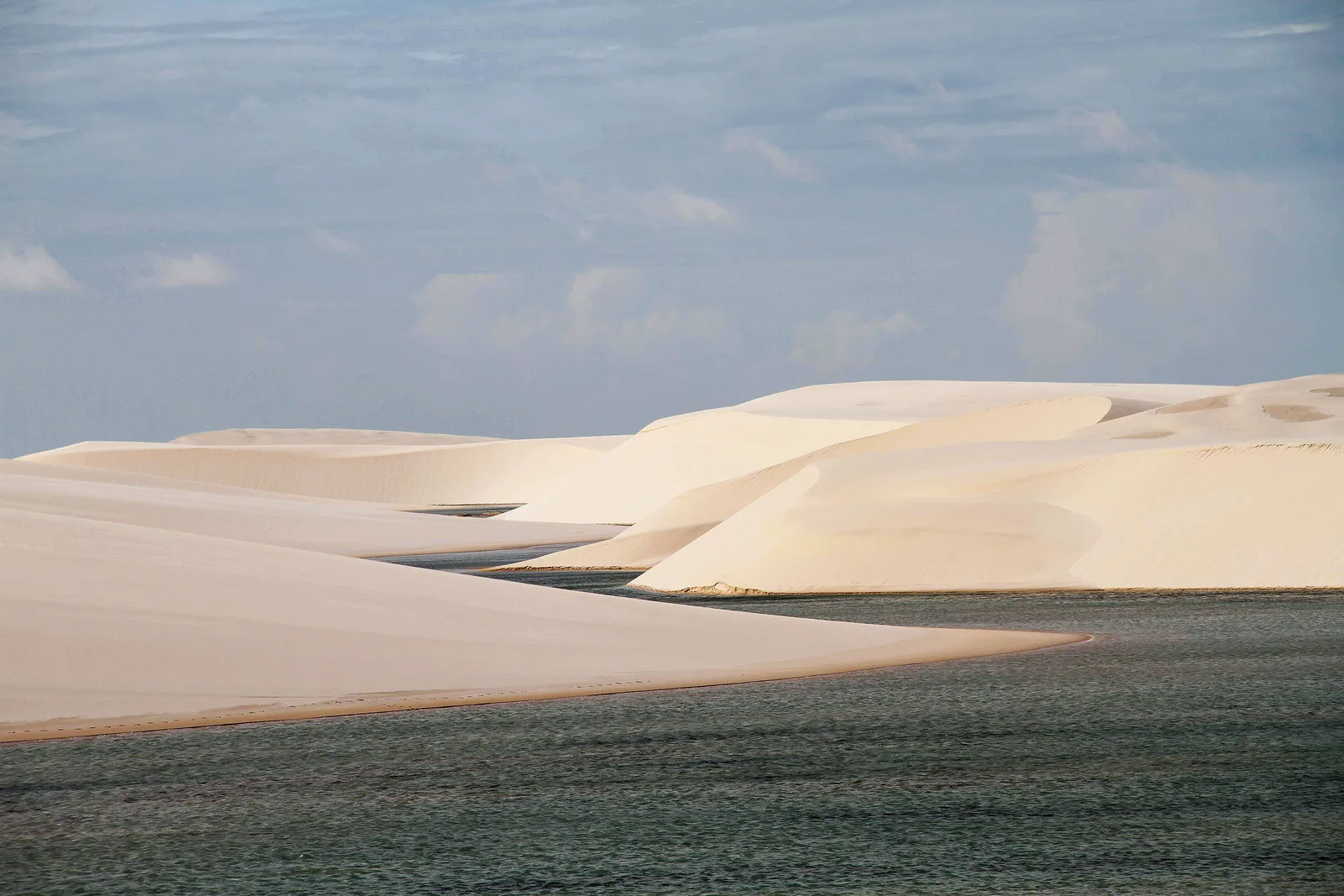
  • Two long pale lagoons lying either side of a white dune ridge under a hazy sky, the dune field running away flat behind them
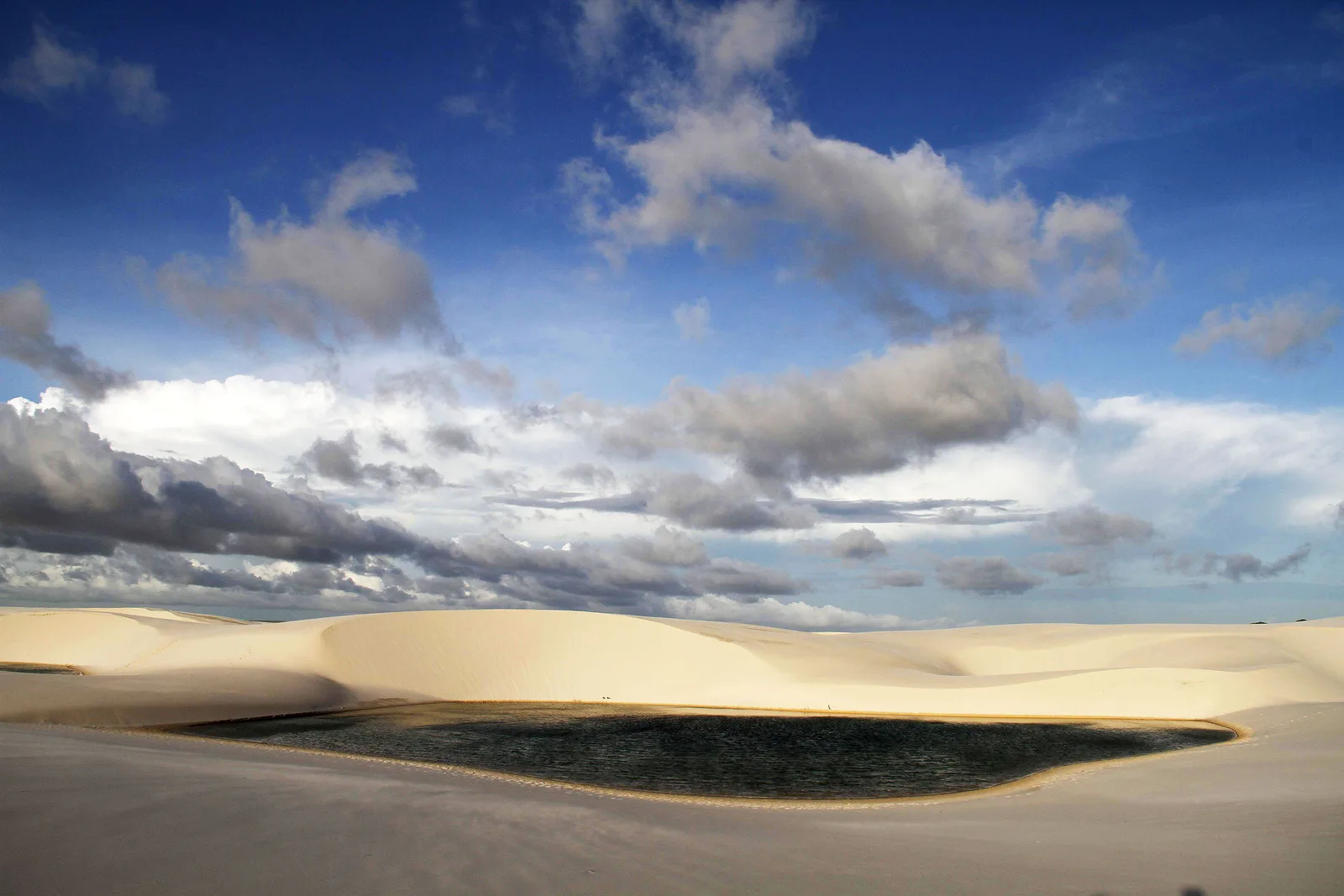
  • A long bank of gray cloud lying low over the dune field under a deep blue sky, with a broad dark lagoon spread across the sand below it
  • Late sun glinting off the surface of a lagoon set deep between two smooth white dunes
  • Wind ripples across the foreground sand and a lagoon curving around the foot of a white dune beyond it
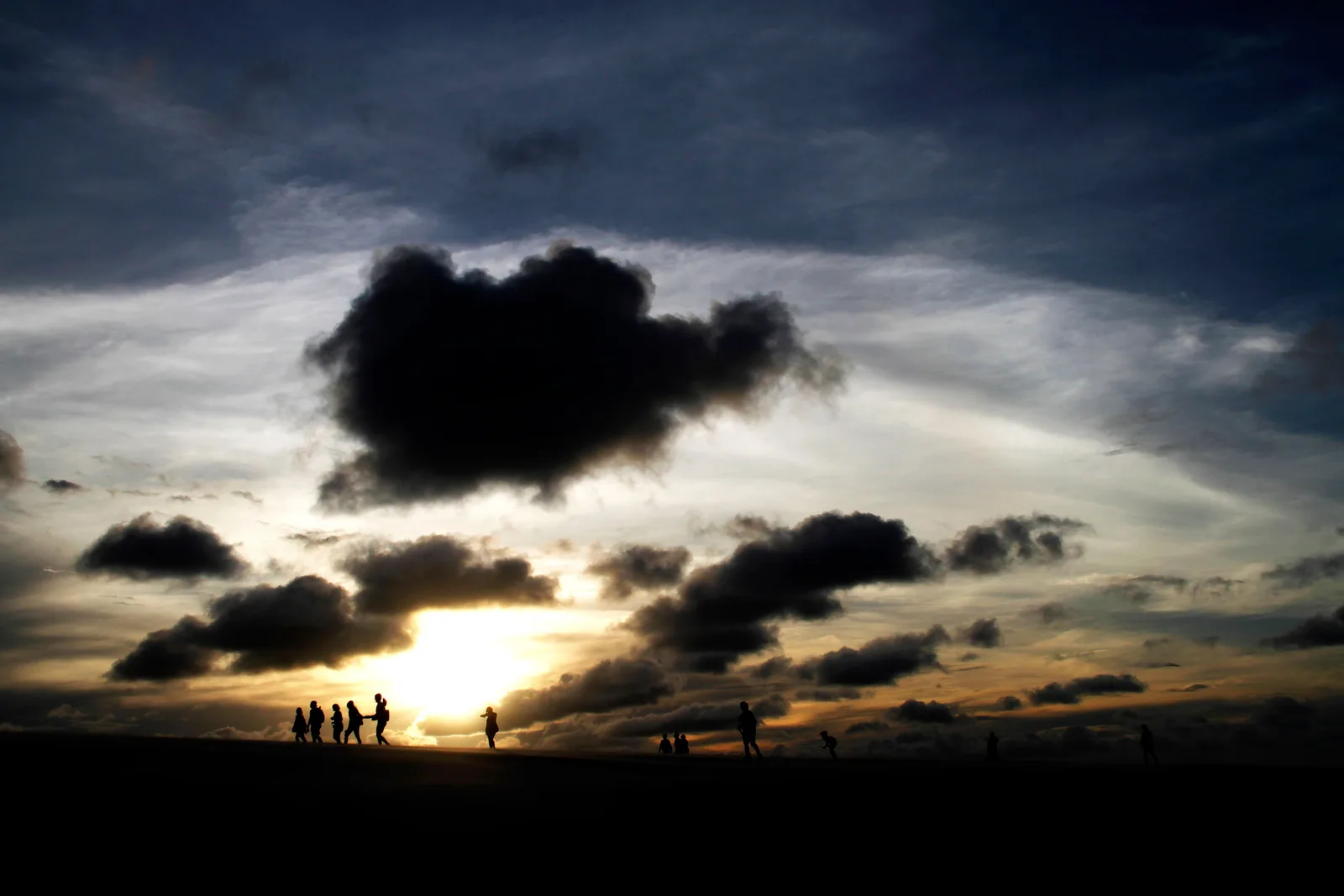
  • A line of visitors silhouetted on a dune crest at sunset, a heavy dark cloud hanging over the low sun behind them
  • A Brazilian flag flying from a bare wooden pole planted in the sand, with white dunes and a lagoon behind it
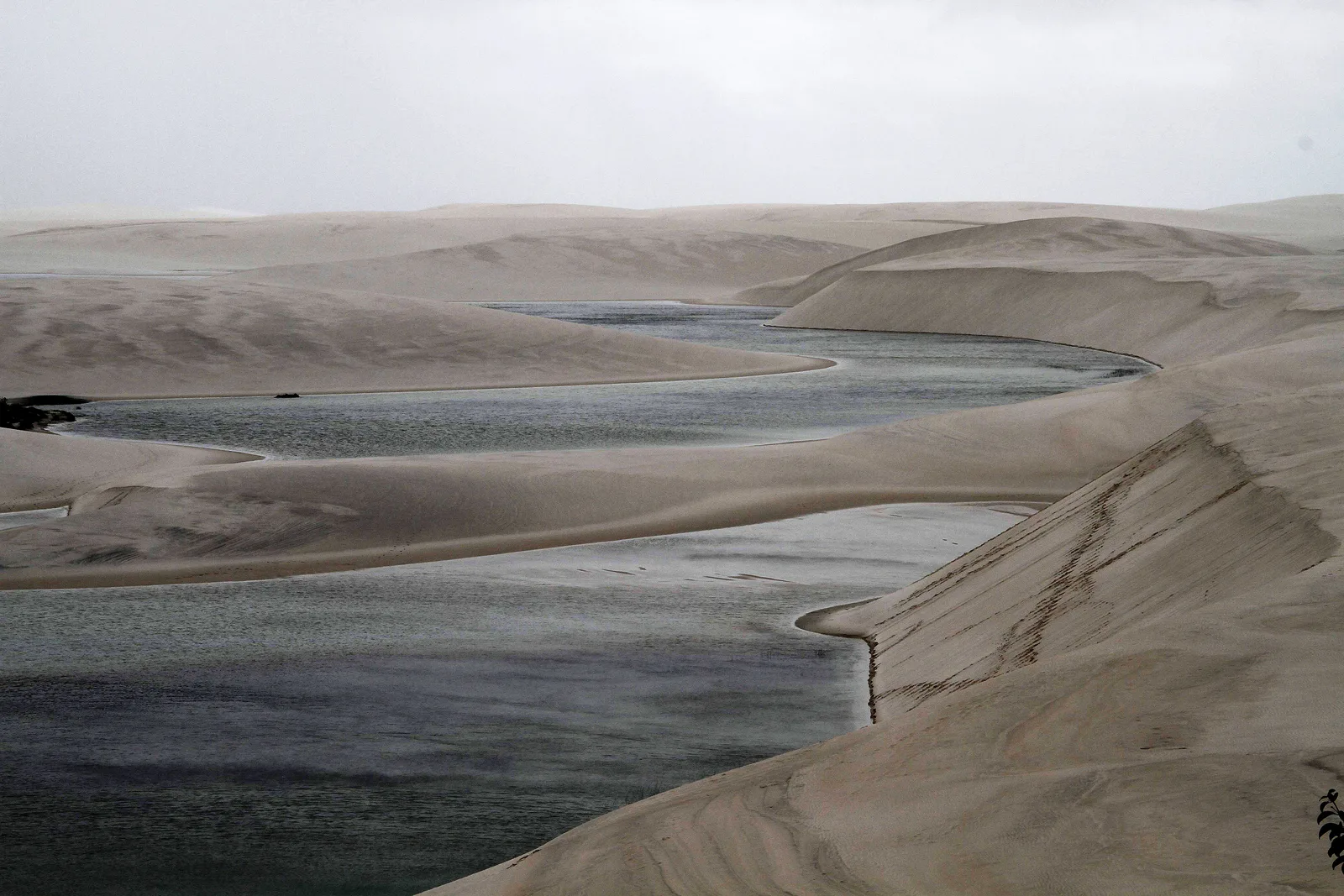
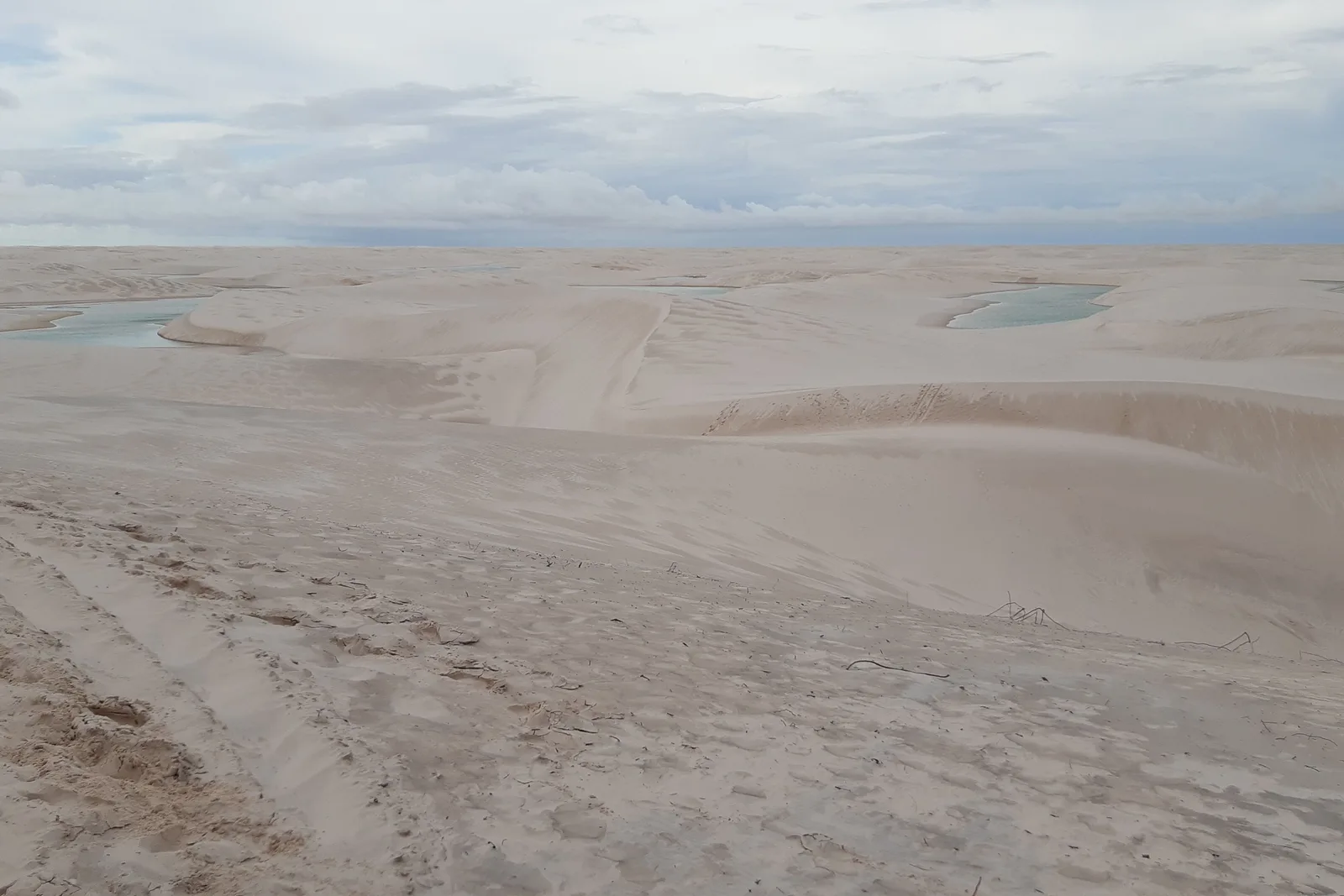
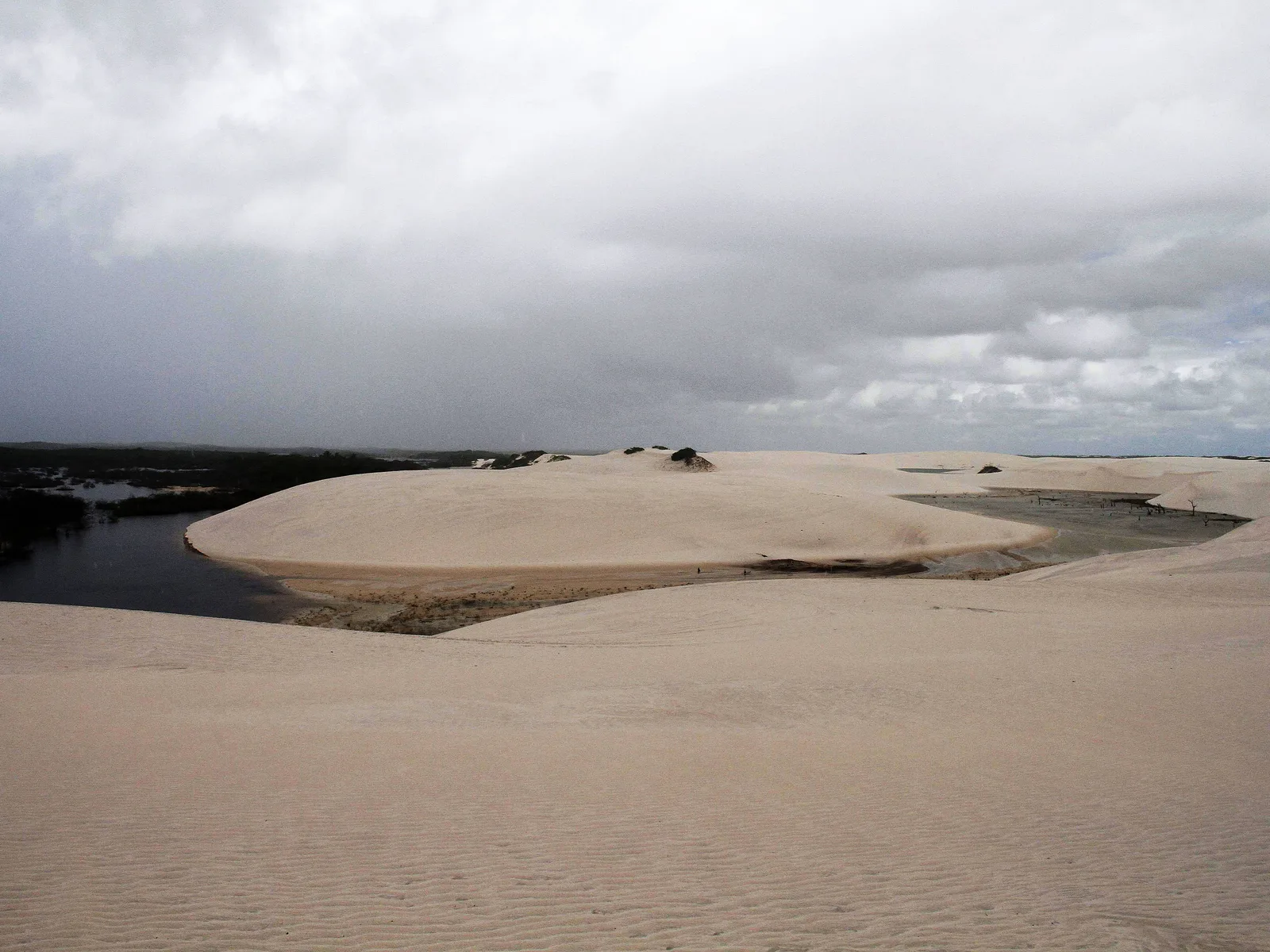
  • The dune field in March: a flat pale plain of sand under an overcast sky with only shallow, scattered pools of water in the hollows
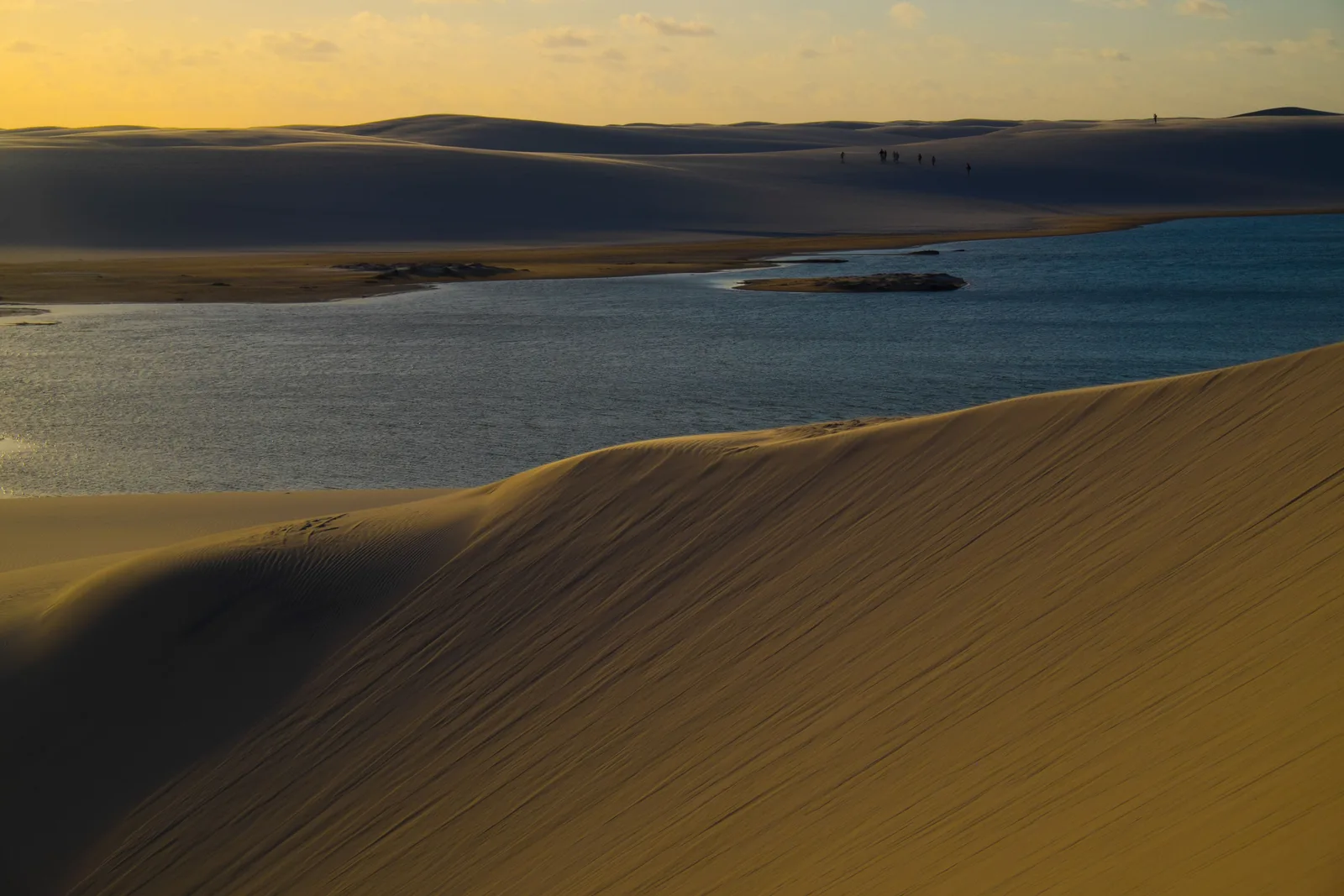
  • A broad dark lagoon at the foot of a golden dune slope in late afternoon light at Lagoa Bonita
  • A single walker crossing an enormous field of smooth gray-gold dunes at dusk, small enough in the frame to be almost lost in it
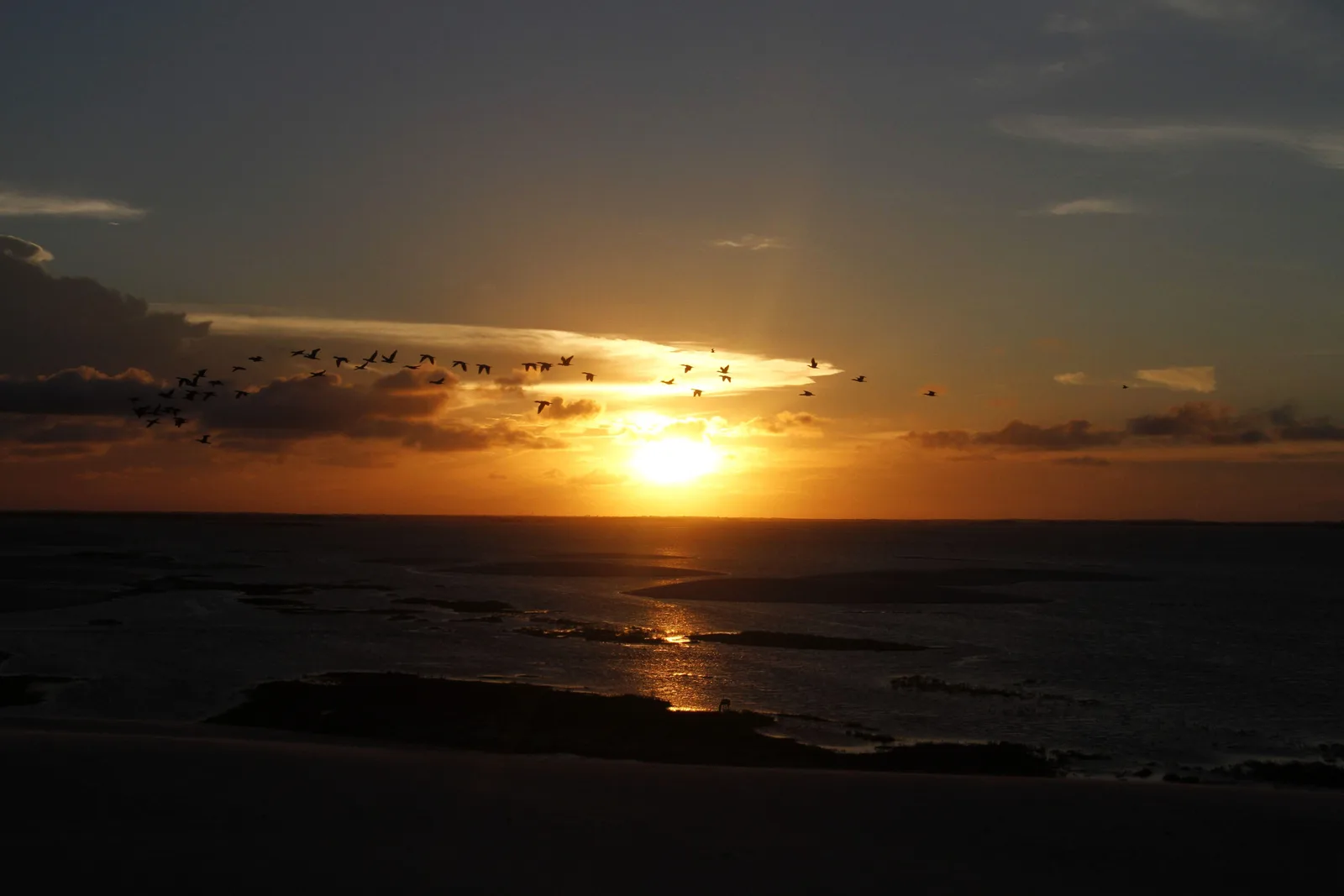
  • Sunset over the water near Santo Amaro do Maranhão, a flock of birds crossing a sky banded orange and gray
  • The wide, shallow Lagoa Betânia stretched out between low white dunes at Santo Amaro under a flat gray sky
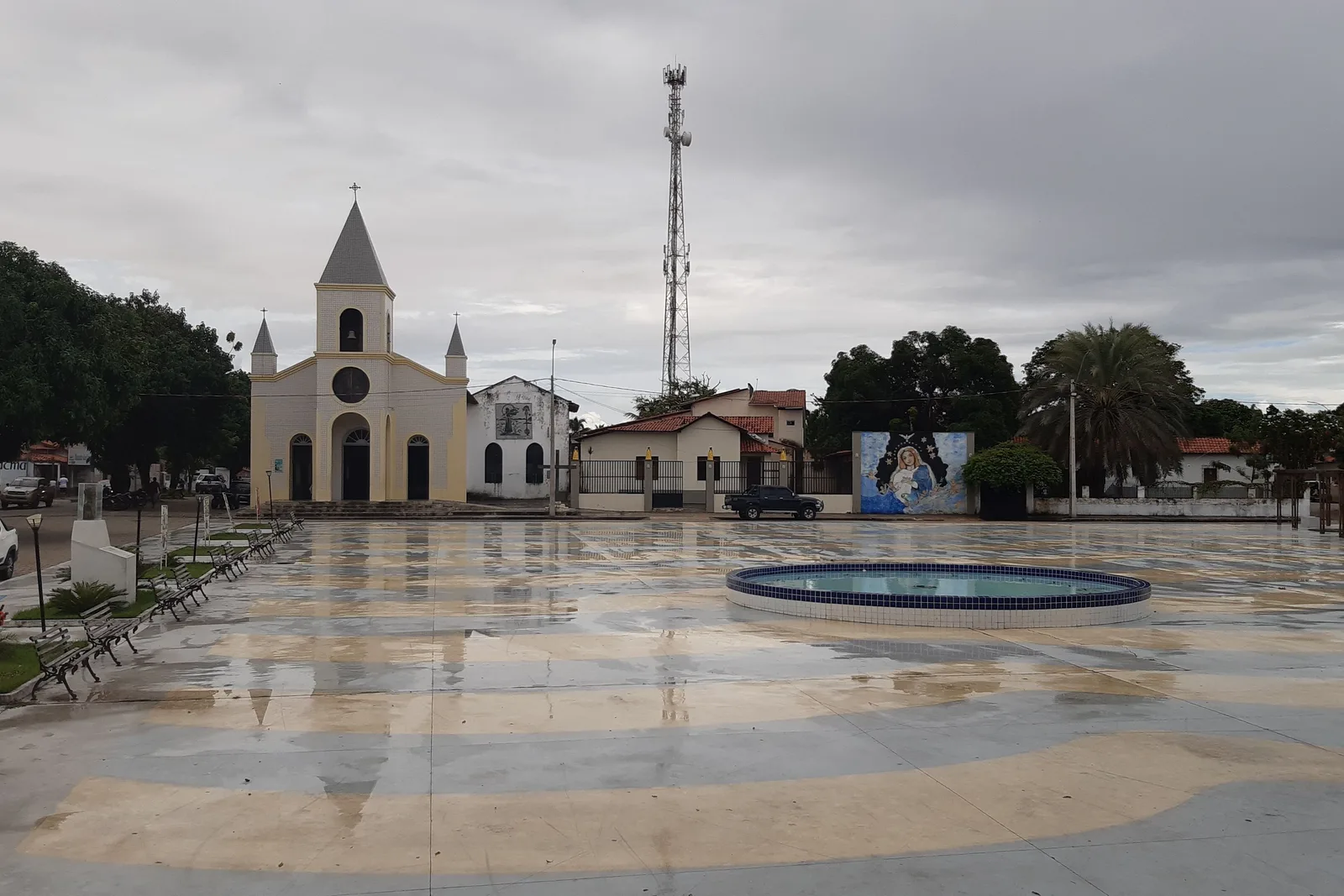
  • The church and the fountain on the main square in Barreirinhas after rain, the paving still wet and reflecting the gray sky
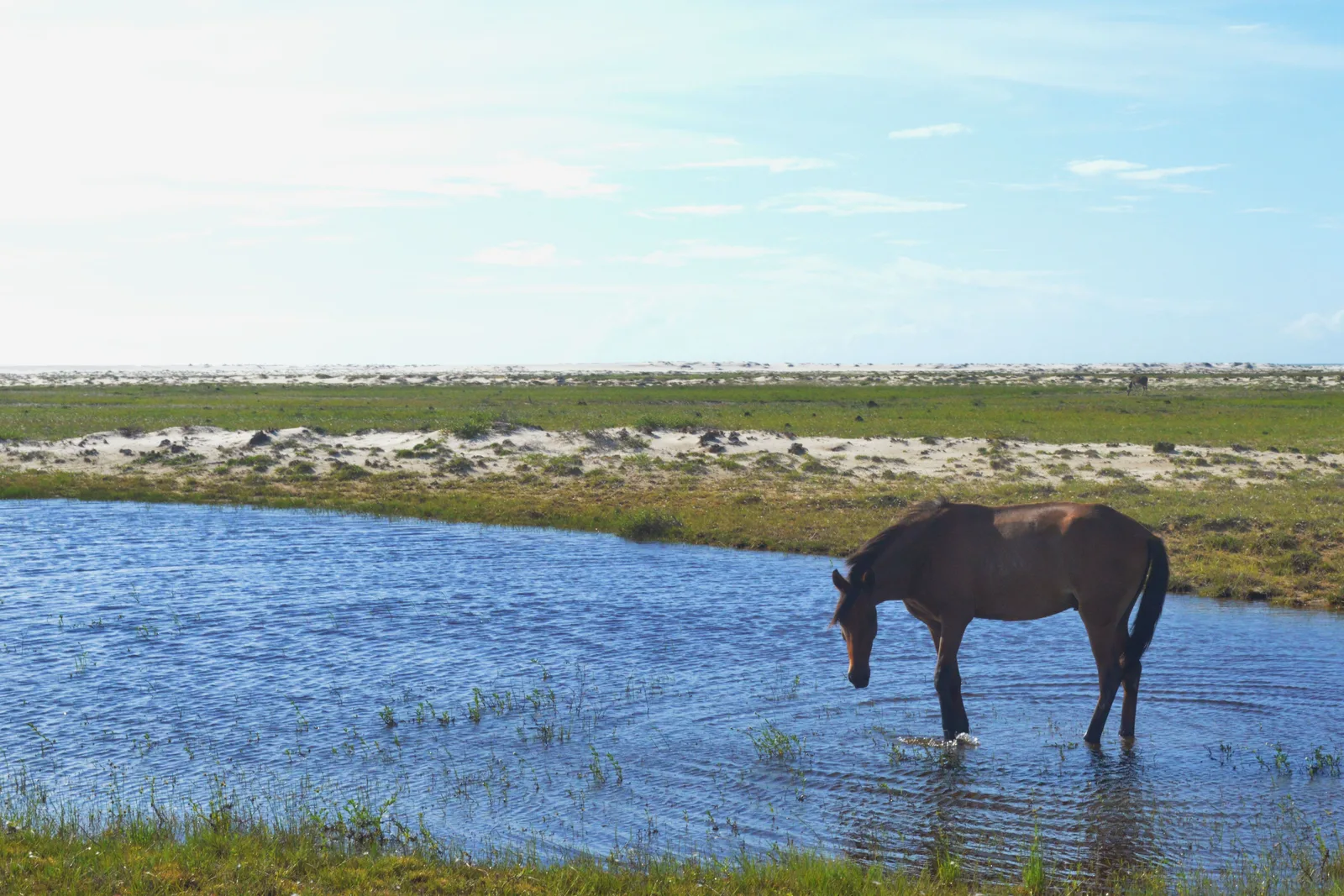
  • A dark horse standing in shallow water at the edge of a flooded green flat near Atins, with low white dunes on the far side

Orientation

The park in one screen.

The logistics first, because on this trip they are the whole game.

General Info

A desert that is not a desert

The Lençóis Maranhenses are about 1,566 square kilometers of white quartz dunes on the coast of Maranhão, in Brazil’s northeast, and they look like the Sahara until you notice the water. Roughly 90,000 hectares of that is live, moving dune — sand carried out of the Parnaíba and Preguiças rivers, dropped on the beach, and blown up to 50 kilometers inland by the trade winds. The name means “Maranhão bedsheets,” which is what the ridges look like from the air: linen thrown across a bed and left.

What makes it unlike every other dune field is a layer of impermeable rock under the sand. Rain cannot drain away, so between January and June it collects in the troughs and turns the whole thing into thousands of freshwater lagoons — clear, warm, up to a hundred meters long and three deep, covering as much as 41 percent of the park at their peak. Then the sun takes them back at up to a meter of depth a month, and by December most of them are gone. This is not a park you visit; it is a park you catch.

It became a national park by decree in June 1981 and a UNESCO World Heritage Site on 26 July 2024, inscribed for natural beauty and for the geological process itself. It is also, suddenly, busy: 151,000 visitors in 2019 and about 650,000 in 2025. ICMBio, the federal agency that runs it, started work in January 2026 on a visitor ceiling. No number has been set and no fee exists yet, but the direction of travel is clear enough to be worth knowing before you plan a July trip.

Where It Is

The coast of Maranhão, almost on the equator

The park sits on the Atlantic coast of Maranhão, two and a half degrees south of the equator and about 250 km east of São Luís, the state capital and the airport you fly into. It spreads across three municipalities — Barreirinhas, Santo Amaro do Maranhão and Primeira Cruz — with 70 km of coastline along its northern edge and the Rio Preguiças running down its eastern side to the sea.

Lençóis Maranhenses Lençóis Maranhenses

2.53° S, 43.12° W

See the Northeast on the interactive map

Cost

What a day here actually costs

Rooms and food are cheap by Brazilian standards and the park itself is free to enter. What you actually spend money on is movement: you cannot drive into the dunes yourself, so every day out is a seat in someone else’s 4x4 or speedboat, and those seats are the budget. Two people doing one circuit a day will spend more on transport than on their hotel.

Estimated daily budget

Budget

$50 / day

A simple pousada or a hostel bed in Barreirinhas, the shared 4x4 and lancha circuits at the standard rate, prato-feito lunches, and the intercity bus in from São Luís.

Mid-range

$115 / day

A comfortable pousada double split two ways, a circuit every day, dinner out, and a shared transfer from São Luís rather than the bus.

Comfortable

$265 / day

One of the better pousadas in Barreirinhas or a boutique place in Atins, private 4x4 and private boat instead of shared seats, a scenic flight over the dunes, and door-to-door transfers.

Estimates, per person per day, once you are in the region — flights to São Luís not included. July and the Brazilian holiday weeks run higher on rooms and sell out on tours.

What things cost

  • Entry to the national park Free R$0
  • Lagoa Azul circuit, shared 4x4, half day $24 R$120
  • Lagoa Bonita circuit, shared 4x4, sunset $29 R$150
  • Rio Preguiças speedboat, full day to Caburé $29 R$150
  • Atins and the Canto do Atins lagoons, full day $39 R$200
  • Day trip to the Santo Amaro lagoons from Barreirinhas $59 R$300
  • Private 4x4 for the day, up to nine people $266 R$1,358
  • Scenic flight over the dune field, 30–60 min $176 R$900
  • Barreirinhas to Atins, speedboat or 4x4, one way $16 R$80
  • Bus, São Luís to Barreirinhas $16 R$80
  • Shared transfer, São Luís to Barreirinhas $22 R$110
  • Taxi, São Luís airport to Barreirinhas, up to four $147 R$750
  • Mid-range pousada double, Barreirinhas $78 R$400
  • Simple pousada double, Barreirinhas $35 R$180
  • Good pousada double, Atins $90 R$460
  • Prato feito lunch for one $8 R$40
  • Grilled shrimp for two at Canto do Atins $29 R$150
  • Chopp (draft beer), 300 ml $1.60 R$8

The park charges nothing to go in, and there is no online booking system. The municipality of Santo Amaro do Maranhão levies its own small tourist charge of about R$10 on visitors entering through the town — a local fee, not a park fee.

Tour prices are quoted per person for a shared seat and are remarkably consistent between agencies in Barreirinhas, because the vehicles and the circuits are the same. Where they differ is the vehicle: an open-sided jardineira truck is the standard, a closed 4x4 costs more, and a private hire of either is what the R$1,358 line covers.

Take reais. Barreirinhas has ATMs and the pousadas take cards, but Atins, Caburé, Mandacaru and the lunch stops in the dunes run on cash, the signal is unreliable, and the day you find that out is the day you are three hours from a bank.

Nothing about a lagoon costs money and nothing about one is refundable. If you arrive in November and they are dry, no operator owes you anything — the dunes are still there, the water is not, and that risk sits entirely with the month you chose.

Checked September 2026 and converted at R$5.10 to the dollar. Estimates, not quotes — the shape of a budget rather than a price you can hold anyone to.

Safety

The risk here is the sun, not the street

7 /10

Our rating. The gateway towns are among the more relaxed places on this site; the sun and the distances are what actually catch people out.

Maranhão’s crime statistics are a state-level number driven by neighborhoods on the edge of São Luís and by towns nowhere near this coast. Barreirinhas, Santo Amaro and Atins are small, and they live on visitors: walking around them in the evening is unremarkable. The things that go wrong on a Lençóis trip are almost all environmental, and they go wrong to people who underestimated a place with no shade in it.

  • You are two and a half degrees from the equator and standing on white sand that reflects everything back at you. The UV index runs at 9 to 11 every month of the year, which is very high to extreme on the WHO’s scale. High-factor sunscreen, a hat with a brim, a long-sleeved rash top and sunglasses are not optional equipment, and the reflection burns the underside of your chin and nose.
  • Carry more water than you think and drink it. The circuits stop at lagoons, not at kiosks, and the walk from where the truck parks to the water is anything from a few hundred meters to two kilometers of loose sand in full sun.
  • The lagoons are shallow, warm and freshwater — there is nothing in them that bites — but they have no lifeguards, no marked depths and steep sand edges that give way. Watch children the way you would at an unpatrolled beach.
  • Do not walk into the dune field on your own. There are no paths, no landmarks that stay put, and no cell signal once you are a few hundred meters in. People get lost here in daylight, and the park requires an accredited guide for exactly this reason.
  • The MA-402 from São Luís is paved the whole way and is not a difficult drive, but it is unlit, two-lane, and shared with donkeys, horses, cattle and pedestrians on the shoulder. Do not drive it after dark.
  • Barreirinhas has a hospital and pharmacies. Atins and the villages in the dunes have neither, and the nearest serious medical care to Atins is two hours away by boat and road. Carry your own basics.
  • Ordinary Brazilian city rules still apply in São Luís at either end of the trip: ride apps at night, nothing valuable on show, and the historic center is a daytime place unless there is programming on.

Getting There

Fly to São Luís, then drive four hours

There is one airport that matters, and it is not next to the park. São Luís (SLZ) is the gateway; Barreirinhas is 250 km east of it on a paved road. Everything about the first and last day of this trip is that drive.

  • There is no nonstop flight from the United States to São Luís, and no realistic prospect of one. Every American itinerary connects — Gol, LATAM and Azul all fly São Luís from São Paulo, Brasília and Rio, and LATAM also from Fortaleza. Budget a full day each way from the US.
  • São Luís to Barreirinhas is 250 km on BR-135 and MA-402, about four hours. A shared transfer runs from R$110 a head, an airport taxi around R$750 for up to four, and the intercity bus with Cisne Branco or Expresso Guanabara about R$80 and four and a half hours.
  • São Luís to Santo Amaro do Maranhão is 240 km and about four hours, on the same road as far as the MA-320 turnoff. The final stretch into the village has traditionally been sand and dirt; ask your pousada what the road is doing before you book a low car.
  • Barreirinhas has an airstrip, but treat it as a charter and sightseeing field rather than a way in. GRU Airport, which runs São Paulo–Guarulhos, took it at a federal auction in November 2025 for R$58.1 million and took the terminal over the following year, with the money earmarked to bring scheduled commercial aircraft in — worth re-checking closer to a trip, and not worth planning around yet.
  • Atins has no road from São Luís. You reach it from Barreirinhas, either by speedboat down the Preguiças or by 4x4 along the beach and the river bank, an hour and a half either way and about R$80 a head.
  • Onward, this is the western end of the Rota das Emoções, the coastal run from São Luís through the Delta do Parnaíba to Jericoacoara in Ceará. It is a genuine road trip rather than a transfer — allow a week to ten days for the whole thing, and note that Jericoacoara is a separate destination with its own logistics.

Getting Around

You do not drive into the park. Nobody does.

This is the fact that reorganizes a Lençóis trip. The dune field has no roads, and private vehicles are not permitted in it: transport and guiding inside the national park must be by accredited drivers and guides. A rental car gets you between towns and no further, which is why almost nobody bothers with one.

  • Every trip into the dunes is a booked circuit. You are collected from your pousada in an open-sided jardineira truck or a closed 4x4, driven across the Preguiças and out along a sand track, and walked the last stretch to the water. Agencies in Barreirinhas sell the same circuits at much the same prices, and your pousada will book them.
  • Quadbikes, motorbikes and buggies are banned inside the national park. The quadbike tours sold in Barreirinhas run the Caburé circuit east of the river, in the Pequenos Lençóis, which is a different protected area with different rules.
  • Barreirinhas itself is small and flat and you can walk all of it, including the riverfront where the boats leave from and most of the restaurants.
  • Atins has no paved streets and no traffic to speak of. Getting around it is done on foot, on a bicycle or in the back of a pickup, and the lagoons and the Canto are reached by 4x4 or on horseback.
  • Santo Amaro is the exception that makes it worth considering: the village sits at the edge of the dunes, and its nearest lagoons are a walk rather than a drive — forty minutes to an hour and a half depending which one, with a guide.
  • For walkers, the long crossing between Santo Amaro and Atins through the Queimada dos Britos and Baixa Grande oases is a multi-day trek with its own rules: a maximum of ten people per guide, and a booked, documented bed at each community stop before you set out.

The big four

The four places the trip is built around.

One is a landscape, one is a lagoon, one is a river and one is a village. Between them they are the reason anyone comes this far.

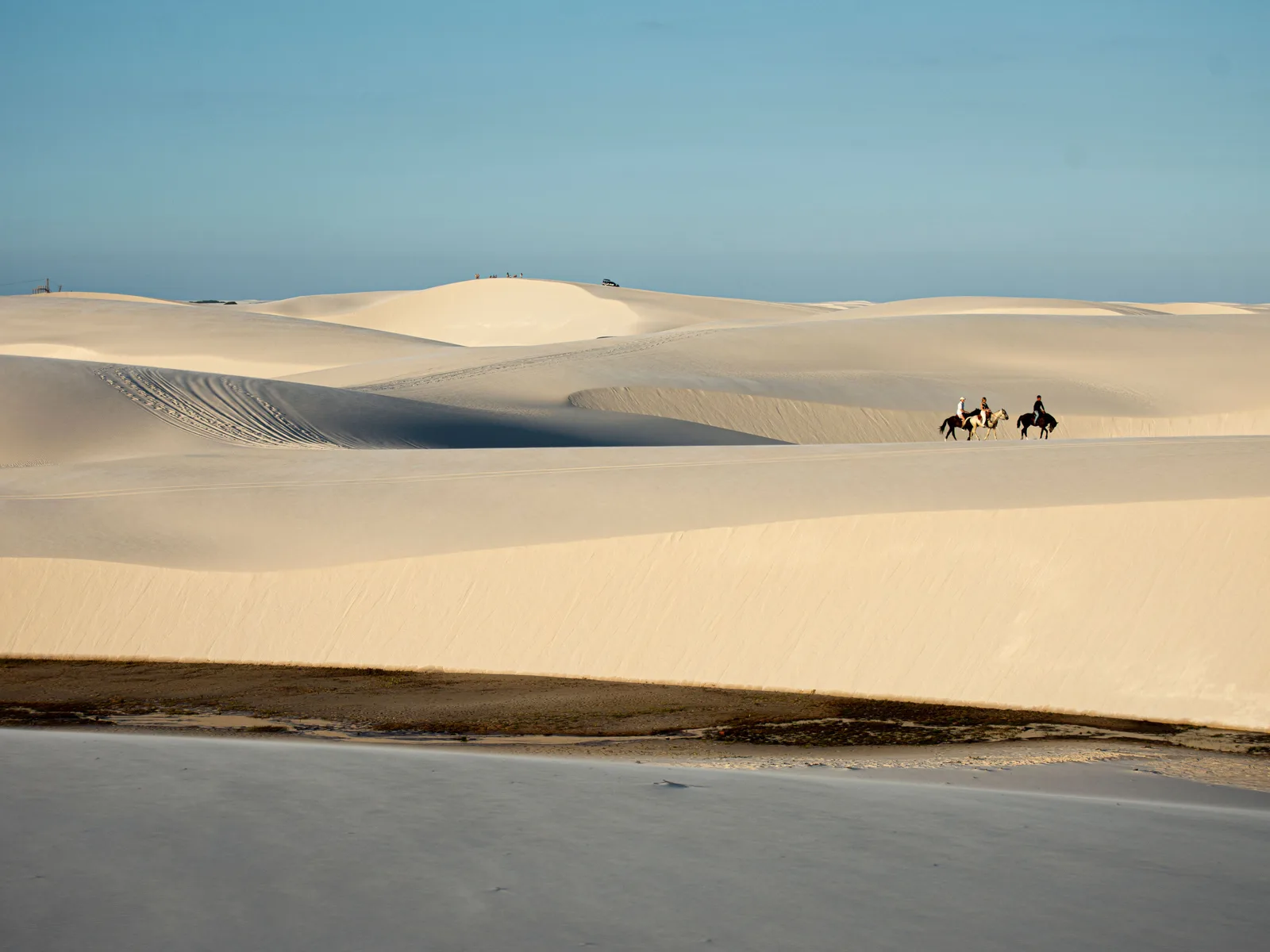
A vast plain of pale dunes running to the horizon in low sun, a dried dark interdune flat crossing the foreground, and three riders on horseback so small in the middle distance that they read as specks 01

A UNESCO World Heritage Site since July 2024

The dune field

Protected
National park, June 1981
Area
156,562 ha, about 1,566 km²
Dunes to
40 m, moving inland yearly

From the ground it is a horizon with nothing in it: no rock, no tree, no building, no fixed point of any kind, only ridge after ridge of sand the color of bone. From the air it is the picture everyone has seen — parallel dunes running northeast to southwest, each trough holding a lagoon, the whole pattern repeating to the coast. The sand is quartz, carried down two river systems, dumped on the beach and then walked inland by the trade wind, which moves the dunes a few meters a year and will eventually move them over the villages at the edge.

UNESCO inscribed it in July 2024 under both the natural-beauty criterion and the geological one, which is the right pairing: the reason it looks like that is the reason it works like that. It is Brazil’s twenty-fourth World Heritage Site and Maranhão’s first natural one — the historic center of São Luís has been on the cultural list since 1997. Practically, the listing has changed nothing a visitor will notice except the number of people — but it is why the number of people has gone up.
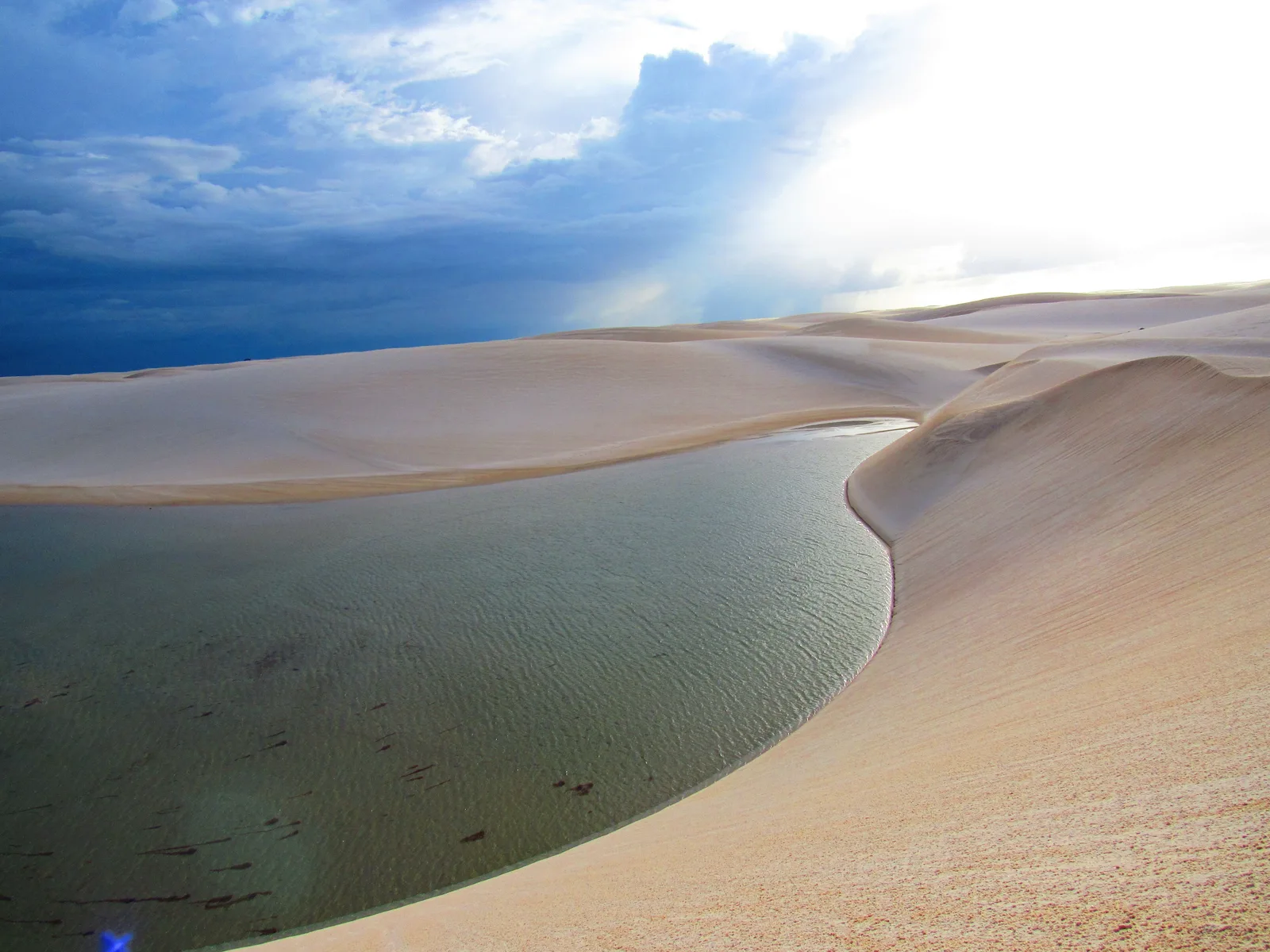
Lagoa Bonita seen from the dune above it in hazy afternoon light: a wide sheet of pale green water curving away between smooth white dunes 02

The big dune, and the view everyone comes for

Lagoa Bonita

From Barreirinhas
About 40 min by 4x4
The climb
One steep dune, loose sand, no shade
Best at
The last two hours of daylight

The Lagoa Bonita circuit ends at the foot of a single tall dune, and the whole point is to climb it. It is a real climb — soft sand, no shade, and steep enough that people stop halfway — and at the top the dune field opens out in every direction with the lagoon lying directly below you. That view is the photograph on the front of every book about this park, and it is the reason the circuit sells out first.

It is also the sunset circuit. Trucks leave Barreirinhas in the middle of the afternoon so that the walk out and the swim happen before the light goes, and the crowd on the ridge at 6:00pm is part of the experience rather than a flaw in it. Go, expect company, and be ready for the ten minutes after the sun drops when everyone else starts down and the color is actually at its best.

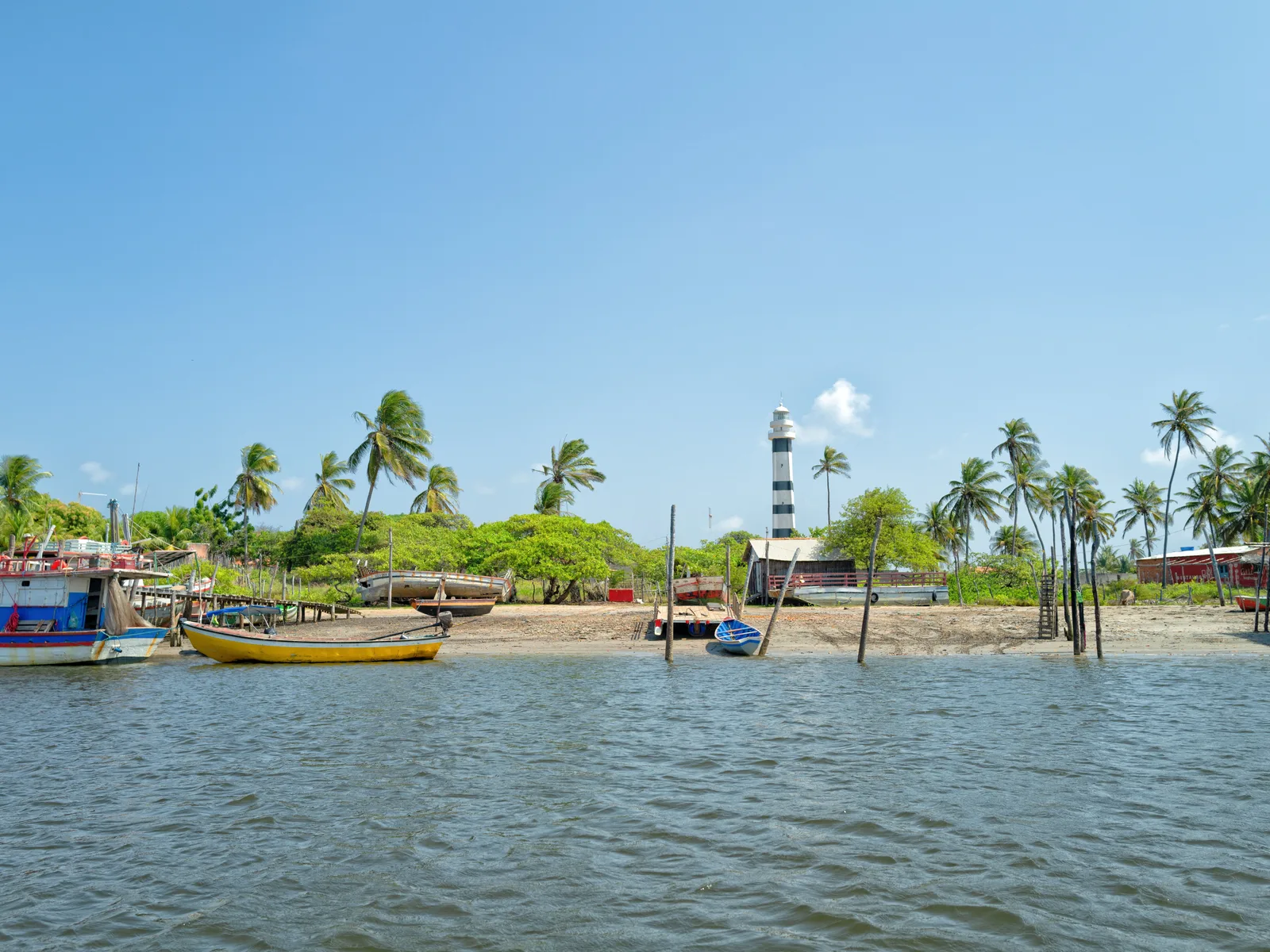
The village of Mandacaru seen from the Rio Preguiças: painted fishing boats moored along a muddy foreshore, palms and low houses behind them, and the black-and-white banded Farol Preguiças rising over the trees 03

The road that is actually a river

The Rio Preguiças & Mandacaru

The run
Barreirinhas to the sea, about 70 km
Lighthouse
Farol Preguiças, 160 steps
Takes
A full day by speedboat

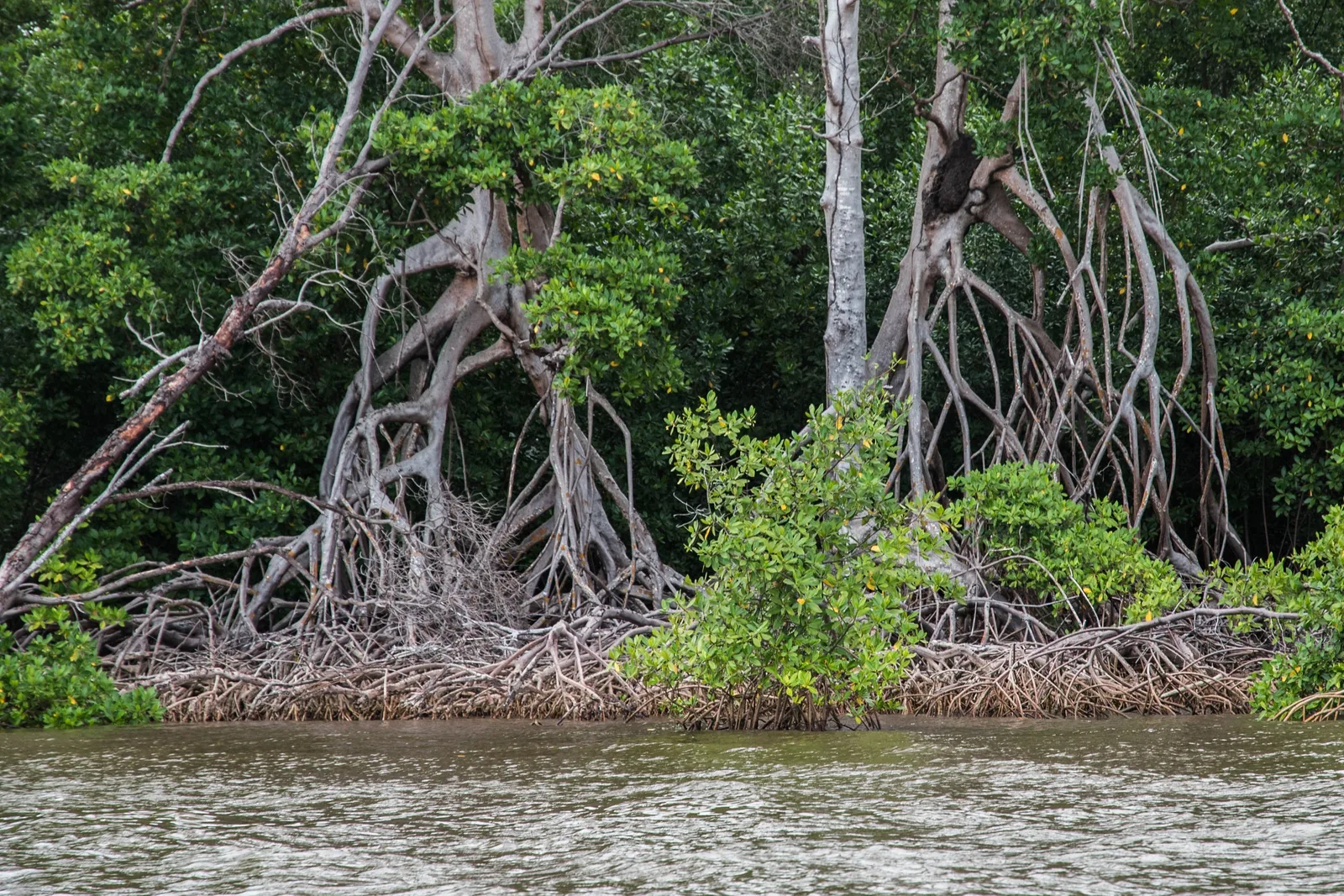
The Preguiças — “the river of the sloths” — runs down the eastern edge of the park and is the only sensible way to see the coast. A day boat leaves Barreirinhas in the morning and works downstream through mangrove and buriti palm to three stops: the dunes at Vassouras, the fishing village of Mandacaru, and Caburé, a spit of sand with the river on one side and the open Atlantic on the other.

Mandacaru is where you climb. The Farol Preguiças stands over a village of a few hundred people, painted in black and white bands, with a hundred and sixty steps up a spiral stair to a platform that puts the whole geography in one frame — the dune field on one side, the river winding out to the bar, the sea beyond it, and the roofs of the village directly below. It is the single most useful ten minutes on the trip for understanding where you are.

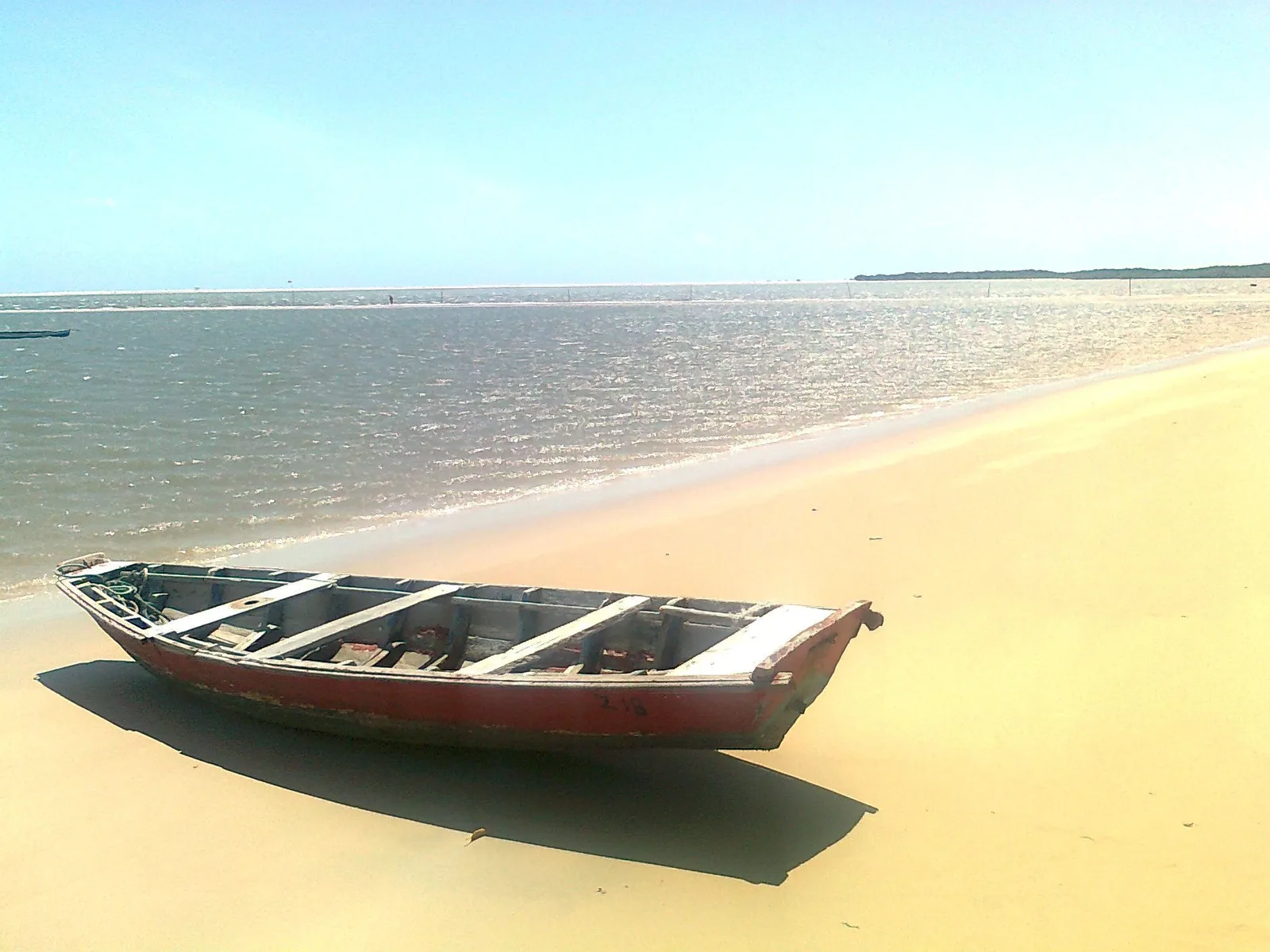
A wooden fishing boat pulled up on the golden sand at the water’s edge at Atins, with flat green water and a low sandbar stretching across the background 04

Where the dunes, the river and the ocean all meet

Atins

From Barreirinhas
1½ hours by boat or 4x4
Streets
Sand. All of them
Wind season
Roughly August to December

Atins sits on the south bank at the mouth of the Preguiças, with the national park behind it, the river in front and the Atlantic around the corner. Fifteen years ago it was a fishing village with no electricity. It is now the other way to do the Lençóis: a few dozen pousadas on sand streets, a handful of genuinely good restaurants, no cars worth mentioning, and dunes you can walk into from the edge of the village rather than drive to.

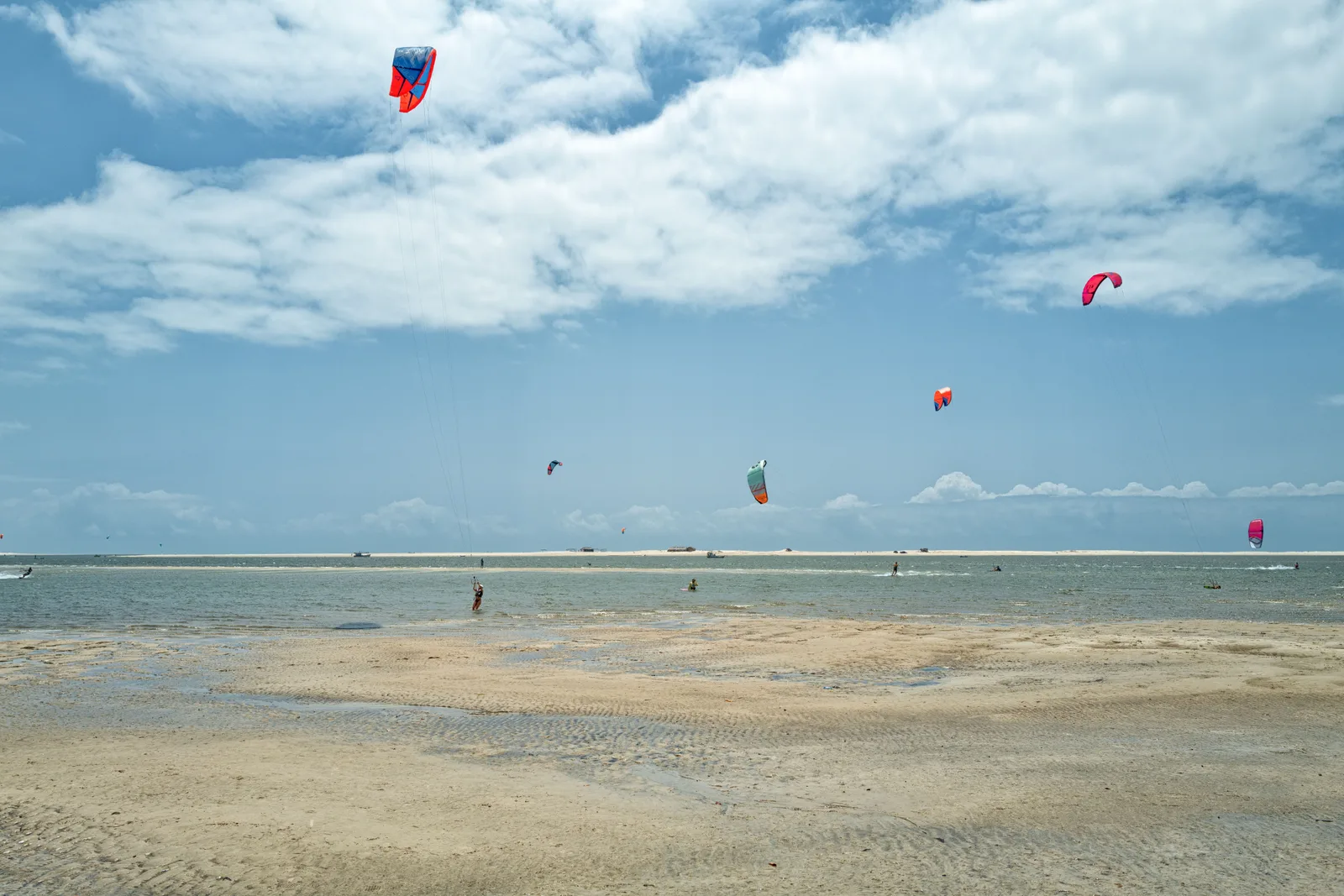
It is also one of the better kitesurfing spots in Brazil, which is what put it on the map internationally. Cross-onshore trade winds blow reliably from around August into December, the river mouth is a maze of shifting sandbanks and knee-deep flat water, and there is enough space that a beginner and an expert can use the same stretch without meeting. The trade-off for all of it is access: everything arrives by boat or by beach, and prices reflect that.

What to actually do

Sixteen ways to spend a day, and none of them indoors.

Pick a category, then scroll sideways through it. Almost everything here is a half-day or a full-day circuit booked the evening before, which is how this destination works.

Dunes & Lagoons

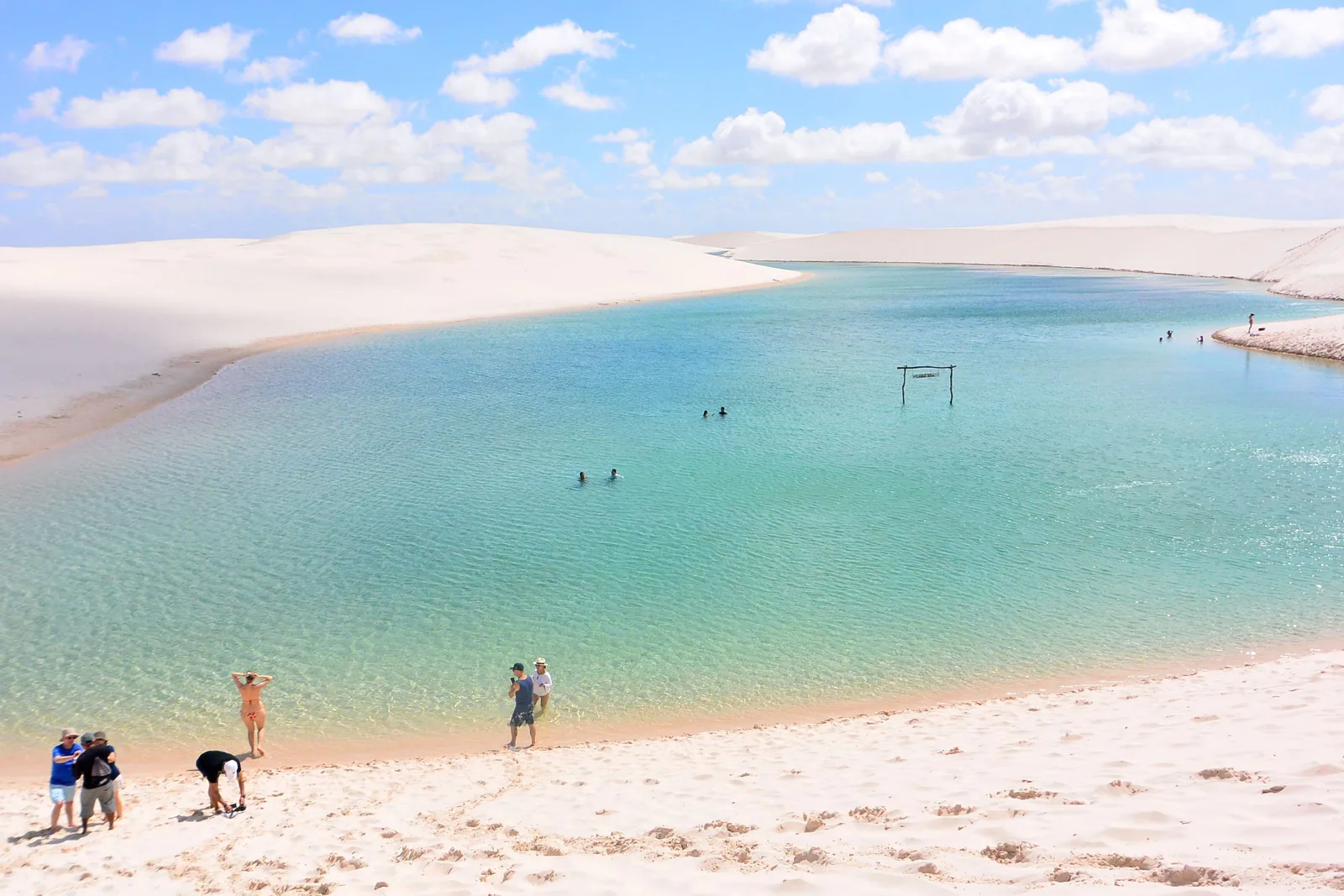
  • People standing and swimming in the clear turquoise shallows of Lagoa Azul, a broad sand beach in the foreground and white dunes closing the far side

    Circuito Lagoa Azul · half day · about R$120

    Swimming at Lagoa Azul

    The closest circuit to Barreirinhas and the one to do first. A jardineira crosses the Preguiças and runs about forty minutes out along a sand track, then you walk in to a set of broad, shallow lagoons with sandy beaches at the edges. The water is clear, warm and waist-deep for a long way out, which makes this the easiest of the circuits with children and the one where nobody feels rushed. Most agencies run it in the morning and again in the afternoon.

  • Two people in silhouette walking the sand at the edge of a lagoon against a sky burnt yellow by the setting sun, the dune field stacked behind them in bands of light and shadow

    Circuito Lagoa Bonita · afternoon · about R$150

    Sunset on the dune at Lagoa Bonita

    The other headline circuit, and the one built around the light. Trucks leave in the middle of the afternoon, and the walk is a climb up a single steep dune with the lagoon on the far side of it. Swim, then take the ridge for the last half hour of the day. Book it a day or two ahead in high season — this is the circuit that sells out, and the one people move their whole trip around.

  • A wide beach of coarse pale sand running down to a big lagoon with swimmers standing in it, low white dunes along the whole far shore

    Full day, about 10 hours

    The Circuito Duas Lagoas

    One long day that takes in both of the famous lagoons and several of the anonymous ones in between, with lunch out in the dunes. It is the efficient way to do the park if you have only two nights in Barreirinhas, and it is a lot of hours in an open truck on sand tracks. Worth it when time is short; not worth it if you have four days, because the two circuits are better at their own times of day.

  • The long shallow sweep of Lagoa Betânia lying between low white dunes under a flat pale sky, the water almost the same tone as the sand

    Betânia, Gaivota, Emendadas · full day

    The lagoons at Santo Amaro

    The Santo Amaro side of the park is a different set of lagoons: bigger, deeper, and set among lower dunes, which is why they hold water for weeks after the Barreirinhas ones have started to shrink. Betânia is the long one, Gaivota the one with the beach, Emendadas a chain that runs into each other. There are far fewer people, and from the village itself several of them are a walk rather than a drive. Reachable as a very long day trip from Barreirinhas at around R$300, or properly by staying two nights.

  • A lagoon at Santo Amaro with a dark ridge of stones running along its sandy edge, white dunes rising immediately behind the water

    Santo Amaro side · half day

    The quieter circuits at Lagoa das Pedras

    Away from the two named circuits the park is mostly empty, and the smaller lagoons are where that becomes obvious. Lagoa das Pedras, in the Santo Amaro sector, is the odd one: a dark line of ironstone concretions runs along one edge of the water, which is the only rock you will see anywhere in the dune field and the reason the lagoons exist at all made visible. Ask your guide what else is holding water that week — the answer changes month to month, and a good guide would rather take you somewhere with water than somewhere with a name.

  • A turquoise lagoon set in blindingly white sand in the Pequenos Lençóis, with a handful of visitors standing at the water’s edge and dunes running away behind

    East of the river · half day

    The lagoons of the Pequenos Lençóis

    East of the Preguiças the dunes carry on under a different name and a different designation — the Pequenos Lençóis, protected as an environmental area rather than as national park. The lagoons there are smaller and shallower and the rules are looser, which is why the quadbike and buggy tours that are banned inside the park run here instead. It is the sector you cross between Caburé and Atins, and it is worth an afternoon on its own if you are staying east of the river.

The Preguiças

  • A turquoise lagoon set in blindingly white sand in the Pequenos Lençóis, with a handful of visitors standing at the water’s edge and dunes running away behind

    East of the river · half day

    The lagoons of the Pequenos Lençóis

    East of the Preguiças the dunes carry on under a different name and a different designation — the Pequenos Lençóis, protected as an environmental area rather than as national park. The lagoons there are smaller and shallower and the rules are looser, which is why the quadbike and buggy tours that are banned inside the park run here instead. It is the sector you cross between Caburé and Atins, and it is worth an afternoon on its own if you are staying east of the river.

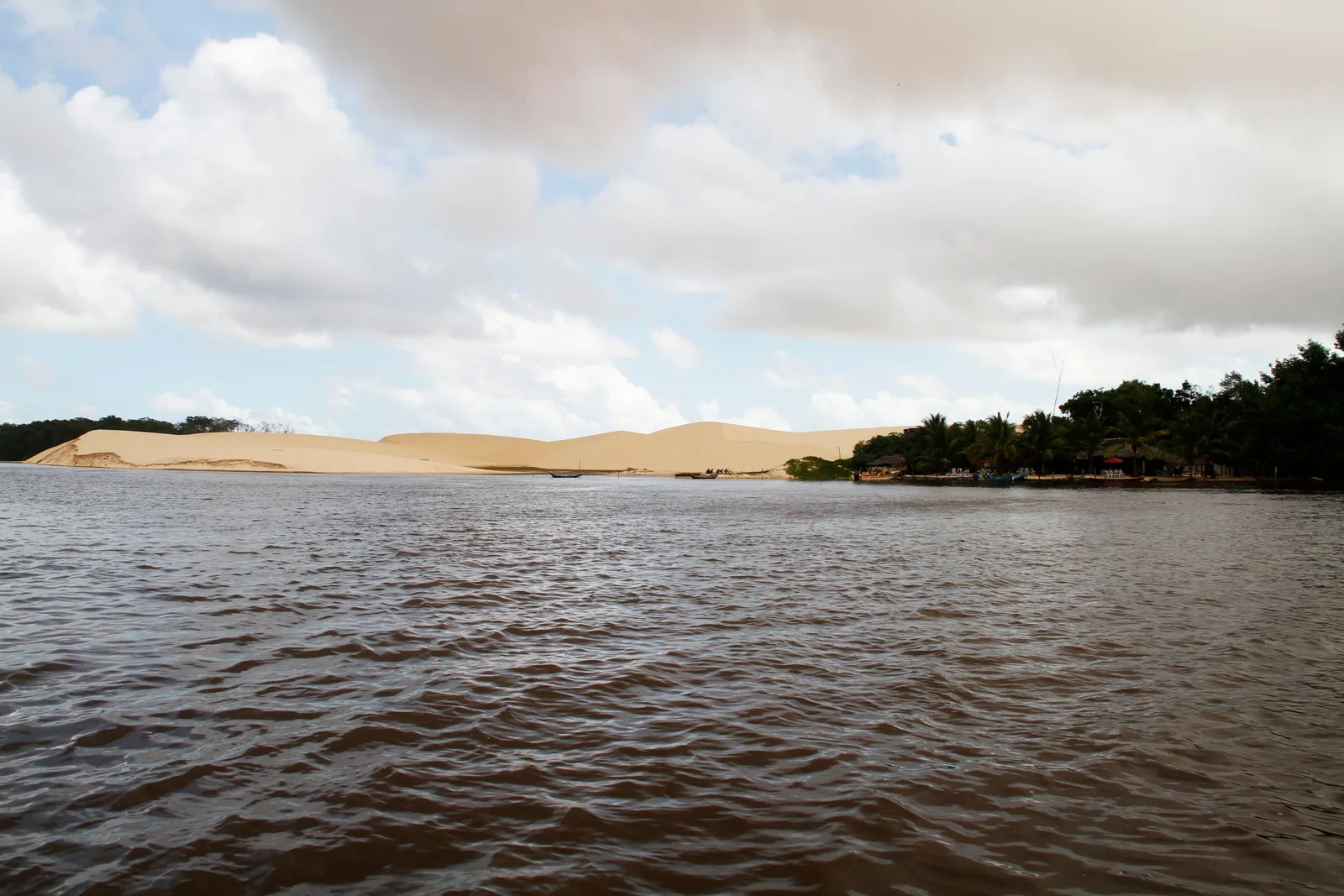
  • The Rio Preguiças seen from the water: brown river in the foreground, a green band of scrub along the bank and pale dunes rising behind it under a cloudy sky

    Barreirinhas to Caburé · full day · about R$150

    The speedboat run down the Rio Preguiças

    The standard day out on the water, and the best-value thing on this page. A lancha leaves the Barreirinhas waterfront around 8:00am, runs downstream between mangrove and buriti palm, and stops at Vassouras, Mandacaru and Caburé before turning back in the afternoon. Sit on the shaded side if you can, and take a hat regardless — the river reflects almost as hard as the sand does.

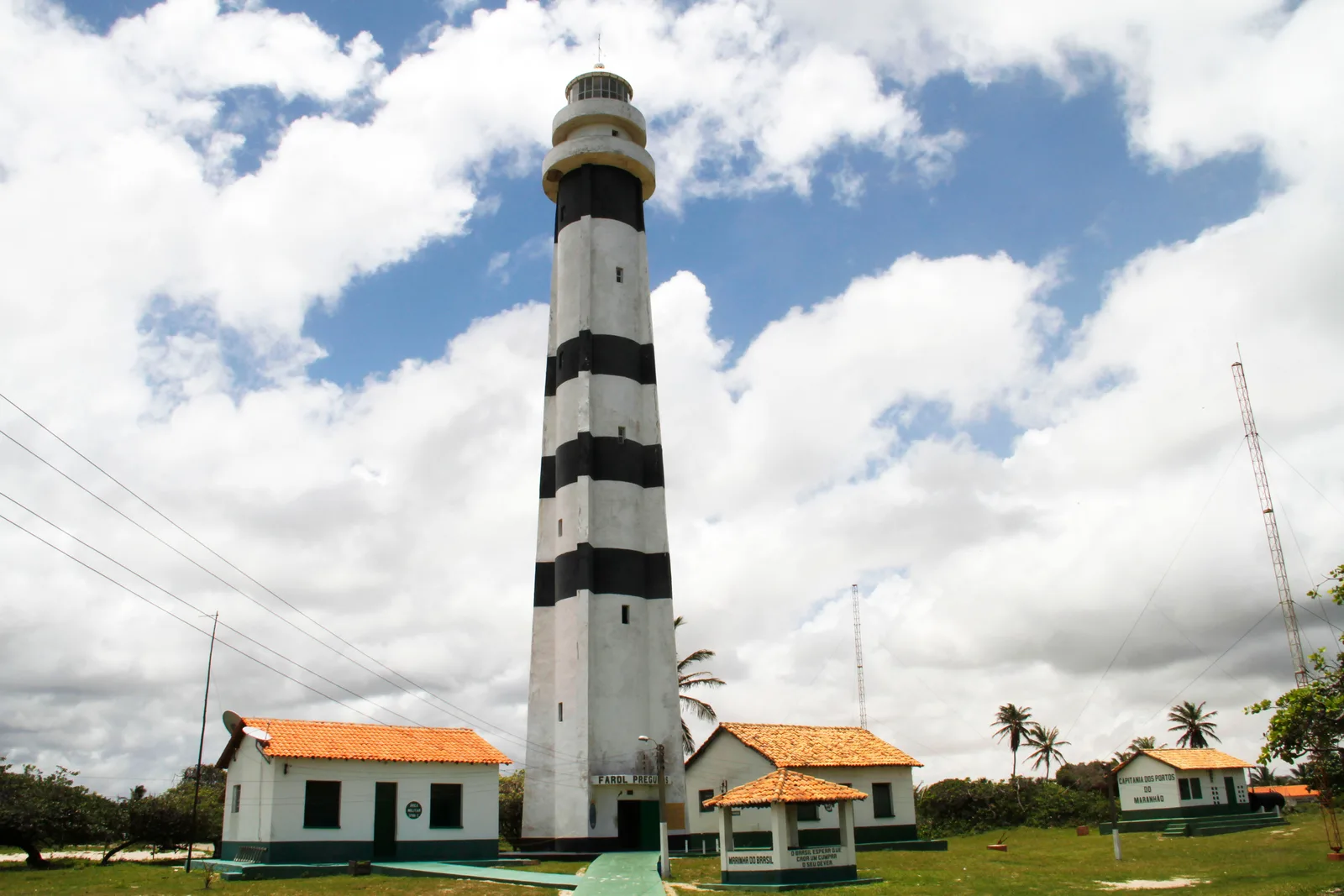
  • The Farol Preguiças seen from below against a sky of broken cloud, its black-and-white bands rising above the orange-roofed keepers’ cottages at its foot

    Mandacaru · 30 minutes, 160 steps

    Climbing the Farol Preguiças at Mandacaru

    The lighthouse in the fishing village halfway down the river, and the only high ground for fifty kilometers in any direction. A hundred and sixty steps up a tight spiral gets you onto the gallery, and the view from it is the whole trip in one turn of the head: dune field, river, sandbar, ocean. Small charge at the door, no shade at the top, and the boat crews allow roughly half an hour, which is enough.

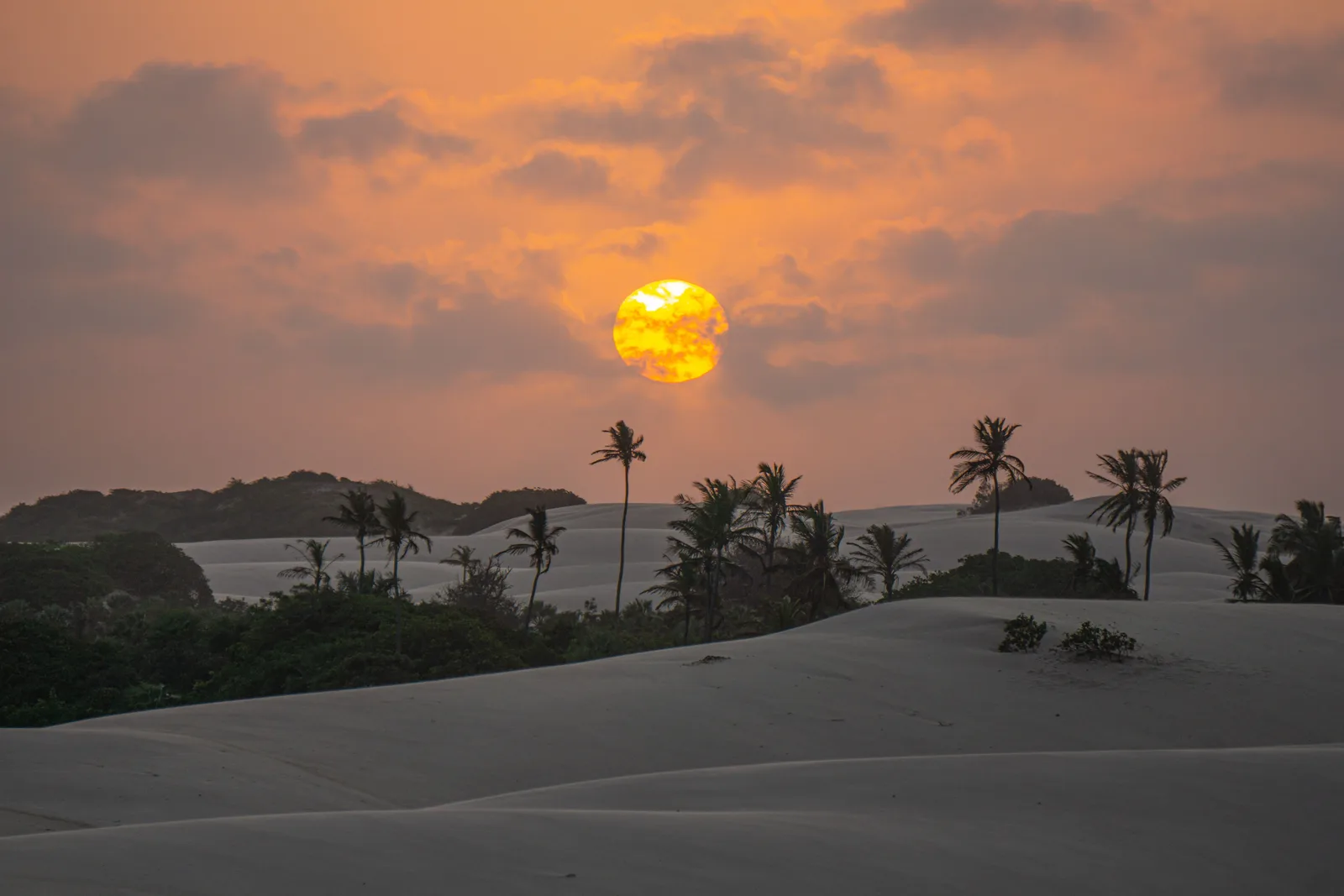
  • Sunset near the mouth of the Preguiças: an orange sun dropping behind a line of palms and low scrub, with pale open sand running across the front of the frame

    Mouth of the Preguiças · 2 hours

    Lunch at Caburé, between river and sea

    Caburé is a sandspit a few hundred meters wide with the river on one side and the open Atlantic on the other, a scatter of restaurants and simple pousadas down the middle, and nothing else. Every boat stops here for lunch: fried fish, shrimp, a beer, a swim in whichever water you prefer. It is also the crossing point for anyone continuing east into the Pequenos Lençóis, and a handful of people stay the night for the sunset and the total absence of anything to do.

  • A dense tangle of pale mangrove roots arching out of the water along the riverbank, dark green foliage above them and brown river in front

    On the boat day · in passing

    The mangroves of the lower Preguiças

    The lower river runs through mangrove, and the boat crews slow down for it. What you are looking at is the nursery for everything the fishing villages catch, and the reason there are so many birds — herons, kingfishers, egrets and, further out toward the delta, the scarlet ibis that give this coast its most photographed evening. Ask before you book if birds are the point of your day; some crews will leave early or run late for them, most will not.

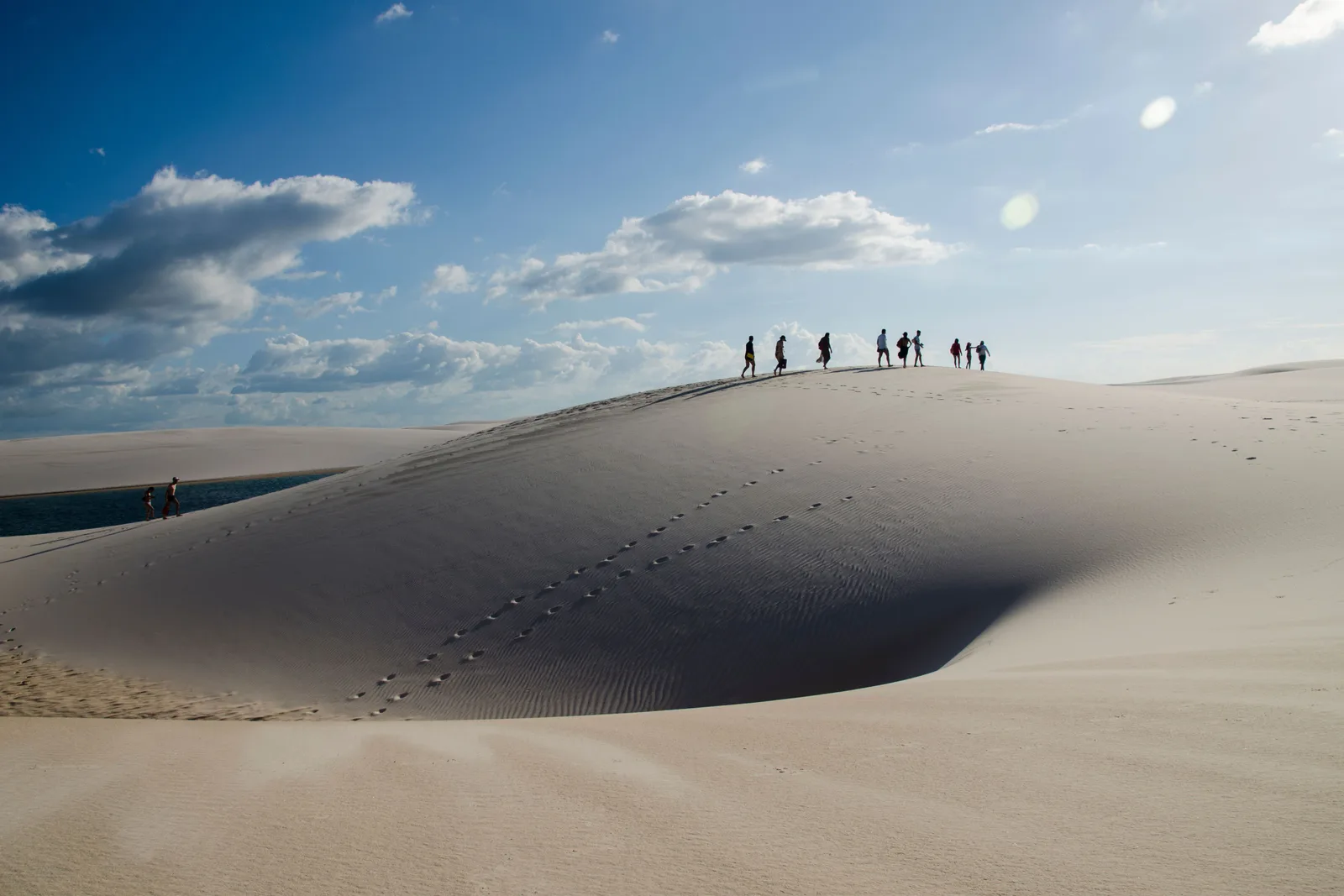
  • A line of people strung out along the crest of a white dune under a big sky of broken cloud, their footprints running back down the slope toward the camera

    First stop on the boat day · 1 hour

    The dunes at Vassouras

    The boat pulls in on a bank of sand and you walk up into the first dunes of the Pequenos Lençóis. It is a short stop and a genuinely good one — the ridge above the landing gives you the river on one side and dunes on the other, and it is the first time on the trip the scale of the thing registers. A stall at the landing sells cachaça infused with local fruit; the resident capuchin monkeys hanging around it are there because people feed them, which is worth knowing before you decide whether to join in.

Villages & Food

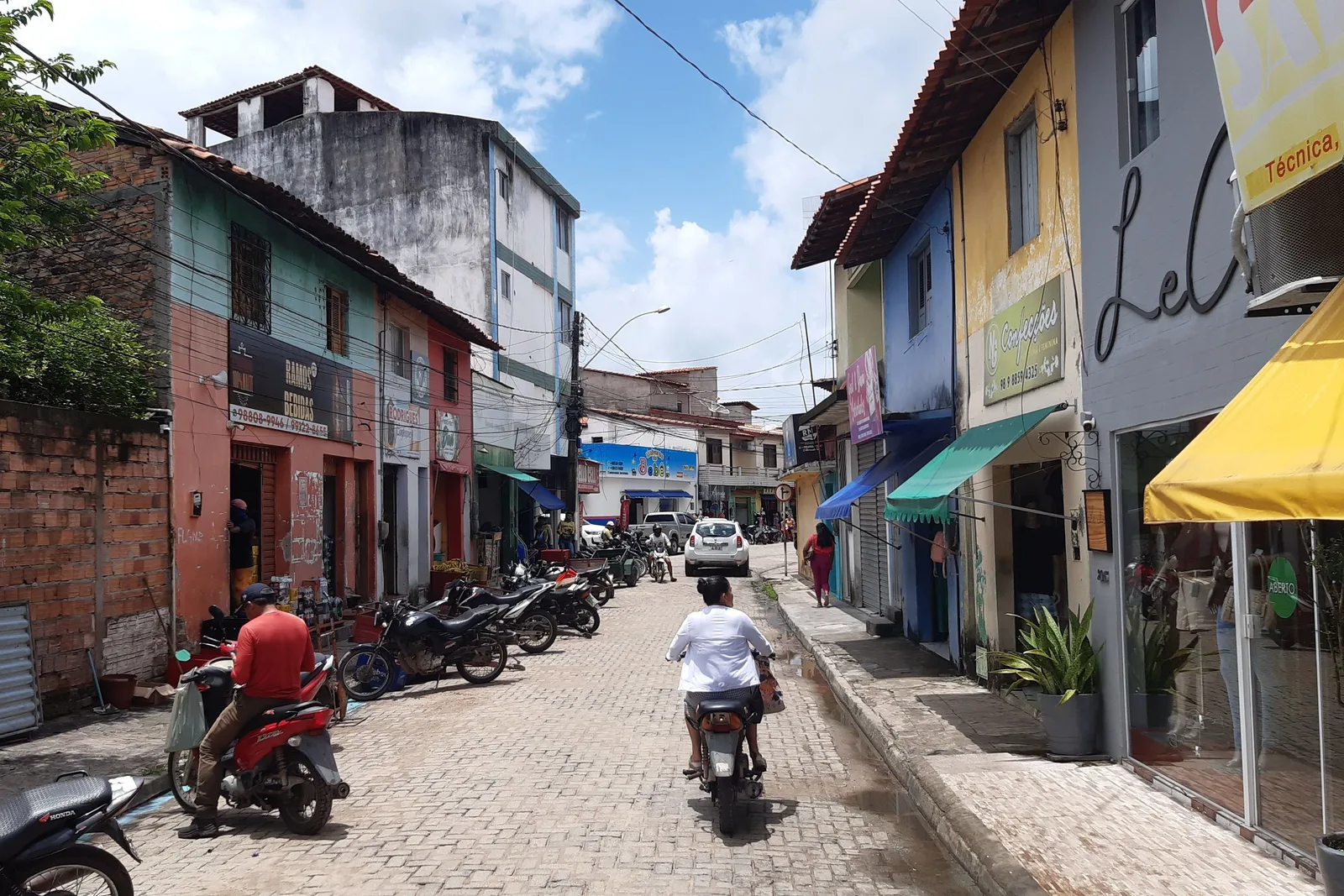
  • A street in central Barreirinhas lined with brightly painted shopfronts and awnings, motorbikes parked along both curbs and a rider coming up the middle

    Riverfront and the center · after the circuit

    An evening in Barreirinhas

    Barreirinhas is not a pretty town and does not pretend to be: it is a working river port of about sixty-five thousand people that happens to be the door to a World Heritage Site, and its center is motorbikes, tour agencies, phone shops and pousadas. What it does have is the riverfront, where the boats tie up and the restaurants and craft stalls face the water, and that is where the evening happens. Eat river fish, drink something cold, and book tomorrow’s circuit at the agency next door.

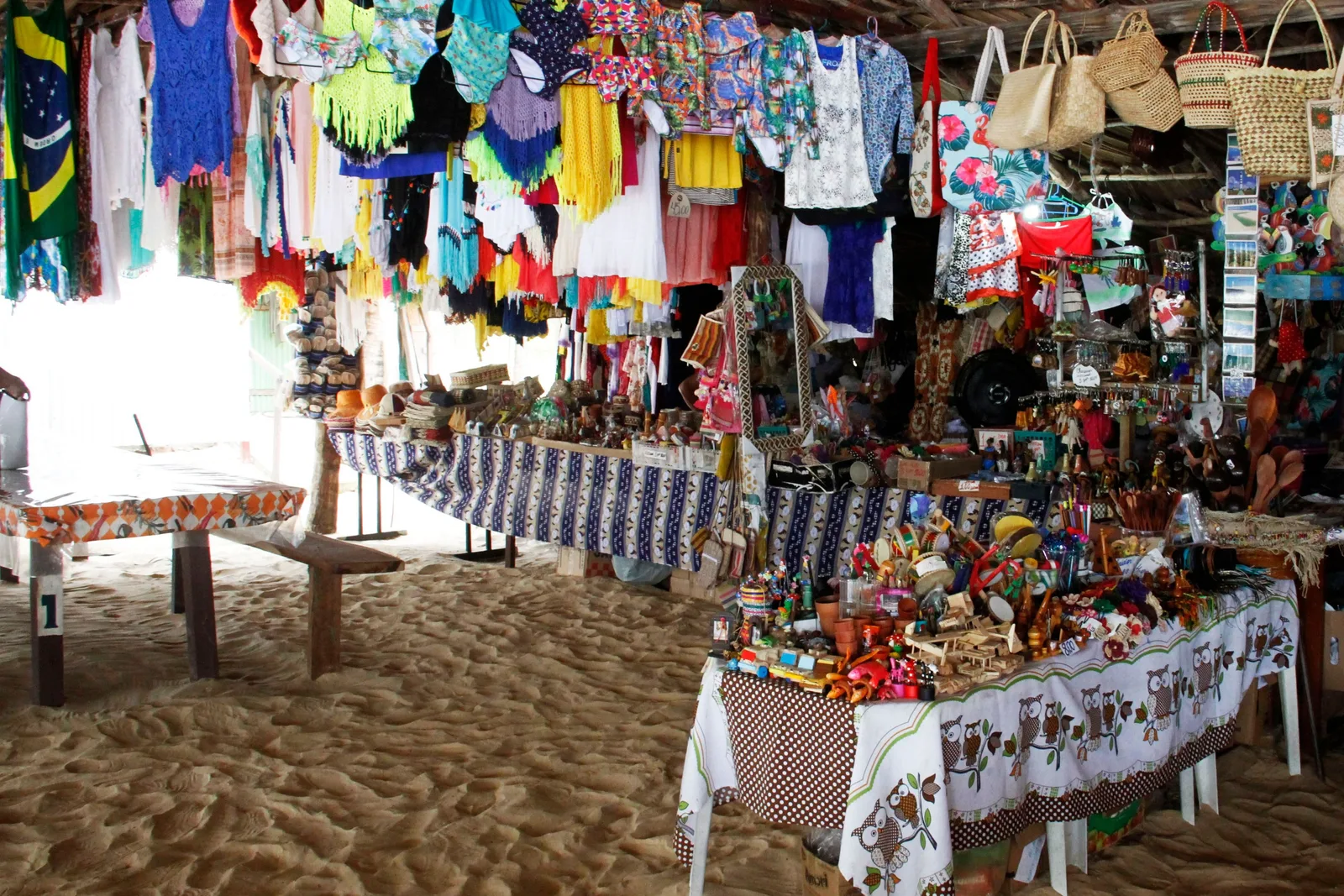
  • A craft stall set up on the sand under a canopy, hung with printed dresses, bags and towels, with tables of painted souvenirs and woven goods in front

    Barreirinhas and the villages · 1 hour

    Buriti weaving and the craft stalls

    The buriti palm grows in the wet hollows all over this region and it is the raw material for most of what is sold here — hats, bags, mats, fans and the hammocks people actually sleep in. The stalls along the Barreirinhas waterfront and at the boat stops carry it alongside the usual printed T-shirts and bottled cachaça. Prices are low, the weaving is genuinely local, and a wide buriti hat is the most useful souvenir on this coast because you will need it within the hour.

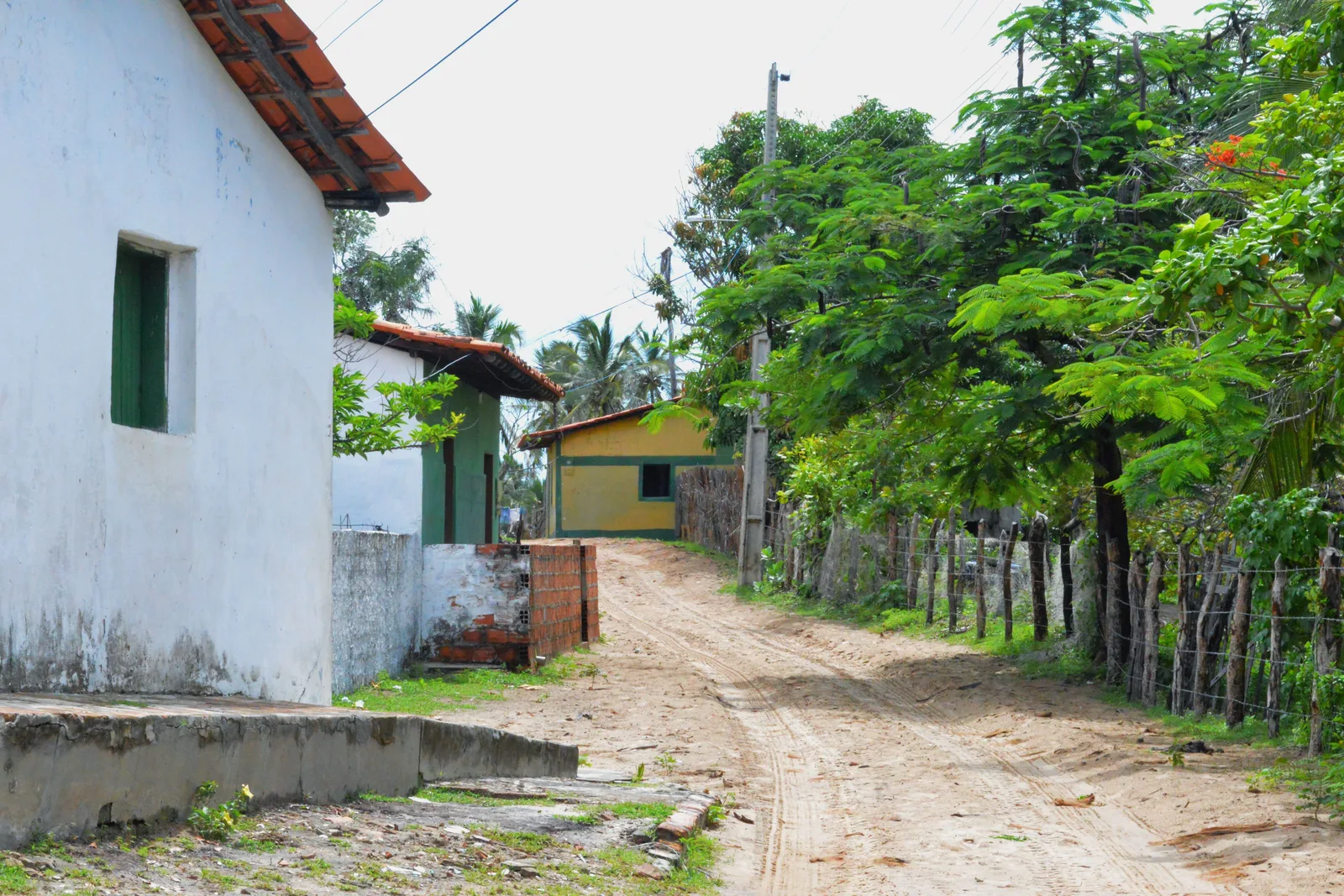
  • A sandy lane in Atins running between a whitewashed house with green window frames and a dense hedge of scrub and palms

    Atins · half day

    Atins on foot, and shrimp at the Canto

    Atins is small enough to walk end to end in twenty minutes, and doing it in the late afternoon — sand lanes, low houses, kites coming down, dogs — is most of the reason to stay there rather than in Barreirinhas. The other reason is Canto do Atins, a cluster of houses at the far end of the beach where two family kitchens have been grilling shrimp for visitors for decades. It is reached by 4x4 along the sand and it is not cheap for what it is, but the shrimp are enormous and the setting is a beach with nothing else on it.

Wind & Walking

  • Two people in silhouette walking the sand at the edge of a lagoon against a sky burnt yellow by the setting sun, the dune field stacked behind them in bands of light and shadow

    Circuito Lagoa Bonita · afternoon · about R$150

    Sunset on the dune at Lagoa Bonita

    The other headline circuit, and the one built around the light. Trucks leave in the middle of the afternoon, and the walk is a climb up a single steep dune with the lagoon on the far side of it. Swim, then take the ridge for the last half hour of the day. Book it a day or two ahead in high season — this is the circuit that sells out, and the one people move their whole trip around.

  • A line of people strung out along the crest of a white dune under a big sky of broken cloud, their footprints running back down the slope toward the camera

    First stop on the boat day · 1 hour

    The dunes at Vassouras

    The boat pulls in on a bank of sand and you walk up into the first dunes of the Pequenos Lençóis. It is a short stop and a genuinely good one — the ridge above the landing gives you the river on one side and dunes on the other, and it is the first time on the trip the scale of the thing registers. A stall at the landing sells cachaça infused with local fruit; the resident capuchin monkeys hanging around it are there because people feed them, which is worth knowing before you decide whether to join in.

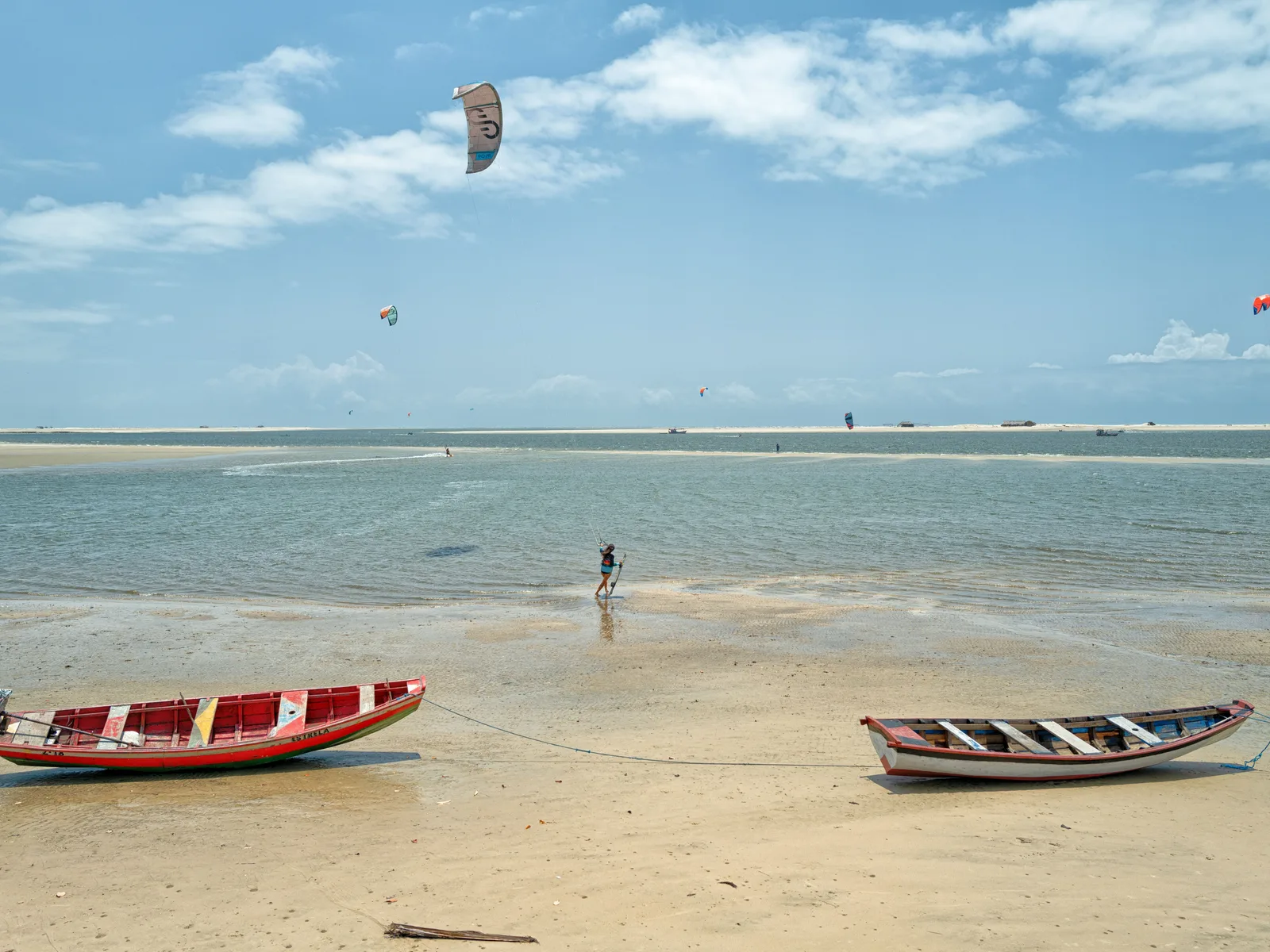
  • Kites in the air over shallow water and exposed sandbanks at the mouth of the Preguiças, riders spread out across a wide flat lagoon under a cloudy sky

    August to December · lessons and rentals in the village

    Kitesurfing at Atins

    Cross-onshore trade winds blow here from roughly August into December, at fifteen to twenty-five knots and often more between September and November. The setup at the river mouth is unusually forgiving: shifting sandbanks, flat knee-deep water at the right tide, and a lot of it, which makes Atins one of the better places in Brazil to learn as well as somewhere experienced riders come for the space. Several schools operate out of the village and most pousadas will arrange a lesson.

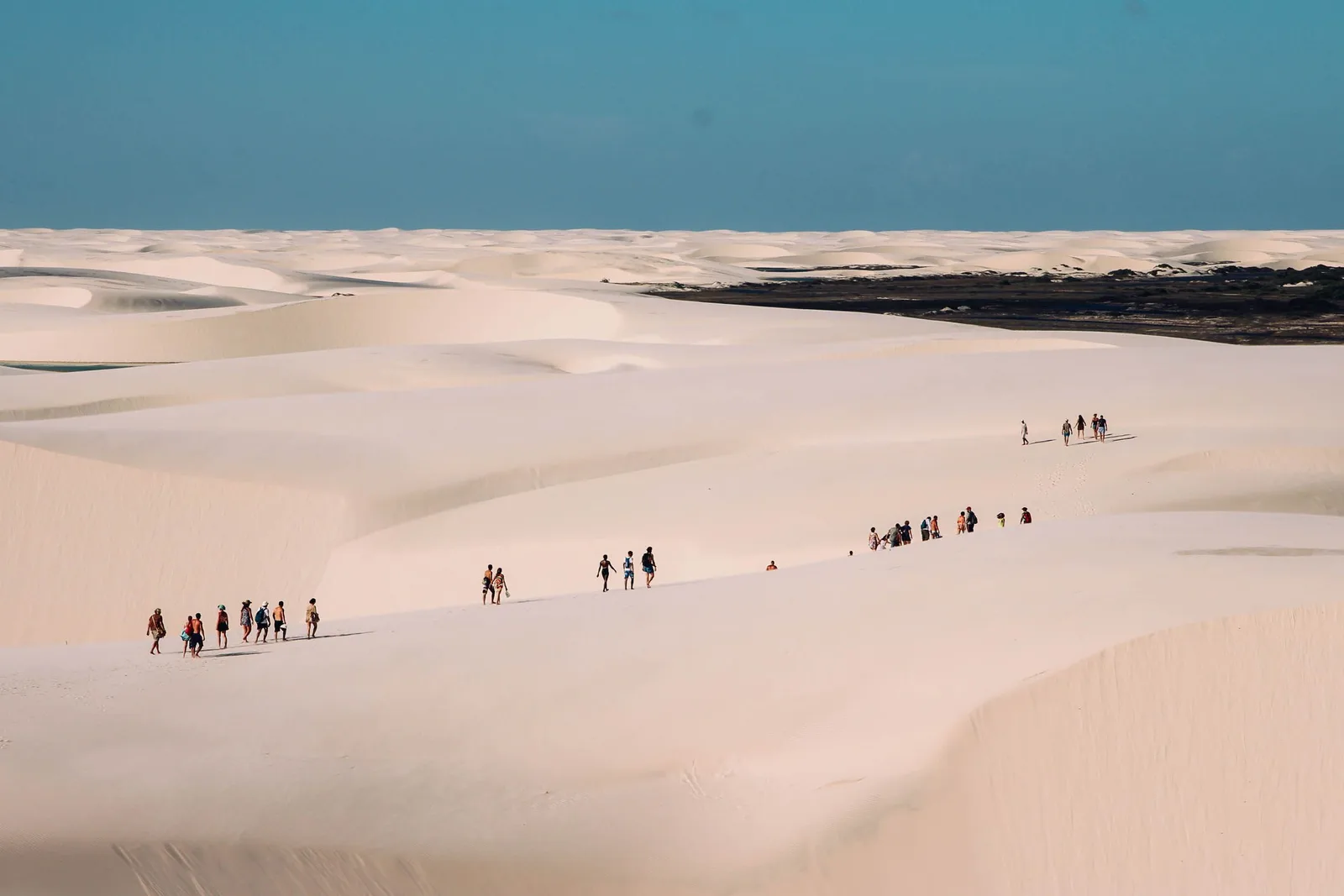
  • Two straggling lines of people crossing a wide pale dune plain under a bright hazy sky, with a dark band of vegetation along the far horizon

    With a guide · a morning, or several days

    Walking out into the dunes

    Every circuit ends in a walk, and the walk is the part people remember: loose sand, no shade, no landmark, and a horizon that does not change for as long as you look at it. Longer versions exist. The great crossing between Santo Amaro and Atins takes three or four days through the oasis settlements of Queimada dos Britos and Baixa Grande, sleeping in hammocks; ICMBio caps it at ten walkers per guide and requires a booked, documented bed at each stop before you start. Either way you go with somebody who knows the ground, because there is no ground to know by yourself.

Where to stay

Which door you come in by.

There is no town inside the park, so every base is a compromise between how easy the circuits are to reach and how much there is around you when you get back. Barreirinhas has everything and no atmosphere; Atins has atmosphere and no road; Santo Amaro has the best lagoons and almost nothing else.

Drag and zoom to explore.

Tap an area to open it and see it on the map

  • Our pick

    Best for: A first visit, and everything in one place

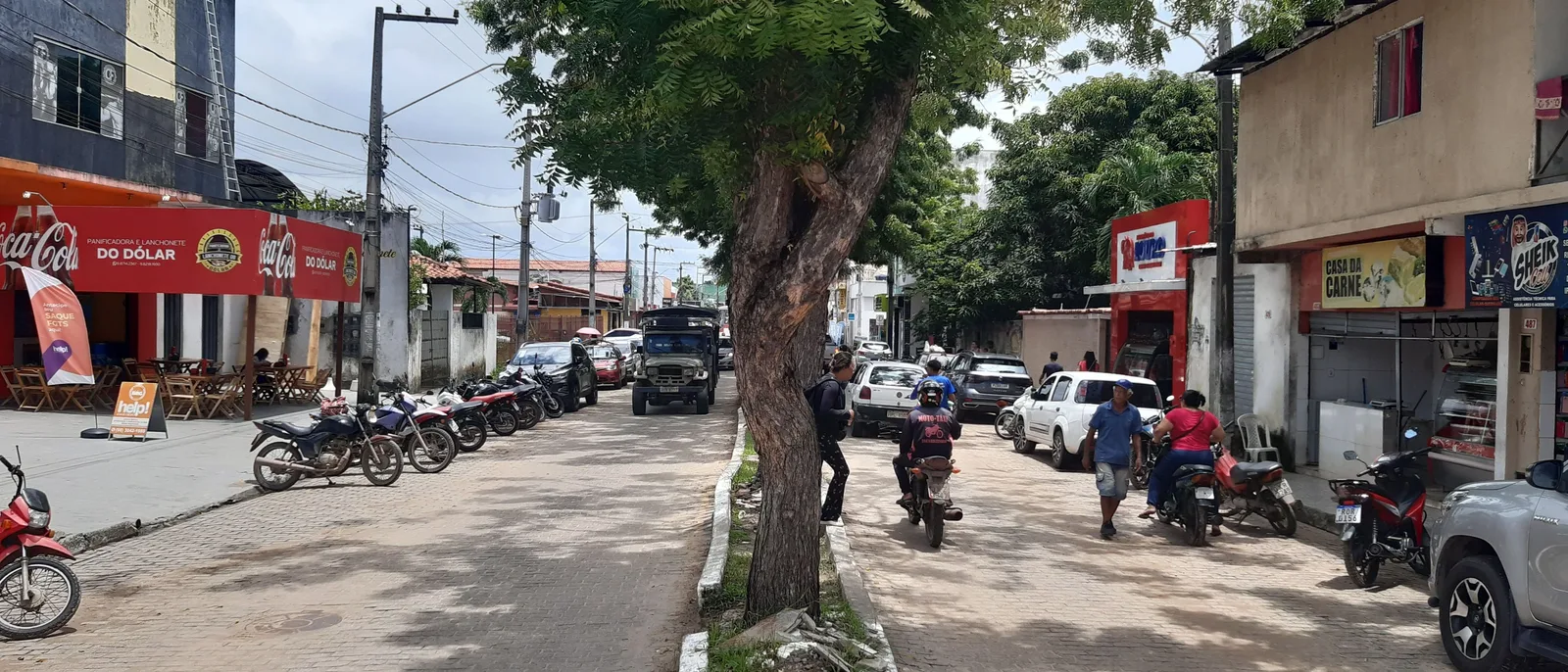
    A commercial street in Barreirinhas with a big shade tree in the middle of it, motorbikes parked in ranks along both curbs and shopfronts under awnings behind them

    The main gateway, and where four out of five visitors sleep. It has the hospital, the banks, the bus station, sixty-odd pousadas at every price, the agencies that sell every circuit, and the waterfront the boats leave from. It is also a functional small river town rather than a resort, which some people find flat after the dunes. Choose it if this is your first time, if you have three nights or fewer, or if you want to do both the 4x4 circuits and the river day without moving hotels.

    • Rio Preguiças waterfront
    • Lagoa Azul
    • Lagoa Bonita
    • Every agency
  • Best for: Kitesurfing, sand streets and slowing down

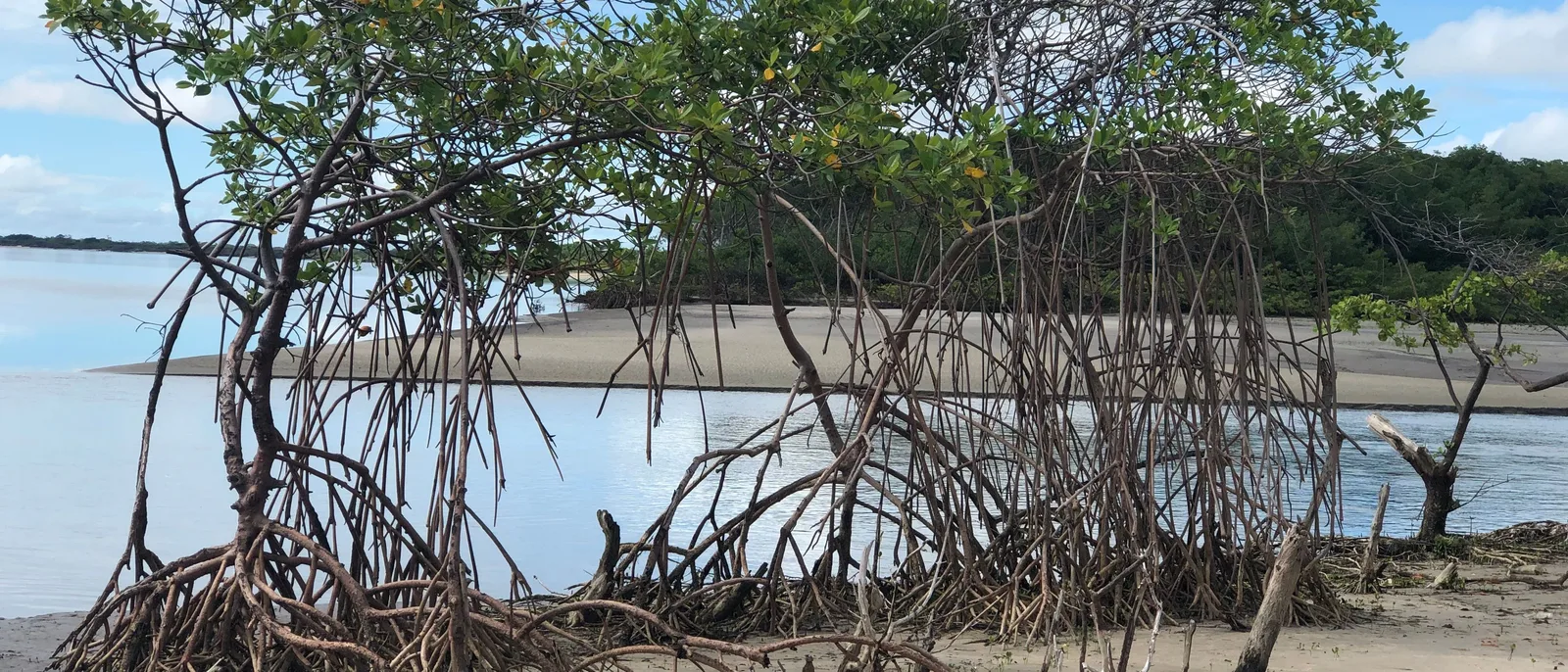
    Mangrove trees standing on their exposed roots along a bare sand shoreline at Atins, with flat water and a low far bank behind

    The village at the mouth of the Preguiças, an hour and a half from Barreirinhas by boat or beach 4x4. Sand streets, no cars, a dozen small pousadas and a food scene out of all proportion to the size of it, plus a kite season from about August to December that brings its own crowd. The dunes start at the edge of the village. The trade-off is real: you arrive by boat or not at all, prices run higher than Barreirinhas for everything, and there is no pharmacy, no bank and unreliable signal.

    • Kitesurf
    • Canto do Atins
    • Boat access only
    • Higher prices
  • Best for: The best lagoons, latest in the season

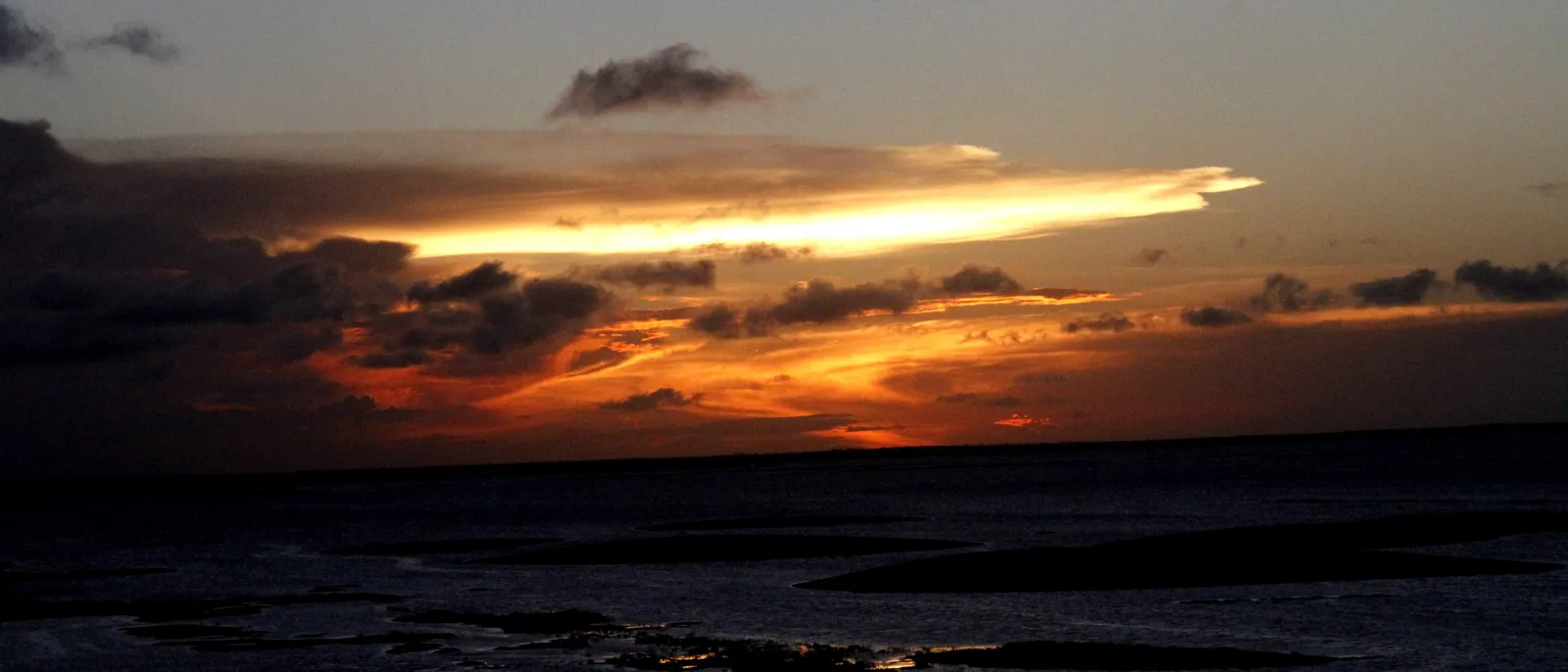
    A dramatic orange and gray sunset over dark water near Santo Amaro do Maranhão, a long bar of cloud lit along the horizon

    The western gateway, 240 km from São Luís on the far side of the park from Barreirinhas, and the choice of people who have done this once already. The village sits at the edge of the dune field, so several lagoons are a walk rather than a drive, and the lagoons here — Betânia, Gaivota, Emendadas — are bigger and deeper and hold water into October when the Barreirinhas side has started to go. There is very little else: a handful of pousadas, a few restaurants, and no reason to be here after dark except the sky.

    • Lagoa Betânia
    • Lagoa da Gaivota
    • Walk-in access
    • Very quiet
  • Best for: The nights either side of the drive

    A colonial facade in the historic center of São Luís tiled floor to roof in blue-and-white azulejos, with turquoise doors and June festival bunting strung above

    Not a base for the park — it is four hours away — but almost everyone sleeps here at least once, because that is where the plane lands. It earns the night: the historic center is a UNESCO World Heritage Site, a couple of thousand colonial buildings faced in Portuguese azulejo tiles, and it is the most distinctive city in the Brazilian northeast after Salvador. Budget an afternoon and an evening at the start or the end rather than treating it as an airport with rooms attached.

    • UNESCO centro histórico
    • Azulejos
    • Bumba meu boi
    • Airport

A working plan

Five days, two bases, one long road.

Built around the fact that the two best circuits want different times of day and the river wants a whole one. Two nights in Barreirinhas, then two in Atins — and if you only have three days, do the first three of these and go home from Barreirinhas.

  1. 01
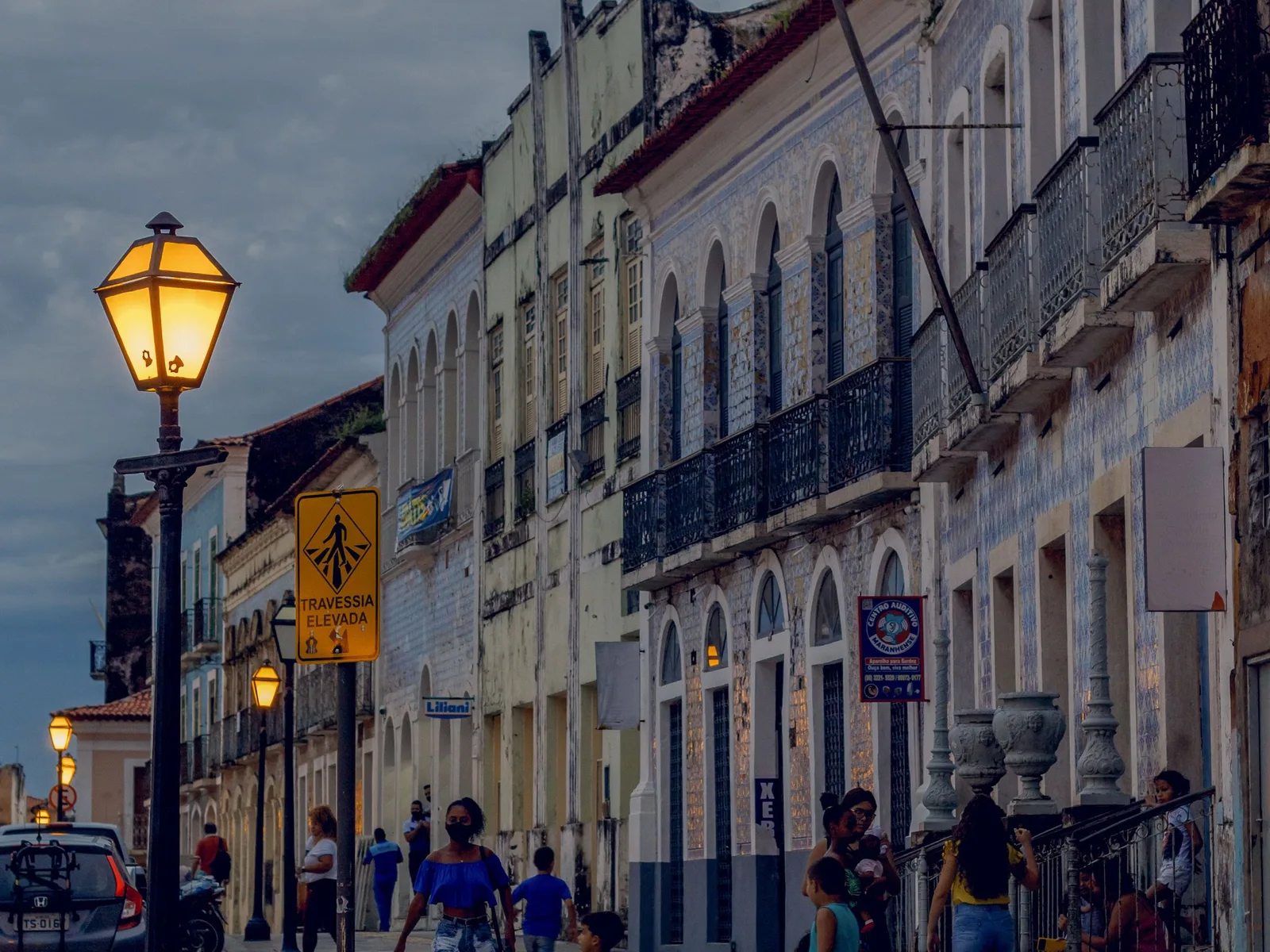
    A street in the historic center of São Luís at dusk, a lit iron lamp in the foreground and a row of tall colonial houses running away behind it, their fronts tiled in blue-and-white azulejos above iron balconies, with people walking on the sidewalk below

    São Luís → Barreirinhas

    São Luís, and the road east

    Land in the morning, walk the tiled streets of the historic center for a couple of hours, then take the four-hour transfer east and arrive in Barreirinhas before dark. Book tomorrow’s circuit at the agency next to your pousada.

  2. 02
    The pale turquoise edge of Lagoa Azul curving along the foot of a smooth white dune under a bright hazy sky

    Circuito Lagoa Azul

    Into the dunes for the first time

    The nearest circuit, in the morning while it is cooler: ferry across the Preguiças, forty minutes on sand, then the walk in and a long swim. Back for lunch, and the afternoon on the Barreirinhas waterfront. Floating the Rio Formiga at Cardosa is the other good morning here if you add a night.

  3. 03
    Sunset at Lagoa Bonita: a crowd of visitors in silhouette along a dune above a lagoon, the sun a white disc in an orange sky and birds crossing above them

    Circuito Lagoa Bonita

    The climb, and the sunset

    Nothing in the morning — this circuit leaves mid-afternoon and gets back after dark. Climb the dune, swim, then hold the ridge for the last of the light and let everyone else start down before you do.

  4. 04
    A group walking single file down a dune ridge above a bright turquoise lagoon near the mouth of the Preguiças, vehicle tracks running along the sand beside them

    Rio Preguiças → Atins

    Down the river, out to the coast

    The full-day boat: Vassouras, the lighthouse at Mandacaru, and lunch at Caburé where the river meets the sea. Rather than turning back, carry on across to Atins and check into a pousada with sand for a driveway.

  5. 05
    A long smooth white dune slope running down into a broad pale green lagoon near Atins under a bright blue sky, footprints scattered across the sand in the foreground and a low line of dunes on the far horizon

    Canto do Atins → São Luís

    Atins, then out

    Morning at the lagoons behind the village or grilled shrimp out at the Canto, then the boat or the beach truck back to Barreirinhas and the road to São Luís. Add a night if you want a kite lesson — this is the day people wish they had doubled.

This is a starting shape, not a fixed departure — we rearrange it around your dates. Have it built for you

Timing

The dunes are always here. The water is not.

Everywhere else on this site, picking the wrong month costs you some sunshine. Here it costs you the destination. The lagoons are rainwater, they fill through the first half of the year and evaporate through the second, and outside a window of roughly June to September you are looking at a very large sandpit. Get the month right and almost nothing else about this trip can go wrong.

How good each month is in the Lençóis Maranhenses. Choose a month for its average air and sea temperature, rainfall and what the lagoons are doing then.

January

Trade-offs
Air
25–30°C 77–86°F
Sea
28°C 82°F
UV
10 Very high
Rain
15 days 145 mm / 5.7 in

The rains start. Fifteen wet days, roads deteriorating, and the lagoons barely begun. Wrong month for this trip.

February

Trade-offs
Air
24–29°C 75–84°F
Sea
28°C 82°F
UV
9 Very high
Rain
18 days 207 mm / 8.1 in

Wetter again, and eighteen days out of twenty-eight with rain in them. The dunes are green at the edges and the water is still shallow.

March

Trade-offs
Air
24–29°C 75–84°F
Sea
28°C 82°F
UV
10 Very high
Rain
20 days 285 mm / 11.2 in

Rain on about twenty days of the month, and one of the two wettest by volume. The lagoons are filling fast and are still not worth the airfare.

April

Trade-offs
Air
24–29°C 75–84°F
Sea
28°C 82°F
UV
9 Very high
Rain
19 days 306 mm / 12.0 in

As wet as March or wetter, depending which nearby station you take, and the month that fills the park. By the end of it the lagoons are close to full and the sky is still gray.

May

Trade-offs
Air
24–30°C 75–86°F
Sea
28°C 82°F
UV
10 Very high
Rain
17 days 205 mm / 8.1 in

The tail of the rains. Lagoons at or near full, crowds not yet arrived, and a real chance of a run of clear days. The gambler’s month.

June

Good
Air
24–30°C 75–86°F
Sea
28°C 82°F
UV
9 Very high
Rain
9 days 76 mm / 3.0 in

The rain drops away sharply and the lagoons are full. The start of the real season, and June festivals across Maranhão.

July

Good
Air
25–31°C 77–88°F
Sea
27°C 81°F
UV
10 Very high
Rain
5 days 45 mm / 1.8 in

Dry at 45 mm, hot, and the lagoons full. Also Brazilian school holidays: the busiest month of the year, and the one to book early.

August

Best
Air
25–32°C 77–90°F
Sea
27°C 81°F
UV
11 Extreme
Rain
2 days 10 mm / 0.4 in

Ten millimeters of rain across two days. Lagoons still full, the holiday crowd gone home, and the wind starting at Atins. Arguably the best month of the year.

September

Good
Air
25–32°C 77–90°F
Sea
27°C 81°F
UV
11 Extreme
Rain
1 day 6 mm / 0.2 in

The driest month on the calendar and the last reliable one for water. The Barreirinhas lagoons begin to draw down; Santo Amaro’s are still deep.

October

Trade-offs
Air
25–32°C 77–90°F
Sea
27°C 81°F
UV
11 Extreme
Rain
1 day 9 mm / 0.4 in

A coin toss. Some years the Santo Amaro lagoons hold all month; most years the Barreirinhas ones are visibly going. Ask an operator the week before you book.

November

Trade-offs
Air
25–32°C 77–90°F
Sea
28°C 82°F
UV
11 Extreme
Rain
1 day 14 mm / 0.6 in

Dry, windy and emptying. The kite season at Atins is at its strongest and the lagoons are not what you came for.

December

Trade-offs
Air
25–31°C 77–88°F
Sea
28°C 82°F
UV
10 Very high
Rain
6 days 44 mm / 1.7 in

The lagoons are at their lowest of the year and the first rains are arriving to start the cycle again. Dunes, not water.

  • Best The one or two peak months
  • Good A real recommendation
  • Trade-offs Workable, with a catch
See Lençóis Maranhenses on the Brazil calendar

UV is the monthly average of the daily peak, 2022 to 2025, calculated from Copernicus Atmosphere Monitoring Service data. Weather data by Open-Meteo.com, CC BY 4.0.

For full lagoons

June–September

The rain has stopped and the water is still there. ICMBio names no month as the fullest, so nor do we; on the rainfall, August is the pick, at 10 mm across two wet days with the lagoons still holding, and it is the sunniest month of the year at the nearest station with a sunshine record.

For the gamble

May, or October

Either shoulder can be superb. May often has full lagoons and no crowds while it is still raining; October holds on the Santo Amaro side some years and not others. Both are bets.

The months to avoid

November–April

November and December are dunes without water. January to April are the rains: 306 mm in April alone, roads that flood, and lagoons that are filling but not yet full.

About the rain

The number that explains this destination is the spread between April and September: 306 mm of rain against 6 mm, and about nineteen wet days against one. Barreirinhas gets around 1,350 mm a year and roughly three-quarters of it lands between January and May. Nothing about the temperature moves — every month of the year runs to a daytime high between 29 and 32 degrees and a night around 25 — so the calendar here is entirely about water and not at all about warmth.

The lag between the two is the whole trick. Rain fills the lagoons; it does not empty them, and the sun does that slowly, at up to a meter of depth a month. So the best conditions are not in the wet season and not in the dry season but in the seam between them — the rain has stopped, the sky has cleared, and the water has not yet gone. That seam is June to September, and it is why the driest month on the chart is also one of the best.

Two practical consequences. First, the rains do not just delay the lagoons, they also make the MA-402 and the sand tracks harder work, so a March trip is worse than the rainfall figure alone suggests. Second, the drawdown is not uniform: the deeper lagoons on the Santo Amaro side routinely hold water for several weeks after the Barreirinhas circuits have started to look thin, which is the single best reason to consider the western gateway if you are traveling in late September or October.

The dates worth planning around

The head and shoulders of a bumba meu boi ox costume in close-up, black velvet covered in dense gold, red and green beadwork and sequins, with festival bunting blurred behind it

Bumba meu boi

Through June, peaking in the last week

Maranhão’s own festival and one of the great popular traditions in Brazil: a sung, danced, costumed retelling of the death and resurrection of an ox, performed by hundreds of groups across the state through the June saints’ days and climaxing around São João on the 24th and São Pedro on the 29th. UNESCO added the Maranhão complex to its Intangible Cultural Heritage list in December 2019. São Luís is where you see it properly — the arraiais run for weeks and the costumes are extraordinary — and it lands at exactly the moment the lagoons are filling to their peak, which makes late June the single best-timed week of the year for a first trip to Maranhão.

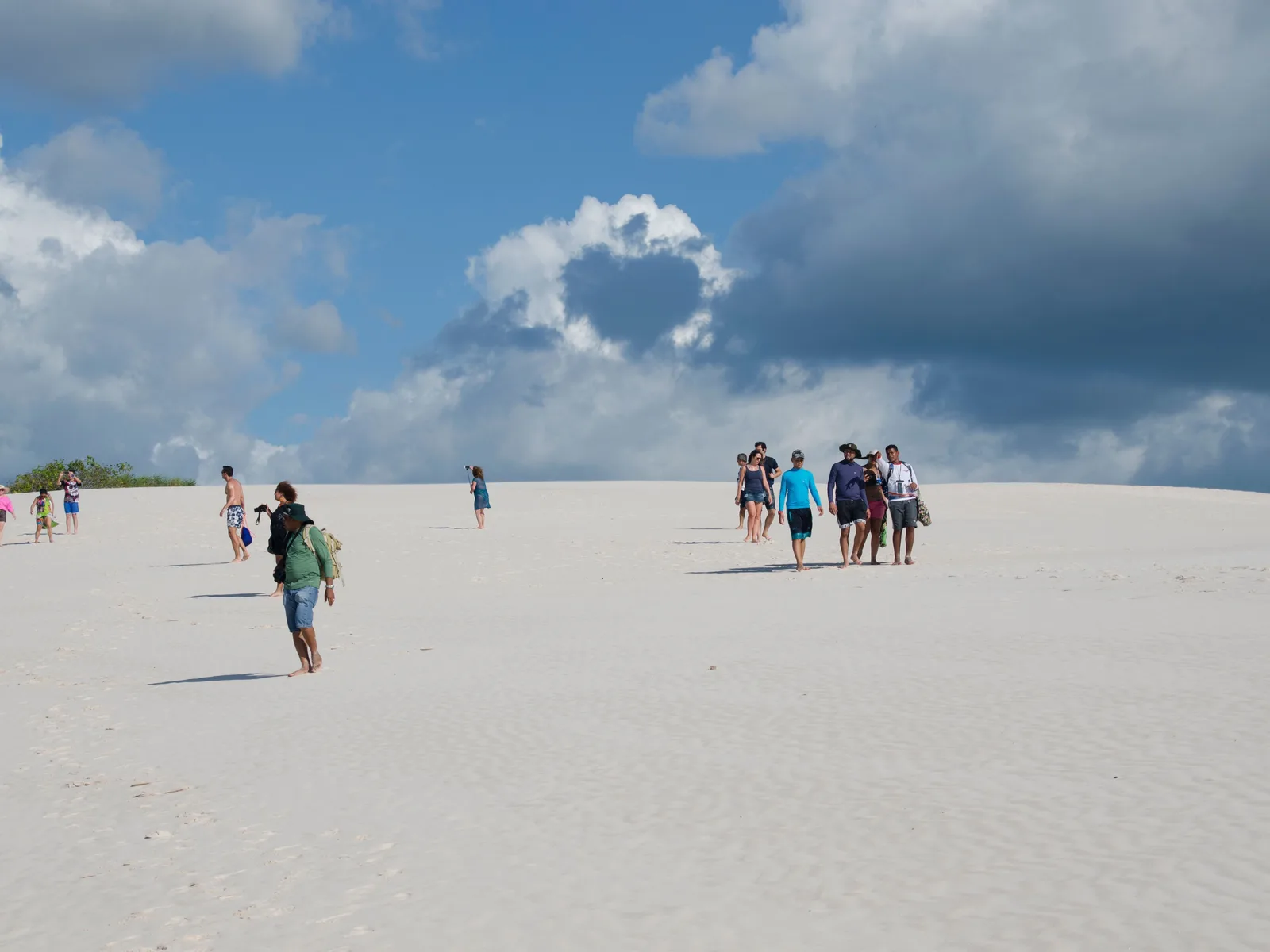
Several separate groups of visitors spread out across a wide white dune under a cloudy sky, walking in loose lines toward the horizon

The July rush

All of July, and the first week of August

Brazilian school holidays run through July, and this is where a large number of Brazilian families choose to spend them — which matters more here than it would elsewhere, because the park has a fixed number of trucks, a fixed number of guides and one sunset a day. Expect Lagoa Bonita to be crowded on the ridge, expect the good pousadas in Barreirinhas and Atins to be gone by May, and expect prices on rooms rather than on circuits to be where the difference shows. It is also, genuinely, when the lagoons are at their fullest. If you can move a week either side of it, August is the same park with fewer people in it.

Two wooden fishing boats drawn up on the sand at Atins with kites flying over the flat water behind them and a rider out on the sandbar

The wind season at Atins

Roughly August to December, strongest September to November

The trade winds come up as the rains end and blow cross-onshore through the second half of the year, fifteen to twenty-five knots and frequently more, day after day. That turns Atins from a quiet village into an international kitesurfing spot for four months, fills its pousadas with a different crowd, and gives the whole east side of the park a permanent haze of blown sand. If you are coming to kite, the back end of that window is the strongest wind — and it is also when the lagoons have gone, which is the trade nobody tells you about until you arrive.

Good to know

Before you come

When are the lagoons actually full? +

June to September, and it is not a close call. The lagoons are rainwater held on a layer of rock under the sand: the rains fill them between January and June, and the sun then evaporates them at up to a meter of depth a month. July is the fullest and the busiest. August and September are the same lagoons with far fewer people, and September is the driest month on the calendar with only about 6 mm of rain. May and October are the shoulders and both are gambles — May often delivers full lagoons and empty dunes while it is still raining, and October holds on the Santo Amaro side some years and not others. From November to April you are looking at a spectacular dune field with very little water in it.

How many days do I need? +

Five, which is why the itinerary above is built that way — a day in, three days of park and river, and a day out. Three is the common compromise and it works: you keep Lagoa Azul, Lagoa Bonita and the Preguiças boat day and you lose Atins, which is the biggest single loss available. Two days means one circuit and a lot of road. If you have a week, spend the extra nights in Atins rather than adding circuits in Barreirinhas, or use them to add Santo Amaro at the other end of the park.

Can I drive myself into the dunes? +

No, and this surprises people who have rented a 4x4. Private vehicles are not permitted inside the national park: transport and guiding must be by accredited drivers and guides, and quadbikes, motorbikes and buggies are banned inside the park entirely. Every trip into the dunes is a booked circuit in a jardineira truck or a closed 4x4, from about R$120 a head for a shared seat. A rental car is useful only for getting between São Luís, Barreirinhas and Santo Amaro, which is why very few visitors bother with one.

Is there an entrance fee, and do I need to book ahead? +

There is no entrance fee to the national park and no central booking system — you book circuits with an agency or your pousada, usually a day or two ahead, and pay them. The municipality of Santo Amaro do Maranhão charges its own small tourist fee of around R$10 on visitors entering through the town. What is worth watching is capacity: the park went from 151,000 visitors in 2019 to about 650,000 in 2025, and in January 2026 ICMBio began piloting a visitor ceiling with the three gateway municipalities. No number and no date have been announced, but if you are planning a July trip a long way out, check before you assume a seat.

Barreirinhas, Atins or Santo Amaro — where should I stay? +

Barreirinhas on a first trip, without much hesitation: it has every agency, every price of room, the hospital, the banks and both of the famous circuits within an hour. Atins is the better place to be and the harder place to reach — sand streets, no cars, good food, dunes at the edge of the village, a kite season from August to December, and an hour and a half by boat or beach truck from anywhere with a pharmacy. Santo Amaro is the connoisseur’s answer: fewer people, lagoons you can walk to, and water that lasts several weeks longer into the dry season than the Barreirinhas side. The good compromise for five days is two nights in Barreirinhas and two in Atins, which is what the itinerary above does.

Keep going

Where the Lençóis fit in a bigger trip.

Three or four days of dunes is not a holiday on its own, and Maranhão is a long way from everywhere. These are the three that combine with it without wasting the flights.

Free · 29 pages

Free guide

Beginner's Guide to Brazil

A free 29-page guide to everything a first-time visitor should know before landing: visas, safety, money, getting around, where to go, and what to eat.

We'll email you a link to confirm your address. Click it and the guide opens right away.

See what's inside
A long lagoon winding away between white dunes at sunset, the water lit gold by a low sun under a sky of dark scattered cloud

Skip the planning

Get the month right, and the rest of this trip books itself.

Tell us your dates and we will tell you honestly what the lagoons will be doing — and if the answer is “not much,” we will say so before you book anything. Then we shape the rest around it: which gateway to sleep in, which circuits are worth the day, the boat down the Preguiças, a night or two in Atins, and the São Luís connections that actually work.

  • One person, living in Brazil, replying to you directly
  • A reply within one business day — no call center, no bots
  • No cost to plan, and no obligation to book
  • Built around your dates, not a fixed departure