
Skip to content
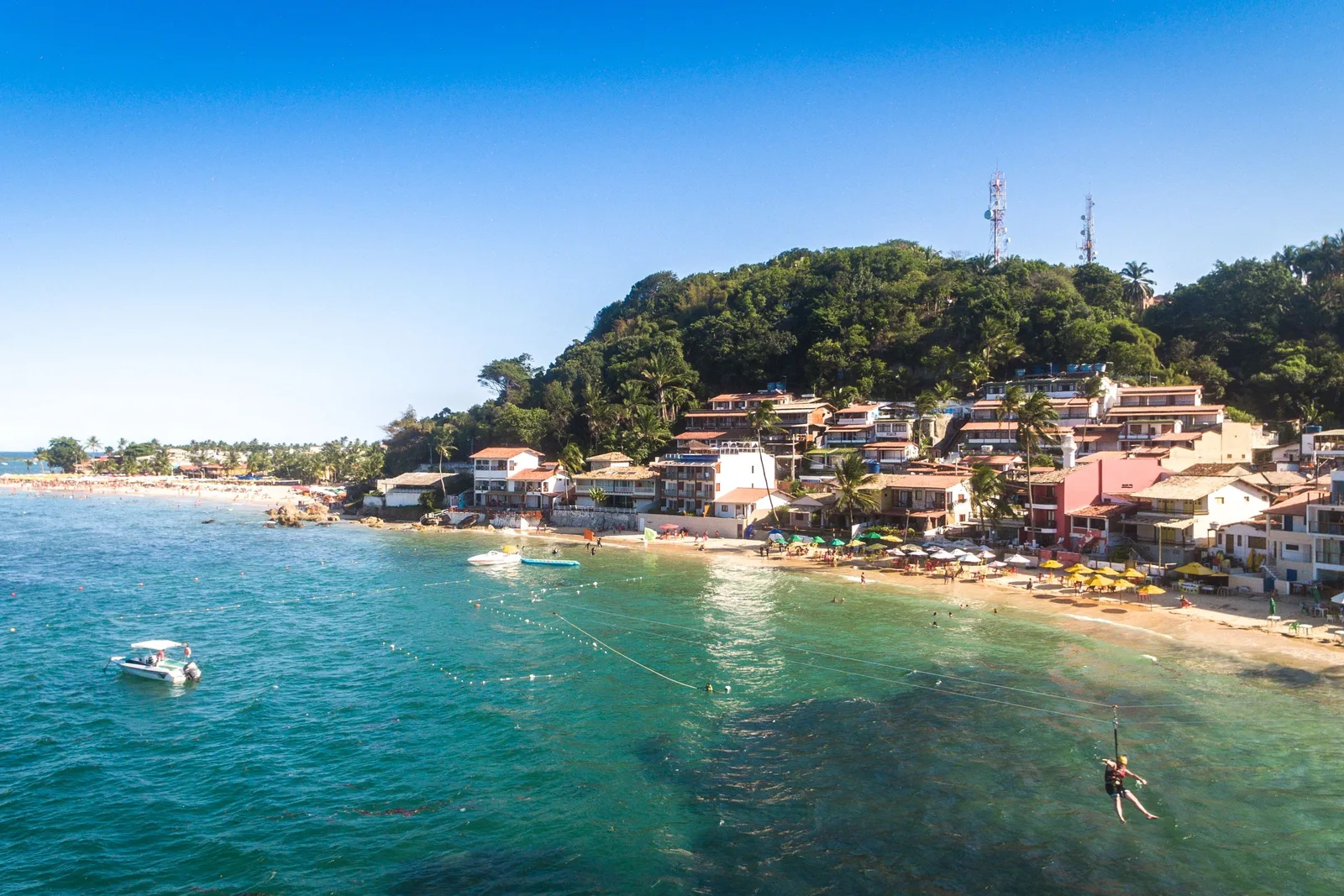
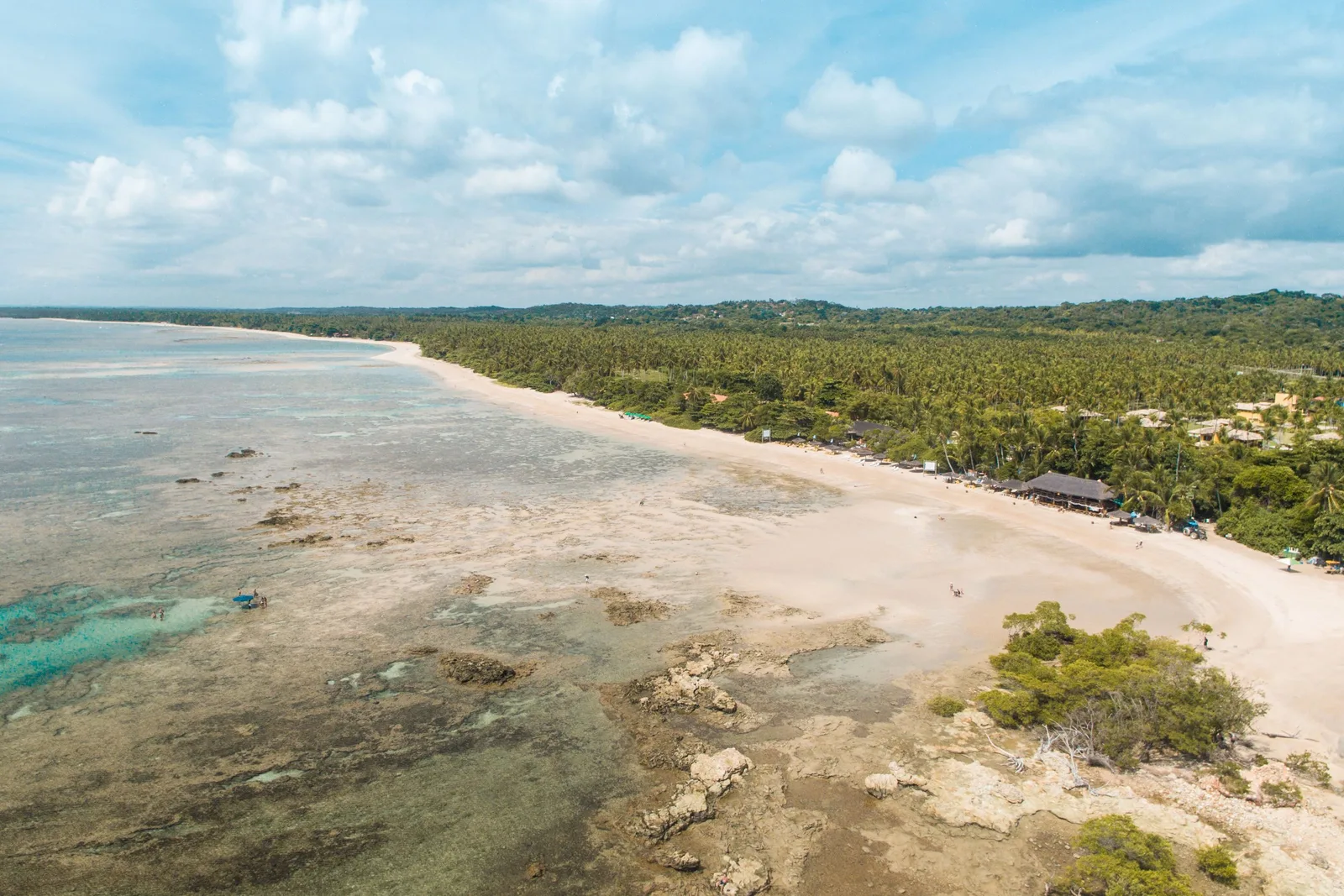
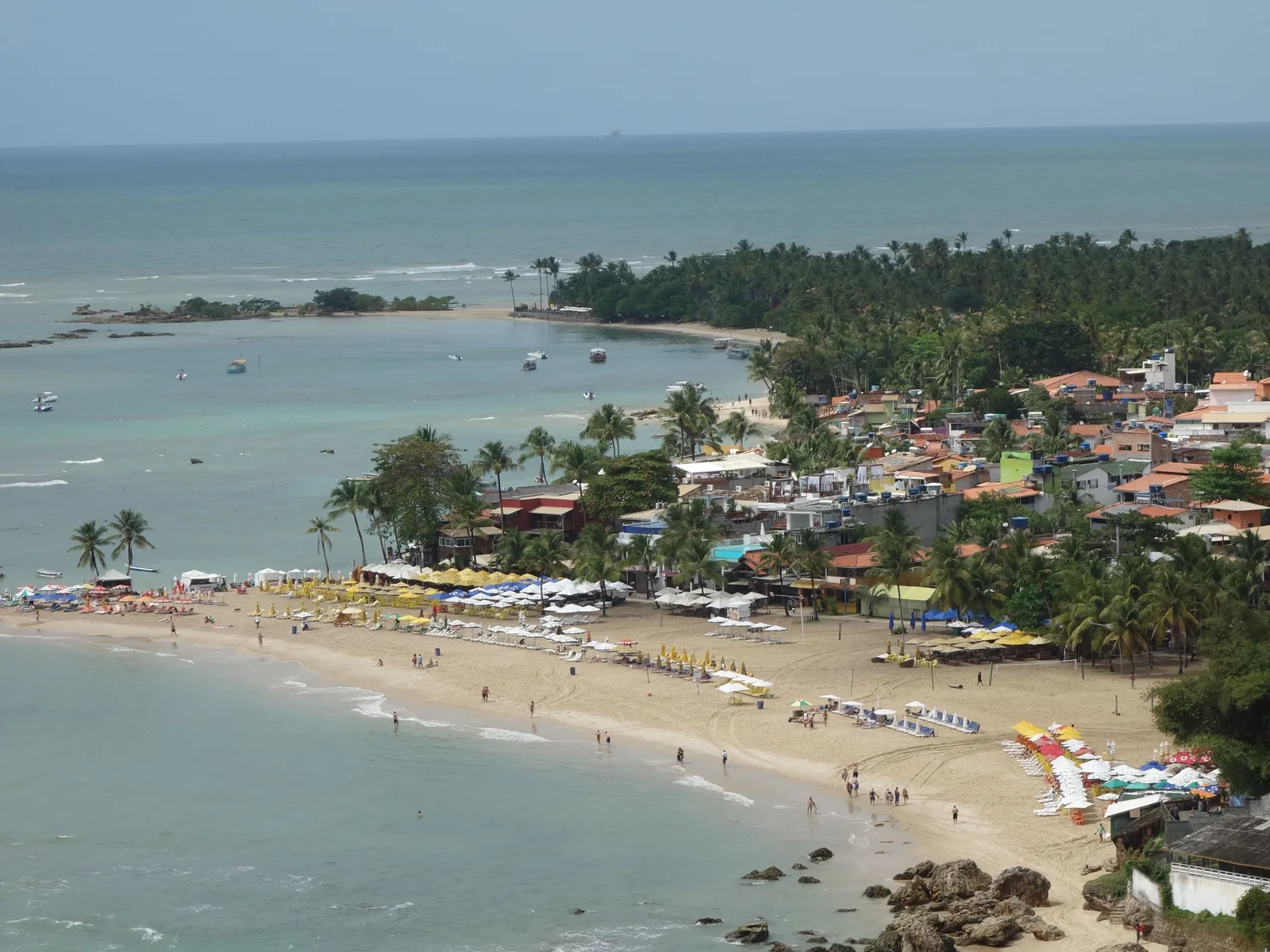
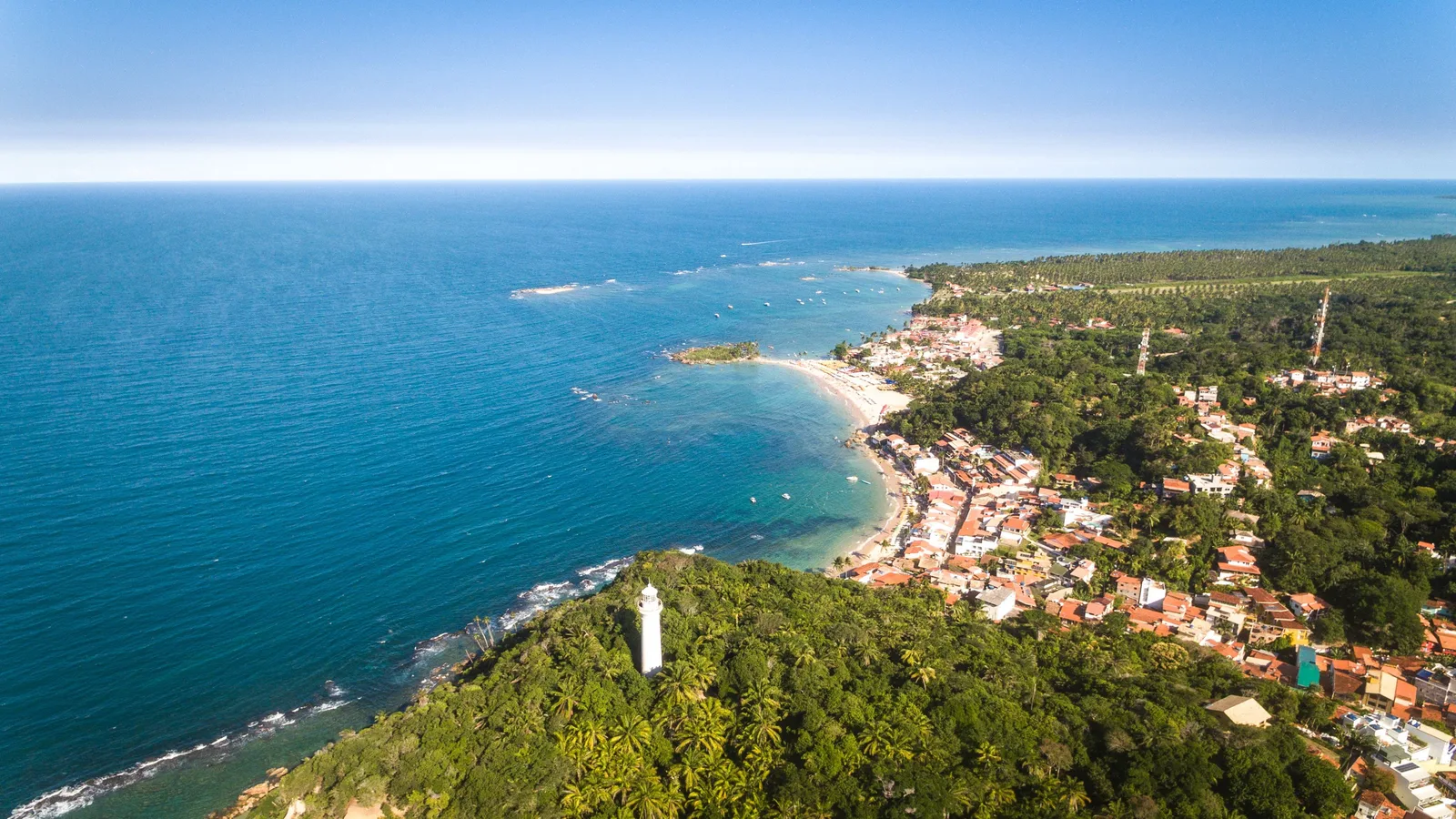
Morro de São Paulo from the air, looking down the eastern shore of the island of Tinharé: a forested headland in the foreground, the village and its beaches running away along the coast, and pale reef showing through turquoise water offshore

Bahia

Morro de São Paulo

No cars, four numbered beaches, and a boat ride from Salvador.

Last checked September 2026

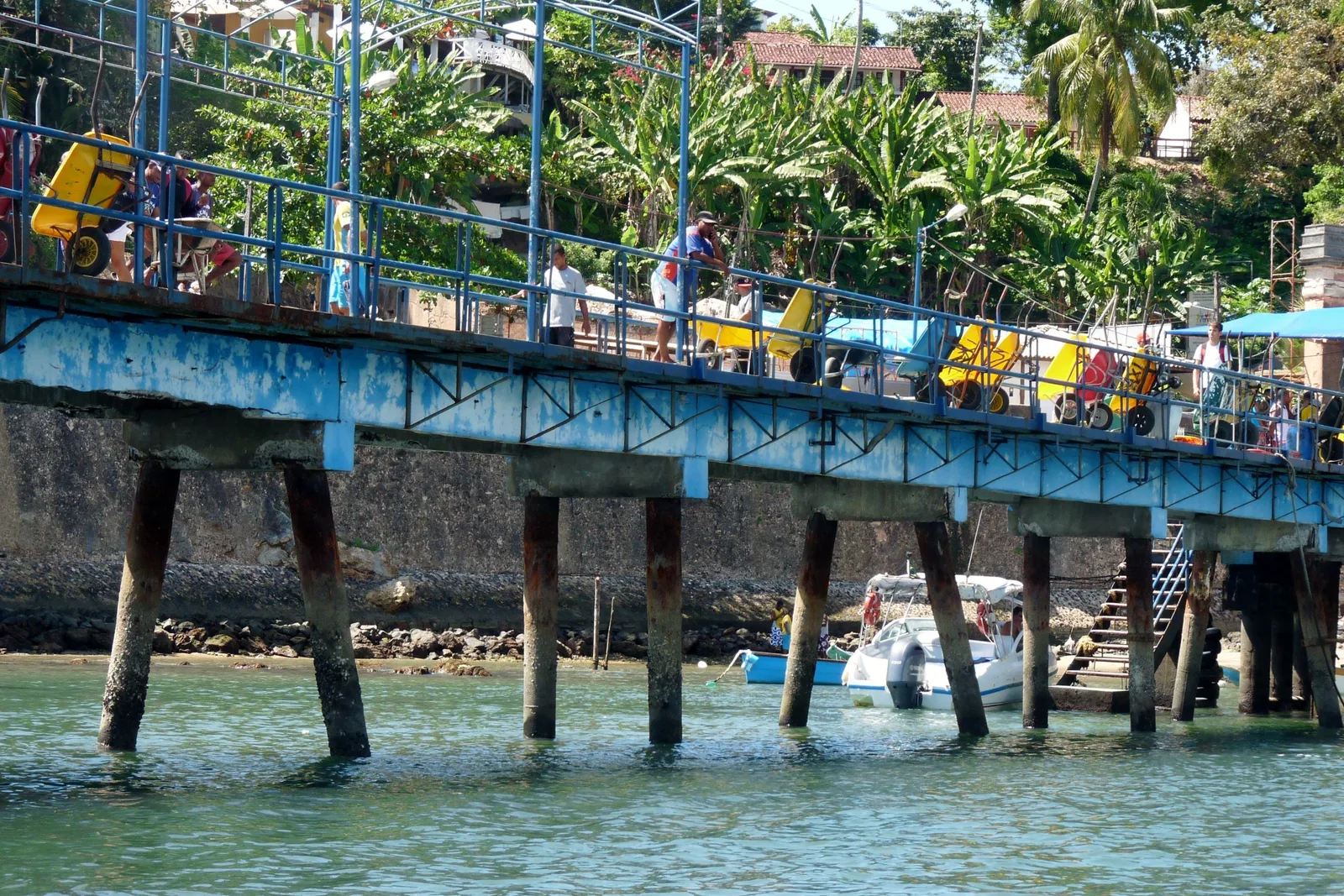
  • The landing pier at Morro de São Paulo busy with arriving passengers, stalls and awnings along its length and boats tied up either side
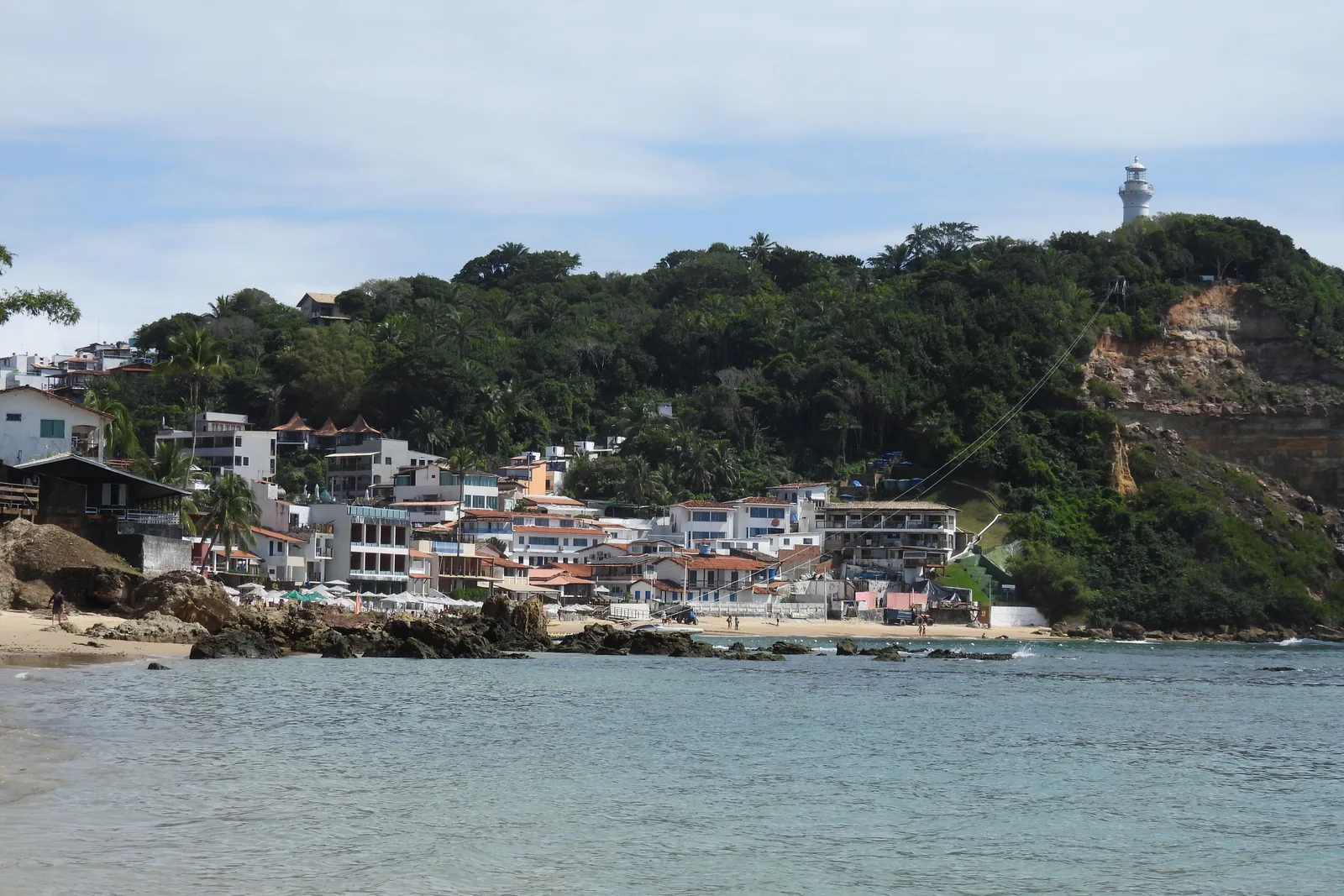
  • The village of Morro de São Paulo seen from the water: white and colored houses stacked up the green headland with the lighthouse on the ridge above them
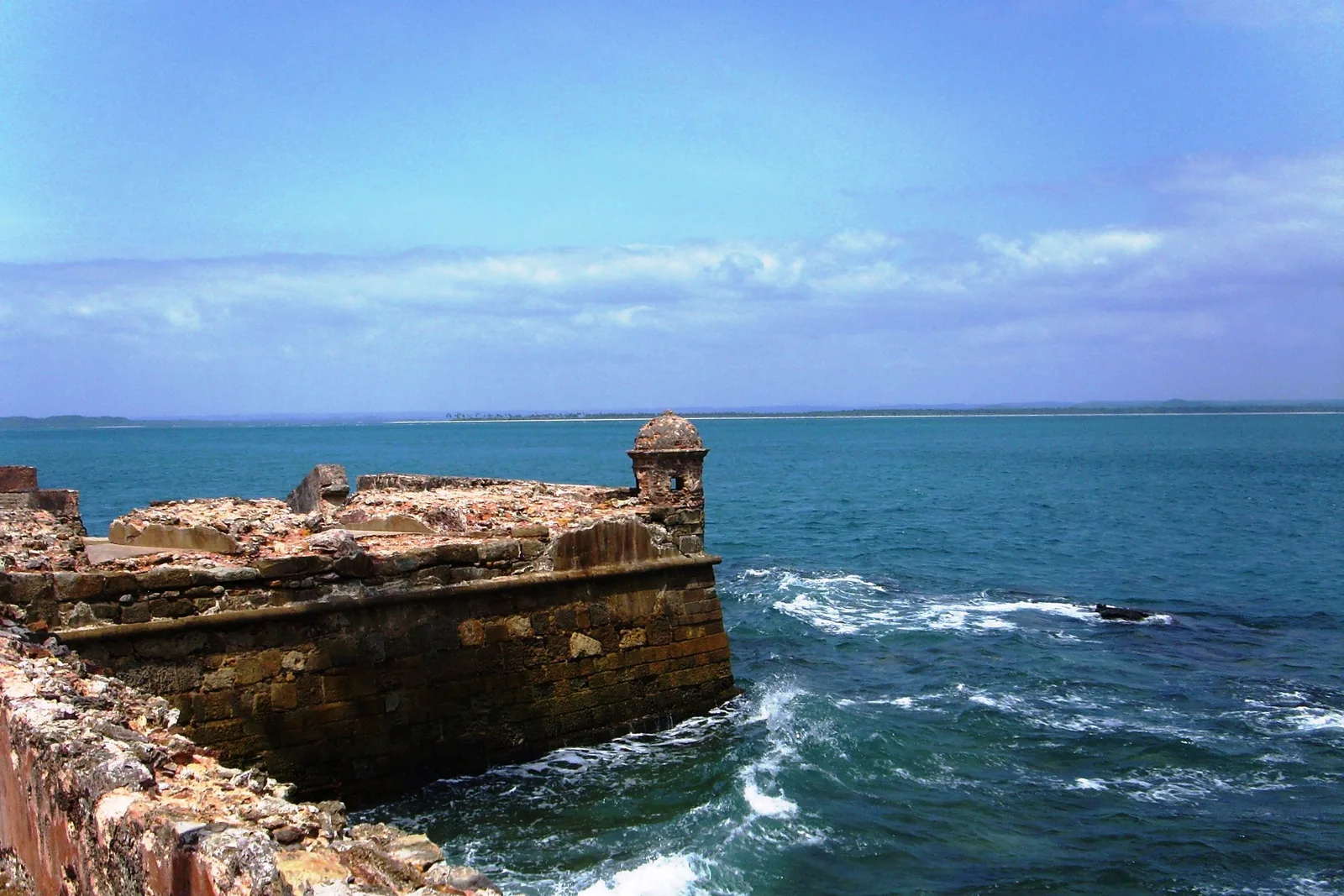
  • A stone sentry box on the sea wall of the Fortaleza de Tapirandu, standing over surf breaking on the rocks below
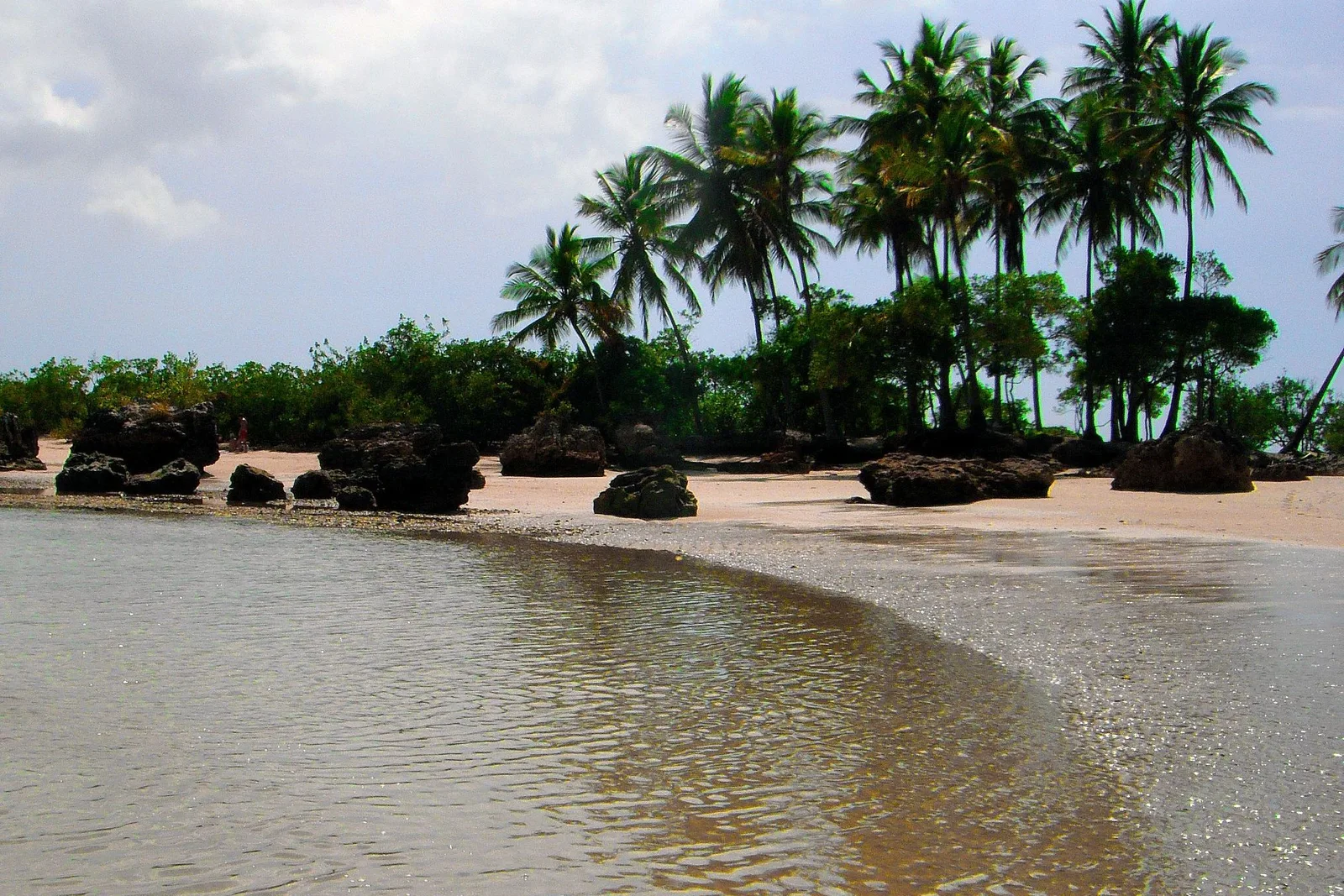
  • A sandbar at low tide on Segunda Praia with dark reef rock along the water’s edge and a headland of coconut palms behind
  • The small palm-covered Ilha da Saudade off the end of Segunda Praia, seen across flat shallow water
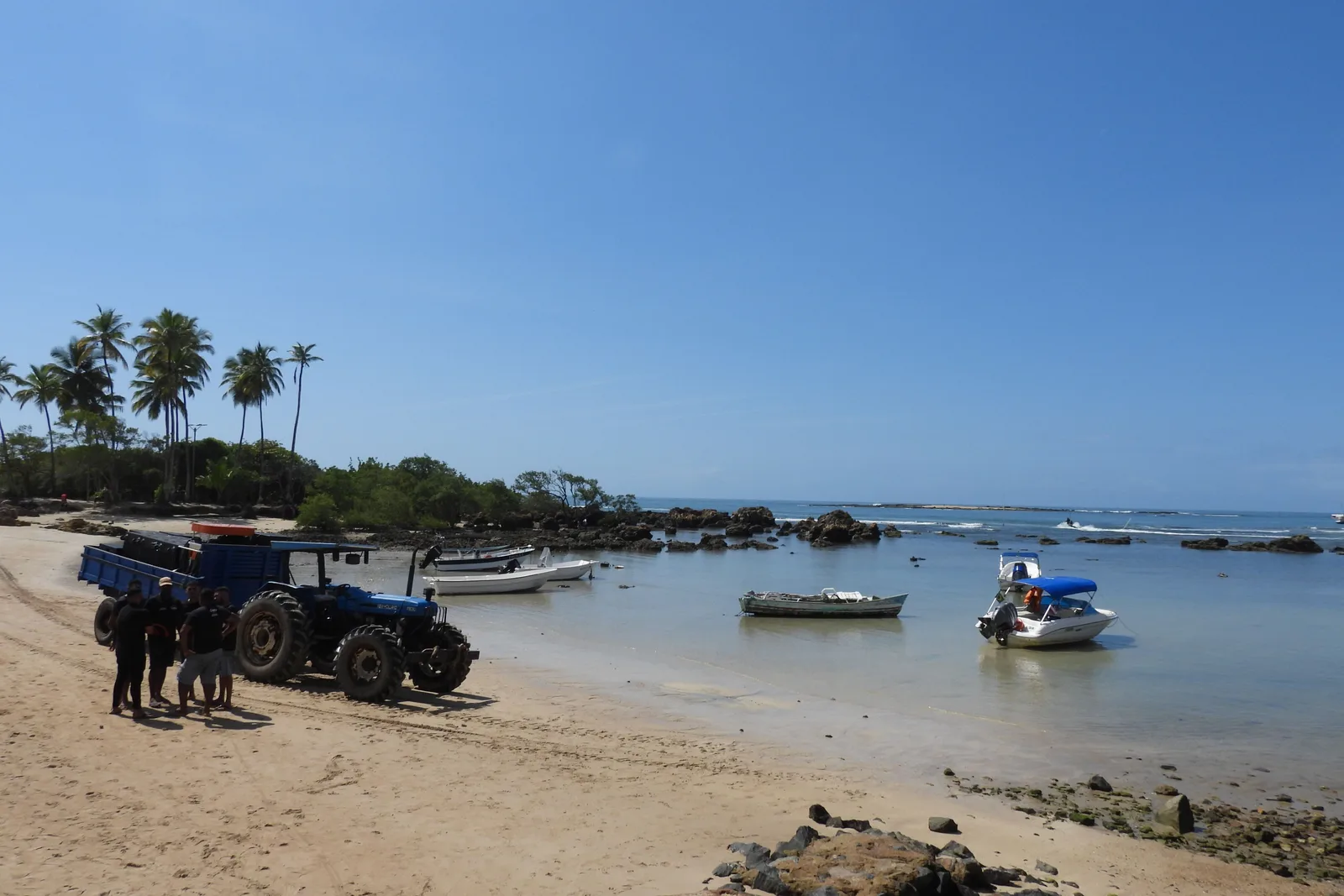
  • A tractor parked on the sand beside moored speedboats at Morro de São Paulo, the island’s substitute for a road vehicle
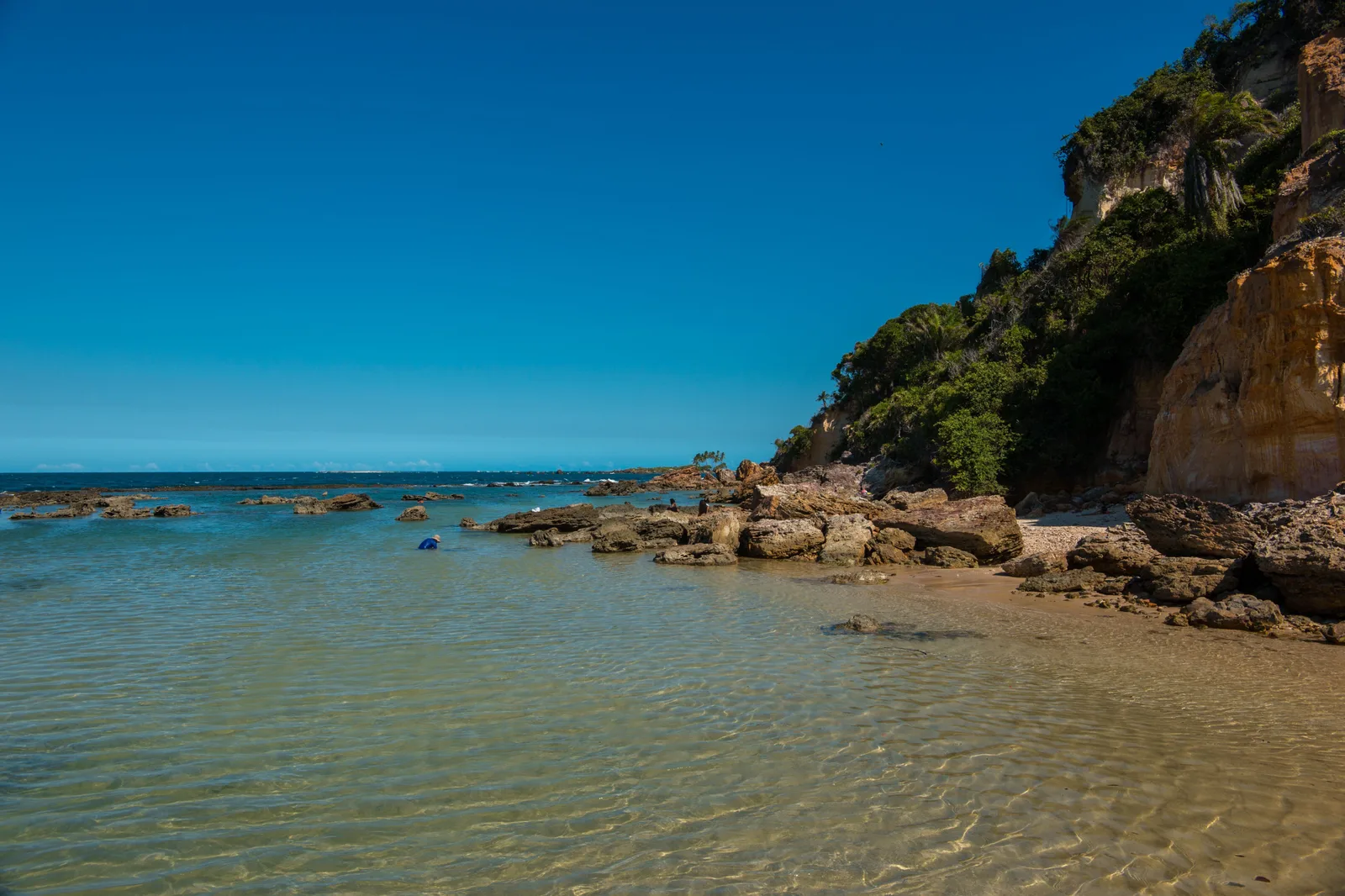
  • The rocky shoreline below the fort at Morro de São Paulo, clear green water over dark reef and a wooded cliff rising behind the beach
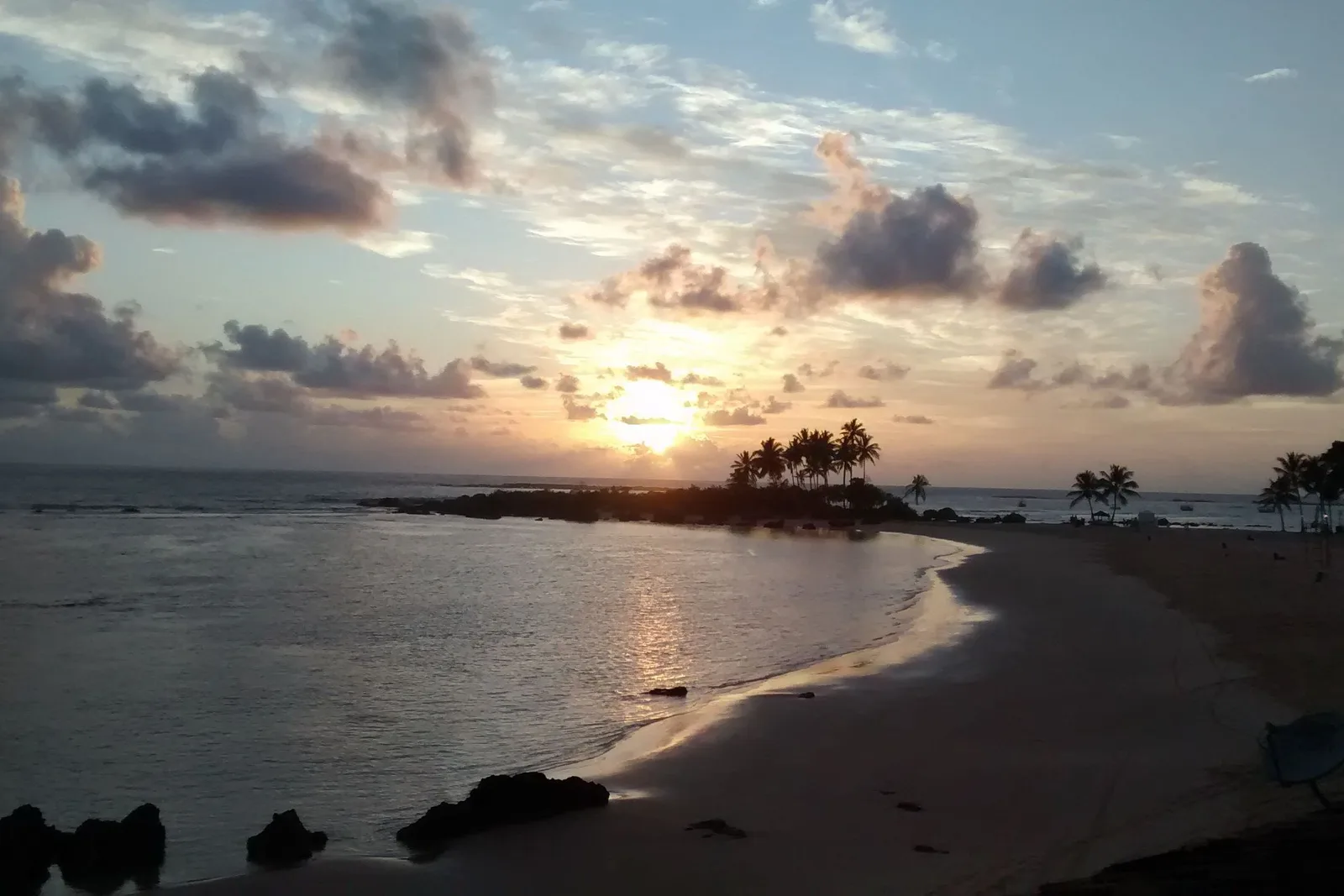
  • Dawn over the beach at Morro de São Paulo, the sun low behind broken cloud and the wet sand catching the light
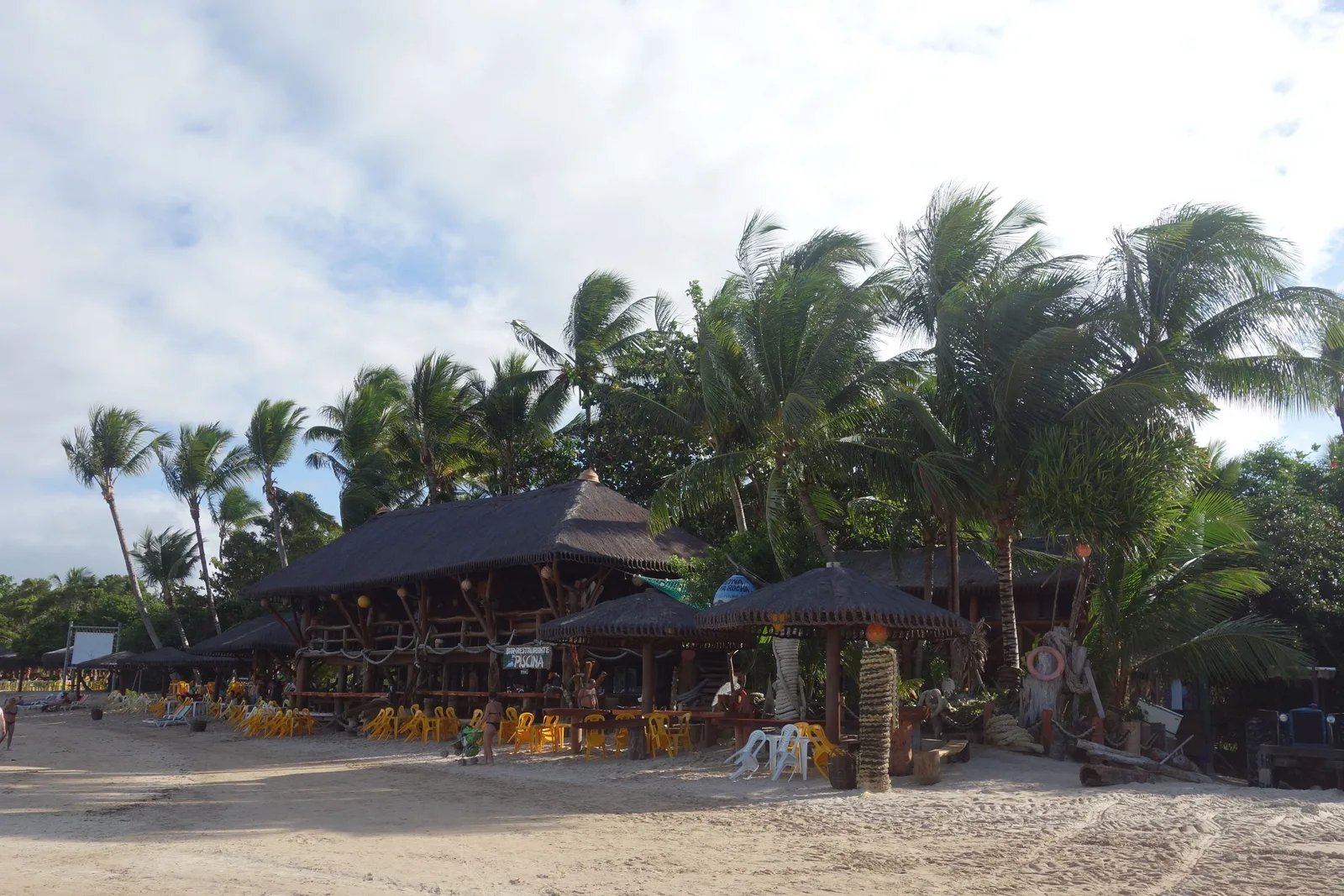
  • A thatched beach bar set back under coconut palms on the sand at Morro de São Paulo, tables and kayaks out in front of it
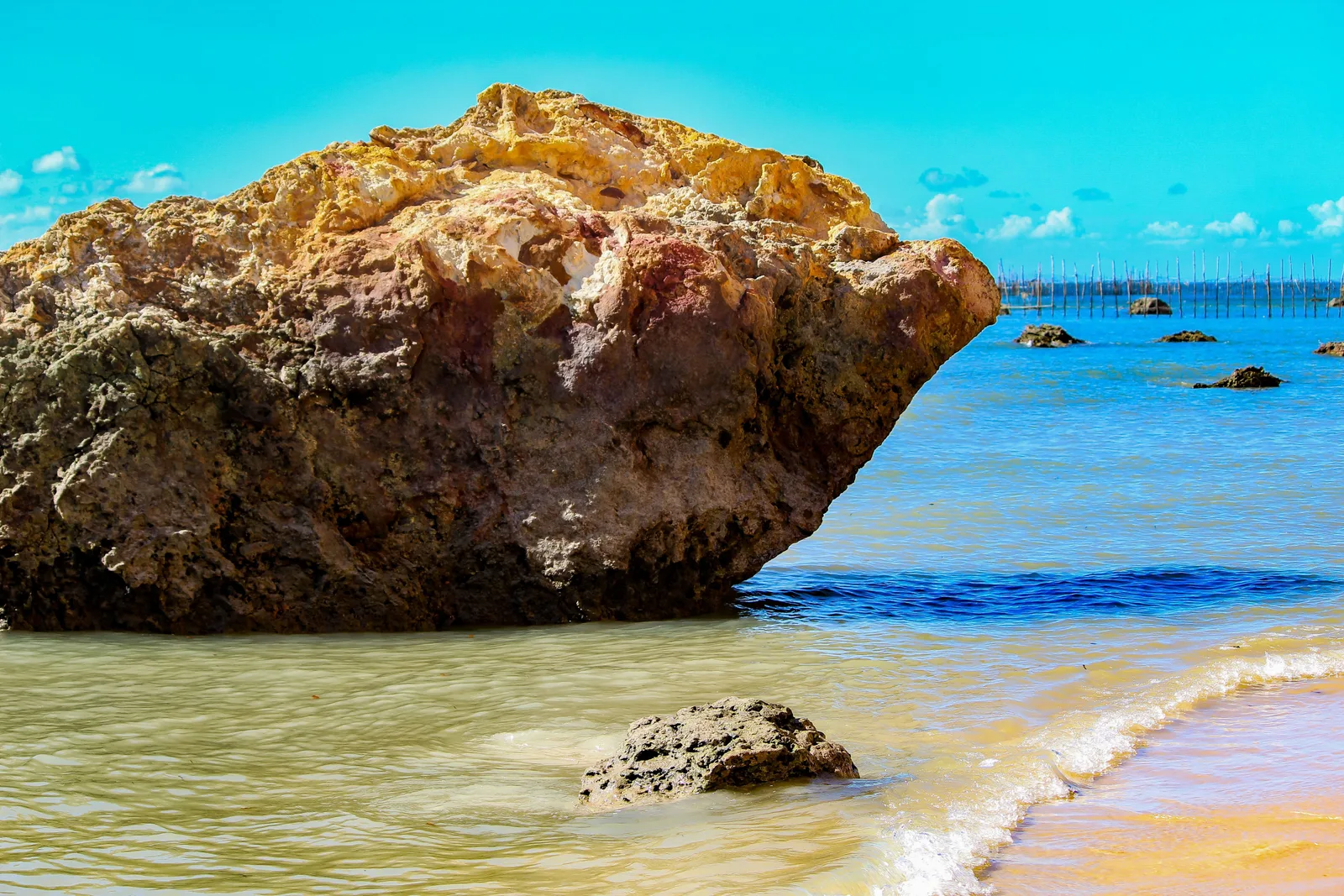
  • A pale rock standing on the sand at the edge of clear turquoise water at Praia da Gamboa, with oyster stakes out in the shallows behind it
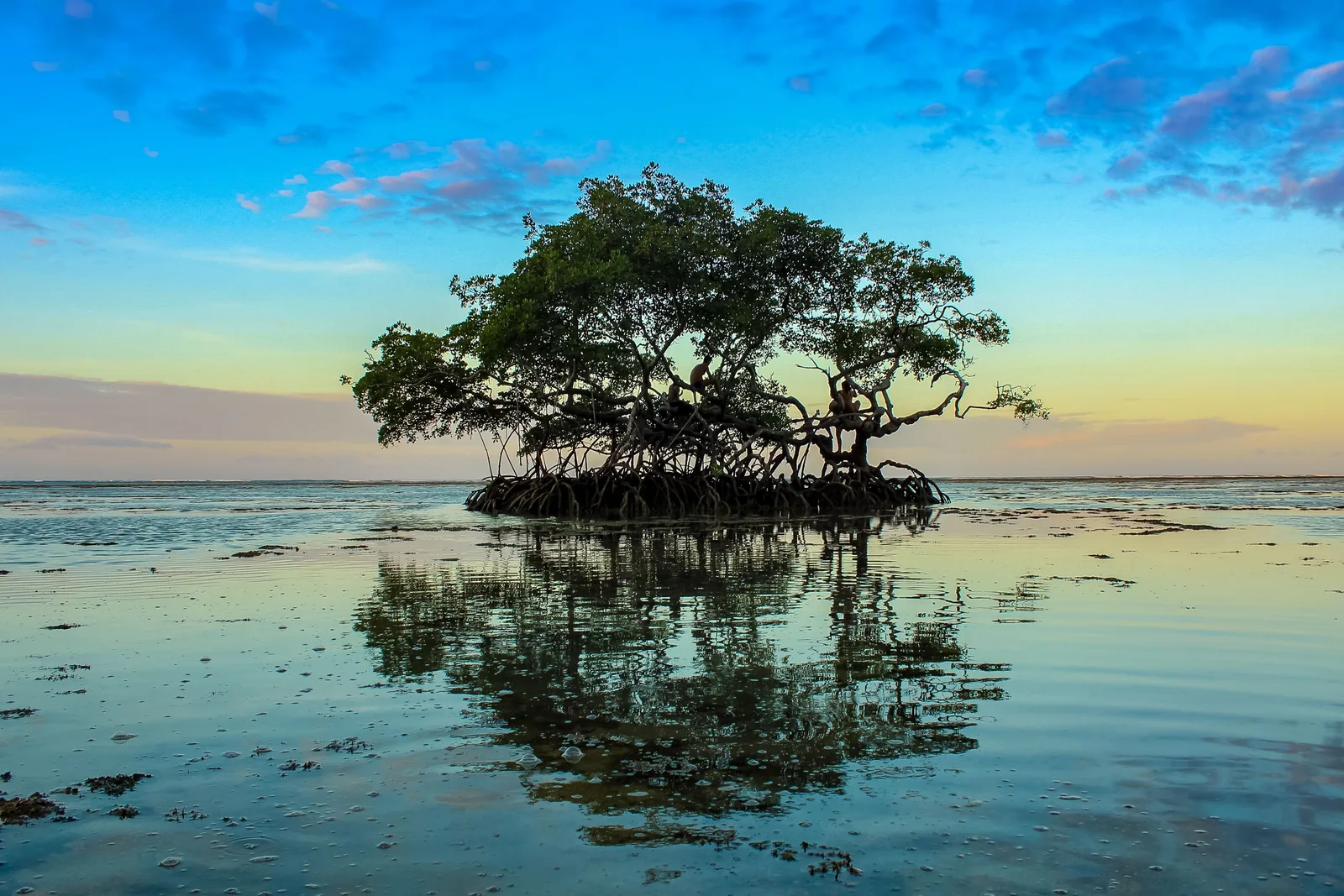
  • A stand of mangrove trees reflected in still water at first light near Garapuá, at the southern end of Tinharé
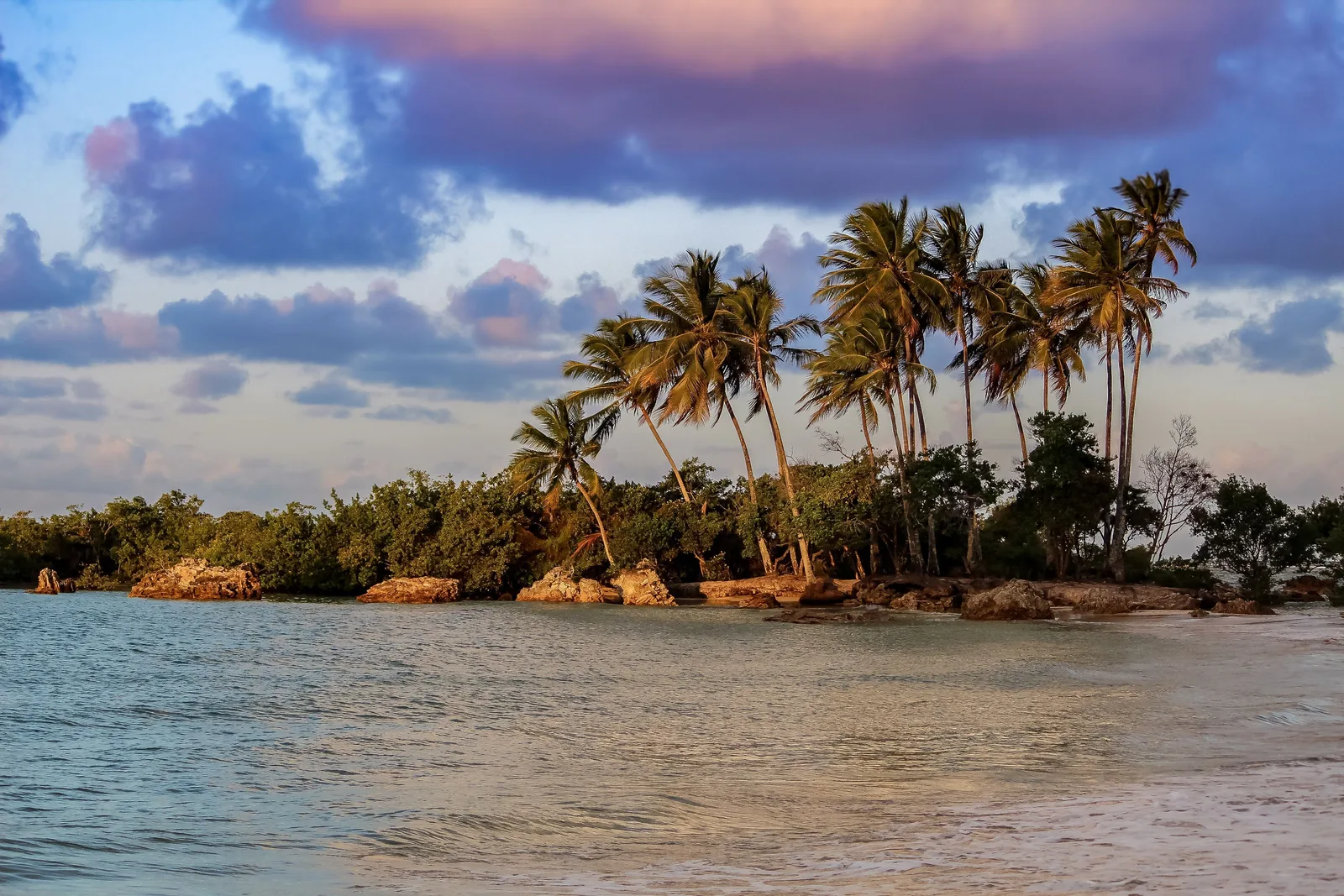
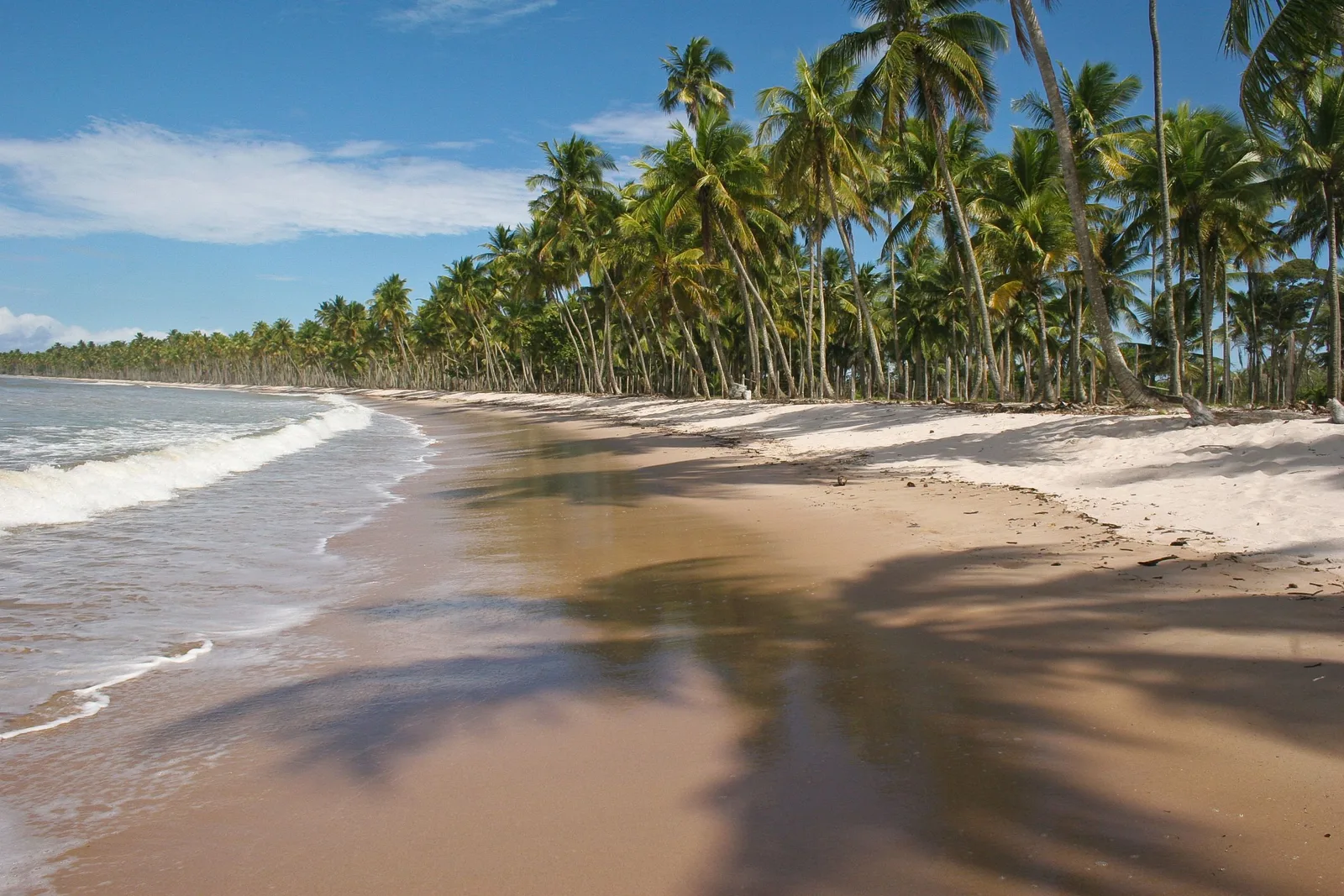
  • A long empty beach at Garapuá backed by an unbroken line of coconut palms, with a shallow lagoon between the palms and the sea
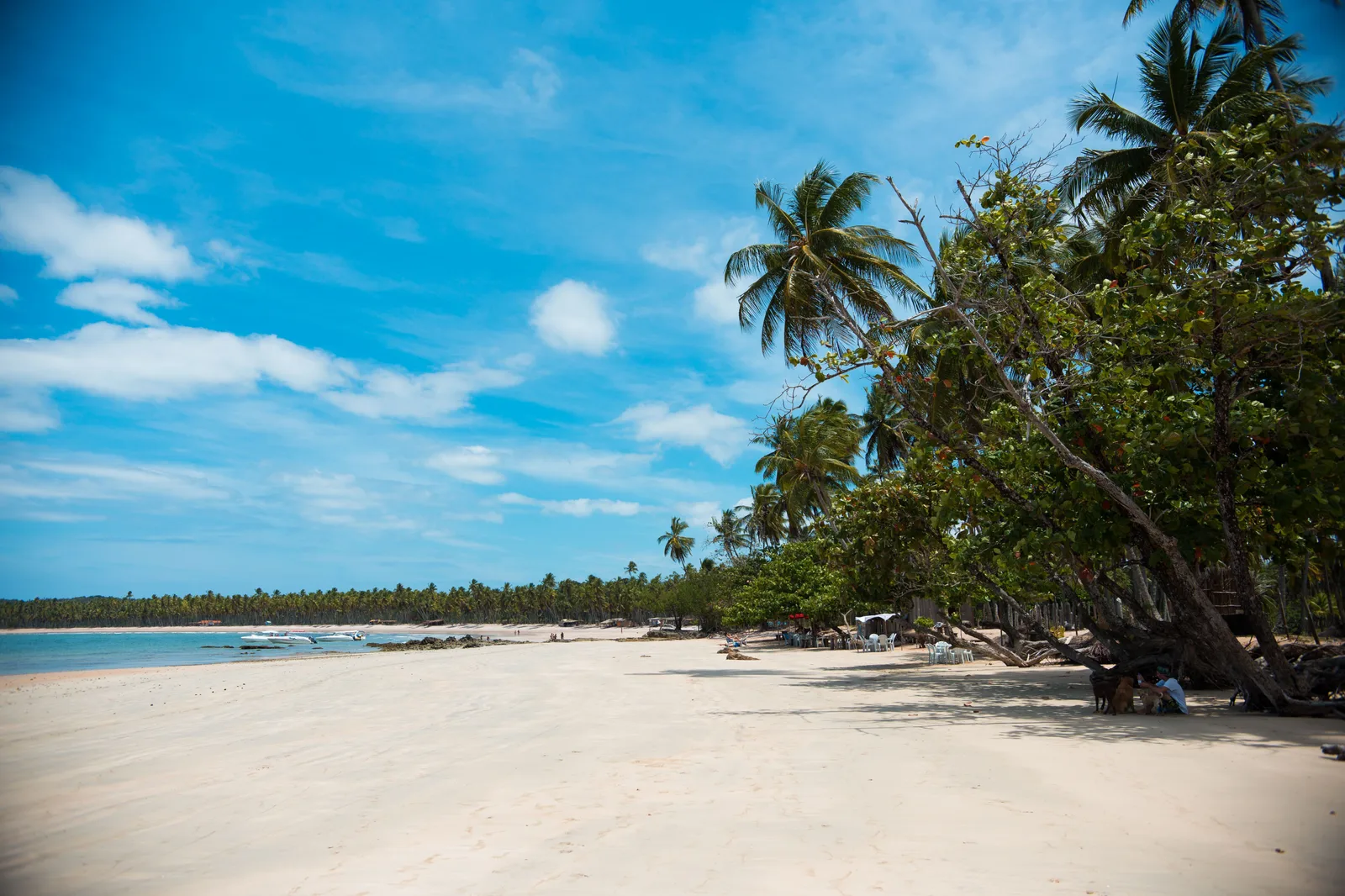
  • Coconut palms leaning over a wide empty beach on the island of Boipeba, with the sea running up the flat sand
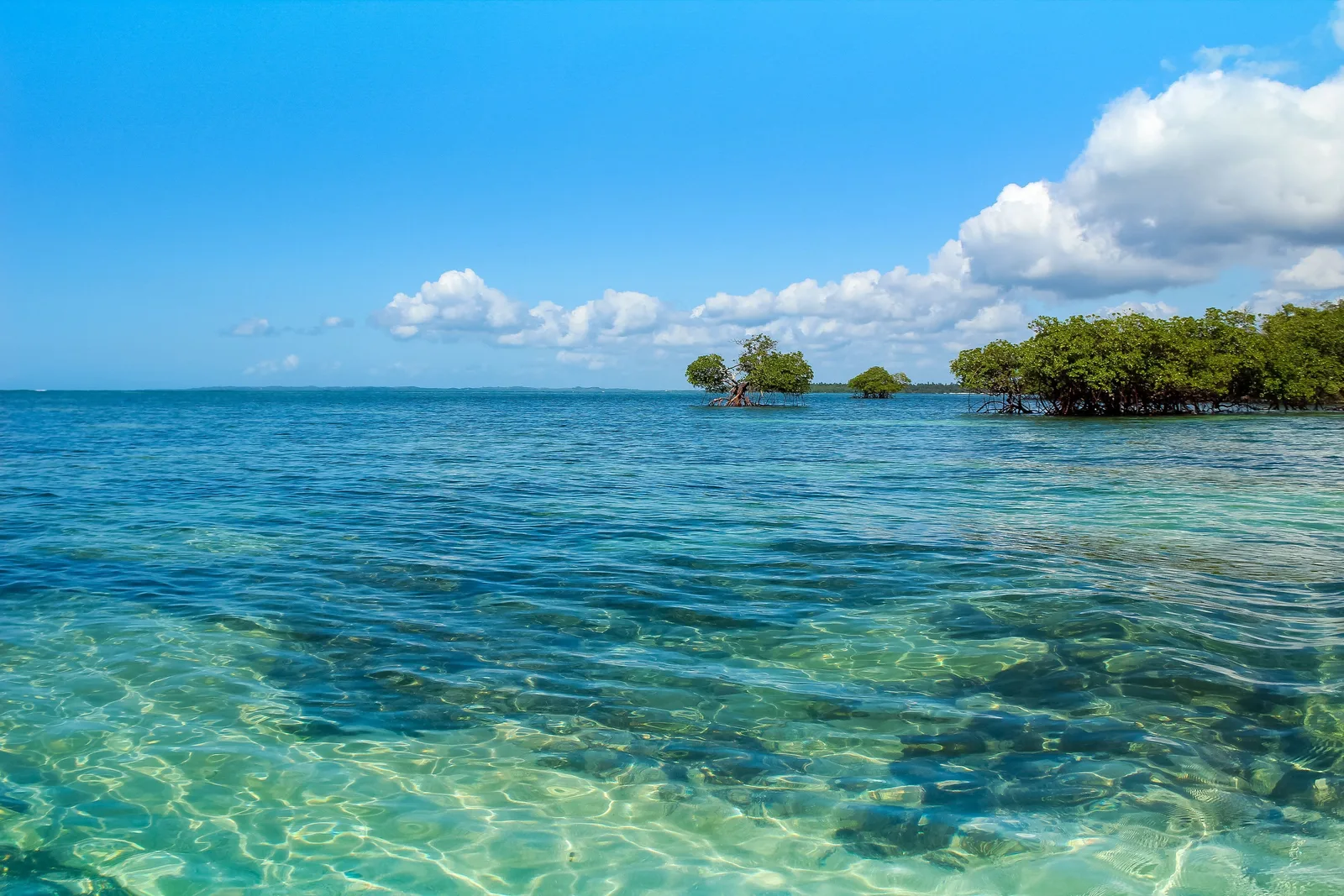
  • Clear green water over pale sand and reef at the natural pools off Garapuá, with a low line of mangrove islets on the horizon

Orientation

The island in one screen.

Everything logistical, before the pretty pictures start.

General Info

A village with no roads out

Morro de São Paulo is a village on the northern tip of Tinharé, an island off the southern Bahian coast, and the first thing to understand about it is that no road reaches it. You arrive by boat or by small plane, you walk off a pier, and from that point on there are no cars. Luggage goes to the pousada in a wheelbarrow pushed by a licensed porter. The streets are sand and stone. Farm tractors towing benched trailers do the work a taxi would do anywhere else, and only on the long southern beaches.

The village itself is small and old. Colonists sent from Lisbon founded it in 1535, which makes it one of the oldest continuously settled places in Brazil, and what kept it there was defense: the point commands the mouth of the Tinharé channel and the sea road running south from Salvador, and Dutch and French raiders used both. The Fortaleza de Tapirandu went up on that point in 1630, the Fonte Grande — a three-spouted public fountain that was the largest waterworks in colonial Bahia — followed in 1746, and the lighthouse was finished in 1855. All three are still standing, all three are free, and you can see all three in a morning.

What people actually come for is the beach, and it is organized in a way nowhere else in Brazil quite is: the beaches are numbered, running south from the village, and they get quieter as the number goes up. Primeira Praia is short and steep, Segunda is where the bars are, Terceira is where the boats leave from, Quarta runs four kilometers with almost nothing on it, and Quinta — Praia do Encanto — is emptier still. Tripadvisor’s travelers voted Quarta Praia the best beach in Brazil and the fourth best in the world in the 2022 Travelers’ Choice awards, which is the sort of thing that ought to be marketing and in this case is not far off.

Where It Is

Southern Bahia, two hours by sea from Salvador

Morro de São Paulo sits at the northern end of the island of Tinharé, about 60 km south of Salvador across open water and 270 km by road and ferry. Administratively it is a district of Cairu, one of Brazil’s oldest municipalities. The nearest mainland town is Valença, up the channel to the south.

Morro de São Paulo Morro de São Paulo

13.38° S, 38.91° W

See the Northeast on the interactive map

Cost

What a day here actually costs

Morro is more expensive than the Bahian mainland and cheaper than a comparable beach in the Caribbean. Everything on the island arrived by boat, which shows up on restaurant bills, and the season swings hard: a room over Réveillon or Carnival can cost three times what it costs in October. Two charges catch people out — the TUPA island access fee, collected on arrival, and the porter who takes your bag to the pousada.

Estimated daily budget, regular season

Budget

$50 / day

A hostel bed or a simple pousada up in the village, lunch at a per-kilo place, beach days that cost nothing, and one boat trip in the week.

Mid-range

$105 / day

A comfortable pousada double split two ways on Segunda or Terceira Praia, dinner out every night, and a boat trip or a dive every other day.

Comfortable

$215 / day

A well-reviewed pousada with a pool on Terceira or Quarta Praia, the good seafood restaurants, and private speedboats rather than shared ones.

Estimates, per person per day, once you are on the island — the crossing and the island fee are separate and listed below. Réveillon, Carnival and the week after Carnival are a different market entirely.

What things cost

  • Mid-range pousada double, Segunda or Terceira Praia $80 R$410
  • Hostel bed $22 R$110
  • Catamaran from Salvador, each way $30 R$155
  • Van-and-speedboat transfer from Salvador, each way $30 R$155
  • Speedboat from Valença, each way $9 R$45
  • Flight from Salvador, one way $127 R$650
  • TUPA island access fee, per person on arrival $14 R$70
  • Porter with a wheelbarrow, pier to pousada $5 R$25
  • Volta à Ilha, the full-day boat trip $49 R$250
  • Boipeba day trip by speedboat $49 R$250
  • Zipline from the lighthouse $16 R$80
  • Two-tank dive $59 R$300
  • Boat across to Gamboa $2 R$10
  • Moqueca for two on Segunda Praia $31 R$160
  • Caipirinha on the beach $5 R$25

The TUPA — Cairu’s tariff for the use of the archipelago — is R$70 a head and is not included in a boat ticket unless the seller says so. It rose from R$50 in December 2025, and a further rise to R$90 was suspended indefinitely in July 2026. Under-fives are exempt. You can buy the voucher in advance on the TUPA Digital site with Pix or a card, which is worth doing: the alternative is the kiosk at the pier when you land.

Bring cash. There are ATMs on the island and they are famously unreliable, queues form on them at the start of a holiday weekend, and small restaurants, the porters and the boat taxis are cash-first. Cards work in the bigger pousadas and restaurants.

High season is Réveillon, Carnival and the week straight after it, plus Brazilian school holidays in January and July. Pousada rates in those weeks run two to three times the rest of the year, with minimum stays attached over New Year.

Restaurants add the usual 10 percent service charge, and it is normally already on the total rather than expected on top of it.

Checked September 2026 and converted at R$5.10 to the dollar. Estimates, not quotes — the shape of a budget rather than a price you can hold anyone to.

Safety

Low crime, and a sea that is not decorative

7 /10

Our rating — a calm place with two real risks: what happens on the beach after midnight, and how far you are from a hospital.

A village with no cars, a few thousand residents and one way in is a low-crime place, and walking back from dinner is completely ordinary here. What actually goes wrong falls into two categories. The first is opportunistic: bags left on the sand, phones on a table at a beach bar, and the unlit stretches between the numbered beaches late at night. The second is physical — the shore break, the reef, the tide, and the fact that anything serious means a boat to the mainland.

  • Do not walk the beaches between Segunda and Quarta alone in the small hours. They are unlit, empty for long stretches once the bars thin out, and this is where the island’s handful of robberies happen. Walk in a group or take the sand path behind the barracas where there are people.
  • Never leave a bag on the sand while you swim, and be particularly careful on the emptier beaches where there is nobody to notice.
  • Do not accept a drink you did not watch being poured, and keep an eye on it. Segunda Praia at 2:00am is a crowd of strangers, and the standard nightlife precautions apply here exactly as they would anywhere else.
  • Learn the tide before you plan a walk. The crossings between Terceira and Quarta and between Quarta and Quinta run through river mouths that are ankle-deep at low water and waist-deep at high, and the strip of sand at the north end of Terceira disappears entirely on a big tide.
  • Wear something on your feet in the reef pools. The rock is sharp, sea urchins live in it, and a cut foot on day one is the most common way to lose a beach day here.
  • The island has a small health post, not a hospital. Anything beyond a cut or a sprain means a boat to Valença, and after dark that means chartering one. Travel insurance is not a formality.
  • Drug offers on the beach at night are routine and are best refused flatly. Possession is a criminal matter in Brazil and the fact that you are on holiday does not change that.

Getting There

Four ways across, and none of them a road

Everyone flies into Salvador first. From there you choose between a fast catamaran across open water, a longer land-and-boat combination, a cheap do-it-yourself route through Valença, or a twenty-five-minute flight in a small plane. Which one you want depends mostly on how you feel about a rolling sea.

  • The catamaran is the standard option: it leaves the Terminal Náutico beside the Mercado Modelo in Salvador and takes about two to two and a half hours, with several departures a day in high season and the last one usually mid-afternoon. Around R$155 each way. The first half crosses the sheltered Bay of All Saints; the second half is open ocean and can be genuinely rough, so take something for motion sickness before you board rather than after.
  • The semi-terrestrial transfer is about the same price and the better choice if the sea worries you: a ferry or road transfer down through Itaparica to Valença, then a forty-minute speedboat up the channel. It takes about three and a half hours door to door, most of it on land, and it can be booked to collect you at the airport.
  • When the weather is bad, the catamaran operators switch to that route rather than cancel: the boat runs to Itaparica, a coach takes over to Valença, and a speedboat finishes the job. It adds roughly an hour. Occasionally, in a real storm, everything stops.
  • Doing it yourself through Valença is the cheap way — the public ferry from Salvador to Bom Despacho, a bus down to Valença, and a lancha across — and costs a fraction of a transfer for about five hours of your day. Valença is also where you start if you are coming up from Itacaré or Ilhéus.
  • Abaeté Linhas Aéreas flies Salvador to Morro’s little airstrip in about twenty-five minutes in a nine-seat Cessna Caravan, with up to eight departures a day in high season. Fares usually run R$500 to R$800 one way, baggage limits are strict, and the flight is weather-dependent — but it turns a half-day journey into an errand.
  • Everyone pays the TUPA on arrival, currently R$70 a head. Buy the voucher online before you travel if you can — the alternative is the kiosk at the pier, and that queue is the first thing that happens to you on the island.

Getting Around

On foot, by tractor, or by boat

There are no cars, no taxis and no buses. Everything within the village and along the first three beaches is walking distance, and the walking is on sand and cobbles rather than pavement. Beyond that you take a tractor or a boat.

  • Village to Primeira Praia is about five minutes on foot, Primeira to Segunda another three, Segunda to Terceira about five. Nobody uses anything but their legs for that.
  • Terceira to Quarta is fifteen minutes and crosses a small river mouth. Quarta itself is four kilometers of sand, and Quarta to Quinta another forty-five minutes to an hour with a second river crossing. Both crossings are easy at low tide and up to waist-deep at high tide.
  • Tractors towing benched trailers run between the village and the far beaches, and they are the only motorized transport on the island. The alternative is a boat taxi from Terceira Praia, which is faster and more pleasant.
  • Licensed porters with wheelbarrows meet every boat at the pier and charge around R$25 to take your luggage to your pousada. Take one: the village is steep, the streets are sand, and a wheeled suitcase is useless on either.
  • Pack light and bring shoes you can walk sand and wet stone in. This is a place where a hard-shell roller bag is a genuine mistake.
  • Gamboa, across the channel, is a fifteen-minute boat from the pier for about R$10, or a forty-five-minute walk along the beach — and that walk only exists at low tide.

The big four

The four things that make it Morro.

Not a top-ten list. These are the four you would have to see before you could say you had been here.

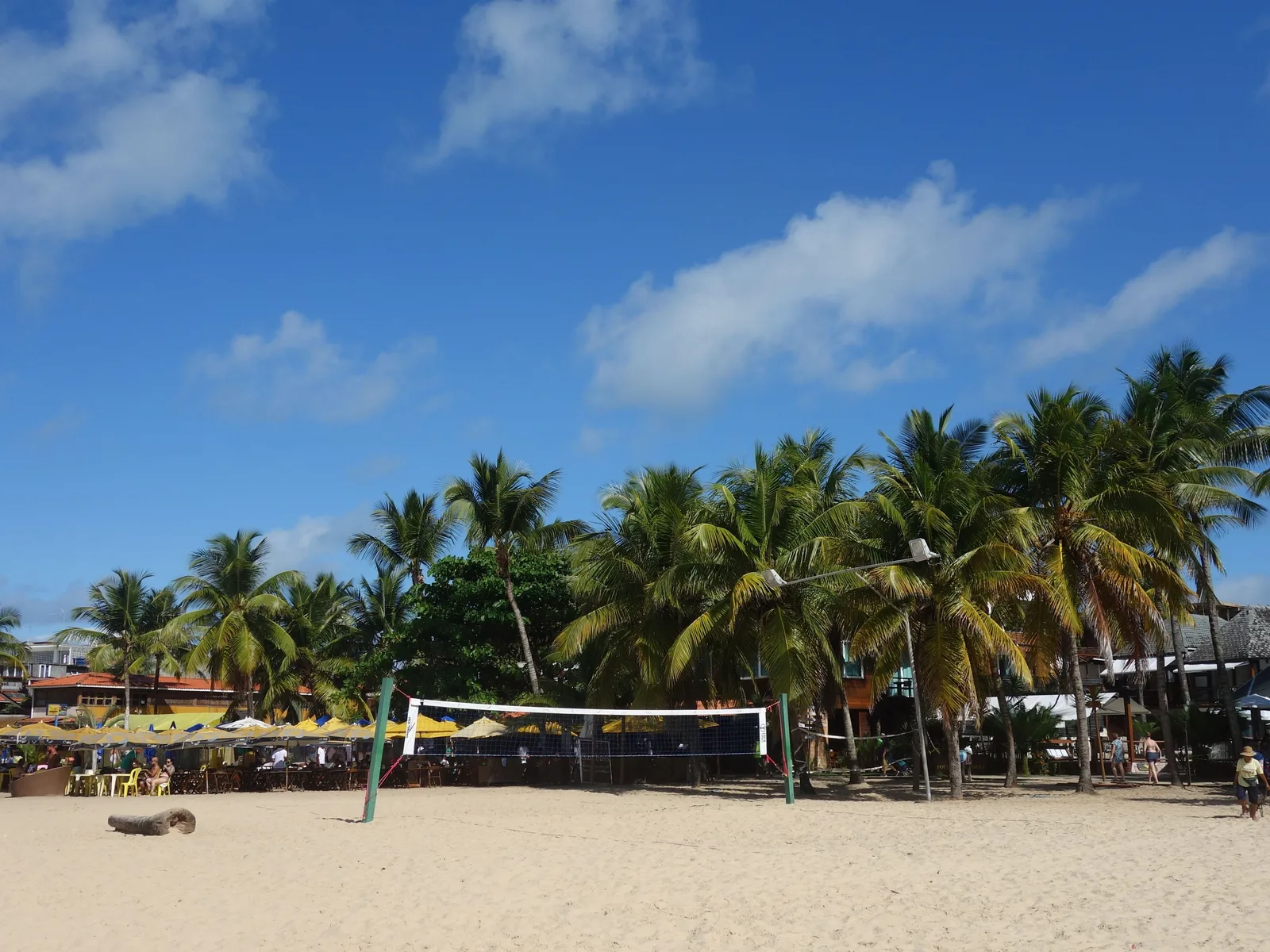
Segunda Praia at Morro de São Paulo from the sand: a volleyball net strung across the beach, a line of coconut palms behind it, and rows of yellow umbrellas and tables under the beach bars at the back of the sand 01

Numbered south from the village, quieter as you go

Primeira to Quarta Praia

Length
About 6 km end to end
Walk
Two to three hours, one way
Tide
Two crossings need low water

The beaches here are not named, they are numbered, and the numbering is the whole geography of the island in one system. Primeira Praia is a short, steep strip under the fort with a rock shelf, a surf break and the zipline landing in it. Segunda is four hundred meters of barracas, beach clubs and umbrellas and is where the island is loudest, day and night. Terceira is calmer, has a narrow strip of sand that vanishes at high tide, and is where the boats leave from. Quarta is four kilometers long, backed by palms, largely undeveloped, and the one Tripadvisor’s travelers put fourth in the world in 2022.

Beyond Quarta is Quinta, which everyone calls Praia do Encanto: another kilometer and a half of sand with two restaurants on it and nothing else. Walking the whole line takes most of a morning and depends entirely on the tide, because the transitions between Terceira and Quarta and between Quarta and Quinta cross river mouths that are shin-deep at low water and up to waist-deep at high. Check the tide table your pousada has on the wall, walk out on the falling tide, and take a boat or a tractor back.
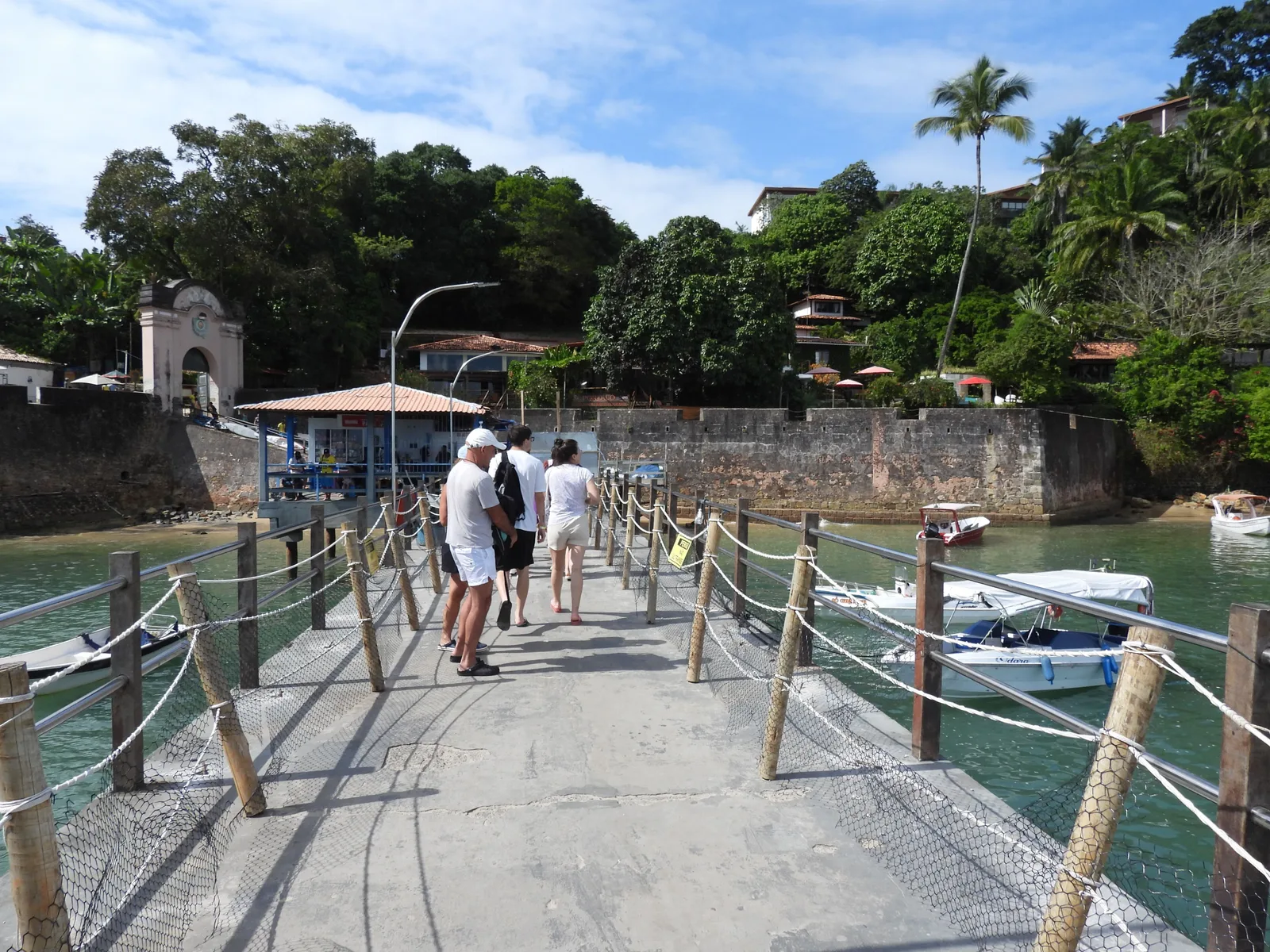
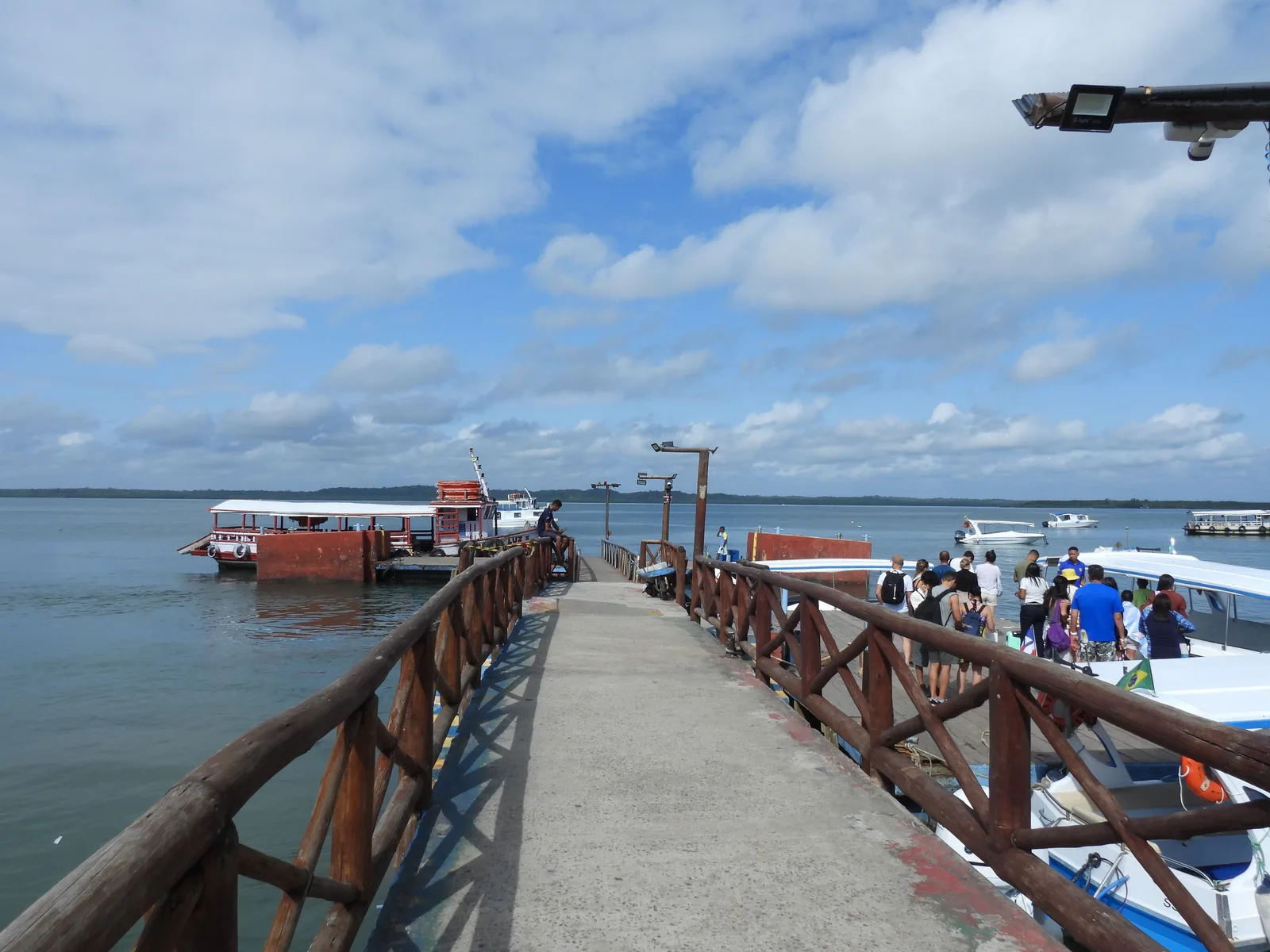
Arriving passengers walking up the causeway from the pier at Morro de São Paulo toward the arched stone gateway in the old fortress wall, speedboats moored along the rocks either side 02

Every visitor arrives the same way

The pier and the Portaló

Cars on the island
None
Luggage
Wheelbarrow, about R$25
Village gate
The 17th-century Portaló

The concrete pier on the channel side of the headland is the only front door Morro has, and it is a good one. Boats from Salvador, Valença and Boipeba all tie up here, everyone walks off along the same causeway, and the walk delivers you through the Portaló — the arched stone gateway in the fortress wall that has been the entrance to the village since the seventeenth century. Porters with wheelbarrows wait on the other side of it. Nobody drives anywhere, because there is nowhere to drive.

That single fact shapes the whole place. There is no traffic noise, no road to cross, and no way to be lazy about distance: the village is steep, the streets are sand and stone, and a hard-shell suitcase is an active liability. What replaces cars is a small fleet of farm tractors that serve the far beaches and a constant traffic of boat taxis off Terceira Praia. The absence is the attraction, and it is also the reason the island still feels like a village at the end of a long weekend when half of Bahia is on it.

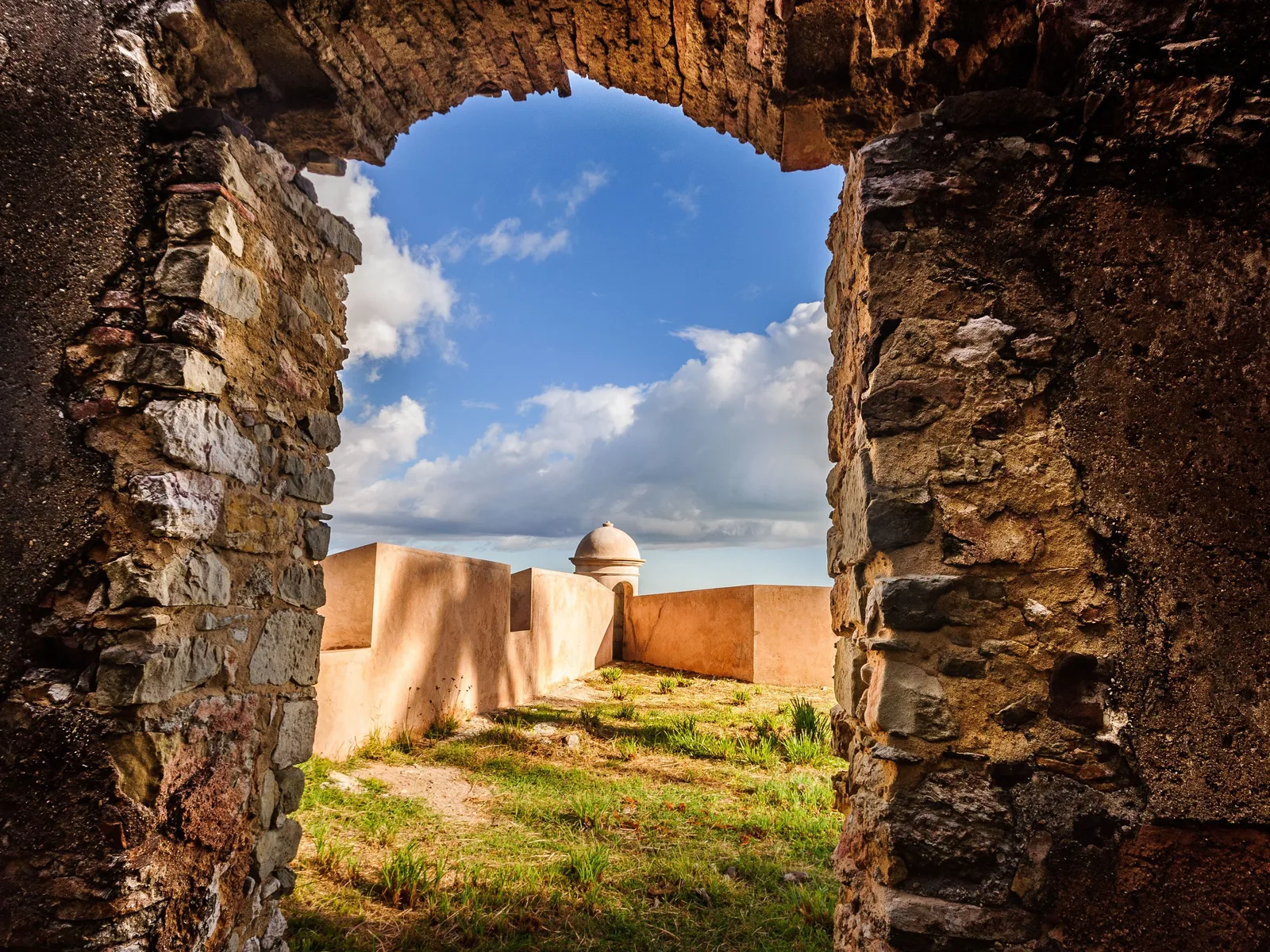
The ruined stone walls of the Fortaleza de Tapirandu at Morro de São Paulo framed through a broken archway, with two round sentry boxes standing on the rampart against a bright sky 03

A 1630 fort and an 1855 light on the same headland

Fortaleza de Tapirandu & the Farol

Fort begun
1630
Lighthouse
1848–1855, 89 m above the sea
Cost
Free, both of them

The Governor-General of Brazil ordered the fortress built in 1630 to defend the settlement, and Salvador behind it, against Dutch and French attack. It was enlarged in 1730, and at its height it mounted fifty-one guns behind close to a kilometer of wall with a garrison of 183. What survives is a long stretch of that wall along the point, with sentry boxes standing over the surf and a restored gateway — and the best sunset on the island, watched from the ramparts by most of the people staying on it. It is free, it is open, and it fills up about forty minutes before the sun goes down.

Above it, at the top of a ten-minute climb from the village square, is the lighthouse: built between 1848 and 1855, standing 89 meters above the sea, still working, and still visible 23 nautical miles out. You cannot go inside. What you can do is walk the few minutes past it to the mirante, where the whole island lays itself out below you, and — if you want to — clip into the zipline that runs 340 meters off the top of the hill and drops you into the water at Primeira Praia.

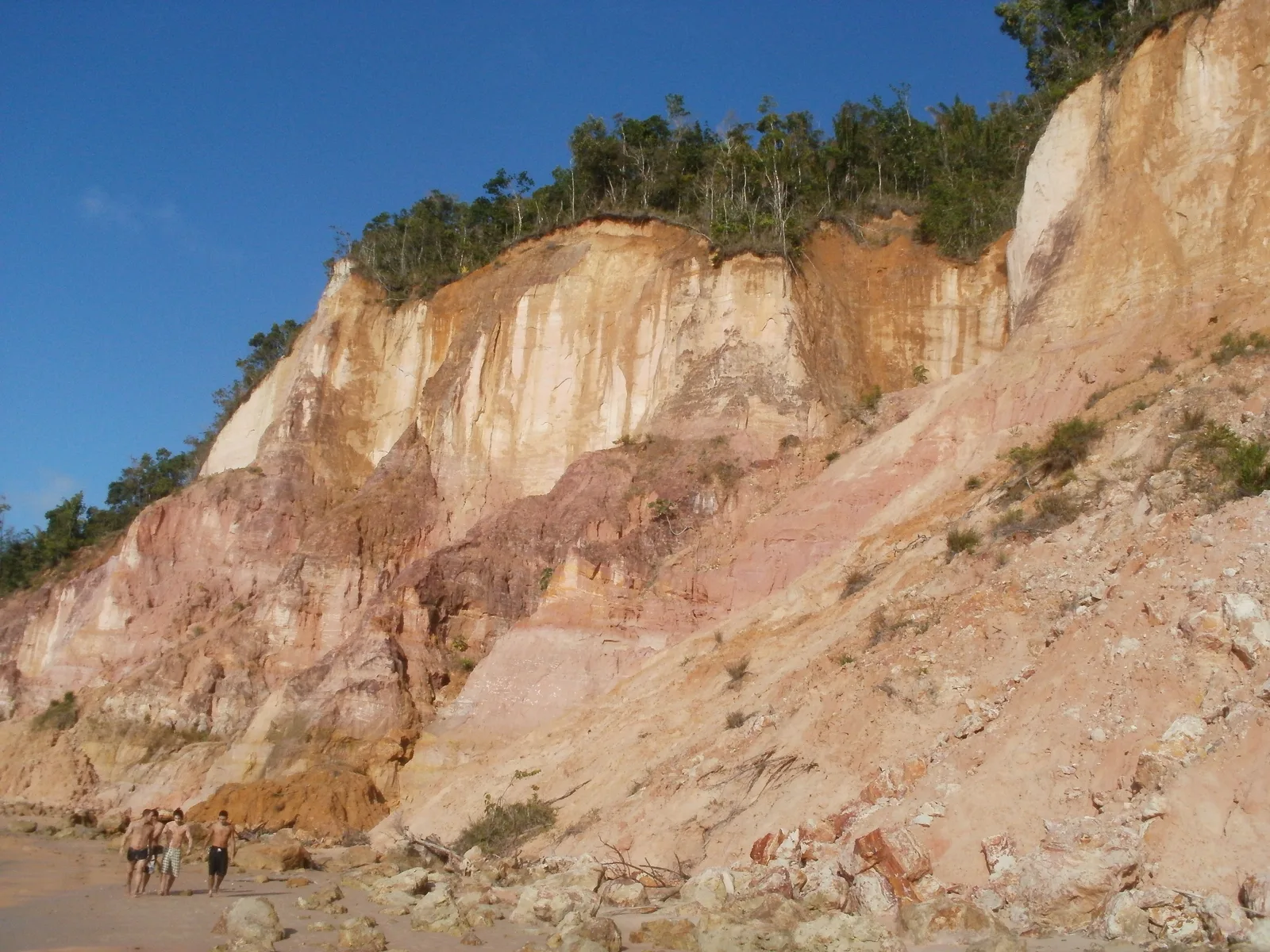
The eroded cliff of pink and cream clay above the beach at Gamboa, its face cut into ridges and gullies, with a few people small along the sand at its foot 04

Across the channel, and a different century

Gamboa and the clay cliffs

Distance
3 km along the beach
Boat
15 minutes, about R$10
Walk
Low tide only

Gamboa do Morro sits on the same island, three kilometers around the headland on the channel side, and it is the version of Morro that existed before the tourism did: a fishing village of sand streets and low houses, a wide flat beach, a handful of places to eat, and a fraction of the noise. Boats run across from the pier through the day for a few reais and take a quarter of an hour. Coming back after dark means the boat, because the alternative disappears twice a day.

The alternative is the walk, and it is one of the best things to do here. At low tide a strip of sand opens along the base of the cliffs and you can walk the whole way in about forty-five minutes, past Praia da Argila and the paredão — a wall of pink and cream clay that people dig out, smear on and let bake before they swim it off. It is a genuine local habit rather than a spa treatment, and it costs nothing. Just be certain of the tide before you set out, because the sand you walked out on is underwater on the way back.

What to actually do

One island, five ways to spend a day.

Pick a category, then scroll sideways through it. Every one of these is a realistic half-day or evening on an island you cross on foot.

The Beaches

  • The village of Morro de São Paulo from the air above Primeira Praia: pousadas and pale buildings packed along the shore below a forested hill, with clear shallow water and a small boat offshore

    Below the fort · half day

    Surfing and the zipline landing at Primeira Praia

    The shortest and steepest of the numbered beaches, three hundred meters of sand under the fortress wall with big rocks in it and a break that works when there is swell. It is the least good beach on the island for lying on and the most interesting one to stand on: this is where the zipline from the lighthouse drops its passengers into the water, and where the boards and the paddleboards are rented. Five minutes from the pier, so it is usually the first sand anyone sees.

  • Clear shallow water over a shelf of dark reef at Segunda Praia, the reef showing through the surface in the foreground and a low green shoreline beyond

    Segunda Praia · all day

    Beach bars and reef pools at Segunda Praia

    Four hundred meters of sand, a solid wall of barracas and beach clubs behind it, and the highest concentration of everything on the island — food, drink, music, volleyball, umbrellas for rent, and a crowd from about 10:00am until well after midnight. At low tide a shelf of reef surfaces at the northern end and leaves warm clear pools to sit in. At high tide it is a proper swimming beach with a bit of shore break. If you want the island to be quiet, do not sleep here; if you want the island to be fun, do not sleep far from it.

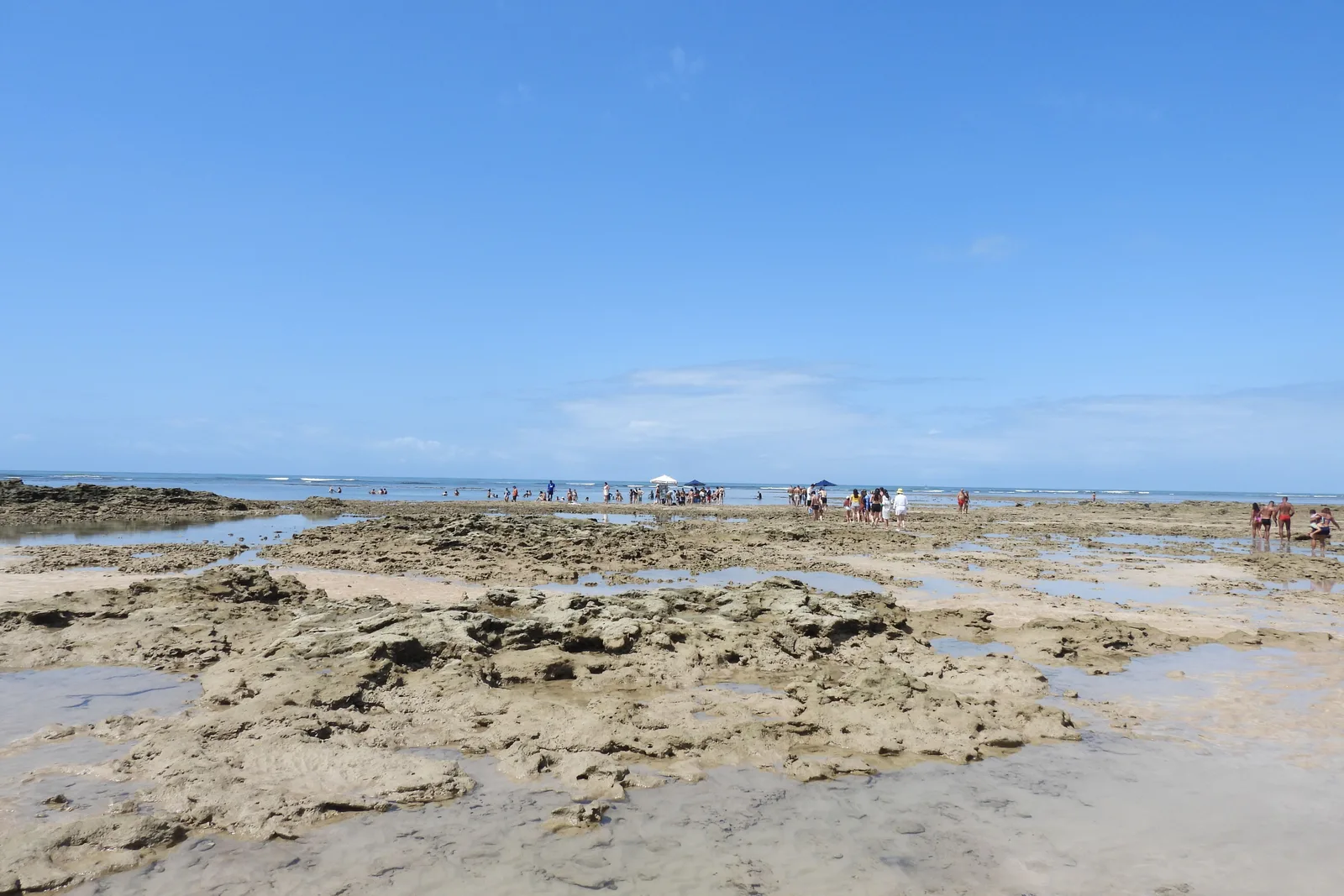
  • A wide shelf of reef exposed at low tide off Morro de São Paulo, people picking their way across the dark rock with shallow water standing in the hollows

    Terceira Praia · half day

    Low tide at Terceira Praia

    The calmest of the busy beaches and the island’s working harbor: the boat trips leave from here, so the water off it is full of moored speedboats and schooners, and the strip of sand at the northern end narrows to nothing on a big tide. What it has instead is the flattest water on the island and a set of reef pools offshore that emerge for a couple of hours either side of low water. Ilha do Caitá sits just off the beach and is the standard first snorkel.

  • Quarta Praia from the air: a long straight beach running to the horizon with reef and pale sandbanks showing through the shallow water, and unbroken green forest behind the sand

    Quarta Praia · half day

    The long walk down Quarta Praia

    Four kilometers of sand backed by coconut palms, with a handful of pousadas at the top end and effectively nothing for the rest of it. The reef sits a long way out, so the water inside it is shallow, warm and almost flat, and at low tide it breaks up into pools you can walk out to. This is the one Tripadvisor’s travelers ranked fourth in the world in 2022. Take water and a hat — there is no shade once you are past the first kilometer, and the tractor back only runs from the top end.

  • A clear shallow pool of water standing over pale sand and reef at low tide, the surface rippled and the bottom visible right through it

    Terceira and Quarta Praia · 2 hours

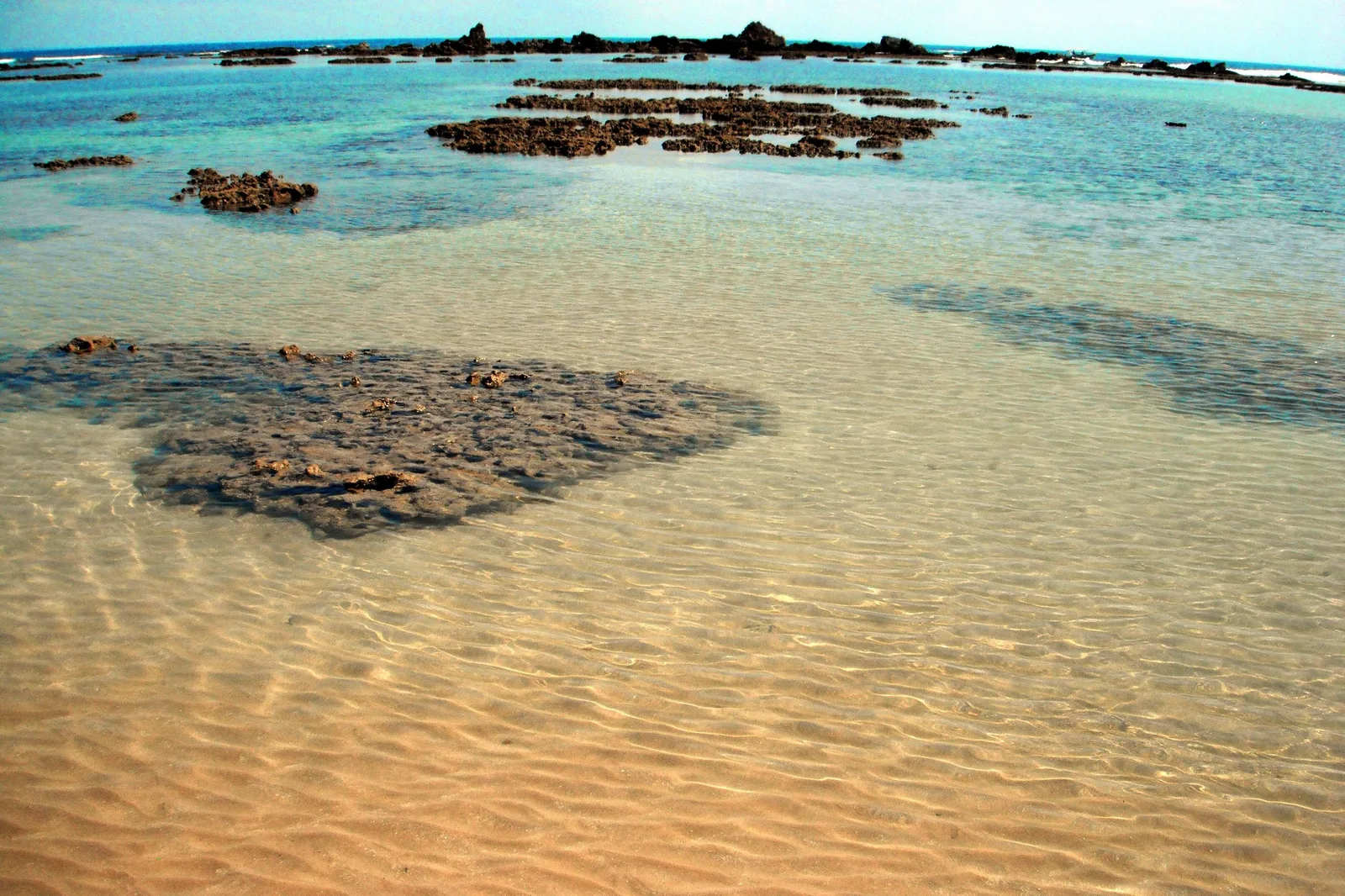
    Snorkeling the natural pools

    The reef that runs the length of these beaches is what makes the swimming what it is, and for two hours either side of low water it turns into a set of clear, warm, waist-deep pools with fish in them. You need nothing but a mask, and the ones off Terceira and Quarta are walkable from the sand. Time it to a new or full moon and the tidal range is at its biggest, which is when the pools are at their best. Wear something on your feet: the rock is sharp and there are sea urchins in it.

On the Water

  • A wide shelf of reef exposed at low tide off Morro de São Paulo, people picking their way across the dark rock with shallow water standing in the hollows

    Terceira Praia · half day

    Low tide at Terceira Praia

    The calmest of the busy beaches and the island’s working harbor: the boat trips leave from here, so the water off it is full of moored speedboats and schooners, and the strip of sand at the northern end narrows to nothing on a big tide. What it has instead is the flattest water on the island and a set of reef pools offshore that emerge for a couple of hours either side of low water. Ilha do Caitá sits just off the beach and is the standard first snorkel.

  • A clear shallow pool of water standing over pale sand and reef at low tide, the surface rippled and the bottom visible right through it

    Terceira and Quarta Praia · 2 hours

    Snorkeling the natural pools

    The reef that runs the length of these beaches is what makes the swimming what it is, and for two hours either side of low water it turns into a set of clear, warm, waist-deep pools with fish in them. You need nothing but a mask, and the ones off Terceira and Quarta are walkable from the sand. Time it to a new or full moon and the tidal range is at its biggest, which is when the pools are at their best. Wear something on your feet: the rock is sharp and there are sea urchins in it.

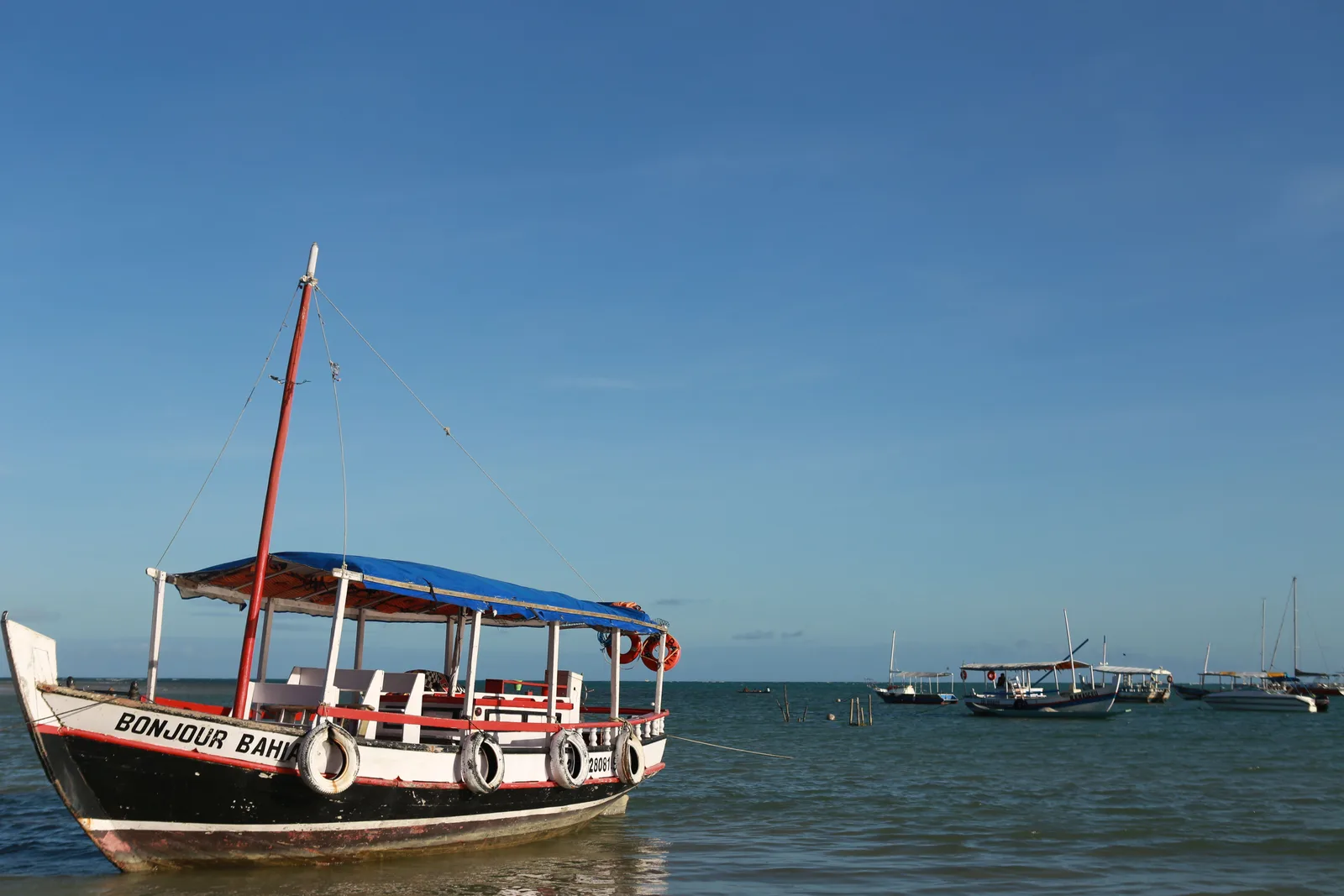
  • A wooden tour boat with a blue canopy standing in shallow water off a beach, with other boats and a low green shoreline behind it

    From Terceira Praia · full day, about R$250

    The Volta à Ilha boat trip

    The one boat trip almost everyone does, and the best value on the island. A speedboat or a schooner runs the length of Tinharé and back over about eight hours, stopping to swim at the natural pools off Garapuá, calling at the oyster stalls at Canavieiras in the mangroves, and putting in at Boipeba for lunch. Departures are around 9:30am and back by 5:00pm. Book it for a day near the new or full moon if you can, because the pools depend on the tide dropping far enough.

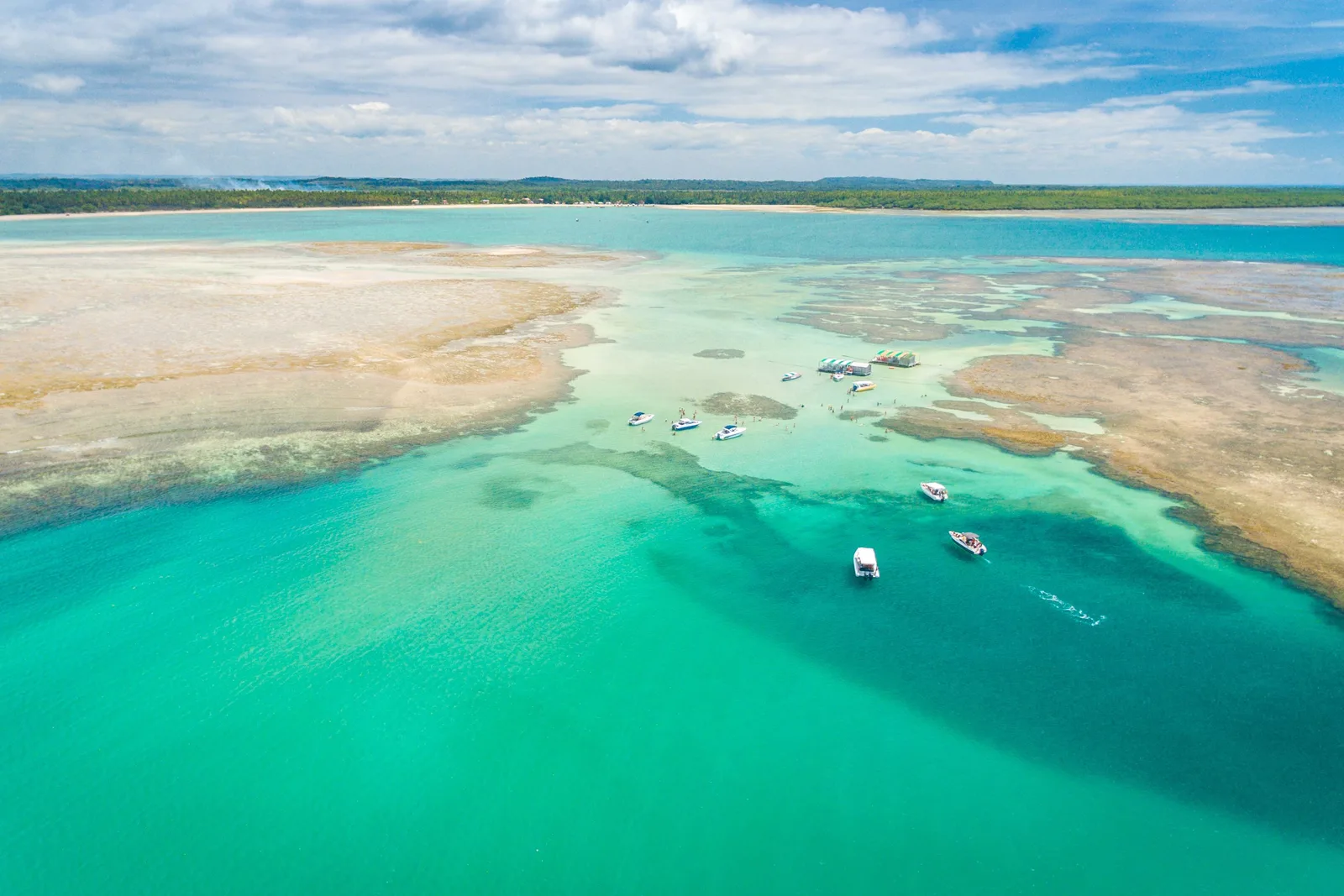
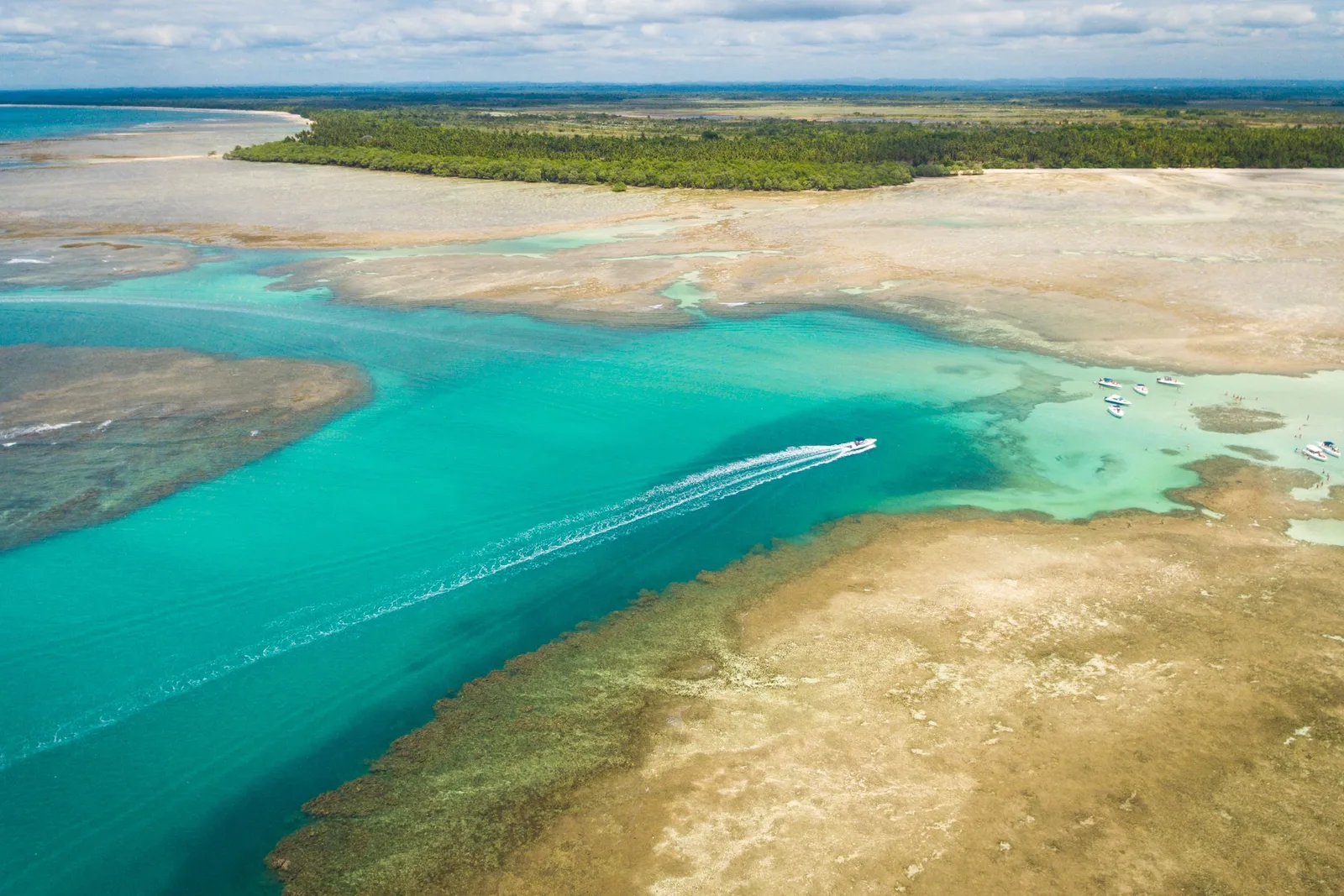
  • The natural pools at Garapuá from the air: a curving turquoise channel between pale sandbanks with small boats anchored on it and a speedboat leaving a wake across the shallows

    Southern Tinharé · half day, about R$130

    The natural pools at Garapuá

    A fishing village at the far end of the island, reached only by boat, with a bank of reef offshore that at low tide encloses a lagoon of turquoise water a long way from anything. Boats anchor on the sandbar and people stand around in water to their knees for an hour. It is the single most photographed stop on the Volta à Ilha and it can also be done on its own as a shorter trip. The village behind it has a handful of places doing grilled fish and moqueca, and almost no electricity worth the name.

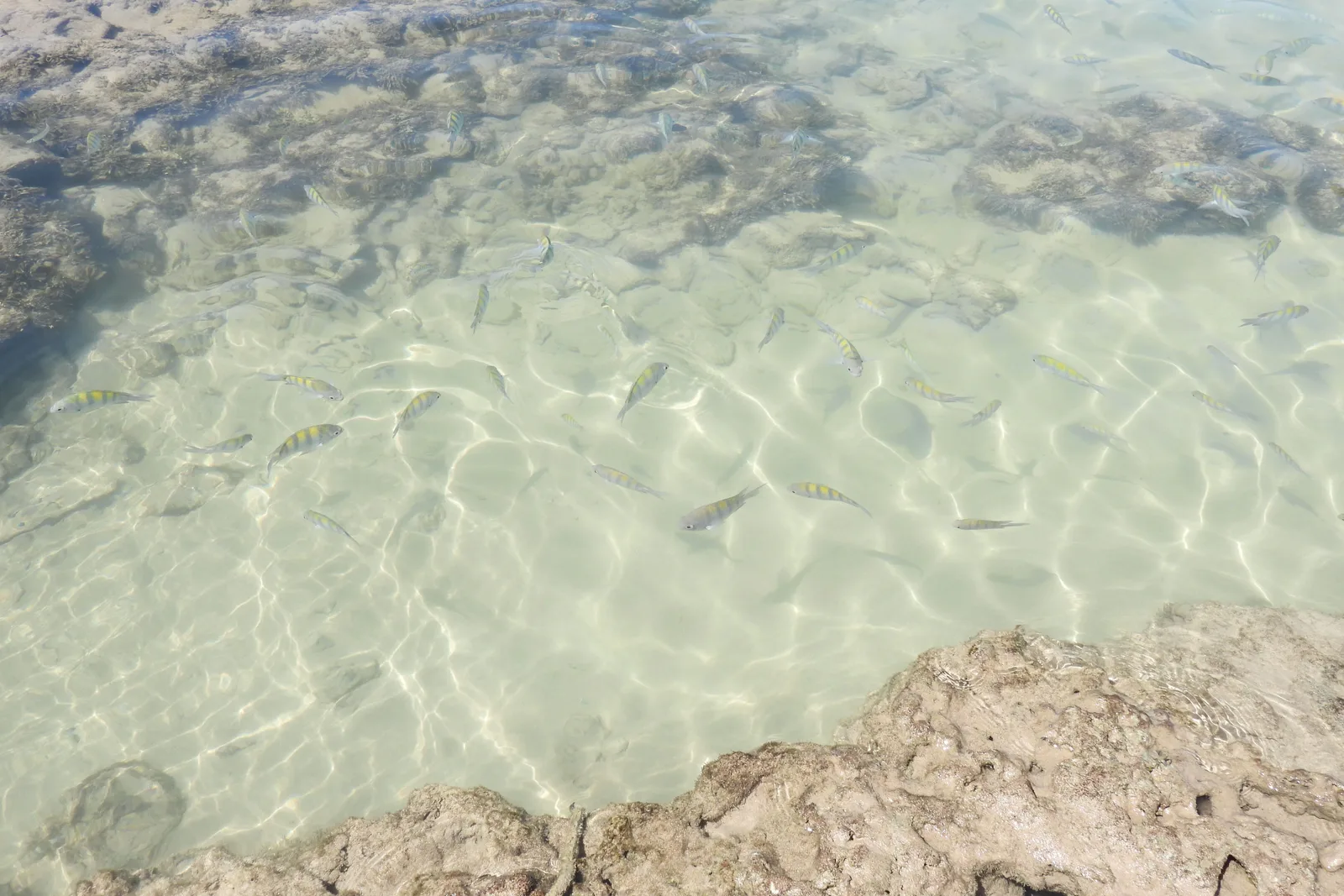
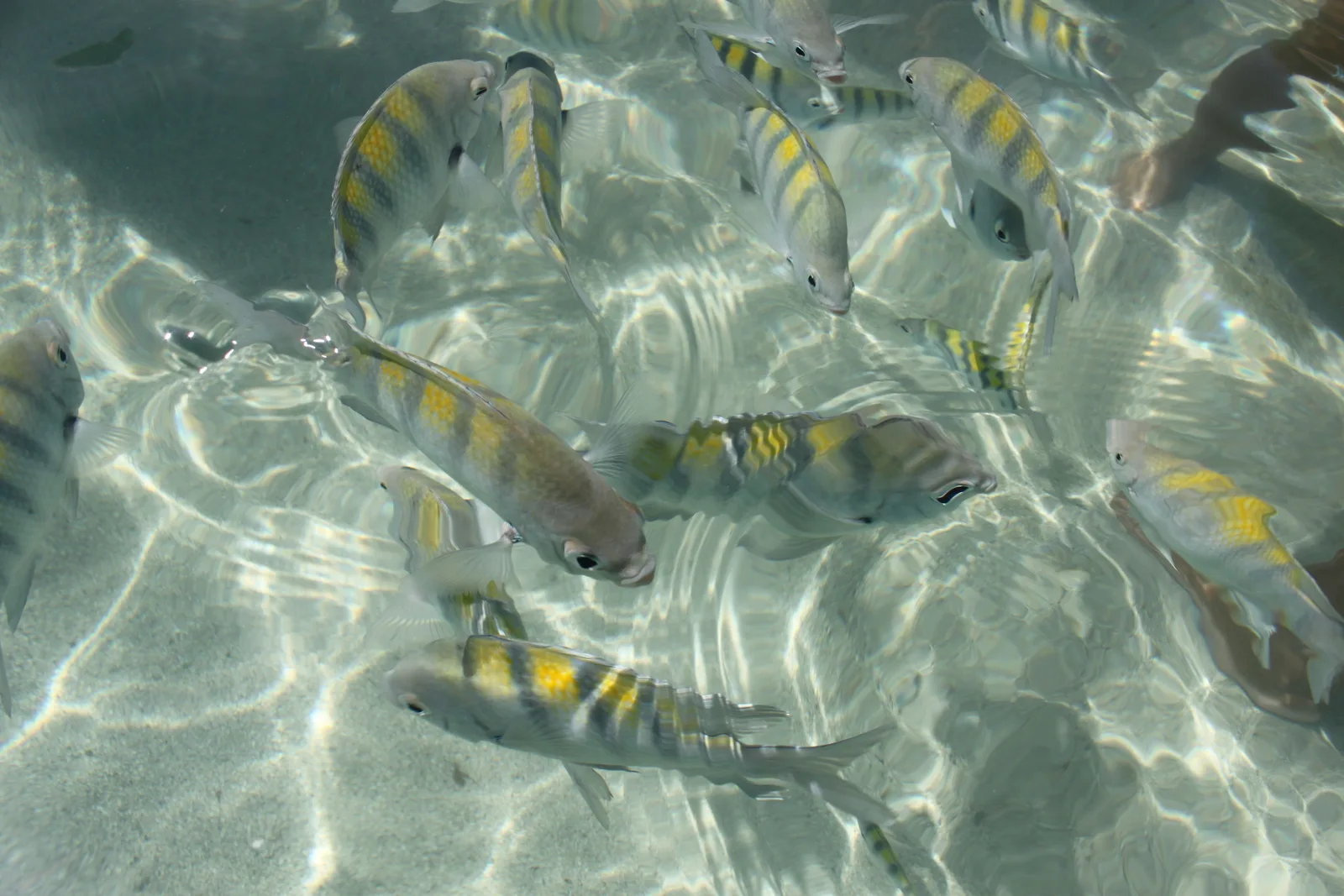
  • A shoal of small striped sergeant-major fish crowding just under the surface of clear shallow water over a pale sand bottom

    Terceira Praia · half day, about R$300

    Diving off the reef

    Dive shops work off Terceira Praia and the diving is easy rather than spectacular: shallow reef sites in ten to eighteen meters, warm water all year, and rays, turtles and reef fish in reliable numbers. Visibility is best in the dry months from September to February and worst after heavy rain, when the river outflow from the mainland pushes silt down the channel. There is also a discover-scuba session for people who have never been under, which is a reasonable place to try it.

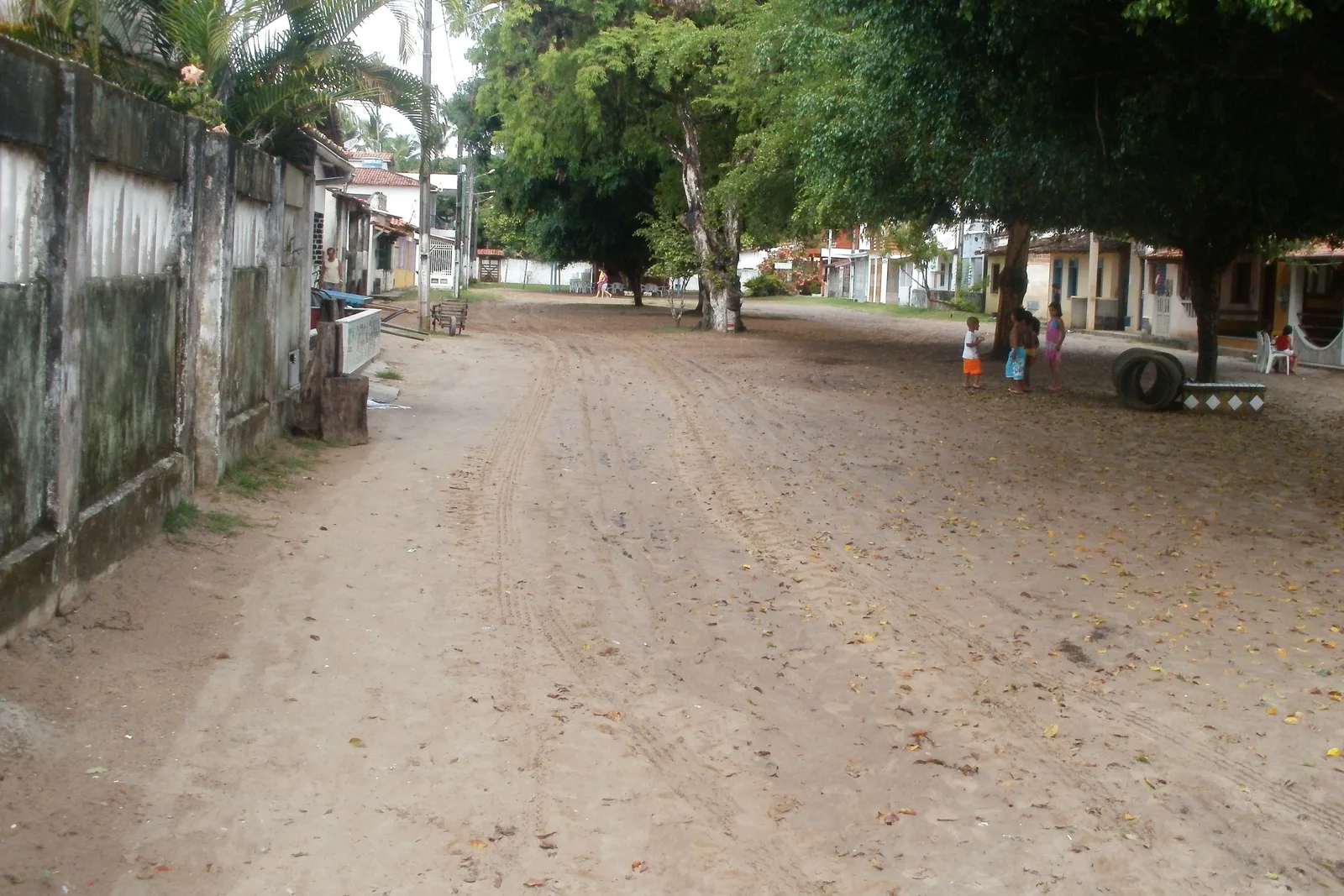
  • A wide sand street in the village of Gamboa, low houses and a wall along one side, trees down the middle of it and a handcart standing in the road

    Gamboa do Morro · half day

    Across to Gamboa

    Fifteen minutes on a boat from the pier, or forty-five minutes on foot along the beach at low tide, and you are in a fishing village that has none of Morro’s noise: sand streets, a small church on the rise, canoes pulled up on a wide flat beach, and the clay cliff at the far end that people plaster themselves with. Lunch at one of the beach kitchens and a boat back is a half day well spent. Do not attempt the walk without knowing what the tide is doing.

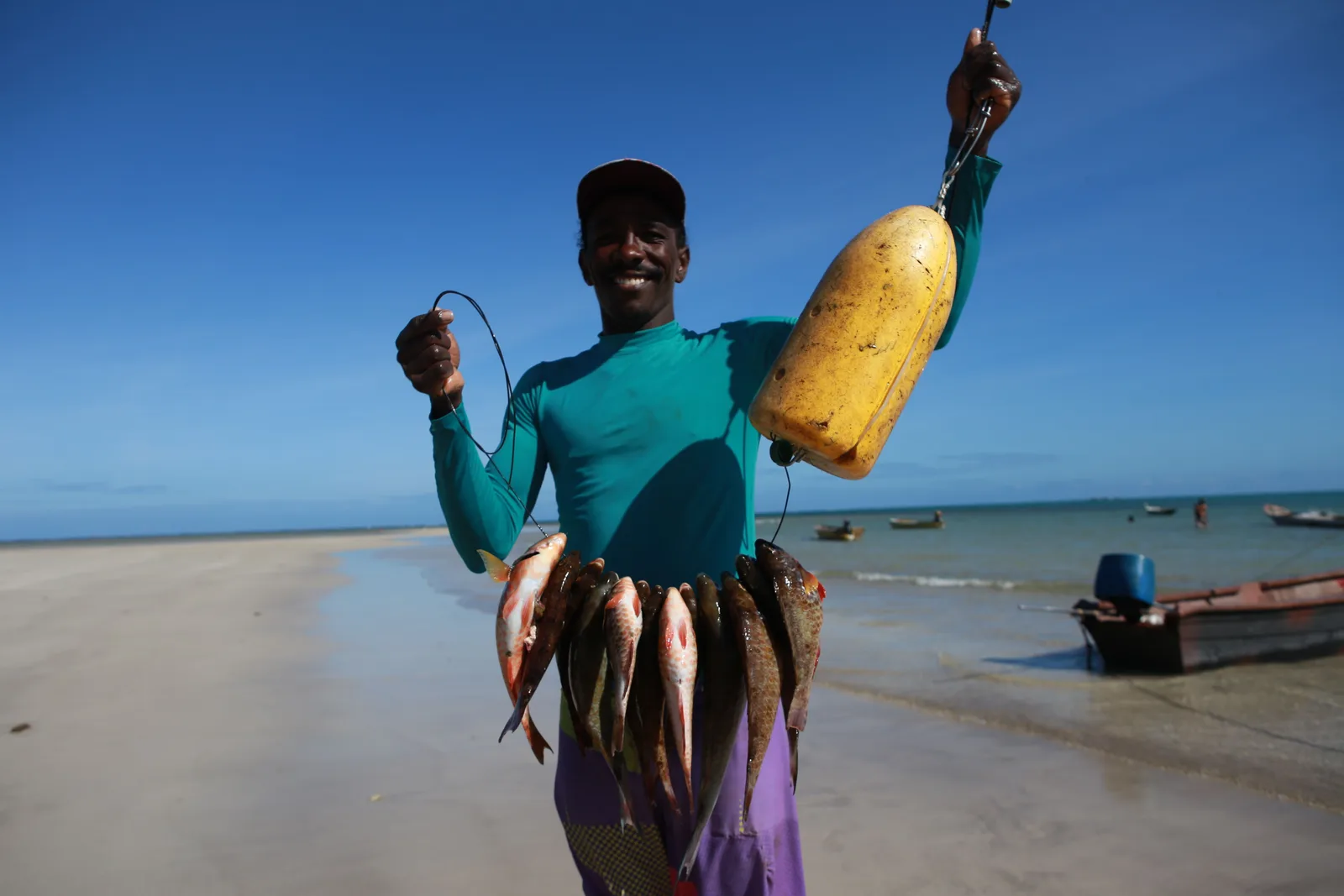
  • A fisherman on the sand at Garapuá holding up a line strung with the morning’s catch, a boat and a yellow float beside him

    Canavieiras and Garapuá · part of a boat day

    Oysters and fishing villages in the mangroves

    The channel side of Tinharé is mangrove for most of its length, and the boat trips stop in it: at Canavieiras, where a floating stall sells oysters shucked out of the water in front of you, and at the fishing villages where most of the island’s permanent population actually lives. It is the part of a boat day that is not about a beach, and it is usually the part people remember. Bring cash for the oysters.

The Village

  • The village of Morro de São Paulo from the air above Primeira Praia: pousadas and pale buildings packed along the shore below a forested hill, with clear shallow water and a small boat offshore

    Below the fort · half day

    Surfing and the zipline landing at Primeira Praia

    The shortest and steepest of the numbered beaches, three hundred meters of sand under the fortress wall with big rocks in it and a break that works when there is swell. It is the least good beach on the island for lying on and the most interesting one to stand on: this is where the zipline from the lighthouse drops its passengers into the water, and where the boards and the paddleboards are rented. Five minutes from the pier, so it is usually the first sand anyone sees.

  • A wide sand street in the village of Gamboa, low houses and a wall along one side, trees down the middle of it and a handcart standing in the road

    Gamboa do Morro · half day

    Across to Gamboa

    Fifteen minutes on a boat from the pier, or forty-five minutes on foot along the beach at low tide, and you are in a fishing village that has none of Morro’s noise: sand streets, a small church on the rise, canoes pulled up on a wide flat beach, and the clay cliff at the far end that people plaster themselves with. Lunch at one of the beach kitchens and a boat back is a half day well spent. Do not attempt the walk without knowing what the tide is doing.

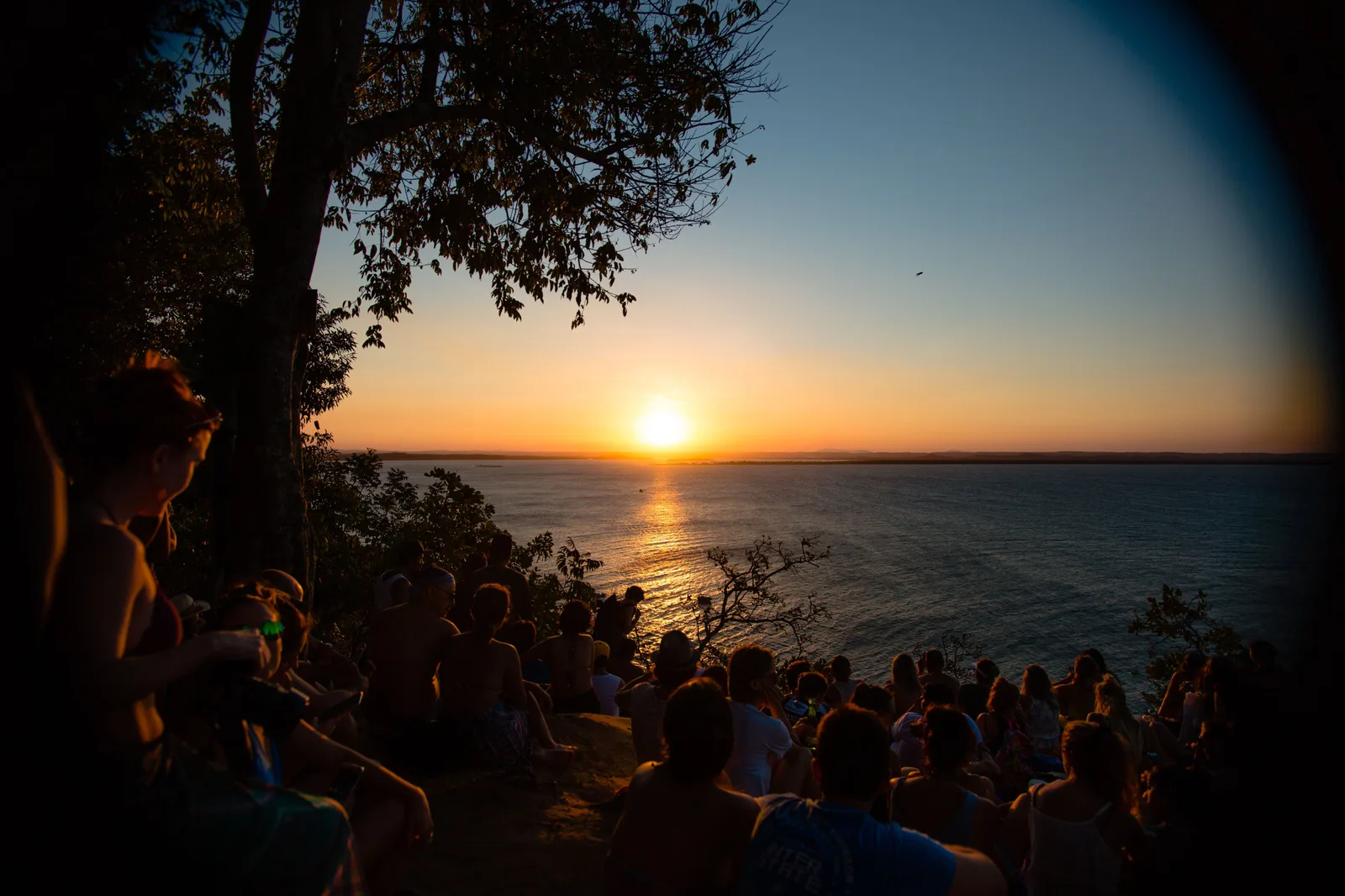
  • A crowd sitting along a grassy clifftop at Morro de São Paulo watching the sun go down over the water, boats small on the horizon below them

    The headland · the last hour of light

    Sunset at the Fortaleza de Tapirandu

    The 1630 fort on the point is a ruin you can walk into for nothing, and the ramparts face west over the channel, which makes them the sunset spot on an island whose beaches all face east. People start arriving about forty minutes before, somebody usually has a speaker, and the whole thing has the feel of a nightly appointment the village keeps with itself. Come up the path from the pier rather than down from the lighthouse, and bring something to sit on.

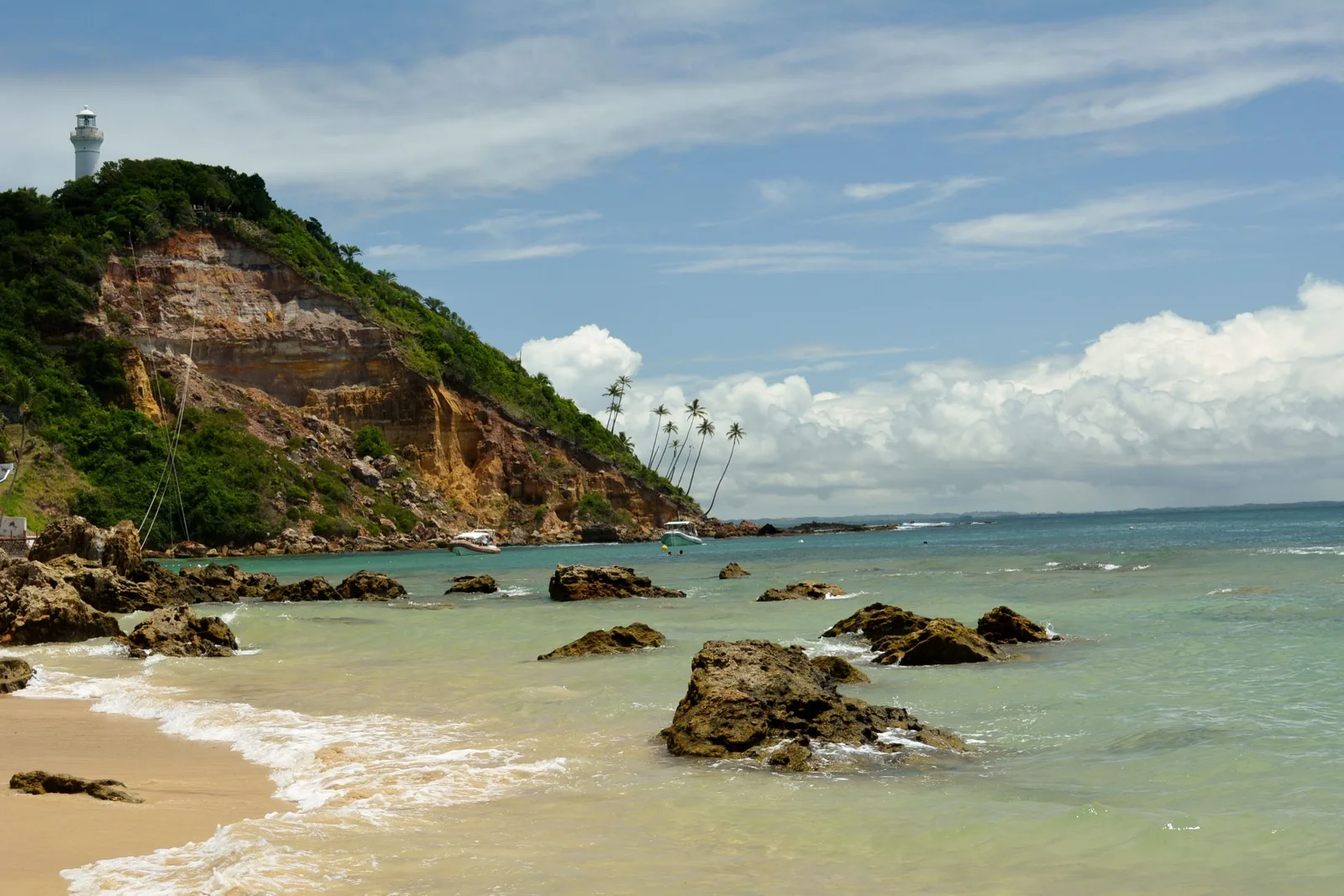
  • The eroded headland at Morro de São Paulo seen from the sand of Primeira Praia, the small white lighthouse standing on the ridge at the top and the zipline cables running down the cliff face to the water

    Above the village · 1–2 hours

    The lighthouse, the mirante and the zipline

    Ten minutes uphill from the village square gets you to the lighthouse — finished in 1855, 89 meters above the sea, closed to visitors — and a few minutes past it to the mirante, which is the view everyone photographs: the whole run of numbered beaches, the reef line, and the channel behind. From the same platform a 340-meter zipline drops fifty-odd meters and lands you in the sea at Primeira Praia, for about R$80. The walk up is free and worth it whether or not you get on the wire.

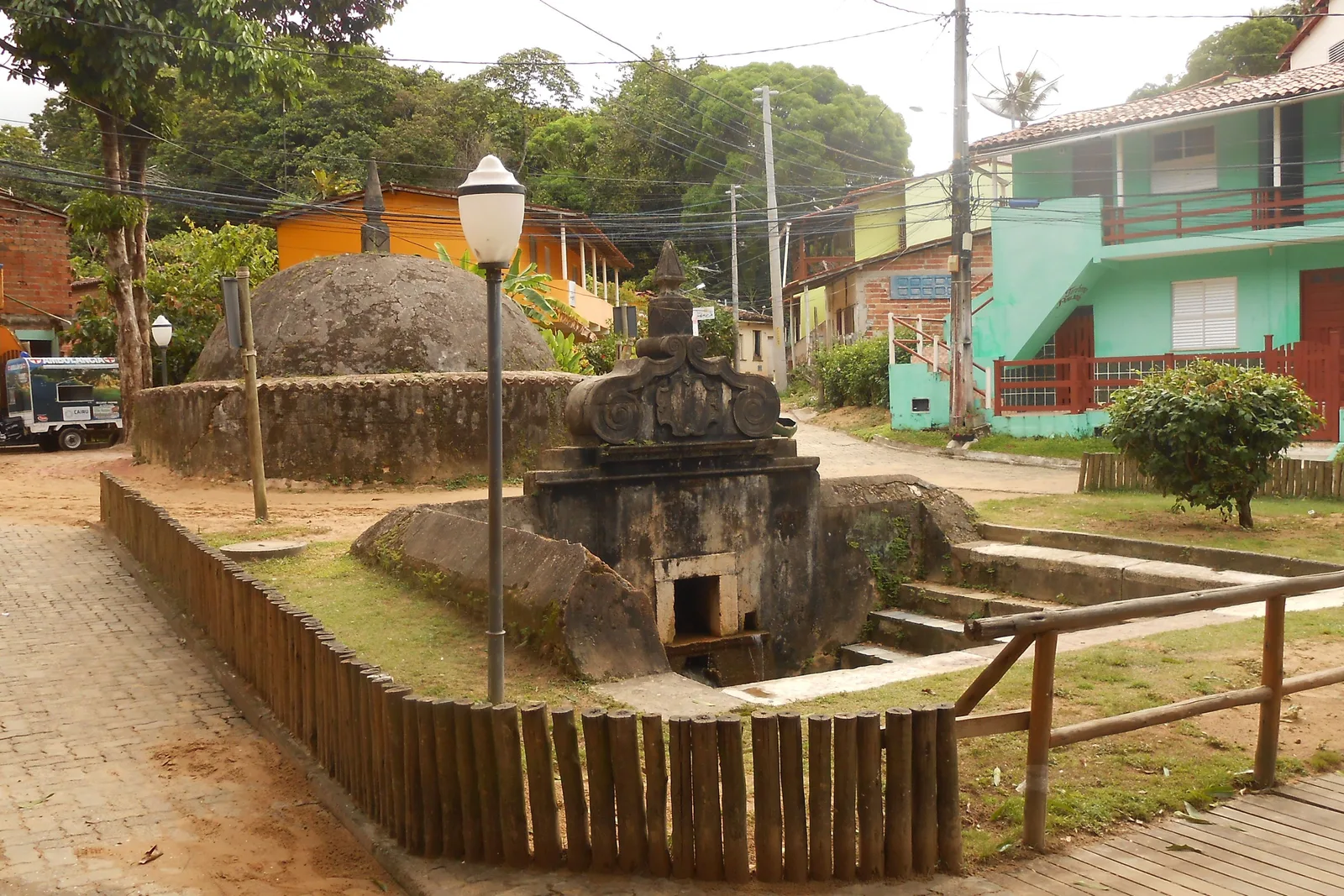
  • The Fonte Grande in Morro de São Paulo, a low stone fountain building with a carved pediment set in a paved sunken square, houses and a lamp post behind it

    The village · 1 hour

    The Fonte Grande and the old village

    The Fonte Grande was built in 1746 on the orders of the viceroy to supply the garrison, the jail and the village, and it was the biggest waterworks in colonial Bahia: a vaulted gallery, a domed cistern and a baroque frontispiece with three spouts, listed by Iphan in 1943 and still standing in a small square below the street. It takes twenty minutes to see and it anchors a good short walk around the old village — the fountain, the parish church, the square, and the lanes between them, all of which fit inside an hour before the beach.

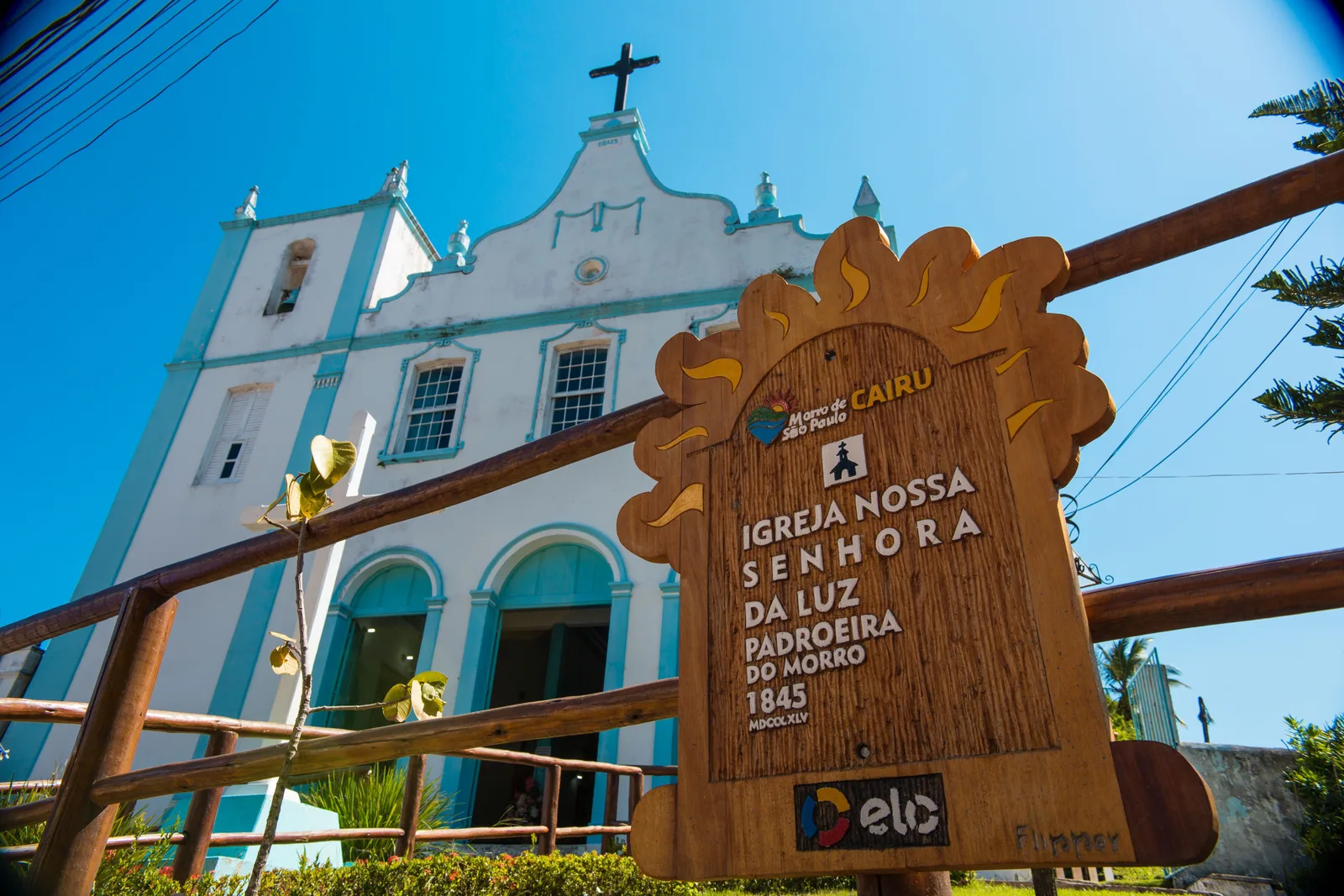
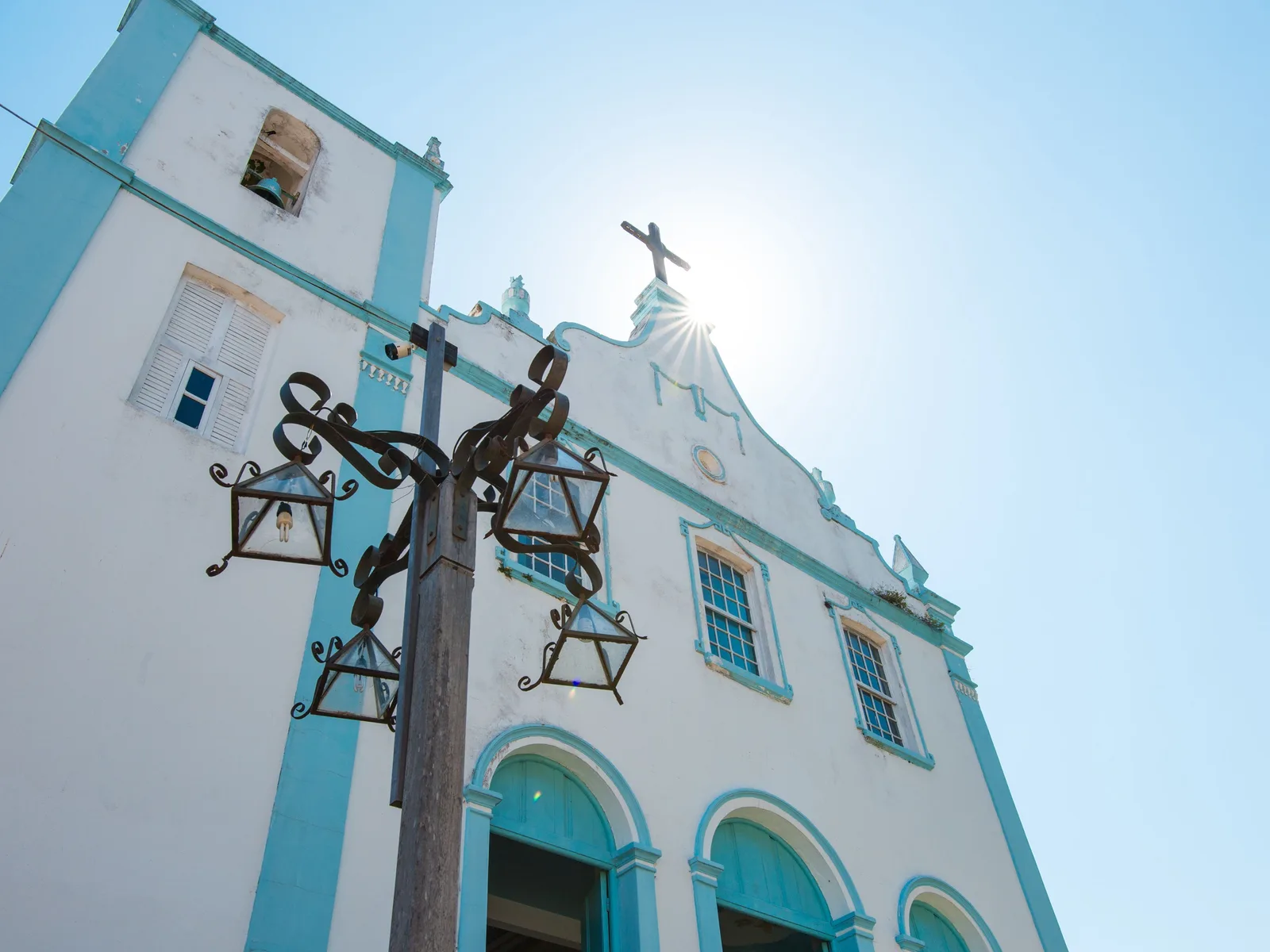
  • The white and pale blue facade of the parish church of Nossa Senhora da Luz in Morro de São Paulo, with a carved wooden sign in front of it naming the church and the year 1845

    The village · 20 minutes

    The parish church, Nossa Senhora da Luz

    The white-and-blue church above the village square is dedicated to Nossa Senhora da Luz, the patron of Morro de São Paulo, and the sign outside dates the building to 1845. It is small, plain and still in use, and it is the center of the island’s only genuinely local festival, on 8 September, when the steps are washed with scented water and flowers before the novena. Worth twenty minutes on the way up to the lighthouse.

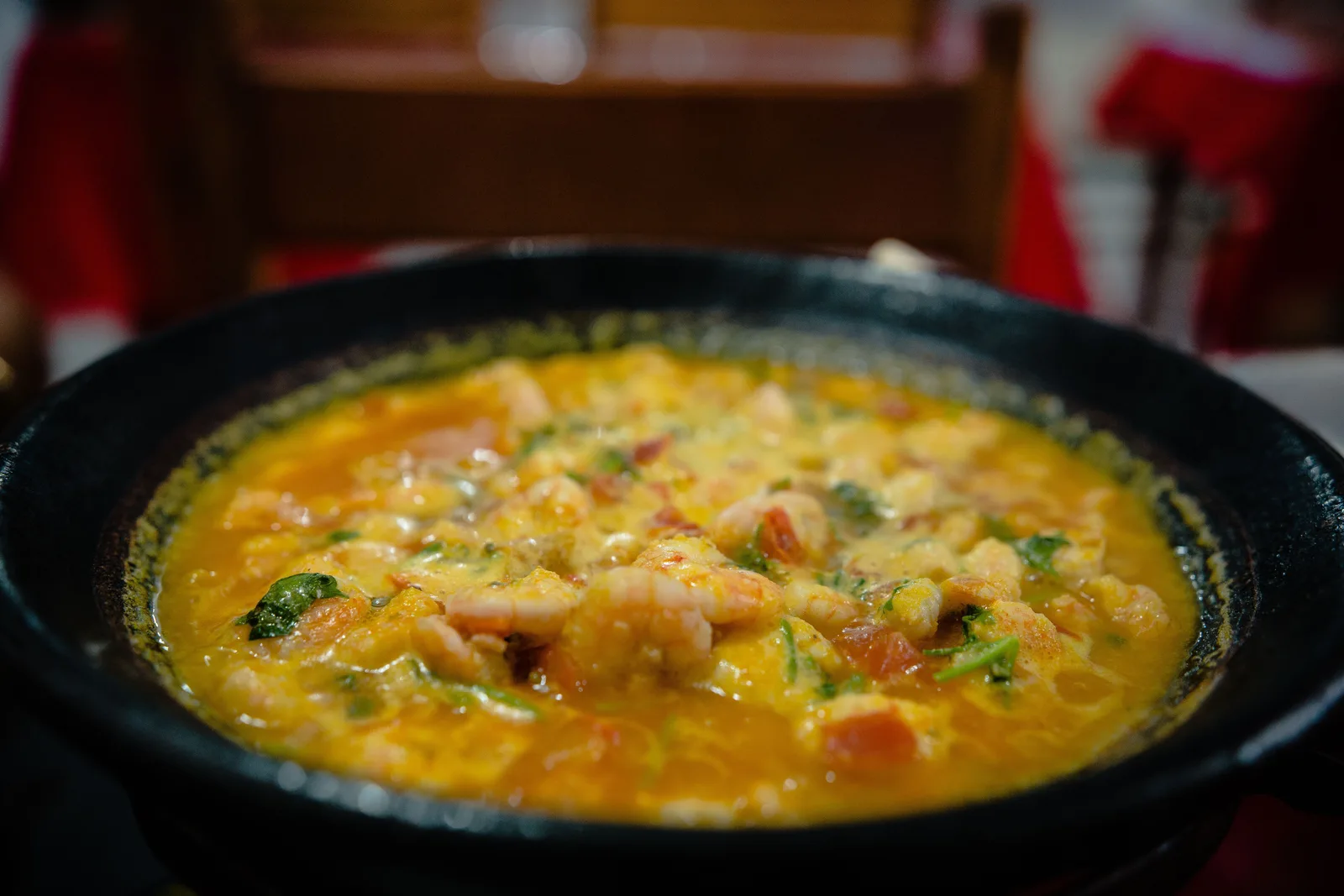
  • A moqueca in a black pan, the broth orange with dendê and coconut milk and full of shrimp, peppers and tomato, with a red-topped bottle behind it

    Segunda and Terceira Praia · long lunch or dinner

    Moqueca on the sand

    Bahian moqueca — fish or shrimp simmered in a clay pot with coconut milk, dendê palm oil, peppers and coriander — is the dish to eat here, and eating it twenty meters from where the fish landed is the point. Expect around R$160 for a pot built for two, plus rice, farofa and pirão. The restaurant strip runs along Segunda Praia and up the Rua da Prainha in the village, and the smaller kitchens in Gamboa do it at least as well for less.

Boipeba & Beyond

  • A wooden tour boat with a blue canopy standing in shallow water off a beach, with other boats and a low green shoreline behind it

    From Terceira Praia · full day, about R$250

    The Volta à Ilha boat trip

    The one boat trip almost everyone does, and the best value on the island. A speedboat or a schooner runs the length of Tinharé and back over about eight hours, stopping to swim at the natural pools off Garapuá, calling at the oyster stalls at Canavieiras in the mangroves, and putting in at Boipeba for lunch. Departures are around 9:30am and back by 5:00pm. Book it for a day near the new or full moon if you can, because the pools depend on the tide dropping far enough.

  • Moreré on Boipeba from the air: a turquoise channel curving between pale sandbanks and reef, with a fringe of green forest along the shore

    The next island south · full day, about R$250

    A day on Boipeba

    Boipeba is what Morro was thirty years ago: the same archipelago, the same water, a fraction of the people and no nightlife to speak of. A speedboat from Terceira Praia gets you there in an hour or so, or you can take the slower route by pickup and boat. The day usually runs Velha Boipeba for lunch, then the tractor-trailer four kilometers down to Moreré, where the natural pools at low tide are the best in the archipelago. If the day makes you want more, it is also the obvious two-night extension.

  • A wide empty beach at Ponta dos Castelhanos on Boipeba, leaning coconut palms along the sand and shallow clear water running up it under a bright sky

    Southern Boipeba · full day

    Ponta dos Castelhanos and the empty end of Boipeba

    The southern tip of Boipeba, reached by boat or by a long walk, and about as far from a road as it is possible to get on this coast: several kilometers of palm-backed sand, a small fishing settlement, a wreck offshore that people dive on, and nothing else at all. It is the standard second day if you stay on Boipeba rather than day-tripping it, and it is the answer to anyone who found Segunda Praia too loud.

  • A fisherman on the sand at Garapuá holding up a line strung with the morning’s catch, a boat and a yellow float beside him

    Canavieiras and Garapuá · part of a boat day

    Oysters and fishing villages in the mangroves

    The channel side of Tinharé is mangrove for most of its length, and the boat trips stop in it: at Canavieiras, where a floating stall sells oysters shucked out of the water in front of you, and at the fishing villages where most of the island’s permanent population actually lives. It is the part of a boat day that is not about a beach, and it is usually the part people remember. Bring cash for the oysters.

After Dark

  • Clear shallow water over a shelf of dark reef at Segunda Praia, the reef showing through the surface in the foreground and a low green shoreline beyond

    Segunda Praia · all day

    Beach bars and reef pools at Segunda Praia

    Four hundred meters of sand, a solid wall of barracas and beach clubs behind it, and the highest concentration of everything on the island — food, drink, music, volleyball, umbrellas for rent, and a crowd from about 10:00am until well after midnight. At low tide a shelf of reef surfaces at the northern end and leaves warm clear pools to sit in. At high tide it is a proper swimming beach with a bit of shore break. If you want the island to be quiet, do not sleep here; if you want the island to be fun, do not sleep far from it.

  • A moqueca in a black pan, the broth orange with dendê and coconut milk and full of shrimp, peppers and tomato, with a red-topped bottle behind it

    Segunda and Terceira Praia · long lunch or dinner

    Moqueca on the sand

    Bahian moqueca — fish or shrimp simmered in a clay pot with coconut milk, dendê palm oil, peppers and coriander — is the dish to eat here, and eating it twenty meters from where the fish landed is the point. Expect around R$160 for a pot built for two, plus rice, farofa and pirão. The restaurant strip runs along Segunda Praia and up the Rua da Prainha in the village, and the smaller kitchens in Gamboa do it at least as well for less.

  • Segunda Praia · from about 10:00pm

    Luaus and beach bars on Segunda Praia

    The nightlife is the reason a lot of Brazilians come here, and it is concentrated on one four-hundred-meter strip. The beach clubs on Segunda Praia run music every night in season, there is a luau on the sand most weeks with a bonfire and a caipirinha stand, and the Toca do Morcego — a bar built into the cliff at the north end — has DJs and the last view of the day. It runs late: expect noise until 3:00am at weekends and in high season. Watch your drink and your phone, and walk home in company.

Where to stay

Pick a number, and you have picked your trip.

Everything below is on the same strip of shore, walkable end to end, and they are not interchangeable. The choice is between being in the noise and being twenty minutes from it.

Drag and zoom to explore.

Tap an area to open it and see it on the map

  • Best for: Cheapest beds and the shortest walk from the boat

    The old village on the headland — the pier, the Portaló, the square, the fountain and the lanes climbing to the lighthouse — plus the short steep beach below the fort. This is where the hostels and the simplest pousadas are, where the bakery and the pharmacy are, and where you are five minutes from the boat with your bag. The trade is that it is steep, it is noisy in a different way from Segunda, and the beach immediately below you is the worst on the island for swimming.

    • Vila
    • Primeira Praia
    • Hostels
    • The pier
  • Best for: Being in the middle of it

    Four hundred meters of beach with the highest concentration of bars, restaurants, beach clubs and pousadas on the island, and the place the music comes from. Waking up here means walking out of the door onto the sand and having everything within two minutes. It also means the bass carries until 3:00am at weekends and in high season, and the beach in front of you is the busiest stretch of sand in the archipelago. Superb if that is the trip; a mistake if it is not.

    • Segunda Praia
    • Beach clubs
    • Nightlife
    • Restaurants
  • Our pick

    Best for: Quiet enough to sleep, close enough to walk to dinner

    Five minutes further along and a different volume of island. Terceira has the flattest water, the reef pools, the pier the boat trips leave from, and a row of mid-range and comfortable pousadas with pools set back off the sand. Segunda’s restaurants and bars are a walk on the beach away, which is the right distance from them. The catch is the sand itself: the strip at the northern end is narrow and largely disappears at high tide, so check what your pousada’s beach actually looks like at high water before you book it.

    • Terceira Praia
    • Boat pier
    • Reef pools
    • Pousadas with pools
  • Best for: Space, and not caring about dinner options

    The long, mostly empty end of the island: four kilometers of Quarta Praia and another kilometer and a half of Quinta beyond a river crossing, with the resorts, the larger pool-and-garden pousadas and the best water on the island. This is where you go for a honeymoon or a week of doing nothing. Understand what you are buying: dinner is at your own hotel or a fifteen-to-forty-minute walk up the beach, the walk back is unlit, and after dark the only way home is a tractor or a boat.

    • Quarta Praia
    • Praia do Encanto
    • Resorts
    • Families

A working plan

Four days, and one of them is a boat.

Built around the tide and the boat schedule rather than a checklist. Days two and four swap freely — check the tide table on your pousada wall on the first evening and put the beach walk on whichever morning has the lower water.

  1. 01
    The pier at Morro de São Paulo from the causeway, passengers walking in from the boats with the low green shoreline of the village beyond

    The village and the headland

    Land, drop the bag, climb the hill

    Off the boat, through the Portaló, and a porter to the pousada. The village, the Fonte Grande and the church in what is left of the afternoon, then the fort for the sunset and Segunda Praia for dinner.

  2. 02
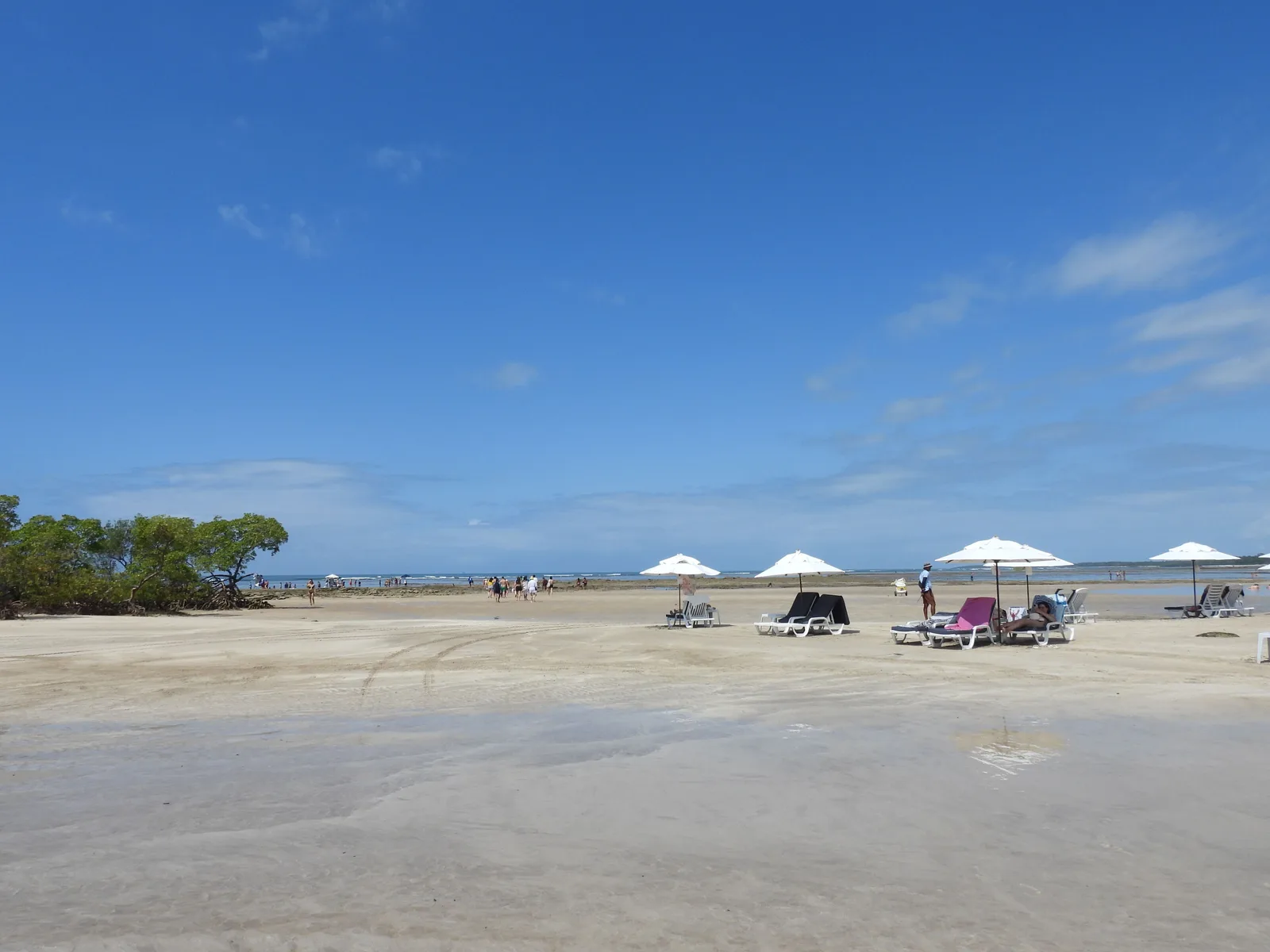
    A broad empty beach at Morro de São Paulo at low tide, loungers and white umbrellas folded along the back of the sand and the sea a long way out

    Primeira to Quarta Praia

    Walk the numbers, with the tide

    Start on the falling tide and walk south: the reef pools off Terceira, the river crossing, and the long empty run of Quarta. Lunch at the far end and a tractor or a boat back.

  3. 03
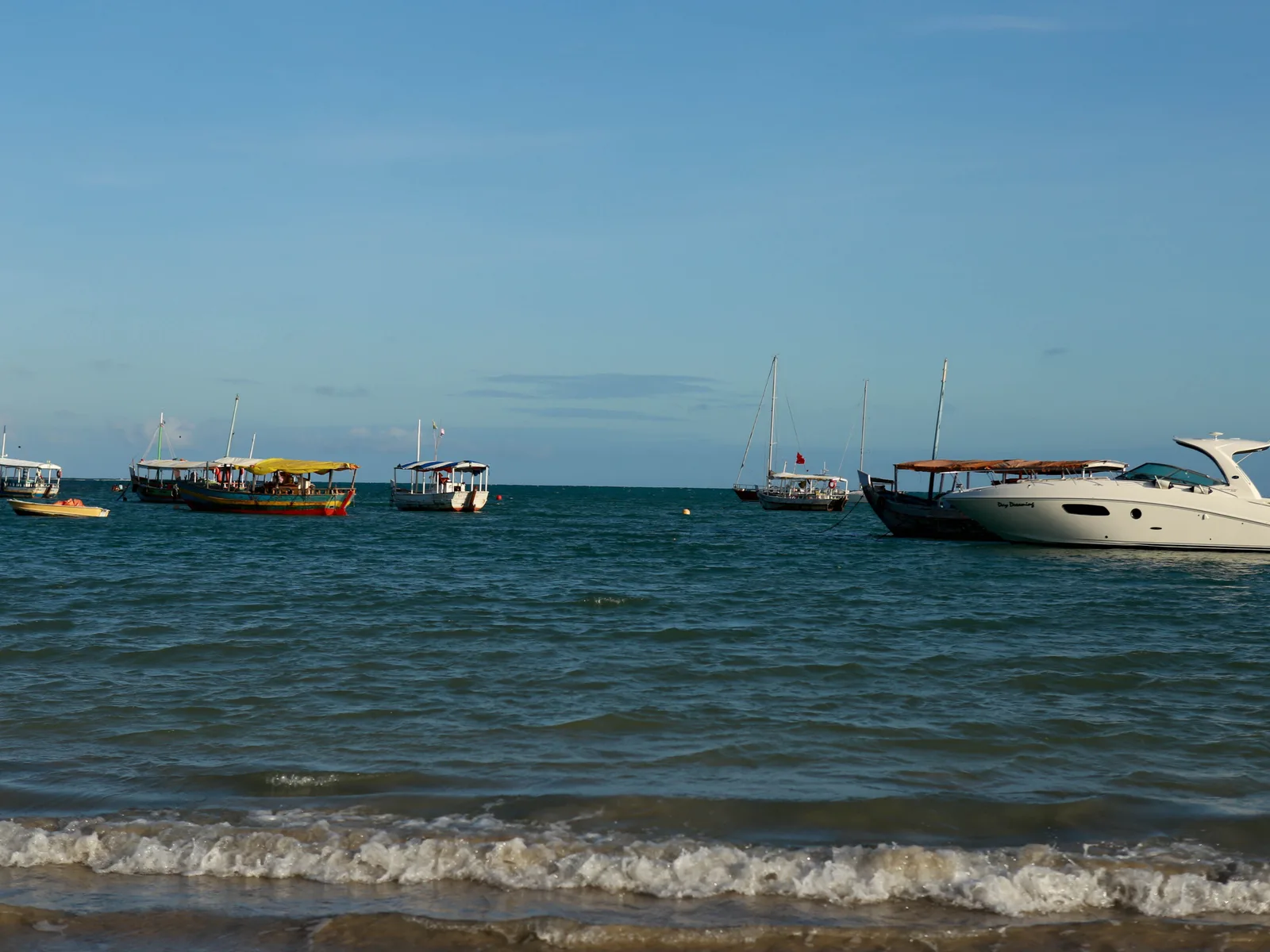
    Boats lying at anchor off a beach in the Tinharé archipelago, low waves running up the sand in the foreground and a wooded shore behind them

    Garapuá, Canavieiras and Boipeba

    The whole island by boat

    The Volta à Ilha: out at 9:30am, swimming in the pools at Garapuá, oysters off the stall in the mangroves at Canavieiras, lunch on Boipeba, and back to Terceira Praia by 5:00pm.

  4. 04
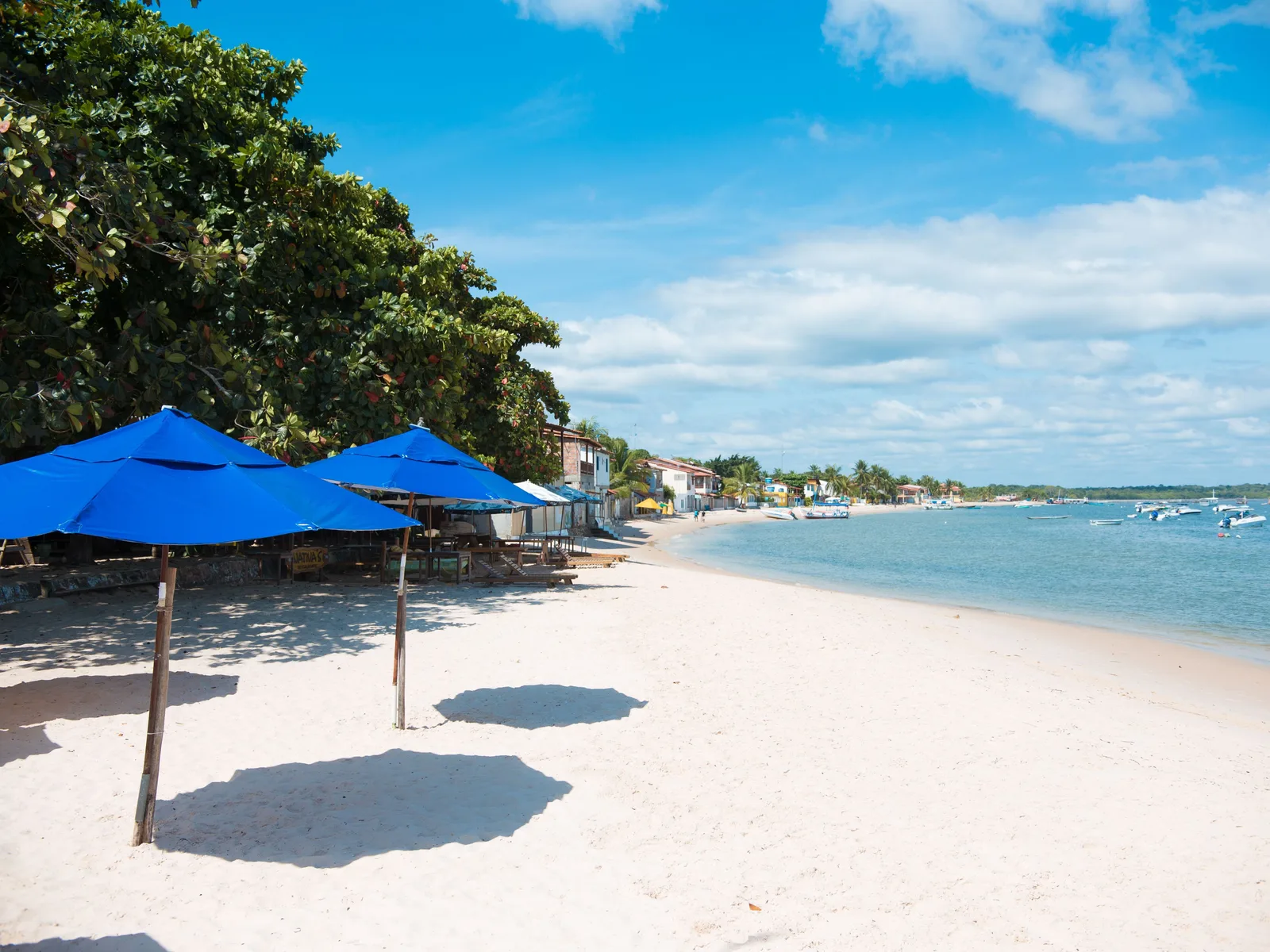
    The beach at Gamboa on a bright day, blue parasols set out on white sand, small boats at anchor in flat water and a line of low buildings along the shore

    Gamboa, or a second day out

    The other side of the headland

    The flexible day. Walk to Gamboa at low tide for the clay cliffs and lunch on the beach, boat back — or use it as a second run at Boipeba if the first one was not enough.

This is a starting shape, not a fixed departure — we rearrange it around your dates. Have it built for you

Timing

Warm all year. The variables are rain and sea.

Morro sits thirteen degrees south of the equator and the temperature barely moves: every month runs to a high between 25 and 29 degrees, and the sea never drops below 25. What changes is the sky and the swell. The rain falls in autumn and early winter — April to July — which is the opposite of Rio and catches almost everyone out, and the same months are when the crossing from Salvador gets unreliable.

How good each month is at Morro de São Paulo. Choose a month for its average air and sea temperatures, rainfall and what the island is like then.

January

Good
Air
24–28°C 75–82°F
Sea
28°C 82°F
UV
11 Extreme
Rain
9 days 100 mm / 3.9 in

Hot and mostly dry, and the island is at its fullest. Réveillon prices only just gone.

February

Good
Air
24–28°C 75–82°F
Sea
28°C 82°F
UV
12 Extreme
Rain
10 days 90 mm / 3.5 in

The driest month of the year on the averages. Carnival, and the week after it, fill everything.

March

Good
Air
24–29°C 75–84°F
Sea
29°C 84°F
UV
11 Extreme
Rain
13 days 114 mm / 4.5 in

The warmest sea of the year, the crowds gone home, and the rain starting to build.

April

Trade-offs
Air
24–28°C 75–82°F
Sea
29°C 84°F
UV
9 Very high
Rain
15 days 151 mm / 5.9 in

The wet season sets in — fifteen wet days, and the sea turning unreliable for the crossing.

May

Trade-offs
Air
23–26°C 73–79°F
Sea
28°C 82°F
UV
7 High
Rain
15 days 155 mm / 6.1 in

Solidly in the wet season, and the sea often too rough for the direct crossing.

June

Trade-offs
Air
22–25°C 72–77°F
Sea
27°C 81°F
UV
6 High
Rain
14 days 158 mm / 6.2 in

Deep in the rains, and the sea still unreliable. August is the coolest month, not June. Festa Junina all over Bahia.

July

Trade-offs
Air
21–25°C 70–77°F
Sea
26°C 79°F
UV
7 High
Rain
13 days 143 mm / 5.6 in

Still wet, still cool by local standards, and busy anyway with Brazilian school holidays.

August

Trade-offs
Air
21–25°C 70–77°F
Sea
26°C 79°F
UV
8 Very high
Rain
10 days 115 mm / 4.5 in

The tail of the rains, and the coolest month of the year at both nearby stations. Quiet, cheap, warm enough, and the last unreliable month for boats.

September

Good
Air
21–26°C 70–79°F
Sea
26°C 79°F
UV
10 Very high
Rain
8 days 95 mm / 3.7 in

The dry season resumes and the boats run. The village festival falls on the 8th.

October

Best
Air
22–27°C 72–81°F
Sea
26°C 79°F
UV
11 Extreme
Rain
8 days 92 mm / 3.6 in

The best month on the island: the driest by rain days, warm and bright.

November

Good
Air
23–27°C 73–81°F
Sea
27°C 81°F
UV
10 Very high
Rain
9 days 115 mm / 4.5 in

A little more rain, still hot and bright, and the last month before holiday prices.

December

Good
Air
24–28°C 75–82°F
Sea
27°C 81°F
UV
11 Extreme
Rain
9 days 91 mm / 3.6 in

Dry and hot, and quiet until about the 20th. Then Réveillon takes over the island.

  • Best The one or two peak months
  • Good A real recommendation
  • Trade-offs Workable, with a catch
See Morro de São Paulo on the Brazil calendar

UV is the monthly average of the daily peak, 2022 to 2025, calculated from Copernicus Atmosphere Monitoring Service data. Weather data by Open-Meteo.com, CC BY 4.0.

For beaches and boats

September–December

The dry stretch, with the crossing at its most reliable, the water at its clearest and rooms at ordinary prices. October is the driest month by rain days.

For the party

Late December to Carnival

Réveillon on Segunda Praia, and the week after Carnival — the ressaca — when half of Bahia arrives. Hot, mostly dry, completely full, and priced accordingly.

When the sea gets in the way

April–August

The wet stretch, 115 to 158 mm a month, and the months when rough water most often turns the direct catamaran into a three-and-a-half-hour connection through Valença.

About the rain

The useful thing to know about the weather here is that it inverts the pattern most visitors bring with them. Rio is wettest in January and driest in July; this coast is the other way round. February averages 90 mm and June 158 mm, and the wet stretch is a plateau rather than a spike: April through July all sit in the same band. It rains in long gray stretches rather than in the violent hour-long storms of the southeast, and it is still 25 to 28 degrees while it does.

On an island the more important question is not whether it rains but whether the boat runs. The second half of the catamaran crossing from Salvador is open ocean, and in strong winds and heavy swell the operators reroute it through Itaparica and Valença rather than cancel — which adds about an hour and a coach. That happens most often between April and August, and it happens occasionally in any month with a front behind it. If your trip has no slack in it, take the land-and-boat transfer or the plane, and do not plan to land at Salvador’s airport and be on a beach the same afternoon.

The dates worth planning around

Réveillon

31 December, and the week either side

New Year is the biggest night of the island’s year by a distance, and it happens on Segunda Praia: fireworks off the beach at midnight, parties in the beach clubs behind it, and a crowd that arrives from Salvador on every boat for four days beforehand. Pousadas sell out months ahead, rates run two to three times the rest of the year, and a minimum stay across the turn is normal rather than exceptional. If that is the trip you want, book it in August. If it is not, come in the second half of January instead — the prices fall away within a fortnight.

The white and blue facade of the church of Nossa Senhora da Luz in Morro de São Paulo seen from below, its bell tower and cross against a bright sky

Festa de Nossa Senhora da Luz

8 September

The island’s own festival, for its patron saint, and the one event on this calendar that belongs to the village rather than to the visitors. The church steps and the interior are washed with scented water and flowers, there is a novena in the days before, and the municipality usually puts free music on in the Praça Aureliano Lima. It falls at the start of the best month on the island and almost no foreign visitor has heard of it.

Segunda Praia from the hill above the village on a busy day: rows of colored umbrellas and loungers down the whole length of the sand, swimmers in the shallows, and the beach bars and rooftops of the village packed in behind

Carnival and the ressaca

Carnival week, and the week after it

Morro does not have a Carnival of its own in the way Salvador does — no trios, no circuits — and a fair number of residents leave for the mainland to work the city’s. What it has instead is the ressaca do Carnaval, the hangover week that follows, which is one of the busiest stretches of the island’s year: everybody who spent six days in a crowd in Salvador comes over to lie down, and the beach clubs run at full volume for another seven days. It is hot, dry, expensive and enormous fun, and it is the worst week of the year to come looking for quiet.

Good to know

Before you come

How do I actually get to Morro de São Paulo? +

From Salvador, and by sea or air — no road reaches the island. The standard option is the catamaran from the Terminal Náutico in Salvador, which takes about two to two and a half hours and costs around R$155 each way; the first half crosses the sheltered Bay of All Saints and the second half is open ocean, so take something for seasickness beforehand. The same money buys a semi-terrestrial transfer — road down through Itaparica to Valença, then a speedboat — which takes about three and a half hours, is almost entirely on land, and can pick you up at the airport. The cheap version of that route, using the public ferry and a bus, costs a fraction and takes about five hours. Or Abaeté flies it in twenty-five minutes for roughly R$500 to R$800. Whichever you choose, everyone pays the R$70 TUPA island fee on arrival, and everyone walks off the pier — there are no cars.

How many days do I need? +

Three full days is the minimum that makes the crossing worth it, and four is the honest number. One day goes on arriving and seeing the village, the fort and the sunset; one on walking the numbered beaches with the tide; one on the Volta à Ilha boat trip round the island; and one on Gamboa or a day out to Boipeba. Two nights leaves you doing one of those and spending a quarter of your trip on boats. A day trip from Salvador is possible and mostly consists of the journey — five hours of it, for about four hours on the island.

Which beach should I stay on? +

Terceira Praia for most people: flat water, the reef pools, the boat pier, comfortable pousadas set back from the sand, and Segunda’s restaurants a five-minute walk up the beach — which is the right distance from a place that is loud until 3:00am. Stay on Segunda Praia if the nightlife is the reason you came, and accept the bass. Stay in the village if you want the cheapest beds and the shortest walk from the boat, and accept the hill. Stay on Quarta Praia or Praia do Encanto if you want space and a pool and do not mind that dinner is either at your own hotel or a long unlit walk away.

What is the TUPA, and do I have to pay it? +

Yes. The TUPA is Cairu’s tariff for the use of the archipelago, charged to every visitor arriving on the island, and it funds environmental and tourist services there. It is R$70 a head — it rose from R$50 in December 2025, and a further rise to R$90 was announced for mid-2026 and then suspended indefinitely, so check before you budget. Children under five are exempt. It is not normally included in a boat ticket, and the simplest thing is to buy the voucher online in advance rather than queue at the pier when you land. Boipeba has its own R$50 version announced, but it has been pushed back to December 2026 and is not being charged yet.

When is the best time to go? +

September to December. That stretch is warm, dry by local standards — around 90 to 115 mm a month across eight or nine wet days — with a sea at 26 to 27 degrees, ordinary prices and, importantly on an island, a crossing that reliably runs. October is the pick. The other good window is late December to Carnival, which is hot and mostly dry and also the most expensive and crowded time of the year. The months to think twice about are April to August: it is the wet season, with 115 to 158 mm a month, and it is when rough water most often turns the direct catamaran into a longer connection through Valença. It is still warm and the island still works — but a trip built around boats and reef pools is the wrong trip to book then.

Keep going

Where Morro fits in a bigger trip.

Almost nobody comes here on its own — it is two hours from Salvador and the natural second or third stop in a Bahia trip. These three are the ones that make sense with it.

Free · 29 pages

Free guide

Beginner's Guide to Brazil

A free 29-page guide to everything a first-time visitor should know before landing: visas, safety, money, getting around, where to go, and what to eat.

We'll email you a link to confirm your address. Click it and the guide opens right away.

See what's inside
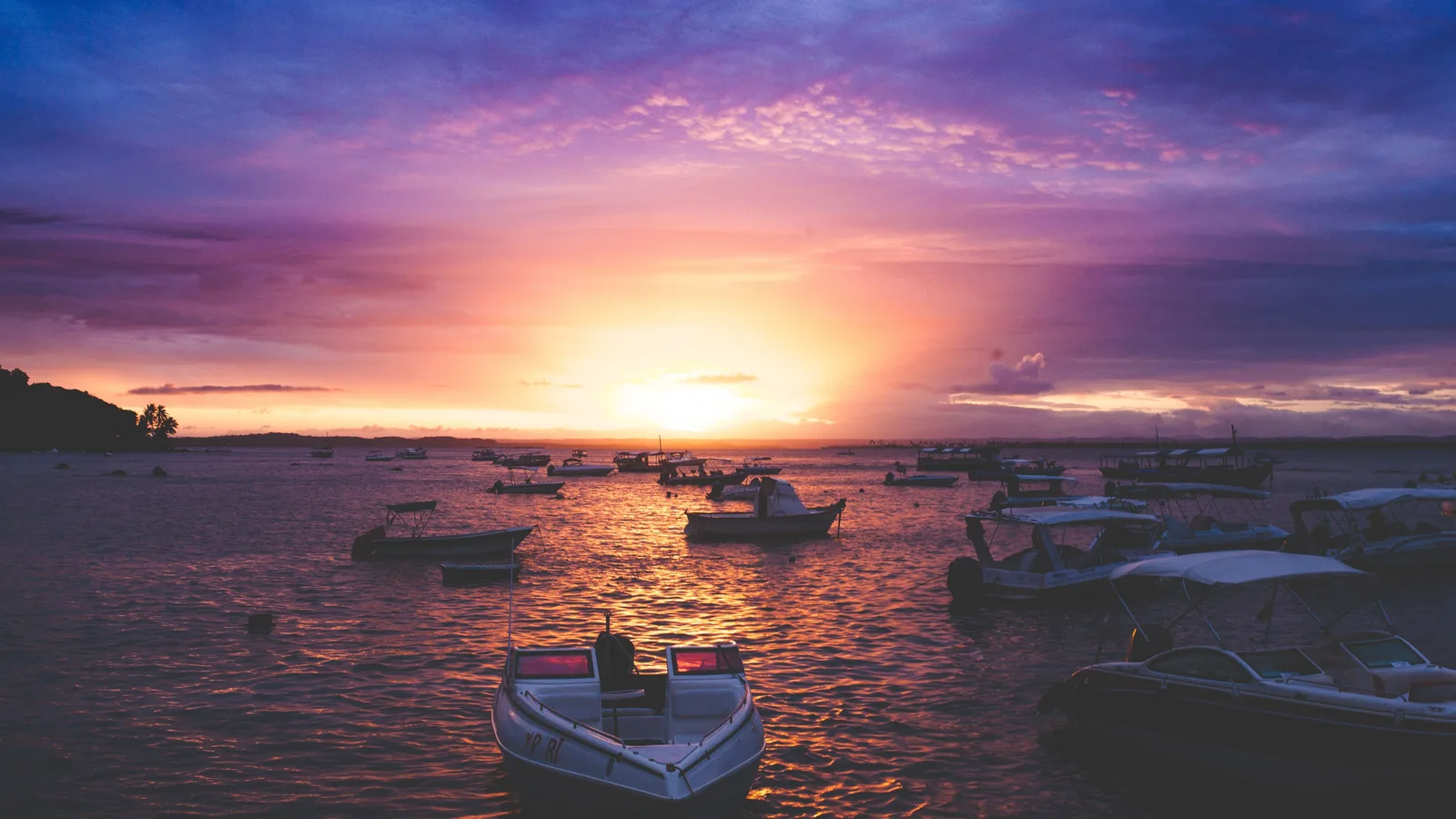
Sunset over the water at Morro de São Paulo, small boats lying at anchor in the foreground and the sun dropping behind a low line of land

Skip the planning

Get to the island without losing a day to it.

Tell us your dates and how you feel about a rough sea, and we will shape a Bahia trip around them — the right crossing for your group, a pousada on the beach that matches the trip you actually want, the boat day booked on a tide that works, and Boipeba added if two nights of quiet is what you are really after.

  • One person, living in Brazil, replying to you directly
  • A reply within one business day — no call center, no bots
  • No cost to plan, and no obligation to book
  • Built around your dates, not a fixed departure