
Skip to content
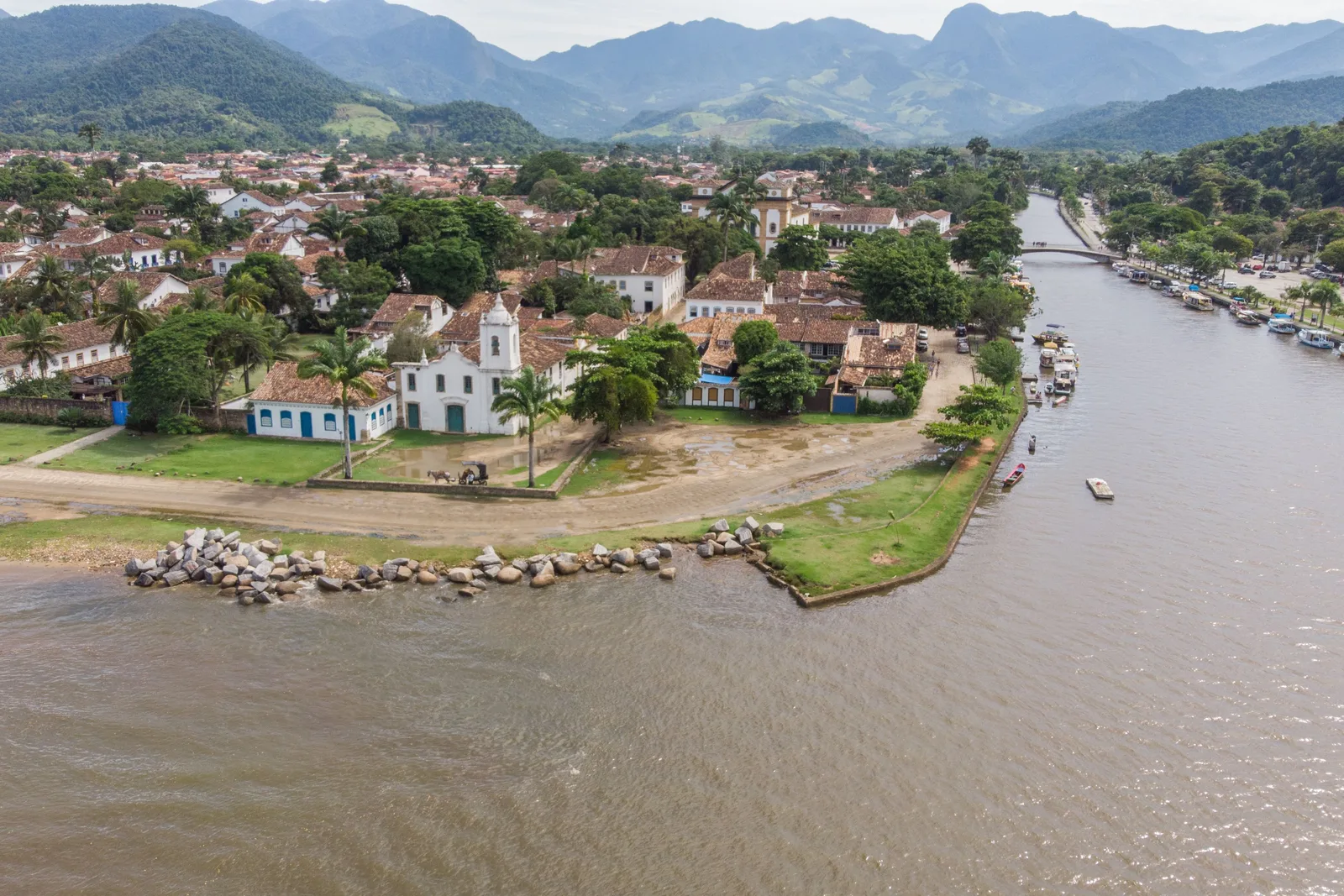
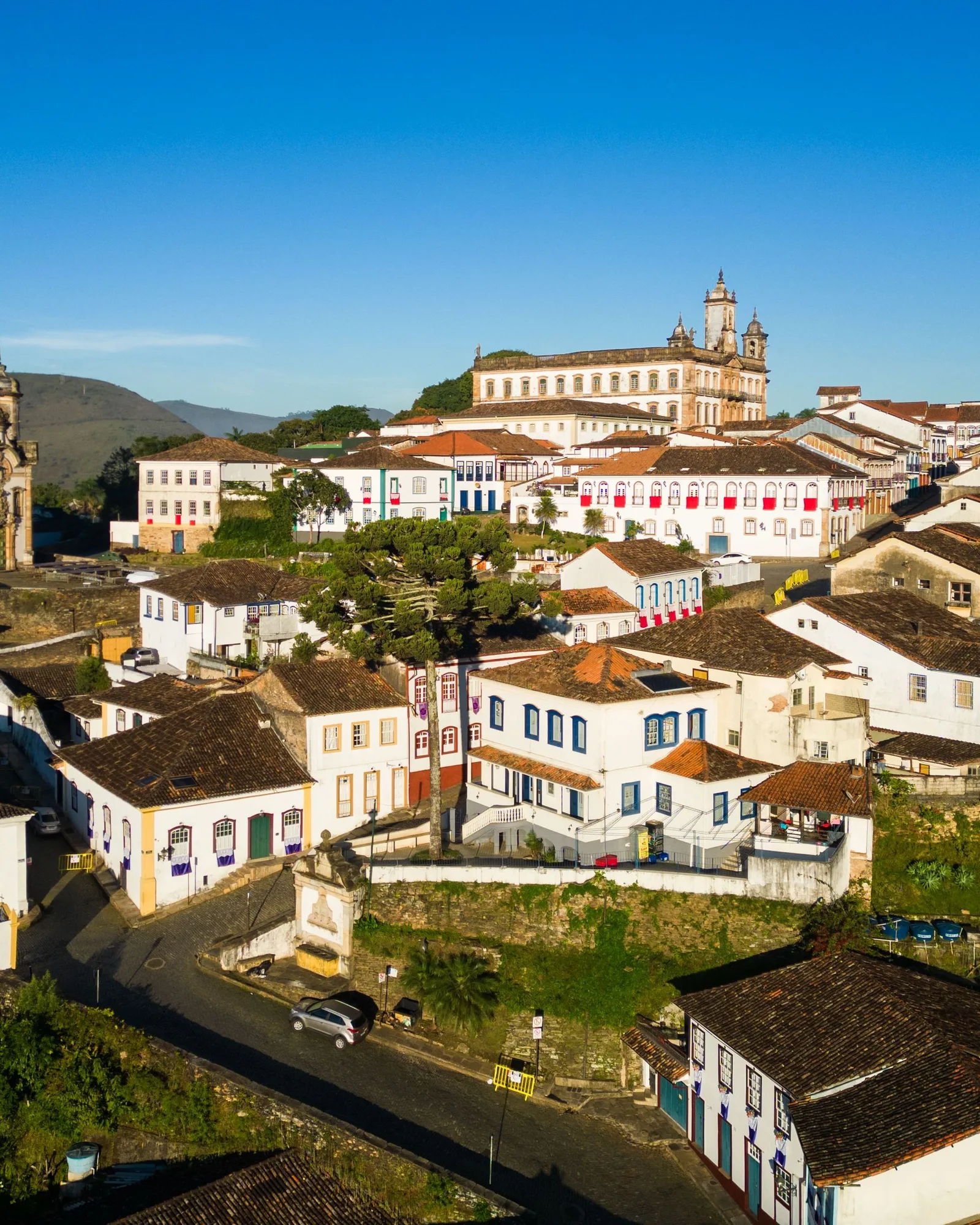
Aerial view of Paraty at golden hour: the white-and-color grid of the colonial center with the Matriz church tower at its heart, the Perequê-Açu river mouth on one side, and the bay and its wooded islands behind, with the wall of the Serra do Mar rising steeply behind the town

Costa Verde

Paraty

Brazil’s gold sailed from here. The town never changed.

Last checked September 2026

  • Paraty from the air: the white colonial town on its point where the river meets the bay, green mountains behind
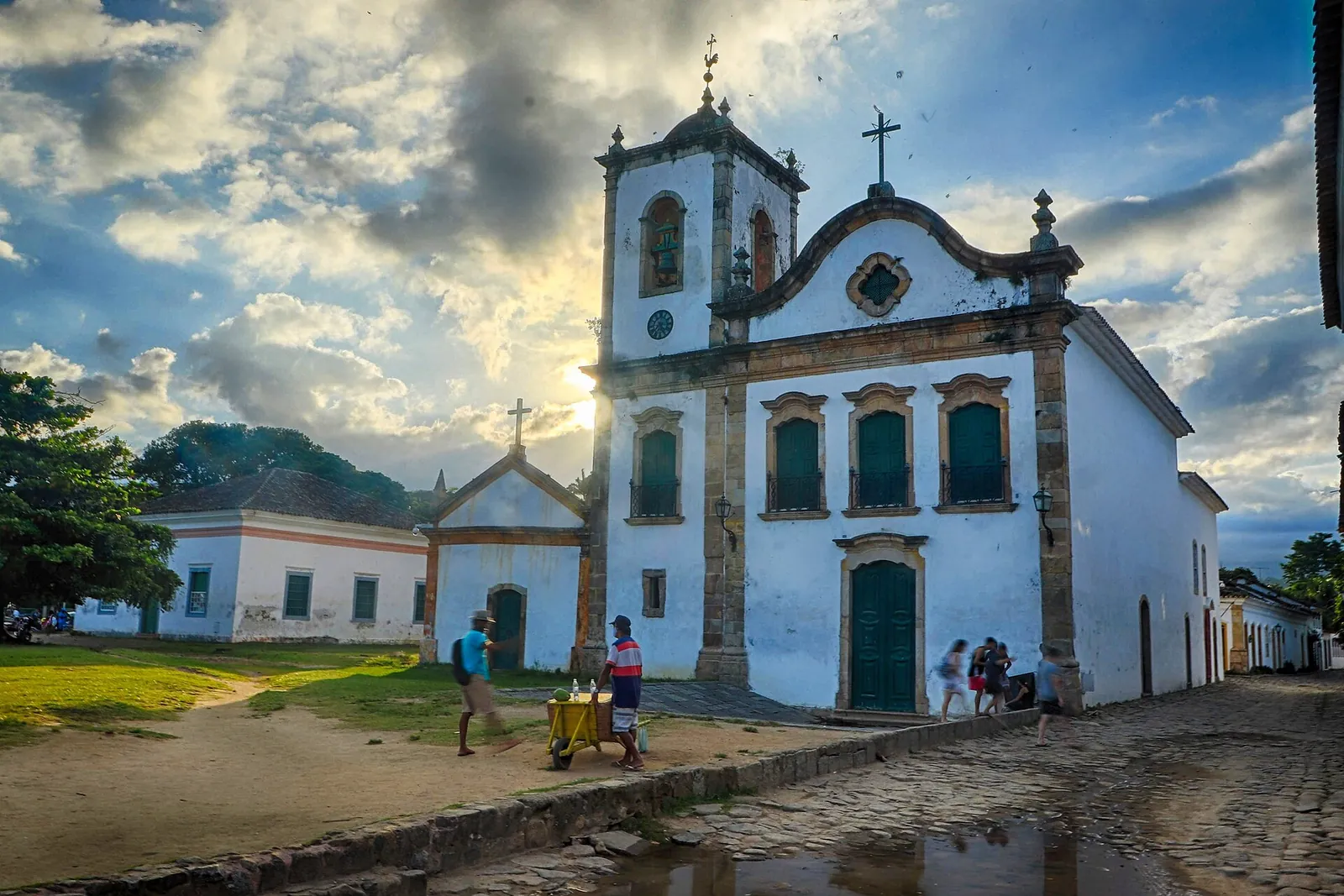
  • The white baroque church of Santa Rita under a dramatic sky, people crossing the cobbled square in front
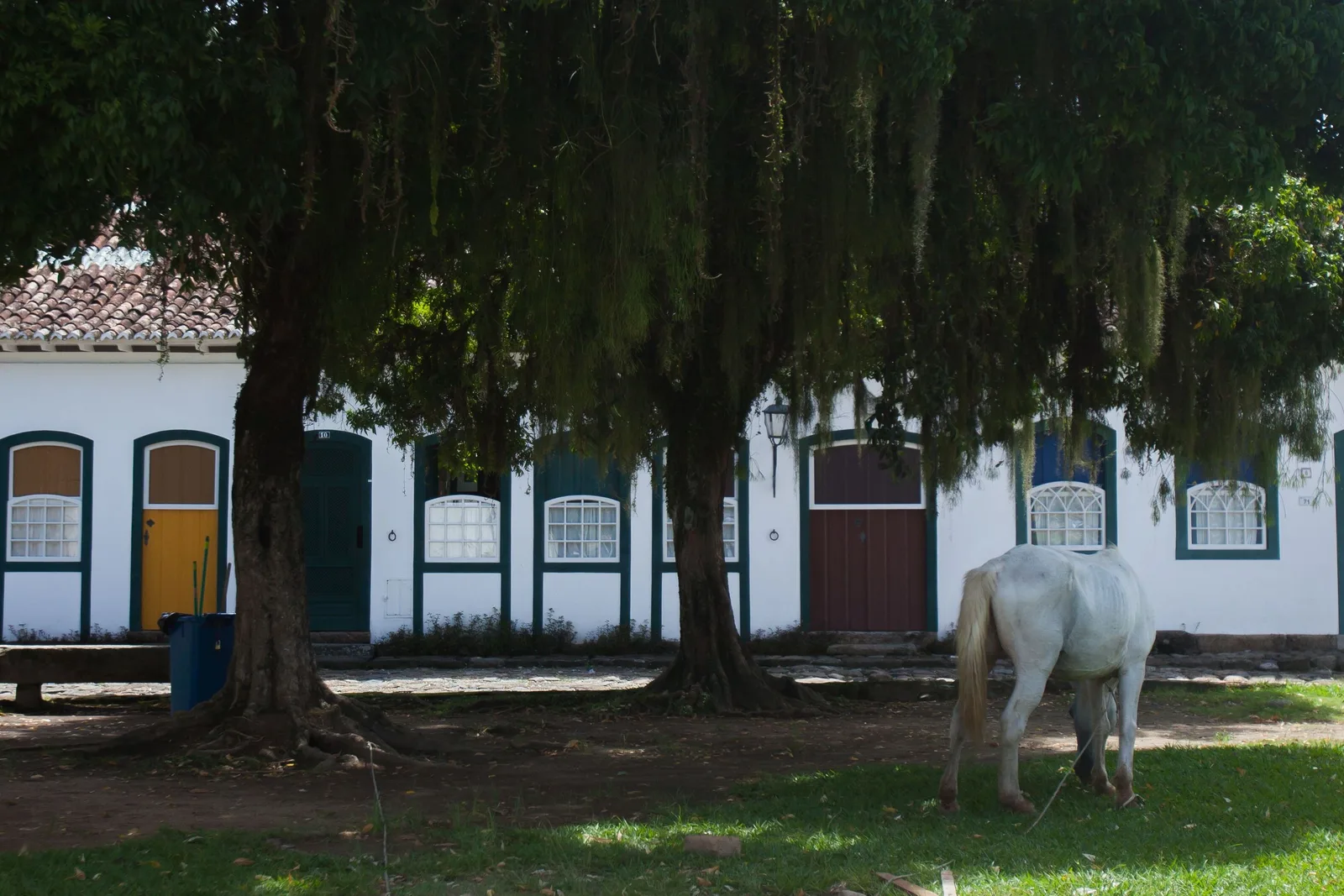
  • A white horse grazing in the shade of big trees in front of a row of colonial houses
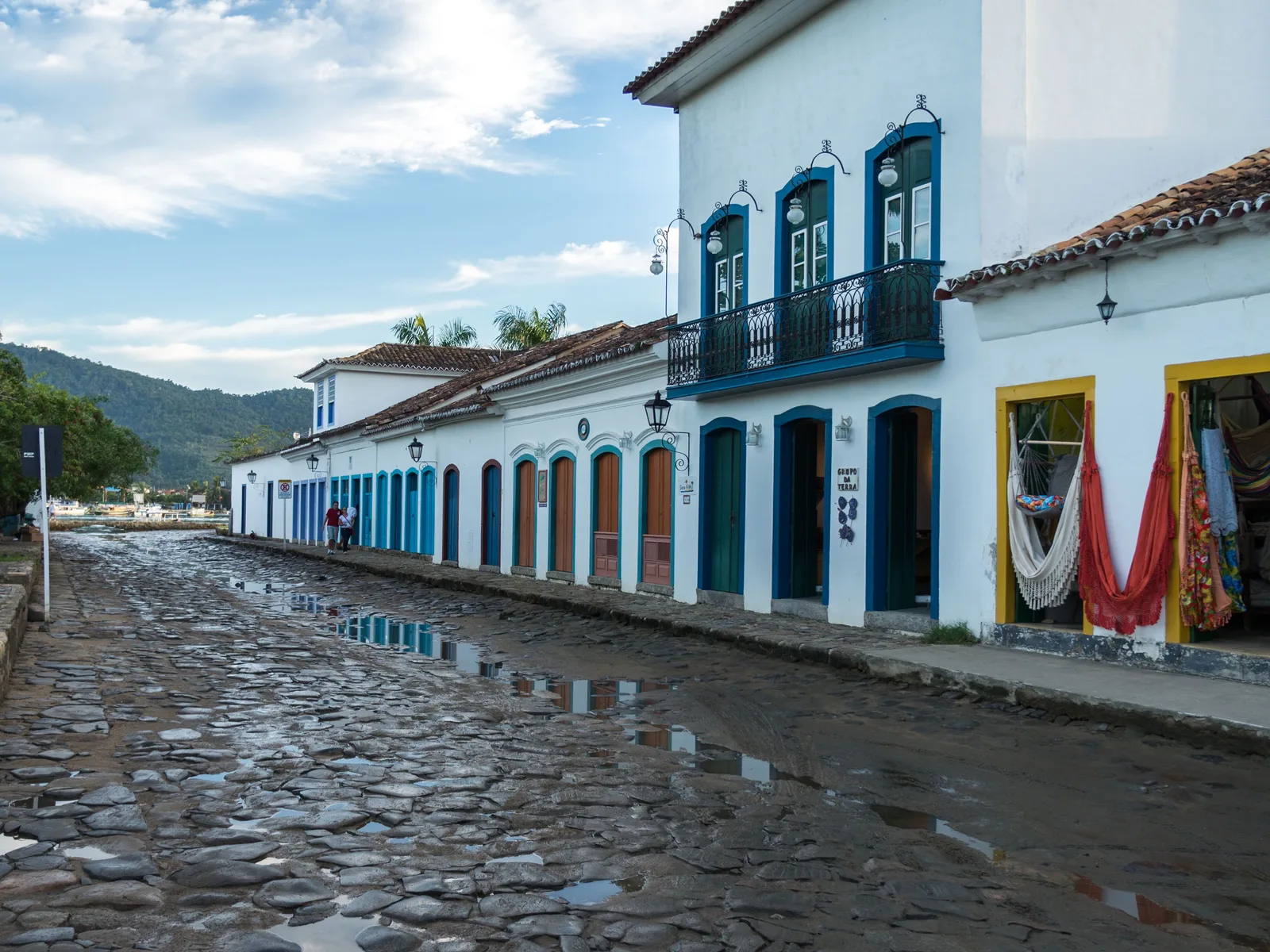
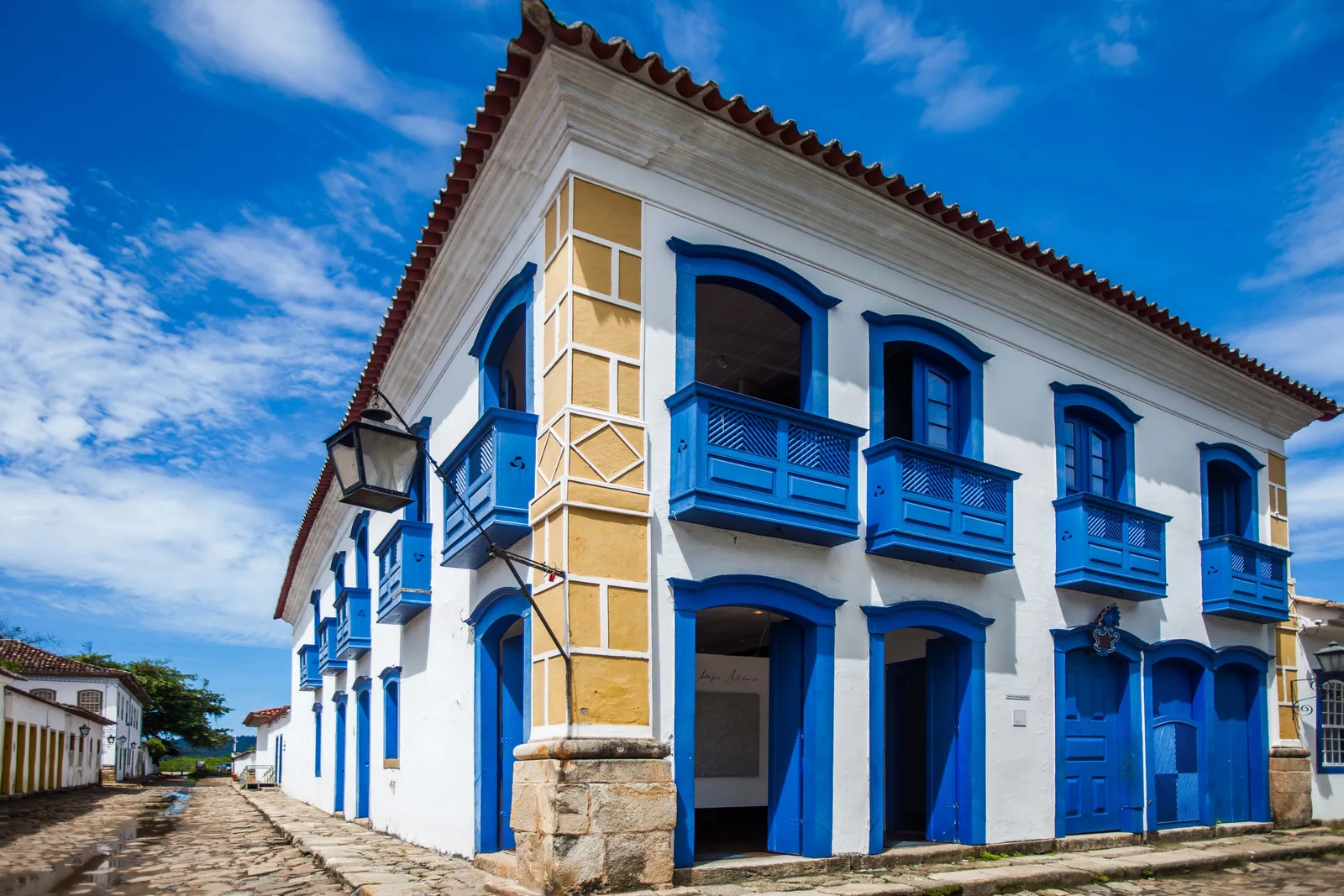
  • A two-story colonial corner house with bright blue balconies, doors and shutters, on a cobbled street
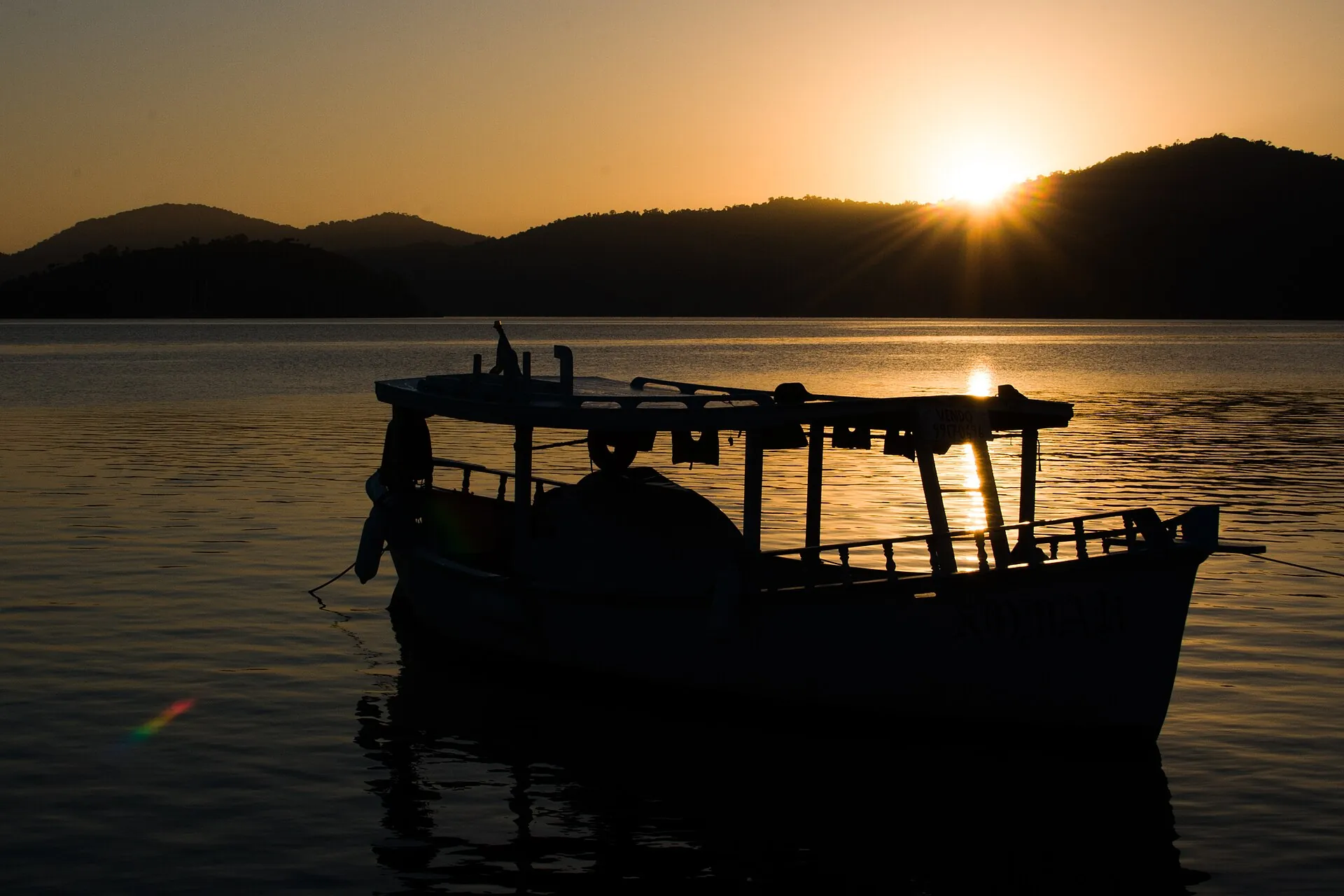
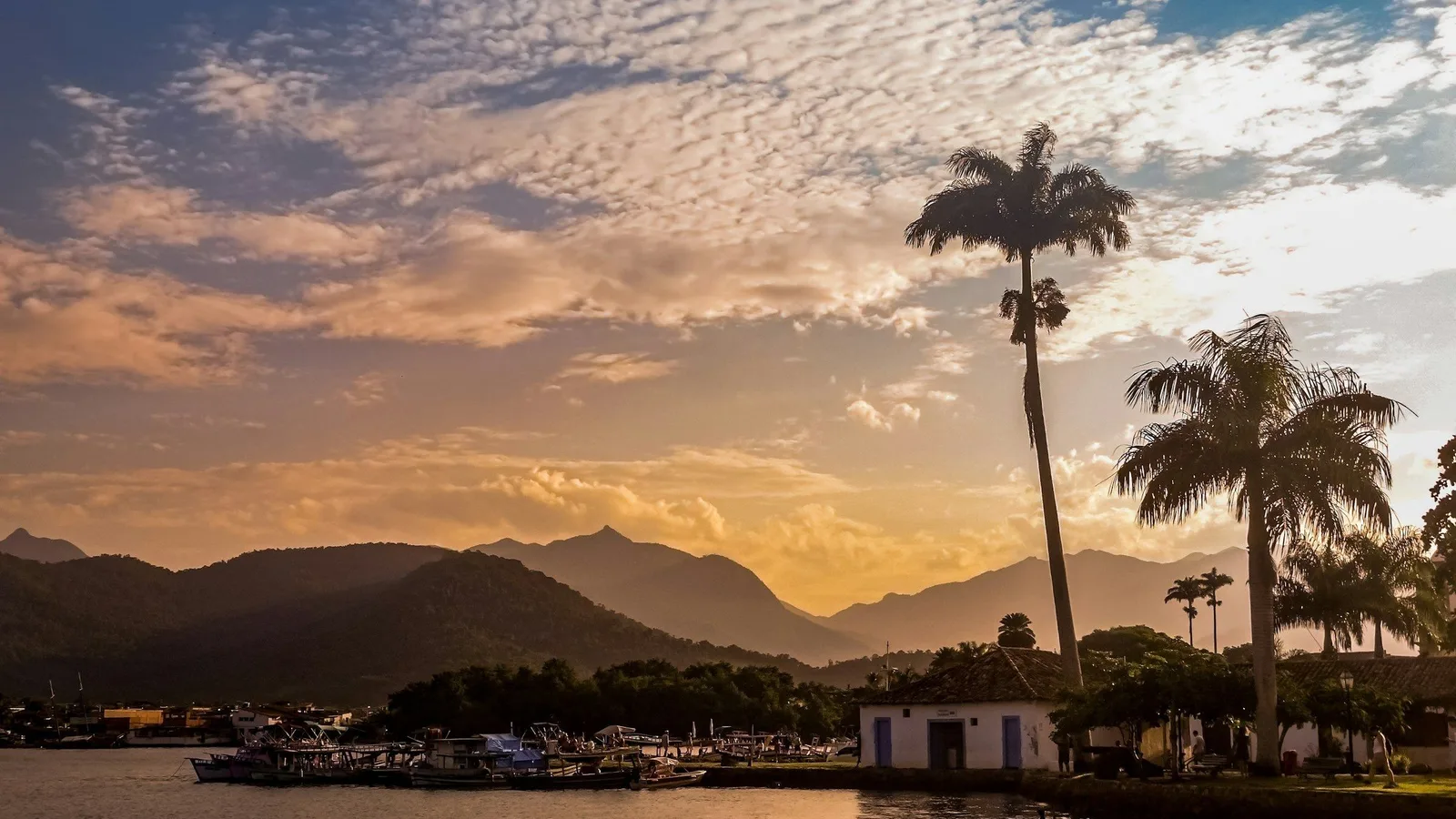
  • The silhouette of a wooden boat on still water at sunset, the sun dropping behind the hills
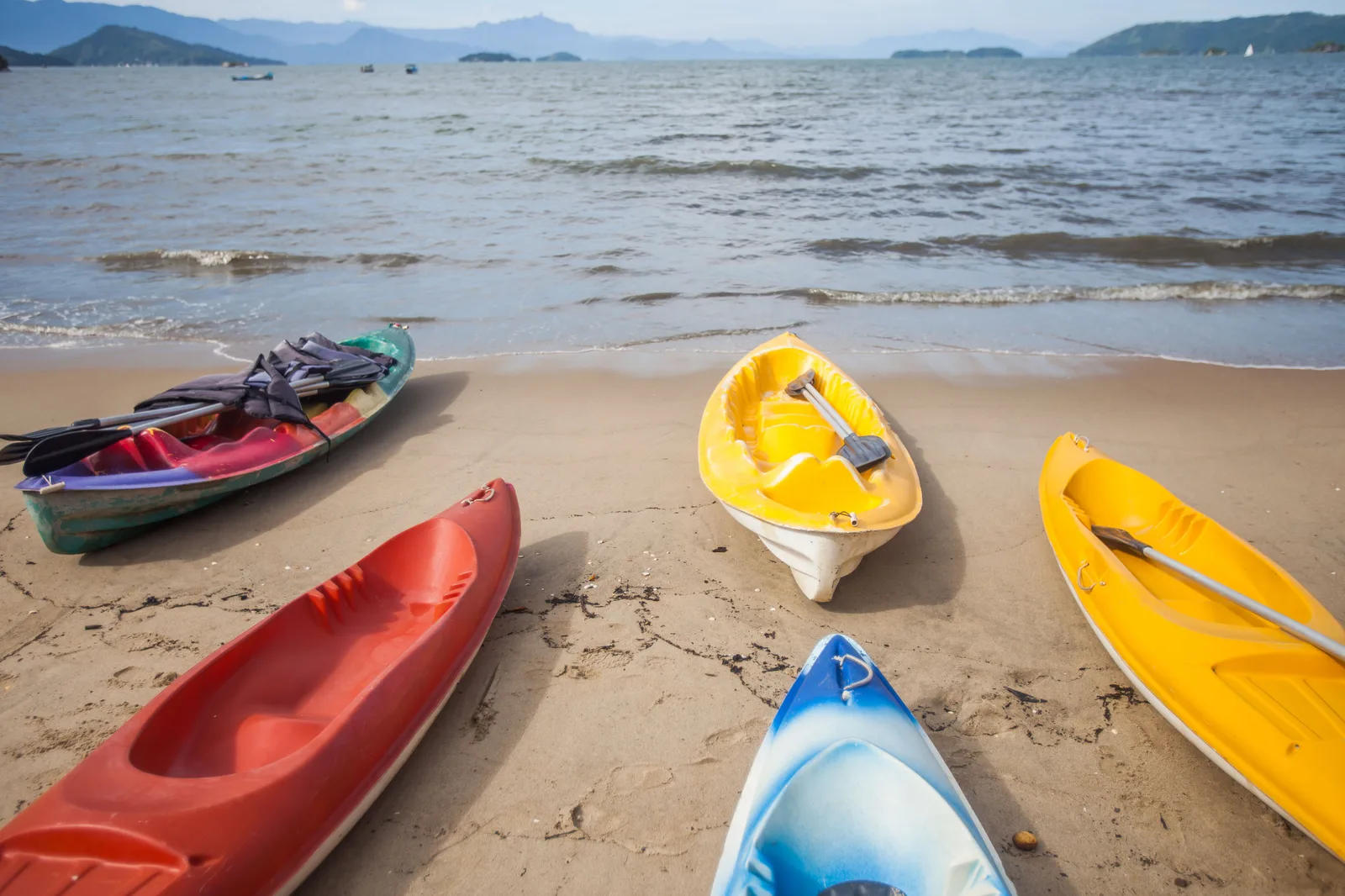
  • Bright red, yellow and blue sea kayaks pulled up on the sand at Praia do Pontal, islands on the bay behind
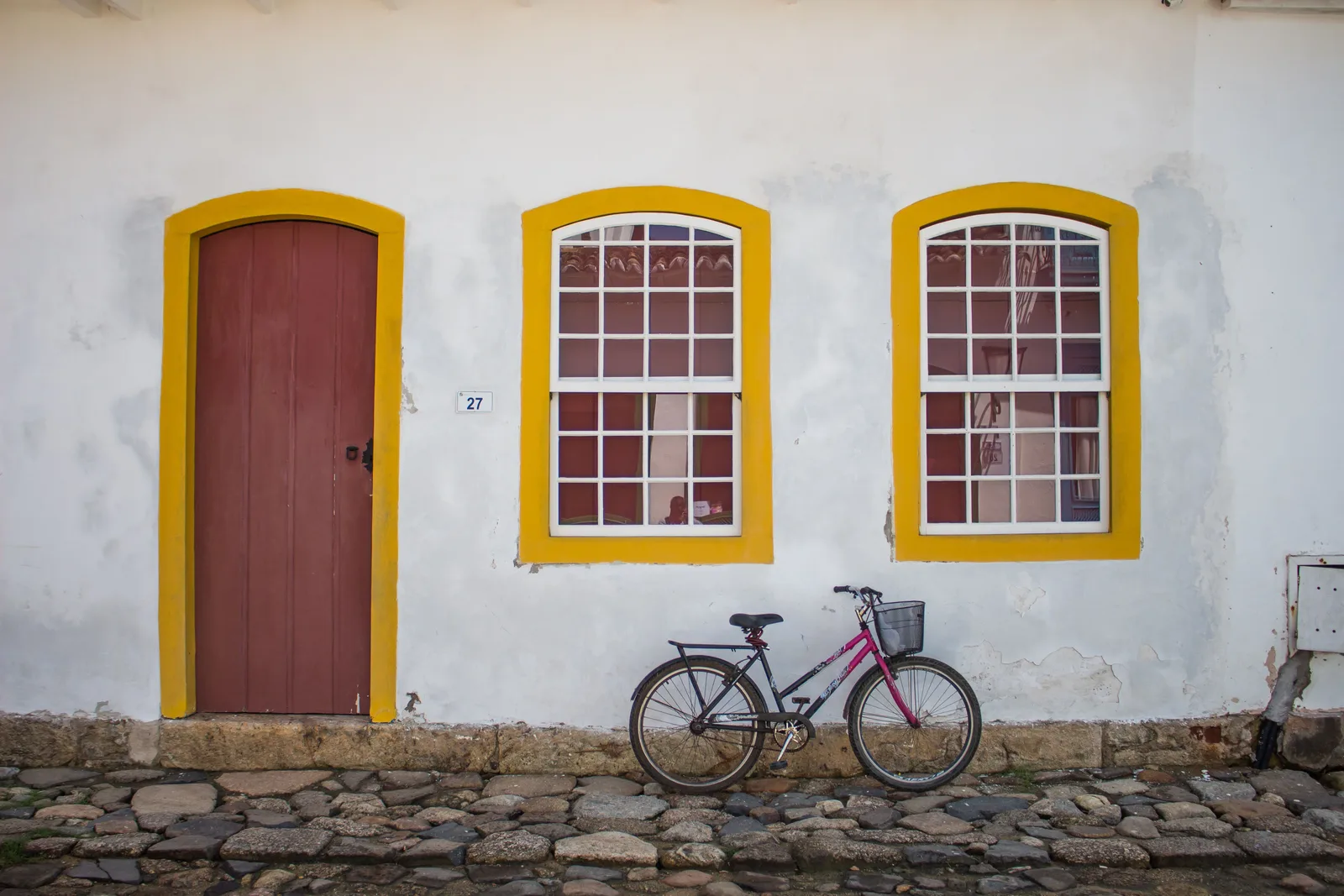
  • A bicycle leaning on a white wall under yellow-framed windows and a red door in the historic center
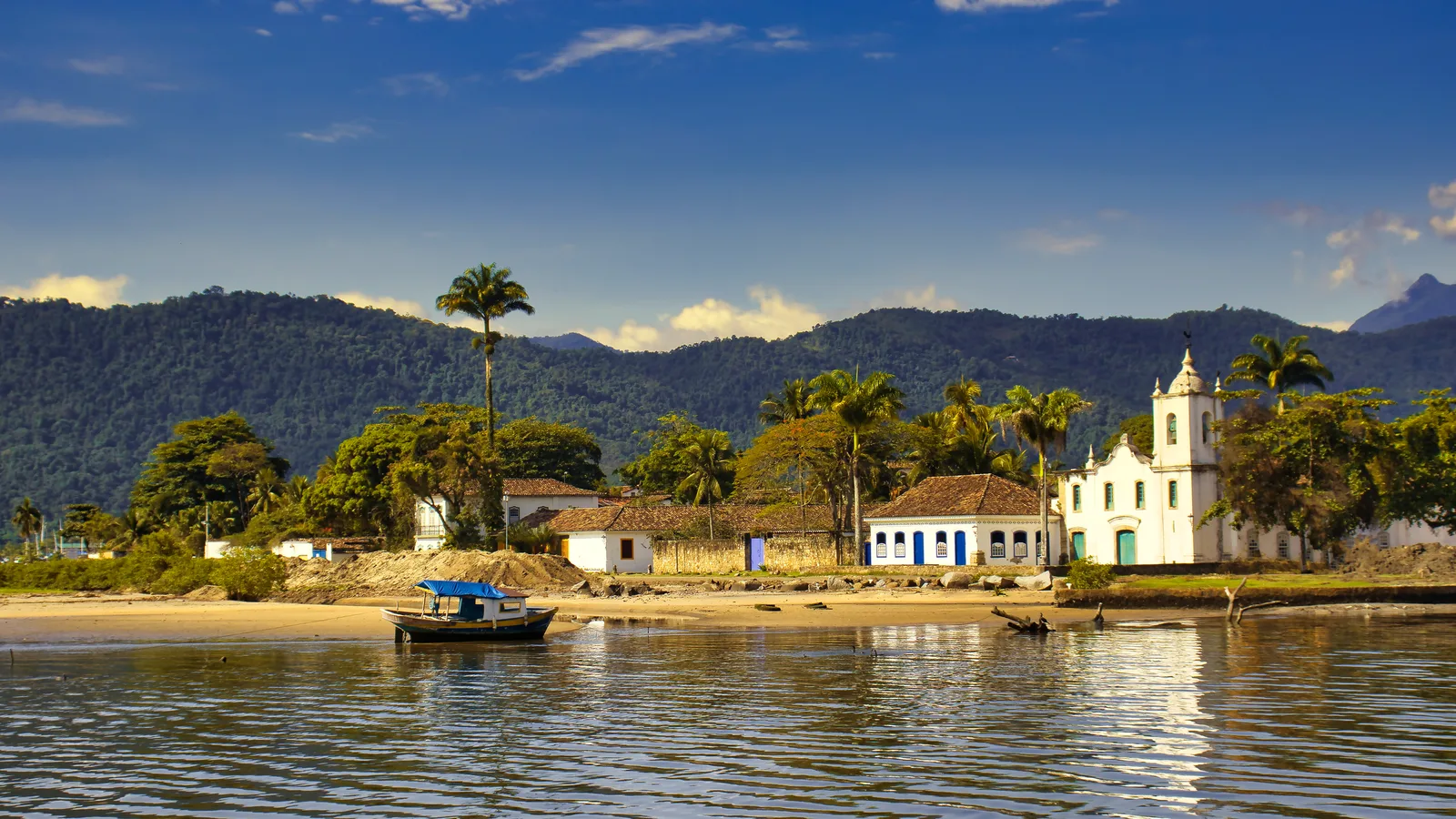
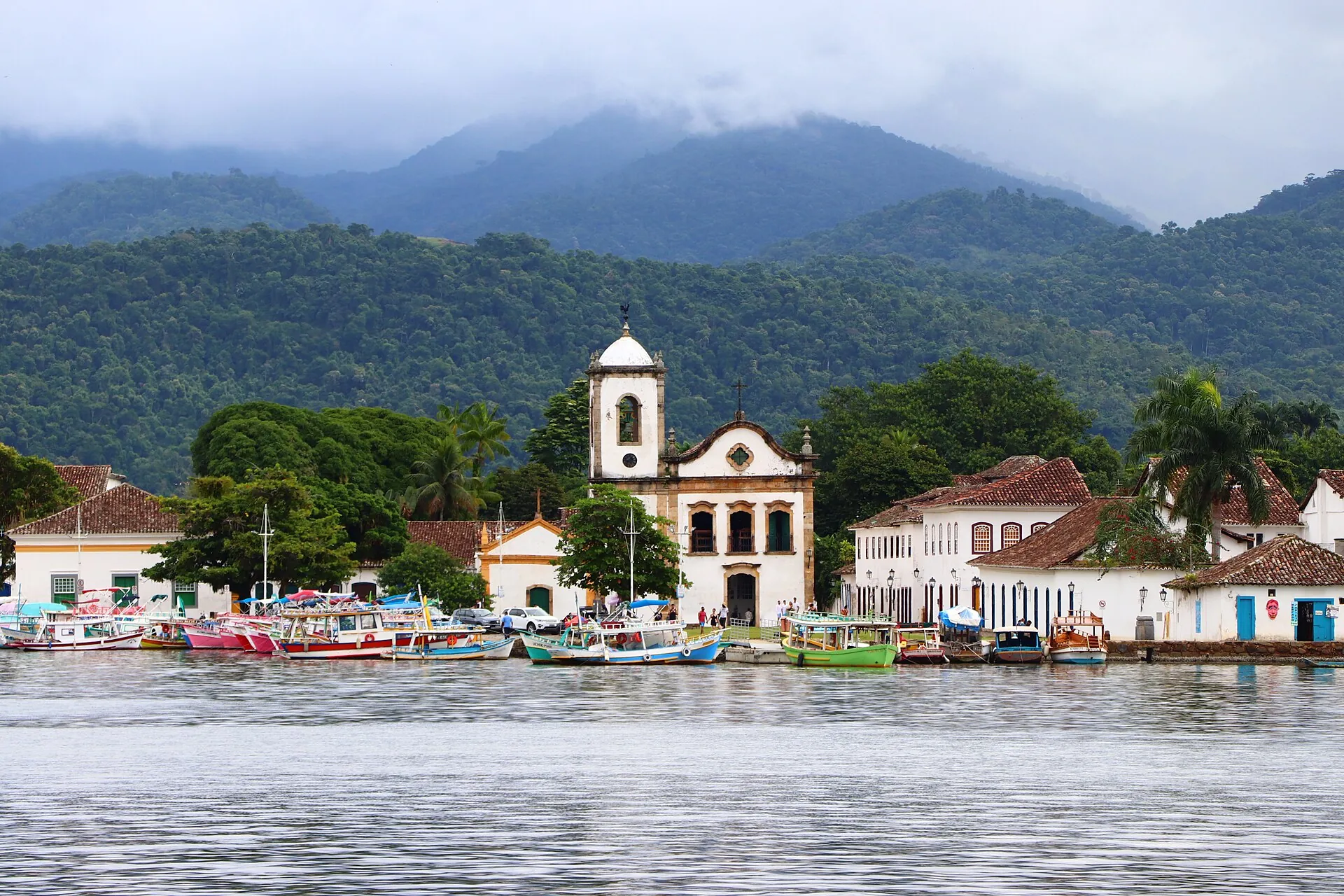
  • The church of Santa Rita and the colonial waterfront seen from the bay, colorful boats moored in front and misty mountains behind
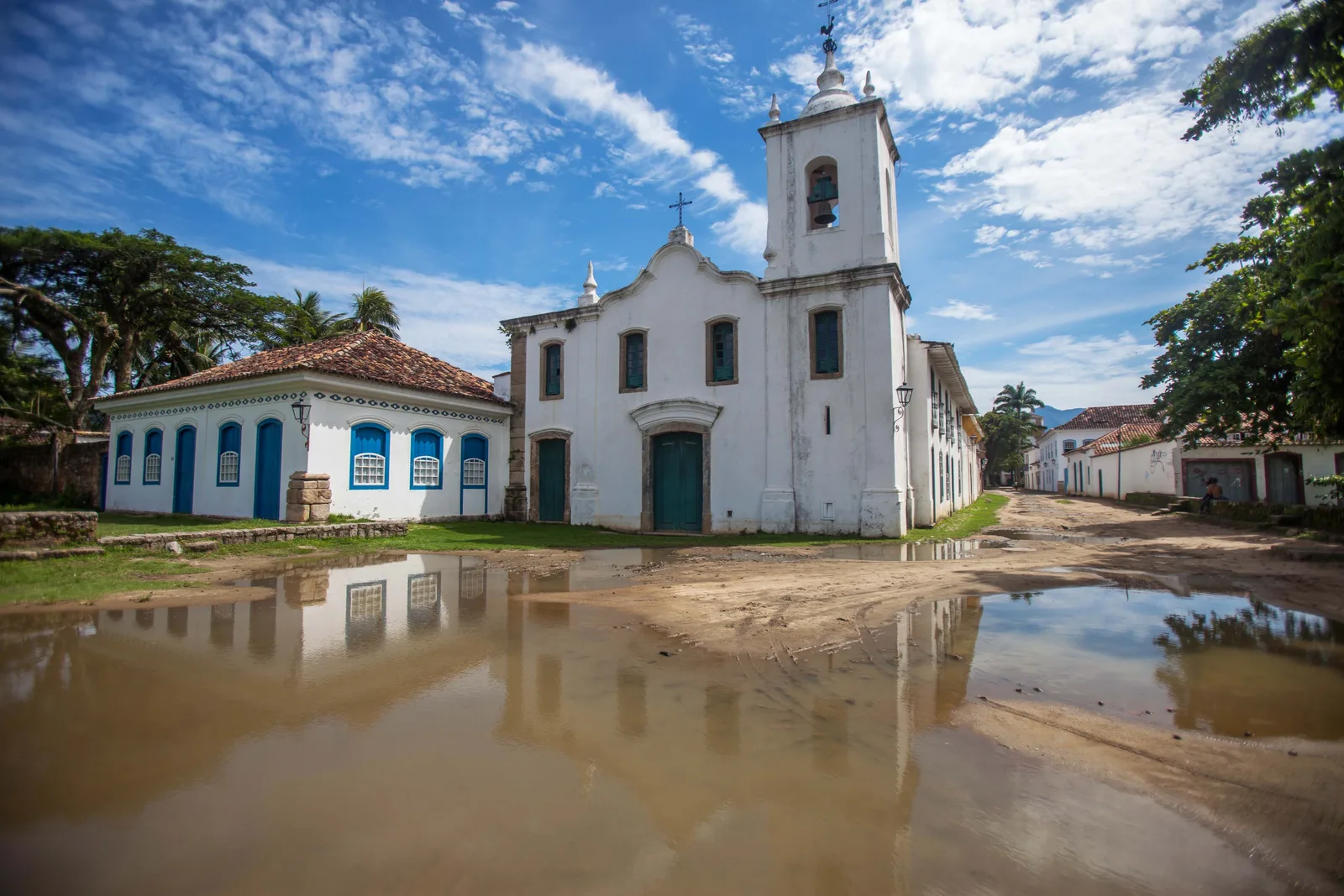
  • A white colonial church and its bell tower reflected in a rain puddle on a quiet street
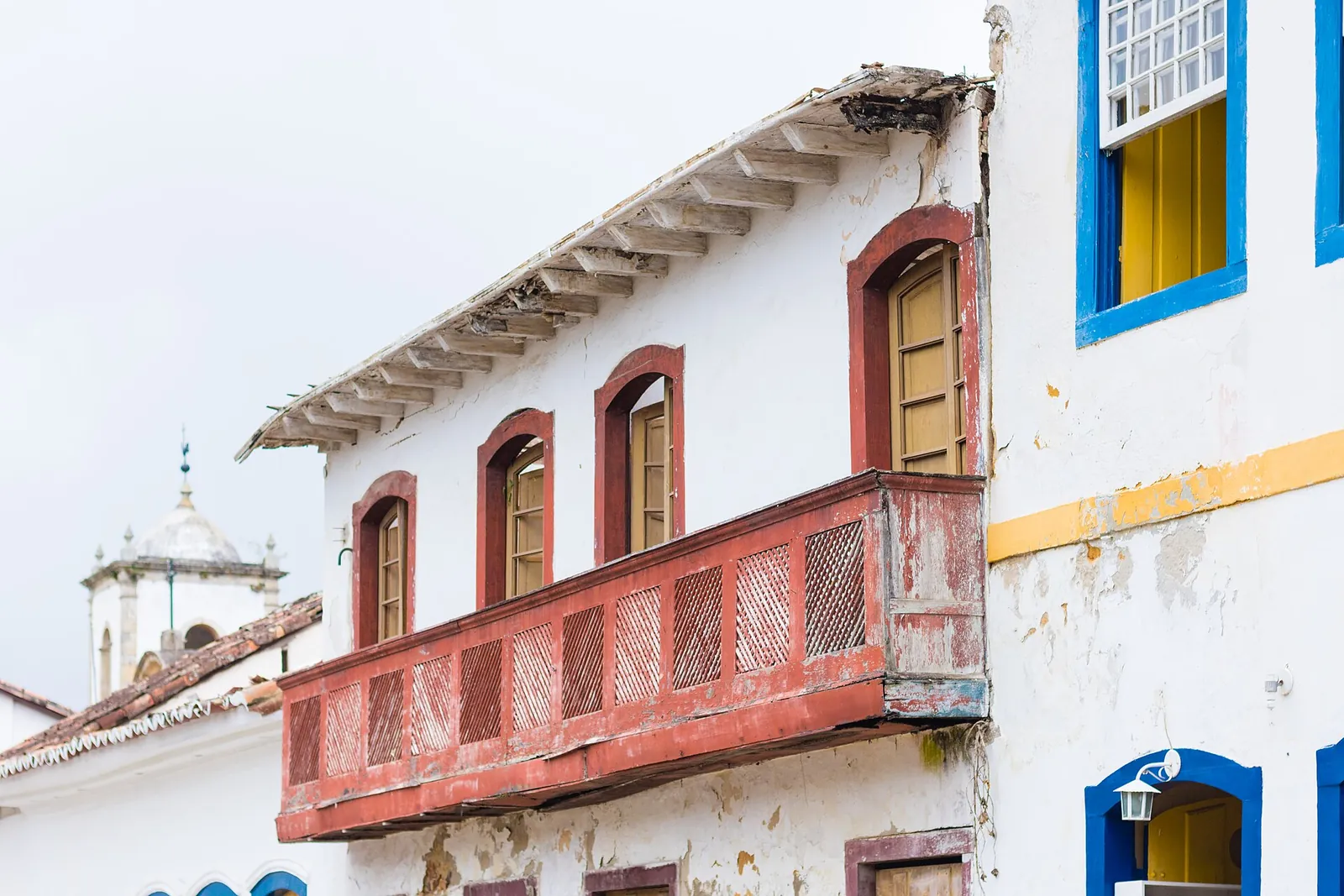
  • A carved red balcony on a whitewashed colonial house with blue and yellow window frames
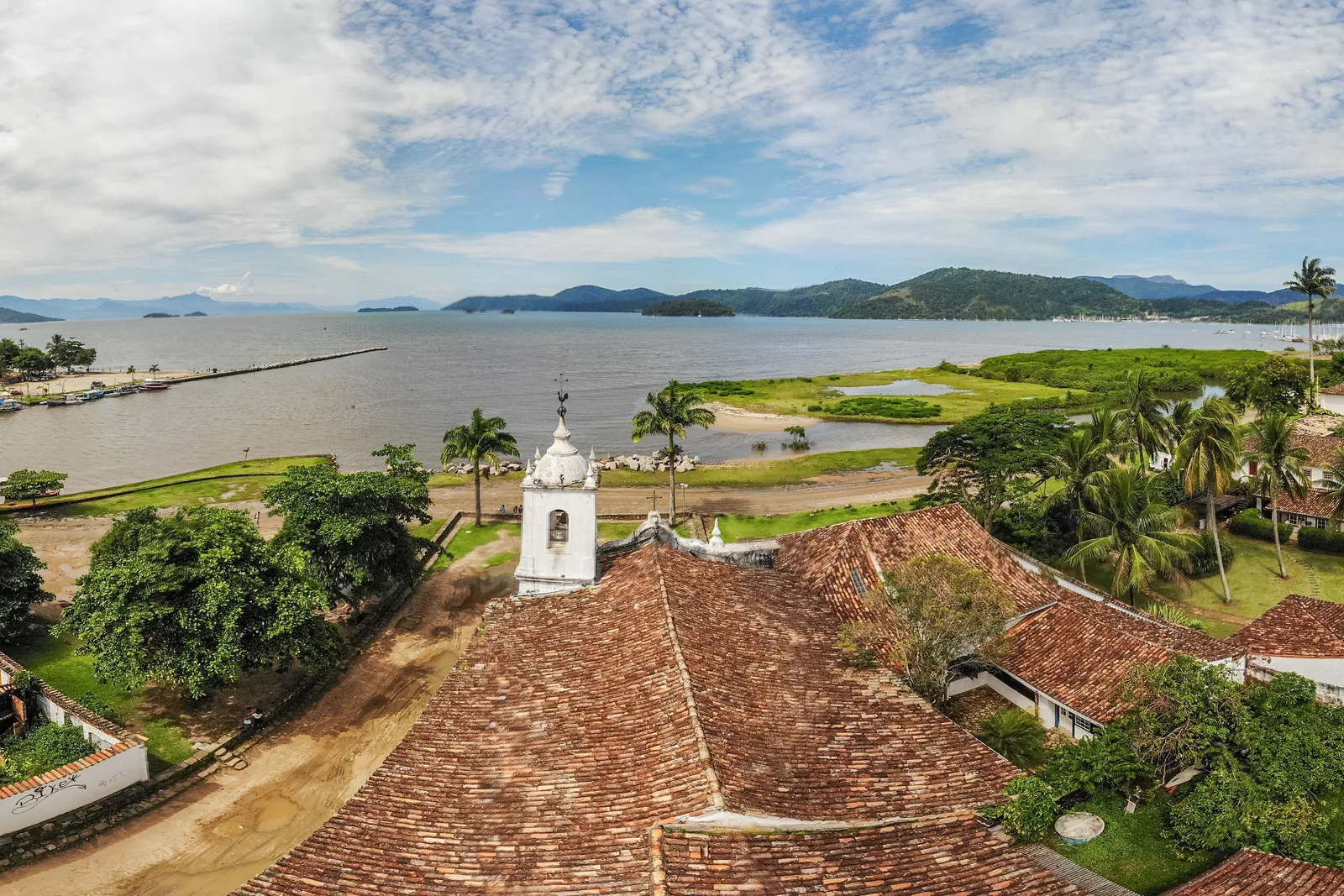
  • Looking over old tile rooftops and a small church tower toward the islands of Paraty Bay

Orientation

The town in one screen.

Everything logistical, before the pretty pictures start.

General Info

What makes Paraty, Paraty

Paraty is a small colonial port on the Costa Verde, the stretch of coast between Rio de Janeiro and São Paulo where the Serra do Mar comes down almost to the water. The town was founded in 1667, and for most of the eighteenth century it was the place Brazilian gold left the country from: mule trains carried it 1,200 kilometers down a stone-paved road from the Minas Gerais mines to Paraty’s quay, and ships took it from there to Lisbon.

Then the road was abandoned — pirates, and a shorter route to Rio — and the town simply stopped. It stayed stopped for a century and a half. There was no coast road until the 1970s, so until living memory Paraty was reached by boat or by the mountain track to Cunha, and there was never any money or reason to knock the eighteenth century down and build something newer on top of it. The historic center was made a national monument in 1966, before the road arrived; what you walk through today is roughly the town the gold built.

Since 2019 the town has also been half of a UNESCO World Heritage site. “Paraty and Ilha Grande: Culture and Biodiversity” is Brazil’s first mixed listing — recognized for culture and nature at once — and it takes in the historic center, the hill with the fort on it, and four protected areas of Atlantic Forest around the bay. That is the shape of a trip here: an afternoon of colonial architecture, and then several days of forest, islands and water.

Where It Is

Halfway between Rio and São Paulo

Paraty sits at the head of its own bay on the Costa Verde, in the far southwest corner of Rio de Janeiro state, right against the São Paulo border. It is about 250 km from Rio de Janeiro and about 330 km from São Paulo, both along the coast road, and there is no airport — everyone arrives by land.

Paraty Paraty

23.22° S, 44.71° W

See the Southeast on the interactive map

Cost

What a day here actually costs

Paraty is cheaper than Rio for almost everything except a room in the historic center, where the supply is fixed at whatever the eighteenth century left behind and the demand is not. The single biggest lever on a Paraty budget is the calendar: the town has a few thousand beds, and four or five weeks a year when every one of them is spoken for.

Estimated daily budget, regular season

Budget

$50 / day

A hostel bed or a simple pousada a few blocks out, food from bakeries and por-quilo places, the shared schooner, and the beaches the local bus reaches.

Mid-range

$110 / day

A pousada double split two ways near the center, dinner out most nights, and one paid trip a day — the jeep circuit, Trindade, a boat.

Comfortable

$230 / day

A colonial pousada inside the historic center, a private boat for a whole day in the bay, a driver for the coast, and no thought given to the bill.

Estimates, per person per day, once you are in Paraty — getting here is not included. These are April-to-November prices. Over Carnival, New Year and the festival weeks the accommodation line doubles or worse.

What things cost, outside the peak weeks

  • Mid-range pousada double, historic center $75 R$380
  • The same room at Carnival or New Year $185 R$950
  • Bus from Rio de Janeiro, one way $24 R$123
  • Bus from São Paulo, one way $23 R$116
  • Schooner cruise around the bay, 5 hours $16 R$80
  • Jeep tour: waterfalls and distilleries $21 R$105
  • Day trip to Trindade, with transport $29 R$150
  • Dinner for two in the historic center $34 R$175
  • Bottle of artisanal cachaça, at the still $12 R$60
  • Caipirinha made with Paraty cachaça $3.50 R$18

The room supply here is small and it is the whole game. Carnival, New Year, the Festa do Divino and FLIP fill the town completely, with multi-night minimums and prices two to three times the rest of the year. Book those months out, or come in one of the other forty weeks.

Cards work in the pousadas, restaurants and agencies, and Pix is universal. Carry some cash anyway — boatmen, beach kiosks, the local bus and the smaller distilleries are all easier with notes.

Restaurants add a 10 percent service charge to the bill. It is customary rather than compulsory, and it is almost always already included rather than expected on top.

Checked September 2026 and converted at R$5.10 to the dollar. Estimates, not quotes — the shape of a budget rather than a price you can hold anyone to.

Safety

An easy town, with physical hazards

8 /10

Our rating — about as relaxed as Brazil gets. The things most likely to spoil a trip here are the pavement and the sea rather than other people.

Paraty is a municipality of about 48,000 people whose economy is tourism, and the historic center is busy, lit and walkable at night in a way very little of urban Brazil is. Violent crime is not the visitor’s problem here; opportunistic theft is, in the same modest way it is in any small tourist town. What genuinely injures people in Paraty is the ground they are standing on.

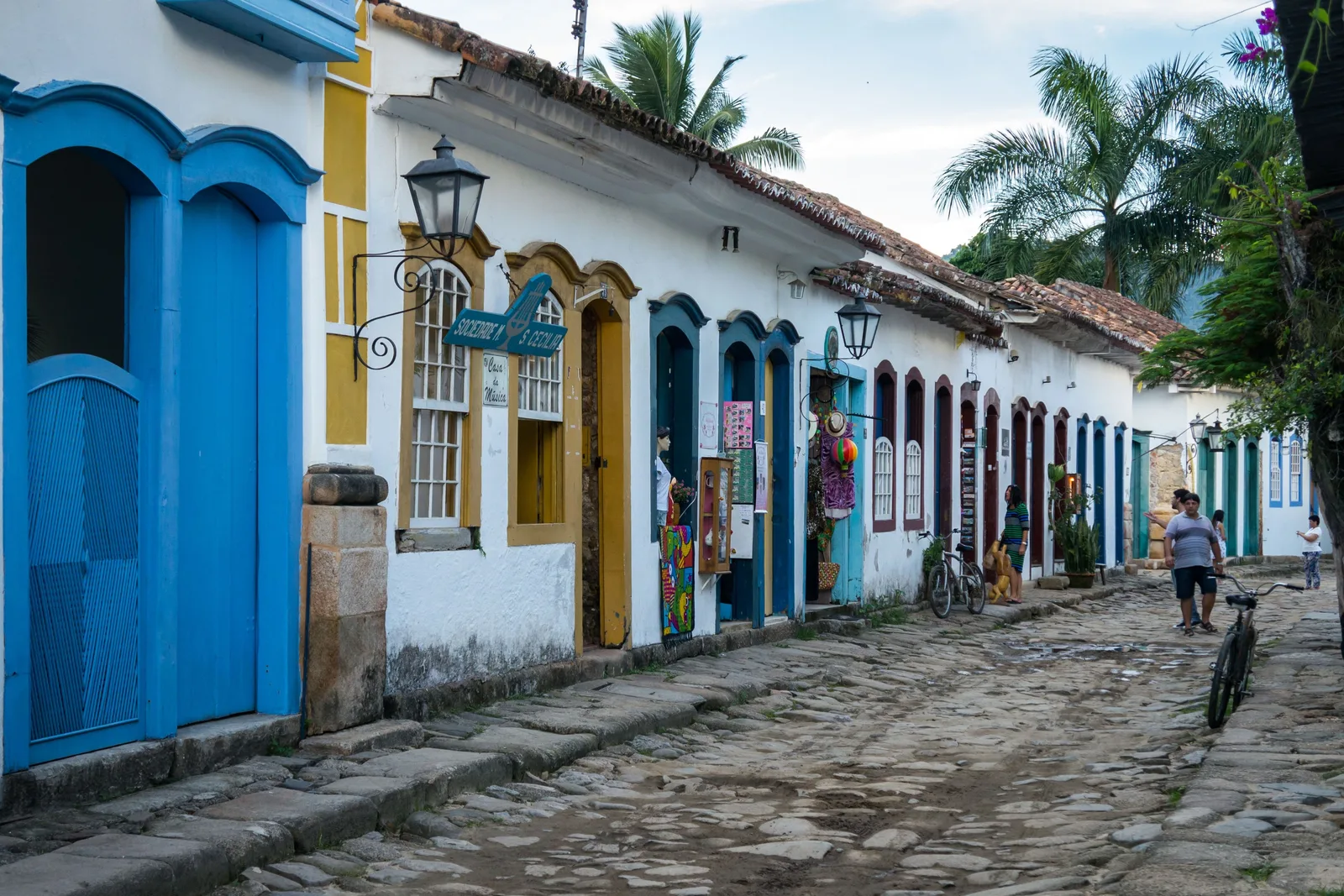
  • The paving is the number one hazard, and that is not a joke. The historic center is laid with irregular blocks of stone the size of a fist — locally pé de moleque, after a lumpy peanut brittle — and they are uneven, they are slick when wet, and the streets flood on the big tides. Wear shoes with a sole and an ankle strap. Thin heels do not survive an evening here.
  • Treat beach theft the way you would anywhere: nothing on the sand you would mind losing, nothing left with the towels while you swim, and the passport in the pousada rather than in a pocket.
  • The ocean beaches south of town are not the calm bay. Trindade, Praia do Sono and the beaches beyond them get real surf and rip currents, and most of them have no lifeguard at all. Ask locally before you swim out, and take the flags seriously where there are any.
  • The historic center is comfortable to walk after dark on the main streets, which stay busy. The side streets are genuinely dark — the lighting is deliberately period — so stay on the lit ones and keep the phone in a pocket rather than in a hand.
  • The Rio–Santos road is a beautiful drive and a demanding one: winding, two-lane for long stretches, wet often, and shared with trucks. Drive it in daylight, and add an hour to whatever the map says.
  • For the Gold Trail a licensed guide is legally required, and for Saco do Mamanguá and the longer forest trails a guide is simply the sensible option. This is a coast where trails end at the water and phone signal ends well before that.
  • Standard small-town sense covers the rest: use a taxi or your pousada’s driver late at night rather than walking back from a beach, and don’t leave anything visible in a parked car.

Getting There

No airport. Everyone comes by road.

Paraty has no commercial flights — the airstrip in town takes light aircraft and charters only. You arrive along the Rio–Santos coast road from one end or the other, and which end you pick usually just follows your international flight.

  • From Rio de Janeiro: Costa Verde runs buses from the Novo Rio terminal through the day, about 4 hours 45 minutes, from roughly R$120. Private transfers do it in about four hours and are worth it for a family or a late arrival.
  • From São Paulo: Reunidas Paulista runs from the Tietê terminal, about 6 hours 40 minutes, from roughly R$116, including overnight departures.
  • For flights from the US, Rio’s Galeão (GIG) is the usual arrival airport, with São Paulo’s Guarulhos (GRU) the alternative. Rio’s Santos Dumont (SDU) is the closest to the road but handles domestic traffic only.
  • Driving yourself: the BR-101 Rio–Santos is one of the great coastal drives in Brazil, threading between the mountains and the sea the whole way. It is also slow, twisting and often behind a truck. Do it in daylight and stop at Angra dos Reis or Trindade rather than pushing through.
  • On to Ilha Grande: about two hours by road to Angra dos Reis or Conceição de Jacareí, then 20 to 50 minutes on the water depending on which boat and which port. Agencies in Paraty sell it as a single door-to-door transfer.

Getting Around

You walk. Everything else is a boat.

The historic center is closed to cars and it is about ten blocks square, so the town itself is entirely a walking proposition. Beyond it, the coast is reached either by the one road that runs along it or, more often and more pleasantly, by boat.

  • No cars in the historic center, deliveries excepted. Park at the edge, in one of the paid lots, and leave it there for the duration.
  • Boats leave from the Cais de Turismo, the quay at the edge of the old town. Big schooners run a fixed five-hour circuit of the bay; small boats sit alongside them and can be hired by the day for whatever route you want.
  • Local buses run along the Rio–Santos road several times a day: south to Trindade in about 45 minutes, and north to the beaches on the Angra side. Cheap, slow, and entirely usable.
  • Taxis wait at the edge of the historic center and at the bus station. Ride apps do work, but the driver pool is small enough that a taxi is often quicker to get hold of.
  • A rental car earns its keep only if you are staying outside town or want the coast on your own schedule. Inside Paraty it is dead weight.

The big five

The five things Paraty is actually about.

A town, a bay, a beach village, a drowned valley and a road. Between them they cover almost everything anybody comes here for.

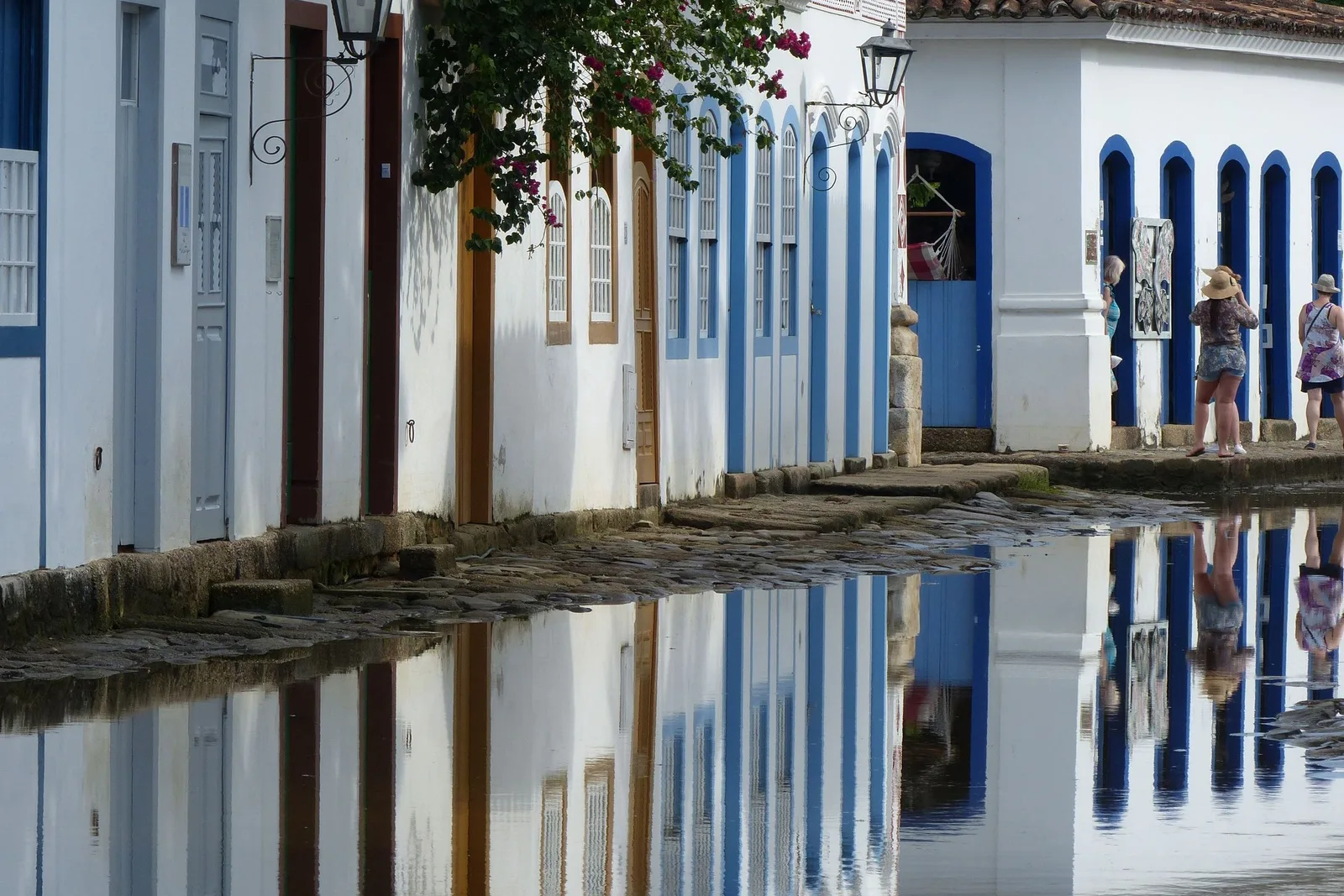
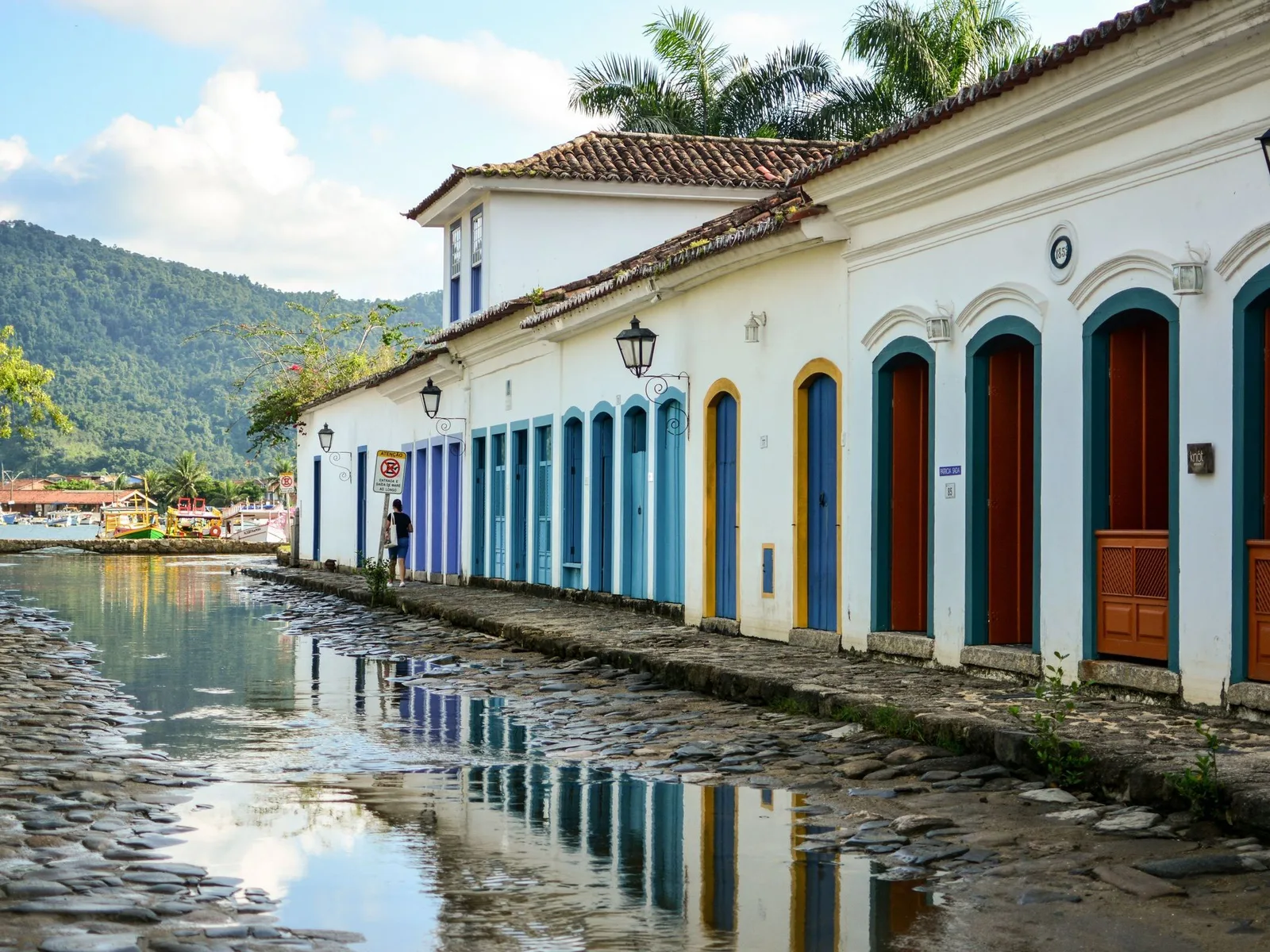
A Paraty street at high tide: seawater standing ankle-deep over the rough stone paving, whitewashed colonial houses with brightly painted door frames reflected upside down in it, and a church tower at the end of the street 01

A national monument since 1966

The Historic Center

Founded
1667, as a gold port
Cars
None — deliveries only
Best at
Early morning, or after dark

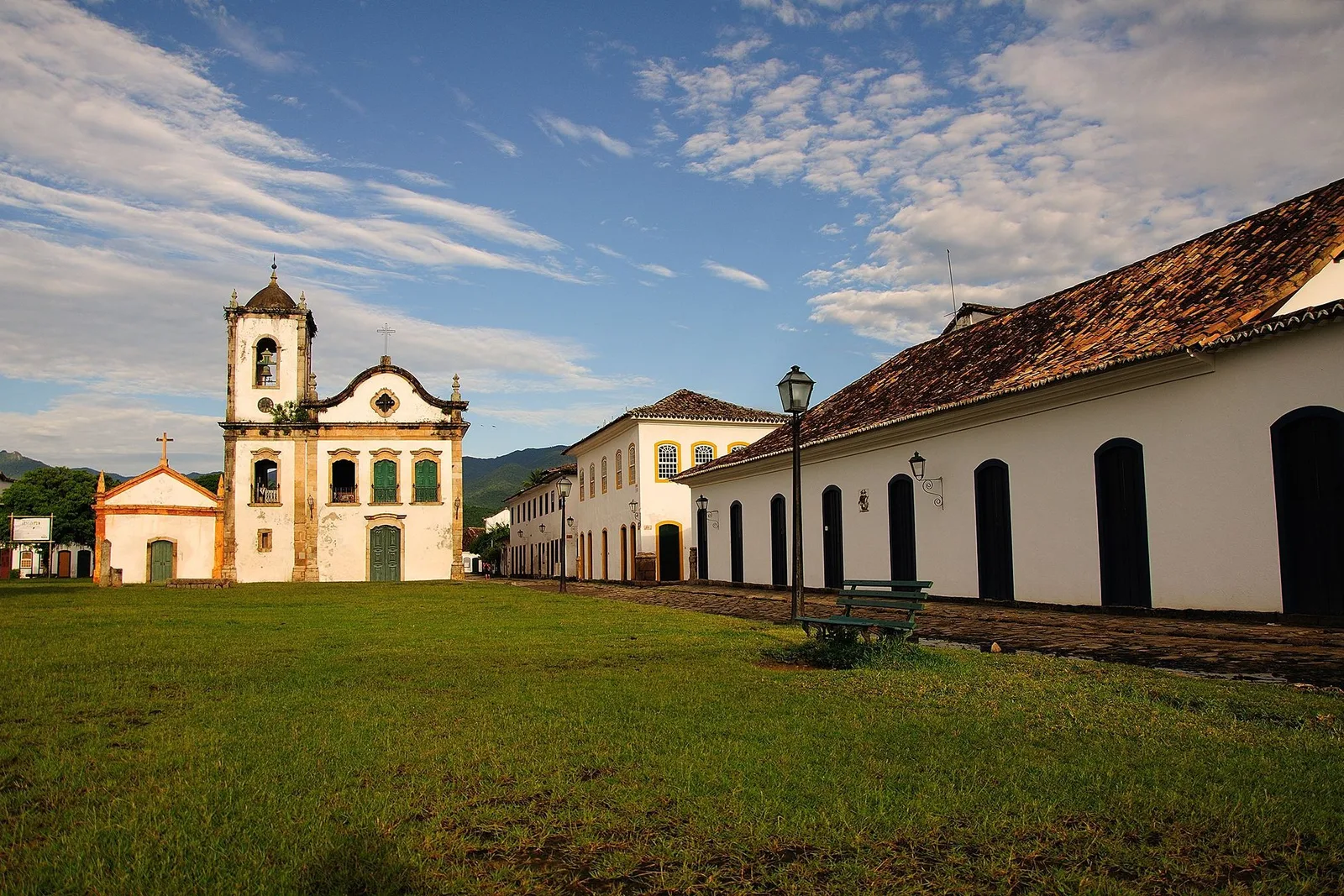
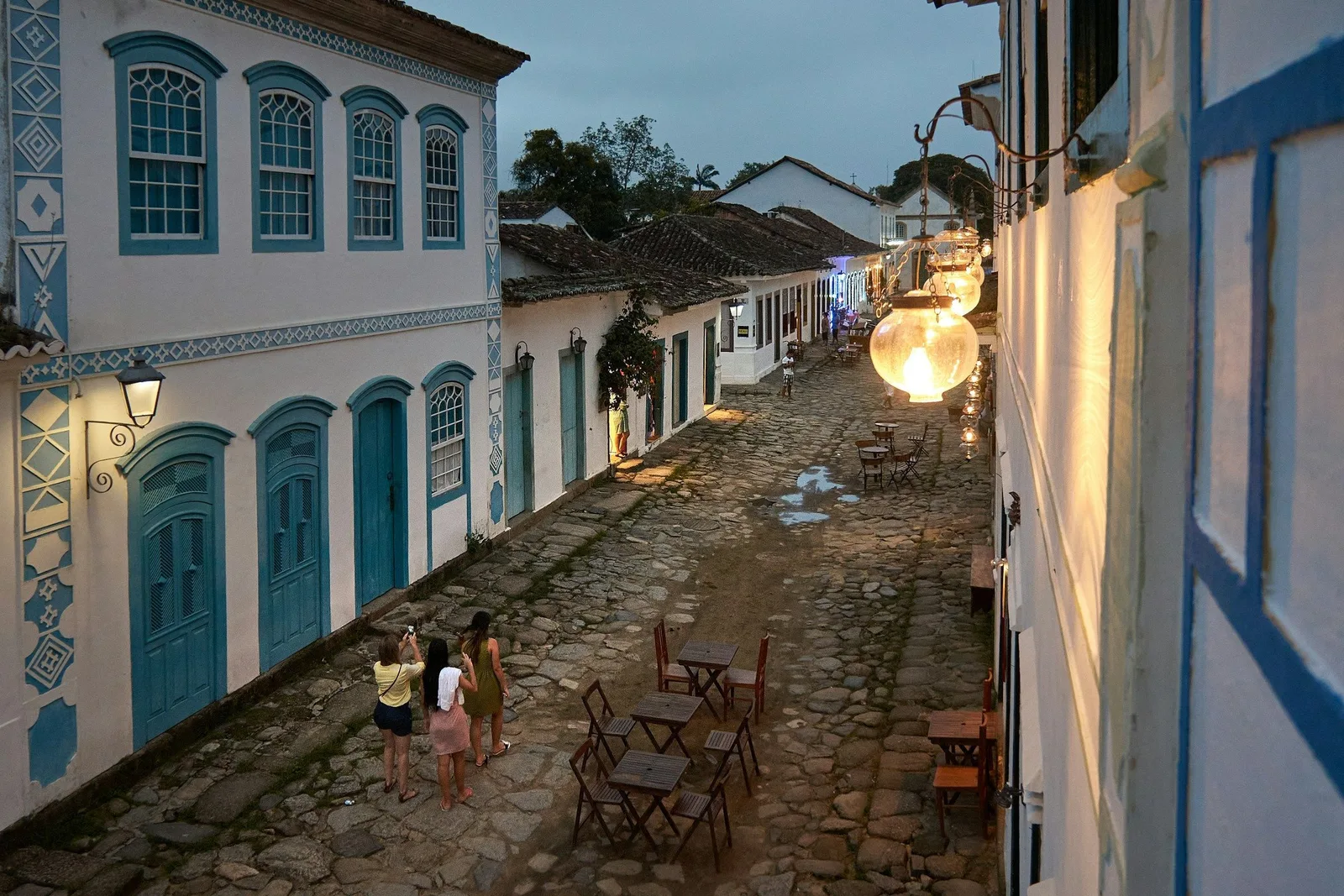
Ten or so blocks of whitewashed, low-slung colonial houses on a grid, their doors and window frames painted in flat blues, ochres and greens, laid on stone the size of your fist. Four churches punctuate it, and each one was built for a different group in a rigidly stratified colonial society: Santa Rita in 1722 for freed mixed-race people, Nossa Senhora do Rosário e São Benedito in 1725 for the Black population, Nossa Senhora das Dores in 1800 for the white elite, and the huge neoclassical Matriz de Nossa Senhora dos Remédios, finished in 1873, for everybody.

Twice a month, around the new and full moons, the tide comes up over the quay and runs into the lowest streets — ankle-deep, for an hour or two, with the houses doubled in the water. It is the most photographed thing in Paraty and it is on a schedule: check the tide table at your pousada and be there. Come back at night as well. There is no traffic and almost no modern lighting, and the town is entirely different for it.
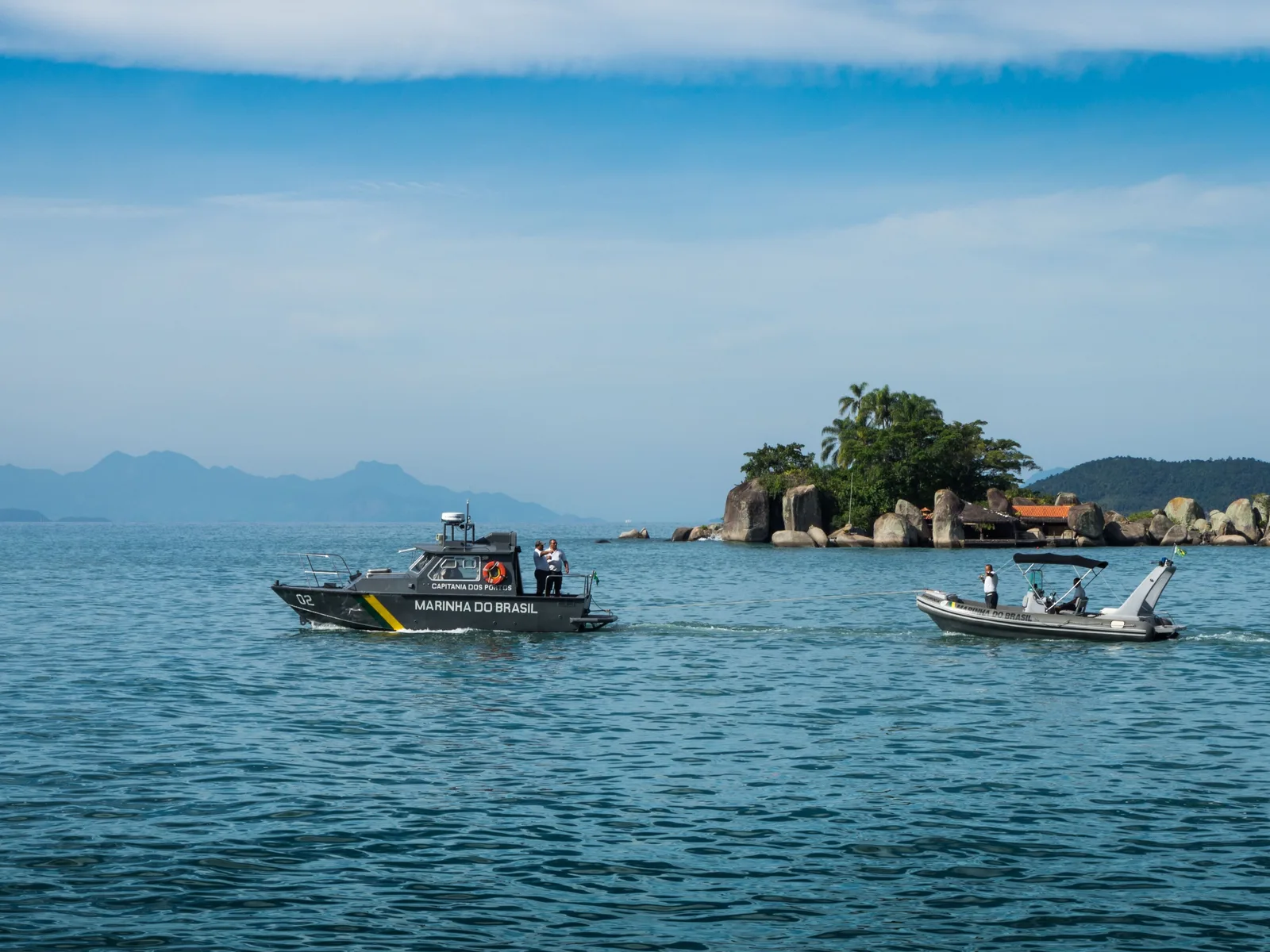
Boats on the flat green water of Paraty Bay with a small forested island behind them and the mainland ridges beyond 02

Sixty-five islands, and nowhere to park

Paraty Bay

Islands
Around 65 in the bay
The standard trip
Five hours, four swim stops
Leaves from
The Cais de Turismo

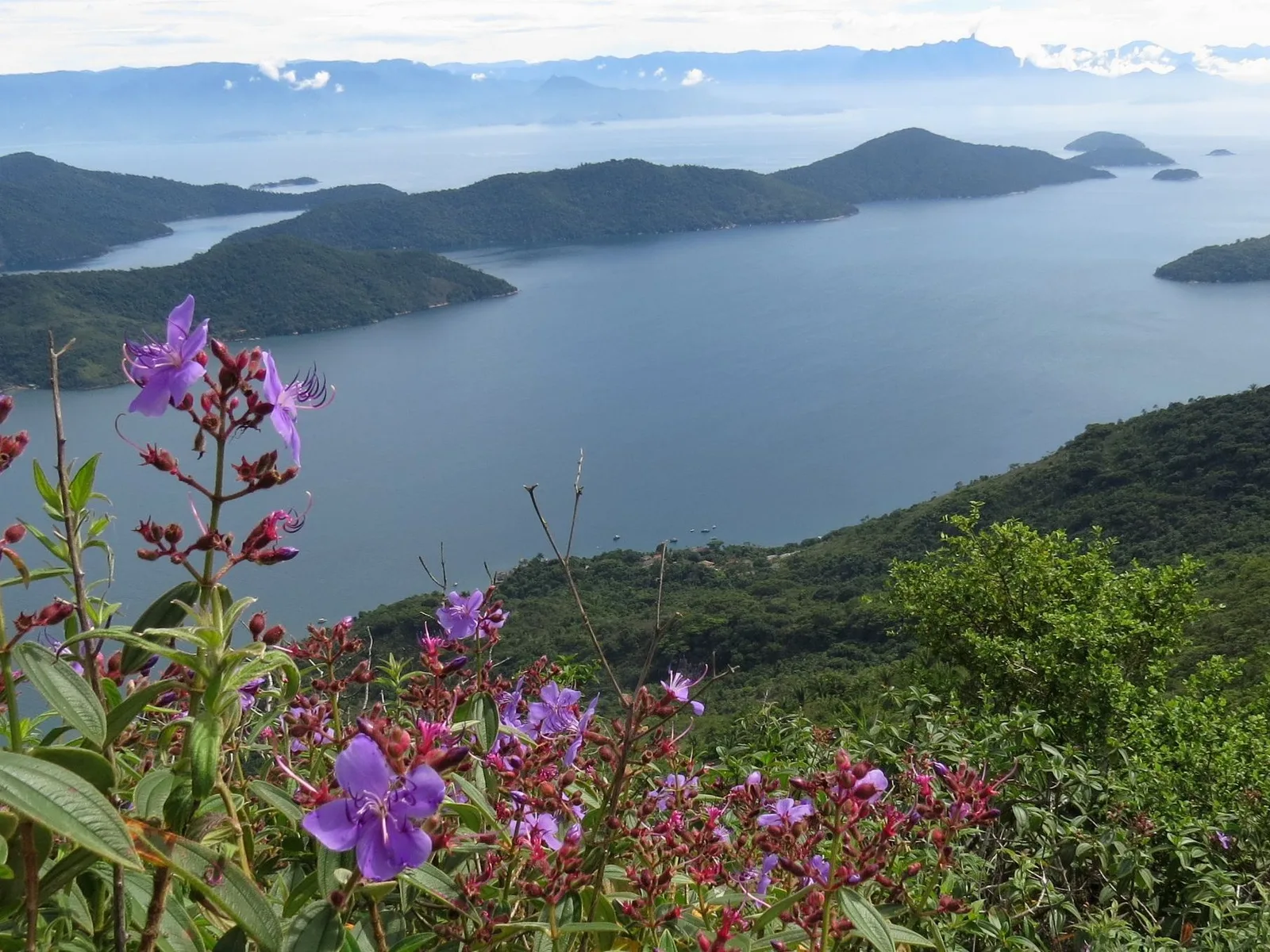
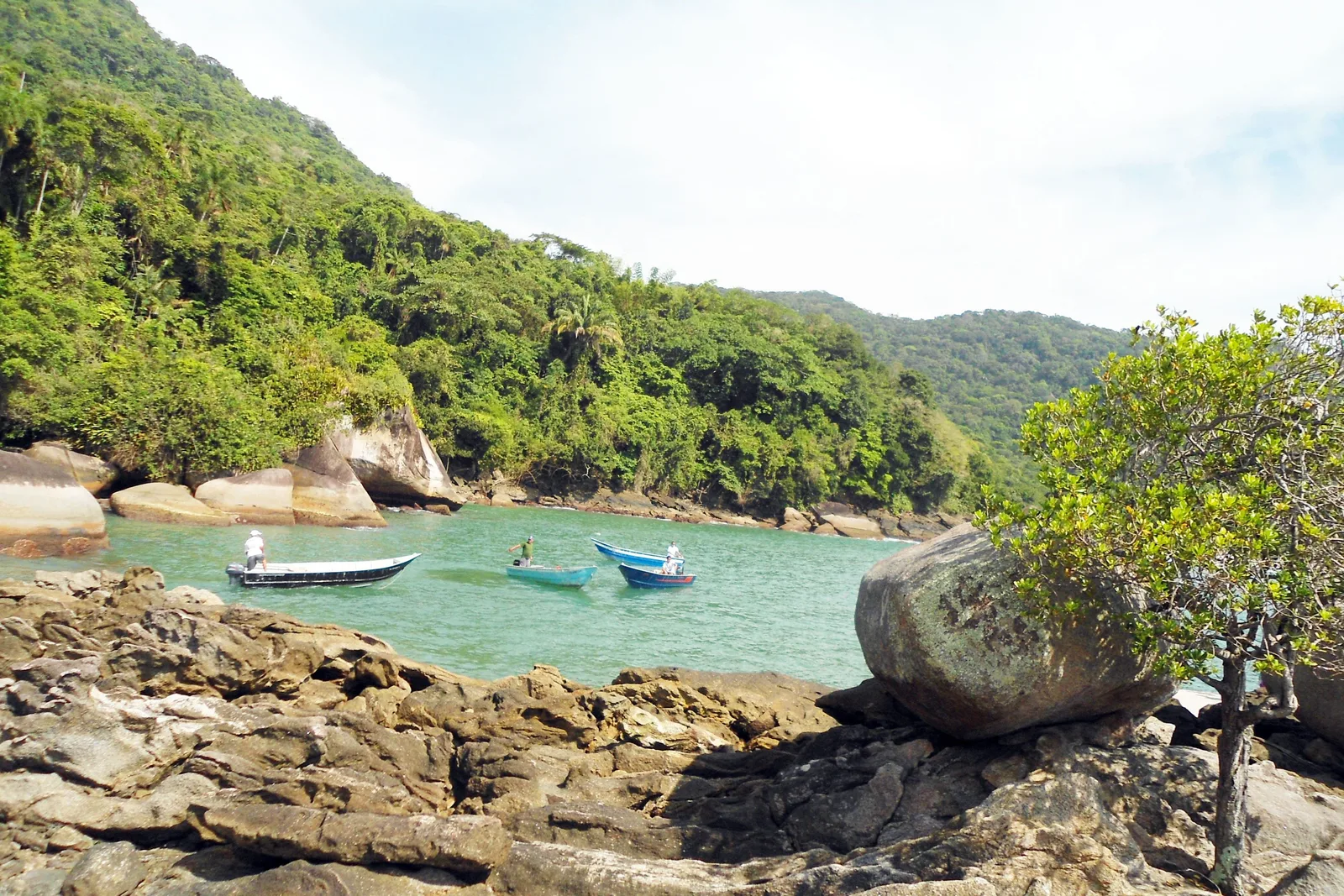
The bay in front of the town is a scatter of steep, wooded islands in green water, most of them uninhabited, with the Serra do Mar standing behind the whole arrangement. It is the reason the Portuguese put a port here — sheltered from every direction — and it is now the reason most people stay a day longer than they planned.

Two ways to see it. The big schooners leave the quay late morning, run a fixed circuit with four swim stops, have a bar aboard, and cost about the same as lunch. Or you hire one of the small boats moored alongside them for the day and go where you want, which for a group of four or more is not much more per head and is a completely different experience. Ilha Comprida and the Lagoa Azul anchorage are on every itinerary because the water there is genuinely worth the stop.
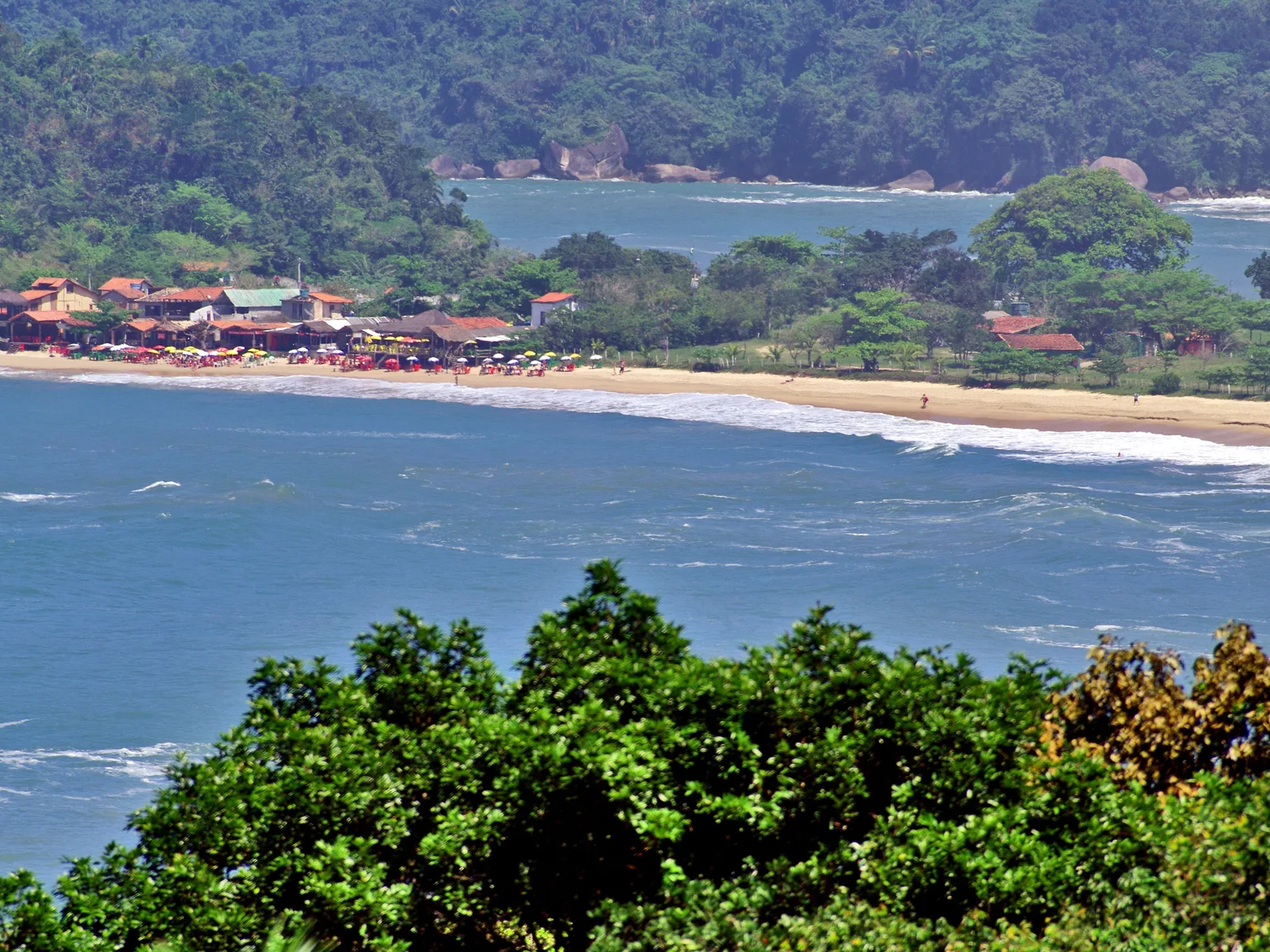
Trindade seen from the trail above the village: the curve of the beach and the sand street behind it, forested granite peaks of the Serra do Mar dropping straight to the water on both sides, clear late-morning light 03

The reason half the town leaves town

Trindade

From Paraty
25 km south, about 50 minutes
Beaches
Four, plus the Cachadaço pool
Protected
Inside the Cairuçu APA

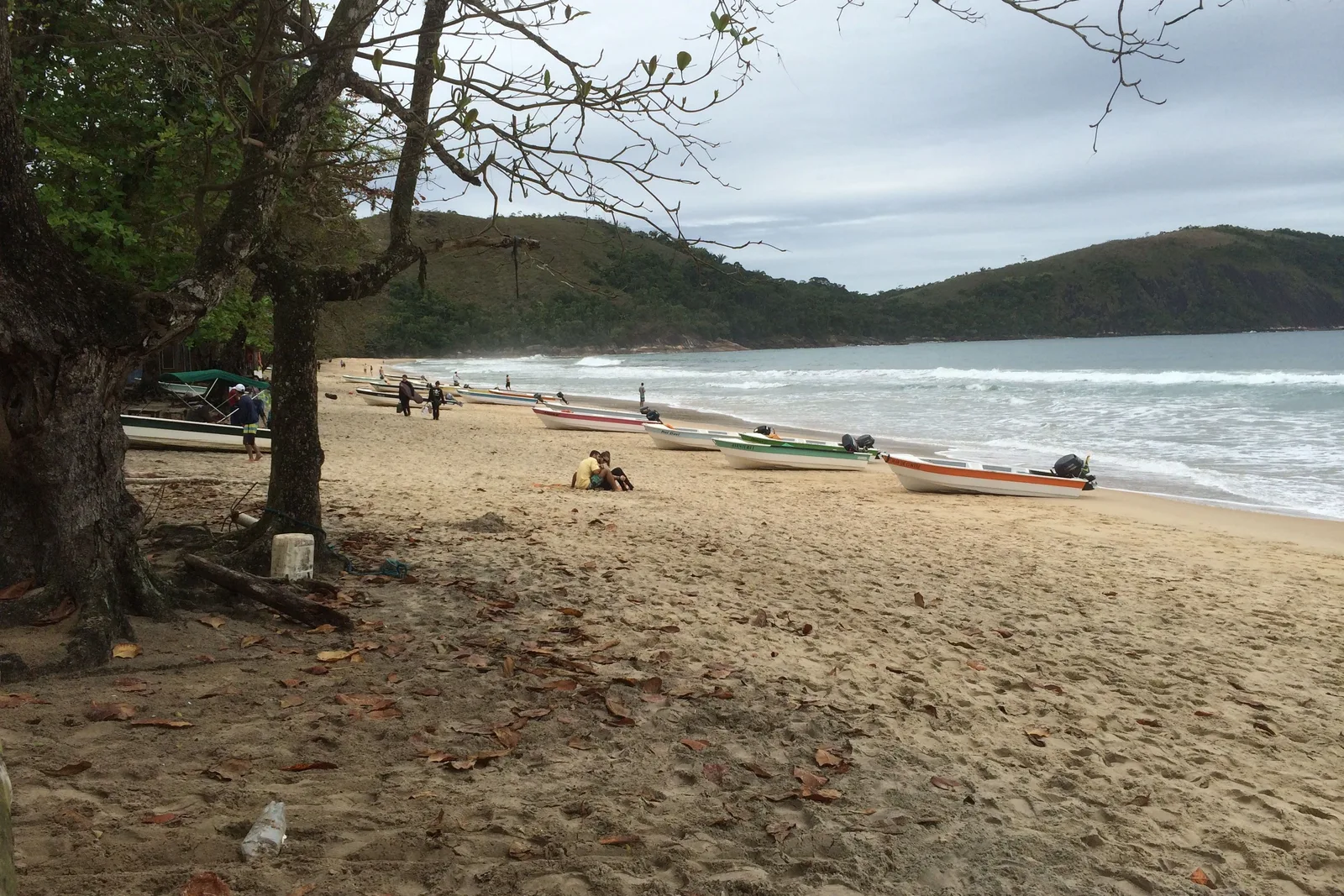
A fishing village at the bottom of a steep road off the Rio–Santos, hemmed in by the Serra do Mar on one side and the Atlantic on the other. It was a squatters’ settlement and a hippie colony before it was anything else, and it has kept the loose, barefoot feel of that — one sand main street, pousadas behind the dunes, and no attempt at polish.

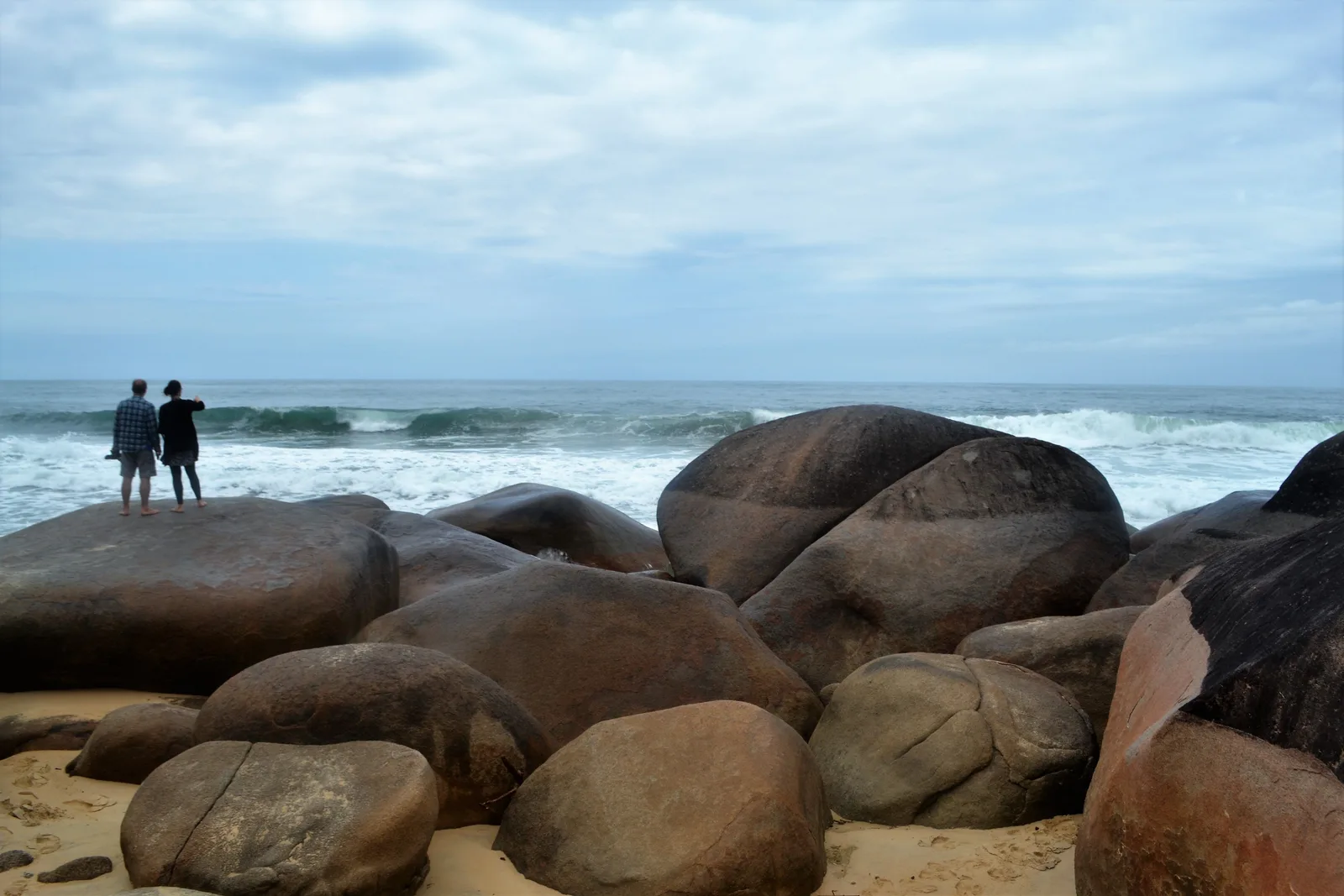
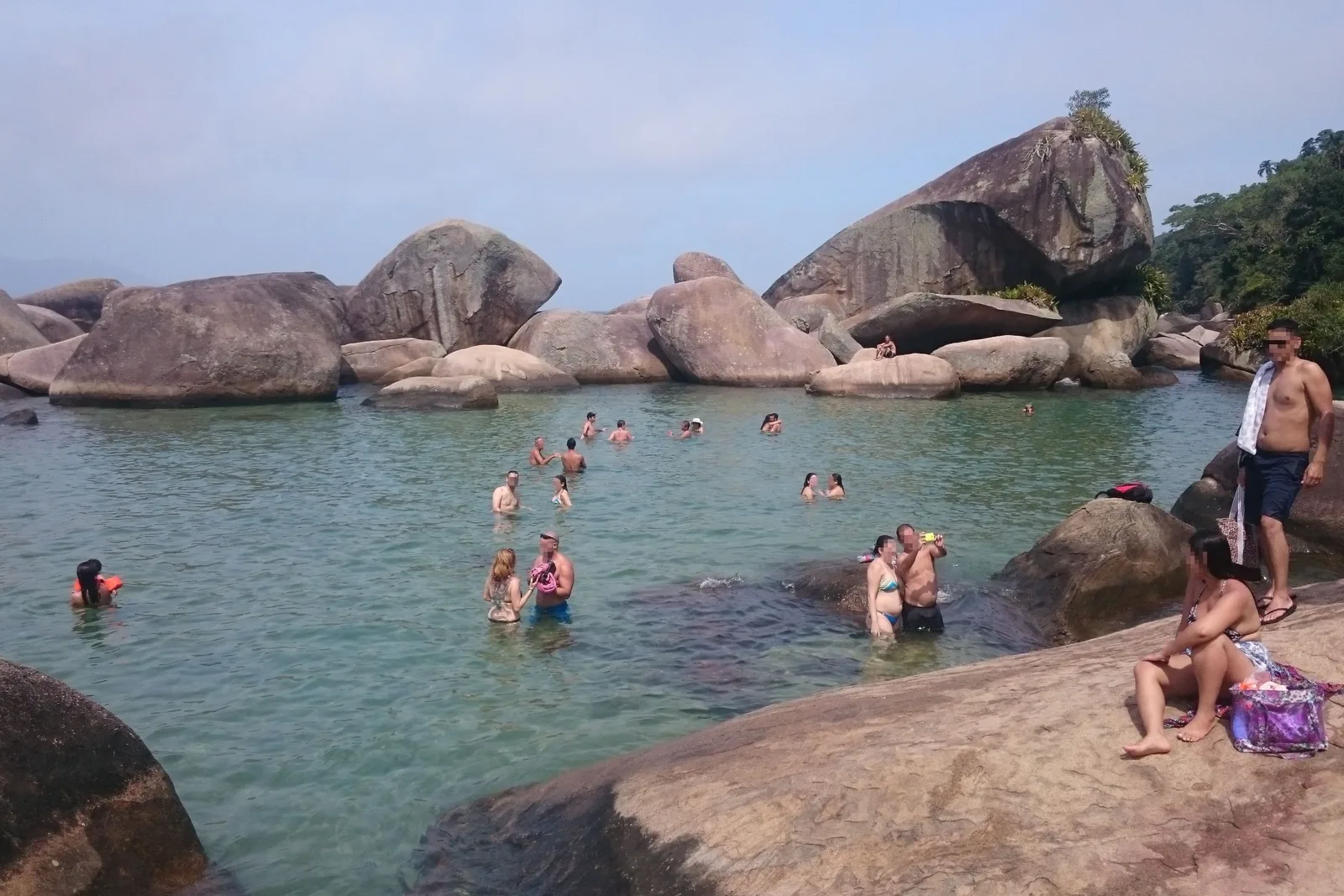
Four beaches run west to east: Ranchos, Meio, Cepilho and Brava, each a short walk or a scramble from the last. Past Praia do Meio the rocks hold the Piscina Natural do Cachadaço, a pool inside a ring of boulders that the sea fills and the swell never reaches — clear, shallow and the single most photographed thing on this coast. Cepilho gets real surf and a real rip; the pool does not. Both are twenty-five kilometers from a town that looks nothing like this, which is why almost everyone ends up doing both.

The view from the summit of Pico do Mamanguá looking straight down the length of the Saco do Mamanguá inlet, flat water between two steep forested ridges running out to the open bay, in clear morning light 04

Not a fjord, and worth the argument

Saco do Mamanguá

Length
8 km long, 2 km wide
Beaches
Around 33, plus caiçara villages
The viewpoint
Pico do Mamanguá, 420 m

A long, narrow arm of the sea reaching eight kilometers inland between two forested ridges, south of the town. Brazilian tourism calls it the country’s only fjord. It is not one — a fjord is carved by a glacier and this is a ria, a river valley drowned when the sea rose — but the shape is the same, and standing at the head of it you would not argue.

Nothing here is reached by car. Boats run in from Paraty-Mirim, and the water is shallow, warm and flat enough that kayaking it is the better idea if you have the time. The Pico do Pão de Açúcar do Mamanguá rises 420 meters straight off the southern shore, and the climb is short, steep and about ninety minutes of genuine effort; the view from the top, straight down the length of the inlet, is the best in the municipality. Small caiçara communities farm and fish along both shores, and a handful of them take guests.

A stretch of the original hand-laid stone paving of the Caminho do Ouro climbing through dense Atlantic Forest, dappled light on the mossy stones and the trail curving out of sight uphill 05

The road the town was built to serve

The Gold Trail

Built
17th–18th centuries
Original length
About 1,200 km to Minas
Walkable stretch
3.6 km, guide required

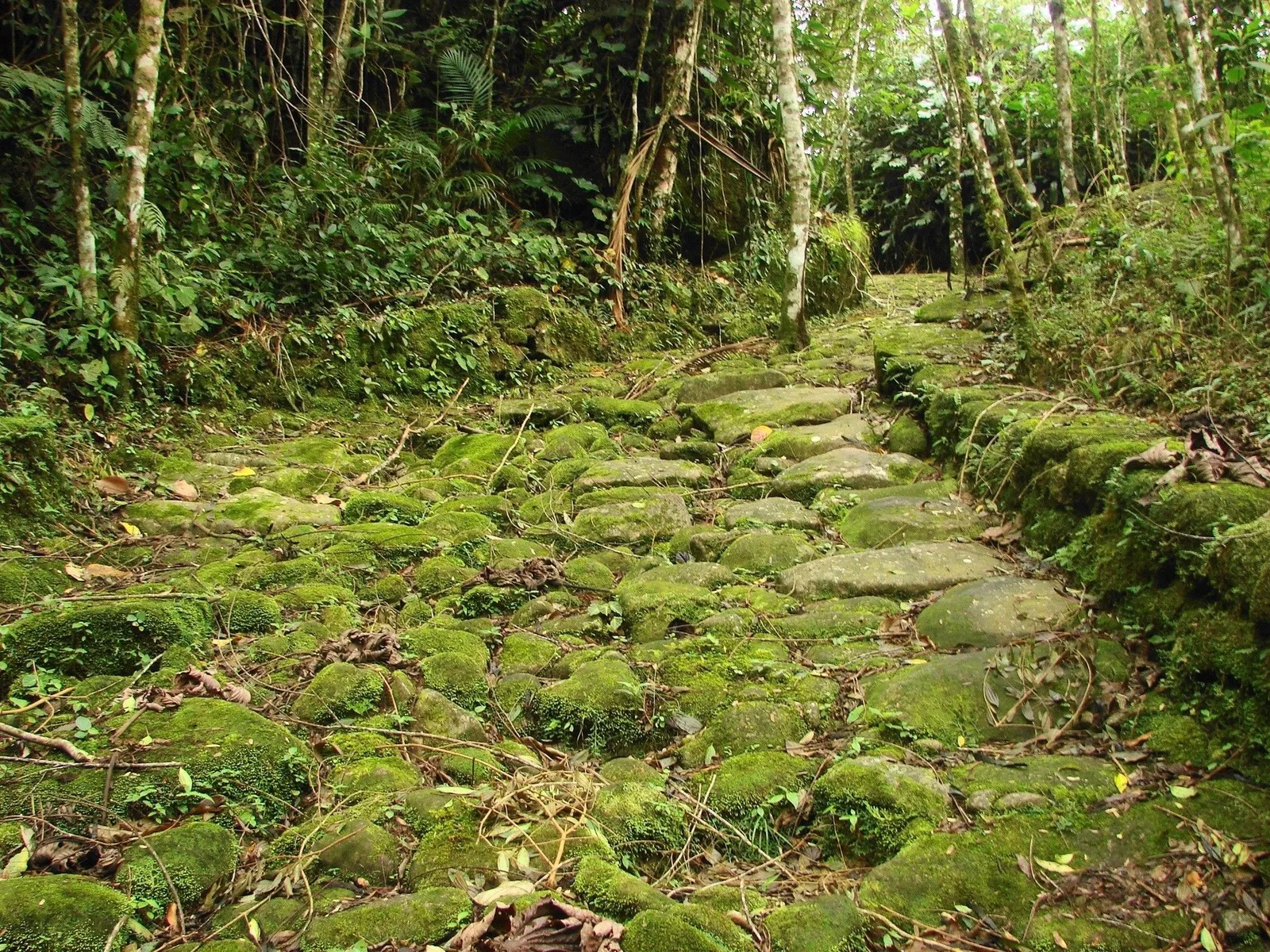
The Caminho do Ouro was the road Brazilian gold came down: a stone-paved mule track laid over indigenous paths, running from the Minas Gerais mining towns over the Serra do Mar and down to Paraty’s quay. It made the town, and when it was abandoned in the early nineteenth century it unmade it just as thoroughly.

A restored stretch survives above the village of Penha, on the mountain road toward Cunha, inside the Serra da Bocaina National Park. It is 3.6 kilometers, it takes about three hours with the stops, and the paving underfoot is the original — hand-laid stone, laid so mules could keep their footing on a slope in the rain, still doing the job three hundred years later. A licensed guide is required by law, which is not bureaucracy: the walk is worth roughly nothing without someone explaining what you are standing on.

What to actually do

One small town, five different days.

Pick a category, then scroll sideways through it. Nearly everything here is a half day, which is why Paraty works so well at a slow pace.
Colonial Town

  • A narrow Paraty street in low late-afternoon light, whitewashed houses with blue and ochre window frames on both sides and the rough stone paving running away toward a church

    Centro Histórico · 2–3 hours

    Walking the historic center

    There is no route and no ticket: the whole center is about ten blocks and you cannot get properly lost. What a guide adds is the reading — which house belonged to which trade, why the four churches were built for four different castes, how the drainage works. Guided walks leave from the Matriz square daily and most pousadas will book one. Go early, before the tour buses land, or after 5:00pm, when the light gets low and the walls go gold.
  • The whitewashed Igreja de Santa Rita seen across the grass at the edge of the waterfront, its single bell tower and dark wooden doors against a bright sky, forested mountains behind

    Centro Histórico · 45 minutes

    Sacred art at Igreja de Santa Rita

    The oldest church in town, built in 1722 by the brotherhood of freed mixed-race residents, and the one that appears on every postcard because it stands alone at the edge of the water with the mountains behind it. Inside it now holds Paraty’s museum of sacred art — a small, well-lit collection of images and silver drawn from the town’s three colonial brotherhoods.

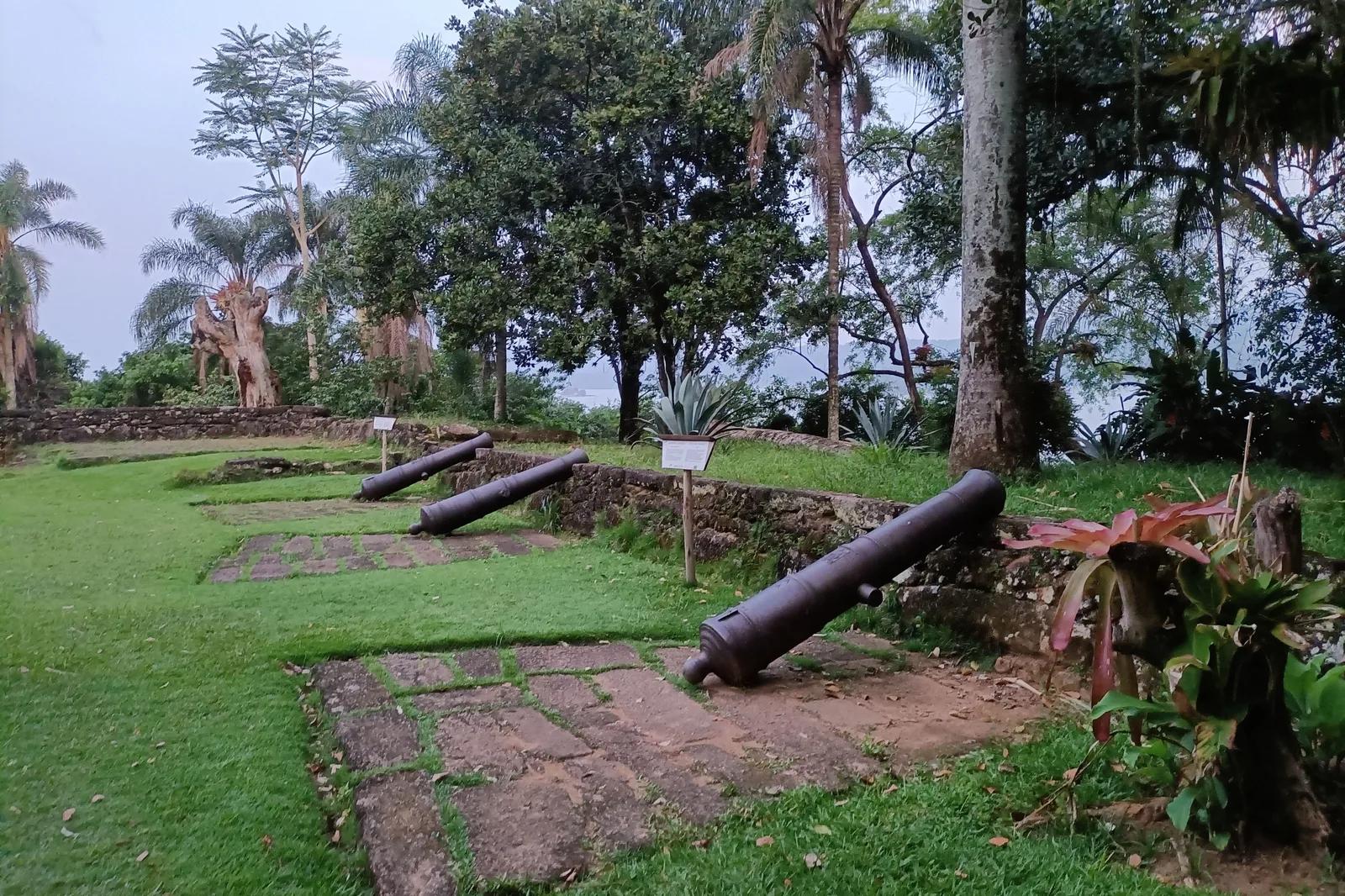
  • The low stone barracks and sea wall of the Forte Defensor Perpétuo on its wooded headland, old cannon pointing out over Paraty bay

    Morro da Vila Velha · 1 hour

    The Forte Defensor Perpétuo

    A stone fort on the headland between Pontal and Jabaquara beaches, on the hill where the Portuguese first settled. There has been a gun position here since 1703; the buildings standing today went up in 1822 and were named for Dom Pedro I. Since 1984 the barracks have housed the town’s center of popular arts and traditions — a flour mill, fishing and farming gear, the objects the caiçara coast actually used. The walk up is short and the view back over the town is the best you get on foot.

  • People walking barefoot through shallow seawater covering a Paraty street at high tide, the colonial houses and a lit doorway mirrored perfectly in the still water at dusk

    Centro Histórico · 1 hour, on a schedule

    Watching the tide flood the streets

    Around the new and full moons the spring tide climbs the quay and runs into the lowest streets of the old town, ankle-deep, for an hour or two either side of high water. Every façade doubles in the reflection, the town turns out with phones, and children ride bicycles through it. Ask your pousada for the tide table on the day you arrive and plan an evening around it — it is worth rearranging a dinner for.

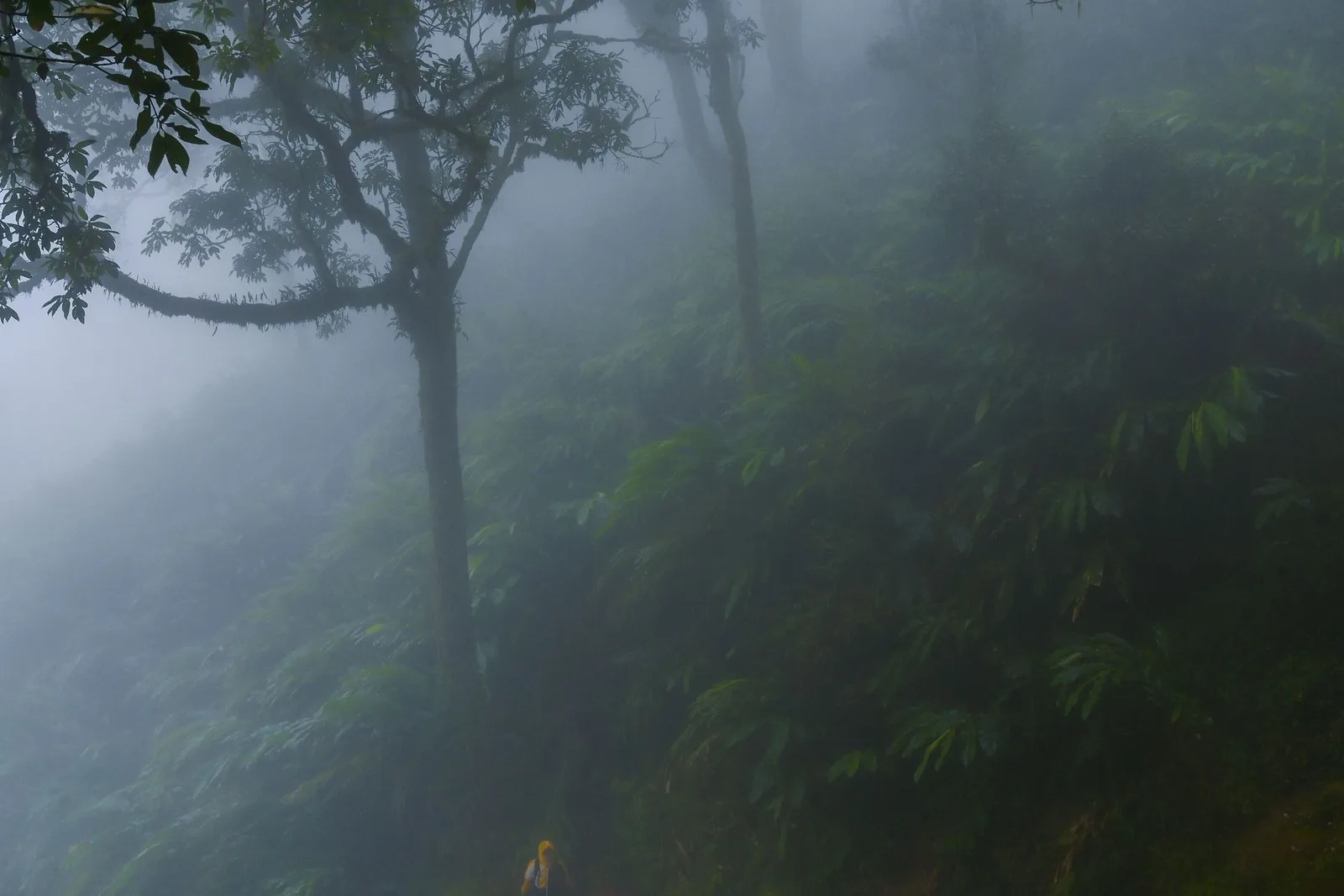
  • Walkers on a narrow trail through dense, misty rainforest

    Serra da Bocaina · 3 hours

    Walking the Gold Trail at Penha

    Three and a half kilometers of the original stone-paved gold road, restored, inside the national park above the village of Penha. It is an easy walk on a hard surface, with the forest closing over it and a couple of streams to cross. A licensed guide is required and is the point — without one it is a nice path in the woods, and with one it is the reason a town this size has four eighteenth-century churches.

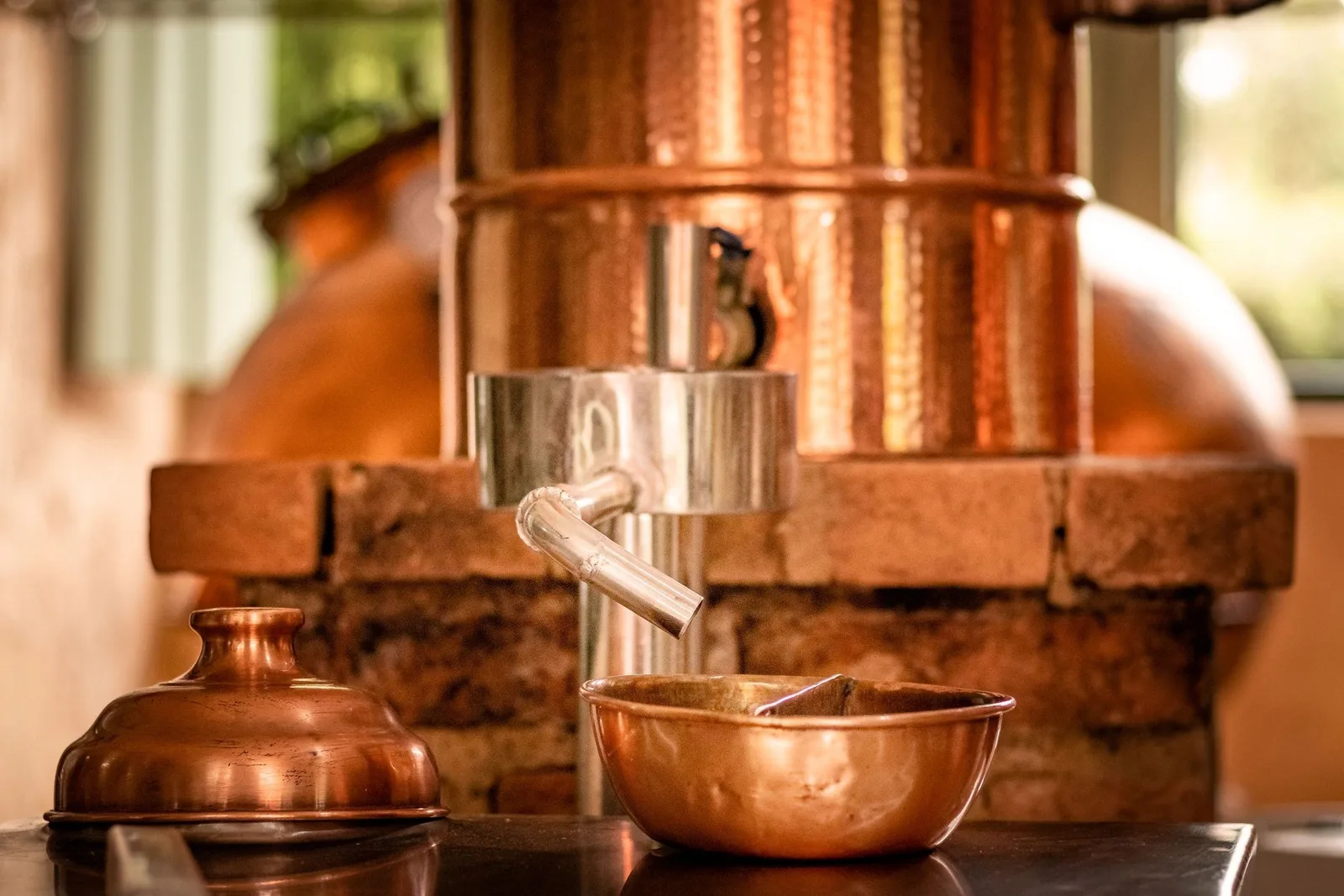
  • A copper pot still and copper collecting bowls in a working cachaça distillery

    Around the town · 2–3 hours

    A distillery tour at a Paraty alambique

    For most of the nineteenth century “parati” was simply what Brazilians called cachaça, because this is where it came from — more than a hundred stills worked the valleys behind the town. Around half a dozen artisanal distilleries still run and open their doors, and Paraty’s cachaça has held a protected geographical indication since 2007. The tours are short, the tasting is generous, and what comes out of a copper still here bears almost no relation to the industrial stuff.

Beaches

  • The rocky path between two of Trindade’s beaches, walkers picking their way over granite boulders at the water’s edge with the next arc of sand opening up ahead and forest coming down to the shore

    25 km south · full day

    Beach hopping at Trindade

    A former fishing village turned laid-back beach settlement, wedged between the mountains and the sea inside the Cairuçu protected area. Four beaches sit in a row — Praia dos Ranchos, do Meio, Cepilho and Brava — and they run from calm and family-shaped to a serious surf break, in about twenty minutes of walking. Buses go from Paraty in around 45 minutes; agencies sell it as a day trip with transport.

  • The Cachadaço natural pool at Trindade: turquoise water held inside a ring of dark boulders with swimmers in it, ocean swell breaking on the rocks just beyond and forest rising behind

    Trindade · 2–3 hours

    Swimming at the Cachadaço natural pool

    At the far end of Trindade a short trail — about 1.5 km, well marked, under an hour — runs through forest and over rock to a natural pool held in by a ring of boulders. The water inside is chest-deep, clear and completely flat while the swell breaks on the rocks a few meters away. It is the single most photographed swimming spot on this coast and it deserves it. Go on a weekday; go early.

  • The long empty crescent of Praia do Sono seen from the forest trail as it comes down to the sand, a few small wooden houses at the treeline and green headlands closing both ends of the bay

    Laranjeiras · half day

    Walking in to Praia do Sono

    No road reaches Praia do Sono. You leave the car at Laranjeiras and walk about four kilometers of forest trail, an hour and a half at a gentle pace, and come out on a long curve of sand with a small caiçara village on it, a couple of kitchens and no traffic. Boats will take you back if the legs have had enough. Push on beyond it and there are Antigos and Antiguinhos, and then Ponta Negra, each one emptier than the last.

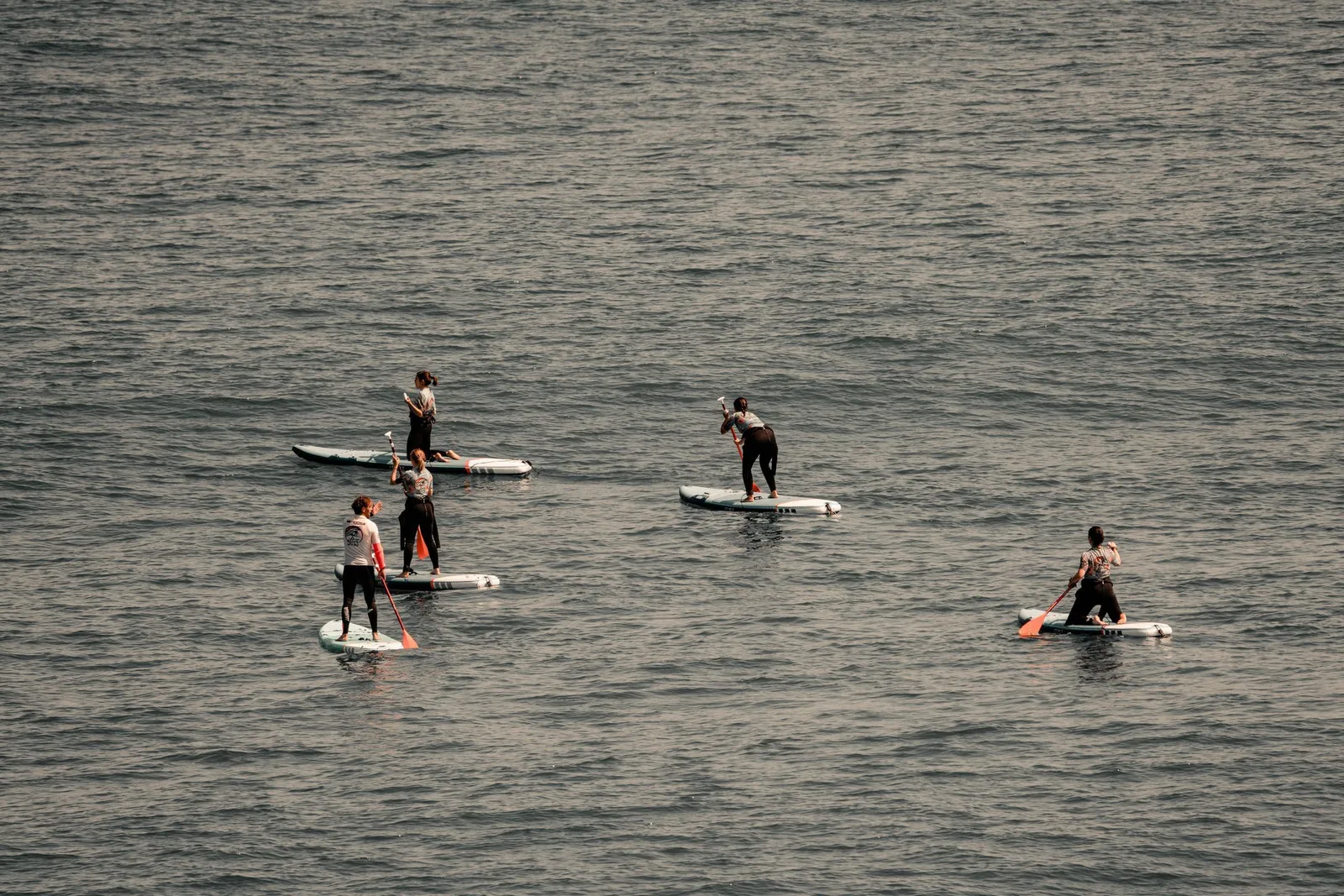
  • Stand-up paddlers spread out across flat, shallow water in the late afternoon

    North of the center · 2 hours

    Paddling at Praia do Jabaquara

    Paraty’s own beach, ten minutes on foot across the river from the historic center. The water is shallow, warm and flat a long way out — you can wade for a hundred meters — which makes it useless for swimming laps and excellent for stand-up paddling, kayaks and small children. There are kiosks along the sand, a mangrove at the far end, and a clear view straight back at the town.

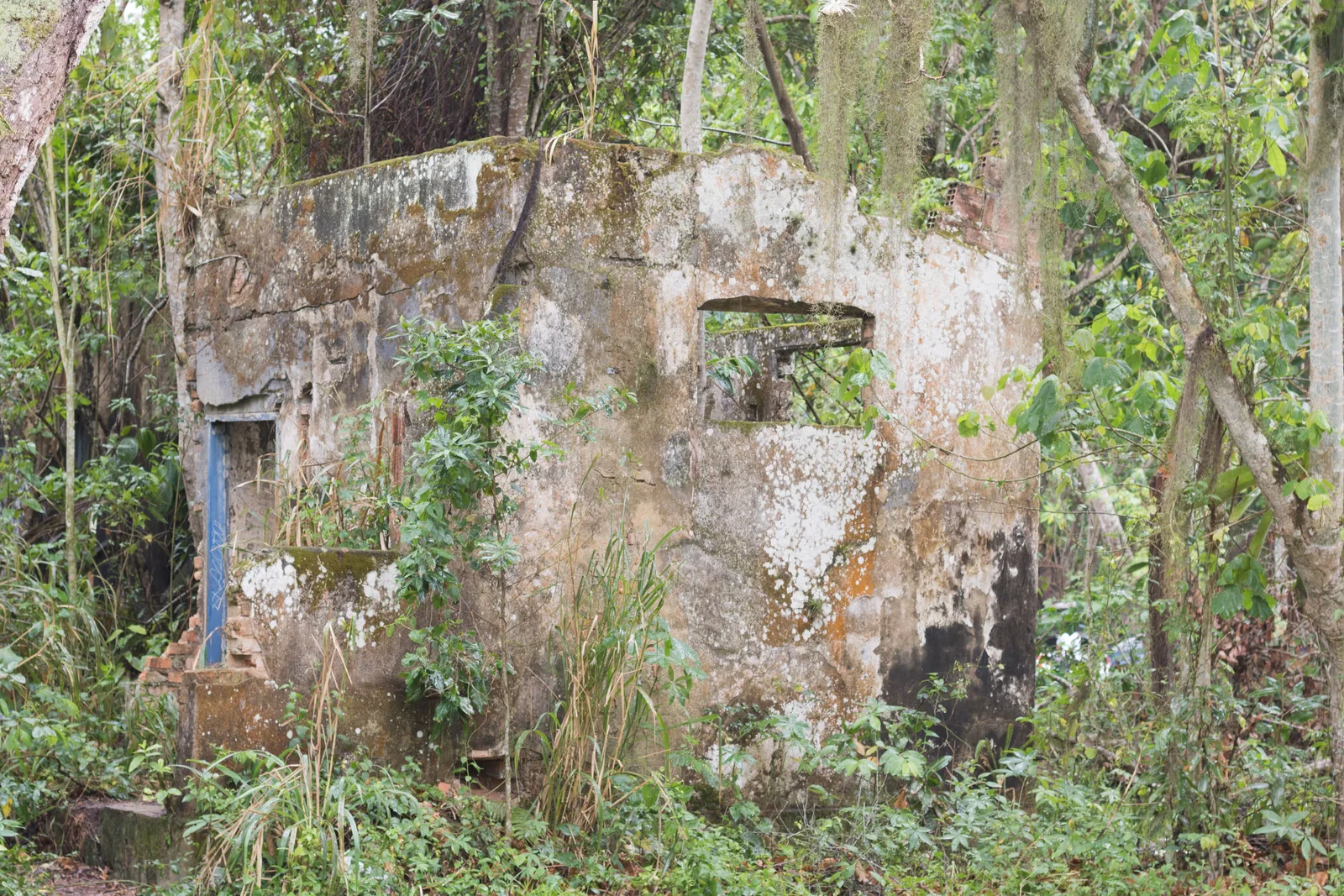
  • Overgrown stone ruins of a colonial building at Paraty-Mirim, walls open to the sky with forest closing in around them

    17 km south · half day

    Quiet water at Paraty-Mirim

    The old “little Paraty”, at the mouth of a river inside a deep protected cove, with the ruins of an eighteenth-century chapel standing above the sand. The water is calm and shallow, the beach is coarse and unglamorous, and on a weekday it is nearly empty. It matters mostly as a place to be, and as the port boats leave from for Saco do Mamanguá.

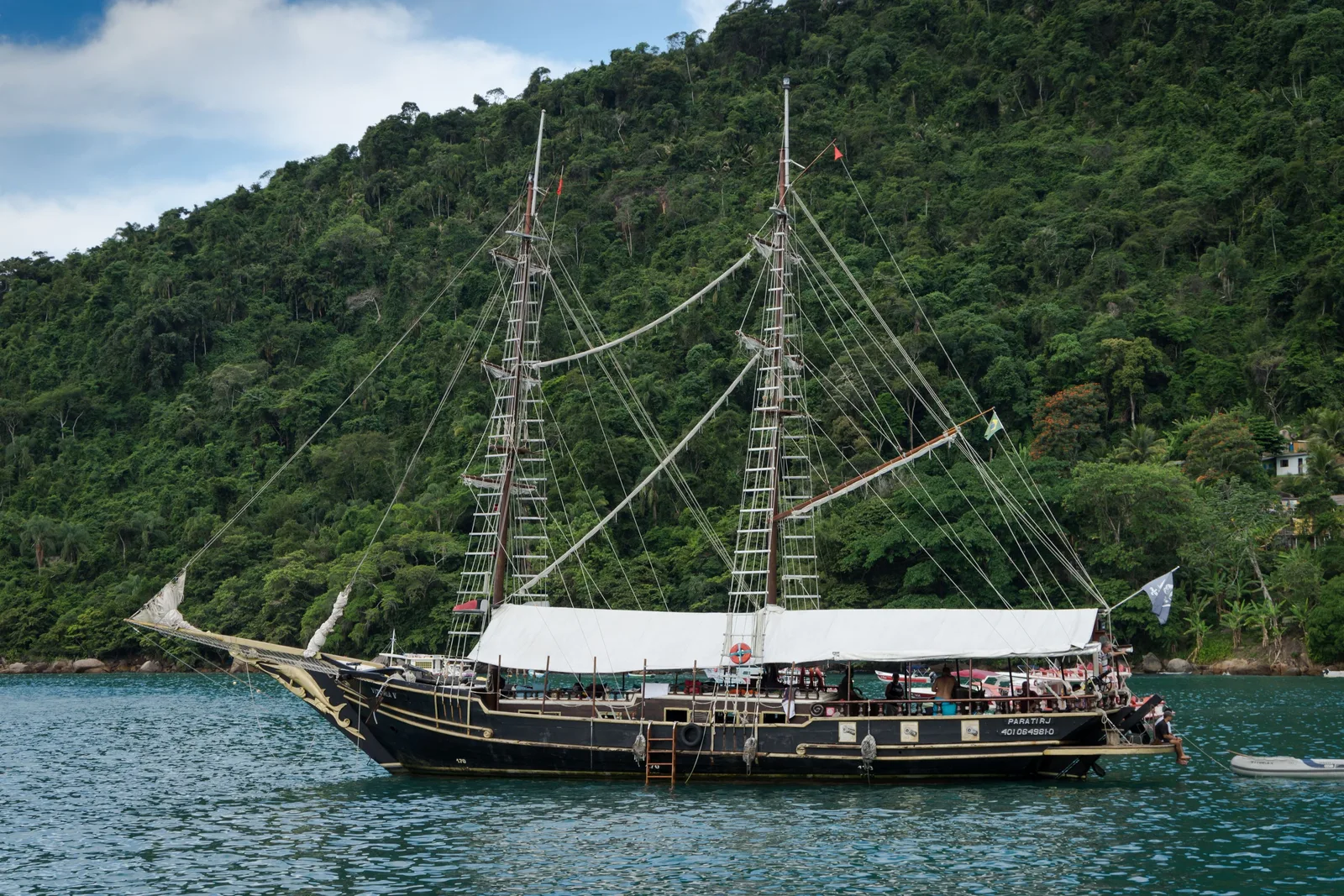
  • A two-masted wooden schooner under way in Paraty bay with passengers along the rail, wooded islands and the Serra do Mar behind, seen from another boat

    Cais de Turismo · 5 hours

    Schooner cruise around the bay

    The default Paraty day out, and it is genuinely good value. Big wooden schooners leave the quay late morning, make four swim stops of about forty minutes each around the islands — Ilha Comprida and the Lagoa Azul anchorage among them — and are back by late afternoon. There is a bar and a kitchen aboard. It is sociable rather than serene; if you want serene, hire a small boat instead.

On the Water

  • Stand-up paddlers spread out across flat, shallow water in the late afternoon

    North of the center · 2 hours

    Paddling at Praia do Jabaquara

    Paraty’s own beach, ten minutes on foot across the river from the historic center. The water is shallow, warm and flat a long way out — you can wade for a hundred meters — which makes it useless for swimming laps and excellent for stand-up paddling, kayaks and small children. There are kiosks along the sand, a mangrove at the far end, and a clear view straight back at the town.

  • A two-masted wooden schooner under way in Paraty bay with passengers along the rail, wooded islands and the Serra do Mar behind, seen from another boat

    Cais de Turismo · 5 hours

    Schooner cruise around the bay

    The default Paraty day out, and it is genuinely good value. Big wooden schooners leave the quay late morning, make four swim stops of about forty minutes each around the islands — Ilha Comprida and the Lagoa Azul anchorage among them — and are back by late afternoon. There is a bar and a kitchen aboard. It is sociable rather than serene; if you want serene, hire a small boat instead.

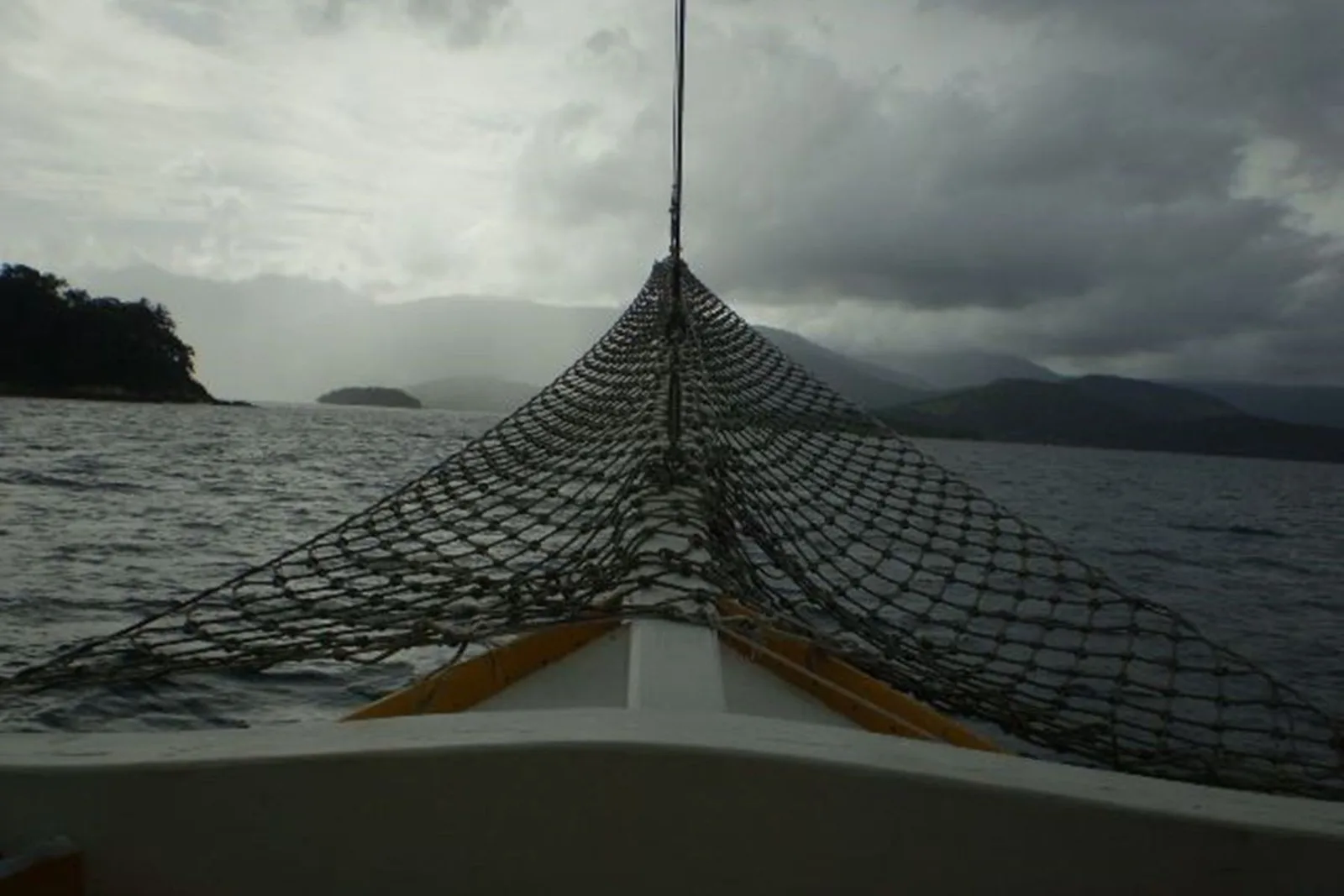
  • The bow of a small boat crossing Paraty bay under a heavy sky, forested islands low on the horizon beside it

    Cais de Turismo · full day

    Chartering a small boat for the day

    The small boats moored along the quay take six to ten people and go wherever you point them. For a group it works out at close to the schooner price per head, and it buys you the whole difference: your own stops, your own timing, beaches the big boats cannot reach, and quiet. Agree the route and the price at the quay in the morning, or book it through a pousada the night before.

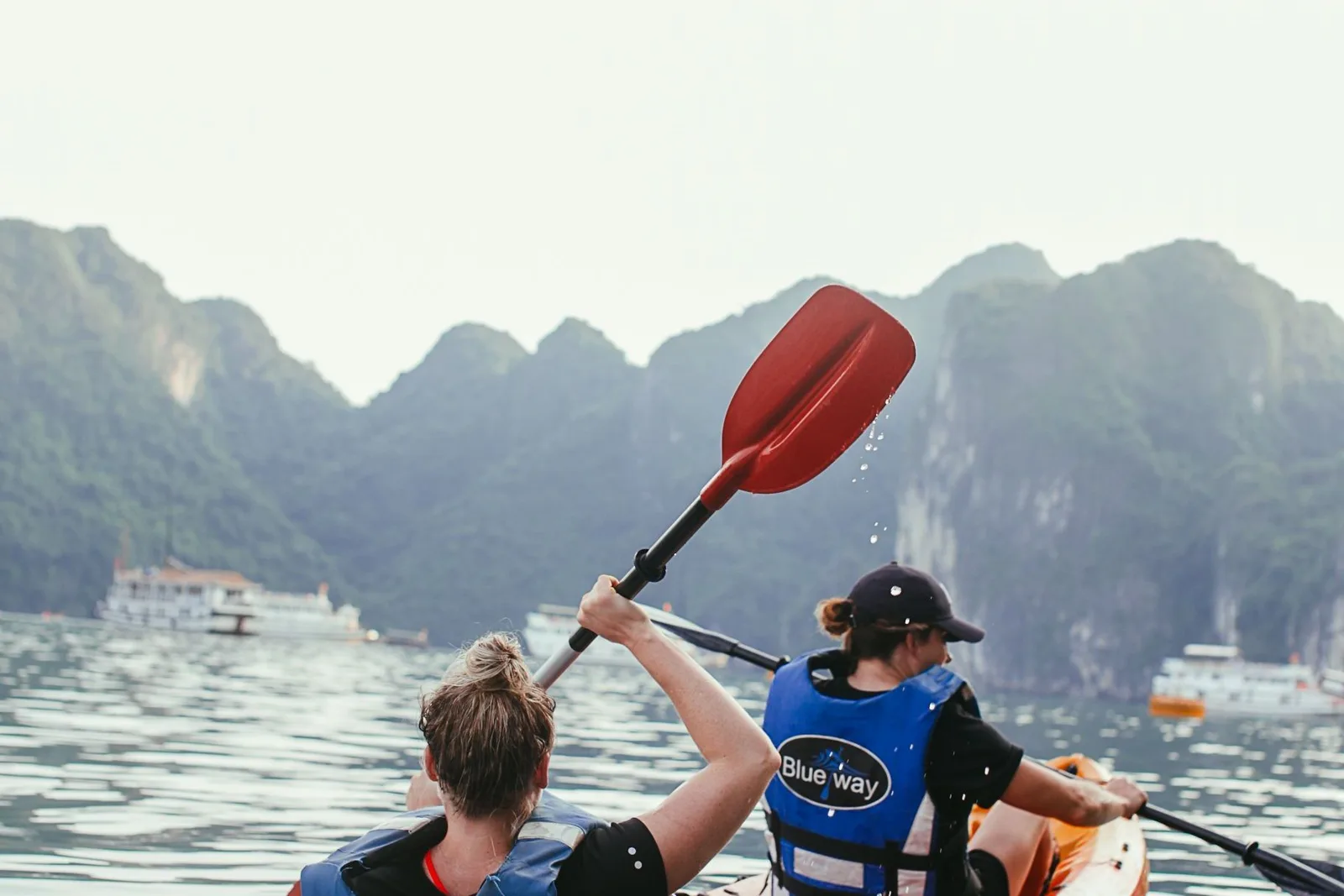
  • Two people kayaking in tandem on flat water below steep forested slopes

    Paraty-Mirim · full day, or overnight

    Kayaking into Saco do Mamanguá

    The inlet is eight kilometers long, sheltered from the swell by its own geography, and shallow the whole way — which makes it one of the best sea-kayaking days anywhere on this coast, and one of the few you can do without much experience. Operators run guided day paddles from Paraty-Mirim, and there are simple guesthouses at the head of the inlet if you would rather do it in two days and climb the peak in between.

  • A sheltered cove on the Paraty coast seen from the rocks above it, small boats at anchor on clear green water

    Saco do Mamanguá · 3 hours plus the boat

    Climbing the Pico do Mamanguá

    A 420-meter peak on the southern shore of the inlet, reached by boat and then by a trail that is short, unrelentingly steep and rough underfoot — about ninety minutes up if you are fit. What you get at the top is the whole eight kilometers of Mamanguá laid out below you between its two ridges, running out to the bay and the islands. Go with a guide, go early, and do not do it in the rain.

Trails & Falls

  • The Cachadaço natural pool at Trindade: turquoise water held inside a ring of dark boulders with swimmers in it, ocean swell breaking on the rocks just beyond and forest rising behind

    Trindade · 2–3 hours

    Swimming at the Cachadaço natural pool

    At the far end of Trindade a short trail — about 1.5 km, well marked, under an hour — runs through forest and over rock to a natural pool held in by a ring of boulders. The water inside is chest-deep, clear and completely flat while the swell breaks on the rocks a few meters away. It is the single most photographed swimming spot on this coast and it deserves it. Go on a weekday; go early.

  • The long empty crescent of Praia do Sono seen from the forest trail as it comes down to the sand, a few small wooden houses at the treeline and green headlands closing both ends of the bay

    Laranjeiras · half day

    Walking in to Praia do Sono

    No road reaches Praia do Sono. You leave the car at Laranjeiras and walk about four kilometers of forest trail, an hour and a half at a gentle pace, and come out on a long curve of sand with a small caiçara village on it, a couple of kitchens and no traffic. Boats will take you back if the legs have had enough. Push on beyond it and there are Antigos and Antiguinhos, and then Ponta Negra, each one emptier than the last.

  • Two people kayaking in tandem on flat water below steep forested slopes

    Paraty-Mirim · full day, or overnight

    Kayaking into Saco do Mamanguá

    The inlet is eight kilometers long, sheltered from the swell by its own geography, and shallow the whole way — which makes it one of the best sea-kayaking days anywhere on this coast, and one of the few you can do without much experience. Operators run guided day paddles from Paraty-Mirim, and there are simple guesthouses at the head of the inlet if you would rather do it in two days and climb the peak in between.

  • Walkers on a narrow trail through dense, misty rainforest

    Serra da Bocaina · 3 hours

    Walking the Gold Trail at Penha

    Three and a half kilometers of the original stone-paved gold road, restored, inside the national park above the village of Penha. It is an easy walk on a hard surface, with the forest closing over it and a couple of streams to cross. A licensed guide is required and is the point — without one it is a nice path in the woods, and with one it is the reason a town this size has four eighteenth-century churches.

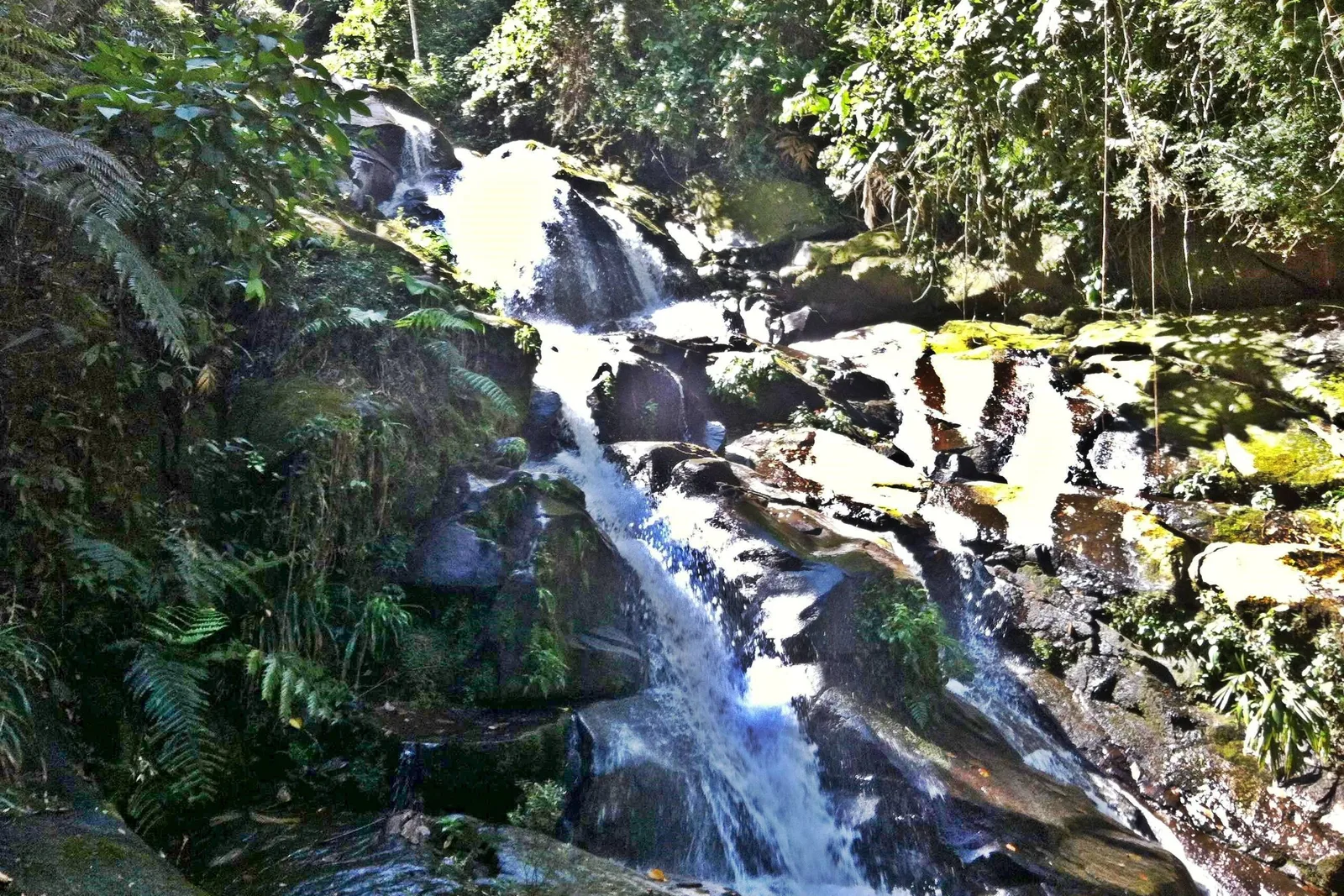
  • A waterfall on the Rio Taquari above Paraty, water running over dark rock ledges in dense Atlantic Forest, rainforest closing over the river

    Penha · 2 hours

    The rock slide at Cachoeira do Tobogã

    A river slides down a long, smooth slab of granite beside the Penha chapel and drops into a deep pool — a natural water slide that locals have been riding for generations, some of them standing up, which you should not attempt. The pool below is cold and deep. It is the busiest of the waterfalls near town, and it sits on the same jeep circuit as the Poço do Tarzan and two of the distilleries.

  • A sheltered cove on the Paraty coast seen from the rocks above it, small boats at anchor on clear green water

    Saco do Mamanguá · 3 hours plus the boat

    Climbing the Pico do Mamanguá

    A 420-meter peak on the southern shore of the inlet, reached by boat and then by a trail that is short, unrelentingly steep and rough underfoot — about ninety minutes up if you are fit. What you get at the top is the whole eight kilometers of Mamanguá laid out below you between its two ridges, running out to the bay and the islands. Go with a guide, go early, and do not do it in the rain.

Food & Cachaça

  • A copper pot still and copper collecting bowls in a working cachaça distillery

    Around the town · 2–3 hours

    A distillery tour at a Paraty alambique

    For most of the nineteenth century “parati” was simply what Brazilians called cachaça, because this is where it came from — more than a hundred stills worked the valleys behind the town. Around half a dozen artisanal distilleries still run and open their doors, and Paraty’s cachaça has held a protected geographical indication since 2007. The tours are short, the tasting is generous, and what comes out of a copper still here bears almost no relation to the industrial stuff.

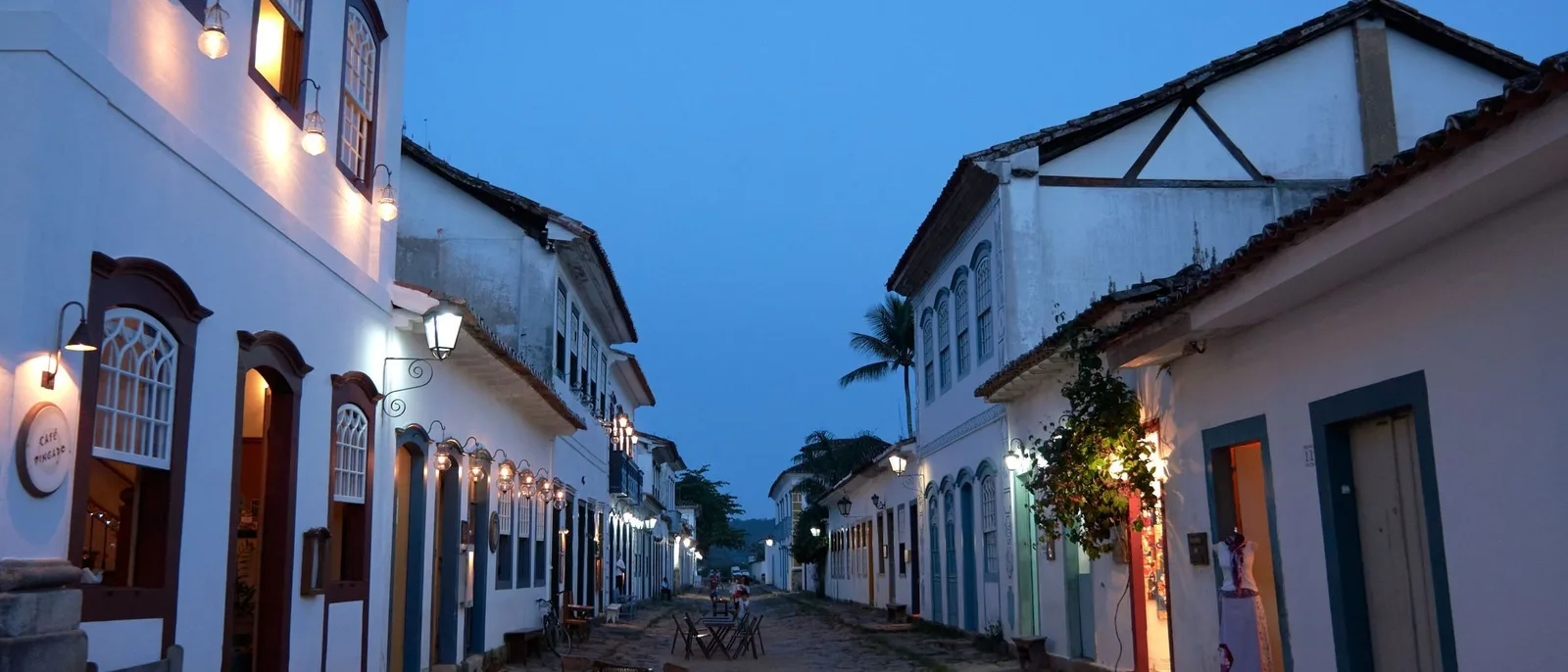
  • Tables and chairs set out on a Paraty cobbled street at dusk, lamps lit along the whitewashed colonial facades and people walking between them

    Centro Histórico · 2 hours

    Caiçara seafood in the historic center

    The coastal food here is caiçara — the culture of the fishing communities along this shore — and the dish to look for is azul-marinho: fish stewed with green bananas, which turn the broth a strange slate blue. Beyond that it is shrimp, whole grilled fish and moquecas, eaten in courtyards behind eighteenth-century façades. Restaurants on the main square charge for the address; the ones a street or two back do not.

  • A guitarist playing to a room in a bar at night

    Centro Histórico · an evening

    Live music in the colonial bars

    Paraty does not have nightlife in the sense Rio does. What it has is a dozen small bars in colonial rooms with the doors open onto the street, most of them putting a trio in the corner playing chorinho, samba or bossa from about 9:00pm. Nothing needs booking and nothing charges much at the door. Walk the two or three main streets, listen at the doorways, and go into whichever one sounds right.

Where to stay

How far from the cobbles do you want to be?

Paraty’s accommodation question is really one question: how much of the old town do you want to wake up inside. The four options below run from the middle of it to two hours away by boat, and the trade at every step is atmosphere against quiet, and charm against a flat floor.

Drag and zoom to explore.

Tap an area to open it and see it on the map

  • Our pick

    Best for: Being inside the thing you came for

    A cobbled Paraty street at dusk, whitewashed houses with brightly painted doors and window frames on both sides, warm light spilling from open doorways and the church tower closing the far end

    Pousadas in eighteenth-century houses, courtyards with mango trees in them, and no cars outside the window. You walk out of the door into the reason you came, and at night, when the day trippers have gone, you get the town at its best. The costs are real: it is the most expensive corner of Paraty, the rooms are old-building rooms, and the bars on the main streets run late.

    • Colonial pousadas
    • Car-free
    • Walk everywhere
    • Priciest
  • Best for: Value, a beach, and a ten-minute walk

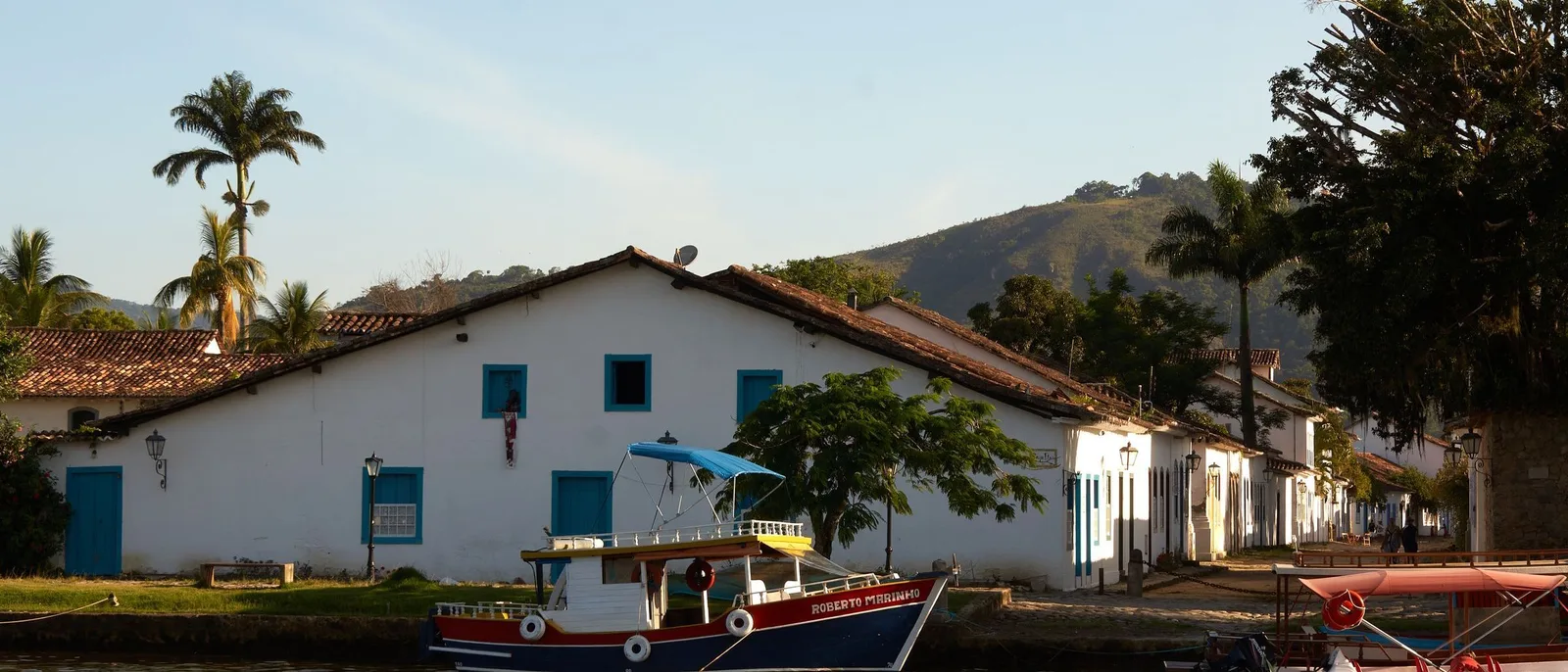
    Paraty’s waterfront seen across the water, a wooden boat moored in front of whitewashed colonial houses with blue window frames

    Across the Perequê-Açu river from the old town: a normal working neighborhood with two town beaches, somewhere to park, and pousadas at noticeably lower prices. The historic center is over the footbridge and ten minutes away on foot. The trade is that you are staying in an ordinary Brazilian small town rather than a museum, which for some people is the point.

    • Cheaper rooms
    • Town beaches
    • Parking
    • Families
  • Best for: Waking up on the beach, not the cobbles

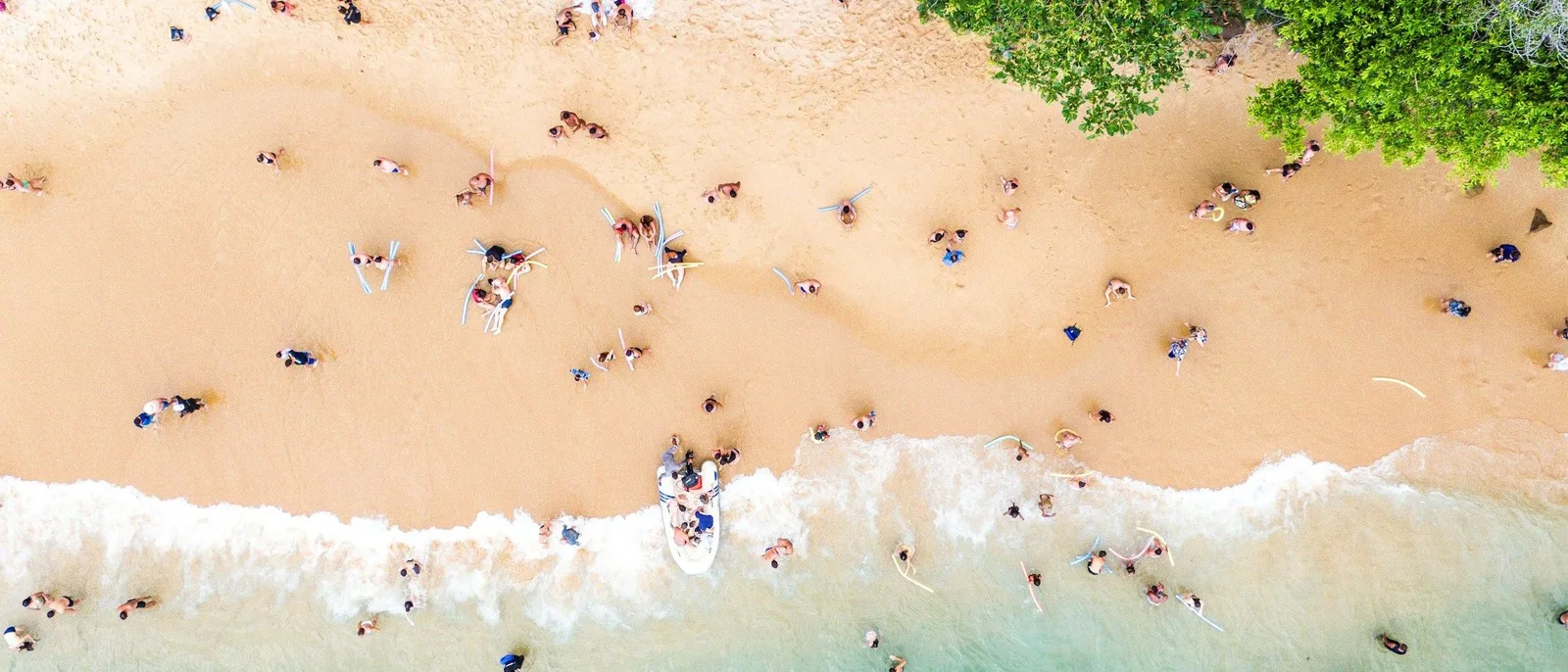
    Trindade beach from above, swimmers and sunbathers on pale sand with dense forest running right down to the top of it

    A village 25 km south down the coast road, inside the Cairuçu protected area, with four beaches, a natural pool and a backpacker streak that has survived its own popularity. Simple pousadas, sand outside, and a completely different trip from the one the historic center gives you. You are 45 minutes from Paraty by bus, so this works either as a base for a beach week or as a night or two bolted onto a town stay.

    • Beach village
    • Surf
    • Budget-friendly
    • Bus to town
  • Best for: No road, no signal, no plans

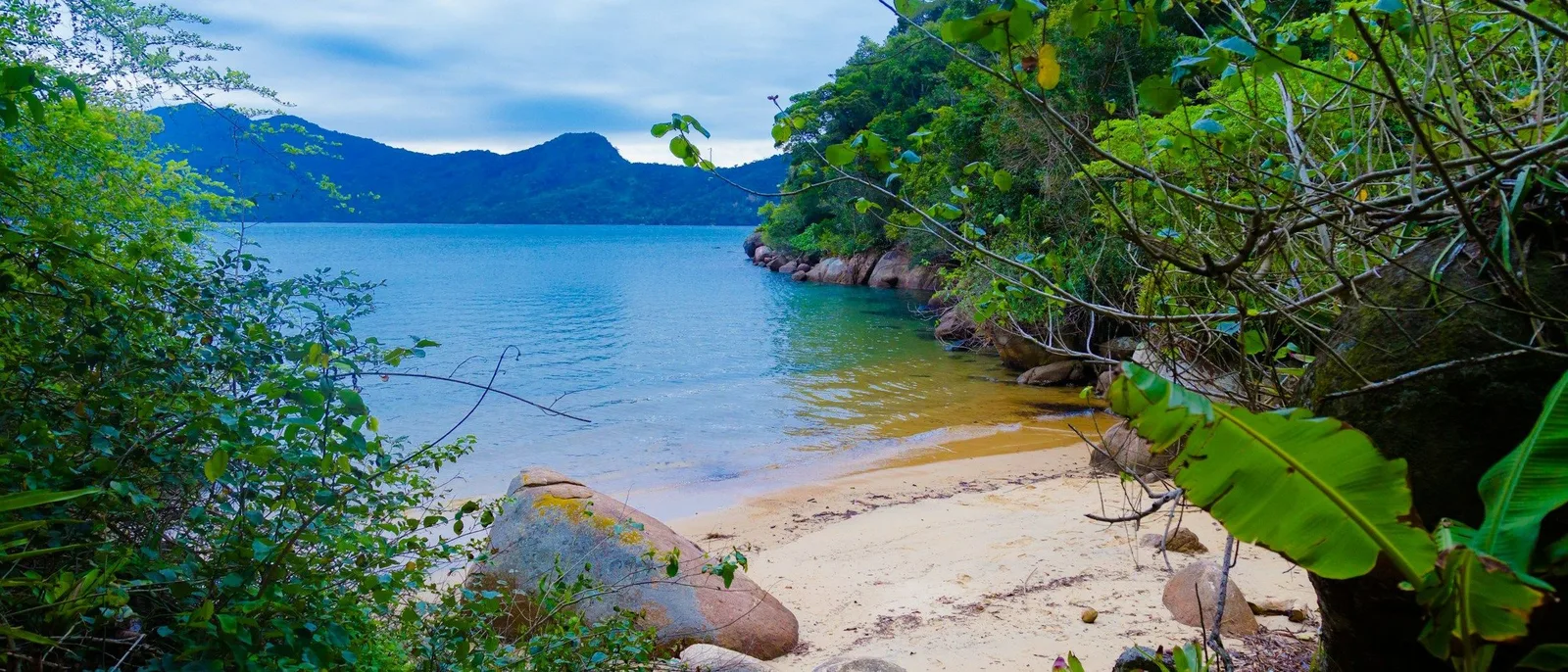
    A small empty beach on the roadless coast south of Paraty, flat water and forest closing in on both sides, no buildings anywhere in the frame

    The specialist option, and a genuinely good one for a night or two. Praia do Sono is an hour and a half’s walk in from Laranjeiras or a short boat ride; the guesthouses at the head of Saco do Mamanguá are boat-only. Both mean simple rooms, caiçara kitchens, generators and cold showers rather than air conditioning, and an evening with nothing to do in it. Pack light and arrange the boat before you go.

    • Boat or trail only
    • Caiçara guesthouses
    • Rustic
    • One or two nights

A working plan

Four days, and none of them rushed.

Paraty is not a five-day town, and pretending otherwise produces a slow itinerary with a filler day in it. Four is right: the town, the bay, the mountains behind and the coast to the south. Add a fifth only if you are going to spend it out at Praia do Sono or Saco do Mamanguá, where a night changes the trip.

  1. 01
    Paraty’s main square at dusk with the floodlit neoclassical Matriz church, a few people crossing the rough stone paving and warm light in the doorways of the houses around it

    Centro Histórico

    The town, on foot

    Arrive, drop the bags and walk. A guided circuit of the four churches and the quay, the fort on the hill for the view back, and dinner in a courtyard — with the tide table checked before you book it.

  2. 02
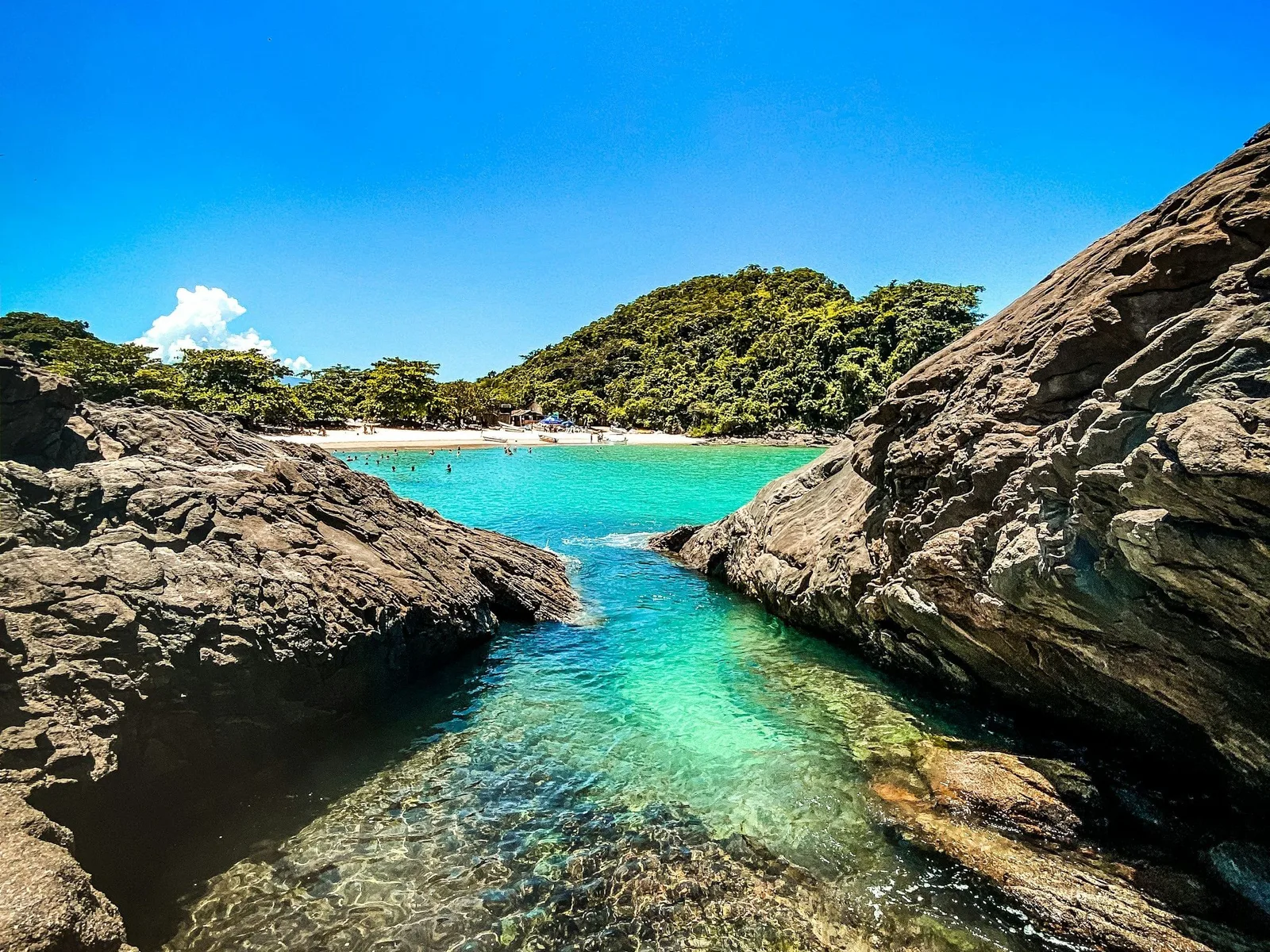
    A narrow channel of clear turquoise water between granite outcrops in Paraty bay, forest coming down to the rock on both sides

    Paraty Bay & its islands

    Out into the bay

    A boat day: the schooner circuit if you want it easy and sociable, a hired small boat if there are four of you and you would rather choose the beaches. Back by late afternoon, and swimming at four of the stops.

  3. 03
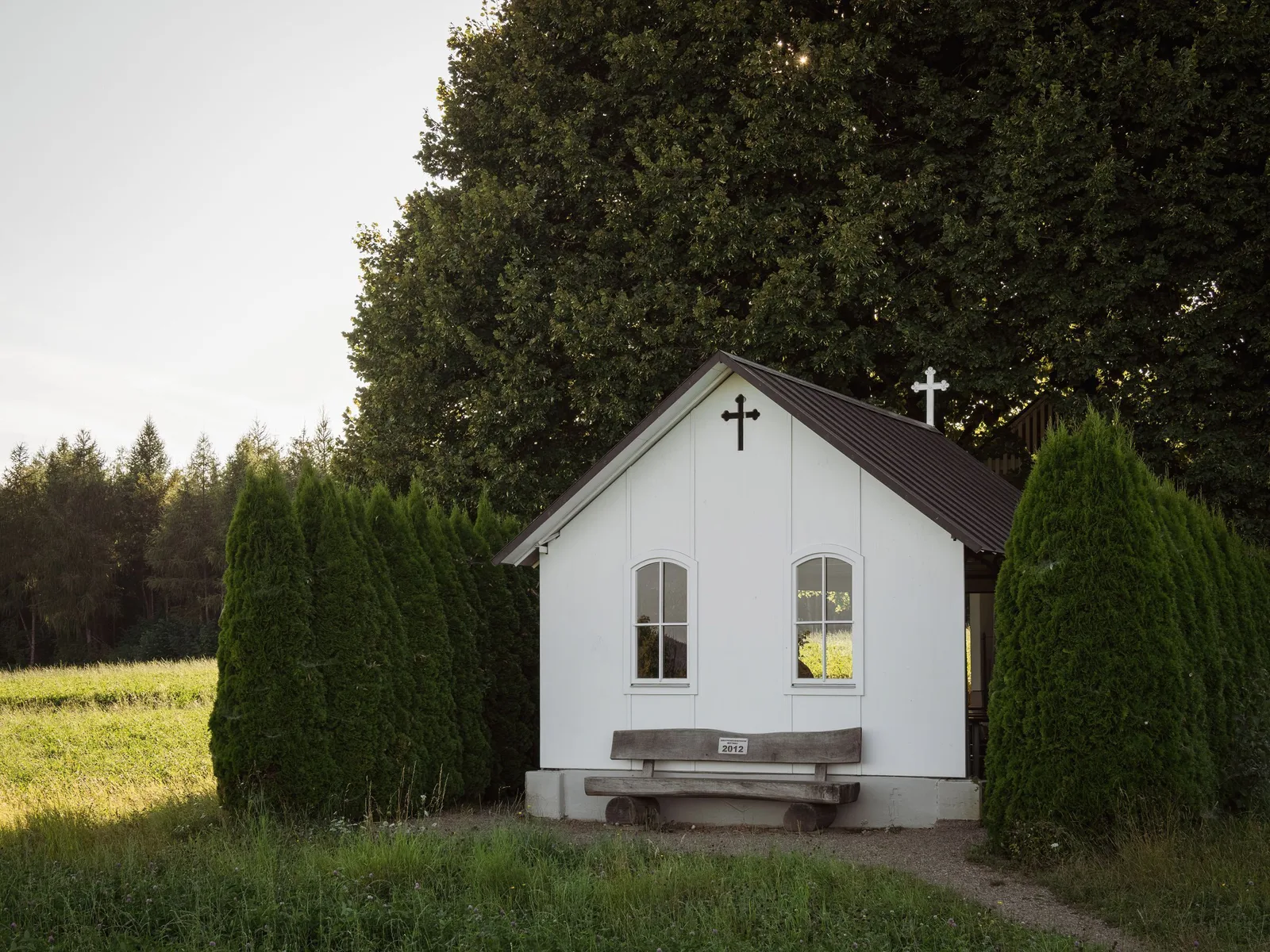
    A small whitewashed country chapel standing alone among trees

    Penha & the Serra da Bocaina

    The mountain, the falls and the still

    Up the Cunha road into the national park: the restored stretch of the Gold Trail with a guide in the morning, then the Tobogã slide and a distillery with a tasting on the way back down.

  4. 04
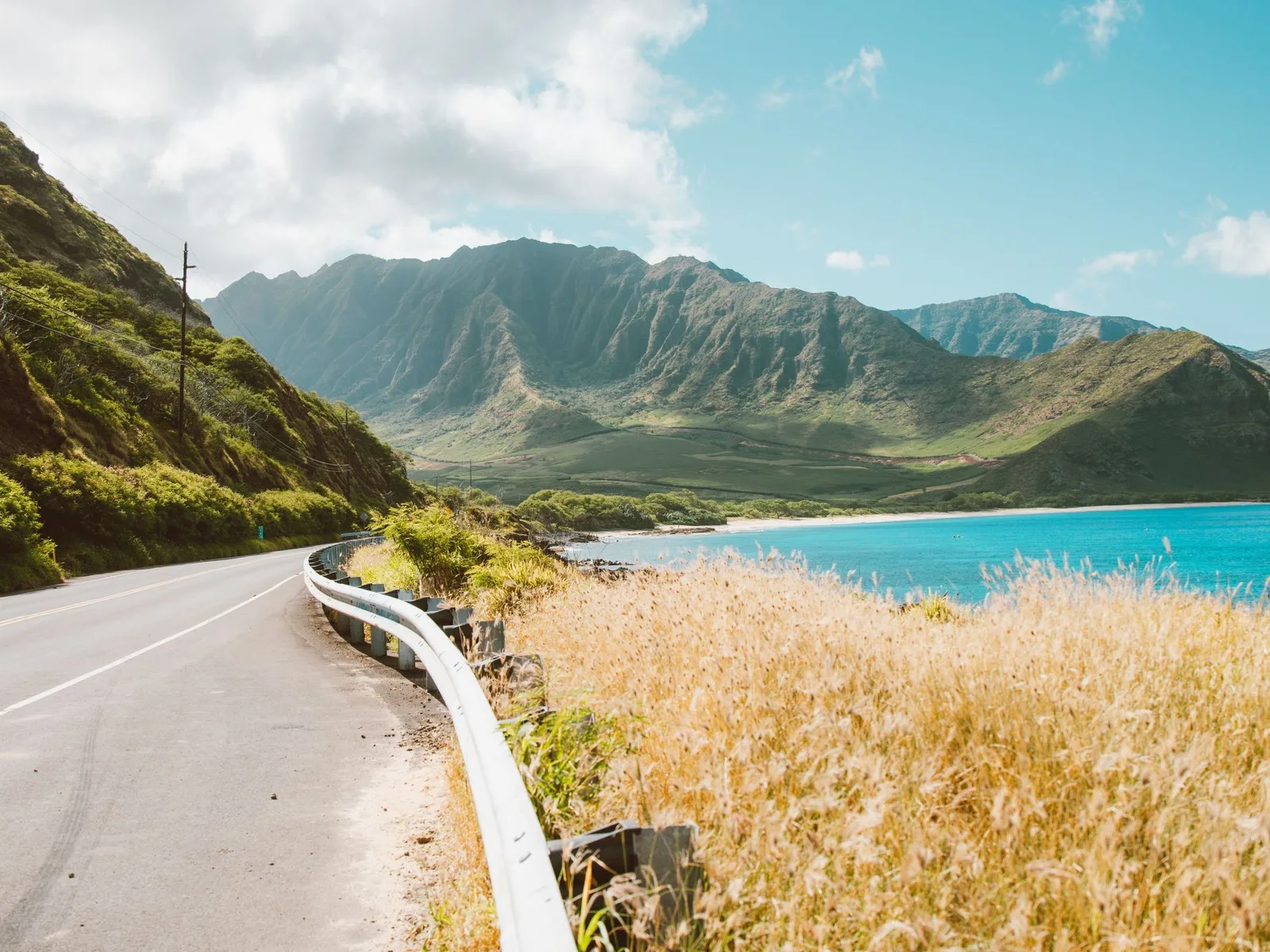
    A coast road running along a steep green shoreline above a turquoise bay

    Trindade & the Cairuçu coast

    South to Trindade

    The whole day down the coast: four beaches in a row, the short trail out to the Cachadaço natural pool, and a long lunch at a beach kitchen before the bus back over the hill.

This is a starting shape, not a fixed departure — we rearrange it around your dates. Have it built for you

Timing

The winter is the good one here, and it is not close.

Most of coastal Brazil is a year-round proposition. Paraty is less so. The Serra do Mar stands directly behind the town and wrings the rain out of the onshore wind, so the summer here is genuinely wet — around 300 mm a month from December to March. Winter is the opposite: dry, clear, cool at night and half-empty. If you can pick your dates, pick August: it is the driest month of the year at both of the nearest stations, 74 mm at Ubatuba and 54 at Angra dos Reis.

How wet, how hot and how busy each month is in Paraty. Choose a month for its average air and sea temperatures, rainfall and what the town is like then.

January

Trade-offs
Air
22–30°C 72–86°F
Sea
26°C 79°F
UV
9 Very high
Rain
17 days 313 mm / 12.3 in

The wettest stretch of the year and the fullest. Warm sea, heavy afternoon rain, the town at capacity.

February

Trade-offs
Air
22–31°C 72–88°F
Sea
27°C 81°F
UV
10 Very high
Rain
15 days 291 mm / 11.5 in

Hot, wet and busy, with Carnival and the Bloco da Lama in the middle of it. The warmest sea of the year.

March

Trade-offs
Air
21–30°C 70–86°F
Sea
27°C 81°F
UV
9 Very high
Rain
16 days 311 mm / 12.2 in

Still very wet, but the holiday crowds go home and the prices come back down with them.

April

Good
Air
19–28°C 66–82°F
Sea
26°C 79°F
UV
7 High
Rain
13 days 233 mm / 9.2 in

Rain drops off sharply and the sea is still summer-warm. One of the better trades on the calendar.

May

Good
Air
16–26°C 61–79°F
Sea
24°C 75°F
UV
6 High
Rain
9 days 123 mm / 4.8 in

Dry, mild and quiet, with the ten days of the Festa do Divino somewhere inside it.

June

Good
Air
15–25°C 59–77°F
Sea
23°C 73°F
UV
5 Moderate
Rain
7 days 94 mm / 3.7 in

Winter proper. Low rain, clear light on the cobbles, and nights that want a jacket.

July

Good
Air
14–24°C 57–75°F
Sea
22°C 72°F
UV
5 Moderate
Rain
8 days 93 mm / 3.7 in

Dry, bright and the coldest month of the year — and the week FLIP takes over the whole town.

August

Best
Air
14–25°C 57–77°F
Sea
21°C 70°F
UV
6 High
Rain
8 days 74 mm / 2.9 in

Dry and warming back up, with the cachaça festival in it. The best month for the long trails.

September

Good
Air
16–25°C 61–77°F
Sea
21°C 70°F
UV
7 High
Rain
13 days 197 mm / 7.8 in

Warm and pleasant, with the rain beginning to creep back in. Still noticeably quiet.

October

Good
Air
18–26°C 64–79°F
Sea
22°C 72°F
UV
8 Very high
Rain
15 days 246 mm / 9.7 in

Wetter and greener, low-season prices, and the sea starting to warm up again.

November

Good
Air
19–28°C 66–82°F
Sea
23°C 73°F
UV
9 Very high
Rain
16 days 264 mm / 10.4 in

Warm with real rain returning, and the last month before December fills the town.

December

Trade-offs
Air
20–29°C 68–84°F
Sea
25°C 77°F
UV
9 Very high
Rain
17 days 280 mm / 11.0 in

Quiet and hot until about the 20th, then the holidays arrive and take the place over.

  • Best The one or two peak months
  • Good A real recommendation
  • Trade-offs Workable, with a catch
See Paraty on the Brazil calendar

UV is the monthly average of the daily peak, 2022 to 2025, calculated from Copernicus Atmosphere Monitoring Service data. Weather data by Open-Meteo.com, CC BY 4.0.

For the town and the trails

June–August

Under 100 mm of rain a month, clear light on the cobbles, the trails dry and the town quiet. August is the peak inside it, the driest month of the year at both nearby stations. Take a jacket for the evenings.

For warm water

December–April

The sea sits between 25 and 27 degrees, at the cost of the year’s heaviest rain and, in the first three of those months, its biggest crowds.

Book far ahead for

Carnival, the Divino & FLIP

A town this small has a few thousand beds. Three or four events a year take all of them, with multi-night minimums and doubled prices.

About the rain

Paraty sits directly under the Serra do Mar, and mountains that close to the sea do one thing to weather: they force the moist onshore wind upward and it rains. From December to March the town takes something like 300 mm a month across fifteen or more wet days, which is roughly twice what Rio gets in the same weeks. It arrives as heavy afternoon downpours rather than all-day drizzle, so days are rarely lost outright, but the cobbles are slippery, the trails are mud, and a proper rain jacket beats a poncho by a distance.

From June to August the same coast averages under 100 mm a month across seven or eight wet days, which is why those are the months to aim for. The trade is temperature. The town sits at the foot of the mountains and cold air drains down the valley overnight, so winter nights fall to around 14 degrees — properly cool by Brazilian coastal standards, and colder than Rio four hours up the road — while the sea drops to 21 or 22. Days are still in the mid-twenties and bright. Bring one warm layer and you will not think about it again.

The dates worth planning around

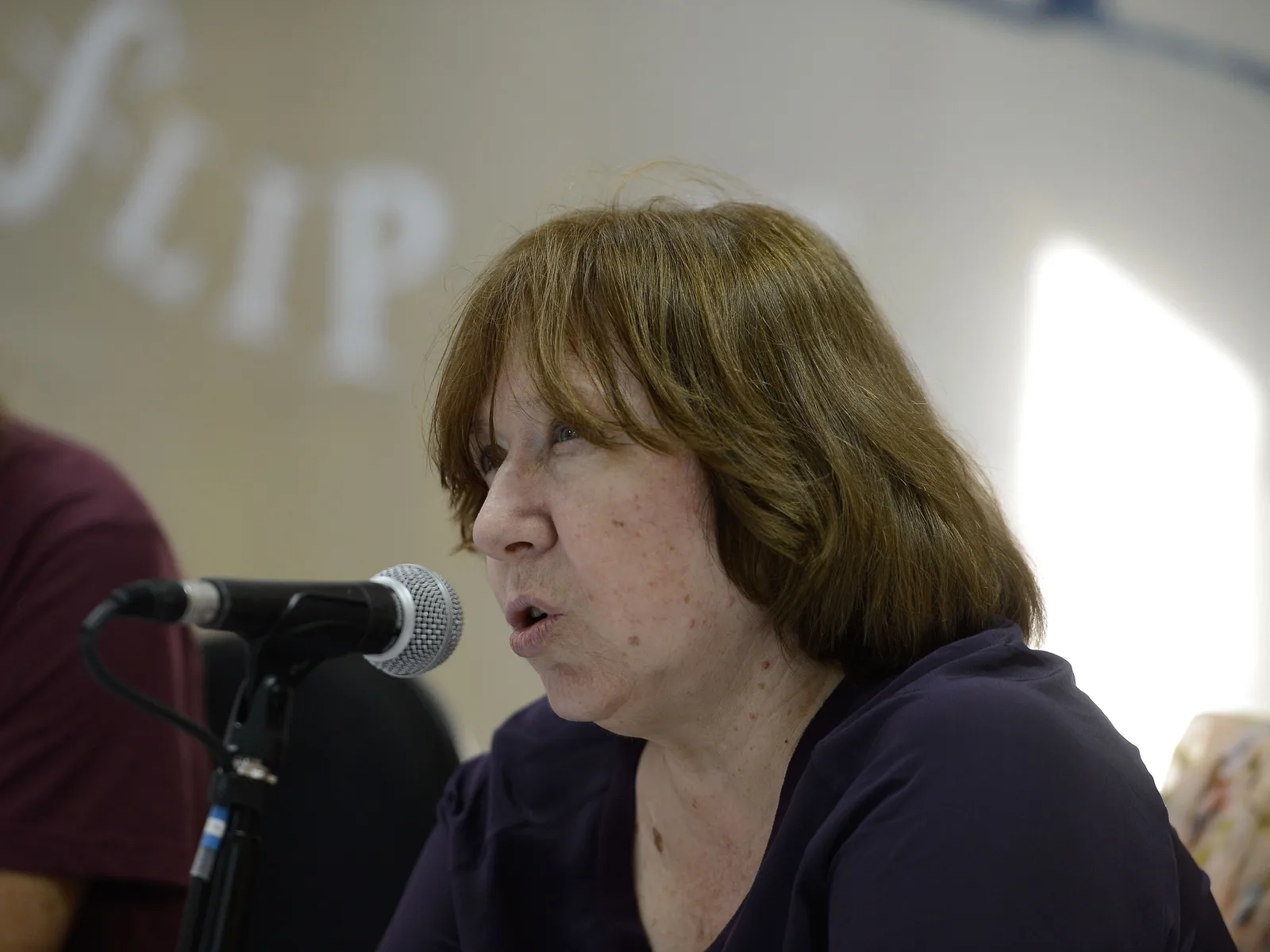
An author speaking at FLIP, Paraty’s international literary festival, a microphone in front of her and the festival lettering on the wall behind

FLIP — the international literary festival

July — the 2026 edition runs July 22–26

Since 2003, one of the most respected literary festivals in the world happens in a colonial town of fewer than fifty thousand people. The main tent seats a few hundred and the tickets go fast, but the festival spills over the whole historic center for five days — readings, free screenings on the church square, publishers’ tents, and every bar full of people arguing about books. It is the busiest week of the Paraty year outside Carnival, and rooms go months ahead.

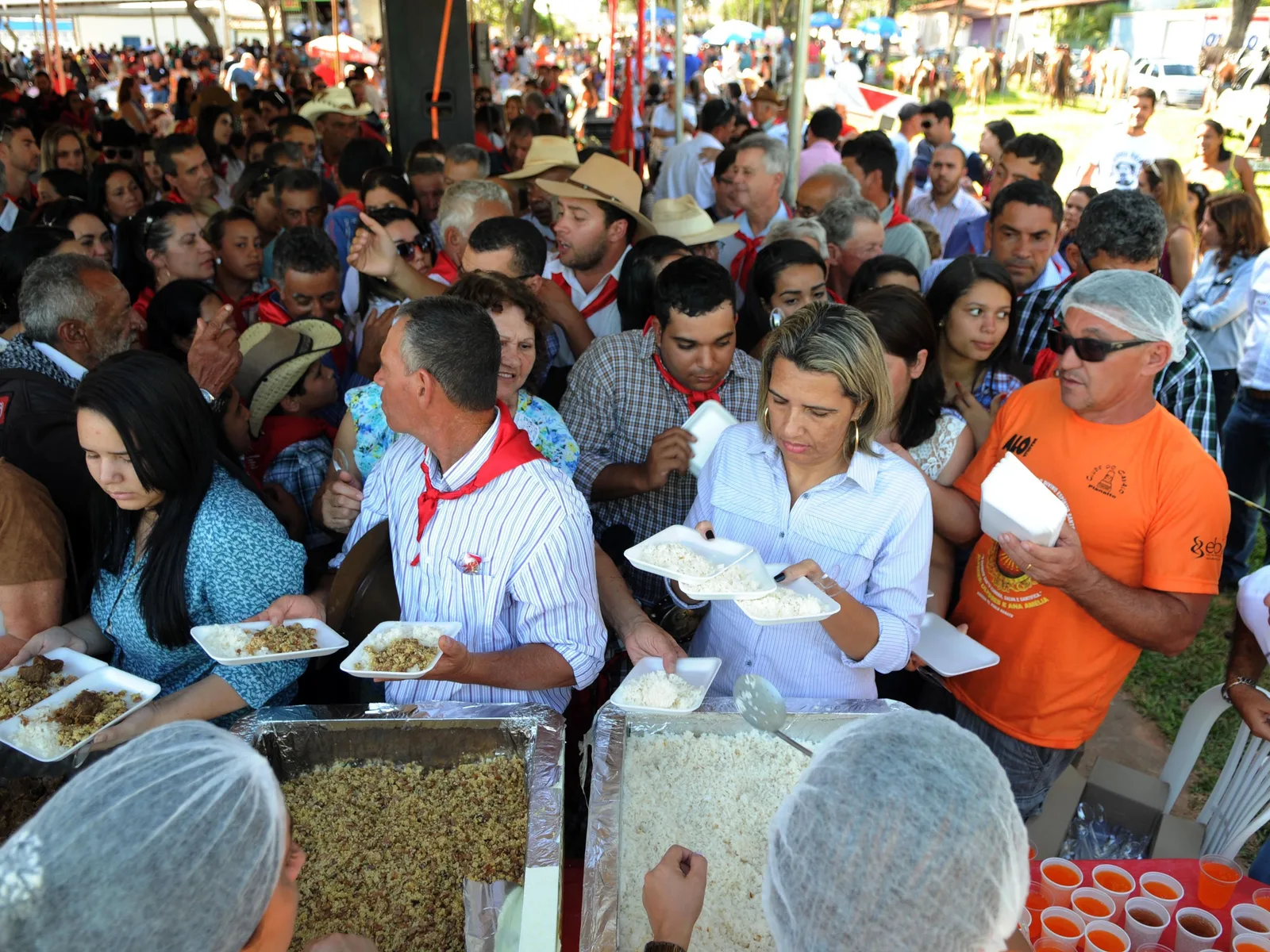
Crowds gathered at a Festa do Divino Espirito Santo, plates being handed out at the communal meal that closes the festival

Festa do Divino Espírito Santo

Ten days ending at Pentecost — May or early June

Paraty has kept this one since the eighteenth century, and it is recognized as national heritage. Ten days of masses, processions, auctions, folias — the groups who carry the Divine banner from house to house — and food and music in the streets, organized each year by a festeiro chosen from the community. It is a religious festival that the whole town works on rather than a show put on for visitors, which is exactly what makes it worth planning around.

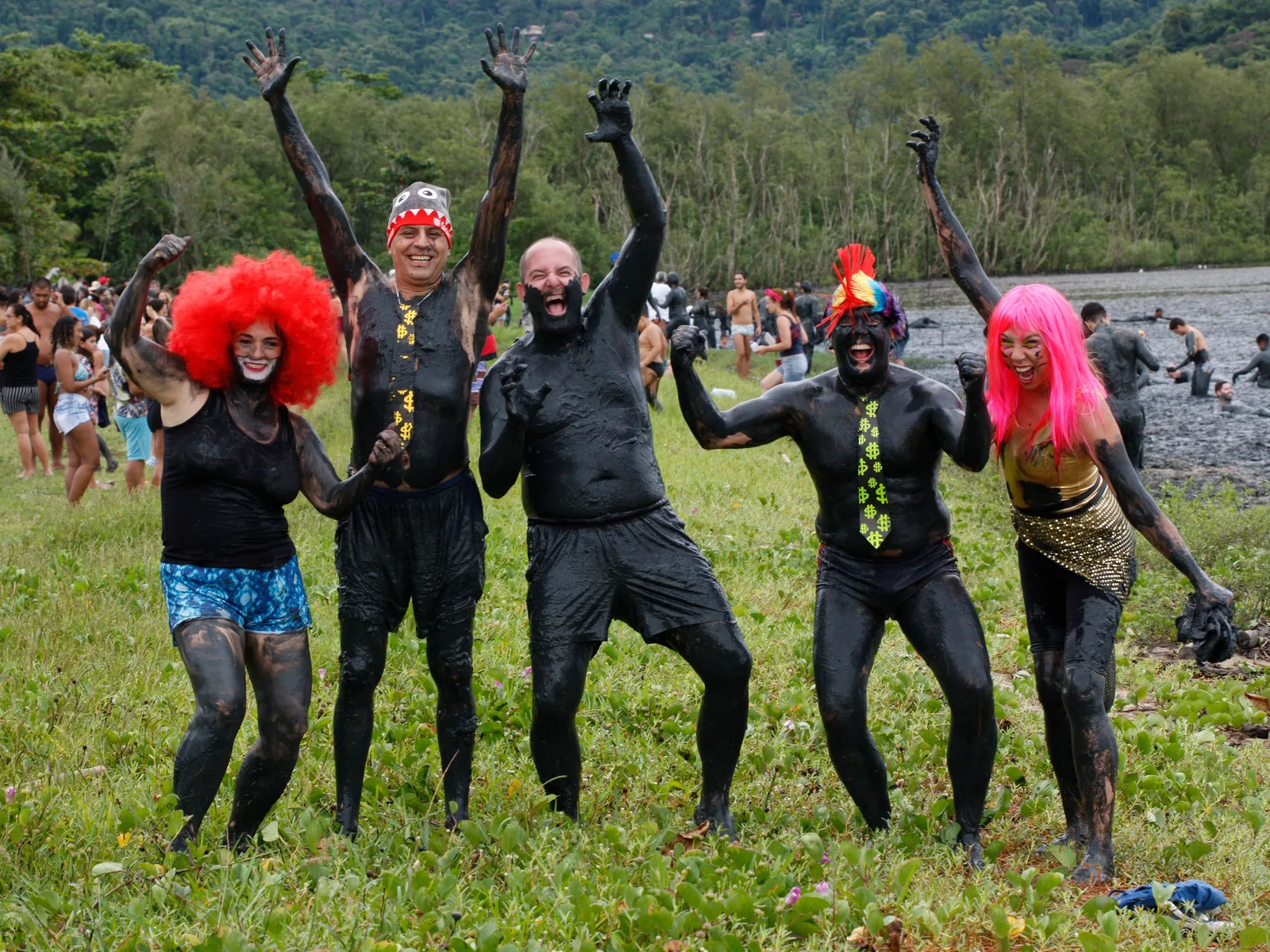
Revelers at the Bloco da Lama in Paraty covered head to foot in gray mangrove mud, wearing vines and rags and shouting, packed together on the beach

Carnival and the Bloco da Lama

February or early March — the dates move with Easter

Paraty’s Carnival is a street Carnival, in a town where every street is a stone corridor between colonial walls, and it is loud. Its own contribution to the national canon is the Bloco da Lama: since 1986, on Carnival Saturday, hundreds of people cover themselves head to foot in mud from the Jabaquara mangrove, dress as a prehistoric tribe and march. It began with a handful of friends and it now doubles as an argument for protecting mangroves.

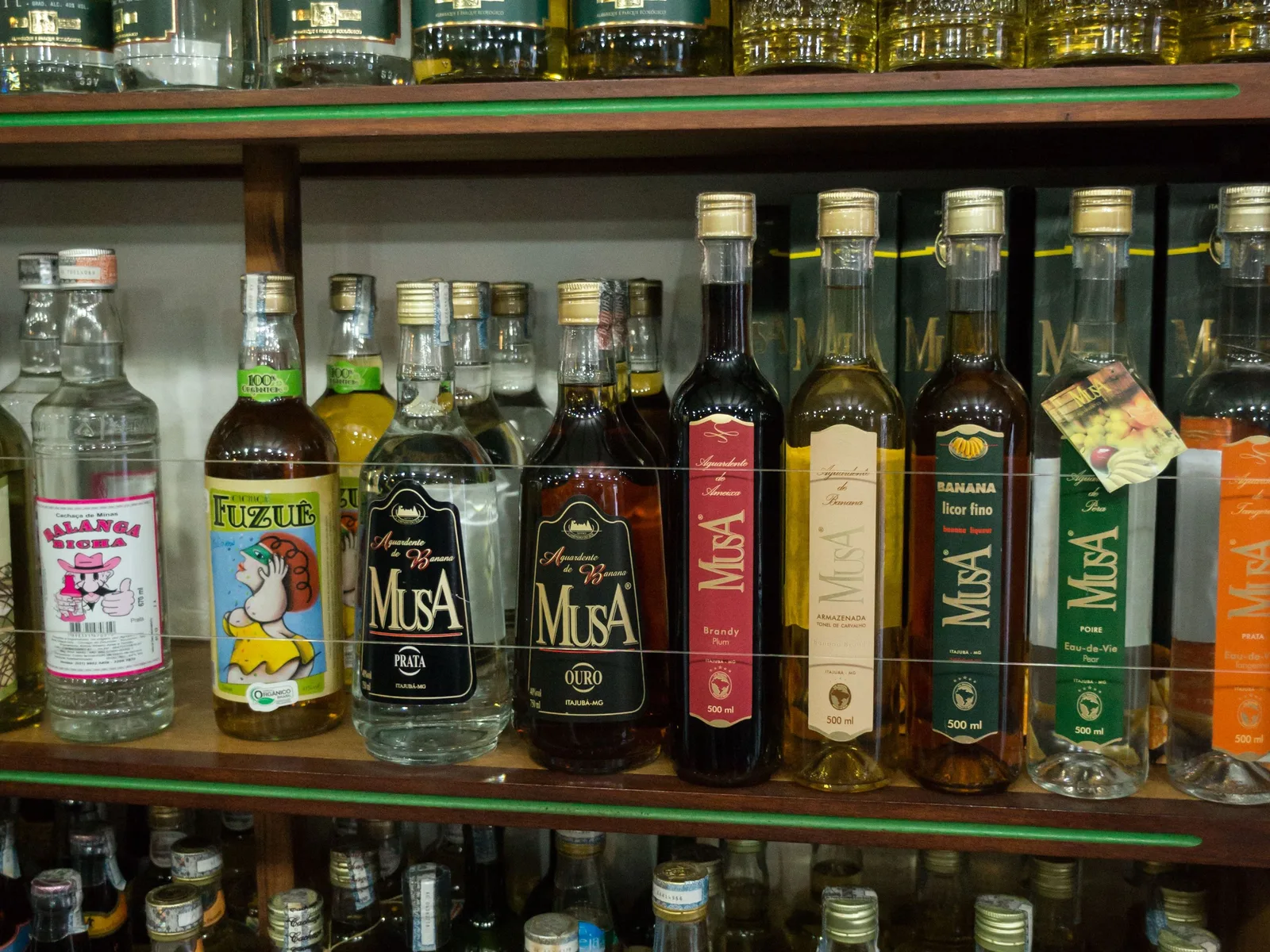
Shelves of labeled cachaça bottles lined up in a Paraty shop

Festival da Cachaça, Cultura e Sabores

August

The old Festival da Pinga, renamed and broadened. The town’s distilleries bring their cachaça down to the historic center for a long weekend of tasting, cooking, music and a certain amount of standing around in the street with a small glass. It lands in one of the driest, most comfortable months of the Paraty year, which is not an accident.

Good to know

Before you come

How many days do I need in Paraty? +

Four. That is the honest number and it is why the itinerary above stops there. The historic center is a day, the bay is a day, the mountains and waterfalls behind the town are a day, and the coast south to Trindade is a day. Three works if you are prepared to cut one, and the one that usually goes is the mountains. Two is enough to see the town and get on a boat, and that is a real trip — plenty of people come from Rio for a long weekend. Where a fifth day genuinely earns its place is out at Praia do Sono or Saco do Mamanguá, where staying the night rather than day-tripping is the whole difference.

How do I get to Paraty from Rio or São Paulo? +

By road, in both cases — Paraty has no commercial airport. From Rio, Costa Verde buses leave the Novo Rio terminal through the day and take about four hours forty-five minutes, from roughly R$120; private transfers do it in about four. From São Paulo, Reunidas Paulista runs from the Tietê terminal in about six hours forty minutes, from roughly R$116, with overnight departures. If you are flying in from the US, Rio’s Galeão (GIG) is the usual arrival point. Driving yourself is a genuine pleasure — the BR-101 Rio–Santos runs between the mountains and the sea the whole way — but it is winding, slow and often stuck behind a truck, so do it in daylight and allow more time than the map suggests.

Is Paraty safe? +

Yes, and easily so by Brazilian standards. It is a small town whose whole economy is visitors, the historic center is busy and walkable at night, and violent crime is not what a traveler here has to think about. Treat beach theft the way you would anywhere — nothing on the sand you would mind losing — keep the phone in a pocket on the darker side streets, and leave the passport in the pousada. The genuine hazards in Paraty are physical rather than criminal: the stone paving is uneven and slick when wet and turns ankles constantly, the ocean beaches south of town have real surf and mostly no lifeguard, and the coast road is a demanding drive. Sensible shoes matter more here than anything else on this list.

When is the best time to visit Paraty? +

August, inside a dry June-to-August stretch, and it is not a close call. Paraty sits under the Serra do Mar, which makes its summer genuinely wet — around 300 mm a month from December to March, roughly double Rio’s — while winter runs under 100 mm a month with clear, bright days in the mid-twenties. April, May and September are the next best thing: much drier than summer, still warm, and cheap. The trade in winter is that nights drop to around 14 degrees and the sea falls to 21 or 22, so it is a town-and-trails season rather than a swimming one. What you should avoid, unless you are coming specifically for the events, is the Christmas–Carnival stretch: hottest, wettest, fullest and most expensive all at once.

Can I visit Paraty and Ilha Grande on the same trip? +

You should. They are not two destinations that happen to be near each other — UNESCO inscribed them in 2019 as a single World Heritage site, “Paraty and Ilha Grande: Culture and Biodiversity”, and it was Brazil’s first mixed listing, recognized for its culture and its nature together. The two halves are complementary rather than repetitive: Paraty is the colonial town and the mainland forest behind it, Ilha Grande is the car-free island and the beaches. Getting between them takes about two hours on the road to Angra dos Reis or Conceição de Jacareí, then 20 to 50 minutes on the water, and agencies in Paraty sell it as one door-to-door transfer. Four days in Paraty and three on Ilha Grande, with Rio at one end, is one of the best weeks in Brazil.

Keep going

Where Paraty fits in a bigger trip.

Paraty is a stop on the Costa Verde rather than a destination you fly to, and it pairs almost too easily. Two of these are along the same road, and the third is the other end of the road that built the town.

Free · 29 pages

Free guide

Beginner's Guide to Brazil

A free 29-page guide to everything a first-time visitor should know before landing: visas, safety, money, getting around, where to go, and what to eat.

We'll email you a link to confirm your address. Click it and the guide opens right away.

See what's inside
Paraty bay at sunset from the water, wooden schooners silhouetted at anchor and the dark ridges of the Serra do Mar layered behind them under a burning sky

Skip the planning

Get the Costa Verde in the right order.

Paraty is easy to enjoy and surprisingly easy to time badly — the wrong week, a room booked outside the center by mistake, a boat day lost to weather that could have been moved. Tell us your dates and your pace and we will shape a private Costa Verde itinerary around them, Ilha Grande and Rio included if you want them.

  • One person, living in Brazil, replying to you directly
  • A reply within one business day — no call center, no bots
  • No cost to plan, and no obligation to book
  • Built around your dates, not a fixed departure