Everything logistical, including the part where you cross a border to finish the trip.
Overview
What Foz do Iguaçu actually is
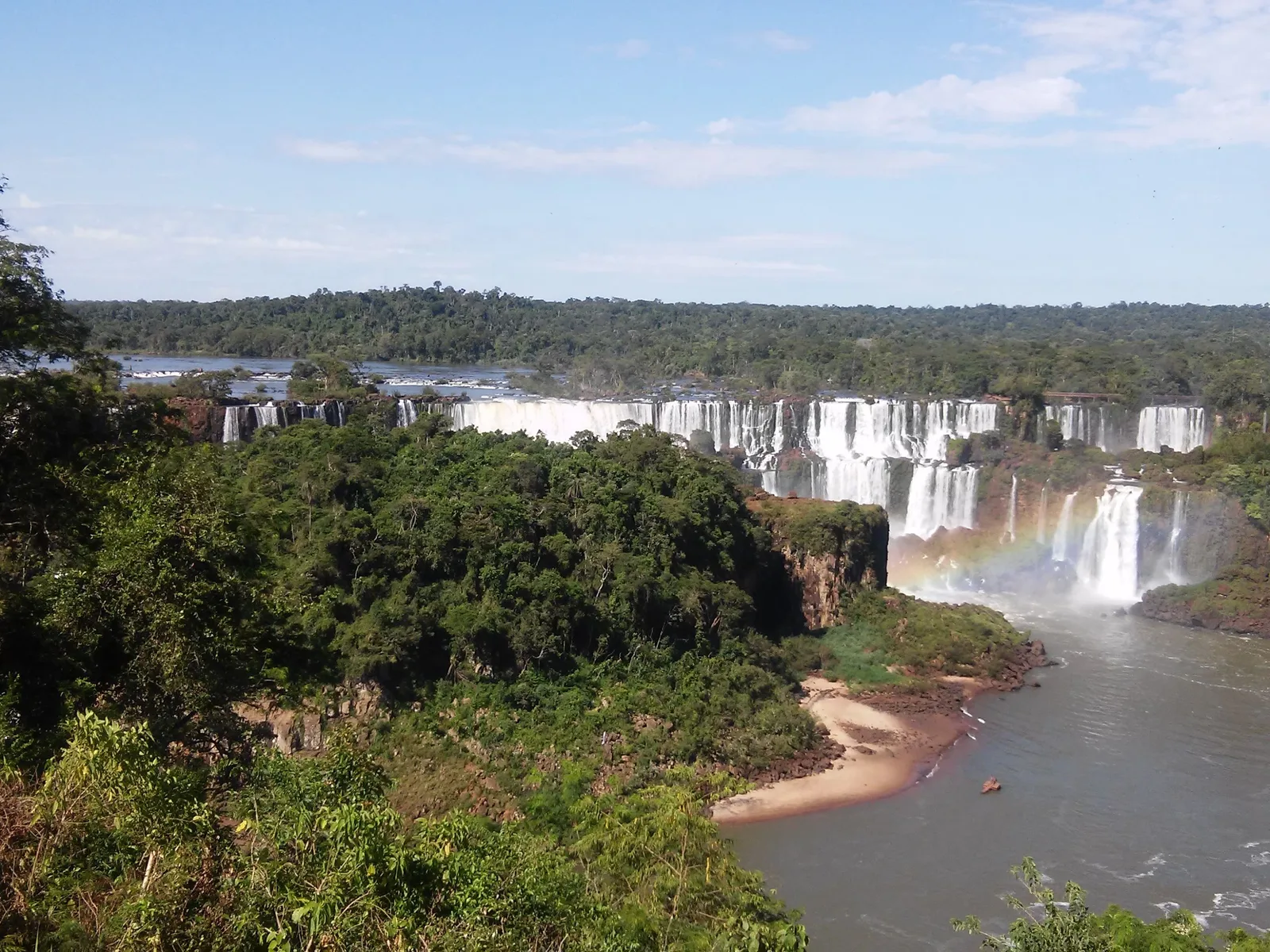
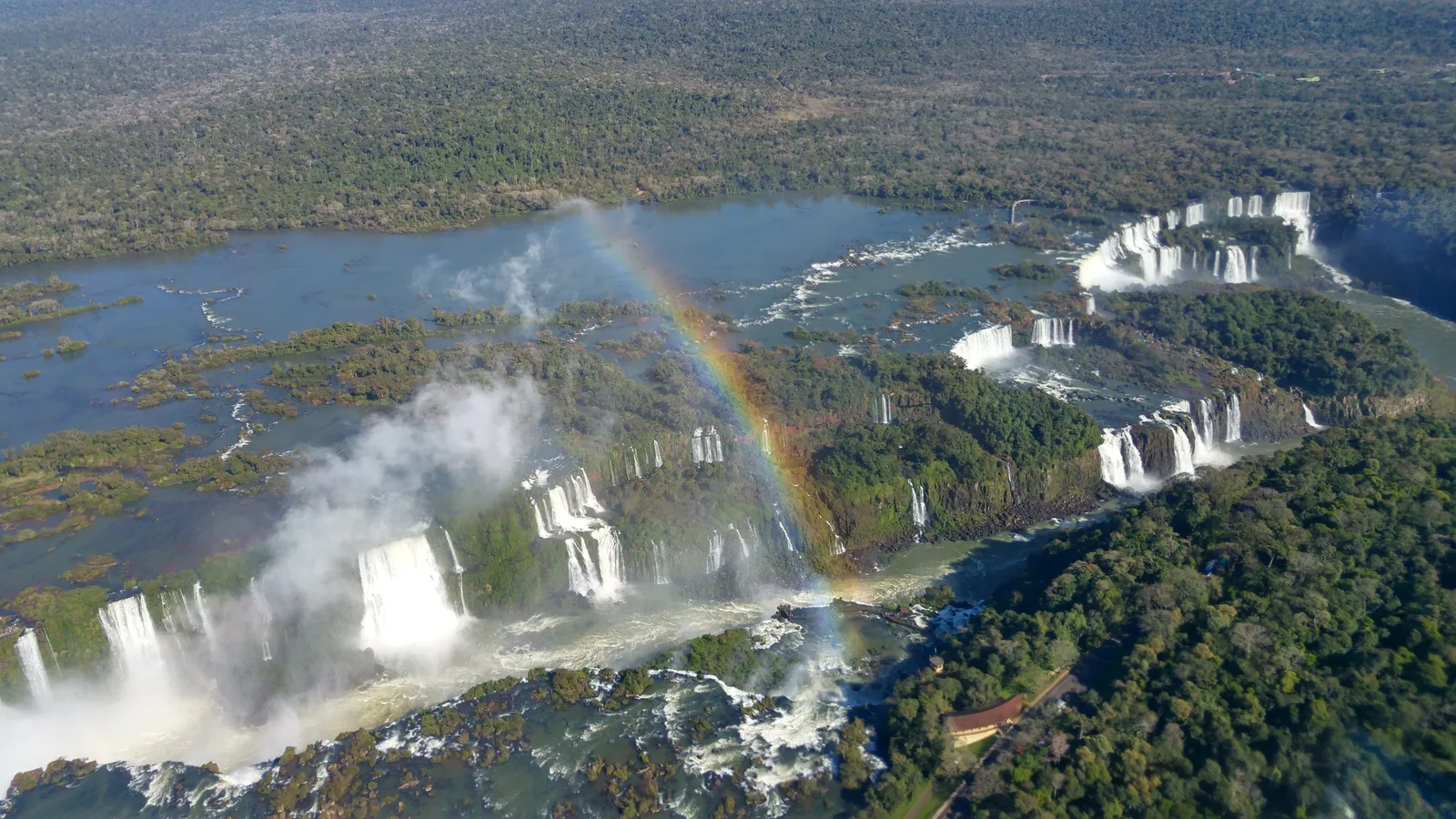
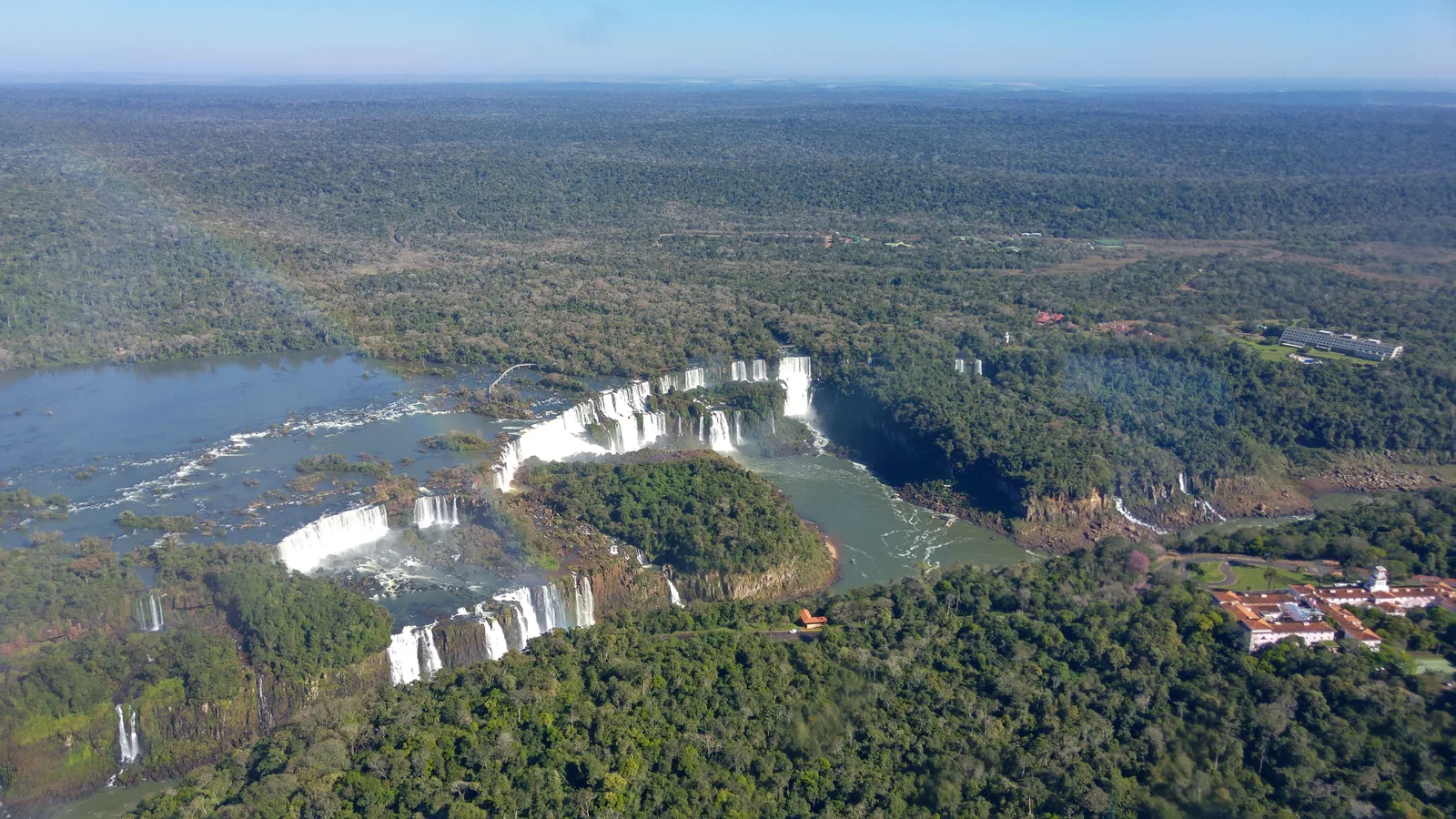
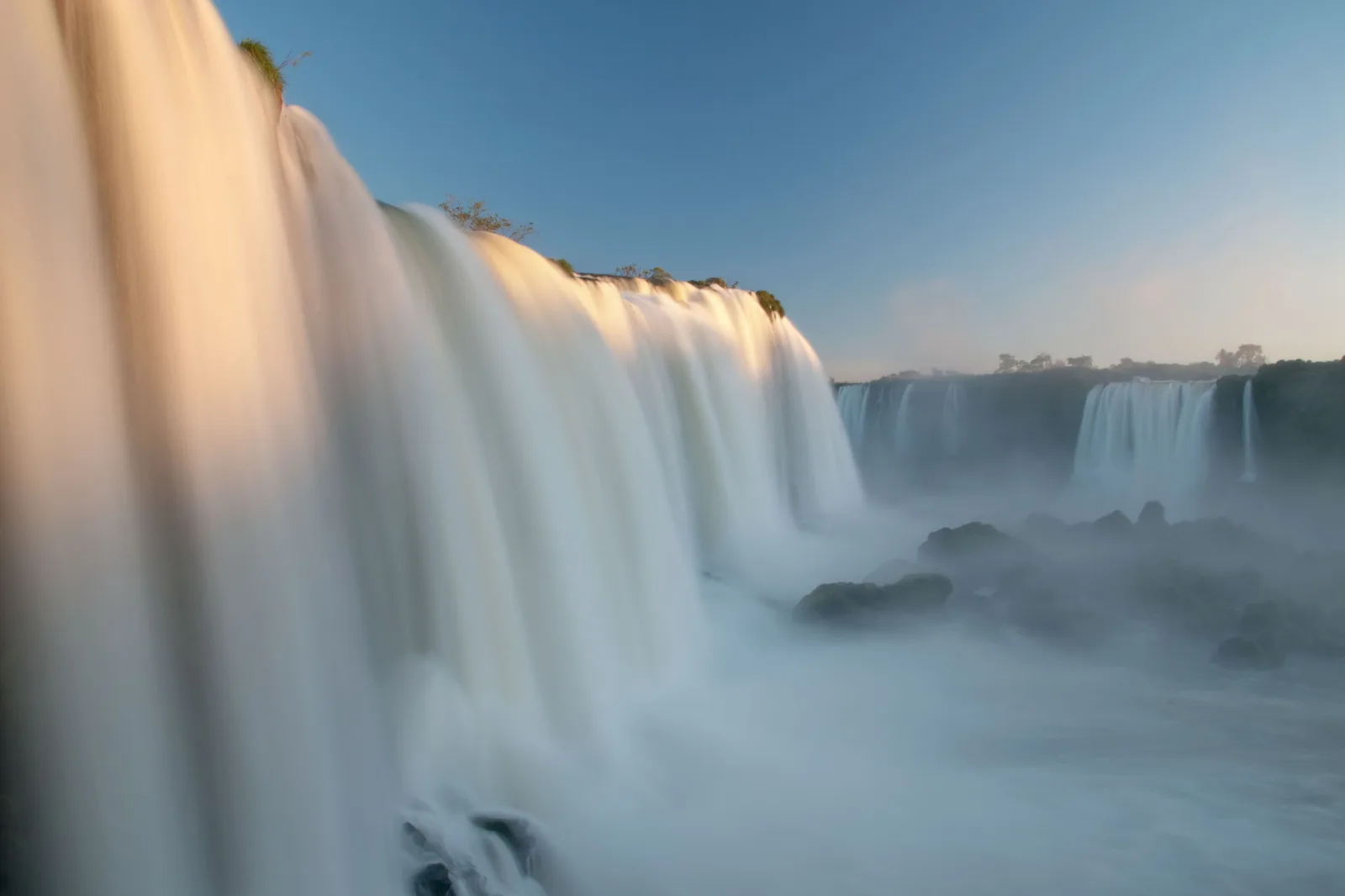
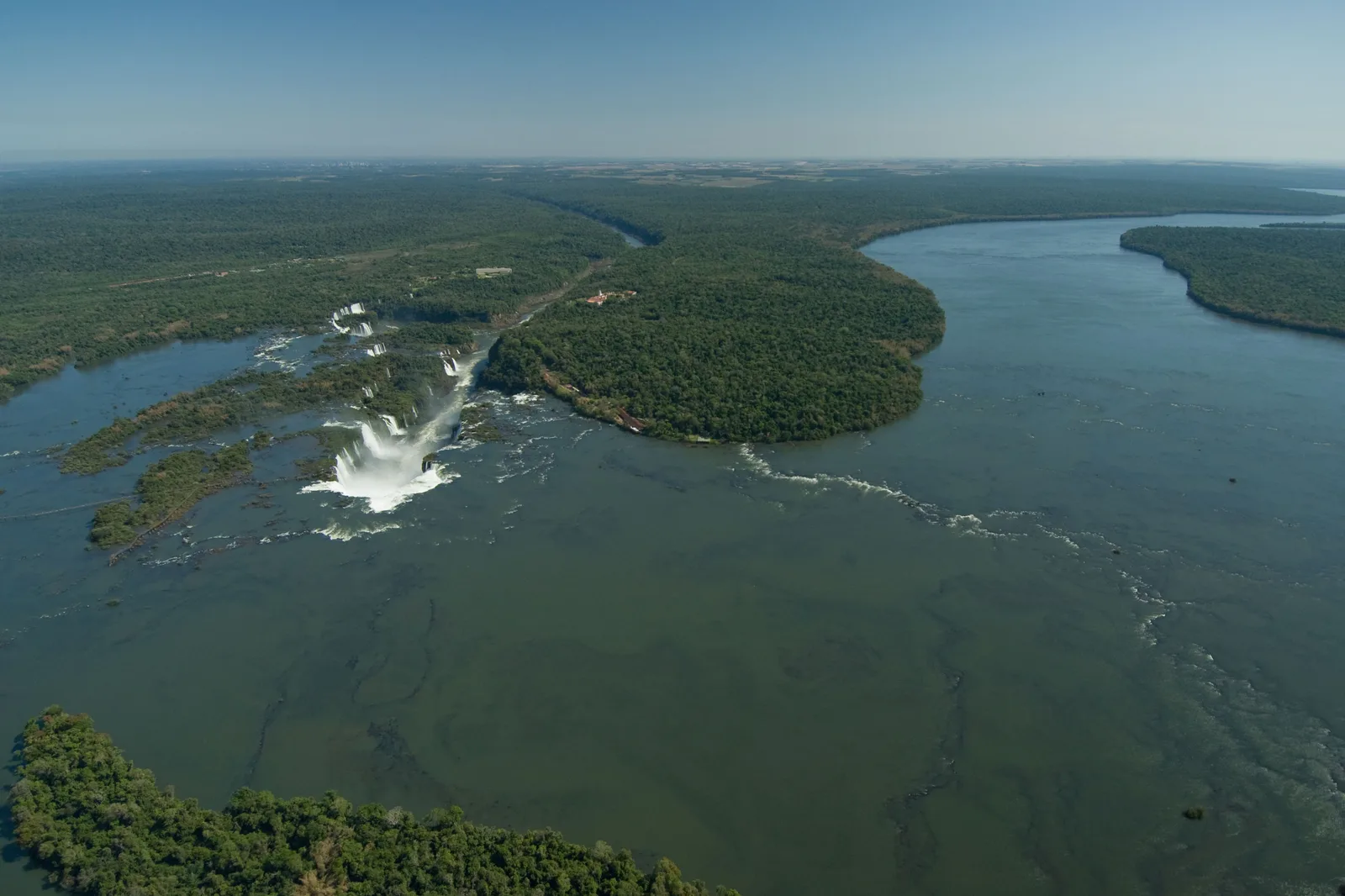
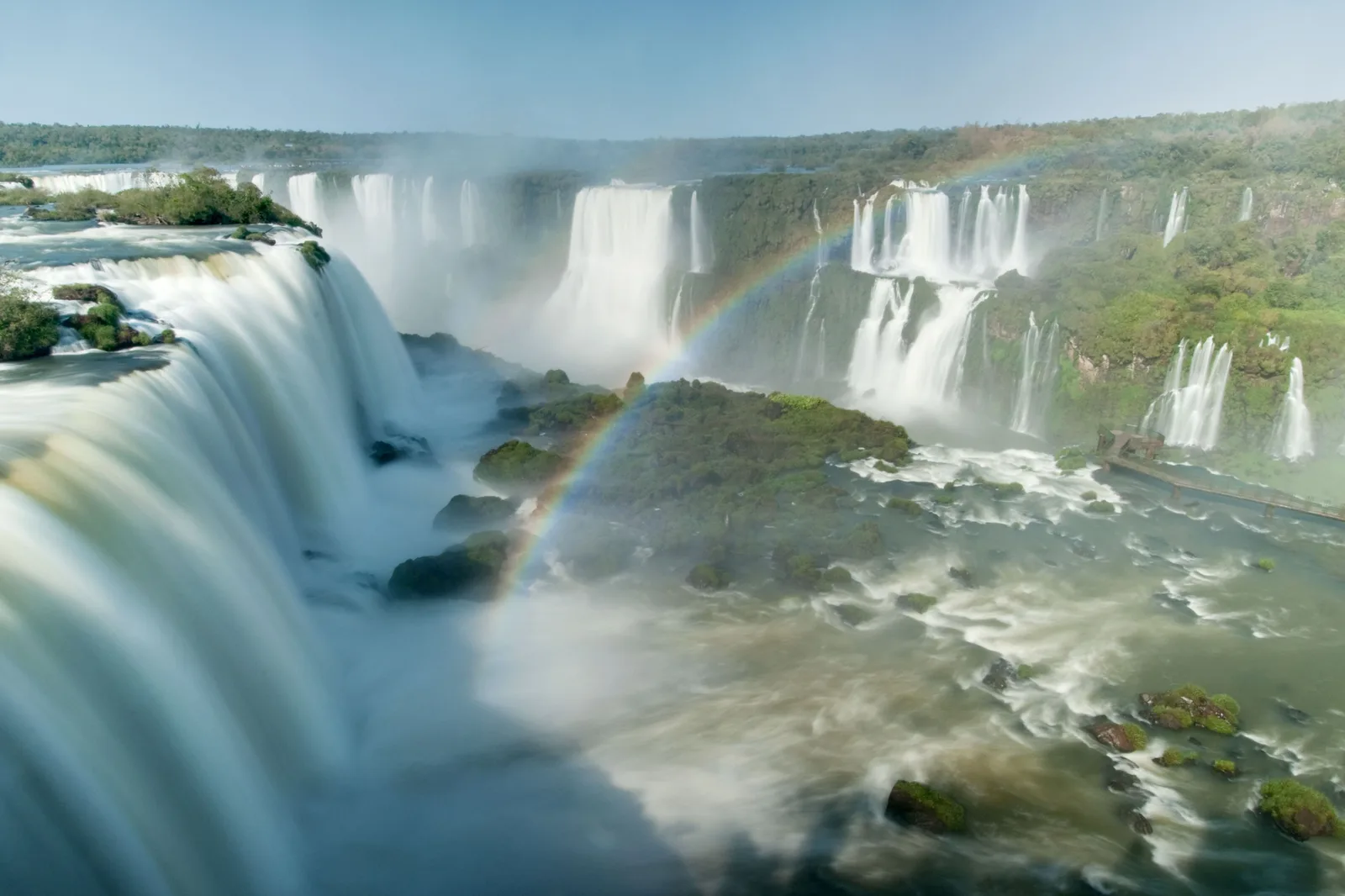
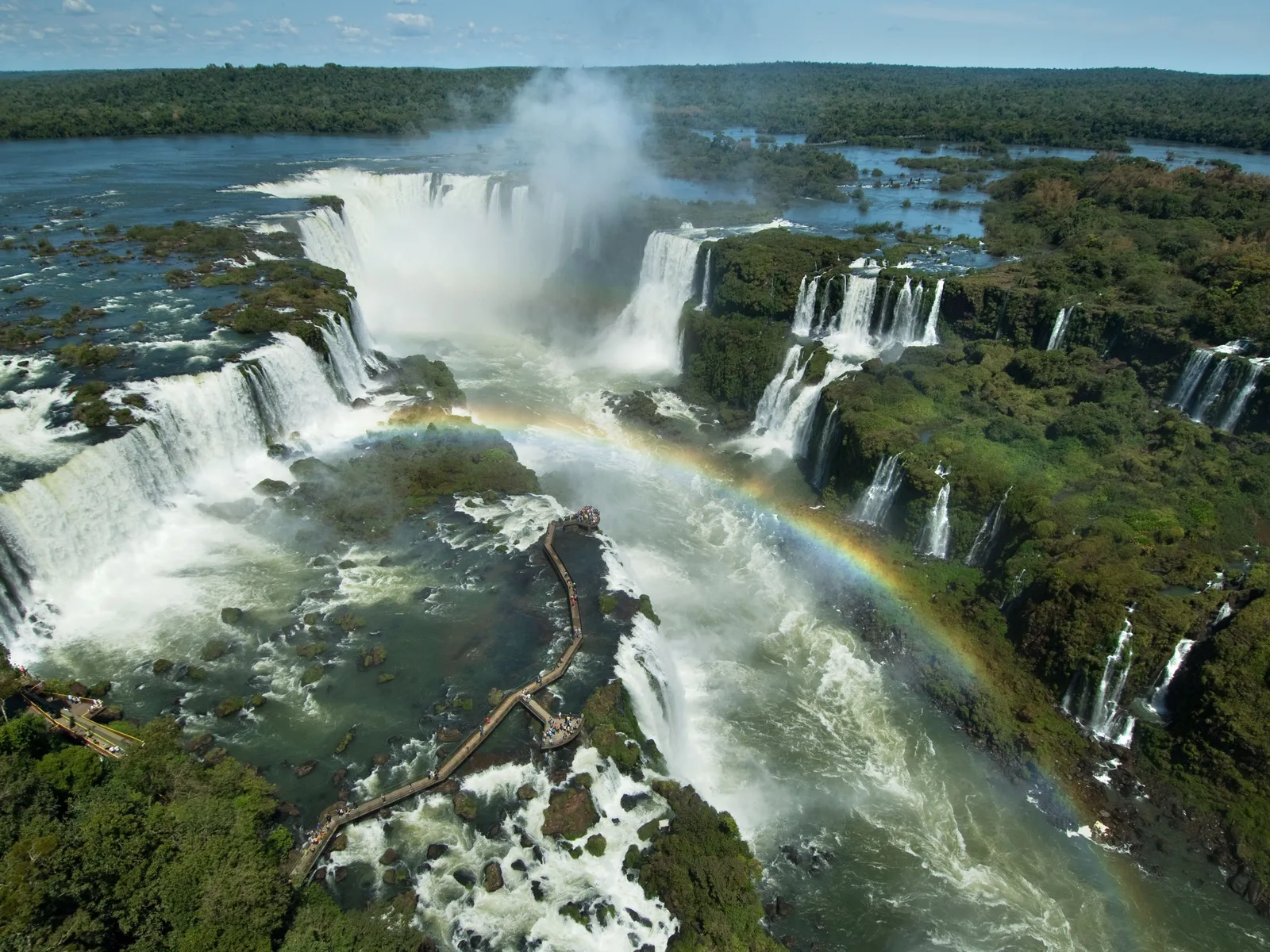
Iguazu Falls is a 2.7-kilometer arc of water — 275 separate drops in an average year, the tallest of them 82 meters — where the Iguaçu River falls off the edge of a basalt plateau just before it joins the Paraná. It is not a single cataract like Niagara. It is a long, ragged, forested horseshoe of them, and the reason it takes more than a day is that no one vantage point shows you the whole thing.
The border runs down the river, and it does not split the falls evenly. Roughly four-fifths of the drops are on the Argentine side; Brazil has the other fifth and, because of where it stands, the view of all of them. That single geographic accident is the whole logic of a trip here: Brazil gives you the panorama in a couple of hours, and Argentina gives you a full day of walkways out over the water. Most travelers from the US cross, and the ones who do not have seen half of it.
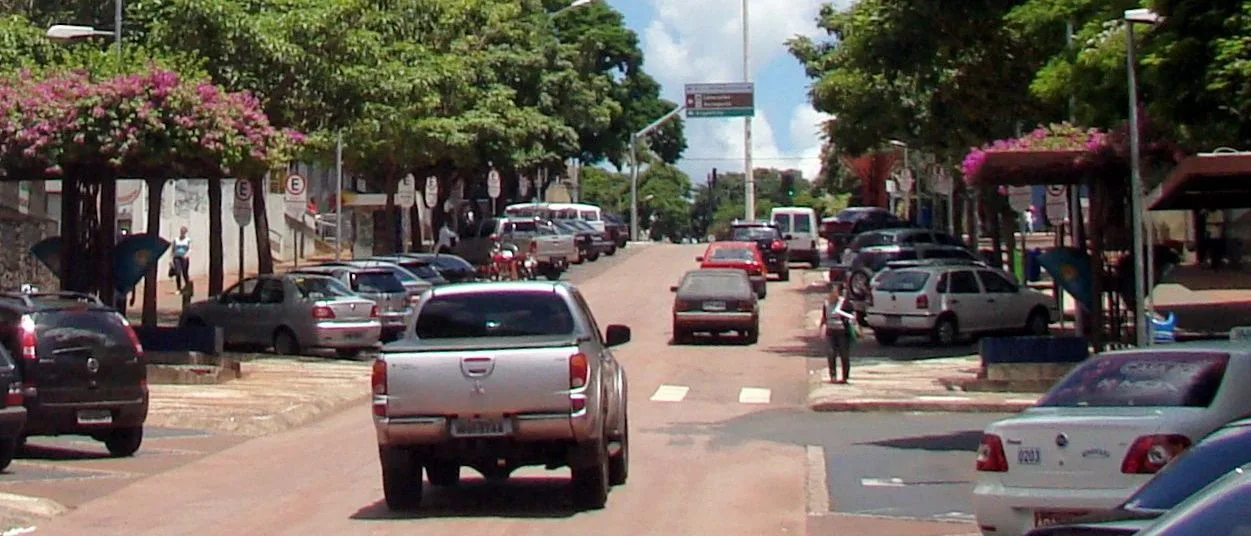
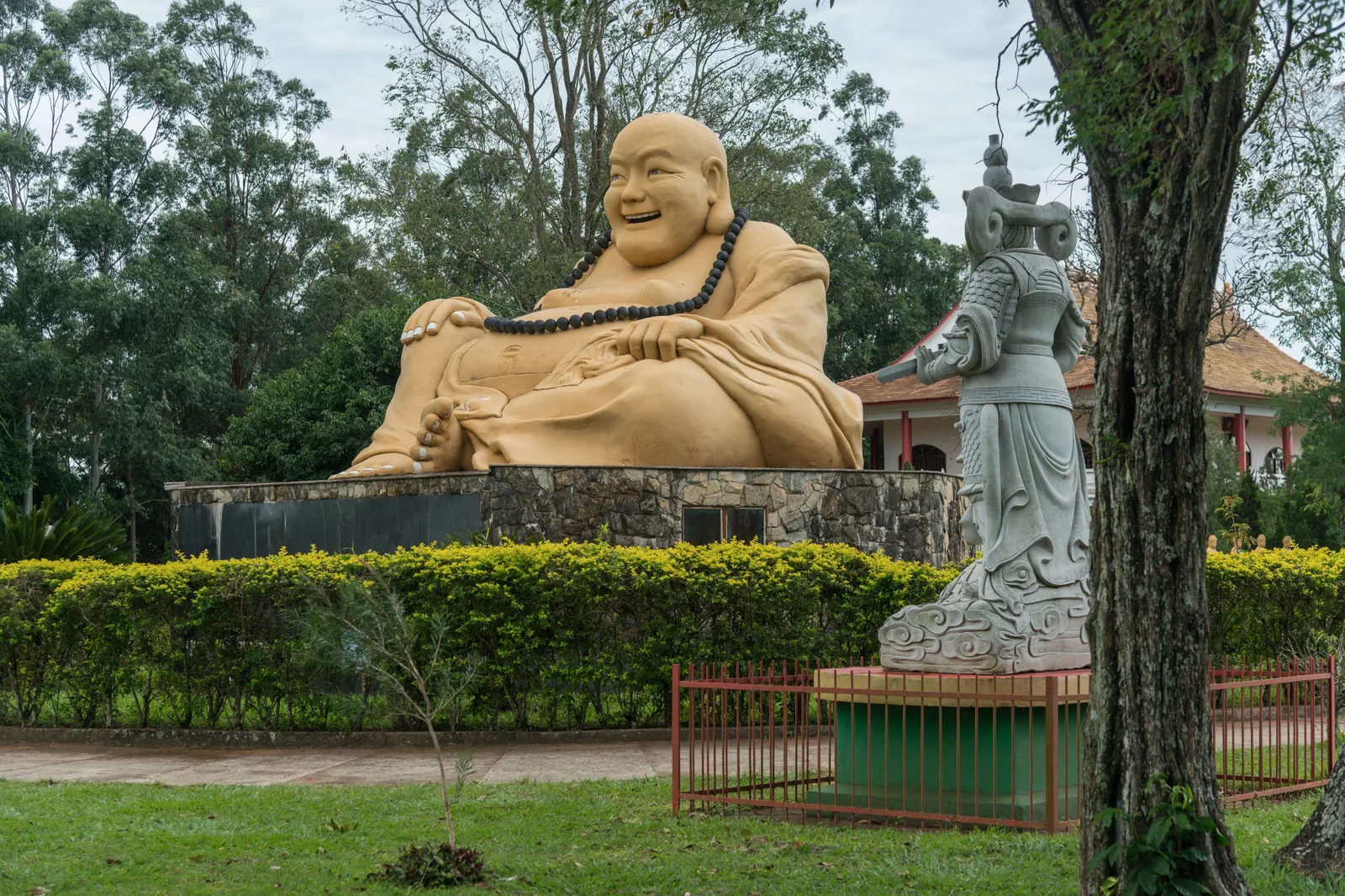
Foz do Iguaçu itself is a city of about 300,000 people on the Brazilian bank, and it is stranger and more interesting than a waterfall town has any right to be. Paraguay is across one river and Argentina across the other. Itaipu, one of the largest hydroelectric plants on earth, sits 20 kilometers upstream. The city has the second-largest Arab community in Brazil, a Lebanese-founded mosque with the biggest concrete dome span in Latin America, and a Chinese Buddhist temple on a hill above the Paraná. Nobody comes for any of that. It is worth an afternoon anyway.
Where It Is
The far western corner of Paraná
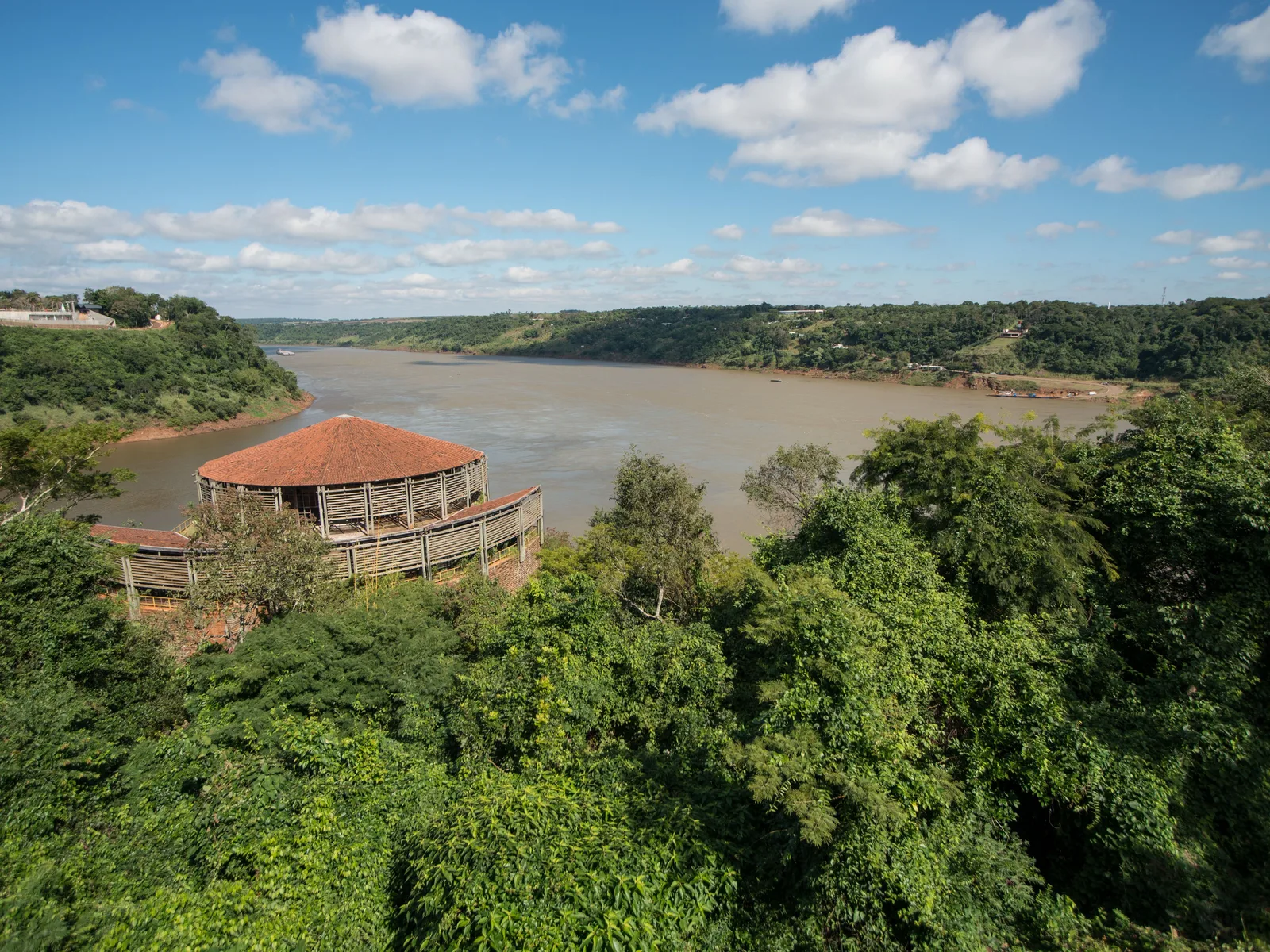
Foz do Iguaçu sits at the extreme western tip of Paraná, in southern Brazil, where the Iguaçu River meets the Paraná and three countries meet each other. It is about 1,000 km from São Paulo and 1,500 km from Rio — an hour and forty minutes and two hours in the air respectively, and the only sensible way to get here.
The two parks are separate national parks in separate countries, with separate paid entries and no combined ticket. Getting from one to the other means an international border crossing over the Tancredo Neves bridge — routine, well-worn, and done by thousands of people a day, but not something to improvise on the morning of. These requirements have changed more than once in recent years; check them again close to your dates.
US passport holders need a Brazilian eVisa. Brazil ended the visa waiver for US, Canadian and Australian citizens in April 2025, and the replacement is an online application handled by VFS Global — currently $80.90, about five business days. It is issued multiple-entry and valid for ten years, so leaving for Argentina and coming back is not a problem. Apply well ahead anyway: an airline will not board you without it.
Argentina does not require a visa from US citizens for stays of up to 90 days, and there is no reciprocity fee. That fee was abolished in 2016 and has not come back, whatever older blog posts say.
Carry travel medical insurance, and carry proof of it. Argentina has required foreign visitors to hold health coverage since July 2025. Whether anyone asks for it at the bridge is another matter — enforcement has been patchy — but the policy costs little and settles the question. Check the Migraciones site and your airline close to your dates: this is exactly the kind of rule that moves.
You get stamped both ways, even for a day trip. Brazilian and Argentine immigration posts sit at opposite ends of the bridge with no-man’s-land between them, and you stop at both. Budget 20 to 40 minutes for the crossing on a normal day and considerably more on a Brazilian or Argentine holiday weekend.
A taxi is the simplest way across. Foz drivers know the procedure, wait while you are stamped, and charge around R$100 one way. Ride apps are the awkward option — Uber works in Foz but not in Puerto Iguazú, and drivers are inconsistent about crossing at all. A guided day tour is the least friction of the lot, because the operator handles the stops.
The public bus is cheap and slow. Buses run between the two city terminals through the day, but they do not automatically wait at immigration — most passengers are locals who do not need stamping. Tell the driver you need to be stamped, and be prepared to catch the next bus after the queue.
The clocks agree, and the opening hours do not. Both sides sit on UTC−3 year-round with no daylight saving, so there is no time change to get wrong. What catches people is that the two parks keep different hours: Brazil runs 9:00am to 4:00pm on weekdays, Argentina opens at 8:00am and stops admitting at 4:00pm, and the last train to the Devil’s Throat leaves at 3:30pm. Cross early.
Cost
What three days here actually costs
Foz is inexpensive to be in and not inexpensive to do. Rooms and food are cheap by US standards on both sides of the river, but this is a destination made of paid attractions — two park entries, a dam tour, a bird park, and the boat ride nearly everyone ends up taking — and they stack up faster than the hotel does.
Estimated daily budget, per person
Budget
$60
/ day
A hostel or simple pousada in Foz city center, the 120 bus to the park gate, self-catered breakfasts, and one paid attraction a day.
Mid-range
$130
/ day
A three- or four-star double split two ways, both park entries, restaurant meals, ride apps, and a taxi across the border.
Comfortable
$290
/ day
A resort on the park road, private cross-border transfers with a guide, the boat ride and the helicopter, and dinner out every night.
Estimates, per person per day, once you are in Foz — flights not included. A short trip carries the two park entries at a higher share of the daily total than a long one does, so the three-day number looks worse per day than a week would.
What things cost, September 2026
Brazilian park entry, foreign visitor$26R$134
Argentine park entry, foreign visitor$40AR$60,000
Argentine park, second consecutive day$20AR$30,000
Parque das Aves, full price$22R$110
Macuco Safari boat, Brazil$75R$384
Gran Aventura boat, Argentina$93AR$140,000
Helicopter flight, 10 minutes$134R$685
Itaipu Panorâmica tour$12R$63
Itaipu Especial tour, inside the plant$36R$185
Taxi across the border, one way$20R$100
Mid-range double, Foz city center$63R$320
Resort double, the park road$155R$790
Dinner for two, mid-range$40R$205
There is no combined ticket for the two parks and there never has been. They are separate national parks in separate countries, run by separate agencies, and each is its own paid entry.
The Argentine park’s second-day discount is worth building the trip around: keep your ticket, get it validated, and a second consecutive day inside the park costs half. If you have any interest at all in seeing the Devil’s Throat twice, this is how it stops being expensive.
Brazil is card-first and contactless works everywhere, including the park gates and the shuttle. Argentina takes cards at the park and at the bigger operators, but cash still matters in Puerto Iguazú — and changing dollars there is usually better value than changing them in Brazil.
Both parks sell timed entry online, and the Brazilian one is worth buying ahead: the first hour of slots is the quiet hour and it goes first. Parking at the Brazilian visitor center and at Parque das Aves is charged separately, around R$60 a day.
Brazilian prices checked September 2026 and converted at R$5.10 to the dollar, the rate this whole site uses. Argentine prices were checked in September 2026 at roughly AR$1,500 to the dollar — a rate that has moved by double digits inside a single year, so every peso figure here is a snapshot rather than a quote. Estimates, not prices you can hold anyone to.
Safety
A border city, and a very managed one
7 /10
Our rating — safer in practice than its reputation, because almost everything you came for happens inside a gate.
The tri-border region has a reputation built on smuggling and money laundering rather than on anything that happens to tourists, and the two get conflated constantly. In practice the parks, the dam complex and the hotel road are among the most controlled environments on this site: ticketed, staffed, patrolled and busy. What deserves ordinary caution is the city itself — the center after dark, the bus terminals, and the streets near the bridges.
Inside either national park, at Itaipu and at Parque das Aves, you are in a managed, ticketed, heavily staffed environment. Take your phone out, take photographs, put your bag down. This is not Rio.
Foz’s city center is fine by day and thins out fast at night. Avenida Brasil and the main avenues are lit and busy; the side streets are not. Use a ride app after dark rather than walking, which is cheap and settles it.
The Ponte da Amizade — the Paraguay bridge — is a working commercial crossing with heavy foot traffic, crowds and pickpockets, and it is not a sightseeing route. The Three Borders Landmark gives you the same geography from a park with a gate on it.
Puerto Iguazú is a small, quiet town and materially calmer than Foz at night. Its own advice is the standard one: main streets, ride back rather than walk if you are far out on the Selva Iryapú road.
Coatis are the actual nuisance in both parks. They are everywhere, they are bold, they go after food, and they bite and scratch hard enough to need a clinic. Do not feed them, do not photograph them at arm’s length, and keep snacks inside a closed bag.
The walkways get slick in the spray, especially the Argentine lower circuit and the Devil’s Throat platform. Closed shoes with grip, not flip-flops, and hold the rail on the metal sections.
Yellow fever vaccination is recommended for this part of Brazil and Argentina. It is not usually checked at this land border, but it is worth having done, and the certificate takes ten days to become valid.
Getting There
IGU, via São Paulo or Rio
There are no nonstop flights from the US. Everyone connects, almost always in São Paulo, and the last leg is short. Foz do Iguaçu International (IGU) sits on the road to the falls, which makes it one of the most conveniently placed airports in Brazil.
Azul, Gol and LATAM all fly to IGU from São Paulo — Guarulhos and Congonhas both — as well as from Rio, Curitiba, Brasília and Belo Horizonte. From São Paulo it is about an hour and forty minutes.
IGU is 13 km from downtown Foz and only a few kilometers further along the same road from the national park gate. If your hotel is on the Rodovia das Cataratas you are twenty minutes from the terminal.
Puerto Iguazú has its own airport, Cataratas del Iguazú (IGR), served from Buenos Aires. If your trip runs Buenos Aires–Iguazú–Rio it is often cleaner to fly into one and out of the other, and the border crossing becomes part of the itinerary rather than a day trip.
IGU handled 2.3 million passengers in 2025, up 23 percent on the year, and it feels it at peak times. Leave the extra half hour on the way out.
Getting Around
One road does most of the work
Almost everything on the Brazilian side is strung along a single road — the Rodovia das Cataratas — running from the city out past the airport, Parque das Aves and the park gate. That makes a rental car unnecessary for most visitors and a taxi or ride app entirely sufficient.
Uber and 99 both work in Foz and are cheap. City center to the park gate is a twenty-five minute ride.
The 120 bus runs from the urban terminal (TTU) in the city center out along the Rodovia das Cataratas to the park entrance, calling at the airport and Parque das Aves on the way. It is the budget option and it works.
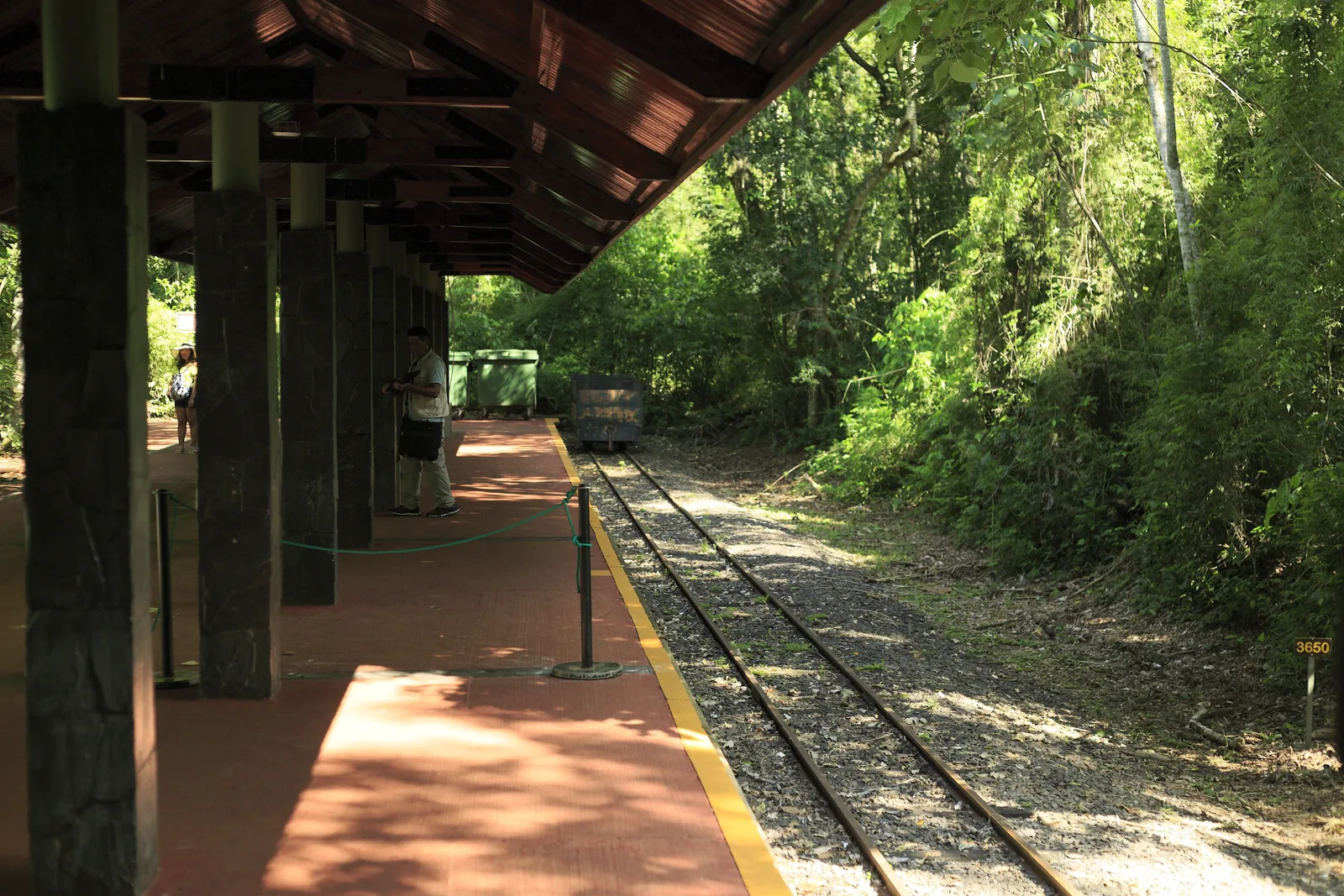
Inside the Brazilian park, the fare includes the double-decker shuttle from the visitor center out to the start of the Waterfall Trail. Inside the Argentine park, the entry fee includes the Ecological Jungle Train that runs between the central station, the circuits and the Devil’s Throat.
A rental car is only worth it if you are combining Itaipu, the Three Borders Landmark and the parks on tight days — and note that most rental agreements do not permit taking the car across the border into Argentina.
Puerto Iguazú’s bus terminal has a service to the Argentine park entrance every twenty minutes or so, 18 km and about half an hour. Uber does not operate in Puerto Iguazú; taxis and remises do.
The big four
The four things a trip here is built out of.
Two national parks, one of the largest power stations on earth, and the single loudest place in South America. Everything else on this page is arranged around them.
01
The view of the whole thing
The Brazilian panorama
The walk
1.5 km, mostly flat and paved
Time needed
Two to three hours
Best at
The first entry slot, before the buses
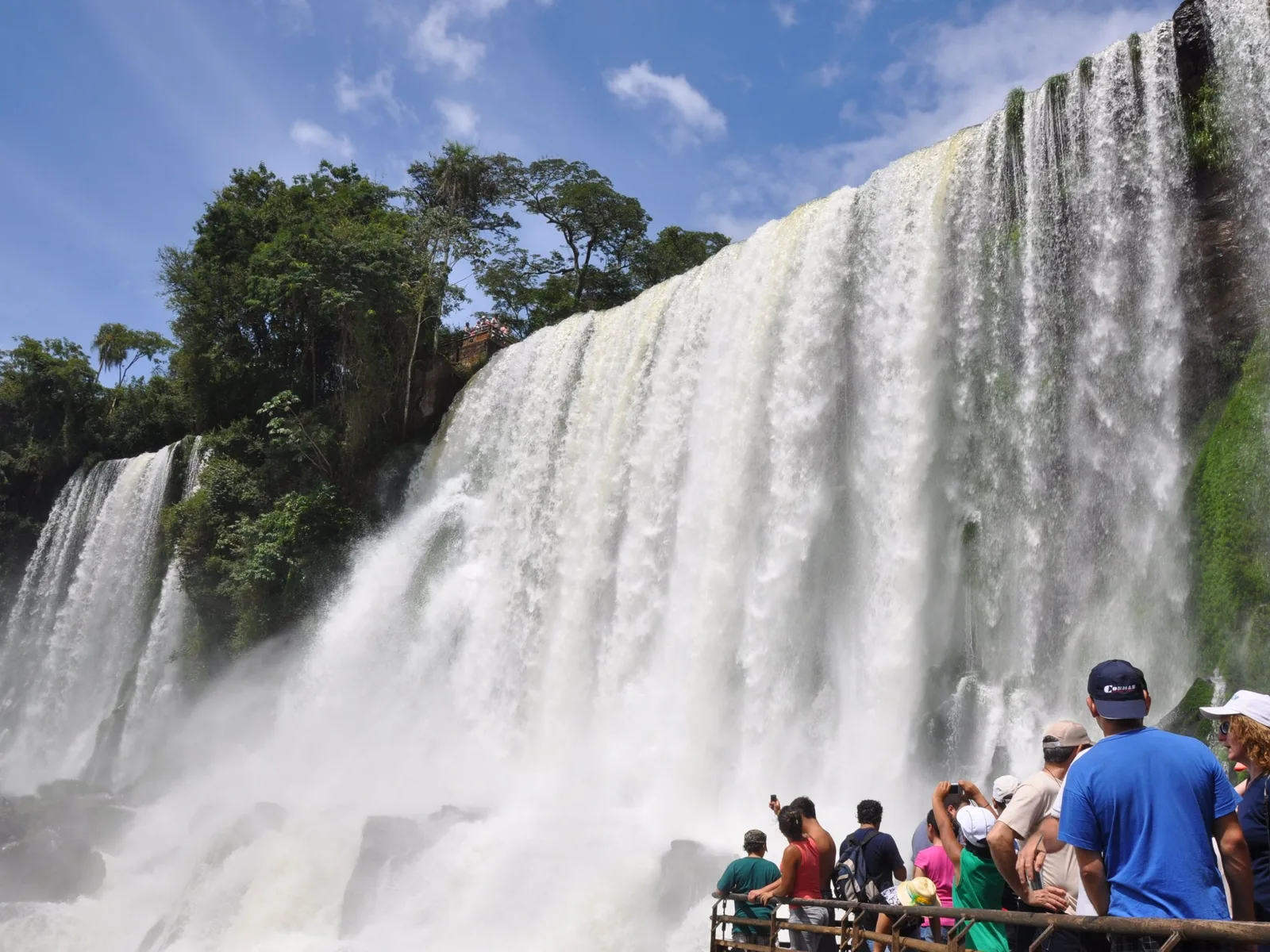
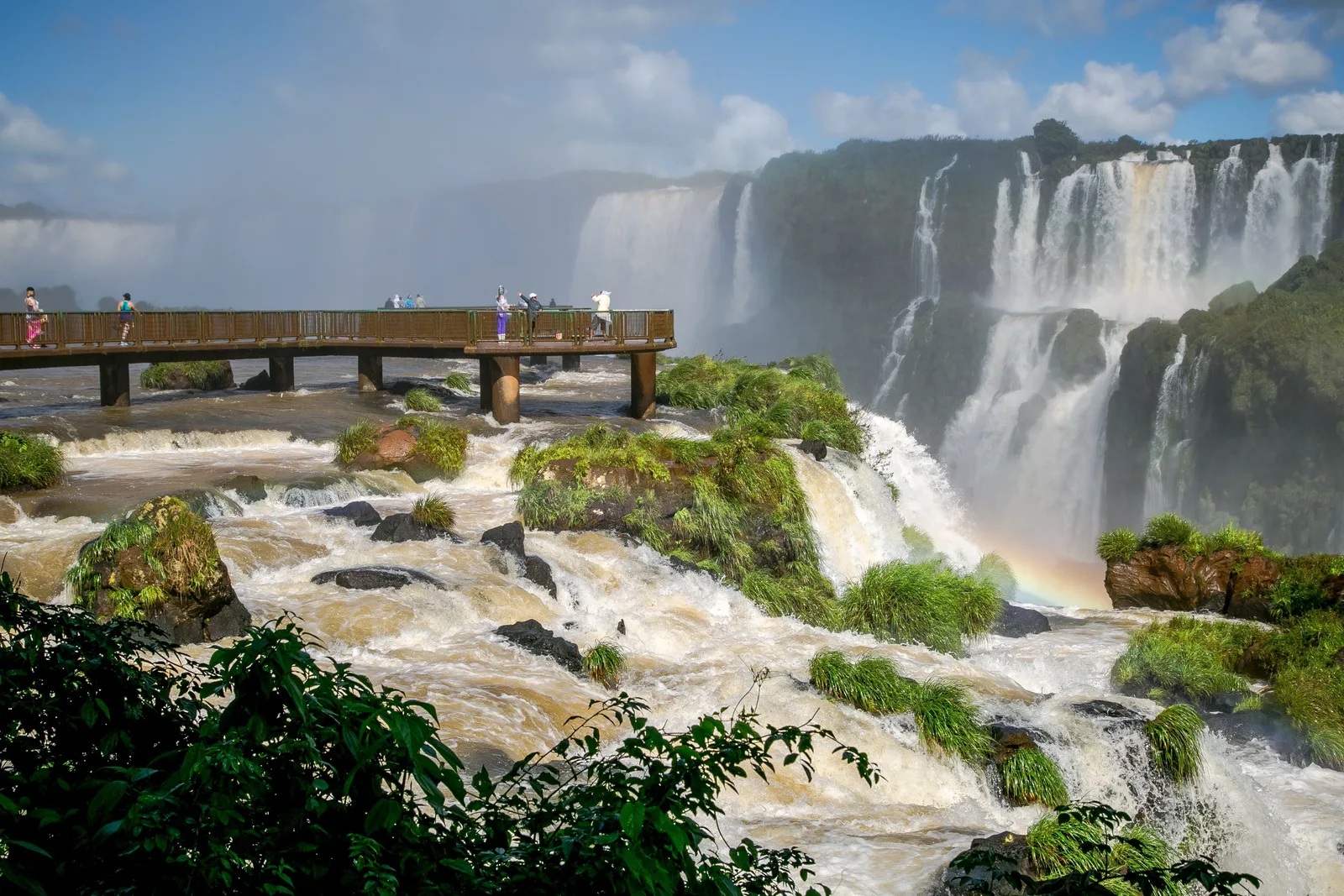
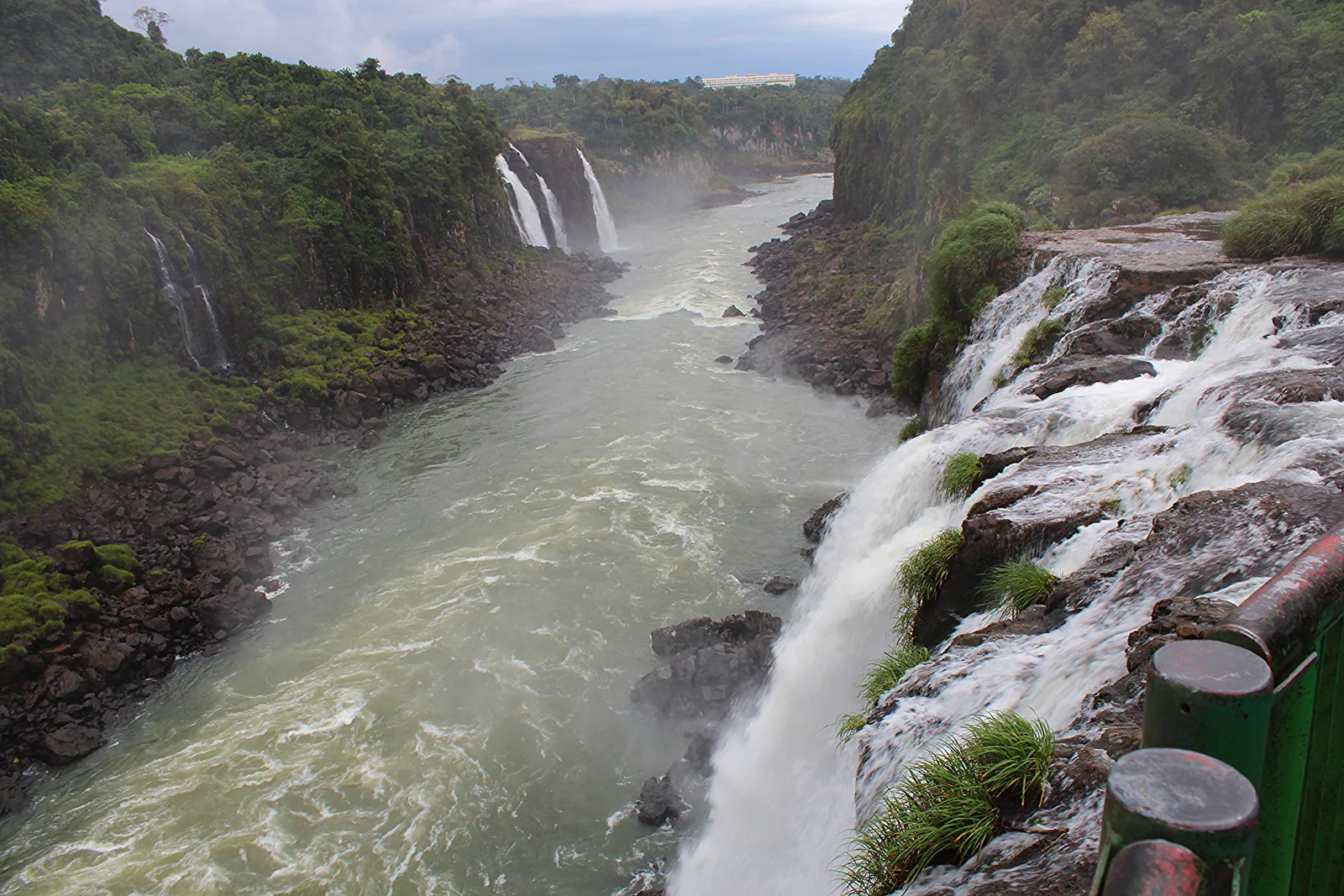
Brazil holds about a fifth of the drops and, because the falls curve away from its bank, the view of all of them. The Trilha das Cataratas runs a kilometer and a half along the canyon rim from the shuttle stop, and it works as a single slow reveal: the arc opens up in front of you, gets closer, and then puts you on a catwalk out into the river at the foot of Salto Floriano, where you will get wet whether or not it is raining. A panoramic elevator lifts you back out at the end.
It is a two-to-three-hour visit and it should not be longer. This is the postcard side, the photographs side, the side that explains the geography — and it is nearly all one paved, wheelchair-accessible trail. Go on the first entry slot of the morning, before the tour buses land, and you will have the best light and the emptiest railings. The park is open 9:00am to 4:00pm on weekdays and 8:30am to 4:00pm at weekends, and the last shuttle out leaves well before closing.
02
A full day, not an afternoon
The Argentine circuits
Upper Circuit
1.75 km, about 2 hours
Lower Circuit
1.75 km, about 90 minutes
Time needed
A whole day, gate to gate
Four-fifths of the drops are in Argentina, and the park is built to put you among them rather than opposite them. Two long boardwalk circuits run out over and under the falls from the Cataratas station. The Upper Circuit traces the lip, so you stand at the top of cataracts and watch the river go over the edge beside your feet. The Lower Circuit descends to the base, where Salto Bossetti and Salto Alvar Núñez come down more or less on top of you and the noise is physical.
This is the part travelers most often underestimate. The Argentine park is roughly 67,000 hectares against Brazil’s 185,000, but its visitor area is far larger, the walking is real, and with the Devil’s Throat added it fills a day comfortably and a rushed day uncomfortably. The park opens at 8:00am, last entry is 4:00pm, and the circuits close at 4:45pm. Give it the whole day and, if you can, use the half-price second day.
03
The reason you cross
Garganta del Diablo
The drop
About 80 m, in a horseshoe
Getting there
Train, then 1.1 km of walkway
Last train
3:30pm — do not miss it
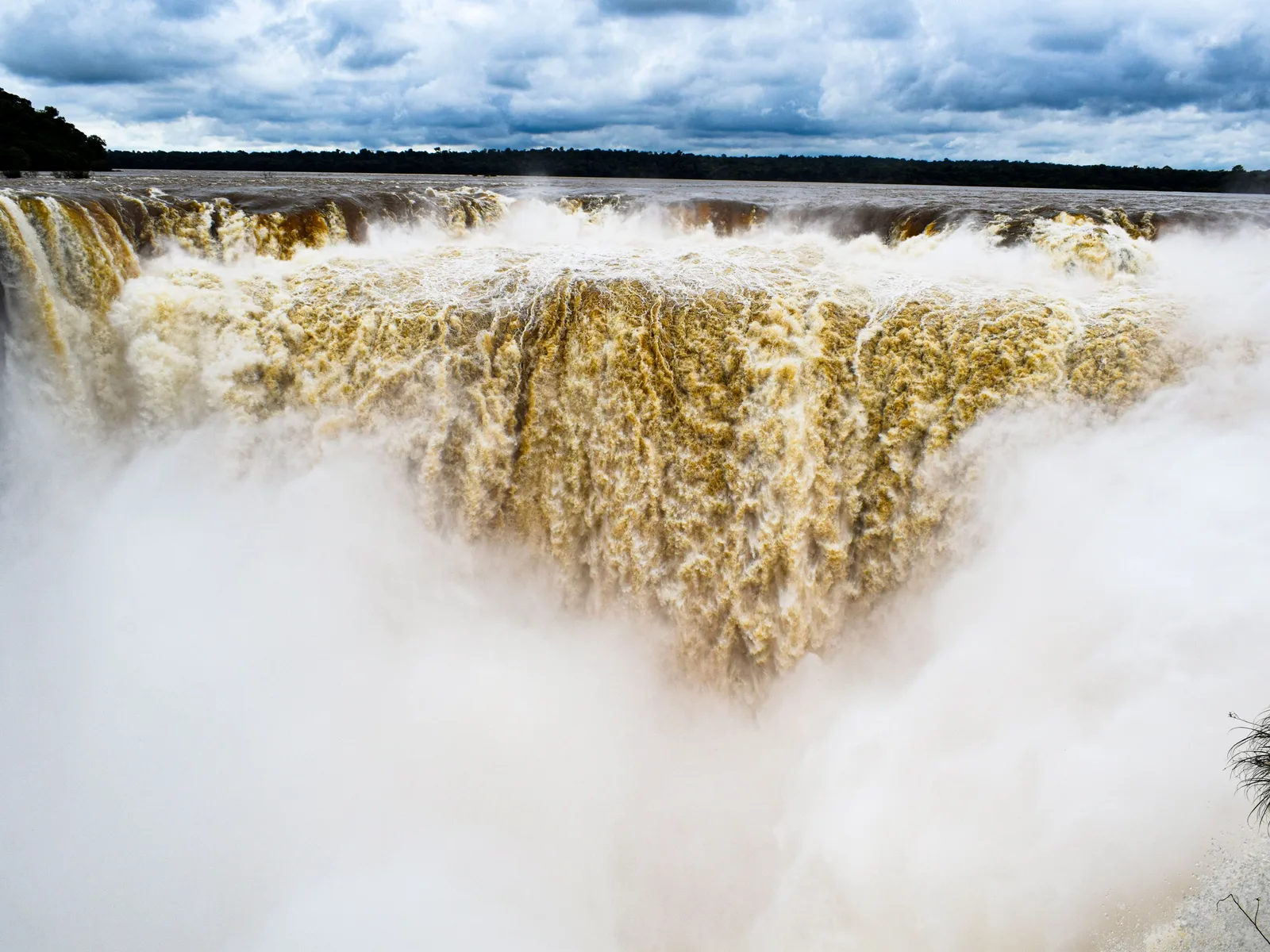
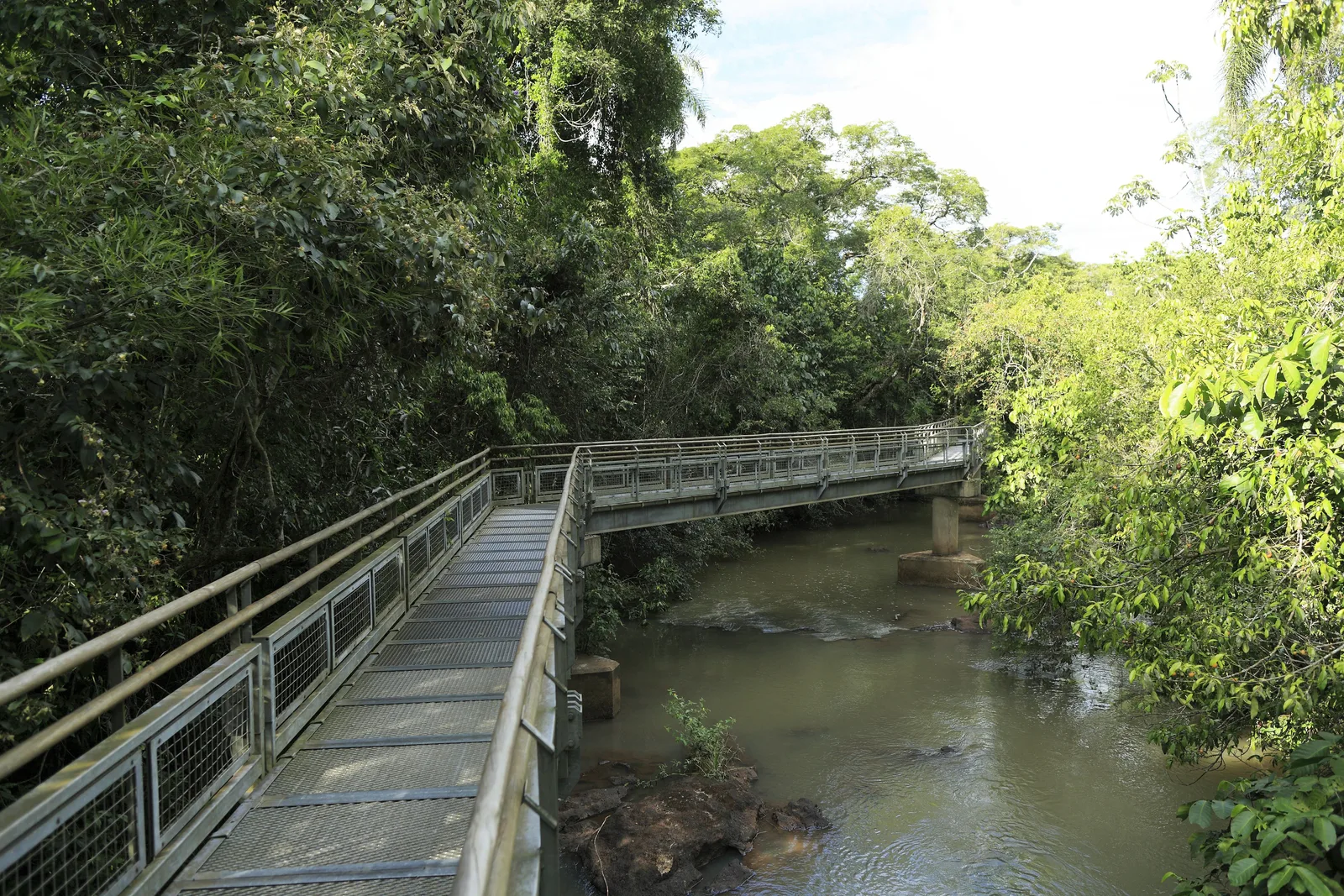
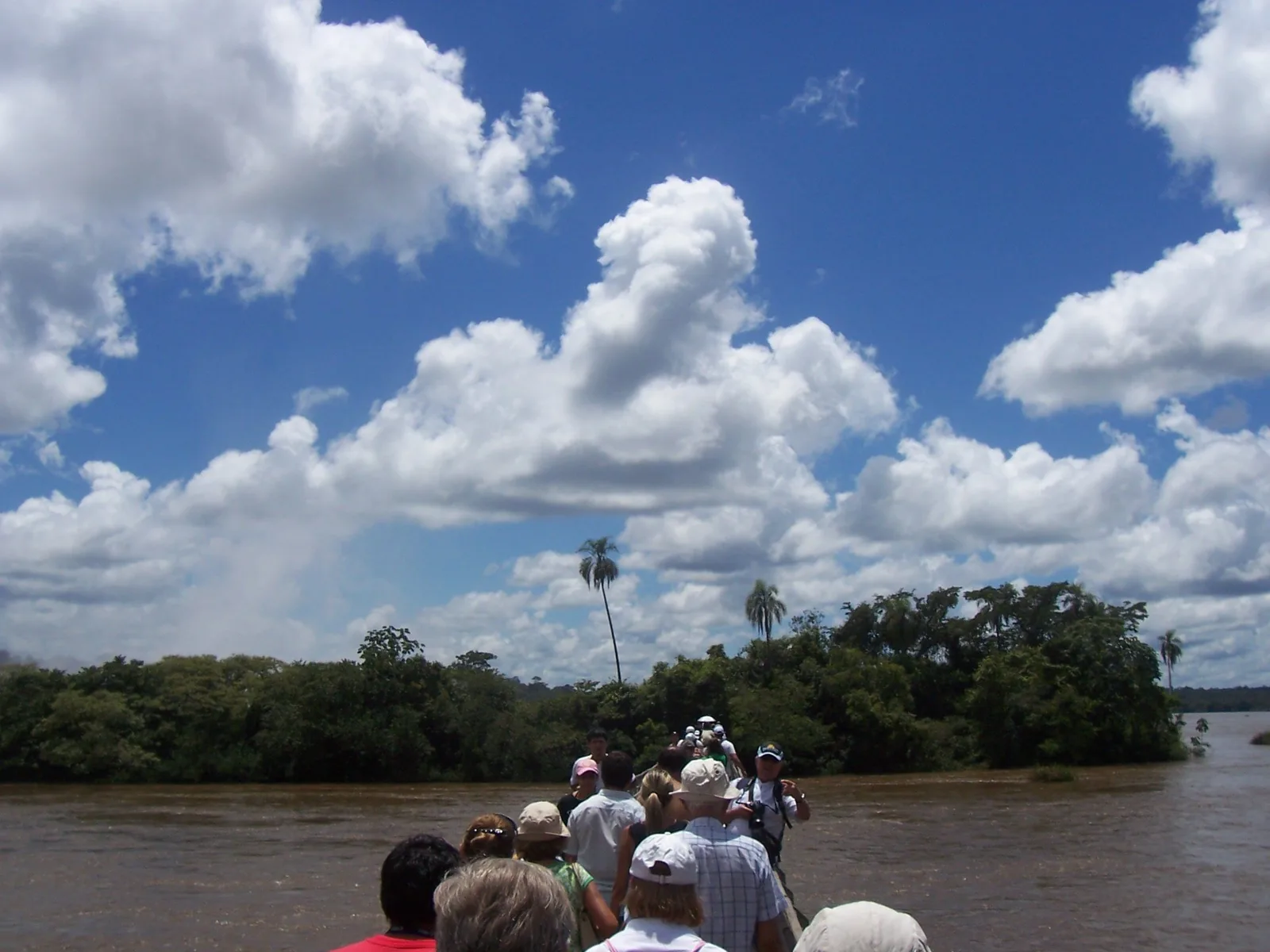
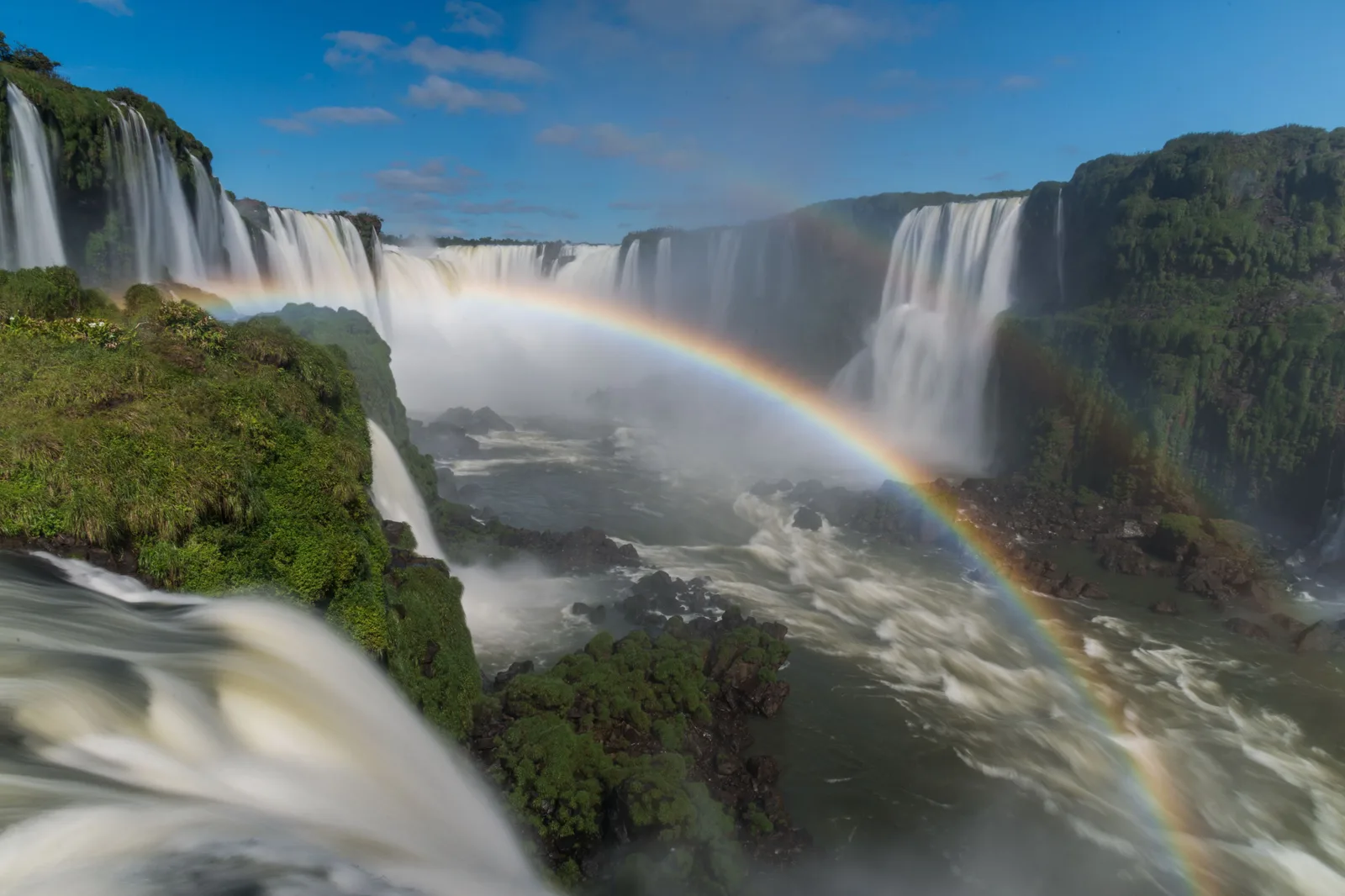
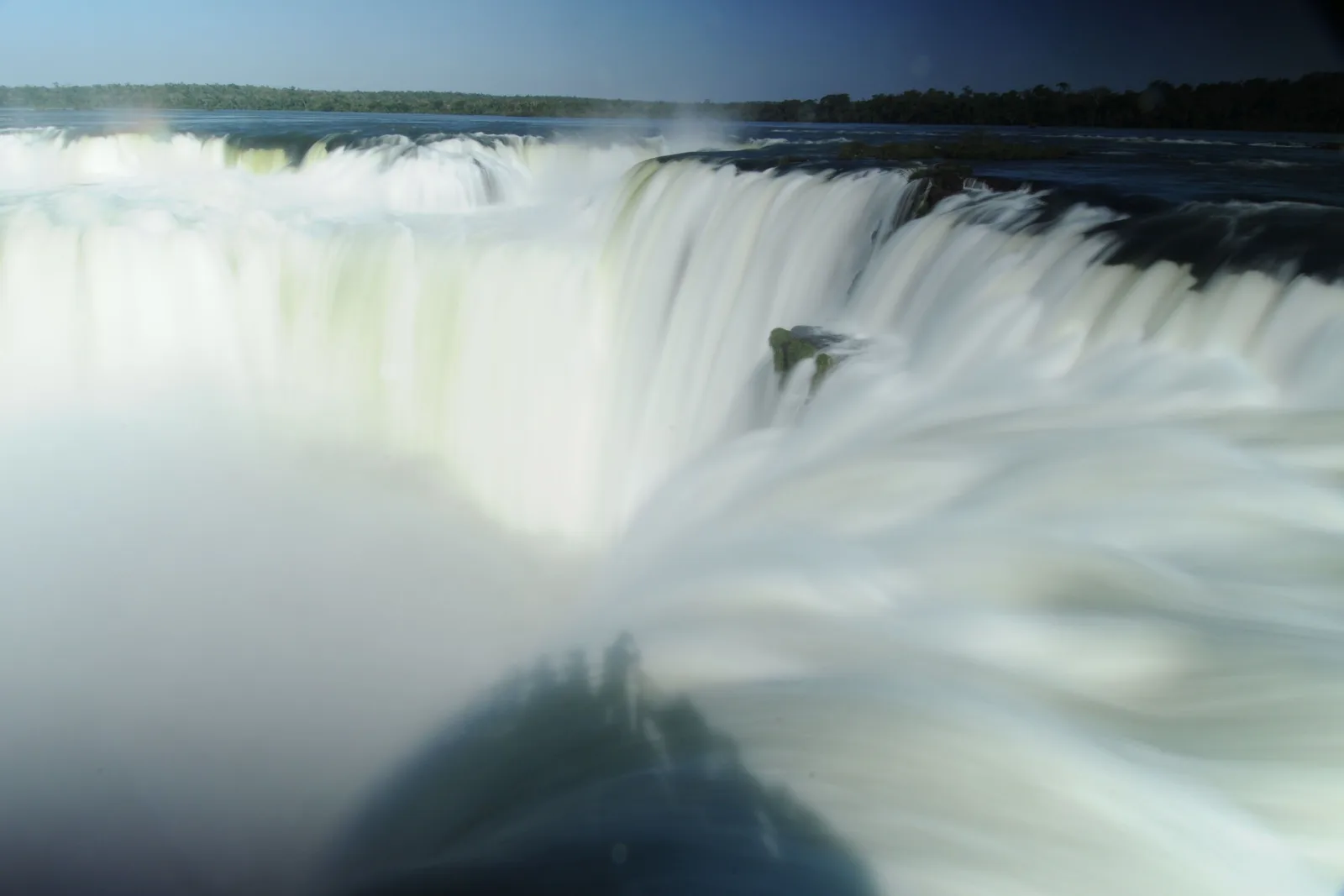
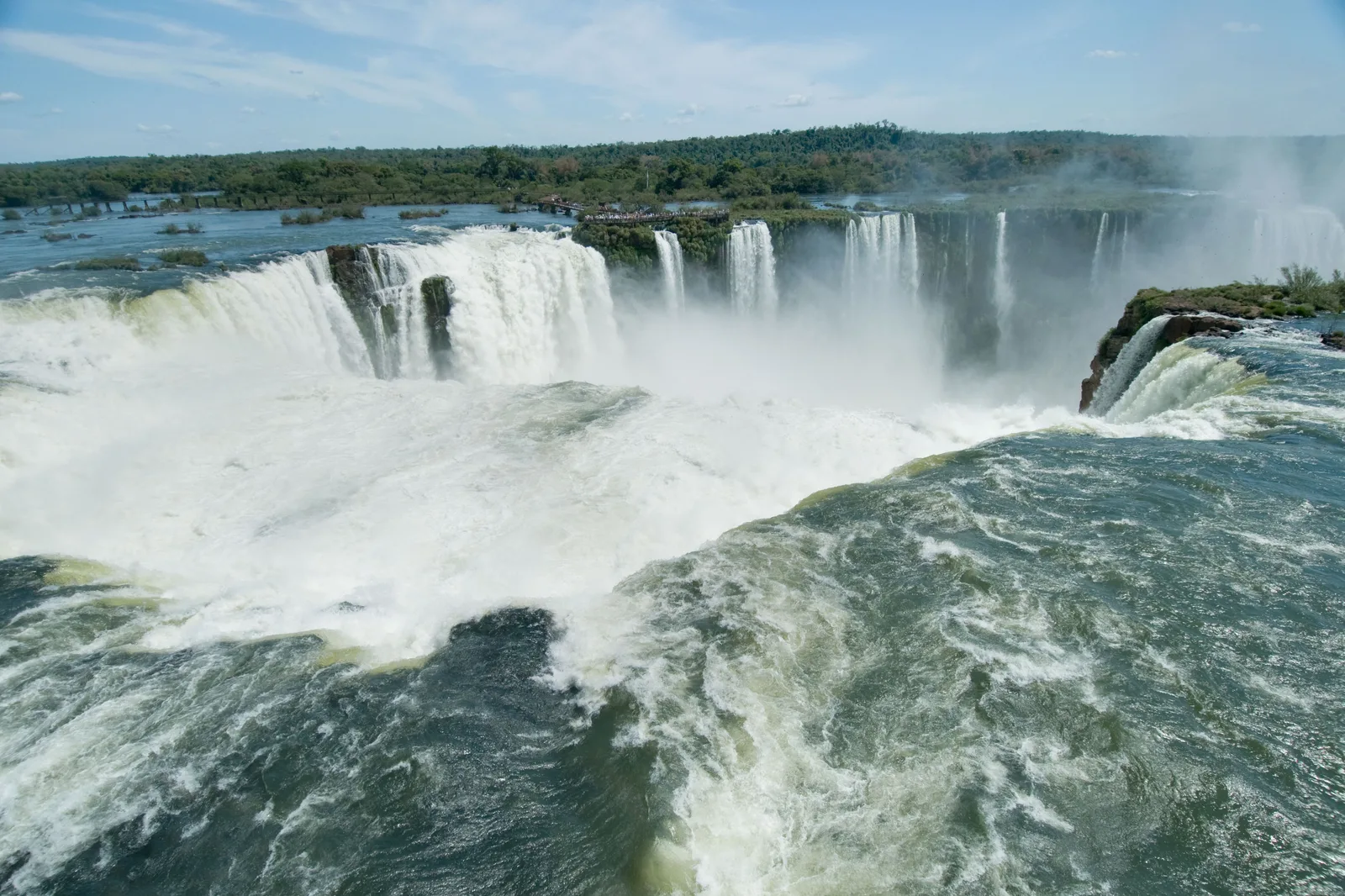
The Devil’s Throat is where roughly half of the river’s entire flow funnels into a single U-shaped chasm, 80 to 90 meters across and about the same deep, and falls into a permanent cloud of its own spray. You reach it by taking the free Ecological Jungle Train to Garganta station and then walking 1.1 kilometers of flat catwalk across the top of the upper river — dead calm, wide and brown, giving no hint of what it is about to do — until it simply ends at a platform on the rim.
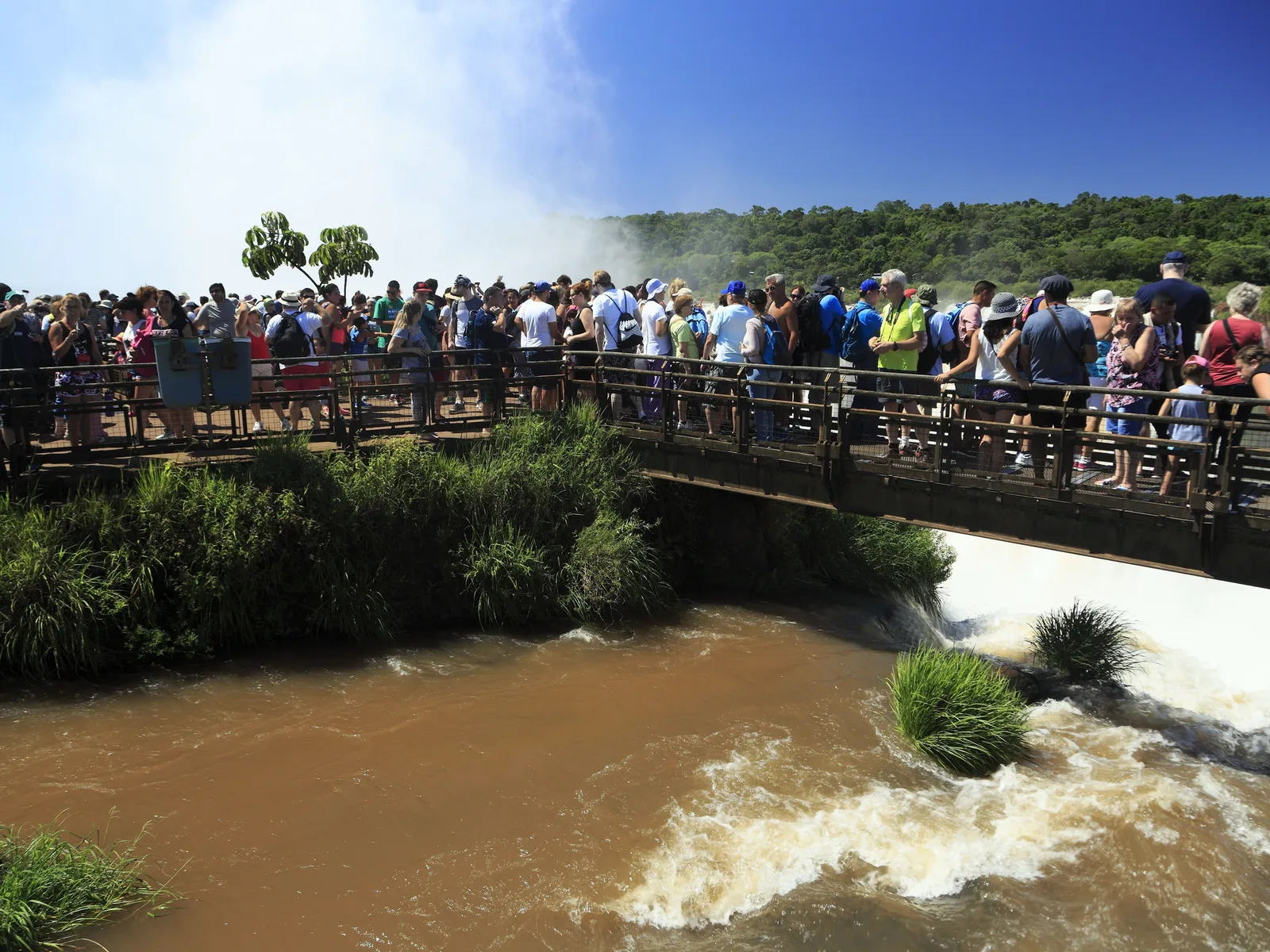
Nothing else at Iguazu is like it. The Brazilian side shows you a lookout onto the Throat from a distance; standing over the lip of it is a different order of experience, and it is the single strongest argument for crossing the border. The walkway was destroyed by a record flood in October 2023 and rebuilt over eight months, reopening in July 2024. It still closes for high water and heavy rain from time to time, which is worth knowing before you plan a trip around one afternoon.
04
The other thing they built here
Itaipu Dam
Scale
7.9 km long, 196 m high
Owned by
Brazil and Paraguay, jointly
Tours
Panoramic, interior, and after dark
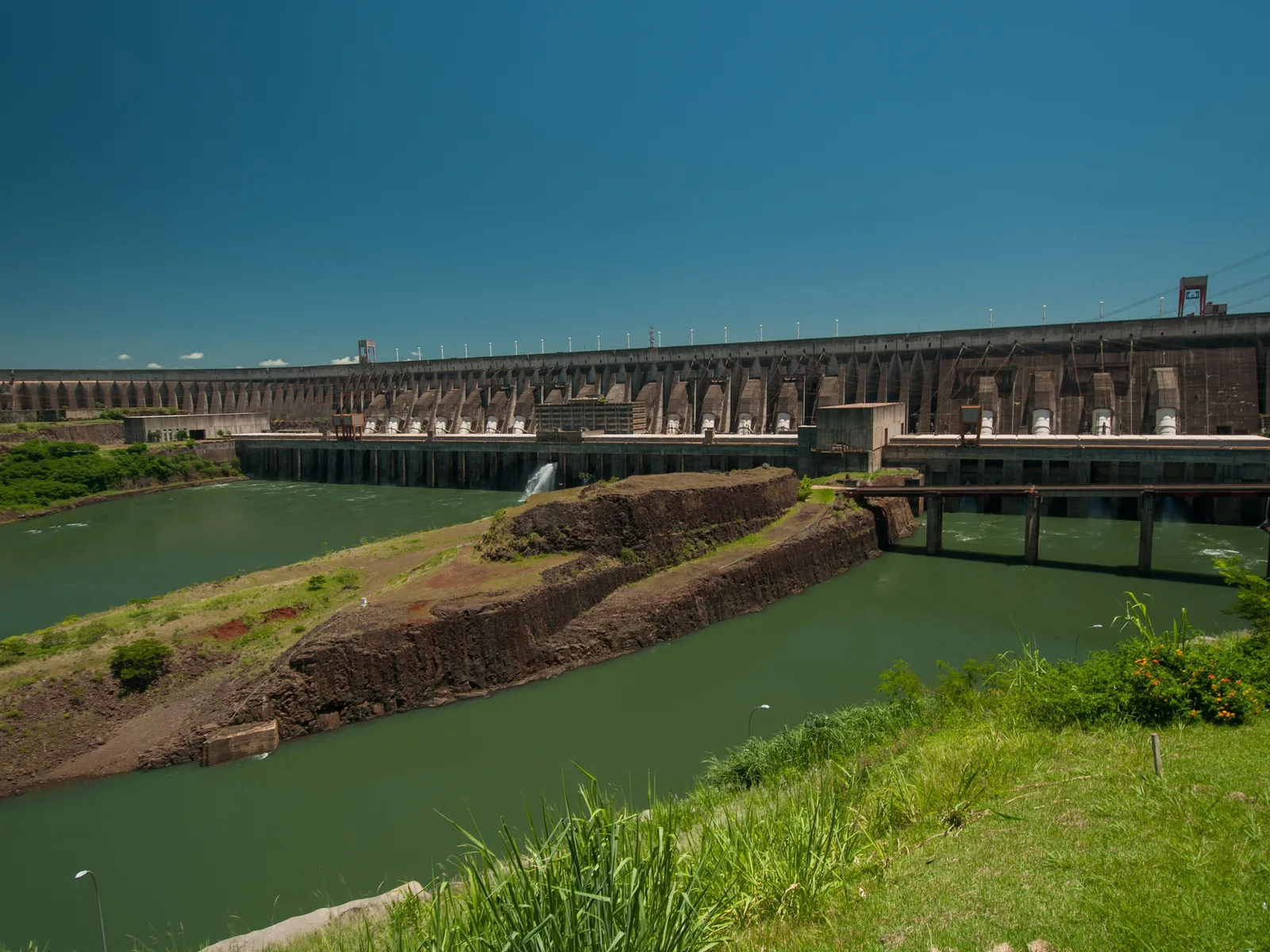
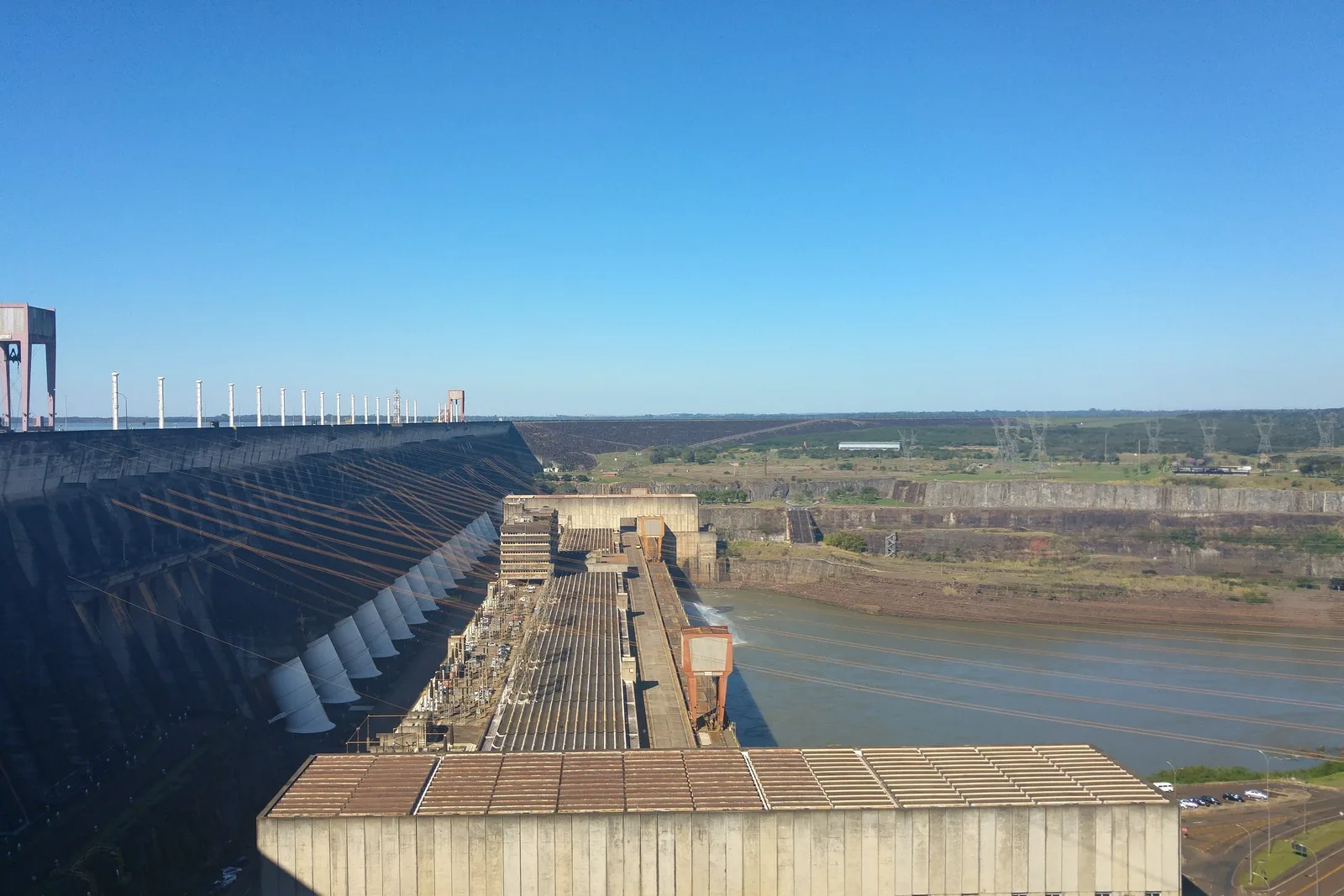
Twenty kilometers upstream of the falls, Brazil and Paraguay jointly dammed the Paraná. Itaipu is 7.9 kilometers of concrete and rock across the river, 196 meters high at the main dam, and for decades it was the largest hydroelectric plant in the world by output — still the largest or second-largest depending on the year’s rainfall, and it supplies a large share of Brazil’s electricity and most of Paraguay’s.
The tours are specific and worth choosing between. The Panoramic runs about an hour and ten and stays outside, crossing the crest and stopping at the viewpoints. The Especial takes two and a half hours and goes inside — down through the penstock area and into the control room, with a minimum age of 14 and ID checked at the gate. There is also an evening lighting tour on Fridays and Saturdays, and a biological refuge on the reservoir shore that is a genuine wildlife visit rather than a dam add-on.
What to actually do
Five ways to spend a day at the edge of two countries.
Pick a category, then scroll sideways through it. Everything here is a realistic half-day or less, except the Argentine circuits, which are not.
The Falls
Brazilian park · 2–3 hours
Walking the Trilha das Cataratas
The Brazilian side’s single main trail: a kilometer and a half of paved, mostly flat path along the canyon rim, ending on a catwalk out into the river below Salto Floriano and a panoramic elevator back up. Almost entirely wheelchair-accessible, and the only walk on either side that gives you the whole arc in one frame. Bring a rain jacket for the last two hundred meters, or accept getting soaked.
Argentine park · 2 hours round trip
The train to Garganta del Diablo
The free Ecological Jungle Train runs from the central station out to Garganta station, and from there a flat 1.1-kilometer catwalk crosses the upper river to a platform on the rim of the Devil’s Throat. The last train out is at 3:30pm, and missing it means missing the best thing in the park. Do this first thing or immediately after lunch, and never leave it to the end of the day.
Argentine park · 3–4 hours together
The Upper and Lower Circuits
The two boardwalk circuits that make the Argentine side a full day. The Upper runs 1.75 km along the lip, so you look down the throat of each cataract as it goes over. The Lower drops to the base and puts you underneath them. Do the Lower first while your legs are fresh — it has the stairs — and the Upper after, when the light has come round.
Brazilian park · an evening
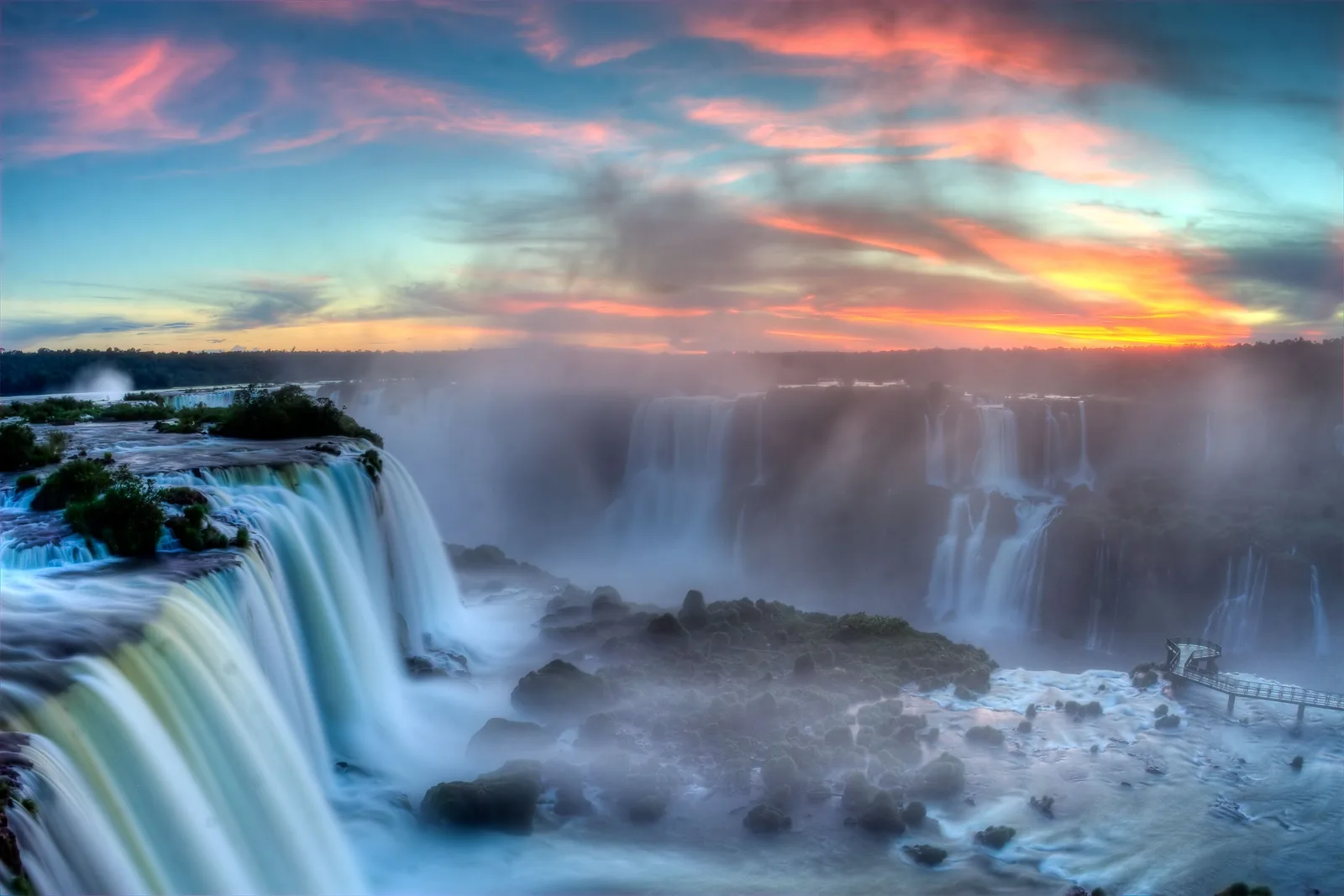
Sunset at the Falls
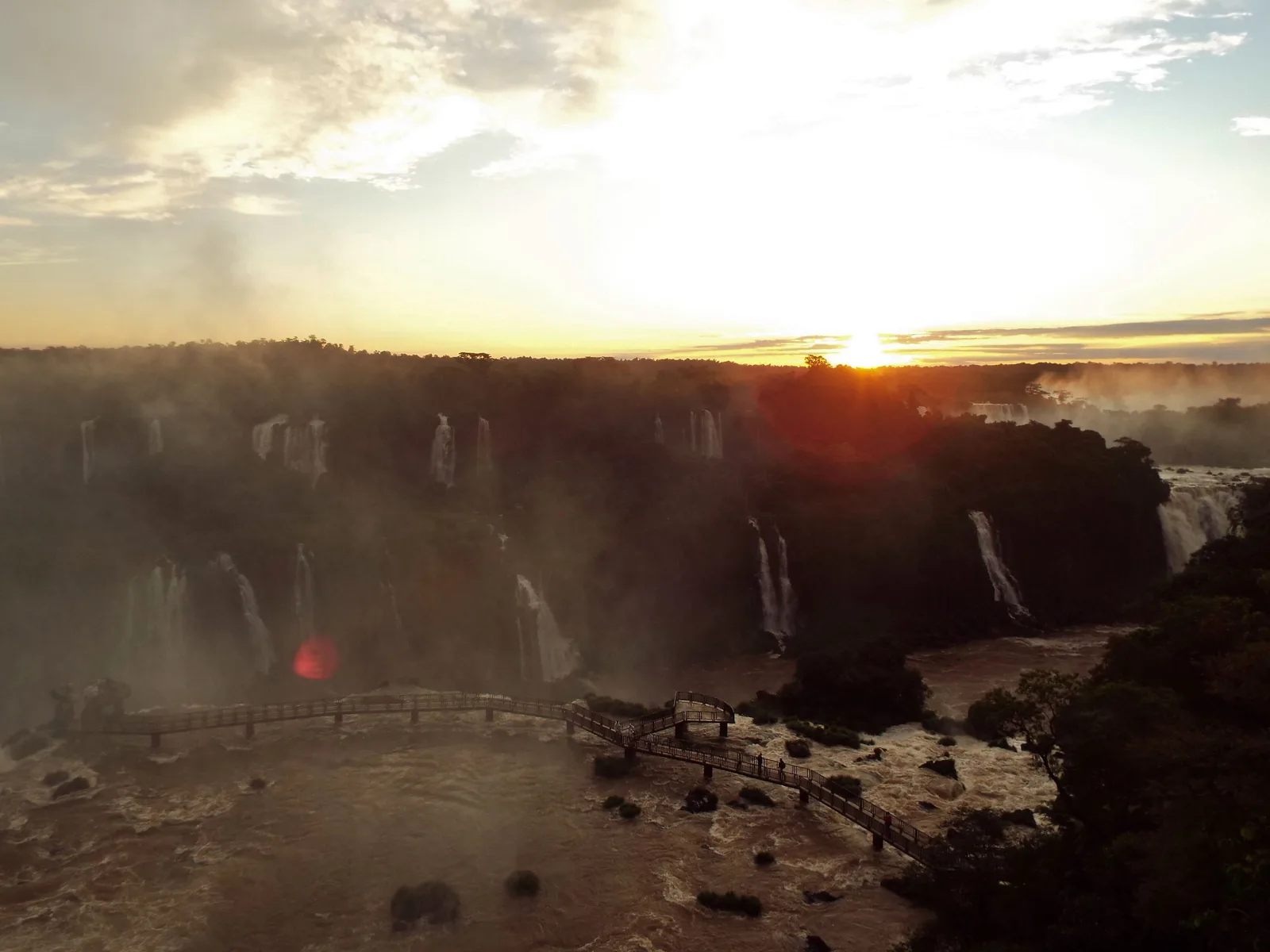
A limited-capacity evening opening of the Brazilian park, outside normal hours, run on Tuesdays, Fridays and Saturdays with extra dates added through the year. You get the Waterfall Trail with almost nobody on it, live music, a drink, and the light going gold and then pink across the whole arc. It runs in any weather and it sells out, so book it the moment your dates are fixed.
Argentine park · five nights a month
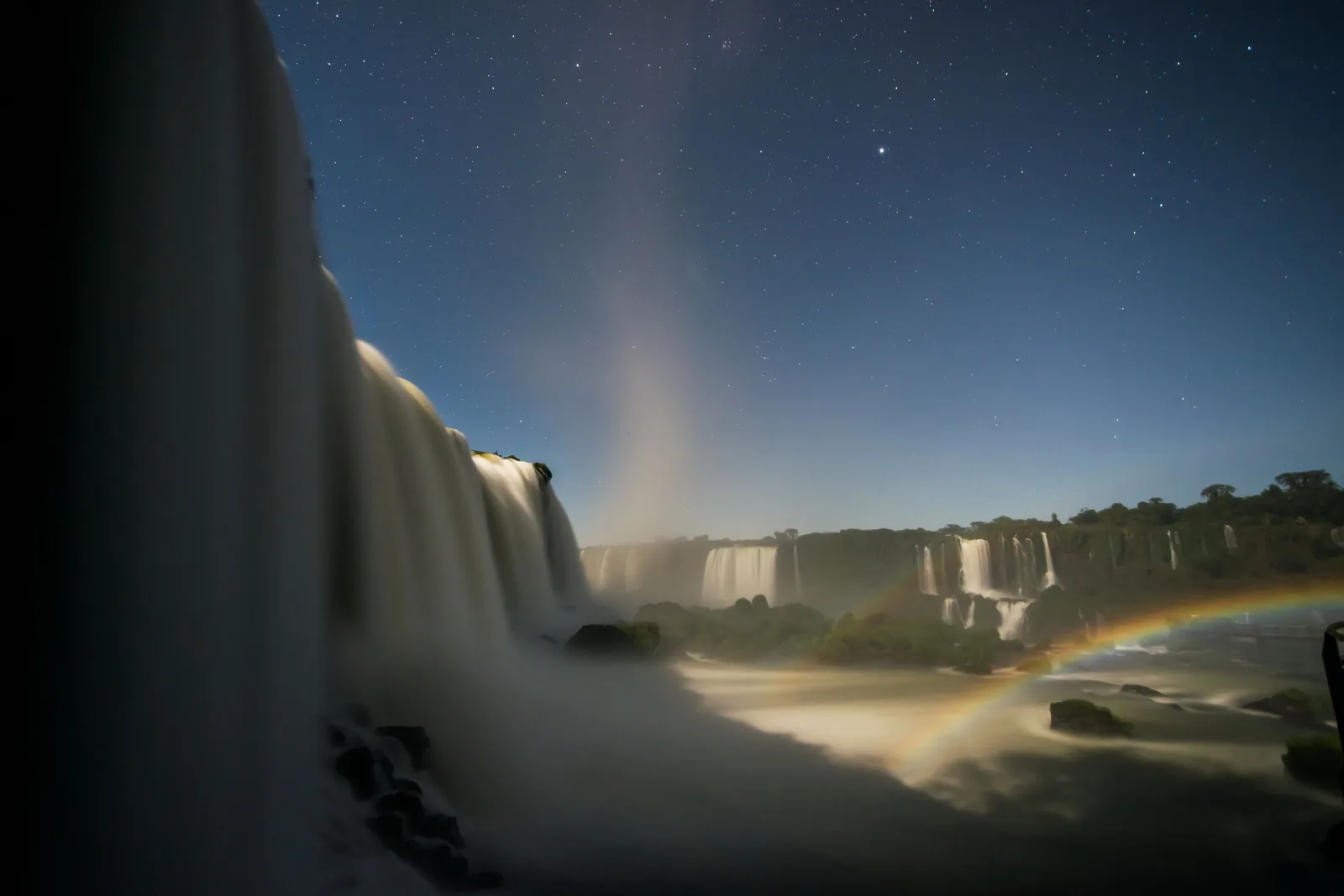
The Full Moon Walk at the Devil’s Throat
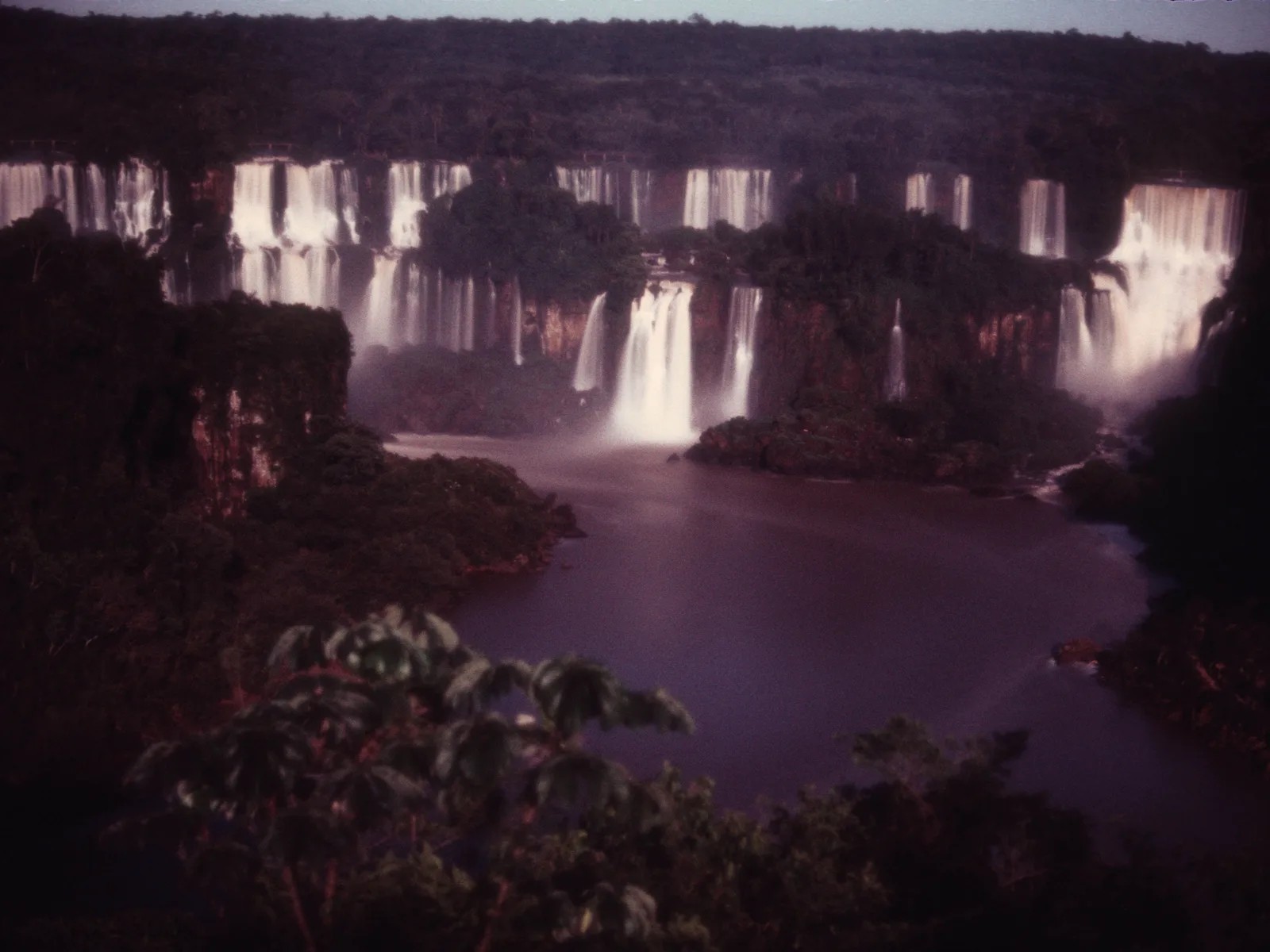
On the five nights around each full moon the Argentine park runs guided night walks out to the Devil’s Throat, three departures an evening, two and a half hours each, with the train, a guide and a Guaraní choir included. Moonlight throws a colorless lunar rainbow in the spray on a clear night. Capacity is tiny, tickets go on sale about a month before each cycle, and they sell out in hours.
Brazilian park · 2 hours
Macuco Safari boat ride
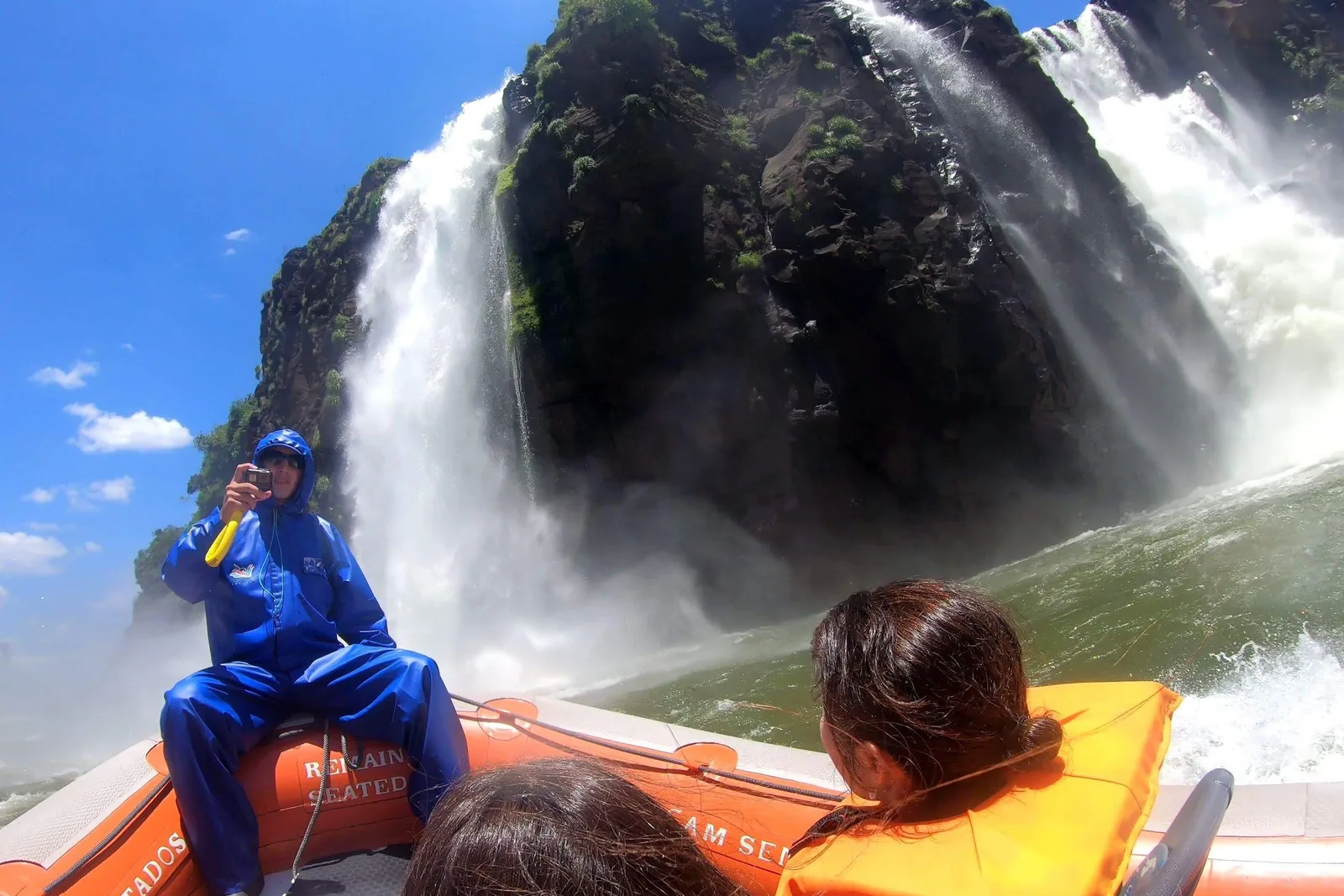
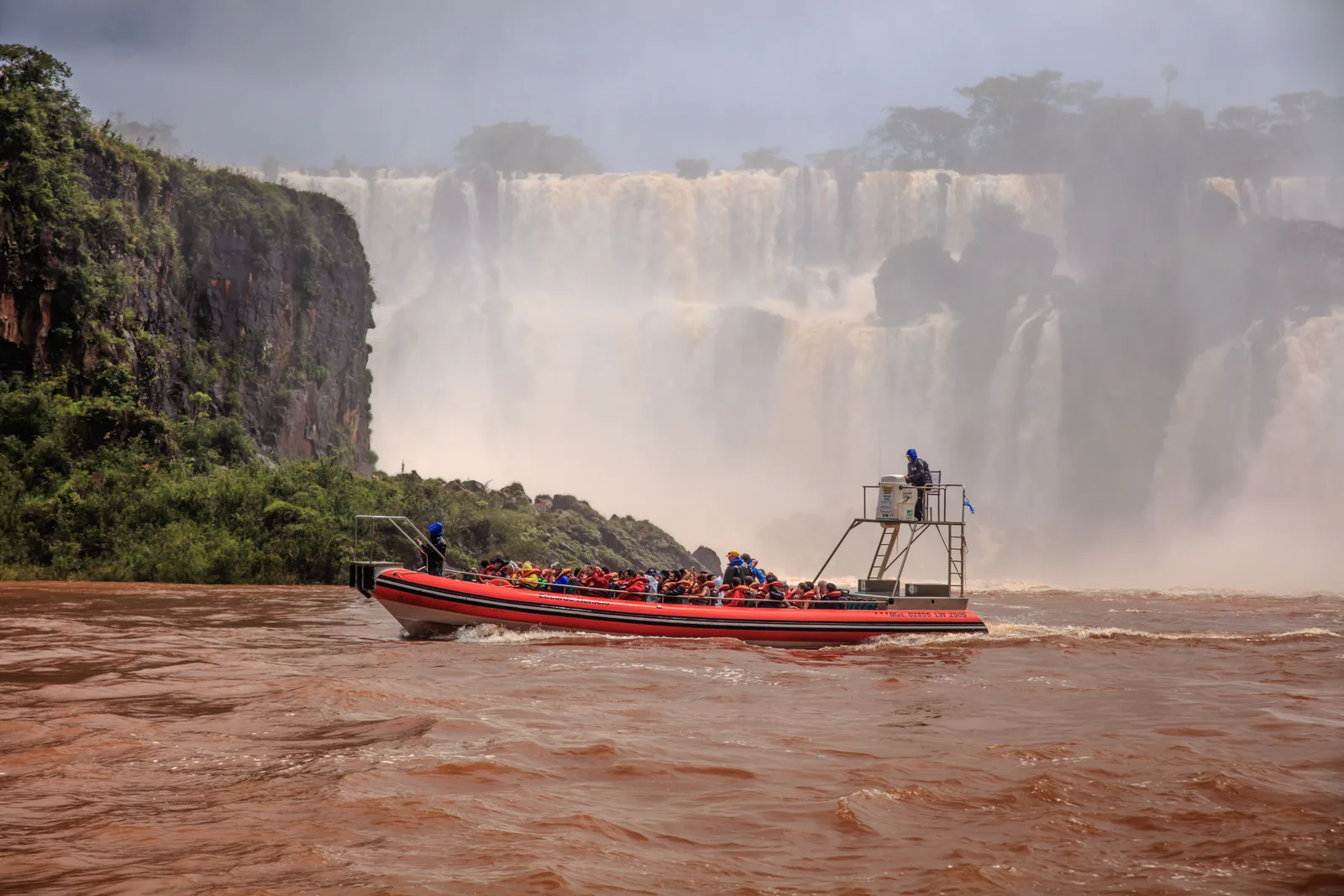
The Brazilian side’s boat trip: an electric-cart run down a forest track, a short walk, and then a rigid inflatable up the canyon and directly into the spray under Salto Três Mosqueteiros. You will be completely soaked — this is the point, and they give you a dry bag. The forest approach is longer and better than the Argentine equivalent’s; the ride itself is shorter.
Argentine park · half day
Gran Aventura boat ride
Argentina’s version, and the wilder of the two: a 4x4 truck through the forest to the river, then a boat that runs into two separate waterfalls rather than one, with more water coming down on you. Minimum age is 12, park entry is not included, and the full-day version that adds transfers from Puerto Iguazú will eat most of a day you probably want for the circuits.
Boats & Flights
Brazilian park · 2 hours
Macuco Safari boat ride
The Brazilian side’s boat trip: an electric-cart run down a forest track, a short walk, and then a rigid inflatable up the canyon and directly into the spray under Salto Três Mosqueteiros. You will be completely soaked — this is the point, and they give you a dry bag. The forest approach is longer and better than the Argentine equivalent’s; the ride itself is shorter.
Argentine park · half day
Gran Aventura boat ride
Argentina’s version, and the wilder of the two: a 4x4 truck through the forest to the river, then a boat that runs into two separate waterfalls rather than one, with more water coming down on you. Minimum age is 12, park entry is not included, and the full-day version that adds transfers from Puerto Iguazú will eat most of a day you probably want for the circuits.
Foz do Iguaçu · 45 minutes
Helicopter flight over the falls
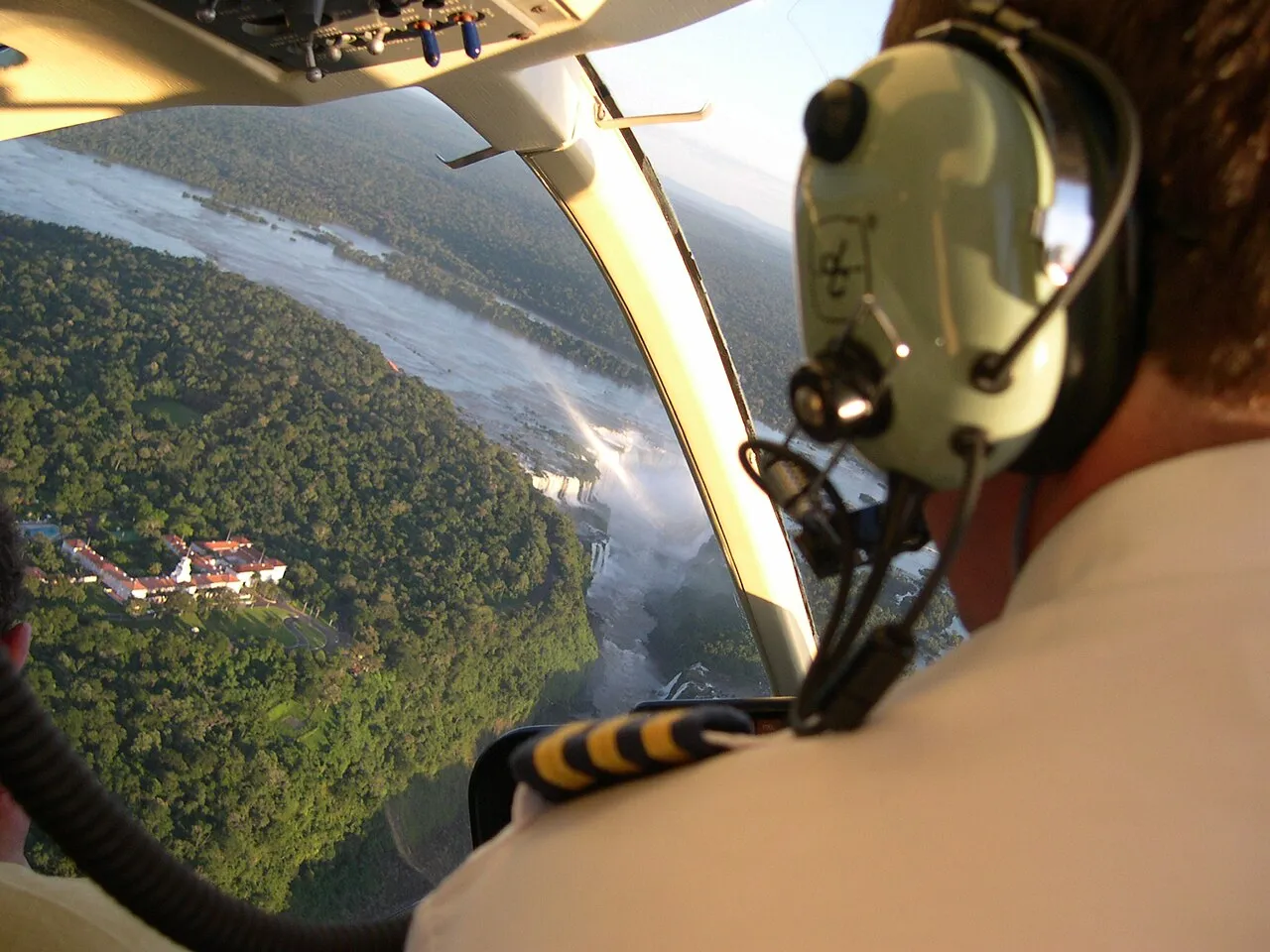
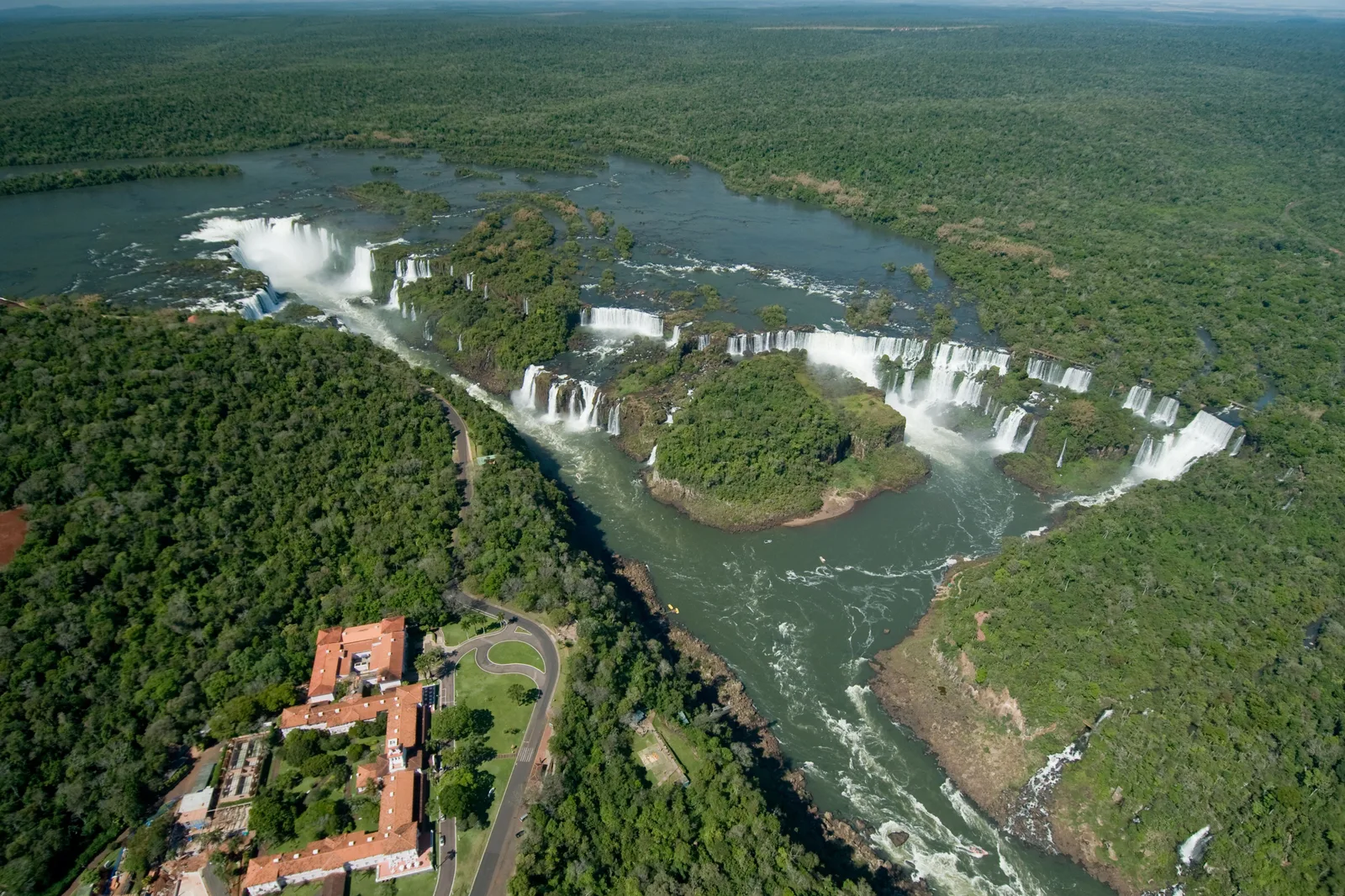
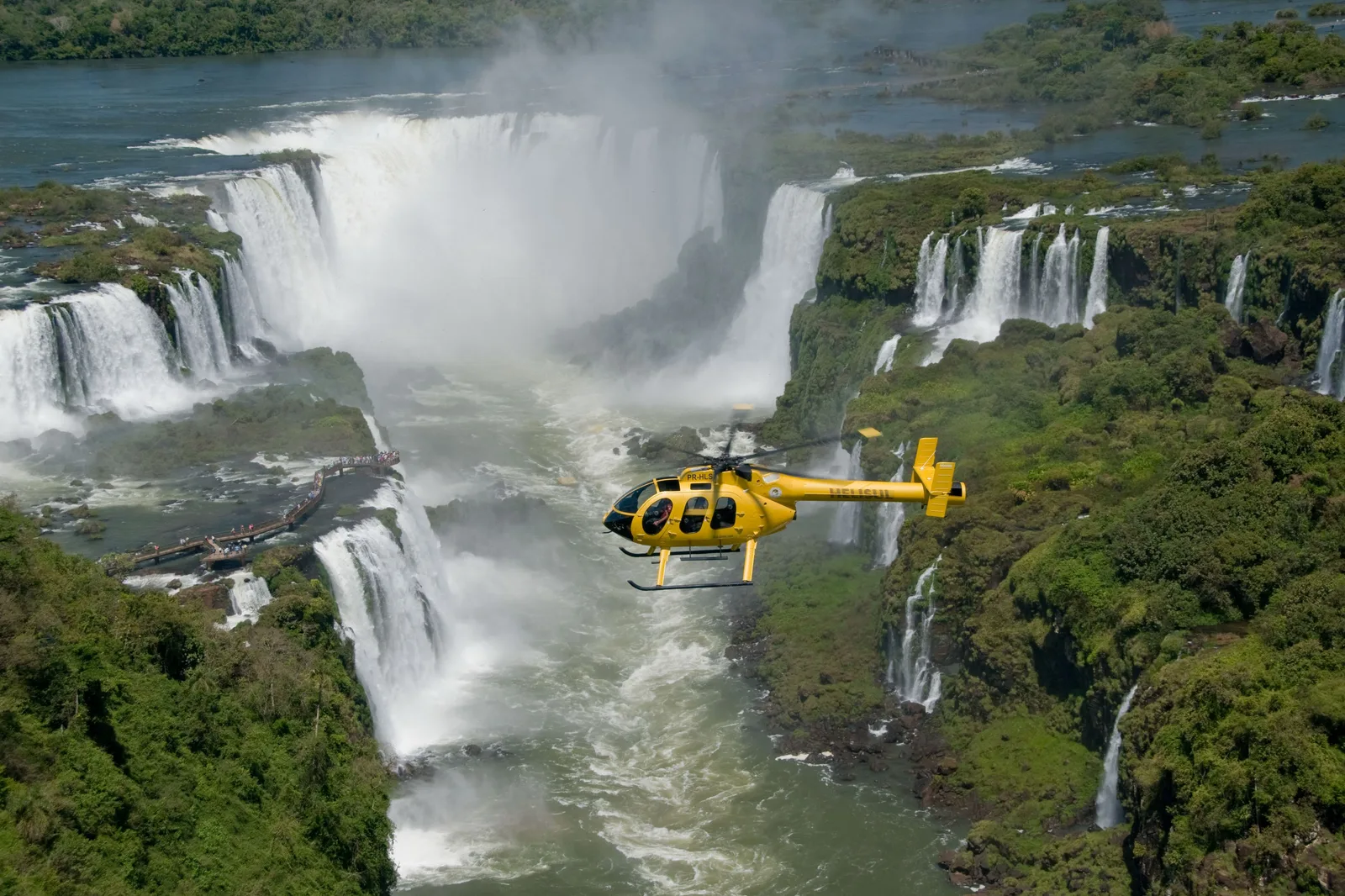
Ten minutes in the air from a helipad on the park road, out over the whole arc and the Devil’s Throat and back. It is the only way to see the shape of the thing — the horseshoe, the islands, the two rivers meeting — and ten minutes is genuinely enough. Allow forty-five for the weigh-in, briefing and boarding. Flights run about every fifteen minutes through the day and depend on the weather.
Brazilian park · half day
Rappel and rafting at Cânion Iguaçu
An adventure concession inside the Brazilian park, below the falls. The signature is a 55-meter free-hanging rappel down the canyon wall — negative from the lip, so there is nothing under your feet the whole way — reached by a 360-meter suspended trail through the trees. There is also a canopy course, a climbing wall and rafting on the river below the falls. Booked separately from park entry.
Wildlife & Forest
Rodovia das Cataratas · 2–3 hours
Parque das Aves
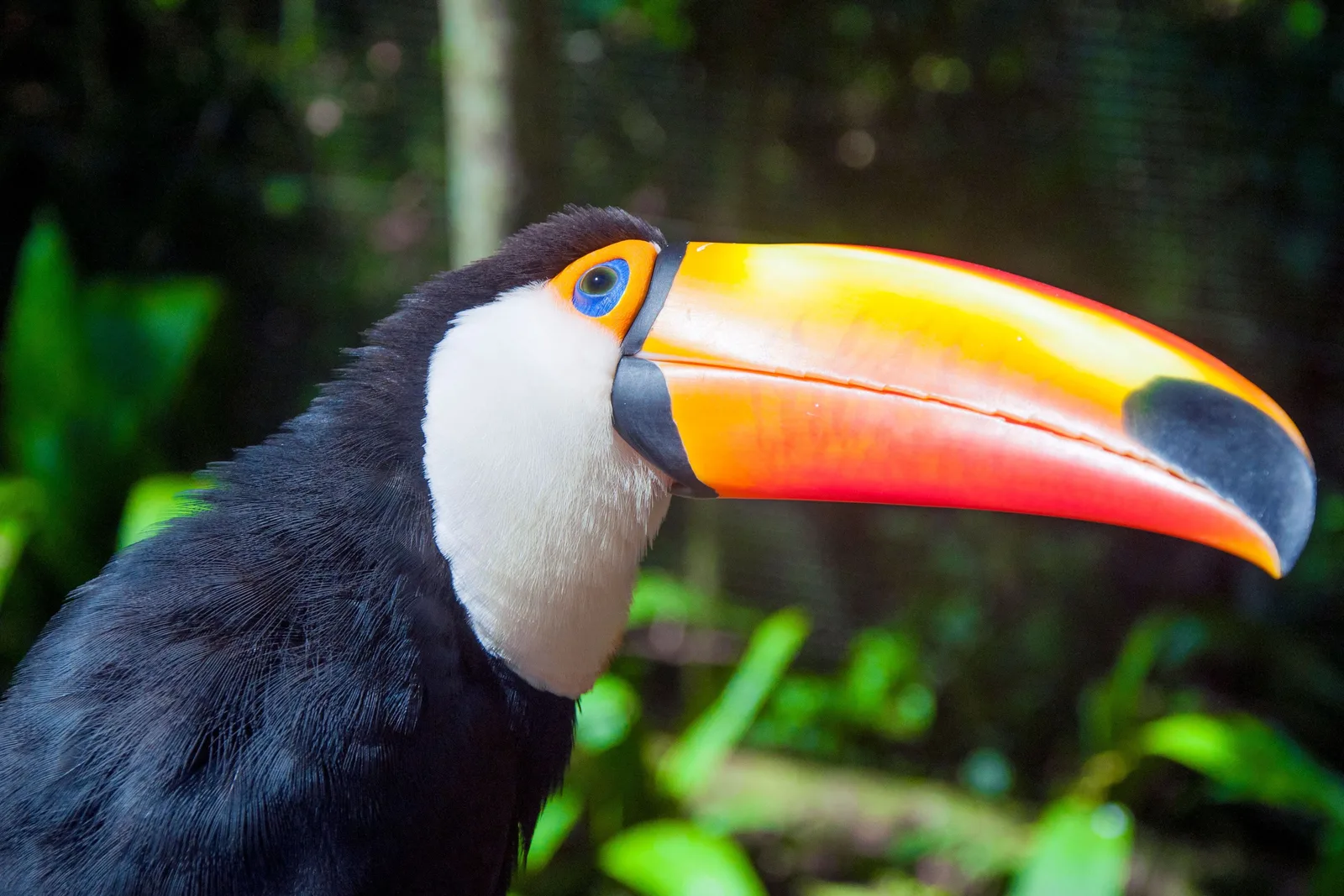
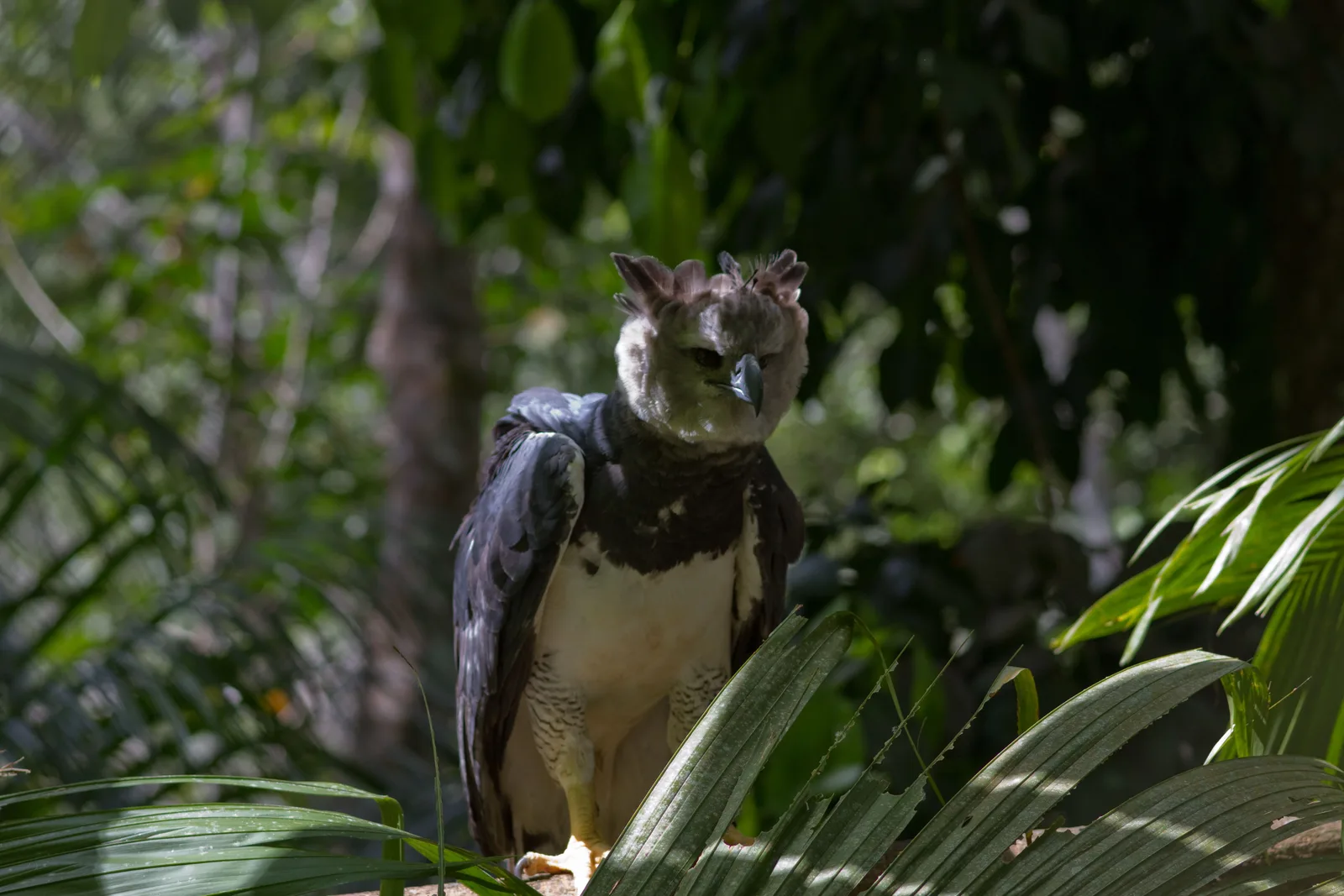
A conservation institution rather than a zoo, immediately opposite the Brazilian park entrance, built around walk-through aviaries you share with the birds — the Cecropia aviary is the largest in Brazil. Toucans at arm’s length, macaws overhead, harpy eagles, and a serious breeding and rescue program behind it. It is the most visited attraction in Paraná after the falls, it works in the rain, and it pairs naturally with a morning at the park.
Brazilian park · half day
Caminho do Poço Preto
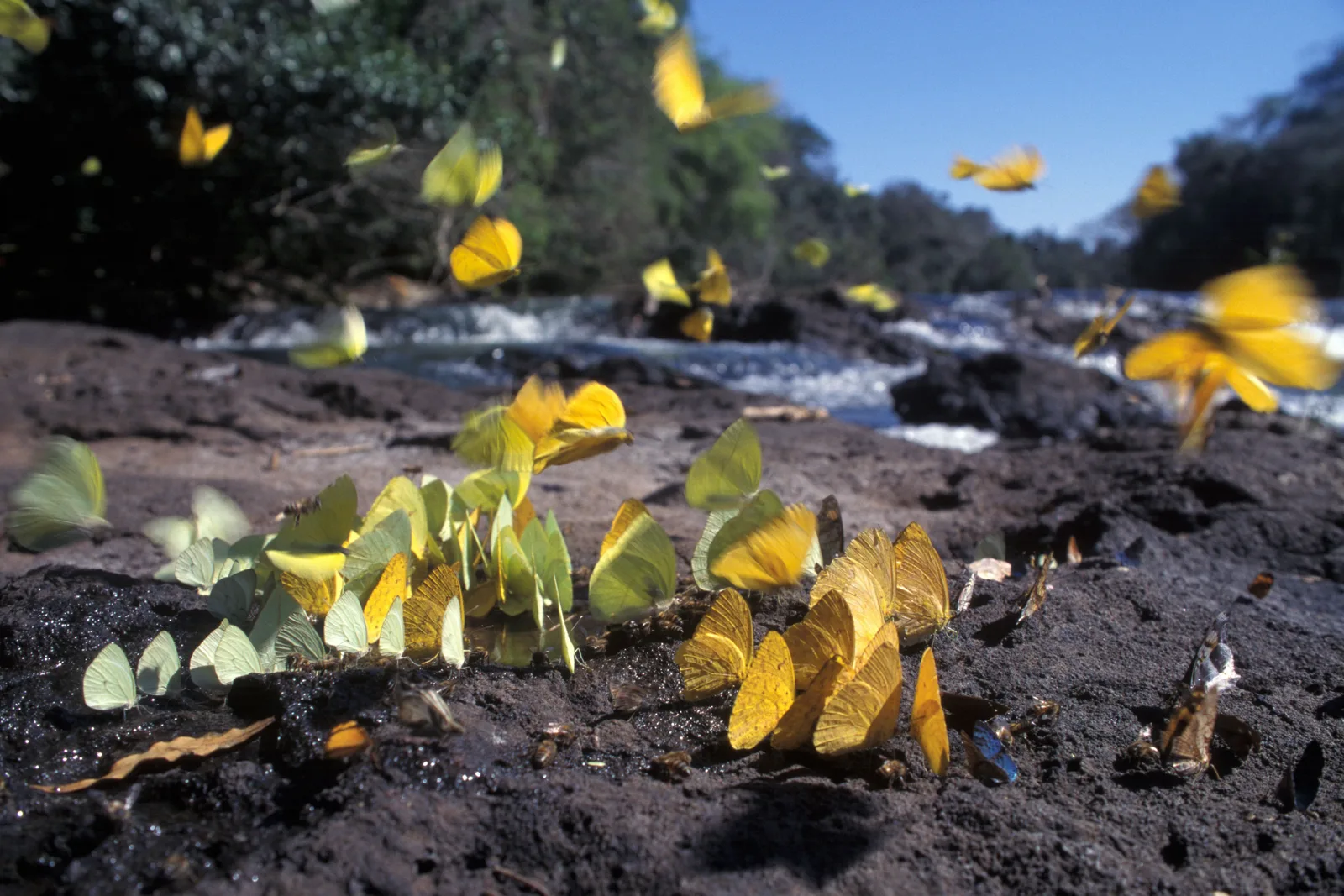
Nine kilometers of Atlantic Forest track inside the Brazilian park, walked or cycled, ending at a wildlife tower and a boat landing on the upper Iguaçu. It is the opposite of the Waterfall Trail: no falls, no crowds, and a real chance at capuchins, agoutis, caimans and a long list of birds. Guided, and the best thing in the park for anyone who came for the forest as much as the water.
Argentine park · 3 hours round trip
Sendero Macuco
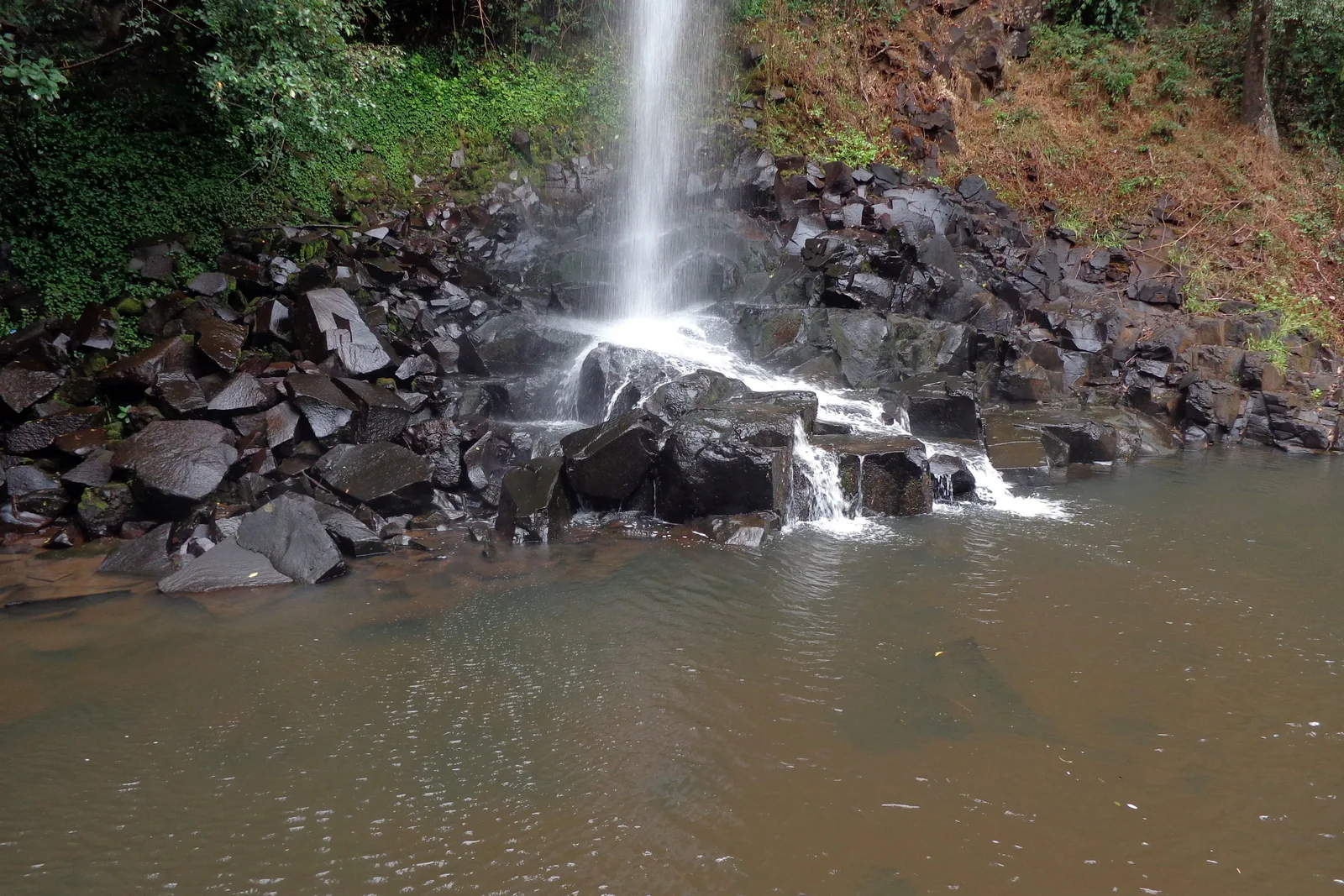
The Argentine park’s one proper walk away from the boardwalks: 3.5 kilometers each way through the jungle to Salto Arrechea, a 23-meter fall into a clear pool that is the only place in the park you are allowed to swim. Rough underfoot, quiet, and full of birds early. Rangers close it in bad weather, so ask at the gate, and start by mid-afternoon at the latest.
Puerto Iguazú · 2 hours
Güirá Oga
A bird rescue and rehabilitation center on the road between Puerto Iguazú and the Argentine park — the name is Guaraní for “house of birds.” Most of the residents arrived injured by traffic, power lines or the pet trade, and the guided walk through the enclosures is as much about why they are there as about what they are. Smaller and rougher than Parque das Aves, and more affecting for it.
Itaipu · 2.5 hours
Refúgio Biológico Bela Vista
Itaipu’s own biological refuge on the reservoir shore: a vehicle tour and a couple of kilometers of easy trail through forest replanted after the flooding, with a native-tree planting you do yourself and animal-breeding enclosures for species the dam displaced. It runs Wednesday to Monday with limited slots and is the single most interesting thing at Itaipu that is not made of concrete.
The Dam
Itaipu · 2.5 hours
Refúgio Biológico Bela Vista
Itaipu’s own biological refuge on the reservoir shore: a vehicle tour and a couple of kilometers of easy trail through forest replanted after the flooding, with a native-tree planting you do yourself and animal-breeding enclosures for species the dam displaced. It runs Wednesday to Monday with limited slots and is the single most interesting thing at Itaipu that is not made of concrete.
Itaipu · 1 hour 10
The Itaipu Panorâmica tour
The standard tour, and enough for most people: a bus along the crest of the dam with stops at the main viewpoints, an audio guide and a guide on board, no age limit, no ID drama. You get the scale — 7.9 kilometers of it — and the story of how a river the size of the Paraná was moved to build it. Runs all day, every day, from 8:30am to 4:00pm.
Photo needed
The interior machine hall of the Itaipu power plant, a long line of red generator housings receding down the floor under industrial lighting
Backup: The turbine hall of a large hydroelectric power station
Itaipu · 2.5 hours
The Itaipu Especial tour
The one that goes inside. Two and a half hours through the interior of the plant — down among the penstocks, into the machine hall with its twenty generating units, and through to the command center. The international border runs straight through the building and is marked on the floor, so you can stand with one foot in each country. Minimum age 14, passport checked at the gate, closed shoes required, and limited daily slots that need booking ahead.
Itaipu · Friday and Saturday evenings
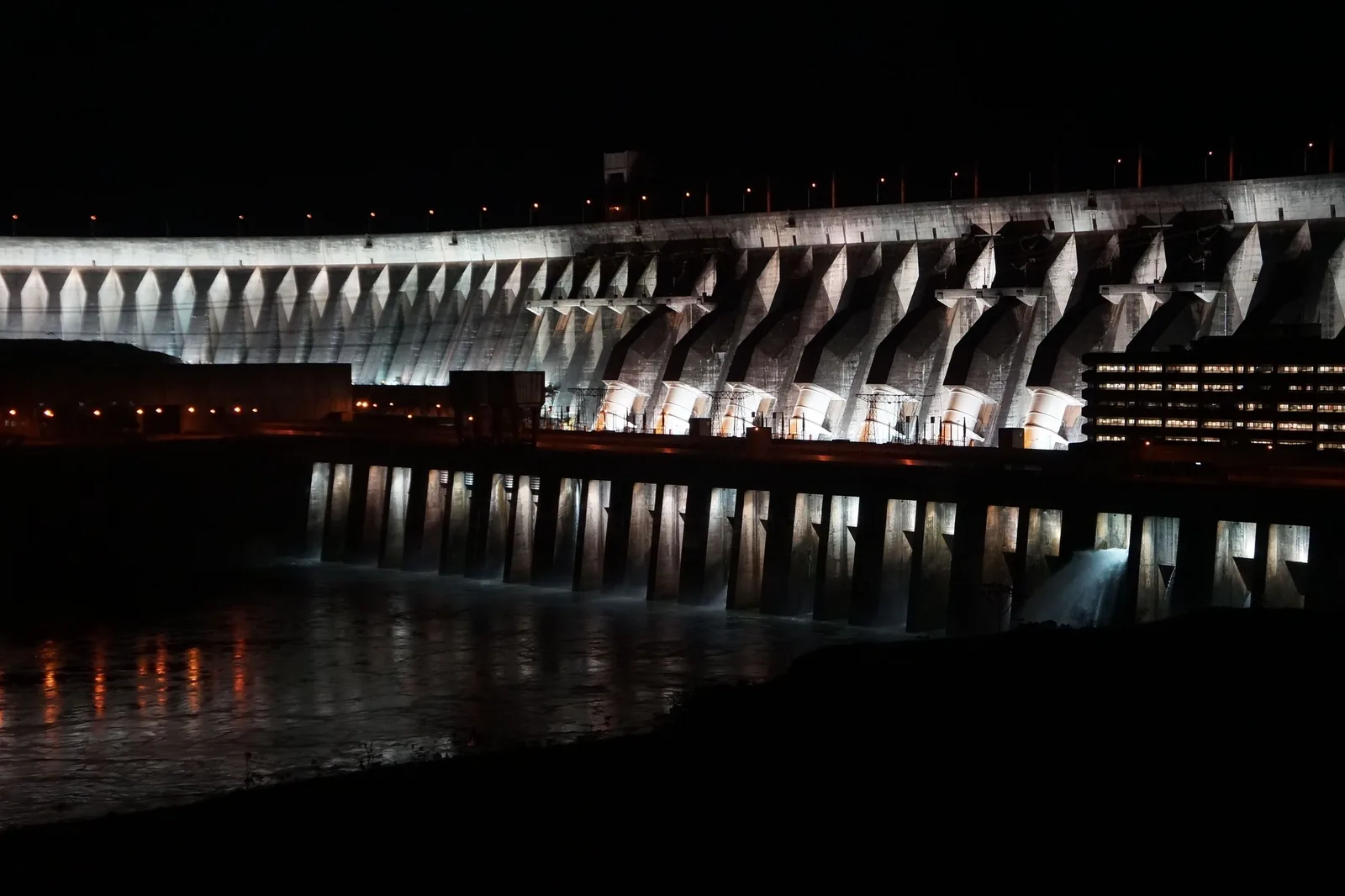
Itaipu Iluminada
The dam lit up after dark, from the central viewpoint, with live music and about two hours on site. It is a straightforwardly good evening and a useful one — Foz does not have much else to do at night, and this fills the gap on the day you are not at the falls for sunset. There is an extended version that adds a walk through a forced conduit and dinner at the lake restaurant.
Three Borders
Foz do Iguaçu · late afternoon
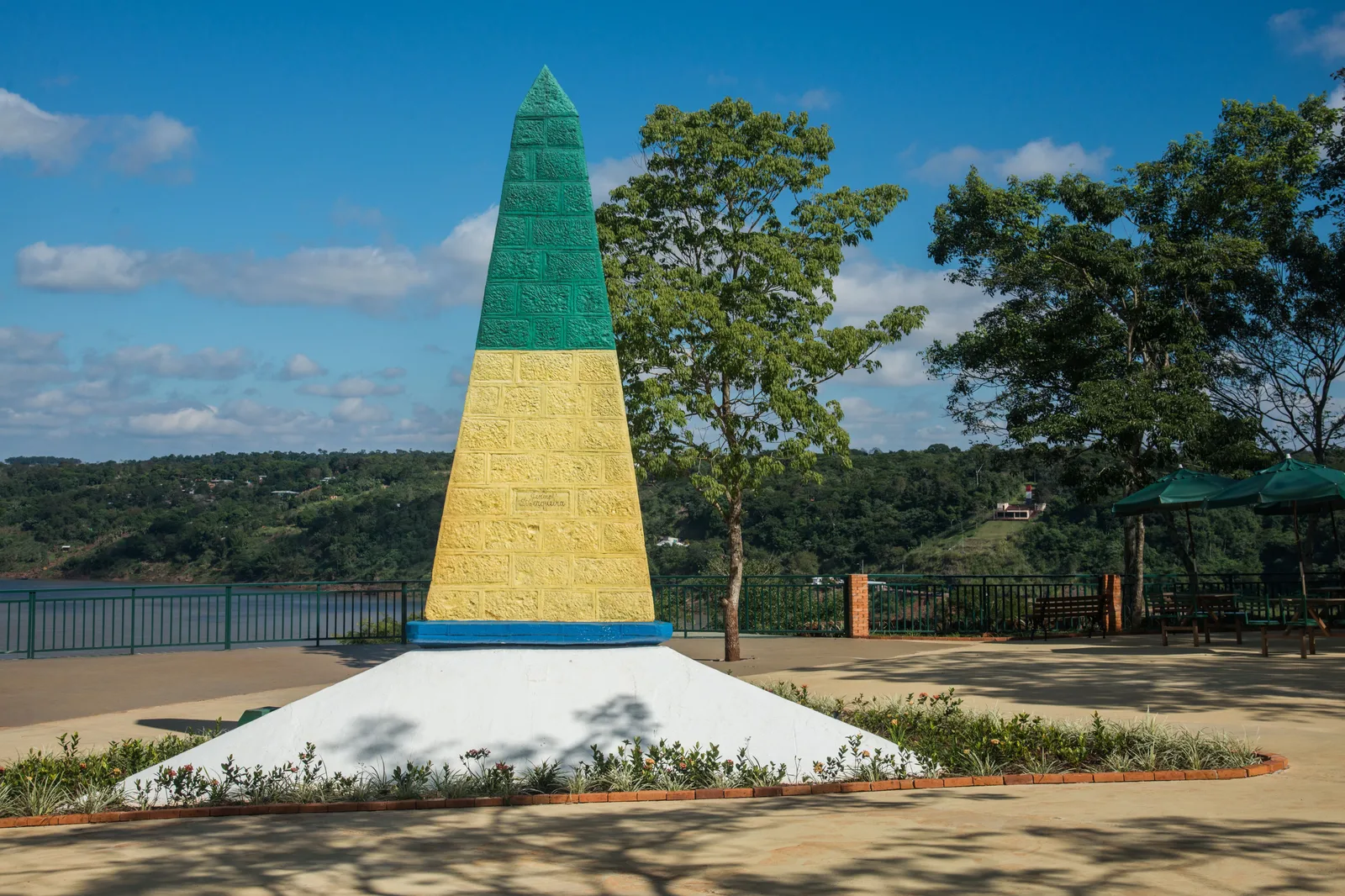
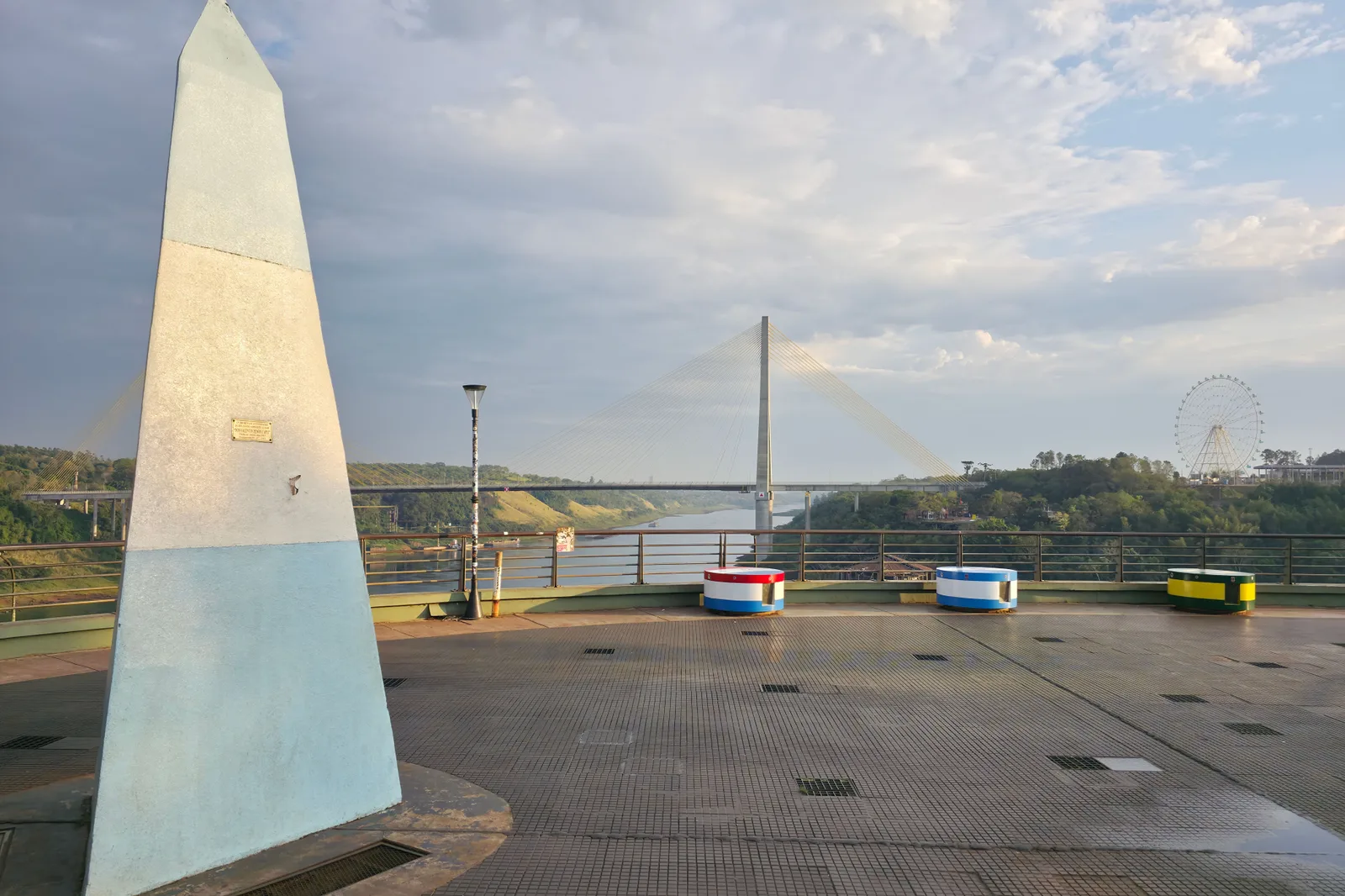
Marco das Três Fronteiras
The Brazilian obelisk at the confluence of the Iguaçu and the Paraná, looking straight across at its Argentine and Paraguayan twins on the other two banks. Three countries in one glance, which is the whole point. It is a proper visitor site — restaurant, Jesuit-mission-themed grounds, a viewpoint made for sunset — with a nightly 7:30pm show of dances from all three countries.
Puerto Iguazú · 1 hour
Hito Tres Fronteras
The Argentine counterpart, at the end of Puerto Iguazú’s main street: a blue-and-white obelisk on a bluff over the same confluence, in a small free park with craft stalls and a café. It is the same geography from the opposite bank, it costs nothing, and it is a natural stop on an afternoon in town if you are staying on the Argentine side.
Foz do Iguaçu · half day
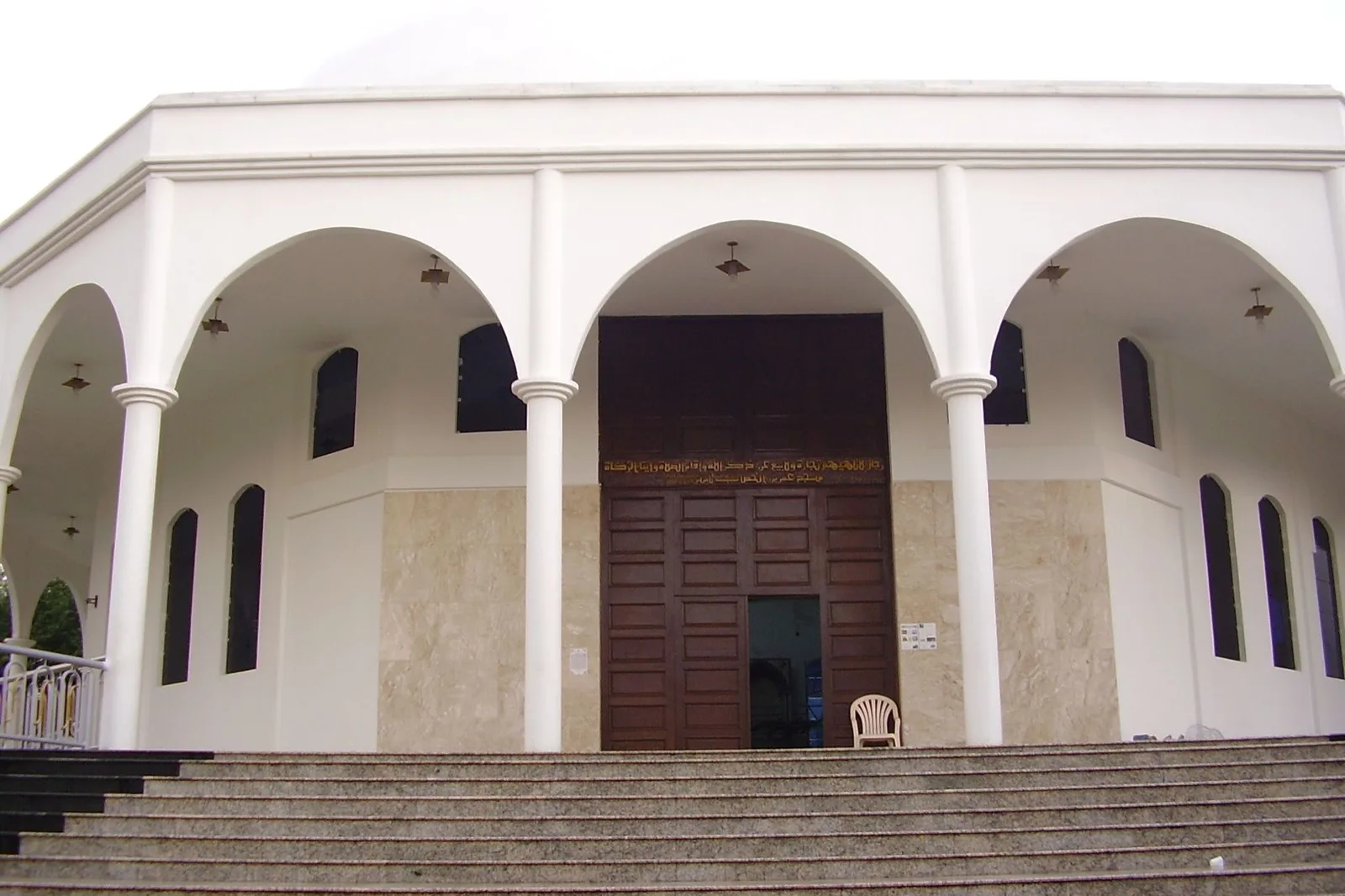
The mosque and the Buddhist temple
Foz has the second-largest Arab community in Brazil, more than twelve thousand people, most of them of Lebanese descent, who arrived from the 1950s to trade across the Paraguayan border. The Omar Ibn Al-Khattab mosque they built in 1983 has the largest reinforced-concrete dome span in Latin America and welcomes visitors. The Chinese Buddhist temple on the hill above the Paraná is the other half of the same story.
Puerto Iguazú · 1–2 hours
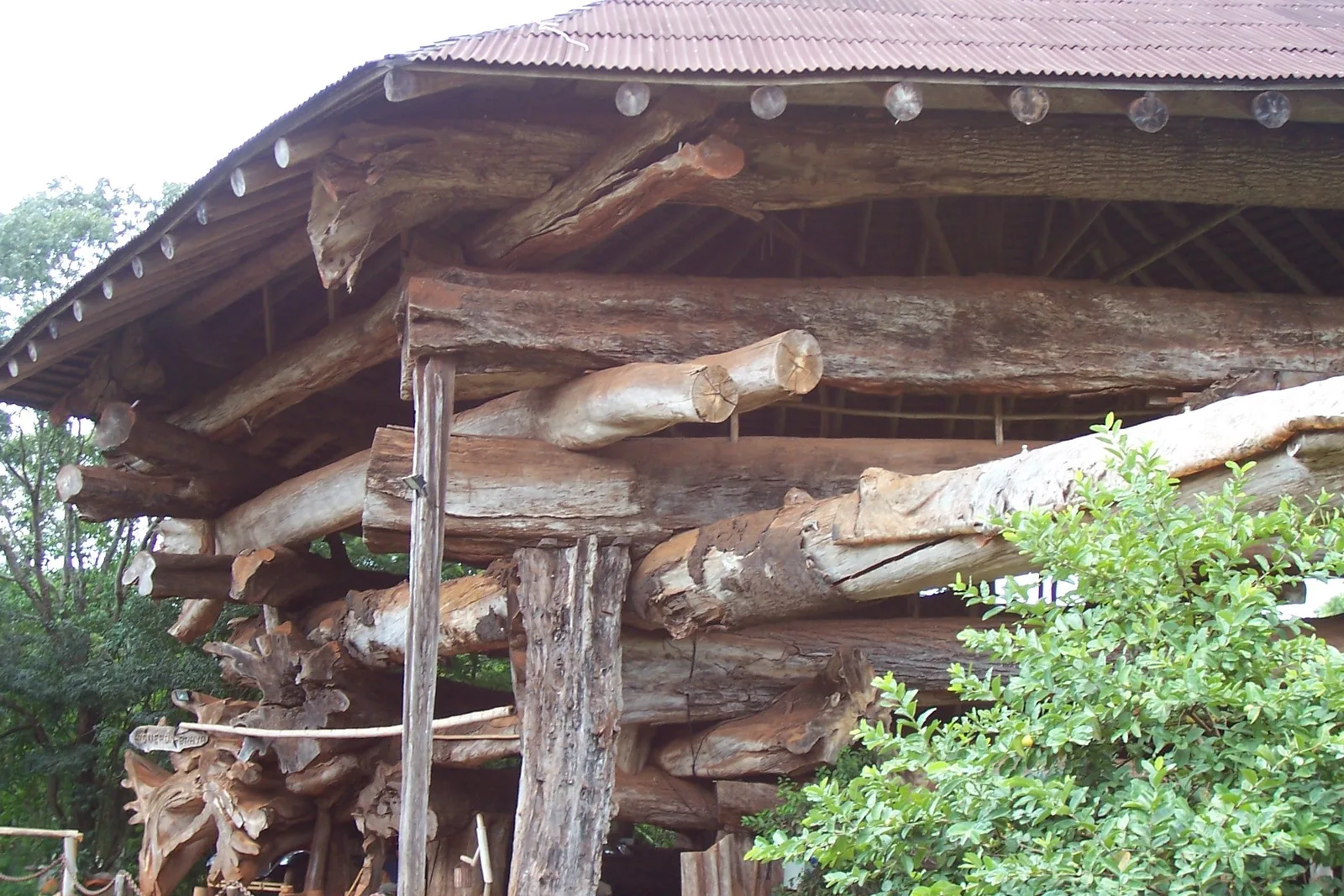
La Aripuca
A 17-meter, 500-tonne timber structure on the road out of Puerto Iguazú, built entirely from hardwood trunks seized from illegal logging — nothing was felled for it. The shape is a Guaraní bird trap, scaled up. It sits in a small reserve with a native-tree walk, a craft market and a café, and it is the most worthwhile of Puerto Iguazú’s handful of non-waterfall attractions.
Where to stay
Two cities, two countries, one road.
The real decision is not which hotel — it is which side of the river, and how far out of town. All three zones below are within about forty minutes of both parks, and one of them is in a different country.
Drag and zoom to explore.
Tap an area to open it and see it on the mapChoose an area to see it on the map
Our pick
Best for: Being first through the gate
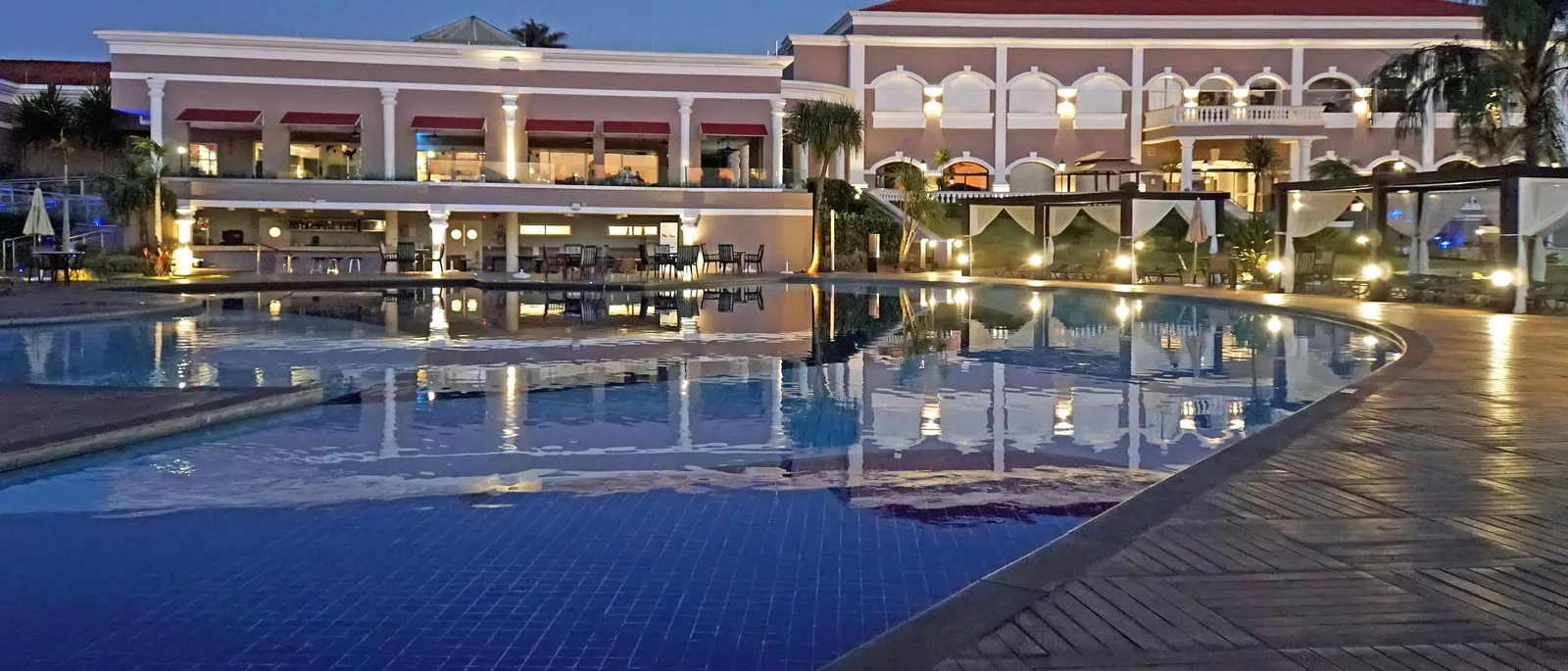
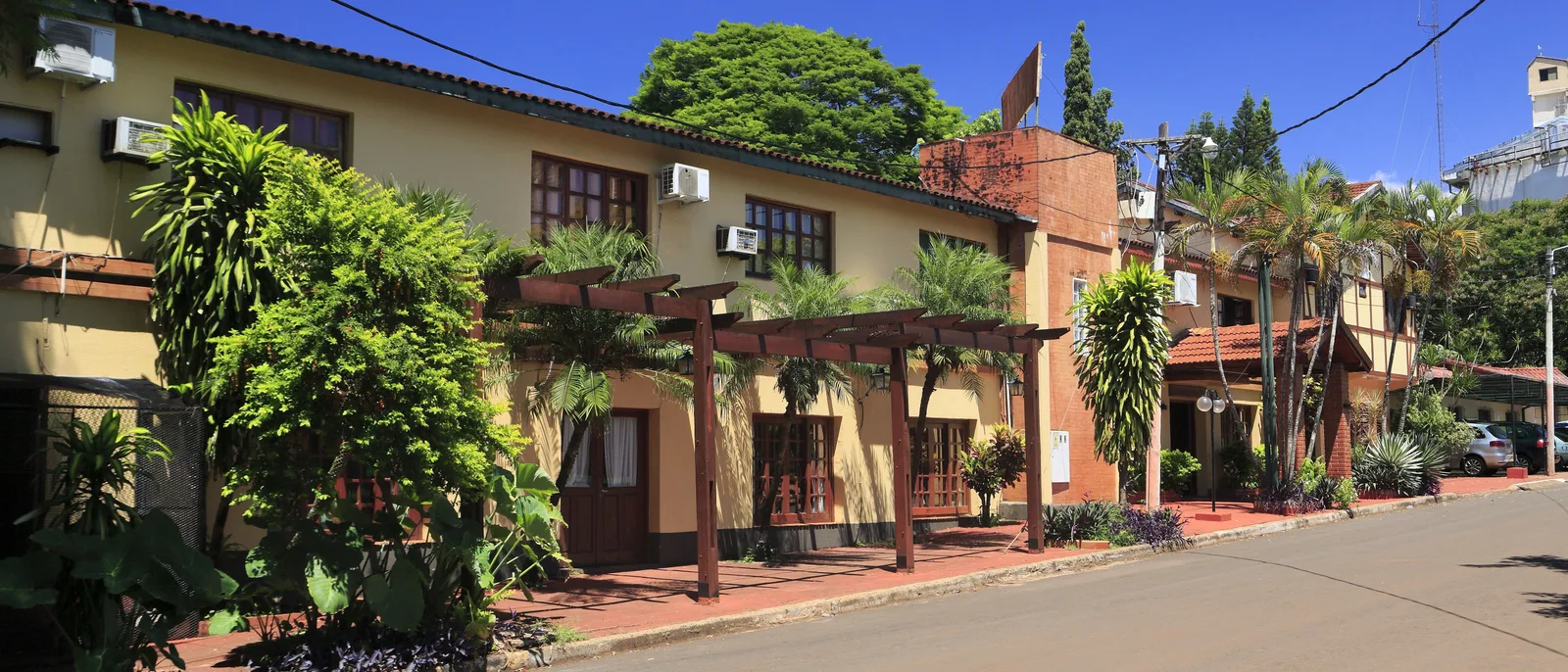
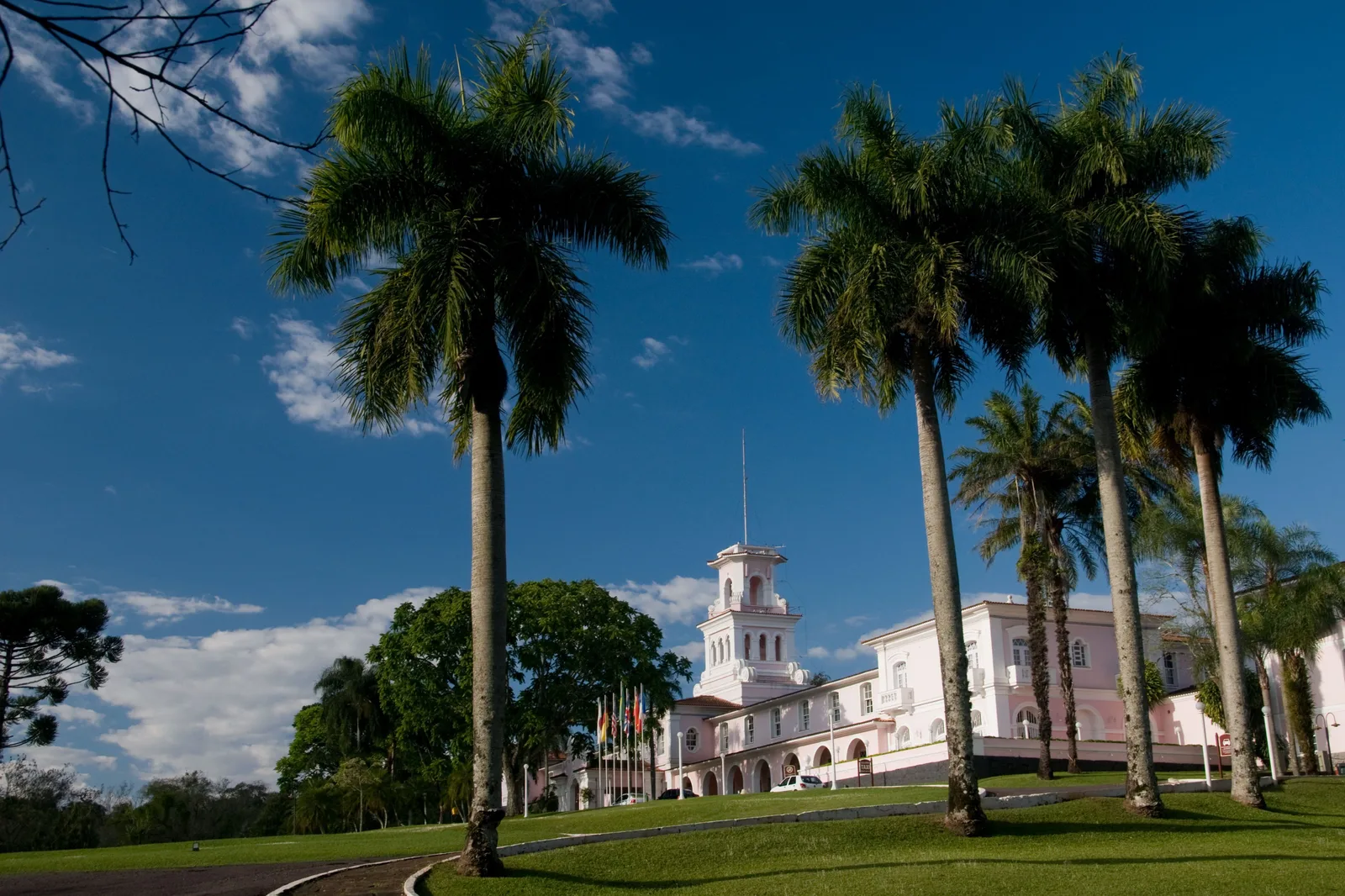
The Rodovia das Cataratas runs from the edge of Foz out past the airport, Parque das Aves and the national park entrance, and the resorts along it are the most comfortable rooms in the region. You are ten minutes from the Brazilian gate, twenty from the airport and about thirty from the border, which makes it the best-placed base for a trip that uses both sides. The trade is that there is nothing to walk to at night. Inside the park itself, the Belmond Hotel das Cataratas is the only hotel, and its guests get the trail before and after public hours.
Rodovia das Cataratas
Vila Yolanda
Near the airport
Inside the park
Show on mapShowing on map
Best for: Value, and somewhere to eat
The grid around Avenida Brasil and Avenida Jorge Schimmelpfeng is where the cheap and mid-range hotels are, along with nearly all the restaurants — including the Lebanese and Syrian food the city is quietly good at. It is a working Brazilian city rather than a resort, twenty-five minutes from the park gate, and the urban terminal here is where the 120 bus to the falls and the cross-border buses leave from. Fine by day, quiet after dark, and a ride app rather than a walk home at night.
Avenida Brasil
Centro
Jardim Central
Near the TTU terminal
Show on mapShowing on map
Best for: The Argentine side, and a calmer town
A town of about 80,000 across the bridge, 18 kilometers from the Argentine park and a world quieter than Foz. The center is walkable, the restaurants are good, and the jungle-resort strip along the Selva Iryapú road has the nicest mid-range rooms on either side. Staying here makes the Argentine full day effortless and turns the Brazilian half-day into the one that needs a border crossing — which is the right way round, since the Brazilian side is shorter. The Gran Meliá inside the Argentine park is the only hotel there.
Puerto Iguazú centro
Selva Iryapú
Ruta 12
Inside the Argentine park
Show on mapShowing on map
A working plan
Three days, and each one has a shape.
Built so the big day — Argentina — falls in the middle with a spare day either side of it, because the Devil’s Throat walkway closes for high water and you want somewhere to move it to.
01
Parque Nacional do Iguaçu
The panorama, then the birds
First entry slot at the Brazilian park, the Waterfall Trail while the railings are empty, and the catwalk at Salto Floriano. Cross the road to Parque das Aves for the afternoon.
02
Parque Nacional Iguazú
The whole day in Argentina
Across the bridge early, train straight to the Devil’s Throat before the queue builds, then the Lower Circuit, lunch, and the Upper Circuit as the light comes round. Keep the ticket for a half-price second day.
03
Itaipu & the Three Borders
The dam, and three countries at once
Itaipu in the morning — the interior tour if you booked it, the panoramic if not — then the Three Borders Landmark for sunset over the confluence and the evening show.
This is a starting shape, not a fixed departure — we rearrange it around your dates.
Have it built for you
Timing
The weather is the easy half. The river is the other one.
Most destinations have a season. Iguazu has two variables that do not move together: how comfortable it is to be outside, and how much water is coming over the edge. Only the first of them follows the calendar. The river rises behind Curitiba and runs more than 600 km before it reaches the falls, so the flow answers to rain across the whole upper basin rather than to the weather in Foz, and no month guarantees you a big one. The concessionaire’s own record puts its largest recent flow in October 2023 and its 2024 peaks in May and July.
What each month is like at Foz do Iguaçu: average air temperature, rainfall, rain days and UV. Choose a month to see all four.
January
Trade-offs
Air
20–33°C
68–91°F
UV
11 Extreme
Rain
9 days 196 mm / 7.7 in
Hot, humid and wet at 196 mm, and the second-sunniest month of the year. Brazilian holidays fill both parks.
February
Trade-offs
Air
20–33°C
68–91°F
UV
11 Extreme
Rain
9 days 180 mm / 7.1 in
Still hot and rainy at 180 mm across nine wet days, and humid.
March
Good
Air
18–31°C
64–88°F
UV
10 Very high
Rain
8 days 175 mm / 6.9 in
Late summer at 175 mm. The holiday crowds have gone and the heat has not quite.
April
Good
Air
15–28°C
59–82°F
UV
6 High
Rain
8 days 151 mm / 5.9 in
Autumn arrives: comfortable days at 28°C, cool nights at 15, and the rain easing to 151 mm.
May
Best
Air
12–25°C
54–77°F
UV
5 Moderate
Rain
6 days 128 mm / 5.0 in
The pick: 128 mm across six wet days, the equal-fewest of the year, with mild days and cool nights. The best month for walking the circuits.
June
Good
Air
10–23°C
50–73°F
UV
4 Moderate
Rain
8 days 138 mm / 5.4 in
Mild days and genuinely cold mornings. Bring a jacket for the spray on the Argentine side.
July
Good
Air
10–24°C
50–75°F
UV
4 Moderate
Rain
6 days 84 mm / 3.3 in
The driest month in Foz itself at 84 mm, and the coldest, with mornings at 10°C. The concessionaire’s own 2024 peaks were in May and July, so a dry month here is not a thin one on the falls.
August
Good
Air
11–25°C
52–77°F
UV
5 Moderate
Rain
8 days 107 mm / 4.2 in
Dry and warming, 107 mm across eight wet days, and the crowds are the year’s lightest.
September
Good
Air
14–27°C
57–81°F
UV
6 High
Rain
8 days 147 mm / 5.8 in
Spring: warm, the rain returning at 147 mm, and the least sunny month of the year at 146 hours.
October
Trade-offs
Air
15–29°C
59–84°F
UV
8 Very high
Rain
9 days 220 mm / 8.7 in
The wettest month of the year at 220 mm, and the month that has produced the biggest recorded flows. Heavy rain on you while you look at it.
November
Good
Air
17–31°C
63–88°F
UV
10 Very high
Rain
7 days 154 mm / 6.1 in
Warm at 31°C, a little drier than October at 154 mm, and 231 hours of sun.
December
Trade-offs
Air
19–33°C
66–91°F
UV
11 Extreme
Rain
9 days 189 mm / 7.4 in
Hot and wet at 189 mm, the sunniest month of the year at 232 hours, and prices climbing toward the holidays after the 20th.
UV is the monthly average of the daily peak, 2022 to 2025, calculated from Copernicus Atmosphere Monitoring Service data.
Weather data by Open-Meteo.com,
CC BY 4.0.
For the weather
April–June, and May is the pick
The heat has gone out of the air and the rain is at its lightest of the warm half: 128 mm across six wet days in May, the equal-fewest of the year, with days in the mid-twenties, cool nights and moderate UV. What the falls are doing that week is a separate question, and not one the calendar answers.
For the summer, if you want it
December–March
Hot, loud and green, at the price of 32 or 33 degrees with humidity to match, close to 200 mm of rain a month, and Brazilian school holidays filling both parks through January. It is high season, though not because the flow is reliably higher: nothing published supports that.
The one thing you cannot book around
The river itself
Flow swings enormously — a record flood in October 2023 destroyed most of the Devil’s Throat walkway and closed it for eight months, and droughts have cut the falls to a fraction of normal. Neither is predictable a season ahead, so build a spare half-day into the trip.
About the rain
Foz gets around 1,870 mm of rain a year and there is no dry season in the tropical sense — even July, the driest month, still averages 84 mm. What changes is the intensity. Summer rain arrives as violent afternoon thunderstorms that clear within an hour or two; October, the wettest month at 220 mm, spreads it over more of the day. Neither closes the parks. Both parks stay open in the rain, the trails are surfaced, and a wet day at Iguazu is a good day at Iguazu — you were going to be soaked at the bottom of the trail anyway.
The rain matters because of what it does upstream, not overhead. The river drains an enormous basin west of Curitiba, so the flow at the falls reflects weeks of weather across southern Brazil rather than today’s forecast. Average discharge is about 1,750 cubic meters a second; the record is 45,700, set in June 2014. Low water gives you more rock and more separate ribbons, which some people prefer. High water gives you a wall. You do not get to choose, and both are worth the trip.
The dates worth planning around
The Full Moon Walk
Five nights around each full moon, Argentine side
Guided night walks out to the Devil’s Throat on the five consecutive nights around each full moon, three departures an evening at roughly 7:45pm, 8:30pm and 9:15pm, two and a half hours each. The train, a guide and a Guaraní choir are included. On a clear night the moonlight throws a colorless lunar rainbow in the spray. Capacity is small and tickets go on sale about a month before each cycle, through the park’s official platform only.
Sunset at the Falls
Tuesdays, Fridays and Saturdays, Brazilian side
The Brazilian park stays open past normal hours for a limited-capacity evening on the Waterfall Trail, with live music and a drink included and extra dates added through the year. It is the only way to have that trail nearly to yourself, and the light across the arc in the last half hour is the reason people book it twice. It runs in any weather and it sells out well ahead.
The weeks both parks fill
January, Easter week and July
Iguazu is a domestic destination for two countries at once, and the crowd peaks are Brazilian and Argentine school holidays rather than the northern-hemisphere summer. January is the heaviest, Easter week is short and intense, and July fills the Brazilian side through the winter break. The falls are unaffected; the queue for the Devil’s Throat train and the walkway at Salto Floriano are not. If your dates are flexible, avoid all three.
Good to know
Before you come
Do I need to see both sides of Iguazu Falls?
+
Yes, if you have three days. They are not two viewpoints of the same thing — they are two different experiences, and the common mistake is treating the Argentine side as an afternoon. Brazil holds about a fifth of the drops and, because of where its bank sits, the view of all of them: a kilometer-and-a-half rim trail that gives you the whole 2.7-kilometer arc in one frame, in two to three hours. Argentina holds the other four-fifths and puts you inside them, on boardwalks that run along the lip of the cataracts and underneath them, plus the train and the 1.1-kilometer catwalk out to the Devil’s Throat. That is a full day and it is arguably the better one. If you genuinely only have a day, take Argentina and accept that you have missed the postcard.
How many days do I need in Foz do Iguaçu?
+
Three, which is why the itinerary above is built that way. One day for the Brazilian panorama and Parque das Aves, which sit opposite each other on the same road. One full day for the Argentine circuits and the Devil’s Throat. One for Itaipu and the Three Borders Landmark, and as the spare — the Devil’s Throat walkway closes for high water, the helicopter is grounded by weather, and having somewhere to move a day to is worth more here than an extra attraction. Two days works if you drop Itaipu and accept no margin. Four lets you add the boat ride, the Poço Preto forest trail and a half-price second day on the Argentine side, and four is the number to pick if you can.
What do I need to cross into Argentina from Brazil?
+
A passport, stamps on both sides, and a Brazilian eVisa. US citizens have needed one since April 2025; it is issued multiple-entry and valid for ten years, so leaving for Argentina and returning is covered by the visa you already hold. Argentina requires no visa from US citizens for stays up to 90 days and charges no reciprocity fee — that was abolished in 2016 and has not returned. It has required foreign visitors to carry travel medical insurance since July 2025, so bring a policy and keep it on your phone. The crossing itself is the Tancredo Neves bridge, with immigration posts at each end and 20 to 40 minutes for the whole thing on a normal day. A taxi whose driver waits at both posts is the simplest way to do it; the local bus is cheaper and does not wait unless you ask. Entry rules move: check Migraciones and your airline close to your dates.
When is the best time to visit Iguazu Falls?
+
May, inside an April-to-June window, if you are optimizing the weather. May takes 128 mm across six wet days, the equal-fewest of the year, with days in the mid-twenties, cool nights, moderate UV and far fewer people than January. December to March charges you 33 degrees, high humidity and holiday crowds. July and August are dry and cold, with mornings around 10 degrees. October is the wettest month at 220 mm and the only month on the calendar marked as a trade-off. What no month gives you is a promise about the water: the river drains a basin more than 600 km upstream, and the concessionaire’s own record has its largest recent flow in October 2023 and its 2024 peaks in May and July. There is no bad month here, and no month you can book for a big one.
Should I stay in Brazil or Argentina?
+
Sleep on the Brazilian side if you are flying in and out of Foz do Iguaçu, which most visitors from the US are: the airport is on the park road, the hotel choice is far wider, and the border crossing then falls on the day you have the most time for it. The Rodovia das Cataratas resorts are the best-placed base of all, ten minutes from the Brazilian gate and about thirty from the bridge. Stay in Puerto Iguazú if your trip runs through Buenos Aires, if you want a smaller and quieter town, or if you intend to use the Argentine park’s half-price second day, which is much easier when you are 18 kilometers away rather than across a border. Both parks have exactly one hotel inside them — the Belmond Hotel das Cataratas in Brazil and the Gran Meliá in Argentina — and both buy you the trails outside public hours at a serious premium.
Keep going
Where Foz fits in a bigger trip.
Foz is a fly-in, fly-out destination with no road worth driving to it, so what pairs with it is whatever is on the other end of a short flight. These three are the ones that actually get booked together.
A free 29-page guide to everything a first-time visitor should know before landing: visas, safety, money, getting around, where to go, and what to eat.
We'll email you a link to confirm your address. Click it and the guide opens right away.
One last step: check your email
We just sent you an email from Logan at Your Brazil Guide. Click the button inside it and the guide opens right away. Not in your inbox after a minute or two? Check your spam and promotions folders, and if you find it there, mark it as not spam so the next one lands properly. Still nothing? Email logan@yourbrazilguide.com and we'll send it directly.
Two countries in three days, without the logistics eating one of them.
Tell us your dates and how much walking you want to do. We will shape a private Foz do Iguaçu itinerary around exactly that — which side on which day, the park tickets bought before the good slots go, the border crossing handled rather than improvised, and a spare half-day where the weather can take one.
One person, living in Brazil, replying to you directly
A reply within one business day — no call center, no bots


 01