
Skip to content
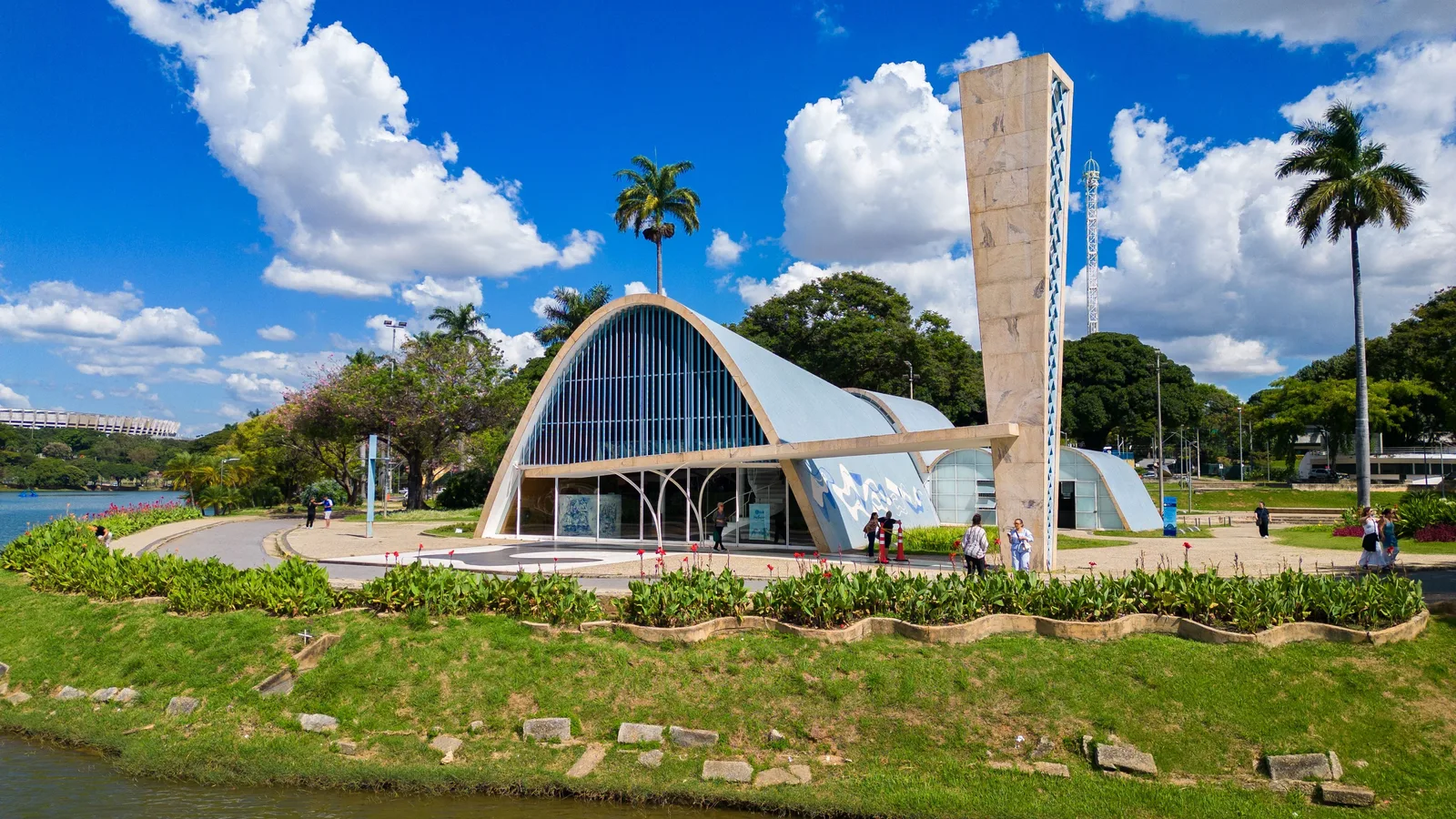
The São Francisco de Assis church at Pampulha seen across the water: a pale blue parabolic concrete vault with a glass front, its tall freestanding bell tower beside it, lawns and palms around it under a bright sky full of white cloud

Minas Gerais

Belo Horizonte

Niemeyer’s lake, a garden full of art, and the botecos of Minas.

Last checked October 2026

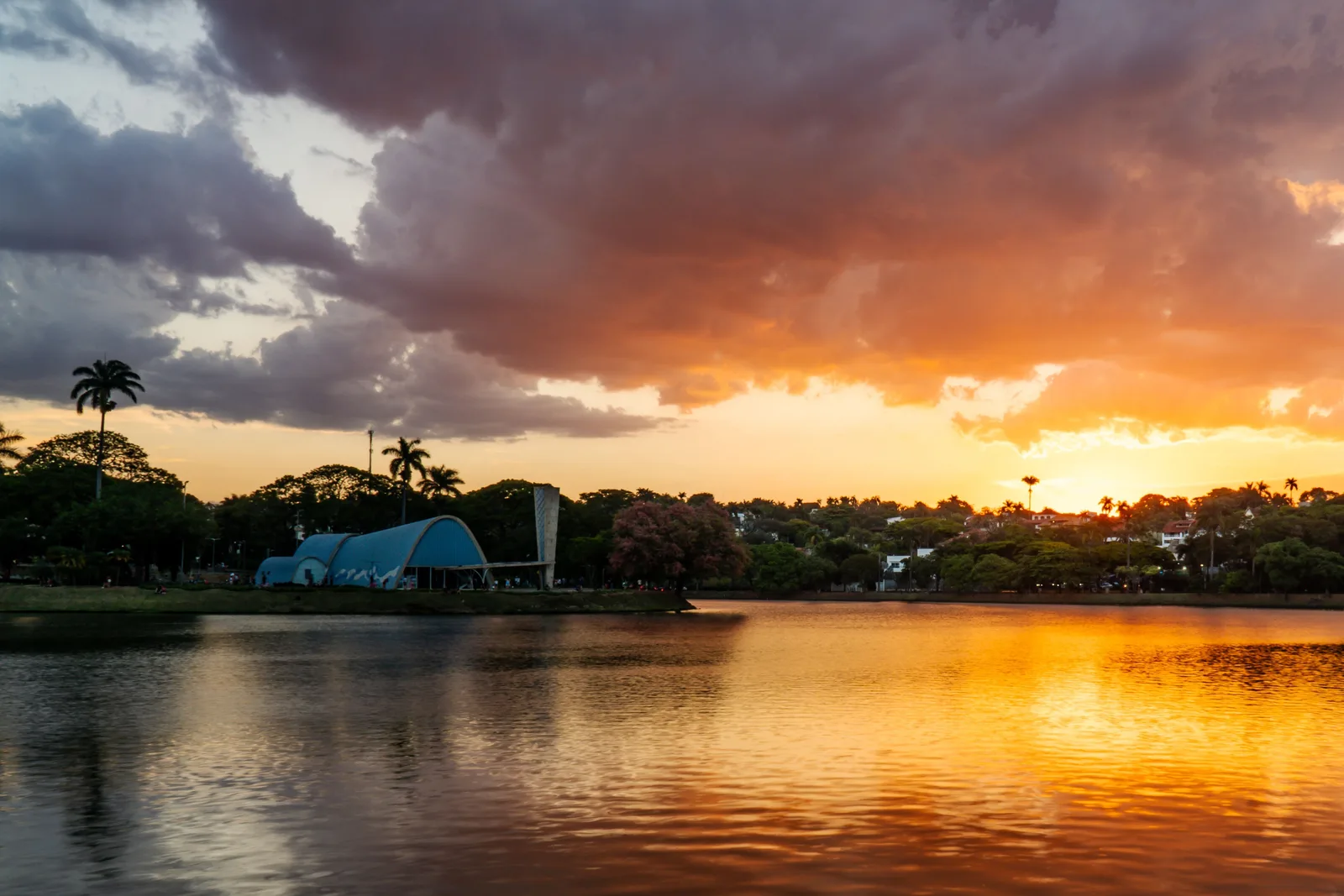
  • An orange sunset over the Pampulha lake, the low blue vault of the São Francisco de Assis church dark on the far shore and the sky reflected in the water
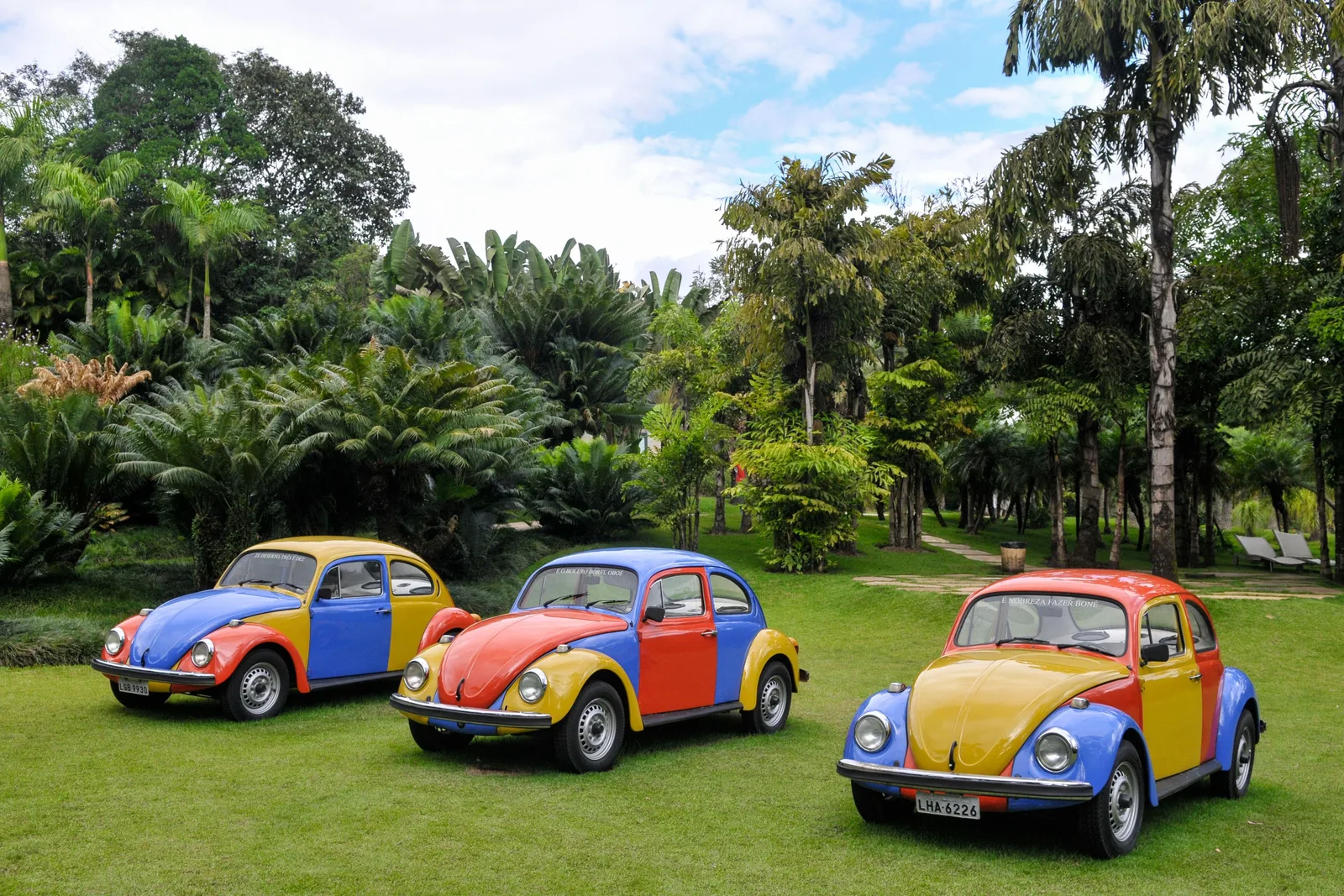
  • Jarbas Lopes’s Troca-troca at Inhotim: three Volkswagen Beetles painted in patchwork blocks of red, yellow and blue parked on a lawn among palms and tropical trees
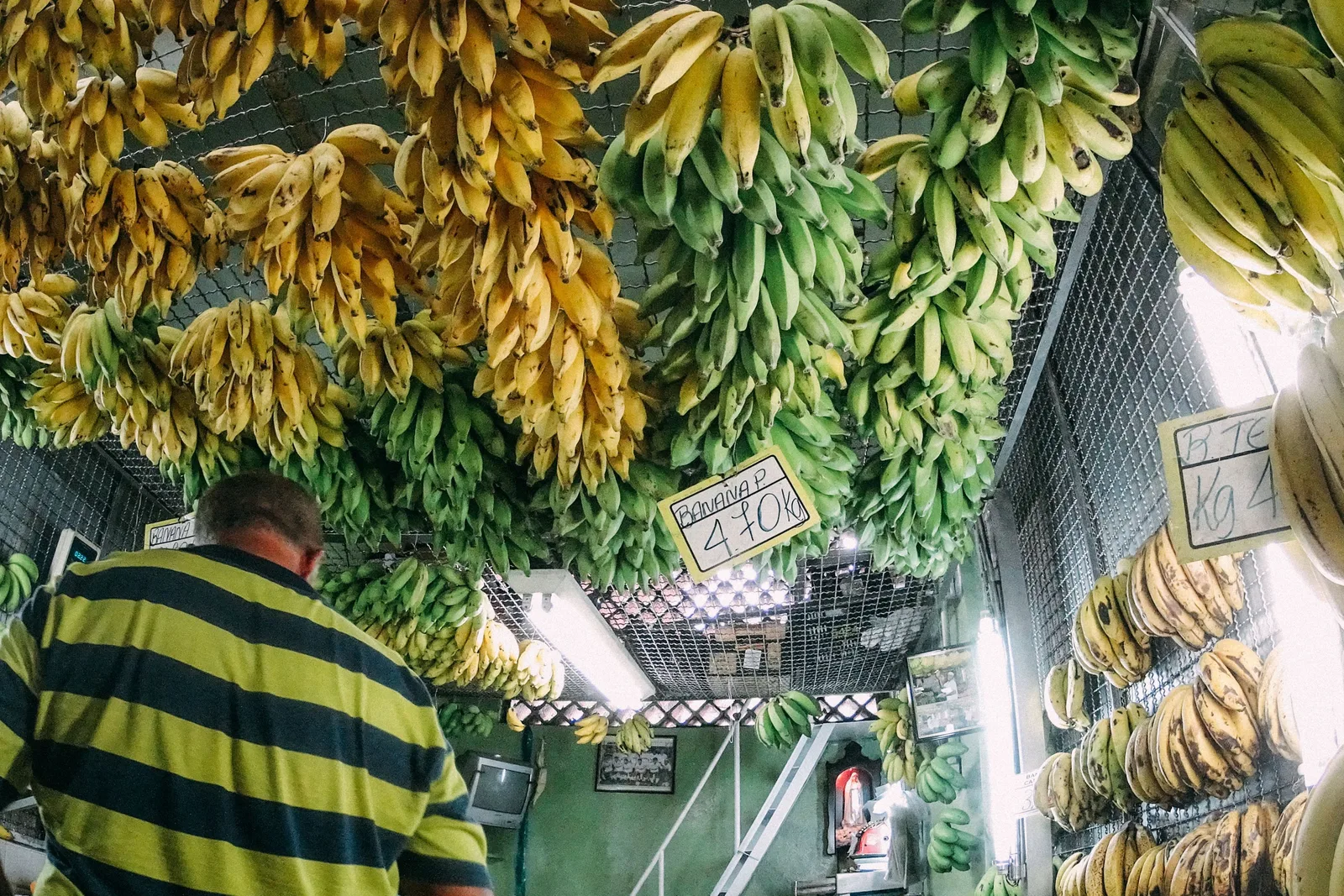
  • Bunches of green and yellow bananas hanging from the ceiling of a fruit stall inside the Mercado Central, a man in a striped shirt beneath them
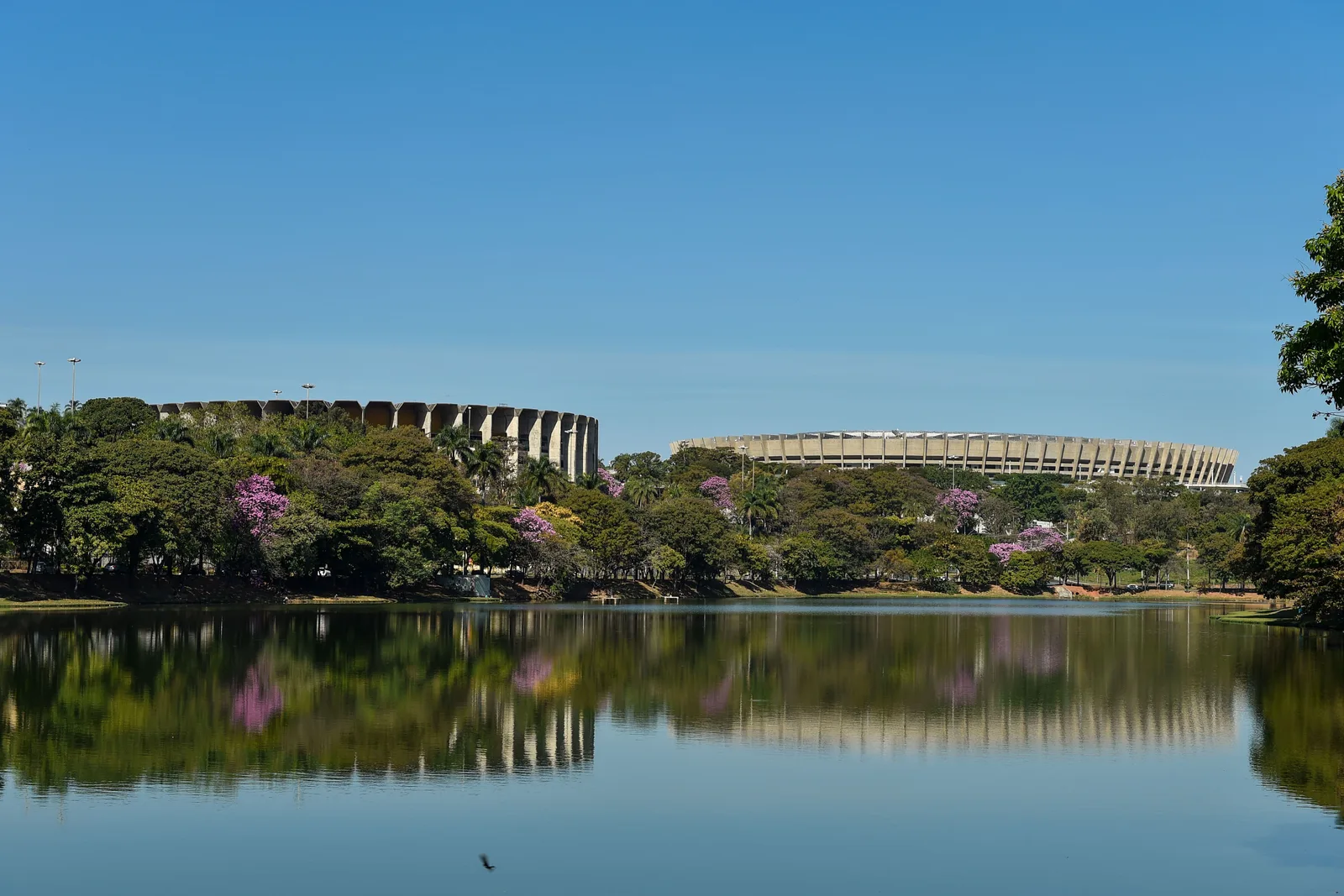
  • The Pampulha lake on a clear day, a band of trees along the far shore and the curved concrete stands of the Mineirão stadium rising behind them
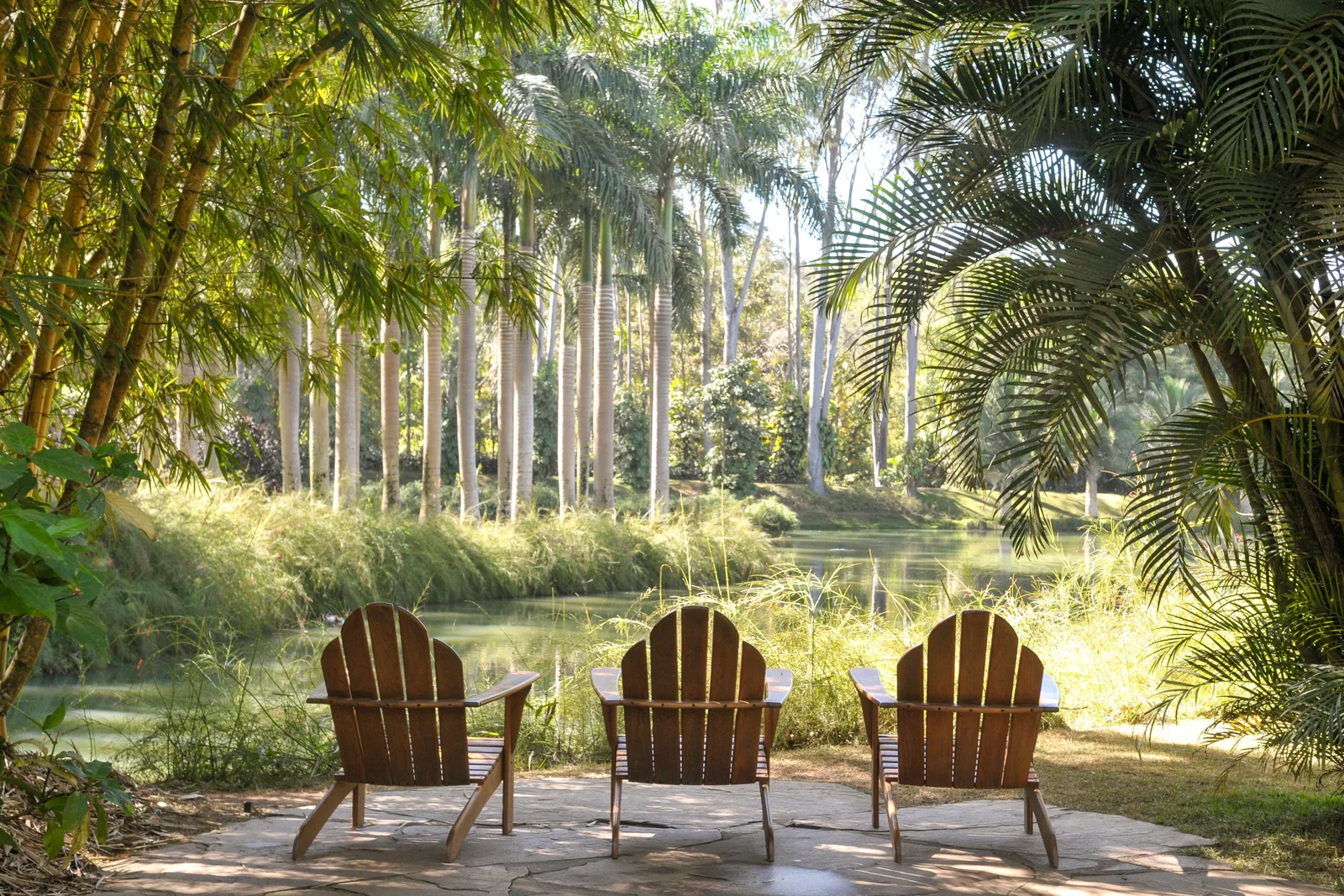
  • Three wooden Adirondack chairs facing a pond at Inhotim, tall palms and dense green planting all around it in soft morning light
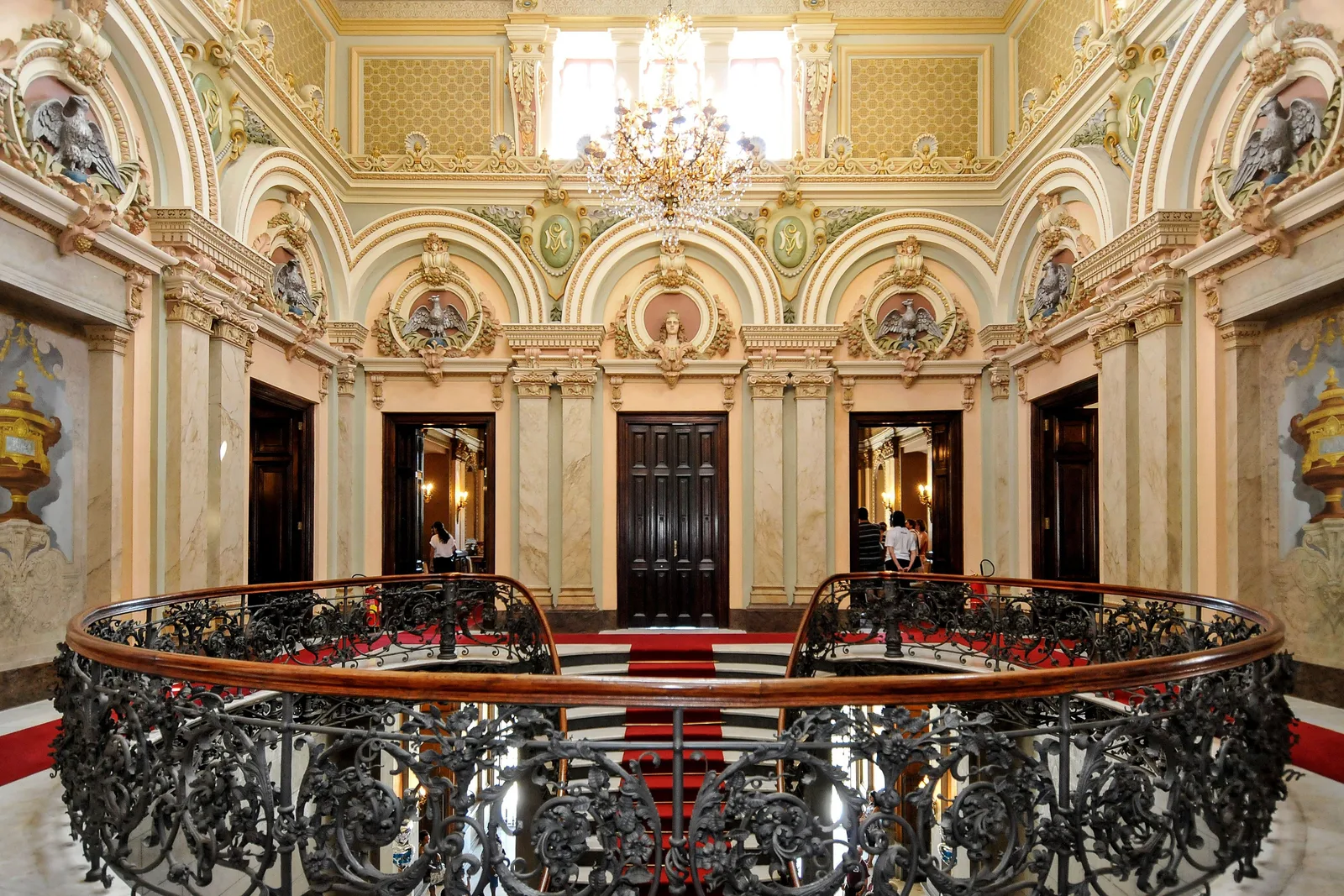
  • The gilded entrance hall of the Palácio da Liberdade from the upper floor: a wrought-iron balustrade around the stairwell, painted walls and a crystal chandelier
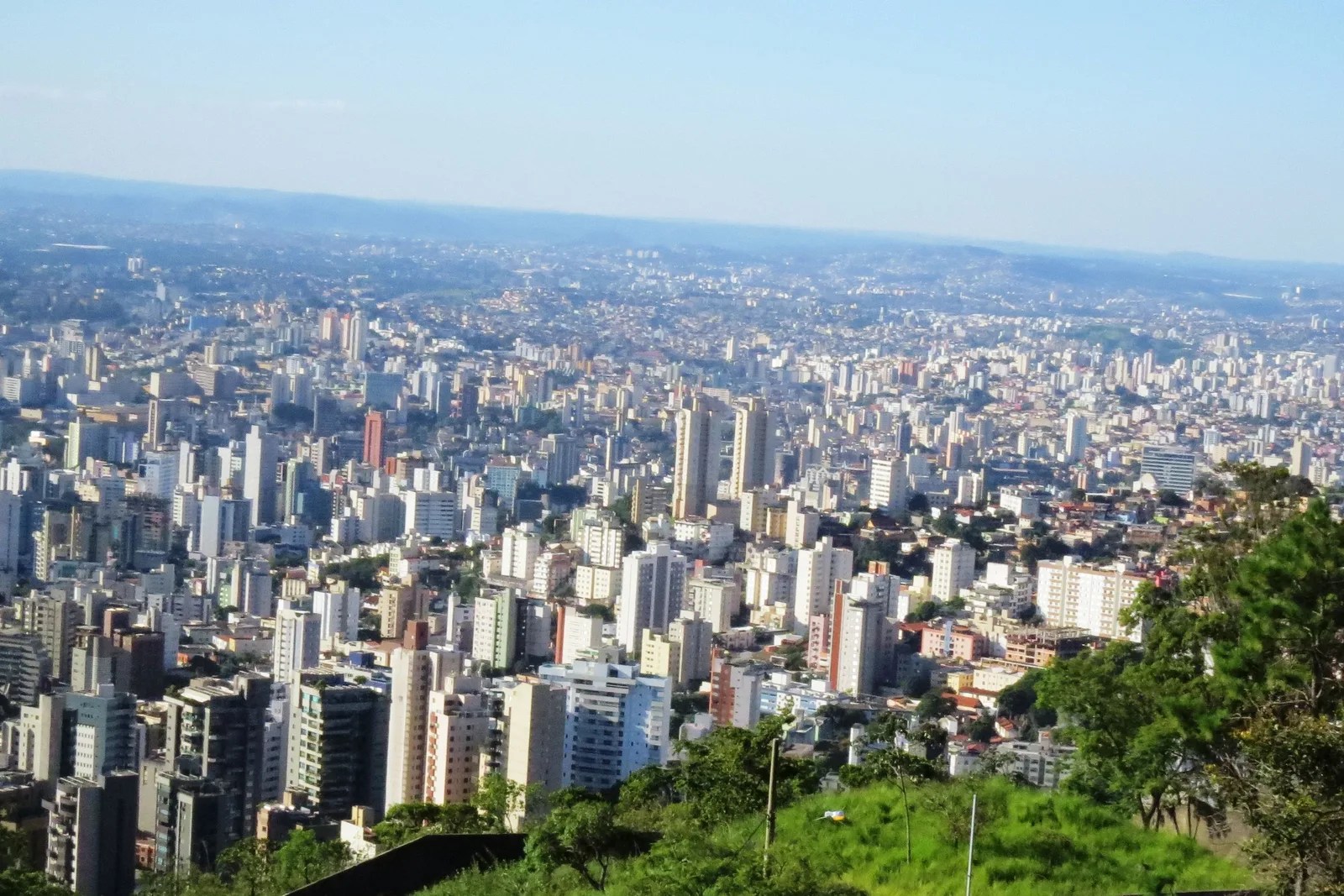
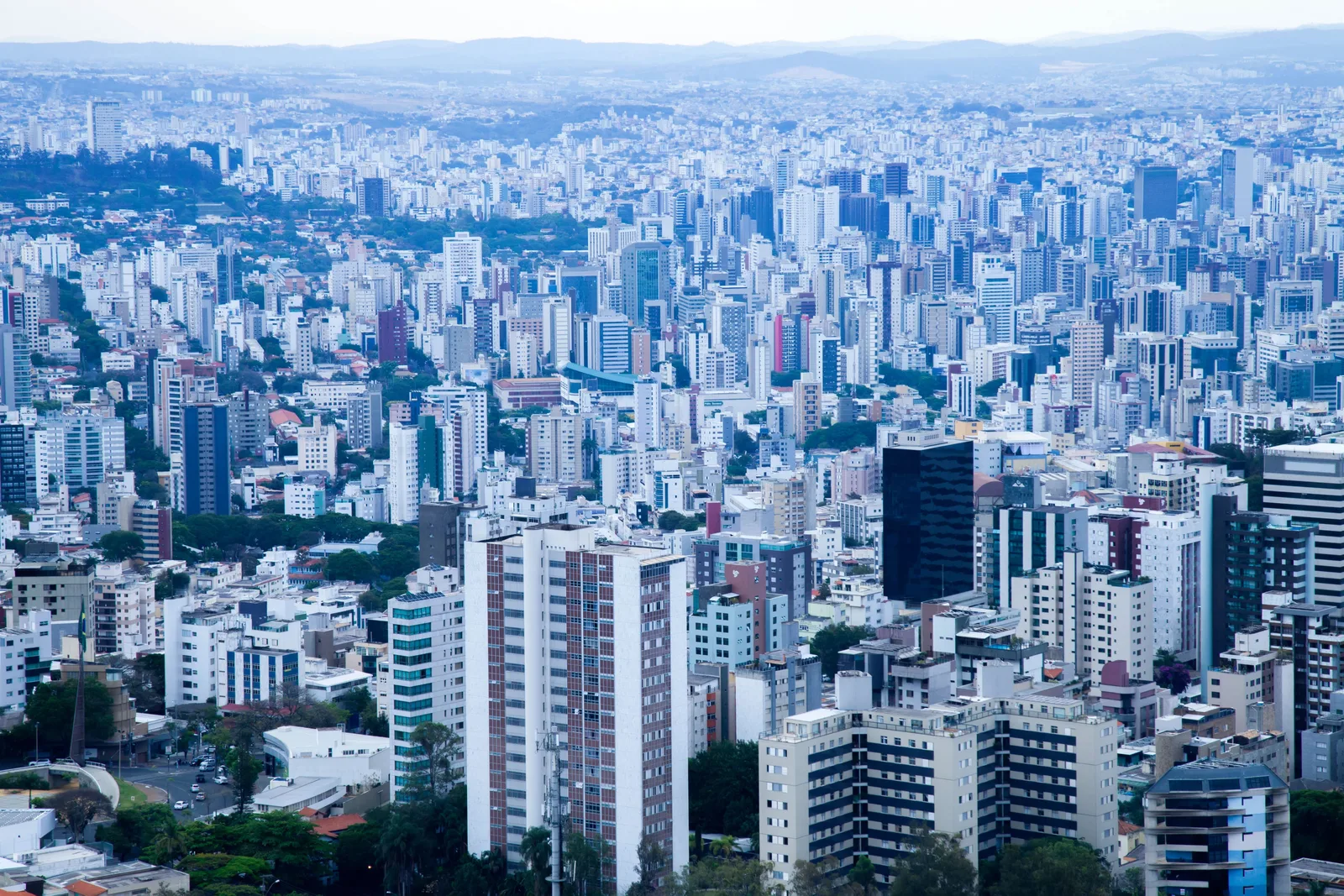
  • Belo Horizonte from above: a dense spread of white and gray apartment towers running to green hills on the horizon
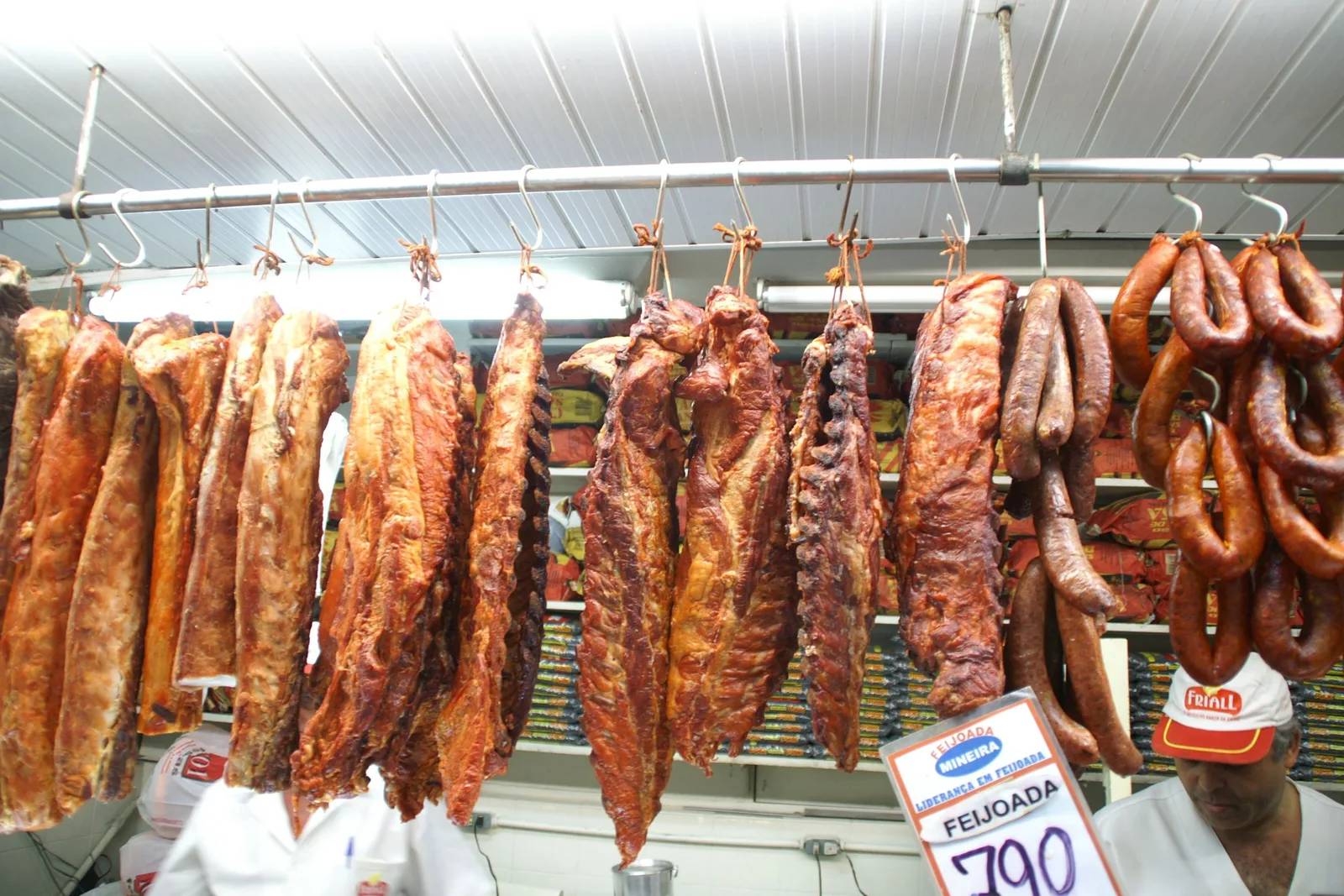
  • Cured sausages and slabs of dried pork hanging in a row over a butcher’s counter at the Mercado Central, a printed feijoada price card and a vendor in a cap below them
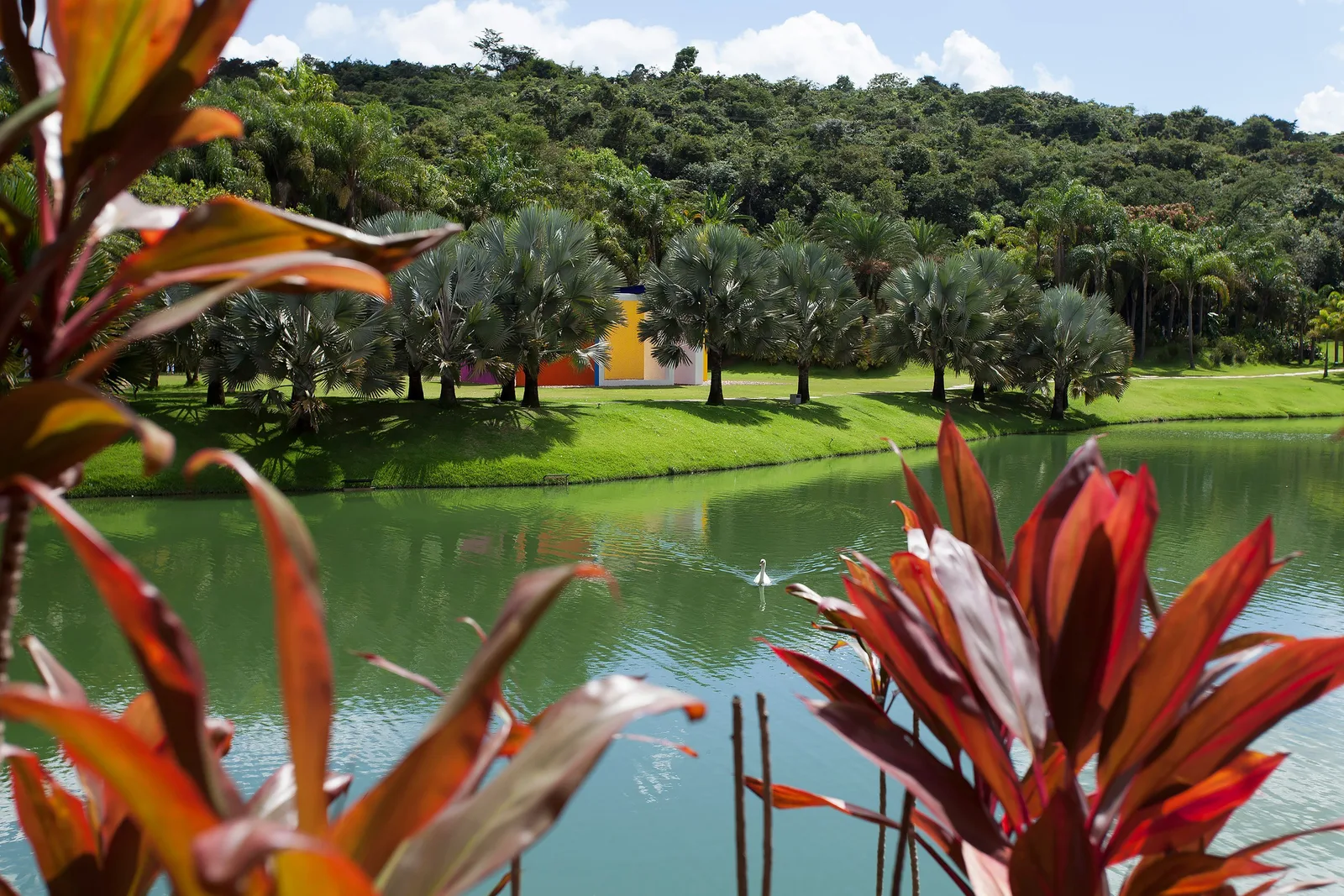
  • Red-leaved tropical plants in the foreground of a still green lake at Inhotim, lawns and a hillside of trees beyond the water
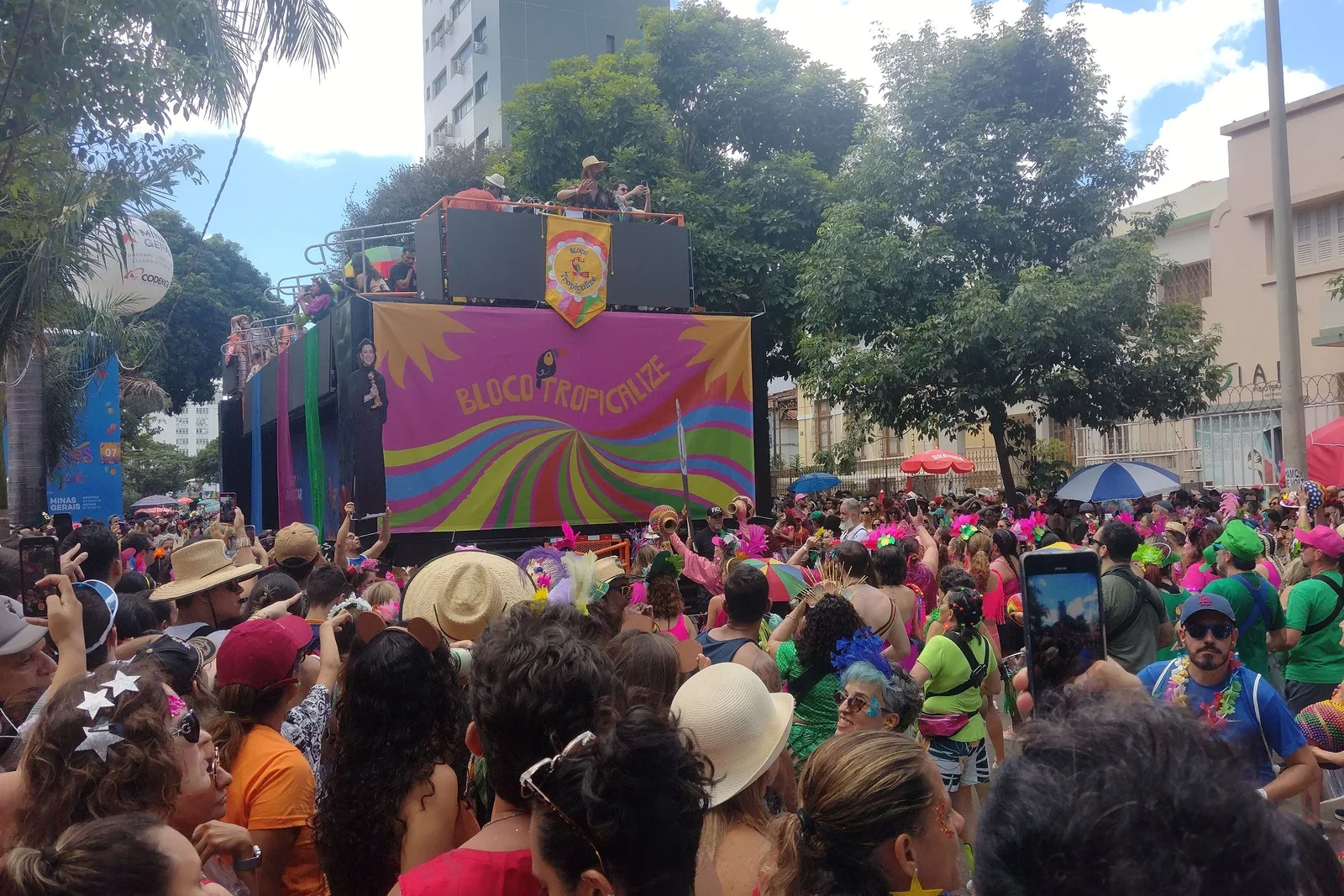
  • A dense street crowd in costume and glitter at a Belo Horizonte Carnaval bloco, a sound truck painted in bright colors behind them
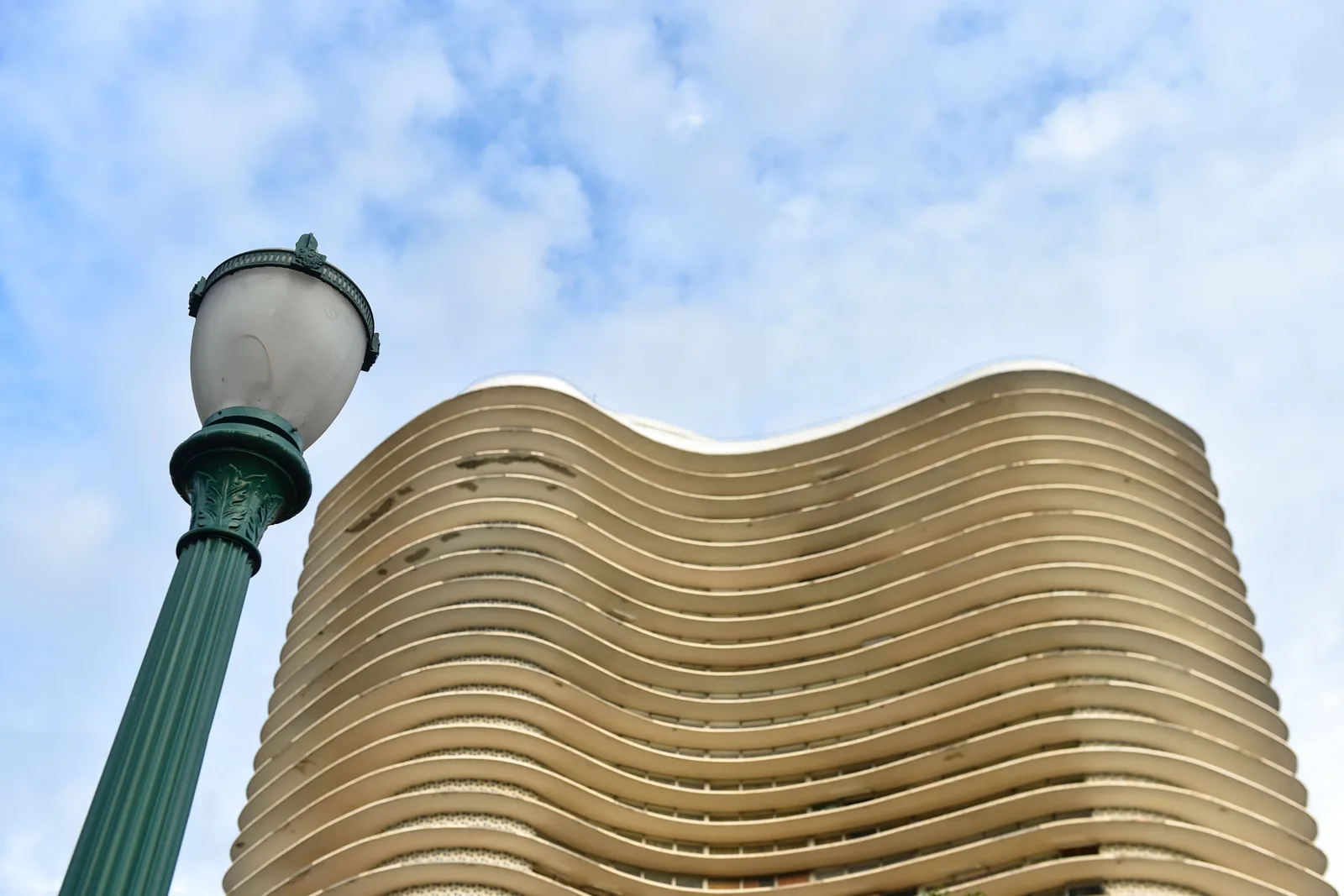
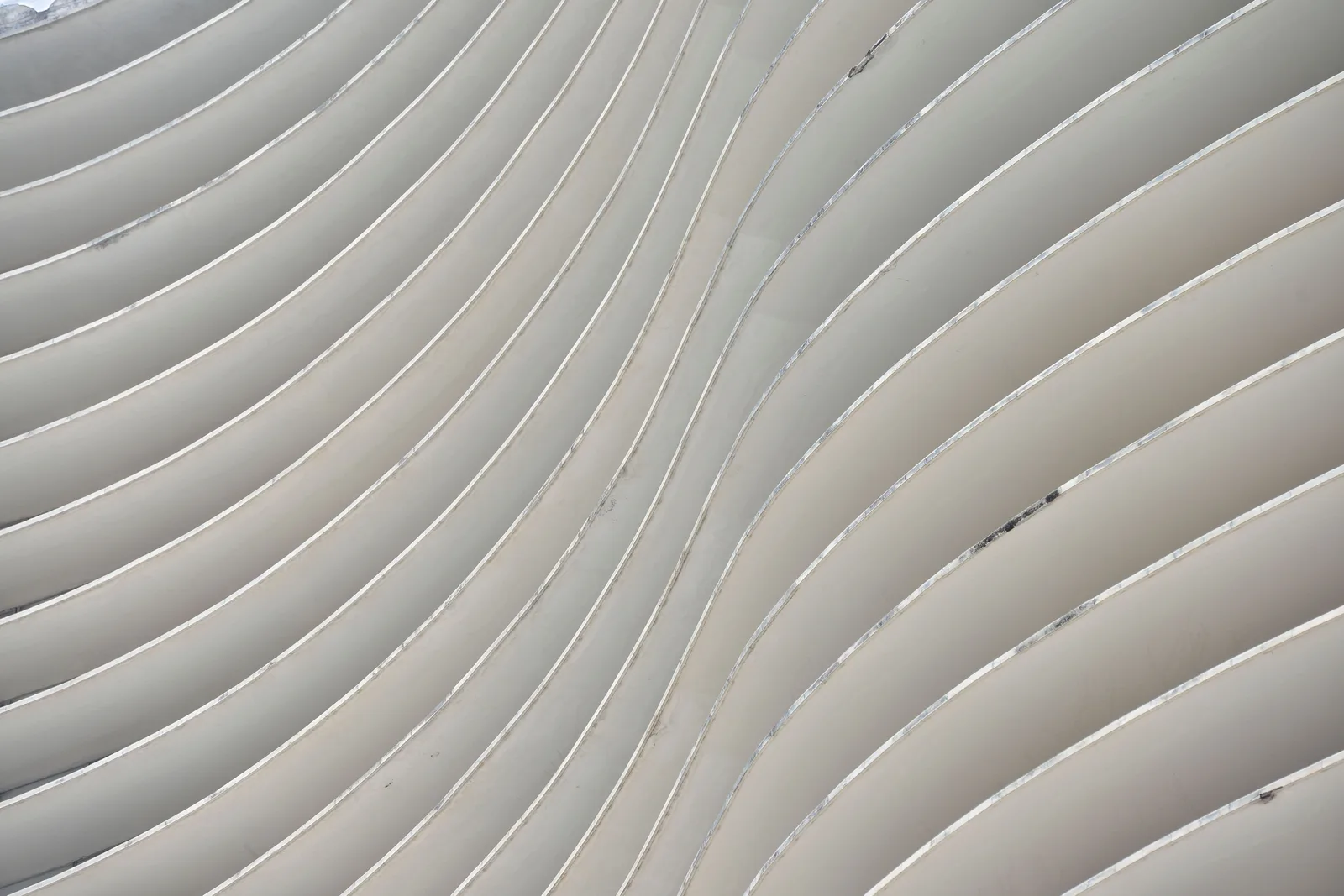
  • A close crop of the curving horizontal bands of the Edifício Niemeyer facade, pale concrete lines sweeping across the whole frame
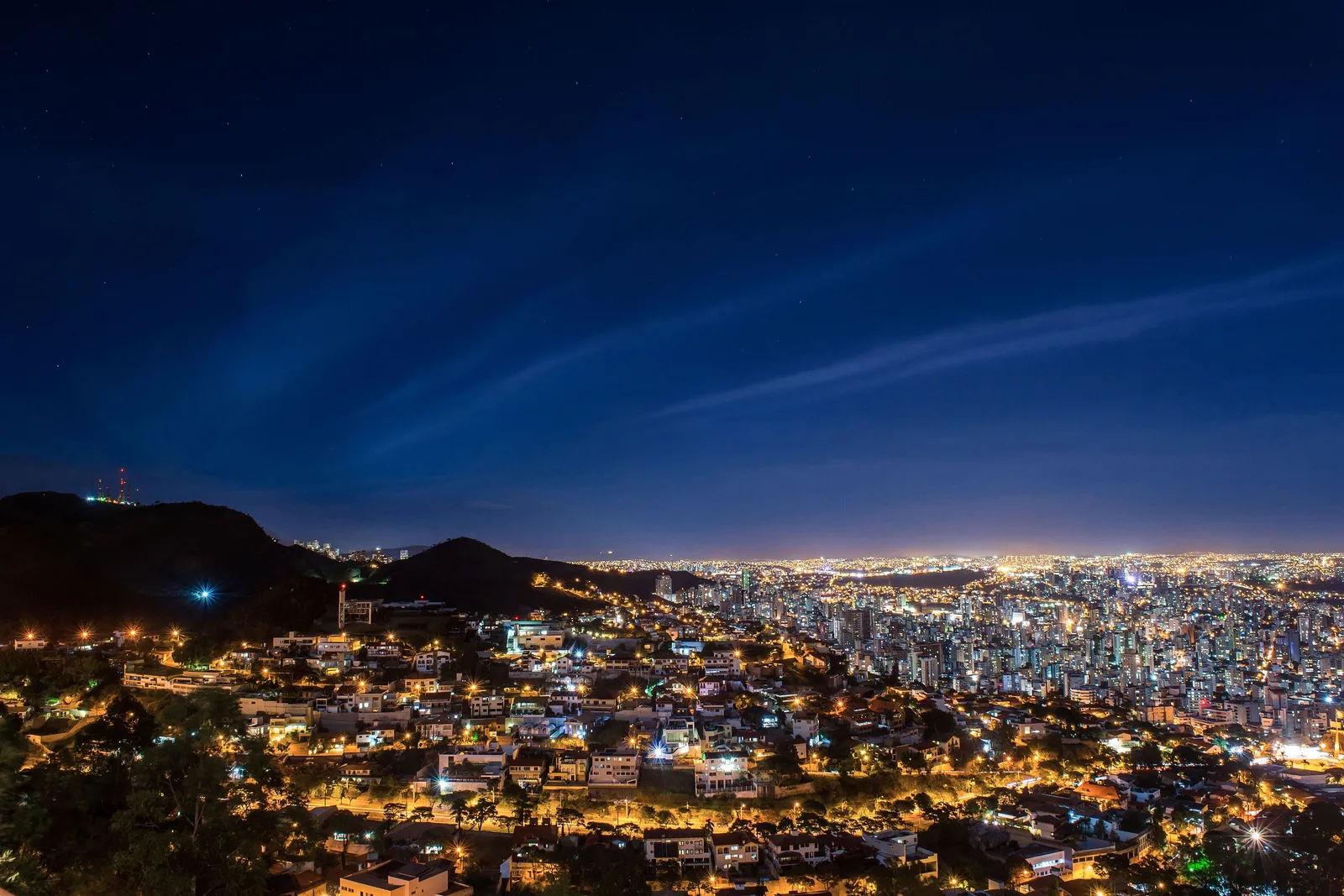
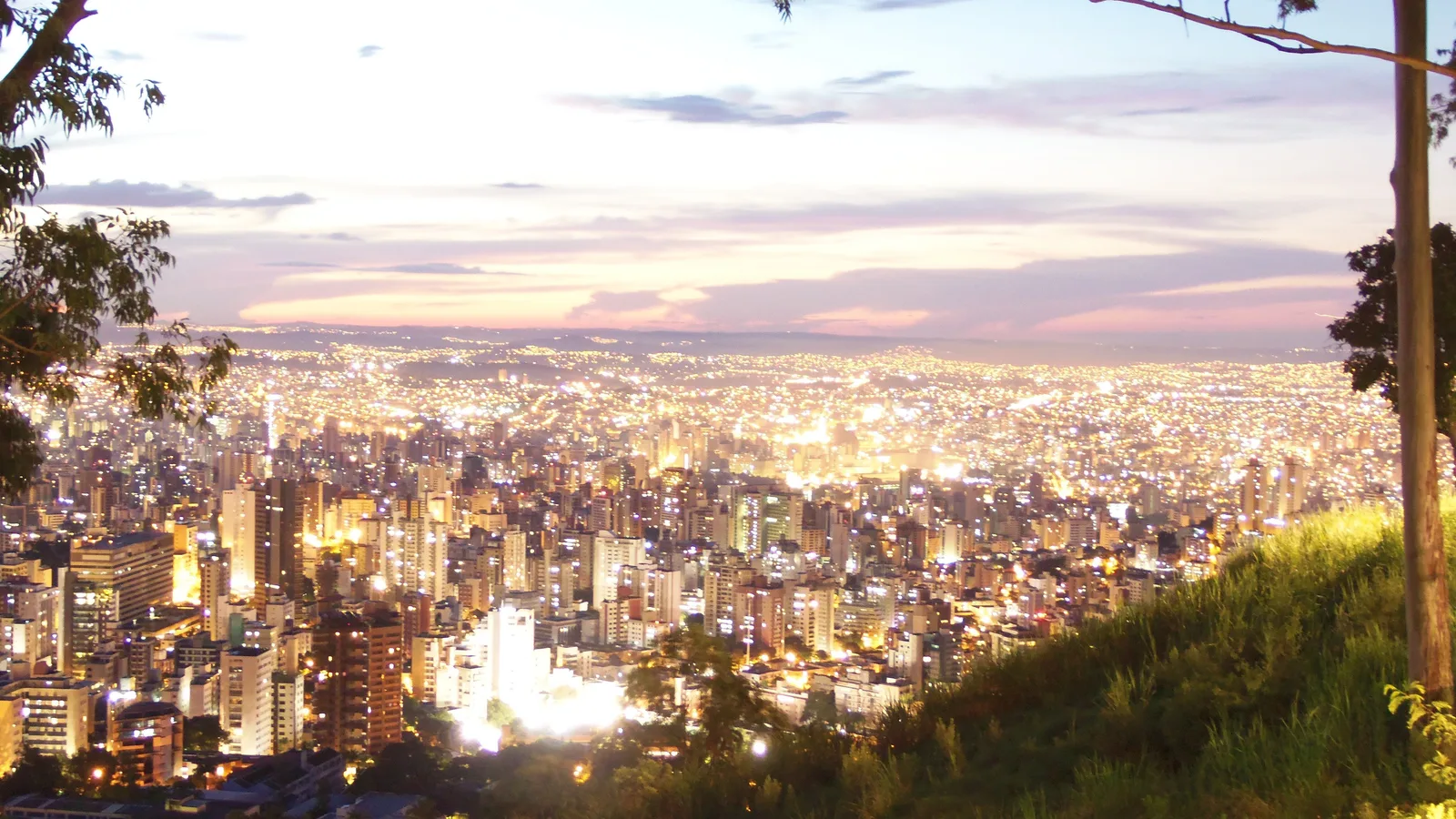
  • Belo Horizonte at night from a hillside, the lights of the city filling a wide valley under a deep blue sky

Orientation

The city, before the pictures.

What Belo Horizonte is, what it costs, and how to get in and around it.

General Info

Brazil’s modernist capital of eating out

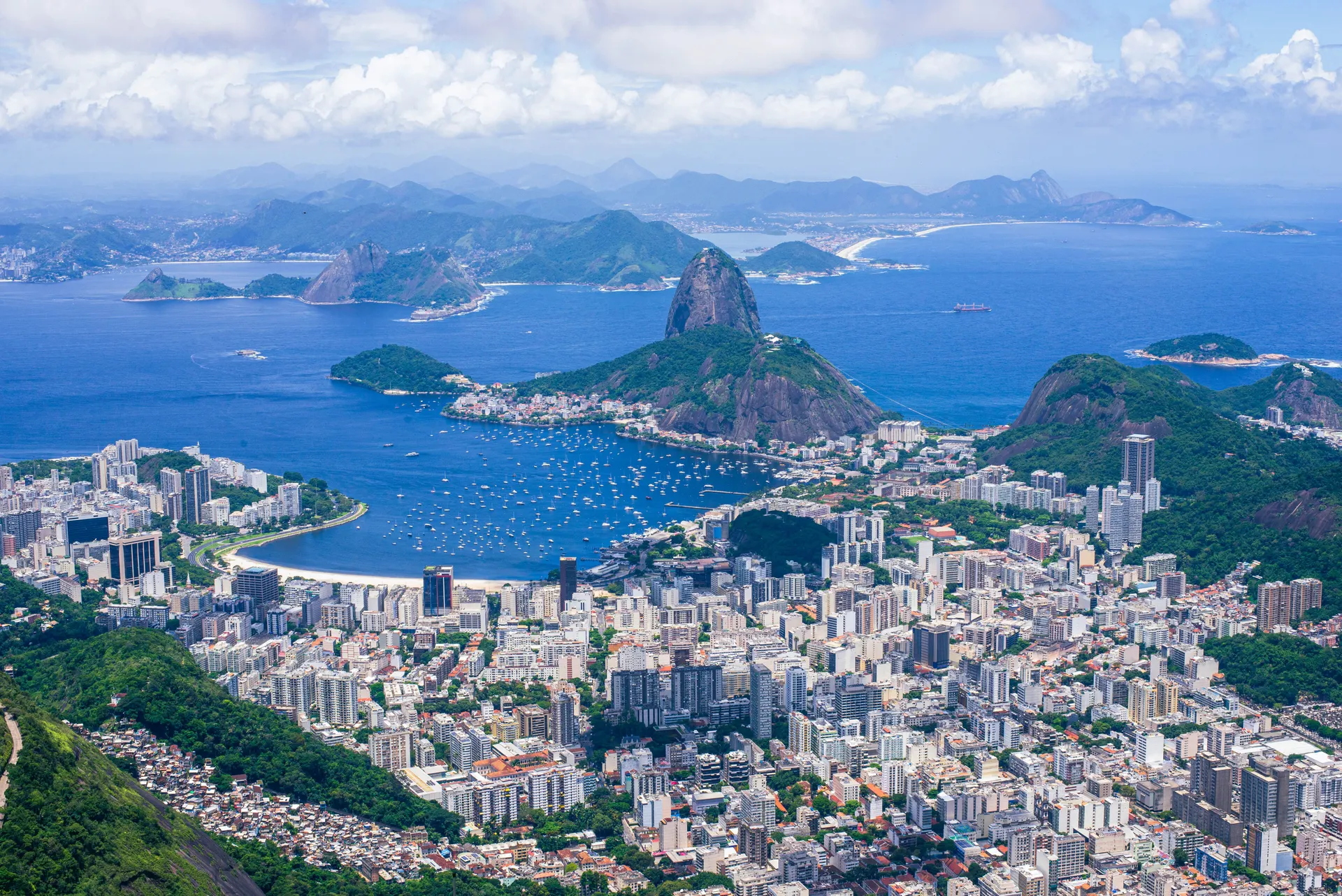
Belo Horizonte is the capital of Minas Gerais, a city of about 2.3 million people at the 2022 census, and one of the few big Brazilian cities built on purpose. It was founded in 1897, when the state moved its government out of colonial Ouro Preto, and the downtown grid was laid out in the city’s own words with Washington in mind. Brazilians call it BH, said “beagá.” There is no beach, no colonial core and very little that photographs like Rio. What there is, is better than most visitors expect.

The first is architecture. In the early 1940s the mayor, Juscelino Kubitschek, had Oscar Niemeyer design a church, a casino, a dance hall and a yacht club around the lake at Pampulha, with gardens by Roberto Burle Marx. UNESCO made the ensemble a World Heritage Site in 2016. The second is an hour and a half out of town: Inhotim, a contemporary art museum spread through a botanical garden, with more than 900 works on 140 hectares open to visitors.

The third is the table. The cooking of Minas Gerais is built on cheese, pork, beans and cachaça, and Belo Horizonte is where it is easiest to eat. UNESCO named it a Creative City of Gastronomy in 2019, the city’s bar food contest, Comida di Buteco, began here in 2000, and the Mercado Central, open since 1929, is where the city buys its cheese and eats liver with jiló at the bar. Three or four days covers the city and Inhotim well.

Where It Is

Inland, in the hills of Minas Gerais

Belo Horizonte sits in the hills of southeastern Brazil, ringed by mountains and closed off on its south side by the long ridge of the Serra do Curral. It is about 445 km north of Rio de Janeiro by road and 586 km northeast of São Paulo, and about an hour and a quarter from São Paulo by air. Ouro Preto is 98 km southeast; Inhotim is about 55 km southwest.

Belo Horizonte Belo Horizonte

19.92° S, 43.94° W

See the Southeast on the interactive map

Cost

A big-city break at small-city prices

Belo Horizonte is one of the better-value big cities in Brazil. Hotels cost less than in Rio or São Paulo, a set lunch is a few dollars, and the best things in the city, the Pampulha lakeside, the Praça da Liberdade museums and the viewpoints on the ridge, are free or close to it. The one ticket that matters is Inhotim, and it is free on Wednesdays.

Estimated daily budget, per person

Budget

$45 / day

A hostel bed or a simple hotel near Centro, set lunches, the metro and the bus, and the free museums and parks.

Mid-range

$100 / day

A three-star or four-star room in Savassi or Lourdes split two ways, a proper mineiro dinner, ride apps and the Inhotim day.

Comfortable

$200 / day

The best hotels in Lourdes, tasting menus and a private driver to Inhotim.

Per person per day once you are in the city, flights not included. Two people sharing a room land well under the double of one.

What things cost

  • Three-star hotel room, per night $35 R$180
  • Four-star hotel room, per night $65 R$330
  • Inhotim, one-day ticket $12.75 R$65
  • Prato feito (set lunch), average $6.30 R$32
  • Chopp (draft beer), 300 ml, average $2.10 R$10.50
  • Beer (Original), 600 ml bottle at a bar, average $3.10 R$15.80
  • Airport bus, Confins to Lourdes (semi-express) $5.60 R$28.70
  • Airport bus, Confins to Lourdes (executive) $9.70 R$49.50
  • Airport bus, Confins to the bus station (conventional) $4.45 R$22.75
  • Metro, single ride $1.20 R$6
  • City bus, single ride (free on Sundays and holidays) $1.25 R$6.25
  • Bus to Ouro Preto, one way $12.85 R$65.48

Inhotim is free every Wednesday and on one Sunday a month, usually the last, with a ticket booked online ahead. Children aged five and under enter free.

Most of the museums around the Praça da Liberdade are free, and so are the Palácio da Liberdade and the Casa Kubitschek at Pampulha.

Restaurants add a 10 percent service charge to the bill. It is customary rather than compulsory, and it is already included rather than expected on top.

Cards and Pix work almost everywhere. Carry a little cash for the market stalls and the Sunday craft fair.

Checked October 2026 and converted at R$5.10 to the dollar. The price list is sourced row by row; the daily budgets are estimates, the shape of a trip rather than a quote.

Safety

A big Brazilian city, with its theft in the busy districts

7 /10

Our rating. Calmer than Rio and Salvador for a visitor, with the usual big-city rules, and phone theft concentrated in the busy central and nightlife districts.

Belo Horizonte is a large Brazilian city and the ordinary rules apply. Phone theft concentrates in the busy central and nightlife neighborhoods. Centro, the old downtown around the bus station and the Praça da Estação, accounts for far more thefts and robberies than any other part of the city, and the city guard runs a standing patrol around exactly those squares. Savassi, Lourdes and Funcionários, where most visitors sleep and eat, are busy districts with bars open late, and the busiest of them, Savassi, comes second only to Centro in the state’s 2026 figures, both for thefts and for phone theft and robbery. Inhotim is a gated private park.

  • Do Centro by day. The Mercado Central, the Parque Municipal and the Palácio das Artes are all there and all worth it. After dark, leave by ride app rather than on foot.
  • Keep the phone out of sight on the street, in Centro and around the bus station above all, but in Savassi too: after Centro it has the most phone thefts and robberies in the city, including snatches by thieves on motorbikes.
  • Use Uber or 99 between neighborhoods at night. Distances here are longer than they look on the map, and the city is hilly.
  • Carry one card and a little cash, and leave the passport in the hotel safe.
  • Yellow fever vaccination is recommended by the CDC for travel in Minas Gerais. It takes about ten days to take effect, so decide weeks ahead.
  • If you are robbed, hand it over. Nothing you are carrying is worth an argument.
  • For an emergency, the Hospital João XXIII in Santa Efigênia is the state’s trauma hospital, and the private Mater Dei (Santo Agostinho) and Lifecenter (Funcionários) run 24-hour emergency rooms close to the hotel districts. Travel insurance is not optional.

Getting There

One nonstop from Florida, and a short hop from Rio or São Paulo

Belo Horizonte’s airport is Confins, officially Tancredo Neves International (CNF), about 40 km north of the city. Allow 45 minutes to an hour into town. The old Pampulha airport near the lake has no regular airline service, so everything lands at Confins.

  • Azul flies nonstop to Orlando year-round, three to five times a week depending on the season (three a week in July 2026); it replaced Azul’s Fort Lauderdale route in 2025. TAP flies daily to Lisbon, and Copa flies to Panama City.
  • Otherwise connect through São Paulo. Congonhas to Confins is about an hour and a quarter, with flights all day on Gol, Azul and Latam.
  • Three airport buses run into the city. The semi-express 5241 ($5.60, R$28.70) leaves the airport about 19 times on weekdays from 6:45am and reaches the Álvares Cabral terminal in Lourdes in about an hour and a quarter. The executive 5240 ($9.70, R$49.50) goes to the same terminal in about an hour, but leaves the airport only six times on weekdays, the first at 12:00pm. The conventional 5250 ($4.45, R$22.75) goes to the bus station in about an hour and forty minutes. Check the timetable before you land.
  • By road, Rio is about 445 km and São Paulo 586 km. The drive is long and tolled.
  • Ouro Preto is 98 km away and has its own guide on this site. Pássaro Verde buses run there from the bus station about fifteen times a day, in two hours or a little more.

Getting Around

Ride apps in the city, a car or a bus for Inhotim

Belo Horizonte is big, hilly and spread out, and the metro does not go where visitors go. Ride apps do most of the work, and Inhotim is a day out by car or bus.

  • Uber and 99 are cheap and everywhere, and they are how most visitors get between Savassi, Centro and Pampulha.
  • The metro runs one main line from Eldorado to Vilarinho through Centro. It has no station in Savassi or at Pampulha, so it rarely helps a visitor. A ride is $1.20 (R$6).
  • City buses cost $1.25 (R$6.25) and are free on Sundays and holidays. The MOVE rapid-bus corridors run north to Pampulha.
  • Savassi, Funcionários and the Praça da Liberdade are walkable together, and so is the Pampulha lakeside in sections. The city in between is steep.
  • Inhotim is about 55 km southwest by road, roughly an hour and a half each way. Drive, book a transfer, or take the morning bus from the bus station and check the return time before you go.

The big four

What the city is actually built around.

An art museum in a botanical garden, a lake full of Niemeyer, the market where the city shops for cheese, and the square where the state was governed for a century.

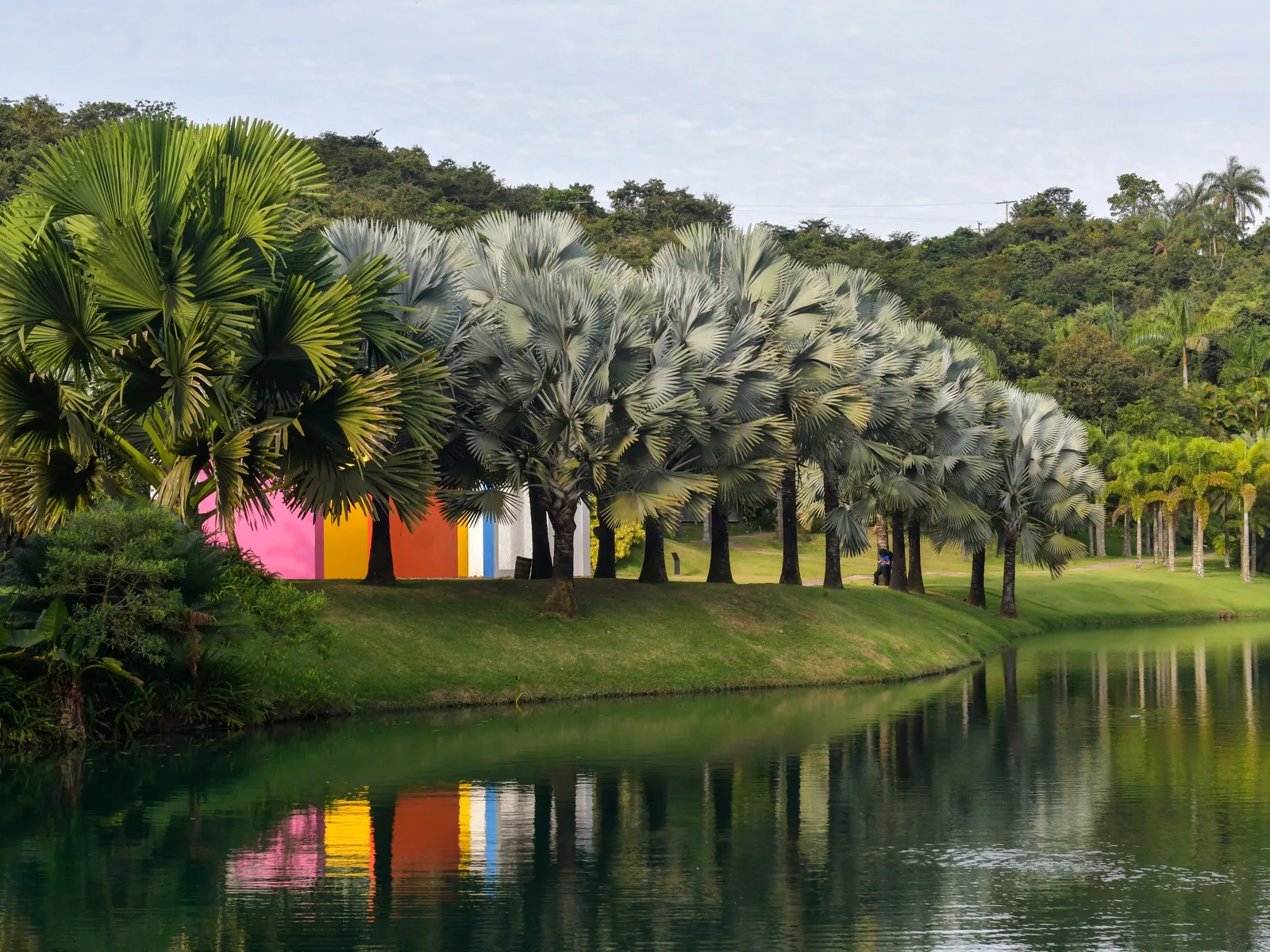
A lake at Inhotim under a pale overcast sky: a row of silvery fan palms along the far bank, brightly painted walls in pink, yellow, orange and blue between them, and the whole scene mirrored in the still water 01

More than 900 works in a botanical garden

Inhotim

Getting there
About 55 km, 1 to 1½ hours by road
Open
Wednesday to Sunday, plus Tuesdays in January and July, from 9:30am
Ticket
$12.75 (R$65), free on Wednesdays

Inhotim opened to the public in 2006 in Brumadinho, in the hills southwest of Belo Horizonte, and nothing else in Brazil is quite like it. It is a contemporary art museum laid out across a botanical garden: 140 hectares open to visitors, more than 900 works by about 50 artists from more than 18 countries, and more than a thousand rare plant species between the lakes. The galleries are separate buildings scattered through the landscape, each built for one artist or one work, and the big outdoor pieces sit on the lawns and hillsides between them.

It is far bigger than one day, and that is the main thing to plan around. Pick the galleries you care about, walk the central lakes, and use the electric carts that run between the far corners. It opens Wednesday to Sunday from 9:30am, plus Tuesdays in January and July, closing at 4:30pm on weekdays and 5:30pm on weekends, and a few galleries are always closed for maintenance, so check the list before you go. Wednesday is free with an online booking, and correspondingly busy.
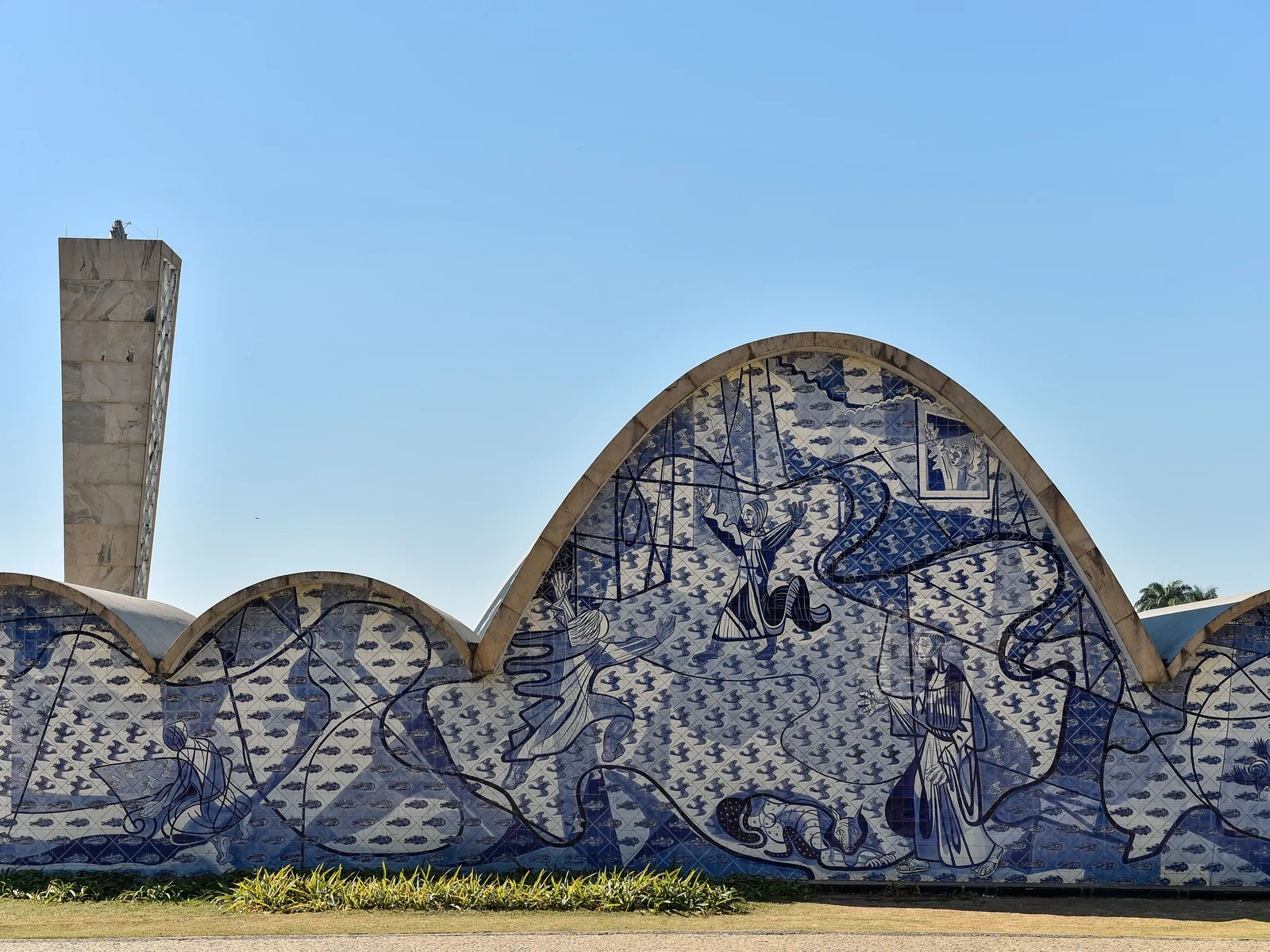
The back of the Pampulha church: a row of low concrete vaults rising to one tall arch, the whole wall covered in Cândido Portinari’s blue-and-white tile panel of figures and birds, the slim bell tower standing against the blue sky at the left 02

Niemeyer, Burle Marx and Portinari around one lake

The Pampulha Modern Ensemble

UNESCO
World Heritage Site since 2016
Built
Early 1940s, for mayor Kubitschek
Church open
Tuesday to Sunday, paid entry

In the early 1940s Juscelino Kubitschek, then mayor, commissioned a church, a casino, a dance hall and a yacht club around the lake at Pampulha and gave them to Oscar Niemeyer. The buildings came with gardens by Roberto Burle Marx and tile panels by Cândido Portinari, all curving concrete, glass and color. UNESCO inscribed the ensemble in 2016: the lake, the gardens and the four buildings.

The one everyone comes for is the small church of São Francisco de Assis, a run of parabolic concrete vaults with Portinari’s blue-and-white tile panel across the back. It was finished in 1943 and not consecrated until 1959, some fifteen years later. It opens Tuesday to Sunday and charges a small entry fee. Around the shore are the Casa do Baile, the old casino, now the Museu de Arte da Pampulha, which has been closed since 2019 though its gardens stay open, and the yacht club. An 18 km cycle path circles the whole lake.

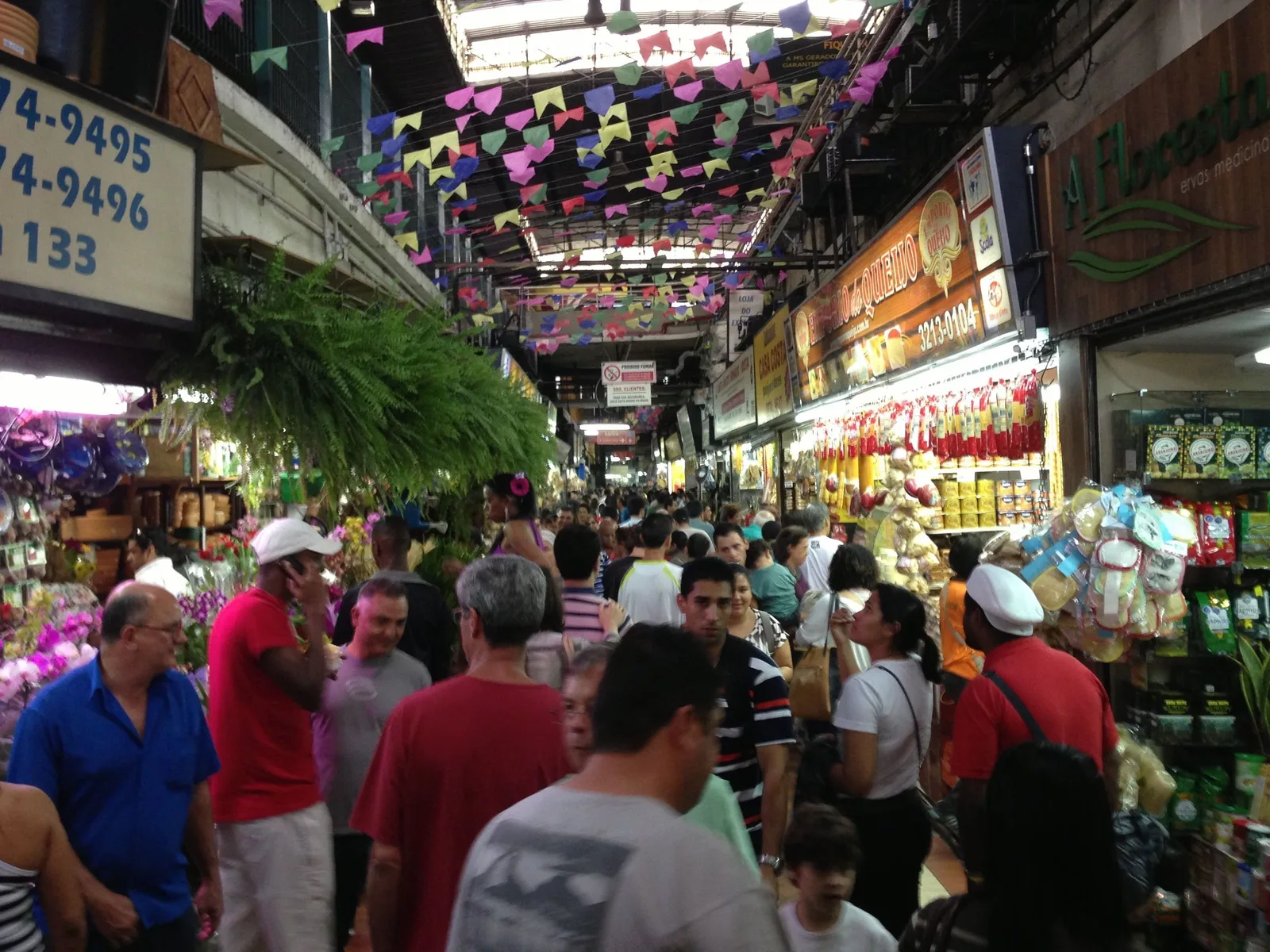
A crowded lane inside the Mercado Central: shoppers packed between stalls of flowers, plants and groceries, paper bunting strung overhead under the market roof 03

Cheese, cachaça and liver with jiló

The Mercado Central

Opened
7 September 1929
Shops
About 400 under one roof
Open
Mon–Sat 8:00am–6:00pm, Sun to 1:00pm

The Mercado Central opened in 1929 and was bought outright by its own traders in 1964, which is a large part of why it is still a working market rather than a food hall. About 400 shops fill a block of narrow, crowded lanes in Centro: cheese counters stacked with wheels of queijo Minas, cachaça shops with walls of bottles, sweets, spices, sausages, birdcages, kitchenware, herbs and flowers.

It is also where Belo Horizonte drinks at lunchtime. The bars in the middle of the market serve cold beer and small plates, and the dish the market is known for is fígado com jiló: fried beef liver with jiló, a small bitter vegetable fried with onions. Go on a weekday morning to shop and a Saturday lunchtime to see the place full. It closes at 1:00pm on Sundays.

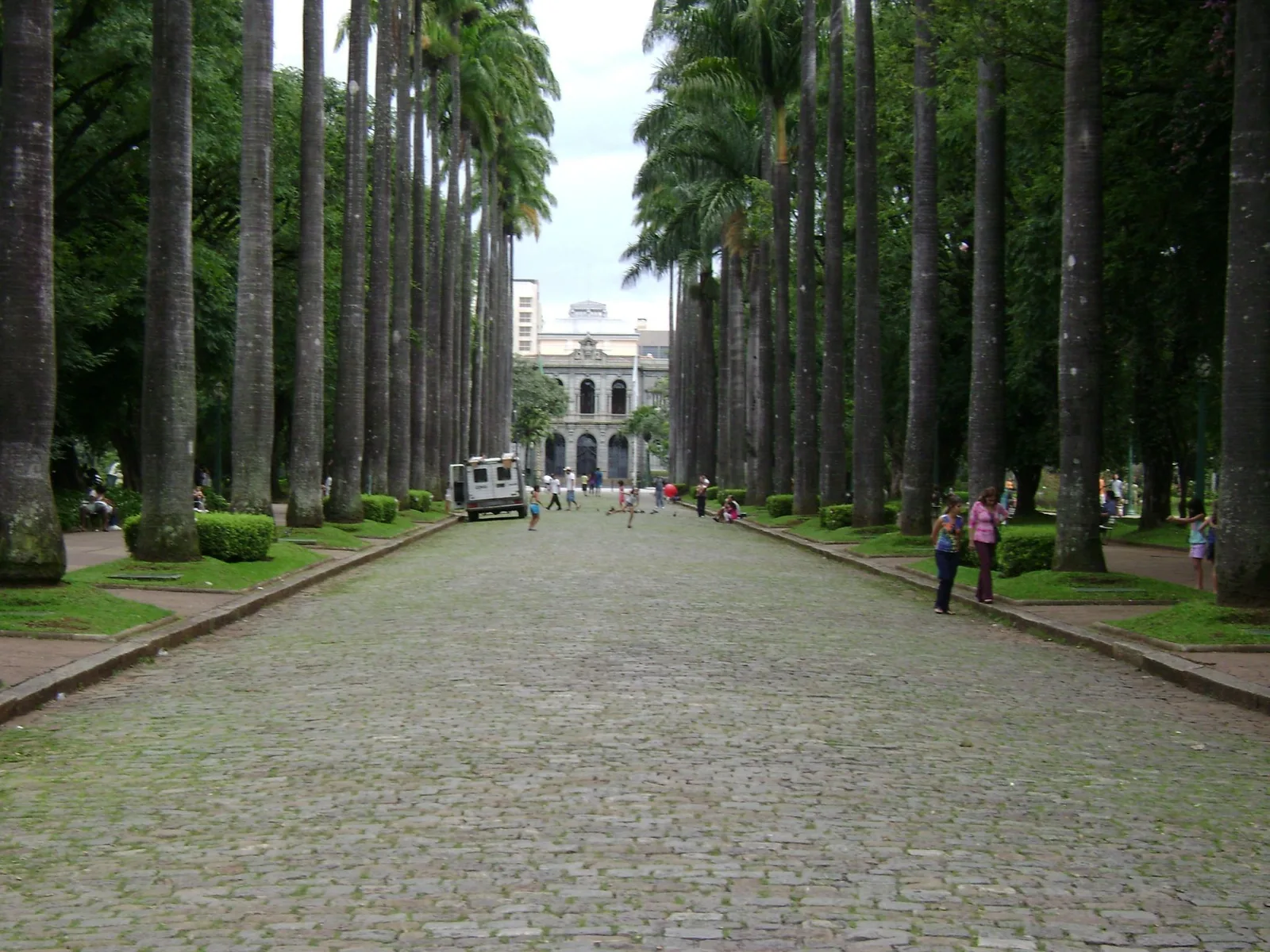
The central avenue of the Praça da Liberdade: a cobbled path running between two lines of tall imperial palms toward the gray facade of the Palácio da Liberdade at the far end 04

The old seat of government, now a museum quarter

The Praça da Liberdade

Palace opened
1898, a year after the city
Palace entry
Free, Wednesday to Sunday
Around it
Free museums, most closed one weekday

When the state moved its capital from Ouro Preto, the governor’s palace went at the top of a formal square of palms, fountains and clipped gardens. The Palácio da Liberdade opened in 1898, a year after the city itself, and was the governor’s office and residence until the government moved out to a new administrative complex. It is free to visit, inside and in the gardens, from Wednesday to Sunday.

The government buildings around the square have since been turned into museums and cultural centers, most of them free. The MM Gerdau mining and metals museum is free and opens Tuesday to Sunday. The CCBB cultural center is free to enter and closed on Tuesdays. The Casa Fiat de Cultura is free and closed on Mondays. The wavy Edifício Niemeyer stands on one corner, and the state public library on the square is a Niemeyer design. Go in the afternoon and finish in the bars of Savassi a few blocks away.

What to actually do

Five ways to spend a day here.

Pick a category and scroll sideways through it. Inhotim is one long day; everything else is a short ride across the city.

Inhotim

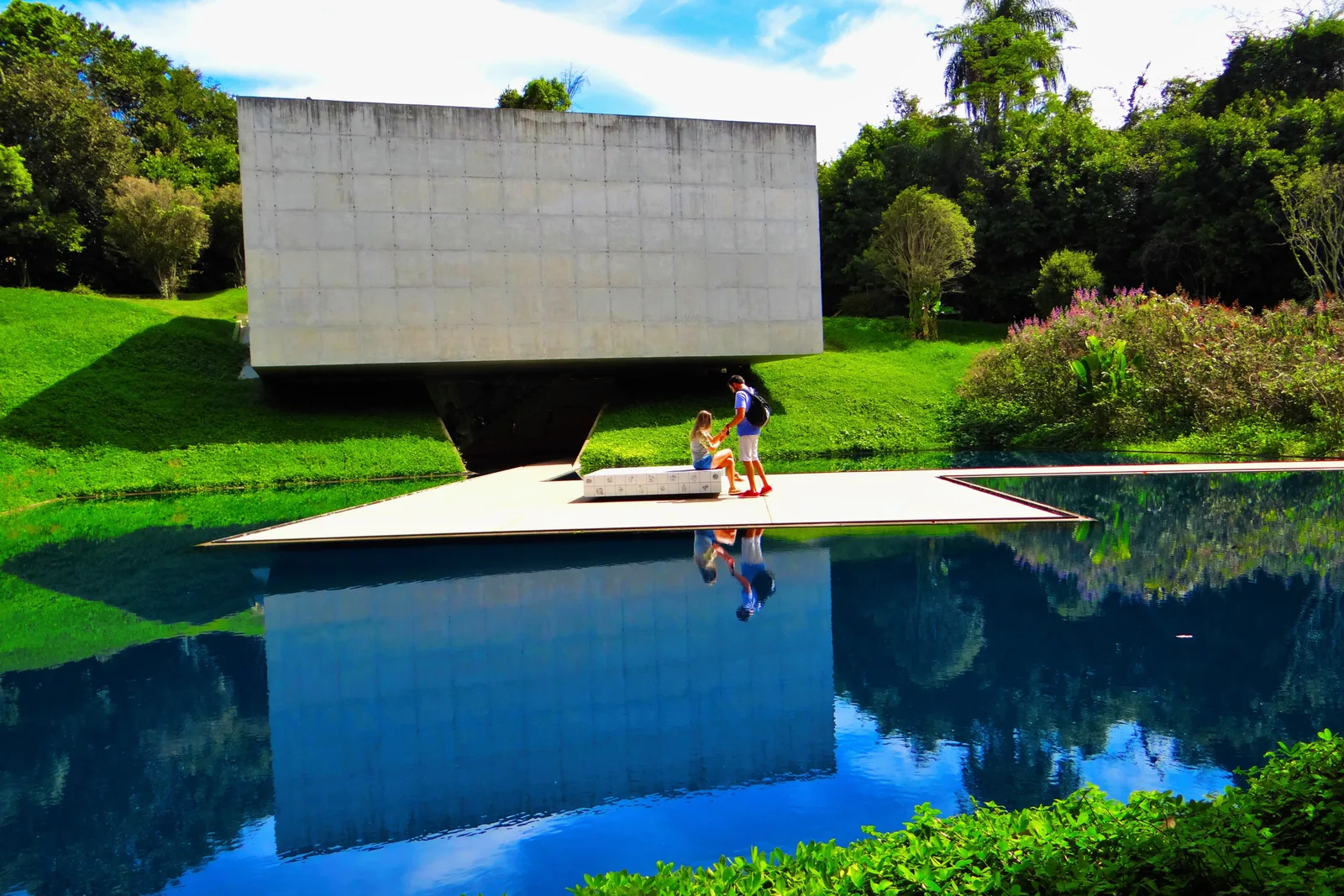
  • The Adriana Varejão gallery at Inhotim, designed by the architect Rodrigo Cerviño Lopez: a plain gray concrete block raised over a deep blue reflecting pool, a wide white deck at the water’s edge with two visitors on it, green lawns and trees around it

    Inhotim · an hour

    The Adriana Varejão gallery at Inhotim

    A blank concrete box cantilevered out over a dark reflecting pool, one of the most photographed buildings in the park. Inside, Varejão’s work turns the blue-and-white tiles and the flesh of colonial Brazil into something unsettling, and a stair leads up to a roof terrace over the trees. It sits partway up the hill, a fair walk from the entrance, and it is the gallery to see if you see only one.

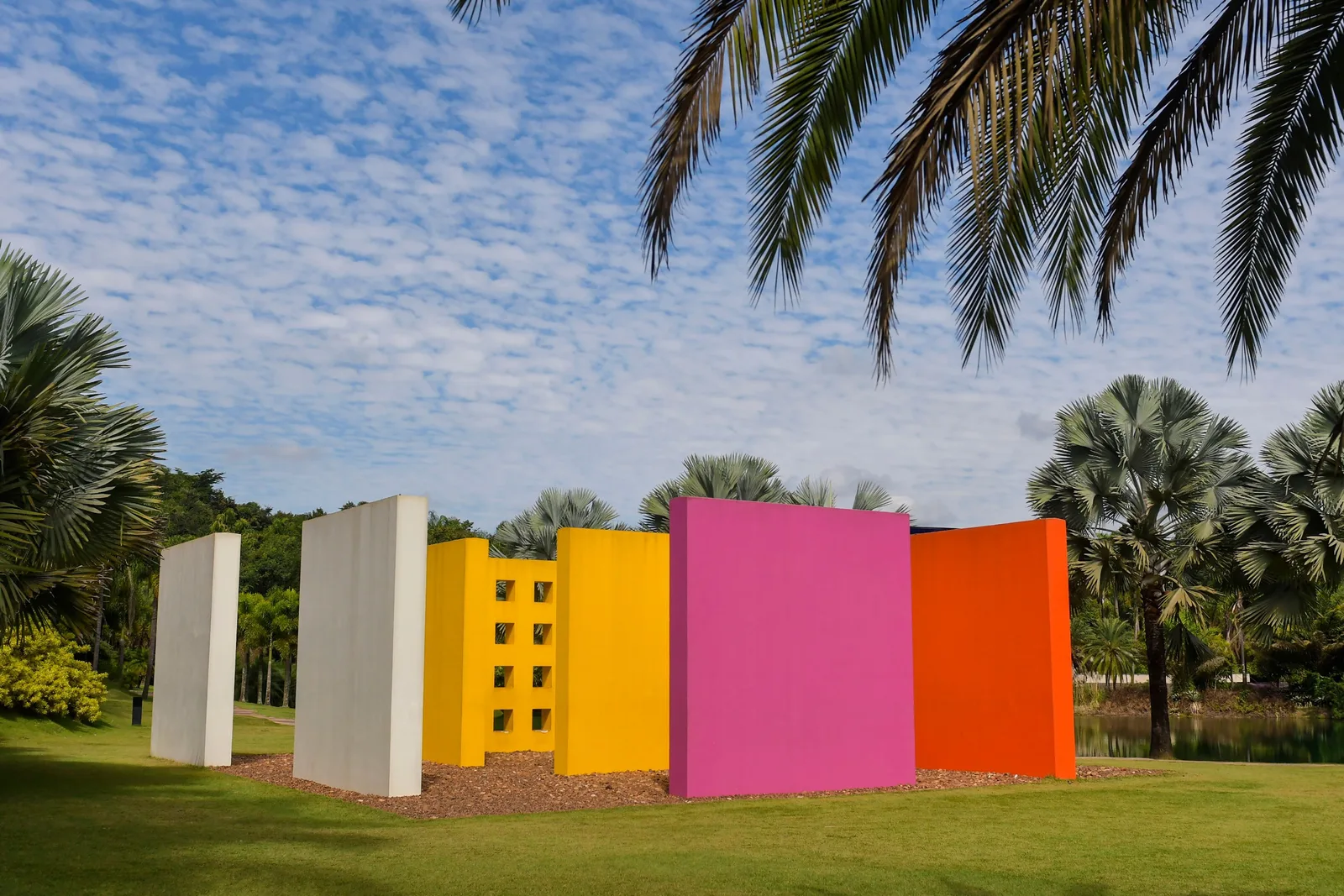
  • Hélio Oiticica’s Magic Square #5 at Inhotim: freestanding walls painted white, yellow, magenta and orange standing on a lawn under a blue sky, palm fronds hanging into the top of the frame

    Inhotim · half an hour

    Hélio Oiticica’s Magic Square at Inhotim

    Freestanding walls painted in flat, saturated pink, orange, yellow and white, set out on a lawn so that you walk in among them and the colors change as you move. Oiticica designed it as a “penetrable,” a painting you can enter. It is one of the outdoor works, open whenever the park is, and it looks best in strong midday sun, which is exactly when everything else is too hot.

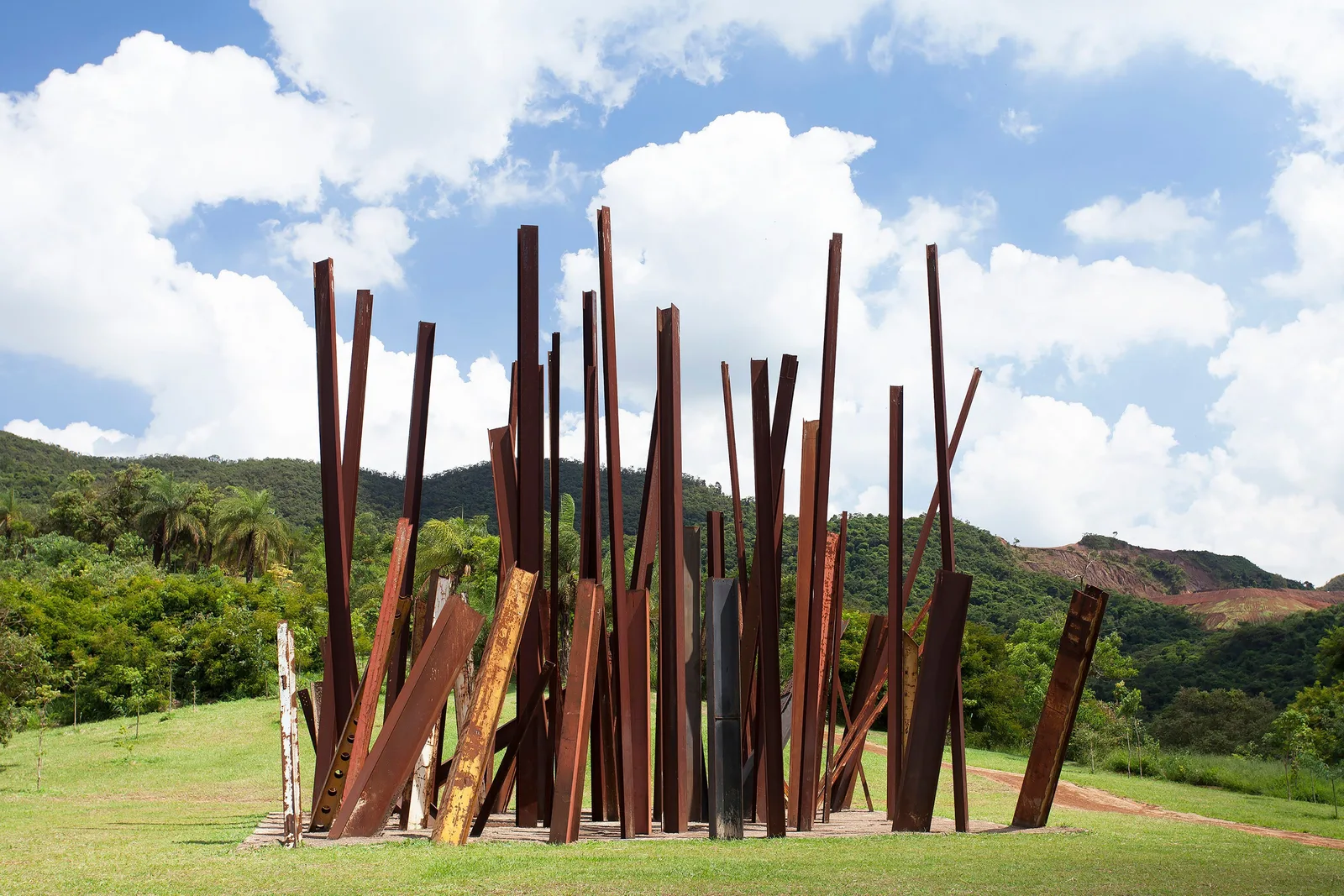
  • Chris Burden’s Beam Drop at Inhotim: a cluster of rust-red steel beams standing at all angles out of a concrete base on a grassy hilltop, green hills and a reddish mountainside behind under white clouds

    Inhotim · half an hour, plus the climb

    Chris Burden’s Beam Drop at Inhotim

    In 2008 Chris Burden had 71 steel beams from scrapyards around Belo Horizonte hoisted 45 meters by crane and dropped, one at a time over twelve hours, into a pit of wet concrete. They set where they fell. It stands alone on a bare hilltop with the mountains of the iron country all around, and the walk up is part of the work.

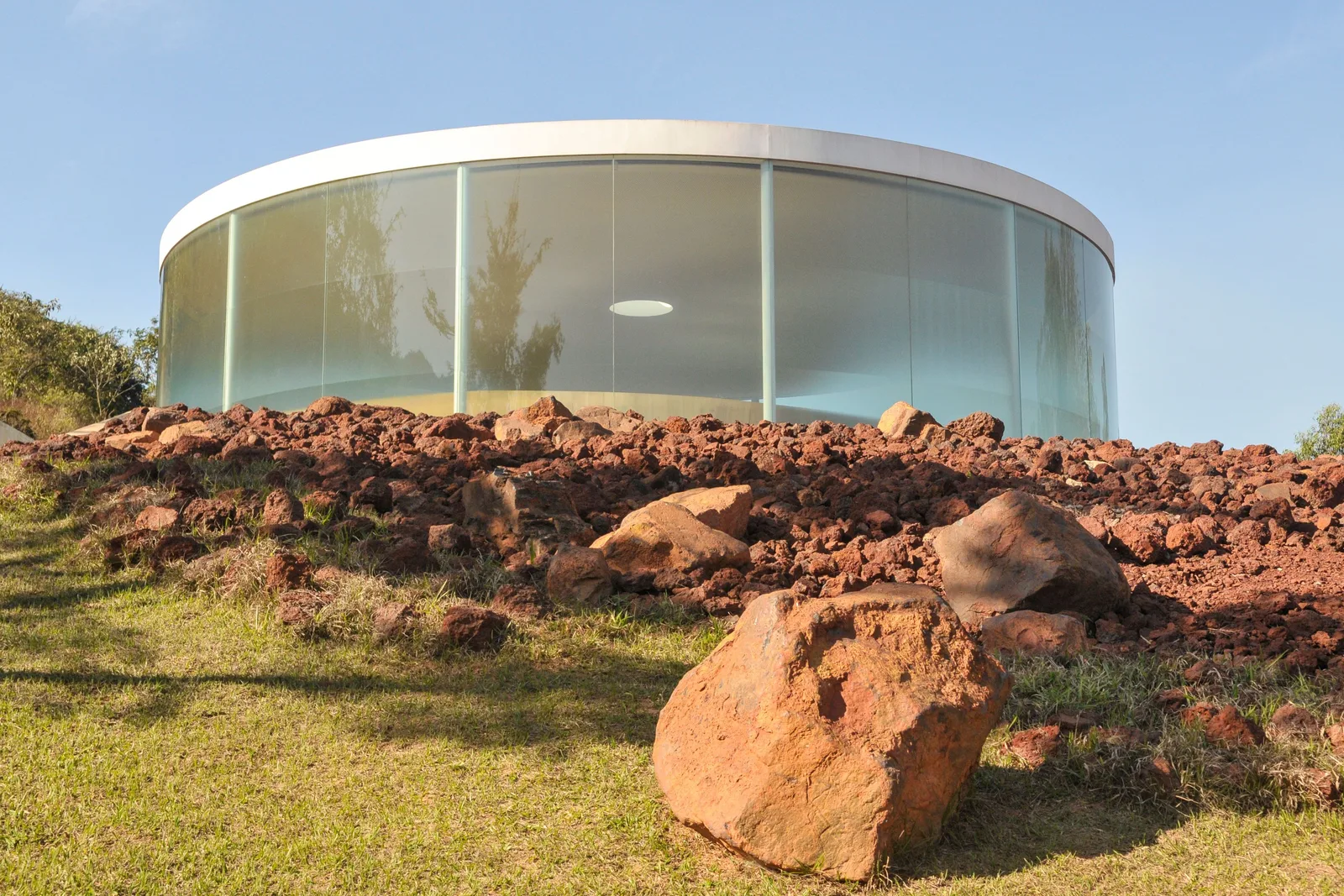
  • Doug Aitken’s Sonic Pavilion at Inhotim: a low circular pavilion with a white roof and frosted glass walls standing on a hilltop of red earth and scattered boulders under a pale sky

    Inhotim · half an hour

    Doug Aitken’s Sonic Pavilion at Inhotim

    A round glass pavilion on a hilltop, opened in 2009, over a well bored 202 meters into the ground. Microphones at the bottom pick up the sound of the earth and play it into the room in real time. The glass is filmed so the mountains are clear only when you face them straight on. It is the strangest thing in the park. Give it ten minutes.

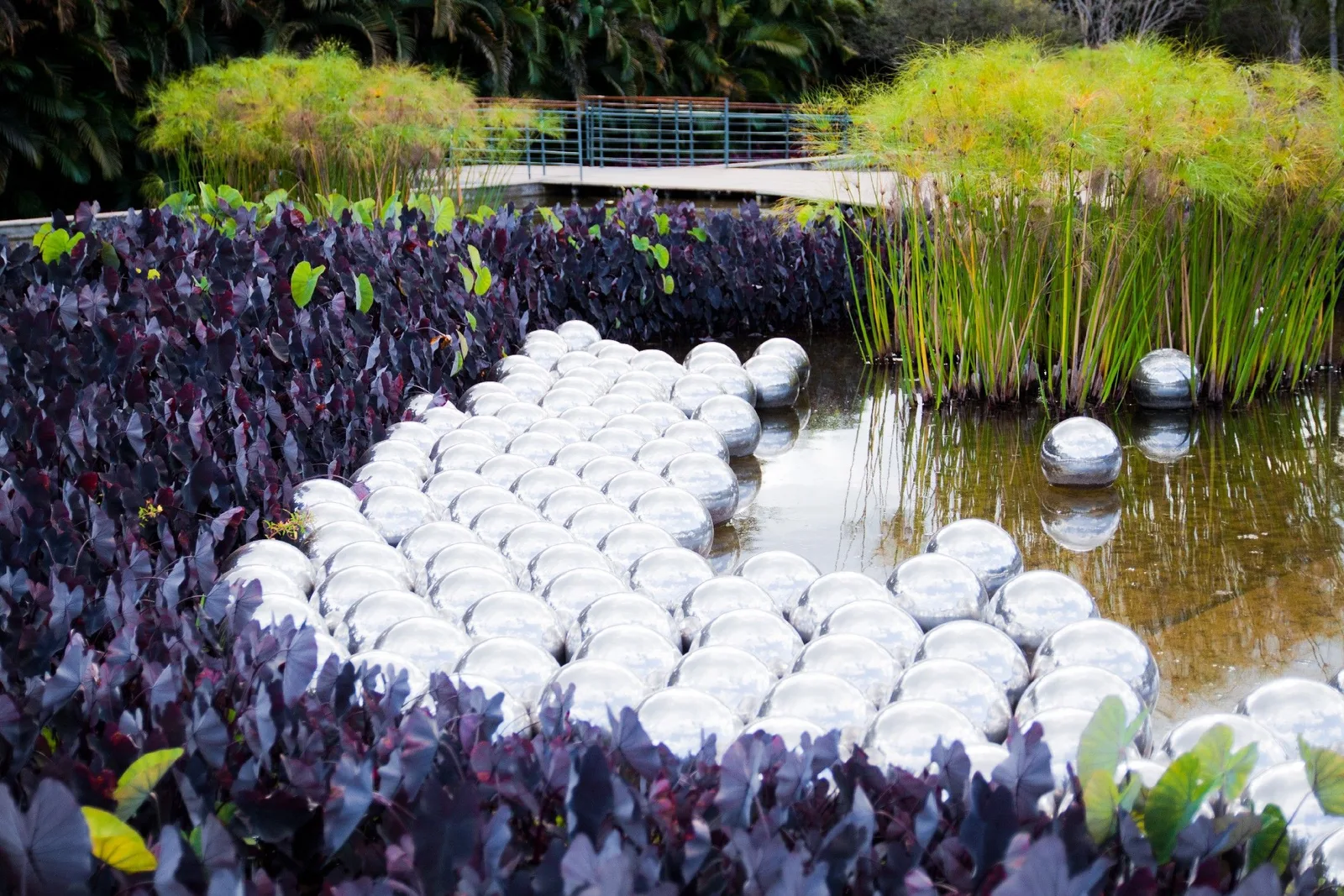
  • Yayoi Kusama’s Narcissus Garden at Inhotim: hundreds of silver mirrored spheres packed together in a curving band on shallow water, deep purple leaves on one side and tall green grasses on the other

    Inhotim · twenty minutes

    Yayoi Kusama’s Narcissus Garden at Inhotim

    Hundreds of mirrored steel spheres floating on a shallow pool among dark purple foliage and tall grasses, each one reflecting the sky, the plants and you. It is one of the outdoor works, open whenever the park is, and the garden around it does half the job.

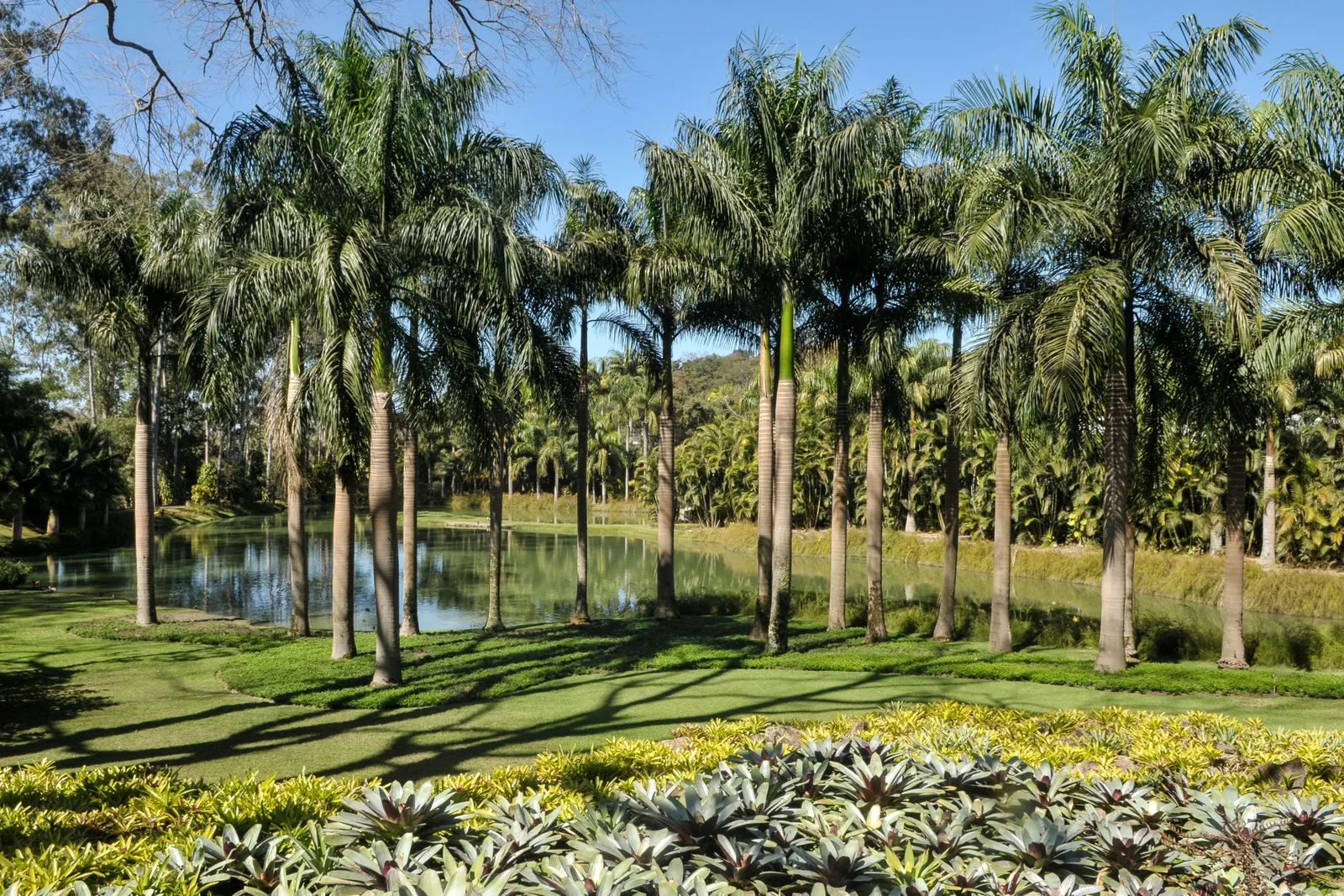
  • A grove of tall palms casting long shadows across a lawn beside a still lake at Inhotim, low bromeliads planted along the path in the foreground

    Inhotim · as long as you like

    The botanical gardens at Inhotim

    Even with no art at all, the gardens would be worth the drive. Inhotim sits between the Atlantic Forest and the Cerrado, and the collection runs to more than a thousand rare species from every continent: groves of palms, lakes ringed with bromeliads and red-leaved plants, and long shaded paths between them. The palm groves around the central lakes are the place to stop and sit.

Pampulha

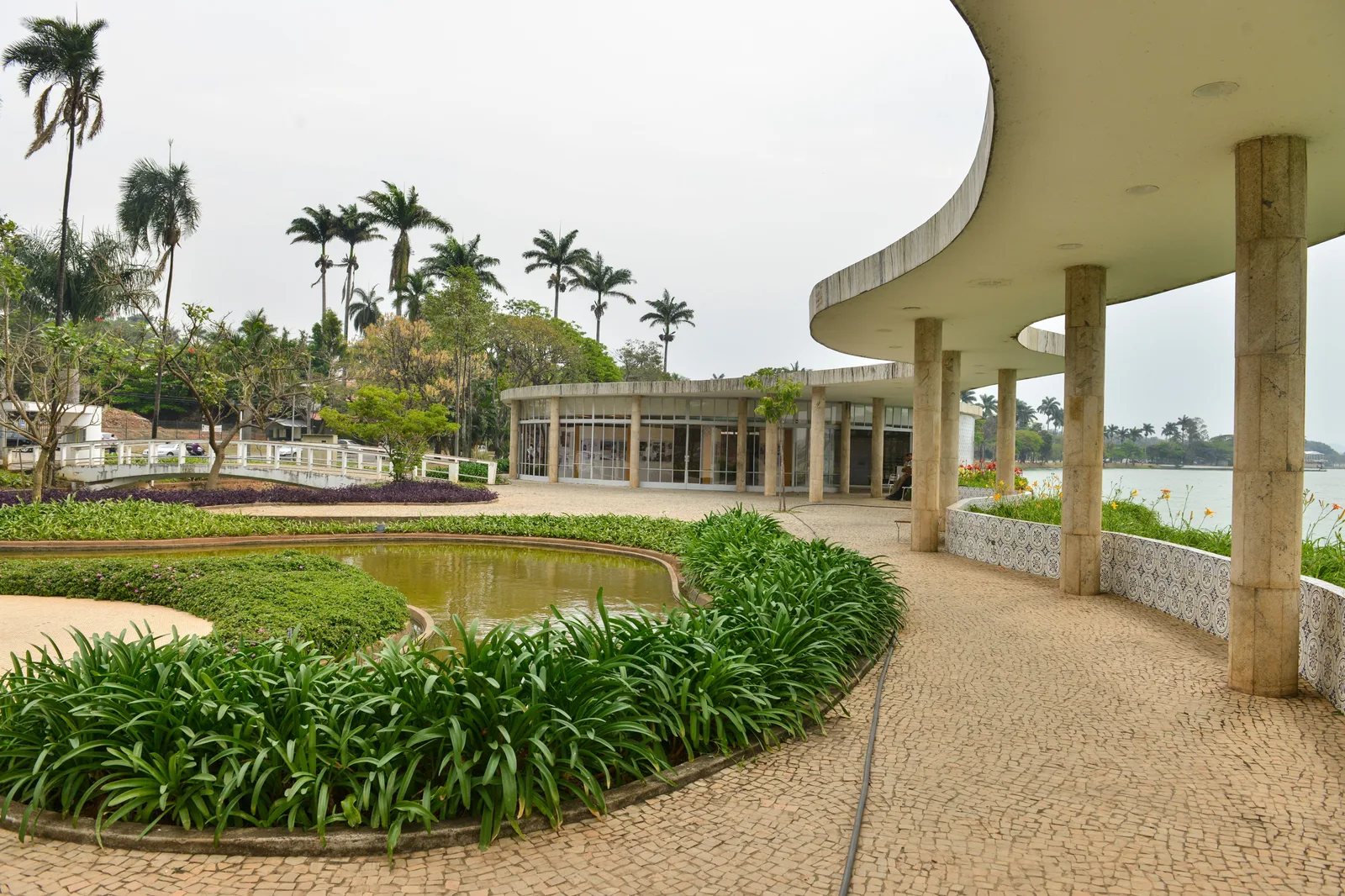
  • The Casa do Baile at Pampulha: a white concrete canopy on slender columns curving away along a path beside lawns and planted beds, the round pavilion and palms beyond

    Pampulha · forty-five minutes, Wednesday to Sunday

    The Casa do Baile at Pampulha

    Niemeyer’s dance hall, a small round pavilion on its own island, with a curving concrete canopy that follows the shoreline on thin columns. It has been a center for architecture and design since 2002 and opens Wednesday to Sunday, 10:00am to 6:00pm. The walk under the canopy, with the lake on one side and Burle Marx planting on the other, is the purest piece of the whole ensemble.

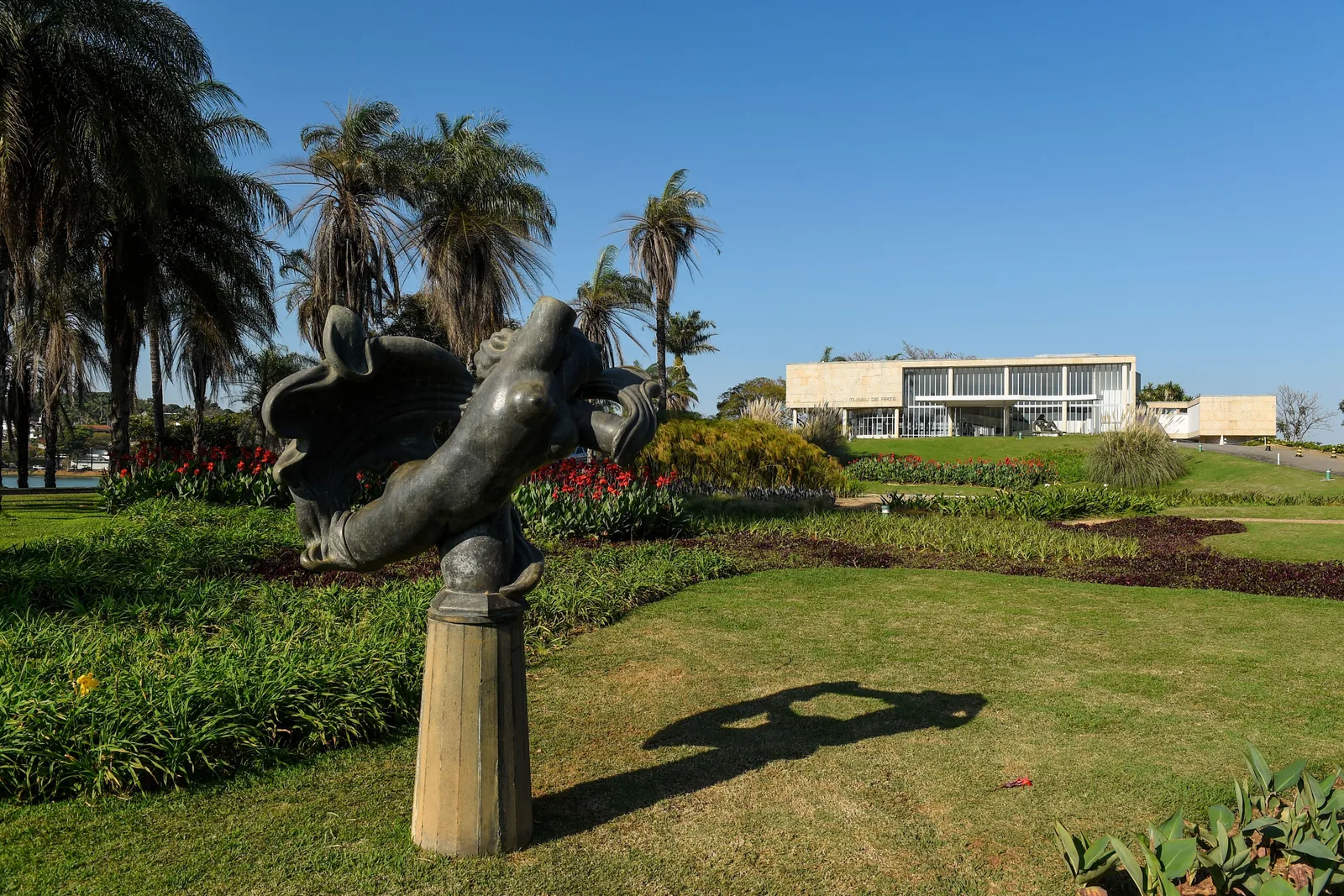
  • August Zamoyski’s sculpture Nu, dark bronze on a stone plinth, in a garden of lawns and flower beds, palms behind it and the low white modernist building of the Museu de Arte da Pampulha at the far side

    Pampulha · half an hour

    The gardens of the old casino at Pampulha

    The first building of the ensemble opened as a casino in 1943, closed when Brazil banned gambling in 1946, and became the Museu de Arte da Pampulha in 1957. The museum itself has been shut since 2019 and its restoration is expected to start in 2027, but the Burle Marx gardens around it stay open, with sculpture on the lawns and the lake behind.

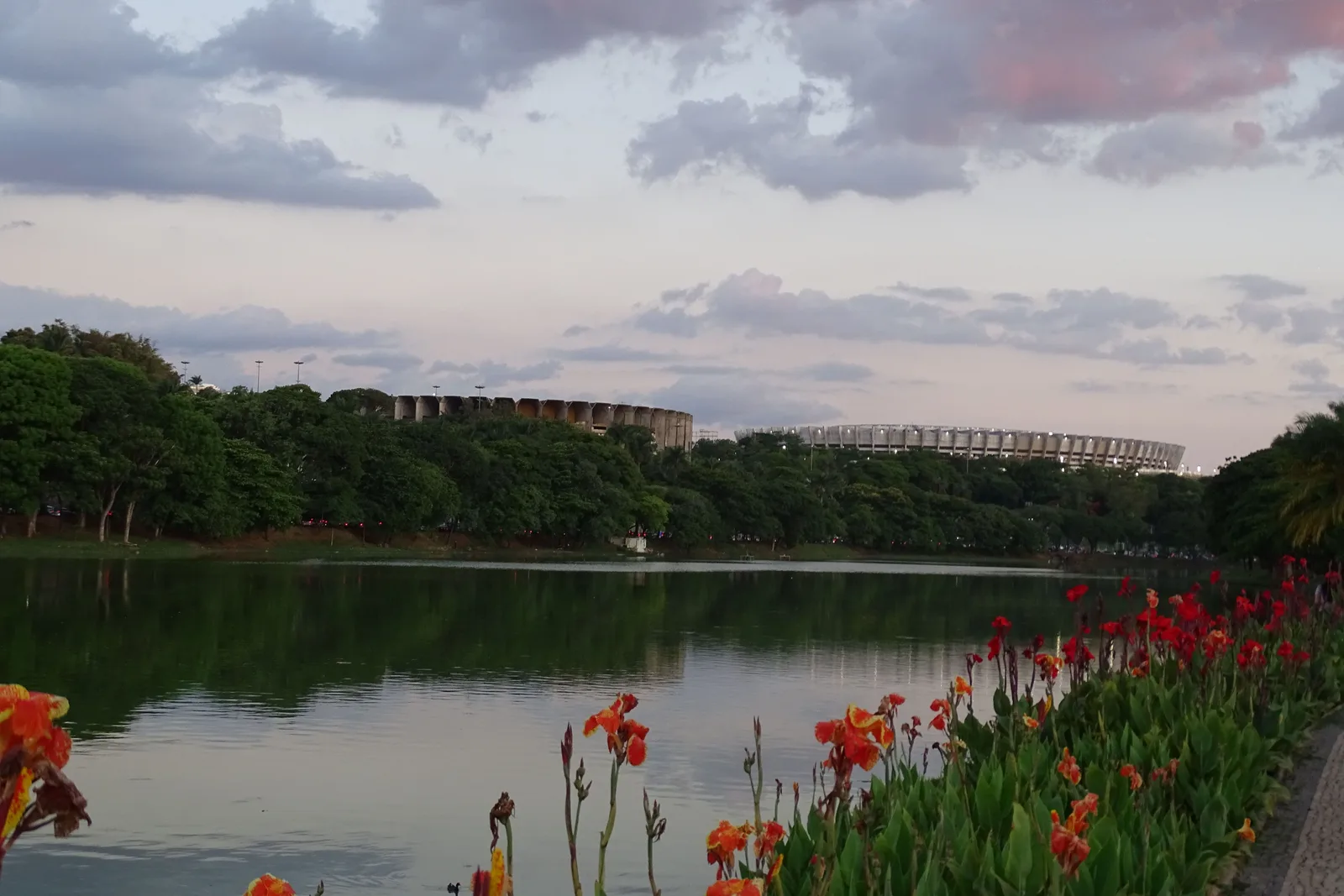
  • The Pampulha lake at dusk from the shore by the church, orange and red canna flowers along the edge, trees on the far bank and the concrete rings of the Mineirinho and Mineirão stadiums above them under pink-tinged clouds

    Pampulha · two hours on foot, less by bike

    The lakeside path at Pampulha

    A cycle path runs 18 km around the whole lake, past the church, the Casa do Baile, the yacht club and the stadium, with flower beds along much of the shore. Nobody walks all of it. Take a ride app to the church, walk the stretch to the Casa do Baile, and go at the end of the afternoon, when the light comes across the water.

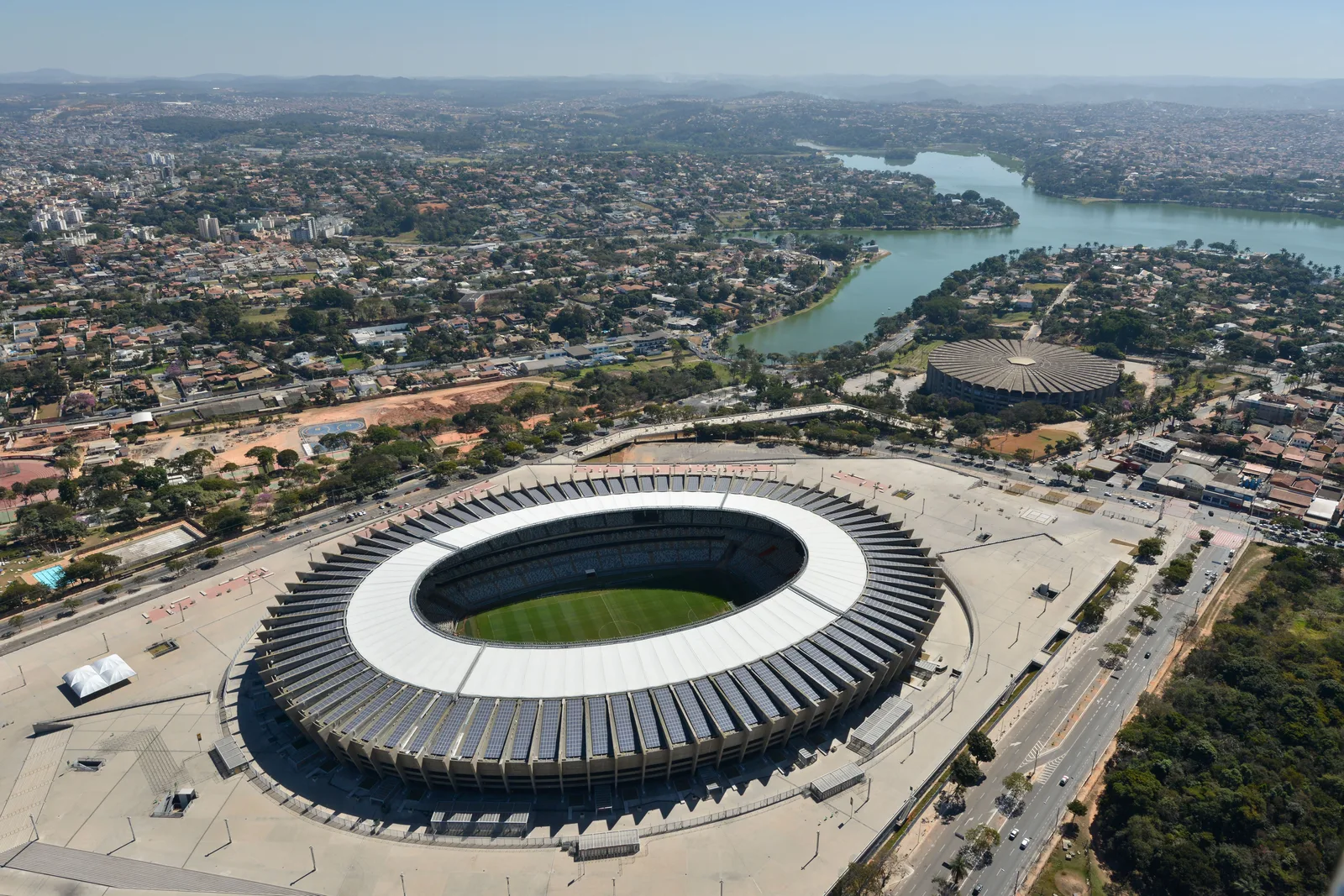
  • The Mineirão stadium from the air: a ring of concrete stands around a green pitch, the Pampulha lake and the low northern suburbs spreading behind it

    Pampulha · ninety minutes

    A tour of the Mineirão

    The state’s great football stadium stands just off the lake’s south shore, a ring of concrete you can see from most of Pampulha. The stadium runs a tour combined with the Museu Brasileiro do Futebol, and on match days the whole district fills with people in team shirts. Check the stadium’s own calendar for tour days and fixtures before you go.

Food & botecos

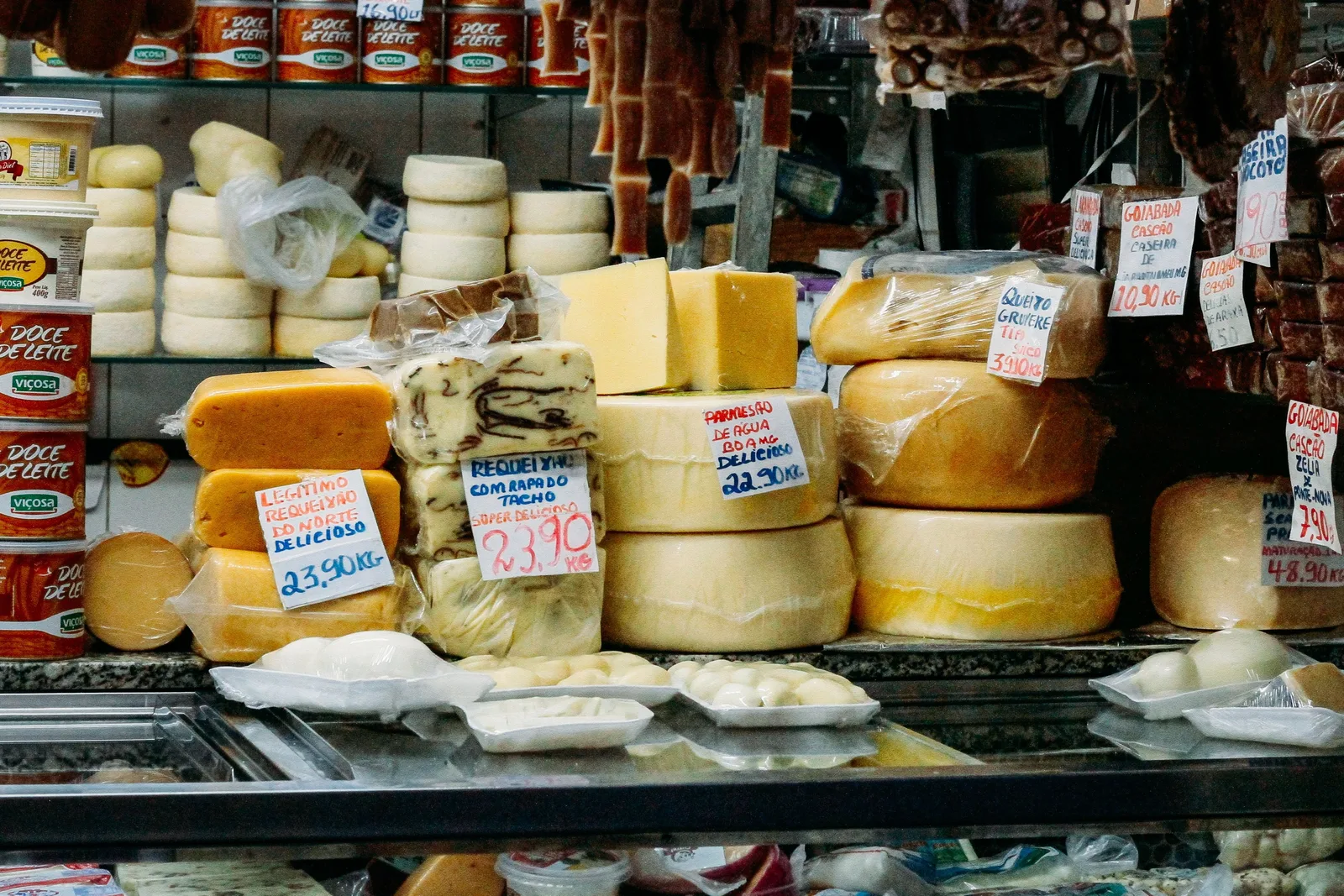
  • A cheese counter at the Mercado Central piled with whole wheels and wedges of pale and golden cheese, handwritten price signs tucked between them and cured meats hanging above

    Centro · an hour

    Cheese at the Mercado Central

    Minas Gerais is cheese country, and in 2024 UNESCO added the artisanal making of queijo Minas to its list of intangible heritage, the first Brazilian food to be listed. The market counters carry wheels of it from the producing regions, from fresh and mild to hard and sharp, alongside doce de leite and guava paste. Ask for a taste; the sellers expect it.

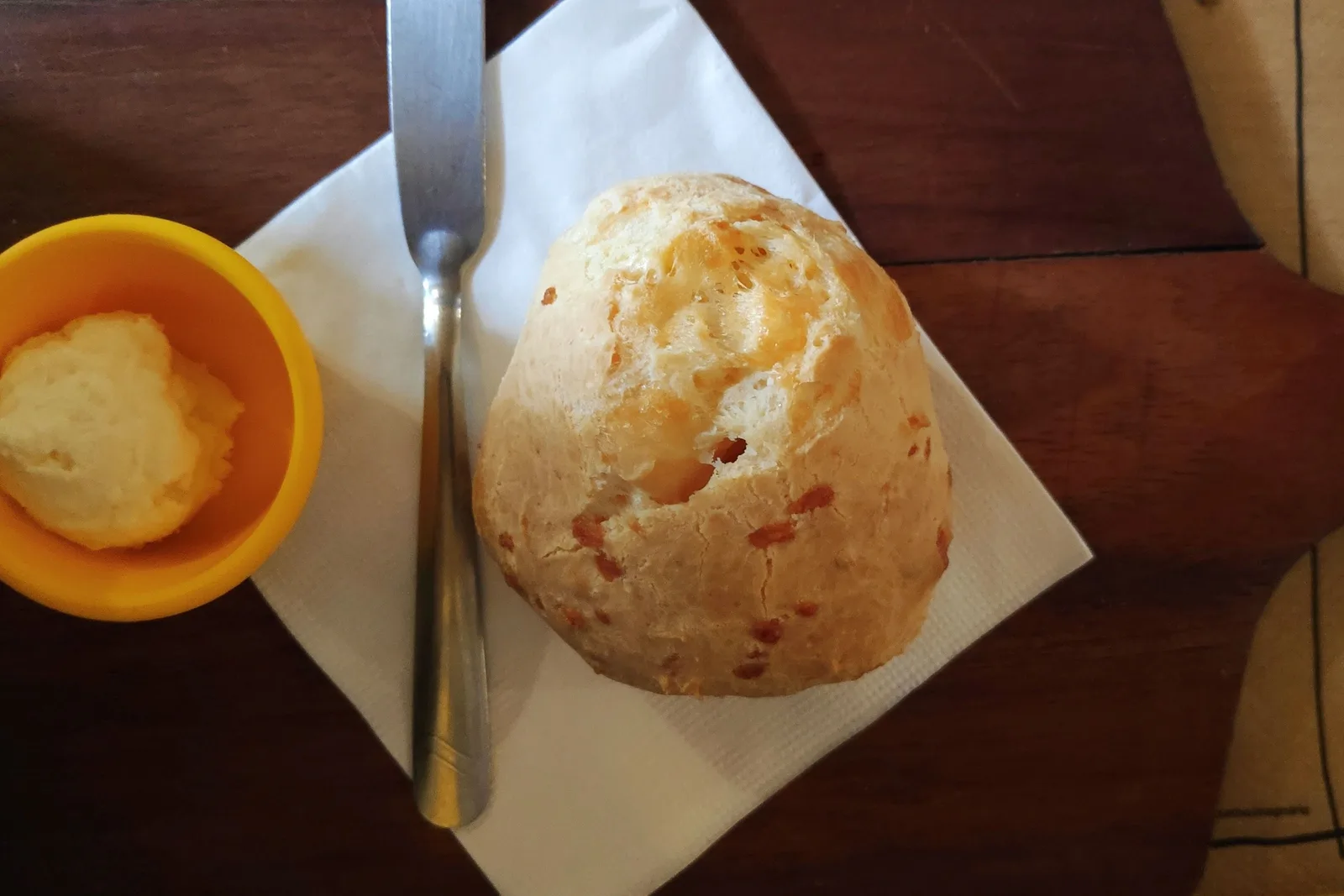
  • A single golden pão de queijo on a paper napkin beside a small orange dish of soft cheese and a butter knife, on a dark wooden table

    Citywide · ten minutes, any time of day

    Pão de queijo, hot from the oven

    The cheese bread of Minas: small, crisp outside and chewy inside, made with cassava starch and cheese, and eaten with coffee at breakfast, mid-afternoon and most points between. Every bakery and café has it. Ask for it fresh out of the oven, which in a busy café is never more than a few minutes away.

  • A dark pan full of feijão tropeiro seen from above: beans mixed with toasted manioc flour, scrambled egg and chopped green onion

    Citywide · lunch

    Feijão tropeiro at a mineiro restaurant

    Beans tossed with toasted manioc flour, egg and green onion, one of the dishes the city lists as its own. It shares the menu with frango com quiabo, chicken with okra, and the rest of the mineiro table. A set lunch, the prato feito, averages about $6.30 (R$32) in the city.

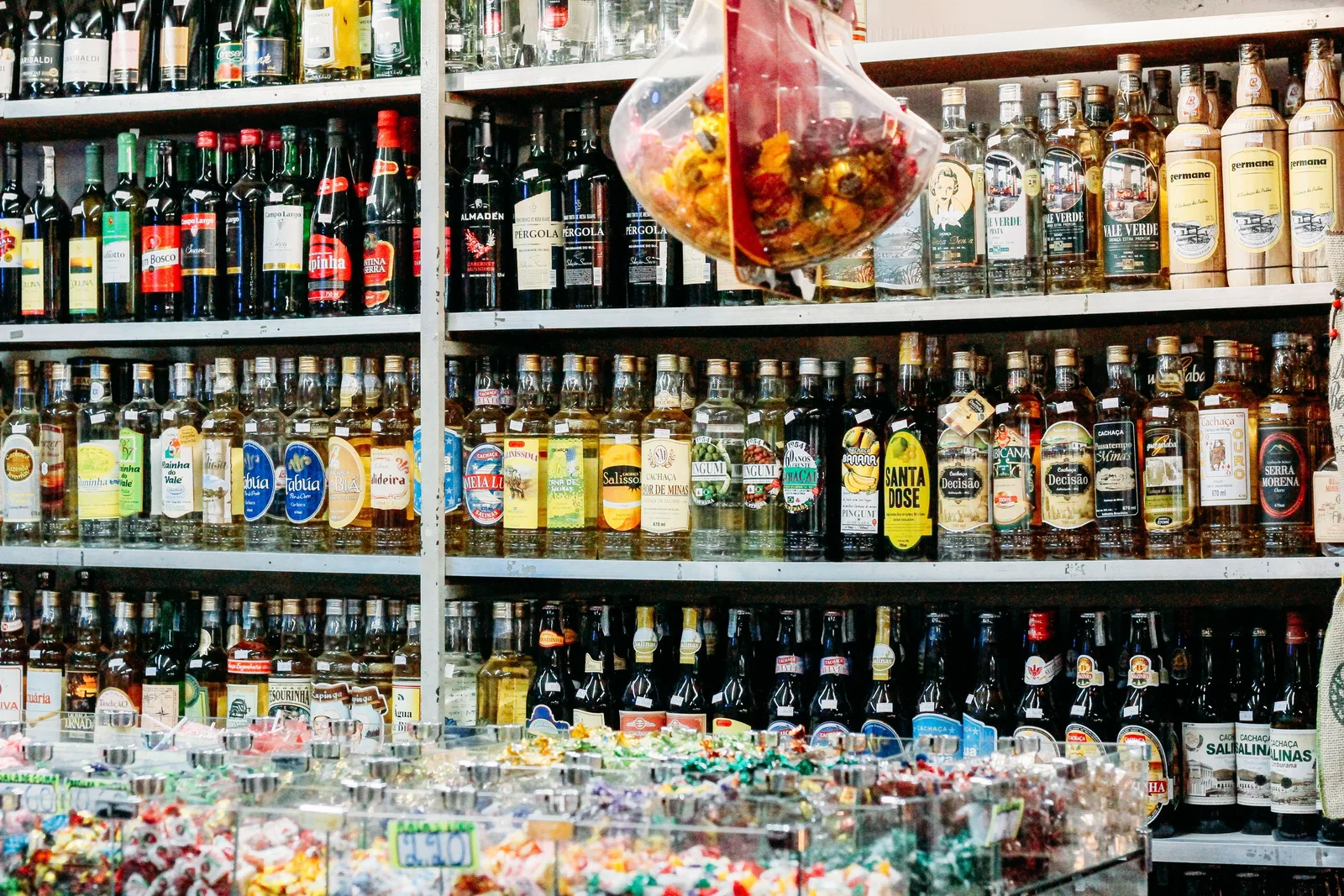
  • Floor-to-ceiling shelves of cachaça and liquor bottles in a Mercado Central shop, wrapped sweets heaped in open bins along the counter in front

    Centro · half an hour

    Cachaça at the Mercado Central

    Minas Gerais has more registered cachaça producers than any other state, more than a third of Brazil’s, and the market’s cachaça shops stock bottles from across the state. Buy one to take home, or drink a dose at one of the market bars with your liver and jiló.

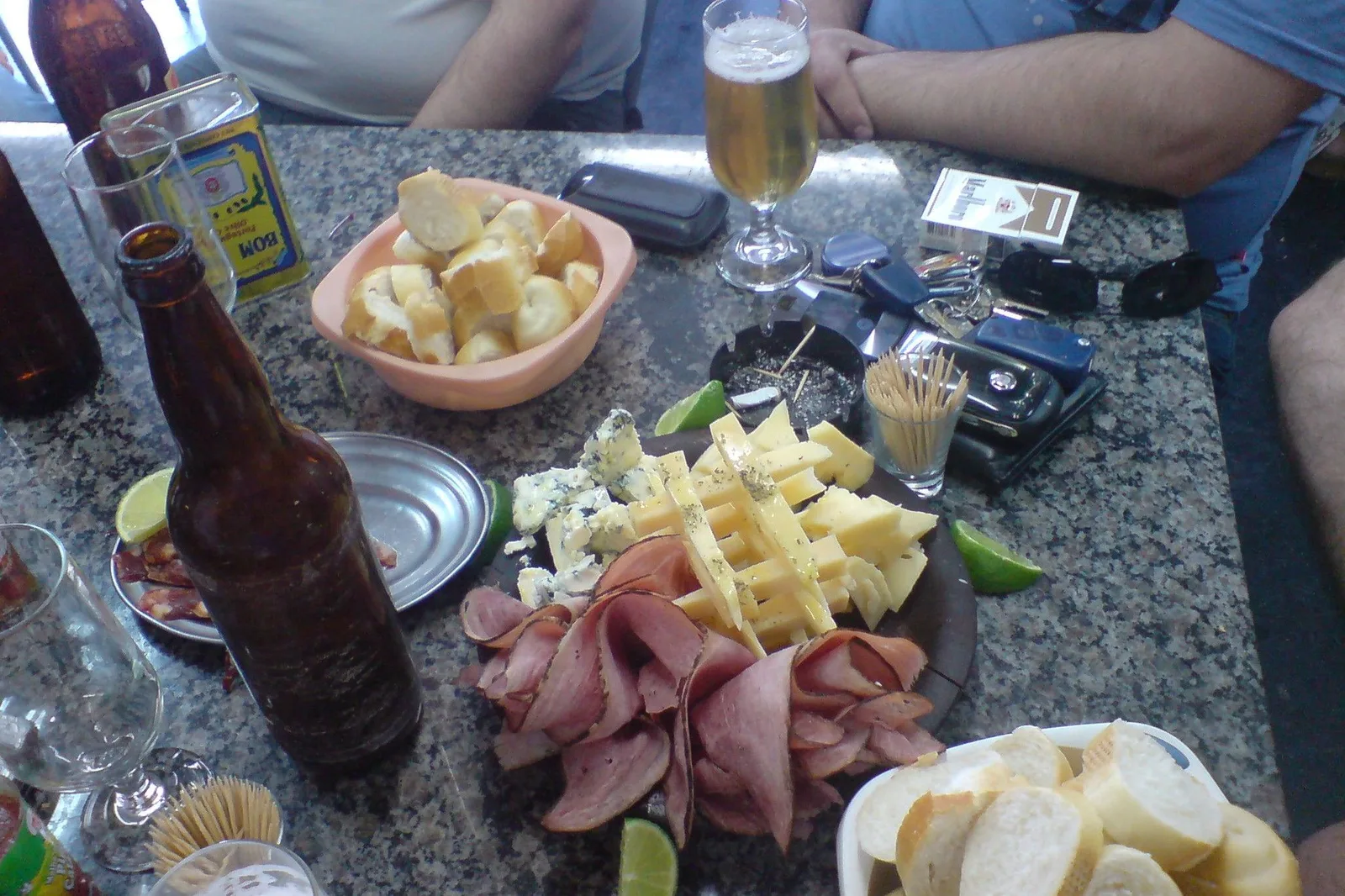
  • A bar table seen from above with beer glasses and bottles, a board of cheese and sliced ham, bread and lime wedges, friends’ hands at the edge of the frame

    Savassi, Santa Tereza and beyond · an evening

    An evening in a boteco

    The boteco is a small, plain neighborhood bar with plastic tables on the sidewalk, very cold beer and small plates to share, and the city’s tourism board calls Belo Horizonte the bar capital of the world. The national bar-food contest, Comida di Buteco, started here in 2000 with ten bars. A 300 ml chopp averages about $2.10 (R$10.50). Order a beer and whatever is fried.

The city

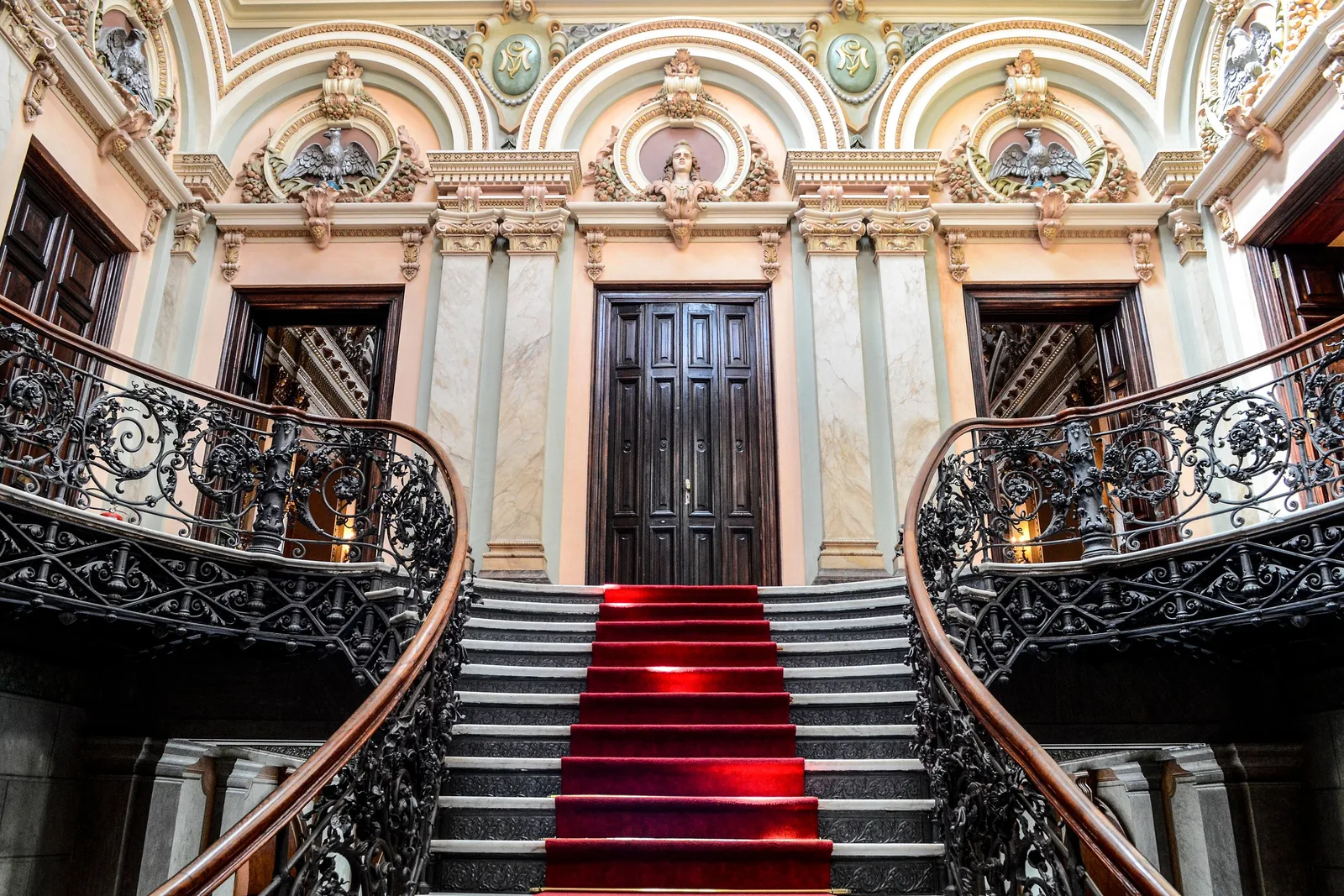
  • The entrance staircase inside the Palácio da Liberdade: a red carpet running up between two curving wrought-iron balustrades toward a carved wooden door, ornate painted walls above

    Praça da Liberdade · an hour, free

    The Palácio da Liberdade

    The governor’s palace of 1898, a confection of gilded halls, painted ceilings and an iron double staircase, opened to visitors now that the government has moved out. Entry is free, inside and in the gardens: the interior opens Wednesday to Friday from noon to 5:00pm and on weekends from 10:00am to 4:30pm. Register at the reception.

  • The wavy facade of the Edifício Niemeyer seen from below, its pale horizontal bands rippling across the building, a green iron street lamp in the foreground against a blue sky

    Praça da Liberdade · ten minutes

    The Edifício Niemeyer

    The tall block on the corner of the Praça da Liberdade with a facade of continuous horizontal bands that ripple in and out like a stack of ribbons. You look at it from the square rather than go in, and it photographs best from across the gardens. Niemeyer also designed the state public library on the same square.

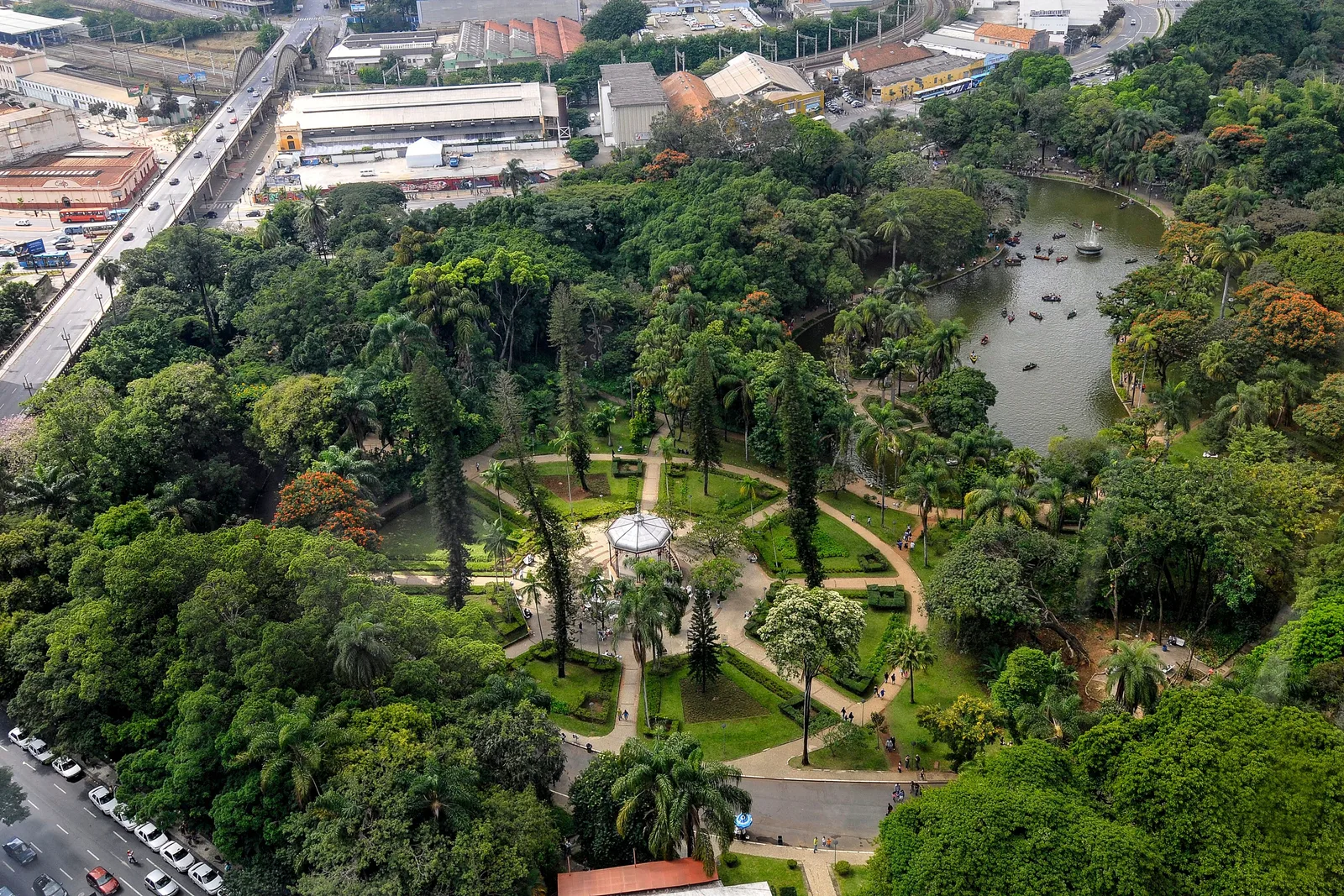
  • The Parque Municipal from above: a dense canopy of trees around winding paths, a lake and a small bandstand, with downtown streets and buildings at the edges

    Centro · an hour

    The Parque Municipal

    The big green park in the middle of downtown, a tangle of old trees, a lake, winding paths and a bandstand. It is the best place in Centro to slow down between the market and the Palácio das Artes. Use it by day.

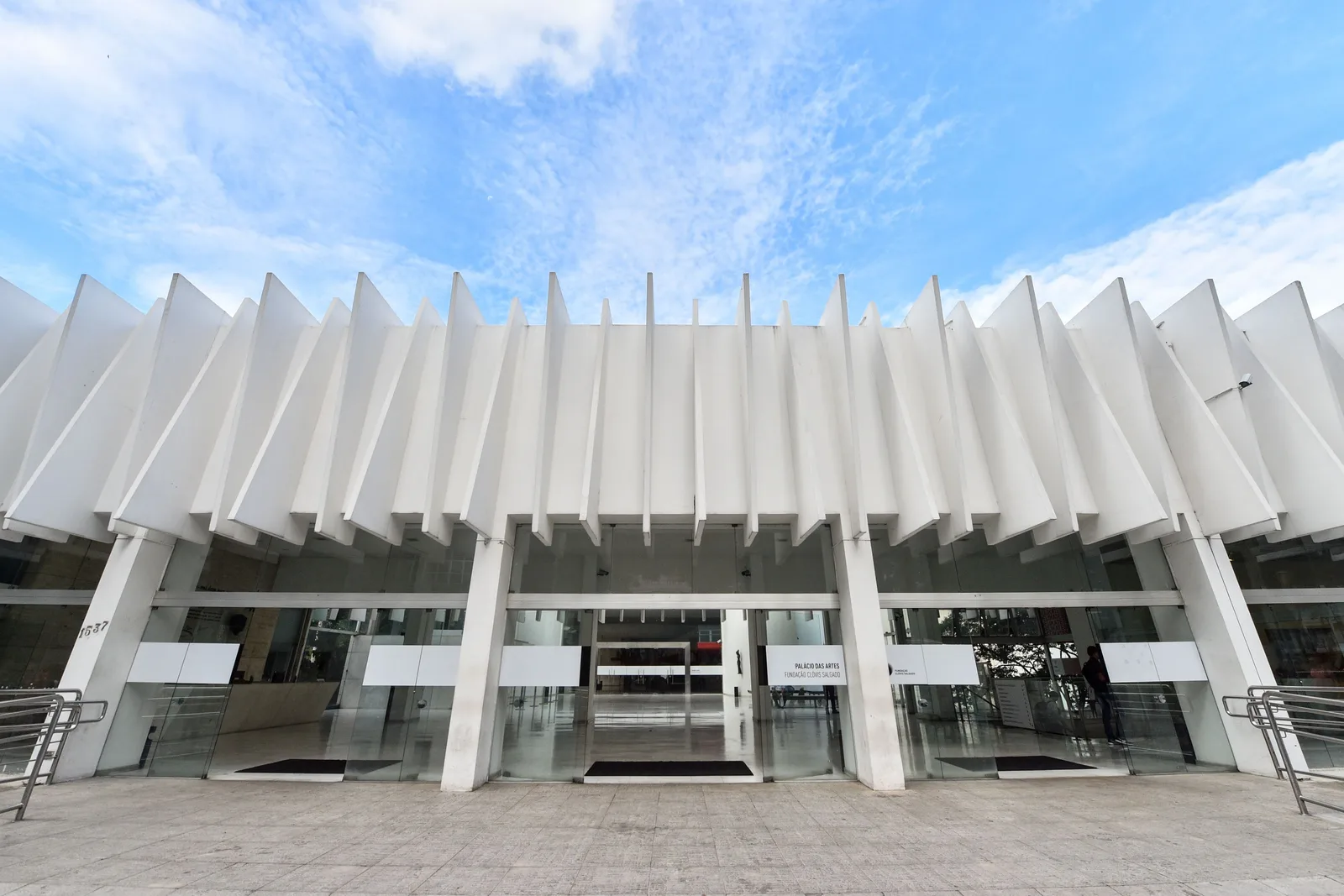
  • The front of the Palácio das Artes: a long white modernist building with a row of angled concrete fins along its roofline above a glazed entrance, under a blue sky

    Centro · a show, or an hour

    The Palácio das Artes

    The state arts center, a long white modernist building on Avenida Afonso Pena with a program of theater, exhibitions and films. Check what is on before you go. On Sunday mornings the Feira Hippie, the city’s huge outdoor craft fair, fills the avenue outside from 8:00am to 2:00pm.

Views & parks

  • A grove of tall palms casting long shadows across a lawn beside a still lake at Inhotim, low bromeliads planted along the path in the foreground

    Inhotim · as long as you like

    The botanical gardens at Inhotim

    Even with no art at all, the gardens would be worth the drive. Inhotim sits between the Atlantic Forest and the Cerrado, and the collection runs to more than a thousand rare species from every continent: groves of palms, lakes ringed with bromeliads and red-leaved plants, and long shaded paths between them. The palm groves around the central lakes are the place to stop and sit.

  • The Pampulha lake at dusk from the shore by the church, orange and red canna flowers along the edge, trees on the far bank and the concrete rings of the Mineirinho and Mineirão stadiums above them under pink-tinged clouds

    Pampulha · two hours on foot, less by bike

    The lakeside path at Pampulha

    A cycle path runs 18 km around the whole lake, past the church, the Casa do Baile, the yacht club and the stadium, with flower beds along much of the shore. Nobody walks all of it. Take a ride app to the church, walk the stretch to the Casa do Baile, and go at the end of the afternoon, when the light comes across the water.

  • The Parque Municipal from above: a dense canopy of trees around winding paths, a lake and a small bandstand, with downtown streets and buildings at the edges

    Centro · an hour

    The Parque Municipal

    The big green park in the middle of downtown, a tangle of old trees, a lake, winding paths and a bandstand. It is the best place in Centro to slow down between the market and the Palácio das Artes. Use it by day.

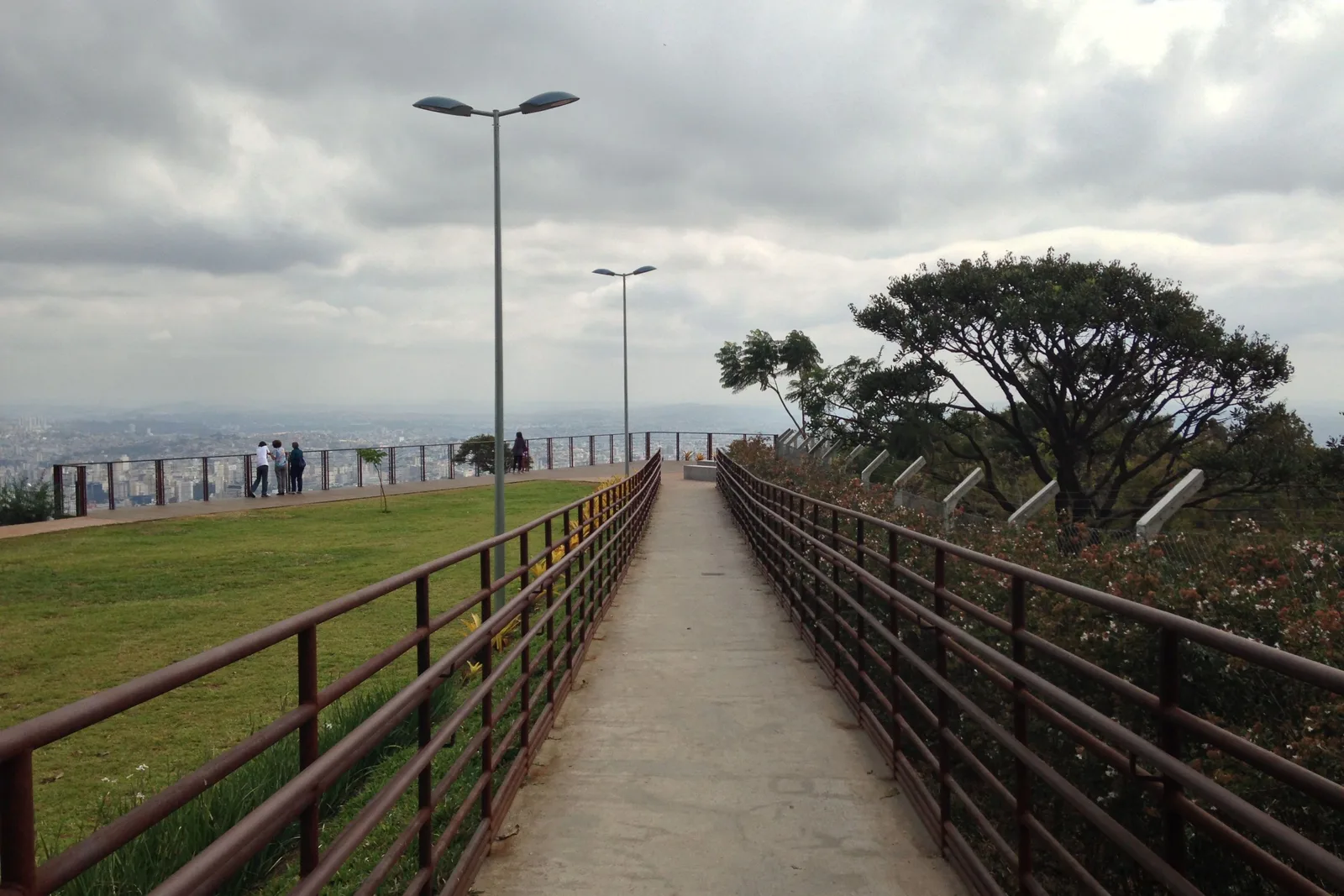
  • A long railed walkway leading out to a lookout point on a grassy hilltop at the Mirante do Mangabeiras, street lamps along it and a gray sky over the city beyond

    Mangabeiras · an hour, free

    Sunset at the Mirante do Mangabeiras

    A free city lookout high above the city in Mangabeiras, with decks and a telescope and no cars allowed inside. The whole of Belo Horizonte spreads out below to the hills on the horizon, and at sunset the city lights come on underneath you. Take a ride app up and back.

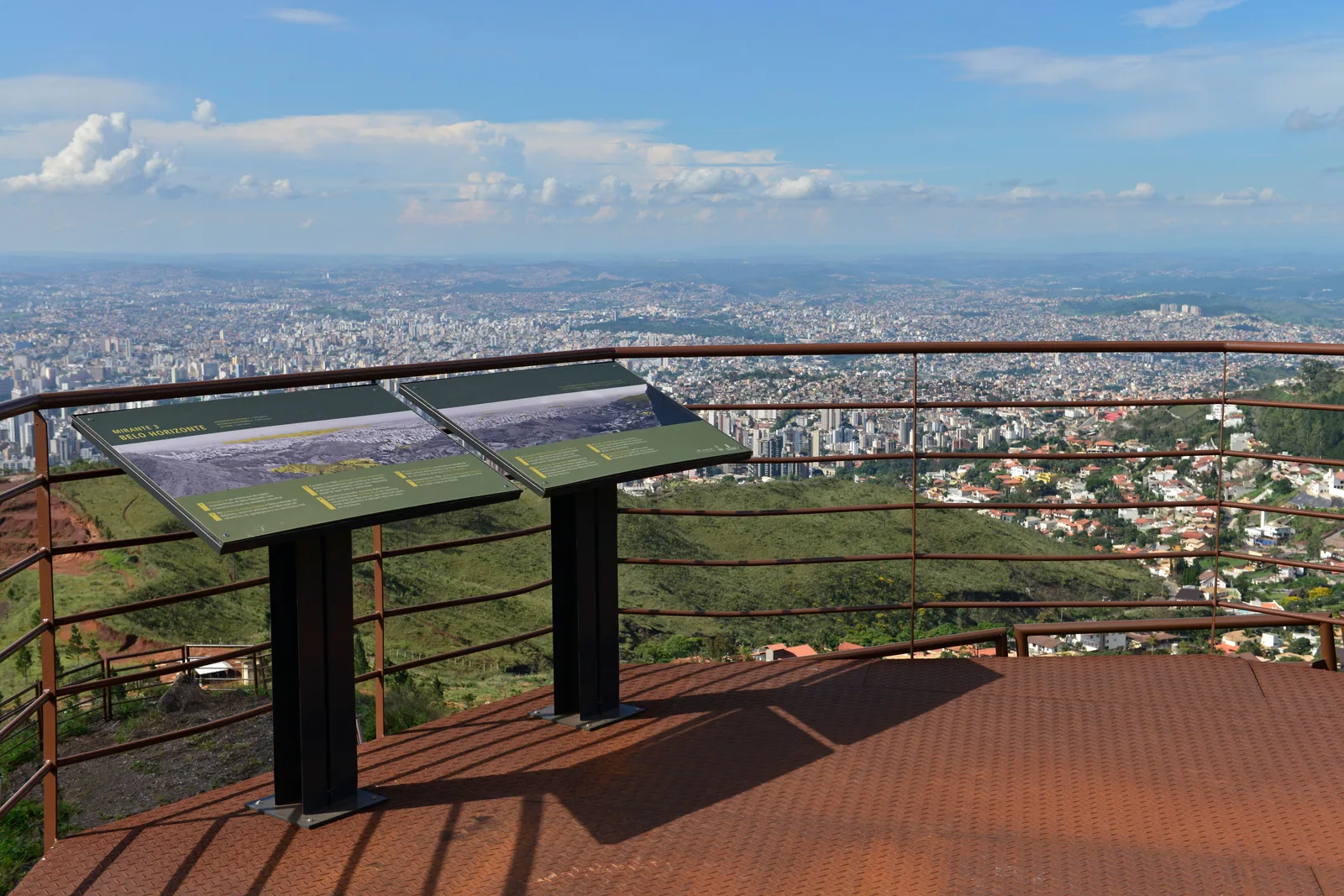
  • A rust-red viewing deck with information panels high on the Serra do Curral, the city spread out to the horizon far below under a blue sky

    South side of the city · half a day

    The ridge of the Serra do Curral

    The long mountain ridge that closes off the south of the city is Belo Horizonte’s defining landmark, and the parks along it are the city’s back garden. Below it, the Parque das Mangabeiras covers 2.5 million square meters with landscaping by Burle Marx, free to enter. On the crest, viewing decks look straight down over the whole city.

Where to stay

Four districts, and one obvious choice.

Most visitors should sleep in Savassi, Funcionários or Lourdes, where the hotels, restaurants and bars are and the streets stay busy at night. Pampulha is for the architecture and little else, and Centro is for a budget. If you want two days at Inhotim, there is a luxury resort beside the park; otherwise base in the city and go out for the day.

Drag and zoom to explore.

Tap an area to open it and see it on the map

  • Our pick

    Best for: The easiest first visit

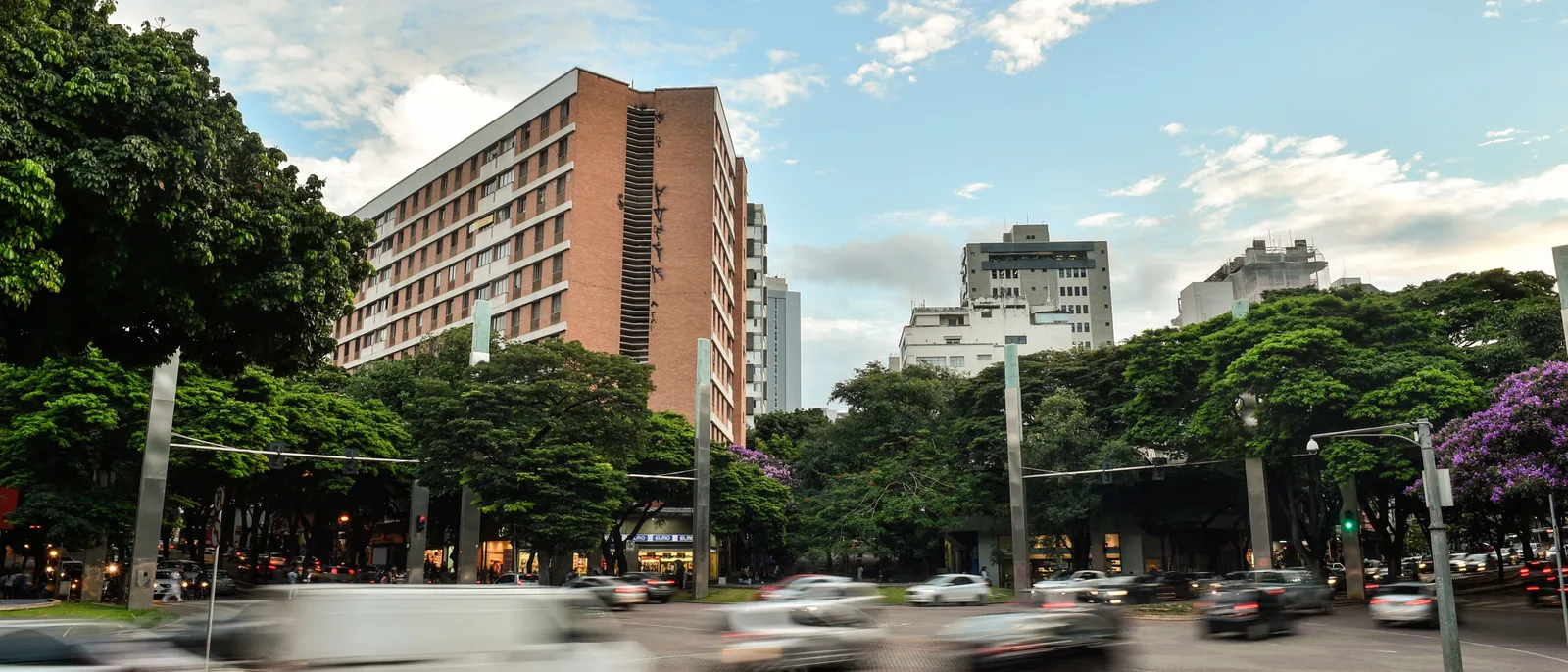
    A street in Savassi: an orange brick apartment tower and lower buildings behind a line of trees, traffic blurred along the avenue in the foreground

    The liveliest part of the city and the best base for a short stay. Savassi is the bar and restaurant district, with tables on the sidewalk until late, and Funcionários runs from it to the Praça da Liberdade and its museums, all walkable. Most of the mid-range hotels are here or next door in Lourdes. It is busy and noisy on weekends, which is mostly the point. That busyness has a cost: in the state’s 2026 figures Savassi comes second only to Centro for thefts and for phone theft and robbery, so keep the phone in a pocket on the street here too.

    • Bars and restaurants
    • Walk to Praça da Liberdade
    • Busy at night
    • Most hotels
  • Best for: Quieter, smarter, and the best restaurants

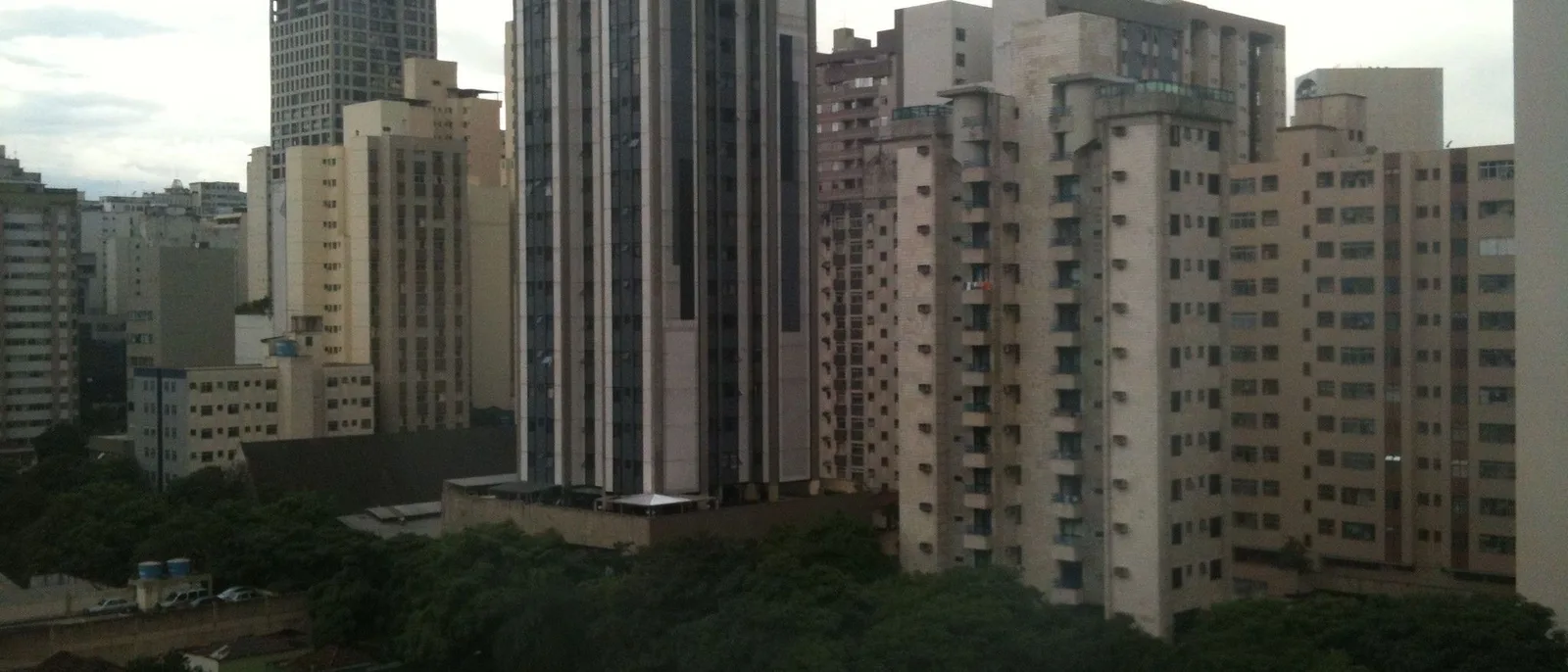
    Tall apartment towers in Lourdes rising above a band of trees under a cloudy evening sky

    The well-off residential districts just west of Savassi, with high-rise apartments, quieter streets and some of the city’s best-known restaurants. The 5241 and 5240 airport buses end at the Álvares Cabral terminal here, which makes arrival easy. Calmer than Savassi at night and a short ride from it.
    • Fine dining
    • Airport bus terminal
    • Residential
    • Quieter
  • Best for: A budget, and the market on foot

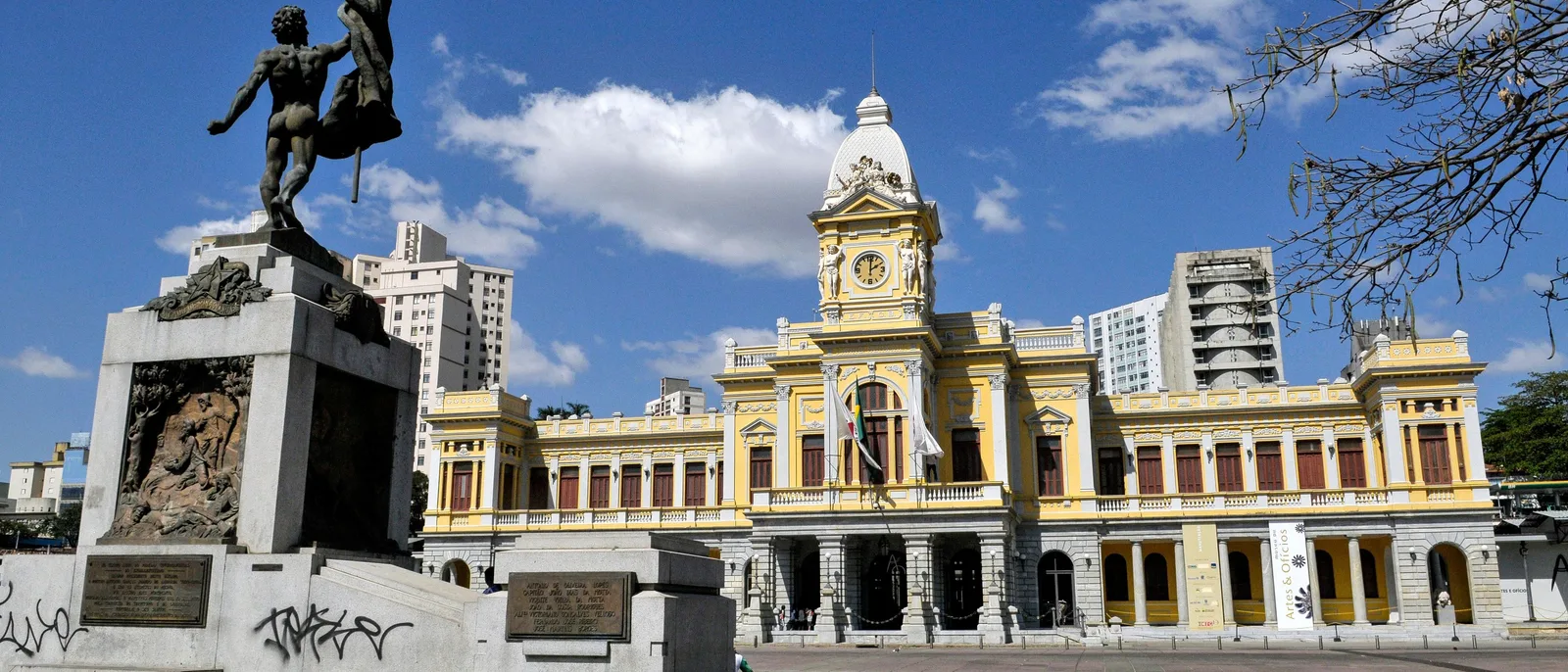
    The Praça da Estação in central Belo Horizonte: the cream and yellow train station building with its clock tower behind a bronze statue on a tall plinth, under a blue sky

    The original downtown grid: the Mercado Central, the Parque Municipal, the Palácio das Artes and the bus station, with the cheapest rooms in the city. It is lively by day and empties out after dark, and it has the city’s biggest concentration of street theft. Fine for a night before an early bus; take a ride app in the evening.
    • Cheapest rooms
    • Mercado Central
    • Bus station
    • Quiet after dark
  • Best for: The architecture, at first light

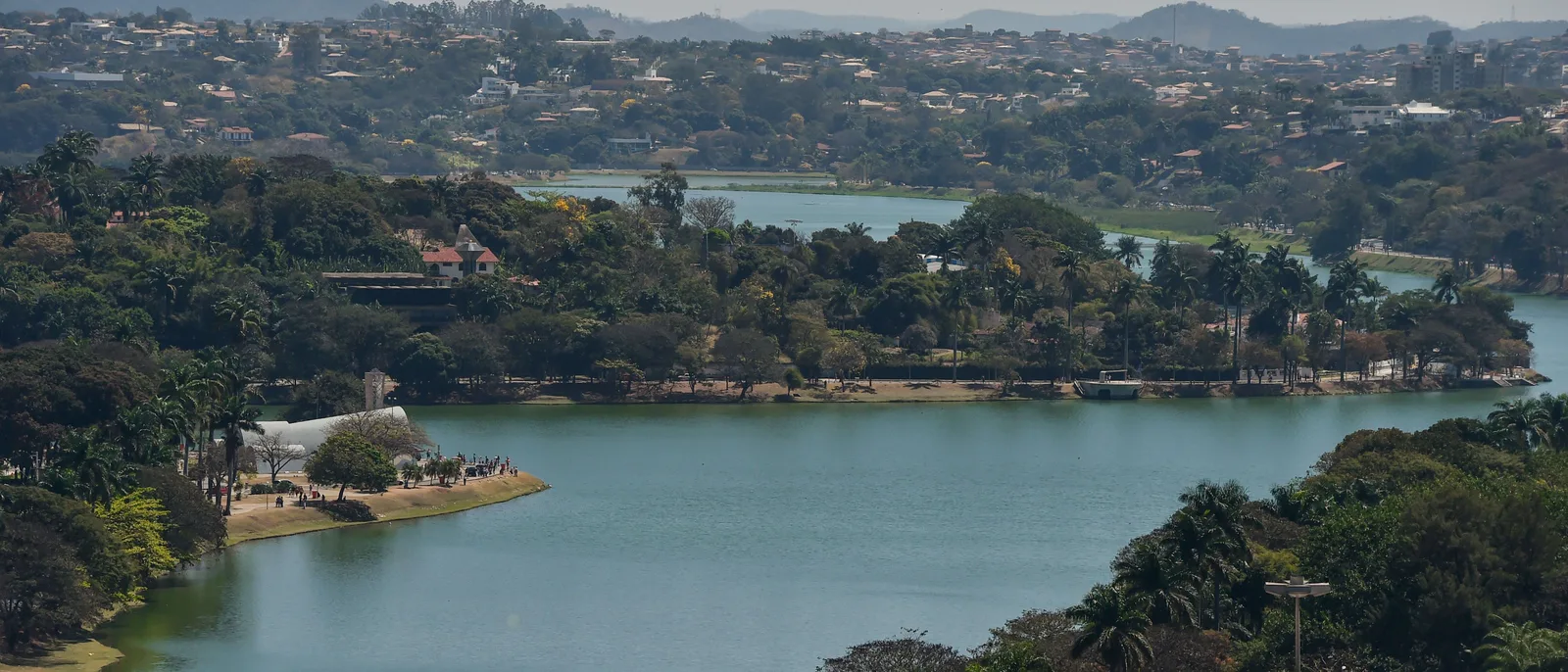
    The Pampulha lake from a height, wooded shores and a small headland running out into the water, low hills on the horizon

    The lake district in the north of the city, green, spread out and quiet, with the Niemeyer buildings on the shore. Staying here puts you beside the church at opening time and on the lakeside path in the cool of the morning. It also puts you a long ride from everything else, with few restaurants within walking distance.

    • Niemeyer on the doorstep
    • Lakeside path
    • Quiet
    • Far from the center

A working plan

Four days, one focus a day.

The city in three days and Inhotim in one. Inhotim is closed on Mondays and Tuesdays (it opens on Tuesdays in January and July), and the Pampulha church on Mondays, so shuffle the days around those.

  1. 01
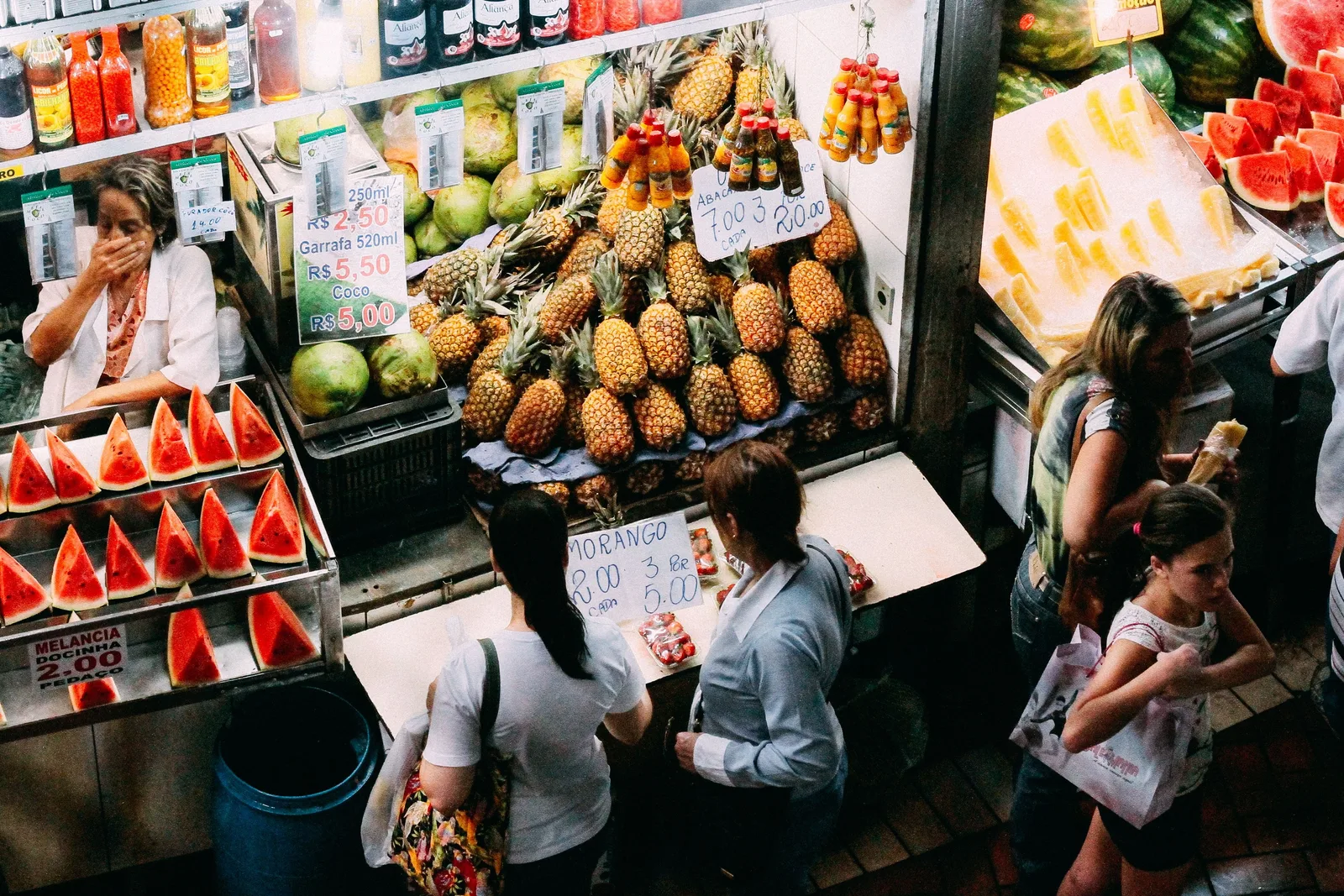
    Looking down into a lane of the Mercado Central: a fruit stall stacked with pineapples and watermelon, shoppers in the aisle below

    Centro

    The market and the old downtown

    The Mercado Central in the morning for cheese, cachaça and a lunch of liver and jiló at the bar. The Parque Municipal and the Palácio das Artes after, and a boteco in the evening.

  2. 02
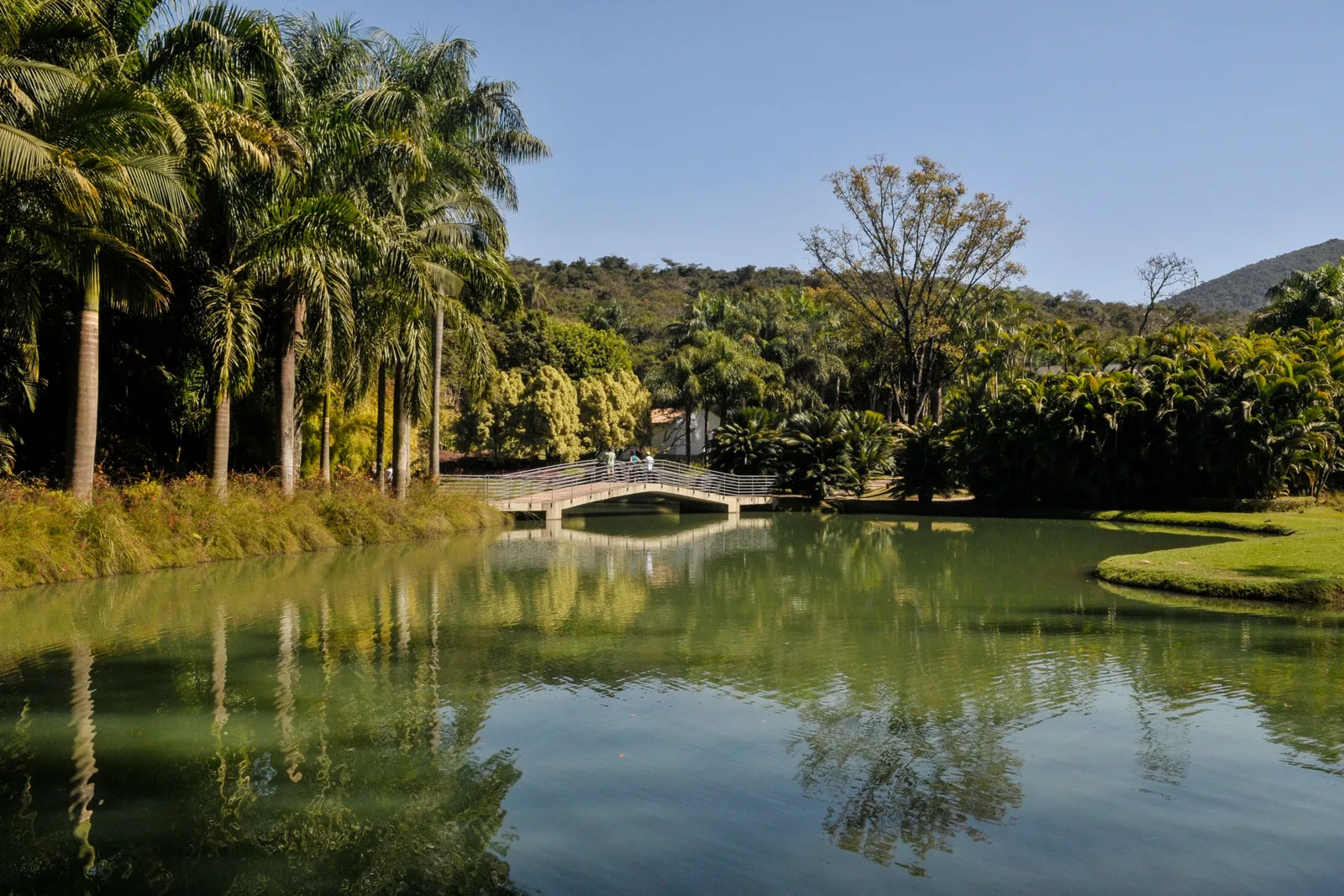
    A still lake at Inhotim with a small white footbridge on the far side, palms and tall trees along the banks and wooded hills behind

    Brumadinho

    A whole day at Inhotim

    Leave early and be there at 9:30am. Choose your galleries in advance, walk the central lakes, take the carts to the far hills, and stay until closing.

  3. 03
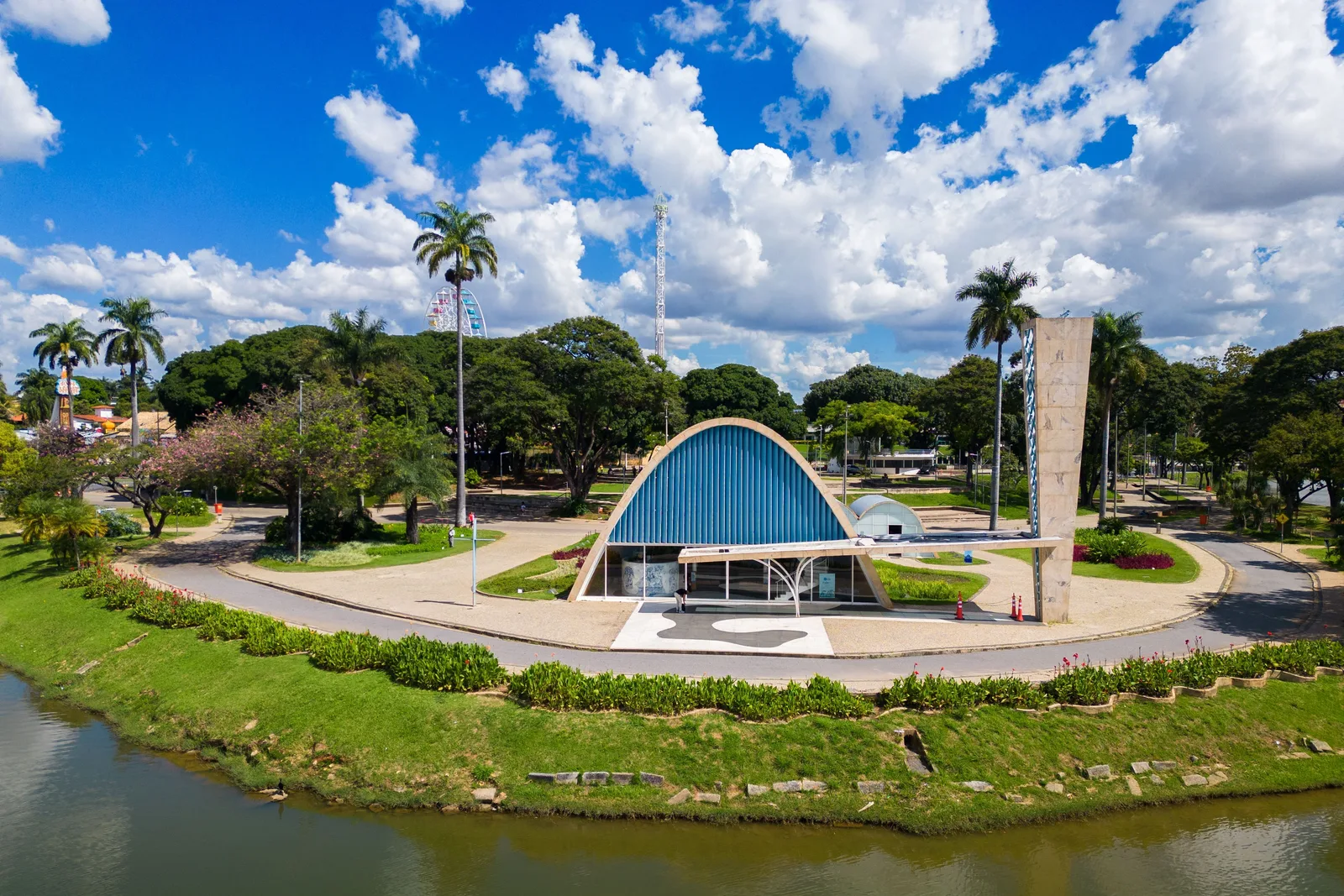
    The Pampulha church from the air: its blue vaulted roof and bell tower on a lawn on the lake shore, the water and wooded shoreline curving around it

    Pampulha

    Niemeyer’s lake

    The São Francisco de Assis church when it opens, then the lakeside path to the Casa do Baile and the free Casa Kubitschek. The Mineirão tour if it is running.

  4. 04
    Belo Horizonte from the Mirante do Mangabeiras: a sea of white apartment towers spreading to the horizon under a pale blue sky, green slopes in the foreground

    Praça da Liberdade & Mangabeiras

    Palaces, museums and the view

    The Palácio da Liberdade and the free museums around the square, lunch in Savassi, and the Mirante do Mangabeiras for sunset. On a Sunday, start at the Feira Hippie.

This is a starting shape, not a fixed departure — we rearrange it around your dates. Have it built for you

Timing

A dry winter and a wet summer.

Belo Horizonte has two seasons and they are not subtle. From May to September it barely rains, the sky is clear and the days are warm rather than hot. From November to March it rains on a third to half of the days, mostly in heavy storms from mid-afternoon into the night. Much of Inhotim is outdoors, so the dry months are the ones to aim for.

Temperature and rainfall for each month in Belo Horizonte. Choose a month for its average high and low, rain and UV, and what the city is like then.

January

Trade-offs
Air
20–29°C 68–84°F
UV
9 Very high
Rain
15 days 331 mm / 13.0 in

Deep in the wet season, with rain on about half the days. Hot afternoons and heavy storms.

February

Trade-offs
Air
20–29°C 68–84°F
UV
11 Extreme
Rain
10 days 178 mm / 7.0 in

Half January’s rain and the hottest afternoons of the year. Usually Carnaval, which is huge here.

March

Trade-offs
Air
20–28°C 68–82°F
UV
10 Very high
Rain
11 days 198 mm / 7.8 in

Still wet and warm. The last month of the rainy season.

April

Good
Air
19–28°C 66–82°F
UV
8 Very high
Rain
7 days 82 mm / 3.2 in

The rain falls away fast and the dry season begins. Comida di Buteco starts mid-month.

May

Good
Air
17–26°C 63–79°F
UV
7 High
Rain
3 days 28 mm / 1.1 in

Dry, bright and comfortable, with rain on about three days. A strong month for Inhotim.

June

Good
Air
15–25°C 59–77°F
UV
6 High
Rain
1 day 11 mm / 0.4 in

Dry and mild, with cool mornings. Almost as good as July.

July

Best
Air
15–25°C 59–77°F
UV
6 High
Rain
1 day 5 mm / 0.2 in

The pick: the driest month of the year, 5 mm on one rain day. Brazilian school holidays fill Inhotim on weekends.

August

Good
Air
16–26°C 61–79°F
UV
8 Very high
Rain
1 day 11 mm / 0.4 in

Still dry, a little warmer, and the sunniest month of the year, with the driest air.

September

Good
Air
17–28°C 63–82°F
UV
9 Very high
Rain
4 days 49 mm / 1.9 in

Warming up, with the first rain back on about four days. Still a good month to go.

October

Good
Air
19–29°C 66–84°F
UV
9 Very high
Rain
8 days 110 mm / 4.3 in

The rains return, on about one day in four. Workable, with an eye on the forecast.

November

Trade-offs
Air
19–28°C 66–82°F
UV
10 Very high
Rain
14 days 236 mm / 9.3 in

The wet season is back, with rain on nearly every other day.

December

Trade-offs
Air
20–28°C 68–82°F
UV
9 Very high
Rain
17 days 339 mm / 13.3 in

The wettest month of the year, 339 mm on 17 rain days. Plan Inhotim around the forecast.

  • Best The one or two peak months
  • Good A real recommendation
  • Trade-offs Workable, with a catch
See Belo Horizonte on the Brazil calendar

UV is the monthly average of the daily peak, 2022 to 2025, calculated from Copernicus Atmosphere Monitoring Service data. Weather data by Open-Meteo.com, CC BY 4.0.

The pick

July, with June and August close

The heart of the dry season: 5 mm of rain on one day in an average July, highs around 25°C and cool nights near 15°C. June and August are almost as dry.

Also good

April–May and September–October

The edges of the dry season. Warmer, a few more showers, and still good days for Inhotim. October brings the first real rain back.

Trade-offs

November–March

The wet season: rain on 10 to 17 days a month, and December is the wettest month of the year. The city copes; Inhotim needs a dry day.

About the rain

The rainy season is properly rainy. December averages 339 mm and January 331 mm, falling on 15 to 17 days a month, mostly as heavy storms in the afternoon and evening. Mornings are often clear, so on a wet-season trip go to Inhotim early, and keep a museum or a market for the afternoon.

The dry season is genuinely dry. June, July and August each average one rain day, and from May to September the rain comes to less than 110 mm in total. Days are warm, in the mid-twenties Celsius, and nights are cool, around 15°C in midwinter, so bring a layer for the evening and for an early start to Inhotim.

The dates worth planning around

Revelers at a Belo Horizonte Carnaval bloco with painted faces and flower crowns, arms raised and hands full of colored ribbons, laughing in a packed crowd

Carnaval

February or early March, the dates move with Easter

Belo Horizonte’s Carnaval has grown into a huge street carnival. In 2026 the city counted 457 bloco parades and 6.6 million revelers, a record. The blocos are free and spread across the city, from small neighborhood bands to crowds that fill whole avenues. Book rooms early.

A black dish piled with golden pork crackling on lettuce leaves with wedges of lime, on a green-and-white checked tablecloth beside another plate of fried snacks

Comida di Buteco

About mid-April to mid-May

The bar-food contest that began in Belo Horizonte in 2000 with ten bars and now runs across Brazil. For a month each year every competing boteco creates one special dish, and the public and a jury score them half and half. In 2026 it ran from 10 April to 10 May with 128 bars in the city. It is the best month of the year to eat your way around the botecos.

Good to know

Before you come

How many days do I need in Belo Horizonte? +

Four is the right number, which is why the itinerary above is built that way: one day for Centro and the Mercado Central, one for Pampulha, one for the Praça da Liberdade and the view from the Serra do Curral, and a whole day for Inhotim. Three days works if you are happy to combine the two city days. Inhotim alone could take two days, and some visitors give it both.

Can I visit Inhotim as a day trip from Belo Horizonte? +

Yes, and that is how most people do it. It is about 55 km southwest of the city in Brumadinho, roughly an hour and a half by road. Drive, book a transfer, or take the morning bus from the bus station and confirm the return time before you go. Inhotim opens Wednesday to Sunday from 9:30am, plus Tuesdays in January and July, closing at 4:30pm on weekdays and 5:30pm on weekends, and it is free on Wednesdays with an online booking. Brumadinho is the town where a Vale mining dam collapsed in January 2019, killing 272 people. Inhotim was evacuated as a precaution and was not reached by the mud.

Is Belo Horizonte safe for tourists? +

It is a large Brazilian city with ordinary big-city risks, and phone theft concentrates in the busy central and nightlife neighborhoods. Centro, around the bus station and the Praça da Estação, has far more theft and robbery than any other district: see it by day and use ride apps at night. Savassi, Lourdes and Funcionários, where most visitors stay, are busy districts with bars open late, and Savassi comes second only to Centro for phone theft and robbery in the state’s 2026 figures, so keep your phone out of sight on the street there too. Inhotim is a gated private park.

Should I stay in Belo Horizonte or Ouro Preto? +

They are two different trips, and they combine well. Belo Horizonte is the big modern city, with the airport, the hotels, the restaurants and Inhotim. Ouro Preto, 98 km southeast, is the colonial gold town, steep, baroque and quiet, and it has its own guide on this site. A trip that wants both can fly into Confins, spend three or four days in the city, then take the two-hour bus to Ouro Preto.

When is the best time to visit Belo Horizonte? +

July, inside a dry season that runs from May to September. July averages 5 mm of rain on a single day, with warm days around 25°C and cool nights, and June and August are almost as dry. April, May, September and October are good too, with a little more rain at the edges. November to March is the wet season, with rain on 10 to 17 days a month and December the wettest; the city works fine, but Inhotim, which is mostly outdoors, needs a dry day.

Keep going

Where Belo Horizonte fits in a bigger trip.

Belo Horizonte is the airport for Minas Gerais, and the colonial gold towns are the natural next stop. Ouro Preto is two hours away by bus, Tiradentes a little further, and Rio is an hour’s flight or a long day’s drive.

Free · 29 pages

Free guide

Beginner's Guide to Brazil

A free 29-page guide to everything a first-time visitor should know before landing: visas, safety, money, getting around, where to go, and what to eat.

We'll email you a link to confirm your address. Click it and the guide opens right away.

See what's inside
Belo Horizonte at dusk from a hillside: the city lights coming on across the whole valley under a pink and lilac sky, a dark grassy slope in the foreground

Skip the planning

See Minas without spending the week working it out.

Tell us your dates, how much art you want and how much eating. We will shape a private Belo Horizonte itinerary around that: the right district to stay in, Inhotim on the right day of the week, and the gold towns added if you want them.

  • One person, living in Brazil, replying to you directly
  • A reply within one business day, no call center and no bots
  • No cost to plan, and no obligation to book
  • Built around your dates, not a fixed departure