
Skip to content

Bahia

Praia do Forte

Sea turtles, reef pools, and an hour of coast above Salvador.

Last checked September 2026

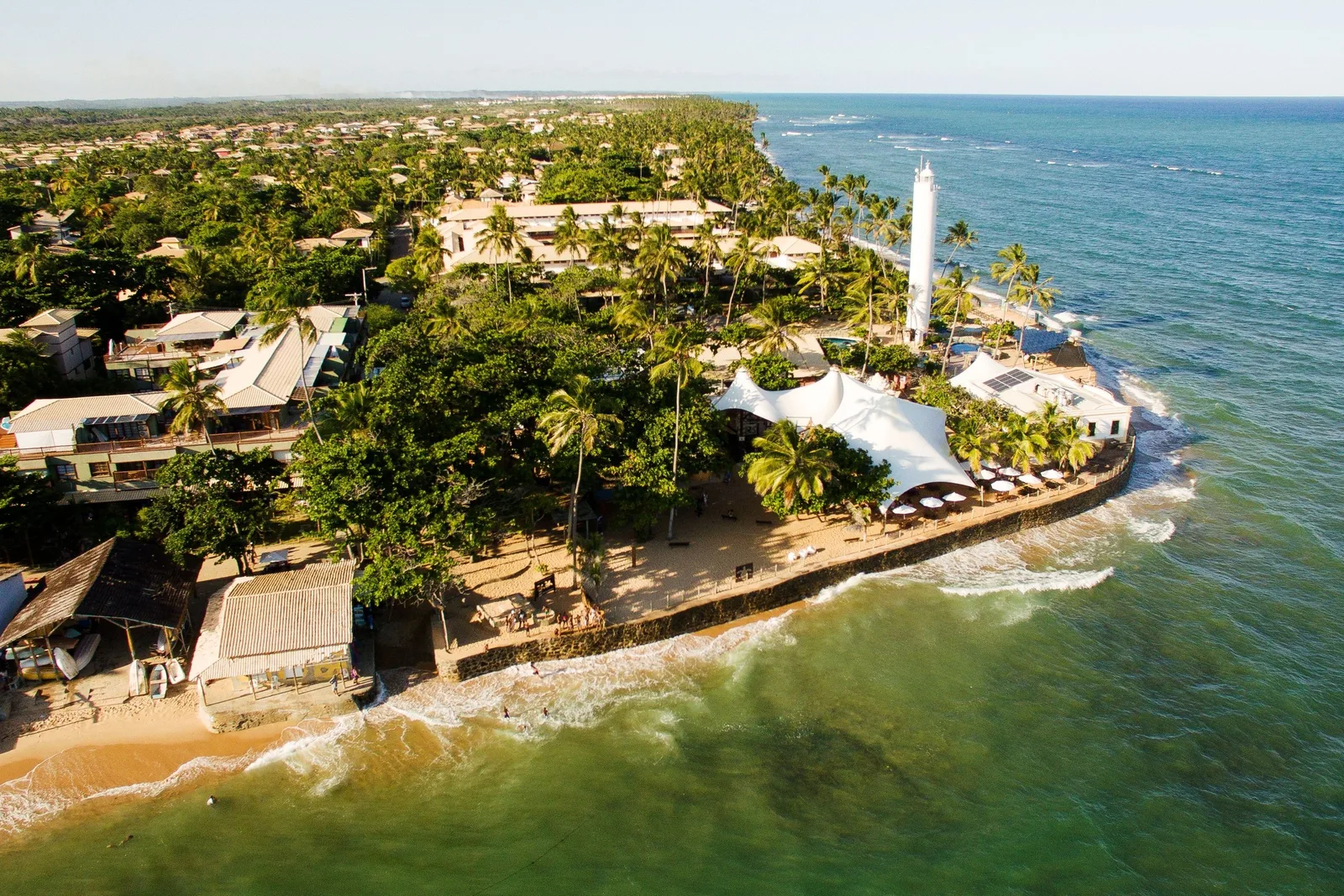
  • Praia do Forte from the air: the lighthouse on its point, the village under the palms and the reef in clear green water
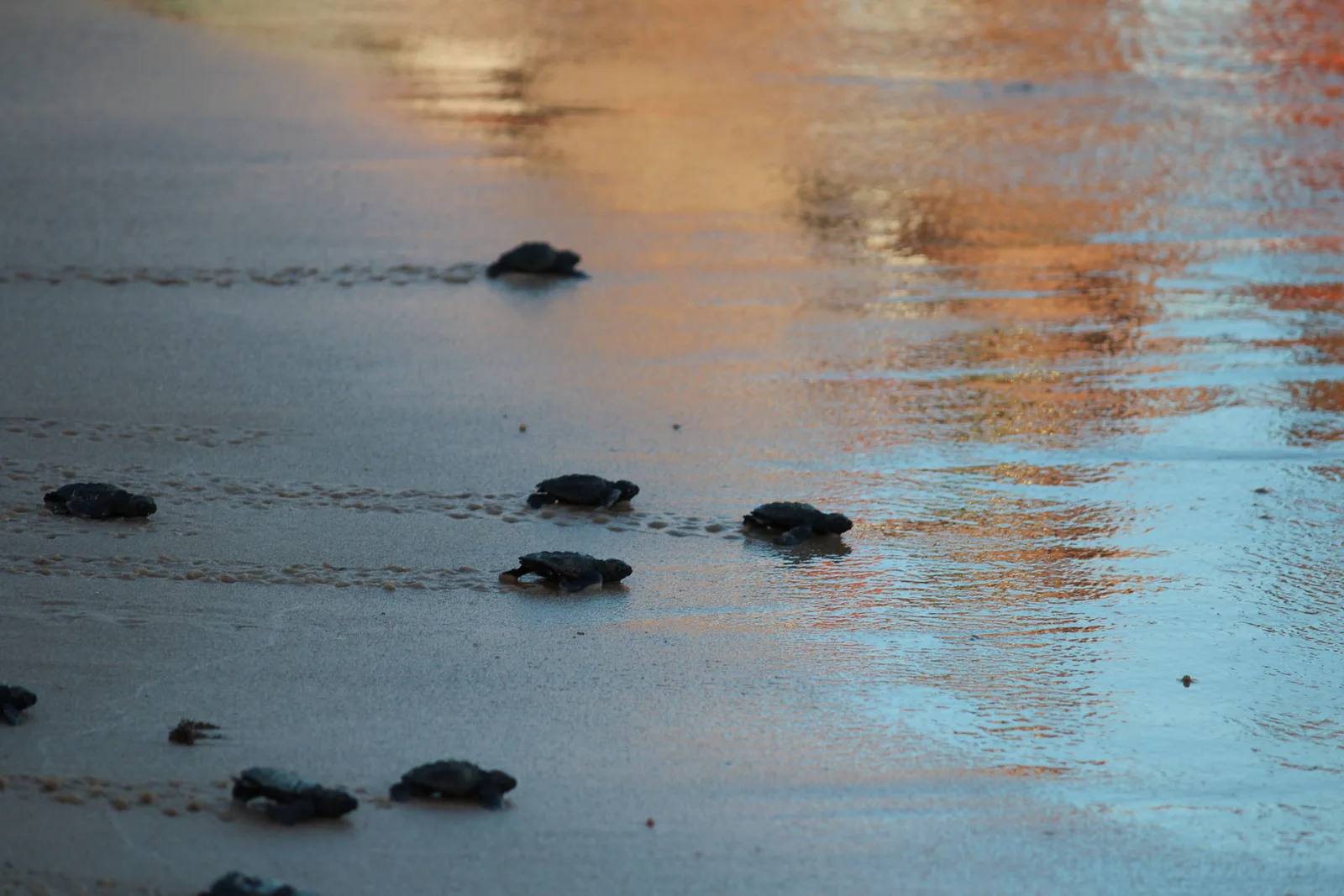
  • Sea turtle hatchlings crossing wet sand toward the water at sunset
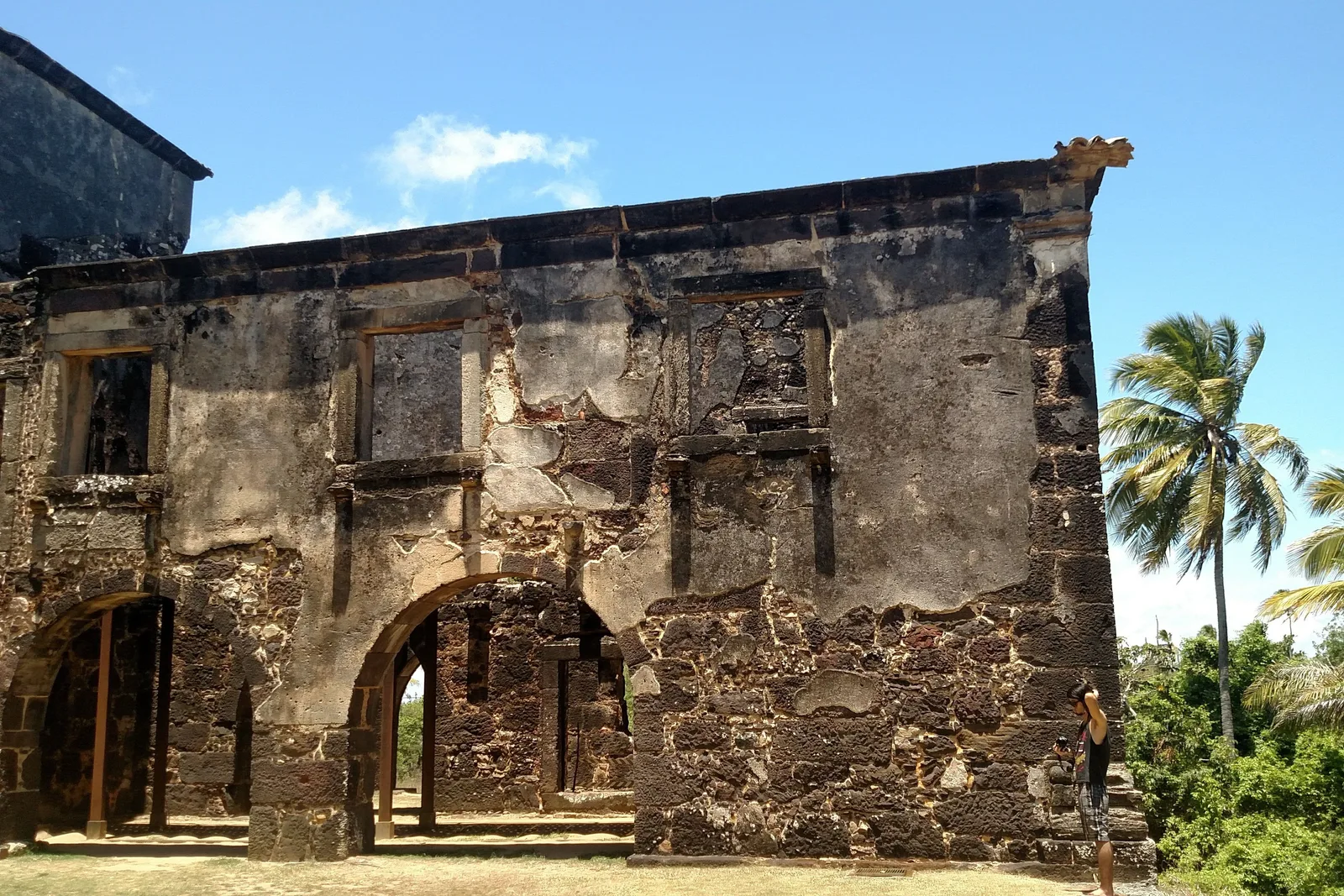
  • The stone ruins of the Casa da Torre de Garcia d’Ávila, arched doorways open to a blue sky, palms at the edge
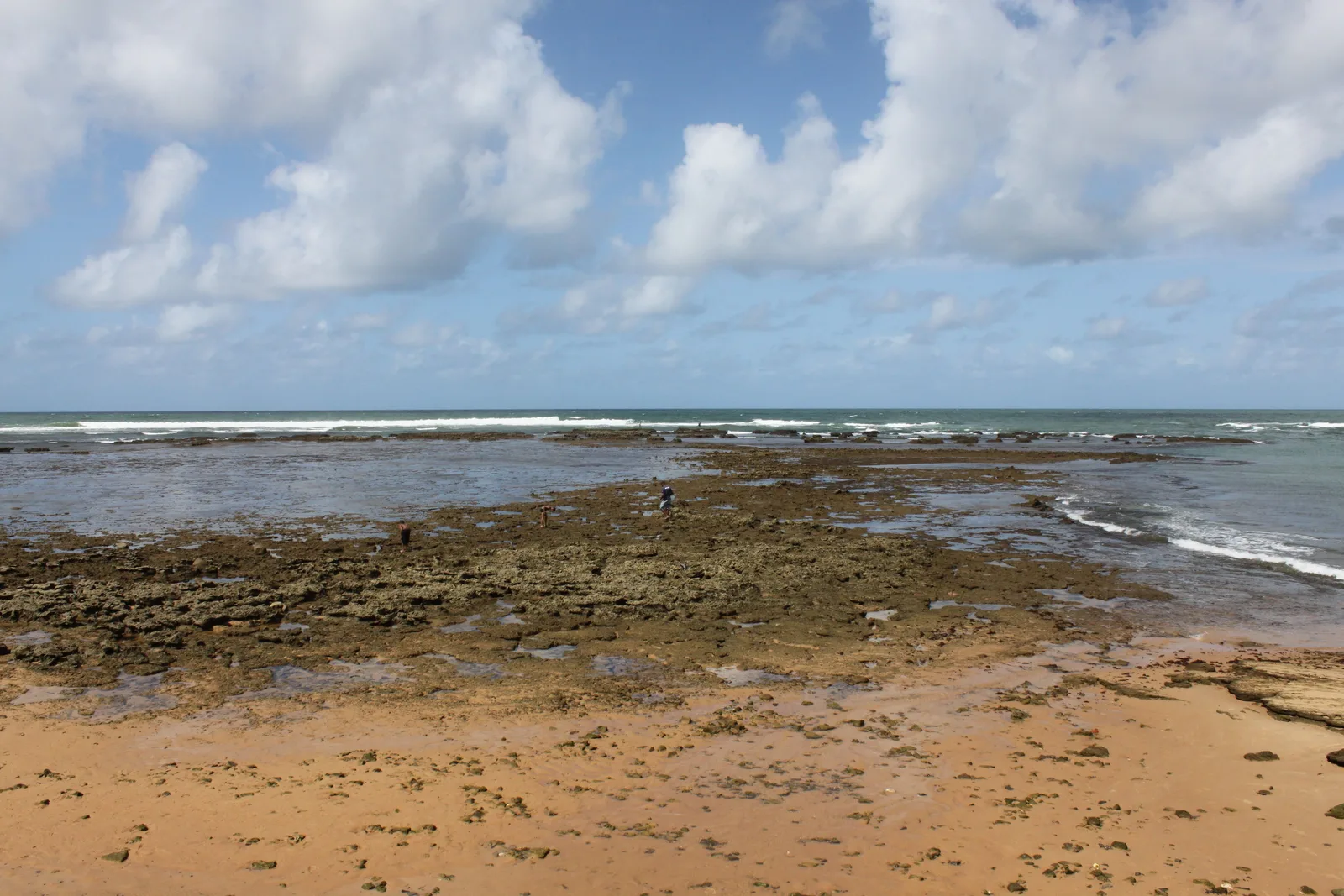
  • The reef exposed at low tide along the beach at Praia do Forte, the sea breaking beyond it
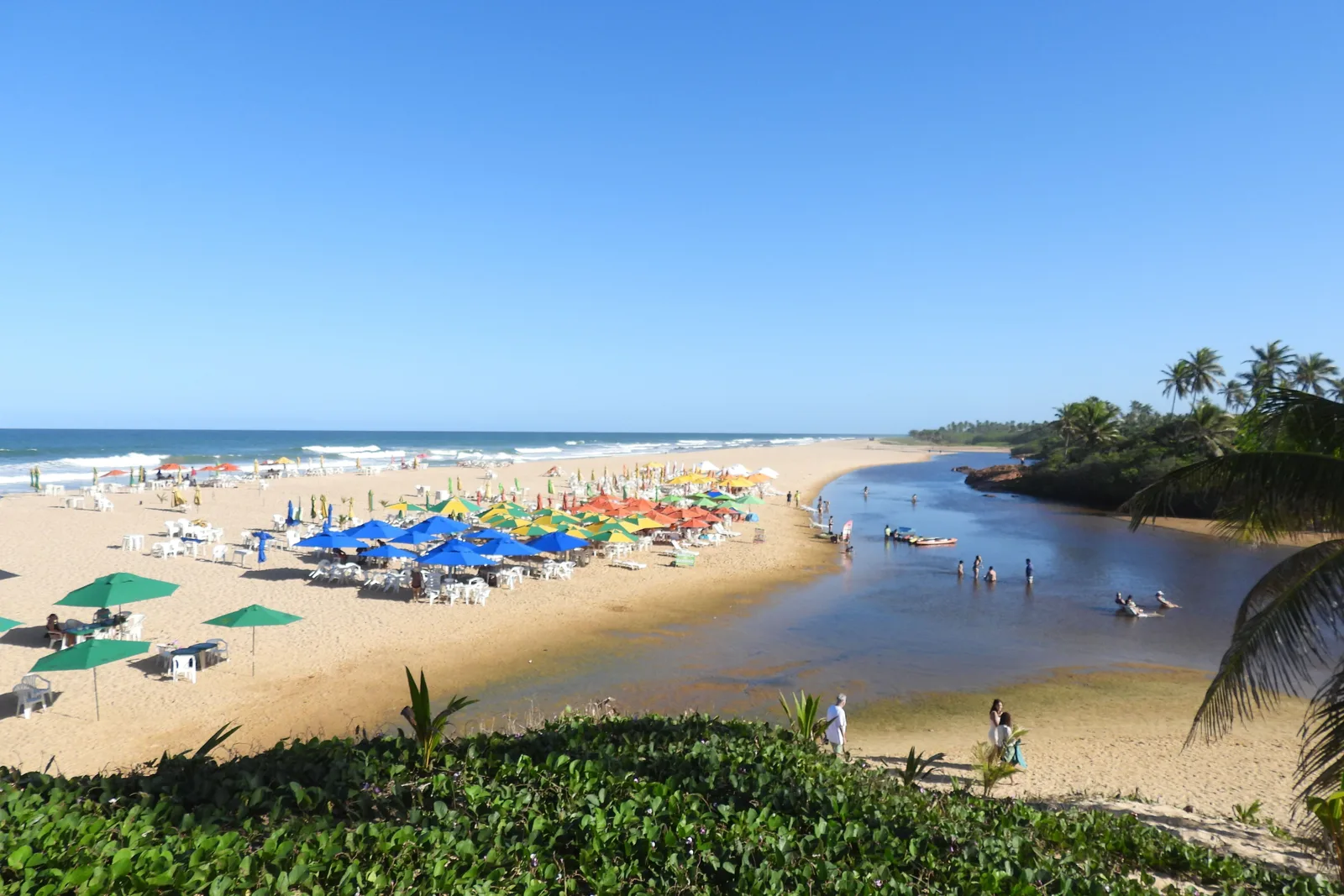
  • At Imbassaí the river runs along the back of the beach to the sea, bright umbrellas on the sand between them
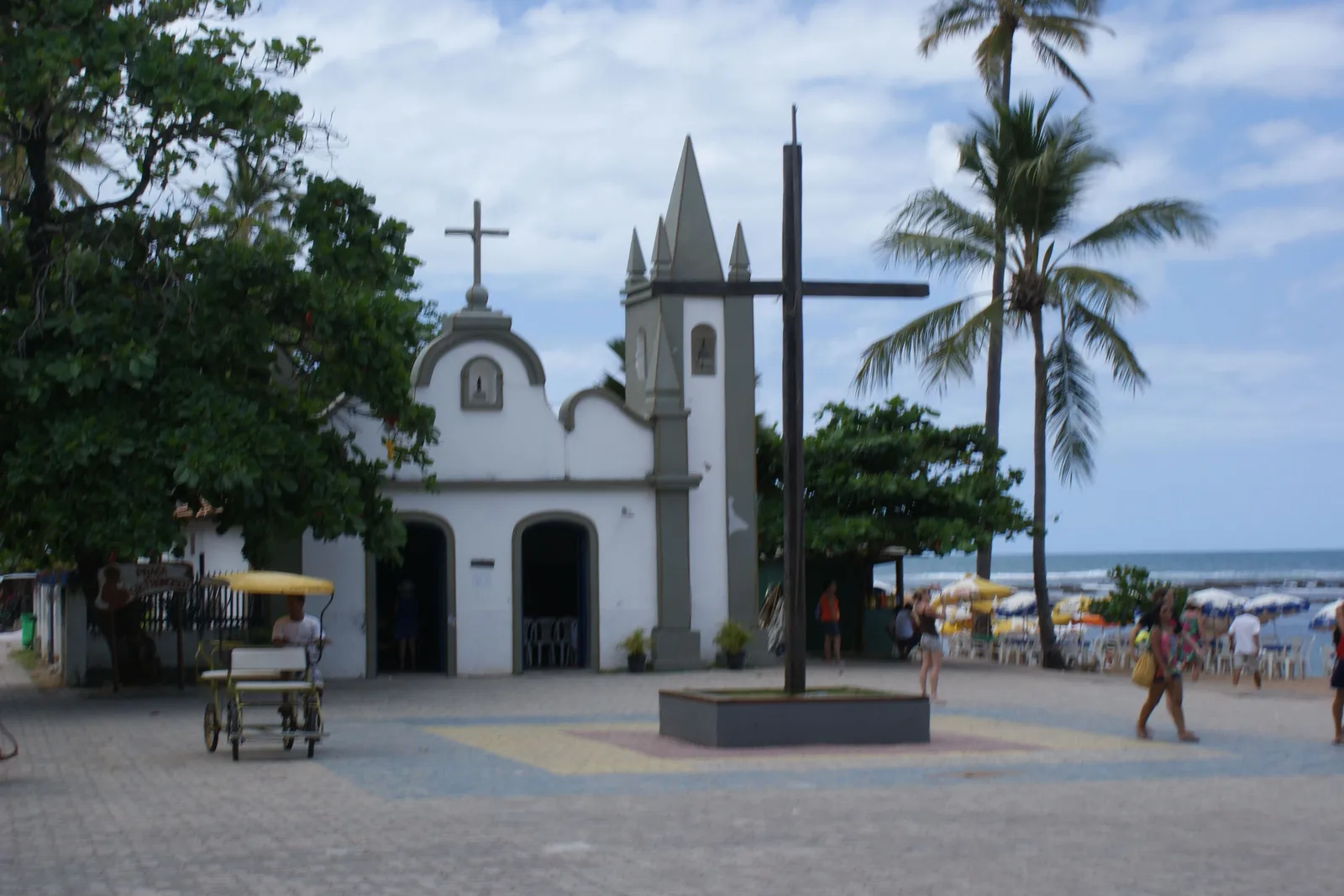
  • The small white chapel on the square in Praia do Forte village, with a tall cross, palms and the sea behind
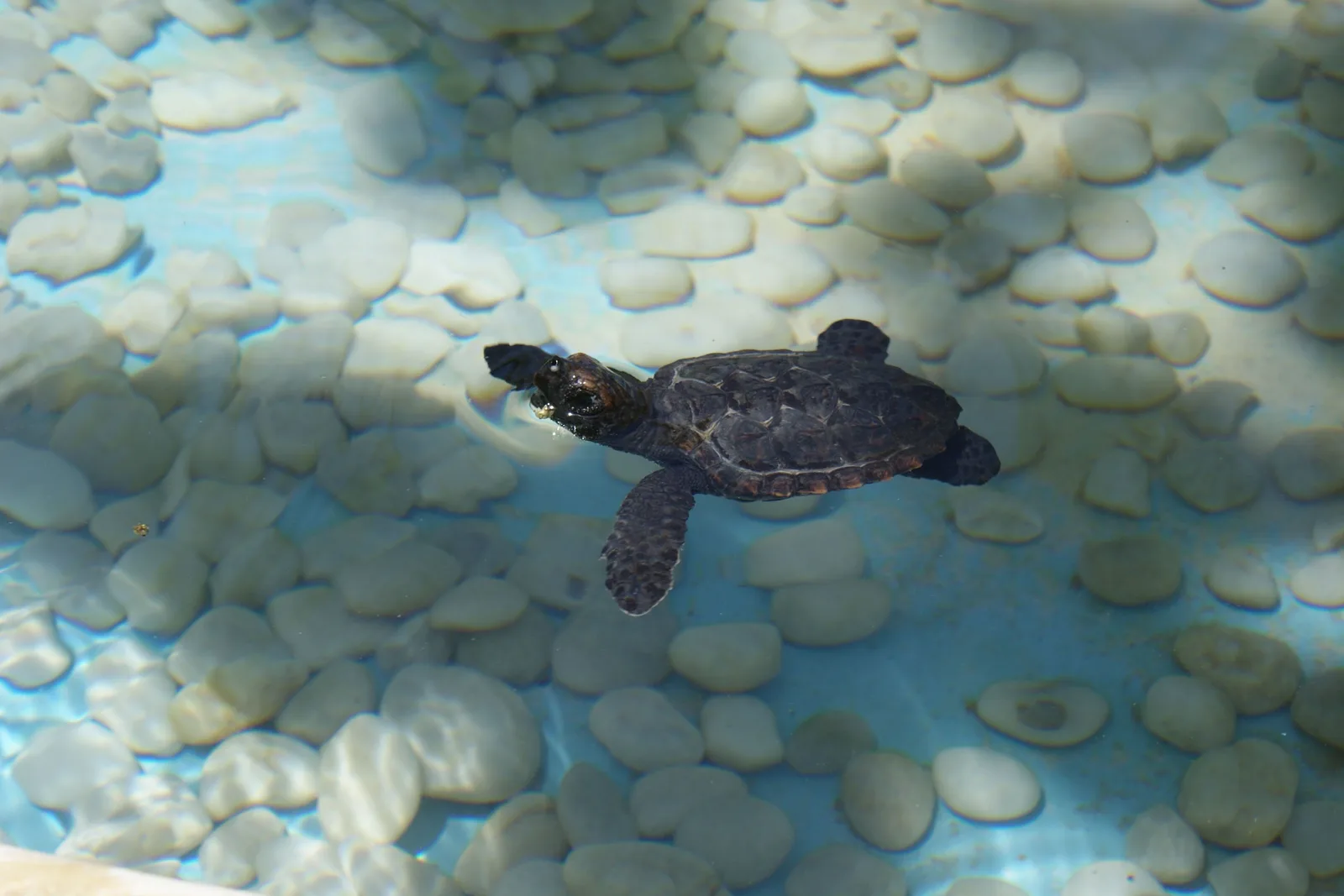
  • A young sea turtle swimming over pale pebbles in a clear pool at the Projeto Tamar center
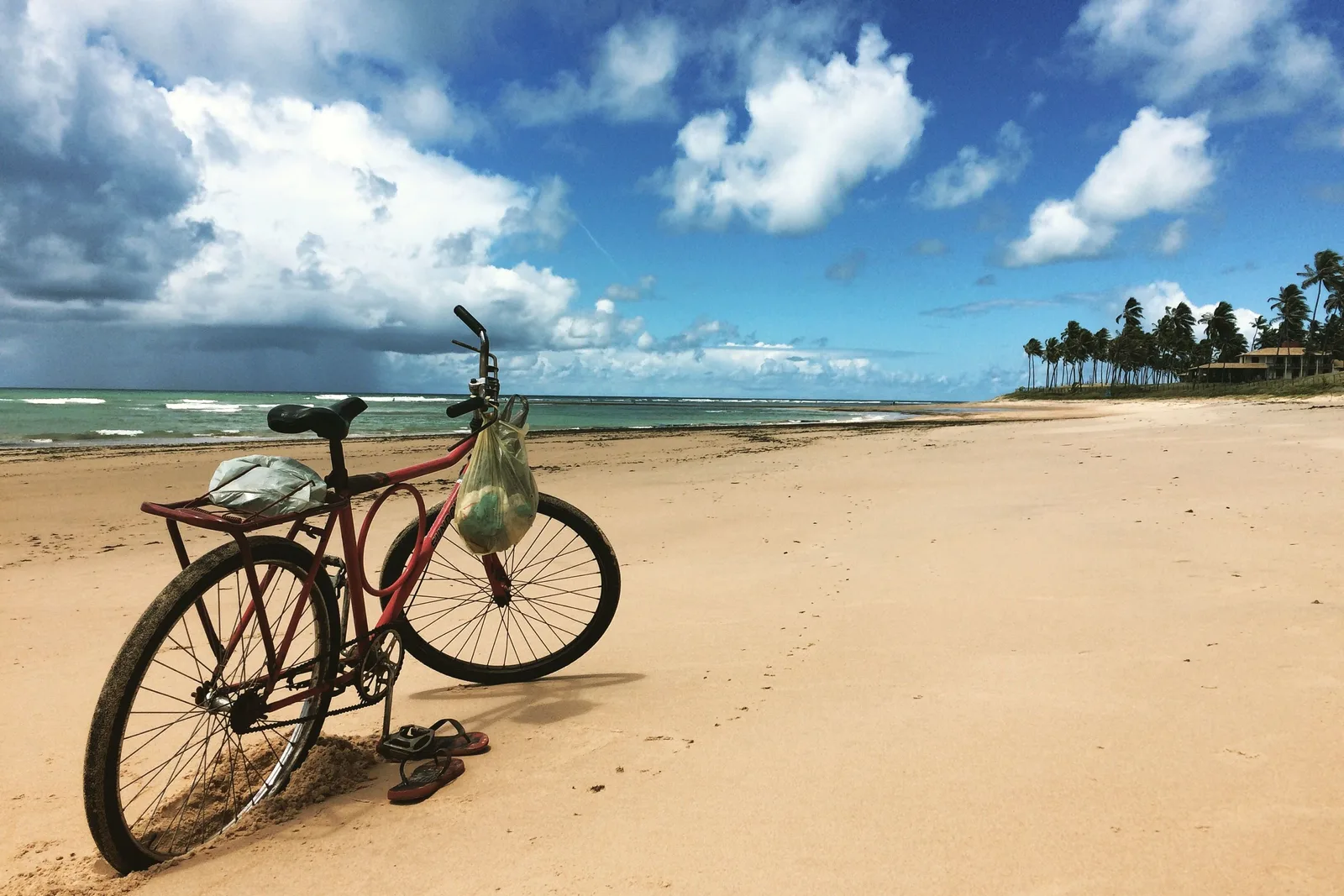
  • A bicycle standing on an empty stretch of Guarajuba beach under a big blue sky, palms along the shore
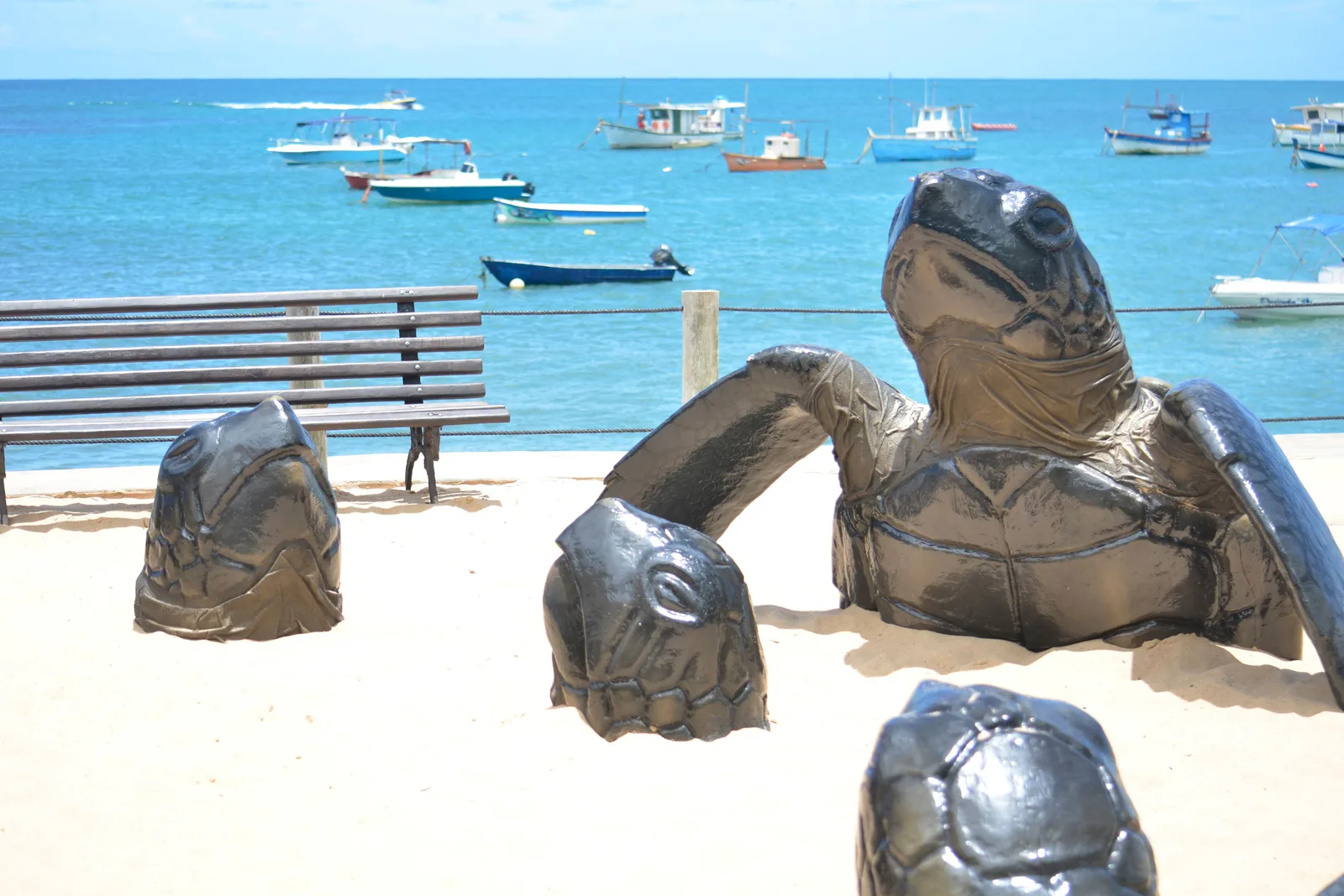
  • Metal sea turtle sculptures on the sand by the Projeto Tamar center, fishing boats moored beyond
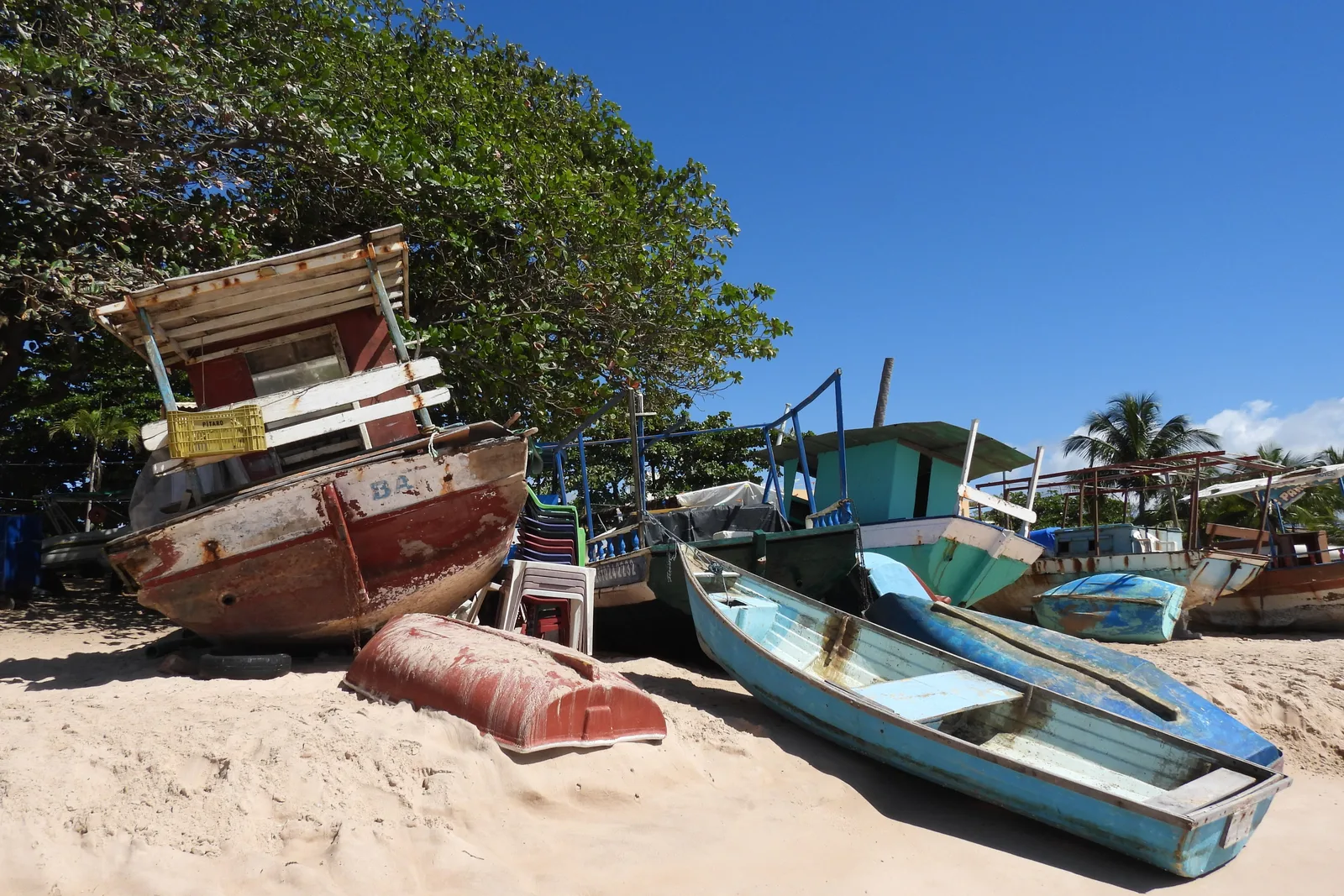
  • Painted wooden fishing boats pulled up under the trees on the beach at Itacimirim
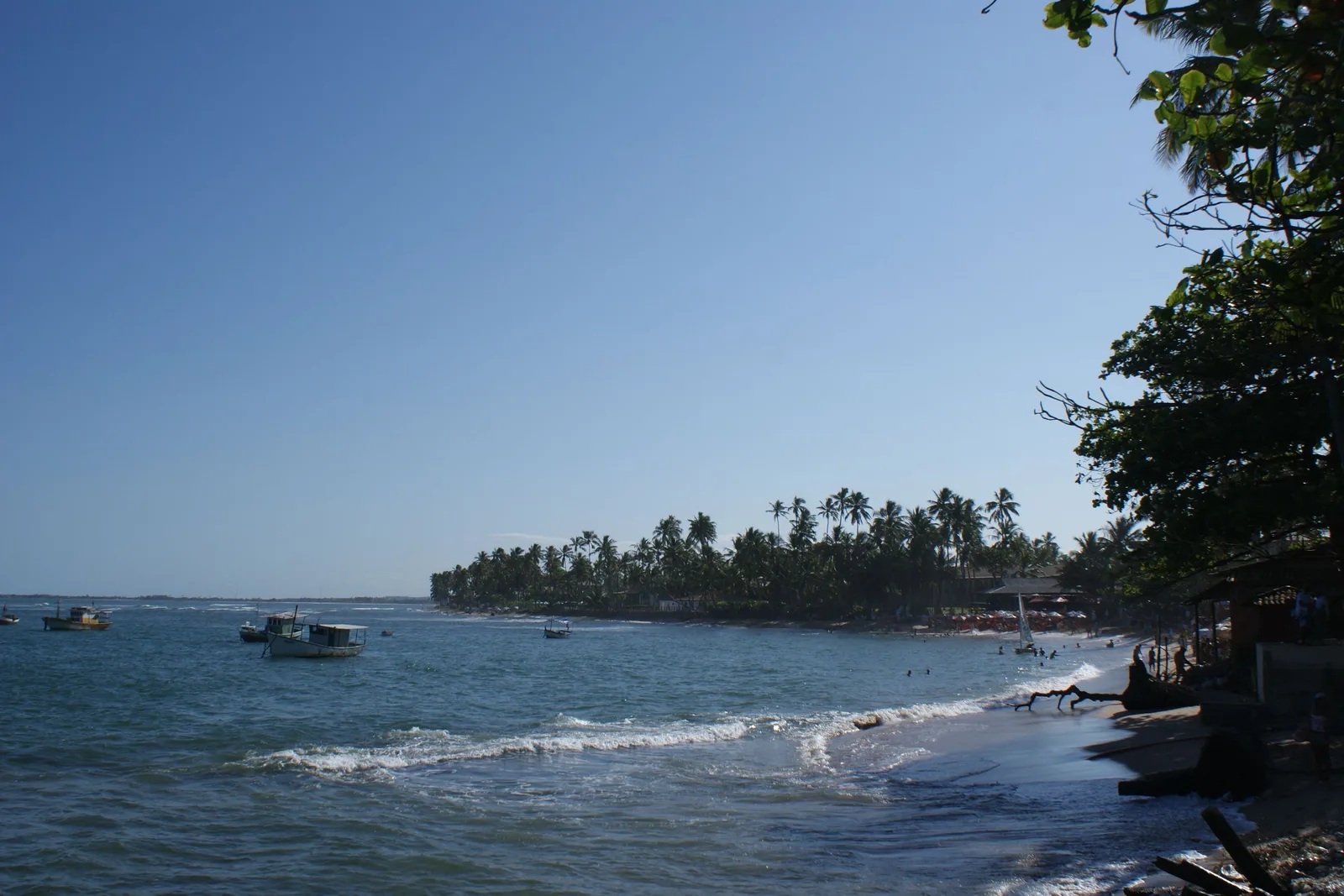
  • The shoreline at Praia do Forte, small boats on the water and a point lined with coconut palms
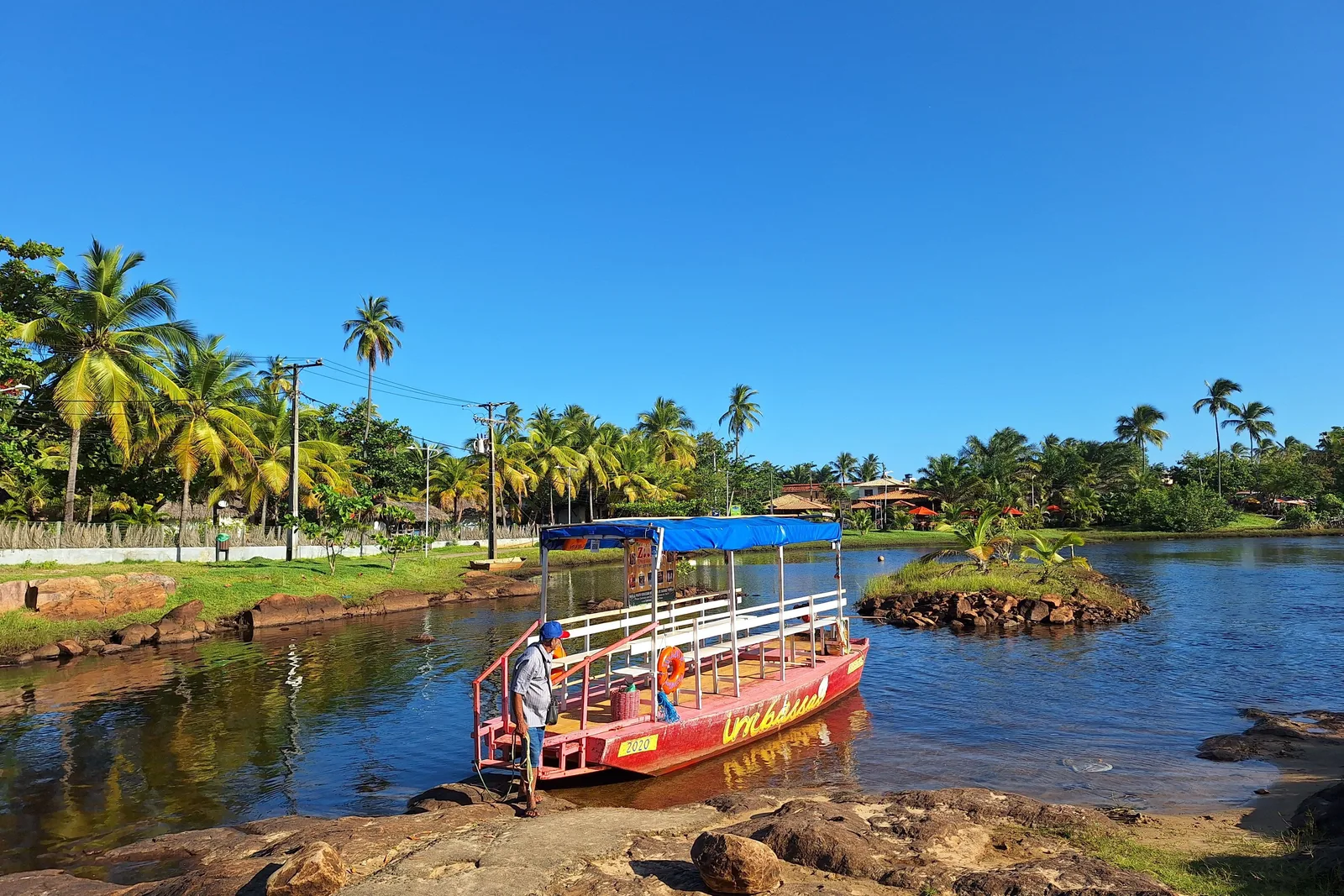
  • A red and blue river boat tied up on the Imbassaí river, palms along the bank

Orientation

The coast in one screen.

Everything logistical, before the pretty pictures start.

General Info

A village, and the coast it anchors

Praia do Forte is a village of a couple of thousand people on the coast of Bahia, an hour north of Salvador’s airport, and it is small enough that the whole of it fits in an afternoon: one sand-floored main street, a fishing beach with a white church above it, a line of reef a hundred meters offshore, and the country’s best-known sea-turtle station at the end of the road. It is a district of the municipality of Mata de São João rather than a town in its own right, and it has been a resort for barely two generations — before that it was coconuts and artisanal fishing.

What makes it worth four days rather than one is the coast either side. Praia do Forte sits at the hinge of the Costa dos Coqueiros, the 193-kilometer run of beach between Salvador and the Sergipe border, threaded the whole way by a single good road: the BA-099, called the Estrada do Coco south of the village and the Linha Verde north of it. Guarajuba and Itacimirim are fifteen to twenty minutes south, Imbassaí ten minutes north, the Costa do Sauípe resort strip twenty-five, and the empty dunes at Massarandupió a little beyond that. Nothing on this list is more than about forty minutes from the village.

The draw is wildlife first and beach second. Projeto TAMAR has its national headquarters here, humpback whales calve offshore from July to October, and turtles nest along these beaches from September to March. Add reef pools that appear at low tide, a genuine sixteenth-century castle in the scrub behind the village, and a street of restaurants that would not embarrass a much larger place, and you have the reason most Bahia itineraries put three or four nights here after Salvador.

Where It Is

Northeast Brazil, an hour above Salvador

Praia do Forte is on Bahia’s north coast, about 55 km from Salvador’s international airport and 80 km from the city itself. The whole trip is on one road, the BA-099, and it takes roughly an hour from the terminal in normal traffic.

Praia do Forte Praia do Forte

12.58° S, 38.01° W

See the Northeast on the interactive map

Cost

What a day on this coast costs

Praia do Forte is one of the more expensive places on the Bahian coast, and it does not pretend otherwise — the village trades on being pretty and being small. What moves the budget most is the choice between a pousada in the village and an all-inclusive resort on the beach, because those are two entirely different products at two entirely different prices. Season matters nearly as much: rooms between Christmas and Carnaval are a different market from rooms in September.

Estimated daily budget, outside the summer peak

Budget

$55 / day

A simple pousada away from the beach, meals at the plainer restaurants, the local bus, and the beaches and reef pools that cost nothing.

Mid-range

$120 / day

A good pousada in the village split two ways, dinners out, a rental car or a couple of guided trips, and TAMAR and the castle without thinking about it.

Comfortable

$260 / day

A beachfront resort room or an all-inclusive, private transfers, the whale boat in season, and the better tables on the Alameda do Sol.

Estimates, per person per day, once you are on the coast — flights not included. Christmas to Carnaval runs materially higher, and the good pousadas sell out months ahead of New Year.

What things cost, outside peak season

  • Pousada double in the village, low season $65 R$330
  • All-inclusive resort double, per night $290 R$1,480
  • Projeto TAMAR, adult admission $10.50 R$54
  • Garcia d’Ávila castle, adult admission $9.80 R$50
  • Whale-watching boat, per person $78 R$400
  • Quad-bike tour for two, half day $53 R$270
  • Private transfer from the airport, up to four $45 R$230
  • Airport bus to the village, per person $2 R$10
  • Rental car, compact, per day $28 R$145
  • Lunch for two at a simple restaurant $16 R$80
  • Dinner for two on the Alameda do Sol $55 R$280

The all-inclusives are priced per couple per night with food and drink included, so they compare less badly with a pousada plus restaurants than the headline number suggests. They are also 6 to 25 km from the village, which is the real trade.

Restaurants add a 10 percent service charge to the bill. It is customary rather than compulsory, and it is almost always already on the check rather than expected on top.

Cards work in the village and at the resorts, but carry some cash for the beach barracas, the smaller towns up the coast and the trailhead kiosks. Pix is what everyone local uses and foreign cards cannot join it.

Checked September 2026 and converted at R$5.10 to the dollar. Estimates, not quotes — the shape of a budget rather than a price you can hold anyone to.

Safety

Calm village, ordinary precautions

7 /10

Our rating — an easy place to be careless in, which is the main risk. Calmer than Salvador, and not a reason to relax about a bag on an empty beach.

The village is small, lit and busy in the evening, and walking the Alameda do Sol after dinner is the most normal thing in the world here. The risks are the ordinary ones of a resort strip: opportunistic theft from unattended bags, empty stretches of beach away from the village, and a highway with no lighting once the sun goes down. The wider municipality has a serious crime problem in some residential districts inland, which visitors never see and should not go looking for.

  • Do not leave anything on the sand while you swim, particularly north of the village where the beach empties out fast.
  • Walk the beach to Papa-Gente and back in daylight, and preferably not alone. It is a 1.5 km walk with nobody on it for long stretches.
  • The BA-099 is a good road and an unlit one. Driving between the coastal towns after dark is normal for locals and not the moment to be reading a map — leave the long drives for daylight.
  • The reef is the actual danger to your body. Wear something on your feet in the pools, do not walk on live coral, and check where the channels are before swimming outside the reef line.
  • Ride apps work in the village and thin out fast beyond it. Have the number of a local driver or your pousada’s transfer contact before you need one at 11:00pm.
  • Nothing about this coast requires the level of vigilance a big Brazilian city does. Carry a little cash, keep the phone in a pocket rather than a hand on the street, and you have done most of it.

Getting There

Fly into Salvador, then one road north

Everyone arrives through Salvador’s Deputado Luís Eduardo Magalhães airport (SSA). It is about 55 km from Praia do Forte, and conveniently on the north side of the city, so the drive skips Salvador entirely — you leave the terminal and are on the coast road within minutes.

  • There are no nonstop flights from the US to Salvador. Almost everyone connects through São Paulo (GRU), and there are also connections via Panama City, Lisbon and Rio.
  • A private transfer met at arrivals runs around R$230 for up to four people and takes 50 to 70 minutes. It is the frictionless option and the one most pousadas will arrange for you.
  • Expresso Linha Verde runs a public bus from the airport up the coast to the village for around R$10, but only a few departures a day — check the timetable before you plan around it.
  • A rental car makes sense if you intend to see more than the village. The BA-099 is a good divided highway with a toll, and the drive is genuinely easy.
  • Coming from Salvador itself rather than the airport adds 25 km and, in traffic, up to an hour.

Getting Around

The village on foot, the coast by car

Praia do Forte is a walking village — the main street is closed to through traffic and everything in it is within ten minutes on foot. The moment you want the rest of the coast, you need wheels.

  • The Alameda do Sol, TAMAR, the church, the beach and most of the pousadas are all in the same few hundred meters. You will not use a car inside the village.
  • The castle is 3 km inland from the village — a short taxi, a bike, or a hot walk in the middle of the day.
  • A rental car from about R$145 a day is the cheapest way to reach Imbassaí, Guarajuba, Sapiranga and Massarandupió on your own schedule.
  • Local vans and buses run up and down the BA-099 between the coastal towns for a few reais, frequently but not to a timetable you can build a day around.
  • Ride apps work in the village and at the bigger resorts. Coverage gets patchy in the smaller places up the coast, so book the return leg with the driver who brought you.
  • Almost every pousada and agency in the village sells the same set of guided trips, which is the easy way to do the reserve, the reef pools and the whale boat without driving.

The big four

What the village is actually built around.

Four places, all of them within a few kilometers of each other. Three of them existed long before the hotels did.

01

The reason most people have heard of this place

Projeto TAMAR

Open
Tuesday to Sunday, 11:00am–5:00pm
Admission
$10.50 · R$54 adult
Allow
1 to 2 hours

TAMAR is a national sea-turtle conservation program, running since 1980, which today protects about 1,100 km of nesting beach across nine states from 26 field stations. Praia do Forte is its headquarters, and it is here because these beaches are among the most important nesting grounds in Brazil — the visitor center was built beside the work, not the other way around.

What you actually walk through is an open-air complex of about 10,000 square meters around the old Garcia d’Ávila lighthouse, with something like 750,000 liters of saltwater in tanks and pools. Four of Brazil’s five sea-turtle species are there at different stages of life, along with rays, reef fish and nurse sharks, and the exhibits are unusually honest about what threatens the animals. It is a conservation station with a museum attached rather than a marine park, the ticket funds the program, and it is one of the ten most-visited museums in the country.
02

Built before there was a Brazil to build it in

Castelo Garcia d’Ávila

Built
1551 to 1624
Admission
$9.80 · R$50 adult
Allow
90 minutes to 2 hours

Garcia d’Ávila arrived in Bahia in 1549 with Brazil’s first governor-general and was granted land that eventually ran, on paper, from here to Maranhão. The tower he began in 1551 and his descendants finished in 1624 was the first substantial Portuguese civil building in the country, and it is the only structure in the Americas built in the medieval European manner — a fortified house rather than a fort, with a chapel beside it and ten generations of one family inside it.

What survives is a roofless shell on a rise about 3 km inland from the village, with the whitewashed Nossa Senhora da Conceição chapel standing more or less intact beside it. Walkways now run through the ruins, a compact interactive museum holds the archaeological finds, and on Friday to Sunday evenings a projection show is mapped onto the walls after dark. The view from the top of the hill takes in the whole coastal plain to the sea.

03

A beach that changes shape twice a day

The reef pools at Papa-Gente

Where
1.5 km north along the sand
Needs
A tide under about 0.4 m
Take
Reef shoes, a mask, water

A reef runs parallel to this whole stretch of coast a short way offshore, and at low tide the water drains off the top of it and leaves a chain of clear, waist-deep pools between the coral heads. The best of them is at Papa-Gente, about 1.5 km north of TAMAR along the sand, and there are smaller ones closer in at Praia do Lord and Pedra do Chapéu, in front of the village itself.

This is entirely a matter of the tide table rather than the weather — the pools appear when the tide drops below roughly 0.4 meters and are gone a few hours later, so check the day’s tides before you set out and walk up on a falling tide rather than a rising one. Wear something on your feet, the coral is sharp and alive, and expect small reef fish rather than a snorkeling site.

04

One sand street, and the whole village on it

The Alameda do Sol and the Portinho

What
The village’s pedestrian main street
Runs
From Avenida do Farol to the sea
Best at
After 6:00pm, when it fills

The Alameda do Sol is the village in one line: a few hundred meters of sand-floored pedestrian street running down to the sea, lined with pousadas, craft shops, ice-cream counters and the best restaurants on this coast. It is genuinely closed to cars, which is why the evening here feels like nowhere else on the Bahian coast — the whole village, guests and residents alike, ends up walking the same street after dark.

At the seaward end it opens onto the Portinho, the working beach where the fishing boats are pulled up, with the small blue-and-white church of São Francisco de Assis on the rise above it and the fishermen’s colony beside it. Go early and it is a working harbor; go at dusk and it is the best view in the village.

What to actually do

One village, forty kilometers of coast.

Pick a category, then scroll sideways through it. Everything here is a half day or less from the village, and most of it depends on the tide, the season or both.

Wildlife

  • Praia do Forte · late afternoon · hatching season

    Hatchling release at Projeto TAMAR

    Turtles hatch at night, and the following morning TAMAR opens the nests to count them and collects the few that could not climb out. Those are released on the beach beside the visitor center in the late afternoon, usually around 5:00pm, in front of whoever is standing there. It happens during the hatching months rather than on a schedule, so ask at the gate that morning — and do not expect it in September or October, when the same beaches are still being dug up rather than emptied.

  • From the village beach · 2 to 3 hours · July to October

    Whale watching off Praia do Forte

    Humpbacks migrate up this coast from Antarctica to calve in warm water, and Bahia counts them in the tens of thousands across a season that runs from July into October, peaking in August and September. Boats leave from the beach in front of TAMAR after a briefing at the whale institute; operators have to be accredited, sighting rates are quoted above 90 percent, and if you see nothing you are usually offered another sailing rather than a refund. The sea can be lively — take the pill before you board, not after.

  • Avenida do Farol · 1 hour

    Espaço Baleia Jubarte

    The Humpback Whale Institute’s interpretive center, a few minutes’ walk from the village, and the only place in Brazil dedicated to these animals. The garden holds a full humpback skeleton and life-size replicas caught mid-behavior, with an auditorium running footage from the research boats. It is the right hour to spend the day before a whale trip, and the obvious consolation if the sea is too rough to sail.

  • Sapiranga Reserve · half day

    Canoeing on Lagoa Timeantube

    A shallow freshwater lagoon behind the coast, inside the Sapiranga reserve, paddled in Canadian canoes with a stop on an island in the middle. It is the birdwatching trip on this coast — herons, kingfishers, jacanas and, if the light is right, capybara on the bank — and it is flat, quiet water that suits families. Mornings are calmest and the best for birds.

Beaches

  • Praia do Forte · any afternoon

    The village beaches

    The stretch in front of the village is broken into small named beaches, each with a different personality inside a fifteen-minute walk. The Portinho, below the church, is where the boats are and where the water is calmest. Pedra do Chapéu and Praia do Lord, just north, both have their own reef pools at low tide and thinner crowds. Barracas along the sand hand out chairs, cold beer and fried fish, and the reef keeps the surf small enough for children almost everywhere.

  • 10 km north · half day

    A day at Imbassaí

    The best single beach day on this coast. A tea-colored river runs behind the dunes at Imbassaí for a couple of kilometers before it finally cuts through to the sea, so you get warm shallow river on one side of a sand bar and open Atlantic on the other, with barracas on the bank between them. Small boatmen ferry people across the river for a few reais, and the village itself is one sand street of pousadas — a quieter, plainer version of Praia do Forte fifteen years ago.

  • 17 to 25 km south · half day

    Guarajuba and Barra do Jacuípe

    The two family beaches south of the village, and the closest good sand to the airport. Guarajuba is the developed one — reef-sheltered water, a proper crescent of beach, condominiums behind it and enough kiosks to spend a whole day. Barra do Jacuípe, a few kilometers further down, is where the Jacuípe river meets the sea against a backdrop of dunes and mangrove, and is emptier, plainer and better for a long walk.

  • 35 km north · full day

    Massarandupió

    The wild one. Massarandupió is reached by turning off the Linha Verde onto 7 km of dirt road and then walking through the dunes, and what you get for the effort is a long empty beach backed by white dune fields with two rustic barracas on it and nothing else. It is also Bahia’s only officially sanctioned naturist beach — that applies to a marked 2 km section, and the rest of the beach is ordinary. A high-clearance car helps, and it is not a trip to make in the rain.

  • 12 km south · half day

    Surfing at Itacimirim

    The reef that keeps Praia do Forte’s water flat gives out around Itacimirim, and the beach there picks up proper Atlantic swell — which is why the surf schools are down there rather than in the village. It is a long, thinly built stretch of sand between the road and the sea, with a handful of pousadas, a river mouth at the north end and none of the Praia do Forte polish. Boards are rented on the beach.

On the Water

  • From the village beach · 2 to 3 hours · July to October

    Whale watching off Praia do Forte

    Humpbacks migrate up this coast from Antarctica to calve in warm water, and Bahia counts them in the tens of thousands across a season that runs from July into October, peaking in August and September. Boats leave from the beach in front of TAMAR after a briefing at the whale institute; operators have to be accredited, sighting rates are quoted above 90 percent, and if you see nothing you are usually offered another sailing rather than a refund. The sea can be lively — take the pill before you board, not after.

  • 10 km north · half day

    A day at Imbassaí

    The best single beach day on this coast. A tea-colored river runs behind the dunes at Imbassaí for a couple of kilometers before it finally cuts through to the sea, so you get warm shallow river on one side of a sand bar and open Atlantic on the other, with barracas on the bank between them. Small boatmen ferry people across the river for a few reais, and the village itself is one sand street of pousadas — a quieter, plainer version of Praia do Forte fifteen years ago.

  • 12 km south · half day

    Surfing at Itacimirim

    The reef that keeps Praia do Forte’s water flat gives out around Itacimirim, and the beach there picks up proper Atlantic swell — which is why the surf schools are down there rather than in the village. It is a long, thinly built stretch of sand between the road and the sea, with a handful of pousadas, a river mouth at the north end and none of the Praia do Forte polish. Boards are rented on the beach.

  • Praia do Lord and Papa-Gente · 2 hours

    Snorkeling the reef pools

    At the bottom of the tide the pools north of the village are clear, warm and barely chest deep, and the coral heads in them hold sergeant majors, wrasse, urchins and the occasional small ray. Agencies in the village run guided outings timed to the tide and hand out fins and masks; doing it yourself costs nothing beyond a mask and a pair of reef shoes. Sunscreen off, rash guard on — the reef takes the chemicals badly and your back burns in twenty minutes.

  • Sapiranga Reserve · half day

    Paddling the Rio Pojuca

    The Pojuca runs down behind the coast through the reserve, dark, flat and overhung with forest, and the gamboa — a wide, calm bend with a sand bank on the inside — is the swimming hole locals use. Kayaks and stand-up boards go out from the reserve, and the same river a few kilometers upstream has rapids and the wooden fishing bridges the trails are named after.

Nature & Trails

  • Sapiranga Reserve · half day

    Canoeing on Lagoa Timeantube

    A shallow freshwater lagoon behind the coast, inside the Sapiranga reserve, paddled in Canadian canoes with a stop on an island in the middle. It is the birdwatching trip on this coast — herons, kingfishers, jacanas and, if the light is right, capybara on the bank — and it is flat, quiet water that suits families. Mornings are calmest and the best for birds.

  • 35 km north · full day

    Massarandupió

    The wild one. Massarandupió is reached by turning off the Linha Verde onto 7 km of dirt road and then walking through the dunes, and what you get for the effort is a long empty beach backed by white dune fields with two rustic barracas on it and nothing else. It is also Bahia’s only officially sanctioned naturist beach — that applies to a marked 2 km section, and the rest of the beach is ordinary. A high-clearance car helps, and it is not a trip to make in the rain.

  • Sapiranga Reserve · half day

    Paddling the Rio Pojuca

    The Pojuca runs down behind the coast through the reserve, dark, flat and overhung with forest, and the gamboa — a wide, calm bend with a sand bank on the inside — is the swimming hole locals use. Kayaks and stand-up boards go out from the reserve, and the same river a few kilometers upstream has rapids and the wooden fishing bridges the trails are named after.

  • 5 km from the village · half day

    Trails in the Sapiranga Reserve

    Nearly 600 hectares of restinga and Atlantic forest behind the beach, and the best walking on this coast. The short Gameleira trail leads to an enormous fig tree — sacred in Candomblé, and a reliable place to find sloths — while the 6 km Corredeiras trail runs out to the rapids on the Pojuca and an 8 km continuation crosses seven wooden bridges built by the river fishermen. There is a zip line over the canopy for anyone who would rather look down at it.

  • From the village · 2 to 3 hours

    Quad-bike tour along the coast

    The standard way to cover ground here that a car cannot: sand tracks between the village and the reserve, dune crossings, the coconut plantations behind the beach and a river stop. Operators in the village run them all day, two to a machine, with a guide leading. It is dusty, noisy fun rather than a nature outing, and it is the trip most families end up doing on the day the tide is wrong for the pools.

Village & Culture

  • Avenida do Farol · 1 hour

    Espaço Baleia Jubarte

    The Humpback Whale Institute’s interpretive center, a few minutes’ walk from the village, and the only place in Brazil dedicated to these animals. The garden holds a full humpback skeleton and life-size replicas caught mid-behavior, with an auditorium running footage from the research boats. It is the right hour to spend the day before a whale trip, and the obvious consolation if the sea is too rough to sail.

  • Alameda do Sol · long lunch or dinner

    Moqueca at a village restaurant

    Bahian food is its own cuisine and this is the coast to eat it on: moqueca — fish or prawns stewed in coconut milk, dendê palm oil, tomato and cilantro, served bubbling in a clay pot with rice and farofa — plus acarajé from a street stall, casquinha de siri, and grilled fish straight off a barraca. The village restaurants know exactly what they are and are priced accordingly; the plainer places one street back from the Alameda serve the same fish for half of it.

  • Garcia d’Ávila · Friday to Sunday evenings

    The castle after dark

    From Friday to Sunday the castle stays open past sunset and a projection show is mapped onto the ruined walls — four centuries of the building’s history thrown across the stone it happened in, with the sound working around the chapel and the old fig tree. It is a different visit from the daytime one, it fills up on Saturdays, and the drive back into the village afterwards takes ten minutes.

  • 80 km south · full day

    A day in Salvador

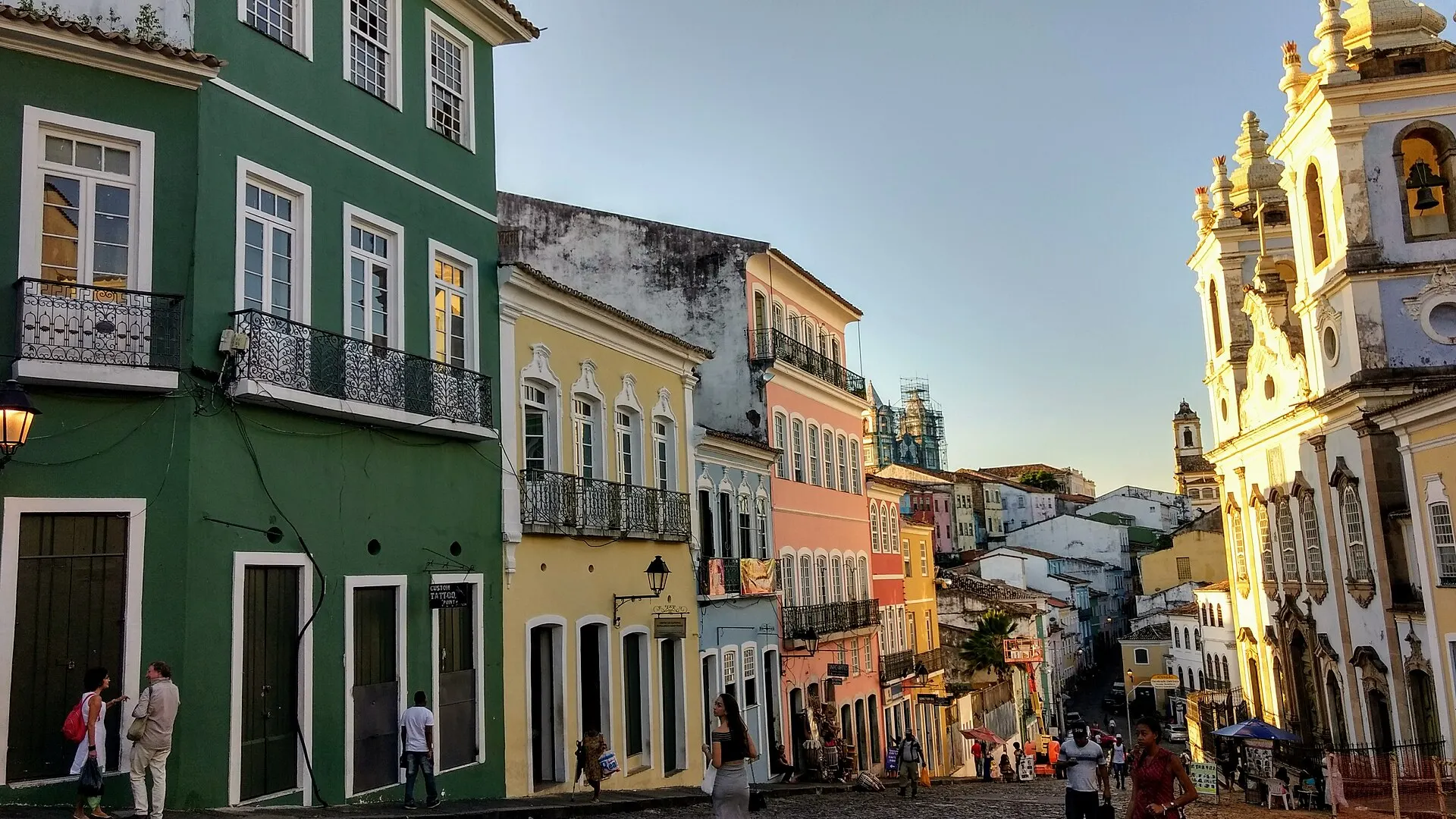
    The city is an hour and a half each way and it is a completely different Brazil: the Pelourinho’s painted colonial streets, the Elevador Lacerda, Bonfim church and the best museums in the Northeast. Plenty of people do it as a day trip from a beach base, and plenty do the reverse and come here for two nights out of a Salvador trip. If you have not built Salvador into the itinerary properly, one long day is much better than nothing.

Where to stay

Forty kilometers, four very different trips.

Everything below sits on the same road within about half an hour of Praia do Forte, and they are not interchangeable. The choice is really between walking to dinner and being driven to it.

Drag and zoom to explore.

Tap an area to open it and see it on the map

  • Our pick

    Best for: Walking to everything

    The only base on this coast where you can leave the room, walk to TAMAR, the beach, twenty restaurants and a bar with live music, and walk home again. Pousadas run from simple to very comfortable, the Tivoli Ecoresort sits on the beach at the edge of the village, and the two Iberostar all-inclusives are a few kilometers north of it. You pay a premium for the address and it is the one we would give a first-time visitor.

    • Alameda do Sol
    • Portinho
    • Pousadas
    • Tivoli
    • Iberostar
  • Best for: Quiet, and a river behind the beach

    Ten minutes north, and a decade behind Praia do Forte in the best sense: a small sand-street village between a dark river and a long dune-backed beach, a handful of pousadas, and the Grand Palladium all-inclusive in its own reserve just up the coast. Tiny Diogo and Santo Antônio, on the track beyond it, are quieter still. The trade is that dinner options run out early and you will drive for anything else.

    • Imbassaí
    • Grand Palladium
    • Diogo
    • Santo Antônio
  • Best for: All-inclusive, and never leaving

    A purpose-built resort complex 25 minutes north of the village: several large all-inclusive hotels around shared pools, restaurants, a spa and a sports center, with a long beach in front and effectively nothing within walking distance outside the gates. It is excellent value for a family who wants one wristband and no decisions, and a poor choice for anyone who wants to eat in a village.

    • Sauípe Resorts
    • All-inclusive
    • Families
    • Golf
  • Best for: Beach houses, and the shortest transfer

    The stretch between the airport and Praia do Forte, and where Salvador itself goes to the beach. Guarajuba is the busiest of the coast’s towns after Praia do Forte, built around gated condominiums and rental houses rather than hotels, with calm reef-protected swimming. Itacimirim and Barra do Jacuípe either side of it are quieter and better for surf and long walks. Good for a group renting a house; short on restaurants and atmosphere.

    • Guarajuba
    • Itacimirim
    • Barra do Jacuípe
    • House rentals

A working plan

Four days, one for each part of the coast.

Three days covers the village properly and the fourth is what turns it into a coast trip. Check the tide table before you fix the order — the reef pools decide their own day, and everything else moves around them.

  1. 01

    Praia do Forte village

    Land, and learn the village

    An hour from the airport, drop the bags and walk. The Portinho and the church, an afternoon on the sand in front of the village, then dinner on the Alameda do Sol while it fills up.

  2. 02

    Projeto TAMAR & Garcia d’Ávila

    Turtles, then four centuries of stone

    TAMAR when it opens at 11:00am, and stay for the release if there is one. The castle in the late afternoon for the light and the view, and on a Friday or Saturday stay on for the projection show.

  3. 03

    Papa-Gente & offshore

    Whatever the tide and the season give you

    The flexible day. Walk north to the reef pools at the bottom of the tide, or take the whale boat if it is between July and October — the two rarely want the same morning.

  4. 04

    Imbassaí, Sapiranga & the dunes

    North up the Linha Verde

    Out of the village for the day. The trails or the canoe lagoon at Sapiranga in the morning, then the river beach at Imbassaí, or push on to the dunes at Massarandupió if you have a car and the weather is right.

This is a starting shape, not a fixed departure — we rearrange it around your dates. Have it built for you

Timing

Warm all year. Wet for a third of it.

This coast has no cold season and no real dry season either — it has a wet stretch and a bright one. The bright one runs from September through January, and October is the month inside it worth building a trip around: it is when the turtles start nesting and the last whales are still going by.

How hot, how wet and how good each month is on Bahia’s Costa dos Coqueiros. Choose a month for its average air and sea temperatures and what the coast is like then.

January

Good
Air
22–31°C 72–88°F
Sea
27°C 81°F
UV
9 Very high
Rain
9 days 87 mm / 3.4 in

Hot and bright at 87 mm across nine wet days, one of the driest months of the year, and Brazilian holidays fill the village.

February

Good
Air
22–31°C 72–88°F
Sea
28°C 82°F
UV
11 Extreme
Rain
9 days 102 mm / 4.0 in

Hot with more showers, the warmest sea of the year, and hatchlings reaching the sand most evenings.

March

Good
Air
23–31°C 73–88°F
Sea
28°C 82°F
UV
10 Very high
Rain
12 days 144 mm / 5.7 in

The rain starts building in earnest, but it is still hot and still swimmable, and the crowds have gone.

April

Trade-offs
Air
22–30°C 72–86°F
Sea
28°C 82°F
UV
8 Very high
Rain
16 days 227 mm / 8.9 in

Properly wet: 227 mm across sixteen wet days. Warm, green and cheap, with the sea at its warmest.

May

Trade-offs
Air
22–29°C 72–84°F
Sea
27°C 81°F
UV
7 High
Rain
17 days 244 mm / 9.6 in

The wettest month of the year at both nearby stations. Still 29 degrees, and the trip works only if rain does not spoil it for you.

June

Trade-offs
Air
20–27°C 68–81°F
Sea
26°C 79°F
UV
6 High
Rain
19 days 233 mm / 9.2 in

Cooler and still very wet, with the most wet days of any month, and the São João festivities filling the second half.

July

Trade-offs
Air
20–27°C 68–81°F
Sea
26°C 79°F
UV
7 High
Rain
19 days 185 mm / 7.3 in

Less rain by volume than June but just as many wet days, nineteen: short showers rather than long ones. Whale season opens.

August

Trade-offs
Air
19–27°C 66–81°F
Sea
25°C 77°F
UV
8 Very high
Rain
18 days 140 mm / 5.5 in

The tail of the wet stretch, and the coolest month of the year at both nearby stations. Humpbacks offshore, and the coolest sea.

September

Good
Air
20–28°C 68–82°F
Sea
25°C 77°F
UV
9 Very high
Rain
11 days 103 mm / 4.1 in

The rain drops away. Turtle nesting season opens and the whales are still going by. An excellent month.

October

Best
Air
21–29°C 70–84°F
Sea
26°C 79°F
UV
10 Very high
Rain
7 days 86 mm / 3.4 in

The best all-round month on this coast: 86 mm across seven wet days and 209 hours of sun, second only to January, and the one month the last humpbacks and the first nesting turtles overlap.

November

Good
Air
22–30°C 72–86°F
Sea
26°C 79°F
UV
9 Very high
Rain
9 days 112 mm / 4.4 in

Hot and green at 112 mm across nine wet days, with turtles nesting along these beaches and prices still below the summer rates.

December

Good
Air
22–31°C 72–88°F
Sea
27°C 81°F
UV
10 Very high
Rain
6 days 75 mm / 3.0 in

The driest month of the year at both nearby stations, 75 mm across six wet days. Quiet until about the 20th, after which the village is full and expensive.

  • Best The one or two peak months
  • Good A real recommendation
  • Trade-offs Workable, with a catch
See Praia do Forte on the Brazil calendar

UV is the monthly average of the daily peak, 2022 to 2025, calculated from Copernicus Atmosphere Monitoring Service data. Weather data by Open-Meteo.com, CC BY 4.0.

For dry, bright days

September–January, and October is the pick

The lightest rain of the year, 75 to 112 mm a month across six to eleven wet days, warm water, and turtle nesting starting up along the same beaches. October wins it narrowly: December is drier, at 75 mm against 86, but October is the one month the last humpbacks and the first nesting turtles overlap.

For humpback whales

July–October

The migration season. The official Praia do Forte whale page gives July to October and names no peak month, and neither does the Instituto Baleia Jubarte, so nor do we. July and August are wet months and the boats still run most days.

The wet stretch

April–July

May is the wettest month at 244 mm, and June has the most wet days of the year at nineteen. Warm throughout, and not washed out — but plan around showers.

About the rain

The figures above are INMET 1981–2010 normals for Camaçari, the next municipality south and the nearest station with a long record; Praia do Forte, in Mata de São João, has none of its own. The wet season here is real and it is long. From April to July the coast takes 185 to 244 mm a month across sixteen to nineteen rainy days, which means rain on most days rather than a few days being written off. The temperature barely moves — highs stay between 27 and 31 degrees all year — so this is a question of what a wet afternoon does to your plans rather than of being cold.

September through January is the other half of the story: 75 to 112 mm a month across six to eleven rainy days, the lightest and brightest stretch of the year, with the sea at 25 to 27 degrees and the UV index very high in every one of those months. December is the driest month of it, and October the one with the wildlife. Even then, this is a coast classified as having no dry season: pack for showers in any month and you will not be caught out.

The dates worth planning around

Sea turtle season

Nesting from September; hatchlings November to April

Females come ashore at night from September, and the hatchlings that follow reach the sand from November through April. Projeto TAMAR publishes those windows for this coast and names no peak month inside them, so neither do we. Loggerheads are the main nesters here, along with hawksbill and olive ridley. TAMAR marks and monitors the nests along these beaches, and releases the stragglers it collects on the beach beside the visitor center in the late afternoon.

Humpback whale season

July to October, peaking in August and September

Humpbacks leave Antarctic feeding grounds and come up to Bahia’s warm shallow water to calve and breed. The state expects tens of thousands of animals to pass along its coast in a season, and Praia do Forte is one of the closest points to watch them from — the boats are out within half an hour of leaving the beach. Trips are run only by operators accredited by the whale institute, whose center is in the village.

São João

Mid-to-late June, peaking on the 23rd and 24th

Bahia’s biggest party outside Carnaval, and much more of an interior tradition than a coastal one — which is exactly why it is worth catching here. Mata de São João, the municipality Praia do Forte belongs to, runs a full week of forró on a main square, and the village itself strings up bunting, sets out corn and cane liquor and puts bands on for a few nights. It falls in the wettest part of the year, which nobody local seems to mind.

Good to know

Before you come

How many days do I need in Praia do Forte? +

Three to four. The village itself is genuinely small — one main street, one turtle station, one beach — and two full days covers it comfortably, including the castle. The reason to stay a third and fourth night is the coast: the reef pools only appear at certain tides, the whale boats only run from July to October, and Imbassaí, the Sapiranga reserve and the dunes at Massarandupió are each a half day out of the village. Four nights is the number that lets the tide and the weather move things around without costing you anything. One night is a day trip with a hotel attached, and people who do it usually wish they had stayed.

Will I actually see sea turtles? +

At the TAMAR visitor center, yes, in any month — four of Brazil’s five species live in the open-air tanks there. On the beach it depends on the calendar. Females nest along these beaches from September to March, peaking in November and December, and they come ashore at night. Hatchlings emerge from late January into April, and TAMAR releases the ones it collects from opened nests on the beach beside the center in the late afternoon, usually around 5:00pm, when there are any. Nothing about the wild side of it runs to a schedule, so ask at the gate on the day rather than booking a trip around it.

Is Praia do Forte worth doing as a day trip from Salvador? +

It works, and it is not the best version of the place. An hour and a half each way from the city gets you TAMAR, lunch on the Alameda and a couple of hours on the sand, which is a good day out and is what most Salvador tour operators sell. What you miss is everything that depends on timing: the reef pools at low tide, the castle at dusk, the release on the beach at 5:00pm, the village after dark when the day-trippers have gone. If your trip has three spare nights, spend them here and treat Salvador as the day trip instead.

Do I need to rent a car? +

Not if you are staying in the village and content with it. Everything inside Praia do Forte is walkable, the castle is a cheap taxi, and every pousada sells guided trips to the reserve, the reef pools and the whale boats. Rent a car if you want the rest of the coast on your own schedule — Imbassaí, Guarajuba, the dunes at Massarandupió — because the buses between the coastal towns run frequently but not to a timetable you can plan a day around. From about R$145 a day it is often cheaper than two transfers, and the BA-099 is a good, straightforward road. The one caution is that it is unlit at night.

Praia do Forte, Imbassaí, or one of the big resorts? +

Praia do Forte for a first visit, because it is the only base on this coast you can walk around: restaurants, bars, the beach and TAMAR all within a few hundred meters, and no car needed to have dinner. Imbassaí if you want the same coast quieter and plainer, with a river behind the beach and a fraction of the people — accepting that you will drive for choice. Costa do Sauípe or one of the other all-inclusives if the point of the trip is a wristband, a kids’ club and never making a decision, accepting that the gate is 25 minutes from anything. Guarajuba and Itacimirim, closer to the airport, are where you rent a house rather than a room.

Keep going

Where this coast fits in a bigger trip.

Praia do Forte is an add-on rather than a whole holiday, and it attaches to two obvious things: the city an hour down the road, and the flight south afterwards.

Free · 29 pages

Free guide

Beginner's Guide to Brazil

A free 29-page guide to everything a first-time visitor should know before landing: visas, safety, money, getting around, where to go, and what to eat.

We'll email you a link to confirm your address. Click it and the guide opens right away.

See what's inside

Skip the planning

Get the coast in the right order.

Tell us your dates and how much beach you actually want beside the cities. We will shape a private Bahia itinerary around it — the right base on this coast for your group, the tide-dependent days placed where they can move, and the whale boats and transfers booked before the season fills.

  • One person, living in Brazil, replying to you directly
  • A reply within one business day — no call center, no bots
  • No cost to plan, and no obligation to book
  • Built around your dates, not a fixed departure