

Skip to content
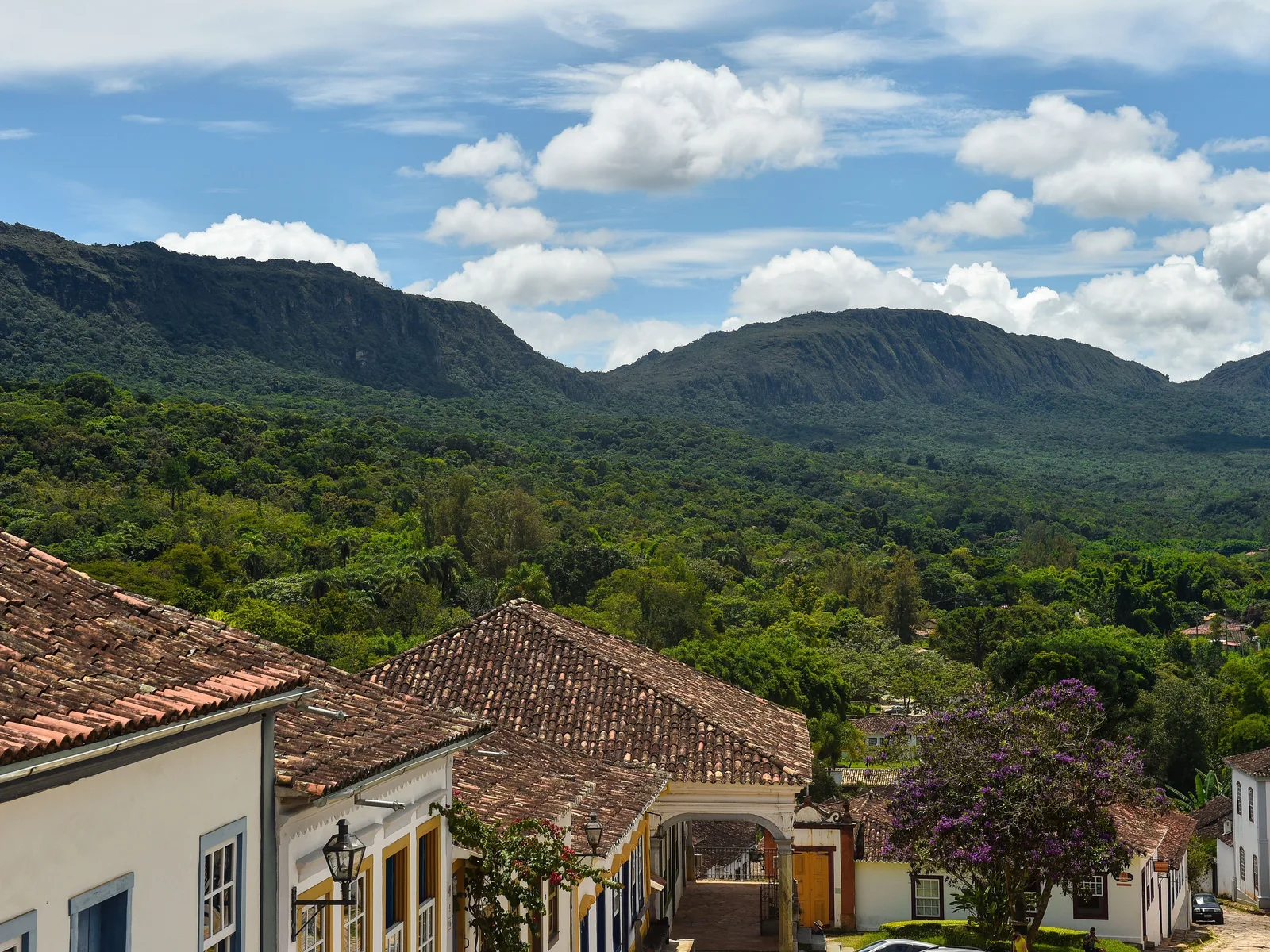
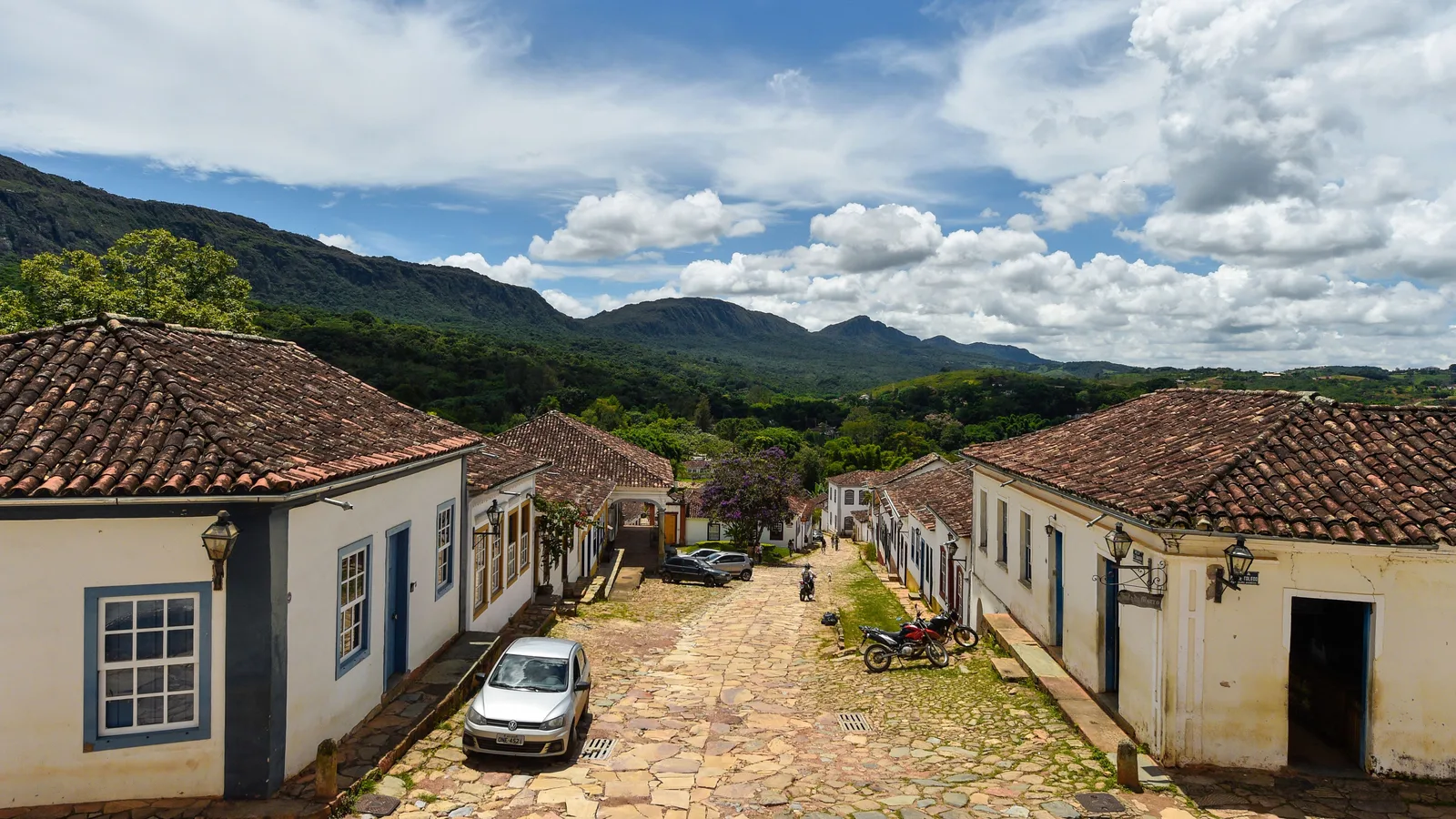
A cobbled street running downhill through Tiradentes between whitewashed colonial houses with red pantile roofs and blue-framed windows, a car and two motorbikes parked along it, and the long wooded ridge of the Serra de São José across the valley under tall white cloud

Minas Gerais

Tiradentes & São João del-Rei

Two gold towns, thirteen kilometers apart, joined by a steam train.

Last checked September 2026

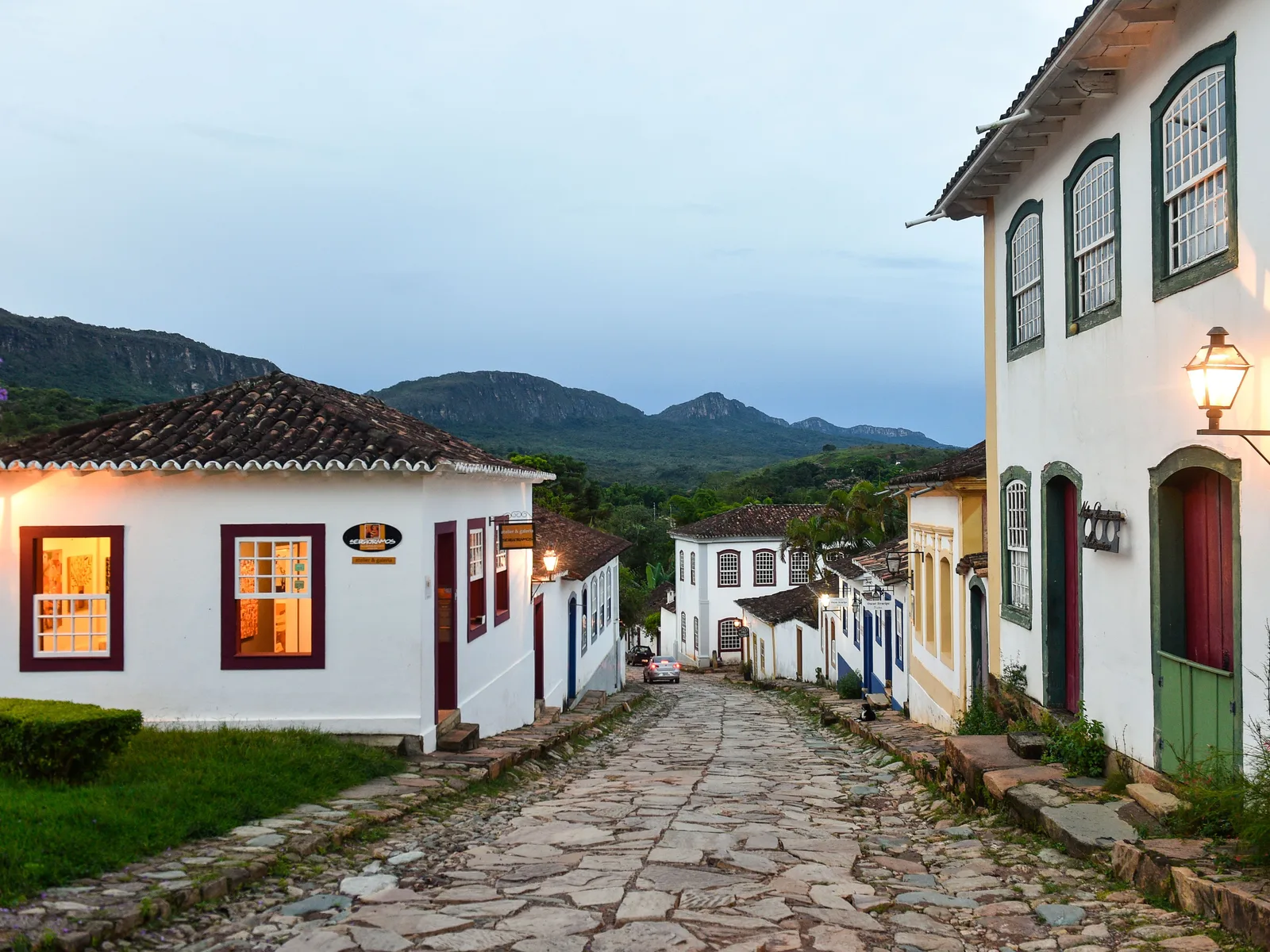
  • A cobbled street in Tiradentes falling away between whitewashed colonial houses, with the wooded ridge of the Serra de São José beyond
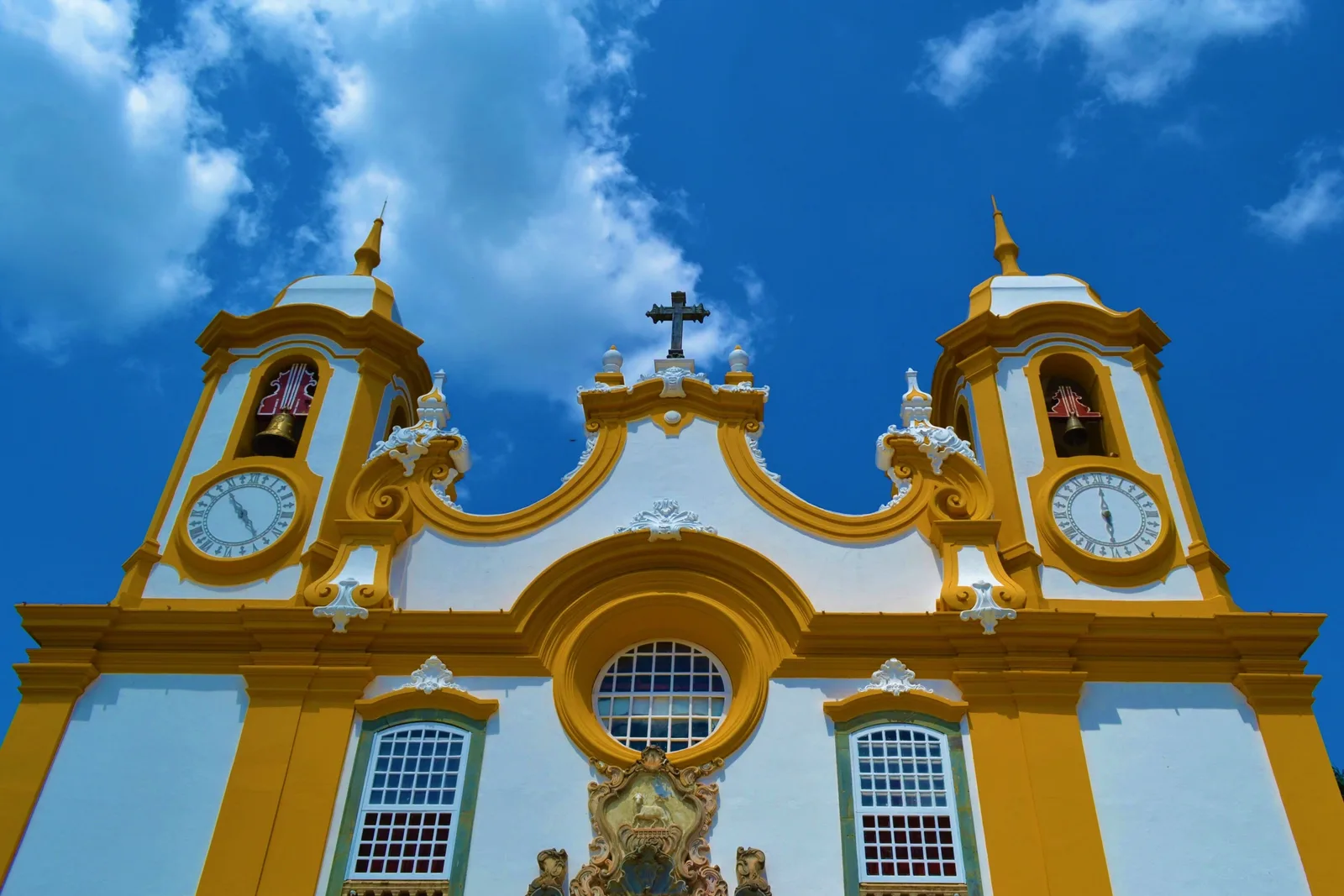
  • The upper facade of the Matriz de Santo Antônio in close-up: two yellow-and-white bell towers with clock faces and a carved gable between them against a deep blue sky
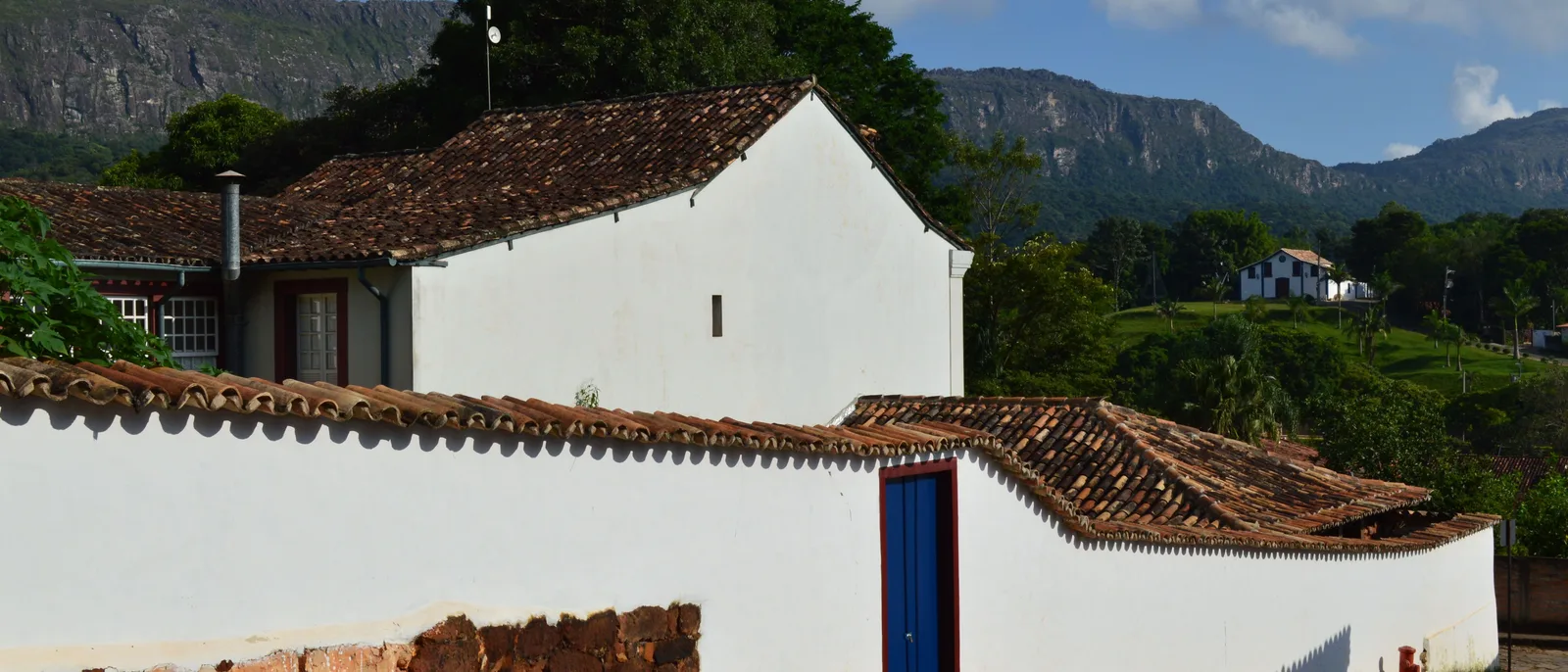
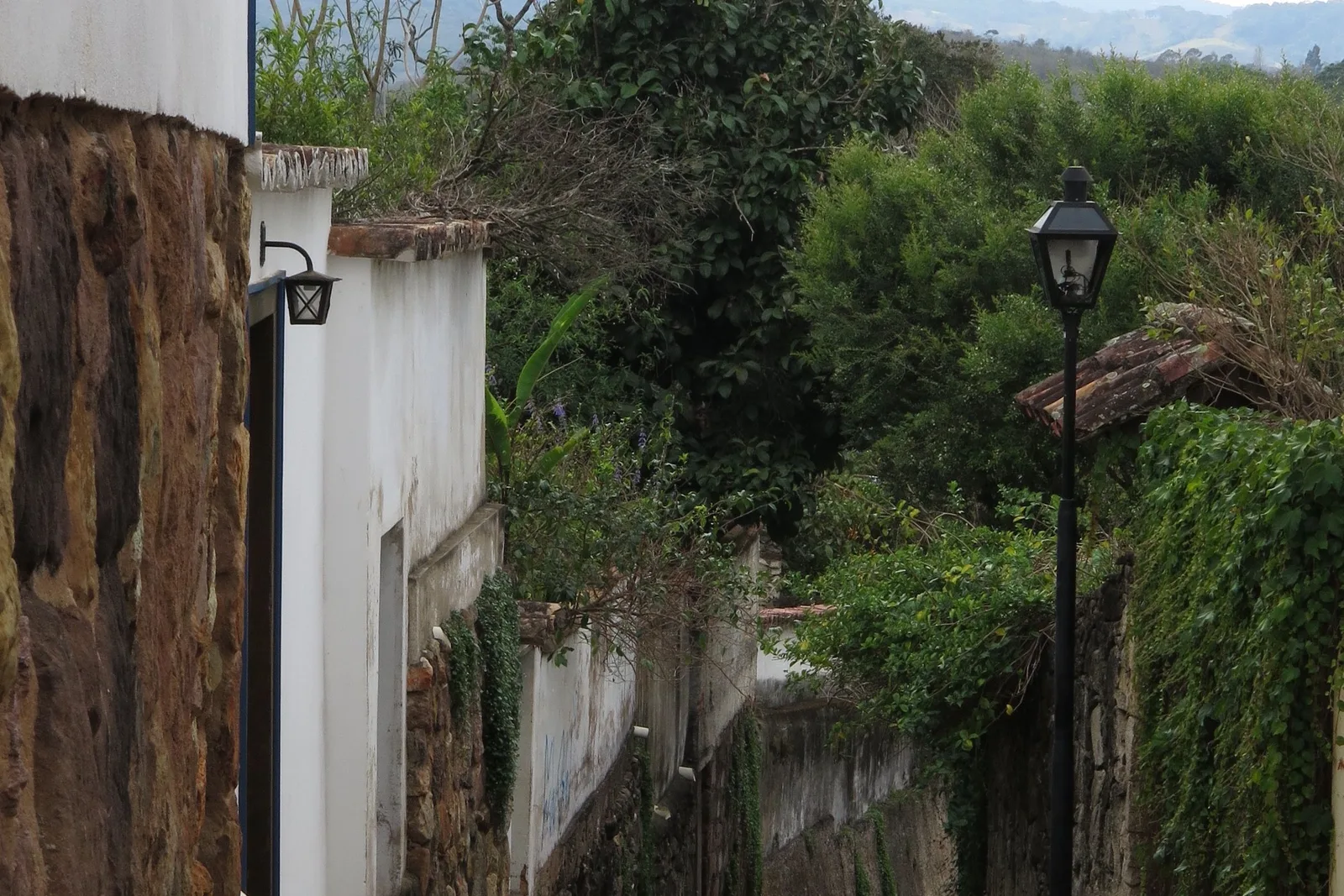
  • A narrow lane in Tiradentes between an old stone retaining wall and a whitewashed house, an iron street lamp on the wall and greenery spilling over the top
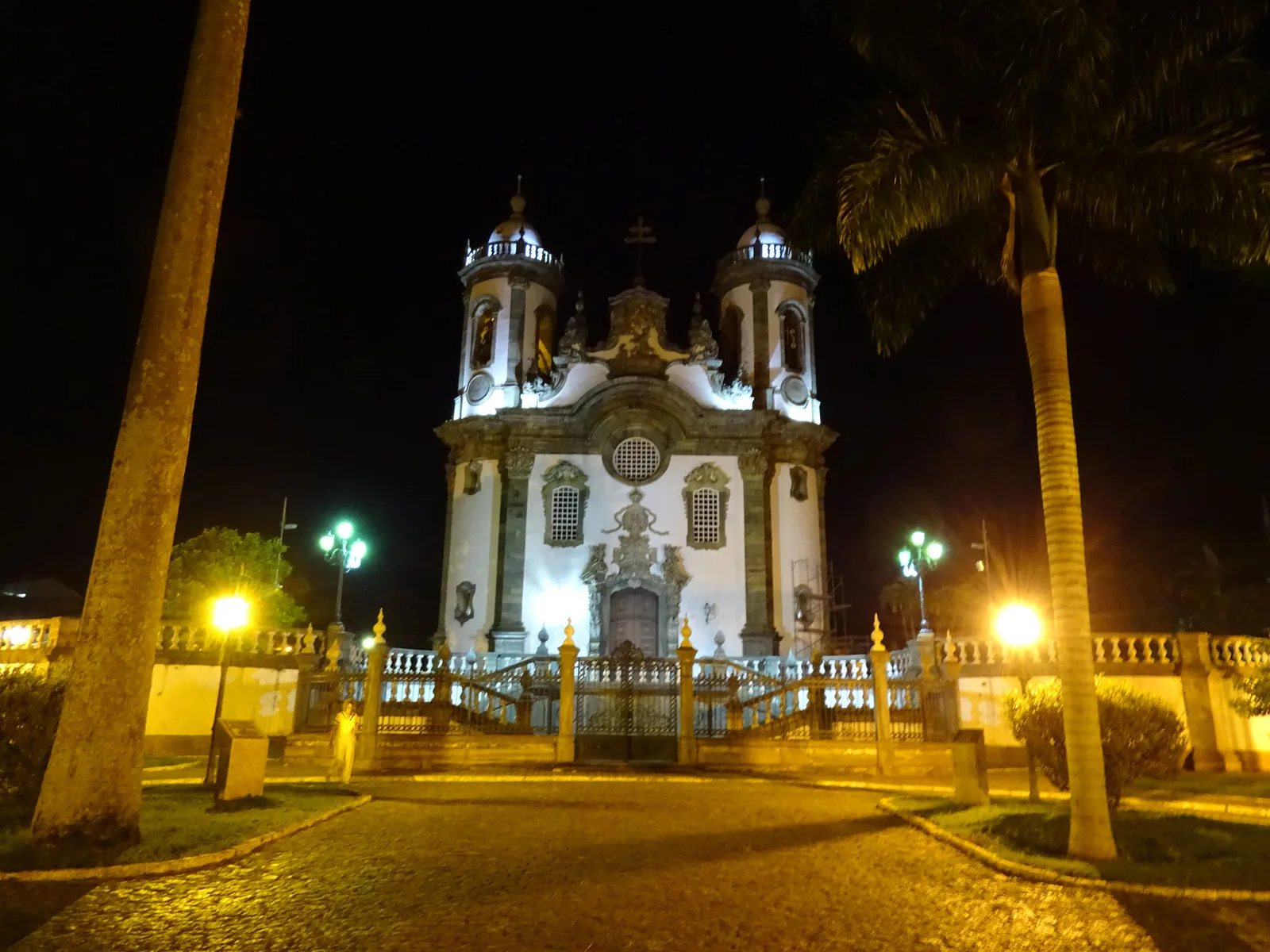
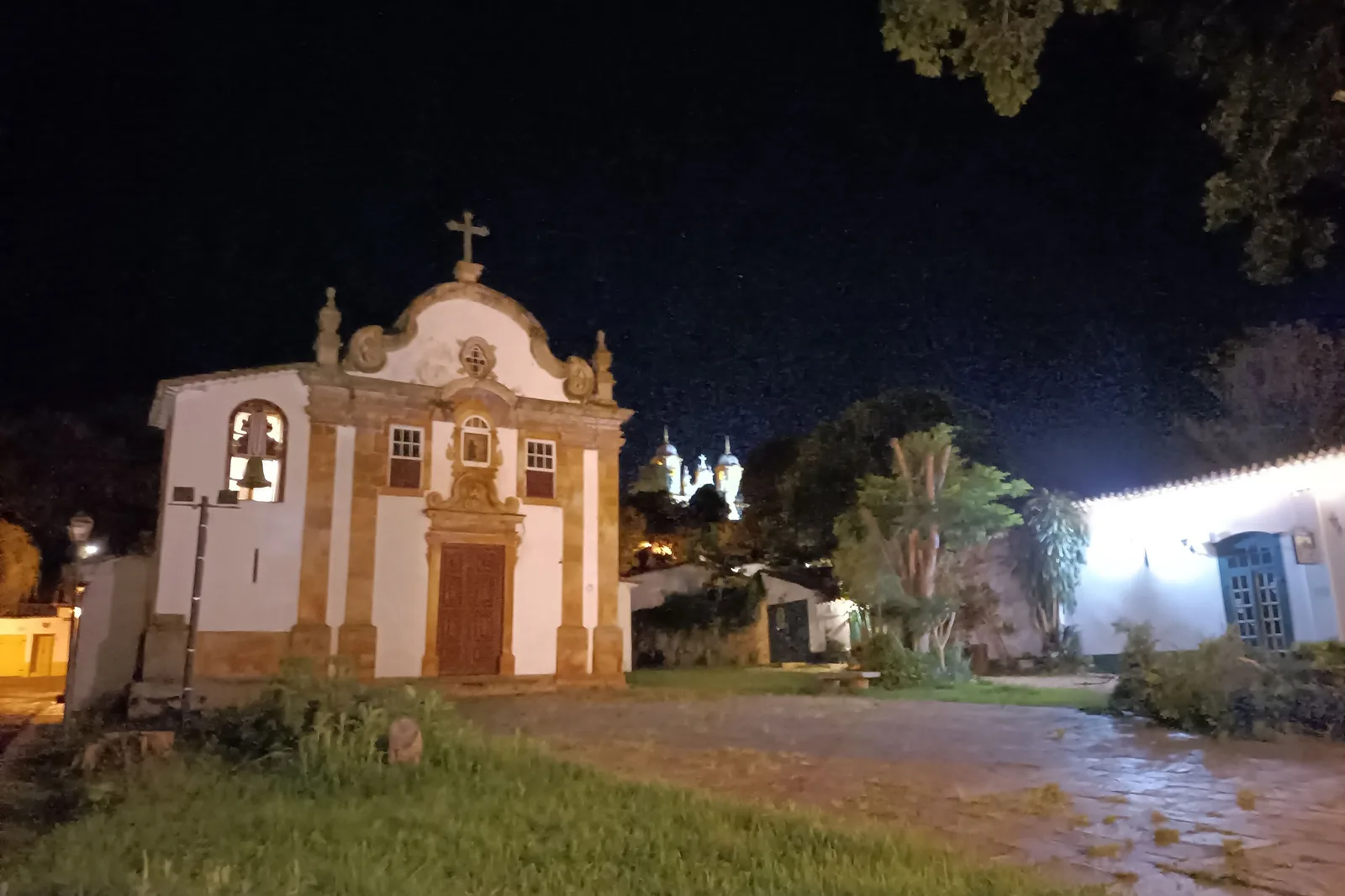
  • The Igreja de Nossa Senhora do Rosário dos Pretos in Tiradentes floodlit at night, its scrolled white gable and stone door surround warm against a black sky, with the lit towers of the Matriz on the hill behind it
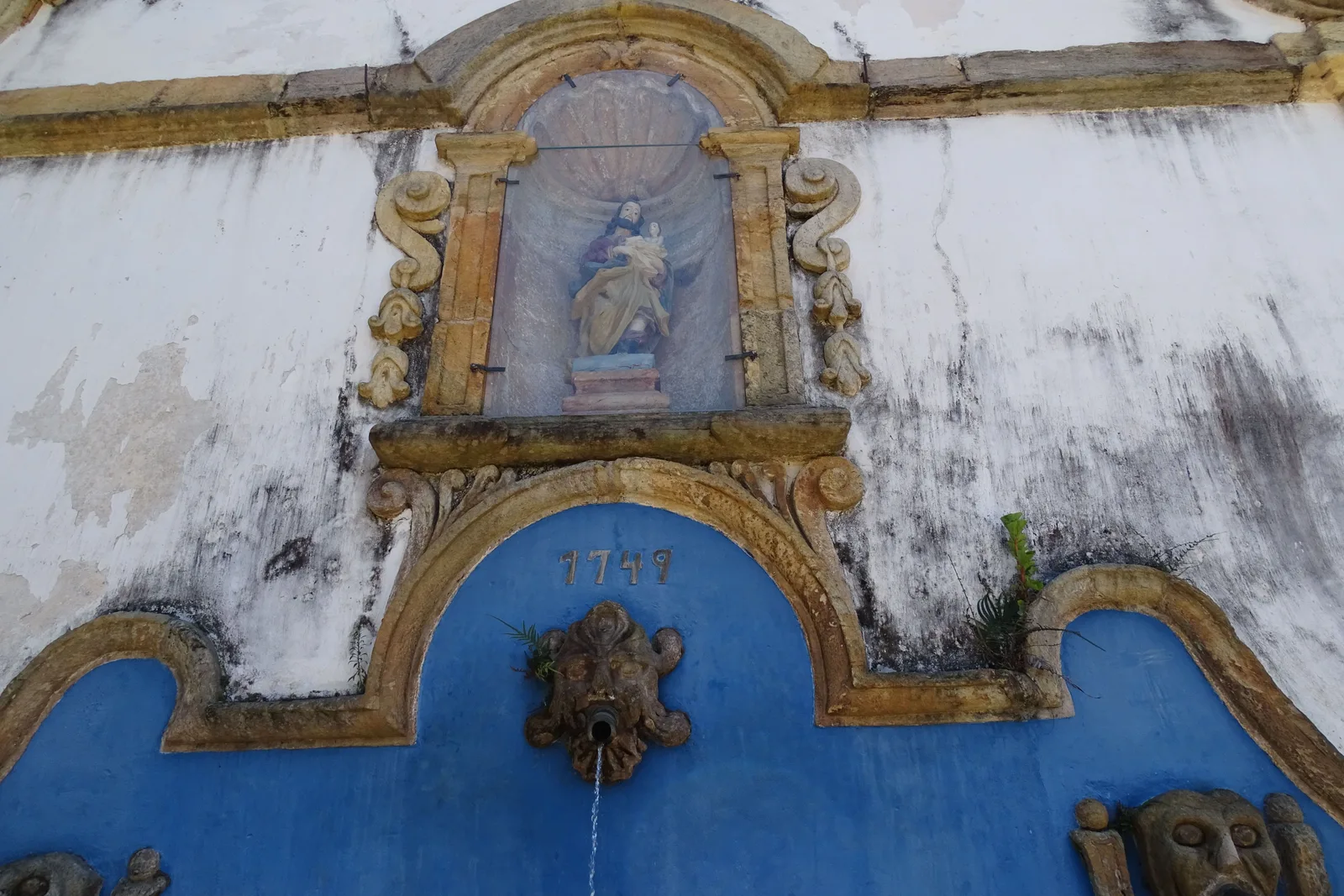
  • Close on the Chafariz de São José in Tiradentes: a blue-painted stone niche framing a small painted saint, with weathered bronze spouts below it
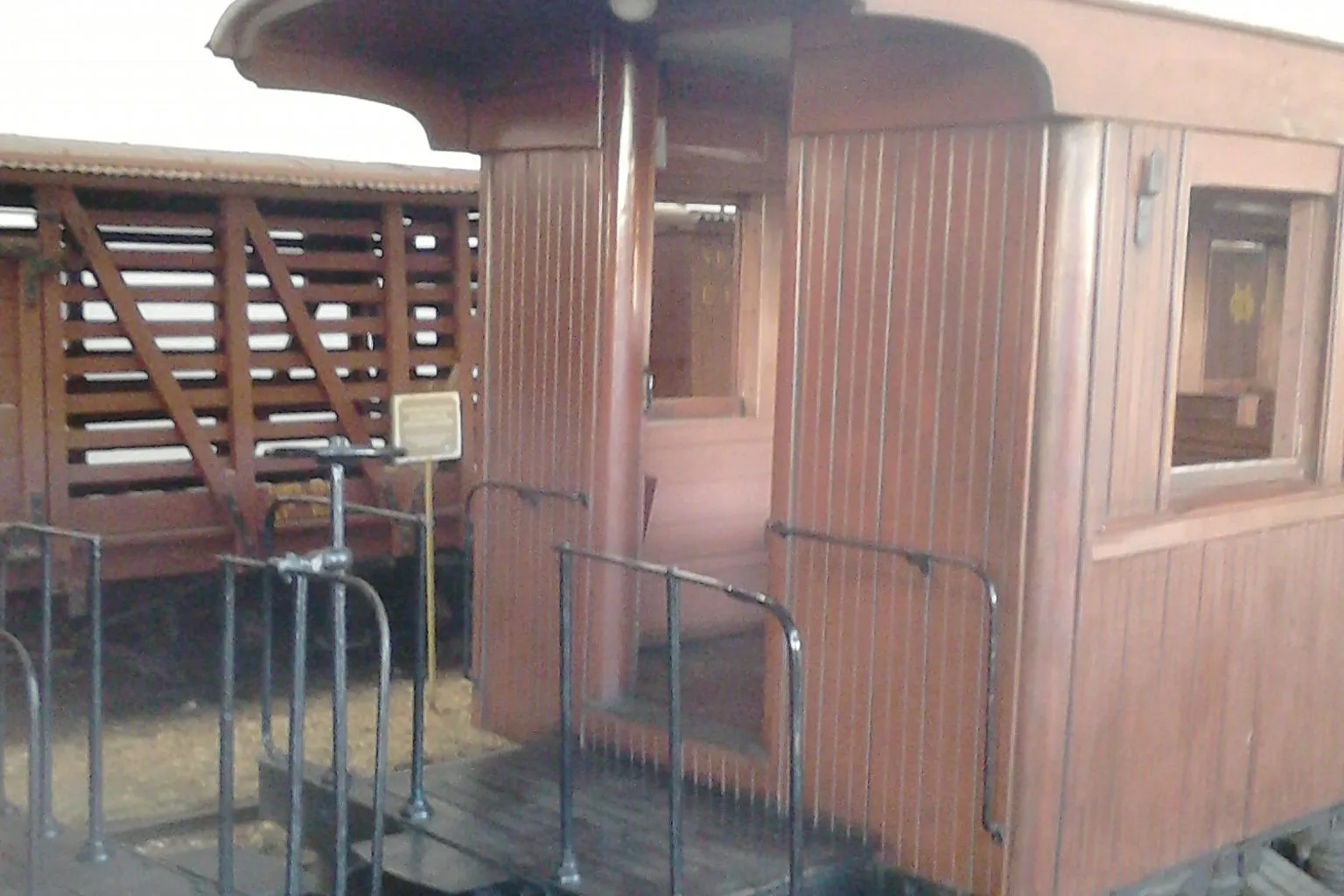
  • The open end platform of a wooden passenger carriage on the São João del-Rei steam railway, its slatted timber gate folded back, metal handrails on either side and a small notice board fixed to the panelling
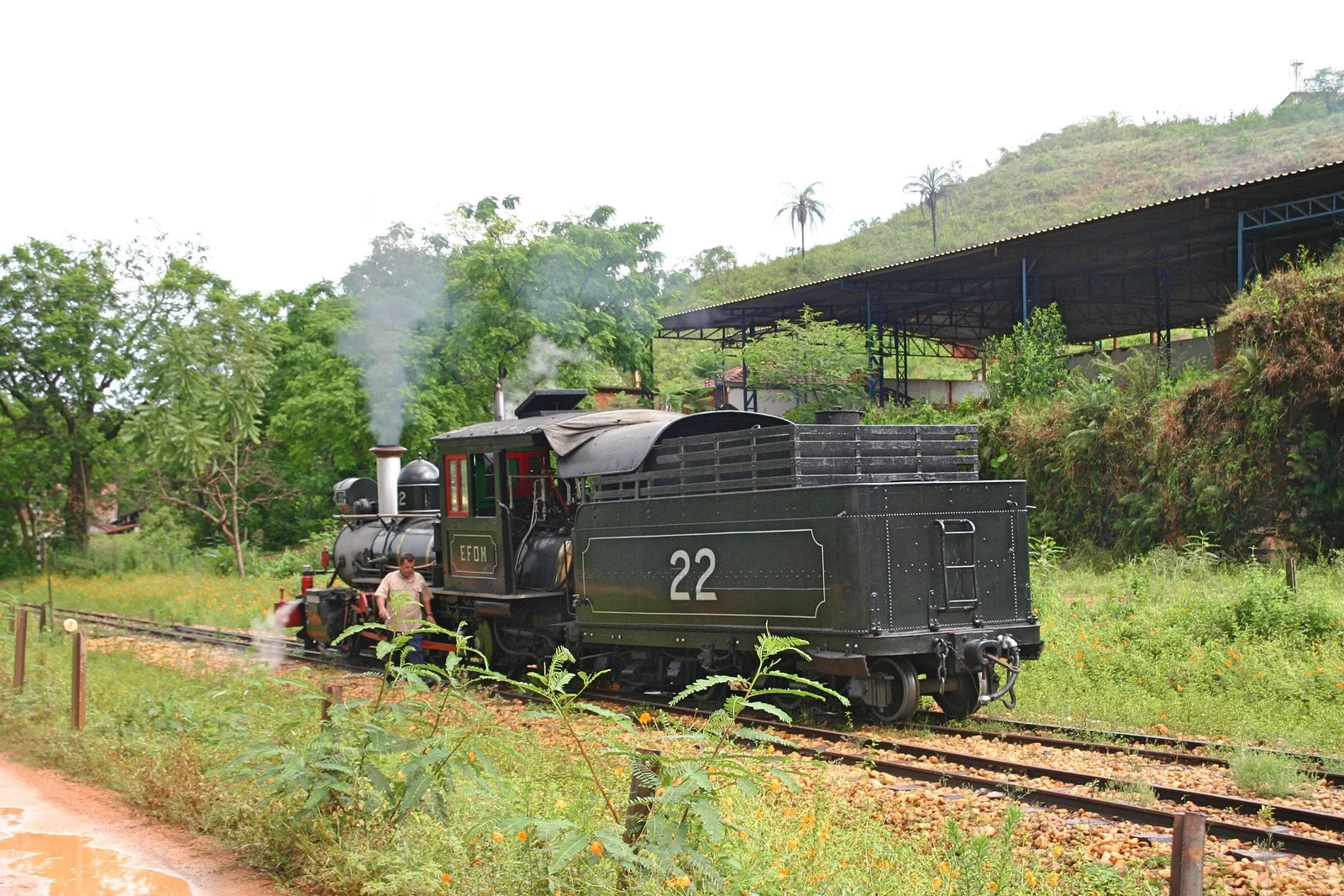
  • Steam locomotive number 22 standing on the track in a green cutting outside São João del-Rei, with the roof of the railway works behind it
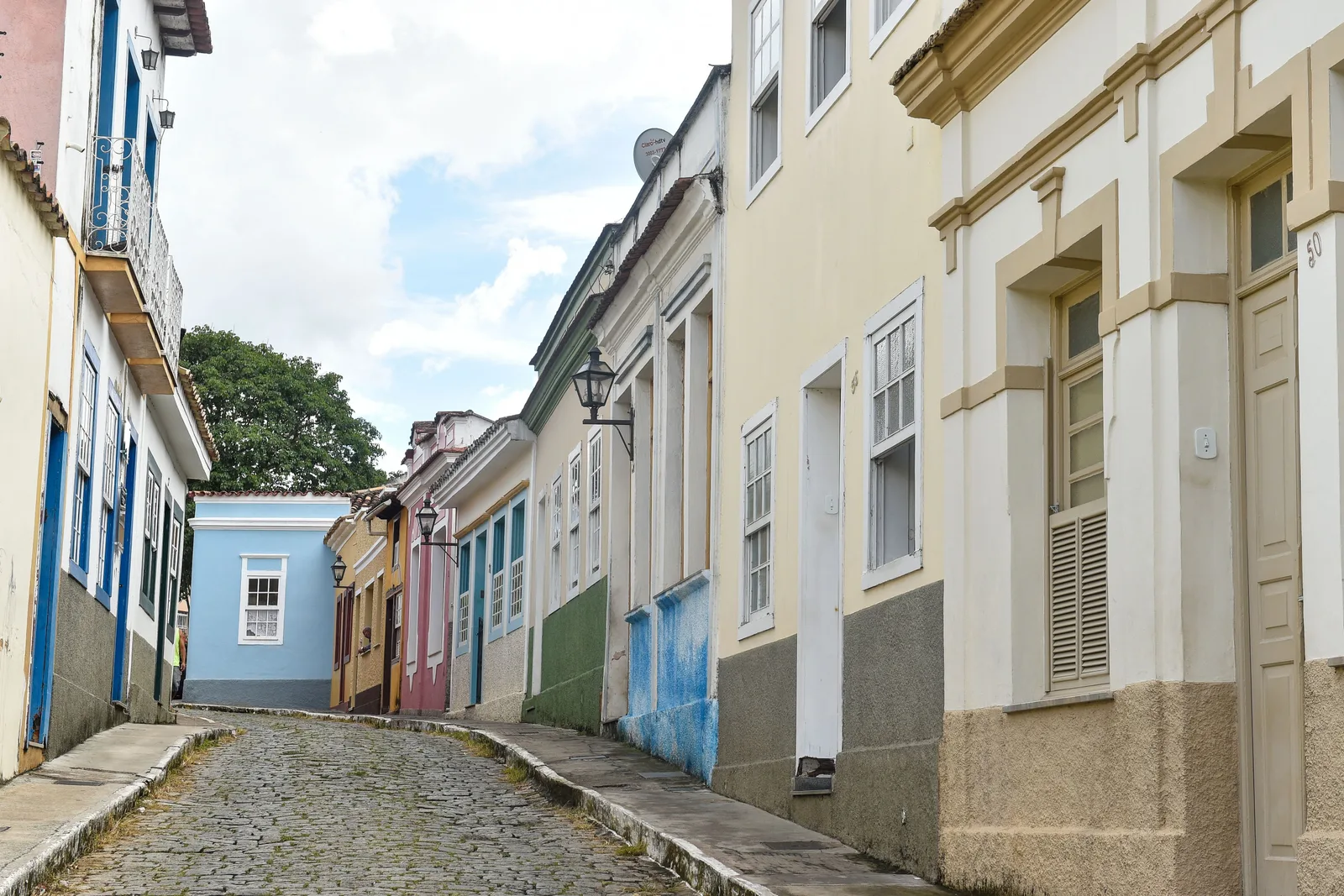
  • A narrow cobbled street in São João del-Rei lined with pastel-painted colonial houses in blue, cream and pink
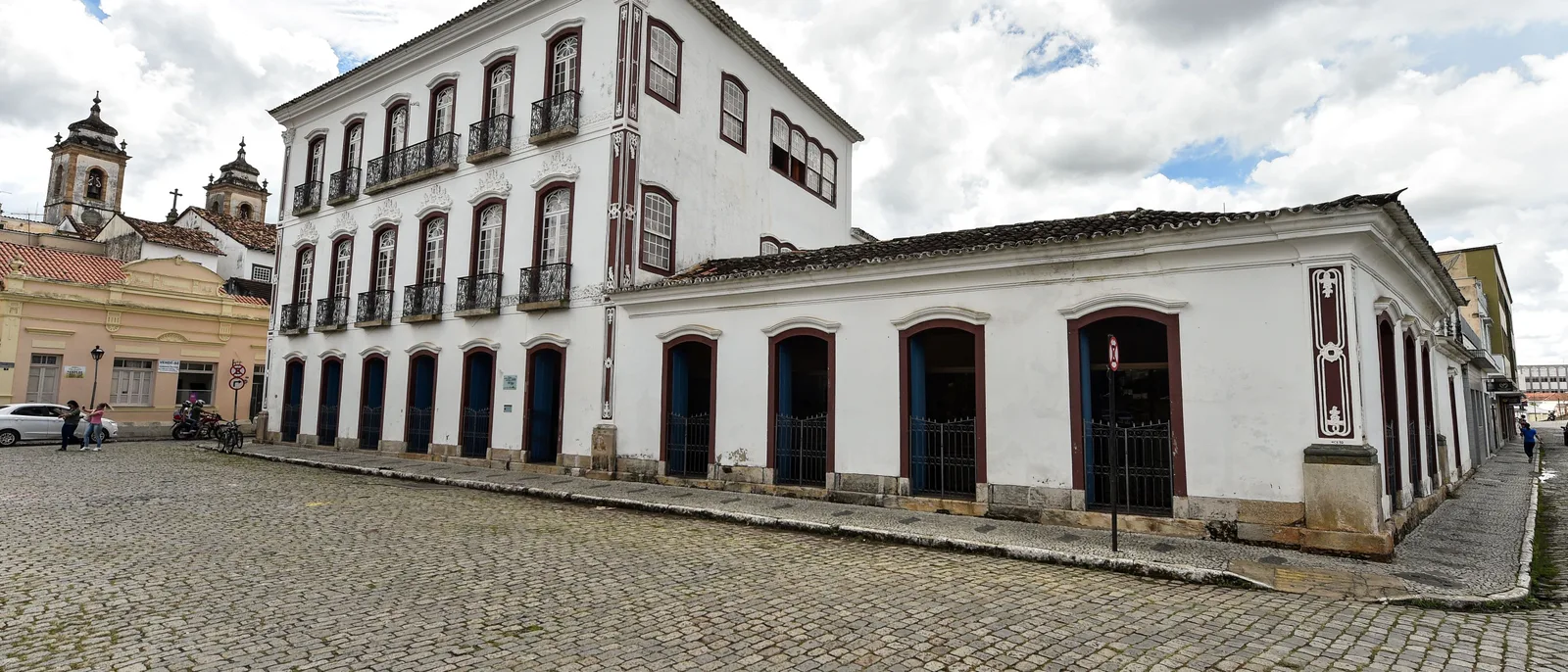
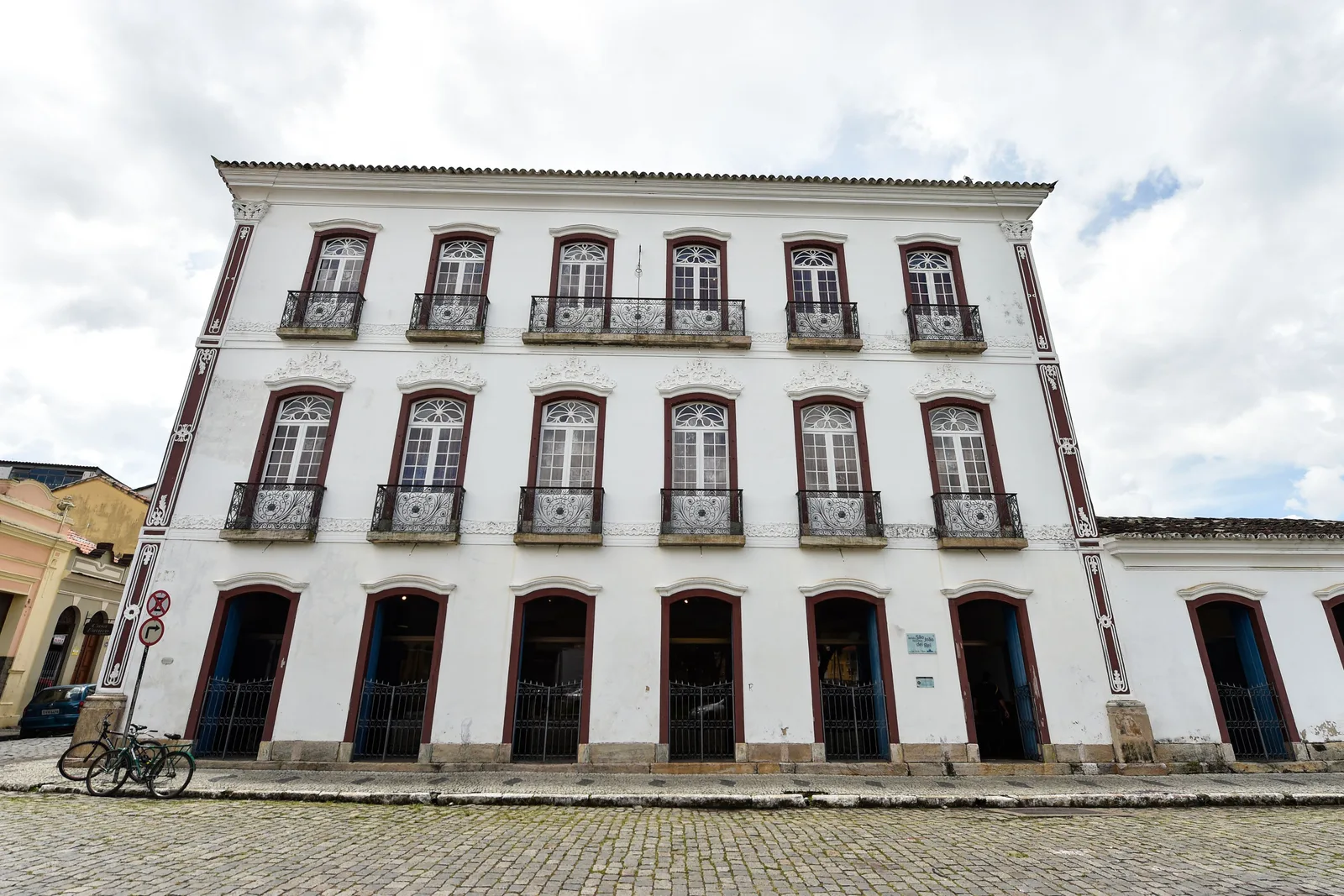
  • A tall white three-story colonial mansion on a cobbled square in São João del-Rei, two rows of iron balconies across its front and a line of arched doorways along the ground floor
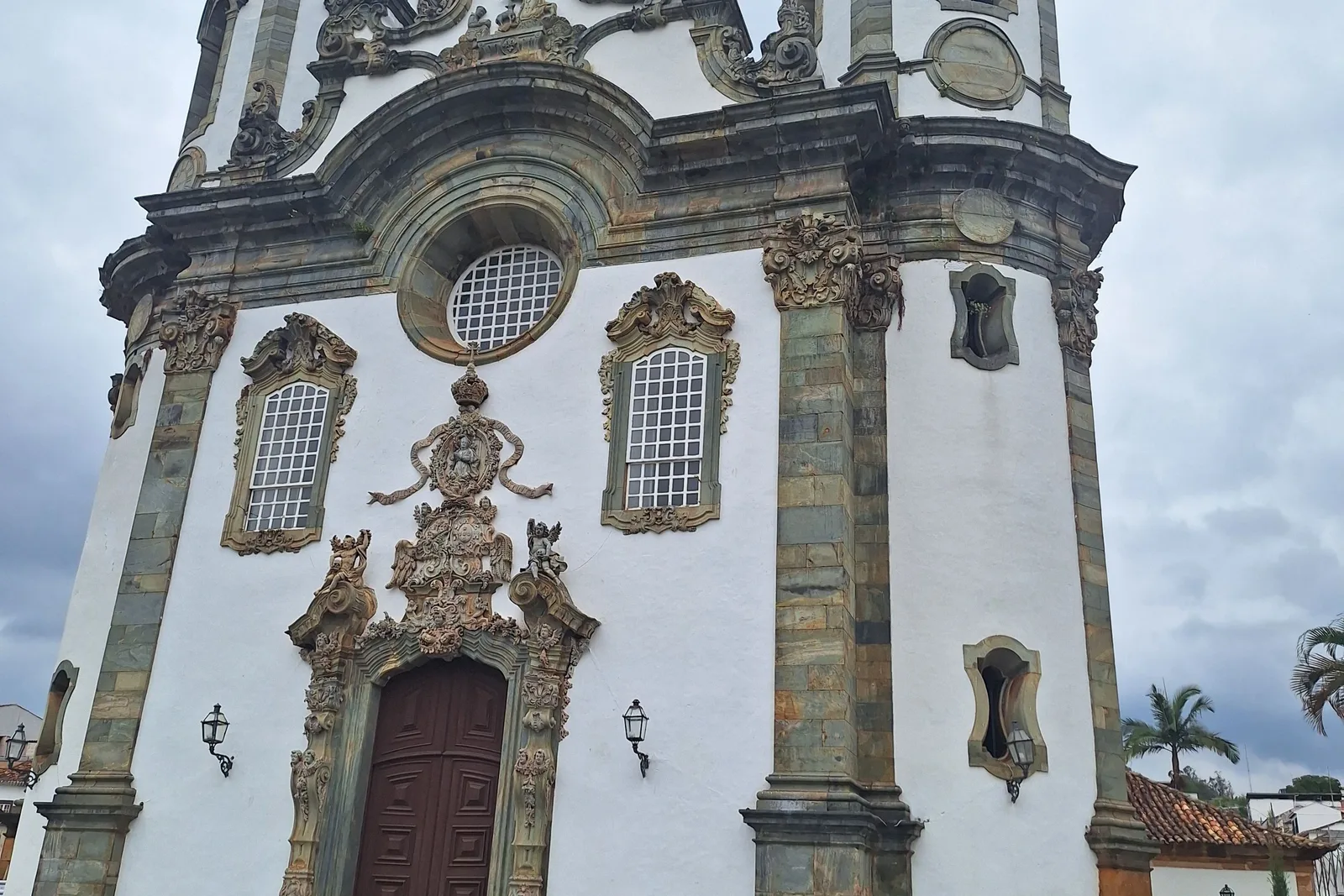
  • The carved soapstone portal of the Igreja de São Francisco de Assis in São João del-Rei, its rococo medallion and scrollwork set into a white plastered facade
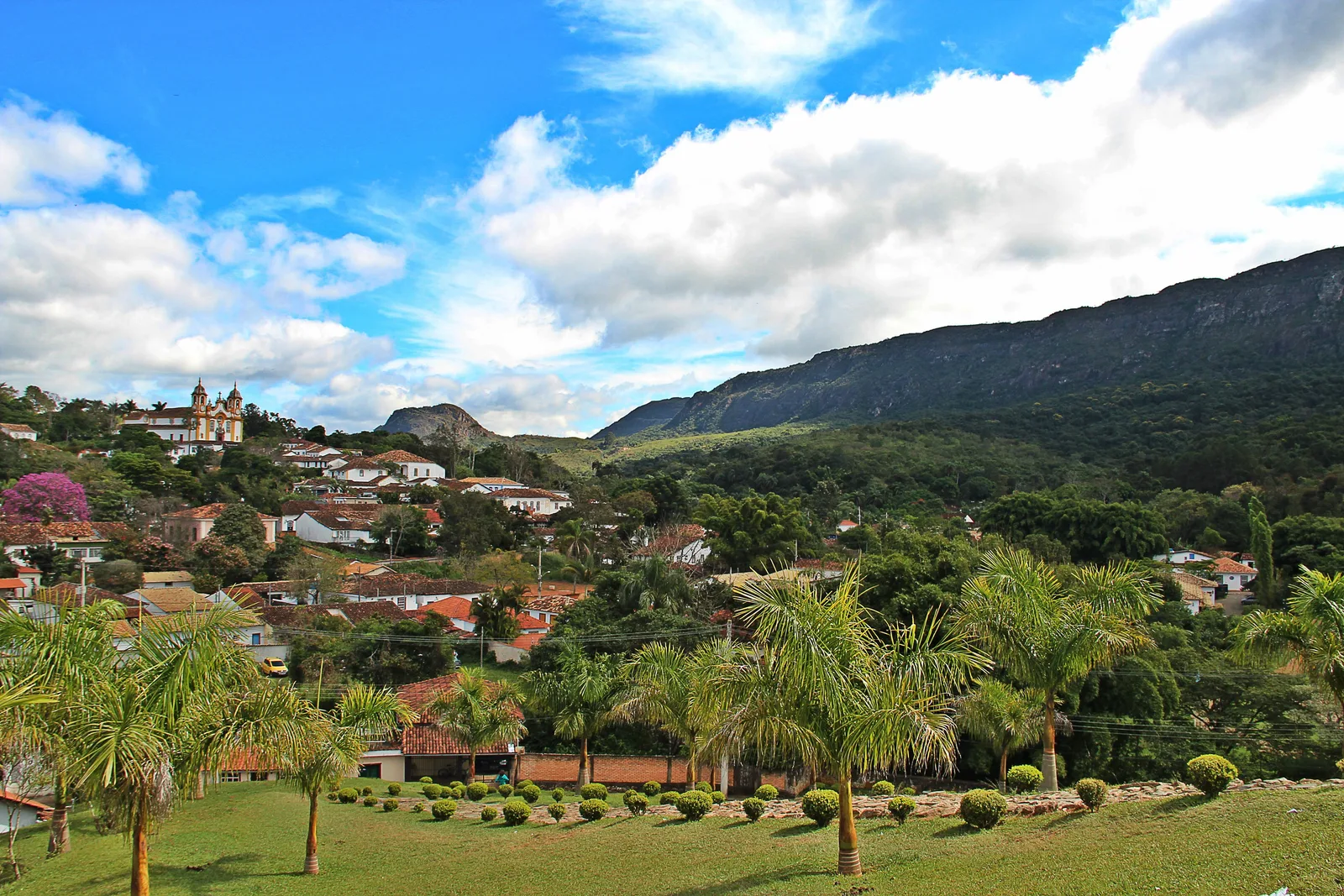
  • Tiradentes from above the gardens on its edge: palms and dense green in front, red-tiled roofs in the middle distance and the dark wooded range beyond
  • A dark ceramic bust of a woman resting her chin on her hand, painted with red lips, hoop earrings and a beaded necklace, on an artisan’s table in Tiradentes
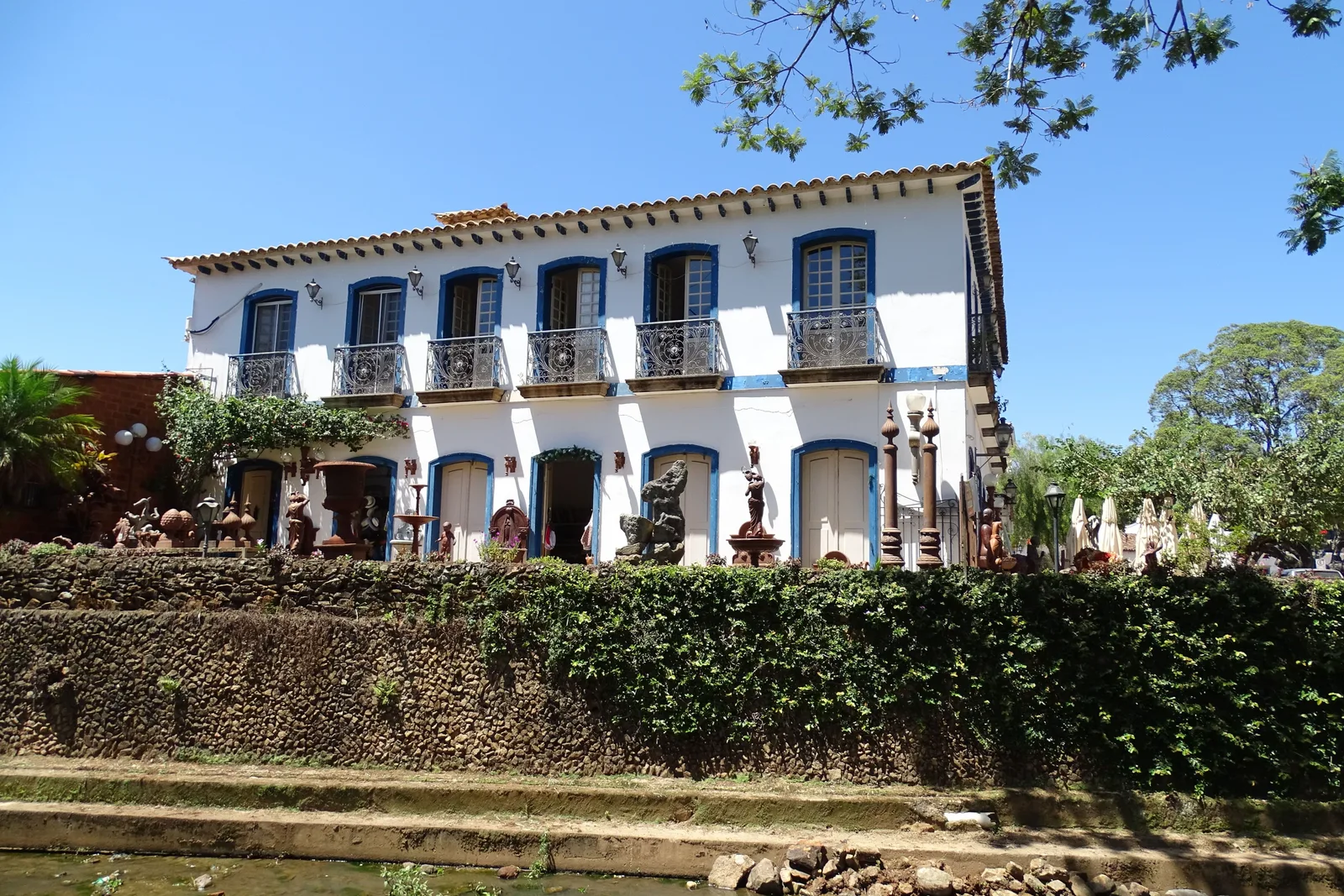
  • The old town hall of Tiradentes, a long white two-story building with a row of iron balconies, seen over the hedge and stalls in front of it
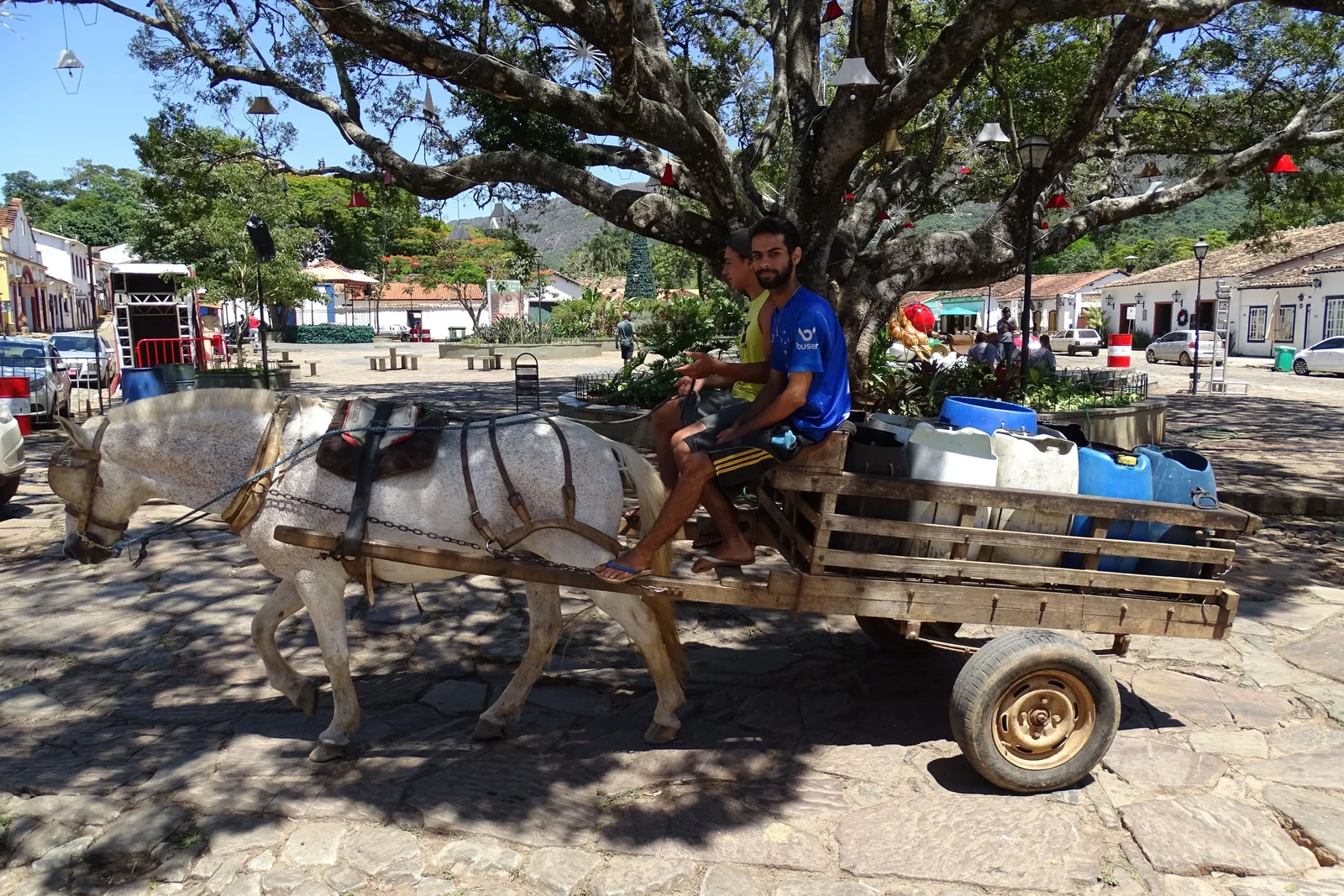
  • A man driving a mule-drawn flatbed cart loaded with blue drums across the Largo das Forras in Tiradentes, under the big trees at the edge of the square

Orientation

Two towns in one screen.

Everything logistical, before the pretty pictures start.

General Info

Why these two towns go together

Both towns were built on gold. Prospectors working the Rio das Mortes founded them within a few years of each other at the start of the eighteenth century, and both grew rich enough to spend two generations covering the insides of their churches in gold leaf. When the seams ran out the money left and the buildings stayed, which is why Minas has more surviving colonial architecture than anywhere else in Brazil and why the whole of Tiradentes and some seven hundred buildings in São João del-Rei have been federally protected since 1938.

They are 13 km apart and they are not the same place. Tiradentes has about eight thousand residents, one perfectly preserved grid of cobbles and whitewash, and an economy that is now entirely pousadas, restaurants, galleries and festivals. São João del-Rei has around ninety thousand, a university, a hospital, the bus station and a working downtown wrapped around its own baroque core. Tiradentes is the postcard. São João del-Rei is the town that still uses its churches — two volunteer orchestras founded in the 1700s still play the Sunday masses, and its Holy Week is among the oldest continuously observed in the country.

The thing that binds them is the railway. A 762 mm narrow-gauge line opened between them in 1881, survived the end of everything else it once connected, and still runs on weekends behind nineteenth-century steam locomotives. It takes about half an hour, it is not a museum piece parked in a shed, and it is the reason to treat the two towns as one trip rather than two.

Where It Is

Southern Minas Gerais, on the old road to the coast

The two towns sit at about 900 meters in the Campo das Vertentes, the hill country of southern Minas Gerais — roughly 190 km south of Belo Horizonte and 320 km north of Rio de Janeiro. The colonial Estrada Real, the royal road that carried gold from these hills down to the ports, ran straight through both of them.

Tiradentes & São João del-Rei Tiradentes & São João del-Rei

21.11° S, 44.18° W

See the Southeast on the interactive map

Cost

What a day here actually costs

Tiradentes is one of the more expensive small towns in Brazil, and the reason is demand: eight thousand residents, a national reputation for food, and a weekend market of São Paulo and Rio couples with money. São João del-Rei costs meaningfully less for the same night and the same dinner, which is a large part of its case as a base. Sights are cheap everywhere — most churches and museums are a dollar or two.

Estimated daily budget

Budget

$60 / day

A simple pousada room split two ways in São João del-Rei or on the edge of Tiradentes, lunch at a per-kilo or a prato feito, the local bus between the towns, and the churches and the trails, which cost almost nothing.

Mid-range

$125 / day

A well-reviewed pousada in the Tiradentes historic center split two ways, dinner out, the steam train, the museums, and a car or a transfer for the day you go to Bichinho.

Comfortable

$260 / day

One of the design pousadas with a garden and a pool, tasting menus at the restaurants people come here for, a rental car for the whole stay, and a private guide for the churches.

Estimates, per person per day, once you are here — flights not included. Weekends and the festival weeks are not ordinary prices: rooms are dearer, minimum stays appear, and the good restaurants need booking.

What things cost

  • Mid-range double, Tiradentes historic center $82 R$420
  • Simple pousada double, either town $35 R$180
  • Mid-range double, São João del-Rei $55 R$280
  • Maria Fumaça, one way $17 R$86
  • Maria Fumaça, round trip $34 R$172
  • Local bus, São João del-Rei to Tiradentes $1.15 R$5.80
  • Coach, Rio to São João del-Rei $35 R$180
  • Matriz de Santo Antônio, daytime entry $1 R$5
  • Museu de Sant’Ana $1 R$5
  • Rotunda (roundhouse) at the railway museum $4 R$20
  • Narrated tour and organ concert at the Matriz $29 R$146
  • Lunch for two, comida mineira $24 R$120
  • Dinner for two at a name restaurant in Tiradentes $78 R$400
  • Chopp (draft beer), 300 ml $2 R$10
  • Rental car, per day $29 R$150

The weekend is the expensive half of the week and the busy half. Prices in Tiradentes step up from Friday, and the town that feels sleepy on a Tuesday has a queue outside every restaurant on a Saturday. Coming midweek is the single cheapest change you can make — and the steam train only runs Friday to Sunday, so build the trip around that rather than against it.

The festival weeks are their own market. The January film festival, Holy Week, the July arts festival and the August gastronomy festival all fill both towns; rooms are booked months ahead and priced accordingly.

Restaurants add a 10 percent service charge, already on the total rather than expected on top of it.

Cards work almost everywhere and Pix is universal, but carry some cash: church entries, the smaller museums, the craft stalls in Bichinho and the local bus are all easier with small notes.

Checked September 2026 and converted at R$5.10 to the dollar. Estimates, not quotes — the shape of a budget rather than a price you can hold anyone to.

Safety

About as easy as Brazil gets

8 /10

Our rating. What is most likely to hurt you here is the pavement, not another person.

These are small interior towns whose economies run on visitors, and both feel it. People walk back from dinner across the Largo das Forras at midnight without thinking about it, and the historic center of São João del-Rei is busy and lit well into the evening. The city placed fourth for safety among Minas municipalities over fifty thousand people in a 2024 quality-of-life ranking. That does not make either town crime-free — it makes the ordinary Brazilian precautions enough rather than a project.

  • The cobbles are the real hazard. Tiradentes is paved in pé de moleque — big irregular river stones, uneven, polished by three centuries of traffic and genuinely slippery in the rain. Twisted ankles are the most common thing that goes wrong on this trip. Wear shoes with a sole, look down, and do not plan on heels or a wheeled suitcase.
  • Carry a phone light. Historic-center street lighting is deliberately dim in both towns and there are steps and drops that are hard to read at night.
  • Ordinary daytime sense in São João del-Rei. The colonial core and the shopping streets are relaxed; the outer neighborhoods and the area around the bus station after dark deserve the caution any Brazilian city gets. Use a ride app rather than walking across town late.
  • Festivals are a crowd risk, not a violence risk. During the film festival, Holy Week and the gastronomy festival both towns hold many times their population. Pickpocketing at the packed events is the realistic worry; carry a card and a phone in a zipped pocket and not much else.
  • The road between the towns is unlit. The 13 km of MG-265 is fine by day and dark, narrow and shared with trucks at night. If you are driving between the two after dinner, take it slowly; if you have been drinking, do not drive at all — Brazil’s limit is effectively zero and enforcement is real.
  • On the Serra, tell someone. The trails up the escarpment are unmarked in places, the rock is slick after rain, and phone signal goes in and out. Go with a local guide for anything beyond the short waymarked walks, and start early — the afternoon storms in summer arrive fast.
  • Standard small-town theft rules still apply. Do not leave a bag on a restaurant chair, a camera on a café table, or anything visible in a parked car.

Getting There

Fly to Belo Horizonte or Rio, then drive

There is no useful airport here. São João del-Rei has an airstrip that handles charters, not scheduled airlines, so every visitor arrives by road — and the road is easy, which is why this pairs so naturally with a few days in Rio.

  • Belo Horizonte–Confins (CNF) is the closest airport, about 235 km and three hours away by car on the BR-040 and BR-265. It has the widest domestic network in Minas and connects through São Paulo or Rio from the United States.
  • Rio de Janeiro is 320 to 340 km, about five hours by road, and it is the most common approach for American visitors because the flight is already booked. The drive up the BR-040 through the Serra da Mantiqueira is a good one.
  • São Paulo (GRU) is around 470 km and six to seven hours — doable, but Rio or Confins is the better pairing.
  • By coach, Paraibuna and Útil run Rio to São João del-Rei several times a day in about five and a half hours, for roughly R$180. From Belo Horizonte the trip is about three and a half hours. Everything terminates in São João del-Rei, not Tiradentes.
  • From the São João del-Rei bus station, local buses run to Tiradentes every thirty to sixty minutes, take about half an hour and cost under R$6. A taxi or ride app is around R$60 to R$80 for the same trip.
  • Renting a car is worth it if Bichinho, Prados and the trailheads are part of the plan. It is not necessary if you are staying in Tiradentes and using the train and the local bus.

Getting Around

On foot, on the bus, and one weekend train

Both historic centers are small enough to cross in fifteen minutes and neither is any fun to drive in. The only distances that matter are between the two towns and out to the villages.

  • Tiradentes is a walking town, full stop. The historic center is about eight blocks square, most of it is closed or hostile to cars, and the cobbles will beat any vehicle you put on them. Park once and leave it.
  • The Maria Fumaça runs Fridays, Saturdays and Sundays, with extra services in January and July and around public holidays. It is the best way to travel between the towns and it is not a way to travel on a Tuesday.
  • The local bus is the everyday link: Viação Presidente and Porto Real between the two bus stations, every half hour or so, under R$6, cash to the conductor. It is an urban bus with no luggage bay.
  • Ride apps work but are thin. Uber and 99 both operate in São João del-Rei and reach Tiradentes; waits are longer than in a city and coverage drops off late at night. Local taxi ranks sit on the Largo das Forras and outside the São João del-Rei station.
  • Charretes wait on the Largo das Forras and do a loop of the historic center. They are a ride rather than transport, and they are priced per carriage, not per person — agree the fare and the route before you get in. The carriages are changing: under an agreement with the state prosecutor, Tiradentes is replacing all thirty horse-drawn charretes with electric ones, the first ten arrived in March 2026 and the retired horses went to adopters in September, so expect electric by the time you visit.
  • For Bichinho, 7 km away, take a car, a taxi or a bike. There is no reliable bus, the road is narrow, and the last stretch is the point of going.

The big four

The four things worth building days around.

A church, a railway, a second town and a mountain. Between them they cover almost everything people come to this corner of Minas for.

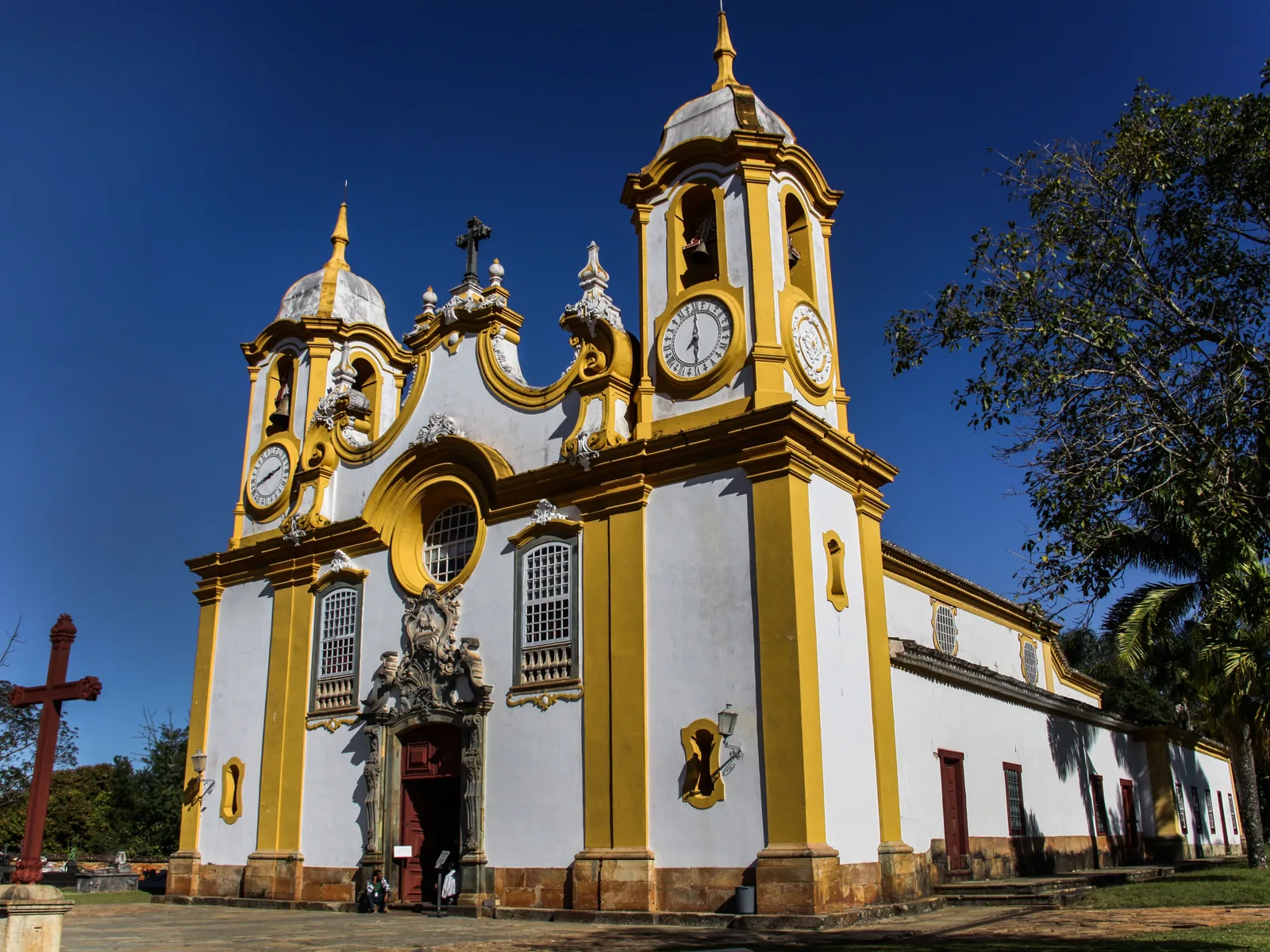
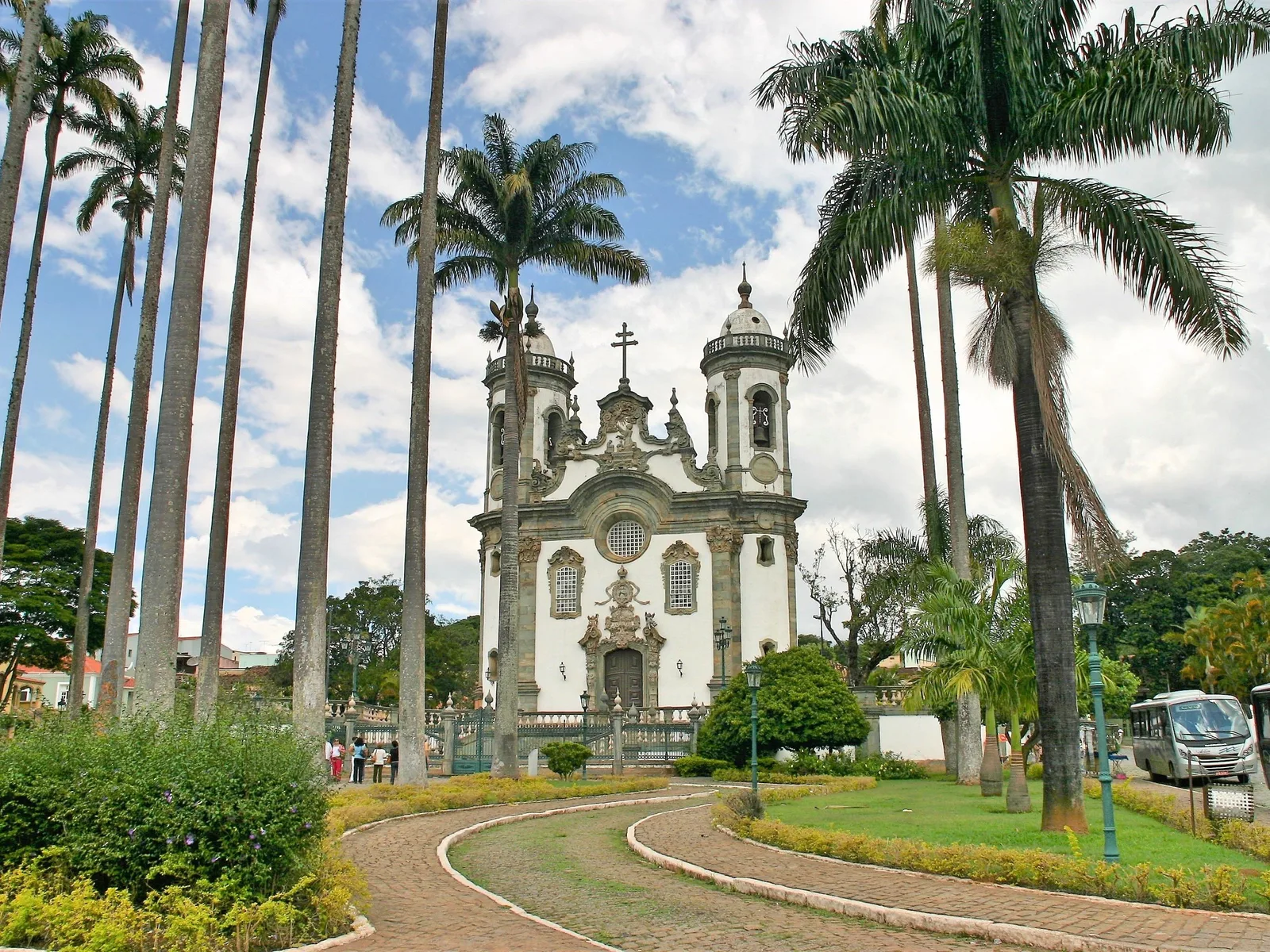
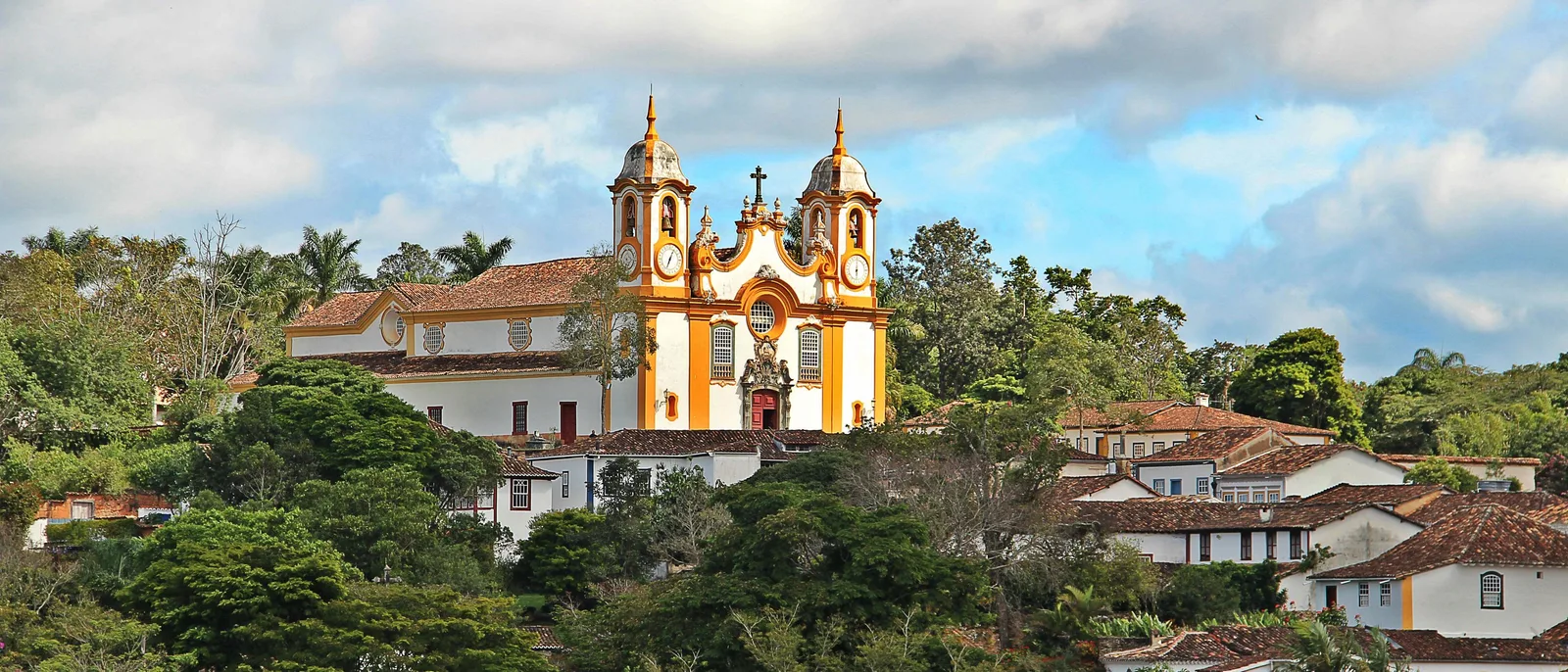
The Matriz de Santo Antônio in Tiradentes seen straight on from the terrace below: a yellow-and-white rococo facade with two bell towers, a clock face in each, a carved central gable and a stone cross standing in the foreground 01

Tiradentes’ gilded parish church

Matriz de Santo Antônio

Built
From 1710, largely done by 1732
Facade
Designed by Aleijadinho, 1807–1810
Organ
Built in Porto, installed 1788

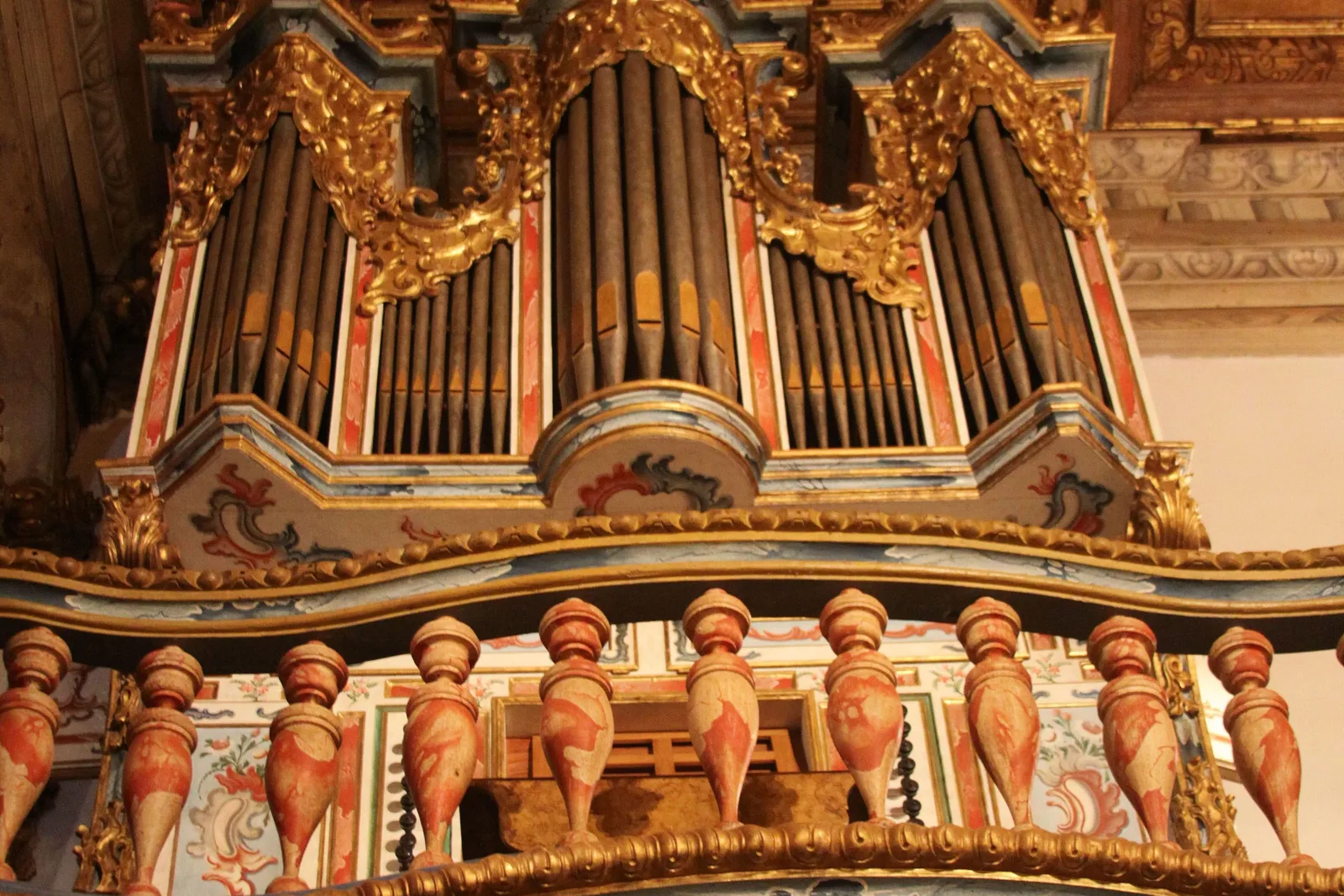
It stands at the top of the town on a stone terrace, and it is the reason Tiradentes looks the way it does: everything else is whitewash and pantile, and then there is this — a yellow-and-white rococo facade with twin towers and clock faces, above a balustrade you climb to. The stone frontispiece was commissioned from Aleijadinho, the crippled sculptor who defined Minas baroque, and built between 1807 and 1810 by the master mason Cláudio Pereira Viana. On the terrace in front of it stands a soapstone sundial cut in 1785, with two faces so it can be read in either half of the year.

The interior is the other half of the case. Almost every surface of the chancel and the side altars is carved and gilded, the work of a chain of local carvers and painters across the eighteenth century, and it is among the most heavily gold-leafed church interiors in Brazil. Up in the choir loft sits a pipe organ built in Porto and shipped here in 1788, painted and gilded ten years later — a rare surviving Portuguese instrument of its age, and still played. Daytime entry is a couple of reais; the narrated evening tour with the lights and the organ concert is a separate, much more expensive ticket, and it is the version most people remember.
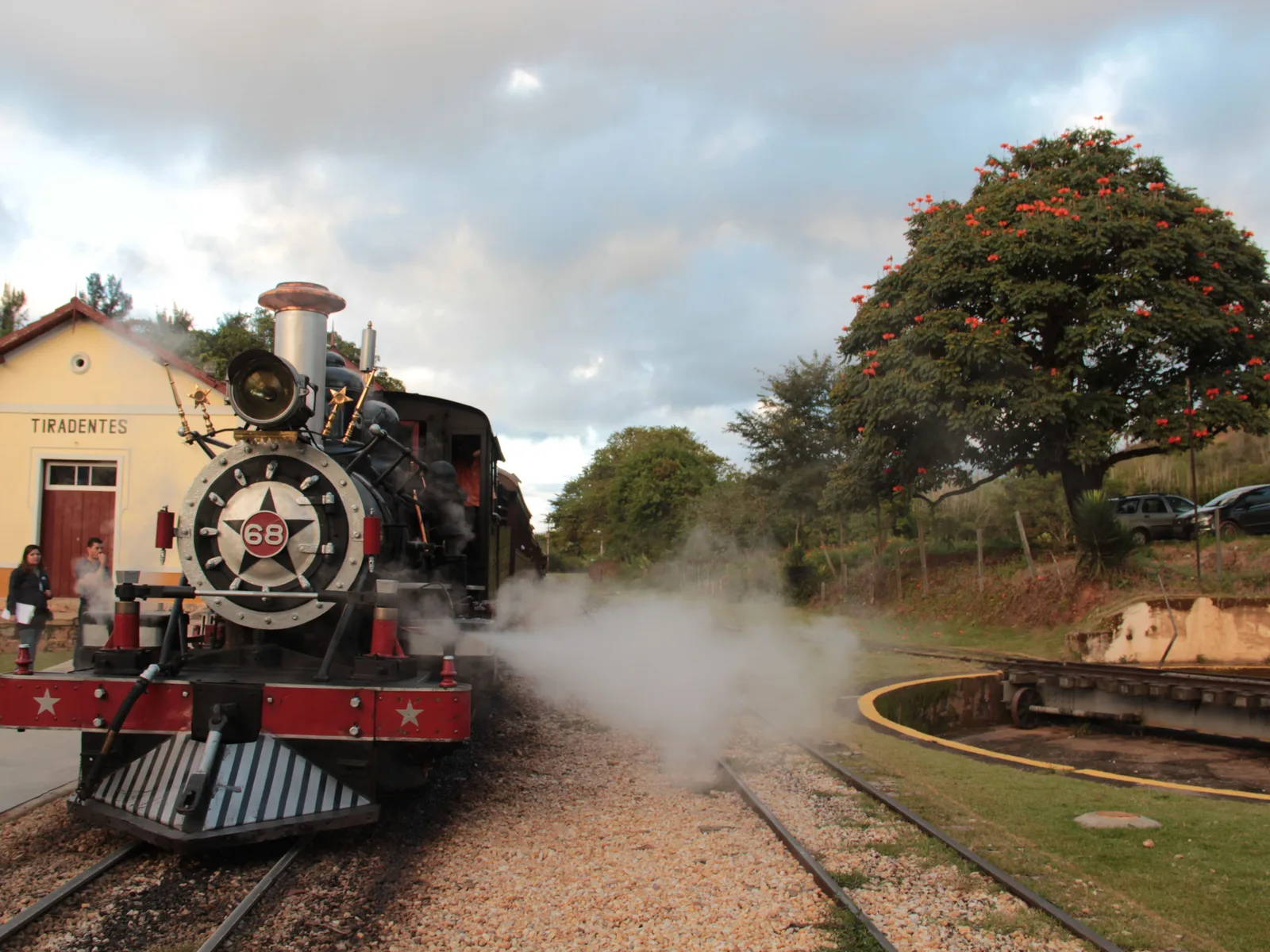
A black steam locomotive with a red-trimmed cowcatcher and a brass star on its smokebox door standing at the platform in a cloud of its own steam, the station canopy just visible at the left and green hills behind 02

The oldest working steam railway in Brazil

The Maria Fumaça

Line opened
1881
Gauge
762 mm — 2 ft 6 in
Distance
12 km, about 35 minutes

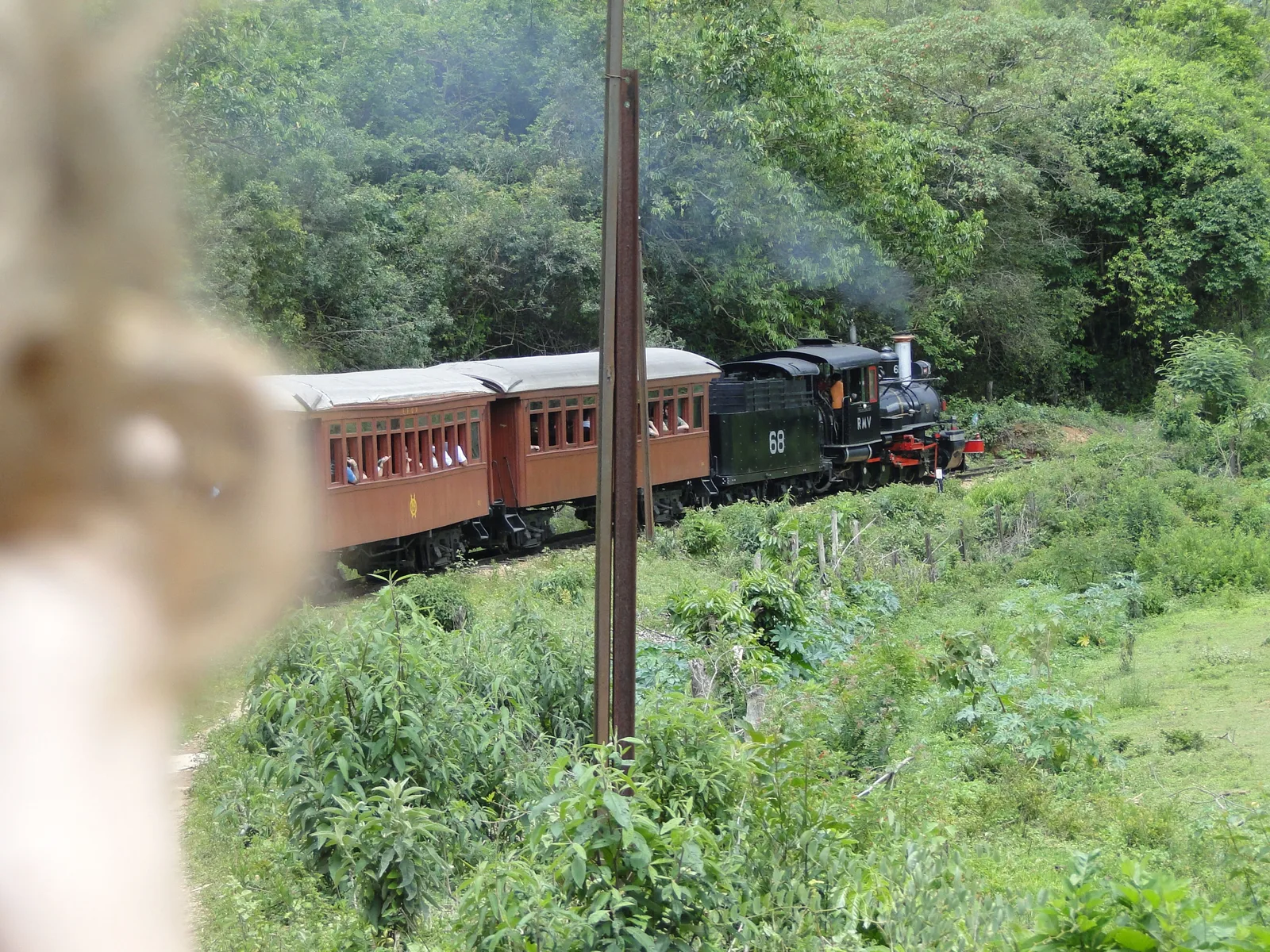
The Estrada de Ferro Oeste de Minas was built to a 762 mm gauge, narrow even by the standards of the day, and that eccentricity is why this stretch survived: nothing else in Brazil ran on it, so nothing else could replace the equipment, and the locomotives simply kept working. Twelve kilometers of it are still in steam between São João del-Rei and Tiradentes, hauled by American-built engines from the end of the nineteenth century, and it is the oldest continuously operating steam service in the country.

The ride itself is unhurried and open-windowed — wooden carriages, a river, cattle pasture and the Serra de São José on one side for most of the way. Trains run Fridays, Saturdays and Sundays with extra services in January and July, and the operator VLI sells tickets online and from kiosks at both stations, closing sales half an hour before departure. Around R$86 one way. Go one way, spend the day at the far end, and come back on the local bus if the timetable does not suit — the train is the experience, not the transport.

The Igreja de São Francisco de Assis in São João del-Rei seen across its square through tall royal palms, the white church with its rounded corner towers standing behind a low wall and a paved forecourt 03

The working town, and its baroque

São João del-Rei & São Francisco de Assis

Founded
Vila in 1713
Listed buildings
About 700, protected since 1938
Church begun
1774

São João del-Rei is what Tiradentes would look like if eighty thousand more people lived there and still had jobs. Its colonial core is bigger, less curated and more alive — stone bridges over the Córrego do Lenheiro, a street of visibly crooked houses, pewter workshops that have been in the same families for generations, and shops and banks working out of eighteenth-century buildings. It is also a city of bells: the coded peals rung by hand from its church towers, dozens of distinct patterns announcing deaths, feasts and processions, are recognized as national intangible heritage and are still in daily use.

The Igreja de São Francisco de Assis is the set piece. Begun in 1774 to a design originally drawn by Aleijadinho and executed by Francisco de Lima Cerqueira, it stands behind a palm-lined square with a curved facade, round towers and a carved soapstone portal. Tancredo Neves — born here, elected president of Brazil in 1985 and dead before he could take office — is buried in its cemetery. Come on a Sunday and you will hear one of the town’s two volunteer orchestras play the mass: the Lira Sanjoanense was founded in 1776, the Ribeiro Bastos is of similar age, and both still perform eighteenth-century Mineiro sacred music from their own archives.

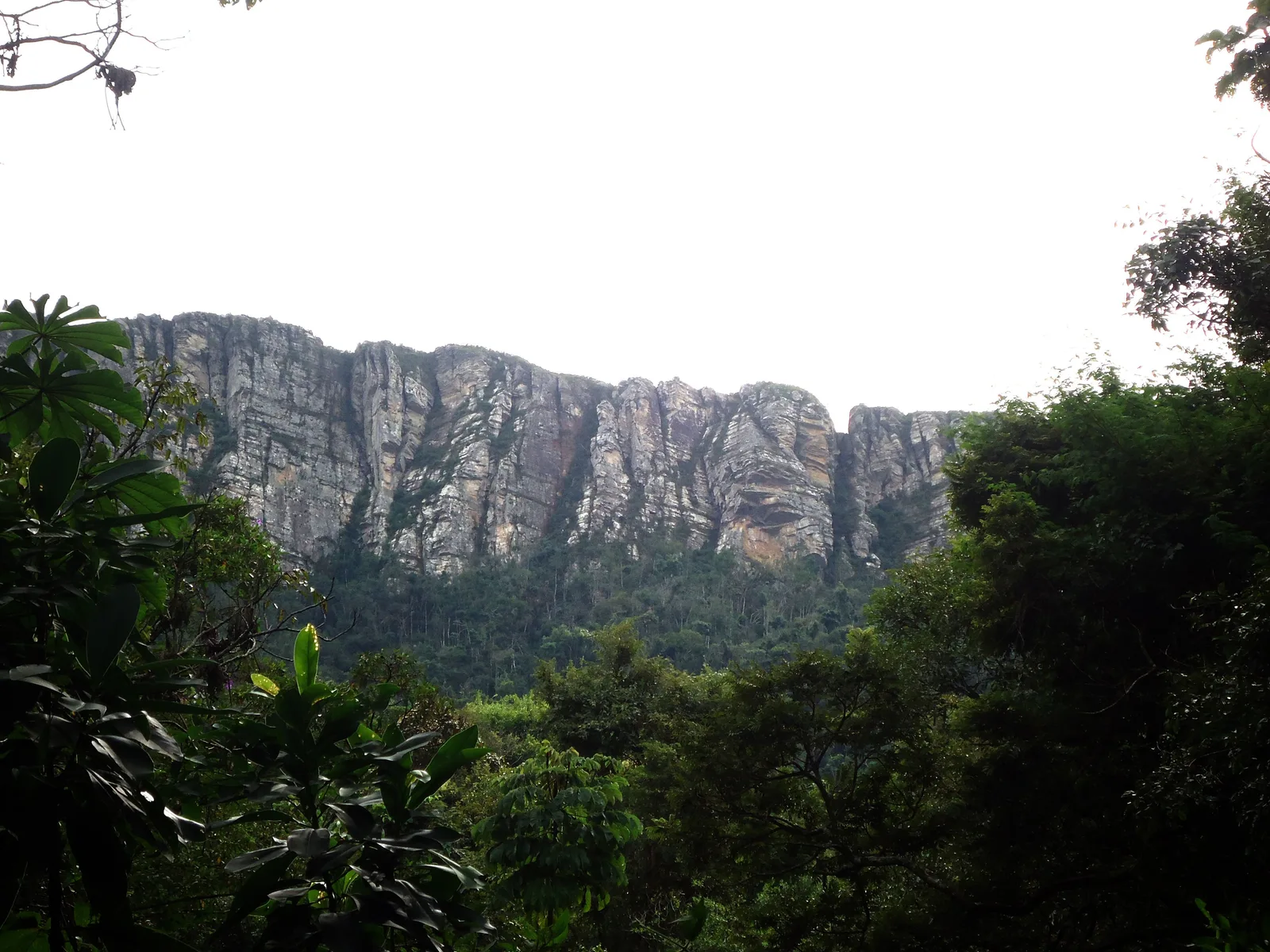
The pale gray rock face of the Serra de São José rising in vertical bands above a dense green wall of forest, with more trees in the foreground 04

The wall behind every photograph of Tiradentes

Serra de São José

Length
About 12 km of ridge
Protected as
APA São José, managed by the IEF
Also
A state refuge for dragonflies

The escarpment that closes off the view from every street in Tiradentes is a quartzite ridge running roughly 12 km across five municipalities, and it is the reason the towns are where they are — the springs on its flanks are what the first prospectors settled around. It is protected twice over: as the APA São José, and as a state wildlife refuge created specifically for its dragonflies, which is not a joke. Something over half of all the dragonfly and damselfly species recorded in Minas Gerais have been found on this one ridge.

For a visitor it is a half-day of walking within sight of your pousada. Short waymarked trails lead to the Bosque da Mãe d’Água, where a stone aqueduct built by enslaved workers nearly three hundred years ago still carries spring water down through the forest; longer ones climb to the top of the escarpment and to a scatter of waterfalls. The rock face also carries the region’s climbing and rappelling, most of it on the São João del-Rei side at the Serra do Lenheiro. Take a guide for anything that goes up: the trails braid, the signage runs out, and the summer storms arrive faster than you can get down.

What to actually do

Two towns, six ways to spend a day.

Pick a category, then scroll sideways through it. Almost all of this is walkable or a short drive, and most of it costs a couple of dollars or nothing.

Tiradentes

  • The eighteenth-century pipe organ of the Matriz de Santo Antônio in its gilded case, ranks of metal pipes rising behind carved and gold-leafed scrollwork and turned wooden balusters

    Rua da Câmara · evening, about an hour

    Organ concert at the Matriz de Santo Antônio

    The parish runs a narrated evening visit in the empty church — the lights come up on the gilding a section at a time over a recorded text — and follows it with a recital on the 1788 Portuguese organ in the choir loft. It is the only way most visitors will hear an instrument of that age still in its original loft, and it is a completely different building at night than at 11:00am. Around R$146, cheaper booked ahead, and it does sell out on weekends.

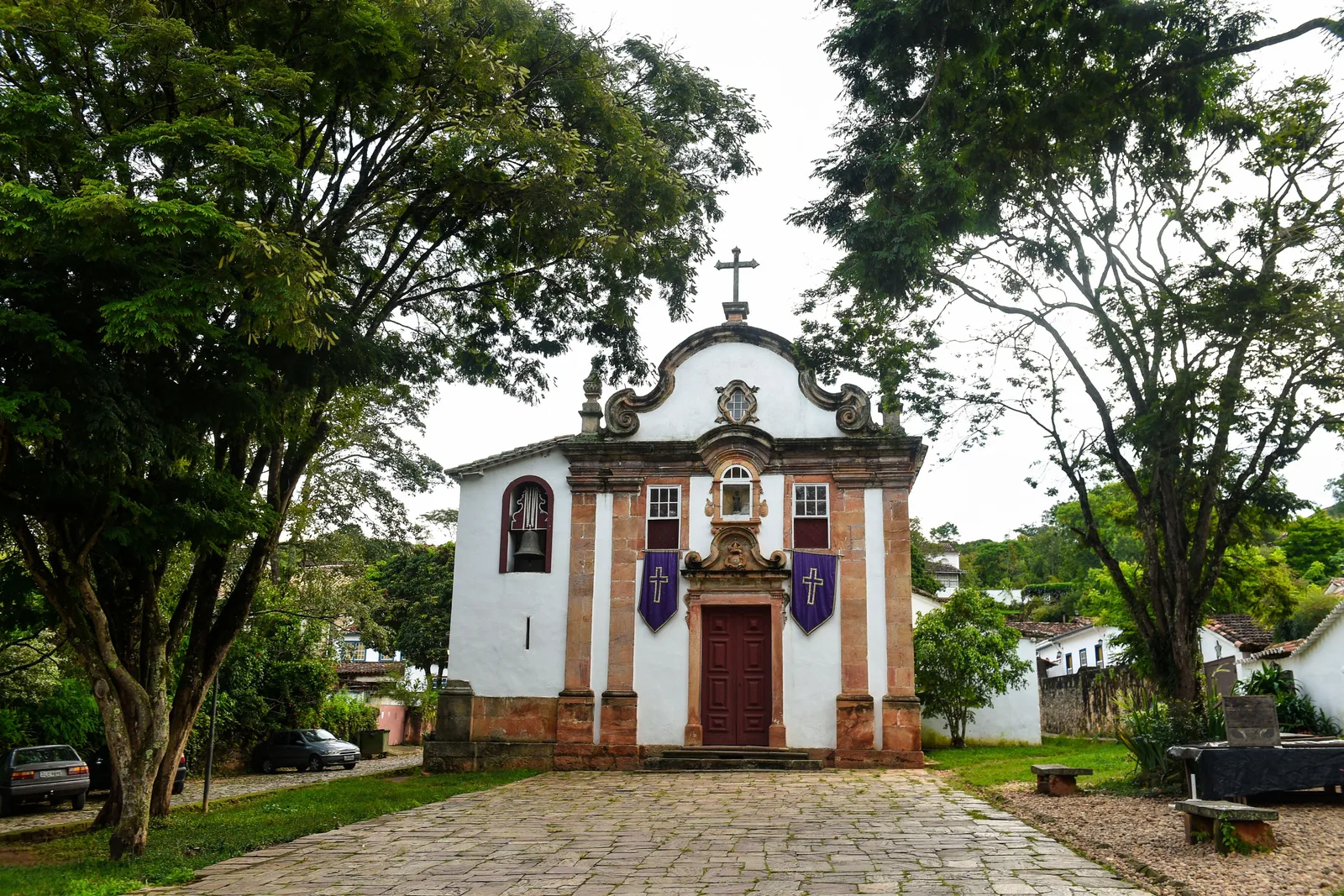
  • The white baroque facade of the Igreja de Nossa Senhora do Rosário dos Pretos in Tiradentes at the end of its cobbled forecourt, a cross on the scrolled gable and two purple Lenten banners hung either side of the dark red door, big trees framing it on both sides

    Largo do Rosário · 30 minutes

    Igreja de Nossa Senhora do Rosário dos Pretos

    The oldest church in Tiradentes, begun in 1708 and finished in 1719, and built by the brotherhood of enslaved and freed Africans who were not welcome in the parish church and so raised their own. It is far plainer outside than the Matriz and more affecting for it, and unlike most churches of its kind it has gilding inside. The square in front, with its stone cross and its view down the hill, is where Tiradentes is at its quietest.

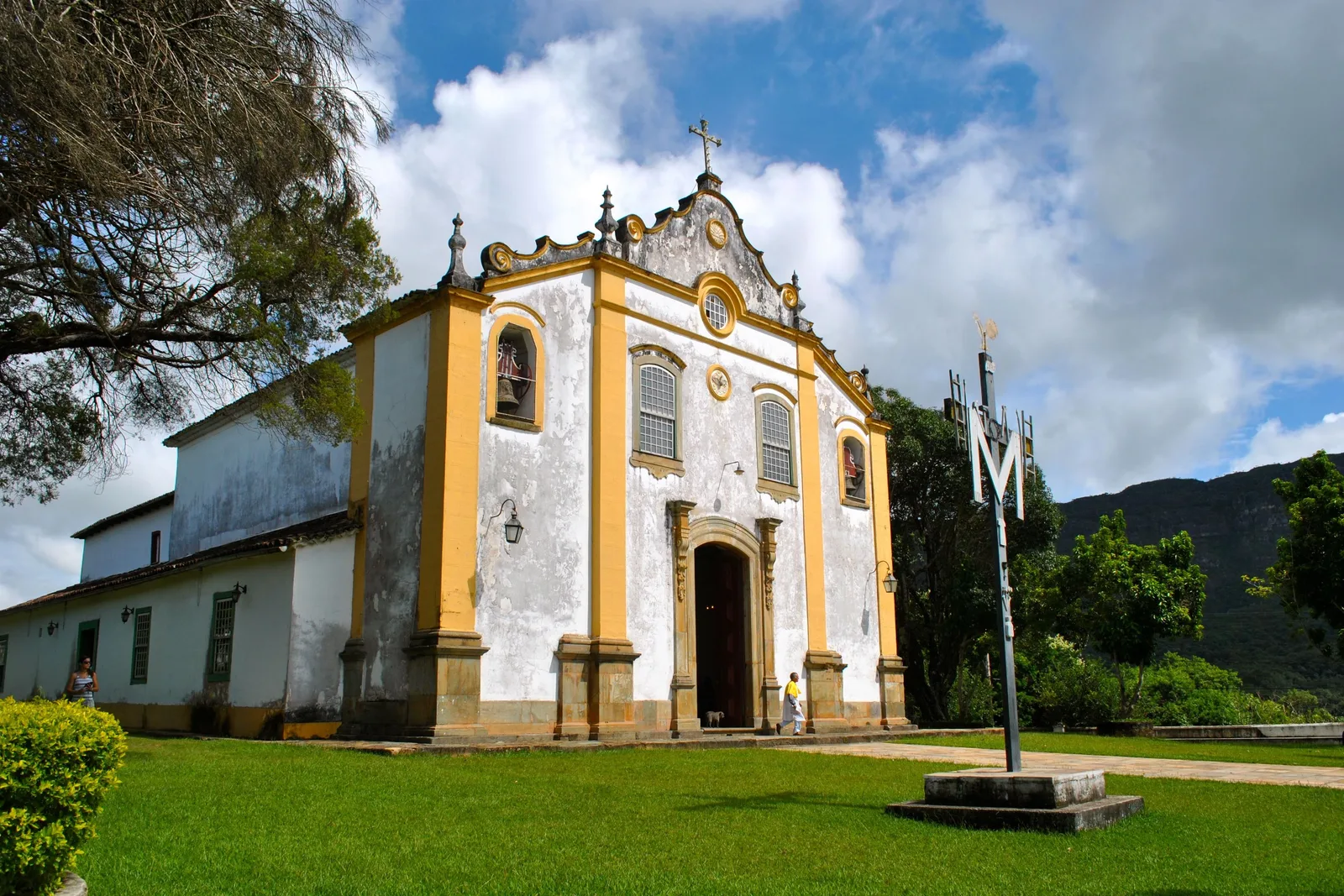
  • The Santuário da Santíssima Trindade on its lawn at the edge of Tiradentes, a white church with yellow-trimmed pilasters and a single central tower, with wooded hills rising behind it

    East end of town · 30 minutes

    Santuário da Santíssima Trindade

    A little way out beyond the last houses, on a green rise with the Serra behind it, and the one church here that is still primarily a pilgrimage site rather than a monument. Its jubilee falls on Trinity Sunday, the week after Pentecost, and fills the field around it with tents, stalls and masses on the hour. On any other day it is empty, free to enter, and the best twenty-minute walk in Tiradentes.

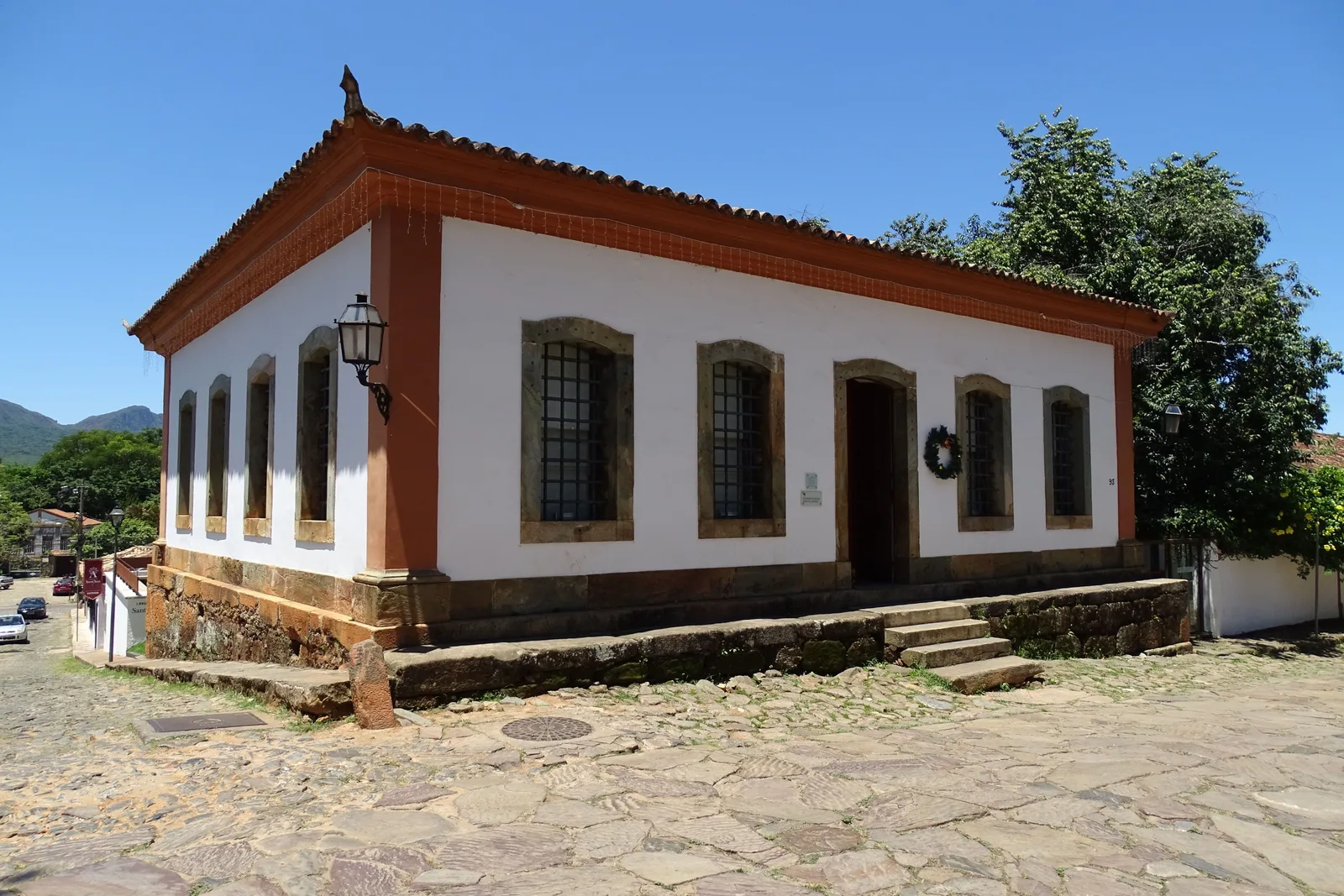
  • The old public jail of Tiradentes, now the Museu de Sant’Ana: a low white colonial building with dark red window frames and a hipped tile roof, standing on a cobbled corner

    Rua Direita · 1 hour

    Museu de Sant’Ana in the old jail

    Nearly three hundred carved images of Saint Anne — the mother of Mary — displayed in the town’s eighteenth-century public jail, which is a stranger and better museum than that description makes it sound. The collection traces how one figure was carved across three centuries and several continents of influence, in wood, soapstone and terracotta, by named masters and by anonymous village carvers. Entry is R$5, and it opens Friday to Sunday and on holidays only.

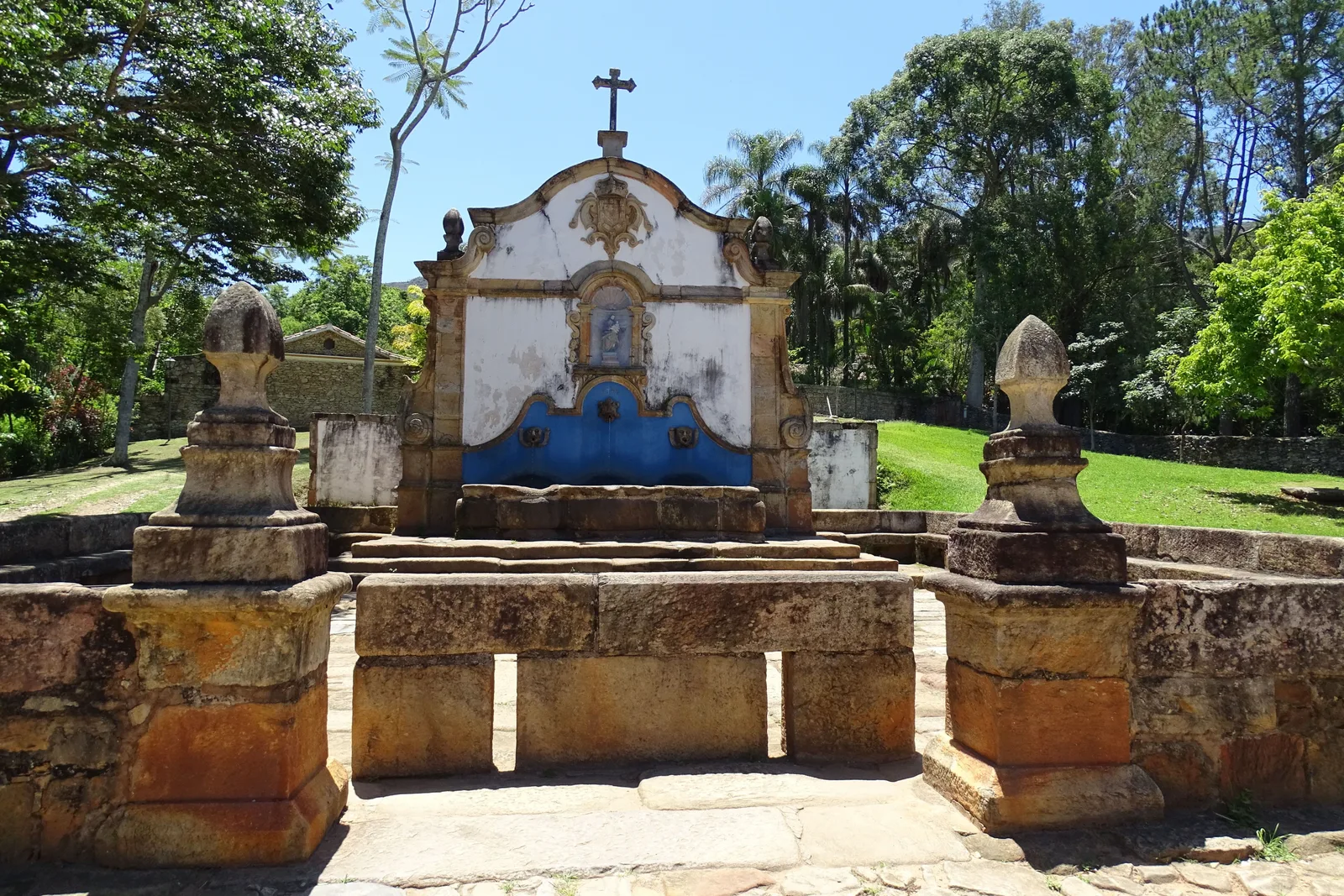
  • The Chafariz de São José in Tiradentes: a long stone fountain with a blue-painted niche and a painted saint above three worn basins, standing on grass with trees behind it

    Rua da Cadeia · 20 minutes

    Chafariz de São José

    A public fountain from 1749, fed by an aqueduct off the Serra de São José, with three separate basins for drinking, washing and watering animals — the working infrastructure of an eighteenth-century town, still running. The stonework is carved and the niche above it is painted blue. It sits at the foot of the slope below the Matriz and is the natural end of a walk down Rua Direita.

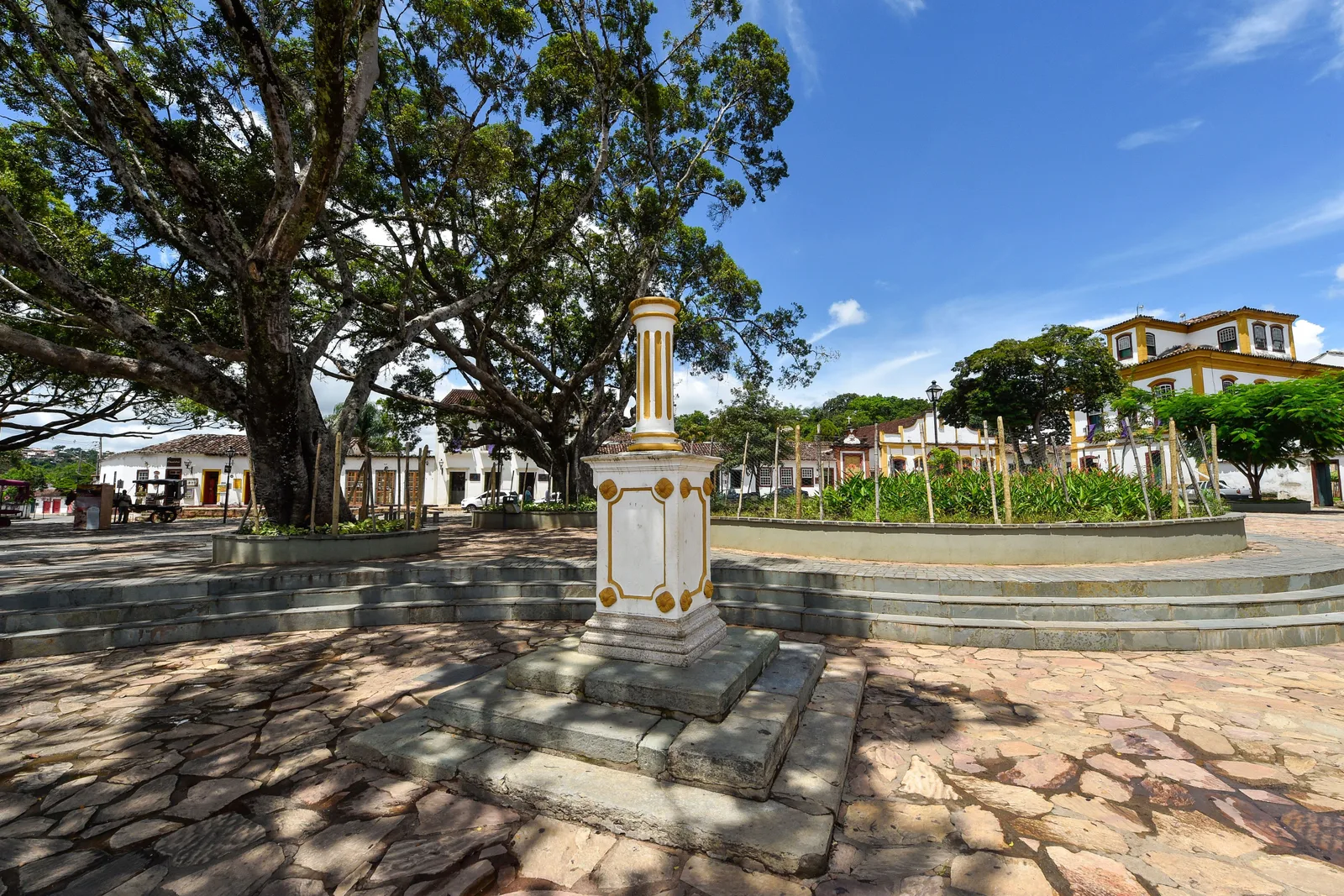
  • The Largo das Forras in Tiradentes: a stone monument on a stepped plinth in the middle of the paved square, under the spreading canopy of a very large tree, with white colonial buildings along the far side

    Central square · an evening

    An evening on the Largo das Forras

    The wide square at the bottom of town is where Tiradentes gathers: big trees, a stone monument in the middle, the old town hall along one side, and restaurant and bar tables spreading across it from about 6:00pm. It is also the main venue for the film festival in January and the gastronomy festival in August, when the whole square goes under marquees. Everything else in town is uphill from here.

  • From the Largo das Forras · 30–40 minutes

    A charrete loop of the historic center

    Carriages wait in a line at the edge of the square and do a circuit of the cobbled streets, the Chafariz and the churches. It is unashamedly a tourist ride and it is also the least painful way to see the whole grid if the cobbles are hard on you — which, for a lot of people, they are. The horses are on their way out: the town agreed with the state prosecutor in 2024 to replace all thirty carriages with electric ones, the first ten were delivered in March 2026, and the horses that came off the route were handed to adopters in September. Priced per carriage rather than per person; settle the fare and the route before you climb in.
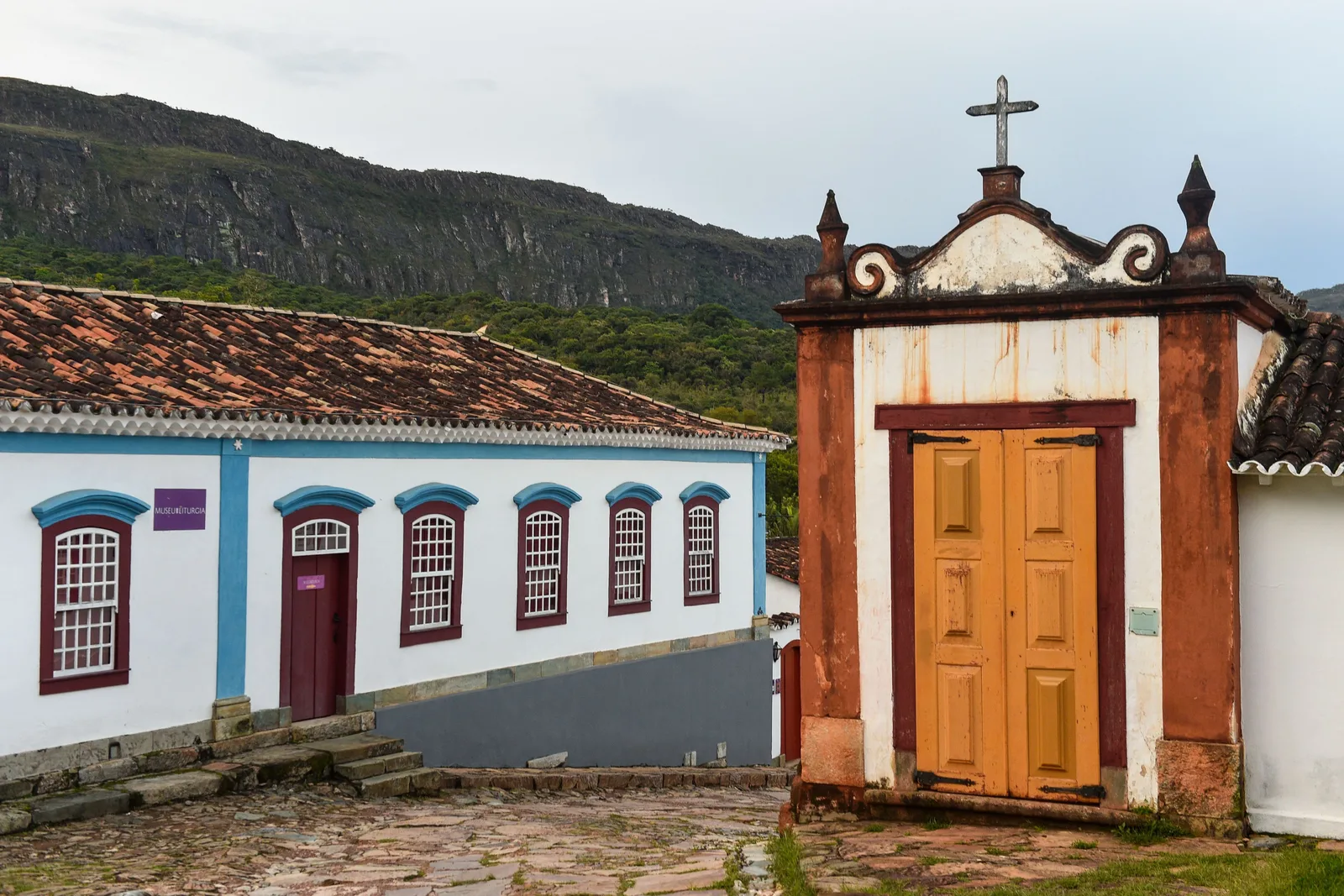
  • The Museu da Liturgia in Tiradentes: a long white colonial building with blue-and-red window surrounds and a small sign beside its door, on a cobbled slope next to a whitewashed gateway with yellow timber doors and a stone cross on its gable, the rock wall of the Serra de São José rising behind

    Rua da Câmara · 1 hour

    Museu da Liturgia

    A small, unusually well-designed museum of Catholic liturgical objects — vestments, silver, processional pieces — presented as design and craft rather than as devotion, which makes it far more interesting to a non-religious visitor than it sounds. It is one of three museums in Tiradentes restored under the same program, alongside the Casa Padre Toledo and the Museu de Sant’Ana, and the three together are an easy half day.

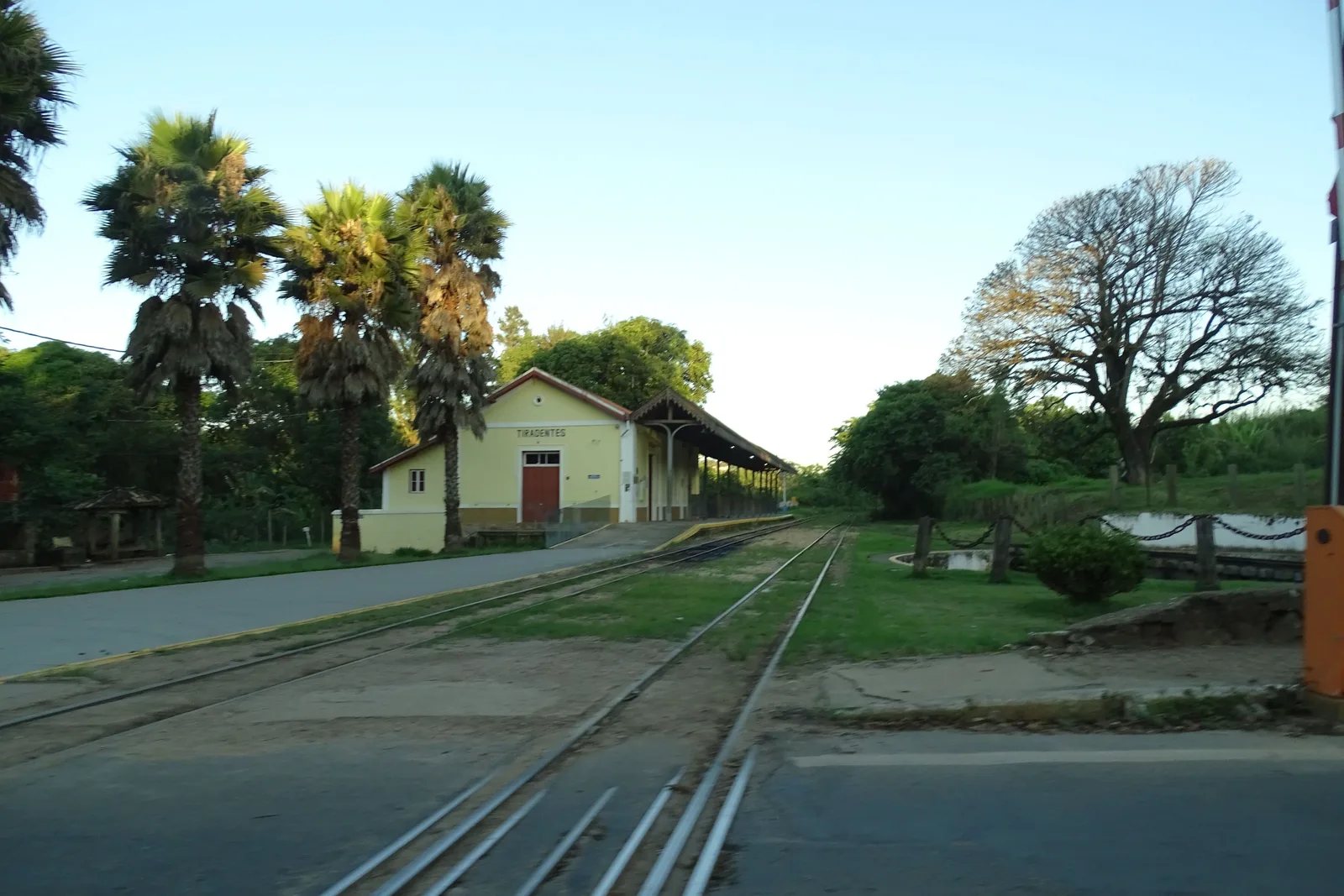
  • The single track running away from the low station building at Tiradentes in late afternoon light, with palms and big trees along the line and no train at the platform

    Ten minutes from the Largo das Forras · 20 minutes

    Tiradentes station

    The far end of the line, a short walk downhill from the historic center: a small yellow station building, a single platform, a run-round loop and a set of buffers, with the Serra behind. It is worth twenty minutes even on a day with no train — and if you are catching one, be there early, because sales close half an hour before departure and the kiosk is the only place to buy in person.

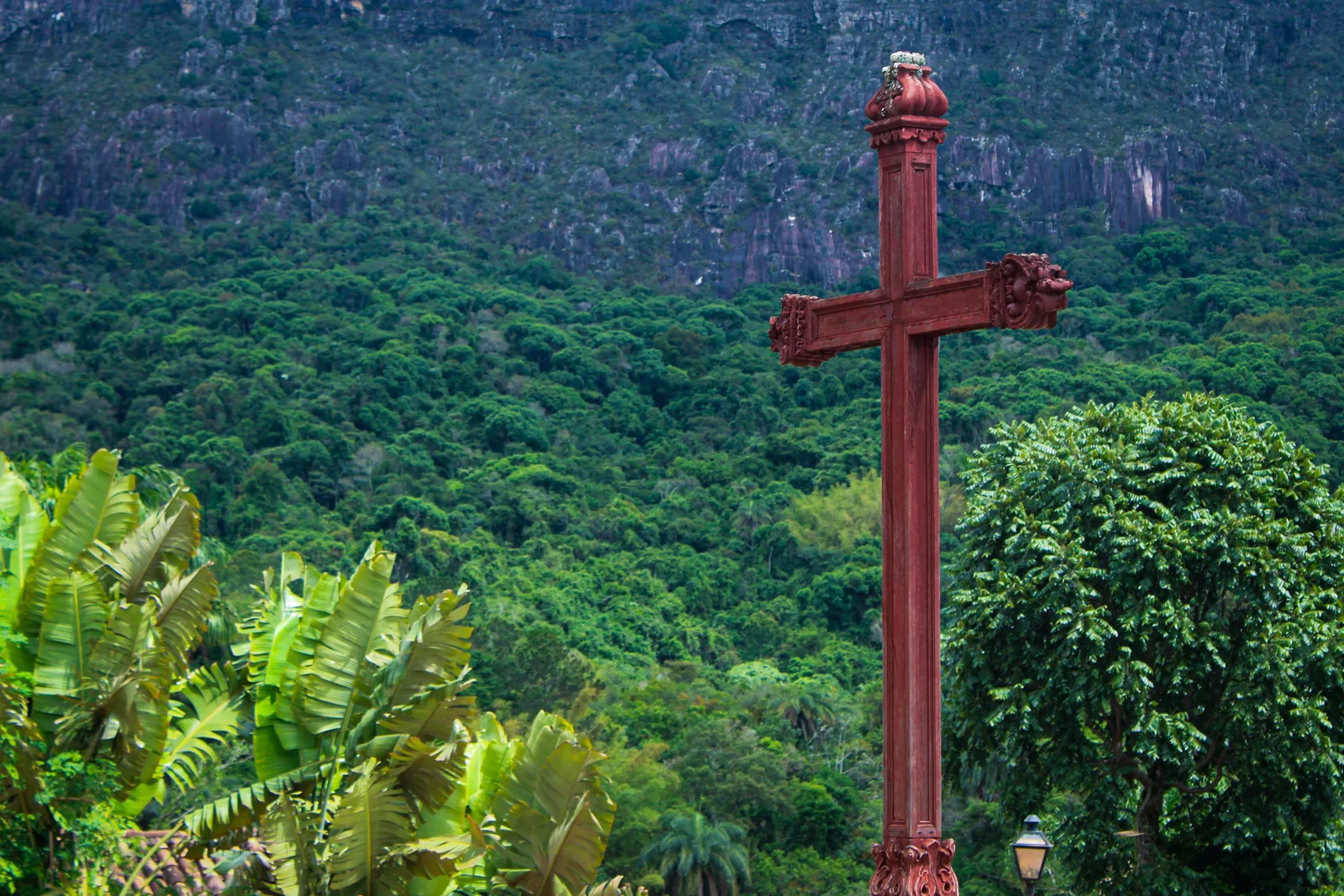
  • A tall red-painted timber cross standing against a solid wall of green forest, with the gray rock of the Serra de São José showing through the trees behind it

    Foot of the Serra · half day

    The waterfalls above Tiradentes

    A handful of small waterfalls sit in the forest along the base and lower slopes of the escarpment — the Cachoeira do Carteiro on the Tiradentes side is the best known, reached by a climb of an hour or so. They are cold, shallow and at their best in the wet months between November and March, which is also when the paths are slick and the storms come in fastest. Ask locally about conditions before you set off.

  • A crowd of brightly painted ceramic folk-art figures on a shelf in Tiradentes — women in patterned dresses, round-bodied dolls and black cats with wide eyes

    Rua Direita and Rua da Câmara · 2 hours

    Ceramics and painted wood in Tiradentes

    Tiradentes has the galleries; Bichinho has the workshops. The shops along Rua Direita carry the region’s ceramic figures — the seated namoradeiras that lean out of window frames all over Minas, painted saints, and whole families of folk-art dolls — along with painted furniture and antiques. Prices are higher than in the villages and the selection is better; buy the small things here and the big things where they are made.

São João del-Rei

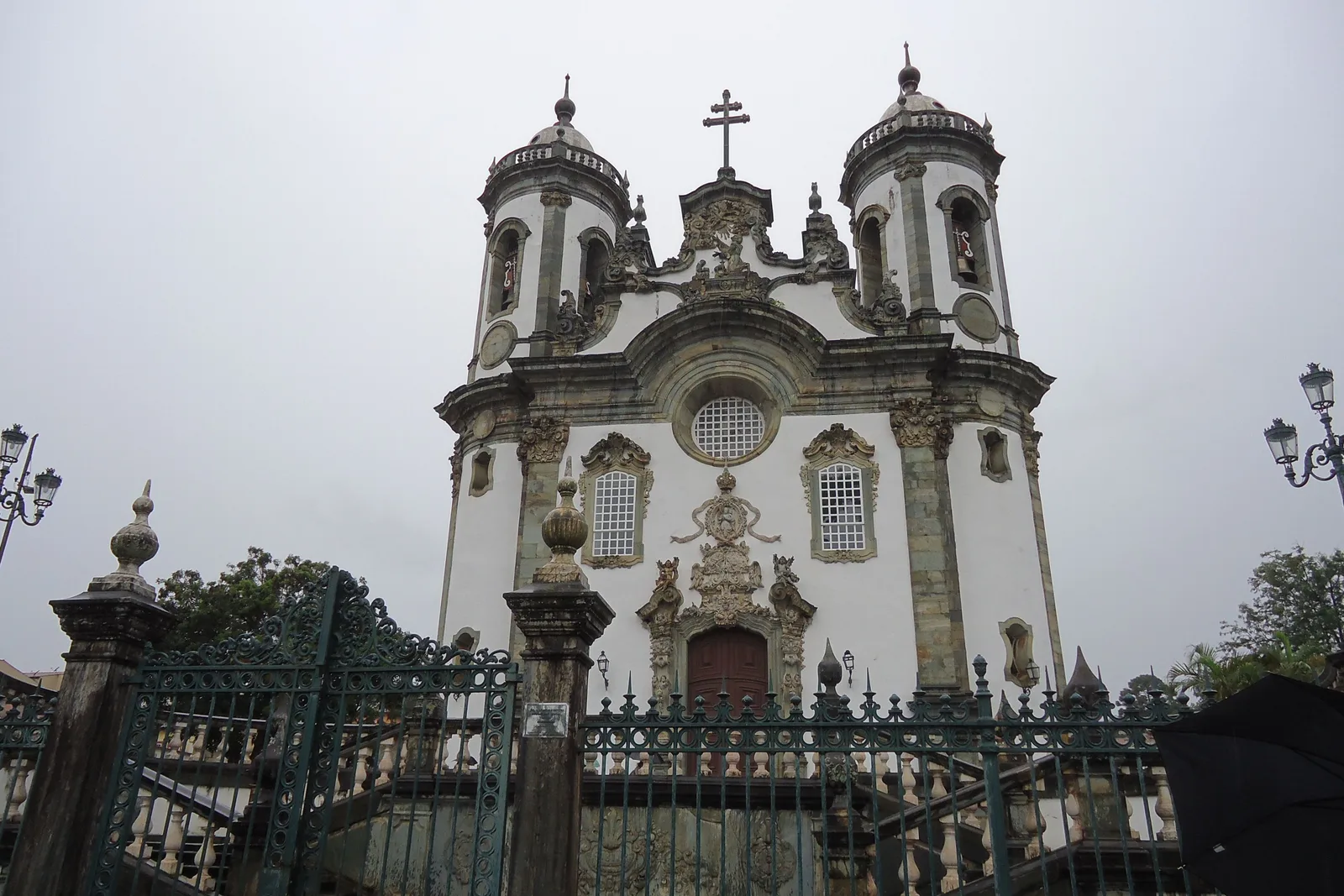
  • The Igreja de São Francisco de Assis in São João del-Rei behind its iron railings on an overcast day, the pale curved facade set between two rounded bell towers with a stone cross in the forecourt

    Praça Frei Orlando · 1 hour

    Igreja de São Francisco de Assis

    The best building in either town, begun in 1774 from a design by Aleijadinho: a curved facade between round towers, a carved soapstone portal, and an interior of blue-gray and gold that is calmer than anything in Tiradentes. The palm-lined square in front is a set piece of its own. Tancredo Neves lies in the churchyard, and on Sundays one of the town’s two eighteenth-century orchestras plays the mass here or at the cathedral.

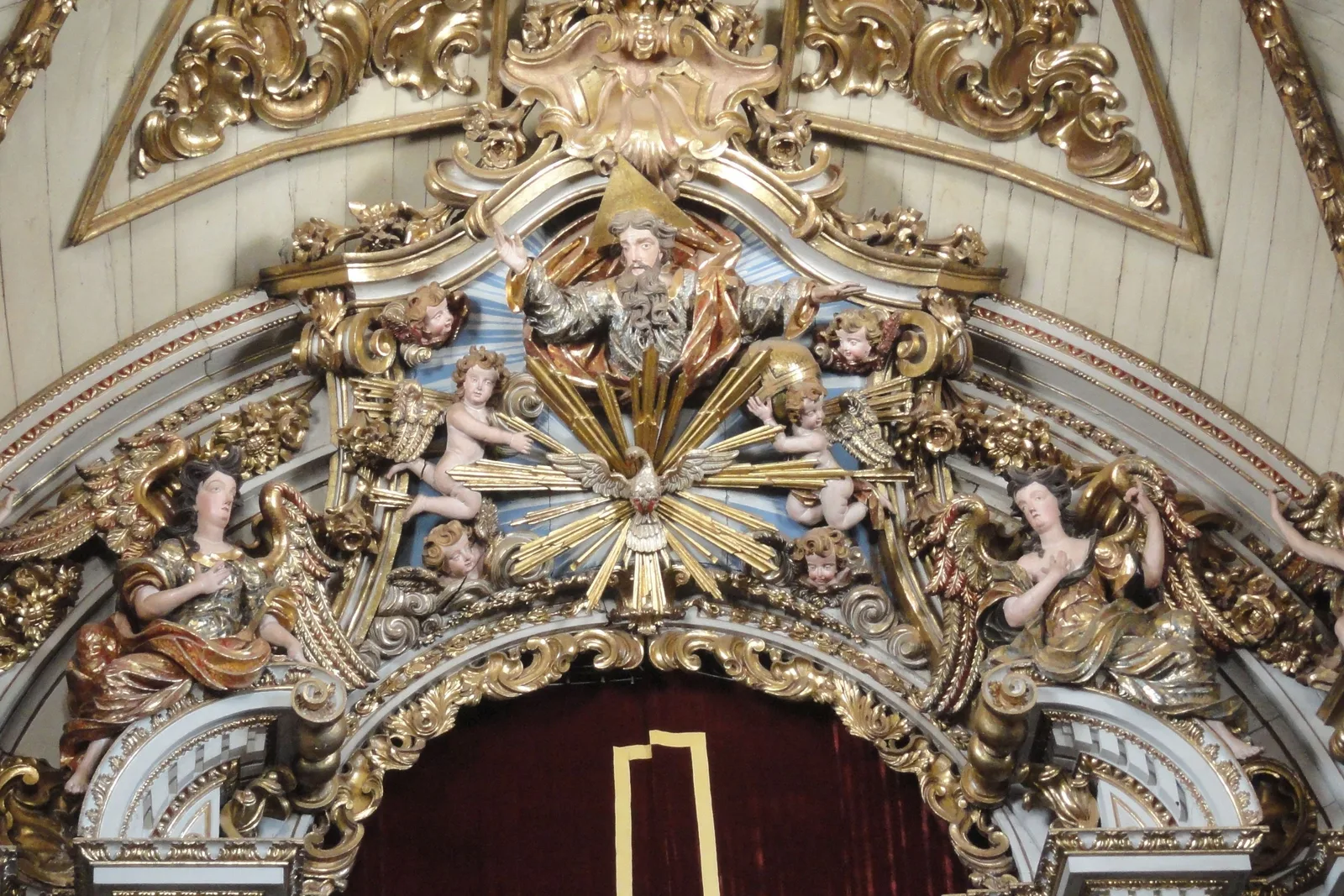
  • The gilded rococo frontispiece above the high altar of the Catedral Basílica de Nossa Senhora do Pilar, a mass of carved gold scrollwork, painted cherubs and a crowned central medallion

    Rua Getúlio Vargas · 45 minutes

    Catedral Basílica de Nossa Senhora do Pilar

    The town’s parish church, begun in 1721, and the place to see what Minas gold actually bought: a chancel arch and altars carved and gilded to the point of vertigo, with rococo scrollwork, cherubs and mirrors worked into every surface. It is a working cathedral rather than a museum, so the visit is quiet and free, and the sacred-music tradition that runs through it is the reason the town calls itself the land of music.

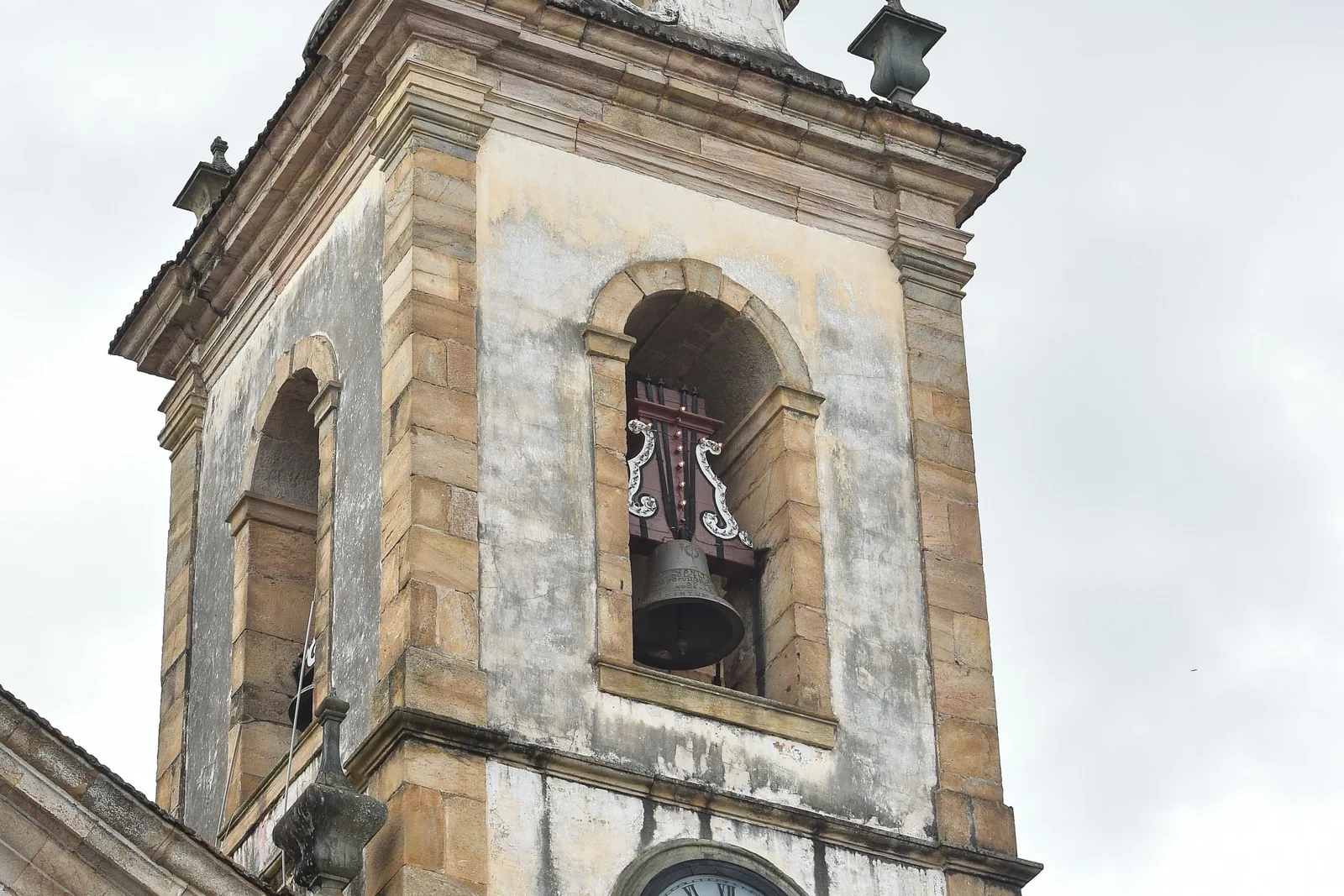
  • The weathered stone bell tower of the Pilar cathedral in São João del-Rei against a pale sky, one large bronze bell hanging in the open arch

    Anywhere in the historic center · free

    Listening to the bells of São João del-Rei

    The bells here are a language, not decoration. Rung by hand from the towers of the old churches in dozens of distinct patterns, they announce deaths by the age and sex of the dead, call the town to particular feasts, and mark the stages of Holy Week — a practice recognized as national intangible cultural heritage and still in daily use by trained ringers, most of whom also play in the orchestras. Stand in the center at midday or before a Sunday mass and you will hear it.

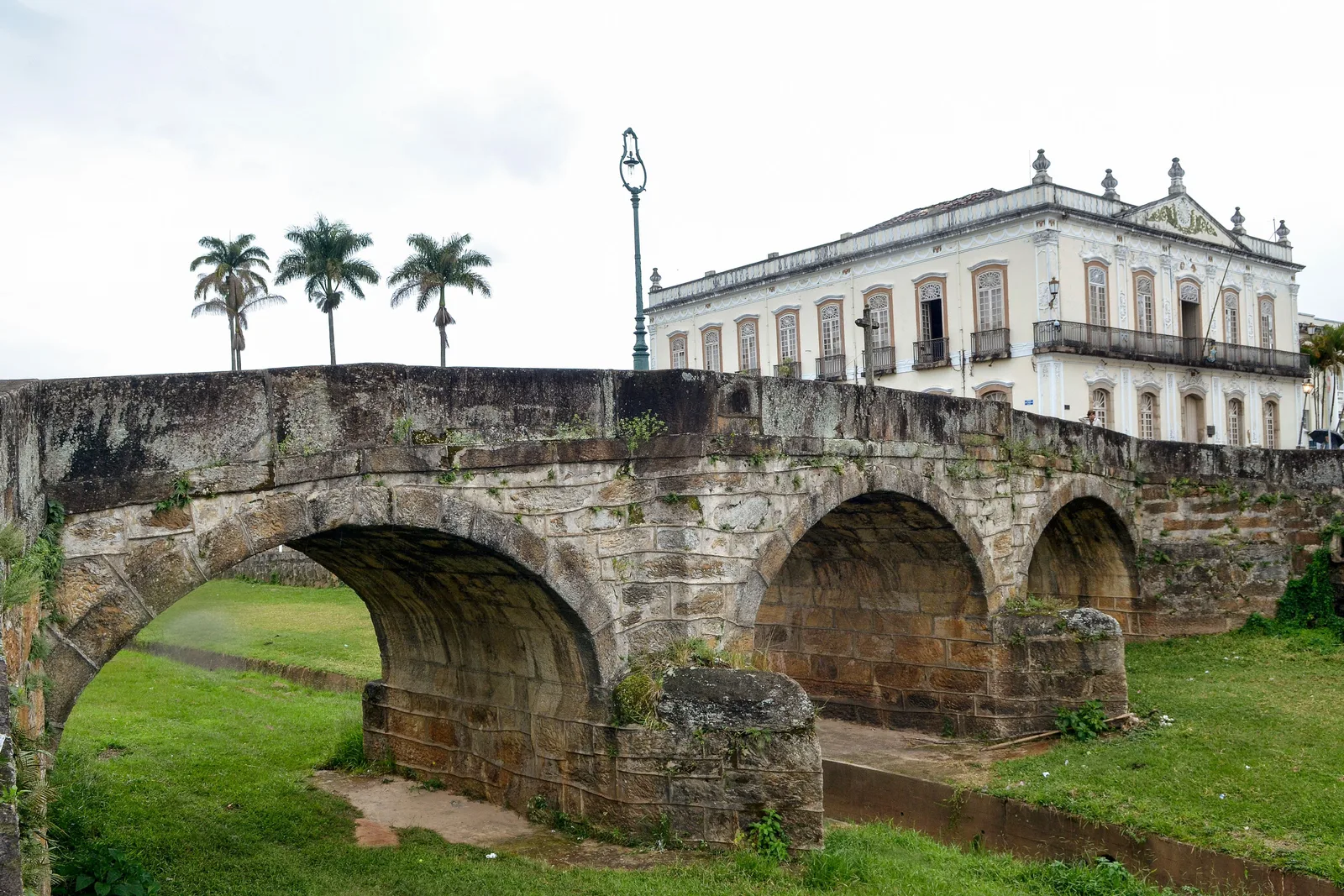
  • The Ponte da Cadeia in São João del-Rei, a low three-arched stone bridge over a grassy channel, with a long white colonial building and a row of palms on the bank behind it

    Centro histórico · 30 minutes

    The stone bridges over the Lenheiro

    The stream that runs through the middle of São João del-Rei is crossed by a pair of late-eighteenth-century stone bridges, and the older of them, the Ponte da Cadeia, is the town’s signature view: three low arches, a stretch of grass either side and the colonial houses lined up along the bank behind. Walk the length of the stream between them and you have seen most of the historic center without trying.

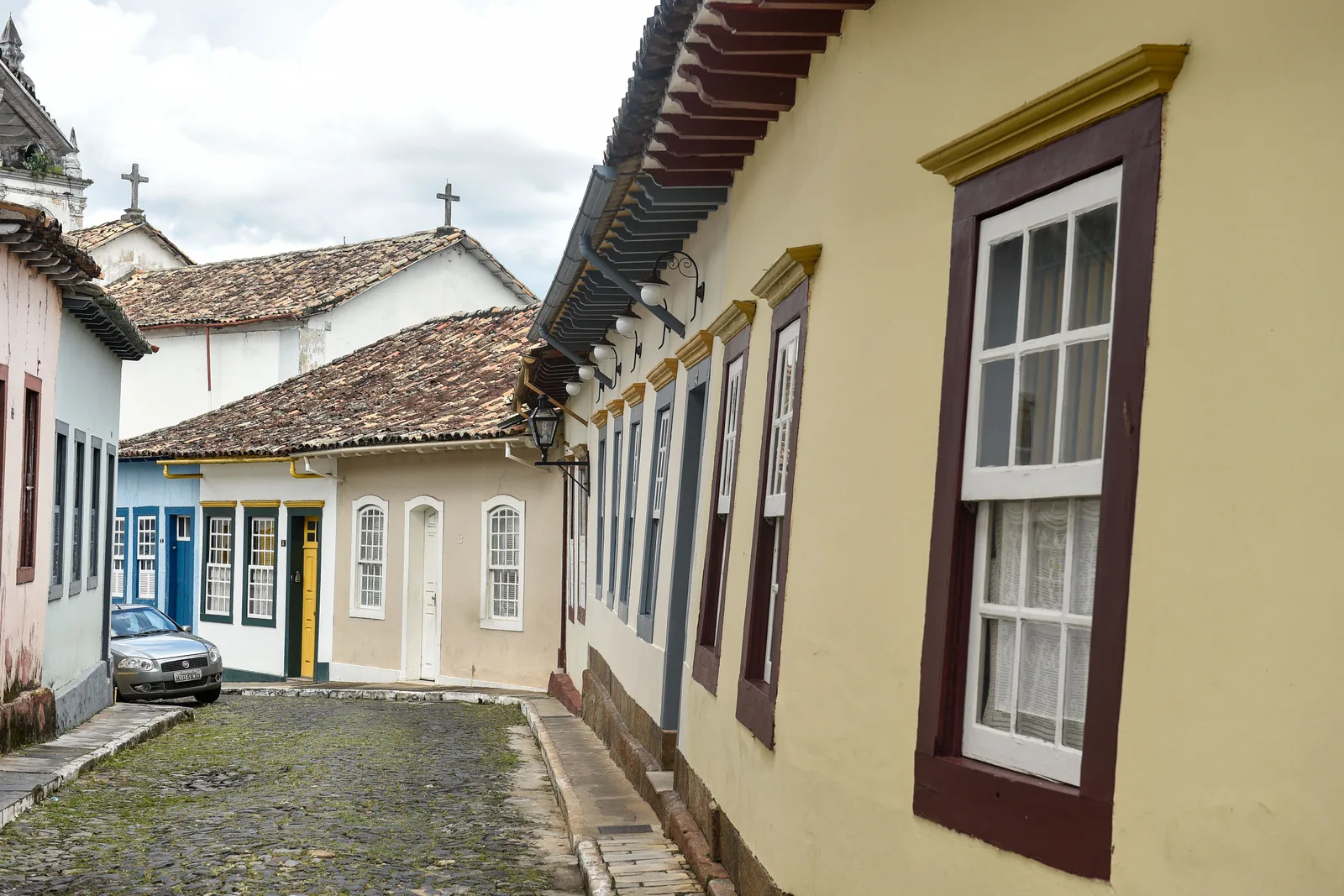
  • A cobbled street in São João del-Rei’s historic center: a pale yellow house with tall shuttered windows filling one side of the frame, and a row of low pink, blue and white colonial houses with visibly sagging tile roofs along the other

    Centro histórico · 20 minutes

    Walking the Rua das Casas Tortas

    A short street of colonial houses that have settled unevenly over two and a half centuries and now visibly lean into one another — doorframes out of true, roof lines sagging, nothing at right angles. It is the most photographed street in the town and a good illustration of what these buildings actually are: rammed earth and timber, held up by maintenance and habit.

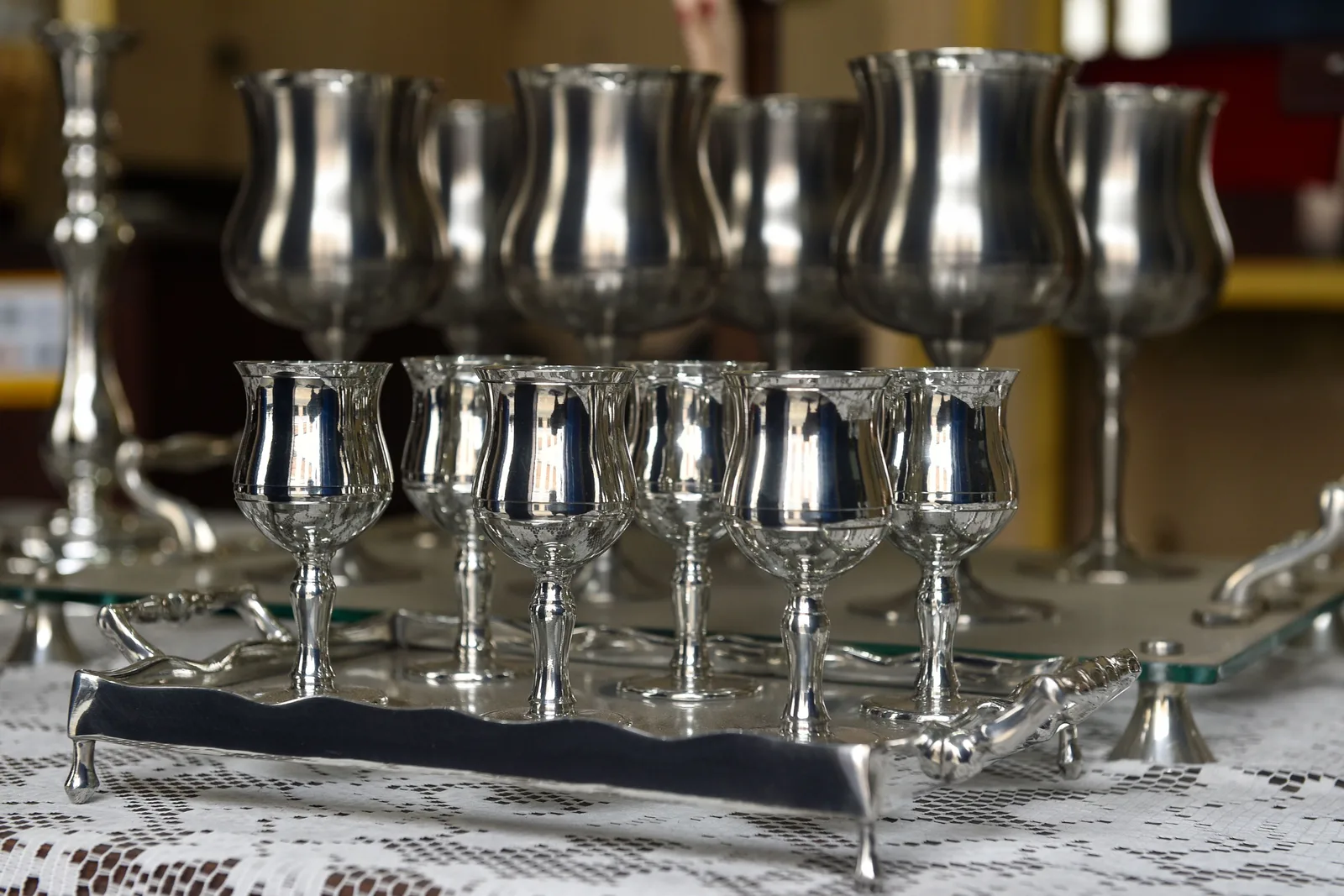
  • A row of polished pewter goblets standing on a tray in a São João del-Rei workshop, with more finished pieces out of focus behind them

    Centro · 1 hour

    Pewter workshops in São João del-Rei

    Pewter — estanho — was worked in this region in colonial times for household and church ware, died out when aluminum arrived, and was revived from the 1960s by an English antiquarian who settled in São João del-Rei and trained a generation of local makers. The trade stuck. Family workshops still spin, cast and finish jugs, goblets and tableware by hand, and most let you watch; the town now carries a protected geographical indication for it. It is the one souvenir from this region that is genuinely local rather than generic.

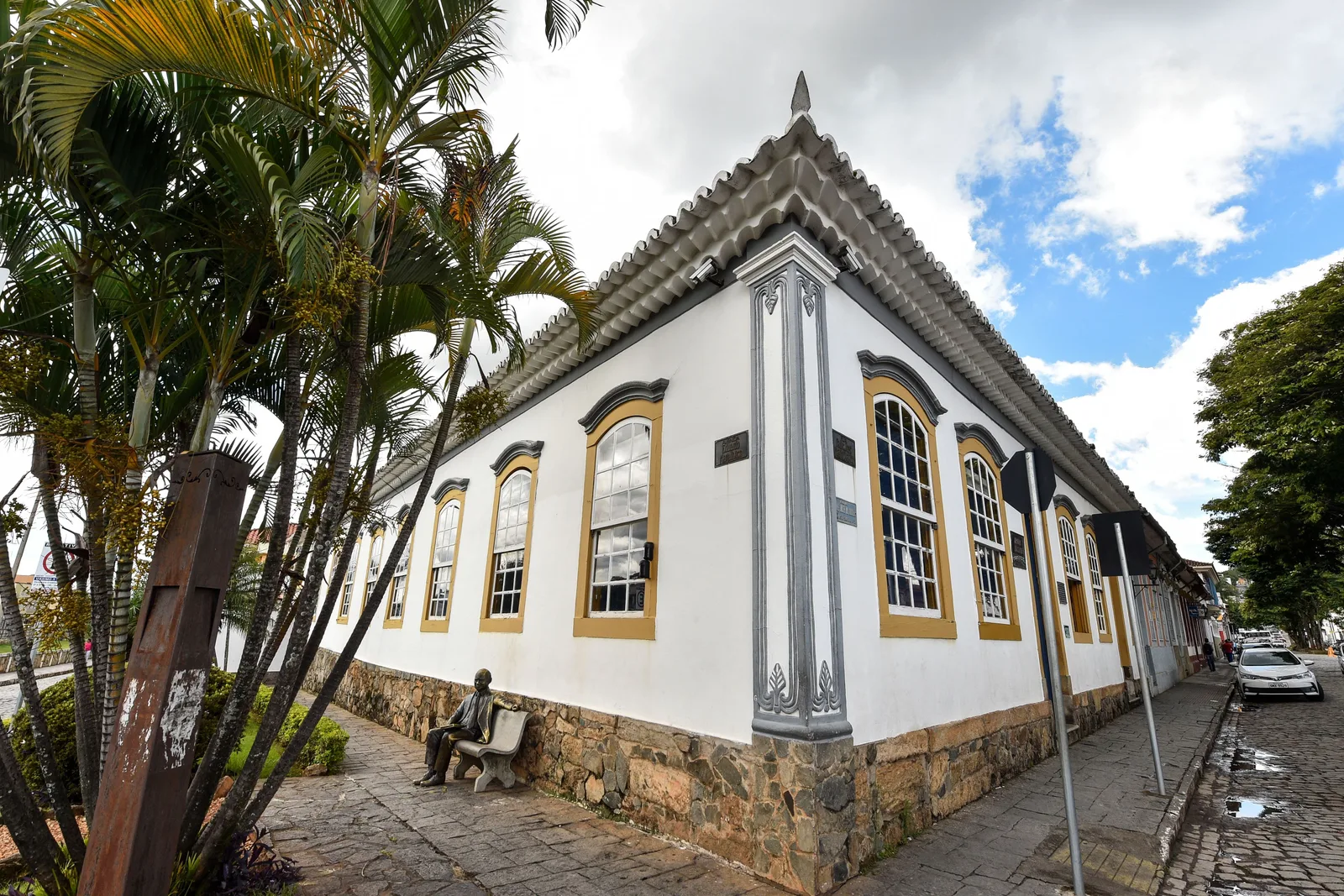
  • The Memorial Tancredo Neves in São João del-Rei: a low white colonial building with yellow-framed arched windows and gray stone trim on a cobbled corner, tall palms along the pavement and a bronze statue of a seated man on a bench at the foot of its wall

    Centro · 45 minutes

    Memorial Tancredo Neves

    Tancredo Neves was born in São João del-Rei, spent his life in Minas politics, and was elected president in 1985 as the civilian who would end twenty-one years of military rule — then fell ill on the eve of his inauguration and died five weeks later. The memorial in his family’s house covers a career and a moment that most Brazilians over fifty remember exactly where they were for, and it is the most useful hour on this page for understanding modern Brazil.
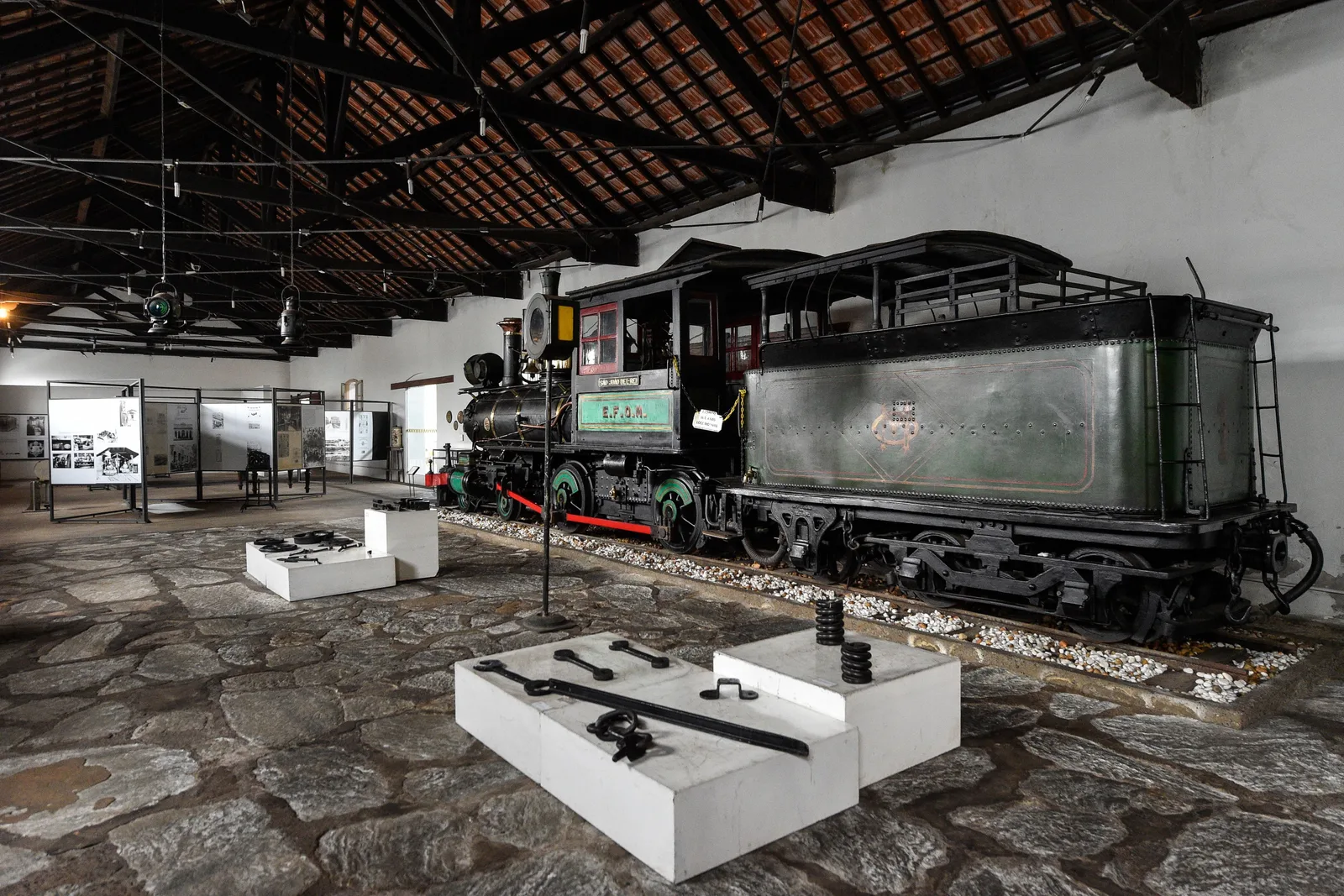
  • A black steam locomotive and tender standing on a stone floor inside the São João del-Rei railway museum shed, exhibition cases and display panels arranged around it under an open timber roof

    Avenida Hermílio Alves · 1–2 hours

    Museu Ferroviário at São João del-Rei

    The 1881 station complex is a working depot that happens to be a museum: the first locomotive the line ever imported, a nineteenth-century saloon carriage, and rooms of documents, bells and signaling equipment. The museum itself is free and opens Wednesday to Sunday, and it is the best explanation anywhere of why a 762 mm railway in the middle of Minas outlived everything built around it.

The Railway

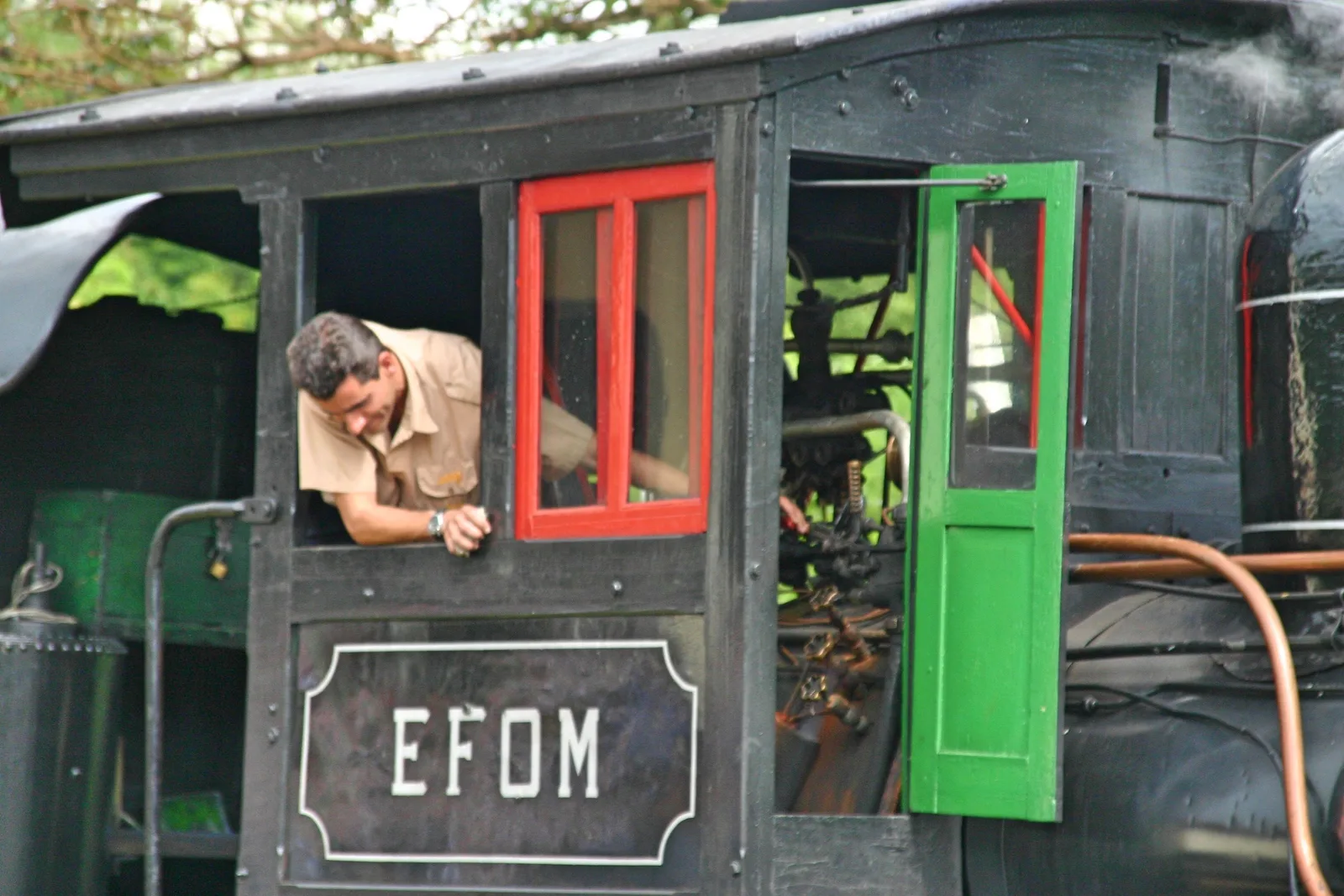
  • A driver leaning out of the green-and-red doorway of a steam locomotive cab, the enamel plate below him reading EFOM for the Estrada de Ferro Oeste de Minas

    Between the two towns · about 35 minutes

    Riding the Maria Fumaça

    Wooden carriages, open windows, a river and cattle country, and a locomotive older than almost anything else still moving under steam in South America. Trains run Friday to Sunday with extra services in January and July; around R$86 one way, R$172 return, bought online through the operator or at the station kiosks up to half an hour before departure. The best plan is one way plus a day at the other end, rather than a round trip that puts you back where you started.

  • A black steam locomotive and tender standing on a stone floor inside the São João del-Rei railway museum shed, exhibition cases and display panels arranged around it under an open timber roof

    Avenida Hermílio Alves · 1–2 hours

    Museu Ferroviário at São João del-Rei

    The 1881 station complex is a working depot that happens to be a museum: the first locomotive the line ever imported, a nineteenth-century saloon carriage, and rooms of documents, bells and signaling equipment. The museum itself is free and opens Wednesday to Sunday, and it is the best explanation anywhere of why a 762 mm railway in the middle of Minas outlived everything built around it.

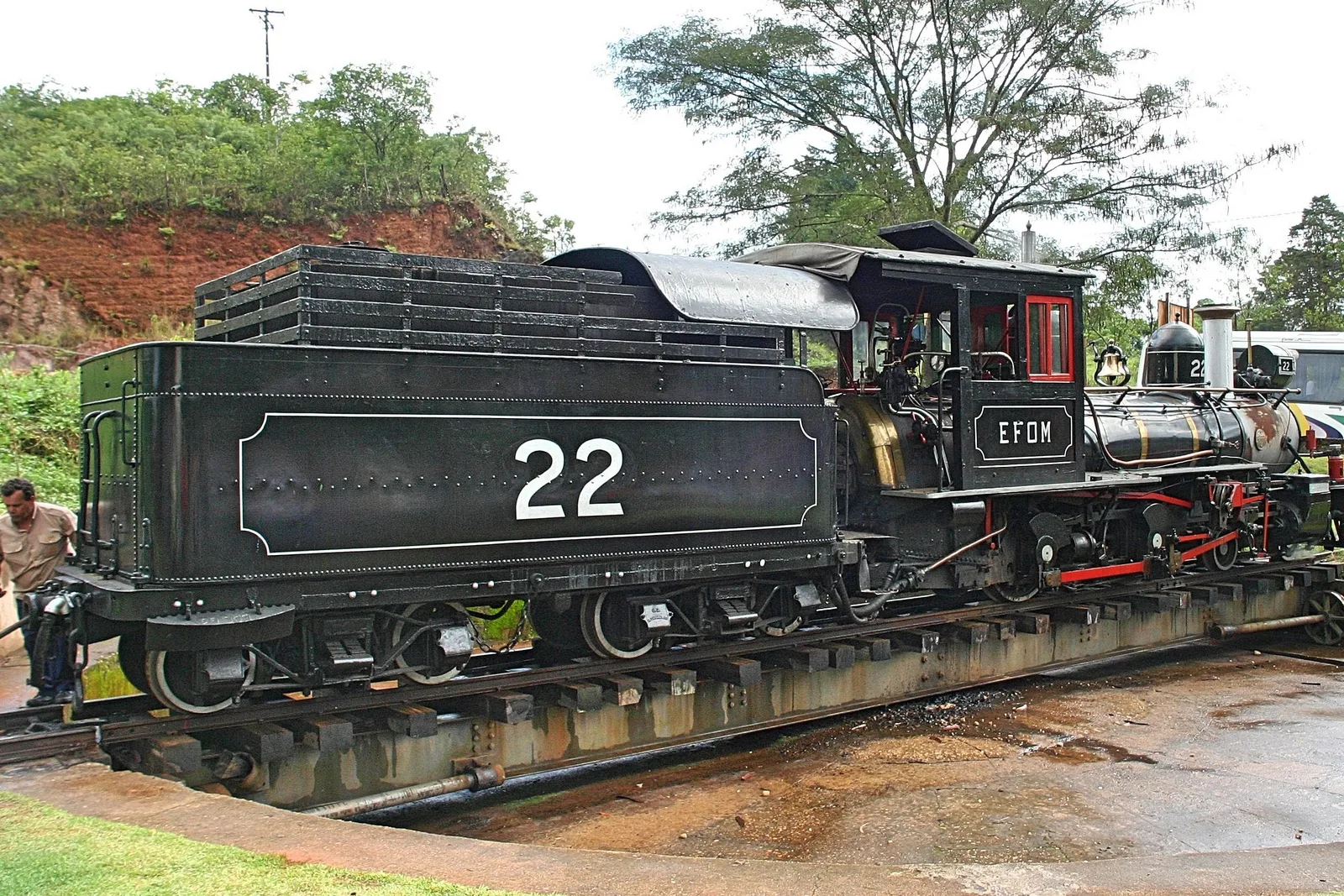
  • Steam locomotive number 22 standing on the turntable at the São João del-Rei works in the rain, its tender lettered with the number and the EFOM initials, with a red earth bank and trees behind

    Beside the station · 45 minutes

    The roundhouse and the turntable

    Behind the museum is the rotunda — a semicircular engine shed built around a turntable, with a line of American-built Baldwin locomotives inside it, several of them still in service. Watching a working engine driven onto the table and swung round by hand is the single best thing on this railway that is not the ride itself. The museum is free; the roundhouse is ticketed separately, $4 / R$20.

  • The single track running away from the low station building at Tiradentes in late afternoon light, with palms and big trees along the line and no train at the platform

    Ten minutes from the Largo das Forras · 20 minutes

    Tiradentes station

    The far end of the line, a short walk downhill from the historic center: a small yellow station building, a single platform, a run-round loop and a set of buffers, with the Serra behind. It is worth twenty minutes even on a day with no train — and if you are catching one, be there early, because sales close half an hour before departure and the kiosk is the only place to buy in person.

Serra & Trails

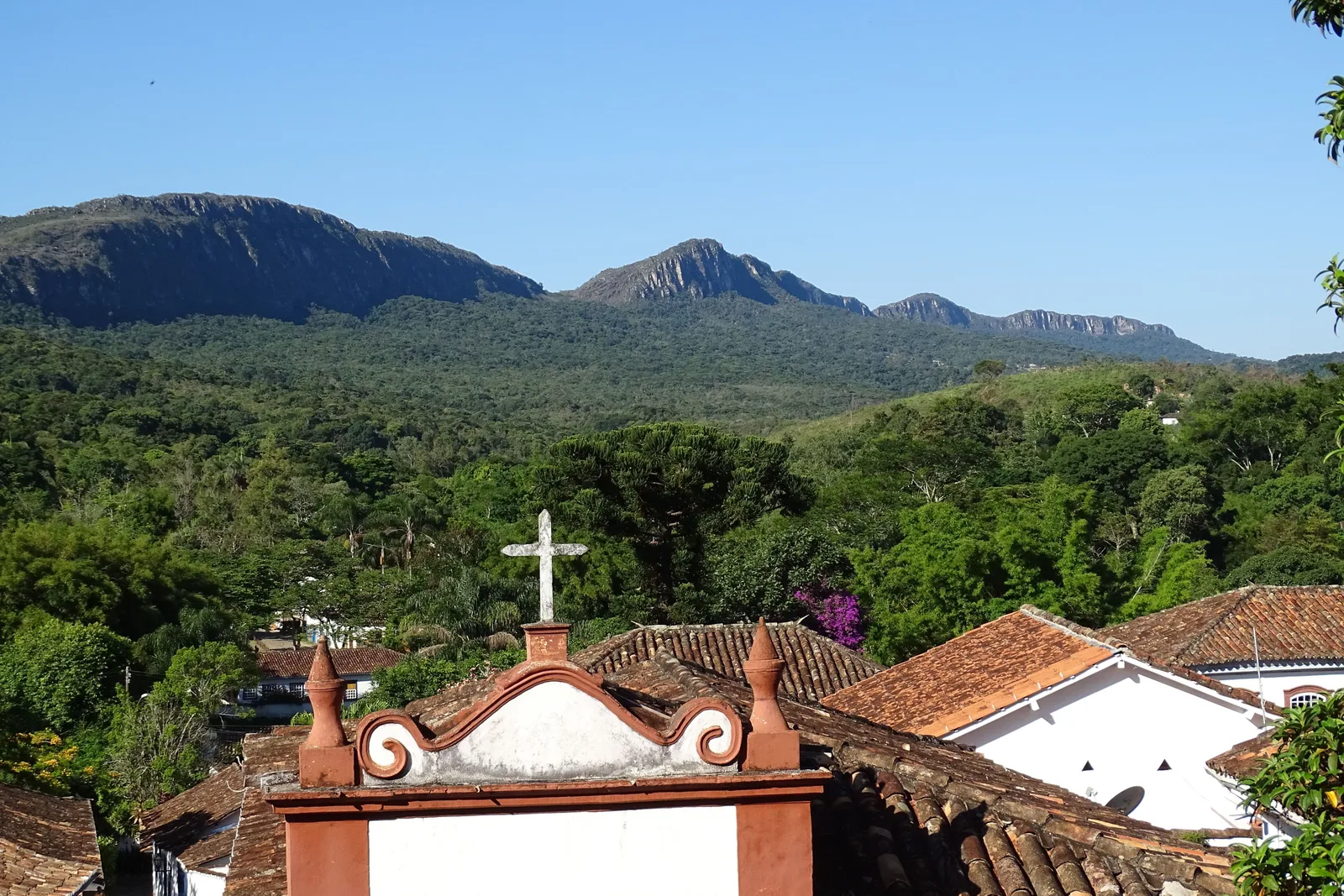
  • The cross on a church gable in the foreground with red-tiled rooftops below it, looking across a wooded valley to the long green ridge of the Serra de São José

    Trailheads at the edge of Tiradentes · half day

    Walking up the Serra de São José

    The short trails start where the streets stop. The Mãe d’Água walk is a kilometer of forest to an eighteenth-century stone aqueduct still carrying spring water; the Caixa d’Água and Carteiro paths climb higher, to a waterfall and a viewpoint on the lip of the escarpment with both towns laid out below. Take water and start early — and take a guide for anything that leaves the waymarked section, because the paths braid and the signage does not keep up.

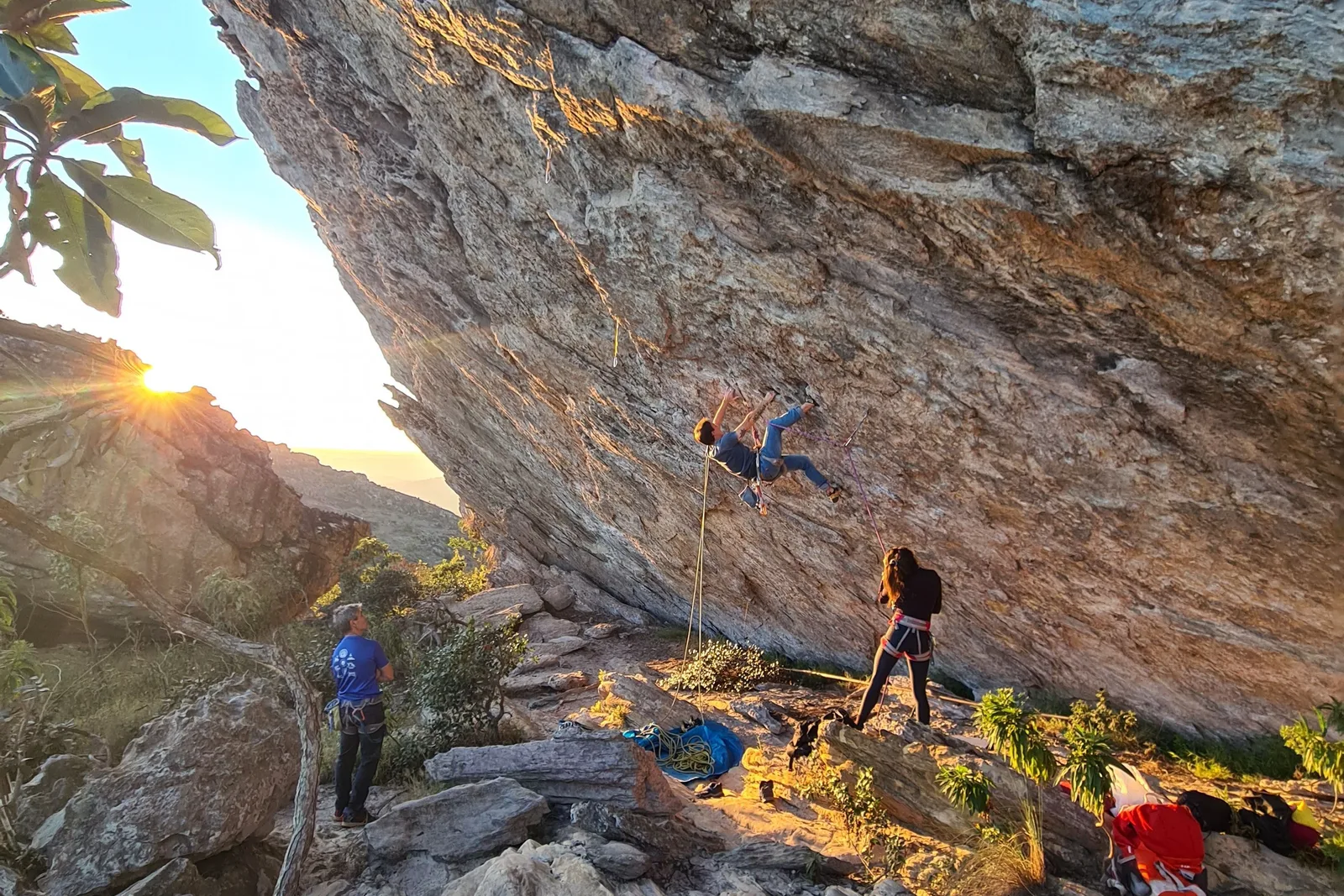
  • Climbers under a huge overhanging rock face on the Serra do Lenheiro at sunrise, one of them on the wall on a rope while two others stand on the boulders below with kit spread around them

    São João del-Rei side · half day

    Climbing on the Serra do Lenheiro

    The quartzite on the São João del-Rei flank of the range is the region’s climbing ground — bolted sport routes and overhangs on clean rock, with the town below and the sun coming up over the ridge behind you. Local outfitters run half-day sessions for people who have never tied in before, and the same rock carries the area’s via ferrata and rappel routes. Book ahead: this is a two-or-three-guides town, not an industry.

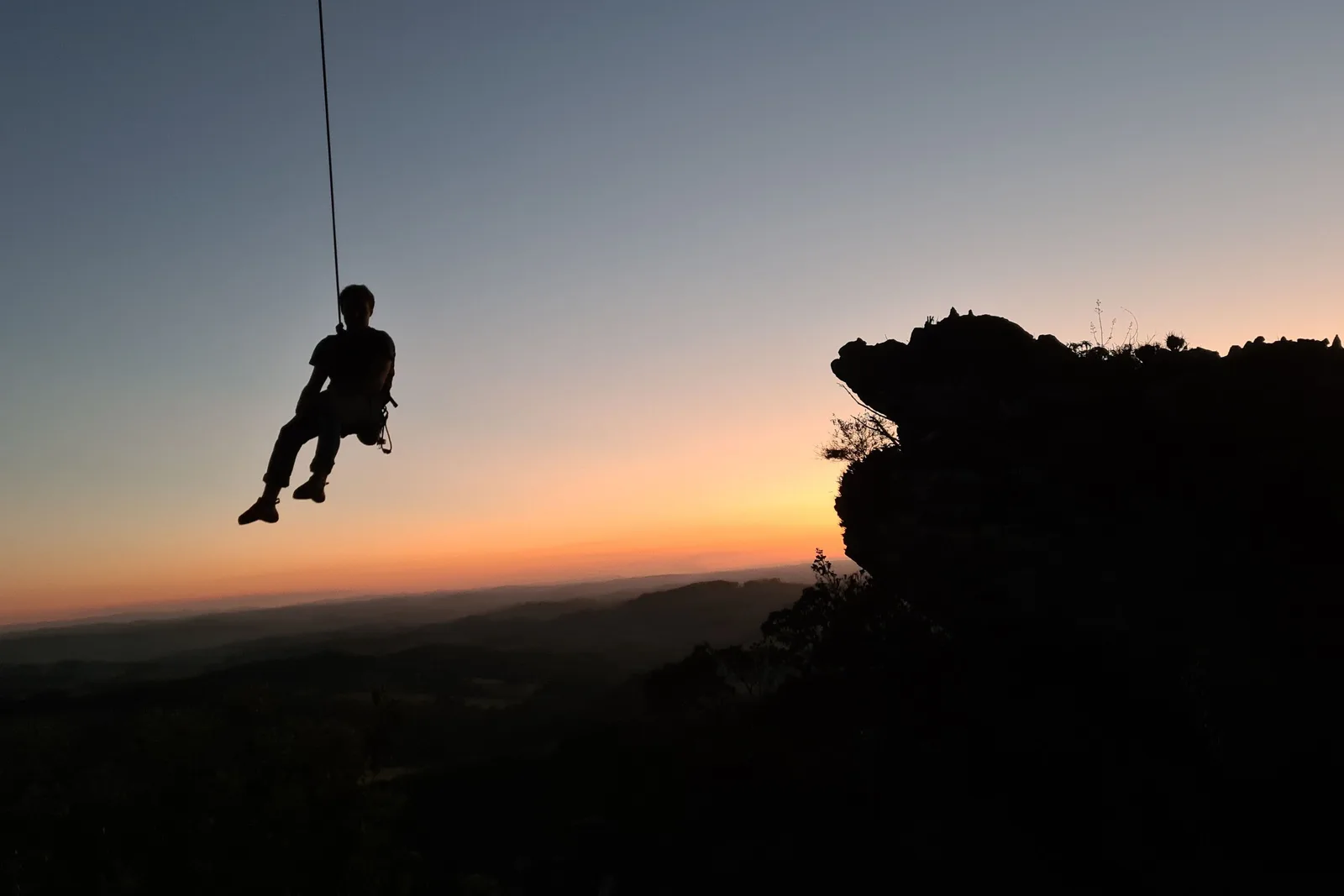
  • A person silhouetted on a rope part-way down a rock face at sunset, the dark shoulder of the ridge to one side and the valley haze glowing orange behind

    APA São José · 2–3 hours

    Rappelling off the escarpment at sunset

    The same guides run rappel descents off the top of the ridge, and the late-afternoon slot is the one to ask for: you go over the edge with the whole basin of the Rio das Mortes going gold behind you. No experience needed and no head for heights required beyond the first two meters, which are the only hard part.

  • A tall red-painted timber cross standing against a solid wall of green forest, with the gray rock of the Serra de São José showing through the trees behind it

    Foot of the Serra · half day

    The waterfalls above Tiradentes

    A handful of small waterfalls sit in the forest along the base and lower slopes of the escarpment — the Cachoeira do Carteiro on the Tiradentes side is the best known, reached by a climb of an hour or so. They are cold, shallow and at their best in the wet months between November and March, which is also when the paths are slick and the storms come in fastest. Ask locally about conditions before you set off.

Craft Villages

  • A row of polished pewter goblets standing on a tray in a São João del-Rei workshop, with more finished pieces out of focus behind them

    Centro · 1 hour

    Pewter workshops in São João del-Rei

    Pewter — estanho — was worked in this region in colonial times for household and church ware, died out when aluminum arrived, and was revived from the 1960s by an English antiquarian who settled in São João del-Rei and trained a generation of local makers. The trade stuck. Family workshops still spin, cast and finish jugs, goblets and tableware by hand, and most let you watch; the town now carries a protected geographical indication for it. It is the one souvenir from this region that is genuinely local rather than generic.

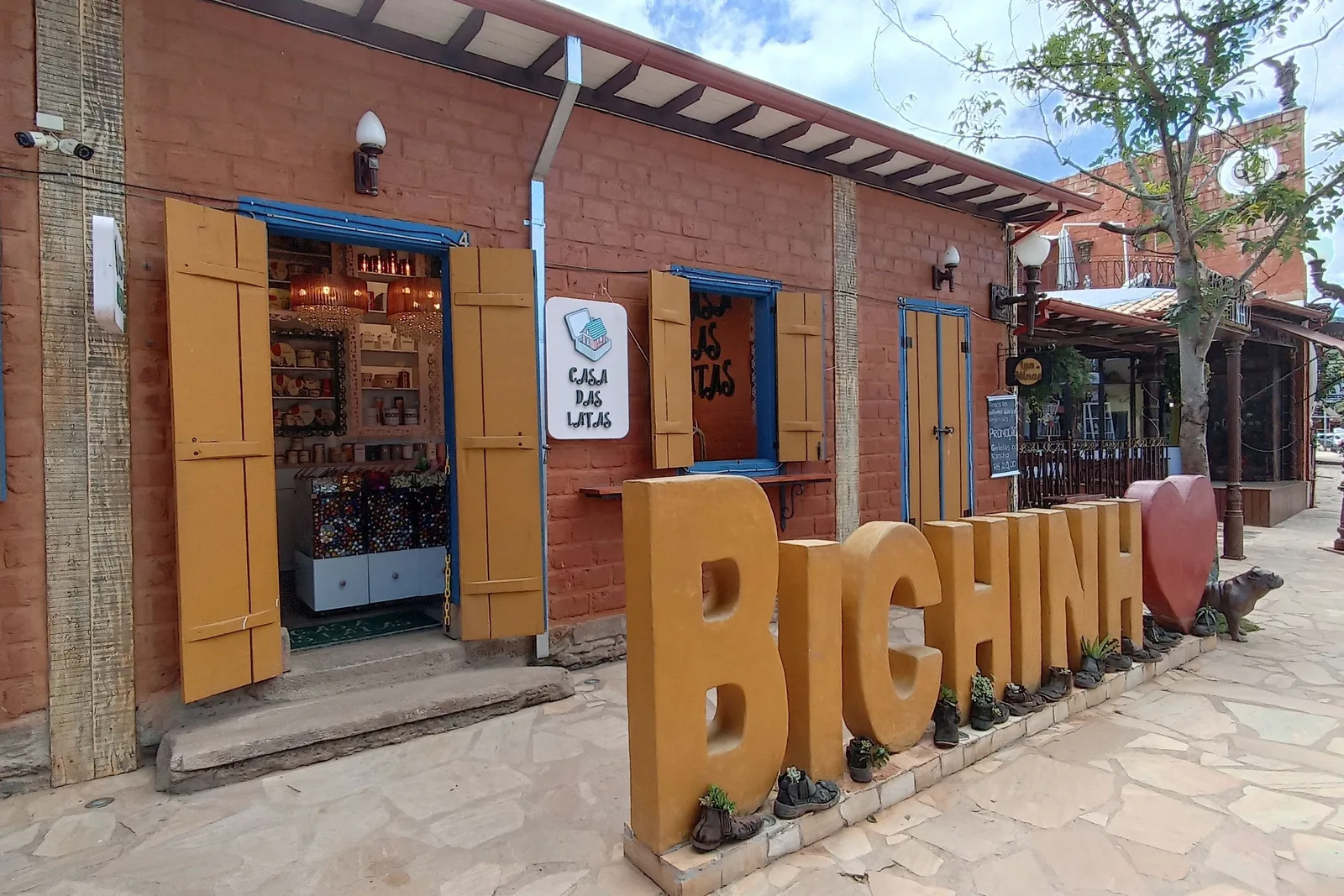
  • Large wooden letters spelling BICHINHO standing on the pavement outside a red-brick craft shop with an open blue-framed doorway, on the village’s single street

    7 km from Tiradentes · half day

    Bichinho, the craft village

    Officially Vitoriano Veloso, a district of the town of Prados, and universally called Bichinho. It is one street of workshops and galleries in a hamlet that had almost nothing forty years ago, before a workshop set up here to teach woodwork to local kids and the craft economy grew out of it. Wood, iron, papier-mâché, recycled paper, vine and textile, most of it made where it is sold, and prices well below Tiradentes.

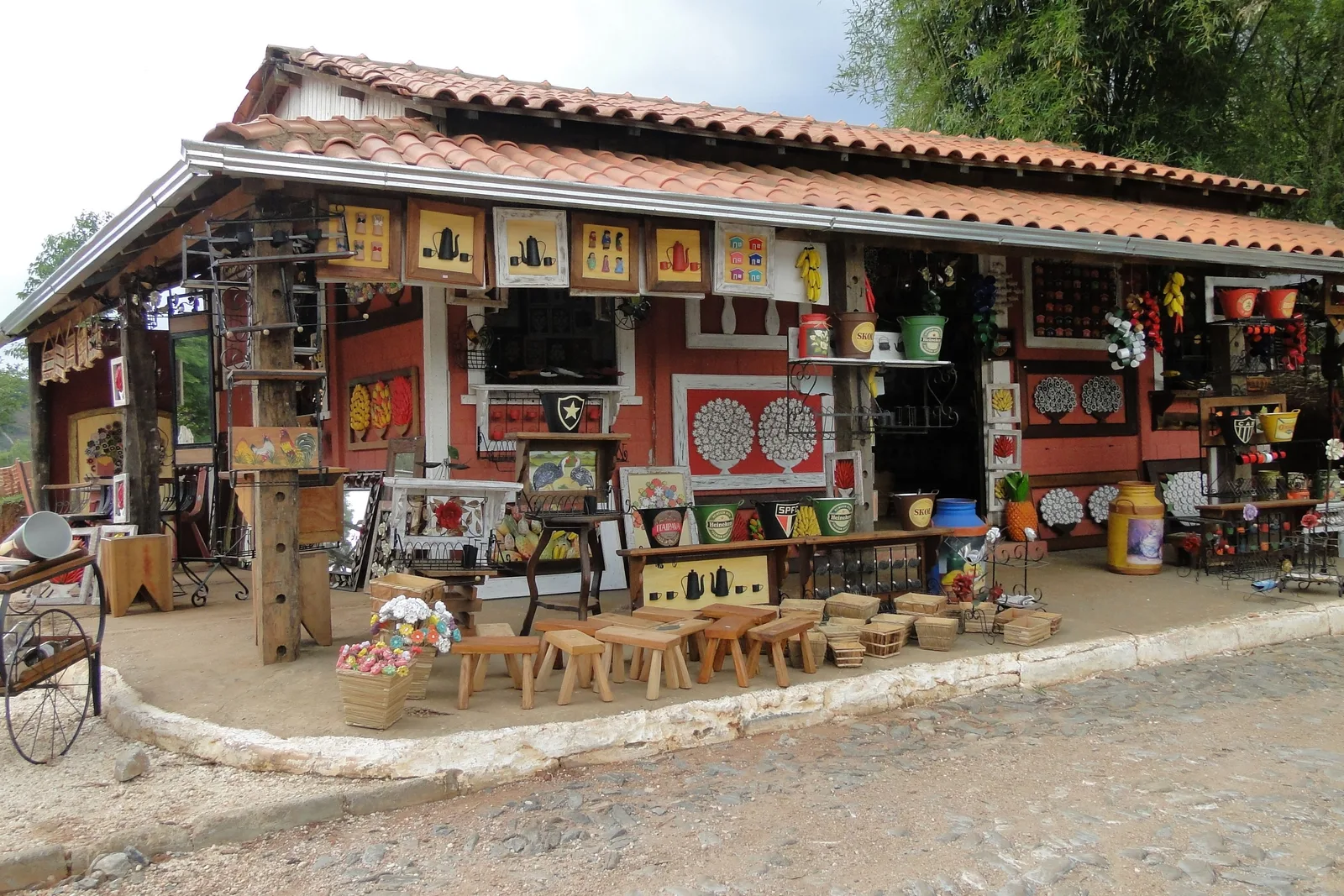
  • The open front of a craft shop in Bichinho under a tiled roof, its red walls hung with painted panels and mirrors and stools and carved pieces set out along the road in front

    Vitoriano Veloso · 2–3 hours

    The workshops on the Bichinho road

    The shops run more or less continuously along the road through the village, and the good ones are the ones with a workbench visible behind the counter. Painted furniture and oratories, carved santos, ironwork, and the papier-mâché figures that have become the region’s signature. The Oficina de Agosto, where the whole thing started, is still the anchor, and there are two or three genuinely good places to eat on the same street.
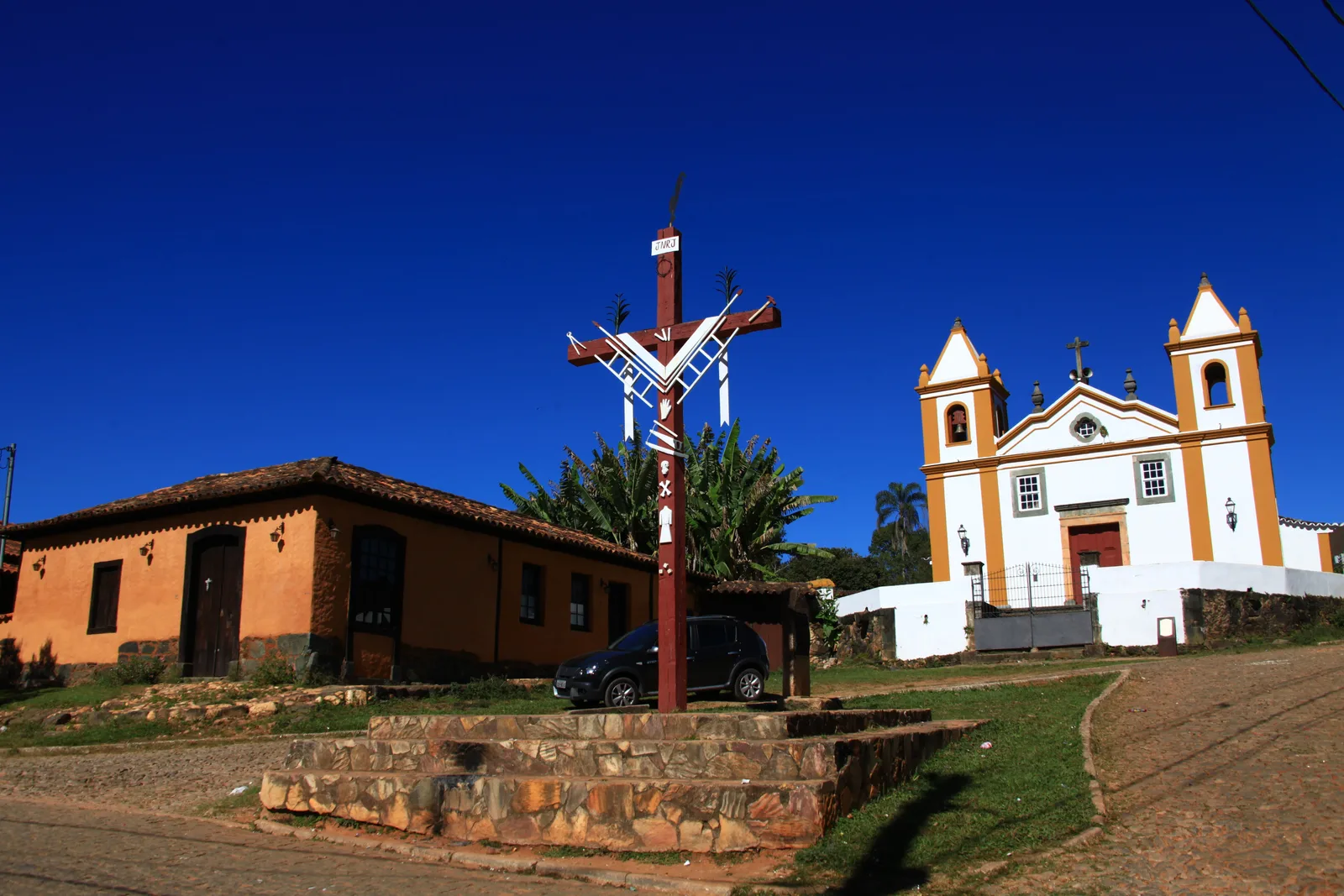
  • The white eighteenth-century church of Nossa Senhora da Penha at Bichinho with its twin bell towers, a tall painted timber cruzeiro on a stone base in front of it and an ochre colonial house alongside

    Vitoriano Veloso · 20 minutes

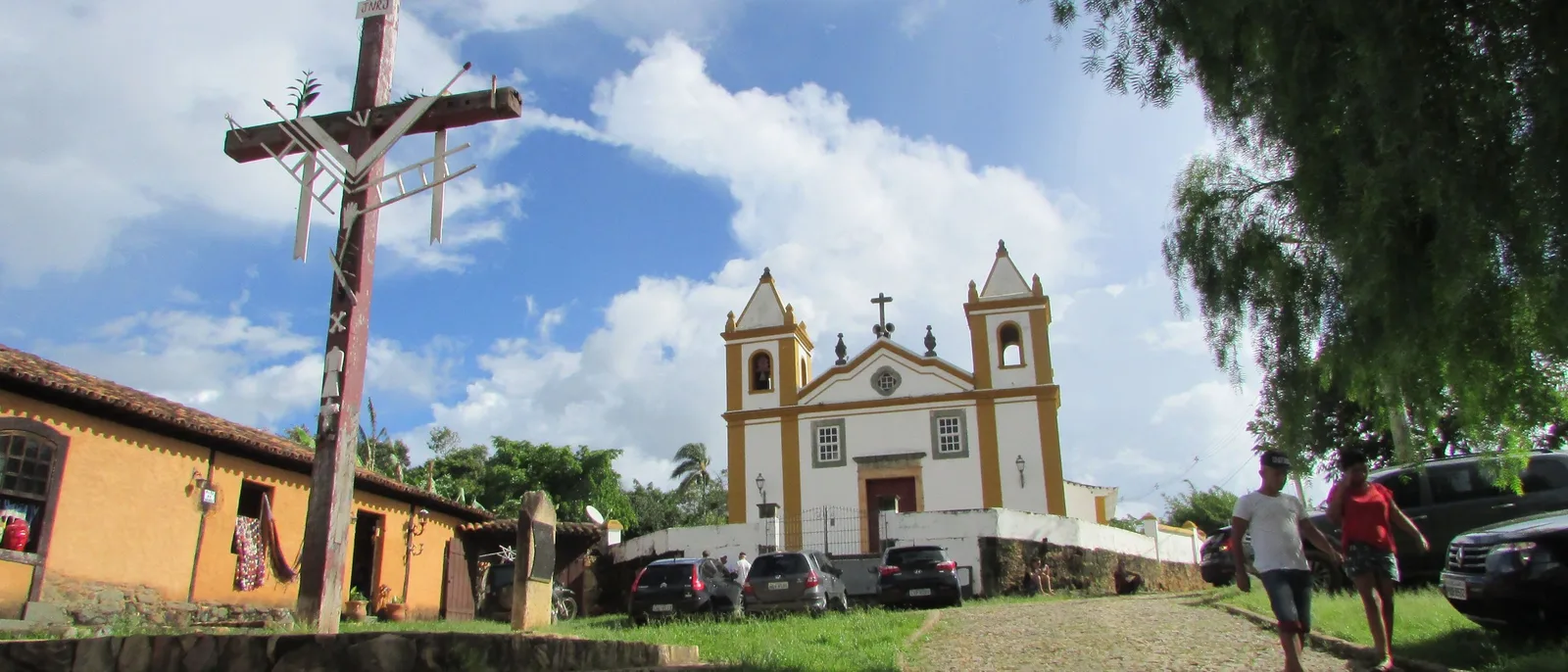
    Igreja de Nossa Senhora da Penha in Bichinho

    Begun around 1732 and not finished until 1771, which tells you the village is a great deal older than its craft trade. It stands at the top of the street with a timber cruzeiro in front of it and almost nothing else around, and it is the reminder that Bichinho was a stop on the Estrada Real long before it was a shopping street.

  • A crowd of brightly painted ceramic folk-art figures on a shelf in Tiradentes — women in patterned dresses, round-bodied dolls and black cats with wide eyes

    Rua Direita and Rua da Câmara · 2 hours

    Ceramics and painted wood in Tiradentes

    Tiradentes has the galleries; Bichinho has the workshops. The shops along Rua Direita carry the region’s ceramic figures — the seated namoradeiras that lean out of window frames all over Minas, painted saints, and whole families of folk-art dolls — along with painted furniture and antiques. Prices are higher than in the villages and the selection is better; buy the small things here and the big things where they are made.

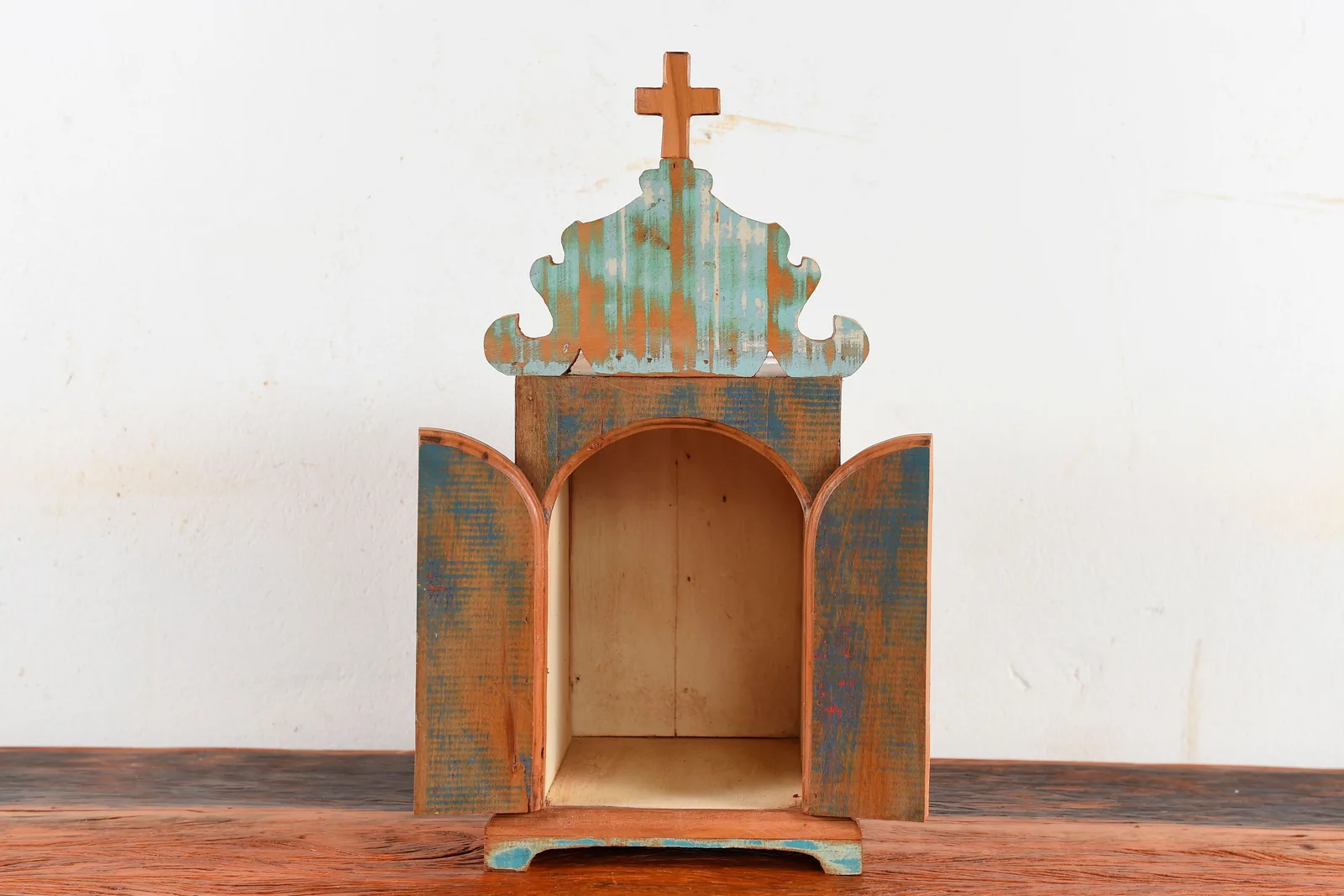
  • An empty wooden oratory shrine with its two doors open, painted in worn blue and terracotta and topped with a small cross, standing on a plain table

    Both towns and Bichinho · 1 hour

    Oratories and religious woodwork

    The oratório — a small hinged wooden shrine that opens to hold a saint — is the region’s most characteristic object, and it is still made here, plain or painted, in every size from pocket to wardrobe. Carvers around Tiradentes and Prados also restore church pieces, which is why the workmanship holds up: it is the same trade, four centuries in.

Food & Drink

  • The Largo das Forras in Tiradentes: a stone monument on a stepped plinth in the middle of the paved square, under the spreading canopy of a very large tree, with white colonial buildings along the far side

    Central square · an evening

    An evening on the Largo das Forras

    The wide square at the bottom of town is where Tiradentes gathers: big trees, a stone monument in the middle, the old town hall along one side, and restaurant and bar tables spreading across it from about 6:00pm. It is also the main venue for the film festival in January and the gastronomy festival in August, when the whole square goes under marquees. Everything else in town is uphill from here.

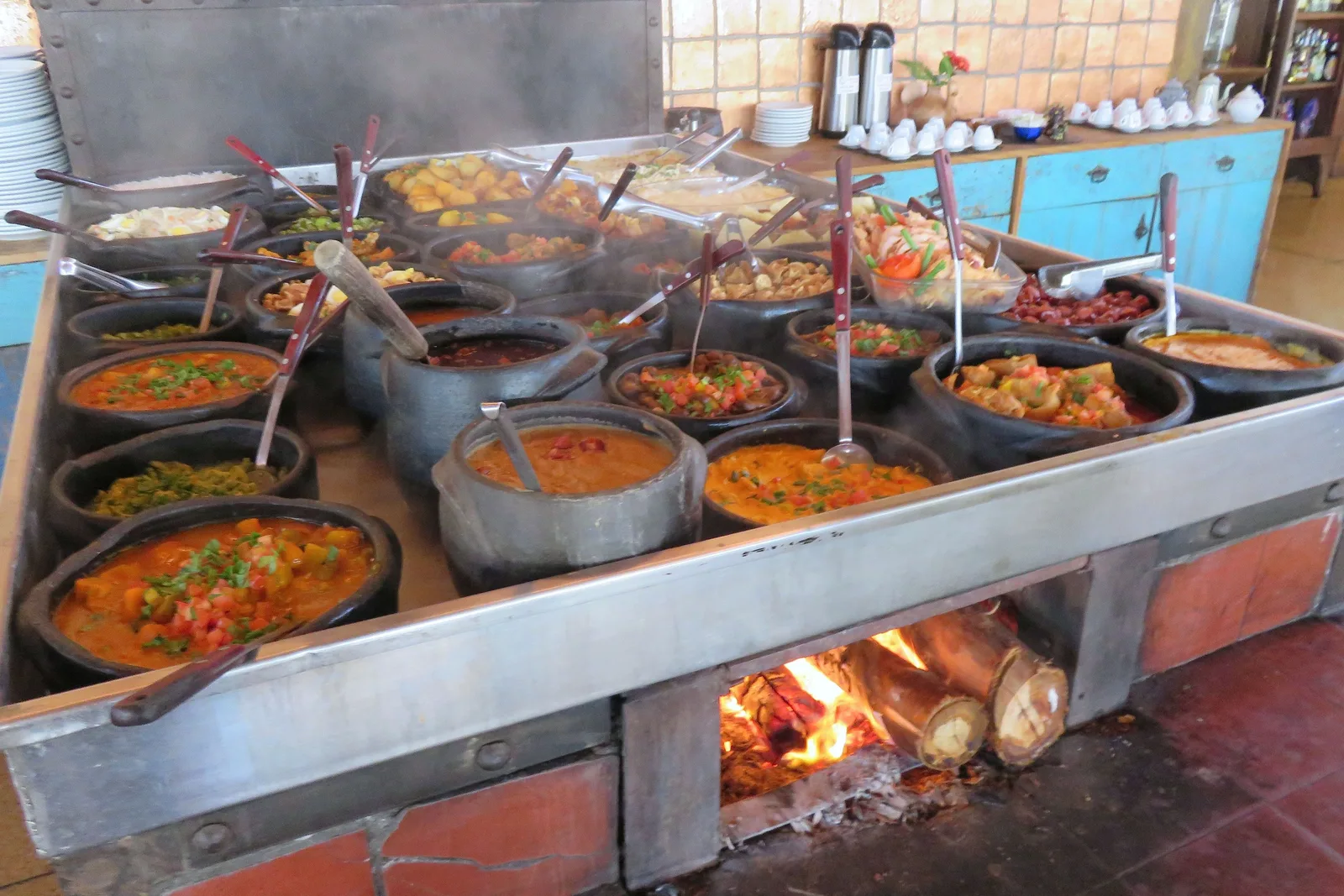
  • A line of dark enamel pans of stews and beans kept hot along the top of a wood-fired stove, with the fire visible burning in the open hearth underneath

    Both towns · long lunch

    Comida mineira on a wood stove

    The cooking of Minas is the most loved regional food in Brazil and it is farm food: beans cooked down with cassava flour into tutu, feijão tropeiro with sausage and collards, pork ribs, chicken with okra, all of it kept hot in enamel pans over a wood-fired fogão a lenha. The traditional places in both towns serve it that way, family style, and the good ones are as likely to be a room off someone’s kitchen as a restaurant.

  • A glazed terracotta dish of golden pão de queijo in warm low light, two big pale wheels of Minas cheese behind it, a slice of cake at the edge of the frame and a painted enamel cup of milky coffee on a crocheted mat alongside

    Anywhere, all day

    Coffee and pão de queijo

    Both towns run on it. Pão de queijo — cassava starch and cured Minas cheese, baked into small hollow rolls — was invented in this state and is at its best here, eaten hot within ten minutes of the oven. The coffee comes strong, small and pre-sweetened unless you say otherwise. Add the region’s cheese and its doce de leite and you have the standard Minas breakfast, which most pousadas serve at a level that makes lunch unnecessary.

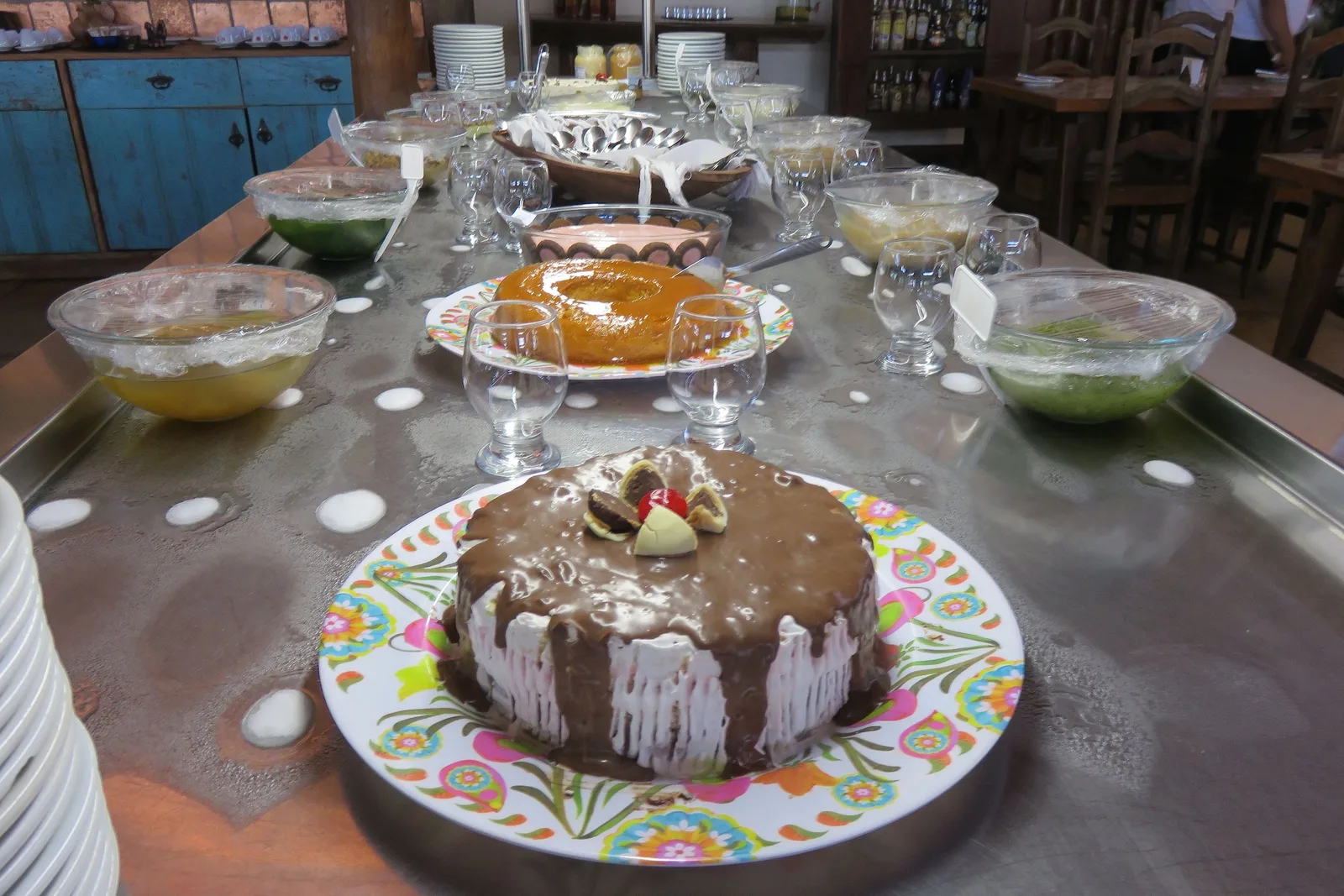
  • A long table set with home-made desserts: a chocolate-topped cake on a painted plate in front, glass bowls of pale puddings and compotes ranged behind it and a tiered stand at the far end

    Tiradentes and São João del-Rei · afternoon

    Doces, cakes and the sweet trolley

    Minas takes its sweets as seriously as its beans, and a proper lunch here ends with a table of them: doce de leite, guava paste with fresh cheese, candied figs and pumpkin, and dense home-made cakes. Tiradentes has built a national reputation on the modern end of this — the town’s restaurants are why the August gastronomy festival exists — and its cafés and doce shops are the cheap way to sample it without booking a tasting menu.

Where to stay

Which town, and how far up the hill.

The real decision is Tiradentes or São João del-Rei, and it is mostly a decision about money and evenings. After that it is how far from the cobbles you want to be.

Drag and zoom to explore.

Tap an area to open it and see it on the map

  • Our pick

    Best for: A first visit, and walking everywhere

    The Matriz de Santo Antônio rising above the trees and red-tiled rooftops of Tiradentes, its yellow-and-white towers catching the light

    The eight or so blocks between the Largo das Forras and the Matriz, where the pousadas are converted colonial houses with courtyards and the restaurants are two minutes from the door. You pay for it — this is the most expensive lodging in the region — and in exchange you never move a car, you can walk home from dinner, and you get the town at 7:00am before the day visitors arrive. The trade-off is noise on festival weekends and cobbles under your suitcase.

    • Rua Direita
    • Largo das Forras
    • Rua da Câmara
    • Chafariz
  • Best for: Gardens, pools and a view of the ridge

    A whitewashed house with a red pantile roof on the upper edge of Tiradentes, with more rooftops below it and the wooded ridge of the Serra de São José filling the background

    Five to fifteen minutes’ walk out from the center, where the plots get bigger and the pousadas have lawns, pools and the escarpment across the valley. This is where most of the design-led places are, and where the trailheads start. It costs a little less than the middle of town, it is quiet at night, and the price is a walk back uphill after dinner — steep, dark and cobbled, so a lot of people end up calling a car.

    • Cascalho
    • Serra de São José
    • Pousadas with pools
    • Trailheads
  • Best for: Half the price, and a town that is not a set

    A wide cobbled square in São João del-Rei lined with long white colonial buildings, church towers showing above the rooftops at the far end

    Rooms cost roughly half what the same standard costs in Tiradentes, dinner costs less, and you are in a real town with a university, a market and people going to work. You are also at the railway end of the line, which matters if the train is a fixed point in your plan. What you give up is the picture-book quality — São João del-Rei is handsome in patches rather than continuously — and the short walk home from a good restaurant.

    • Centro histórico
    • Bus station
    • Train station
    • Ponte da Cadeia
  • Best for: A quiet base with a car

    The white-and-yellow twin-towered church at Bichinho above its low wall, a tall weathered timber cruzeiro standing in the foreground, an ochre village house with crafts hung outside it at the left and two people walking up the cobbled slope at the right

    Seven kilometers out, and a different holiday: farm pousadas and small inns among the workshops and the pasture, with horses, quiet and prices well under Tiradentes. It only works with a car — there is no dependable bus, and the road is dark and narrow at night — and it puts every restaurant and both historic centers a drive away. Best for a second stay, for families, or for anyone whose ideal evening is not a cobbled street full of people.

    • Vitoriano Veloso
    • Prados
    • Farm pousadas
    • Estrada Real

A working plan

Three days: one town, then the other, then out of both.

Built around the steam-train timetable, because it only runs Friday to Sunday and everything else here runs every day.

  1. 01
    A cobbled street in Tiradentes in late afternoon light, whitewashed houses with colored doors and iron lamps running away downhill, and blue hills at the end of it

    Historic center

    Tiradentes, on foot

    Up Rua Direita to the Matriz, down to the Chafariz and the Rosário, the Museu de Sant’Ana in the old jail, and the walk out to the Santíssima Trindade. Dinner on the Largo, and the organ concert if it is running.

  2. 02
    The steam train running through open green countryside between the two towns, a small black locomotive at the head of four dark red wooden carriages with wooded hills behind

    São João del-Rei

    The train, and the bigger town

    The Maria Fumaça across in the morning, then São Francisco de Assis, the cathedral, the stone bridges and the crooked houses. The railway museum and the roundhouse before you come back on the afternoon train or the bus.

  3. 03
    Looking out over the tiled rooftops at the edge of Tiradentes across a green valley of trees and pasture to the long forested ridge of the Serra de São José

    Bichinho & the Serra de São José

    The villages and the ridge

    Bichinho for the workshops and lunch, then back for a walk up into the Serra — the Mãe d’Água aqueduct if you want an hour, the climb to the escarpment viewpoint if you want an afternoon.

This is a starting shape, not a fixed departure — we rearrange it around your dates. Have it built for you

Timing

Come in winter. Bring a coat anyway.

At 900 meters and 21 degrees south, this is one of the few parts of Brazil with a real winter — and it is the best time to be here. July is the peak of it, the driest month of the year at 11.5 mm across two wet days. From May to August the sky is clear for weeks at a time, the rain effectively stops, and the nights drop close to freezing. Summer is the reverse: hot, green, and wet enough that December and January average more rain in a month than the whole of May to August put together.

How good each month is in Tiradentes and São João del-Rei. Choose a month for its average air temperatures, rainfall and what the towns are like then.

January

Trade-offs
Air
17–28°C 63–82°F
UV
10 Very high
Rain
17 days 320 mm / 12.6 in

Hot, humid and among the wettest months, with storms most afternoons. The film festival takes over Tiradentes for nine days.

February

Trade-offs
Air
17–29°C 63–84°F
UV
11 Extreme
Rain
12 days 184 mm / 7.2 in

Still hot and wet, though noticeably less so than January. Carnival is quiet here compared with the coast.

March

Good
Air
17–28°C 63–82°F
UV
10 Very high
Rain
11 days 193 mm / 7.6 in

The wet tail of summer, easing. Green, warm, and the first of the Lenten processions in São João del-Rei.

April

Good
Air
15–27°C 59–81°F
UV
8 Very high
Rain
6 days 65 mm / 2.6 in

The dry season starts. Rainfall drops by two-thirds, mornings turn cool, and Holy Week lands here or in late March.

May

Good
Air
12–25°C 54–77°F
UV
6 High
Rain
4 days 41 mm / 1.6 in

Dry, clear and mild by day, cold after dark. One of the best months to walk the Serra.

June

Good
Air
10–24°C 50–75°F
UV
6 High
Rain
2 days 15 mm / 0.6 in

Almost no rain and the coldest nights of the year, near 10 degrees and occasionally lower. Bright, still days.

July

Best
Air
10–24°C 50–75°F
UV
6 High
Rain
2 days 12 mm / 0.5 in

The driest month — twelve millimeters across two wet days. Brazilian school holidays, and the UFSJ arts festival in São João del-Rei.

August

Good
Air
11–25°C 52–77°F
UV
7 High
Rain
3 days 22 mm / 0.9 in

Still dry and clear, warming a little. The Tiradentes gastronomy festival runs for ten days at the end of it.

September

Good
Air
13–26°C 55–79°F
UV
8 Very high
Rain
6 days 78 mm / 3.1 in

Warming up and a little rain returning, with the first storms late in the month. Still a strong month.

October

Good
Air
15–27°C 59–81°F
UV
9 Very high
Rain
9 days 129 mm / 5.1 in

The rains clearly coming back but nothing like summer. Warm, green and much quieter than the winter months.

November

Trade-offs
Air
16–27°C 61–81°F
UV
10 Very high
Rain
13 days 196 mm / 7.7 in

Hot and properly wet again, with afternoon thunderstorms most days. The waterfalls are at their fullest.

December

Trade-offs
Air
17–27°C 63–81°F
UV
9 Very high
Rain
18 days 327 mm / 12.9 in

The wettest month of the year. Lush and warm, and busy from about the 20th with the Brazilian holidays.

  • Best The one or two peak months
  • Good A real recommendation
  • Trade-offs Workable, with a catch
See Tiradentes & São João del-Rei on the Brazil calendar

UV is the monthly average of the daily peak, 2022 to 2025, calculated from Copernicus Atmosphere Monitoring Service data. Weather data by Open-Meteo.com, CC BY 4.0.

For clear skies

May–August

The dry season, and it is properly dry: two or three rain days a month, hard blue skies, and the ridge visible from every street. July is the peak inside it, at 11.5 mm. Cold at night — pack layers.

For the festivals

January, Holy Week, July and August

The film festival in late January, Holy Week in São João del-Rei, the university arts festival in July and the gastronomy festival in August. All four fill both towns; book months out.

The wet months

November–February

December and January average over 320 mm across seventeen or eighteen wet days. Hot, green and often spectacular between storms — but the cobbles are slippery and the trails are not the point.

About the rain

The seasonal swing here is bigger than almost anywhere else on this site. São João del-Rei averages 327 mm of rain in December across eighteen wet days, and 12 mm in July across two — a factor of twenty-seven between the wettest month and the driest. Summer rain arrives as heavy afternoon and evening thunderstorms rather than all-day drizzle, so a December trip is not a washout; it is a series of bright mornings and violent late afternoons, on stones that get very slippery.

The other thing visitors get wrong is the cold. Average minima in June and July sit around 10 degrees and the record lows are below freezing; the colonial houses have thick walls, no insulation and rarely any heating, and a June night in a pousada with a tiled floor is genuinely chilly. Bring a warm layer and something for your feet, and take the fireplace in the lounge seriously — it is not decorative.

The dates worth planning around

A man and a woman on stage in front of the orange backdrop of the 14th Mostra de Cinema de Tiradentes, he holding a small pale trophy, a third person half hidden behind them

Mostra de Cinema de Tiradentes

Nine days in late January — the 29th edition ran January 23–31, 2026

The opening event of the Brazilian film calendar, and the country’s most important showcase for independent and first-feature work. The 2026 edition screened 137 films from 23 states across 21 strands, with debates, forums and a market alongside — and the whole program, as every year, was free. Screenings run in the town cinema, in a temporary tent and outdoors on the Largo das Forras, and for nine days a town of eight thousand people is full of directors, critics and students. If you want to be here for it, book in the previous winter.

The Igreja de São Francisco de Assis in São João del-Rei floodlit against a black sky at night, its towers and balustrade lit from below and palms standing dark on either side

Semana Santa in São João del-Rei

Holy Week, moving with Easter — March 21–28 in 2027

Among the oldest continuously observed Holy Weeks in Brazil, and the reason the town matters to Brazilians who have never bought a craft souvenir in their lives. It starts long before Holy Week itself: the Comemoração dos Passos, run by a brotherhood founded in 1733, begins on the first Friday after Carnival and works through Lent. Then come the processions proper — Palm Sunday, the foot-washing on Holy Thursday, the Descendimento da Cruz and the burial procession on Good Friday, the Resurrection on Sunday — carried through streets laid with sawdust carpets, lit by candles, and scored by the town’s two eighteenth-century orchestras playing local composers from their own archives. Rooms in São João del-Rei go months ahead.

Inverno Cultural UFSJ

Nine days in the second half of July — July 17–25 in 2026

The federal university’s winter arts festival, in its thirty-sixth edition in 2026, and the biggest cultural event in São João del-Rei’s year. Music, theater, dance, exhibitions, book launches and workshops across the town and three other Minas campuses, over nine days, all of it free. It falls in the driest, clearest and coldest stretch of the calendar, which is the best possible week to be in this part of Minas anyway.

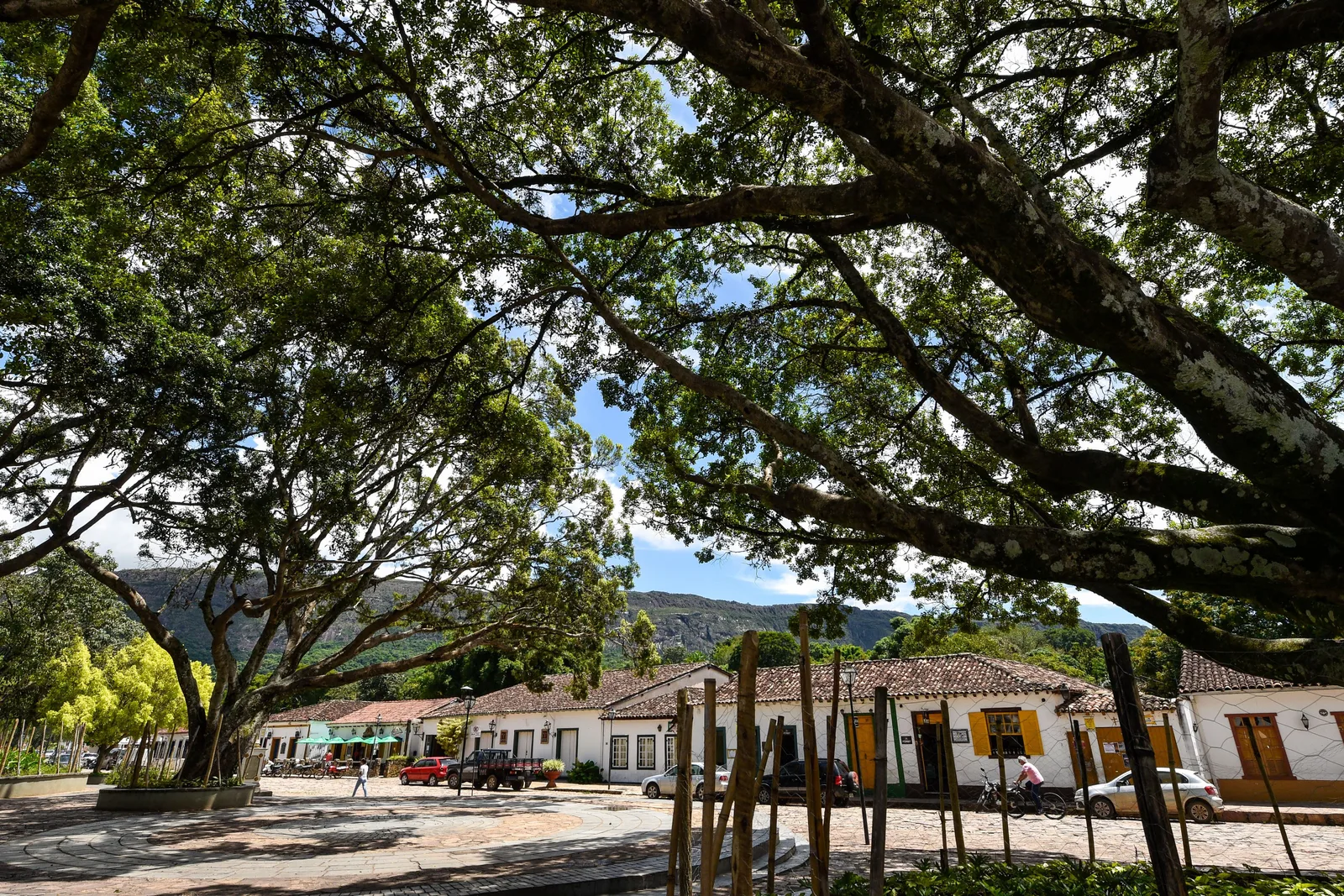
The Largo das Forras in Tiradentes on an ordinary day: the canopy of an enormous old tree spreading right across the frame, with the long row of white colonial houses along the far side of the square beneath it and the wooded ridge of the Serra de São José behind

Festival de Cultura e Gastronomia de Tiradentes

Ten days at the end of August — August 21–30 in 2026

Twenty-nine editions in, and the event that turned a small colonial town into a national food destination. Forty-odd chefs cook across the Largo das Forras, the Praça Santíssimo and the square by the bus station; most of the program — classes, tastings, talks, guest restaurants — is free, and the ticketed part is the Festins, a handful of set dinners with visiting chefs. The 2026 theme paired Minas with Portugal. It lands in the dry season, which is why it works outdoors, and it fills every room in both towns.

Good to know

Before you come

Should I base myself in Tiradentes or São João del-Rei? +

Tiradentes, for a first visit. It is smaller, prettier and entirely walkable, the pousadas are converted colonial houses, and you can eat well within two minutes of your door — which matters, because the two towns are 13 km apart and going back and forth after dinner on an unlit road is nobody’s idea of a holiday. The case for São João del-Rei is money and authenticity: rooms cost around half as much, dinner costs less, and it is a working town of ninety thousand people rather than a preserved one of eight thousand. It is also where the train, the buses and the hospital are. A good compromise on a longer trip is two nights in each.

How many days do I need? +

Three, and they want to be Friday to Sunday because that is when the steam train runs. One day covers Tiradentes on foot — the churches, the museums, the fountain and the walk out to the Santíssima Trindade. The second is the train across to São João del-Rei and a day there. The third gets you out of both: Bichinho for the workshops, and the Serra de São José for a walk. Two days works if you cut the third and accept that you never left the cobbles. Four or five is not wasted here, particularly in the dry season, when the trails are the reason to stay longer.

Is the Maria Fumaça worth it, and how do I book? +

Yes, and it is the single most distinctive thing in the region. The line opened in 1881 on a 762 mm gauge that nothing else in Brazil used, and that oddity is why it survived: the same nineteenth-century steam locomotives still work the 12 km between the towns, making it the oldest operating steam service in the country. The ride is about 35 minutes in open wooden carriages through cattle country with the Serra alongside. It runs Fridays, Saturdays and Sundays, with extra services in January and July and around holidays. Tickets are around R$86 one way and R$172 return, sold online through the operator VLI’s booking platform and at kiosks in both stations, with sales closing thirty minutes before departure. Buy the one-way, spend the day at the far end and come back on the local bus if the return time does not suit.

How do I get there from Rio or Belo Horizonte? +

By road, and it is straightforward. From Rio it is 320 to 340 km up the BR-040, about five hours by car, or five and a half by coach — Paraibuna and Útil run the route several times a day for roughly R$180 into São João del-Rei. From Belo Horizonte’s Confins airport it is about 235 km and three hours by car, or three and a half by bus. There is no scheduled air service to São João del-Rei; the airfield there handles charters only. Note that every coach terminates in São João del-Rei rather than Tiradentes — from the bus station, local buses run to Tiradentes every thirty to sixty minutes for under R$6, and a taxi is R$60 to R$80.

When is the best time to visit? +

July, inside a May-to-August dry season. That season is emphatically dry — June and July average two rain days a month and twelve to fifteen millimeters of rain — with clear skies, comfortable days around 24 degrees and the ridge sharp on the horizon. The catch is the nights, which drop to around 10 degrees and sometimes lower in buildings that have no heating; bring layers. The months to think hardest about are November to February, when December and January each average over 320 mm across seventeen or eighteen wet days. It is still worth going then if the dates are fixed — the storms are afternoon events, not all-day rain — but the cobbles are slippery and the Serra is not really walkable.

Keep going

Where these towns fit in a bigger trip.

This is a two- or three-day stop rather than a whole holiday. It pairs naturally with the coast the gold was carried down to, and with the other, bigger gold town two hundred kilometers north.

Free · 29 pages

Free guide

Beginner's Guide to Brazil

A free 29-page guide to everything a first-time visitor should know before landing: visas, safety, money, getting around, where to go, and what to eat.

We'll email you a link to confirm your address. Click it and the guide opens right away.

See what's inside
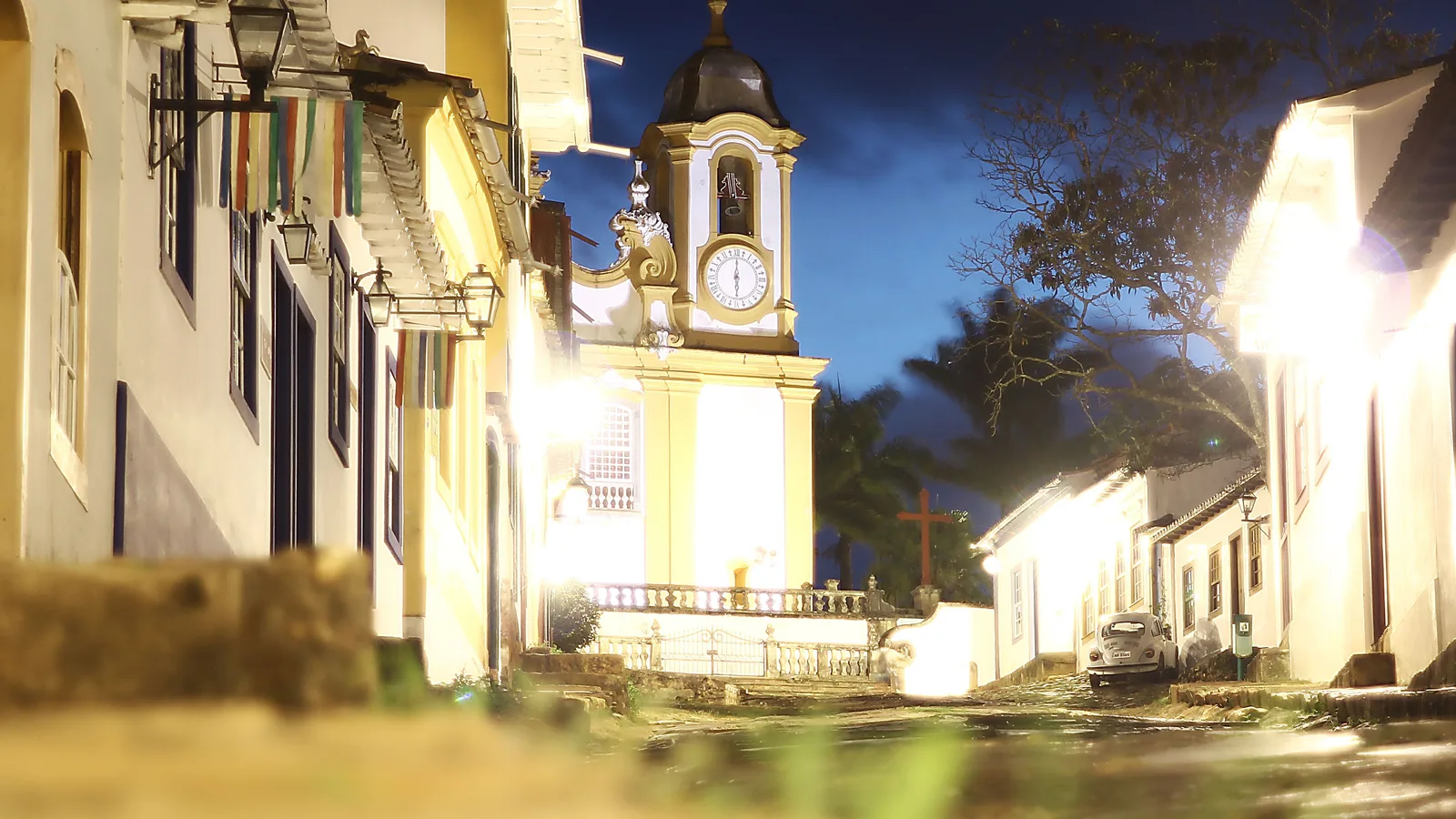
The floodlit tower of the Matriz de Santo Antônio at the top of a cobbled Tiradentes street at blue hour, its clock face and bell lit gold, lamps burning along the colonial houses on both sides and an old Volkswagen Beetle parked below

Skip the planning

See colonial Minas without spending the trip on logistics.

Tell us your dates and how much of the trip is Minas. We will shape a private itinerary around it — which town to sleep in and for how many nights, the train booked on the right day and in the right direction, the churches opened by someone who can explain them, the restaurants held before they sell out, and a guide for the Serra if you want the ridge as well as the cobbles.

  • One person, living in Brazil, replying to you directly
  • A reply within one business day — no call center, no bots
  • No cost to plan, and no obligation to book
  • Built around your dates, not a fixed departure