


Skip to content
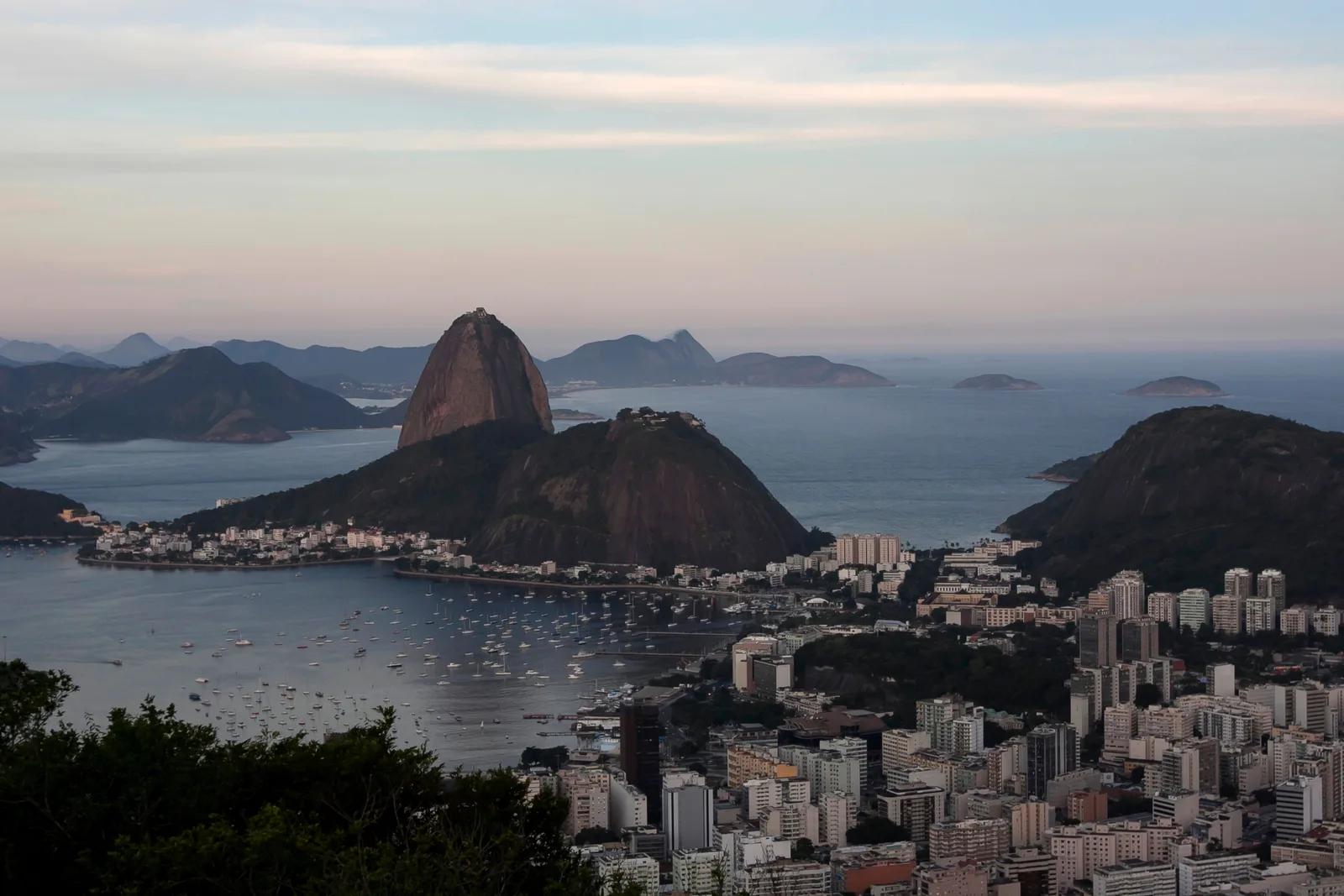
The view from Sugarloaf at sunset over Botafogo bay: yachts moored in the marina, the city stretching back between forested peaks, and Christ the Redeemer small on the Corcovado ridge above it

Rio de Janeiro

Rio de Janeiro

Where the mountains fall into the sea.

Last checked September 2026

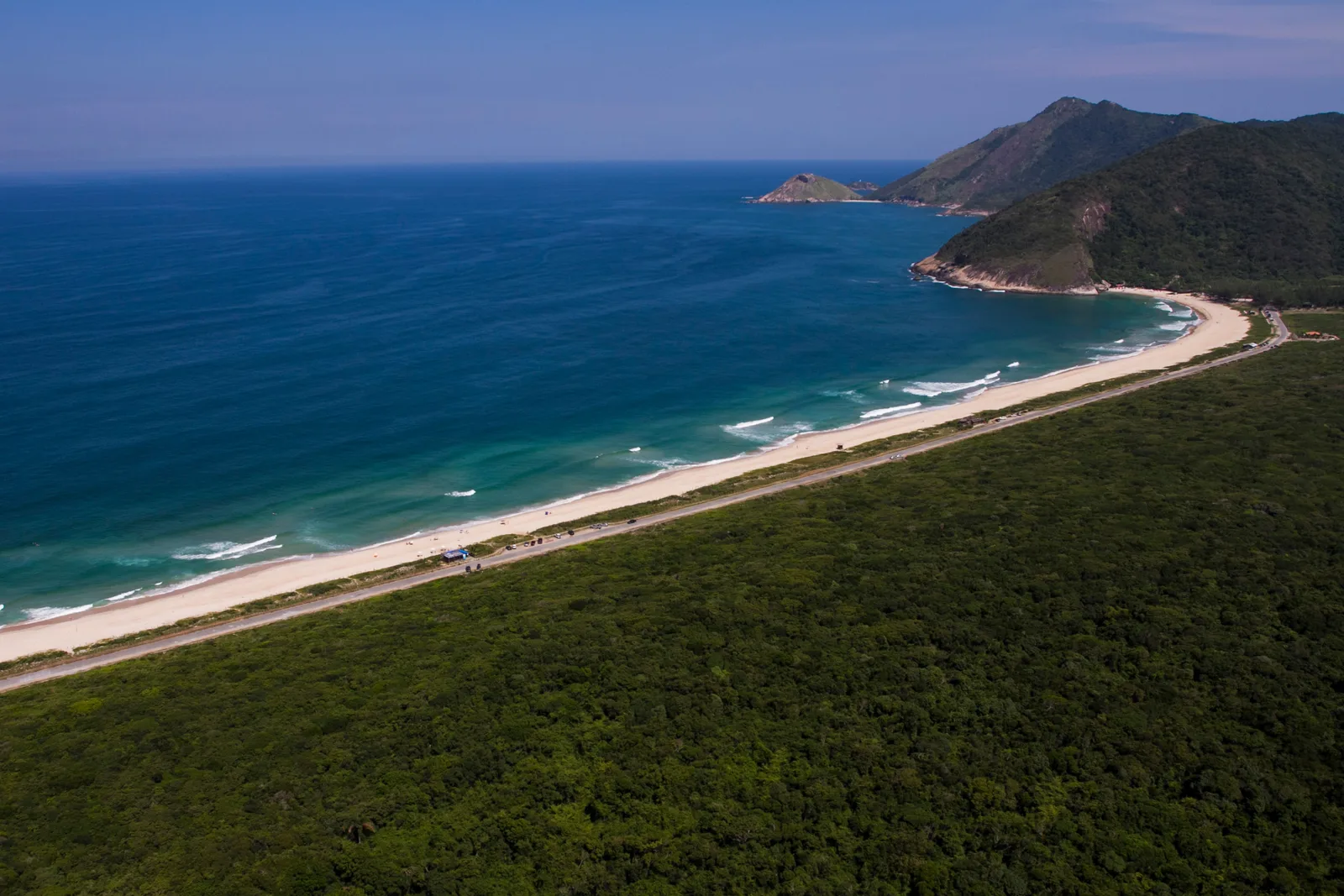
  • Grumari from the air: a long empty beach curving between green hills and deep blue sea on Rio’s wild west side
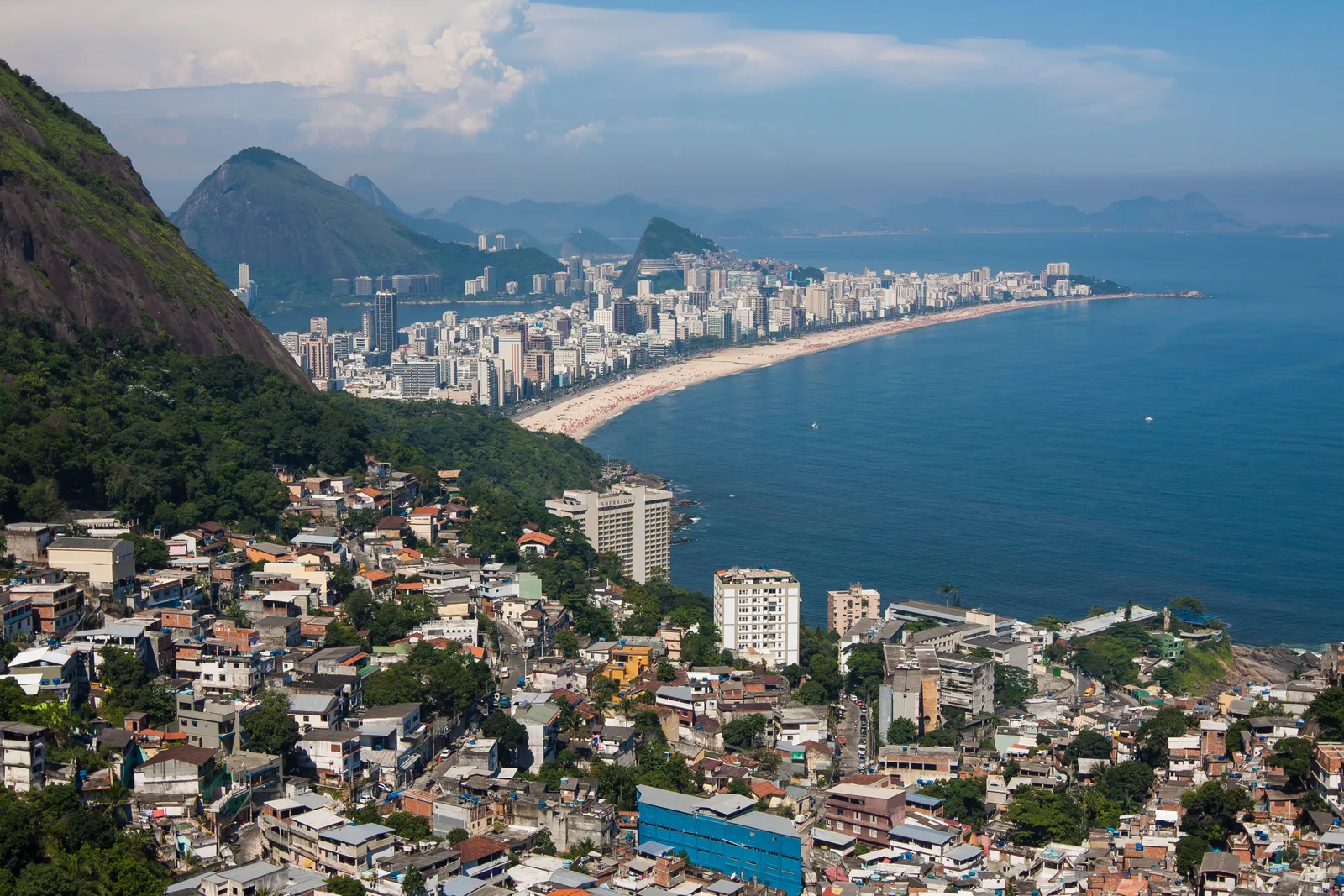
  • Ipanema and Leblon seen from a hillside, houses stacked down the slope in the foreground and the long beach running toward the mountains
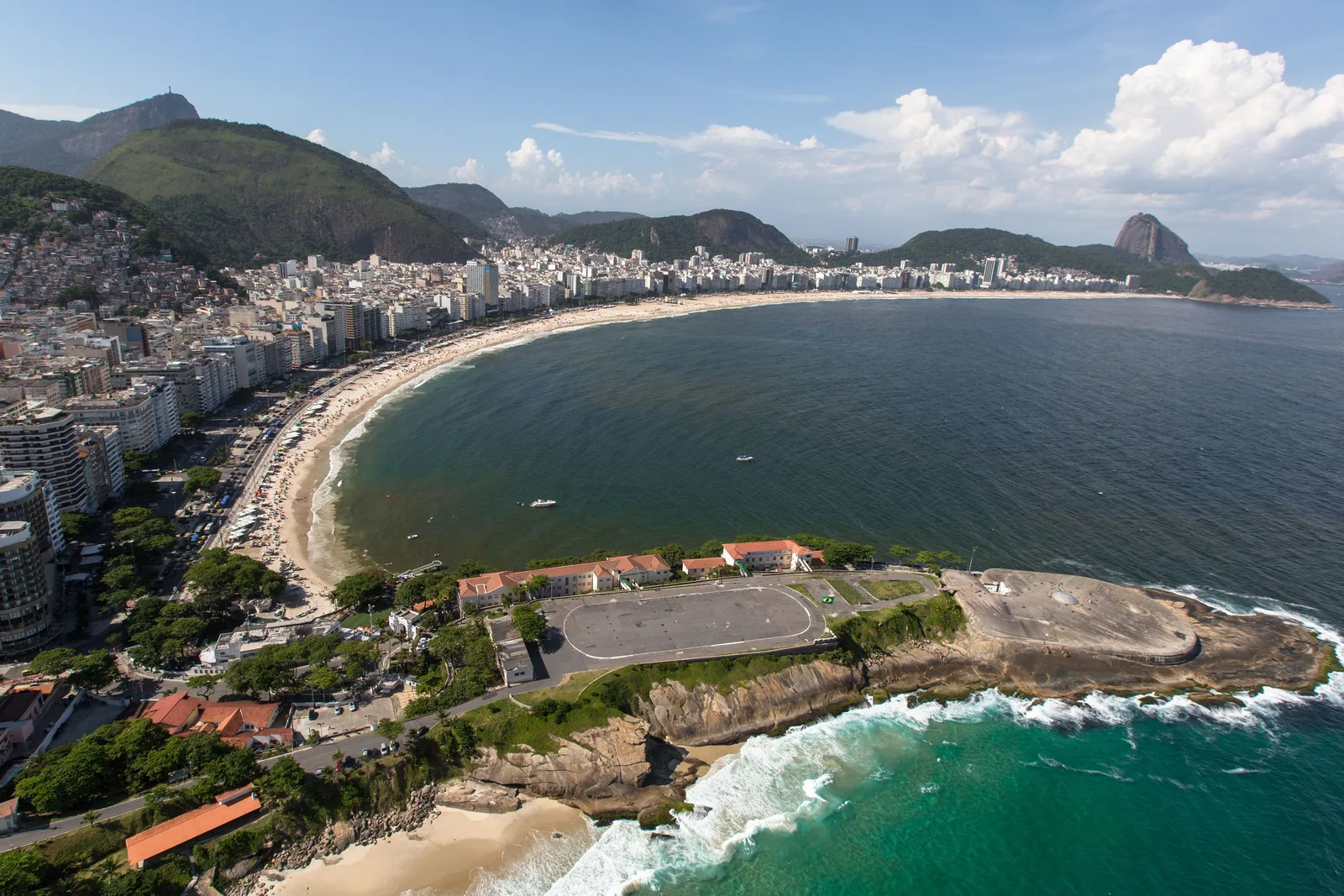
  • The Copacabana Fort on its rocky point from above, surf breaking below it and the whole curve of Copacabana beach behind
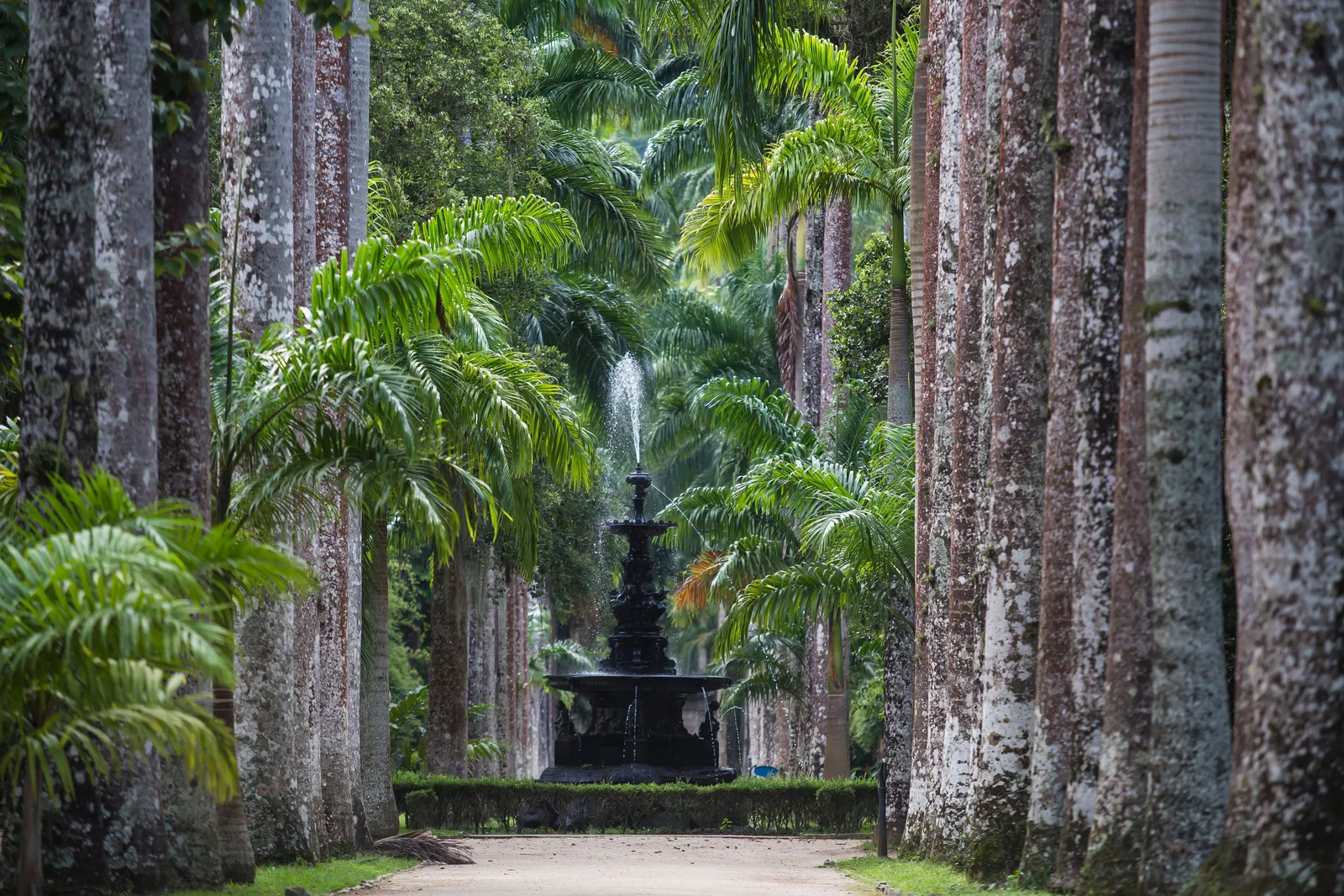
  • A fountain at the end of an avenue of towering royal palms in Rio’s Botanical Garden
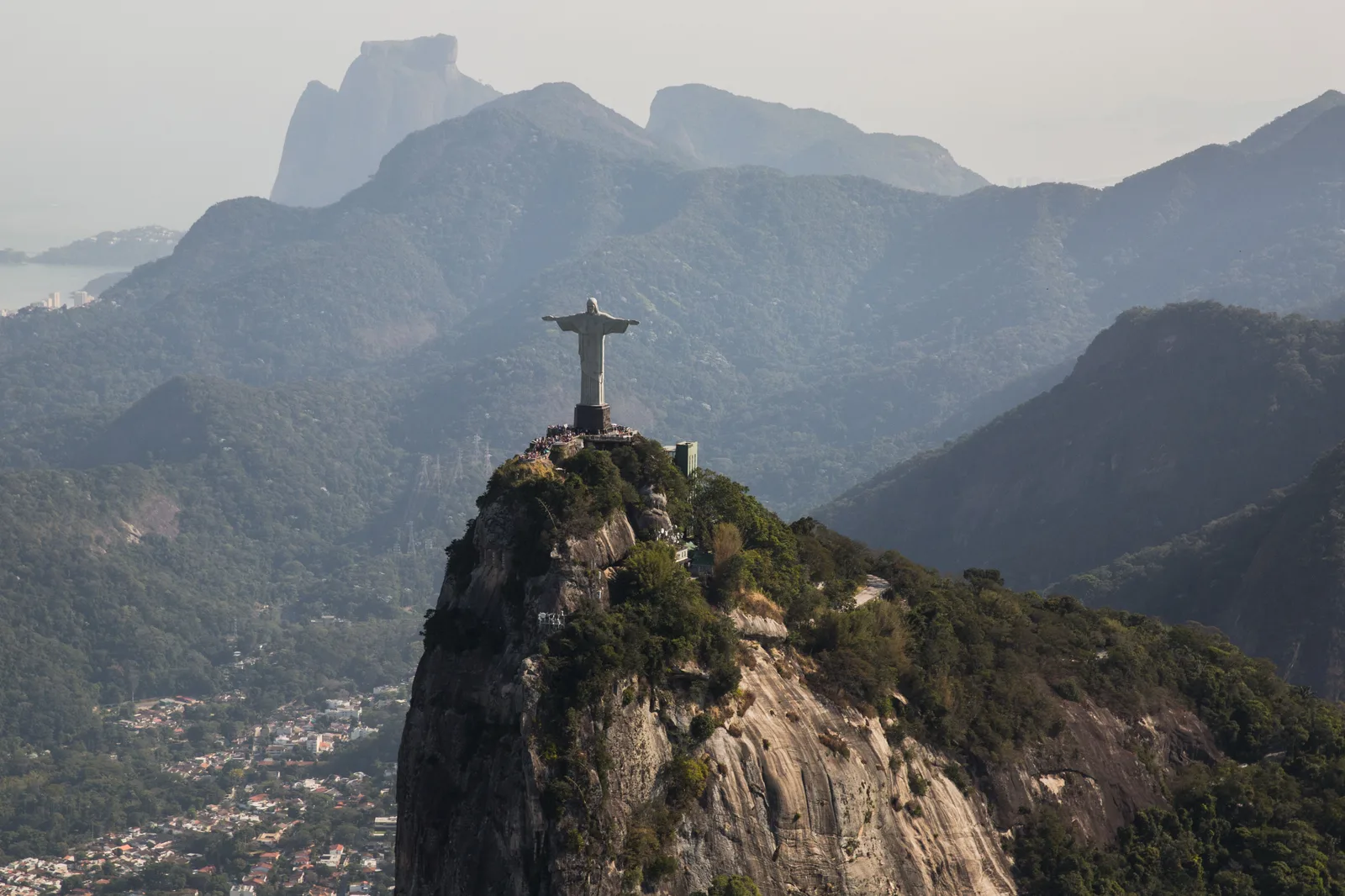
  • Christ the Redeemer on Corcovado seen from behind, looking out over layers of misty mountains with Pedra da Gávea in the distance
  • A capybara grazing on the lawn beside a pond in the Botanical Garden, palms and tropical plants behind it
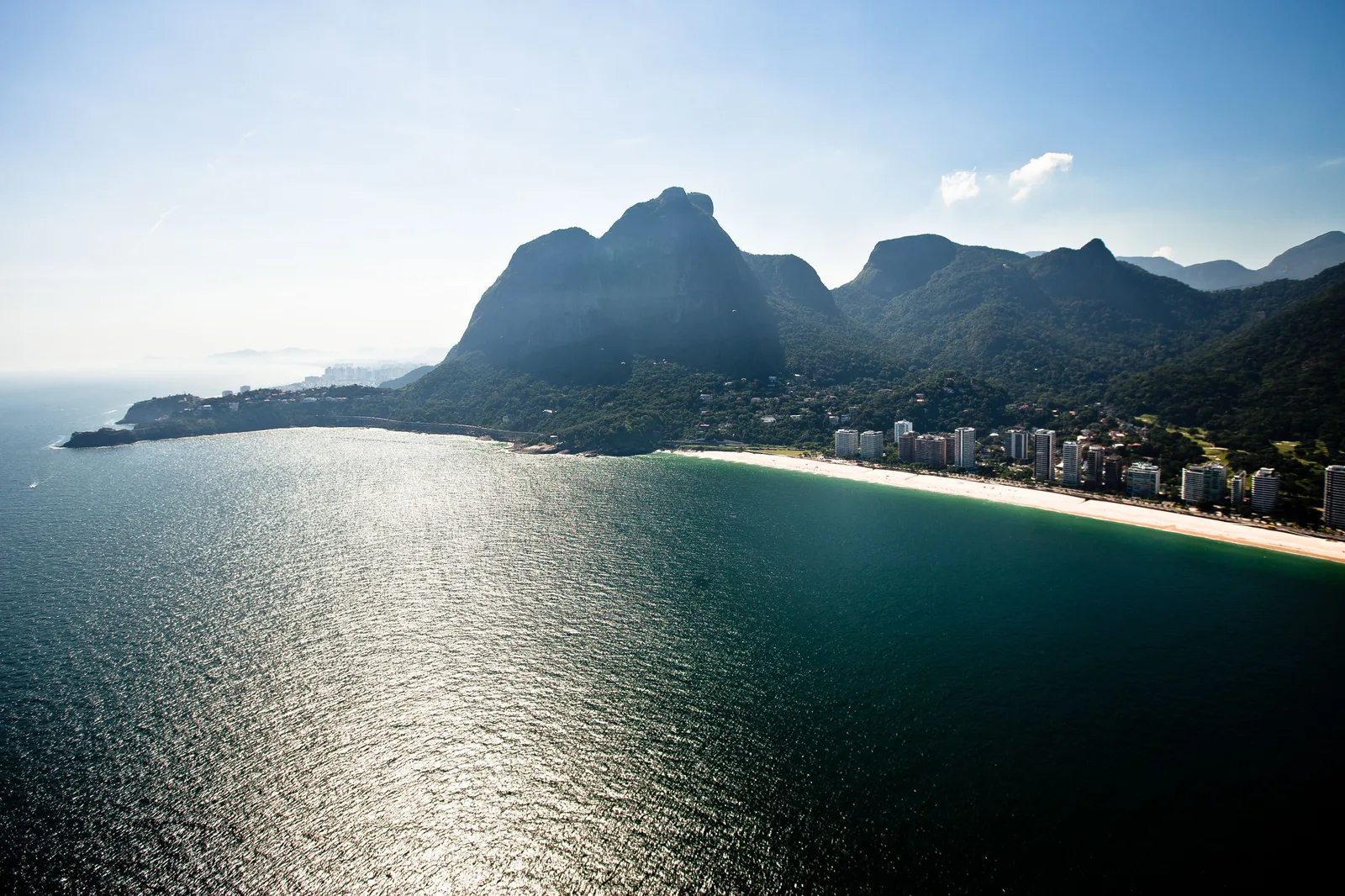
  • Pedra da Gávea rising above the sea in soft afternoon light, the water glittering in front of it
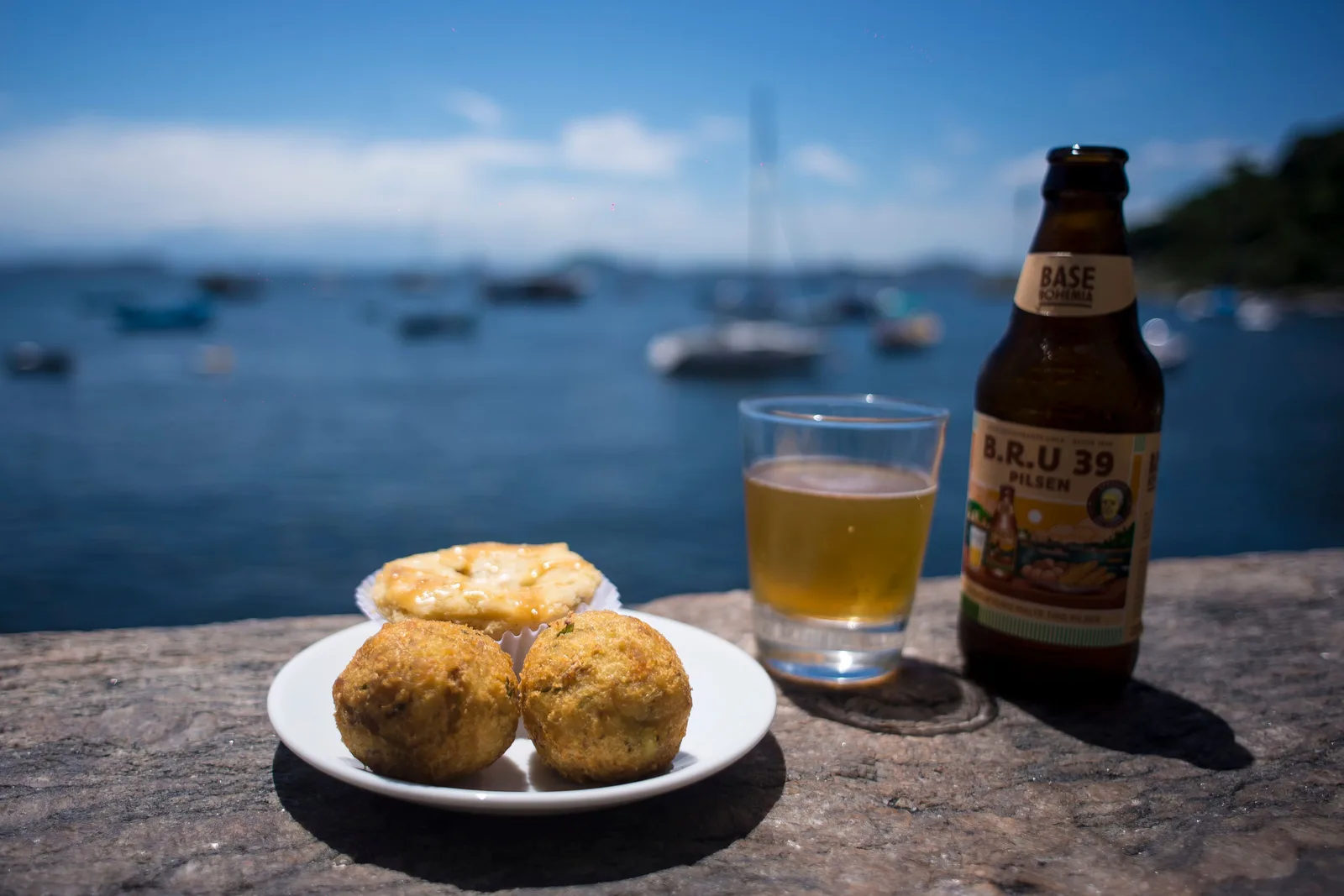
  • A plate of fried bolinhos and a cold beer on a stone wall above the bay, small boats moored in the water beyond
  • Sugarloaf Mountain and the mouth of Guanabara Bay from above at dusk, the city lights just coming on
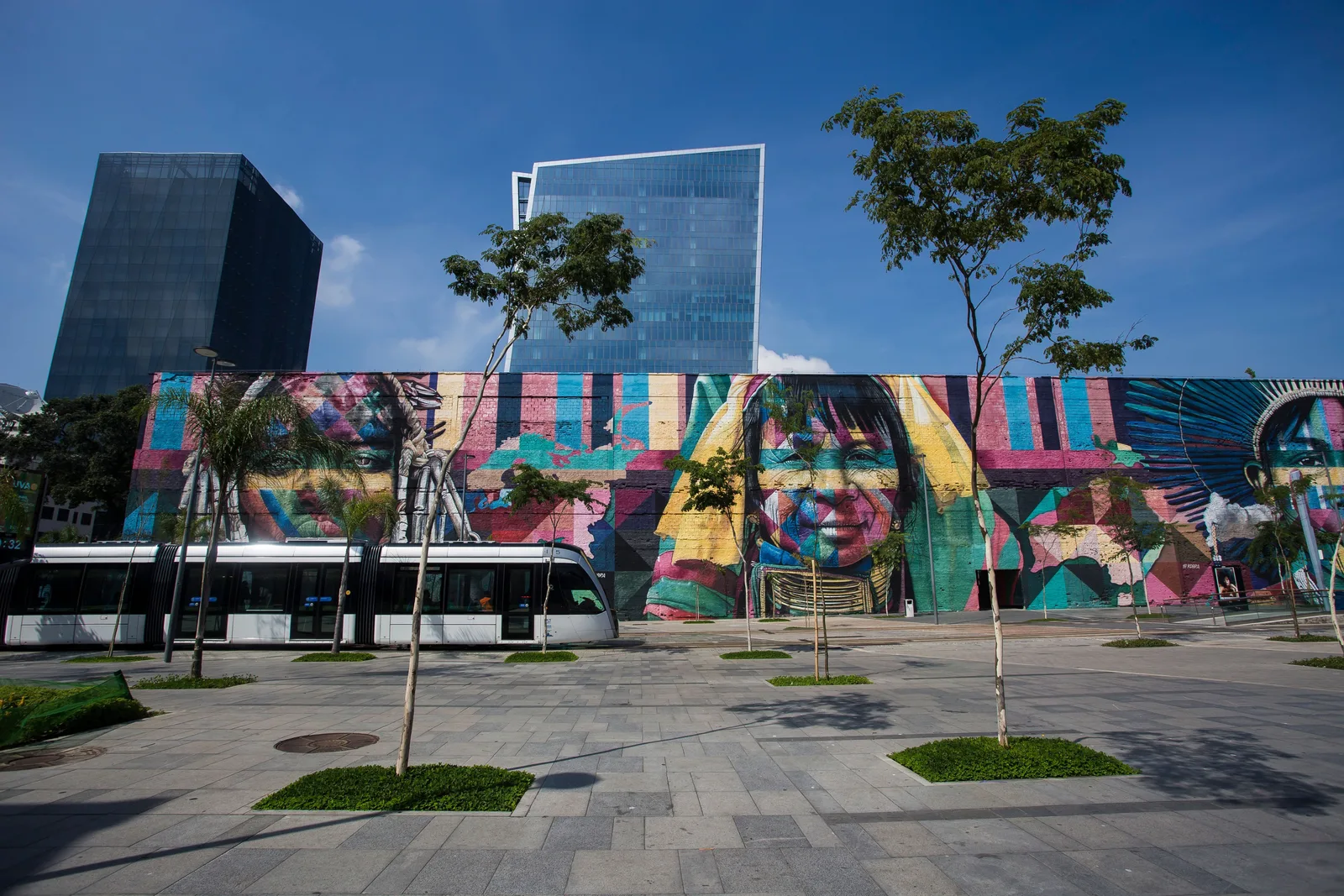
  • A long, brightly painted mural along the waterfront near Pier Mauá, trees and glass towers above it
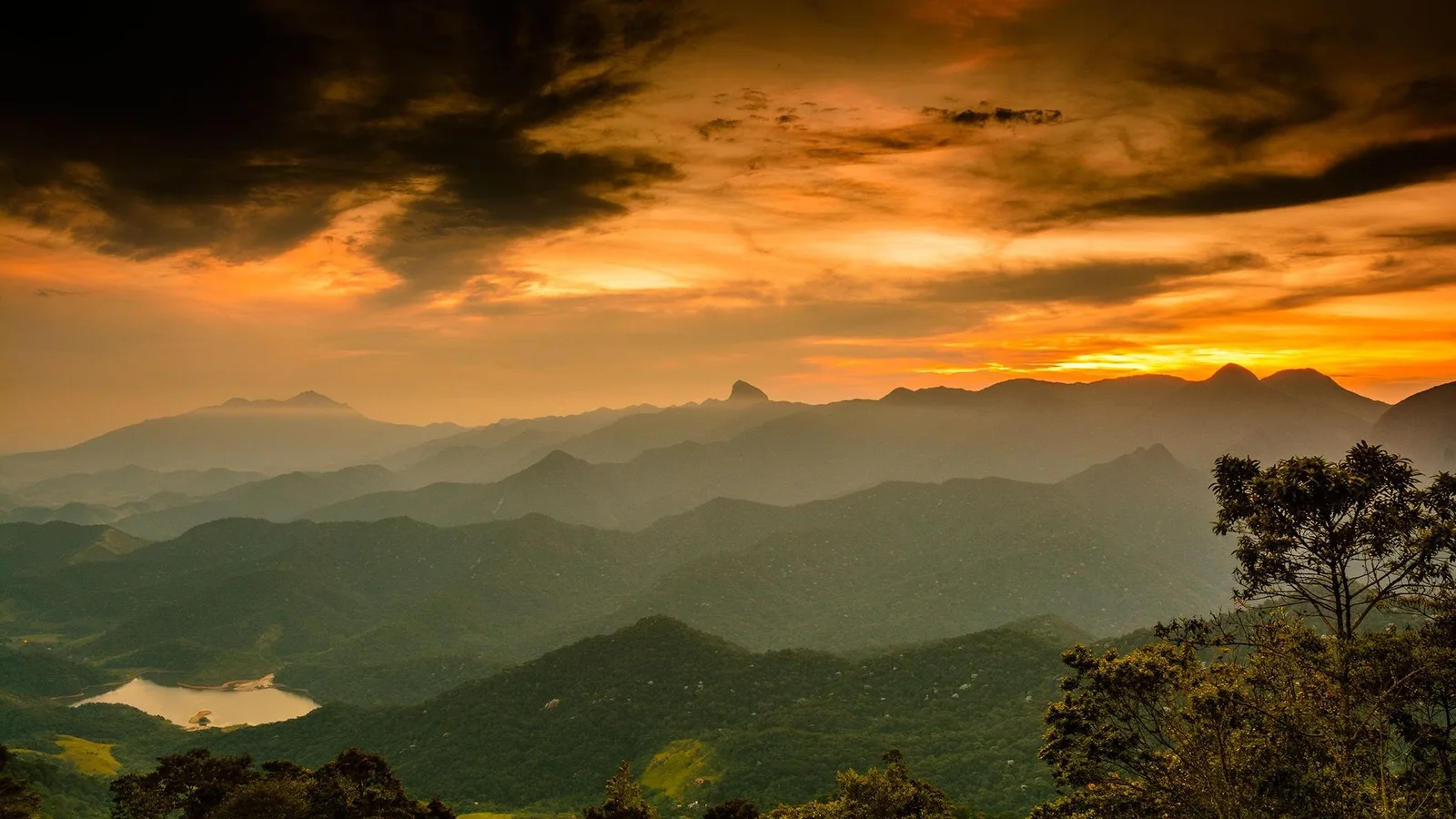
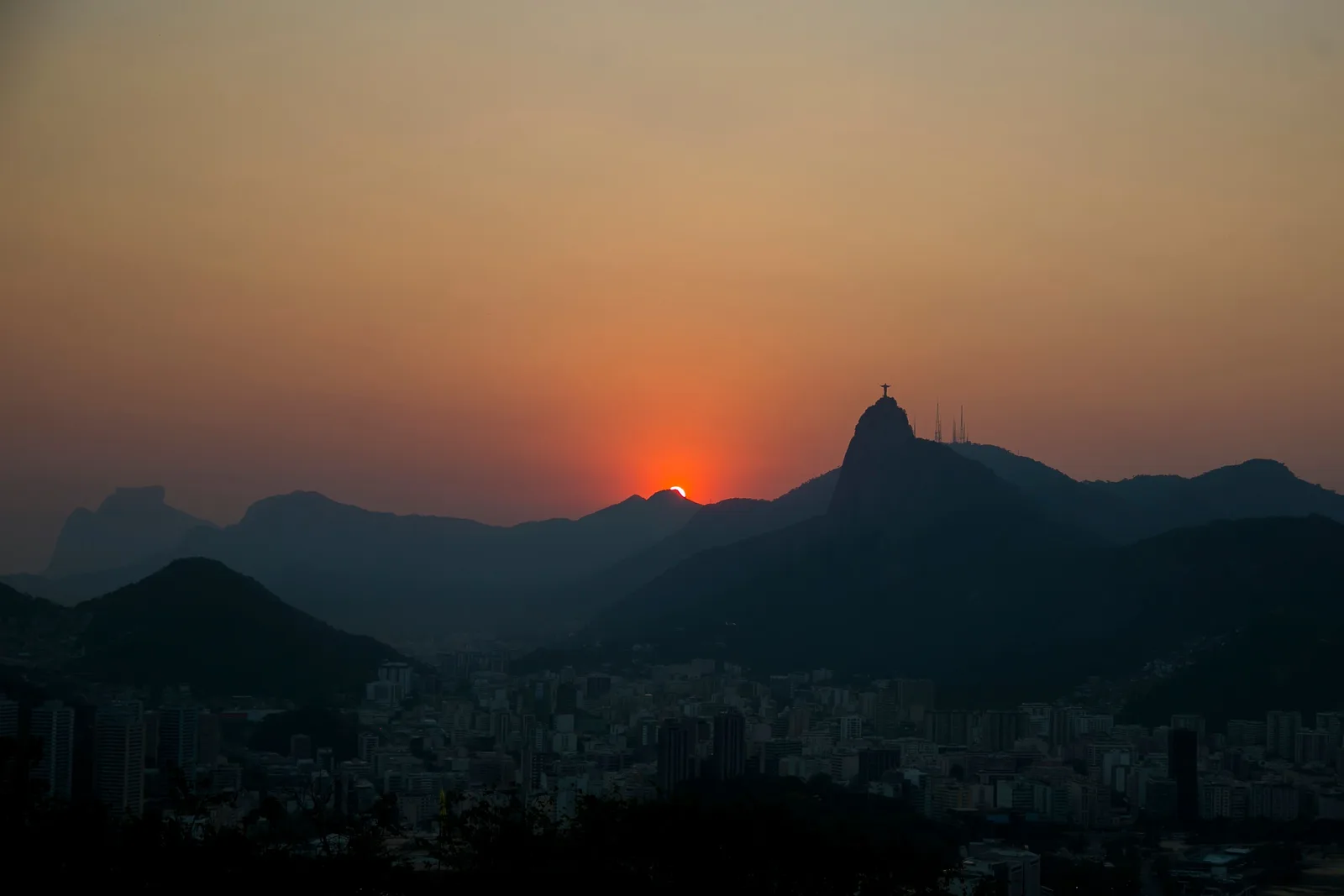
  • The sun going down in an orange sky behind the dark ridges of Rio’s mountains

Orientation

The city in one screen.

Everything logistical, before the pretty pictures start.

General Info

What makes Rio, Rio

Rio de Janeiro is a city of six and a half million people wedged into the gaps between granite mountains and the Atlantic, and that geography explains almost everything about it. There was never room to sprawl comfortably, so the city climbed, curved and squeezed — which is why a world-famous beach, a rainforest and a favela can sit within a mile of each other, and why almost every street ends in either a wall of rock or the sea.

Visitors spend most of their time in the Zona Sul, the southern strip where the beaches are: Copacabana, Ipanema and Leblon in a row along the ocean, with Botafogo and Flamengo tucked around the bay behind them. North of that sits Centro, the old commercial core, with the hillside neighborhood of Santa Teresa above it. The rest of the city — the vast Zona Norte, and Barra da Tijuca stretching west — is where cariocas live rather than where travelers stay.

It is also a city with a genuine national park inside its limits. Tijuca is one of the largest urban forests in the world, replanted by hand in the nineteenth century after the hills were stripped for coffee, and it is the reason you can hike through jungle in the morning and be on the sand by lunch. The two mountains everyone comes for — Corcovado, with the statue on top, and Sugarloaf, at the mouth of the bay — are both part of the same landscape.

Where It Is

Southeast Brazil, on the Atlantic

Rio sits on the southeast coast of Brazil, on the western shore of Guanabara Bay. It is about 430 km east of São Paulo, which is an hour away by air and the connection most visitors from the US arrive through.

Rio de Janeiro Rio de Janeiro

22.91° S, 43.17° W

See the Southeast on the interactive map

Cost

What a day here actually costs

Rio is expensive by Brazilian standards and still good value from the US. The thing that moves a Rio budget is not which restaurant you pick — it is when you come. A room in Ipanema in late October and the same room during Carnaval are not the same product at a different price; they are different markets.

Estimated daily budget, regular season

Budget

$70 / day

A hostel bed or a simple guesthouse in Botafogo, market breakfasts, the metro, and the beaches and viewpoints that cost nothing.

Mid-range

$150 / day

A mid-range double split two ways in Copacabana or Ipanema, restaurant meals, ride apps, and one paid attraction most days.

Comfortable

$300 / day

A well-reviewed hotel near the beach, dinners out, private transfers, and the guided climbs and boat trips booked without thinking about it.

Estimates, per person per day, at April-to-November prices, once you are in the city — flights not included. Come between Christmas and Carnaval and the accommodation line roughly doubles.

What things cost, outside peak season

  • Mid-range double room, Ipanema $110 R$560
  • The same room during Carnaval $320 R$1,630
  • Metro, single ride $1.50 R$7.50
  • Uber, Galeão airport to Ipanema $14 R$70
  • Lunch for two at a boteco $28 R$145
  • Dinner for two, mid-range $60 R$305
  • Corcovado train, round trip $26 R$134
  • Sugarloaf cable car, round trip $31 R$160
  • Caipirinha on the beach $2.50 R$13
  • Chopp (draft beer), 300 ml $2 R$10

Réveillon and Carnaval are a different market entirely. Rooms run two to four times the rest of the year, four- and five-night minimums are normal, and the good places sell out six months ahead.

Restaurants add a 10 percent service charge to the bill. It is customary rather than compulsory, and it is almost always included rather than expected on top.

Cards work nearly everywhere and contactless is normal — bring one with no foreign-transaction fee. Withdraw at Banco do Brasil or Bradesco inside a branch or a shopping mall, and skip the airport exchange booths.

Checked September 2026 and converted at R$5.10 to the dollar. Estimates, not quotes — the shape of a budget rather than a price you can hold anyone to.

Safety

Real risks, and real precautions

6 /10

Our rating — manageable with real attention, and the single thing most first-time visitors ask about. Rio asks more of you than anywhere else on this site.

The honest version sits between the two stories you will have heard. Rio is not a war zone, and the beachfront strip where visitors actually spend their time is patrolled hard and genuinely safe. It is also a city where phone snatching is routine, where the difference between two adjacent streets is real, and where the standard advice is not decoration. Take the precautions and Rio is a wonderful place to spend a week; ignore them and it will eventually cost you a phone.

  • The phone is the whole game. Outside the busy tourist areas, keep it in your pocket and do not take it out on the street at all — a phone in a hand is the single most snatched object in this city.
  • Inside the properly touristy areas the picture genuinely changes. Copacabana and Ipanema beachfront, the Sugarloaf and Corcovado sites, Arpoador, the Lagoa path: these are busy, heavily policed and materially safer than the streets a few blocks inland. Taking photos there is normal and fine. It is not license to wave the thing around, but you do not have to keep it hidden.
  • If you need your phone and you are not in one of those areas, step inside first. Walk into a convenience store, a café or a restaurant and use it in there. Robberies happen on the street, not indoors, and ducking into a shop for two minutes costs you nothing.
  • Carry as little as you can. A phone, a card and some cash, and nothing you would mind losing. Leave the passport, the second card and the good watch in the hotel safe.
  • The beach is for the beach. Take a towel, a little cash and a cheap pair of sunglasses. Do not take a bag you need to watch, and never leave anything on the sand while you swim.
  • Use Uber or 99 rather than walking between neighborhoods at night, and rather than hailing a taxi in the street. It is cheap by US standards and it removes the whole question.
  • If you are robbed, hand it over. Nothing you are carrying is worth an argument, and thieves here expect compliance rather than resistance.

Getting There

GIG for the long haul, SDU for the shuttle

Rio has two airports and the distinction matters. Galeão (GIG) on Governador island handles the international flights, about 20 km north of Centro. Santos Dumont (SDU) sits on the bay right beside downtown and handles the domestic shuttle — including the half-hourly hop to São Paulo.

  • There are nonstop flights from the US, which is unusual for Brazil outside São Paulo: Miami year-round, Houston daily on United, plus Atlanta, and seasonal service from New York and Dallas. Everything else connects through São Paulo (GRU) or Panama City.
  • From São Paulo it is about an hour in the air, and the SDU–Congonhas shuttle runs all day.
  • Galeão to Ipanema is 45 minutes to an hour in normal traffic, and considerably more in rush hour. Budget around R$70 in a ride app.
  • Santos Dumont is close enough to Centro to walk out of, and about 20 minutes from Copacabana.

Getting Around

Metro and ride apps. Skip the car.

Rio is the one destination in Brazil where renting a car is usually the wrong call. Parking is scarce and expensive, the traffic is genuinely bad, and the metro happens to run exactly where visitors want to go.

  • Metro Line 1 threads Ipanema, Copacabana, Botafogo, Flamengo and Centro — which is most of a first visit — for R$7.50 a ride. It is clean, air-conditioned and fast.
  • Uber and 99 cover everything the metro does not, cheaply. This is how most visitors get to Corcovado, Urca and Santa Teresa.
  • The beachfront has a continuous bike path running from Leblon to Copacabana and beyond, and the city bike-share scheme is easy to use with a foreign card.
  • On Sundays the seafront road along Copacabana and Ipanema closes to cars, and the whole thing fills with people walking, running and cycling.

The big four

The landmarks worth building days around.

Not a top-ten list. These are the four places that, if you left Rio without seeing them, you would not really have seen Rio.

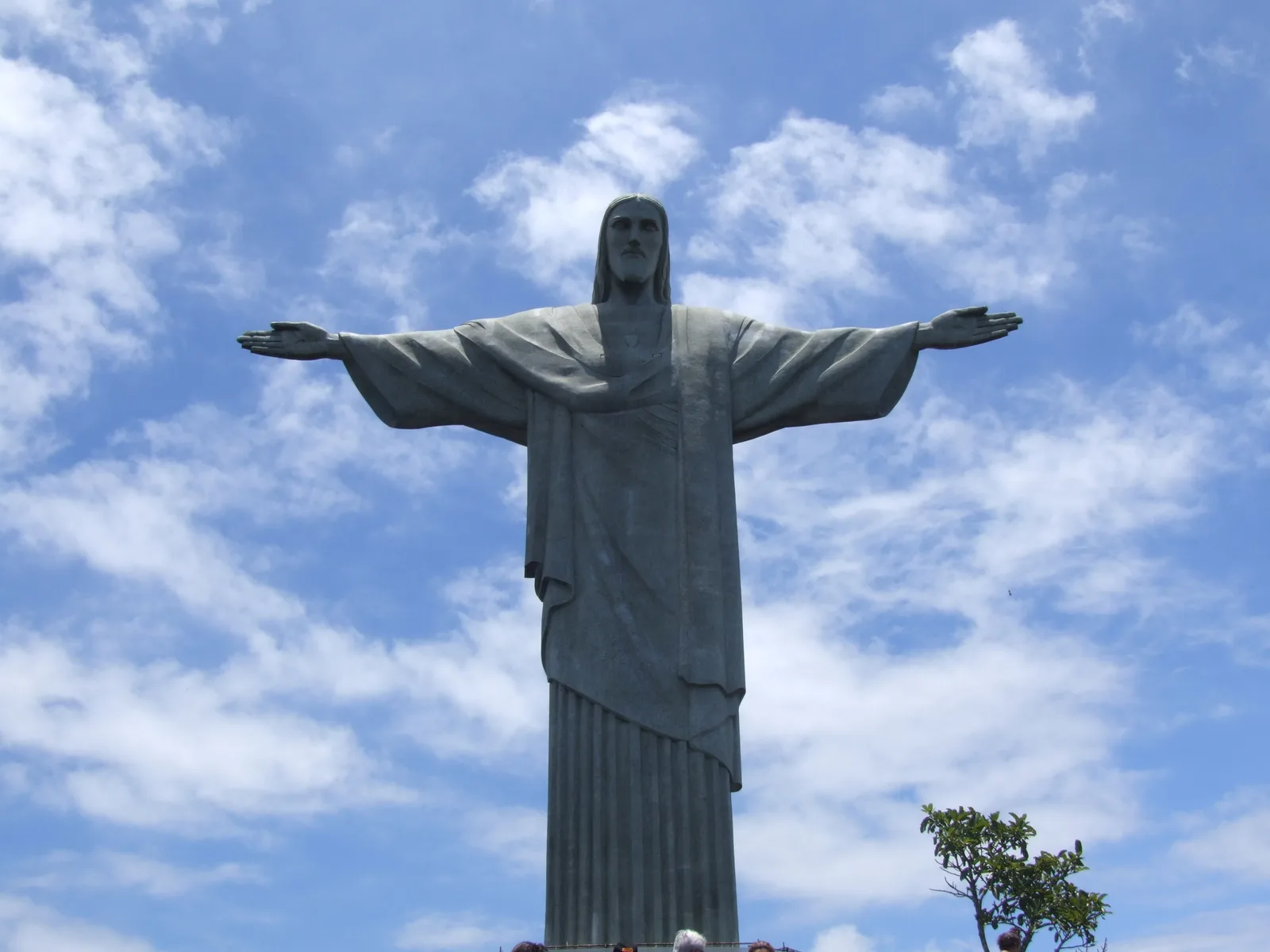
The Christ the Redeemer statue seen from directly below, arms outstretched against a bright sky scattered with cloud 01

The one on every postcard

Christ the Redeemer

Getting up
Cog train, van, or on foot
Height
30 m statue on a 710 m peak
Best at
Opening time, before the haze

The statue is 30 meters of soapstone-clad concrete with its arms open 28 meters wide, finished in 1931 and standing on the summit of Corcovado inside Tijuca National Park. It is the most recognizable thing in Brazil and it more than survives the expectation, mostly because the view does the work: on a clear morning you can see the whole shape of the city at once, the beaches on one side and the bay on the other.

The cog railway from Cosme Velho has been running since 1884 and is the atmospheric way up, climbing through forest for twenty minutes. Official vans from Paineiras are the cheaper alternative, and there is a walking trail up through the park for people who would rather earn it. Whichever you pick, go at opening time — the cloud builds through the day, the crowds build faster, and both are worse in summer.
Sugarloaf Mountain rising bare and gray above the forest, a cable car crossing the span toward its summit with Guanabara Bay behind 02

The rock at the mouth of the bay

Sugarloaf Mountain

Getting up
Two cable cars, about 20 minutes
Height
396 m, straight out of the sea
Best at
Late afternoon into sunset

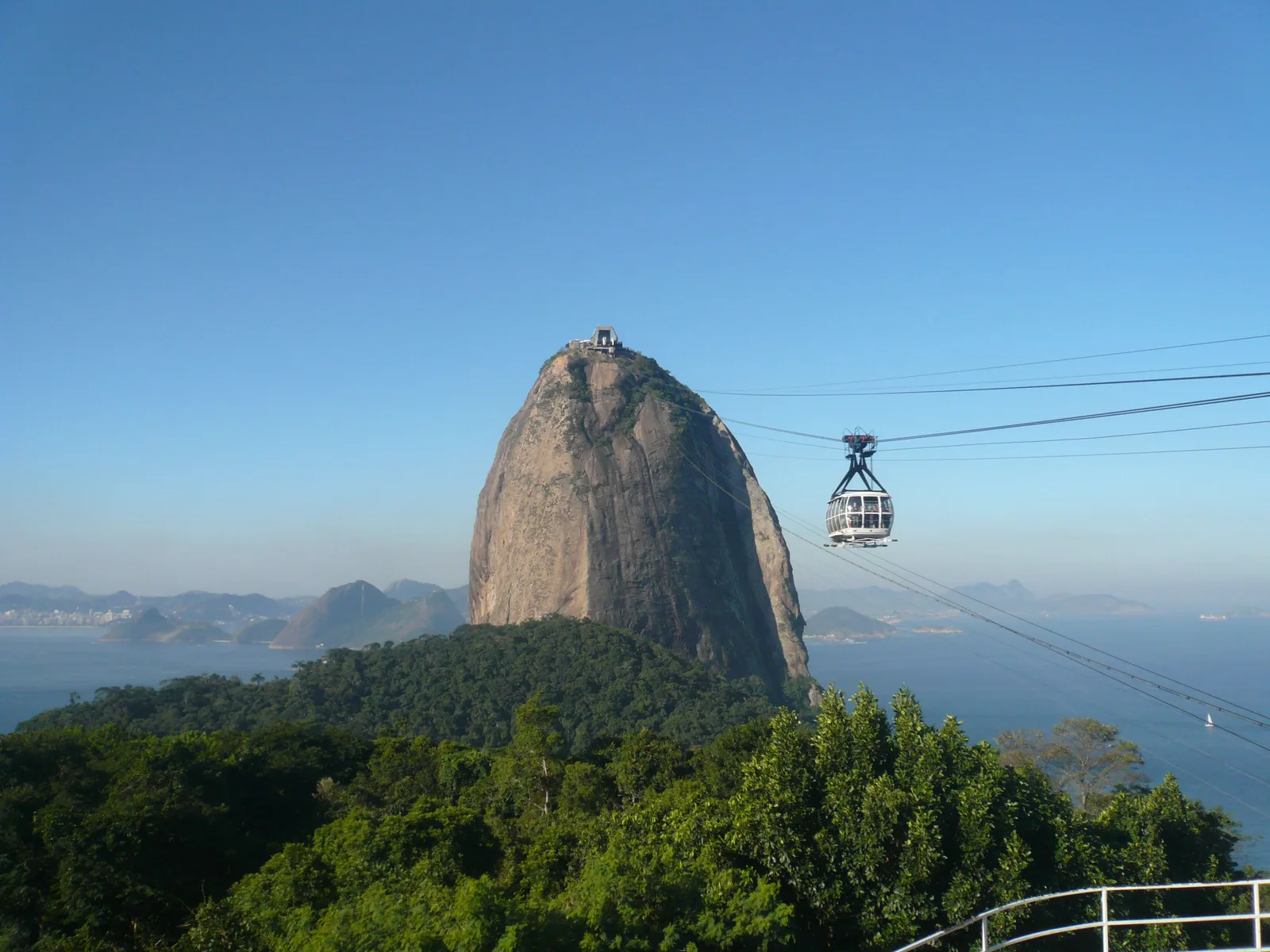
A bare granite monolith standing where Guanabara Bay meets the Atlantic, climbed in two stages by cable car since 1912 — first to the lower hill of Morro da Urca, then up the steeper span to the summit. The cars themselves are part of the appeal, and the intermediate stop has enough space and shade to be worth lingering on.

Where Corcovado shows you the city from above, Sugarloaf shows it from the side: Botafogo curving away below, Copacabana behind the headland, and Christ the Redeemer small on its peak in the distance. Go in the last two hours of daylight and you get the city lit twice, once gold and once electric. It is the single best sunset in Rio and everybody knows it, so buy ahead.

Ipanema beach seen from the rocks at Arpoador, surf running up the sand and the twin Dois Irmãos peaks closing the far end 03

The beach that set the standard

Ipanema & Arpoador

Length
2 km of sand, plus Arpoador
Orient by
The numbered lifeguard posts
Do not miss
Sunset applause from the rock

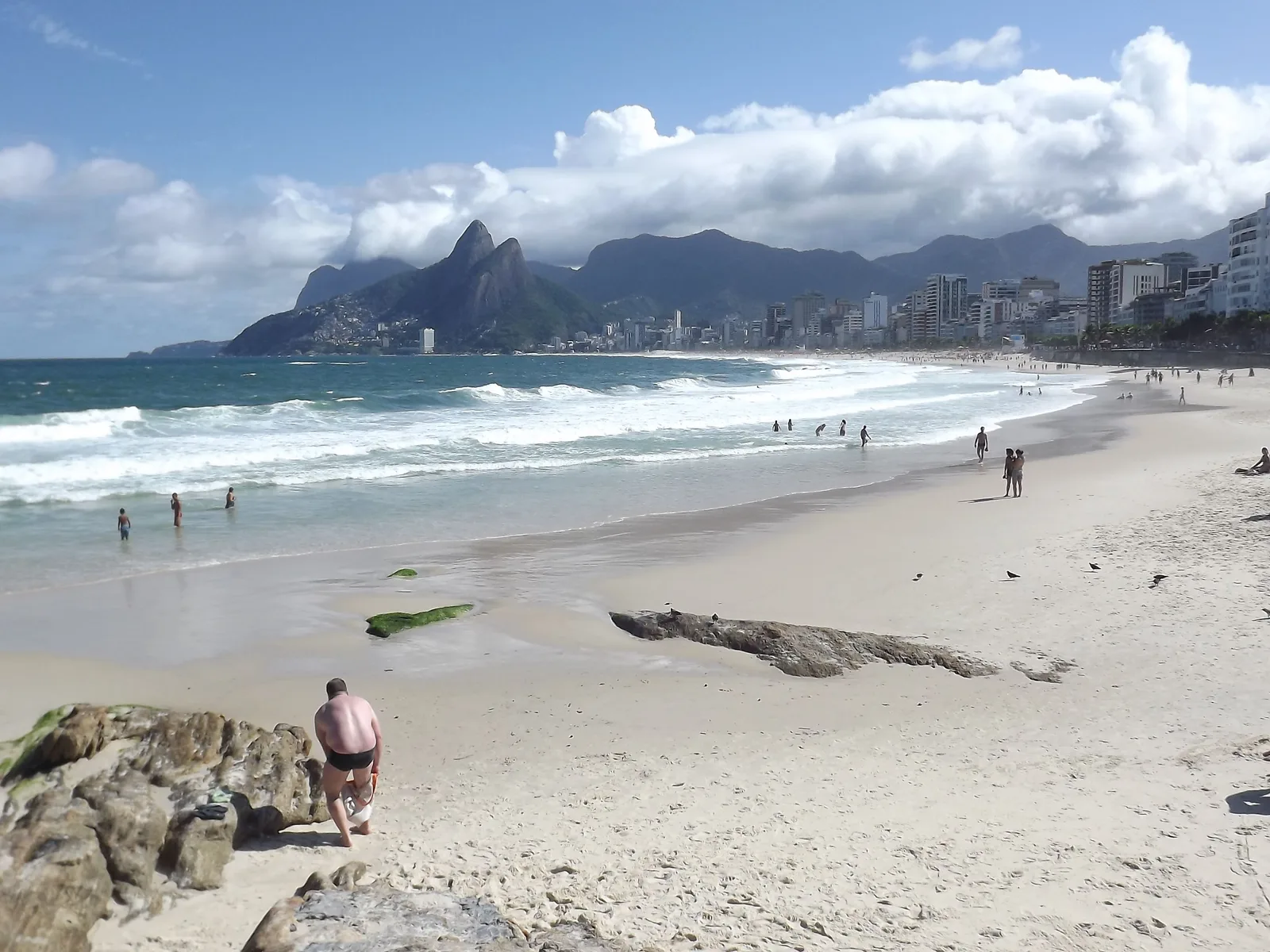
Ipanema is a working public space more than a resort beach, and it is organized in a way that takes a day to notice: the numbered lifeguard posts each have a crowd. Posto 9 is where the young and the beautiful and the loudly political end up; Posto 8 leans LGBTQ+; the Leblon end nearer Posto 11 is families. Vendors walk the sand all day selling grilled cheese, iced mate and beer, and the whole apparatus is faster and more efficient than any beach service you have paid for.

At the eastern end the sand runs into Arpoador, a granite spur between Ipanema and Copacabana with a decent surf break on one side. Climbing out onto the rock for sunset is a genuine local ritual, and when the sun finally drops behind the Dois Irmãos peaks the crowd applauds. It happens every clear evening and it is not for the benefit of visitors.

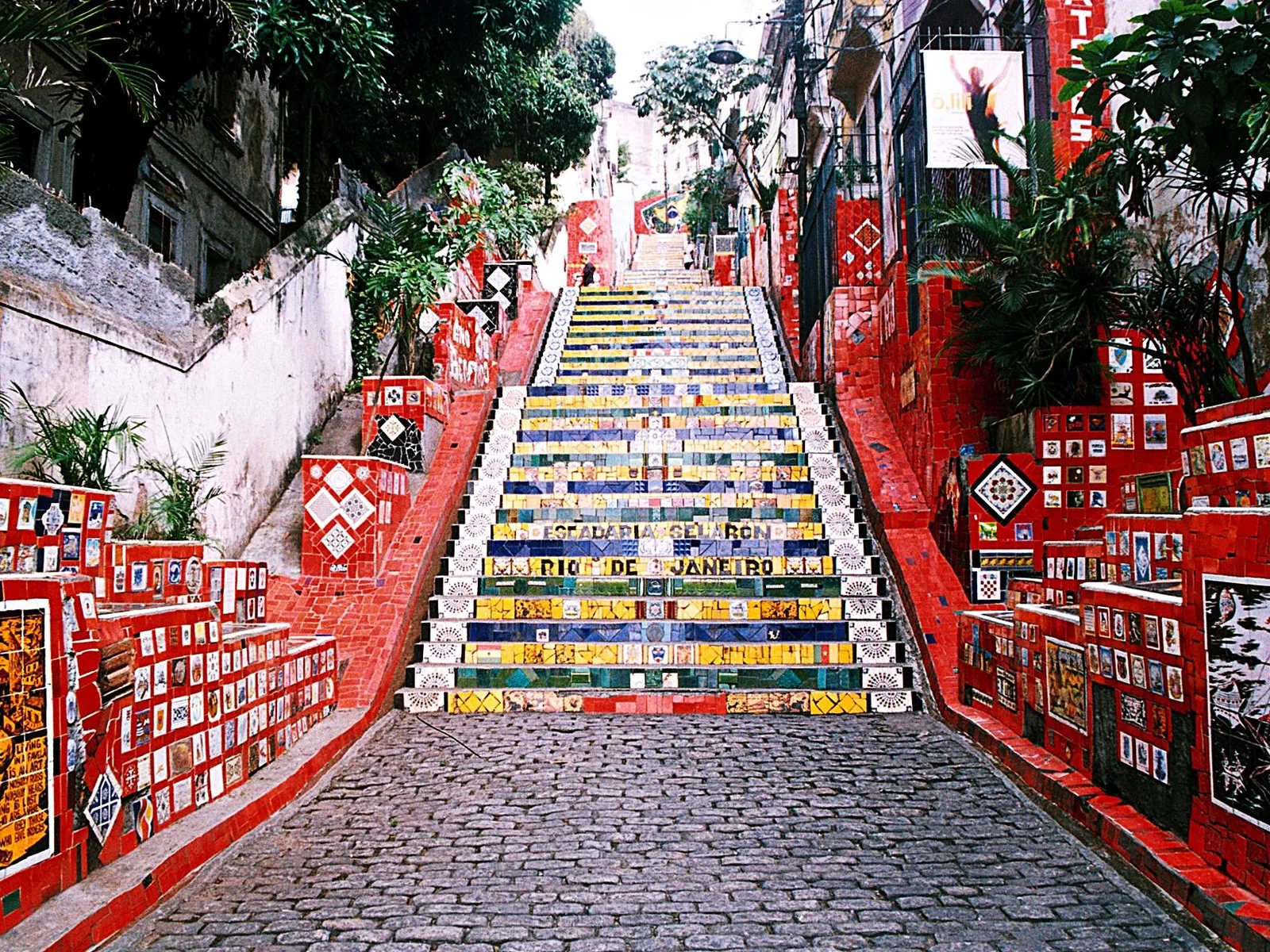
The Selarón steps rising between buildings, the walls either side packed with red tiles and the stairs themselves in blue, yellow and green 04

One man, twenty years, 215 steps

The Selarón Steps

Steps
215, between Lapa and Santa Teresa
Built
1990 to 2013, by one artist
Cost
Free, and always open

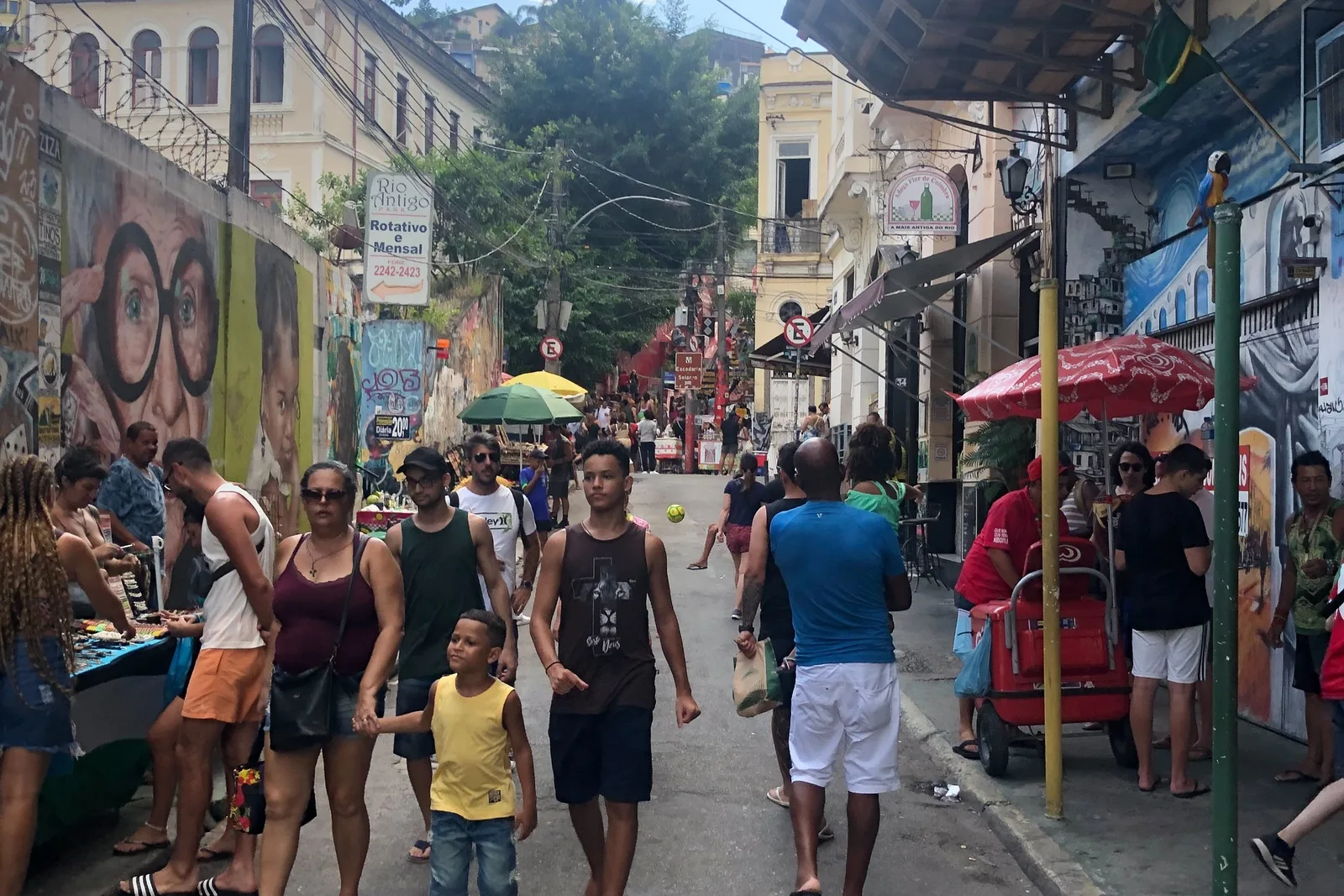
In 1990 the Chilean artist Jorge Selarón began tiling the dilapidated staircase outside his house in Lapa, using broken ceramics scavenged from building sites and skips. Neighbors thought he was wasting his time. He kept going for twenty-three years, and as the work became known people started mailing him tiles — so the finished staircase carries pieces from more than sixty countries, including hand-painted ones he made himself.

He treated it as a single work that would never be finished, constantly replacing sections he had grown tired of, and he was found dead on the steps in 2013. What is there now is preserved as he left it: 215 steps in red, yellow, green and blue running up between the buildings, and one of the few genuinely famous artworks anywhere that costs nothing and has no queue, no ticket and no railing between you and it.

What to actually do

One city, five ways to spend a day.

Pick a category, then scroll sideways through it. Every one of these is a realistic half-day, not a bucket-list fantasy.

Beaches

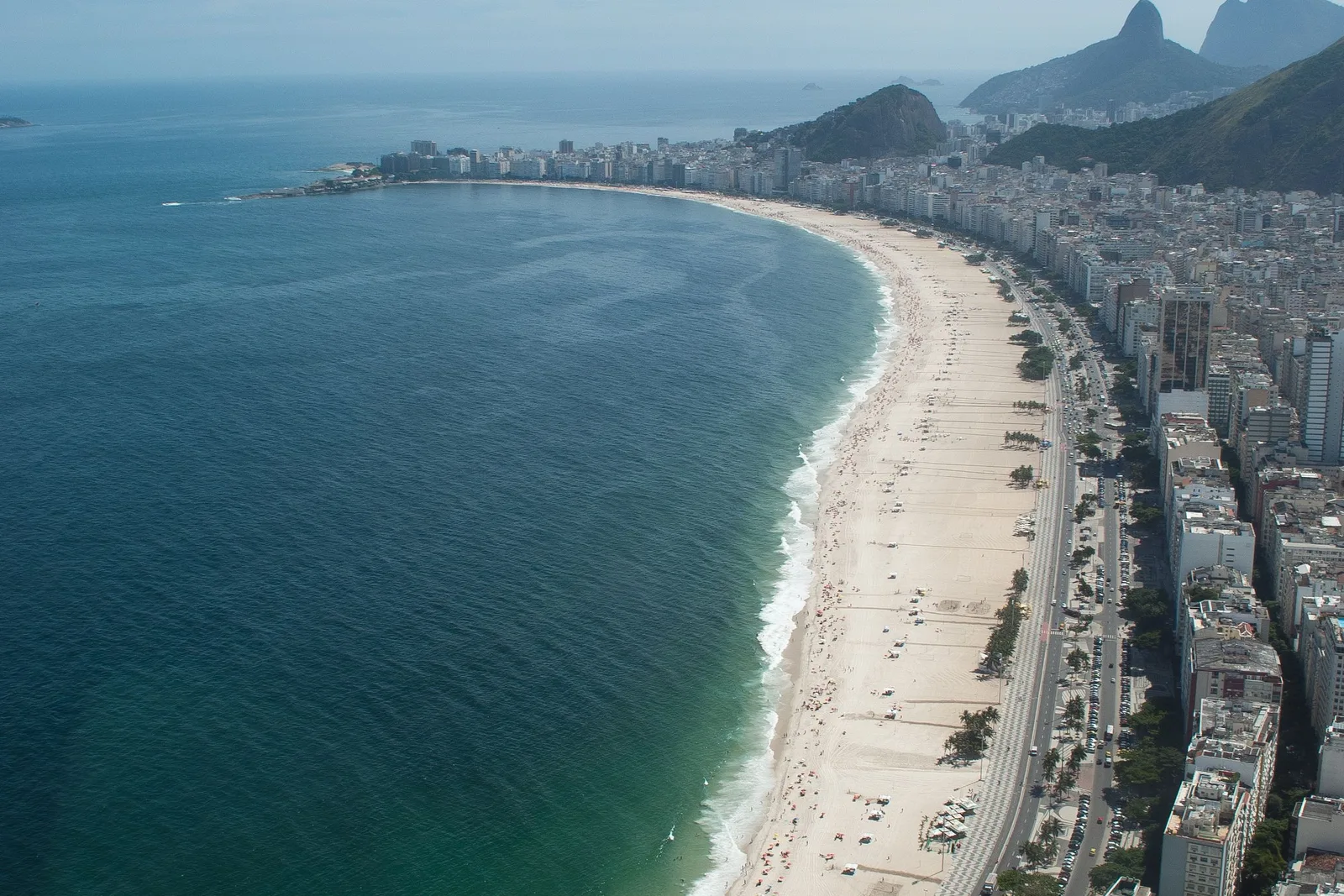
  • The long curve of Copacabana beach from above, the promenade and its line of buildings following the sand around the bay

    Zona Sul · half day

    Copacabana

    Four kilometers of sand in a single curve, backed by the black-and-white wave pattern of the Avenida Atlântica pavement. Busier, broader and more mixed than Ipanema — this is the beach the whole city uses, not just the Zona Sul, and it is livelier for it. The kiosks along the promenade run the length of it and stay open late.

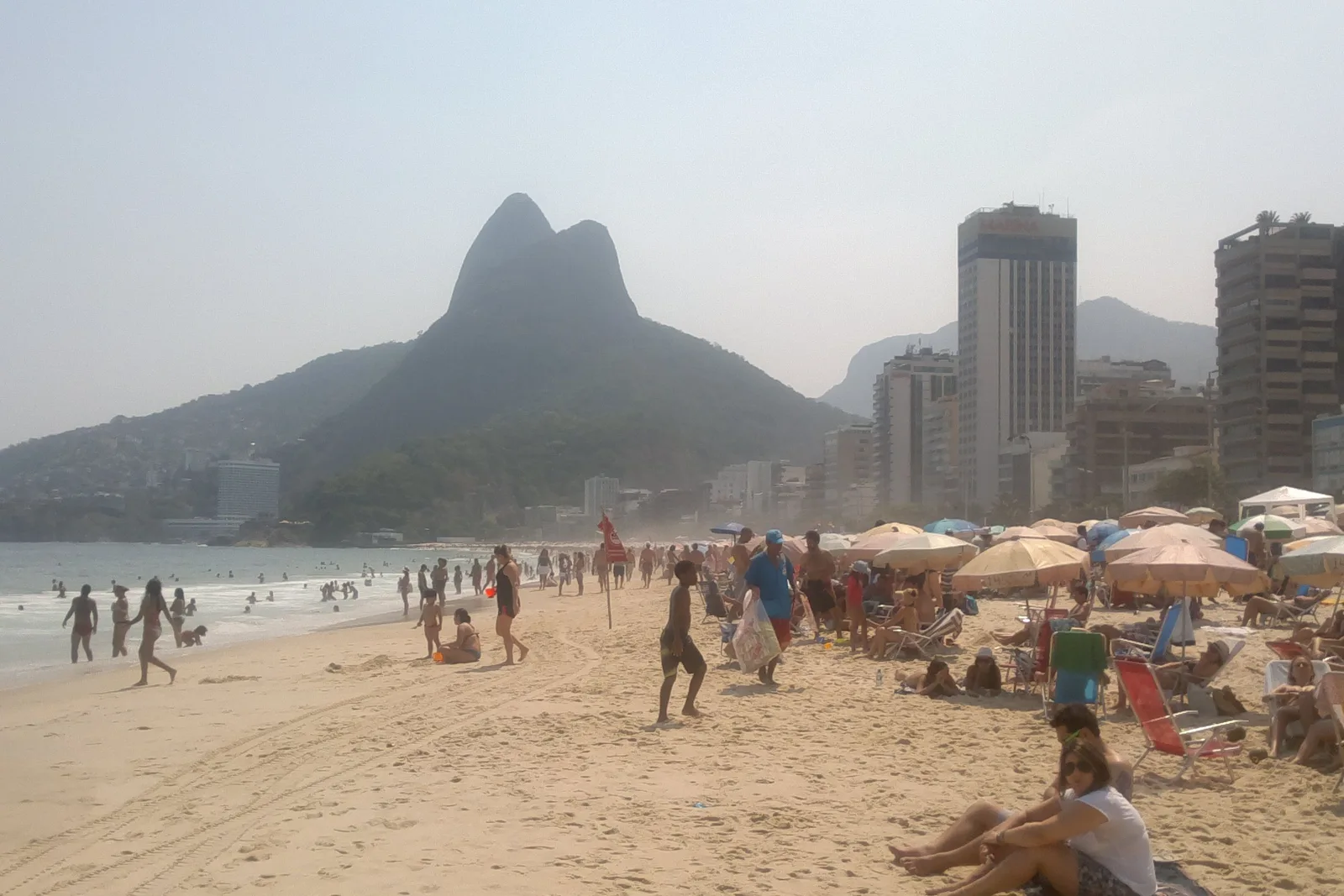
  • Leblon beach with people on the sand and under umbrellas, the Dois Irmãos peaks rising close at the western end

    Zona Sul · half day

    Leblon

    Ipanema’s quieter continuation past the canal, and the most residential of the big three. Same water, same view of the twin peaks, noticeably fewer people and a family crowd at the far end. The neighborhood behind it is the most expensive in Rio, which is visible mainly in the restaurants.

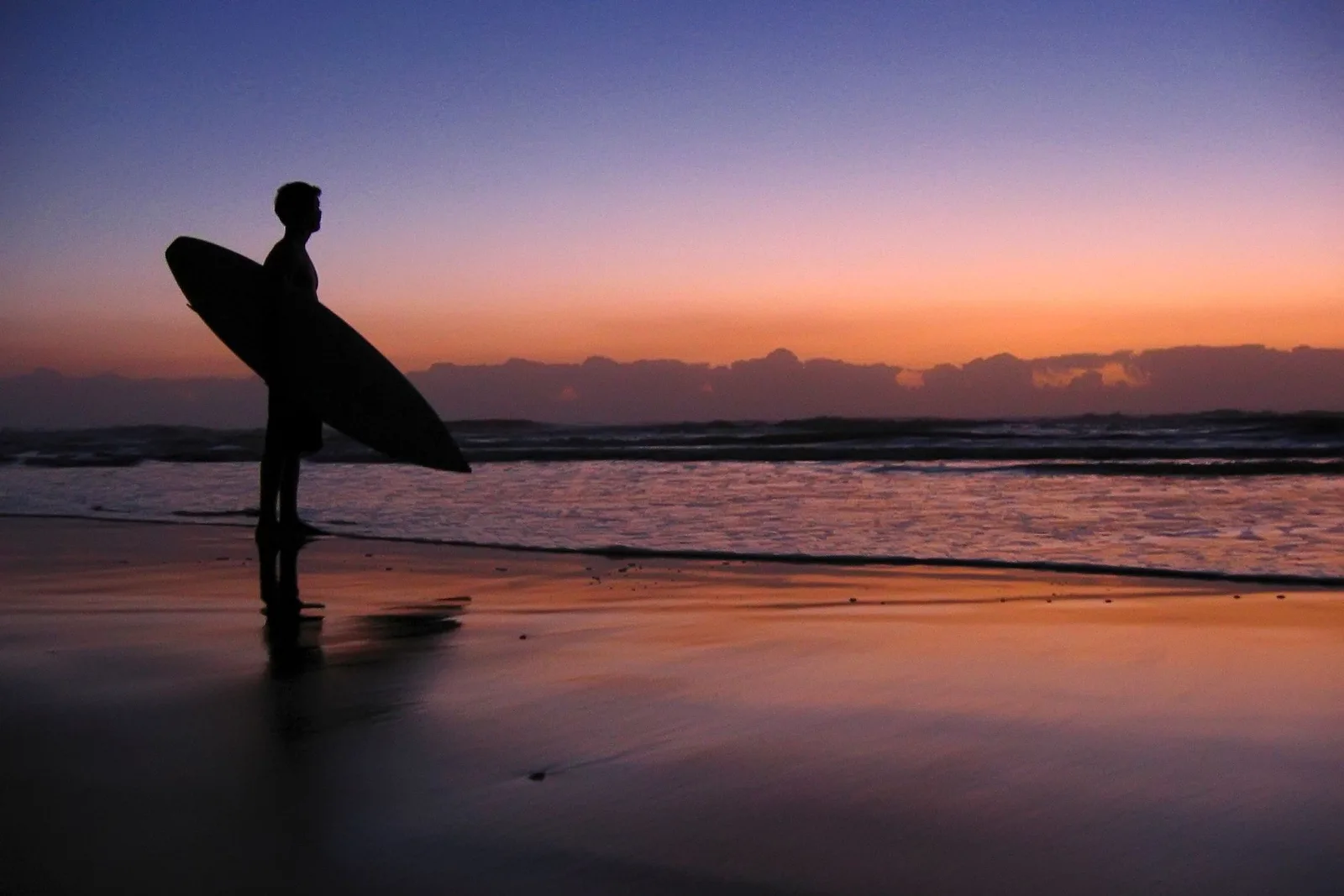
  • A surfer carrying a board out of the shallows at first light, the beach empty behind them

    Between Ipanema and Copacabana · half day

    Surfing at Arpoador

    The rock spur between the two big beaches makes a consistent, forgiving right-hander that has been Rio’s home break for generations. Schools on the Ipanema side rent boards and run lessons for first-timers, and the water is warm enough year-round that nobody bothers with a wetsuit.

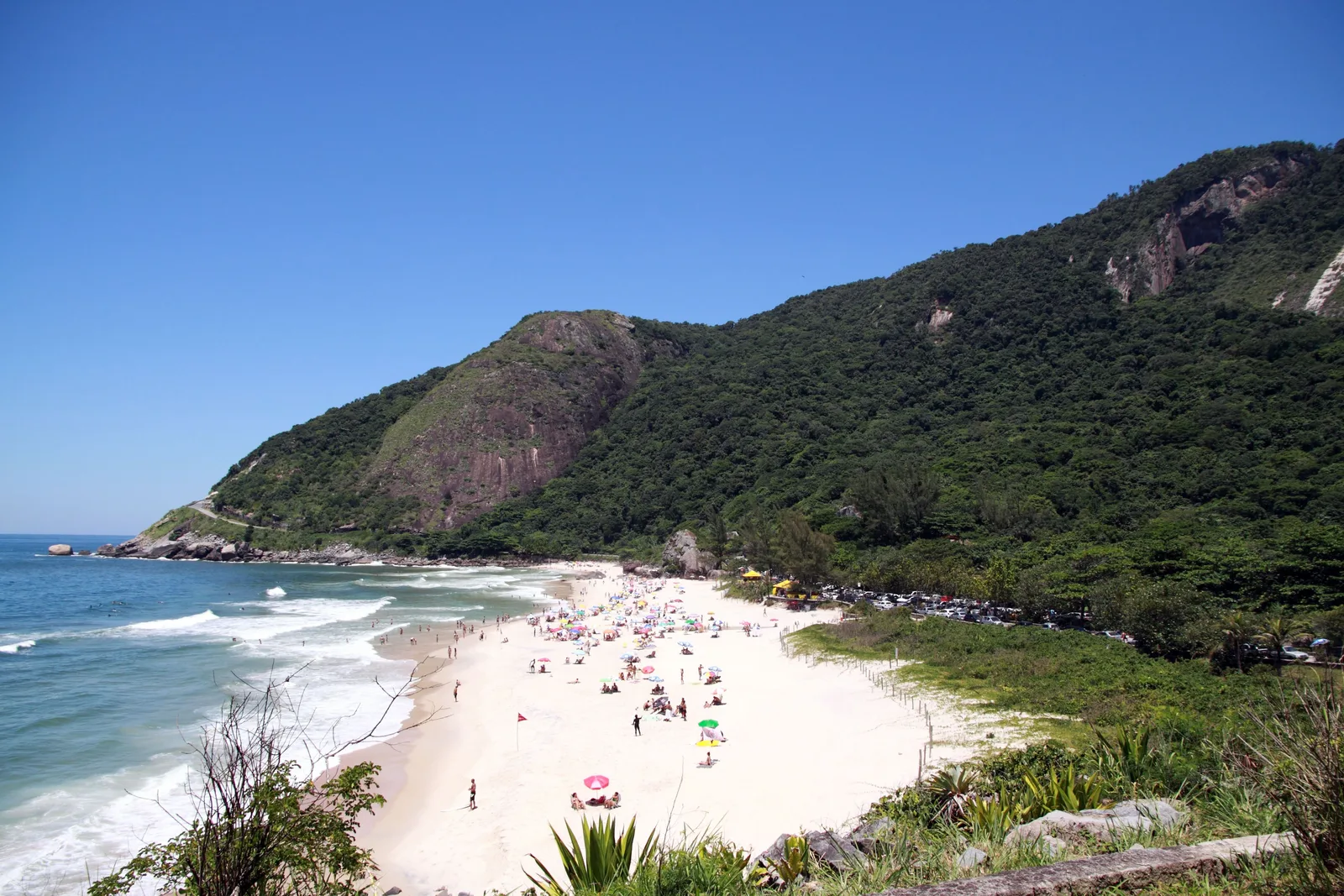
  • The small cove of Prainha seen from the headland above, forested hills running down to the sand and no buildings anywhere on it

    West of Barra · full day

    Prainha and Grumari

    An hour west of the Zona Sul the coast turns wild: two protected beaches backed by forest instead of apartment blocks, with real surf at Prainha and almost nothing built at Grumari. This is what the rest of Rio’s coastline looked like before the city reached it. You need a car or a ride app, and it is worth the trip on a clear weekday.

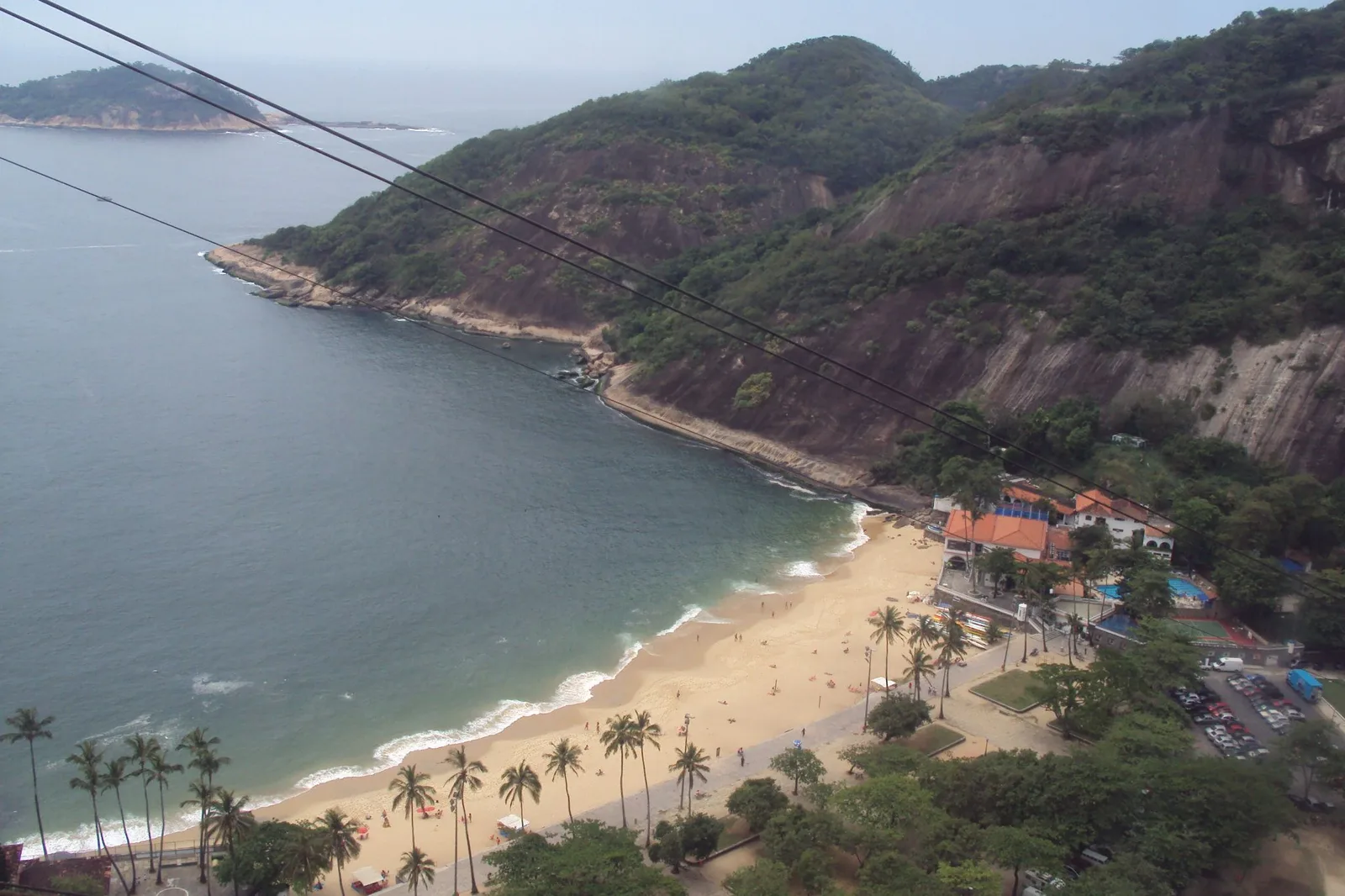
  • Praia Vermelha seen from above, a short crescent of sand backed by palms and buildings with the forested slope of Morro da Urca behind

    Urca · 2 hours

    Praia Vermelha

    A short, sheltered crescent of coarse red sand tucked between Sugarloaf and Morro da Urca, with the two rock faces rising directly behind it. Calm water, almost no surf, and a completely different feel from the ocean beaches — the bay side of the city rather than the Atlantic side. The Pista Cláudio Coutinho trail starts at the far end.

Viewpoints

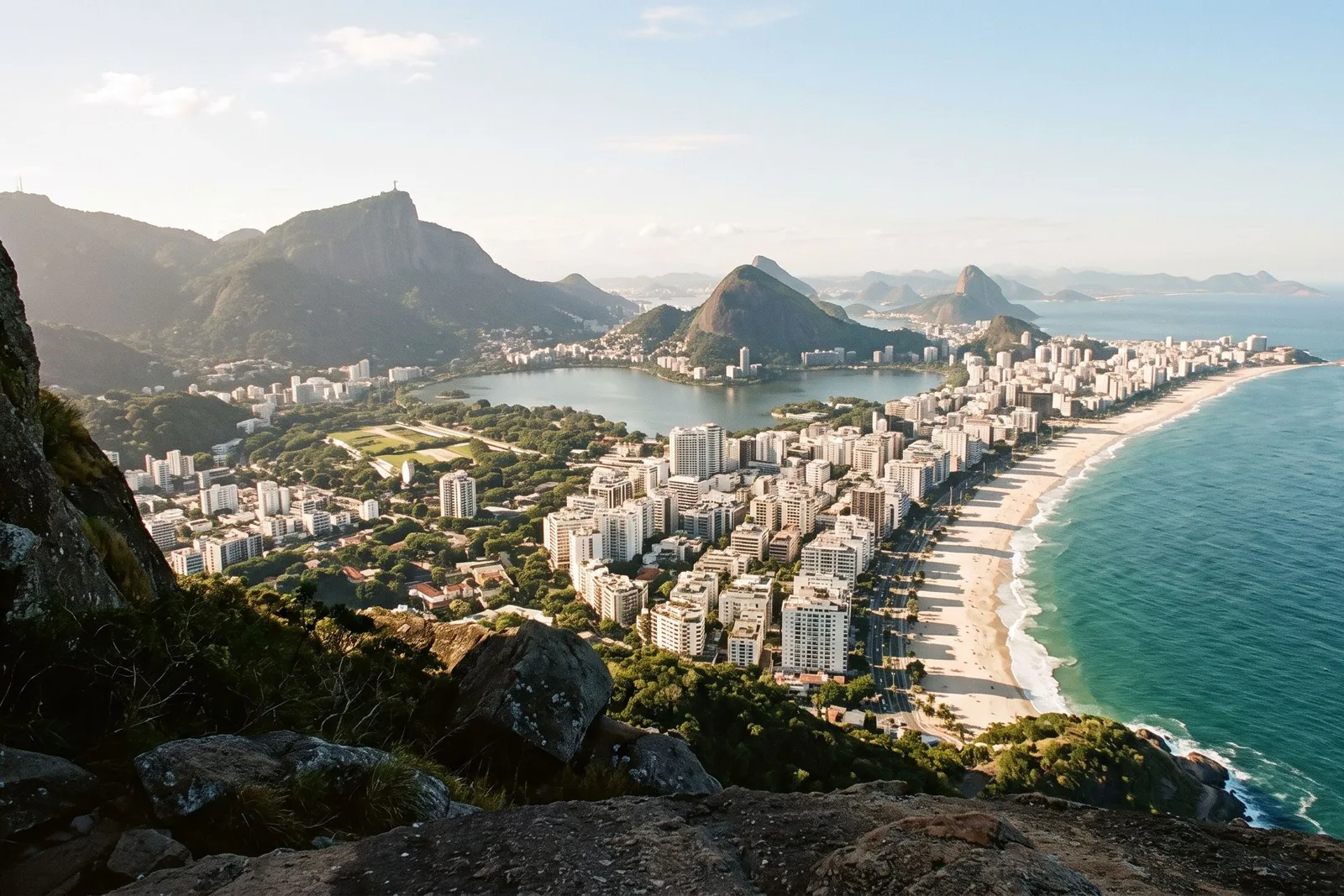
  • The view from high on Dois Irmãos looking back along the curve of Leblon and Ipanema, the Lagoa behind the buildings and the granite peaks of Rio in the haze beyond

    Vidigal · 3 hours round trip

    Hike to Dois Irmãos

    The best view in Rio that you have to walk to. A steep but short trail climbs the smaller of the two peaks at the end of Ipanema, and the summit looks straight back down the whole run of beach with the city behind it. The trailhead is inside the Vidigal favela and reached by moto-taxi from the entrance, which is normal and organized.

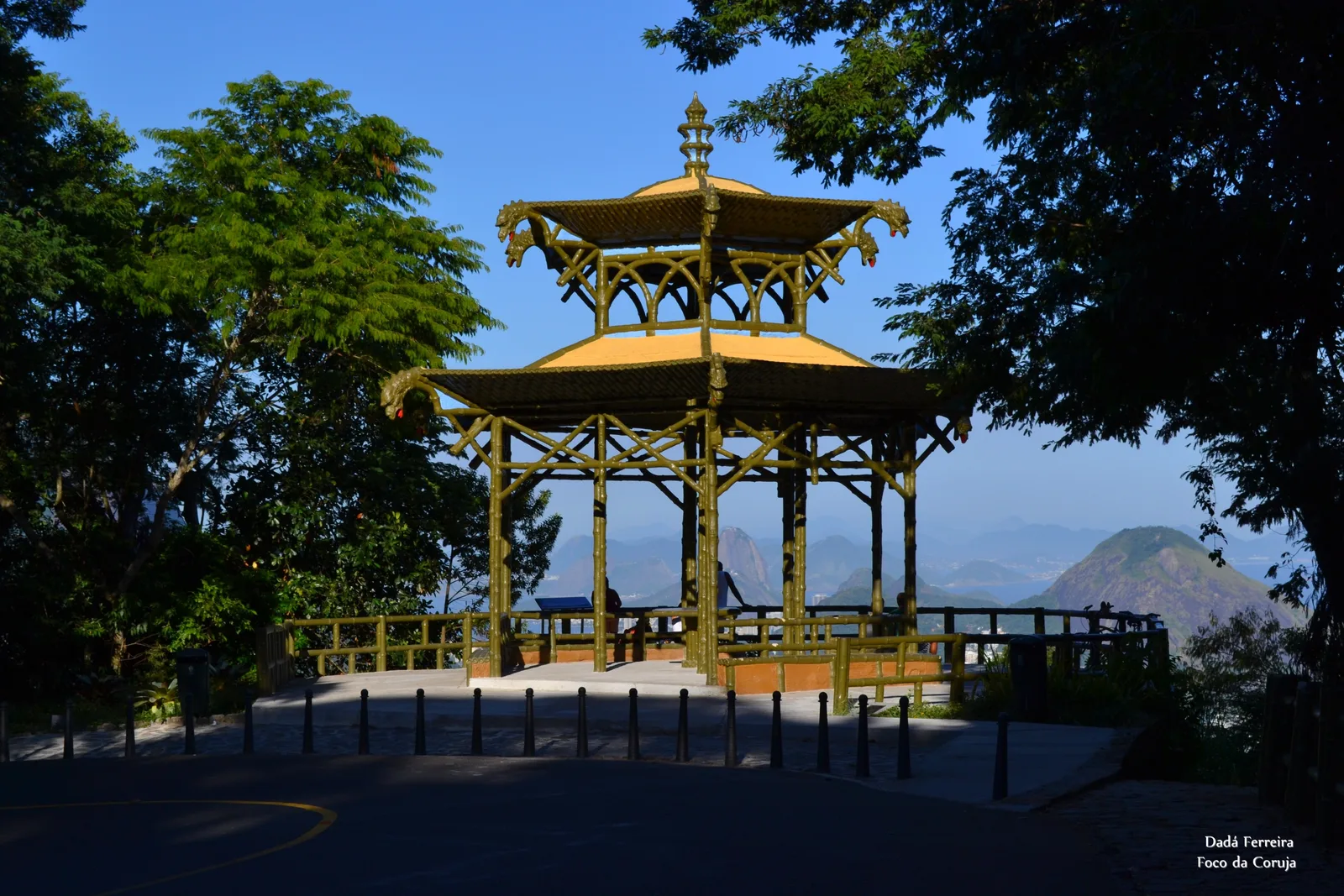
  • The pagoda-roofed Vista Chinesa pavilion at dusk, lit against the trees with the city below beyond its railing

    Tijuca forest · 2 hours

    Vista Chinesa

    A small pagoda-style pavilion on a forest road high above the Zona Sul, built in 1903 and pointed directly at the best framed composition in the city: the Lagoa, Ipanema, Corcovado and Sugarloaf all in one view. It is a short detour on the way into or out of Tijuca and it costs nothing.

  • The view from Mirante Dona Marta at dusk: Botafogo bay curving below with its lit marina, and Sugarloaf standing at the mouth of Guanabara Bay

    Botafogo · 1 hour

    Mirante Dona Marta

    A road-accessible balcony halfway up Corcovado with the classic view of Botafogo’s curve and Sugarloaf beyond it — the shot that ends up on magazine covers. Because you can drive to it, it works well as a twenty-minute stop on the way to or from the statue rather than a trip of its own.

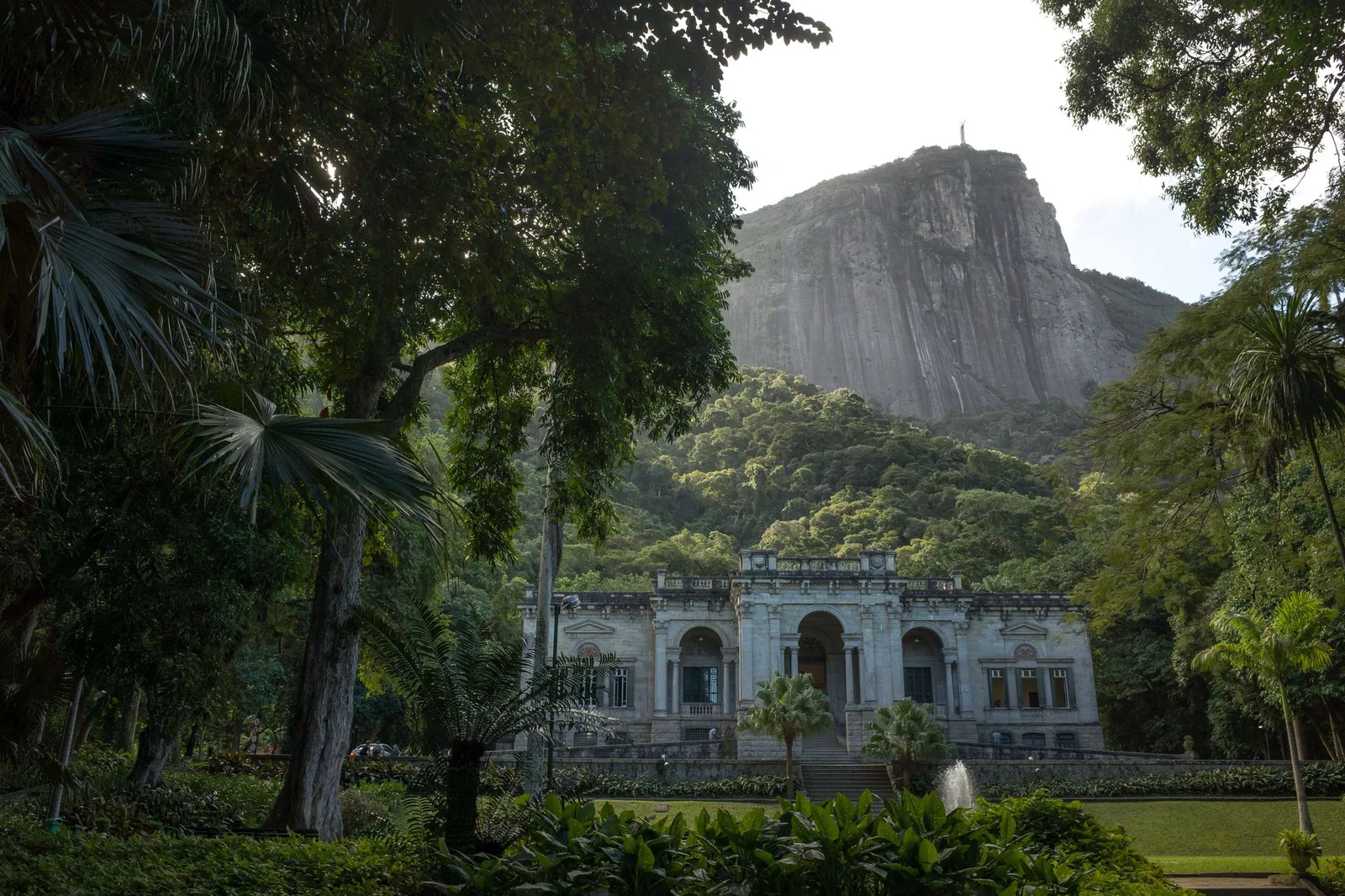
  • The Parque Lage mansion seen from its gardens, with the bare rock of the mountain rising directly behind it through the trees

    Jardim Botânico · 2 hours

    Parque Lage

    An early-twentieth-century mansion at the foot of Corcovado with an open courtyard, a swimming pool and the statue looming directly overhead through the arches. The gardens run straight into the forest behind, entry is free, and the café in the courtyard is one of the more pleasant places in Rio to spend a morning.

  • A tandem hang glider in flight high above forested slopes running down to the water

    São Conrado · half day

    Hang gliding from Pedra Bonita

    Tandem flights launch off a wooden ramp on Pedra Bonita and land on the beach at São Conrado, ten minutes and 500 meters of altitude later. No experience needed and no running required — the pilot does the work while you sit. It is the most memorable thing most visitors do in Rio and it depends entirely on the wind, so book it for early in your trip and keep a spare morning.

Active

  • A surfer carrying a board out of the shallows at first light, the beach empty behind them

    Between Ipanema and Copacabana · half day

    Surfing at Arpoador

    The rock spur between the two big beaches makes a consistent, forgiving right-hander that has been Rio’s home break for generations. Schools on the Ipanema side rent boards and run lessons for first-timers, and the water is warm enough year-round that nobody bothers with a wetsuit.

  • The view from high on Dois Irmãos looking back along the curve of Leblon and Ipanema, the Lagoa behind the buildings and the granite peaks of Rio in the haze beyond

    Vidigal · 3 hours round trip

    Hike to Dois Irmãos

    The best view in Rio that you have to walk to. A steep but short trail climbs the smaller of the two peaks at the end of Ipanema, and the summit looks straight back down the whole run of beach with the city behind it. The trailhead is inside the Vidigal favela and reached by moto-taxi from the entrance, which is normal and organized.

  • A tandem hang glider in flight high above forested slopes running down to the water

    São Conrado · half day

    Hang gliding from Pedra Bonita

    Tandem flights launch off a wooden ramp on Pedra Bonita and land on the beach at São Conrado, ten minutes and 500 meters of altitude later. No experience needed and no running required — the pilot does the work while you sit. It is the most memorable thing most visitors do in Rio and it depends entirely on the wind, so book it for early in your trip and keep a spare morning.

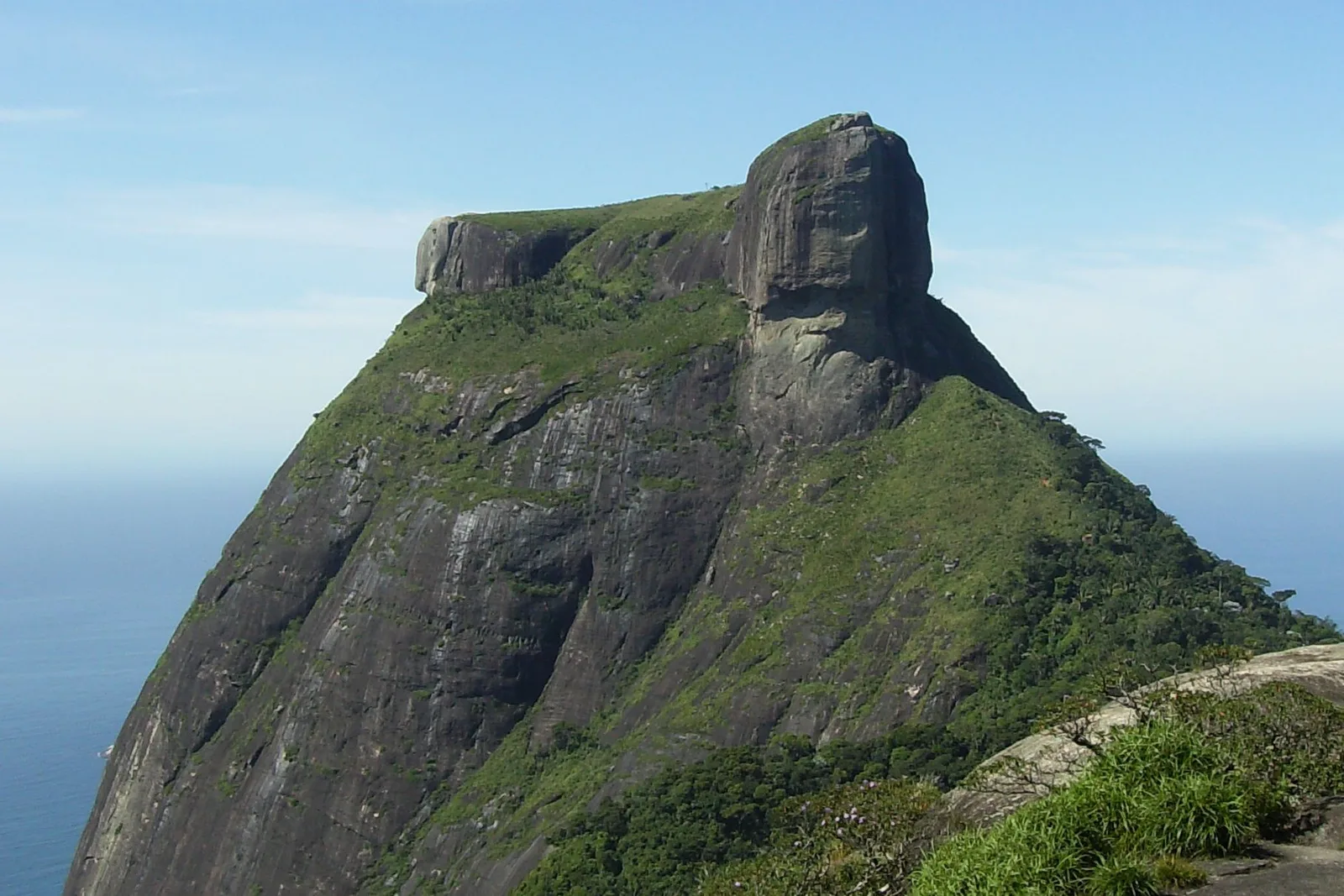
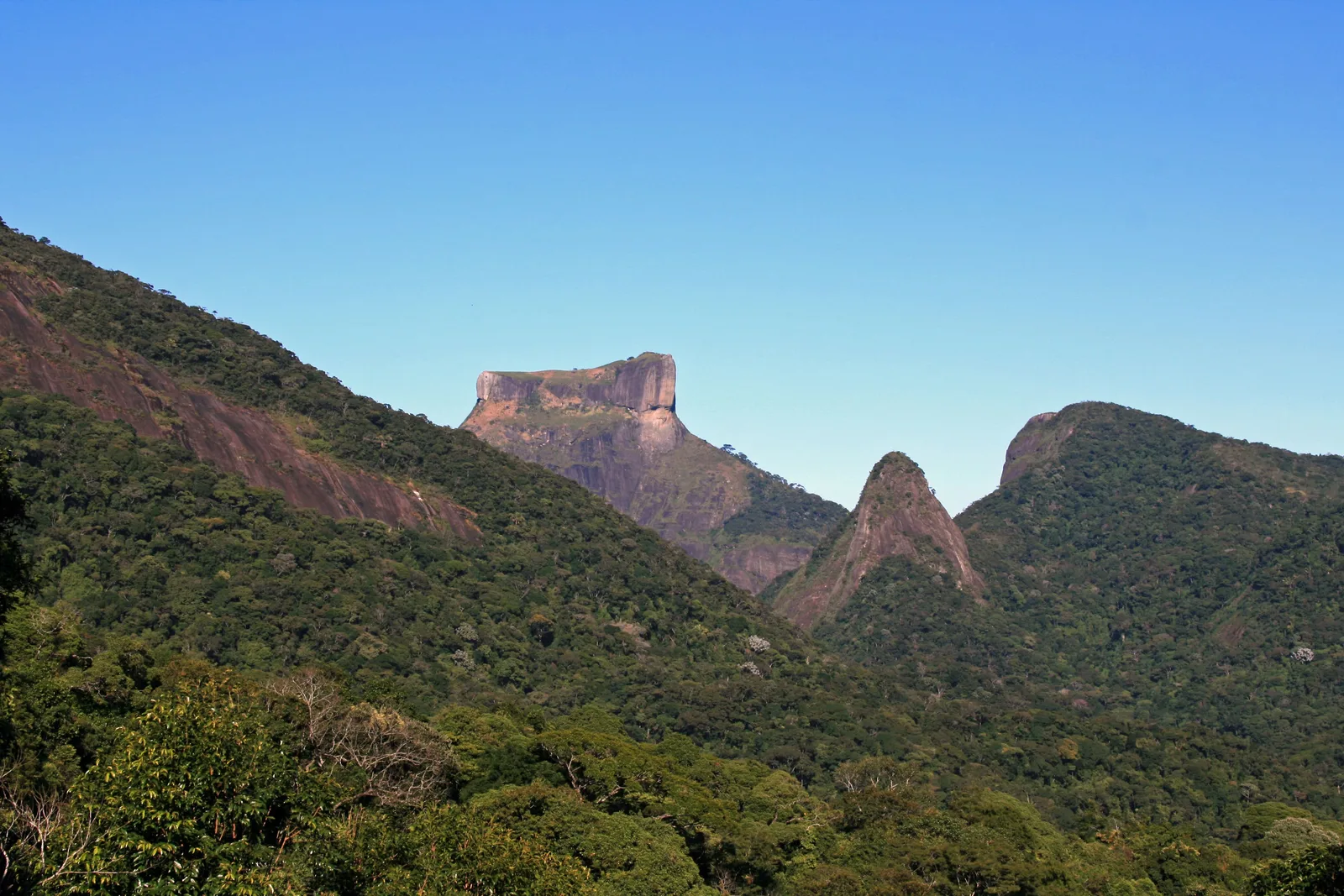
  • The flat-topped monolith of Pedra da Gávea rising out of dense forest, its bare rock face catching the light

    Tijuca forest · 6 hours round trip

    Climb Pedra da Gávea

    The hard one. A 842-meter monolith above São Conrado, four hours up through forest with a genuine rock scramble near the top — the Carrasqueira section is exposed enough that most people go with a guide, and some outfits rope it. The summit is a huge flat table with the whole city on one side and open ocean on the other. Not a casual walk, and not one to attempt in the wet.

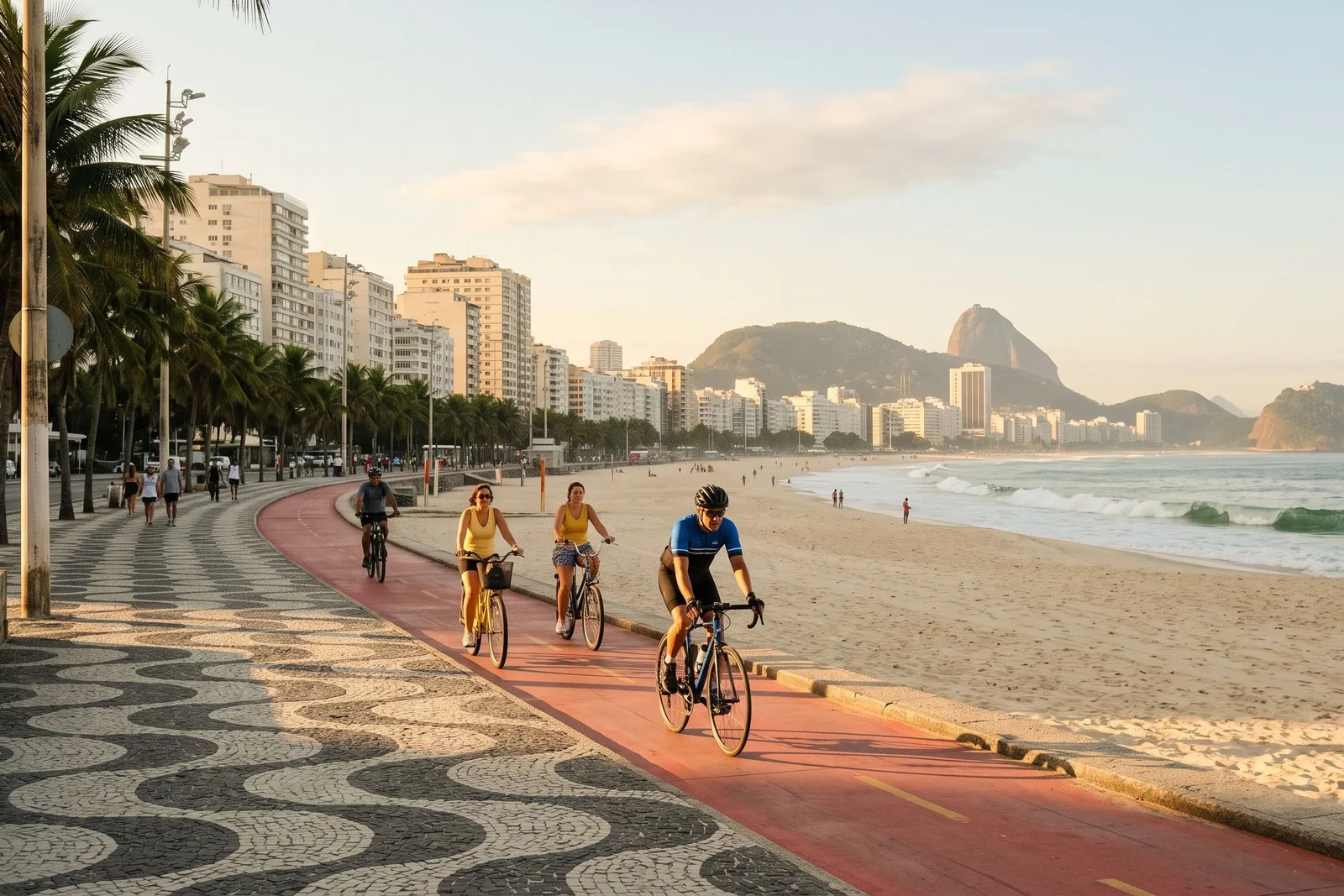
  • Cyclists on the red bike lane along the Copacabana seafront at first light, the wave-patterned mosaic pavement beside them and Sugarloaf in the distance

    Leblon to Flamengo · half day

    Cycle the beachfront path

    A continuous, flat, separated bike path runs from Leblon along Ipanema and Copacabana and around the bay to Flamengo, with a spur circling the Lagoa. Bike-share stations sit every few hundred meters and take a foreign card. On Sunday the adjacent road closes to traffic and the whole seafront becomes a park.

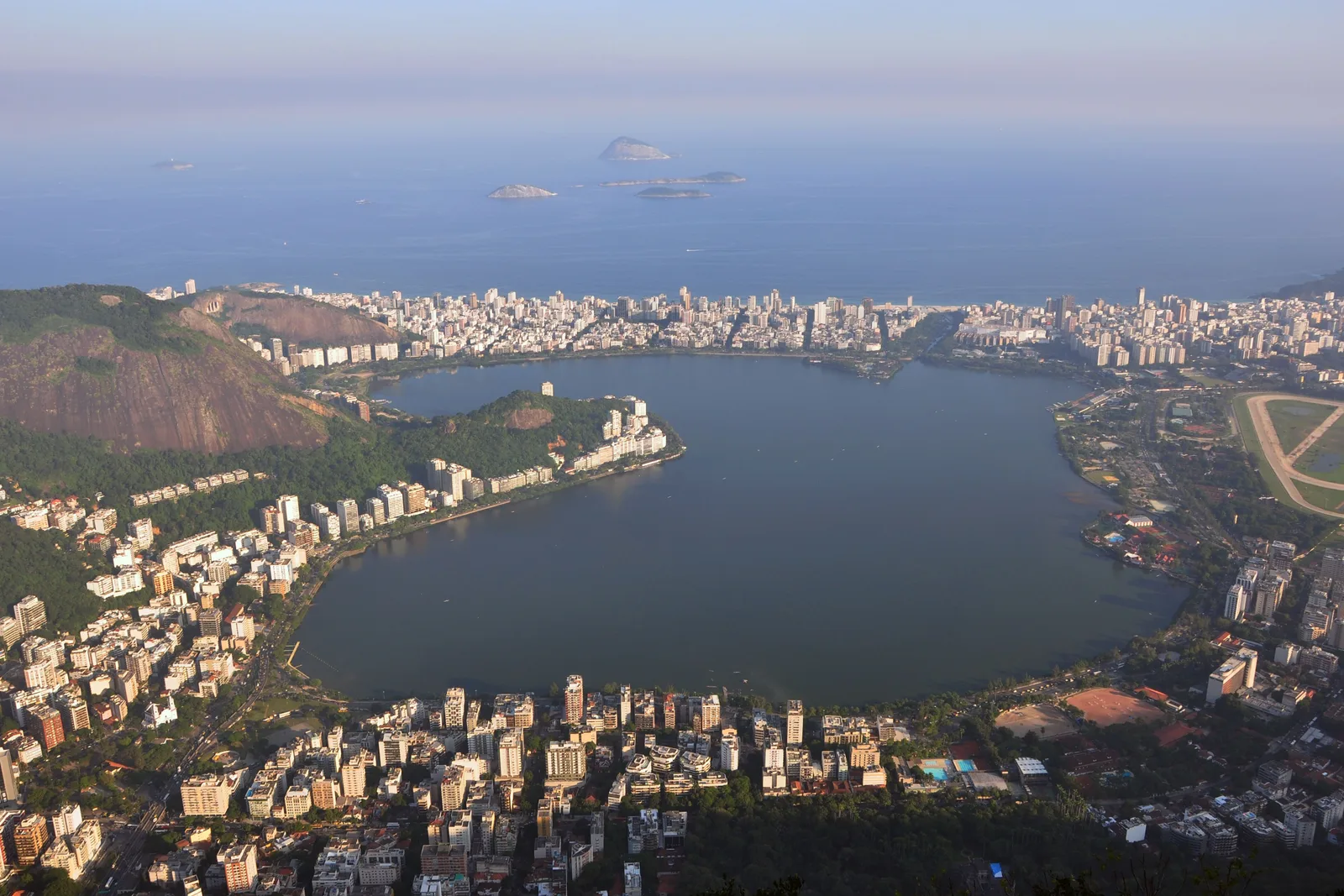
  • Lagoa Rodrigo de Freitas from above: flat water ringed completely by the city, with the beaches and the Atlantic beyond it

    Lagoa Rodrigo de Freitas · 2 hours

    Paddleboard on the Lagoa

    The saltwater lagoon behind Ipanema is flat, sheltered and ringed by the city, with Corcovado standing over the far end. Rental stands on the Ipanema side hand out boards and kayaks by the hour. Mornings are calmest, and the 7.5 km path around the shore is the city’s favorite run.

  • The forested ridges of Tijuca National Park running away from the viewer, with the bare summit of Pedra da Gávea beyond them

    Above the city · half day

    Tijuca National Park

    One of the largest urban forests in the world, and man-made in the sense that matters: the hills were clear-cut for coffee, the city’s water supply started failing, and from the 1860s the forest was replanted tree by tree over decades. What grew back is a national park with waterfalls, colonial ruins, howler monkeys and toucans, ten minutes from apartment blocks. Most visitors pass through a slice of it on the way up Corcovado without registering it is a park at all.

Culture

  • The Parque Lage mansion seen from its gardens, with the bare rock of the mountain rising directly behind it through the trees

    Jardim Botânico · 2 hours

    Parque Lage

    An early-twentieth-century mansion at the foot of Corcovado with an open courtyard, a swimming pool and the statue looming directly overhead through the arches. The gardens run straight into the forest behind, entry is free, and the café in the courtyard is one of the more pleasant places in Rio to spend a morning.

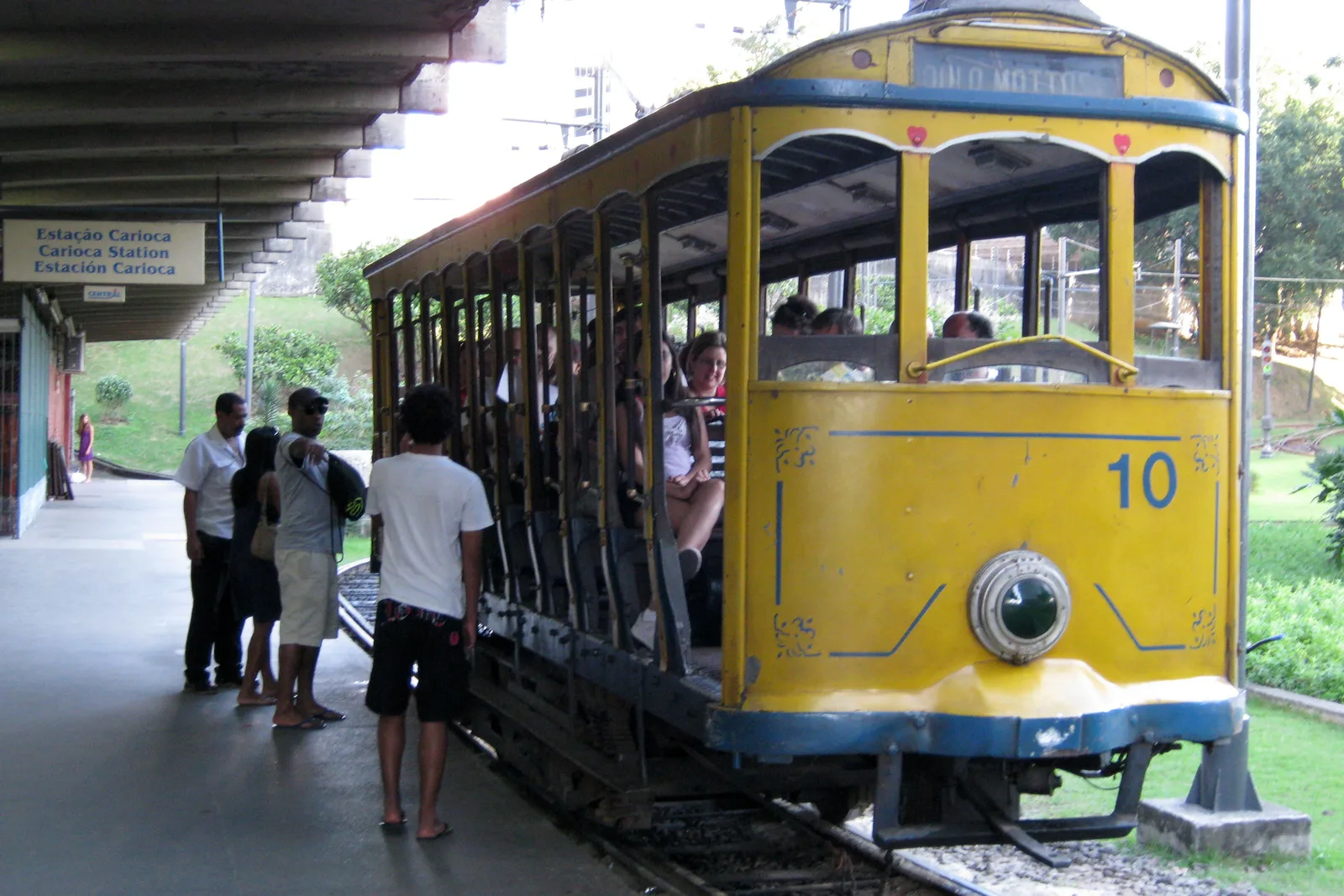
  • The open-sided yellow Santa Teresa tram waiting at its terminus, passengers standing beside it on the platform

    Santa Teresa · half day

    Wander Santa Teresa

    A hillside neighborhood of cobbled streets, nineteenth-century mansions and studios above Centro, connected to the city by a restored yellow tram that rattles up from Carioca station. It is the one part of Rio that feels like a small town, and the best way to see it is to ride the tram up, then walk down through Largo do Guimarães and out toward the Escadaria.

  • The forested ridges of Tijuca National Park running away from the viewer, with the bare summit of Pedra da Gávea beyond them

    Above the city · half day

    Tijuca National Park

    One of the largest urban forests in the world, and man-made in the sense that matters: the hills were clear-cut for coffee, the city’s water supply started failing, and from the 1860s the forest was replanted tree by tree over decades. What grew back is a national park with waterfalls, colonial ruins, howler monkeys and toucans, ten minutes from apartment blocks. Most visitors pass through a slice of it on the way up Corcovado without registering it is a park at all.

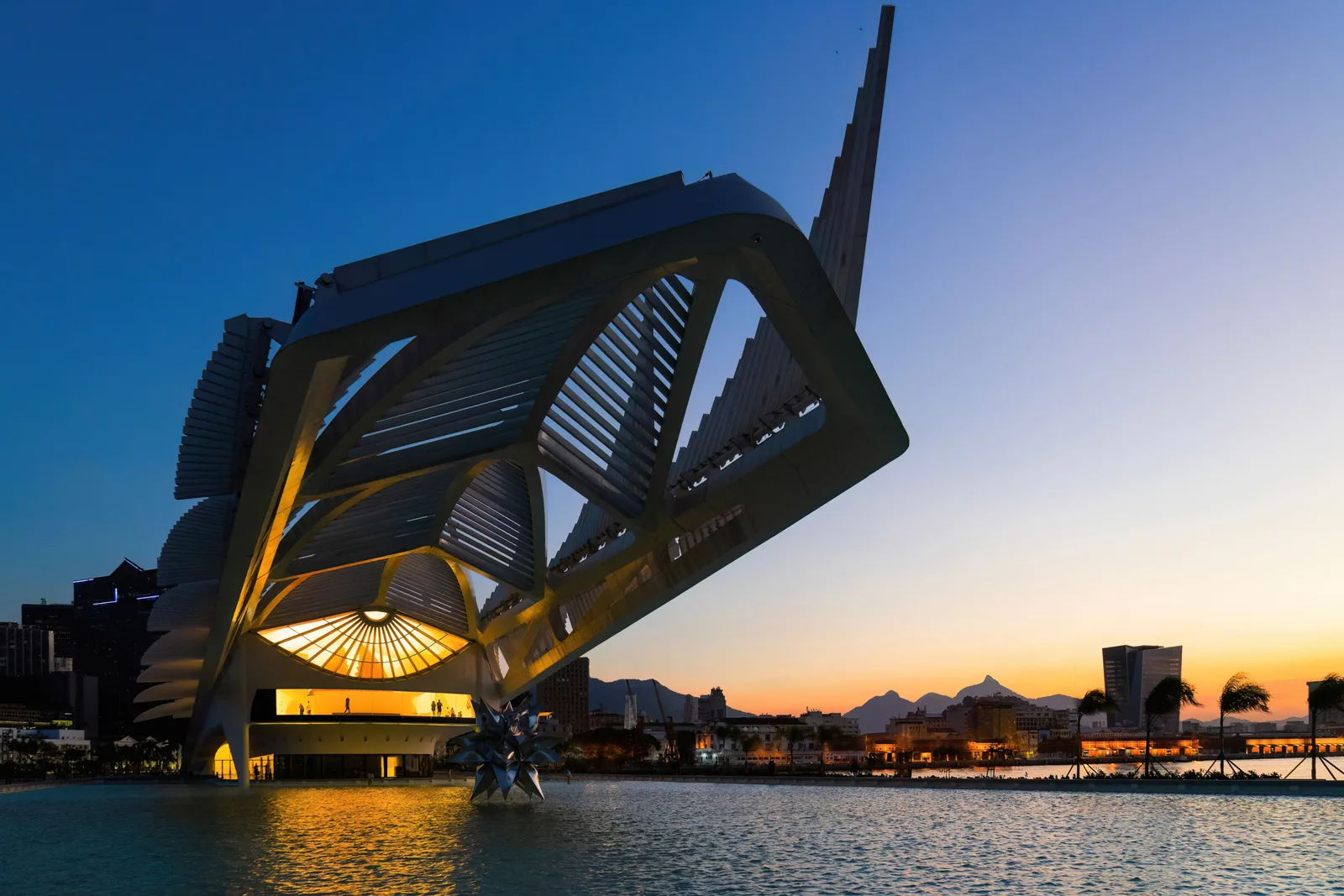
  • The Museum of Tomorrow at sunset, its long cantilevered roof reaching out over the water of the old port

    Praça Mauá · 2 hours

    Museum of Tomorrow

    Santiago Calatrava’s science museum on a pier in the redeveloped port district, shaped like something between a ship and a skeleton and cooled by water pumped from the bay. The exhibits deal with climate, population and sustainability, and they are strong on presentation rather than on objects — this is a museum of ideas. Closed Tuesdays.

  • The Maracanã at night from high in the stands, the floodlit pitch below and every tier packed with supporters

    Zona Norte · 2 hours, or an evening

    Maracanã

    The stadium that held a crowd of nearly 200,000 for the 1950 World Cup final and still holds 78,000. The tour walks you through the tunnel and onto the edge of the pitch, but a league match is the better experience by a wide margin — Flamengo draw the biggest crowds in the Americas and the noise is the point. Go with a guide or a group, and take the metro.

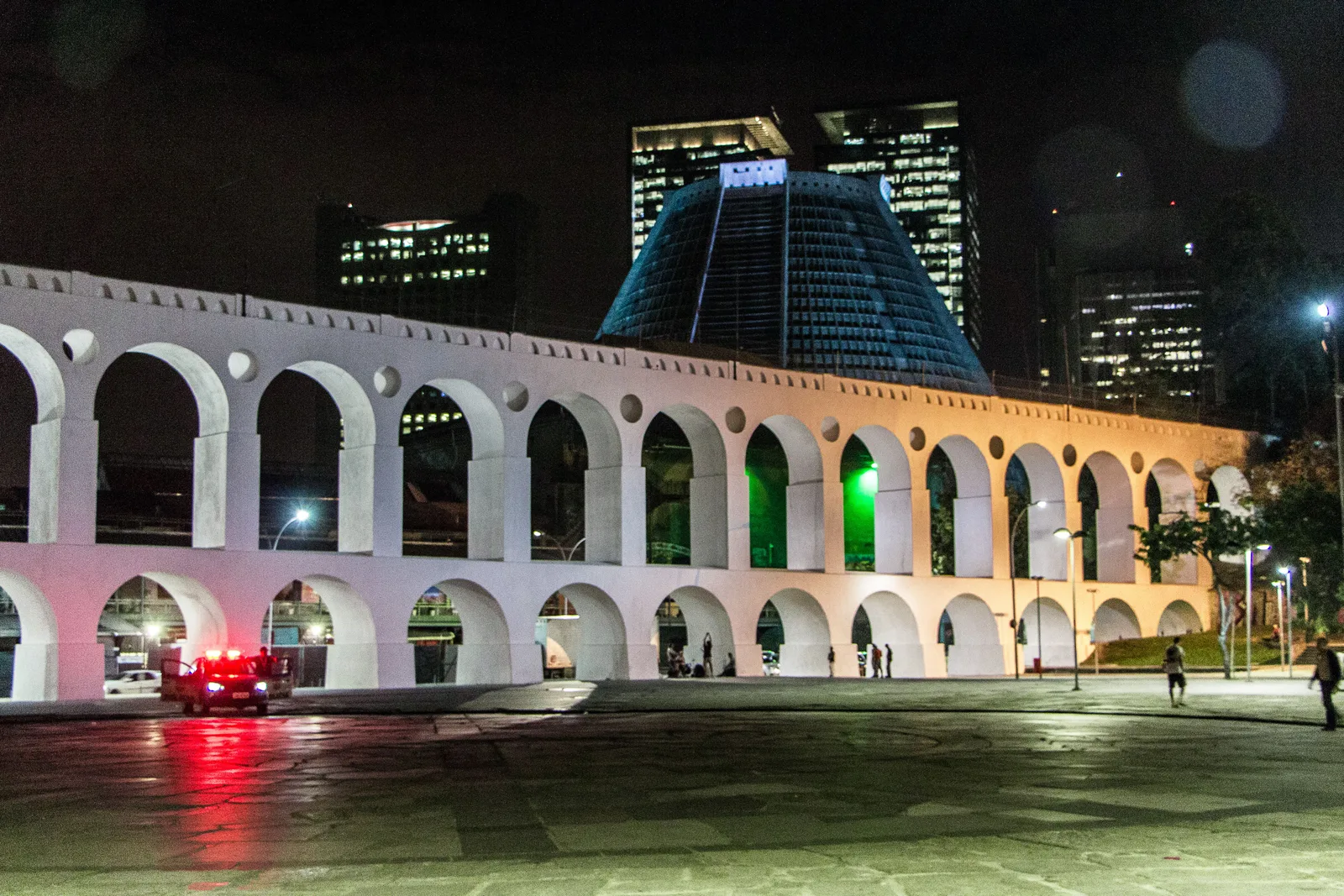
  • The white arches of the Lapa aqueduct floodlit at night, traffic passing beneath and the lit towers of Centro behind

    Lapa · an evening

    A night in Lapa

    The arches of an eighteenth-century aqueduct, and underneath and around them the loudest concentration of live music in Rio: samba clubs, forró halls, gafieiras and street crowds, at their peak on Friday and Saturday. It is a genuinely great night out and it is also the part of the city that most rewards caution — take a ride app both ways and carry as little as possible.

Museums

  • The Museum of Tomorrow at sunset, its long cantilevered roof reaching out over the water of the old port

    Praça Mauá · 2 hours

    Museum of Tomorrow

    Santiago Calatrava’s science museum on a pier in the redeveloped port district, shaped like something between a ship and a skeleton and cooled by water pumped from the bay. The exhibits deal with climate, population and sustainability, and they are strong on presentation rather than on objects — this is a museum of ideas. Closed Tuesdays.

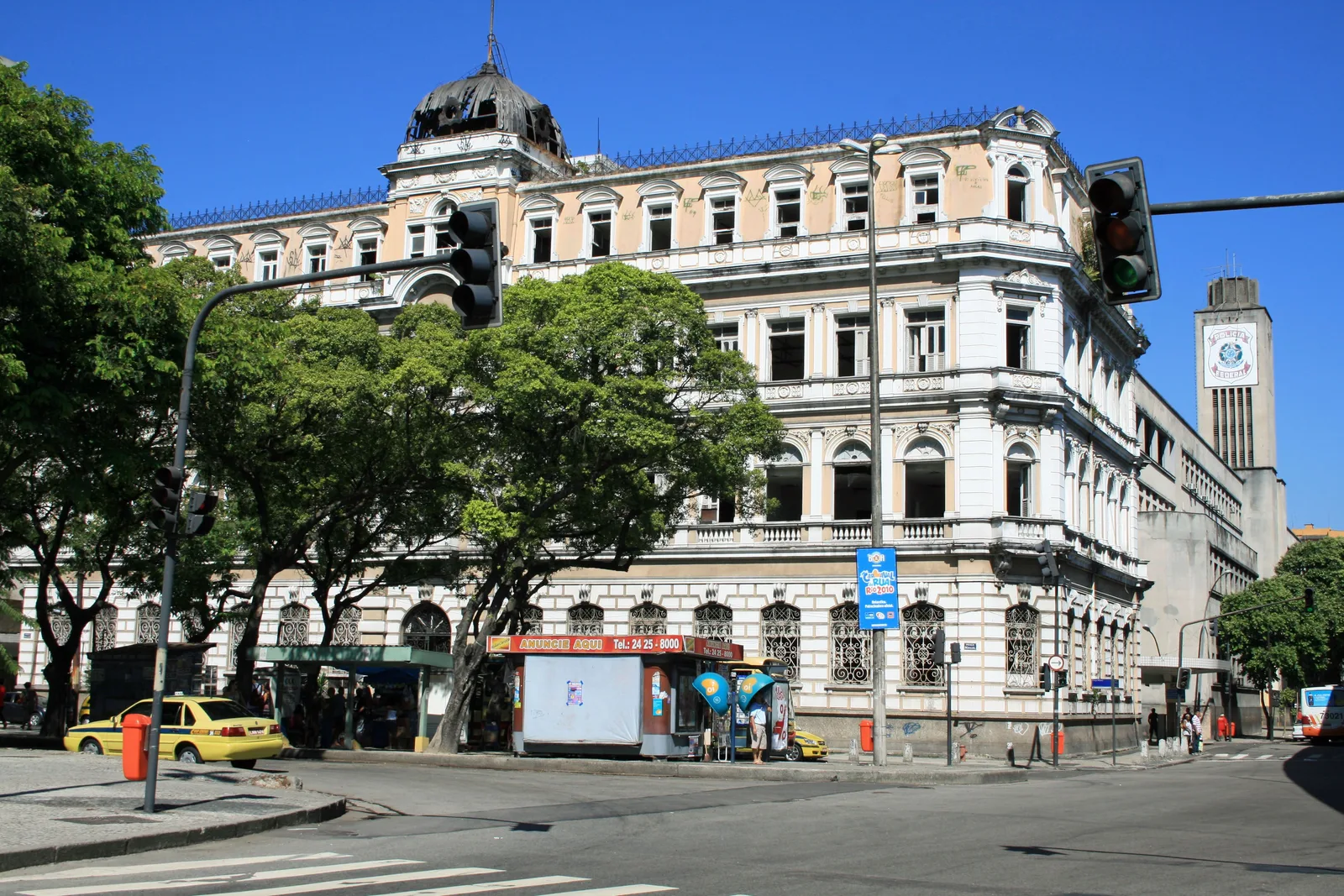
  • The Palacete Dom João VI on Praça Mauá, the early-twentieth-century half of the Museu de Arte do Rio

    Praça Mauá · 2 hours

    Museu de Arte do Rio

    Two buildings joined by a wave-shaped roof directly across the square from the Museum of Tomorrow: a 1910s palace and a modernist bus terminal, welded into one museum about Rio itself. The collection leans hard into the city’s own art and social history, and the top-floor terrace has the best view of the port. Free on Tuesdays.

  • The beaux-arts facade of the Museu Nacional de Belas Artes on Cinelândia square in central Rio

    Cinelândia · 2 hours

    Museu Nacional de Belas Artes

    Brazil’s national fine art collection, in a beaux-arts palace on Cinelândia built in 1908 as a deliberate echo of the Louvre. The strength is nineteenth-century Brazilian painting — vast historical canvases and the landscape painters who first took the country itself as a subject. It sits with the Municipal Theater and the National Library in one square, so it pairs naturally with a Centro walk.

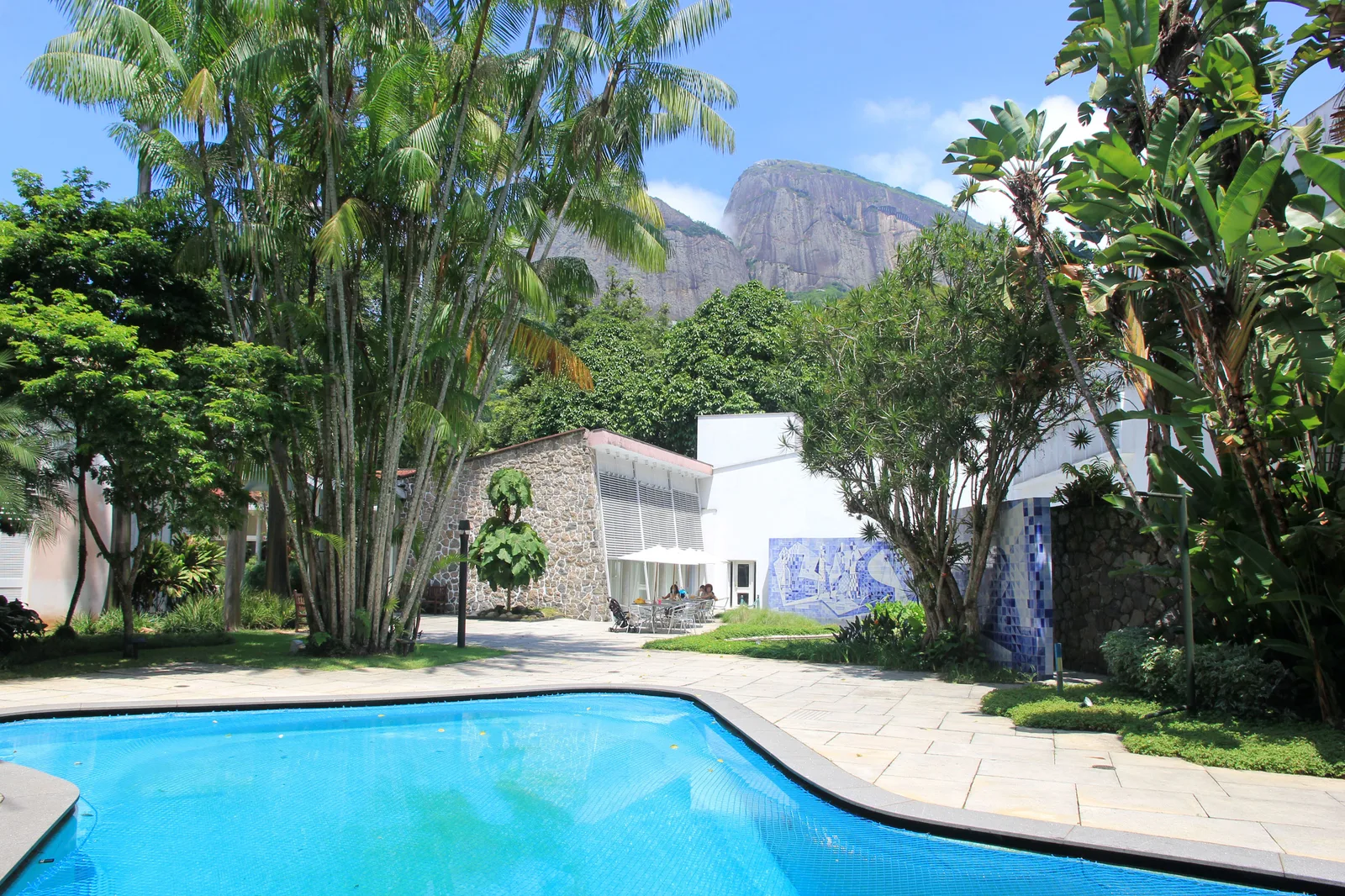
  • The Instituto Moreira Salles in Gávea: a low modernist house behind a long pool and planted garden, forested peaks rising behind

    Gávea · 2 hours

    Instituto Moreira Salles

    A modernist house in Gávea with gardens by Roberto Burle Marx, holding one of the most important photographic archives in Brazil — the nineteenth-century photographs of Rio in particular are extraordinary, and the exhibitions rotate. Quieter and further out than the Centro museums, and worth the trip for the building and garden alone.

Food & Nightlife

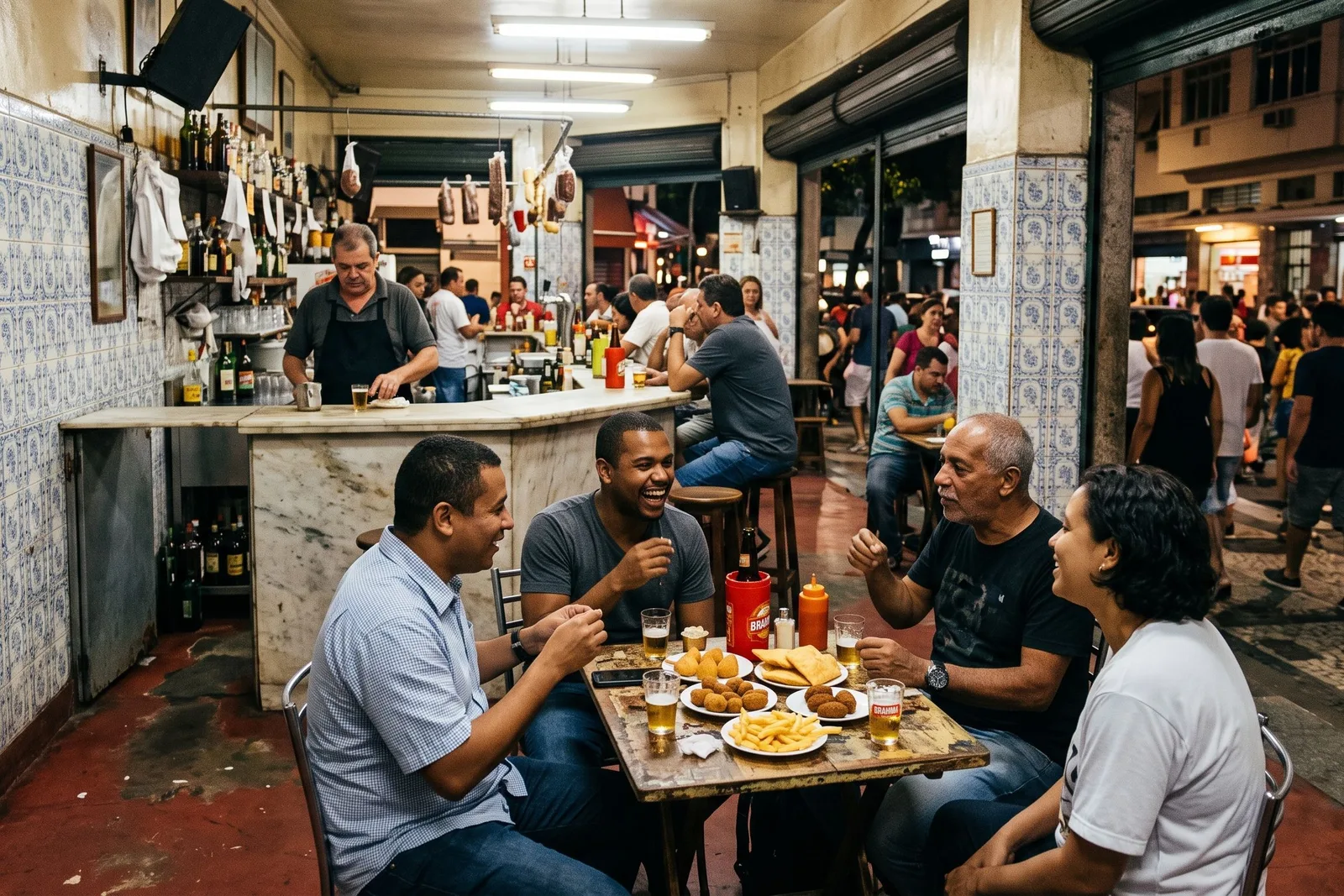
  • Friends around a small table in a tiled boteco, glasses of chopp and plates of fried snacks between them, the bar open onto a busy street

    Botafogo and Copacabana · 2 hours

    Eat at a boteco

    The boteco is the basic unit of carioca social life: a tiled, brightly lit, unpretentious bar serving very cold draft beer and small plates to share. Botafogo has the densest concentration and the most inventive kitchens; Copacabana has the old-school ones that have not changed in fifty years. Order a chopp and whatever is fried.

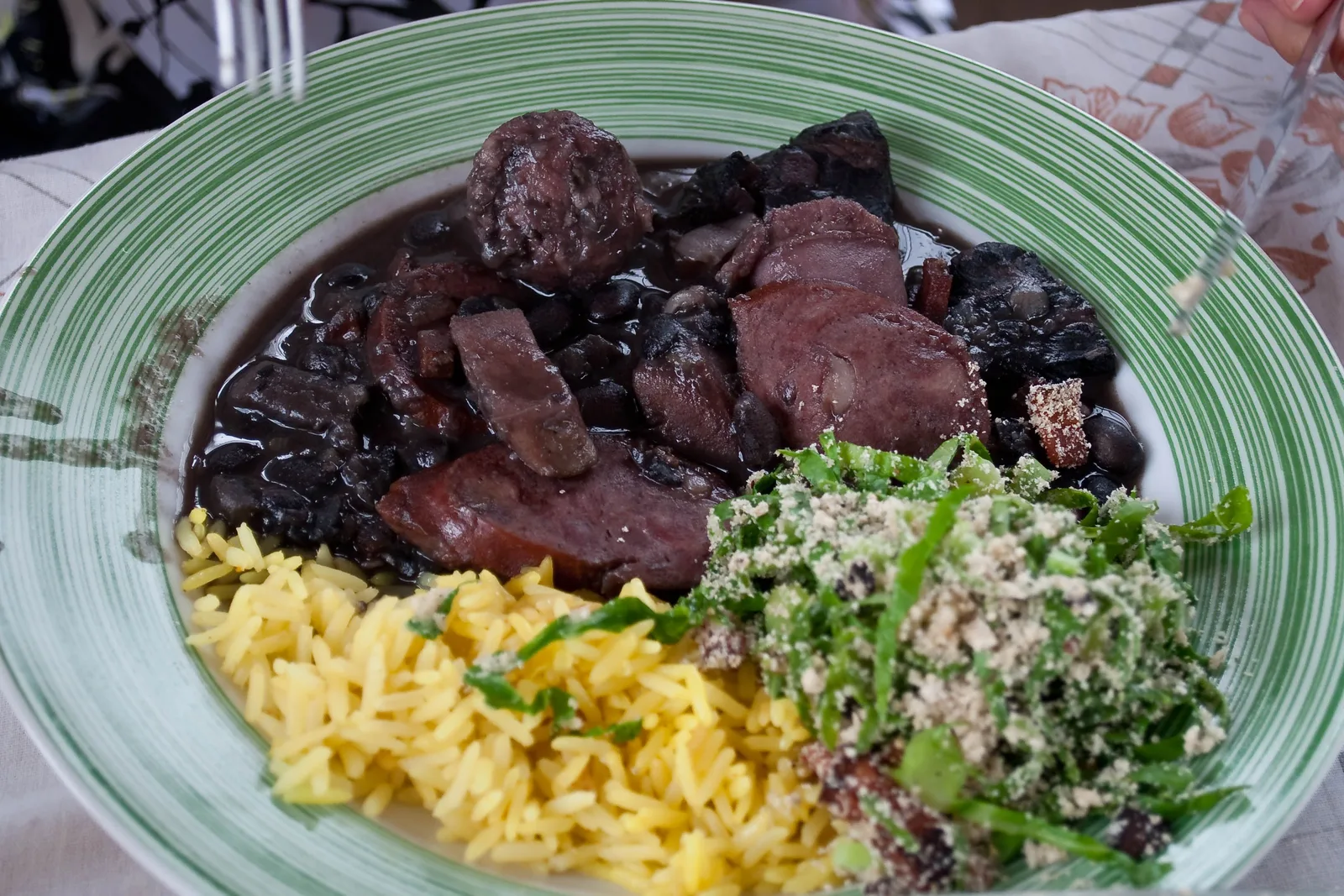
  • A plate of feijoada: black bean and pork stew alongside rice, farofa and finely shredded collard greens

    Citywide · long lunch

    Feijoada on a Saturday

    Black bean and pork stew served with rice, greens, orange and toasted cassava flour — the national dish, and traditionally a Saturday lunch that occupies the whole afternoon. Plenty of restaurants serve it daily for visitors, but Saturday is when cariocas eat it, and it is a genuinely heavy meal. Plan nothing afterwards.

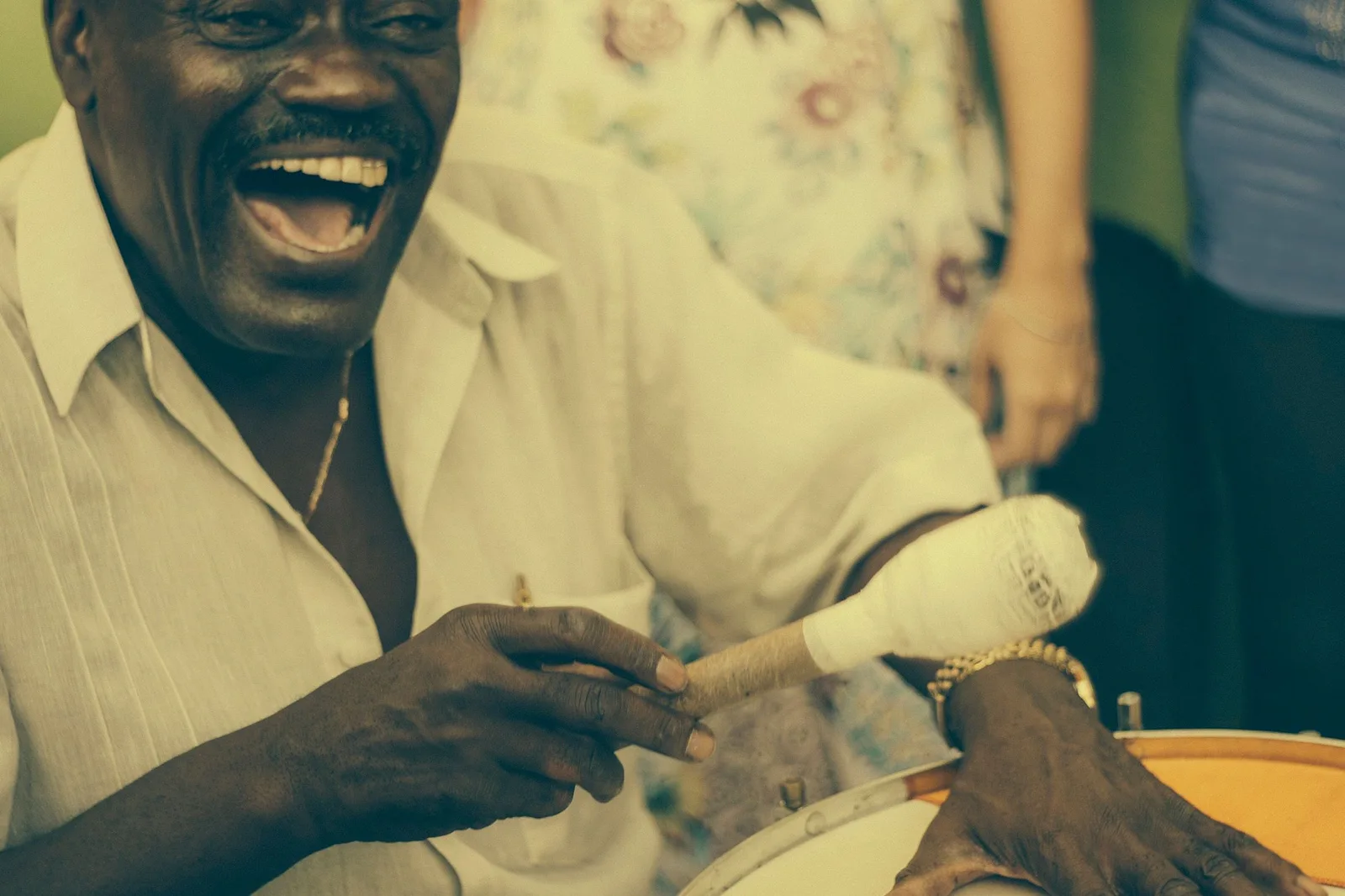
  • A samba musician playing a hand drum at close range, mid-song and laughing

    Centro · an evening

    Samba at Pedra do Sal

    A rock outcrop in the old port district where enslaved and freed Africans settled, and where samba as a form has some of its deepest roots. On Monday and Friday evenings a roda de samba forms in the street around it — musicians in a circle, no stage, everyone standing. Free, crowded and entirely local. Go with someone, carry nothing, and leave with the crowd.

  • The white arches of the Lapa aqueduct floodlit at night, traffic passing beneath and the lit towers of Centro behind

    Lapa · an evening

    A night in Lapa

    The arches of an eighteenth-century aqueduct, and underneath and around them the loudest concentration of live music in Rio: samba clubs, forró halls, gafieiras and street crowds, at their peak on Friday and Saturday. It is a genuinely great night out and it is also the part of the city that most rewards caution — take a ride app both ways and carry as little as possible.

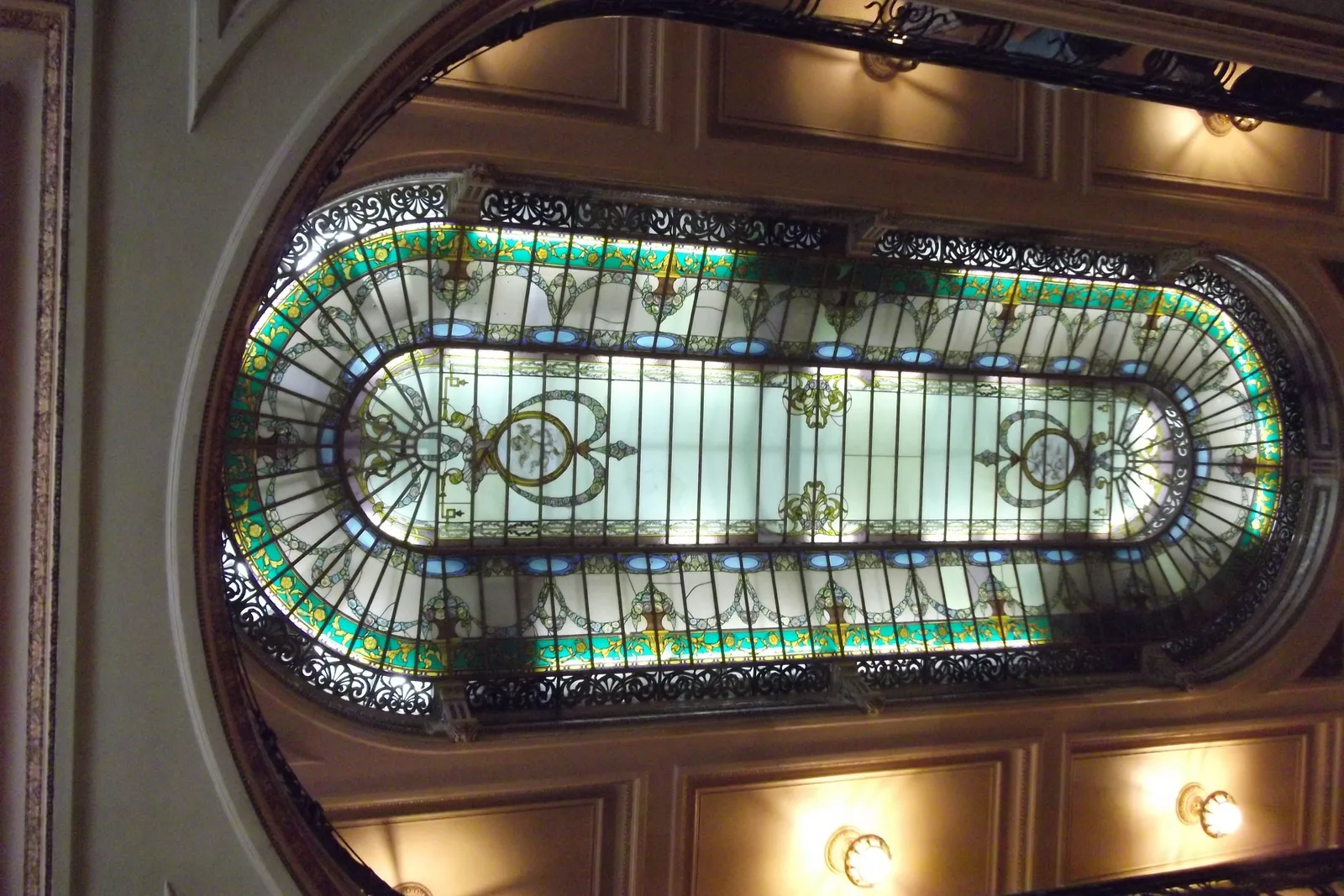
  • The stained-glass skylight of Confeitaria Colombo seen from the café floor below, set into its ornate painted ceiling

    Centro · 1 hour

    Confeitaria Colombo

    A belle-époque tea room opened in 1894, with Belgian mirrors, jacaranda counters and a stained-glass skylight, more or less unaltered. The pastries are good rather than remarkable; the room is the reason to go. It sits in the middle of a Centro walk and is at its best on a weekday morning when the office crowd is in.

Where to stay

The neighborhood decides the trip.

Almost everything a first-time visitor wants is in the Zona Sul or just north of it, and the four zones below are within about twenty minutes of each other. Which one you pick changes the character of the trip far more than which hotel you book does.

Drag and zoom to explore.

Tap an area to open it and see it on the map

  • Our pick

    Best for: The best balance of everything

    The most comfortable base in the city: excellent beach, the best restaurants, walkable at night, metro at both ends, and consistently the calmest of the beach neighborhoods. You pay for it — this is the most expensive corner of Rio — but for a first visit it is the one we would give a friend.

    • Ipanema
    • Leblon
    • Jardim Botânico
    • Lagoa
  • Best for: Energy, and more room to choose

    Louder, denser and more mixed than Ipanema, with far more hotels at every price and a promenade that never really closes. The beach is enormous and the metro runs its length. The trade is that it is busier and scruffier, and the back streets deserve more attention after dark.

    • Copacabana
    • Arpoador
    • Leme
  • Best for: Value, and eating like a local

    Around the bay rather than on the ocean, so no beach worth swimming at — and in exchange, noticeably cheaper rooms, the best bar and restaurant scene in the city, and a residential feel the beach strip does not have. Urca, tucked under Sugarloaf, is quieter still.

    • Botafogo
    • Urca
    • Flamengo
    • Humaitá
  • Best for: Character over convenience

    Cobbled hillside streets, guesthouses in old mansions, views over the whole city, and the nightlife of Lapa at the bottom of the hill. It is the most atmospheric place to stay in Rio and the least practical: no beach, no metro at the top, steep walks, and a neighborhood that needs more care at night than the Zona Sul does.

    • Santa Teresa
    • Lapa
    • Centro
    • Glória
    • Catete

A working plan

Five days, one focus a day.

Built around the city’s geography and its weather — the two days that need a clear sky come early, so there is room to swap them if the cloud sits on the peaks.

  1. 01
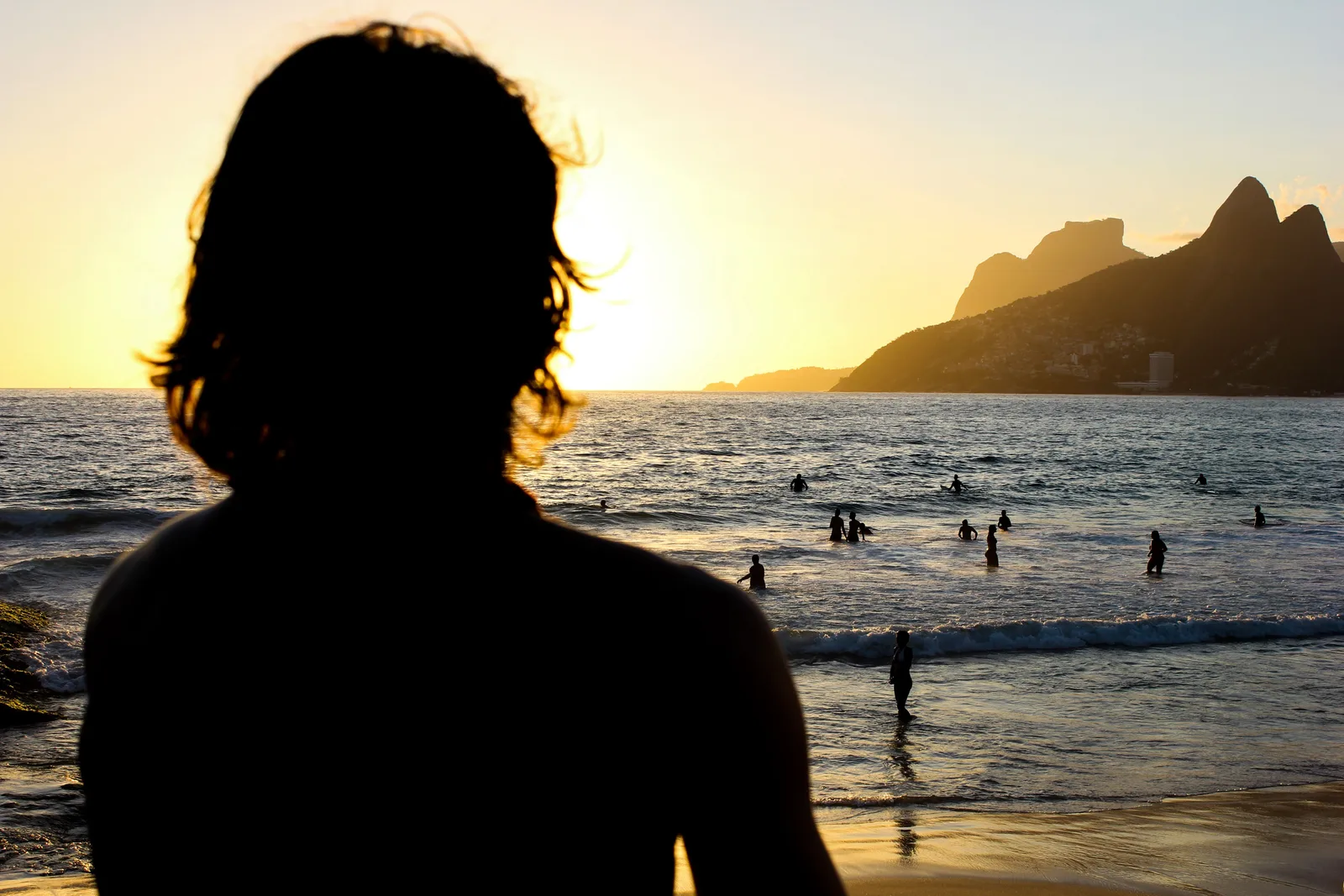
    A figure silhouetted against the sunset at Arpoador, swimmers still in the water and the Dois Irmãos peaks dark at the end of the beach

    Ipanema & Arpoador

    Land, and learn the beach

    Drop your bags and go straight to the sand. Learn how the posts and the vendors work, walk the promenade to Arpoador, and be on the rock for the sunset applause.

  2. 02
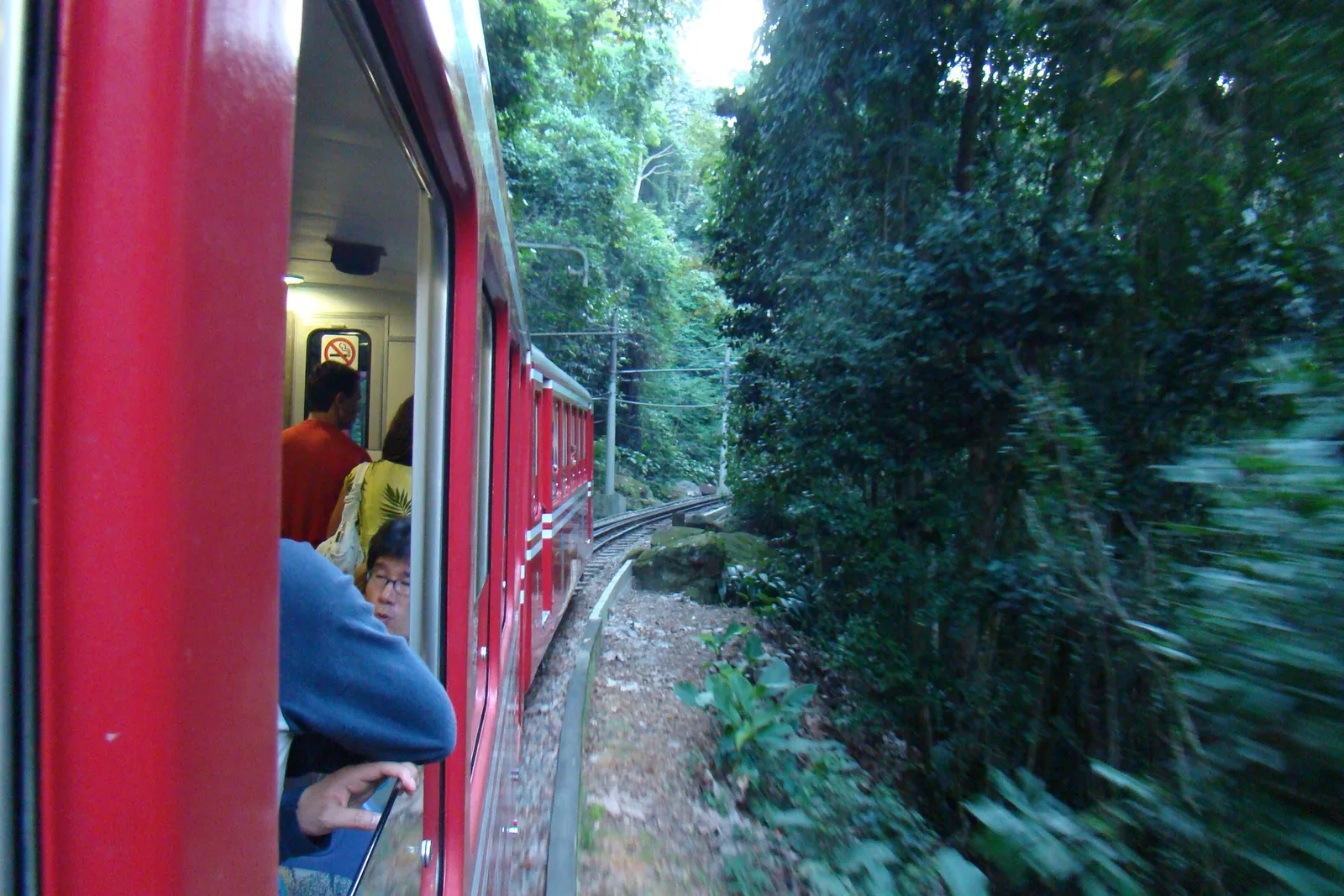
    The red Corcovado cog train climbing through dense forest, passengers leaning out of the open windows

    Corcovado & Tijuca

    The statue, early

    Up Corcovado on the first train, before the cloud and the crowds. Come down through Tijuca for the Vista Chinesa lookout, and finish in the courtyard at Parque Lage.

  3. 03
    Dusk from high above Rio, the lights of the shoreline coming on below a dark headland

    Urca & Sugarloaf

    The bay, and the best sunset

    A slow morning at Praia Vermelha and the Pista Cláudio Coutinho trail under the cliffs, then the cable car up Sugarloaf timed to land you at the top for last light.

  4. 04
    A busy street below Santa Teresa, its walls covered in murals, with stalls and people filling the roadway

    Centro, Lapa & Santa Teresa

    Old city, tiles and samba

    Centro on foot — Colombo, the Real Gabinete, the port museums — then the tram up to Santa Teresa, down the Escadaria Selarón, and into Lapa for the night.

  5. 05
    A tandem hang glider banking over São Conrado, the wing filling the top of the frame and the beach and city far below

    São Conrado & Vidigal

    Fly, or walk up something

    The flexible day. Hang glide off Pedra Bonita onto the beach at São Conrado if the wind allows, or climb Dois Irmãos for the view back along the beaches instead.

This is a starting shape, not a fixed departure — we rearrange it around your dates. Have it built for you

Timing

Every month works. They are not the same trip.

Rio works in every month of the year, which is why almost the whole strip below is green. The real question is which Rio you want: the dry, clear winter made for the viewpoints and the hikes, or the hot, crowded summer that owns the beach and both of the biggest nights on the calendar.

How busy and how hot each month is in Rio de Janeiro. Choose a month for its average air and sea temperatures and what the city is like then.

January

Trade-offs
Air
24–32°C 75–90°F
Sea
25°C 77°F
UV
10 Very high
Rain
11 days 137 mm / 5.4 in

Peak summer. Hot, humid, the wettest month, and the beaches at their busiest.
February

Best
Air
24–32°C 75–90°F
Sea
26°C 79°F
UV
11 Extreme
Rain
7 days 130 mm / 5.1 in

Hot and wet, and usually Carnaval. The warmest sea of the year.

March

Good
Air
24–31°C 75–88°F
Sea
26°C 79°F
UV
9 Very high
Rain
8 days 136 mm / 5.4 in

Still summer-warm and wet, but the holiday crowds and prices ease off.

April

Good
Air
23–30°C 73–86°F
Sea
25°C 77°F
UV
7 High
Rain
9 days 95 mm / 3.7 in

The rain drops away and the humidity lifts. Comfortable, and much quieter.

May

Good
Air
21–28°C 70–82°F
Sea
23°C 73°F
UV
5 Moderate
Rain
6 days 70 mm / 2.8 in

Warm, dry and clear. The start of the run of good weather for sightseeing.

June

Good
Air
19–27°C 66–81°F
Sea
22°C 72°F
UV
5 Moderate
Rain
6 days 43 mm / 1.7 in

Mild days, and a sea still warm enough to swim in.

July

Best
Air
19–26°C 66–79°F
Sea
22°C 72°F
UV
4 Moderate
Rain
4 days 42 mm / 1.7 in

The pick: the driest month at 42 mm across four wet days, and the coolest. Brazilian winter holidays fill the second half.

August

Good
Air
19–27°C 66–81°F
Sea
21°C 70°F
UV
6 High
Rain
5 days 45 mm / 1.8 in

A hair behind July at 45 mm across five wet days, with the coolest sea. A strong month for the big hikes.

September

Good
Air
20–27°C 68–81°F
Sea
22°C 72°F
UV
7 High
Rain
7 days 54 mm / 2.1 in

Warming up with a little more rain, and the samba schools begin rehearsing.

October

Good
Air
21–28°C 70–82°F
Sea
23°C 73°F
UV
8 Very high
Rain
9 days 87 mm / 3.4 in

Warm, greener, and the showers starting to build back toward summer.

November

Good
Air
22–29°C 72–84°F
Sea
24°C 75°F
UV
9 Very high
Rain
10 days 98 mm / 3.9 in

Hot with real rain returning, and the last month before December prices.

December

Trade-offs
Air
23–30°C 73–86°F
Sea
25°C 77°F
UV
9 Very high
Rain
11 days 134 mm / 5.3 in

Quiet and hot until about the 20th, then Réveillon takes over the whole city.

  • Best The one or two peak months
  • Good A real recommendation
  • Trade-offs Workable, with a catch
See Rio de Janeiro on the Brazil calendar

UV is the monthly average of the daily peak, 2022 to 2025, calculated from Copernicus Atmosphere Monitoring Service data. Weather data by Open-Meteo.com, CC BY 4.0.

For the views

June–August

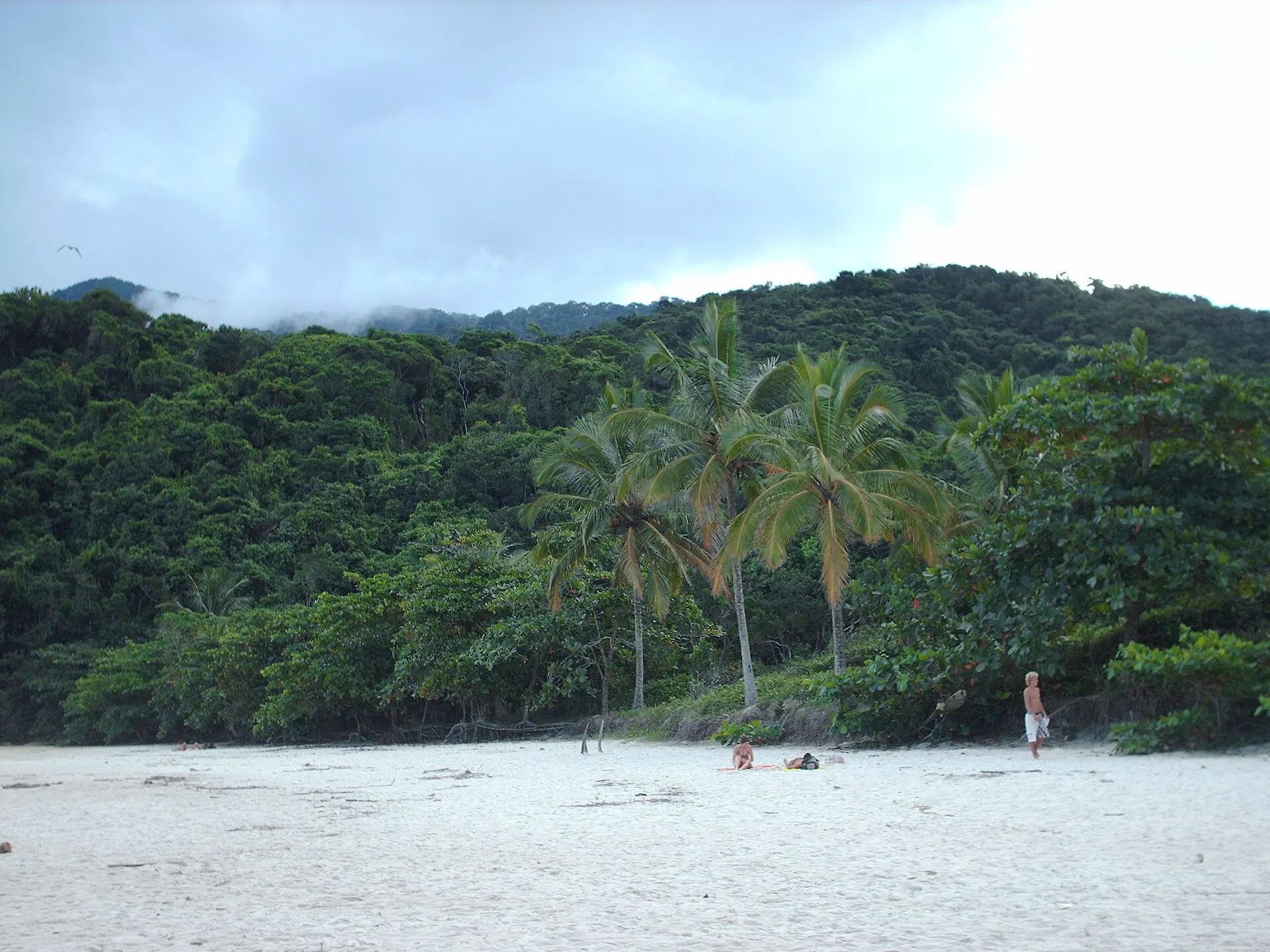
The driest, clearest stretch of the year, and July is the peak of it: 42 mm across four wet days, 189 hours of sun and the lowest humidity of the year. Mild days, and Corcovado and Sugarloaf without the summer haze sitting on them.
For the beach

December–March

Hot, wet and expensive, and the only time the city runs at full volume — the beaches at their fullest, Réveillon and Carnaval inside it.

Book far ahead for

Réveillon & Carnaval

Rooms run two to four times the rest of the year, multi-night minimums are normal, and the good places are gone six months out.

About the rain

Rio’s rain is concentrated and dramatic rather than constant. Summer brings around 135 mm a month across ten or eleven wet days, and most of it falls as violent late-afternoon thunderstorms that clear within a couple of hours — you plan around them rather than losing days to them. The heat is the harder part: 32 degrees with high humidity, and the city does not cool down much overnight.

Winter is genuinely dry. June averages 43 mm across six wet days, and the run from May to August is the most reliably sunny stretch of the year, with highs still in the mid-to-high twenties. The sea drops to about 21 degrees, which is swimmable but no longer warm. If you care more about hiking, viewpoints and photographs than about lying on the sand, this is the better half of the calendar.

The dates worth planning around

A wall of New Year’s Eve fireworks bursting over the bay, the lit waterfront below

Réveillon (New Year’s Eve)

December 31

Around two million people on Copacabana beach in white, fireworks fired from barges offshore, and offerings floated out to Iemanjá at midnight. It is one of the largest New Year gatherings anywhere. Accommodation goes six months ahead with multi-night minimums, the metro runs through the night, and the whole Zona Sul closes to traffic.

Ranks of samba school dancers in matching green and gold costumes, parading in formation at Carnaval

Carnaval

February or early March — the dates move with Easter

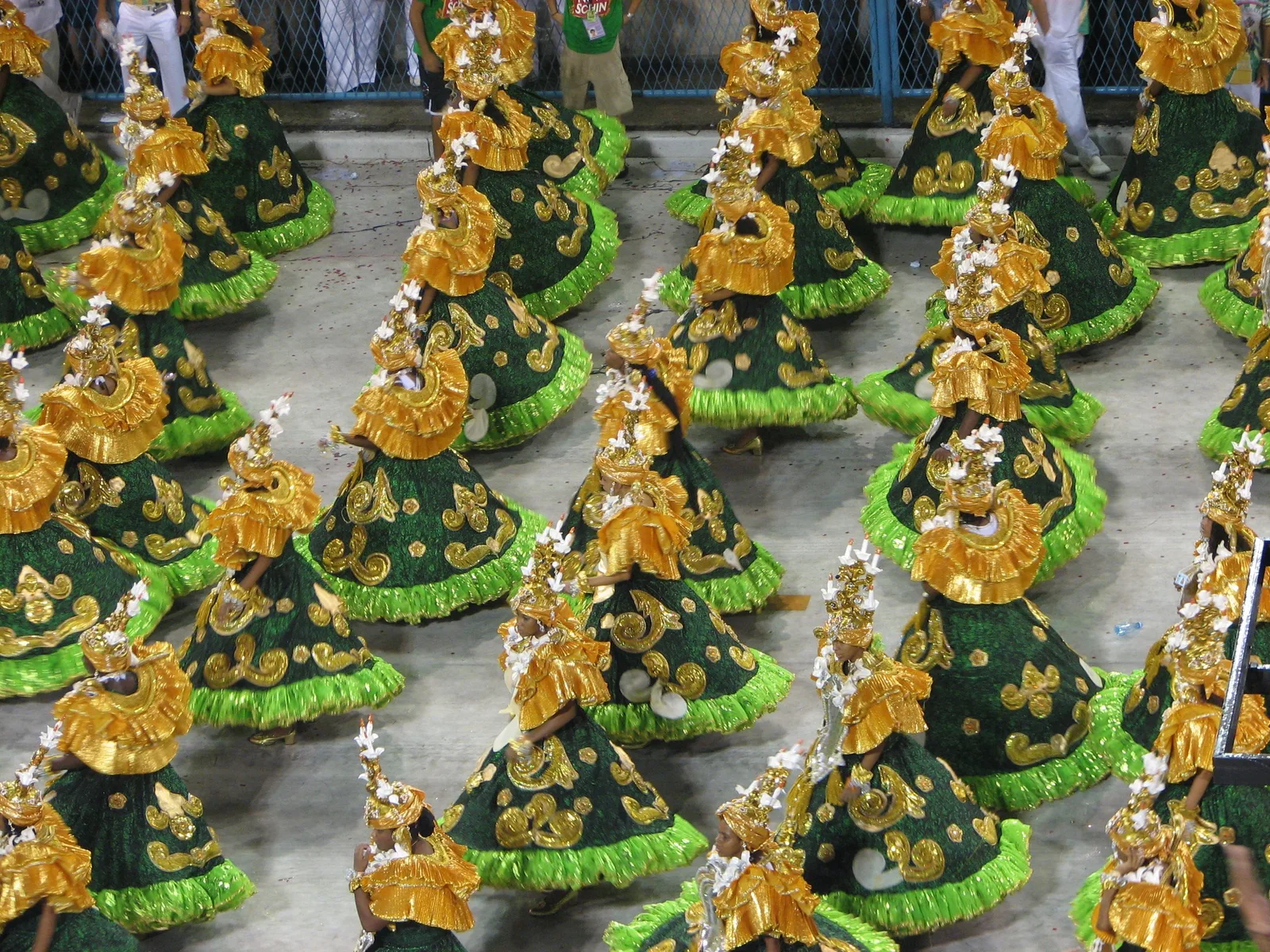
Two things at once. The Sambadrome parades are the televised competition between the big samba schools, ticketed and genuinely spectacular. The blocos are the free part: hundreds of street parties across the city over about two weeks, some of them a few hundred people and some of them a few hundred thousand. Most visitors come for the second and buy a ticket for one night of the first.

A samba school rehearsal in a packed hall, dancers in costume pressed in among the crowd

Samba school rehearsals

Roughly September to February

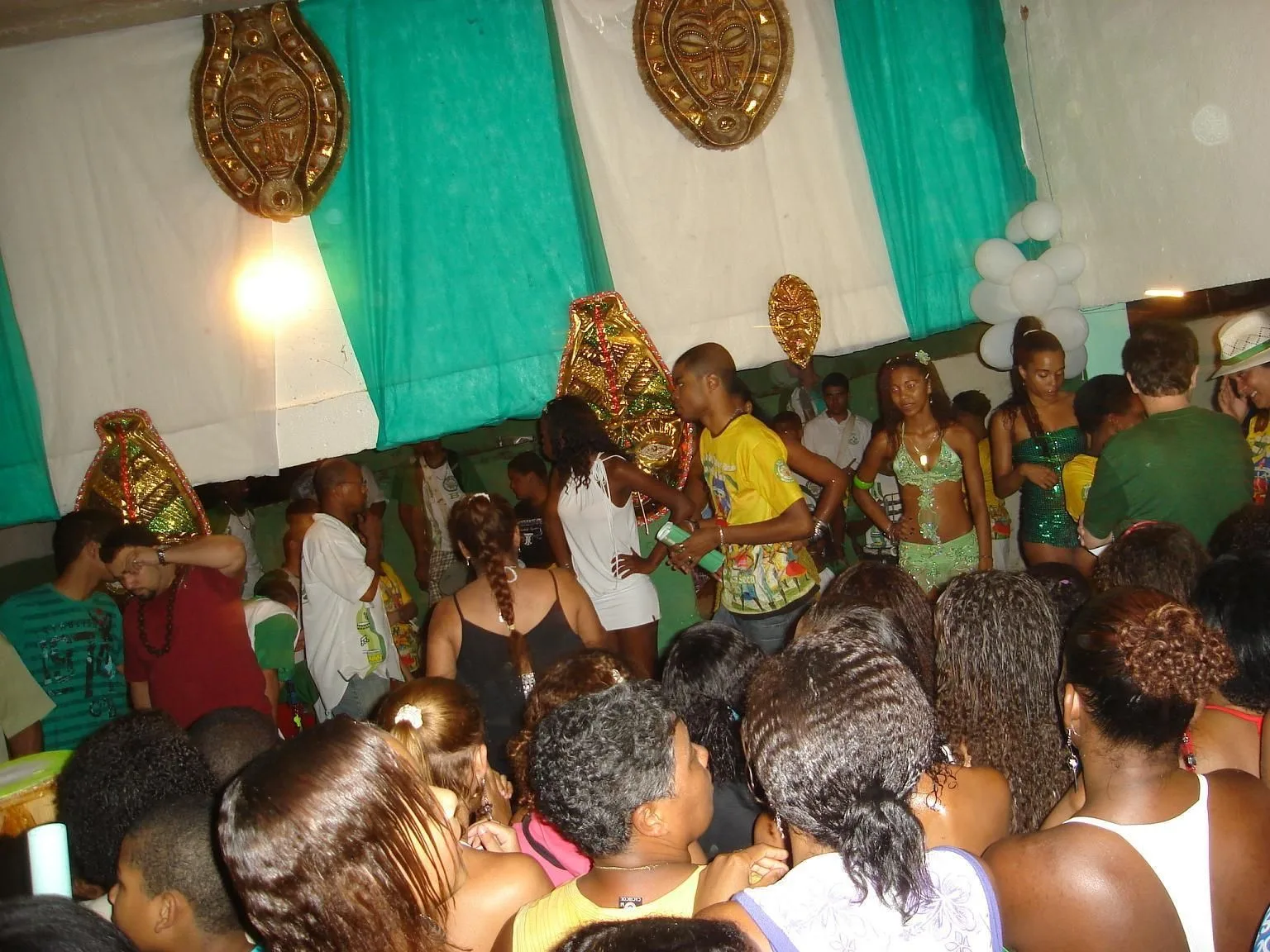
From September the big samba schools open their weekly rehearsals to the public at their own quadras, mostly in the Zona Norte. They are working sessions rather than shows — the bateria drilling the year’s song, hundreds of people dancing — and they are far cheaper, far less polished and far more interesting than the parade itself. Go with a guide or a local.

Good to know

Before you come

Is Rio de Janeiro safe for tourists? +

It is manageable, and it asks more of you than most places. The stretch where visitors actually spend their time — Copacabana, Ipanema, Leblon, Arpoador, Urca, Botafogo and the Lagoa — is heavily policed and busy, and the overwhelming majority of visits pass without any incident at all. The real risk is opportunistic theft rather than violence: phones snatched from hands, bags taken off the sand. So carry almost nothing, keep the phone out of sight on the street, use ride apps instead of walking between neighborhoods at night, treat Centro and Lapa as daytime places unless you are in a crowd, and do not go into a favela without a guide. Those precautions are not paranoia and they are not optional, but they are also not complicated, and the city on the other side of them is extraordinary.

How many days do I need in Rio? +

Five is the honest number, which is why the itinerary above is built that way. Rio has two mountains, four or five beaches, an old center and a rainforest, and two of those things need clear weather — with five days you have room to move a day when the cloud sits on Corcovado. Three days covers the statue, Sugarloaf and a beach if the sky cooperates, and nothing if it does not. A week lets you add the wild beaches west of the city and a proper day in Tijuca.

Where should I stay in Rio? +

Ipanema or Leblon for a first visit, if the budget allows: the best beach, the best restaurants, the calmest streets and a metro at either end. Copacabana is the value alternative with far more hotels to choose from and more noise and bustle in exchange. Botafogo is cheaper again, has the best bars in the city and no usable beach. Santa Teresa is the most beautiful place to stay and the least convenient. What almost nobody should do on a short first trip is stay in Barra da Tijuca — it is modern and comfortable and forty minutes of traffic from everything on this page.

When is the best time to visit Rio? +

There are two good answers and they point in opposite directions. July, inside a June-to-August winter, is the one to aim for: 42 mm of rain across four days, the driest month of the year and the fewest wet days in it. Winter in Rio means dry, mild days in the mid-twenties, thin crowds and the clearest air of the year — if you came for Corcovado, Sugarloaf and the hikes, this is the window, and the sea is still swimmable at about 21 degrees. December to March is the opposite trade: hot, humid, the wettest stretch, the most expensive, and the only time the city is at full volume, with the beaches packed and Réveillon and Carnaval inside it. April, May, September and October sit between the two and are nobody’s bad choice. What there isn’t is a month to avoid.

Should I visit a favela? +

Yes, with a reputable operator — and going that way is safe. Around a fifth of Rio lives in favelas, and the established ones on the visitor circuit have a working tourism economy: resident guides, moto-taxi drivers who run you up the hill, drone operators who will film you over the rooftops, bars and viewpoints and craft stalls. When you pay for those things the money goes directly to people who live there, which is a good deal better than looking at the hillside from a distance and wondering. Go with a recognized operator, ideally one led by residents, and it is a genuinely worthwhile half day and a straightforwardly safe one. What you should not do is wander in on your own, or turn up with a big camera and no guide — the safety here comes almost entirely from being with someone who belongs there and knows the day’s situation.

Keep going

Where Rio fits in a bigger trip.

Rio is the obvious place to start a Brazil trip, and the coast either side of it is the obvious place to carry on. These three pair naturally — two down the Costa Verde by road, and the country’s other great city an hour away by air.

Free · 29 pages

Free guide

Beginner's Guide to Brazil

A free 29-page guide to everything a first-time visitor should know before landing: visas, safety, money, getting around, where to go, and what to eat.

We'll email you a link to confirm your address. Click it and the guide opens right away.

See what's inside
Rio at dusk from high in the hills, forested ridges falling away toward a lit coastline under a burning sky

Skip the planning

See Rio without spending the week working it out.

Tell us your dates, your pace, and how much of the climbing and the nightlife you actually want. We will shape a private Rio itinerary around exactly that — the right neighborhood to base in, the weather-dependent days placed where they can be moved, and the tickets bought before they sell out.

  • One person, living in Brazil, replying to you directly
  • A reply within one business day — no call center, no bots
  • No cost to plan, and no obligation to book
  • Built around your dates, not a fixed departure