
Skip to content
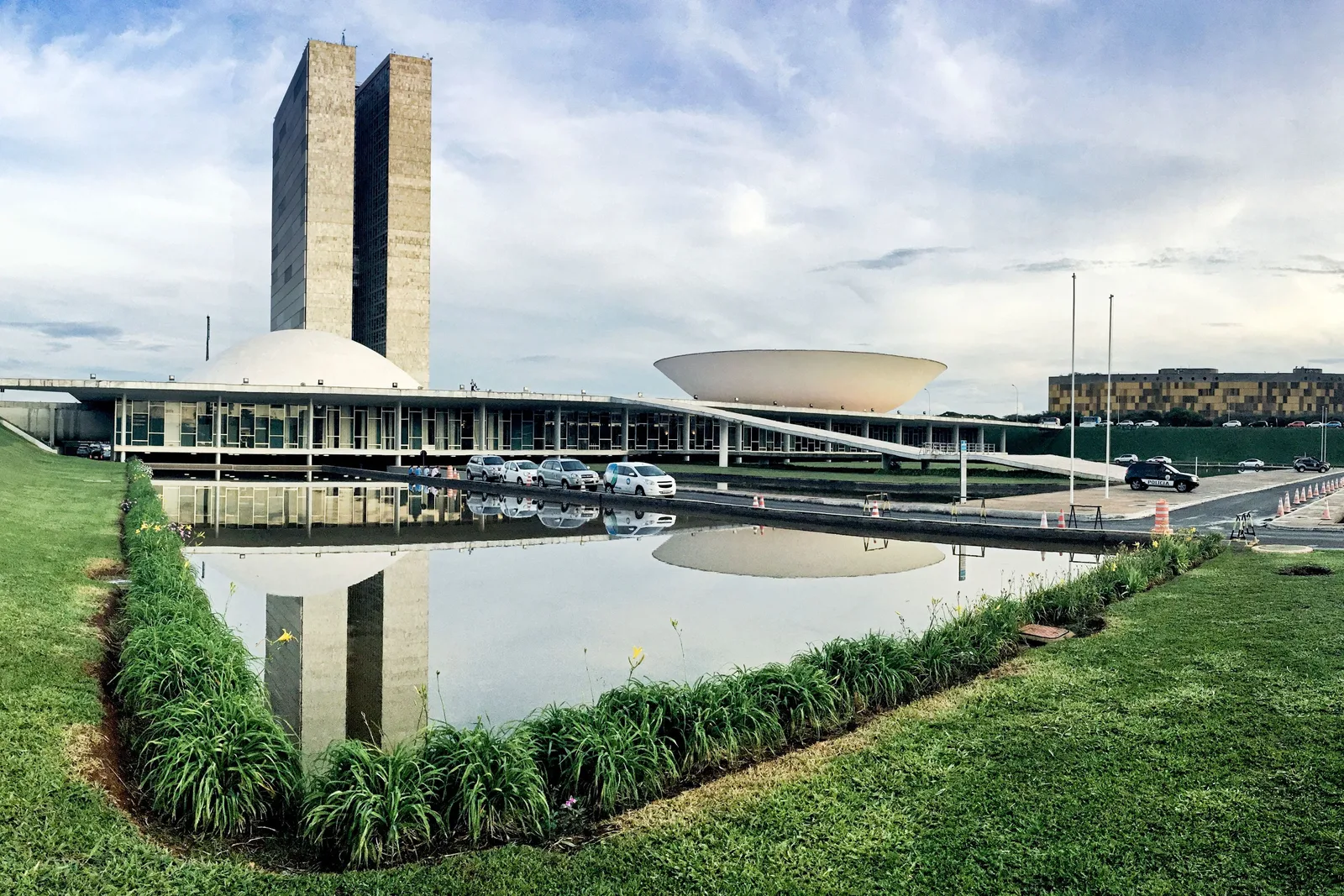
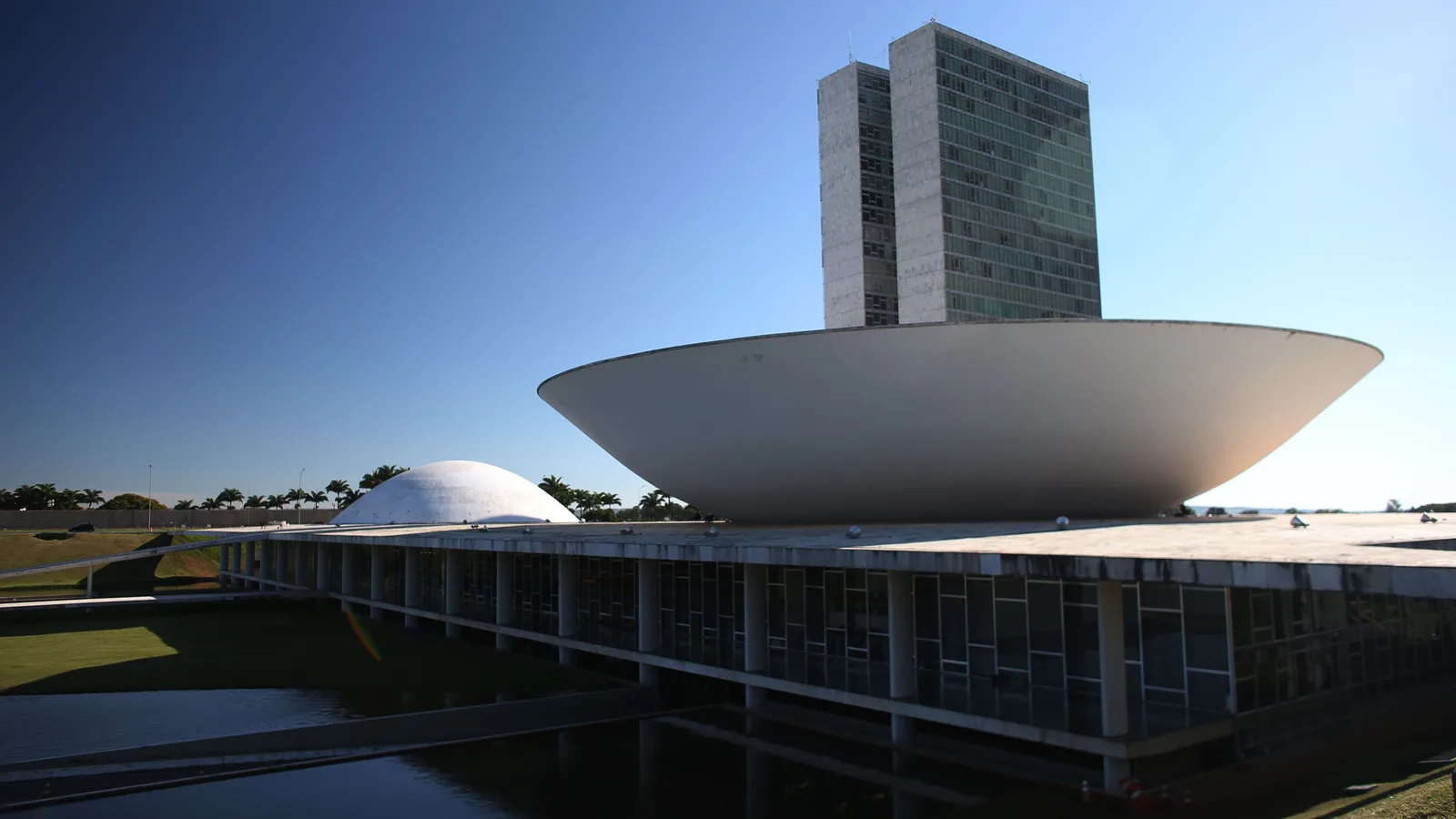
The National Congress in Brasília under a deep blue sky: the twin towers rising behind the shallow upturned bowl of the Chamber of Deputies, the low dome of the Senate at the left, and the long glazed base of the building above a dark reflecting pool

Central-West

Brasília

A capital drawn from scratch, and built in under four years.

Last checked October 2026

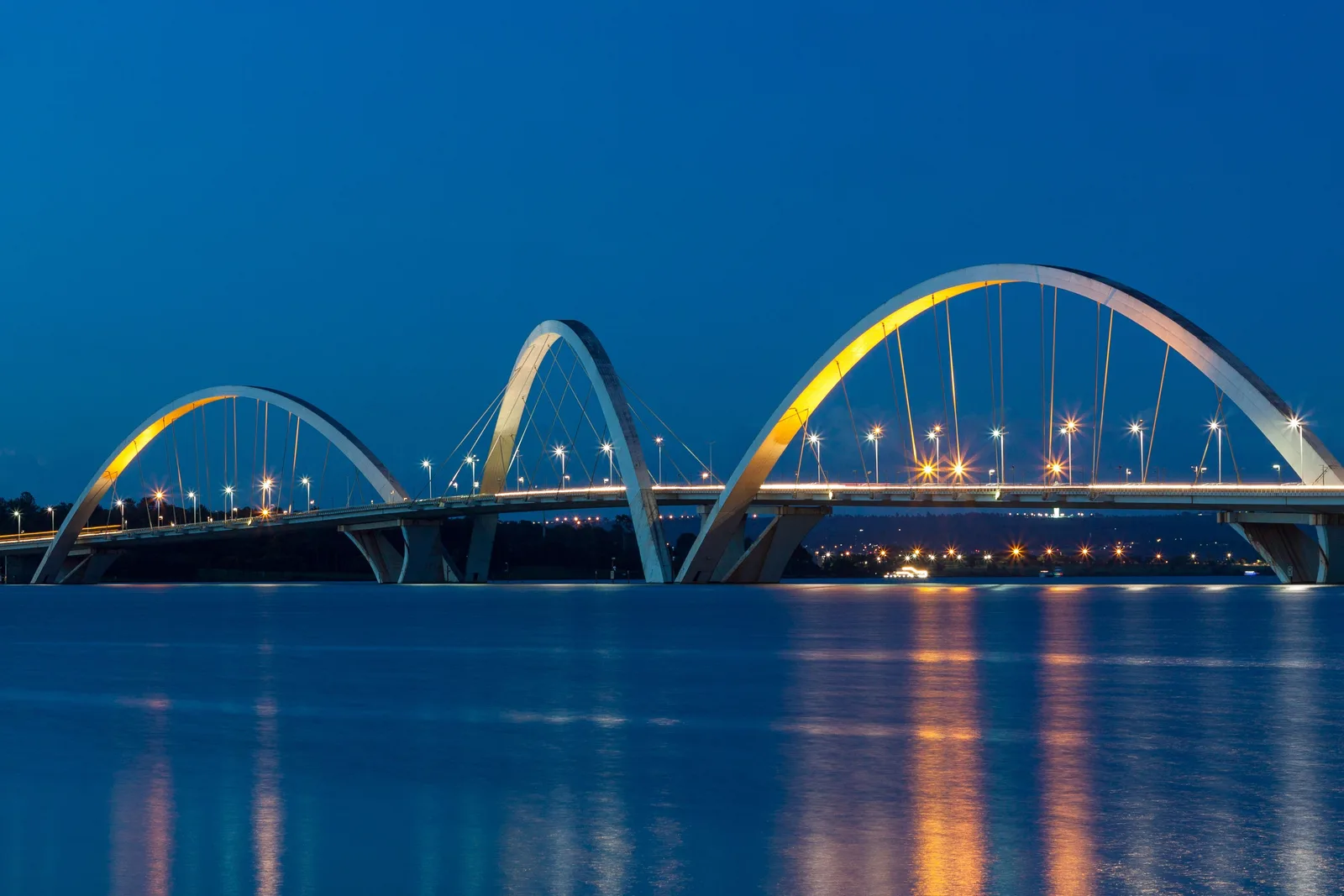
  • The Ponte JK at blue hour, its three white steel arches lit from below and reflected in the dark water of Lago Paranoá
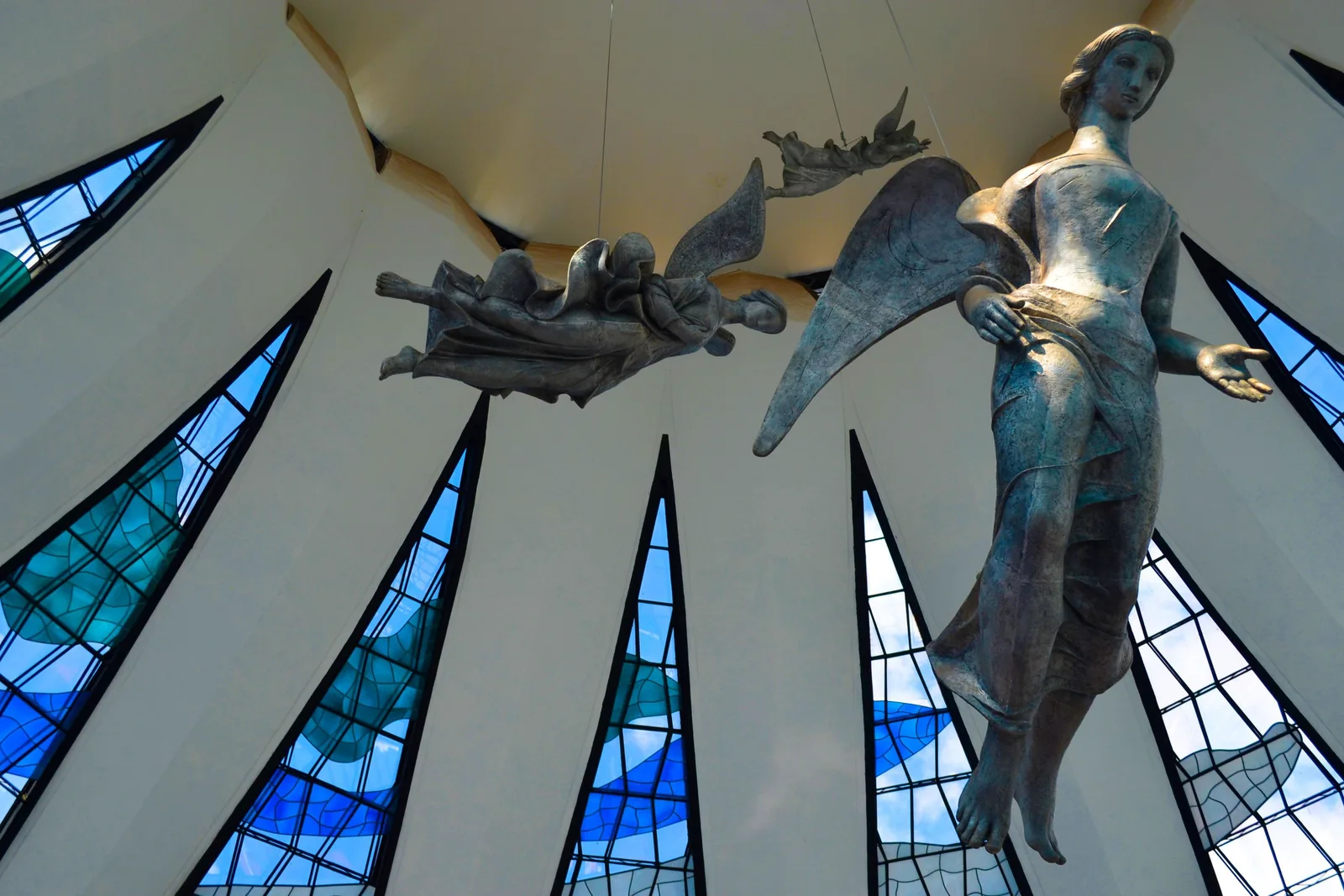
  • Alfredo Ceschiatti’s angels hanging on cables inside the Cathedral of Brasília, the white concrete ribs and Marianne Peretti’s blue and green stained glass behind them
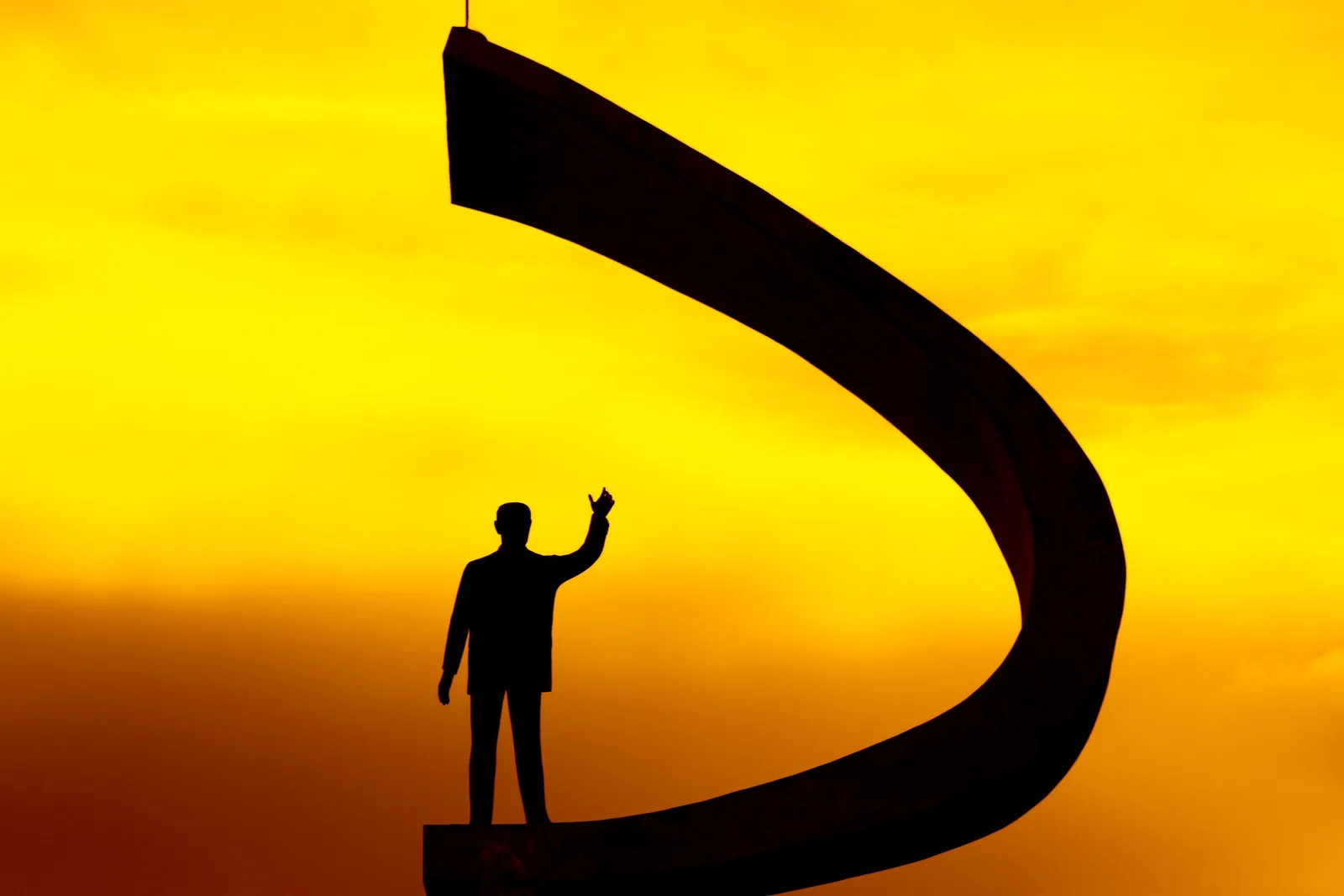
  • The statue of Juscelino Kubitschek on top of the Memorial JK, his arm raised, silhouetted inside the curved concrete crook of the tower against a vivid orange sky
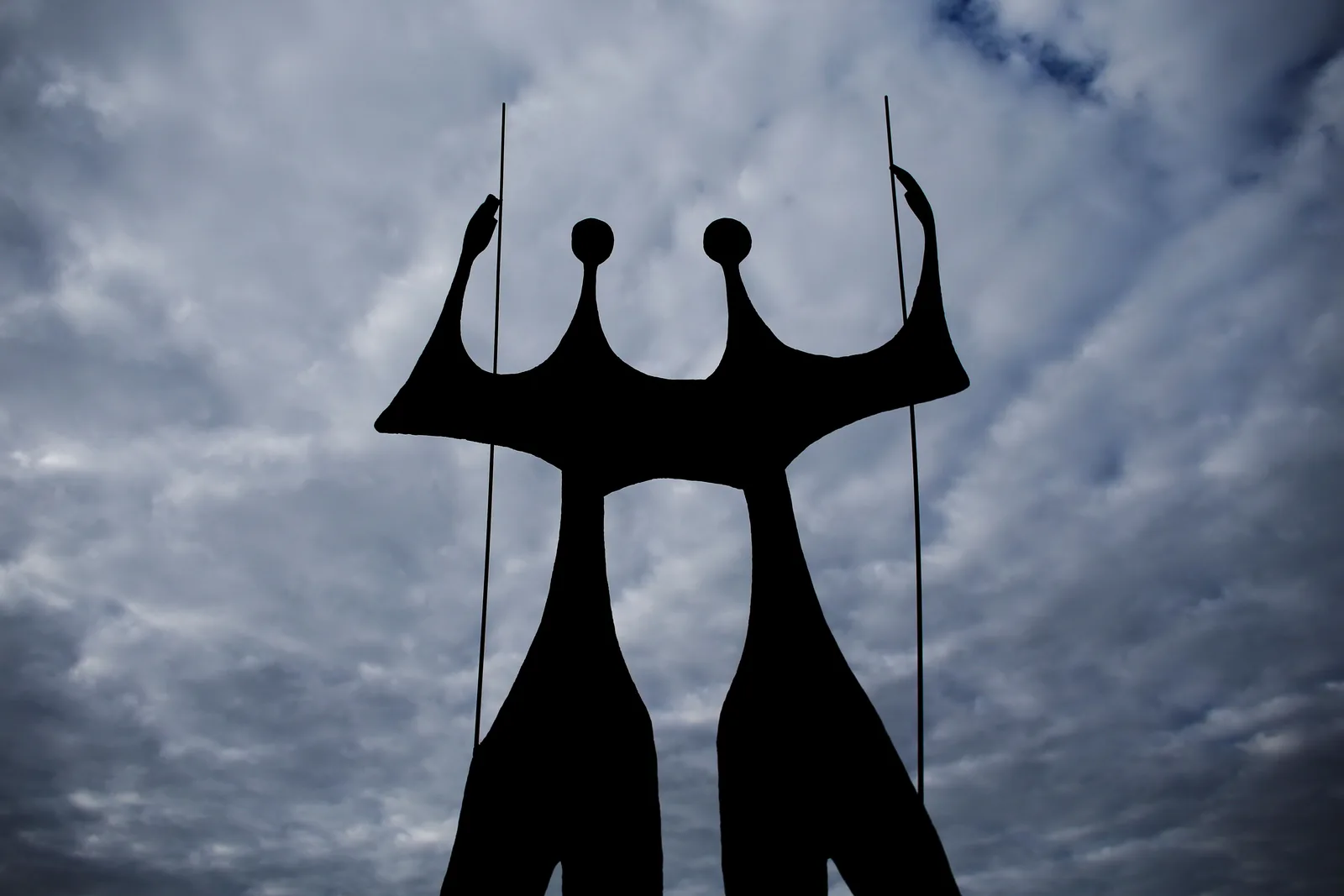
  • Bruno Giorgi’s bronze sculpture Os Guerreiros, known as Os Candangos, two tall elongated figures standing against a cloudy sky in the Praça dos Três Poderes
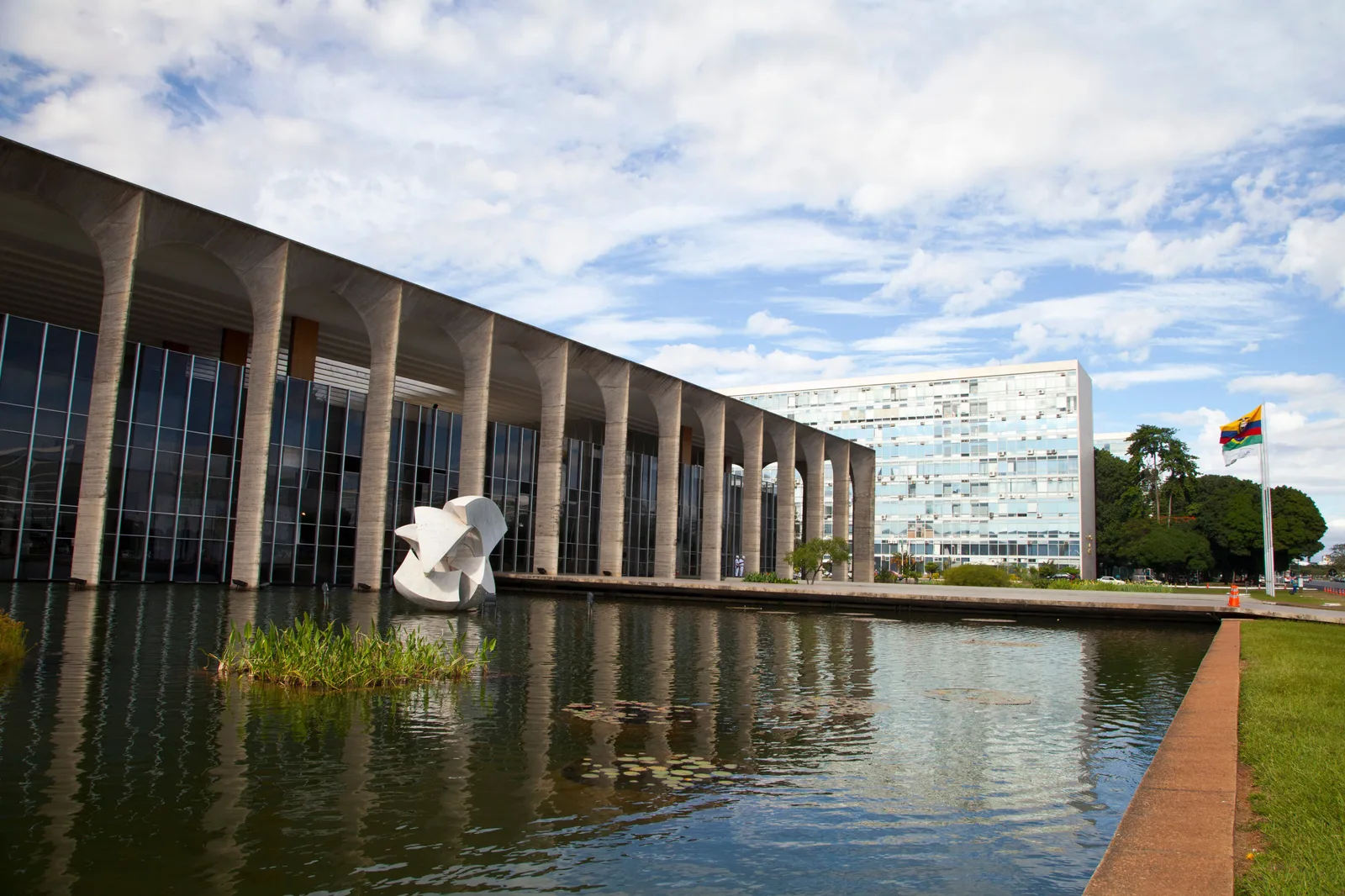
  • Bruno Giorgi’s white marble sculpture Meteoro standing in the reflecting pool of the Itamaraty Palace, the building’s tall concrete arches beside it
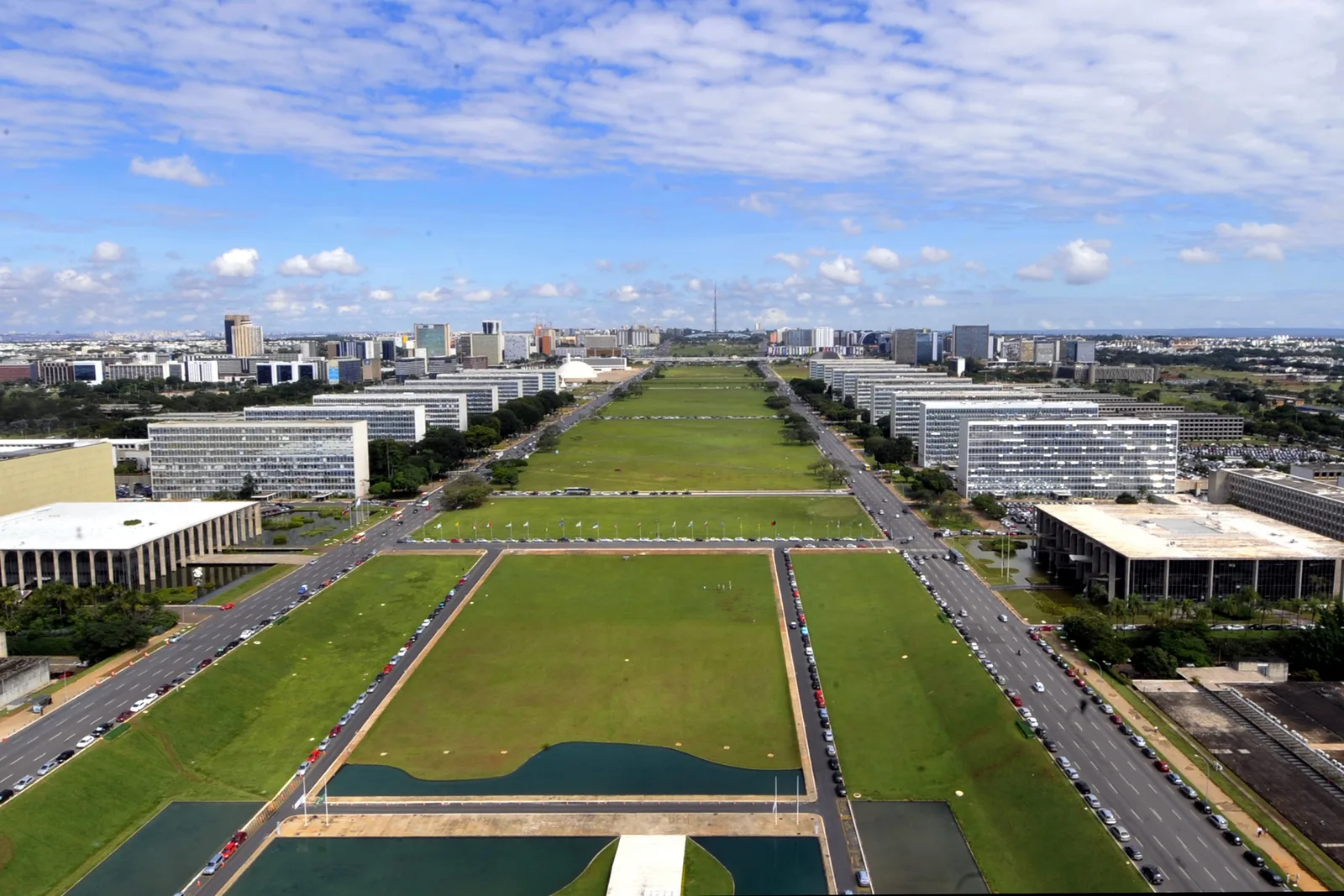
  • The Eixo Monumental from high above on a clear day: long green lawns and pools running between two rows of low government blocks, the city spreading to the horizon
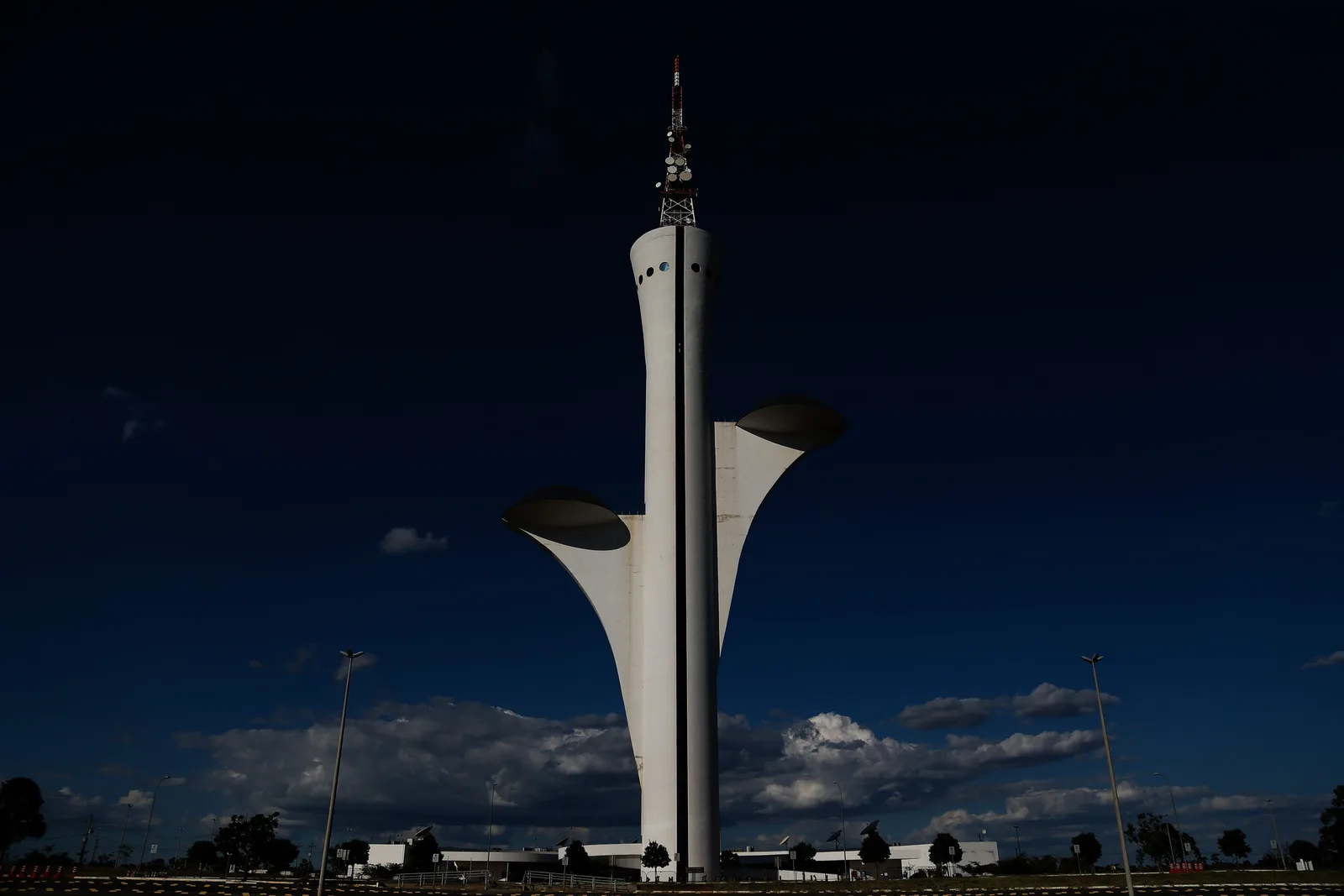
  • Oscar Niemeyer’s Torre de TV Digital at dusk, a slender white tower with two curved petal-shaped platforms against a dark blue sky
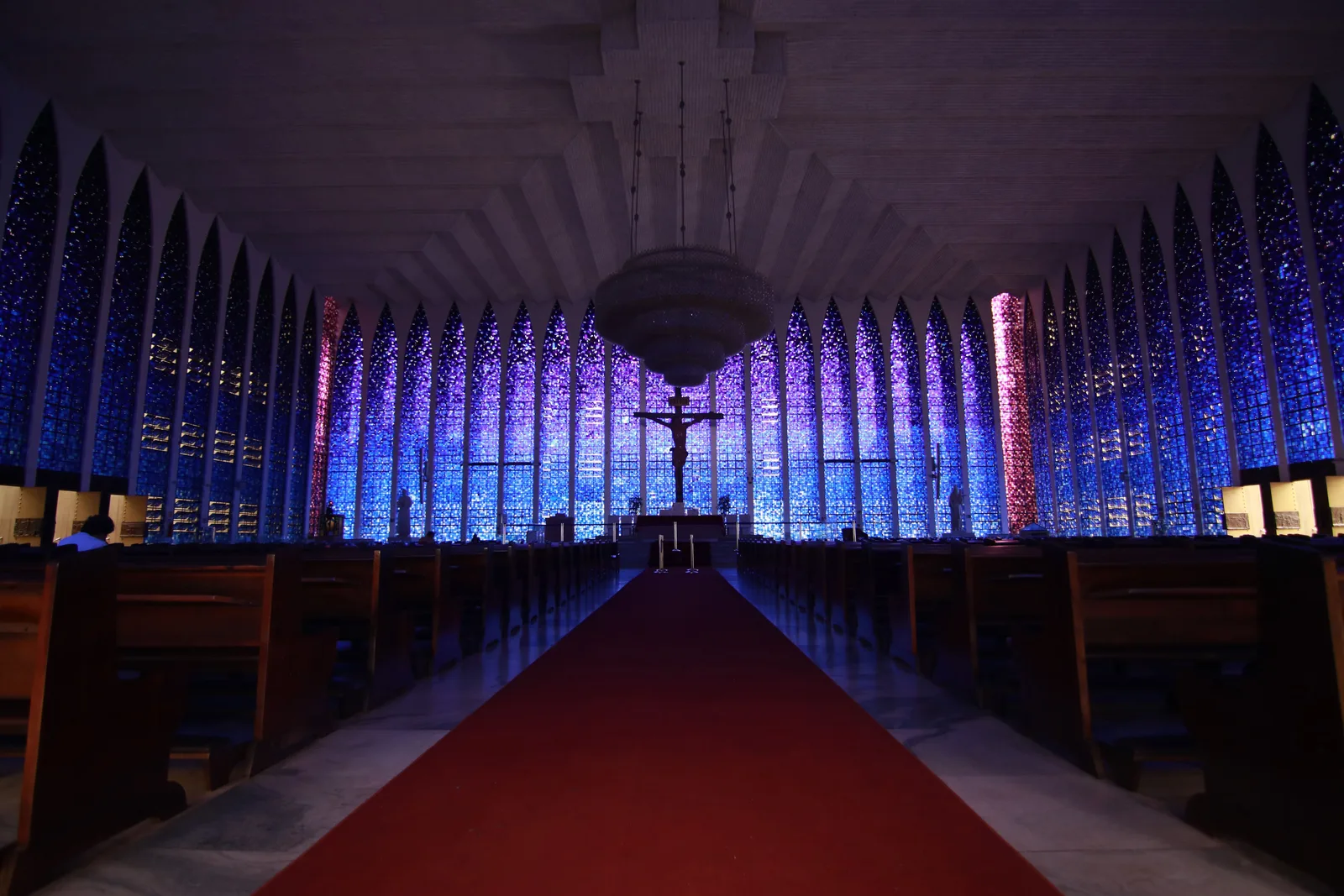
  • The nave of the Santuário Dom Bosco lit almost entirely blue by the sanctuary’s tall walls of blue glass, a red carpet running down the aisle between the pews
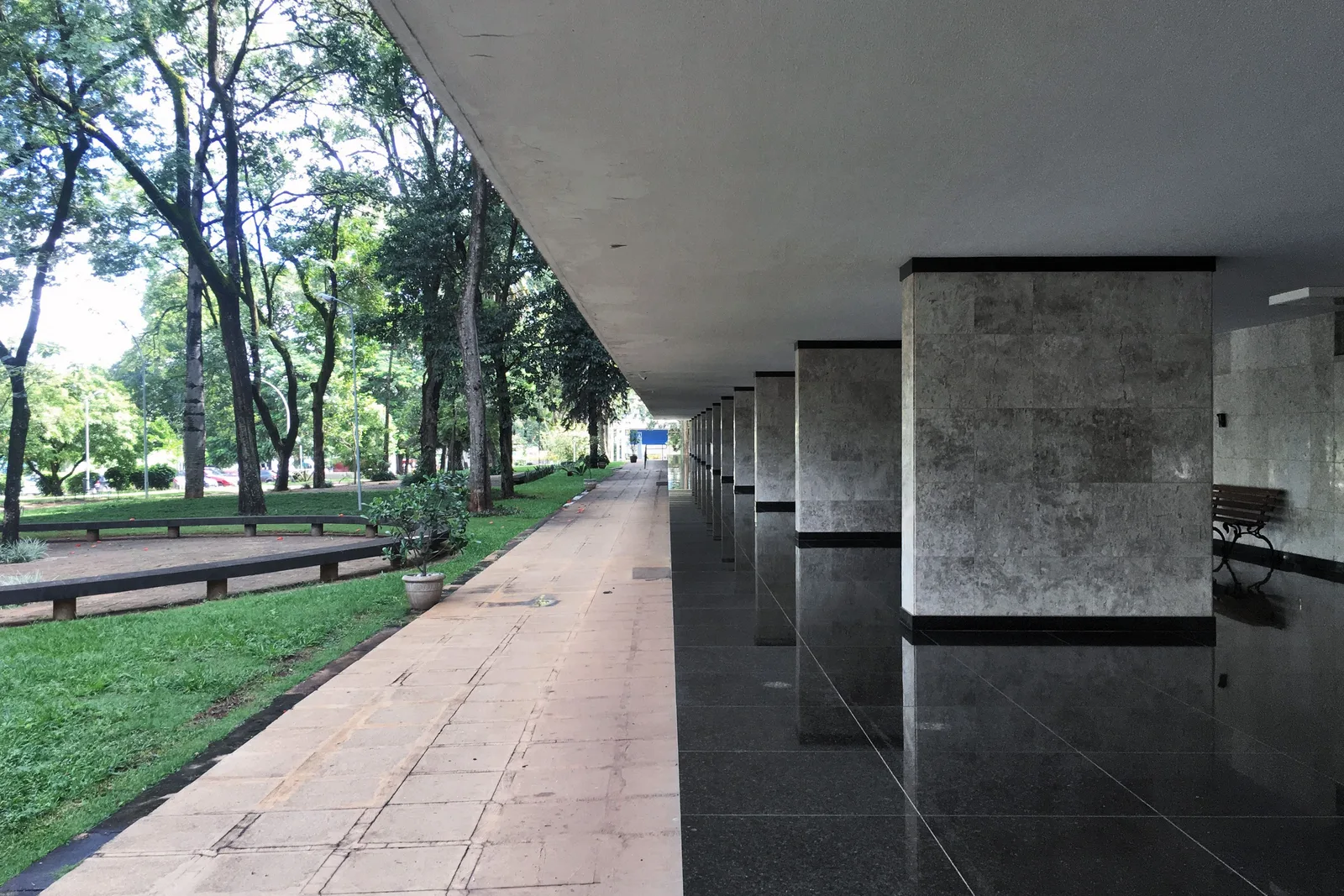
  • The open ground floor of a superquadra apartment block in Brasília, a paved walkway beside the marble-clad pillars, a lawn and trees on the left
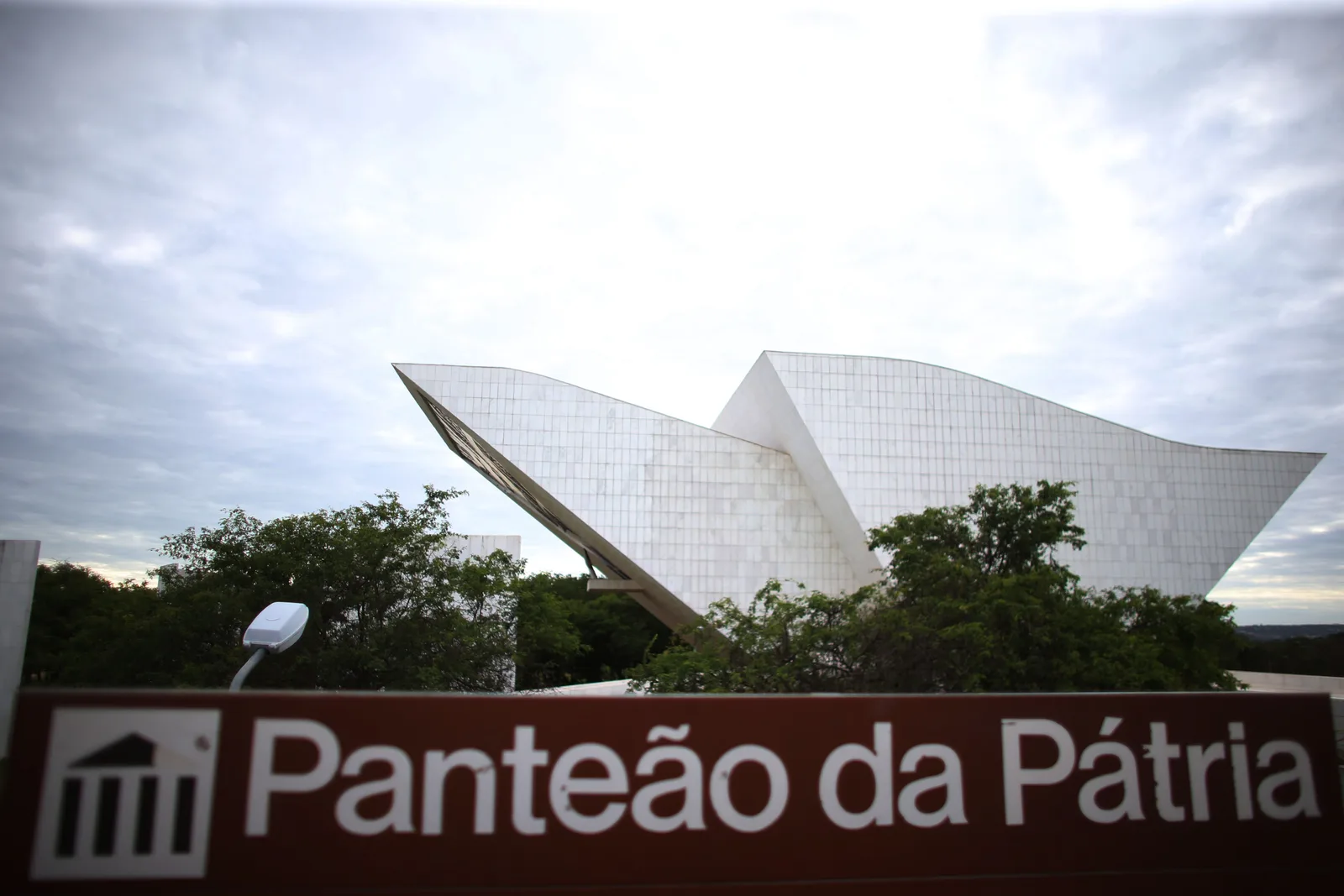
  • The white folded-concrete roof of the Panteão da Pátria in the Praça dos Três Poderes, its name in large letters on a sign in the foreground
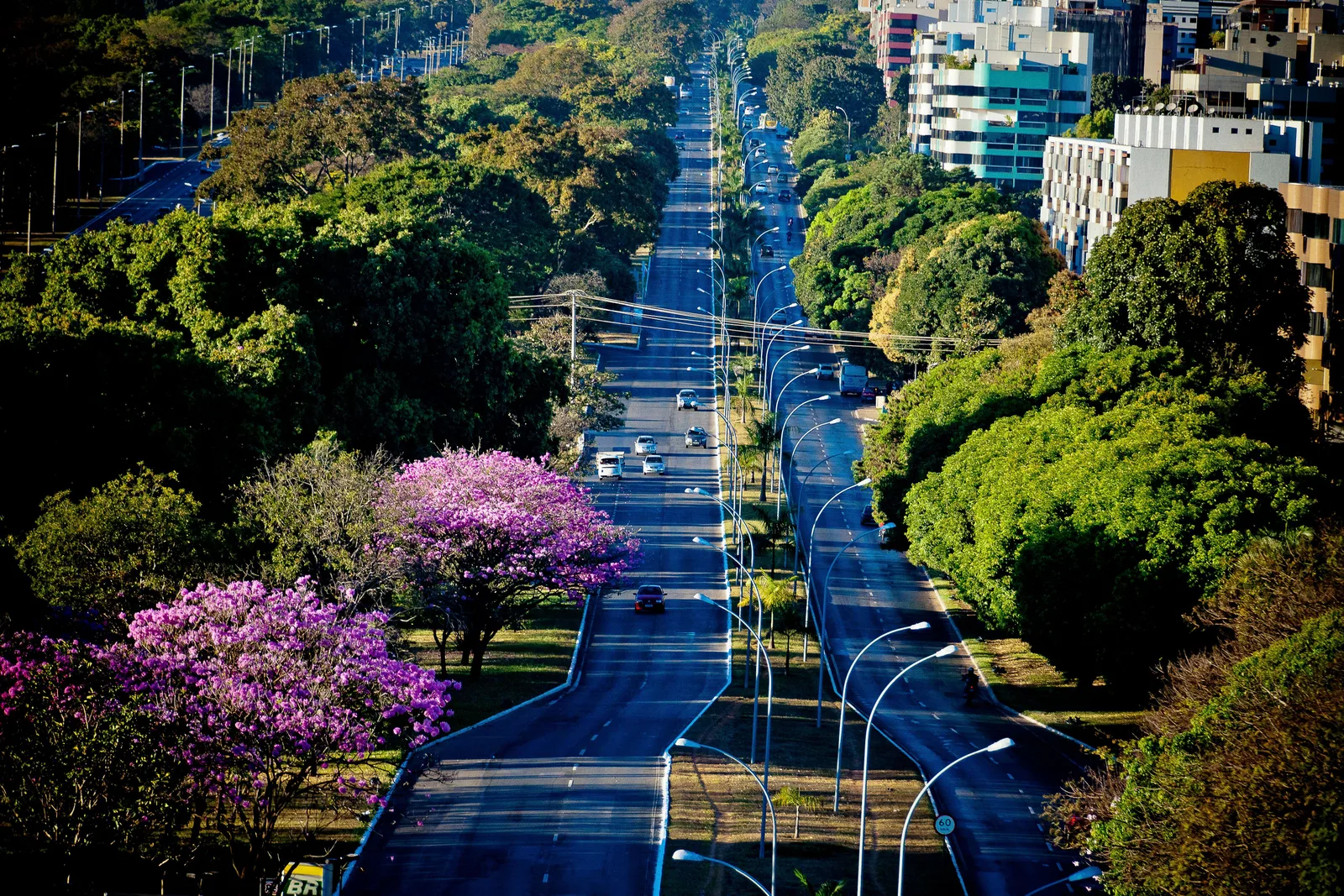
  • An avenue in Brasília seen from the air, a few pink-flowering ipê trees on the left verge among green trees, apartment blocks on the right
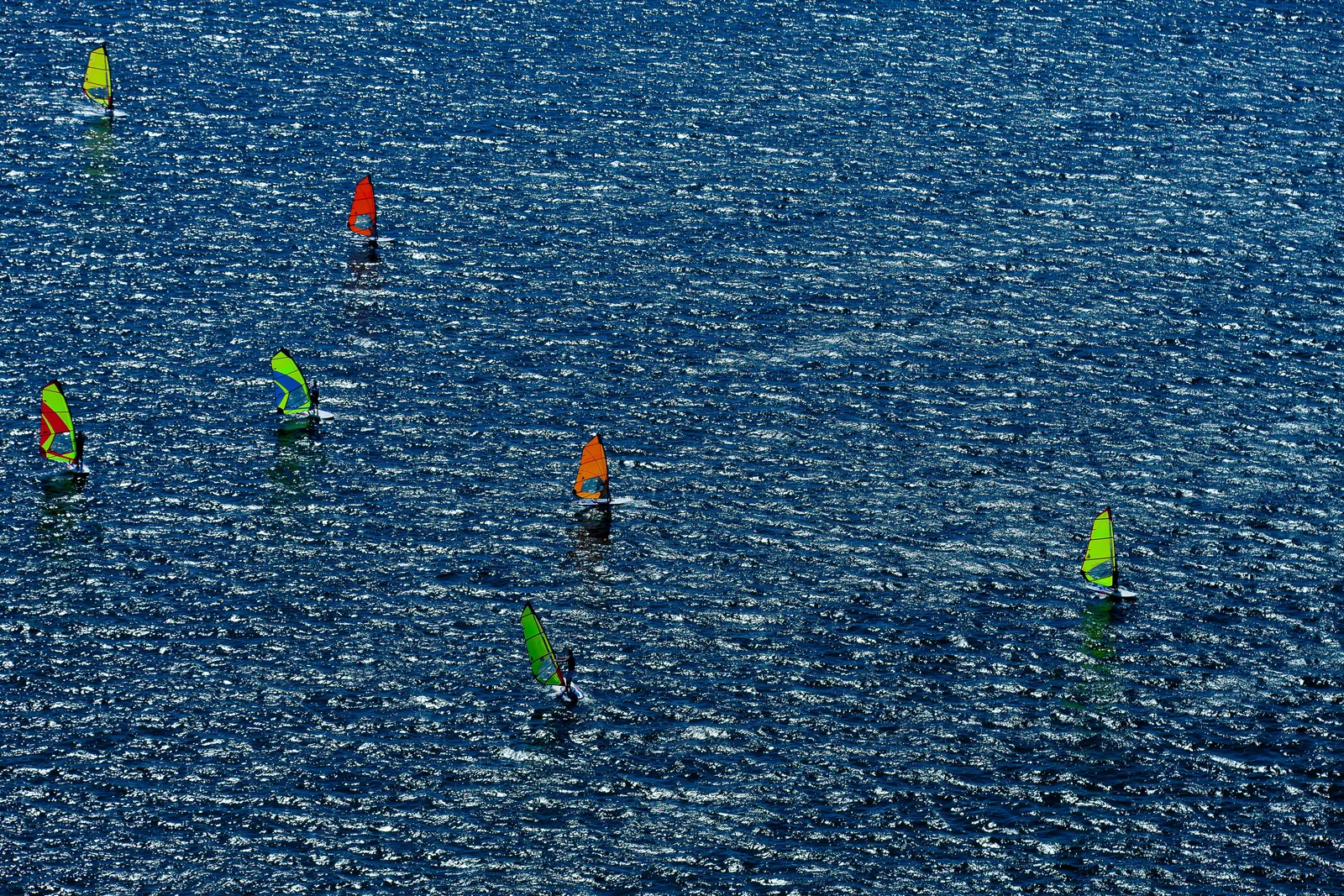
  • Windsurfers with bright sails crossing deep blue water on the lake in Brasília, seen from directly above

Orientation

The city, before the pictures.

What Brasília is, what it costs, and how to get in and around a city laid out for the car.

General Info

A capital built on an empty plateau

Brasília is the capital of Brazil, designed from nothing and built on an empty plateau in the interior from 1956. In 1957 a national competition for the plan of a new capital in the interior was won by the urbanist Lúcio Costa, out of 26 entries, and the city was inaugurated on 21 April 1960 with Oscar Niemeyer’s palaces and ministries already standing. Today the Federal District around it has about three million people, by the IBGE’s 2025 estimate.

Costa’s plan, the Plano Piloto, is two axes crossing at right angles. Along the straight Eixo Monumental sit the government buildings, from the TV tower down the lawns of the Esplanada dos Ministérios to Congress and the Praça dos Três Poderes. Across it runs the curved Eixo Rodoviário, with the two residential wings, Asa Sul and Asa Norte, made of superquadras: blocks of apartments raised on pillars over open gardens, with a strip of local shops beside each one. The bus station sits where the axes cross.

UNESCO inscribed the Plano Piloto as a World Heritage Site in 1987, citing it as a unique example of 20th-century town planning and the living expression of the Modernist movement. What a visitor comes for is that whole composition: the buildings, the space between them, the light and the sky. Two full days covers it well, and it is the natural gateway to the Chapada dos Veadeiros, about 220 km north.

Where It Is

On the central plateau, in the middle of the country

Brasília stands on the high plateau of central Brazil, inside its own Federal District, carved out of the state of Goiás. Lago Paranoá, the artificial lake dammed in 1959 and full by 1960, wraps around the eastern side of the Plano Piloto. Flights to São Paulo and Rio de Janeiro take about an hour and three quarters, and Alto Paraíso de Goiás, the town at the Chapada dos Veadeiros, is about 220 km by road to the north.

Brasília Brasília

15.79° S, 47.88° W

See the Central-West on the interactive map

Cost

A business city, priced by the working week

Brasília is a government town, and its hotel rates follow the working week: in Kayak’s recent figures, weekend nights averaged about a fifth less than weeknights. The sights cost very little. Entry to the Cathedral and the Congress and Itamaraty tours is free, and the Memorial JK is $1.95 (R$10).

Estimated daily budget, per person

Budget

$50 / day

A simple room in the hotel sectors or a guesthouse in the superquadras, set lunches, buses and the metro, and the free sights.

Mid-range

$110 / day

A four-star room in the Setor Hoteleiro split two ways, restaurant dinners, ride apps between the sights, and a paddleboard on the lake.

Comfortable

$220 / day

A lakeside hotel, the better restaurants, a private driver for the day, and a guide for the Esplanada.

Per person per day once you are in the city, flights not included. Two people sharing a room land well under the double of one.

What things cost

  • Three-star hotel room, per night, average $62 R$318
  • Four-star hotel room, per night, average $87–97 R$443–496
  • Memorial JK, ticket $1.95 R$10
  • Parque Nacional de Brasília, entry (trails only; the pools are closed) $7.85 R$40
  • Torre de TV Digital, viewing deck $5.10 R$26
  • Cathedral, guided visit (walking in is free) $2.95 R$15
  • Saturday feijoada buffet at the Clube do Choro, plus music cover $12.75 + $3.90 R$64.90 + R$20
  • Metro, single ride (free on Sundays and holidays) $1.10 R$5.50
  • Airport bus 0.102 to the bus station (free on Sundays and holidays) $0.75 R$3.80
  • Taxi, flag fall plus each kilometer (weekday daytime rate) $1.30 + $0.70/km R$6.59 + R$3.59/km
  • Bike share, day pass $3.90 R$19.90

Hotel rates follow the working week. Kayak’s figures for the two weeks before this page was written put weeknights at about $148 (R$755) on average and weekend nights at about $119 (R$609). Arrive on a Friday and the room is often cheaper.

Buses, the BRT and the metro are free all day on Sundays and holidays, under the Federal District’s Vai de Graça program.

Restaurants add a 10 percent service charge to the bill. It is customary rather than compulsory, and it is already included rather than expected on top.

Cards and Pix work almost everywhere, and the metro takes a contactless bank card at the gate.

Checked October 2026 and converted at R$5.10 to the dollar. The price list is sourced row by row; the daily budgets are estimates, the shape of a trip rather than a quote.

Safety

Low violent crime, and thieves where the people are

7 /10

Our rating. Murder is rare in the Plano Piloto; theft from people and from cars is the thing to plan around.

The Federal District’s rate of violent deaths was 9.6 per 100,000 in 2025, the third lowest of Brazil’s 27 states in the national public-security yearbook, and the Plano Piloto, where visitors stay and sightsee, recorded 13 homicides. What the Plano Piloto does have is theft. In 2025 it recorded more street thefts and more thefts from parked cars than any other region of the Federal District, and the third-highest number of street robberies. Street robberies there were down by about a quarter in the first eight months of 2026.

  • Keep the phone out of sight on the street, and carry one card and a little cash. The passport stays in the hotel safe, except on the days you tour Congress or the Itamaraty, when the guards ask for it.
  • Leave nothing visible in a parked car. The Plano Piloto recorded nearly 2,500 thefts from cars in 2025, more than four in ten of the Federal District’s total.
  • Distances are long and the open spaces between the buildings are wide. After dark, take a ride app rather than walking from one sector to another.
  • The dry season is its own hazard. In August and September the humidity is the lowest of the year, so drink more water than feels necessary and carry it on the Esplanada.
  • In an emergency call SAMU on 192. The Hospital de Base in Asa Sul, beside the Setor Hoteleiro Sul, is the public trauma hospital, with 86 intensive-care beds, but its emergency room does not take general medical cases. For those, the public option is the Hospital Regional da Asa Norte, and the private Santa Lúcia (716 Sul) and Sírio-Libanês (613 Sul) run 24-hour emergency rooms. There is no 24-hour UPA clinic in the Plano Piloto. Travel insurance is not optional.
  • The CDC recommends yellow fever vaccination for the Federal District, Brasília included, and for Goiás, where the Chapada is. Decide well before you fly. There is no malaria transmission in the city.
  • If you are robbed, hand it over. Nothing you are carrying is worth an argument.

Getting There

Overnight from Florida, and a hub for everywhere else

Brasília’s airport, Presidente Juscelino Kubitschek International (BSB), is a national hub: ANAC’s November 2026 schedule has about 1,260 departures a week to 46 airports. It sits on the south side of the lake, about 15 km by road from the hotel sectors.

  • Gol flies nonstop from Miami and from Orlando. ANAC’s schedule for October to December 2026 has Orlando daily and Miami six or seven times a week, both overnight: the Orlando flight lands at about 6:55am and the Miami flight at about 7:15am, so the first day starts at breakfast. Northbound, both leave Brasília mid-morning. Every Miami flight and all but one Orlando flight in July 2026 operated as scheduled.
  • TAP flies daily to Lisbon and Copa daily to Panama City. Otherwise connect through São Paulo or Rio: about a dozen flights a day from Guarulhos and nine from Galeão, the international airports, each about an hour and three quarters.
  • The airport’s old executive bus, line 113, is suspended, whatever older guides say. The city bus 0.102 runs from the airport through Lago Sul to the central bus station for $0.75 (R$3.80), about every half hour on weekdays and free on Sundays and holidays.
  • Taxis run on the official meter, and only accredited drivers may pick up at the terminal. Ride-app drivers meet you at the Praça Pick-up, outside arrivals. By car the hotel sectors are about 15 km away, a quarter of an hour in light traffic.
  • The Chapada dos Veadeiros, which has its own guide on this site, is about 220 km north. Allow about three and a half hours to drive to Alto Paraíso de Goiás.

Getting Around

A city drawn for the car

Brasília was planned around fast roads and wide lawns, and the distances show it. From the bus station to the Praça dos Três Poderes is about 2.5 km in a straight line, down the open Esplanada. Plan the day by sector, and let a car or a ride app join them up.

  • Uber and 99 do most of the work, and they are the easiest way between the Esplanada, Asa Sul, the Memorial JK and the lake.
  • The metro runs from Central, under the bus station, down the Asa Sul and out to the satellite cities. It has no stations in the Asa Norte and does not reach the airport. A ride is $1.10 (R$5.50), and the gates take a contactless bank card.
  • City buses cost $0.55 to $1.10 (R$2.70 to R$5.50) depending on the route. Buses, the BRT and the metro are all free on Sundays and holidays.
  • On Sundays and holidays the Eixo Rodoviário, the city’s north-south artery, closes to cars from 6:00am to 6:00pm and fills with people walking, running and cycling: the Eixão do Lazer.
  • Tembici runs the bike-share scheme, with 70 stations and a day pass for $3.90 (R$19.90). Ride early: the afternoons are hot and the Esplanada is exposed.
  • Walk where the city is walkable: the Esplanada from the Cathedral to Congress, and the gardens and pilotis of a superquadra. In between, take a car.

The big four

What the city was built to show.

The plan itself, the square where the three branches of government face each other, the cathedral, and the foreign ministry in its pool of water.

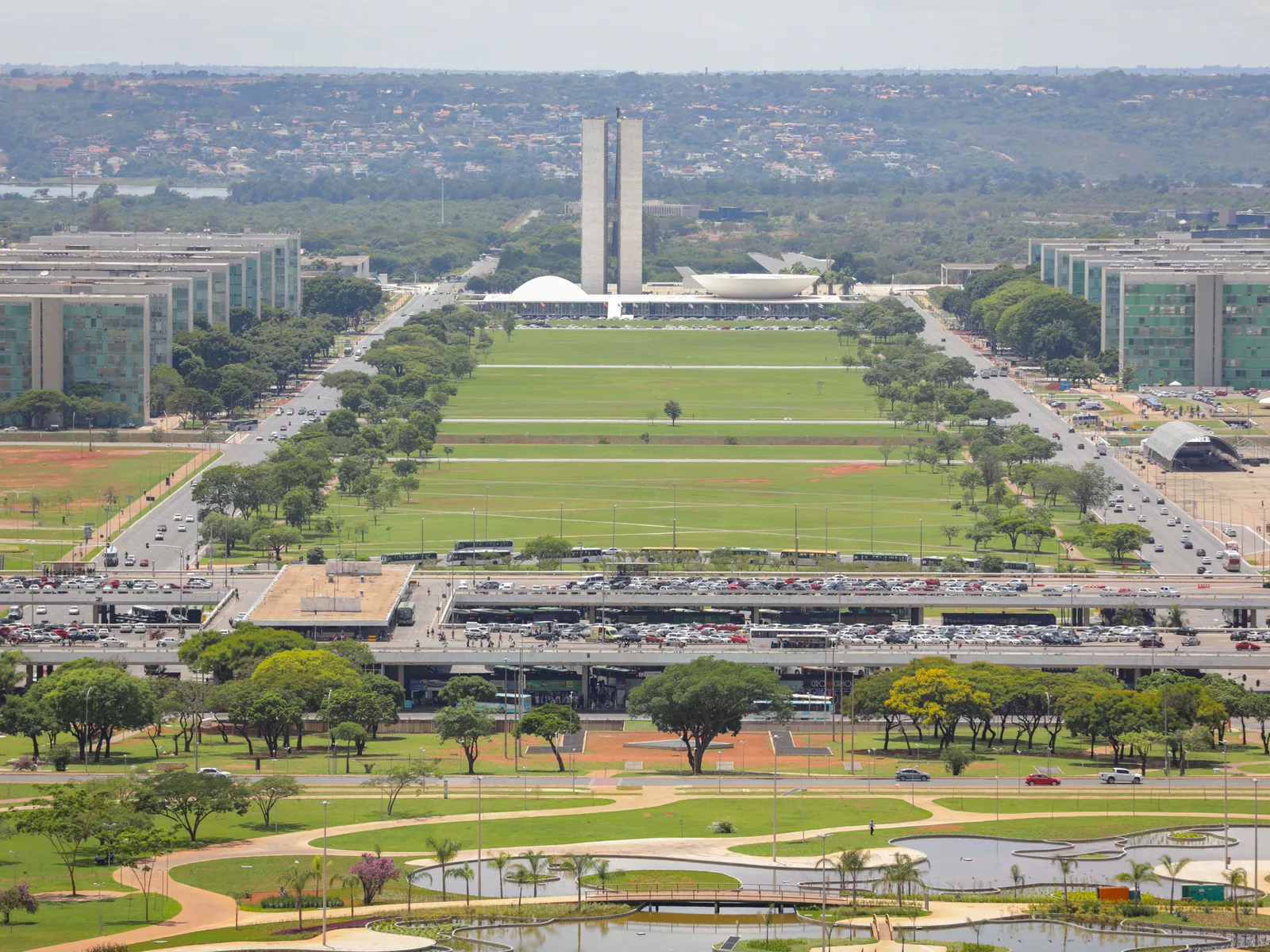
The Eixo Monumental from the Torre de TV: a wide green lawn running between two rows of ministry blocks toward the twin towers of Congress, the bus station platform and lines of trees in the foreground and the lake on the horizon 01

Two axes, and a capital in four years

The Plano Piloto and the Eixo Monumental

Plan
Lúcio Costa, winner of the 1957 competition
Inaugurated
21 April 1960
UNESCO
World Heritage Site since 1987

Lúcio Costa’s winning plan for the capital was two axes crossing at right angles, which he likened to the sign of the cross. UNESCO prefers to compare its outline to a bird in flight. The straight Eixo Monumental carries the government, the curved Eixo Rodoviário carries the homes, and where they meet sits the bus station. The listed area covers 11,268 hectares, and what UNESCO protects is the plan as much as the buildings: the two axes, the division into sectors, the superquadras and the open green spaces between everything.

The Eixo Monumental is the part to see. From the TV tower it runs east down a ribbon of lawn between two lines of identical ministry blocks, the Esplanada dos Ministérios, to the twin towers of Congress and the Praça dos Três Poderes beyond. The best view of the whole composition is from above. The deck of the Torre de TV, 75 meters up, has been closed for new elevators, with reopening forecast for October 2026; check before you go. Niemeyer’s Torre de TV Digital, farther out, is open.
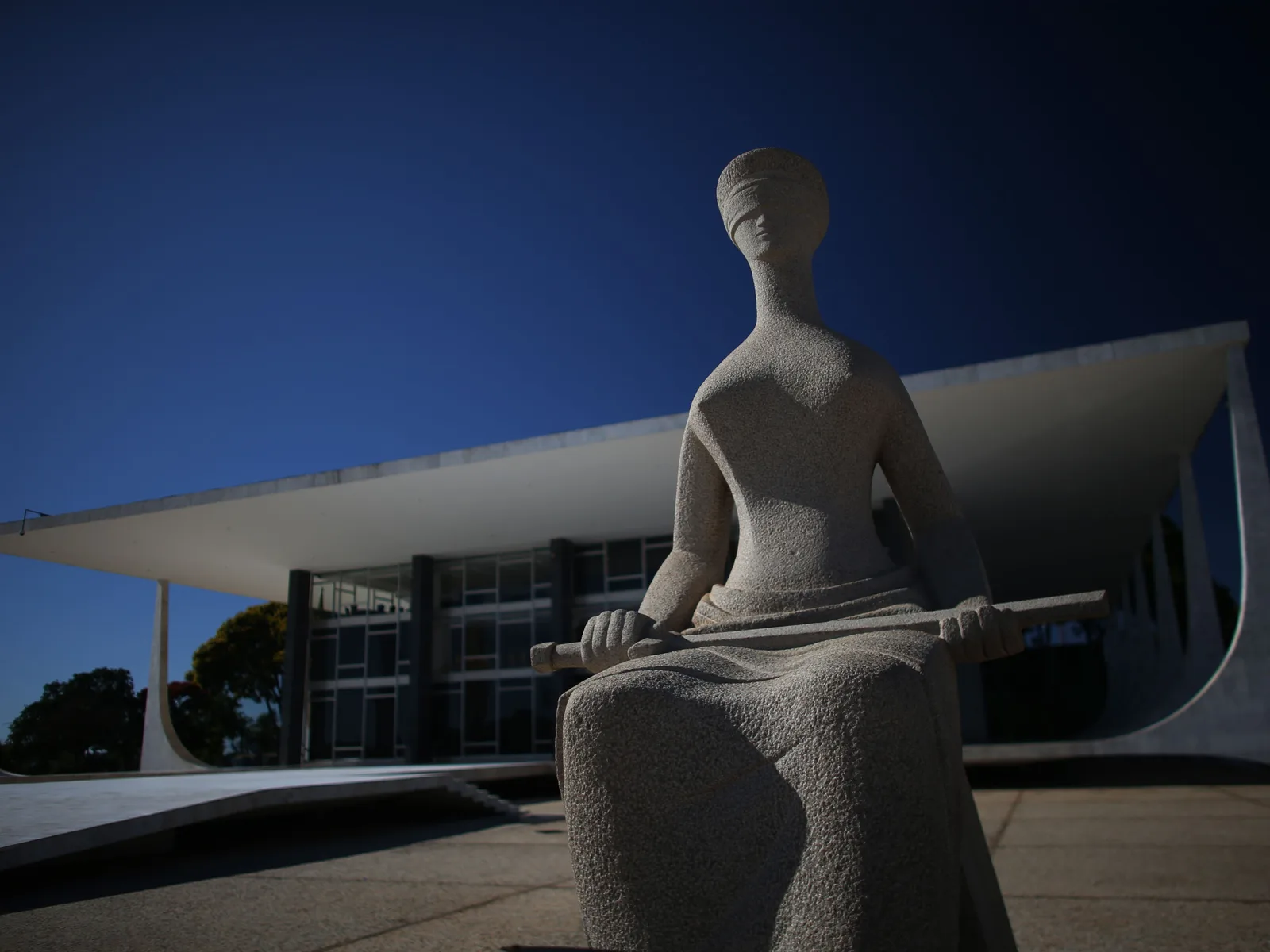
Alfredo Ceschiatti’s granite statue A Justiça, a seated blindfolded woman with a sword across her lap, in front of the low colonnade of the Supreme Court in the Praça dos Três Poderes under a deep blue sky 02

Congress, the presidency and the court around one square

Congress and the Praça dos Três Poderes

Congress tours
Free, booked online
Closed
Tuesdays and Wednesdays
The square
Under renovation into 2027

At the eastern end of the Esplanada the three powers face each other across one square: the National Congress, the Palácio do Planalto, where the president works, and the Supreme Court. Congress is the building most people picture: two 100-meter towers between a shallow upturned bowl over the Chamber of Deputies and a dome over the Senate, all by Niemeyer. Free guided tours take about 50 minutes and pass through both chambers and the great halls, with art by Athos Bulcão, Marianne Peretti and Burle Marx. Since 28 September 2026 they are booked online. The public tours run Mondays, Fridays, weekends and holidays; foreigners show a passport.

The Planalto opens on Sundays only, from 9:00am to 2:00pm, with free tours booked on the presidency’s own site, which asks for a gov.br login and offers a separate route for non-Brazilians. The tours are in Portuguese, with one Spanish slot, and Sundays book out weeks ahead. Supreme Court tours are suspended. The square itself has been under renovation since November 2025: the first phase is due to finish in December 2026, and the restoration of the other monuments in the first half of 2027. Bruno Giorgi’s Candangos was the first to be finished. Until December, access to the square itself is restricted. The monthly flag ceremony is suspended until the work is done.

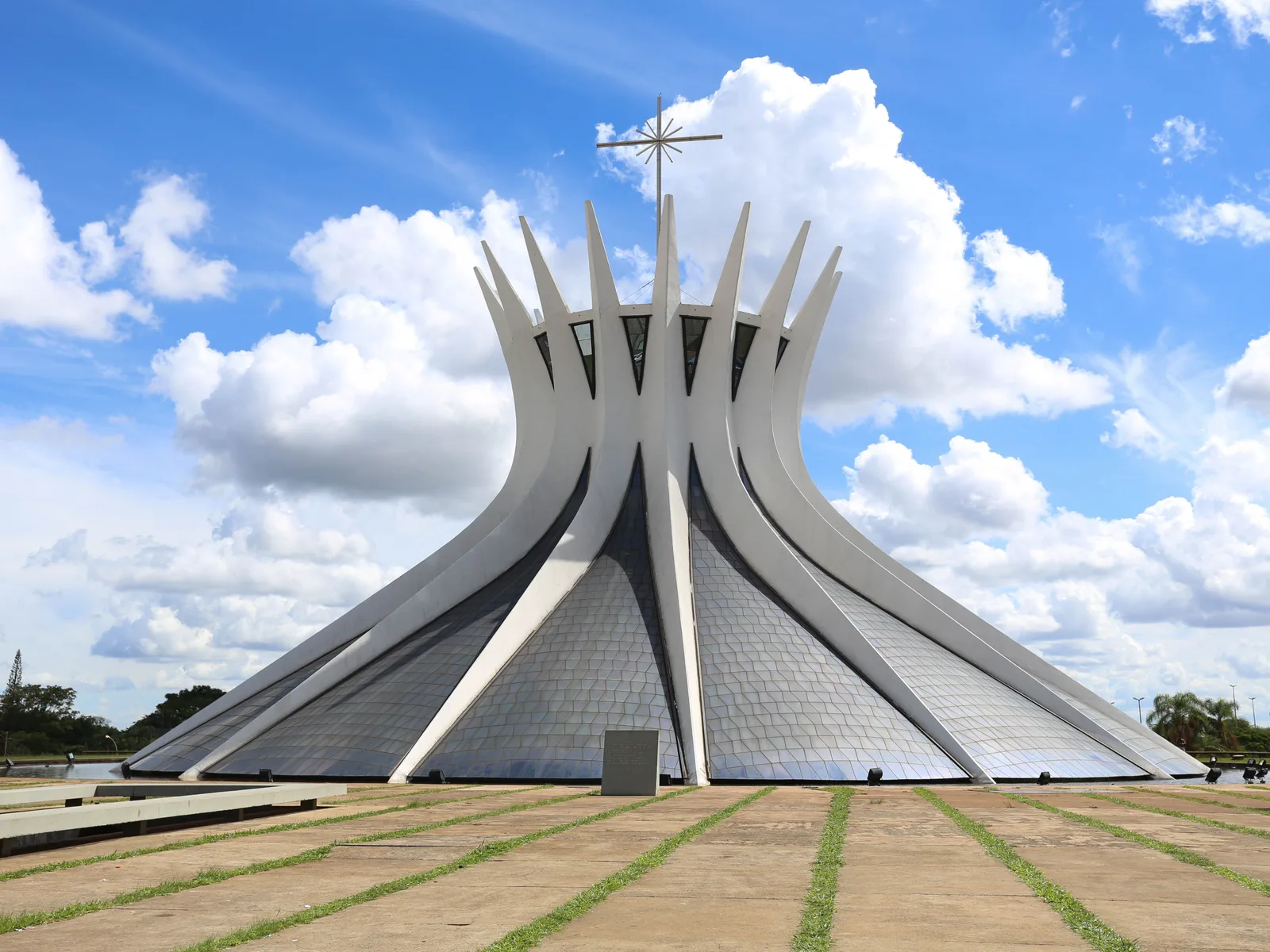
The Cathedral of Brasília from the plaza: a ring of white curved concrete ribs gathering into a crown topped by a cross, the dark stained glass between them, under a blue sky piled with white cloud 03

Sixteen concrete ribs and a sky of glass

The Cathedral

Structure
16 curved concrete ribs
Inaugurated
31 May 1970
Open
Tuesday to Sunday, free to walk in

Niemeyer’s Cathedral is a crown of 16 curved concrete ribs rising out of a shallow pool beside the Esplanada. The foundation stone was laid in 1958 and the ribs were standing by 1960, but the building was not inaugurated until 31 May 1970. You enter through a dark tunnel and come out into a nave full of light.

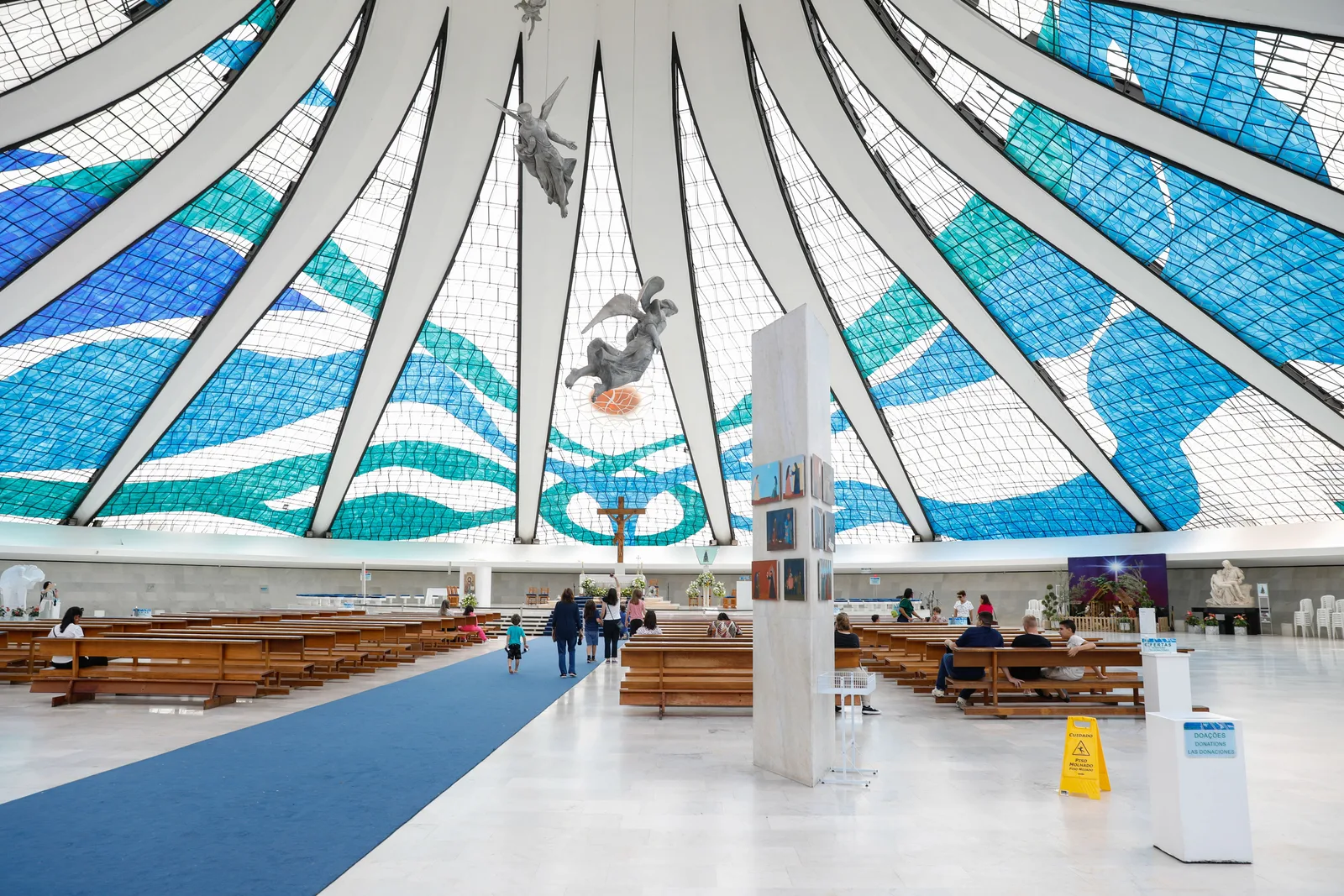
Inside, the glass between the ribs is Marianne Peretti’s blue, green and white stained glass, installed in 1990, and three angels by Alfredo Ceschiatti hang from the ceiling on cables, the largest weighing about 300 kilograms. Four evangelists by Ceschiatti and Dante Croce stand outside the entrance. It opens Tuesday to Sunday from early morning to late afternoon, from 9:00am on Sundays, and visits pause during Mass. Walking in is free; a guided visit is $2.95 (R$15).

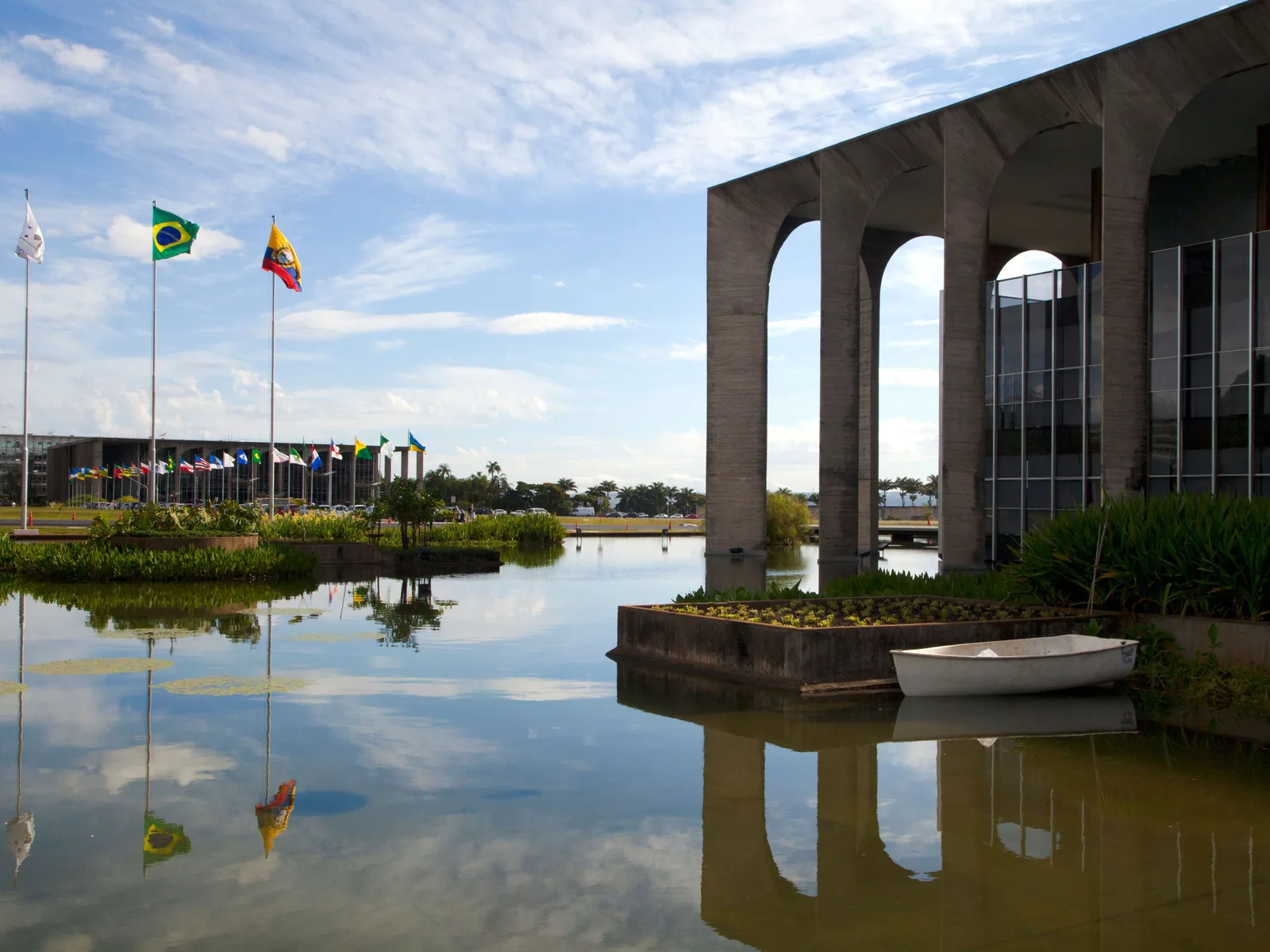
The Itamaraty Palace seen across its reflecting pool: tall slender concrete arches mirrored in the still water, tropical plants on islands in the pool and flags on tall poles beyond 04

The foreign ministry, standing in its own water

The Itamaraty Palace

Tours
Tuesday to Sunday, in English too
Book
At least 24 hours ahead
Cost
Free

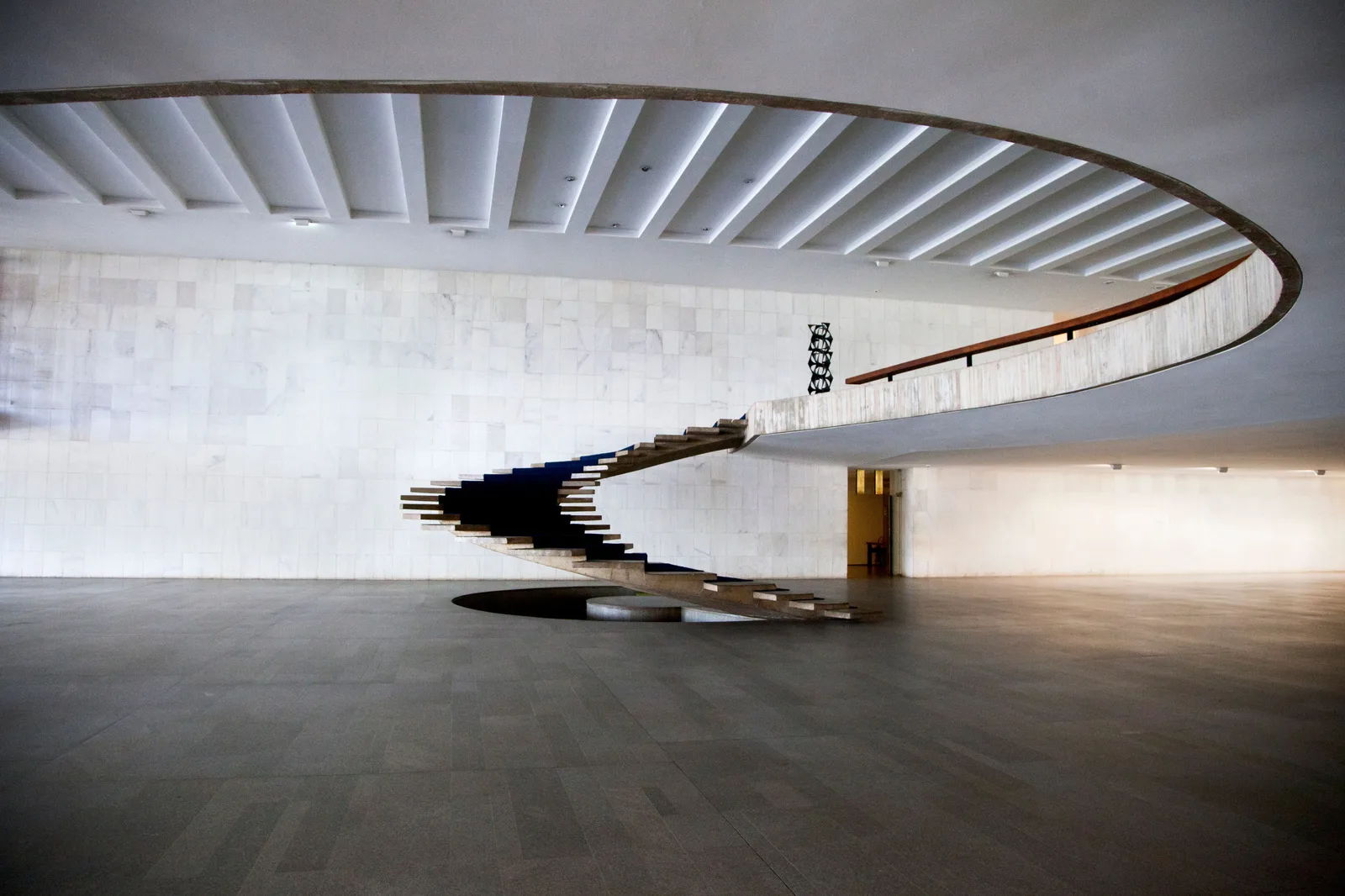
The Palácio Itamaraty, Brazil’s foreign ministry, is a glass box inside a colonnade of slender concrete arches, set in a reflecting pool planted with tropical gardens. Niemeyer’s palace was inaugurated in 1970, built mostly with Brazilian materials. Inside is the spiral staircase without a handrail; outside, Bruno Giorgi’s marble Meteoro stands in the pool.

Guided tours run Tuesday to Sunday in Portuguese, Spanish, French or English and are free. Book online at least 24 hours ahead, with each visitor registered by name, and note that the booking page shows the times in your device’s time zone, so set it to Brasília time if you book from the US. Arrive 15 minutes early at the west entrance, facing the Ministry of Health, with photo ID. No hats or caps, no large bags and no food or water inside, and only one artwork may be touched: Mary Vieira’s Ponto de Encontro.

What to actually do

Five ways to spend a day here.

Pick a category and scroll sideways through it. Most of these are an hour or two; join them up by car.

Modernist icons

  • The nave of the Cathedral of Brasília: white concrete ribs sweeping up to the center, Marianne Peretti’s blue, green and white stained glass between them, an angel by Alfredo Ceschiatti hanging in the light, and rows of wooden pews below

    Esplanada · half an hour

    The angels inside the Cathedral

    Come in down the dark entrance ramp and the nave opens up all at once: white ribs, Marianne Peretti’s glass in blues and greens, and Alfredo Ceschiatti’s three angels, Gabriel, Raphael and Michael, hanging overhead. Go in the morning, when the sun is low enough to throw the colors across the floor, and avoid the Mass times.

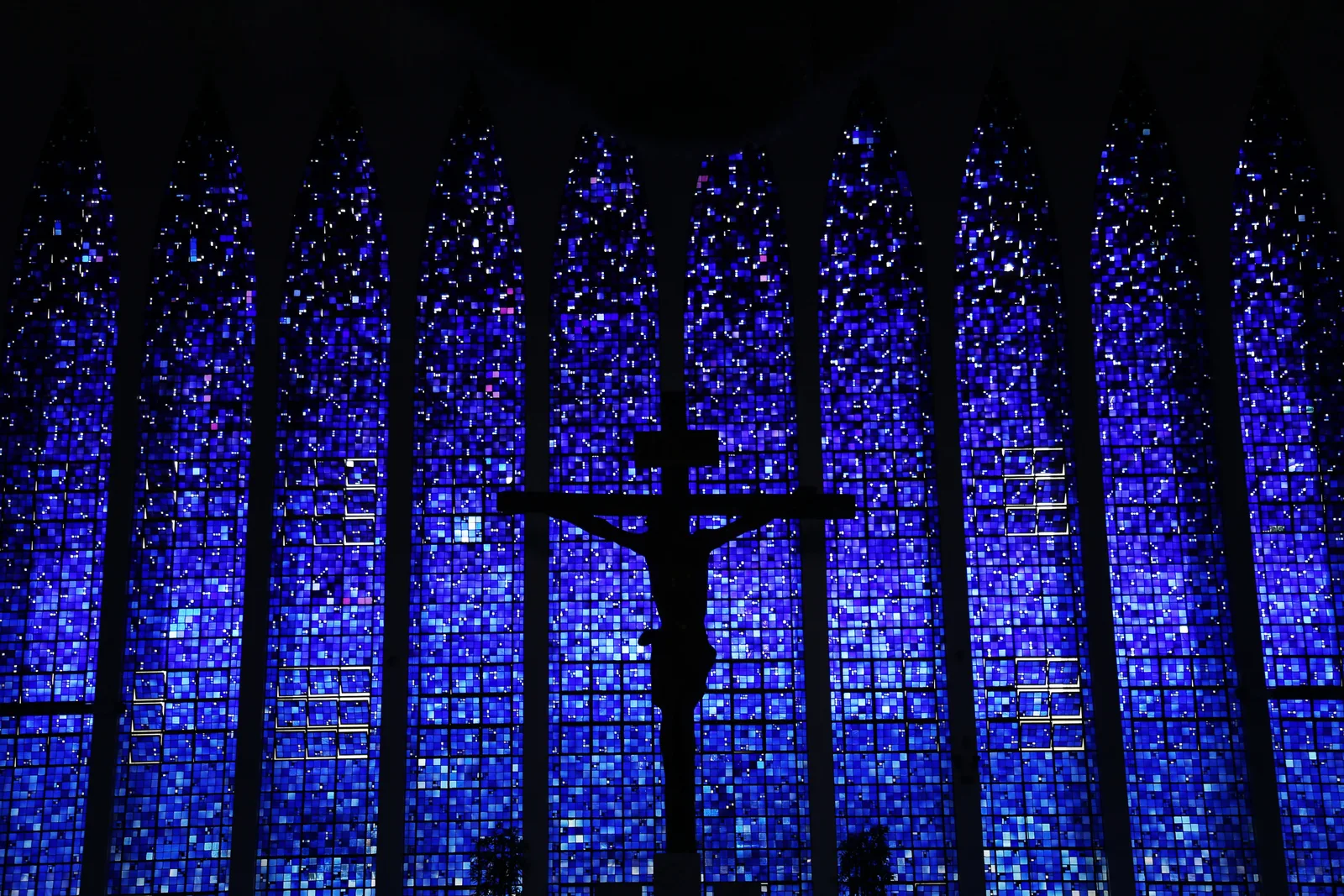
  • Inside the Santuário Dom Bosco: the sanctuary’s walls of deep blue glass rising between tall pointed arches, a crucifix silhouetted against the glass at the far end

    Asa Sul, 702 Sul · half an hour

    The blue glass of the Santuário Dom Bosco

    Inside, 80 columns 16 meters tall frame walls of stained glass in 12 shades of blue, and a chandelier of 7,400 pieces of Murano glass hangs in the middle. The sanctuary, designed by Carlos Alberto Naves and opened in 1970, honors the saint said to have dreamed of a promised land beside a lake. It is open daily from 7:00am into the evening, outside Mass times.

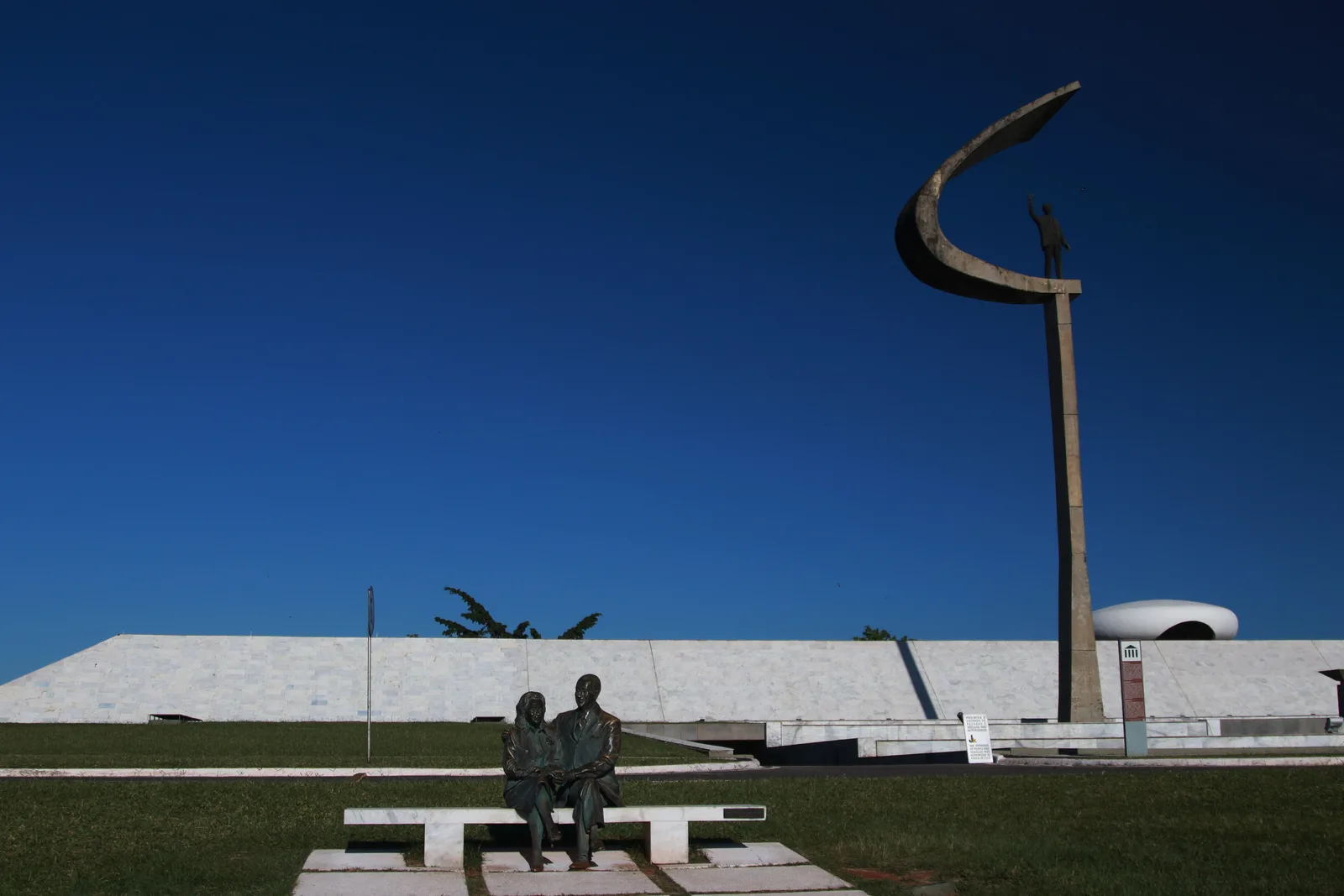
  • The Memorial JK on a bright day: a low white building on a lawn and, at the right, the tall slim pylon with its curved crook holding the statue of Juscelino Kubitschek, bronze figures of JK and his wife seated on a bench in the foreground

    Eixo Monumental · an hour

    The Memorial JK

    Niemeyer’s memorial to Juscelino Kubitschek, the president who built Brasília, opened in 1981 at the western end of the Eixo Monumental. A statue of JK waves from inside a curved concrete crook on a 28-meter tower, and his remains lie in a funerary chamber lit by Marianne Peretti’s stained glass. It opens Tuesday to Sunday, 9:00am to 6:00pm, for $1.95 (R$10).

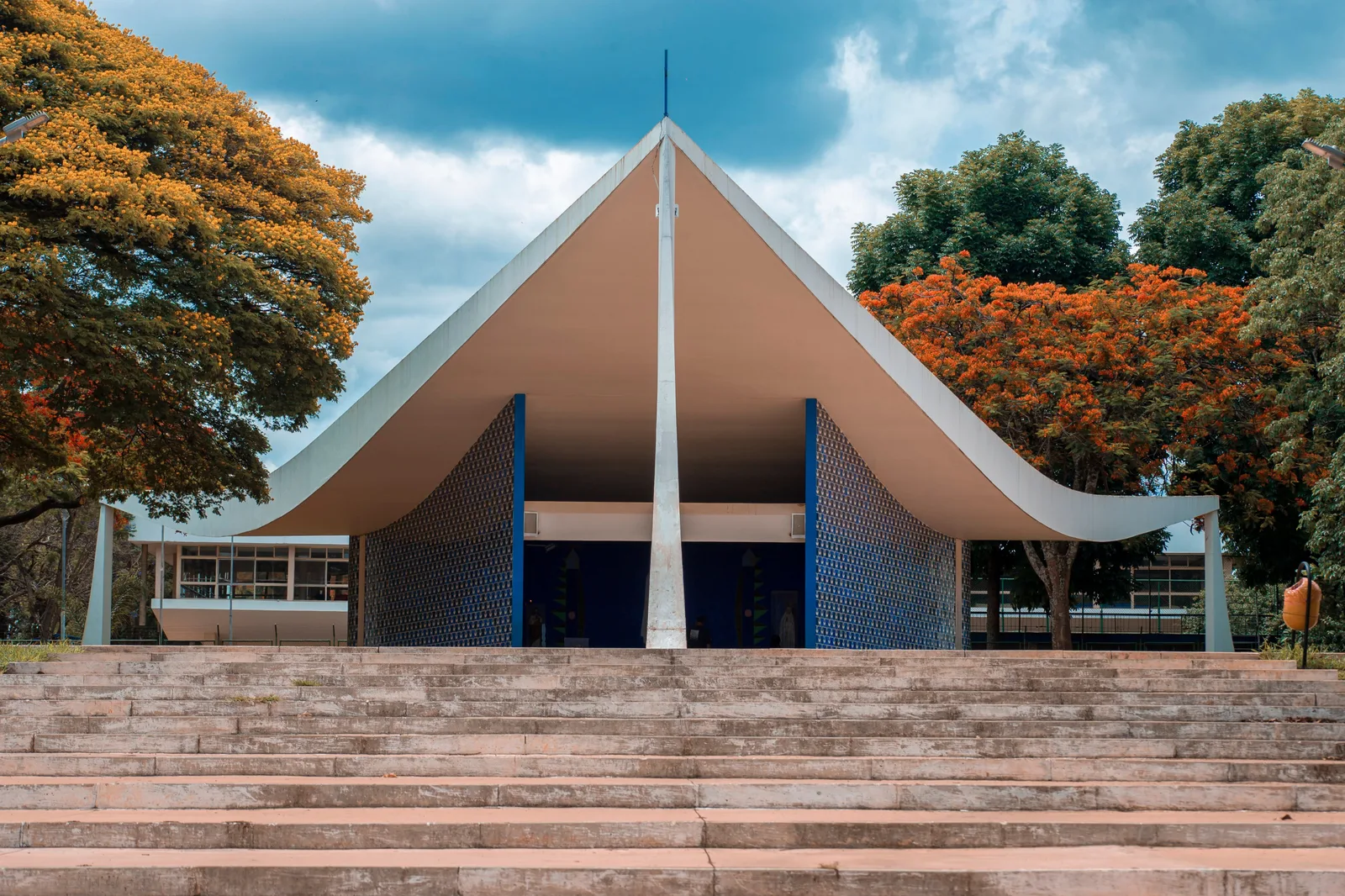
  • The Igrejinha in Asa Sul: a white triangular concrete roof folding down to three points, the blue tiled walls of the chapel beneath it, a golden-flowering tree on the left and a red flamboyant on the right, and steps in front

    Asa Sul, 307/308 Sul · twenty minutes

    The Igrejinha in Asa Sul

    The little church of Nossa Senhora de Fátima, a triangular concrete roof on three points, faced in Athos Bulcão’s blue-and-white tiles. Niemeyer built it at the request of JK’s wife, Sarah Kubitschek, as the first masonry church of the new capital. It sits beside the model superquadra, so the two make one walk.

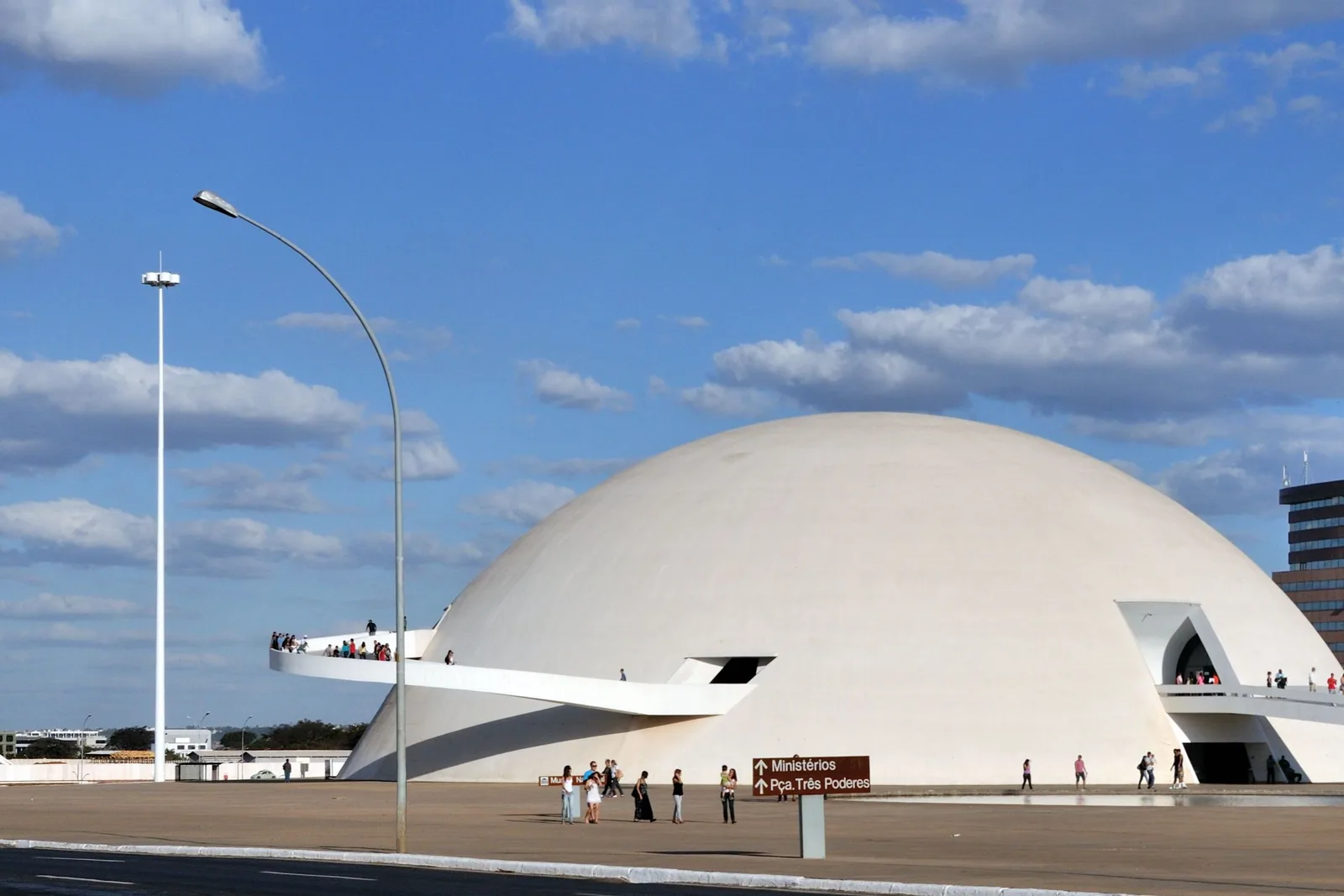
  • The white dome of the Museu Nacional with a curved ramp wrapping out of its side, visitors on the paved forecourt and a sign pointing to the ministries and the Praça dos Três Poderes, under a blue sky

    Eixo Monumental · an hour, free

    The Museu Nacional dome

    A white concrete dome 26 meters high beside the Cathedral, opened in 2006 with a ramp curling out of its side, and the National Library alongside. The dome holds changing exhibitions, from Tuesday to Sunday, 9:00am to 6:30pm. Come for the building and the view of the Cathedral from its forecourt as much as for what is on.

Inside the capital

  • The Memorial JK on a bright day: a low white building on a lawn and, at the right, the tall slim pylon with its curved crook holding the statue of Juscelino Kubitschek, bronze figures of JK and his wife seated on a bench in the foreground

    Eixo Monumental · an hour

    The Memorial JK

    Niemeyer’s memorial to Juscelino Kubitschek, the president who built Brasília, opened in 1981 at the western end of the Eixo Monumental. A statue of JK waves from inside a curved concrete crook on a 28-meter tower, and his remains lie in a funerary chamber lit by Marianne Peretti’s stained glass. It opens Tuesday to Sunday, 9:00am to 6:00pm, for $1.95 (R$10).

  • The National Congress from across a reflecting pool lined with planted beds: the twin towers between the upturned bowl and the dome, green lawns sloping down to the water and a cloudy sky

    Praça dos Três Poderes · about 50 minutes, free

    A guided tour of Congress

    Through the main ramp and into both chambers, the Salão Verde, the Salão Azul and the Salão Negro, past works by Di Cavalcanti, Athos Bulcão and Ceschiatti. Groups leave every half hour from 9:00am to 5:00pm. Book online; without a booking, you can check for space at the door and book on your phone or the tablets there. In English on weekends and holidays at 10:15am and 3:15pm. Tuesdays and Wednesdays are closed to the public. On weekdays, no shorts, flip-flops or tank tops.

  • Oscar Niemeyer’s spiral staircase inside the Itamaraty Palace, a thin white concrete ribbon curving up without a handrail toward the slatted ceiling of a vast pale hall

    Esplanada · about an hour, free

    A guided tour of the Itamaraty

    The foreign ministry’s tour takes you inside Niemeyer’s palace and past its spiral staircase, a ribbon of concrete with no handrail. Groups are capped at 25; book at least 24 hours ahead. A second, behind-the-scenes route runs on Saturdays only.

The city plan

  • The Igrejinha in Asa Sul: a white triangular concrete roof folding down to three points, the blue tiled walls of the chapel beneath it, a golden-flowering tree on the left and a red flamboyant on the right, and steps in front

    Asa Sul, 307/308 Sul · twenty minutes

    The Igrejinha in Asa Sul

    The little church of Nossa Senhora de Fátima, a triangular concrete roof on three points, faced in Athos Bulcão’s blue-and-white tiles. Niemeyer built it at the request of JK’s wife, Sarah Kubitschek, as the first masonry church of the new capital. It sits beside the model superquadra, so the two make one walk.

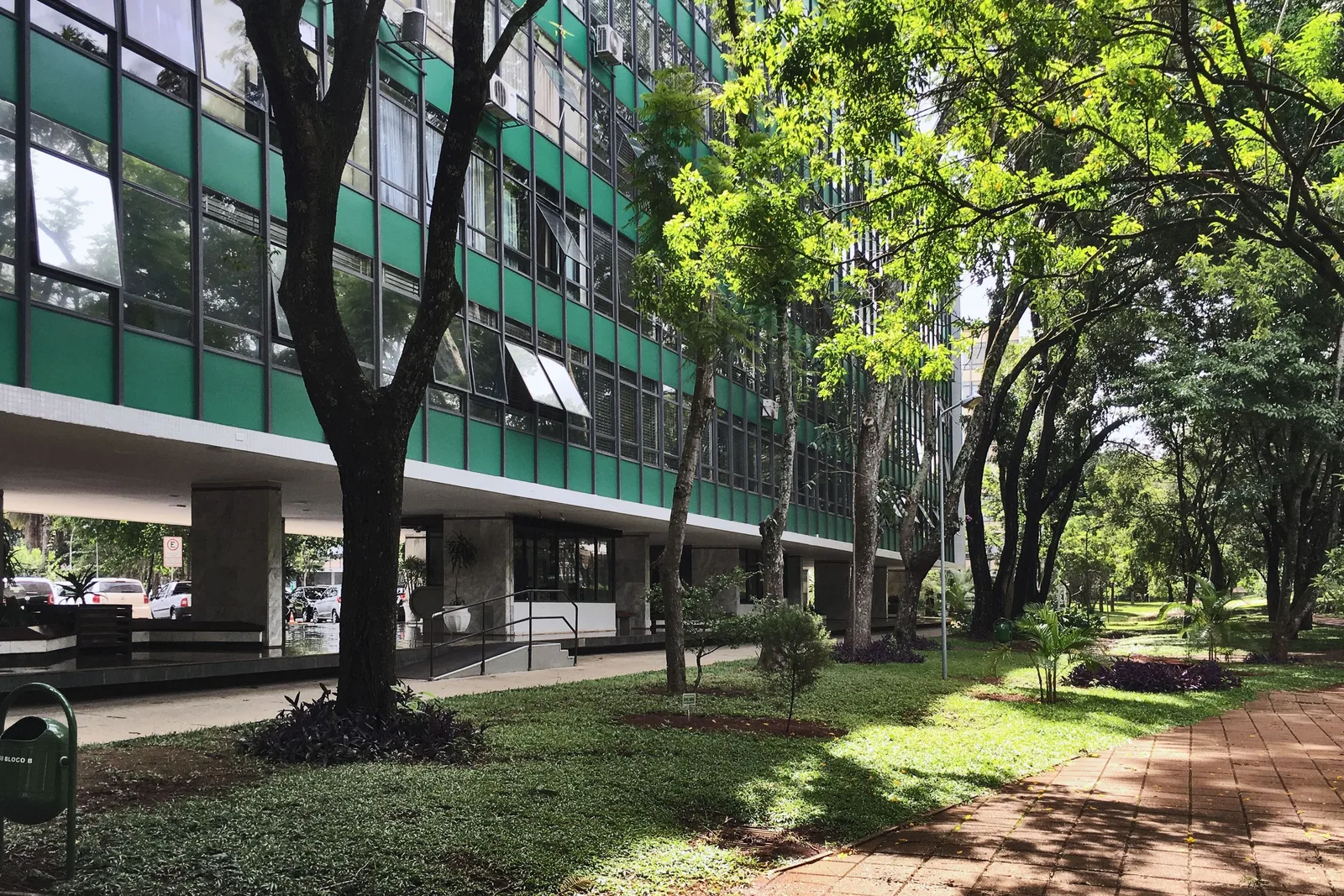
  • A superquadra in Asa Sul: a long apartment block with green-tinted windows raised on pilotis behind tall trees, a red brick path and lawns running past it

    Asa Sul, 308 Sul · an hour

    A walk through the model superquadra

    The superquadras are the part of the plan people actually live in: apartment blocks of three or six floors raised on pilotis so you can walk underneath, around green space and a strip of local shops. The original set, 107, 108, 307 and 308 Sul, keeps the model superquadra at 308 Sul, with Burle Marx gardens and a pool of carp, plus the Igrejinha, the Cine Brasília and the schools that made up Costa’s neighborhood unit. The pilotis are there so that anyone can walk underneath.

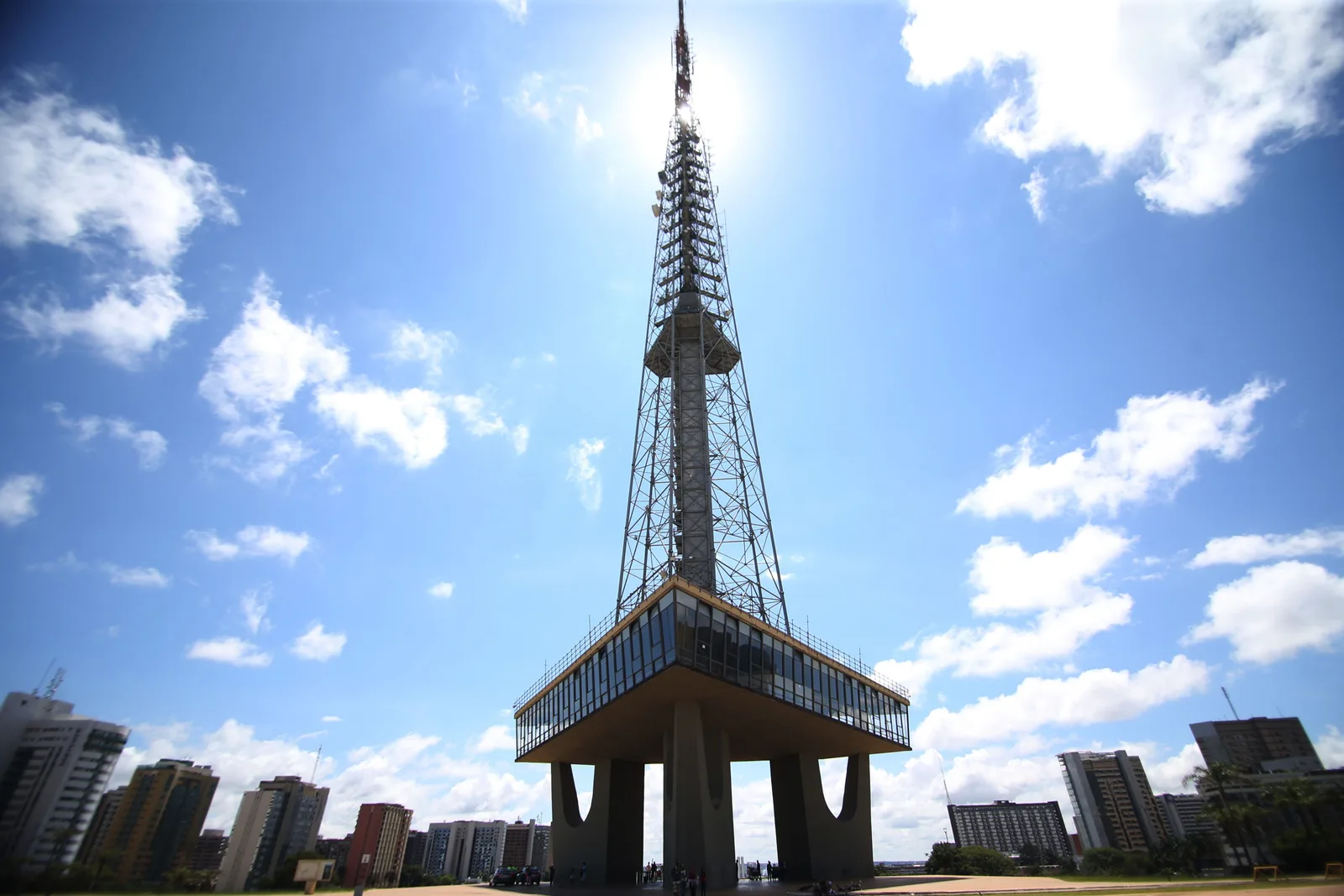
  • The Torre de TV from below: a tall steel lattice mast rising from a concrete platform into a bright blue sky with white clouds, apartment blocks low on the horizon

    Eixo Monumental · an hour

    The Torre de TV and its craft fair

    Lúcio Costa’s 230-meter TV tower of 1967 stands at the top of the Eixo Monumental, with a craft fair around its base from Tuesday to Sunday and a fountain beside it. The viewing deck, 75 meters up, has been closed for new elevators, with reopening forecast for October 2026. Check before you go. If it is still shut, the fair is reason enough to stop.

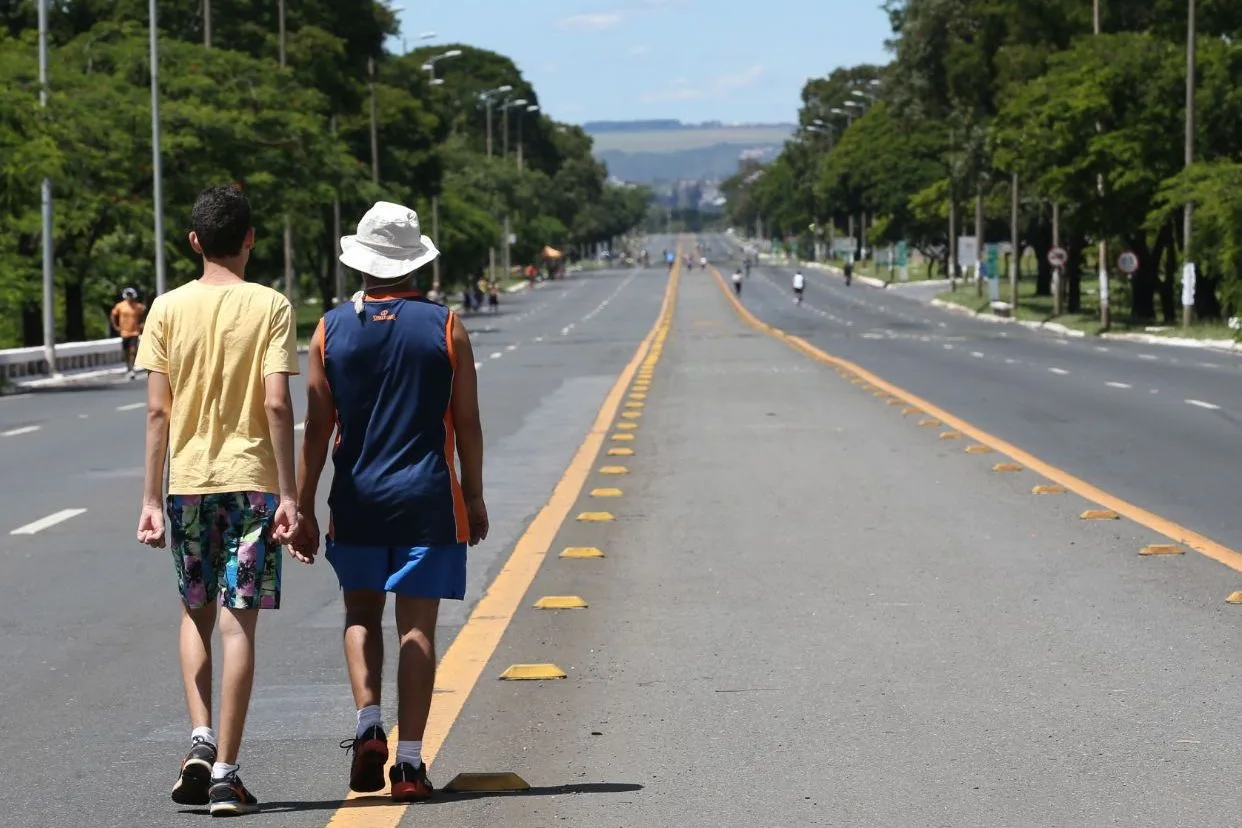
  • The Eixão closed to cars on a sunny day: two people walking away down the empty lanes beside the yellow center line, runners and cyclists far ahead, and tall trees and lamp posts lining both sides

    Eixo Rodoviário · a morning

    The Eixão on a Sunday

    Every Sunday and holiday from 6:00am to 6:00pm, the Eixão, the road down the middle of the residential wings, closes to cars and becomes a 14-kilometer park for walking, running and cycling. Pick up a share bike in Asa Sul and ride north under the trees. It is the best way to feel how Costa’s plan works, and transit is free that day.

The lake

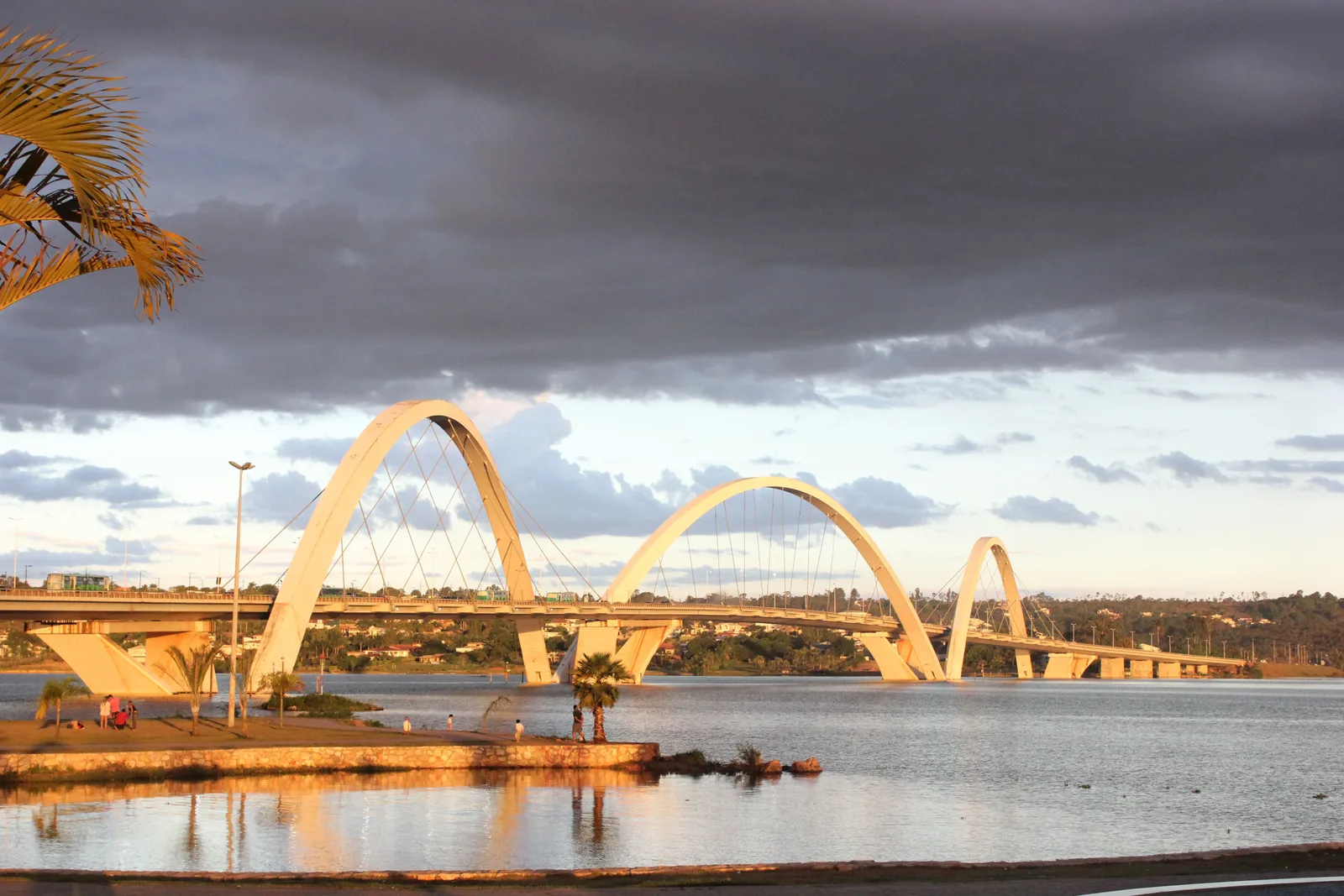
  • The Ponte JK at sunset, its three arches glowing gold under a dark cloudy sky and reflected in the calm water of Lago Paranoá

    Lago Sul · an hour

    Sunset at the Ponte JK

    Three arches skipping across the lake, designed by Alexandre Chan and opened in 2002, said to be inspired by a stone skipping over water. It won the Gustav Lindenthal medal at the 2003 International Bridge Conference. The Orla JK at its foot has bars and restaurants on the water, and the arches are at their best in the last light of the day.

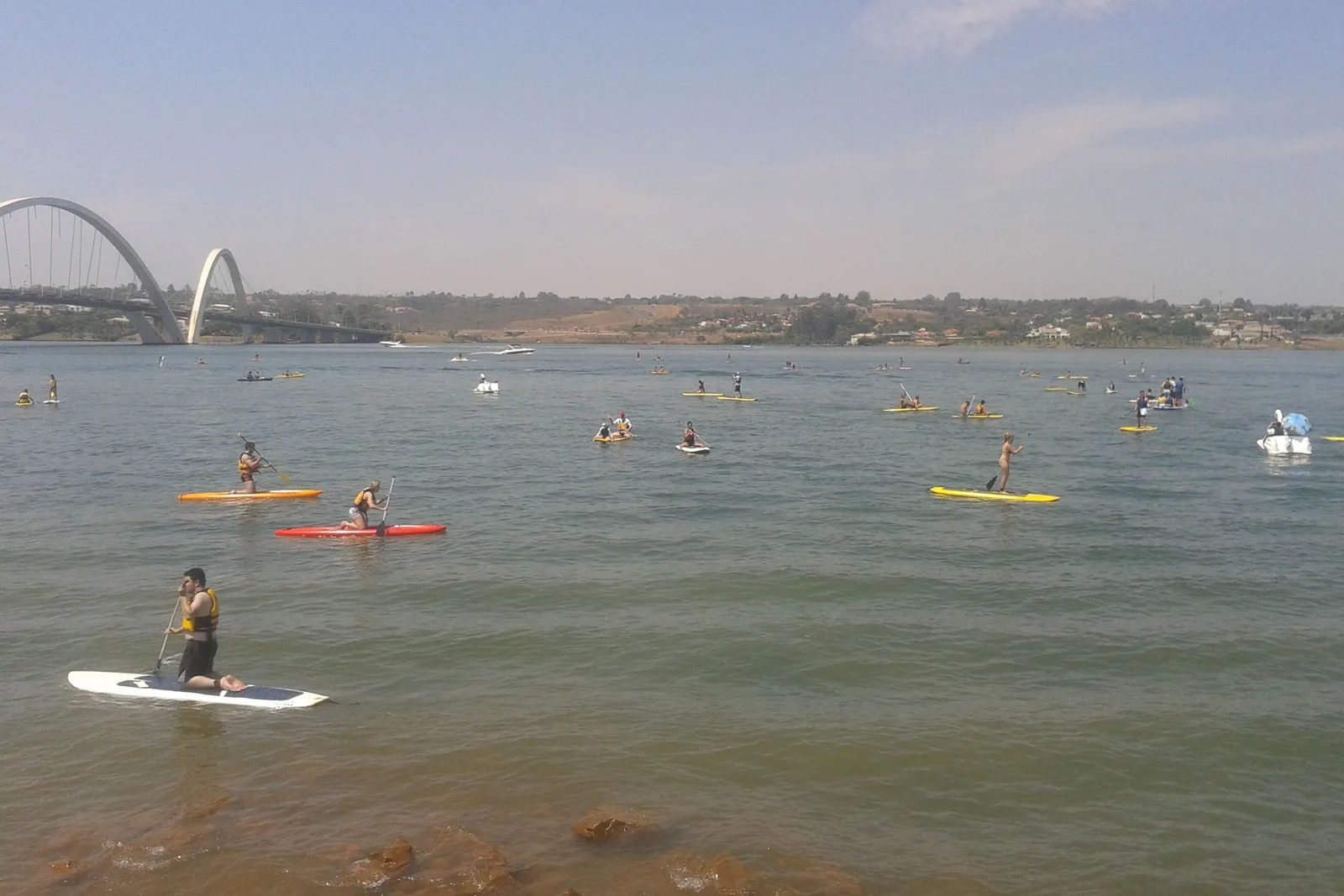
  • Stand-up paddlers and kayakers on Lago Paranoá on a hazy day, a man in a life vest kneeling on his board in the foreground and the arches of the Ponte JK on the horizon

    Lago Sul · two hours

    Stand-up paddle at the Orla JK

    Lago Paranoá is an artificial lake, dammed in 1959 and filled the following year, and Brasília uses it the way other cities use a beach. The shore at the foot of the Ponte JK is the busiest spot for stand-up paddle, kayaks and pedal boats. The water utility’s tests in 2024 found about 95 percent of the public shoreline fit for swimming, but not the stretches near the sewage plants: swim only at the designated public spots. The CDC’s country-wide advice is to avoid swimming in fresh, unchlorinated water in Brazil, because of schistosomiasis.

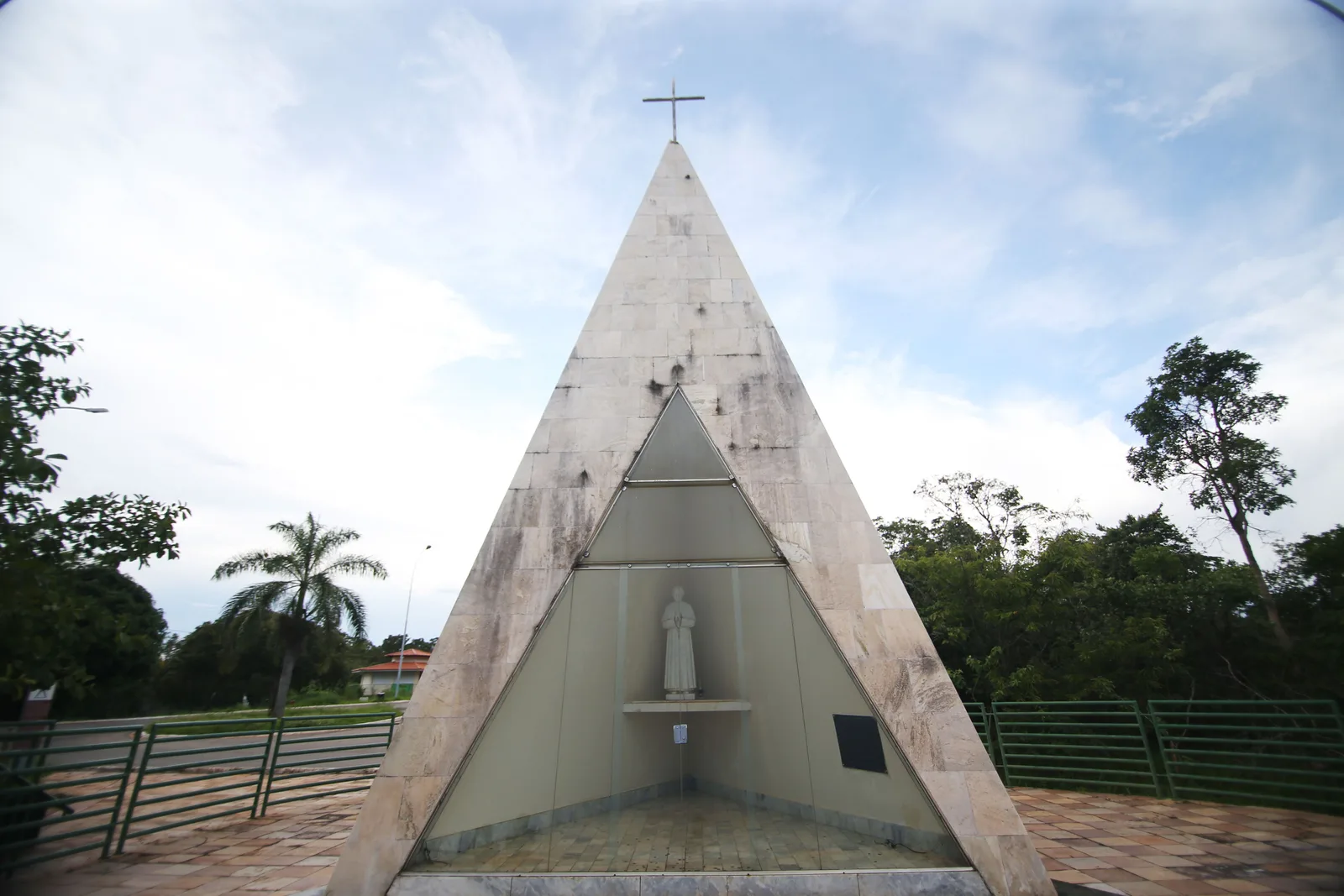
  • The Ermida Dom Bosco: a small marble pyramid chapel with a cross on top and a statue of Dom Bosco behind its glass front, on a paved terrace among trees

    Lago Sul · an hour

    Sunset at the Ermida Dom Bosco

    A small pyramid chapel on a point across the lake from the city, with a lawn and a deck down to the water. The sun sets over the Plano Piloto from here, and the tourism office calls it the most beautiful sunset in Brasília. It is about 16 km by road from the hotel sectors; go by car.

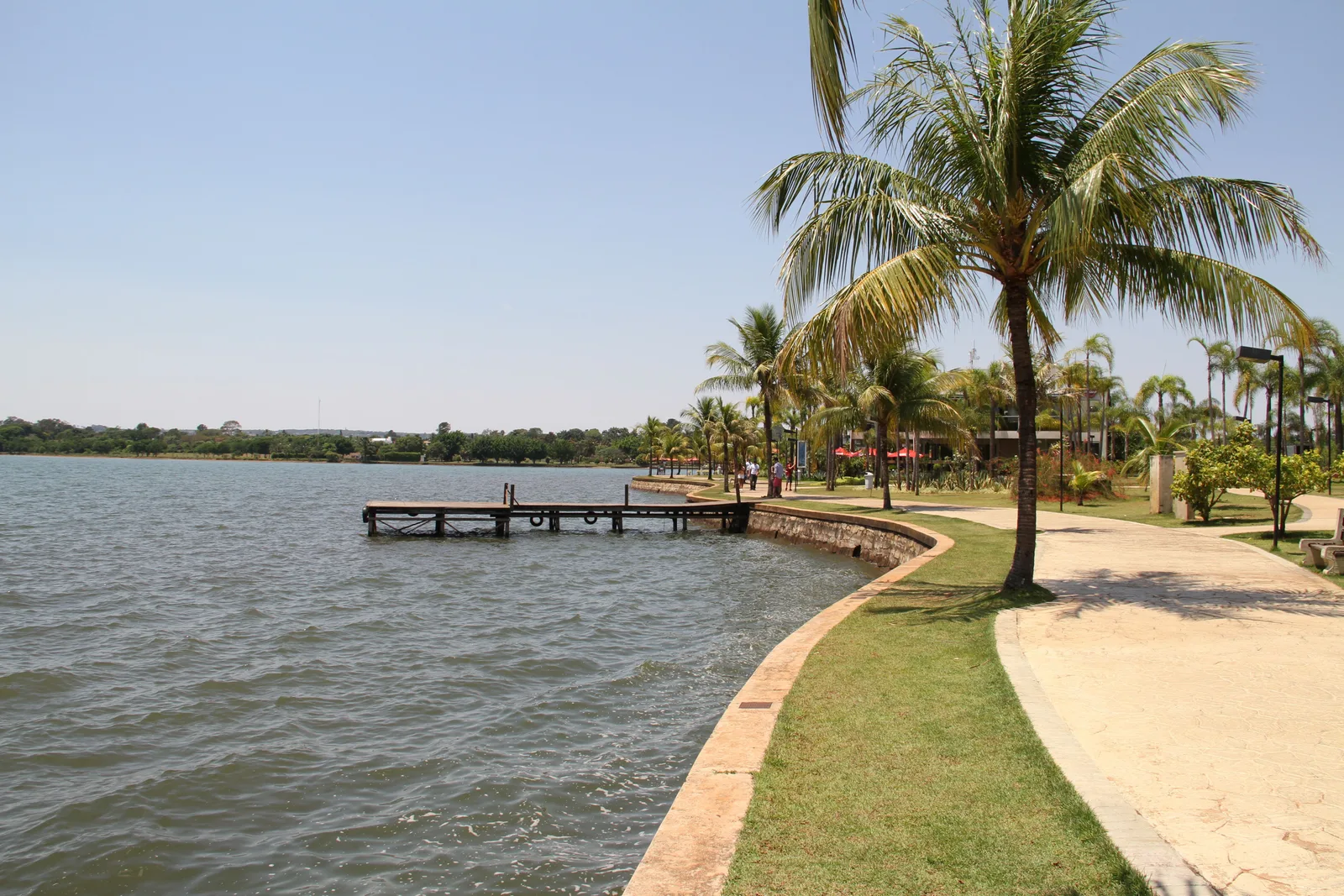
  • The waterfront at the Pontão do Lago Sul: a paved path curving along the lake past palm trees and a small pier, the water calm under a clear sky

    Lago Sul · an evening

    Dinner at the Pontão do Lago Sul

    A lakeside promenade of palms, lawns and restaurants on the southern shore, a short drive from the Plano Piloto, with tables by the water at sunset. The complex opens from 7:00am until midnight, and until 1:00am on Fridays and Saturdays; each restaurant keeps its own hours.

Parks & music

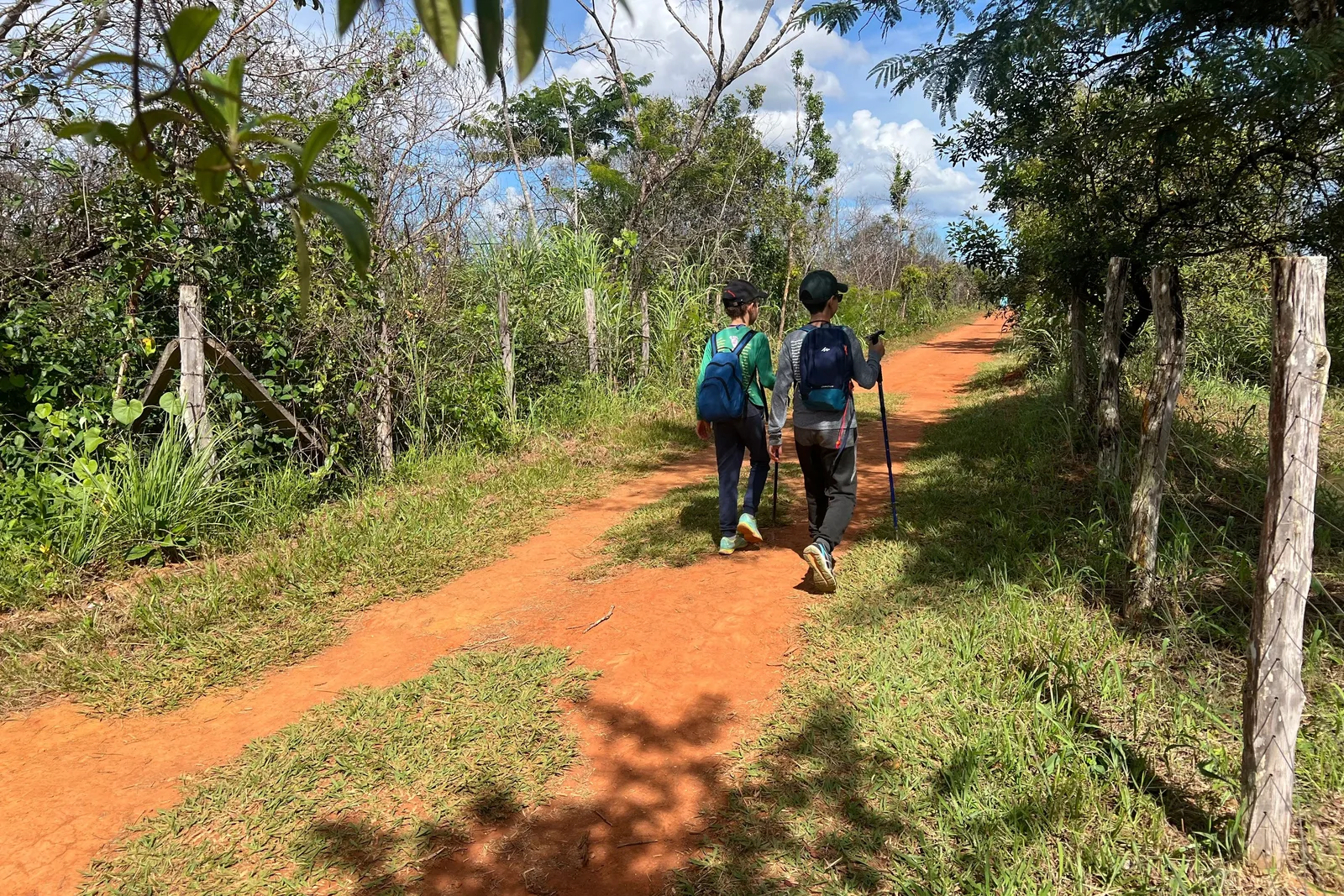
  • Two hikers with backpacks, one with a walking pole, on a red earth trail between fenced cerrado scrub in the Parque Nacional de Brasília, under a blue sky with white clouds

    Northwest of the city · a morning

    Cerrado trails in the Parque Nacional

    The Parque Nacional de Brasília covers more than 42,000 hectares of cerrado, the savanna of central Brazil, on the city’s edge. Its trails, among them the Trilha da Capivara and the Cristal Água routes, stay open. Entry is $7.85 (R$40), from 6:00am to 4:00pm. The two spring-fed pools, the park’s big draw, have been closed since February 2026 for structural repairs, with no reopening date; check with ICMBio before you go.

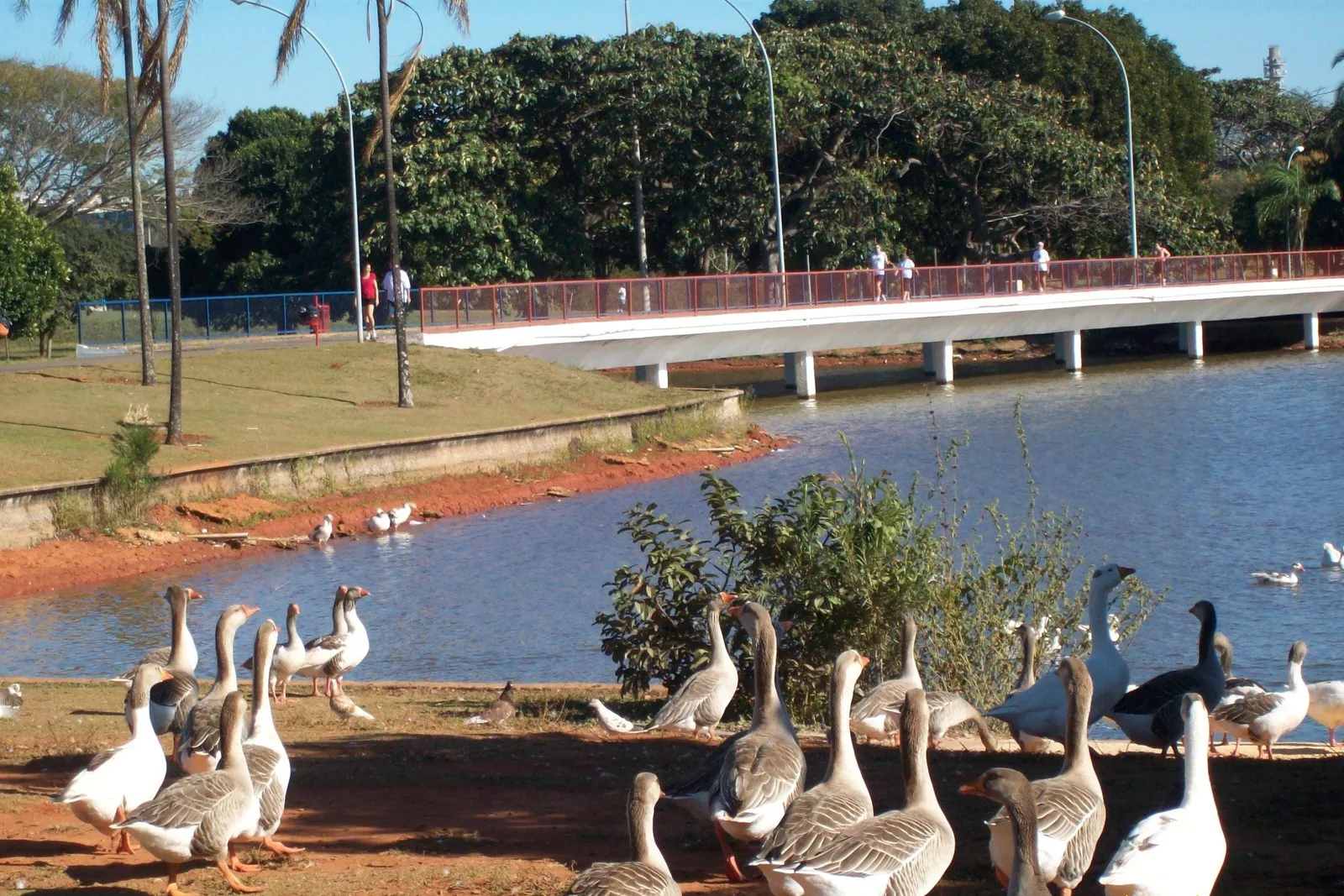
  • A small lake in the Parque da Cidade with geese on the bank, a long white footbridge crossing behind them and tall trees beyond

    Beside Asa Sul · an hour or a morning

    The Parque da Cidade

    The city park, 420 hectares of lawns, trees, paths and a lake, laid out by Lúcio Costa with buildings by Niemeyer, landscaping by Burle Marx and tiles by Athos Bulcão. It opened in 1978, is free and never closes. It is where the city runs and cycles at dawn and after work.

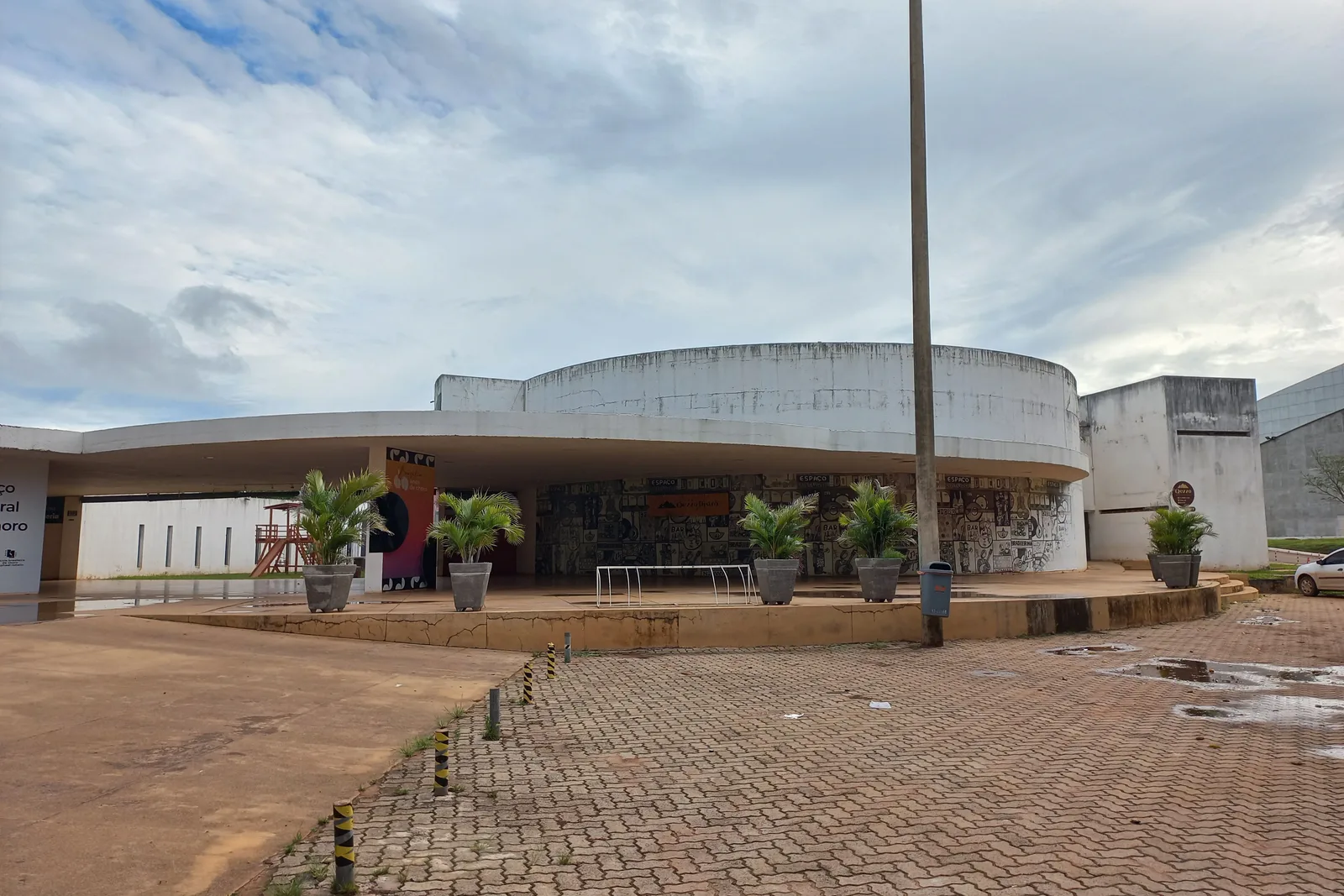
  • The Clube do Choro building in Brasília: a low pavilion with a curved white roof behind a paved forecourt and a tall lamp post, under a cloudy sky

    Eixo Monumental · a long lunch

    Saturday feijoada at the Clube do Choro

    Founded in 1977 and housed since 2011 in a Niemeyer building on the Eixo Monumental, the Clube do Choro is a home of choro, Brazil’s instrumental music, and runs a choro school it calls the first of its kind in the country. On Saturdays the kitchen serves a feijoada buffet from noon with samba from 1:00pm, at shared tables, for $12.75 (R$64.90) plus a music cover. Concerts run on several evenings a week; check the program.

Where to stay

Three choices, and one obvious one.

Most of Brasília’s hotels stand in two purpose-built hotel sectors on either side of the Eixo Monumental, a short ride from everything on this page. Apartments and guesthouses in the superquadras are the residential alternative, and a handful of hotels sit by the lake. Book a Friday and Saturday night if you can: that is when rates drop.

Drag and zoom to explore.

Tap an area to open it and see it on the map

  • Our pick

    Best for: A short stay, close to the Esplanada

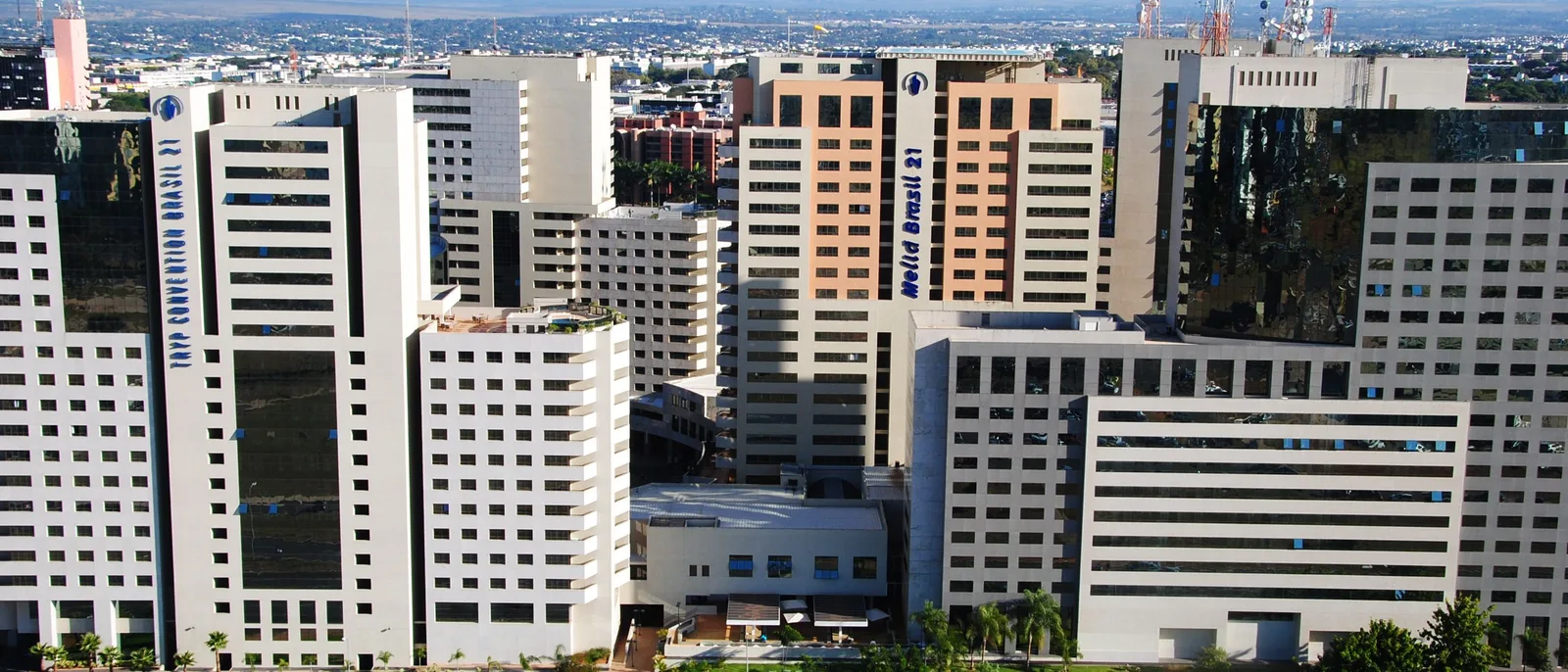
    Hotel towers of the Setor Hoteleiro Sul, among them the Brasil 21 complex, packed tightly together

    The two hotel sectors flank the Eixo Monumental near the TV tower, and between them they hold most of the city’s rooms, at every price. The north side is a few minutes’ walk from the Torre de TV and next to the Conjunto Nacional mall; the south side is nearer the Parque da Cidade and the Pátio Brasil mall. Both are equally close to the Esplanada and Congress, a short ride down the axis.

    • Most hotels
    • Near the TV tower
    • Short ride to the Esplanada
    • Cheaper at weekends
  • Best for: Living inside the plan

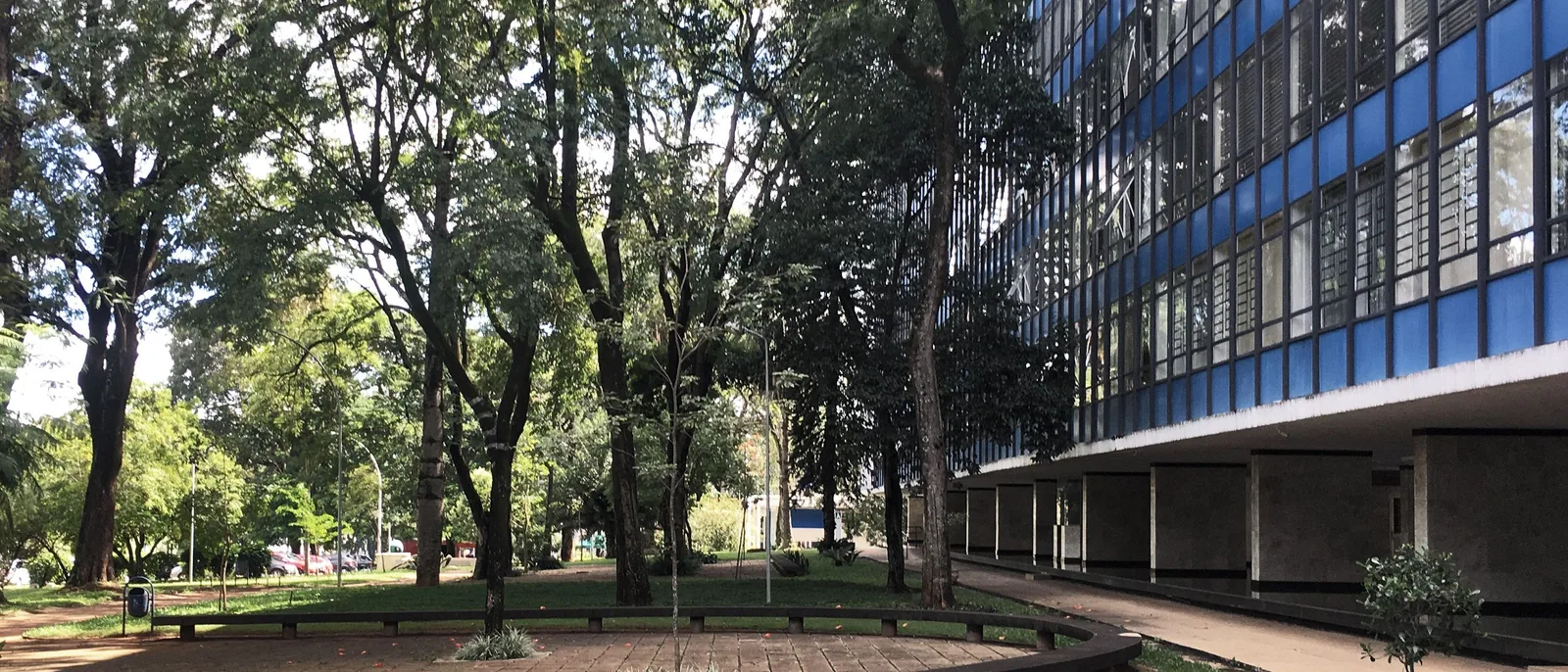
    A superquadra in Asa Sul: an apartment block with blue-glazed windows raised over open ground behind a lawn, a curved bench and tall trees

    The residential wings, where apartments and guesthouses sit in the superquadras themselves, with the local shops of each block a short walk away. Asa Sul has the metro running down its length and the Igrejinha, the model superquadra and the Santuário Dom Bosco close by. Asa Norte has no metro.

    • Apartments and guesthouses
    • Metro in Asa Sul
    • Local shops
    • Residential
  • Best for: Quiet, green, and by the water

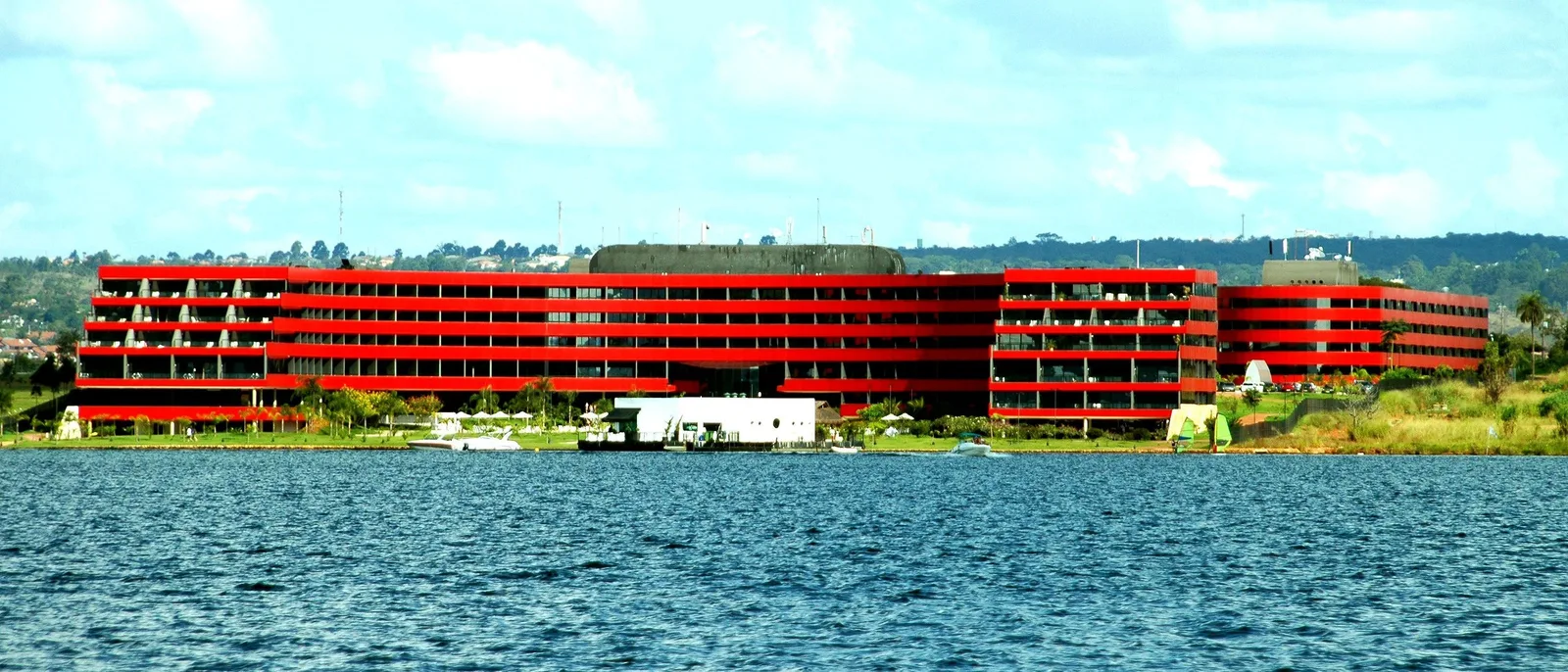
    A long lakeside hotel painted bright red, its terraced floors running along the shore of Lago Paranoá, a small white building on a jetty and moored boats at the water’s edge, and choppy blue water in the foreground

    The Setor de Hotéis de Turismo Norte, on the lake near the Palácio da Alvorada, is a leafier and quieter stretch with a few larger hotels, some of them resorts. You trade the short hops of the hotel sectors for space and the water, and a car becomes a necessity.

    • By the lake
    • Larger hotels
    • Quiet
    • Car needed

A working plan

Two days, one axis each.

The government axis on day one, the city people live in and the lake on day two. Congress is closed to the public on Tuesdays and Wednesdays, the Cathedral and the Memorial JK on Mondays, and the Planalto opens only on Sundays, so arrange the two days around those. Book Congress and the Itamaraty before you fly.

  1. 01
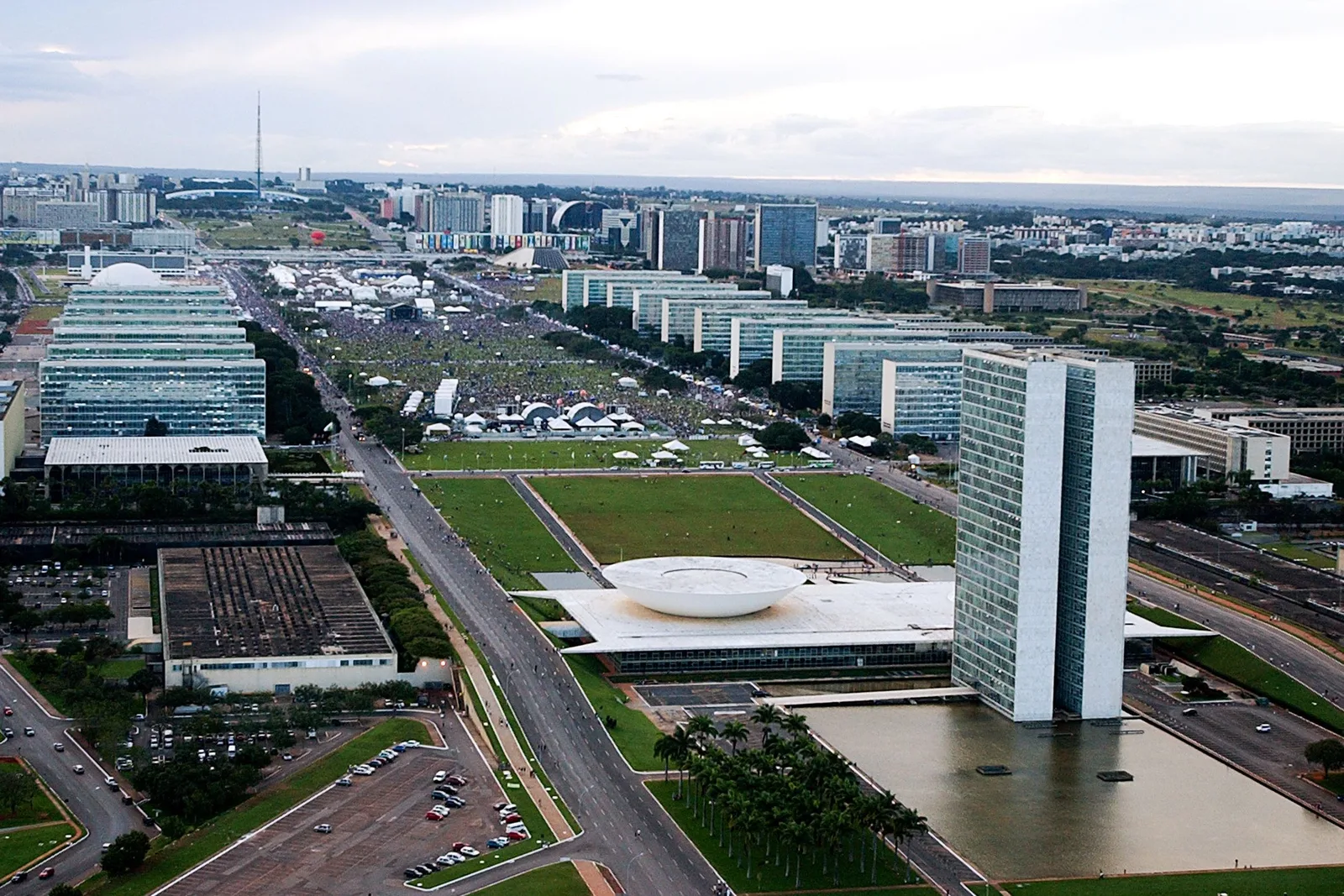
    Congress from above, its twin towers and the bowl of the Chamber in the foreground, and the Esplanada dos Ministérios beyond packed with a crowd and white tents for a public event, the TV tower on the horizon

    Eixo Monumental & Praça dos Três Poderes

    The Esplanada, end to end

    The Cathedral when it opens, the Museu Nacional next door, then the Itamaraty tour and lunch. Congress in the afternoon, and the view of the Praça dos Três Poderes from the edge of the works as the light turns gold.

  2. 02
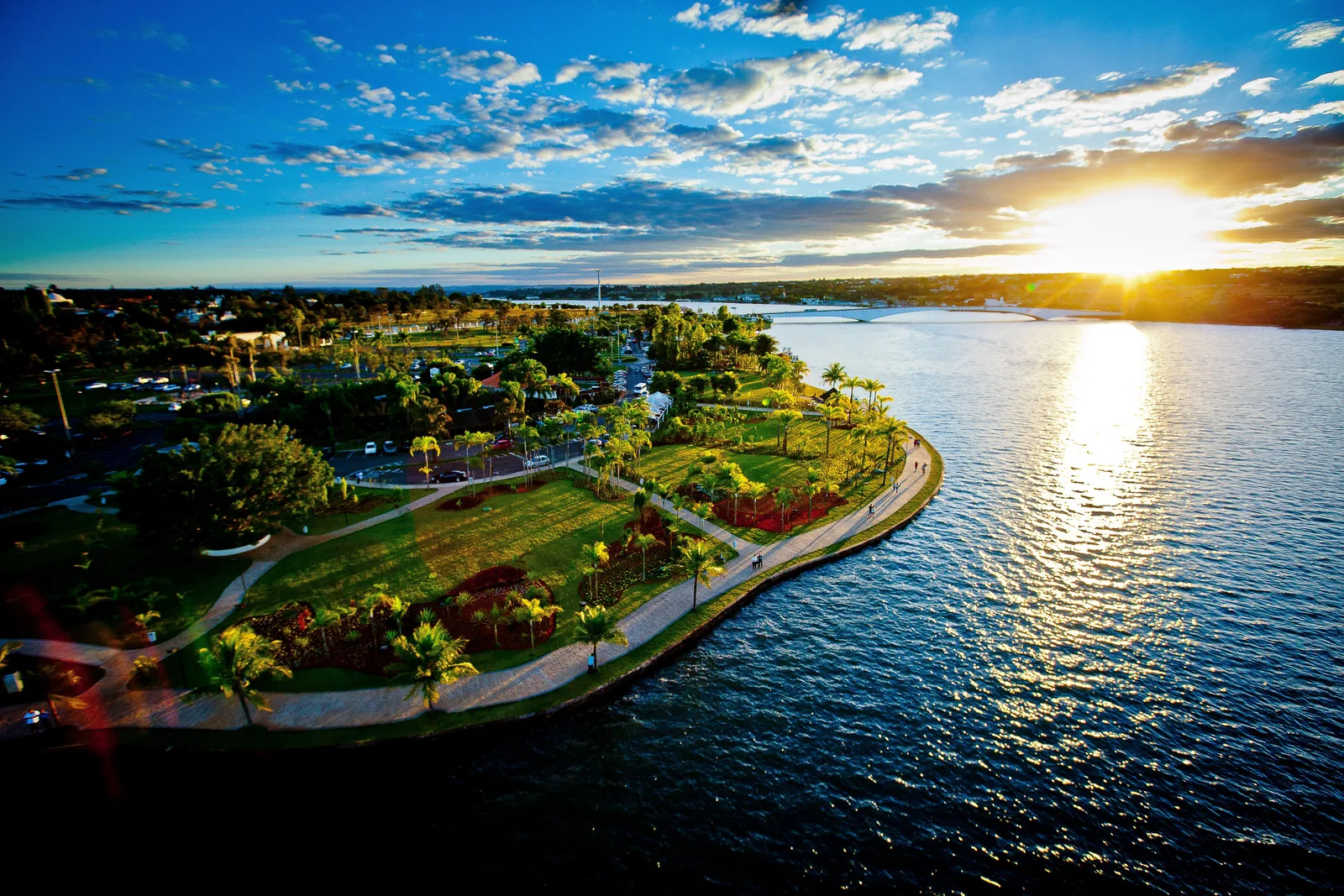
    The sun setting over Lago Paranoá from the air, a wooded point of the shore with paths and lawns in the foreground and the light glittering on the water

    Memorial JK, Asa Sul & Lago Paranoá

    The plan, then the lake

    The Memorial JK and the TV tower fair in the morning, then the blue glass of Dom Bosco, the Igrejinha and the model superquadra at 308 Sul. Sunset at the Ponte JK or the Ermida Dom Bosco.

This is a starting shape, not a fixed departure — we rearrange it around your dates. Have it built for you

Timing

Five dry months, then the storms.

Brasília has two seasons and a sharp line between them. From May to September it barely rains, the sky is clear and the air grows drier by the week. From October to April the rains come, and November and December are the wettest months of the year. No month averages a high much above 29°C, so even the summer is warm rather than hot.

Temperature and rainfall for each month in Brasília. Choose a month for its average high and low, rain and UV, and what the city is like then.

January

Trade-offs
Air
18–27°C 64–81°F
UV
10 Very high
Rain
16 days 206 mm / 8.1 in

The rainy season, with rain on about half the days. Congress is in recess and tours run every day.

February

Trade-offs
Air
18–27°C 64–81°F
UV
11 Extreme
Rain
14 days 180 mm / 7.1 in

Still the rainy season, 180 mm on 14 days. Usually Carnaval.

March

Trade-offs
Air
18–27°C 64–81°F
UV
11 Extreme
Rain
15 days 226 mm / 8.9 in

The wettest month of the first half of the year, 226 mm on 15 days.

April

Good
Air
18–27°C 64–81°F
UV
10 Very high
Rain
9 days 145 mm / 5.7 in

The rains ease to 145 mm on 9 days. The city’s birthday on the 21st.

May

Good
Air
16–26°C 61–79°F
UV
9 Very high
Rain
3 days 27 mm / 1.1 in

The dry season begins: 27 mm on about three days, and clear skies.

June

Good
Air
14–25°C 57–77°F
UV
7 High
Rain
1 day 3 mm / 0.1 in

Dry, with the coolest afternoons of the year. Bring a layer for the mornings.

July

Best
Air
14–26°C 57–79°F
UV
8 Very high
Rain
0 days 2 mm / 0.1 in

The pick: 1.5 mm and no rain days on the normals, and the coolest mornings, near 14°C. Congress is in recess from the 18th, and tours run every day.

August

Good
Air
15–27°C 59–81°F
UV
10 Very high
Rain
2 days 16 mm / 0.6 in

Dry and sunny, with the lowest humidity of the year, 44 percent on average. Drink water.

September

Good
Air
18–29°C 64–84°F
UV
11 Extreme
Rain
4 days 38 mm / 1.5 in

The hottest month, at 29°C, and still dry. The Independence Day parade on the Eixo Monumental on the 7th, and the Brasília film festival mid-month.

October

Trade-offs
Air
19–29°C 66–84°F
UV
11 Extreme
Rain
10 days 142 mm / 5.6 in

The rains return, 142 mm on 10 days, and the days stay hot.

November

Trade-offs
Air
18–27°C 64–81°F
UV
10 Very high
Rain
17 days 253 mm / 10.0 in

The wettest month of the year, 253 mm on 17 days.

December

Trade-offs
Air
18–27°C 64–81°F
UV
10 Very high
Rain
18 days 241 mm / 9.5 in

Nearly as wet, with the most rain days of the year, 18. Congress breaks from the 23rd and tours run daily.

  • Best The one or two peak months
  • Good A real recommendation
  • Trade-offs Workable, with a catch
See Brasília on the Brazil calendar

UV is the monthly average of the daily peak, 2022 to 2025, calculated from Copernicus Atmosphere Monitoring Service data. Weather data by Open-Meteo.com, CC BY 4.0.

The pick

July

The heart of the dry season: 1.5 mm of rain in an average July and not one rain day on the 1991–2020 normals, highs around 26°C and the coolest mornings of the year, near 14°C.

Also good

April–June and August–September

April is the tail of the rains; May and June are almost as dry as July. August and September stay dry and get hotter, with the lowest humidity of the year, and the ipês flower.

Trade-offs

October–March

The rainy season: 142 to 253 mm a month on 10 to 18 days, and November and December the wettest pair. The buildings are no less striking under a storm sky.

About the rain

The rainy season is real. From November to March the city averages 180 to 253 mm a month, falling on 14 to 18 days, and October and April are the shoulders. The sights are a short drive apart, and Congress, the Itamaraty and the churches work just as well on a wet day.

The dry season is genuinely dry. June, July and August together average about 21 mm of rain, and July averages less than one rain day. The cost is the air: humidity averages 51 percent in July and falls to 44 percent in August, the lowest of the year, with September close behind. Carry water, and use lip balm and sunscreen. On the worst afternoons INMET issues low-humidity alerts and advises avoiding exertion in the driest hours.

The dates worth planning around

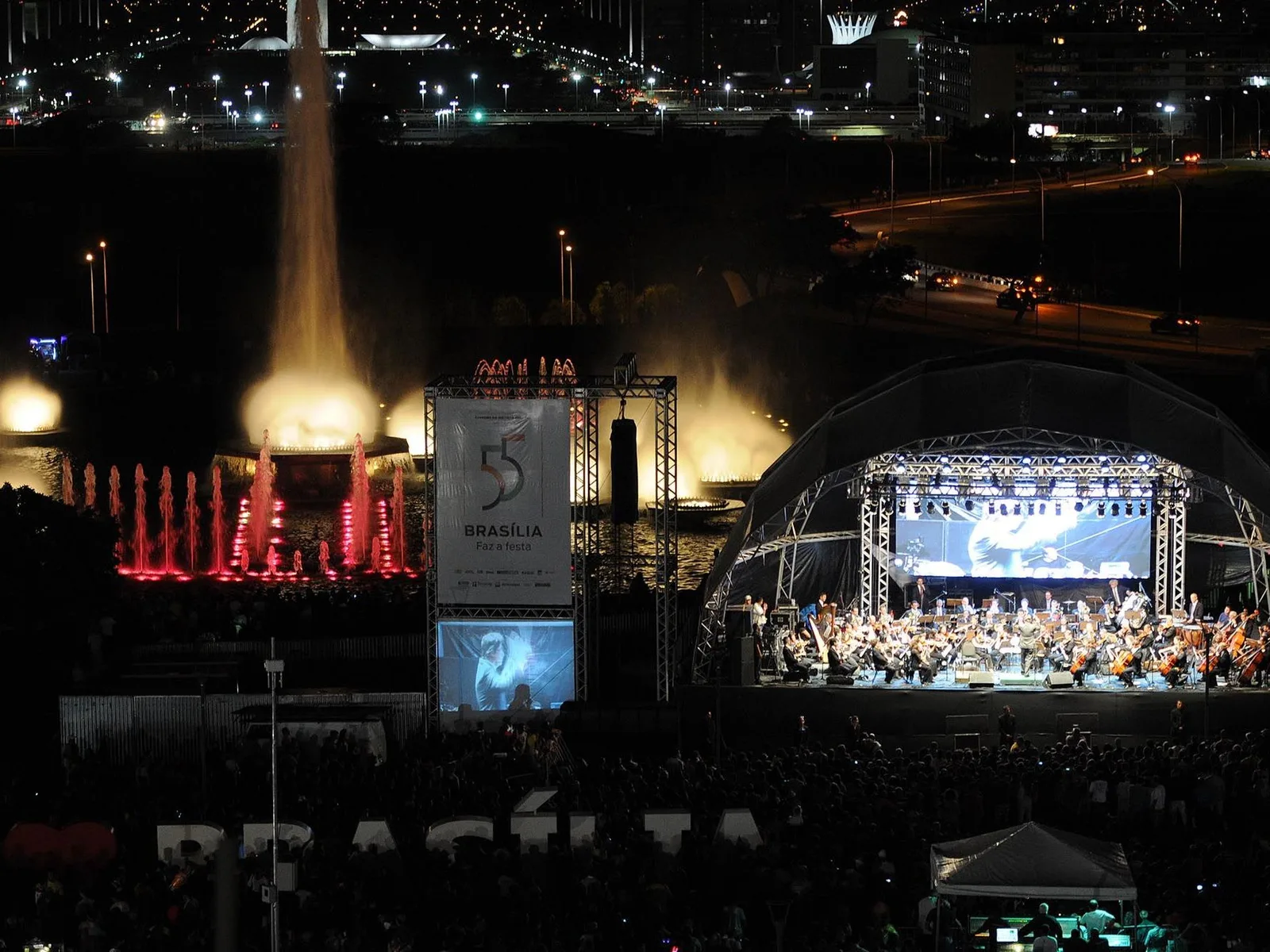
An orchestra on a brightly lit open-air stage at night at the Torre de TV during Brasília’s birthday celebrations, a crowd in front and the lit fountain at the left

The city’s birthday

April 21

Brasília was inaugurated on 21 April 1960 and celebrates the date every year. In 2026, its 66th birthday, the program ran from 18 to 21 April, with the Brasília Marathon on the Esplanada, free concerts, a free program at the CCBB cultural center and free entry to the Jardim Botânico on the day itself. Check the year’s program in early April.

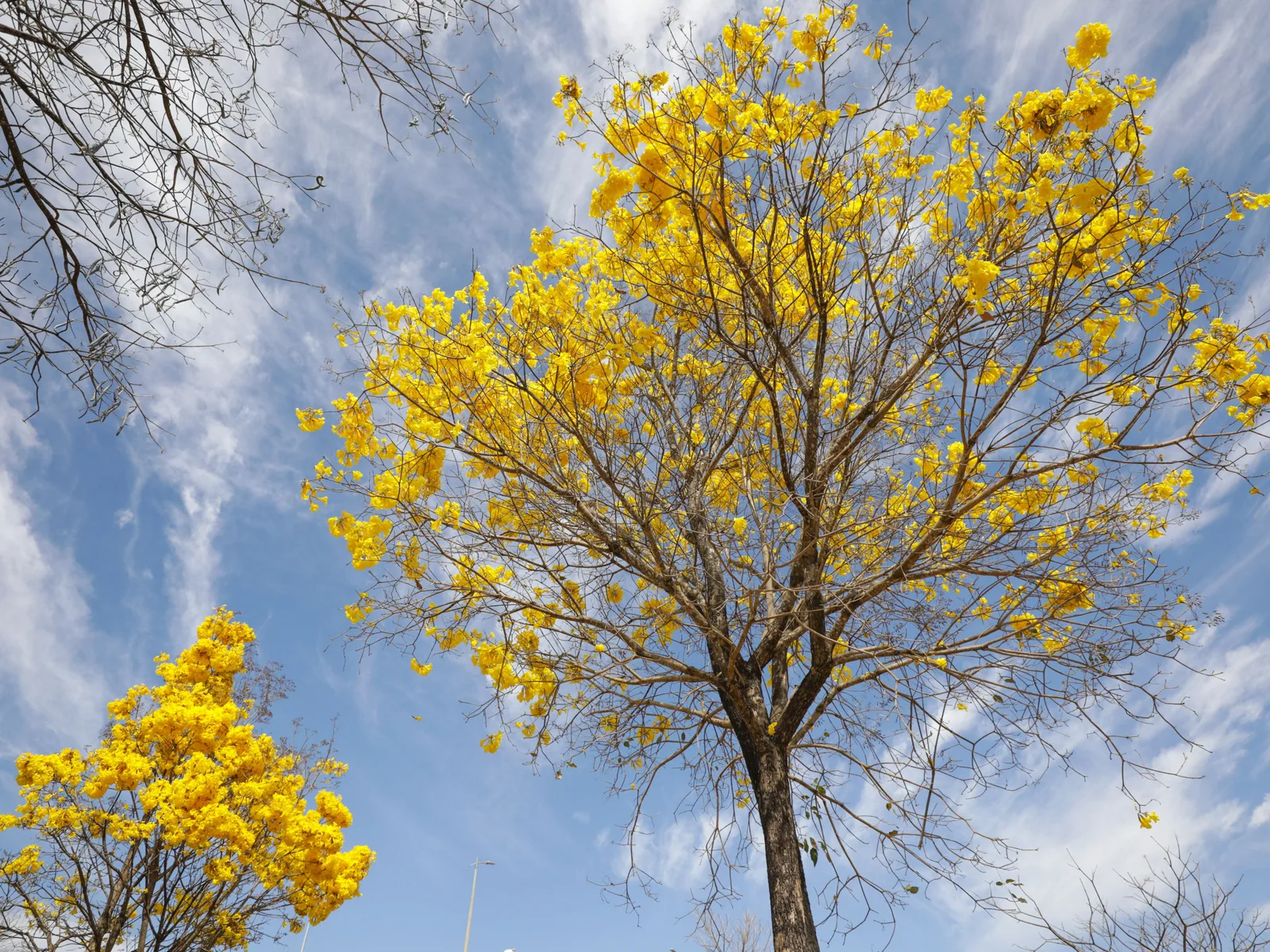
A yellow ipê tree in full flower against a blue sky in Brasília, its bare branches covered in clusters of bright yellow trumpet-shaped blossoms

The ipê season

May to October, in waves

The Federal District has about 250,000 ipê trees on Novacap’s count, and they flower in sequence through the dry season. The purple ipê-roxo comes first, from about May or June to August, then the yellow from July to September, then the white and the pink from August. August and September have the most colors at once, with yellow, white and pink all in flower.

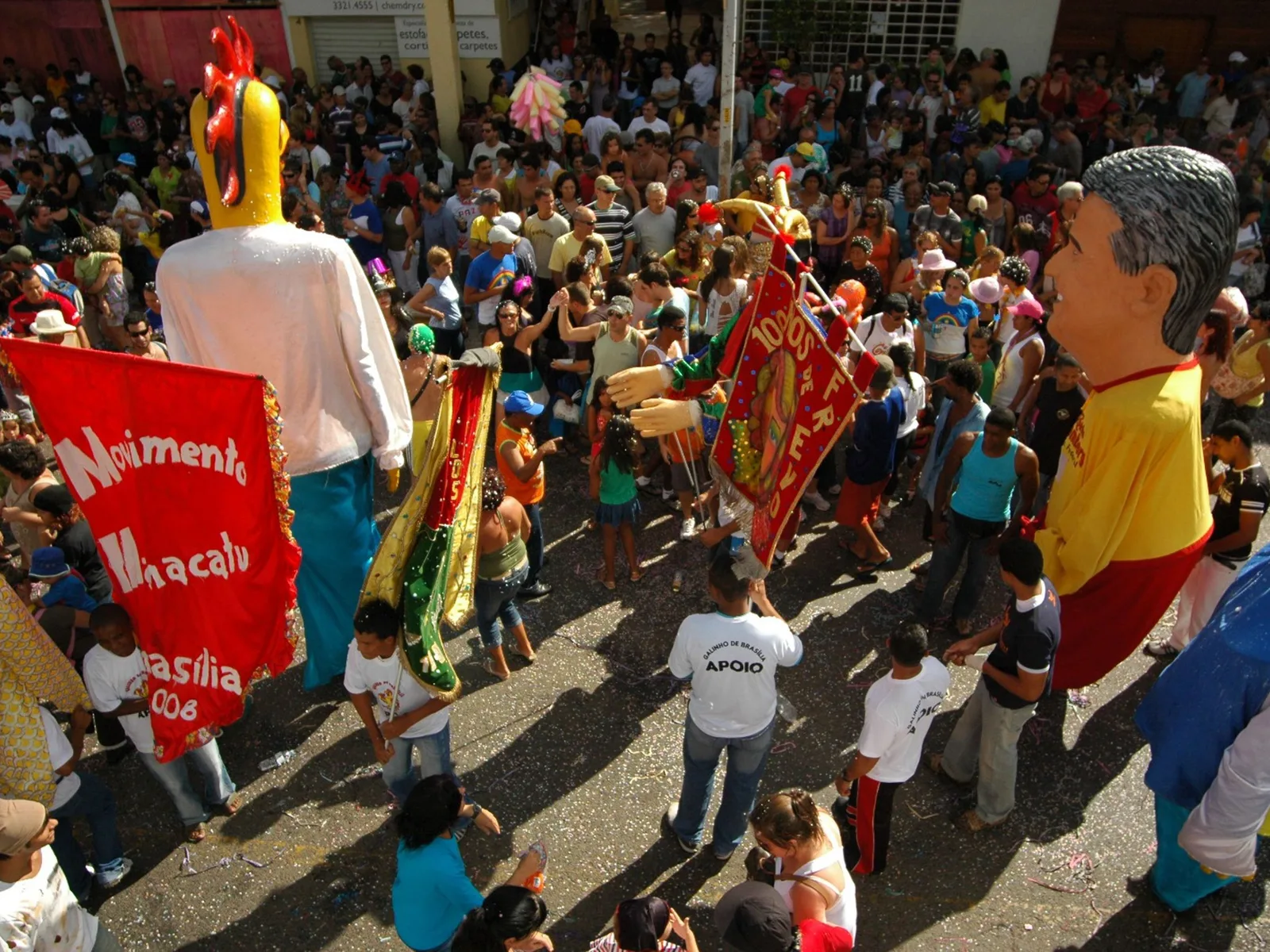
A Carnaval street bloco in Brasília: a dense crowd in costume around giant carnival puppets and a red banner on a sunny afternoon

Carnaval

February or early March, the dates move with Easter

Brasília’s street Carnaval has grown fast. In 2026 the city’s DF Folia program counted 76 blocos, up from 56 in 2024, and the Federal District’s culture department put the crowds at about 1.5 million revelers over the four days. The blocos spread across 18 regions, with stages on the Esplanada, at the Museu Nacional and in the Setor Comercial Sul.

Good to know

Before you come

How many days do I need in Brasília? +

Two full days, which is why the itinerary above is built that way: one for the Eixo Monumental, the Esplanada and the Praça dos Três Poderes, one for the Memorial JK, Asa Sul and the lake. A third day adds the Parque da Cidade or a slower Sunday on the Eixão, and an evening at the Clube do Choro. It pairs naturally with the Chapada dos Veadeiros, about three and a half hours north by road.

Can I visit Congress, the Planalto and the Itamaraty? +

Yes, all three, with free guided tours, but each has its own days. Congress tours run on Mondays, Fridays, weekends and holidays, about 50 minutes, booked online since 28 September 2026; foreigners show a passport, and on weekdays shorts and flip-flops are not allowed. The Palácio do Planalto opens on Sundays only, 9:00am to 2:00pm, booked on the presidency’s site weeks ahead; the tours are in Portuguese. The Itamaraty runs tours Tuesday to Sunday, in English among other languages, booked at least 24 hours ahead, with no hats or caps. The Supreme Court and the Palácio da Alvorada are closed to visitors for now.

Is Brasília safe for tourists? +

Murder is rare where visitors go: the Plano Piloto recorded 13 homicides in 2025, and the whole Federal District has one of the lowest violent-death rates in Brazil, 9.6 per 100,000 in 2025. The issue in the central Plano Piloto is theft. It records more street thefts and car break-ins than any other part of the Federal District, so keep the phone out of sight, leave nothing in a parked car and use ride apps after dark.

Do I need a car in Brasília? +

You need wheels, not necessarily your own. The city was planned for the car, the sights sit in separate sectors several kilometers apart, and the Esplanada alone is about 2.5 km long. Ride apps cover it cheaply. The metro only serves the Asa Sul, and buses and the metro are free on Sundays and holidays. A rental car makes sense if you are driving on to the Chapada dos Veadeiros.

When is the best time to visit Brasília? +

July, inside a dry season that runs from May to September. July averages 1.5 mm of rain, with no rain days on the 1991–2020 normals, warm days around 26°C and cool mornings near 14°C. April to June and August to September are good too; August and September are the driest air of the year, and the ipês flower. October to March is the rainy season, with November and December the wettest months, though the city works in any weather.

Keep going

Where Brasília fits in a bigger trip.

Brasília is the hub of the interior, with flights to almost everywhere. The Chapada dos Veadeiros is just under four hours north by road, the Pantanal a short hop west, and Rio under two hours away by air.

Free · 29 pages

Free guide

Beginner's Guide to Brazil

A free 29-page guide to everything a first-time visitor should know before landing: visas, safety, money, getting around, where to go, and what to eat.

We'll email you a link to confirm your address. Click it and the guide opens right away.

See what's inside
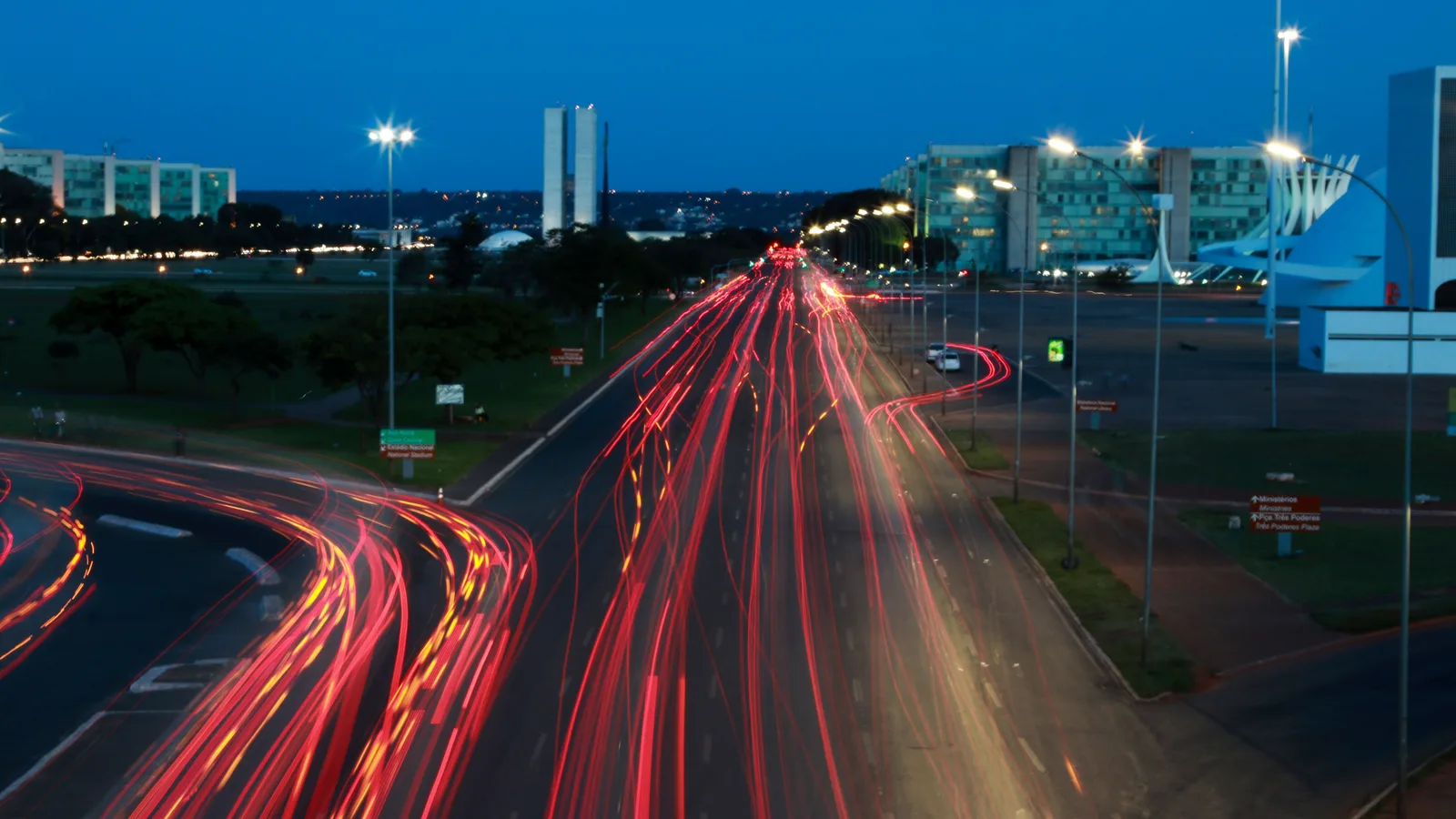
Brasília at dusk: red and white light trails of traffic sweeping along the Eixo Monumental toward the lit towers of Congress and the ministry blocks under a deep blue sky

Skip the planning

See Brasília without working out the opening days.

Tell us your dates and what you want to see inside. We will shape a private Brasília itinerary around the days each building opens, with the tours booked, the right hotel sector for your weekdays, and the Chapada added if you want it.

  • One person, living in Brazil, replying to you directly
  • A reply within one business day, no call center and no bots
  • No cost to plan, and no obligation to book
  • Built around your dates, not a fixed departure