

Skip to content
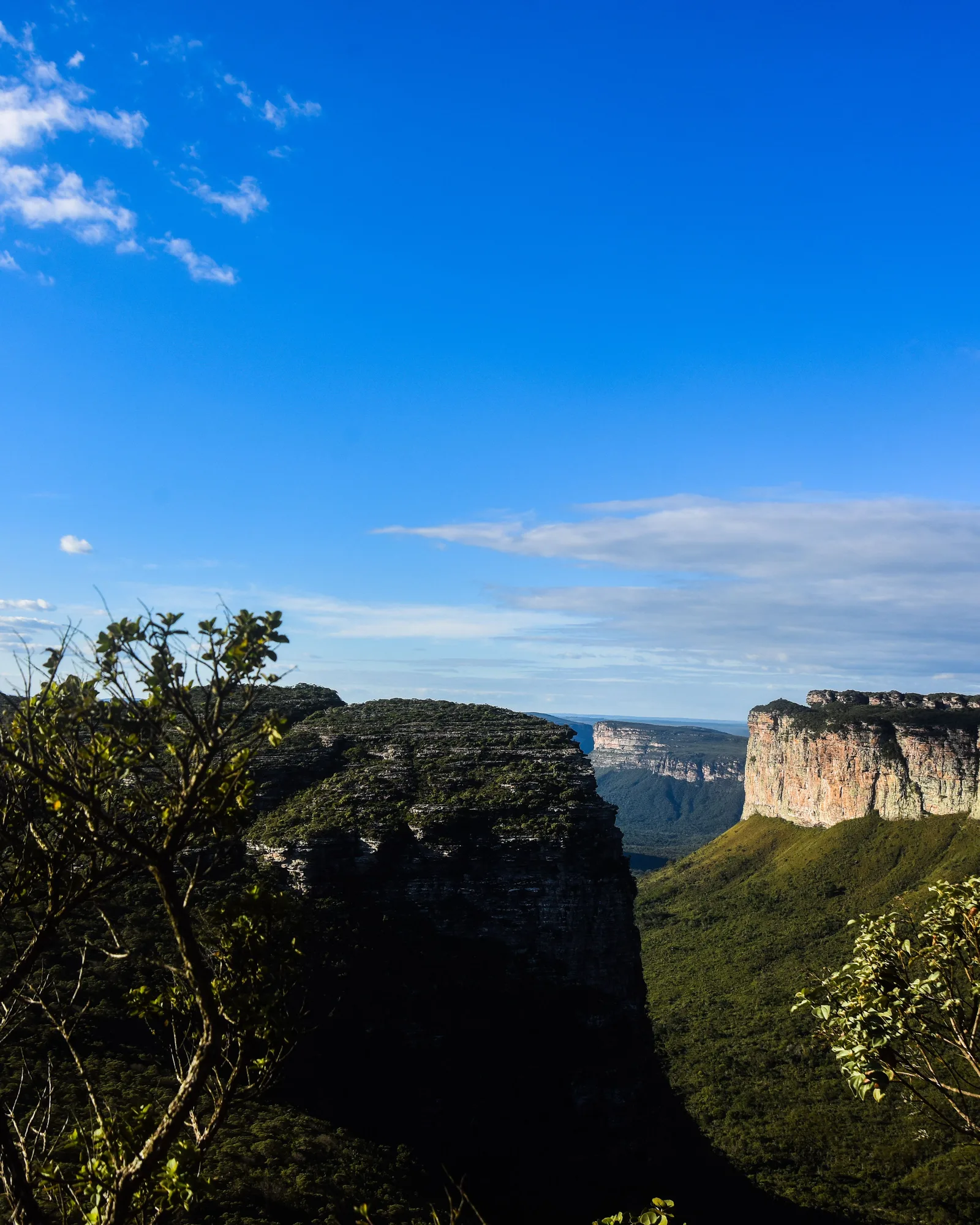
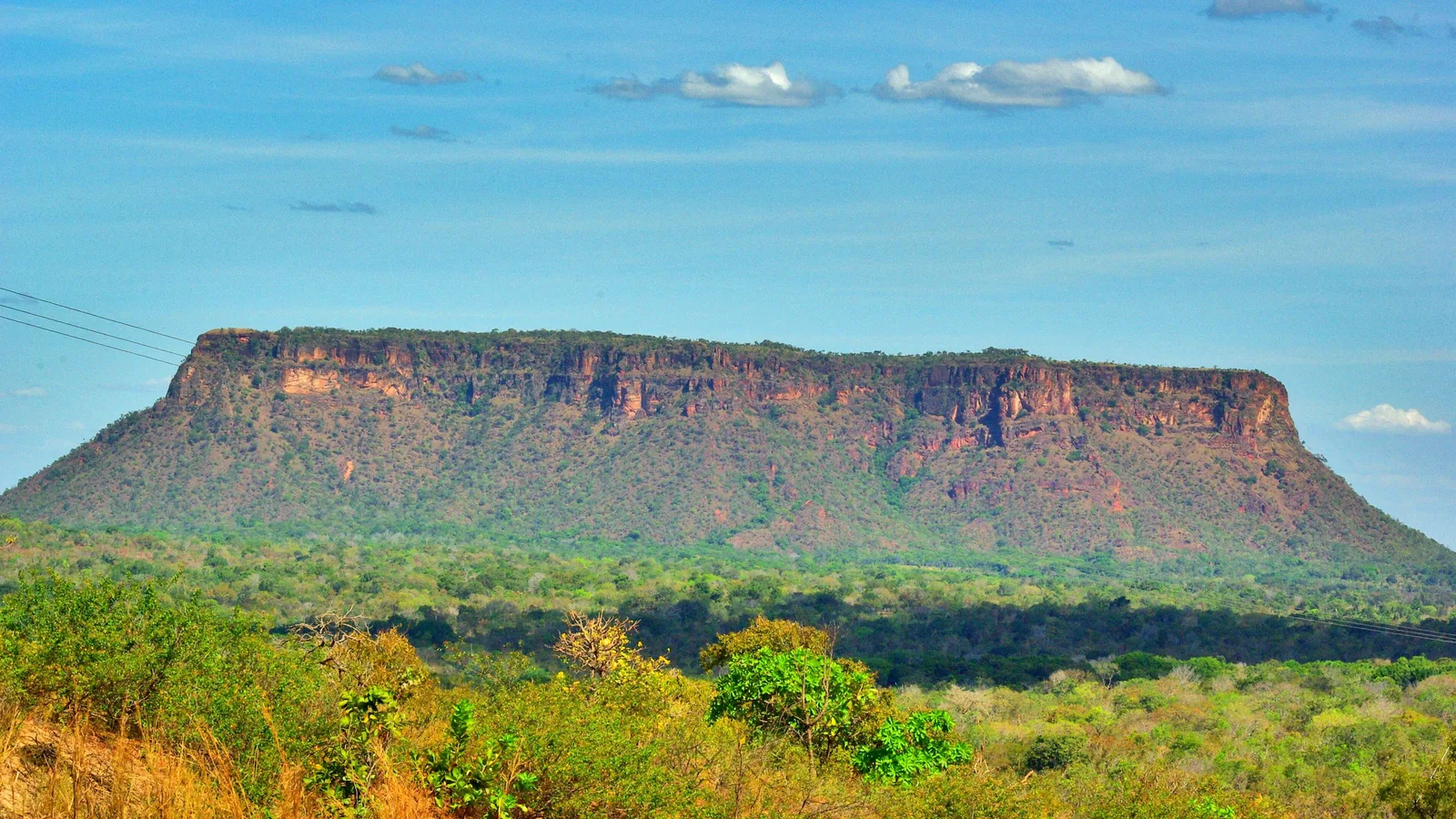
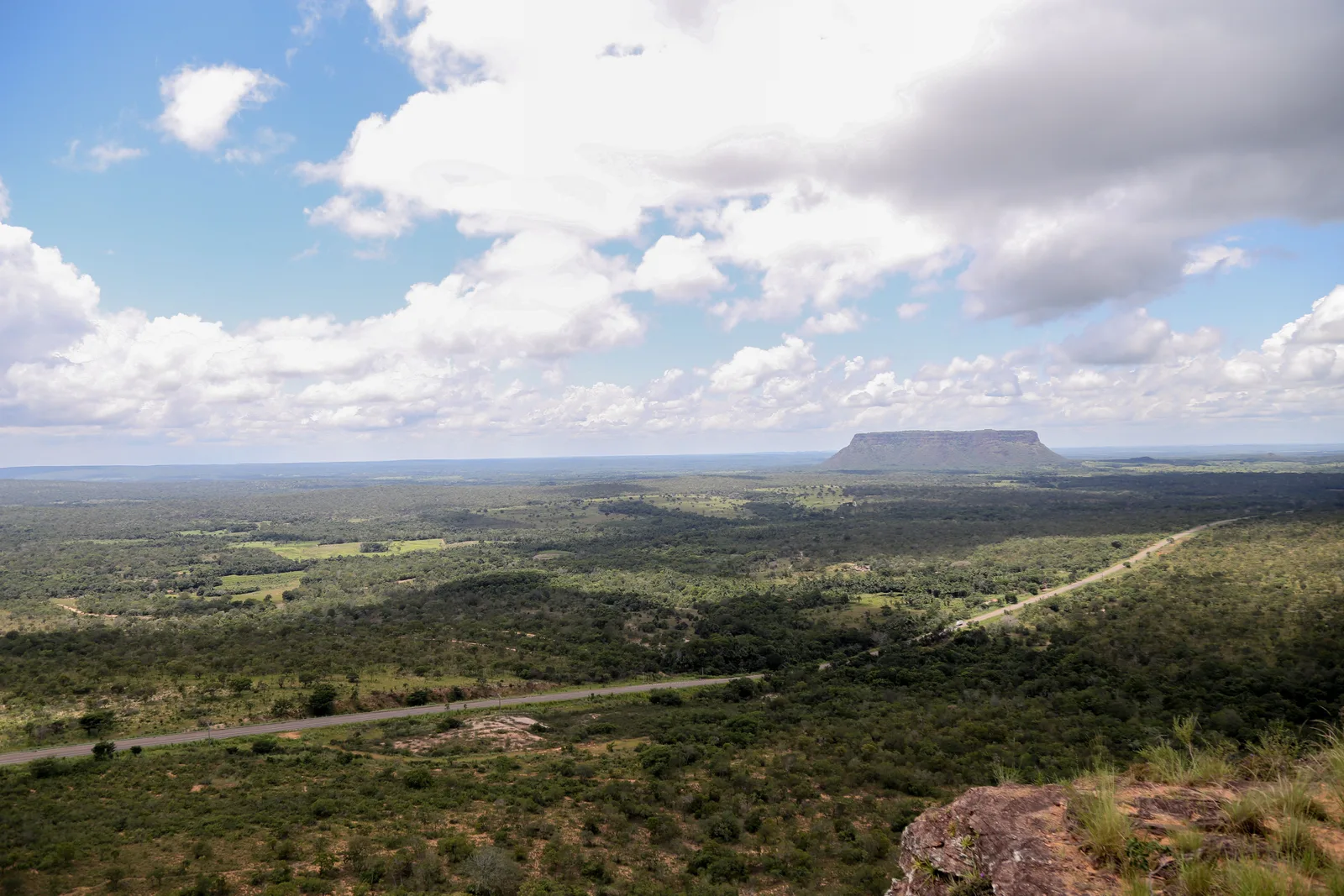
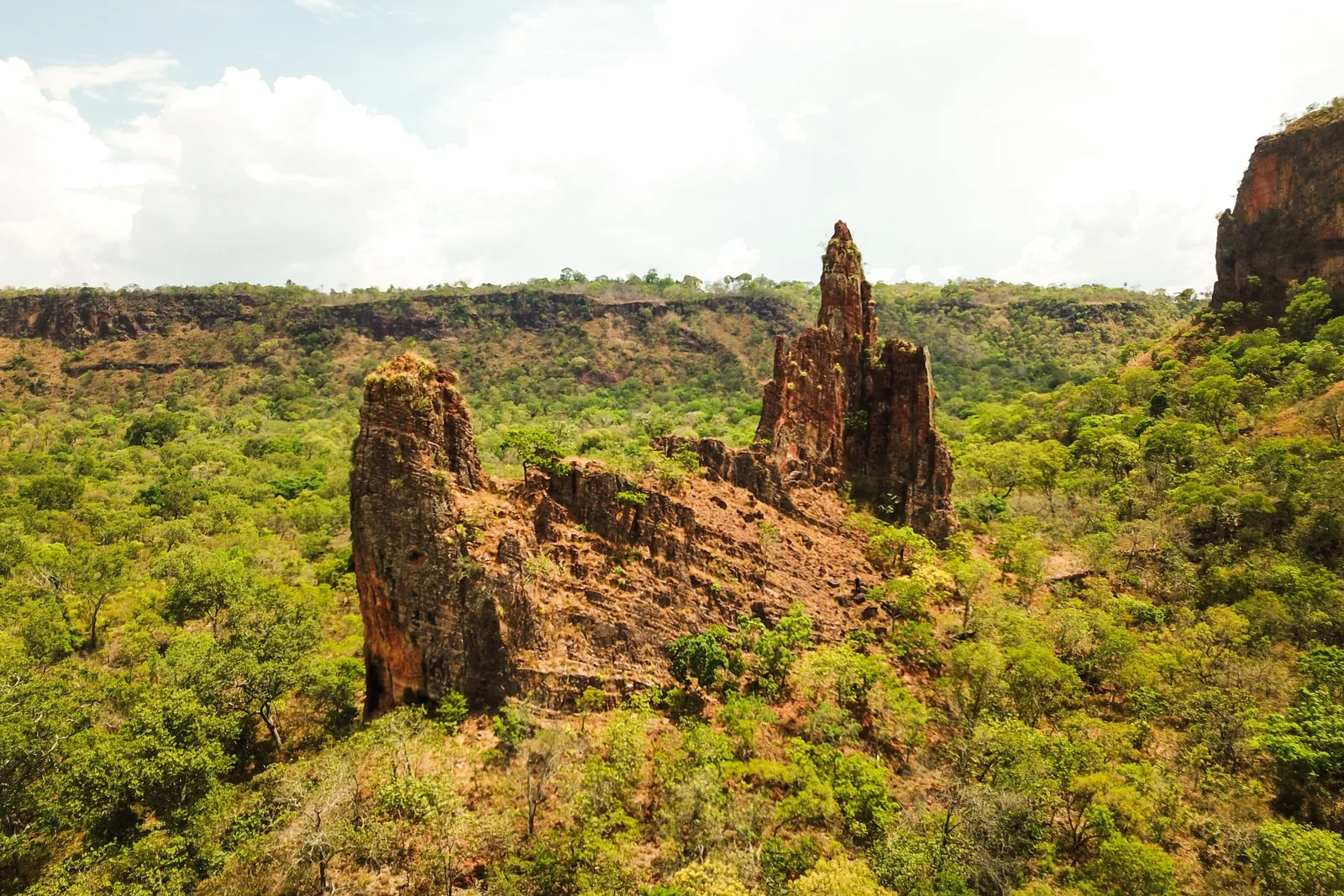
A wide view from a rocky ridge over green cerrado, with a flat-topped butte, a pointed hill and a long line of mesas standing under big white clouds

Maranhão

Chapada das Mesas

Table mountains, big river waterfalls and blue wells at the far southern end of Maranhão.

Last checked October 2026

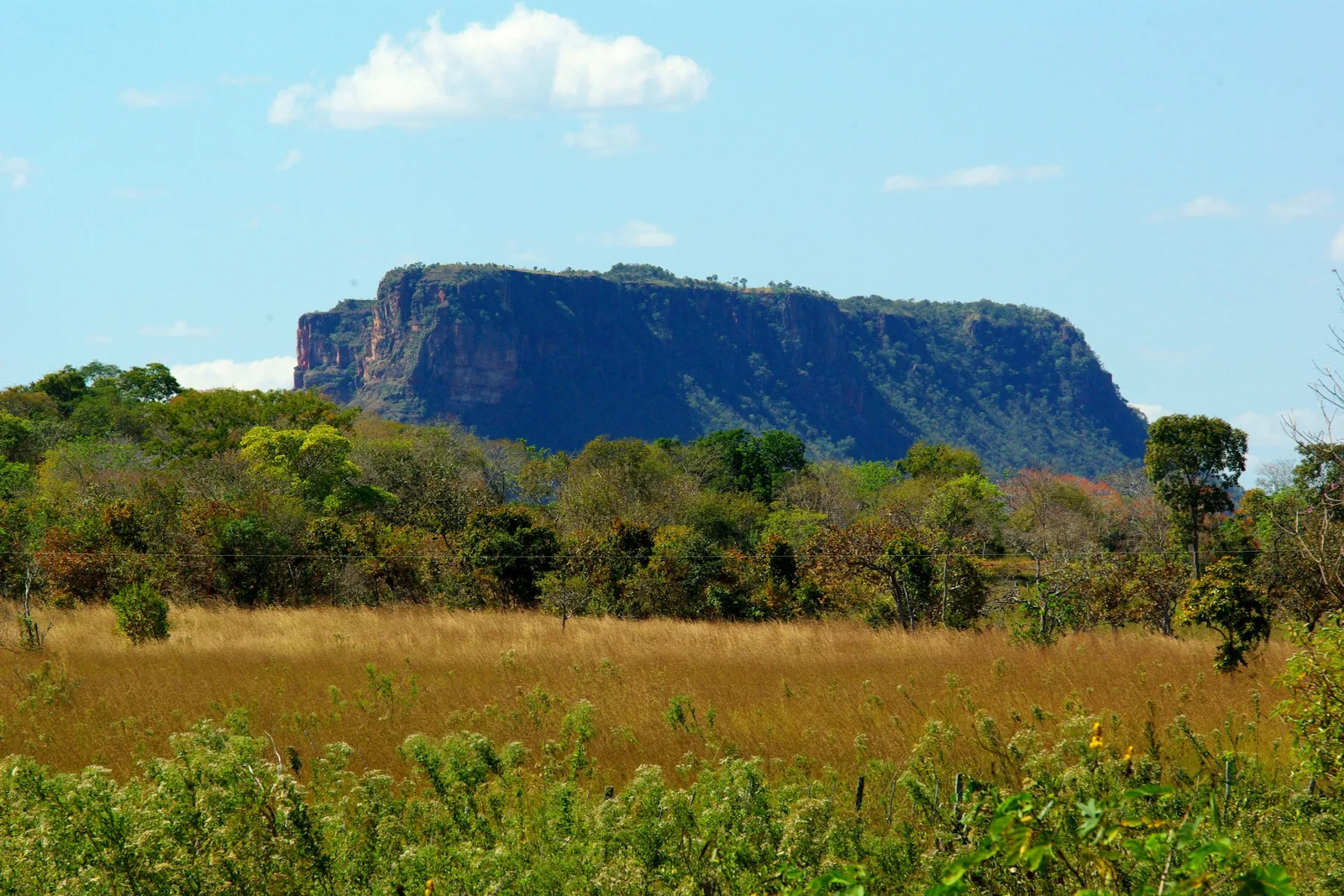
  • A dark flat-topped mountain rising behind a band of trees and a field of golden grass
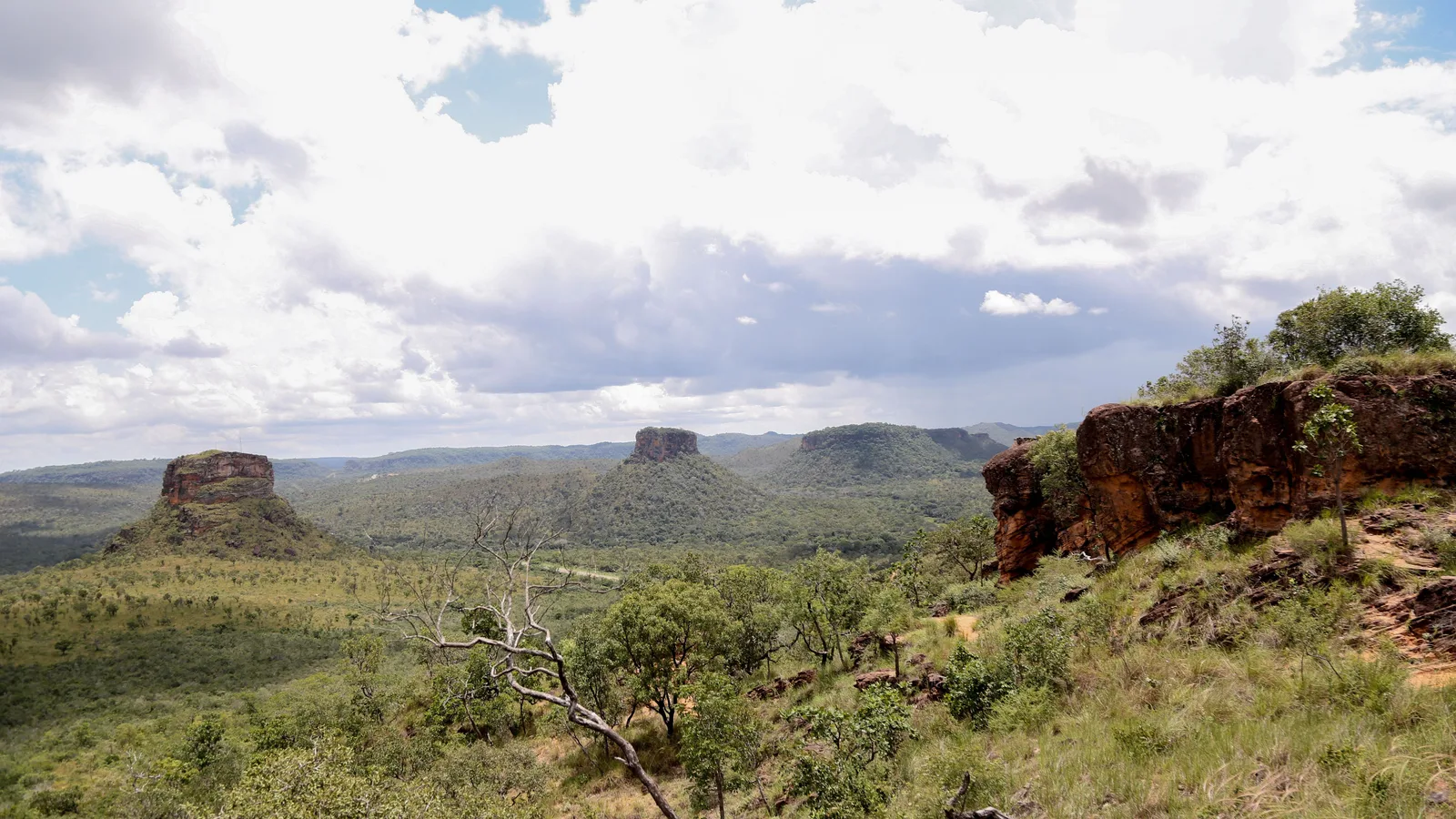
  • A long wall of layered red sandstone cliffs above dry grass under a blue sky with heavy clouds
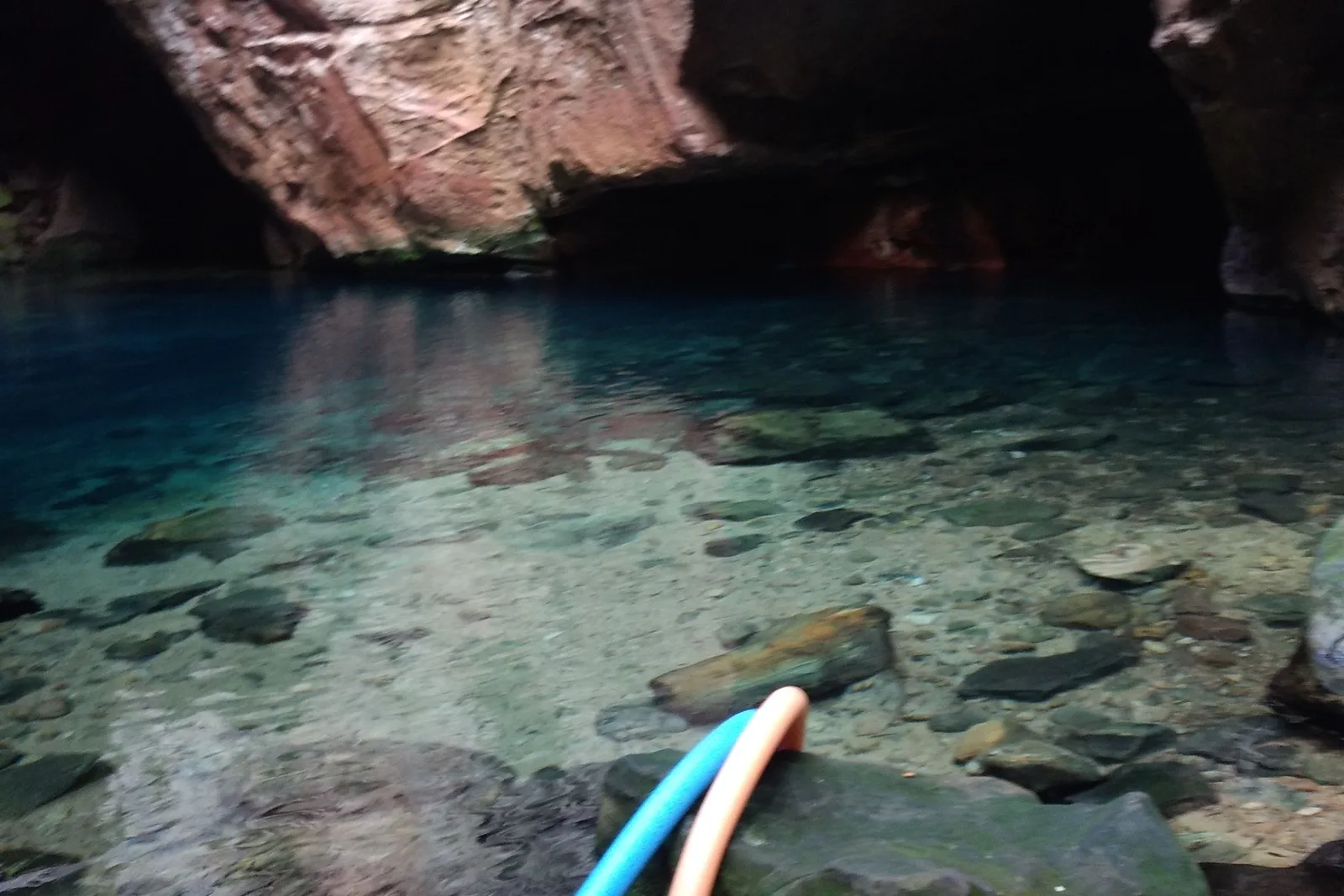
  • Clear blue-green water over a pebbled bottom beneath an overhanging rock face, the ends of two foam pool noodles, blue and peach, in the foreground
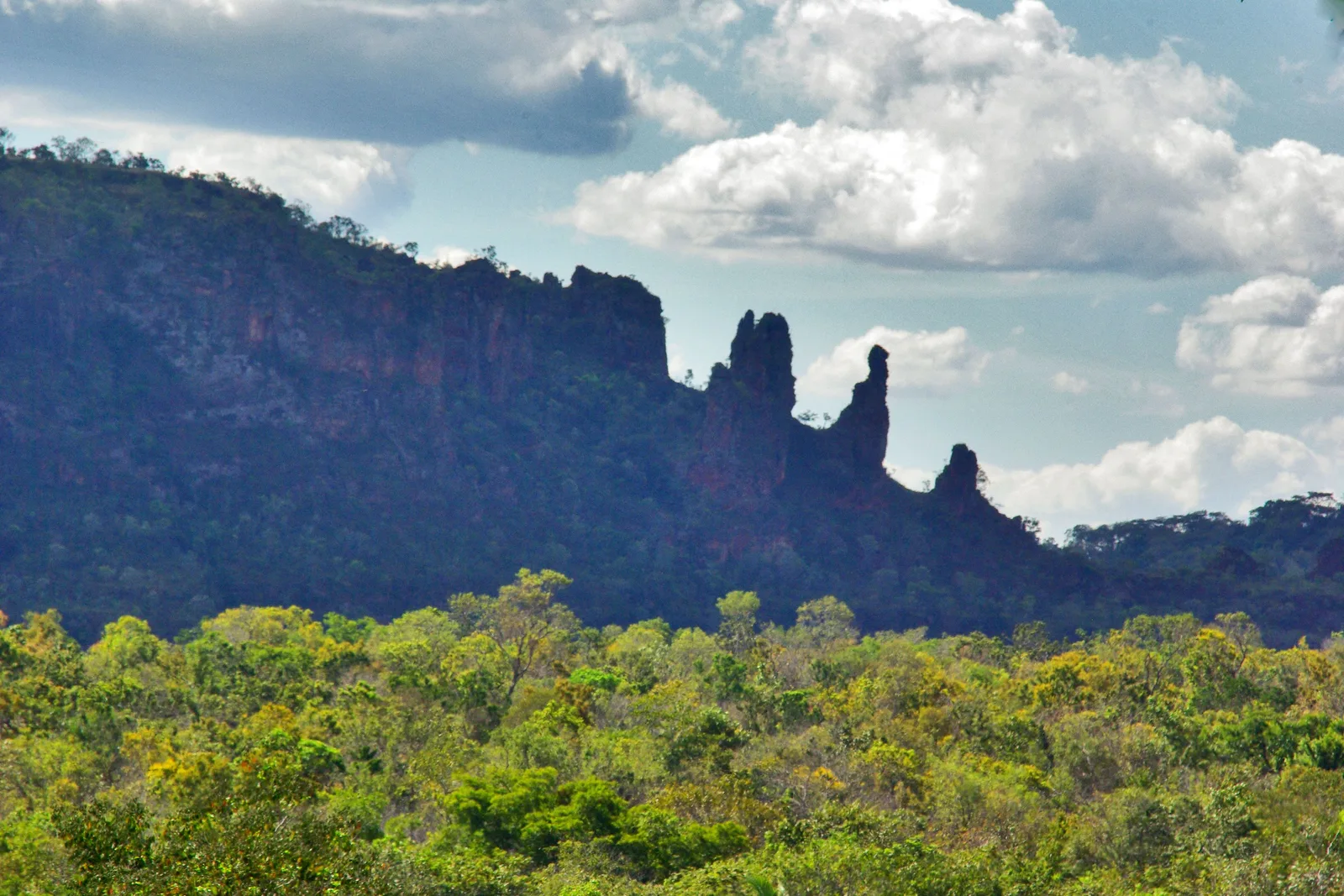
  • A dark ridge ending in a row of thin rock spires against a cloudy sky, green scrub in the foreground
  • A broad green plain seen from high ground, with a straight road crossing it and a single long mesa on the horizon
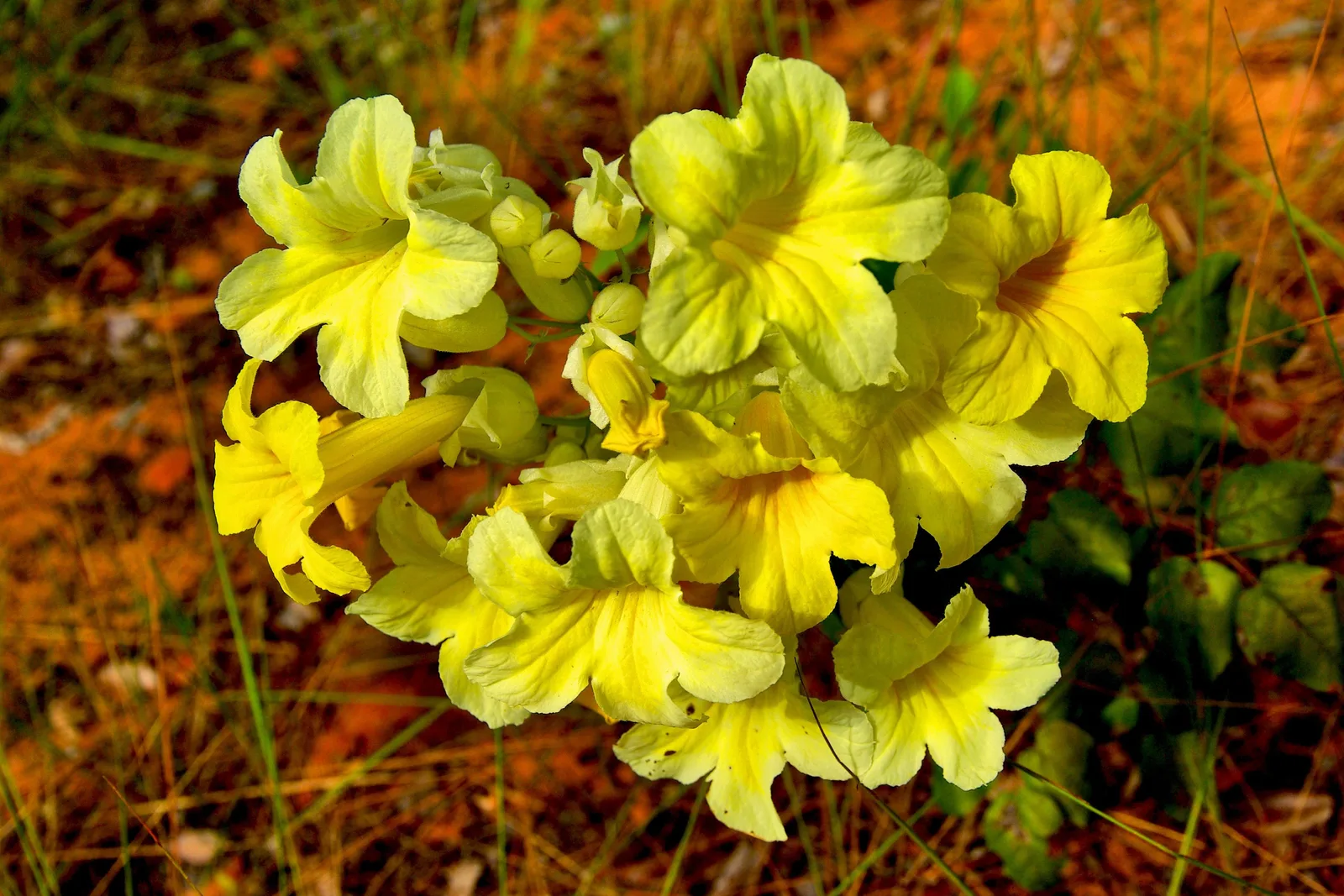
  • A cluster of bright yellow trumpet-shaped flowers against dry orange grass
  • Two tall weathered sandstone pillars standing out of green cerrado in front of a long flat escarpment
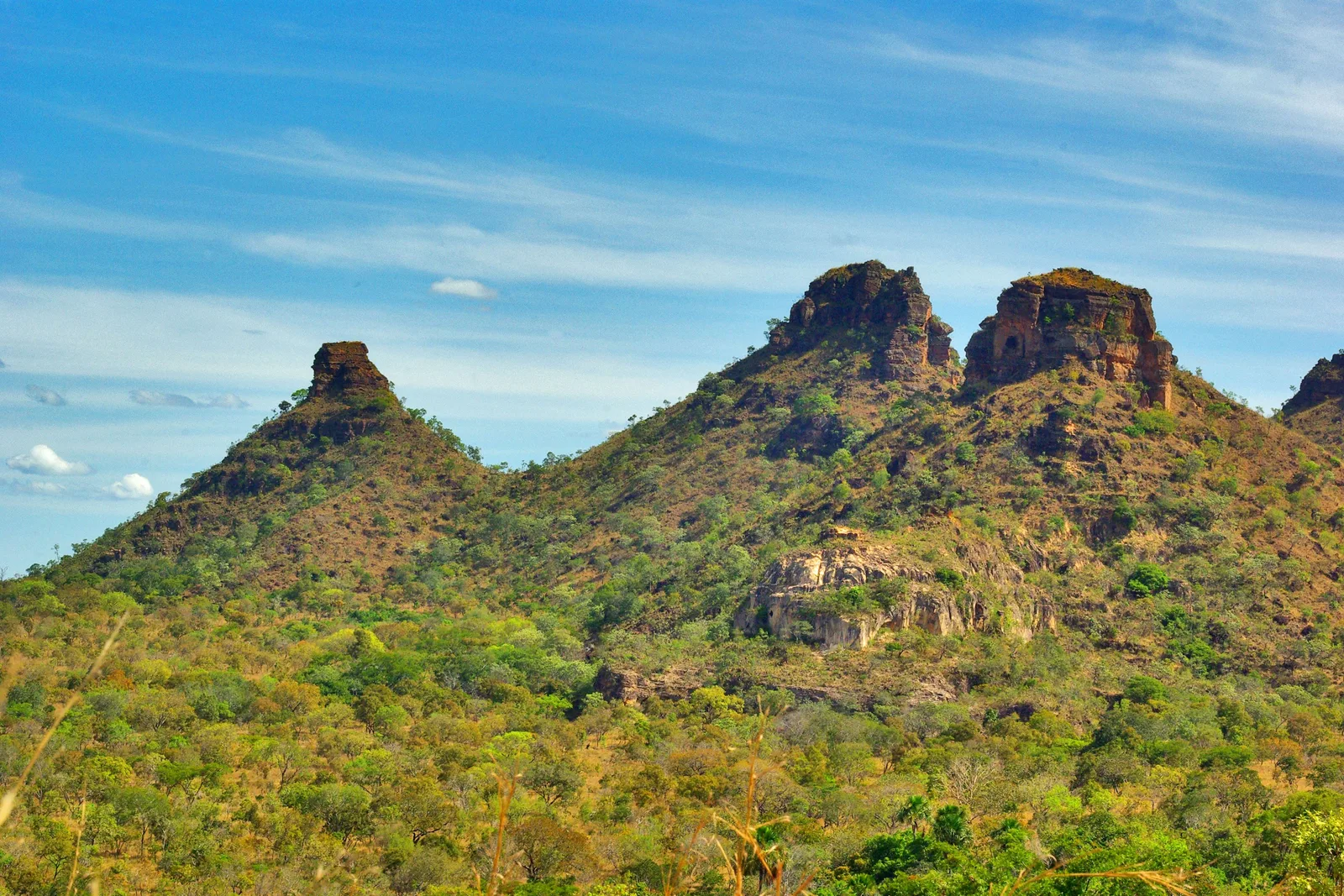
  • Green hills topped with knobs of bare rock under a blue sky streaked with thin cloud
  • A glass display case in the Museu Histórico de Carolina holding old newspapers, a framed portrait and a ribbon with a star
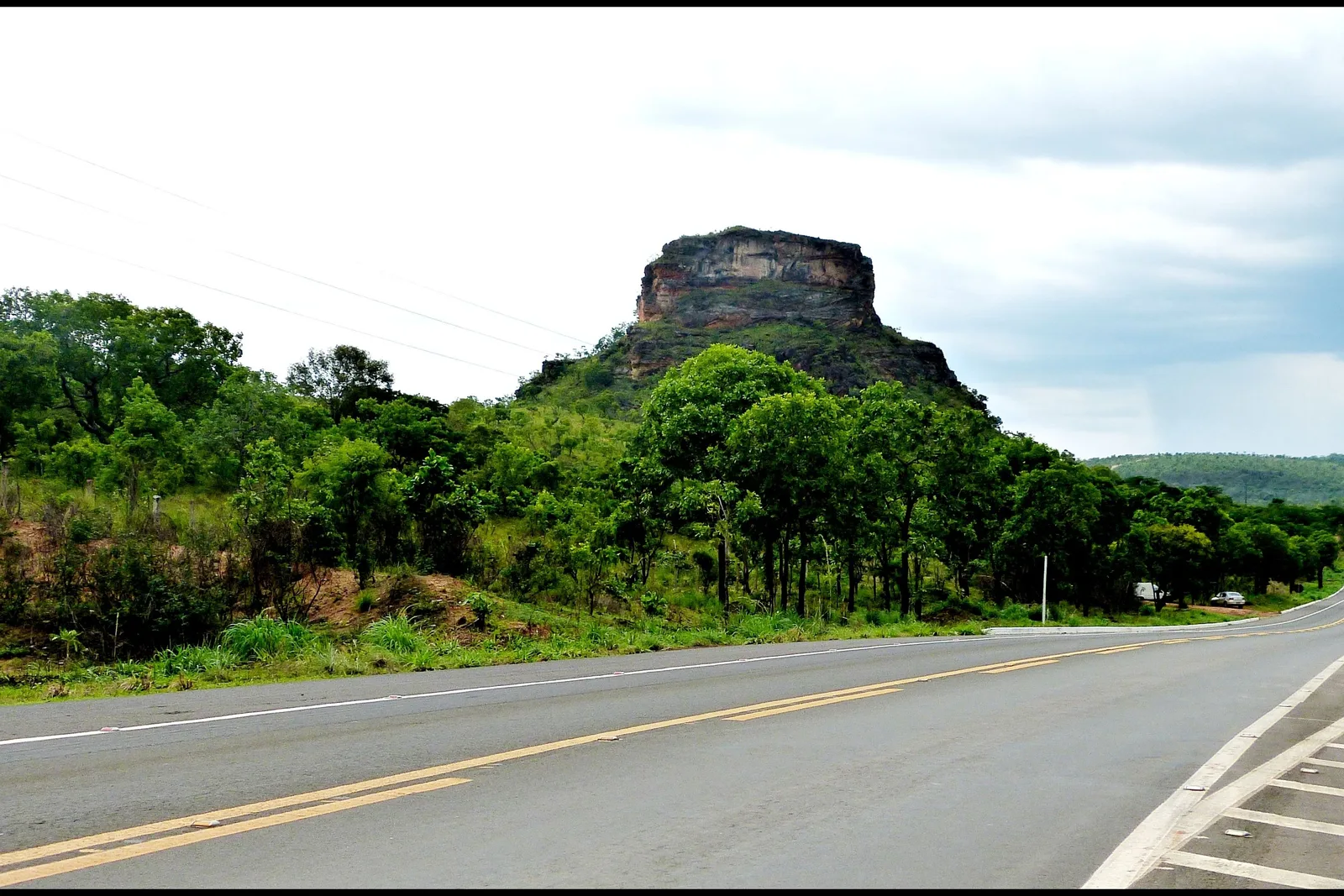
  • A paved highway curving toward a flat-topped rock hill with forest on both sides
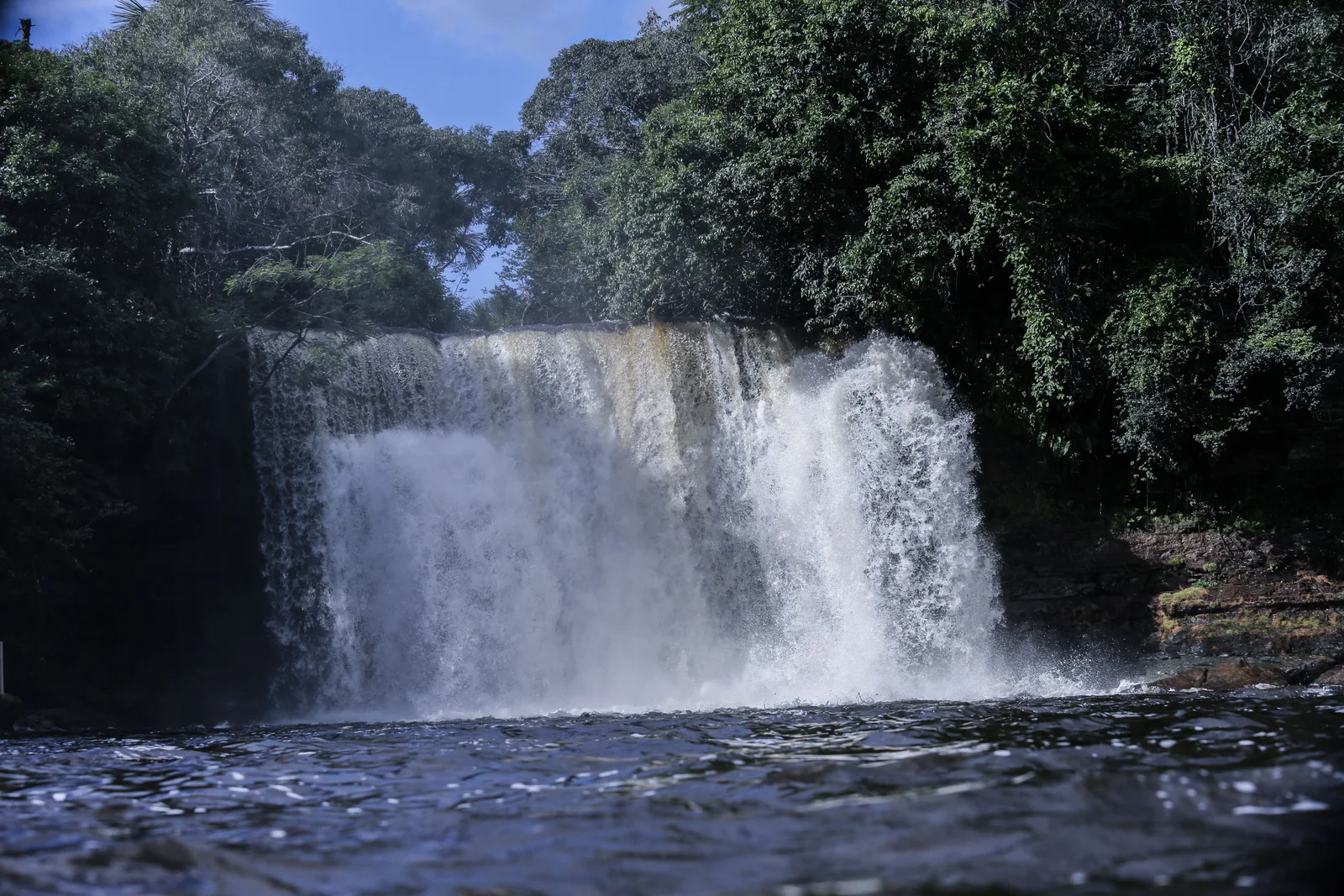
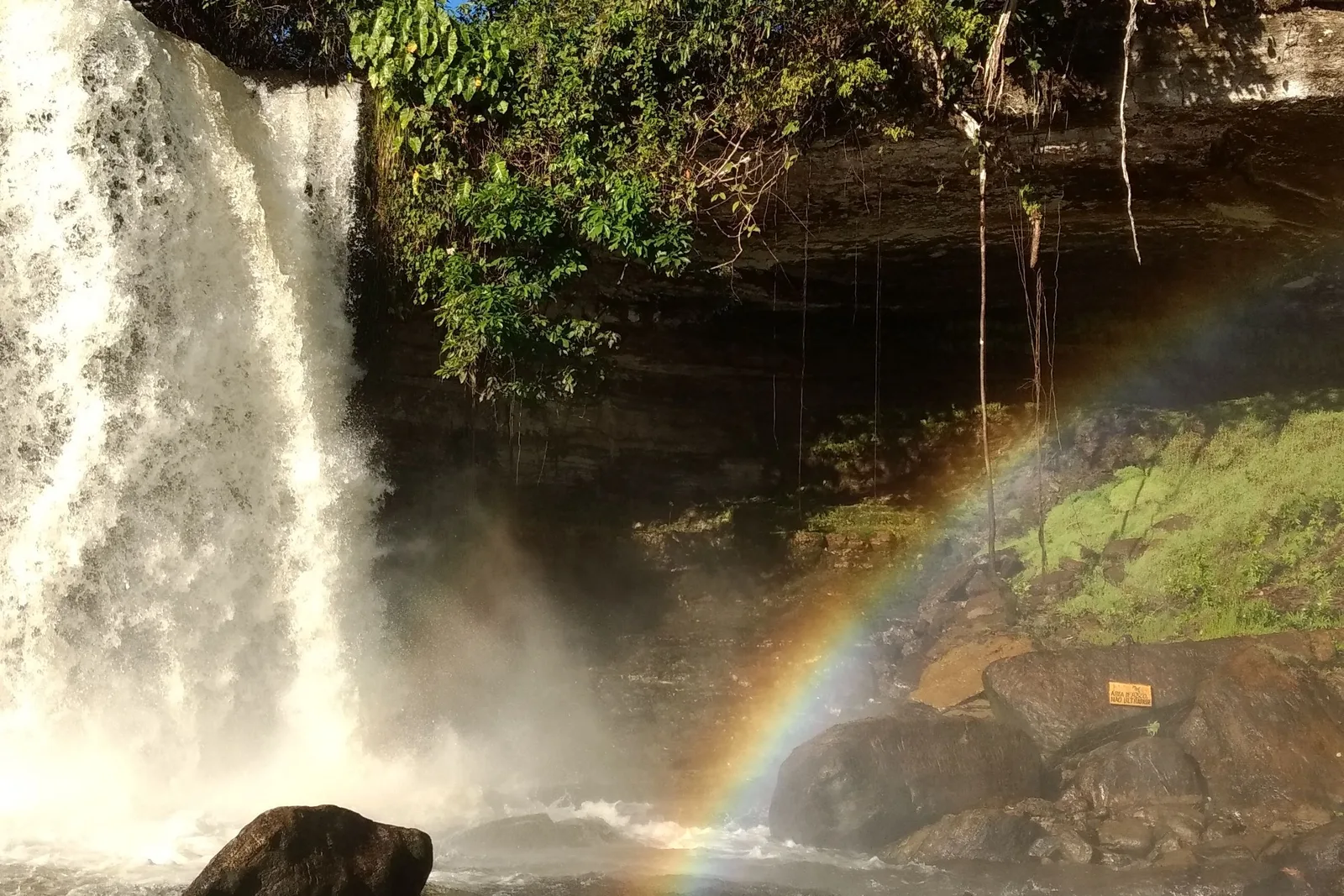
  • A waterfall pouring off a rock ledge into a dark river with a rainbow arcing across the spray
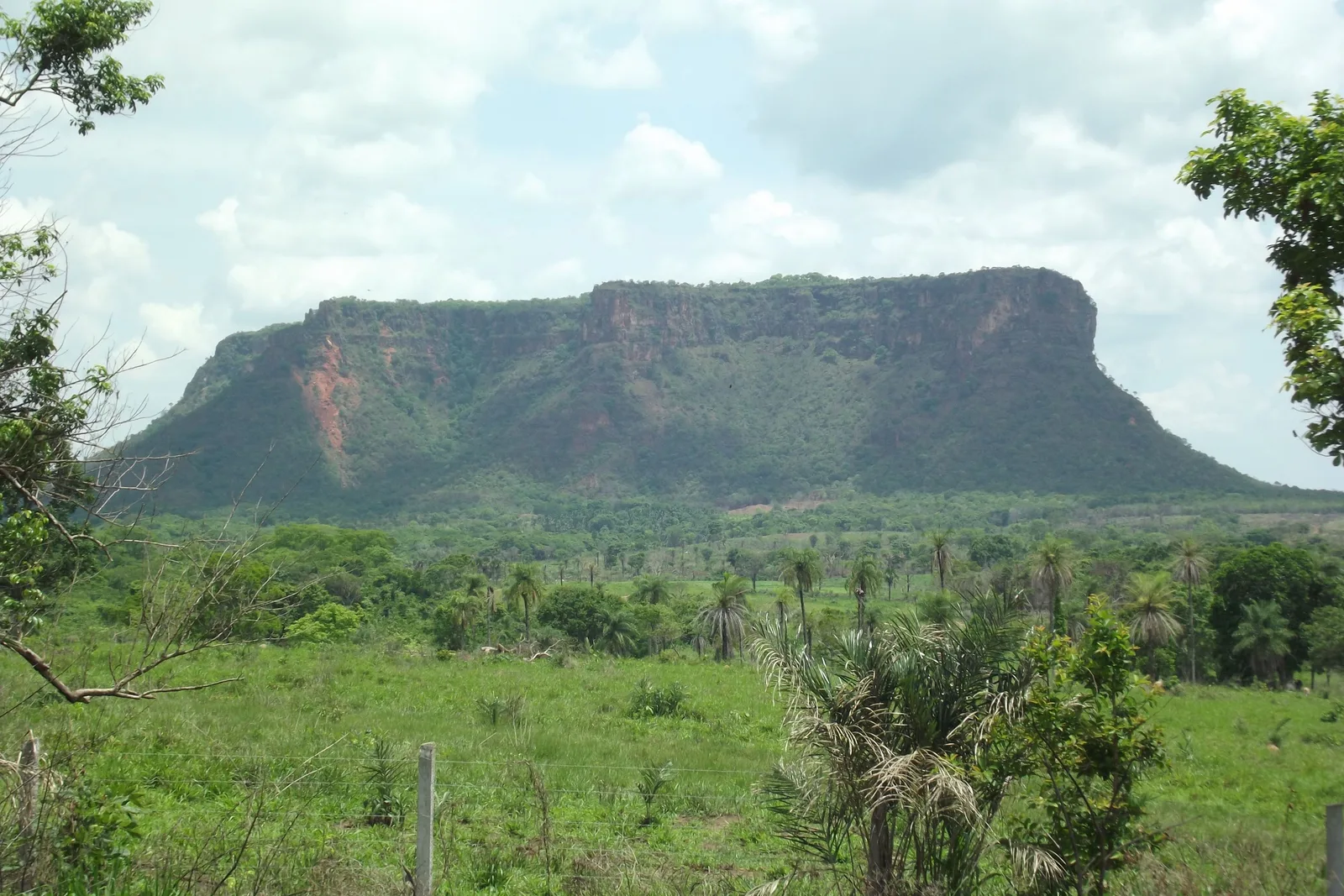
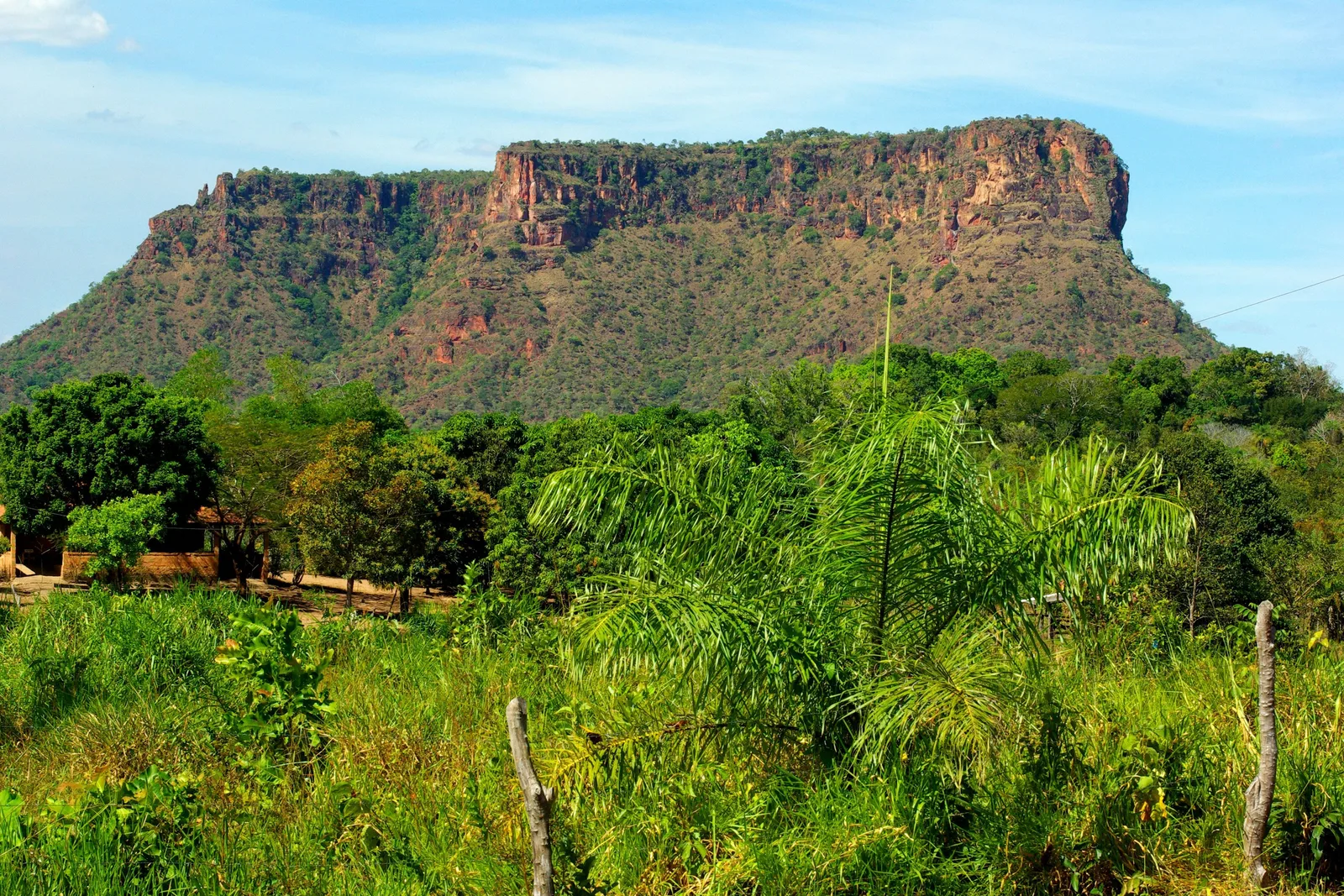
  • A flat-topped mountain with red cliff faces above green scrub and a wire fence

Orientation

Southern Maranhão in one screen.

Everything logistical, before the waterfalls start.

General Info

What the Chapada das Mesas actually is

At the far southern end of Maranhão, where the state runs up against Tocantins along the Rio Tocantins, the cerrado is broken up by flat-topped sandstone mountains. Those mesas give the region its name. In among them, spring-fed rivers drop over rock ledges in some of the biggest waterfalls in the state, and a few of them collect in pools so clear they look dyed.

The Parque Nacional da Chapada das Mesas was created on 12 December 2005 and covers about 160,000 hectares across the municipalities of Carolina, Riachão and Estreito. ICMBio runs it from an office in Carolina, and there is no visitor center. The park’s management plan counts more than 400 springs feeding 22 rivers that never run dry, and names São Romão and Prata, both on the Rio Farinha, as two of the largest waterfalls in Maranhão by volume.

Much of what people come for sits outside the park, on private land. Pedra Caída, Poço Azul and the Cachoeiras do Itapecuru are run as complexes with their own gates, prices, opening hours and rules. Carolina, a riverside town on the Tocantins that became a city in 1859, is where almost everyone sleeps and where every agency trip starts.

Where It Is

The southwest corner of Maranhão, on the Tocantins

Carolina sits on the east bank of the Rio Tocantins, with the state of Tocantins on the far side. Imperatriz is 223 km north by road, Araguaína 110 km west across the river, and Palmas about 456 km south. The national park lies east and northeast of town; the main waterfall complexes are 34 to roughly 130 km away in different directions.

Chapada das Mesas Chapada das Mesas

7.33° S, 47.47° W

See the Northeast on the interactive map

Cost

What the Chapada das Mesas actually costs

The rooms are cheap and the gates are not. A good pousada in Carolina costs less than a night in most Brazilian beach towns, but nearly every waterfall charges its own entry, and the private complexes charge again for each trail inside them. Getting around is the other real cost, because the sights are spread across three municipalities and some of the tracks want a 4x4.

Estimated daily budget, per person

Simple

$60 / day

A plain pousada room in Carolina shared with someone, the bus in from Imperatriz or Araguaína, one paid attraction a day and simple meals.

Guided

$190 / day

An agency package with a good pousada, transport and a guide every day, plus the entry fees and meals the packages leave out.

Comfort

$260 / day

Nights at the hotels inside Pedra Caída or Poço Azul for early access, private transport, and every trail and zipline paid for.

Estimates, per person per day once you are in Carolina, assuming two people sharing a room; flights not included. The Guided tier is built on a published six-day package price, which excludes lunch and entry fees; the agency selling it suggests budgeting about $108 (R$550) a head for entries over the six days.

What things cost

  • Bus, Imperatriz to Carolina, one way $18 R$90
  • Bus, Araguaína to Carolina, one way $14 R$72.50
  • Pousada double room in Carolina, per night $39–78 R$198–397
  • Pousada double room in Riachão, per night $31 R$160
  • Hotel room at Pedra Caída for two, per night $76–124 R$390–630
  • Hotel apartment at Poço Azul for two, per night $120 R$610
  • Pedra Caída day-use gate, per person $18 R$90
  • Cachoeira do Santuário trail, Pedra Caída $8 R$40
  • Zipline at Pedra Caída, 1,200 m or 1,400 m $18–24 R$90–120
  • Poço Azul entry, online or at the gate $18–20 R$90–100
  • Cachoeiras do Itapecuru entry $16 R$80
  • Six-day guided package, per person sharing a double $884 R$4,506

Day trips are quoted, not listed. The Carolina agencies sell the standard days (São Romão and Prata, the Riachão wells, Pedra Caída, Itapecuru) by WhatsApp, and none prices the standard days on its tour pages. The packages that do show what they include: an air-conditioned vehicle or a 4x4, a guide and water, but not lunch and not the entry fees.

The two waterfalls inside the national park are paid on the spot. ICMBio’s management plan says São Romão and Prata are run informally by the residents who live beside them. Expect to pay a small fee in cash at each; the amount could not be confirmed at a primary source for this page.

Bring cash. Bradesco closed its Carolina branch in 2025, and the residents who run São Romão and Prata are paid on the spot.

Checked October 2026 and converted at R$5.10 to the dollar. Prices at the private complexes change from season to season, so treat them as the shape of a budget rather than a quote.

Safety

The risks here are heat, water and distance

8 /10

Our rating: a quiet river town, and a landscape where the hazards are the sun, the water and the roads.

Carolina is a small town. The Ministry of Health counts about six homicides a year there from 2018 to 2025, a rate around 25 per 100,000 people, above Brazil’s average and below Maranhão’s. For a visitor, what can actually go wrong is mostly environmental. You will be swimming below large waterfalls, driving long unmarked tracks to reach them, and walking in afternoon heat that averages 36°C in August and September.

  • Respect the water. Pedra Caída does not allow anyone onto its trails without a registered guide, and Poço Azul asks visitors not to jump or dive head first. In the rainy season Poço Azul warns that the well and its waterfalls can be closed on stormy days. When a guide says a pool is off limits, it is.
  • Plan around the heat. INMET’s normals for Carolina put the average afternoon high at 35°C or more from July to September. The UV index is very high in every month of the year and extreme in September. Start early, carry more water than you think you need, wear a hat and high-factor sunscreen, and keep the middle of the day for swimming in the shade of the gorges.
  • Take a 4x4 and a driver for the park. The run to São Romão and Prata ends on sand tracks that agencies drive in 4x4s, and ICMBio’s own management plan lists the lack of road signs as a problem. This is not a drive for a rental compact.
  • Carolina has a 24-hour public hospital, the Hospital Municipal Dr Heber Maranhão Azevedo in the center, with an operating theater but no intensive care. The nearest ICUs are in Araguaína, about two and a half hours away with the ferry, and Imperatriz, about three and a half. Buy travel insurance that covers evacuation and carry your own medication.
  • The CDC recommends yellow fever vaccination for Maranhão, and counts the state outside São Luís as a malaria transmission area, where it recommends antimalarial medication. See a travel doctor before you go, and use repellent.
  • In the national park, visitors sign a responsibility and risk form, pets and fires are not allowed, and drones need ICMBio’s authorization. Pack out everything you bring in.

Getting There

Fly to Imperatriz, then drive south

Carolina has an airfield but no scheduled flights. You fly into one of three airports in Maranhão or Tocantins, with a connection through São Paulo, Brasília or Belo Horizonte, and finish by road.

  • Imperatriz (IMP) is the usual choice. LATAM flies nonstop daily from São Paulo Guarulhos and from Brasília, and Azul from Belo Horizonte (Confins) and São Luís, daily in most weeks. Most arrivals land between 2:00am and 3:15am; LATAM’s Brasília flight is the only one by day, landing at 4:45pm. Do not plan to drive to Carolina after dark. From the airport it is 223 km to Carolina, about three and a half hours by road. Localiza and Movida both rent cars at the airport.
  • Araguaína (AUX) is the closest airport, 110 km away, but it has only three GOL flights a week, from Brasília via Palmas, landing at about 12:50am on Mondays, Thursdays and Saturdays. The short road crosses the Rio Tocantins on the ferry between Filadélfia and Carolina, because there is still no bridge. The long way round, via the bridge at Estreito that reopened in December 2025, is 219 km. There is no rental desk at this airport.
  • Palmas (PMW) has the most flights of the three, from Azul, GOL and LATAM, but Carolina is about 456 km away even with the ferry, close to eight hours on the road. It makes sense only if the trip continues in Tocantins.
  • Buses cover all three. JR4000 runs Imperatriz to Carolina at 6:00am, 12:00pm and 6:00pm from the town’s bus station, not the airport, in three to four hours, from $18 (R$90). Real Maia runs Araguaína to Carolina in about two hours for $14 (R$72.50), and Palmas to Carolina by day or overnight in about ten, for $42 (R$212).
  • There is no direct flight from the United States to any of these airports. Plan on a long travel day with a connection in São Paulo or Brasília, and a night in Imperatriz at the end of it, since flights land there in the middle of the night or late in the afternoon.

Getting Around

Day trips out of Carolina, mostly with a driver

Every sight is a day trip from Carolina, and they lie in different directions. Most visitors use an agency for the remote days and drive themselves, or take a transfer, for the paved ones.

  • São Romão and Prata, inside the park, are the long day. One agency itinerary gives it as 30 km of asphalt and 53 km of sand track; OpenStreetMap routing makes it longer. One agency’s published day leaves at 8:00am in a 4x4, and every agency treats it as the whole day.
  • Pedra Caída is about 38 km from Carolina on the BR-010 toward Estreito, and the Cachoeiras do Itapecuru about 34 km out along the BR-230. Both sit off the main highways, and they are the days that work best in a car of your own.
  • Riachão is about 100 km east on the BR-230, and Poço Azul is another 28 km beyond the town on the MA-334. One agency’s published day to the Riachão wells leaves Carolina at 8:00am and is back at 6:30pm.
  • Inside Pedra Caída, two of the falls are reached by 4x4 on dirt roads 6 km from the main base, and every trail there is guided. Book those at the complex rather than turning up for them.
  • Download offline maps before you leave Carolina. Road signs are scarce in and around the park, and an agency driver is your best navigation on the sand tracks.

Five places

Five places that explain the rest.

The Chapada das Mesas is not one sight with a parking lot. It is a spread of waterfalls, wells and viewpoints around a river town, and these five are the ones almost every trip is built from.

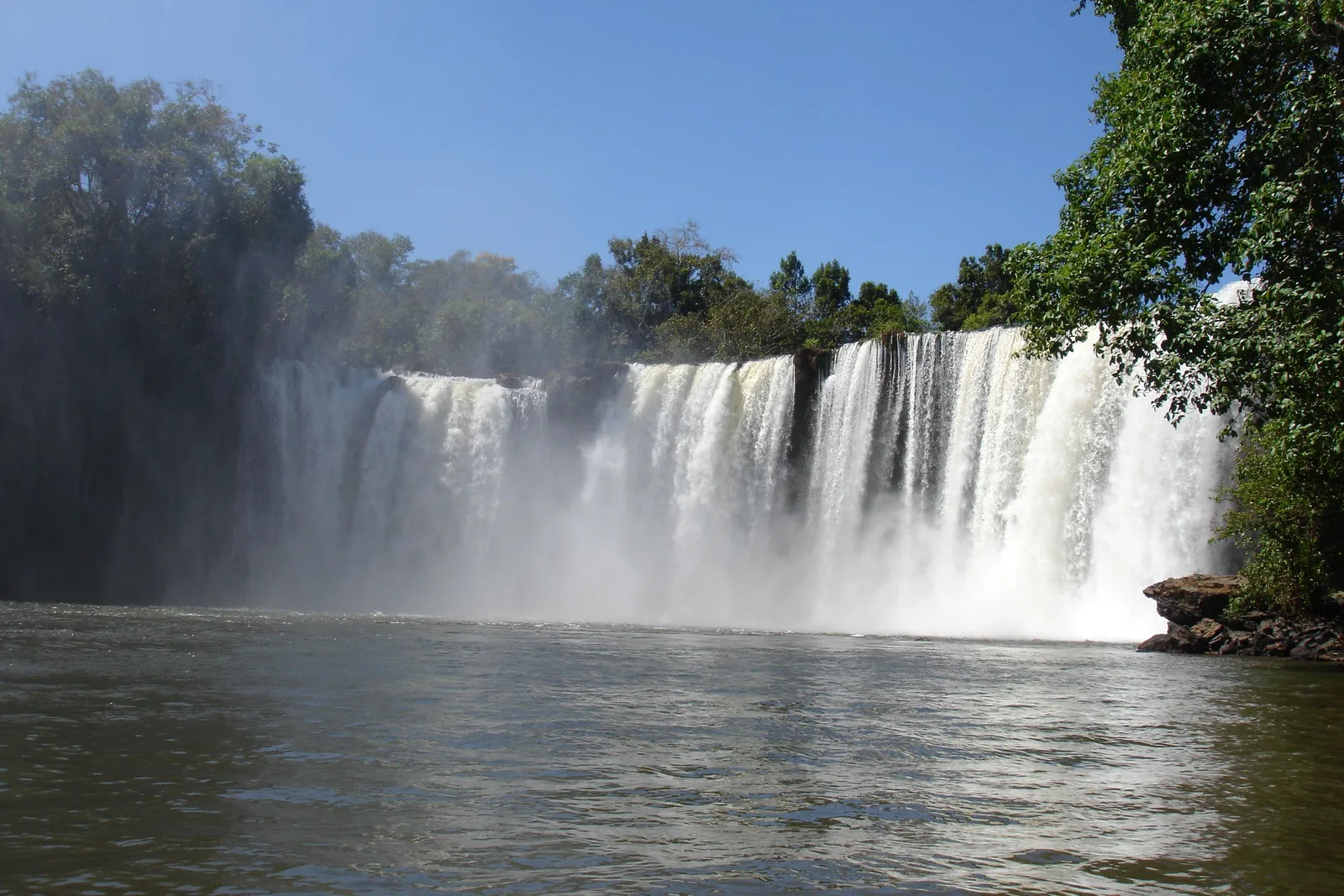
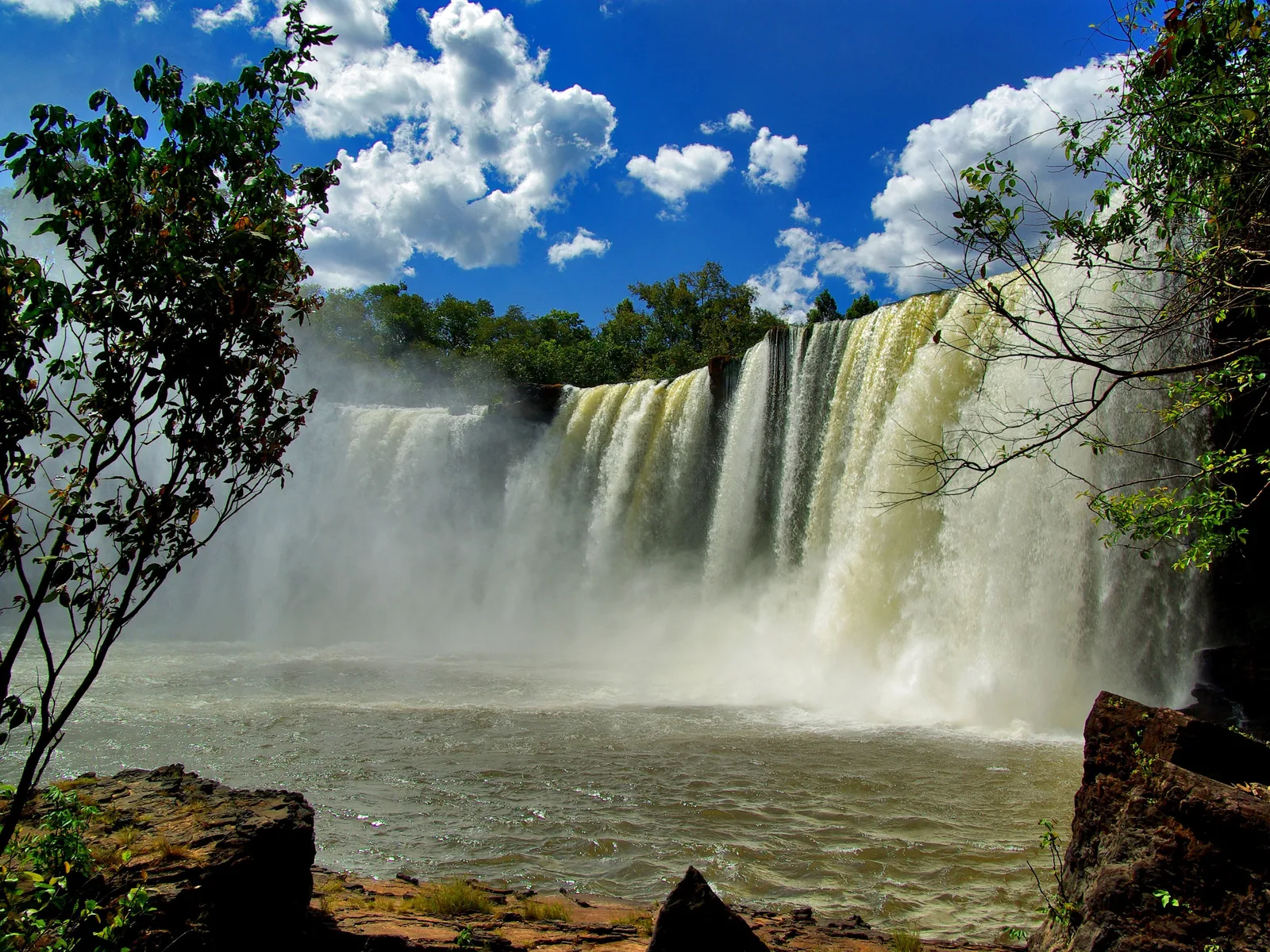
A wide waterfall falling in many white streams off a long ledge into a brown pool, with trees framing the view and blue sky full of clouds above 01

The big one, inside the park

Cachoeira de São Romão

River
Rio Farinha
Inside the park
Yes
Access
Full day by 4x4

A wide curtain of water falling off a long rock ledge into a broad, open pool, with spray drifting back over the trees. ICMBio’s management plan names São Romão and its neighbor Prata as two of the largest waterfalls in Maranhão by volume, and both stand on the same river, the Rio Farinha.

They are a big part of why the park exists. Small hydroelectric dams were proposed on both falls, and the park created in 2005 protects them. Today a resident who lives beside the falls runs the visits informally, so this is a waterfall with a family at the gate rather than a ticket office.

The catch is getting there. The last stretch is sand track that agencies drive in 4x4s, so São Romão is almost always paired with Prata as one long day out of Carolina.
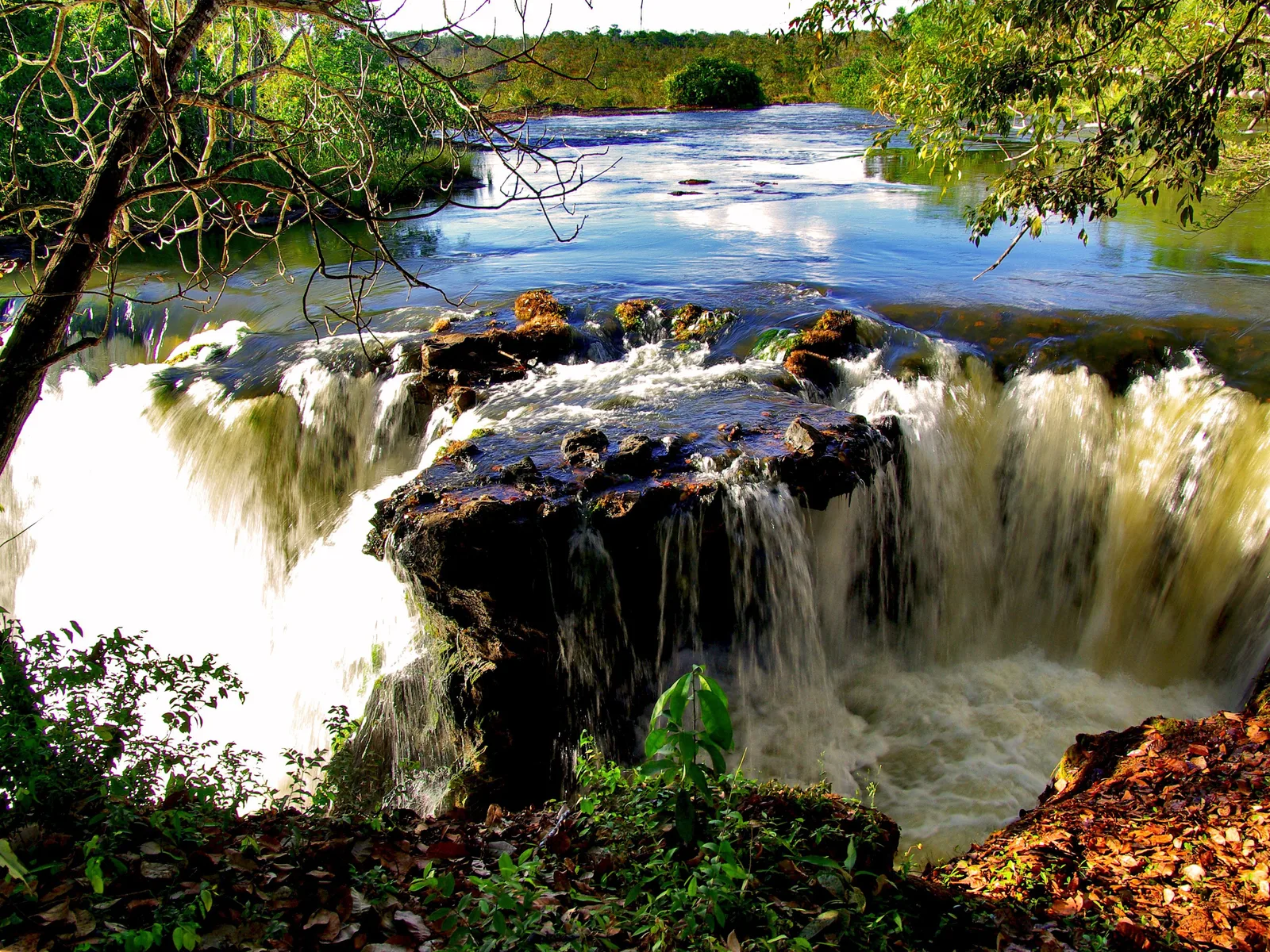
A wide river pouring over a broad rock ledge on both sides of a dark rock island into a foaming pool, with calm water and trees upstream 02

The other half of the park day

Cachoeira do Prata

River
Rio Farinha
Inside the park
Yes
Paired with
São Romão

The second of the Rio Farinha’s two great falls, a run of three drops of up to about 18 meters with pools you can swim in at some points. It shares São Romão’s billing in the park’s management plan as one of the largest in the state by volume.

Like São Romão, it sits on land a resident still occupies, and ICMBio’s plan lists a formal agreement with the owner as work still to do. In practice that means you pay on the spot and follow the rules you are given there. Every agency sells it on the same 4x4 day as São Romão.

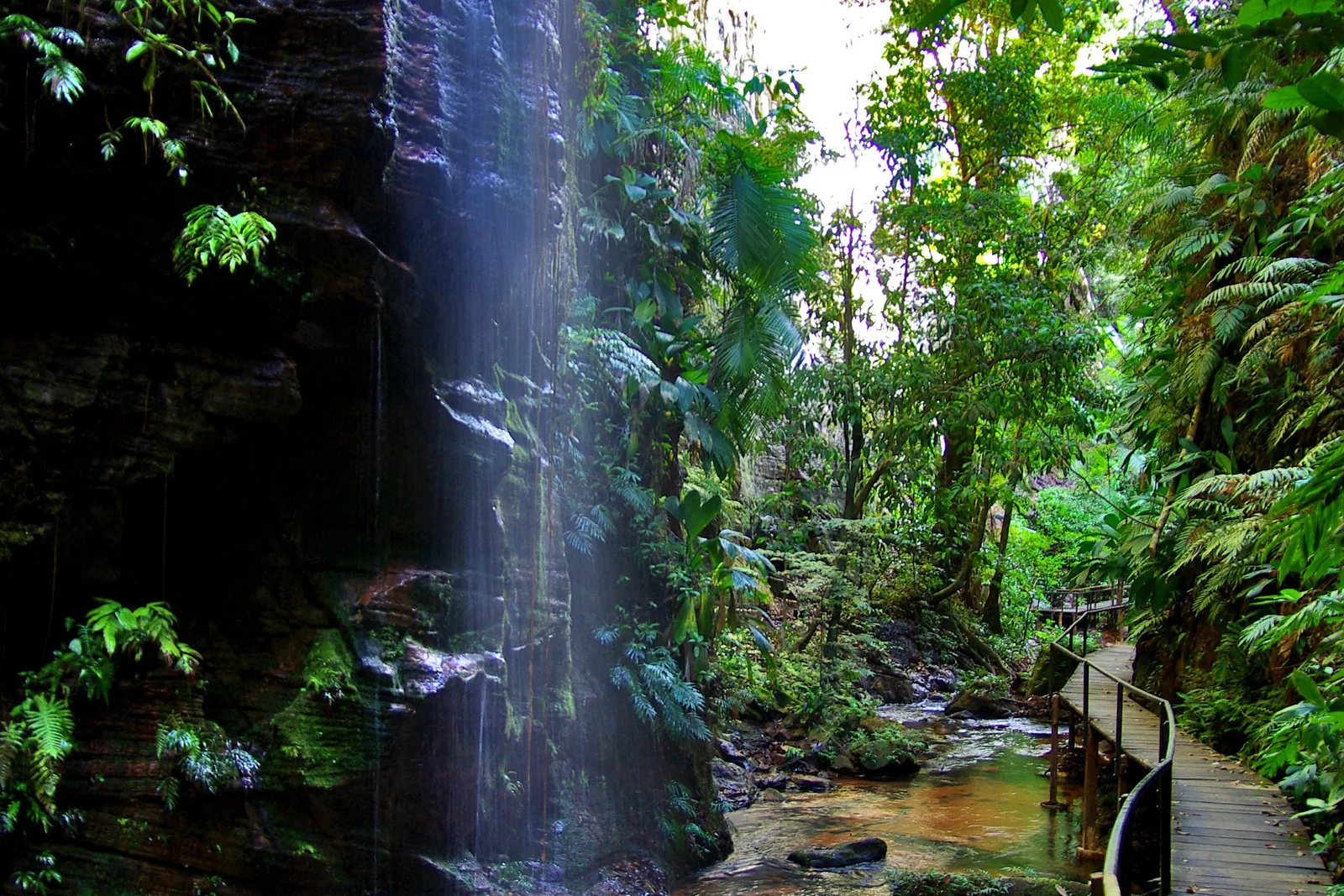
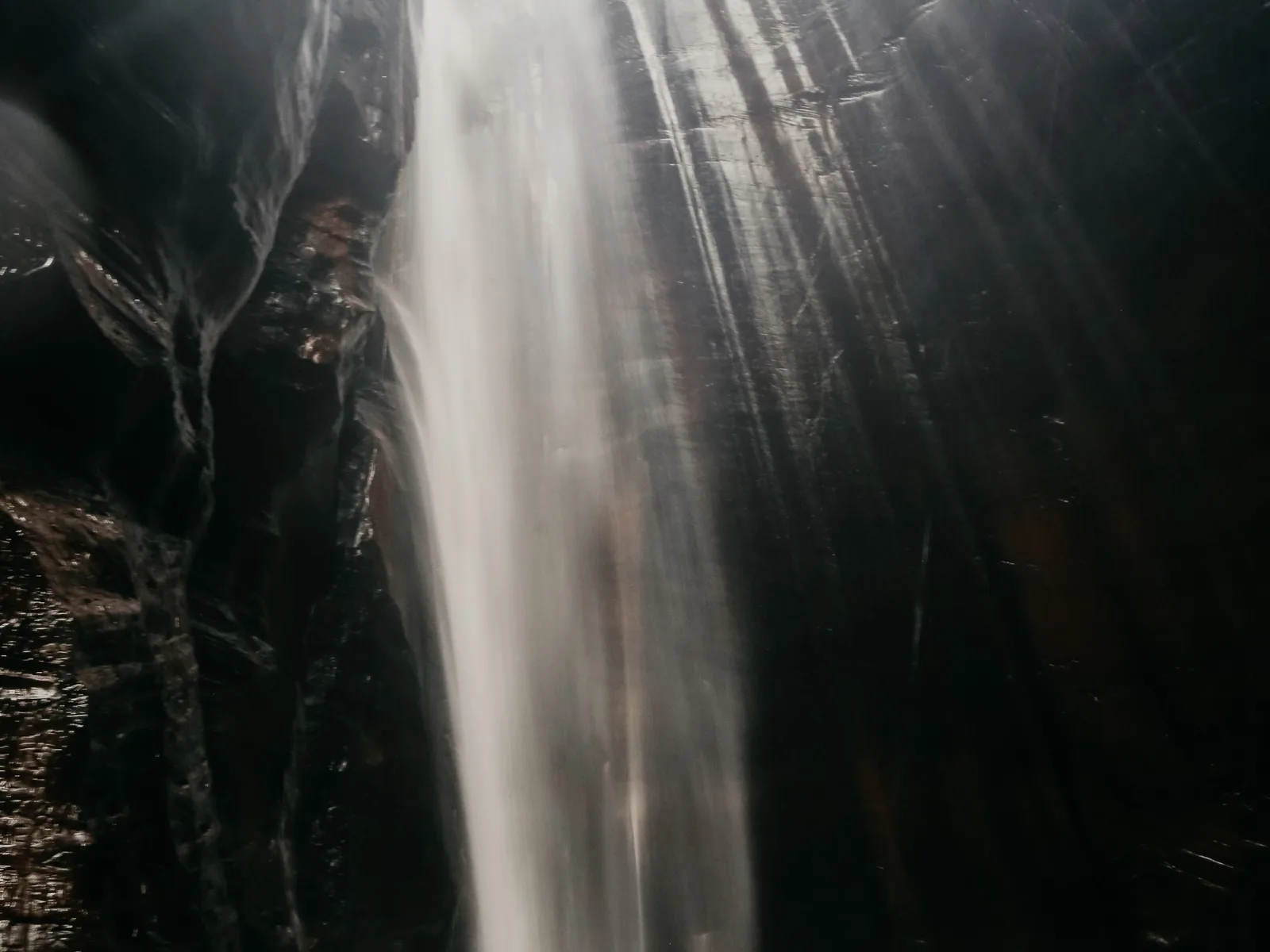
A tall, thin waterfall falling down a dark canyon wall into a pool, lit by shafts of sunlight coming through the gap above 03

The private complex most trips start with

Pedra Caída

From Carolina
About 38 km
Day-use gate
$18 (R$90)
Santuário fall
45 m

A private complex on the BR-010 with a hotel, several waterfalls, viewpoints, a cable car and two ziplines, all sold separately inside one gate. The set piece is the Cachoeira do Santuário: an 800-meter descent on suspended walkways into a narrow canyon, where a 45-meter fall drops into a dark pool and the sun comes down through the gap in shafts.

Every trail here is guided; the complex does not allow anyone to walk them alone. The day-use gate is $18 (R$90), hotel guests skip it, and each trail is charged on top: $8 (R$40) for the Santuário, which runs from 9:00am to 3:00pm. A quieter fall, the Pedra Furada, is about 900 meters out on another suspended trail, $8 (R$40) on foot or $12 (R$60) by vehicle. Two more falls, the Caverna and the Capelão, are reached by 4x4 on dirt roads 6 km from the base, and the walk to the Capelão is in the water.

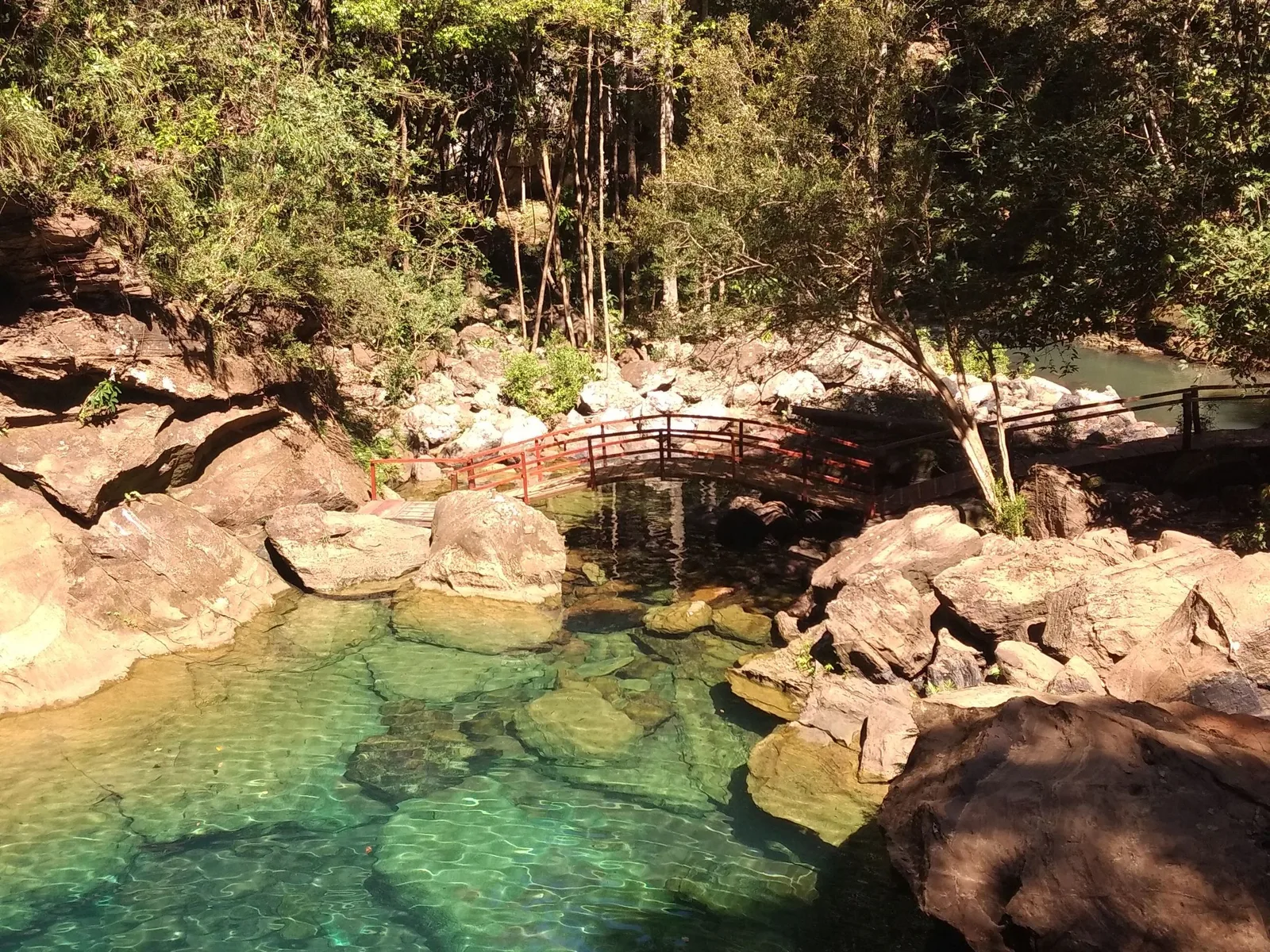
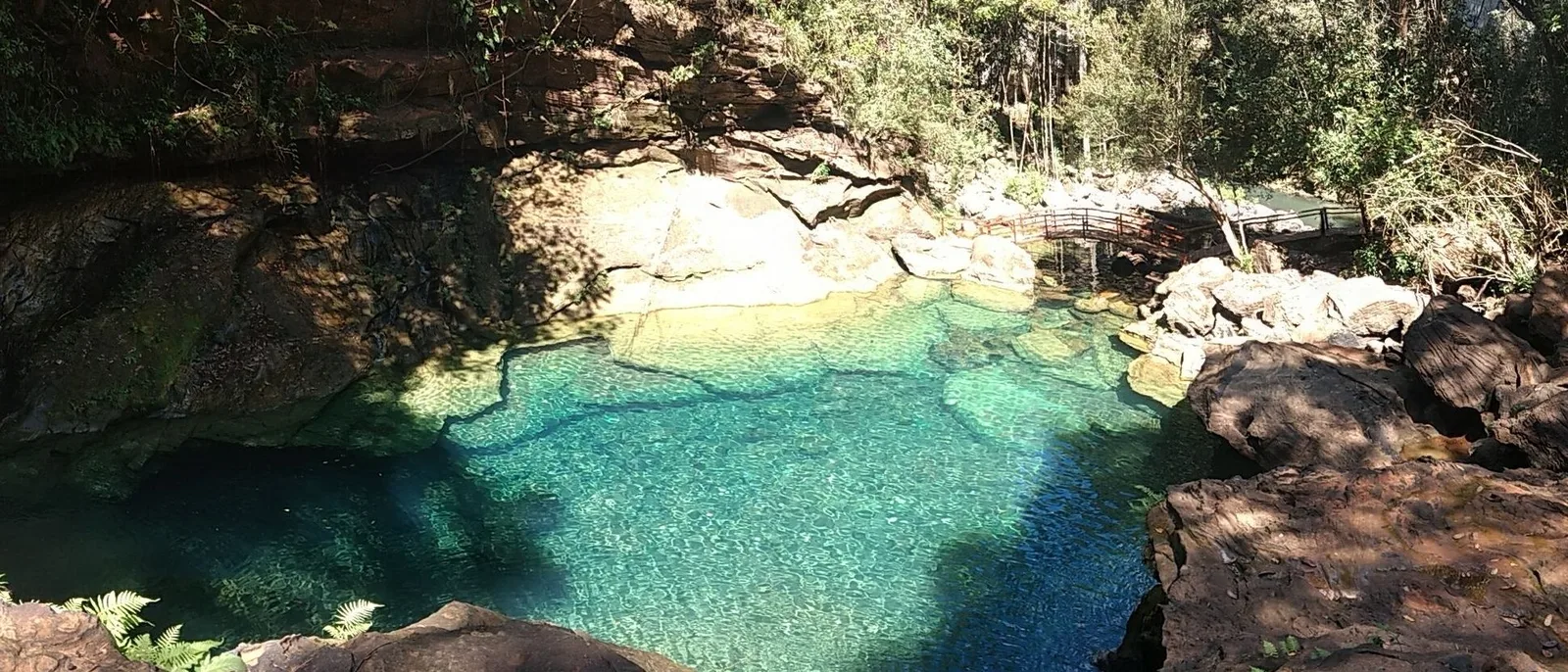
A clear green pool among pale boulders in a wooded gorge, a wooden footbridge crossing the rocks behind it 04

Blue water, an hour at a time

Poço Azul

Where
Riachão, MA-334 km 28
Entry
$18 (R$90) online
Time in the well
1 hour

A private complex outside Riachão, about 28 km from the town, built around a pool of clear blue-green water in a rocky gorge. An 800-meter trail of wooden walkways and suspension bridges leads down to it, and the same ticket covers five waterfalls on the property, among them Santa Bárbara, which the complex gives as 76 meters.

The rules are strict and worth knowing before the long drive. Each visitor gets one descent and a maximum of one hour in the well. The gates open from 9:00am to 5:00pm, outside food and drink is not allowed, and tickets are $18 (R$90) online or $20 (R$100) at the gate. Guests at the complex’s own hotel have the waterfalls to themselves from 7:00am to 9:00am.

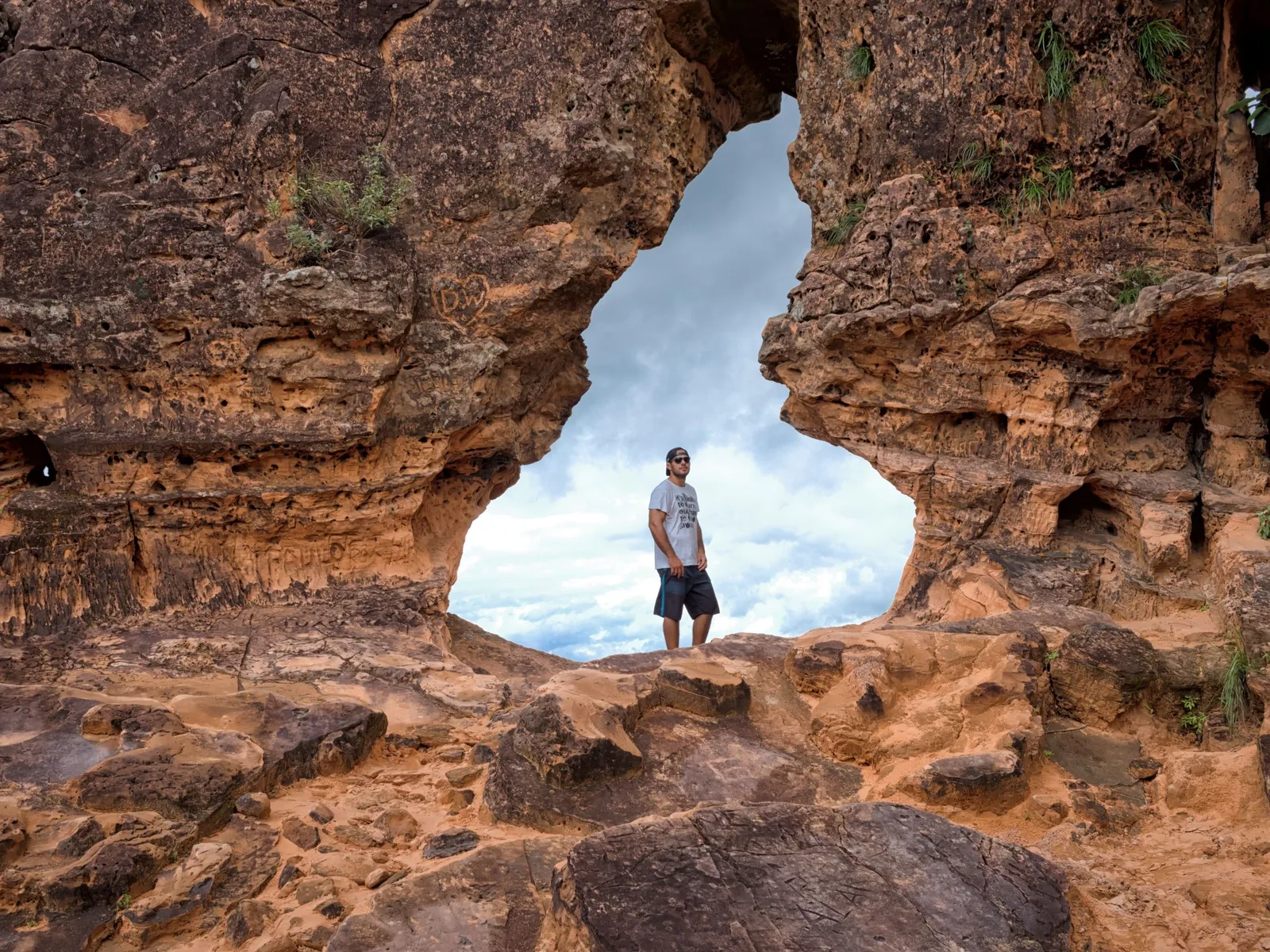
A man standing inside a large keyhole-shaped opening in a wall of weathered orange sandstone, cloudy sky behind him 05

The rock window over the mesas

Portal da Chapada

From Carolina
About 20 km
Road
BR-230 / BR-010
Often paired with
Pedra Caída

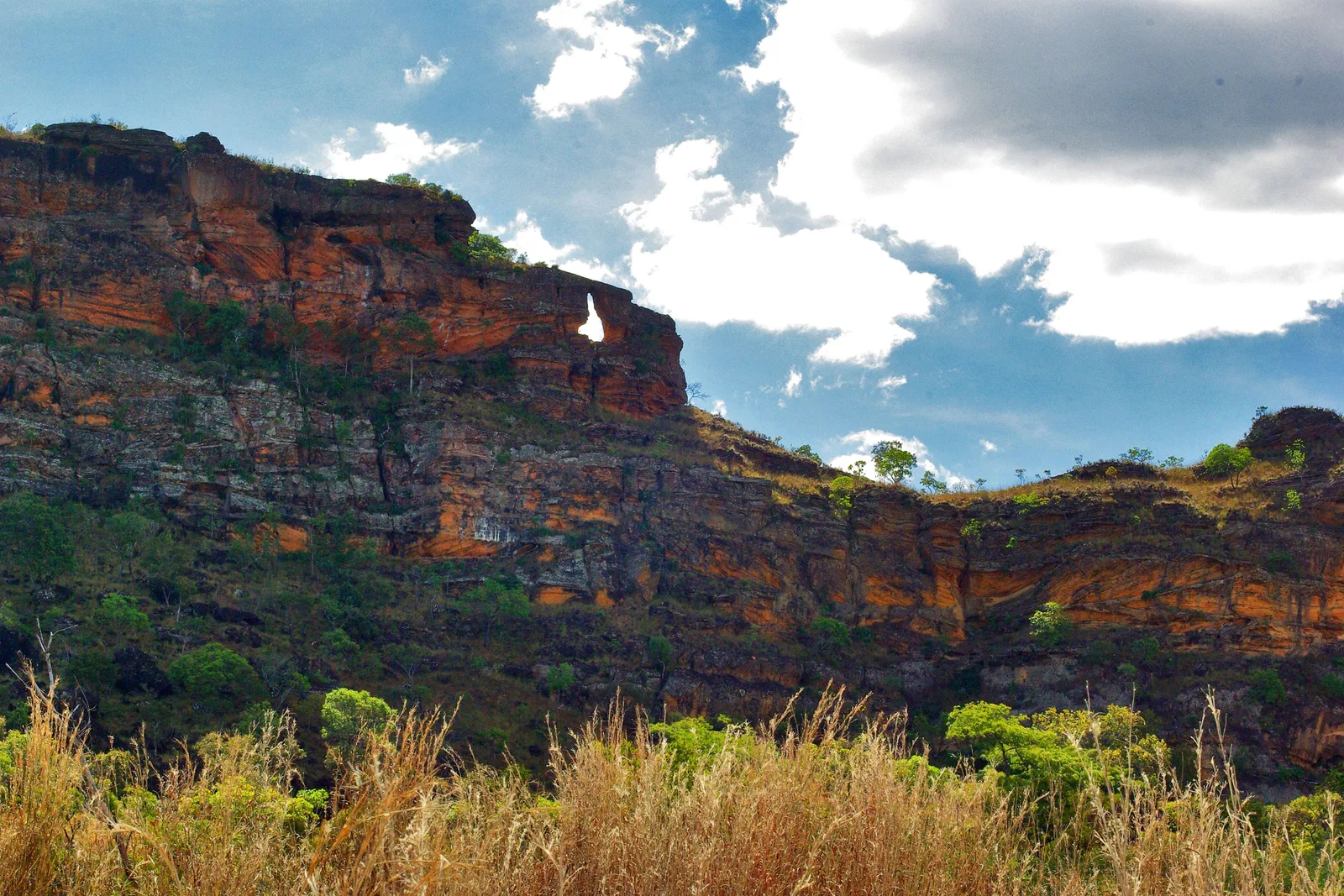
A hole worn clean through a wall of honeycombed sandstone, big enough to stand in, on high ground about 20 km from Carolina. Through it, and from the rocks around it, the view runs out across the cerrado to the mesas that give the region its name.

It is close to town and close to the Pedra Caída road, which is why agencies sell the two together.

What to actually do

Four kinds of day.

Most days here are waterfall days, with a swim at the end of each one. Around them sit the views over the mesas, the adventure extras at Pedra Caída, and the river town you come back to every night. Pick a shape, then scroll sideways through it.

Waterfalls & swimming

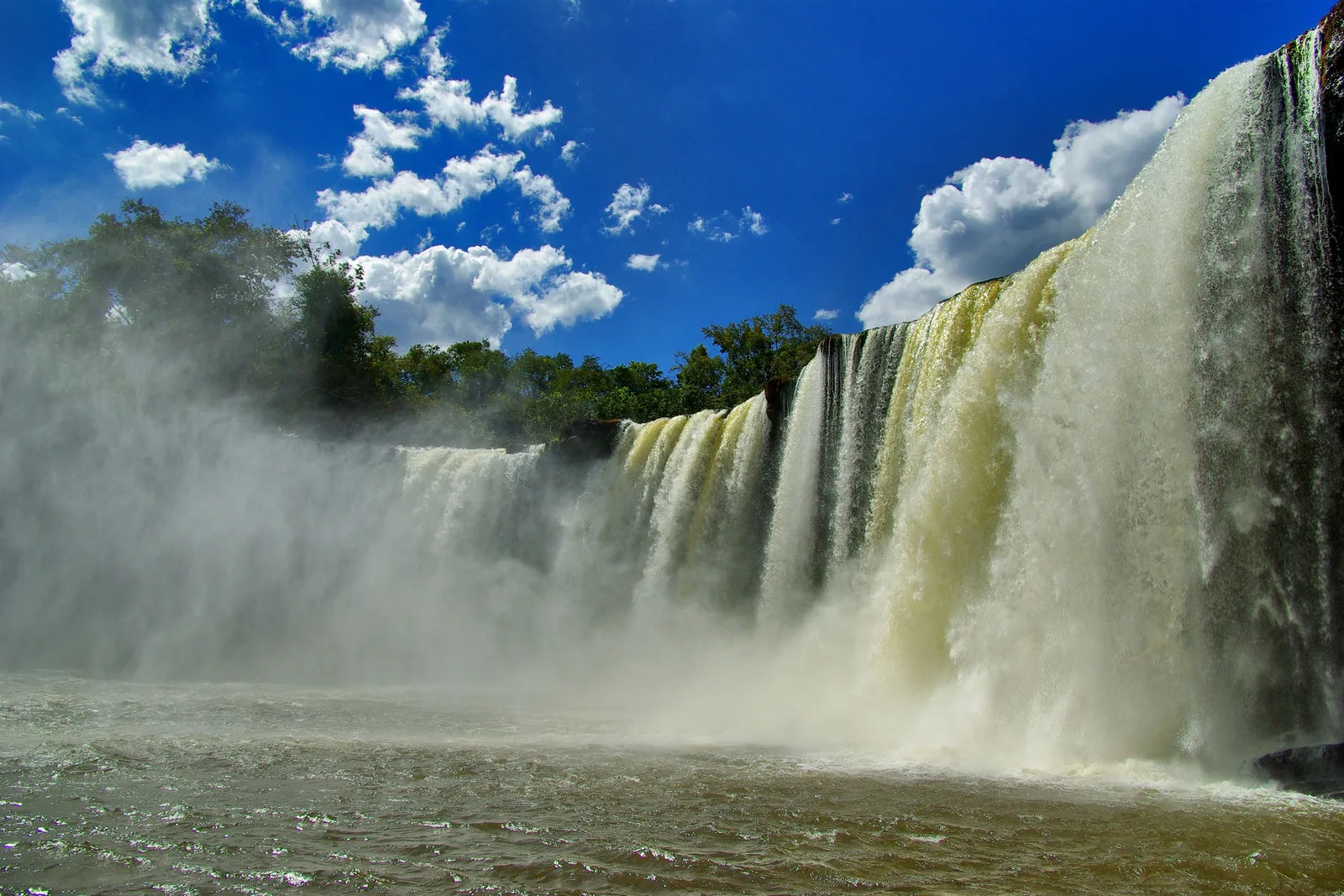
  • A broad waterfall seen from the pool below, white water and mist across the whole frame under a deep blue sky

    National park · full day by 4x4

    Swimming below Cachoeira de São Romão

    The reward at the end of the longest drive in the region. São Romão throws its water off a broad ledge into a wide pool that you can swim in, with the spray blowing over you from the falls. One agency’s published day leaves Carolina at 8:00am in a 4x4, adds Prata on the way, and gets back in the evening. Bring cash for the residents who run the visits.

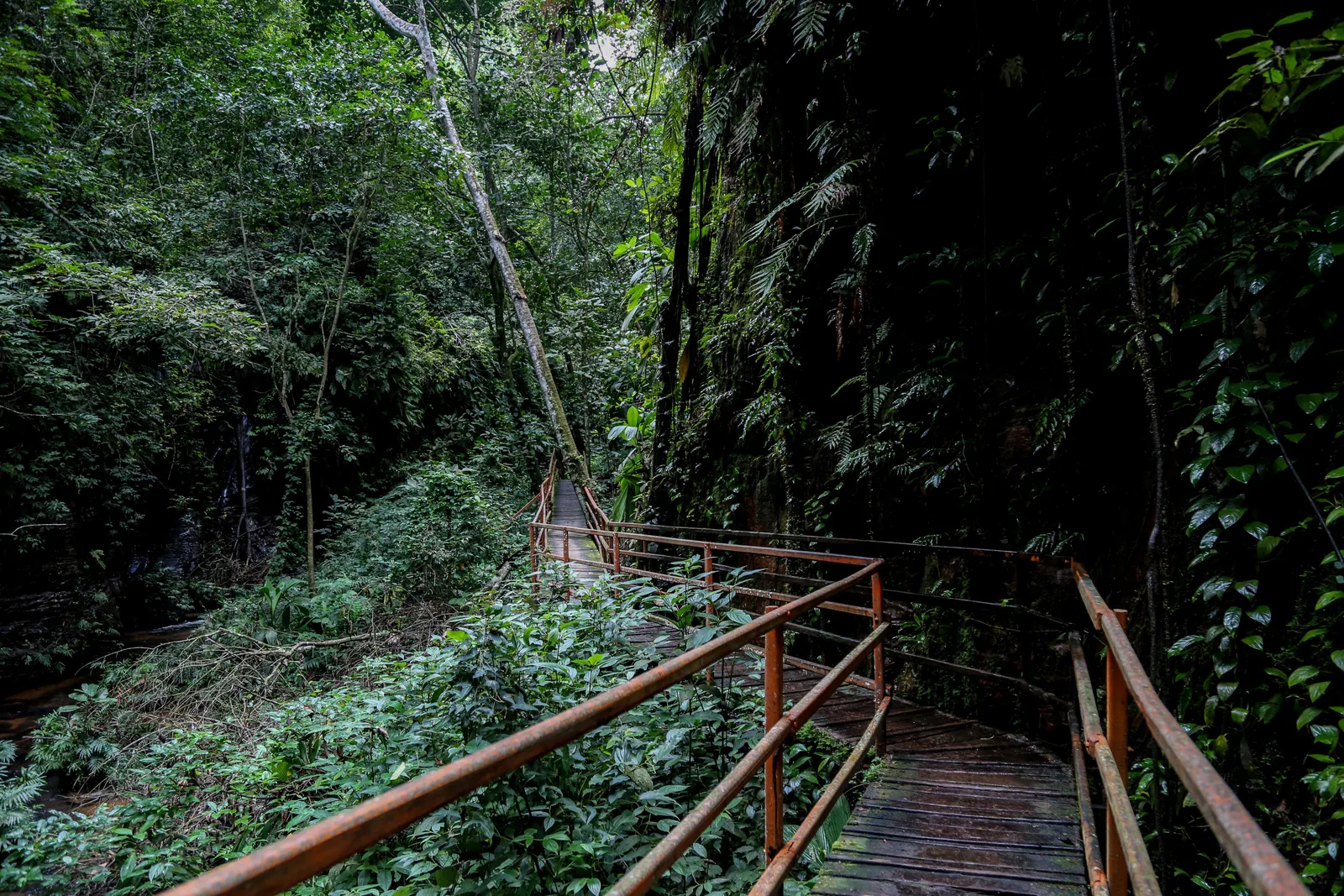
  • A wooden walkway with rust-red handrails winding into a dense green canyon below a dark cliff

    Pedra Caída · half day

    The canyon walk to Cachoeira do Santuário

    An 800-meter descent on suspended wooden walkways down into a narrow green canyon, ending at a 45-meter fall in a pool the complex puts at about 22°C. It is guided, like everything at Pedra Caída, costs $8 (R$40) on top of the $18 (R$90) gate, and runs from 9:00am to 3:00pm, so it pays to start here.

  • A broad waterfall spilling off a rock shelf into dark water, dense forest on both sides and a strip of blue sky above

    Carolina · about 34 km · half day

    Swimming at the Cachoeiras do Itapecuru

    The easiest big waterfall to reach from town: a private complex off the BR-230 with falls dropping into pools of clear water you can swim in. Entry is $16 (R$80), half price for children 7 to 12 and over-60s, and it is open from 8:00am to 5:00pm all year. There are chalets on site if you want to stay by the water.

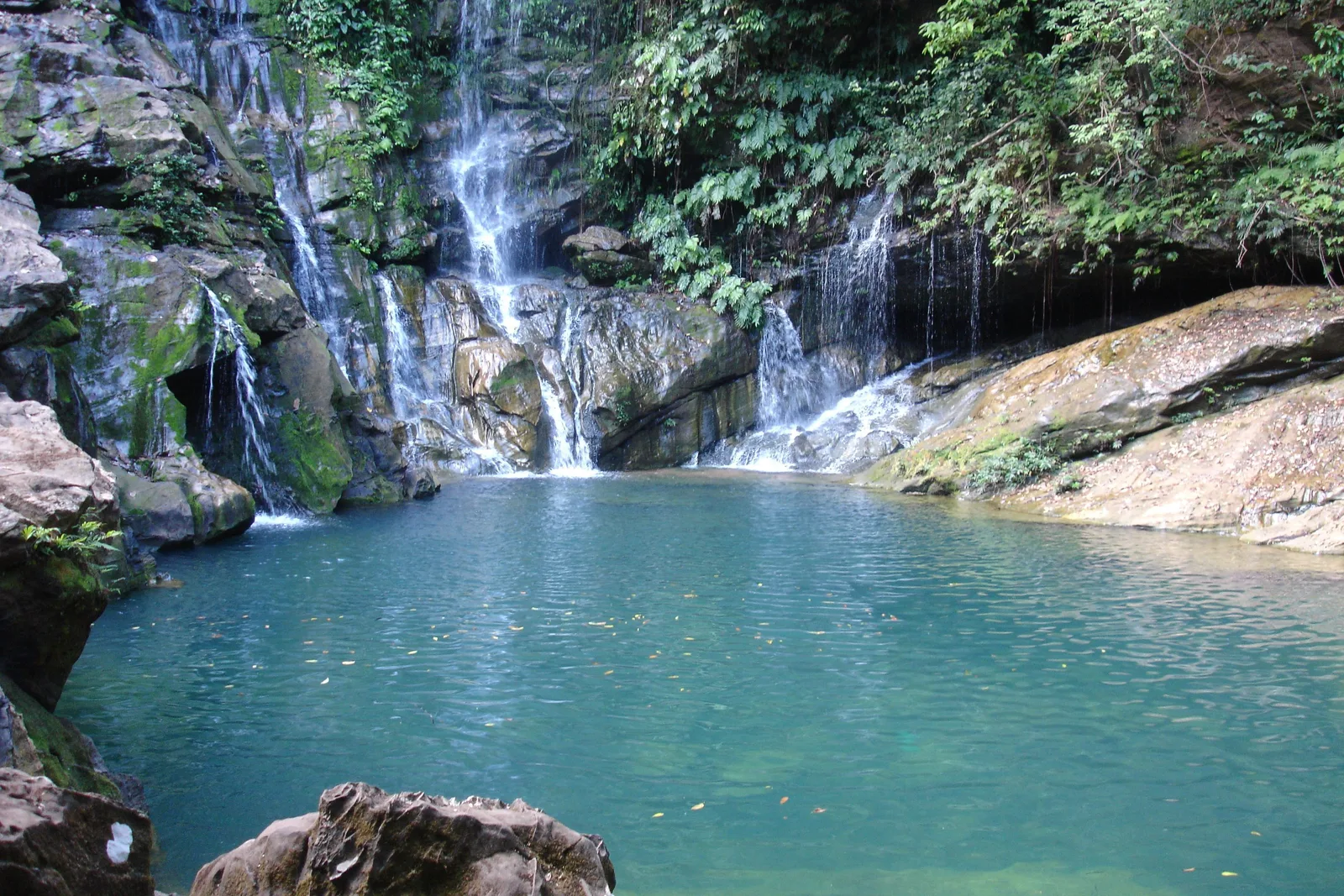
  • Thin streams of water falling down mossy gray rock ledges into a still turquoise pool edged with boulders

    Riachão · full day from Carolina

    The waterfall trail at Poço Azul

    The Poço Azul ticket covers more than the well. Five waterfalls sit along the same complex, including Santa Bárbara, which the operator gives as 76 meters, and the others are Namorados, Santa Paula, Seu Zica and Dona Luiza. Agencies sell the day together with Encanto Azul nearby; one agency’s published day leaves Carolina at 8:00am and gets back at 6:30pm.

Mesas & viewpoints

  • A long flat-topped mountain with steep wooded sides rising behind green pasture, palms and a fence line

    Carolina · full day

    Morro do Chapéu and the Itapecuru day

    The long, flat-topped hill you see from the BR-010 is one of the most recognizable shapes in the region, and agencies in Carolina sell a guided trail there together with the Itapecuru falls as one day. Even from the road it is the clearest look at what a mesa is.

Adventure

  • A wooden walkway with rust-red handrails winding into a dense green canyon below a dark cliff

    Pedra Caída · half day

    The canyon walk to Cachoeira do Santuário

    An 800-meter descent on suspended wooden walkways down into a narrow green canyon, ending at a 45-meter fall in a pool the complex puts at about 22°C. It is guided, like everything at Pedra Caída, costs $8 (R$40) on top of the $18 (R$90) gate, and runs from 9:00am to 3:00pm, so it pays to start here.

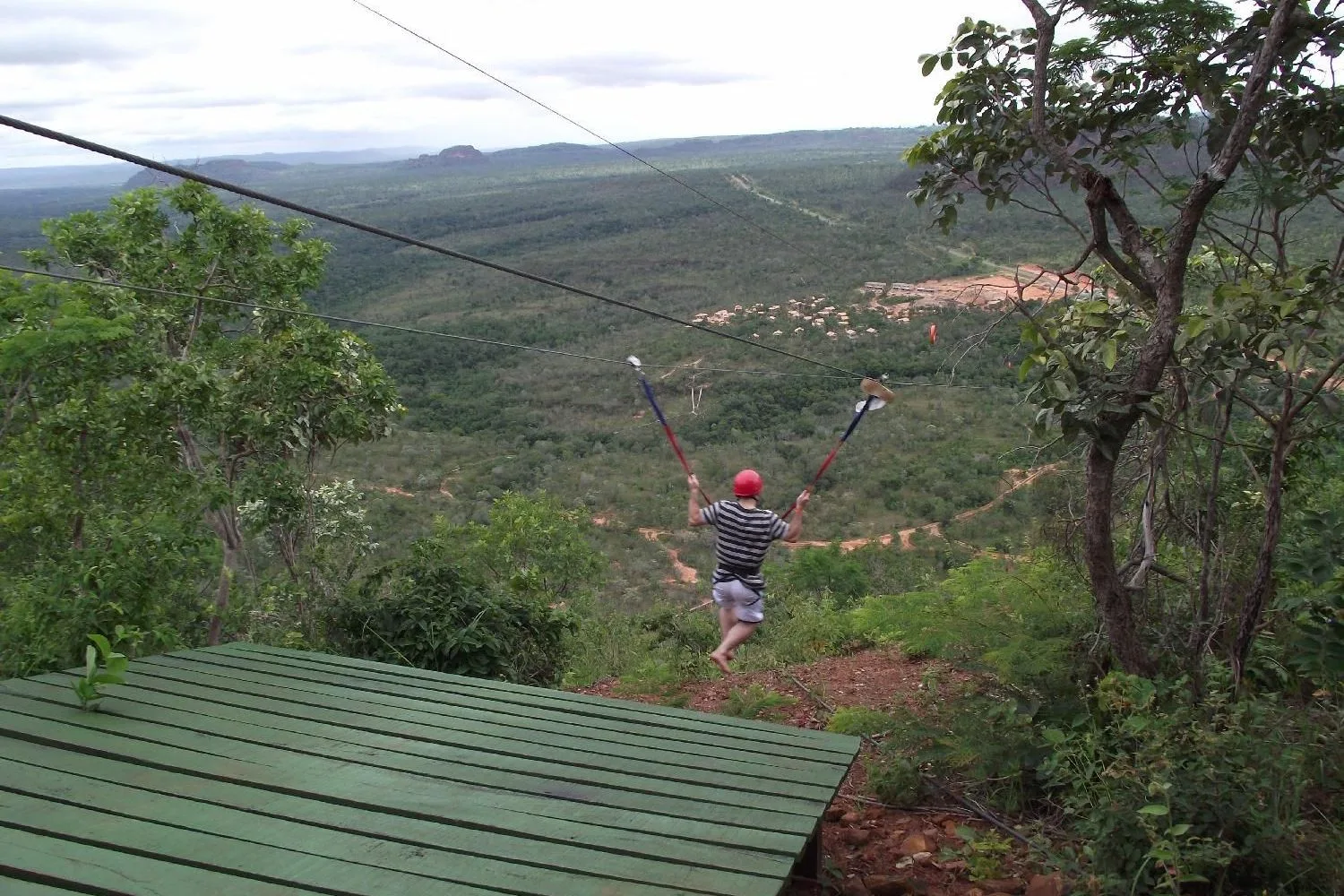
  • A rider in a harness gliding away down a zipline cable over a wooded valley, seen from a wooden launch platform

    Pedra Caída · 1 hour

    The zipline at Pedra Caída

    Two lines run out over the cerrado from the high ground at Pedra Caída, one of 1,200 meters for $18 (R$90) and one of 1,400 meters for $24 (R$120). The complex also runs a cable car for $17 (R$85), and sells the cable car and a zipline together for $33 (R$170).

Carolina & the river

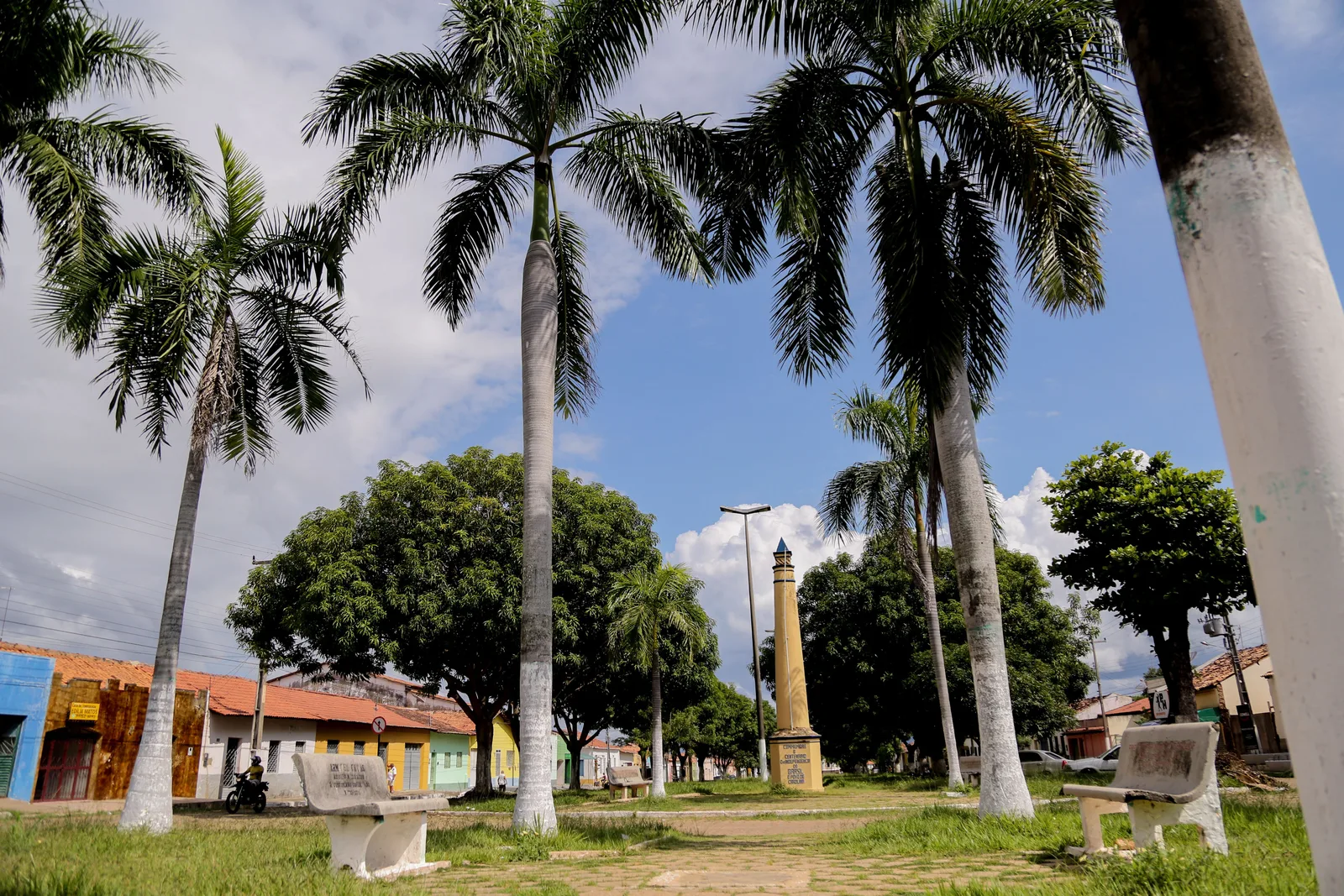
  • A town square in Carolina with tall royal palms, stone benches and a slender white obelisk, low colorful houses along the far side

    Carolina · 2 hours

    Walking the historic center of Carolina

    Carolina was named in 1823 in memory of Brazil’s first empress and became a city in 1859, and its old center is a grid of squares, palms and single-story houses near the river. The town calls itself the capital of the Chapada das Mesas, and the town’s tourism office runs a visitor center, the CAT (Centro de Atendimento ao Turista). Evenings, when it cools down, are the time to walk it.

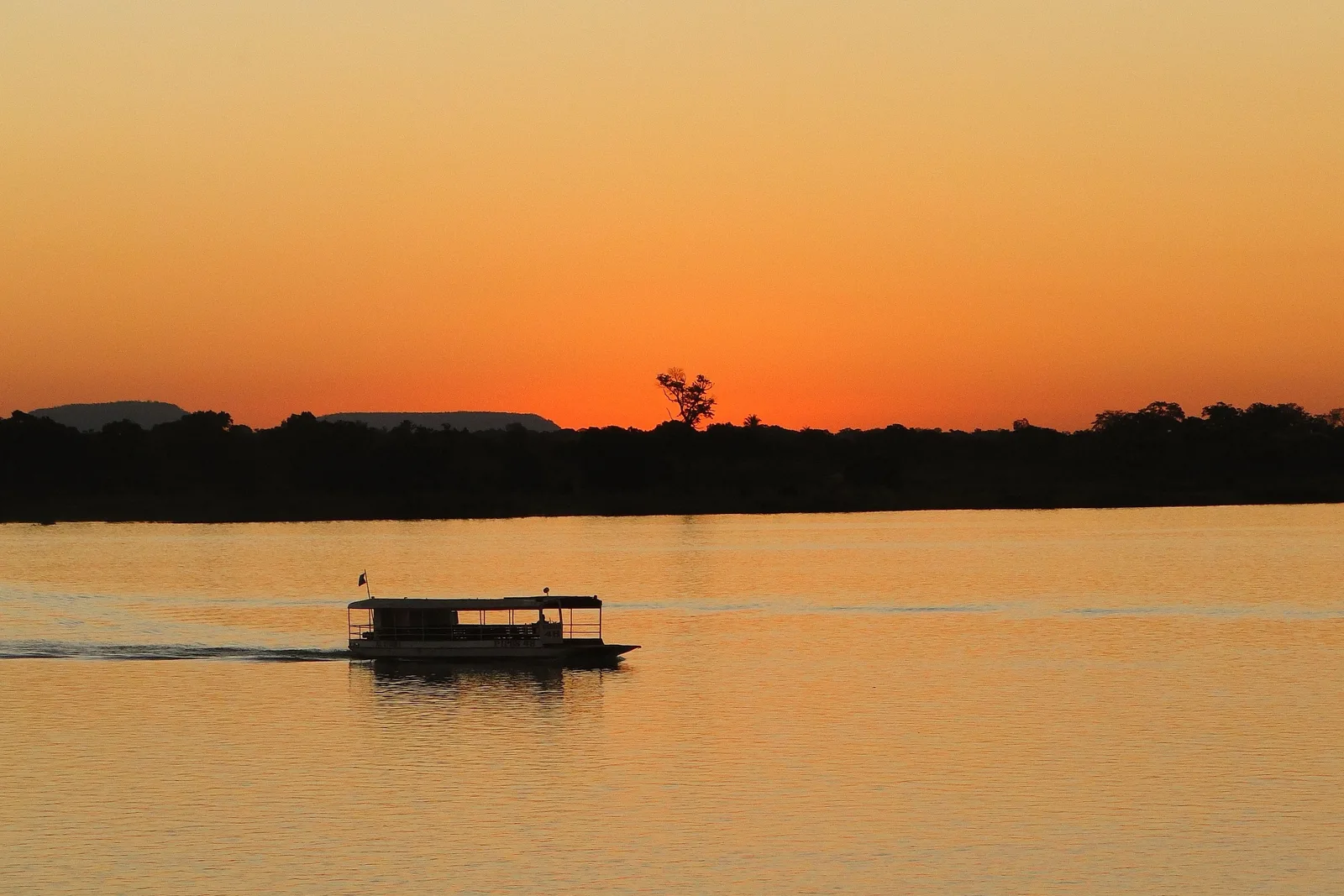
  • A passenger boat crossing a wide river under an orange sunset sky, the far bank a dark line of trees

    Carolina · 2–3 hours

    A boat on the Rio Tocantins

    Carolina faces the Tocantins, a river wide enough here to need a ferry, and boats go out from the riverfront. Agencies fold a Tocantins boat ride into one of their standard days. Late afternoon is the time, when the sun goes down over the Tocantins side.

Where to stay

One town, and two places to sleep beside the water.

Almost everyone sleeps in Carolina, and every agency itinerary starts there. The two alternatives are nights inside the private complexes, at Pedra Caída or at Poço Azul near Riachão, which buy you early access and quiet in exchange for distance from everything else. Estreito, the third park town, has almost no lodging listed for visitors.

Drag and zoom to explore.

Tap an area to open it and see it on the map

  • Our pick

    Best for: A base for every day trip

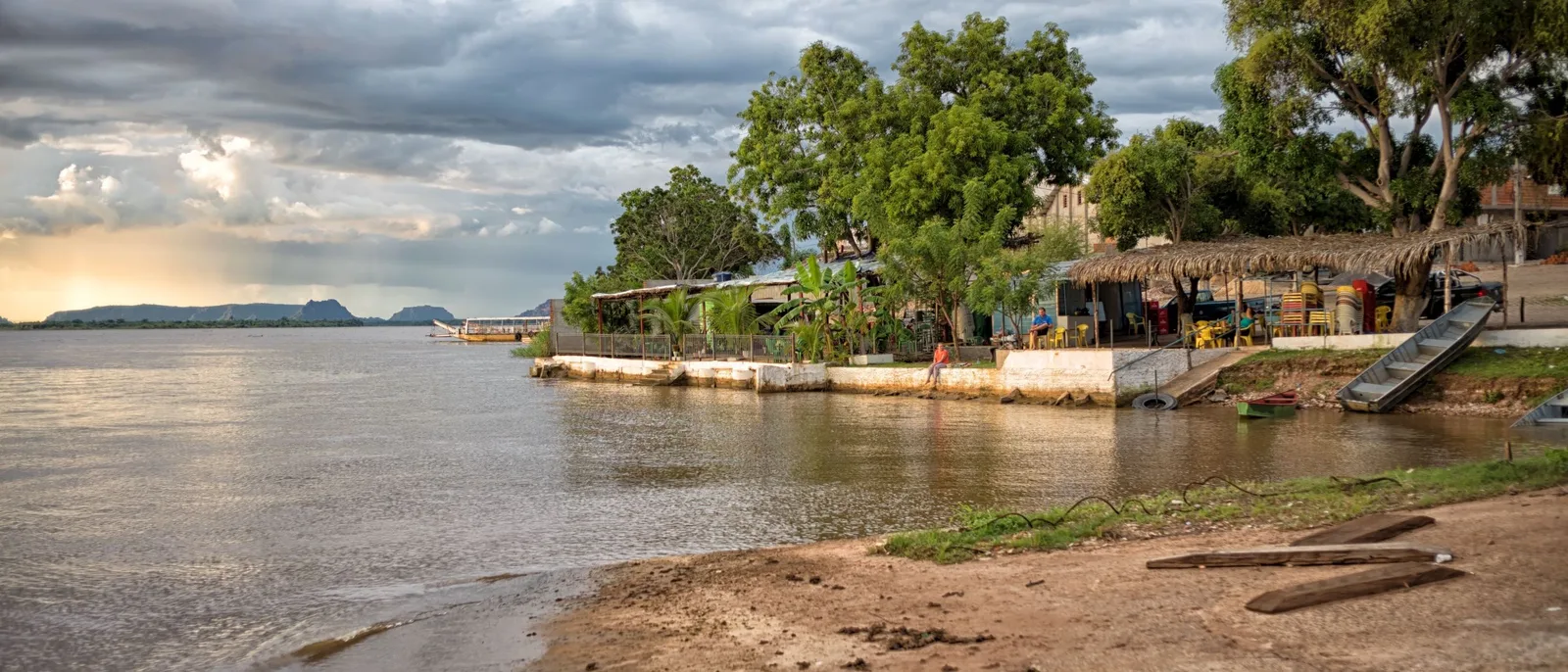
    The Carolina riverfront under a cloudy sky, trees and thatched kiosks along a low embankment, a sandy bank and the wide Rio Tocantins in front

    The riverside town where the buses arrive, the agencies are based and the restaurants are. Booking.com listed 31 properties here for a November night, mostly pousadas from about $39 to $78 (R$200 to R$400) for a double, and the packages read for this page all base their nights in town. Every day trip starts at your door, and evenings mean the old squares and the riverfront rather than a hotel restaurant.

    • Every agency
    • Most pousadas
    • Riverfront
    • Buses arrive here
  • Best for: Waterfalls and ziplines on the doorstep

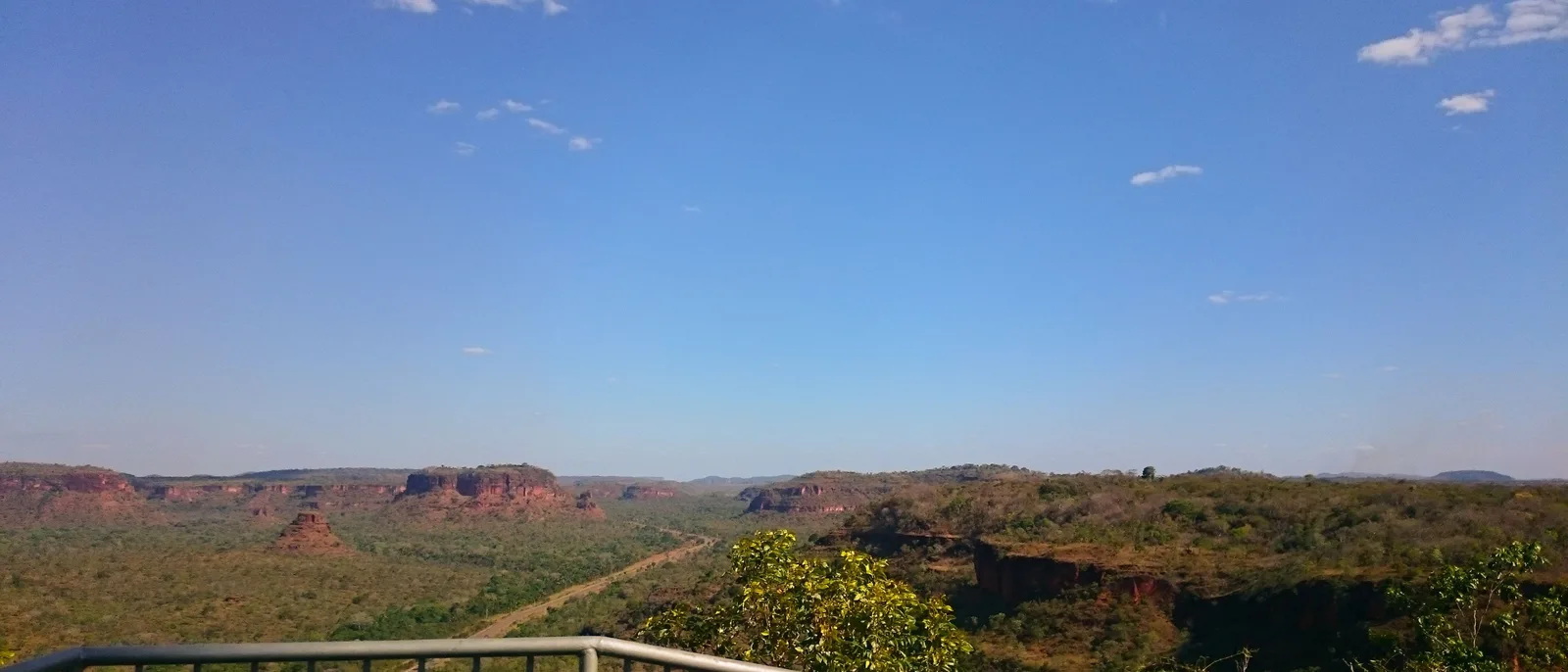
    A viewing platform railing in the foreground and a wide valley of cerrado below, with red escarpments and mesas along the horizon

    The complex runs its own hotel, from about $76–124 (R$390–630) a night for two, depending on which of the complex’s own pages you read, with breakfast, and guests skip the $18 (R$90) day-use gate. You wake up beside the Santuário trail and the ziplines, about 38 km from Carolina on the BR-010. The trade-off is that every other day trip starts with a drive back past town.

    • On-site hotel
    • No gate fee for guests
    • Ziplines
    • Paved road
  • Best for: The blue wells without the long drive

    A wide view of a turquoise pool among sunlit boulders and trees in a rocky gorge at Poço Azul

    Riachão is about 100 km east of Carolina, and the Poço Azul complex another 28 km beyond it. The complex runs a hotel with apartments from about $120 (R$610) a night, where guests have the waterfalls to themselves from 7:00am to 9:00am. Riachão itself had seven properties on Booking.com, simple pousadas from about $31 (R$160). One night out here, in the middle of a Carolina-based trip, is the only way agency packages use it.

    • Early access at Poço Azul
    • One night, not a base
    • Simple pousadas in town

A working plan

Five days, four directions, one river town.

Four full days covers the four standard day trips out of Carolina, and the first day goes on getting there, after a night in Imperatriz. This plan sleeps in Carolina throughout; to swap a night for the hotel at Pedra Caída or Poço Azul, put it on the night before that day. Shorter than this, keep São Romão and Prata and Poço Azul, which nothing else here replaces.

  1. 01
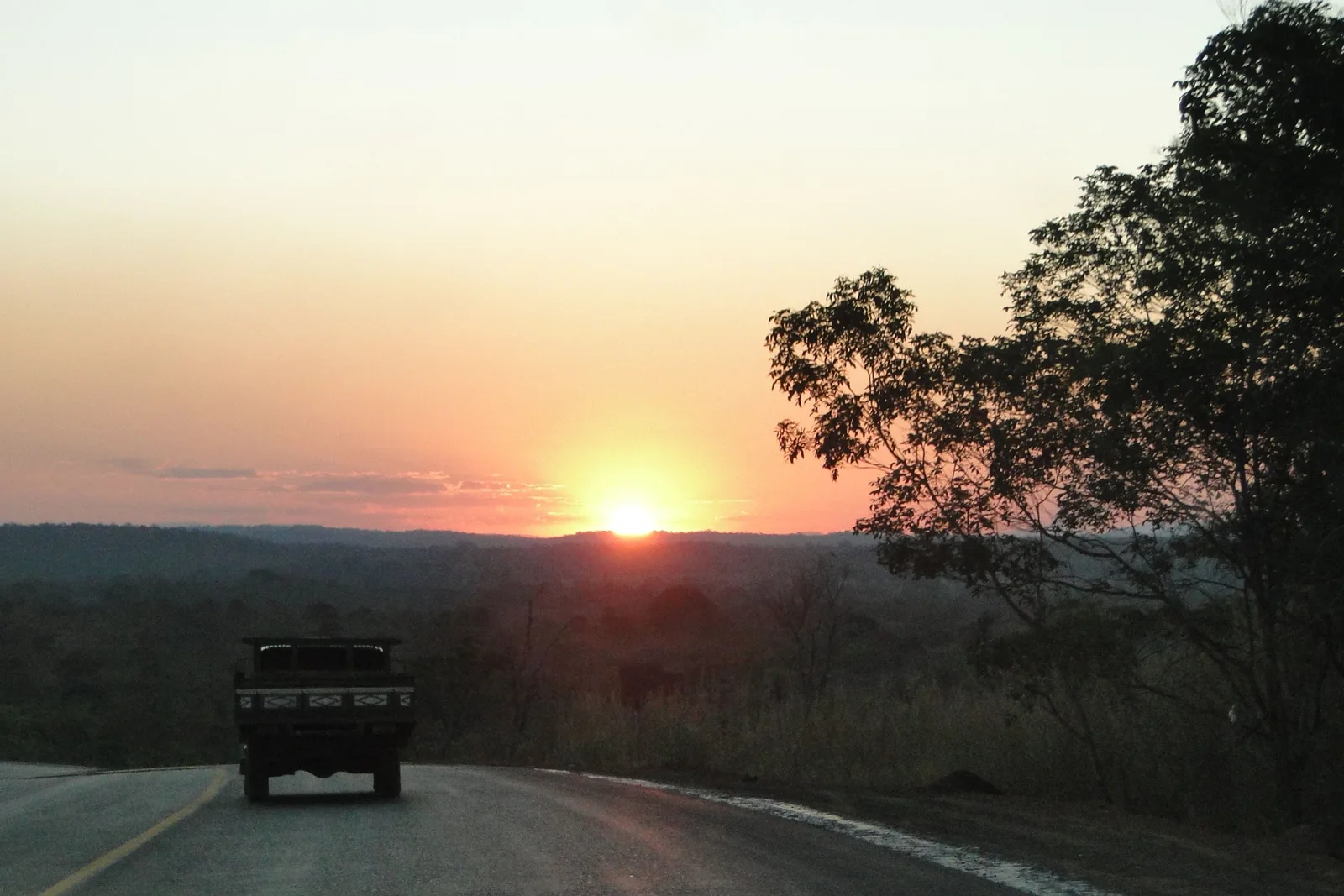
    A pickup truck driving down an empty highway toward a low sun setting over a wide wooded plain

    Imperatriz → Carolina

    Into the Chapada

    Most flights reach Imperatriz between 2:00am and 3:15am; the one daytime arrival, LATAM from Brasília, lands at 4:45pm. Either way, sleep in Imperatriz, then drive the 223 km south in daylight, about three and a half hours, or take the 6:00am JR4000 bus from the town’s bus station. Check in, then walk down to the riverfront for the sunset over the Tocantins.

  2. 02
    A wide waterfall falling in a long white curtain into a dark pool, with forest above and a rock on the right bank

    Carolina → São Romão and Prata

    The park’s two great falls

    The 4x4 day. Out at 8:00am on asphalt and then sand track to Prata and São Romão on the Rio Farinha, with a swim at each, and back to Carolina in the evening.

  3. 03
    A thin waterfall falling down a tall dark rock face beside a wooden walkway in a green canyon

    Pedra Caída and Portal da Chapada

    Canyon, zipline and the Portal

    Be at Pedra Caída early for the guided descent to the Santuário fall, then the zipline or the trail to the Pedra Furada fall. Stop at the Portal da Chapada on the way back.

  4. 04
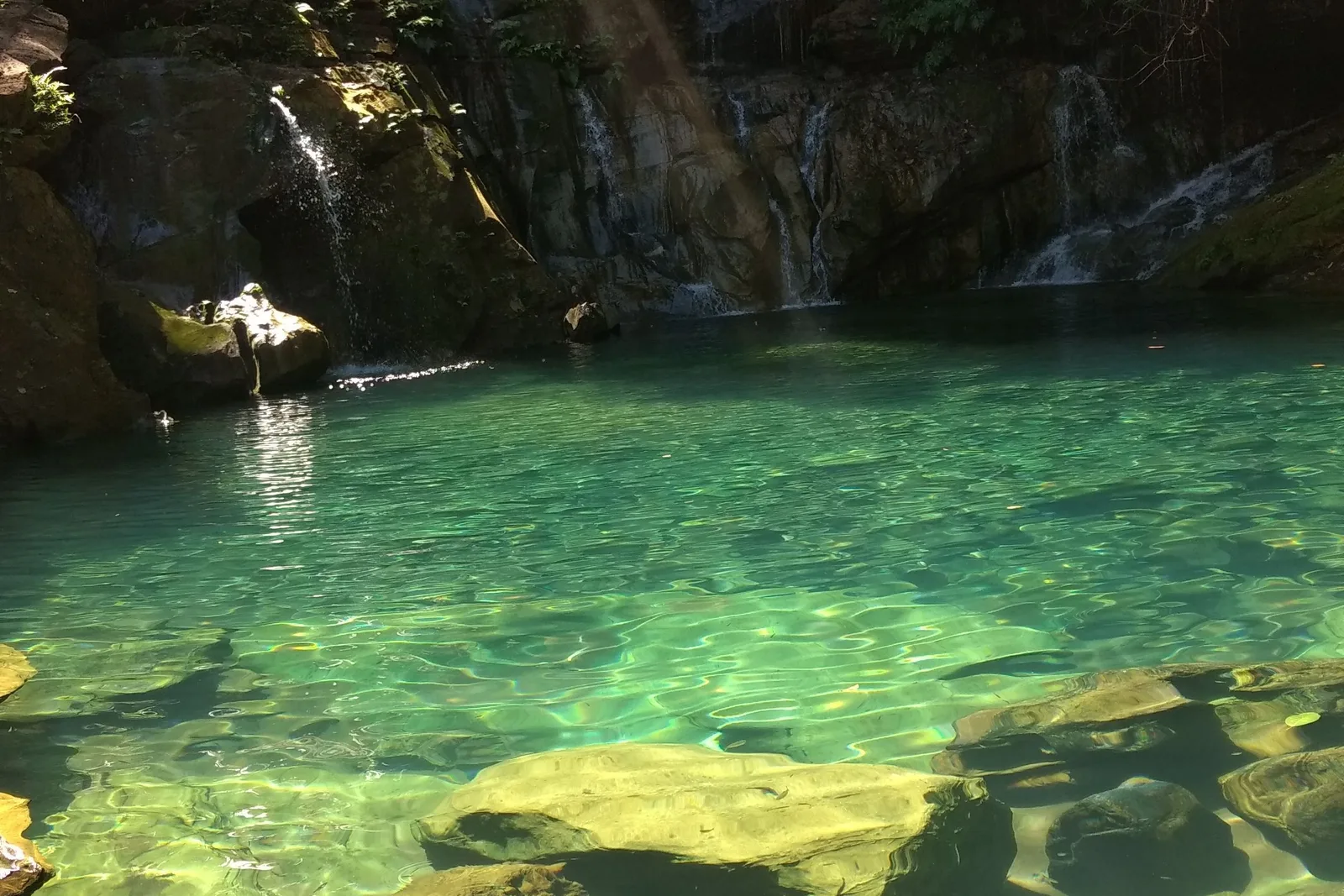
    A clear green pool with sunlit boulders under the surface in front and thin waterfalls running down the dark rock wall behind

    Carolina → Riachão → Poço Azul

    The blue wells of Riachão

    East on the BR-230 for your hour in Poço Azul and the waterfalls on the same ticket, with Encanto Azul if the agency adds it. Leave at 8:00am; back around 6:30pm.

  5. 05
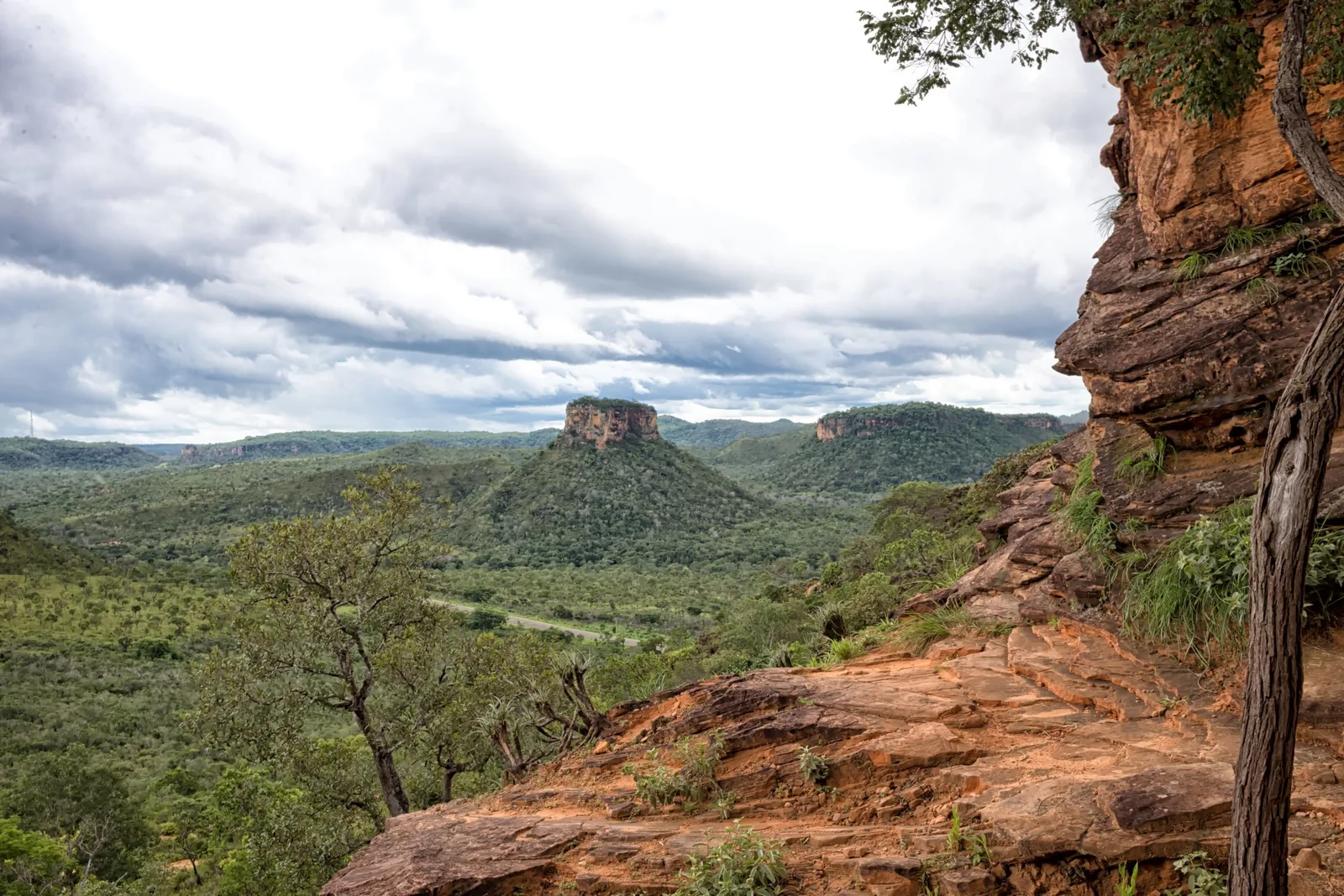
    A green valley with a flat-topped butte in the middle and long ridges beyond, seen past an orange rock outcrop and a leaning tree

    Cachoeiras do Itapecuru → Imperatriz

    Itapecuru, the mesas, and out

    A morning swim at the Itapecuru falls, 34 km out of town, with a look at Morro do Chapéu. Leave Carolina by about 12:30pm for the drive north to Imperatriz and the 5:30pm LATAM flight to Brasília, the only daytime departure.

This is a starting shape, not a fixed departure — we rearrange it around your dates. Have it built for you

Timing

Dry and blazing, or wet and full.

Southern Maranhão has two seasons and very little in between. From November to April it rains hard, 174 to 303 mm a month at Carolina, and storms can close Poço Azul for the day. From June to August it barely rains at all, the sun shines almost every day, and the afternoons get properly hot. June is the pick: the rain has stopped, and the heat has not yet peaked. By September the afternoons average 36°C, and the rains are only just coming back.

How hot, how wet and how good each month is in the Chapada das Mesas. Choose a month for its average temperatures, rainfall and what the season is doing then.

January

Trade-offs
Air
23–31°C 73–88°F
UV
8 Very high
Rain
17 days 303 mm / 11.9 in

The heart of the wet season, with rain on seventeen days. Everything green, and storms that can close Poço Azul for the day.

February

Trade-offs
Air
23–32°C 73–90°F
UV
9 Very high
Rain
17 days 289 mm / 11.4 in

Still fully wet, 289 mm on seventeen days.

March

Trade-offs
Air
23–32°C 73–90°F
UV
9 Very high
Rain
18 days 293 mm / 11.5 in

The most rain days of the year, eighteen of them, for 293 mm.

April

Trade-offs
Air
23–32°C 73–90°F
UV
9 Very high
Rain
13 days 206 mm / 8.1 in

The rains easing but not over, 206 mm on thirteen days. A compromise month at the end of the wet season.

May

Good
Air
23–33°C 73–91°F
UV
9 Very high
Rain
7 days 92 mm / 3.6 in

The dry season starting, with rain on about seven days and afternoons near 33°C.

June

Best
Air
21–34°C 70–93°F
UV
9 Very high
Rain
1 day 13 mm / 0.5 in

The best month: one rain day in a normal June, long sunny days and afternoons a little under 34°C.

July

Good
Air
20–35°C 68–95°F
UV
9 Very high
Rain
1 day 7 mm / 0.3 in

The sunniest month and the coolest nights. Afternoons hotter than June’s at 35°C, so swim in the middle of the day.

August

Good
Air
22–36°C 72–97°F
UV
10 Very high
Rain
1 day 9 mm / 0.4 in

The hottest month, 36.4°C on an average afternoon, and the driest air of the year. Start early and stay in the water.

September

Trade-offs
Air
23–36°C 73–97°F
UV
11 Extreme
Rain
3 days 38 mm / 1.5 in

Still blazing at 36.3°C, with the first rains returning: 38 mm on three days.

October

Trade-offs
Air
23–34°C 73–93°F
UV
10 Very high
Rain
8 days 117 mm / 4.6 in

The rains coming back, on about eight days. Hot and humid between the storms.

November

Trade-offs
Air
23–32°C 73–90°F
UV
9 Very high
Rain
10 days 174 mm / 6.9 in

Properly wet again, 174 mm on ten days.

December

Trade-offs
Air
23–32°C 73–90°F
UV
9 Very high
Rain
13 days 231 mm / 9.1 in

Into the full wet season, with 231 mm on thirteen days.

  • Best The one or two peak months
  • Good A real recommendation
  • Trade-offs Workable, with a catch
See Chapada das Mesas on the Brazil calendar

UV is the monthly average of the daily peak, 2022 to 2025, calculated from Copernicus Atmosphere Monitoring Service data. Weather data by Open-Meteo.com, CC BY 4.0.

Best month

June

The rain is over, 13 mm on a single rain day in the normal year, with 286 hours of sun. At 33.9°C, the afternoons are milder than in any month from July to September.

Close behind

May, July, August

May still has the tail of the rains, 92 mm on seven days. July is the sunniest month and has the coolest nights, at 20.4°C. August is the hottest month of the year, at 36.4°C, with the driest air.

Trade-offs

September–April

September is as hot as August, at 36.3°C, with only the first rains. From October the rains build, and by January to March they bring around 300 mm a month. Poço Azul warns that the well and its waterfalls can close on stormy days in that season.

About the rain

The figures above are INMET’s 1991–2020 normals for its Carolina station, at 183 meters on the edge of the town, the long record closest to the park. They add up to 1,772 mm a year, with almost all of it between October and April and only about 30 mm from June to August. The park itself starts about 20 km to the north, and ICMBio’s management plan gives 1,250 to 1,500 mm a year for it, so treat the table as Carolina’s weather rather than an exact reading for every waterfall.

The heat is the thing visitors underestimate. Average afternoons reach 35°C or more from July to September, and the humidity in August averages 48 percent. The pattern of a good day is to be on the road early, be in the water by noon, and leave the walking for the morning and the late afternoon.

The dates worth planning around

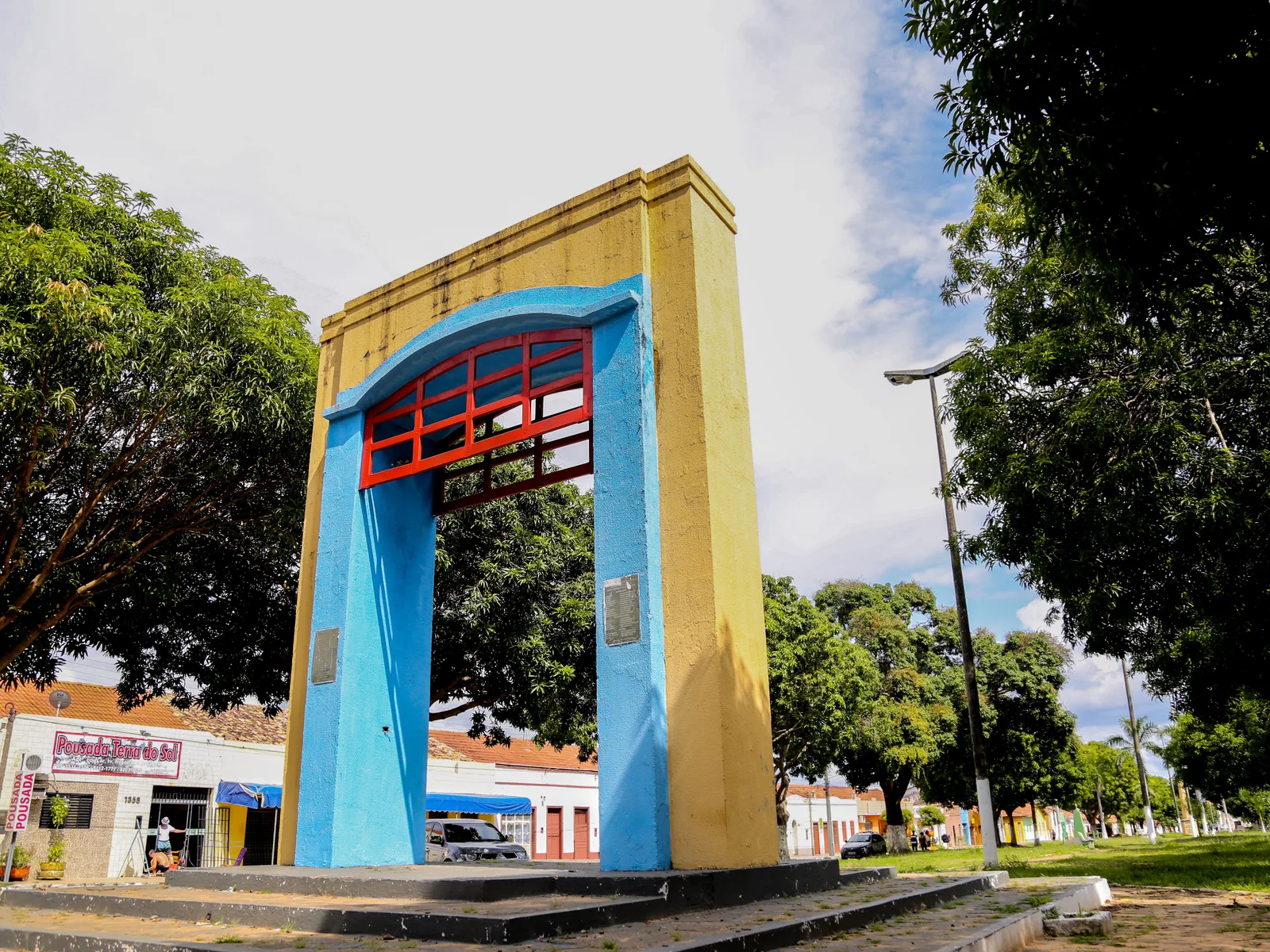
A tall yellow monument shaped like a gateway, with a blue arch and red lattice inside it, standing on a square in Carolina among trees and low shops

Carolina’s birthday and the Arraiá da Chapada

8 July, with a program over several days around it

Carolina became a city on 8 July 1859, and the town marks the date with a program of events. In 2025, for its 166th anniversary, it opened with the first Arraiá da Chapada, a festa junina at the Praça dos Hot’s. It falls in the heart of the dry season, when you are likely to be here anyway. Check the prefeitura’s program for the year’s dates.

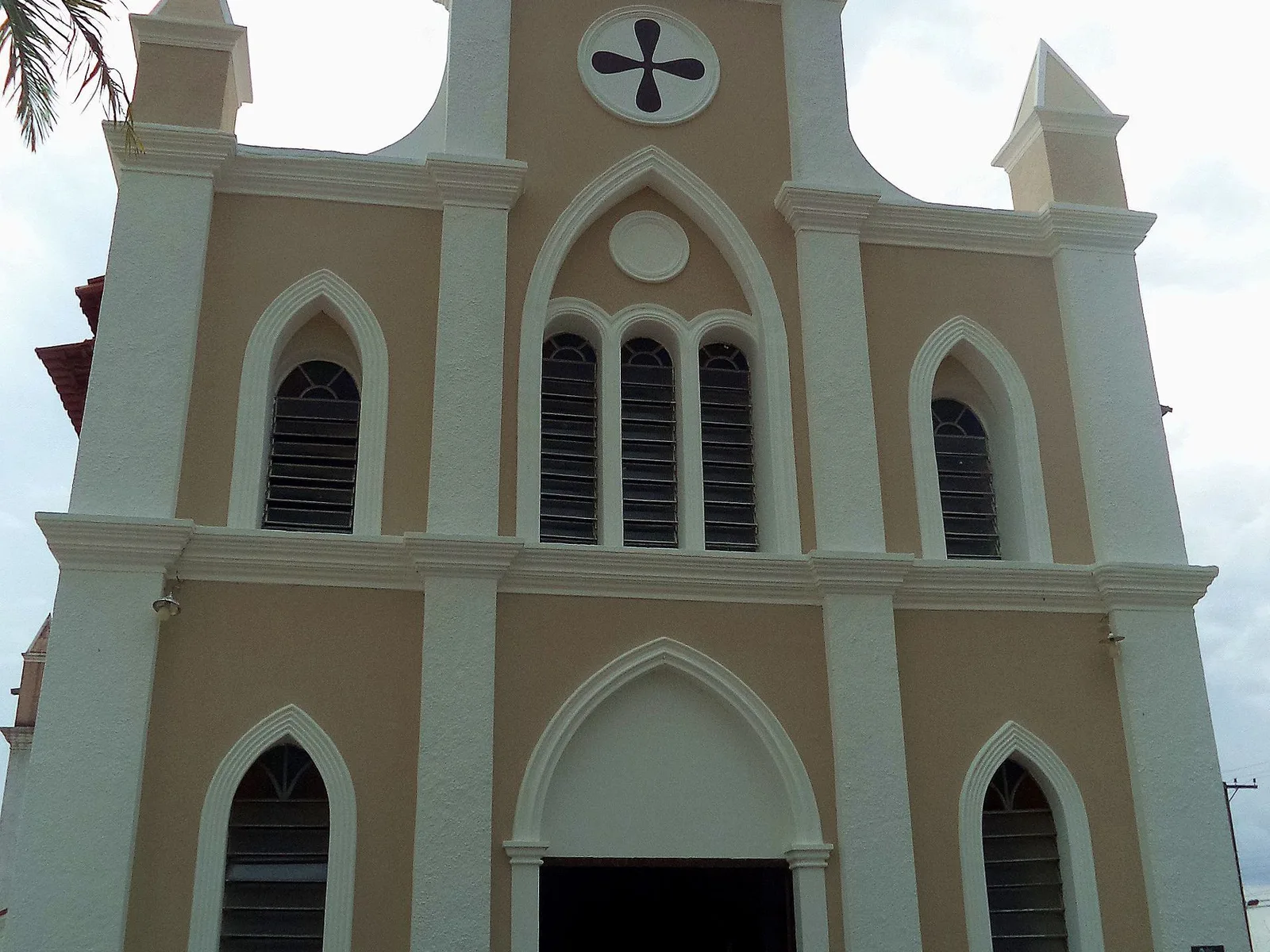
The cream and beige facade of the cathedral of São Pedro de Alcântara in Carolina, with pointed windows and a small rose window, seen from below

Festejo de São Pedro de Alcântara

Nine nights in October, 10 to 19 October in 2024

The festival of Carolina’s patron, held over nine nights at the cathedral of São Pedro de Alcântara in the center of town. It is a religious festival for the town itself rather than an event staged for visitors, and it falls just as the rains return. The 2024 edition ran from 10 to 19 October; confirm the dates for the year you travel.

Good to know

Before you come

How is this different from the Lençóis Maranhenses or the Chapada Diamantina? +

The Lençóis Maranhenses is in the same state but at the other end of it: white dunes and rain-filled lagoons near the coast, more than 700 km from Carolina in a straight line, and a separate trip. The Chapada Diamantina, about 880 km away in a straight line in Bahia, is the one to choose if you want multi-day hiking. Nothing like that is sold here. The Chapada das Mesas is a waterfall-and-swimming trip: you are driven to big river falls and clear pools, most of them on private complexes with gates and set hours, and you sleep in one river town. Come here for the water and the mesas, not for a trek. Jalapão, often mentioned in the same breath, is a different region in the neighboring state of Tocantins, and this page does not cover it.

What is the easiest way to get there from the United States? +

Fly to São Paulo or Brasília, connect to Imperatriz, and drive or take the bus 223 km south to Carolina. LATAM flies to Imperatriz daily from both São Paulo Guarulhos and Brasília, and Azul from Belo Horizonte and São Luís most days. Araguaína is closer, 110 km with a ferry over the Tocantins, but has only three GOL flights a week, landing after midnight. Palmas has the most flights and the longest drive, about 456 km. Carolina’s own airfield has no scheduled service. Most flights land at Imperatriz in the middle of the night, so plan a night there and drive south in daylight.

Do I need a guide or a 4x4? +

For some places, yes. Pedra Caída does not allow anyone onto its trails without a registered guide. The day to São Romão and Prata ends on sand tracks that agencies drive in 4x4s, and road signs in and around the park are scarce, so go with an agency or a local driver. Pedra Caída and the Cachoeiras do Itapecuru sit off the main highways and are the easiest days to do in a car of your own. Inside the national park, visitors sign a responsibility and risk form.

When is the best time to go? +

June. It is the first fully dry month, with one rain day in a normal year, and the afternoons, at about 34°C, are milder than they will be again until the rains. May, July and August are close behind: May has the last of the rains, July the coolest nights, and August is the hottest month. September is as hot as August, averaging 36°C in the afternoon, and from October to April the rains are back, with storms that can close Poço Azul and its waterfalls for the day.

How many days do I need? +

Five is the honest minimum: one to arrive, then a day each for São Romão and Prata, Pedra Caída and the Portal da Chapada, the Riachão wells, and the Itapecuru falls before you leave. The packages sold for the region run four to nine days. With only three full days, keep the park falls, Pedra Caída and Poço Azul, and skip Itapecuru.

Keep going

Where the Chapada das Mesas fits in a bigger trip.

The Lençóis Maranhenses is the other half of a Maranhão trip, and Azul flies Imperatriz to São Luís most days. The Chapada Diamantina is the comparison everyone makes: another chapada, but a hiking trip rather than a swimming one. Bonito, in Mato Grosso do Sul, is the other clear-water trip people weigh it against.

Free · 29 pages

Free guide

Beginner's Guide to Brazil

A free 29-page guide to everything a first-time visitor should know before landing: visas, safety, money, getting around, where to go, and what to eat.

We'll email you a link to confirm your address. Click it and the guide opens right away.

See what's inside
A long flat-topped mesa with red cliff faces stretching across the horizon above dry cerrado, under a pale blue sky

Skip the planning

Get the airport right and the rest is swimming.

Tell us your dates and how much heat you can take. We will shape a private Chapada das Mesas trip around them: the right airport for your flights, the 4x4 day with a driver who knows the tracks, and the wells booked on the days the gates are open.

  • One person, living in Brazil, replying to you directly
  • A reply within one business day, no call center, no bots
  • No cost to plan, and no obligation to book
  • Built around your dates, not a fixed departure