
Skip to content
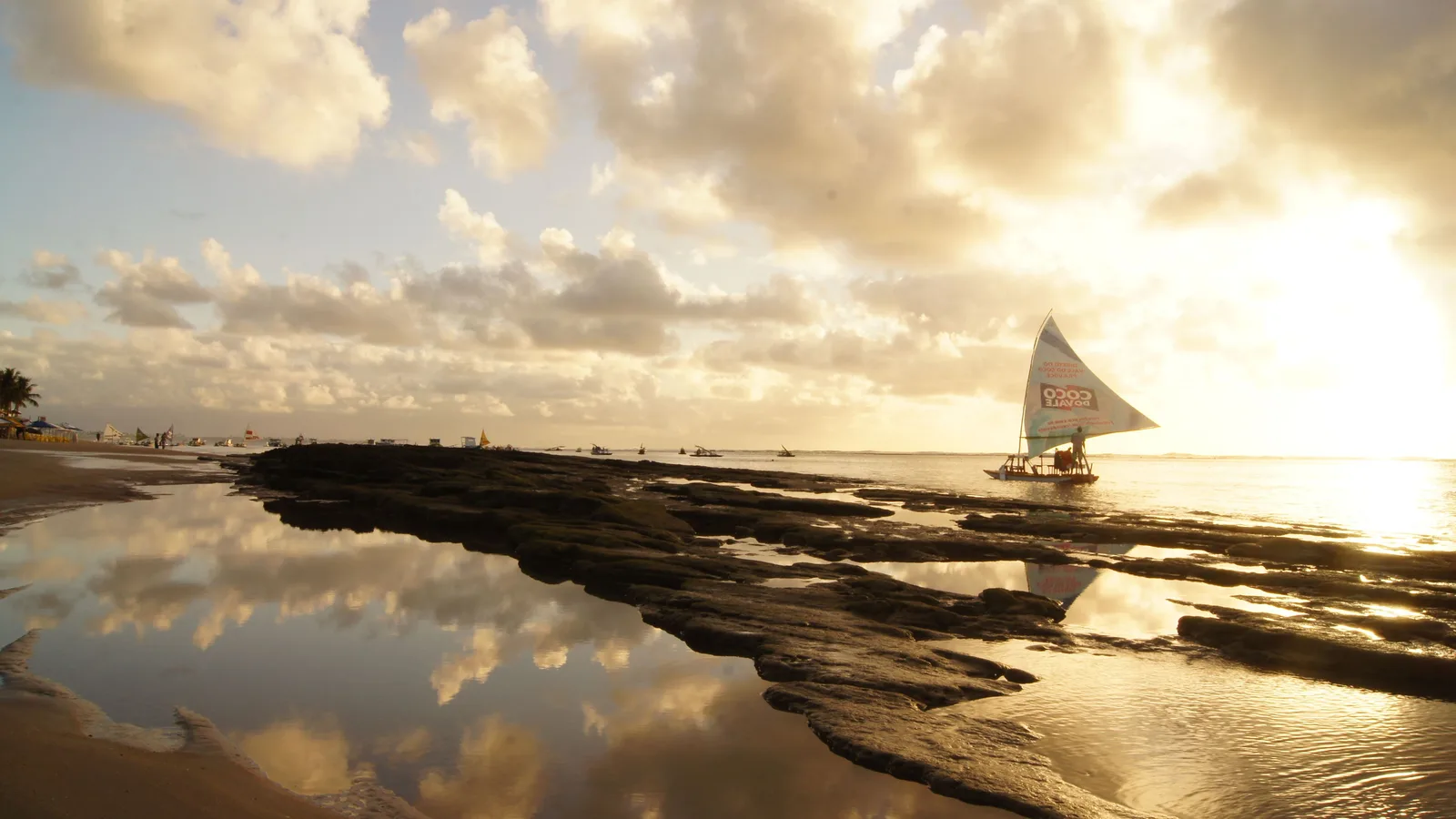
A jangada with its sail up resting on a long spit of exposed reef at sunrise, the wet rock and shallow water either side of it mirroring a gold and gray sky

Pernambuco

Porto de Galinhas

The pools appear at low tide, and only at low tide.

Last checked September 2026

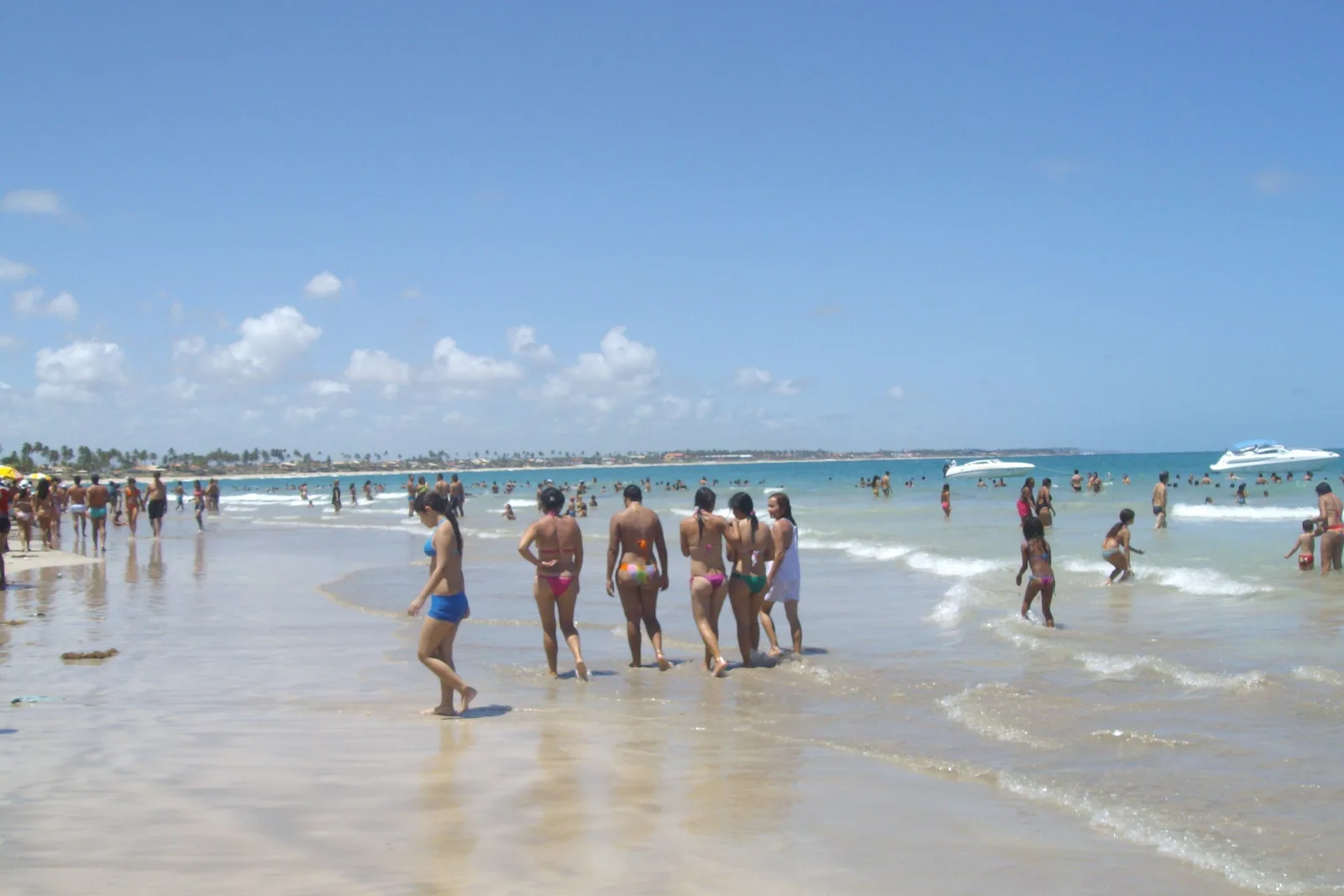
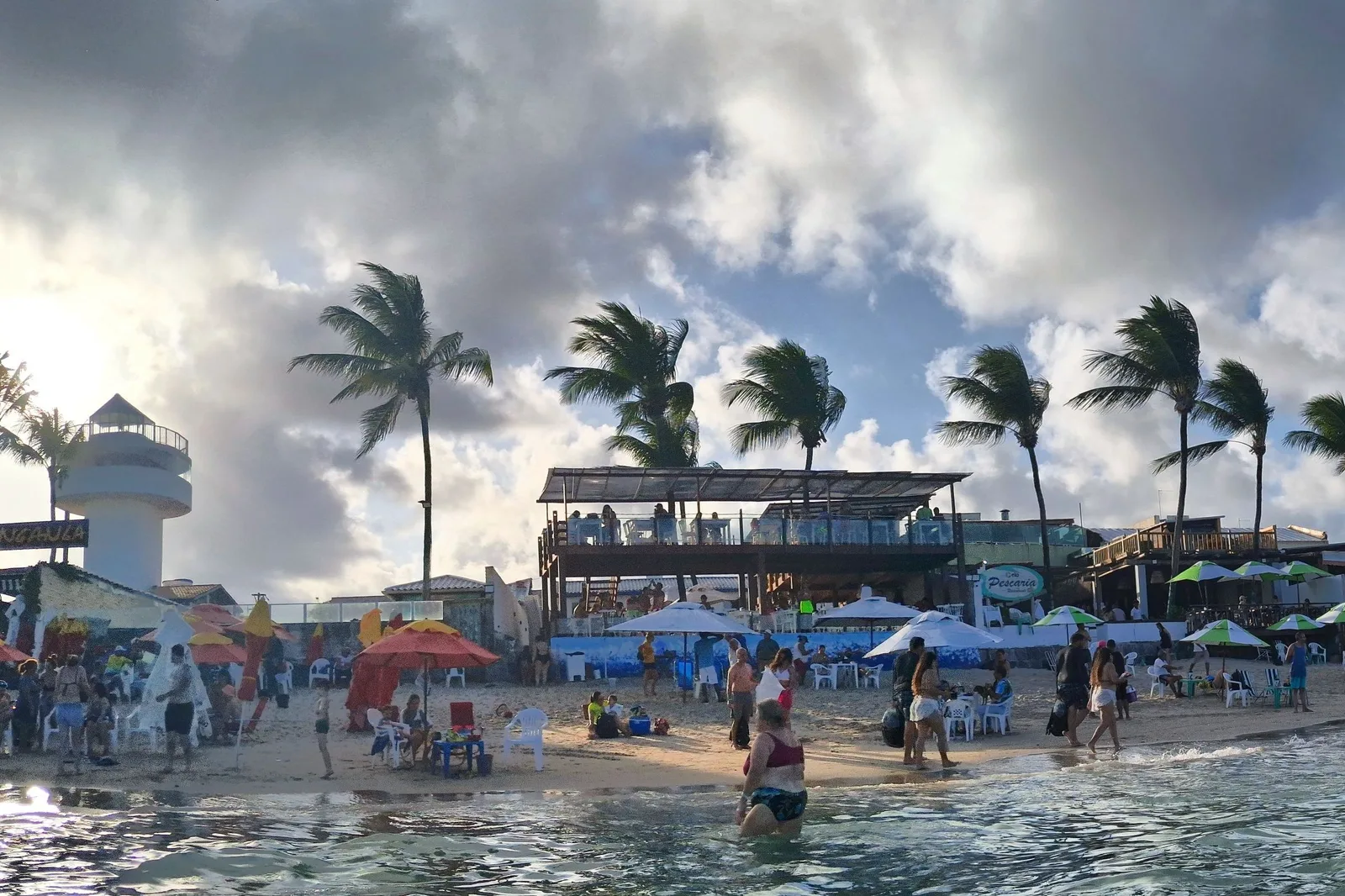
  • The main beach at Porto de Galinhas on a busy day: a crowd under sun umbrellas along the sand, kiosks and coconut palms behind them and low gray cloud overhead
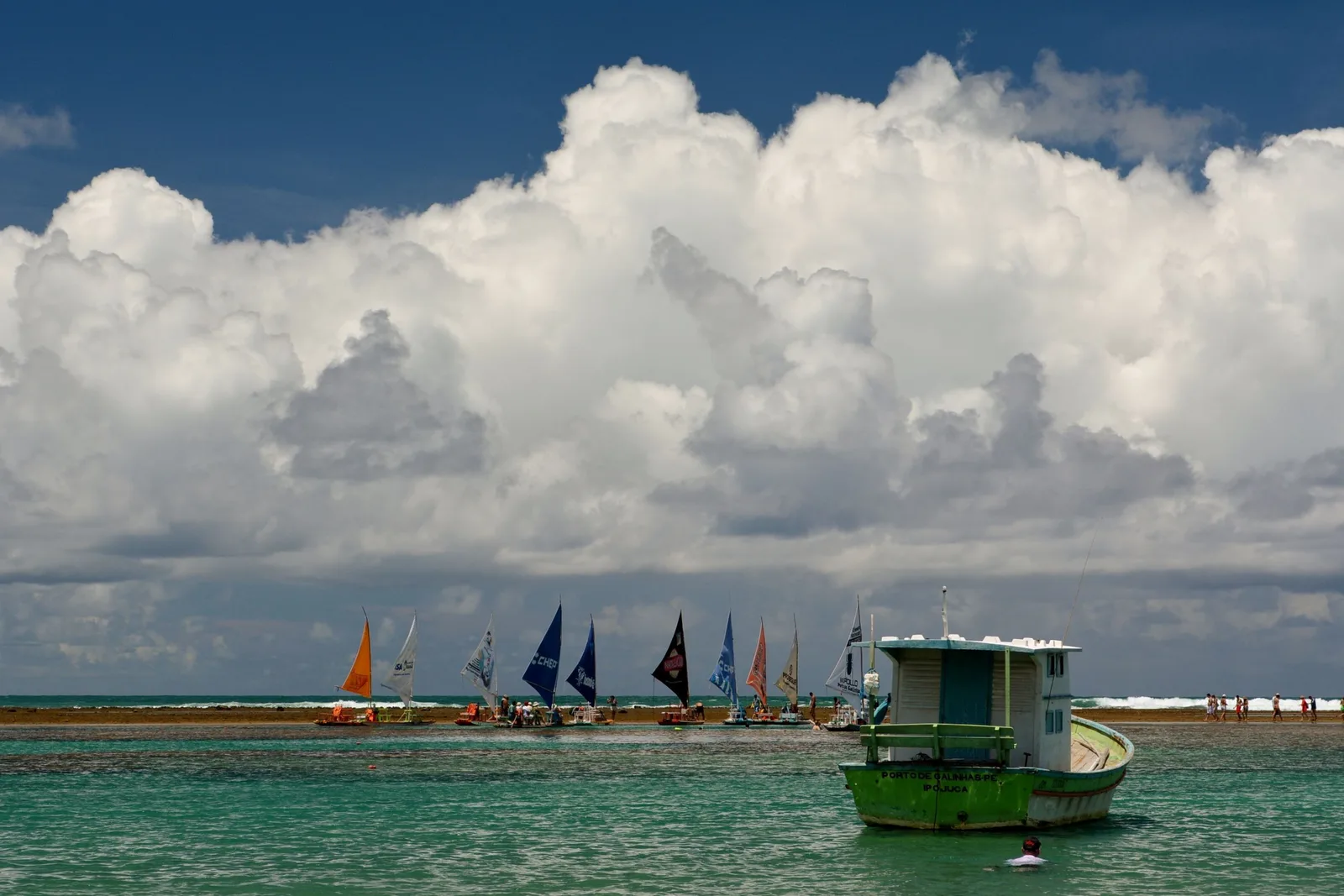
  • A line of jangadas with colored sails moored along the reef at Porto de Galinhas, a small green launch beside them and towering white cloud above
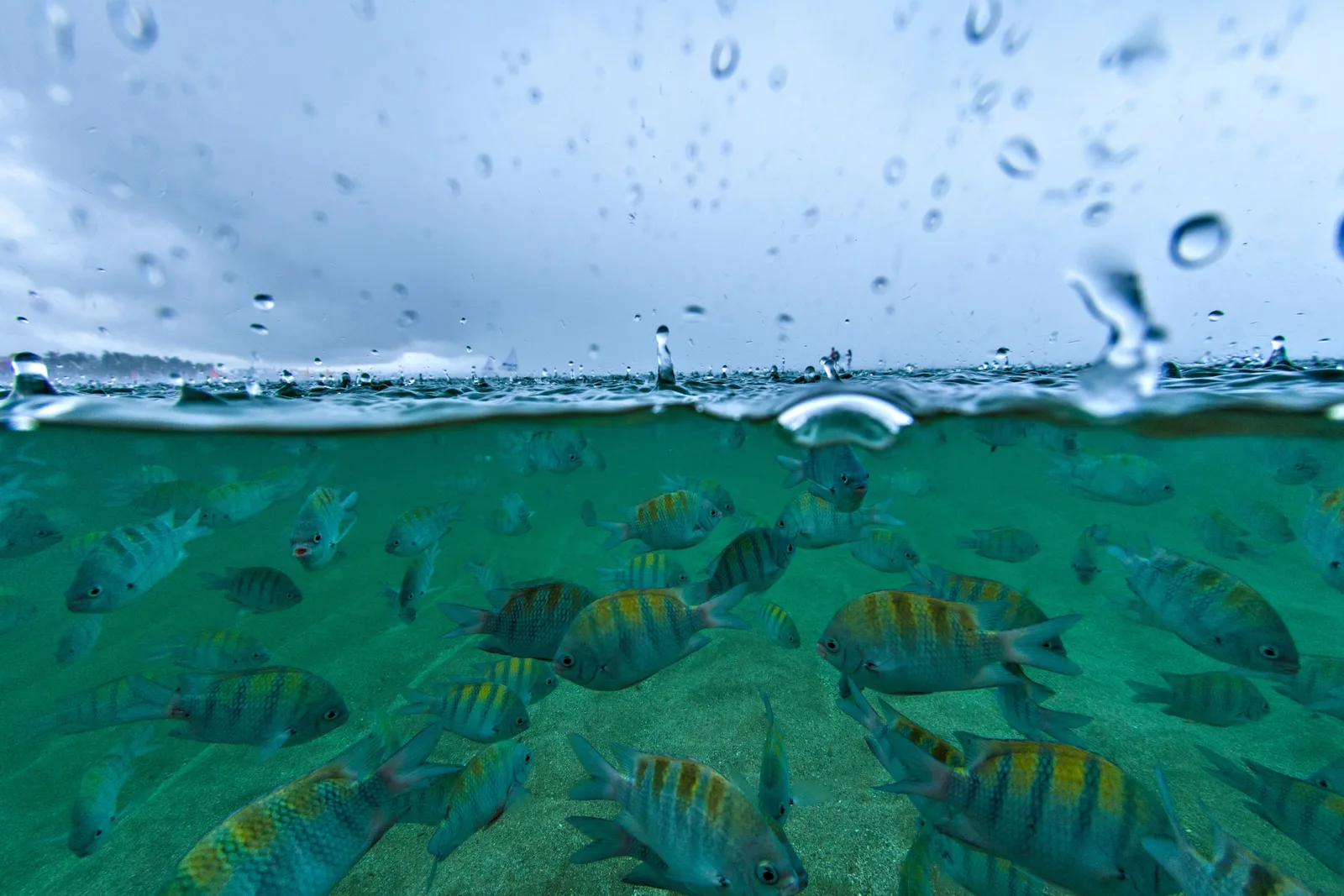
  • A half-underwater view at Porto de Galinhas with rain dimpling the surface above and striped sergeant-major fish moving over the reef below
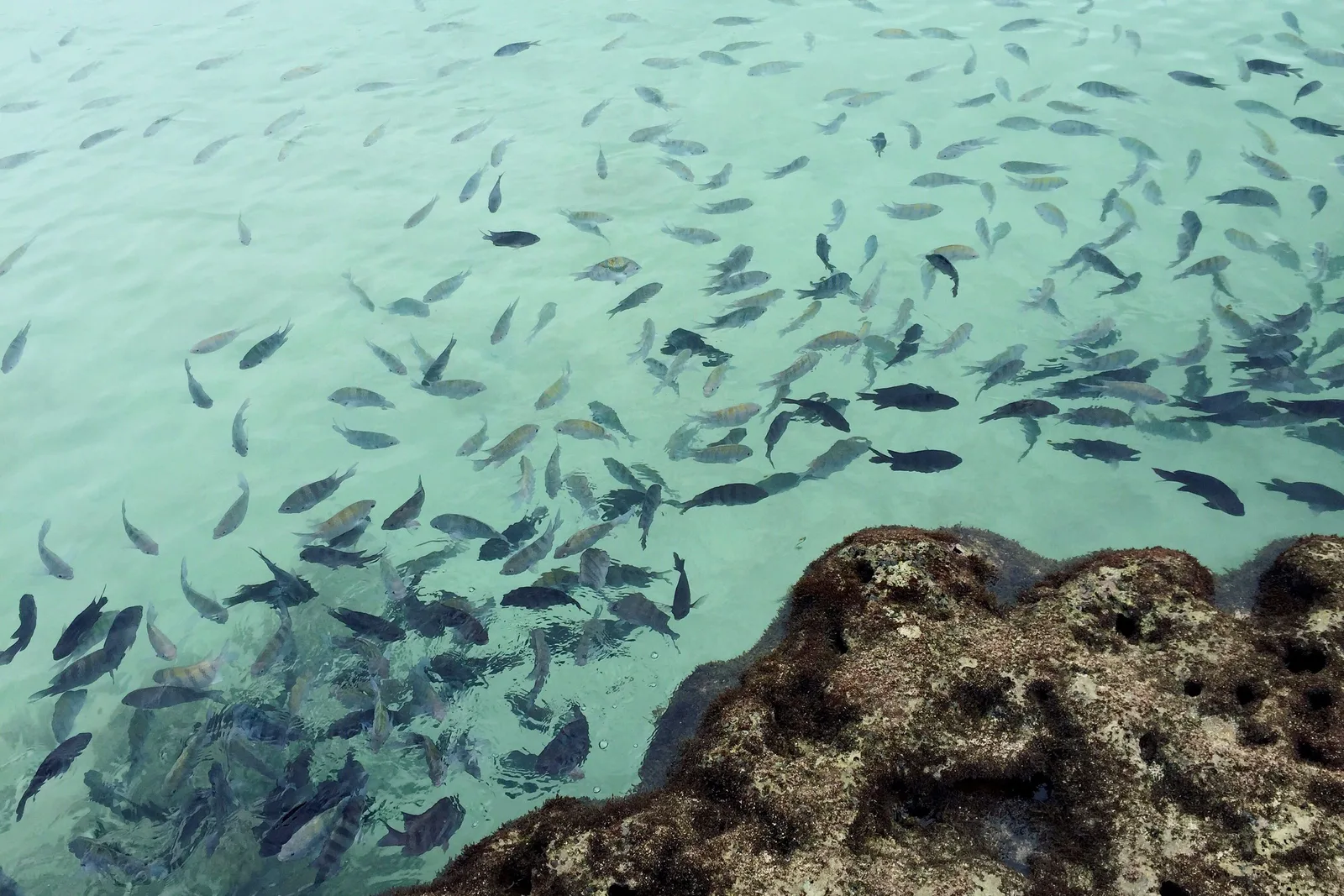
  • A dense school of small silver fish drifting over a dark coral head in clear green water at Porto de Galinhas
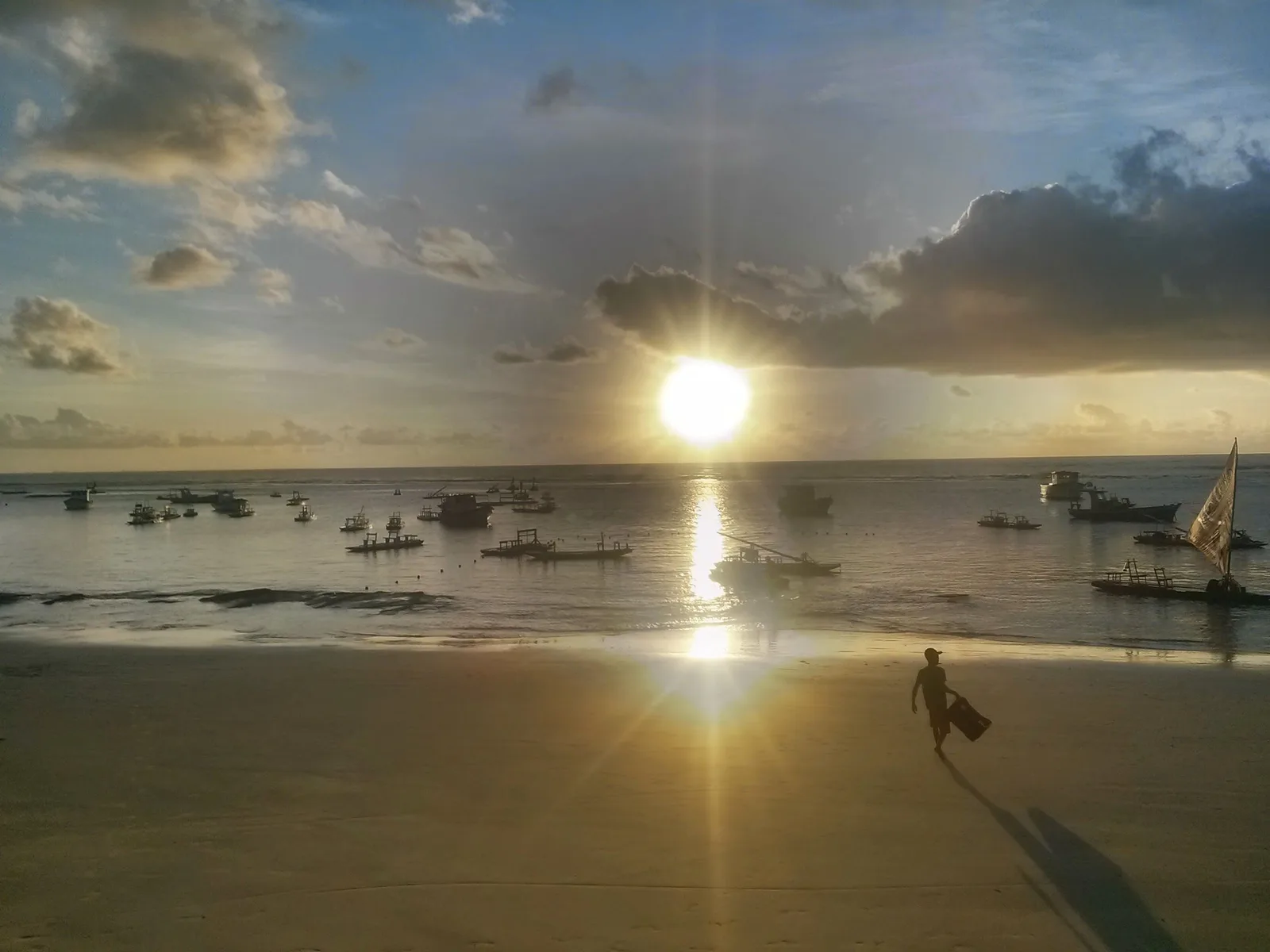
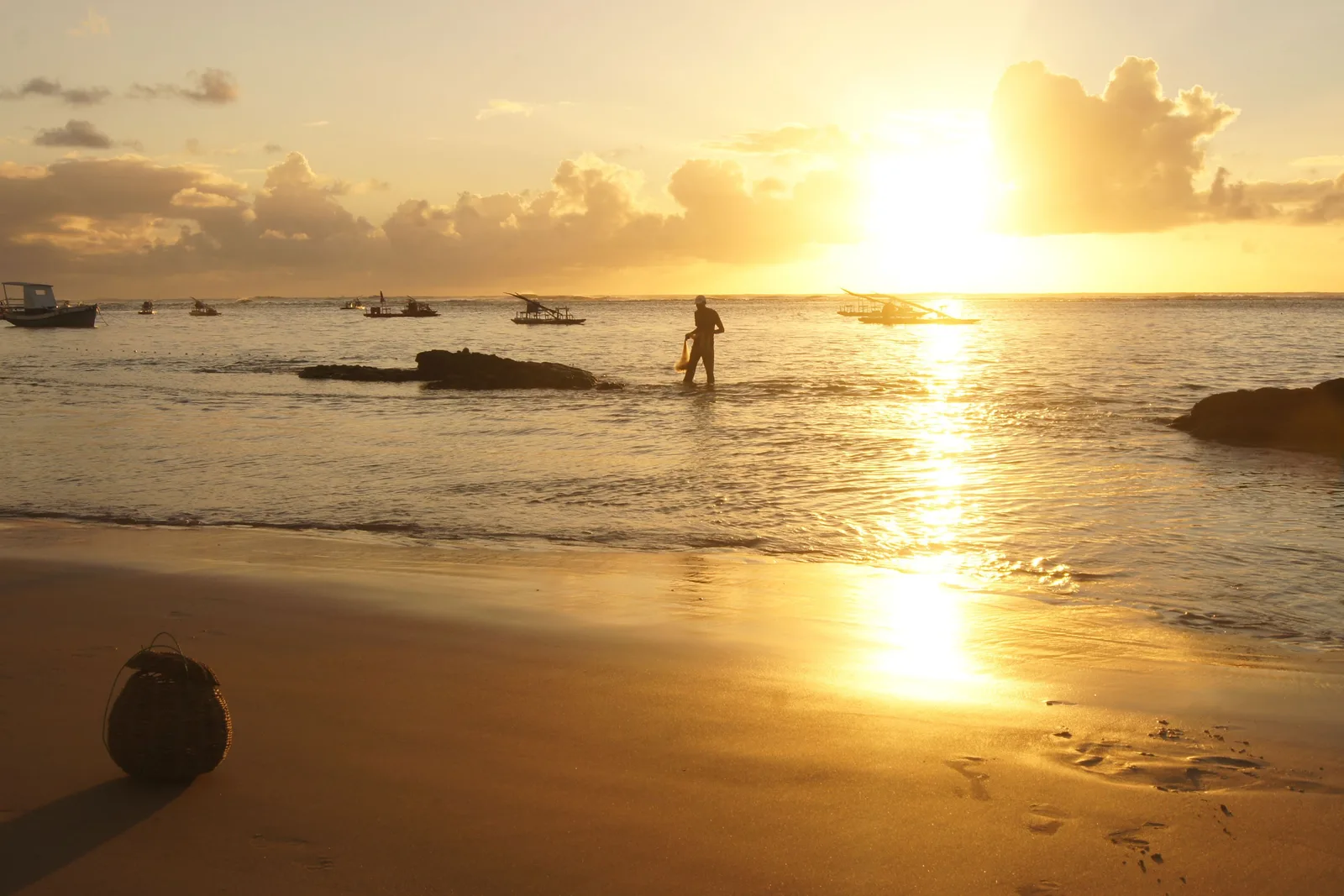
  • A figure wading in shallow water at dawn at Porto de Galinhas, the low sun laying a band of gold across the wet sand and moored boats behind
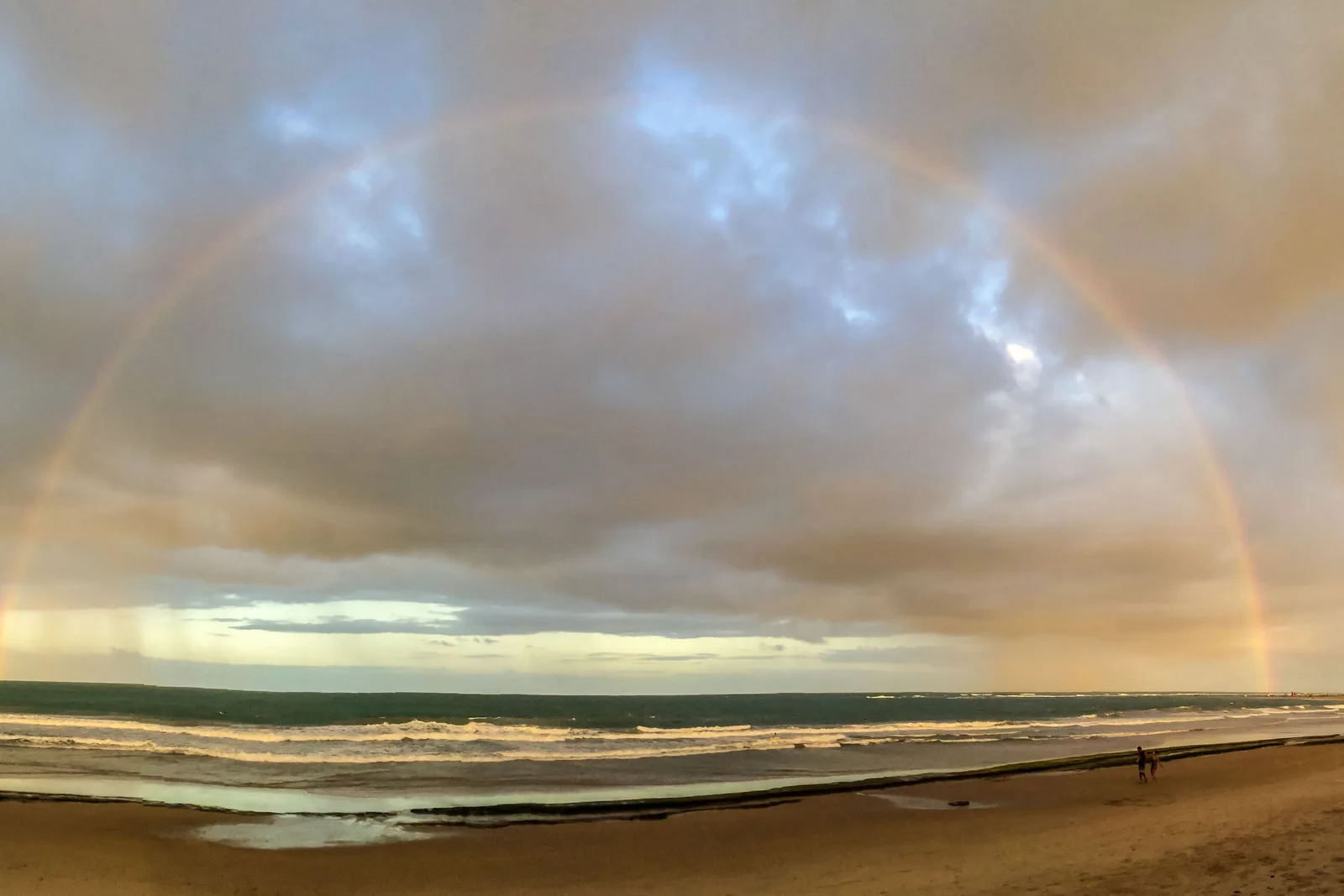
  • A faint rainbow standing over the surf on a wide beach at Porto de Galinhas under heavy cloud
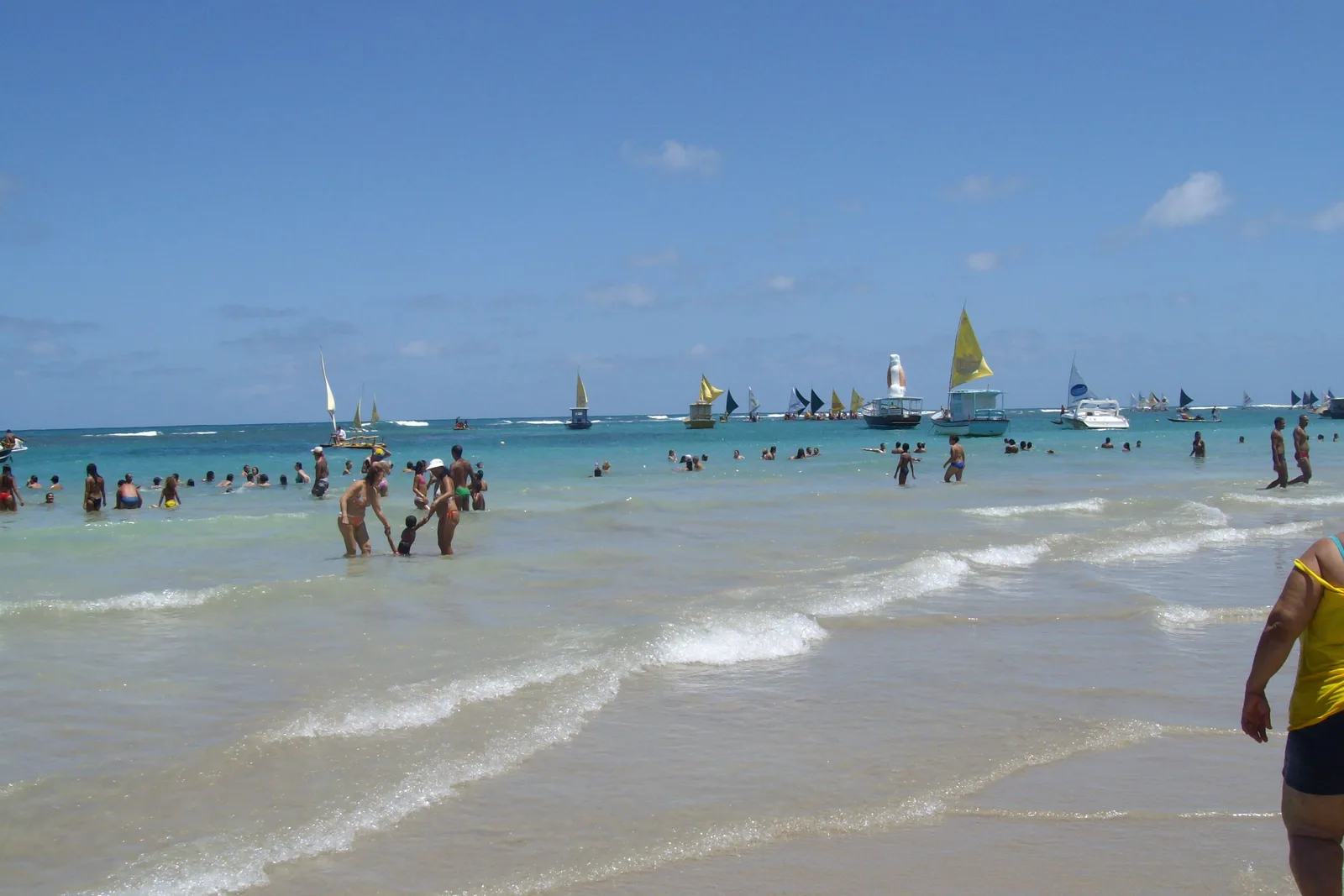
  • People standing waist-deep in the shallows at Porto de Galinhas with jangadas anchored in a line further out
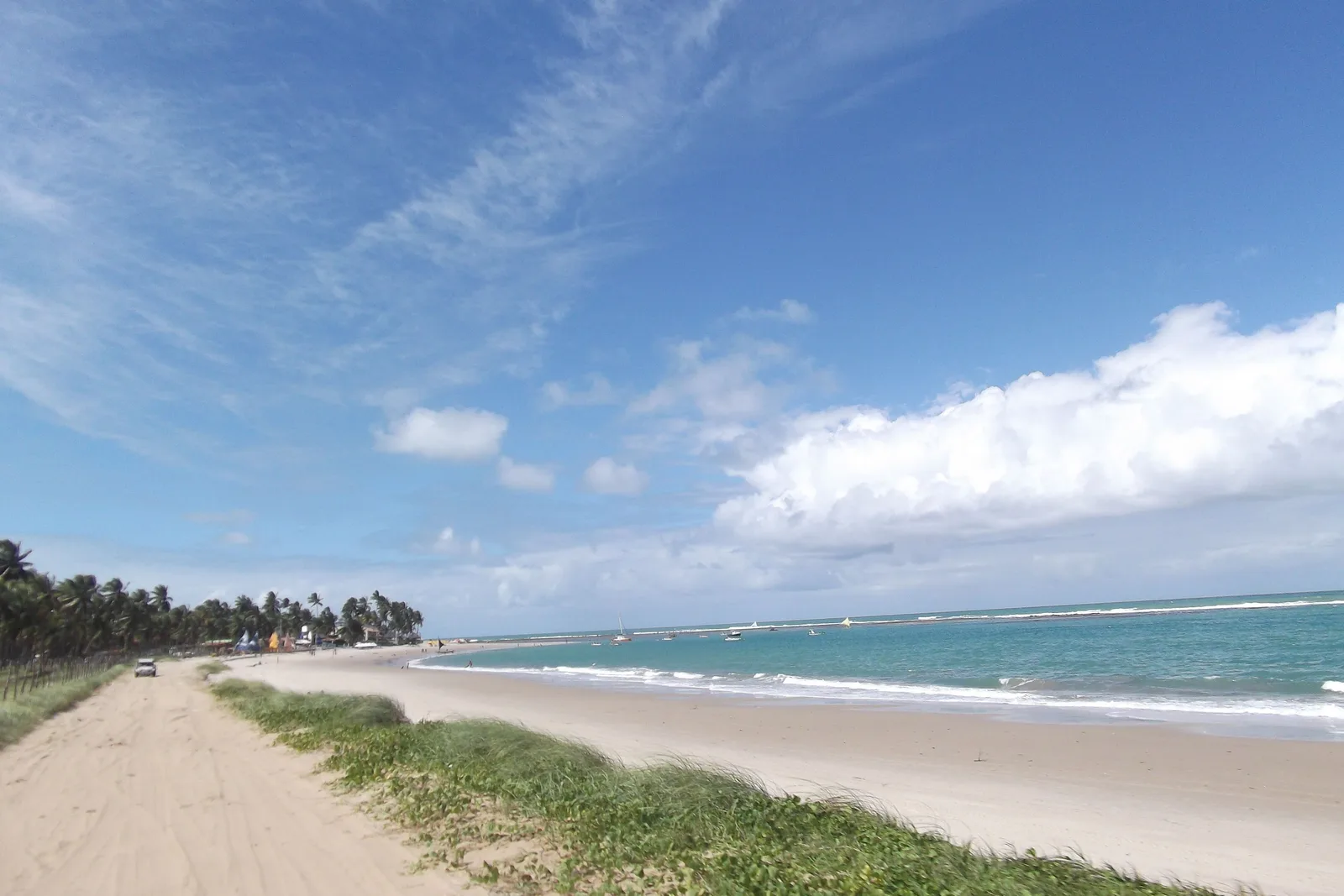
  • A long empty curve of sand at Porto de Galinhas seen over a bank of coastal grass, with nobody on it
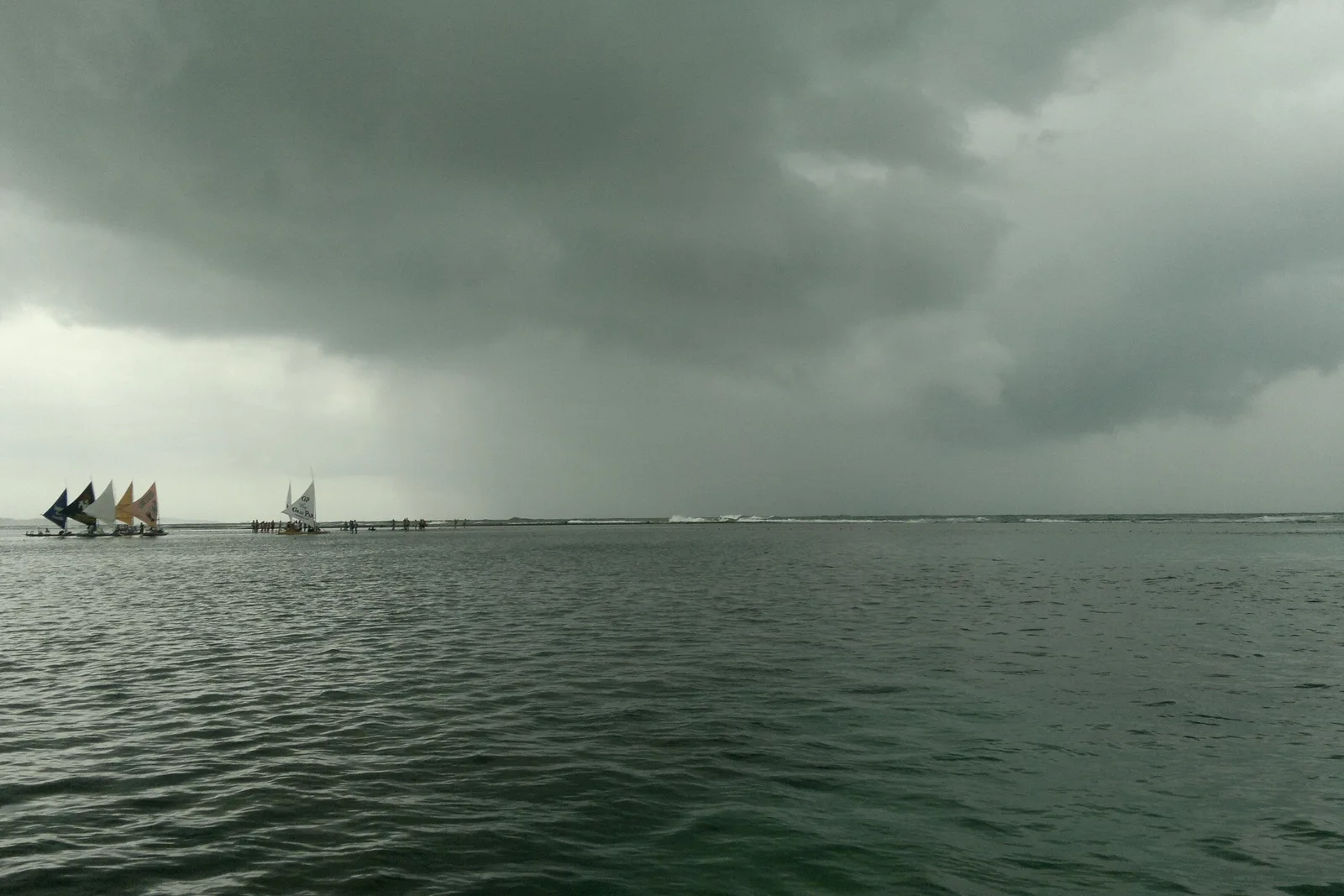
  • Flat gray water at Porto de Galinhas on an overcast day, a handful of jangadas small on the horizon
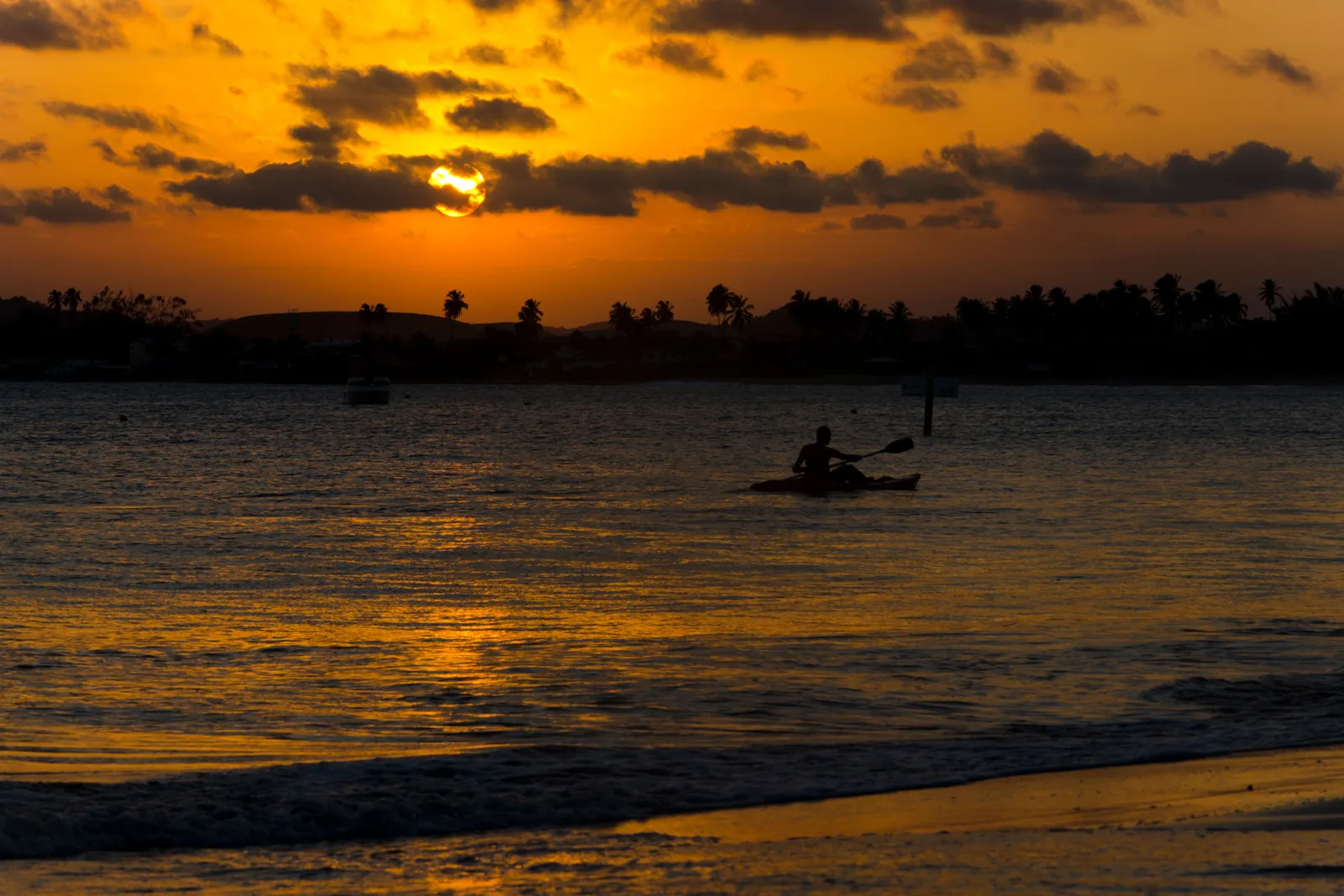
  • Sunset over the water at Serrambi, a lone paddler silhouetted against the light on the flat sea
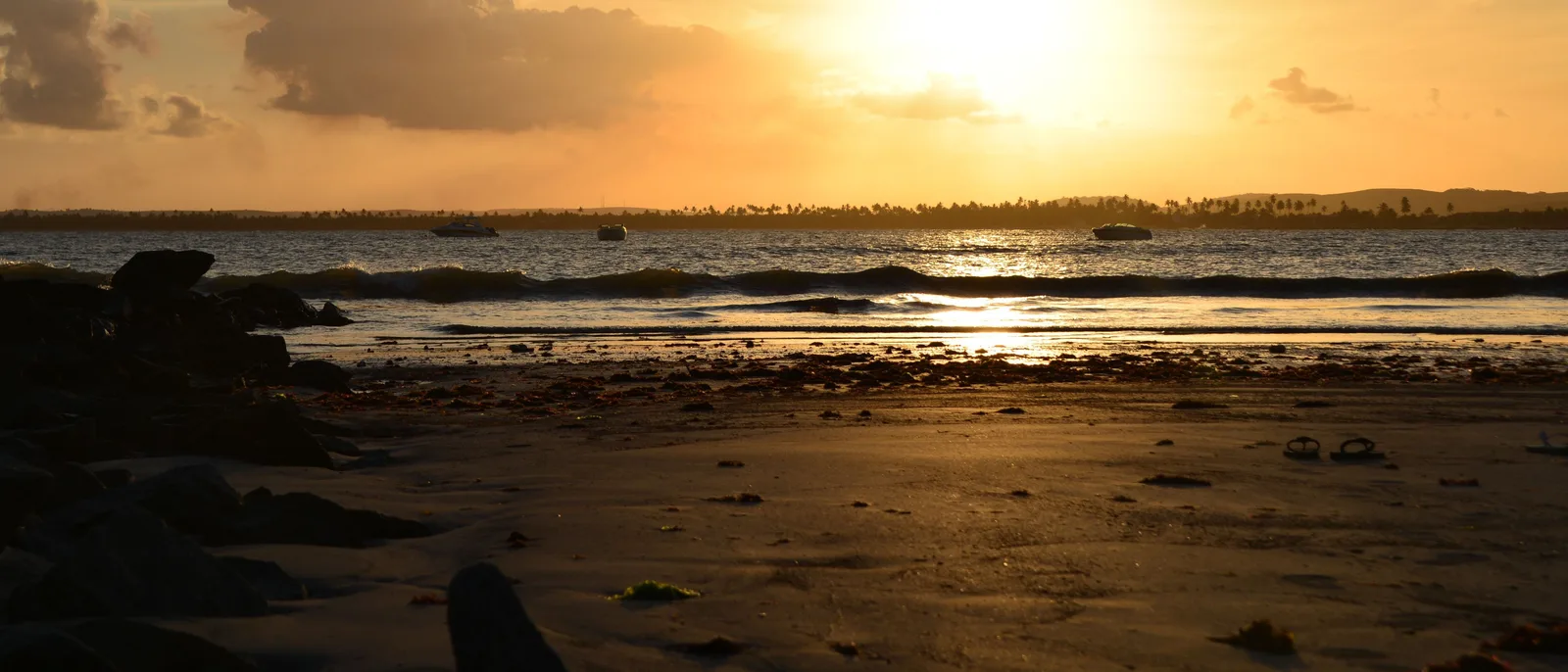
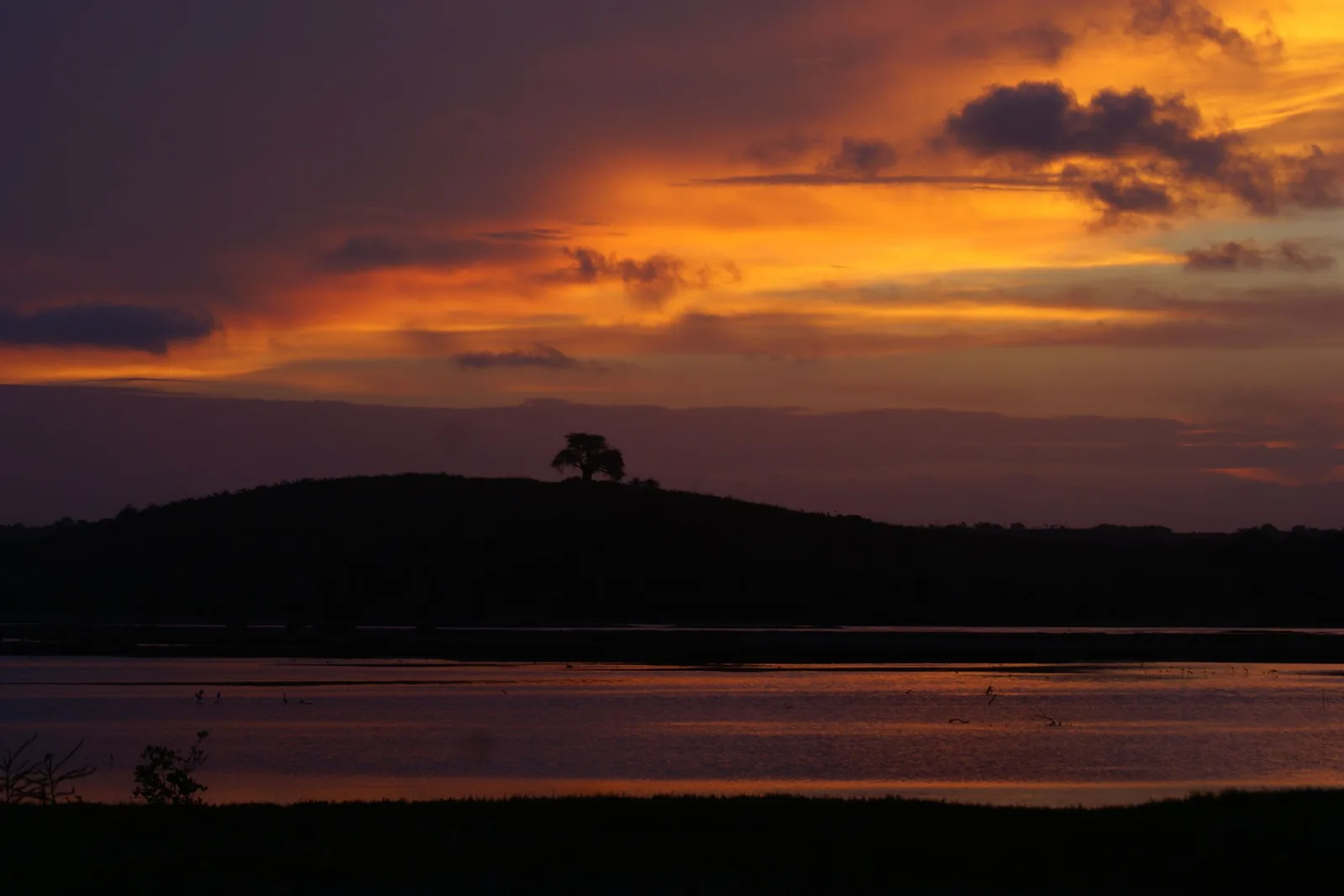
  • A burning orange dusk sky over a dark headland and still water at Porto de Galinhas

Orientation

A beach village that runs on the moon.

Everything logistical, and one piece of physics that matters more than all of it.

General Info

What Porto de Galinhas actually is

Porto de Galinhas is a beach village in the municipality of Ipojuca, about 60 km down the coast from Recife, and it is famous for one thing: a line of sandstone and coral reef sitting roughly 200 meters offshore. When the tide drops, that reef comes out of the water and traps the sea behind it in a string of warm, waist-deep pools with fish still in them. Wooden sailing rafts called jangadas carry people out to them. That is the whole attraction, and it is worth the trip.

What almost nobody tells you before you book is that this is a tide phenomenon and not a weather one. The pools are not there most of the time. They form on the falling tide, they hold for a couple of hours, and then the sea comes back over the reef and they are simply the ocean again. A perfect cloudless day at high water shows you a pretty beach and nothing else, and the jangadas stay on the sand. The single most useful thing on this page is the next tab.

The village itself is small, flat and easy to walk. One main strip of pousadas, restaurants, craft stalls and tour counters runs back from the beach, and dune buggies work as the local taxi. North of the village the coast turns into the resort strip at Cupe and Muro Alto; three kilometers south, Maracaípe has the surf and a river mouth full of seahorses. The municipality counted 98,932 people at the 2022 census and the coast carries a great many more than that in January.

The Tides

Check the tide before you book the dates

The reef pools are made by the tide and unmade by it twice a day, every day, in every month of the year. Two hours of homework before you book will do more for this trip than anything else on this page. Brazil’s Navy publishes the numbers you need, free, and the reference station for this stretch of coast is the port of Suape a few kilometers north.

  • Look up the tide table for your dates before you commit to them. The official predictions come from the Centro de Hidrografia da Marinha, the Brazilian Navy’s hydrographic office, and the station that covers this stretch of coast is Porto de Suape, published in the Marinha’s Tábuas de Maré for the year. Any tide app that cites the Marinha as its source is reading the same numbers, and plenty of them quote a different datum, which is why their figures will not match.
  • You want a low tide that falls in daylight, and you want it low. Around 0.5 m or under is the figure operators quote for a proper pool. Across the whole of 2026 the Navy’s own Porto de Suape table predicts a highest water of 2.60 m and a lowest of −0.01 m, heights measured from the chart datum of nautical chart 912 rather than from the sand, so the difference between a good day and a wasted one is a real, published number rather than a matter of luck.
  • The biggest tides come with the new moon and the full moon. That is not local folklore — it is how tides work everywhere. NOAA’s own explanation is the short version: at new and full moon the sun and moon pull in line, high tides run a little higher and low tides a little lower. Those are spring tides. At the half moons you get neap tides, and the lows are not as low.
  • So the best pool days of any month are the few either side of a new or full moon, with a daylight low. Get that and January and October are equally good. Miss it and a week of sunshine can still leave you looking at open water.
  • The jangadas run to that window and not otherwise. When the sea comes back over the reef the jangadeiros take their sails down and the day’s trips are finished. This is why a trip sold as “tomorrow at 9:00am” can move to 6:40am, and why nobody in the village is being difficult when it does.
  • Tides also run about fifty minutes later each day. If a 7:00am low tide is what makes your Tuesday work, by Friday that same low is closer to 9:30am — useful when you are deciding which morning to give up.

Where It Is

Northeast Brazil, an hour south of Recife

Porto de Galinhas sits on the southern coast of Pernambuco, in the municipality of Ipojuca, about 60 km south of Recife and 65 km from Recife’s Guararapes airport. The road down is the PE-009 through the port complex at Suape, and it is around an hour in normal traffic.

Porto de Galinhas Porto de Galinhas

8.51° S, 35.00° W

See the Northeast on the interactive map

Cost

What a day here actually costs

Porto de Galinhas is cheap by the standards of a Caribbean beach week and expensive by the standards of Brazil, and the spread between the two ends of the village is wide: a simple pousada behind the main street and an all-inclusive on the Muro Alto strip are not the same product at different prices. The one number that surprises people is how little the headline attraction costs.

Estimated daily budget, outside the summer holidays

Budget

$45 / day

A simple pousada room in the village split two ways, self-service lunches, the local bus, and beaches that cost nothing.

Mid-range

$90 / day

A good pousada with a pool a few blocks back from the sand, restaurant dinners, the jangada trip and a buggy day.

Comfortable

$190 / day

A beachfront hotel or a resort on the Cupe and Muro Alto strip, private transfers both ways, and every boat trip booked without thinking about it.

Estimates, per person per day, once you are here — flights not included. Come between Christmas and Carnaval and the room line roughly doubles while everything else stays much the same.

What things cost

  • Jangada to the natural pools, adult $12 R$60
  • Jangada at Pontal de Maracaípe $8 R$40
  • Buggy tour, four hours, per buggy up to four people $78 R$400
  • Buggy, the full end to end run, per buggy up to four people $98 R$500
  • Mid-range pousada double, off-peak $78 R$400
  • Shared transfer from Recife airport, each $24 R$122
  • Private transfer, round trip, up to four $69 R$350
  • Bus from Recife $3 R$15
  • Lunch for two, simple restaurant $10 R$50
  • Dinner for two, mid-range $27 R$140
  • Coconut water on the sand $1.60 R$8

Ipojuca banned minimum-consumption charges on its beaches in January 2026. Decreto 149/2025 covers Porto de Galinhas, Muro Alto, Cupe and Maracaípe, and it prohibits demanding a minimum spend, charging a fine for not ordering, and tied selling. A kiosk may still charge you for chairs and an umbrella, but the price has to be stated up front. The decree followed an assault on a group of tourists over a chair bill in late December 2025.

Buy the jangada ticket at the Associação dos Jangadeiros’ own counter at the end of the street rather than from someone on the sand. Cash or Pix is R$60; the card price is R$63.

Cards work almost everywhere and Pix is universal. Prices between Christmas and Carnaval, and again in the July school holidays, are a different market from the rest of the year.

Checked September 2026 and converted at R$5.10 to the dollar. Estimates, not quotes — the shape of a budget rather than a price you can hold anyone to.

Safety

An easy place, with three real cautions

8 /10

Our rating — one of the more relaxed destinations on this site, with a short list of things that genuinely do go wrong.

Porto de Galinhas is a small, walkable, tourism-dependent village and it behaves like one. The ordinary experience is a week in which nothing at all happens. What does go wrong here is petty rather than violent, and most of it is avoidable with the same care you would take on any busy beach.

  • Beaches attract the usual opportunists. Do not leave a phone and a wallet on a towel while you swim, and do not take anything to the sand you would mind losing.
  • Know the chair rules before you sit down. Since January 2026 a kiosk cannot require a minimum spend or charge you for not ordering, but it can charge for chairs and umbrellas if it tells you the price first. Ask, agree the number, and the commonest argument on this beach never starts.
  • The reef cuts. It is sharp, it is often only ankle-deep over, and the cuts are slow to heal in warm salt water. Wear something on your feet in the pools. It also protects the coral, which is what you came to look at.
  • Pernambuco does have a shark problem, and it is not here. The state committee that monitors incidents, CEMIT, defines a critical stretch of about 33 km running from Praia do Paiva in Cabo de Santo Agostinho north to Praia do Farol in Olinda, with the great majority of records at Boa Viagem in Recife. Porto de Galinhas is roughly 35 km south of the southern end of that stretch. If you swim at Boa Viagem on the way through, obey the signs there.
  • Buggies are open, fast and driven with enthusiasm. Ask for the ride “sem emoção” if you would rather not have the sand-dune version, and agree the route and the price before you set off.
  • Ride apps work in the village and out to the airport, but there are fewer cars than in a city and they thin out late. Book a transfer for an early flight rather than assuming one will appear.

Getting There

Fly to Recife, then drive an hour south

Everyone arrives through Recife/Guararapes (REC), about 65 km and an hour north. The airport is on the southern side of Recife, so the drive skirts the city rather than crossing it.

  • For most of the year there is no nonstop between the United States and Recife, and Americans connect through São Paulo (GRU), Campinas (VCP), Belo Horizonte (CNF) or Belém, or come the other way through Lisbon. The exception is the Brazilian summer holidays: Azul’s Orlando to Recife nonstop returns on December 1, 2026 and is on sale through the holidays into January 2027, listed by Orlando International as resumed Azul service and still shown as subject to government approval. Check it is actually flying before you build a trip around it.
  • Recife’s regular nonstop international routes are Lisbon and Porto, Madrid, Buenos Aires and Córdoba, Montevideo and Santiago. Lisbon is the useful one from the US east coast.
  • A shared airport transfer runs about R$122 a head and a private car about R$350 round trip for up to four. Both are booked ahead and both beat working it out on arrival with luggage.
  • Ride apps quote the run too and are usually cheaper than a private transfer for two people. There is a toll of about R$12 each way on the road down, which is not always included in a quoted fare.
  • The cheap way is the bus from Recife, around R$15, which stops along the way and takes considerably longer. It is a real option if you are traveling light.

Getting Around

Walk the village, buggy the coast

You do not need a car to have a good week here, and for a first visit renting one is usually a waste of money. The village is small enough to cross on foot and everything else is a short hop.

  • The vila is compact and flat. Pousadas, restaurants, the craft stalls and the jangada counter are all within a few blocks of the sand.
  • Dune buggies are the local taxi and the local sightseeing vehicle at the same time. The standard run is the “ponta a ponta”, end to end, from the mouth of the Rio Ipojuca in the north to the mouth of the Rio Maracaípe in the south.
  • Uber and 99 both work here, including motorbike rides on 99. There are fewer cars than in Recife, so allow more time in the quiet months and late at night.
  • Local buses run up and down the PE-009 between the beaches and on to Recife, and they are very cheap.
  • A rental car earns its keep only if you plan to drive yourself to Praia dos Carneiros or spend the week at Serrambi. For everything within the municipality, a buggy and your feet cover it.

The big four

The four places this trip is built around.

One of these is the reason anybody comes. The other three are what fills the days when the tide is wrong.

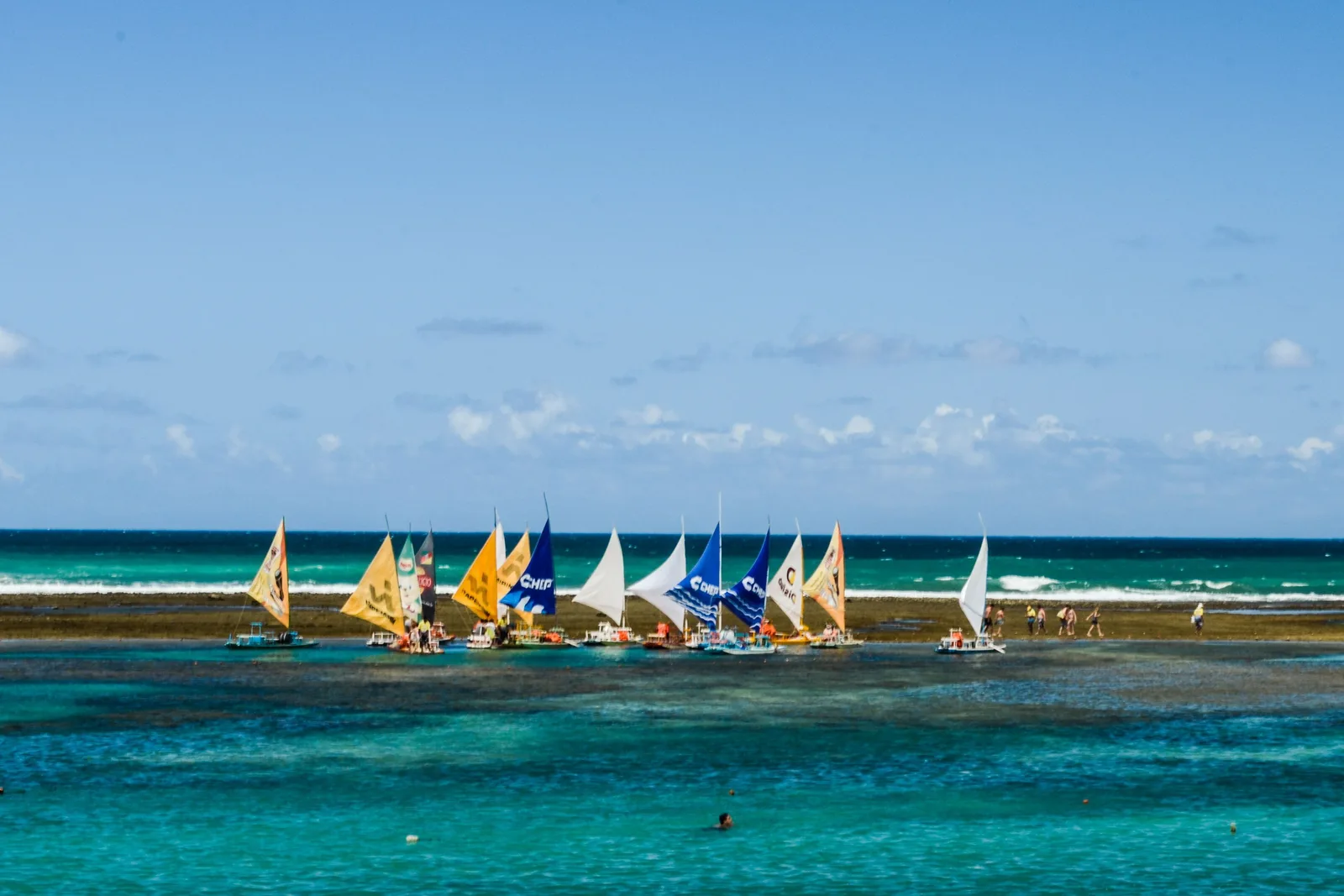
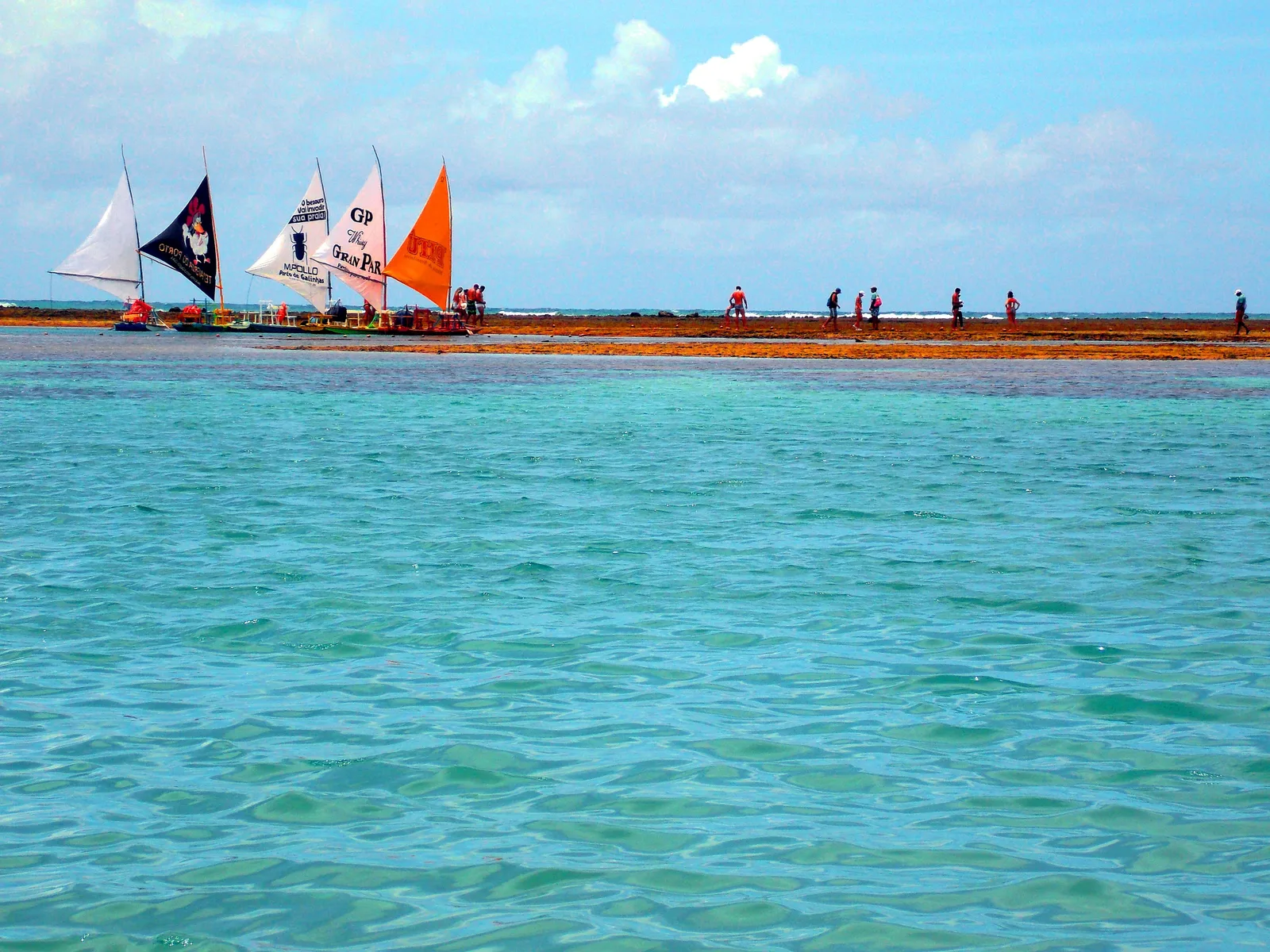
Jangadas with red, blue and orange sails moored in a line along the reef at Porto de Galinhas, people standing on the exposed rock beside them and a brilliant turquoise pool in the foreground 01

The reason you came

The natural pools

Distance out
About 200 m from the sand
Needs
A low tide, ideally 0.5 m or under
Getting there
Jangada, about R$60

A reef sits parallel to the beach a couple of hundred meters offshore. On a big falling tide it breaks the surface, and the water trapped between it and the sand becomes a chain of clear, warm, waist-deep pools with the reef fish still inside them. You stand up in them. Children can stand up in them. That combination — an actual coral reef you can walk around in without being able to swim — is why this beach became famous and why it stays busy.

Getting out there is part of it. The jangada is a flat-bottomed wooden raft with a triangular sail, the fishing boat of this coast for centuries, and the jangadeiros run the crossing themselves through their own association, from a ticket counter at the end of the street. Six to a boat, about an hour, and they sail when the tide says so rather than when the schedule would prefer. Take something on your feet, leave the sunscreen off until you are out of the water, and do not stand on the coral.
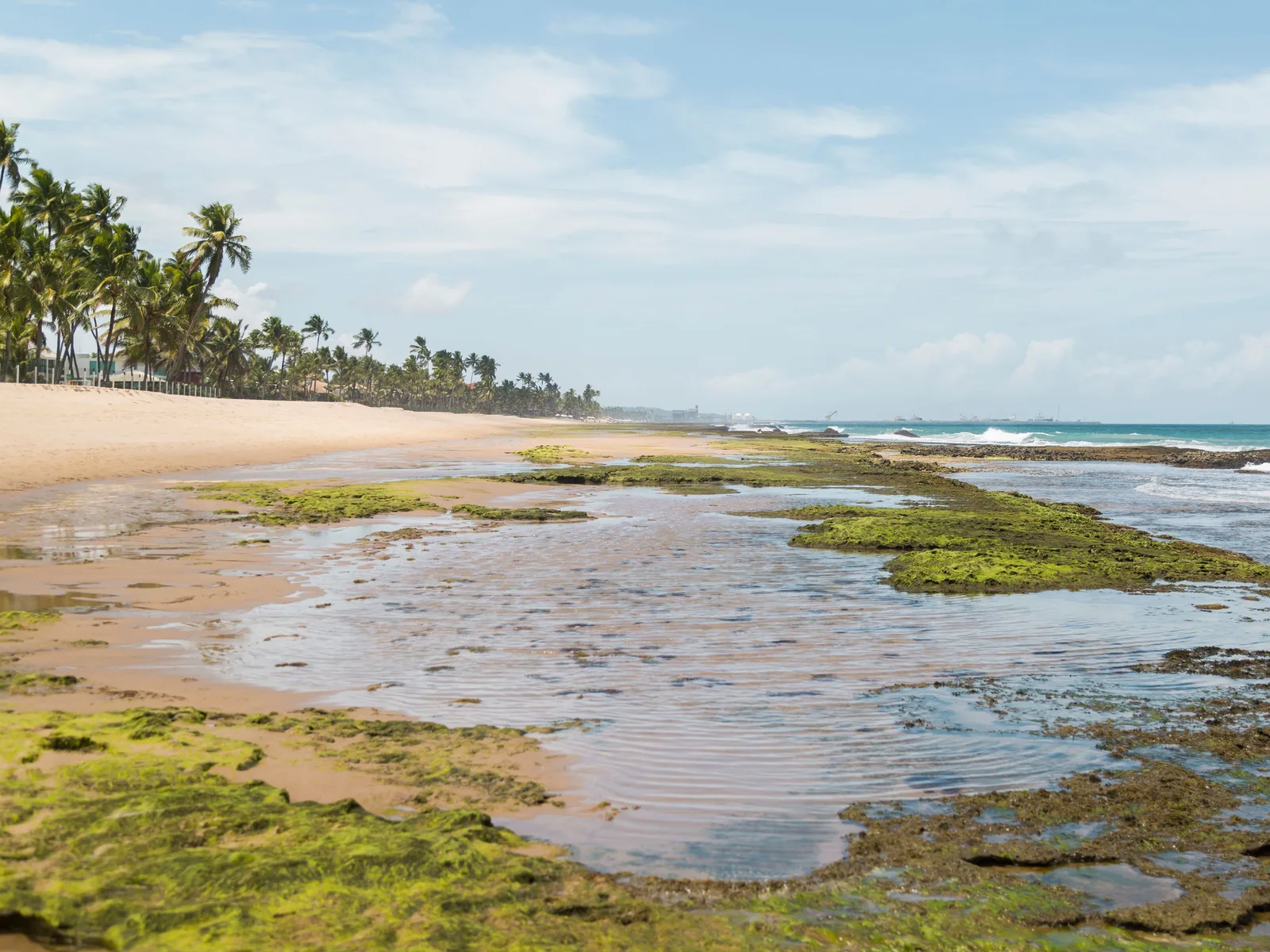
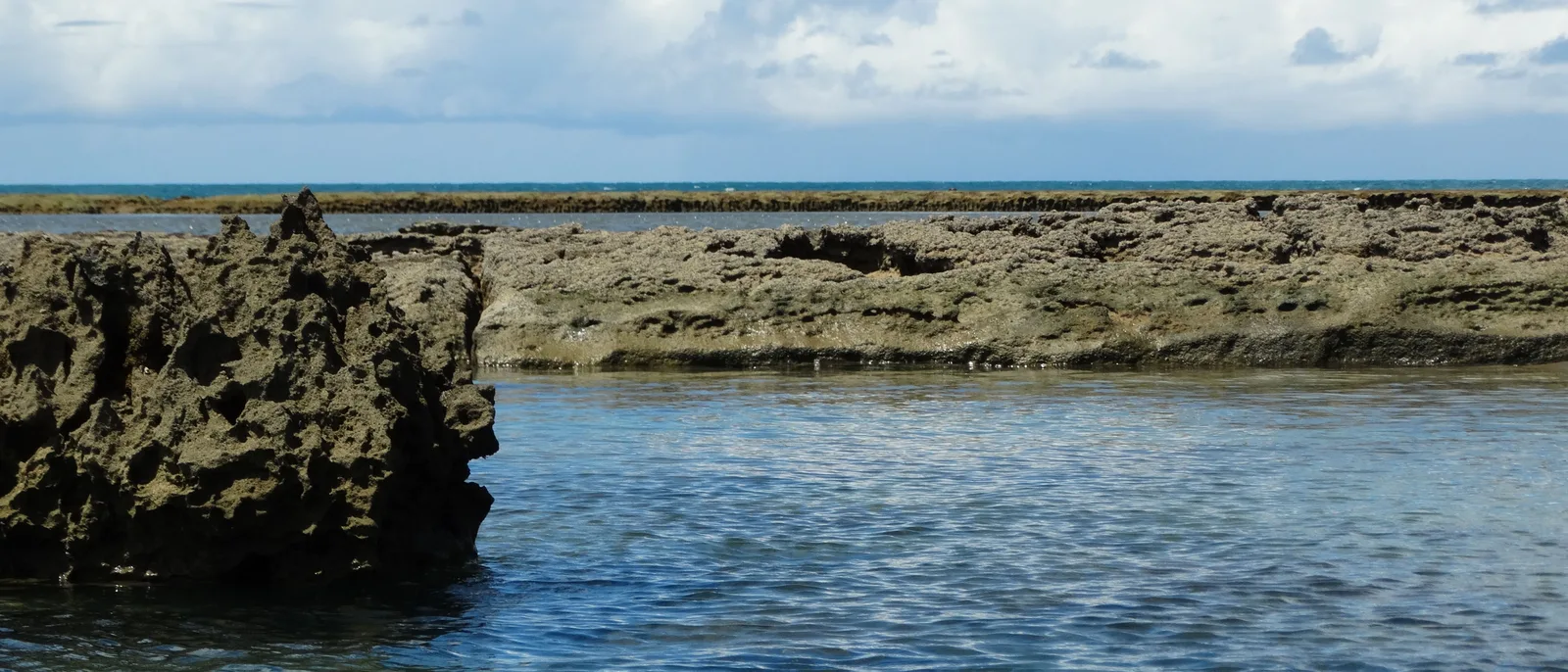
Broad reef flats and shallow tide pools exposed at low water at Muro Alto, a line of coconut palms along the shore behind them under a bright sky 02

The reef that gave it the name

Praia de Muro Alto

Where
About 8 km north of the village
The name
Portuguese for “high wall”
Best for
Calm water and small children

Eight kilometers north, the reef runs much closer to a continuous barrier and stands higher out of the water, which is where the beach gets its name. Behind it the sea is held in a long, shallow, almost currentless lagoon — warmer and flatter than the open beach at the village, and the most forgiving water on this stretch of coast for anyone nervous about the sea.

It is also the resort end of the municipality. The big hotels and the all-inclusives are here and several of them front directly onto the lagoon, so the beach is quieter and more managed than the village beach and a good deal less interesting to walk. Come for a flat calm afternoon with a book, not for a scene.

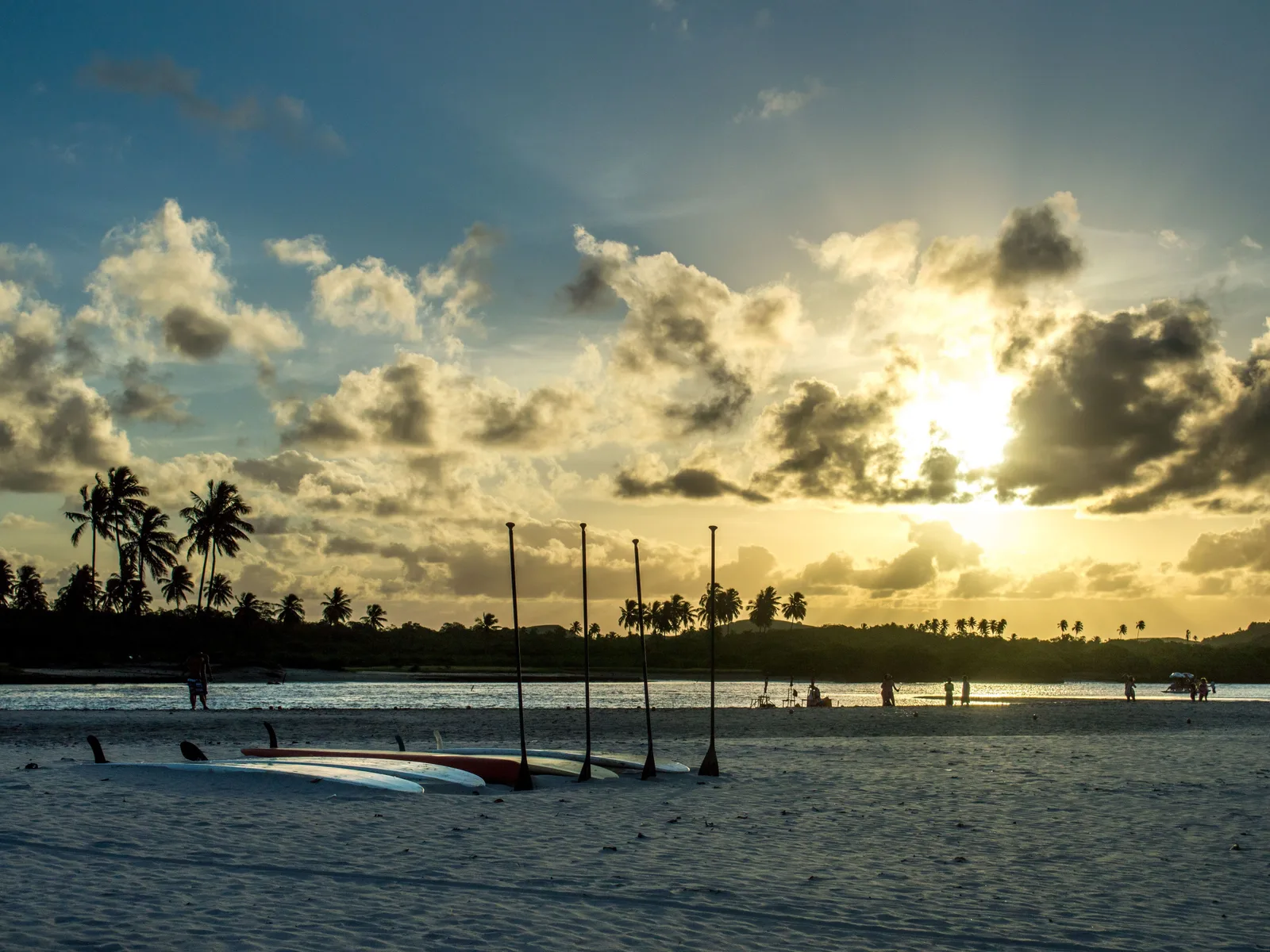
Sunset over the shallow estuary at Pontal de Maracaípe, a row of wooden posts and a low jetty silhouetted against gold water with palms along the far bank 03

Surf on one side, seahorses on the other

Maracaípe & the Pontal

Where
3 km south of the village
Known for
The best surf in Pernambuco
At the river mouth
Wild seahorses, by guided raft

Three kilometers south the reef breaks off and the Atlantic arrives properly. Maracaípe is the surf beach of this coast and Ipojuca leans into it hard: the Federação Pernambucana de Surf and the CBSurf between them ran six separate contests here in May 2026 alone, from a professional Northeastern circuit stage to a national adaptive selection. Outside contest weeks it is an unhurried, palm-backed beach with a village of its own behind it.

At its southern end the Rio Maracaípe meets the sea in a wide, shallow, mangrove-lined pontal, and the city hall calls it one of the few places in Brazil where you can see seahorses in their natural habitat. They are seen from guided jangadas run by the local association, and the rule is that you look and do not handle: technical reports from IBAMA and the state environmental prosecutors both found that picking them up harms the population. The pontal at sunset is where the village goes in the evening.

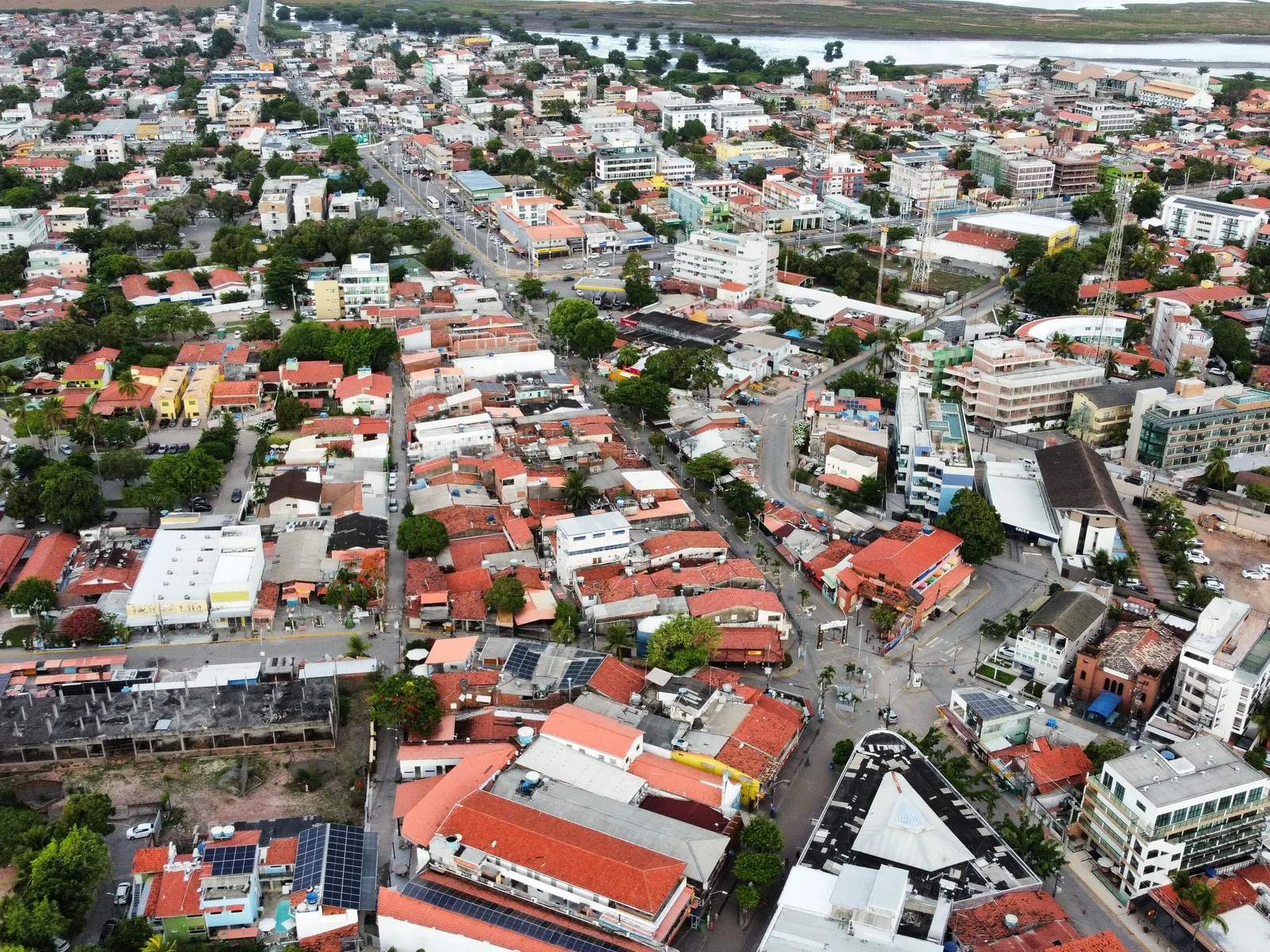
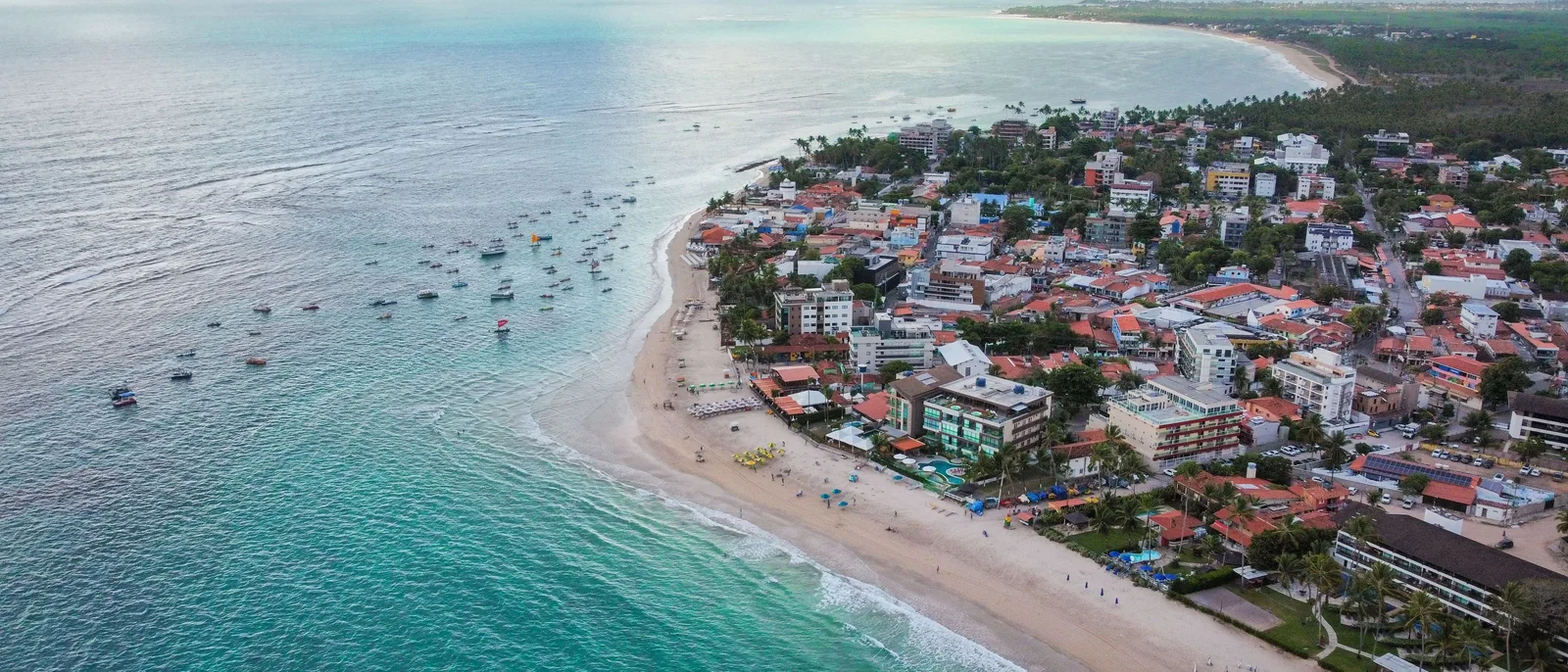
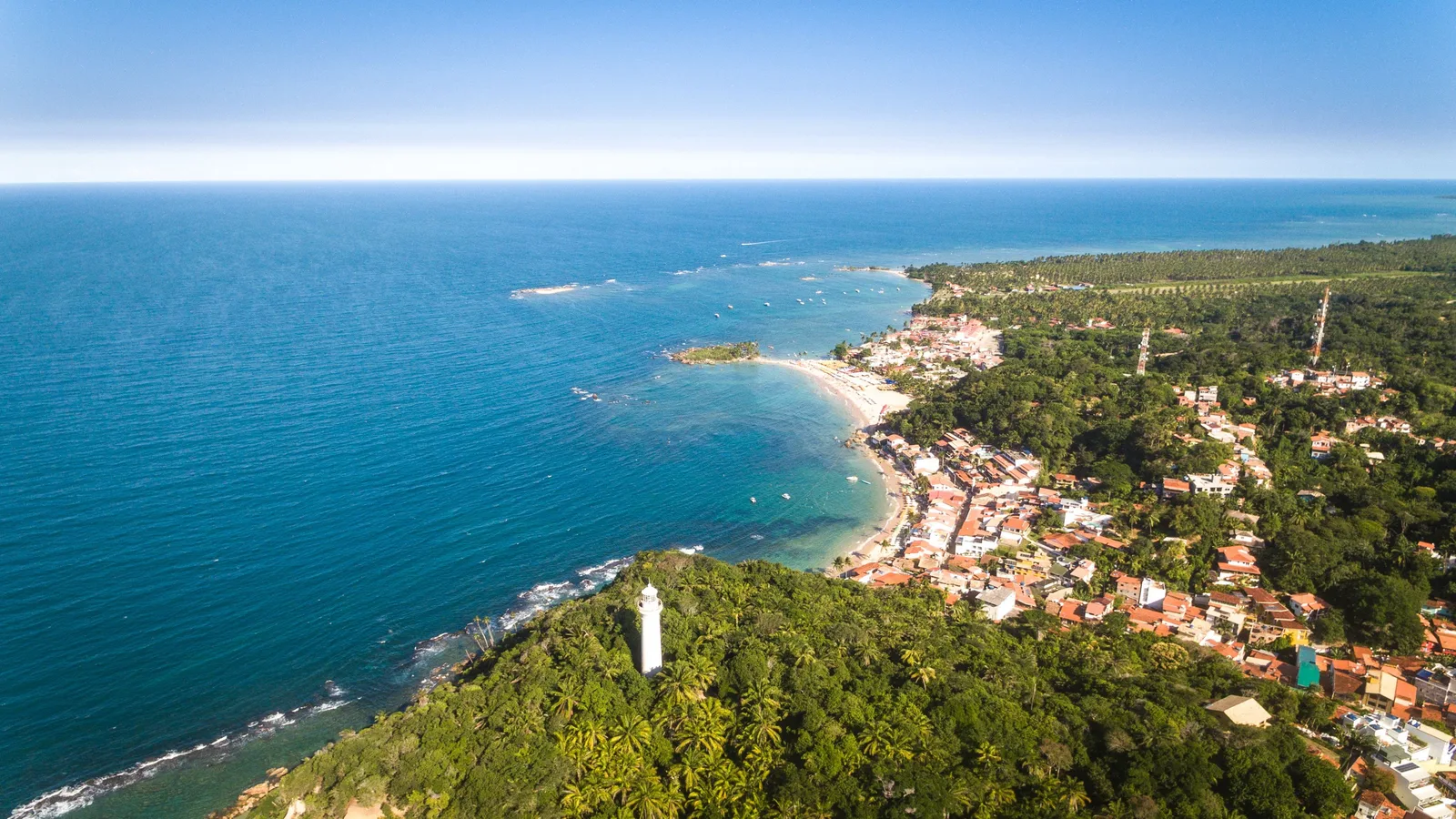
Aerial view over the center of Porto de Galinhas: a dense grid of red-tiled roofs and low buildings packed together with streets running through them 04

A working town, not a resort

The vila

Getting around
On foot, in twenty minutes
The main strip
Pousadas, stalls and tour counters
Municipality
Ipojuca, 98,932 people at the 2022 census

The village is denser and more ordinary than the photographs suggest, and that is the case for staying in it. From the air it is a tight grid of red-tiled roofs running a few blocks back from the sand: pousadas and restaurants and craft stalls and hardware shops mixed together, buggies parked along the curb, and a street that is genuinely busy in the evening rather than a hotel lobby pretending to be one.

The name is the darkest thing about the place. The port was called Porto Rico until the middle of the nineteenth century, when the transatlantic slave trade was outlawed and traffickers kept landing people here anyway, hidden among crates of guineafowl. The signal that a shipment had arrived was “tem galinha nova no porto” — there are new chickens in the port — and the phrase became the name of the town.

What to actually do

One reef, and four ways to fill the other days.

Pick a category, then scroll sideways through it. The pools take a morning and depend entirely on the tide; everything else here works whatever the water is doing.

The Pools

  • A line of jangadas with striped red, blue and yellow sails anchored along the reef at Porto de Galinhas in bright turquoise water, people standing in the shallows around them

    From the village beach · about an hour

    Jangada trip to the natural pools

    The one thing to do here. A wooden sailing raft takes six people out to the reef on the falling tide, ties up, and lets you get in. Tickets come from the Associação dos Jangadeiros’ own counter at the end of Rua das Piscinas Naturais, which is where the fare is fixed and where you find out what time the tide is actually running. R$60 cash or Pix, R$63 by card, half price for children of four to six.

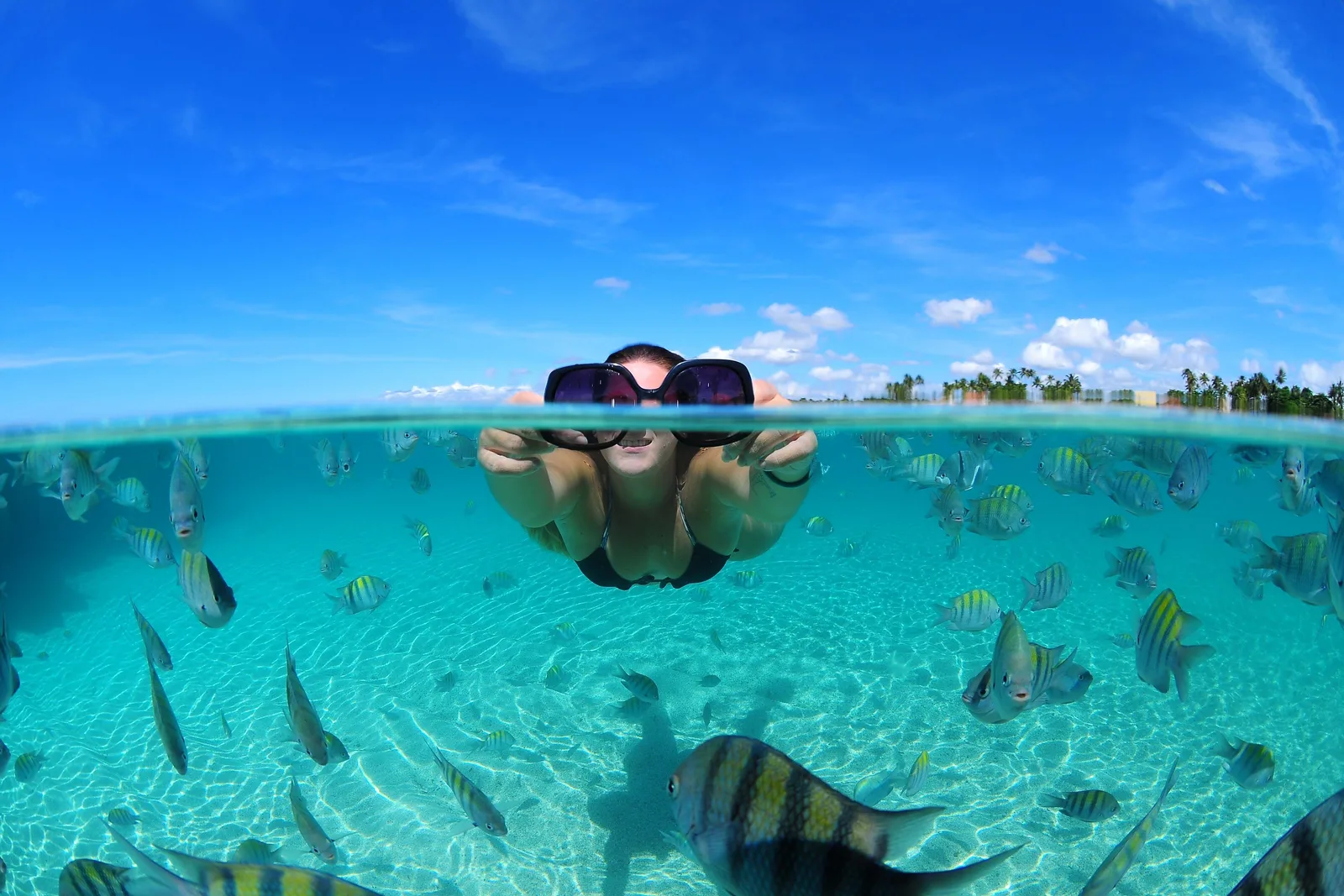
  • A split-level photograph, half above and half below the waterline: a woman hovers just under the surface of clear turquoise water holding a pair of dark sunglasses up in front of her face, striped sergeant-major fish all around her over rippled white sand, blue sky and a low palm-lined shore above

    On the reef · while the tide is out

    Snorkeling in the pools

    The pools are shallow enough that a mask and a snorkel are all the equipment there is any point in owning. Sergeant majors and other reef fish work the coral in numbers and are entirely used to people. Bring your own mask if you have one — the rental sets on the sand are hit and miss — and put sunscreen on well before you get in, or better, wear a shirt.

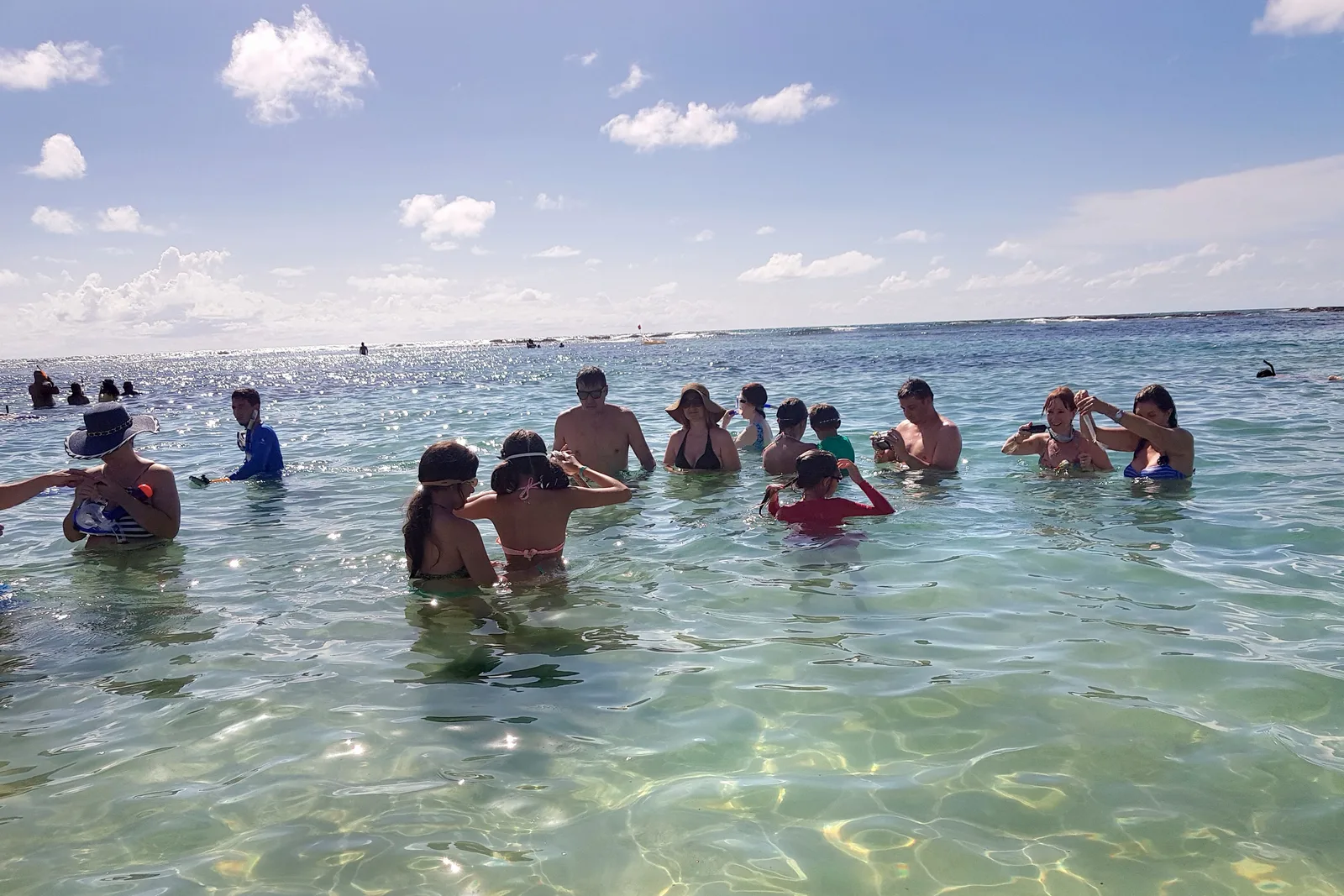
  • A group of people standing and sitting in a shallow natural pool at Porto de Galinhas, the water clear enough to see the reef bed under them

    From the village beach · free

    Walking out to the reef at low tide

    On the biggest tides you can simply walk out. Municipal environmental staff manage it when it is busy, handing out wristbands and letting people onto the reef in groups with a time limit of fifteen to twenty minutes, which is how a reef that carries this many visitors survives being walked on. The reef here is not inside a protected area — the federal APA Costa dos Corais starts at Tamandaré and the state one at the Rio Maracaípe — so the rules are the municipality’s own and worth respecting for that reason.

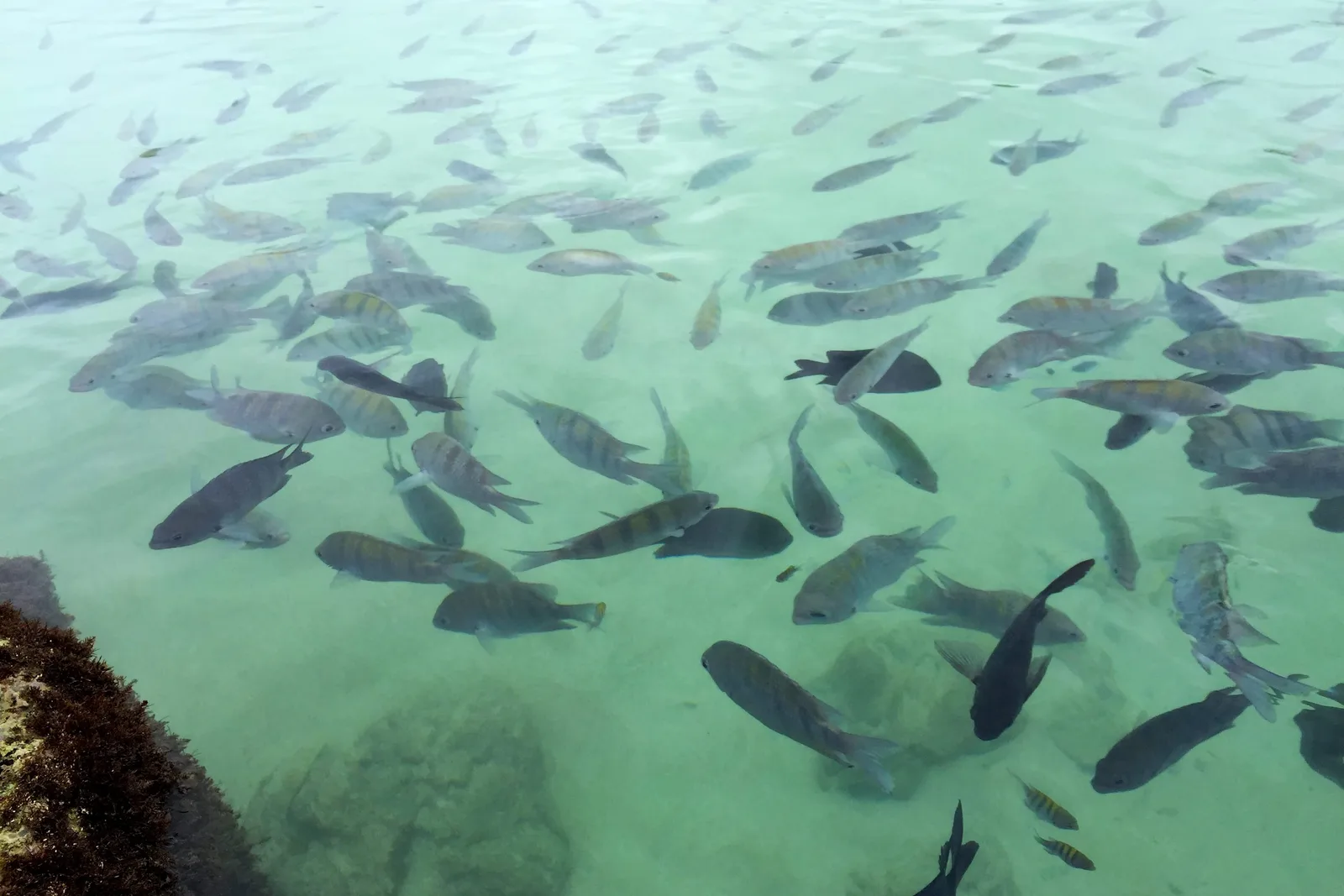
  • Dozens of small fish suspended in clear green water over pale reef at Porto de Galinhas, seen looking down through the surface

    On the reef · no equipment needed

    Watching the fish on the reef

    You do not have to get your face in the water to see this. In the hour after the tide turns, the fish are concentrated into whatever water is left and they move around your legs in schools of hundreds. It is the closest thing to an aquarium anywhere on the Brazilian coast that you can stand up in. Do not feed them, and do not take shells or coral home.

Beaches

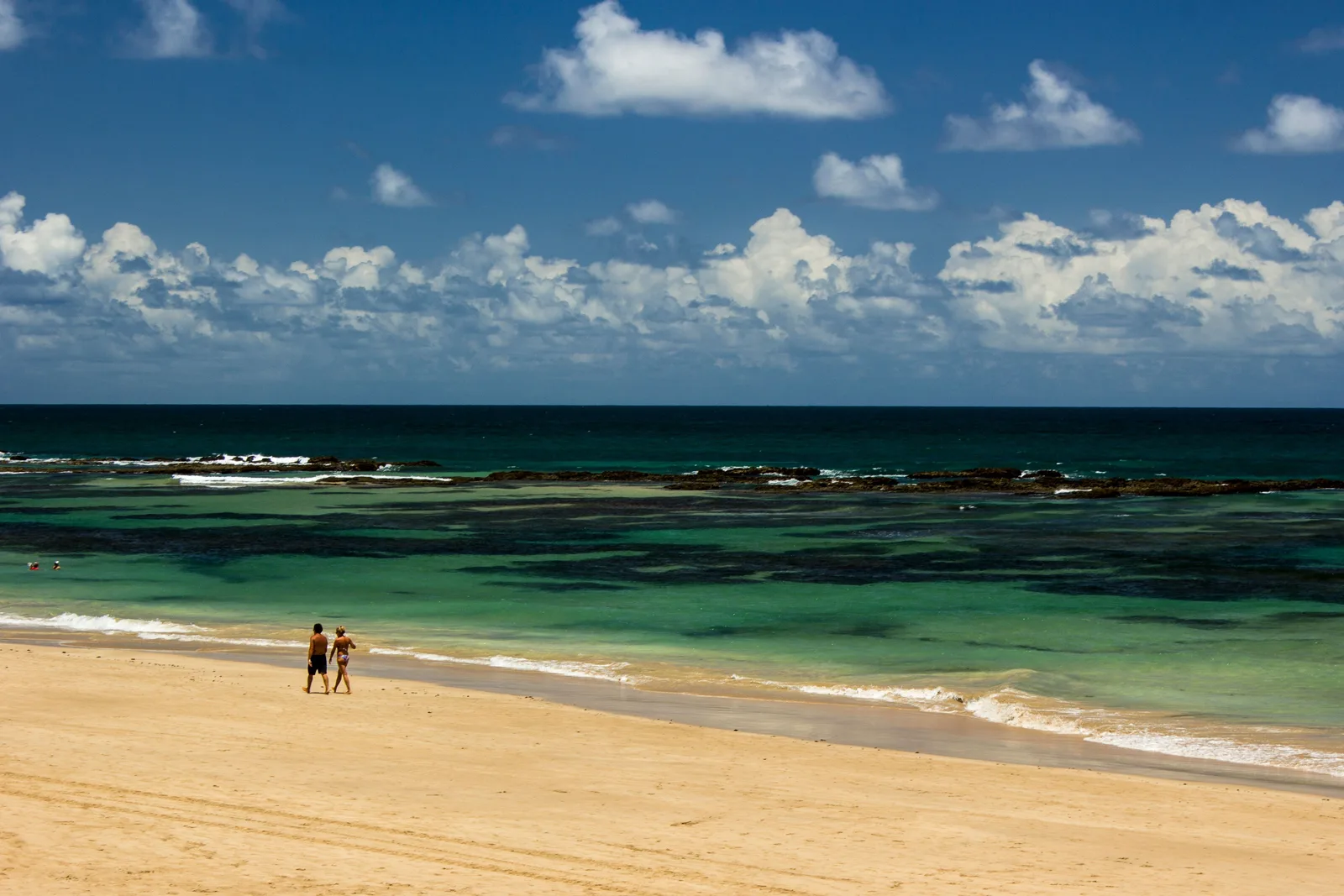
  • A wide open beach at Cupe with two figures walking on the wet sand and a band of green reef water offshore under a cloudy sky

    North of the village · half day

    Praia do Cupe

    The long straight stretch between the village and Muro Alto, backed by hotels and coconut palms and much emptier than the beach in town. There is reef offshore here too and pockets of shallow green water inside it at Pontal do Cupe. Easy to reach by buggy or on the local bus, and the obvious place to walk for an hour when the tide is high.

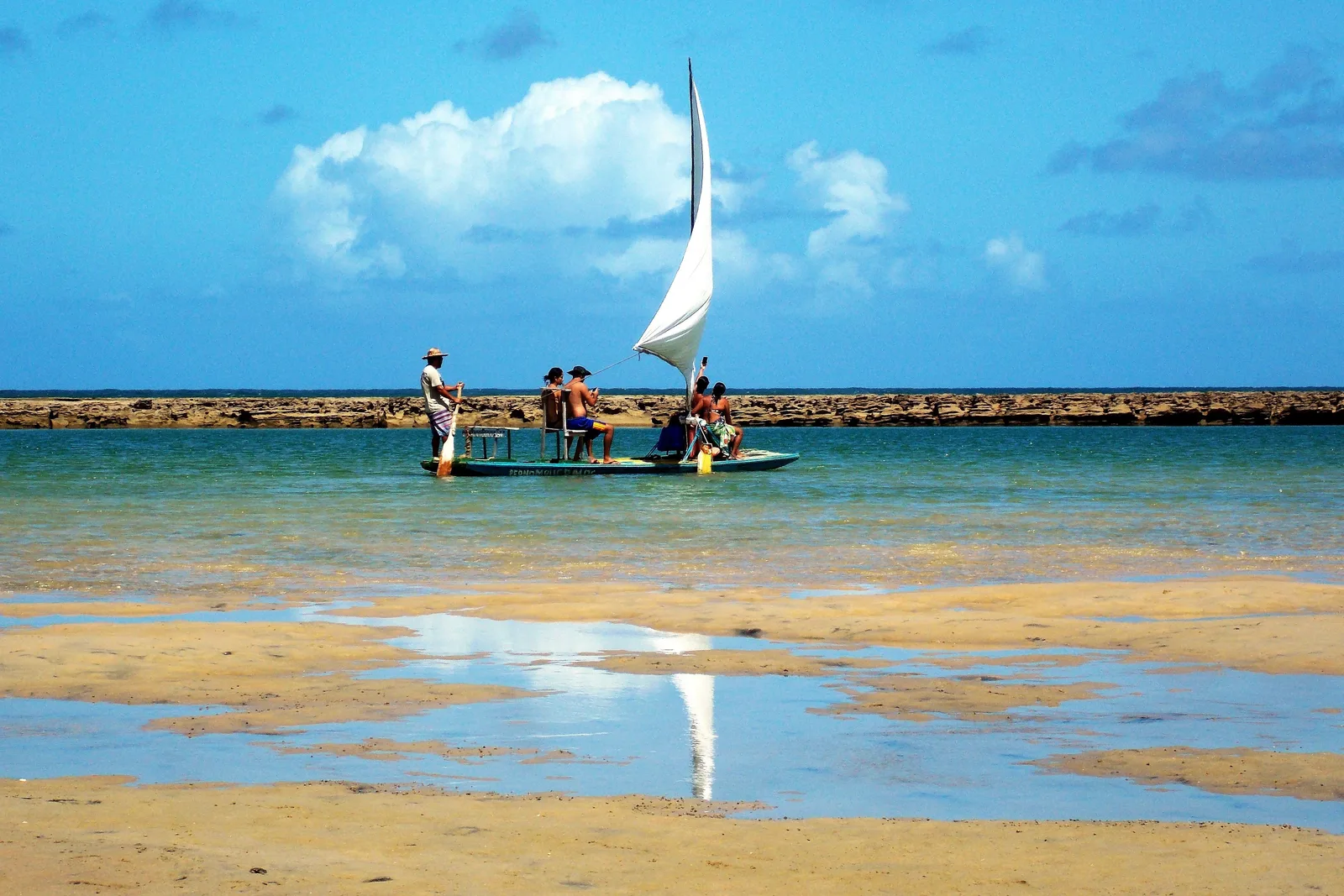
  • A jangada with a white sail resting on a wet reef flat at Muro Alto, people standing beside it and their reflections in the mirror-still shallow water

    8 km north · half day

    The lagoon at Muro Alto

    The calmest water in the municipality, held in behind a high reef wall that is exposed for much of the tide. Barely any waves, no meaningful current, and shallow a long way out, which makes it the one beach on this coast that suits a small child or a hesitant swimmer without any qualification at all. The resorts front it, but the sand is public like every beach in Brazil.

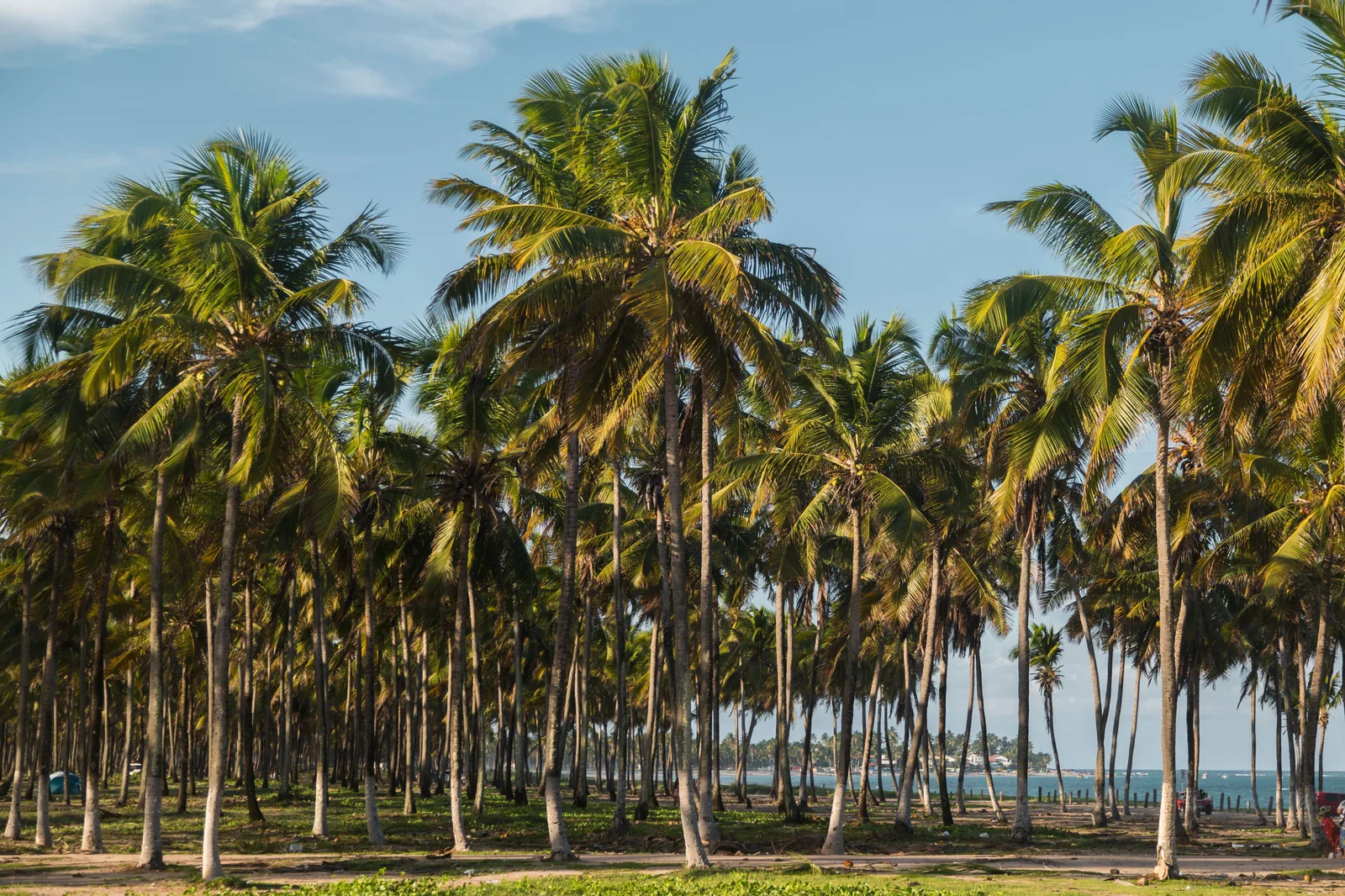
  • A dense grove of tall coconut palms standing behind the beach at Maracaípe, with a thin band of sea visible past them

    3 km south · half day

    Surfing at Maracaípe

    Where the reef stops and the swell arrives. Maracaípe is the surf beach of Pernambuco and hosts a dense block of national contests — six in May 2026 — but on an ordinary day it is a palm-backed beach with a laid-back village behind it and board rental and lessons on the sand. Kitesurf and windsurf both happen here when the wind allows, and the wind is strongest from July to September.

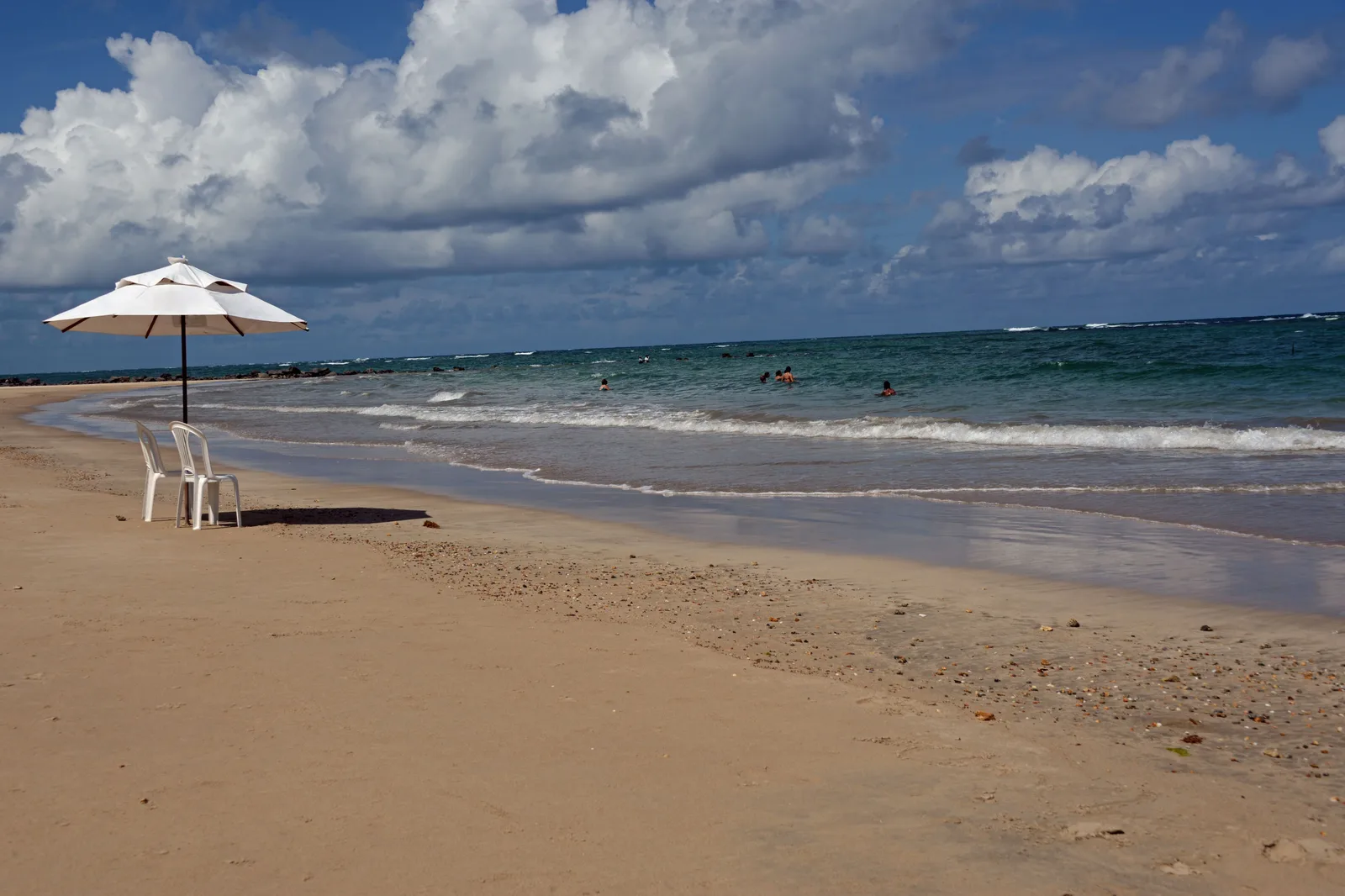
  • An empty beach at Serrambi with a single white umbrella and two plastic chairs set out on the sand under a heavy sky

    20 km south · full day

    Praia do Serrambi

    The far southern end of the municipality, past Maracaípe, and the quietest sand within easy reach. Reef offshore, a few pousadas and holiday houses, almost no day-trippers and very little built. This is where the coast looks like it did before the hotels arrived, and it is worth the drive on a weekday. Bring what you want to eat and drink; there is not much here.

Active

  • A split-level photograph, half above and half below the waterline: a woman hovers just under the surface of clear turquoise water holding a pair of dark sunglasses up in front of her face, striped sergeant-major fish all around her over rippled white sand, blue sky and a low palm-lined shore above

    On the reef · while the tide is out

    Snorkeling in the pools

    The pools are shallow enough that a mask and a snorkel are all the equipment there is any point in owning. Sergeant majors and other reef fish work the coral in numbers and are entirely used to people. Bring your own mask if you have one — the rental sets on the sand are hit and miss — and put sunscreen on well before you get in, or better, wear a shirt.

  • A dense grove of tall coconut palms standing behind the beach at Maracaípe, with a thin band of sea visible past them

    3 km south · half day

    Surfing at Maracaípe

    Where the reef stops and the swell arrives. Maracaípe is the surf beach of Pernambuco and hosts a dense block of national contests — six in May 2026 — but on an ordinary day it is a palm-backed beach with a laid-back village behind it and board rental and lessons on the sand. Kitesurf and windsurf both happen here when the wind allows, and the wind is strongest from July to September.

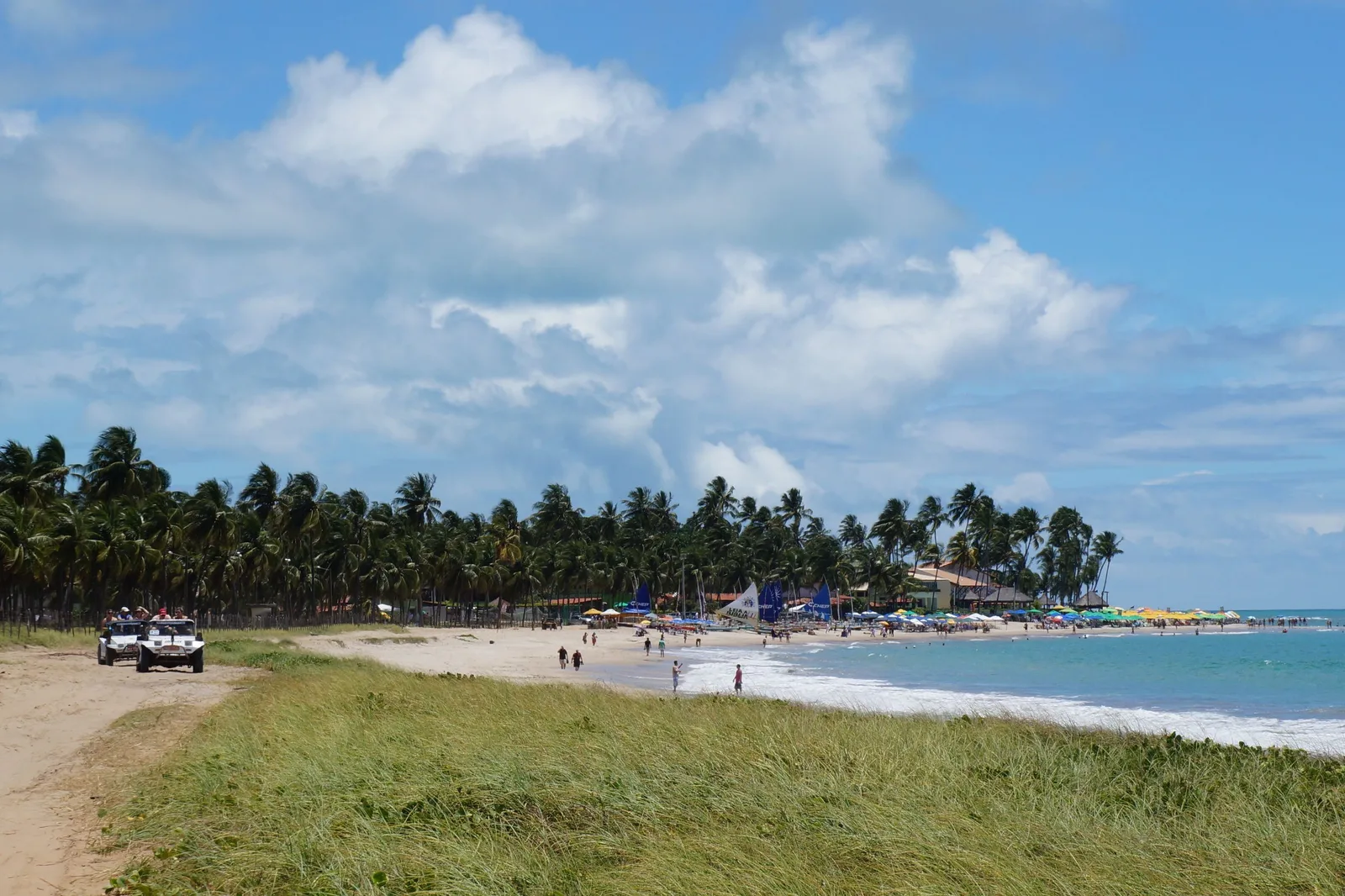
  • Two white dune buggies with passengers parked on a sand track behind the beach at Porto de Galinhas, a long palm-backed shore with kiosks and umbrellas stretching away beyond them

    From the village · four hours

    Buggy the coast end to end

    The local institution. An open dune buggy takes you the length of the municipality, the “ponta a ponta” run from the mouth of the Rio Ipojuca in the north down to the Rio Maracaípe in the south, stopping at Muro Alto, Cupe, the village and the pontal. Around R$400 for four hours, or R$500 for the full end to end run. Read that as the price of the buggy and not the price of a seat: one buggy carries up to four people, so a couple pays the same as a family of four. You will be asked whether you want it “com emoção” or “sem emoção”; the first involves the dunes and considerably more shouting.

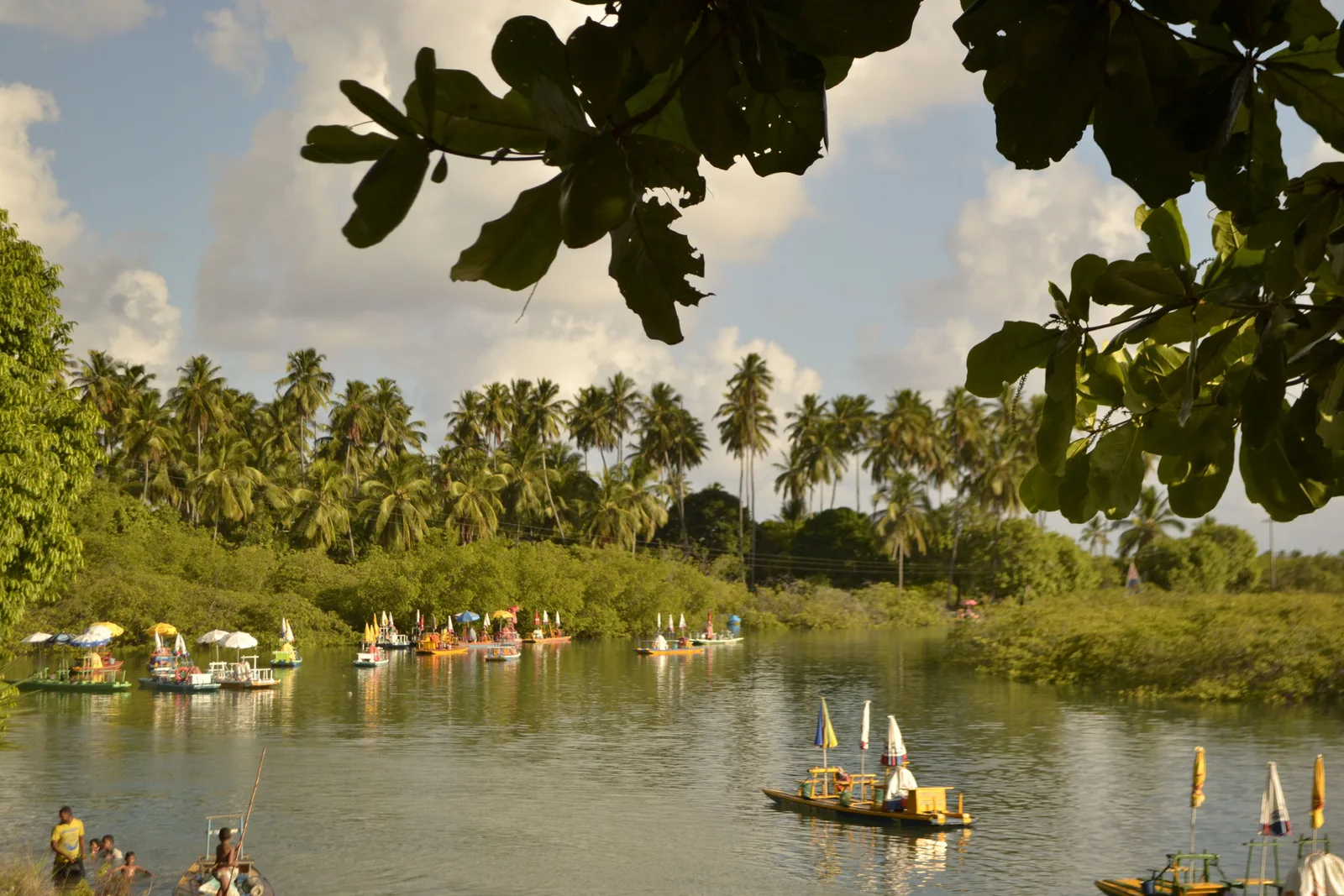
  • The shallow estuary at Pontal de Maracaípe seen from under overhanging branches, jangadas and small boats drawn up along the far bank with people wading in the water

    Pontal de Maracaípe · two hours

    Paddling the Rio Maracaípe

    The river mouth is wide, shallow and sheltered, and stand-up paddleboards and kayaks come out on it all afternoon. Only the local jangadeiros’ association may take boats through the mouth itself and motorboats are barred, which is why it is still quiet enough to be worth doing. Go in the last two hours of daylight and finish with the sunset everybody else has also come for.

Nature

  • Dozens of small fish suspended in clear green water over pale reef at Porto de Galinhas, seen looking down through the surface

    On the reef · no equipment needed

    Watching the fish on the reef

    You do not have to get your face in the water to see this. In the hour after the tide turns, the fish are concentrated into whatever water is left and they move around your legs in schools of hundreds. It is the closest thing to an aquarium anywhere on the Brazilian coast that you can stand up in. Do not feed them, and do not take shells or coral home.

  • The shallow estuary at Pontal de Maracaípe seen from under overhanging branches, jangadas and small boats drawn up along the far bank with people wading in the water

    Pontal de Maracaípe · two hours

    Paddling the Rio Maracaípe

    The river mouth is wide, shallow and sheltered, and stand-up paddleboards and kayaks come out on it all afternoon. Only the local jangadeiros’ association may take boats through the mouth itself and motorboats are barred, which is why it is still quiet enough to be worth doing. Go in the last two hours of daylight and finish with the sunset everybody else has also come for.

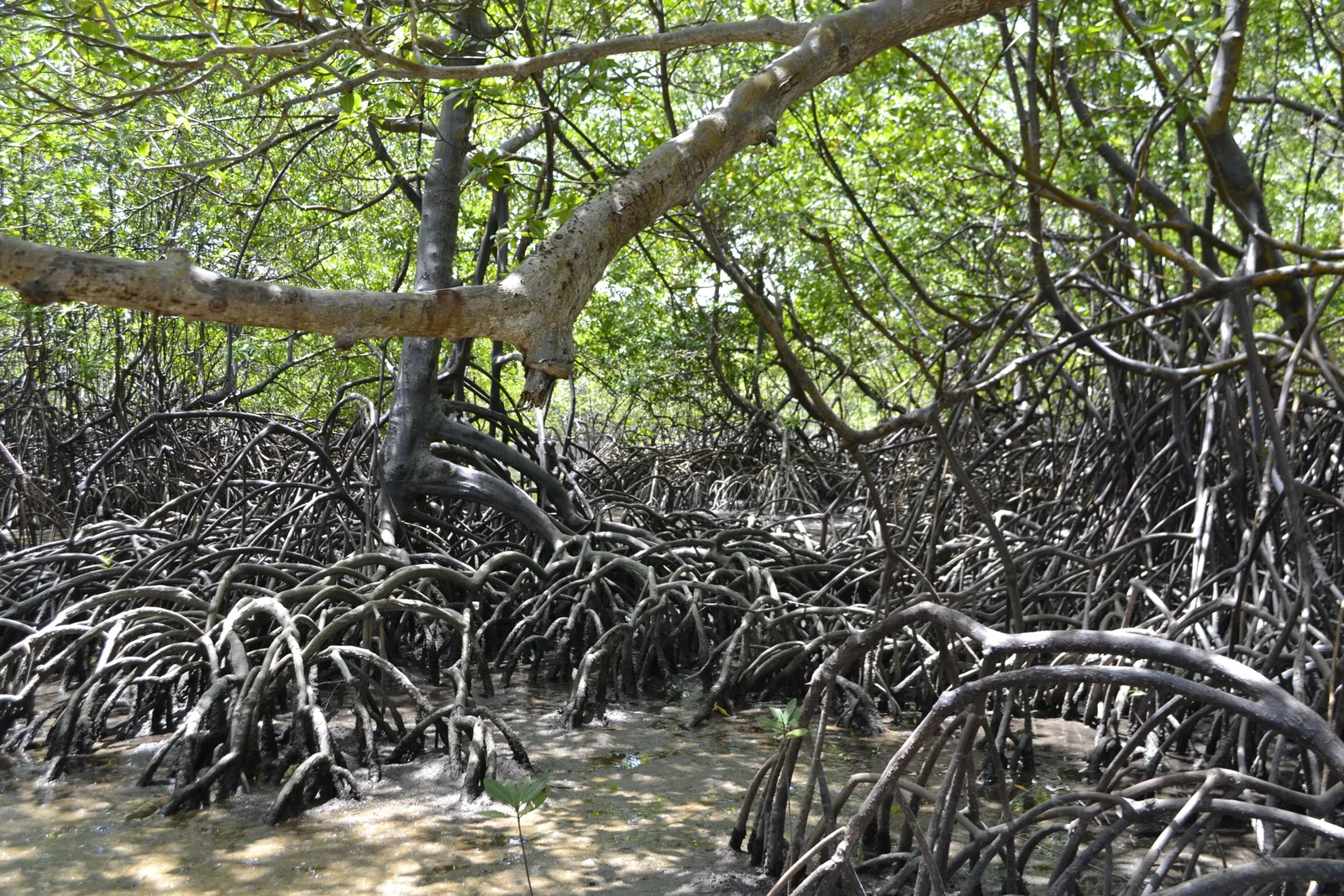
  • A tangle of pale mangrove roots arching out of dark mud and shallow water at Maracaípe, with dense green canopy above

    Pontal de Maracaípe · two hours

    The mangrove at the Pontal

    Behind the sandbar the Rio Maracaípe runs back into a mangrove, and the guided jangada trips go up into it. This is the seahorse habitat and it is the reason the rules exist: look, photograph, do not lift them out of the water. Fishing and motorboats are both prohibited through the mouth. It is also good birding, and a completely different hour from anything else on this coast.

Village & Food

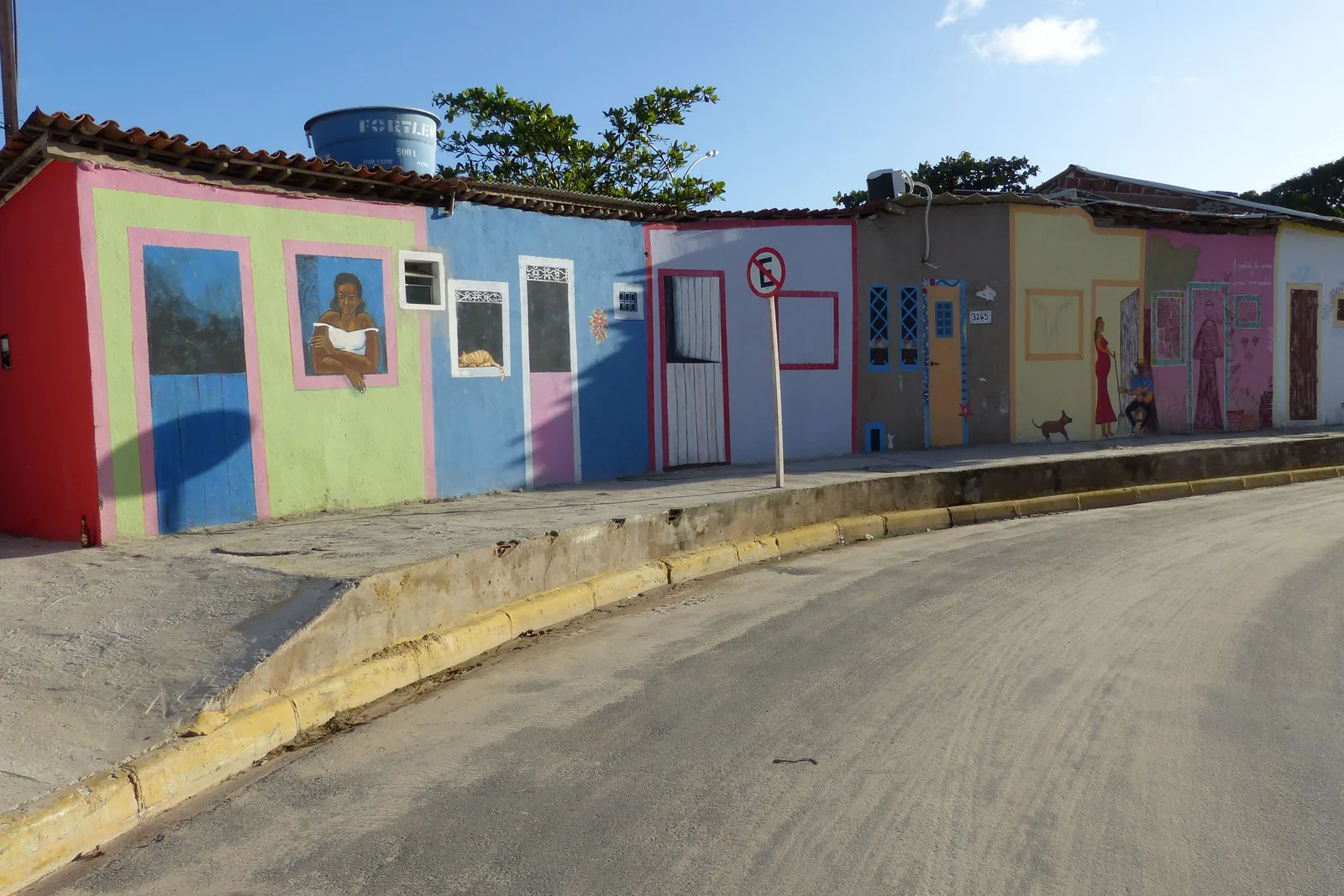
  • A quiet street in Porto de Galinhas lined with small houses painted in flat pink, blue, green and yellow, a curved road running past them

    The vila · an hour

    Walk the painted streets

    The blocks behind the beach are painted in flat pinks, blues and yellows, and an evening walk through them is the cheapest hour in town. The main strip fills up after dark with restaurants, bars, ice cream and stalls, and unlike a resort it belongs to the people who live here as much as to the people visiting.

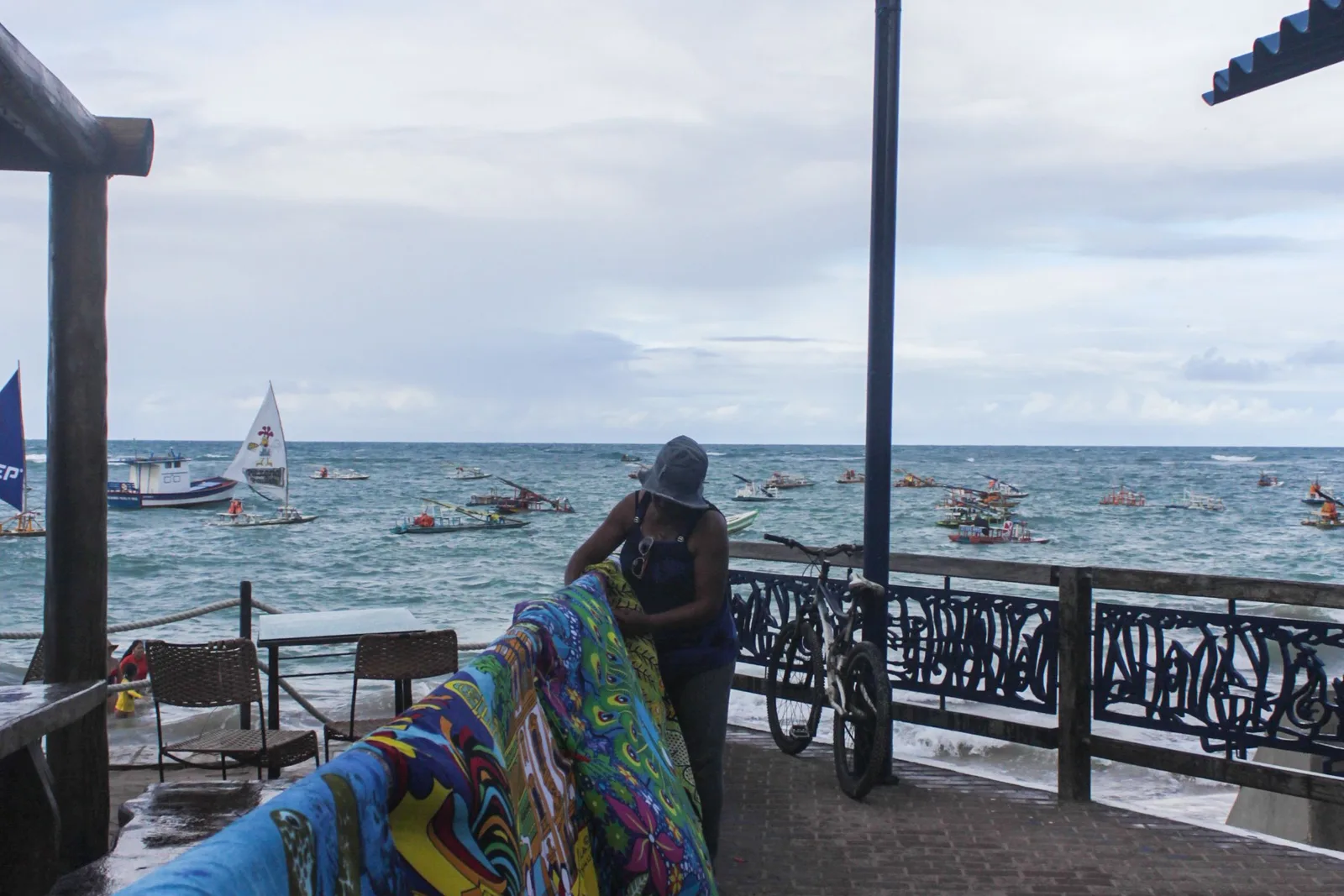
  • A vendor leaning on a seafront railing at Porto de Galinhas beside brightly printed cloths hung out for sale, with boats on the water behind

    The vila · an hour

    Buy a canga at the stalls

    The craft market and the stalls along the seafront sell cangas — the printed cotton wrap that every Brazilian takes to the beach instead of a towel — along with hammocks, lace and a great deal of chicken-themed merchandise. Prices are negotiable and the quality varies wildly, so handle the cloth before you buy.

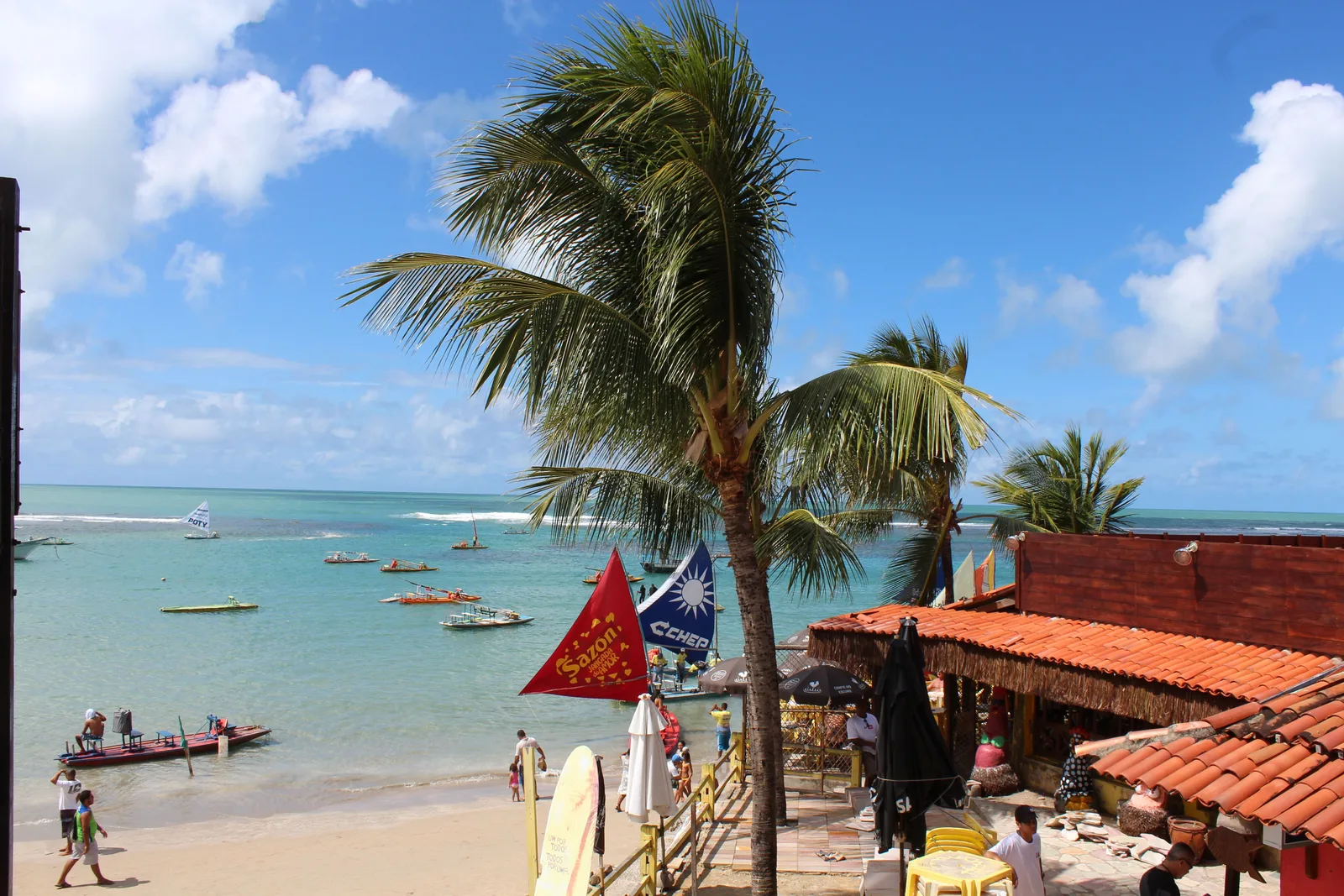
  • A red-roofed beach bar under coconut palms at Porto de Galinhas with sun umbrellas around it and jangadas drawn up on the turquoise water beyond

    The village beach · a long lunch

    Eat on the sand

    The kiosks along the front do grilled fish, shrimp, and the fried snacks that go with very cold beer, and you eat them at a plastic table with your feet in the sand. Since January 2026 they cannot make you spend a minimum to sit down, though chairs and umbrellas may still carry a stated price. Agree it first and lunch is one of the better things about this beach.

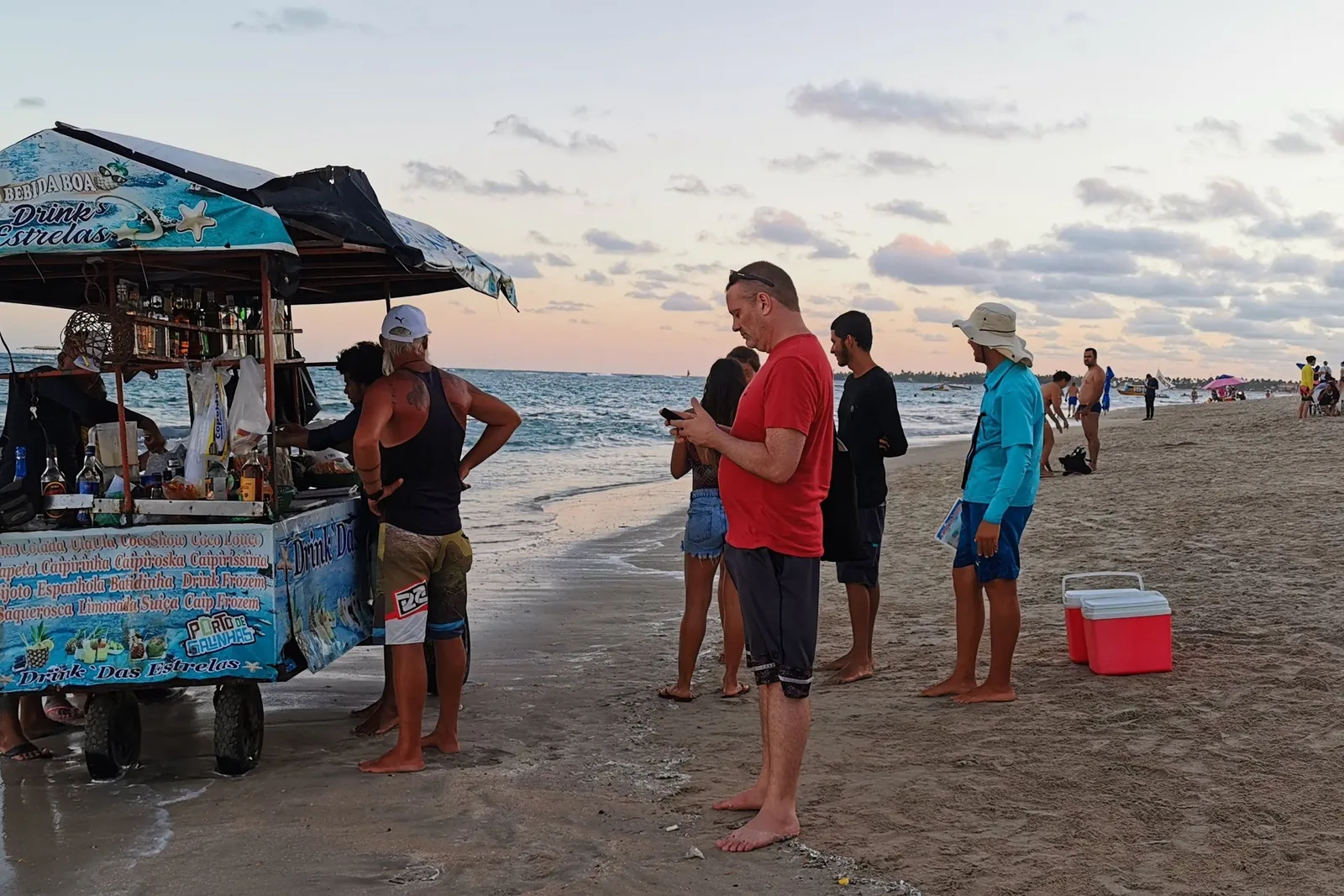
  • A brightly painted drinks cart on the sand at Porto de Galinhas at dusk, a vendor serving a small group of customers beside it

    The village beach · ten minutes

    Buy something from a cart

    Vendors work the sand all day with pushcarts: coconut water opened in front of you, iced mate, grilled cheese on a stick, and cocktails mixed straight into a hollowed pineapple. It is a fast, efficient, entirely normal apparatus and the prices are low. Carry small notes, though Pix works on the beach too.

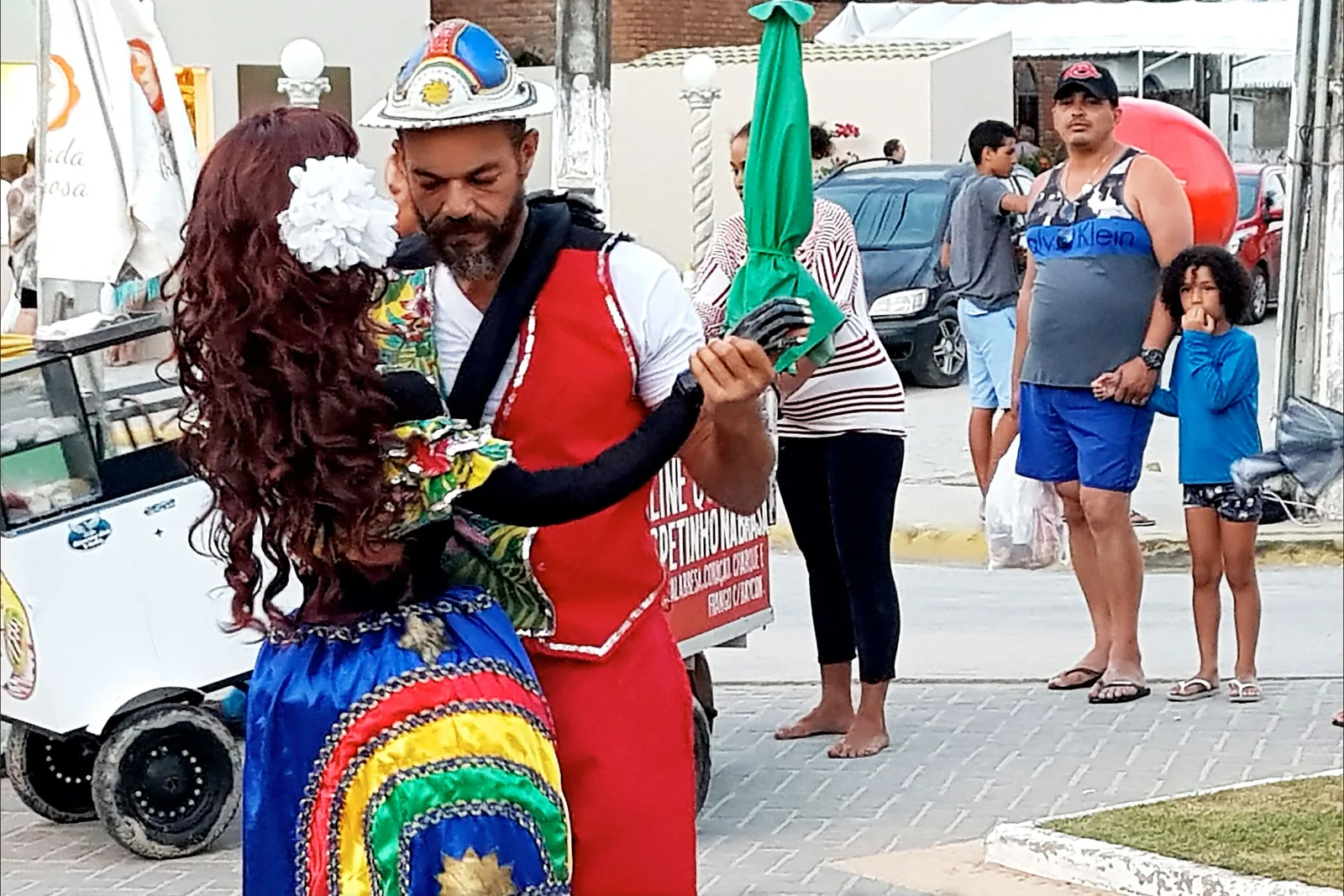
  • A costumed street performer in a wig and a red and white outfit holding a green flag on a street in Porto de Galinhas, a family and an ice cream cart beside them

    The vila · in the evening

    Street performers on the strip

    The main street works as an outdoor stage most evenings in season — costumed performers, buskers, stilt walkers and the ice cream carts among them. It is small-scale and local rather than programmed entertainment, and it is the reason the village stays livelier after dark than the resort strip a few kilometers north.

Where to stay

One road, four very different weeks.

Everything here sits on about 25 km of coast strung along a single road, so nothing is far from anything. What changes between these four is whether you can walk to dinner, whether you have to book a buggy to see a street, and how much of the week you spend inside a hotel.

Drag and zoom to explore.

Tap an area to open it and see it on the map

  • Our pick

    Best for: Walking to the jangada counter, and to dinner

    The beach at Porto de Galinhas from the air, jangadas moored in a line on turquoise water and the red roofs of the village packed along the sand behind

    The village itself, a few blocks deep behind the main beach. Pousadas at every price from simple to genuinely good, restaurants and stalls on the doorstep, and the jangada ticket counter a short walk away — which matters more than it sounds, because when the tide window moves you want to be able to react to it on foot. The trade is noise and crowds in season, and rooms that are smaller and plainer than the same money buys up the coast. For a first visit it is still the one we would give a friend.

    • Pousadas
    • Restaurants
    • The jangada counter
    • Walkable
  • Best for: A resort, a pool, and very calm water

    The dark exposed reef wall at Muro Alto standing out of clear shallow water at low tide under scattered cloud

    The strip running 3 to 8 km north of the village, where the large hotels and the all-inclusives are. Bigger rooms, real pools, restaurants on site, and at Muro Alto the flattest, safest swimming on this coast right in front of you. This is the sensible answer for families with small children and for anyone who wants the hotel to be part of the holiday. Understand the trade: there is nowhere to walk to at night, and every trip into the village is a buggy or a car.

    • Resorts
    • All-inclusive
    • Pools
    • Families
  • Best for: Surf, a slower village, and the sunset at the pontal

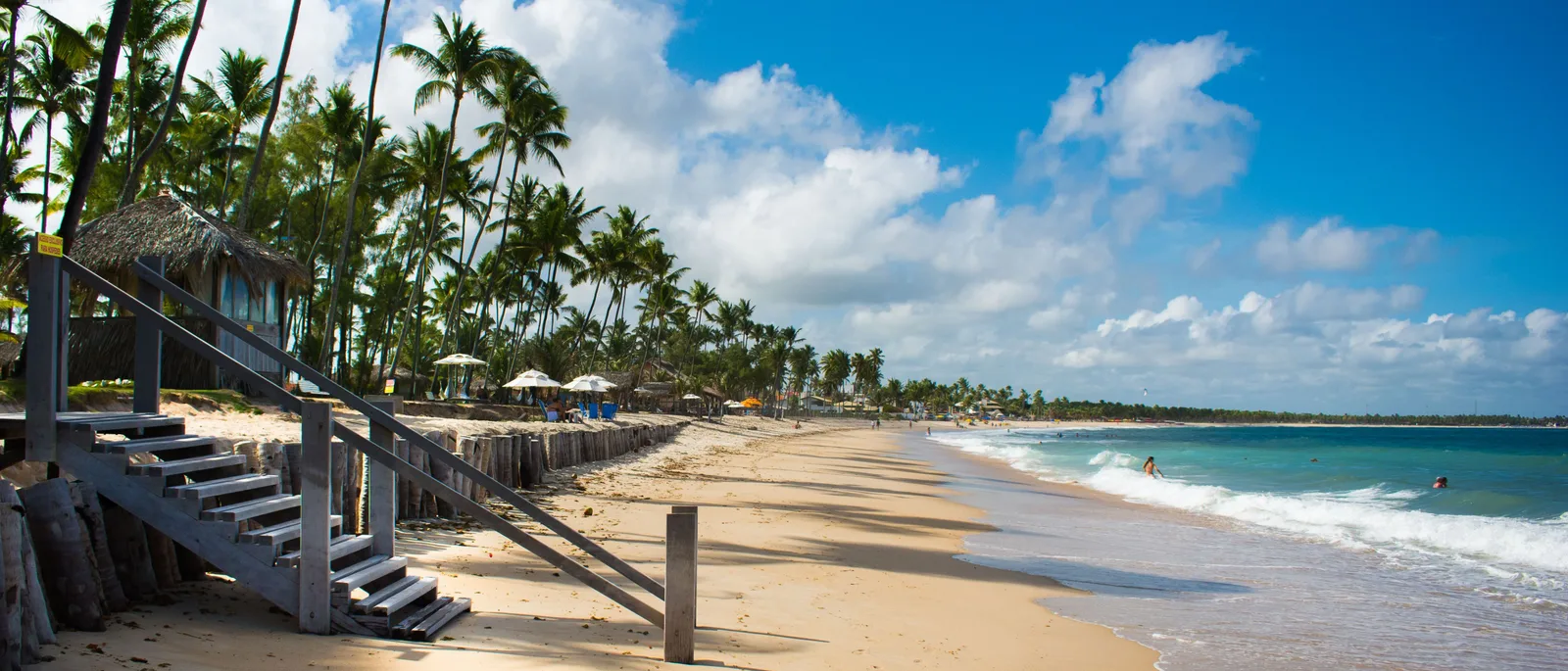
    The palm-lined shore at Maracaípe with a wooden shelter above the sand and open sea running away to the right

    Three kilometers south and a different temperature altogether: a small surf village with pousadas among the palms, a beach with actual waves on it, and the river mouth and its sunset at the far end. Quieter and generally cheaper than the vila, and close enough that you can walk or take a five-minute ride in for dinner. The catch is that the natural pools are not here, so the mornings you want them start with a trip north.

    • Surf
    • Pousadas
    • The pontal
    • Quieter
  • Best for: Getting properly away from it

    Sunset over the wet reef flats at Serrambi, the sun low behind cloud and the exposed rock dark against pale water

    Twenty kilometers south, past Maracaípe, at the far end of the municipality. A handful of pousadas and holiday houses, reef offshore, almost nobody on the sand, and no village to speak of. It is the most peaceful place to sleep on this coast and the least practical: you need a car, dinner is wherever you are staying unless you drive, and the pools are a forty-minute round trip away. Right for a second visit, or for a week where the point is not to do very much.

    • Remote
    • Pousadas
    • Car essential
    • Very quiet

A working plan

Four days, and only one of them is fixed.

Read this in the right order: look up the tide table first, find the day in your trip with the lowest daylight low water, and make that the pools day. Then hang the other three around it. Days one, three and four below work at any tide, which is deliberate — they are the ones you move.

  1. 01
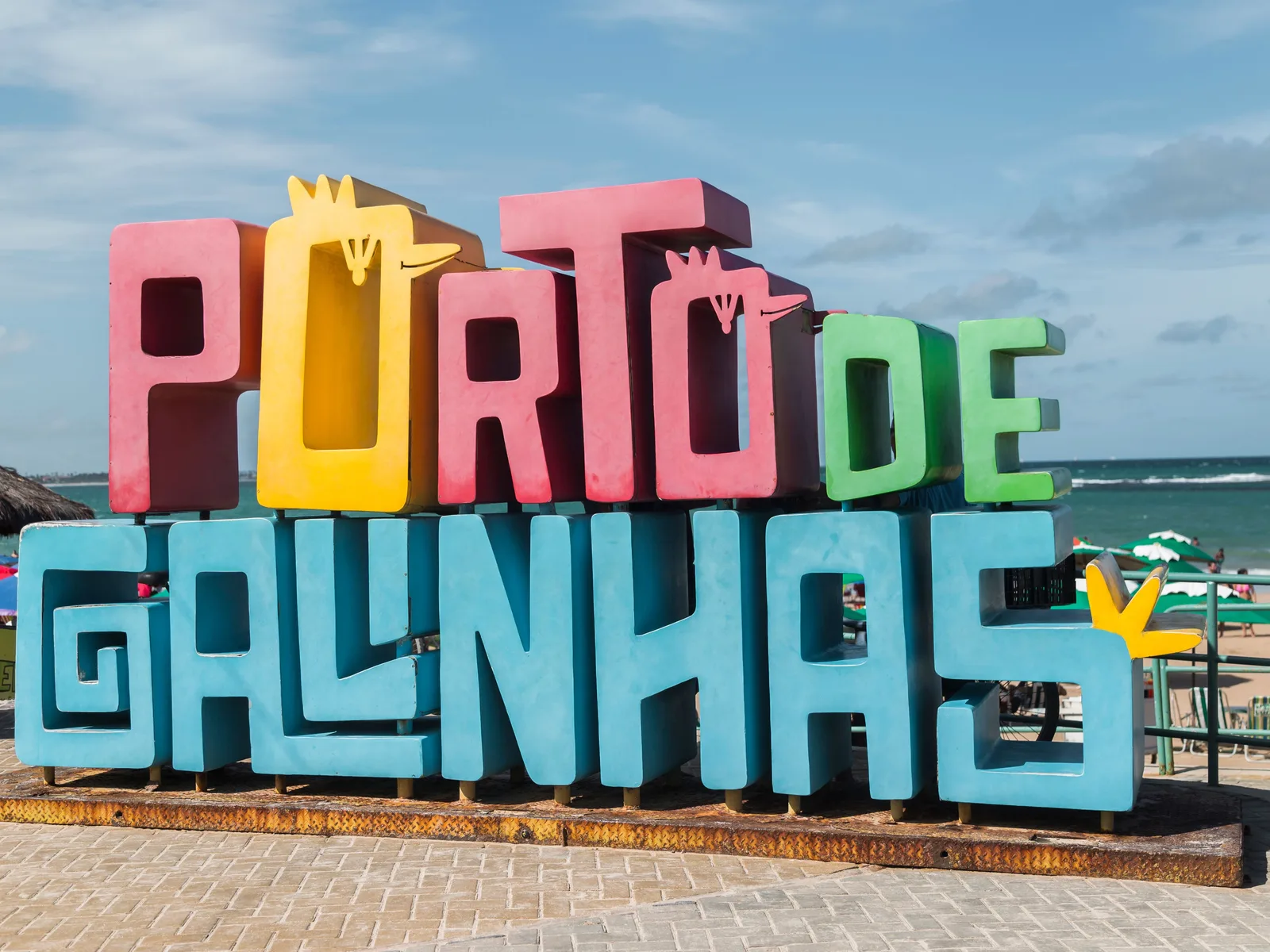
    The tall painted letters spelling PORTO DE GALINHAS standing on the seafront, with people and beach umbrellas behind them

    The vila

    Land, and learn the village

    An hour down from the airport, drop your bags and walk. Find the jangada counter and ask what the tide is doing this week, then take the painted streets and the beach kiosks at your own pace.

  2. 02
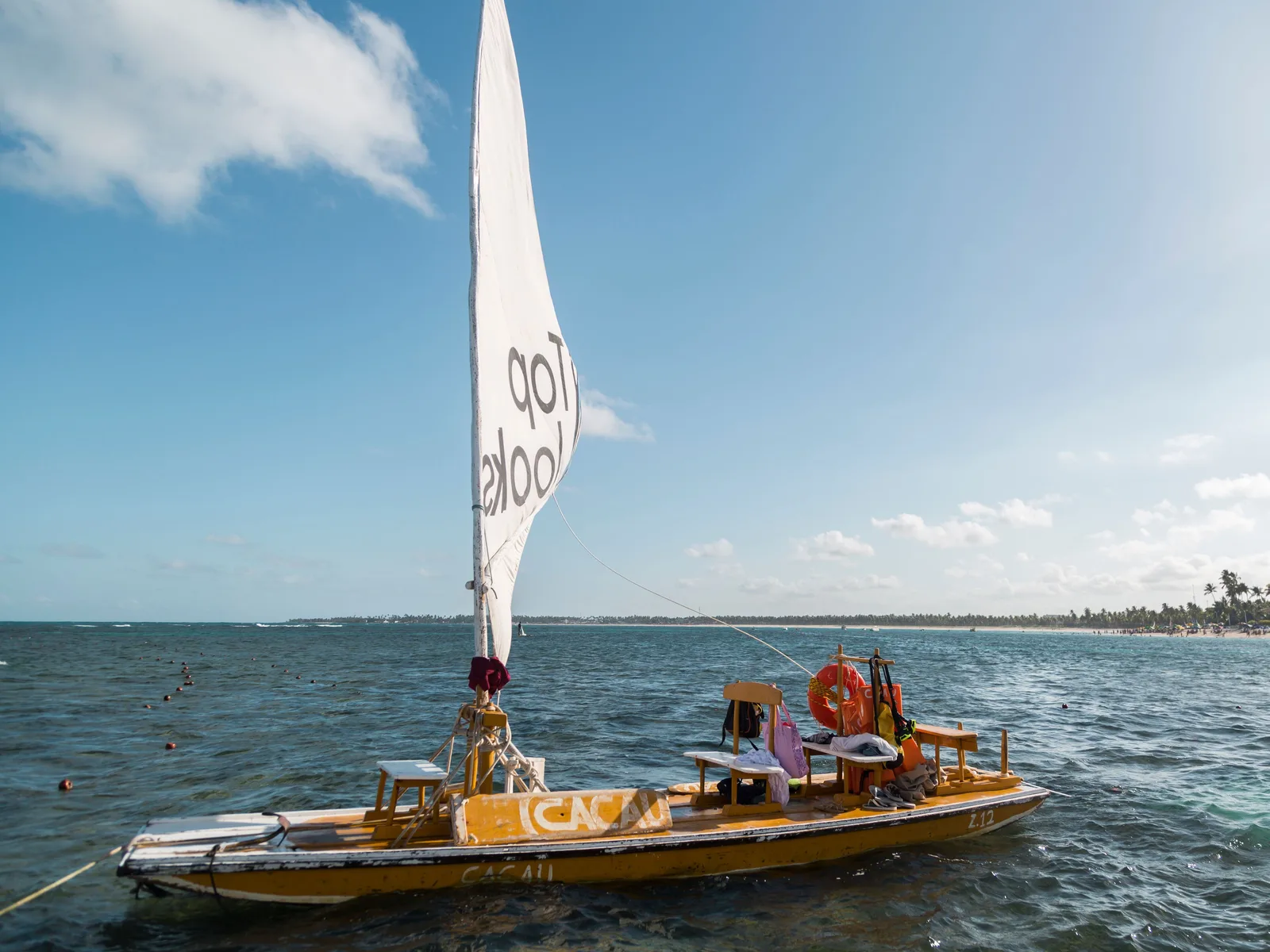
    A jangada under a white sail on open green water off Porto de Galinhas with passengers aboard and the low green coastline behind

    The reef, offshore

    The pools, on the tide

    The one appointment of the week, and the tide sets the time rather than you. Out on a jangada as the water drops, an hour or two in the pools, and back before the reef goes under.

  3. 03
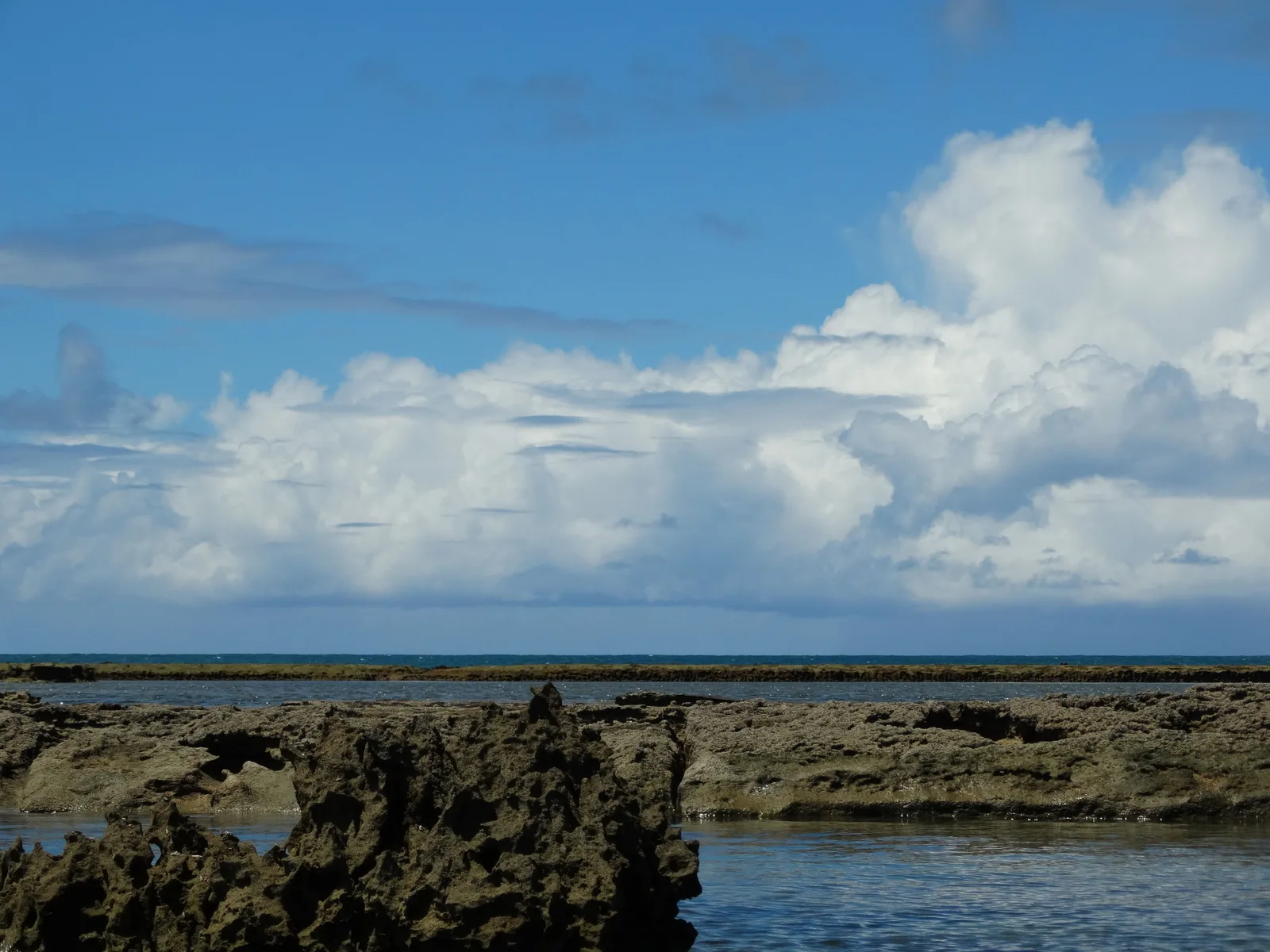
    A long line of exposed reef running across shallow water under a bright sky stacked with white cumulus

    Muro Alto to Maracaípe

    Buggy the whole coast

    The end-to-end run in an open buggy: the reef wall and the flat lagoon at Muro Alto, the long empty sand at Cupe, and back through the village. Works at any state of the tide.

  4. 04
    The sun dropping behind a low wooded rise across a still estuary, laying a column of gold on the water

    Maracaípe & the Pontal

    South to the river mouth

    A slow morning on the surf beach, then the guided raft up into the mangrove for the seahorses, and stay at the pontal for the sunset the whole village turns out for.

This is a starting shape, not a fixed departure — we rearrange it around your dates. Have it built for you

Timing

The month picks your weather. The moon picks your pools.

Two separate questions, and most people only ask the first one. The month decides how much rain you get and how much you pay, and this coast is wettest in the middle of the year rather than the summer. The tide decides whether the thing you came for is above water at all, and that runs on a fortnightly cycle no month can override.

How warm and how wet each month is at Porto de Galinhas. Choose a month for its average air and sea temperatures, rainfall and UV.

January

Good
Air
23–31°C 73–88°F
Sea
28°C 82°F
UV
10 Very high
Rain
11 days 107 mm / 4.2 in

Hot and mostly dry, and the busiest and most expensive month of the year.

February

Good
Air
23–31°C 73–88°F
Sea
28°C 82°F
UV
10 Very high
Rain
11 days 127 mm / 5.0 in

Still hot and dry, with Carnaval in the middle of it.

March

Good
Air
23–31°C 73–88°F
Sea
28°C 82°F
UV
10 Very high
Rain
15 days 197 mm / 7.8 in

Summer warmth without the summer crowds, but the rain has started climbing.

April

Trade-offs
Air
23–30°C 73–86°F
Sea
28°C 82°F
UV
9 Very high
Rain
17 days 269 mm / 10.6 in

The wet season sets in properly. Warm sea, low prices, showers most days.

May

Trade-offs
Air
22–30°C 72–86°F
Sea
28°C 82°F
UV
8 Very high
Rain
19 days 317 mm / 12.5 in

Deep in the rains, and the month Ipojuca fills up with surf contests.

June

Trade-offs
Air
22–29°C 72–84°F
Sea
27°C 81°F
UV
6 High
Rain
22 days 391 mm / 15.4 in

The wettest month of the year, at ten times what November gets.

July

Trade-offs
Air
21–28°C 70–82°F
Sea
26°C 79°F
UV
7 High
Rain
23 days 315 mm / 12.4 in

The most wet days of any month, and Brazilian school holidays fill the pousadas anyway.

August

Trade-offs
Air
21–28°C 70–82°F
Sea
26°C 79°F
UV
8 Very high
Rain
19 days 187 mm / 7.4 in

Rain easing but still on three days in five, and the windiest month for the boats.

September

Good
Air
22–29°C 72–84°F
Sea
26°C 79°F
UV
8 Very high
Rain
12 days 93 mm / 3.7 in

The dry season arrives. Sun most days, coolest sea of the year, prices still low.

October

Good
Air
22–30°C 72–86°F
Sea
27°C 81°F
UV
9 Very high
Rain
9 days 53 mm / 2.1 in

Dry, warm and uncrowded. One of the two best months here.

November

Best
Air
23–30°C 73–86°F
Sea
27°C 81°F
UV
9 Very high
Rain
7 days 39 mm / 1.5 in

The driest month of the year and the sunniest by the day, at low-season prices.

December

Good
Air
23–31°C 73–88°F
Sea
27°C 81°F
UV
9 Very high
Rain
8 days 62 mm / 2.4 in

Dry and hot, and quiet until about the 20th — then the holidays arrive and prices jump.

  • Best The one or two peak months
  • Good A real recommendation
  • Trade-offs Workable, with a catch
See Porto de Galinhas on the Brazil calendar

UV is the monthly average of the daily peak, 2022 to 2025, calculated from Copernicus Atmosphere Monitoring Service data. Weather data by Open-Meteo.com, CC BY 4.0.

For the pools, in any month

The new & full moon

Spring tides give the lowest lows of the fortnight. Pick the days either side of a new or full moon that also have a daylight low, and the calendar month barely matters.

For dry, bright days

October–December

The driest quarter of the year by a distance — November averages 39 mm across seven wet days — with low-season prices until about the 20th of December.

The wet half

April–July

Between 269 and 391 mm a month across 17 to 23 wet days, and August is only a little better. Cheap and quiet, and not what you booked a reef holiday for.

About the rain

One honest note about these numbers. Ipojuca has no weather station: INMET, the national meteorological institute, lists sixteen in the state of Pernambuco and not one of them is at Porto de Galinhas, Ipojuca or Suape. So the air temperatures, rainfall and rain days above are Recife’s — the 1991 to 2020 normals for the Curado station, about 55 km up the same coastal strip — and not measurements taken here. It is the nearest long record there is and the seasonal shape it shows is the right one, but treat the rainfall totals as the wet end of the range: gridded datasets covering Porto de Galinhas itself put the yearly figure lower than Recife’s 2,155 mm. The sea temperatures and the UV index are not proxies. Both are for this stretch of water.

The pattern is what matters, and it is the reverse of Rio’s. The rain here belongs to the middle of the year, not the summer: May, June and July together bring more than a meter of it, and June alone averages ten times what November does. Late spring and early summer (October, November, December) are the dry, bright, uncrowded months, and January and February are hot, expensive and still mostly dry. The sea never drops below about 26 degrees, so there is no month you cannot swim, and the UV is in the WHO’s very high band for ten months of the year. Cover up rather than reapply.

The dates worth planning around

Sunrise over broad reef flats at Porto de Galinhas exposed by a very low tide, boats moored beyond and a figure walking on the wet rock

Spring tides

Twice a month, all year — at the new and full moon

Not a festival, but the only date on this coast that reliably changes what you see. When the sun and moon line up at new and full moon their pull adds together, and the tidal range widens: high water runs higher and, more to the point, low water runs lower. Those are the days the reef comes properly out of the sea and the pools are at their best. A week later, at the half moon, the same beach gives you neap tides and a much less interesting low.

Carnaval

February or early March — the dates move with Easter

Pernambuco’s Carnival is the one Brazilians argue is the real one, and the enormous version of it happens in Recife and Olinda an hour north. Ipojuca runs its own: in 2026 it ran from 12 to 17 February with a stage on Rua Bejupirá in Porto de Galinhas, frevo and maracatu, cultural processions and regional acts each evening. It is far smaller than the city version and correspondingly easier to be at with a family. Rooms go early and prices are at their peak.

Vacationers standing and walking in the clear shallow water at Porto de Galinhas in large numbers on a bright day

Réveillon and the summer holidays

About 20 December to Carnaval

From roughly the twentieth of December the whole coast changes character. Ipojuca puts on New Year’s Eve fireworks over the beach, the pousadas and beach clubs run their own parties, and the village and its water are as full as they get all year. Brazilian families take the whole of January. It is a genuinely good time to be here if the crowd is part of what you want; it is the worst value of the year if it is not, and rooms want booking months ahead.

Good to know

Before you come

Do I really have to plan around the tide? +

Yes, and it is the single thing that separates a good trip here from a disappointing one. The natural pools are not a permanent feature: they exist only while the tide is low enough to bring the reef out of the water, which happens for a couple of hours at a time, twice a day, at times that shift about fifty minutes later each day. At high water there is nothing to see and the jangadas do not sail. Before you fix your dates, look up the tide table for Porto de Galinhas — the official predictions come from the Brazilian Navy’s Centro de Hidrografia da Marinha, and any decent tide app cites them. You are looking for a low water in daylight, ideally around half a meter or lower. The lowest lows come at the new moon and the full moon, so if you have any flexibility at all, aim your trip at one of those. Get that right and it barely matters which month you come in.

How many days do I need in Porto de Galinhas? +

Four is the honest number and it is why the itinerary above is built that way. You need one morning for the pools, but you cannot choose which morning — the tide chooses — so you want spare days around it. Four gives you the pools, a full day driving the coast end to end, a day south at Maracaípe and the river mouth, and a day of slack. Three works if your dates happen to line up with a good spring tide. Two is a gamble: if the low water falls at 11:00pm on both days, you will have come a long way to look at a nice beach. A week is easy to fill if you also want Serrambi and a day trip further down the coast.

Where should I stay? +

In the village for a first visit. The vila puts you inside walking distance of the jangada counter, the restaurants and the stalls, and being able to walk to the boats matters more than it sounds when the tide window moves and you need to react to it. Muro Alto and Cupe, three to eight kilometers north, are where the resorts and all-inclusives are: bigger rooms, real pools, the calmest swimming on the coast, and nowhere to walk to in the evening. Maracaípe, three kilometers south, is the quieter, cheaper, surf-village alternative with the sunset at the river mouth. Serrambi, twenty kilometers south, is genuinely remote and needs a car. What almost nobody should do on a short first trip is book Serrambi and then spend the week driving back north for the thing they came to see.

How do I get there from the United States? +

You fly to Recife/Guararapes (REC) and drive about an hour south. For most of the year there is no nonstop between the US and Recife, so you connect, most often through São Paulo, and Campinas, Belo Horizonte and Belém are the other Brazilian hubs that feed Recife. From the east coast the alternative worth pricing is Lisbon, which has a regular nonstop into Recife. If you are traveling over the holidays, price the nonstop too: Azul’s Orlando to Recife nonstop returns on December 1, 2026 and is on sale through the holidays into January 2027, listed by Orlando International as resumed Azul service and still shown as subject to government approval. Check it is actually flying before you build a trip around it. From the airport, a shared transfer is around R$122 a head and a private car about R$350 round trip for four; ride apps do the run too, and there is a toll of about R$12 each way that is not always in the quoted fare.

Can I walk out to the reef instead of taking a jangada? +

On the biggest low tides, yes — the reef is only about 200 meters out and on a good spring tide people simply wade to it. When it is busy, municipal environmental staff manage the crossing, handing out wristbands and releasing groups of around thirty onto the reef with a time limit of fifteen to twenty minutes each. That is not obstruction, it is the reason there is still coral there to look at: this reef carries a very large number of feet every year and trampling is what kills it. Wear something on your soles, both for your feet and for the coral, and do not take shells or coral home. The jangada is still worth the R$60 — it takes you to the better pools further out and it is the local fishing boat, sailed by the people whose association runs the whole operation.

Keep going

Where Porto de Galinhas fits in a bigger trip.

This is a three- or four-night stop rather than a whole holiday, and it slots naturally into a run down the northeast coast. These three pair with it: the city you fly into, another reef-and-turtle coast, and a car-free island village.

Free · 29 pages

Free guide

Beginner's Guide to Brazil

A free 29-page guide to everything a first-time visitor should know before landing: visas, safety, money, getting around, where to go, and what to eat.

We'll email you a link to confirm your address. Click it and the guide opens right away.

See what's inside
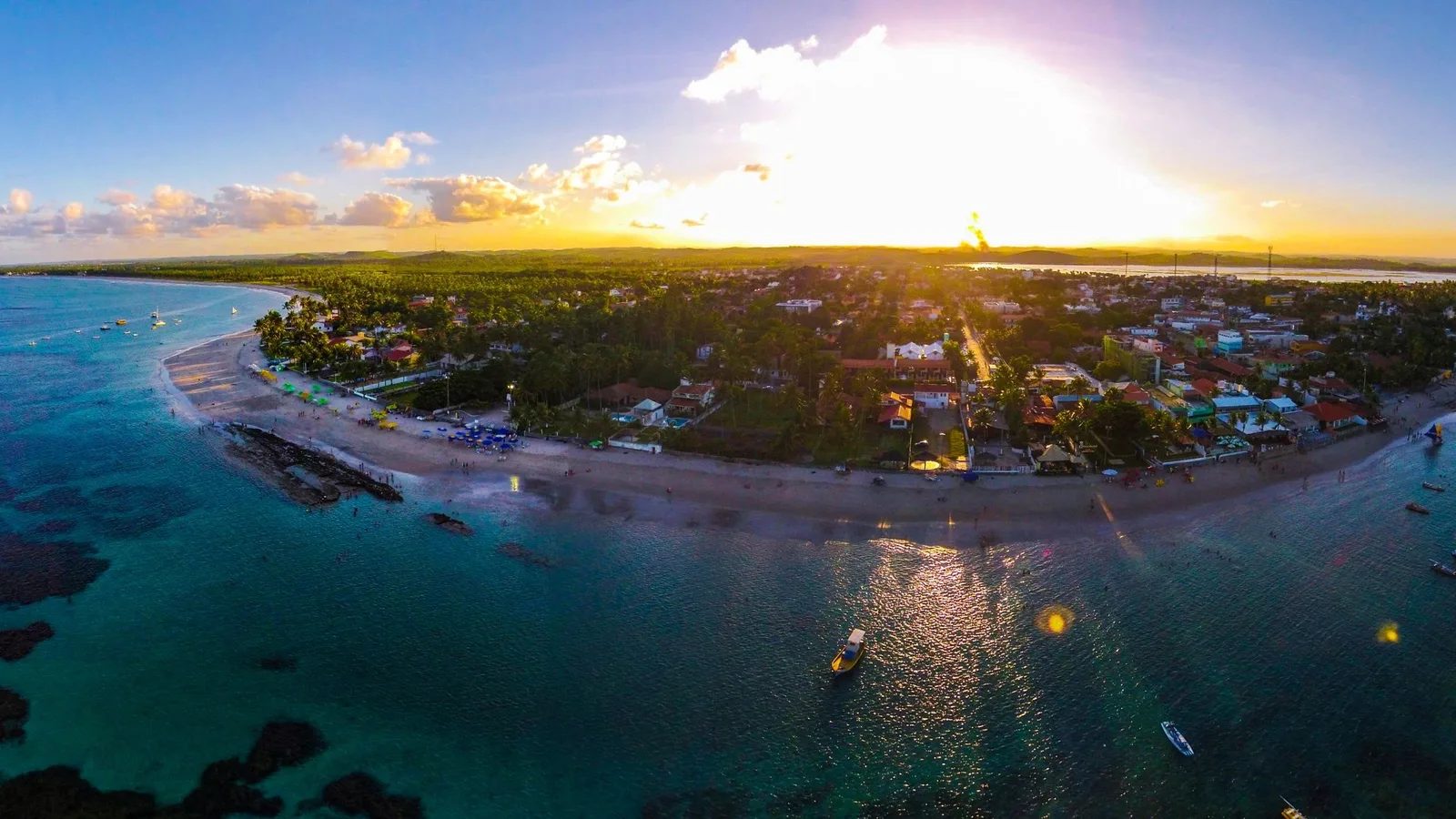
Porto de Galinhas from the air at sunset, the village lights coming on along the shore and the reef line dark in the pale water offshore

Skip the planning

Get the tide right, and the rest of the trip follows.

Tell us your dates and we will tell you what the tide is doing on them — and if the answer is bad, which week either side would fix it. Then we will build the trip around that: the right base for how you travel, the boats booked into the window that actually exists, and the drive down from Recife arranged before you land.

  • One person, living in Brazil, replying to you directly
  • A reply within one business day — no call center, no bots
  • No cost to plan, and no obligation to book
  • Built around your dates, not a fixed departure