
Skip to content
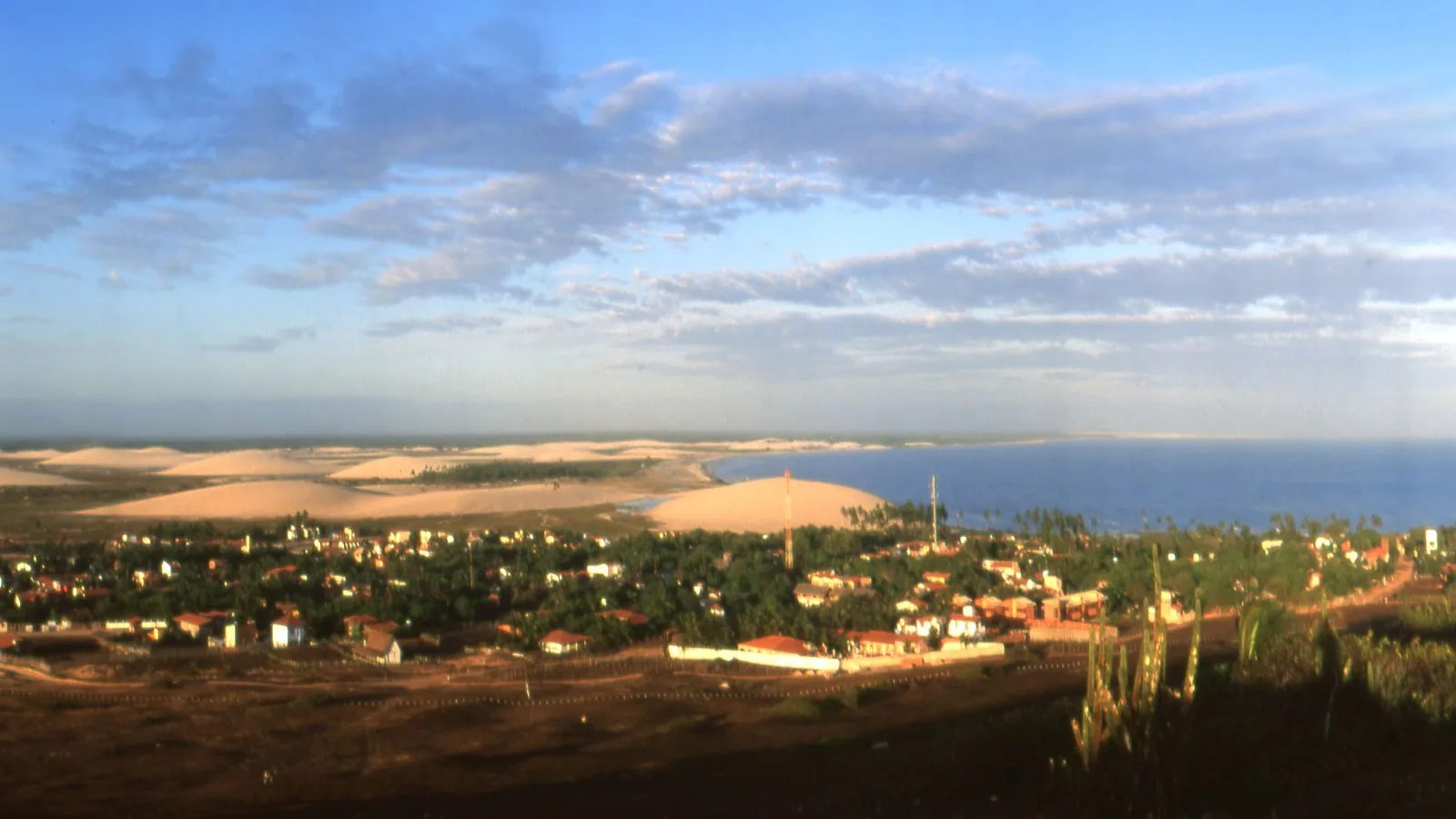
Jericoacoara from above in late afternoon sun: red roofs and green trees spread along the shore under a blue sky, a red and white communications mast standing among them, the dune field running away to the left and open blue sea to the right

Ceará

Jericoacoara

No paved streets, no street lights, and wind on nine days out of ten from July to January.

Last checked September 2026

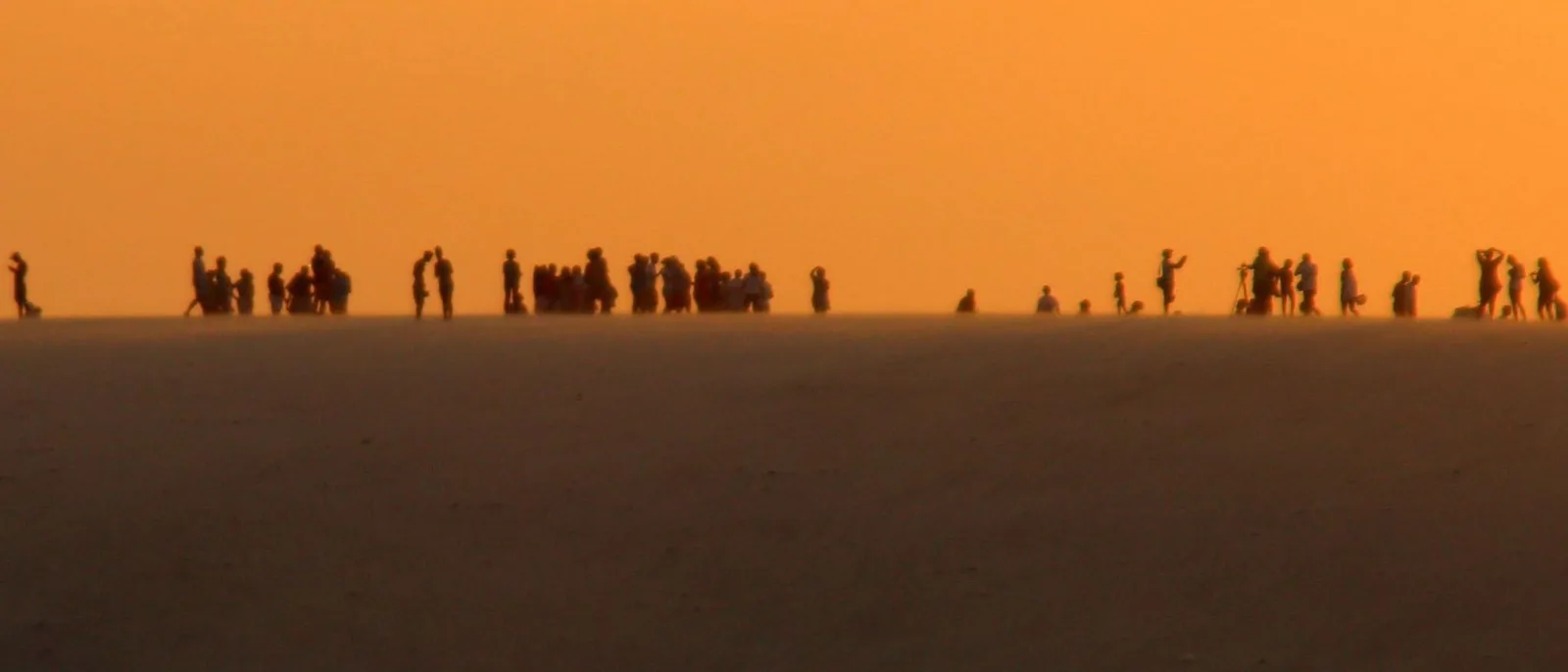
  • A line of people standing in silhouette along the crest of a dune against a flat orange sky at sunset
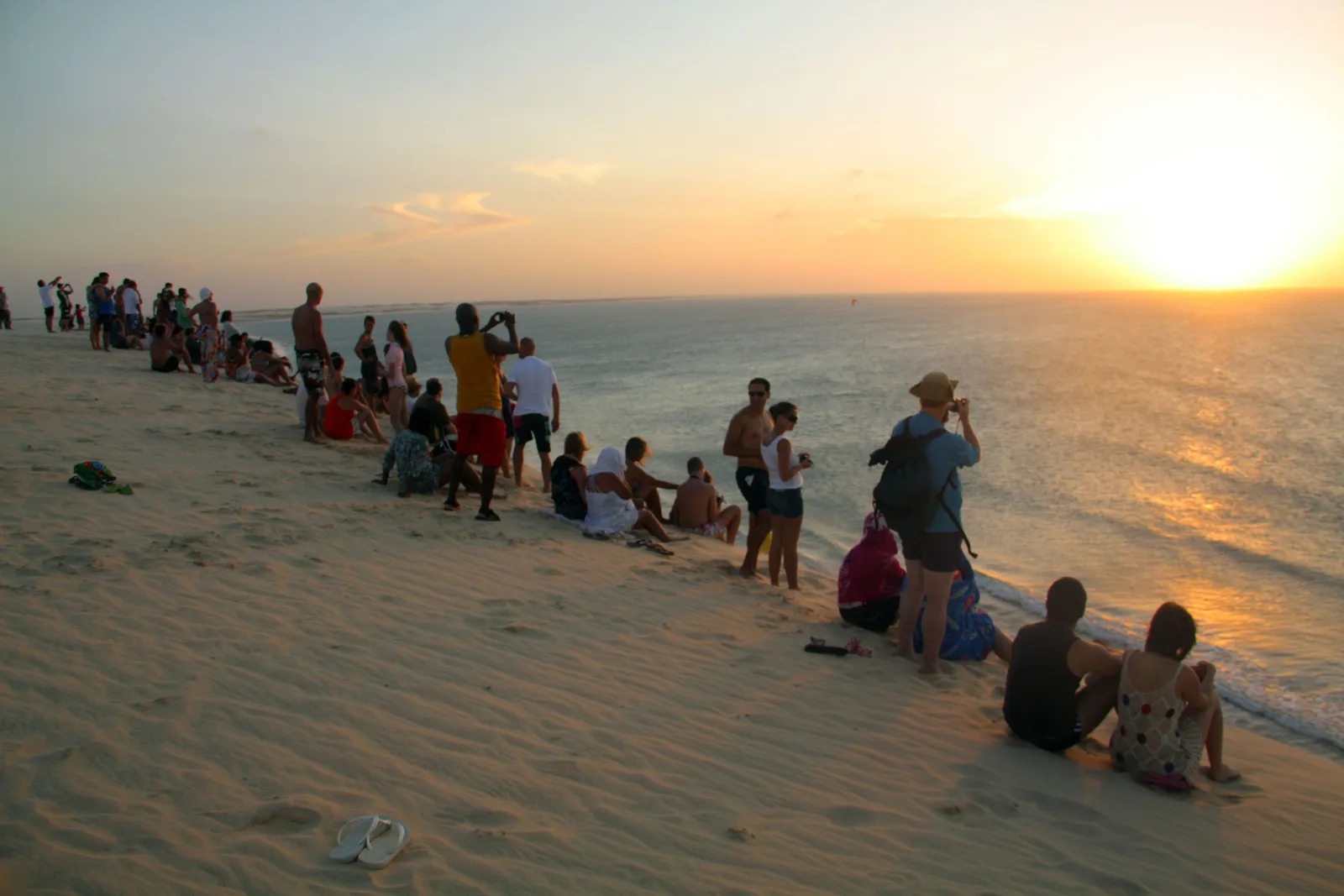
  • People sitting in rows on the sand of the sunset dune, looking out over the sea with the sun low on the horizon
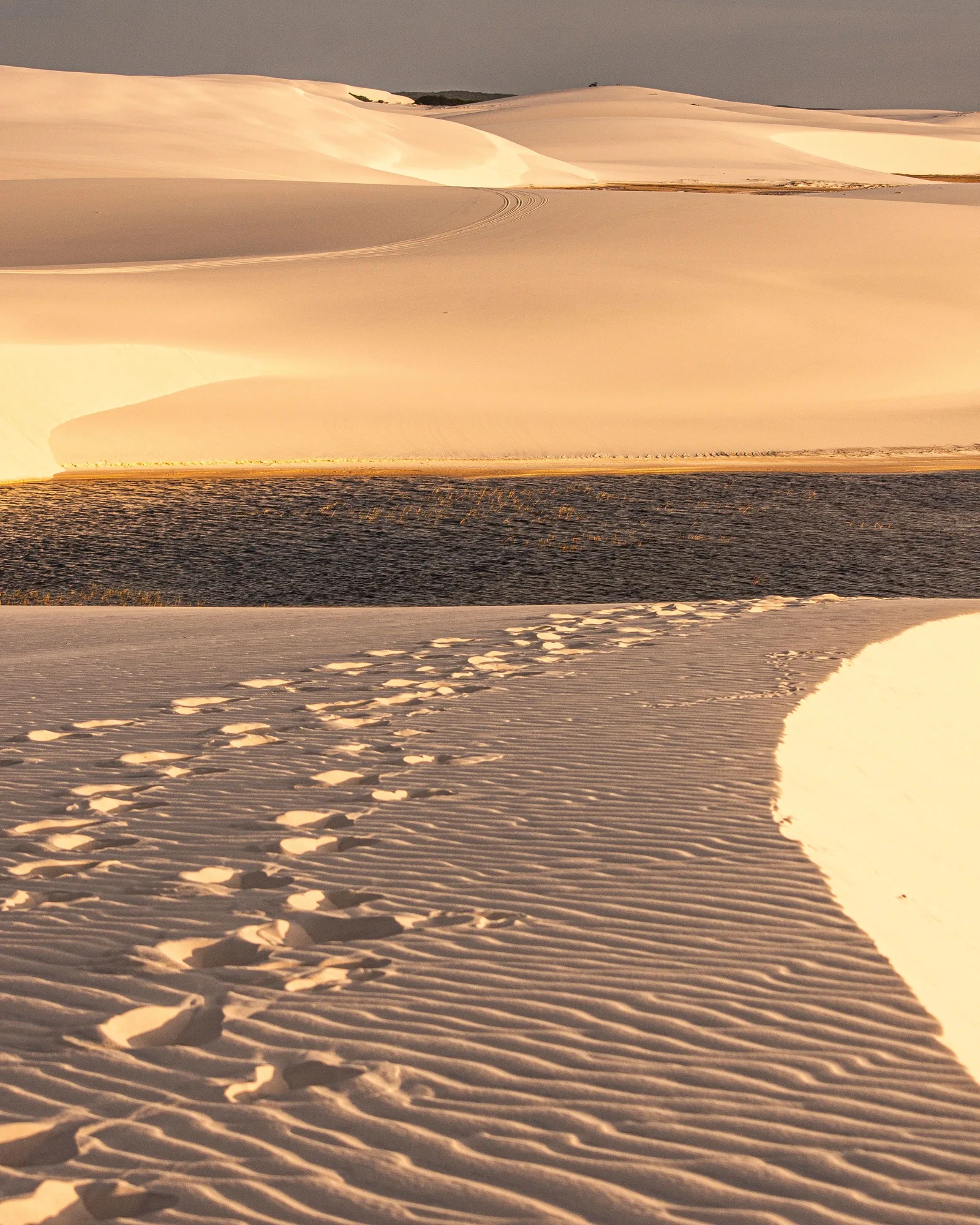
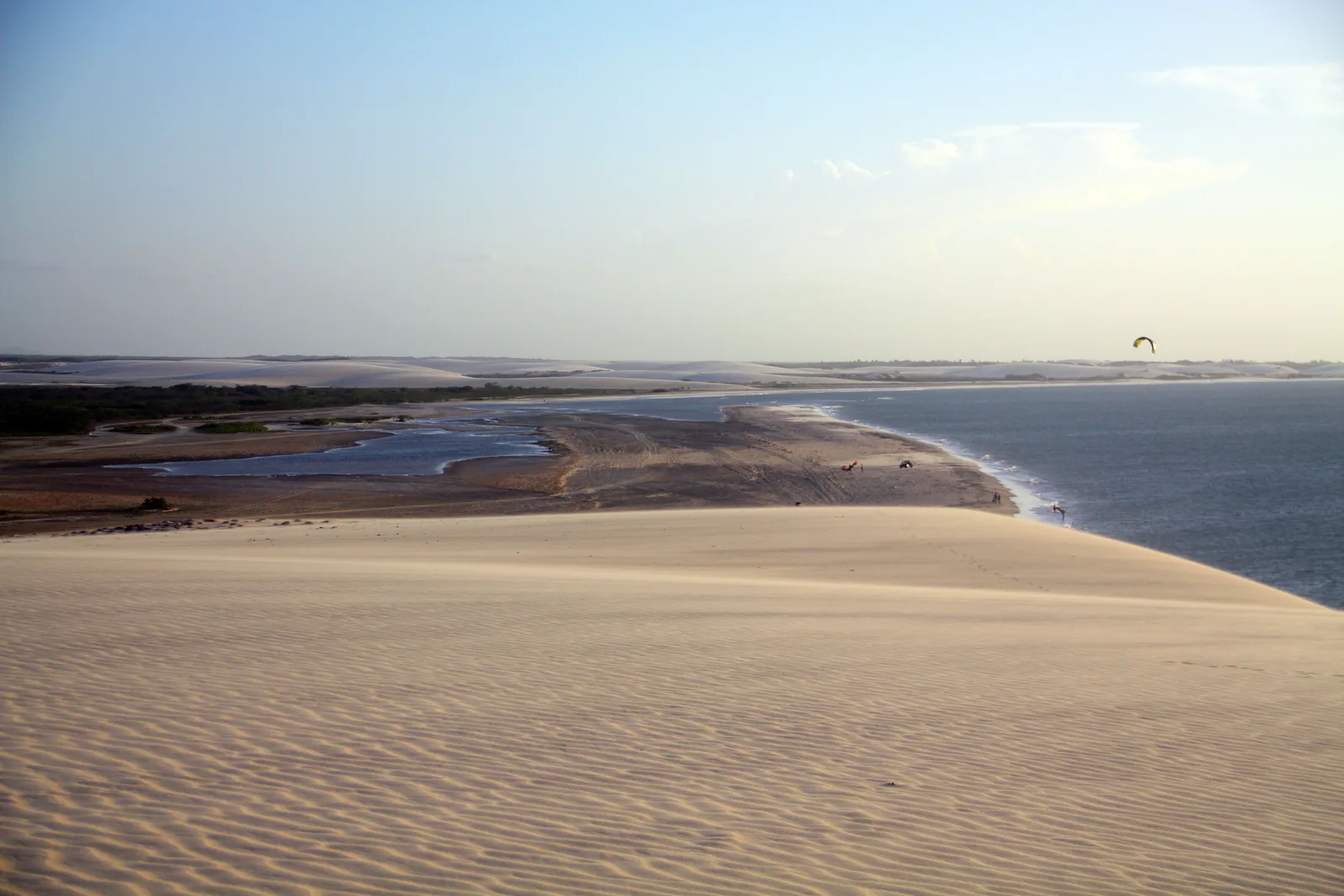
  • The slope of a pale dune running down to a strip of shallow water and the open sea, with one kite flying high above the far shore
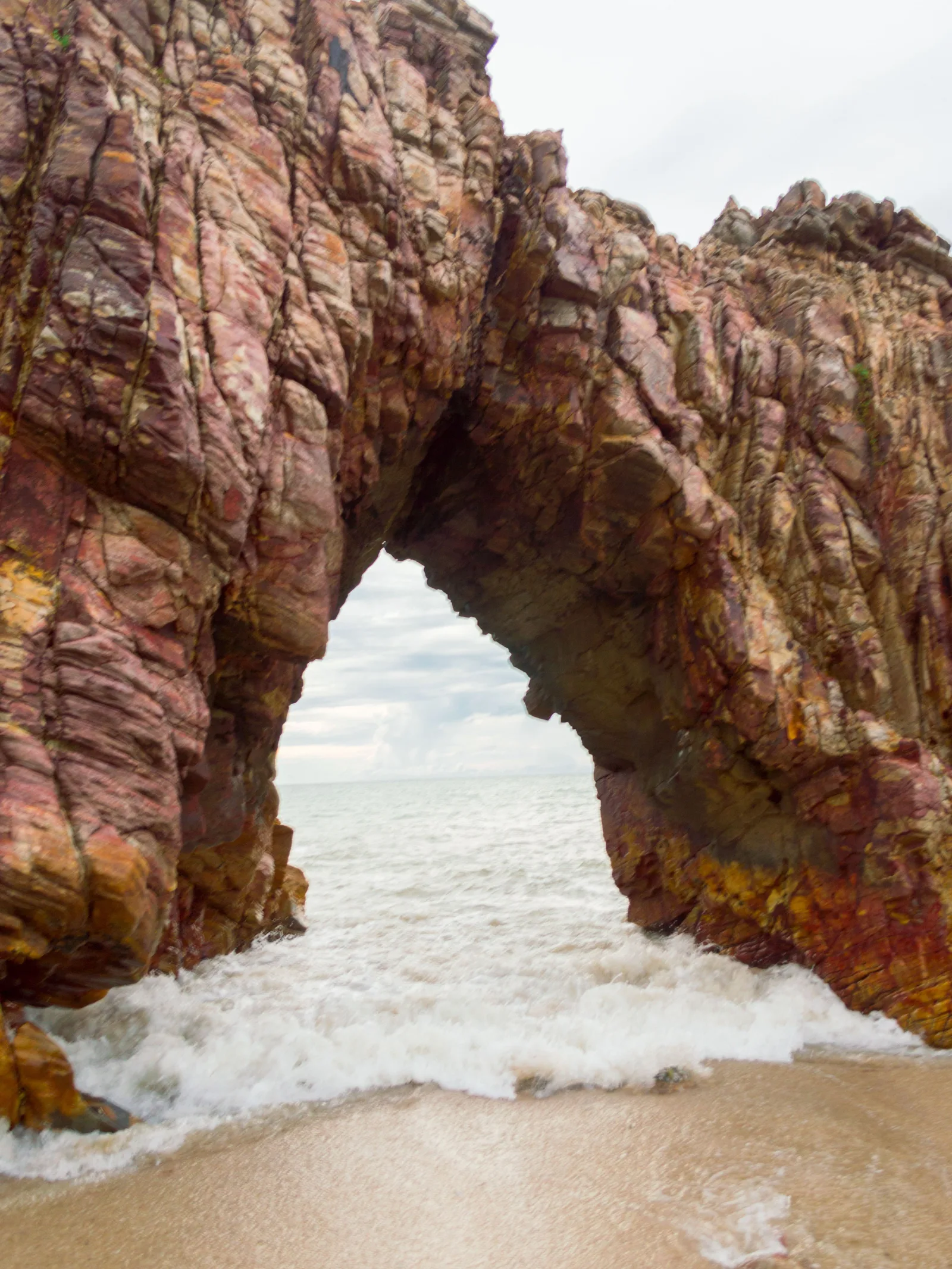
  • The Pedra Furada arch photographed from directly underneath: banded orange rock framing a bright rectangle of sea and sky
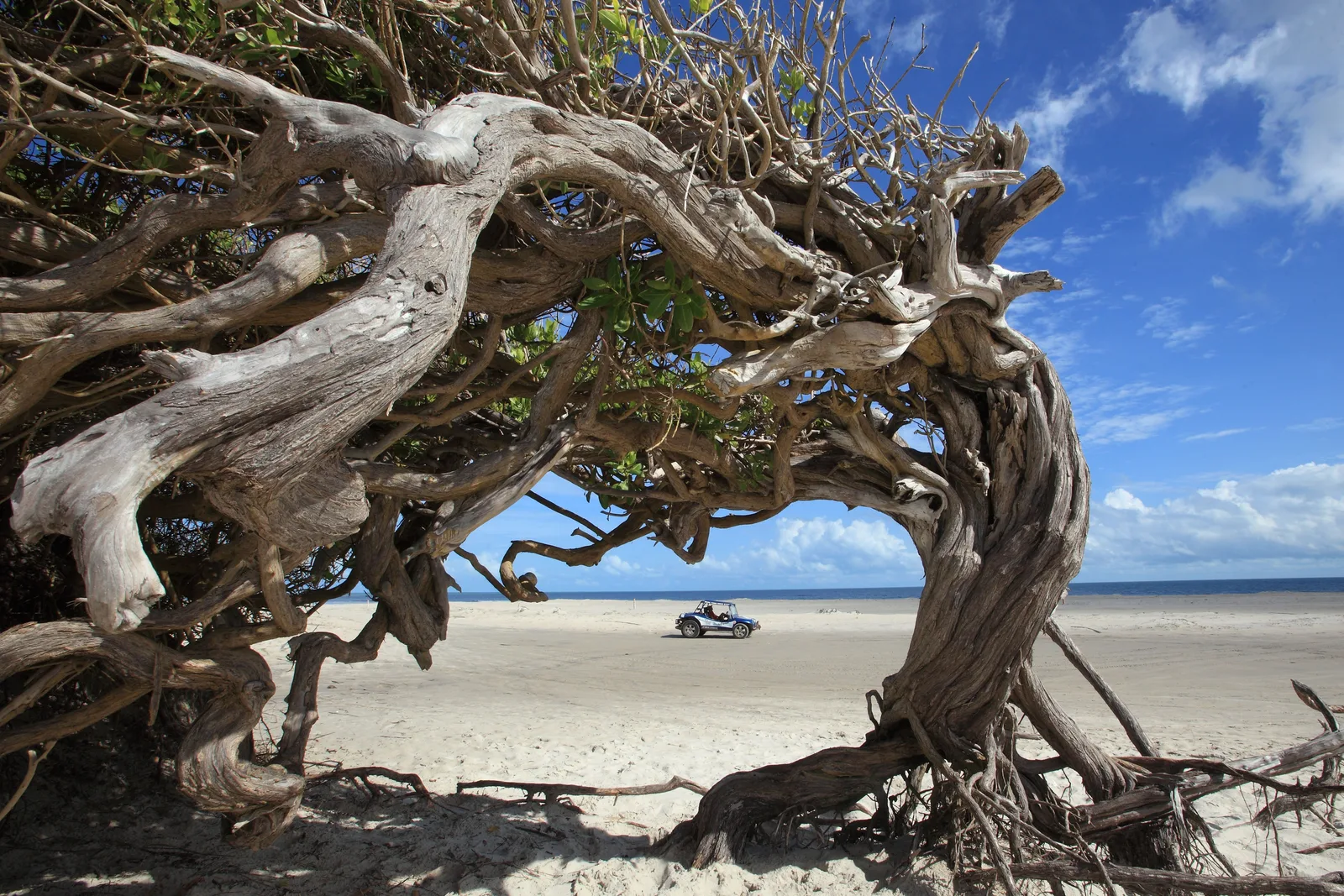
  • The bared roots and trunk of the Árvore da Preguiça twisting across white sand, with the beach and a distant buggy visible through the gap
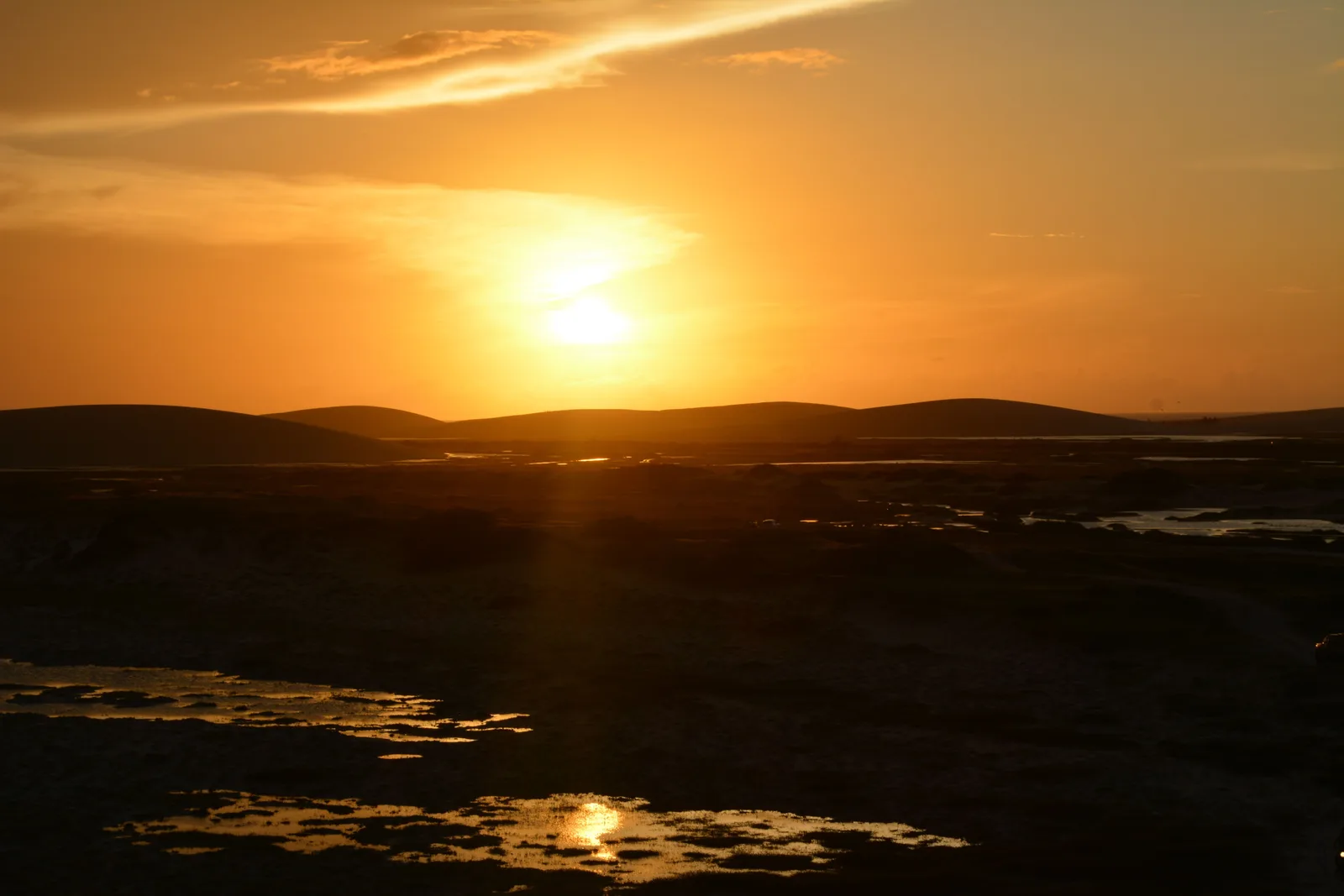
  • The sun setting behind a low dune ridge at Jericoacoara, the light spread flat across wet sand in the foreground
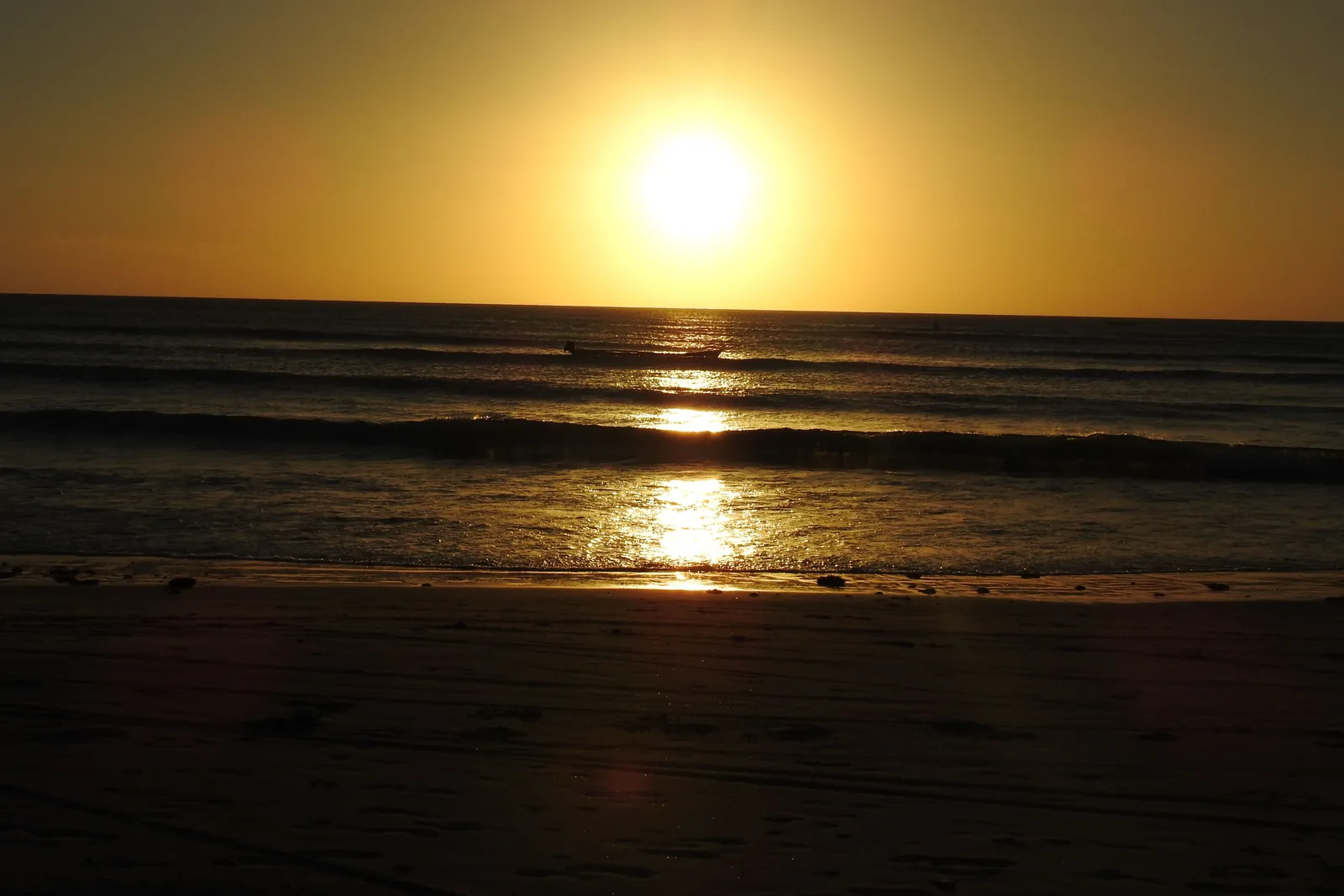
  • A gold path of low sunlight running across the sea toward the shore at Jericoacoara under a clear sky
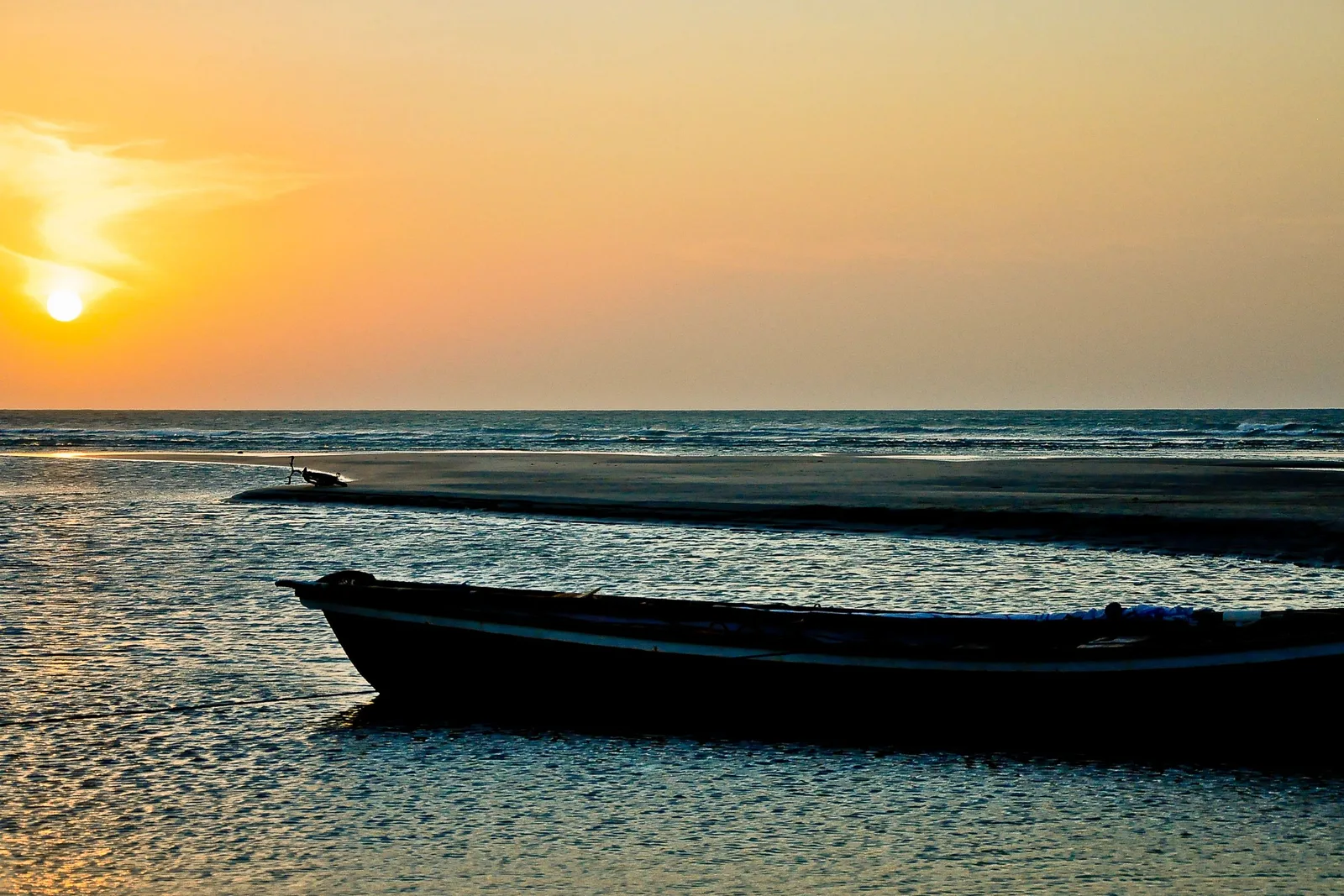
  • A wooden fishing boat drawn up on a wet sand flat at sunset, its hull dark against the reflected light
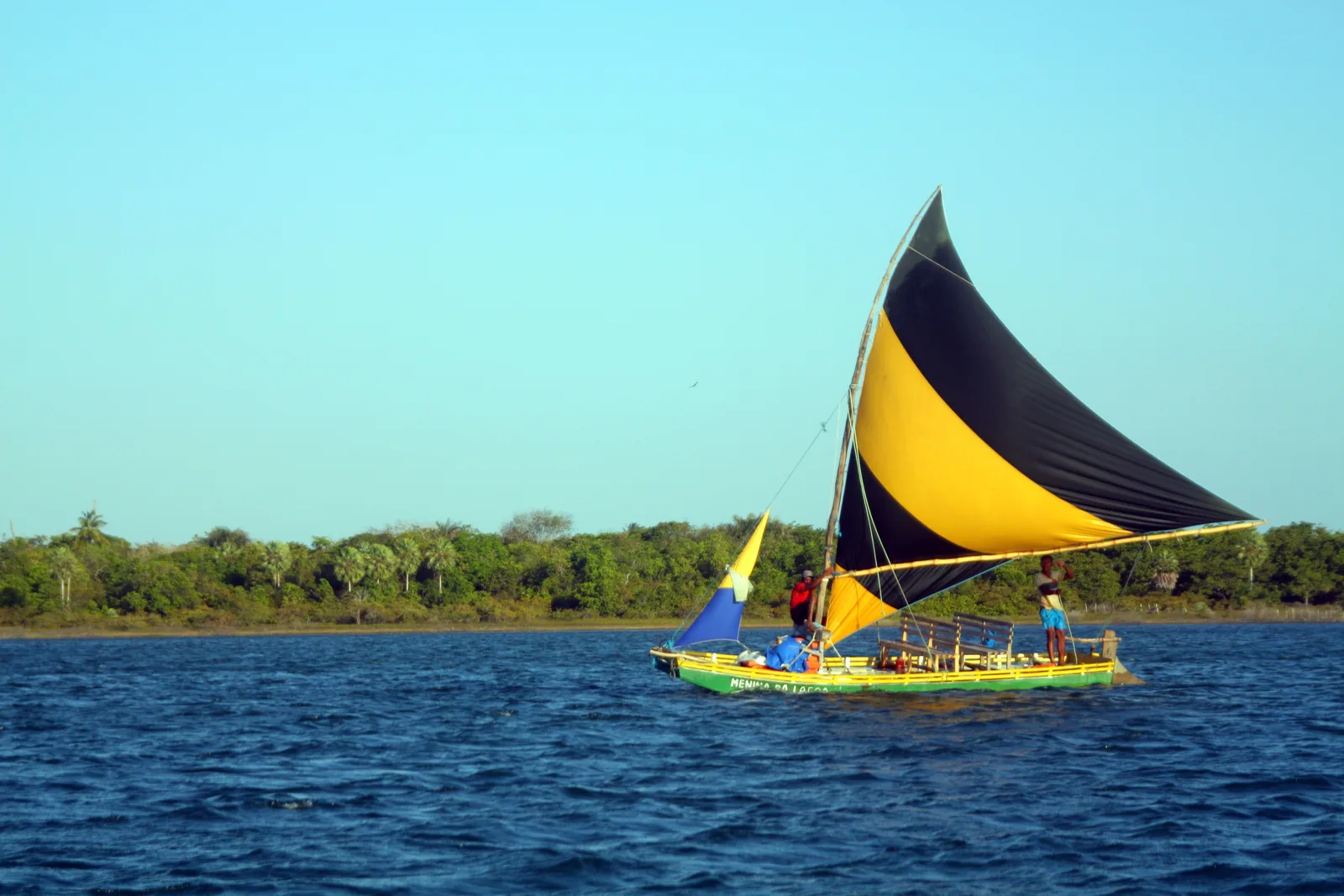
  • A jangada with a yellow and black sail crossing deep blue lagoon water in front of a low green shore
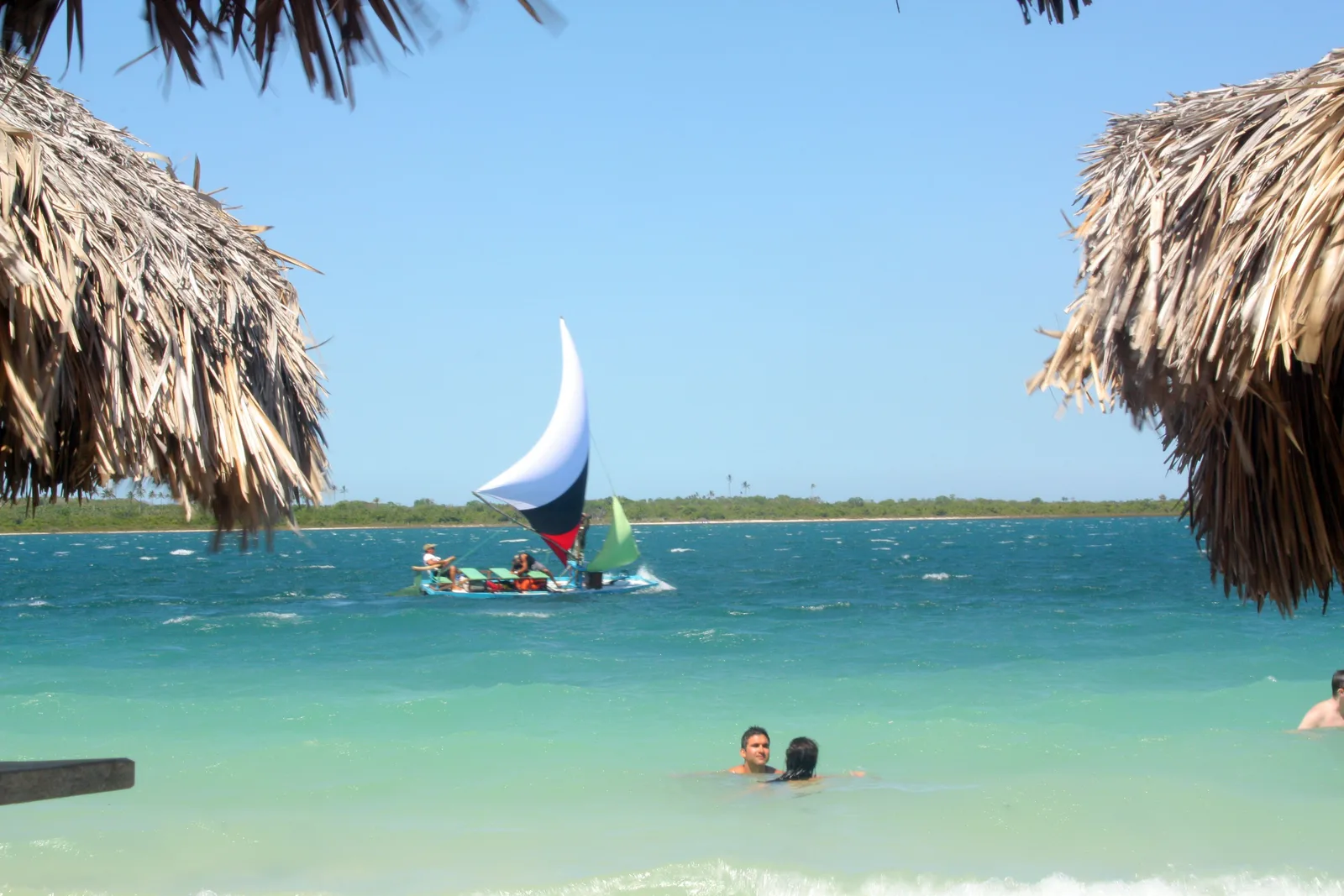
  • A small sailing boat on turquoise lagoon water seen between two thatched parasols, with swimmers standing in the shallows
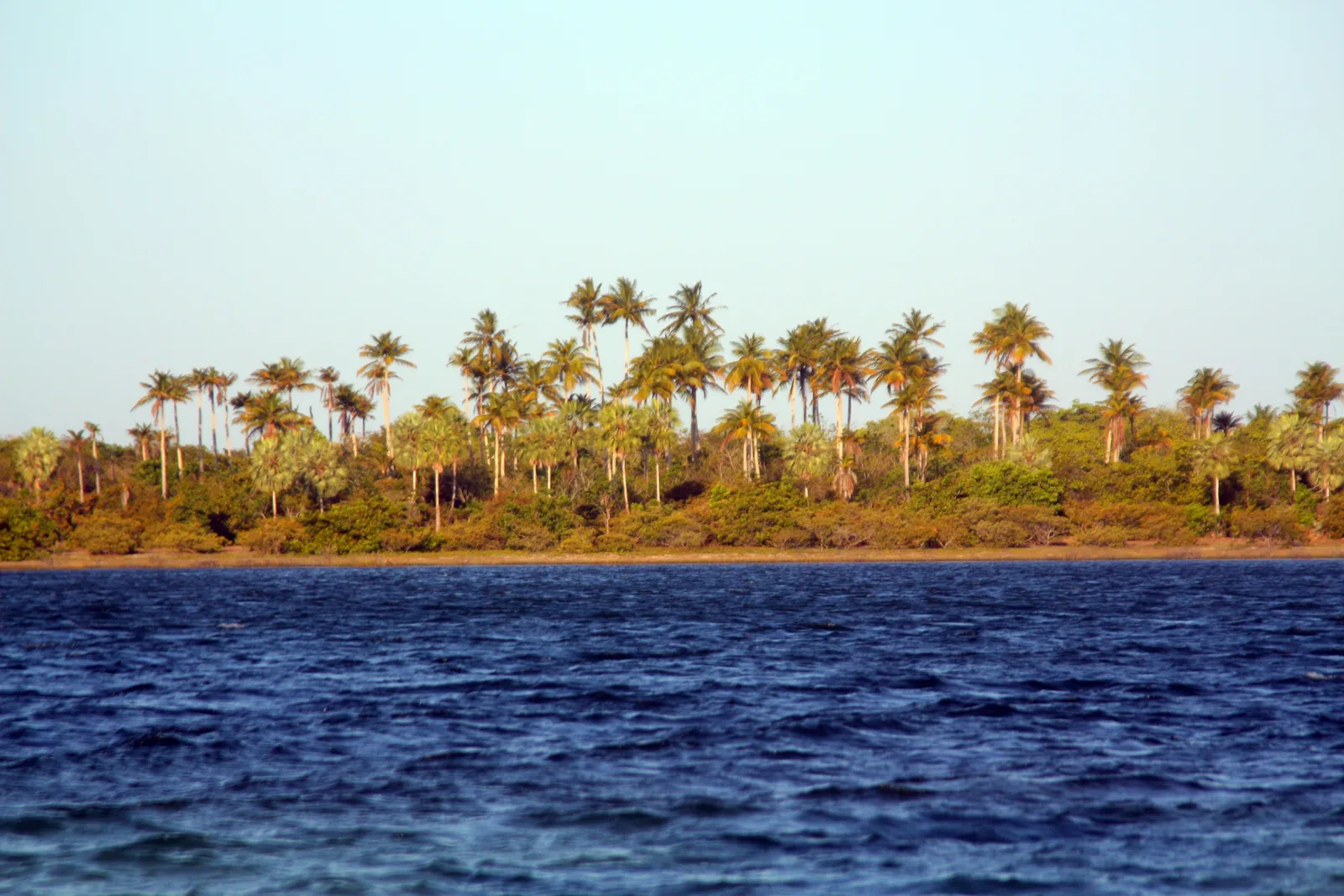
  • A dense belt of mixed palms and scrub along the far shore of a lagoon, dark blue water filling the foreground
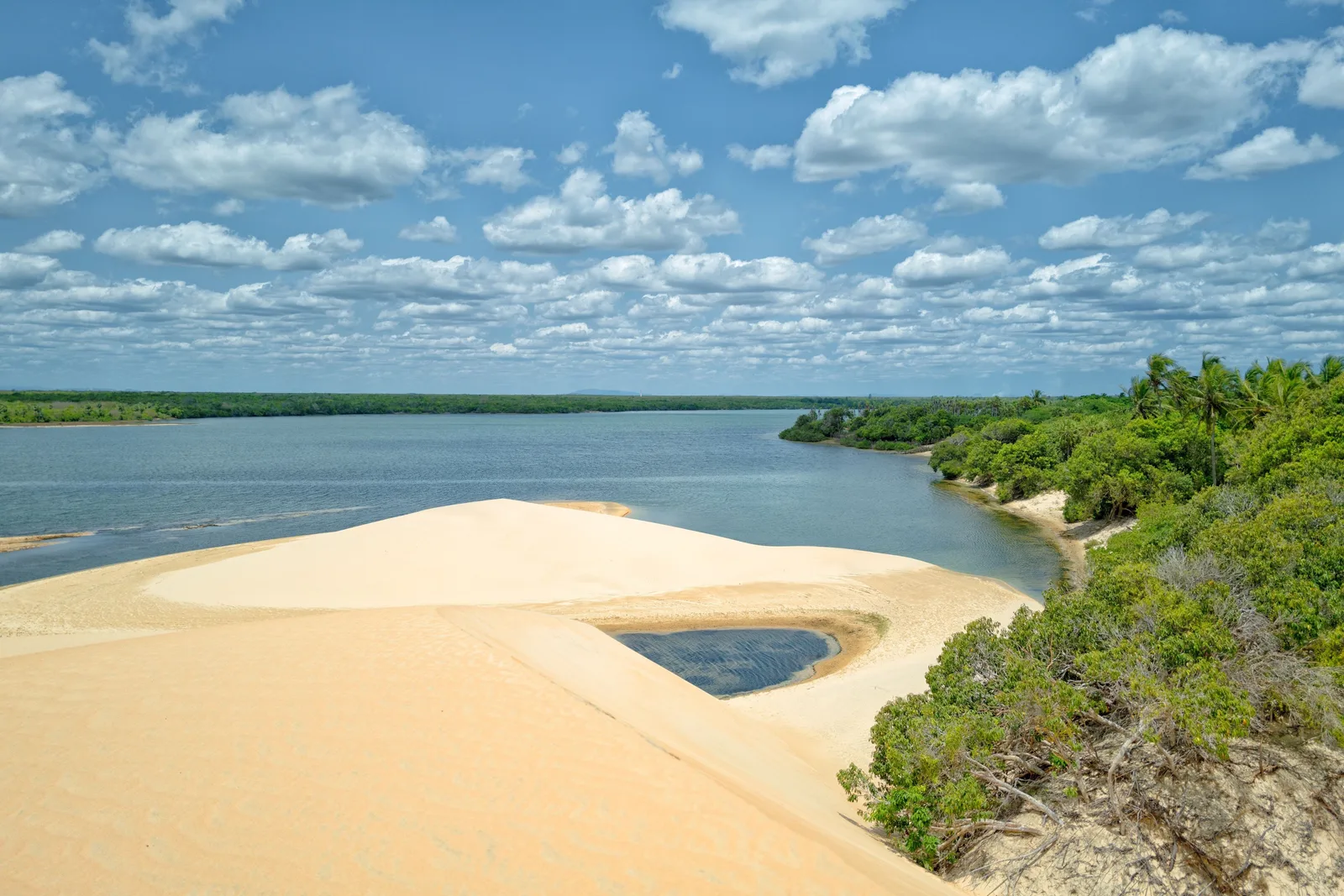
  • A curving white sandbank running out into the shallow green water of the Tatajuba lagoon, mangrove along the far bank
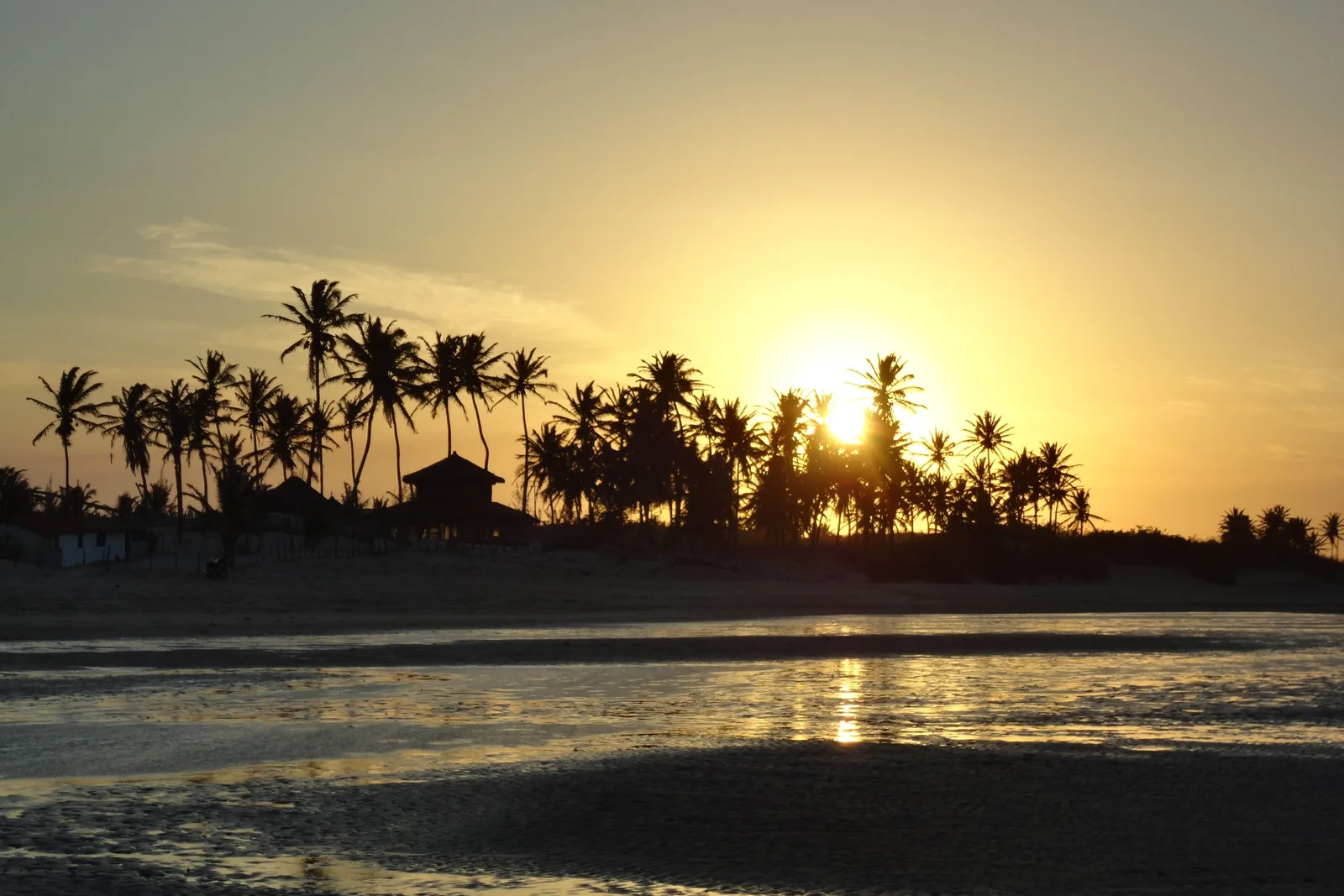
  • Sunset behind a line of coconut palms at Tatajuba, the light reflected on wet sand and shallow water in front of them
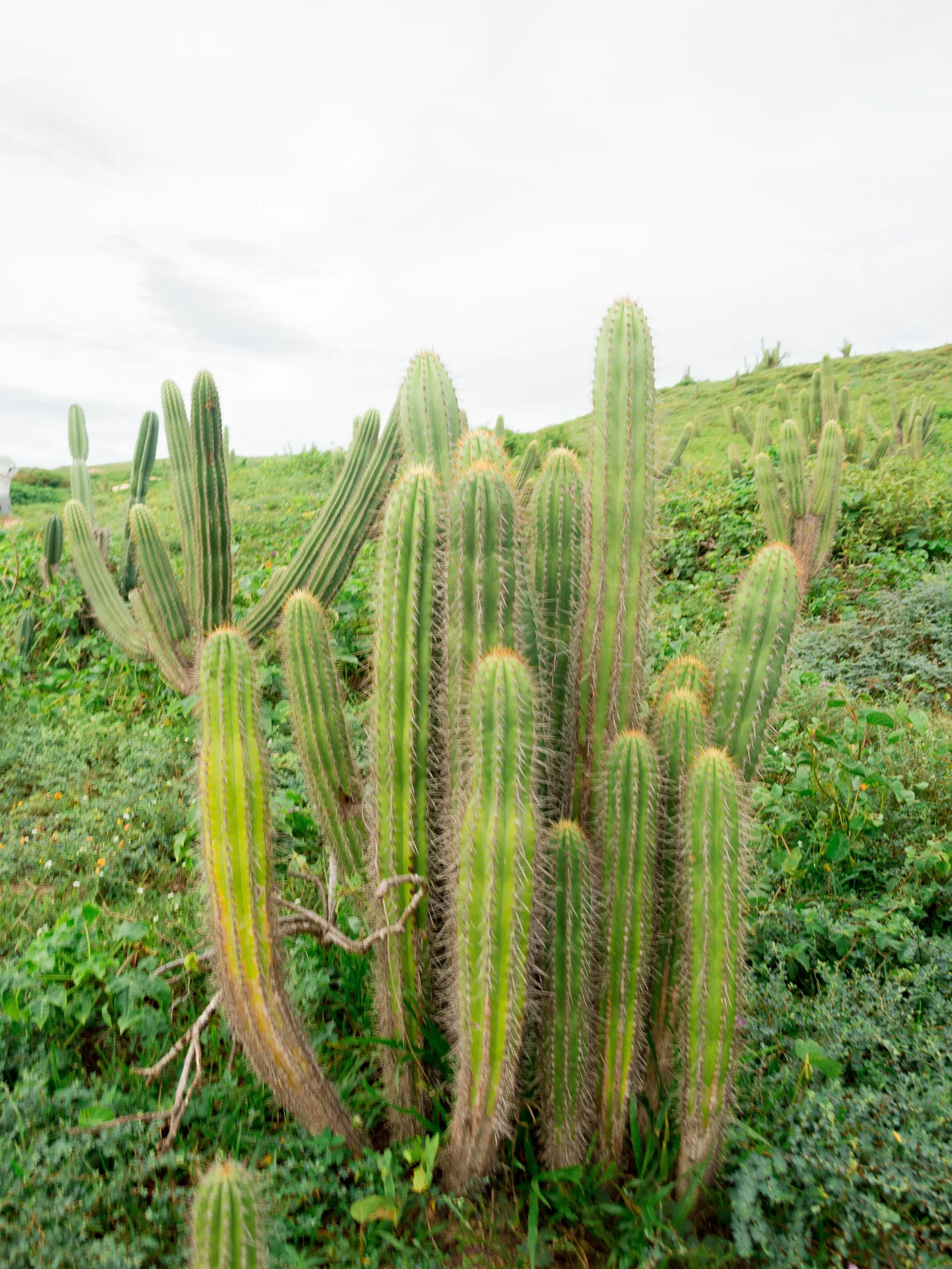
  • A stand of tall ribbed cacti growing out of low green scrub on the coastal plain behind Jericoacoara
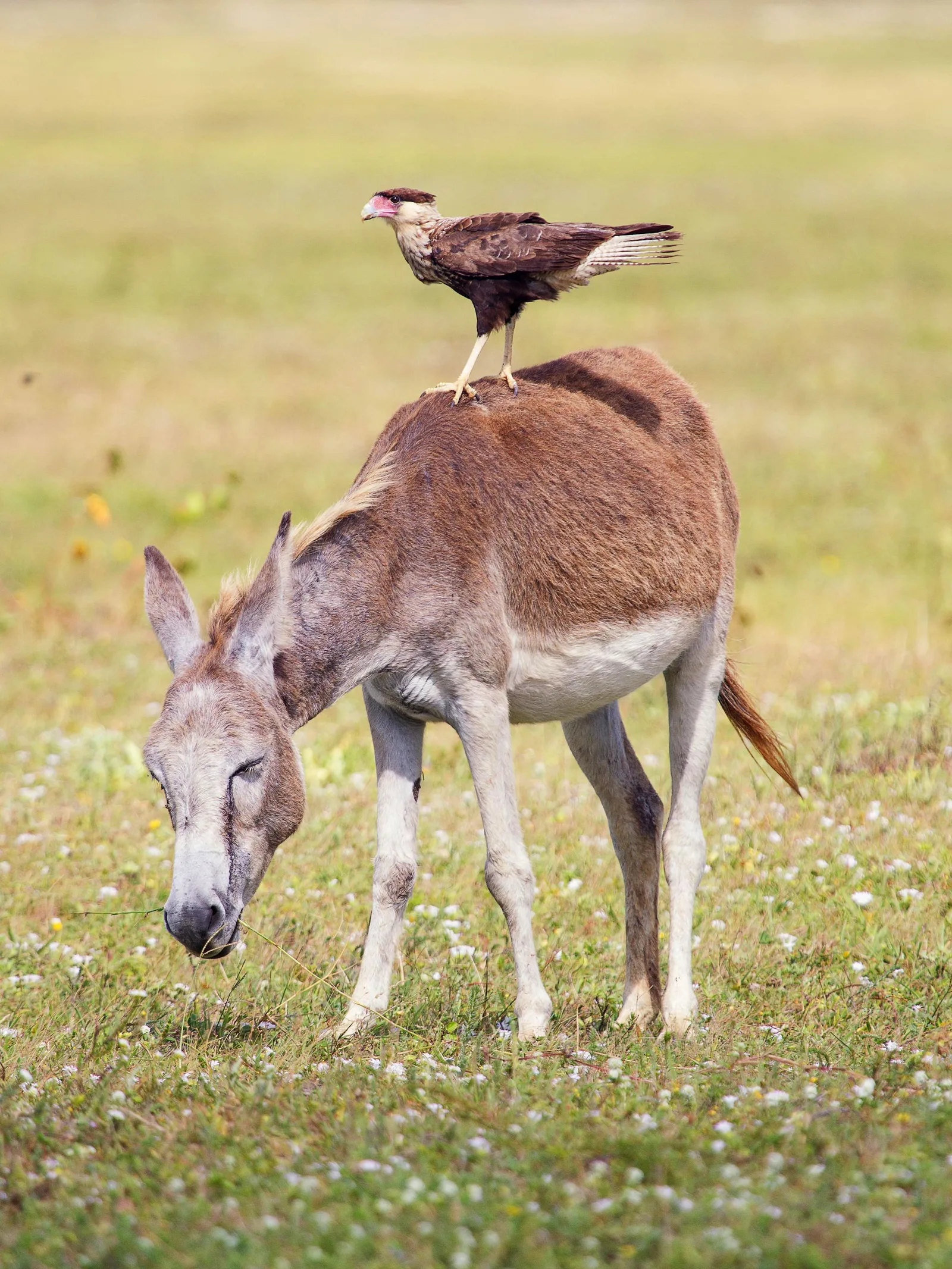
  • A donkey grazing on green grass inside Jericoacoara National Park, a small bird perched on its back
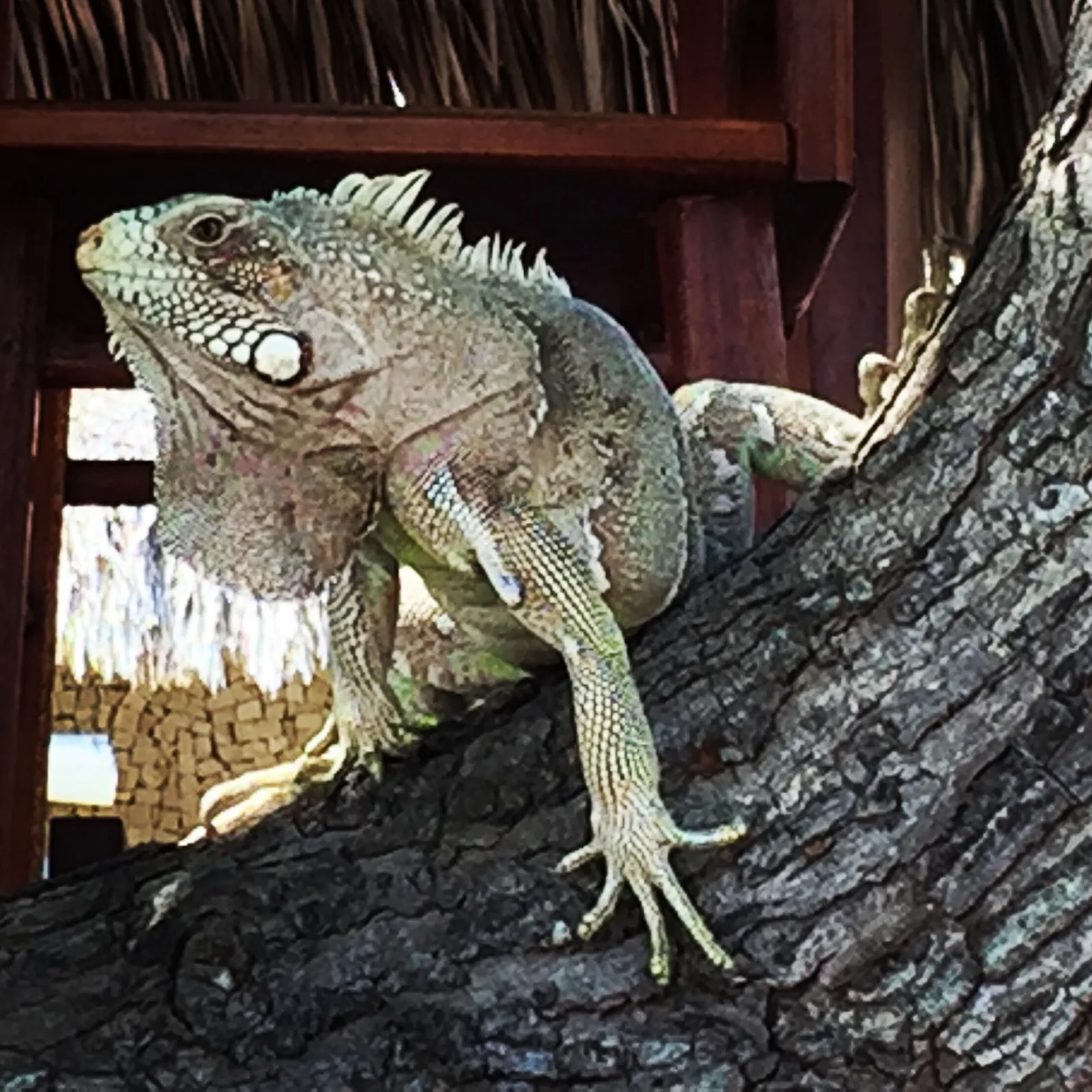
  • A large iguana resting along a rough tree branch in the shade, its head turned toward the camera

Orientation

A village you cannot drive into.

What Jericoacoara is, what it costs, and why the last stretch takes a truck.

General Info

A fishing village that ended up inside a national park

Jericoacoara is a village of roughly 2,500 people on the north coast of Ceará, and it sits inside a federal national park. The protection came first as an environmental protection area in October 1984, and Parque Nacional de Jericoacoara was created by decree on 4 February 2002; ICMBio, the federal conservation agency, now puts the park at 8,863 hectares of dunes, lagoons, mangrove and a one-kilometer strip of sea. That single fact explains almost everything a visitor notices. The streets are sand because nothing is paved. There are no street lights because there is no public lighting network: mains power reached the village only in 1998 and it runs underground, according to the Conselho Comunitário de Jericoacoara, the village’s own community council.

What it is not is undiscovered, and any guide that tells you otherwise is thirty years out of date. ICMBio’s 2025 visitation study, reported in May 2026, put Jericoacoara third among all Brazilian national parks with 1.3 million visits, behind only Tijuca in Rio and Iguaçu, and that was down from 1.5 million in 2024. In practice the village is small, the buildings are low, the rules on what can be built are tight, and the crowd concentrates at the top of one dune for forty minutes a day. It reads as quiet at 9:00am and as busy as a beach town at 6:00pm.

The other thing to understand before you book is that Jericoacoara is a base, not a stop. Most of what people come for is 10 to 40 kilometers away over sand: freshwater lagoons east of the village, a river mouth and a mangrove west of it, and the flat-water kite spots at both ends. You do not drive to any of it yourself. You take a buggy or a 4x4 with a driver, and you build the day around which direction you are going.

Where It Is

Three degrees off the equator, at the end of a sand road

Jericoacoara sits on the north-facing coast of Ceará, about 300 km northwest of Fortaleza. The municipality is Jijoca de Jericoacoara, which had 25,555 people at the 2022 census across 202 square kilometers. The nearest airport is Comandante Ariston Pessoa Regional, in the neighboring municipality of Cruz, 31 km away by road. West of the village the coast runs on through Guriú and Tatajuba toward Camocim and the Piauí border.

Jericoacoara Jericoacoara

2.80° S, 40.51° W

See the Northeast on the interactive map

Cost

One official fee, and a lot of buggies

Jericoacoara is not the cheapest place on the Ceará coast, because everything arrives by 4x4 over sand and that shows up on every bill. What it is not is expensive by American standards. The three numbers that shape a budget here are the room, the tours, and the transfer in and out, and only one charge on this page is an official published figure: the municipal tourism tax.

Estimated daily budget, per person

Budget

$60 / day

A simple pousada on a back street, meals at the cheaper end of the main street, and shared buggy tours with a group.

Mid-range

$120 / day

A good pousada with a pool, dinner out most nights, and a private buggy for two of the days.

Comfortable

$250 / day

The better rooms near the beach or at Preá, private transfers at both ends, and a driver on call for the whole stay.

Per person per day once you are in Jericoacoara, and flights are not in it. Two people sharing a room land well under double one person’s cost, because the buggy is priced per vehicle.

What things cost

  • Municipal tourism tax, per person, valid 10 days $8.14 R$41.50
  • Each extra day beyond the tenth $0.81 R$4.15
  • Good mid-range pousada, double room, per night $78 R$400
  • Simple pousada, double room, per night $39 R$200
  • Shared buggy tour, per person $24 R$120
  • Private buggy for the day, per vehicle $98 R$500
  • 4x4 jardineira, Jijoca to the village, per person $6 R$30
  • Bus, Fortaleza to Jericoacoara, one way $24 R$120
  • Private transfer, Fortaleza to the village, per vehicle $78 R$400
  • Lunch at a simple restaurant, per person $9 R$45
  • Dinner for two on the main street $39 R$200
  • Sandboard down a dune $4 R$20
  • São Paulo to Jericoacoara, round trip $190 R$970

Only the first two rows are official. The Taxa de Turismo Sustentável is R$41.50 per person for ten days and R$4.15 for each day after that, and the Prefeitura de Jijoca de Jericoacoara publishes those figures itself. It is collected at a post on the way in and can be paid in advance on the town hall’s website. Everything else on this list is an estimate drawn from Brazilian travel media and should be treated as the shape of a budget rather than a quote.

There is currently no national park entry ticket. ICMBio granted the park’s visitor services to a concessionaire, Urbia Cataratas Jericoacoara, which announced an access charge; a federal court suspended it, and the Second Panel of the TRF5 upheld that suspension on 9 December 2025, holding that simple access to the village cannot be charged and that only the park’s specific attractions may be. That is a live case. Check it against the date you travel.

Buggies are priced per vehicle and take four passengers, so a couple pays roughly the same as a family of four. Joining a shared tour is much cheaper and much less flexible, and flexibility is worth more here than usual, because the wind and the light both move the good hours around.

Cards work in the village and Pix works everywhere. Carry some cash anyway: several of the beach kiosks on the buggy routes are a long way from a card machine.

Checked September 2026 and converted at R$5.10 to the dollar. Only the municipal tourism tax is a published official figure; the rest are estimates, not quotes.

Safety

A small village where the hazards are mostly natural

8 /10

Our rating: a village with no through traffic and no urban crime geography, where the real risks are the water, the buggies and a long way to a hospital.

Ceará recorded 31.7 intentional violent deaths per 100,000 people in 2025, against a Brazilian average of 19.1, on the figures in the Fórum Brasileiro de Segurança Pública’s 20th yearbook. That is a state-level number and it describes cities, not this village. Jericoacoara has around 2,500 residents, one road in, no private cars circulating, and an economy that is tourism from end to end. What visitors actually report is theft: a phone left on a towel, a bag left outside a bar. The things more likely to hurt you are the sun, the water at Malhada and the buggy you are riding in.

  • The streets are sand and unlit. Bring a headlamp or use your phone, watch your footing between the square and your pousada, and walk back with other people rather than alone at 2:00am. This is the single most practical safety point on the page.
  • Take to the beach only what you can carry into the water. The main beach empties of watchers whenever the wind comes up and everybody goes out on the water at once.
  • Praia da Malhada is rocky, has real surf and is not a swimming beach. The main beach in front of the village is the one to swim off, and even there the wind pushes you down the shore faster than you expect.
  • The UV index runs at 9 to 11 every month of the year on the CAMS model for this spot, and there is no natural shade on a dune. Rash guard, hat, and reapply. Kitesurfers burn worse than anyone because they are out for four hours.
  • Buggy and 4x4 drivers here are licensed by the municipality and drive fast on soft sand. Ask for the seatbelt, and say something if you are not comfortable. Vehicles are banned from the fixed and mobile dunes themselves under ICMBio’s rules, so a driver who takes you up one is breaking the park’s rules, not showing you a secret.
  • There is no hospital in the village, but there is a 24-hour UPA on Rua dos Coqueiros beside the entrance parking, with nine beds, X-ray and an electrocardiogram, open since 2016 and built to serve visitors as well as residents (Secretaria da Saude do Ceara). The nearest full hospital is hours away in Sobral, so travel insurance is not optional here, and neither is bringing your own prescription medicines.
  • Fires are prohibited inside the park, which includes the beach. So is taking wildlife. Both are ICMBio rules, not local custom.

Getting There

Fly to Fortaleza, then four hours and a truck

Jericoacoara is about 300 km from Fortaleza and the last stretch is not a road. However you come, the trip ends the same way: a 4x4 over sand, and everybody on it is having the same experience.

  • The usual route is a flight into Fortaleza (FOR) and a road transfer of four and a half to five hours. Around 280 km of that is paved highway to the town of Jijoca de Jericoacoara, and the last stretch to the village is sand. Shared vans, scheduled buses and private cars all run it daily.
  • The village has its own airport, but it is not in the village. Comandante Ariston Pessoa Regional (JJD, ICAO SBJE) opened on 24 June 2017 in the neighboring municipality of Cruz, 31 km away by road, with a 2,200-meter runway, and it handled 221,818 passengers in 2024. Gol and LATAM fly it from São Paulo–Guarulhos and Azul from Belo Horizonte–Confins. There is no service from outside Brazil, so every American arriving this way connects at least once.
  • From the airport you still need ground transport, and it is roughly 45 minutes, the last part of it over sand. Book it with your pousada before you fly rather than negotiating it at the terminal.
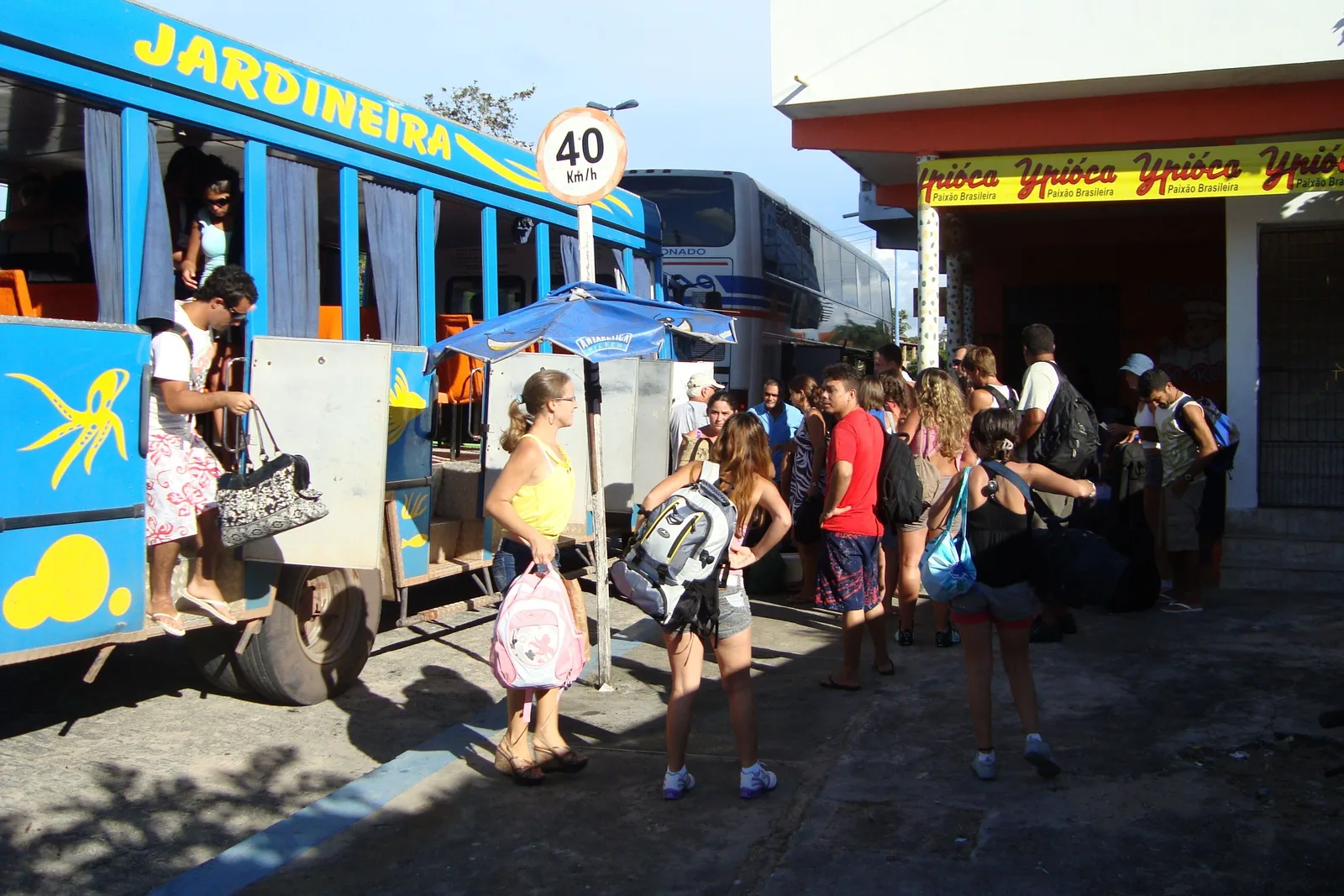
  • You cannot drive your own car into the village. Private vehicle circulation inside Jericoacoara is restricted and cars are left in authorized parking at the entrance. If you have driven yourself, the practical answer is to leave the car in Jijoca and take a jardineira, the open 4x4 truck with bench seats in the back, for the last 20 kilometers, about half of it on sand inside the park and 40 to 50 minutes of it. It costs a few dollars and it drops you at your door.
  • The jardineiras are also the only sensible way to arrive with luggage. Big hard cases are awkward on soft sand and there is no porter waiting; a soft bag you can carry across a hundred meters of sand is worth more here than a good suitcase.
  • If mobility is a concern, say so when you book. There is no paved surface anywhere in the village, no curb, and no step-free route from the parking area to most pousadas. Some places are a short flat walk from where the truck stops and some are not, and the difference matters more here than the star rating does.
  • Some travelers reach Jericoacoara overland from São Luís on the Rota das Emoções rather than flying in. That is a trip in its own right rather than a transfer, this page does not cover it, and our itinerary for it lives at /itineraries/rota-das-emocoes.

Getting Around

Walk the village, hire a buggy for everything else

Inside the village you walk. Outside it, you go with a driver, because the routes are sand tracks and river crossings rather than roads.

  • The village is about a kilometer end to end and every street in it is sand. From the main square to the foot of the sunset dune is a ten-minute walk. Nothing you need in the village requires a vehicle.
  • Buggies with a driver are the standard way to see everything else. They take four passengers, they are priced per vehicle, and they are booked through your pousada or from the stand in the village. A private buggy is the difference between seeing the lagoons at 9:00am with nobody there and seeing them at noon with everybody.
  • The tours split east and west and you cannot sensibly do both in one day. East is the freshwater lagoons and Praia do Preá. West is Mangue Seco, Guriú and Tatajuba, and it involves at least one raft crossing of a river.
  • A 4x4 with bench seats, the jardineira, runs the village to Jijoca route all day and is how residents move. It is cheap, it is not comfortable, and it is the honest version of arriving here.
  • Horses and horse carts operate in and around the village and are a genuine local alternative for short distances, not a novelty.
  • Motorized vehicles are banned from the fixed and mobile dunes under the park’s own rules. Buggy routes run on the beach and on established sand tracks, not up the dune faces.

What to see

Four things, and one of them is invisible.

A village with no pavement, a dune everybody climbs at the same hour, a rock arch on the beach, and the wind that made all three of them what they are.

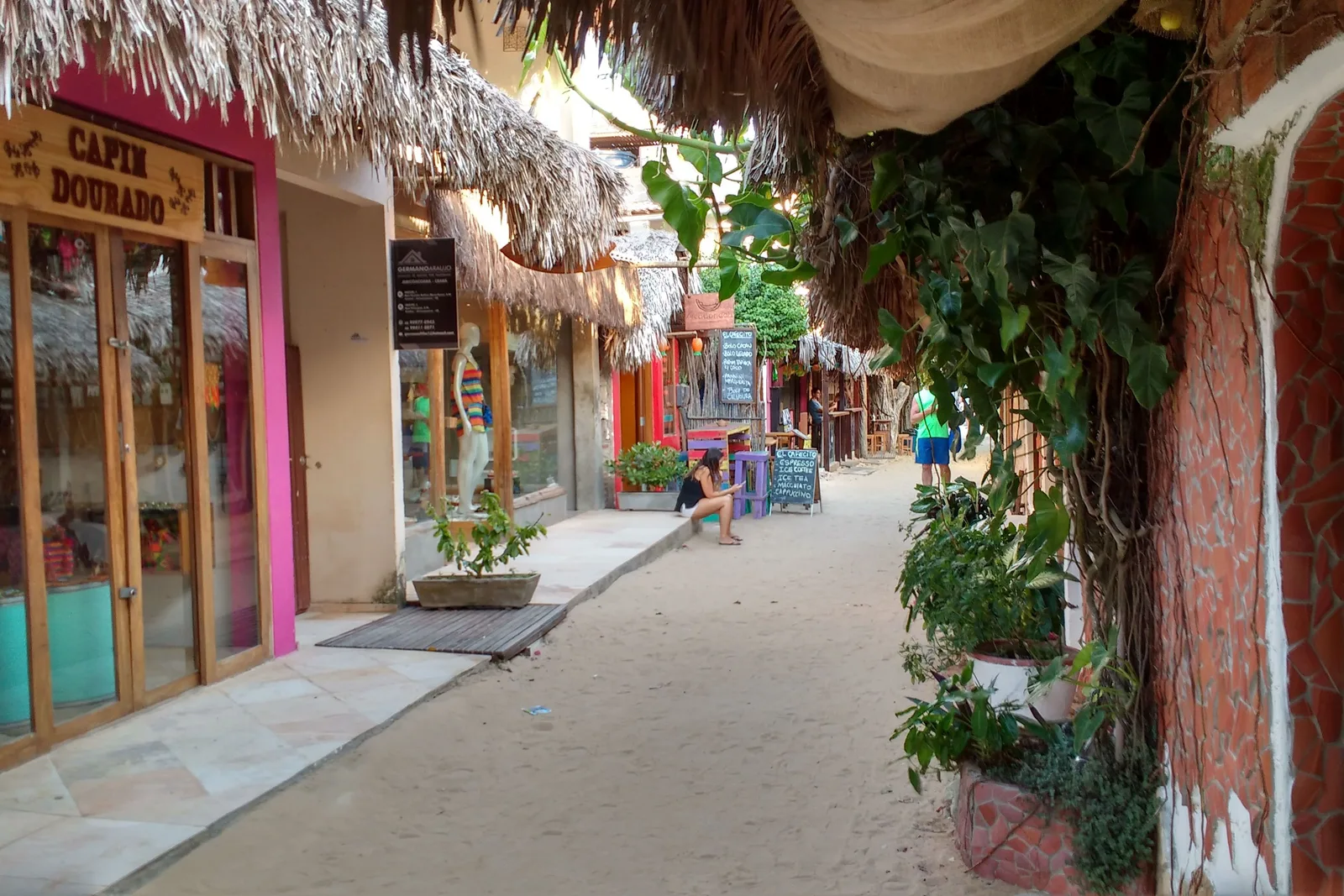
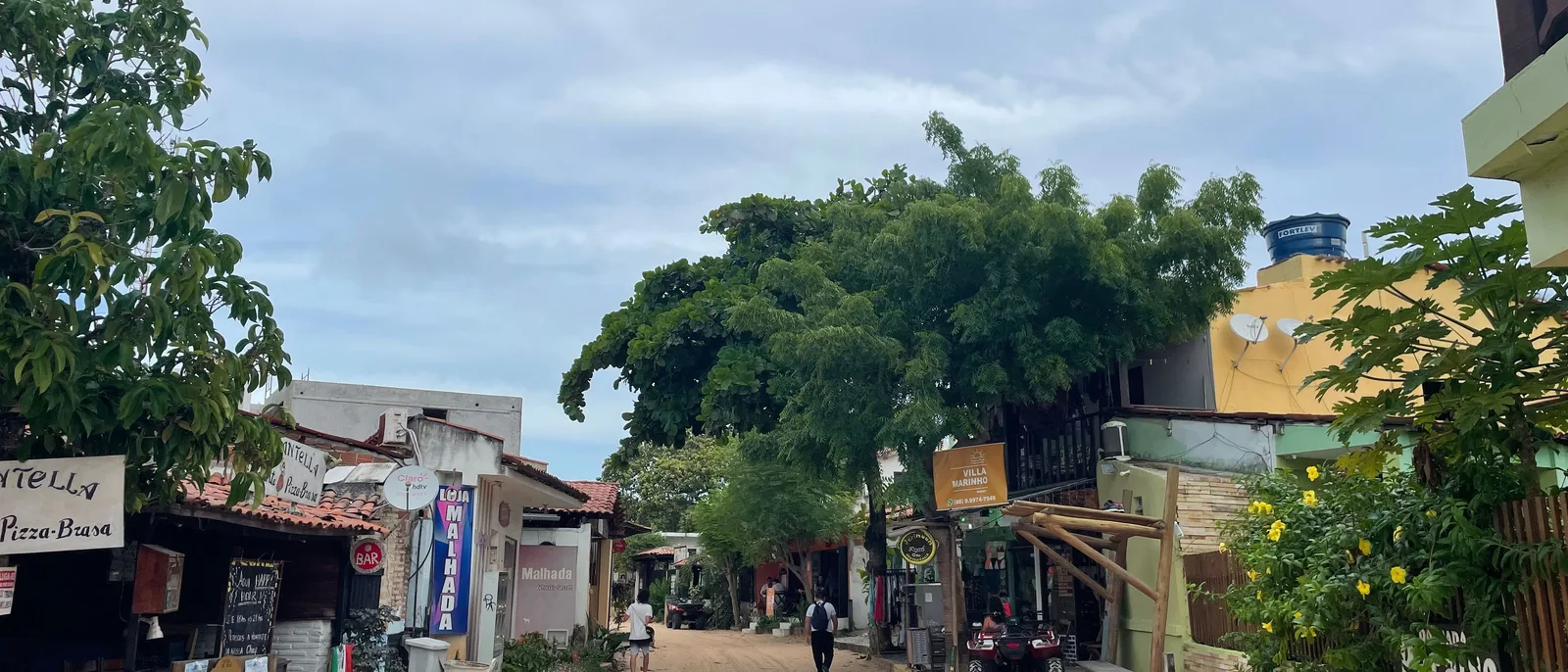
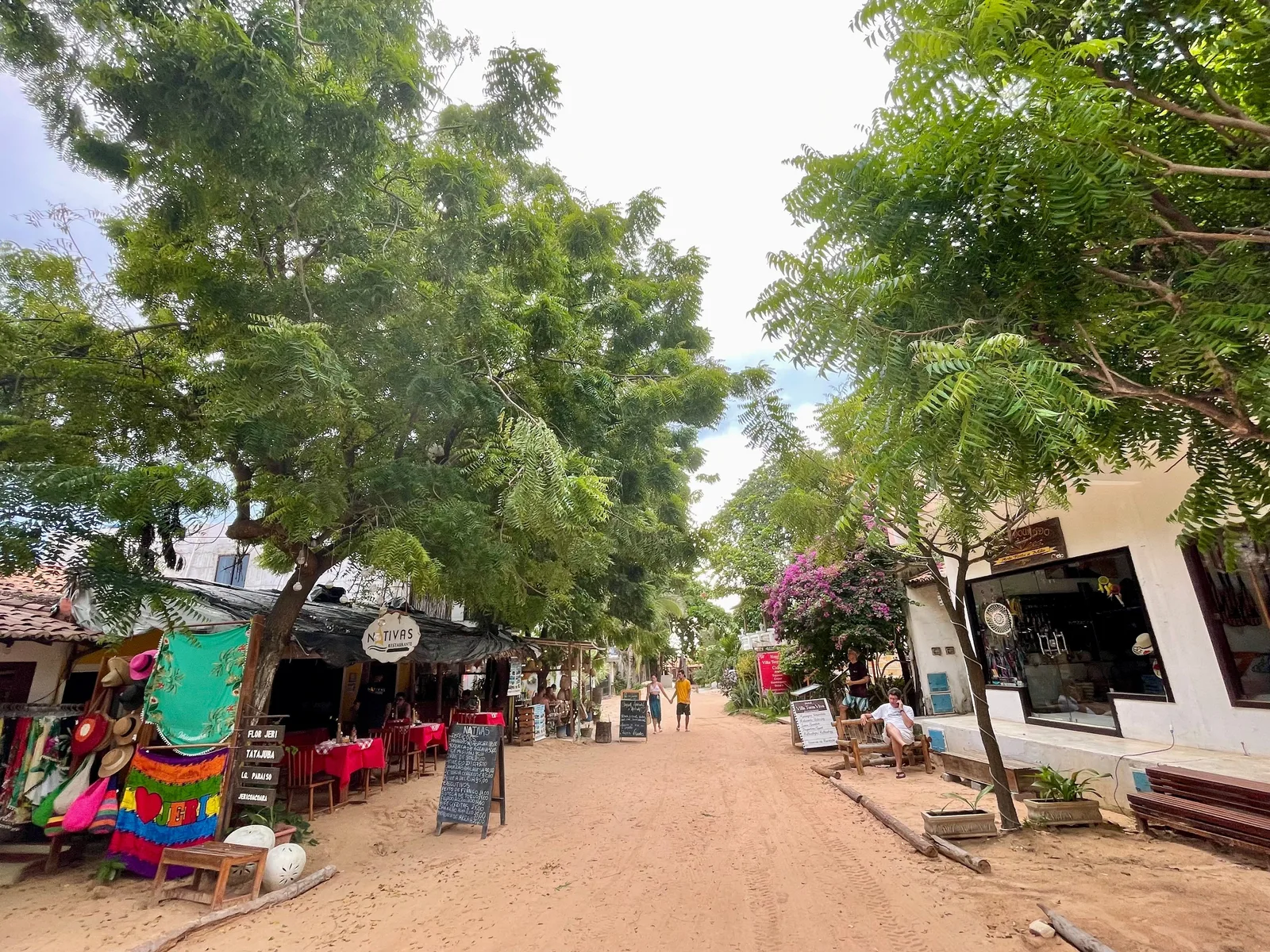
A sand street in Jericoacoara lined with low shops and restaurants under leafy trees, with awnings, a rack of brightly colored hammocks and people walking in the middle of the street 01

Sand streets, low buildings, no street lights

The village

Residents
About 2,500
Paved streets
None
Mains power
Underground, since 1998

Jericoacoara is about a kilometer long and every street in it is sand. There is no public street lighting and no lighting poles, because the electricity that arrived in 1998 was laid underground, and the Conselho Comunitário de Jericoacoara records both facts. Restaurants put candles on tables set directly on the sand. After dark you use a phone or a headlamp, and the sky over the village is genuinely dark in a way that almost nowhere on the Brazilian coast still is.

The shape of the village is simple. One commercial street runs back from the beach with restaurants, kite shops and pousadas along it. A second street is where the music is. A square near the beach is where the boats sit and where the buggies gather in the morning. Everything else is small streets of low buildings behind them, and the dune closes the western end. Private cars do not circulate inside it, which is why it sounds like a village rather than a resort.
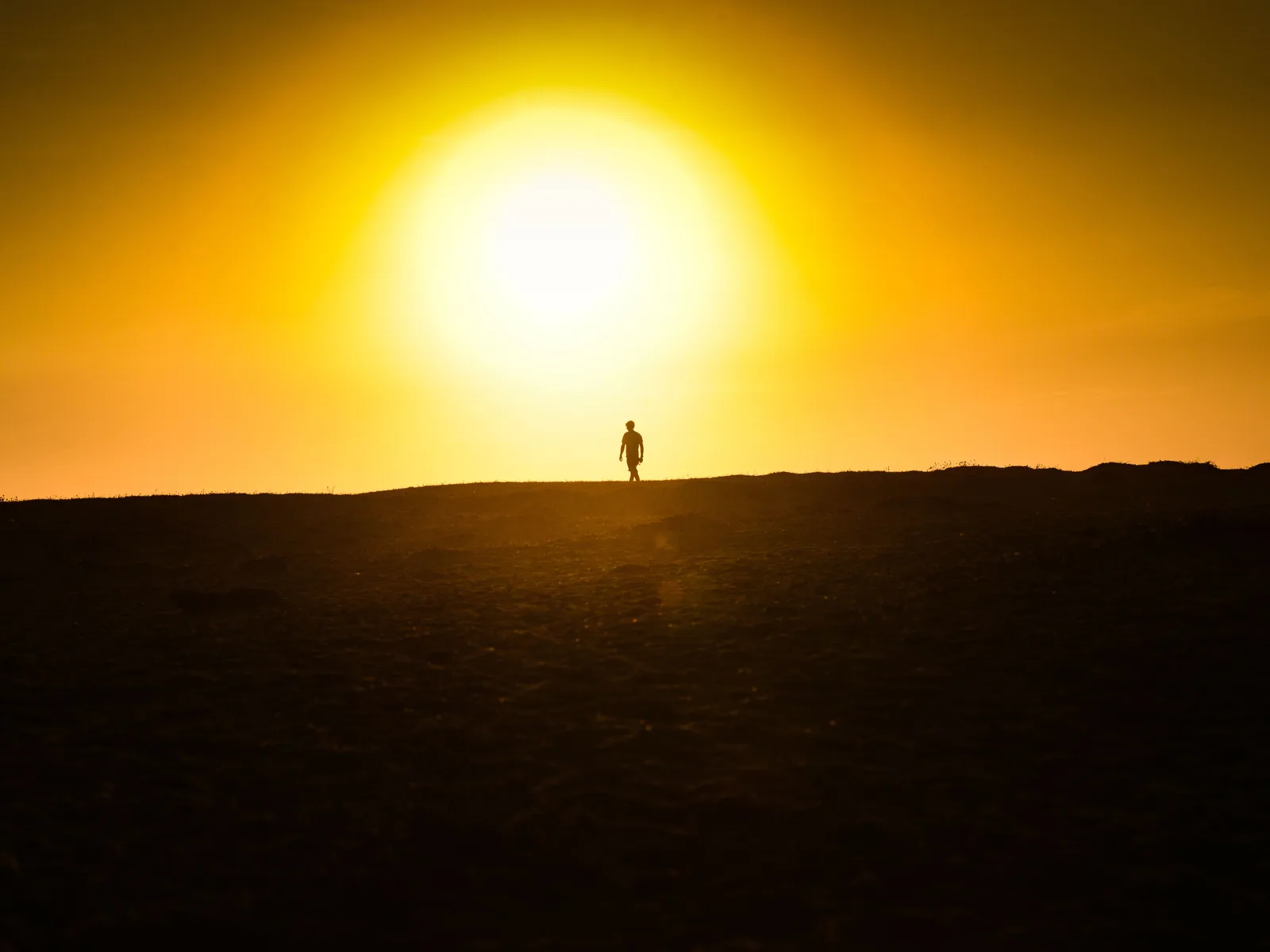
A single figure walking along the dark crest of a dune in silhouette, with a large low sun burning through haze above the horizon behind them 02

The whole village walks up it at the same hour

The Duna do Pôr do Sol

From the square
About a ten-minute walk
When
Roughly 45 minutes before sunset
Cost
Nothing

At the western edge of the village a large mobile dune rises straight off the beach, and every evening most of the people in Jericoacoara walk up it. They sit along the crest, facing west over the sea, and wait. Vendors carry cold drinks up the slope. Capoeira circles form on the flat sand at the top. When the sun goes down people applaud, and then everybody walks back down in the half-light and the restaurants fill up.

It is the most photographed thing here and it costs nothing, and the honest thing to say about it is that the ritual is better than the view. What you are watching is a flat ocean horizon. What makes it worth doing every night of your stay is the crowd, the light on the sand behind you, and the fact that a village with no street lights goes dark about twenty minutes later. Go up early enough to walk the ridge before you sit down.

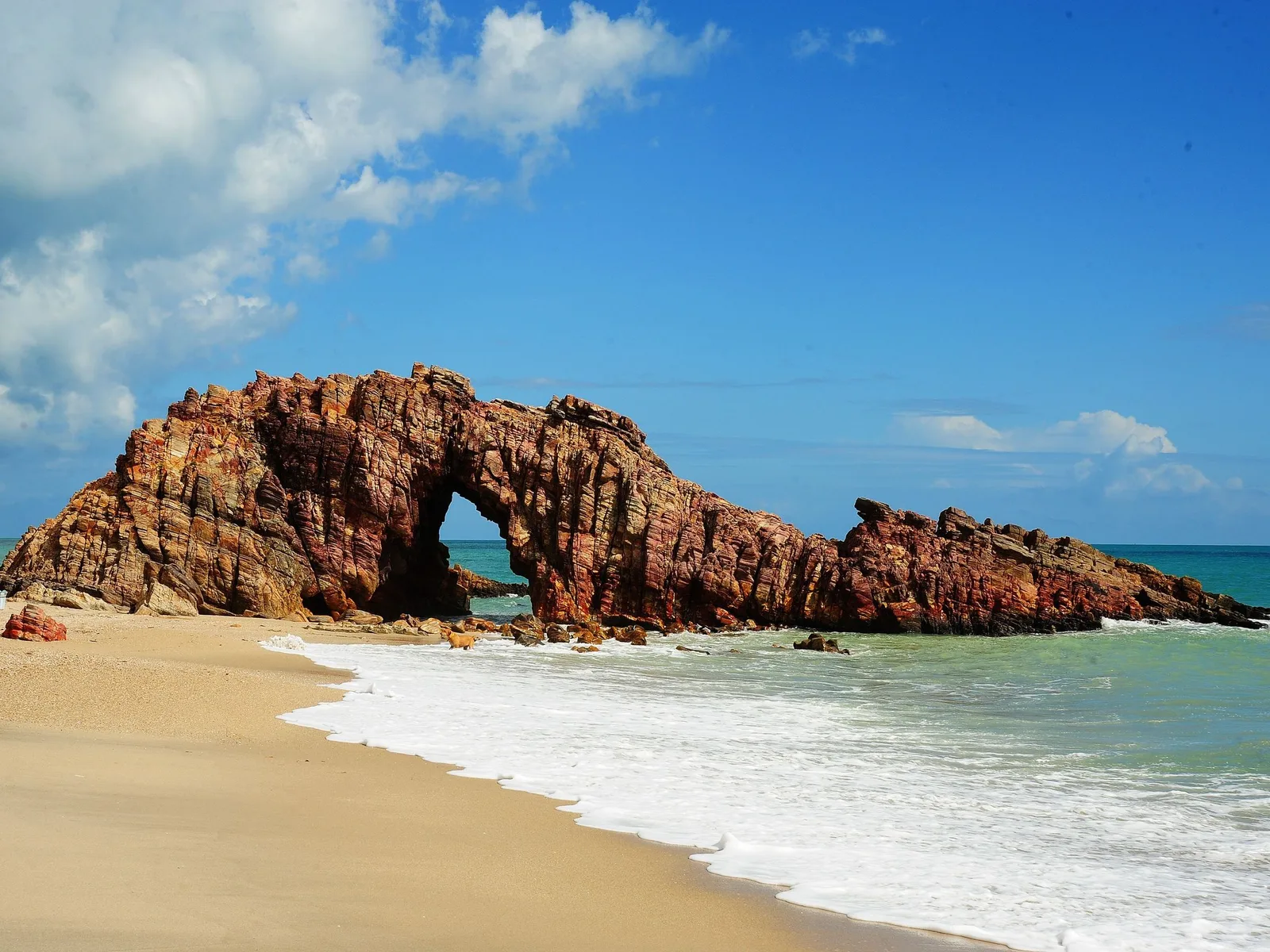
The Pedra Furada arch standing in shallow surf, banded orange and brown rock with a large opening through it, pale sand in front and turquoise water behind 03

A hole in the rock you can only reach at low tide

Pedra Furada

From the village
About 3 km along the beach
Access
On foot at low tide, or over the Serrote
The sun through it
Roughly mid-July to mid-August

East of the village, past the rocky beach at Malhada, a slab of banded sandstone stands in the surf with an arch cut clean through it. It is the symbol of Jericoacoara and it appears on everything sold here. Getting to it is a walk of about three kilometers along the beach, which takes 40 minutes to an hour and works only at low tide, because the sea comes up to the rock at high water. The alternative is the path over the Serrote, the hill behind the village and the high point of the national park, which is about half an hour and gives you the lighthouse and the view on the way.

The detail worth planning around: for a few weeks in the middle of the year the setting sun lines up with the hole and drops through it. Brazilian guides to the park put that window at roughly 15 July to 15 August. Outside it, go in the morning instead, when the light is behind you and the tide is more often out. Either way check a tide table the day before, because a high tide does not make the rock hard to reach, it makes it impossible.

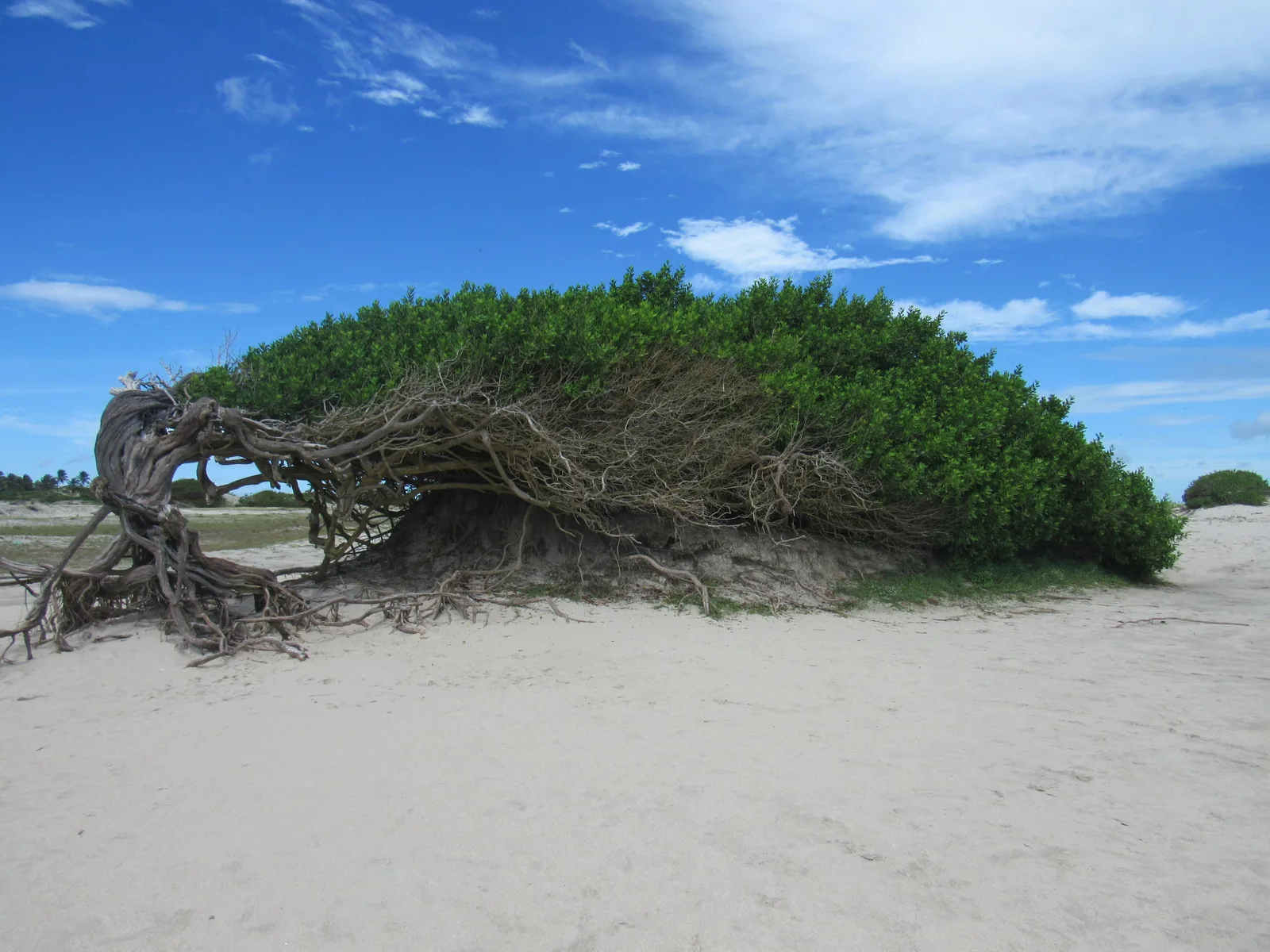
The Árvore da Preguiça growing sideways across white sand, its trunk and exposed roots bent hard away from the sea and its green canopy streaming inland, under a blue sky 04

You cannot photograph it, so photograph what it did

The trade wind

Season
Roughly July to January
Strongest
September to November
Direction
East to east-northeast, all year

The reason Jericoacoara exists as a destination is a wind that blows off the Atlantic from the east almost every afternoon for half the year. It built the dune the village sits under, it keeps the sand streets sand, and it brought the first windsurfers here in the 1980s, decades before anybody flew in. Two independent series agree on its shape. NASA’s POWER reanalysis at the village coordinates puts the mean 10-meter wind at 3.1 meters per second in April and 6.2 in October, its peak. Afternoon observations from the airport 31 km away, archived by the Iowa Environmental Mesonet, run from 6 knots in April to 16 knots in October.

The thing to look at is the Árvore da Preguiça, the “lazy tree”, a few minutes east of the village. It is a low tree that has been pushed flat by the wind until it grows sideways along the sand, roots bared, canopy streaming away from the sea. Every visitor photographs it lying in the crook of the trunk. What it actually is, is a record of the prevailing wind written by the tree itself, and it tells you more about this place than any number on this page.

What to actually do

On foot, on the wind, or in a buggy.

Two of these tabs you can do in bare feet from your room. The other three need a driver and a direction.

In the village

  • A sand street in Jericoacoara with pink, turquoise and cream shopfronts along one side under a thatched awning, a stone-paved walkway in front of them and people in the distance

    The village · any time, but best after 5:00pm

    Walking the sand streets

    The single most enjoyable thing here costs nothing. One commercial street runs back from the beach, lined with restaurants, kite shops, açaí counters and pousada gates, all of it on soft sand with no curb and no traffic. The whole village is about a kilometer end to end. Take your shoes off at the door of your room and put them back on when you leave town: almost nobody wears them, and the sand is the point.

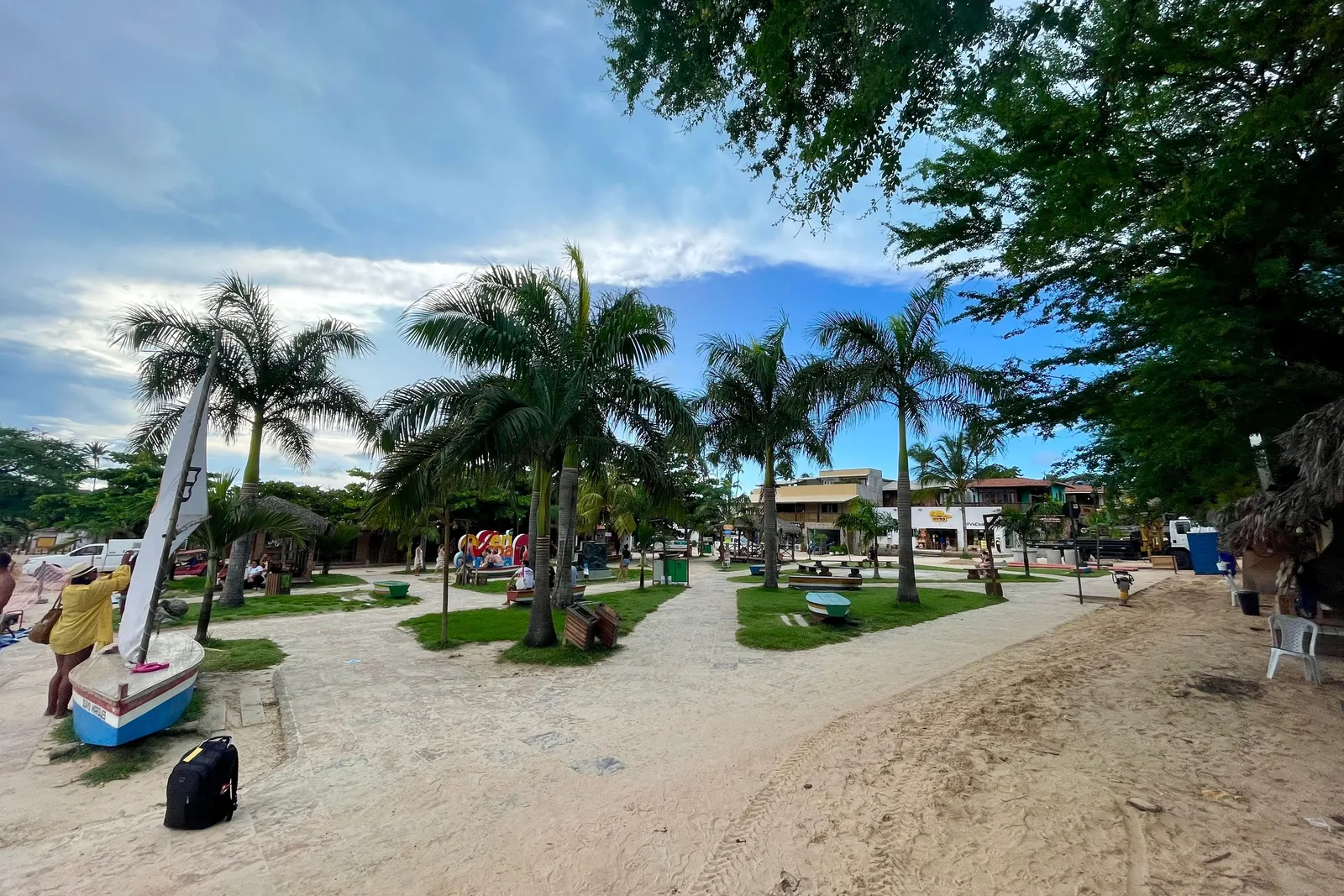
  • An open sand square at Jericoacoara with a small boat and a mast on it, tall coconut palms, low white buildings behind and a bright sky with scattered cloud

    Praça Principal · mornings

    The square and the beachfront

    Where the village meets the beach there is an open sand square with palms, a couple of boats pulled up on it and a row of low buildings behind. In the morning it is where the buggy drivers gather and where the day gets organized, which makes it the easiest place to arrange a driver without going through a hotel desk. Later it is a place to sit with a coffee and watch the sailing rigs going out.

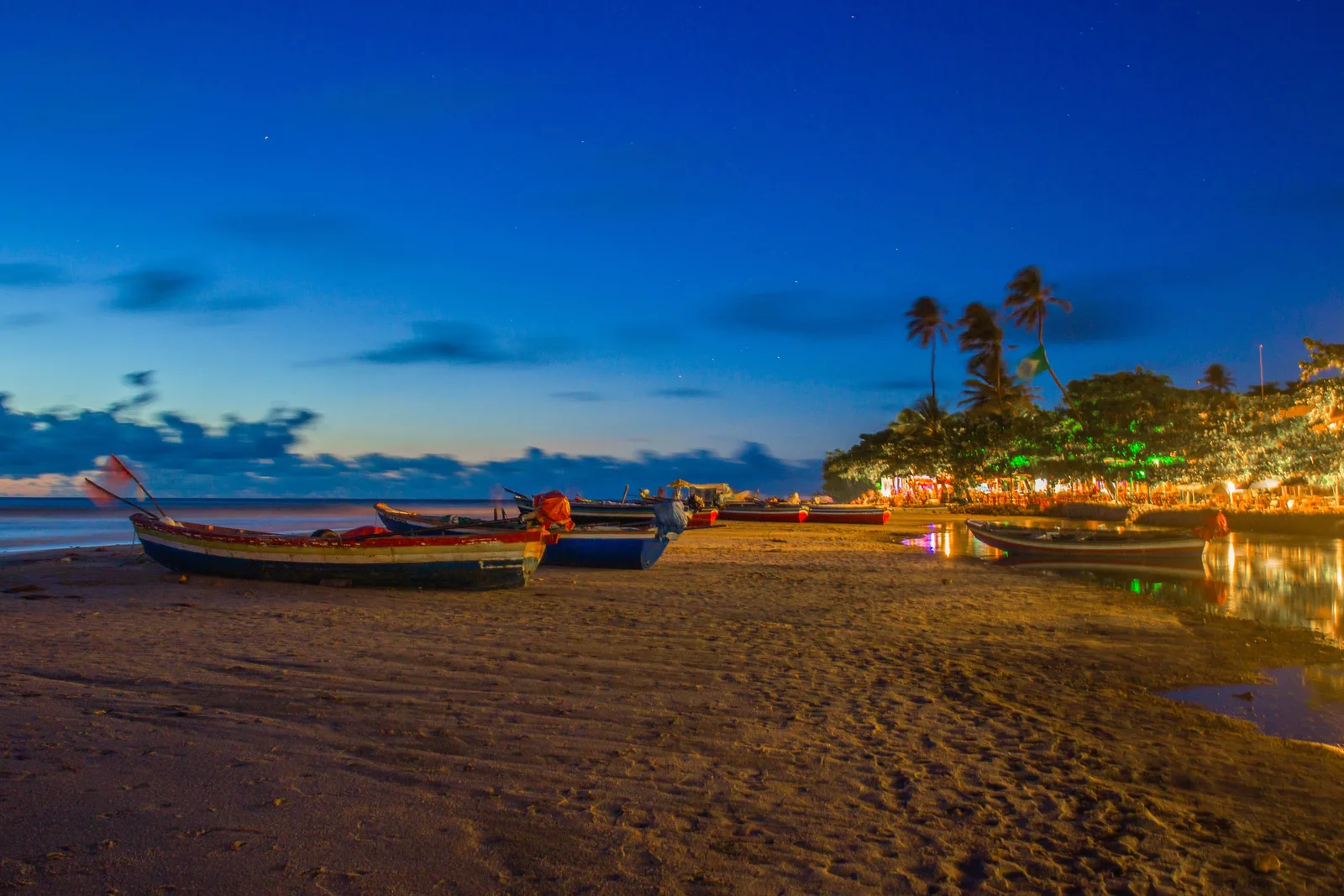
  • Fishing boats drawn up on dark sand at dusk with the warm lights of the village strung along behind them under a deep blue sky

    The main street and the beachfront · after 8:00pm

    The village after dark

    With no street lighting, the village at night is lit by what the buildings put out: candles on the sand tables, strings of bulbs over the restaurant fronts, and a lot of dark in between. Forró is played live most nights in season on the street that carries its name, and the caipirinha carts on the beachfront are an institution rather than a tourist trap. Bring a light for the walk home, because between two lit blocks there is genuinely nothing.

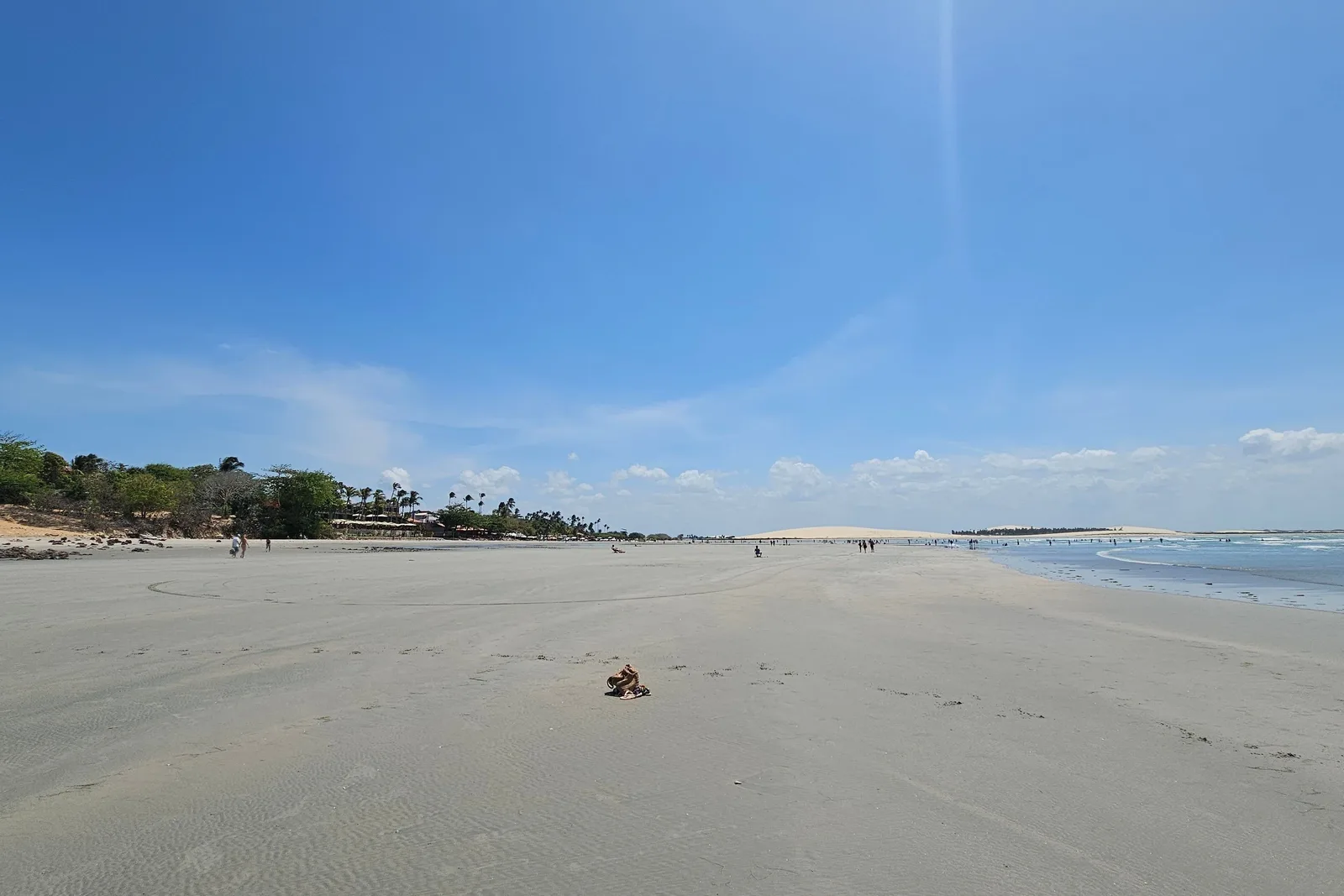
  • A wide open beach at Jericoacoara under a hazy sky, pale sand running out to a flat sea with a low green shoreline in the distance

    Praia de Jericoacoara · all day

    Swimming off the main beach

    The beach directly in front of the village is broad, shallow and sandy, and it is the beach to swim off. It is also where the sailing school rigs are, so the water is busy with kites and boards from mid-morning until sunset in the wind season. Swim toward the eastern end, away from the launch area, and expect the wind to push you along the shore faster than you notice. There is no lifeguard tower.

Inside the park

  • A wide open beach at Jericoacoara under a hazy sky, pale sand running out to a flat sea with a low green shoreline in the distance

    Praia de Jericoacoara · all day

    Swimming off the main beach

    The beach directly in front of the village is broad, shallow and sandy, and it is the beach to swim off. It is also where the sailing school rigs are, so the water is busy with kites and boards from mid-morning until sunset in the wind season. Swim toward the eastern end, away from the launch area, and expect the wind to push you along the shore faster than you notice. There is no lifeguard tower.

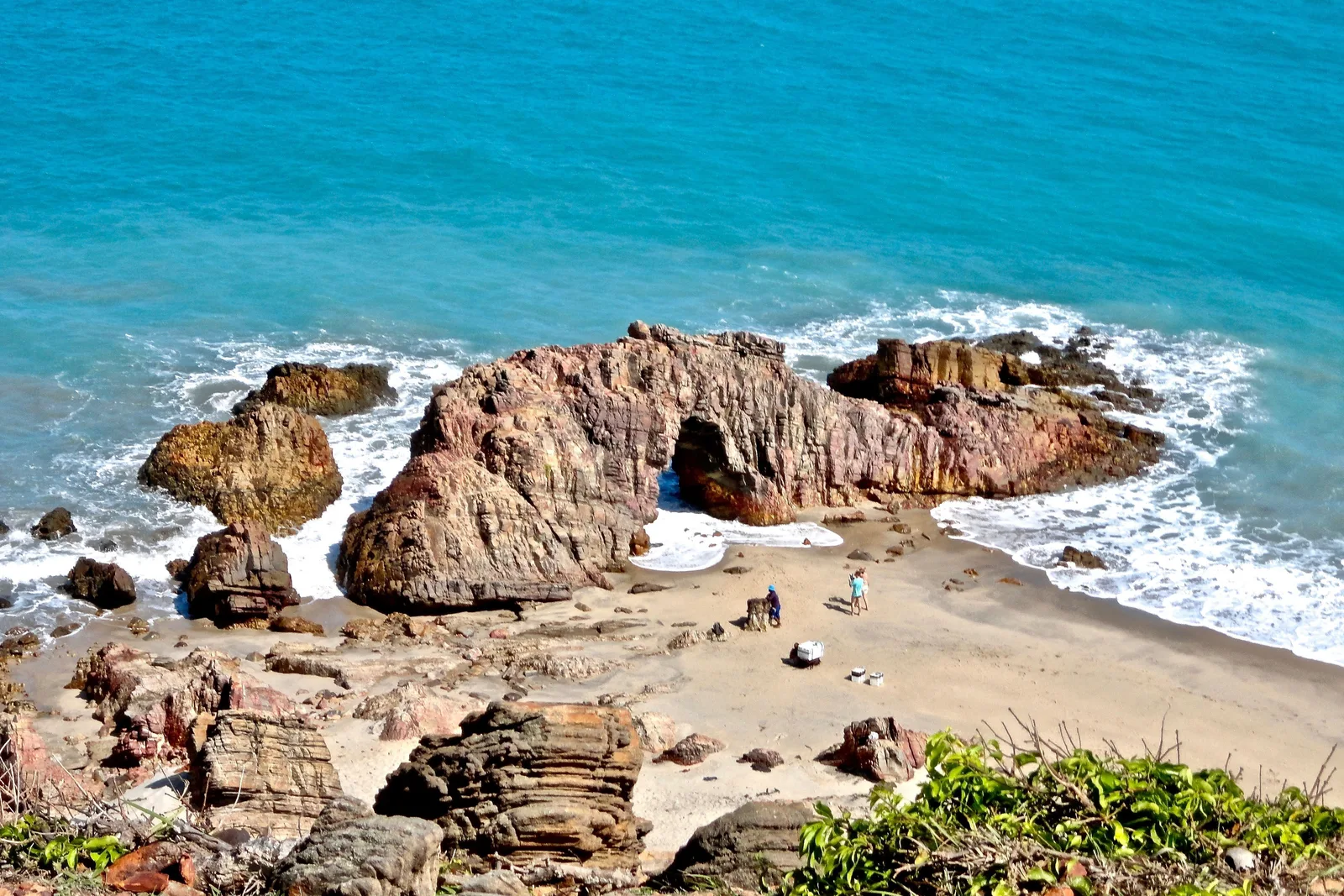
  • The rocky headland at Jericoacoara seen from above, dark banded rock and the arch of Pedra Furada standing in white surf with turquoise water beyond and green scrub in the foreground

    East along the beach · about 3 km, at low tide

    The walk to Pedra Furada

    Forty minutes to an hour along the sand from the village, past the rocks at Malhada, to the arch itself. It only works at low tide, and the tide is not negotiable: at high water the sea is against the rock. The route back over the Serrote is shorter and gives you the lighthouse and the whole coast from above. Go in the morning unless you are there in the few weeks when the setting sun lines up with the hole.

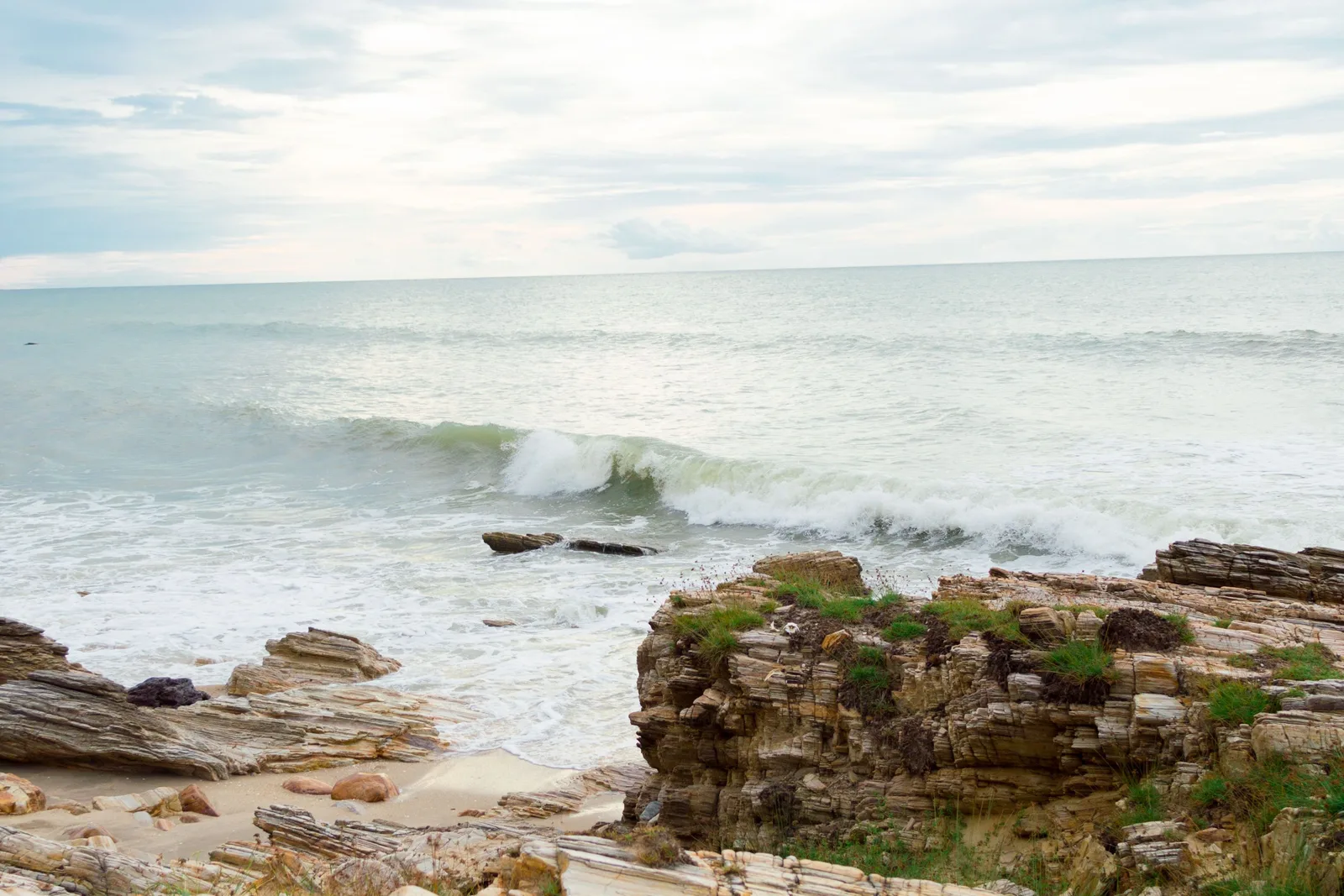
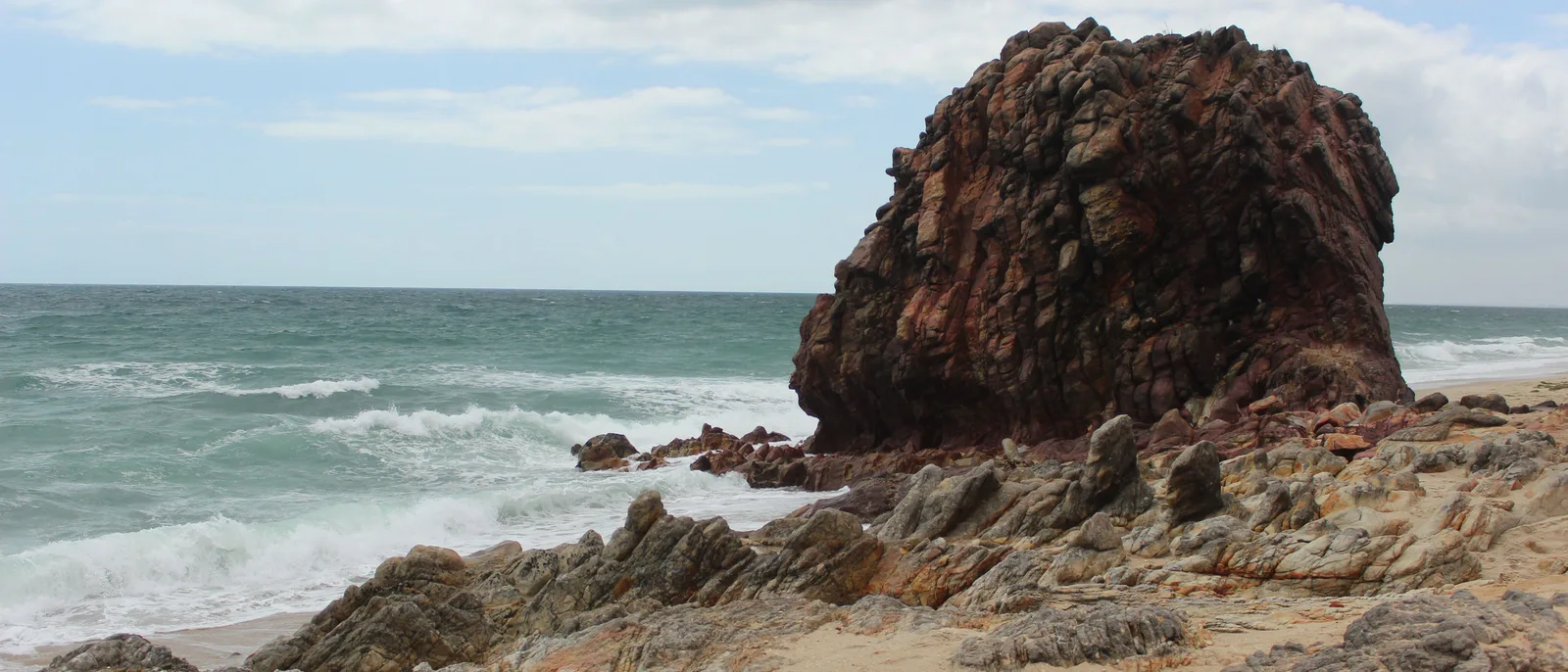
  • Layered dark rock shelves running into the sea at Praia da Malhada with white surf breaking over them under an overcast sky

    Ten minutes east of the village · afternoons

    Praia da Malhada

    The beach between the village and Pedra Furada, and the one people get wrong. It is rocky, it has real surf, and it is not a swimming beach. What it is, is the best short walk in Jericoacoara: a stretch of dark stone shelves and pools with the sea coming over them, empty most of the day, and a completely different landscape from the flat sand two minutes behind you. Wear something on your feet.

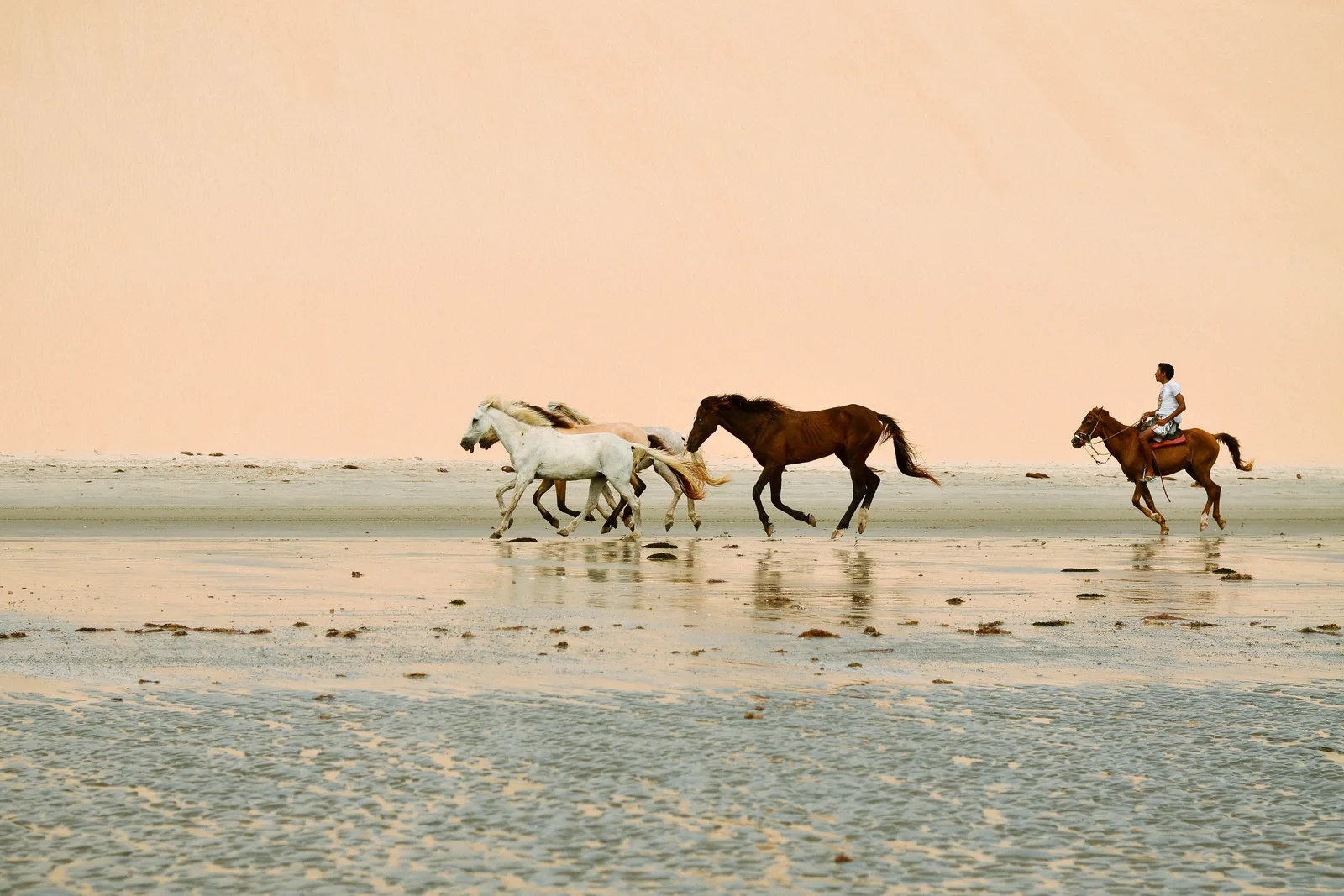
  • Three horses and a rider moving along wet sand at the water’s edge, reflected in the shallow film of water, under a pale sky

    From the village · early morning or late afternoon

    Horses on the beach

    Horses are working animals here rather than a tourist attraction bolted on, and riding out along the beach and the sand tracks is one of the better ways to cover ground inside the park without a motor. It also solves the vehicle problem: motorized traffic is banned from the dunes under ICMBio’s rules, and a horse is not. Go at the ends of the day, both for the light and because the sand is punishing at midday.

Wind sports

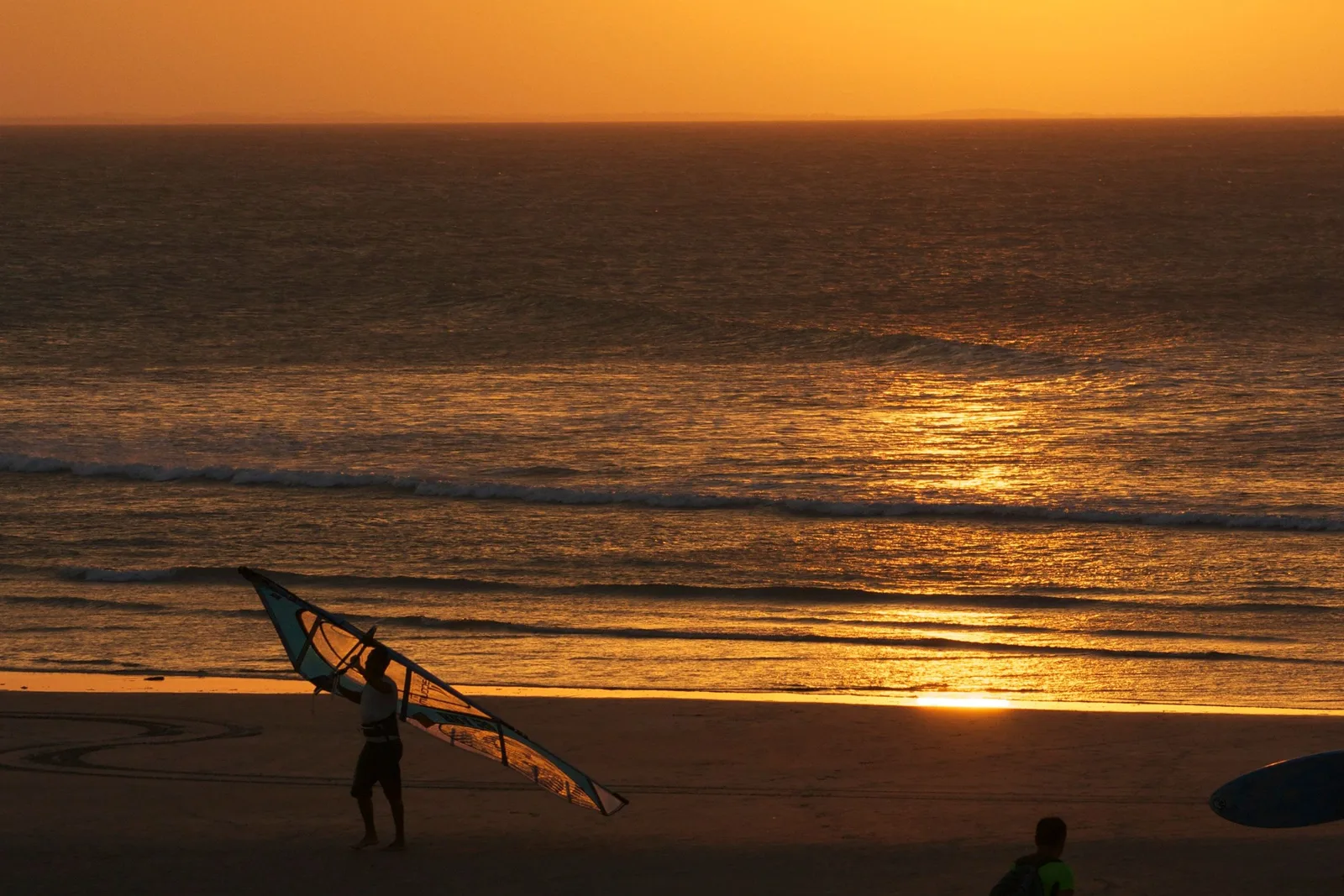
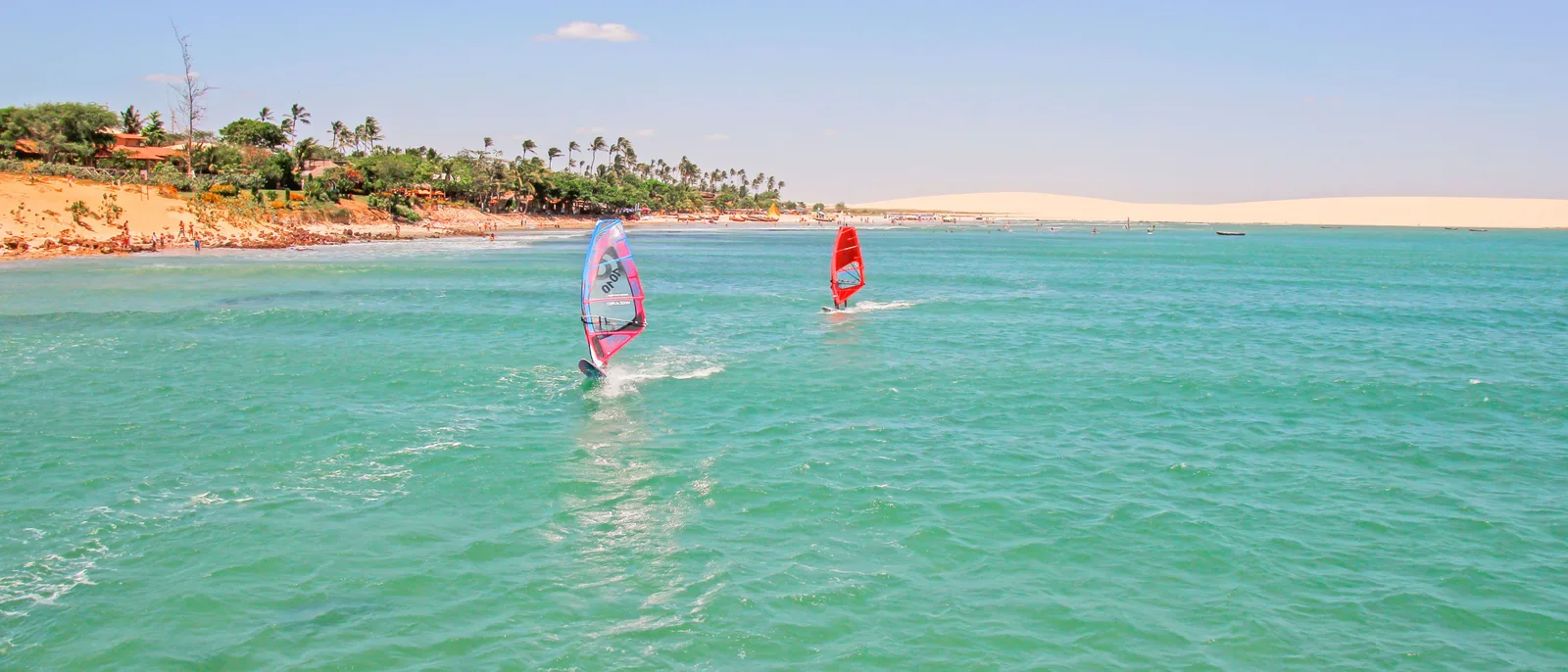
  • A windsurfer carrying a rig along the beach in silhouette against a low sun, the sea flat and gold behind them

    Praia de Jericoacoara · afternoons, July to January

    Windsurfing off the main beach

    Jericoacoara was a windsurf spot long before it was a kite spot, and the point in front of the village is still where the rigs go out. Club Ventos, a windsurf and kite operator at the point, publishes the season as July through January with at least 90% of days above Force 4, which is its own figure and worth reading as an operator’s. The water off the point is sandy-bottomed and comparatively smooth, which is why it works for people still learning as well as for people who are not.

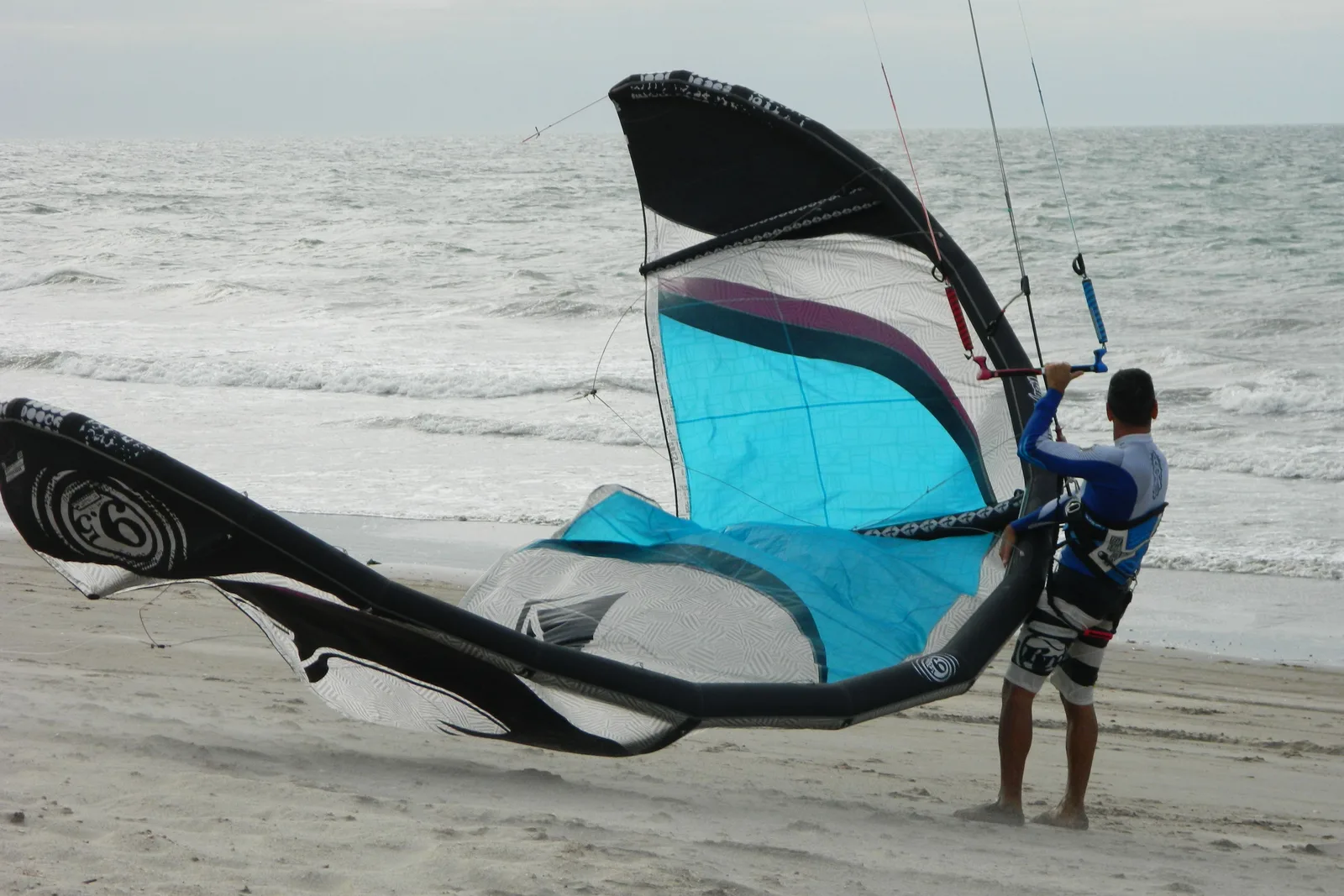
  • A man standing on wet sand at the water’s edge holding up an inflated blue and black kite, the surf breaking behind him under a gray sky

    The village and Preá · a course takes three to five days

    Learning to kitesurf at Jericoacoara

    This is one of the easiest places in the world to learn, and the reason is boring and practical: the wind is side-onshore and it blows at a usable strength on most days of the season, so a course booked here rarely gets rained off by a flat day. Schools operate out of the village and out of Preá, most of them running from about August. Prices move constantly and we are not going to quote one; ask two schools and compare what is included, because gear and boat rescue often are not.

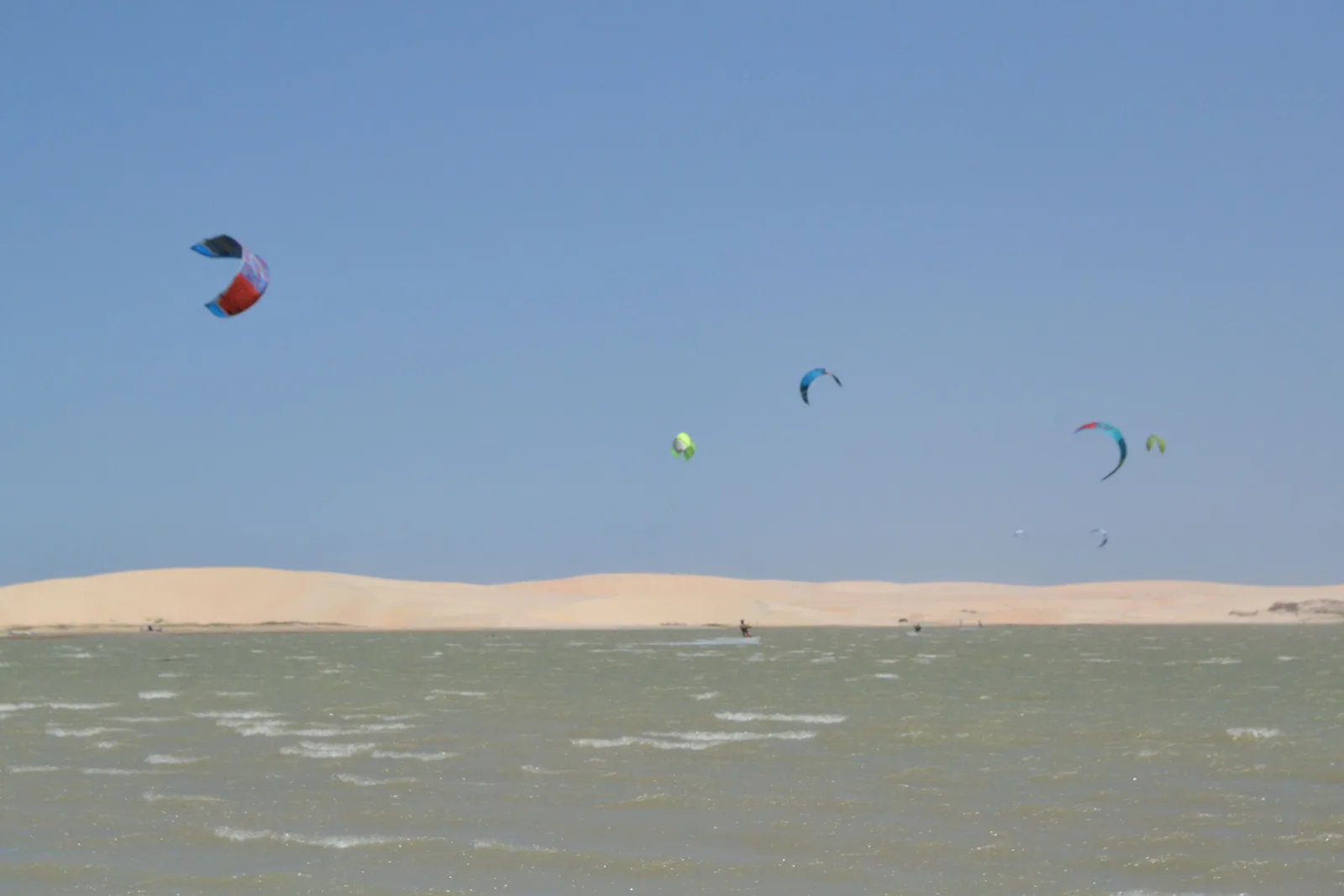
  • Several kites flying above a wide flat expanse of pale sand and shallow water, a low dune ridge running along behind them under a clear sky

    The beach · from about 3:00pm

    Watching the kites go up

    You do not have to do any of it. The wind fills in through the afternoon and the sky over the beach goes from empty to thirty kites in about half an hour, and watching that happen from a chair with a drink is a legitimate way to spend a day here. The best viewing is from the sand under the dune, which puts the kites between you and the light.

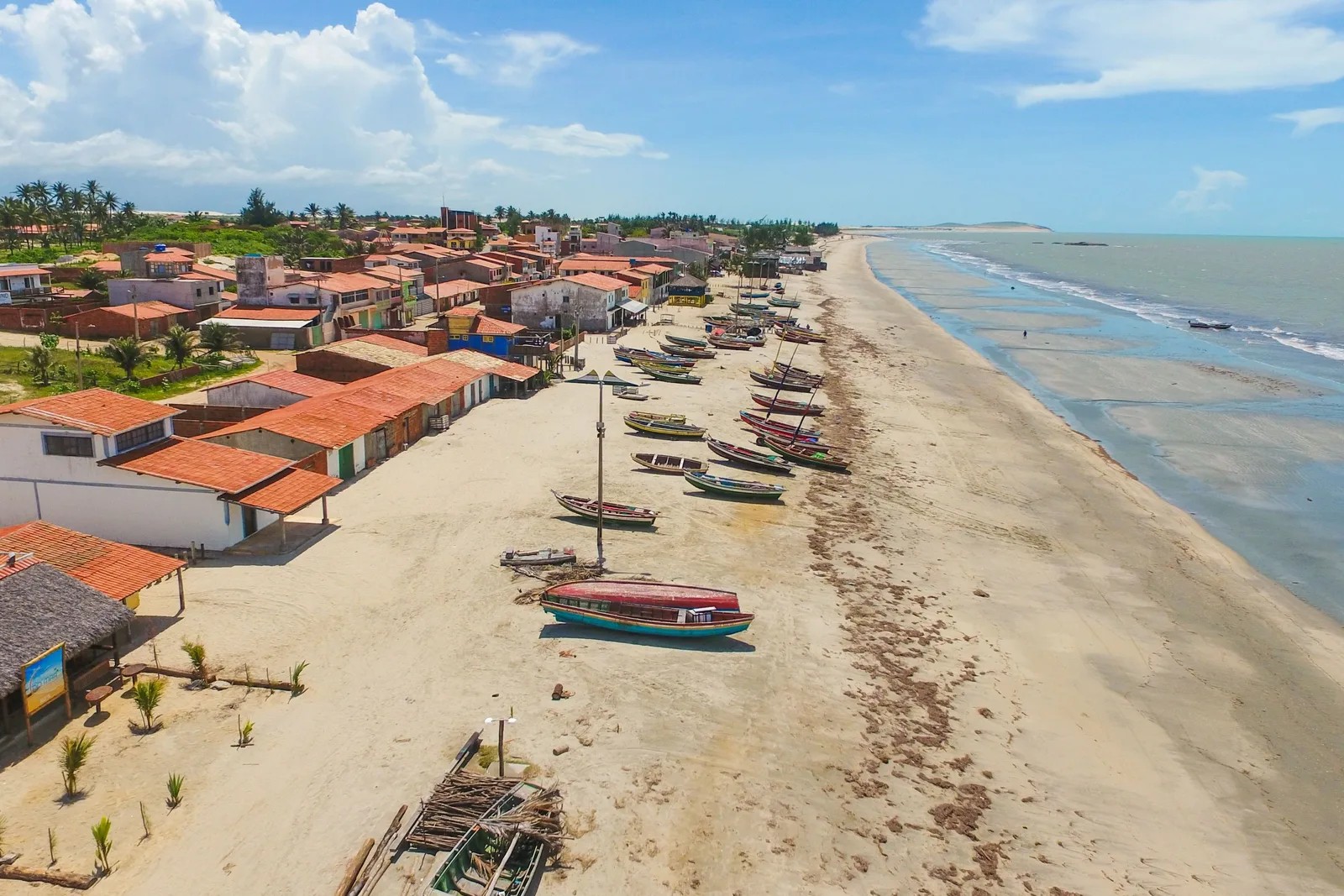
  • The village of Praia do Preá from the air: red-roofed houses and wooden fishing boats along the top of a long pale beach running away into the distance beside a flat sea

    About 12 km east · half a day

    Flat water at Praia do Preá

    The village beach has chop and traffic. Preá, the next beach east, is longer, emptier and flatter, and it is where a good part of the kite scene has moved. It is a working fishing village with boats on the sand and a growing row of pousadas behind, and it is close enough that plenty of people base themselves there and come into Jericoacoara for dinner rather than the other way round.

The lagoons

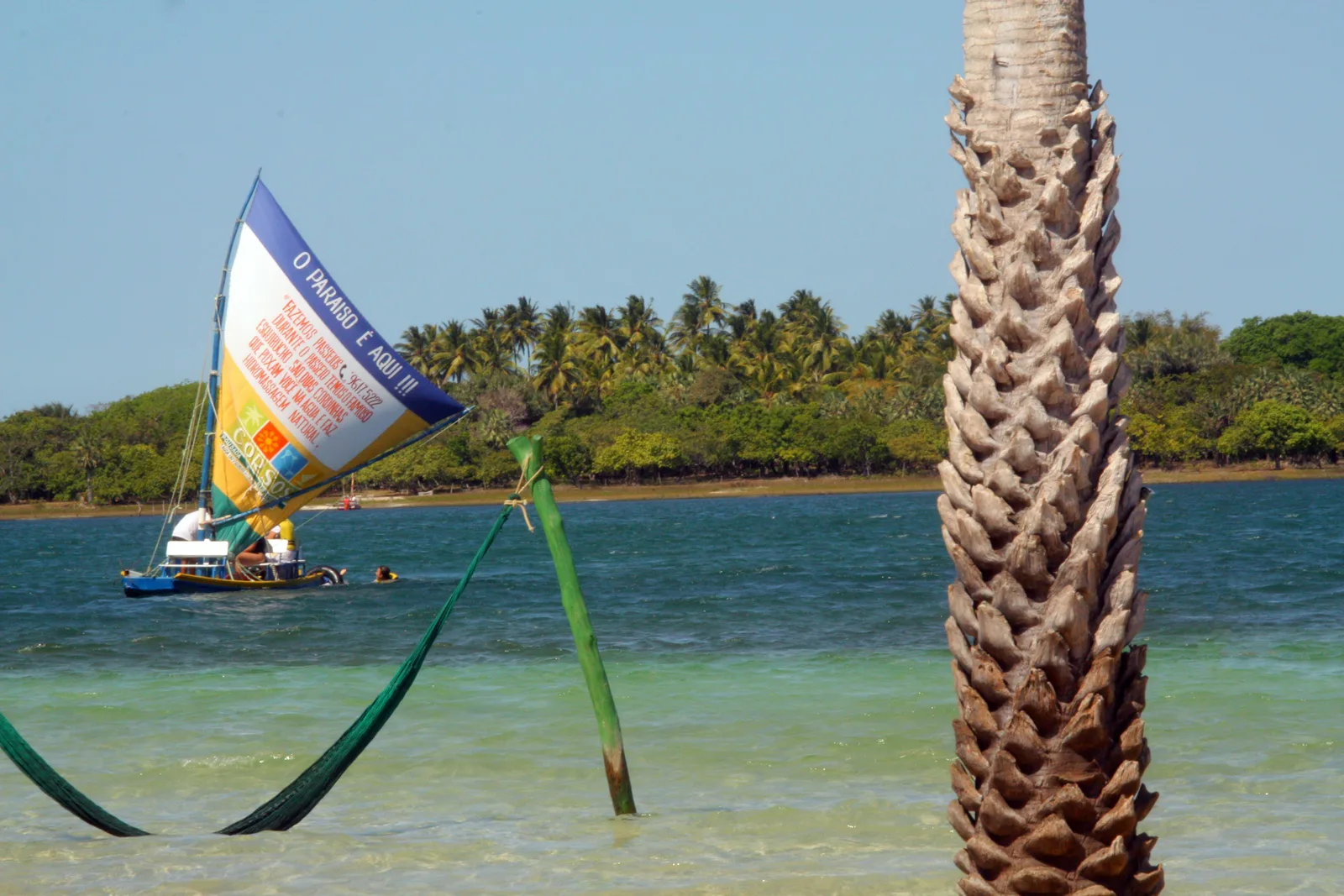
  • A hammock slung between two posts in the shallow green water of Lagoa do Paraíso, a coconut palm trunk in the foreground and a small sailing boat out on the lagoon behind

    About 30 minutes east by buggy · half a day, go early

    A hammock at Lagoa do Paraíso

    A large freshwater lagoon behind the dunes, warm, clear, and shallow enough to stand up in a long way out. What made it famous is the hammocks: wooden posts driven into the lagoon bed with a hammock slung between them, so you lie in one with the water under you. It is exactly as good as it sounds and exactly as busy as that implies. Get there before 10:00am and it is a different place.

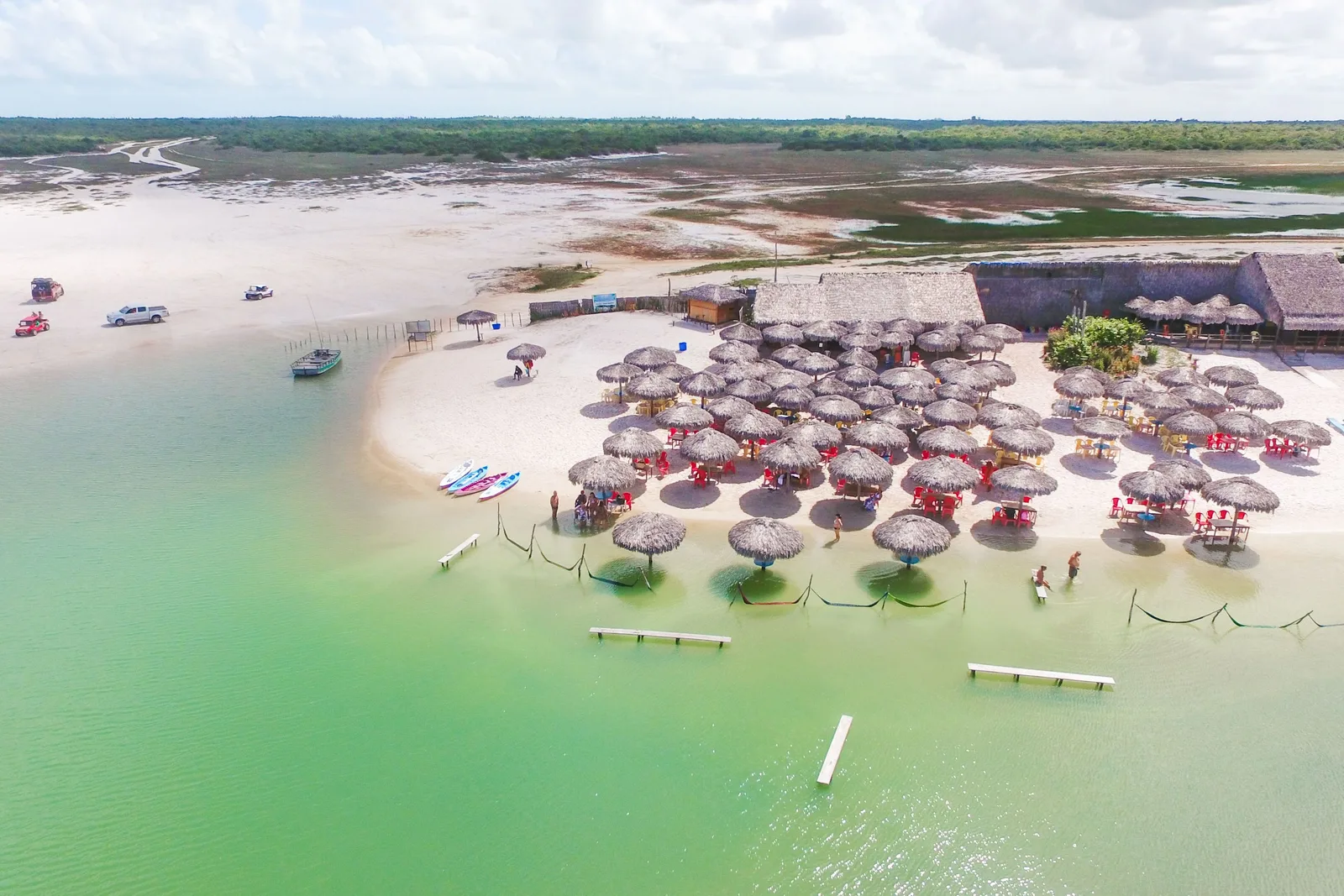
  • Rows of thatched parasols and a wooden deck set out along the shallow green edge of Lagoa Azul, seen from above, with a sandbank curving into the water

    22 km east · a couple of hours

    Lagoa Azul, next door

    The other access point on the same big lagoon system, 22 kilometers out, a little short of Paraíso and generally the quieter of the two. Same warm shallow water, same thatched umbrellas and chairs pushed out into it, fewer people and lower prices. Most east-coast buggy tours stop at one or the other; ask for both and see which one you like, because they are ten minutes apart.
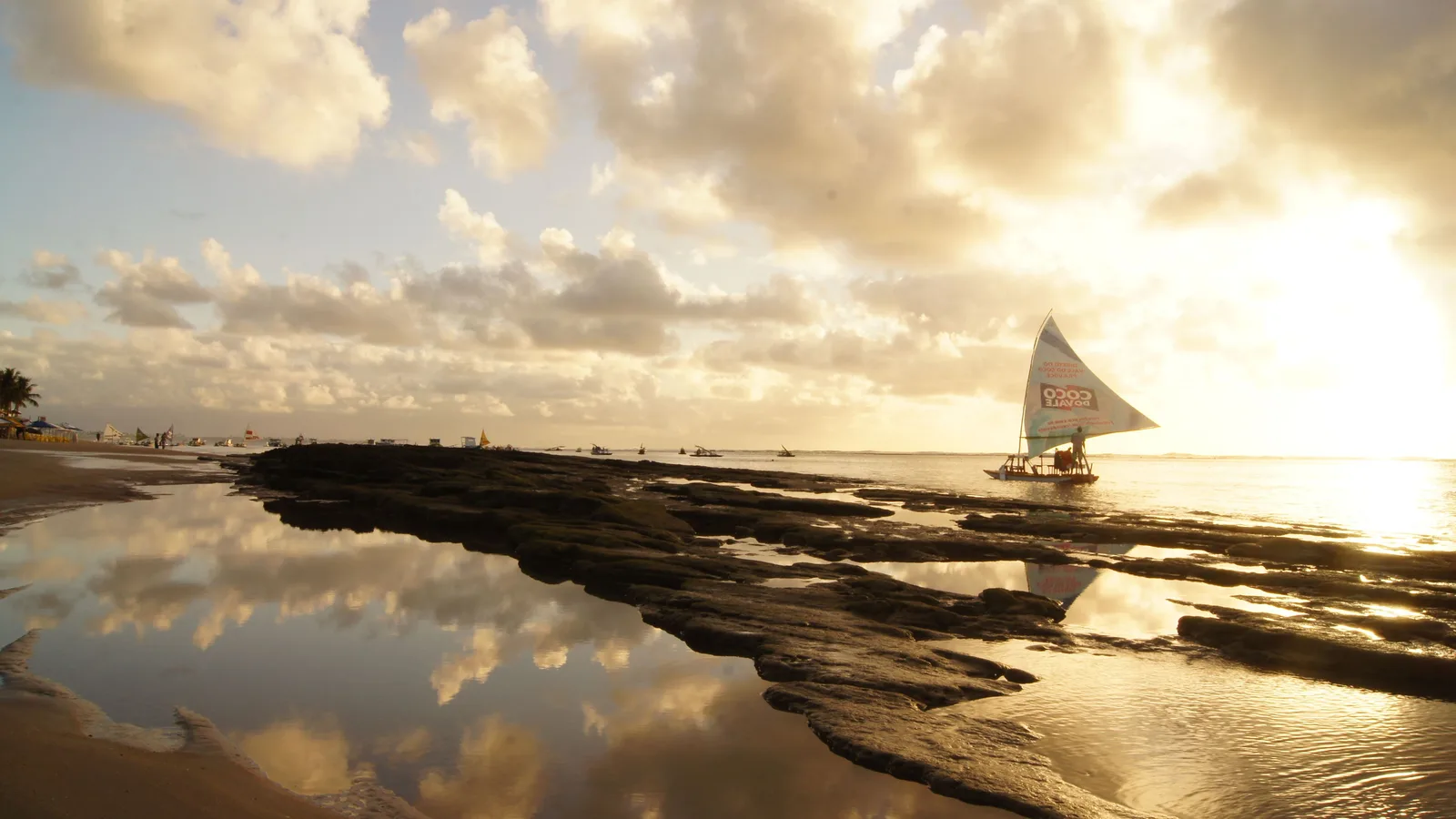
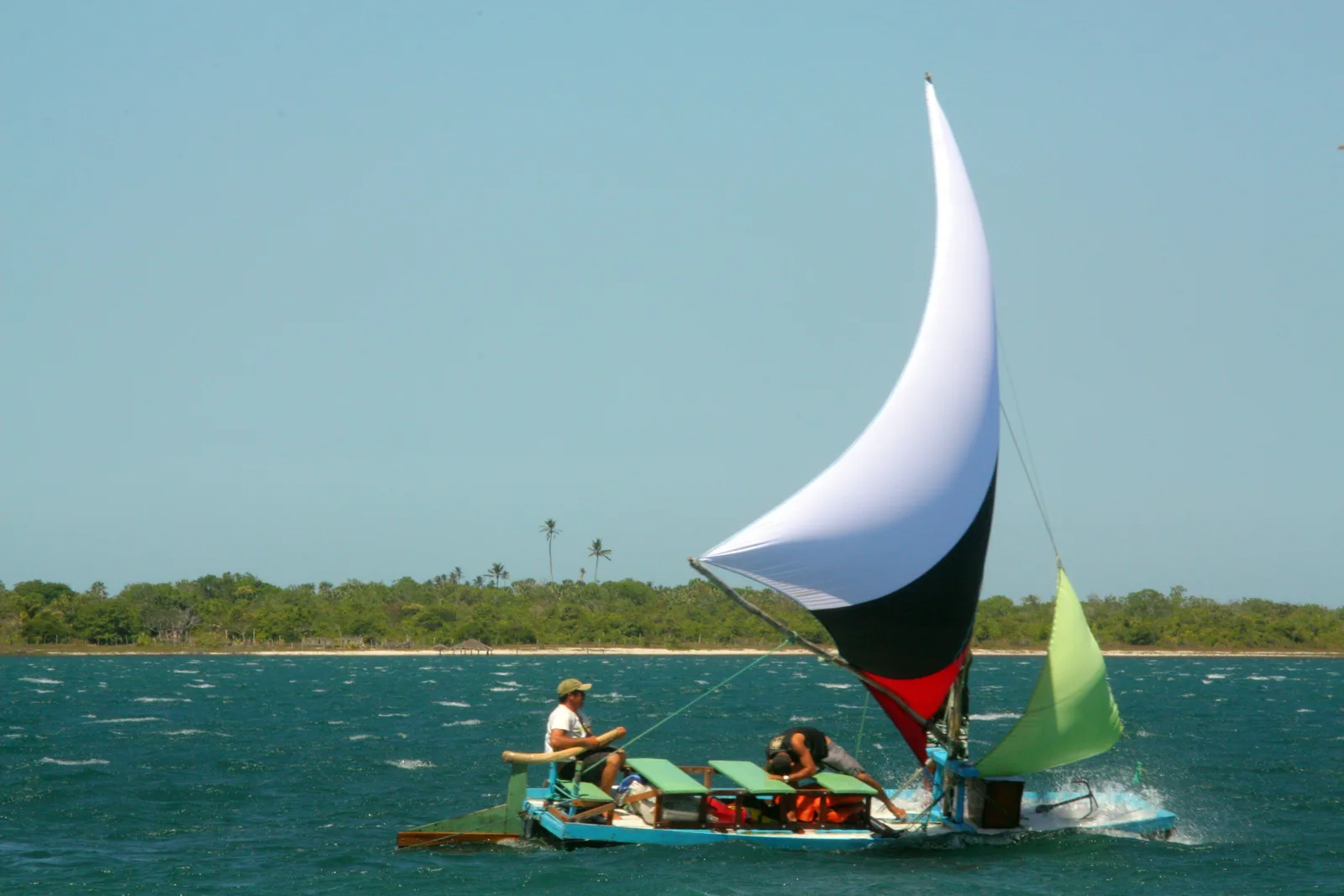
  • A wooden jangada with a tall white and dark sail crossing the flat blue water of the lagoon, two people aboard and a low green shore behind

    From the lagoon kiosks · about an hour

    Sailing a jangada on the lagoon

    The same wind that runs the kite scene runs across the lagoons, and the local boats are small wooden jangadas with a single big sail. An hour out on one costs very little, needs no skill, and is the only way to get away from the shoreline crowd and out into the middle of a lagoon that is a couple of kilometers across. Take a hat: there is no shade on a jangada.

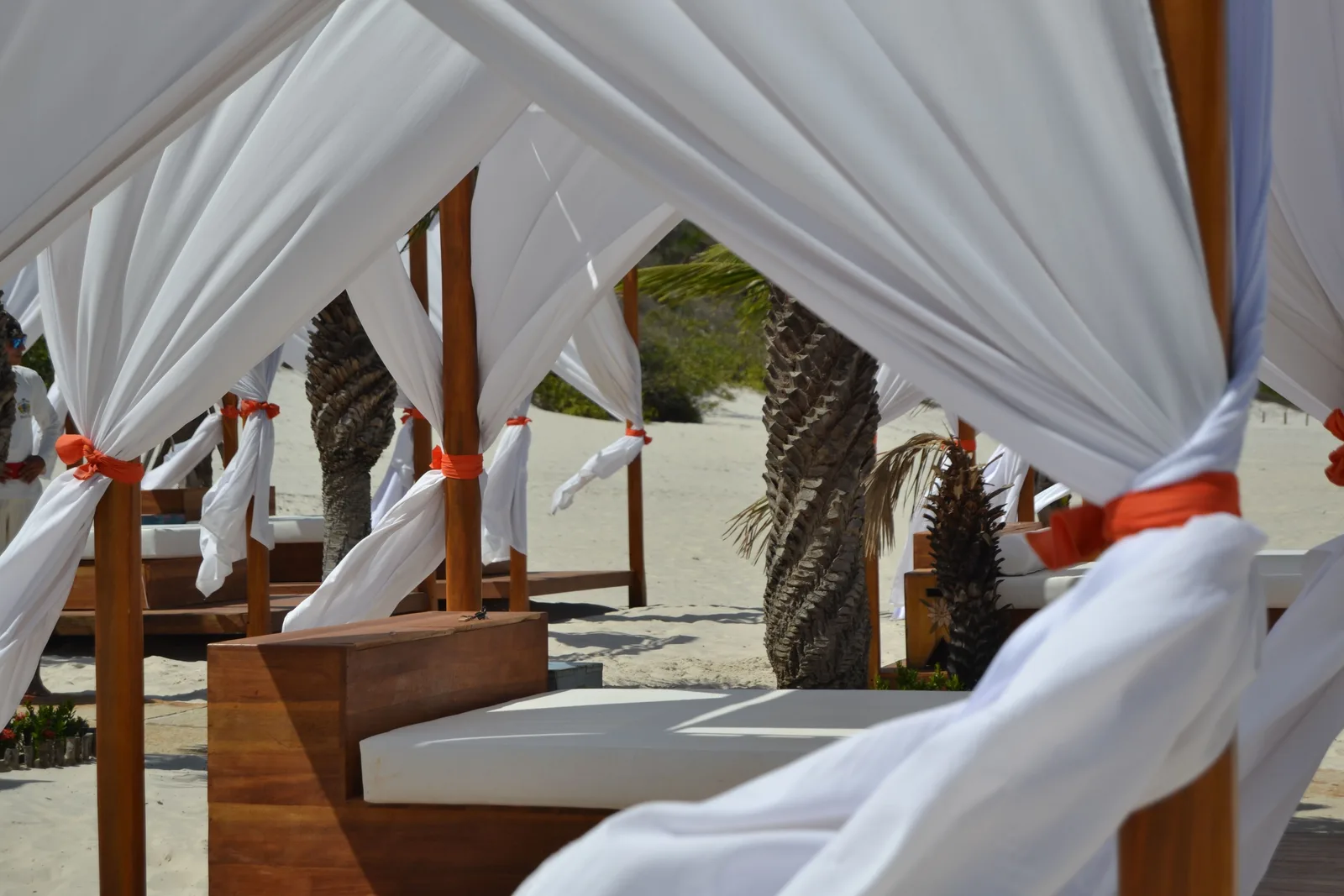
  • A row of wooden four-poster daybeds with white curtains tied back, set out on the sand at the edge of the lagoon under palm trunks

    Lagoa do Paraíso · lunch

    The lagoon beach clubs

    What has grown up on the lagoon shore is not rustic. There are proper restaurants, curtained four-poster daybeds standing in the sand, table service into the water and a minimum spend at the smarter ones. If that is what you want, it is genuinely comfortable. If it is not, the answer is to arrive early, use the public stretch, and be gone by the time the buggy convoy shows up.

West to Tatajuba

  • A wide shallow river mouth at Mangue Seco with small boats moored on the pale sand flats, low green scrub along the far bank and a big cloudy sky

    About 10 km west · first stop of the west tour

    The river mouth at Mangue Seco

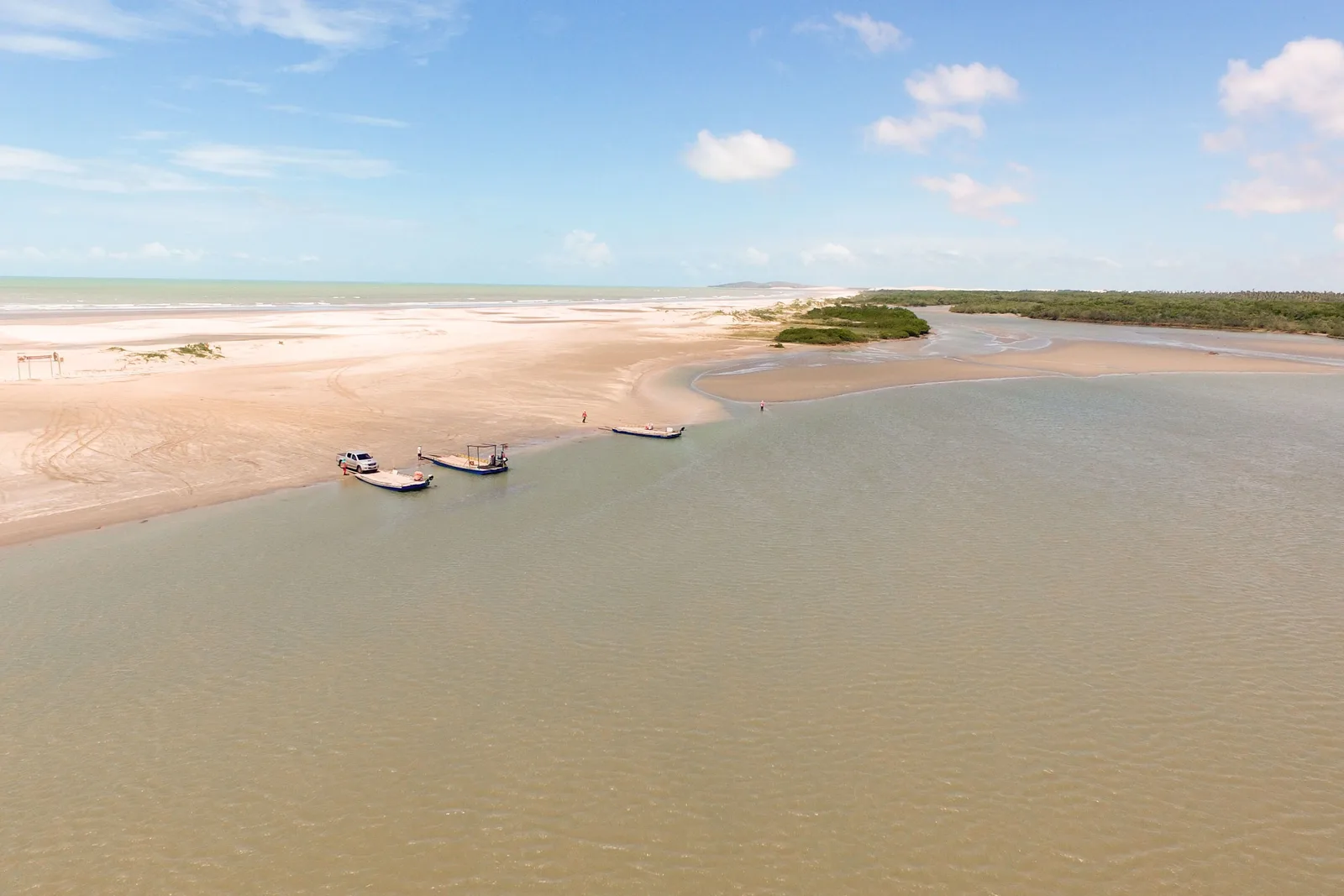
    Where a river runs out through the sand west of the village there is a wide shallow flat, warm and knee-deep at low water, with boats moored on it and thatched kiosks along the bank. It is the calmest water within reach of Jericoacoara and the easiest swimming on this coast for anyone who does not want surf. It is also the launch point for the small boats that go up the mangrove.

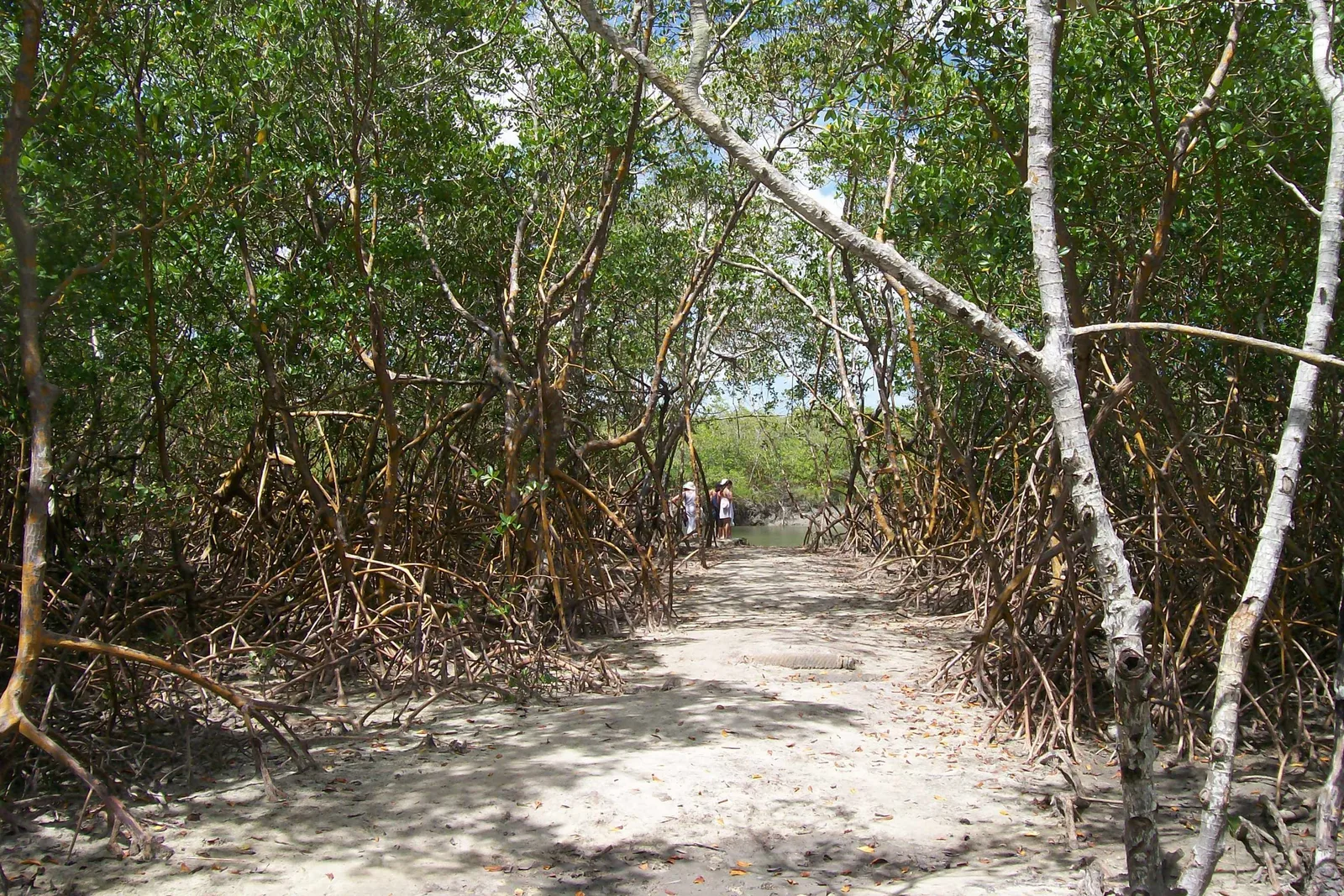
  • A sandy path running between pale mangrove trunks and tangled roots, with figures walking in the shade further down it

    Guriú · about an hour on the water

    Seahorses in the Guriú mangrove

    A short paddle or a small boat trip up the mangrove channel behind Guriú, in a small group with a guide, looking for seahorses in the roots. ICMBio lists the mangrove canoe trip and its seahorses among the park’s attractions. The animals are wild and small and nothing is guaranteed, and the point of the hour is the mangrove itself, which is the one landscape on this coast that is neither sand nor water.

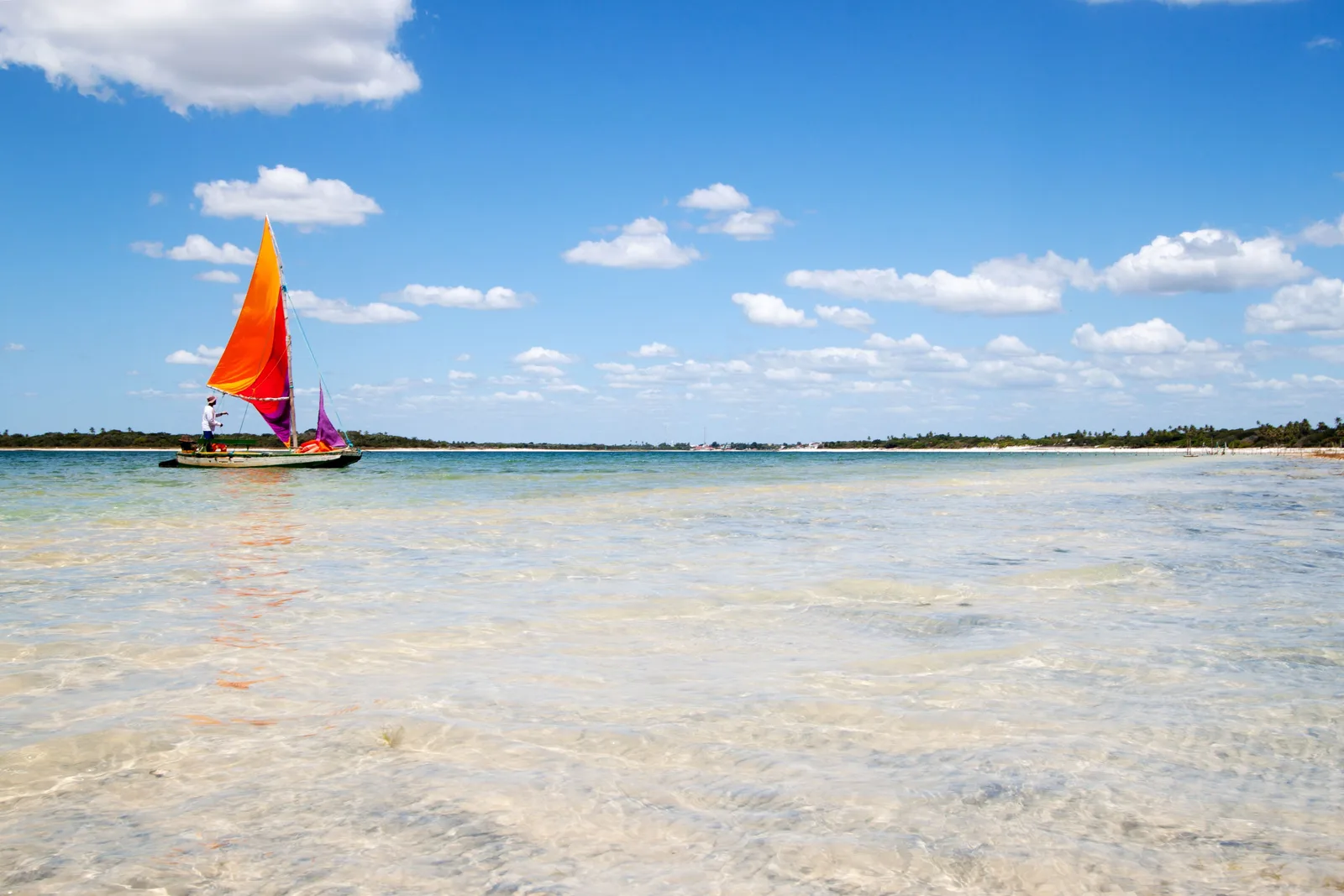
  • A jangada with a bright orange and red sail crossing the shallow pale-green water of the Tatajuba lagoon under a blue sky with scattered cloud

    About 25 km west · the far end of the west tour

    The lagoon at Tatajuba

    The furthest point most tours reach, past a river crossing on a raft that takes the buggy across with you aboard. Tatajuba is a small village on a huge shallow lagoon with jangadas working across it, and the old village is buried under the dunes behind, which the drivers will show you. It is a longer, rougher, better day than the east coast, and it is the one where you get to the place after the crowd has turned back.

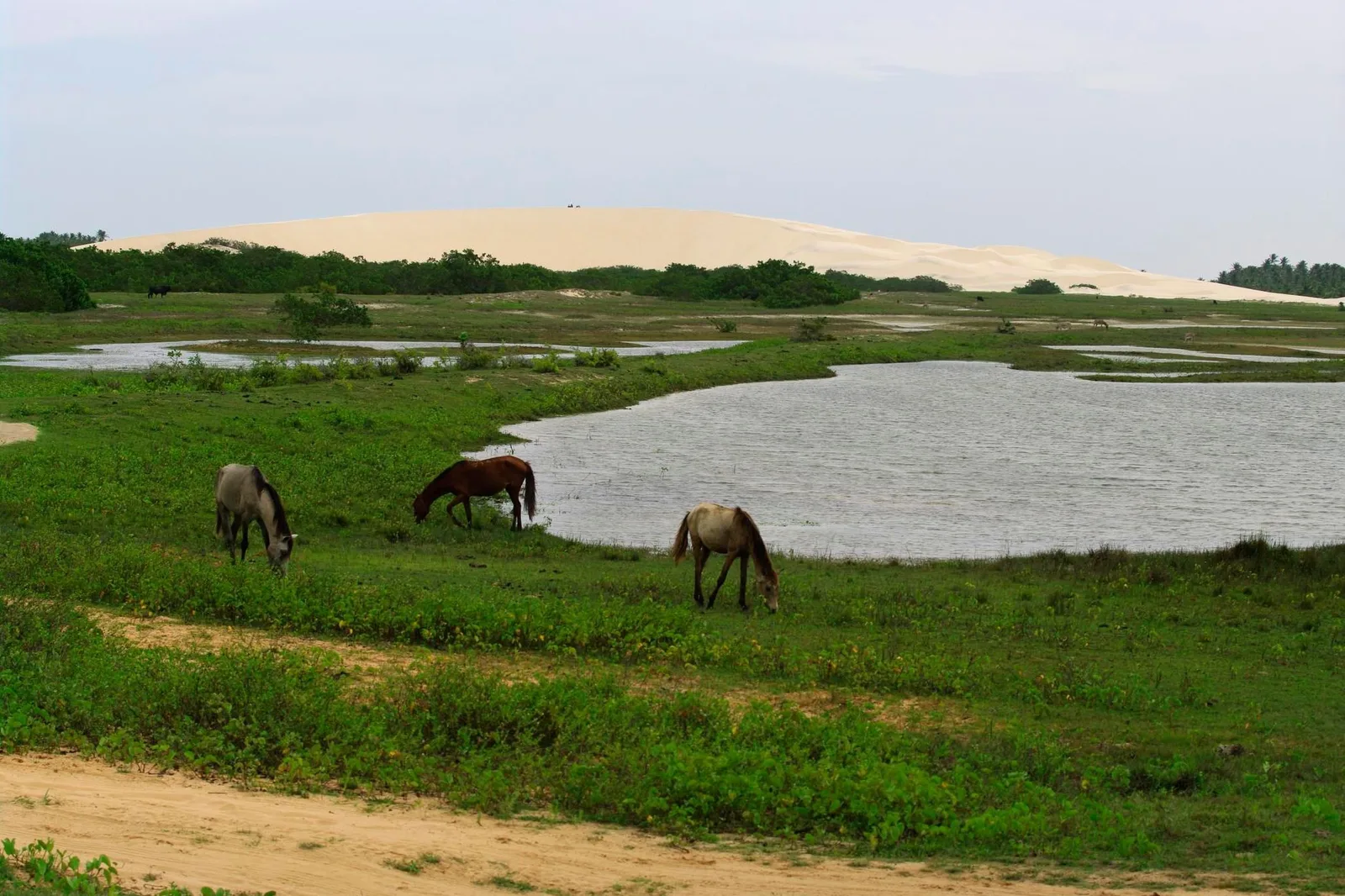
  • Horses grazing on green grass beside a shallow lagoon with a high pale dune wall rising directly behind it

    On the west route · a few dollars a go

    Sandboarding and the dune slides

    The west run stops at a couple of steep dune faces where somebody has set up a board, or a plastic slide that puts you into a lagoon at the bottom. It is a few dollars and it is aimed squarely at children and at adults willing to admit they are enjoying it. Nobody needs to be talked into the second one.
Where to stay

Four streets, and one of them is another village.

Almost everybody stays in the village, and they are right to: it is a kilometer long, the dune is at one end and the beach is along the side, and you will walk all of it every day. What changes between the three village zones is how loud your night is and how far you carry your bag across sand. The fourth option is Preá, 12 kilometers east, which is a different decision entirely and the right one if you came for the wind. One thing that is not a zone: the town of Jijoca de Jericoacoara, 15 km inland, where the paved road stops. People sleep there when a transfer goes wrong, not on purpose.

Drag and zoom to explore.

Tap an area to open it and see it on the map

  • Our pick

    Best for: Walking out of the door into everything

    Two windsurfers on the clear turquoise water directly off the village, with the palm-lined shore and a pale dune ridge running away behind them

    The main commercial street, running back from the beach, and the block or two either side of it. This is where the restaurants, the kite shops, the buggy drivers and most of the mid-range pousadas are, and it is a two-minute walk to the sand and ten minutes to the foot of the sunset dune. It is not silent, but the noise here is people walking past rather than music, and the closer you are to the beach end the quieter it gets. For a first visit this is the right position.

    • Most pousadas
    • Closest to the beach
    • Walk everywhere
    • Moderately busy
  • Best for: Being where the music is

    A sand street of low houses and small pousadas in Jericoacoara under leafy trees, with people walking along it and the sea visible at the far end

    One street back, and the one that carries the village’s nightlife. Forró is played live here most nights in season, the bars run late, and the rooms are cheaper than on the beach side for exactly that reason. The back streets behind it are quieter again and are where the small family-run pousadas are, which are the best value in the village. Take this zone if you intend to be out; take Malhada if you intend to sleep.

    • Live forró
    • Cheaper rooms
    • Loud in season
    • Family pousadas
  • Best for: Quiet, space and a view

    A wide view of the rocky coast at Praia da Malhada, dark stone outcrops standing in surf along a curve of pale sand with green scrub behind

    The eastern end of the village, where the buildings run out and the coast turns rocky toward Pedra Furada. The rooms here are the quietest and several of them have a genuine sea view, which nothing on the main street does. The trade-off is real: it is a ten to fifteen minute walk through sand back to the restaurants, the beach in front of you is rocky and not for swimming, and doing that walk at night with no street lighting is a thing you should try once before you commit to five nights of it.

    • Quietest
    • Sea views
    • No swimming beach
    • Dark walk home
  • Best for: Kitesurfers and anyone who wants space

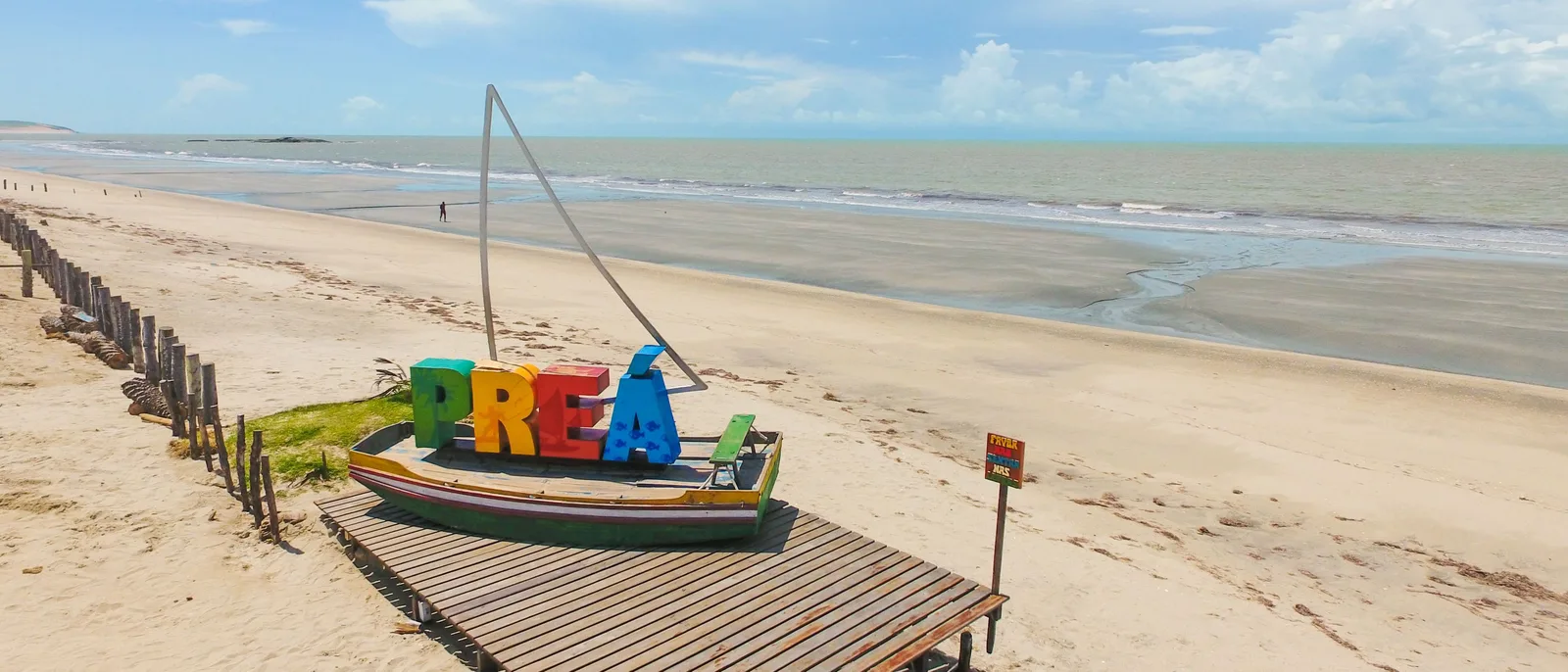
    A large multicolored PREA letter sculpture standing on the sand at Praia do Prea, a small display boat propped beside it, a line of wooden posts along the dry sand to the left and a long empty shoreline running away behind

    A fishing village 12 kilometers east, on a longer and flatter beach, and where a good part of the kite scene now stays. The water is better for riding than the village beach and there is far more room on it. What you give up is the village itself: there are fewer restaurants, the sunset dune is a drive away, and getting back and forth costs a transfer each way. Right for a wind trip, wrong for a first trip.

    • Best kiting
    • Room to spread out
    • Fewer restaurants
    • Transfers needed

A working plan

Five nights, and one of them is the road.

Five nights is what the plan below needs, because the day you arrive is mostly spent arriving and that leaves four full days: the village, the wind, the lagoons east and the long run west. Four nights is the honest minimum, and what it costs you is the west day. Anything shorter and you are choosing between the lagoons and the west coast, and people who make that choice usually regret it.

  1. 01
    Passengers with bags boarding a blue open-sided 4x4 jardineira truck marked with its route, parked outside a shopfront in the sun

    Fortaleza to Jijoca to the village

    The road in, and the first sunset

    Four and a half hours from Fortaleza, the last stretch over sand in a 4x4. Check in, walk the length of the village barefoot, and be on the dune 45 minutes before the sun goes down. Dinner on the main street afterward.

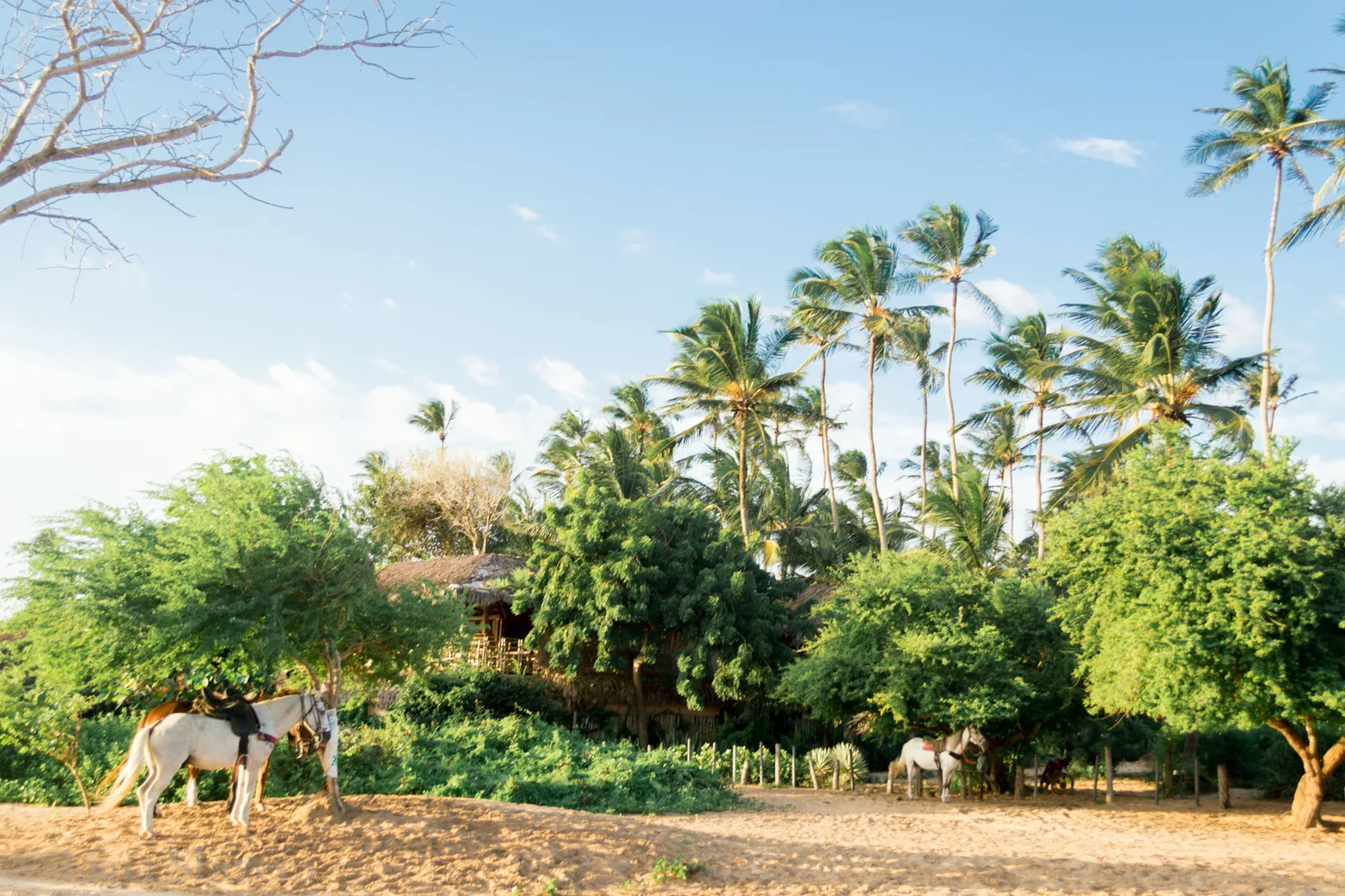
  2. 02
    The edge of Jericoacoara village: low buildings among dense green palms and trees, with horses standing on the open sand in front of them

    The square, the beach and the streets

    The village on foot

    A day with no vehicle in it. The beach in front of the village in the morning, the streets and the shops in the heat of the afternoon, and back up the dune at the end of it. This is the day that tells you whether four nights was enough or too few.

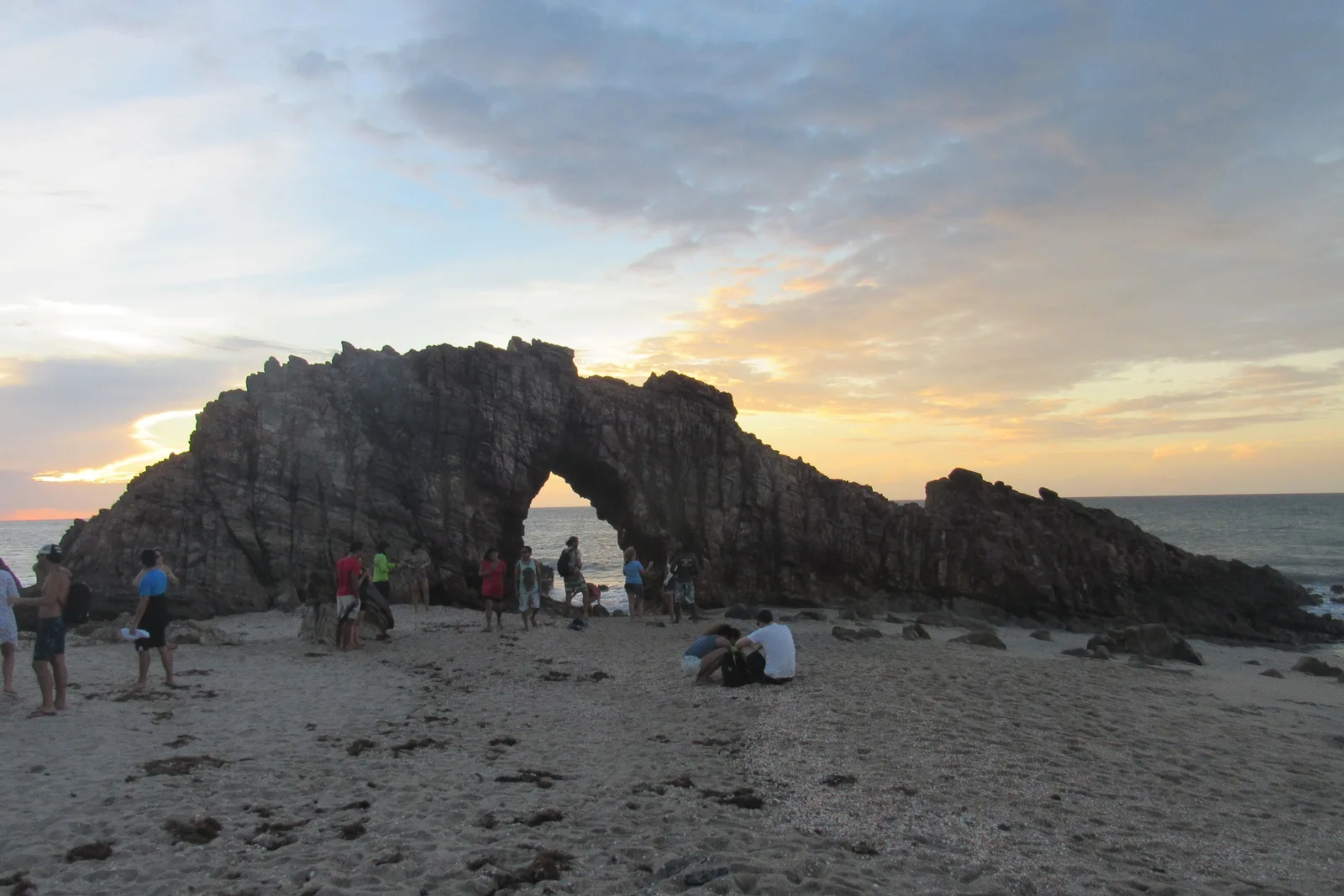
  3. 03
    The Pedra Furada arch at the end of the day with people standing and sitting on the sand around it, the rock dark against a pale sky

    East along the beach, then the water

    Pedra Furada, the Serrote and the wind

    Walk to the arch at low tide, three kilometers along the sand past Malhada, and come back over the Serrote for the lighthouse and the view. Then be on the beach by 3:00pm, when the wind fills in and the sky goes from empty to full of kites.

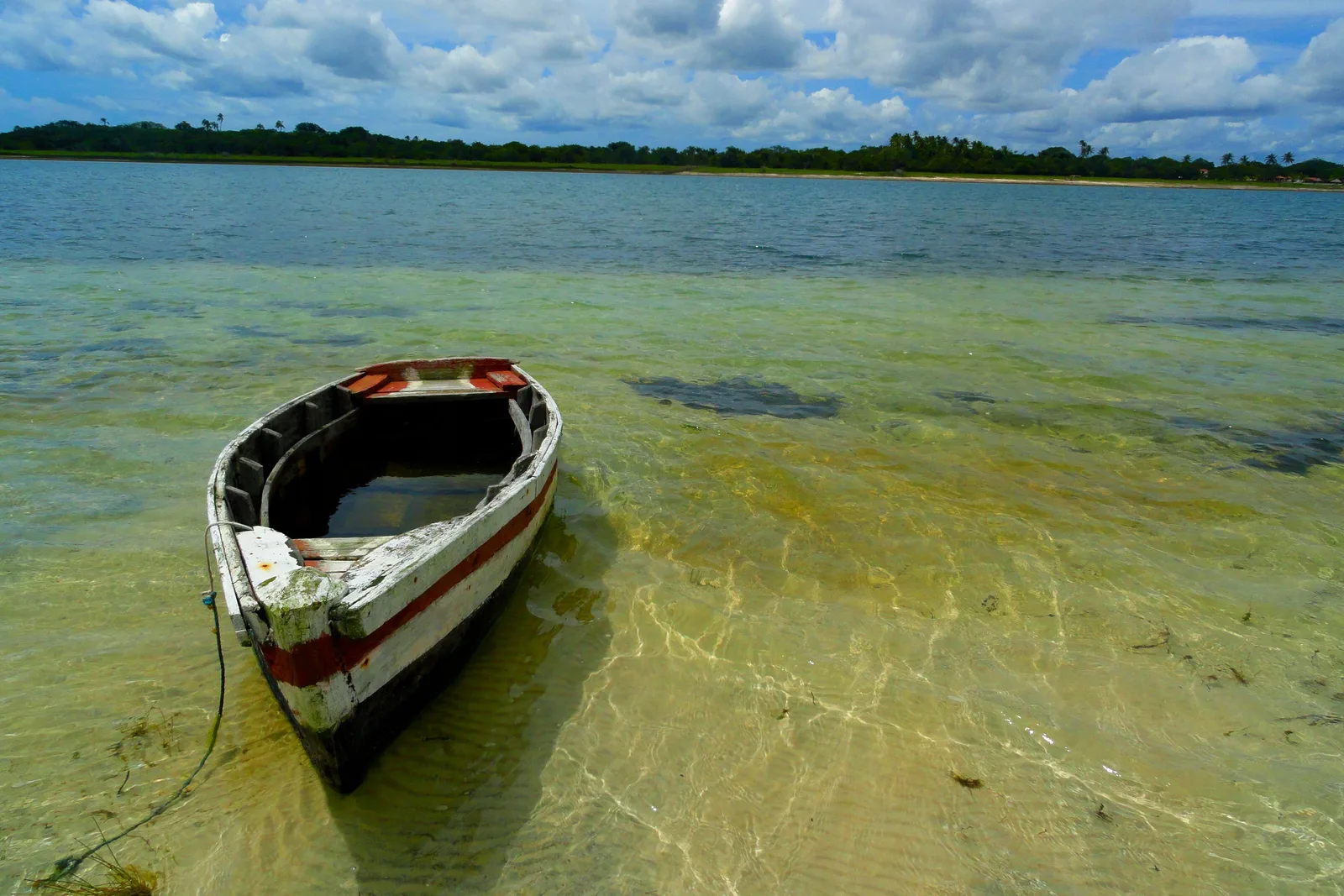
  4. 04
    A small wooden boat moored in clear shallow lagoon water over pale sand, with low green vegetation along the far shore

    Lagoa Azul, Lagoa do Paraíso & Preá

    East to the lagoons

    A buggy east, and the only instruction that matters is to leave early. Warm, clear, shoulder-deep freshwater, a hammock strung out in it, and an hour on a jangada. Stop at Preá on the way back to see where the wind actually lives.

  5. 05
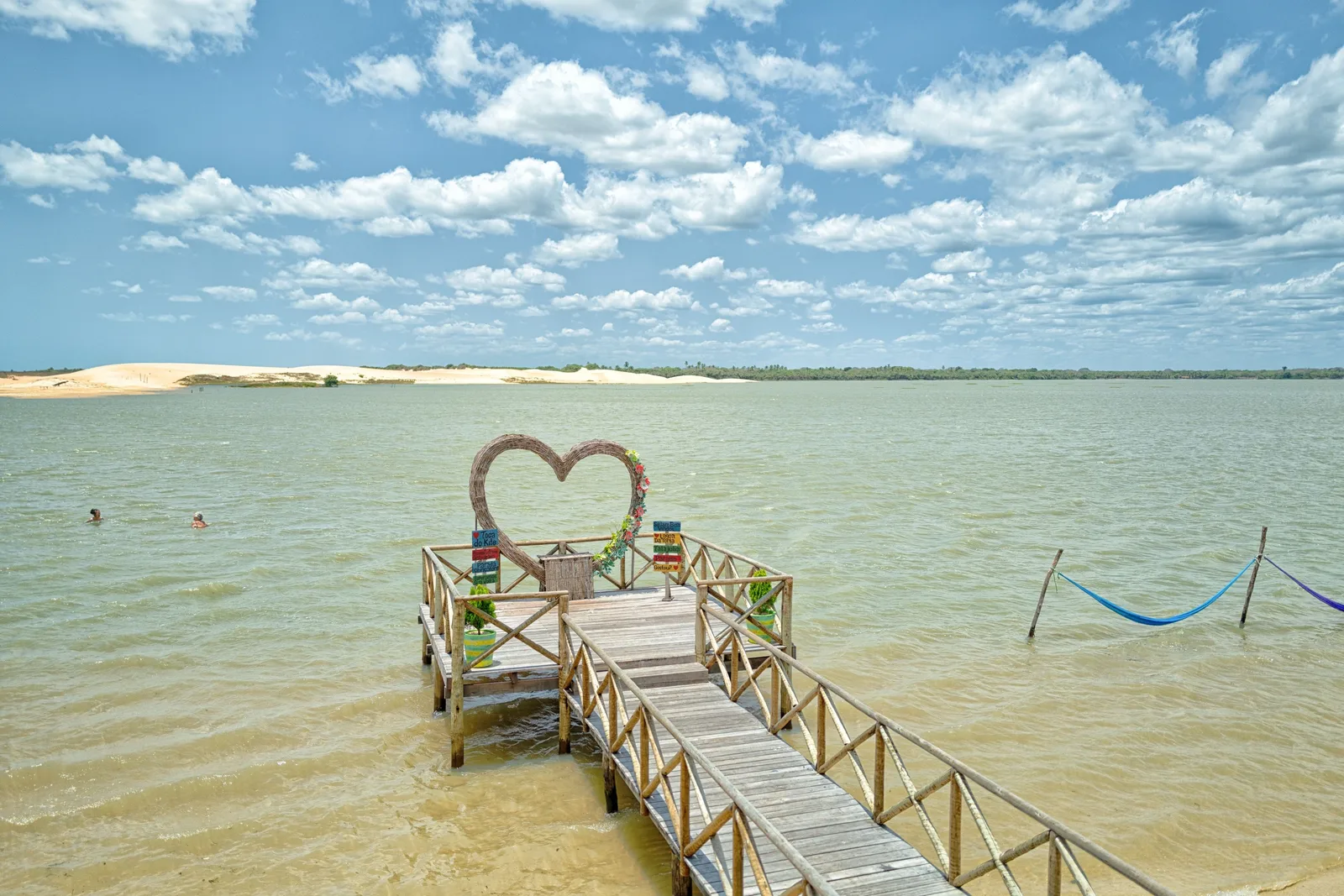
    A wooden jetty running out into the shallow green Tatajuba lagoon, with a heart-shaped arch on it and hammocks strung over the water beside it

    Mangue Seco, Guriú & Tatajuba

    West to Tatajuba

    The longer, rougher direction: a shallow river mouth to swim in, a mangrove channel with seahorses in it, a raft crossing with the buggy aboard, and a lagoon at the far end with a village buried in the dunes behind it.

This is a starting shape, not a fixed departure — we rearrange it around your dates. Have it built for you

Timing

A dry season that runs half the year, and a wind season inside it.

Two things decide when to come, and only one of them is weather. The rain here is extreme and predictable: the nearest station with published normals records 321 mm in March and 2 mm in October. The wind is the other, and it runs from about July to January with its strongest stretch in September, October and November. They overlap, which is why October is the month this whole coast is sold on.

Rainfall, rain days, air and sea temperature and UV for Jericoacoara, month by month. Choose a month to see what the weather and the wind are doing then.

January

Trade-offs
Air
23–32°C 73–90°F
Sea
29°C 84°F
UV
9 Very high
Rain
9 days 114 mm / 4.5 in

Rain returns and the wind starts to fade, but it is still a windy month and the village is full for the holidays.

February

Trade-offs
Air
23–31°C 73–88°F
Sea
29°C 84°F
UV
9 Very high
Rain
13 days 173 mm / 6.8 in

Properly wet now and much calmer on the water. Carnival fills the village anyway.

March

Trade-offs
Air
23–31°C 73–88°F
Sea
29°C 84°F
UV
9 Very high
Rain
19 days 321 mm / 12.6 in

The wettest month of the year at Acaraú and the least sunshine. Green, quiet and cheap.

April

Trade-offs
Air
23–31°C 73–88°F
Sea
29°C 84°F
UV
9 Very high
Rain
19 days 309 mm / 12.2 in

The second wettest month and the calmest of all for wind. The one month the kite schools would tell you not to come.

May

Trade-offs
Air
23–31°C 73–88°F
Sea
29°C 84°F
UV
9 Very high
Rain
12 days 142 mm / 5.6 in

Rain easing sharply and the trade wind beginning to return. A genuine shoulder month at shoulder prices.

June

Good
Air
22–32°C 72–90°F
Sea
28°C 82°F
UV
9 Very high
Rain
7 days 65 mm / 2.6 in

Rain drops away and the wind builds. The dry season is effectively open by the end of the month.

July

Good
Air
22–32°C 72–90°F
Sea
28°C 82°F
UV
9 Very high
Rain
4 days 25 mm / 1.0 in

Dry, sunny and windy, and the start of the kite season. Brazilian school holidays fill the pousadas.

August

Good
Air
22–33°C 72–91°F
Sea
27°C 81°F
UV
10 Very high
Rain
1 day 5 mm / 0.2 in

Effectively rainless, 291 hours of sun, and the wind properly established. One of the best months here.

September

Good
Air
23–33°C 73–91°F
Sea
27°C 81°F
UV
11 Extreme
Rain
1 day 2 mm / 0.1 in

Rain on one day in the whole month on average, and the wind into its strongest stretch. Hard to beat.

October

Best
Air
23–33°C 73–91°F
Sea
28°C 82°F
UV
11 Extreme
Rain
1 day 2 mm / 0.1 in

The most sunshine of the year at 305 hours, no meaningful rain, and the windiest month on both datasets we could find. The peak.

November

Good
Air
23–33°C 73–91°F
Sea
28°C 82°F
UV
11 Extreme
Rain
1 day 3 mm / 0.1 in

Indistinguishable from October on rain and wind, and slightly less sun. A completely safe choice.

December

Good
Air
24–33°C 75–91°F
Sea
28°C 82°F
UV
10 Very high
Rain
2 days 15 mm / 0.6 in

Still dry and still windy, and then the last ten days of the month become the most expensive of the year.

  • Best The one or two peak months
  • Good A real recommendation
  • Trade-offs Workable, with a catch
See Jericoacoara on the Brazil calendar

UV is the monthly average of the daily peak, 2022 to 2025, calculated from Copernicus Atmosphere Monitoring Service data. Weather data by Open-Meteo.com, CC BY 4.0.

For everything at once

September–November

Effectively no rain, the most sunshine of the year, and the strongest wind. On INMET’s Acaraú normals these three months record 2.3, 2.1 and 2.5 mm of rain between them, and October alone gets 305 hours of sun.

For the wind

July–January

Club Ventos, a windsurf and kite operator at the point, publishes the season as July through January with at least 90% of days above Force 4. That is an operator’s own figure. Two independent datasets put the peak in September, October and November.

The rainy quarter

February–May

March and April are the two wettest months, 321 and 309 mm, on 19 rain days each. The wind is at its annual minimum in the same stretch, which is the part people miss: it is not just wet, it is still.

About the rain

Jericoacoara has no weather station of its own and Jijoca de Jericoacoara has no published normals, so the rain, sunshine and temperature figures above are INMET’s 1981–2010 normals for Acaraú, the nearest station that publishes them, on the same coast about 40 kilometers east. That is a declared proxy and worth knowing about. It holds up well: Climatempo’s own 30-year Jericoacoara series and NASA’s POWER reanalysis at the village both produce the same shape of year and the same near-zero September to November floor, within a few percent. Annual rainfall at Acaraú is 1,175 mm across about 89 rain days, and nine tenths of it falls between January and May.

What that proxy cannot tell you is the wind, and the wind is what people come for. Neither the Acaraú normals nor any other station on this stretch publishes a wind column, so the figures on this page come from two sources that do. NASA’s POWER reanalysis at the village’s own coordinates puts the mean wind at 3.1 meters per second in April and 6.2 in October. Observations from Comandante Ariston Pessoa airport, 31 km away, averaged over the afternoon hours, run from 6 knots in April to 16 knots in October. They agree: April is the calmest month, October the windiest, and the strong stretch is September through November with July, August, December and January good either side of it. What neither one measures is the beach itself, where the sea breeze reinforces the trade over hot sand and the numbers a kiteboarder quotes are higher than either dataset.

The dates worth planning around

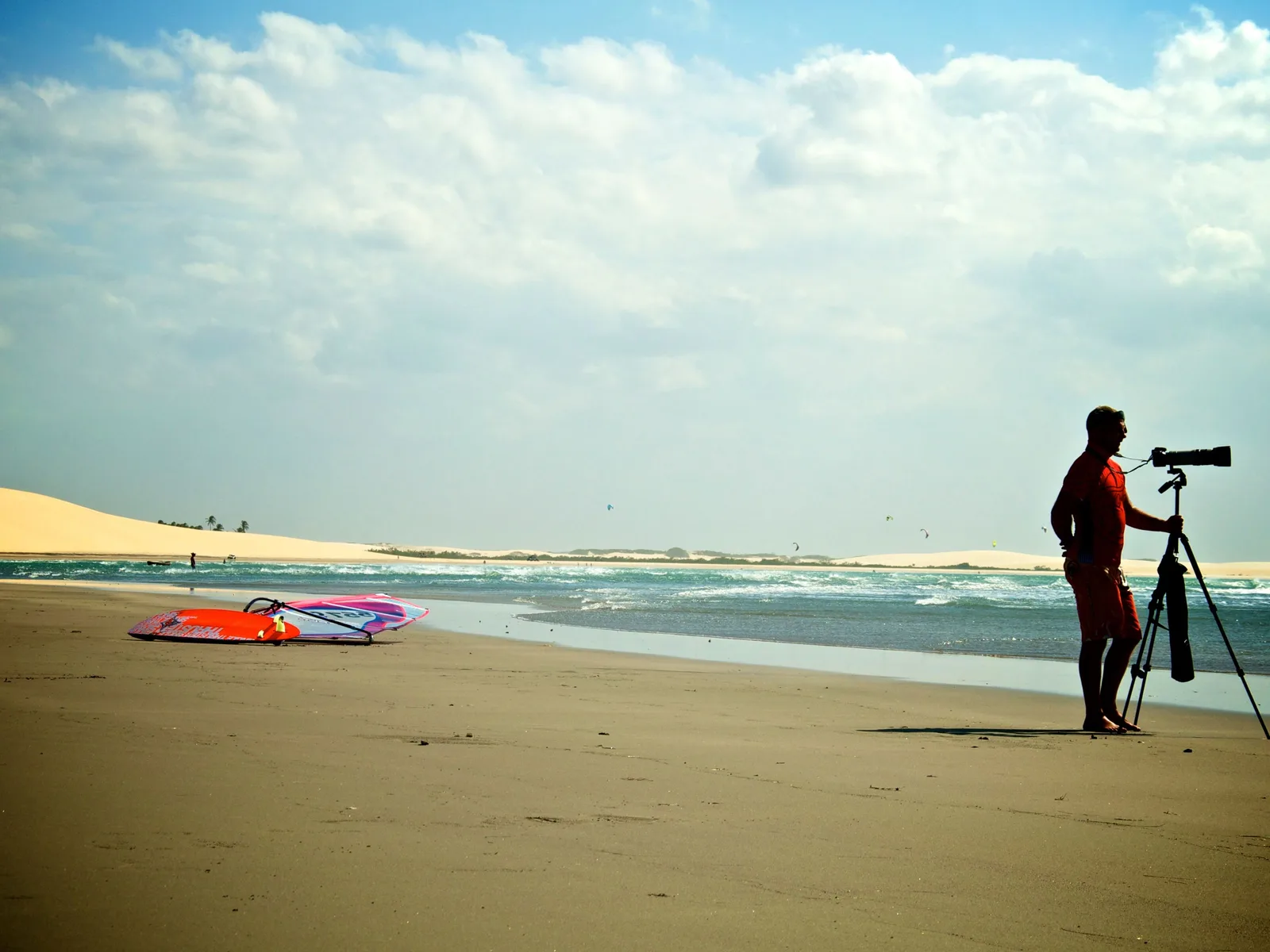
A photographer standing at a tripod on the beach in the late sun with a windsurf board and its sail rig laid out on the sand beside them, and kites out over the water beyond

The wind season

Roughly July to January, strongest September to November

Not a festival, but the thing that fills this village and empties it. From about July the trade wind blows most afternoons, the schools open, and the population of the village changes: long-stay kiteboarders, instructors, and the shops that serve them. Club Ventos publishes at least 90% of days above Force 4 across the season, which is its own figure and the sort of thing an operator is motivated to say, but two independent datasets support the shape of it. By March the beach is quiet and half the kite shops are shut. If you want to see Jericoacoara as a wind town rather than as a beach town, come inside this window.

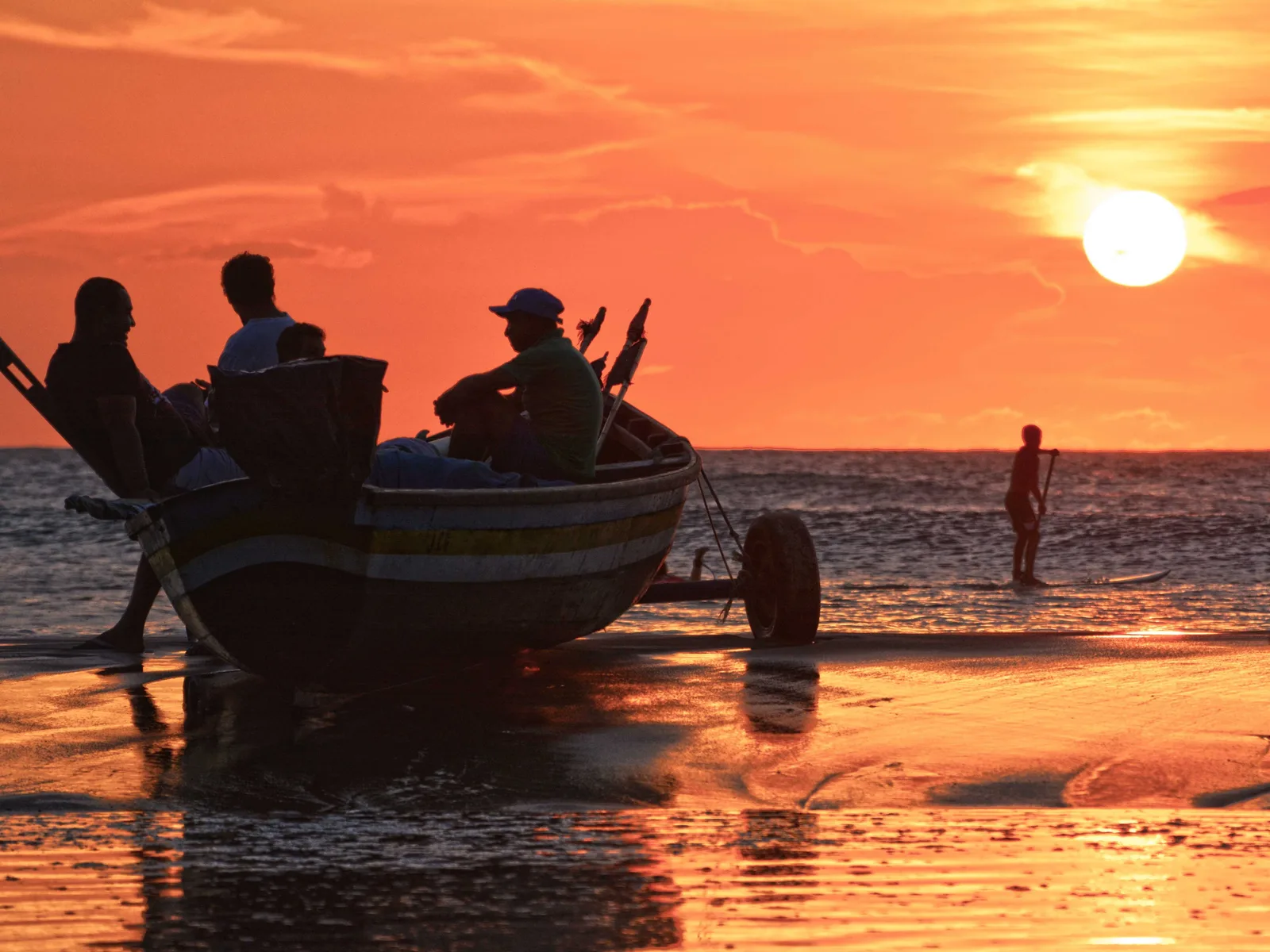
People sitting in a wooden boat drawn up on the sand watching an orange sunset over the sea, with one figure standing at the water’s edge

Réveillon and the summer peak

Late December to Carnival

New Year in Jericoacoara is the single busiest and most expensive stretch of the year, and it is a domestic Brazilian phenomenon rather than an international one: the village fills with people from Fortaleza, São Paulo and Brasília, the pousadas go to multi-night minimums at multiples of the November rate, and the sand streets get genuinely crowded. Carnival is the second wave. Both are good fun and neither is what most first-time visitors are picturing when they read about a fishing village with no street lights. Come deliberately, or come in a different month.

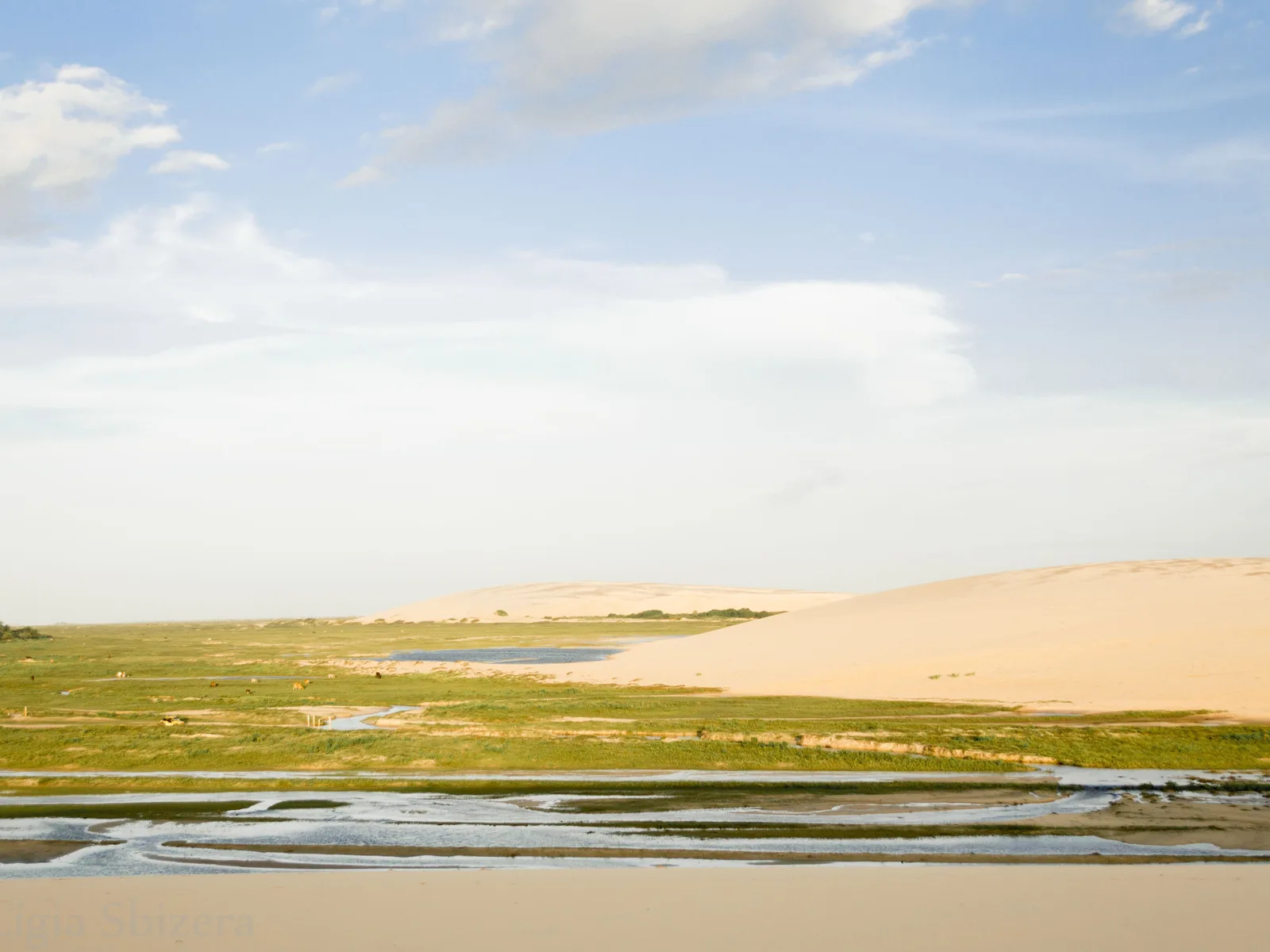
A high pale dune wall running along behind flat green wetland and shallow standing water, under a blue sky with scattered white cloud

The green months

February to May

The other Jericoacoara. Between February and May the rain arrives properly, the scrub behind the dunes turns green, the lagoons come up, and the wind drops to its annual minimum. The village empties, prices fall, and it becomes a quiet place with warm water and dramatic skies. What it is not is a kite trip: April is the calmest month of the year on both wind datasets, and a course booked then can lose days to flat conditions. If you are coming for the village and the landscape rather than the wind, this is a badly underrated window.

Good to know

Before you come

How do I actually get to Jericoacoara, and can I drive myself? +

Fly into Fortaleza and take a road transfer of four and a half to five hours, or fly into Jericoacoara’s own airport, which is 31 kilometers away in the neighboring municipality of Cruz and served from São Paulo and Belo Horizonte only. Either way the last stretch is sand rather than road. You can drive yourself as far as the town of Jijoca de Jericoacoara, where the pavement ends, but you cannot drive into the village: private vehicle circulation inside Jericoacoara is restricted and cars are left in authorized parking at the entrance. From Jijoca you take a jardineira, an open 4x4 truck with bench seats, for the last 20 kilometers, about half of that over sand inside the park and 40 to 50 minutes of driving. It costs a few dollars, it runs all day, and it will drop you at your pousada door. Pack a soft bag rather than a hard case: you will be carrying it across sand at the other end.

Is there an entrance fee? +

One, and it is municipal rather than federal. The Prefeitura de Jijoca de Jericoacoara charges a Taxa de Turismo Sustentável of R$41.50 per person, valid for ten days, with R$4.15 for each day after that. You can buy it in advance on the town hall’s website or pay it at a post on the way in, and the town hall says explicitly that it is the only mandatory municipal charge for visitors. The national park is a separate question and it is in litigation. ICMBio granted the park’s visitor services to a concessionaire, Urbia Cataratas Jericoacoara, which announced an access charge; a federal court suspended it, and the Second Panel of the TRF5 upheld that suspension on 9 December 2025, holding that simple access to the village cannot be charged and that only the park’s specific attractions can. Check the position again close to your travel date, because this one moves.

How many days do I need? +

Four nights is the honest minimum and five is comfortable. The day you arrive is largely spent arriving, which leaves three full days: one for the village itself and the walk to Pedra Furada, one for the lagoons east, and one for Mangue Seco, Guriú and Tatajuba to the west. The two buggy directions genuinely cannot be combined into one day. Three nights works if you drop one direction, and most people who do that drop the west, which is the wrong way round: the west run is longer, emptier and better, and the east lagoons are the ones that fill with tour convoys by 11:00am. If you are here to learn to kitesurf, budget a week, because a course is three to five days on the water.

Do I have to be a kitesurfer for this to be worth it? +

No, but you should know what the wind does to a beach day. From about July to January it blows most afternoons, and by 3:00pm the beach in front of the village is loud, sandy and full of equipment. That is wonderful if you are out on the water and it is not a lie-on-a-towel beach if you are not. The answer for non-riders is to swim and sunbathe in the morning, spend the middle of the day on the lagoons east of the village where the water is warm and flat and the wind is a breeze rather than a sandblaster, and come back for the afternoon show and the dune. Plenty of people do exactly that and never touch a board. If you want a calm-water beach holiday and nothing else, this is not the coast for it: look at Porto de Galinhas instead.

What does “no street lights” actually mean at night? +

It means what it says. There is no public lighting network in the village and no lighting poles on the streets; mains electricity arrived only in 1998 and runs underground, and the village’s own community council records both. The practical effect is that the lit parts of the village are the parts with a restaurant in them, and everything between is dark sand. Bring a headlamp or use your phone, wear something on your feet after dark even though nobody does in daylight, and walk back to your pousada with other people rather than alone very late. The compensation is real: the sky over the village is genuinely dark, and on a clear night in the dry season you can see a great deal of it from the beach.

Keep going

Where Jericoacoara fits on this coast.

Nobody flies four thousand miles for one village. These three are the trips that most often go either side of it, and one of them is the place you can reach overland from here.

Free · 29 pages

Free guide

Beginner's Guide to Brazil

A free 29-page guide to everything a first-time visitor should know before landing: visas, safety, money, getting around, where to go, and what to eat.

We'll email you a link to confirm your address. Click it and the guide opens right away.

See what's inside
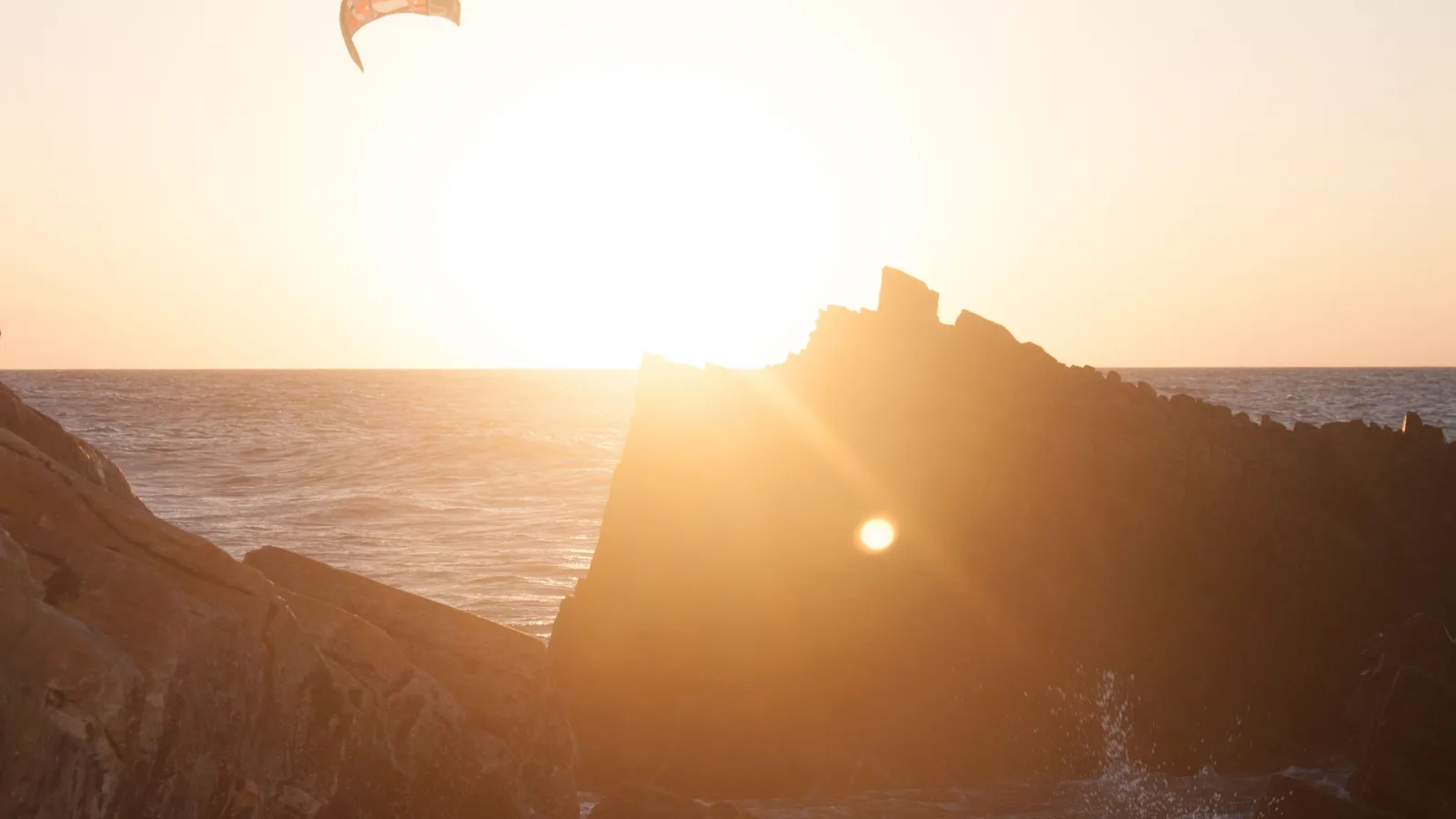
The sun blazing low beside the dark silhouette of Pedra Furada, the sea running gold in front of it and a single kite high in the sky above

Skip the planning

Getting here is the hard part. We do that bit.

Tell us your dates and we will tell you plainly whether they land inside the wind season, how to fit Jericoacoara together with the rest of the northeast without driving the same road twice, and what the transfer at each end actually involves.

  • One person, living in Brazil, replying to you directly
  • A reply within one business day, no call center and no bots
  • No cost to plan, and no obligation to book
  • Built around your dates, not a fixed departure