

Skip to content
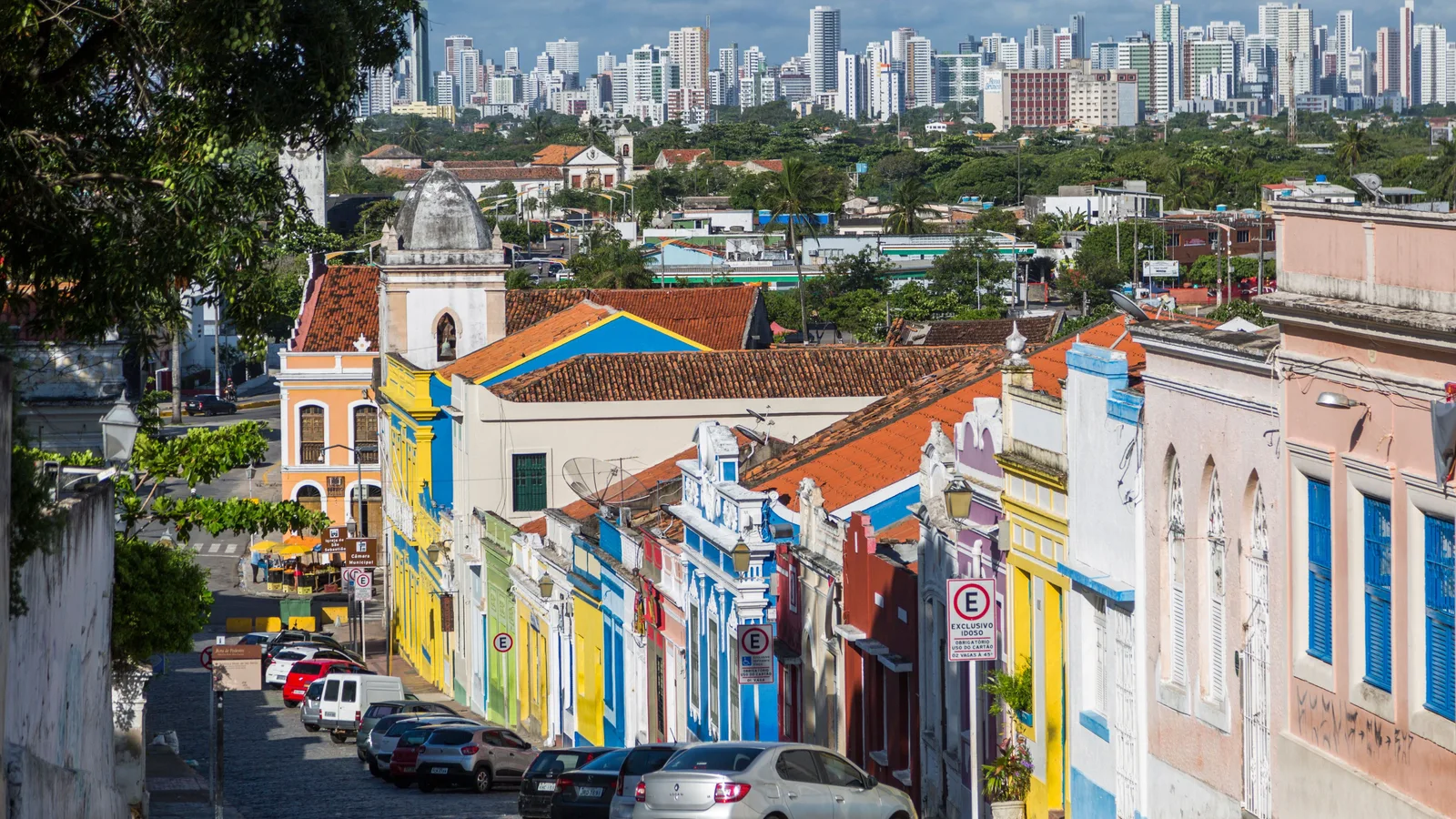
A steep street in Olinda’s historic center lined with houses painted yellow, blue, pink and green under terracotta roofs, a whitewashed church tower behind them, and the high-rise skyline of Recife stretched across the horizon beyond

Pernambuco

Recife & Olinda

A colonial hill town, and the city it turned into.

Last checked September 2026

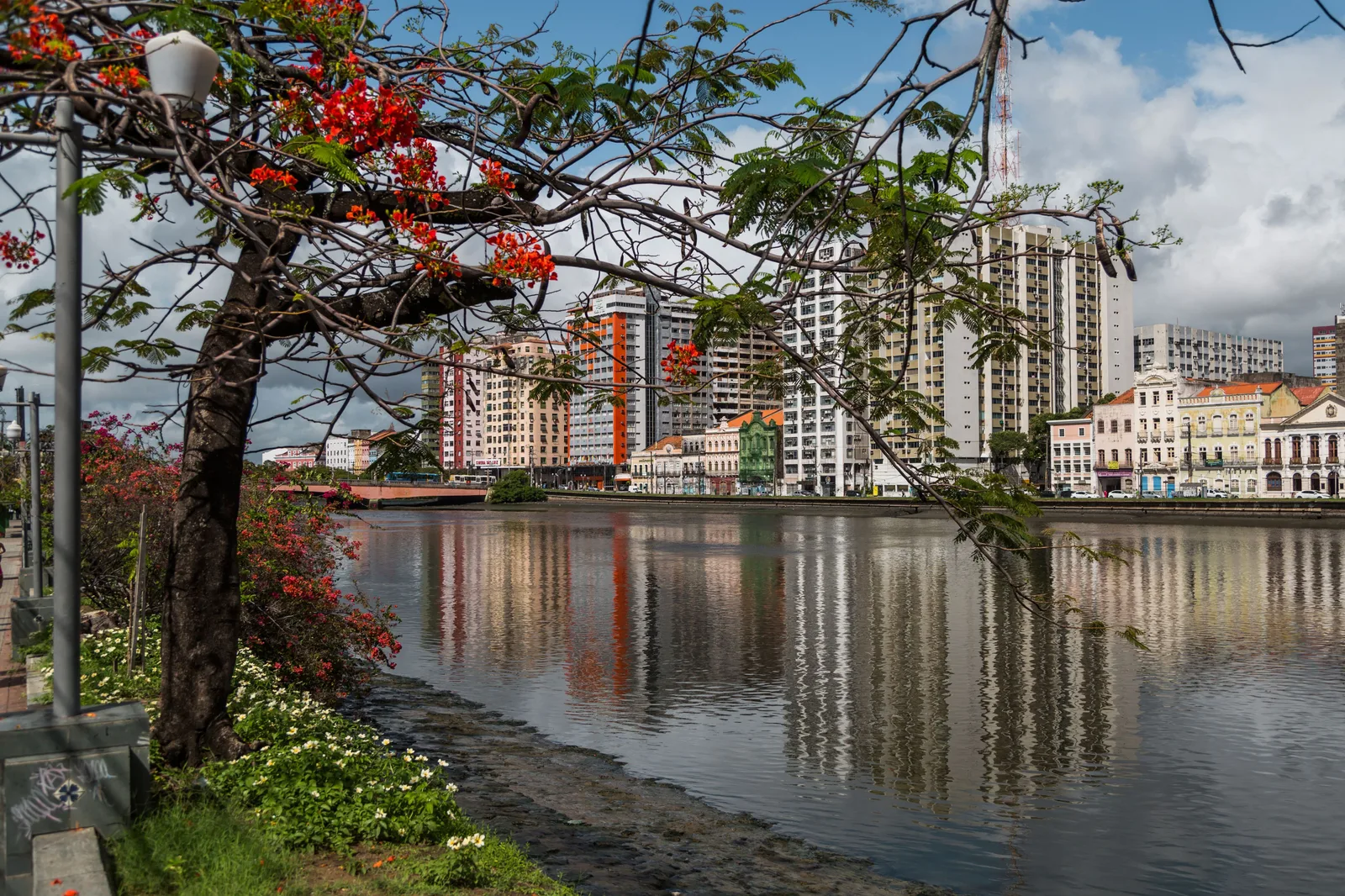
  • A flame tree in flower on the bank of the Capibaribe, a row of colonial buildings and the city’s towers reflected in the water behind it
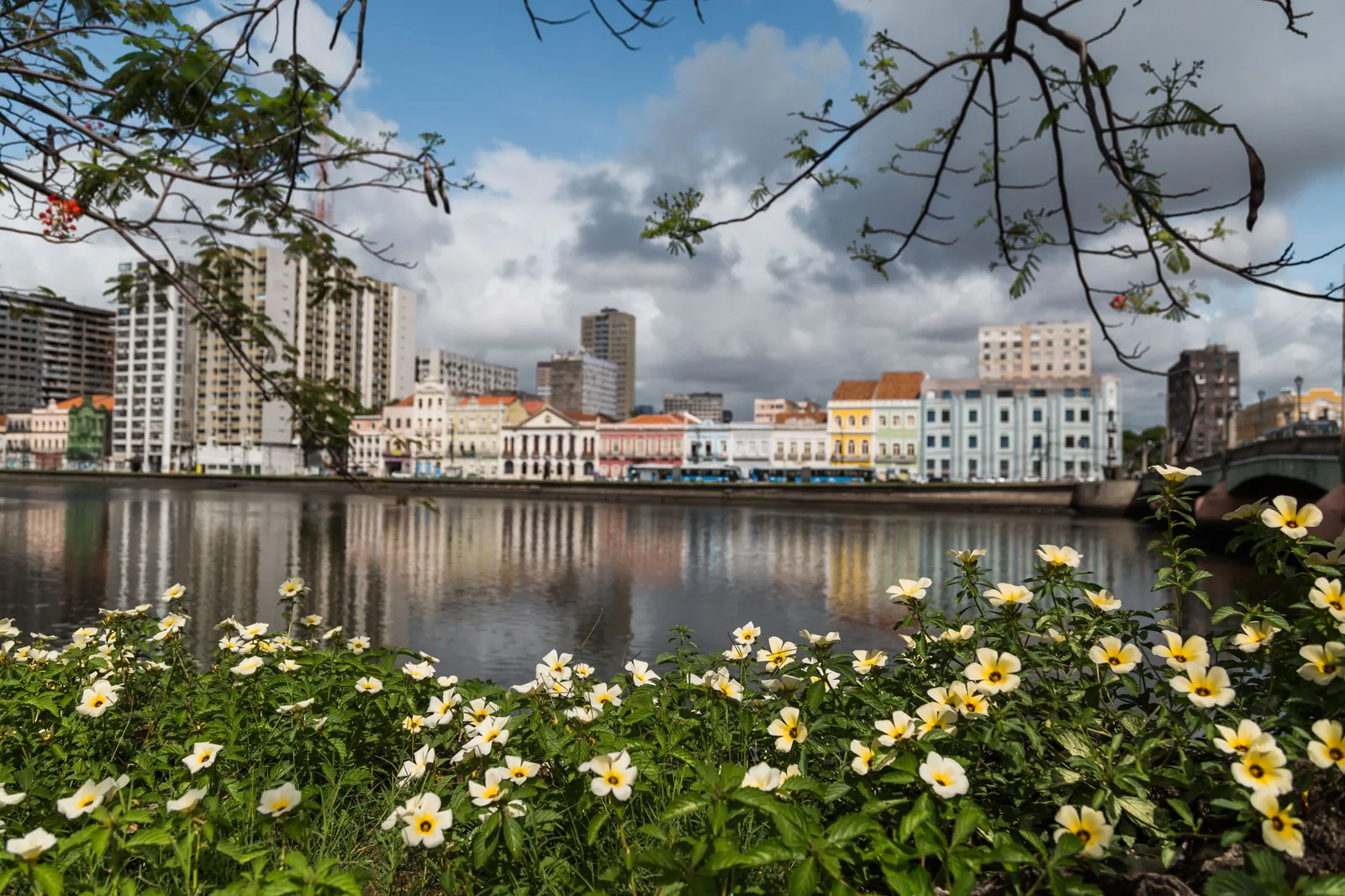
  • Yellow flowers in the foreground and, across the Capibaribe, the pastel row of buildings along the Rua da Aurora
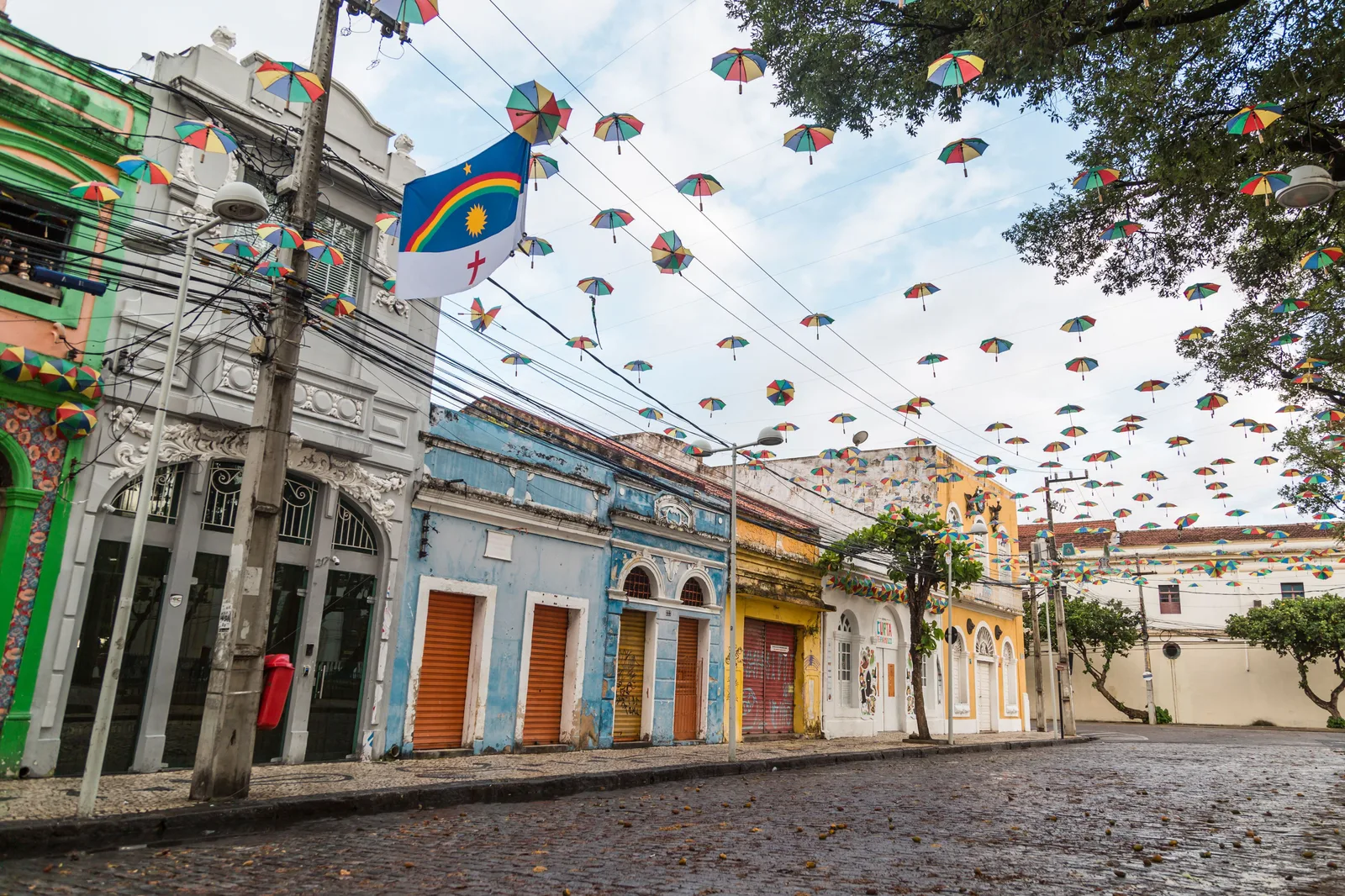
  • A street of single-story shops in Recife with orange roller shutters and painted fronts, hundreds of small carnival umbrellas strung on wires overhead and a Pernambuco flag flying
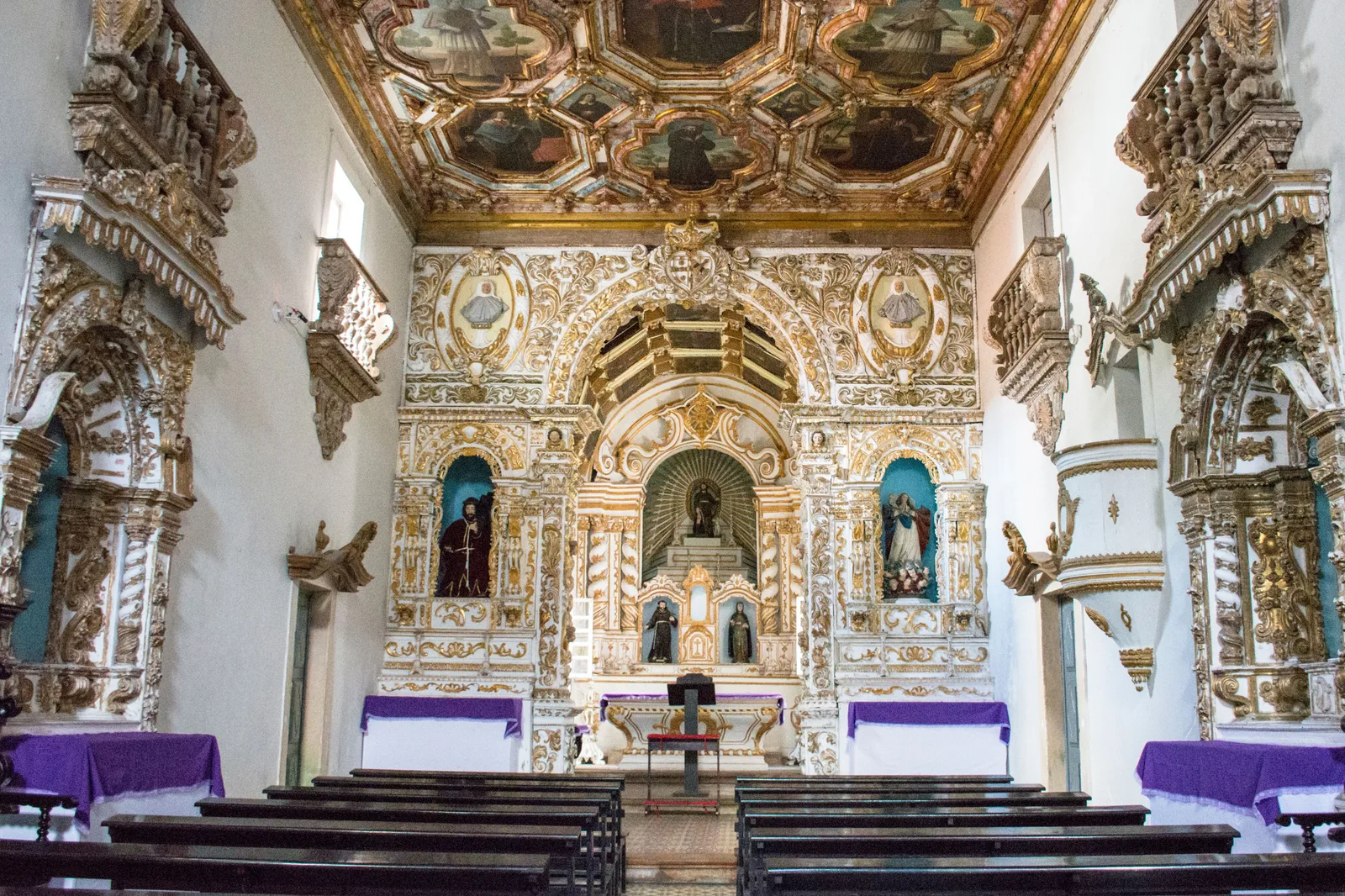
  • The high altar of the Convento de São Francisco in Olinda: deeply carved white and cream stucco with gilt picked out along its edges, painted panels set into the coffered ceiling above and dark wooden pews in front
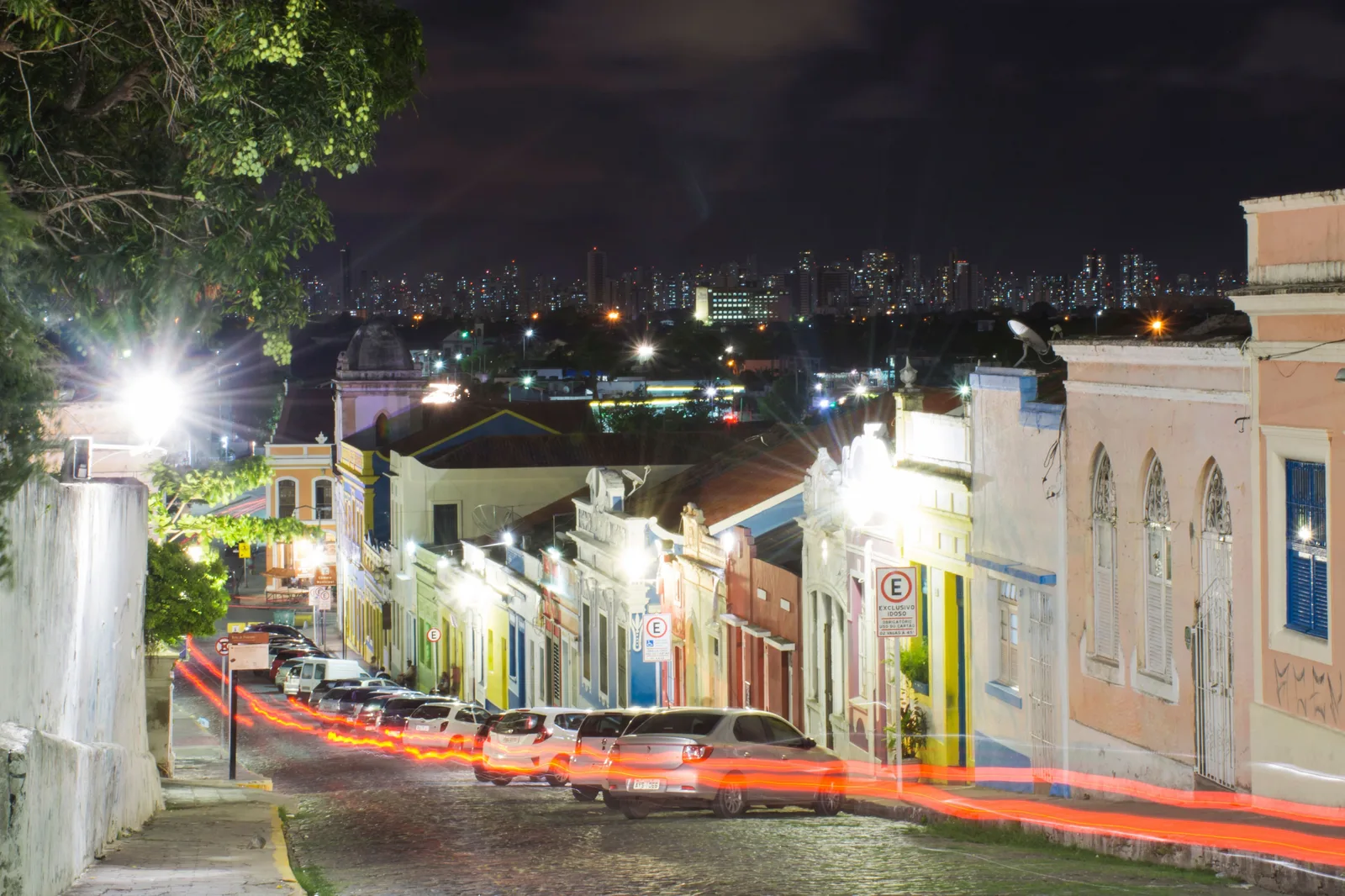
  • A street in Olinda’s historic center at night, its colonial facades lit and the lights of Recife strung along the horizon behind
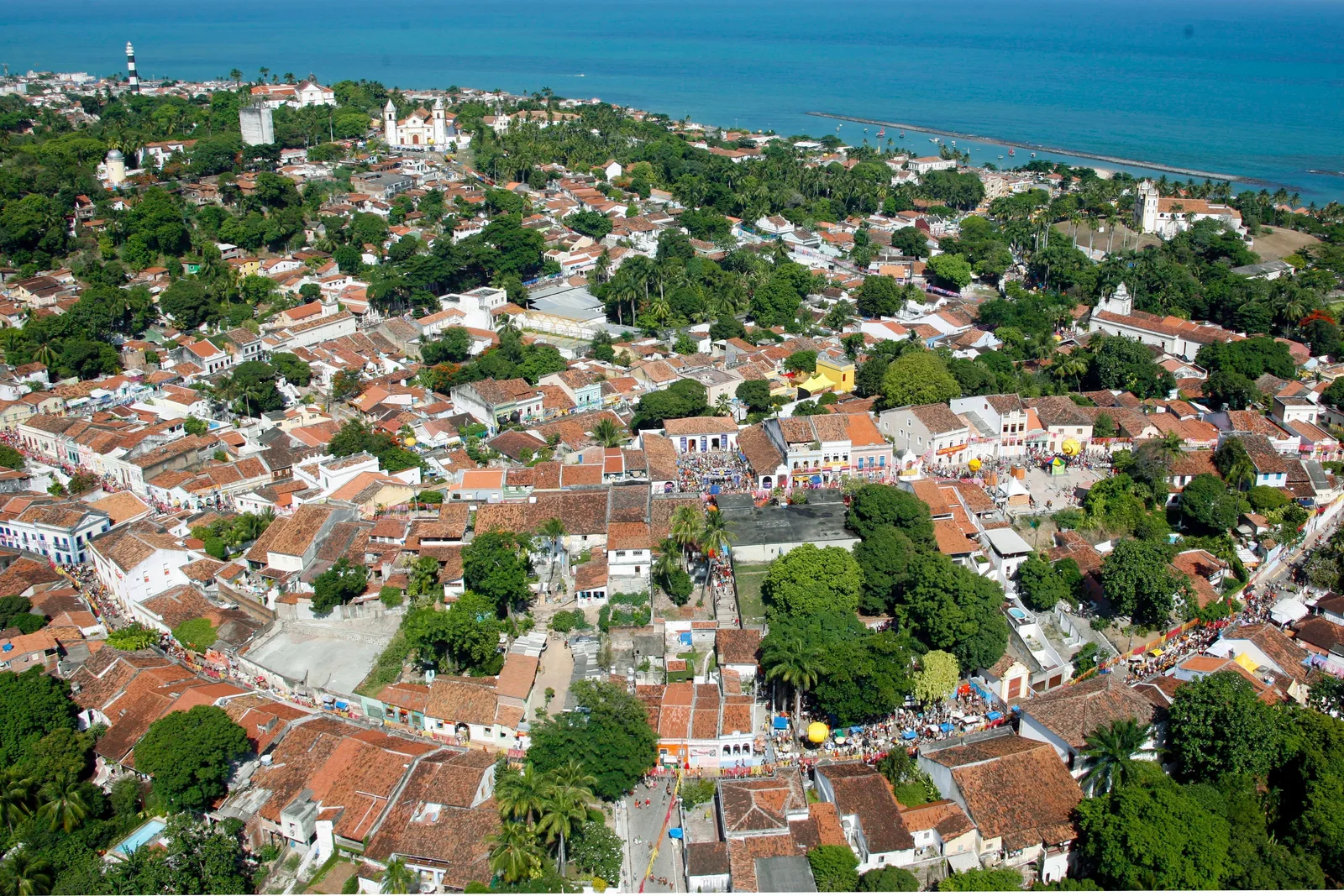
  • Olinda from above: terracotta roofs and church towers packed among mango and palm trees, with the Atlantic beyond
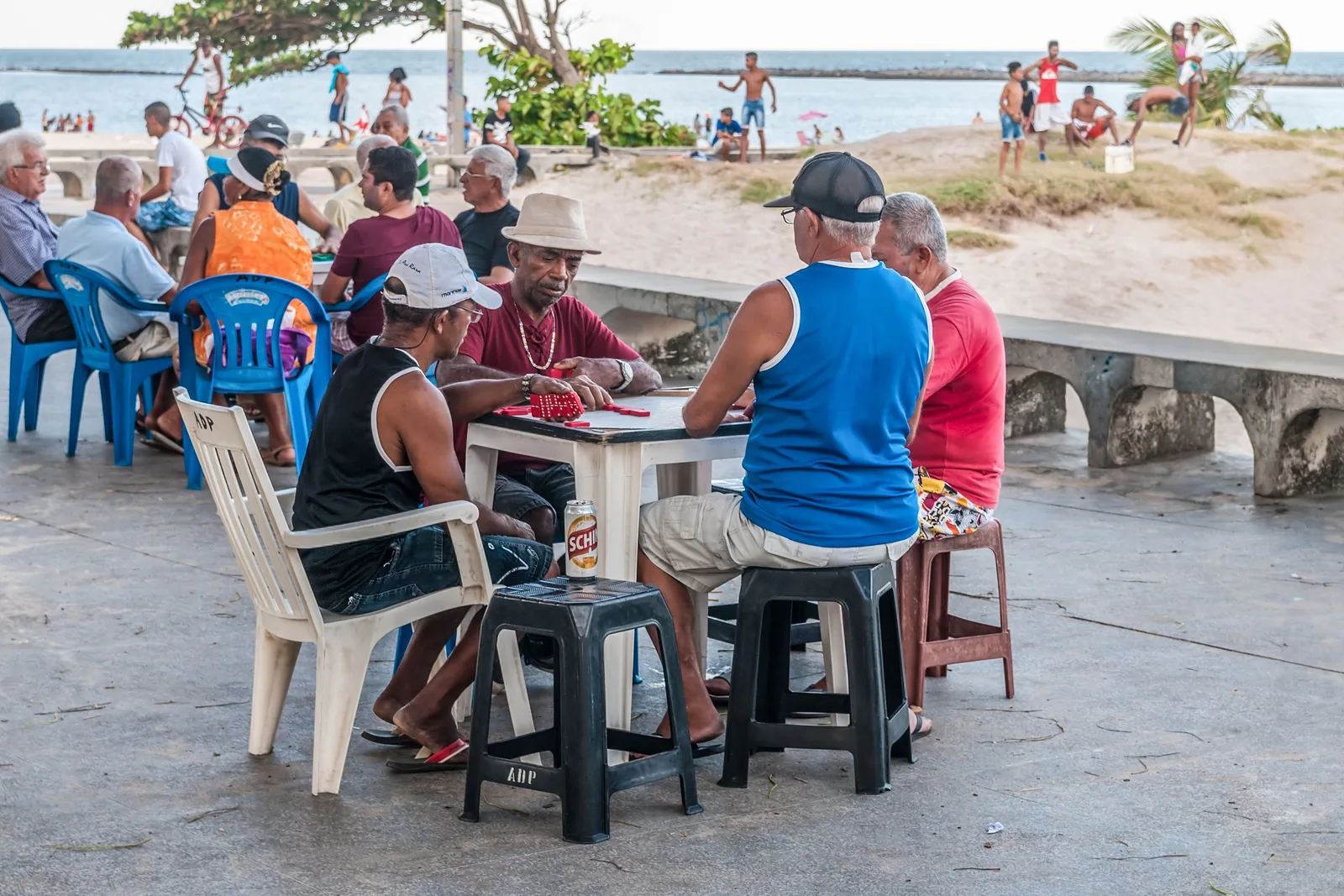
  • Men playing dominoes at a plastic table on the seafront at Olinda, with the beach and the water behind them
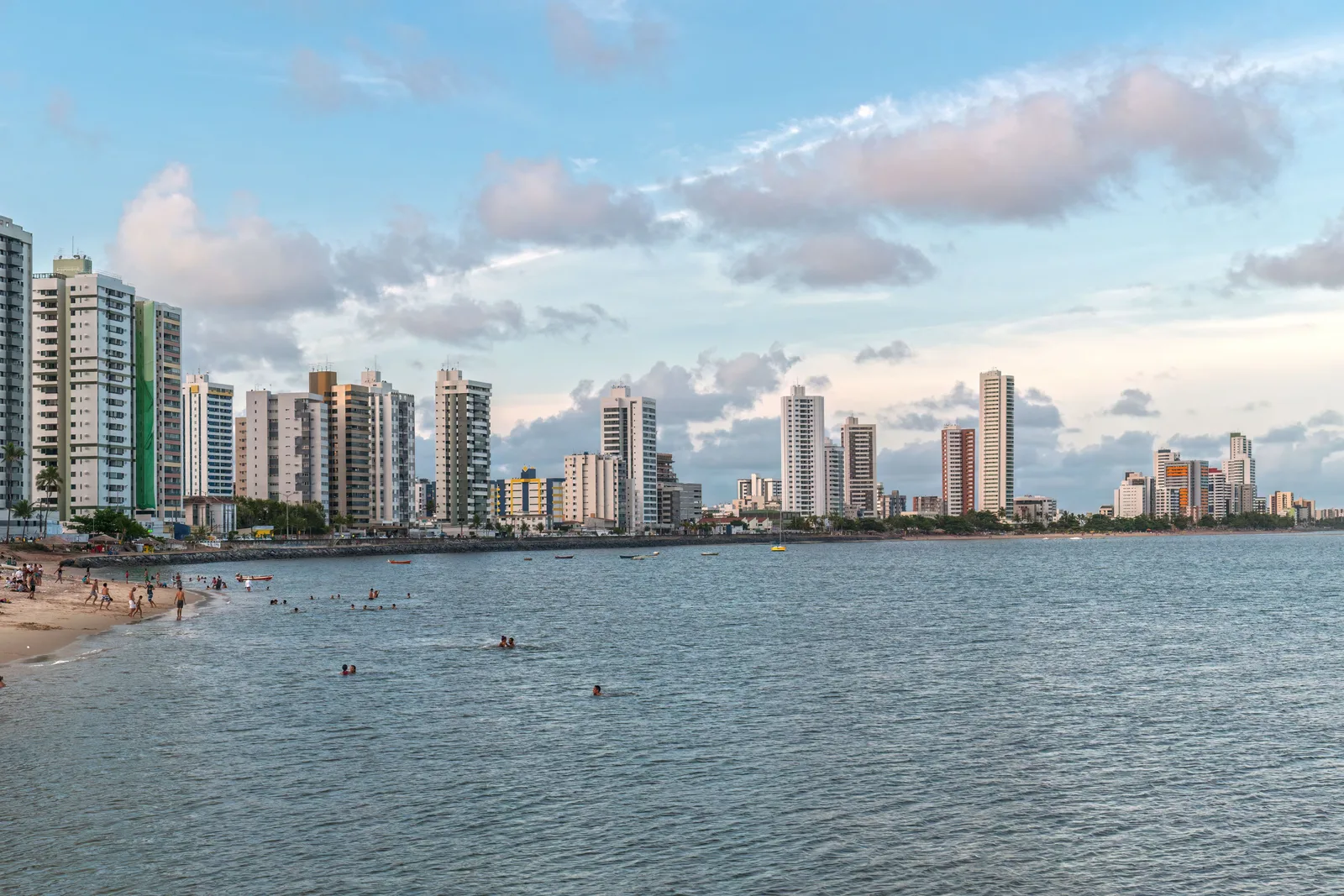
  • The shoreline north of Recife with people in the water some way out from the sand, and the city’s wall of apartment towers running along the coast beyond
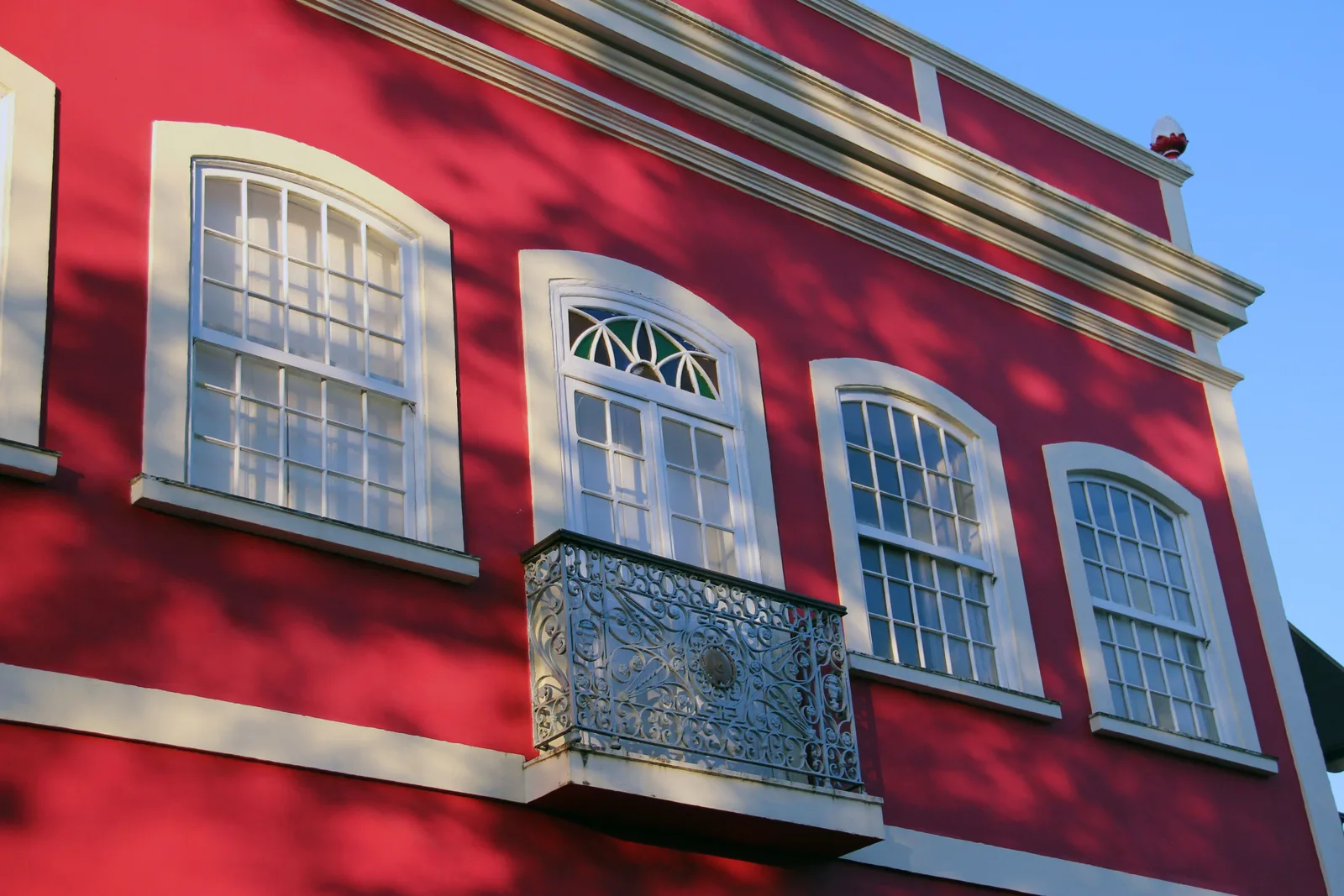
  • The facade of a colonial townhouse in Olinda painted deep red, with white window surrounds and an iron balcony
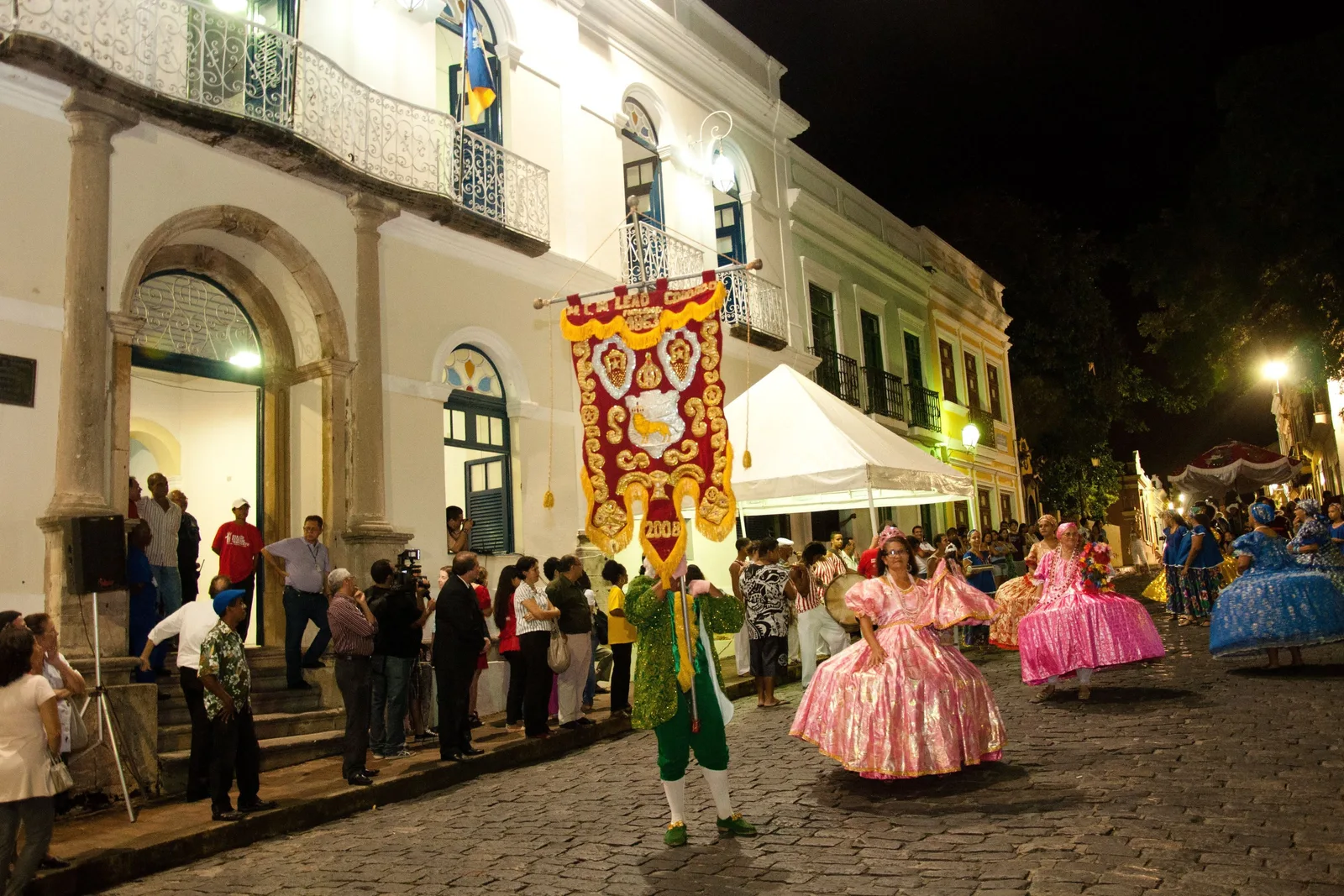
  • Maracatu performers in embroidered court dress outside a colonial building in Olinda at night
  • Frevo dancers mid-leap under stage lights, small bright umbrellas held above their heads

Orientation

Two cities, six kilometers apart.

Everything logistical, and the one thing you need to know before you go near the water.

General Info

What Recife and Olinda are to each other

Olinda came first. The Portuguese laid it out on a hill above the sea in the 1530s, because a hill could be defended and the view went for miles, and for a century it was the rich capital of the sugar coast. Six kilometers south, down at the water, there was only a working anchorage sheltered behind a long stone reef — the arrecife that gave Recife its name and that is still there, a line of surf half a kilometer offshore that you can see from almost anywhere on the coast.

Then the Dutch arrived. The West India Company took the captaincy in 1630, burned Olinda the following year and rebuilt the port instead, because a port is worth more than a view. For twenty-four years Recife was Mauritsstad, the capital of Dutch Brazil, with canals, bridges, a Calvinist governor who imported painters and astronomers, and the first synagogue in the Americas on what is now the Rua do Bom Jesus. The Portuguese took it back in 1654. The city never gave the harbor up again, and Olinda never really got it back.

That is the split you are still traveling through. Recife is a metropolitan area of about 3.7 million people spread across islands and river mouths, with more than fifty bridges, an international airport, a metro, the museums, the food and essentially all of the hotel rooms. Olinda is a town of about 350,000 whose historic core is a steep, quiet, extravagantly painted quarter of churches and artists’ studios, listed by UNESCO in 1982. You will almost certainly sleep in one and spend a full day in the other, and the page below is built that way round.

Where It Is

The eastern corner of Brazil

Recife sits on the northeast coast of Pernambuco, about as far east as Brazil goes. It is roughly 800 km north of Salvador and 2,200 km northeast of Rio de Janeiro, and Olinda is 6 km up the coast from the middle of it — twenty minutes in a car outside rush hour.

Recife & Olinda Recife & Olinda

8.05° S, 34.88° W

See the Northeast on the interactive map

Swimming

Where you can go in the water, and where you cannot

This is the part of a Recife guide that usually gets softened, so here it is plainly. The urban beaches of Greater Recife have a real and continuing shark problem. CEMIT, the state committee that has monitored it since 1992, counted the 84th incident in Pernambuco on 1 June 2026, and 70 of those 84 were on the Greater Recife coast rather than out at Fernando de Noronha (CNN Brasil, June 2026). Diário de Pernambuco, counting the day before, put the running total at 83 with 27 deaths. Two people were bitten a day apart that week, on 31 May at Piedade and 1 June at Boa Viagem: an eleven-year-old and a nineteen-year-old, both of whom survived and both of whom lost a leg. A thirteen-year-old boy was killed in January 2026. This is not a historical curiosity and it is not seasonal. It is the standing condition of this coast, and you plan around it the way you would plan around a rip current anywhere else.

  • The rule that matters: do not swim beyond the reef line, anywhere between Praia do Paiva in the south and Praia do Farol in Olinda in the north. That is a stretch of about 33 km, it is signed, and it takes in Boa Viagem, Pina, Piedade and Candeias — the entire urban beachfront.
  • Water sports have been prohibited along that stretch by state decree since the 1990s. Surfing on the urban beaches is not a thing you are choosing not to do; it is illegal, and it has been since 1999, when Pernambuco state decree 21.402 banned it in Recife and in Olinda, Paulista, Jaboatão dos Guararapes and Cabo de Santo Agostinho, and gave the fire service the power to confiscate boards. The text is on Alepe, the state legislature legislation portal.
  • Bathing itself is banned outright on part of Piedade beach in Jaboatão. Elsewhere it is signed rather than forbidden, and the posted advice is the same everywhere: stay inside the reef, stay in water no deeper than your waist, and get out at high tide.
  • Inside the reef is a different thing. At low tide the water between the sandstone reef and the sand at Boa Viagem drops to knee height and warms up, and that shallow band is where families actually go in. It is what the beach is for here. Wait for the tide table rather than the weather.
  • The mechanism, if you want to know why: a sandbank sits about a kilometer offshore in one to three meters of water, and between it and the beach runs a channel five to eight meters deep. Bull sharks and tiger sharks use that channel, and at high tide they cross the reef into water people are standing in. Peer-reviewed work on the 1992 to 2006 outbreak ties the start of it to the building of the Suape port complex south of the city.
  • What to do instead: the hotel pool, which is why almost every Boa Viagem hotel has one; the shallows inside the reef at low tide; or the coast further south, where Porto de Galinhas is about ninety minutes away and is the beach base most visitors add on.
  • None of this makes the beach unusable. It makes it a beach you walk, run, cycle, eat and drink on, and wade into at low tide, rather than one you swim laps off. Treat the signs as instructions and there is no problem to have.

Cost

What a day here actually costs

Recife is the cheapest of Brazil’s big coastal cities to visit and one of the best value destinations in the country from the US. Rooms on the Boa Viagem seafront cost a fraction of the equivalent in Rio, the food is inexpensive and very good, and most of the best things here — Olinda’s streets, Marco Zero, the churches, the beachfront — cost nothing. The one thing that moves the budget is Carnival, when the whole market changes shape.

Estimated daily budget, outside Carnival

Budget

$50 / day

A hostel bed or a simple pousada, market lunches, the metro and buses, and the churches, streets and beachfront that are free.

Mid-range

$110 / day

A comfortable double split two ways on the Boa Viagem seafront or in an Olinda pousada, restaurant meals, ride apps, and a paid museum most days.

Comfortable

$220 / day

A well-reviewed beachfront hotel, dinners out, private transfers, a guide for Olinda and the day trips booked without thinking about it.

Estimates, per person per day, once you are here — flights not included. Carnival is a different market: rooms multiply, minimum stays appear, and the good places sell out months ahead.

What things cost

  • Mid-range double, Boa Viagem seafront $75 R$380
  • Pousada double, Olinda historic center $45 R$230
  • Metro, single ride $0.85 R$4.25
  • City bus, single ride $0.90 R$4.50
  • Ride app, airport to Boa Viagem $5 R$25
  • Ride app, airport to Olinda $12 R$60
  • Lunch for two, simple place $16 R$80
  • Dinner for two, mid-range $50 R$255
  • Instituto Ricardo Brennand, museums only $10 R$50
  • Chopp (draft beer), 300 ml $2 R$10

Carnival is the exception to everything on this list. Rooms in Olinda and on the Boa Viagem seafront run several times the normal rate with four- and five-night minimums, and the well-placed pousadas on the hill are gone six months out.

Restaurants add a 10 percent service charge to the bill. It is customary rather than compulsory and it is almost always already on the check rather than expected on top.

Cards work nearly everywhere and contactless is normal. Bring one with no foreign-transaction fee, withdraw inside a bank branch or a shopping mall rather than on the street, and skip the airport exchange booths.

Checked September 2026 and converted at R$5.10 to the dollar. Estimates, not quotes — the shape of a budget rather than a price you can hold anyone to.

Safety

A city that asks for city habits

5 /10

Our rating — a real city with real street crime, and a visitor circuit that is small, busy and manageable if you treat it like one.

Recife is a working metropolitan area of about 3.7 million people, and it has the street-crime profile that goes with that. Phone snatching and bag theft are the everyday risk rather than anything worse, and they concentrate exactly where you would expect: quiet streets, the commercial center after the offices empty, and anywhere you are the only person walking. The places visitors actually spend time — the Boa Viagem seafront, Recife Antigo on a busy evening, Olinda’s historic center in daylight — are patrolled and full of people, and are a different experience from the streets two blocks inland. The two rules that do most of the work are: be somewhere with other people in it, and use a ride app instead of walking between neighborhoods.

  • Keep the phone in your pocket on the street. If you need it and you are not somewhere busy, step into a shop or a café and use it in there.
  • Olinda’s historic center is lovely by day and very quiet after dark, with steep unlit lanes and few people. Go up for sunset by all means, then eat there or ride down — do not wander the hill late on foot.
  • Recife Antigo swings hard between full and empty. On a Tuesday night, during Carnival or on an event night at Marco Zero it is packed and fine. On an ordinary weekday evening the same streets are deserted. Check whether anything is on before you plan a night there.
  • The old commercial center around Santo Antônio and São José — the Mercado de São José, the Casa da Cultura, the Praça da República — is a daytime place. Go in the morning, leave by late afternoon.
  • Carry as little as you can: a phone, one card and some cash. Leave the passport and the second card in the hotel safe.
  • Use Uber or 99 rather than hailing a taxi on the street, and use them at night without thinking about the fare. It is cheap by US standards and it removes the question entirely.
  • If you are robbed, hand it over. Nothing you are carrying is worth an argument.

Getting There

REC, and why you will connect to reach it

Recife/Guararapes–Gilberto Freyre International (REC) sits 14 km from downtown and, unusually, right in the middle of where you want to be: it is a ten-minute drive from the Boa Viagem seafront and it has its own metro station. It handled just under ten million passengers in 2025 and is Azul’s northeast hub, which is why so much of the region connects through here. Its northeast hub, not its main one: Azul’s principal hub is Viracopos at Campinas, and Recife to Viracopos is the busiest route on the airline (Aeroin and Brasilturis, July 2026).

  • There is no year-round nonstop from the United States. Azul flies Orlando to Recife seasonally and that is the only North American nonstop on the schedule — everything else connects, most often through São Paulo (GRU), Panama City or Lisbon.
  • From Europe the direct options are Lisbon on TAP, and Madrid and Porto on Azul, which makes a Lisbon connection a genuinely sensible routing from the US east coast.
  • Domestically it is well served and cheap: about three hours from Rio or São Paulo, and short hops up and down the northeast coast to Salvador, Fortaleza, Natal, Maceió and João Pessoa.
  • The Aeroporto station on the metro’s Linha Sul is joined to the terminal by a covered walkway, which is rare in Brazil. It is genuinely useful for reaching central Recife, less so for Boa Viagem, where a ride app is quicker and costs about R$25.
  • Fernando de Noronha flights leave from here, and Recife is the main gateway to the archipelago along with Natal.

Getting Around

Ride apps, and the metro for one specific trip

Distances here are short and traffic is the constraint rather than geography. Almost everything on this page sits within a 20 km strip between Olinda in the north and Boa Viagem in the south, and ride apps are cheap enough that most visitors never work out the buses.

  • Uber and 99 are the default. Boa Viagem to Recife Antigo is about R$20 and fifteen to twenty-five minutes depending on the hour; Boa Viagem to Olinda is about R$40 and half an hour.
  • The metro is federally run, elderly and cheap, and it is the right tool for exactly one trip: the airport into the center. It does not go to Olinda and it does not run along the Boa Viagem seafront.
  • Renting a car is unnecessary for the cities and worth it for a day or two if you want the coast north or south under your own steam. Parking in Olinda’s historic center is difficult and the lanes are steep and narrow.
  • The Boa Viagem seafront has a continuous promenade and separate bike lane running the length of the beach, and on Sunday mornings the seaward lanes of Avenida Boa Viagem close to cars.
  • Olinda’s historic center is walkable and it is all hill. It is cobbles, gradients and no shade in places — good shoes, and go early or late rather than at midday.

The big four

What you would be sorry to have missed.

Two of these are in Olinda’s old town and its churches, two are down in the city. Between them they are the reason the trip is worth making.

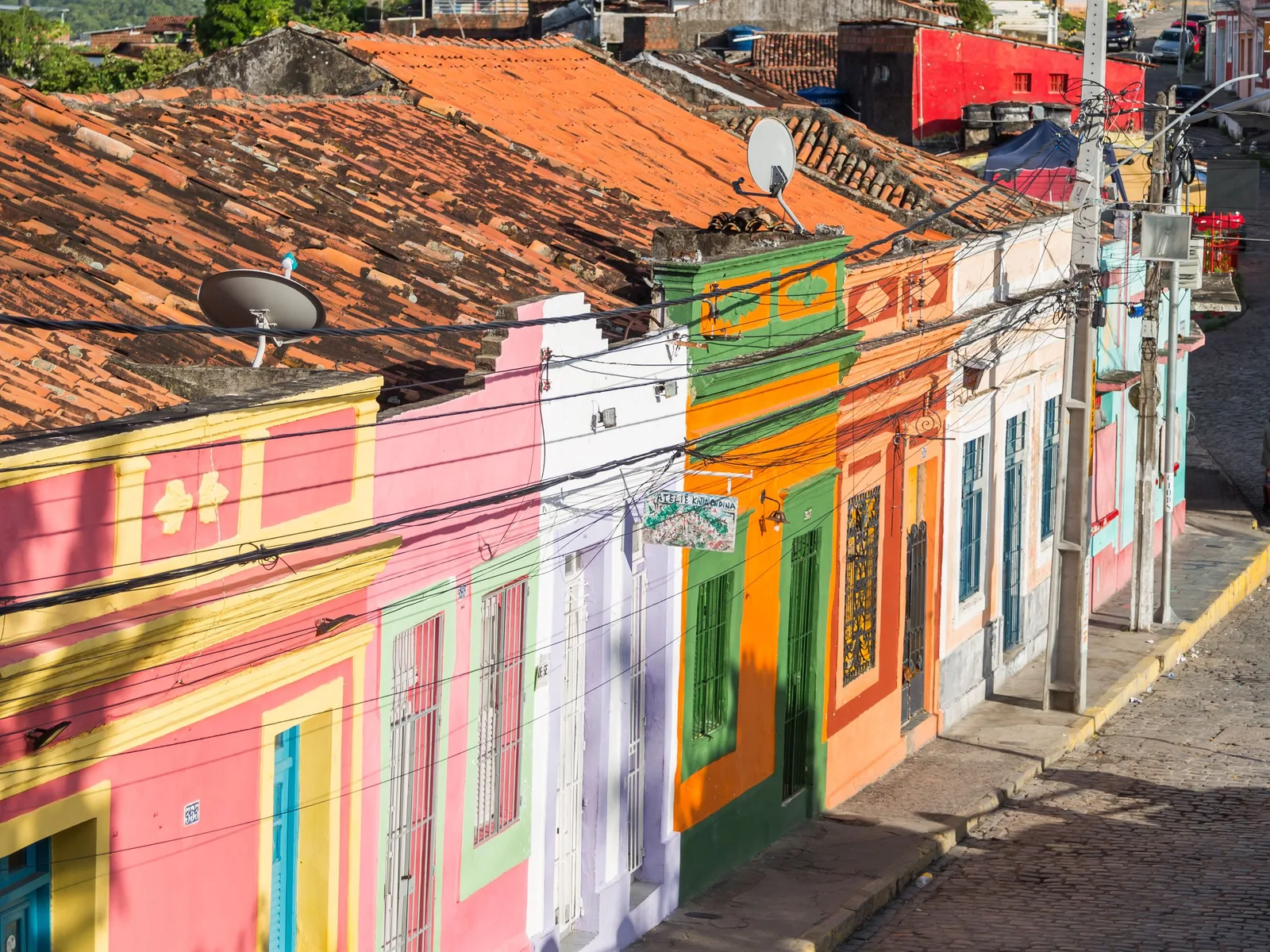
A steep cobbled lane in Olinda climbing between colonial houses painted pink, green, yellow and orange, with terracotta roofs and power lines overhead 01

The town on the hill

Olinda’s Historic Center

Founded
1535, burned by the Dutch in 1631
Listed
UNESCO World Heritage, 1982
Churches
Twenty-two in the protected core

A steep, compact, thoroughly lived-in colonial quarter of painted houses, walled gardens and twenty-two churches, most of them rebuilt after the Dutch burned the place in 1631. It is not a preserved museum town — people live in these houses, artists work in half of them, and there is washing on the balconies — and that is exactly what makes it better than the alternatives.

The two things not to skip are both religious buildings and both free or nearly so. The Convento de São Francisco, begun in 1585, was the first Franciscan house in Brazil, and its cloister is lined with eighteenth-century Portuguese tiles that are worth the climb on their own. The Mosteiro de São Bento has a gilded high altar so good that it was taken apart into more than fifty pieces, restored, and shipped to New York for the Guggenheim’s Brazil: Body and Soul, the exhibition that opened there in October 2001. It is back in the monastery now. Beyond those, the point of Olinda is to walk it: up to the Alto da Sé for the view back over the roofs to Recife, and down again slowly.
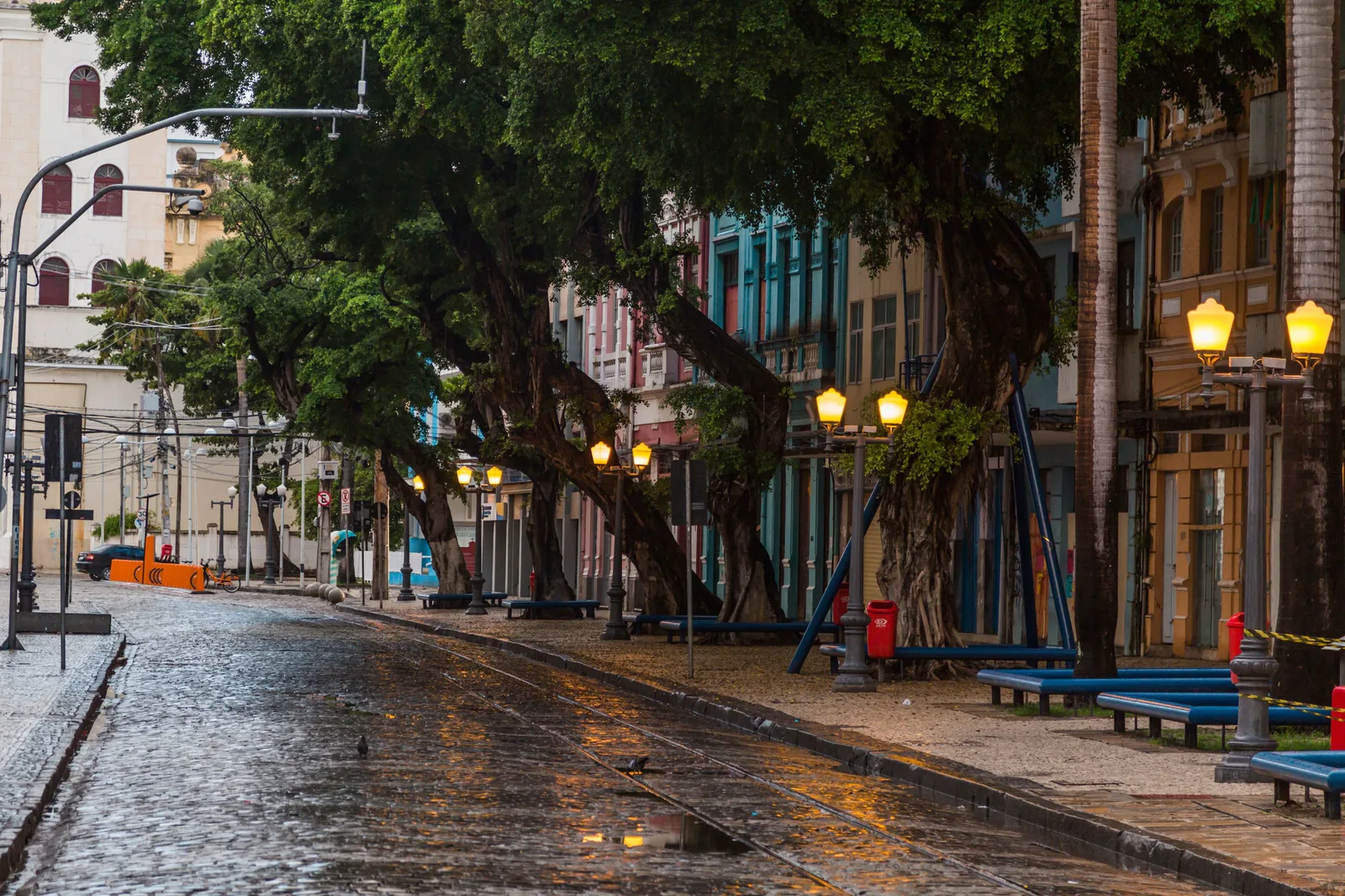
A wet cobbled avenue in Recife Antigo at dusk, tram rails set into the stones, old fig trees and lit lamp posts down the middle of it and painted colonial facades either side 02

Where the city starts counting from

Recife Antigo & Marco Zero

What it is
The original port island
Marco Zero
The city’s point zero, on the quay
Best at
Late afternoon, or an event night

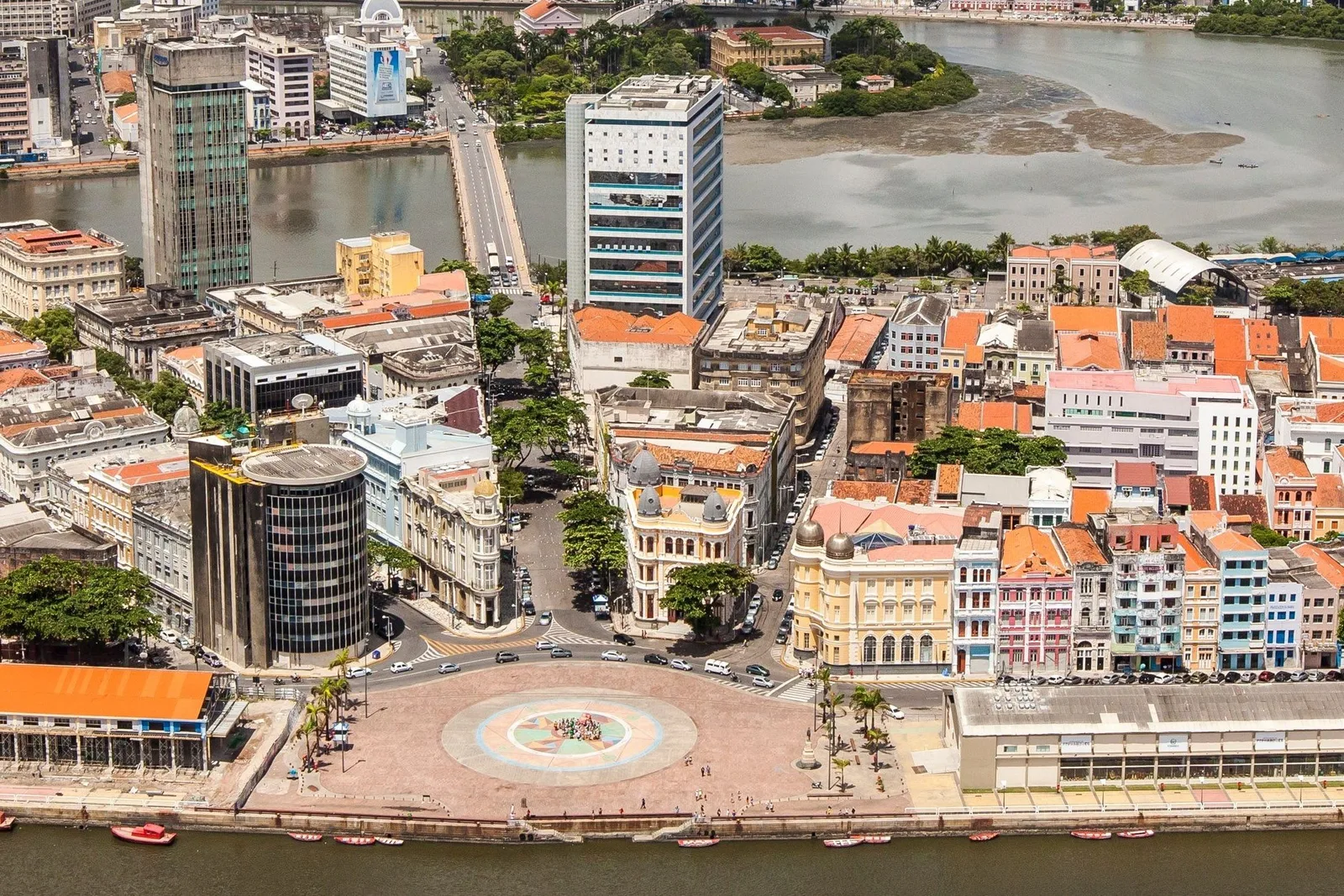
Recife began on a low island between the rivers and the reef, and that island is still the oldest and best-looking part of the city. Marco Zero is the circular plaza on its eastern quay from which all distances in Recife are measured, looking out across the harbor to the reef and the lighthouse standing on it. Behind the plaza, the Rua do Bom Jesus runs a couple of blocks of tall, brightly painted colonial houses that Architectural Digest put on a list of the most beautiful streets in the world in 2019.

The history on this street is genuinely unusual. Number 197 is the Kahal Zur Israel synagogue, founded in 1636 under Dutch rule and the oldest in the Americas; when the Portuguese retook the city in 1654 the congregation scattered, and part of it reached New Amsterdam and founded the first synagogue in what became New York. The building was lost for centuries, located again by excavation in 1999 and reopened as a museum in 2001, with the original mikveh visible under the floor.

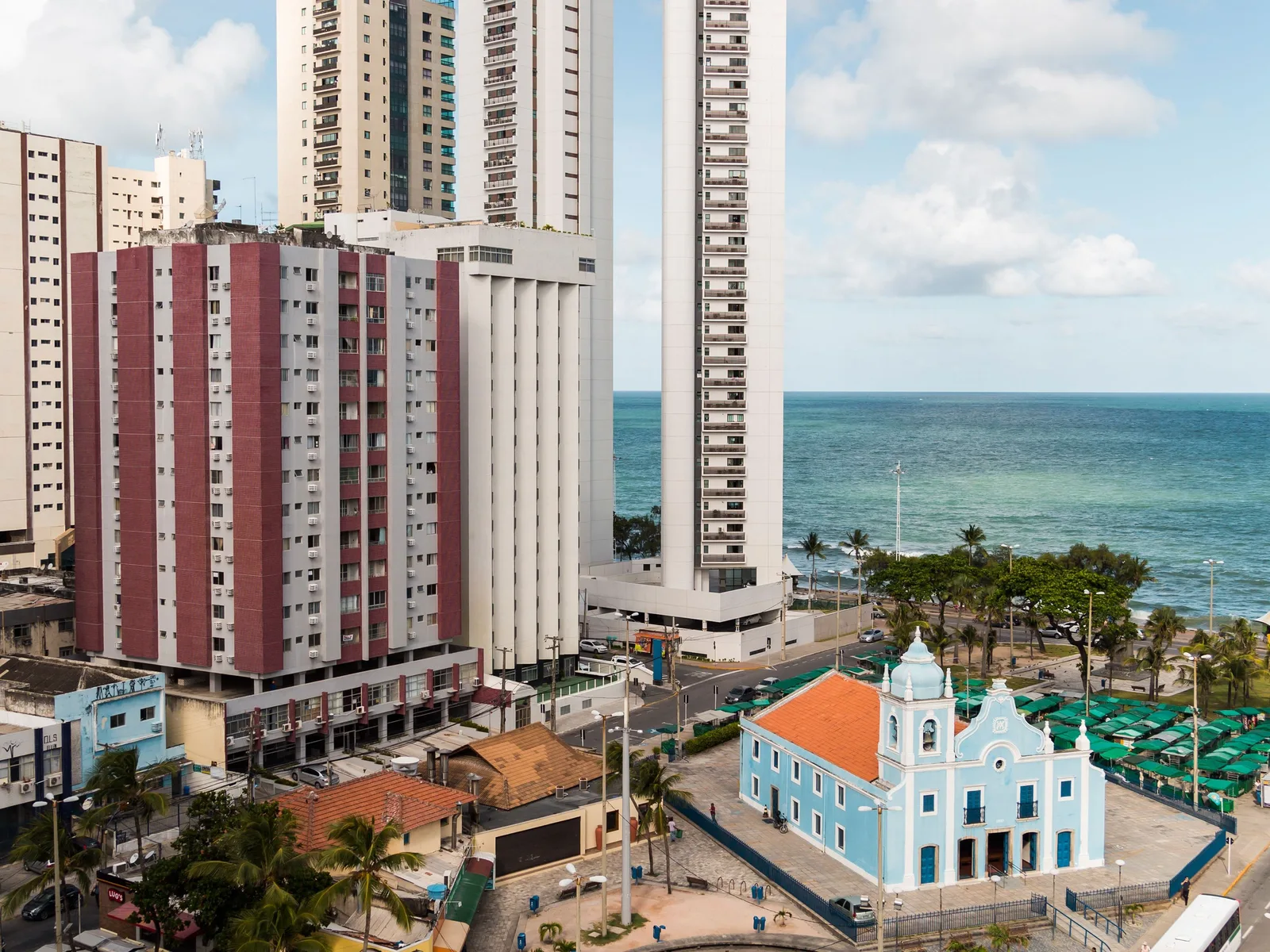
Boa Viagem from above: apartment towers crowded up to the seafront avenue, the pale blue and white church of Nossa Senhora da Boa Viagem beside the sand, and a band of shallow green water inshore of the line where the surf breaks on the reef 03

The thing the city is named after

The Reef, and Boa Viagem

What the reef is
Sandstone, not coral
The beach
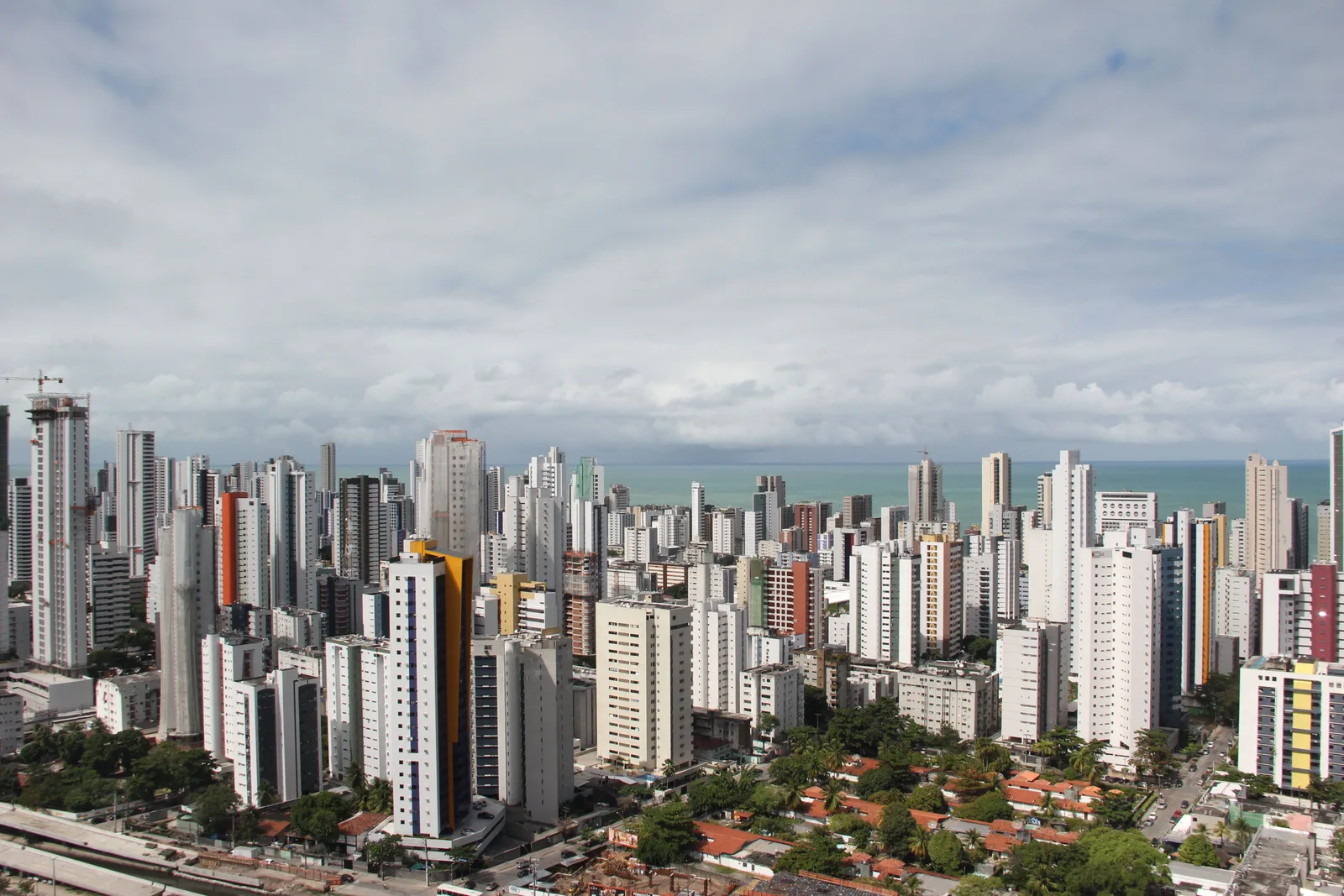
7 km of sand under the towers
In the water
Inside the reef only — see Swimming

Recife means reef, and the reef is not a metaphor. A long ridge of hardened ancient beach — sandstone, not coral, as the Stanford geologist John Casper Branner established back in 1904 — runs parallel to the shore a few hundred meters out, and it is the whole reason there is a city here: it made a sheltered anchorage on a coast that otherwise has none. You can see it as a line of white water from the seafront, and stand on it at the lighthouse by the port.

Boa Viagem is the seven-kilometer urban beach the modern city grew along, a wall of apartment towers facing an unbroken promenade, a bike lane and the sand. At low tide the water between the reef and the beach drops to knee-deep and turns into a warm shallow lagoon, and that band is where people go in. Beyond the reef is where the sharks are, and the signs and the state decree say so — read the Swimming tab before you go near the water, because this is the one thing on this page that could actually hurt you.

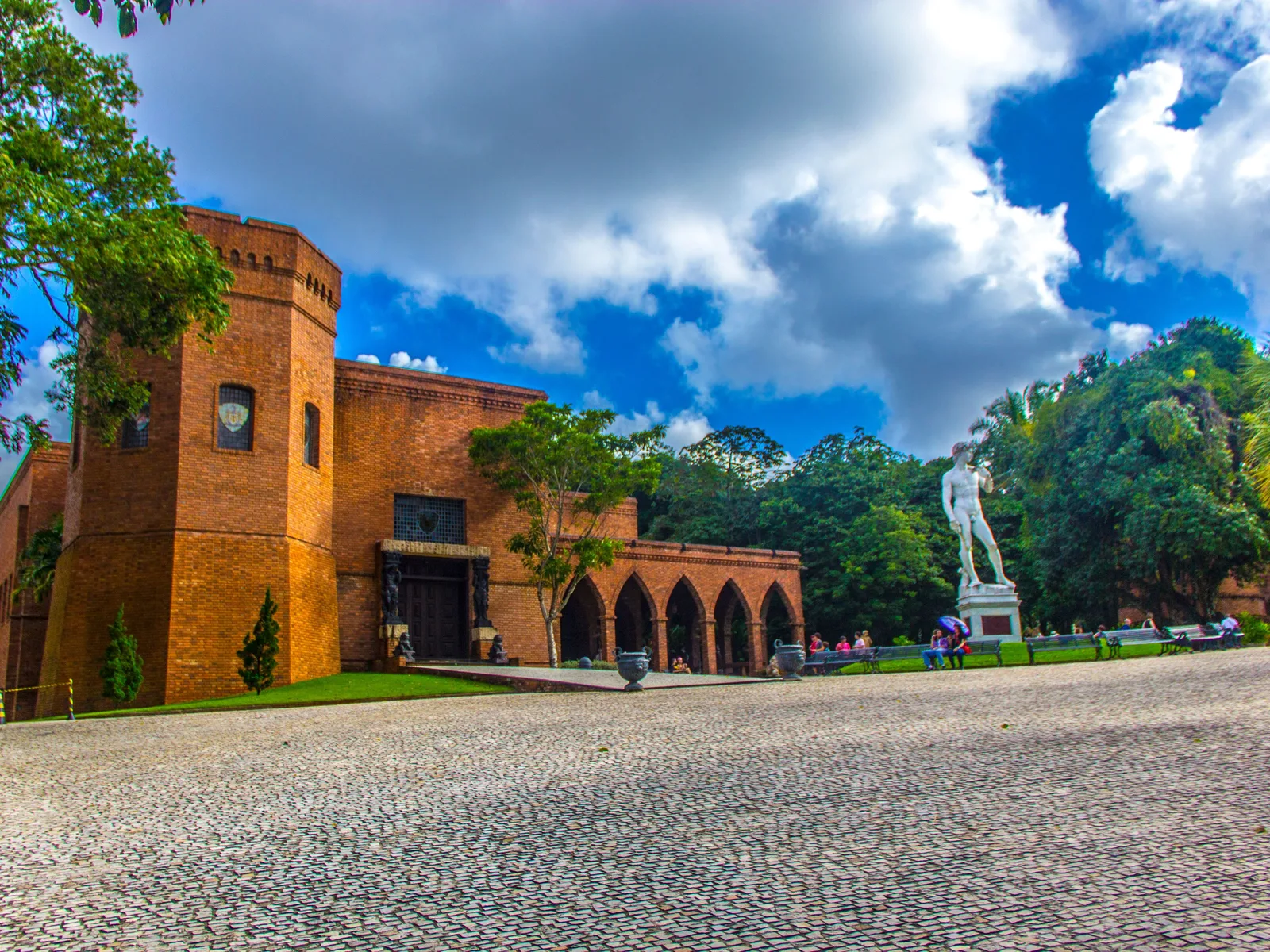
The red-brick neo-Gothic castle of the Instituto Ricardo Brennand behind a wide cobbled forecourt, its arcaded wing running away to one side under a bright sky 04

A castle, and the Dutch painters

The Brennand Museums

Ricardo Brennand
Opened 2002, in a mock castle
Frans Post
The largest collection anywhere
Armor
Around 3,000 pieces

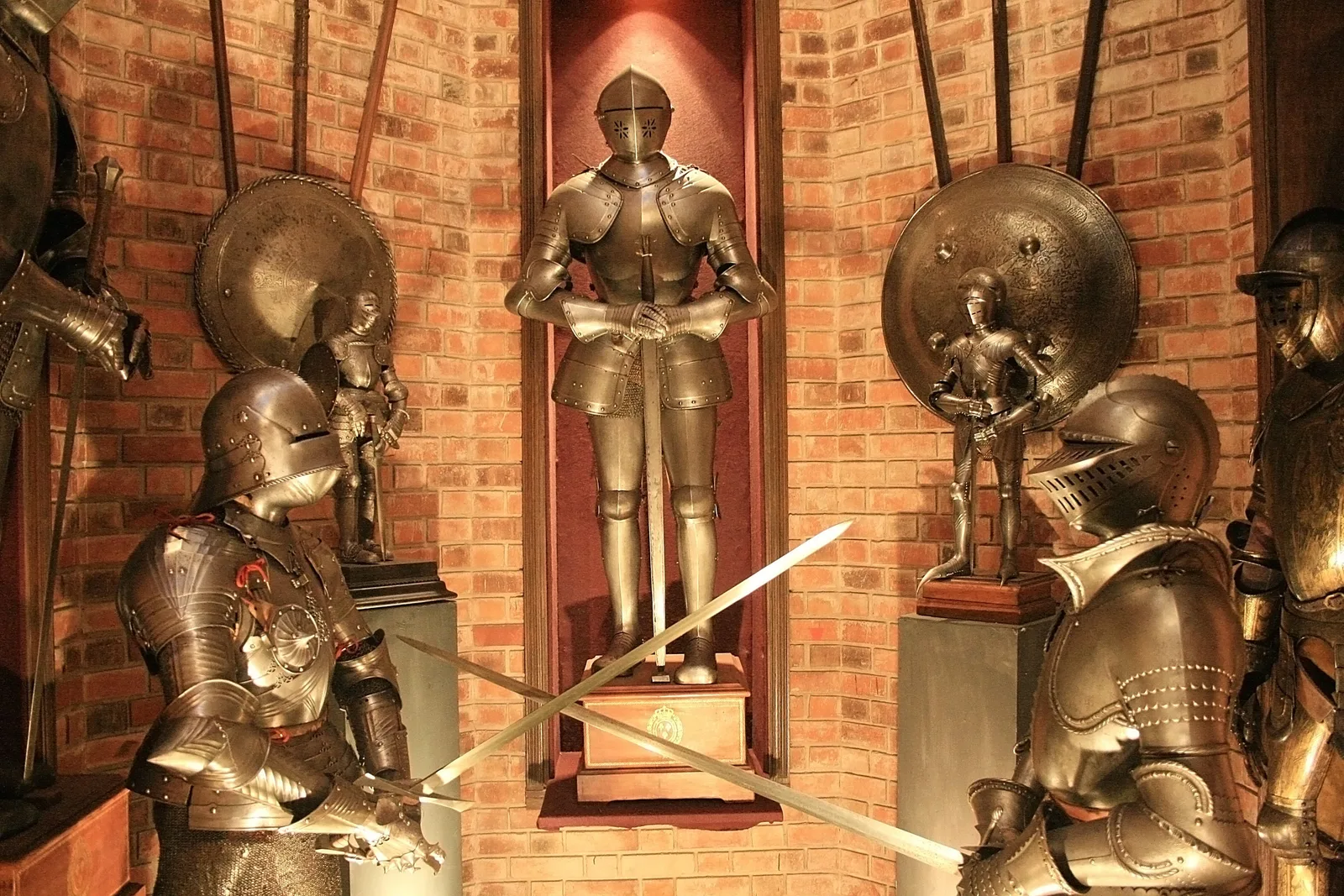
Two museums, two cousins, and the least likely pair of attractions in northeastern Brazil. The Instituto Ricardo Brennand sits in parkland on the western edge of the city inside a purpose-built neo-Gothic castle, and it holds the world’s largest collection of paintings by Frans Post — the Dutch artist who came to Pernambuco in the 1630s and painted the sugar coast while the Dutch held it, which makes this the one place you can see the landscape of Recife Antigo as its founders saw it. The arms and armor collection, some three thousand pieces, is one of the largest anywhere.

A few kilometers away, the Oficina Cerâmica Francisco Brennand is the opposite kind of museum: a former brick-and-tile factory that the ceramicist Francisco Brennand spent fifty years filling with his own work — thousands of glazed sculptures massed in halls, courtyards and gardens, with a Burle Marx landscape around it. Neither is central and both want a taxi, and between them they are the strongest half-day of museum-going in the region.

What to actually do

Which city, and what for.

Pick a category and scroll sideways. The first two tabs split by city, because where a thing is matters more here than what kind of thing it is.

In Olinda

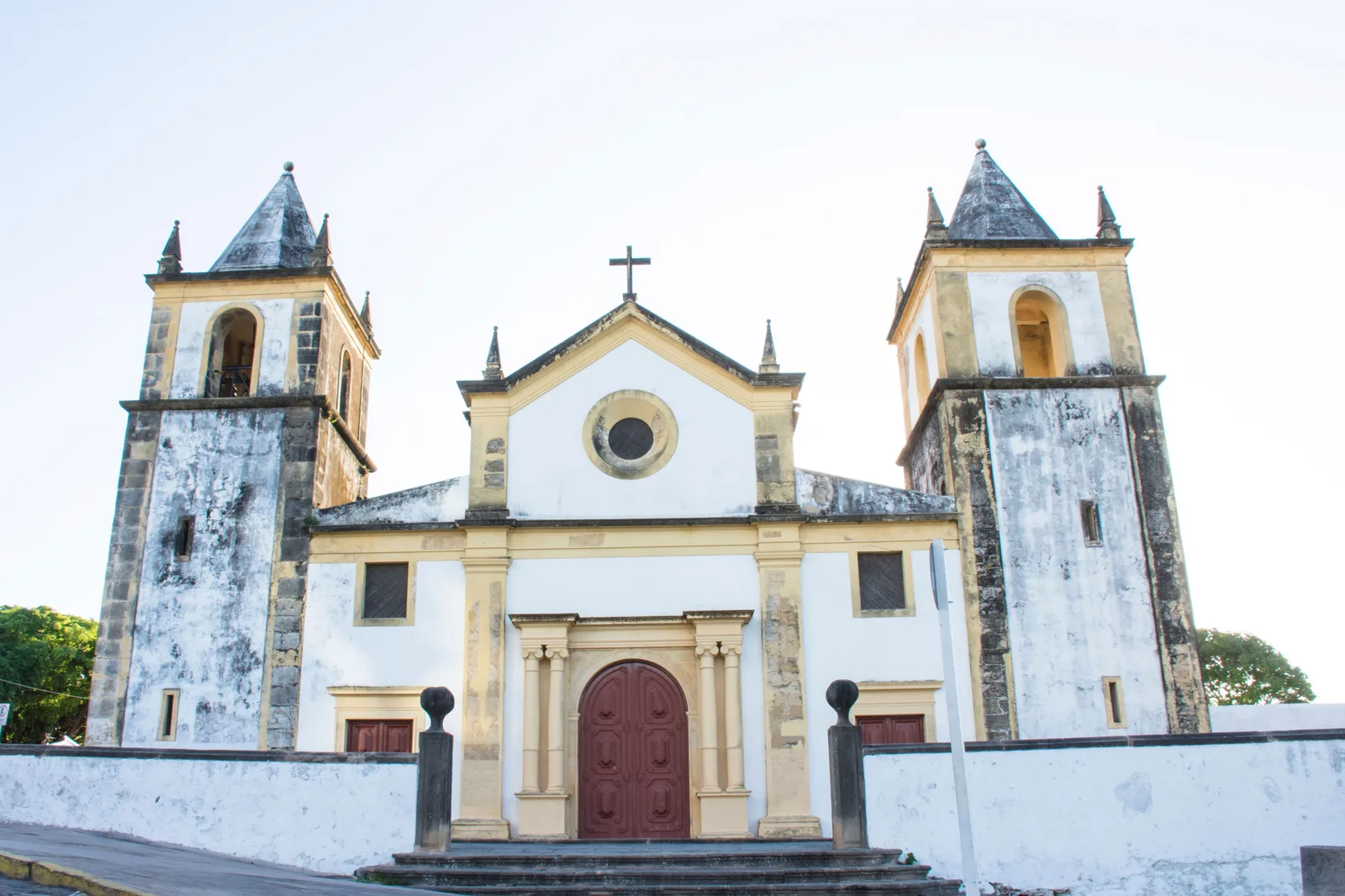
  • The weathered twin-towered facade of Olinda’s cathedral, the Igreja da Sé, seen from the square in front of it

    Olinda · 2 hours

    Sunset at the Alto da Sé

    The high point of the old town, with the cathedral on it and the whole coast laid out below: Olinda’s roofs and church towers in front, then the beach, then Recife’s towers stacked along the horizon. Stalls sell tapioca and caldinho de feijão on the square and the crowd builds through the last hour of light. It is the single best free thing to do in either city, and it costs nothing but the climb.

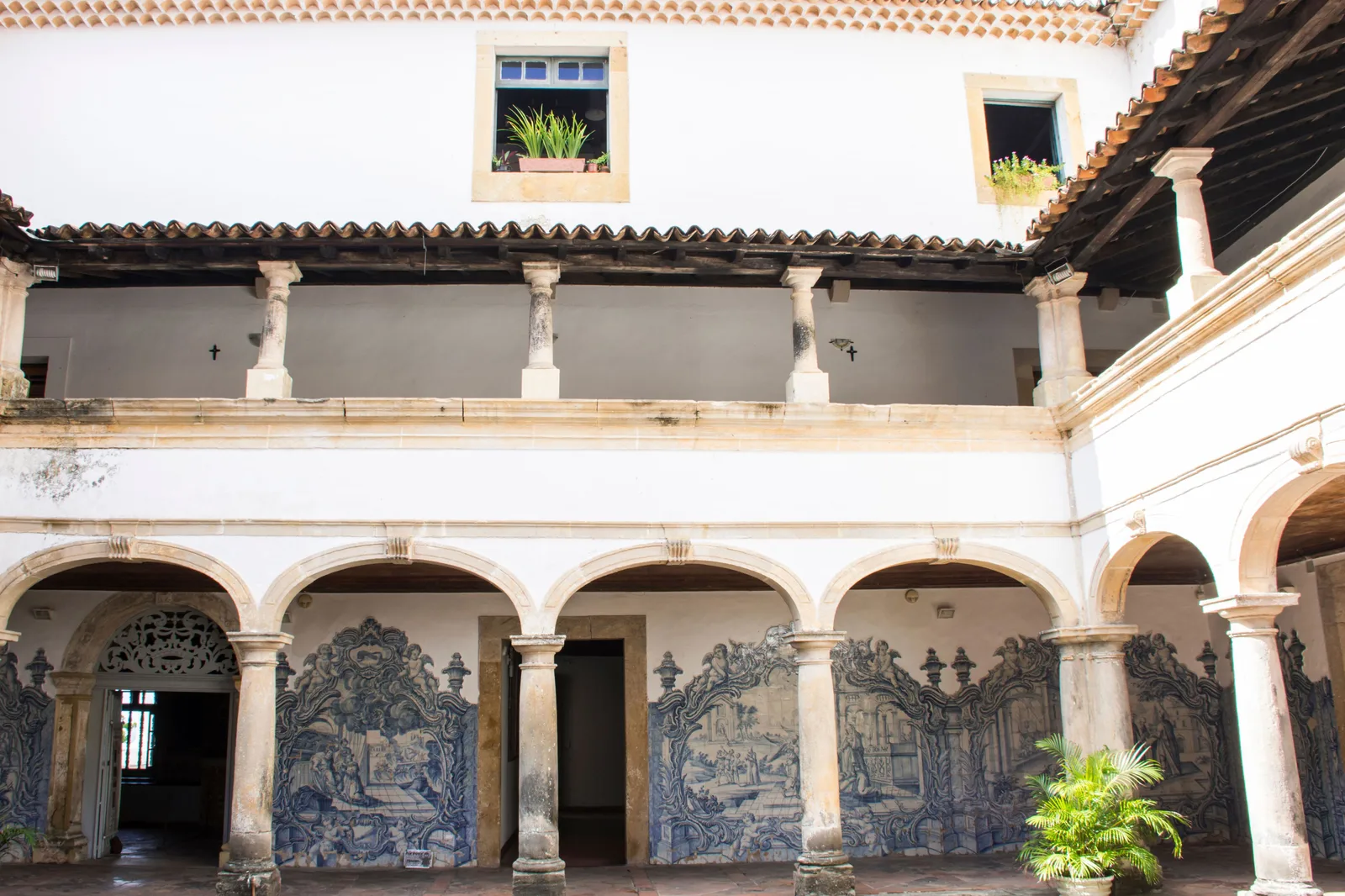
  • The arcaded cloister of the Convento de São Francisco in Olinda, its lower walls lined with blue and white Portuguese tile panels under whitewashed arches

    Olinda · 1 hour

    The tiles at the Convento de São Francisco

    Brazil’s first Franciscan convent, begun in 1585, and the best single building in Olinda. The cloister is lined with eighteenth-century blue-and-white Portuguese tile panels and the church behind it is dense white and cream stucco carving with gilt worked into it, under a painted coffered ceiling. It is still a working religious house, entry is a token amount, and it takes an hour if you look properly.

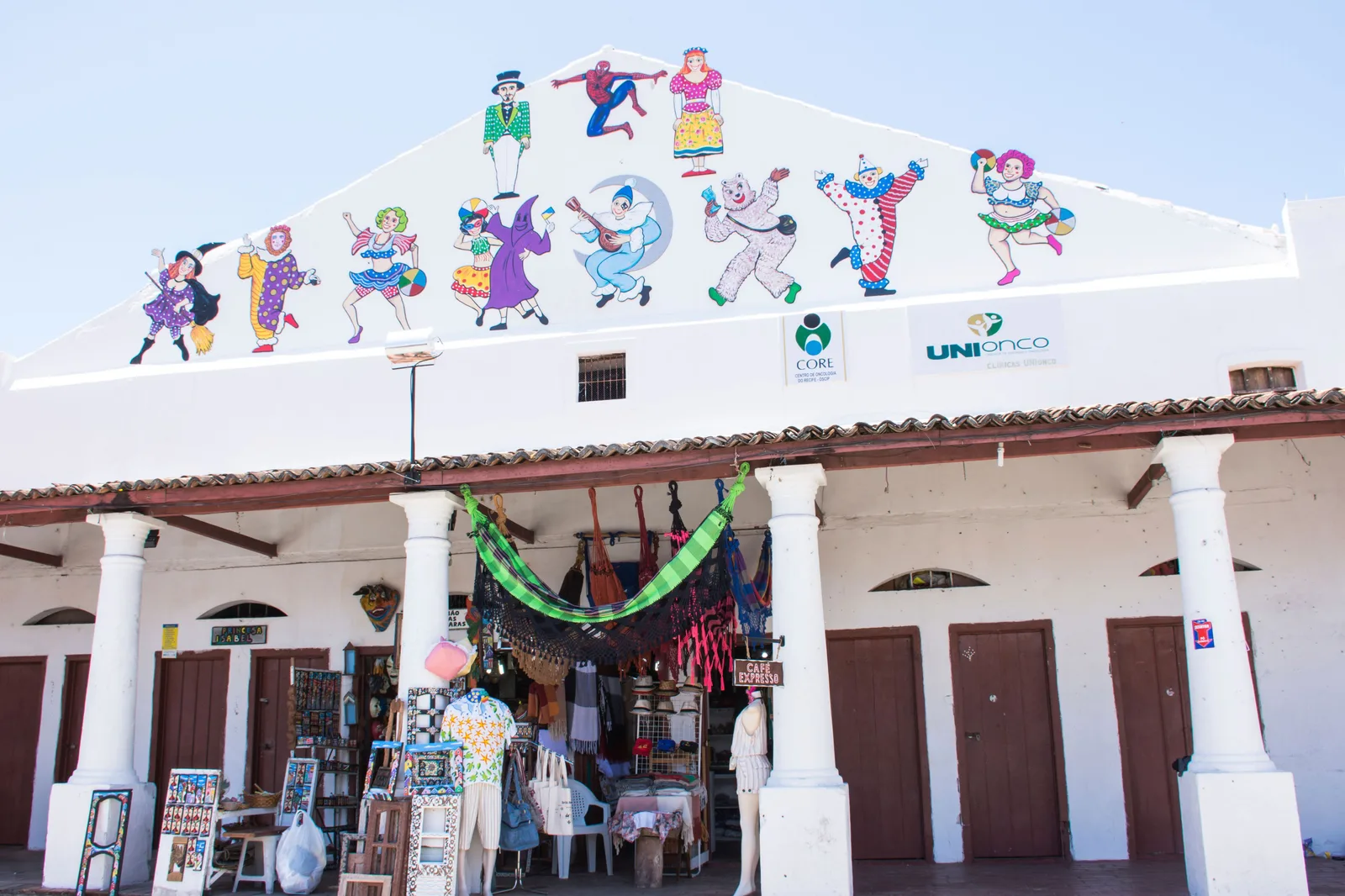
  • The white colonnaded front of the Mercado da Ribeira in Olinda, its pediment painted with dancing carnival figures and craft stalls set up under the arcade

    Olinda · half day

    Ateliers and the Mercado da Ribeira

    Olinda has been an artists’ town for decades and the studios are the reason to walk the side streets rather than only the main climb. The Mercado da Ribeira, an eighteenth-century arcade in the middle of the old town, is the concentrated version: woodcarving, ceramics, cordel woodcuts and the smaller cousins of the giant carnival puppets, sold by the people who made them. Prices are honest and the work is genuinely local.

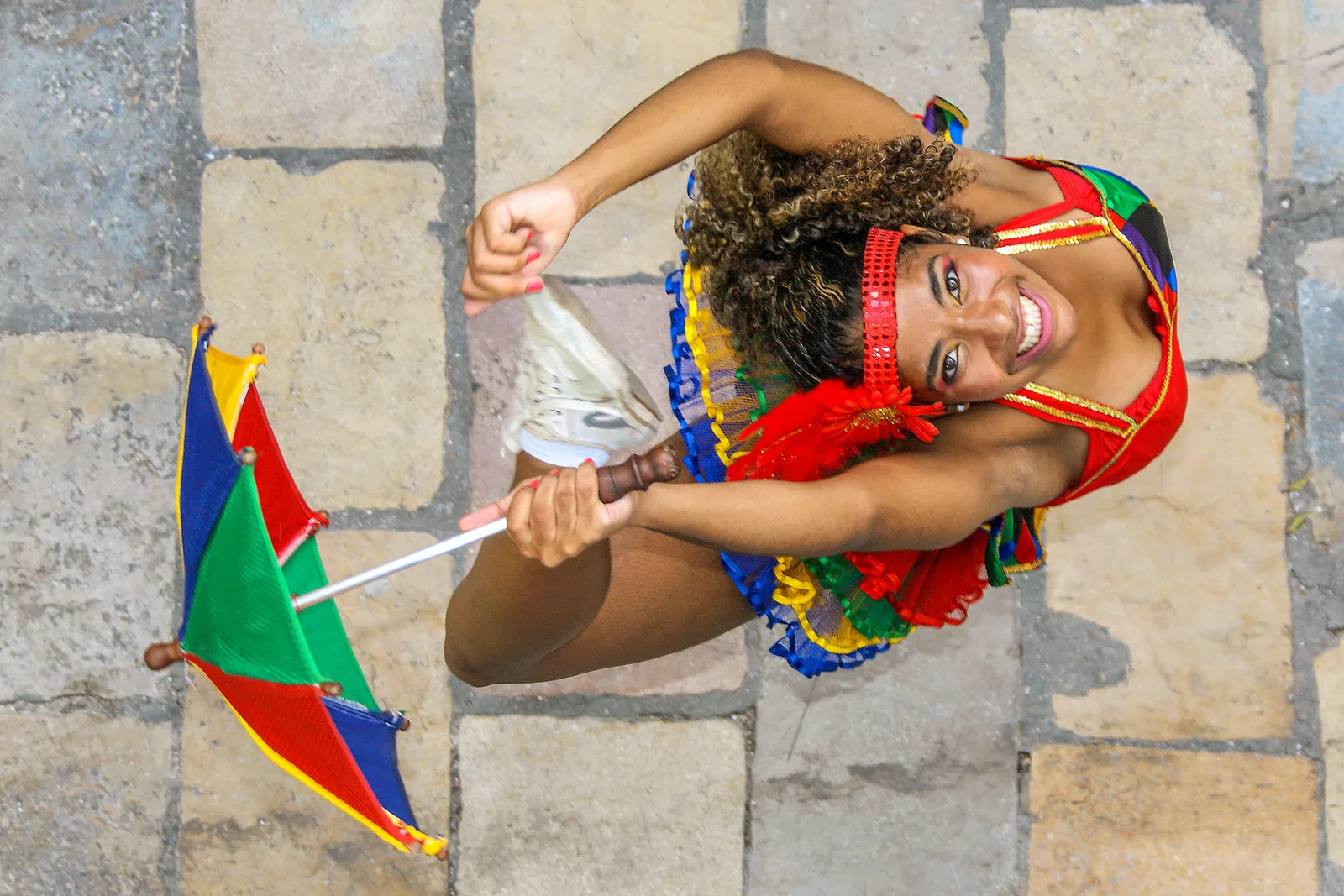
  • A frevo dancer photographed from above on cobblestones, in a red, green and yellow costume, laughing and holding a small brightly colored umbrella

    Olinda and Recife · 2 hours

    A frevo lesson

    Frevo is Pernambuco’s own thing and UNESCO put it on the intangible heritage list in 2012: a fast brass march, and a dance called the passo that came out of capoeira and is danced low, with a tiny bright umbrella for balance. Schools in Olinda and the Paço do Frevo in Recife run classes for visitors year-round. You will not be good at it. It is still the most fun two hours available here outside February.

In Recife

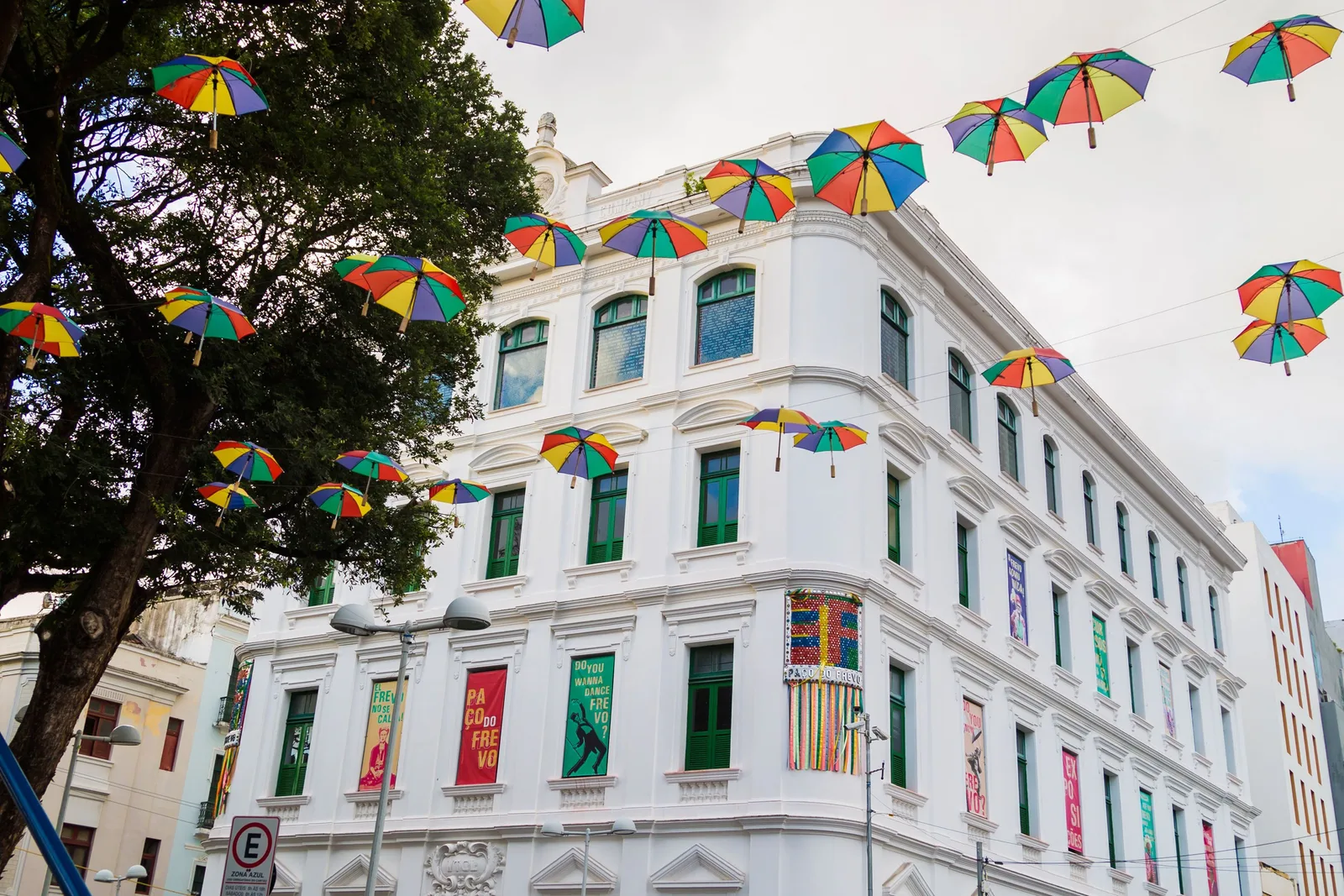
  • The white colonial facade of the Paço do Frevo in Recife Antigo, with rows of small colored carnival umbrellas strung on wires overhead against a blue sky

    Recife Antigo · 2 hours

    The Paço do Frevo

    A museum built entirely around one musical form, in a restored building on the Praça do Arsenal. It covers where frevo came from, how the orchestras are put together and what the dance actually is, with a dance floor, a rehearsal space and a lot of film. Better than it sounds, and the right place to go before Carnival rather than after.

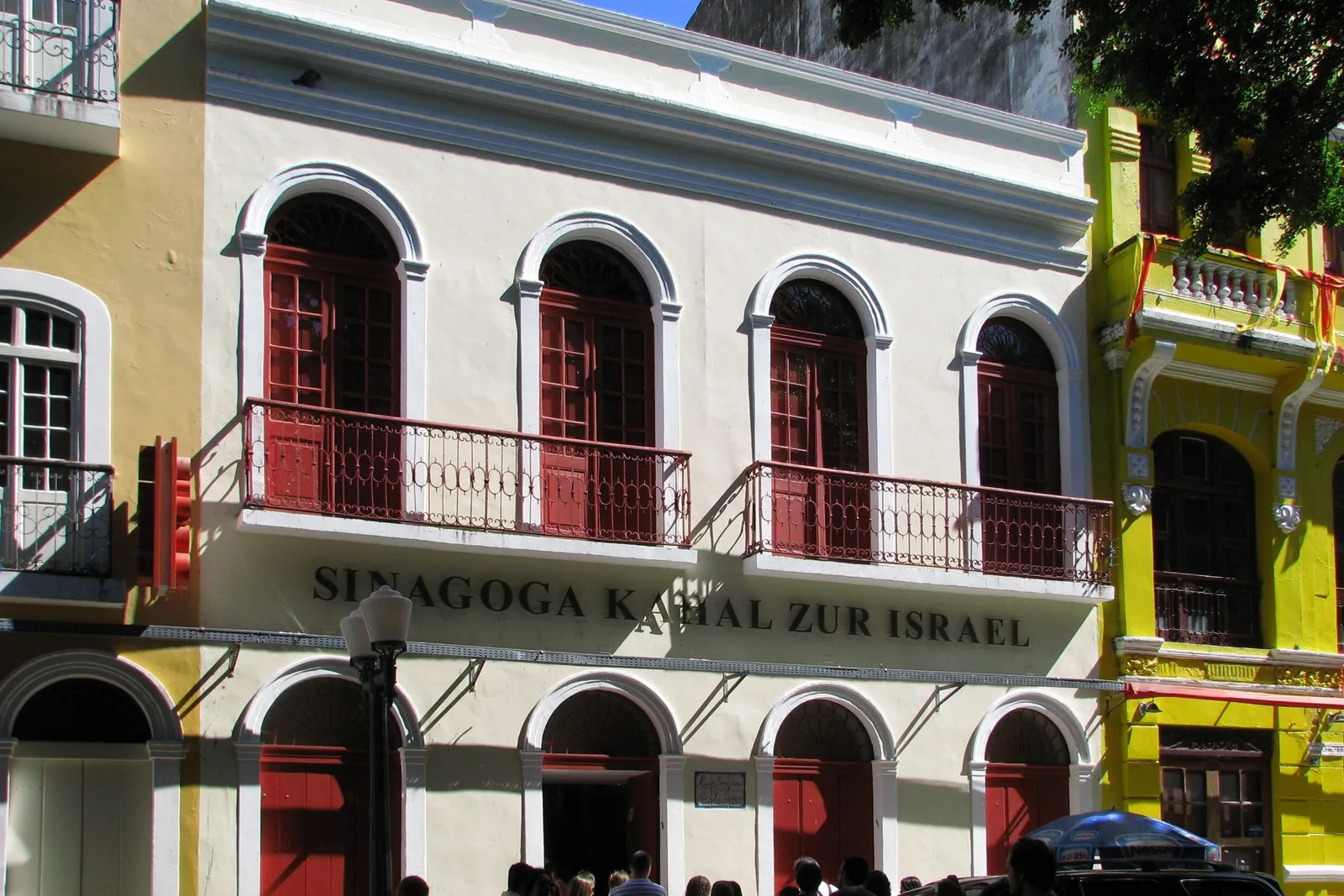
  • The restored front of the Kahal Zur Israel synagogue on the Rua do Bom Jesus: a cream facade with red-shuttered arched windows and dark red ironwork balconies, its name lettered across the middle, and a bright yellow neighbor beside it

    Rua do Bom Jesus · 1 hour

    Kahal Zur Israel Synagogue

    The oldest synagogue in the Americas, founded in 1636 while the Dutch held the city and lost for three centuries afterwards. Excavation in 1999 found the foundations and the mikveh under a later building, and the reconstruction opened as a museum in 2001. It is a small, careful, unexpectedly moving room, and the story of where the congregation went after 1654 makes it worth an hour even if the history is not usually your thing.

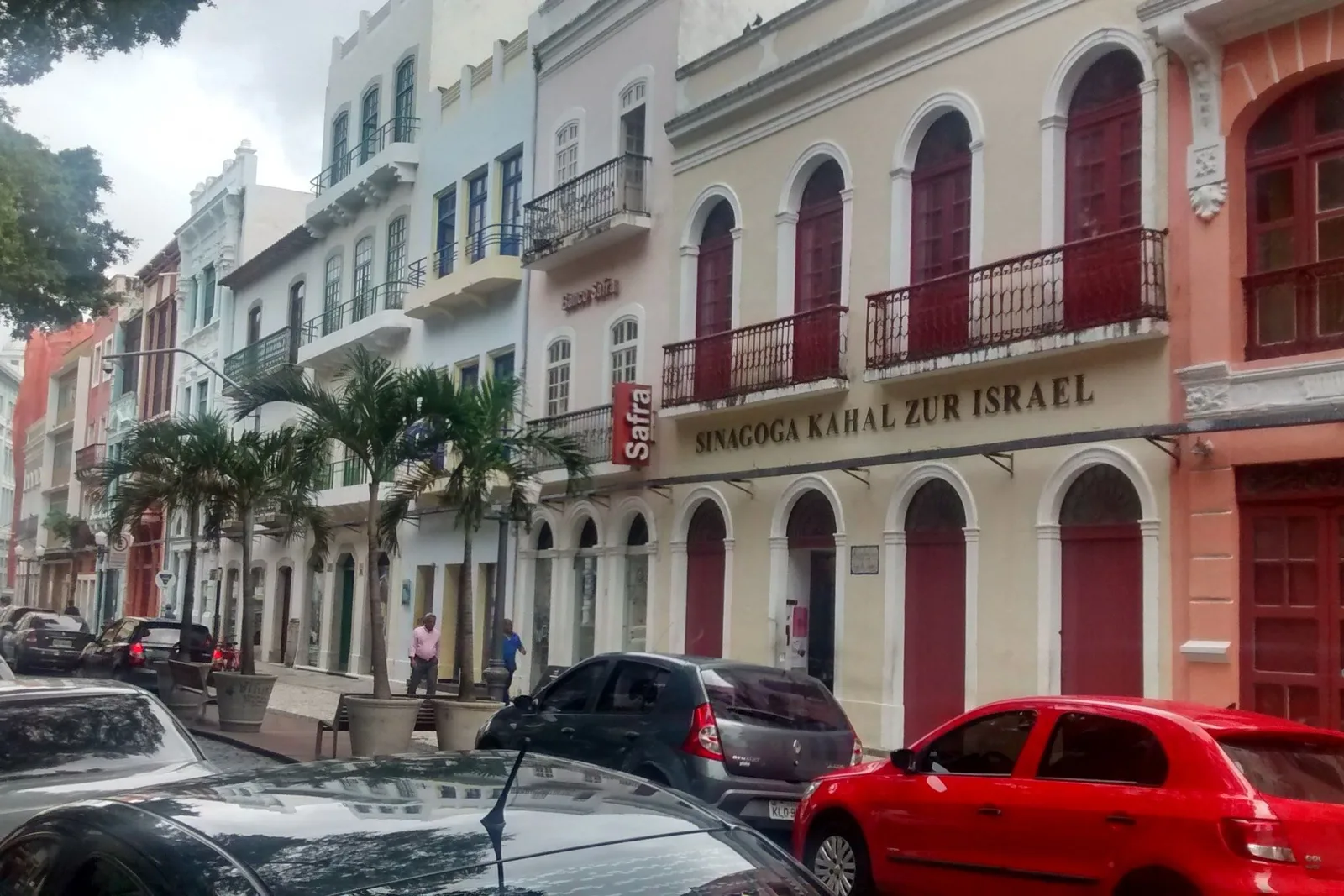
  • The Rua do Bom Jesus in Recife Antigo: a row of tall colonial townhouses in cream, blue, pink and terracotta with iron balconies, the Kahal Zur Israel synagogue among them with its name lettered across the front

    Recife Antigo · 2 hours

    Walk the Rua do Bom Jesus

    Two blocks of tall painted colonial houses running back from the waterfront, with the synagogue halfway along and bars and restaurants in most of the ground floors. It is where the city puts its decorations up, so there are usually frevo umbrellas or bunting strung overhead. Busy and excellent on a Tuesday night or during an event at Marco Zero, and empty on an ordinary weekday evening.

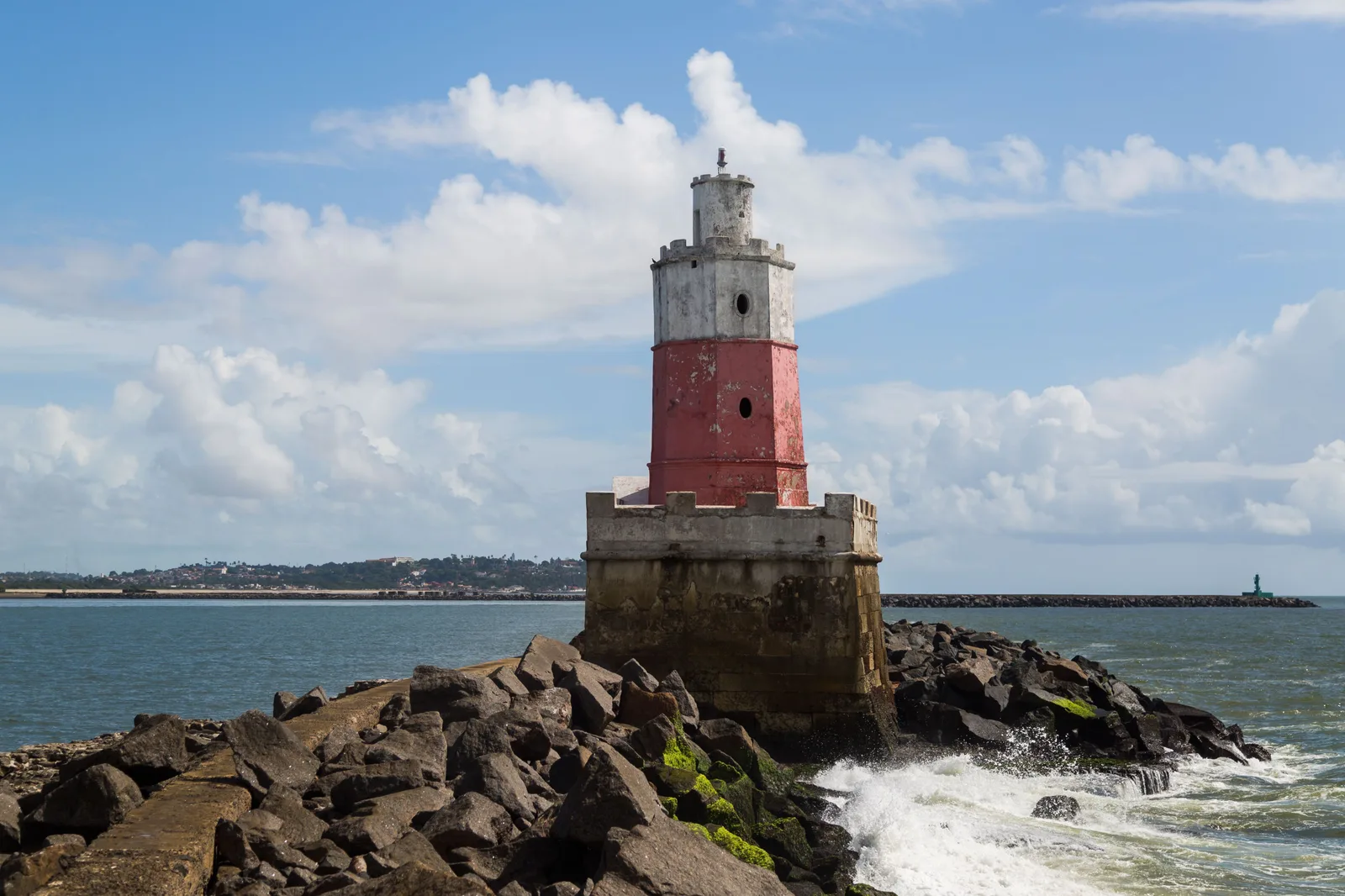
  • The red and white lighthouse of Recife standing on the rocky stone reef at the harbor mouth, with surf breaking against the boulders below it

    Recife Antigo · 1 hour

    Marco Zero and the reef

    The plaza the city measures itself from, on the quay at the eastern end of the old island. Stand at the rail and you are looking at the reason Recife exists: the stone reef running across the harbor mouth with the old lighthouse planted on it, and the surf breaking along its outer edge. The Pernambuco flag is set in the paving. Free, always open, and the natural place to start a first morning.

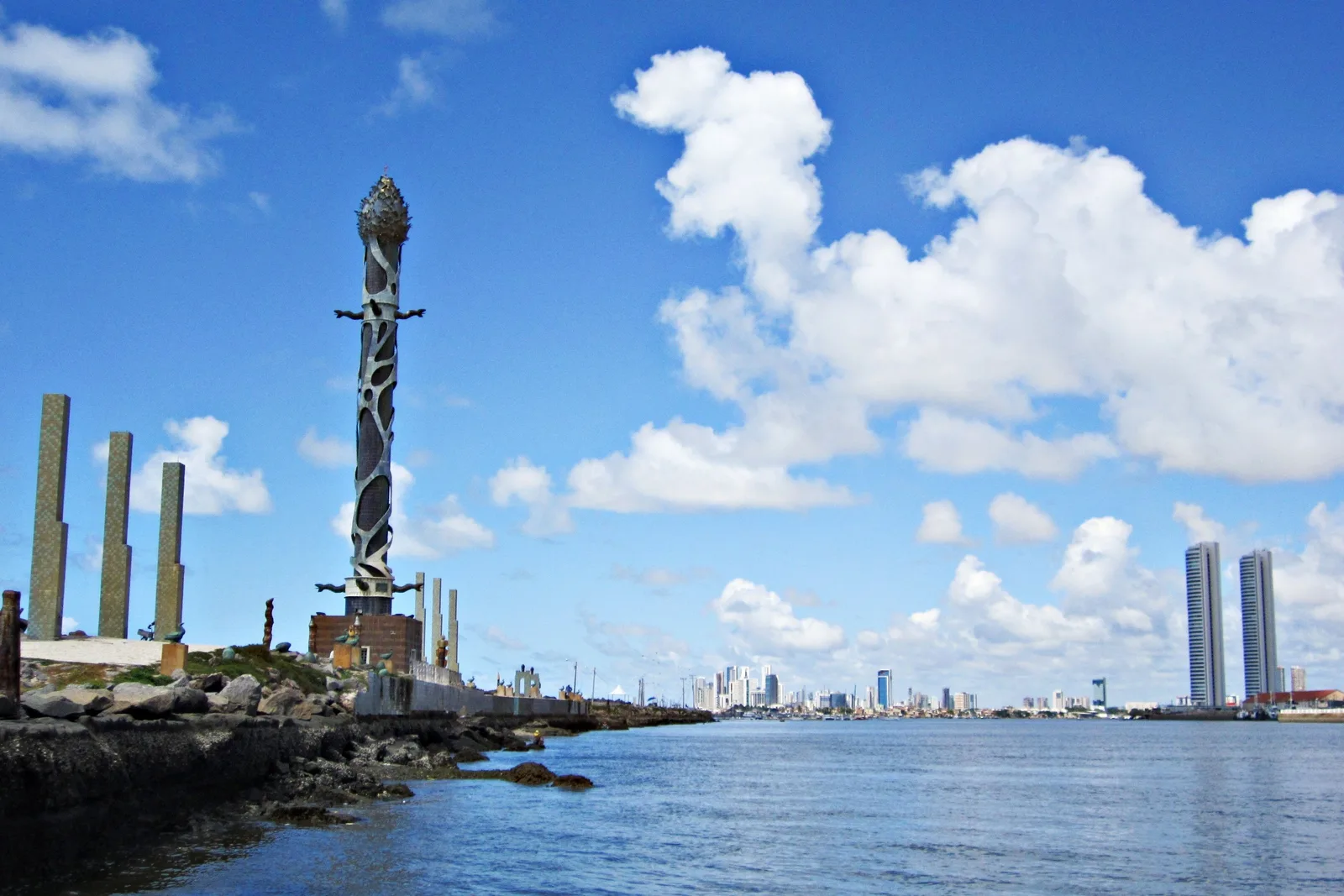
  • A tall glazed ceramic sculpture standing on the stone breakwater at Recife with the sea around it and the city’s skyline low on the horizon behind

    From Marco Zero · 1 hour

    The boat to the Parque de Esculturas

    Francisco Brennand built a sculpture park out on the old breakwater directly opposite Marco Zero: ninety ceramic pieces standing on the reef with the sea on one side and the city on the other. Small boats run across from the plaza in a few minutes. It is a short, strange, very good trip and it puts you physically out on the reef, which nothing else on this list does.

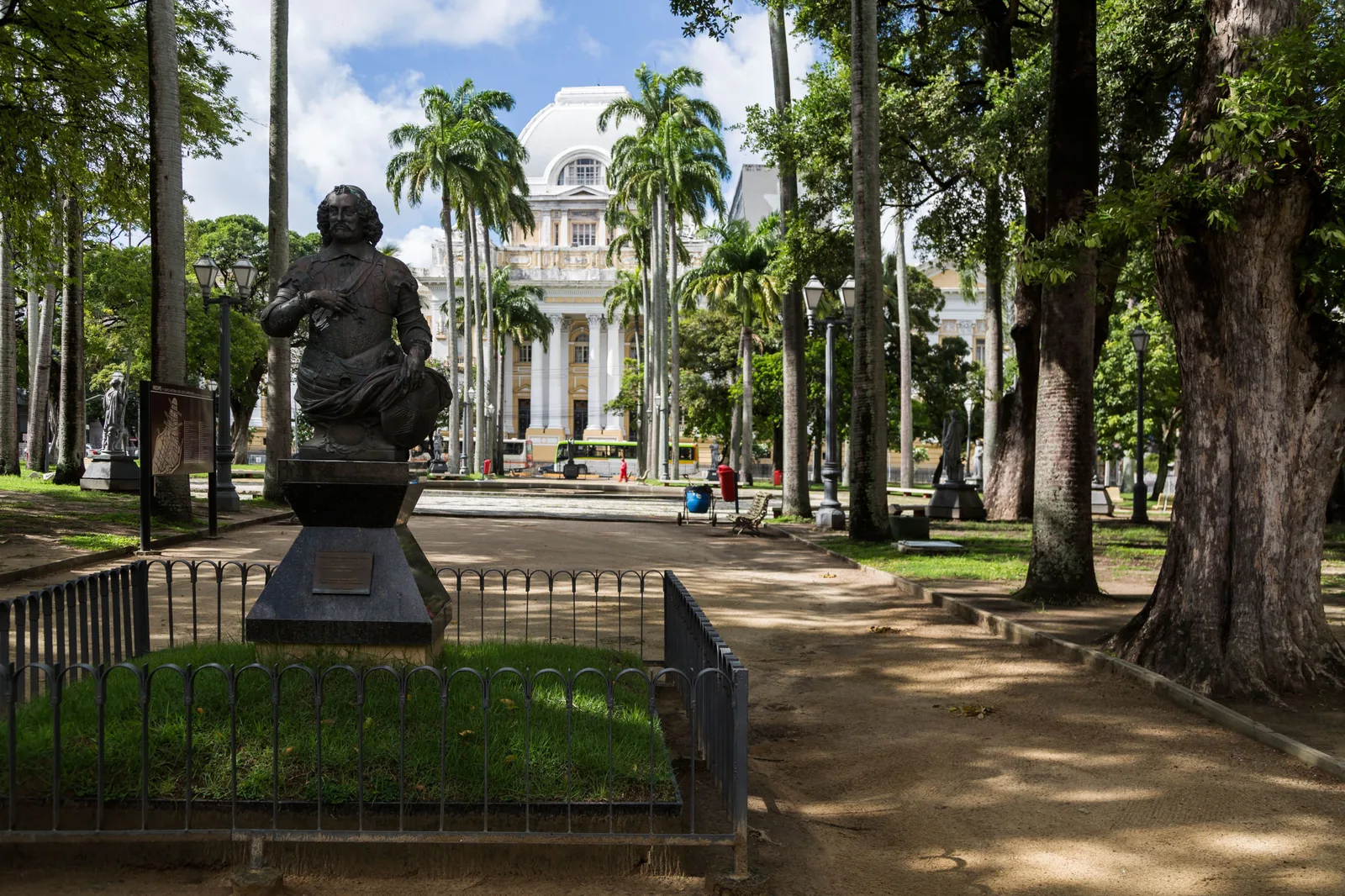
  • The Praça da República in central Recife: a statue on a plinth under enormous shade trees and royal palms, with a pale nineteenth-century public building behind

    Santo Antônio · half day

    The old civic center

    The square block of nineteenth-century Recife: the Praça da República with its huge fig trees, the Teatro Santa Isabel, the governor’s palace and the courthouse, and around the corner the Casa da Cultura — a radial Victorian prison whose cells are now craft shops, which is a much better museum of the city than it intends to be. A daytime walk, and a good one.

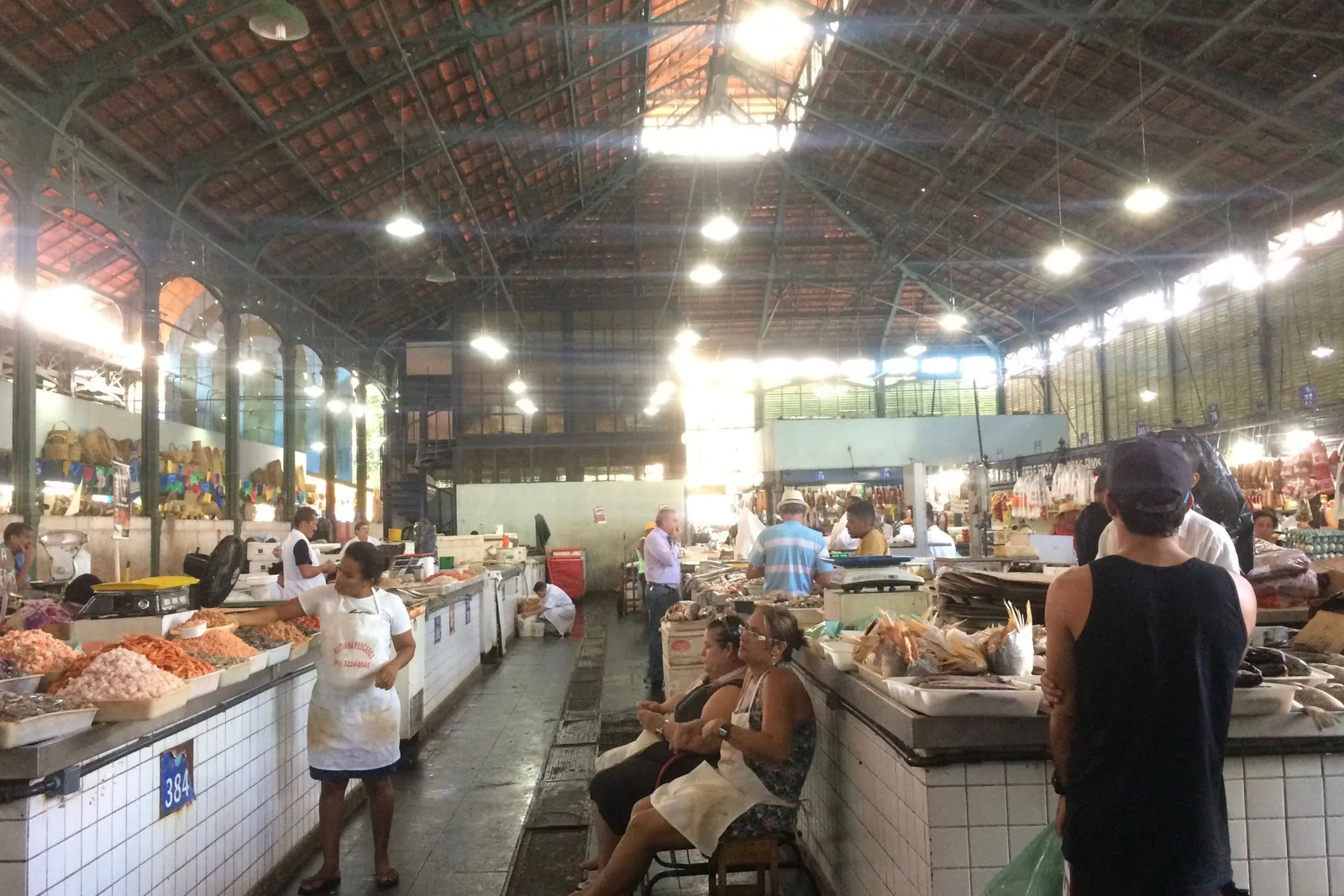
  • Inside the Mercado de São José in Recife: an aisle of tiled counters stacked with produce under a high iron and glass roof, with traders and shoppers along it

    São José · 2 hours

    Mercado de São José

    A prefabricated iron market hall shipped from France and put up in 1875, and still the working food and craft market of the old city. Fish, dried shrimp, spices, herbs sold as medicine, hammocks, saints and cheap hardware, in the middle of the busiest and scruffiest part of central Recife. Go in the morning, take very little with you, and eat something.

Museums

  • The white colonial facade of the Paço do Frevo in Recife Antigo, with rows of small colored carnival umbrellas strung on wires overhead against a blue sky

    Recife Antigo · 2 hours

    The Paço do Frevo

    A museum built entirely around one musical form, in a restored building on the Praça do Arsenal. It covers where frevo came from, how the orchestras are put together and what the dance actually is, with a dance floor, a rehearsal space and a lot of film. Better than it sounds, and the right place to go before Carnival rather than after.

  • The restored front of the Kahal Zur Israel synagogue on the Rua do Bom Jesus: a cream facade with red-shuttered arched windows and dark red ironwork balconies, its name lettered across the middle, and a bright yellow neighbor beside it

    Rua do Bom Jesus · 1 hour

    Kahal Zur Israel Synagogue

    The oldest synagogue in the Americas, founded in 1636 while the Dutch held the city and lost for three centuries afterwards. Excavation in 1999 found the foundations and the mikveh under a later building, and the reconstruction opened as a museum in 2001. It is a small, careful, unexpectedly moving room, and the story of where the congregation went after 1654 makes it worth an hour even if the history is not usually your thing.

  • A tall glazed ceramic sculpture standing on the stone breakwater at Recife with the sea around it and the city’s skyline low on the horizon behind

    From Marco Zero · 1 hour

    The boat to the Parque de Esculturas

    Francisco Brennand built a sculpture park out on the old breakwater directly opposite Marco Zero: ninety ceramic pieces standing on the reef with the sea on one side and the city on the other. Small boats run across from the plaza in a few minutes. It is a short, strange, very good trip and it puts you physically out on the reef, which nothing else on this list does.

  • Suits of plate armor and crossed swords displayed in a brick-arched niche in the arms gallery of the Instituto Ricardo Brennand

    Várzea · half day

    The armory at the Instituto Ricardo Brennand

    The other half of the castle. Around three thousand pieces of arms and armor from Europe and Asia, from the fourteenth century to the nineteenth, laid out in long vaulted galleries — and then, in the picture gallery next door, the Frans Post paintings of seventeenth-century Pernambuco. Open Tuesday to Sunday afternoons only, which catches people out. Take a taxi; it is a long way from anywhere.

Beaches & Water

  • The red and white lighthouse of Recife standing on the rocky stone reef at the harbor mouth, with surf breaking against the boulders below it

    Recife Antigo · 1 hour

    Marco Zero and the reef

    The plaza the city measures itself from, on the quay at the eastern end of the old island. Stand at the rail and you are looking at the reason Recife exists: the stone reef running across the harbor mouth with the old lighthouse planted on it, and the surf breaking along its outer edge. The Pernambuco flag is set in the paving. Free, always open, and the natural place to start a first morning.

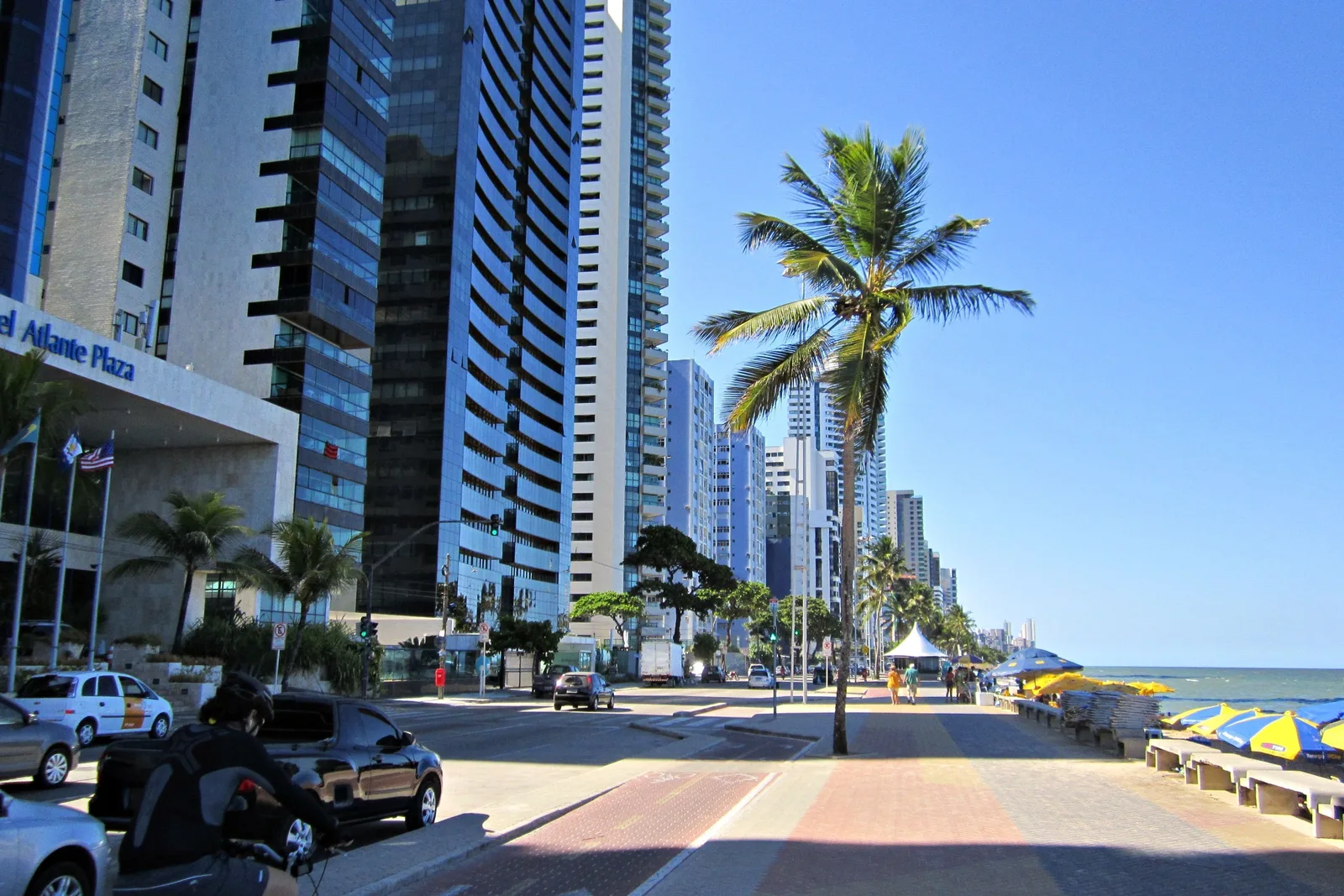
  • The palm-lined promenade and red bike lane along the Boa Viagem seafront in Recife, apartment towers on one side and beach umbrellas on the sand at the other

    Boa Viagem · half day

    The Boa Viagem seafront

    Seven kilometers of promenade and separate bike lane between the towers and the sand, with kiosks, coconut sellers and an outdoor gym every few hundred meters. Walking or cycling it end to end is what the beach is actually for here. Sunday mornings the seaward lanes of the avenue close to traffic. Read the Swimming tab before you get in the water — inside the reef at low tide only.

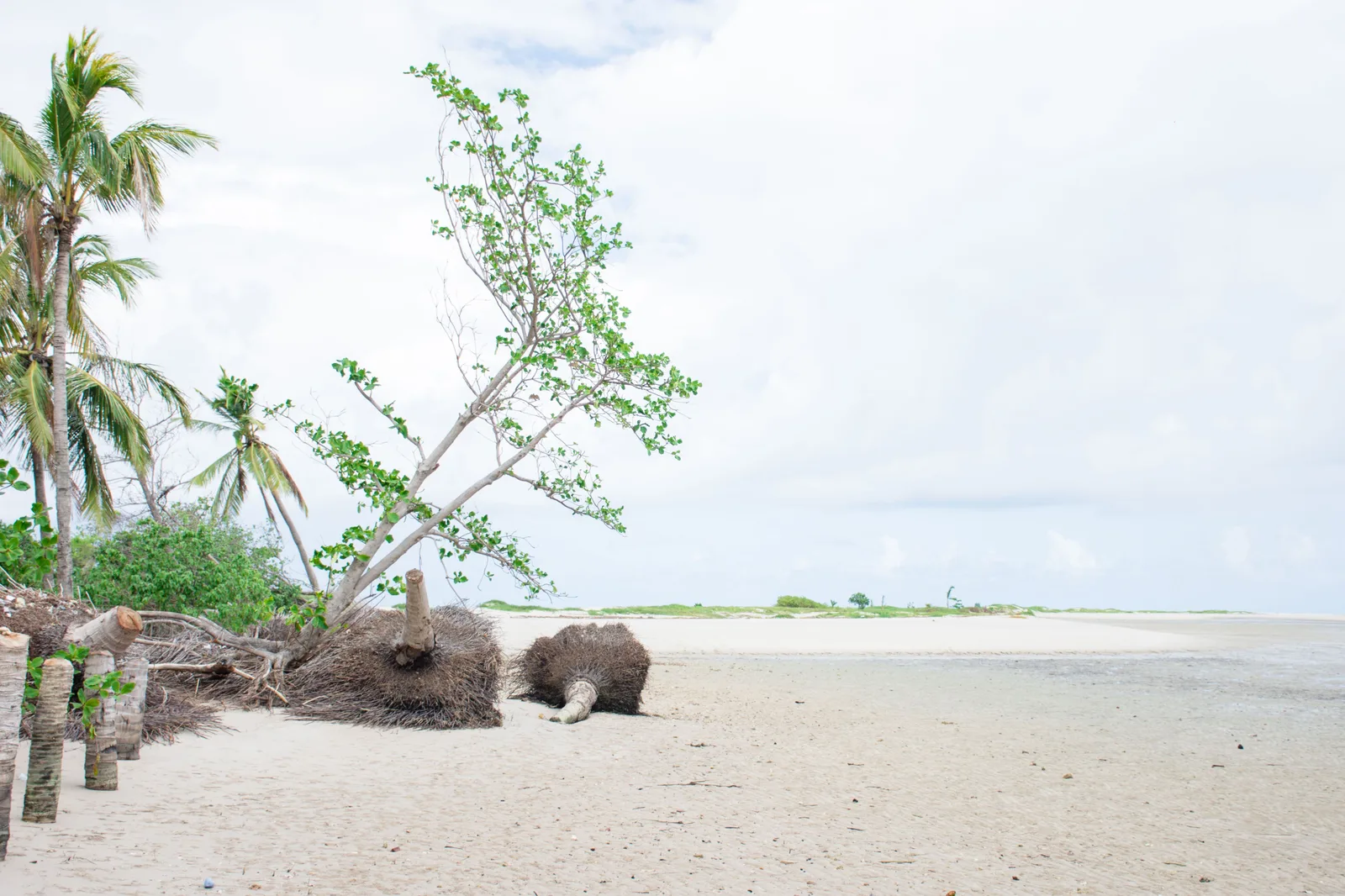
  • A low sandbank off Itamaracá with a single wind-bent tree on it, pale shallow water either side and an empty horizon

    Itamaracá · full day

    The sandbank at Coroa do Avião

    A crescent of sand that appears out of the channel off Itamaracá, about 50 km north, reachable by small boat from Itapissuma and covered at high water. Shallow, calm and warm, with beach shacks that grill fish while you wait. It is the closest thing to an easy beach day north of the city, and it goes with a morning at Forte Orange on the same trip.

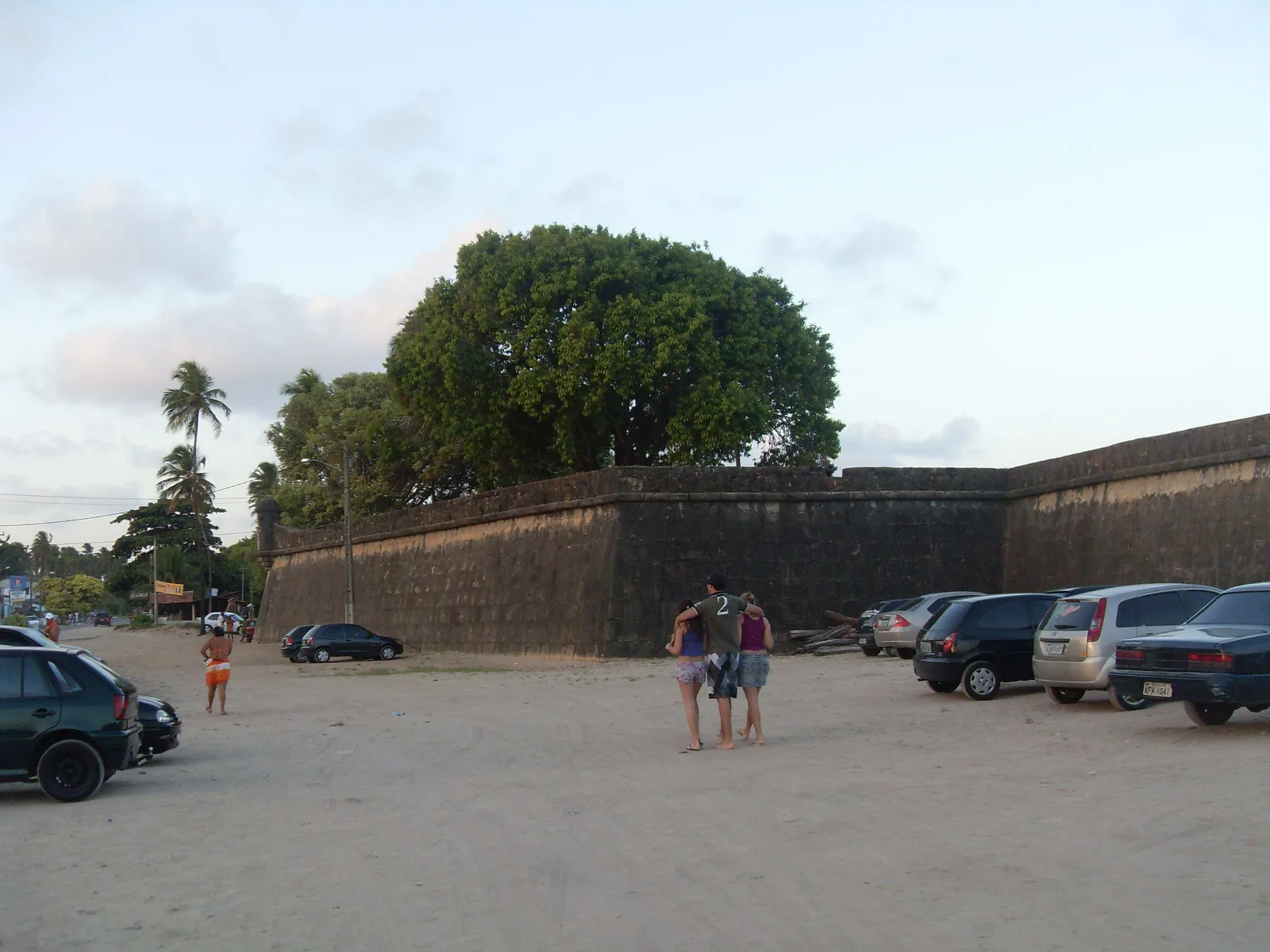
  • The low brick and stone rampart of Forte Orange on Itamaracá under a large shade tree, with visitors walking along the open ground in front of it

    Itamaracá · half day

    Forte Orange on Itamaracá

    The Dutch built this fort in 1631, the year they burned Olinda, to hold the channel north of the city. The low star-shaped walls standing on the beach today are the Portuguese rebuild, ordered by royal charter in 1696 and built in stone and mortar, the Dutch original having been rammed earth. So it is a fort on the Dutch site rather than a Dutch fort, which is IPHAN’s own reading of it, and there is a small museum inside. Combined with Coroa do Avião it makes a straightforward day out of the city by car.

Carnival & Music

  • A frevo dancer photographed from above on cobblestones, in a red, green and yellow costume, laughing and holding a small brightly colored umbrella

    Olinda and Recife · 2 hours

    A frevo lesson

    Frevo is Pernambuco’s own thing and UNESCO put it on the intangible heritage list in 2012: a fast brass march, and a dance called the passo that came out of capoeira and is danced low, with a tiny bright umbrella for balance. Schools in Olinda and the Paço do Frevo in Recife run classes for visitors year-round. You will not be good at it. It is still the most fun two hours available here outside February.

  • The white colonial facade of the Paço do Frevo in Recife Antigo, with rows of small colored carnival umbrellas strung on wires overhead against a blue sky

    Recife Antigo · 2 hours

    The Paço do Frevo

    A museum built entirely around one musical form, in a restored building on the Praça do Arsenal. It covers where frevo came from, how the orchestras are put together and what the dance actually is, with a dance floor, a rehearsal space and a lot of film. Better than it sounds, and the right place to go before Carnival rather than after.

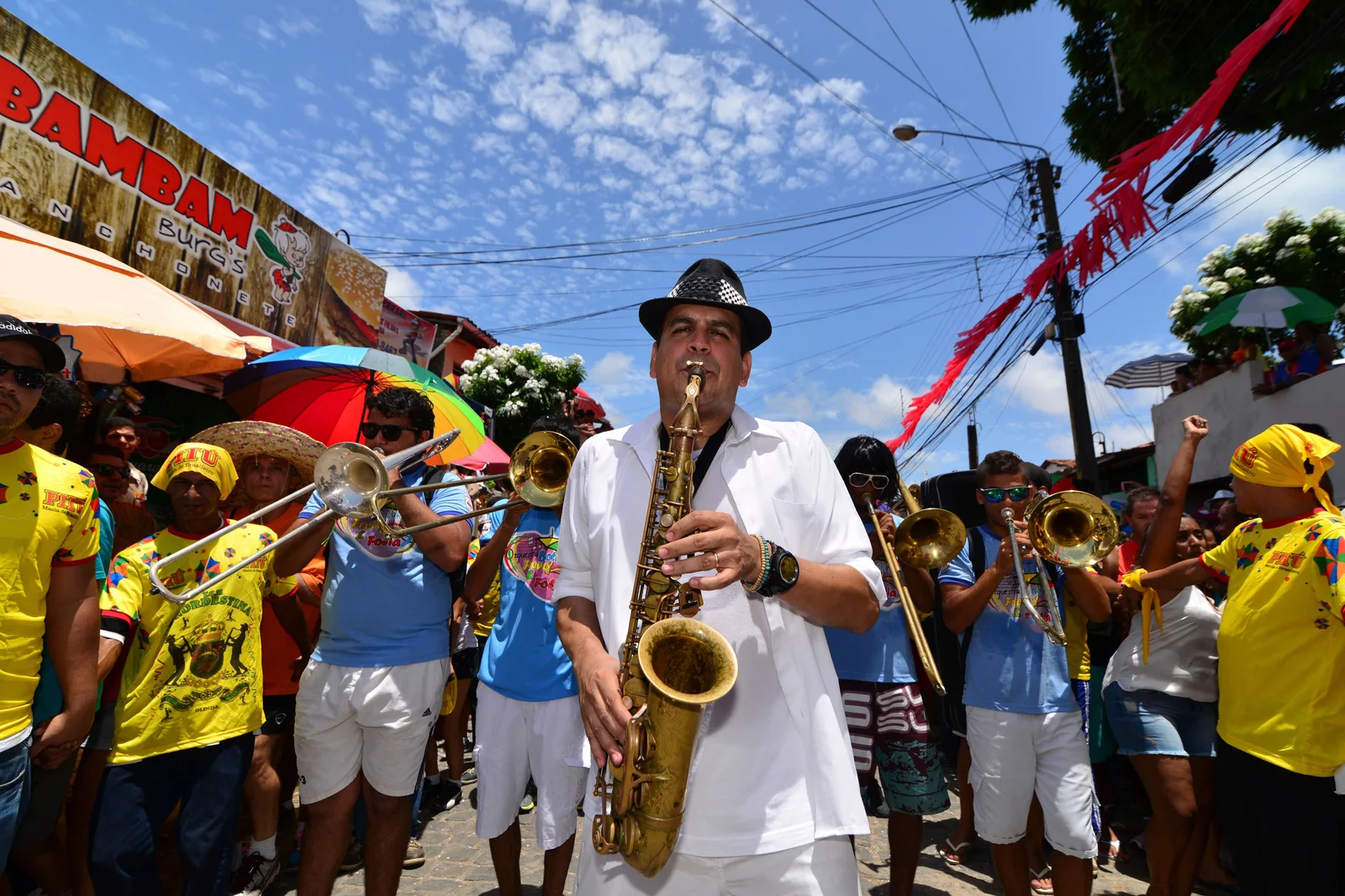
  • A carnival brass band moving down a street hung with streamers, a saxophonist in white at the front and trumpet and trombone players behind him in yellow and light blue shirts

    Recife and Olinda · February

    Follow a bloco

    Carnival here is free, has no stadium and sells no tickets. Hundreds of blocos — a brass band, a banner and whoever follows it — move through Recife’s old streets and up and down Olinda’s hill for about a week, and you join by standing in the road. Recife’s Carnival runs to several thousand performances by hundreds of groups. Wear something you do not mind ruining and take nothing you would miss.

Food

  • Inside the Mercado de São José in Recife: an aisle of tiled counters stacked with produce under a high iron and glass roof, with traders and shoppers along it

    São José · 2 hours

    Mercado de São José

    A prefabricated iron market hall shipped from France and put up in 1875, and still the working food and craft market of the old city. Fish, dried shrimp, spices, herbs sold as medicine, hammocks, saints and cheap hardware, in the middle of the busiest and scruffiest part of central Recife. Go in the morning, take very little with you, and eat something.

  • Cellophane-wrapped bricks of bolo de rolo standing on end in a woven basket at a market stall, green and gold labels facing out and a seam of guava showing along the top of each

    Citywide · any time

    Bolo de rolo, and the rest of it

    Bolo de rolo is Pernambuco’s own cake: paper-thin sponge rolled up with guava paste in dozens of layers, sold everywhere in cellophane bricks and taken home by every Brazilian who passes through. Around it sits the rest of the local repertoire — crab eaten with a mallet, dried salted meat with cassava, tapioca crepes off a griddle, and cold beer poured very small so it never goes warm.

Where to stay

The beach, the old port, or the hill.

Three genuinely different trips, all within half an hour of each other. Nearly every hotel room in the metropolitan area is in the first one, which is the practical answer; the other two are the interesting ones.

Drag and zoom to explore.

Tap an area to open it and see it on the map

  • Our pick

    Best for: Beds, the beach and getting around

    Boa Viagem from the air: block after block of apartment towers packed in tight behind the seafront avenue, running away toward the horizon

    The seven-kilometer beachfront strip south of the center, and where almost all the hotels are. You get a sea view, a promenade you can walk at any hour, restaurants at every price and a ten-minute run to the airport. It is a modern high-rise neighborhood rather than a beautiful one, and the water in front of it is for wading inside the reef rather than swimming. For a first visit it is still the right base.

    • Boa Viagem
    • Pina
    • Setúbal
  • Best for: Atmosphere, and walking to the sights

    The island of Recife Antigo from the air, the circular plaza of Marco Zero on its quay, colonial rooftops behind it and the harbor and city towers around

    The old port island, and the most characterful place to sleep in the city — a handful of design hotels and guesthouses in restored colonial buildings, with Marco Zero, the synagogue, the Paço do Frevo and the best of the bars all within a few blocks. The trade is that there are very few rooms, no beach, and the streets swing between packed and deserted depending on what is on.

    • Bairro do Recife
    • Marco Zero
    • Santo Antônio
  • Best for: Beauty, quiet, and Carnival

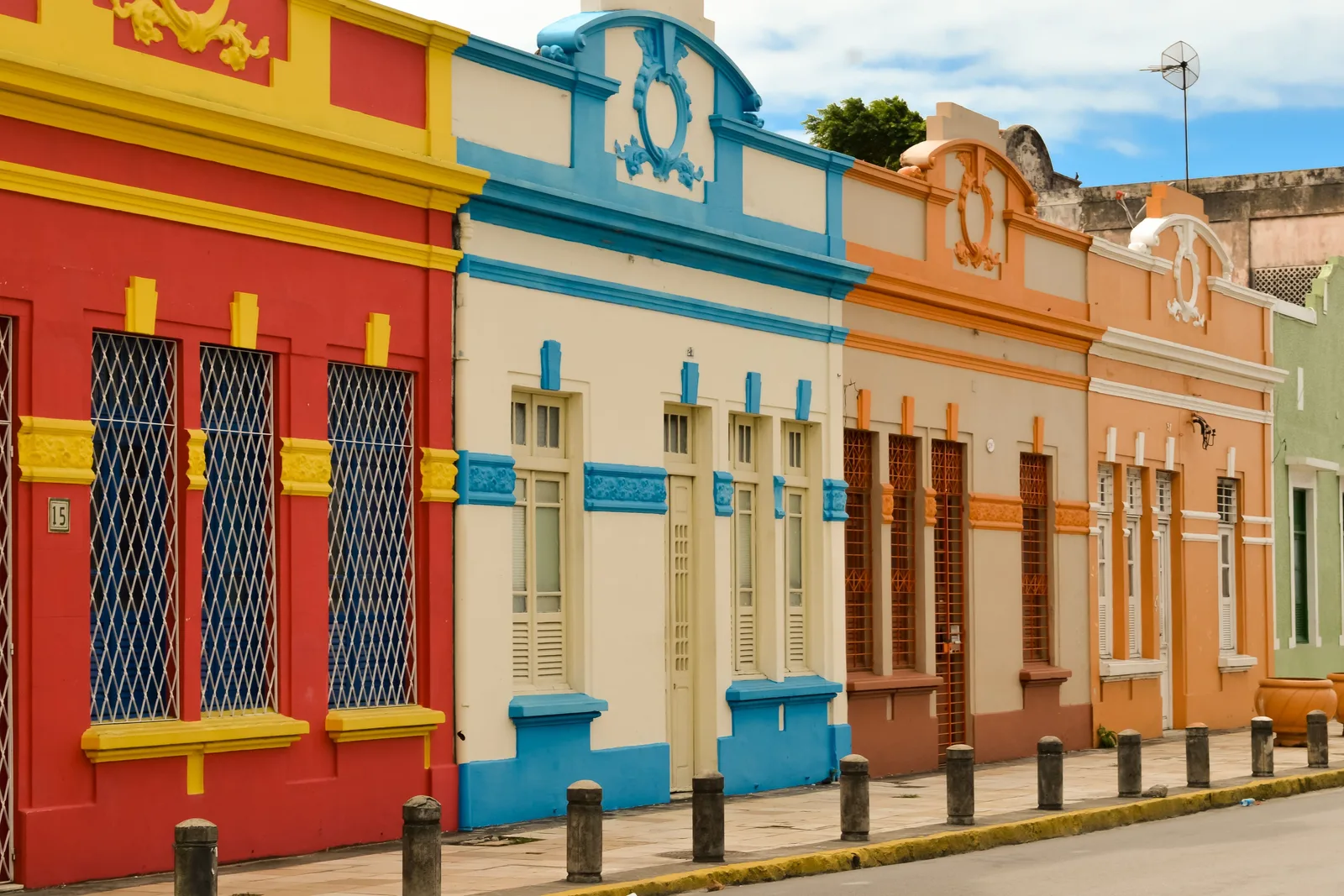
    A row of colonial townhouses in Olinda painted red, cream, orange and blue, with barred windows and tall shuttered doors onto the street

    Pousadas in colonial houses on the hill, most of them small, several with a view over the roofs to the sea. It is far and away the prettiest place to stay and the calmest, and during Carnival it is the only place to be. Against it: you are 6 km and a ride app from the city’s museums and restaurants, the streets are steep and unlit at night, and the beach at the bottom of the hill is not one to swim at.

    • Carmo
    • Amparo
    • Varadouro
    • Alto da Sé

A working plan

Four days, and a day for each city.

Built so the two cities get a full day each rather than being run together, with the museums in the middle and the last day left loose for the coast or the tide.

  1. 01
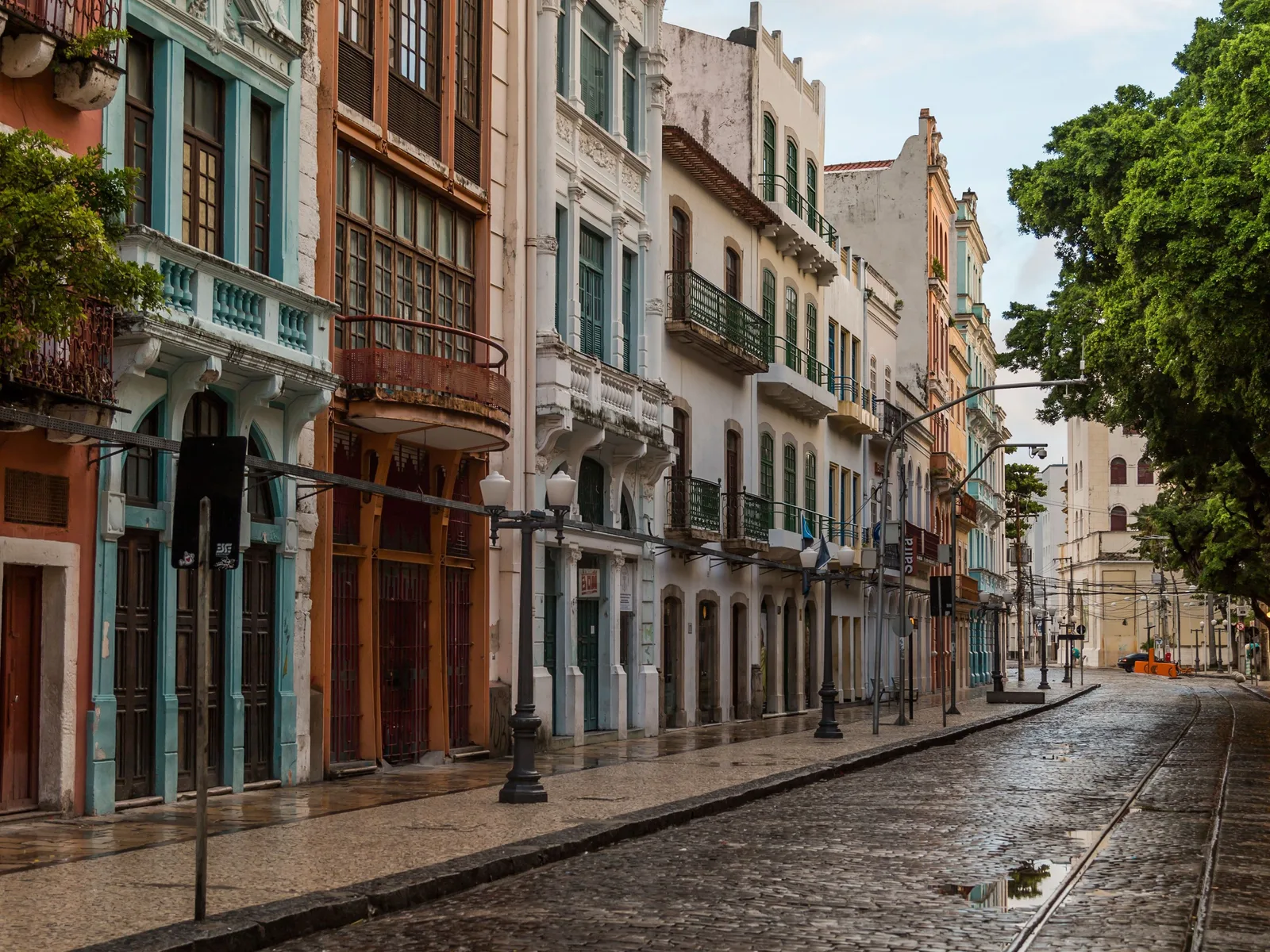
    A narrow street of tall colonial townhouses in Recife Antigo after rain, their facades painted green, ochre and blue

    Recife Antigo

    The old island, on foot

    Start at Marco Zero and look at the reef. Then the Rua do Bom Jesus and the synagogue, the Paço do Frevo, the boat across to the sculpture park, and dinner where the street is busiest.

  2. 02
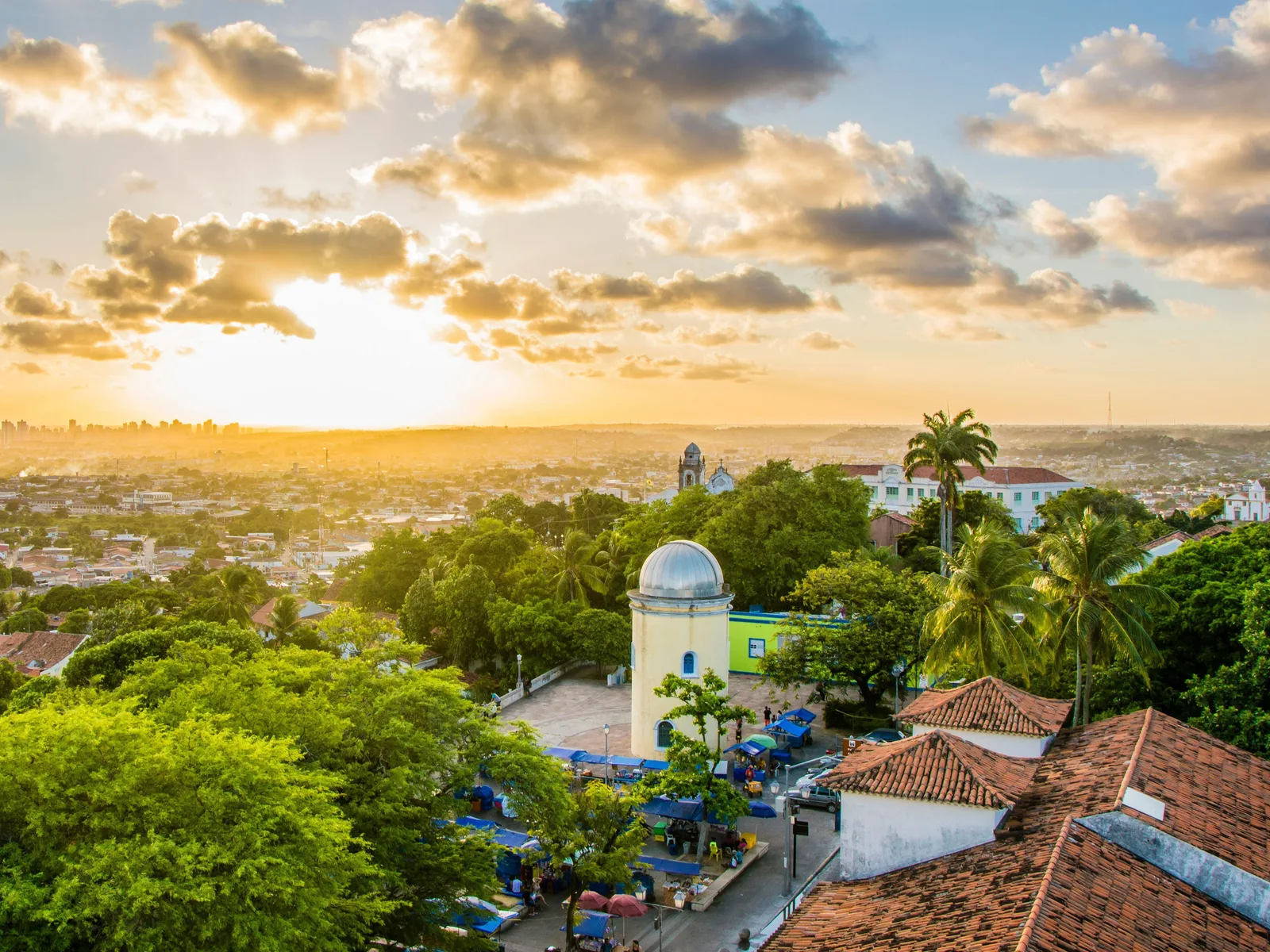
    Golden light over Olinda at the end of the day: the silver dome of the Alto da Sé water tower and terracotta roofs among dense trees, with the horizon glowing behind

    Olinda

    Up the hill, all day

    Go early while it is cool. The Convento de São Francisco and São Bento, then the ateliers and the Mercado da Ribeira, then hold the Alto da Sé for the last hour of light and eat up there.

  3. 03
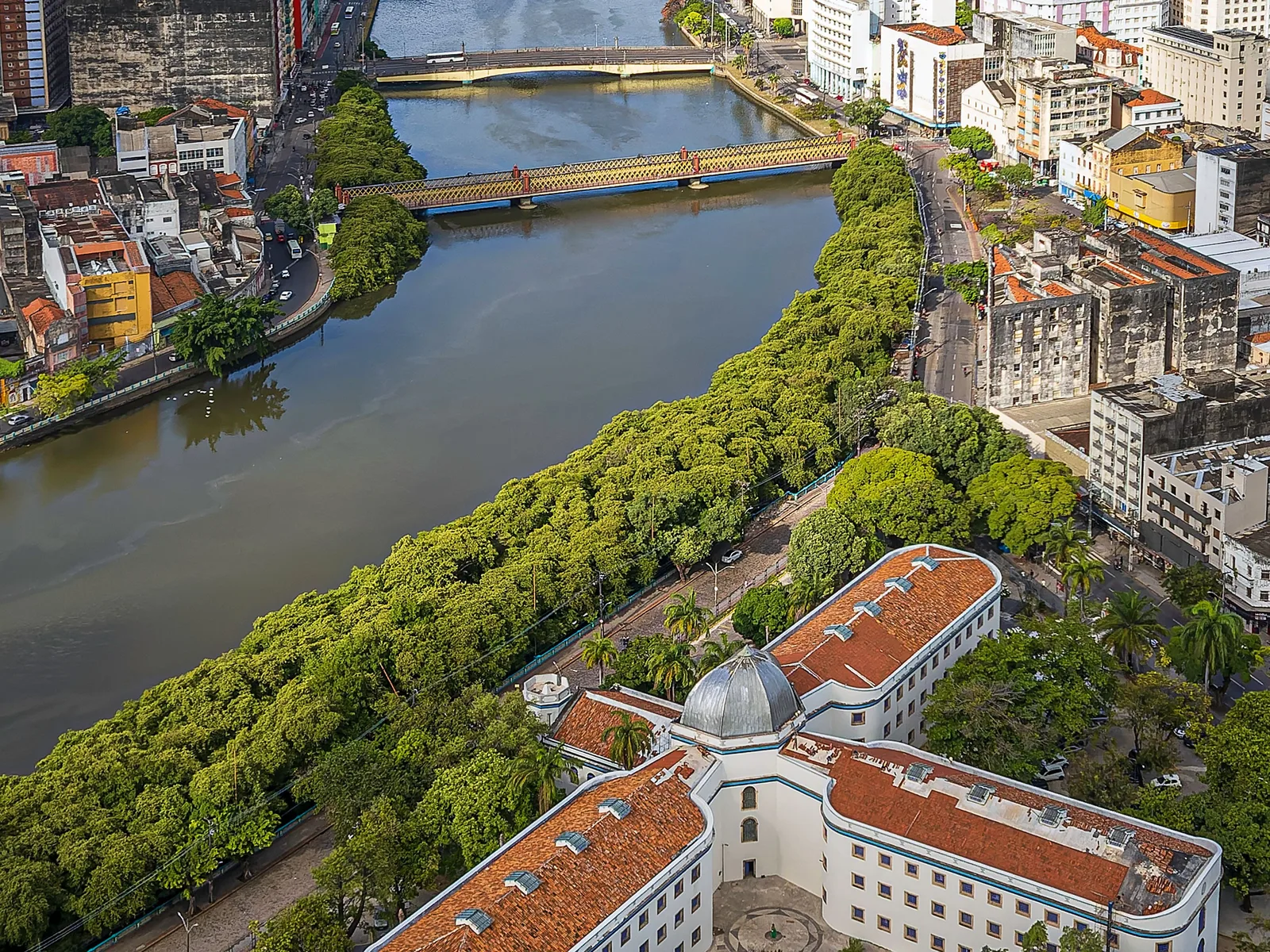
    The Capibaribe from the air with its bridges, and the radial nineteenth-century building of the Casa da Cultura among trees on the bank

    Várzea & Santo Antônio

    Museums, market and the old center

    A taxi out to the Brennand castle for the Frans Post paintings and the armory, back in for the Mercado de São José and the Casa da Cultura, and the Boa Viagem promenade at dusk.

  4. 04
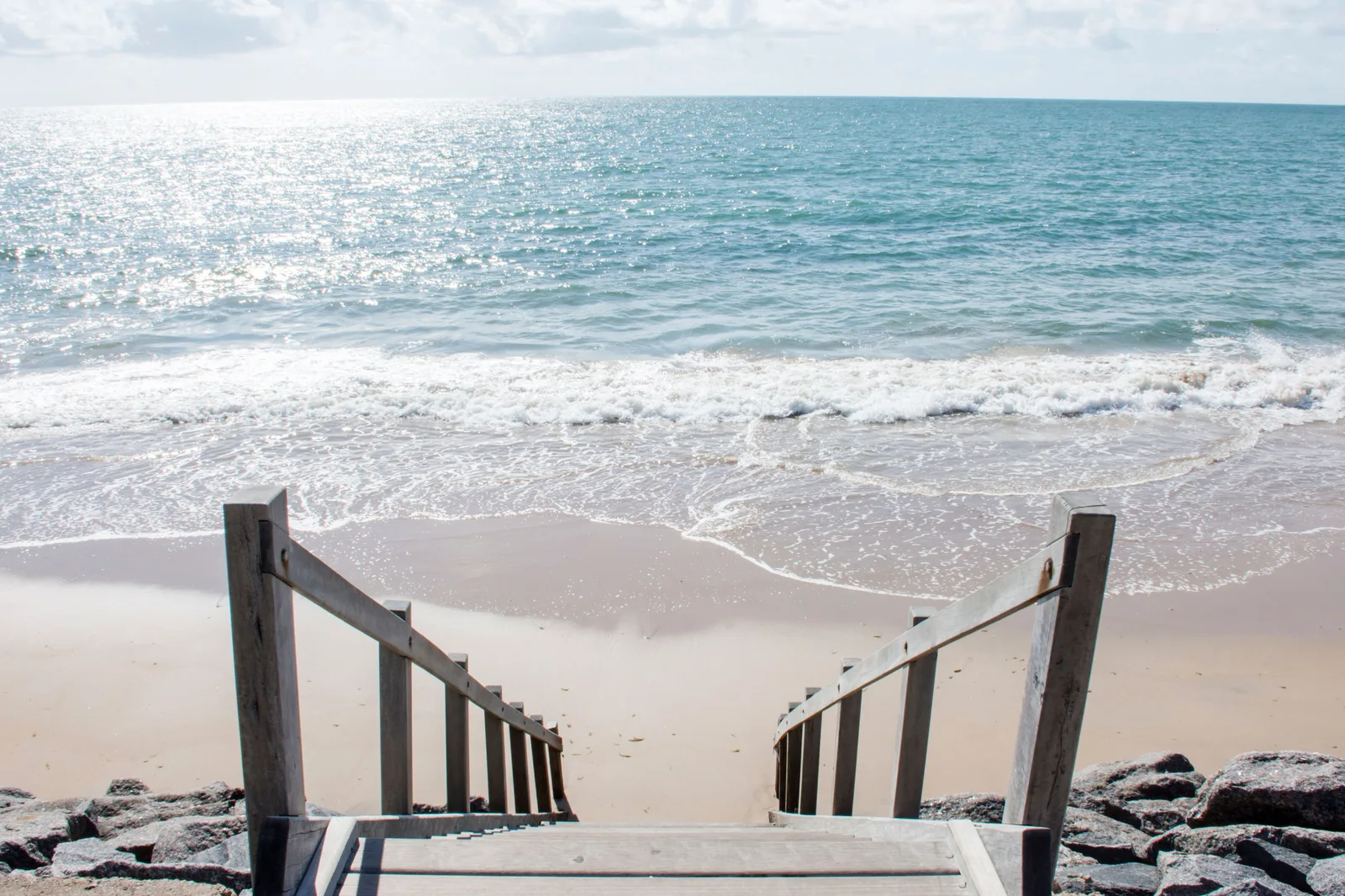
    A wooden staircase down onto an empty beach north of Recife, dark reef rock along the waterline and the sea running up the sand

    Itamaracá, or the beach

    The coast, or the tide

    The loose day. North to Forte Orange and the Coroa do Avião sandbank, or stay put, check the tide table and spend low water in the shallows inside the reef.

This is a starting shape, not a fixed departure — we rearrange it around your dates. Have it built for you

Timing

The dry season is not when you think.

Recife is between eight and nine degrees south, so the temperature barely moves all year: every month tops out between 28 and 31 degrees and every month bottoms out between 21 and 23. What changes is the rain, and it changes enormously — and it runs backwards to what a visitor from the northern hemisphere expects. The wettest month here is the middle of the southern winter, and the driest is November.

Rainfall, rain days, air and sea temperature and UV for Recife, month by month. Choose a month to see what the coast is doing then.

January

Good
Air
23–31°C 73–88°F
Sea
28°C 82°F
UV
11 Extreme
Rain
11 days 107 mm / 4.2 in

Hot and bright, with the city already warming up for Carnival at weekend street rehearsals. Peak-season prices.

February

Best
Air
23–31°C 73–88°F
Sea
28°C 82°F
UV
12 Extreme
Rain
11 days 127 mm / 5.0 in

Hot, humid and fully booked. On weather alone a middling month; go now for Carnival and nothing else matters.

March

Good
Air
23–31°C 73–88°F
Sea
29°C 84°F
UV
12 Extreme
Rain
15 days 197 mm / 7.8 in

Still summer-warm, the crowds gone home and the sea at its warmest, but the rain is building fast.

April

Trade-offs
Air
23–30°C 73–86°F
Sea
29°C 84°F
UV
11 Extreme
Rain
17 days 269 mm / 10.6 in

The wet season sets in properly: showers on most days, gray skies, a very warm sea and low prices.

May

Trade-offs
Air
22–30°C 72–86°F
Sea
28°C 82°F
UV
9 Very high
Rain
19 days 317 mm / 12.5 in

Deep in the wet season. Cheap and quiet, with rain on about two days in three and murkier water.

June

Trade-offs
Air
22–29°C 72–84°F
Sea
28°C 82°F
UV
8 Very high
Rain
22 days 391 mm / 15.4 in

The wettest month on the national normals, and the cloudiest. São João fills the whole state in the second half.

July

Trade-offs
Air
21–28°C 70–82°F
Sea
27°C 81°F
UV
8 Very high
Rain
23 days 315 mm / 12.4 in

The most rain days of any month, at 23 out of 31, and Brazilian winter holidays fill the hotels anyway.

August

Trade-offs
Air
21–28°C 70–82°F
Sea
26°C 79°F
UV
9 Very high
Rain
19 days 187 mm / 7.4 in

The rain eases through the month and prices fall, but it is still wet and the sea is at its coolest.

September

Good
Air
22–29°C 72–84°F
Sea
27°C 81°F
UV
11 Extreme
Rain
12 days 93 mm / 3.7 in

The dry season arrives and the rainfall drops by half. Prices still low, and MIMO takes over Olinda late in the month.

October

Good
Air
22–30°C 72–86°F
Sea
27°C 81°F
UV
12 Extreme
Rain
9 days 53 mm / 2.1 in

Dry, sunny, warm and uncrowded. One of the two best months of the year to be here.

November

Best
Air
23–30°C 73–86°F
Sea
27°C 81°F
UV
12 Extreme
Rain
7 days 39 mm / 1.5 in

The driest month of the year, with rain on only seven days and low-season prices still holding.

December

Good
Air
23–31°C 73–88°F
Sea
28°C 82°F
UV
11 Extreme
Rain
8 days 62 mm / 2.4 in

Hot, dry and bright. Quiet until about the 20th, then the city fills and prices jump for the holidays.

  • Best The one or two peak months
  • Good A real recommendation
  • Trade-offs Workable, with a catch
See Recife & Olinda on the Brazil calendar

UV is the monthly average of the daily peak, 2022 to 2025, calculated from Copernicus Atmosphere Monitoring Service data. Weather data by Open-Meteo.com, CC BY 4.0.

For weather

October–December

The dry season. November averages 39 mm across seven wet days, with the sea at 27 degrees and prices still below the summer rates.

For Carnival

February 6–10 in 2027

The dates move with Easter. Hot, humid, fully booked and several times the normal room rate — and the best street carnival in Brazil, free and with no stadium in it.

The wet half

April–July

Around 270 to 390 mm a month across seventeen to twenty-three wet days. Warm and cheap, and genuinely wet — this is the stretch to avoid if rain would spoil the trip.

About the rain

The reversal is the thing to understand. Recife’s wet season is the southern autumn and winter, roughly April to July, and it is a serious one: around 390 mm in the wettest month, with rain on twenty to twenty-three days out of thirty. It is warm rain rather than cold, and it tends to come in long gray stretches rather than the short violent afternoon storms of southeastern Brazil, so it takes days off you rather than hours.

The dry season is October to December, and it is dry in a way that surprises people: November averages 39 mm across seven wet days and has more sunshine per day than any other month, 8.1 hours against December’s 7.9 on INMET’s 1991 to 2020 normals, while the air still sits between 23 and 30 degrees. December takes the bigger monthly total, 244.6 hours to 243.2, only because it is a longer month. The sea never drops below about 26 degrees at any point in the year, so water temperature is never the reason to pick a month. January to March is the hot, bright, expensive shoulder either side of Carnival, wetter than November but still good.

The dates worth planning around

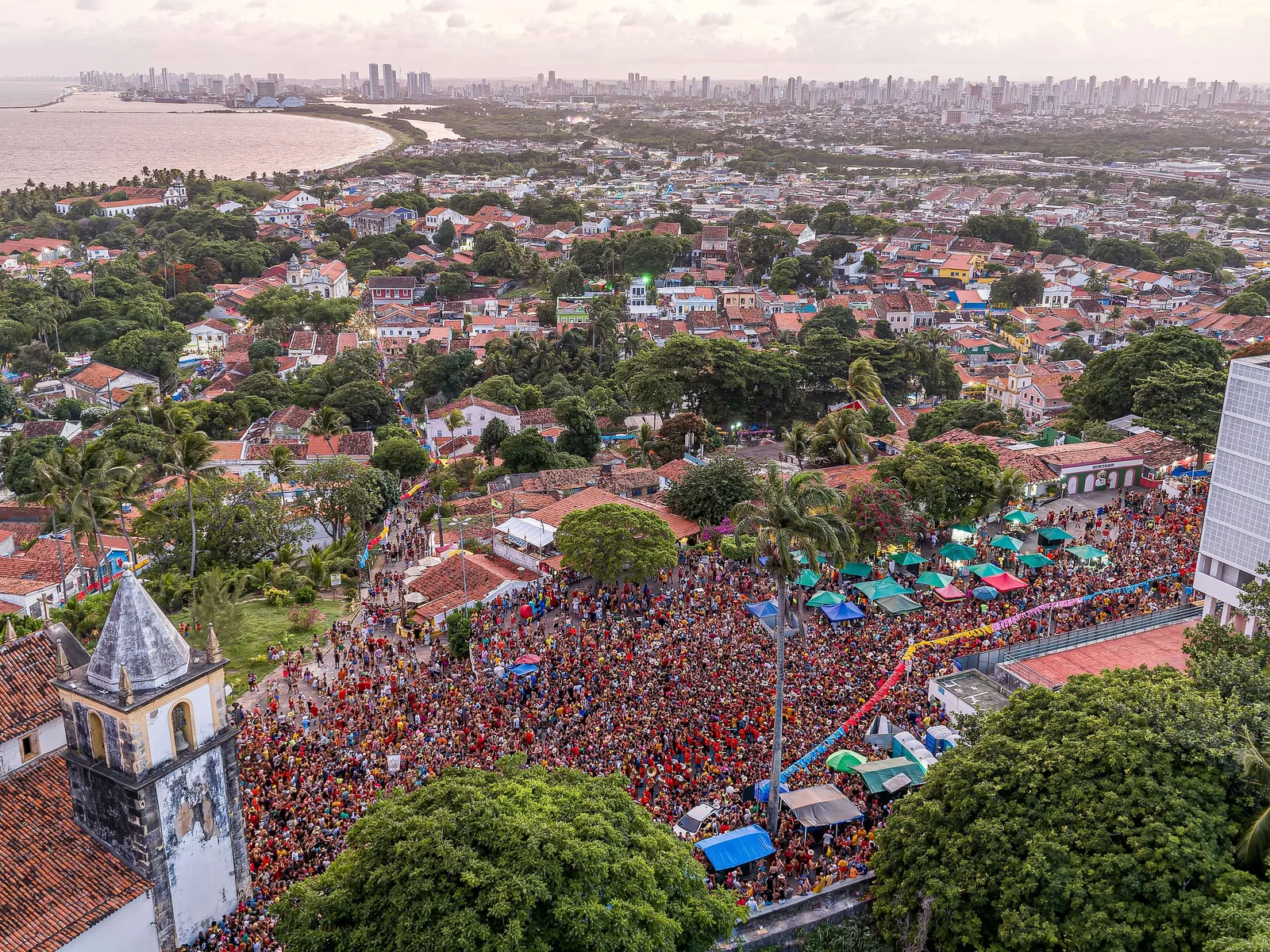
Olinda from the air during carnival: a church tower in the foreground and the streets below it packed solid with a crowd stretching down the hill toward the sea

Carnival in Olinda

February 6–10 in 2027 — the dates move with Easter

Olinda’s carnival happens on the hill, in the street, for free. There is no sambadrome, no ticket and no roped-off section: blocos with brass bands move up and down the lanes for about a week, the giant papier-mâché puppets that are the town’s symbol are carried out among them, and the whole historic center becomes one crowd. It is the closest thing in Brazil to a carnival that was never organized for spectators, and it is why people who know both prefer Pernambuco to Rio.

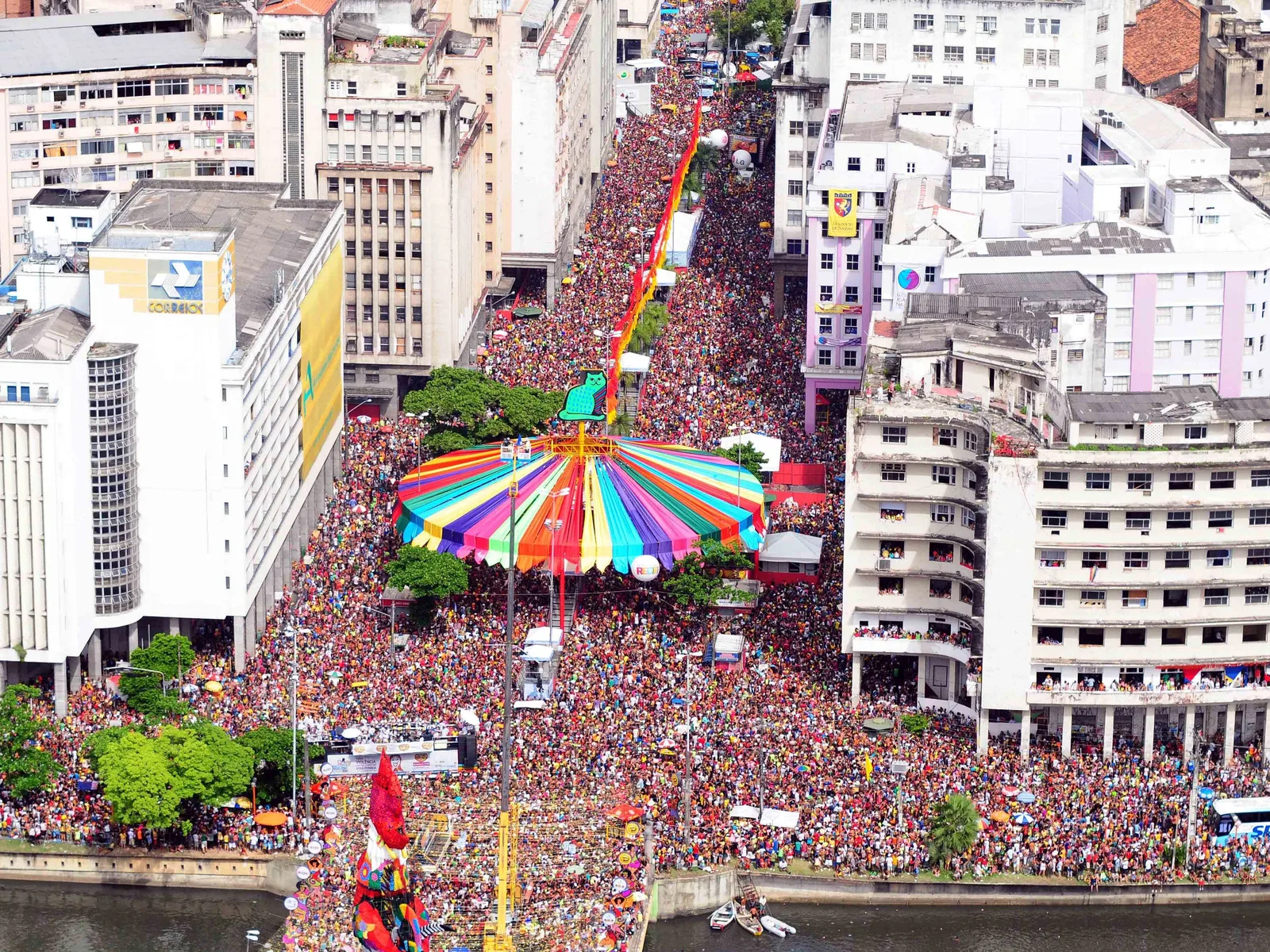
An aerial view of a wide avenue in central Recife filled curb to curb with a carnival crowd, a giant rooster float standing over it beside an enormous multicolored umbrella

Galo da Madrugada

Carnival Saturday — February 6 in 2027

The other half of the Carnival, and a different animal. The Galo da Madrugada parades through central Recife on the Saturday morning and Guinness has recognized it as the largest carnival bloc in the world since 1994 — it drew more than two and a half million people in February 2026. It began in 1978 with seventy-five friends in the São José neighborhood. It is free, it is enormous, and it is the one day of the year the old commercial center is the best place in the city to be.

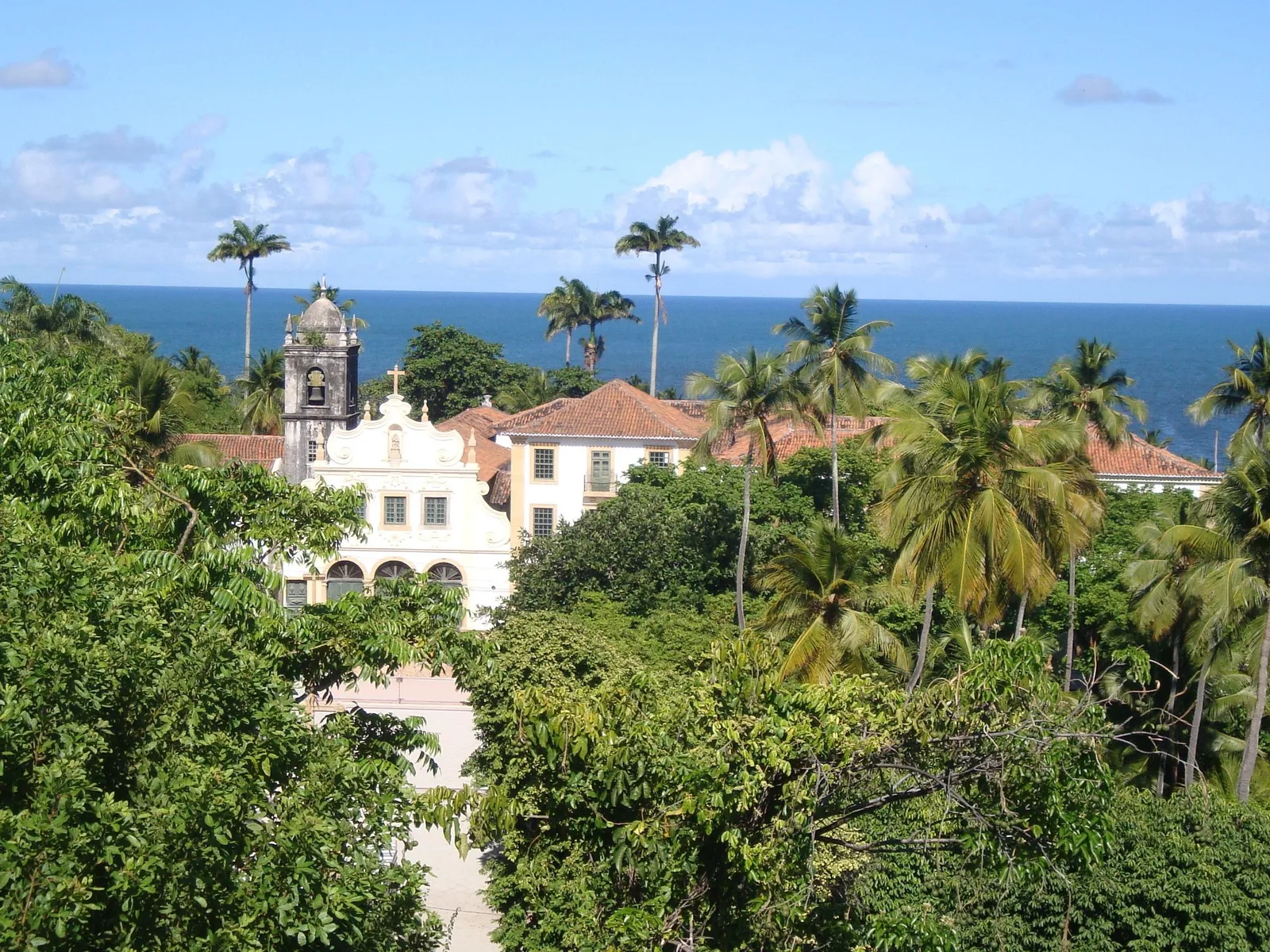
Olinda from above, a white colonial church among palms and terracotta roofs with the Atlantic behind — one of the historic buildings the festival takes over

MIMO Festival

Late September — September 25–27 in 2026

Three days of free concerts through Olinda’s historic center, using the churches, squares and theaters as the venues. The seventeenth edition runs 25 to 27 September 2026 and every part of it is free: BaianaSystem opens, Nação Zumbi Sinfônico closes, and the international bill brings Tinariwen from Mali, Tiken Jah Fakoly from Ivory Coast, Ferro Gaita from Cape Verde and Capicua from Portugal, alongside a film program and free masterclasses (Recife Mais, and the festival’s own 2026 program). It lands right at the start of the dry season, in a month when rooms are still cheap, which makes it one of the best-value weeks of the year to come.

Good to know

Before you come

Can you swim at Boa Viagem and the beaches in Recife? +

Inside the reef, at low tide, yes, and that is the only honest way to put it. Greater Recife has a documented and continuing shark problem: CEMIT, the state monitoring committee, counted the 84th Pernambuco incident since 1992 on 1 June 2026, 70 of them on this coast rather than at Fernando de Noronha (CNN Brasil, June 2026), with 27 deaths among them (Diário de Pernambuco). A thirteen-year-old boy was killed in January 2026, and two more people were bitten on 31 May and 1 June 2026, at Piedade and Boa Viagem. Both survived, and both lost a leg. Along roughly 33 km of urban coast, from Praia do Paiva in the south to Praia do Farol in Olinda, the water beyond the reef line is signed as dangerous, water sports have been banned by state decree since the 1990s, and bathing is prohibited outright on part of Piedade beach. What people actually do, and what you should do, is wait for low tide and go into the warm knee-deep water between the sand and the reef, which is calm, shallow and fine. Beyond the reef, do not. If you want to swim properly, use the hotel pool or head south to Porto de Galinhas.

Should I stay in Recife or Olinda? +

Sleep in Recife and spend a day in Olinda, unless you are coming for Carnival. Boa Viagem has essentially all of the hotel rooms, a beachfront you can walk at any hour, restaurants at every price and a ten-minute drive to the airport, and Olinda is twenty minutes away by ride app. Recife Antigo is the more atmospheric city option if you can get one of the few rooms there. Olinda itself is the prettiest and quietest place to stay by a distance, and the right choice if you want that more than convenience — or if you are here in February, when being on the hill is the entire point.

Is Recife safe for tourists? +

It asks for city habits, and given them it is manageable. The everyday risk is opportunistic theft rather than anything worse, and it concentrates in empty streets and in the commercial center once the offices close. The places visitors spend time — the Boa Viagem seafront, Recife Antigo when something is on, Olinda’s historic center in daylight — are busy and patrolled. Keep your phone in your pocket on the street, carry one card and a little cash, treat the old center as a daytime place, do not walk Olinda’s hill late at night, and use Uber or 99 rather than walking between neighborhoods after dark. We rate it a 5 out of 10, the same as Salvador and below Rio, and that rating is about street crime; the water is a separate question with its own answer above.

How many days do I need for Recife and Olinda? +

Four is right, and the itinerary above is built that way: a day for Recife Antigo, a day for Olinda, a day for the museums and the old center, and a loose fourth for the coast or for catching low tide. Three works if you skip the museums. Two is enough only to see Olinda and Marco Zero and nothing else. If you have longer, the better use of a fifth and sixth day is not more time in the cities but an hour and a half down the coast to Porto de Galinhas, which most people pair with this trip.

Can I fly to Recife nonstop from the United States? +

Almost certainly not, and this surprises people. Recife has a large international airport — just under ten million passengers in 2025, and Azul’s northeast hub — but the only North American nonstop on the schedule is Azul’s seasonal service from Orlando. Everything else connects, usually through São Paulo, Panama City or Lisbon. From the east coast a Lisbon connection on TAP is often the least painful routing, and if you are already coming to Brazil, Recife is about three hours from Rio or São Paulo and cheap to add on. Build in the connection when you plan the days.

Keep going

Where Pernambuco fits in a bigger trip.

Recife is the gateway to the northeast, and it pairs naturally in two directions: south down the coast, first to the beach base an hour and a half away and then to the other great colonial capital, and back to the city almost every Brazil trip starts in.

Free · 29 pages

Free guide

Beginner's Guide to Brazil

A free 29-page guide to everything a first-time visitor should know before landing: visas, safety, money, getting around, where to go, and what to eat.

We'll email you a link to confirm your address. Click it and the guide opens right away.

See what's inside
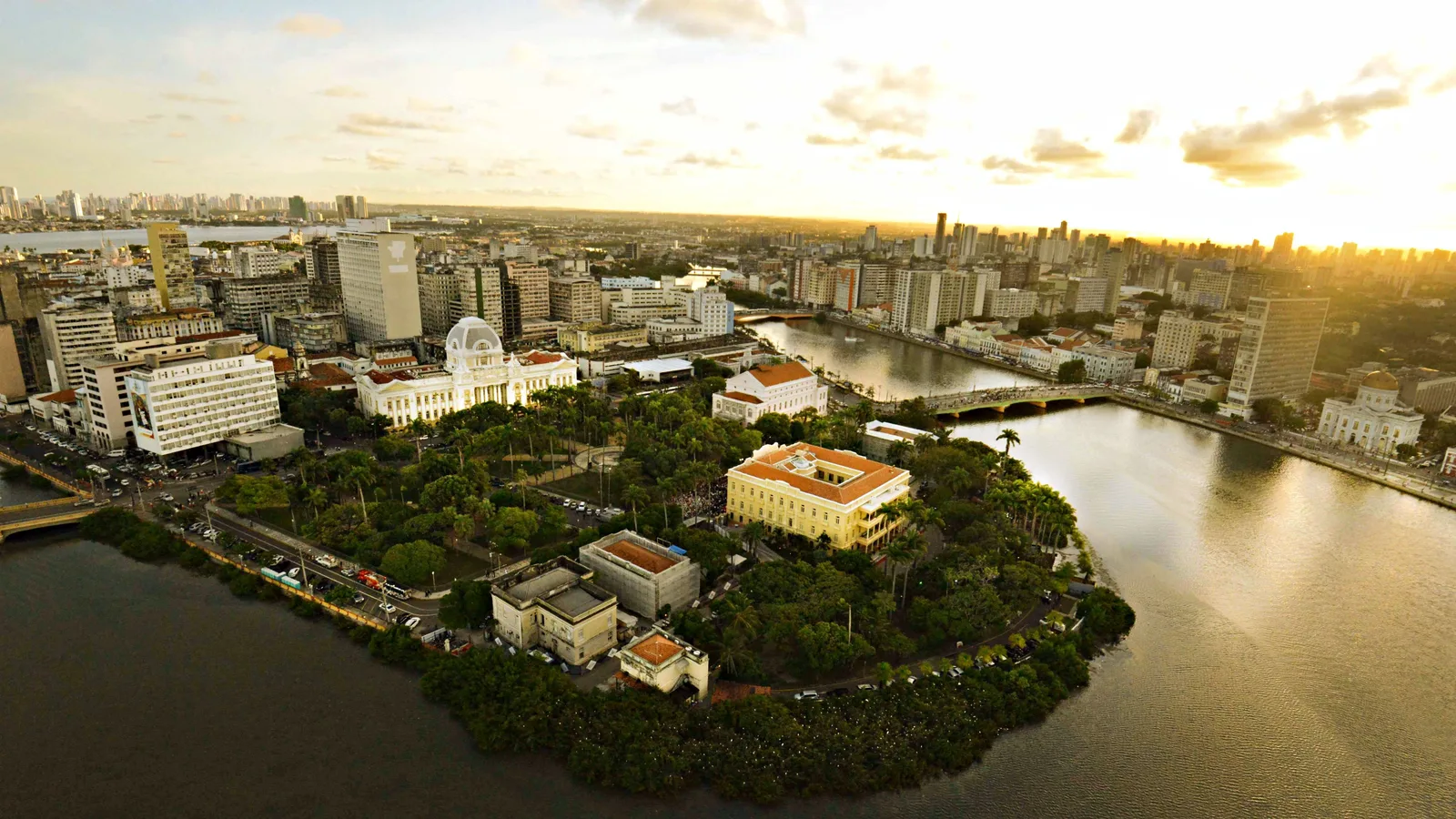
Recife from the air at golden hour, the Capibaribe curving around a wooded point with the governor’s palace on it and the city stretching away behind

Skip the planning

See Pernambuco without working out the tide tables.

Tell us your dates and how much history, beach and Carnival you actually want. We will shape a private itinerary around it — which city to sleep in, when the tide is low enough to be worth planning a beach morning around, the museums that close on the days you were going to go, and the coast further south if you want it.

  • One person, living in Brazil, replying to you directly
  • A reply within one business day — no call center, no bots
  • No cost to plan, and no obligation to book
  • Built around your dates, not a fixed departure