
Skip to content
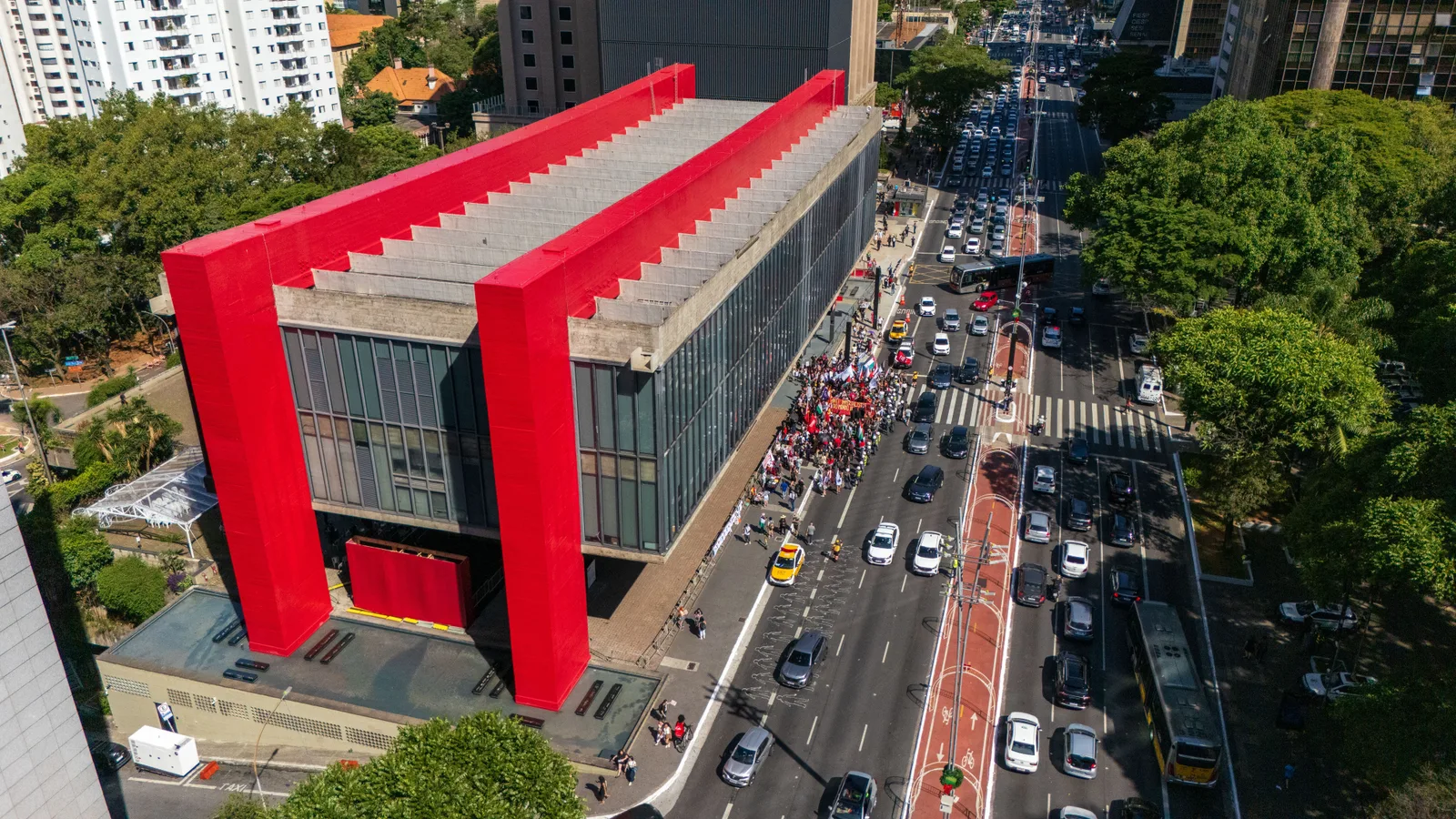
MASP from the air on Avenida Paulista: the museum’s glass box slung between two bright red concrete beams over an open plaza, six lanes of traffic and a red bike lane running past it, a demonstration with red flags gathered on the sidewalk below the building, and trees crowding both sides of the avenue

Southeast Brazil

São Paulo

The city almost everyone flies through, and a few days that change their minds.

Last checked September 2026

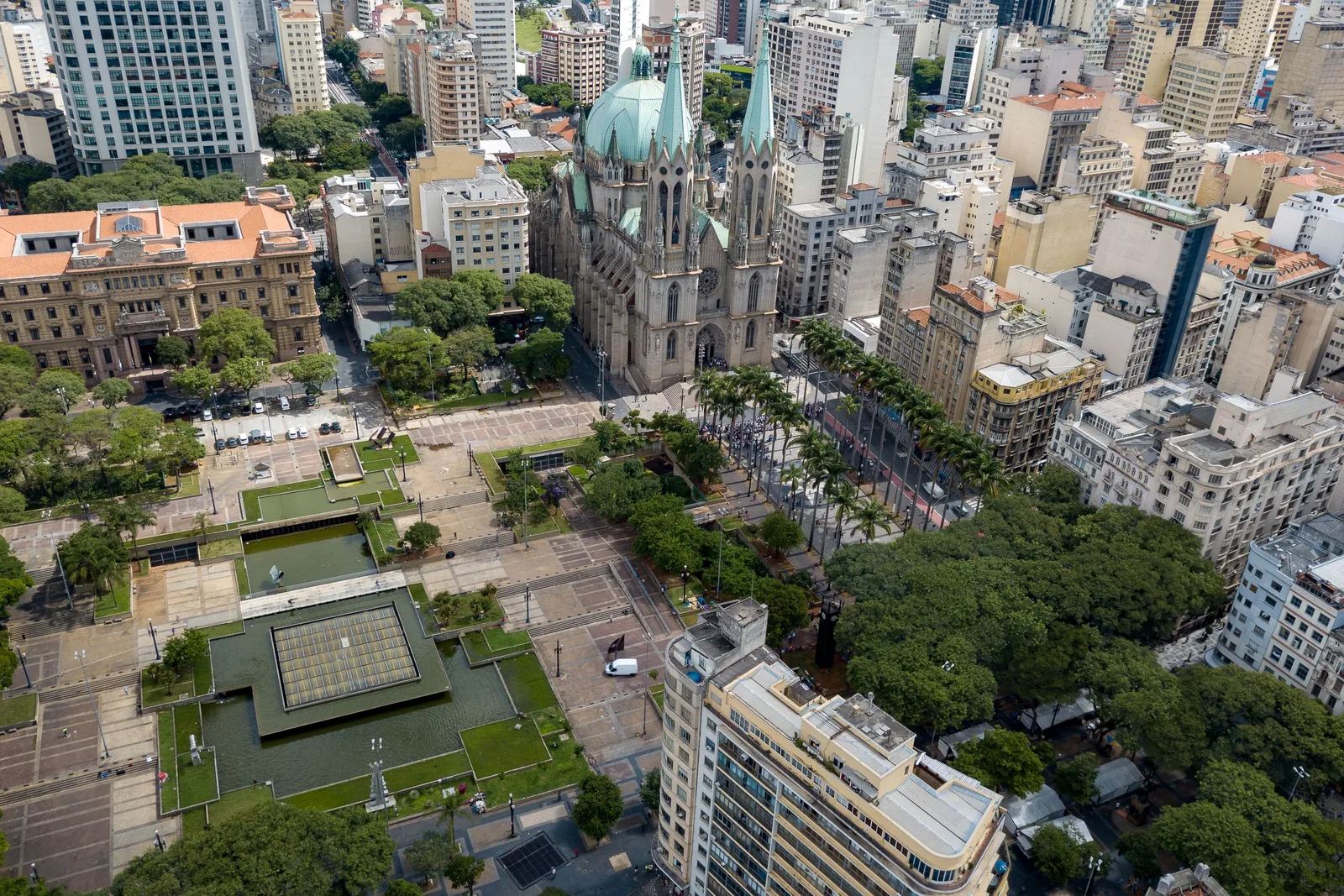
  • Central São Paulo from the air: the Praça da Sé filling the middle of the frame with its long rectangular pools and pale paving, a line of palms across it, the green dome and twin spires of the cathedral rising directly behind, and dense office blocks packed to every edge
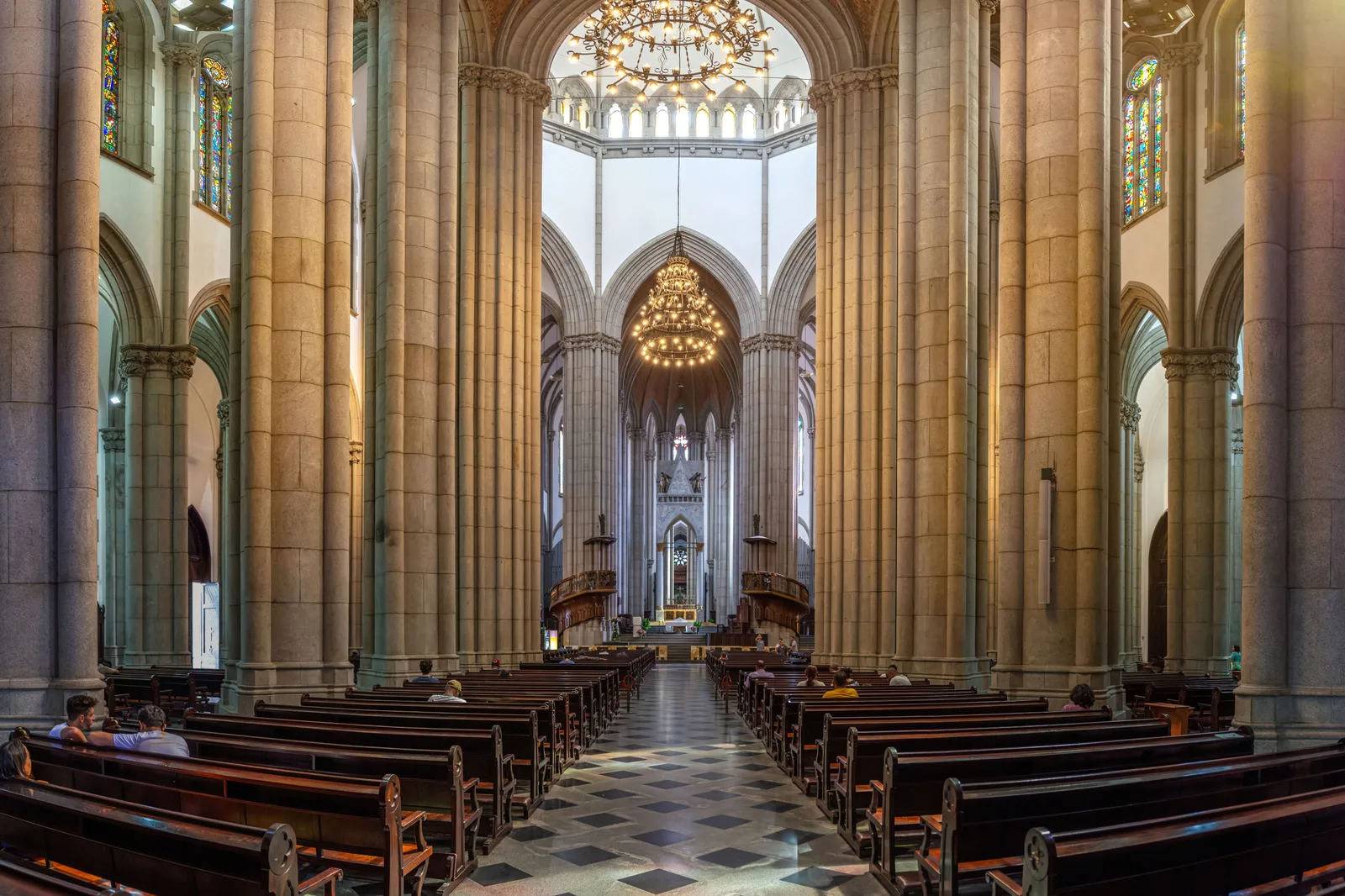
  • Inside the Catedral da Sé: a tall neo-Gothic nave of pale stone piers and ribbed vaults, rows of dark wooden pews along a black-and-white checkered floor, stained glass down both aisles and two large brass chandeliers hanging over the center
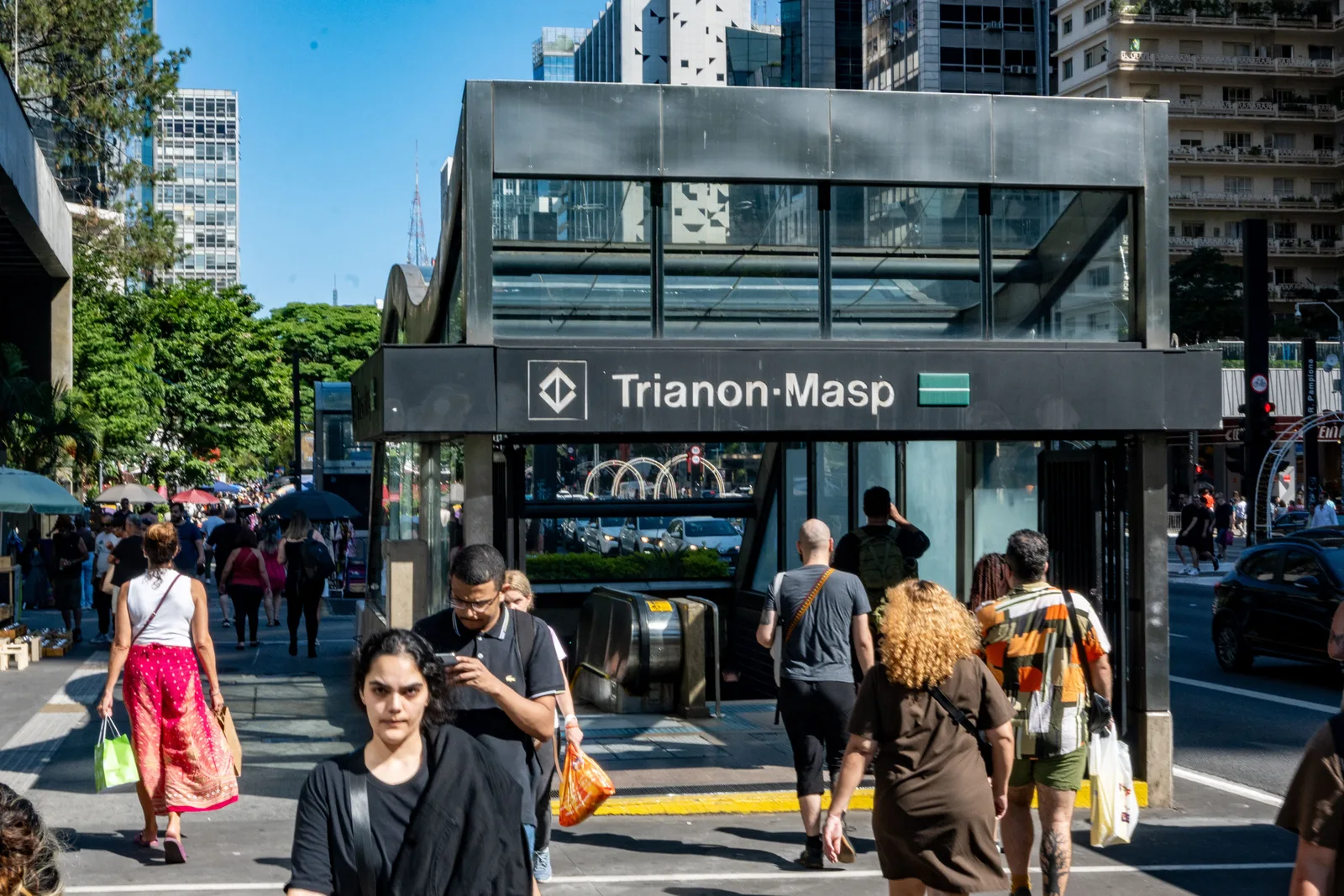
  • The glass entrance to Trianon-MASP metro station on Avenida Paulista, pedestrians crossing in front of it with shopping bags on a bright weekday afternoon
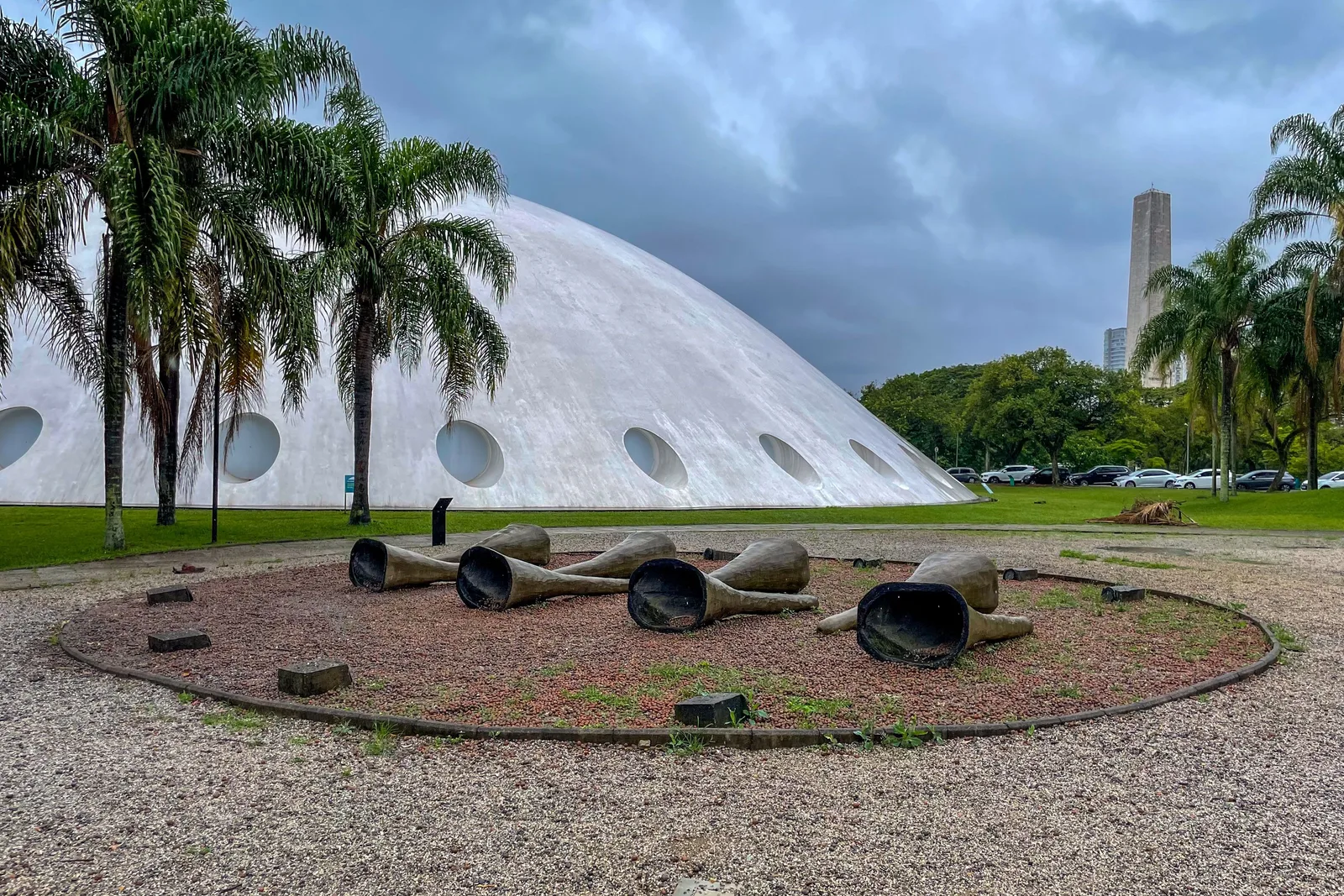
  • The white concrete dome of Niemeyer’s Oca pavilion in Parque Ibirapuera behind a screen of tall palms, with a ring of gravel and low sculptures in front of it
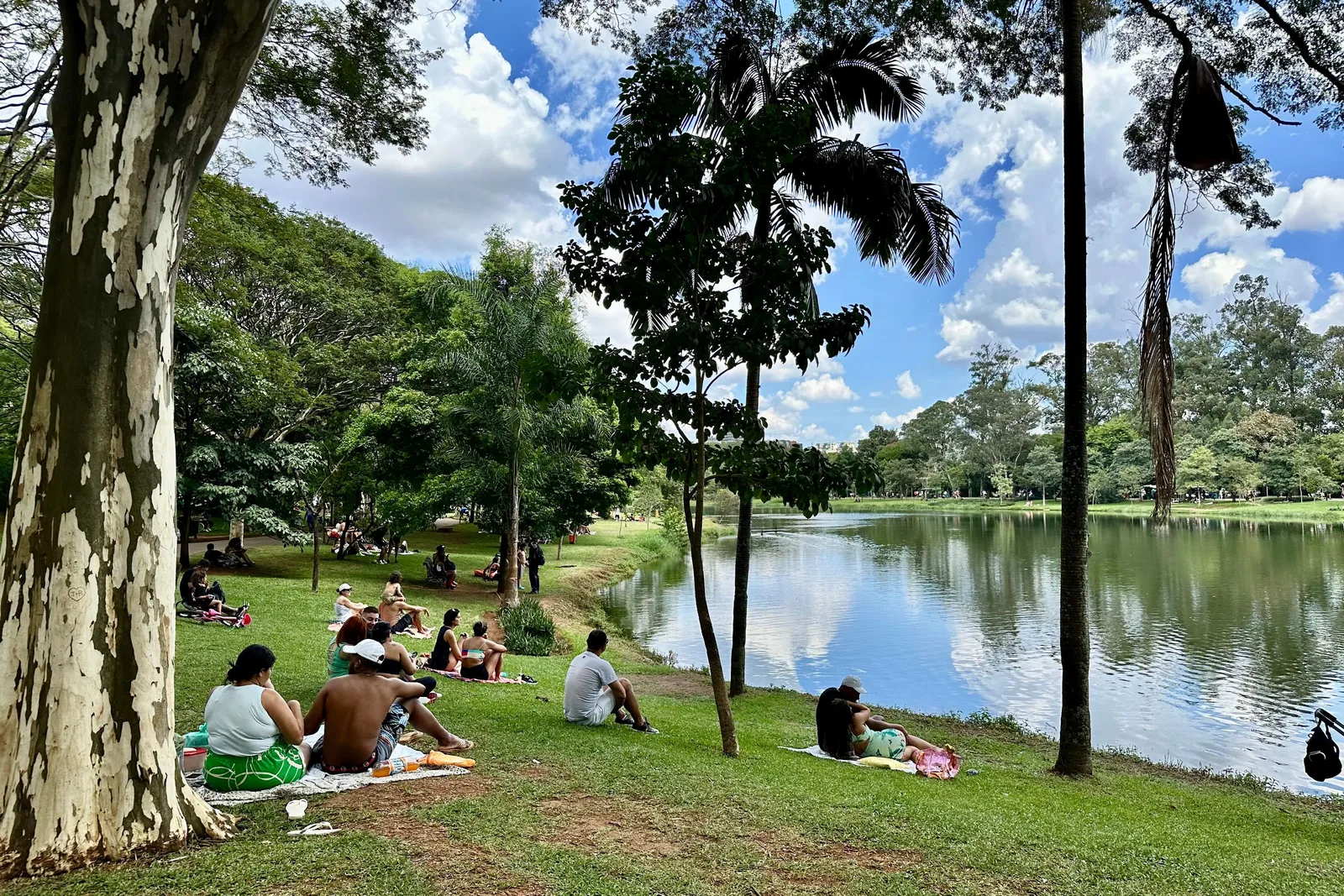
  • People sitting on the grass in the shade of tall trees beside the lake at Parque Ibirapuera on a bright day, with joggers on the path behind them
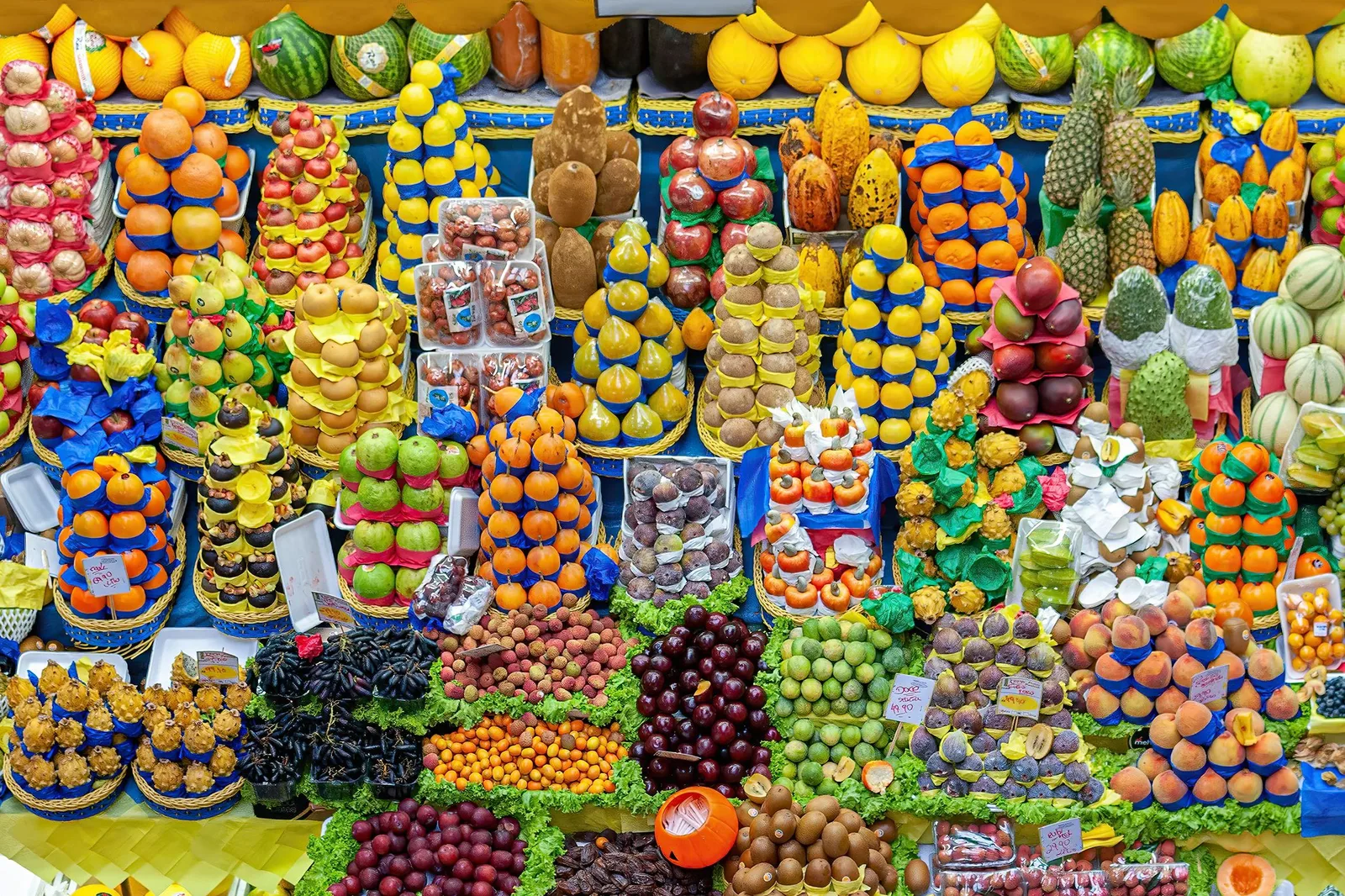
  • A fruit stall at the Mercado Municipal seen head-on and filling the frame: pineapples, melons, grapes, persimmons, pomegranates, dragon fruit and a dozen tropical fruits with no English name, each stacked into its own pyramid on blue and yellow paper, with handwritten price cards tucked between them
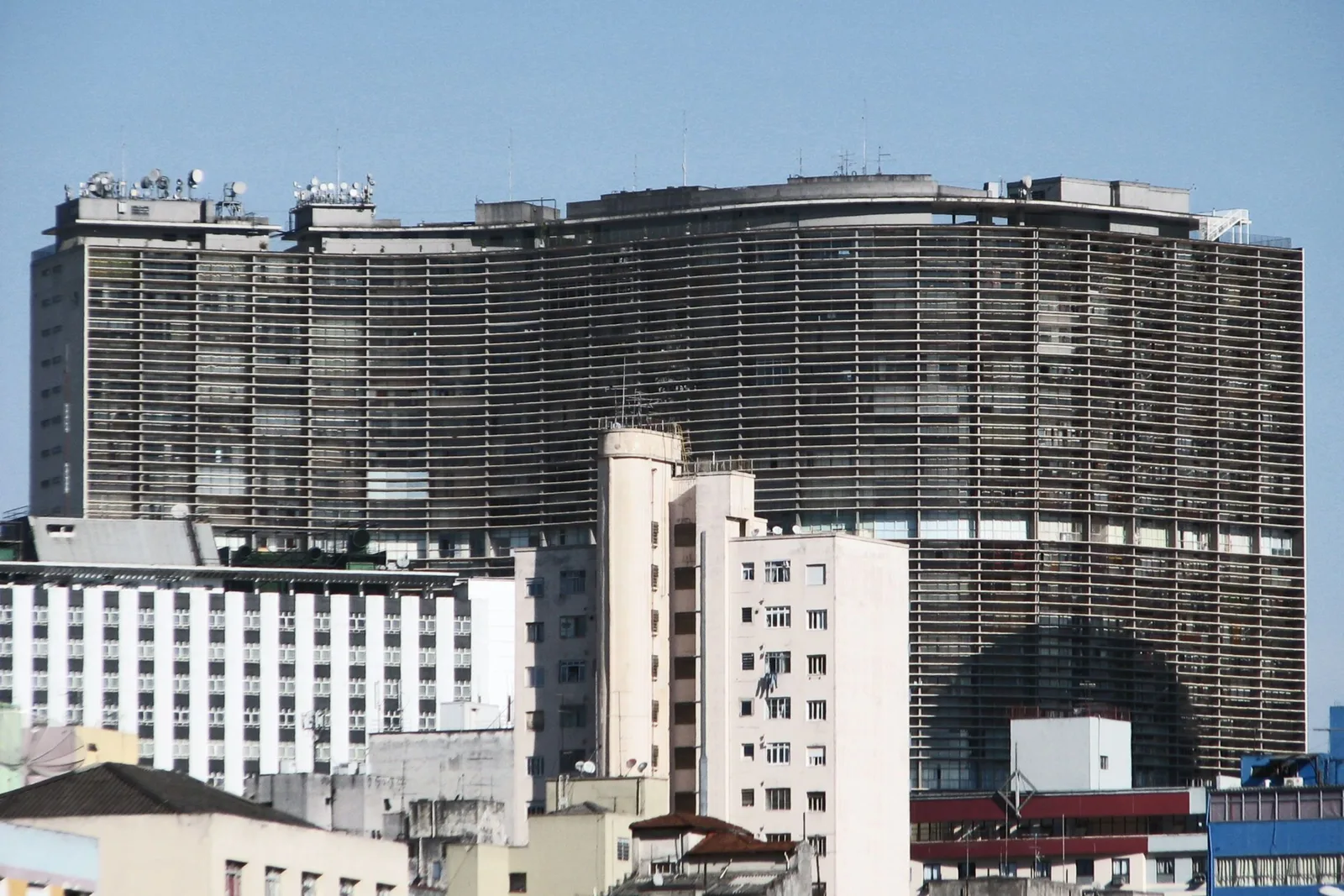
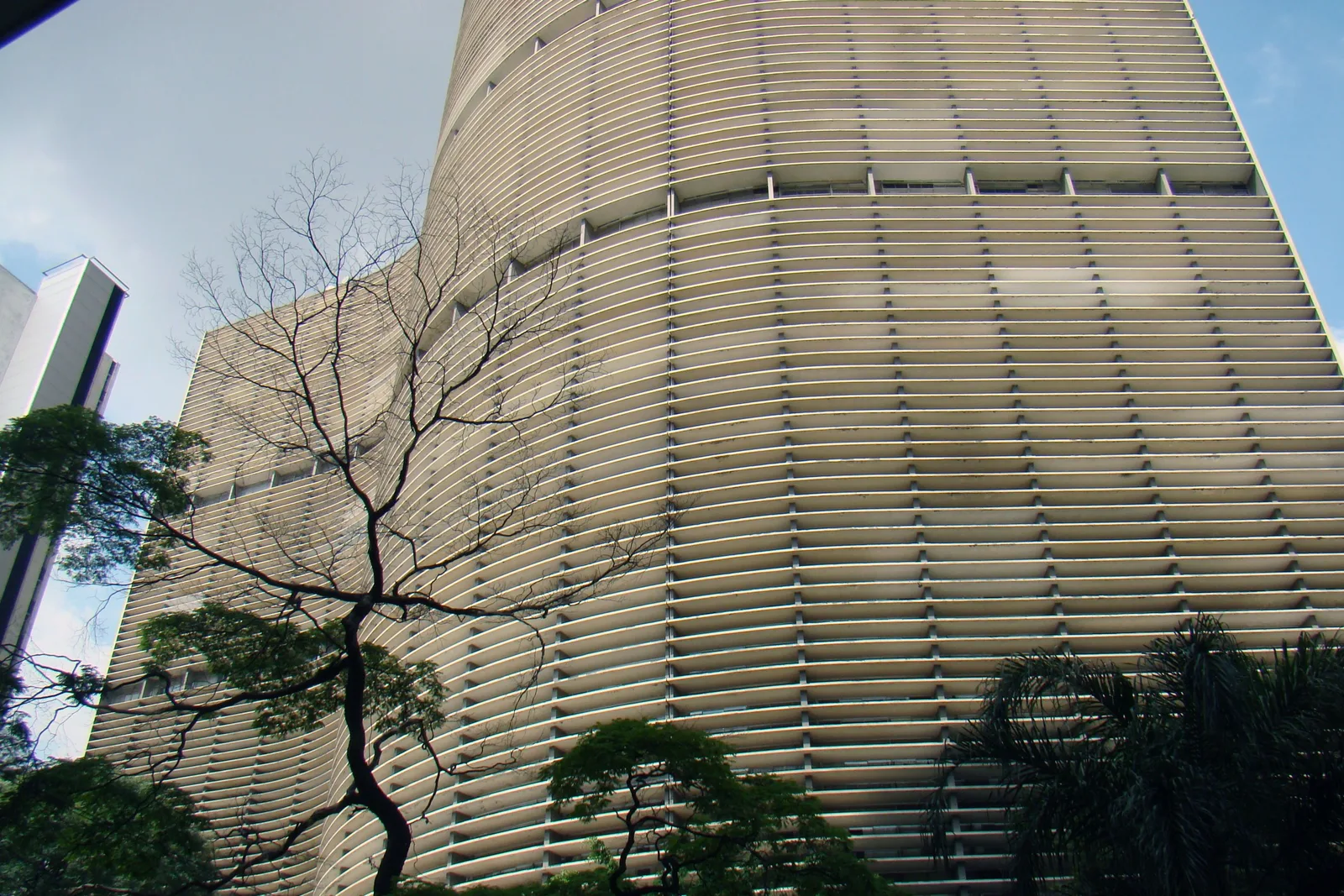
  • The Copan building’s curving facade filling the frame, band after band of concrete brise-soleil sweeping across it, with a bare tree silhouetted in front
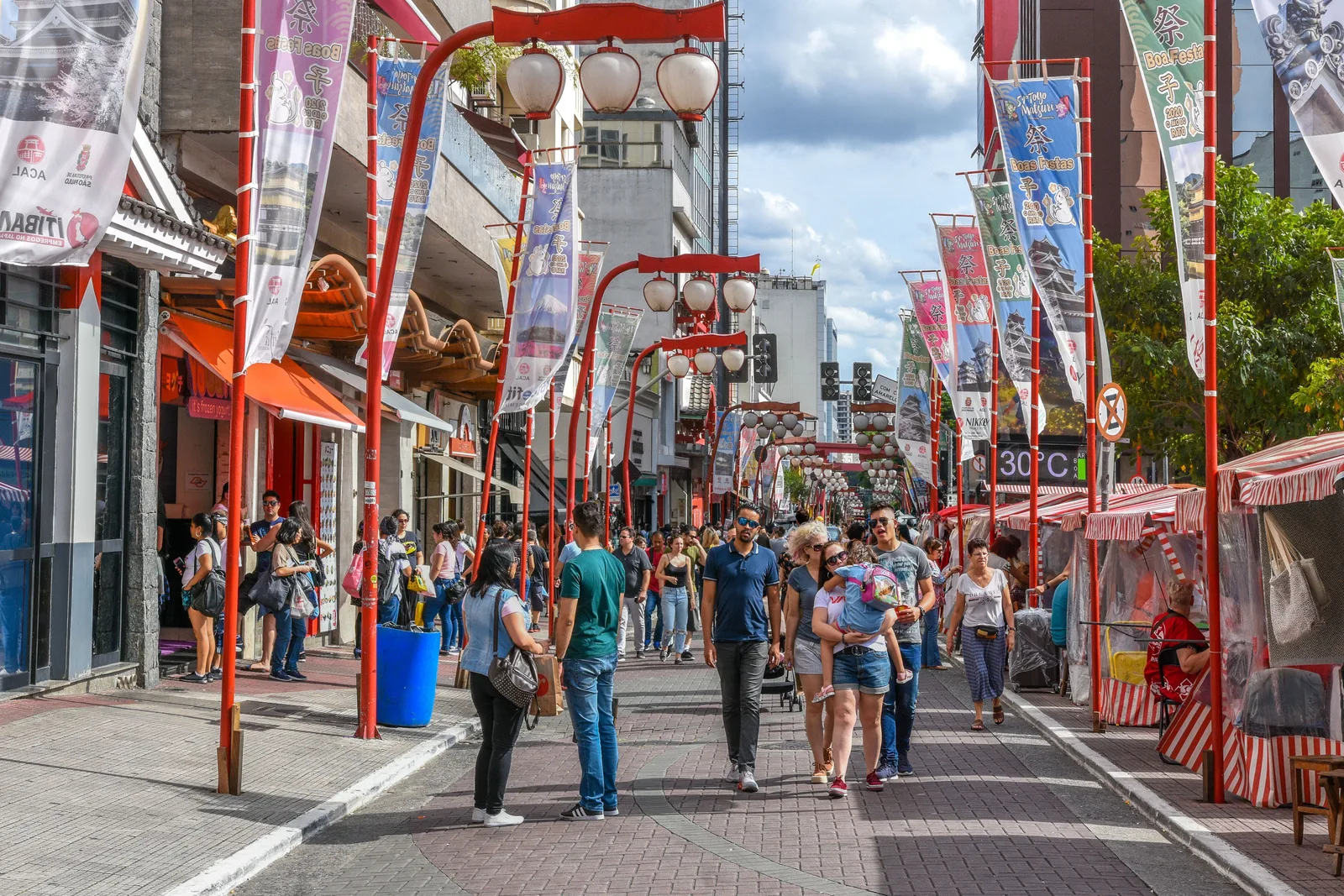
  • The main street of Liberdade under its red steel arches and hanging lanterns, shopfronts and banners along both sides and a crowd of shoppers filling the pavement
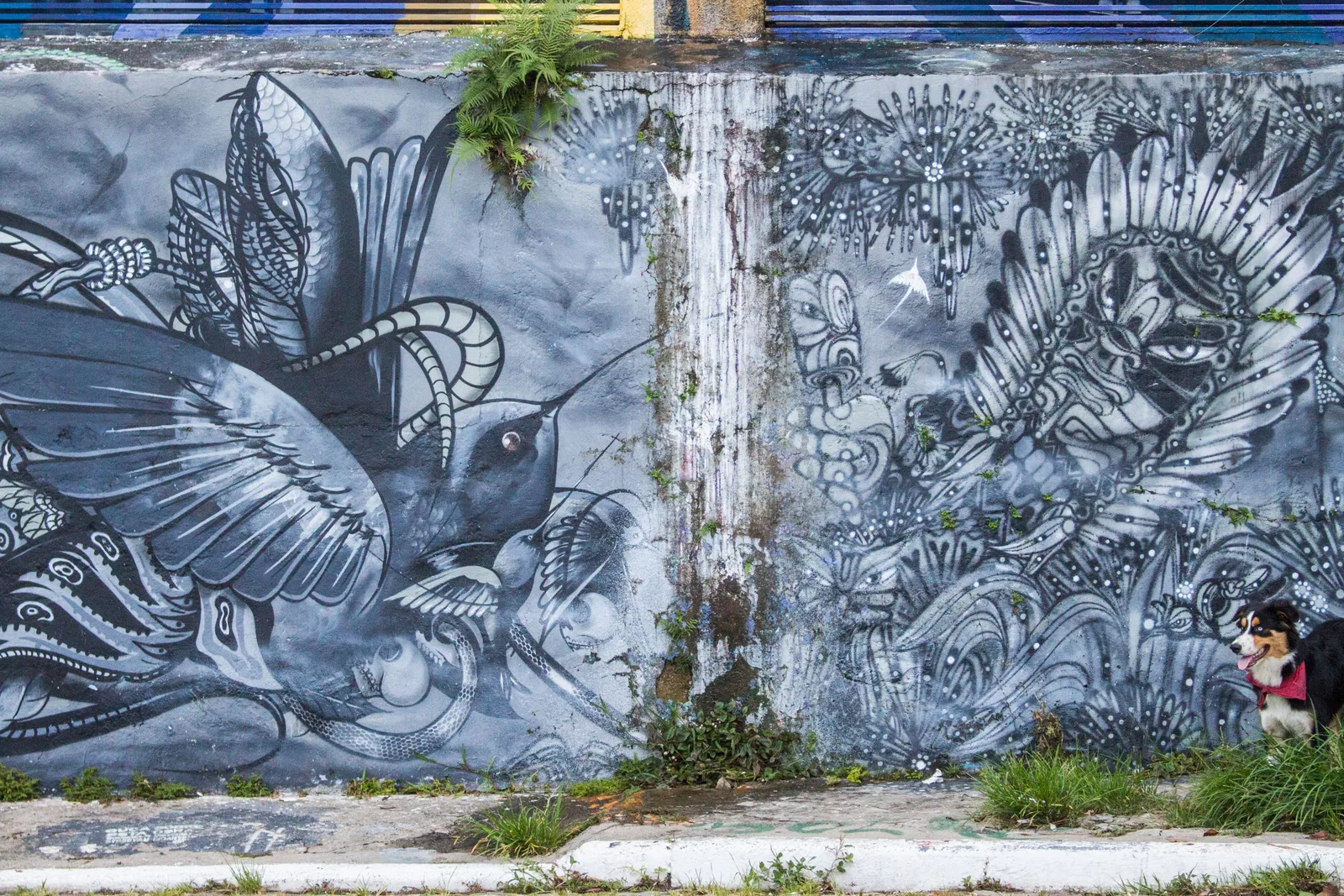
  • A large monochrome mural of birds and foliage covering a wall in the Beco do Batman, painted in fine gray linework, with a small figure and a strip of color at the far end
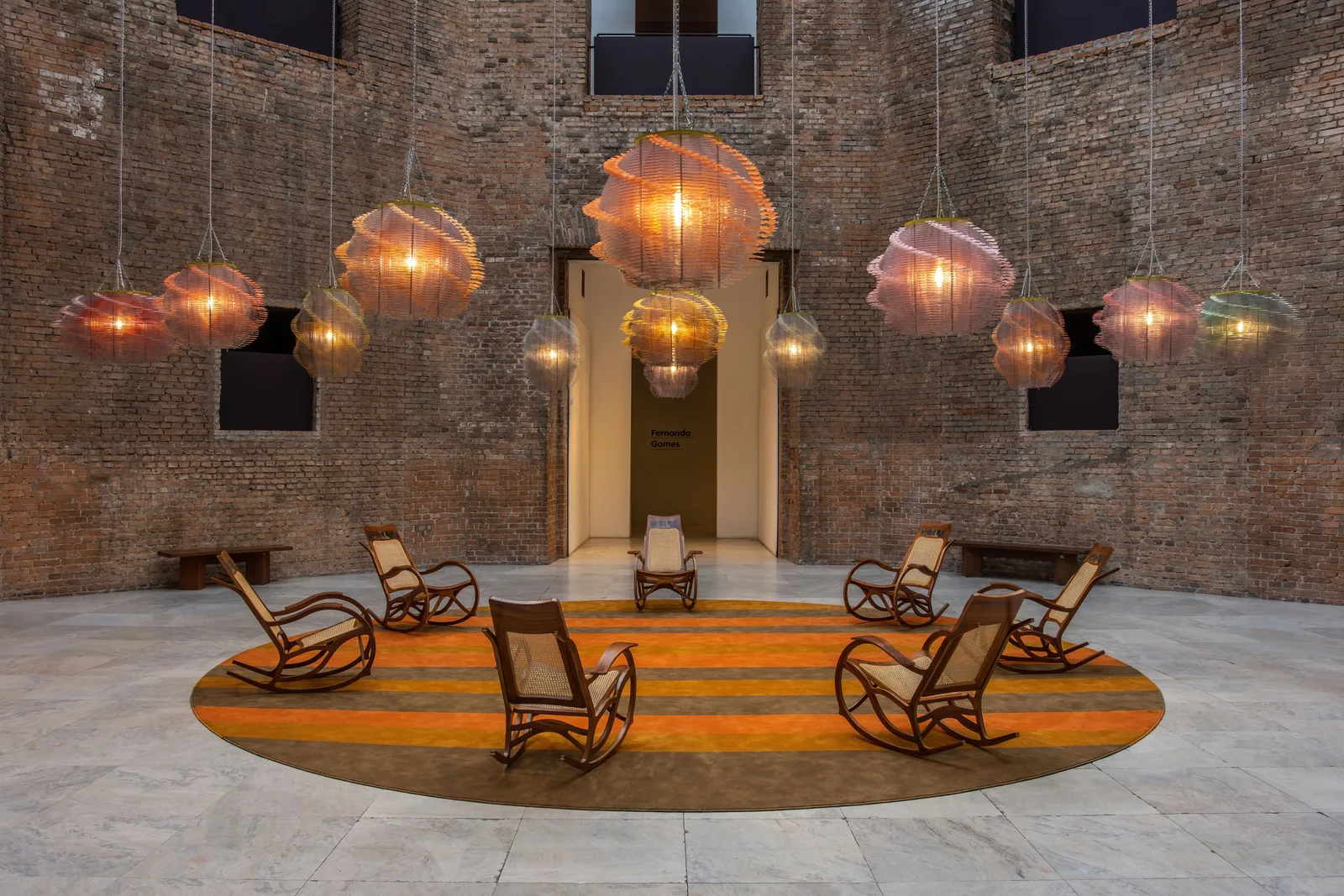
  • A brick hall inside the Pinacoteca with a circle of wooden rocking chairs on an orange floor under a row of hanging glass lamps
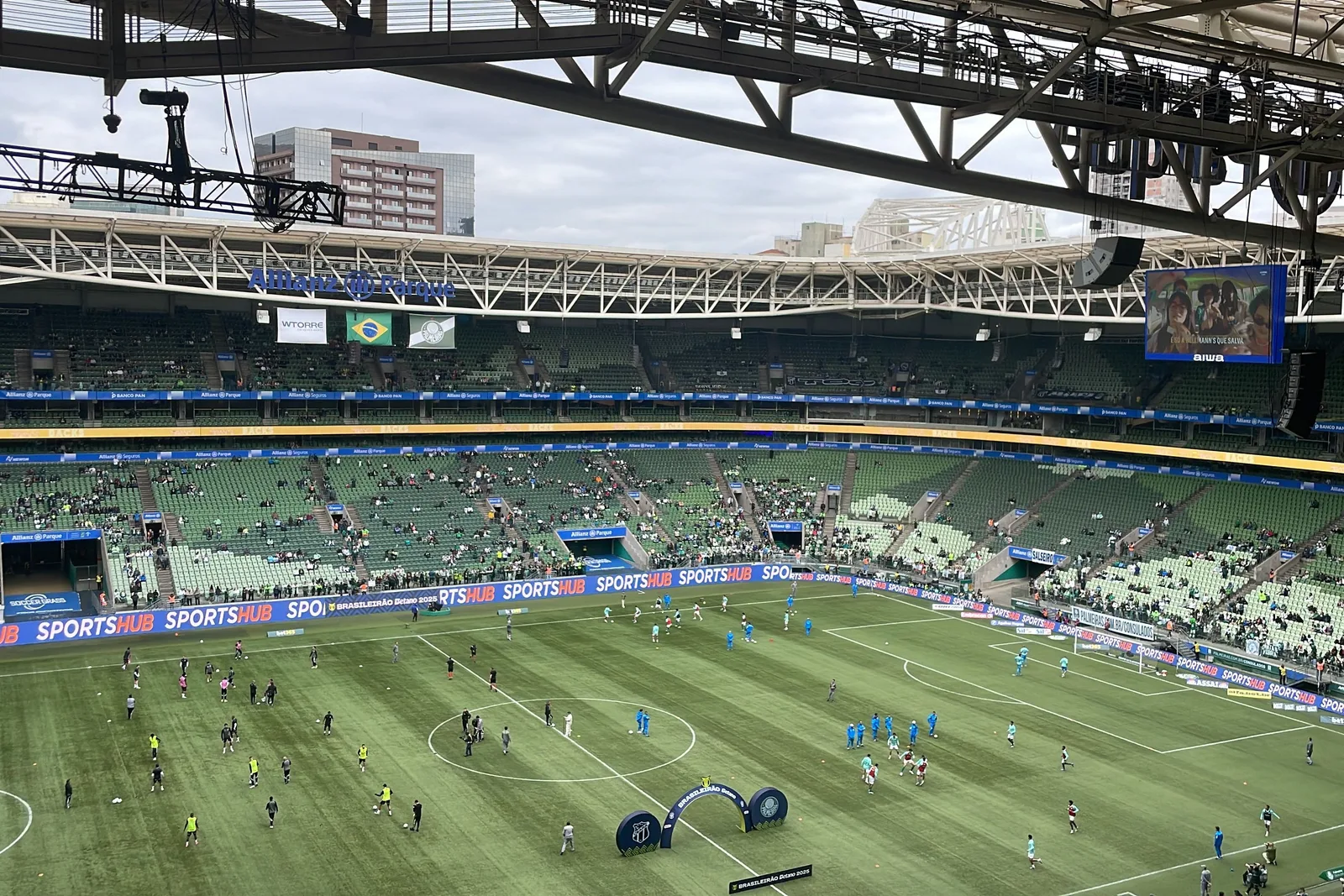
  • Palmeiras’s arena in Água Branca seen from high in the stand before kickoff: two teams warming up across the green pitch under a flat gray sky, the green seats still half empty, advertising boards around the touchline and the stadium’s steel roof trusses cutting across the top of the frame
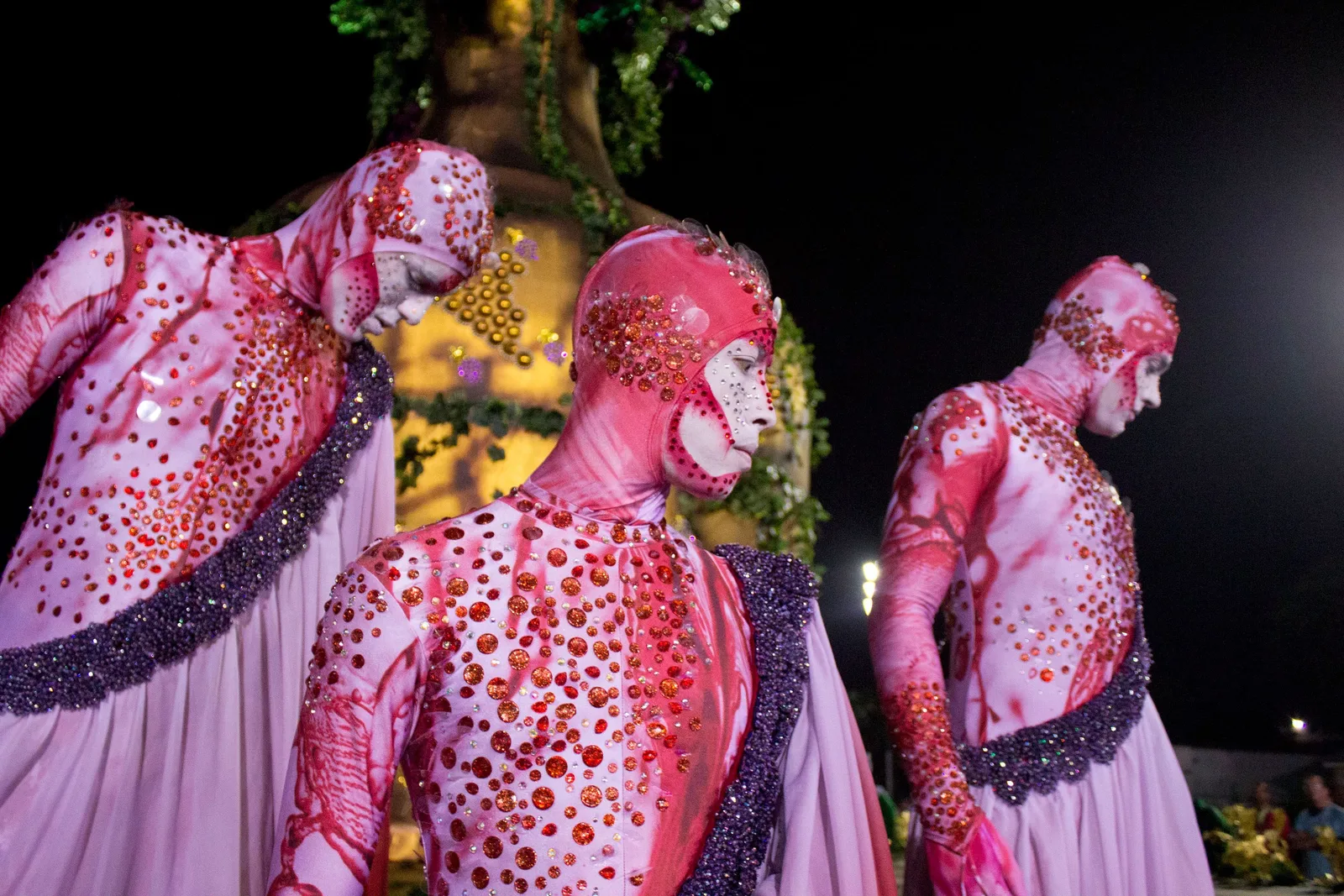
  • Three dancers of a São Paulo samba school on the Anhembi runway at night in tall pink and magenta beaded costumes, lit against the dark
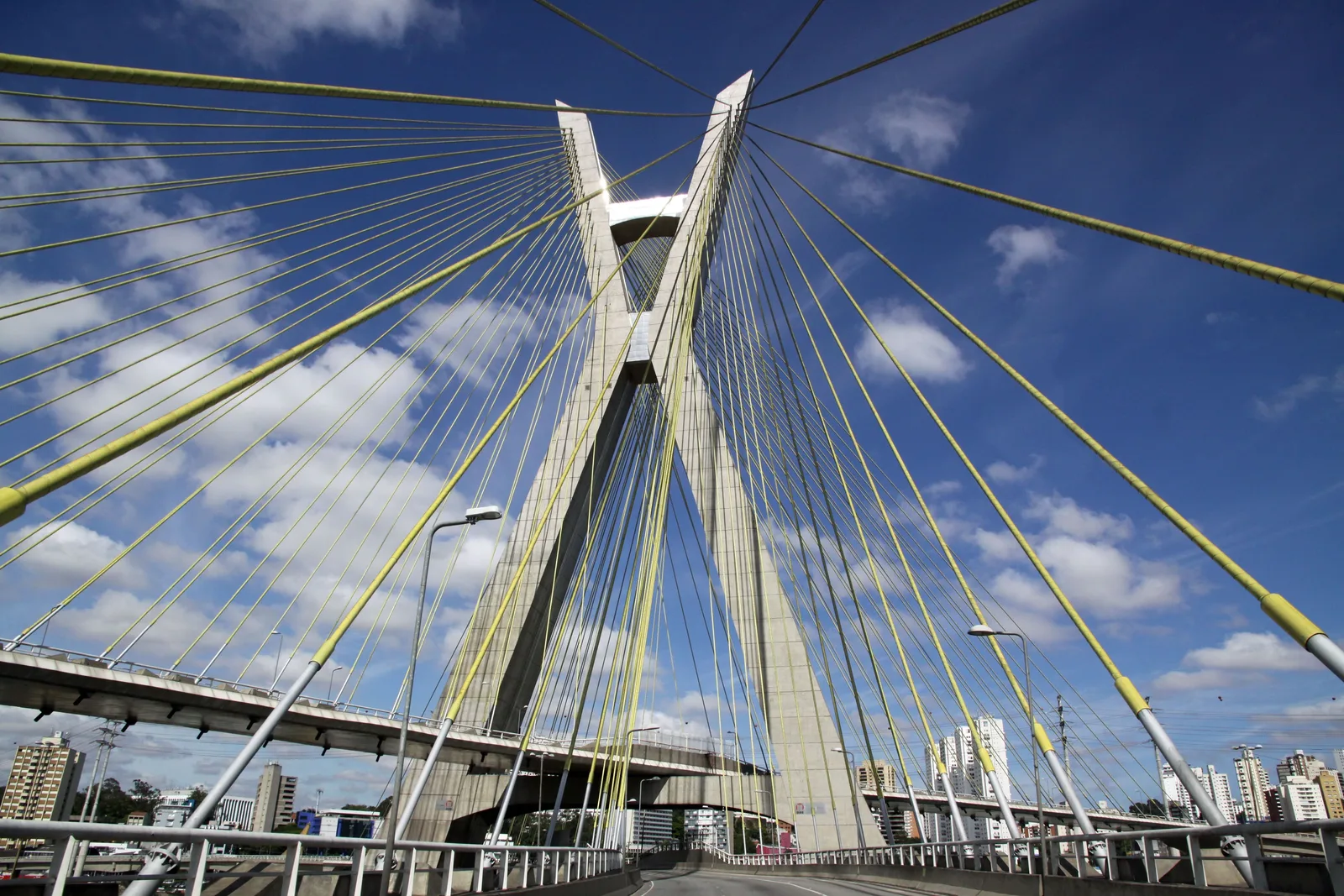
  • The Octávio Frias de Oliveira cable-stayed bridge from below, its white X-shaped pylon and fans of steel cables against a blue sky with the city behind
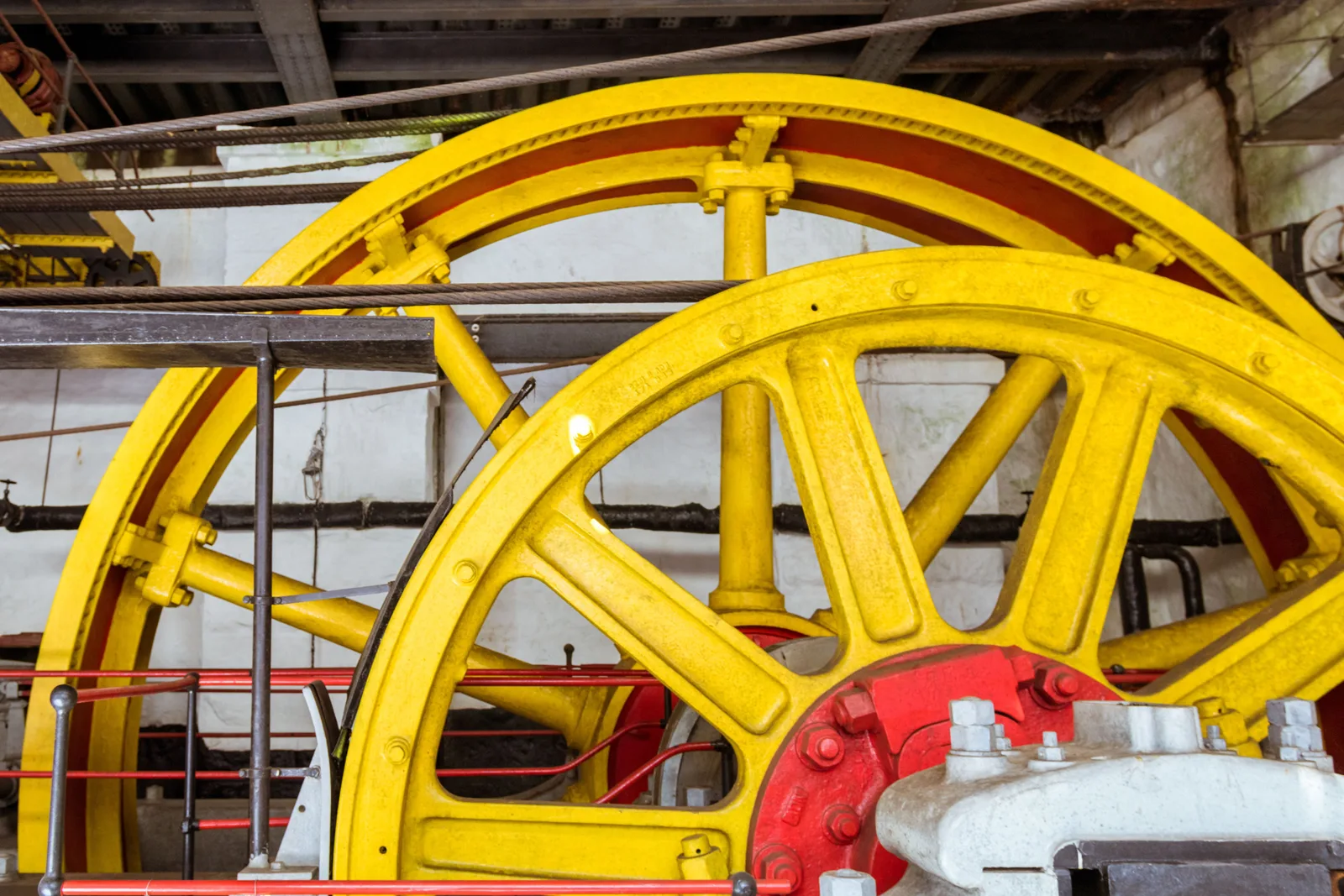
  • The huge yellow cable drum of the old funicular winding engine at Paranapiacaba, its red hub and spokes filling an iron-framed engine house

Orientation

The city in one screen.

Everything logistical, before the pretty pictures start.

General Info

What São Paulo actually is

São Paulo is the largest city in the Southern Hemisphere: 11.4 million people inside the municipal boundary at the 2022 census and about 21.5 million across greater São Paulo. It sits on a plateau roughly 760 meters up, about 70 km inland from the port at Santos, and it is not a beautiful city. There is no bay, no mountain with a statue on it, no colonial quarter to speak of. What there is instead is scale — a horizon of towers in every direction — and the things that scale pays for.

It is a city built by immigration, and that is the part travelers underestimate. Italians came in the millions to the coffee farms and then to the city; the state of São Paulo now holds more people of Italian descent than Rome, Naples and Milan together, and the city eats about six thousand pizzerias’ worth of the consequence. Japanese immigration began in 1908 and produced the largest Japanese-descended population anywhere outside Japan, concentrated in Liberdade. Lebanese and Syrian families built the wholesale trade around the Rua 25 de Março. Northeastern Brazilians arrived in the millions after the 1950s and brought their own food, music and accent with them. The result is that São Paulo is the best place to eat in South America, and it is not close.

For a visitor the honest framing is this: São Paulo is a city trip, not a scenery trip. Its museums are the best in the country, its restaurant scene is world-ranked, its football is the loudest in Brazil, and its nightlife runs later than Rio’s. None of that is visible from the airport, which is where most Americans meet it. Two nights is the minimum that makes leaving the terminal worthwhile; three is when the city starts to make sense.

Where It Is

Southeast Brazil, on a plateau above the coast

São Paulo sits inland on the Planalto Paulista, about 760 meters above sea level and 70 km from the Atlantic at Santos, with the Serra do Mar escarpment between the two. Rio de Janeiro is roughly 430 km northeast — an hour by air, or five to six hours on the Dutra highway. Guarulhos airport, the country’s main international gateway, is 25 km northeast of the center.

São Paulo São Paulo

23.55° S, 46.63° W

See the Southeast on the interactive map

Cost

What a day here actually costs

São Paulo is the most expensive city in Brazil, and the gap shows up in restaurants and hotel rooms rather than in transport, which is cheap and good. It is also the easiest city in the country to visit on very little: most of the major museums have one free day a week, the buses are free on Sundays, and the everyday lunch is a plate loaded by weight at a per-kilo counter.

Estimated daily budget

Budget

$55 / day

A hostel bed in Pinheiros or Vila Mariana, padaria breakfasts and per-kilo lunches, the metro everywhere, and the big museums on the days they let everyone in free.

Mid-range

$115 / day

A mid-range double split two ways near Avenida Paulista, restaurant dinners, ride apps after dark, and a paid museum, a match or a concert most days.

Comfortable

$260 / day

A well-reviewed hotel in Jardins or Itaim Bibi, the tasting menus that put this city on the world lists, private transfers, and tickets bought without checking the price first.

Estimates, per person per day, once you are in the city — flights not included. São Paulo runs 20 to 30 percent above Salvador or Foz do Iguaçu for the same standard of room and dinner.

What things cost

  • Mid-range double room, Paulista, Jardins or Pinheiros $100 R$510
  • Hostel bed, Pinheiros or Vila Mariana $18 R$90
  • Metro or CPTM train, single ride $1.05 R$5.40
  • City bus, single ride — free all day Sunday $1.05 R$5.30
  • Bus and train in one journey, on the same card $1.85 R$9.38
  • Airport express train, Luz to Guarulhos $1.05 R$5.40
  • Airport coach, Guarulhos to Avenida Paulista or Tietê $6–8 R$30–40
  • Uber, Guarulhos to Jardins $24 R$120
  • MASP, full price — free on Tuesdays $17 R$85
  • Pinacoteca, full price — free on Saturdays $8 R$40
  • Museu do Ipiranga, full price — free on Wednesdays $6 R$30
  • Farol Santander, including the 26th-floor lookout $9 R$45
  • Lunch by weight, per kilo at a self-service counter $17 R$87
  • Prato feito — the set lunch plate, city average $8 R$40
  • Mortadella sandwich at the Mercado Municipal $10 R$50
  • Parque Estadual da Cantareira, full price $12 R$60

The per-kilo price is per kilogram of food, not per plate. A normal lunch plate is 400 to 500 grams, so the city-average counter comes out around R$40 — the same as the set-menu prato feito, which is why both figures are here.

Restaurants add a 10 percent service charge to the bill. It is customary rather than compulsory and it is almost always already on the total.

Cards work everywhere and contactless is the default. You can tap a contactless card or phone straight on the gate at metro and CPTM stations, so there is no need to buy a transit card for a short stay.

Museum free days are the single biggest saving available here: MASP on Tuesdays, the Pinacoteca on Saturdays, the Museu do Ipiranga on Wednesdays and the first Sunday of the month. Most of them still require a free timed reservation online, so book the slot before you turn up.

Checked September 2026 and converted at R$5.10 to the dollar. Estimates, not quotes — the shape of a budget rather than a price you can hold anyone to.

Safety

One real risk, and it is your phone

7 /10

Our rating. Safer than Rio on every violent-crime measure, and the worst city in Brazil for having your phone taken out of your hand.

São Paulo has a reputation abroad that its own crime statistics no longer support. The state records the lowest homicide rate of any state in Brazil — 2,438 killings in 2025, the fewest since the series began in 2001 — and the capital is by a distance the safest of the country’s large cities on that measure. What it does have, in volume, is street theft. The Fórum Brasileiro de Segurança Pública’s most recent yearbook puts 5.6 percent of Brazil’s population in this city and about 20 percent of the country’s phone robberies and thefts. That is the risk you are actually managing here, and it is manageable.

  • The phone is the target, and taking it out on the street is the mistake. Snatching on foot and from moving motorbikes is the crime that happens to visitors in São Paulo. Navigate before you leave, keep it in a front pocket, and step into a café, a shop or a station when you need to look at it.
  • Turn on your phone’s theft protection before you fly. Both Android and iPhone now have anti-theft modes that lock the device when it is grabbed and moved; a stolen unlocked phone in Brazil is used to empty banking apps within minutes, which is what makes this worth ten minutes of setup.
  • The old center is a daytime place. Praça da Sé, República, Luz and the streets around them are busy, ordinary and worth walking between roughly 9:00am and 6:00pm. After the offices empty they thin out fast, and they are not where you want to be wandering at 10:00pm. Ride out rather than walk out.
  • The open drug scene known as Cracolândia, beside Luz station, was broken up by a state operation in May 2025 and had not re-formed as of 2026 — the surrounding Campos Elíseos and Santa Cecília districts recorded their lowest robbery figures on record. Smaller groups regathered elsewhere in the center. Treat the whole area as improved rather than solved.
  • The neighborhoods visitors actually sleep in are ordinary. Avenida Paulista, Jardins, Pinheiros, Vila Madalena, Itaim Bibi and Vila Mariana are walked in the evening by residents going out to dinner, and behave like any large city’s good districts.
  • Wear nothing worth taking. No watch, no chain, no camera around the neck. Chains are snatched more often than anything except phones.
  • Use Uber or 99 at night, and between neighborhoods any time. It is cheap by US standards, it is what everyone here does, and ordering it from inside a bar rather than from the sidewalk removes the only part of the trip with any exposure.
  • Watch the traffic more than the crowd. Motorbike couriers filter between moving lanes at speed and do not expect a pedestrian stepping off the curb. Look twice, in both directions, including on one-way streets.

Getting There

Two airports, and the two-night question

São Paulo has the busiest international airport in South America and, separately, the busiest domestic one, and they are 30 km apart. Which one you use decides how your first day goes.

  • Guarulhos (GRU) is where you land from the United States. It is 25 km northeast of the center, has three terminals, and takes nonstop flights from around ten US cities — Miami, New York, Atlanta, Houston, Dallas, Newark, Washington, Chicago, Orlando and Los Angeles among them — on American, Delta, United and LATAM. It is also the connection point for most onward flights into the rest of Brazil.
  • Congonhas (CGH) is the domestic airport, and it is inside the city — 8 km from the center, close enough that planes come in over apartment blocks. It runs the Rio shuttle and most of the busy domestic routes. Since 31 March 2026 the Line 17-Ouro monorail has connected it to the metro at Campo Belo on Line 5-Lilás and Morumbi on Line 9-Esmeralda, which is new and not yet in most guidebooks.
  • From Guarulhos, the cheapest good option is the train. CPTM’s Line 13-Jade runs an hourly express between Luz station in the center and the Aeroporto-Guarulhos station for the ordinary rail fare, about 30 minutes, with a free airport shuttle bus covering the last stretch to the terminals. It is a genuinely good option in daylight with a carry-on and a poor one at midnight with three bags.
  • Otherwise it is the coach or a ride app. The Airport Bus Service coach runs to the Avenida Paulista hotel circuit and to the Tietê bus terminal for R$30 to R$40 depending on the route. An Uber to Jardins is about R$120 and takes 40 minutes with no traffic, 90 with it. Budget for the traffic: this is the one part of a São Paulo trip that reliably goes wrong.
  • Viracopos (VCP) is the third airport and it is not in São Paulo. It sits 100 km away at Campinas and is Azul’s hub; a cheap domestic fare that quotes “São Paulo” may be quoting this. Check the airport code before you book.
  • The two-night question, answered honestly: if your trip is beaches, waterfalls and rainforest and you are short on days, connect straight through and do not feel bad about it. If you like cities — food, museums, football, going out — then two nights on the way home is the best-value stop in Brazil, because you are already here and the flight home leaves from here anyway.

Getting Around

The metro, then a ride app, and never a rental car

São Paulo has the best urban rail network in Brazil and some of the worst traffic on earth, in the same city, at the same time. The rule is simple: take the train where the train goes, and a ride app where it does not.

  • The metro and the CPTM suburban trains work as one network on one map and one fare — seven metro lines and seven rail lines, clean, frequent and cheap at R$5.40. Line 4-Yellow and Line 2-Green between them cover Paulista, Pinheiros, Luz, Consolação and the Vila Madalena end of the west side, which is most of what a visitor wants.
  • Tap a contactless credit card or phone straight on the gate. There is no need to buy a transit card for a short stay, and the same tap works at every metro and CPTM station.
  • Uber and 99 are everywhere and cheap by US standards. Most rides inside the central neighborhoods run R$15 to R$40, and they are the default after dark and any time you are crossing the city.
  • City buses are free every Sunday, which is the one day the network is worth a visitor’s attention. Otherwise the routes are hard to read from outside and the trains are faster.
  • Do not rent a car for the city. Traffic is genuinely among the worst in the world, parking is expensive where it exists, and the rodízio rule bars cars from the expanded center by license-plate number during weekday rush hours — including rentals, including yours. Rent one only to leave town, and pick it up on the way out.
  • Walking works inside a neighborhood and rarely between them. Paulista end to end, the old center, Liberdade, Pinheiros and Vila Madalena are all walkable; the gaps between them are three to eight kilometers of nothing in particular.

The big four

The landmarks worth building days around.

Not a top-ten list. These are the four places that, if you left São Paulo without seeing them, you would not really have seen São Paulo.

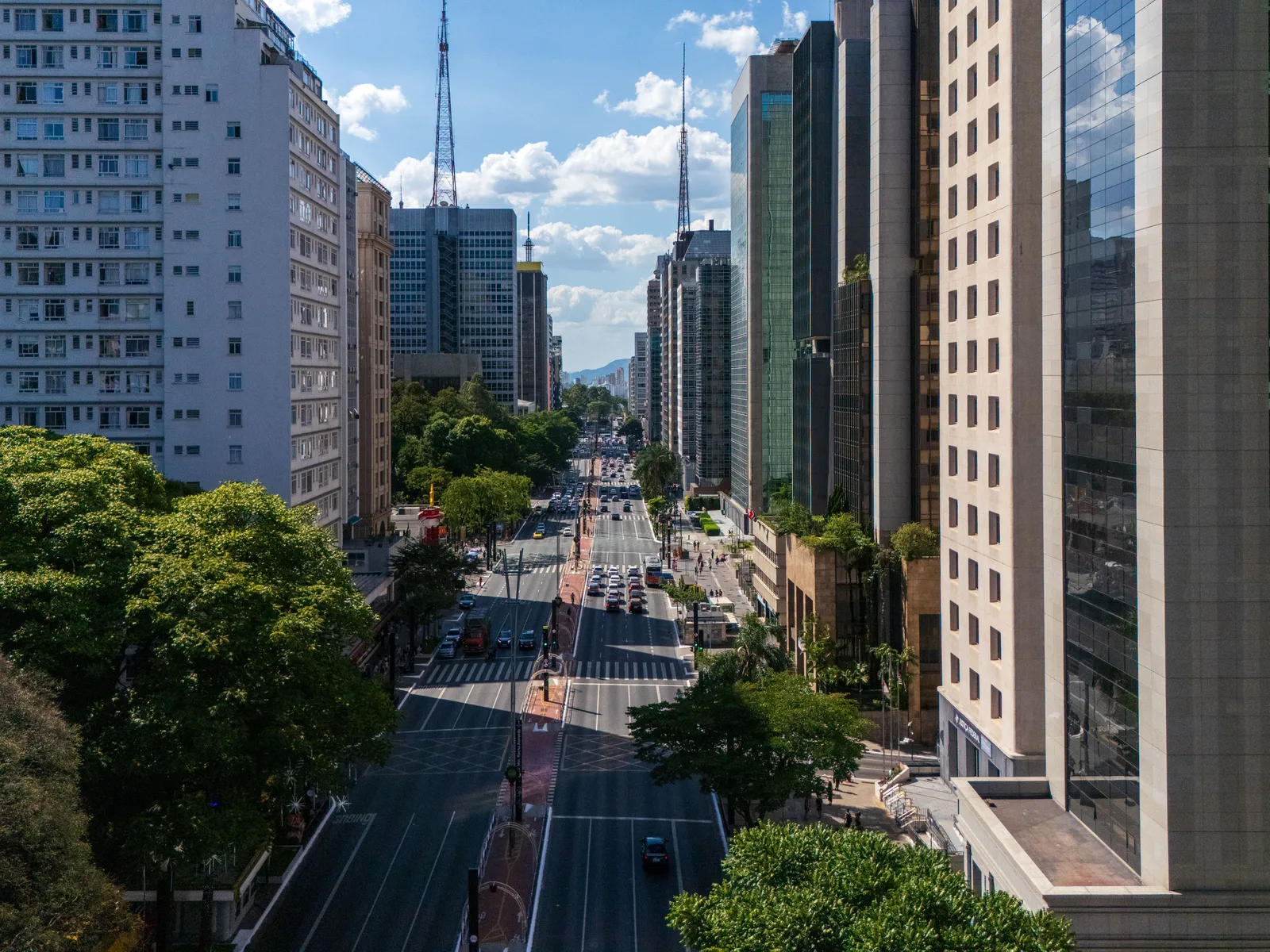
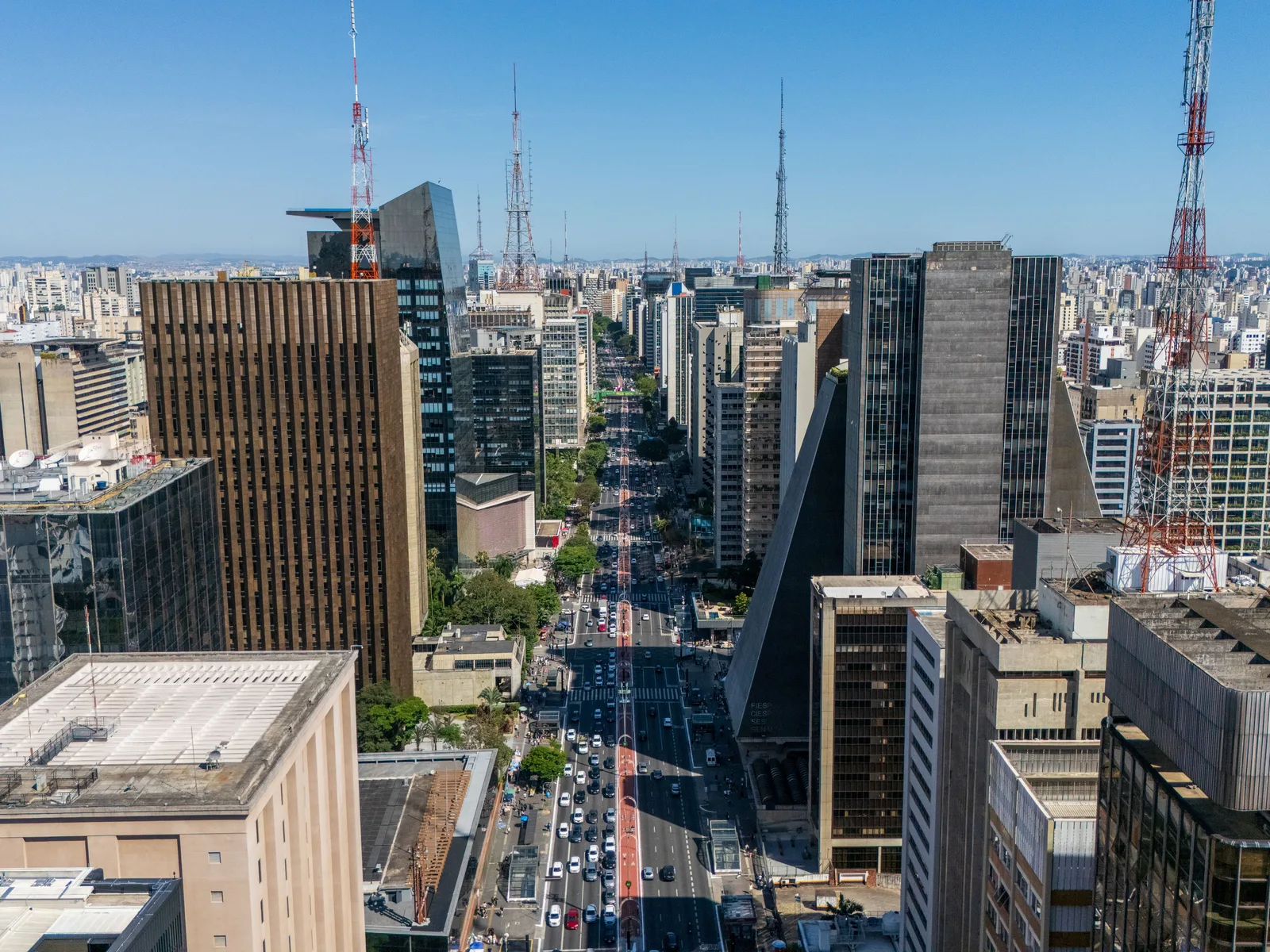
Avenida Paulista from the air along its length: office towers in glass, concrete and brown stone crowding both sides of the avenue, traffic and treetops running down the middle, and the city stretching flat to the horizon behind 01

The spine of the city, and its best museum

Avenida Paulista & MASP

Opened
1891, on a ridge above the center
MASP built
1968, by Lina Bo Bardi
Best on
Sunday, when it closes to cars

Paulista runs 2.8 km along the top of a ridge, and it is the closest thing São Paulo has to a main street. Coffee barons built their mansions here in the 1890s; the banks knocked them down in the 1960s and 70s and put up the towers that give the avenue its wall-of-glass profile today. What survived the demolition is a strip of cultural institutions denser than anywhere else in Brazil — MASP, Itaú Cultural, Japan House, the Casa das Rosas, the Instituto Moreira Salles and a Sesc — most of them free or nearly so, all within a twenty-minute walk of each other and each one on top of a metro station.

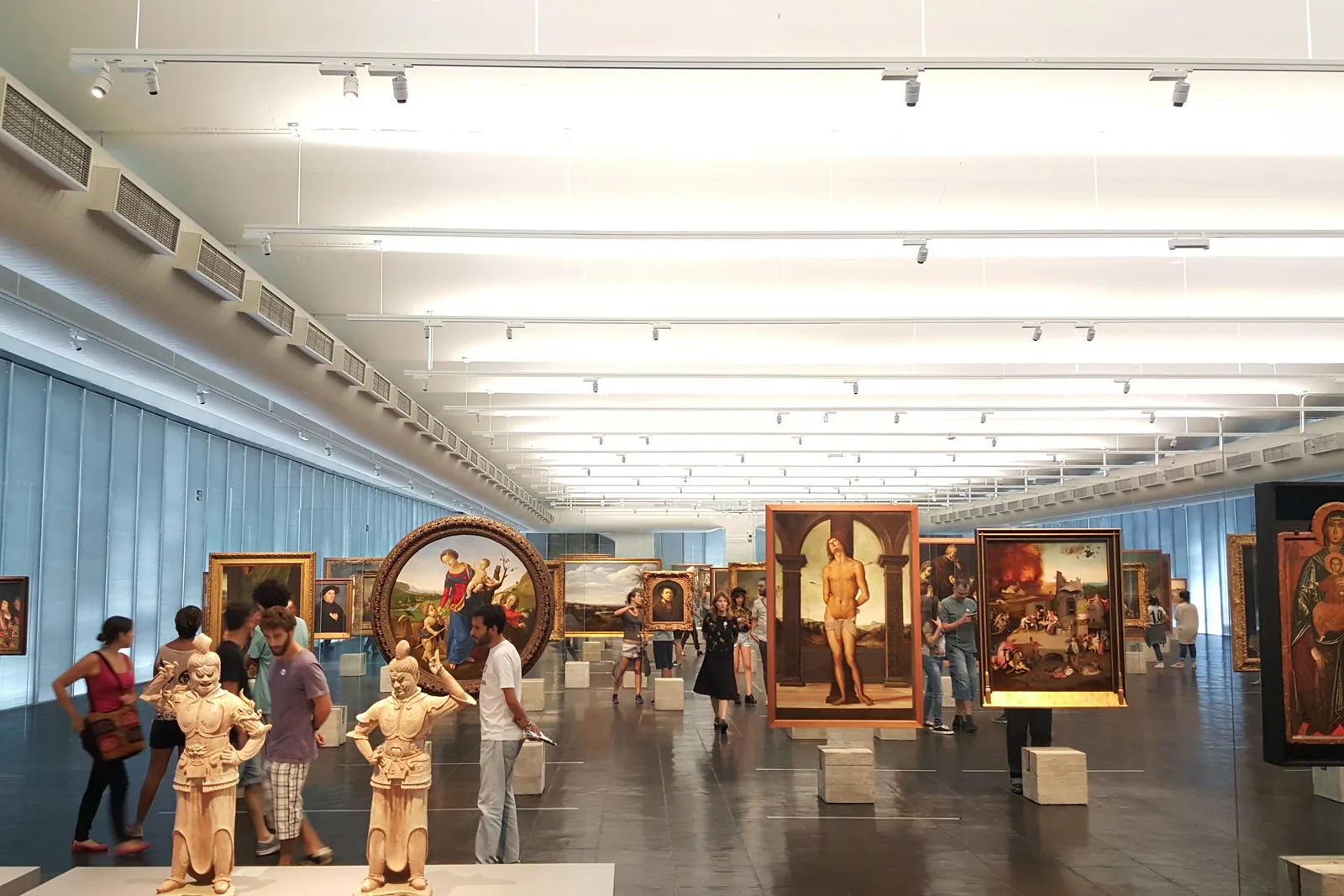
MASP is the reason to come. Lina Bo Bardi suspended the whole building on four red concrete columns so the plaza underneath would stay open to the street, and inside she hung the collection on freestanding glass easels — no walls, no fixed route, the labels on the back, every painting floating in a room you walk through in any direction you like. It was dismantled in 1996 and restored in 2015, and it remains the single most radical way anyone has found to display old-master paintings. Entry is R$85, free all day Tuesday and free after 6:00pm on Friday, both with a reservation.
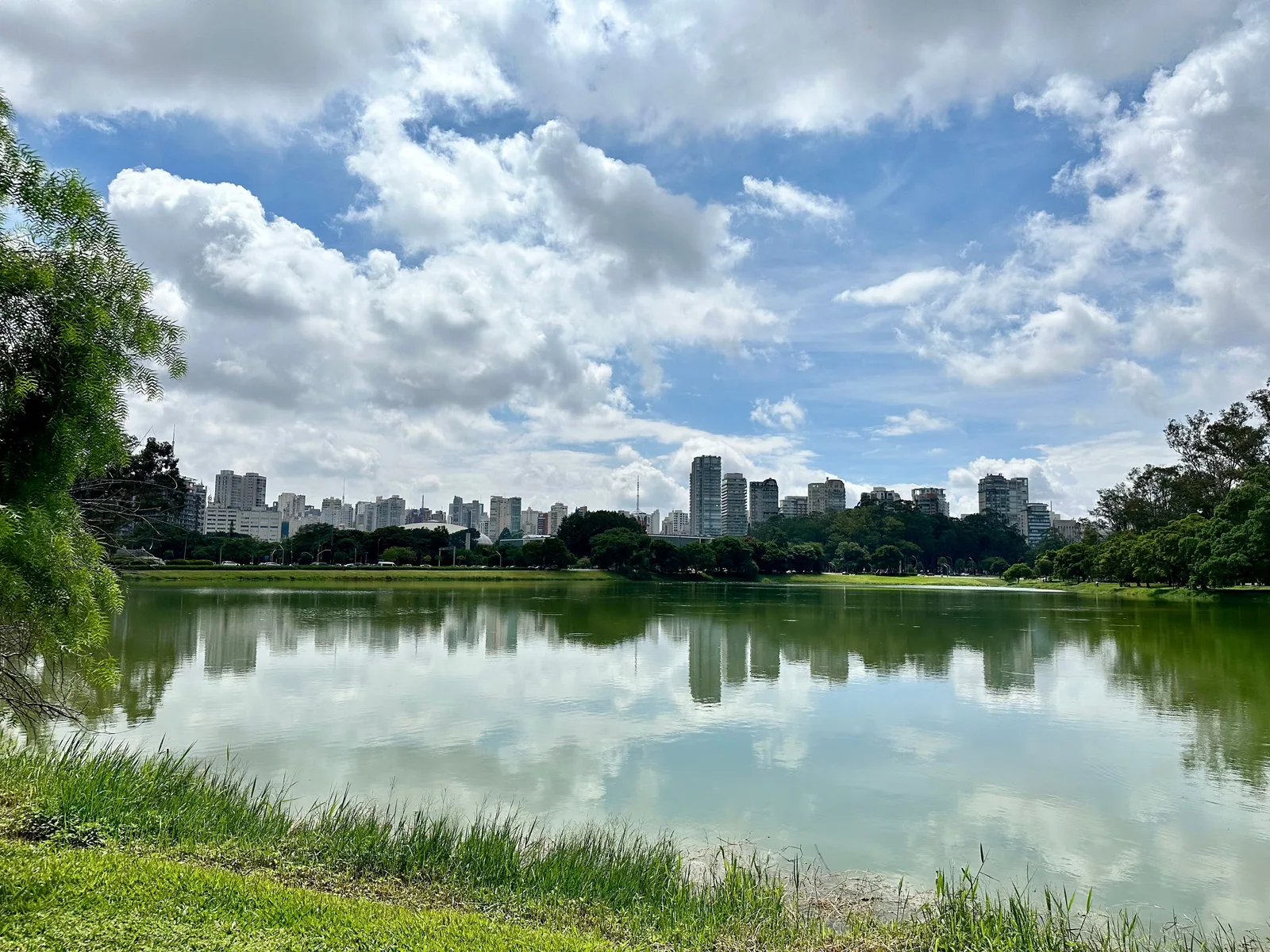
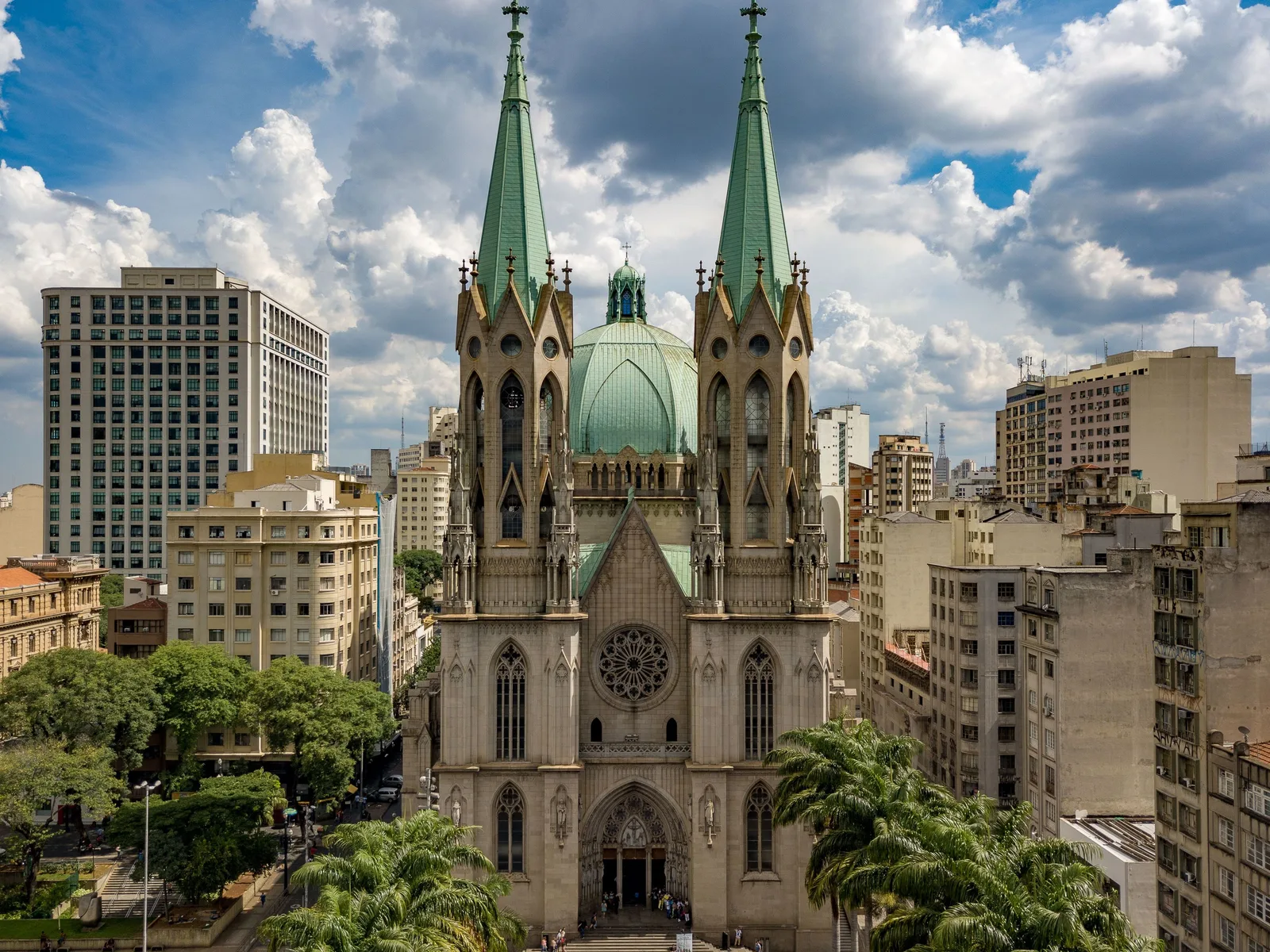
The lake at Parque Ibirapuera under a bright sky with piled white cloud, mown grass and trees along the near bank, and the low line of São Paulo’s apartment towers along the far side of the water 02

The city’s lung, and four museums inside it

Parque Ibirapuera

Opened
1954, for the city’s 400th birthday
Size
158 hectares — about 390 acres
Buildings by
Oscar Niemeyer

Ibirapuera was laid out for São Paulo’s fourth centenary in 1954, with the buildings by Oscar Niemeyer and the planting begun from a Burle Marx concept. It is not Central Park — it is smaller and busier — but on a Sunday morning it is the most cheerful place in the city: three lakes, a running loop that is never empty, cyclists, capoeira circles, and a covered concrete walkway snaking between the pavilions that people skateboard down when it rains.

The reason it is on this list rather than in the activities strip is that the park is also a museum district. The Museu Afro Brasil Emanoel Araújo occupies Niemeyer’s Manoel da Nóbrega pavilion, the Museu de Arte Moderna sits under the marquise, the Oca dome takes the big touring shows, and the Museu de Arte Contemporânea da USP is across the avenue with a rooftop terrace that has the best free view of the park and the skyline behind it. You can spend a full day here without leaving the grounds, and the park itself costs nothing.

The twin spires and green dome of the Catedral da Sé rising above the office blocks of central São Paulo, seen across the treetops of the square with mid-century towers packed in behind it 03

Where the city started, and still works

The Centro Histórico

Founded
1554, as a Jesuit mission
Walkable
Sé to São Bento in 15 minutes
Best at
Weekday mornings

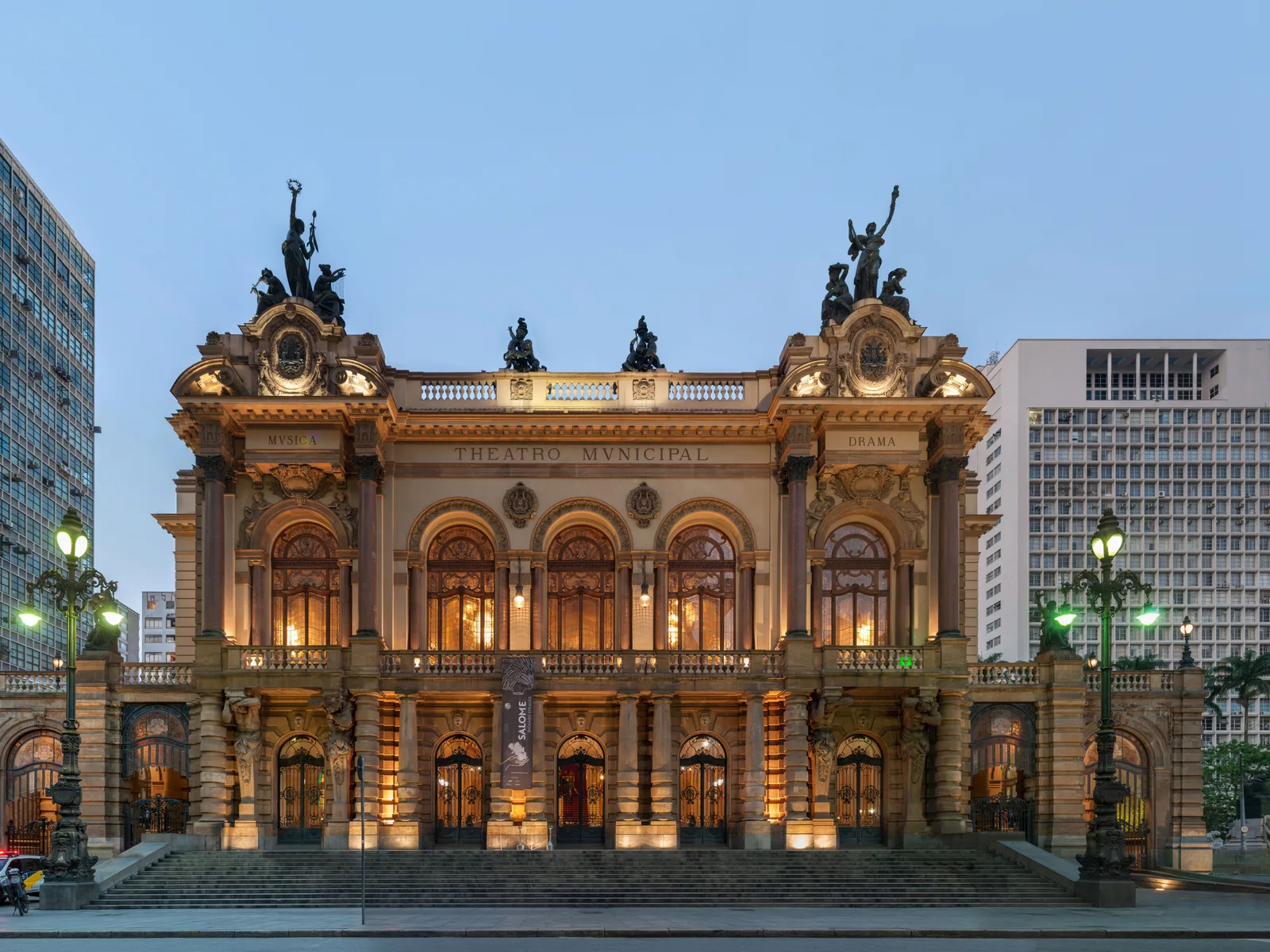
São Paulo was founded in 1554 by Jesuits who put up a school on a bluff between two rivers, and the Pátio do Colégio still marks the spot. Almost nothing else colonial survived the city’s twentieth century, so the old center is not a preserved quarter — it is a working downtown of 1920s and 1930s commercial buildings, a neo-Gothic cathedral finished in 1954, a Belle Époque opera house, a Benedictine monastery and an Art Deco skyscraper, all inside about fifteen minutes’ walk of each other.

It is also the part of the city visitors most often skip, and they are wrong to. The Theatro Municipal, the Mosteiro de São Bento, the Farol Santander lookout, the Pinacoteca, the Mercado Municipal and the Edifício Copan are all here or just off it, and the whole circuit is one very good day. The caveat is the clock rather than the map: this district is busy and fine by day and empties out completely in the evening, so plan it as a morning-to-late-afternoon walk and take a car out when the light goes.

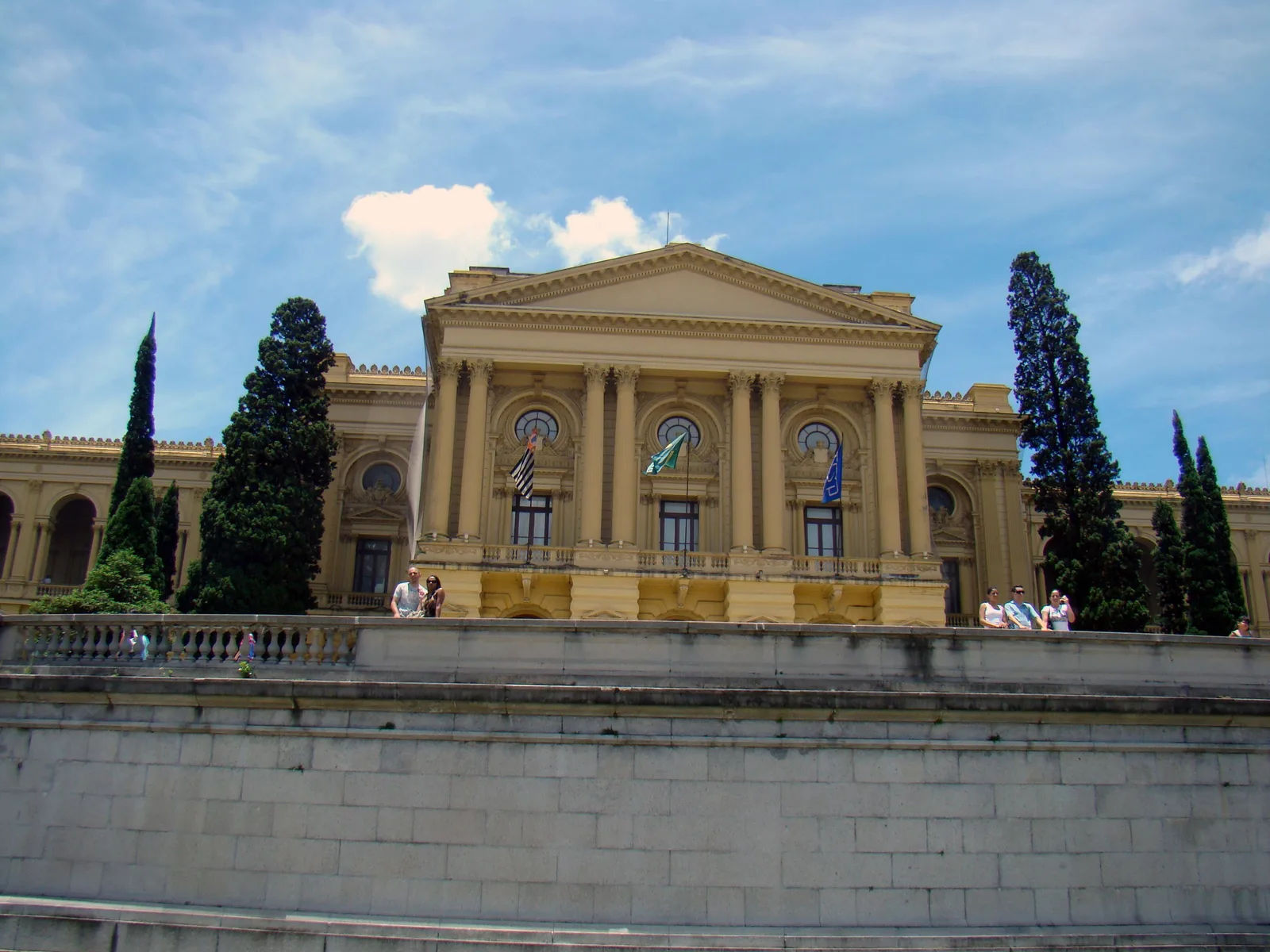
The Museu do Ipiranga seen head-on from the foot of its garden: a long pale yellow neoclassical palace with a columned central portico and flags hung from the balcony, dark cypresses standing either side of it, visitors along the balustrade above, and the blank stone face of the terrace wall filling the foreground 04

Where Brazil declared independence

Museu do Ipiranga

Opened
1895, on the Ipiranga brook
Reopened
September 2022, after nine years shut
Entry
R$30, free on Wednesdays

Independence was declared on the bank of the Ipiranga brook on 7 September 1822, and Brazil put up a palace on the spot to remember it. The Museu Paulista — everyone calls it the Museu do Ipiranga — is a great yellow neoclassical pile at the top of a formal French garden, and it is the most photographed building in the city that is not made of concrete.

It closed in 2013 because the building was failing, and reopened on the bicentenary of independence in September 2022 after a rebuild that dug out a new underground wing and took the exhibition space from twelve rooms to forty-nine. The collection is the story of São Paulo and of the country told through objects, and the new galleries handle the uncomfortable parts of that story — slavery, the bandeirantes, the myth-making of the founding paintings — far better than the old ones did. Entry is R$30 and free on Wednesdays, tickets online only, and it is a metro ride plus a short walk from the center.

What to actually do

One city, six ways to spend a day.

Pick a category, then scroll sideways through it. Every one of these is a realistic half-day or evening, not a bucket-list fantasy.

Museums & Art

  • The picture gallery inside MASP: dozens of paintings mounted on freestanding glass easels standing in loose rows across one open hall with a dark polished floor and a long strip-lit ceiling, pale blue glass walls at the sides, and visitors walking between the pictures

    Avenida Paulista · 2–3 hours

    The glass easels at MASP

    Lina Bo Bardi’s picture gallery is the most argued-about museum room in Brazil and the best reason to spend an afternoon on Paulista. Four hundred-odd works from the collection stand on freestanding glass-and-concrete easels in one open hall, with no walls, no route and the labels on the back, so a Raphael and a Portinari share the same floor and you meet them in whatever order you walk. Entry is R$85, free all day Tuesday and free after 6:00pm on Friday; reserve a slot online either way, including for the free ones.

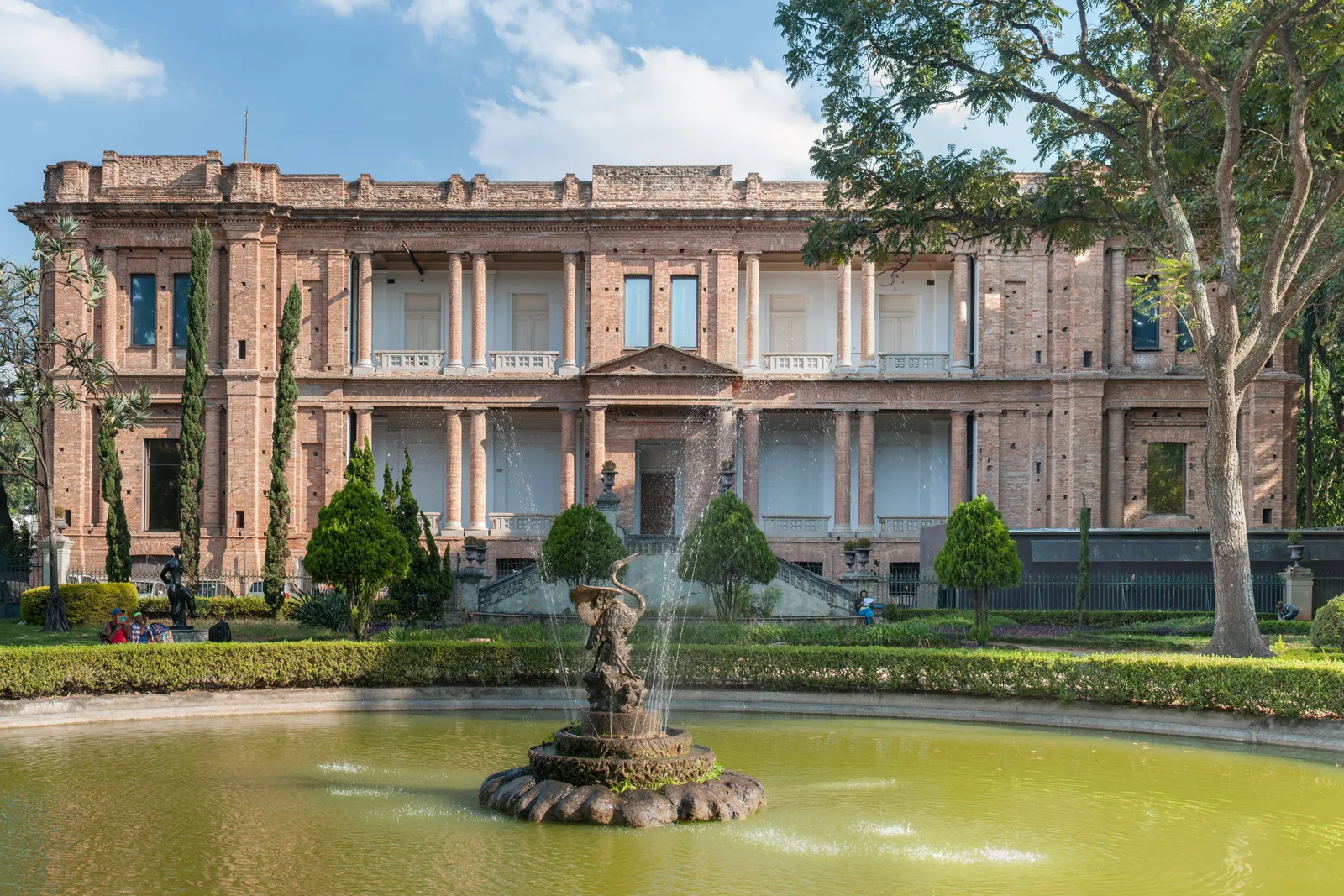
  • The Pinacoteca’s long bare-brick facade — two stories of brick pilasters, balustrades and tall rectangular windows — seen from the Jardim da Luz across an oval ornamental pond with a stone fountain playing in the middle of it

    Luz · half day

    The Pinacoteca at Luz

    The oldest art museum in São Paulo, in a stripped-back brick building of 1900 that Paulo Mendes da Rocha reopened in 1998 by roofing the courtyards in glass and leaving the raw brick exposed — a restoration that is as good as anything hanging in it. The collection is Brazilian art from the nineteenth century to now, and it runs across three buildings a couple of minutes apart. Entry is R$40 and free on Saturdays; the Jardim da Luz outside is the oldest public garden in the city.

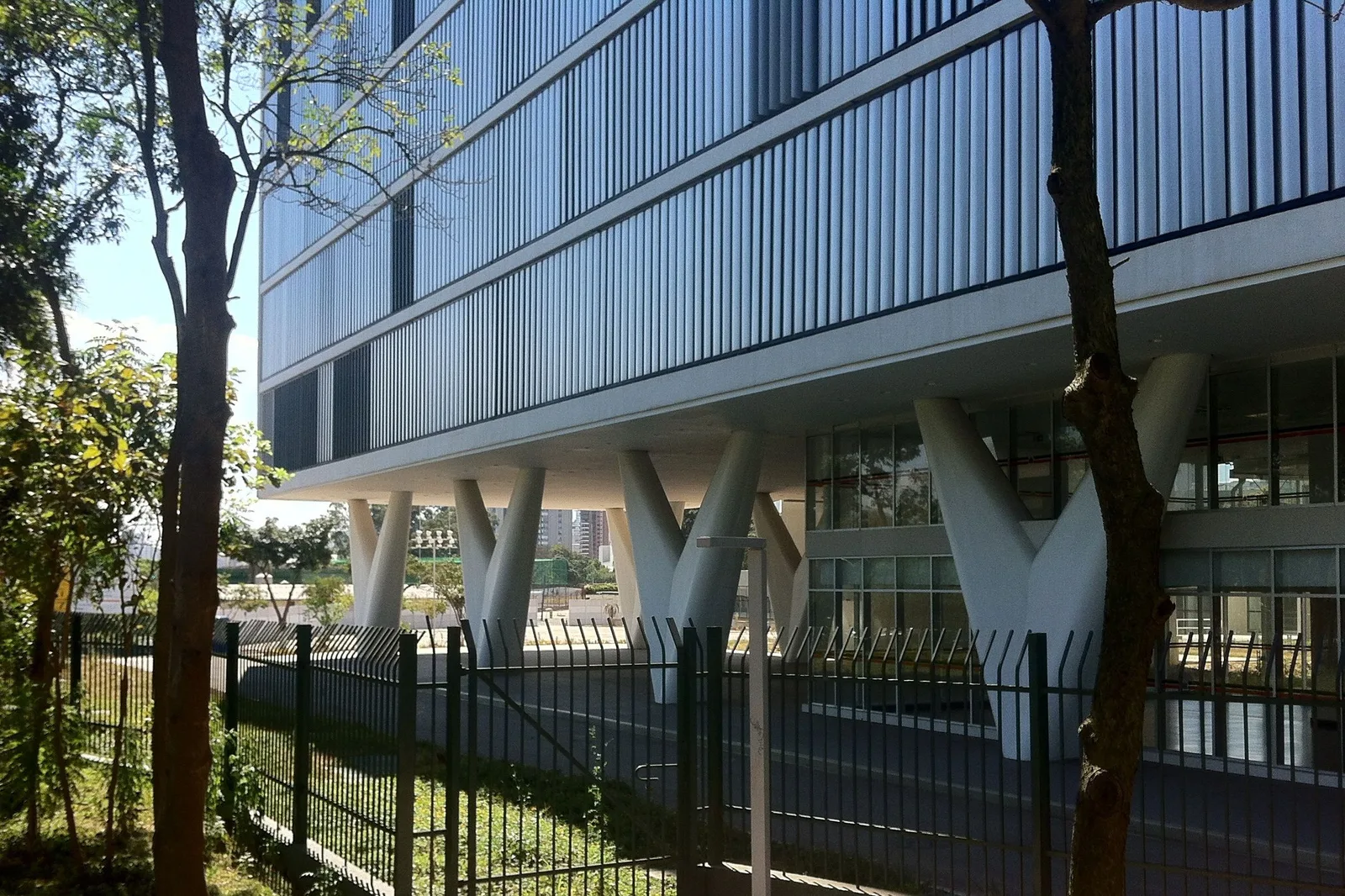
  • The MAC USP building beside Ibirapuera: a long horizontal block of glass and louvres raised on splayed white concrete supports, seen through park railings and bare trees

    Ibirapuera · 2 hours

    MAC USP and its rooftop

    The University of São Paulo’s contemporary art museum holds the largest collection of modern and contemporary art in Latin America, in a Niemeyer building on the far side of the avenue from Ibirapuera. Go for the collection — Portinari, Tarsila, Di Cavalcanti, Picasso, Modigliani — and stay for the eighth-floor terrace, which is open to anyone, costs nothing and has one of the best skyline views in the city. Entry is free.

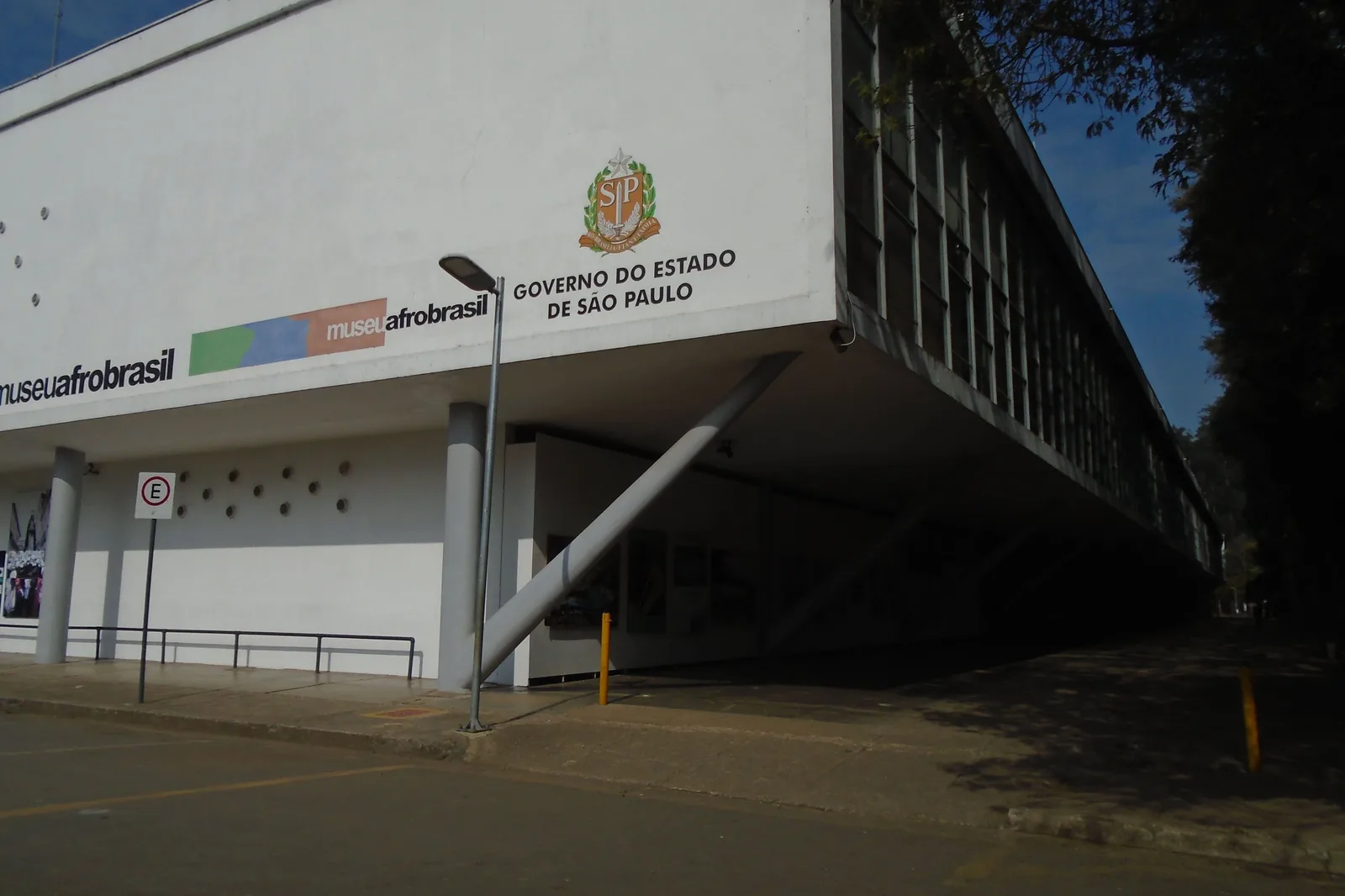
  • The Museu Afro Brasil in Ibirapuera: the long white concrete underside of Niemeyer’s pavilion raised on piers above an empty forecourt, the museum’s name on a banner across the end wall

    Parque Ibirapuera · 2 hours

    Museu Afro Brasil Emanoel Araújo

    Founded in 2004 by the sculptor and curator Emanoel Araújo inside Niemeyer’s Manoel da Nóbrega pavilion, this is the most complete account of Black Brazil in any museum in the country: the Atlantic crossing, slavery and its afterlife, religion, work, and a very large collection of Afro-Brazilian art hung as art rather than as ethnography. It is a serious three-floor museum and it is consistently the quietest of the Ibirapuera institutions, which says more about visitors than about the museum.

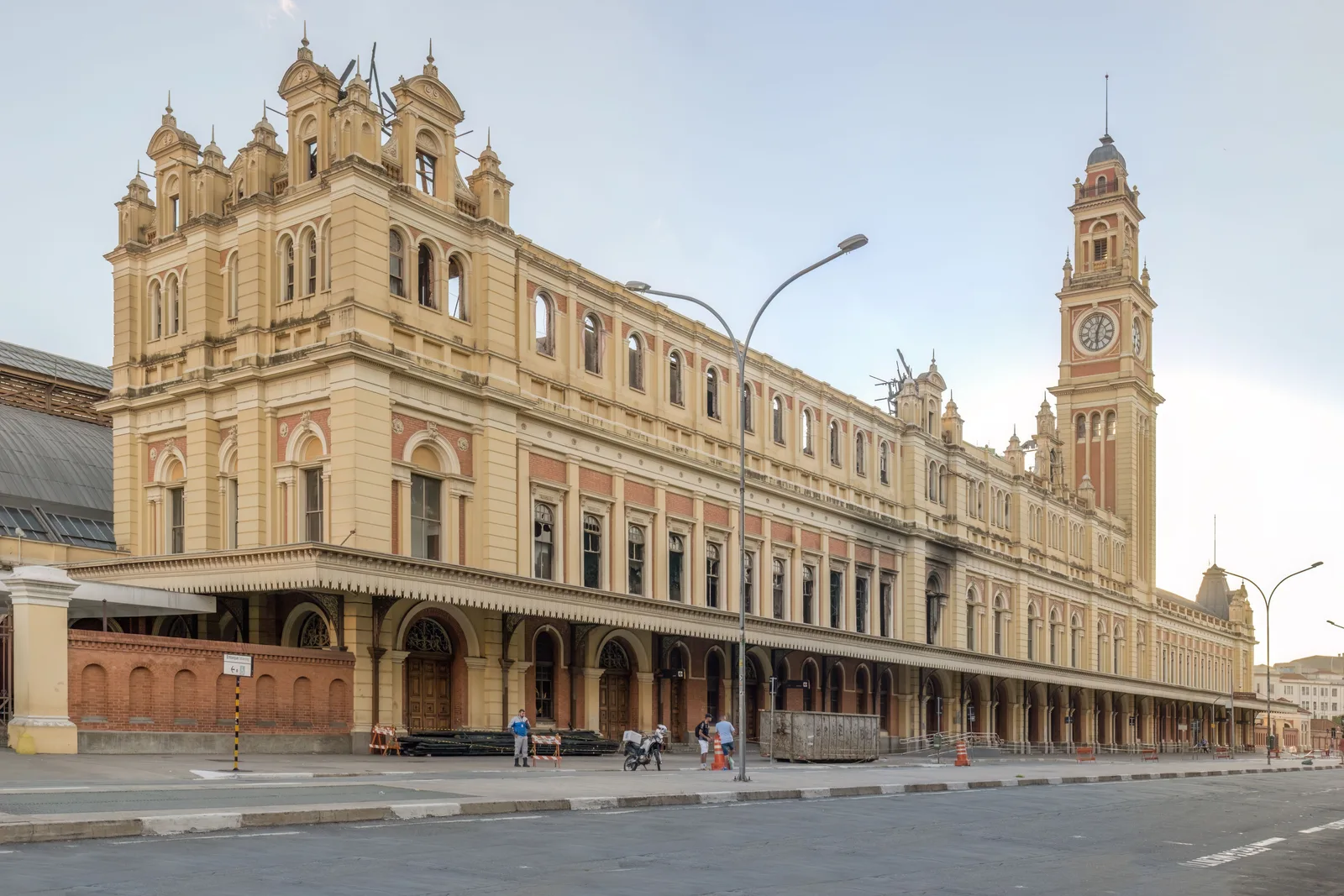
  • The Estação da Luz across an empty street: a long Victorian station front in cream stucco and red brick, arched windows above an iron canopy running the length of the pavement, and its tall clock tower standing at the far end under a pale hazy sky

    Luz · 2 hours

    The Museu da Língua Portuguesa at Estação da Luz

    A museum about a language, which sounds thin and is not: it is one of the most inventive interactive museums in Brazil, built inside the working Estação da Luz train station — a Victorian pile shipped out from England in pieces and put up in 1901. It burned in a 2015 fire that killed a firefighter and reopened in 2021 after a six-year rebuild. Come for the museum, and look at the station on the way in; the clock tower was modeled on Big Ben.

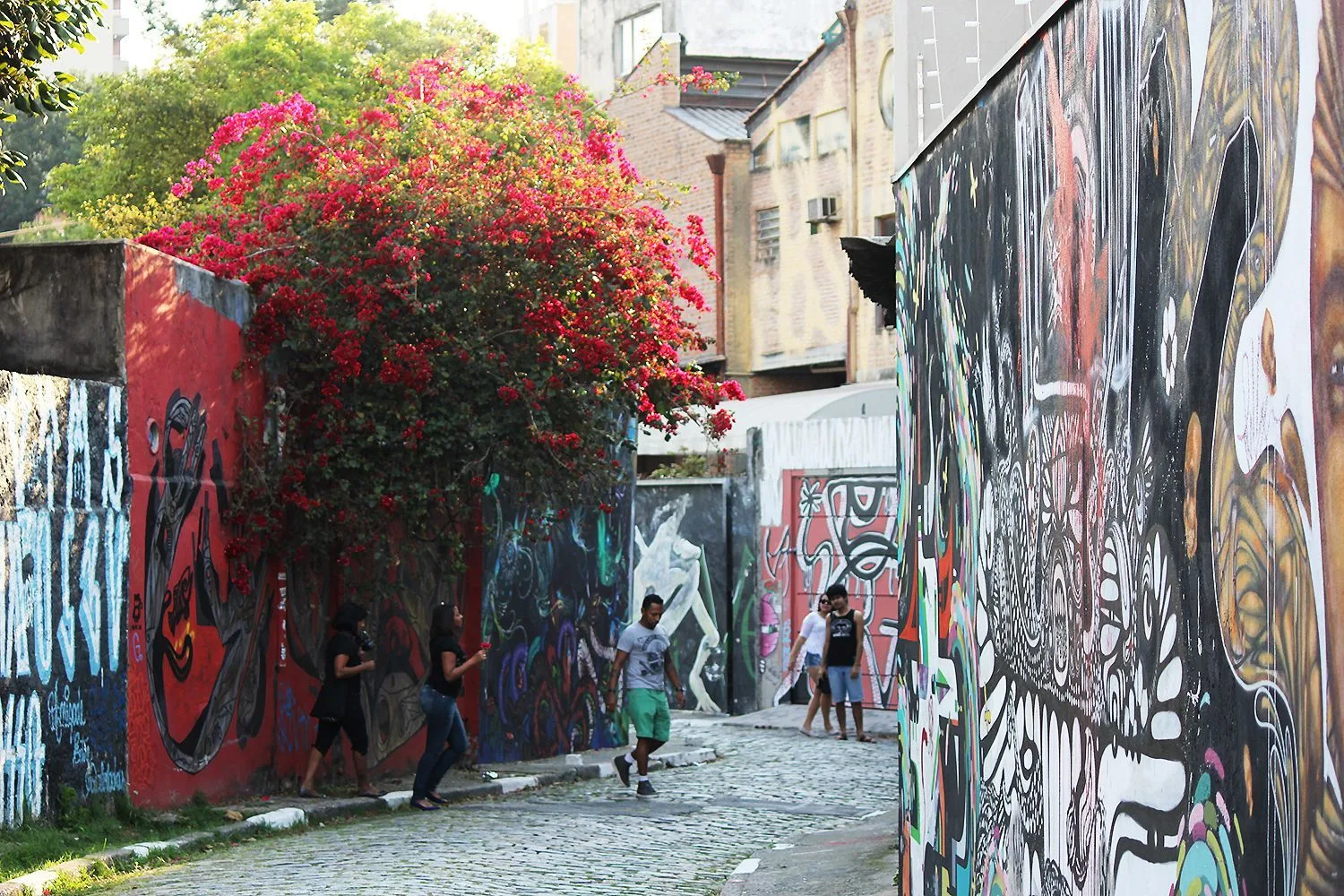
  • The Beco do Batman: a narrow cobbled lane with murals covering both walls end to end, a mass of magenta bougainvillea spilling over one of them and a few people walking up the slope

    Vila Madalena · 1 hour

    The Beco do Batman

    A pair of narrow lanes in Vila Madalena whose walls have been continuously repainted since the 1980s, when a Batman figure appeared on one of them and gave the alley its name. Nothing here is permanent — the murals are painted over every few months, so the alley you see is not the one in anyone else’s photographs. It is the most concentrated street art in a city with an unusually good claim to being the world capital of it, and it is free, open and about ten minutes’ walk from the Vila Madalena bars.

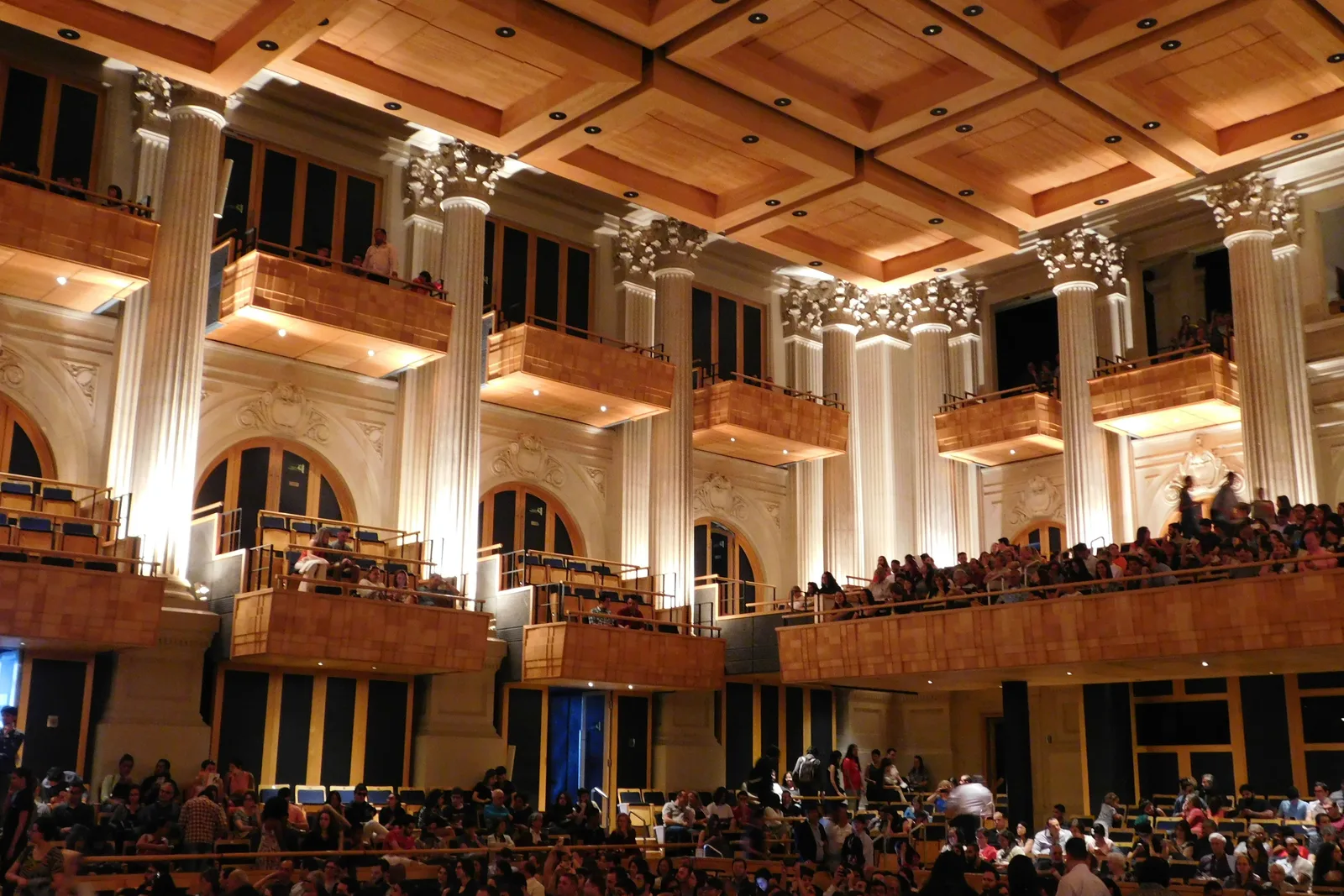
  • The interior of Sala São Paulo: a tall hall with cream classical walls and fluted Corinthian columns, two tiers of pale wooden boxes down the side, a deep coffered wooden ceiling overhead and the audience filling the boxes and the stalls below

    Luz · an evening

    The orchestra at Sala São Paulo

    The state orchestra plays in the converted grand hall of a 1930s train station, with an adjustable ceiling built to tune the acoustics — it is regularly called the best concert hall in South America and it is a fifteen-minute walk from the Pinacoteca. Tickets are cheap by any international standard, the season runs most of the year, and the free lunchtime and open-rehearsal concerts are worth checking for. The area around Luz is fine at concert times; take a ride app back.

The Old Center

  • The Pinacoteca’s long bare-brick facade — two stories of brick pilasters, balustrades and tall rectangular windows — seen from the Jardim da Luz across an oval ornamental pond with a stone fountain playing in the middle of it

    Luz · half day

    The Pinacoteca at Luz

    The oldest art museum in São Paulo, in a stripped-back brick building of 1900 that Paulo Mendes da Rocha reopened in 1998 by roofing the courtyards in glass and leaving the raw brick exposed — a restoration that is as good as anything hanging in it. The collection is Brazilian art from the nineteenth century to now, and it runs across three buildings a couple of minutes apart. Entry is R$40 and free on Saturdays; the Jardim da Luz outside is the oldest public garden in the city.

  • The Estação da Luz across an empty street: a long Victorian station front in cream stucco and red brick, arched windows above an iron canopy running the length of the pavement, and its tall clock tower standing at the far end under a pale hazy sky

    Luz · 2 hours

    The Museu da Língua Portuguesa at Estação da Luz

    A museum about a language, which sounds thin and is not: it is one of the most inventive interactive museums in Brazil, built inside the working Estação da Luz train station — a Victorian pile shipped out from England in pieces and put up in 1901. It burned in a 2015 fire that killed a firefighter and reopened in 2021 after a six-year rebuild. Come for the museum, and look at the station on the way in; the clock tower was modeled on Big Ben.

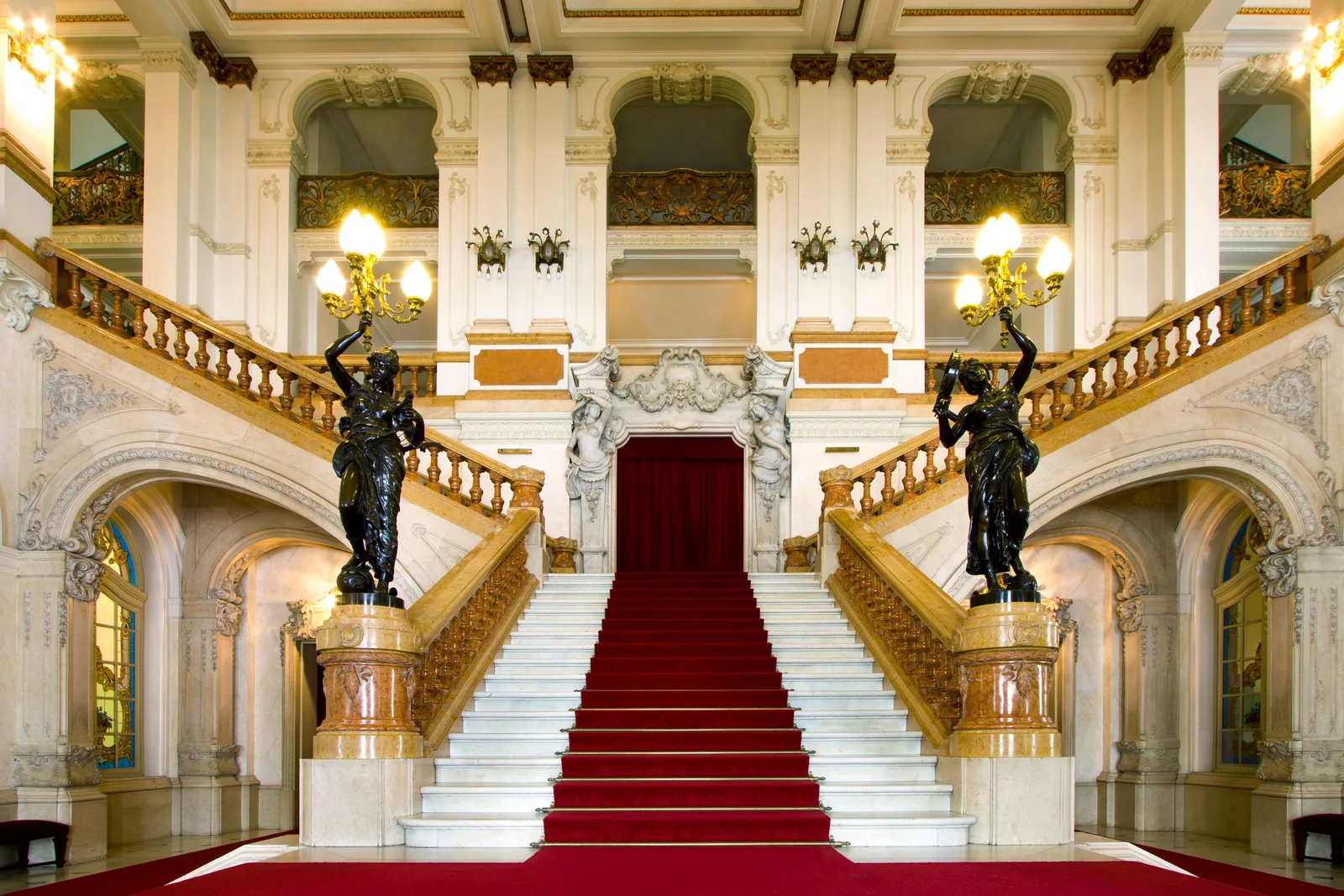
  • The grand staircase inside the Theatro Municipal: a red carpet running up white marble steps between gilded arches, bronze figures holding lamps on the newel posts and chandeliers overhead

    Centro · 1 hour, or an evening

    The Theatro Municipal

    São Paulo built itself an opera house in 1911 in the full Belle Époque manner — marble, mosaic, bronze, a grand staircase under a painted ceiling — and paid for it with coffee. It still runs a full season of opera, ballet and orchestral music at prices that would be a misprint in New York, and the free guided tours run Tuesday to Saturday if you only want the building. Check the program before you visit; a cheap ticket to whatever is on beats the tour.

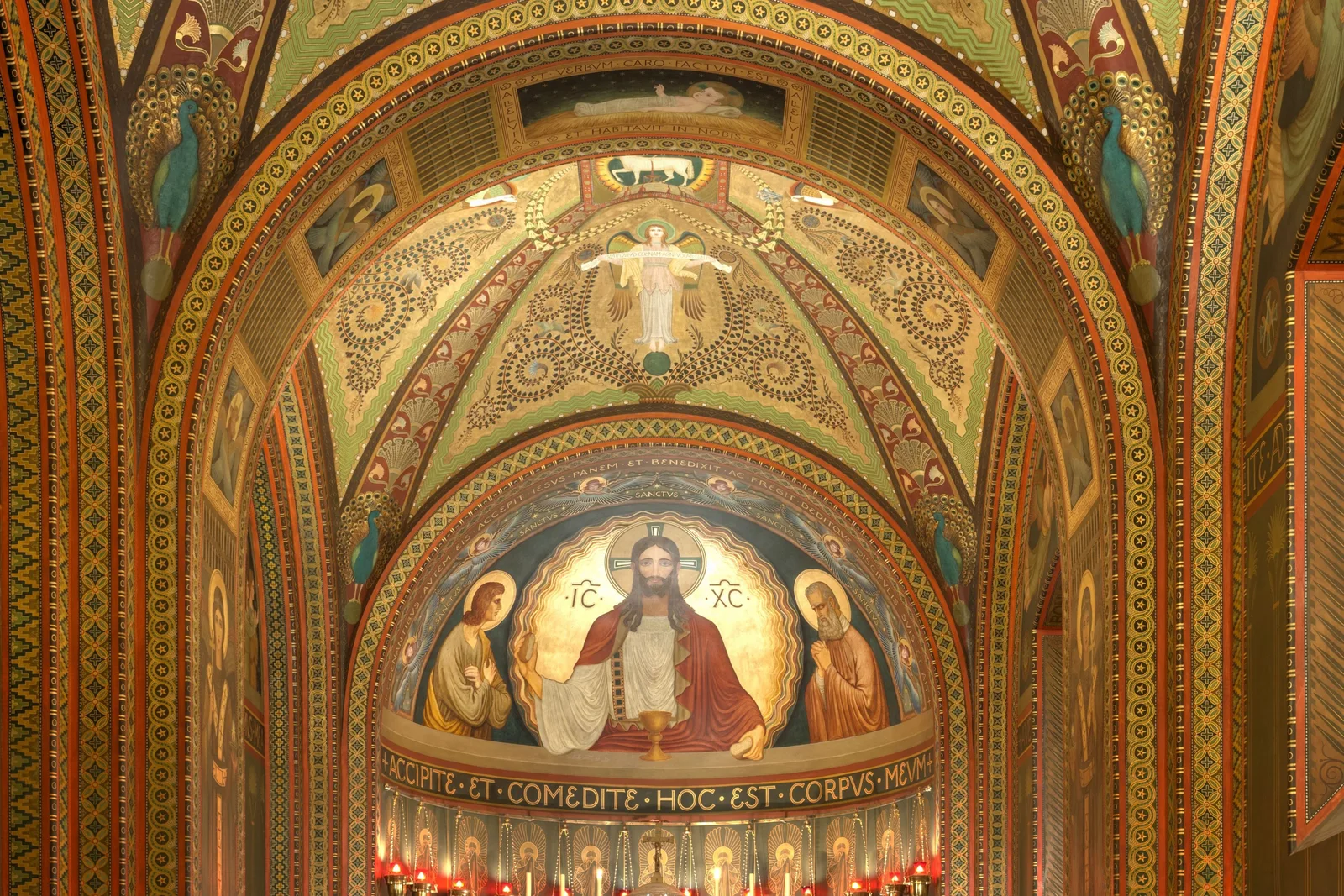
  • The apse of the Mosteiro de São Bento: a gilded half-dome covered in mosaic and painted ornament, with a large mosaic of Christ enthroned between angels above the high altar

    Largo São Bento · 1–2 hours

    Gregorian chant at the Mosteiro de São Bento

    Benedictine monks have been on this corner since 1598. The present basilica went up in 1914 in a German Romanesque style, with a gilded and mosaicked apse that is the most startling interior in the old center, and the community still sings the office in Gregorian chant. The Sunday 10:00am mass has the chant and the 1954 German organ together, and it is open to anyone who turns up quietly. The monastery bakery next door sells the bread and cakes the monks make.

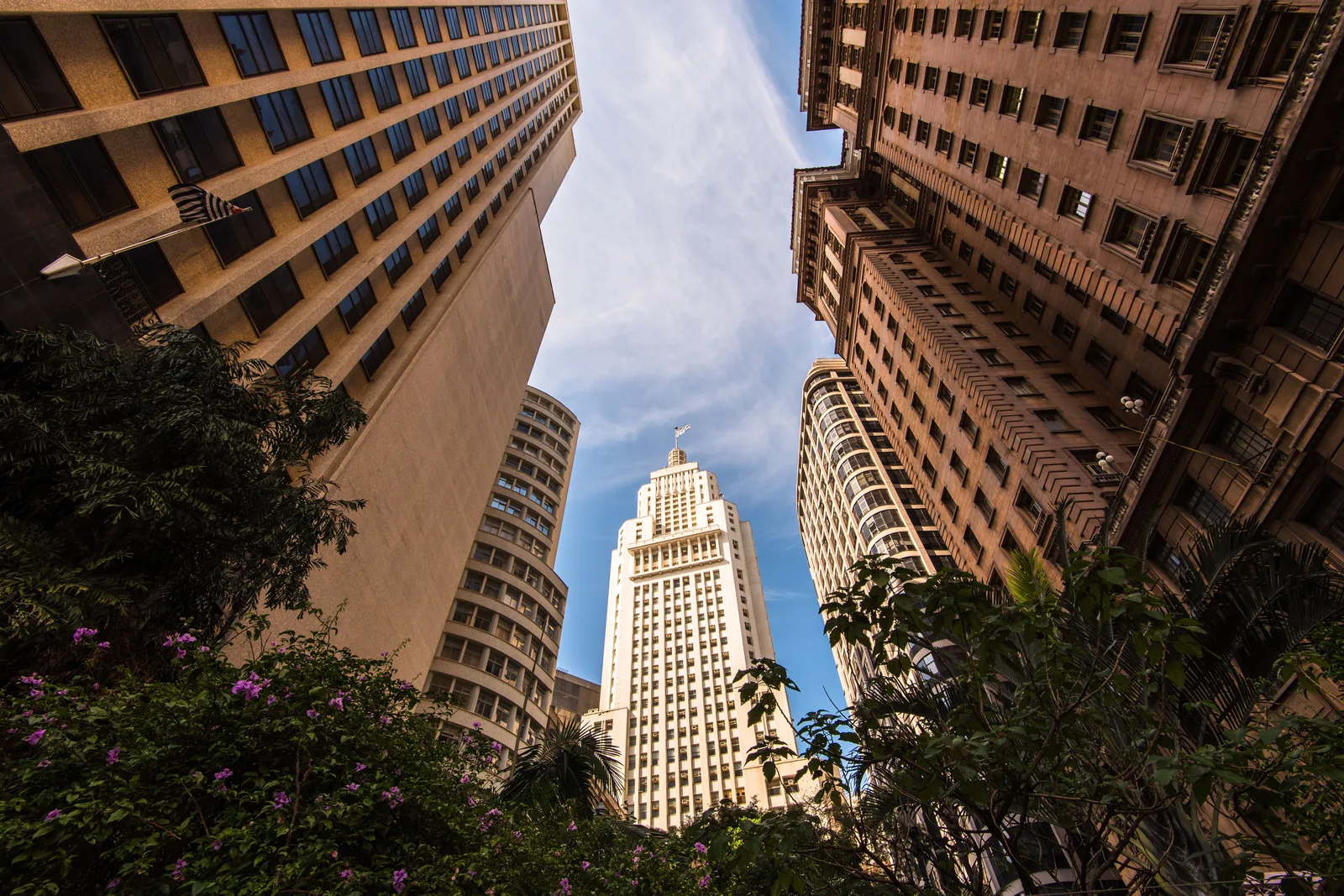
  • Looking up at the Altino Arantes tower from street level with a wide lens: its stepped pale crown standing in the middle of the frame against a blue sky, the older office blocks of the old center leaning in on either side, and flowering shrubs across the bottom of the picture

    Centro · 1–2 hours

    The lookout at Farol Santander

    The Edifício Altino Arantes went up in 1947, was modeled on the Empire State Building, and was the tallest thing in São Paulo for a decade. The bank that owned it turned it into a cultural center in 2018, and the 26th-floor terrace is the best paid view of the city — the whole grid of towers running to the horizon with no natural feature to interrupt it, which is the most honest possible photograph of São Paulo. R$45, and there is a skate bowl on the 21st floor.

  • The Copan building seen from a distance over the rooftops of central São Paulo, its long curving slab banded top to bottom with concrete brise-soleil, rising dark against a clear sky behind a huddle of lower white apartment blocks

    Centro · 30 minutes

    The Edifício Copan

    Niemeyer’s apartment block of 1966 curves in a long S through six blocks of downtown and holds about 1,160 apartments and something like five thousand residents — it has its own postal code and its own church. From the street the brise-soleil bands make it read as a single sweeping gesture, and it is the building people mean when they say São Paulo is ugly in an interesting way. The rooftop visits run intermittently; the ground-floor gallery of shops is open anyway and the view along the facade from Avenida Ipiranga costs nothing.

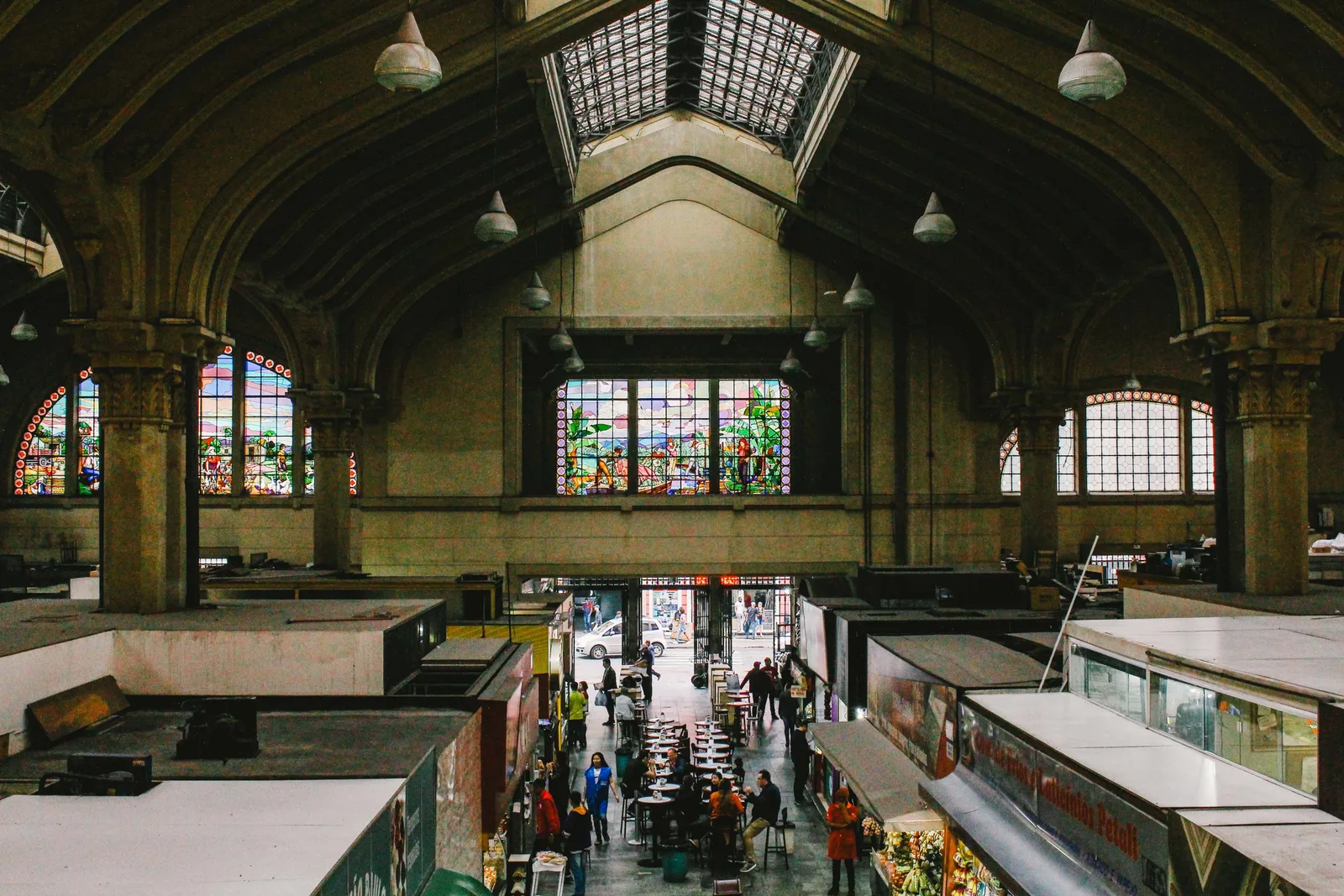
  • The interior of the Mercado Municipal from the mezzanine: a high vaulted hall with tall stained-glass windows at the far end, rows of stalls on the floor below and shoppers moving between them

    Centro · 2 hours

    The Mercado Municipal

    The Mercadão opened in 1933 in a great vaulted hall with stained-glass windows of coffee, cattle and cane, and it is half real market and half tourist canteen. Downstairs is the produce: fruit stacked in tiered walls, Brazilian cheeses, dried cod, spices, and stallholders who will hand you a slice of something you have never seen. Upstairs is the mezzanine of lunch counters. It is not cheap and the fruit sellers will sell you an expensive handful if you let them — agree the price before you take the sample.

Eating & Markets

  • The interior of the Mercado Municipal from the mezzanine: a high vaulted hall with tall stained-glass windows at the far end, rows of stalls on the floor below and shoppers moving between them

    Centro · 2 hours

    The Mercado Municipal

    The Mercadão opened in 1933 in a great vaulted hall with stained-glass windows of coffee, cattle and cane, and it is half real market and half tourist canteen. Downstairs is the produce: fruit stacked in tiered walls, Brazilian cheeses, dried cod, spices, and stallholders who will hand you a slice of something you have never seen. Upstairs is the mezzanine of lunch counters. It is not cheap and the fruit sellers will sell you an expensive handful if you let them — agree the price before you take the sample.

  • Close on a halved mortadella sandwich on a white plate, a thick fan of pink folded slices packed between two pieces of white bread with melted cheese at the edges

    Mercado Municipal · 30 minutes

    The mortadella sandwich, and the cod pastel

    Two things at the Mercadão have become dishes in their own right. The mortadella sandwich is about 400 grams of thin-sliced mortadella piled into a French roll, a joke among market workers in the 1960s that got out of hand; the pastel de bacalhau is a fried pastry parcel with a couple of hundred grams of salt cod inside it. Each runs around R$50 at the famous counters, which is silly money for a sandwich and precisely the point. One of each, split between two people, is lunch.

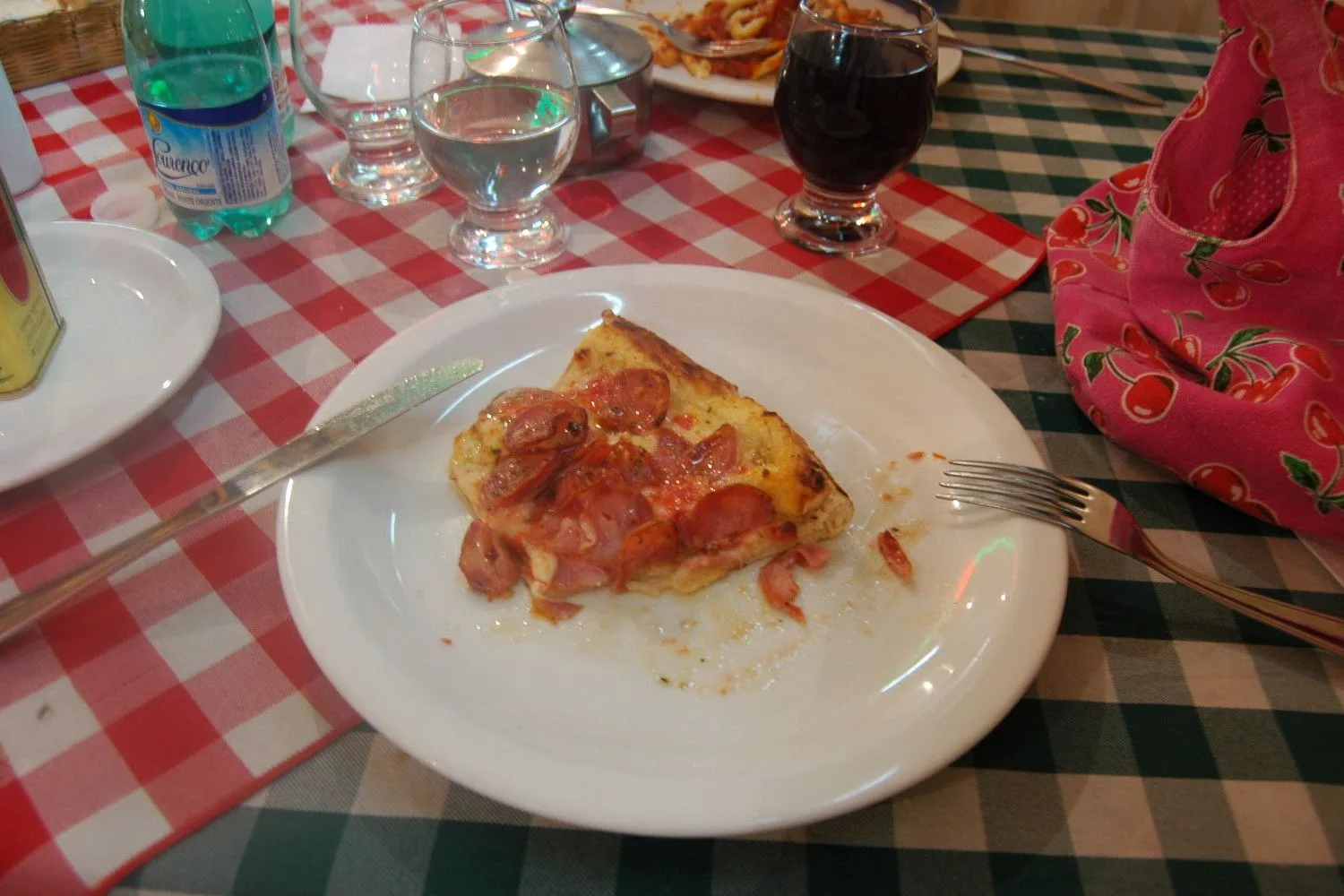
  • A slice of tomato-topped pizza on a white plate at a pizzeria table laid with a red checked cloth, a glass of red wine and a red napkin holder beside it

    Bela Vista, Mooca and citywide · an evening

    Pizza, the way São Paulo does it

    The city has around six thousand pizzerias — the pizzeria trade association’s own count — and eats more pizza than anywhere else in Brazil. The style is its own thing: a thin, soft, slightly bready base, mozzarella laid on generously, and a list of toppings that a Neapolitan would refuse to look at. The old-guard rooms are in Bela Vista, Bixiga and Mooca, where the Italian families settled; the newer wood-fired places are in Pinheiros and Vila Madalena. Sunday night is pizza night here, and it is taken seriously.

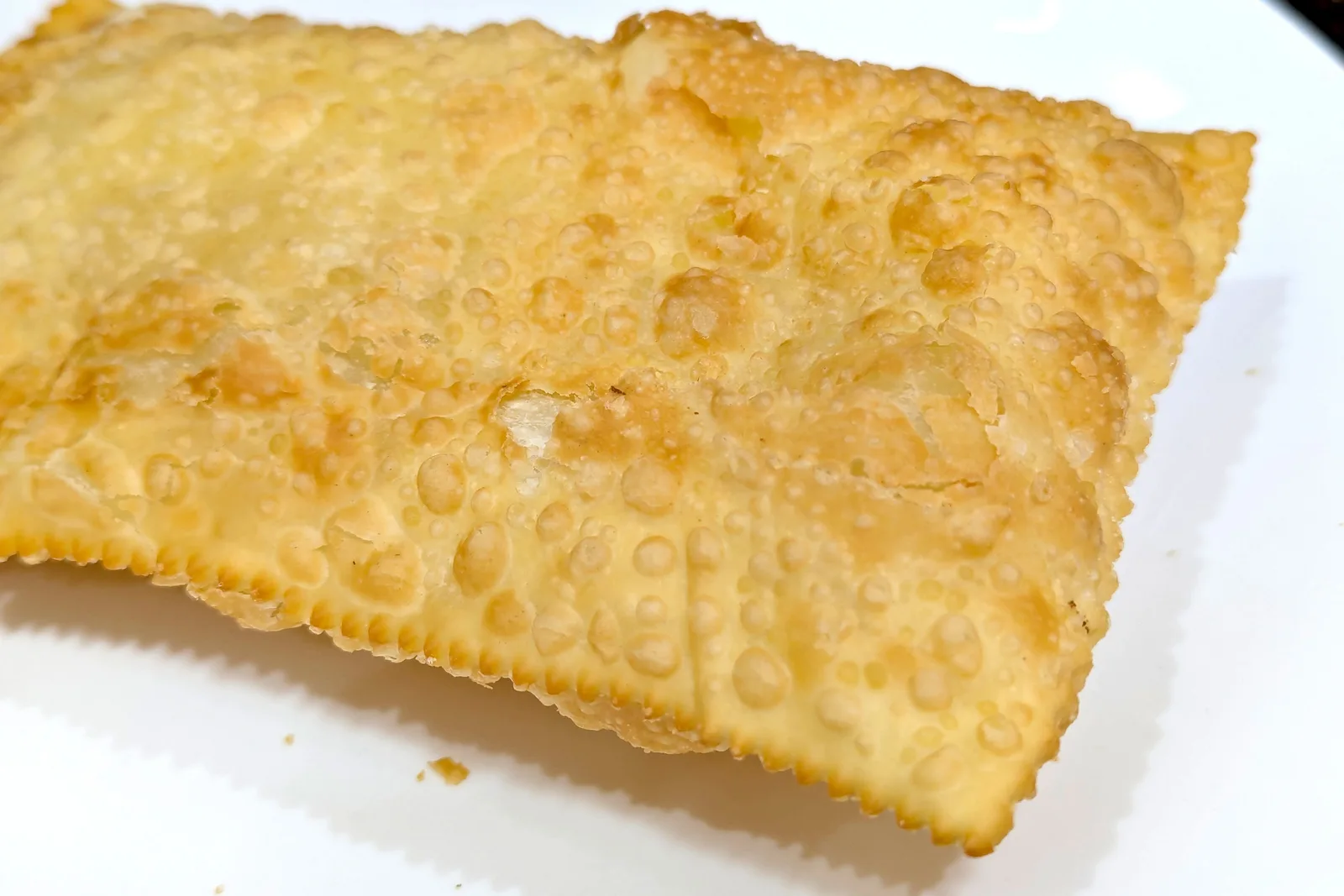
  • A large golden fried pastel filling a white plate, its pastry envelope blistered all over from the fryer and crimped along the edges

    Every neighborhood, one day a week · 1 hour

    A pastel at the street market

    Every São Paulo neighborhood has a feira livre — a street market that takes over a road for one morning a week — and the pastel stand at the end of it is a Brazilian institution: a large thin envelope of dough deep-fried to order and filled with cheese, meat or heart of palm, drunk with sugarcane juice. It costs a few reais, it is the best cheap food in the city, and the market is where you see the neighborhood rather than the neighborhood’s restaurants. Ask your hotel which morning yours runs.

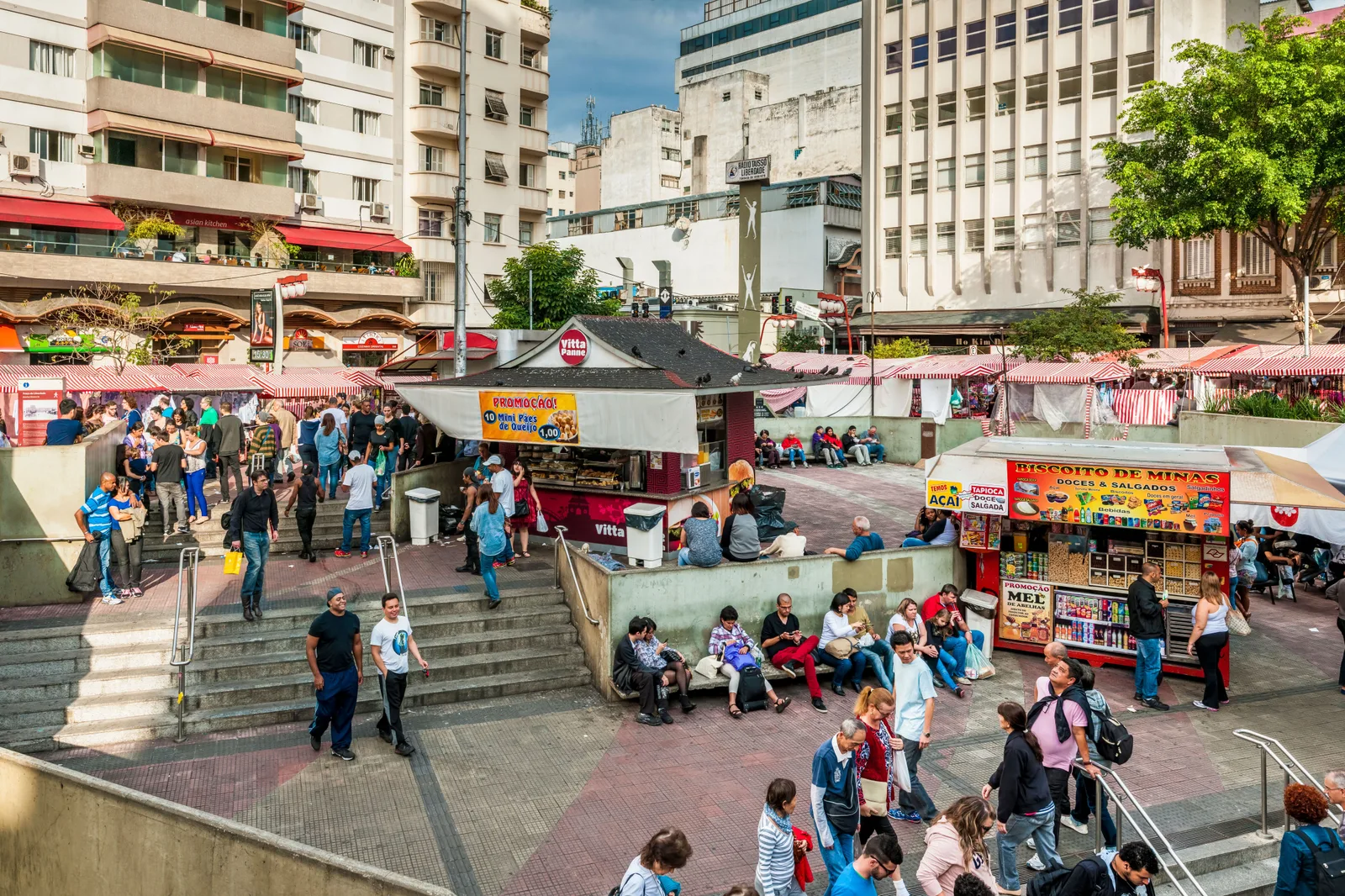
  • The Praça da Liberdade filled with the weekend fair: rows of red-and-white striped stall canopies down both sides, a crowd crossing the paved square and coming up the steps out of the metro, a kiosk with a black Japanese-style tiled roof in the middle of it and apartment blocks rising behind

    Liberdade · half day

    Liberdade on a weekend

    Brazil took more Japanese immigrants than any country outside Japan, starting in 1908, and their descendants — around 1.9 million people — make this the largest Japanese-descended community anywhere on earth. Liberdade is where that history is legible: red suzurantō lanterns along the streets, ramen counters, confectioners selling manjū, and a weekend craft and food fair filling the Praça da Liberdade. It is Korean and Chinese as much as Japanese now. Come hungry and on a Saturday or Sunday, when the square is full.

Neighborhoods

  • A large golden fried pastel filling a white plate, its pastry envelope blistered all over from the fryer and crimped along the edges

    Every neighborhood, one day a week · 1 hour

    A pastel at the street market

    Every São Paulo neighborhood has a feira livre — a street market that takes over a road for one morning a week — and the pastel stand at the end of it is a Brazilian institution: a large thin envelope of dough deep-fried to order and filled with cheese, meat or heart of palm, drunk with sugarcane juice. It costs a few reais, it is the best cheap food in the city, and the market is where you see the neighborhood rather than the neighborhood’s restaurants. Ask your hotel which morning yours runs.

  • The Praça da Liberdade filled with the weekend fair: rows of red-and-white striped stall canopies down both sides, a crowd crossing the paved square and coming up the steps out of the metro, a kiosk with a black Japanese-style tiled roof in the middle of it and apartment blocks rising behind

    Liberdade · half day

    Liberdade on a weekend

    Brazil took more Japanese immigrants than any country outside Japan, starting in 1908, and their descendants — around 1.9 million people — make this the largest Japanese-descended community anywhere on earth. Liberdade is where that history is legible: red suzurantō lanterns along the streets, ramen counters, confectioners selling manjū, and a weekend craft and food fair filling the Praça da Liberdade. It is Korean and Chinese as much as Japanese now. Come hungry and on a Saturday or Sunday, when the square is full.

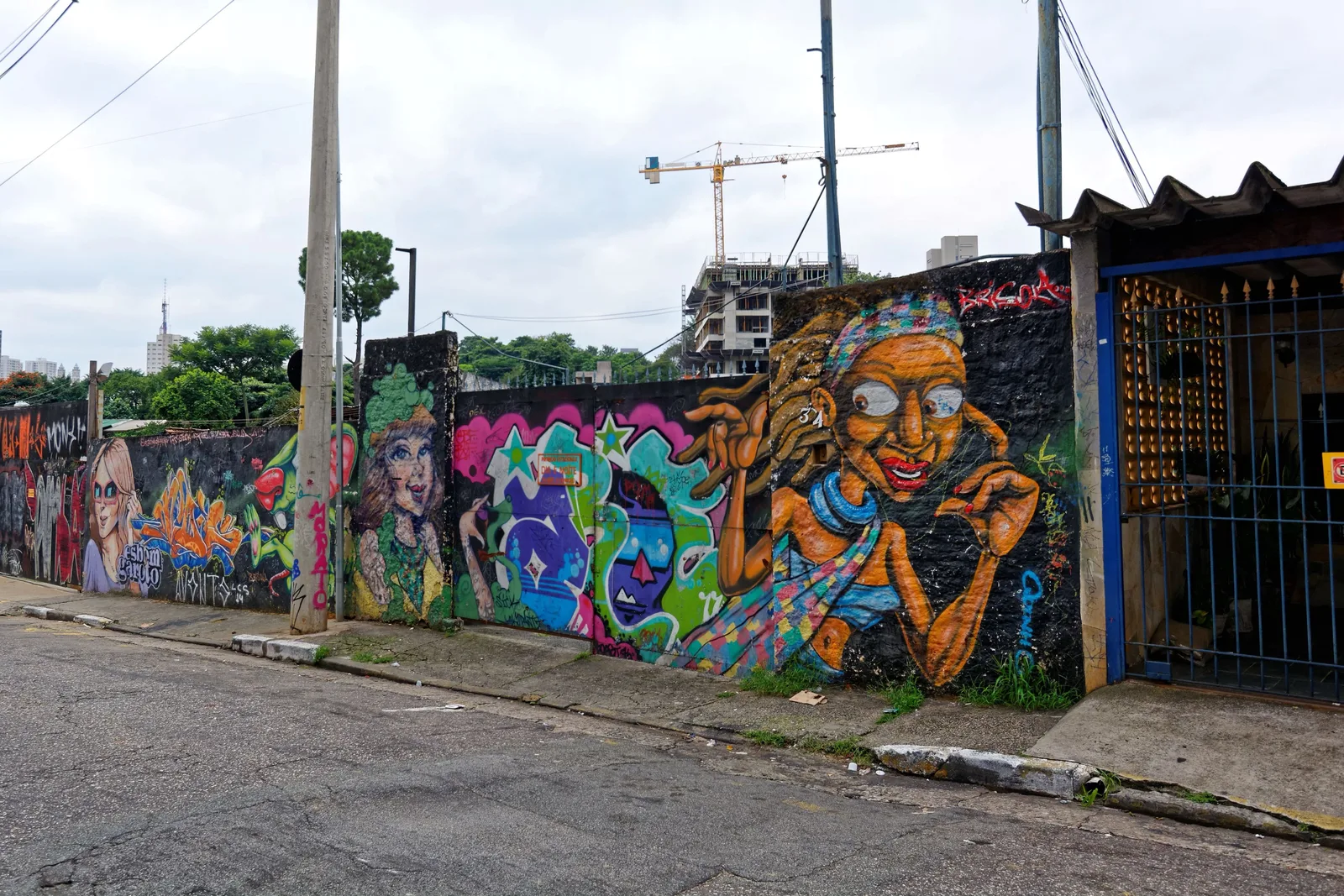
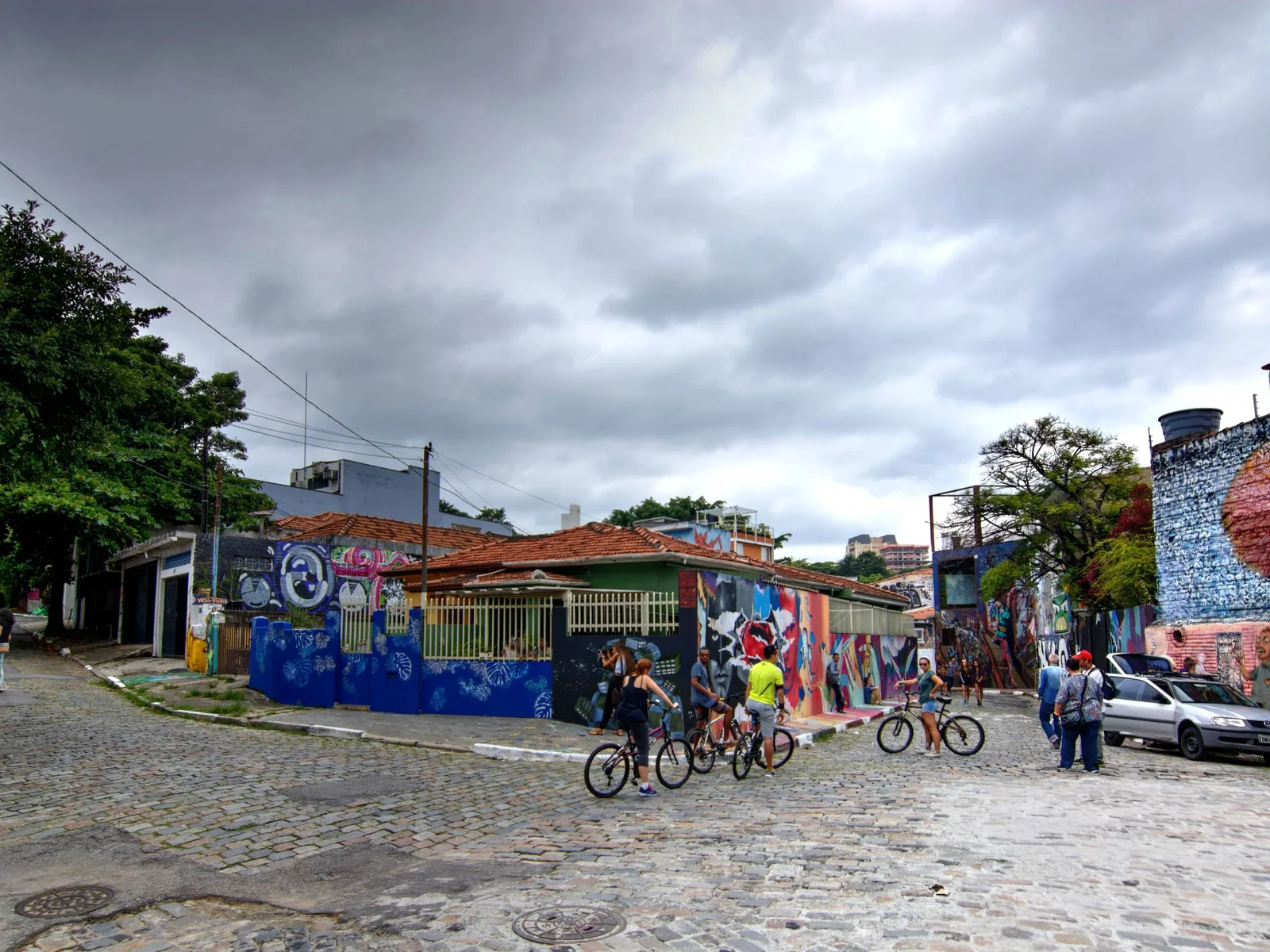
  • A Vila Madalena street corner with a long wall of bright graffiti murals in blue, pink and green running down the block, low buildings and a construction crane behind

    Vila Madalena · half day into an evening

    Vila Madalena, afternoon and night

    The hilly, low-rise neighborhood west of Pinheiros is where São Paulo goes out. In daylight it is galleries, design shops, ceramics studios and murals on almost every wall; from about 6:00pm the bars take over the sidewalks on Rua Aspicuelta, Rua Mourato Coelho and Rua Wisard, and the tables stay out until the kitchens close well after midnight. It is the most walkable night out in the city and the easiest one to do without a plan — arrive, walk two streets, pick the corner with the crowd you like.

  • The Beco do Batman: a narrow cobbled lane with murals covering both walls end to end, a mass of magenta bougainvillea spilling over one of them and a few people walking up the slope

    Vila Madalena · 1 hour

    The Beco do Batman

    A pair of narrow lanes in Vila Madalena whose walls have been continuously repainted since the 1980s, when a Batman figure appeared on one of them and gave the alley its name. Nothing here is permanent — the murals are painted over every few months, so the alley you see is not the one in anyone else’s photographs. It is the most concentrated street art in a city with an unusually good claim to being the world capital of it, and it is free, open and about ten minutes’ walk from the Vila Madalena bars.

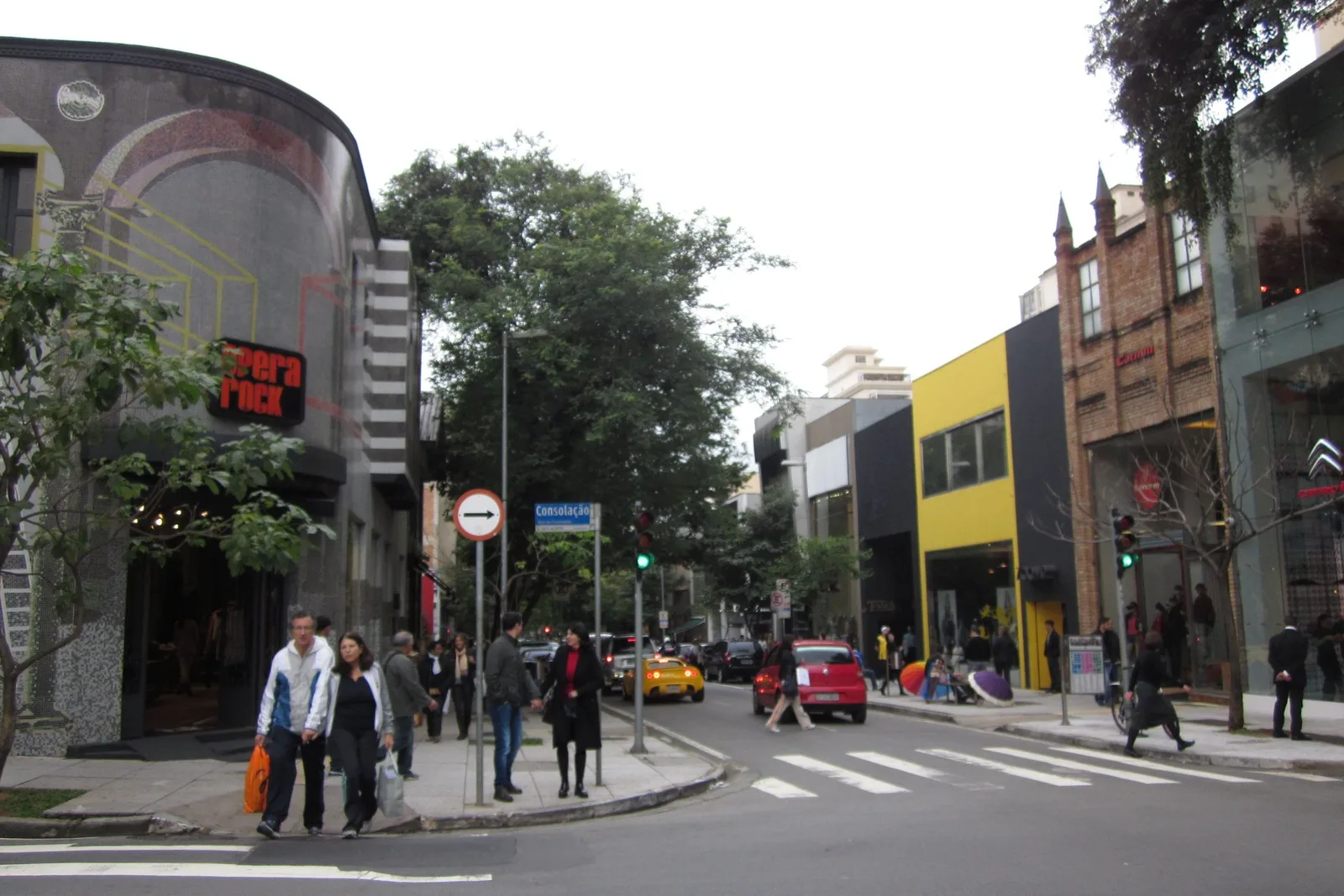
  • Rua Oscar Freire in Jardins on a weekday: pedestrians crossing at a marked crosswalk between low shopfronts and street trees, with a yellow building and traffic lights along the block

    Jardins · half day

    Jardins and Rua Oscar Freire

    The garden-suburb district immediately south of Avenida Paulista, laid out in the 1910s on an English model and now the most expensive real estate in Brazil: leafy streets of low houses, the designer flagships along Rua Oscar Freire, and a concentration of good restaurants that is the reason most visitors end up eating here whether they meant to or not. It is a pleasant place to walk without buying anything, which is not true of many shopping districts.

Nights Out

  • The grand staircase inside the Theatro Municipal: a red carpet running up white marble steps between gilded arches, bronze figures holding lamps on the newel posts and chandeliers overhead

    Centro · 1 hour, or an evening

    The Theatro Municipal

    São Paulo built itself an opera house in 1911 in the full Belle Époque manner — marble, mosaic, bronze, a grand staircase under a painted ceiling — and paid for it with coffee. It still runs a full season of opera, ballet and orchestral music at prices that would be a misprint in New York, and the free guided tours run Tuesday to Saturday if you only want the building. Check the program before you visit; a cheap ticket to whatever is on beats the tour.

  • A Vila Madalena street corner with a long wall of bright graffiti murals in blue, pink and green running down the block, low buildings and a construction crane behind

    Vila Madalena · half day into an evening

    Vila Madalena, afternoon and night

    The hilly, low-rise neighborhood west of Pinheiros is where São Paulo goes out. In daylight it is galleries, design shops, ceramics studios and murals on almost every wall; from about 6:00pm the bars take over the sidewalks on Rua Aspicuelta, Rua Mourato Coelho and Rua Wisard, and the tables stay out until the kitchens close well after midnight. It is the most walkable night out in the city and the easiest one to do without a plan — arrive, walk two streets, pick the corner with the crowd you like.

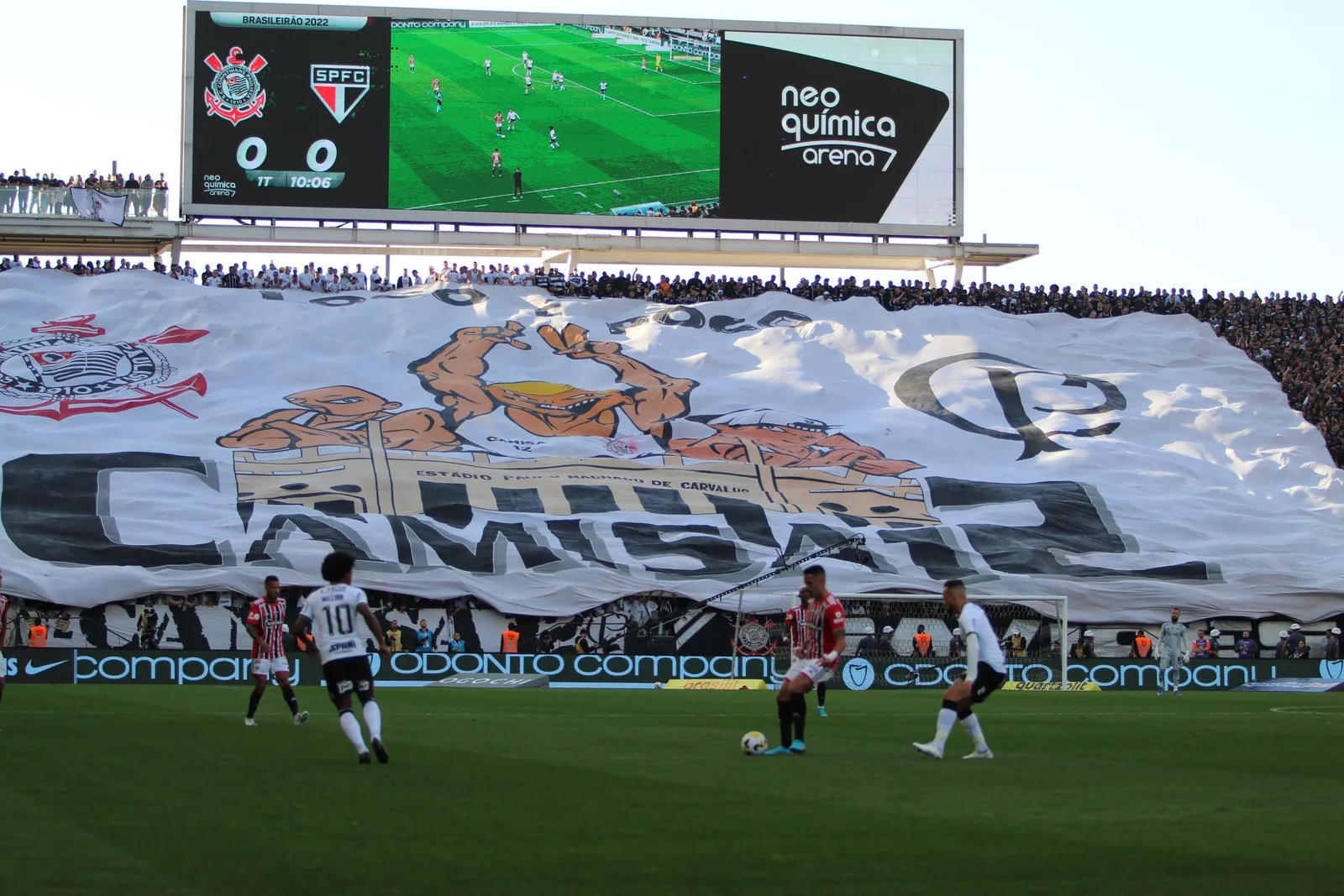
  • A giant banner unfurled across the whole home end at the Corinthians stadium during a match against São Paulo FC, the crowd holding it up behind the goal with the scoreboard showing the fixture above them

    Água Branca, Itaquera or Morumbi · an evening

    A match at one of the big three

    São Paulo has three of Brazil’s biggest clubs in one city — Corinthians in Itaquera, Palmeiras in Água Branca, São Paulo FC at Morumbi — and going to a game here is louder, closer and considerably cheaper than the equivalent in Europe or the US. The crowd sings for ninety minutes without stopping and the tifos in the home end are worth the ticket on their own. Buy through the club’s own site or app, which usually needs a registration a few days ahead; go in neutral colors, take the metro, and leave the good watch at the hotel.

  • The interior of Sala São Paulo: a tall hall with cream classical walls and fluted Corinthian columns, two tiers of pale wooden boxes down the side, a deep coffered wooden ceiling overhead and the audience filling the boxes and the stalls below

    Luz · an evening

    The orchestra at Sala São Paulo

    The state orchestra plays in the converted grand hall of a 1930s train station, with an adjustable ceiling built to tune the acoustics — it is regularly called the best concert hall in South America and it is a fifteen-minute walk from the Pinacoteca. Tickets are cheap by any international standard, the season runs most of the year, and the free lunchtime and open-rehearsal concerts are worth checking for. The area around Luz is fine at concert times; take a ride app back.

Day Trips

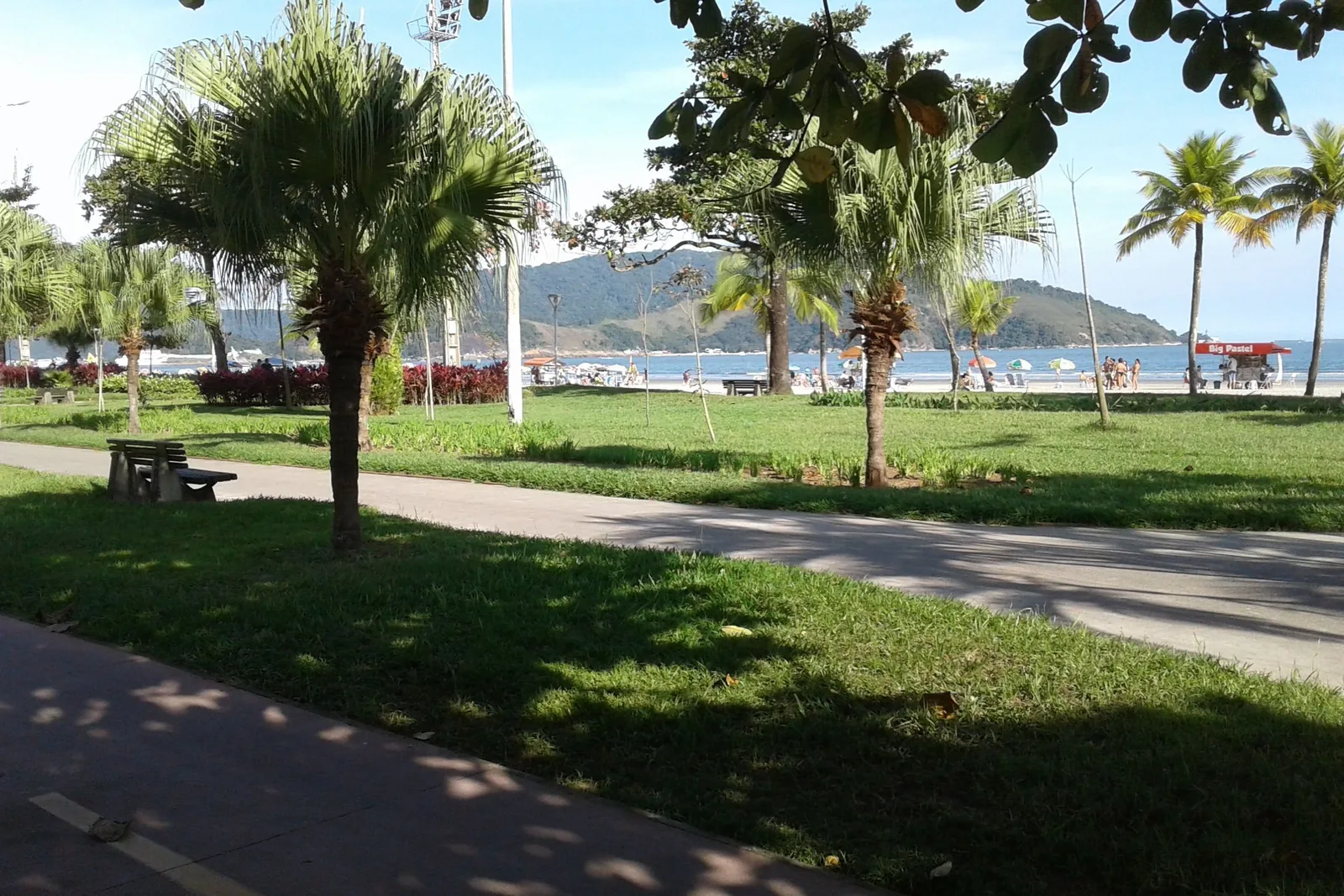
  • The beach gardens at Santos: mown lawn, a bench and tall palms laid out between two footpaths, with the sand, the water and a green headland visible through the trees beyond

    70 km southeast · full day

    The beach gardens at Santos

    An hour and a bit down the Serra do Mar escarpment is the port that shipped Brazil’s coffee, and a seafront with a 5.3-kilometer strip of planted garden between the promenade and the sand — Guinness has it as the largest beachfront garden in the world. Santos is a working city rather than a resort, which is the appeal: the coffee exchange building with its trading floor intact, Pelé’s museum, an 1873 funicular up the Monte Serrat, and a beach that is fine for a walk and only fine for a swim.

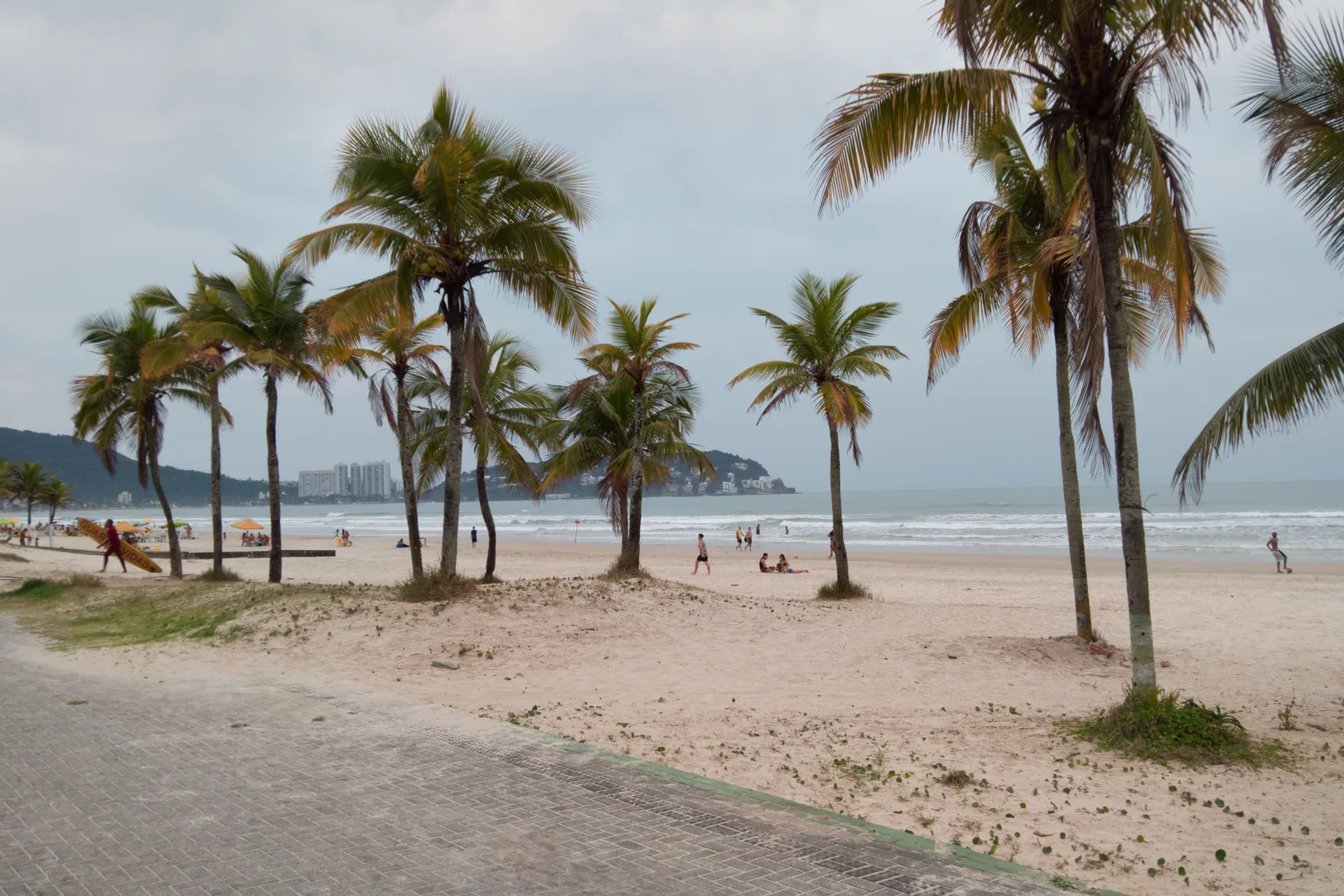
  • A wide, nearly empty beach at Guarujá under a flat gray sky, a row of tall leaning coconut palms standing along the back of the sand, a green headland closing the bay at the left with apartment towers below it, and a few figures down at the water’s edge

    90 km southeast · full day

    Swimming at Guarujá

    Across the channel from Santos, and the beach São Paulo actually goes to: a string of bays on an island, with Enseada the long crowded one and Pitangueiras the family one, and quieter sand at the far ends if you walk. It is a genuine beach day within two hours of the city and it is also, on a hot summer weekend, two hours of solid traffic in each direction. Go midweek, or go early, or accept the drive. The ferry from Santos takes five minutes and is part of the fun.

  • A cobbled street in Embu das Artes lined with colonial houses painted pink, yellow and blue, with blue-canopied market stalls set up along it and shoppers moving between them

    27 km southwest · half day

    The craft market at Embu das Artes

    A colonial village that the city has grown around, with a whitewashed church of 1690, a few blocks of cobbles and painted houses, and a large art and craft fair that fills the streets every Saturday and Sunday — furniture, ceramics, carving, leather, jewelry, and a great deal of food. It is thirty to sixty minutes out depending on traffic, it is the easiest half-day escape on this list, and it is only worth doing on the weekend: midweek the fair is not there.

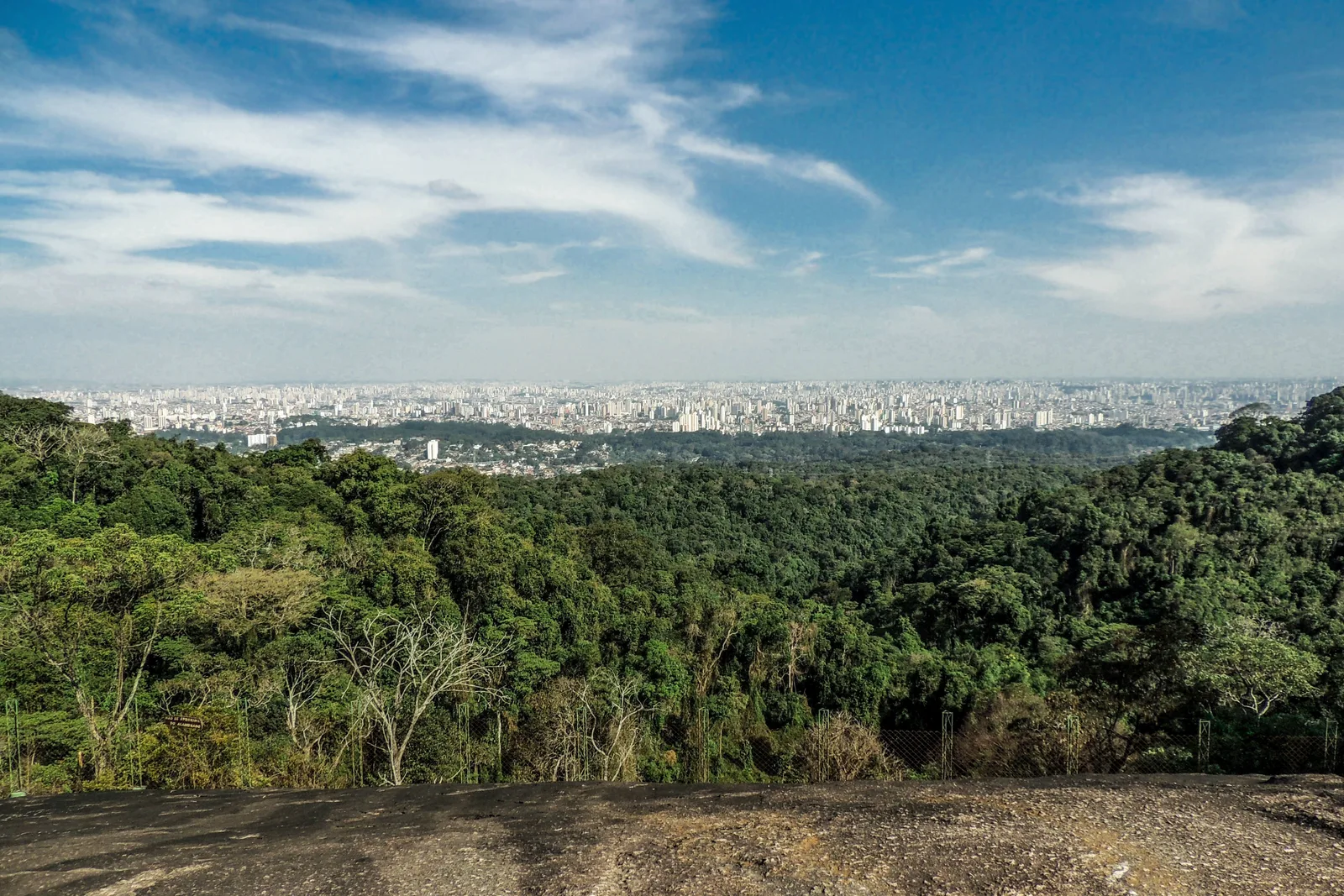
  • The view from the Pedra Grande outcrop in the Serra da Cantareira: bare rock in the foreground, a deep expanse of Atlantic forest below, and the whole gray skyline of São Paulo spread along the horizon under a big sky

    30 km north · half day

    Pedra Grande in the Cantareira

    The Serra da Cantareira on the city’s northern edge is one of the largest urban forests in the world, and the Pedra Grande trail through it is the best half-day walk from São Paulo: six to seven kilometers round trip, two and a half to three hours, ending on a bare granite dome at about 1,010 meters with the entire city laid out below. The park runs Wednesday to Sunday, R$60, last entry at 4:00pm. Go on a clear winter morning; in summer haze the view is a rumor.

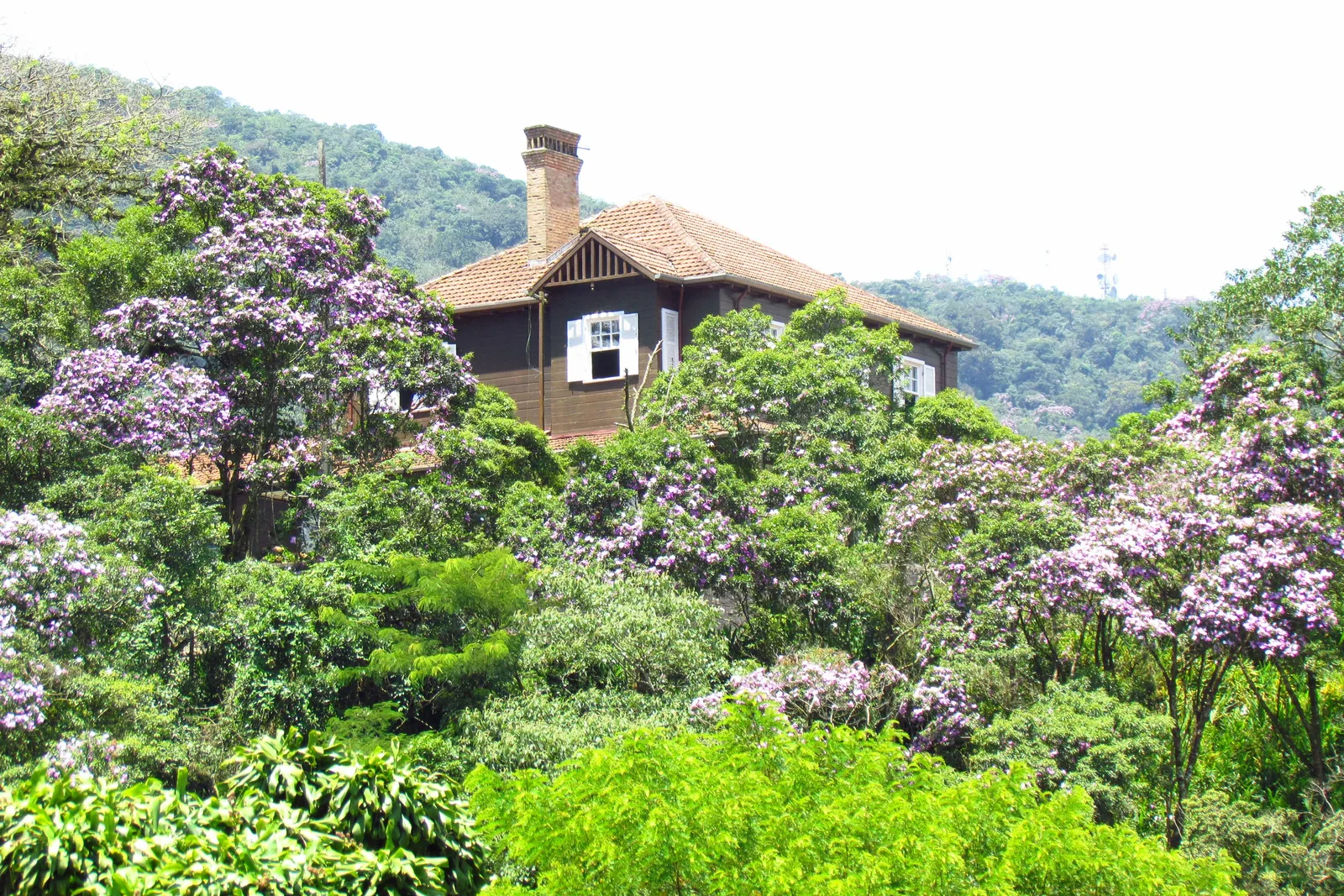
  • The chief engineer’s house at Paranapiacaba — a dark timber villa with a red-tiled roof and dormer windows — standing on a green hillside among flowering purple trees, with forested ridges behind

    60 km southeast · full day

    The English railway village at Paranapiacaba

    The São Paulo Railway built a company town on the edge of the escarpment in the 1860s to house the men who worked the cable inclines that hauled coffee down to Santos, and it is still there: wooden houses on a British grid, a station clock modeled on Big Ben, the chief engineer’s hilltop villa, and the winding engines preserved in their sheds. The mist rolls in off the escarpment most afternoons and the whole place looks like a Victorian mill town that got lost. Getting there is the catch: CPTM runs a preserved train, the Expresso Turístico, out of Luz on a published calendar of selected weekend dates, and those tickets sell out within minutes of going on sale. Otherwise it is a 90-minute drive, or the train to Rio Grande da Serra and a local bus up the hill.

Where to stay

Stay on a metro line, or lose an hour a day.

São Paulo is enormous and its traffic is the worst part of being here, so the single most useful thing you can do is book within a few minutes’ walk of a metro station. These four zones all are, and any of them is twenty to thirty minutes from the others by train.
Drag and zoom to explore.

Tap an area to open it and see it on the map

  • Our pick

    Best for: A first visit, and everything within a walk

    The ridge and the garden district immediately south of it, and the most straightforward base in São Paulo: MASP and half a dozen other free or cheap cultural institutions on the avenue itself, three metro stations along it, Jardins’ restaurants a few blocks downhill, and a room at every price from hostel to five-star. It is busy, it is not quiet, and it puts you within twenty minutes of everything else on this page.

    • Avenida Paulista
    • Jardins
    • Bela Vista
    • Consolação
  • Best for: Eating and drinking, and walking home

    The west side, and where São Paulo’s own weekend happens: the best concentration of restaurants and bars in the city, the street art, the design shops, and two metro stations on Line 4-Yellow that put Paulista eight minutes away. Rooms skew to small hotels and apartments rather than towers, and the neighborhood is genuinely walkable at night. The trade is distance from the old center and the museums, which is a train ride rather than a walk.

    • Pinheiros
    • Vila Madalena
    • Faria Lima
    • Fradique Coutinho
  • Best for: New hotels, and a short hop to Congonhas

    The financial district south of Faria Lima, where the newer international hotels are and where business travelers stay. It is clean, safe, well served by restaurants that fill at 8:00pm and empty at 11:00pm, and closer to Congonhas airport than anywhere else on this list. It is also the least characterful choice: on a Sunday it is very quiet, and getting to the old center means a longer ride than from Paulista.

    • Itaim Bibi
    • Vila Olímpia
    • Faria Lima
    • Brooklin
  • Best for: Cheap rooms and old buildings, with conditions

    The old downtown has the lowest prices in the city, a few genuinely characterful hotels in restored buildings, and the Theatro Municipal, the Mercadão, the Pinacoteca and São Bento on the doorstep. It also empties out completely after office hours, which means every evening starts with a ride app. Worth it if the budget is the constraint or the architecture is the point; not the right choice for a first visit or for anyone who wants to walk to dinner.

    • Sé
    • República
    • Anhangabaú
    • Santa Ifigênia

A working plan

Three days, one part of the city a day.

Built around the metro map rather than a checklist, because the traffic is the enemy. If you only have two nights, do days one and two and leave the west side for next time.

  1. 01
    Avenida Paulista seen from above between two towers: the avenue running straight into the distance with traffic on it, street trees down both sides and glass office blocks closing it in

    Avenida Paulista & Ibirapuera

    The avenue, and the park below it

    Start at MASP when it opens, work along Paulista through whichever of the free institutions appeal, then drop down to Ibirapuera for the afternoon and the MAC rooftop at the end of it. Dinner in Jardins.

  2. 02
    The Theatro Municipal floodlit at dusk: a Belle Époque opera house in pink stone and green bronze with sculpted figures along its roofline, framed by office towers and street lamps

    Sé, Luz & Liberdade

    The old center, on foot

    The cathedral and the Pátio do Colégio, São Bento, the Farol Santander lookout and the Theatro Municipal, lunch at the Mercadão, then the Pinacoteca at Luz — and Liberdade in the late afternoon if it is a weekend.

  3. 03
    Cyclists stopped in a group on a Vila Madalena street corner in front of a long wall of bright graffiti, low houses and a red-roofed building behind them under a heavy gray sky

    Pinheiros & Vila Madalena

    The west side, and a night out

    A slow morning in Pinheiros, the Beco do Batman and the galleries in the afternoon, and then whatever Vila Madalena is doing after 6:00pm. The flexible day: swap it for the Museu do Ipiranga, or for a day out of town.

This is a starting shape, not a fixed departure — we rearrange it around your dates. Have it built for you

Timing

Winter is the good season here.

São Paulo sits on the Tropic of Capricorn but it is 760 meters up, which takes the edge off the heat and puts the rain in a season. Summer is hot, humid and thunderous — January averages 240 mm across seventeen wet days. Winter is dry, bright and cool: August averages 20 mm across four. For a city you intend to walk around, that is the whole argument.

How good each month is in São Paulo. Choose a month for its average air temperatures, rainfall and what the city is like then.

January

Trade-offs
Air
19–29°C 66–84°F
UV
9 Very high
Rain
17 days 240 mm / 9.4 in

The wettest month of the year, with a thunderstorm most afternoons. Hot, humid and best spent indoors.

February

Trade-offs
Air
20–29°C 68–84°F
UV
9 Very high
Rain
14 days 258 mm / 10.2 in

The hottest month, and nearly as wet. Carnival lands here, which is the reason to accept the weather.

March

Good
Air
19–28°C 66–82°F
UV
8 Very high
Rain
13 days 229 mm / 9.0 in

Rain and heat both easing. A workable month, and the storms are shorter than in January.

April

Good
Air
18–27°C 64–81°F
UV
7 High
Rain
6 days 87 mm / 3.4 in

Rainfall drops by two thirds in a single month. Warm, dry days and the first cool nights — an excellent time to be here.

May

Good
Air
15–23°C 59–73°F
UV
5 Moderate
Rain
6 days 66 mm / 2.6 in

Cool, dry and clear. Nights in the mid teens, and the city at its most comfortable to walk.

June

Good
Air
14–23°C 57–73°F
UV
5 Moderate
Rain
5 days 60 mm / 2.4 in

Winter proper. Bright dry days, cold mornings, and the Pride parade fills Avenida Paulista.

July

Good
Air
13–23°C 55–73°F
UV
5 Moderate
Rain
4 days 48 mm / 1.9 in

The coldest month — pack a jacket for the evenings. Dry, sunny and the peak of Brazilian school holidays.

August

Best
Air
13–25°C 55–77°F
UV
6 High
Rain
4 days 20 mm / 0.8 in

The driest month of the year at 20 mm. Still cool, warming through the month, and the best all-round time to visit.

September

Good
Air
15–25°C 59–77°F
UV
7 High
Rain
7 days 83 mm / 3.3 in

Spring, with a little rain returning and the air turning humid again. Still a very good month.

October

Good
Air
17–27°C 63–81°F
UV
7 High
Rain
10 days 127 mm / 5.0 in

Warm and increasingly wet.

November

Good
Air
17–27°C 63–81°F
UV
8 Very high
Rain
11 days 144 mm / 5.7 in

Warm, humid and showery, with the Formula 1 weekend at Interlagos taking over the first half of the month.

December

Trade-offs
Air
19–28°C 66–82°F
UV
9 Very high
Rain
13 days 231 mm / 9.1 in

Summer arrives properly. Hot, stormy, and the city starts emptying for the holidays after about the 20th.

  • Best The one or two peak months
  • Good A real recommendation
  • Trade-offs Workable, with a catch
See São Paulo on the Brazil calendar

UV is the monthly average of the daily peak, 2022 to 2025, calculated from Copernicus Atmosphere Monitoring Service data. Weather data by Open-Meteo.com, CC BY 4.0.

For walking the city

June–August

Dry, sunny and cool — days in the low twenties, nights around 13. August is the peak inside it, the driest month of the year by a wide margin at 20 mm against July’s 48. The clearest air of the year, and the best chance of a view from the Cantareira.

The shoulders

April–May and September

Warmer than winter, drier than summer and quieter than both. April is the month the rain drops off a cliff; September is spring with a little of it returning.

Hot, wet and half-empty

December–February

The wettest and hottest stretch, with heavy late-afternoon storms and a very high UV index. Fine for museums and restaurants; poor for anything outdoors.

About the rain

The pattern is a wet summer and a dry winter, and the gap between them is enormous: January averages 240 mm across seventeen wet days and August averages 20 mm across four — twelve times the rain in the month most North Americans would think of as the good one. Summer rain here is not a passing shower either. It arrives as a heavy convective storm in the late afternoon, floods the low points of the city for an hour, and stops traffic while it does.

The altitude is the other thing to plan around. At 760 meters a winter night in São Paulo drops to about 13 degrees and occasionally to single figures, which catches out people who packed for Brazil rather than for this city. Bring a jacket for June through August, and bring sunscreen for the rest of the year: the UV index is very high from November to March.

The dates worth planning around

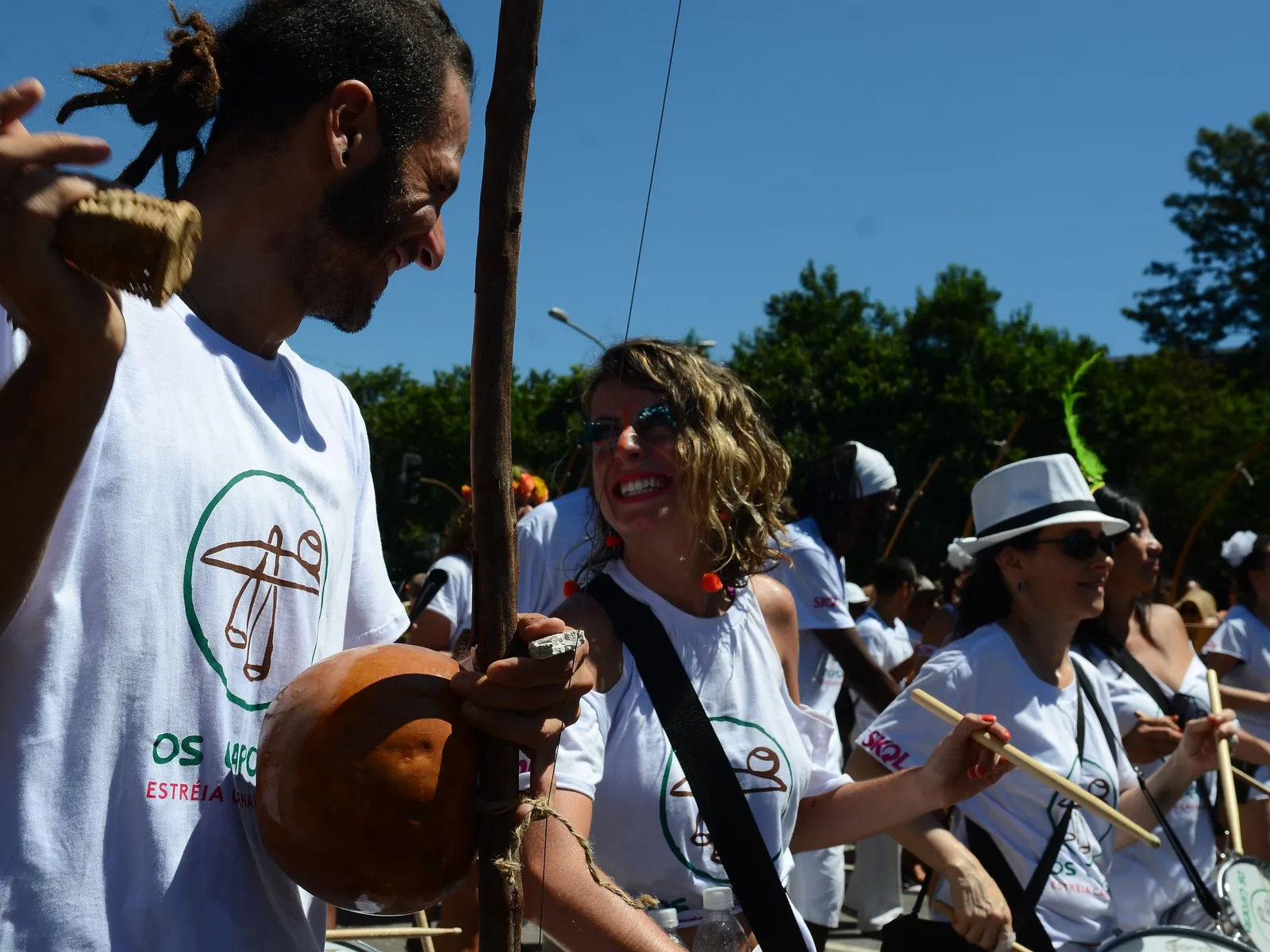
Members of a São Paulo street bloco in matching white printed t-shirts and straw hats moving along a sunlit avenue, carrying drums and drumsticks, laughing as they walk

Carnaval

February, moving with Easter — the street blocos run across three weekends

São Paulo’s Carnival is two events at once. The street version is the bigger one and it has grown fast: the city licensed 627 blocos in 2026 and expected something like 16.5 million people across pre-Carnival, Carnival and post-Carnival weekends, which makes it, by attendance, the largest street Carnival in the country. It is free, it is spread across every district rather than concentrated on one circuit, and the megablocos on the main avenues are genuinely enormous. The other half is the samba schools, who parade at the Anhembi sambadrome on the Friday and Saturday nights of Carnival week — a ticketed, judged competition on the Rio model. If you cannot get a seat for those nights, the champions’ parade the following Sunday sells bleacher tickets for well under R$100 and is the same schools doing the same show without the nerves.

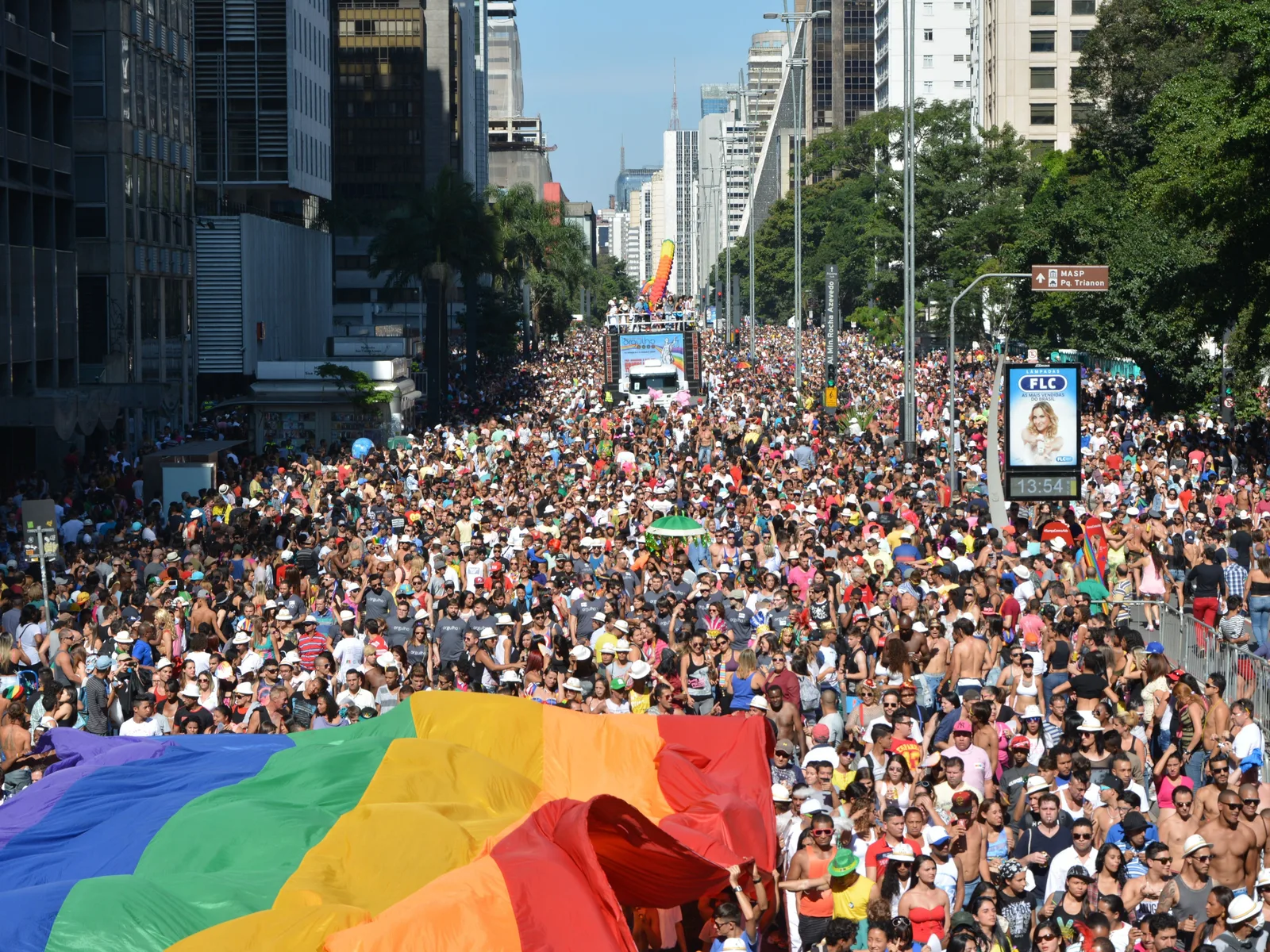
Avenida Paulista packed shoulder to shoulder with an enormous crowd for the Pride parade, a huge rainbow flag stretched across the road in the foreground and sound trucks and towers receding into the distance

Parada do Orgulho LGBT+

A Sunday in June — 7 June in 2026

One of the largest Pride events in the world, and it happens on Avenida Paulista: sound trucks the length of the avenue, several million people according to the organizers, and a march that finishes at the Praça da República. The 2026 edition was the thirtieth. It is a political demonstration and a street party at once, it is free, and it shuts down the whole spine of the city for the day — which means that if you are in São Paulo that weekend you are going, whether or not you planned to. Book a room early; it is one of the few weekends the city sells out.

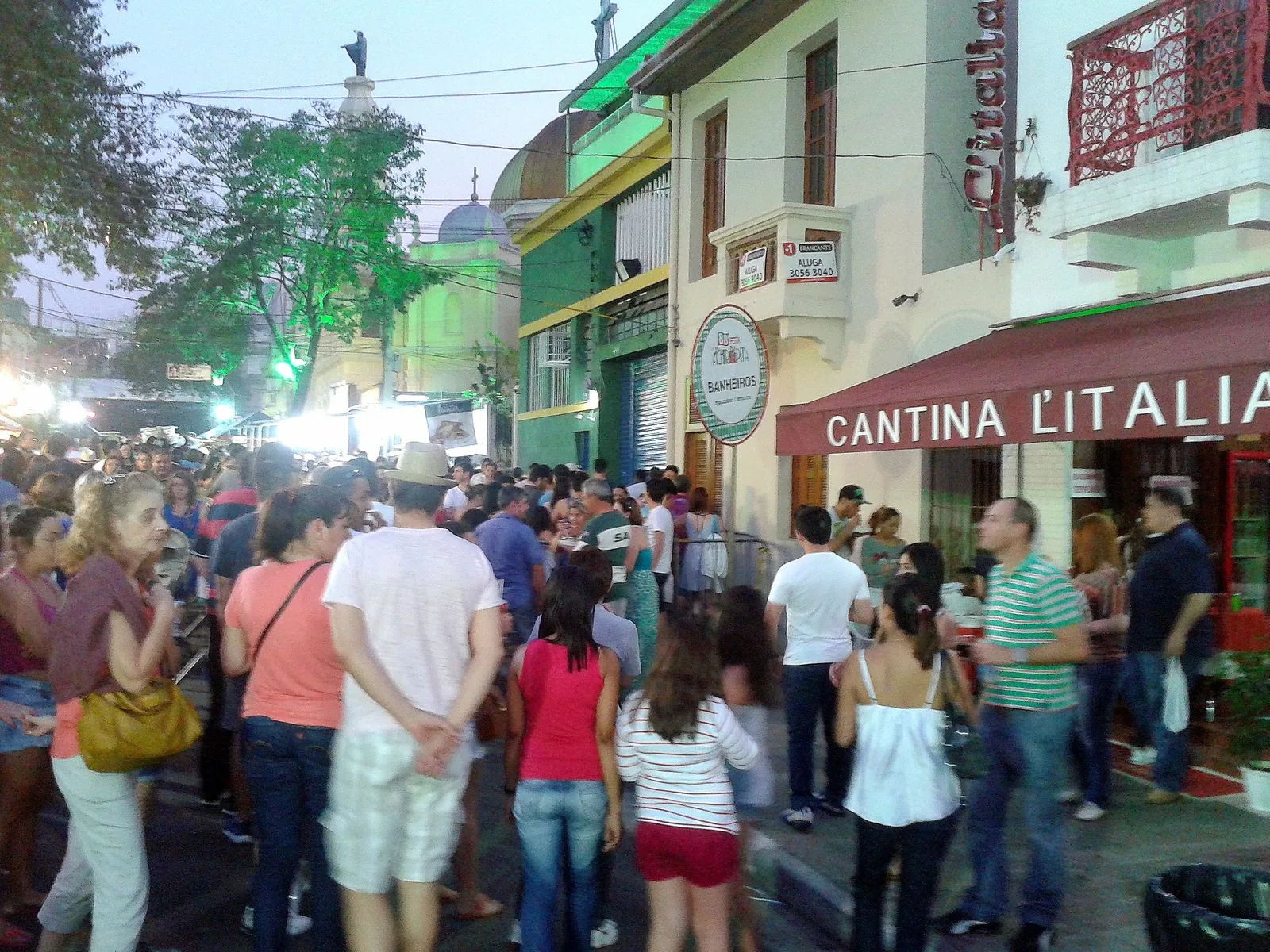
A Bixiga street at dusk during the Festa da Achiropita, packed shoulder to shoulder with people, the red awning and neon sign of the Cantina L’Italia along one side, the lit stalls of the festa receding up the street and the dome of the Achiropita church floodlit green at the end of it

Festa da Achiropita

Weekends through August

The Italian parish of Bixiga has run a street festival in aid of its own charities since 1926, and the 2026 edition was the hundredth. For every weekend of August the streets behind the church fill with trestle tables and stalls run by the parish: fried polenta, pasta, sausage, cannoli, wine, and a procession on one of the Sundays. It is free to walk in, you pay per dish, and it is the clearest single evening of the Italian São Paulo that built half the city — held, conveniently, in the month with the best weather of the year.

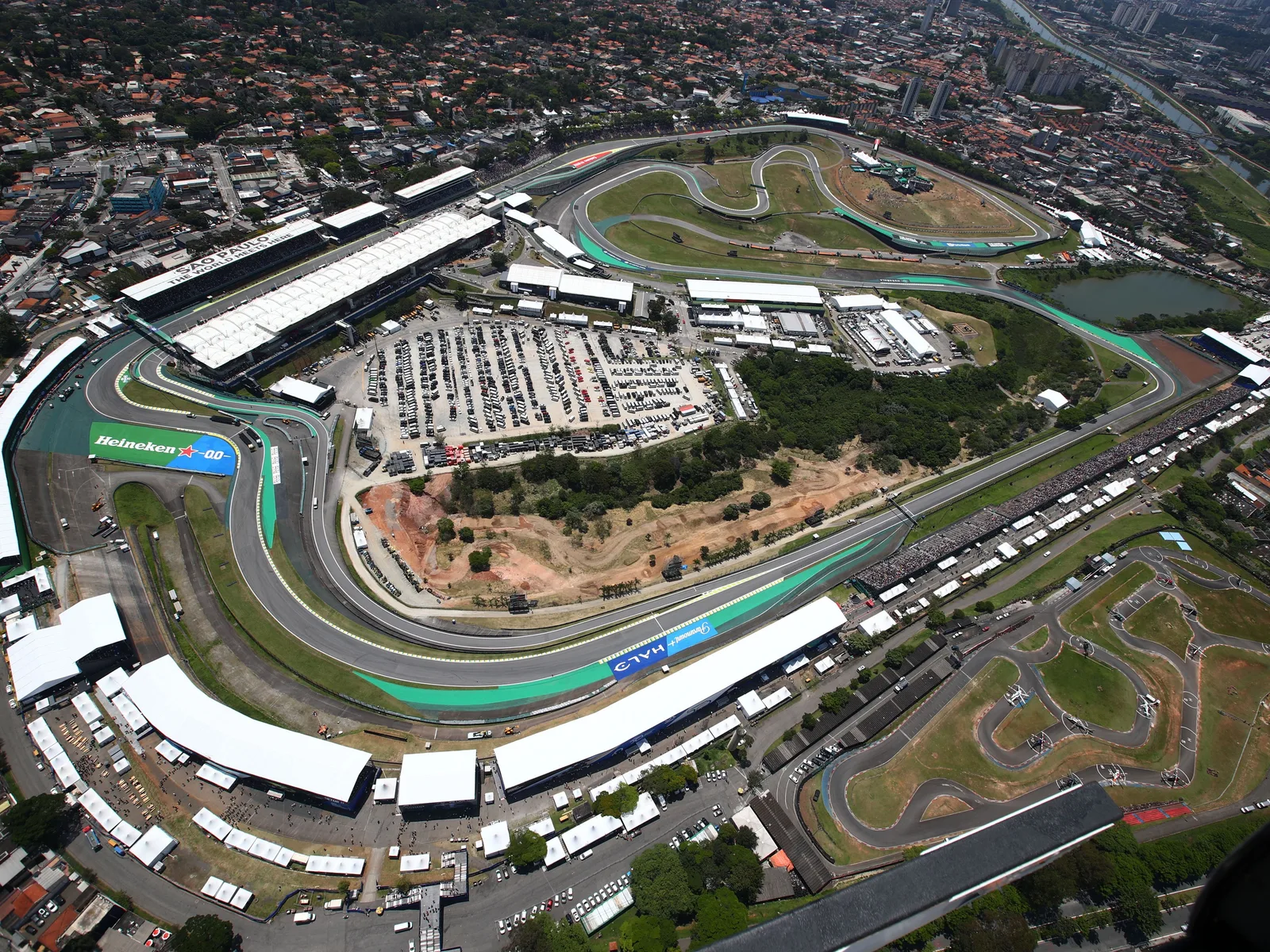
The Interlagos circuit from the air: the tight loop of gray asphalt track with green run-off and grandstands, the pit straight and paddock buildings in the middle, and the houses of southern São Paulo pressing right up to the fences

The São Paulo Grand Prix

November — 6–8 November in 2026

Formula 1 has raced at Interlagos since 1973, on a short, bumpy, anticlockwise circuit in the south of the city that drivers rate among the best on the calendar and that has decided more championships than almost anywhere else. The crowd is the other half of it: a Brazilian grand prix grandstand is closer to a football terrace than to a motor race, and it is loud from Friday practice onward. It takes over the city for the weekend, hotel prices climb, and the traffic around the circuit is best avoided entirely in favor of the CPTM train to Autódromo station.
Good to know

Before you come

Is São Paulo worth stopping in, or should I just connect through? +

It depends entirely on what kind of traveler you are, and the honest answer is not always yes. If your Brazil trip is beaches, waterfalls and rainforest, and you have ten days, connect through Guarulhos and go — São Paulo has no beach, no view and no scenery, and it will not compete with what you came for. If you like cities, it is the best two nights in Brazil for the money: the best museums in the country, a restaurant scene that ranks internationally, three of the biggest football clubs on the continent, and nightlife that runs later than Rio’s. The practical version of the argument is that your flight home almost certainly leaves from here anyway, so two nights at the end of a trip cost you nothing in extra flying.

How many days do I need in São Paulo? +

Three for the city, which is why the itinerary above is built that way: the avenue and Ibirapuera, the old center, and the west side. Two is the common version and it works — do the first two days and accept that you missed Vila Madalena. One is not enough to justify the trip in from Guarulhos and back out again. Four or more only makes sense if you are adding a day out of town — Santos and Guarujá for the coast, Embu das Artes for the craft market, the Cantareira for a walk, Paranapiacaba for the railway village.

Is São Paulo safe for tourists? +

Safer than its reputation on violence and worse than its reputation on theft. São Paulo state has the lowest homicide rate of any state in Brazil, and the capital is comfortably the safest of the country’s large cities on that measure. What it leads the country in is phone robbery: the city holds about 5.6 percent of Brazil’s population and roughly a fifth of all its phone thefts and robberies. In practice that means one rule matters more than all the others — do not walk down the street with your phone in your hand. Beyond that: treat the old center as a daytime district, use Uber or 99 after dark, wear no watch and no chain, and know that Paulista, Jardins, Pinheiros, Vila Madalena and Itaim are ordinary neighborhoods where people walk to dinner.

Guarulhos or Congonhas — and how do I get into the city? +

You do not usually get a choice: Guarulhos (GRU) takes all the international flights and Congonhas (CGH) is domestic only. Guarulhos is 25 km northeast of the center, and there are three sensible ways in. The CPTM Line 13-Jade express train runs hourly to Luz station in about thirty minutes for the ordinary R$5.40 rail fare, with a free shuttle bus between the terminals and the station — excellent in daylight with a carry-on. The Airport Bus Service coach goes to the Avenida Paulista hotel strip for R$30 to R$40. An Uber to Jardins is about R$120 and takes anywhere from 40 to 90 minutes depending on traffic. Congonhas is 8 km out and, since the Line 17-Ouro monorail opened in March 2026, connected to the metro at Campo Belo and Morumbi. Watch out for Viracopos (VCP), which sells itself as São Paulo and is 100 km away at Campinas.
Where should I stay in São Paulo? +

Within a few minutes’ walk of a metro station, first and foremost — the traffic is the thing that will ruin your days, and the trains are the way around it. Avenida Paulista and Jardins are the best first-visit base: the museums are on the avenue, three metro stations serve it, the restaurants are downhill in Jardins, and there is a room at every price. Pinheiros and Vila Madalena are the alternative if eating and drinking matter more than sightseeing, and they are the most walkable district at night. Itaim Bibi is where the newer international hotels are and the closest to Congonhas, at the cost of any character on a Sunday. The old center is the cheapest and has the best buildings, and it empties after dark, so every evening there starts with a ride app.

Keep going

Where São Paulo fits in a bigger trip.

Almost every Brazil itinerary passes through here, which makes São Paulo the easiest place in the country to attach something to. These three are the ones that make the most sense with it.

Free · 29 pages

Free guide

Beginner's Guide to Brazil

A free 29-page guide to everything a first-time visitor should know before landing: visas, safety, money, getting around, where to go, and what to eat.

We'll email you a link to confirm your address. Click it and the guide opens right away.

See what's inside
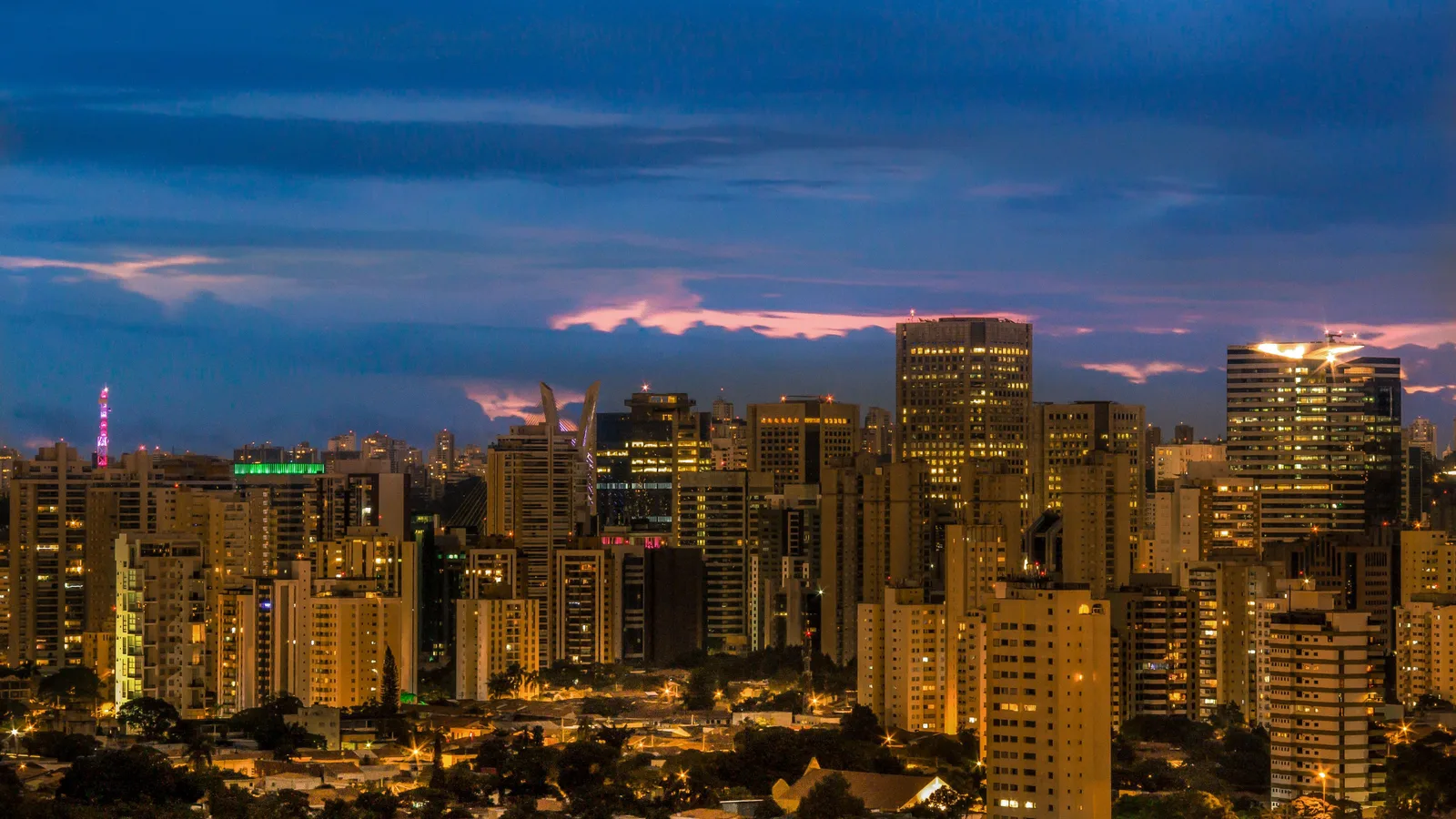
São Paulo at blue hour from above: a field of lit apartment towers running to the horizon under a deep blue sky streaked with pink cloud, office windows and street lights glowing across the whole frame

Skip the planning

Make the São Paulo stop worth making.

Tell us your dates and your connection, and whether you are here for the food, the art, the football or just a night’s sleep between flights. We will shape the stop around it — the right neighborhood for your budget, the museums on the days they are free, a table you would not have got yourself, and the airport transfer timed for the traffic rather than the map.

  • One person, living in Brazil, replying to you directly
  • A reply within one business day — no call center, no bots
  • No cost to plan, and no obligation to book
  • Built around your dates, not a fixed departure