

Rio de Janeiro · São Paulo · Minas Gerais · Espírito Santo
Southeast: Rio, São Paulo and the colonial interior
The Southeast is where most Brazil trips begin. Rio and São Paulo are the two gateways almost every international flight lands in. Within a few hours of either, you can reach a colonial cobblestone street, a rainforest island, or a beach most Brazilians would rather keep to themselves.
- How long to stay
- Seven to ten nights covers Rio, the Costa Verde and one inland stop without rushing.
- Good for
- First-time visitors, city-and-beach trips, food and culture, and travelers who want to avoid long internal flights.




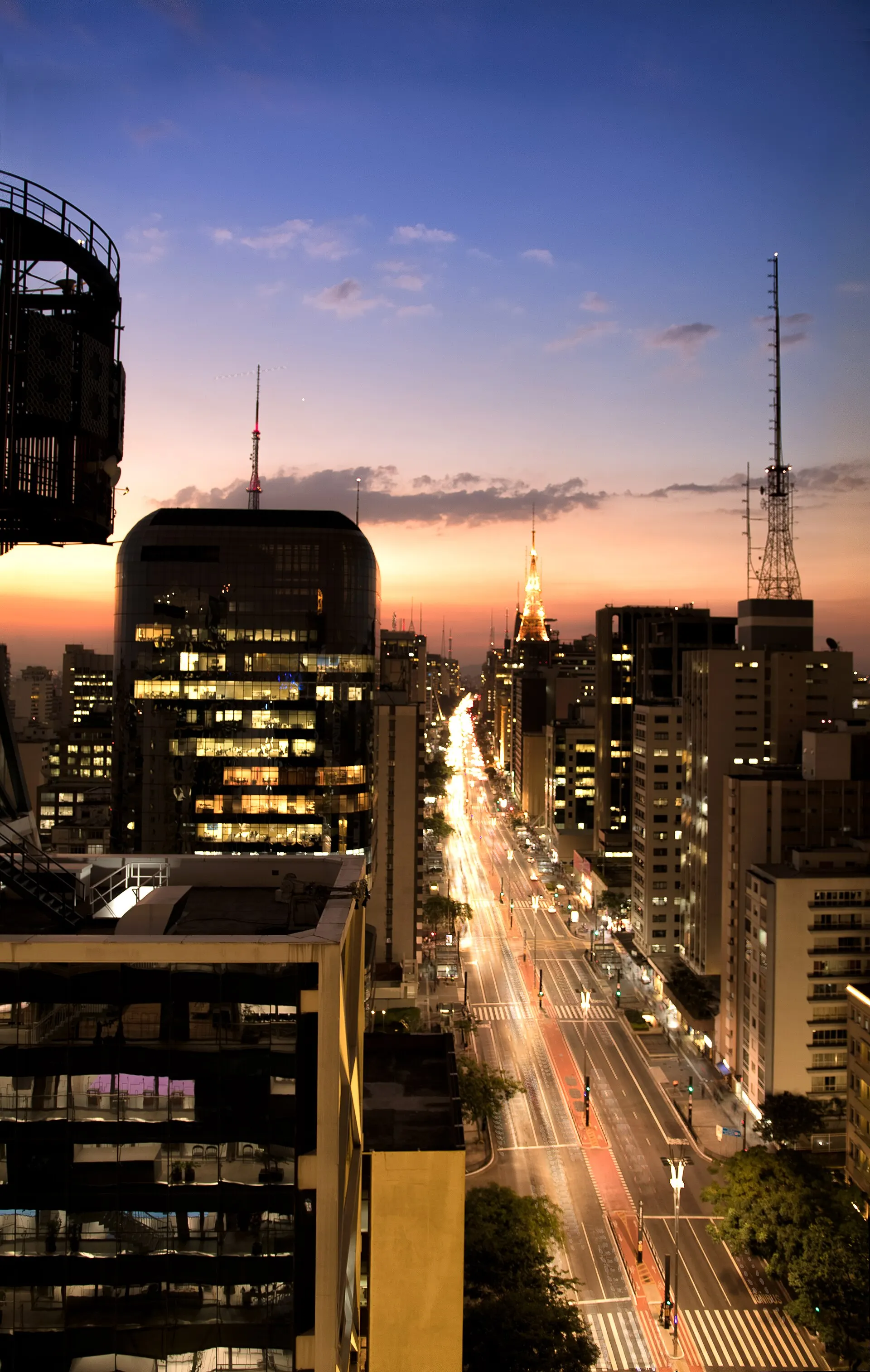
The smallest region, the biggest everything else. This is the smallest of Brazil's five regions by area, and by far the largest by population and economy: around 42% of the country lives here, and it produces more than half of Brazil's economic output. That density built a deep layer of things people made, not just landscape. Colonial gold towns, major museums, a strong restaurant scene, and some of the best-preserved Atlantic rainforest left anywhere.
Most first trips spend the most nights here. Rio earns three or four on its own. Add the Costa Verde, the green coast running southwest of the city toward Paraty and Ilha Grande, and you get a week that covers a great city, a colonial port, and a car-free island. None of it needs a flight.
Go inland and the trip changes shape entirely. Minas Gerais offers mountains, baroque churches, and food that most Brazilians will call the best in the country. São Paulo is where you go for restaurants, galleries and nightlife rather than views.
Where to go in the Southeast
-
Rio de Janeiro state · 3–4 nights
Rio de Janeiro
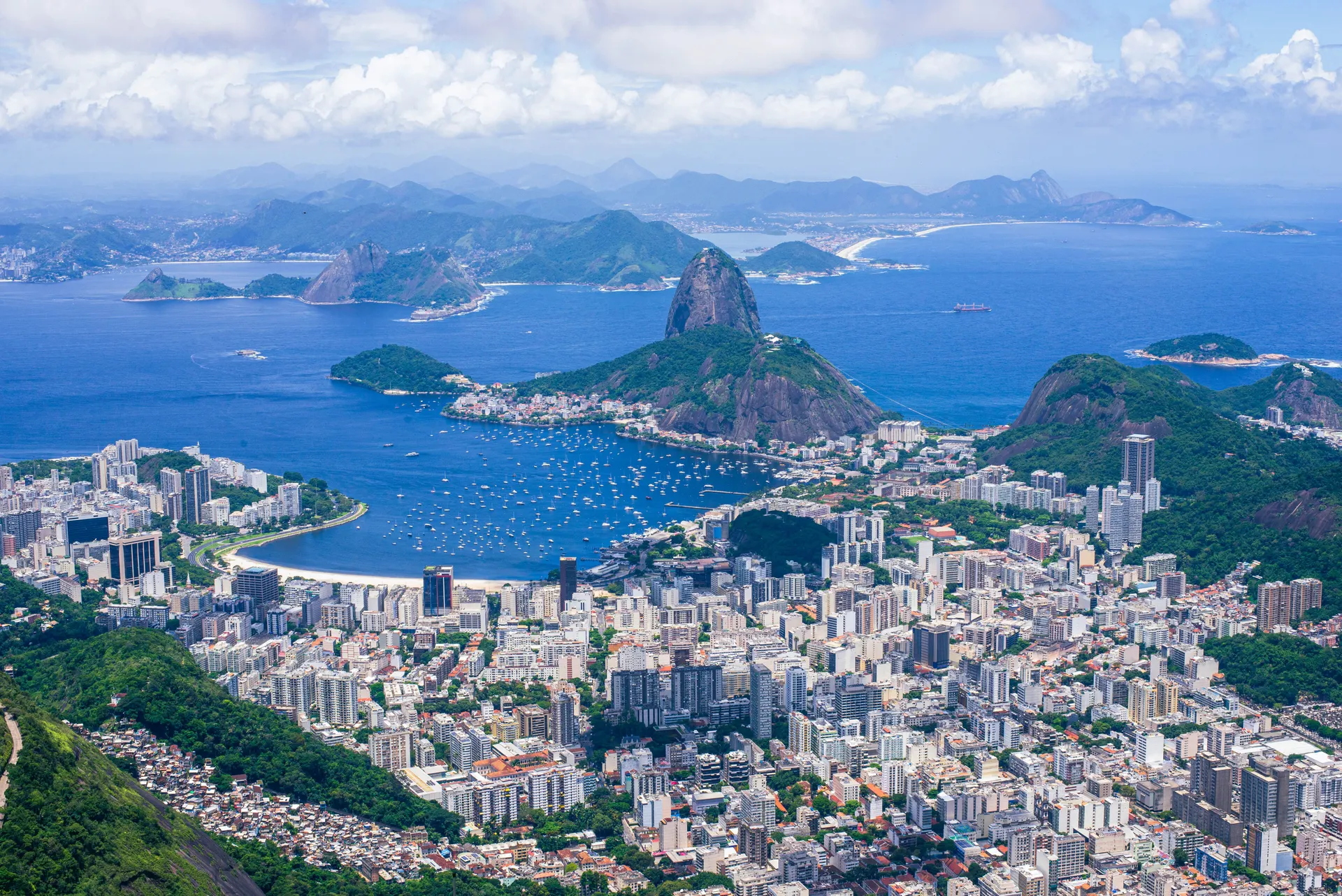
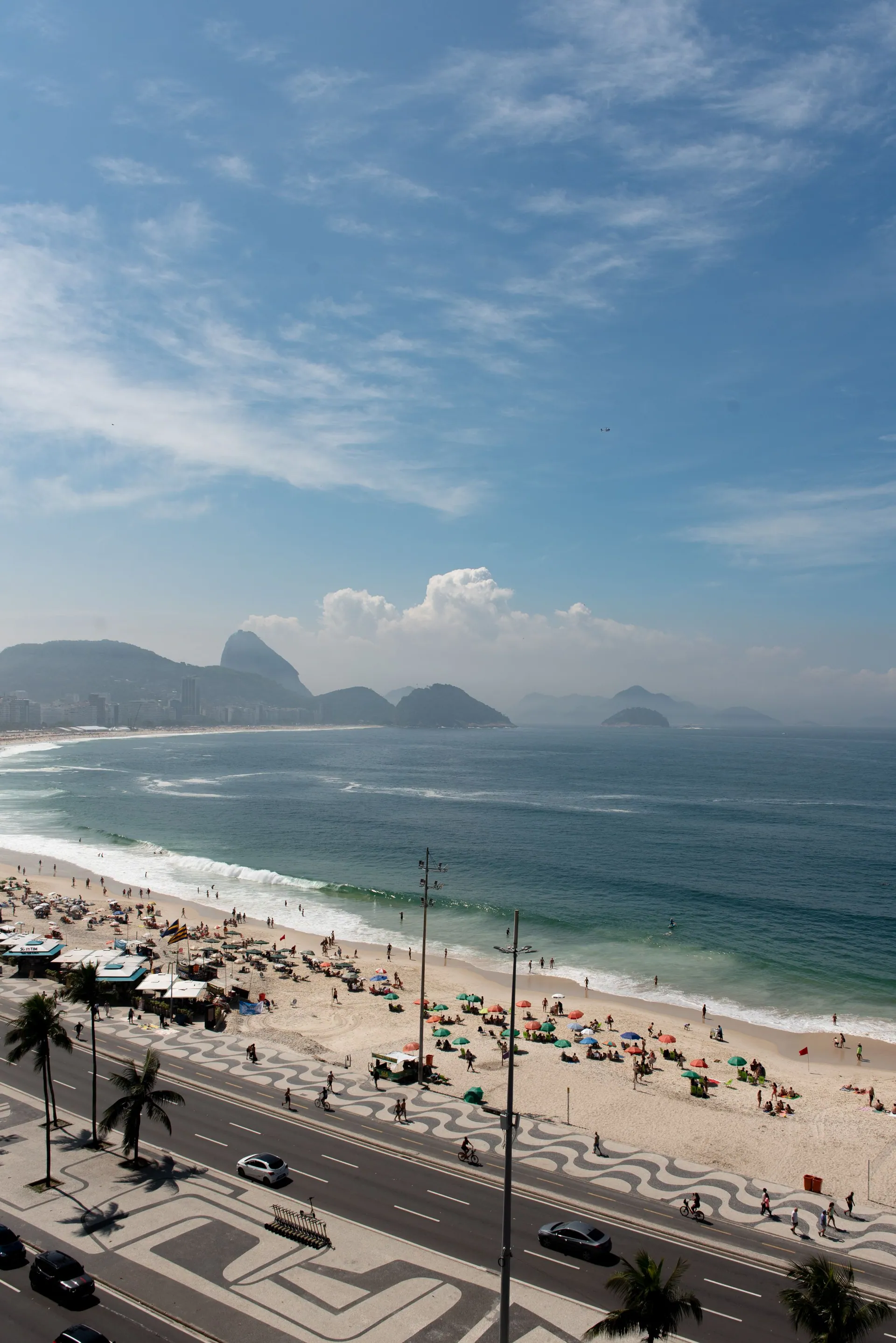
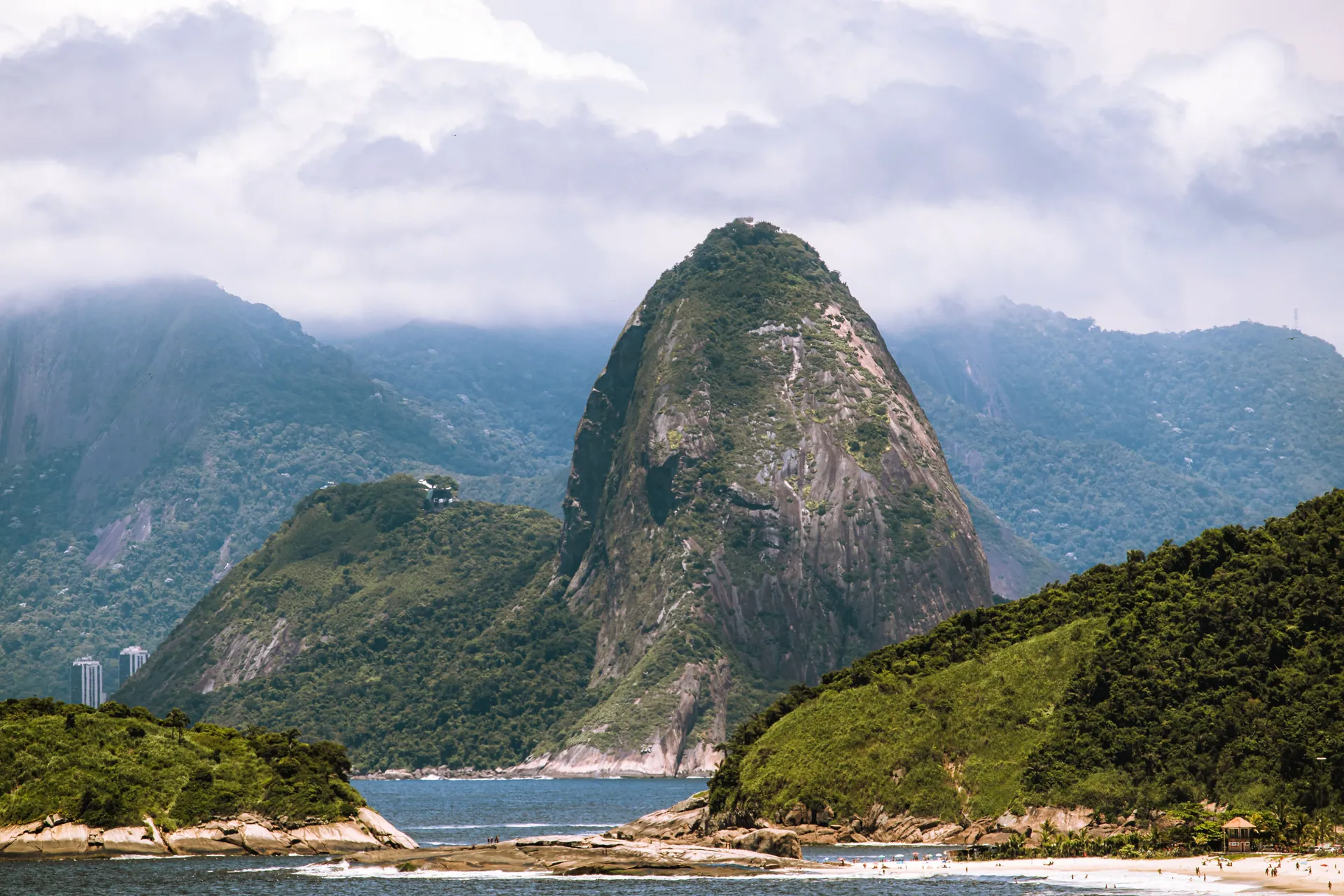
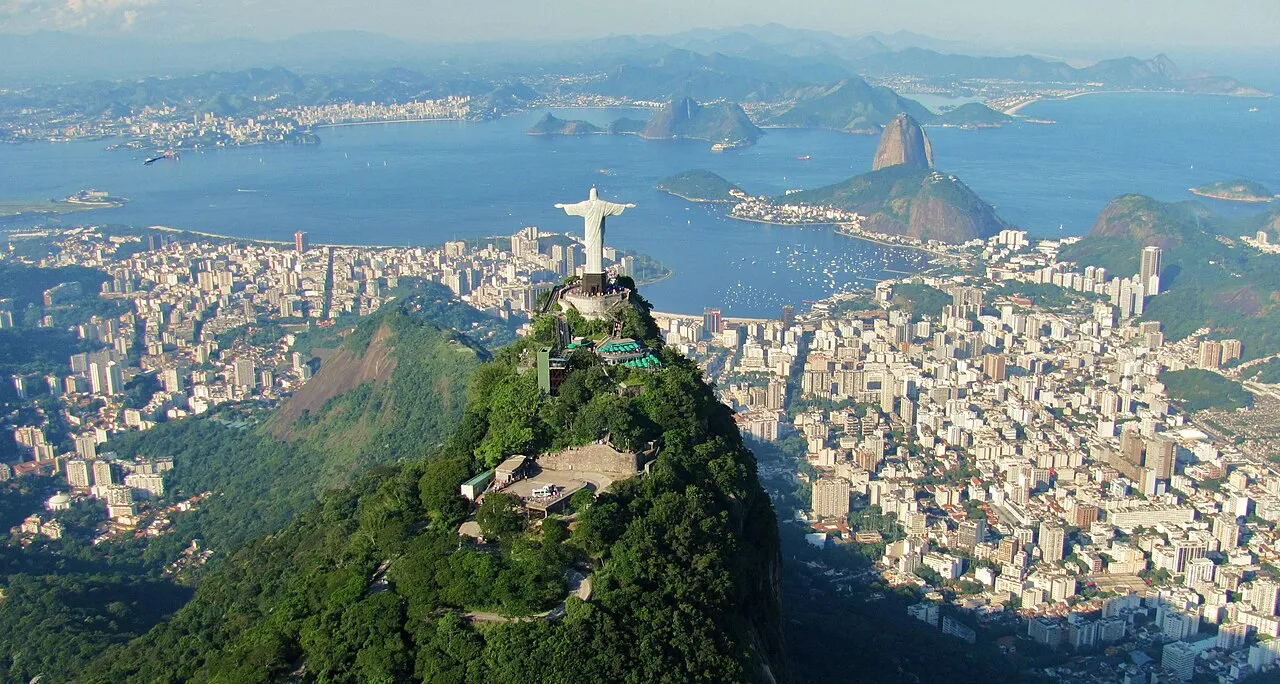
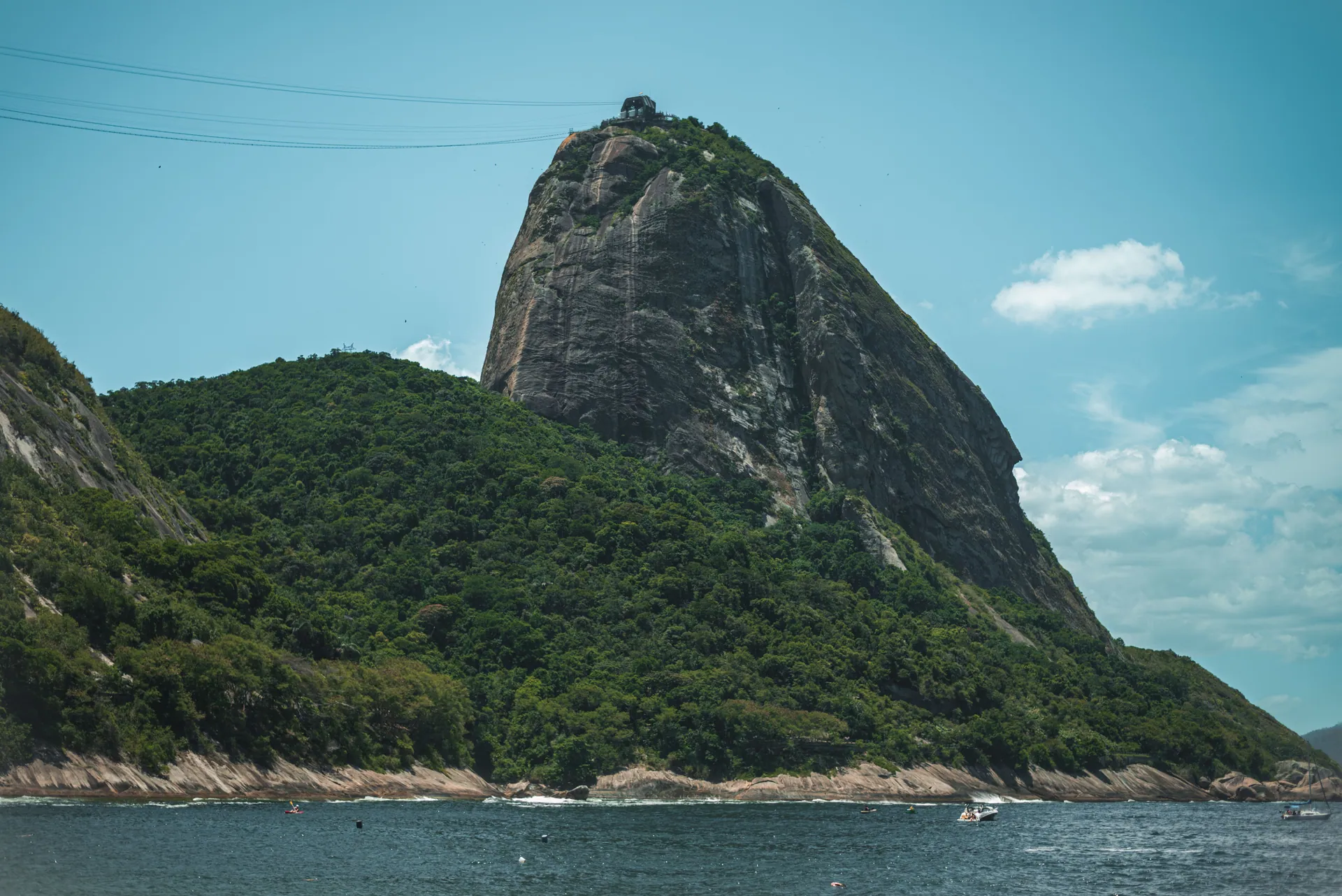
The city most people picture. Rio is the most famous city in Brazil, and it delivers on the picture in your head. Six million people live wrapped around granite peaks, rainforest and a string of beaches. You can see the whole layout in one glance from Corcovado or Sugarloaf.
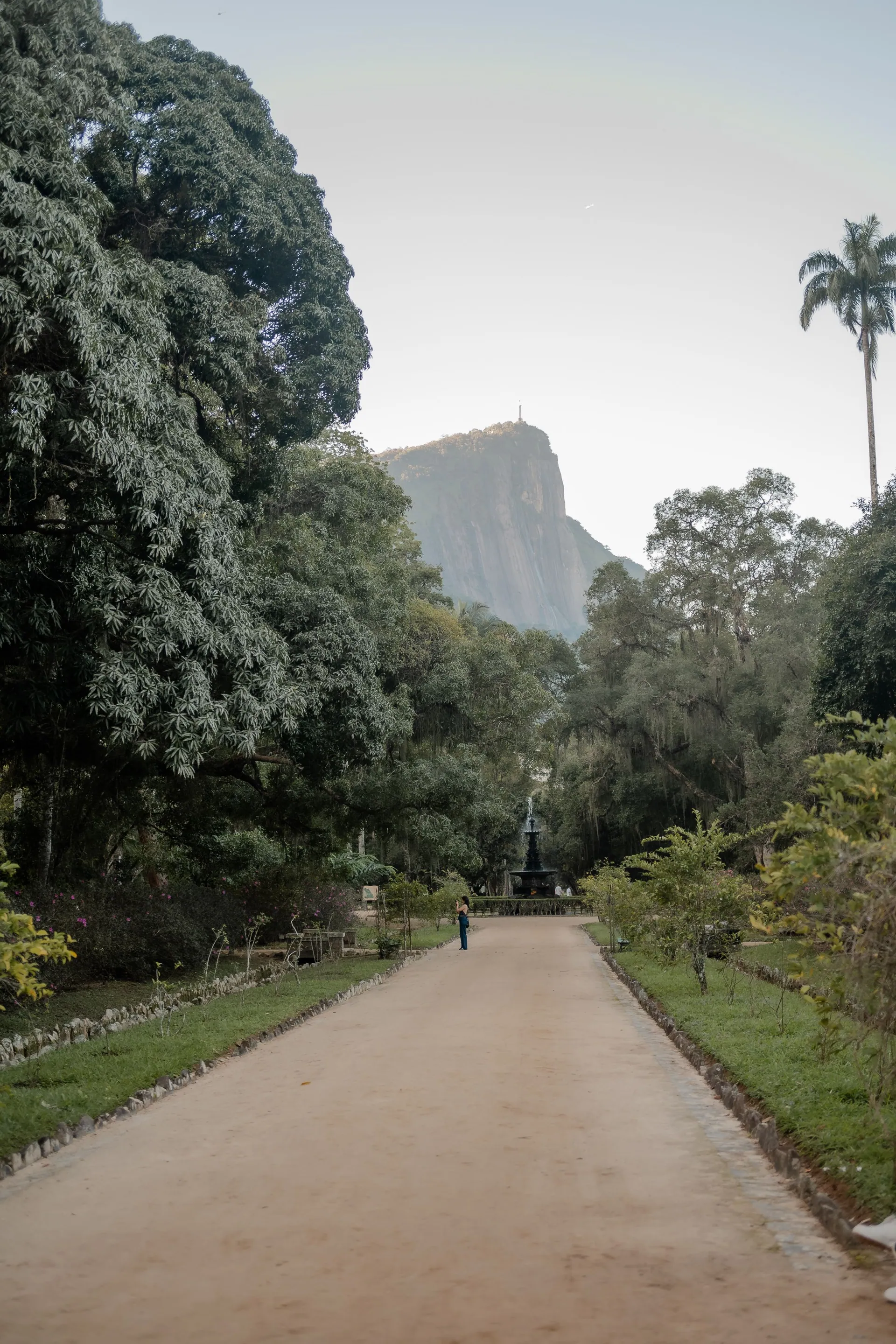
Three days covers the list: Christ the Redeemer, Sugarloaf, Copacabana and Ipanema, and the restored port district around Praça Mauá. A fourth day turns a checklist into a trip. Hike up Pedra Bonita or Morro Dois Irmãos in the morning, spend the afternoon in the Jardim Botânico, catch sunset at Arpoador, and eat dinner in Santa Teresa or Lapa.
- Christ the Redeemer and Corcovado, best visited first thing before cloud sets in
- Sugarloaf at sunset: cable car up, walking trail down
- Ipanema and Leblon, plus the Arpoador rock between them
- Santa Teresa's hillside streets and the Selarón steps
- A guided visit to a favela community, arranged through local partners
-
São Paulo state · 2–3 nights
São Paulo
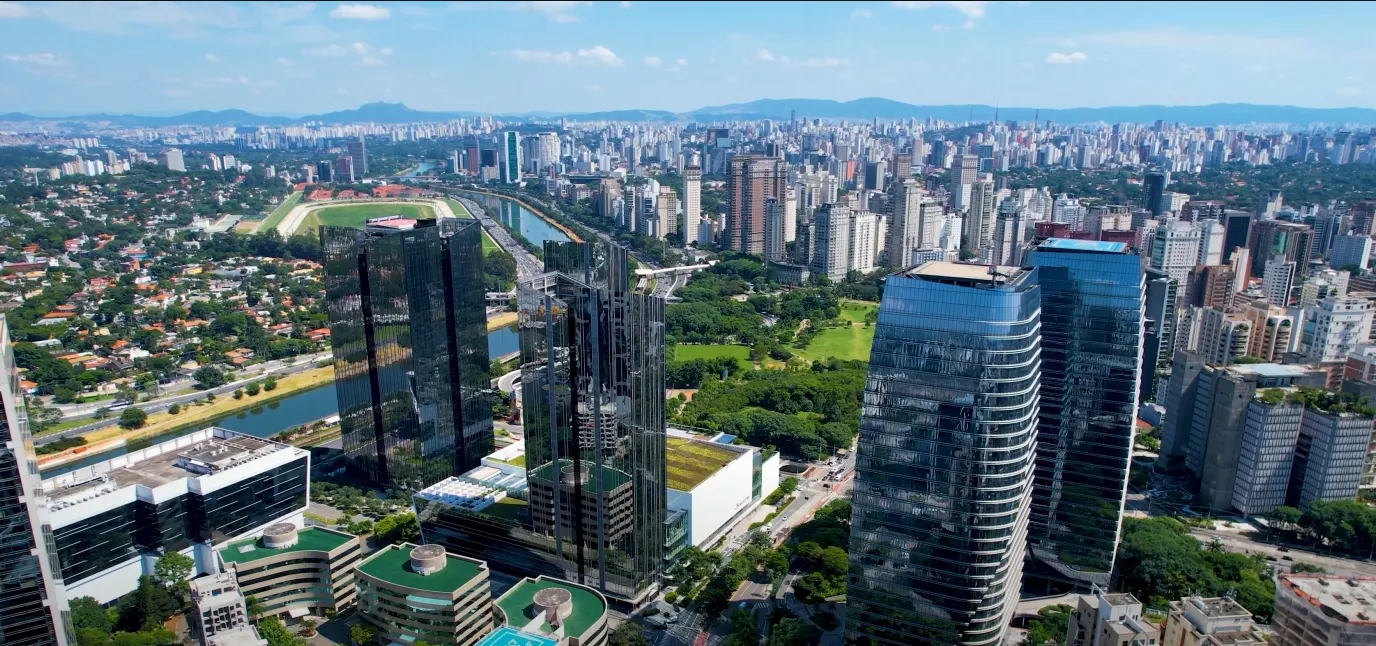
Not a pretty city. Nobody who lives in São Paulo will claim otherwise. It is, however, the most interesting city in South America. Twelve million people live in the city and twenty-two million in the metro area, built by waves of Italian, Japanese, Lebanese, Portuguese and northeastern Brazilian migration. All of it shows up on the plate.
Come here to eat, look at art, and go out. Walk Avenida Paulista on a Sunday when it closes to traffic and visit MASP. Spend a morning at the Mercado Municipal. See Liberdade, home to the largest Japanese diaspora community in the world, or Vila Madalena for street art and bars. It is also Brazil's main international hub, which makes two nights here an easy add rather than a detour.
- MASP and the Pinacoteca for Brazilian and European art
- Mercado Municipal, then a mortadella sandwich too big to finish
- Liberdade and a Japanese-Brazilian meal
- Beco do Batman and the Vila Madalena street-art alleys
- Ibirapuera Park and Niemeyer's pavilions
-
Minas Gerais · 3–4 nights
Ouro Preto
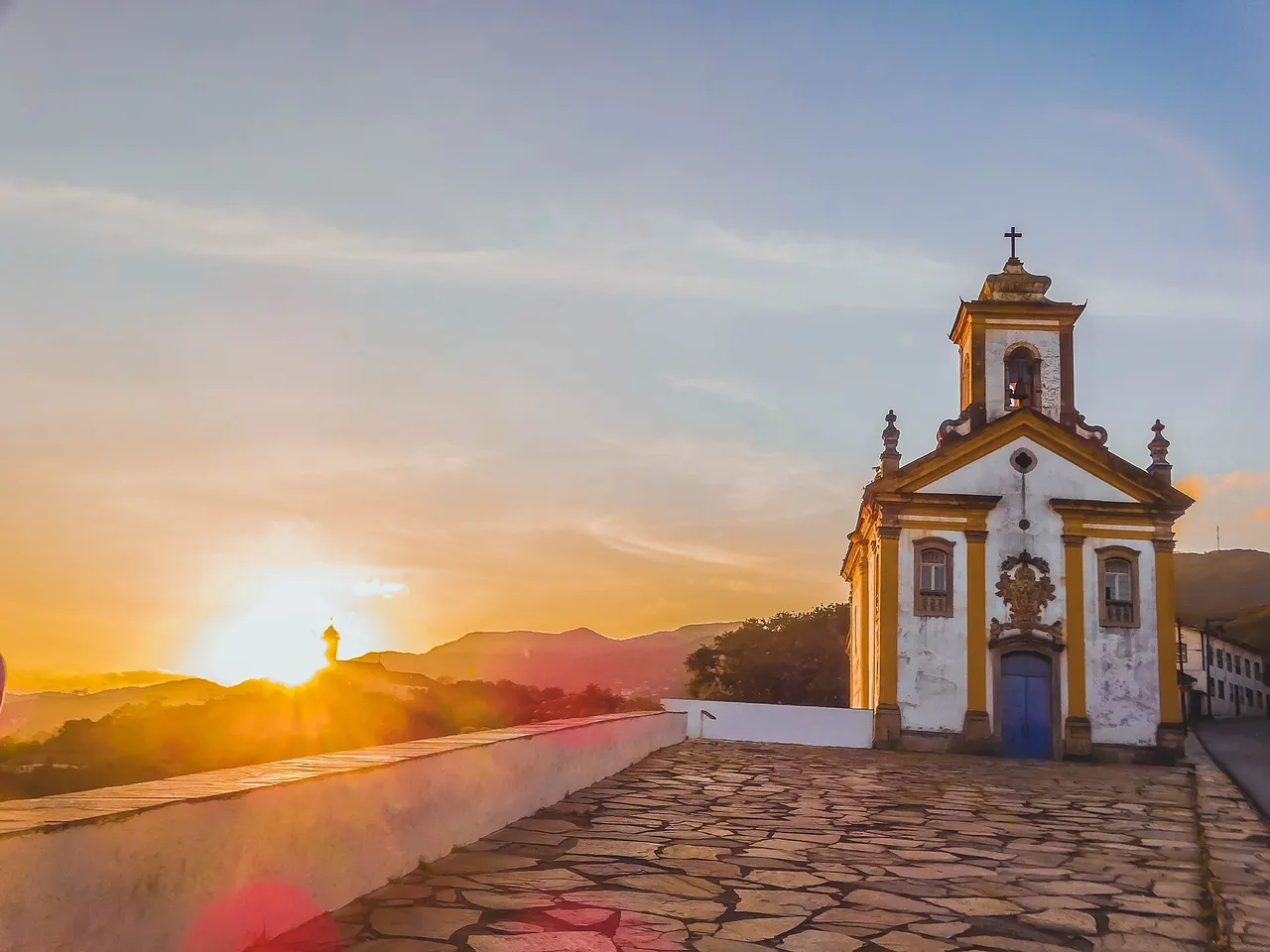
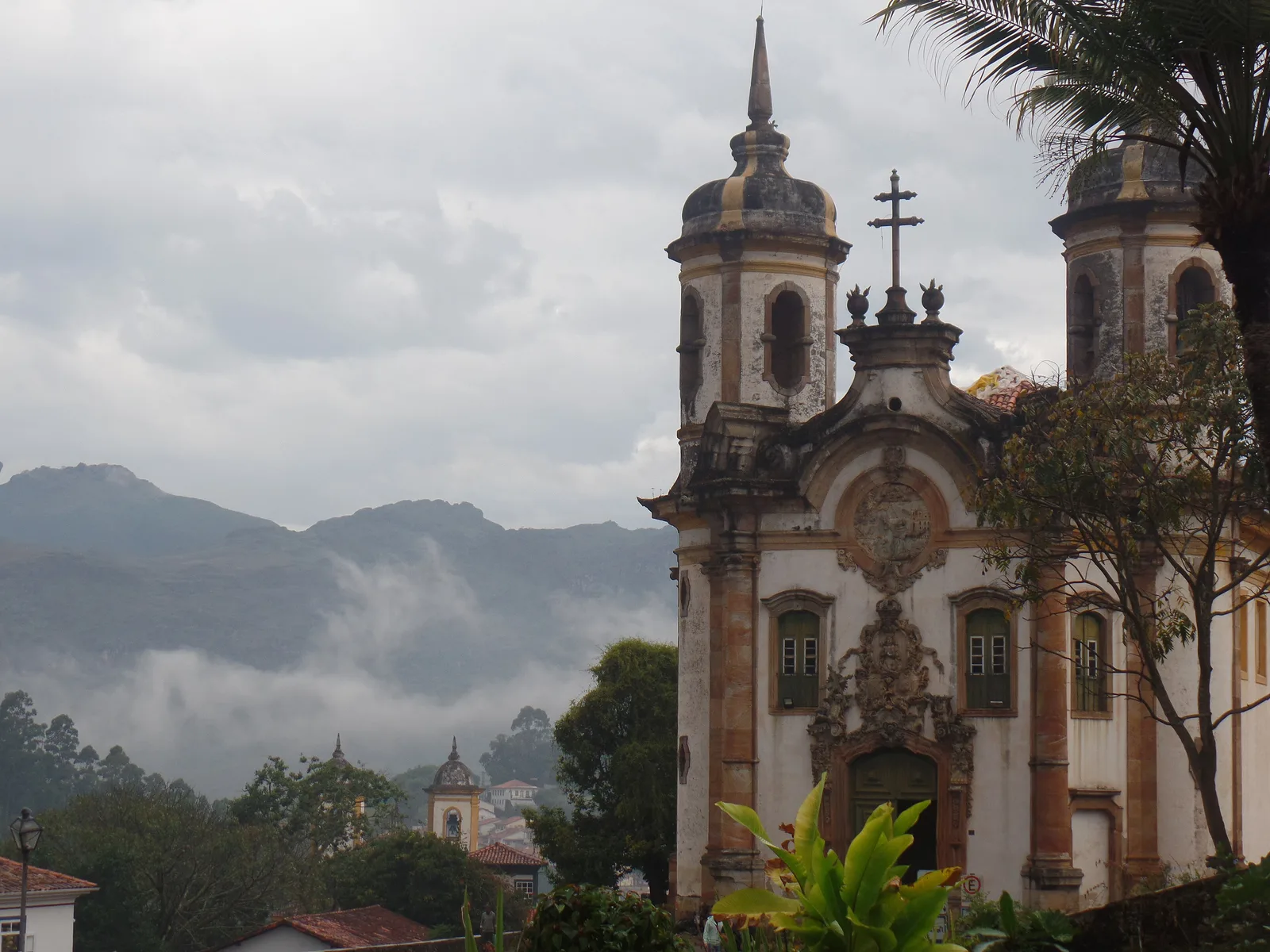
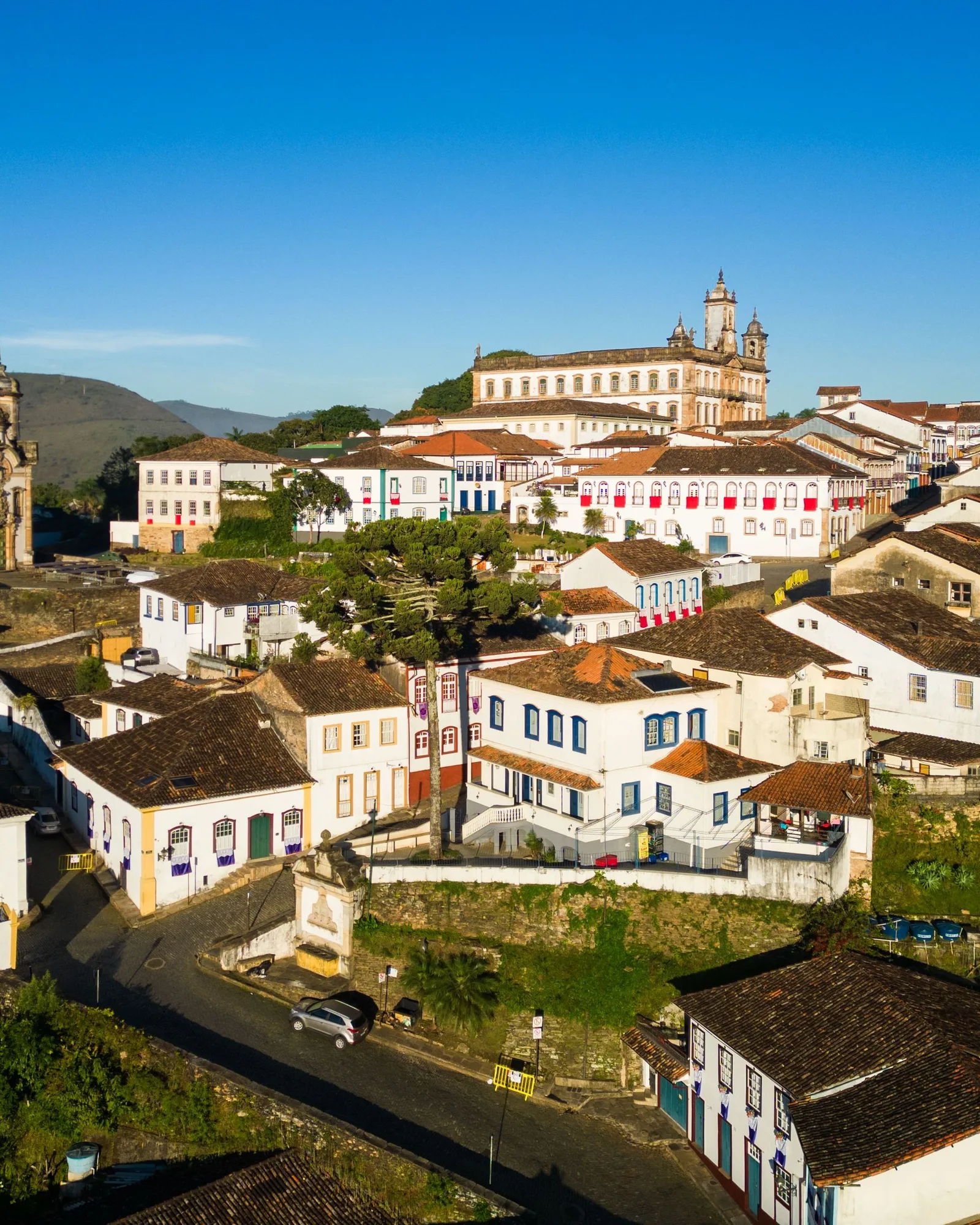
The town an 18th-century gold rush built, and then left behind. Ouro Preto is a UNESCO site of churches, steep cobbled streets and hills — the best-preserved baroque landscape in the Americas, and the place to see Aleijadinho, the greatest artist Brazil has produced.
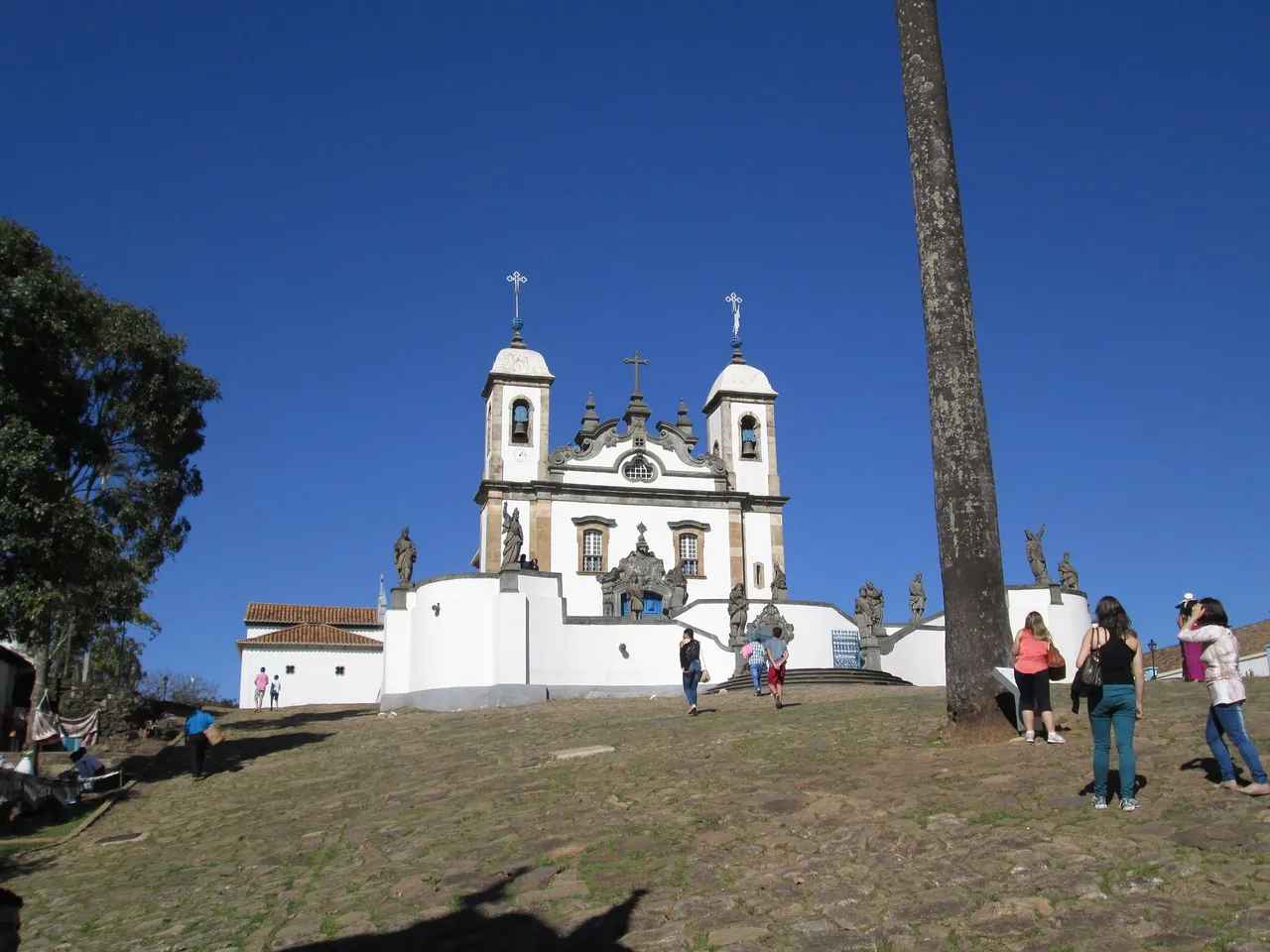
Mariana is 12 km away, and Congonhas, where Aleijadinho’s twelve soapstone prophets stand on a hillside terrace, is an hour and a quarter. Three days covers the town; four buys the prophets. It is landlocked, mountainous, and it is also the country’s food capital.
- São Francisco de Assis, Aleijadinho’s masterpiece, and a dozen more churches
- The Museu da Inconfidência on Praça Tiradentes, and gold-mine tunnels under the town
- Aleijadinho’s twelve soapstone prophets at Congonhas
- Mariana, 12 km east, and the Arp Schnitger organ in its cathedral
- Cobbles that will punish the wrong shoes, and reward the right ones
-
Minas Gerais · 2–3 nights
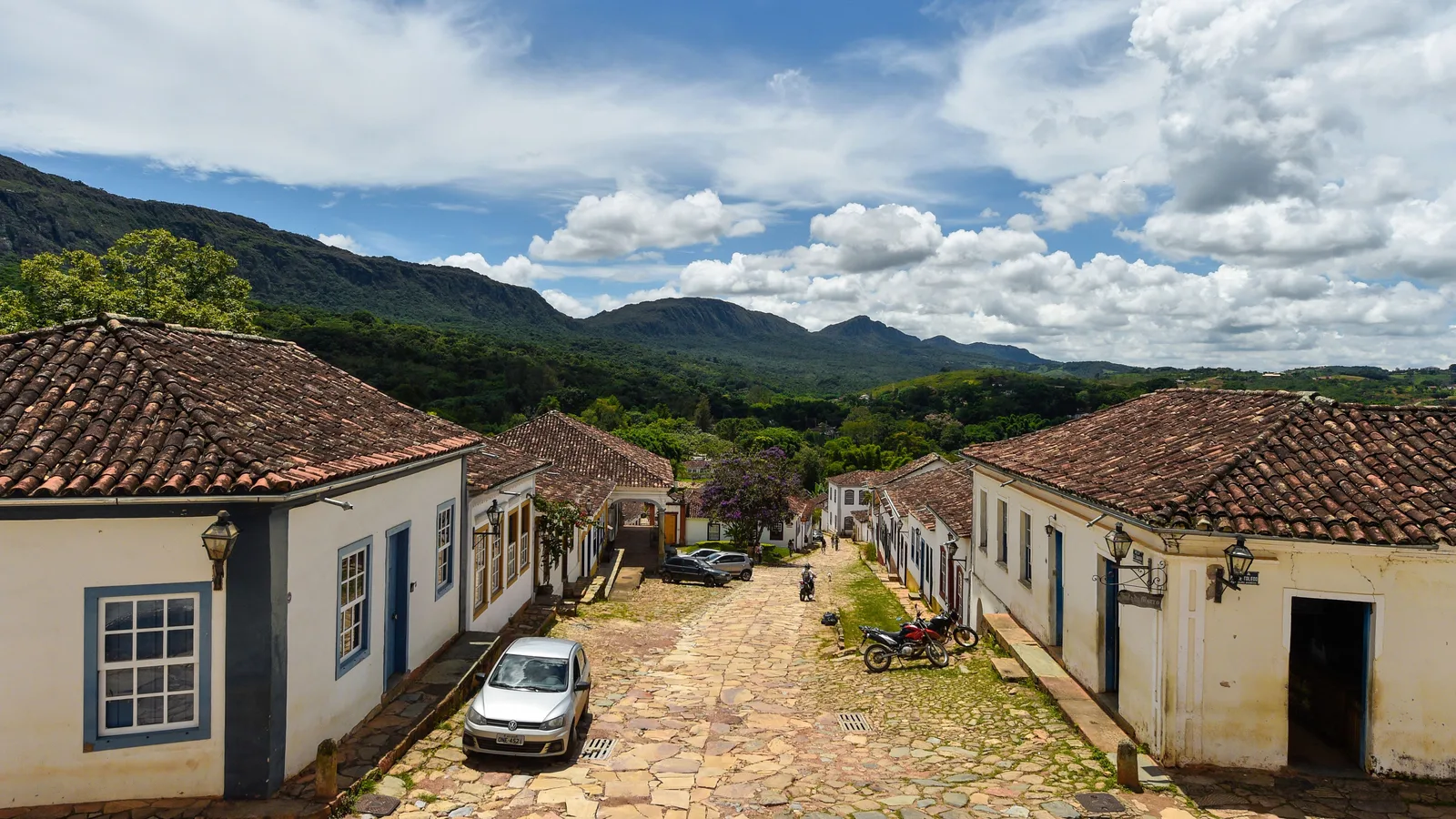
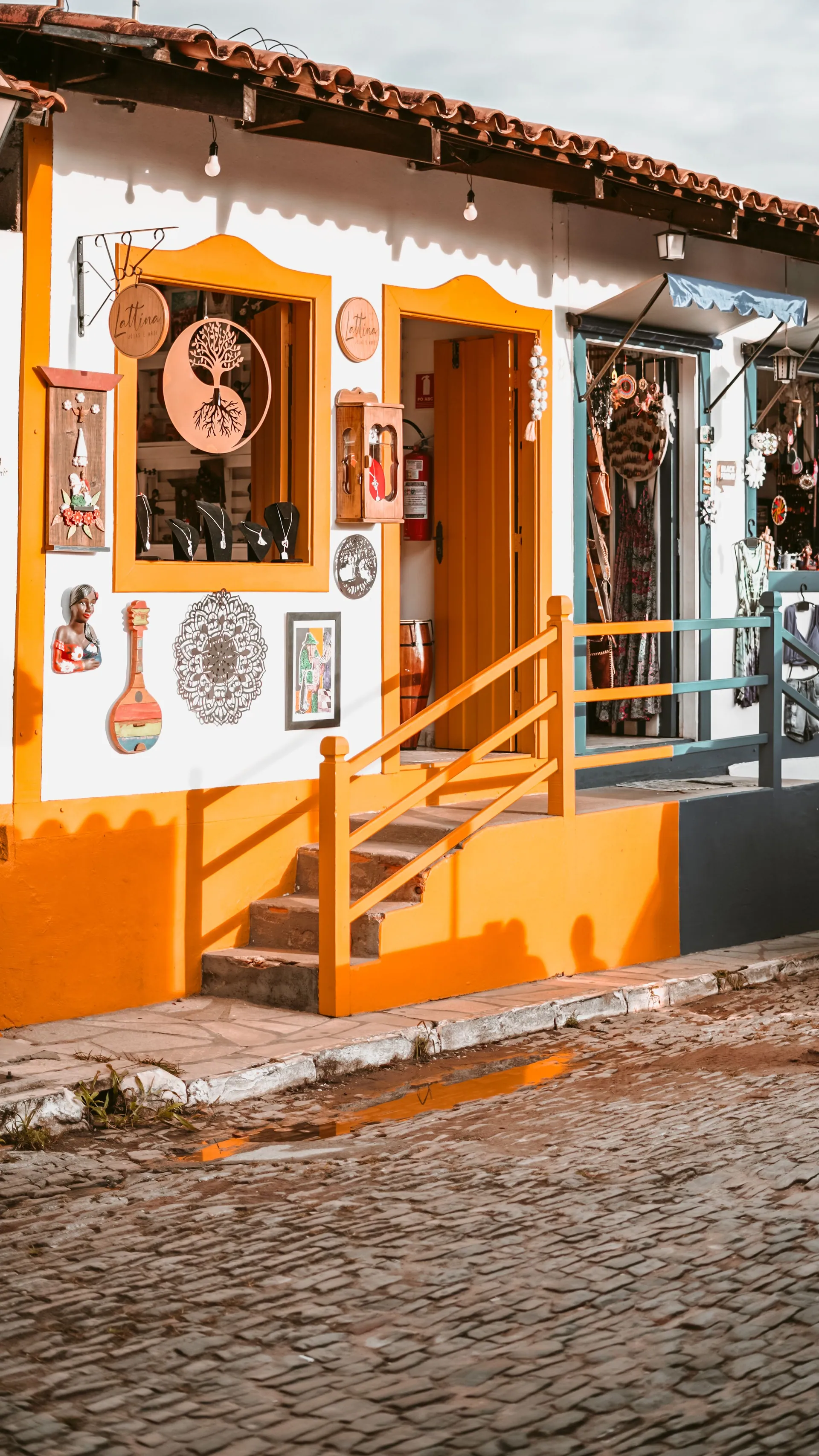
Tiradentes & São João del-Rei
Two colonial towns 13 km apart, joined by the oldest working steam railway in Brazil. Tiradentes is the small one — eight thousand people, one intact grid of cobbles and whitewash, and an economy of pousadas, restaurants and festivals. São João del-Rei is the working town of ninety thousand around its own baroque core, and it is where the trains are kept.
The Maria Fumaça has run on its 762 mm gauge since 1881 and still crosses the cattle country between them on Fridays, Saturdays and Sundays. Come for that, the churches, the craft villages either side of Tiradentes, and a festival calendar that fills four different months.
- The Maria Fumaça steam train, running since 1881
- Matriz de Santo Antônio in Tiradentes, and its 1788 Porto organ
- São Francisco de Assis in São João del-Rei, and two orchestras founded in the 1700s
- The roundhouse and turntable at the railway works
- Walking the Serra de São José, which closes every street view in Tiradentes
-
Minas Gerais · 3–4 nights
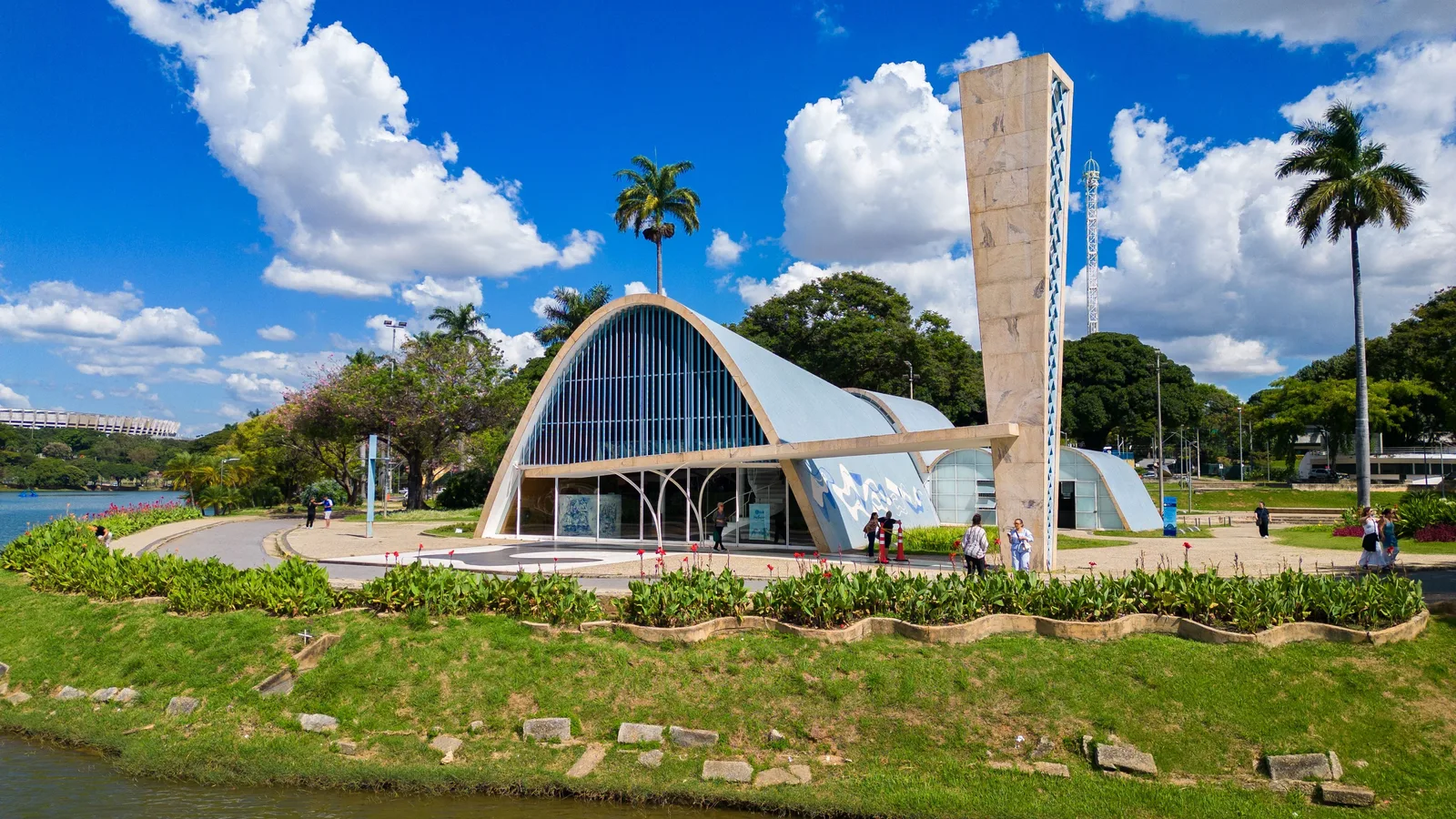
Belo Horizonte
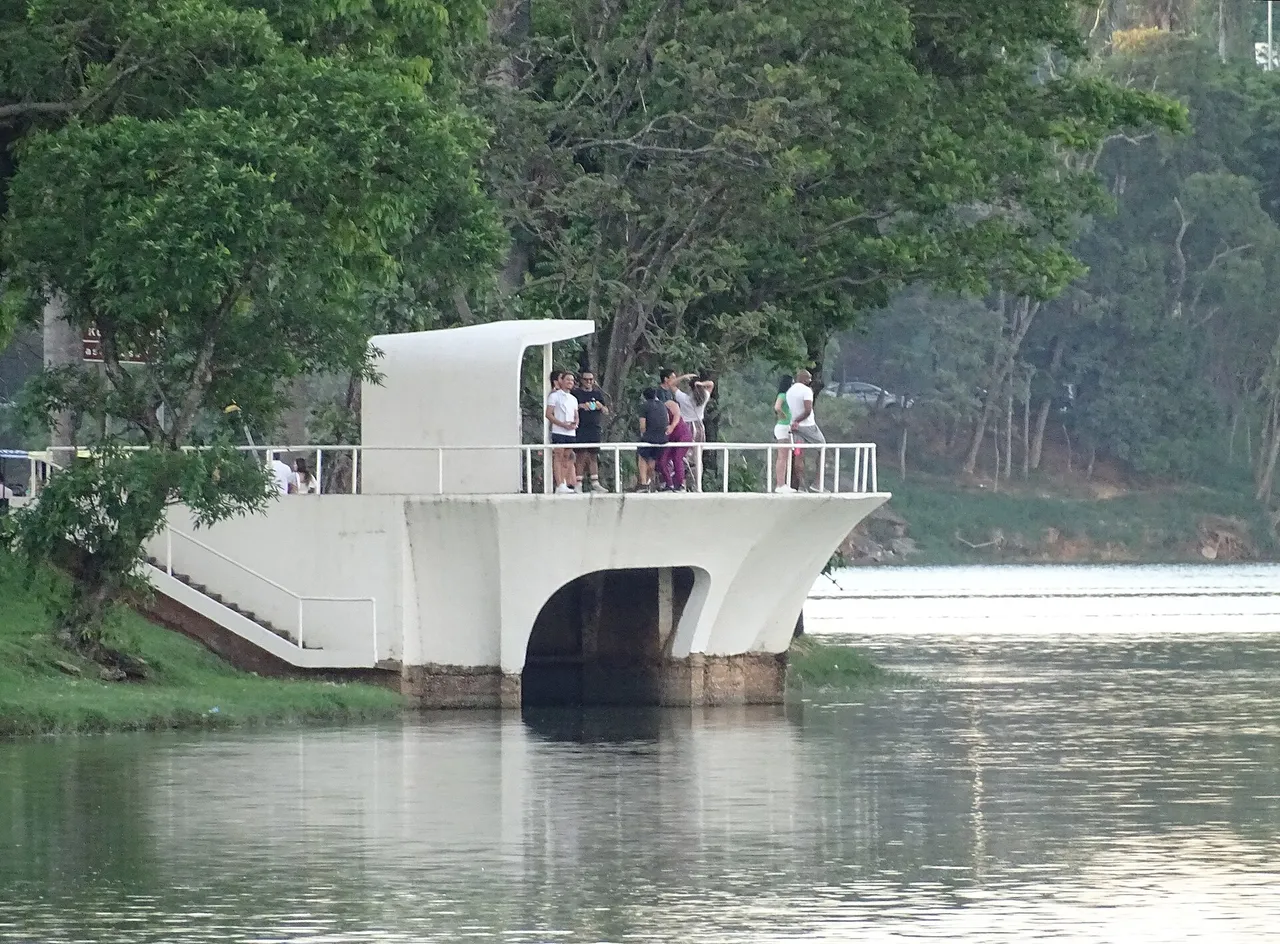
The capital of Minas Gerais, a planned city with no beach and no colonial core, and better than most visitors expect. Around the lake at Pampulha, Oscar Niemeyer built a church, a casino, a dance hall and a yacht club in the early 1940s, and UNESCO listed them in 2016.
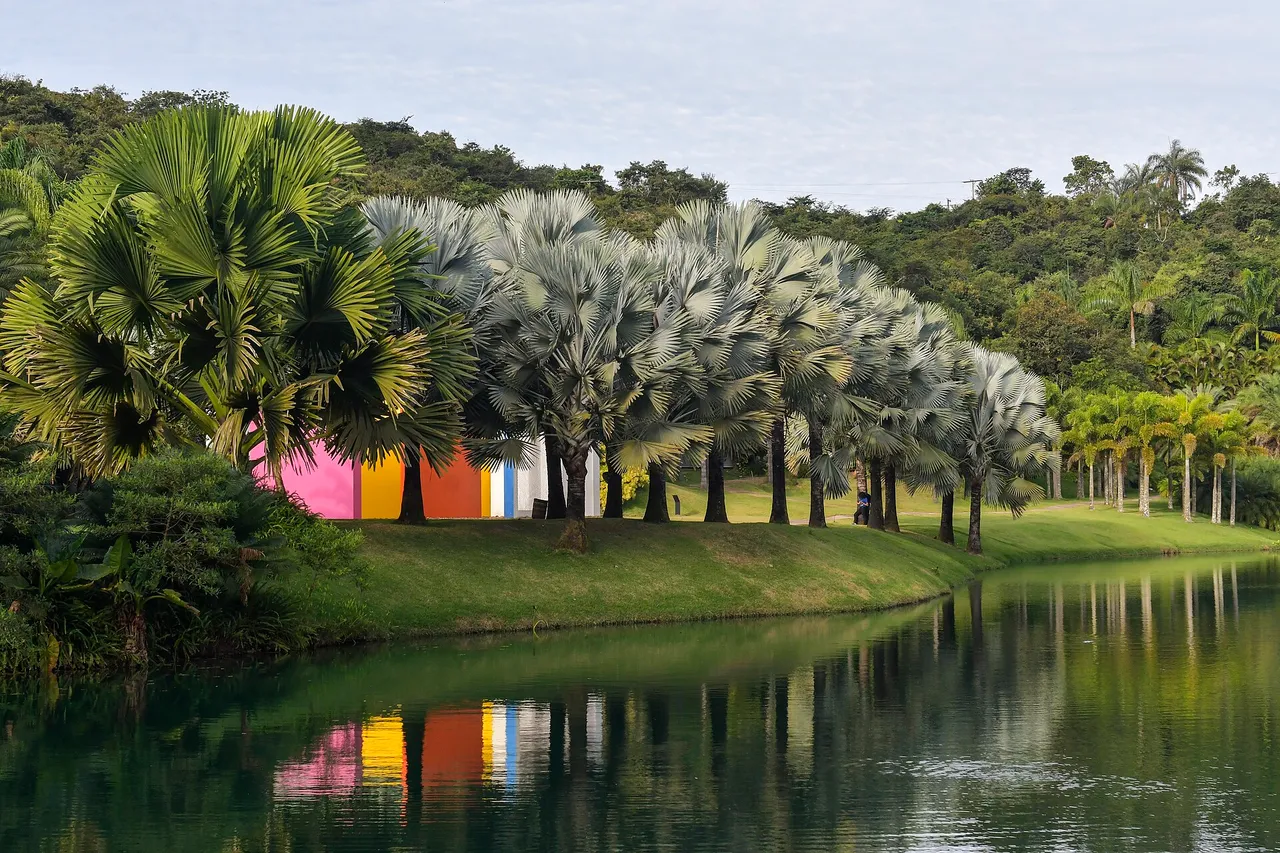
An hour and a half out of town, Inhotim spreads contemporary art through a botanical garden, and it wants a full day of its own. Back in the city, the cooking of Minas is easiest to eat here, from the Mercado Central to the botecos. Ouro Preto is two hours away and has its own page.
- A full day at Inhotim, the art museum in a garden
- Niemeyer’s Pampulha buildings around the lake
- Cheese, cachaça and lunch at the Mercado Central
- The Praça da Liberdade and its museums
- The botecos, and Comida di Buteco in season
-
Rio de Janeiro state · 2–3 nights
Paraty & the Costa Verde
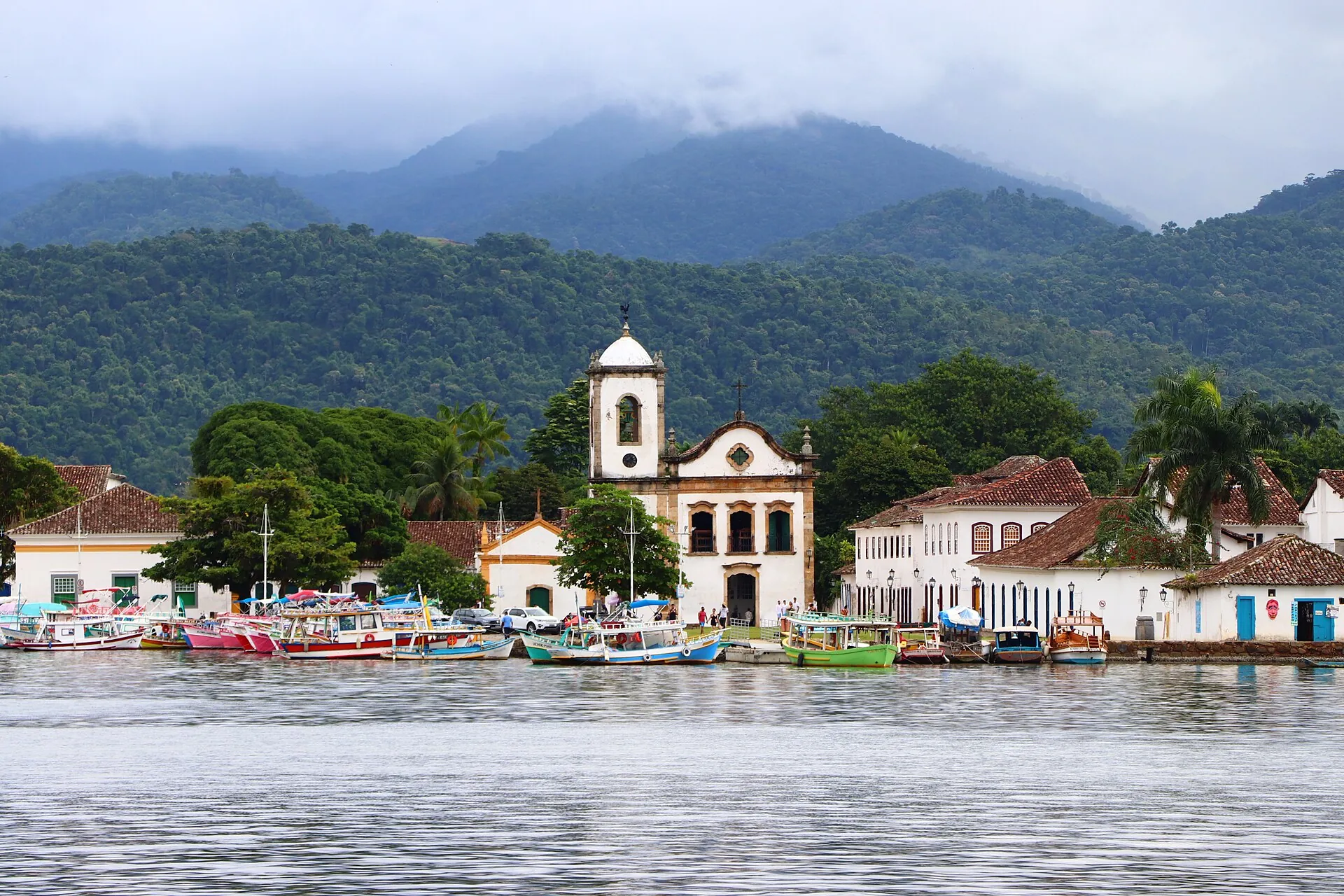
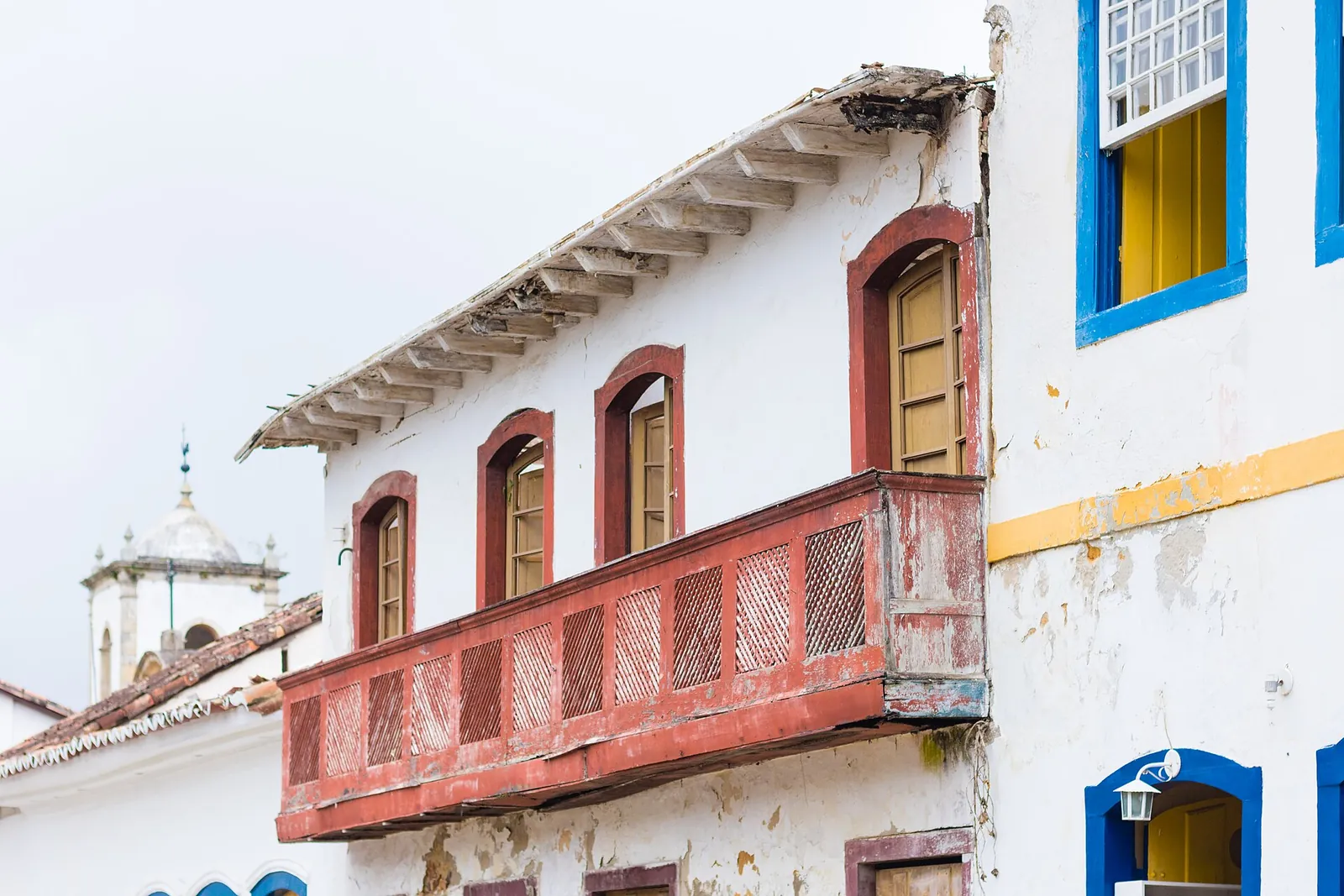
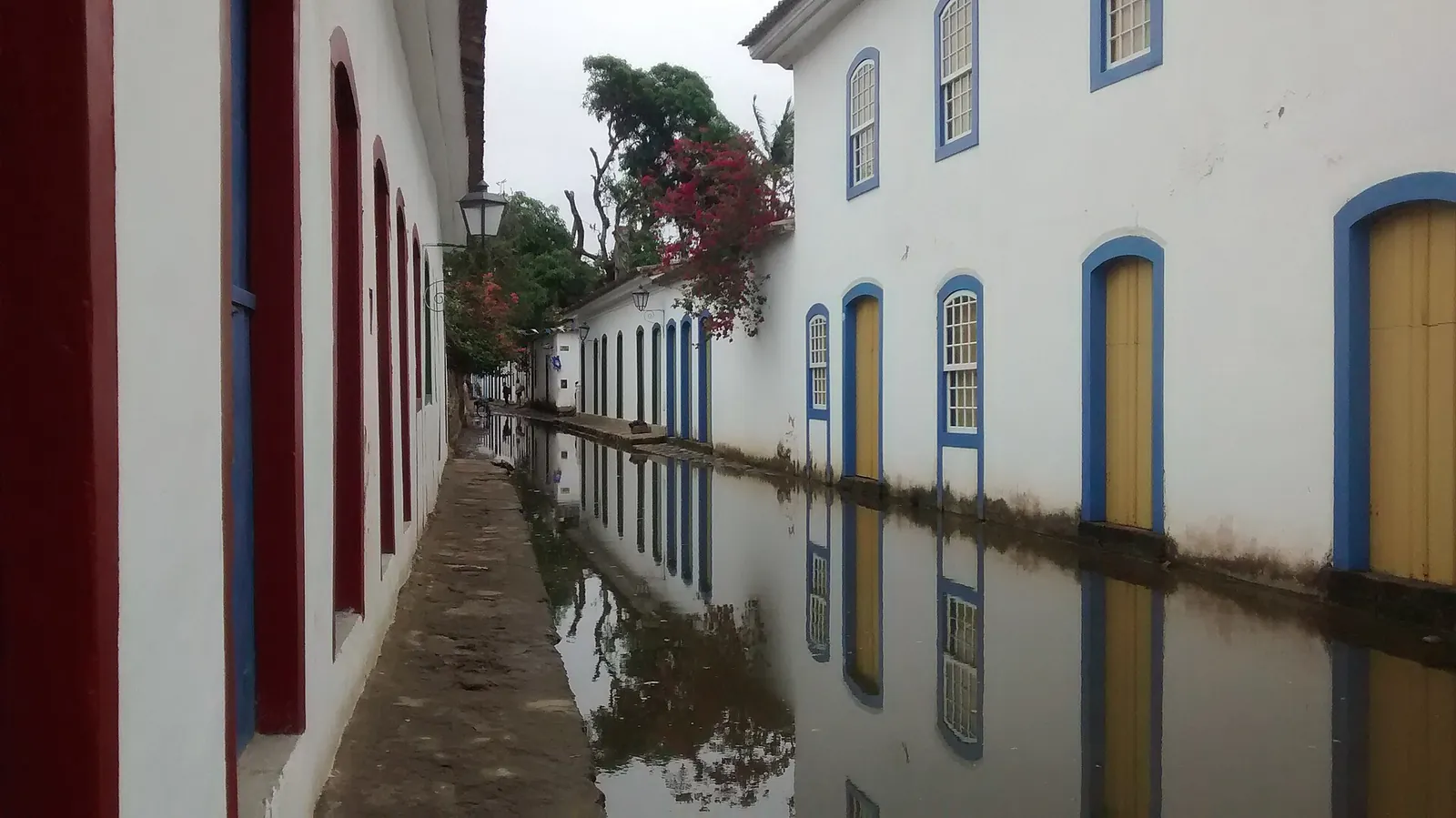
A port the gold trade built, then forgot. Paraty sits four hours down the coast from Rio, and being forgotten is exactly why it survived. The historic center bans cars and sits on irregular stone. Spring tides flood the streets and wash them clean, an 18th-century design that still works.
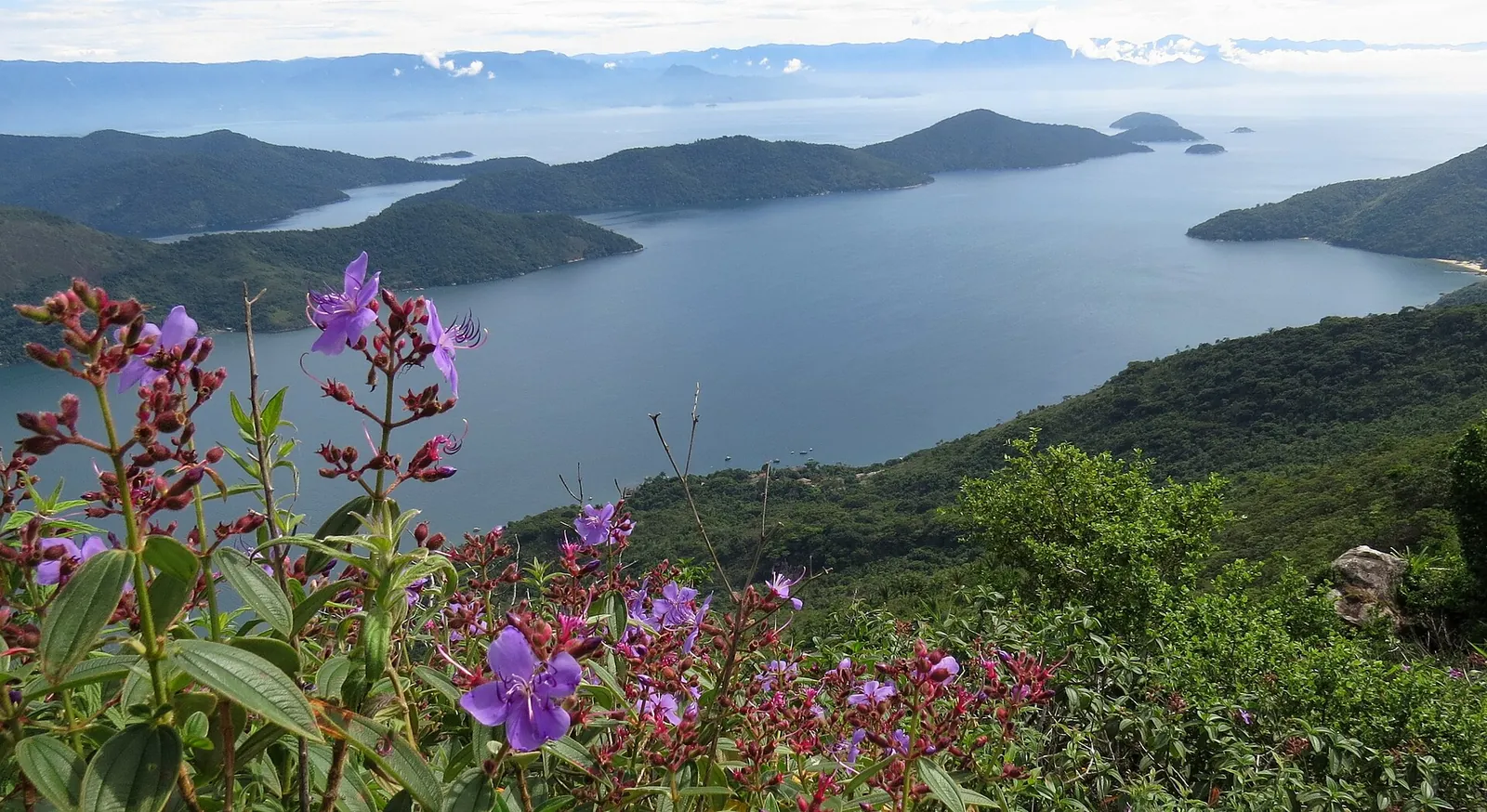
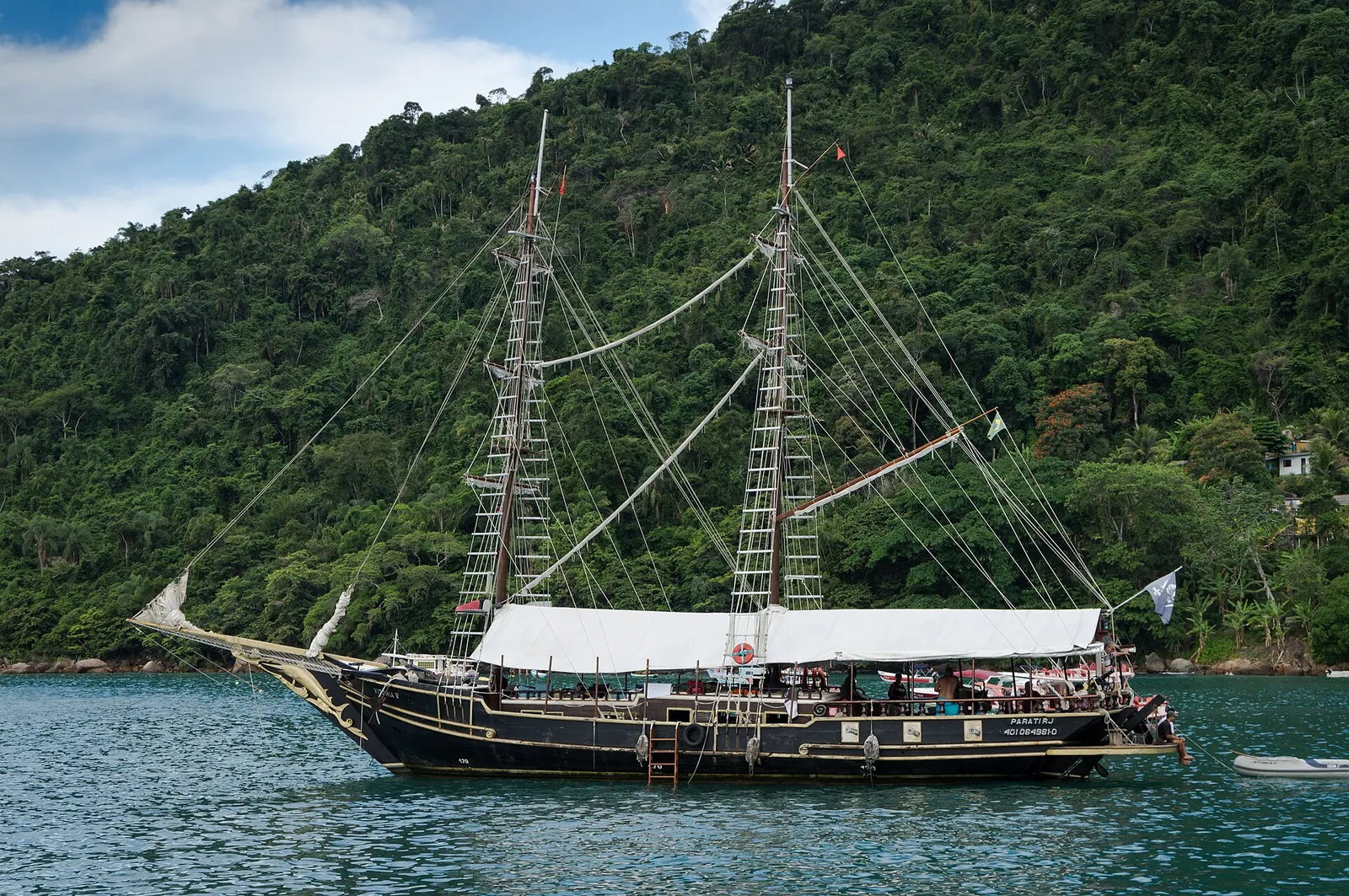
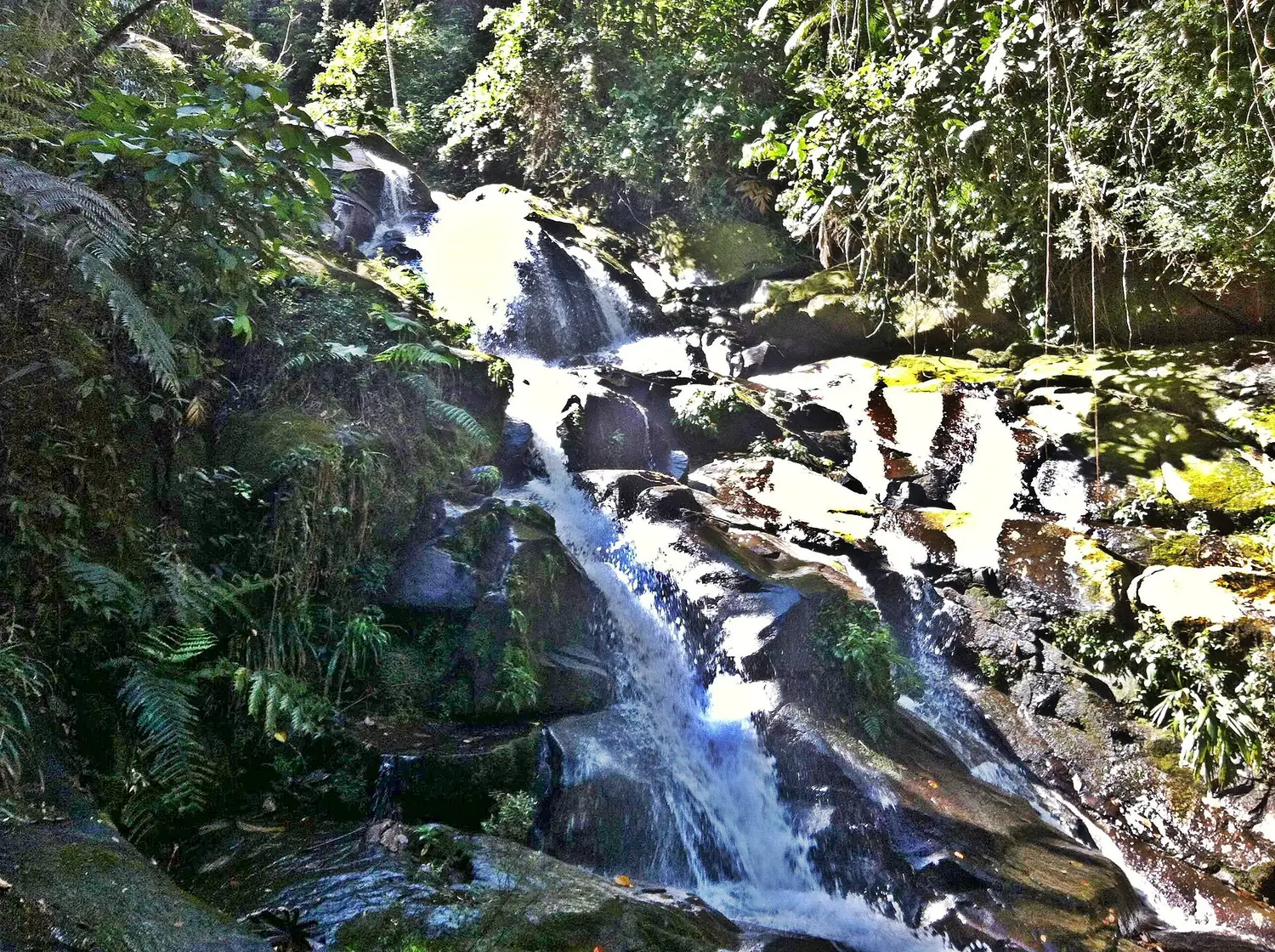
The town is the base. The bay is the reason to stay. Spend a day on a schooner between the islands and swimming beaches, a day on the Gold Trail through Atlantic rainforest, and a day at Saco do Mamanguá, a long narrow inlet often called Brazil's only tropical fjord.
- The car-free historic center and its flooded streets at high tide
- A schooner day around the bay's islands and beaches
- The Caminho do Ouro, the old stone gold road into the mountains
- Saco do Mamanguá by boat or stand-up paddle
- Cachaça distilleries in the hills behind town
-
Rio de Janeiro state · 2–3 nights
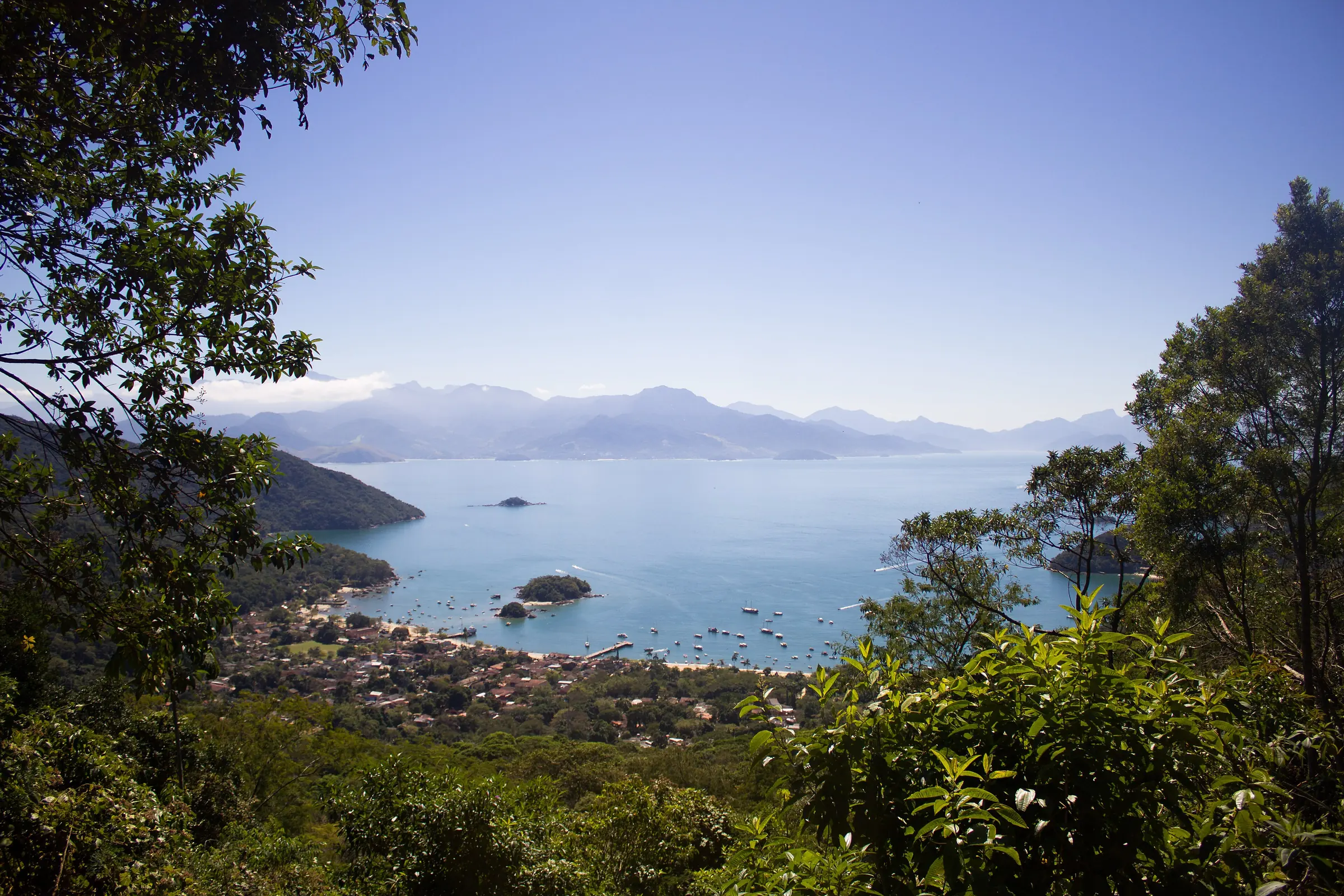
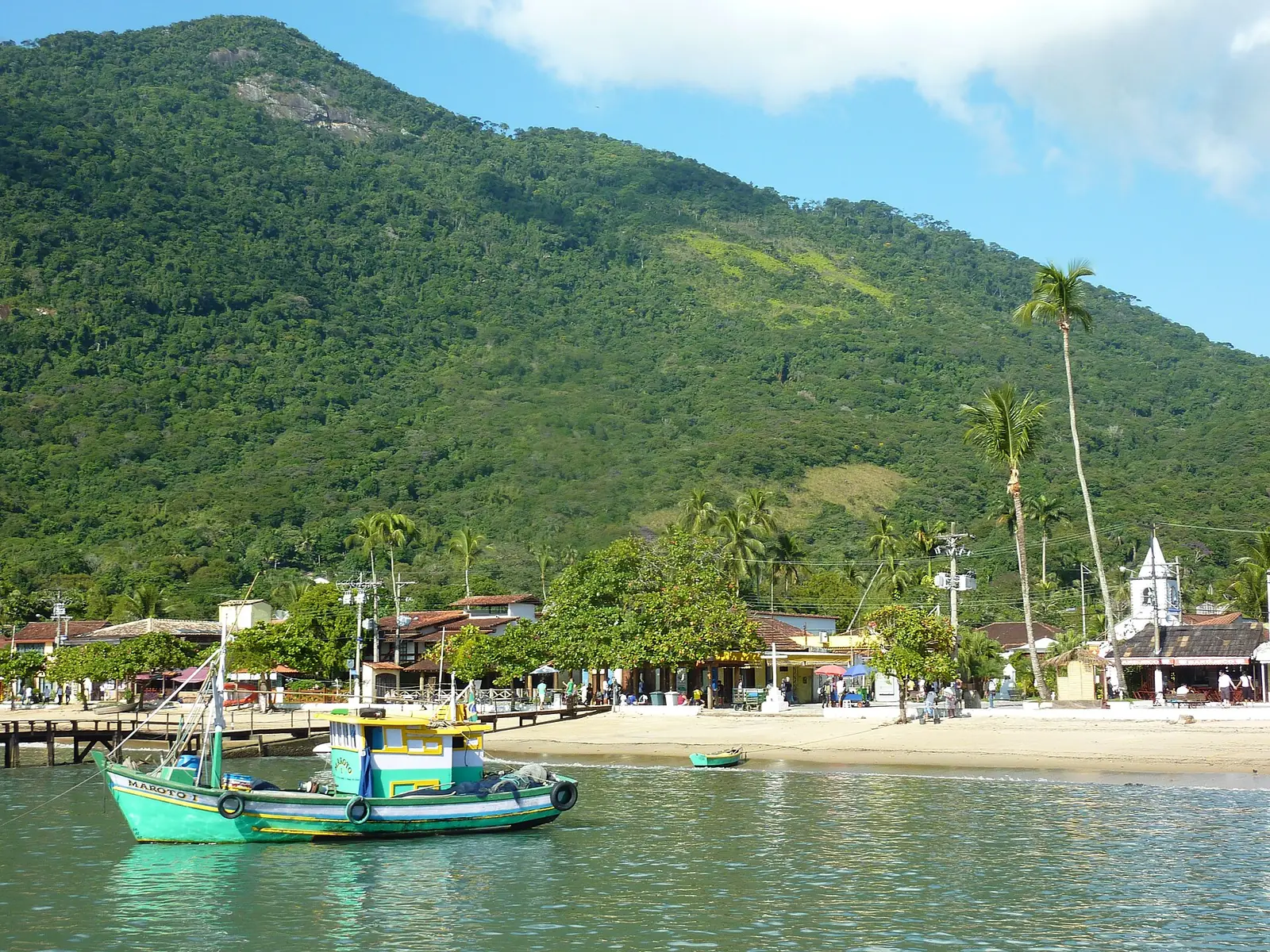
Ilha Grande
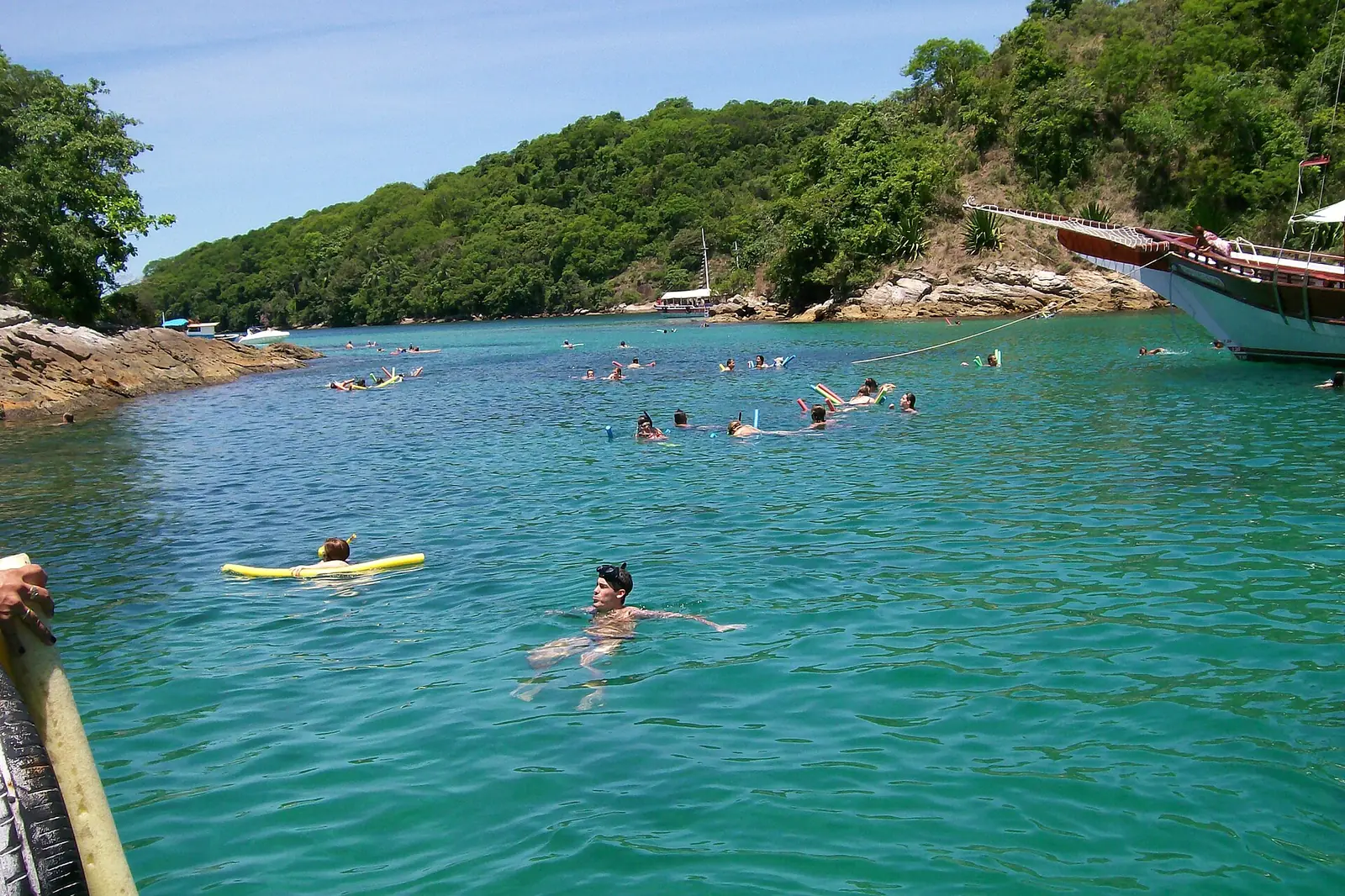
No cars, no roads, no ATMs. Ilha Grande sits an hour's boat ride off the Costa Verde. It was a leper colony, then a maximum-security prison, and that grim history is the reason the forest was never cleared. Most of the island is now protected parkland.
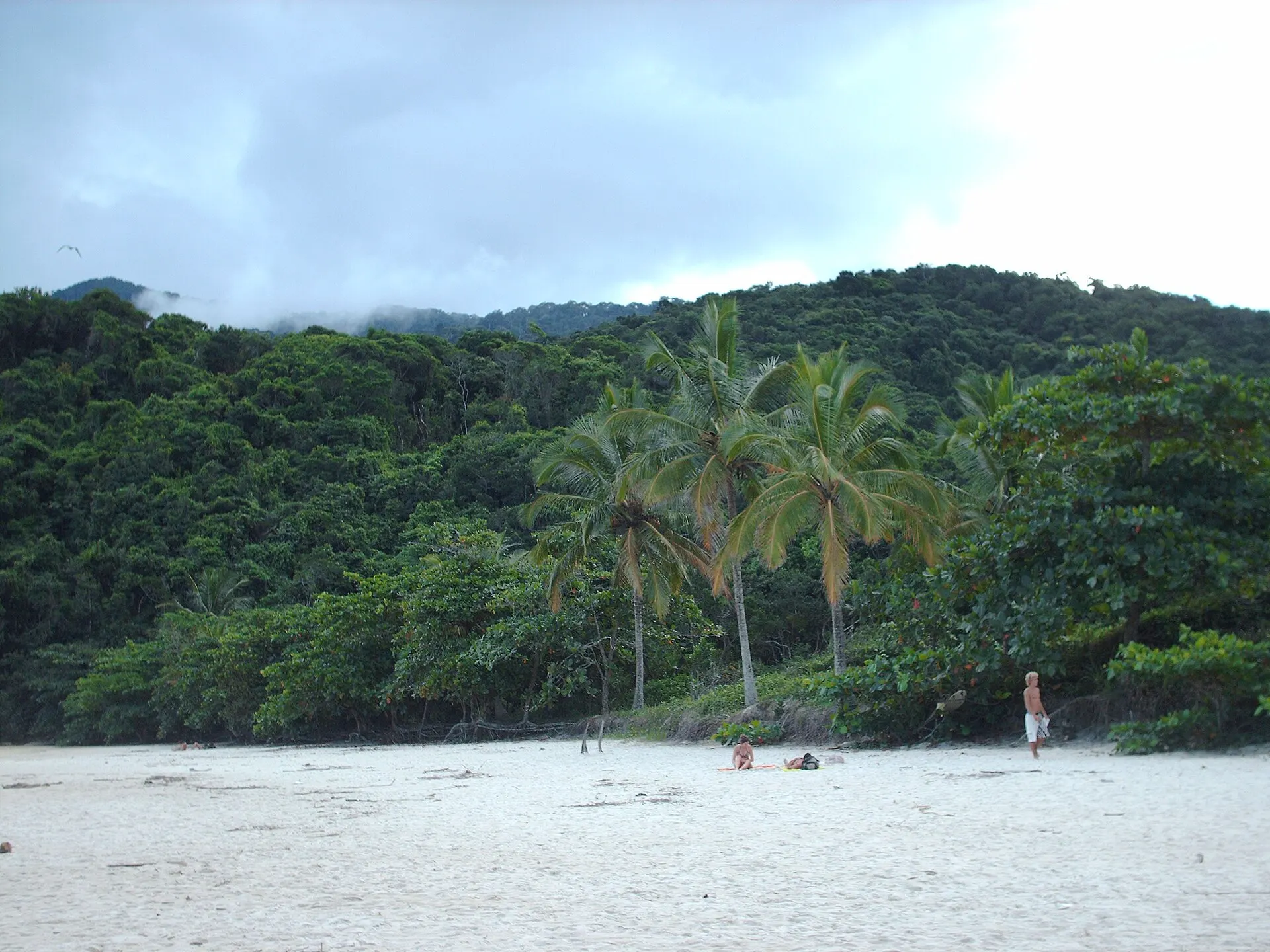
You arrive at Vila do Abraão and walk from there, or take a boat. Reach Lopes Mendes on foot through the forest, or by boat and a short walk. People regularly call it the best beach in Brazil, and it earns the claim.
- Lopes Mendes beach, two hours on foot through rainforest
- Lagoa Azul for snorkeling over clear water
- The pre-dawn climb up Pico do Papagaio for sunrise
- Praia do Aventureiro and its leaning palm
- Green turtles in the shallows, most reliable early in the day
-
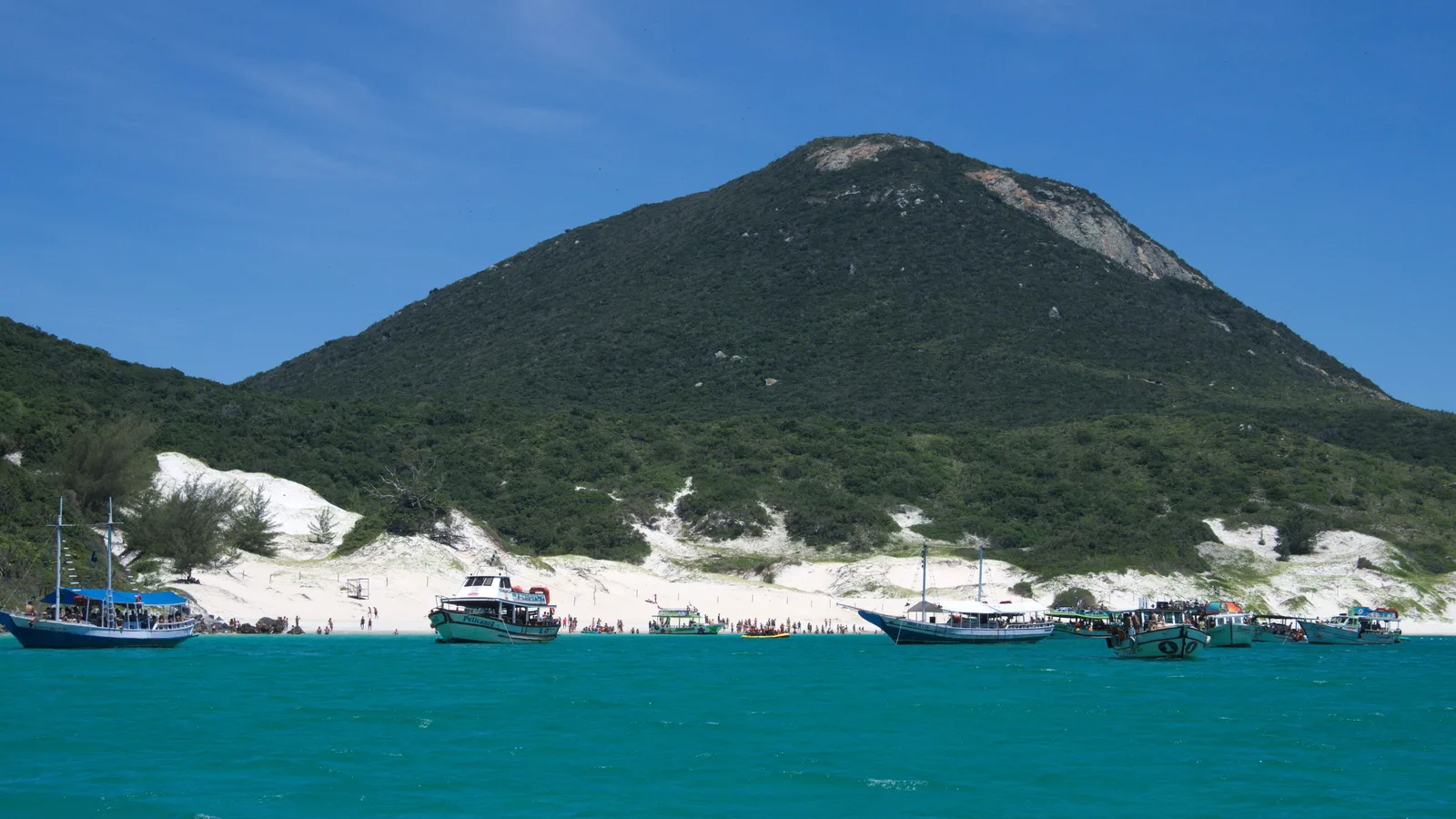
Rio de Janeiro · 3–4 nights
Búzios & Arraial do Cabo
The corner of the coast about three hours east of Rio, where two towns 40 kilometers apart do completely different jobs. Arraial do Cabo is a working fishing town whose boats take you out to the island and the cold, clear water around it. Búzios is a peninsula of small beaches, a cobbled street of restaurants, and an evening.
The sea here is colder than anywhere else on a Rio trip, and that is the point: the cold water welling up off the cape is what makes it clear. One stop of three or four nights after Rio covers both towns, with Arraial the cheaper base and Cabo Frio in between as the convenient one.
- The boat out to Praia do Farol on Ilha do Cabo Frio
- The Prainhas do Pontal do Atalaia
- Rua das Pedras and the Orla Bardot after dark
- A day working through the Búzios beaches
- Forte São Mateus on the Cabo Frio waterfront
More of the Southeast
When to go to the Southeast
The Southeast's season is the dry winter, and it splits by a month. Rio and the Minas hill towns are at their driest in July; São Paulo and the Costa Verde coast, Paraty and Ilha Grande, in August. Summer is hot, humid, expensive and wet, and Carnival is the one reason to take it on.
- Best — The one or two peak months
- Good — A real recommendation
- Trade-offs — Workable, with a catch
- Jan
Peak summer. Hot, humid, expensive, and Rio is at its busiest. Wonderful beach energy if you can take the heat.
- Feb
Carnival month. Extraordinary if that is what you came for, brutal on prices and crowds if it is not.
- Mar
The heat starts to break and the crowds thin. Rain is heavier but usually arrives as a short afternoon storm.
- Apr
Warm and drying out, and the sea is still warm enough to swim in. The start of the good stretch.
- May
Clear mild days and low humidity. Comfortable for walking Rio and for the Minas towns.
- Jun
Cooler but bright and dry. Festa Junina fills the Minas interior with bonfires, food and music.
- Jul
The peak for Rio and the Minas hill towns: Rio's driest month at 41.9 mm on four rain days with humidity at its annual low, Ouro Preto's at 15 mm, Tiradentes' at 11.5. The clearest month of the year from Sugarloaf and Corcovado.
- Aug
The peak for São Paulo and the Costa Verde: São Paulo's driest month by a wide margin at 20.3 mm, Paraty's at 54 to 74 mm across its two stations, and Ilha Grande's at 54 mm on seven rain days. Dry and mild, and the sea is chilly.
- Sep
Spring. Warm days return without the summer humidity, though September is Rio's least sunny month of the year at 146 hours.
- Oct
Warm and green after the first rains, with the rain building steadily through the month.
- Nov
Warm and increasingly humid, with afternoon rain building. Still good value.
- Dec
Hot and busy, and prices climb steeply toward New Year. Copacabana on the 31st is worth doing once.
Dates worth planning around
-
Carnival
5-10 February 2027
Rio's Sambadrome parades run 7-9 February. Book accommodation close to a year out and expect four-night minimums.
-
Réveillon
31 December
2.6 million people dressed in white on Copacabana beach for the midnight fireworks, the largest New Year's party in the world. That is the Prefeitura's own count for 2026.
-
Festa Junina
Throughout June
At its best in the Minas Gerais towns: bonfires, quadrilha dancing and hot corn dishes.
Getting around the Southeast
The Southeast is the easiest part of Brazil to move around. Two major international airports, short hops between the highlights, and one long drive that is genuinely worth doing yourself.
Where to fly into
-
Rio de Janeiro - Galeão (GIG)
The main international gateway. Santos Dumont (SDU) handles domestic flights and sits right in the middle of the city.
-
São Paulo - Guarulhos (GRU)
Brazil's largest hub, where most long-haul flights connect. Congonhas (CGH) is the in-city domestic airport.
-
Belo Horizonte - Confins (CNF)
The way into Minas Gerais, on domestic connections from Rio or São Paulo.
Between the places on this list
- 4h
Rio to Paraty
The coastal BR-101, mountains on one side and islands on the other. Comfortable buses run it too.
- 1h
Rio to São Paulo
The shuttle route - flights leave Santos Dumont roughly every half hour. An overnight bus takes six.
- 1h
Rio to Belo Horizonte
Or seven hours by road. Fly, unless you are continuing through Minas by car.
- 1-2h
Paraty to Ilha Grande
Schooner or fast boat, also from Angra dos Reis. Check the last departure - they stop mid-afternoon.
- 8h
São Paulo to Ouro Preto
Long. Fly to Confins and pick up a car there instead.
Once you are there
-
Rio de Janeiro
The metro covers Copacabana, Ipanema and the center and is the fastest way across the Zona Sul. Use Uber or 99 after dark rather than hailing on the street.
-
São Paulo
The metro is excellent and the traffic is not. Plan around it - a six-kilometer crosstown trip can take an hour at rush hour.
-
The Minas towns
Ouro Preto, Tiradentes and Congonhas are steep and cobbled. Wear real shoes and expect to walk everywhere.
Should you rent a car?
For the Costa Verde, yes. For the cities, no.
The Rio-Paraty coast road is one of the great drives in Brazil and a car turns it into the trip rather than the transfer. In Rio and São Paulo a car is a liability: parking is expensive, traffic is punishing, and both cities are better served by metro and ride apps.
Rio, the Costa Verde and Minas most often end up in the same trip. Tell us which one draws you in, and we'll tell you honestly how many nights each is worth.
Get trip advice Free · 29 pages
Free guide
Beginner's Guide to Brazil
A free 29-page guide to everything a first-time visitor should know before landing: visas, safety, money, getting around, where to go, and what to eat.
We'll email you a link to confirm your address. Click it and the guide opens right away.
I am offering free consultation calls for anyone that’s interested in traveling to Brazil. Learn directly from someone that has traveled throughout Brazil. Even if you have no ideas for your trip, let’s talk about it!
Get trip advice