

The short answer
For five days in the second half of September, the river village of Alter do Chão holds a festival that is two things at once. First a religious procession built around a ribboned arch, Catholic and Indigenous at the same time and grown, in the festival’s own telling, from Indigenous song and dance meeting the Christianity the Jesuits brought in the 17th century. Then a competition in an arena on the Lago dos Botos between two rival groups representing the two kinds of river dolphin, the Boto Cor de Rosa and the Boto Tucuxi, with allegorical floats, hundreds of performers and a split crowd. If Parintins sounds familiar, it should: the format is a cousin. The difference is that September is also a good month to be in Alter do Chão for its own sake: the river is falling fast and the white beaches are coming out of the water, a few weeks before October, the best month of the year there.
When
Five days in the third week of September, which the Prefeitura de Santarém set in 2026 as the rule for future years; 2026 ran from 17 to 21 September. The exact dates are announced each year, so look them up before booking. The program opens a few days earlier with the fetching of the ceremonial masts, and the village is busy for several days either side.
What it is
Alter do Chão is a small village on the Tapajós, in Pará, and its own festival is one of the strangest and best-timed things in the Brazilian calendar.
It is two festivals wearing one name. The first is religious: a procession built around the sairé itself, a semicircular arch wrapped in ribbons and carried at the front. It is a Catholic procession, and it is also older than Catholicism in the Amazon, which is the point: the festival’s own account is that it grew from Indigenous song and dance meeting the Christianity the Jesuits brought in the 17th century.
The second is a competition. Two rival groups, the Boto Cor de Rosa and the Boto Tucuxi, each representing one of the two river dolphins that live in this water, stage huge performances against each other in an arena on the Lago dos Botos with allegorical floats, hundreds of performers, drumming and a crowd that belongs to one side or the other.
If that structure sounds familiar, it should. The Festival de Parintins, a few hundred kilometers upriver, does the same thing on a larger scale with a different story. They are cousins, and the family resemblance is real.
The difference from Parintins
Worth being clear about, because they get compared and the comparison usually flatters the wrong one.
Parintins is bigger, better known abroad, and it is essentially the reason anybody goes to Parintins. The town’s population multiplies for one weekend and then the town goes back to being a town.
Alter do Chão is not like that. It is a place people already go to, and the festival is its own village celebrating, with visitors welcome rather than visitors as the business model. That makes it smaller and less polished and, if you like that sort of thing, considerably better.
It also means the etiquette is different. At Parintins you are in the audience. Here you are closer to being a guest at something that would happen whether you came or not.
Why September is the whole point
This is the part that makes the Sairé unusual among the festivals on this site, and it is worth saying plainly.
Every other festival here asks you to accept a trade. Carnival puts you in Rio at the most expensive week of the year. Parintins asks for a long detour to a place you would not otherwise go. Círio fills Belém past capacity. Festa Junina is at its biggest in interior cities a long way from the coast.
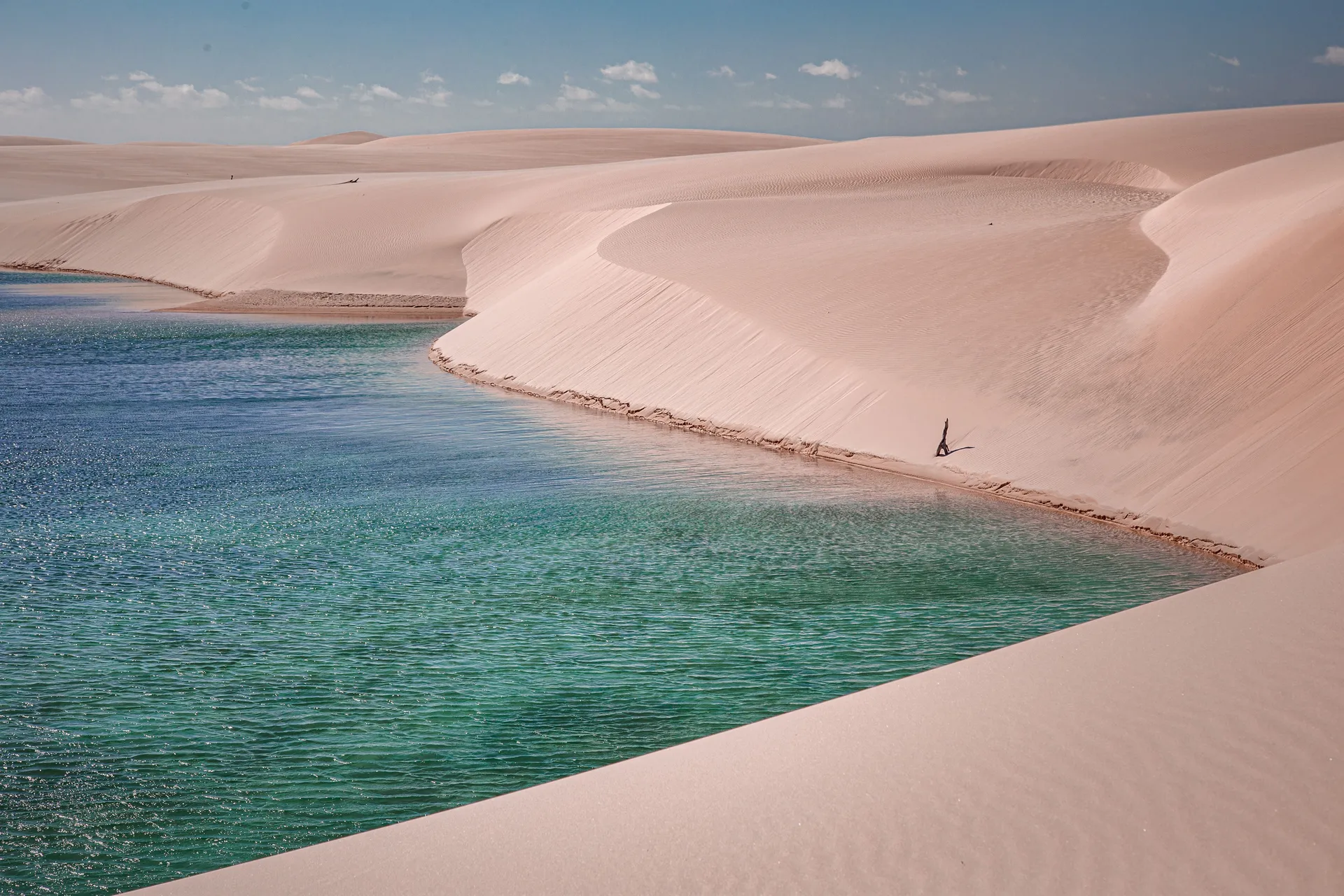
The Sairé asks for almost nothing. By September the river has been falling since its May high, faster that month than in any other, and the white sand beaches are coming back out of the water. The site’s own calendar rates September good and October, a few weeks later, the best month of the twelve. From February to June most of those beaches are underwater and the village is a different, greener, wetter proposition entirely.
So the festival lands within weeks of the time you would have chosen anyway. That is rare enough to be the headline.
Getting there is the real cost
Alter do Chão is about 37 km by road from Santarém, and Santarém is the whole question.
It sits on the Amazon roughly halfway between Manaus and Belém, which is a useful way to place it: it is the middle of the river journey, not a spur off it. That also means it is a long way from everything on a normal first Brazil itinerary, and it is not a place you pass through on the way to somewhere else.
The honest framing is that this is a trip to the Tapajós that happens to coincide with a festival, rather than a trip to a festival. Which is the right way round, and it is why this page recommends it more freely than the Parintins one does.
Should you go
Not on a first trip to Brazil. Almost nothing in the Amazon belongs on a first trip to Brazil, and if you have ten days you are choosing between this and Rio, which is not really a choice.
On a second trip, or on a trip built around the Amazon rather than around the coast, it is a strong yes, and stronger than it would be in most months. You are going to a river village at the best time of its year, and there is a festival on while you are there.
The one group I would push harder is anyone who has already done a lodge stay out of Manaus and wants the other Amazon, the one that is towns and rivers and people rather than forest and wildlife. This is that, concentrated into five days.
Practical notes
The village is small and the festival fills it, so where you sleep is the first thing to sort out and not the last.
September is the dry season, which here means hot rather than pleasant. Bring what you would bring for a river beach, and assume the water is the relief.
Take cash. This is a village.
And treat the religious half as religious. The arena competition is a performance and behaves like one. The procession is not, and the difference is obvious once you are standing there.
Where it is worth seeing
- Alter do Chão
- The only place it happens. A village of white river beaches on the Tapajós, about 37 km by road from Santarém, small enough that the festival fills all of it.
- Santarém
- The gateway, and where the flights land. It is the nearest town with real connections and hotel supply, and the municipal government that sets the festival dates.
Questions people actually ask
- What is the Festa do Sairé?
- It is the annual festival of Alter do Chão, a river village in Pará. It combines a Catholic religious procession that carries an old Indigenous tradition inside it with a large staged competition between two rival folk groups representing the Amazon's two river dolphins.
- When is the Festa do Sairé?
- Five days in the third week of September, the rule the municipal government of Santarém set in 2026 for the years ahead. The 2026 festival ran from 17 to 21 September. The exact dates are announced each year, so look them up before booking anything.
- Where is Alter do Chão?
- On the Tapajós river in the state of Pará, about 37 km by road from Santarém, which sits on the Amazon roughly halfway between Manaus and Belém. It is known for white-sand river beaches that only exist when the water is low.
- Is the Festa do Sairé the same as the Festival de Parintins?
- No, but they are relatives. Both are Amazonian competitions between two rival groups staging enormous performances, and both split a crowd in two. Parintins is bigger, longer established as an international draw, and tells the Boi-Bumbá story. Sairé is smaller, is its own village's festival first, and carries a religious procession that Parintins does not have.
- Is September a good time to visit Alter do Chão?
- Yes, festival or not. September is when the river falls fastest and the white beaches come back out of the water, the opposite of February to June, when most of them are underwater. October, when the river is near its lowest, is the best month of the year there, so the festival lands just ahead of the peak. That is what makes it different from the others on this site: the timing costs you almost nothing.
 Free · 29 pages
Free guide
Beginner's Guide to Brazil
A free 29-page guide to everything a first-time visitor should know before landing: visas, safety, money, getting around, where to go, and what to eat.
We'll email you a link to confirm your address. Click it and the guide opens right away.
I am offering free consultation calls for anyone that’s interested in traveling to Brazil. Learn directly from someone that has traveled throughout Brazil. Even if you have no ideas for your trip, let’s talk about it!
Get trip advice