

Skip to content
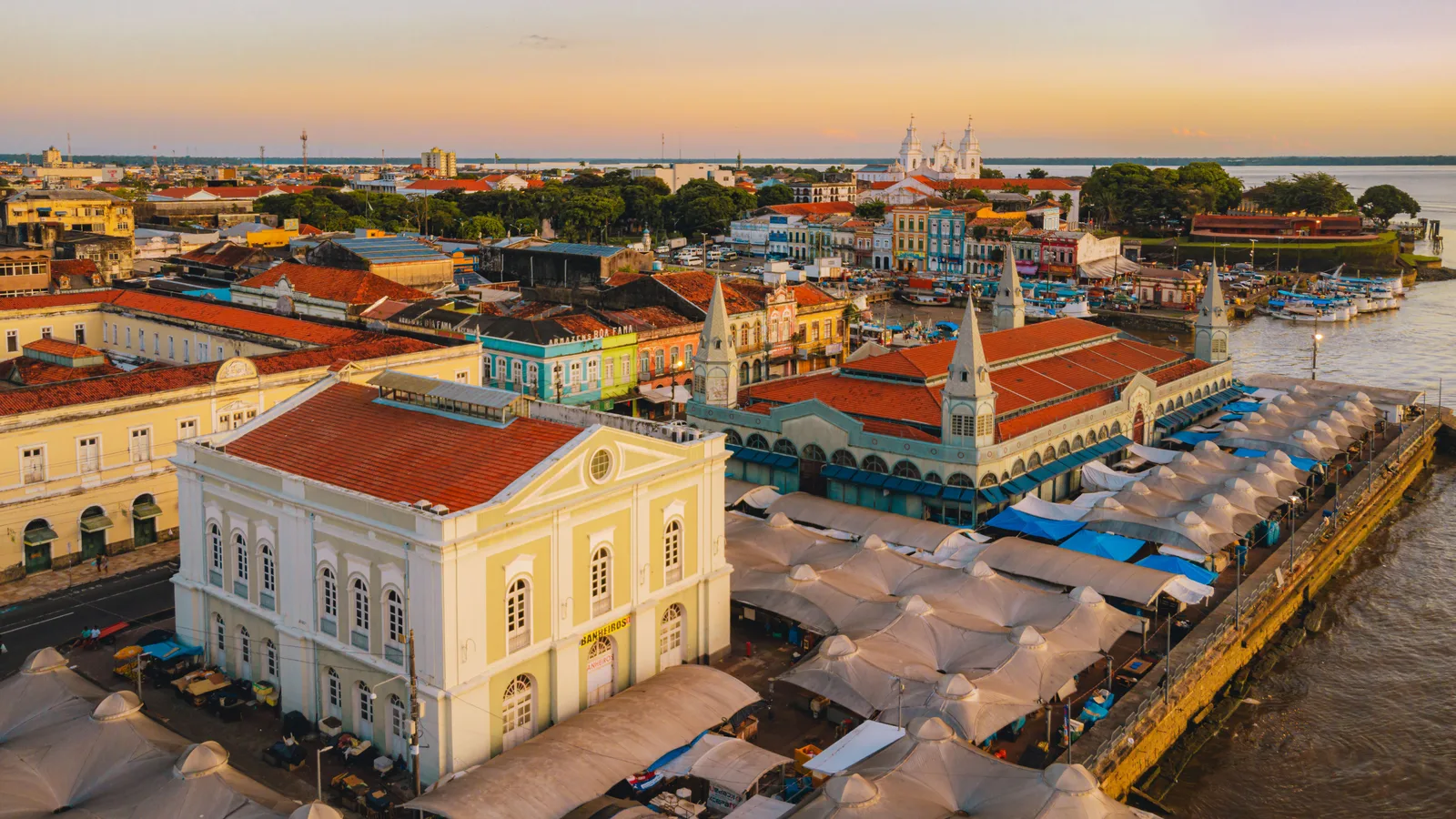
The historic center of Belém from the air in late light: the Ver-o-Peso market square packed edge to edge with white awnings, a long yellow colonial building beside it, tiled roofs running back from the waterfront and the pale bay behind

Pará

Belém

Brazil’s best Amazonian cooking, at the end of the river.

Last checked October 2026

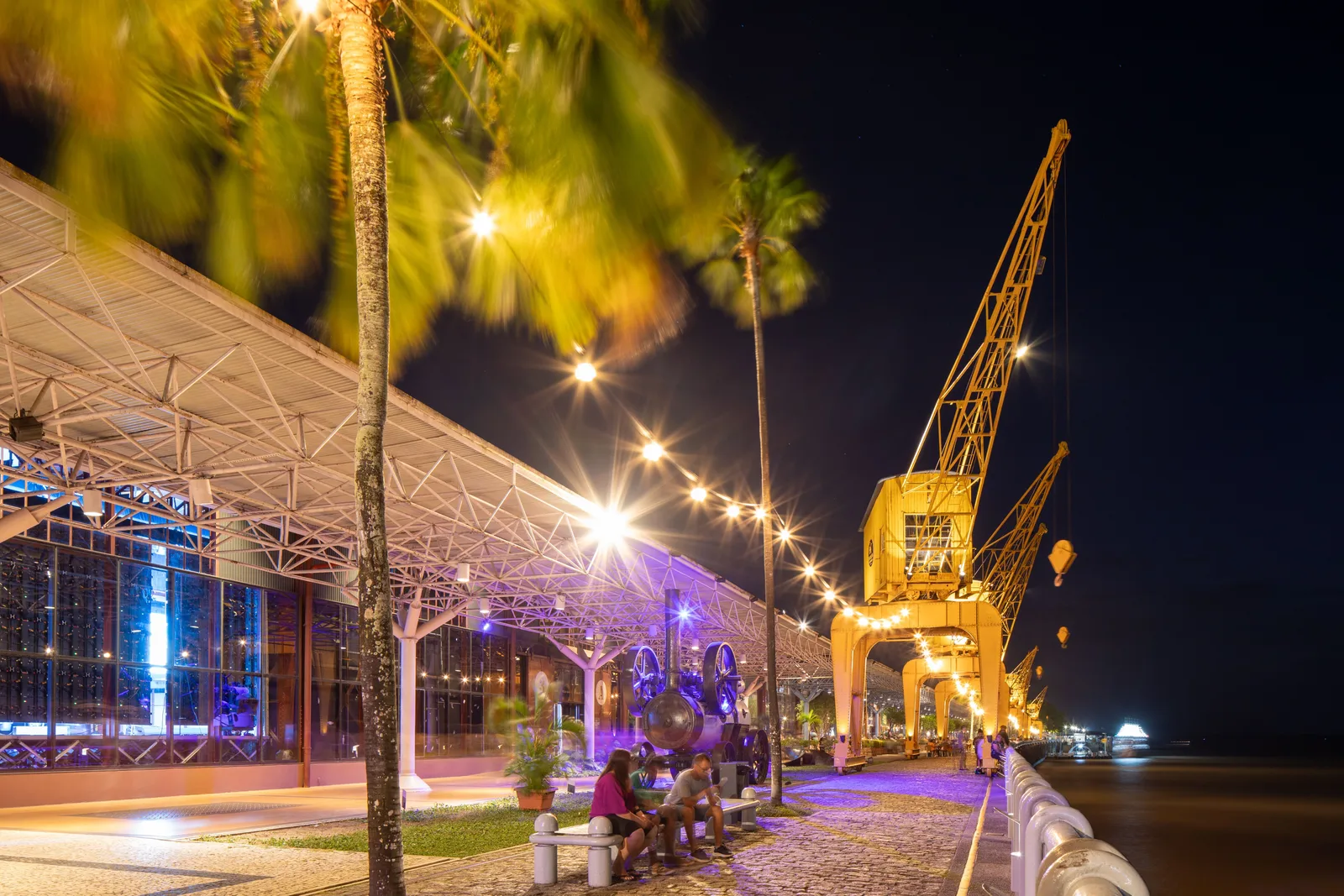
  • The Estação das Docas at night: a tall yellow dockside crane lit from below beside a long steel-framed warehouse, palms and a lit promenade running along the water in front of it
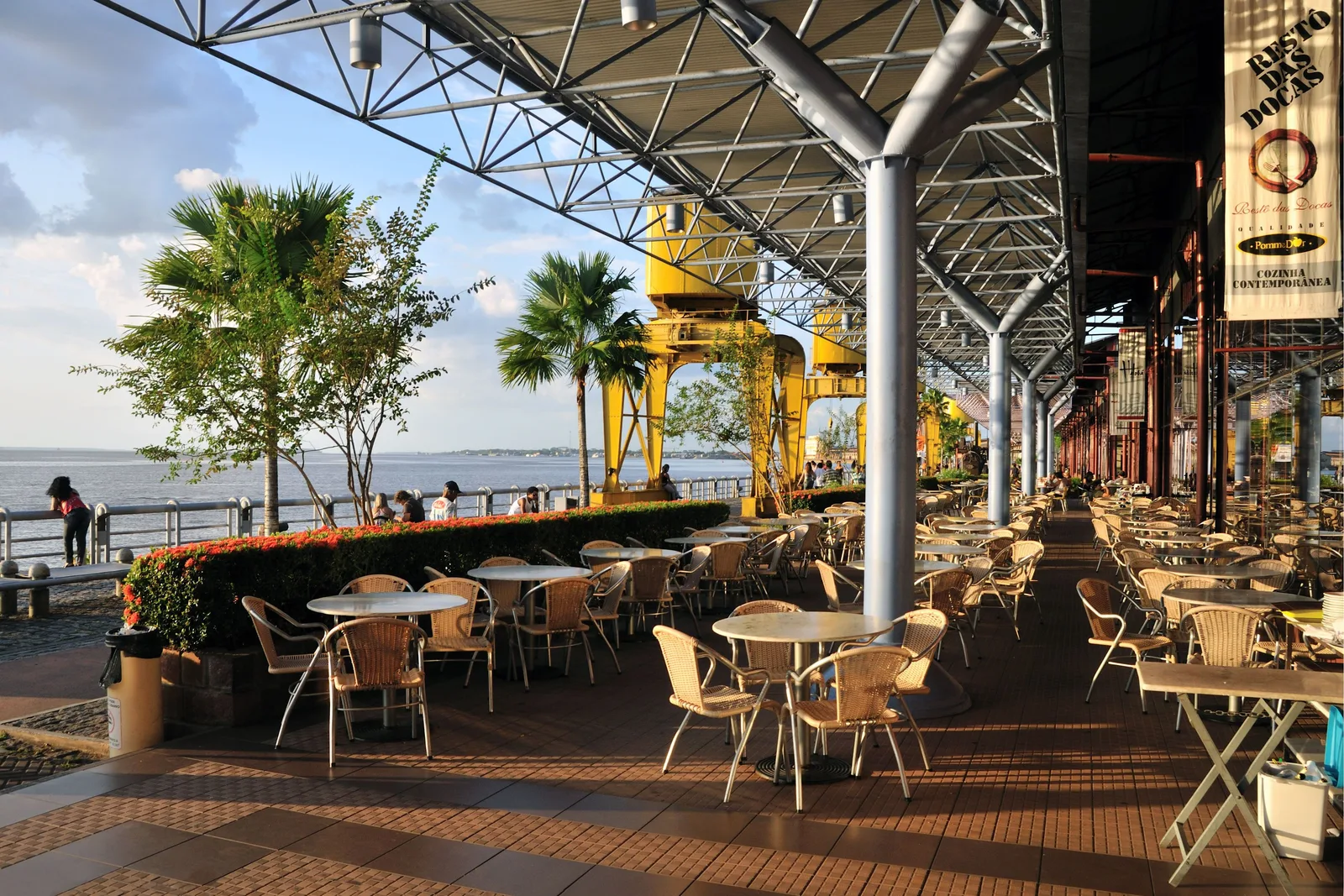
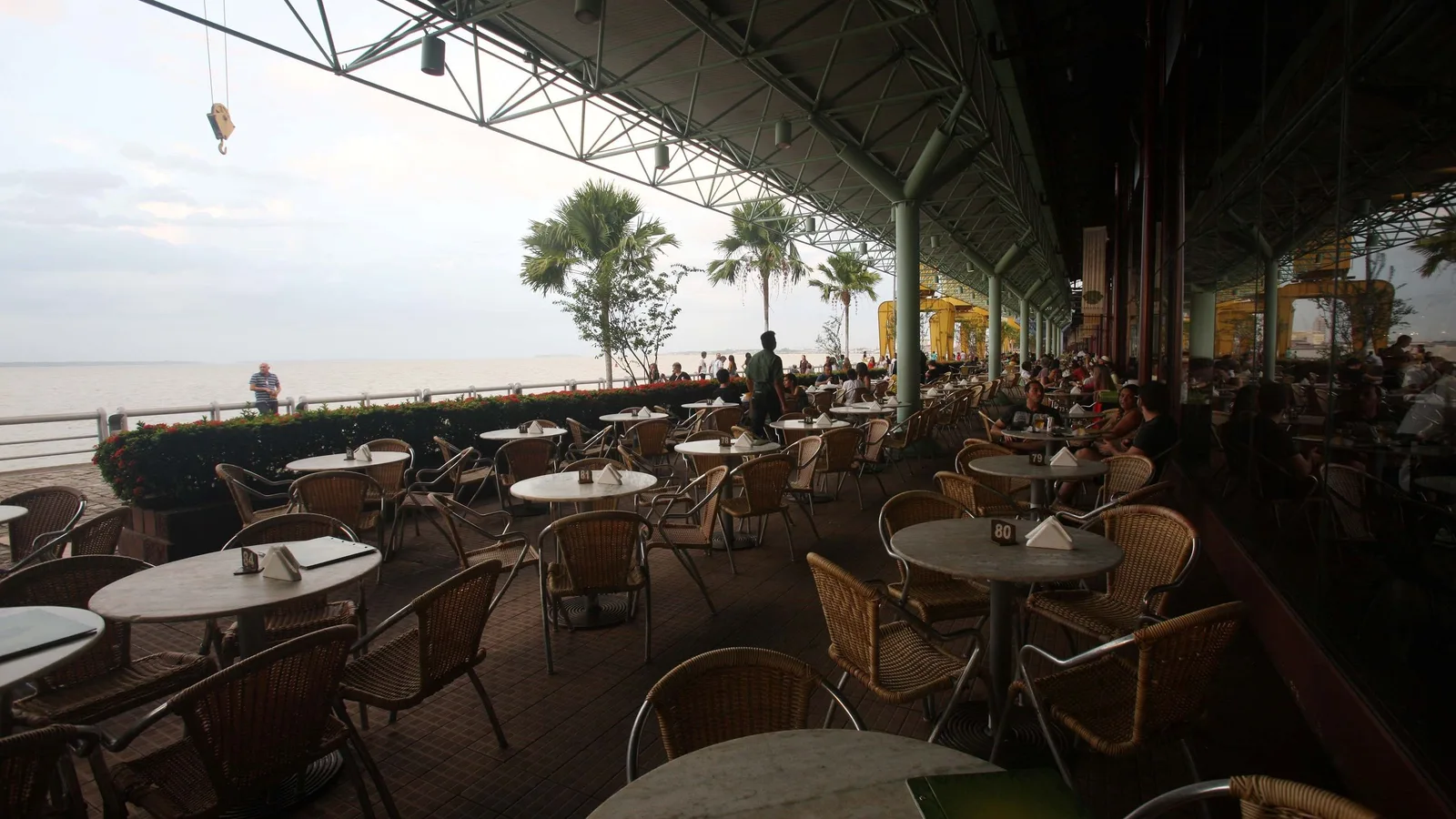
  • The riverside terrace of the Estação das Docas at dusk, tables and chairs set out along the railing under the warehouse roof with the bay going dark beyond
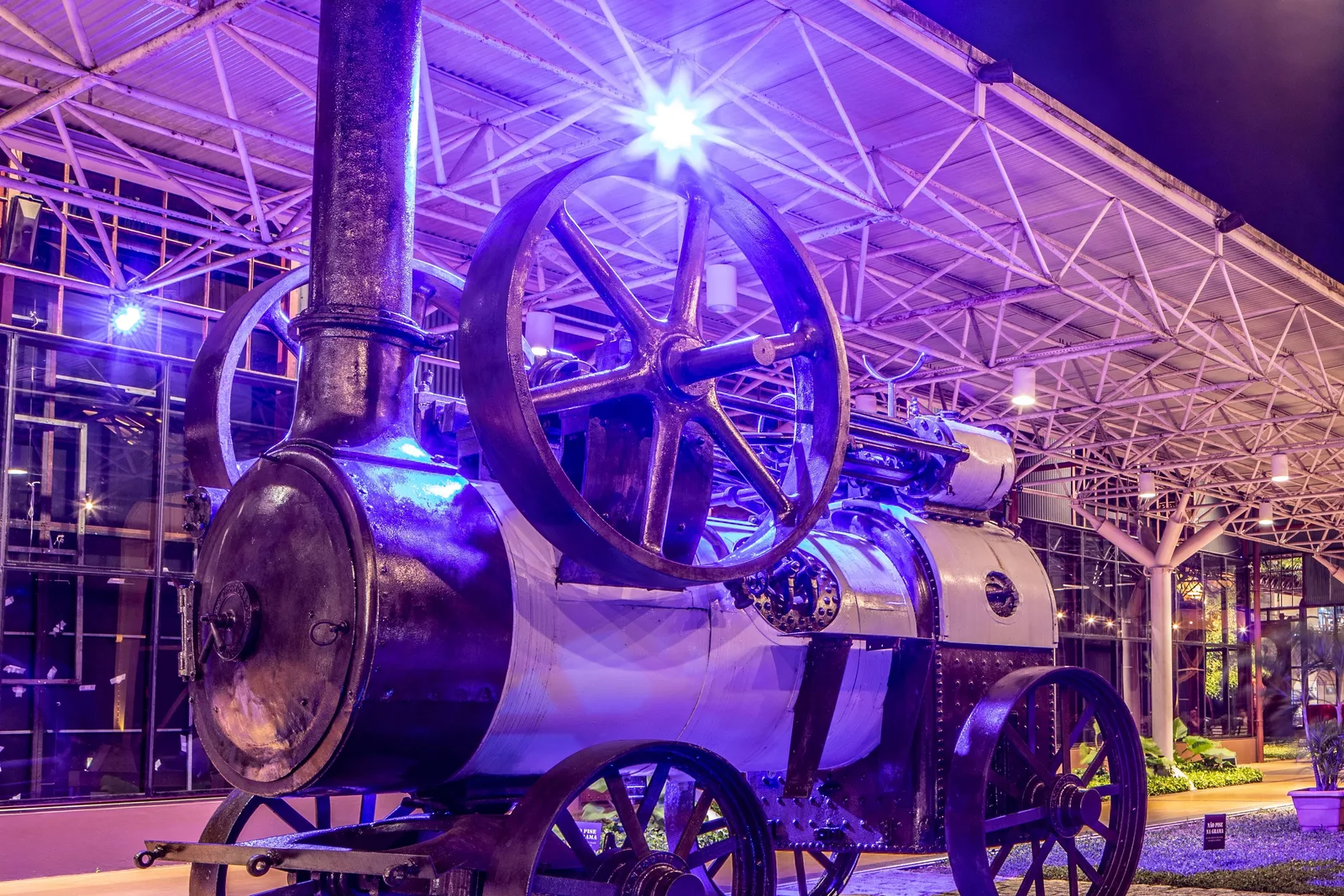
  • An old riveted steam engine on iron wheels displayed under the warehouse roof at the Estação das Docas, floodlit deep blue and violet
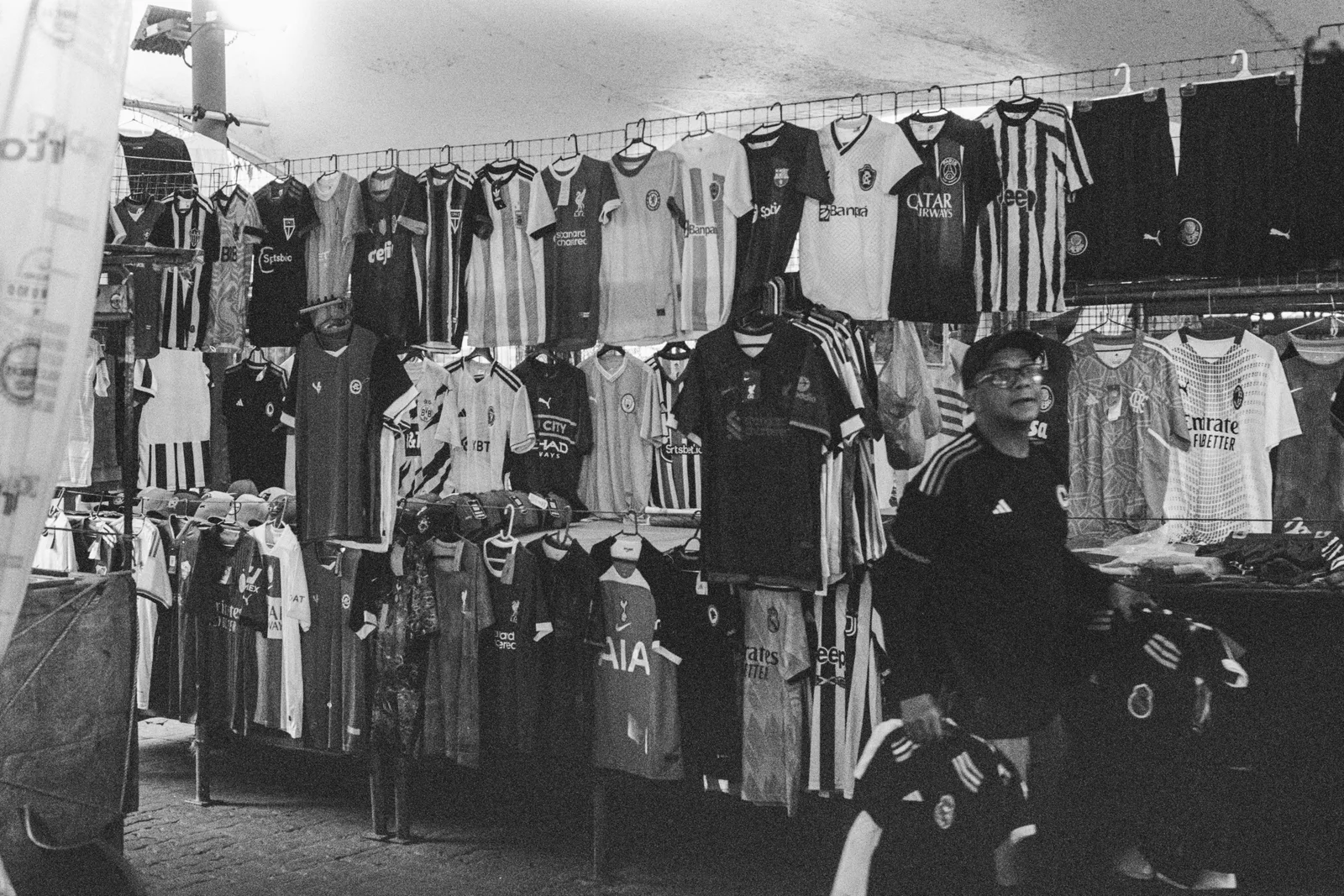
  • Black and white: rows of shirts and jerseys hung across a market stall at Ver-o-Peso, a trader standing among them
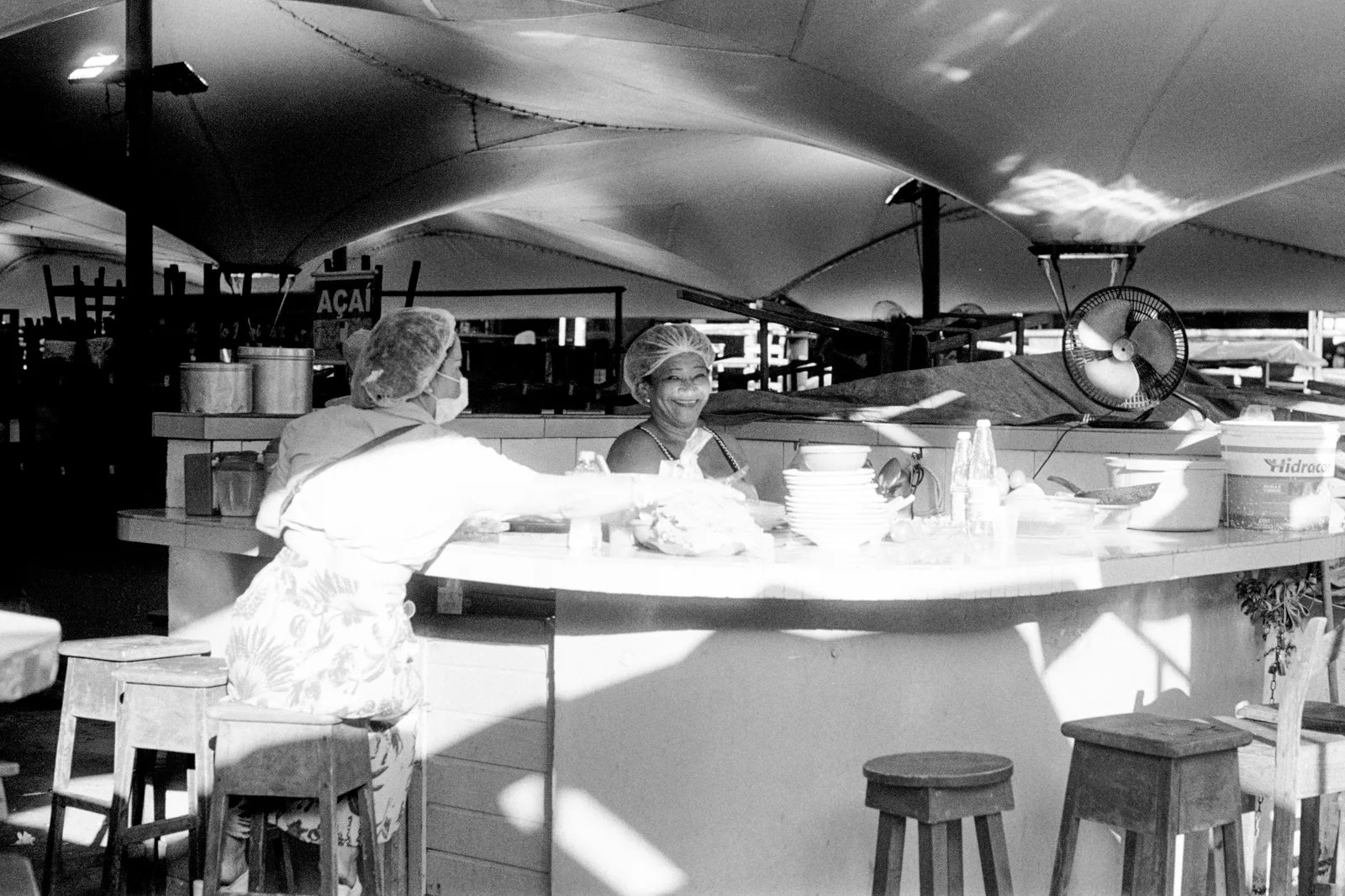
  • Black and white: two women leaning across a curved food counter under the market roof, pans and dishes stacked in front of them
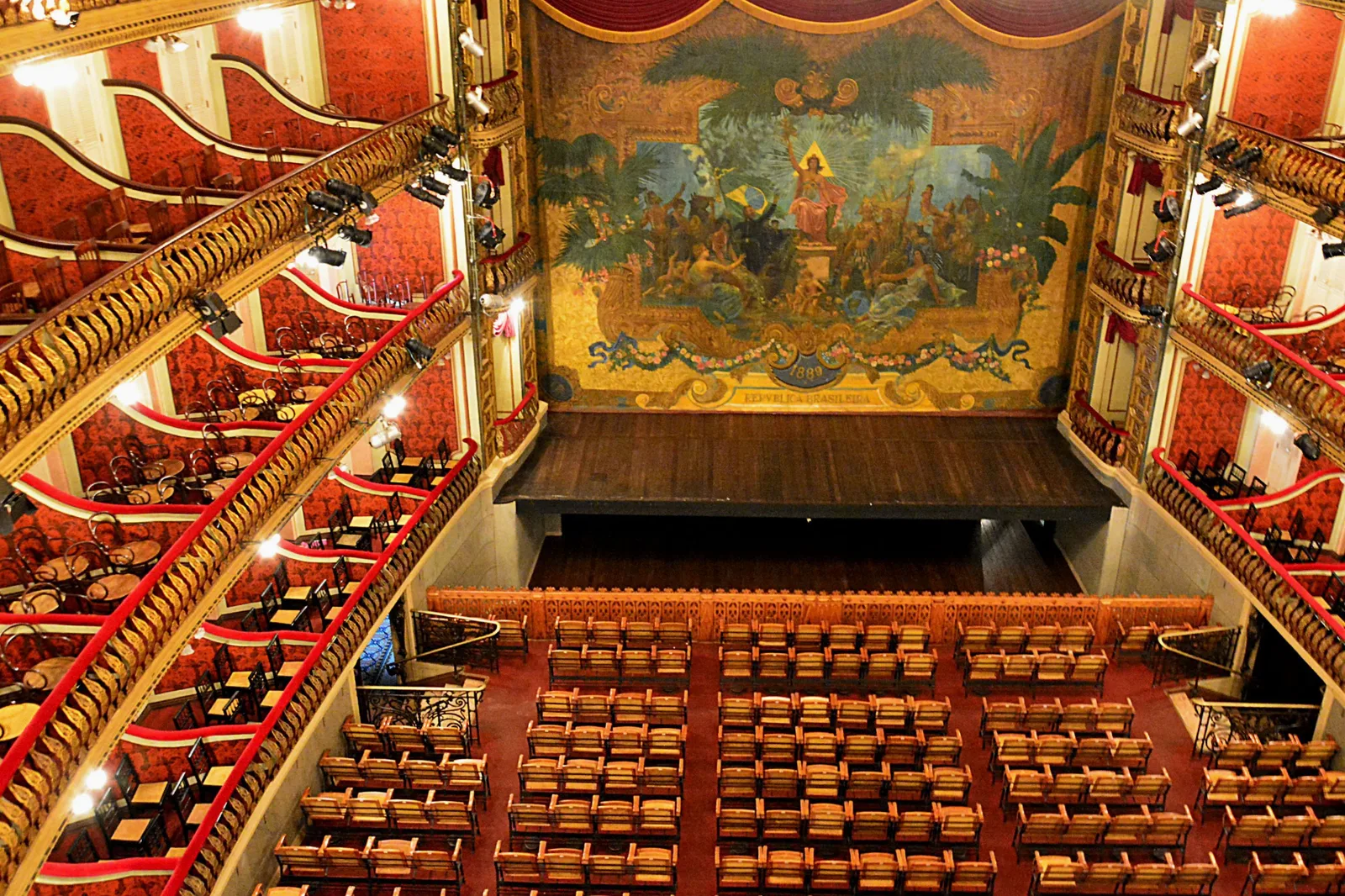
  • The auditorium of the Theatro da Paz from the upper tier: rows of seats on the floor below, gilded boxes curving around the walls and a large painted panel above the stage
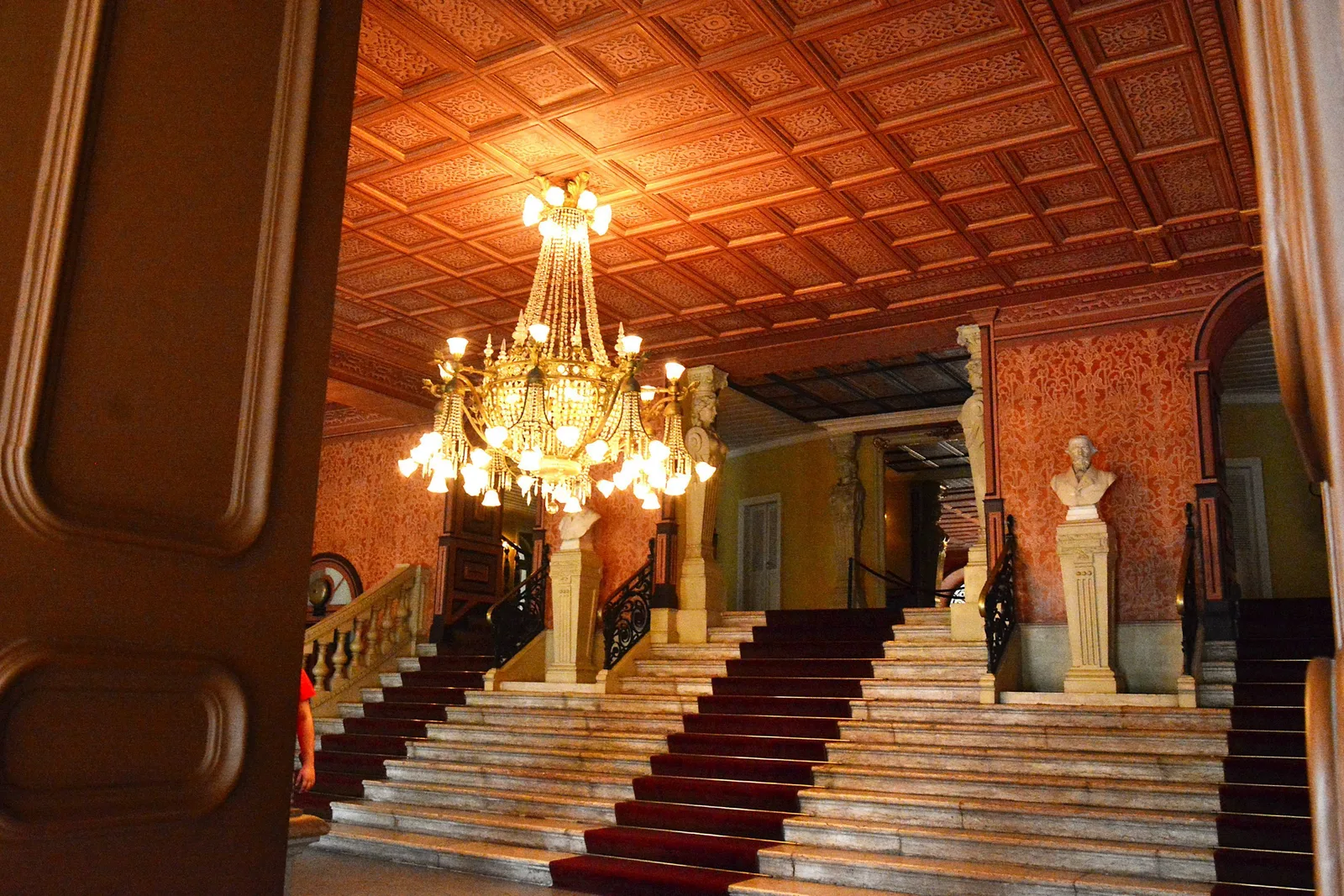
  • The main staircase inside the Theatro da Paz, red carpet running up between orange walls under a many-armed crystal chandelier
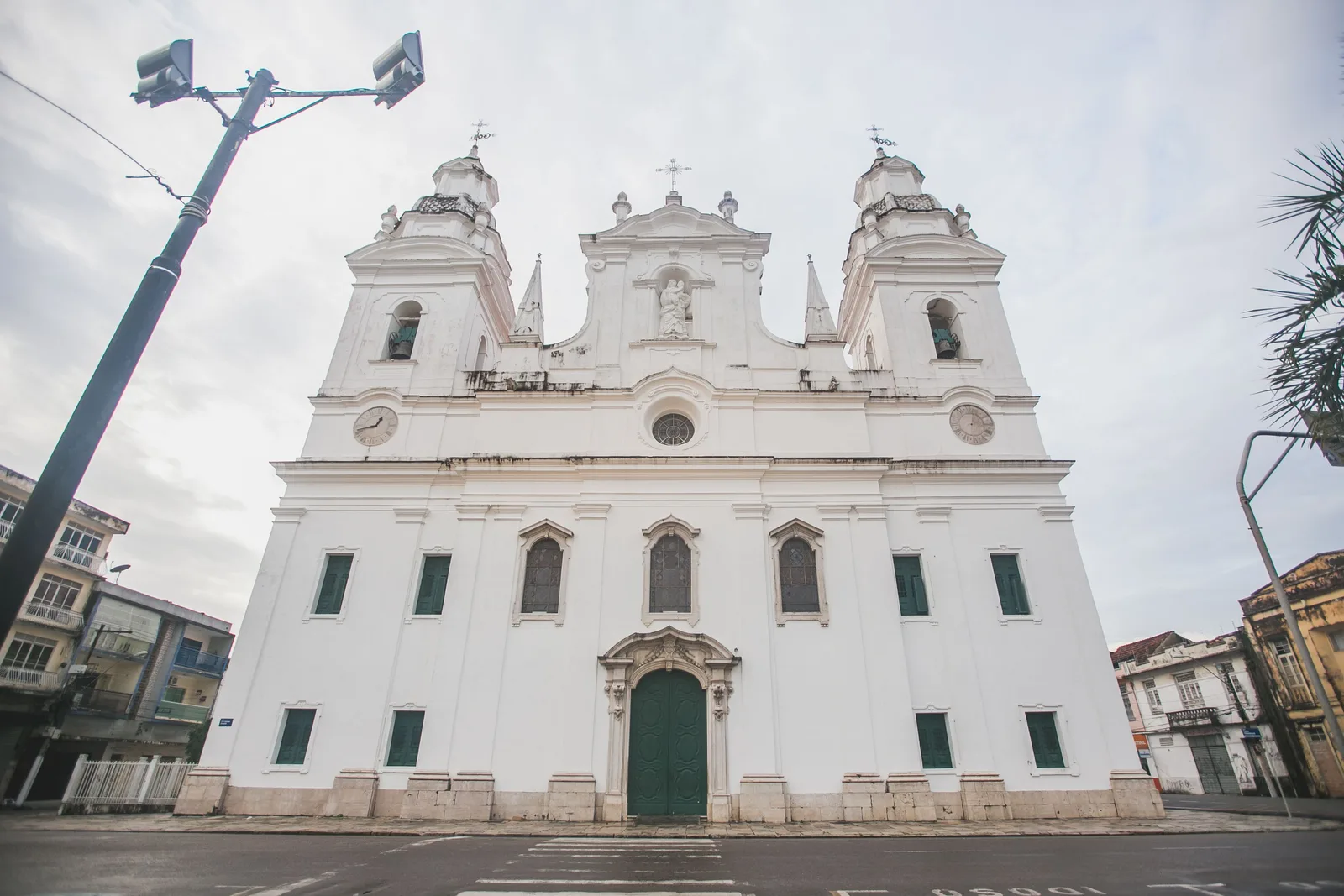
  • The white twin-towered front of the Catedral da Sé in Belém seen straight on under a flat pale sky, low buildings running away on either side
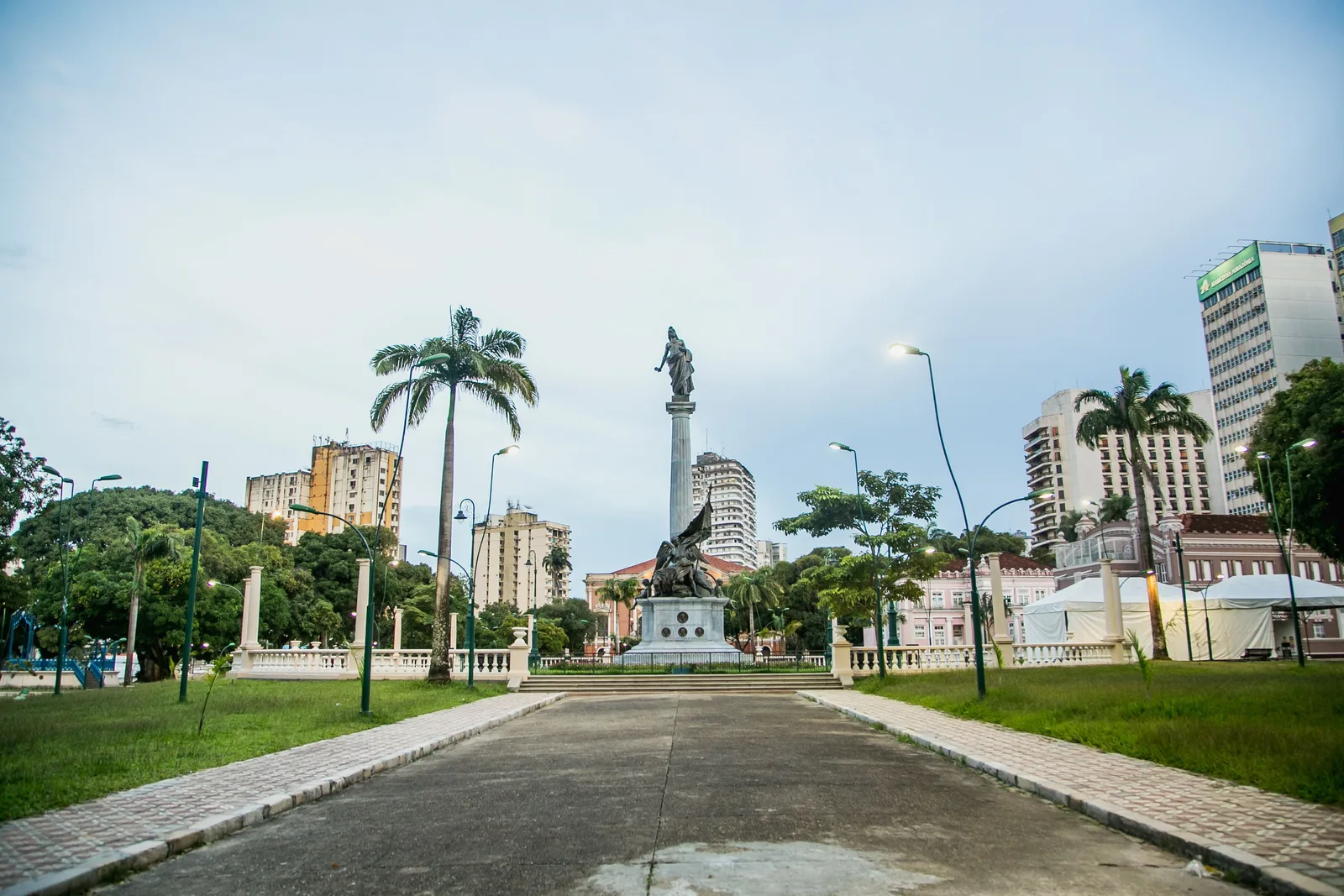
  • The Praça da República in Belém: a wide paved avenue between clipped hedges leading to a tall stone monument, palms and city buildings behind
  • Two dancers in bright printed clothes moving under colored lights at a night party in Belém, a crowd behind them
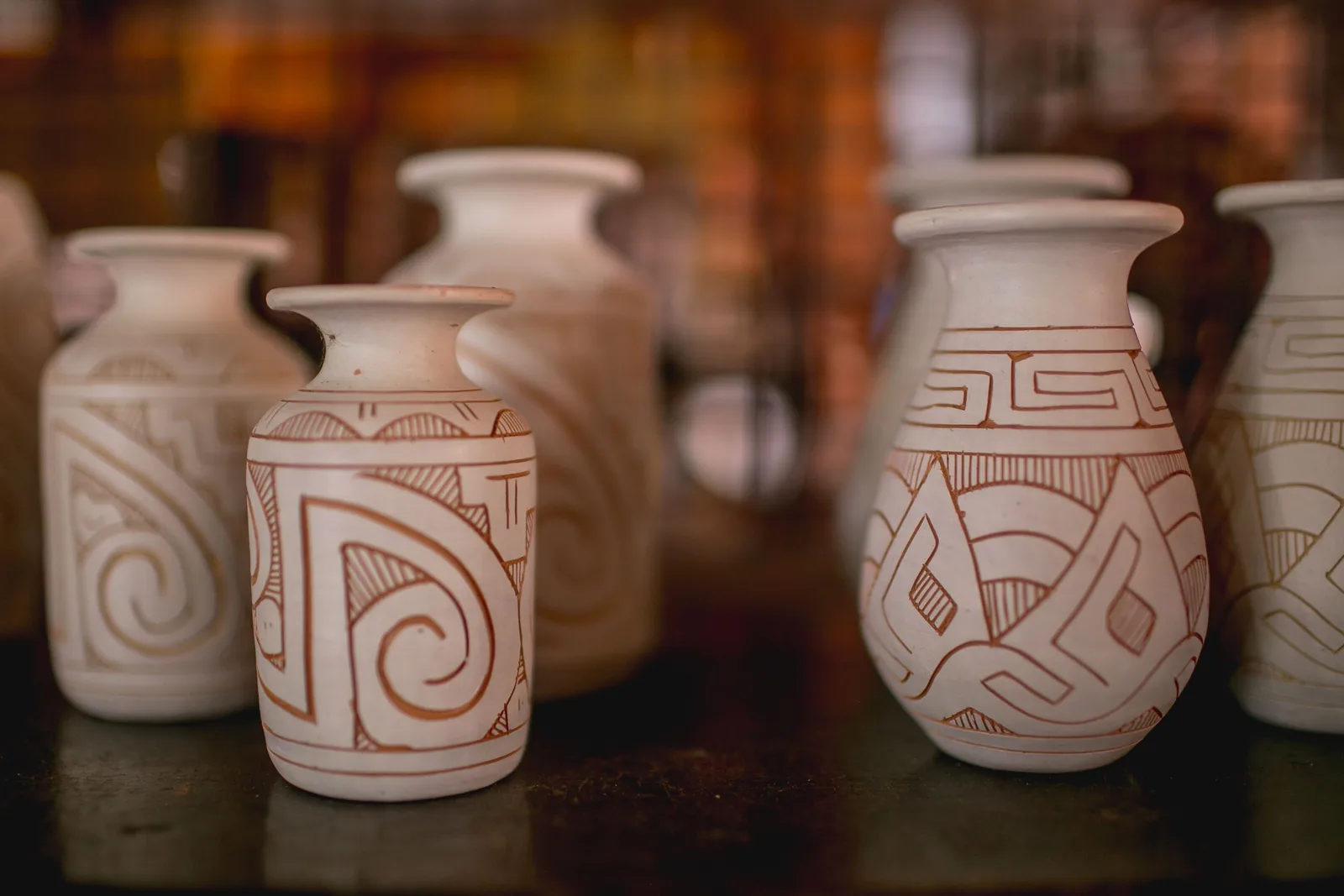
  • Pale unglazed pots lined up on a bench, each one cut with the swirling geometric line-work of Marajoara ceramics
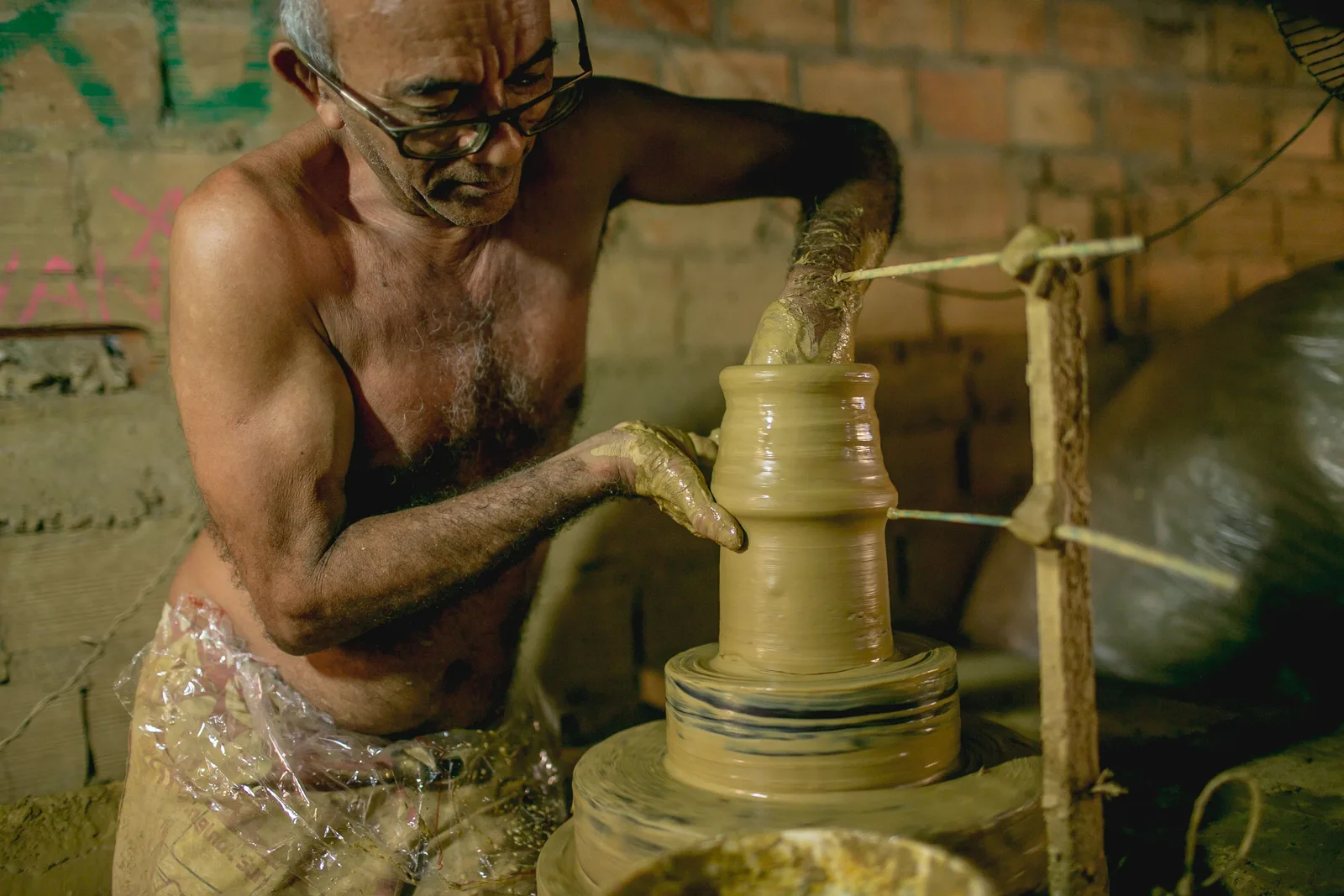
  • A potter working wet clay into a tall vessel on a wheel in an open brick workshop at Icoaraci
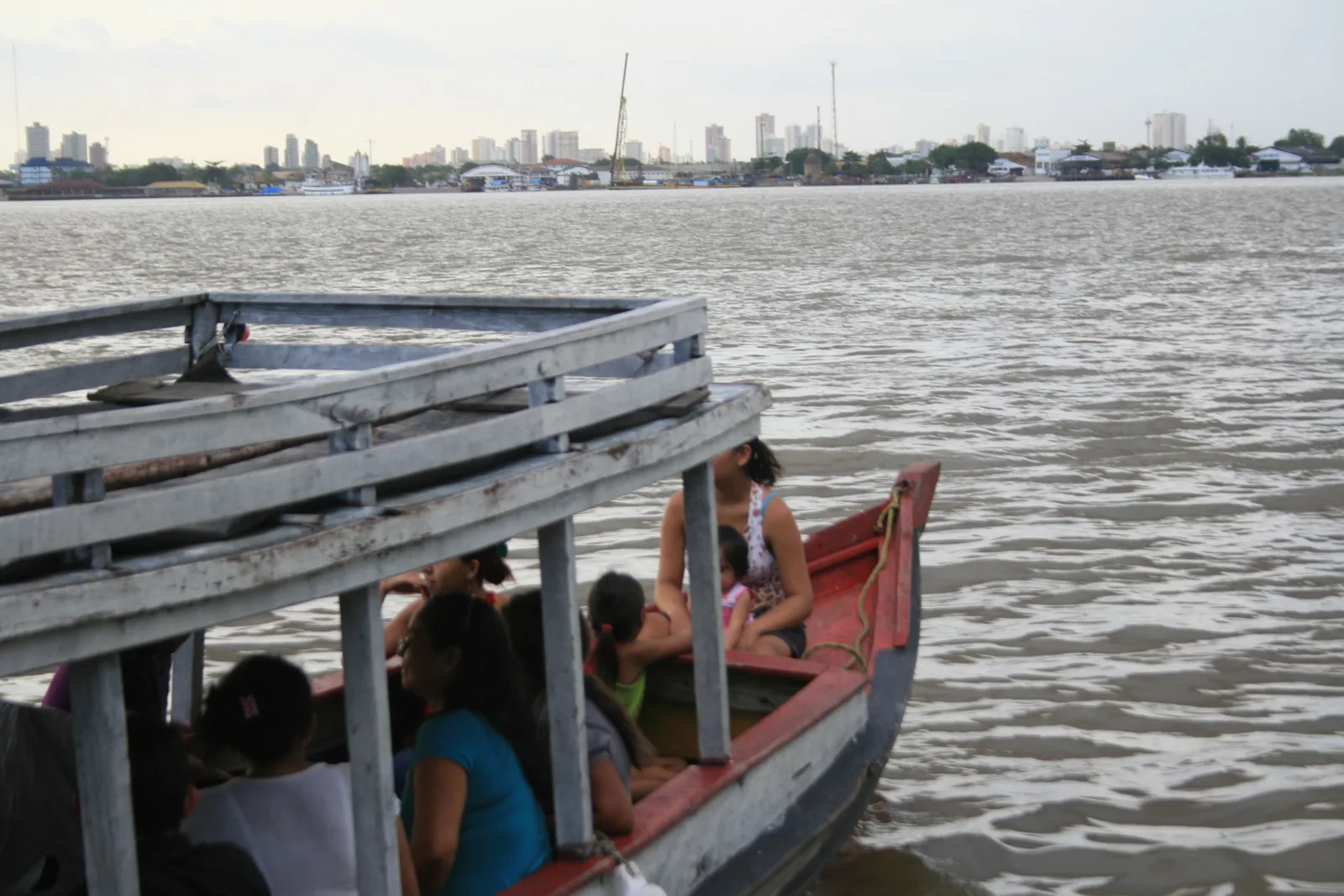
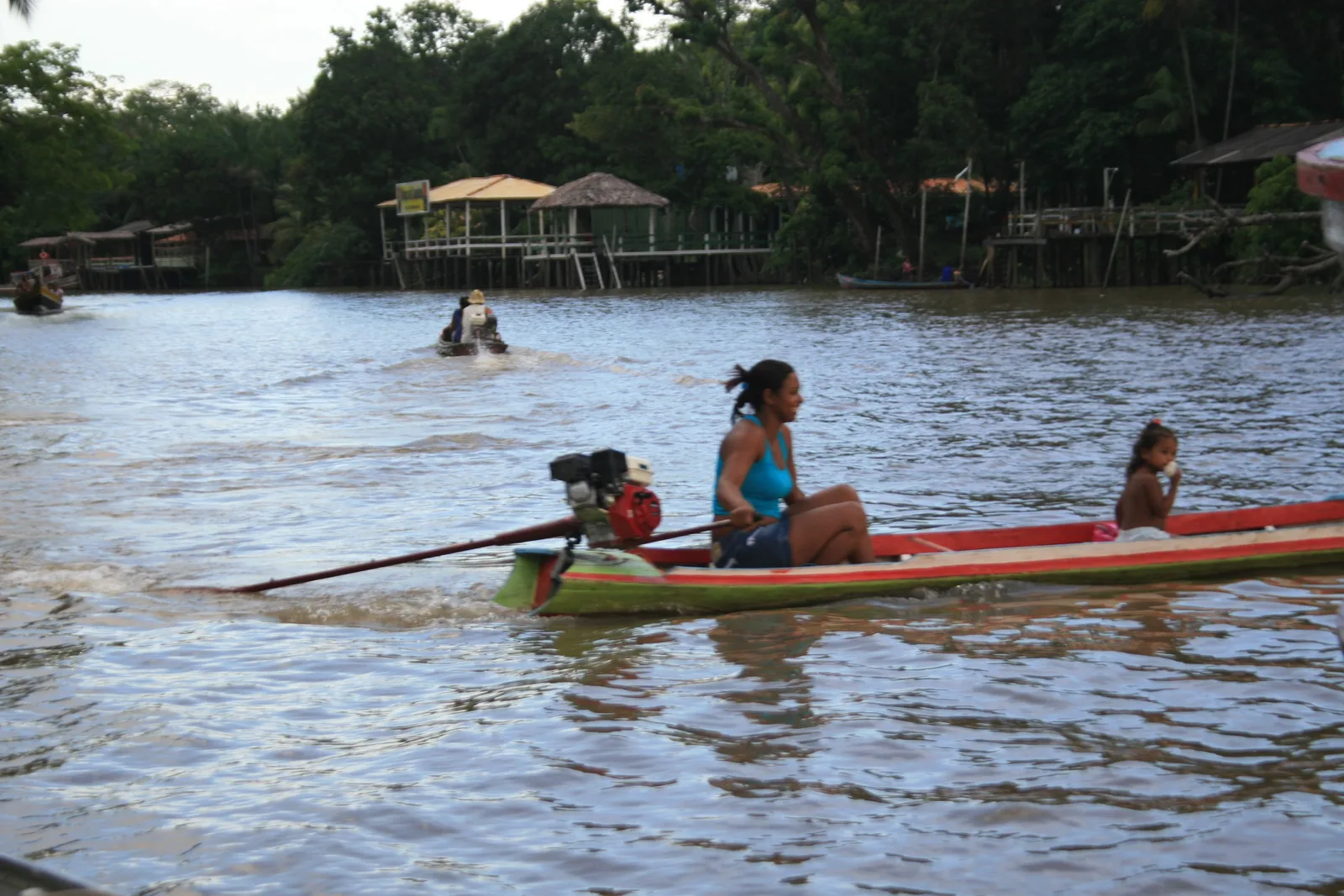
  • A family sitting in a narrow red canoe on the brown water off Ilha do Combu, wooden houses on stilts along the bank behind them
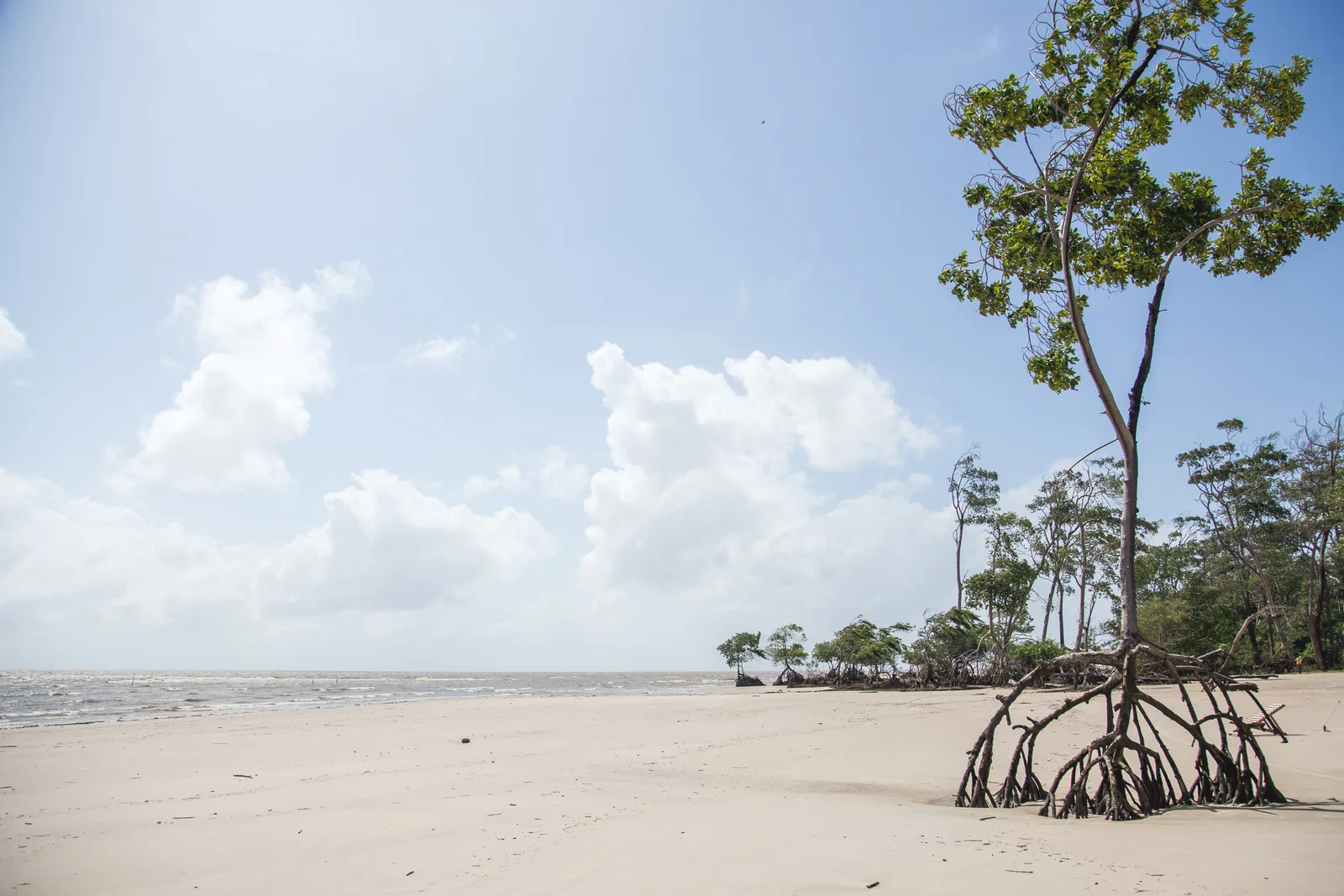
  • A mangrove tree in full leaf standing on dry sand at Praia da Barra Velha on Marajó, propped on its exposed stilt roots, the sea far out under a big sky
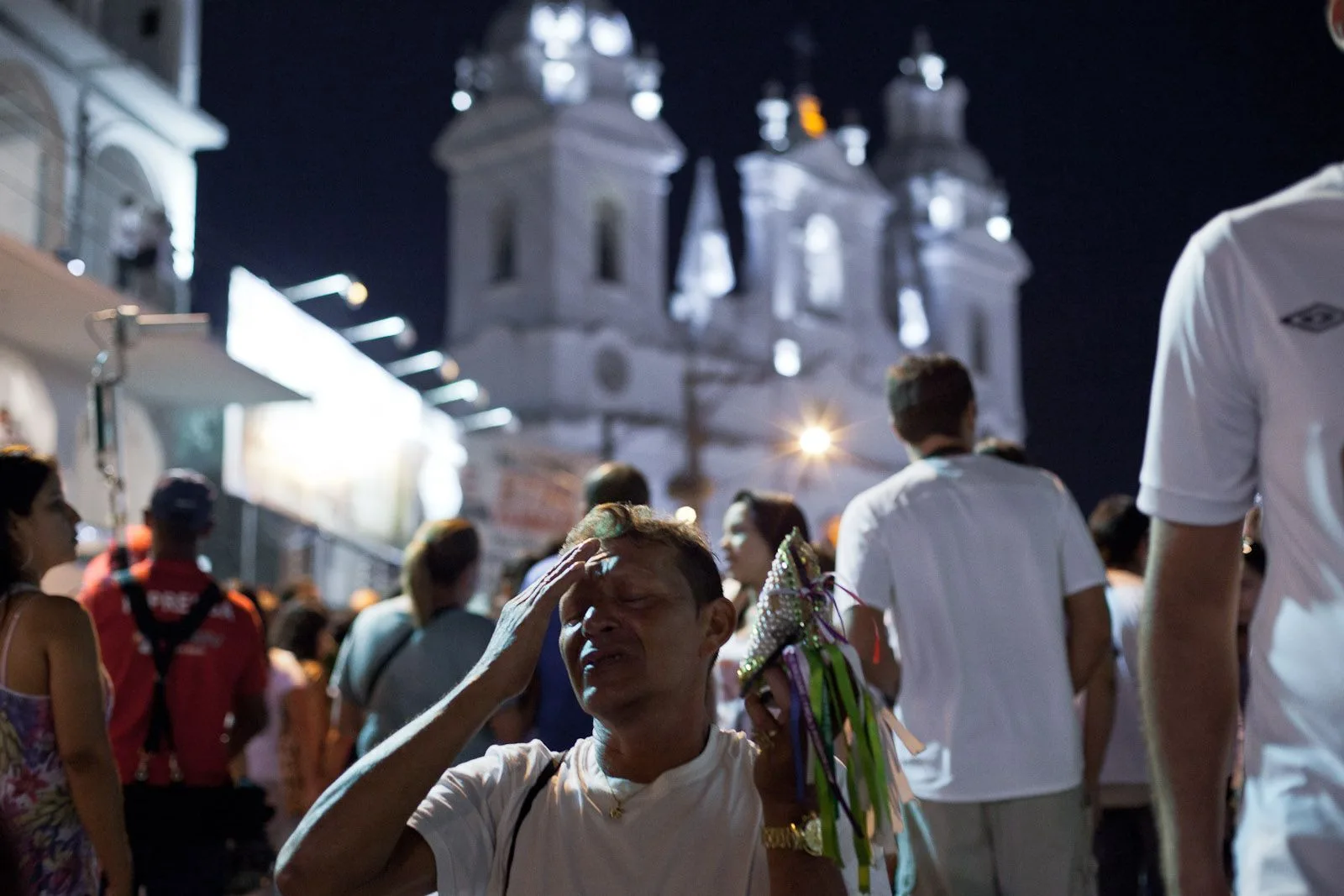
  • A floodlit white church with lit towers rising behind a crowd of people filling a street at night during the Círio
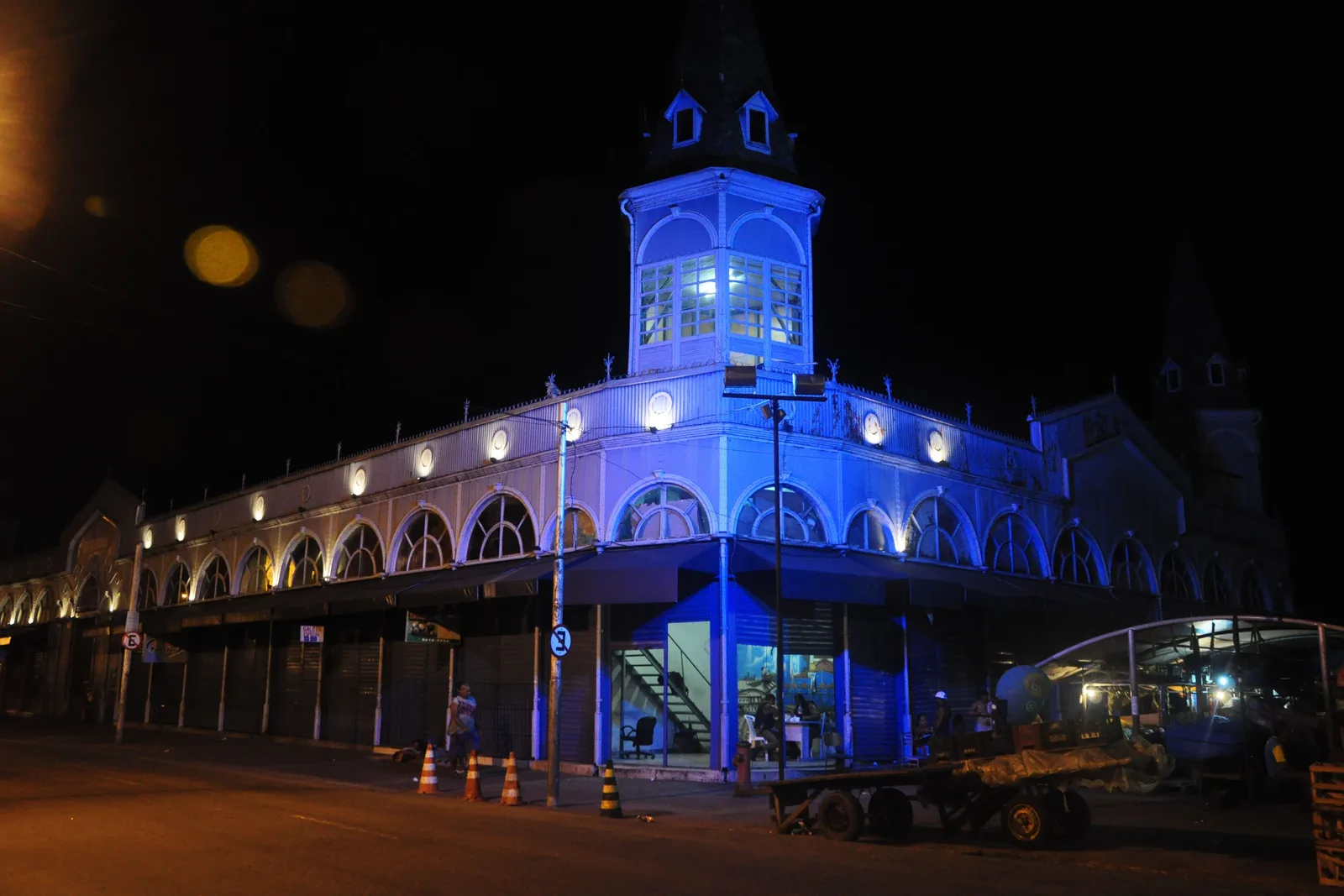
  • The Ver-o-Peso market pavilion lit deep blue after dark, its arcade of arches and its glazed corner turret picked out against a black sky

Orientation

The city, before the pictures.

What this page covers, what it costs, and how you get to it.

General Info

The other end of the Amazon

Belém stands where the Amazon finally reaches the Atlantic — a city of about 1.4 million on a bay of brown river water, founded by the Portuguese in 1616 to hold the river’s mouth against everyone else. It is a working port, a state capital and, since 2015, a UNESCO Creative City of Gastronomy. That last one is the reason to come.

The food here is not Brazilian food with an Amazonian accent. It is a separate cuisine, built on ingredients most of the country never sees: tucupi, the yellow broth pressed and fermented out of wild manioc; jambu, a leaf that makes your mouth buzz and go numb; maniçoba, manioc leaf cooked for a week to render it safe; and açaí, which in Pará is thick, unsweetened and eaten with fish and manioc flour as a savory meal. Almost none of it travels. You eat it here or you do not eat it.

The rest of the city is a rubber-boom capital that never quite got rebuilt over. There is an 1878 opera house, added to the UNESCO World Heritage List in July 2026, a basilica that draws one of the largest religious gatherings on earth every October, a colonial fort on the point, and a 400-year-old market on the waterfront. It rains hard most afternoons and everyone plans around it. Two or three nights covers the city properly; Marajó, out at the mouth, is a further two if you want it.

Where It Is

On the bay, a degree and a half off the equator

Belém sits on the Guajará bay, on the eastern side of the Amazon delta and about 120 km from the open Atlantic. It is roughly 2,500 km north of São Paulo — a bit under four hours in the air — and about 1,300 km east of Manaus, which is the other end of the same river system and a completely separate trip.

Belém Belém

1.46° S, 48.50° W

See the North on the interactive map

Cost

One of the cheapest cities in Brazil to eat well in

Belém is not an expensive destination. The flight is the largest single number, hotels are ordinary Brazilian-capital prices, and the food — which is the whole point — is startlingly cheap at the bottom and reasonable at the top. A bowl of tacacá from a street stand costs about two dollars. The two things that move a budget are the Marajó extension and the week of the Círio, when the city sells out and rates rise.

Estimated daily budget, per person

Budget

$55 / day

A simple pousada in Batista Campos or Campina, market lunches, tacacá from a stand, buses and the occasional ride app.

Mid-range

$110 / day

A comfortable hotel in Nazaré or Umarizal, a proper paraense restaurant most nights, ride apps everywhere, a day out to the islands.

Comfortable

$210 / day

The best rooms in the city, the tasting menus the UNESCO listing is built on, private guiding and a chartered boat to Combu.

Per person per day once you are in Belém — flights not included. Two people sharing a room lands well under the double of one.

What things cost

  • Mid-range hotel room, per night $53 R$270
  • Simple pousada room, per night $27 R$140
  • Tacacá from a street stand $2 R$10
  • Açaí with fried fish at the market $6 R$30
  • Lunch for two, paraense restaurant $24 R$120
  • Dinner for two at Estação das Docas $47 R$240
  • Theatro da Paz, guided visit $2 R$10
  • Museu Goeldi park, entry $0.60 R$3
  • Mangal das Garças, the paid spaces $4.30 R$22
  • Boat to Ilha do Combu, round trip $4 R$20
  • Ferry to Marajó, each way $6 R$30
  • Ride app, airport to Nazaré $6 R$30
  • São Paulo–Belém, round trip $200 R$1,020

The Theatro da Paz and Goeldi park figures are the published prices at the theater and the museum. Everything else on this list is an estimate.

Wednesdays are cheap: the Theatro da Paz waives the guided-visit fee for walk-ups, and Mangal das Garças is free to enter every day it opens.

Cards work almost everywhere, and Pix works everywhere. Carry some cash anyway — the tacacá stands and the market stalls are a cash trade.

The Círio fortnight in October is the one week of the year the city runs out of rooms. Book months out or come in a different month.

Checked October 2026 and converted at R$5.10 to the dollar. Estimates, not quotes — the shape of a budget rather than a price anyone can be held to.

Safety

A working northern capital, treated as one

6 /10

Our rating — not a dangerous city for a visitor who is paying attention, but not a place to wander the old streets after dark either.

Belém is a big port capital with real crime and almost none of it aimed at foreigners. The practical risk is theft: phones, bags and cameras, in crowds and on empty streets. Pará has cut its homicide rate by roughly half since 2017, the largest fall of any state in the North, and the neighborhoods visitors actually sleep in are calm. The two places to be deliberate are Ver-o-Peso, which is the busiest pickpocket ground in the city precisely because it is the best thing in it, and the Cidade Velha after the museums shut, when a lively colonial quarter becomes a dark and empty one in about twenty minutes.

  • Go to Ver-o-Peso early and go light. It is at its best between 6:00am and 9:00am, when the boats are unloading, and that is also when it is packed. Take a phone and some cash and leave the rest at the hotel.
  • Treat the Cidade Velha as a daytime quarter. The fort, the cathedral and the Casa das Onze Janelas are fine and busy by day. Once they close, move to the Estação das Docas or the Doca in Umarizal, which are lit, staffed and busy into the night.
  • Use Uber or 99 after dark rather than walking between neighborhoods. Rides across the middle of the city run a few dollars, which makes this an easy decision.
  • Guamá and Terra Firme are the districts consistently named as ones to avoid, and there is nothing in either that a visitor needs. Ride apps will take you around, not through.
  • The heat and the sun do more damage than anyone here. It sits above 31°C every month of the year with humidity to match, and the UV index is very high in every month of the year. Hat, water, shade at midday.
  • Yellow fever vaccination is recommended by the CDC for travel in Pará, and it takes about ten days to become effective, so it is a decision you make weeks out rather than at the airport. Ask a travel clinic about the rest of your itinerary at the same time.
  • Drink bottled or filtered water, and be sensible about ice outside restaurants. Tacacá and açaí from a busy stand with high turnover are fine; the empty stall at the end of the row is the one to skip.

Getting There

One nonstop from the US, and a lot of connections

Belém/Val-de-Cans International (BEL) is about 8 km north of the historic center and handled about 4 million passengers in 2025, roughly level with the record it set the year before. It is the busiest airport in the eastern Amazon and it is genuinely well connected — for a city most Americans have never heard of.

  • Gol flies nonstop from Miami. Azul’s Fort Lauderdale flight became seasonal in June 2026 and now runs only around holidays and in December and January. Price both first; outside those dates, everything else is a connection.
  • Otherwise connect through São Paulo (GRU), Brasília or Fortaleza. São Paulo to Belém is a bit under four hours and there are flights all day on Latam, Gol and Azul.
  • TAP flies Lisbon to Belém year-round, about eight hours, which makes this an unusually easy add-on to a Europe trip.
  • Avianca flies Bogotá, and Air France flies Cayenne in French Guiana — the shortest international hop out of the city and a genuinely odd routing if you want one.
  • Belém to Manaus is roughly two hours in the air and there are daily flights. There is no useful road between them: the two ends of the river are joined by water and by aircraft, not by highway.
  • Riverboats still run east and west from the Belém waterfront on multi-day schedules, hammock class on the open deck. It is a real way to travel and it is not a shortcut — budget days, not hours.

Getting Around

Walk the old center, ride everything else

You do not want a car here. The historic core is compact and best on foot, ride apps are cheap and everywhere, and anything past the city limits is a boat.

  • Ver-o-Peso, the Estação das Docas, the Cidade Velha and the Mangal das Garças sit within about two kilometers of one another along the waterfront. That is a morning’s walk with stops, and it is the best way to see the city.
  • Nazaré and Batista Campos, where most of the good hotels and restaurants are, sit a kilometer or two inland from that strip. Walkable in daylight, a three-dollar ride at night.
  • Uber and 99 both work across the whole city and are the default for anything after dark. Ordinary buses run everywhere and are cheap, but they are not the ride to work out on a short visit.
  • Boats to Ilha do Combu leave from the small quays on the south side of the city, and the crossing takes about twenty minutes. Most people go with a restaurant or a guide who arranges the boat as part of the day.
  • For Marajó the vehicle ferry leaves from Icoaraci, about 20 km north of the center, and a fast catamaran leaves from the Belém waterway terminal downtown. The ferry takes about three hours to the port at Camará, then a bus or van on to Salvaterra and Soure; the fast catamaran goes straight to Soure in about two hours, depending on the tide.
  • Nothing runs to a tight schedule and the afternoon rain will hold you up. Build slack into the day rather than a plan that assumes none.

The big four

What the city is actually built on.

A market, a table, a procession and a fort. Three of them are places you go and one of them is a way of eating that exists almost nowhere else.

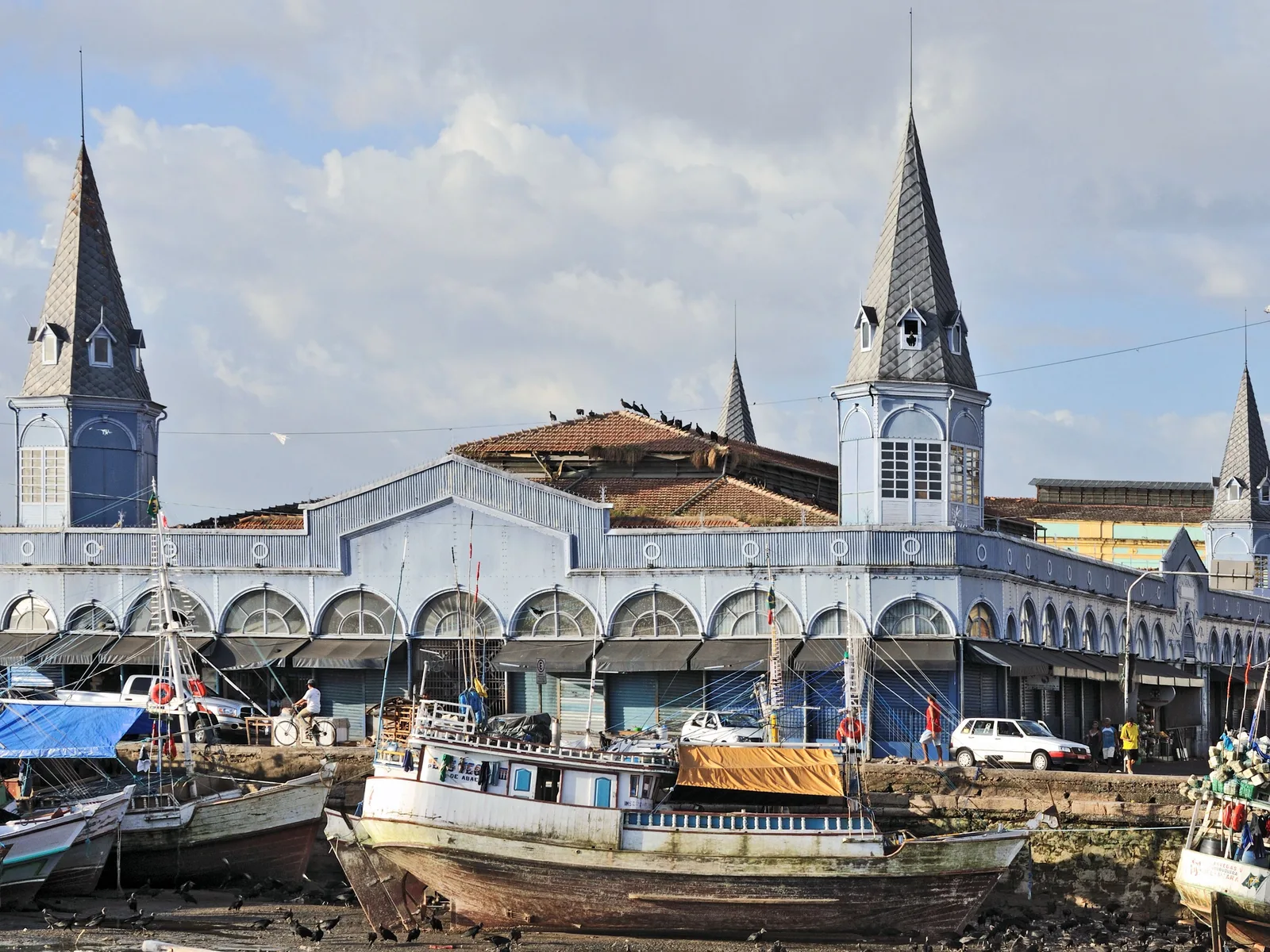
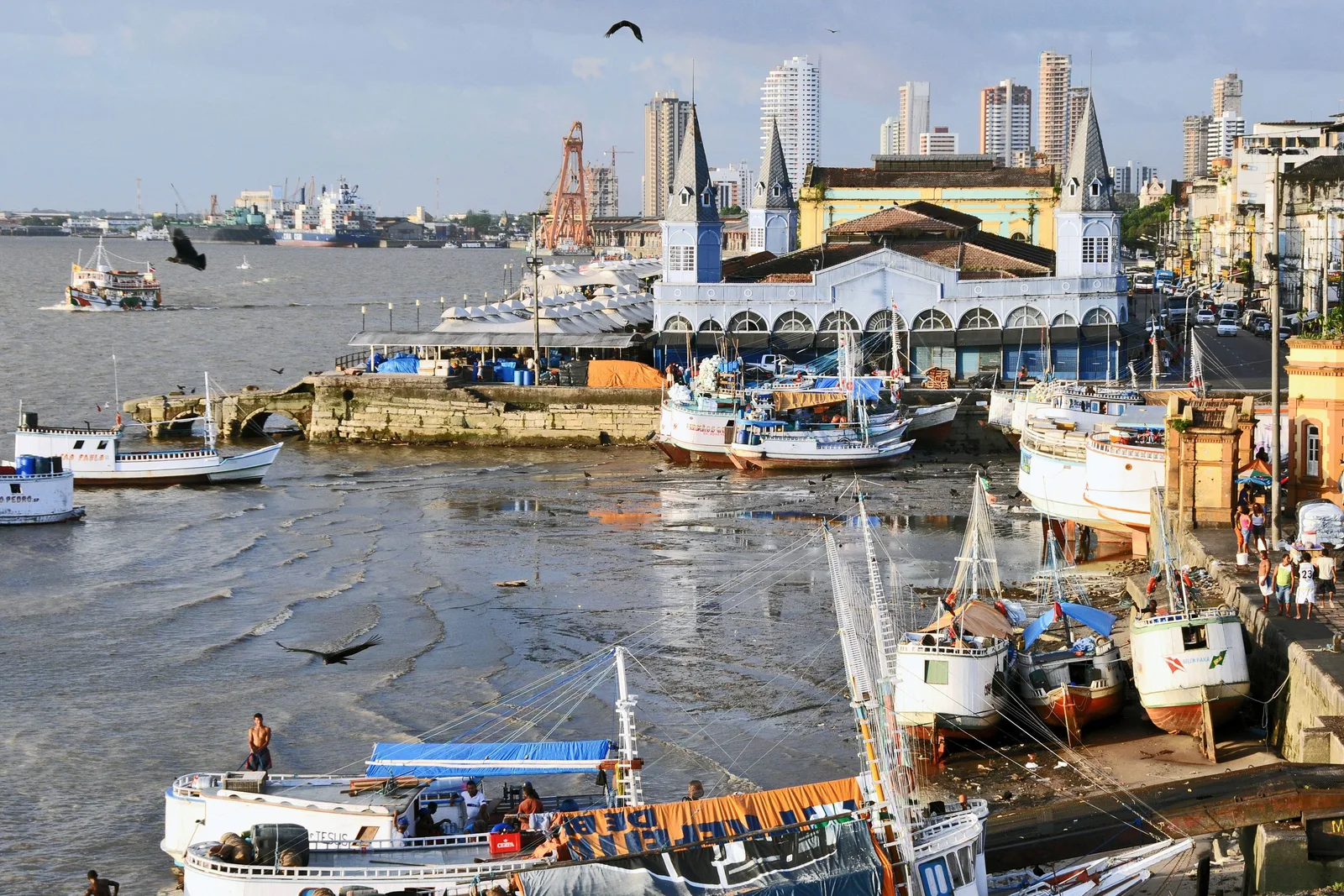
The Ver-o-Peso market from the waterfront: the long white iron pavilion with its four turreted towers under a pale sky, wooden fishing boats hauled up and moored in a line in front of it 01

Trading on the same waterfront since 1625

The Ver-o-Peso market

Founded
As a customs post in 1625
Iron pavilion
Shipped from Europe, opened 1901
Best hour
6:00am to 9:00am

The name means “see the weight.” This was where the Portuguese crown weighed and taxed everything that came out of the Amazon, from 1625, and four hundred years later the boats still tie up at the same wall and unload at the same hour. The wrought-iron pavilion with the four turrets came later — prefabricated in Europe, put together on the riverbank and opened in 1901 with rubber money, in deliberate imitation of the great covered markets of Paris. The whole complex has been a listed national monument since 1977.

Go at dawn and it is a working fish market: pirarucu, filhote, dourada and tambaqui coming off the boats onto the stone. Go inland from the water and it becomes something stranger — rows of stalls selling bottled bark, resins, seeds, roots and perfumes, sold as remedies and charms, alongside açaí by the basket and every Amazonian fruit you have never heard of. Eat here. The counters along the back do fried fish with açaí and manioc flour, and it is one of the best cheap meals in Brazil.
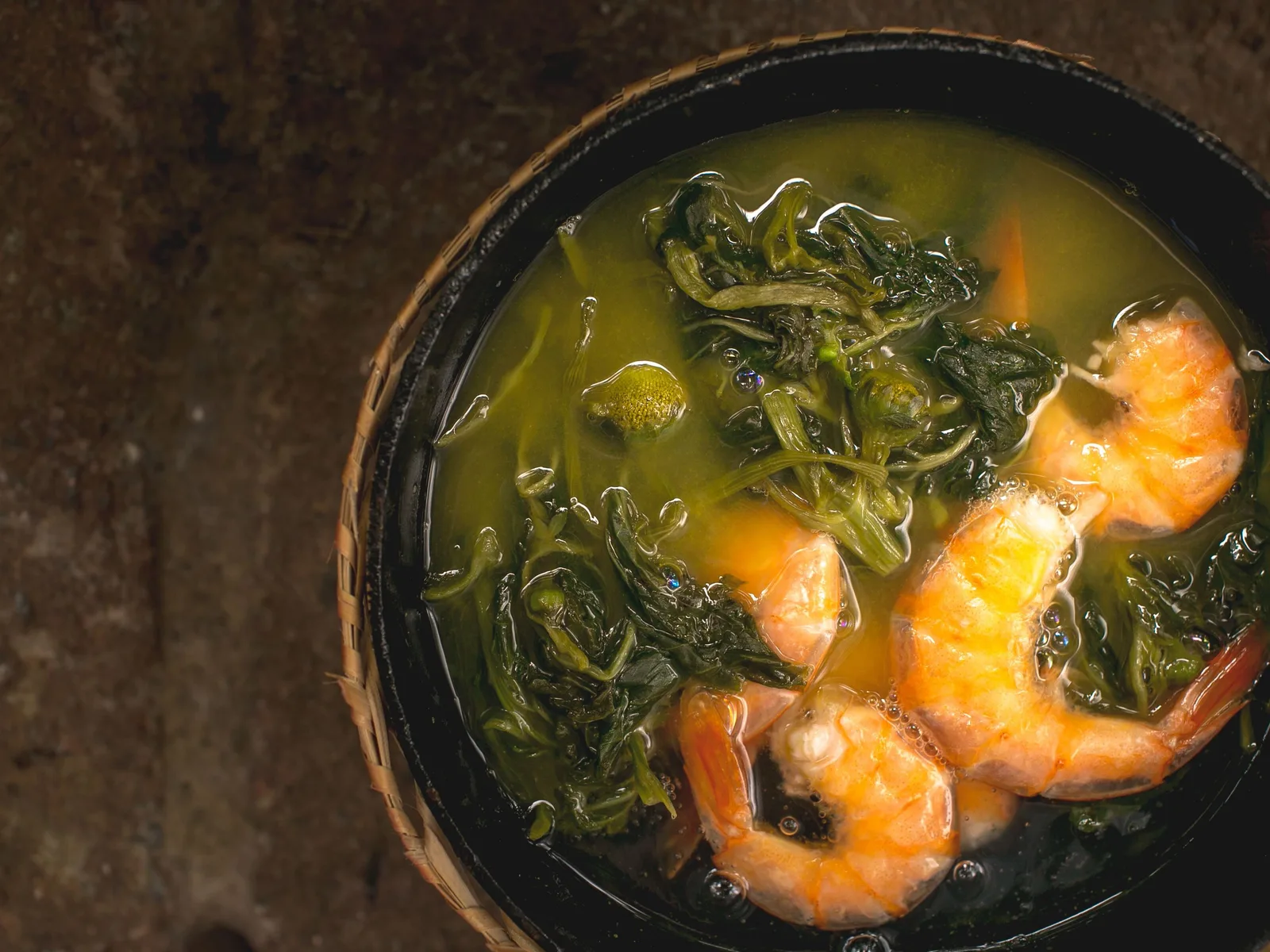
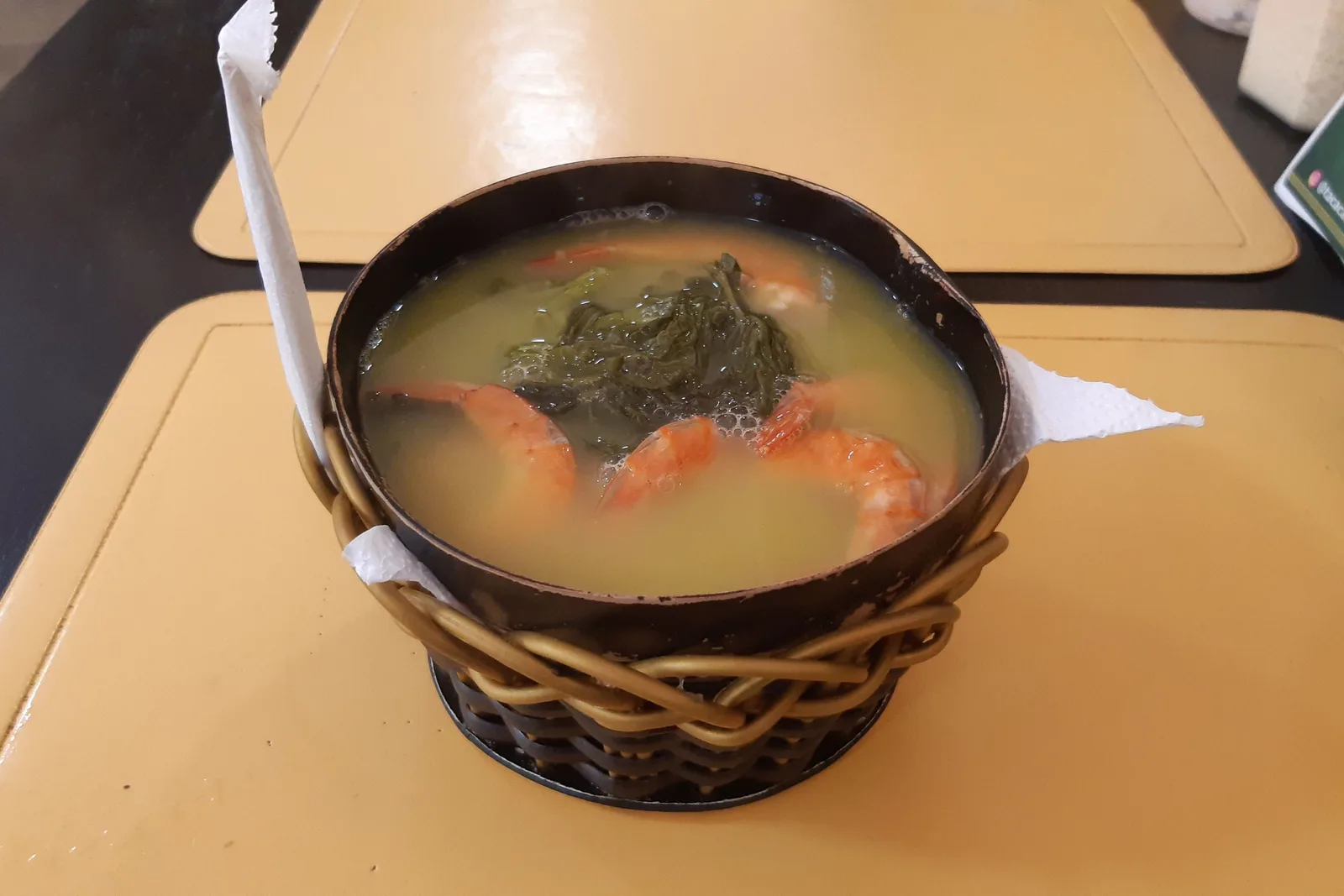
A dark bowl of tacacá seen from above: cloudy yellow broth with three whole pink shrimp and a tangle of dark green jambu leaves floating in it 02

A separate cuisine, not a regional accent

Tucupi, jambu and the Amazonian table

UNESCO
Creative City of Gastronomy, 2015
The dish to start with
Tacacá, sold from late afternoon
Cheapest good meal
Açaí with fried fish, about $6

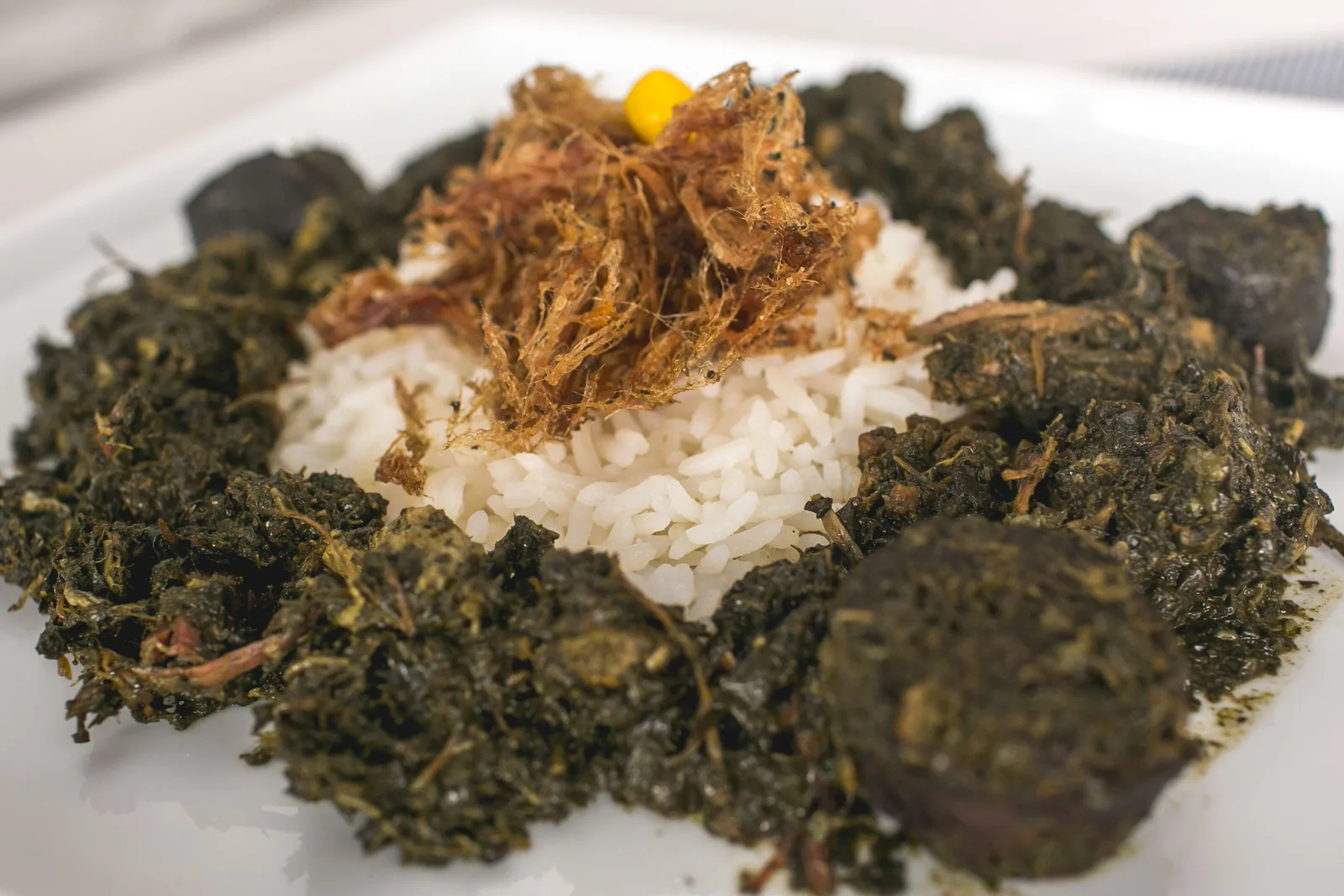
Tucupi is the yellow liquid pressed out of grated wild manioc and then boiled and fermented for days, because raw it is poisonous. Jambu is a leaf that fizzes and numbs your mouth like a mild anesthetic. Put them together with dried shrimp and tapioca gum in a gourd and you have tacacá, which is sold from little street counters in the late afternoon and is unlike anything else you will eat in South America. Maniçoba takes it further: manioc leaf ground and simmered for about a week to break down the same toxin, then cooked with pork and served over rice, black and rich and completely unfamiliar.

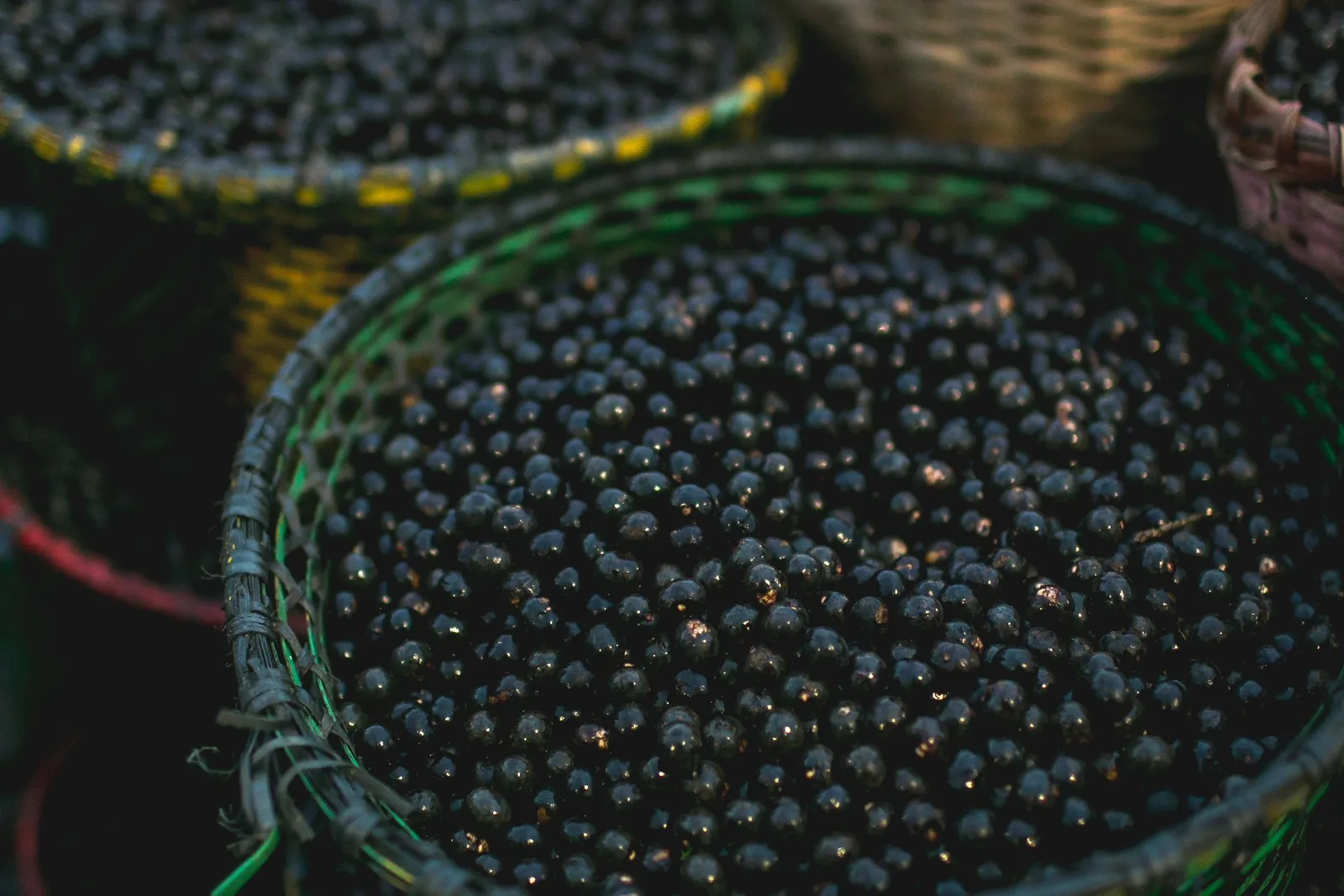
Then there is açaí, and this is the one that surprises Americans most. In Pará it is not a smoothie bowl. It is pressed thick from the fresh fruit, unsweetened and slightly savory, eaten out of a bowl with manioc flour stirred through it and fried fish or dried shrimp alongside — a working lunch, not a dessert. UNESCO named Belém a Creative City of Gastronomy in 2015 on the strength of all of this, and the city has spent the decade since turning it into one of the most interesting restaurant scenes in Brazil.
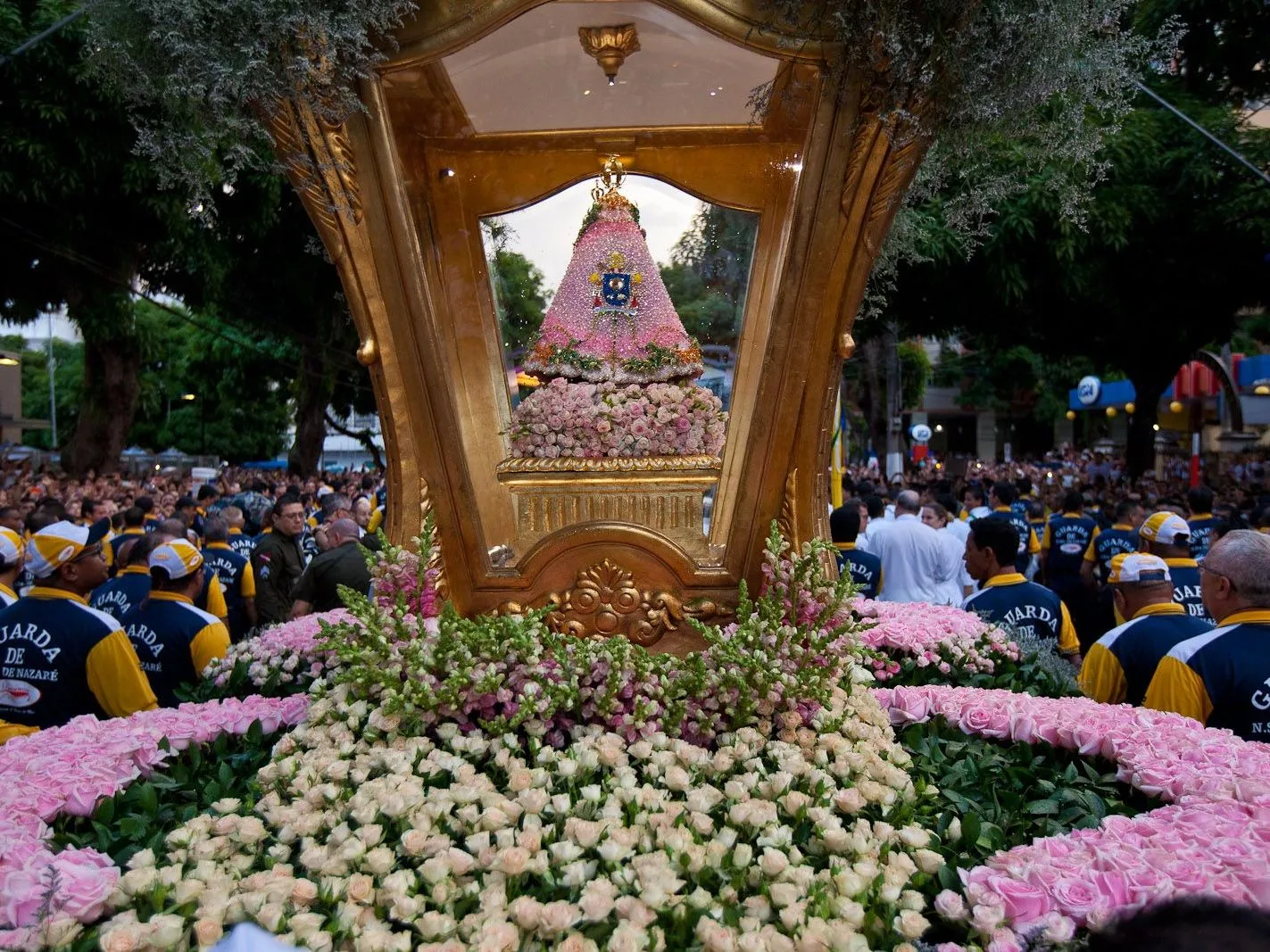
The Círio carriage in the middle of a dense crowd: a gilded canopy over the small robed image of Our Lady, the base banked with pink and white flowers, blue-uniformed guards pressed around it and the street packed solid behind 03

Two million people, on one Sunday

The Círio de Nazaré

When
Second Sunday of October
Next
11 October 2026, 10 October 2027
The walk
About 3.6 km, cathedral to basilica

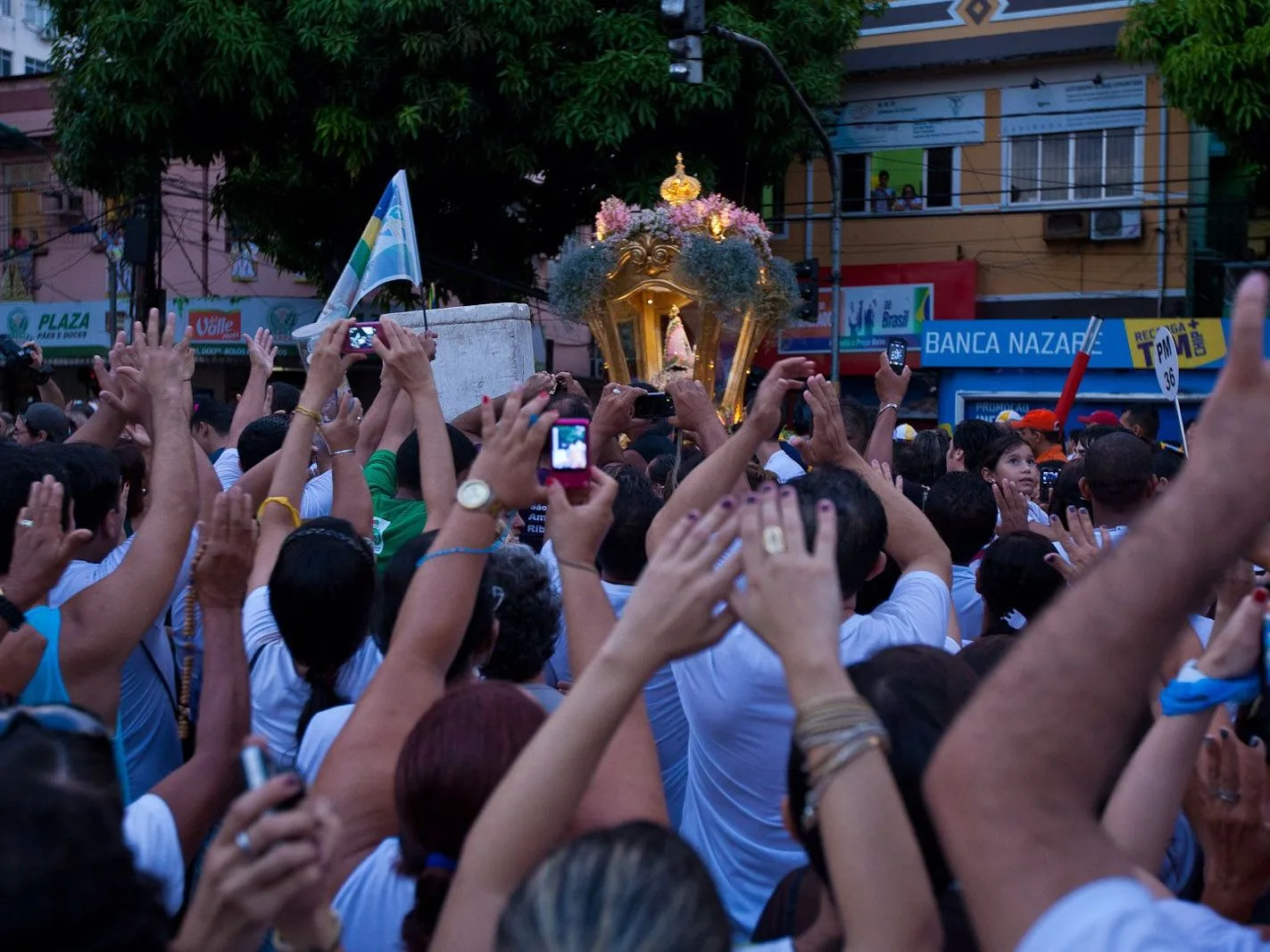
On the second Sunday of October, an image of Our Lady of Nazareth is carried 3.6 kilometers from the cathedral in the old city to the basilica in Nazaré, and roughly two million people come out for it. The 2025 procession was put at 2.5 million. It is one of the largest religious gatherings anywhere on earth, and it has been happening since 1793.

What makes it strange to watch is the rope. A thick cable runs from the carriage back into the crowd, and thousands of people hold it for the whole route as a promise kept — barefoot, hours on end, packed tight enough that letting go is not really an option. The procession is one day inside a fortnight of them, including a candlelit transfer through the city the night before and a river procession of decorated boats before that. If your dates land on it, book everything months ahead. If they do not, the basilica is worth an hour anyway.

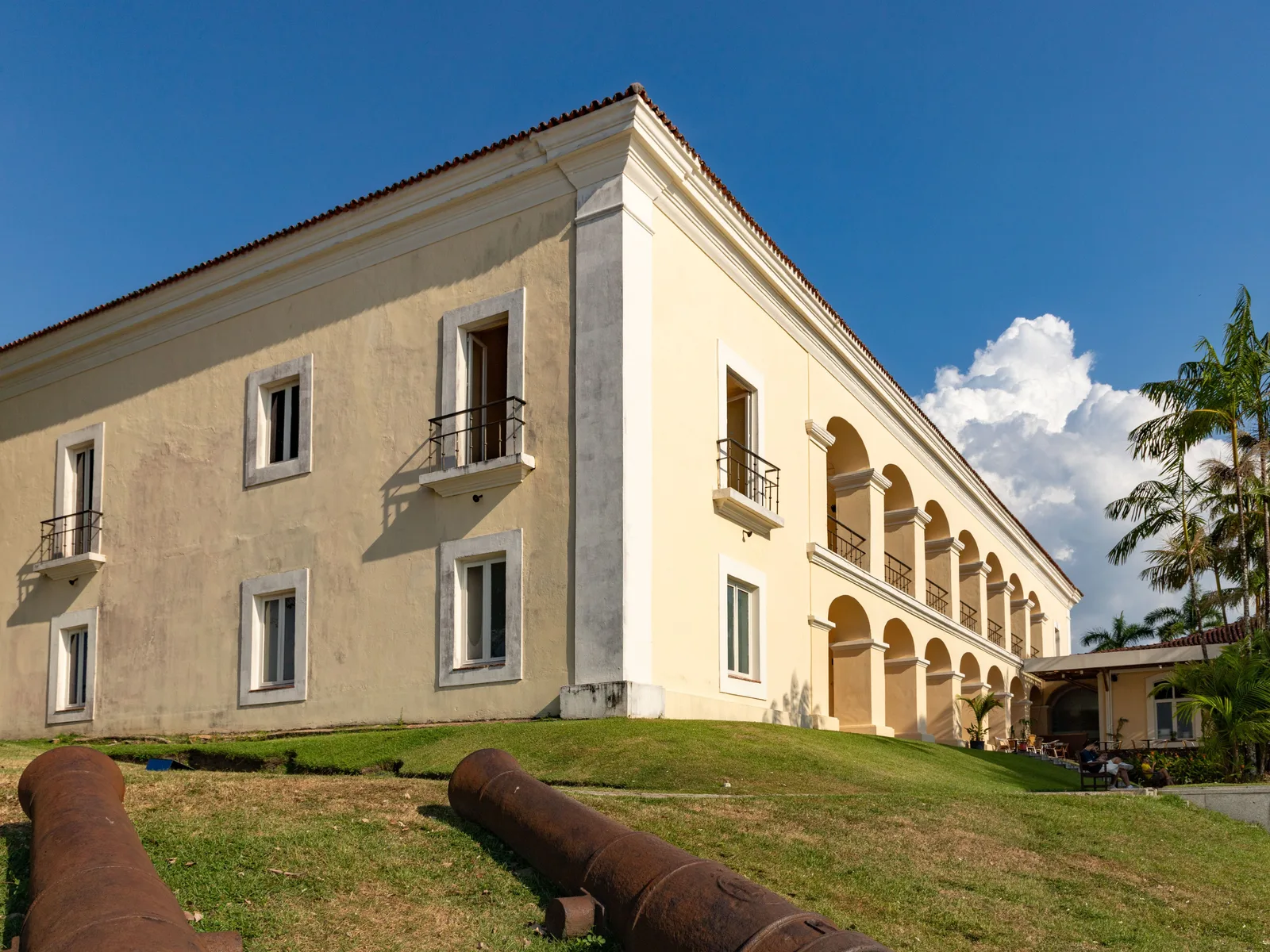
The Casa das Onze Janelas: a long two-story colonial house painted pale yellow with a first-floor arcade and iron balconies, two old cannons lying on the grass in front of it 04

Where the Portuguese put the first stone in 1616

The Cidade Velha

City founded
12 January 1616
On the point
Forte do Presépio, the original fort
Open
Tuesday to Sunday, 9:00am to 5:00pm

Belém began as a fort on a point of land, built to keep the Dutch, English and French out of the river’s mouth, and the fort is still there. The Forte do Presépio — also called the Forte do Castelo — sits above the water at the tip of the old town with its cannons still pointing at the bay, and holds a small archaeology museum whose best material is Marajoara pottery a thousand years old. Next door, the Casa das Onze Janelas is an eighteenth-century governor’s house turned contemporary art museum, with a terrace over the water that is the best free view in the city.

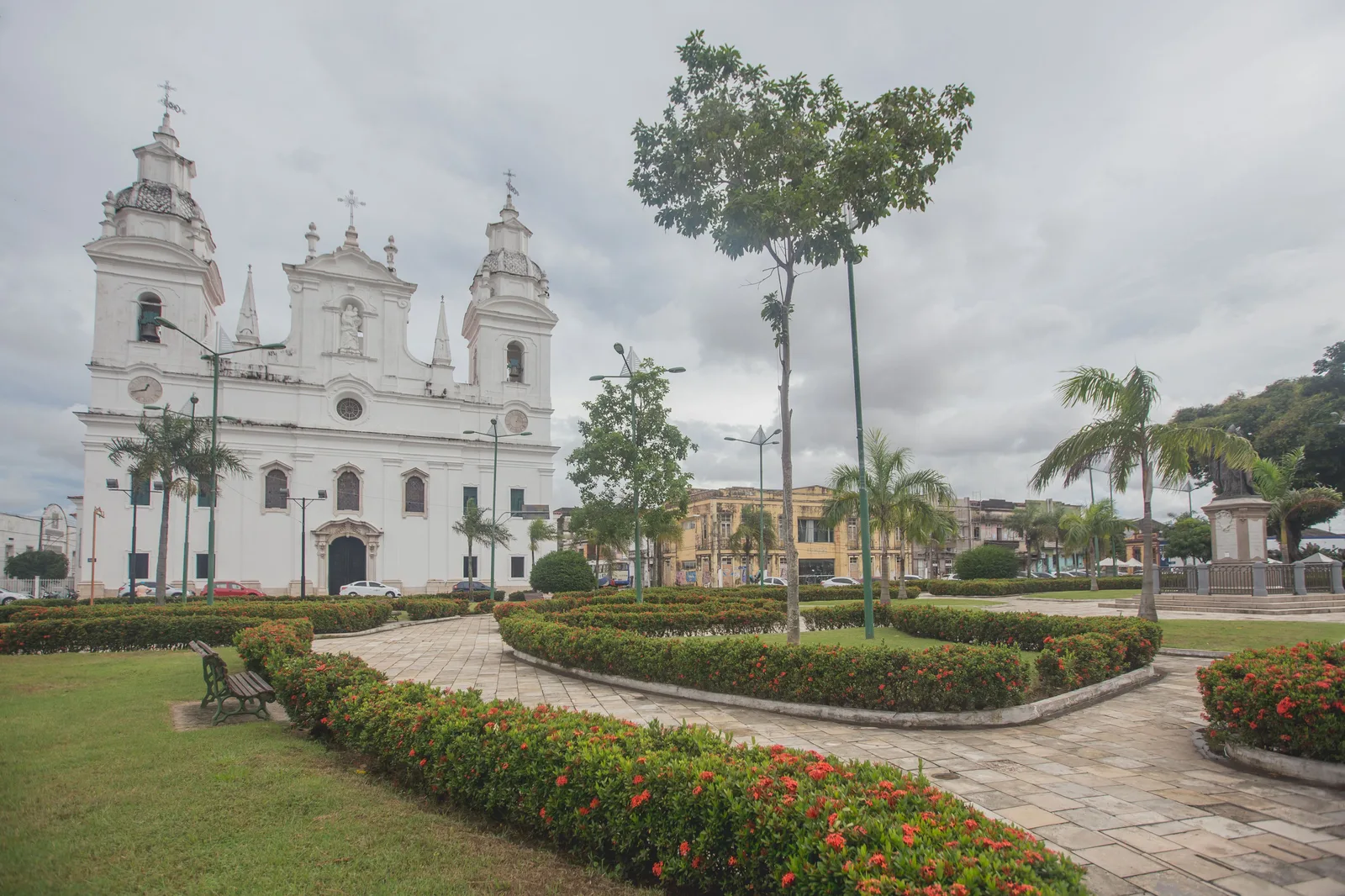
The rest of the quarter is a few square blocks of low colonial streets, some of them beautifully restored and some of them not, with the white Catedral da Sé at the center. It is a morning, easily, and it pairs naturally with Ver-o-Peso a few hundred meters up the shore. Both museums close on Mondays, and both quarters change character sharply once they shut for the evening.

What to actually do

Five ways to spend a day here.

Most of this is walkable or a short ride. Pick a category and scroll sideways through it.

Food & markets

  • A black bowl of tacacá set in a woven ring on a café table, a paper napkin beside it: pale yellow broth with cooked shrimp round the edge and a clump of dark green jambu in the middle

    Citywide · from about 4:00pm

    Tacacá at a street counter

    The tacacazeiras set up on corners across the city in the late afternoon and ladle hot tucupi into gourds over dried shrimp, tapioca gum and a handful of jambu. It is sour, salty and hot, the jambu makes your lips tingle for a few minutes, and it costs about two dollars. The women who make it were recognized as living cultural heritage by the city in 2013, and IPHAN registered their craft as national heritage in 2025, which tells you how seriously this is taken. Start with this one.

  • Woven baskets heaped with small dark purple açaí berries at a market, one basket filled to the brim in the foreground

    The market counters · lunch

    Açaí with fried fish at Ver-o-Peso

    The version that will surprise you. Real Pará açaí is thick, dark, unsweetened and mildly savory, pressed from the fresh fruit that morning. It comes in a bowl with manioc flour to stir in and fried fish on the side, and it is eaten as a main course. If the only açaí you have had was frozen, sweetened and topped with granola, this is not a variation on it — it is a different food that shares a fruit.

  • A white plate of maniçoba: very dark stewed manioc leaf heaped around a small mound of white rice, with pale shredded dried beef piled on top

    Citywide · lunch, and a slow one

    Maniçoba at a paraense restaurant

    Manioc leaf, ground and simmered for about a week to cook the cyanide out of it, then finished with pork, sausage and dried beef and served over white rice with farofa. It looks like nothing on the plate and tastes like nothing else in Brazil — deep, dark, faintly bitter, closer to a Portuguese feijoada in structure than anything Amazonian. It is a Sunday and festival dish and most restaurants have it on the menu all week for exactly that reason.

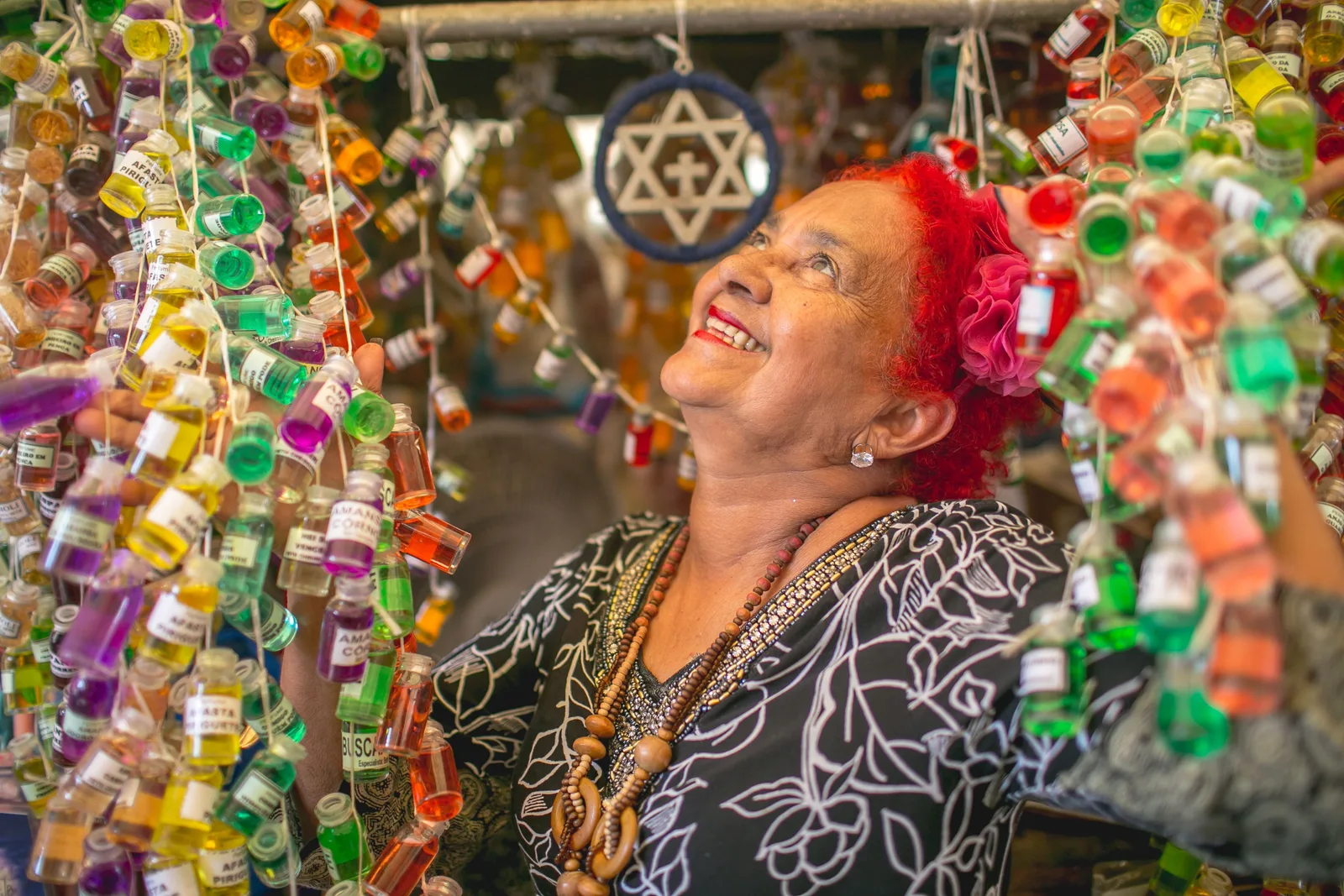
  • A woman in a patterned blouse with a red flower in her hair laughing beneath dozens of small bottles of colored liquid hung in rows across her market stall

    The inland side of the market · an hour

    The medicine stalls at Ver-o-Peso

    Past the fish and the fruit there is a run of stalls hung with hundreds of bottles: barks, roots, resins, seeds and oils, sold as remedies, tonics and love charms, most of them out of the forest rather than a factory. It is the strangest corner of the market and one of the most photographed things in the city. Ask before you take someone’s picture and buy something small if they let you.

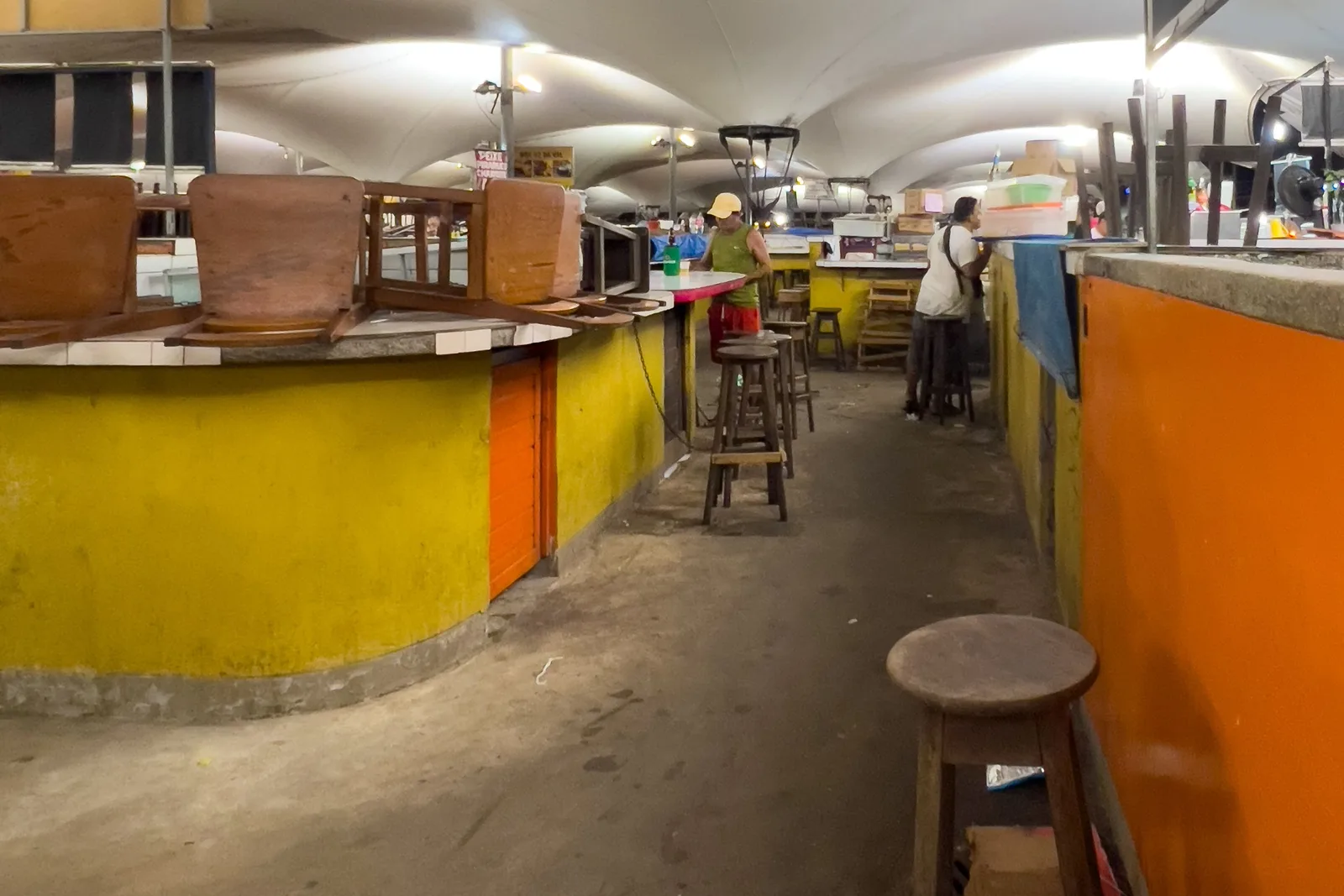
  • A long curved food counter inside the Ver-o-Peso market painted bright yellow and orange, wooden stools set along it and the market’s vaulted roof overhead

    Ver-o-Peso · from 6:00am

    Breakfast at the market counters

    Under the iron roof and along the back wall there are curved counters serving from first light: fried fish, tapioca, coffee, fresh juice from fruit you will not recognize, and açaí by the bowl. It is a few dollars, it is where the traders eat, and it is the best hour to be in the market anyway. Sit at the counter rather than taking it away.

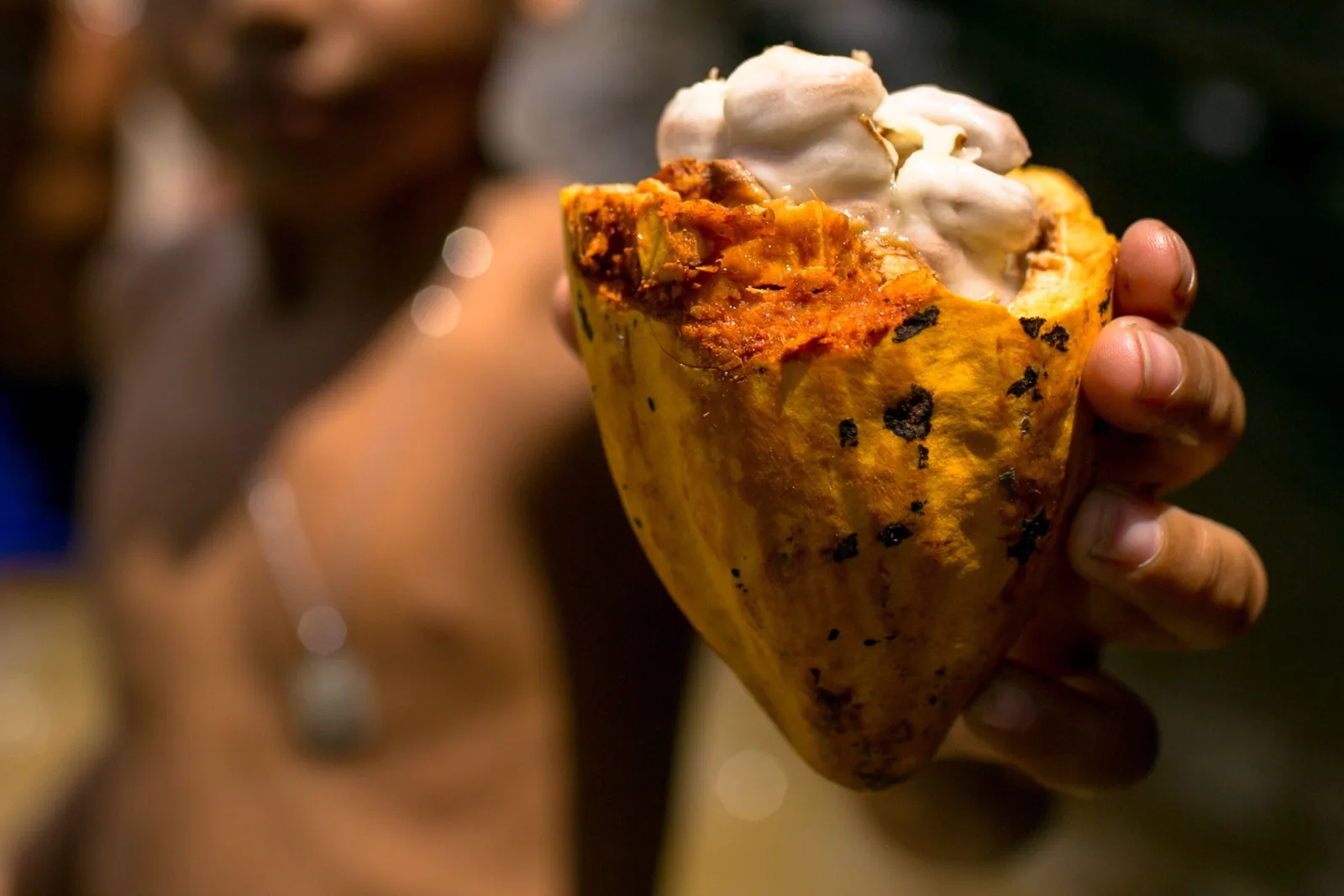
  • A hand holding an orange cacao pod split open to show the rows of white pulp-covered beans inside

    Twenty minutes by boat · half a day

    Cacao and chocolate on Ilha do Combu

    Combu is a river island inside the city limits, twenty minutes across the water, and it grows cacao and açaí under standing forest. Small producers on the island make chocolate from their own trees and open their workshops to visitors: you see the pods opened, the beans fermenting and drying, and you taste the result. Most of them want a few days’ notice, and most people book it as a boat, a tasting and lunch in one.

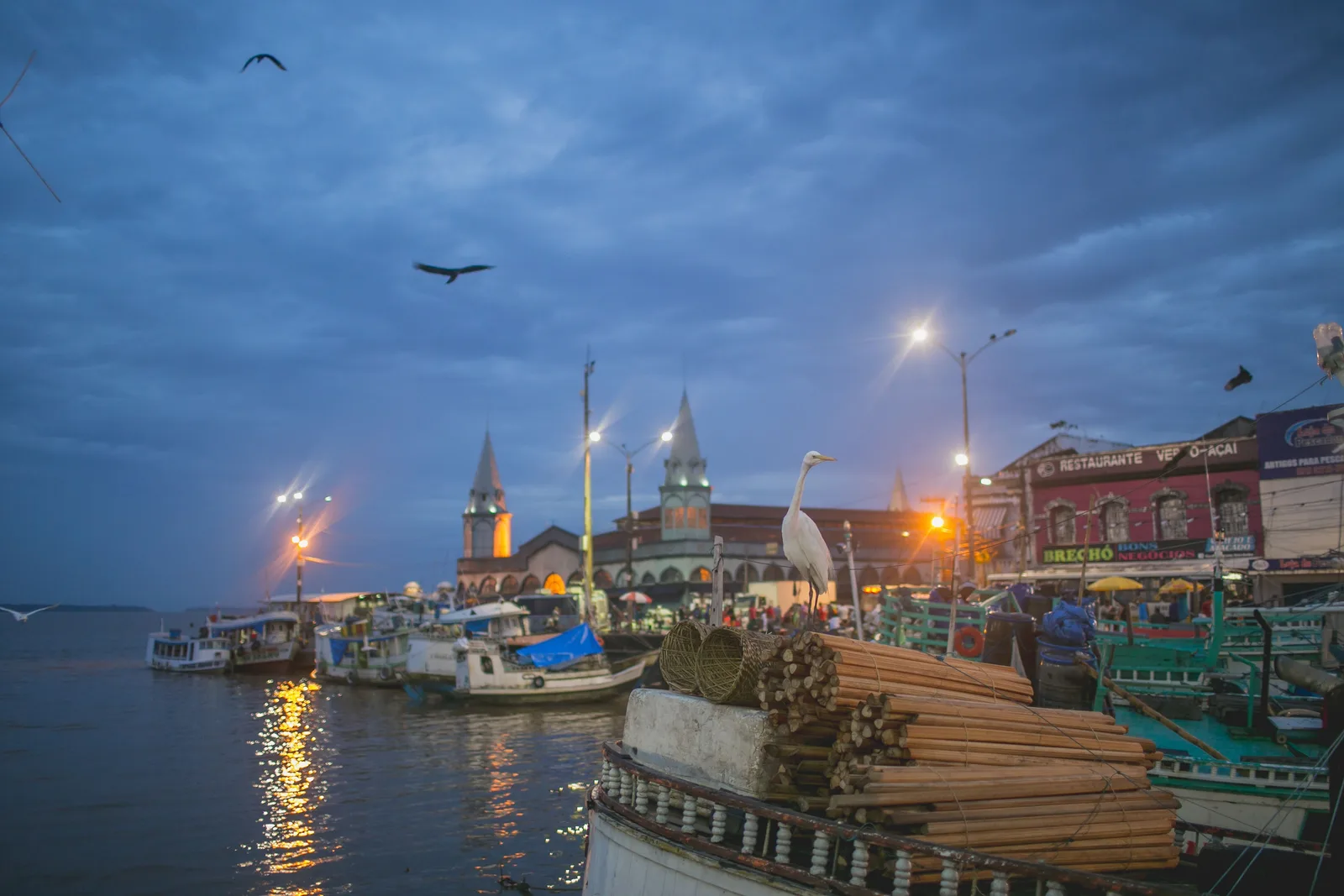
  • The Ver-o-Peso waterfront at dusk: the market pavilion and its lit corner turret behind a row of moored wooden boats, birds over a deep blue sky

    The waterfront · an evening walk-past

    Ver-o-Peso after dark

    The market itself shuts in the afternoon, but the pavilion and the clock tower are floodlit at night and the waterfront in front of them is one of the better sights in the city — the boats still moored, the iron picked out in color, the bay black behind. Walk it as part of an evening at the Estação das Docas next door rather than as a trip of its own, and keep moving.

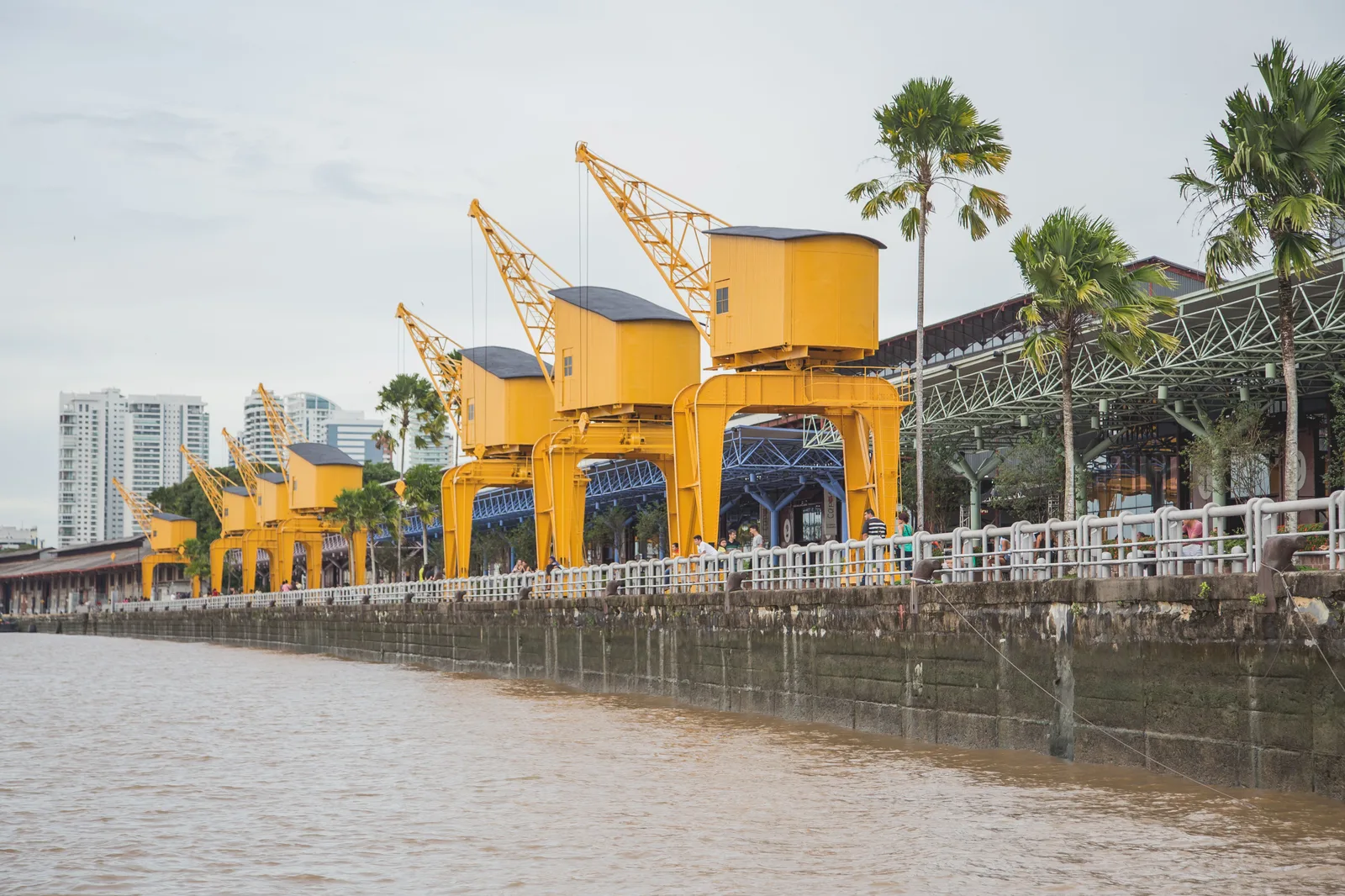
  • The Estação das Docas from the water: a row of five yellow gantry cranes standing along a quay in front of long steel-framed warehouses, city towers rising behind

    The waterfront · dinner and after

    An evening at the Estação das Docas

    Three iron port warehouses on the bay, derelict for decades and reopened in 2000 as a restaurant and bar complex with the original yellow dockside cranes left standing over it. It is the safest, easiest night out in Belém: breweries, ice cream in Amazonian fruit flavors, proper paraense kitchens, and a stage that runs live music through the week. Sit on the river side.

The old city

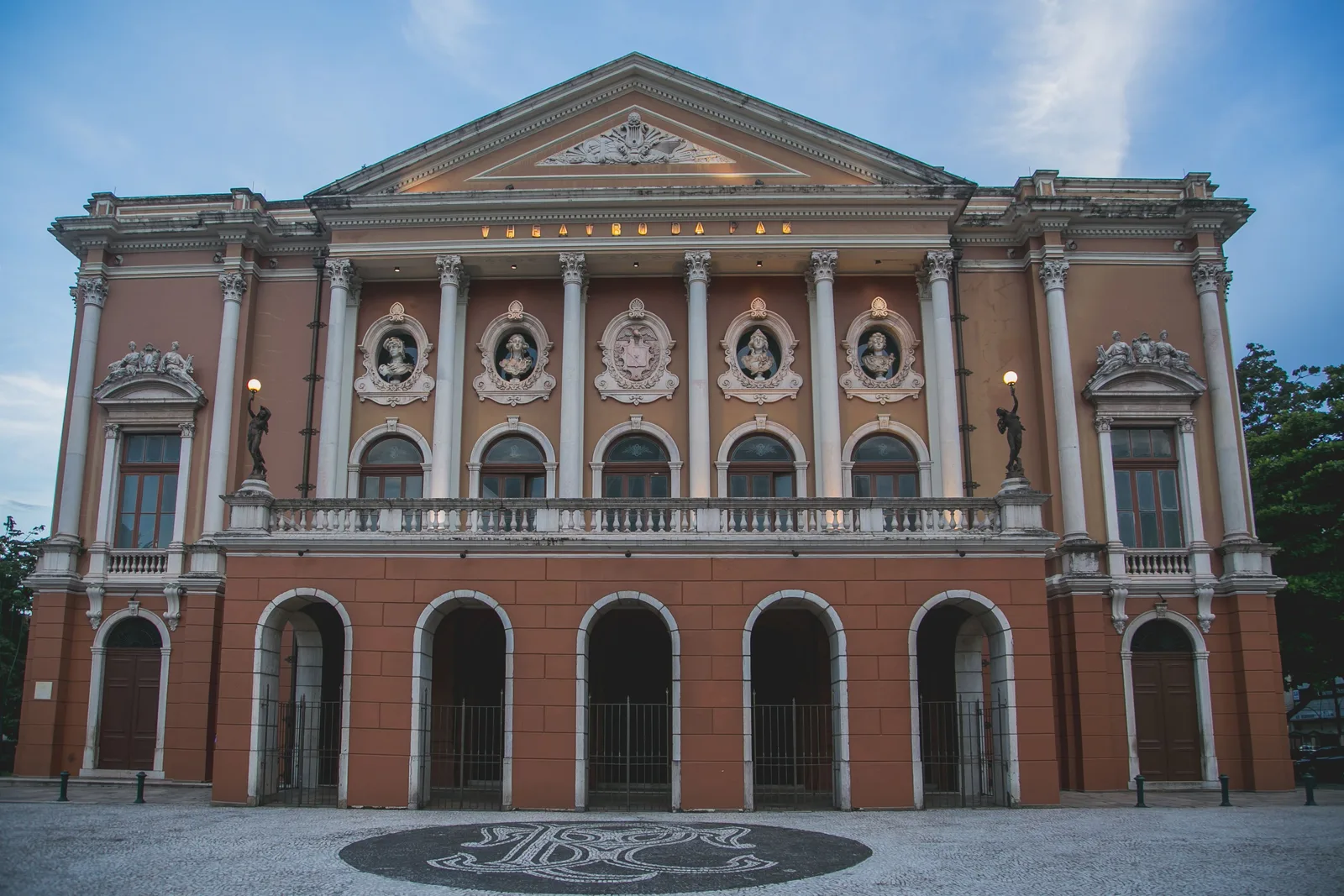
  • The front of the Theatro da Paz: a pink and cream neoclassical facade with a colonnade of tall columns under a sculpted pediment, seen straight on across its forecourt

    Praça da República · 45 minutes, R$10

    A guided visit to the Theatro da Paz

    Opened in 1878, eighteen years before the opera house in Manaus, and put on the UNESCO World Heritage List with it in July 2026 as part of a joint listing for the two Amazon theaters. Inside it is all crystal, gold leaf and painted panels, paid for by rubber. Guided visits run Tuesday to Friday morning and afternoon and Saturday and Sunday mornings, hourly, and Wednesdays are free for walk-ups. Ten reais otherwise.

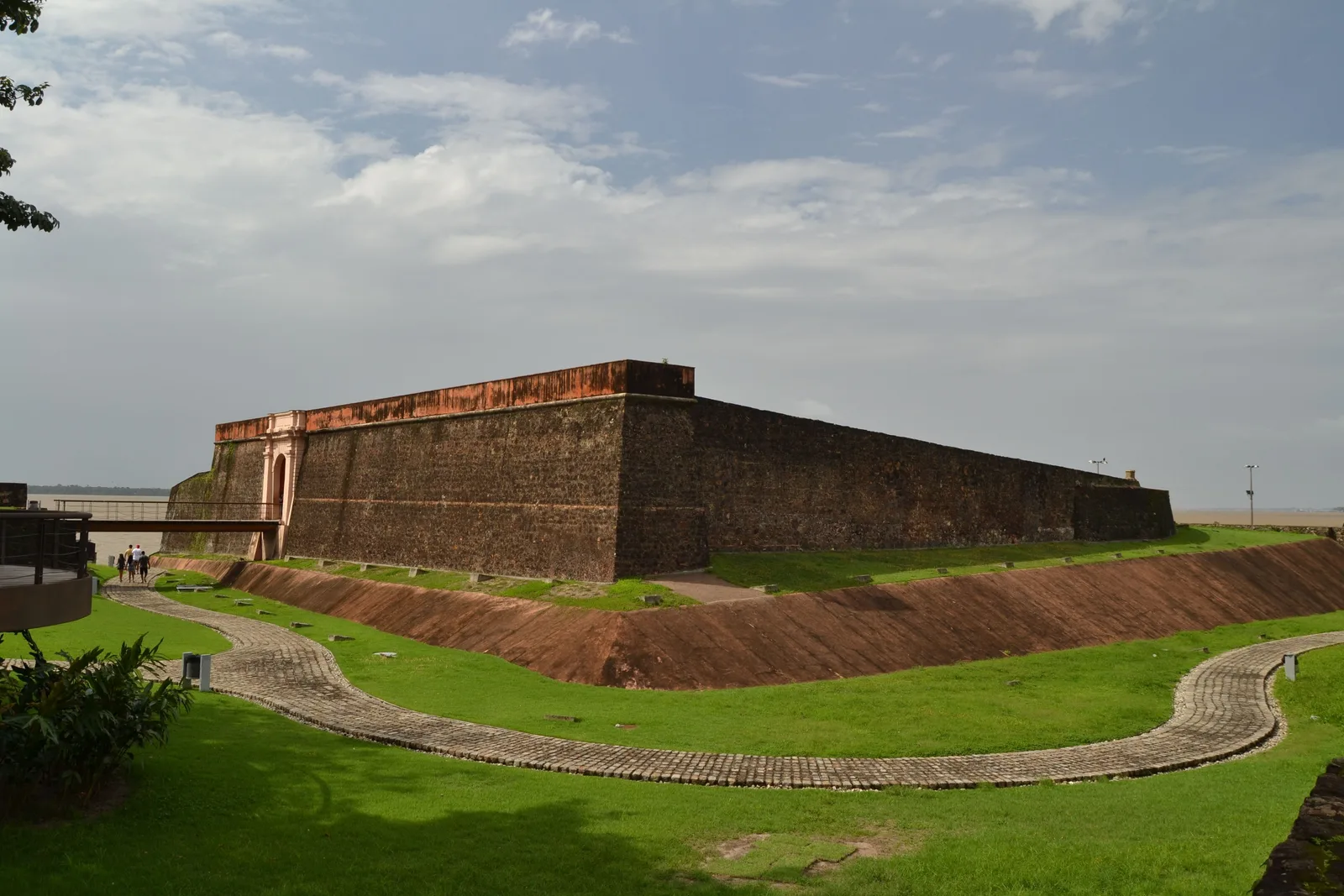
  • The Forte do Presépio from outside: a low fort of dark stone and brick with sloped grass earthworks running up to its walls, trees behind and a bright sky above

    Cidade Velha · about an hour

    The Forte do Presépio on the point

    The reason there is a city here. The Portuguese put a fort on this point in 1616 to hold the mouth of the river, and what stands now is the eighteenth-century rebuild, with cannons along the parapet and the bay opening out in front of it. The museum inside is small and good, and its Marajoara ceramics are a better introduction to the island’s pre-colonial cultures than anything you will find on Marajó itself. Closed Mondays.

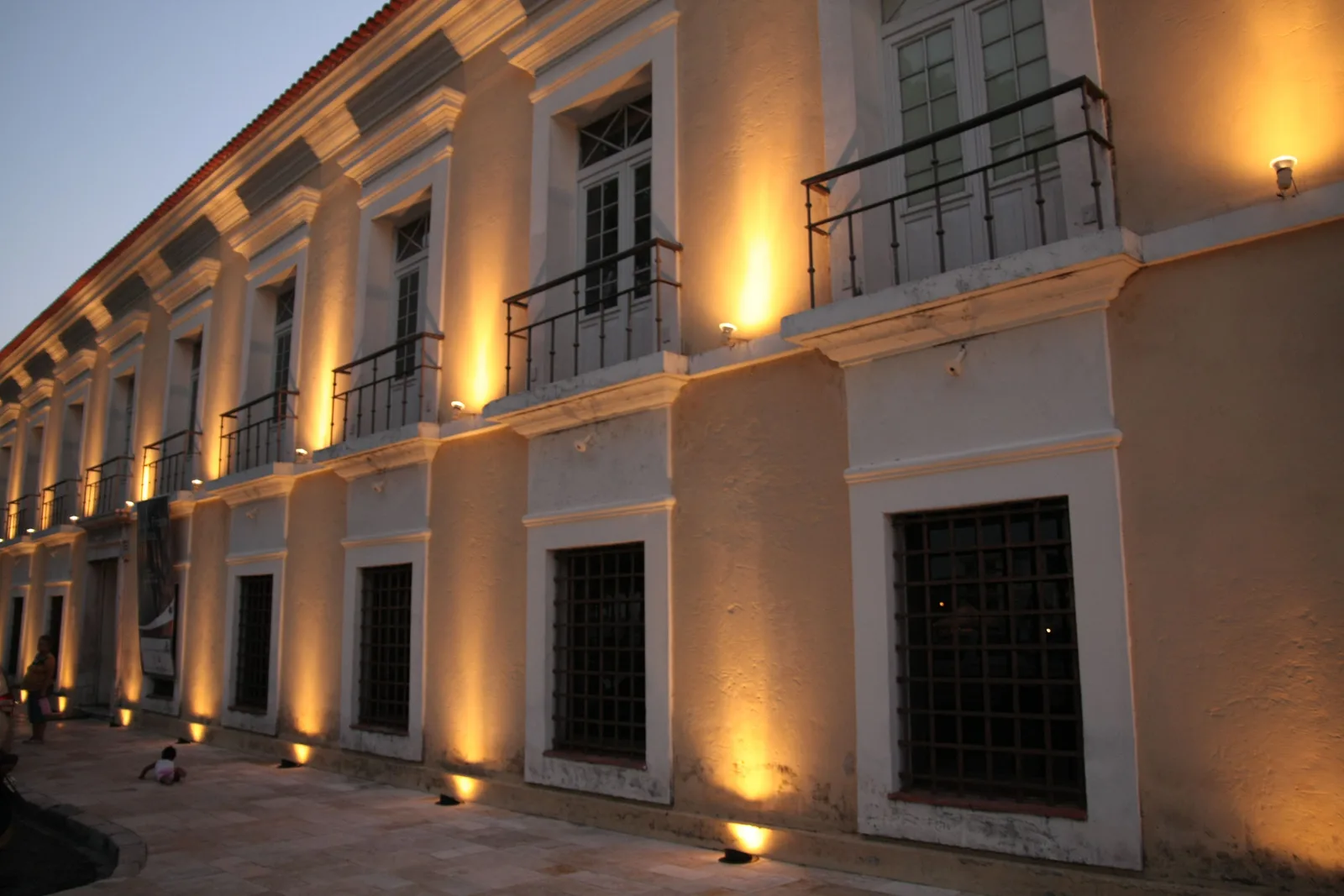
  • The Casa das Onze Janelas floodlit warm gold after dark, its long row of tall shuttered windows and iron balconies lit from below

    Cidade Velha · an hour, or an evening drink

    The terrace at the Casa das Onze Janelas

    An eighteenth-century governor’s residence, later a military hospital, now a contemporary art museum — and behind it a long terrace above the water with a bar on it. The art is worth twenty minutes and the terrace is worth longer: it looks straight down the bay and it is where the city goes to watch the sun set into the river. Free to walk out onto.

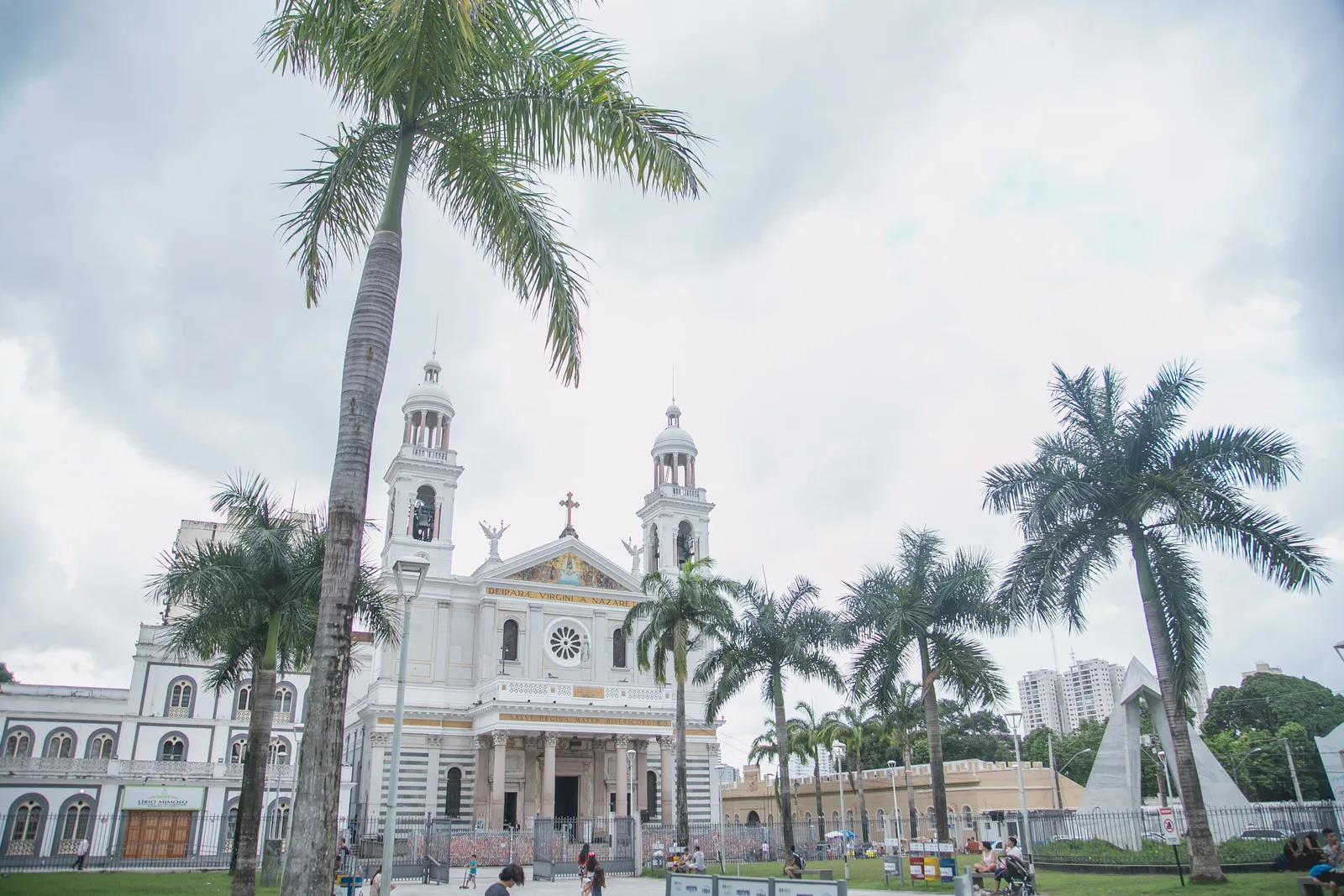
  • The Basílica de Nazaré seen across its square: a white church with twin bell towers and a domed crossing, framed by tall palms

    Nazaré · half an hour

    The Basílica de Nazaré

    Begun in 1909, finished in 1923, and modeled on a Roman basilica, with mosaics, marble and stained glass paid for by the rubber boom. It holds the image the Círio is built around, and for the other fifty-one weeks of the year it is quiet, cool and largely empty, which is a good hour in a hot city. The Museu do Círio, a short ride away in the Cidade Velha, explains the procession better than any account of it can.

  • The Ver-o-Peso waterfront at dusk: the market pavilion and its lit corner turret behind a row of moored wooden boats, birds over a deep blue sky

    The waterfront · an evening walk-past

    Ver-o-Peso after dark

    The market itself shuts in the afternoon, but the pavilion and the clock tower are floodlit at night and the waterfront in front of them is one of the better sights in the city — the boats still moored, the iron picked out in color, the bay black behind. Walk it as part of an evening at the Estação das Docas next door rather than as a trip of its own, and keep moving.

On the water

  • A hand holding an orange cacao pod split open to show the rows of white pulp-covered beans inside

    Twenty minutes by boat · half a day

    Cacao and chocolate on Ilha do Combu

    Combu is a river island inside the city limits, twenty minutes across the water, and it grows cacao and açaí under standing forest. Small producers on the island make chocolate from their own trees and open their workshops to visitors: you see the pods opened, the beans fermenting and drying, and you taste the result. Most of them want a few days’ notice, and most people book it as a boat, a tasting and lunch in one.

  • The Estação das Docas from the water: a row of five yellow gantry cranes standing along a quay in front of long steel-framed warehouses, city towers rising behind

    The waterfront · dinner and after

    An evening at the Estação das Docas

    Three iron port warehouses on the bay, derelict for decades and reopened in 2000 as a restaurant and bar complex with the original yellow dockside cranes left standing over it. It is the safest, easiest night out in Belém: breweries, ice cream in Amazonian fruit flavors, proper paraense kitchens, and a stage that runs live music through the week. Sit on the river side.

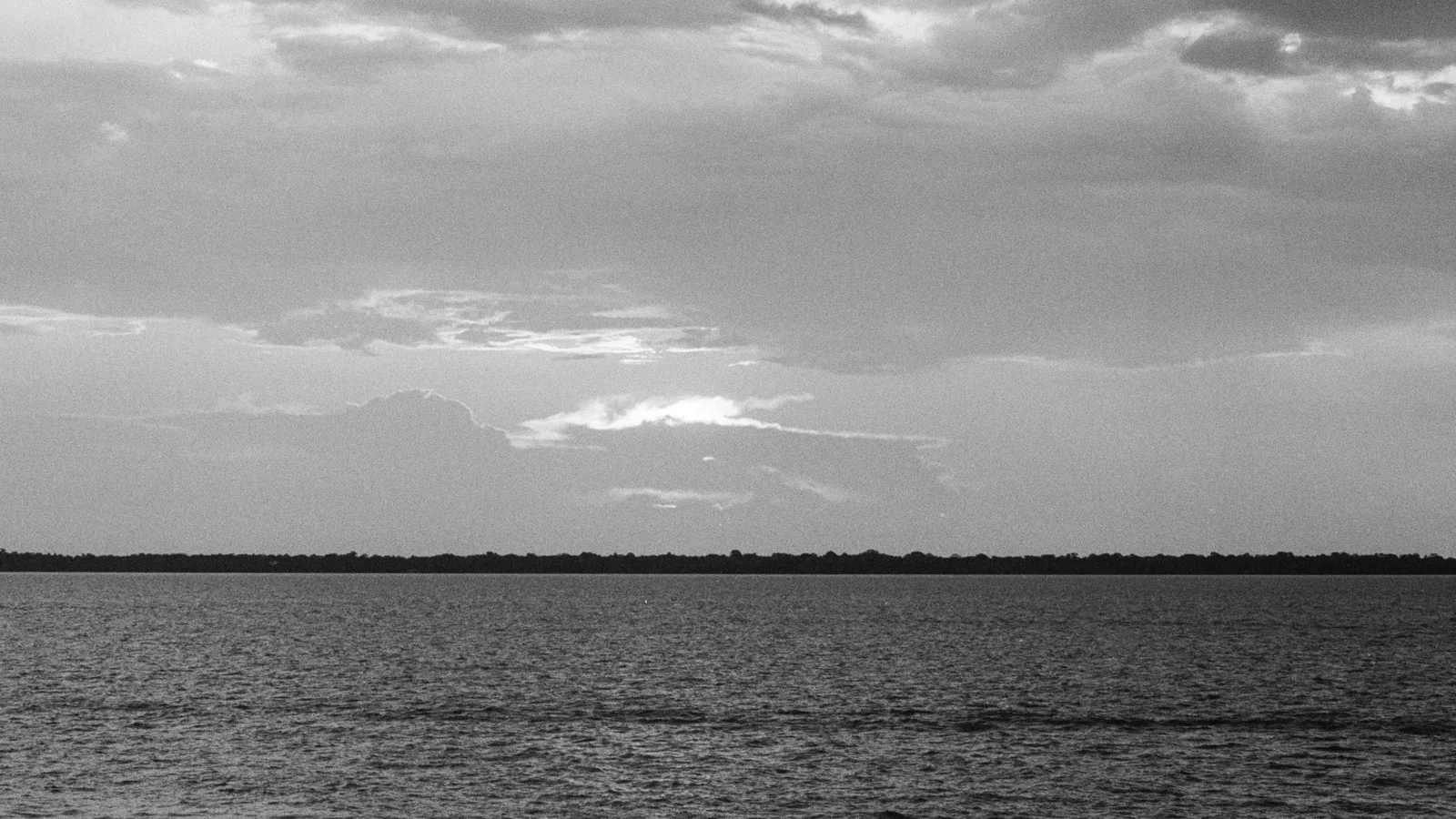
  • Black and white: the wide flat water of the Guajará bay under a bank of low evening cloud, with a dark unbroken line of forest along the far shore

    The waterfront terraces · an hour

    Sunset over the Guajará bay

    The bay runs west, which means the sun goes down over open water every evening, usually behind whatever the afternoon storm left behind. The terraces at the Estação das Docas, the Casa das Onze Janelas and the Mangal das Garças all face it, they are all free to stand on, and the light off that much brown water is better than it has any right to be.

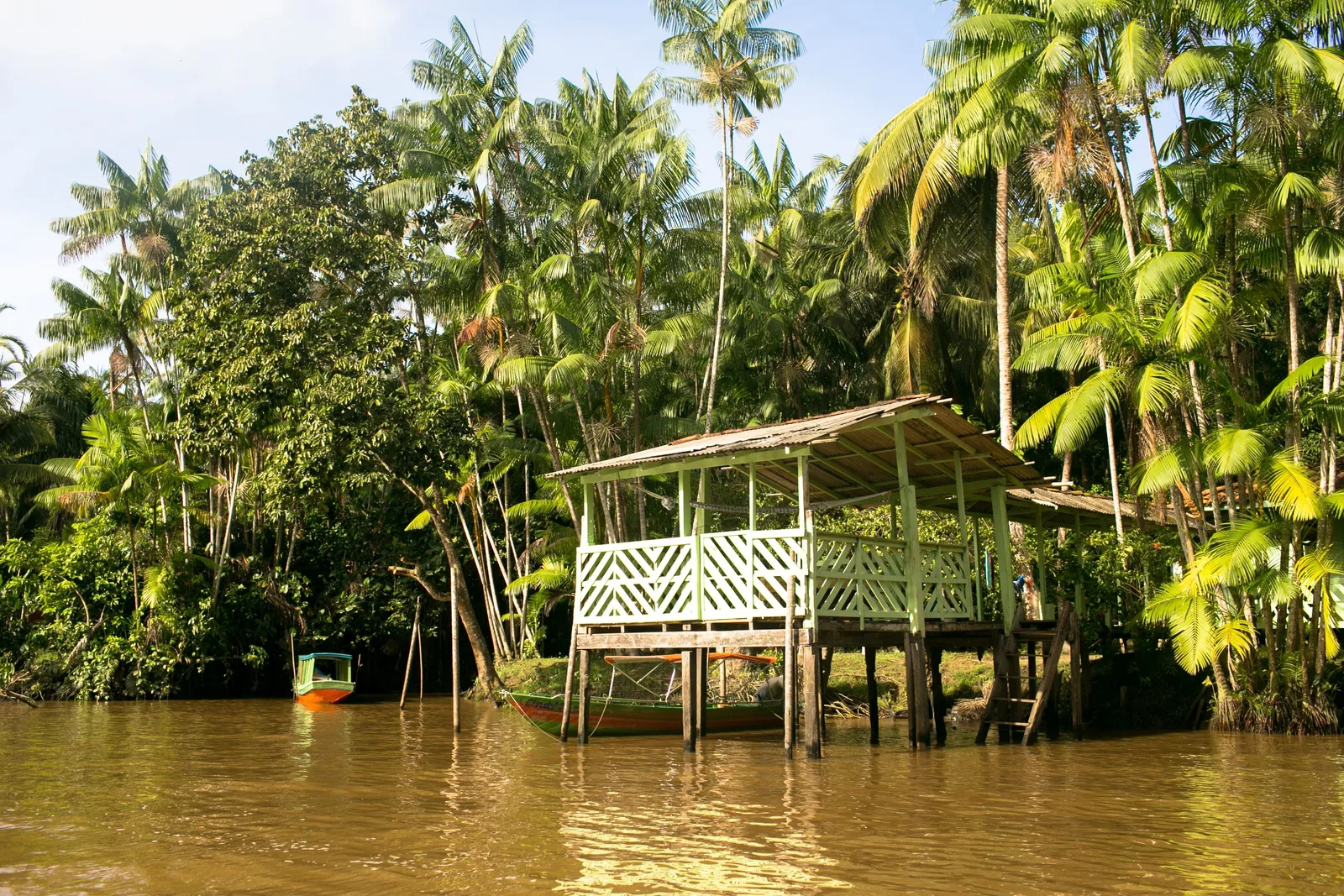
  • A wooden house on stilts at the edge of Ilha do Combu with a palm-thatched veranda over the brown water, dense forest and açaí palms rising behind it

    Twenty minutes by boat · half a day to a full one

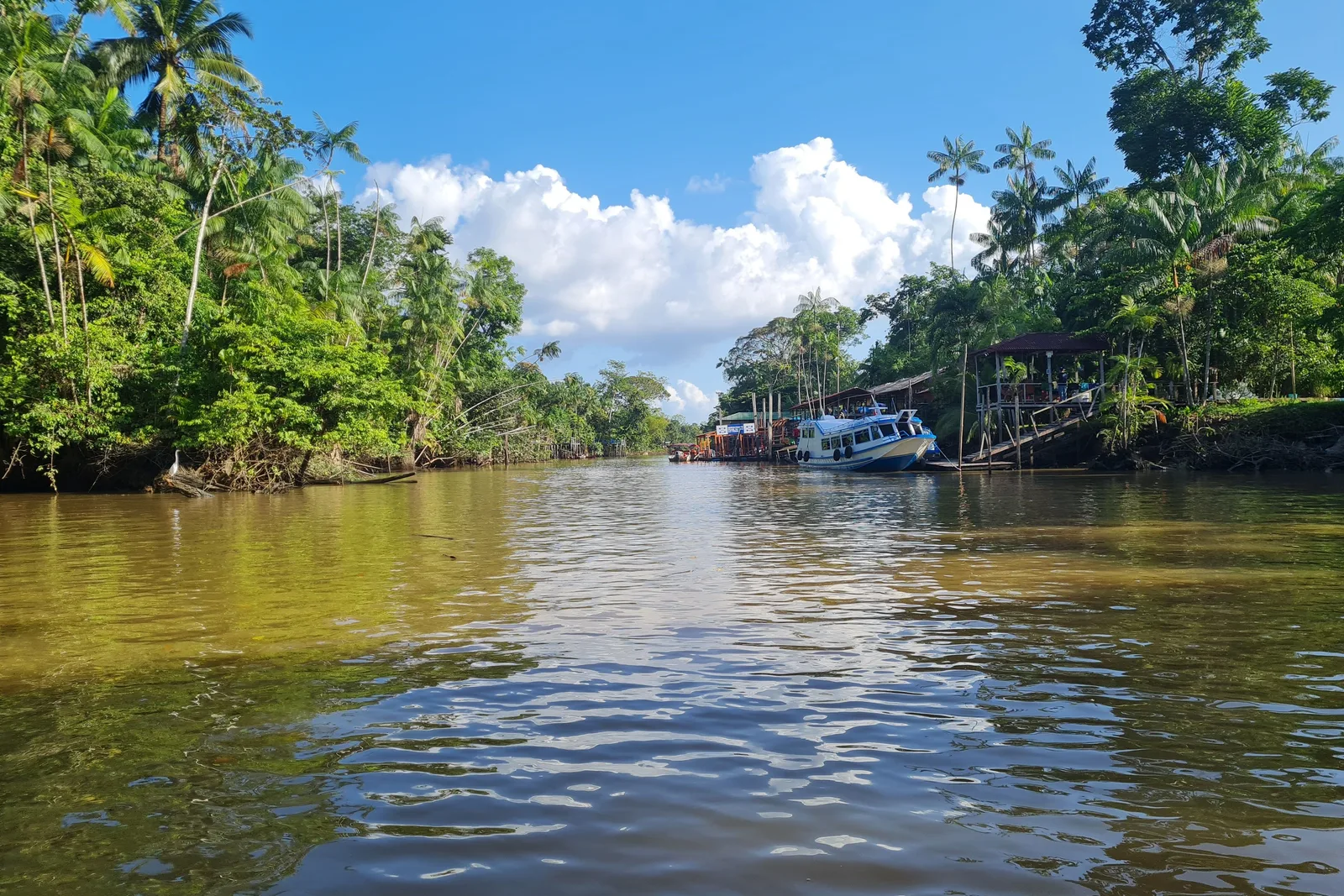
    A day on Ilha do Combu

    The closest of the river islands and the easiest way to see how most of this delta actually lives: houses on stilts along the channels, açaí palms overhead, everything moving by canoe. There are restaurants on the water serving river fish and shrimp, workshops making chocolate, and narrow side channels to take a small boat up. It is inside the municipality of Belém and it feels a hundred miles away.

  • People sitting in a red canoe tied alongside a weathered wooden jetty on a Combu channel, the low skyline of Belém across the open water behind

    From Combu or the city quays · two hours

    A boat up the side channels

    The furos — the narrow channels that thread between the islands — are where the delta stops being a river and starts being a maze. A small boat with an outboard takes you off the open water and in among the trees, past jetties, açaí palms and single houses on stilts. Go in the morning: the water is flat, the light is good, and you will be back before the rain.

Parks

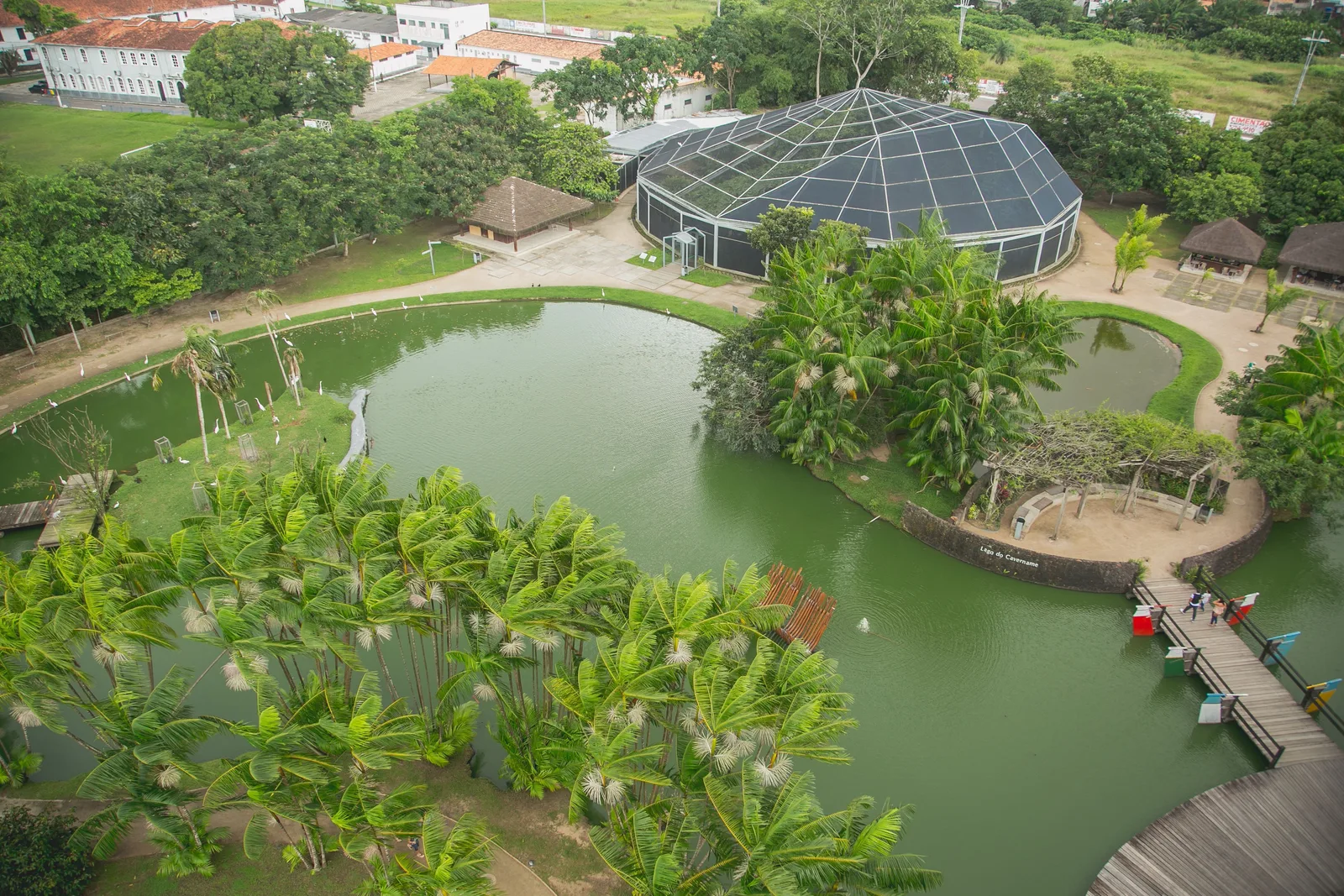
  • The Mangal das Garças from above: a still green lake with a domed glass butterfly house on its bank, lawns, palms and thick planting all around it

    Cidade Velha · two hours, free to enter

    The Mangal das Garças

    A landscaped park on the waterfront with a butterfly house, a lighthouse tower with a view over the bay, a navigation museum and a walk-through bird aviary, which was closed for renovation in 2026, so check before you go. Entry to the park is free and the enclosed spaces are paid. It is closed on Mondays. The butterflies are released at 10:00am and 4:00pm, and the herons are fed three times a day.

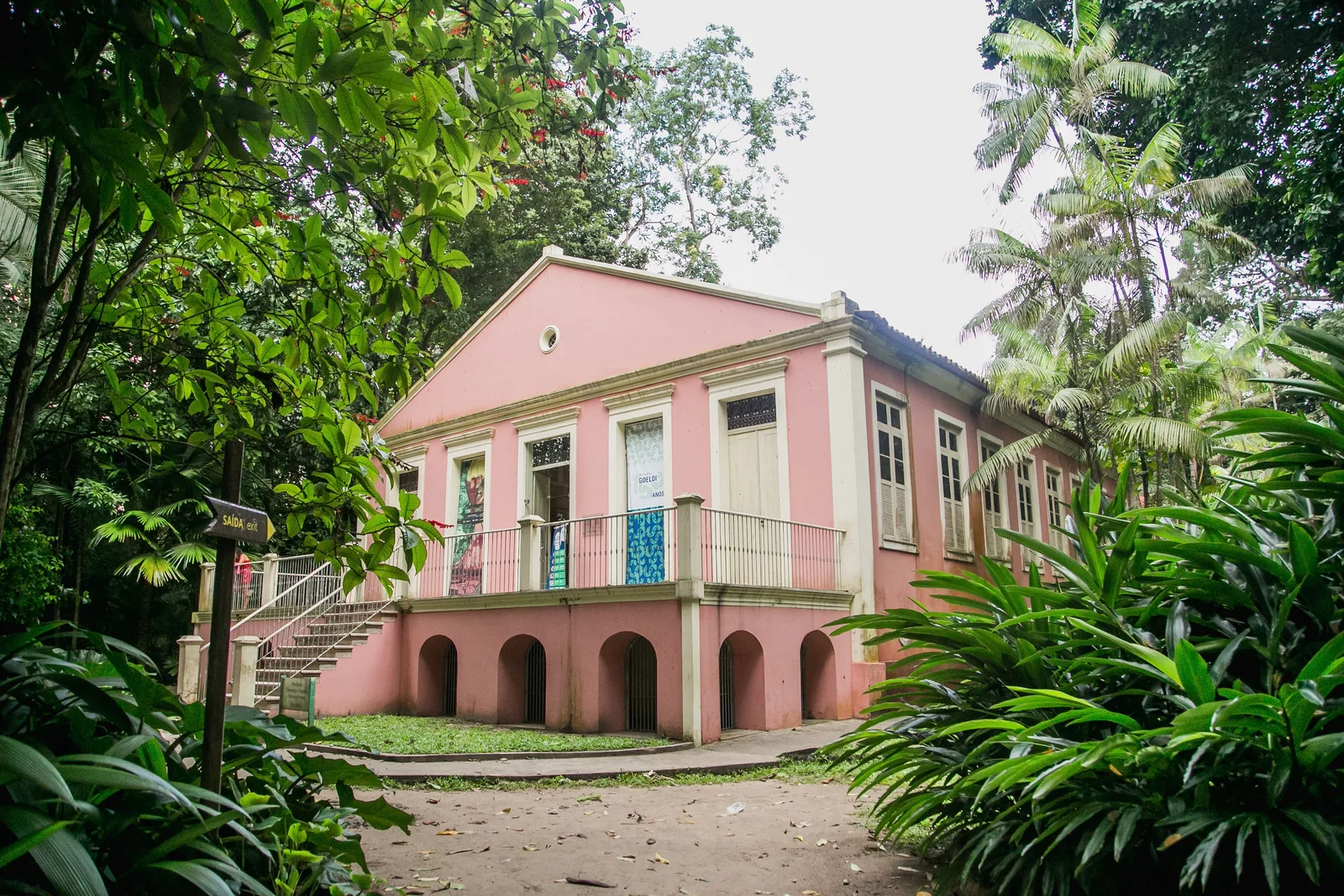
  • A pink colonial building with a shaded ground-floor arcade standing among palms and dense tropical planting inside the Museu Goeldi park

    Nazaré · two hours, R$3

    The Museu Goeldi park

    The Museu Paraense Emílio Goeldi has been a working research institution since 1866, and its park in the middle of the city is five hectares of old Amazonian forest with manatees, jaguars, harpy eagles and giant otters in it. Three reais to get in. Open Wednesday to Sunday, nine to four, and closed the rest of the week — check before you plan a morning around it.

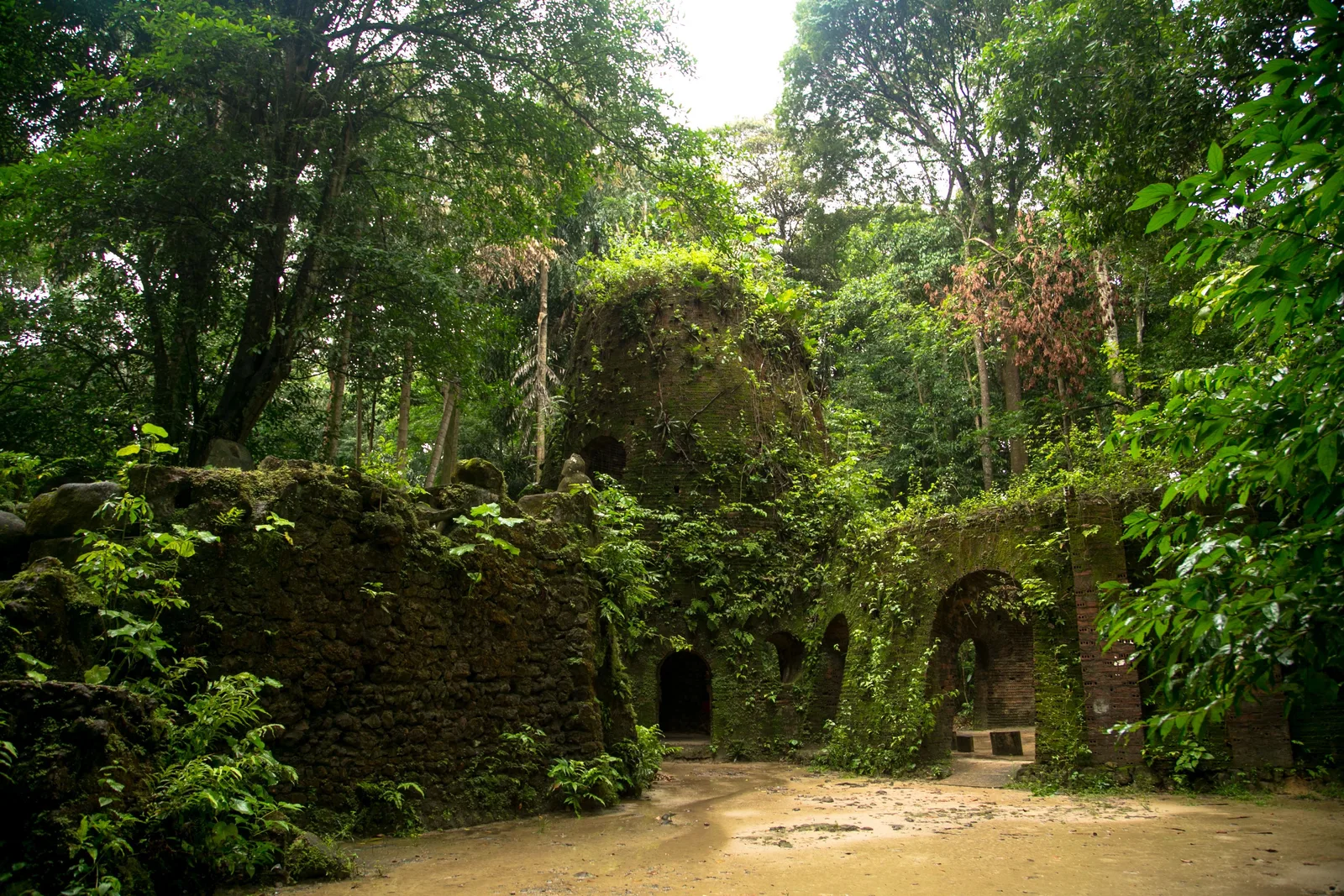
  • A stone grotto covered in moss and creepers set into a bank of dense green forest inside the Bosque Rodrigues Alves

    Marco · an hour and a half

    The Bosque Rodrigues Alves

    Fifteen hectares of surviving forest fenced off inside the city since 1883, which makes it one of the oldest urban parks in Brazil. It is quieter and less curated than the Goeldi and better for simply walking under very large trees: there is a small lake, a grotto, an orchid house and a handful of rescued animals. Good for the hot middle of the day.
Marajó

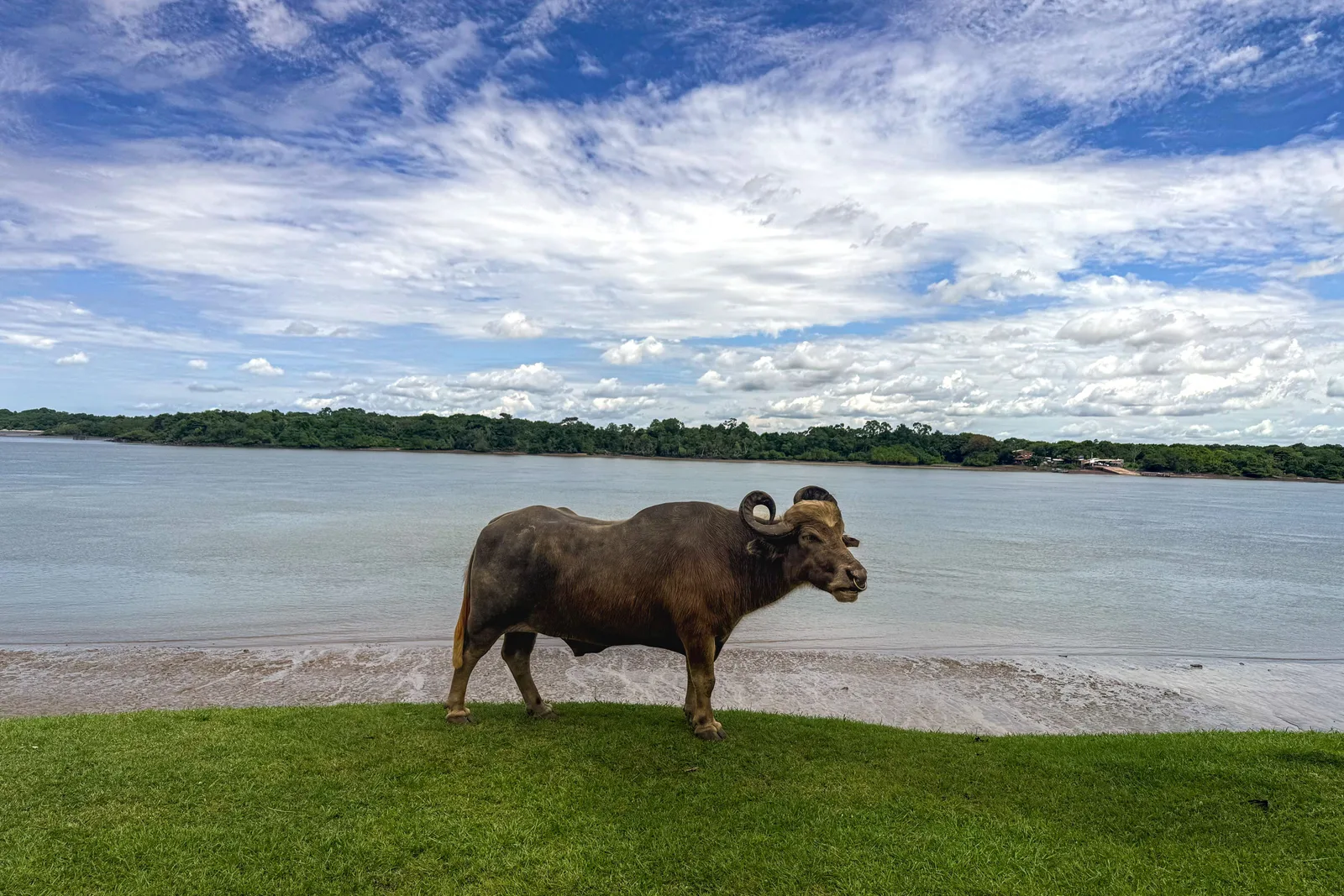
  • A single gray water buffalo standing on a strip of green grass at the edge of a wide flat river under a big blue sky

    Marajó · a full day, after a crossing of 1–3 hours

    Water buffalo at Soure

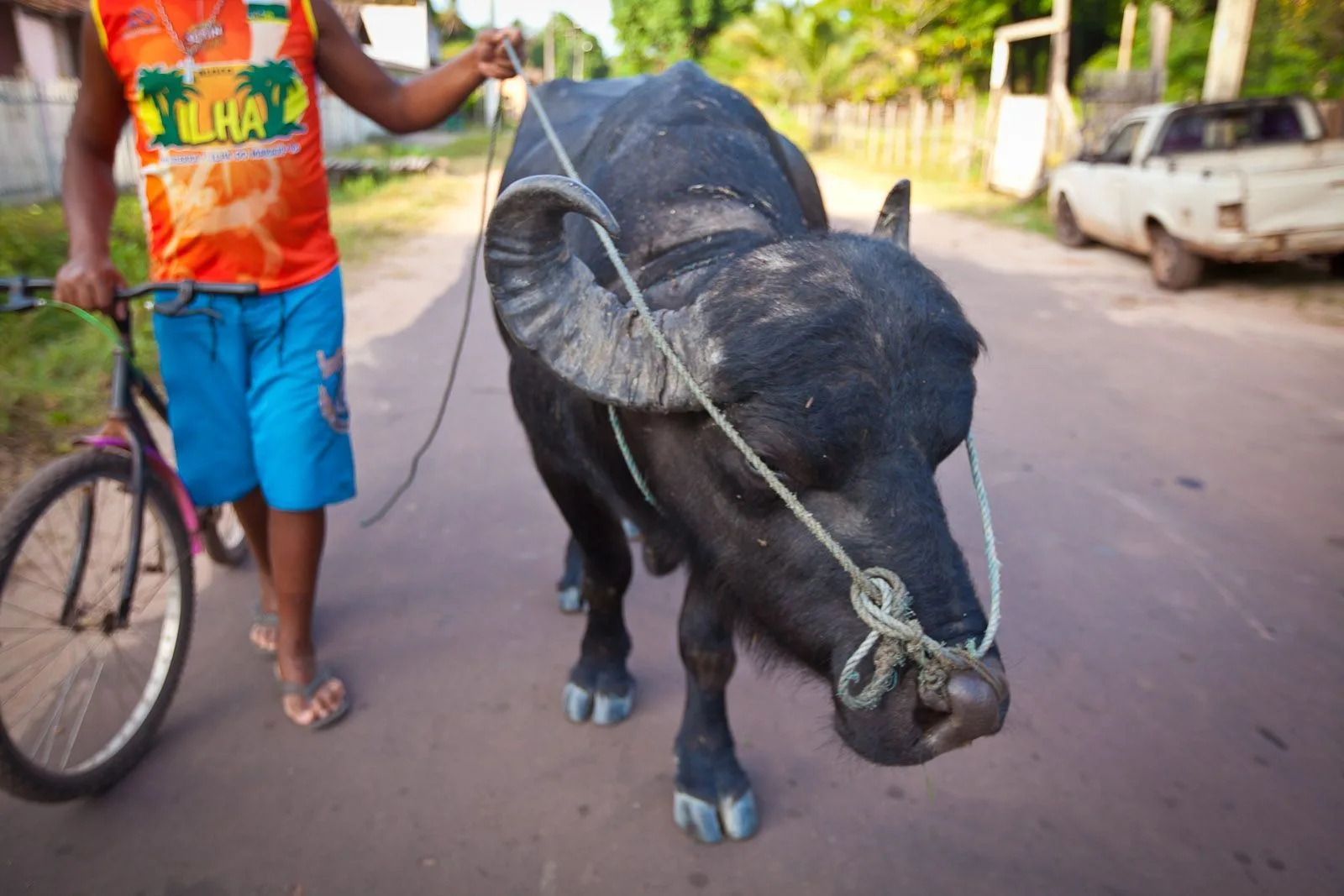
    There are around half a million water buffalo on Marajó and rather more people than that — close to 600,000 at the 2022 census — and the animals are genuinely part of how the island works — hauling carts through Soure, ridden by the police, milked for the cheese and the sweets the island is known for. Nobody is quite sure how they got there; the story everyone tells involves a shipwreck. Farms outside Soure take visitors, and buffalo steak with buffalo mozzarella is the standard lunch.

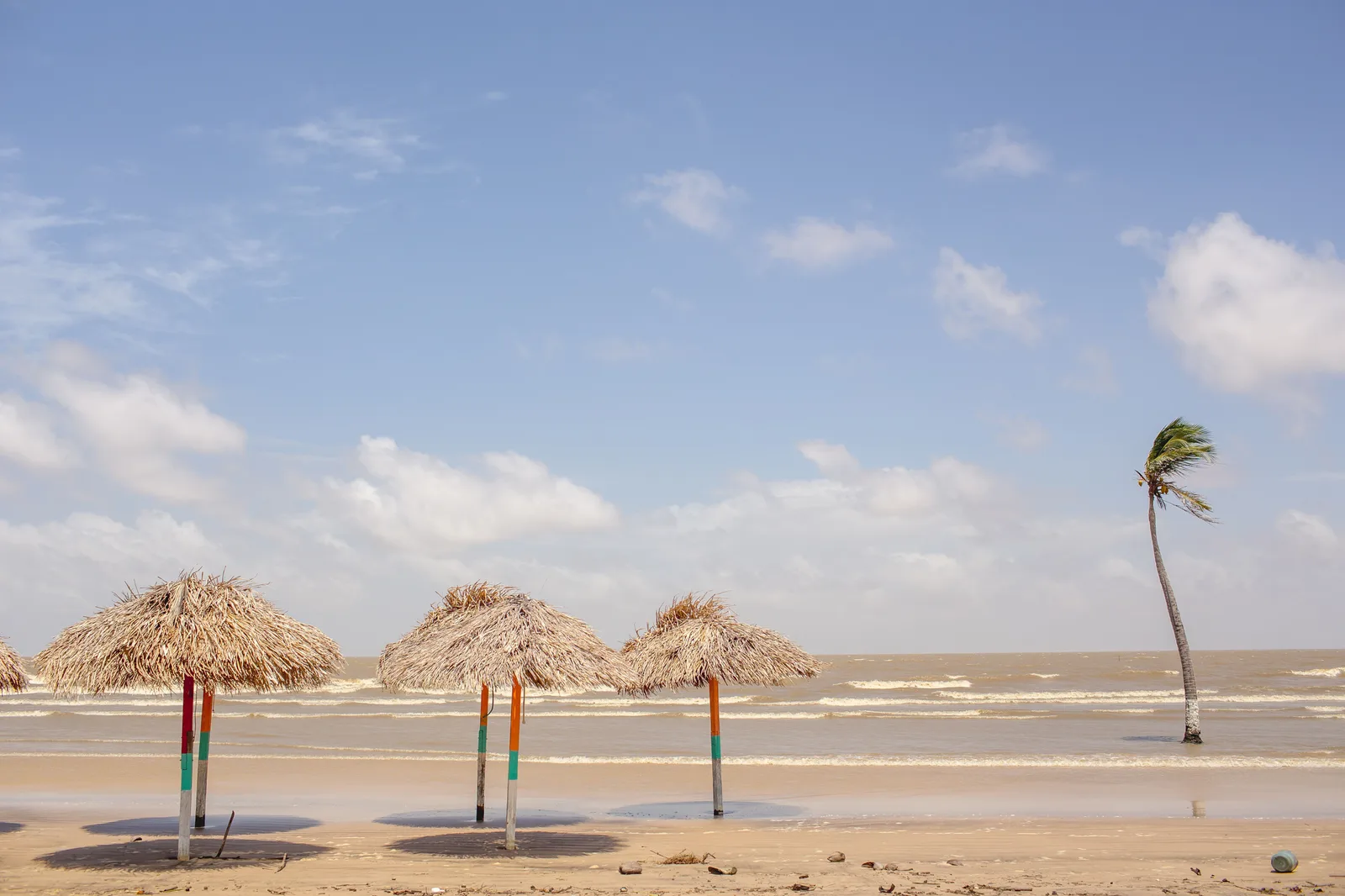
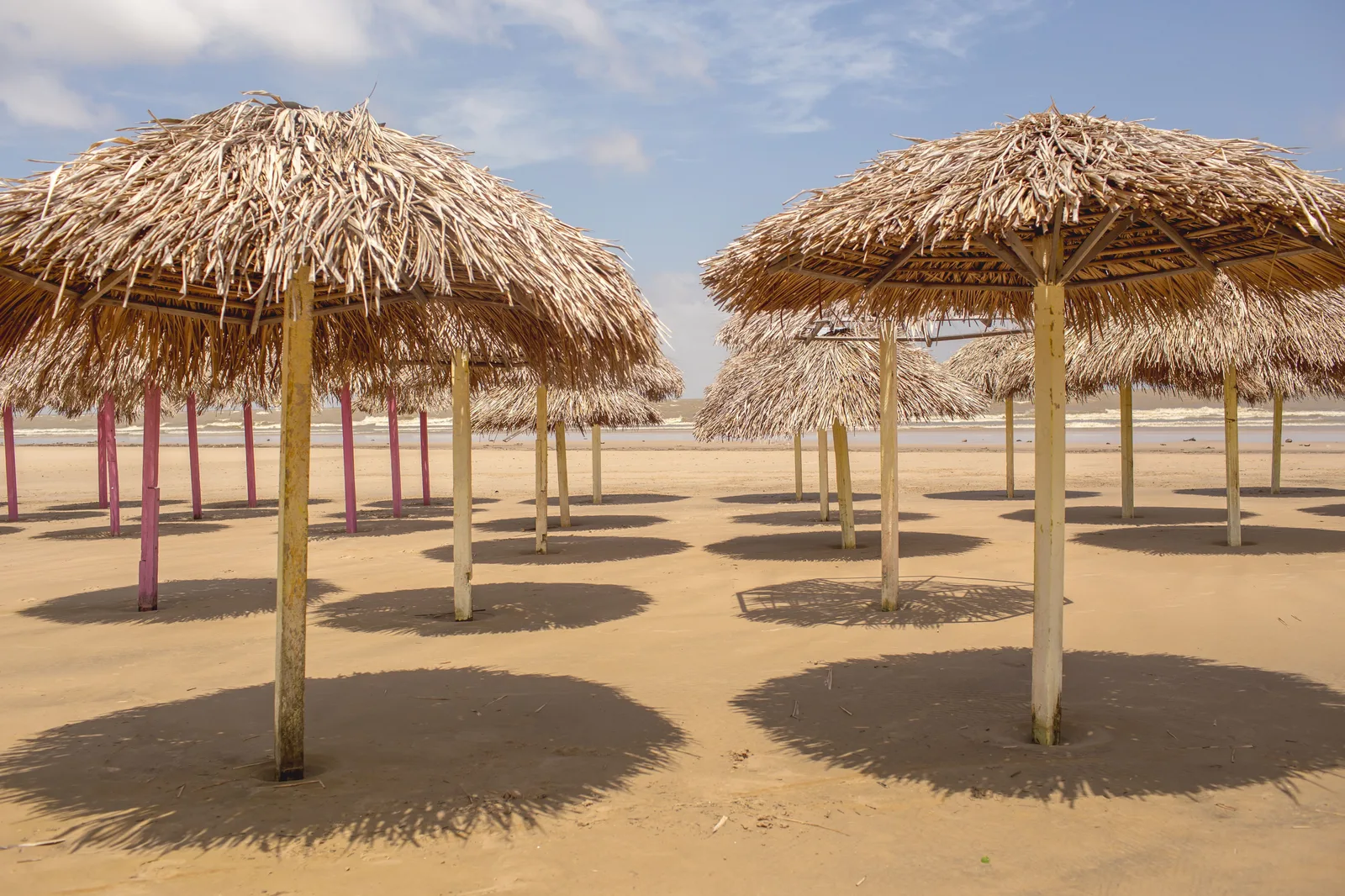
  • Thatched parasols standing on their poles along the wide pale sand of Praia do Pesqueiro on Marajó, shallow water behind them and one palm bent hard by the wind

    Marajó · a day each

    The beaches at Soure and Salvaterra

    They look like ocean beaches and they are not — this is river water meeting tide, brown rather than blue, warm and almost flat. Praia do Pesqueiro is the wide one with thatched shelters and fried fish; Barra Velha has mangrove roots on the sand and almost nobody on it. The tide moves a very long way out here, so ask locally what time to come.

  • A boy in an orange shirt standing beside a bicycle on a village road, leading a large dark water buffalo on a rope

    Marajó and Icoaraci · a couple of hours

    Marajoara pottery and the island crafts

    The Marajoara made some of the most sophisticated ceramics in pre-Columbian South America — funerary urns and vessels covered in incised spirals and stylized animals, from roughly a thousand years ago. The workshops on the island and in the Icoaraci district of Belém still work in the style. The genuinely old material is in the museums, at the fort in the Cidade Velha and at the Goeldi.

Where to stay

Four districts, ten minutes apart.

Belém is compact and the choice is genuinely about character rather than convenience — everything below is within a few dollars’ ride of everything else. What actually differs is how the street feels at 9:00pm. If you are adding Marajó, you sleep over there: two nights minimum in Soure or Salvaterra, in a pousada rather than a hotel, and you keep your Belém room or check out and come back. It is not a base for the city and the city is not a base for it.

Drag and zoom to explore.

Tap an area to open it and see it on the map

  • Best for: Waking up inside the old city

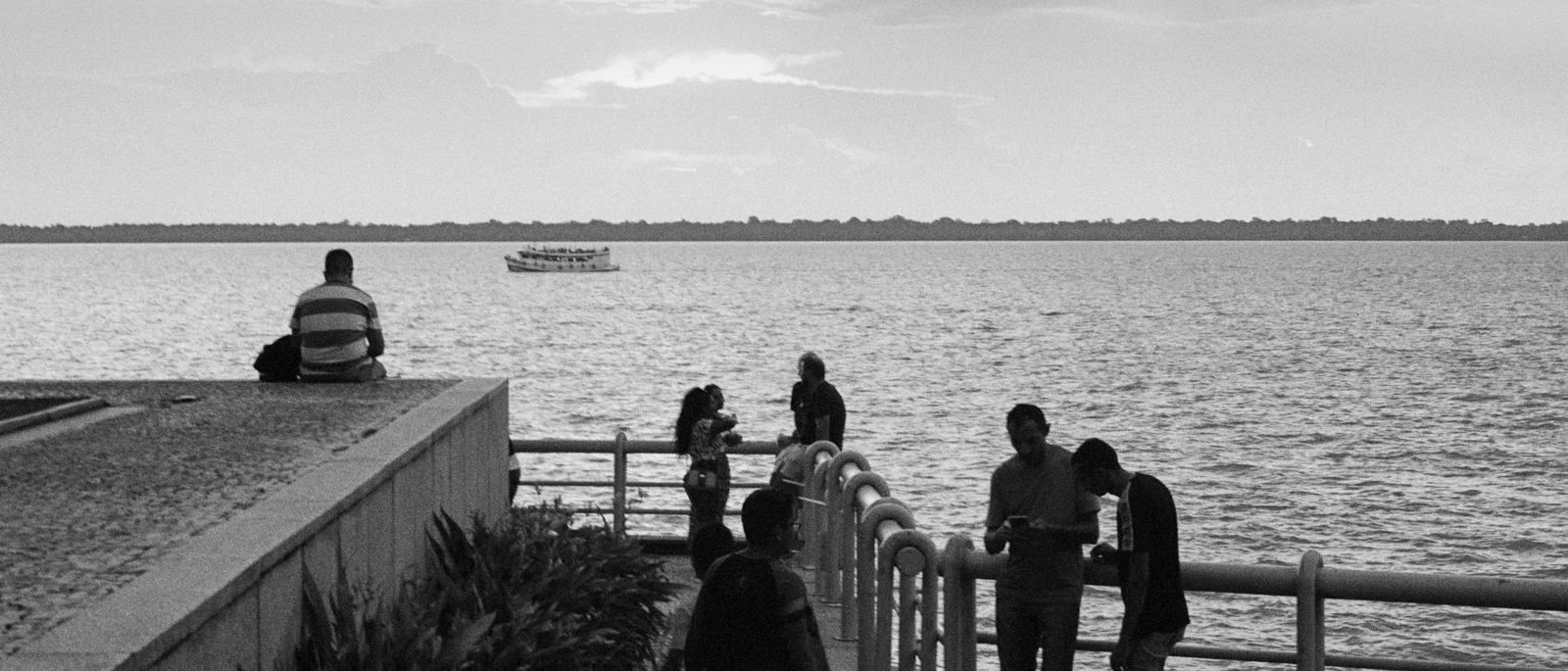
    Black and white: people leaning on a waterfront railing in the old city, looking out across the wide bay with a boat on the water in the distance

    The oldest part of Belém, on the point and along the waterfront: the fort, the cathedral, the Casa das Onze Janelas and Ver-o-Peso all within a few blocks, with a handful of restored colonial houses turned into small hotels. It is the most atmospheric place to sleep in the city and the one that asks the most of you, because the quarter empties out after the museums close and the streets go quiet and dark. Take it if you want to walk out of the door into the sixteenth century; take a ride app after dinner.

    • Colonial houses
    • Ver-o-Peso on foot
    • Quiet after dark
    • Fewest rooms
  • Our pick

    Best for: The easiest first visit

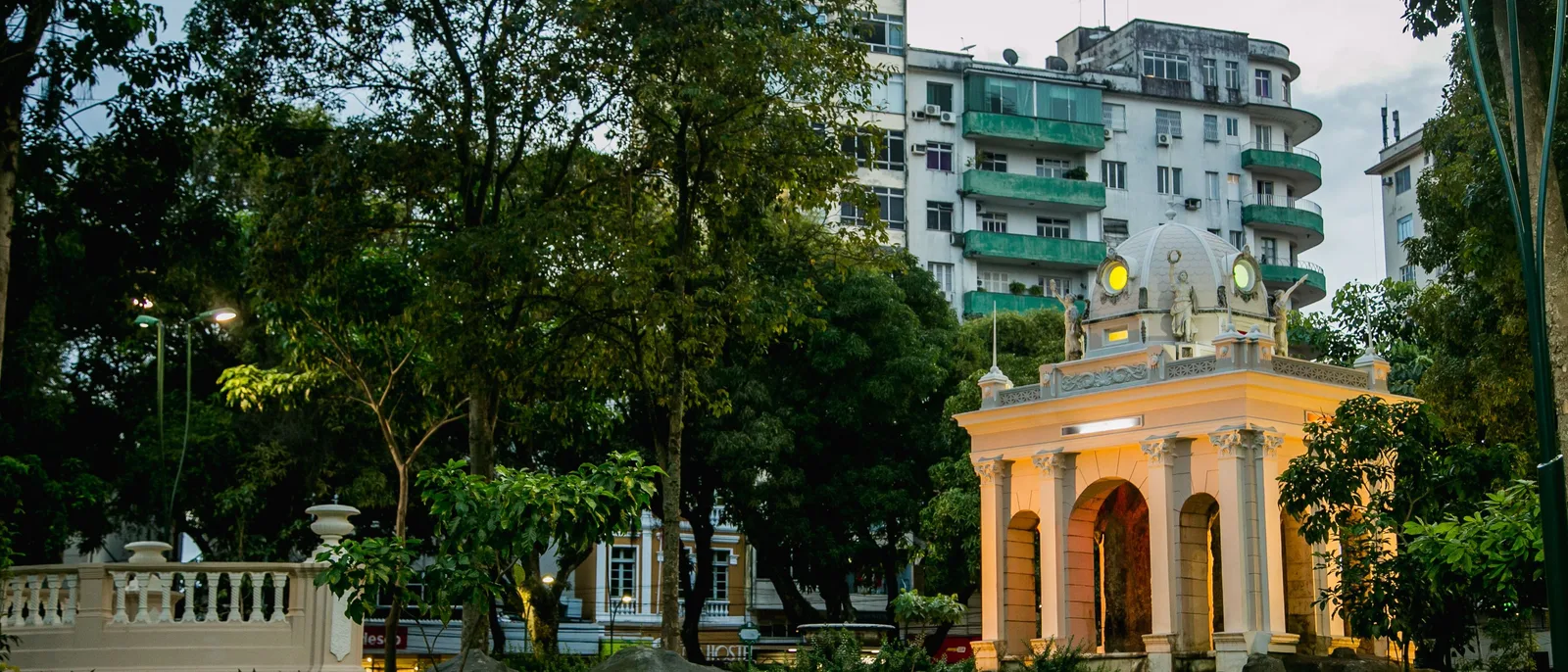
    A leafy corner of the Praça da República in Belém: a yellow colonnaded pavilion under big shade trees, with apartment buildings rising close behind

    The leafy, well-off middle of the city, a kilometer or so back from the water, built around the Praça da República and the basilica and shaded by the mango trees Belém is named for. This is where the reliable mid-range hotels are, where most of the good restaurants sit, and where you can still walk somewhere for dinner at 8:00pm without thinking about it. Batista Campos, just south, is the quietest and most residential end of it. Nothing here is more than a ten-minute ride from the waterfront.

    • Most hotels
    • Best restaurants
    • Walkable evenings
    • Central
  • Best for: Eating and drinking late

    Central Belém seen from above: low tiled roofs and shopfronts packed along a busy street, traffic queuing between them and green trees breaking up the blocks

    The modern city — towers, newer hotels, and the strip along the Doca de Souza Franco, a canalized waterway lined end to end with bars and restaurants that runs late every night of the week. It has the least character of the four and the most going on after 10:00pm. Good if you want a contemporary room and somewhere to go afterward without a plan; less good if you came for colonial Belém, which is a short ride away rather than out the door.

    • Newer hotels
    • Bar strip
    • Busy late
    • Least historic
  • Best for: A night on the river without leaving the city

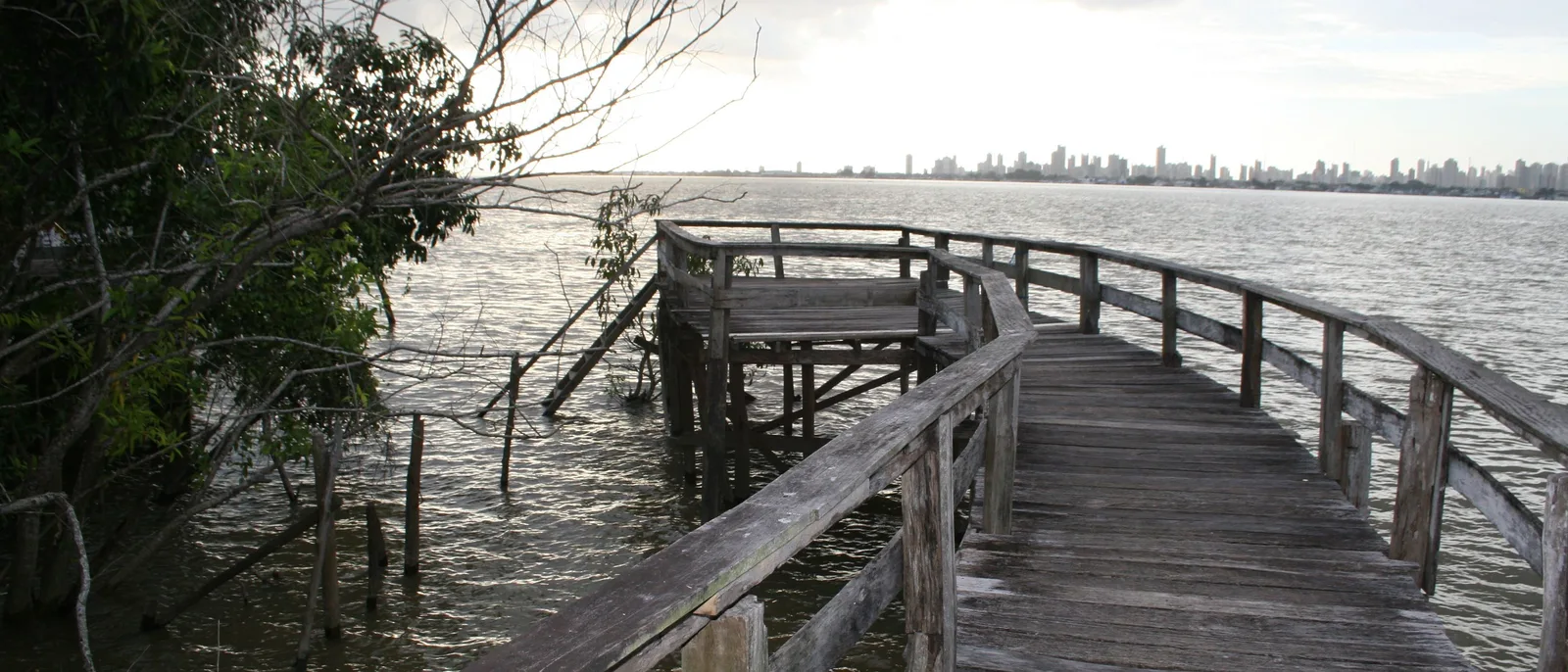
    A wooden walkway on posts running out through mangrove toward open brown water, with the distant towers of Belém along the horizon

    A river island twenty minutes across the water, still inside the municipality, with a handful of small pousadas built on stilts over the channels. You fall asleep to the forest and wake up looking at the city skyline across the water. It is the most memorable room in Belém and the least practical one: every trip into town is a boat, and after dark the boat is a negotiation. Best as one night at the end rather than a base for the whole visit.

    • Stilt pousadas
    • 20 min by boat
    • Very few rooms
    • One night, not four

A working plan

Three days in the city, and a fork on the fourth.

Belém is a two-to-three-night city and this is the three-night version, built around eating and around the afternoon rain. The fourth day is where you decide whether Marajó is part of this trip — it is not a day trip, and adding it properly means two more nights on the island.

  1. 01
    Wooden fishing boats crowded along the Ver-o-Peso waterfront with the iron market pavilion and its turrets behind them and city buildings beyond

    Ver-o-Peso & the waterfront

    The market, first thing

    Be at Ver-o-Peso by 7:00am, when the boats are unloading and the counters are frying fish. Açaí and manioc flour for breakfast, the medicine stalls after, then the Estação das Docas for the evening.

  2. 02
    The Catedral da Sé in Belém across its garden square: a white twin-towered church behind clipped hedges and flowerbeds under a heavy gray sky

    Cidade Velha & Nazaré

    The old city and the rubber money

    The fort and the Casa das Onze Janelas in the morning, the cathedral between them. Theatro da Paz and the basilica in the afternoon, and tacacá from a street counter when the rain comes.

  3. 03
    A narrow channel between forested banks on Ilha do Combu, small boats moored along the far side under a bright sky

    Ilha do Combu

    Out to the islands

    Twenty minutes across the water to a working river island: cacao under standing forest, chocolate made where it grows, lunch on stilts over the channel. Back for sunset from a waterfront terrace.

  4. 04
    Two thatched beach shelters standing on their poles on the wide, empty pale sand at Praia do Pesqueiro on Marajó

    Belém, or the crossing to Camará

    Fly home, or start for Marajó

    Three nights is a complete visit. If you want the island, this is the morning you leave: roughly three hours on the water to Camará, then on to Soure or Salvaterra, and give it two nights.

This is a starting shape, not a fixed departure — we rearrange it around your dates. Have it built for you

Timing

It rains here. Plan the day, not the trip.

Belém gets about 3,300 mm of rain a year across more than 220 rain days, and there is no month without it. What changes is how much. From December to May it is genuinely wet — March averages over 500 mm — and from August to November it drops to a third of that, which is the stretch to aim for. The temperature barely moves at all: highs of 31 to 33 and nights around 23, every single month.

Rainfall, rain days, temperature and UV for Belém, month by month. Choose a month to see what the weather is doing then.

January

Trade-offs
Air
23–31°C 73–88°F
UV
8 Very high
Rain
25 days 394 mm / 15.5 in

Deep in the wet season. Heavy rain most days, usually in the afternoon.

February

Trade-offs
Air
23–31°C 73–88°F
UV
9 Very high
Rain
25 days 438 mm / 17.2 in

Among the wettest months of the year, and the greenest the city gets.

March

Trade-offs
Air
23–31°C 73–88°F
UV
8 Very high
Rain
26 days 506 mm / 19.9 in

The wettest month. It rains on 26 days out of 31 and the total is over half a meter.

April

Trade-offs
Air
23–32°C 73–90°F
UV
9 Very high
Rain
25 days 466 mm / 18.3 in

Still very wet, and the last full month of it. Hotel rates are at their lowest.

May

Trade-offs
Air
23–32°C 73–90°F
UV
9 Very high
Rain
23 days 324 mm / 12.8 in

Rain beginning to ease. A transition month — wet, but noticeably less so.

June

Good
Air
23–33°C 73–91°F
UV
9 Very high
Rain
17 days 206 mm / 8.1 in

The drier half begins and the rain drops off sharply. Hot and much brighter.

July

Good
Air
23–33°C 73–91°F
UV
9 Very high
Rain
14 days 156 mm / 6.1 in

Rain continues to fall away. Brazilian school holidays, so book a little ahead.

August

Good
Air
23–33°C 73–91°F
UV
10 Very high
Rain
12 days 129 mm / 5.1 in

One of the driest months, and tied with September for the fewest rain days.

September

Good
Air
23–33°C 73–91°F
UV
10 Very high
Rain
12 days 120 mm / 4.7 in

The driest month of the year on the national normals. Hot, bright and the easiest to walk in.

October

Best
Air
23–33°C 73–91°F
UV
10 Very high
Rain
13 days 136 mm / 5.4 in

Dry and at its most pleasant — and the Círio fills the city for a fortnight.

November

Good
Air
23–33°C 73–91°F
UV
9 Very high
Rain
13 days 151 mm / 5.9 in

Still dry and the last month of the good stretch. Slightly wetter than September.

December

Trade-offs
Air
23–33°C 73–91°F
UV
9 Very high
Rain
19 days 284 mm / 11.2 in

Rain roughly doubles as the wet season comes back. Hot, humid and very green.

  • Best The one or two peak months
  • Good A real recommendation
  • Trade-offs Workable, with a catch
See Belém on the Brazil calendar

UV is the monthly average of the daily peak, 2022 to 2025, calculated from Copernicus Atmosphere Monitoring Service data. Weather data by Open-Meteo.com, CC BY 4.0.

For the driest weather

August–November

The four driest months by a clear margin: around 120 to 150 mm each against 400 to 500 in the wet season, and twelve or thirteen rain days instead of twenty-five. October is the pick, and only just. It takes 136 mm against September’s 120, which is noise in a city that takes 506 in March, and the Círio de Nazaré settles it.

For the Círio de Nazaré

Second Sunday of October

11 October 2026 and 10 October 2027. Around two million people, a fortnight of processions, and a city with no spare hotel rooms in it.

The wettest stretch

January–May

March is the wettest month of the year at over 500 mm across 26 rain days. Everything stays open and everyone keeps going; you just get wet most afternoons.

About the rain

The rain here is a daily event rather than a weather forecast, and it is worth understanding before you decide it is a problem. Most days it arrives in the afternoon, in one heavy tropical downpour that empties the sky for an hour and then stops. It is punctual enough that people in Belém arrange to meet each other by it — after the rain, rather than at 3:00pm — and it is one of the reasons the historic center is built with arcades to stand under. The city does not shut down for it. It waits.

What that means in practice is that the wet season is inconvenient rather than ruinous. From December to May you will get wet most afternoons, and the trade is empty museums, low room rates and a green, dripping, dramatic city. From August to November the rain drops to about a third of that: September is the driest month of the year at 120 mm across twelve rain days, with August and October close behind. That is the window to book if you have the choice, and October is the one to check the calendar for — the Círio takes over the whole city for two weeks and either makes the trip or ruins the logistics of it.

The dates worth planning around

A packed street during the Círio: hundreds of people with arms raised and phones held up, the flower-covered carriage just visible above the crowd in the distance

Círio de Nazaré

Second Sunday of October — 11 October 2026, 10 October 2027

One of the largest religious gatherings on earth, and the biggest thing that happens in this city by an enormous margin. The image of Our Lady of Nazareth is carried 3.6 kilometers from the cathedral to the basilica, with thousands of people holding a rope that runs back from the carriage for the whole route. Around two million take part; the 2025 procession was put at 2.5 million. The city has no spare rooms during the fortnight, so book months out or plan around it deliberately.

A night procession in Belém: a nun in a white habit and people in white shirts walking closely together, several holding lit candles, in a lamplit street

The Trasladação, the night before

Saturday evening before the Círio

The image is carried back through the city by candlelight on the Saturday night, and for many people in Belém this is the better of the two — slower, quieter and far easier to be inside than the Sunday crowd. A river procession of decorated boats crosses from Icoaraci on the Saturday morning, hours ahead of it, and a series of smaller pilgrimages run either side. The whole cycle lasts about two weeks and ends with the Recírio, which returns the image to its own church.

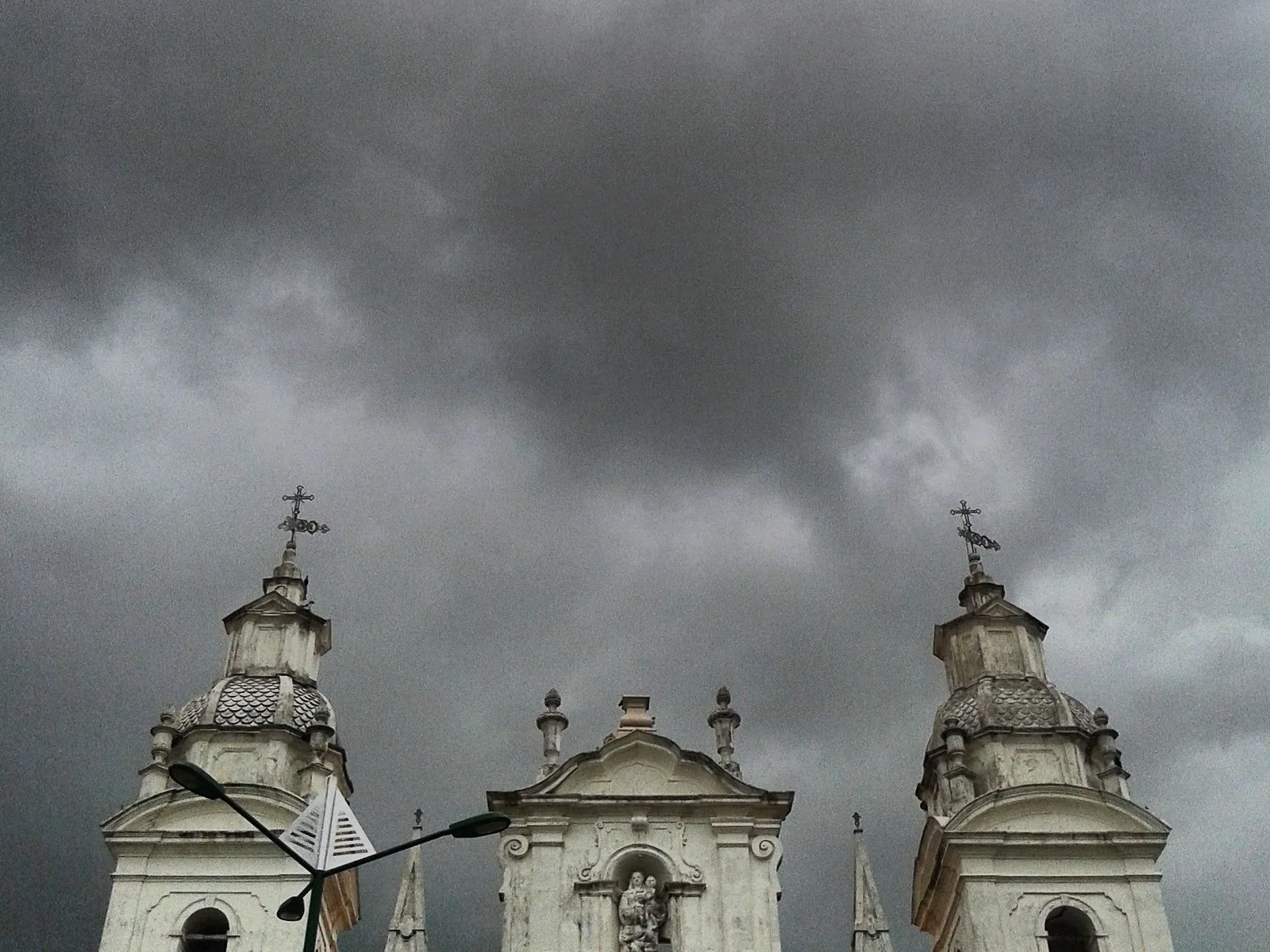
The pale twin towers and crosses of a church in Belém standing under a low, dark, heavily textured storm sky

The afternoon rain

Most days, all year

Not an event, but the thing that shapes every day you will spend here more than any festival does. A wall of cloud builds over the bay through the early afternoon, the light goes green, and then it empties — hard, warm and vertical, for perhaps an hour. Then it stops, the streets steam, and the evening is clear. Carry nothing that cannot get wet, keep the afternoon loose, and stop treating it as a thing that went wrong.

Good to know

Before you come

How many days do I need in Belém? +

Three nights covers the city properly and two will do it if you are efficient. The first day is Ver-o-Peso and the waterfront, the second is the Cidade Velha and the Belle Époque city, and the third is out to the river islands. If you want Marajó, add two more nights on the island rather than trying to make a day of it — the crossing is about three hours each way and a same-day return leaves you roughly four hours there, most of it on a bus. Belém also works well as a two-night stop bolted onto a longer trip, because it is one of the few places in the Brazilian north with a decent flight network.

Is the açaí here really that different? +

Yes, and it is the thing most American visitors are least prepared for. In Pará açaí is pressed fresh from the fruit that morning, unsweetened, thick and slightly savory, and it is eaten as a main course — poured into a bowl with manioc flour stirred through it and fried fish or dried shrimp on the side. It is not frozen, not blended with banana, not sweetened and not a dessert. Some people love it immediately and some find the first bowl strange; either way it is a completely different food from the one sold under the same name in the United States, and Ver-o-Peso is the place to try it.

When does it rain, and should I avoid the wet season? +

It rains all year — about 3,300 mm across more than 220 days — and it usually rains in the afternoon, hard, for about an hour, and then stops. From August to November the totals drop to roughly a third of the wet-season figure, and September is the driest month of the year at around 120 mm across twelve rain days. That is the window to aim for. But the wet season is not a write-off: December to May is wetter rather than washed out, the rain is predictable enough to plan around, and rooms are cheaper and the city quieter. Bring something waterproof, keep the afternoons loose, and do not build a schedule that assumes dry weather in any month.

Should I go to Marajó, and how hard is it? +

Only if you have the nights for it. Marajó is a genuinely remarkable place — an island roughly the size of Switzerland with almost as many water buffalo as people, freshwater beaches and almost no tourism infrastructure — but it is not close. A vehicle ferry runs from Icoaraci to the port at Camará in about three hours, and then it is another road leg to Soure or Salvaterra; a fast catamaran from the Belém waterway terminal goes straight to Soure in about two hours. Two nights is the minimum that makes sense and three is better. If you have three days in total, spend them in Belém and the river islands instead; Combu is twenty minutes away and gives you the delta without the crossing.

Is Belém safe to walk around? +

In the right places and at the right times, yes. It is a large working port capital with real street crime, and the practical risk to a visitor is theft rather than anything worse — Pará has cut its homicide rate by roughly half since 2017 and visitors are not being targeted the way they are in Rio or Salvador. Two specifics matter. Ver-o-Peso is the best thing in the city and also the busiest pickpocket ground in it, so go early, go light and keep your phone in your pocket. And the Cidade Velha empties out completely once the museums shut, so do the old city in daylight and spend the evening at the Estação das Docas or on the Doca in Umarizal, both of which are busy and lit. Use Uber or 99 after dark; rides across town cost a few dollars.

Keep going

Where Belém fits in a bigger trip.

Very few people fly to the mouth of the Amazon and straight home. These three are the trips that most often go either side of it — one upriver, one along the coast, and one for the other great regional kitchen in Brazil.
Free · 29 pages

Free guide

Beginner's Guide to Brazil

A free 29-page guide to everything a first-time visitor should know before landing: visas, safety, money, getting around, where to go, and what to eat.
We'll email you a link to confirm your address. Click it and the guide opens right away.

See what's inside
An open riverside terrace under the steel roof of the Estação das Docas, round tables and wicker chairs set out along the railing with the wide pale bay beyond

Skip the planning

Belém rewards knowing where to eat.

Tell us your dates, whether the food or the river is the priority, and whether you want Marajó in the trip. We will tell you plainly whether your dates land in the wet season or the dry one, whether they collide with the Círio, and how to fit Belém into the rest of the north without wasting days in the air.

  • One person, living in Brazil, replying to you directly
  • A reply within one business day — no call center, no bots
  • No cost to plan, and no obligation to book
  • Built around your dates, not a fixed departure