
Skip to content
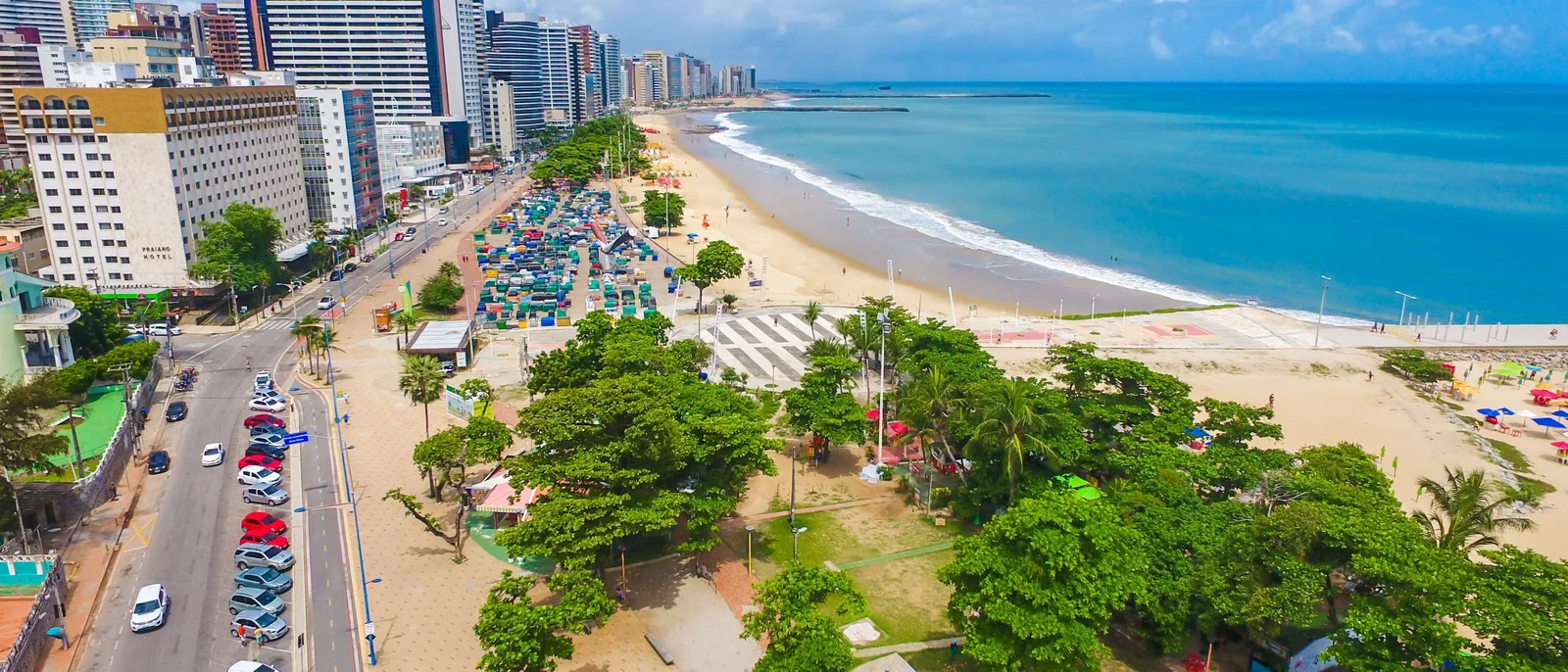
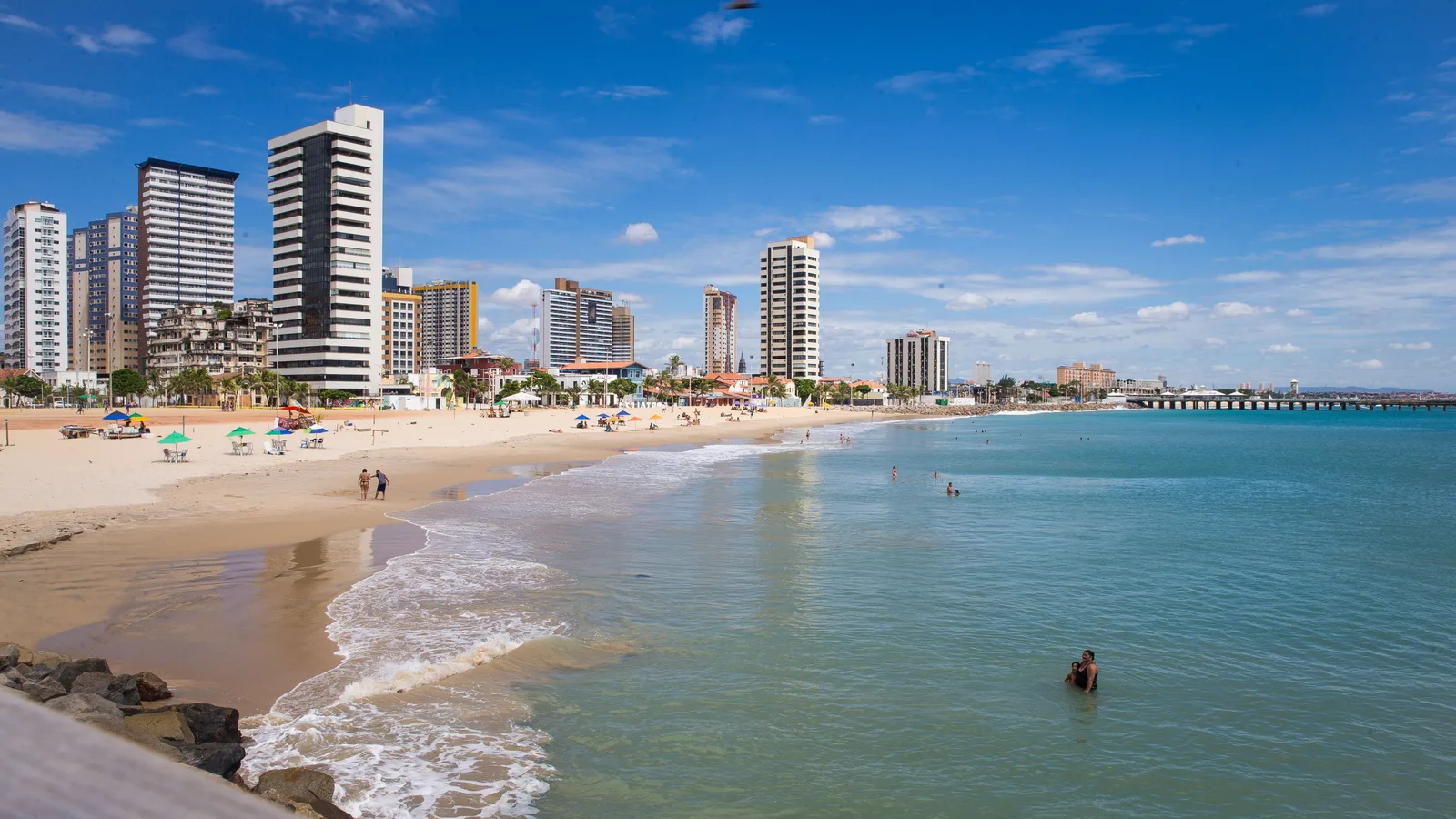
The seafront at Praia de Iracema in Fortaleza seen from a rock groyne: a curve of pale sand under a line of apartment towers, colored parasols along the back of the beach, two people standing in green shallows and a long pier running out to sea in the distance

Ceará

Fortaleza

The airport everyone flies into, and a city worth getting off at.

Last checked September 2026

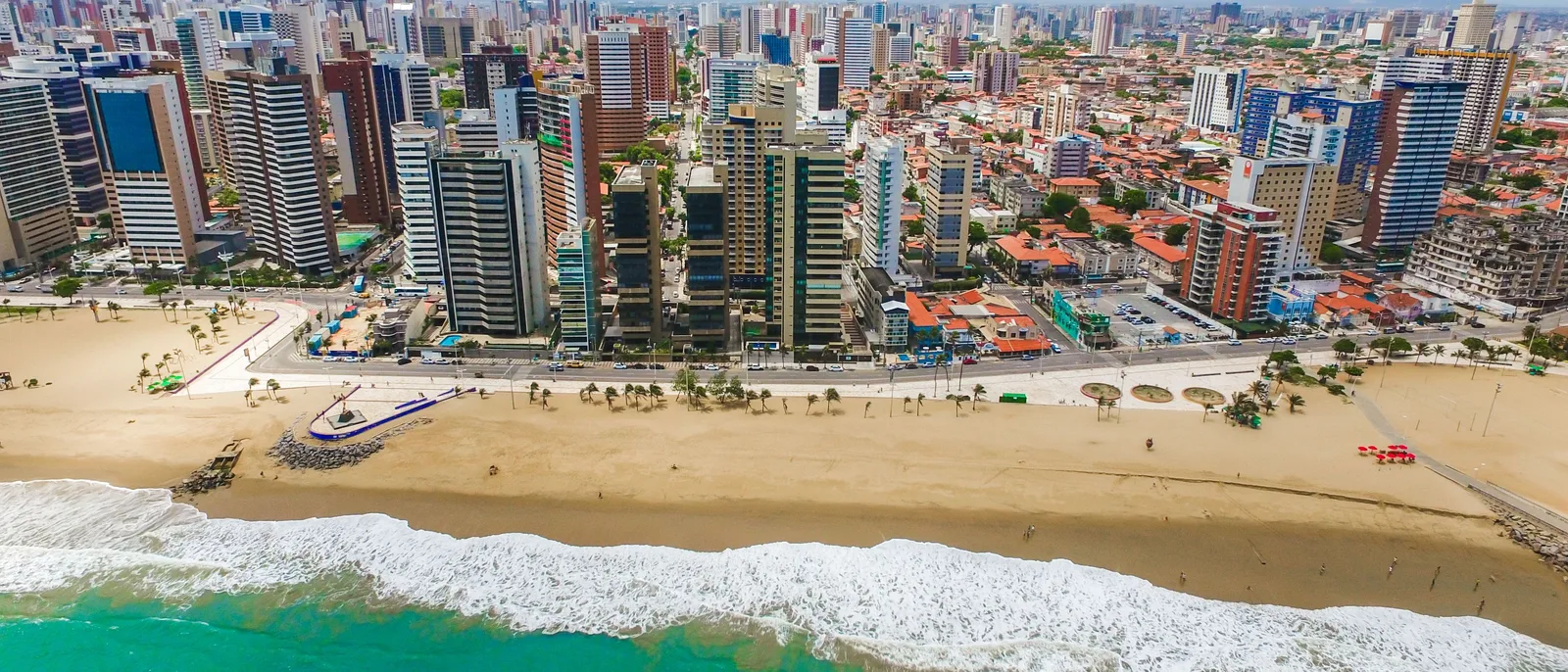
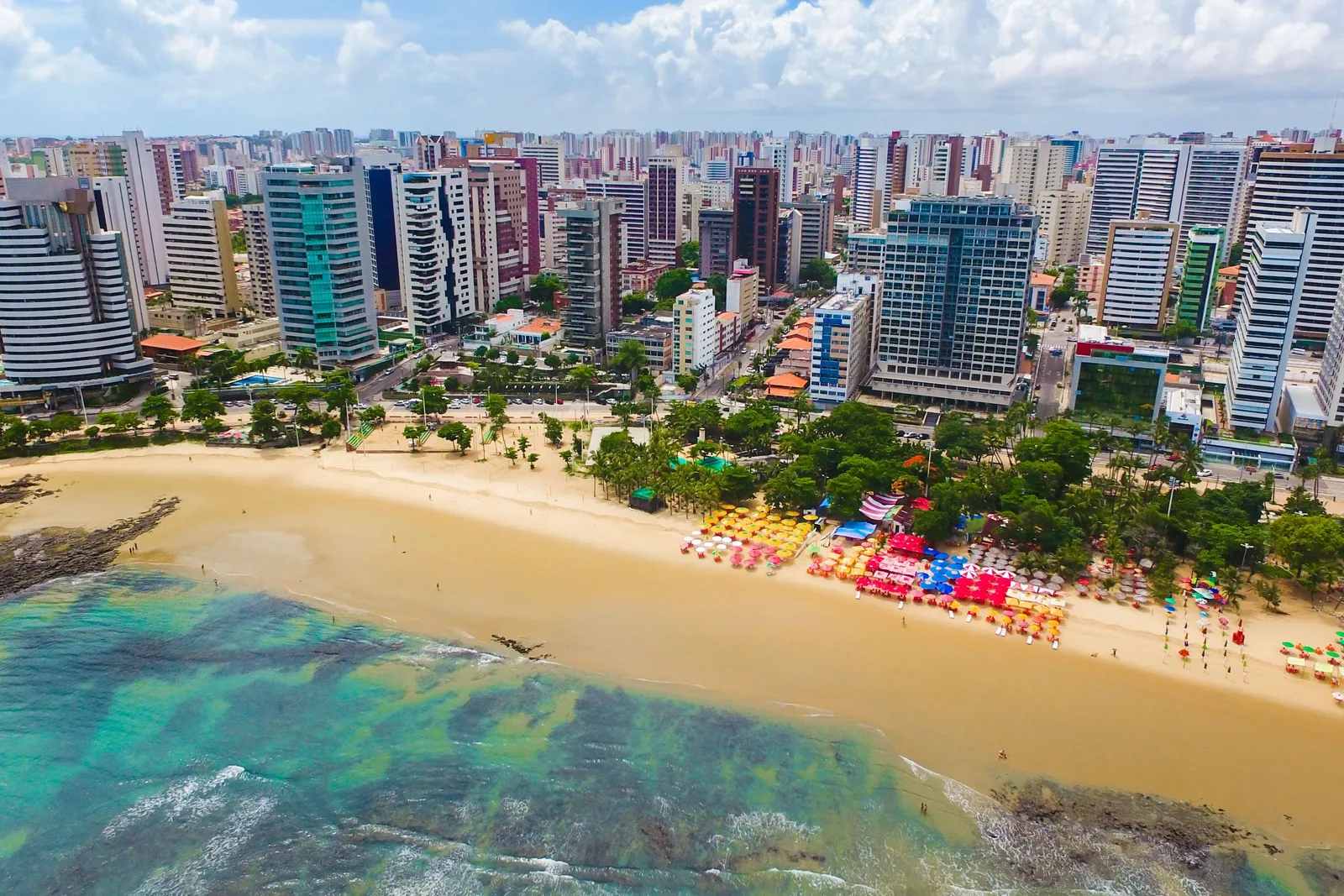
  • Meireles beach from the air: turquoise shallows over pale sandbanks, a beach packed with rows of colored parasols, and the unbroken wall of apartment towers behind it
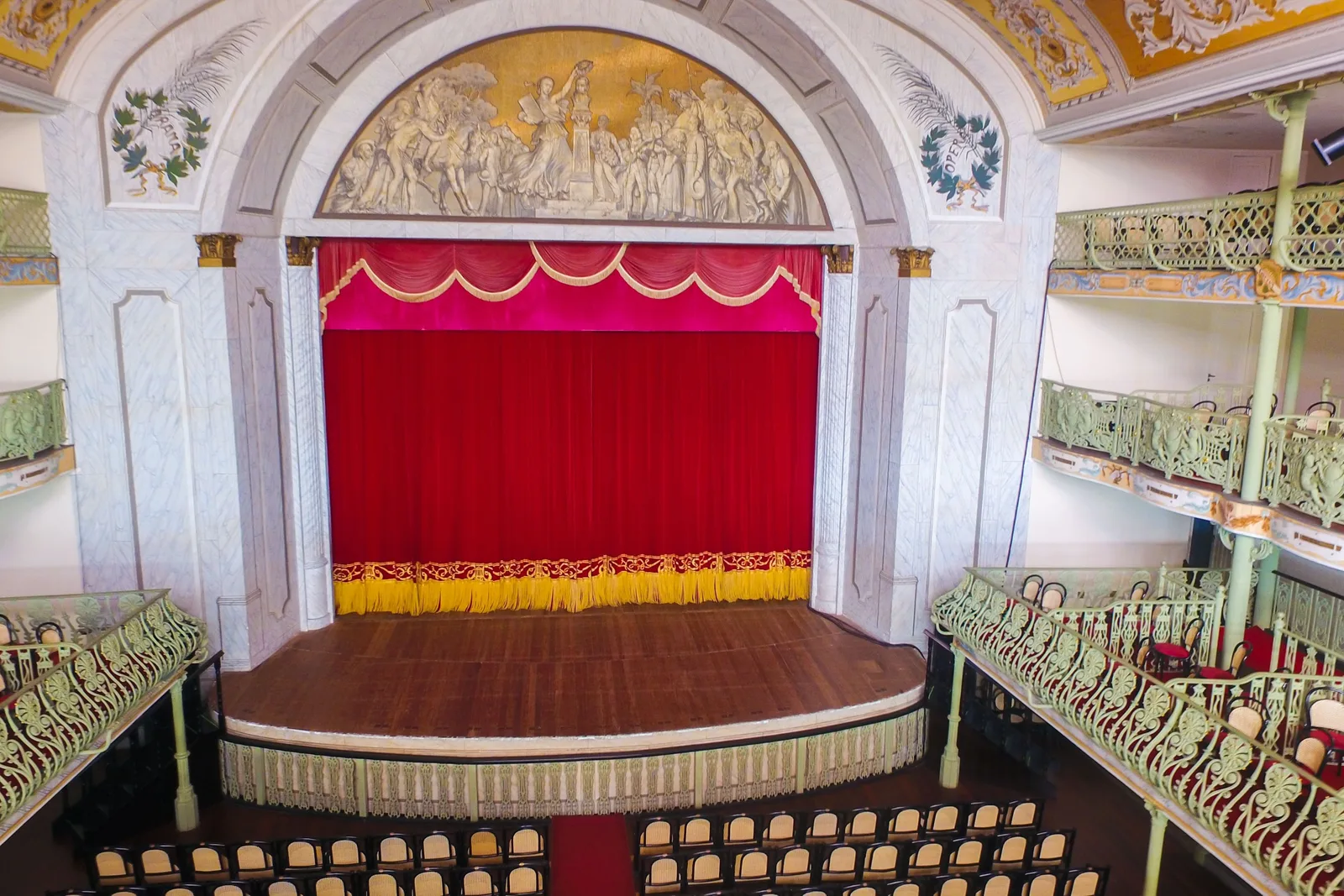
  • The stage of the Theatro José de Alencar seen from a side box: a red curtain under a painted arch, with tiers of cast-iron balconies and rows of wooden seats below
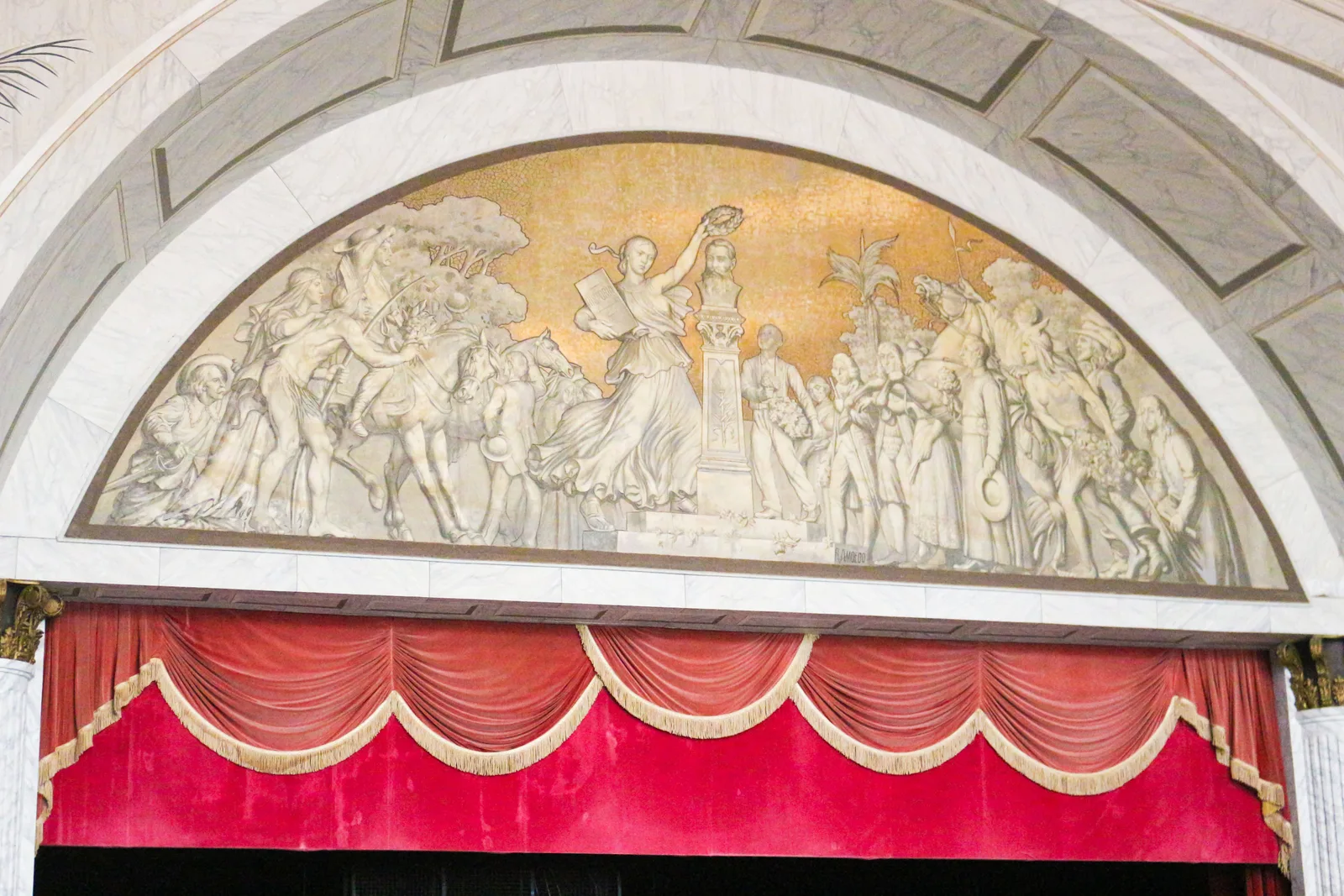
  • A pale plaster relief of classical figures set into the arch above the Theatro José de Alencar’s stage, with the red and gold curtain drawn beneath it
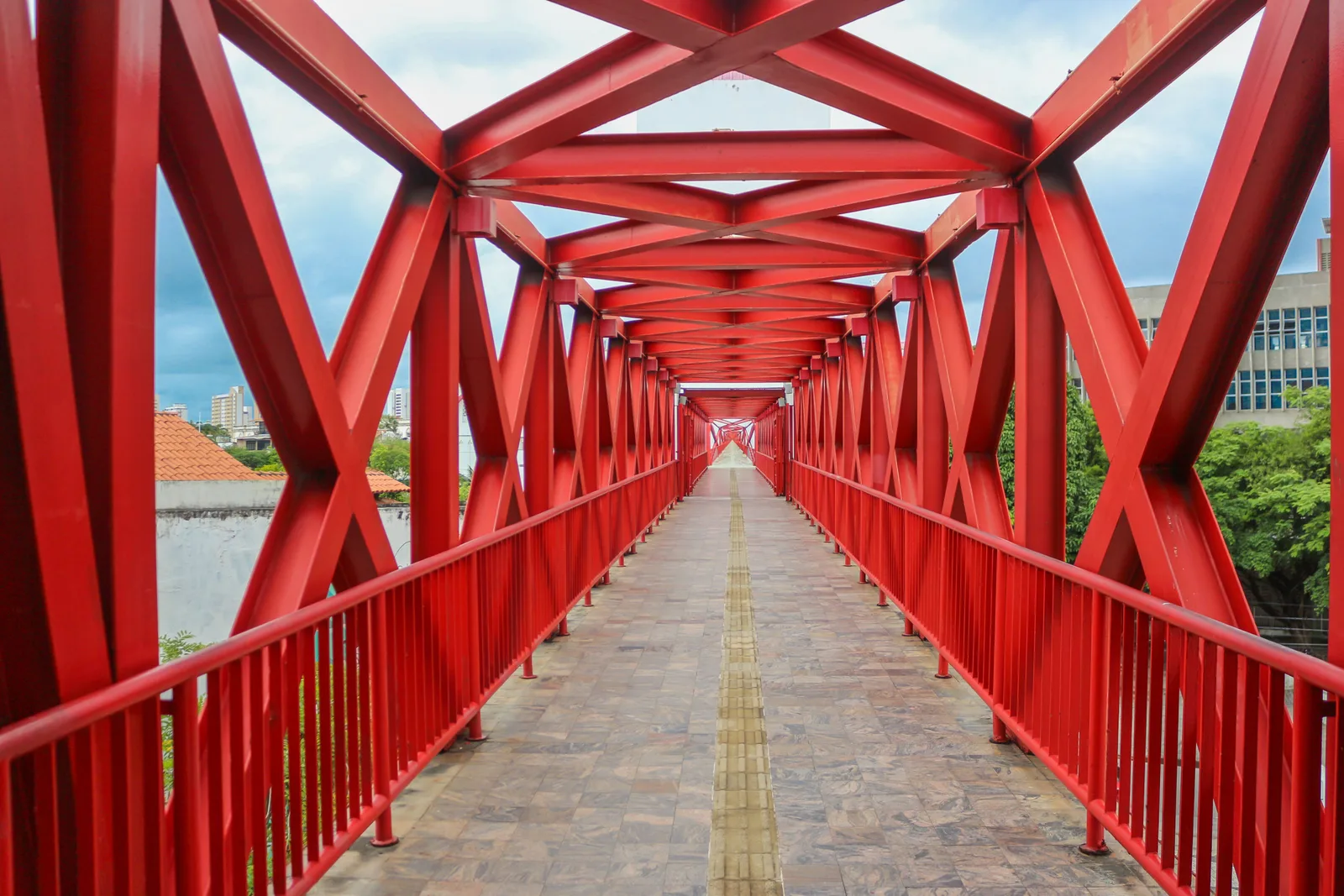
  • The red steel footbridge at the Dragão do Mar cultural center, its lattice frame running away from the camera like a tunnel with the city visible through the sides
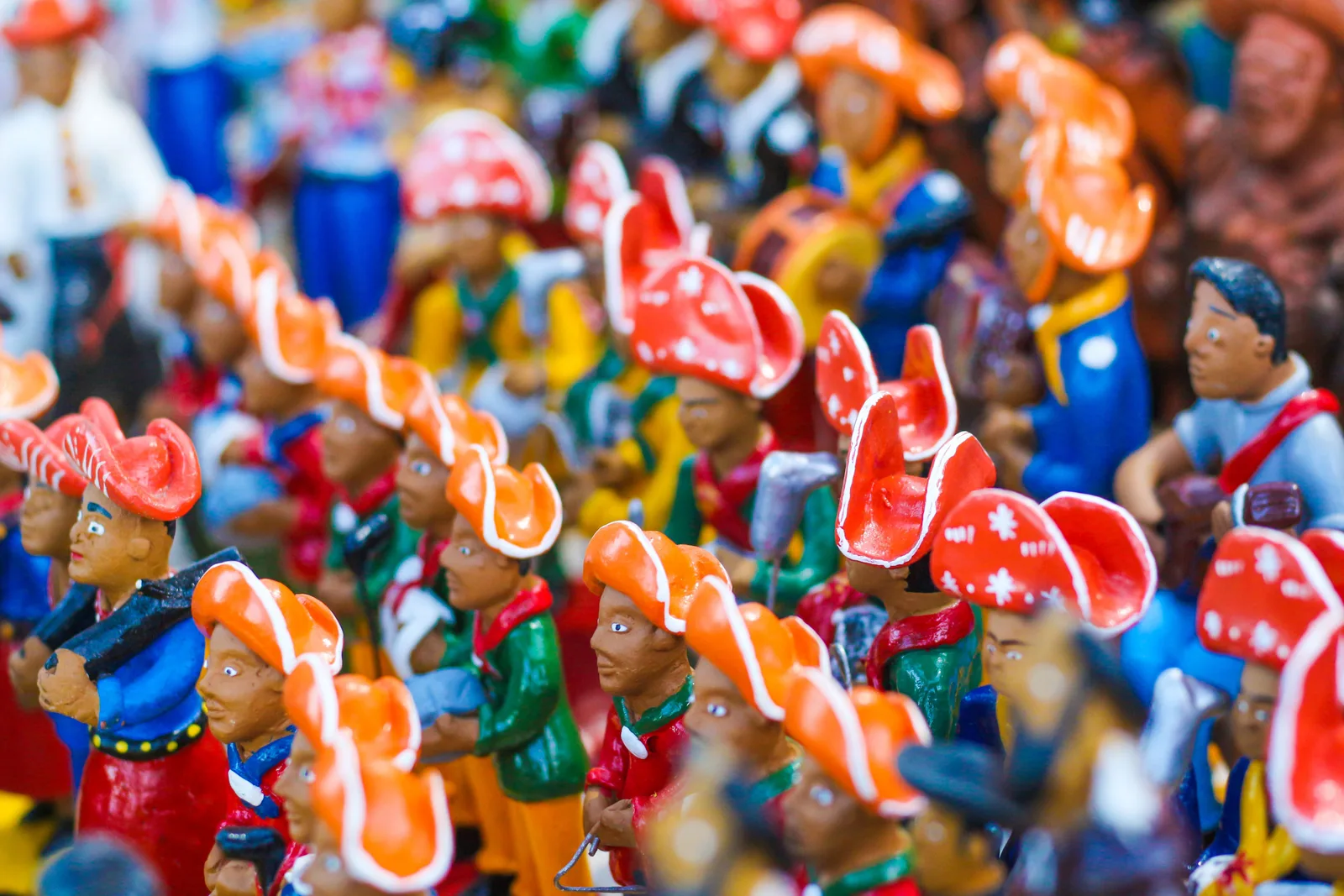
  • Rows of small painted clay figures in red leather hats crowded together on a craft-fair stall
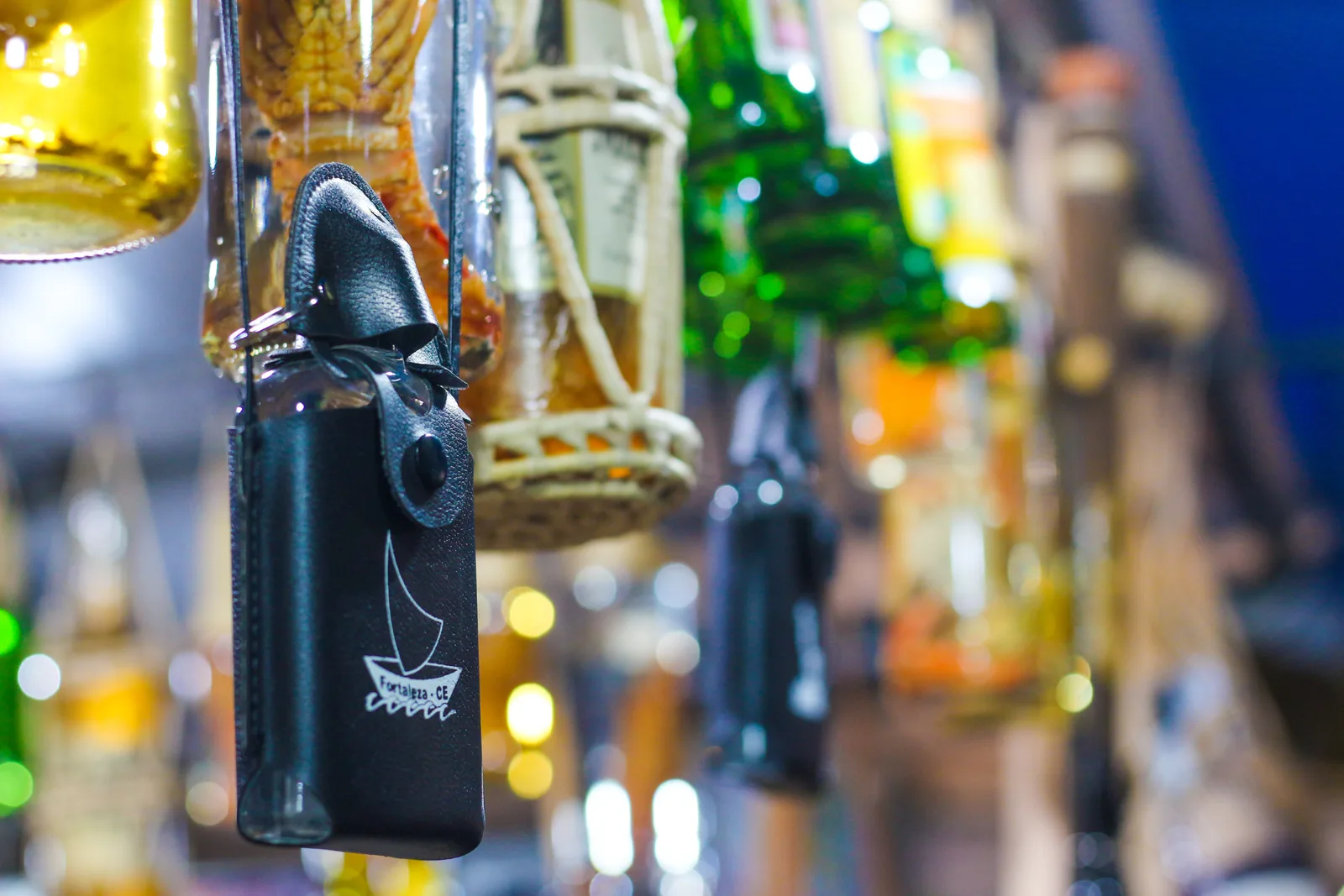
  • Bottles of cachaça and liqueur hanging in rows at a craft-fair stall, one dark bottle in focus in the foreground
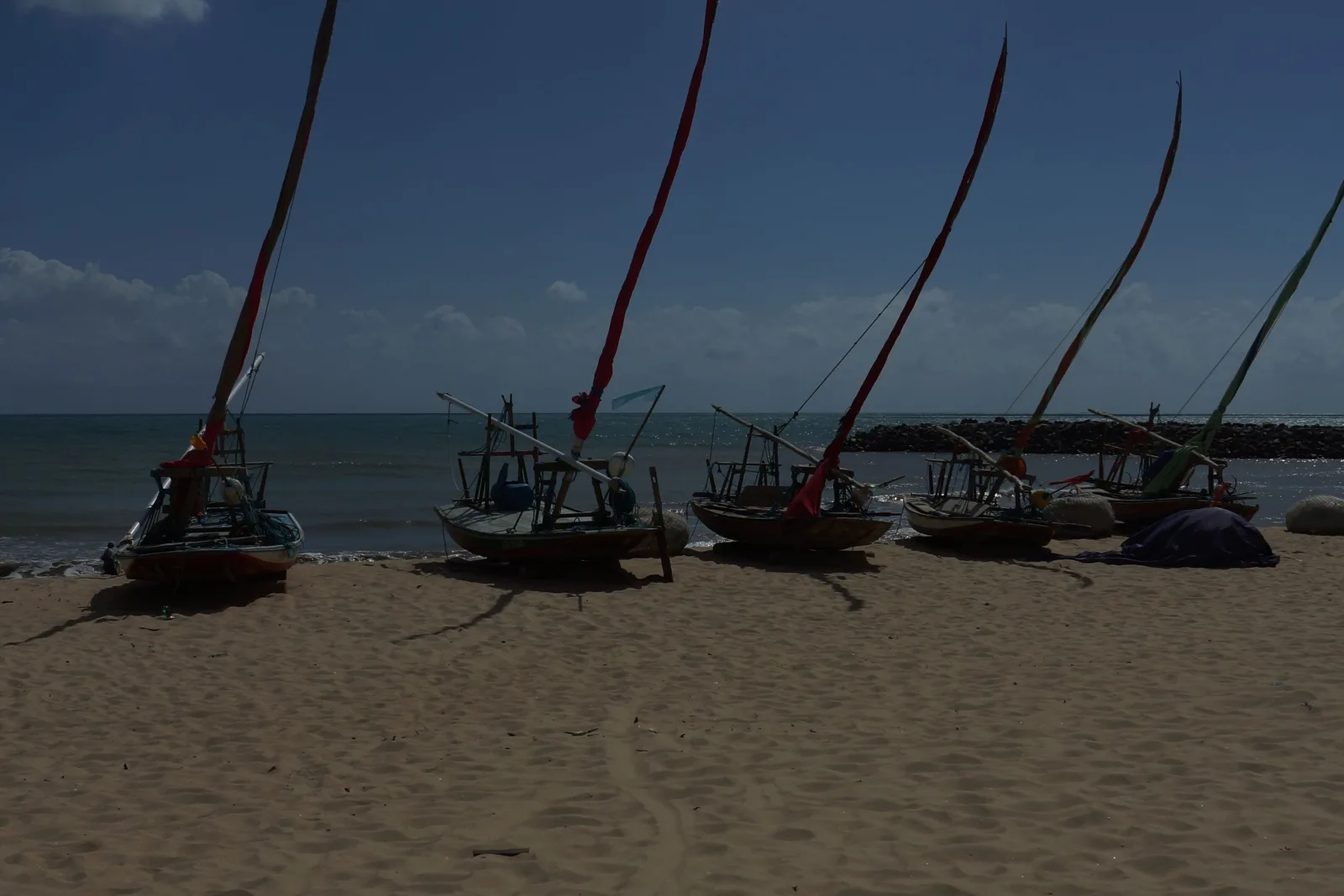
  • A line of jangadas drawn up on the sand with their tall masts raked back, the sea flat behind them
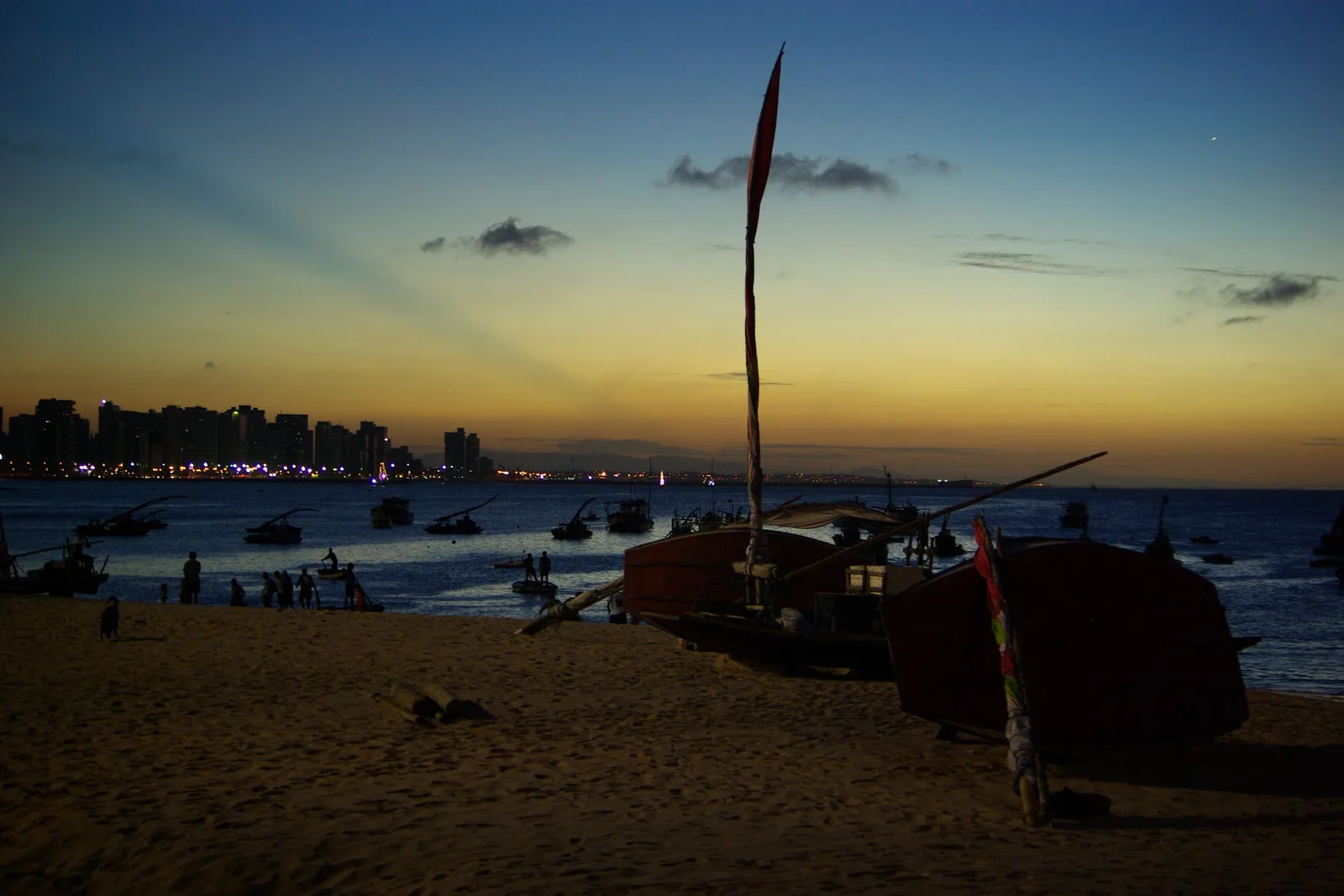
  • Dusk at Mucuripe: a jangada silhouetted on the sand with its mast against a gold and blue sky, and the lights of the city strung along the shore behind
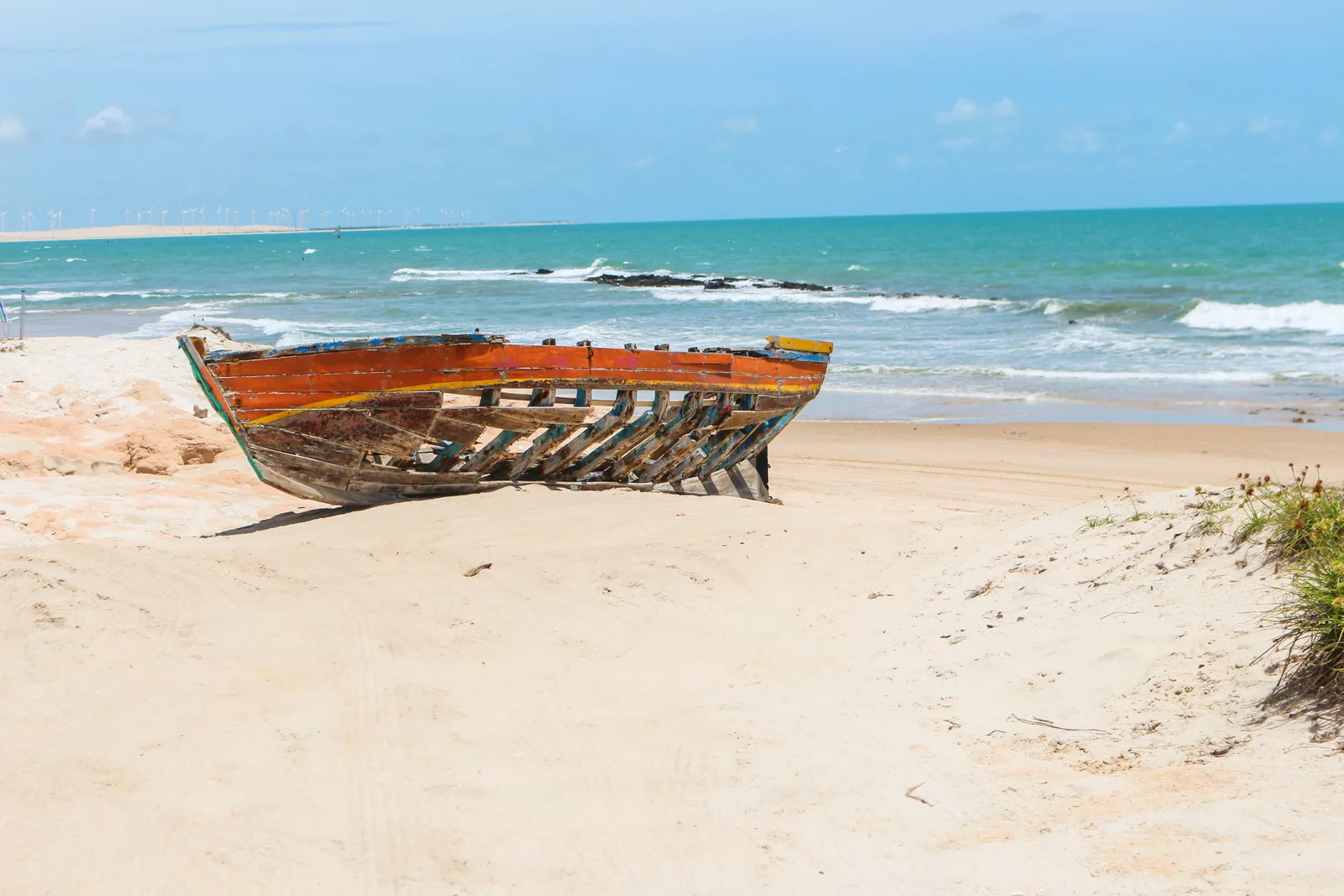
  • The bare wooden ribs of a wrecked fishing boat lying half-buried on a pale beach at Canoa Quebrada, green sea and a low reef line behind
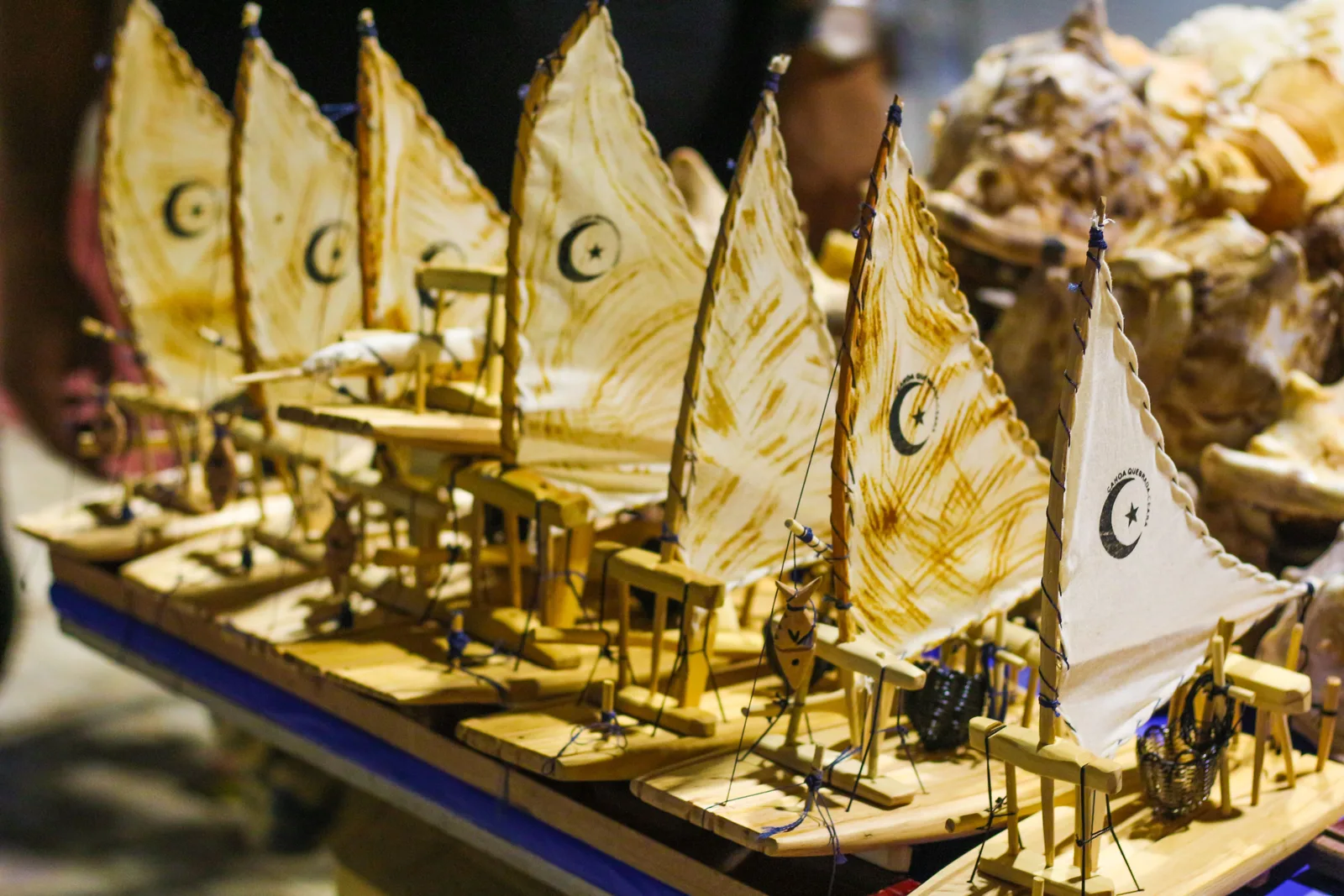
  • Model jangadas with cream cloth sails lined up on a souvenir stall, each one painted with a crescent moon and star
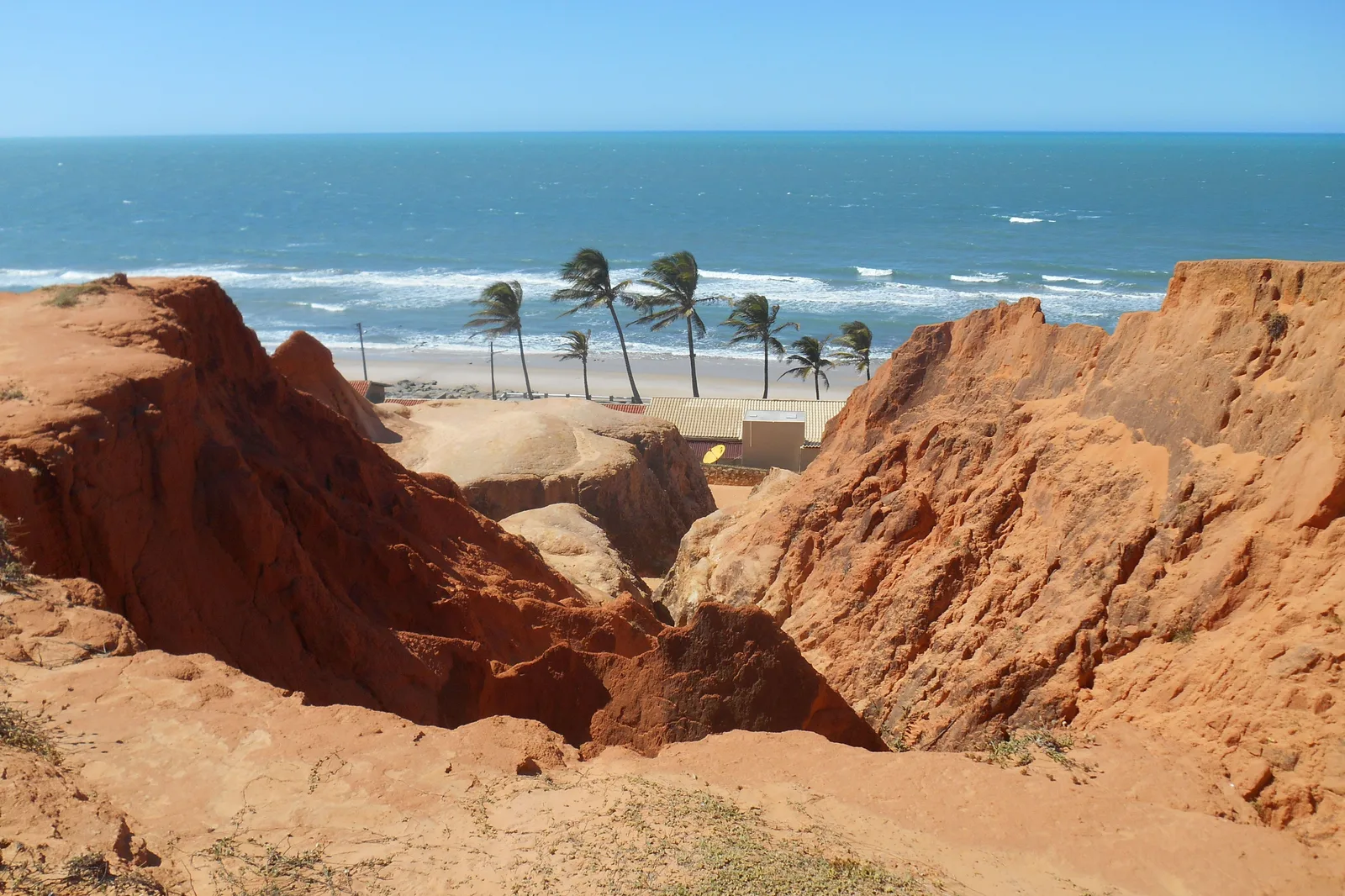
  • The eroded red and cream cliffs at Beberibe with a cluster of coconut palms standing in a notch between them and the sea beyond
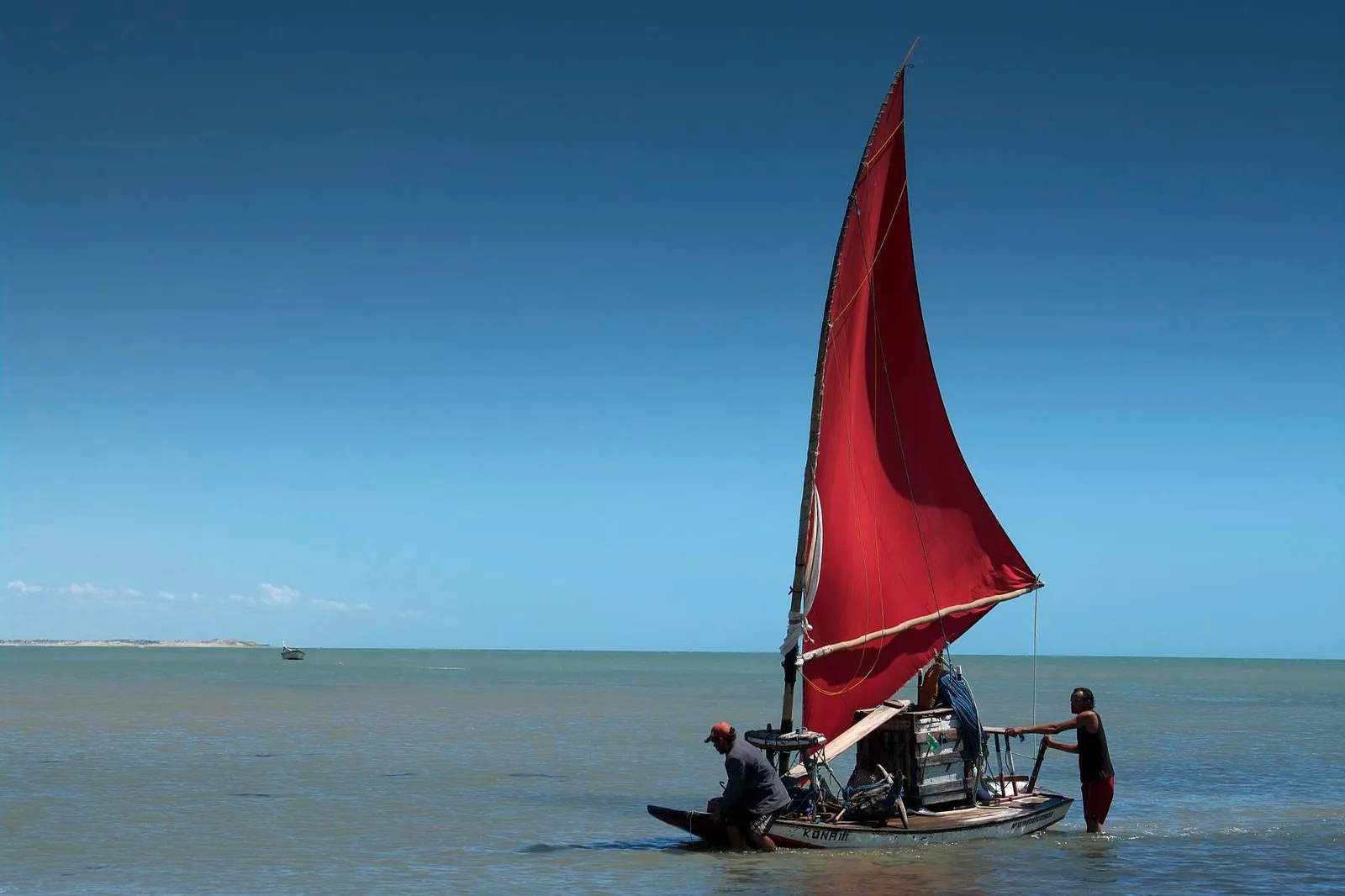
  • A jangada under a deep red sail on flat shallow water at Flecheiras, two men aboard and one standing waist-deep beside it
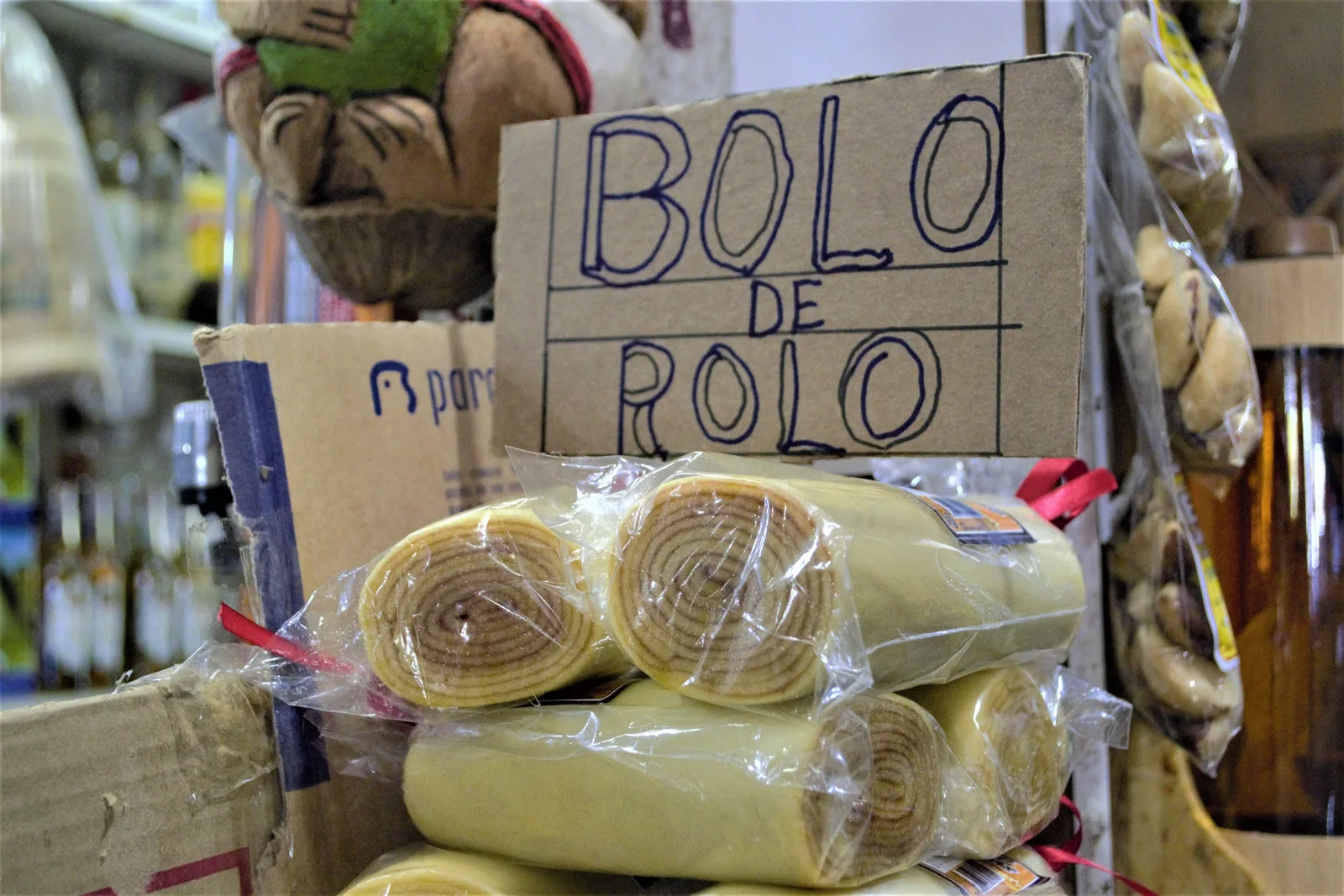
  • Rolled cakes wrapped in plastic stacked on a market stall under a handwritten cardboard sign reading Bolo de Rolo
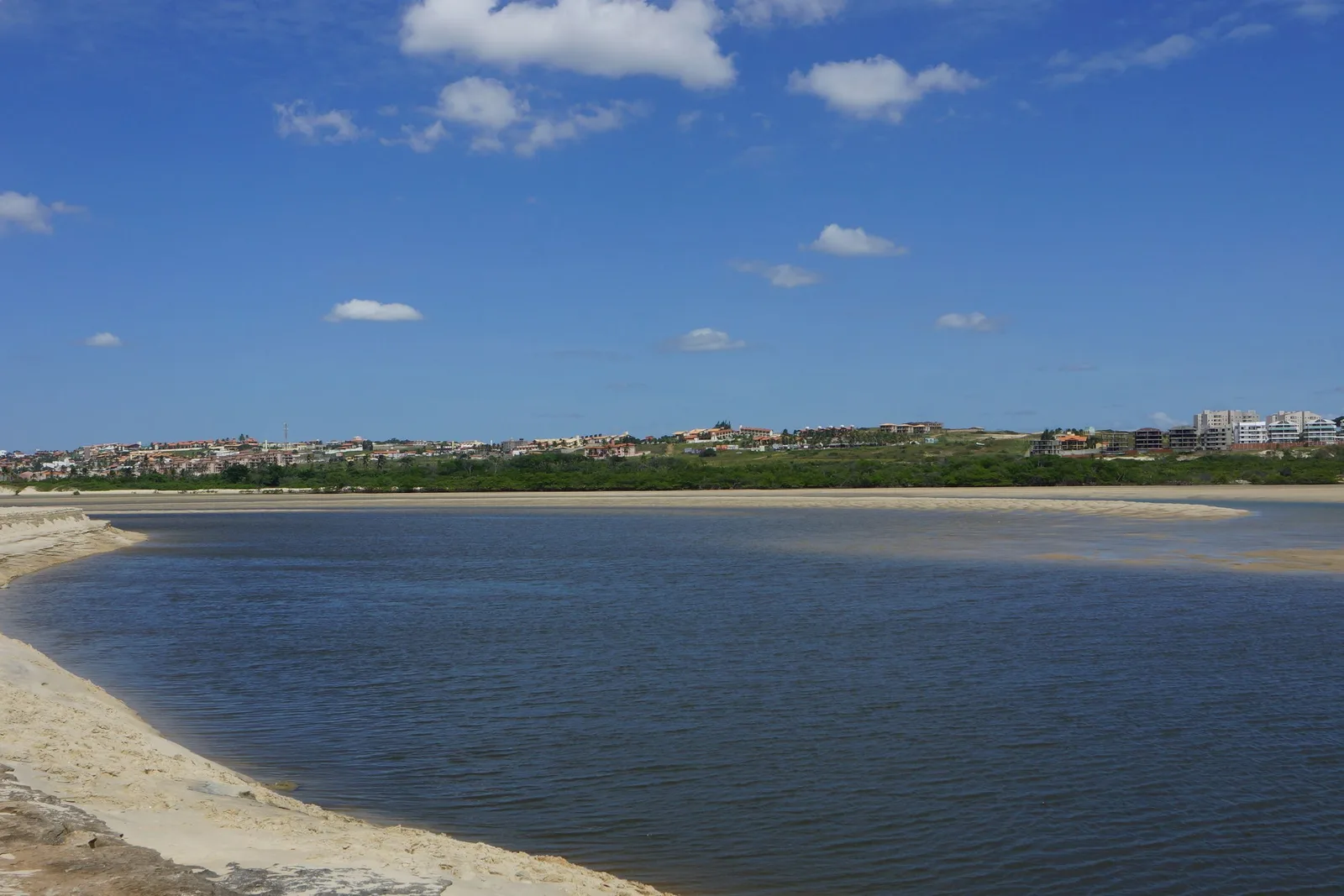
  • A wide brown river estuary at Aquiraz running out across a sandbar into the sea, with low green scrub along both banks
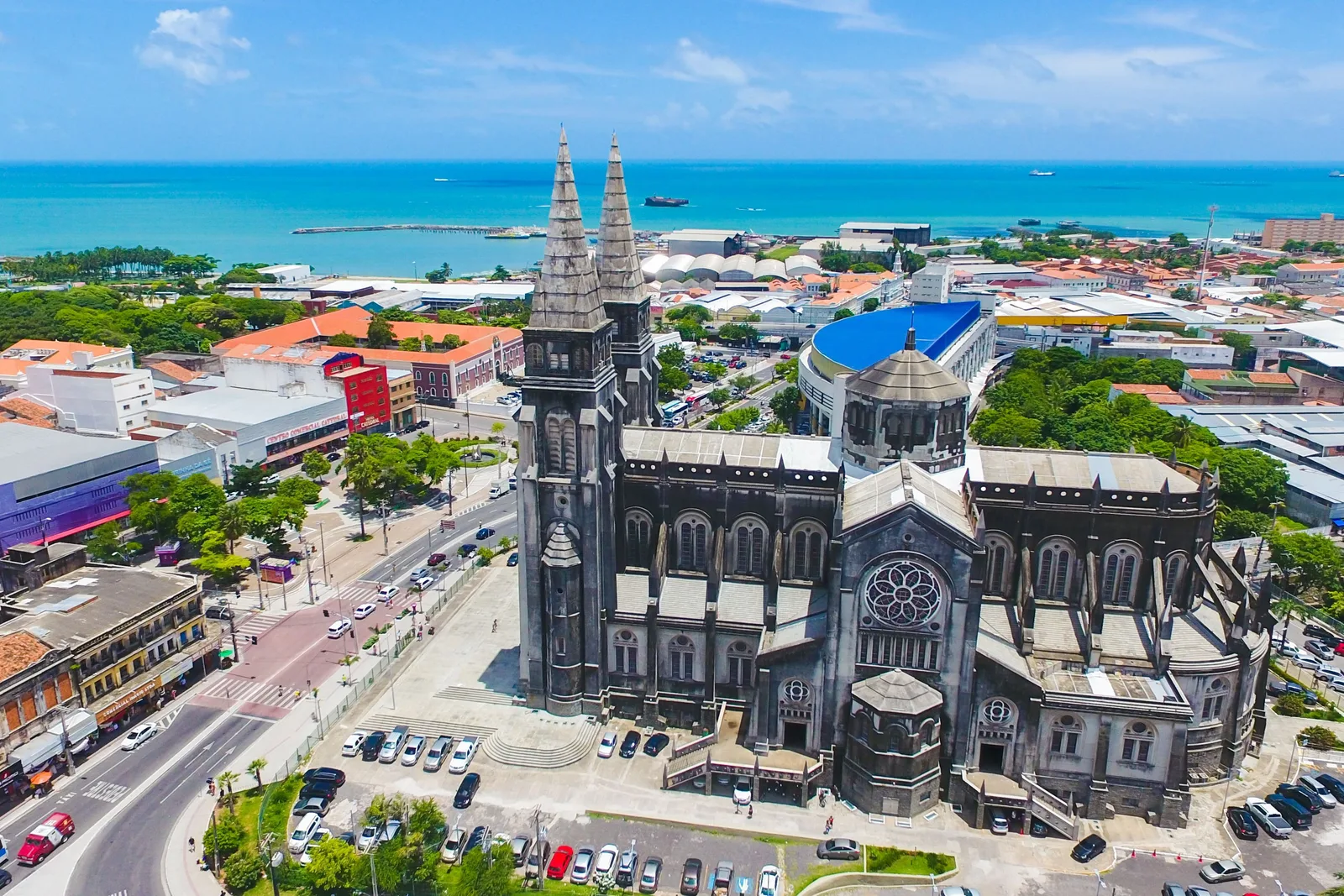
  • The twin gray spires of Fortaleza’s Catedral Metropolitana from above, with the blue curved roof of the Mercado Central beside it and the sea on the horizon
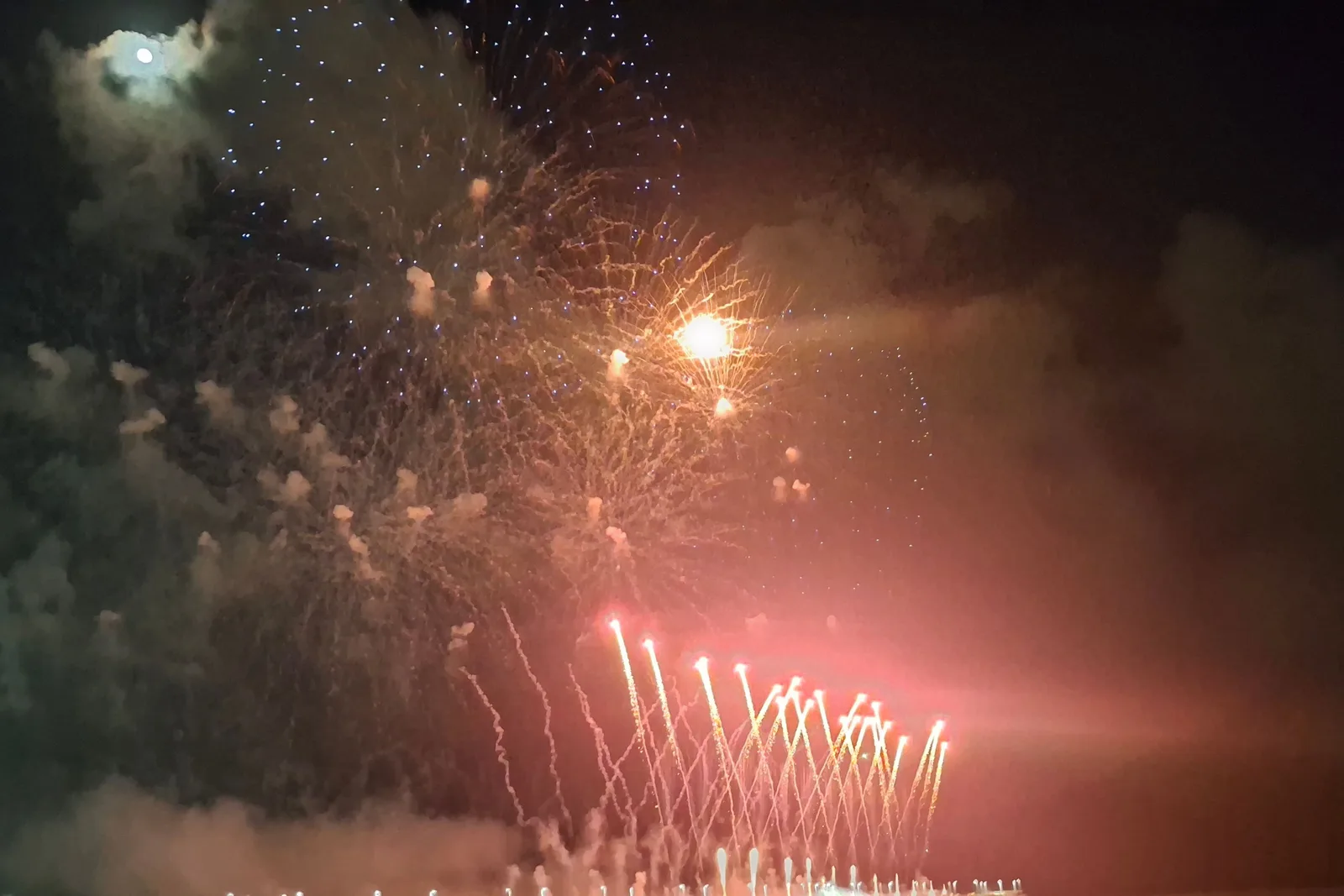
  • Fireworks bursting in gold and red over a dark crowd on the beach at Fortaleza on New Year’s Eve

Orientation

The city behind the airport.

What this page covers, what it costs, and how you get to it.

General Info

Brazil’s fourth-largest city, with 25 kilometers of its own beach

Fortaleza is the capital of Ceará and it had 2,428,708 people at the 2022 census, which makes it the fourth-largest city in Brazil (IBGE, Censo 2022). Almost every guide to this coast treats it as a transit point, and that is a mistake worth correcting: the city has about 25 kilometers of urban beach of its own (Wikipedia, citing the municipality), a promenade the city spent R$120 million rebuilding, a cast-iron opera house shipped from Glasgow in 1908, and two completely different coastlines within two hours of the runway.

The geography is simple once you see it. The city faces roughly north, and the beach runs east to west across the front of it. From west to east you get the Barra do Ceará and the working port districts, then Praia de Iracema and Meireles, which is the visitor strip, then the fishing harbor at Mucuripe, and then Praia do Futuro, roughly seven kilometers of open Atlantic beach lined with the barracas that are the city’s single best-known institution. Outside the city, the coast splits: the Litoral Leste runs east toward red cliffs and old fishing towns, and the Litoral Oeste runs west into dunes, lagoons and the strongest reliable wind in Brazil.

One thing an honest guide says out loud. Not every stretch of Fortaleza’s beach is fit to swim in on any given week. Ceará’s state environment agency, Semace, tests 33 points along the city’s shoreline and publishes a bathing-water bulletin every Friday under the federal CONAMA standard, Resolution 274/2000. Recent bulletins have put roughly two thirds of those points in the clear: 22 of 33 in September 2025 and again in March 2026, 21 in January 2026. Which two thirds changes. Praia do Futuro is usually the safest bet and the far western end of the city is usually not. Look up the week’s bulletin on the Semace site before you pick a beach, the way you would check a tide table somewhere else.

Where It Is

Four degrees off the equator, and the closest big Brazilian city to Europe

Fortaleza sits on the Atlantic at the top corner of Brazil, where the coast turns from running north to running east. It is the closest major Brazilian city to mainland Europe, 5,608 km from Lisbon (Wikipedia), which is why a city this far from the tourist trail has nonstop flights to Portugal, France and Spain. Natal is about 520 km southeast, Recife about 800 km, and São Luís about 1,000 km west.

Fortaleza Fortaleza

3.73° S, 38.53° W

See the Northeast on the interactive map

Cost

One of the cheapest big cities in Brazil to stay in

Fortaleza is inexpensive by Brazilian standards and very inexpensive by American ones. A sea-view room on the Beira Mar costs a fraction of the equivalent in Rio, the beach itself is free, and a long lunch at a barraca on Praia do Futuro runs to about what two coffees cost at home. The two things that move a budget here are the flight, because there is no year-round nonstop from the United States, and a rental car, which is the difference between seeing the city and seeing the coast.

Estimated daily budget, per person

Budget

$55 / day

A simple room a block back from the Beira Mar, kiosk and barraca meals, ride apps, the city beaches and the free things in the Centro.

Mid-range

$115 / day

A sea-view room on the Beira Mar, a rental car for part of the week, restaurant dinners, and one day out on each coast.

Comfortable

$240 / day

The best rooms on the seafront or a resort at Porto das Dunas, private transfers, guided coast days and a Beach Park ticket.

Per person per day once you are in Fortaleza, flights not included. Two people sharing a room lands well under the double of one.

What things cost

  • Sea-view mid-range room on the Beira Mar, per night $65 R$330
  • Simple pousada or apartment a block back, per night $30 R$155
  • Beach Park day ticket, bought well in advance $41 R$210
  • Beach Park day ticket, bought at the gate $63 R$320
  • Lunch for two at a Praia do Futuro barraca, with beer $30 R$150
  • Rental car, per day $22 R$110
  • Ride app, Beira Mar to Praia do Futuro $4 R$20
  • Ride app, airport to the Beira Mar $8 R$40
  • Buggy day out on the east coast, for two $59 R$300
  • Kitesurfing lesson at Cumbuco, per hour $39 R$200

The two Beach Park lines are published prices. Advance online tickets started at R$210 and the gate price ran to about R$320 in 2026 (Melhores Destinos, February 2026). Children under one meter go free. Everything else on this list is an estimate.

The beach is free and the barracas do not charge to sit down. What you pay for is what you order, and a table, a chair and a shower come with lunch.

Cards work almost everywhere and Pix works everywhere. Carry some cash for beach vendors and for the small towns on either coast.

The expensive weeks are Christmas to New Year, Carnival, and the Brazilian school holidays in July. September through November is the same weather at a much lower price.

Checked September 2026 and converted at R$5.10 to the dollar, the rate every page on this site uses. One published price and nine estimates, so read this as the shape of a budget rather than a quote anyone can be held to.

Safety

A real problem in the city, mostly nowhere near the beach

6 /10

Our rating: a state with a serious violence problem, a seafront that is one of the safest places in it, and three separate zones you have to cross a city to reach.

Ceará recorded a rate of 31.7 violent deaths per 100,000 people in 2025 on the state government’s own count, and 32.1 on the Fórum Brasileiro de Segurança Pública’s, against a Brazilian national rate of 19.1 (FBSP, 20th Anuário Brasileiro de Segurança Pública; the 19.1 and the state government’s 31.7 are reported by CNN Brasil). Both numbers are high. Both are also falling fast: Fortaleza itself recorded 742 violent deaths in 2025 against 834 the year before, an 11% drop, and the state fell 7.7% (Governo do Estado do Ceará, January 2026). What matters to a visitor is that almost none of it happens where you will be. The Beira Mar strip is a continuous, floodlit, heavily policed promenade that is busy from before dawn until late, and the Praia do Futuro barracas run their own security. The realistic risk is theft on the sand and street robbery after dark away from the lit strips.

  • Take to the beach only what you can carry into the water. A phone left on a towel while everyone swims is the most common loss here, as it is on every beach in Brazil.
  • Use Uber or 99 between neighborhoods after dark rather than walking. Fortaleza’s visitor areas are not contiguous: the Beira Mar and Praia do Futuro sit at opposite ends of the city’s beach and the road between them is not a walk.
  • The Centro is a daytime quarter. The cathedral, the Mercado Central, the Theatro José de Alencar and the Mercado dos Pinhões are fine and busy in office hours, and the area empties out after them. Do it before lunch.
  • Praia do Futuro is safe at a barraca and much less so on the dark sand between them at night. Stay where the lights and the people are, and take a ride home rather than walking the avenue.
  • The far western beaches, from Barra do Ceará in toward the port, are working neighborhoods with nothing on this page in them. Nothing here sends you there.
  • The sun is a real hazard and the wind hides it. The UV index runs at 9 or higher every month of the year and at 11 or 12 through the dry season, and a 20-knot breeze makes 32 degrees feel comfortable while it burns you. Rash guard, hat, reapply.
  • Praia do Futuro has open Atlantic surf and rip currents, unlike the sheltered city beaches. Read the flags, swim near a lifeguard post, and ask the barraca.

Getting There

The gateway airport for this whole stretch of coast

Pinto Martins International (FOR) sits about 6 km south of the old center and handled 6,161,283 passengers in 2025, up 9% on the year before (Wikipedia, Fortaleza Airport). It is the reason this page exists: almost everyone traveling this coast passes through it, whether or not they stop.

  • Gol flies Fortaleza to Orlando nonstop once a week on a 737 MAX (Gol, September 2026), and in the July 2026 holidays it added a Miami flight too. LATAM stopped selling its Fortaleza to Miami flight for travel from October 2026 (Panrotas, June 2026). Outside those, almost everyone connects through São Paulo (GRU), Brasília, Recife or Salvador (Wikipedia, Fortaleza Airport airlines and destinations).
  • Europe is unusually easy for a city this size. TAP Air Portugal flies Lisbon nonstop, Air France flies Paris Charles de Gaulle, and Iberia flies Madrid. Fortaleza is the closest big Brazilian city to Europe and the route map shows it.
  • From the terminal to the Beira Mar hotels is about 20 to 30 minutes. Ride apps work at the airport and are the cheapest option; the official taxi desk and hotel transfers both cost more.
  • Domestic connections are excellent. LATAM flies Fortaleza to São Paulo, Rio, Brasília, Recife, Salvador, Belém and São Luís, and Gol and Azul cover most of the same map, most of them several times a day.
  • If you are building a longer northeastern trip, flying into one city and out of another saves a day of backtracking. Fortaleza pairs naturally with São Luís to the west and with Recife or Natal to the southeast.

Getting Around

Walk the Beira Mar, ride to the beach, drive the coast

The city half of this trip needs no car. The coast half is a different trip and it needs one, or it needs a driver, because the good places on both coasts are villages an hour or two apart with no useful public transport between them.

  • The Beira Mar is a continuous rebuilt seafront from Praia de Iracema through Meireles to Mucuripe, with a 3.4 km cycle path, a 2.6 km running track, an amphitheater, sand courts and public restrooms, delivered in 2021 and 2022 for about R$120 million (Prefeitura de Fortaleza; Governo do Estado do Ceará). It is genuinely pleasant to walk end to end at any hour.
  • Uber and 99 both work across the whole city and are cheap. Beira Mar to Praia do Futuro is a few dollars and takes about fifteen minutes.
  • Rent a car for the coast. The CE-040 runs east through Aquiraz and Beberibe to Aracati; the CE-085, the Rota do Sol Poente, runs west through Caucaia and São Gonçalo do Amarante to Paracuru and Trairi. Both are ordinary two-lane roads in reasonable shape.
  • If you would rather not drive, every hotel sells the same set of day tours by van or buggy: Beach Park, Morro Branco and Praia das Fontes, Canoa Quebrada, Cumbuco and the west-coast beaches. They are cheap, they run daily, and they are how most Brazilian visitors do it.
  • Buggies are the local way to cover sand rather than road, and the question the driver asks before you set off is “com ou sem emoção”, with or without excitement. It is a real question about how fast they take the dune faces, and “sem” is a perfectly good answer.
  • The city has a metro and a light rail, and neither is much use to a visitor. They serve commuters from the south and west, not the seafront.

The big five

What the city is actually made of.

Two beaches that do completely different jobs, one building worth crossing town for, and the two coasts that make this city a base rather than a stopover.

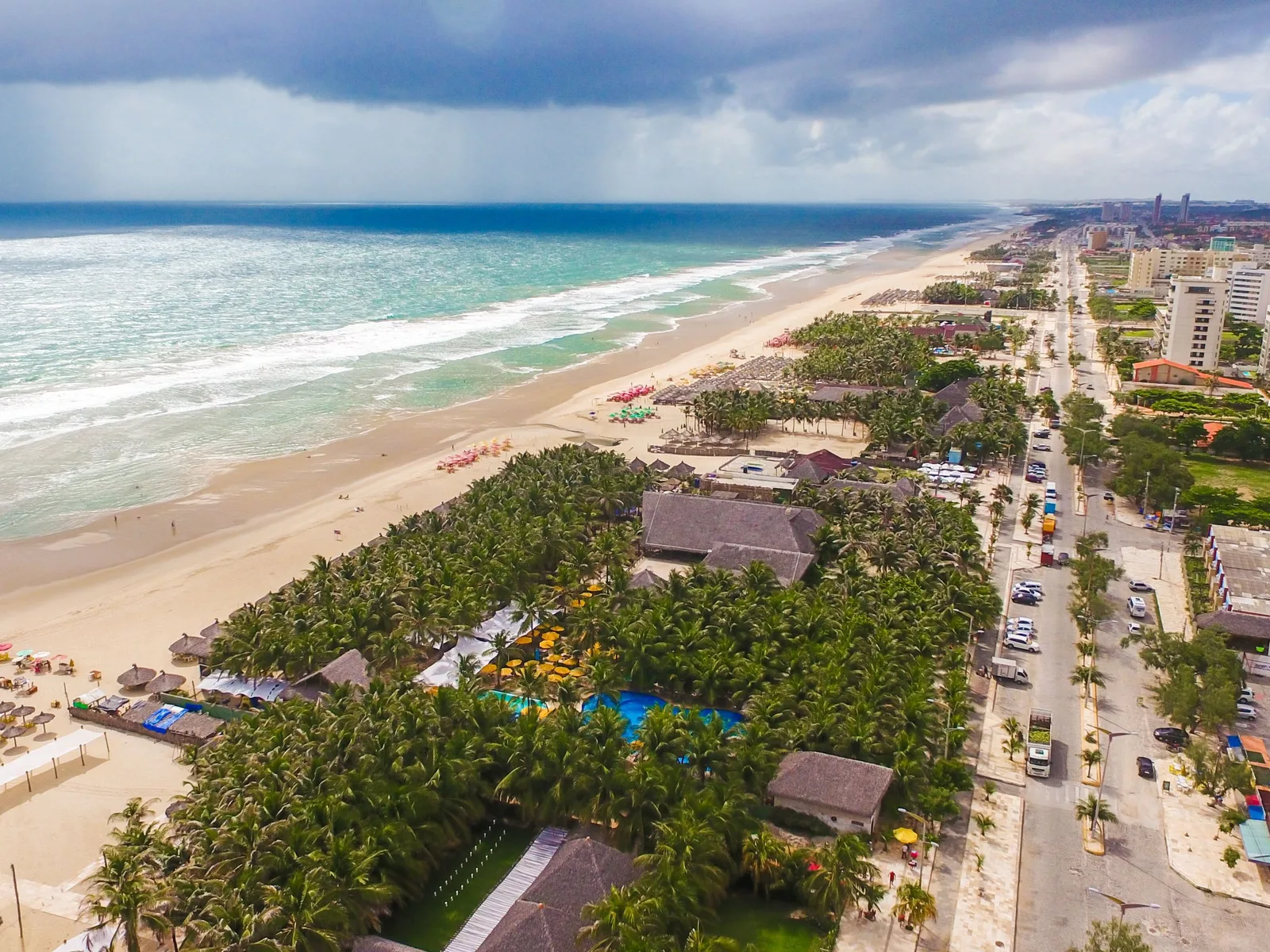
Praia do Futuro from the air: surf breaking along a wide pale beach, a run of thatched barraca roofs and coconut groves set back from the sand with pools and yellow parasols among them, the avenue behind, and a rain squall out over the sea 01

Where the city actually goes to the beach

Praia do Futuro

Length
About 7 km of open Atlantic
From the Beira Mar
15 minutes by ride app
The institution
The barracas

Praia do Futuro runs east from the Mucuripe headland toward the mouth of the Rio Cocó, and published figures put it at six to eight kilometers depending on where you draw the ends (Wikipedia). Call it seven, out of the city’s twenty-five. It is open Atlantic: real surf, a proper shore break, and water that is clean because nothing much drains into it. Set back from the sand under palm groves is the thing Fortaleza does better than any other Brazilian city, the barraca.

A barraca is not a beach shack. The big ones are open-air clubs with restaurants, swimming pools, showers, changing rooms, hundreds of tables under thatch, live bands from mid-afternoon, and in one or two cases a sauna and a water slide. You do not pay to come in. You take a table, you order, and you stay all day, and the price of that is lunch. Thursday night is the one to know: the barracas fill for crab, beer and live forró in a weekly ritual the city has kept up since the 1980s.
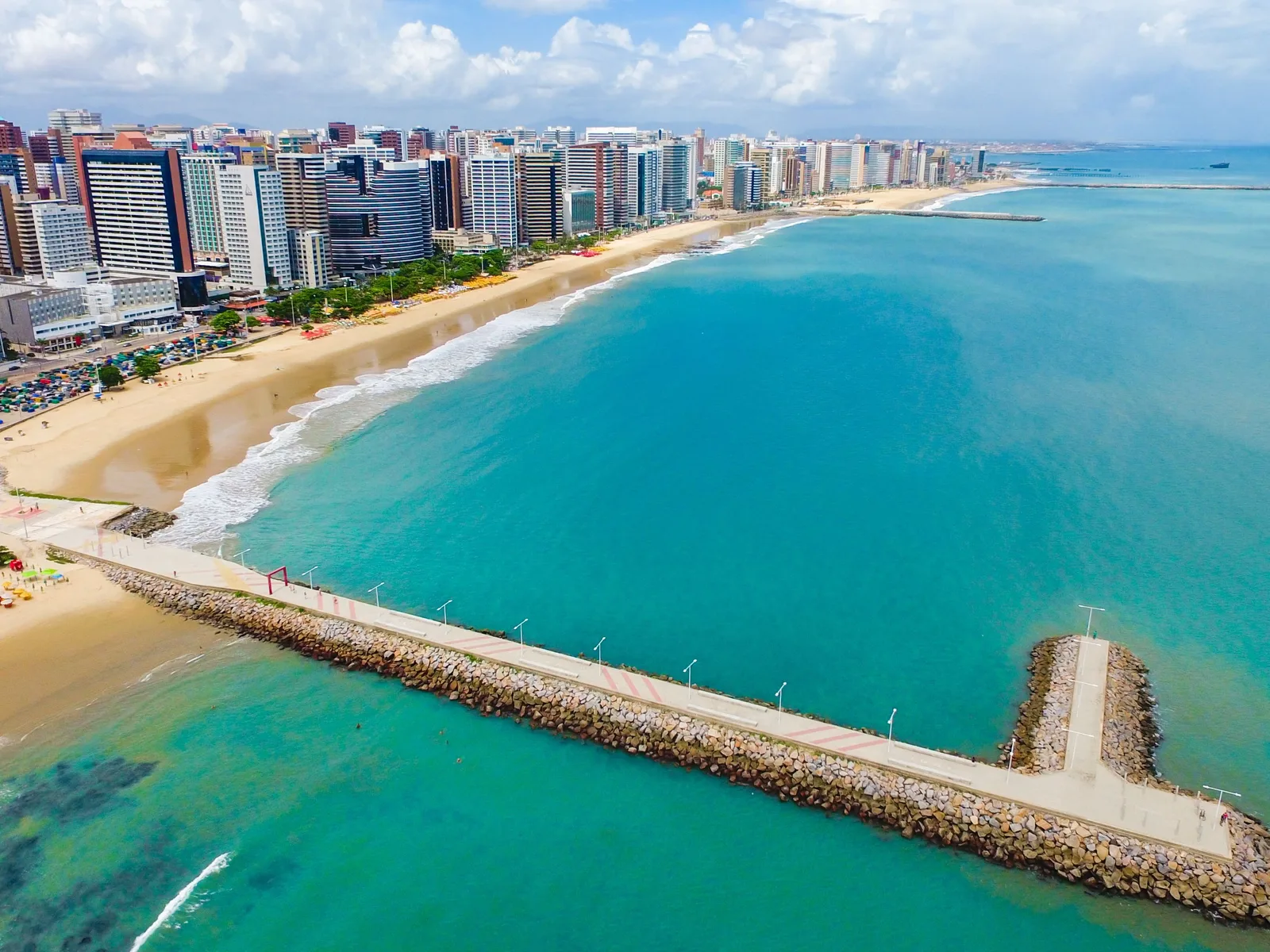
The Meireles seafront from the air: a wall of apartment towers along a curve of pale sand, and a long stone breakwater with a lit walkway on top running out into flat turquoise water 02

The seafront the city rebuilt from the sand up

The Beira Mar

Runs from
Praia de Iracema to Mucuripe
Rebuilt
2018–2022, about R$120 million
On it
3.4 km cycle path, 2.6 km running track

Avenida Beira Mar is where Fortaleza keeps its hotels, its restaurants and most of its evenings, and it was rebuilt from the sand up between 2018 and 2022. The city widened the promenade, put in a 3.4 kilometer cycle path and a 2.6 kilometer running track, and added an amphitheater, a skatepark, sand courts, an outdoor gym and seven public restroom blocks, at a cost of about R$120 million (Prefeitura de Fortaleza; Governo do Estado do Ceará). It shows. This is one of the best urban waterfronts in Brazil and it is busy from 5:00am.

The swimming here is calmer than at Praia do Futuro because the city built stone groynes out into the water, which hold the sand and flatten the sea behind them. At the far end is Mucuripe, the working fishing harbor, where the jangada fleet still fishes for a living and the catch is sold off stalls at the Mercado dos Peixes a few meters from where it lands. In the other direction is Praia de Iracema, the old bohemian quarter. The evening ritual is the craft fair that sets up along the promenade at dusk, every night of the year.

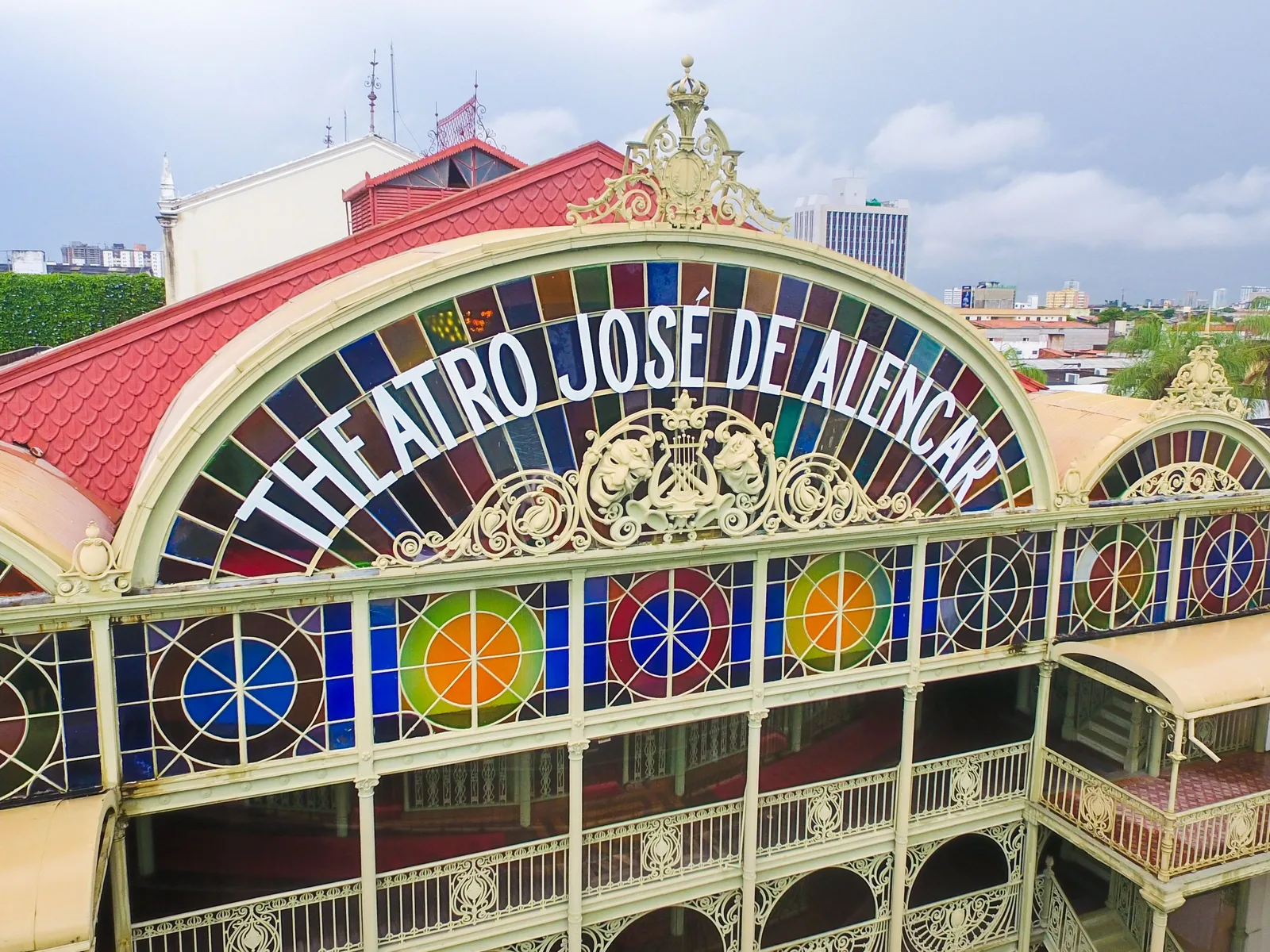
The front of the Theatro José de Alencar in Fortaleza: a pale green cast-iron arch filled with panels of colored stained glass, the theater’s name arched across it in white capitals, with a red tiled roof behind and city towers beyond 03

A Scottish iron kit, assembled four degrees off the equator

The Theatro José de Alencar

Built
1908–1910
The ironwork
Saracen Foundry, Glasgow
Listed
IPHAN, 1975

Work started on 6 June 1908 and the theater opened on 17 June 1910. Its structure is cast iron, made and shipped from the Saracen Foundry, better known as Walter MacFarlane & Co, in Glasgow, and bolted together in Fortaleza (Wikipedia). The front is an art nouveau screen of ironwork and colored glass with the name arched across it in white letters, and behind it the auditorium is a small painted jewel of a room with iron galleries running around three sides. It was listed by IPHAN, the federal heritage institute, in 1975.

It is the single best argument that Fortaleza is a city rather than a beach with an airport, and it takes forty minutes. Go on a guided tour, look up at the ceiling, and then walk a mile east to the Mercado dos Pinhões, a second piece of imported ironwork: a market pavilion built in France by Guillot Pelletier of Orléans in 1896 and opened here on 18 April 1897, now a music and food venue on Praça Visconde de Pelotas.

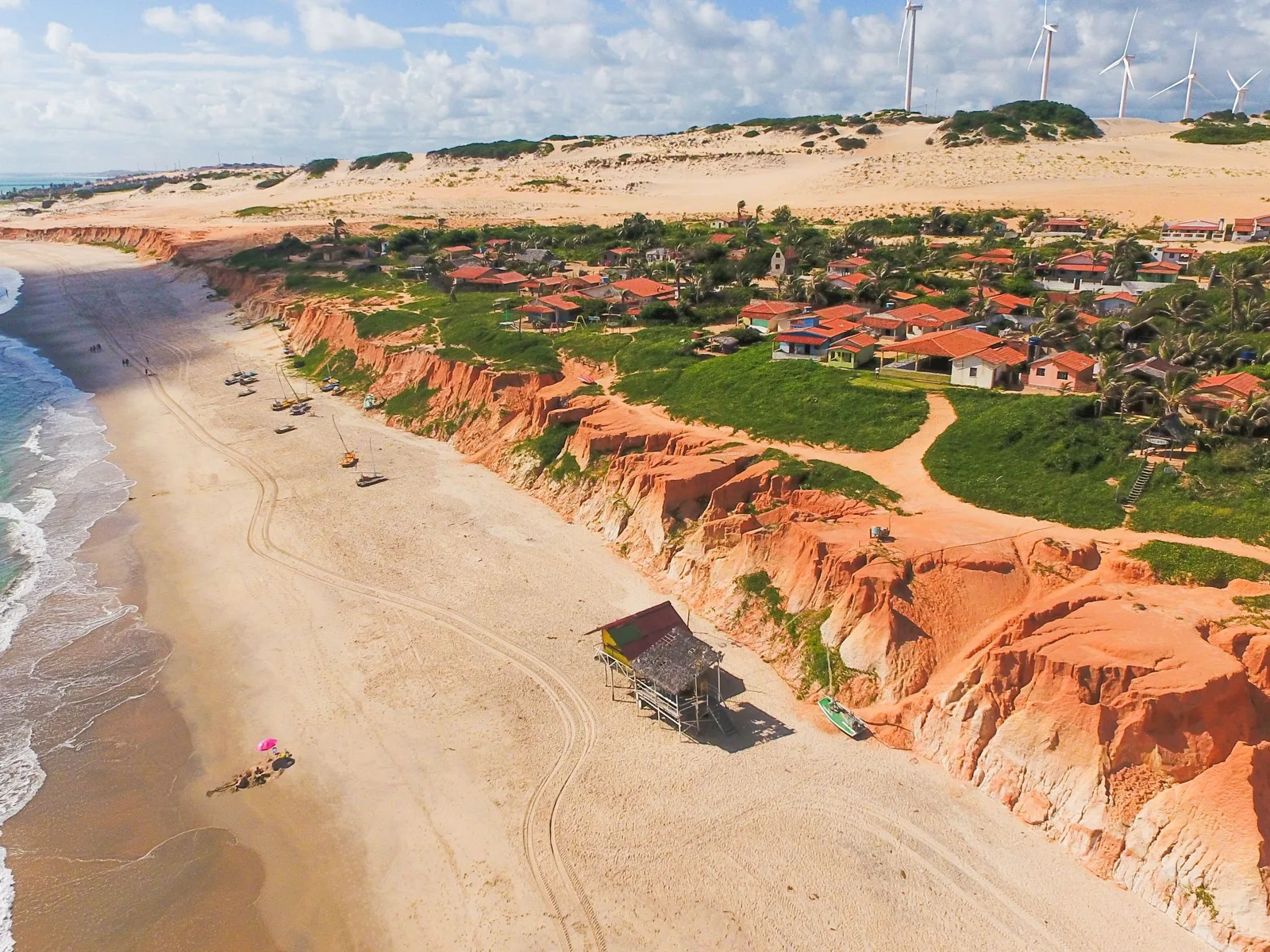
Canoa Quebrada from the air: red and cream sandstone cliffs dropping to a wide pale beach with jangadas and buggy tracks on it, red-roofed houses on the green clifftop, and pale dunes with a line of wind turbines behind them 04

Red cliffs, old fishing towns and a lot of wind turbines

The east coast

Morro Branco
About 85 km, an hour and a half
Canoa Quebrada
About 164 km, two hours
The road
CE-040 through Aquiraz and Beberibe

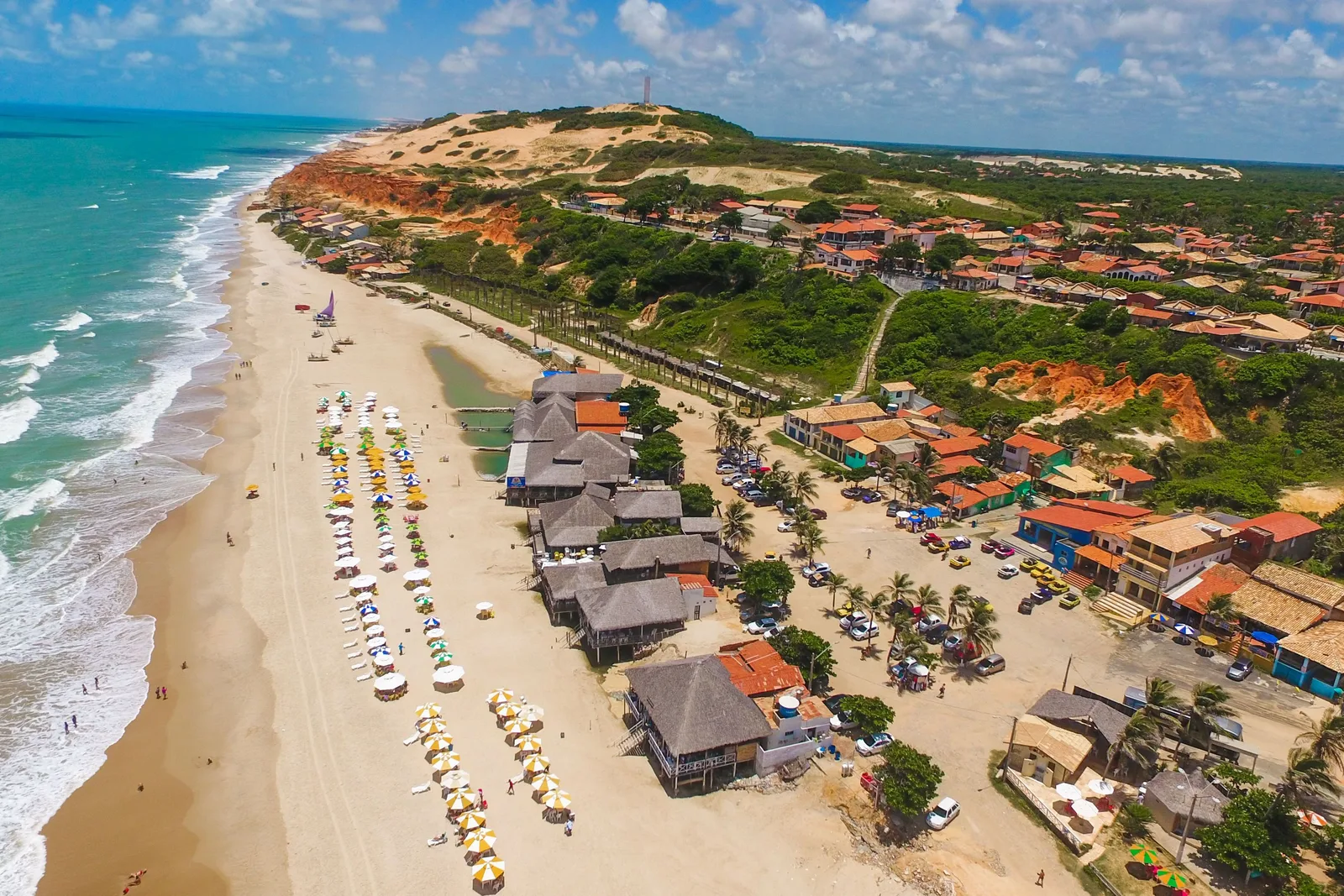
Drive east out of Fortaleza and within an hour the coast starts to rise into cliffs. At Beberibe, about 85 kilometers out, the Monumento Natural das Falésias de Beberibe protects a wall of banded sandstone in something like twelve colors, from white through ochre and pink to deep red, cut by narrow eroded passages that a local guide walks you through in about an hour. That is Morro Branco, and the sand from those cliffs is what goes into the bottles you will be offered at every stall on this coast.

Another eighty kilometers on is Canoa Quebrada, in the municipality of Aracati: a village that sits on top of the cliffs with jangadas drawn up on the sand below it, a crescent moon and star carved into the rock as its symbol, and one main street of bars and pousadas that everybody calls Broadway. It was a fishing village that hippies found in the 1970s and it has been a beach town ever since. Between and beyond the two are Prainha, Praia das Fontes and the beaches of Aquiraz, and above all of it now stand the wind farms, because this coast has the most reliable trade wind in Brazil and Ceará has covered its dunes in turbines.

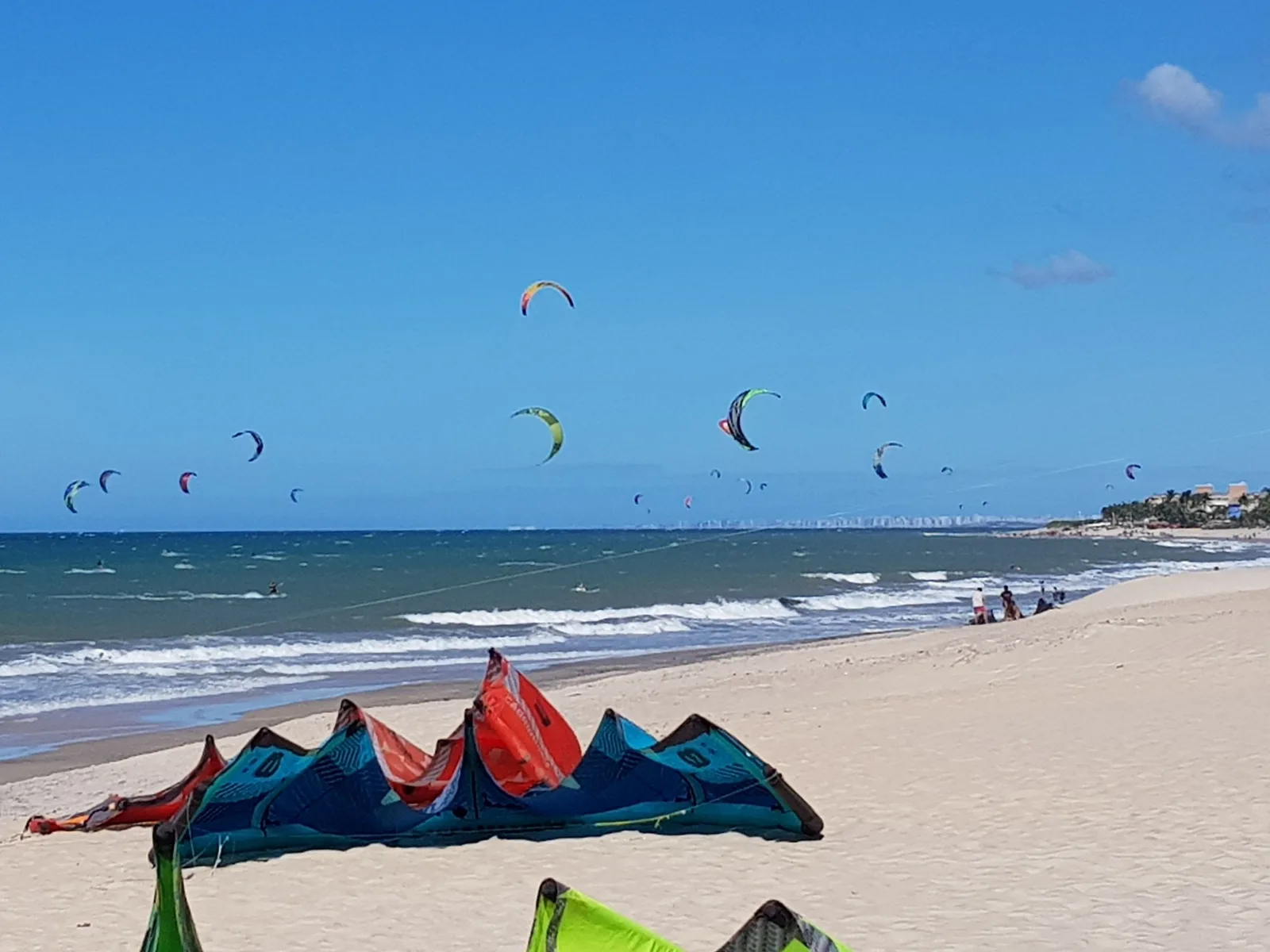
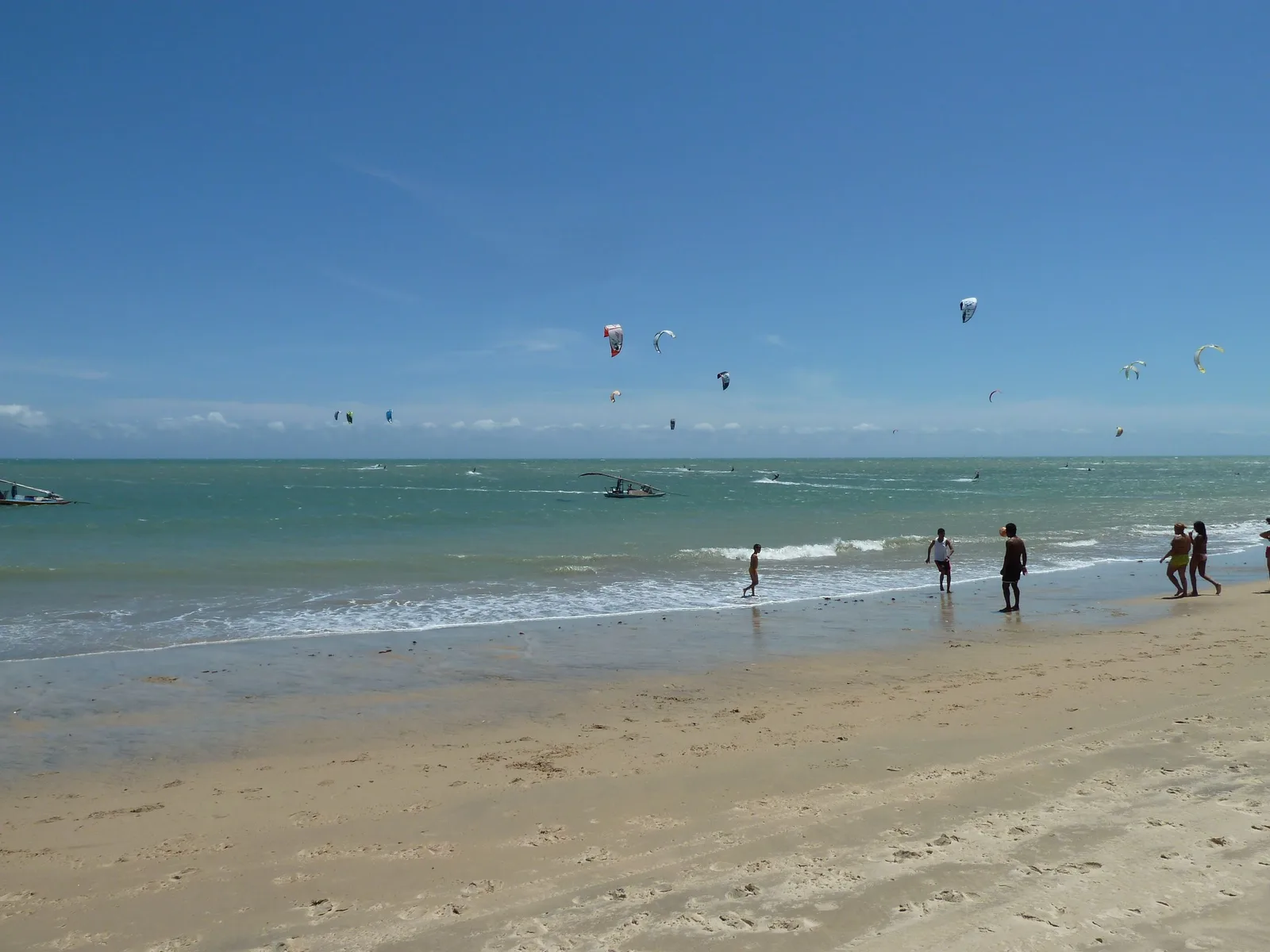
The beach at Cumbuco with a dozen kitesurfing kites in the air over the sea, more kites laid out on the sand in the foreground, and the faint outline of Fortaleza’s towers on the horizon 05

The most reliable wind in Brazil

The west coast

Cumbuco
About 35 km, 45 minutes
Wind season
Roughly July to January
The road
CE-085, the Rota do Sol Poente

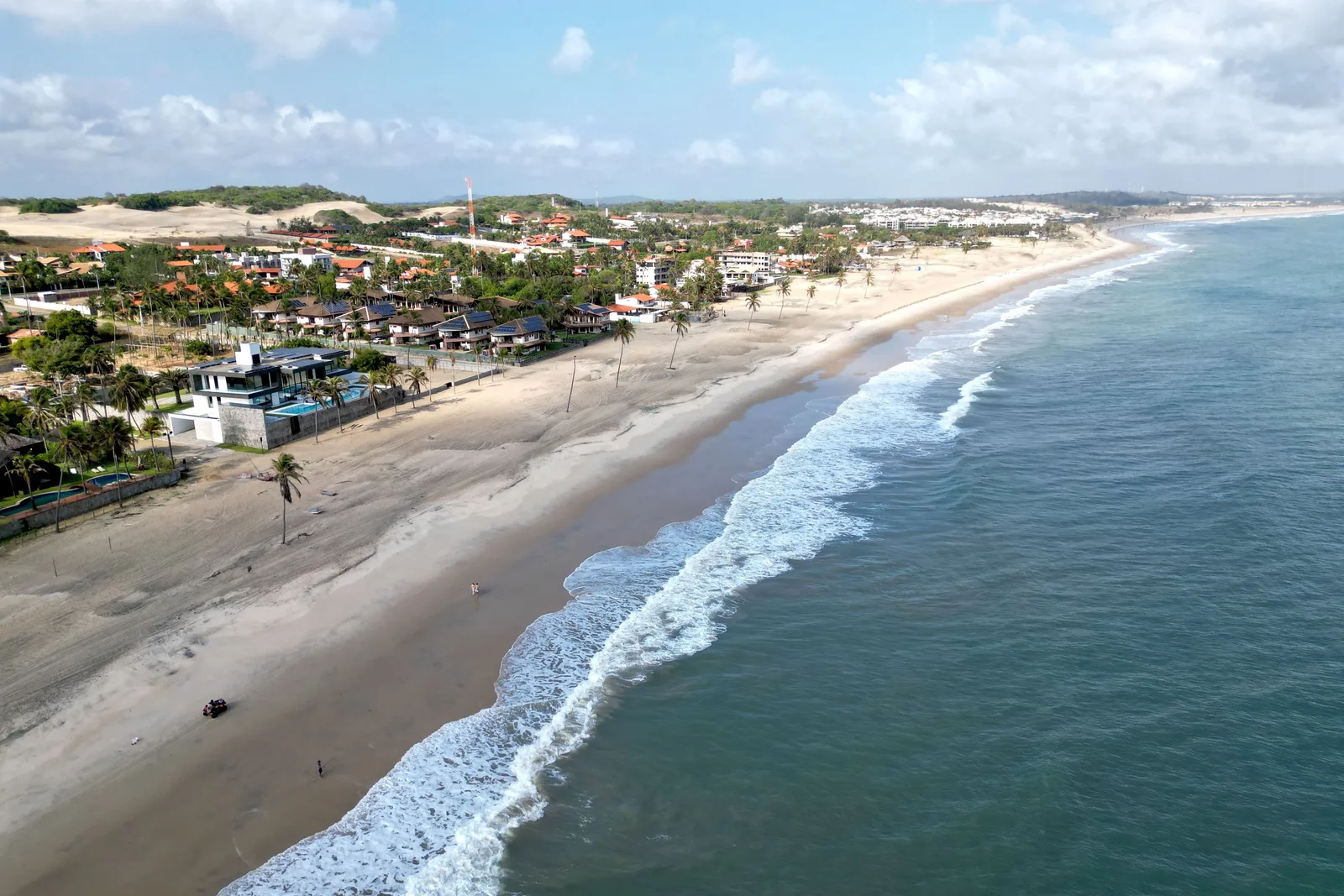
West of the city the coast turns into dunes, freshwater lagoons and a string of villages, and the trade wind blows across all of it for half the year. Cumbuco, 35 kilometers out in the municipality of Caucaia, is the center of it: a beach village that turned into one of the world’s major kitesurfing destinations, with flat shallow water on the sea side and the Lagoa do Cauípe a few kilometers downwind, which is glassy and waist-deep and where almost everybody learns. Kite operators put the season at roughly July to January and the working range at 16 to 25 knots, building through the afternoon.

The wind is not the only reason to come west. Past Cumbuco the CE-085 runs on through São Gonçalo do Amarante to Taíba, Paracuru and Lagoinha, and then to Flecheiras and Mundaú in the municipality of Trairi, where the sea is clear and shallow enough to snorkel over rock pools at low tide. These are working fishing villages with pousadas rather than resorts, and the further you drive the emptier they get. If you have one day for one coast, this is the one that changes most as you go.

What to do

Twenty-one things worth the trip out.

Half of these are inside the city and half of them are an hour or two down the coast in one of two directions. Filter by where you feel like being.

The City

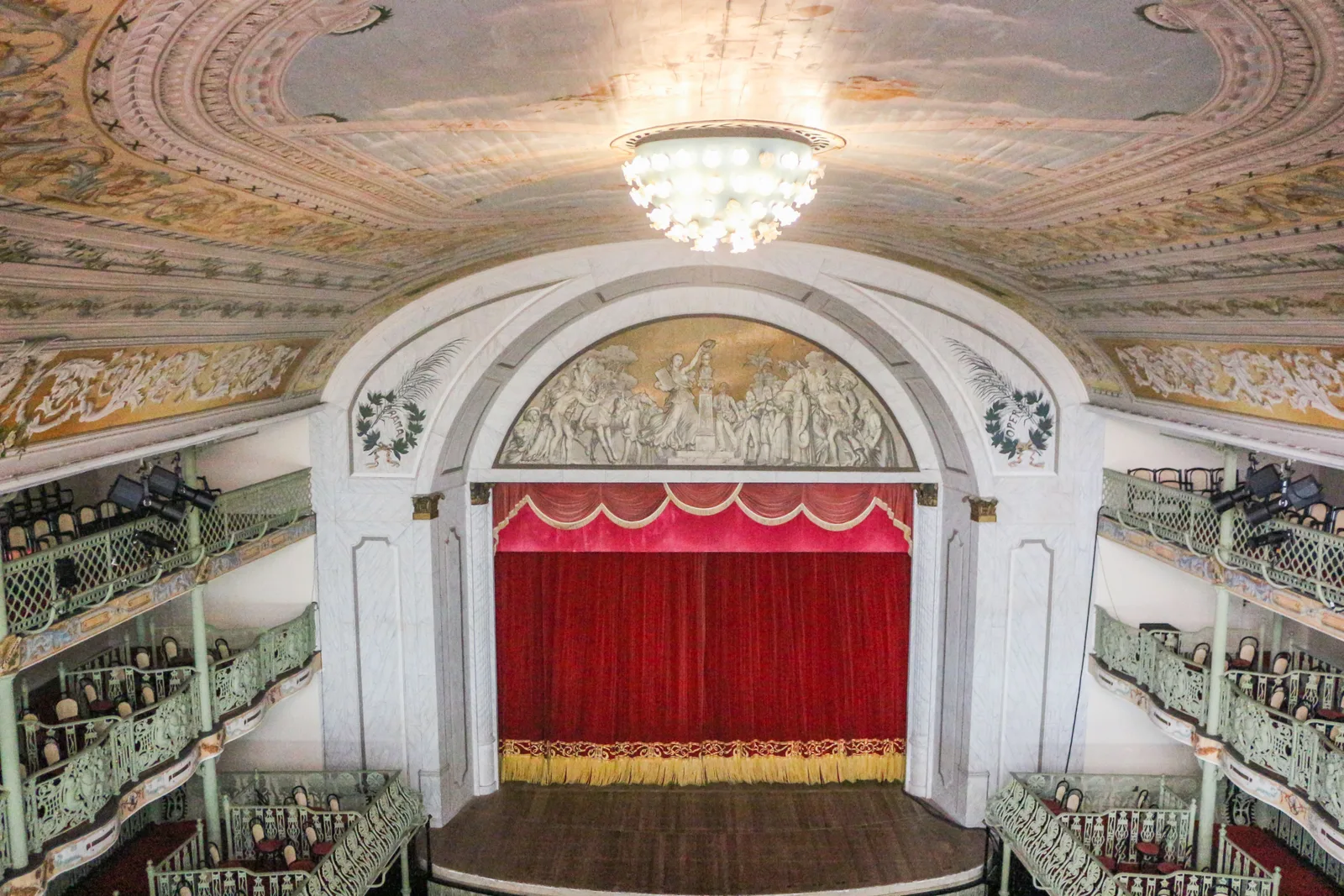
  • The auditorium of the Theatro José de Alencar: a red curtain under a painted proscenium arch, a chandelier hanging from a decorated ceiling, and tiers of pale cast-iron galleries curving around the room

    Centro · forty minutes

    A tour of the Theatro José de Alencar

    The 1910 opera house whose whole structure is cast iron shipped from Glasgow. The guided tour takes you into the auditorium, a small painted room with iron galleries on three sides and a ceiling worth the crick in your neck, and out onto the balcony behind the stained-glass front. It is air-conditioned, it is cheap, and it is the best forty minutes in the Centro.

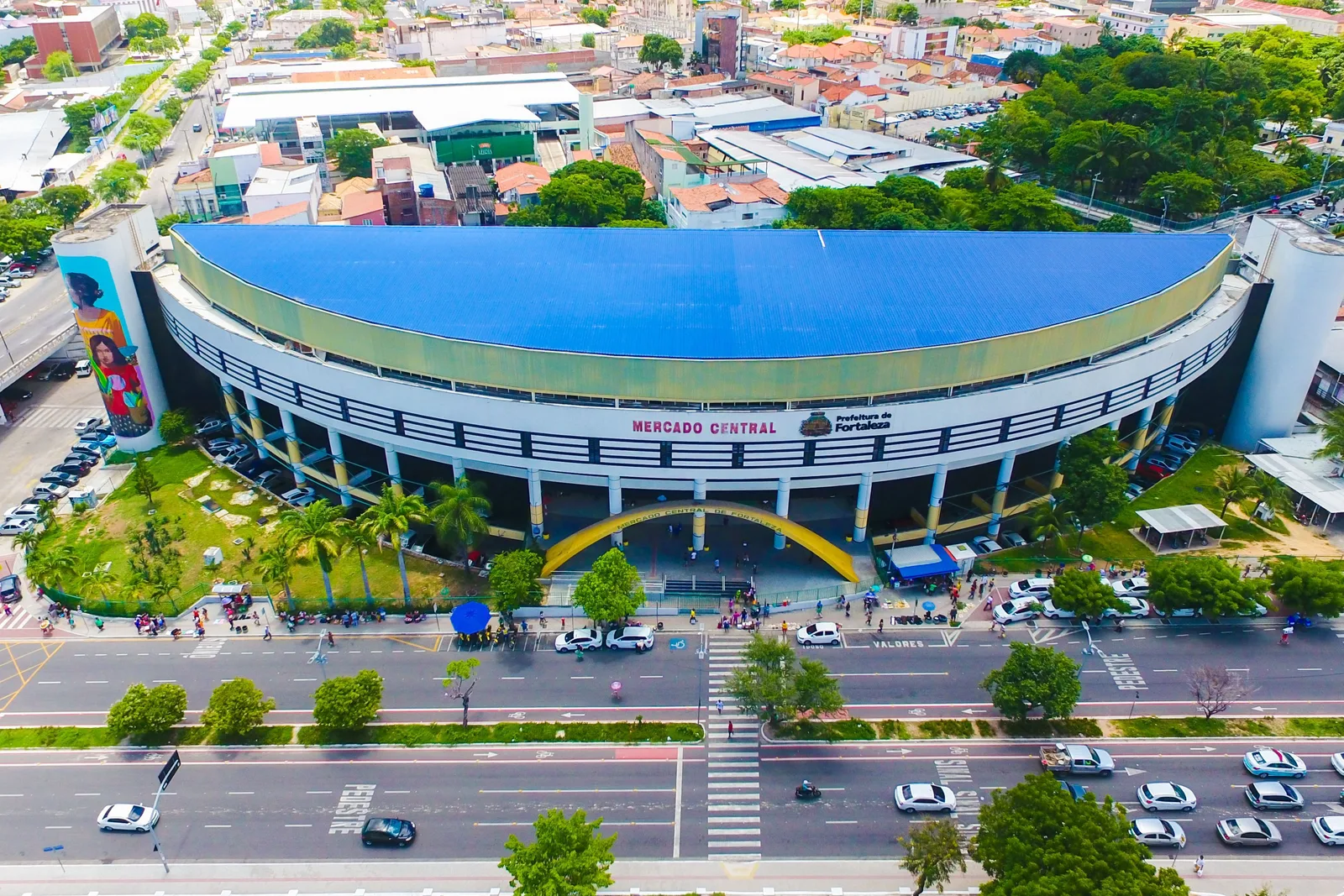
  • The Mercado Central de Fortaleza from the air: a long curved building with a bright blue roof and a yellow and blue front, standing beside a wide avenue with the city behind it

    Centro · an hour and a half

    Shopping at the Mercado Central

    Five floors and more than 600 stalls of Ceará craft in a building that opened on 19 January 1998, and by most reckonings the biggest craft market in Brazil. Hammocks, bobbin lace, embroidered linen, leather, cashews, rapadura, cachaça and bottles of colored sand. Prices are negotiable and the top floor is where the food is. Go in the morning; it closes early on Sunday.

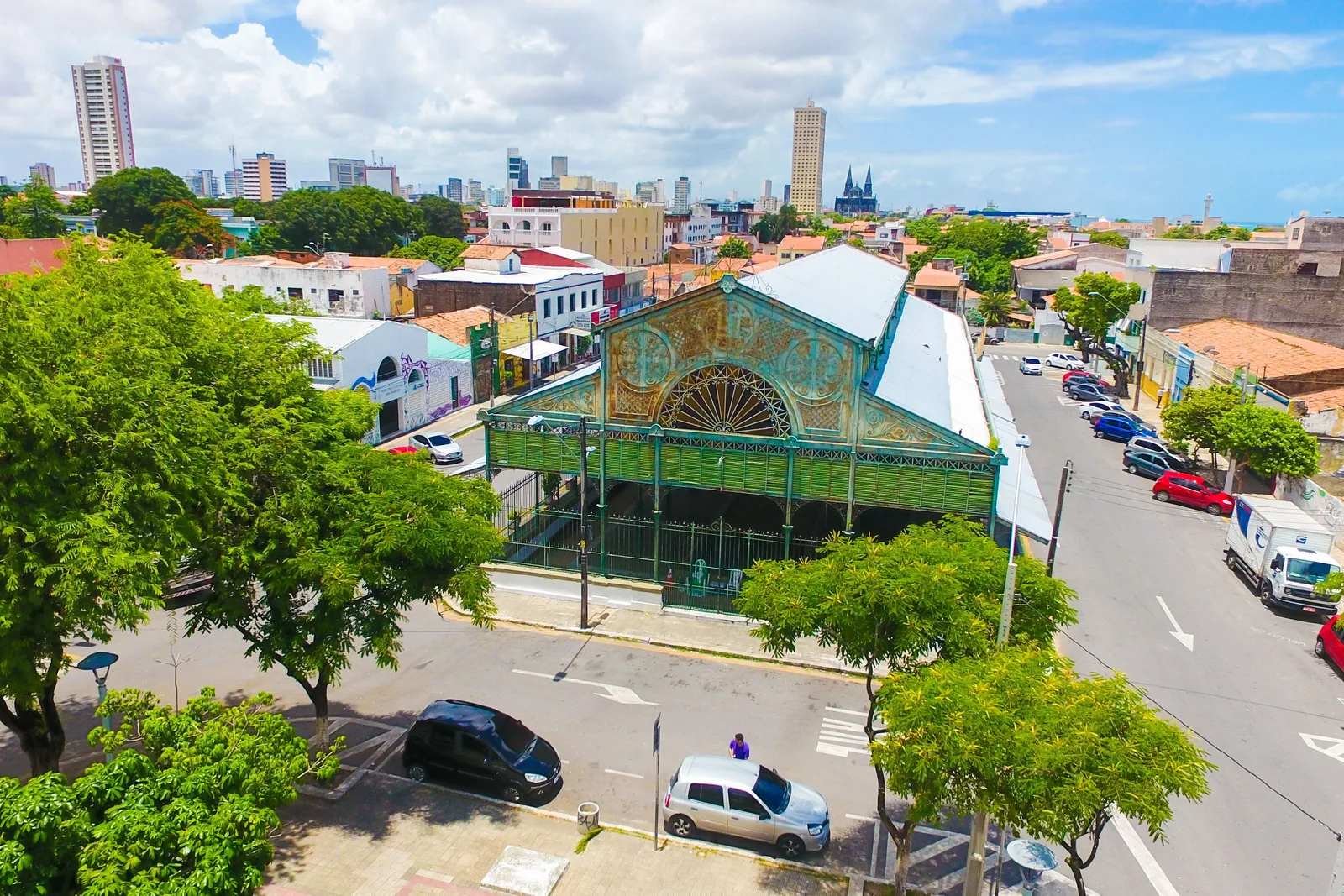
  • The Mercado dos Pinhões from above: a low green cast-iron and glass pavilion with an ornate gable standing on a corner among trees, with the old center and the cathedral spires behind it

    Praça Visconde de Pelotas · half an hour

    The Mercado dos Pinhões

    A green cast-iron market pavilion built in France by Guillot Pelletier of Orléans in 1896 and opened in Fortaleza on 18 April 1897, listed by the city in 2008. It stopped being a market a long time ago and is now a cultural venue with music, courses and a food fair under the ironwork. It is about a mile east of the theater, twenty minutes on foot or a two-dollar ride, and the pair of them make one walk.

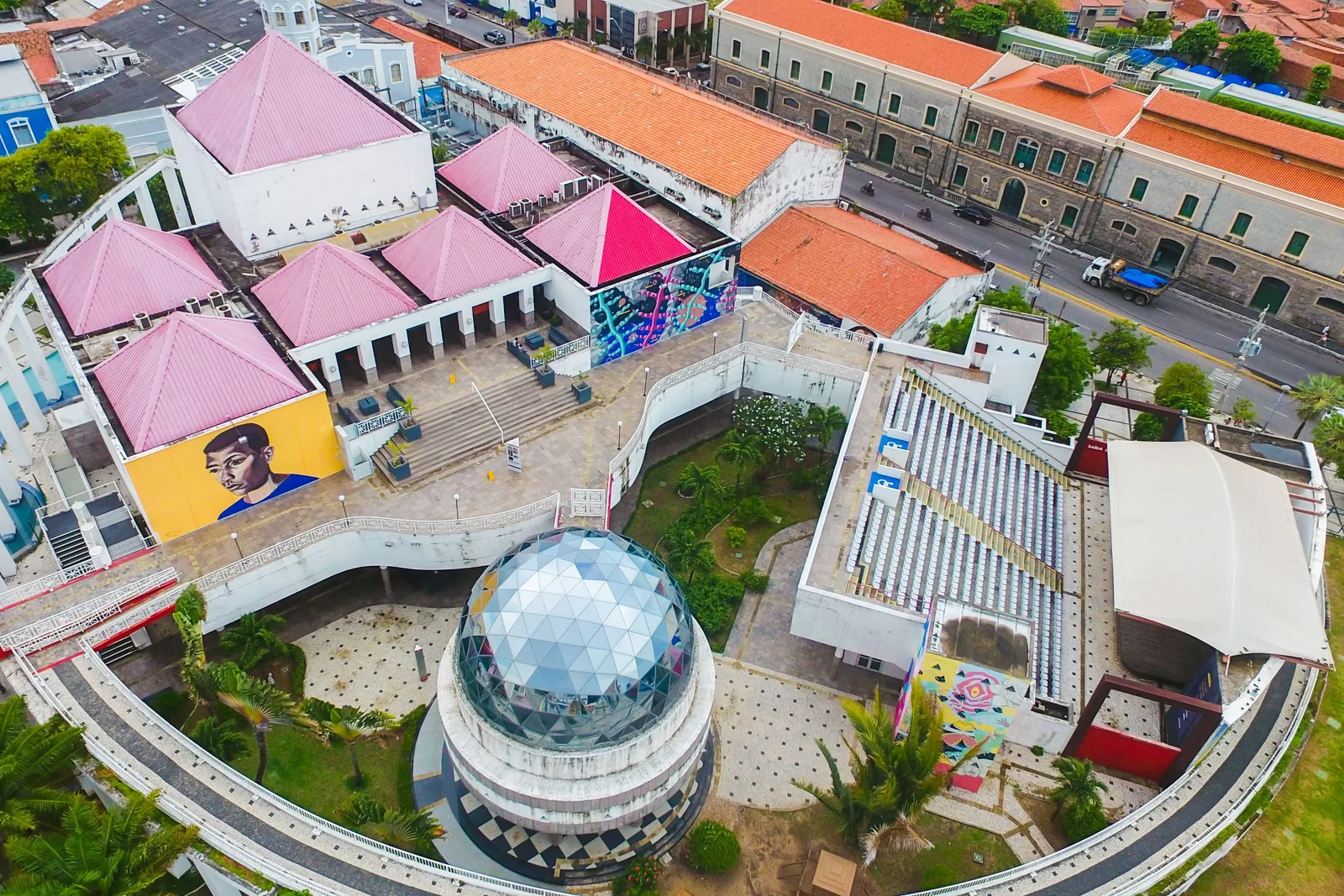
  • The Dragão do Mar cultural center from the air: a curved white building with a mirrored planetarium dome, pink-roofed colonial houses along one side and raised walkways linking the buildings

    Praia de Iracema · a whole evening

    An evening at the Dragão do Mar

    The Centro Dragão do Mar de Arte e Cultura opened on 28 April 1999 in the old port quarter: 30,000 square meters of museums, cinema, theater and a planetarium, joined by raised red steel walkways, wrapped around a block of restored colonial houses. It draws over 1.5 million visitors a year. The complex is the reason Praia de Iracema still has a nightlife, and the bars around it fill up after the galleries close.

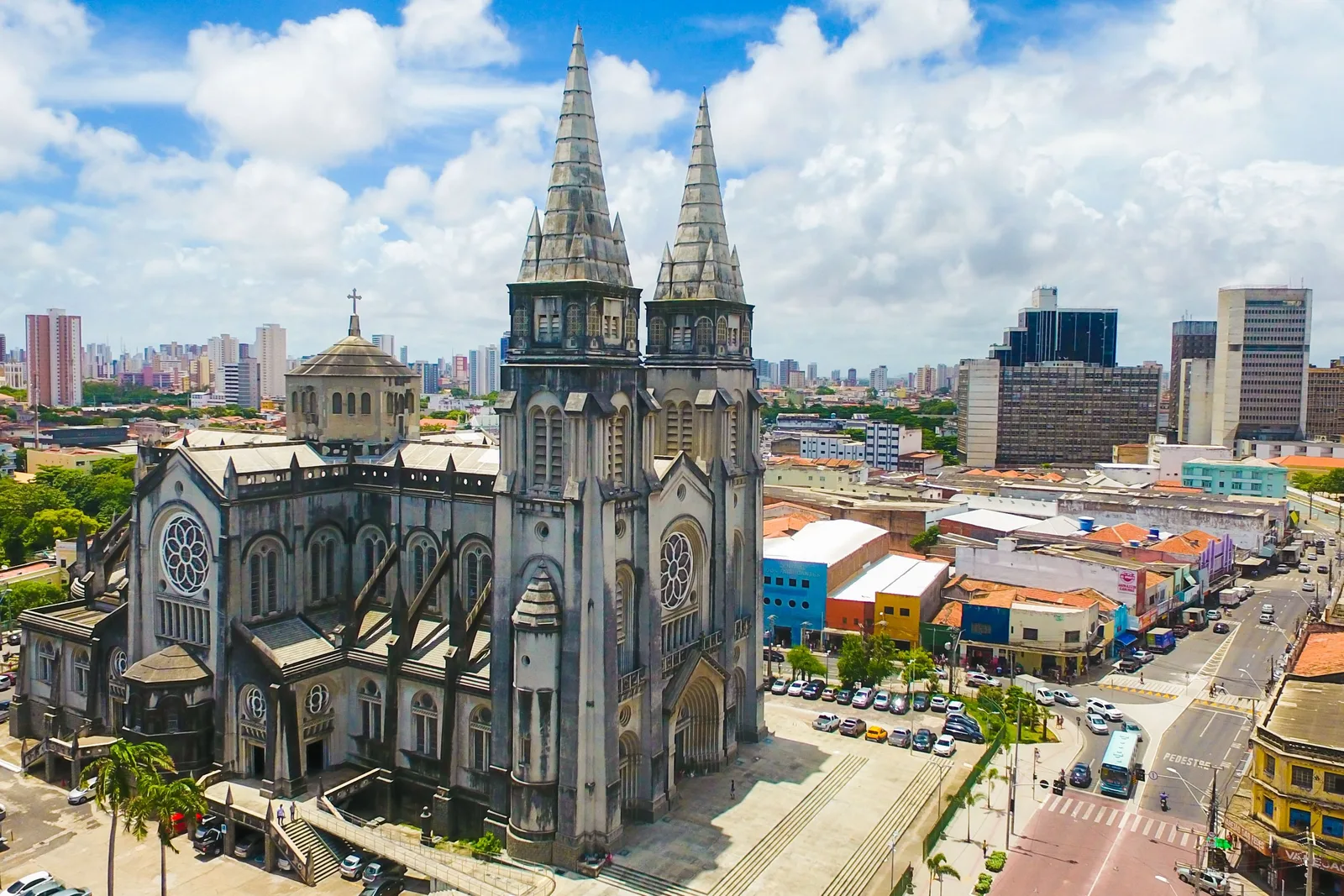
  • The Catedral Metropolitana de Fortaleza from the air: a gray twin-spired neo-gothic church rising above low red-roofed buildings, with the city towers behind it

    Centro · half an hour

    The Catedral Metropolitana

    The twin-spired concrete cathedral standing directly across the street from the Mercado Central, and the reference point for the whole old center: whenever you are lost down there, look up for the two towers. It is neo-gothic, it is enormous, and the stained glass is worth the ten minutes inside. Pair it with the market, since they share a block.

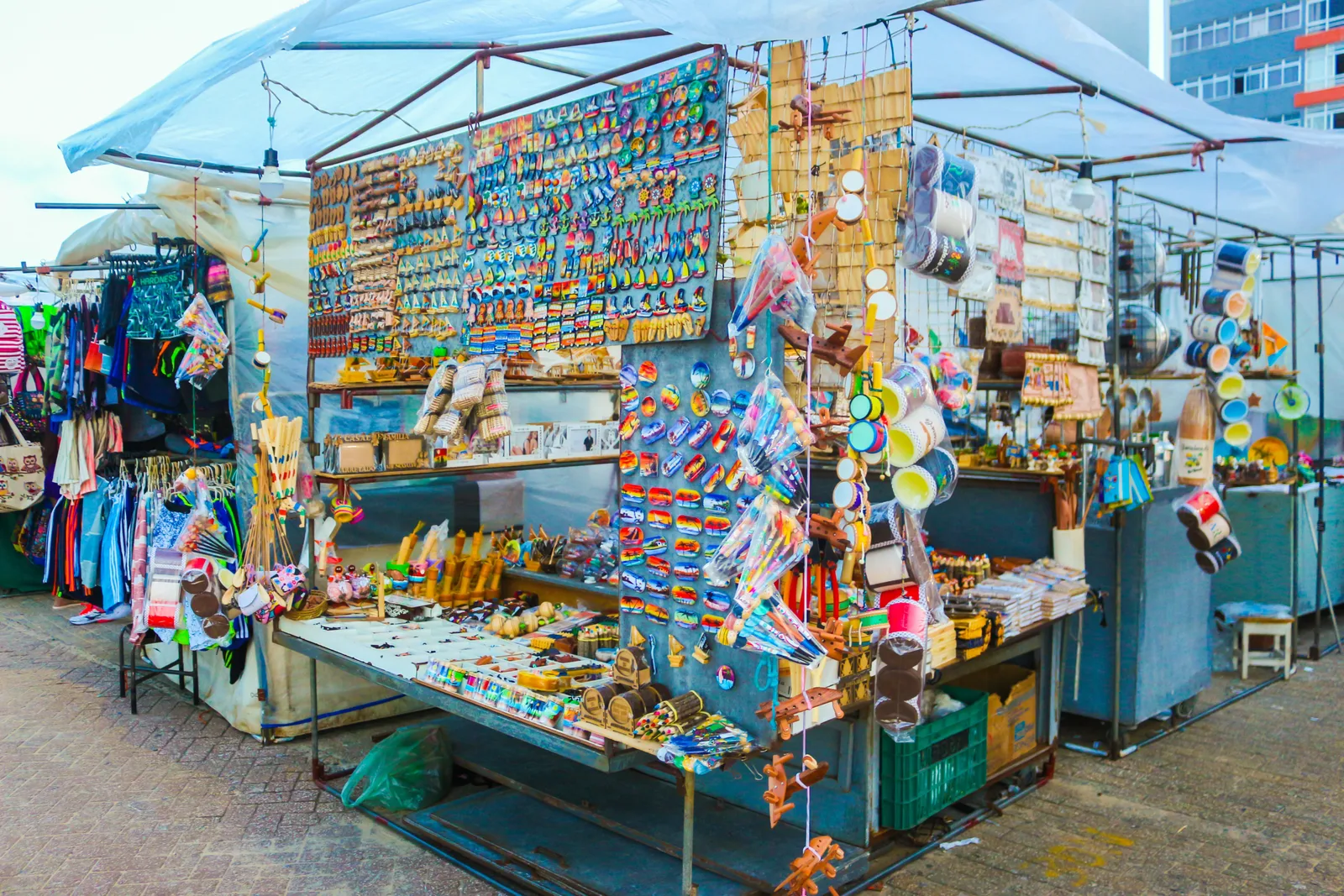
  • A craft-fair stall on the Beira Mar hung from top to bottom with painted souvenirs, hats and clothes, with trays of small goods laid out on the counter in front

    Meireles · from dusk, every night

    The craft fair on the Beira Mar

    The feirinha sets up along the promenade every evening of the year and runs late: hammocks, lace, leather sandals, painted clay figures, bottles of cachaça, football shirts and a great deal of tat. It is the easiest place in the city to buy something to take home and the prices are better than in the hotels. Walk it after dinner rather than instead of it.

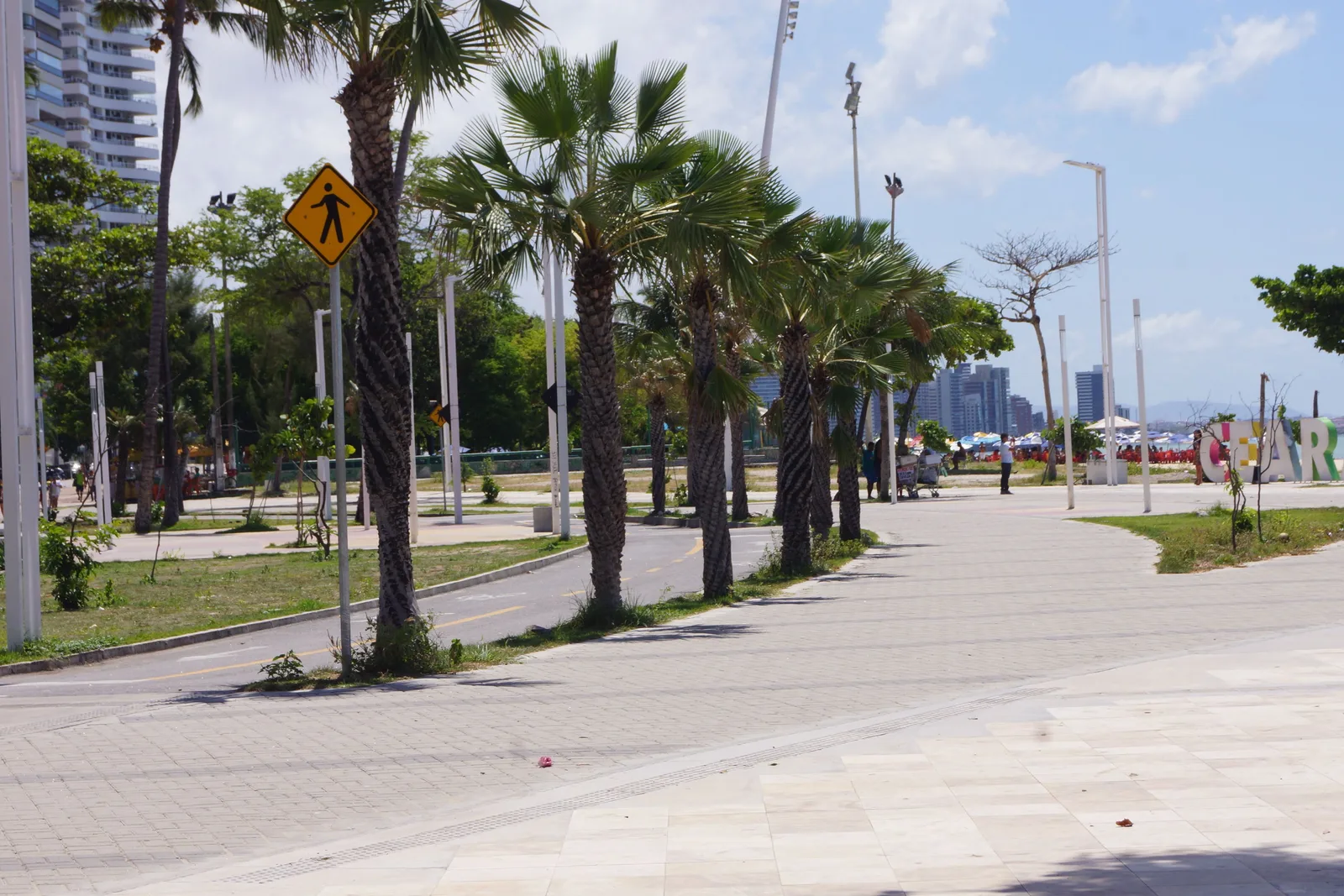
  • The rebuilt Beira Mar promenade in Fortaleza: a wide paved walkway with tall palms along its edge, a cycle lane beside it and the city towers in the distance

    Iracema to Mucuripe · an hour

    Walking the Beira Mar at dawn

    Fortaleza gets up early and the promenade is the proof. From about 5:00am the rebuilt calçadão fills with runners, cyclists, walkers and outdoor gyms, and it stays that way until the heat arrives around 9:00am. It is a continuous rebuilt waterfront with a separated cycle path and a running track along it, and doing it once at dawn tells you more about the city than any museum.

City Beaches

  • A craft-fair stall on the Beira Mar hung from top to bottom with painted souvenirs, hats and clothes, with trays of small goods laid out on the counter in front

    Meireles · from dusk, every night

    The craft fair on the Beira Mar

    The feirinha sets up along the promenade every evening of the year and runs late: hammocks, lace, leather sandals, painted clay figures, bottles of cachaça, football shirts and a great deal of tat. It is the easiest place in the city to buy something to take home and the prices are better than in the hotels. Walk it after dinner rather than instead of it.

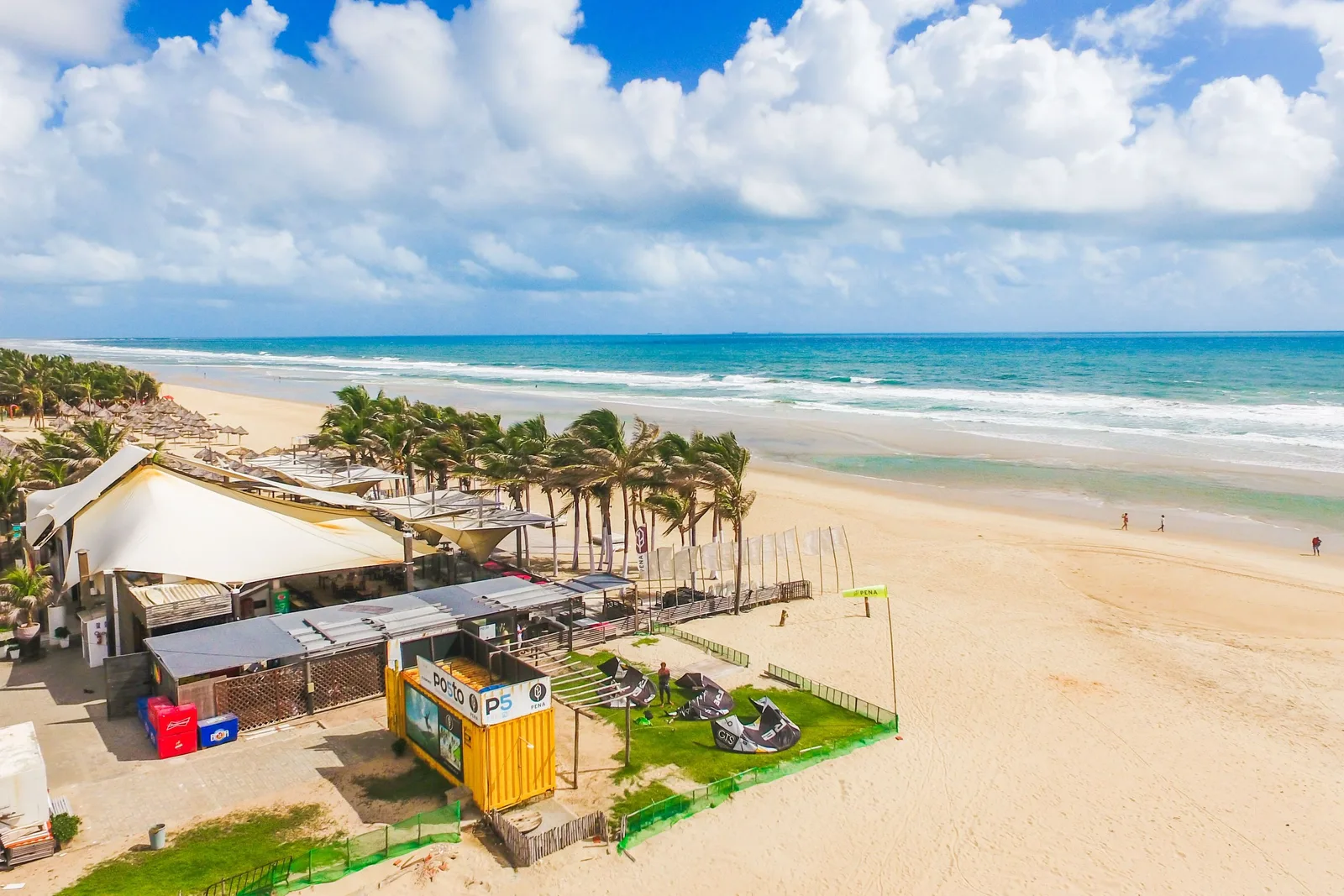
  • A beach barraca at Praia do Futuro seen from the sand: a white canopy and a low building among coconut palms at the top of the beach, with a wide empty stretch of sand and green surf beyond

    Praia do Futuro · a whole day

    A day at a barraca on Praia do Futuro

    The way Fortaleza does the beach. Pick a barraca, take a table under the thatch, and stay. There is no admission and no minimum: you pay for what you eat and drink, and the chairs, the showers and the changing rooms come with it. The big ones have pools, live bands from mid-afternoon and enough shade for a family. Arrive around 11:00am and leave when the band stops.

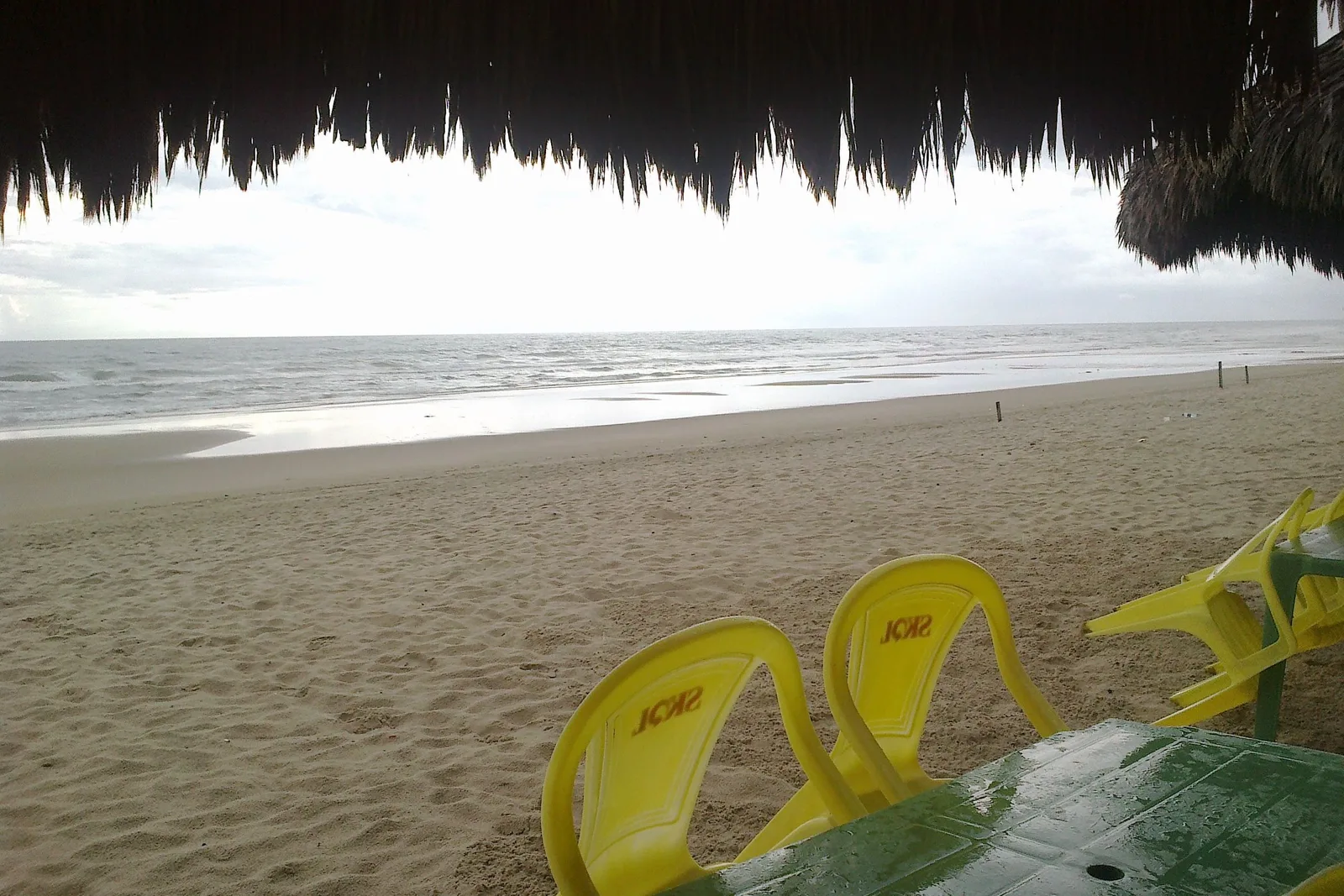
  • The view out from under a palm-thatch roof at a Praia do Futuro barraca: the fringed edge of the thatch across the top of the frame, yellow plastic chairs on the sand and a wide flat beach beyond

    Praia do Futuro · two hours

    Lunch under the thatch

    The barraca menu is the same everywhere and it is good everywhere: fried fish, shrimp in every form, peixada cearense, and the crab. Order for the table, drink the beer cold enough to hurt, and understand that nobody is going to rush you. The view is a wall of open Atlantic framed by palm thatch, which is a better dining room than most restaurants manage.

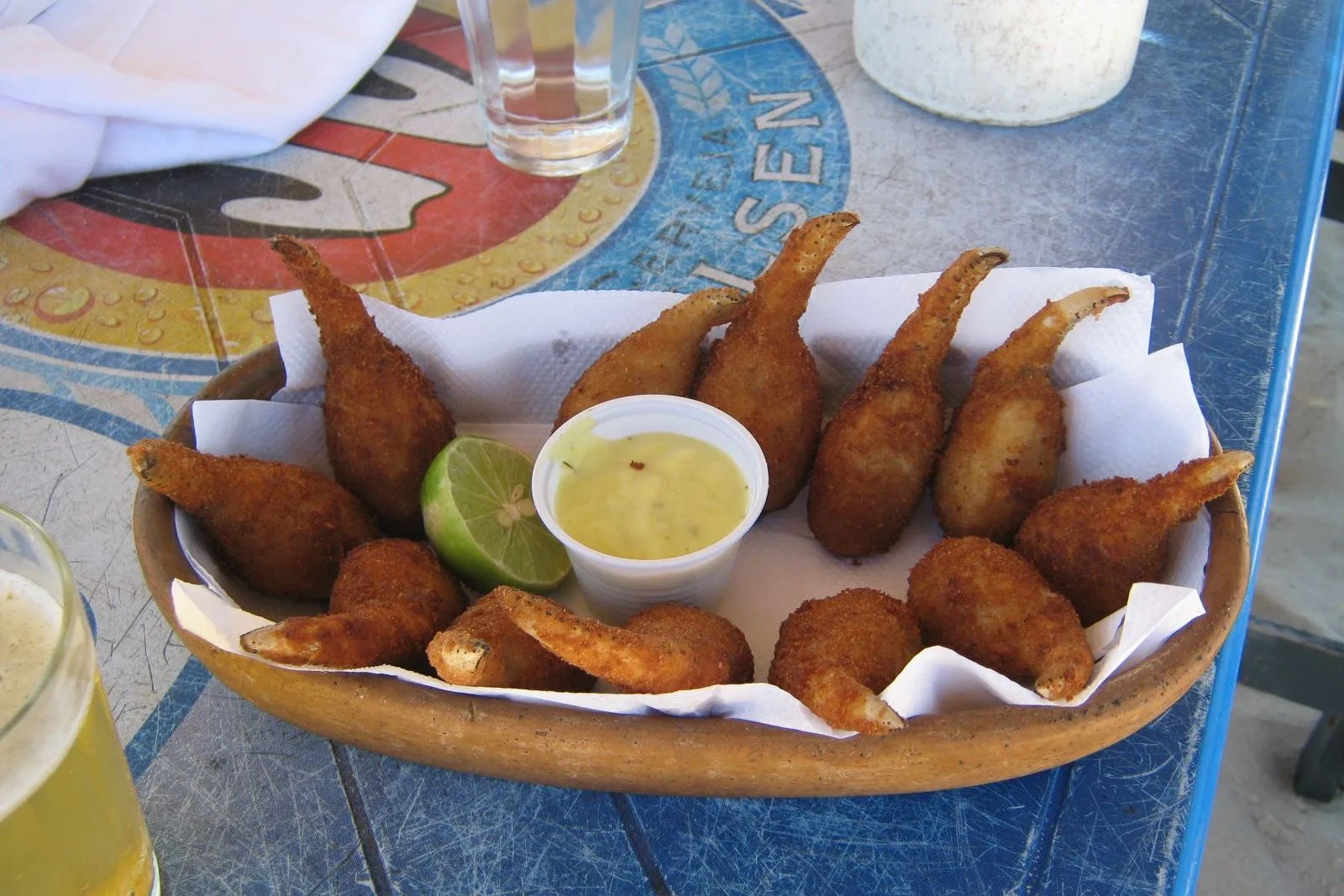
  • A wooden bowl of breaded fried crab claws with the pale claw tips still showing, a half lime and a pot of pale sauce in the middle, on a blue beach table with two glasses of beer beside it

    Praia do Futuro · Thursday evening

    Crab night on a Thursday

    Quinta do caranguejo is a weekly institution the barracas have kept going since the 1980s. Thursday evening the tables fill, the bands play forró, and everybody eats crab: whole ones with a wooden mallet, or the breaded claws that arrive in a bowl with lime and a pot of sauce. It is loud, it is messy, it is entirely local, and it is the single most Fortaleza thing on this page.
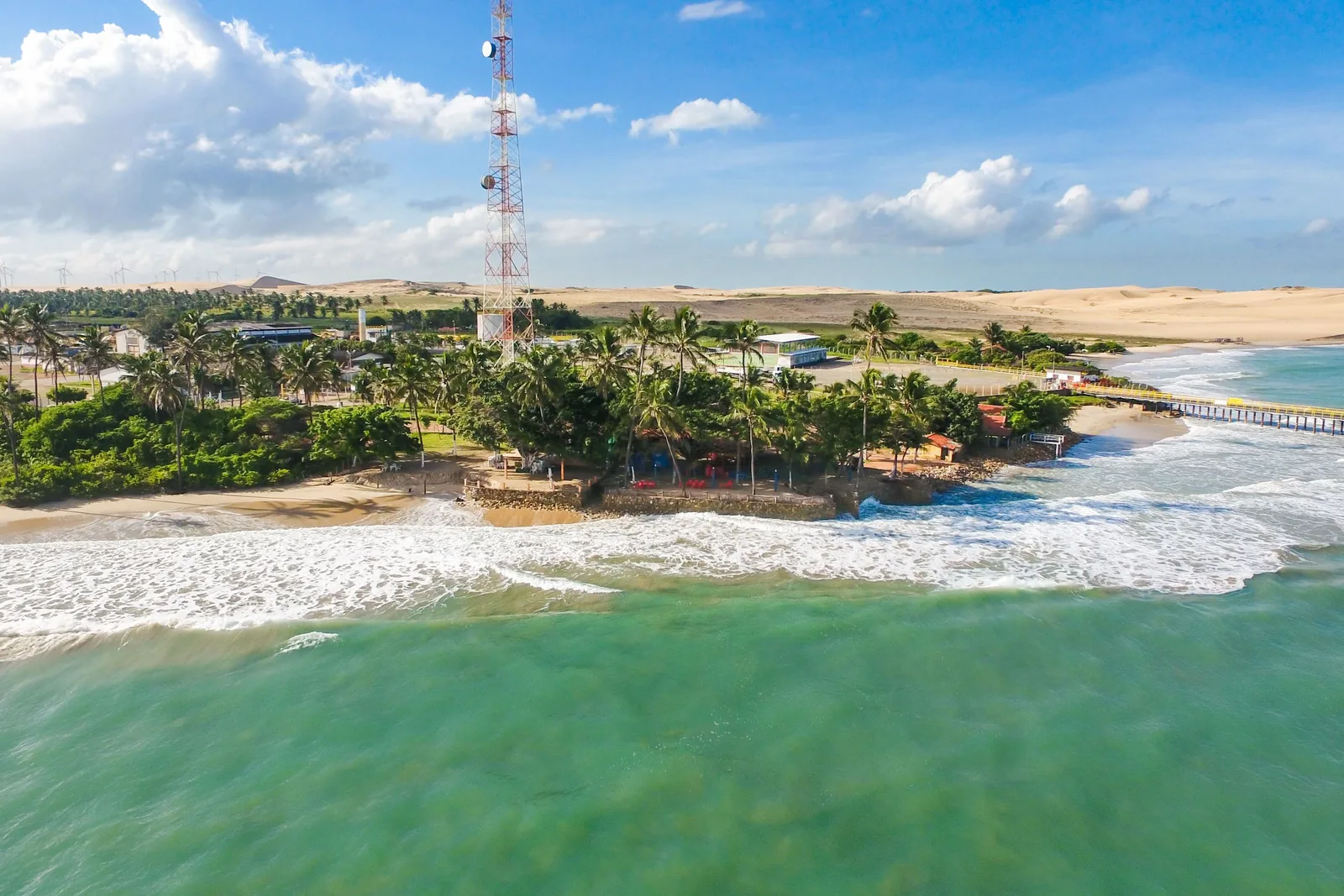
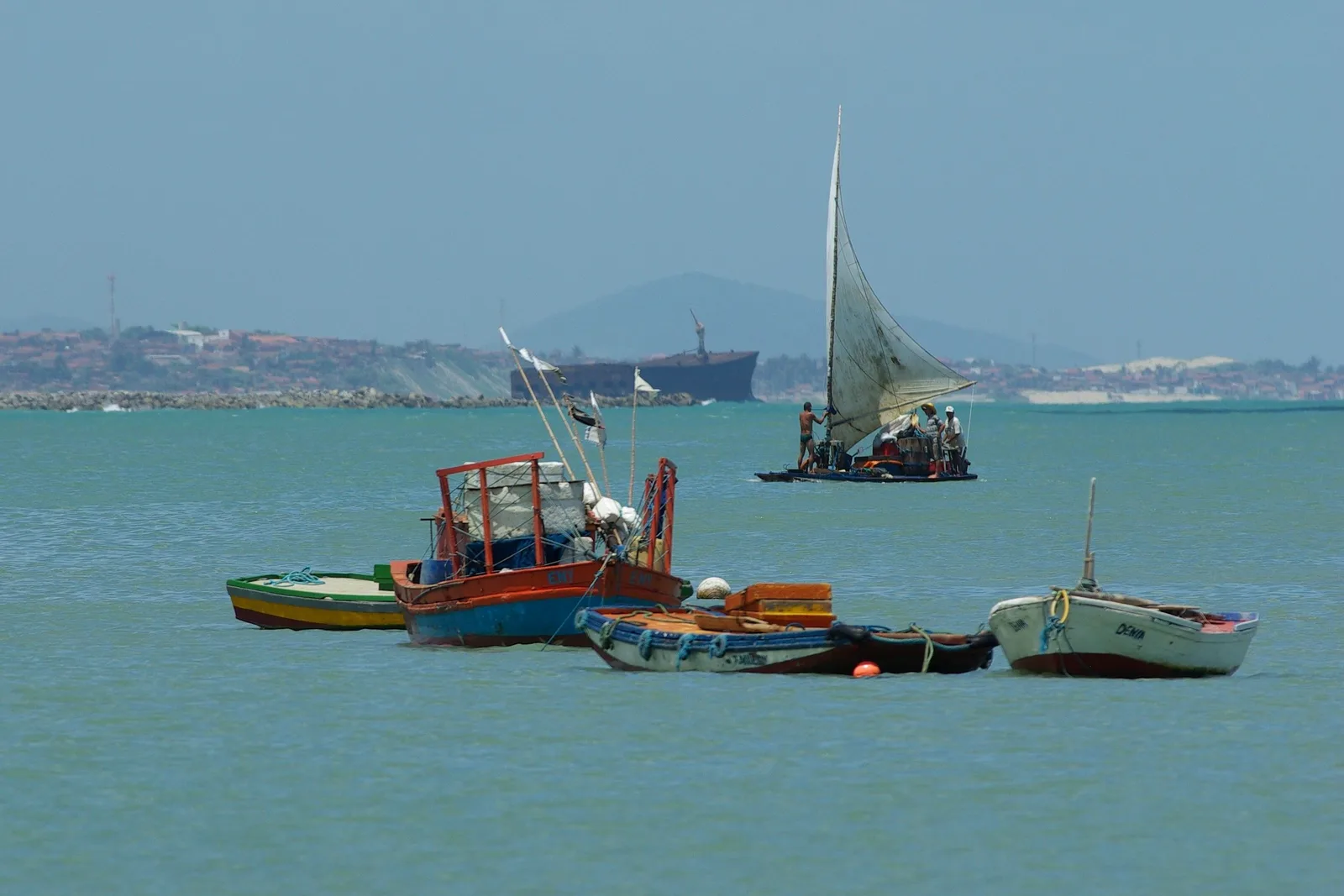
  • Fishing boats moored in the calm water at Mucuripe with a jangada under a white sail passing behind them, and the cranes and hills of the port on the horizon

    Mucuripe · an hour, late afternoon

    The fish market at Mucuripe

    At the eastern end of the Beira Mar the promenade runs into a working harbor. Jangadas, launches and small boats are drawn up along the sand, the fleet still fishes for a living rather than for photographs, and the Mercado dos Peixes sells what came in that morning off stalls a few meters from where it landed. Go late in the afternoon when the boats come back and stay for the light.

  • The rebuilt Beira Mar promenade in Fortaleza: a wide paved walkway with tall palms along its edge, a cycle lane beside it and the city towers in the distance

    Iracema to Mucuripe · an hour

    Walking the Beira Mar at dawn

    Fortaleza gets up early and the promenade is the proof. From about 5:00am the rebuilt calçadão fills with runners, cyclists, walkers and outdoor gyms, and it stays that way until the heat arrives around 9:00am. It is a continuous rebuilt waterfront with a separated cycle path and a running track along it, and doing it once at dawn tells you more about the city than any museum.

East Coast

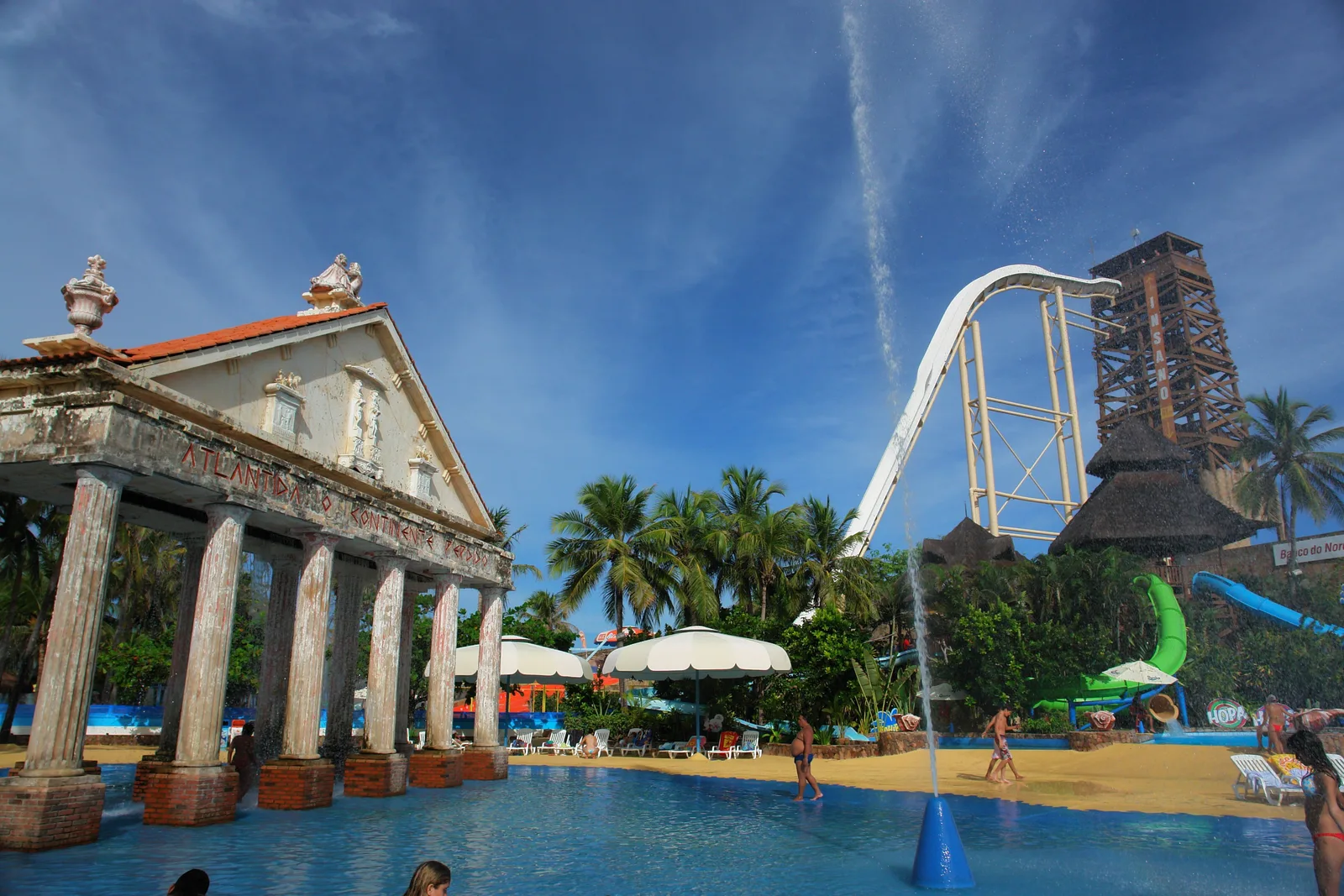
  • Beach Park water park at Aquiraz: a colonnaded white building beside a large pool, with a tall dark slide tower and a looping white water slide rising above the palm trees behind

    Porto das Dunas, Aquiraz · a full day

    A day at Beach Park

    One of the biggest water parks in Latin America, and rated among the best, on the beach at Porto das Dunas about 27 km east of the city, with four resorts of its own attached. Its signature ride, the Insano, is a 41 meter near-vertical drop that held the Guinness record for the world’s tallest water slide when it opened in 1997. The park takes over 1.7 million visitors a year. Book online well ahead: advance tickets started at R$210 in 2026 against about R$320 at the gate.

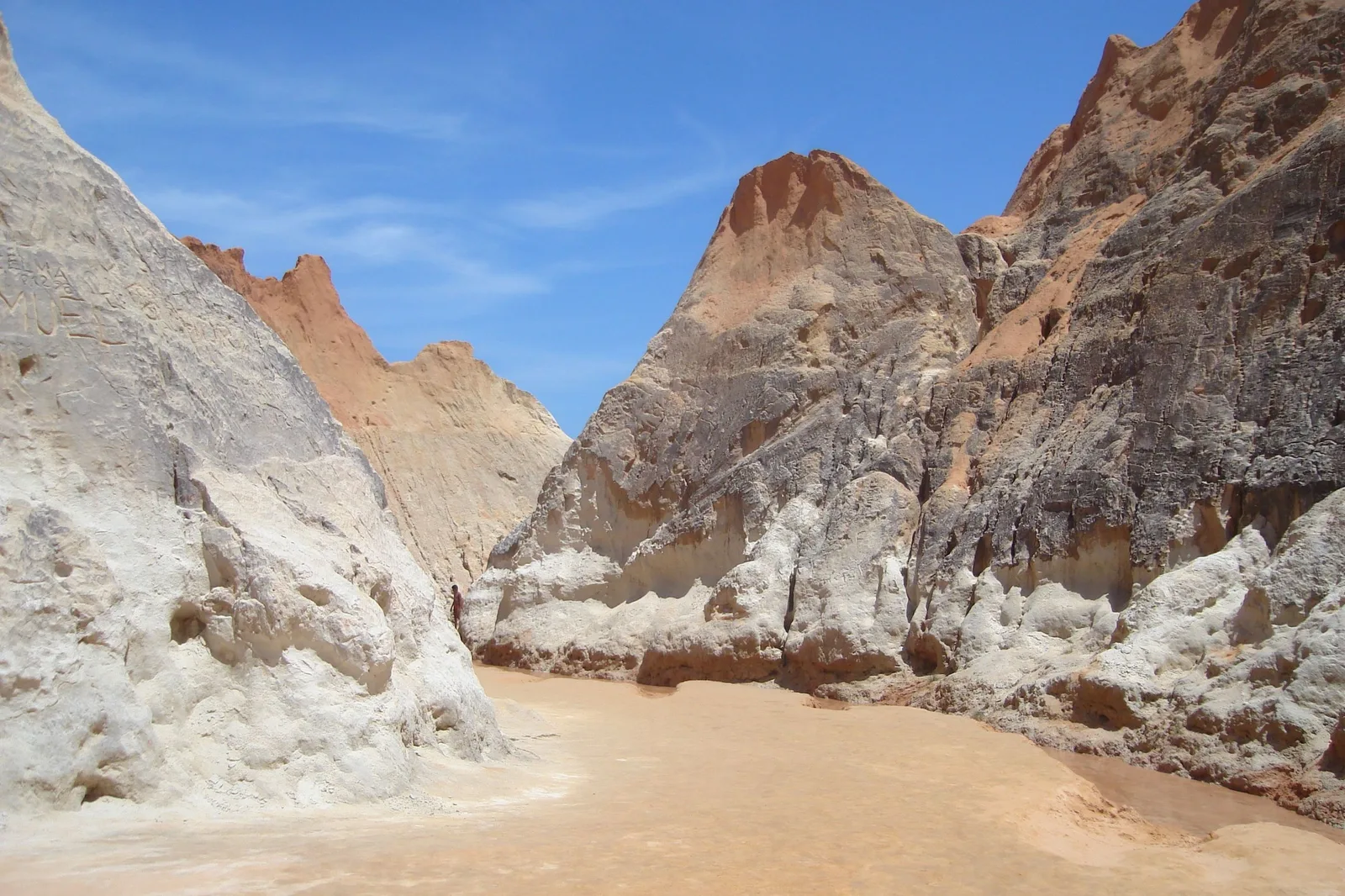
  • A narrow passage between tall pale sandstone cliff walls at Beberibe opening onto a floor of dry sand, the rock streaked white, cream and pink under a blue sky

    Beberibe · about 85 km, an hour and a half

    The colored cliffs at Morro Branco

    The Monumento Natural das Falésias de Beberibe is a wall of sandstone eroded into narrow passages you walk through with a local guide, taking about an hour, with layers running from white through ochre and pink to deep red. The colored sand bottles sold all over Ceará come from here, and the labyrinth is the single most photographed thing on this coast that is not a beach.

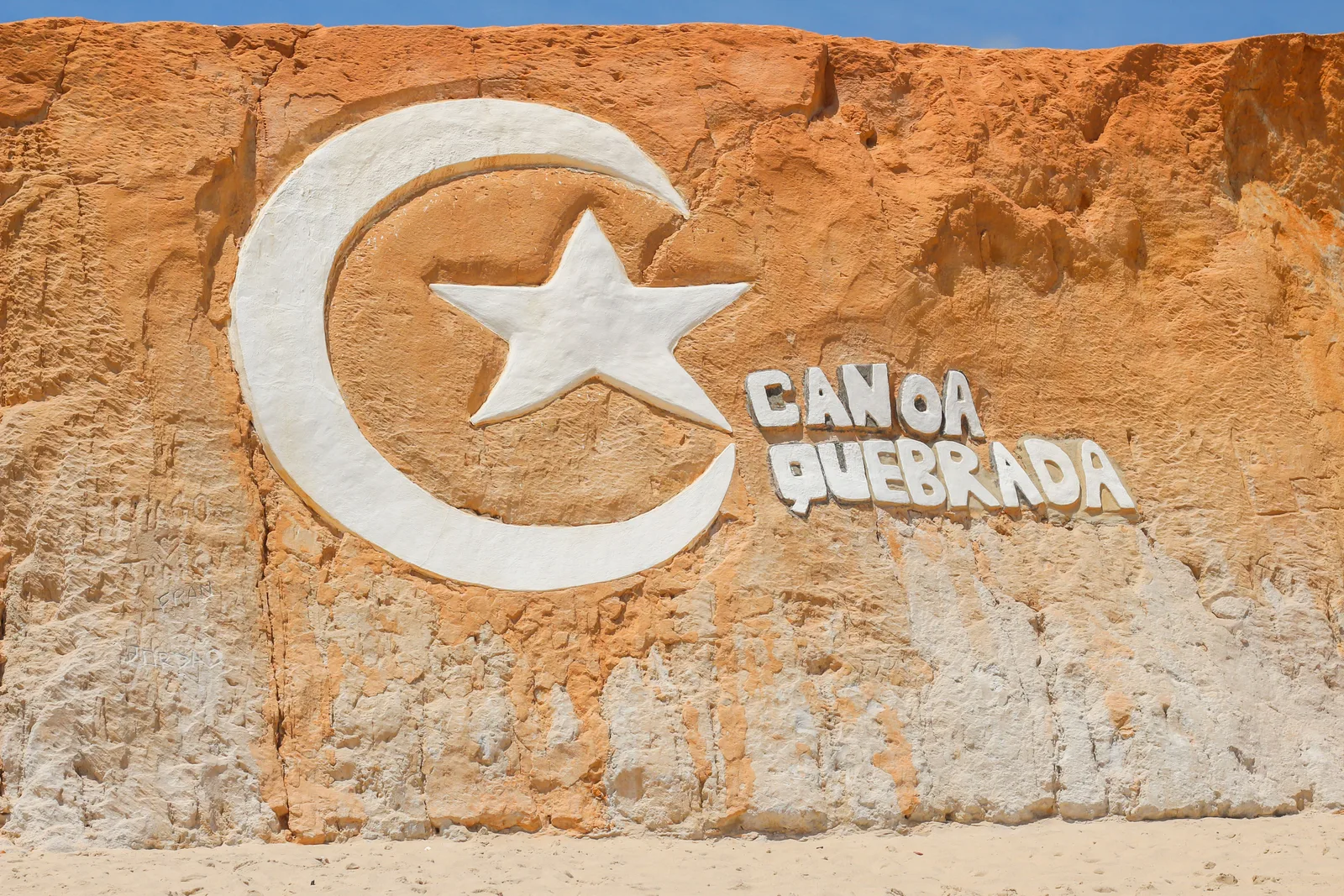
  • A crescent moon and star carved in relief into the face of a red and cream sandstone cliff at Canoa Quebrada, with the words Canoa Quebrada cut beside them

    Aracati · about 164 km, two hours

    Canoa Quebrada and its cliff

    A fishing village that became a hippy colony in the 1970s and a beach town after that, sitting on top of red cliffs with the sand a long way below. The crescent moon and star cut into the cliff face is its symbol and the main street of bars and pousadas is universally called Broadway. Buggies run out along the dunes from the top of the village, and the sunset from the clifftop is the reason people stay the night rather than drive back.

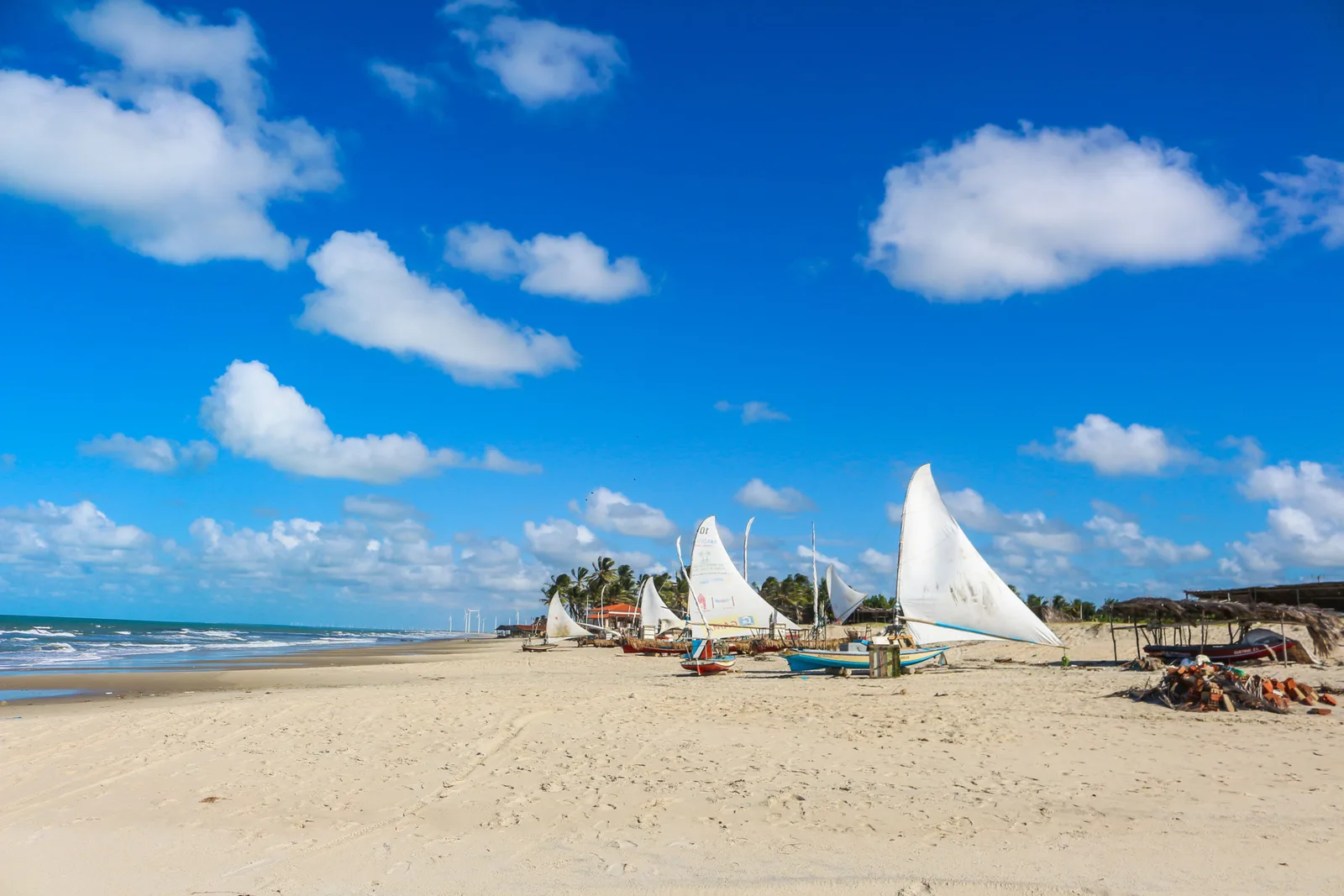
  • Jangadas with furled white sails and tall masts standing on the pale sand at Praia das Fontes, with flat green sea behind them under a blue sky

    Beberibe · alongside Morro Branco

    Praia das Fontes

    The beach next door to Morro Branco, and named for the freshwater springs that seep out of the cliff onto the sand. It has the same banded cliffs, a sea cave, and a jangada fleet drawn up on the beach in front of the village. Most day tours do the two together, which is the right way round: the labyrinth in the morning while it is cool, the beach after lunch.

  • The village at Praia do Iguape from above: rows of red-tiled roofs among trees with a pale dune ridge rising directly behind the houses

    Aquiraz · half a day

    The beach villages of Aquiraz

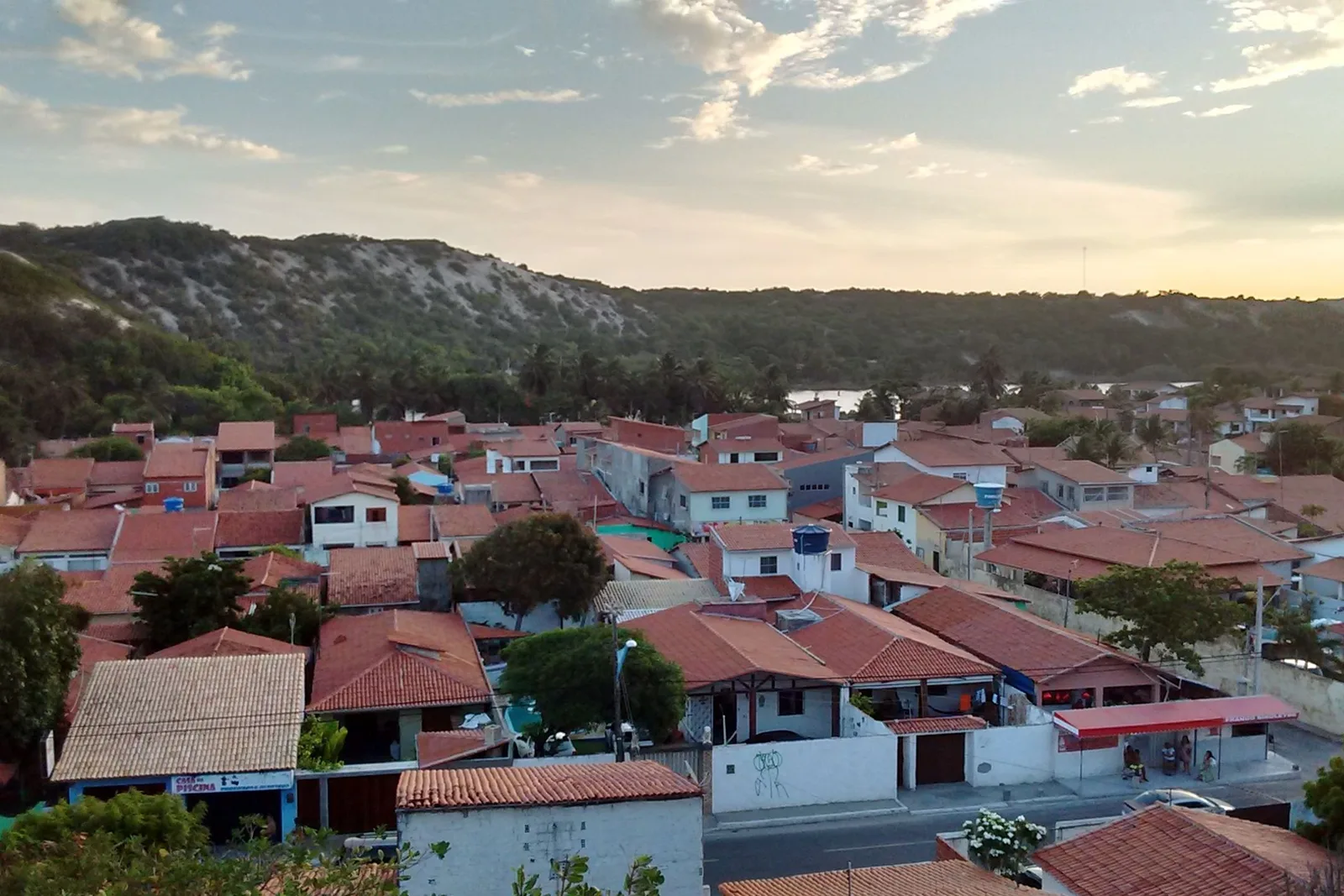
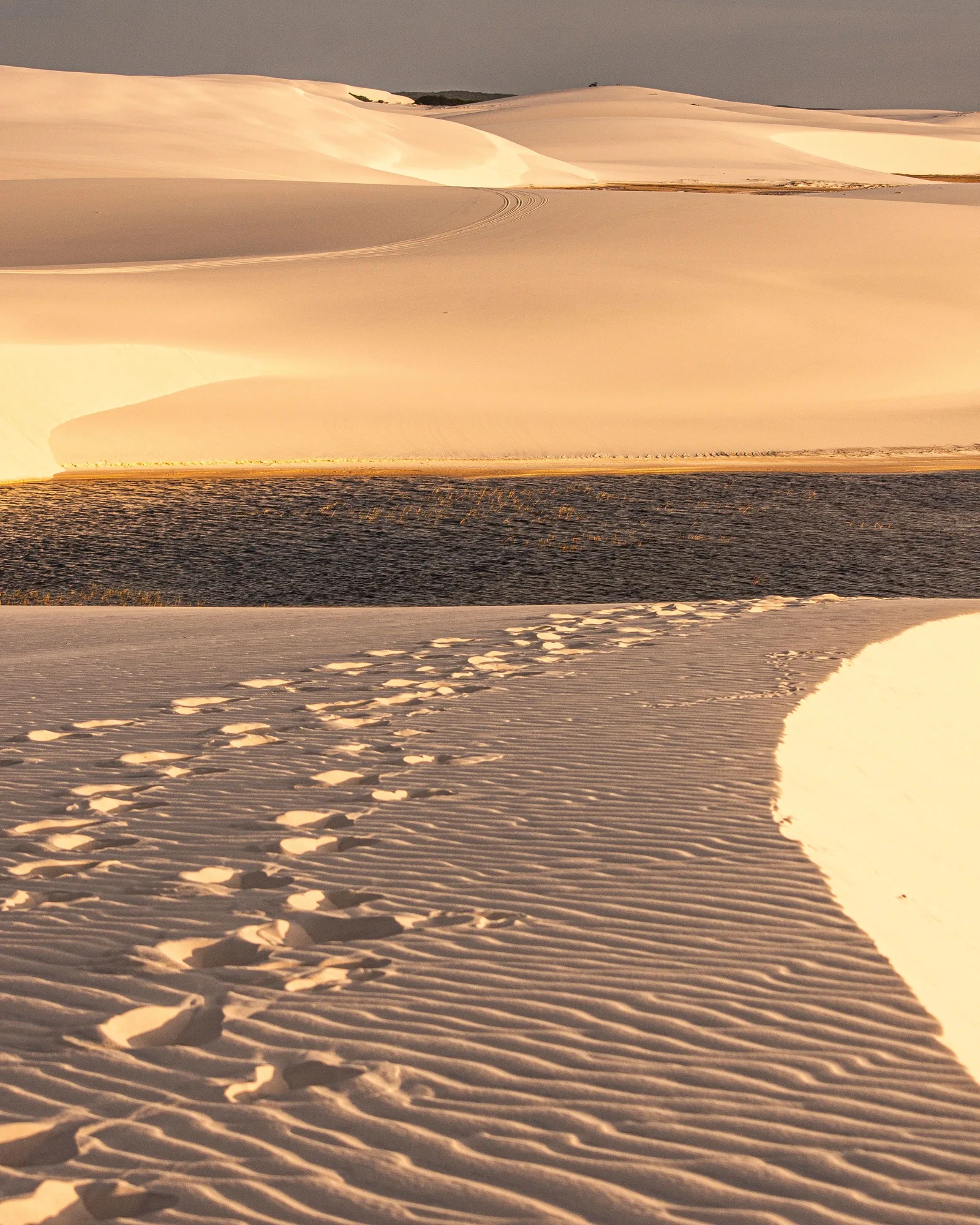
    Aquiraz was the first capital of Ceará and its coast is the closest of the east-coast beaches, half an hour out. Prainha, Iguape and Barro Preto are working villages with jangadas on the sand, a river mouth or two and a row of barracas, and Iguape is where the state’s bobbin lace is made and sold from the houses that make it. It is the easy version of this coast, and a good half day if you do not want to drive two hours.
West Coast

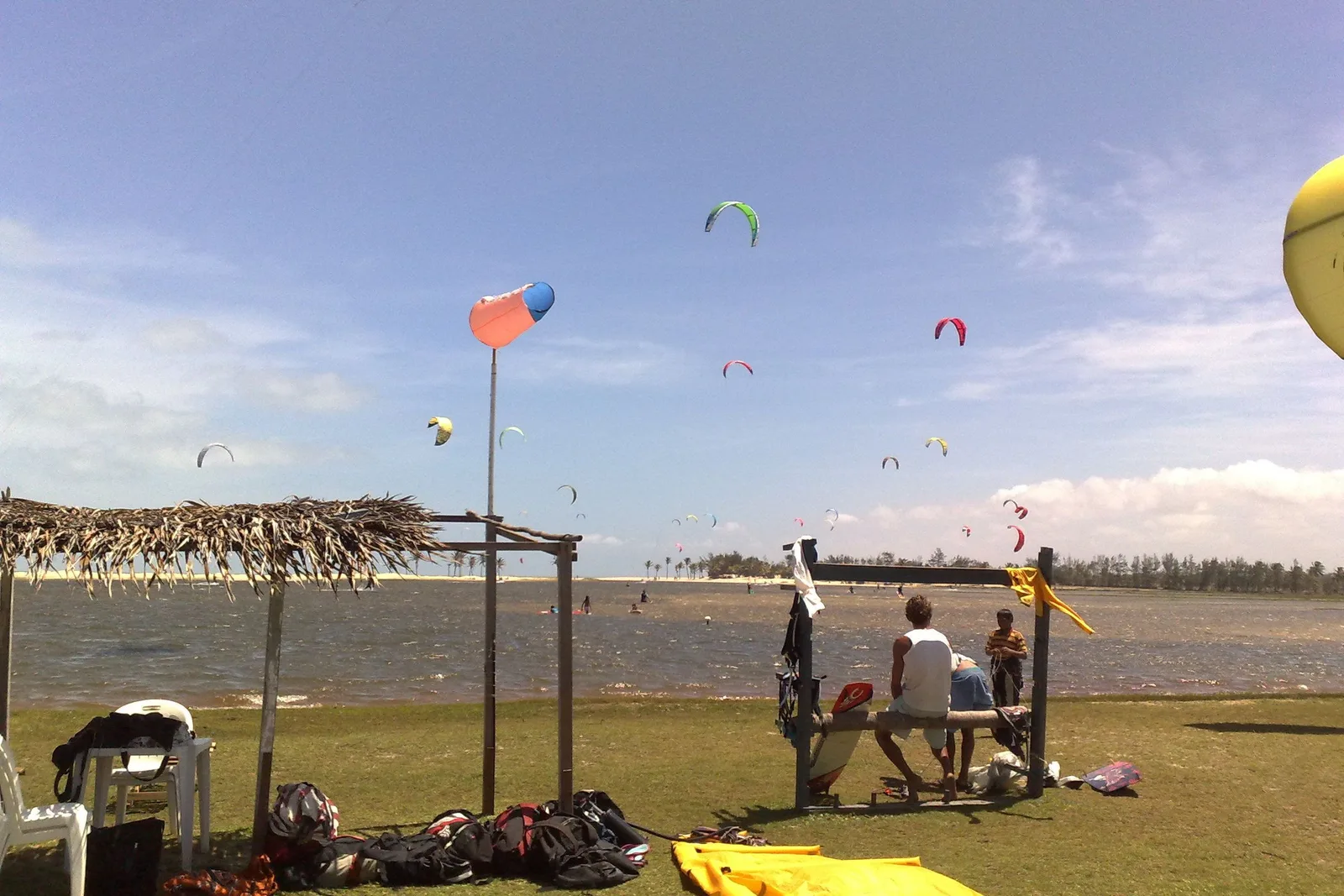
  • Kitesurfing kites in the air over the Lagoa do Cauípe with more kites laid out on the grass beside a thatched shelter, and two people rigging a kite in the foreground

    Caucaia · a morning, in season

    Learning to kitesurf at the Lagoa do Cauípe

    A shallow freshwater lagoon a few kilometers downwind of Cumbuco, and the reason this coast teaches so many people to kite. The water is flat and waist-deep for a long way out, the wind comes in clean off the dunes, and there is no surf to fall into. Schools cluster along the bank and a lesson runs about an hour at a time. Bring the season with you: the wind is reliable from roughly July to January and thin outside it.
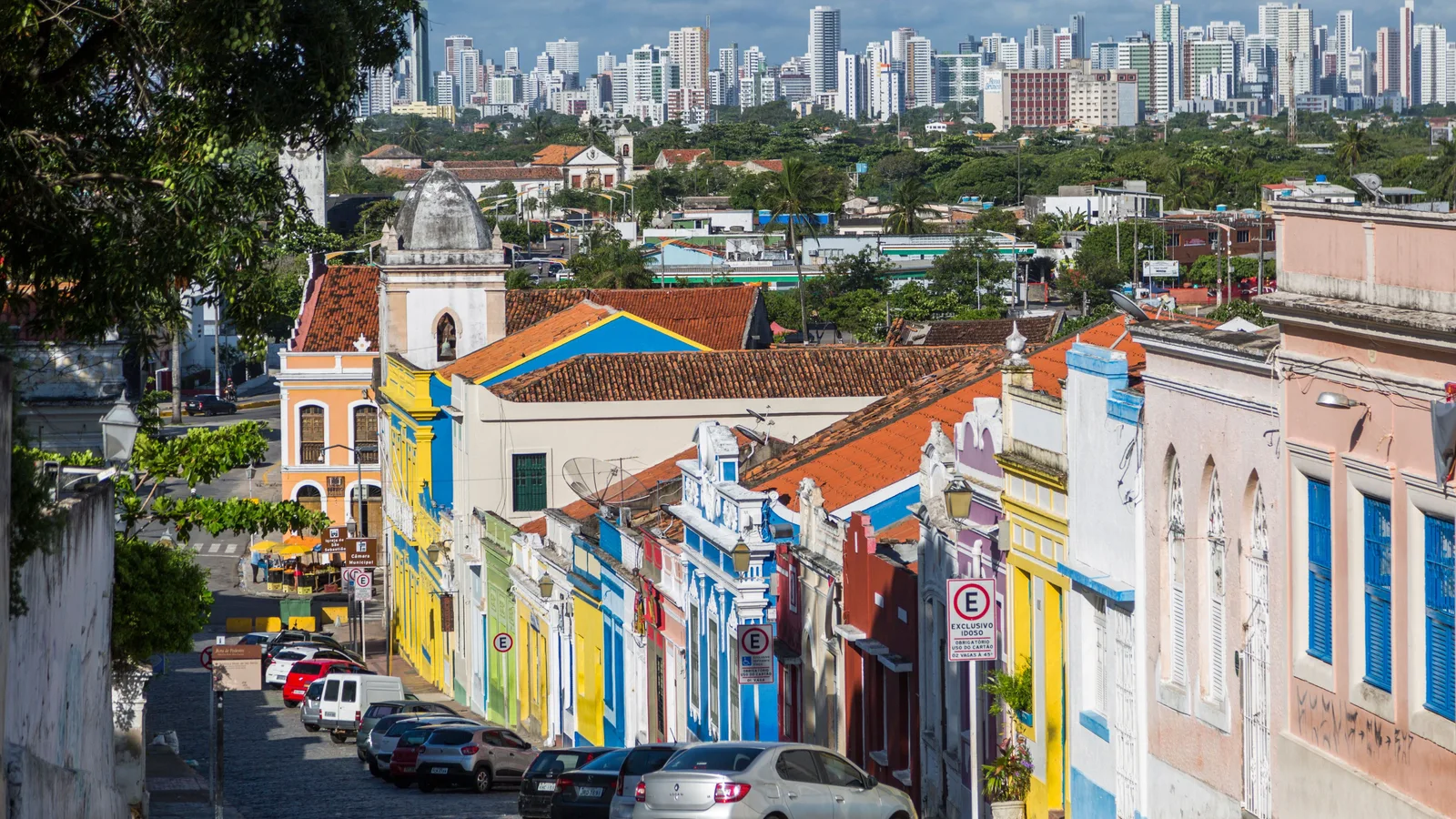
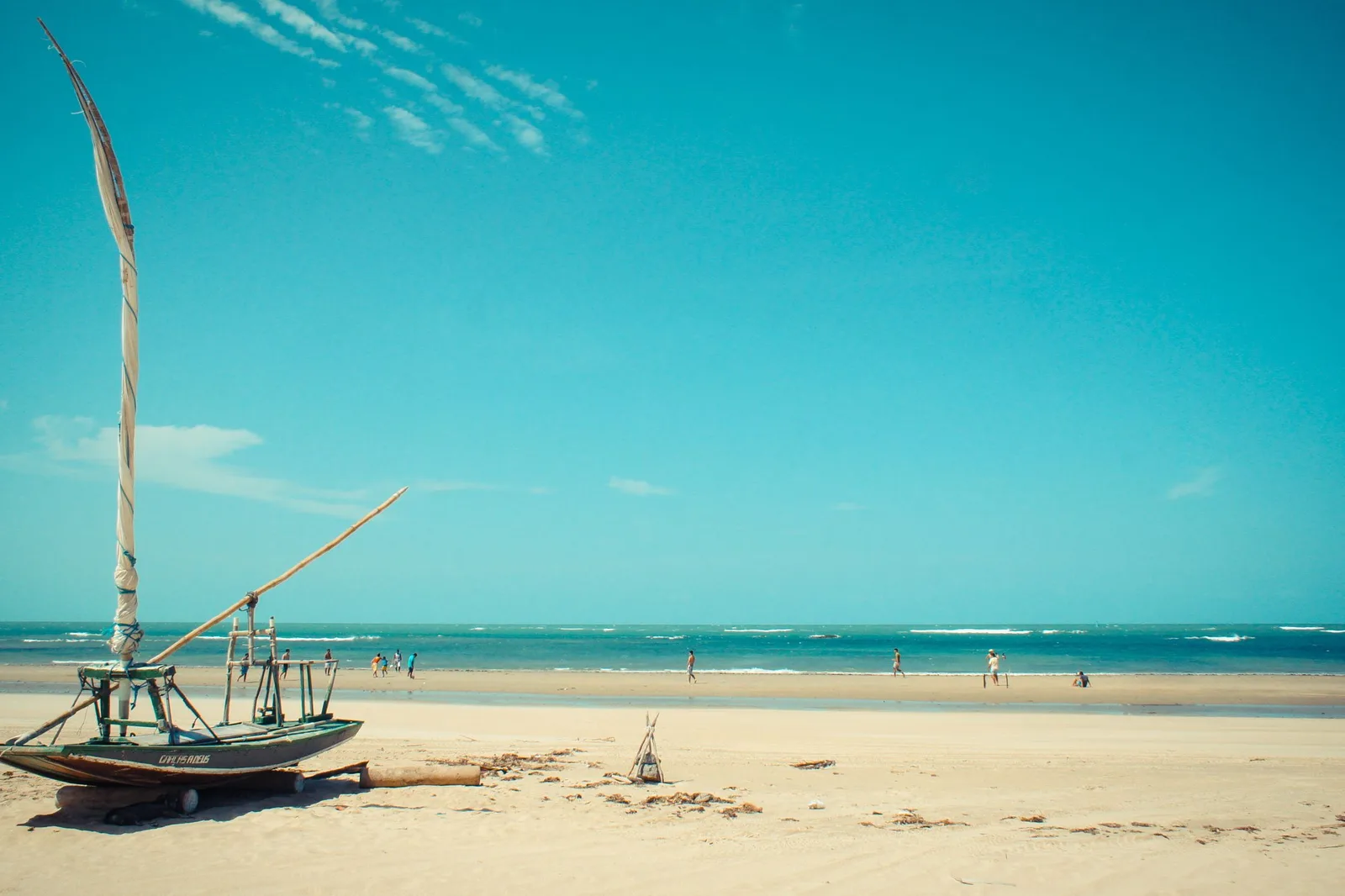
  • A jangada resting on wide white sand at Flecheiras with its mast bare, under a big blue sky with pale turquoise water running out to the horizon

    Trairi · about 130 km, two hours

    The rock pools at Flecheiras

    Two hours west, past Paracuru and Lagoinha, the water goes clear and shallow and a line of rock and coral holds pools at low tide that you can snorkel in without a boat. Flecheiras is a small village of pousadas with jangadas on the sand and almost nothing else, and it is the point on this coast where the drive stops being a drive and starts being the destination. Check the tide before you commit the day.

  • The coast at Paracuru from the air: a low rocky headland with a radio mast on it, green scrub behind, and clear green water breaking over rocks along the shore

    Paracuru · about 91 km, an hour and a half

    Paracuru and the Pedra Rachada

    A surf and kite town halfway along the west coast, built around a headland with a split rock at the end of it and a set of tidal pools underneath. Paracuru has a real town behind the beach rather than a resort strip, a good run of pousadas, and freshwater lagoons in the dunes behind it that fill up after the rains. It is the natural lunch stop if you are driving further west.

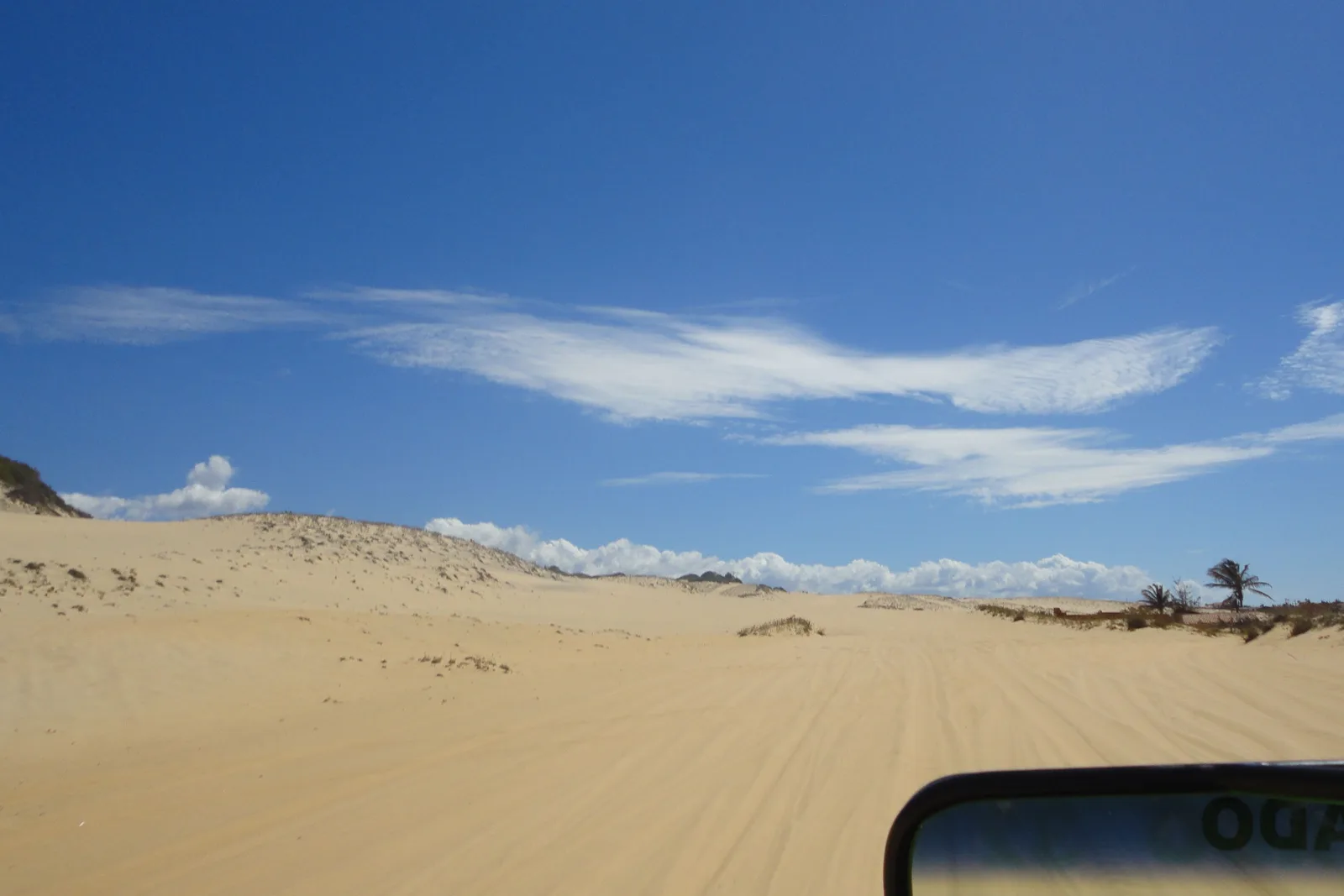
  • A wide pale dune field seen from inside a beach buggy, with the edge of the vehicle in the bottom corner of the frame and low green scrub along the far side of the sand

    Cumbuco or the east coast · half a day

    A buggy run over the dunes

    Buggies are how you cross sand here, and the standard Cumbuco circuit runs out over the dune field to the lagoons and back, with a stop for the sandboard and the rope swing. The driver will ask whether you want it com ou sem emoção, with or without excitement, and it is a real question: the first answer means going up and down the faces of dunes at speed. Say sem if you are not sure.

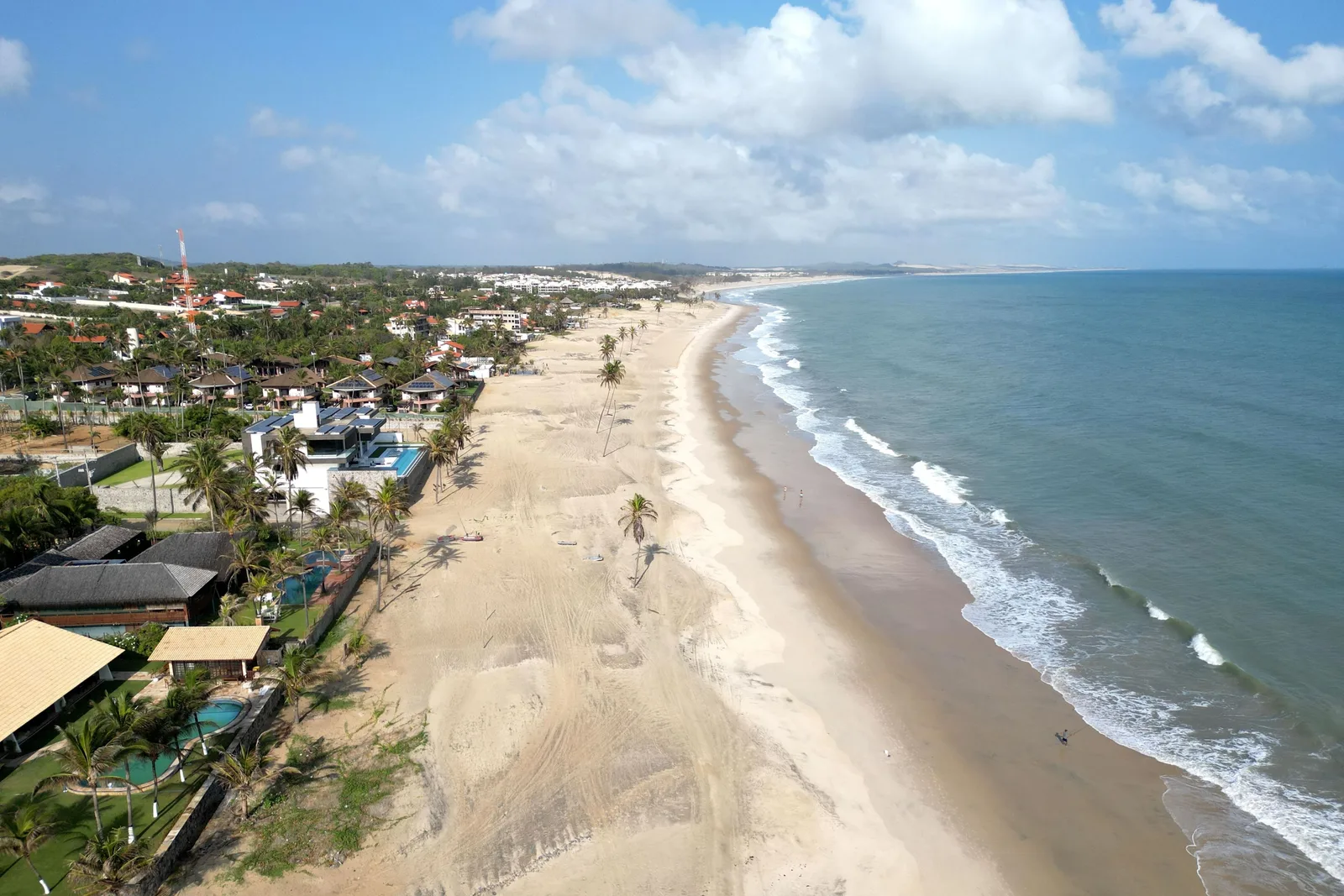
  • Cumbuco from the air: a long curve of pale beach with surf breaking along it, the village of low buildings and palms set back behind the sand, and dunes beyond

    Caucaia · about 35 km, 45 minutes

    The village at Cumbuco

    There is a village underneath the kite school, and it is worth an afternoon on its own. Cumbuco is a strip of sand streets behind a long beach, with barracas on the sand, horses and buggies for hire, jangadas working off the beach and a run of restaurants that get busy at sunset. The wind means it is rarely still and never quiet, but at low season it is just a beach town 45 minutes from a capital city.

Where to stay

One seafront, three parts of it, and a resort strip.

Almost everyone stays on the Beira Mar, and for a first trip they are right to: the hotels, the restaurants, the promenade and the ride apps are all there, and it is the one part of the city you can walk at night. The two alternatives are real, though. Praia do Futuro puts you on the beach the city actually swims at, and Porto das Dunas, half an hour east, is a resort holiday rather than a city one. One place that is not a zone: Cumbuco, 45 minutes west, which is where you sleep if the trip is about kitesurfing and nowhere near the city if it is not.

Drag and zoom to explore.

Tap an area to open it and see it on the map

  • Our pick

    Best for: A first trip, and everything within a walk

    The Meireles seafront in a wide frame: a beach lined with colored parasols, a green promenade with palms along it, and a solid line of apartment towers behind, with turquoise water in front

    The middle of the rebuilt seafront and where most of the city’s hotels are. You get the promenade, the cycle path, the nightly craft fair, the best concentration of restaurants and a beach that is calm because of the stone groynes. It is safe to walk in the evening, it is a few dollars from anywhere else in the city by ride app, and it is where the airport transfers go by default. Take it unless you have a specific reason not to.

    • Most hotels
    • The promenade
    • Best restaurants
    • Walkable at night
  • Best for: Nightlife and the cultural center

    Praia de Iracema from above in a wide frame: a beach and rock groynes in the foreground with a dense line of apartment blocks and hotel towers running along behind it

    The older, scruffier, more interesting end of the seafront, immediately west of Meireles. This is where the Dragão do Mar cultural center is, and with it the best bars and live music in the city and the only genuinely walkable nightlife. The trade-off is that it is a mixed neighborhood that changes character block by block, the swimming is worse than at Meireles, and it is noticeably quieter and emptier after midnight than the reputation suggests. Good for a second trip, or if the evenings matter more than the mornings.

    • Nightlife
    • Dragão do Mar
    • Cheaper rooms
    • Mixed by block
  • Best for: Being on the beach the city actually swims at

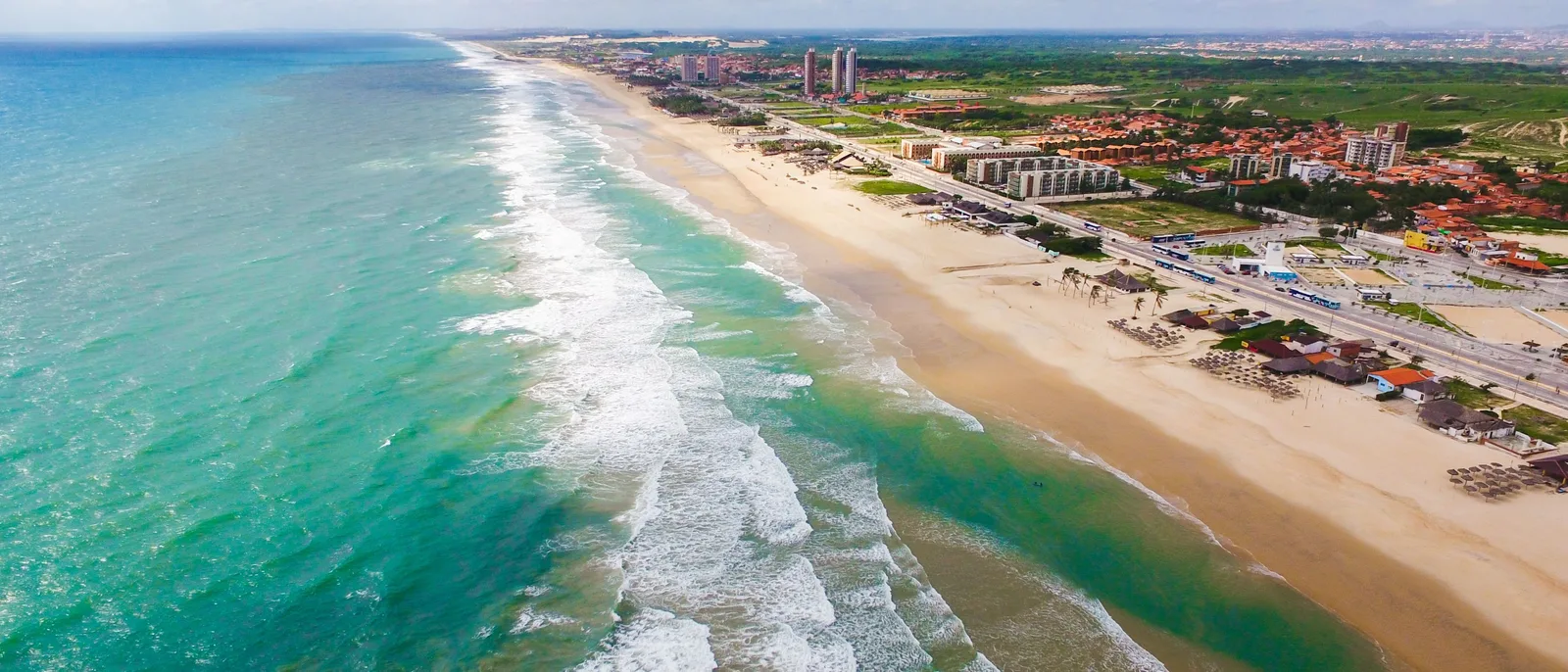
    Praia do Futuro from the air in a wide frame: surf running along a broad pale beach with thatched barracas and coconut groves behind it and the city towers far off along the shore

    Seven kilometers of open Atlantic and the barracas, with far fewer hotels than the Beira Mar and a much quieter street behind them. Take it if the beach is the point of the trip: you walk out of the door onto the best swimming and the best beach food in the city. Understand the cost. There is nothing to walk to in the evening, the sand between the barracas is dark at night, and you will be taking a ride app into town for dinner most days.

    • Best swimming
    • The barracas
    • Quiet street
    • Car or ride app needed
  • Best for: A resort week, especially with children

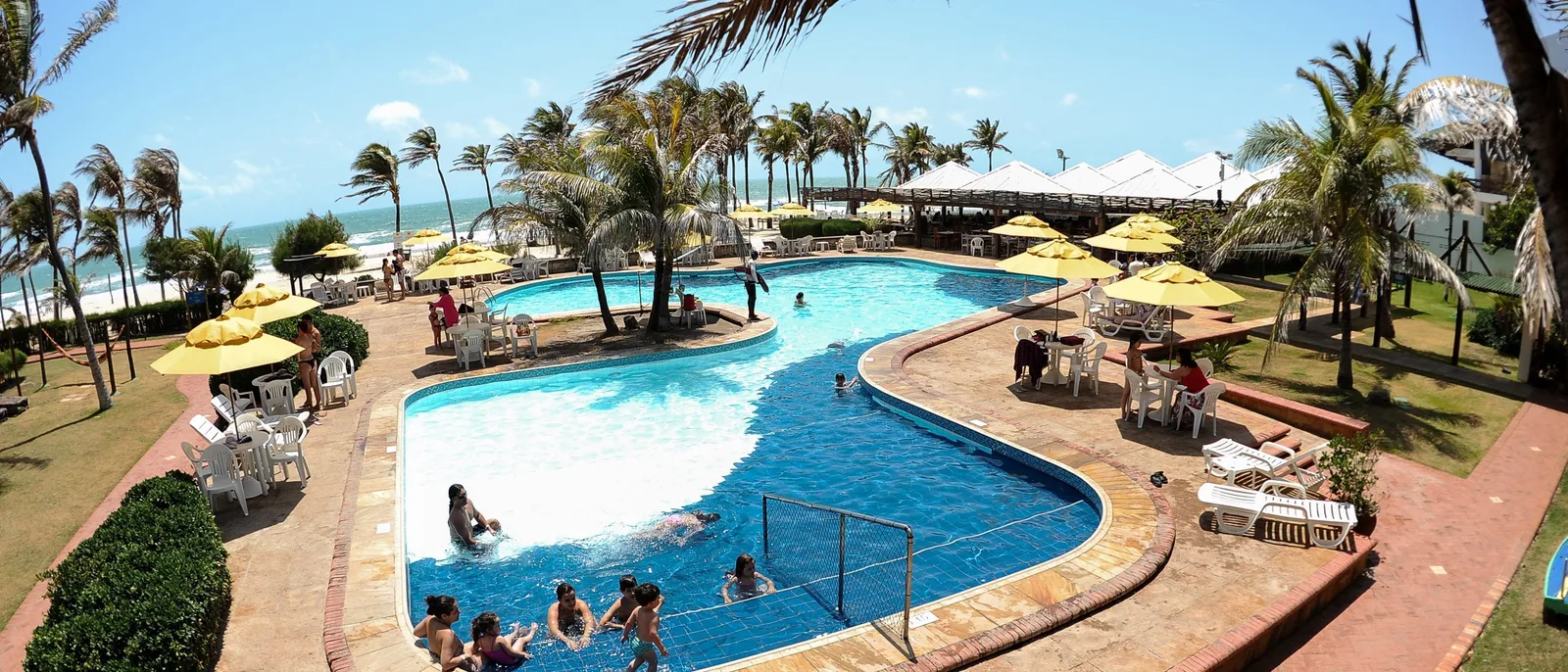
    A resort swimming pool at Porto das Dunas in a wide frame: a curving pool with people in it, yellow parasols and loungers along the tiled edge, and coconut palms behind

    Half an hour east of the city and a completely different trip. Porto das Dunas is the resort strip attached to Beach Park, with four of its own hotels and a run of others along the beach, and it is the obvious answer for a family that wants a pool, a water park and no logistics. It is also isolated: you are 27 kilometers from the Centro, the restaurants are the hotel restaurants, and seeing the city means a taxi each way. Good for a week that is about the resort, wrong for a week that is about Fortaleza.

    • Beach Park
    • Resorts
    • Best with children
    • Away from the city

A working plan

Two days in the city, one on each coast.

Three nights covers Fortaleza and one direction out of it; four covers both directions. Only the Flecheiras rock pools are tide-dependent; nothing else here is, between August and December, so the order is yours.

  1. 01
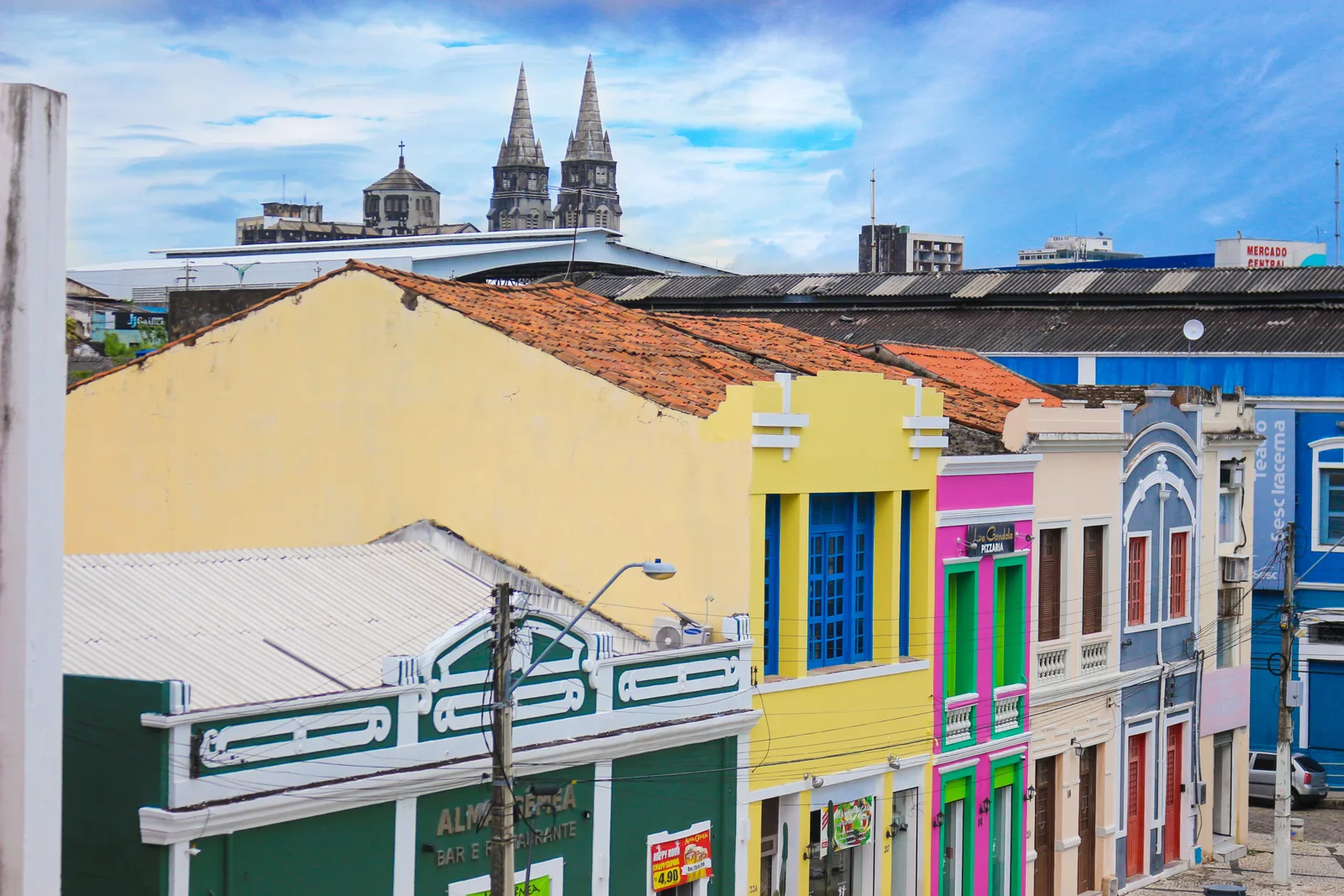
    A row of colorful colonial shopfronts in Fortaleza’s old center painted yellow, green, pink and blue, with the twin gray spires of the cathedral rising behind the roofs

    Meireles, Centro & Praia de Iracema

    The seafront and the old center

    Walk the Beira Mar early, then a taxi into the Centro for the Theatro José de Alencar, the Mercado Central and the Mercado dos Pinhões before the afternoon heat. Back to the seafront for the craft fair at dusk, and dinner around the Dragão do Mar.

  2. 02
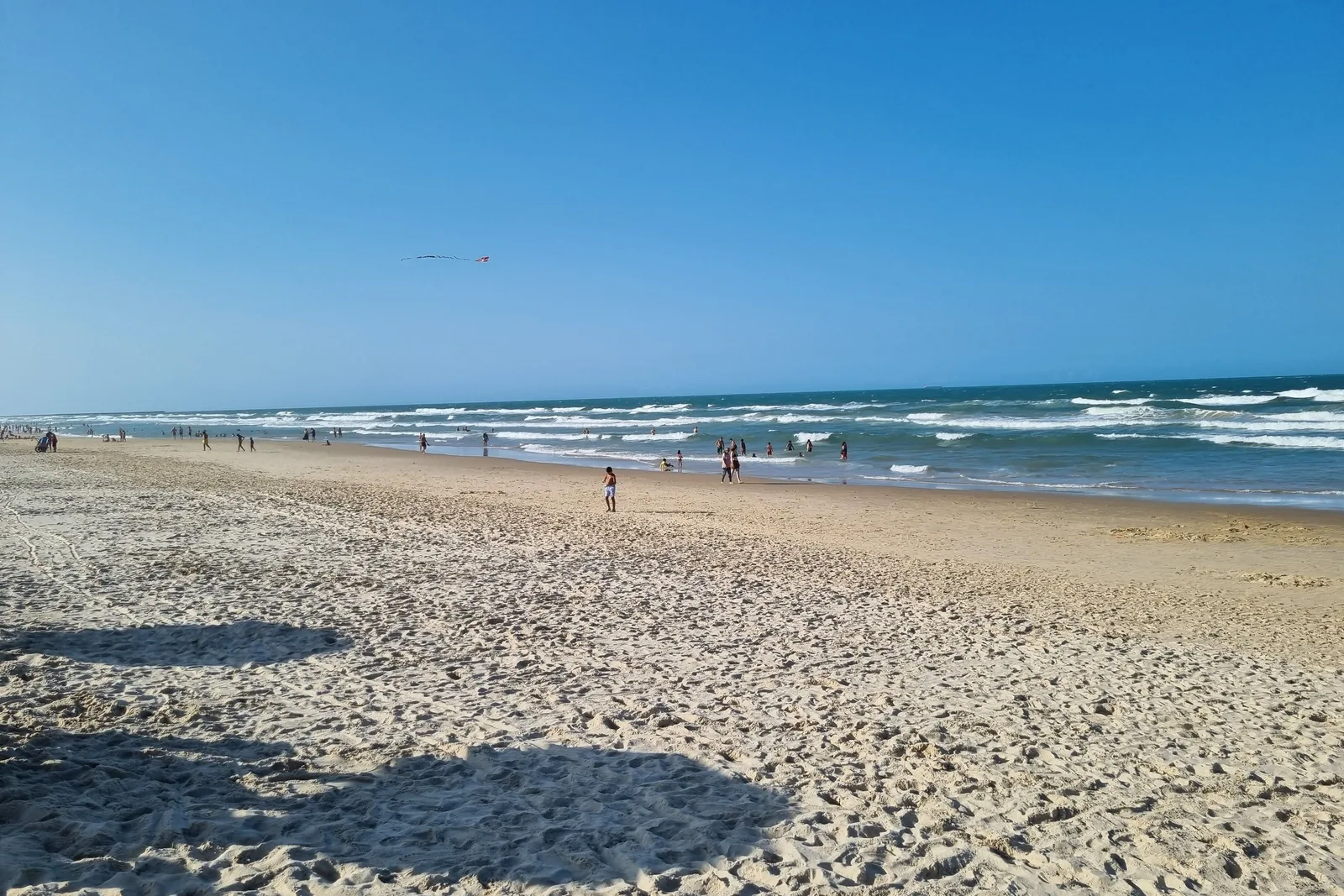
    A wide sandy beach at Praia do Futuro with white surf running up it, a scattering of people at the waterline and a bright hazy sky over the sea

    Praia do Futuro & Mucuripe

    A day at a barraca

    Fifteen minutes east to Praia do Futuro, pick a barraca and stay in it: swim, eat, sit under the thatch, listen to the band. Come back along the coast in the late afternoon and stop at the Mucuripe fish market as the boats land. Make this a Thursday if you can.

  3. 03
    Morro Branco from the air: a wide beach with thatched barracas and a line of jangadas on the sand, red and cream cliffs rising behind them and pale dunes beyond

    Aquiraz, Beberibe & Aracati

    East to the cliffs

    The CE-040 east: the labyrinth of colored cliffs at Morro Branco in the cool of the morning, lunch and an afternoon on the sand at Praia das Fontes, and on to Canoa Quebrada for the clifftop sunset if you are staying the night. With children, swap the whole day for Beach Park.

  4. 04
    The coast west of Fortaleza from the air: a long curve of pale beach with surf breaking along it, and a village of low buildings, red-roofed villas and palms set back behind the sand with dunes rising beyond

    Cumbuco, Paracuru & Trairi

    West to the wind

    The CE-085 west: a buggy run over the dunes at Cumbuco, an hour at the Lagoa do Cauípe watching the kites or trying one, then keep driving to Paracuru for lunch and to Flecheiras for the rock pools if the tide is out. The further you go the better it gets.

This is a starting shape, not a fixed departure — we rearrange it around your dates. Have it built for you

Timing

A wet half, a dry half, and a wind season across the top.

Fortaleza’s year runs against what most people expect of Brazil. The rain falls in the northern winter and spring, February through May, and the dry season is the northern summer and fall, August through December, which means this coast is at its best in the months when Rio and the Amazon are not. Air temperature barely moves: highs of 30 to 32 every month of the year, lows of 23 to 25, and a sea between 27 and 29 degrees in every month there is. Two things actually change. The rain, which is seasonal and heavy. And the trade wind, which is the reason half the people on this coast are here.

Rainfall, rain days, air and sea temperature and UV for Fortaleza, month by month. Choose a month to see what the weather is doing then.

January

Trade-offs
Air
25–31°C 77–88°F
Sea
28°C 82°F
UV
11 Extreme
Rain
13 days 156 mm / 6.1 in

The rains are arriving and the wind is fading. Hot and bright between showers, and full of Brazilian vacationers until the middle of the month.

February

Trade-offs
Air
24–31°C 75–88°F
Sea
28°C 82°F
UV
10 Very high
Rain
14 days 187 mm / 7.4 in

Properly into the wet season, with rain on fourteen days and the sunshine dropping away. Carnival falls in February or March and fills the city.

March

Trade-offs
Air
24–31°C 75–88°F
Sea
29°C 84°F
UV
10 Very high
Rain
20 days 337 mm / 13.3 in

One of the two heaviest months of the year. The sea is at its warmest and the light is at its flattest.

April

Trade-offs
Air
24–31°C 75–88°F
Sea
29°C 84°F
UV
10 Very high
Rain
21 days 385 mm / 15.2 in

The wettest month of the year and the least sunny, with rain on roughly three days in four. Rooms are as cheap as they get.

May

Trade-offs
Air
24–31°C 75–88°F
Sea
29°C 84°F
UV
10 Very high
Rain
16 days 229 mm / 9.0 in

The tail of the rains. Still wet, but the sun starts coming back and the sea is still 29 degrees.

June

Good
Air
23–31°C 73–88°F
Sea
28°C 82°F
UV
9 Very high
Rain
10 days 130 mm / 5.1 in

Rain drops by nearly half from May and the trade wind begins to build. Festa Junina fills every town in the state.

July

Good
Air
23–31°C 73–88°F
Sea
27°C 81°F
UV
10 Very high
Rain
7 days 70 mm / 2.8 in

The dry season opens and the kite season with it. Brazilian school holidays fill the beaches and push the rates up.

August

Good
Air
23–31°C 73–88°F
Sea
27°C 81°F
UV
11 Extreme
Rain
3 days 20 mm / 0.8 in

Effectively dry, with rain on three days in the month, and the wind steady all afternoon. The July crowds have gone.

September

Good
Air
24–31°C 75–88°F
Sea
27°C 81°F
UV
11 Extreme
Rain
3 days 14 mm / 0.6 in

Dry, bright and quiet, with about nine and a half hours of sun a day. One of the best-value months of the year here.

October

Best
Air
24–32°C 75–90°F
Sea
27°C 81°F
UV
12 Extreme
Rain
3 days 10 mm / 0.4 in

The peak of the dry season. Rain is effectively over, the sun runs close to ten hours a day, and the trade wind is at its most dependable.

November

Good
Air
25–32°C 77–90°F
Sea
27°C 81°F
UV
11 Extreme
Rain
3 days 10 mm / 0.4 in

As dry as October, still at low-season prices, and the last month before the holiday rates start climbing.

December

Good
Air
25–32°C 77–90°F
Sea
28°C 82°F
UV
11 Extreme
Rain
5 days 37 mm / 1.5 in

Still dry and still windy. Quiet until about the twentieth, and then the whole city moves onto the seafront for Réveillon.

  • Best The one or two peak months
  • Good A real recommendation
  • Trade-offs Workable, with a catch
See Fortaleza on the Brazil calendar

UV is the monthly average of the daily peak, 2022 to 2025, calculated from Copernicus Atmosphere Monitoring Service data. Weather data by Open-Meteo.com, CC BY 4.0.

For the weather

August–December

Five months averaging 37 mm or less each, against 130 to 385 in the wet half. Do not try to rank them: four published datasets disagree about which of August, September, October and November is driest, and every margin is about a millimeter.

For the wind

July–January

Kite operators on this coast put the season at roughly July to January and the working range at 16 to 25 knots, building through the afternoon. That figure comes from schools and kite media rather than from a weather station, because no station here publishes a monthly wind series.

The rainy season

February–May

March and April carry 337 and 385 mm across twenty and twenty-one rain days, and April is also the least sunny month of the year at 153 hours (INMET 1991–2020 normals, Fortaleza station). It is a real season, not a shower pattern.

About the rain

The shape of the year is the single most useful thing to know about this coast, because it runs against the rest of the country. On INMET’s 1991–2020 normals for the Fortaleza station, April is the wettest month at 385 mm and March close behind at 337, and the four months from February to May carry more than two thirds of the annual 1,584 mm. From August the tap turns off: 20 mm in August, then three consecutive months of 10 to 14 mm, and rain on three days a month rather than twenty. December is still a dry month here while it is a wet one in Rio and in the Amazon, which is what makes Ceará the right answer for a Brazilian December.

What this page will not do is rank the dry months against each other, and it is worth saying why. Four published datasets were checked, and three of them name a different driest month: INMET makes it October by 0.3 mm over November, Climates to Travel makes it November, and the Copernicus reanalysis makes it September. Every one of those margins is about a millimeter out of a year that gets more than fifteen hundred. Anyone who tells you October is drier than September in Fortaleza is reading one table and not the next. Come any time from August to December and the weather will be the same: hot, bright, windy and dry.

The dates worth planning around

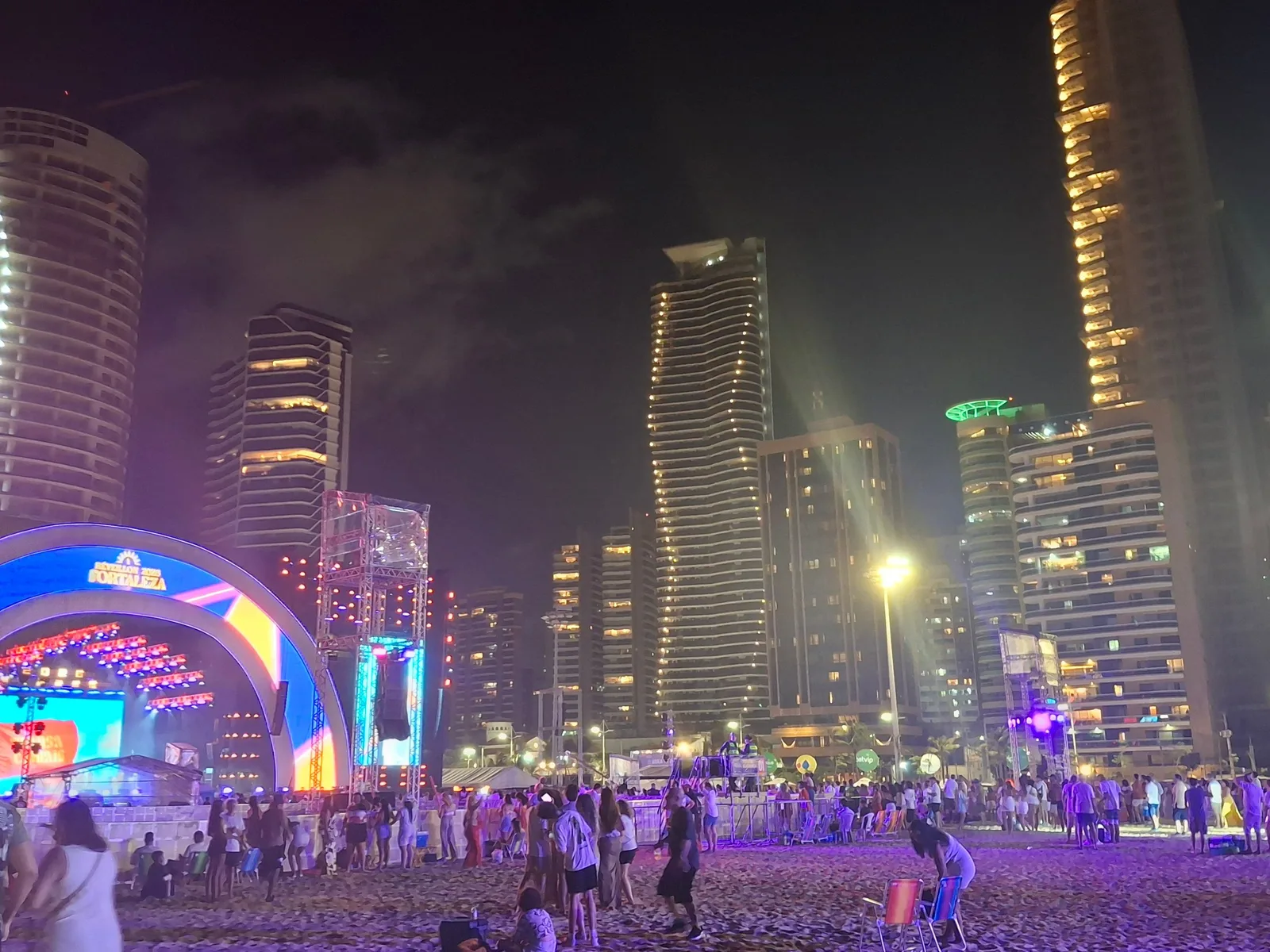
A night crowd on the beach at Praia de Iracema under a lit arch and the floodlit towers of the seafront, with stage lighting throwing purple and green across the sand

Réveillon on the seafront

31 December, every year

New Year’s Eve is the biggest night of the Fortaleza year. The city puts stages and fireworks on Praia de Iracema and the Aterro da Praia de Iracema, everybody comes down in white, and the whole seafront from Iracema to Meireles turns into one crowd. It is also the single most expensive week to be here: the Beira Mar hotels are booked months ahead and rates run at multiples of the November price. Come for it deliberately, or come in a different fortnight.

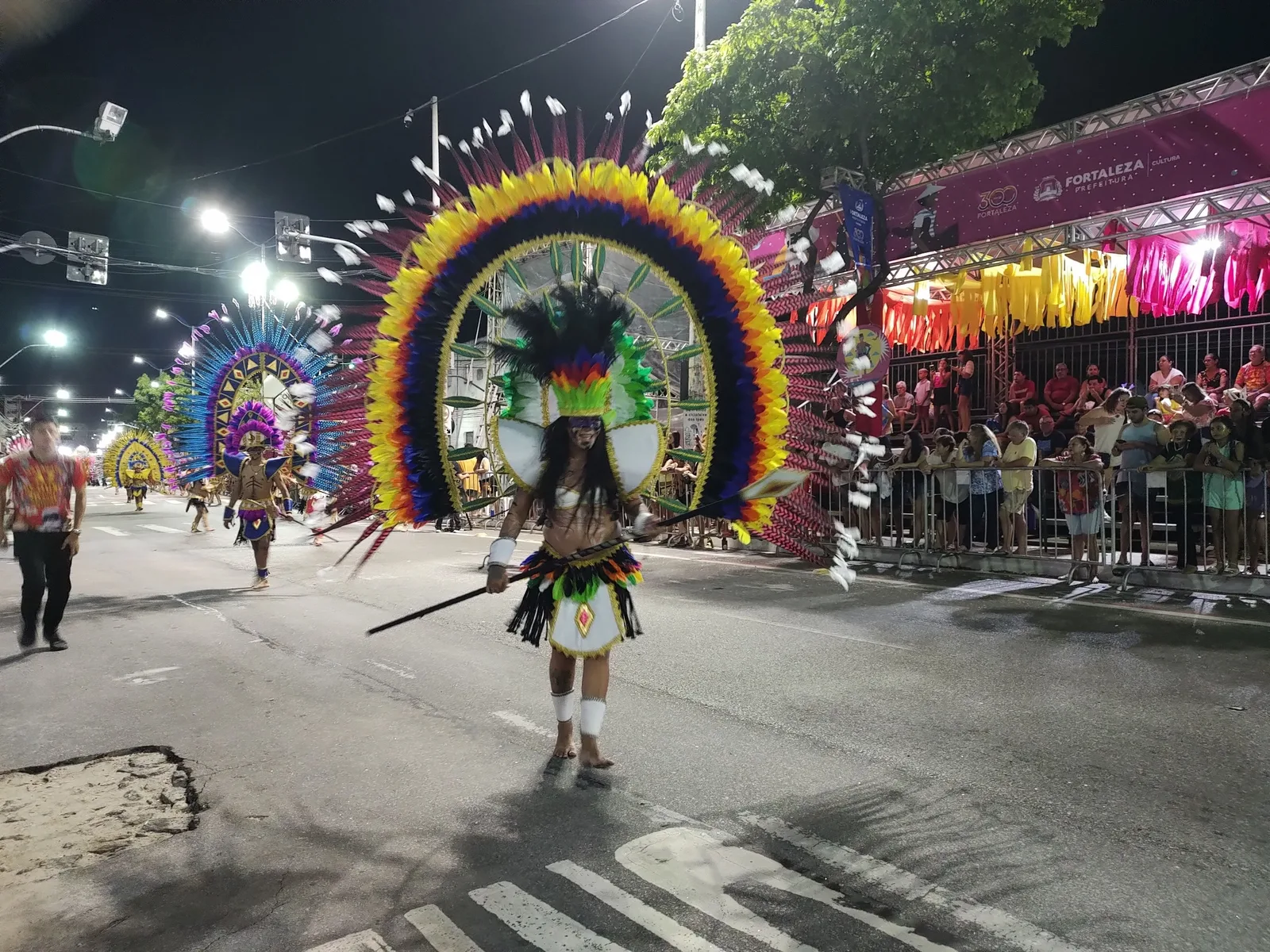
A maracatu performer in a huge fan-shaped headdress of blue, green and yellow feathers walking down a floodlit street at night, with a crowd watching from behind barriers

Carnival and the maracatu

February or March, four days

Fortaleza’s Carnival is smaller than Salvador’s and Recife’s and it is a different thing: the street blocks are in Praia de Iracema and the Centro, and the set piece is the maracatu cearense, a night parade of enormous feathered headdresses, painted faces and slow percussion that is closer to a procession than a party. If you want the biggest Carnival in the northeast this is not it. If you want one you can actually stand in the middle of, it is a good one.

Two dozen kitesurfing kites scattered across the sky over shallow water at Cumbuco, with several people standing ankle-deep on the wet sand in the foreground

The wind season

Roughly July to January

Not a festival, but the thing that decides more of this coast than any festival does. From about July the trade wind sets in and blows almost every afternoon until January, and the beaches west of the city fill with kites. Operators put the working range at 16 to 25 knots, building through the afternoon, and it is strong enough to be the whole reason many visitors come. It also makes the heat bearable, and it hides the sun: the UV index here is 9 or higher in every month of the year and 11 or 12 through the dry season, and a stiff breeze will let you burn without noticing.

Good to know

Before you come

How many days does Fortaleza actually deserve? +

Three nights is the honest minimum and four is better. One day goes on the seafront and the old center: the Beira Mar early, the Theatro José de Alencar and the two markets before the heat, the craft fair at dusk. One goes on Praia do Futuro, in a barraca, which sounds like a small ambition until you have done it. That leaves one day for each coast, east to the colored cliffs at Beberibe and the clifftop village at Canoa Quebrada, west to the dunes and lagoons at Cumbuco and the clear water at Flecheiras. If you only have one coast day, take the west one: it changes more as you drive and it needs no timing.

Which beach do you actually swim at? +

Praia do Futuro for the sea, Meireles for the convenience. Praia do Futuro is open Atlantic with real surf and a shore break, and it is the beach the city itself goes to; read the flags and swim near a lifeguard post. Meireles and the Beira Mar are calmer because the city built stone groynes out into the water, which is fine for a dip but is not the same swim. One thing to check before you choose: Ceará’s environment agency, Semace, tests 33 points along the city shoreline and publishes a bathing-water bulletin every Friday under the federal CONAMA standard. Recent bulletins have cleared about two thirds of them, 22 of 33 in September 2025 and in March 2026. Which two thirds moves week to week, so look the current one up rather than assuming.

Is Fortaleza safe? +

For a visitor who stays on the seafront and takes a ride app after dark, yes, with ordinary caution. Ceará has a serious violence problem: about 32 violent deaths per 100,000 people in 2025 against a Brazilian national rate of 19.1, on the Fórum Brasileiro de Segurança Pública’s figures. It is also falling fast, and Fortaleza itself recorded 742 violent deaths in 2025 against 834 the year before, down 11% (Governo do Estado do Ceará). Almost none of it happens in the visitor areas. What is different here from a compact beach capital is the geography: the Beira Mar, Praia do Futuro and the Centro are three separate places you cross the city to reach, so plan on ride apps rather than walking between them, treat the Centro as a daytime quarter, and do not walk the dark sand between the barracas at night.

Should I just pass through on my way up the coast? +

Plenty of people do, and they are missing a genuinely good few days. Fortaleza is the airport for this whole stretch of coastline, which is exactly why it gets written up as a transit point rather than a destination, but it has 25 kilometers of its own beach, the best beach-club culture in Brazil, a cast-iron opera house and two completely different coasts within two hours. Jericoacoara is about 300 kilometers northwest of here, four to five hours by road with the last stretch over sand, and it has its own guide on this site. Give Fortaleza three nights on the way through and you will not resent them.

Do I need to rent a car? +

Not for the city, and yes for the coast, unless you are happy on a tour. Inside Fortaleza the seafront is walkable end to end and Uber and 99 are cheap enough that a ride across town costs a few dollars, so a car spends the week in a hotel garage. The moment you want the coast that flips. The good places on both sides are villages an hour or two apart, connected by ordinary two-lane roads with no useful bus service, and a rental runs about R$110 a day. The alternative is the day-tour circuit every hotel sells, by van or buggy, which covers Beach Park, Morro Branco, Canoa Quebrada and Cumbuco cheaply and on a fixed schedule. Both work. Driving gives you the small places in between; the tours do not stop at them.

Free · 29 pages

Free guide

Beginner's Guide to Brazil

A free 29-page guide to everything a first-time visitor should know before landing: visas, safety, money, getting around, where to go, and what to eat.

We'll email you a link to confirm your address. Click it and the guide opens right away.

See what's inside
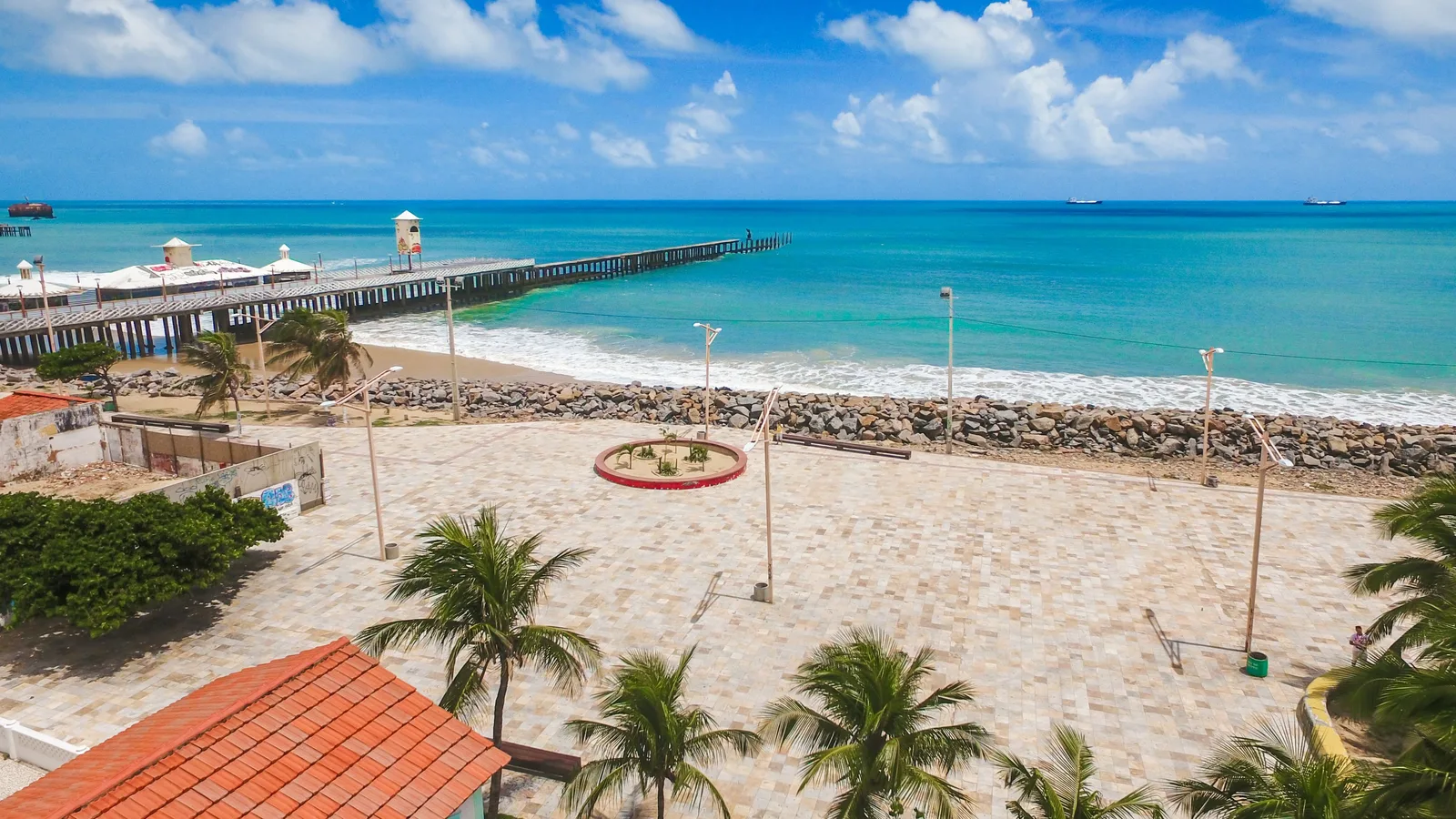
A Fortaleza seafront in bright midday sun: a paved plaza in beige stone with a circular planted bed and lampposts on it, a rock revetment running along the shore, a long pier beyond it and coconut palms and a red-tiled roof in the foreground

Skip the planning

Fortaleza is a gateway. We can make it a stop.

Tell us your dates and we will tell you plainly how many nights Fortaleza is worth on your particular route, which coast to spend your day on, where on the seafront to sleep, and how to fit it together with the rest of the northeast without flying the same leg twice.

  • One person, living in Brazil, replying to you directly
  • A reply within one business day, with no call center and no bots
  • No cost to plan, and no obligation to book
  • Built around your dates, not a fixed departure