
Skip to content
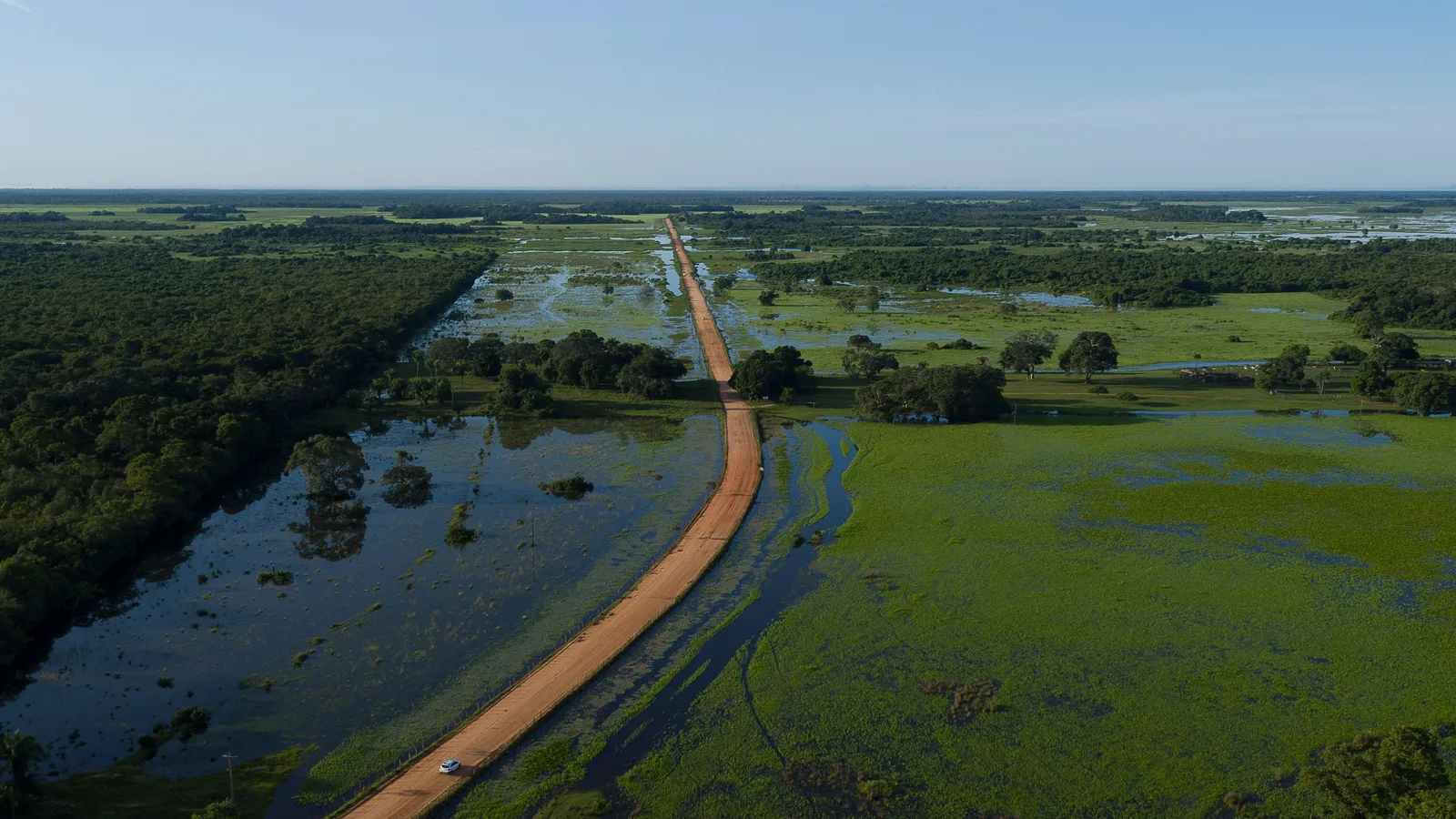
Aerial view of a raised dirt causeway curving away across a flooded green plain toward a flat horizon, a long dark channel of standing water beside it and a single small white vehicle on the road

Mato Grosso

The Northern Pantanal

One dirt road, 147 kilometers, and the best jaguar odds on earth.

Last checked September 2026

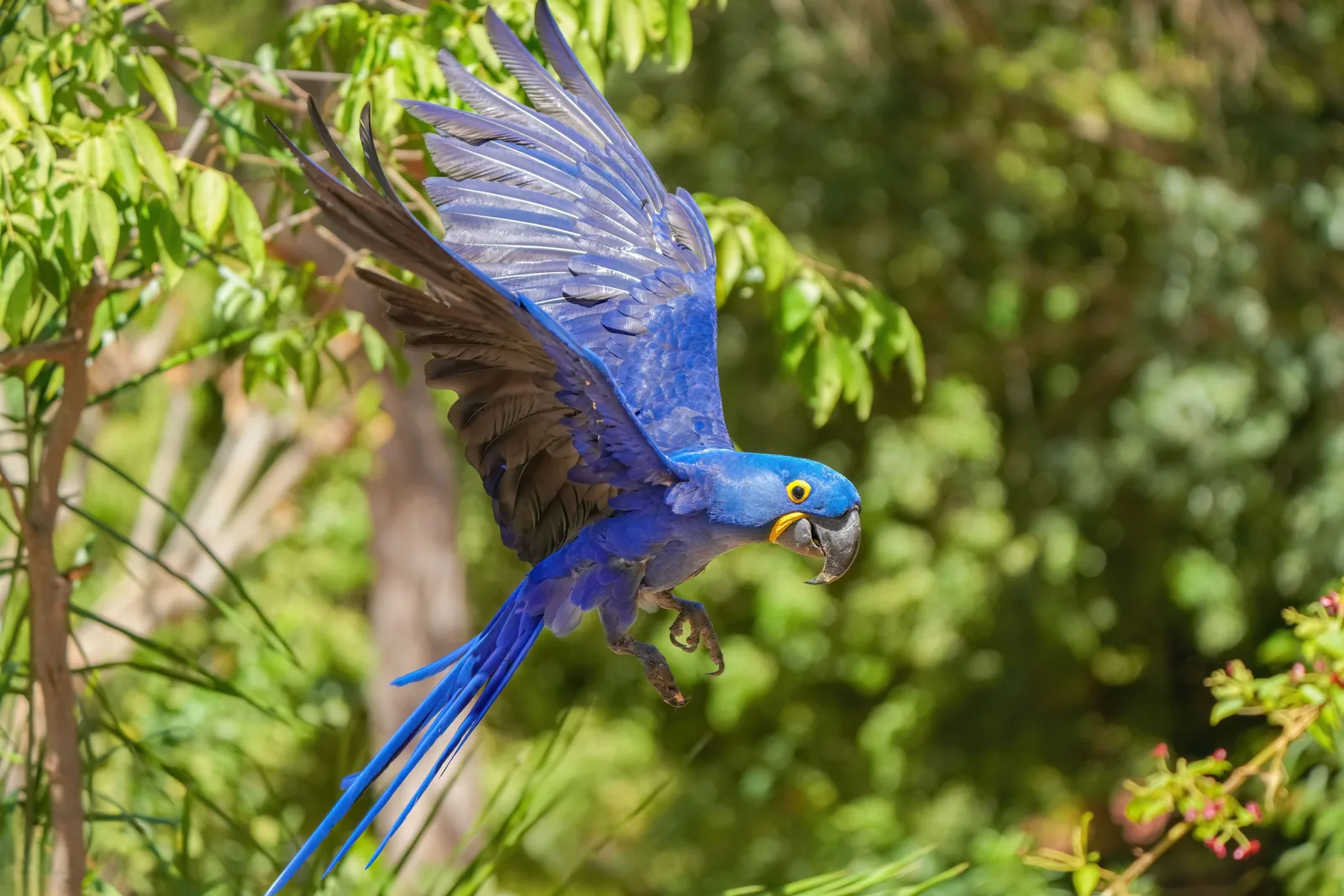
  • A hyacinth macaw in flight with wings and long tail fully spread, cobalt blue against green foliage
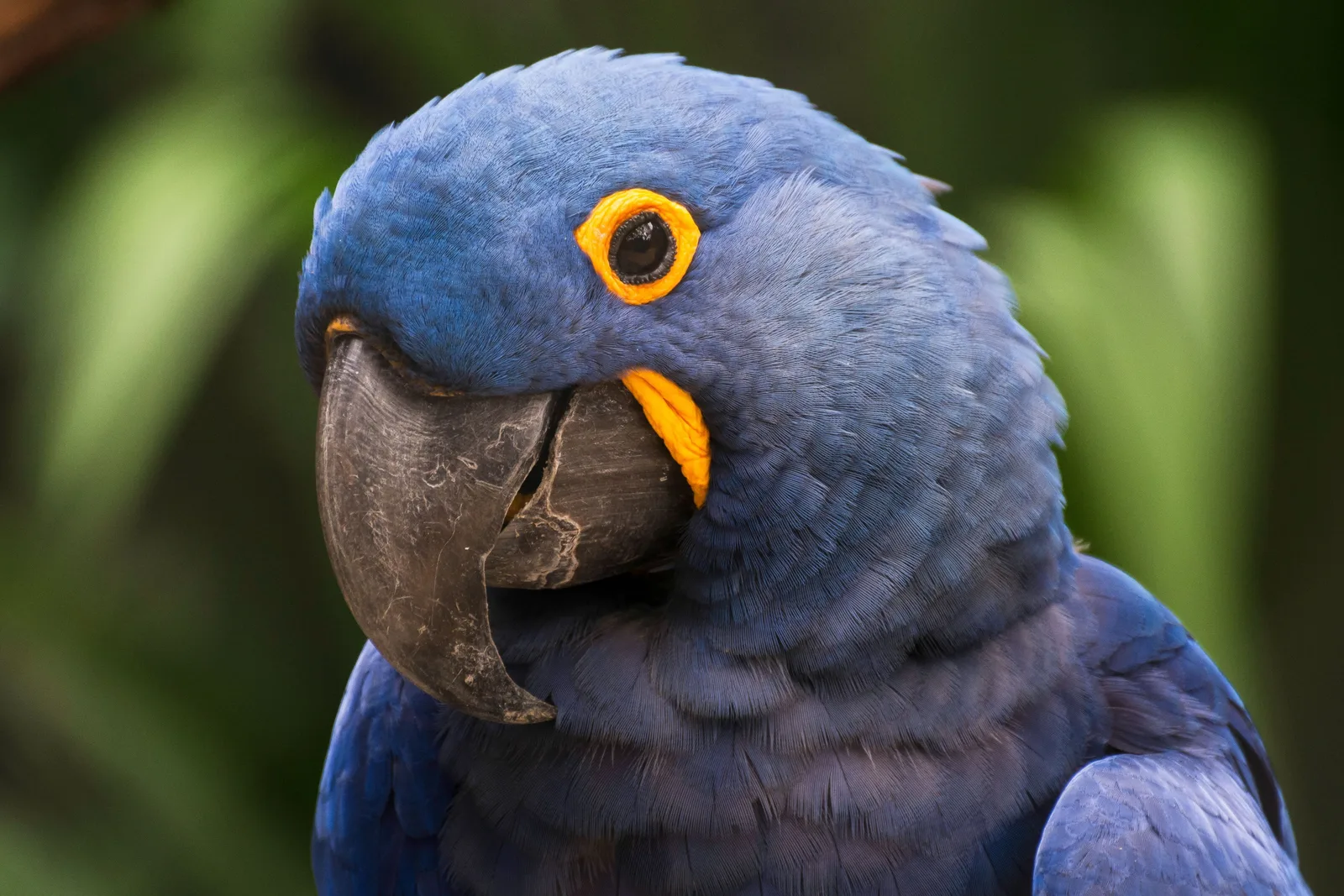
  • Close-up of a hyacinth macaw’s head, deep blue feathers with a bright yellow ring around the eye and a yellow patch at the base of the black bill
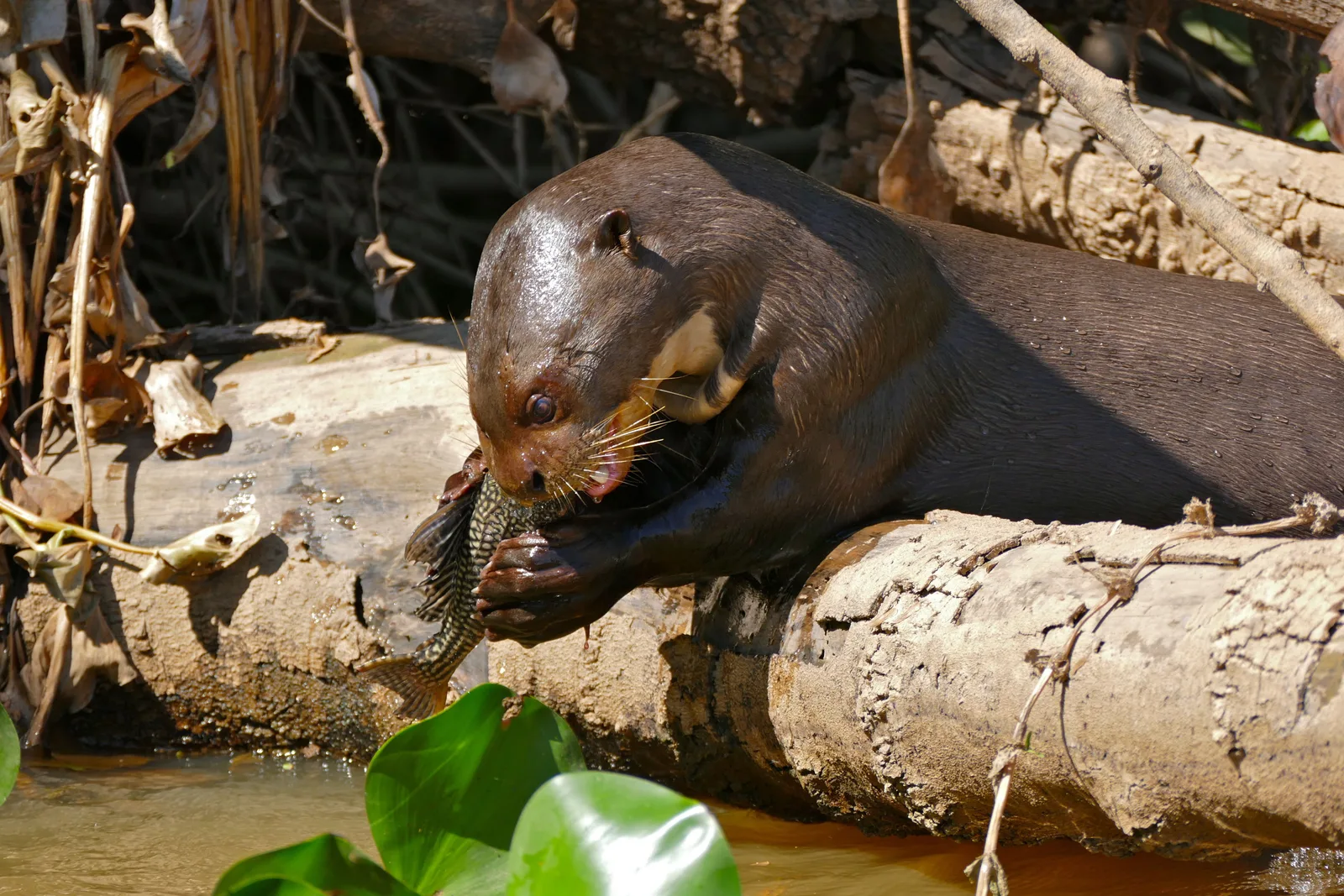
  • A giant otter hauled out on a fallen log gripping a large catfish in its jaws, water hyacinth floating below
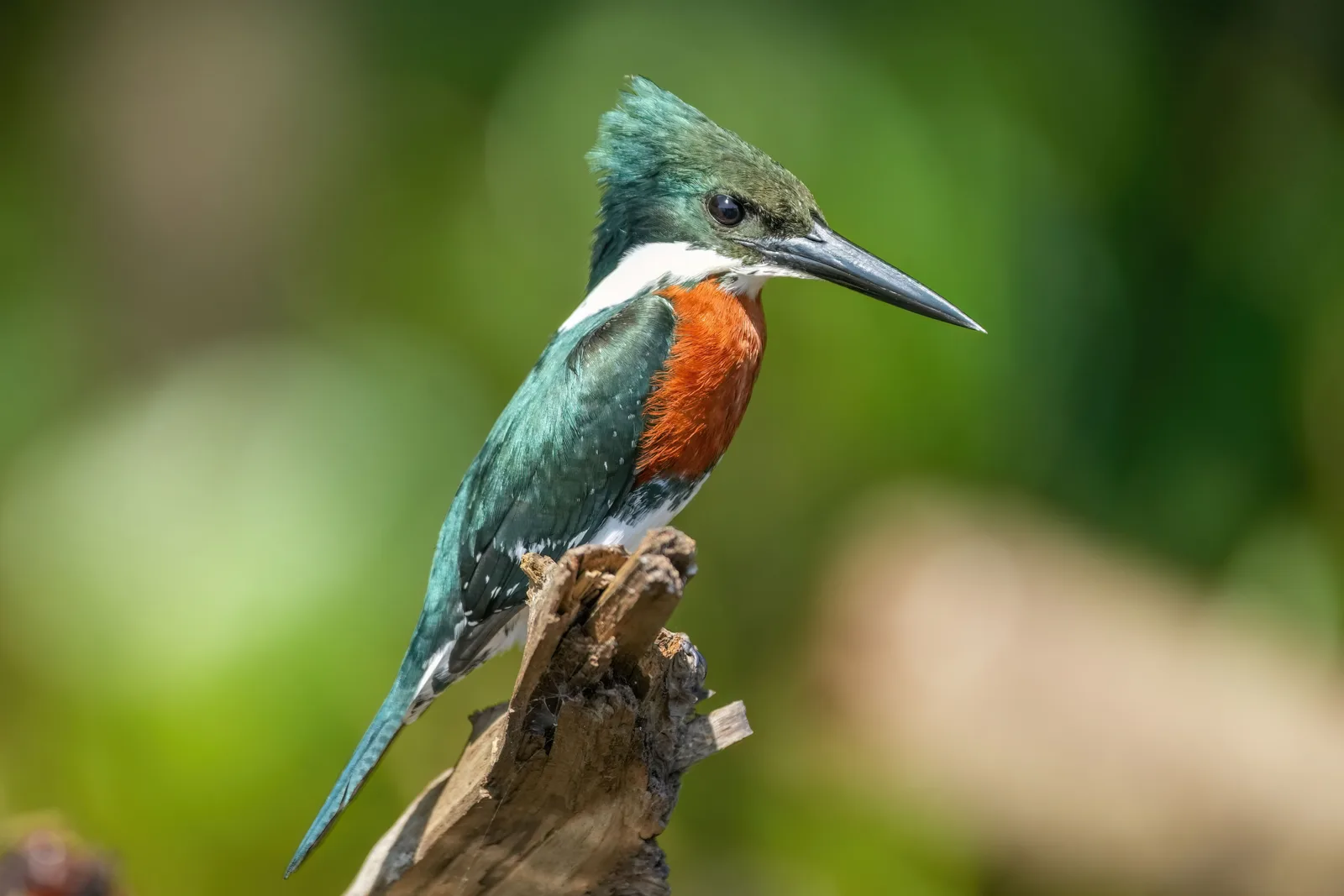
  • A green kingfisher perched on a bare stump, dark green back and rufous breast, the background thrown out of focus
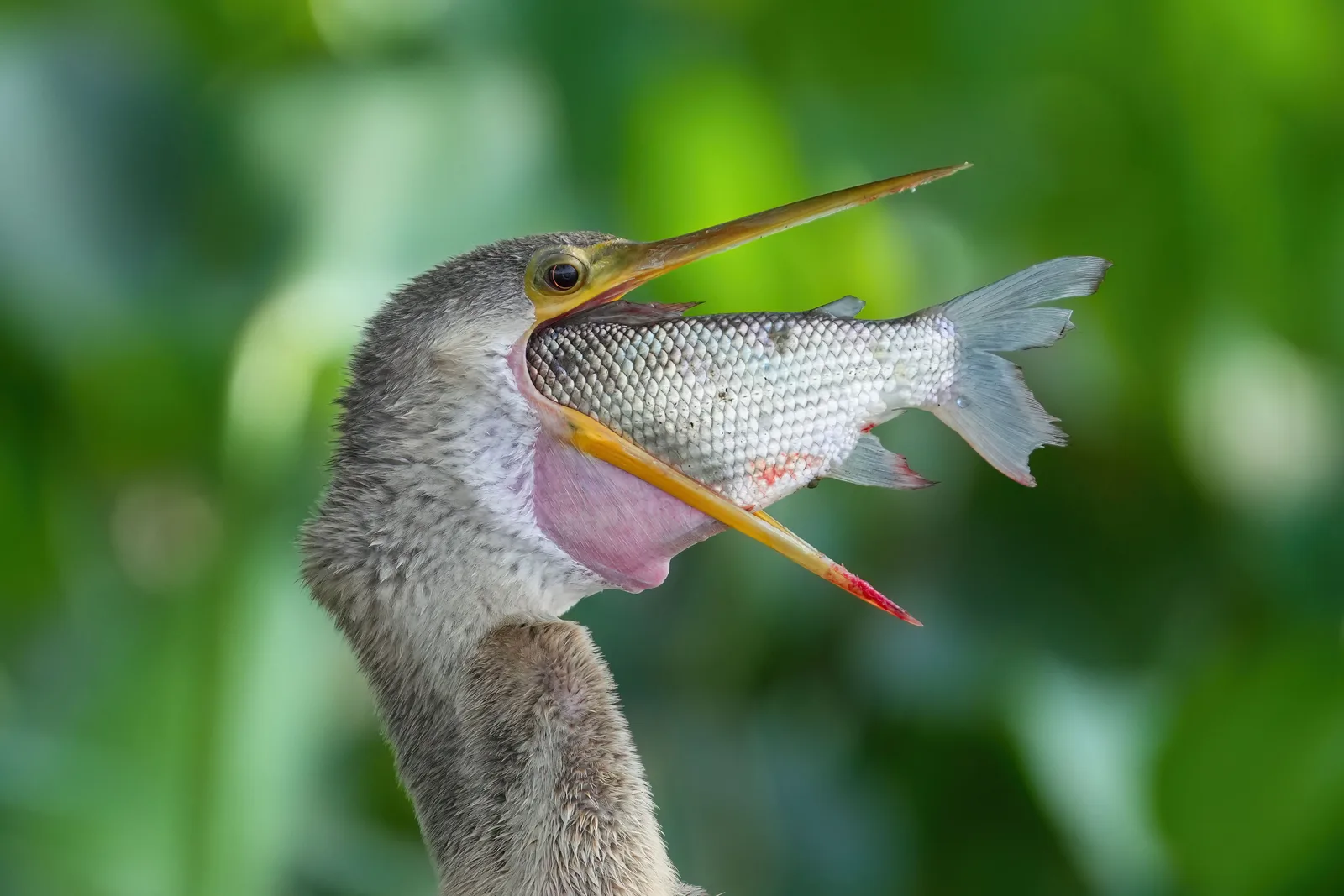
  • An anhinga holding a silver fish speared crosswise on its bill, throat pouch stretched
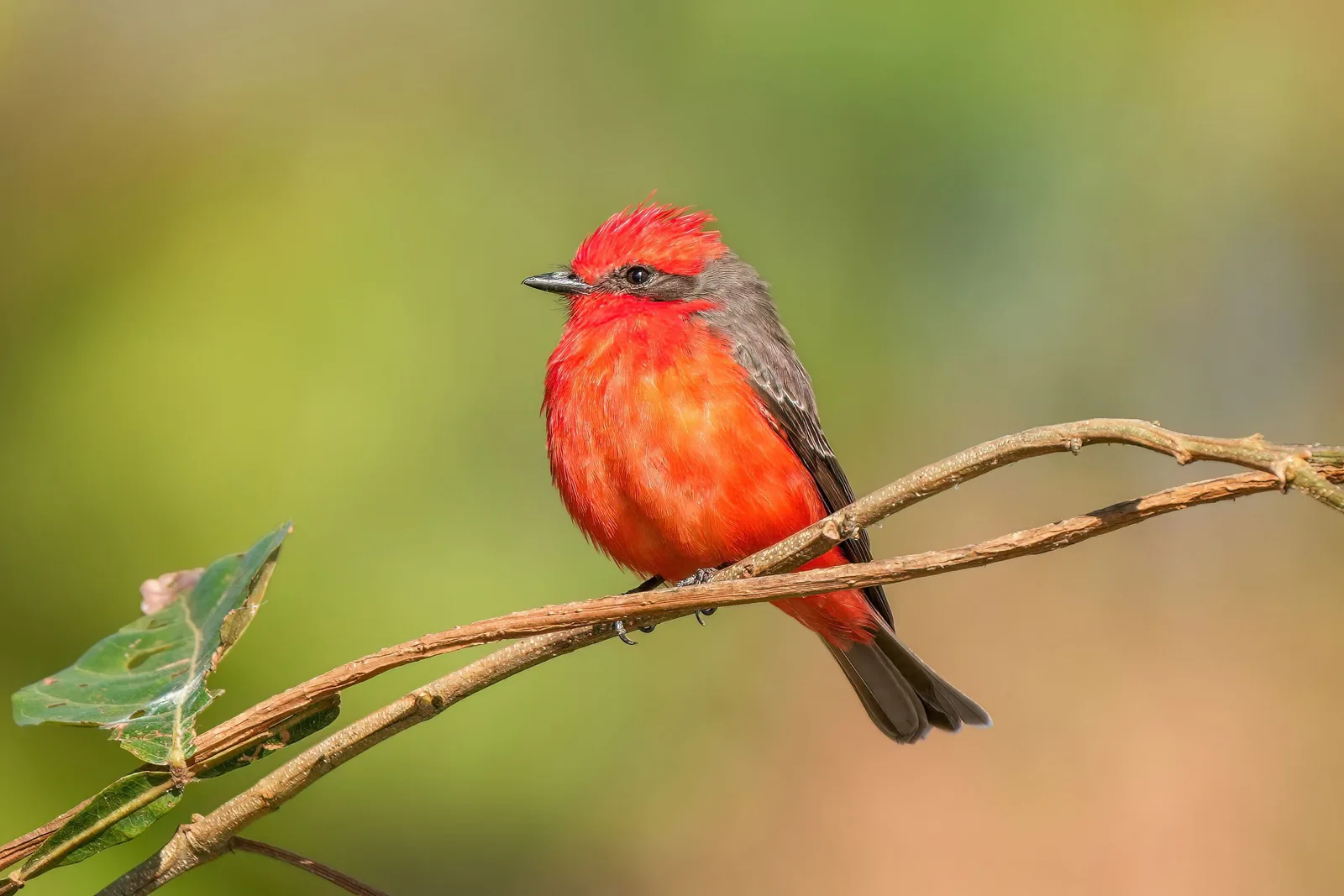
  • A small bird with a scarlet head and breast perched on a thin bare twig against soft green
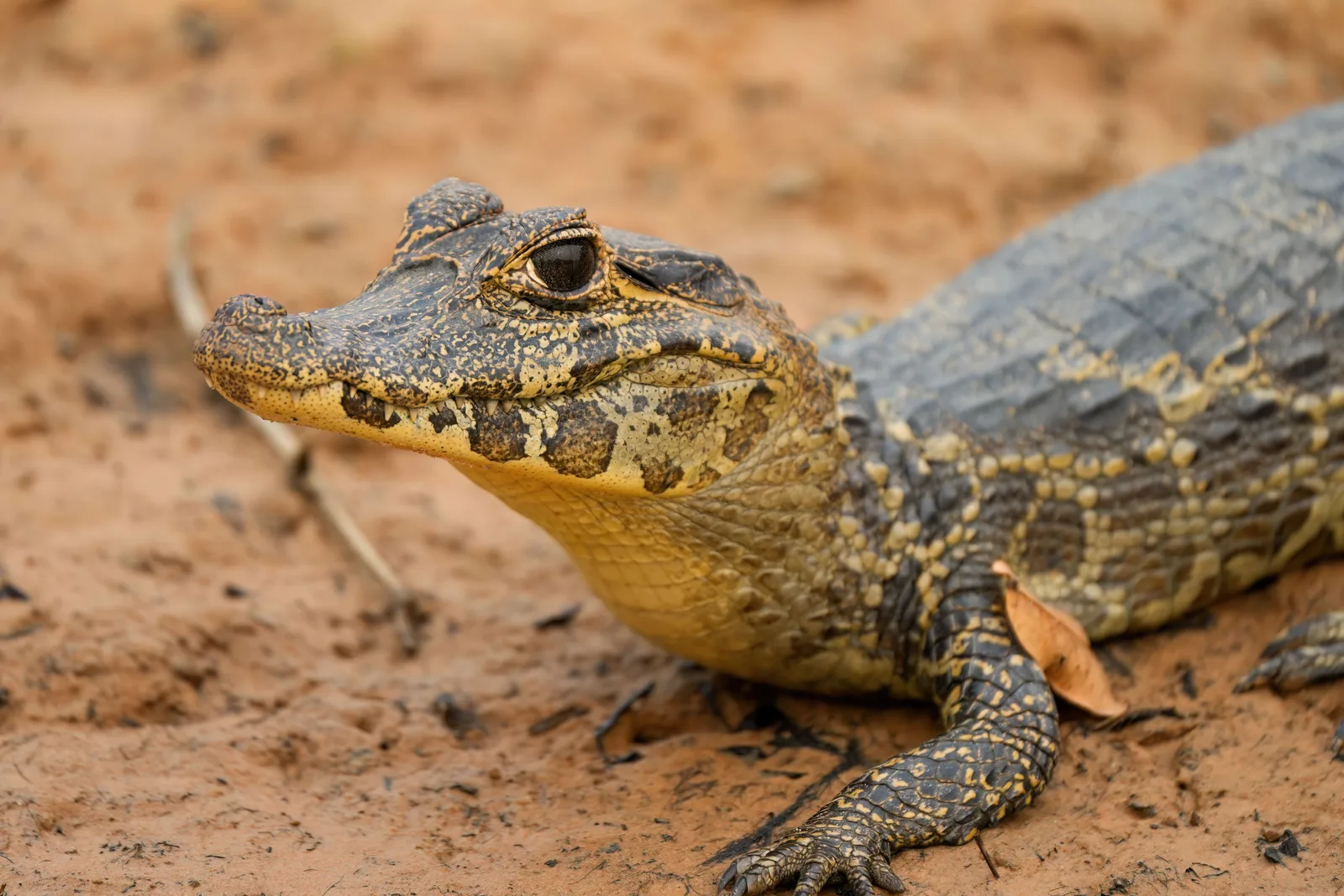
  • A young yacaré caiman lying on bare sand at close range, the yellow and black banding along its jaw clearly visible
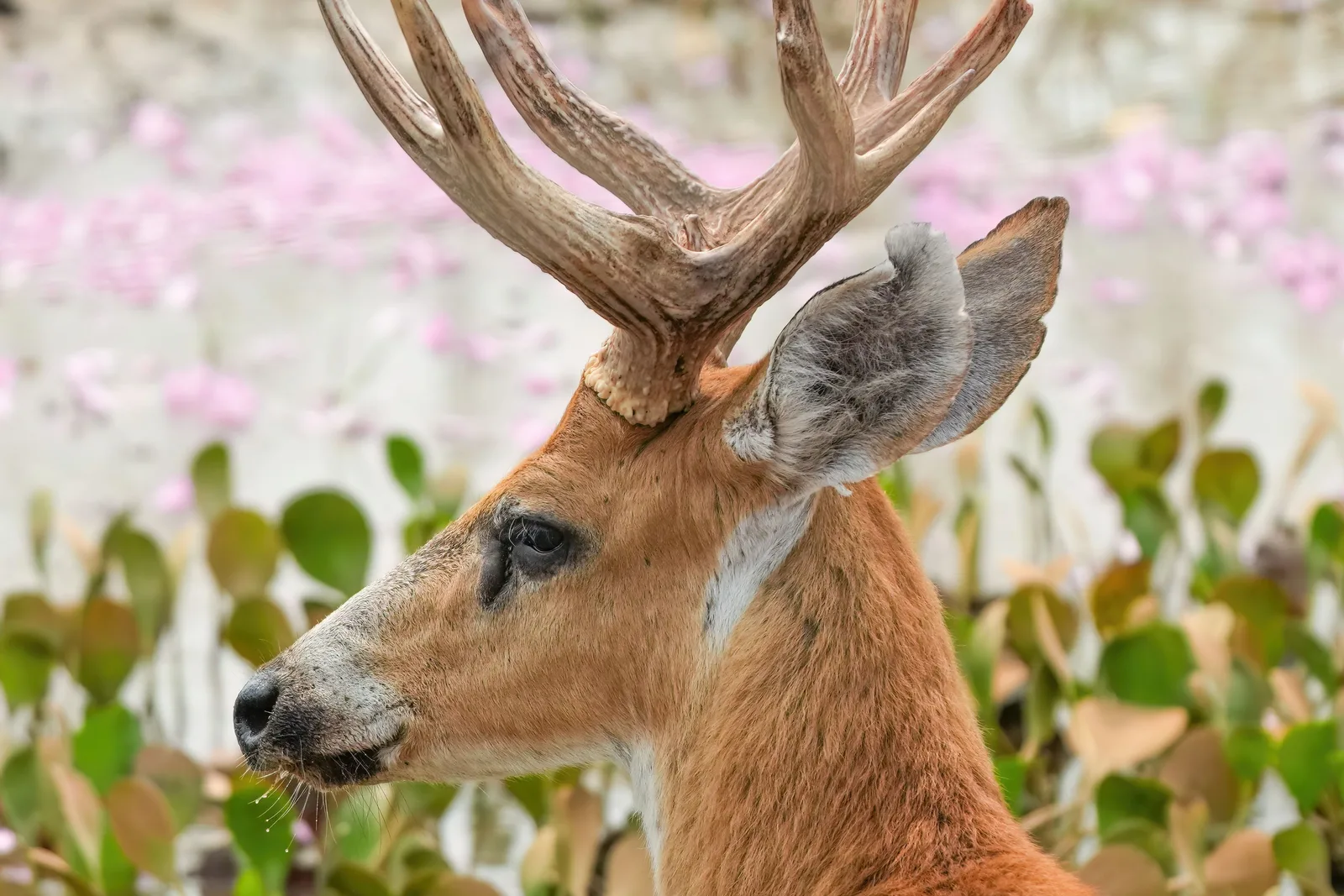
  • The head and antlers of a marsh deer in profile, with a pink-flowering ipê tree blurred behind it
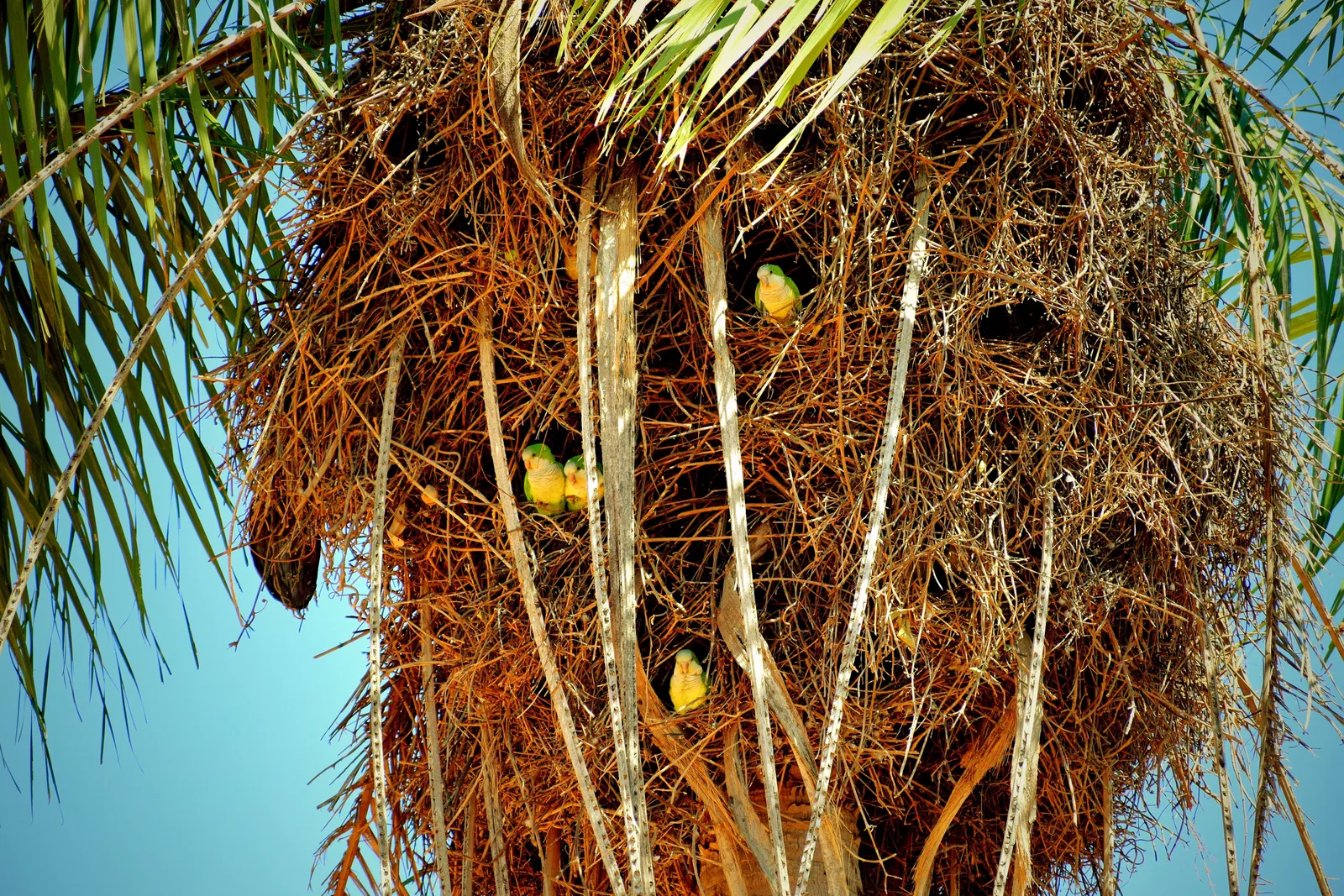
  • Several small green and yellow parakeets sitting in holes in a big hanging mass of dry palm fiber, green palm fronds above it against a blue sky
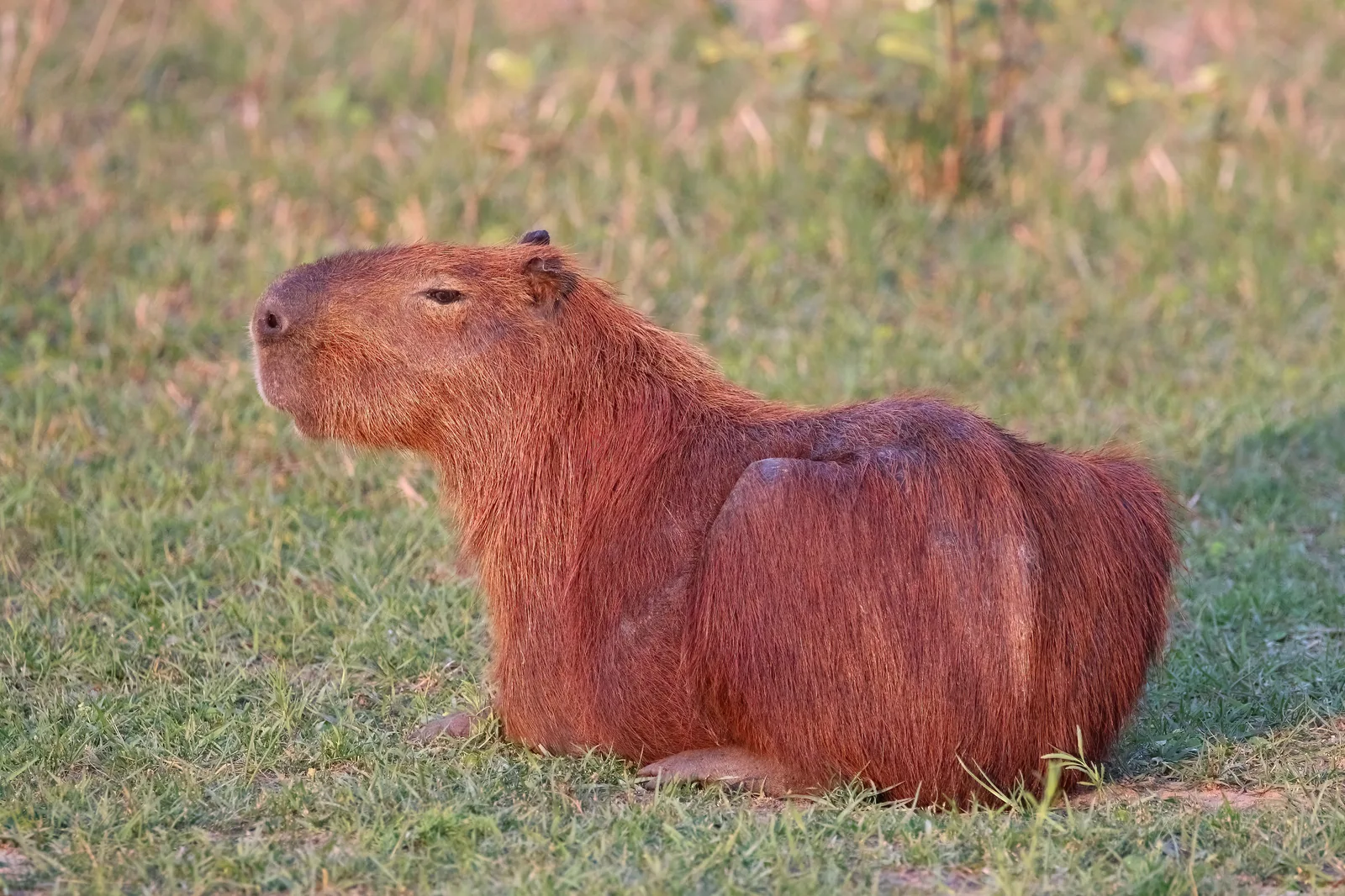
  • A capybara lying on cropped green grass in profile with its head raised, reddish-brown coat and blunt square muzzle
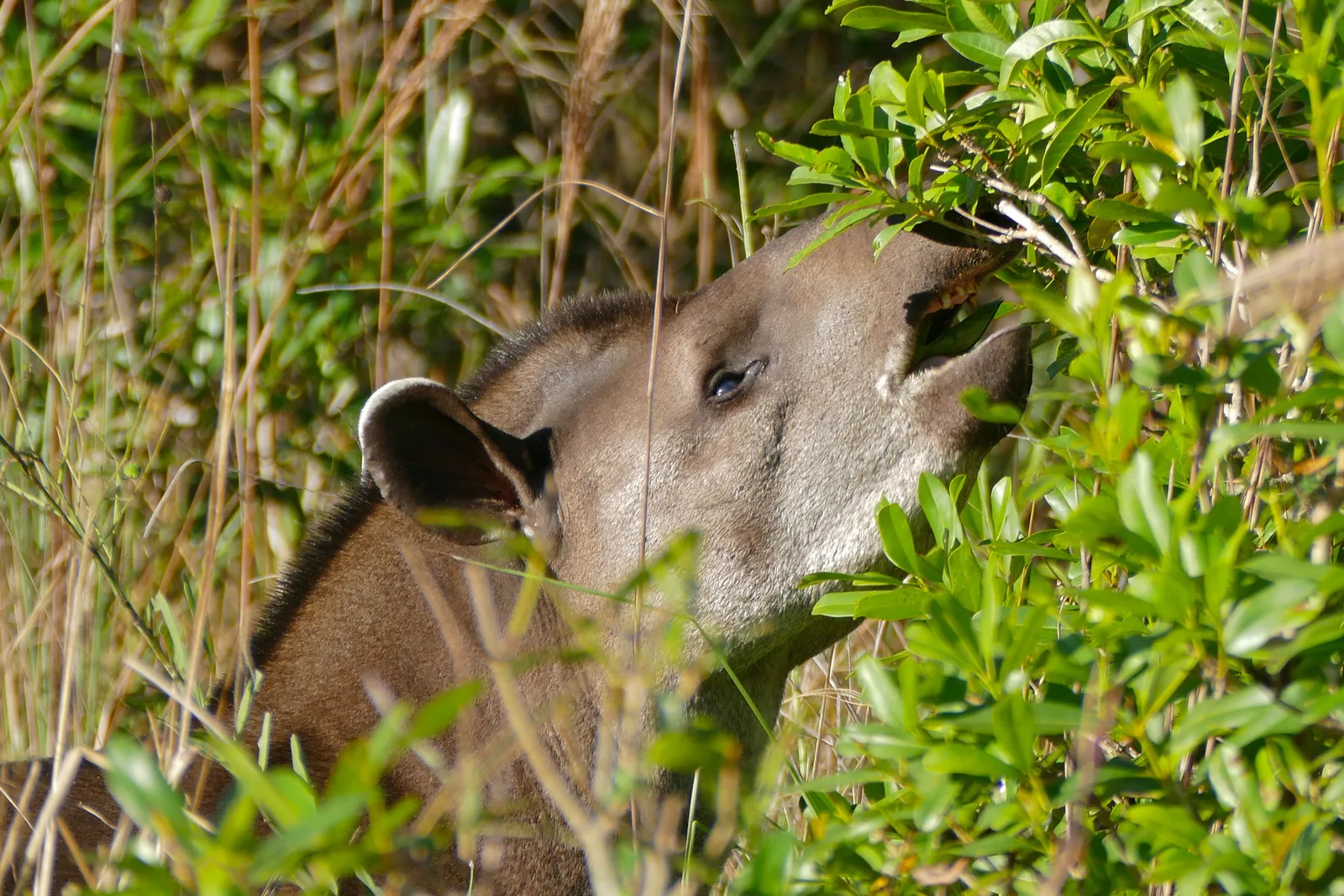
  • The head of a lowland tapir among green leaves, ears forward and its short flexible snout raised
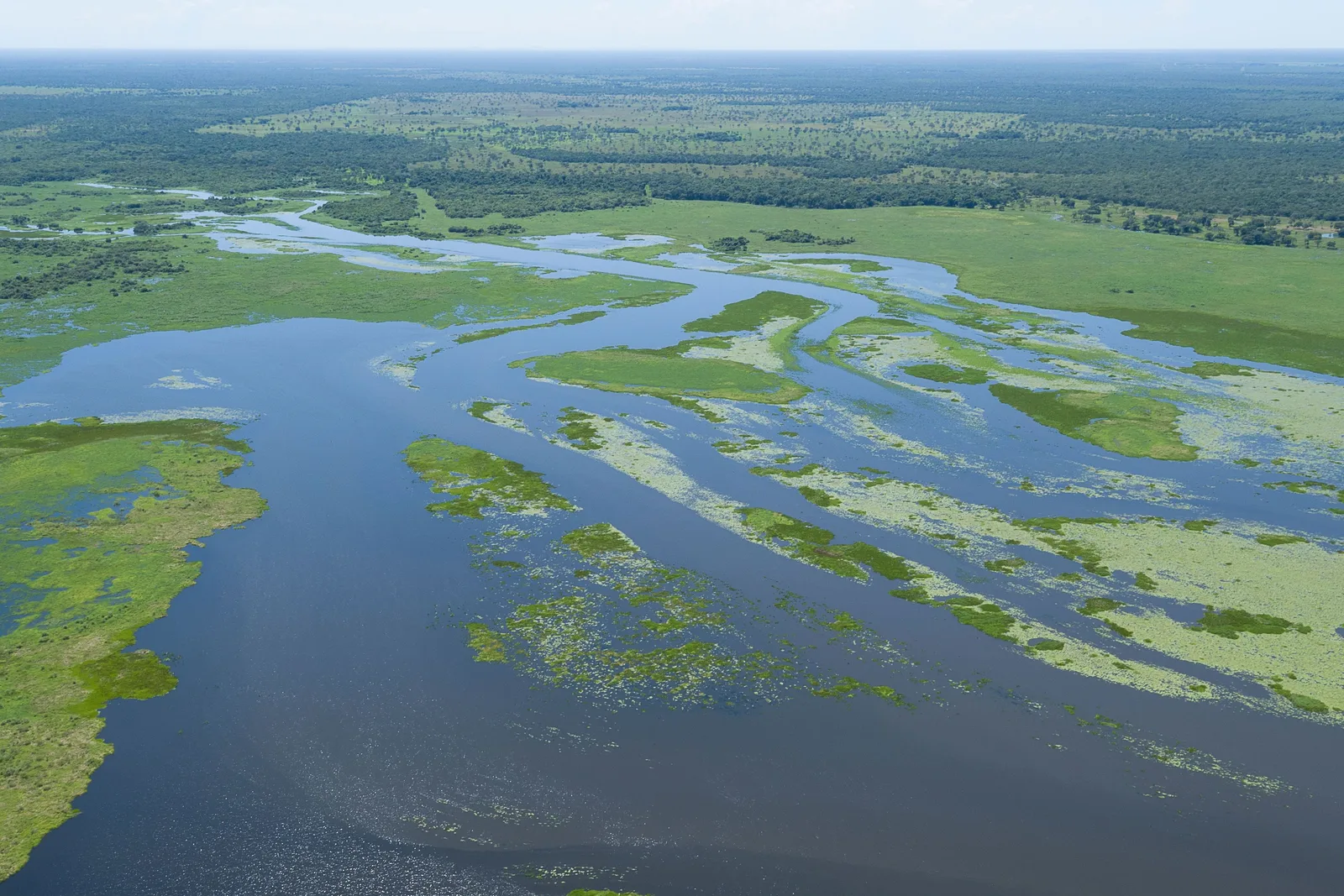
  • Aerial view of broad blue channels winding between flat islands of green vegetation across a flooded plain
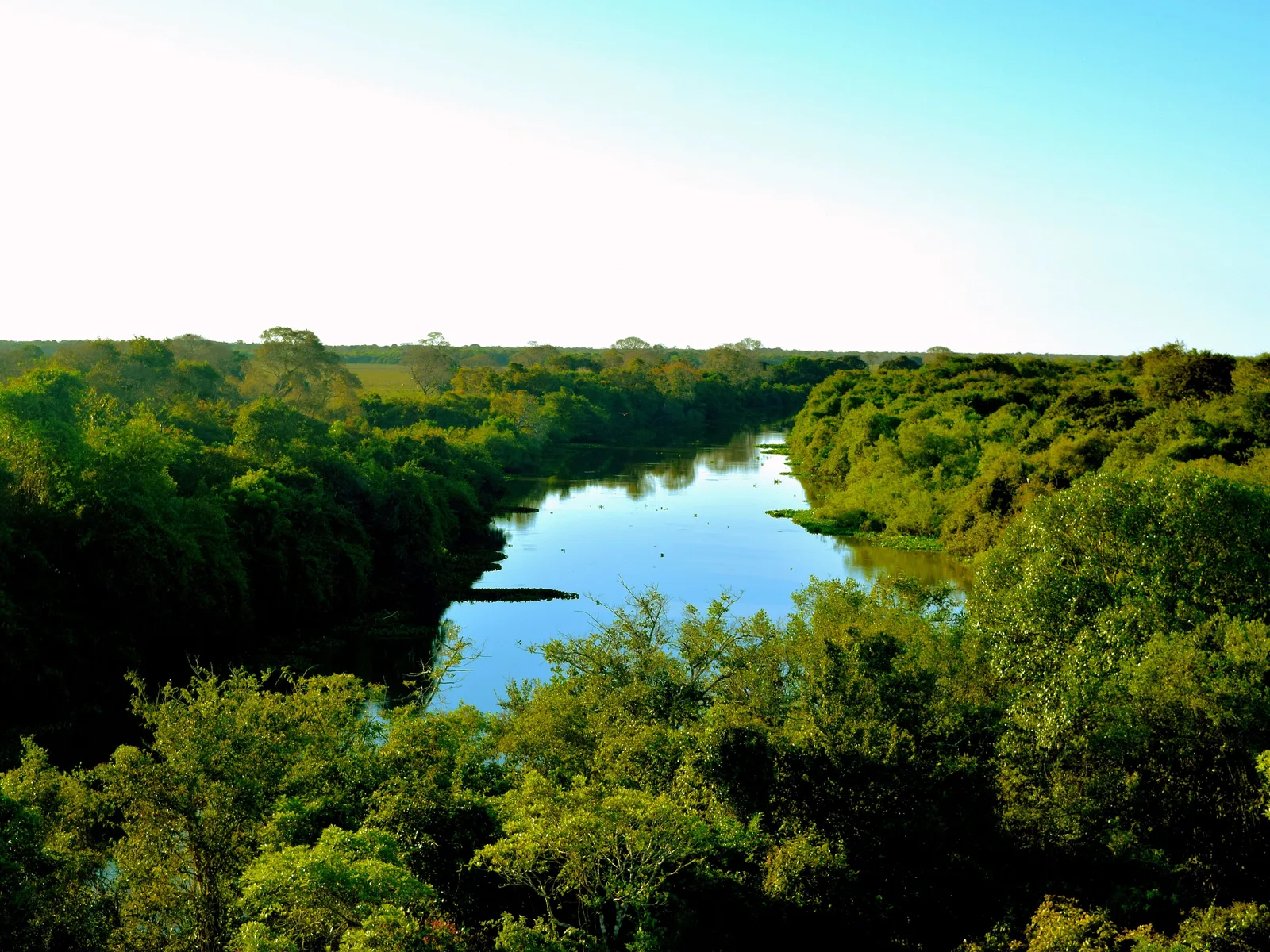
  • A river winding in a bright blue curve through unbroken green forest, seen from a viewing platform above the treetops

Orientation

The wetland in one screen.

Everything logistical, before the animals start.

General Info

What the northern Pantanal actually is

The Pantanal is the largest tropical wetland on earth — somewhere between 140,000 and 195,000 square kilometers of floodplain spread across Brazil, Bolivia and Paraguay, holding 463 recorded bird species, more than 236 mammals and 269 kinds of fish. It is not a forest and it is not a swamp. It is a shallow basin with almost no gradient, and roughly 80 percent of it goes under water in the rains and comes back out again every dry season.

That cycle is the whole story. From November the rivers rise two to five meters, the plain floods, and the animals scatter across an area the size of a small country. From May the water drains away and everything that needs to drink is pushed back onto the rivers and the shrinking pools. By August a wetland the size of Florida has concentrated its wildlife along a handful of channels, and you can sit in a boat and watch it happen.

This page covers the northern half, in Mato Grosso. One road runs into it: the Transpantaneira, 147 kilometers of raised dirt from Poconé to Porto Jofre, with more than a hundred bridges and nothing at the end of it but a river landing. That river is the Cuiabá, and where it meets the Piquiri and the Três Irmãos inside the Encontro das Águas State Park is the most reliable place in the world to see a wild jaguar. Almost everything on this page happens within sight of that one road or on the water at the end of it.

Where It Is

Central-western Brazil, south of Cuiabá

The corridor runs south-southwest from Cuiabá, the Mato Grosso state capital. Poconé, where the pavement ends, is about 100 km out; Porto Jofre, where the road ends, is 249 km from the airport and roughly six hours away in a vehicle. Cuiabá is a two-hour flight from São Paulo.

Pantanal Pantanal

16.85° S, 56.75° W

See the Central-West on the interactive map

Cost

What the Pantanal actually costs

This is the most expensive destination on this site per day, and the reason is structural rather than luxurious. There is no competition at the end of the road, everything you eat has been driven 250 kilometers, and the thing you came for is a boat with a fuel bill and a driver who knows the river. Rooms are sold on full board because there is nowhere else to eat, so a nightly rate here is not comparable to a nightly rate anywhere else on this site.

Estimated daily budget, dry season

Simple

$120 / day

A basic pousada in the first 70 km of the Transpantaneira, full board, joining the lodge’s own group walks, drives and boat trips. Your own rental car to get there.

Standard

$250 / day

A good lodge on the road or a room at Porto Jofre, full board, a shared safari boat on the jaguar days and a transfer you did not have to drive.

Full private

$550 / day

Porto Jofre or a floating hotel, a private boat and a private naturalist guide for the whole trip, private transfers from Cuiabá and back.

Estimates, per person per day, once you are on the road — flights not included, and all three assume two people sharing. Almost everything here is sold as a package rather than à la carte, so treat these as the shape of a budget rather than a menu.

What things cost

  • Round-trip flight, São Paulo to Cuiabá $130 R$660
  • Transpantaneira pousada, full board, per person $120 R$610
  • Porto Jofre lodge, full board, per person $170 R$870
  • Full-day jaguar boat safari, shared boat $190 R$970
  • Private safari boat for a day, up to four people $600 R$3,060
  • Private transfer, Cuiabá to Porto Jofre, one way $210 R$1,070
  • Rental car, compact, per day $32 R$165
  • Rental SUV, per day $45 R$230
  • Gasoline, per liter $1.28 R$6.52
  • Guided 4-day trip from Cuiabá, per person $2,400 R$12,240

Full board is the norm, not an upsell. Past Poconé there are almost no restaurants, and the ones that exist are attached to lodges. A rate that looks high next to a city hotel usually includes three meals, an afternoon snack and two guided outings a day.

The jaguar boat is the single biggest line in a Pantanal budget and the one worth spending on. A shared boat splits the cost six ways and gets you there; a private boat means you decide when to leave a sighting, which on a river carrying an average of thirty boats in high season is worth more than it sounds.

Cards work at the lodges and in Poconé and Cuiabá. Carry some cash anyway — connectivity along the road is patchy, and tips for boat drivers and guides are expected in reais.

Checked September 2026 and converted at R$5.10 to the dollar. Estimates, not quotes — the shape of a budget rather than a price you can hold anyone to.

Safety

The risks here are not the usual Brazilian ones

8 /10

Our rating — one of the safest places on this site to be a tourist, and one of the least forgiving places to have a problem.

Nobody is going to take your phone on the Transpantaneira. The crime precautions that dominate a Rio or Salvador page barely apply here: past Poconé you are among lodge staff, guides and boat drivers, and the road carries more caimans than people. What can actually go wrong is environmental and logistical — heat, distance, water and a road with no shoulder and no cell signal. Take those seriously and this is an extremely safe trip.

  • Heat is the real hazard. Cuiabá averages a daily high of 36°C in September and the floodplain is no cooler, with no shade on the water and none on the road. Drink far more than you think, wear long sleeves rather than less clothing, and accept that the middle of the day is for lying down. That is why every lodge runs outings at dawn and again from mid-afternoon.
  • The UV index is very high to extreme from August to April and high even in midwinter, and the river reflects it straight back up at you. A brimmed hat, sunglasses and high-factor sunscreen are equipment, not accessories.
  • Yellow fever vaccination is recommended by the CDC for Mato Grosso and has to be given at least ten days before you arrive. Dengue and chikungunya are both present, so repellent matters day and night, and it is worth asking a travel clinic about malaria, which the CDC does list as a risk in Mato Grosso state.
  • There is no hospital past Poconé. The lodges carry first-aid kits and satellite or Starlink connections, but serious medical care is a two-to-six-hour drive back up the road. Bring your own medication, bring spares, and buy travel insurance that covers evacuation.
  • Respect the animals from the boat. Jaguars here are habituated to engines, not tame, and caimans, giant otters and anacondas all defend themselves. Stay seated, keep hands and feet inboard, and let the driver decide the distance.
  • Do not swim in the rivers. This is caiman and piranha water, the banks give way, and the current is stronger than it looks. Lodges have pools for a reason.
  • The road itself deserves care. It is unpaved for 147 kilometers, crosses more than a hundred bridges, and has no lighting and effectively no phone signal. Drive it in daylight, drive it slowly, and expect to brake for capybaras.
  • Cuiabá at either end is an ordinary mid-size Brazilian city and asks for ordinary city sense: ride apps after dark, nothing valuable on display, and no wandering the center late.

Getting There

Fly to Cuiabá, then drive south

There is one sensible way in. Marechal Rondon (CGB), across the river in Várzea Grande, is the Pantanal’s airport, and everything below happens by road from there.

  • No flight from the US comes here directly. You connect through São Paulo (GRU) — around nine daily flights on LATAM, Gol and Azul, about two hours in the air — or through Brasília or Belo Horizonte.
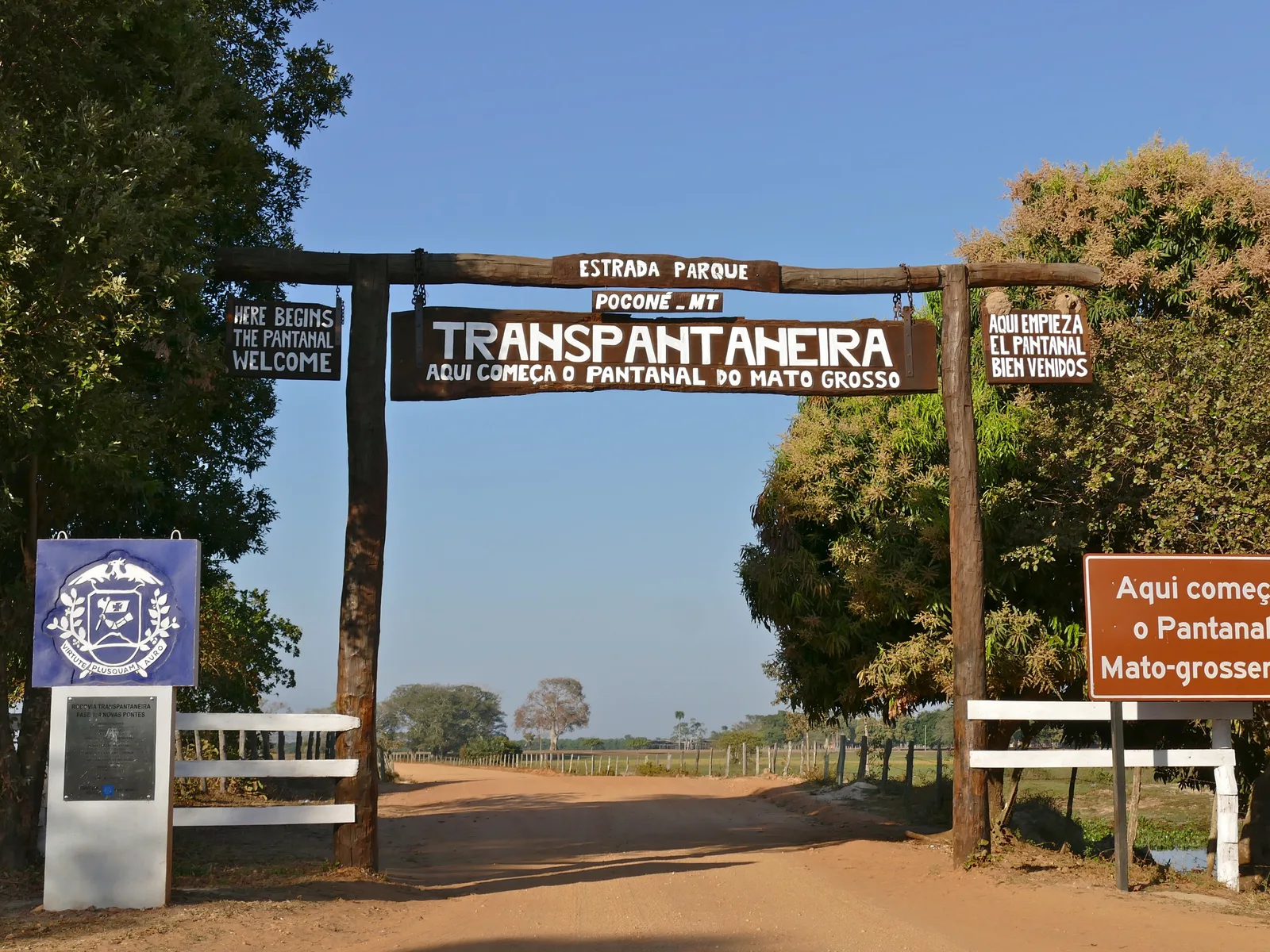
  • Cuiabá to Poconé is about 100 km of paved highway, an hour and a half. Poconé is the last town with fuel, an ATM, a pharmacy and a supermarket, and it is where the Transpantaneira starts under a wooden arch.
  • Poconé to Porto Jofre is 147 km of that road and takes three to four and a half hours depending on the state of the surface and how often you stop for wildlife, which will be often. Cuiabá to Porto Jofre is 249 km and about six hours door to door.
  • Most people never drive it themselves. Lodges and operators run transfers from the airport, which turns the drive into the first game drive of the trip rather than a chore, and means someone else is watching the bridges.
  • Porto Jofre has a small airstrip used by charters. It is an expensive way to skip the best road in Brazil.

Getting Around

One road in, and then boats

There is no public transport past Poconé and no network of roads to choose between. You are on the Transpantaneira, and once you reach the end of it you are on the water.

  • A rental car is genuinely viable in the dry season. The surface is compacted dirt, the bridges are increasingly concrete, and an ordinary car with reasonable clearance gets to Porto Jofre in June to October. Take a high-clearance SUV if you can, and do not attempt the far end in the wet season.
  • Sinfra-MT has been replacing the road’s wooden bridges with concrete since 2019. By mid-2026 the state put it at 47 wooden structures gone, with the remaining 41 either under construction or out to tender — the stated goal is to end wooden bridges on this road entirely. The longest concrete span so far is 120 meters, over the Rio Figueira. The road gets easier every year, and wooden bridges are on their way out rather than a fixture.
  • The jaguar rivers are reached only by boat, from the landing at Porto Jofre. Operators run small open aluminum boats with an outboard and a driver-spotter, and a full day means out at dawn, a picnic lunch aboard and back at dusk.
  • Lodges along the road run their own boats on the Pixaim and the Claro for giant otters and birds, plus 4x4 night drives, horseback rides and guided walks — all usually included in the room rate.
  • Phone signal is intermittent past Poconé and gone entirely for long stretches. Most lodges now have Starlink. Tell people at home you will be out of contact and mean it.

The road and the water

Four places on one line.

This is not a region you tour. It is a single road running 147 kilometers into a floodplain, and then a river at the end of it. These four points, in this order, are the whole trip.

A timber arch over a red dirt road lettered “Estrada Parque, Poconé - MT, Transpantaneira — aqui começa o Pantanal do Mato Grosso”, with smaller welcome boards in English and Spanish on its posts, the Mato Grosso coat of arms on a banner at the left and white rails either side of the road 01

Where the pavement stops

The Transpantaneira

Length
147 km, Poconé to Porto Jofre
Surface
Raised dirt, 100+ bridges
Driving time
3 to 4½ hours, more if you stop

It was planned to run all the way to Corumbá — a road of nearly 400 kilometers, of which only these 147 were ever built. Construction stopped at Porto Jofre when it became clear what building a causeway across a floodplain does to the floodplain, and the road has been a dead end ever since — which is the best thing that ever happened to it. Nothing passes through. Everyone on it is going to the same place.

What was built is a berm of packed earth raised above the flood, crossing more than a hundred bridges over the channels it interrupts. The engineering failure is the attraction: because the road holds water back on one side, the borrow pits beside it stay wet into the dry season, and every one of them fills with caimans, capybaras, jabirus and kingfishers. You do not drive this road to reach the wildlife. The road is the wildlife.
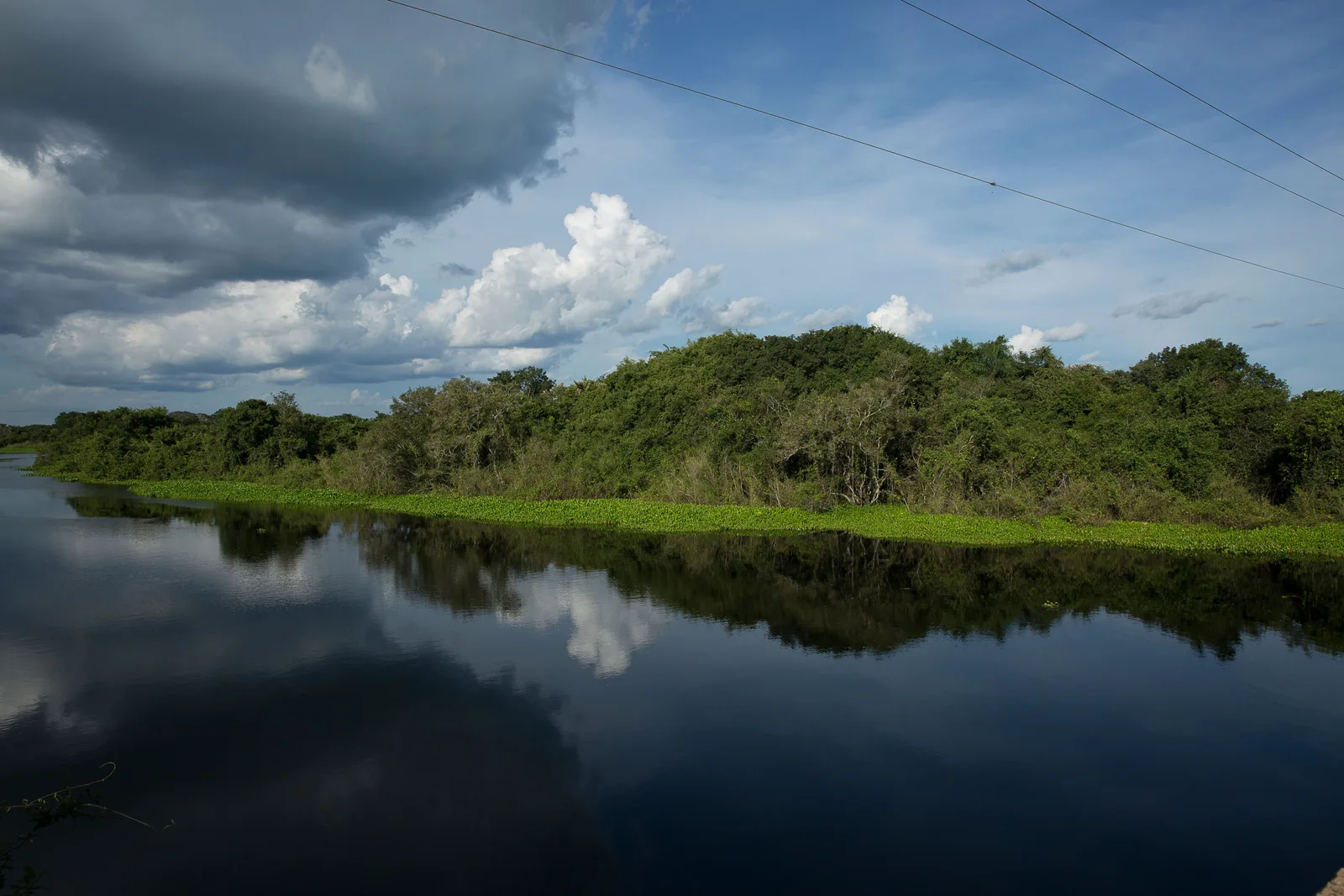
A still, dark river reflecting bright cumulus and a bank of storm cloud, with a low wooded shore and a fringe of water hyacinth along the far side, and power lines crossing the sky above 02

Halfway down, on the water

The Pixaim crossing

Where
Around km 62 of the road
Known for
Giant otters and boat trips
Worth
A night, on the way down or back

A little under halfway to Porto Jofre the road drops to cross the Rio Pixaim, and a small cluster of lodges has grown up on either bank. This is the middle of the trip in every sense: far enough in that the wildlife is dense, close enough out that you can still get here in an afternoon, and on a river narrow enough that a boat trip is a different experience from the wide water further south.

The Pixaim is where giant otter families are most often seen in the north — noisy, curious animals up to 1.7 meters long that hunt in groups and will surface a few meters from a boat to look at you. It is also the best stretch of road for the birds people fly here to photograph: jabiru nests in the tall trees, hyacinth macaws in the manduvi, and kingfishers on every bridge rail.

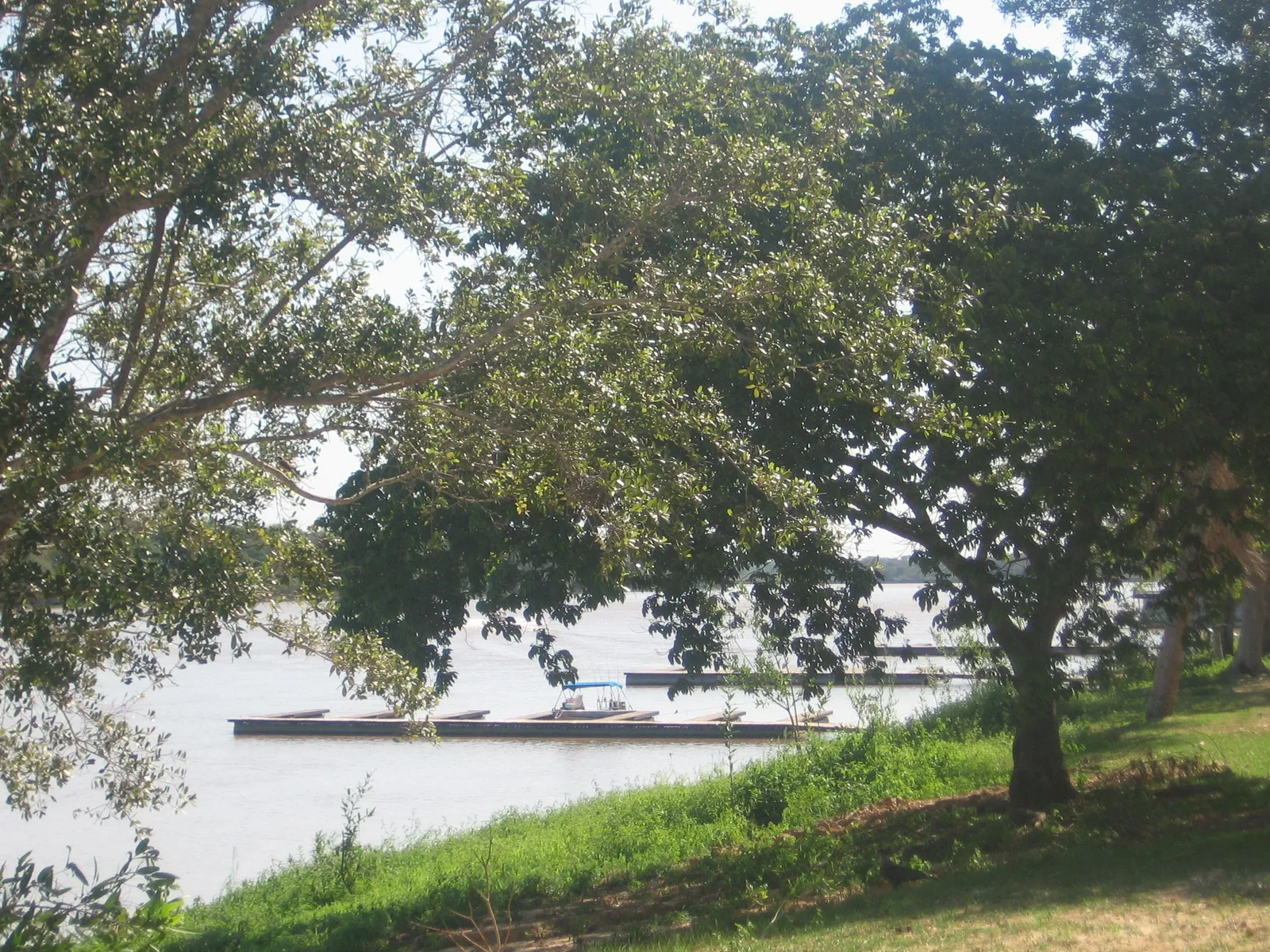
A line of small boats moored along a grassy riverbank under large shade trees, the wide brown river and its far tree line beyond 03

The end of the road

Porto Jofre

Where
km 147, on the Rio Cuiabá
What’s there
A landing, a handful of lodges
Why come
It is the jaguar dock

Porto Jofre is not a town. It is a river landing at the point where the Transpantaneira runs out, with a few lodges, a campground, an airstrip and a line of boats moored under the trees. Nobody comes for the place. They come because this is where you get on the water.

From the landing the Rio Cuiabá runs south into the protected area, and everything that has made the northern Pantanal famous happens within an hour of here by boat. Everyone leaves at first light and everyone comes back at dusk, and in between the settlement is silent. In the wet season most of it closes.

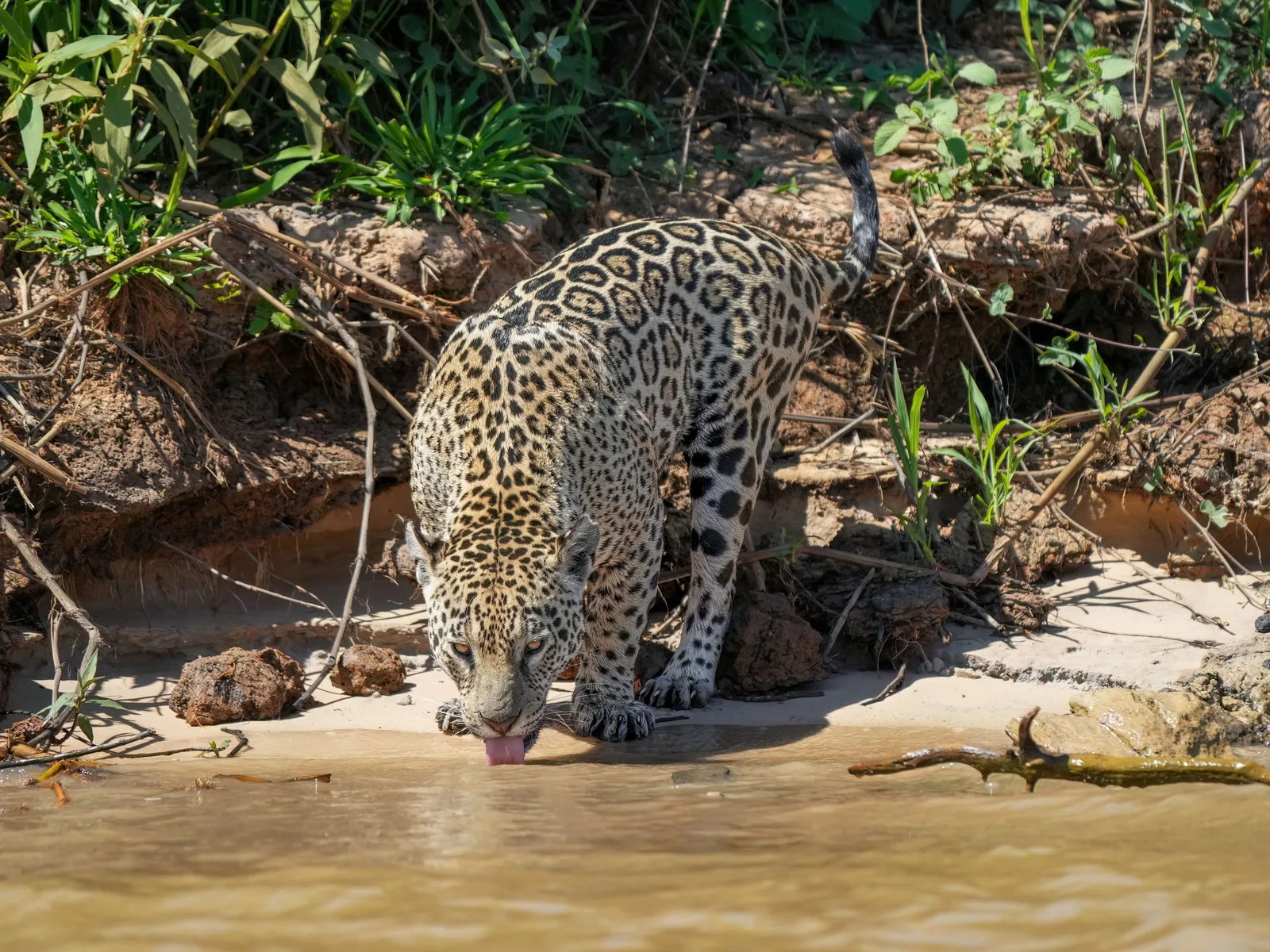
A jaguar crouched low at the edge of a river on an eroded sandy bank, head down and drinking 04

Where the jaguars are

Encontro das Águas State Park

Size
108,960 hectares
Rivers
Cuiabá, Piquiri, Três Irmãos
Access
By boat from Porto Jofre only

The name means “meeting of the waters”, and the park is the tangle of channels where the Cuiabá, the Piquiri and the Três Irmãos come together downstream of Porto Jofre. It holds no roads, no gate and no visitor center. You reach it in a small open boat, and the boat is what you pay for — operators fold whatever the park charges into the day rate.

What makes it extraordinary is a coincidence of geography and habit. The banks are steep-cut and clear, the caiman and capybara population is enormous, and the jaguars that hunt them have spent two decades learning that an outboard motor is not a threat. The number of individually known, boat-tolerant cats here rose from 29 in 2013 to 130 in 2023, and a 2024 study put the chance of a sighting over a three-day trip at 94 percent in the high season. That is not a wildlife lottery. It is closer to an appointment.

What to actually do

Five ways to look for the same animals.

A Pantanal day has two halves with a long hot gap in the middle, and the only real question each time is what you travel in. Pick a mode, then scroll sideways through it.

By boat

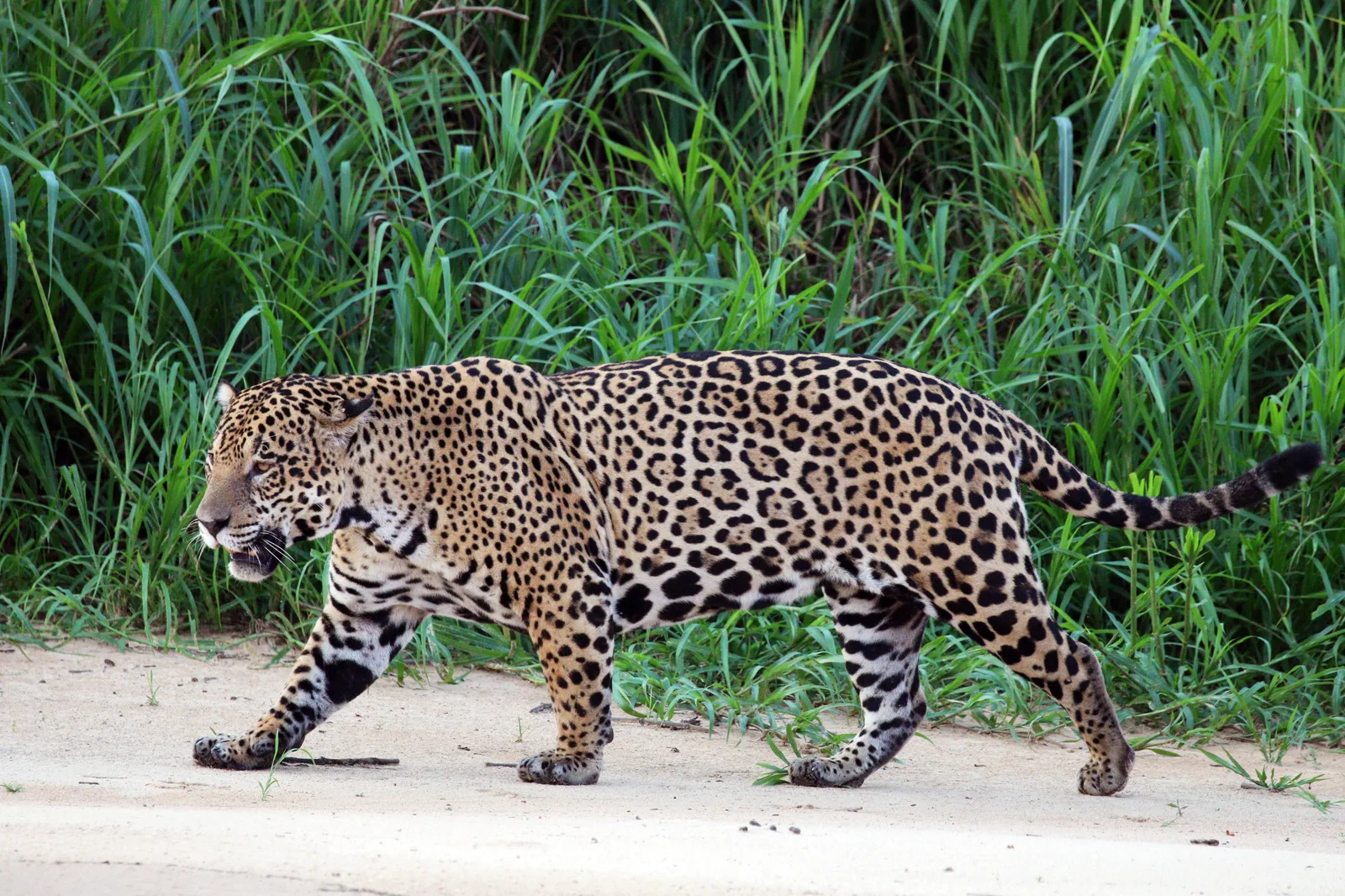
  • A jaguar walking along a pale sandbar at the water’s edge, tall green riverbank grass behind it

    Encontro das Águas · full day

    Jaguar safari from Porto Jofre

    Out of the landing at first light in a small open boat, then hours of working the banks of the Cuiabá, the Piquiri and the Três Irmãos while the drivers talk to each other on the radio. When a cat is found, boats converge, and in high season the river carries an average of thirty of them — which is the ugly side of a spectacular thing. Lunch comes aboard and you are back at dusk. Two full days give you a very high chance of multiple sightings.

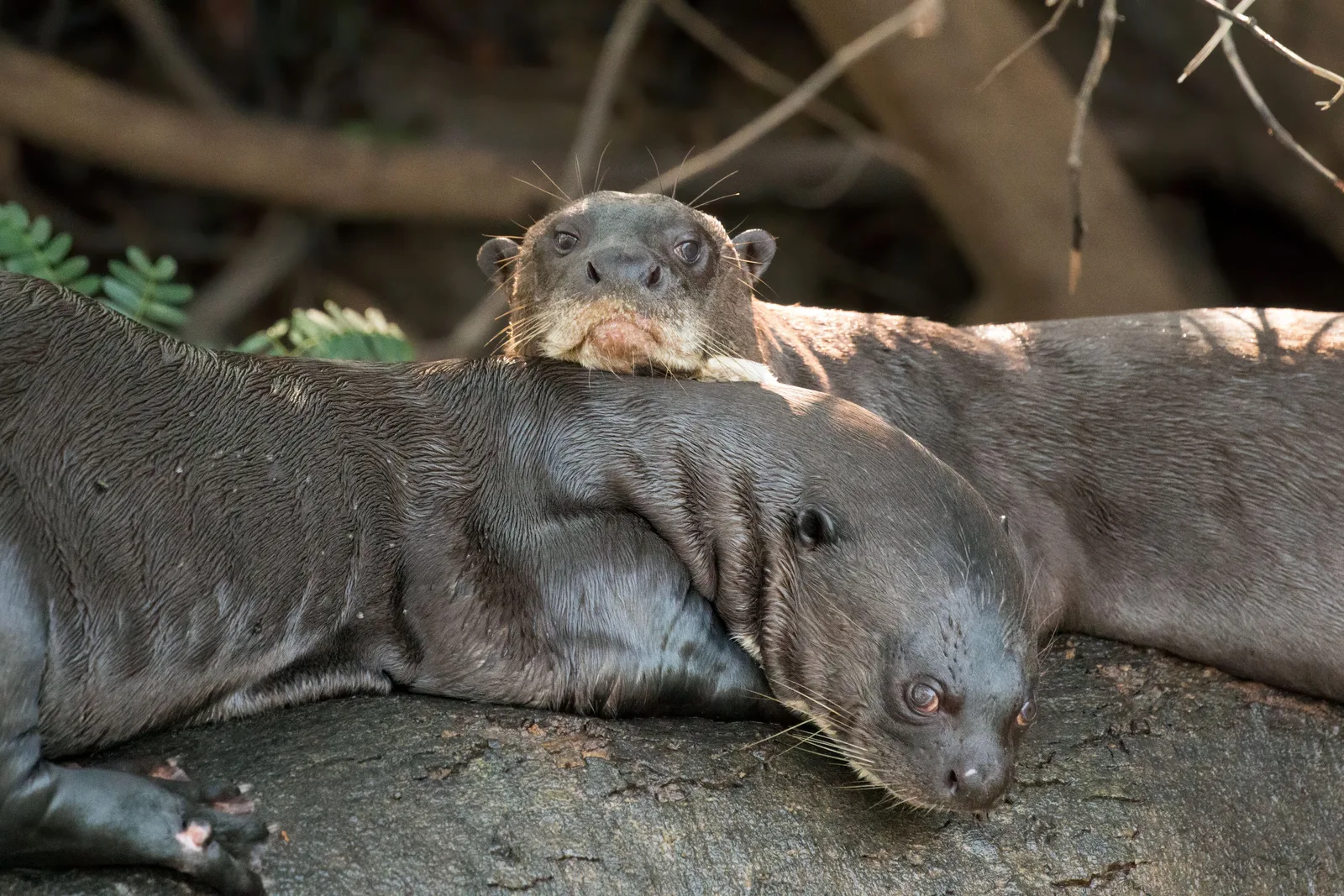
  • Giant otters piled together on a smooth gray rock, one resting its head and forepaws across another’s back and a third stretched out behind

    Pixaim and the Cuiabá · half day

    Giant otters on the river

    The largest otter in the world, up to 1.7 meters nose to tail, living in noisy family groups that fish together and haul out on logs to eat. They are endangered across most of their range and locally common here, and they are the animal most people are surprised by — loud, sociable and entirely unbothered by a boat holding position twenty meters off.

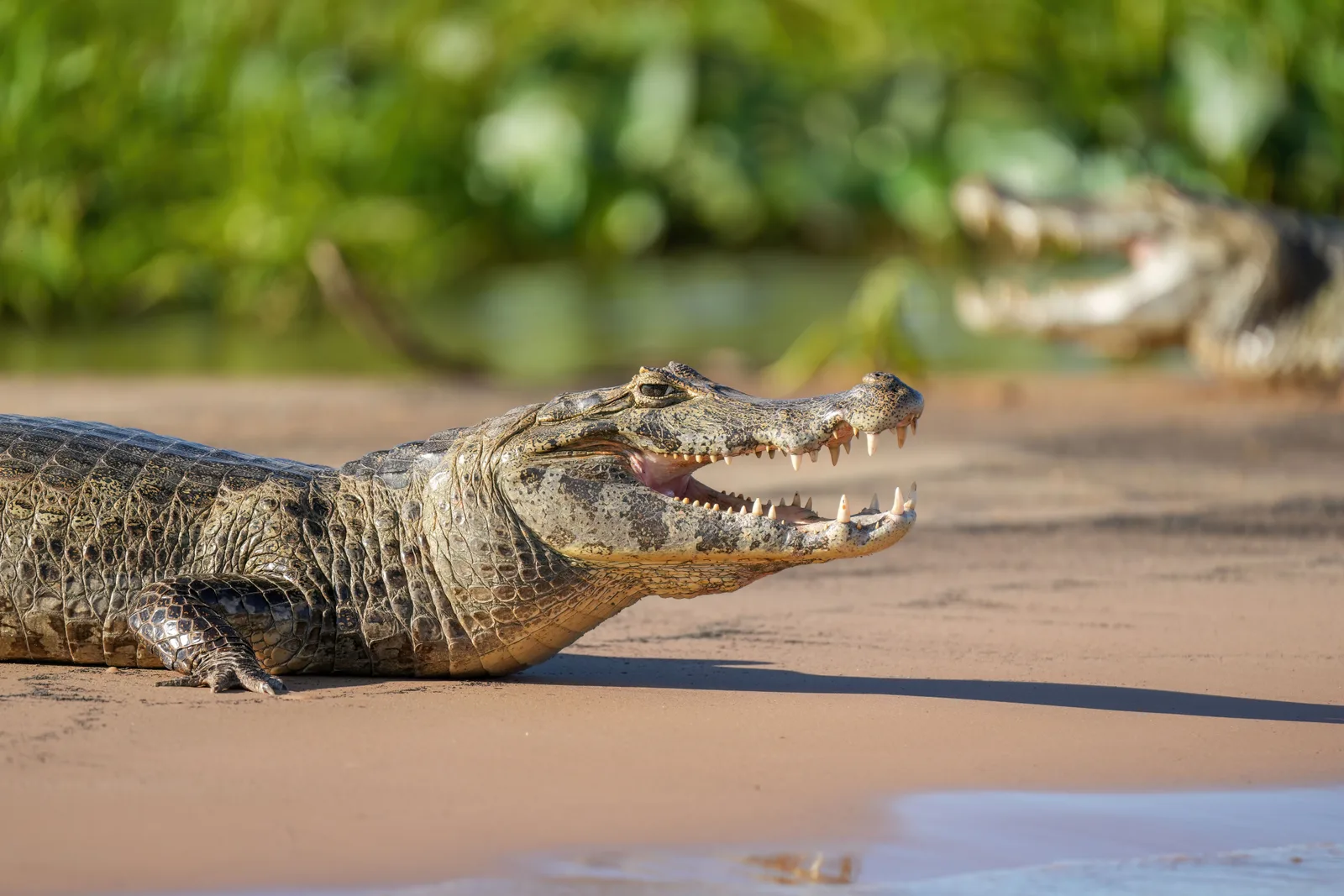
  • A yacaré caiman lying on bare sand with its jaws wide open, a second caiman out of focus behind it and green riverbank foliage beyond

    Encontro das Águas · half day

    Caimans on the sandbars

    The yacaré caiman is the reason the jaguars are here, and in the late dry season the bars and shallows are lined with them, jaws open to cool down. They are small as crocodilians go — two to three meters — and so numerous along the low-water channels that after a day you stop counting. Watching a jaguar decide whether one is worth the trouble is the Pantanal in a single scene.

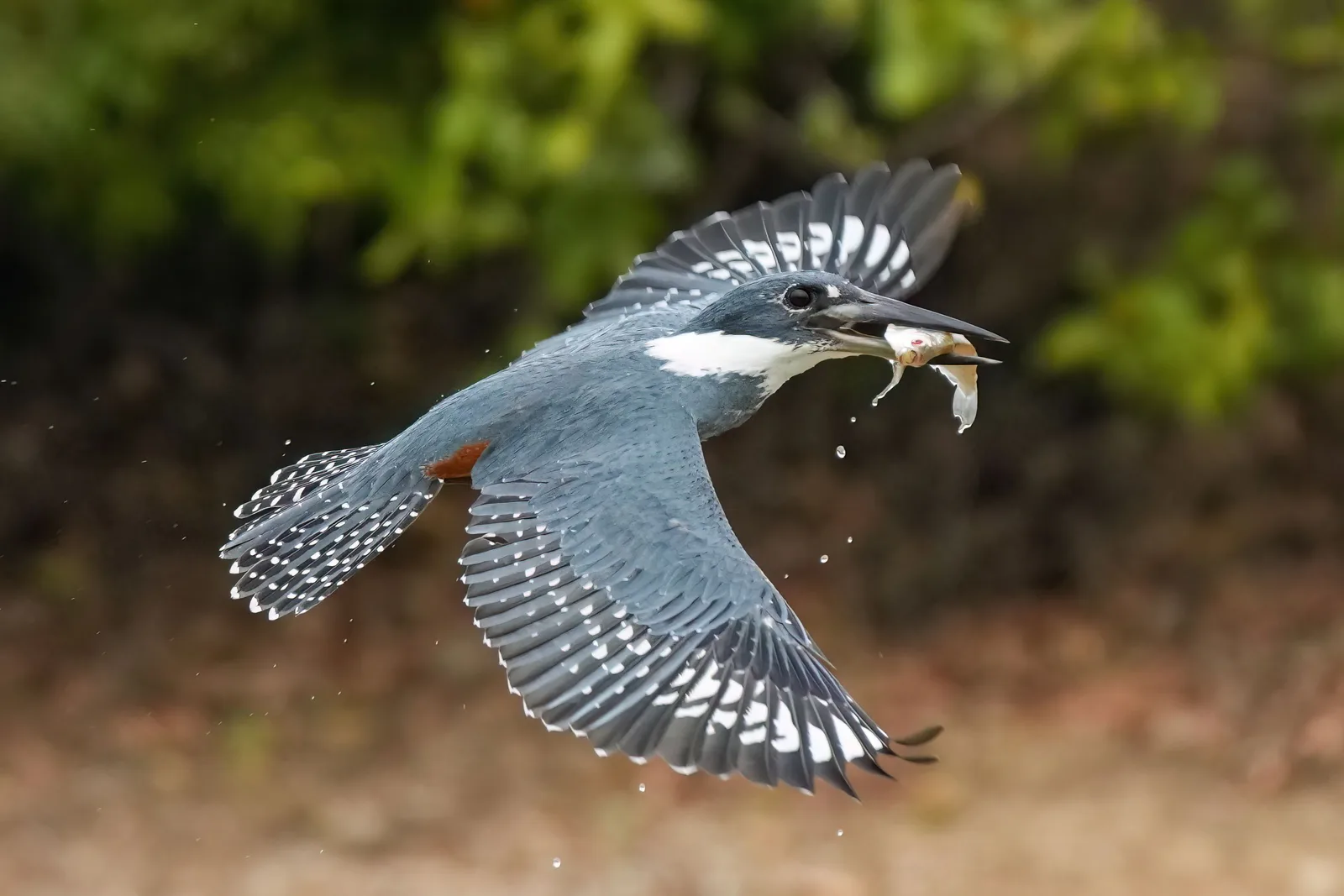
  • A ringed kingfisher in flight with wings fully spread, carrying a small silver fish crosswise in its bill

    The Cuiabá and the Pixaim · half day

    Kingfishers from the water

    Five species of kingfisher live along these rivers, from the crow-sized ringed kingfisher down to the tiny American pygmy, and a slow boat run along a cut bank will usually turn up three or four of them in an hour. They hunt from low perches over the water, which is exactly the angle a boat gives you — this is the easiest good bird photography in Brazil.

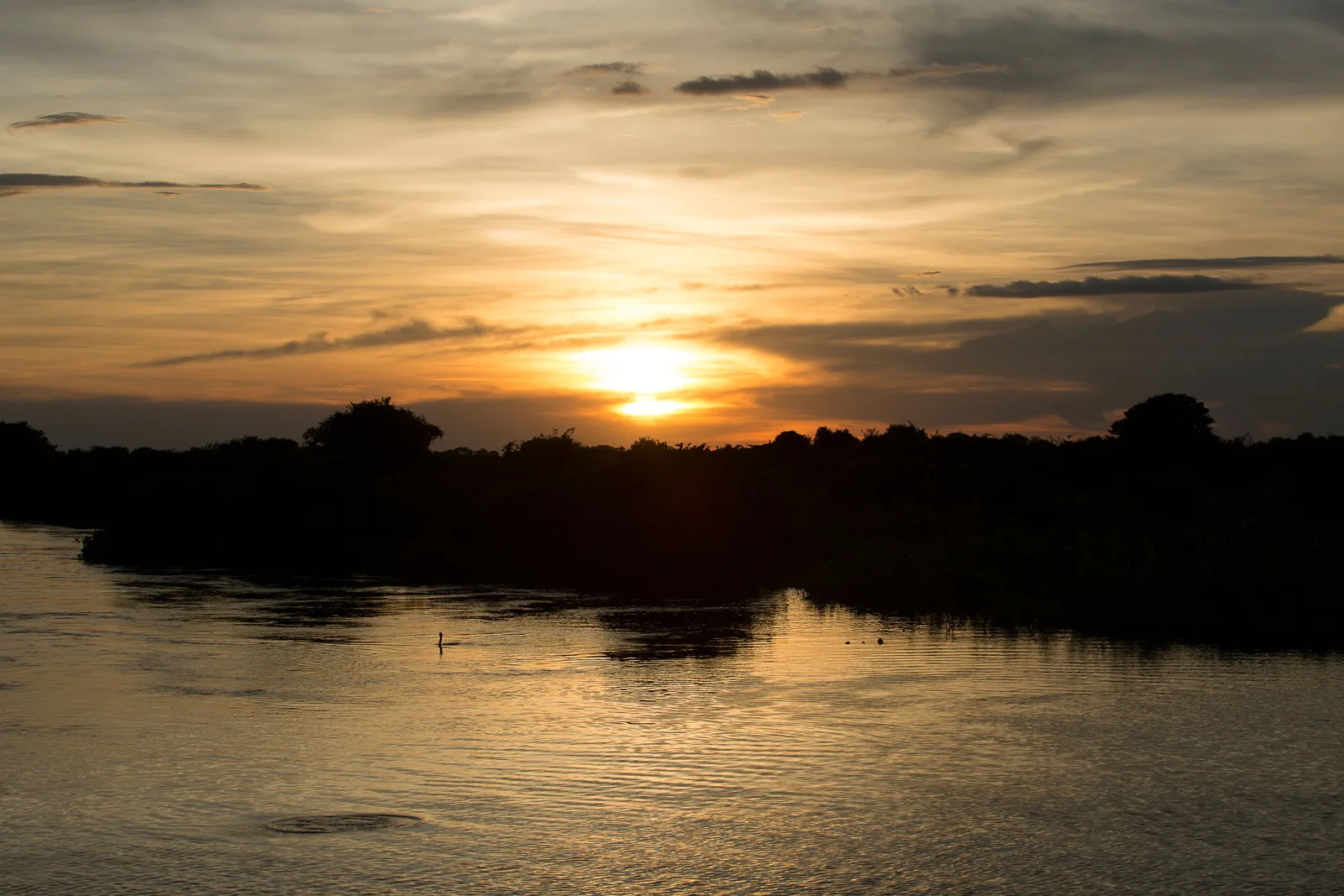
  • The sun sitting low and orange over a river, a dark tree line along the far bank and gold light across the water

    Pixaim or Porto Jofre · 2 hours

    Sunset on the river

    The flat horizon and the dust in the dry-season air make for absurd sunsets, and most lodges run a boat out for the last hour of light. The birds are coming in to roost while you do it — cormorants, egrets, roseate spoonbills and thousands of parakeets — so it is a wildlife outing that happens to end with a drink in your hand.

By road

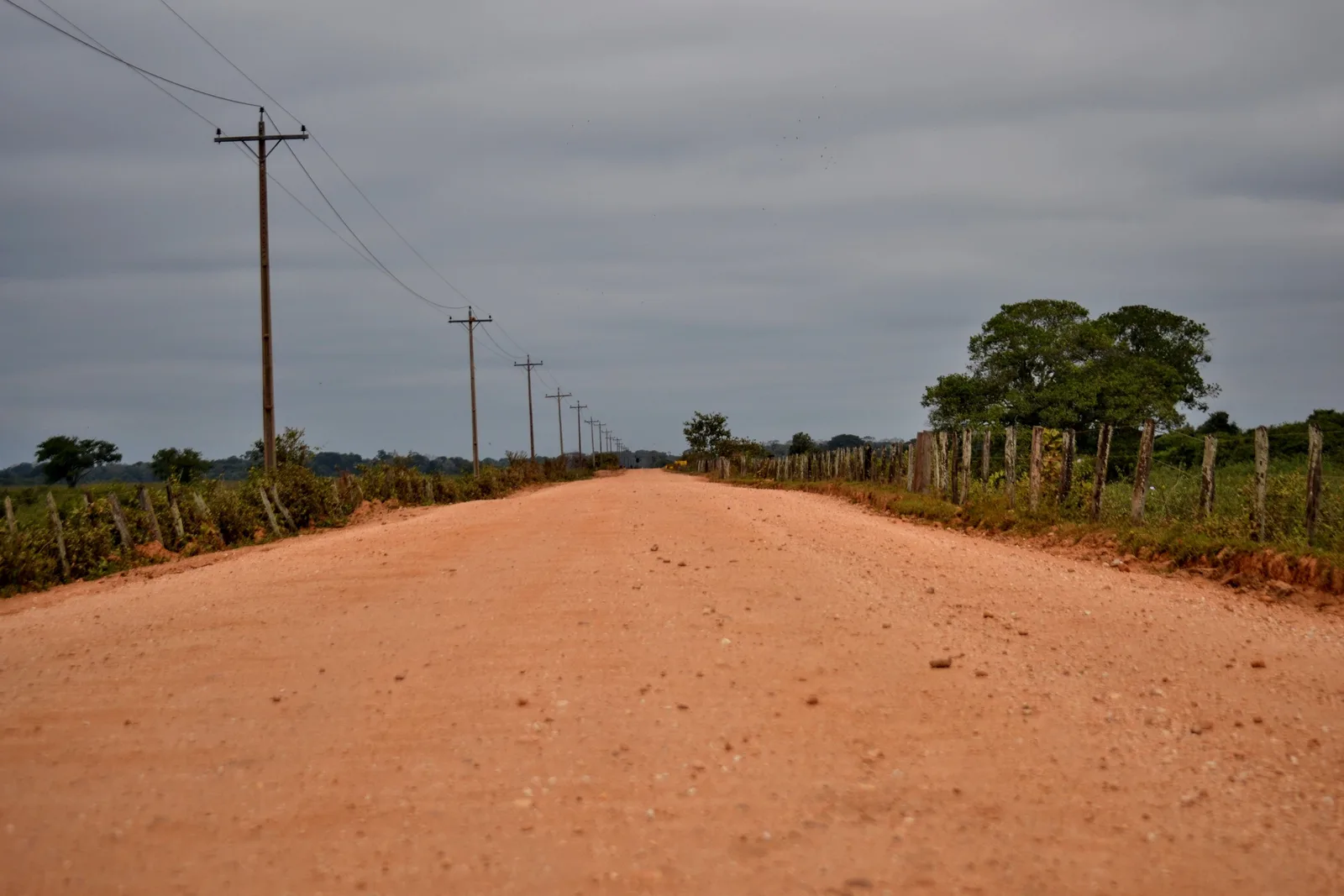
  • A red dirt road running straight to a low horizon between fences and green scrub, a line of power poles beside it under a gray sky

    Poconé to Porto Jofre · half a day, at least

    Driving the Transpantaneira

    A game drive that happens to also be the transfer. The pools either side of the causeway hold water long after the plain has dried, so the road is a continuous edge habitat: caimans by the dozen, capybara families, jabiru and wood storks, roadside hawks on the fence posts. Budget four hours minimum and stop constantly. Everyone else on the road is doing the same thing.

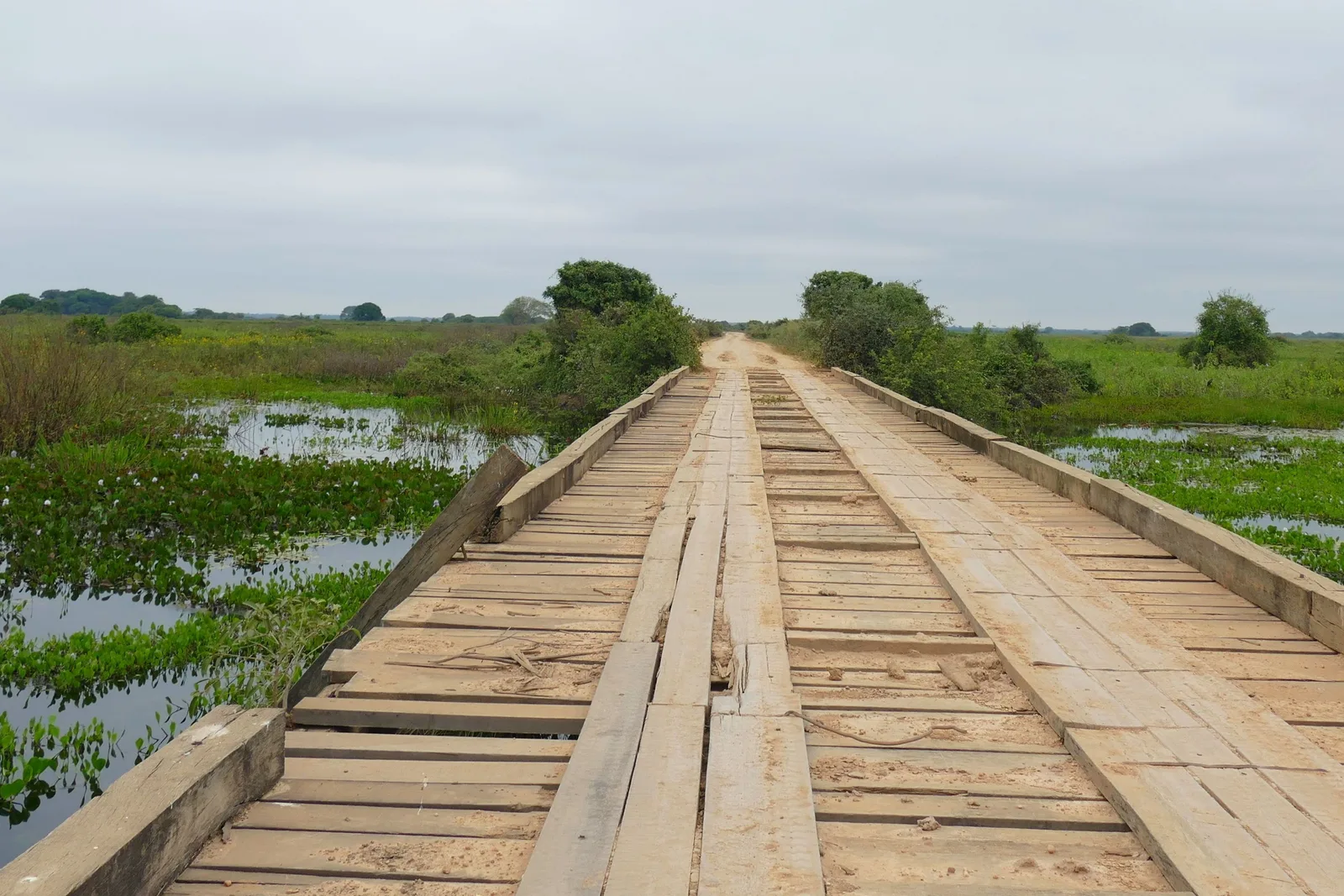
  • The deck of a wooden bridge seen from the road, loose planks and heavy timber wheel runners running away toward the horizon, water covered in floating hyacinth on both sides and the dirt road continuing beyond

    The whole road · minutes at a time

    Stopping at the bridges

    Every bridge is a wildlife hide. The channel beneath holds fish, so it holds kingfishers, herons, caimans and, on a lucky morning, an otter. Get out, stand on the deck and look down — this is the closest most people get to a wild caiman, and it is where the road’s birdlife concentrates. The wooden spans are being replaced with concrete year by year, which is safer and considerably less romantic.

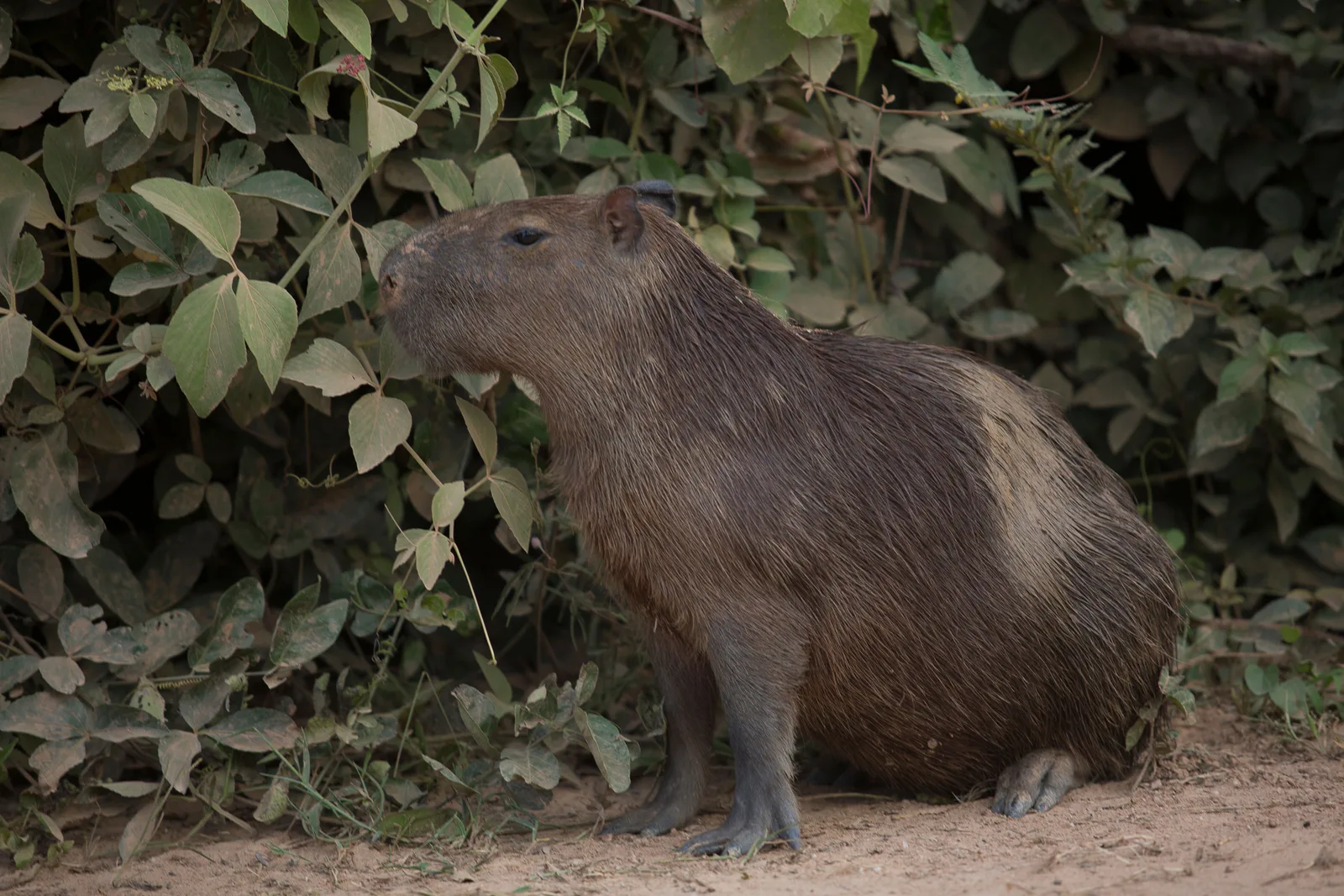
  • A capybara sitting on its haunches in profile on bare earth, at the foot of a bank of dense green leaves

    The whole road · any time

    Capybaras at the roadside pools

    The world’s largest rodent, about the size of a labrador, and so abundant along this road that first-time visitors photograph a hundred before lunch and then stop bothering. They live in family groups at the water’s edge, tolerate vehicles completely, and are the base of the food chain that makes the jaguars possible. Small yellow-headed caracaras ride on their backs picking off ticks.

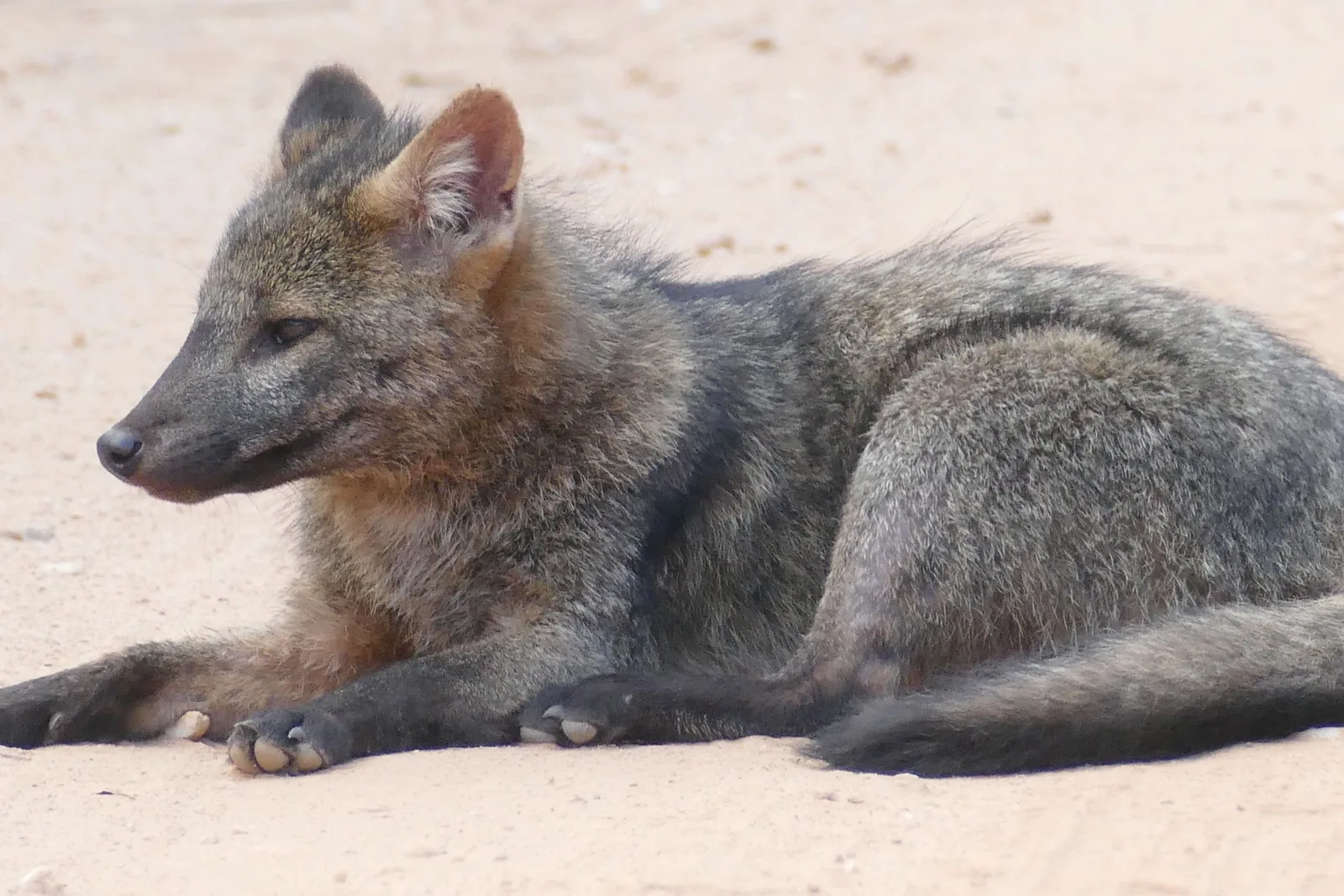
  • A gray crab-eating fox with rust-colored inner ears lying in profile on a pale sandy road surface, head up and alert

    From a lodge · 2 hours

    Night drive on the Transpantaneira

    An open 4x4 with a hand-held spotlight, out after dinner. The animals change completely: crab-eating foxes trotting the verges, ocelots, tapirs coming down to drink, giant anteaters, nightjars sitting on the warm road surface, and the low red shine of a few hundred caiman eyes on the water. Most lodges include one.

On land

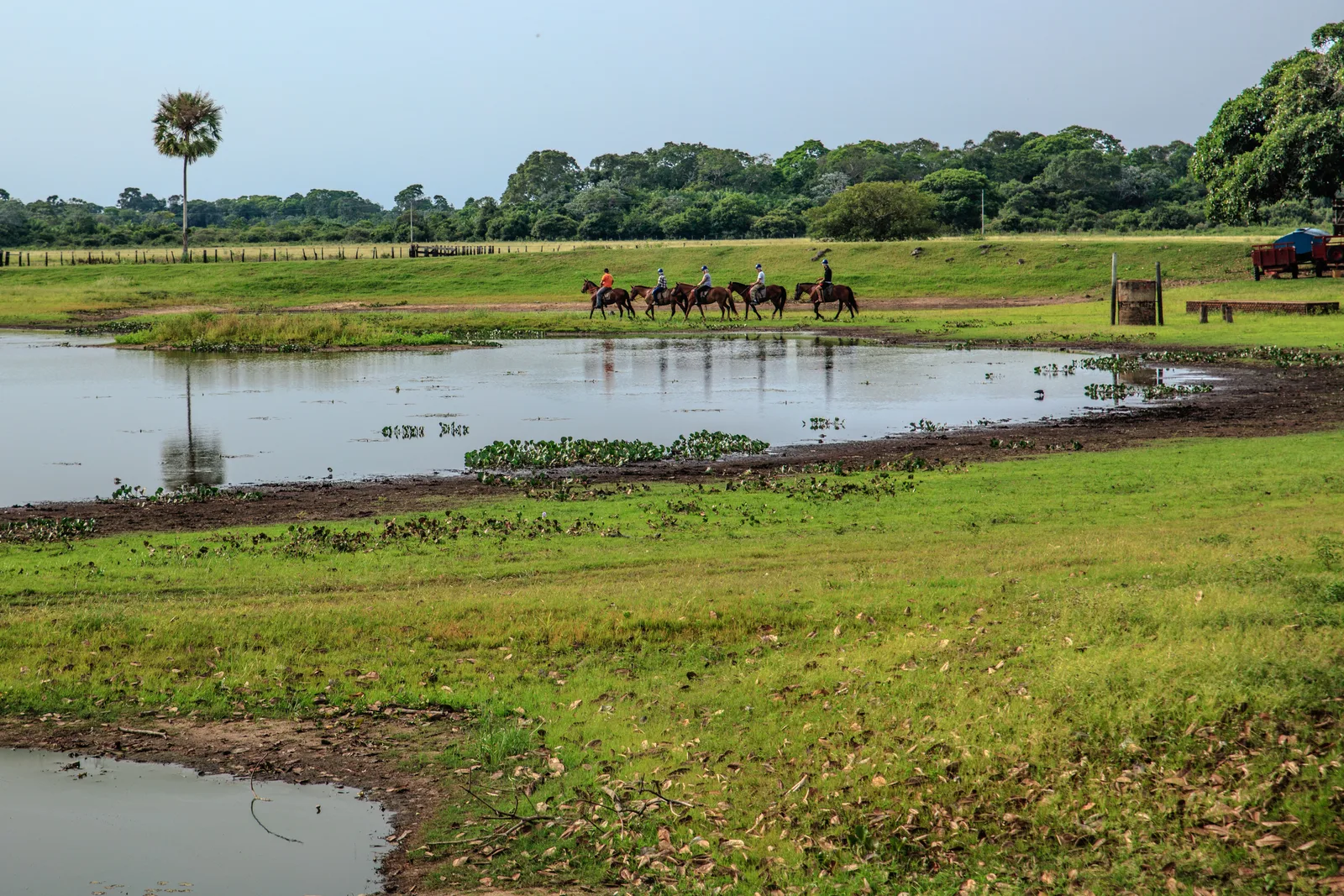
  • A line of riders on horseback crossing green pasture beyond a shallow lagoon, with a lone palm at the left, a red truck parked at the right and trees along the horizon

    Ranch lodges on the road · half day

    Horseback across the floodplain

    The Pantaneiro horse was bred here for exactly this ground — it swims, it wades chest-deep without fuss, and it will carry a rider across country a vehicle cannot reach. Riding out is how you get away from the road corridor and into the open grassland where the deer, rheas and anteaters are, and it needs no more skill than sitting still while the horse works it out.

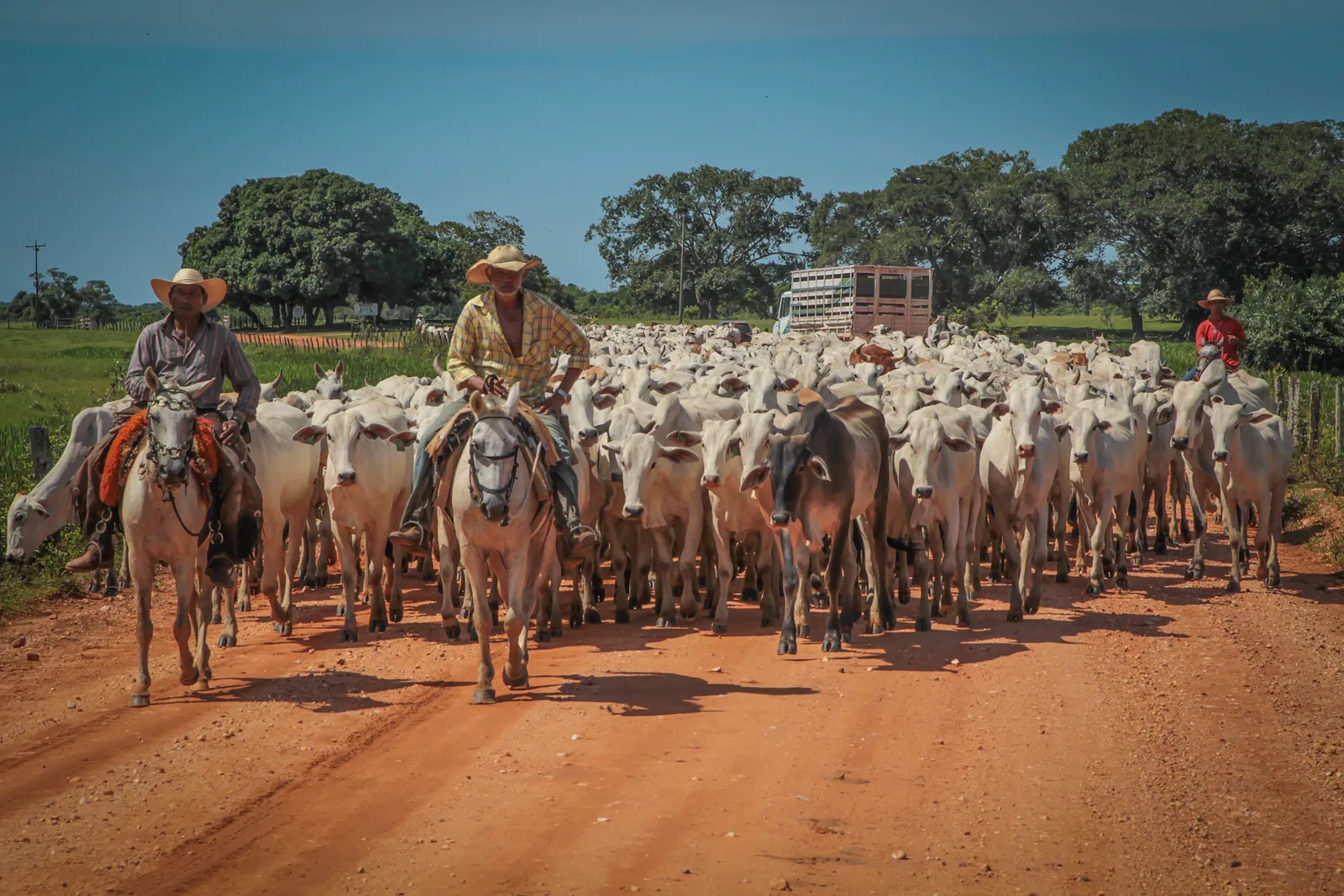
  • Riders in wide-brimmed hats leading a large herd of white cattle down a red dirt road, a truck parked among the trees behind them

    Working fazendas · half day

    Ranch life with the pantaneiros

    About 95 percent of the Pantanal is privately owned, and most of it is cattle country worked much as it was a century ago — herds moved on horseback between the high ground and the flooded ground as the water dictates. Several of the lodges on this road are working fazendas that took in guests, and the cattle work is still going on around you rather than being staged for it.

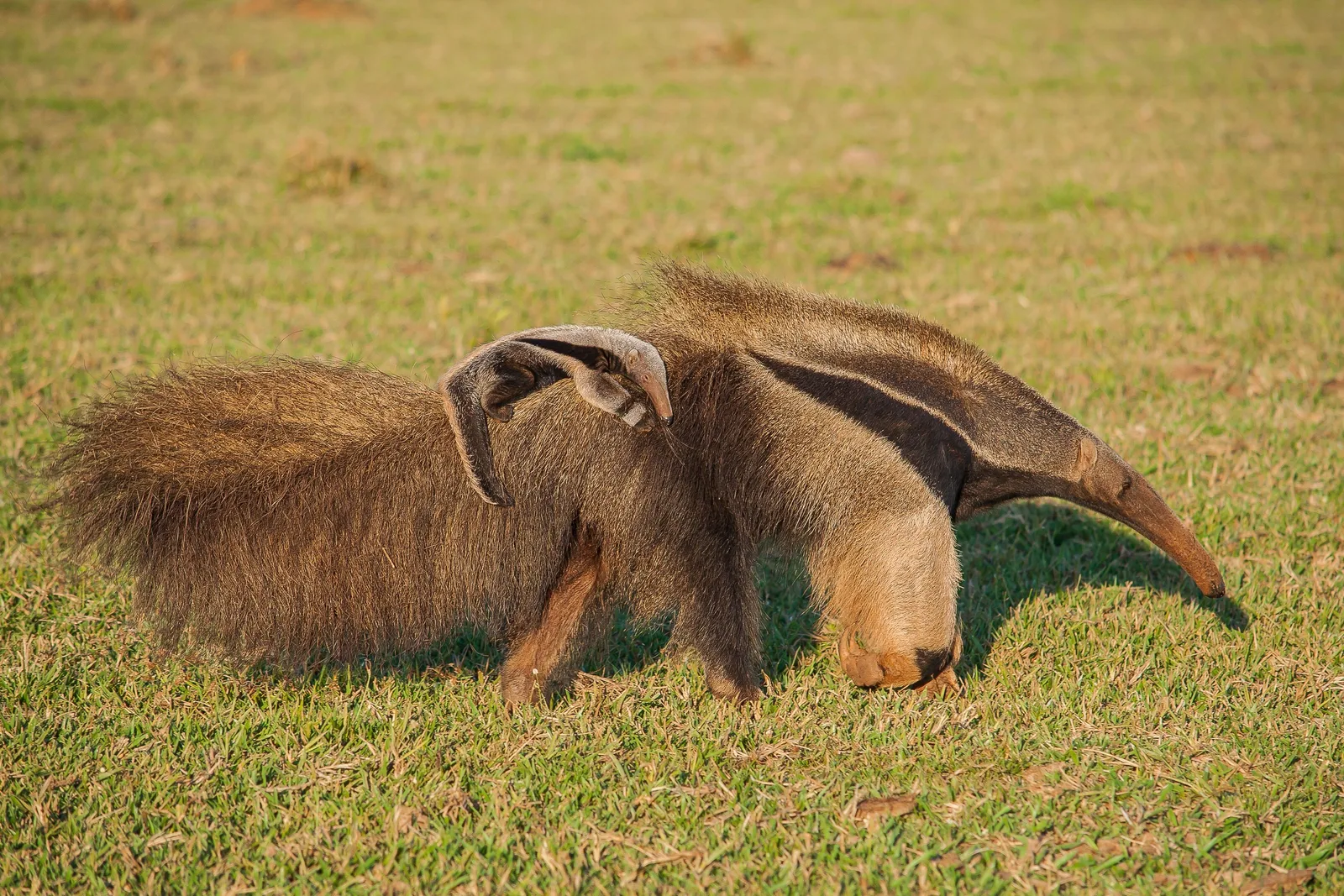
  • A giant anteater on short green grass with its long snout lowered to the ground and a pup riding on its back

    Grassland and ranch country · half day

    Giant anteaters on the open grass

    Two meters of animal with a half-meter tongue and a tail like a hearth brush, near-blind, largely deaf, and completely indifferent to a person standing still downwind. Mothers carry a single pup on the back for most of its first year. They are vulnerable globally and the Pantanal is one of the best places left to watch one working an anthill.

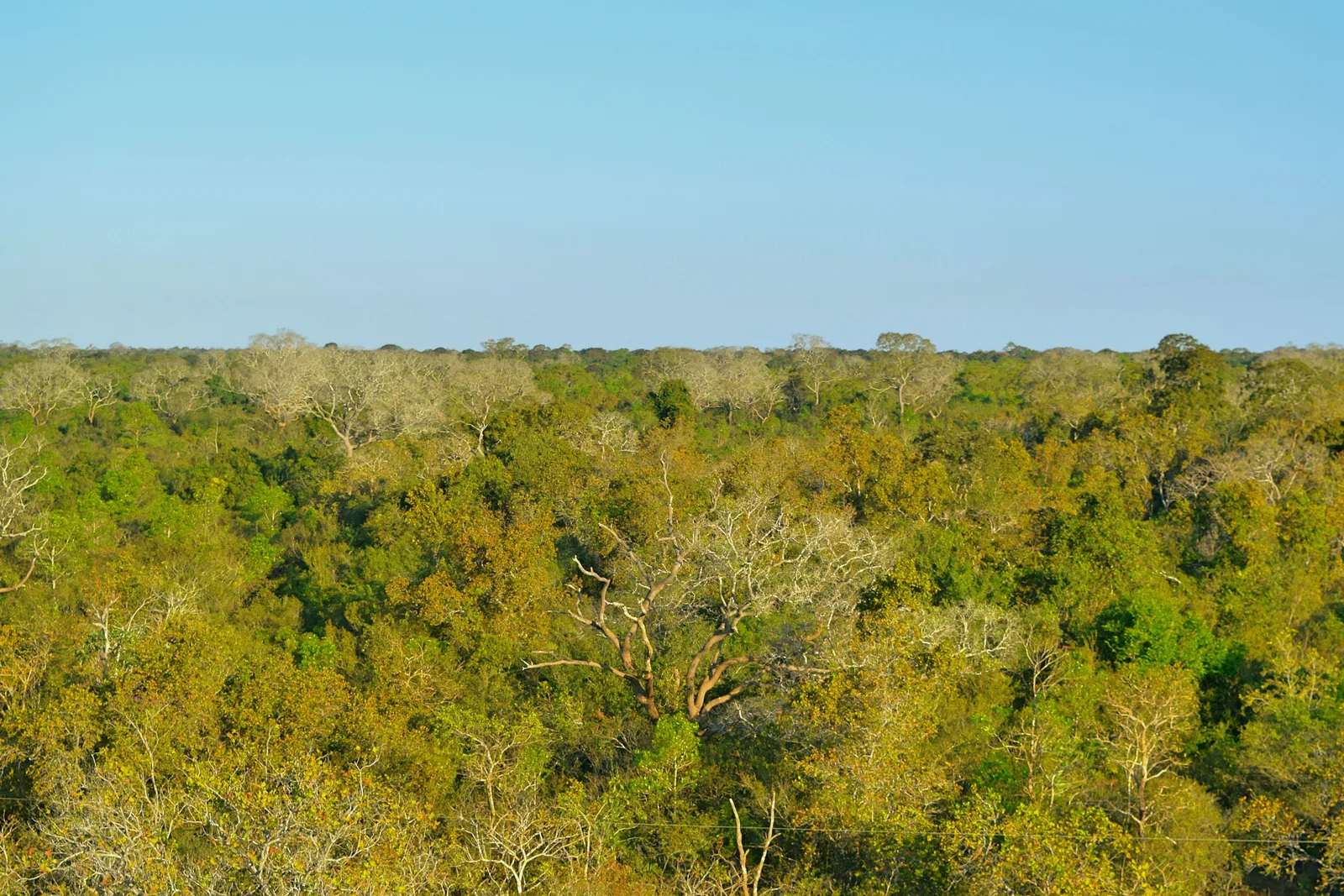
  • A view out over an unbroken low scrubby tree canopy running flat to a distant horizon under a pale blue sky

    Most lodges · an hour

    Climbing an observation tower

    The floodplain is dead flat, so the only way to see across it is to build something. Most lodges have a tower of ten or fifteen meters, and going up one at dawn changes the scale of the place entirely: canopy on all sides, macaws and toucans at eye level rather than overhead, and mist lying in the low ground until the heat burns it off.

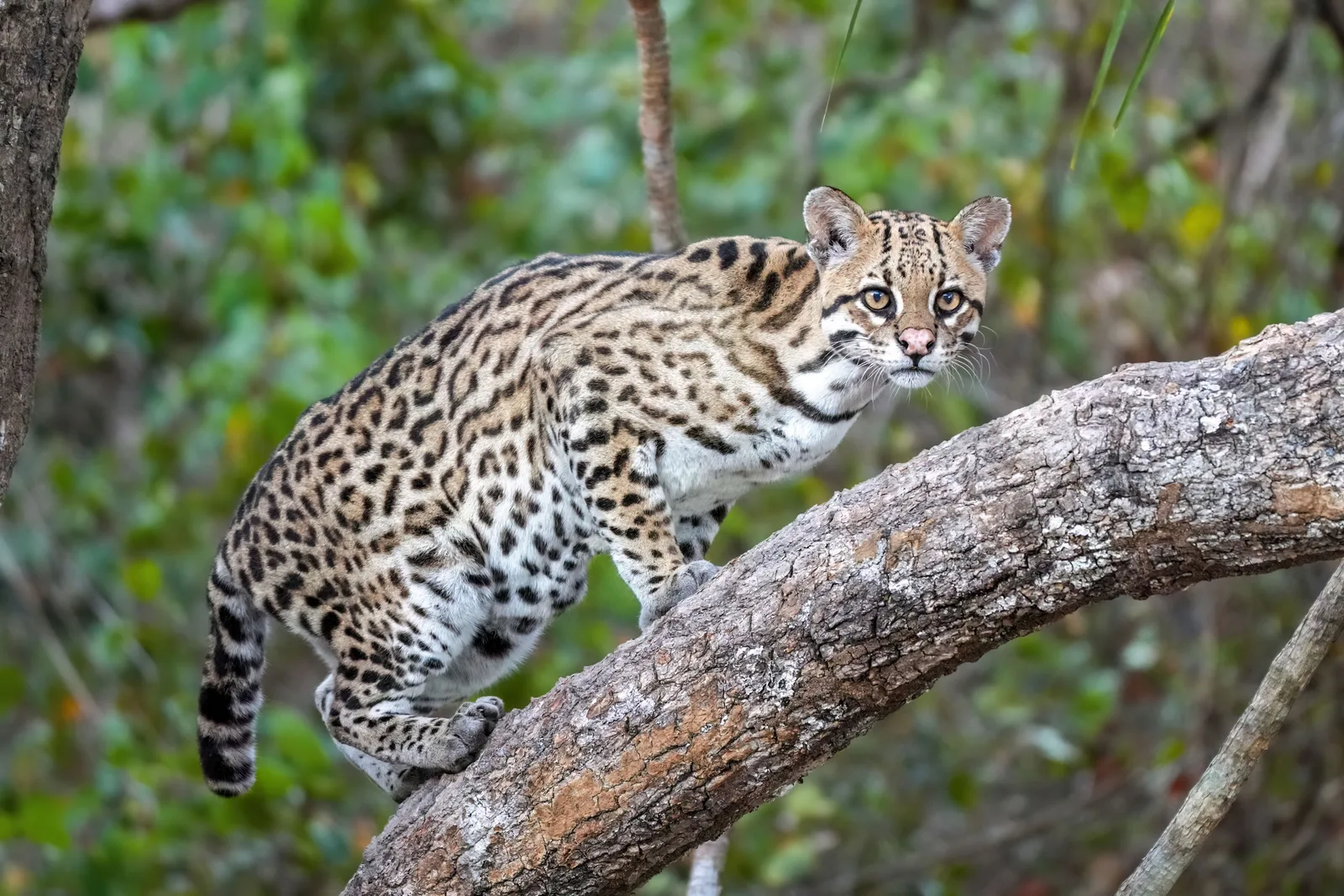
  • An ocelot standing on a thick sloping branch and looking directly at the camera, its spotted coat pale against green leaves

    Lodge grounds and night drives · 2 hours

    Looking for ocelots

    The Pantanal has six cat species and the ocelot is the one you have a real chance of seeing after the jaguar — a spotted cat about twice the size of a house cat, mostly nocturnal, hunting along river edges and forest margins. Several lodges have resident individuals that pass through the grounds at night and are watched from a respectful distance without bait.

Birding

  • A ringed kingfisher in flight with wings fully spread, carrying a small silver fish crosswise in its bill

    The Cuiabá and the Pixaim · half day

    Kingfishers from the water

    Five species of kingfisher live along these rivers, from the crow-sized ringed kingfisher down to the tiny American pygmy, and a slow boat run along a cut bank will usually turn up three or four of them in an hour. They hunt from low perches over the water, which is exactly the angle a boat gives you — this is the easiest good bird photography in Brazil.

  • A red dirt road running straight to a low horizon between fences and green scrub, a line of power poles beside it under a gray sky

    Poconé to Porto Jofre · half a day, at least

    Driving the Transpantaneira

    A game drive that happens to also be the transfer. The pools either side of the causeway hold water long after the plain has dried, so the road is a continuous edge habitat: caimans by the dozen, capybara families, jabiru and wood storks, roadside hawks on the fence posts. Budget four hours minimum and stop constantly. Everyone else on the road is doing the same thing.

  • A view out over an unbroken low scrubby tree canopy running flat to a distant horizon under a pale blue sky

    Most lodges · an hour

    Climbing an observation tower

    The floodplain is dead flat, so the only way to see across it is to build something. Most lodges have a tower of ten or fifteen meters, and going up one at dawn changes the scale of the place entirely: canopy on all sides, macaws and toucans at eye level rather than overhead, and mist lying in the low ground until the heat burns it off.

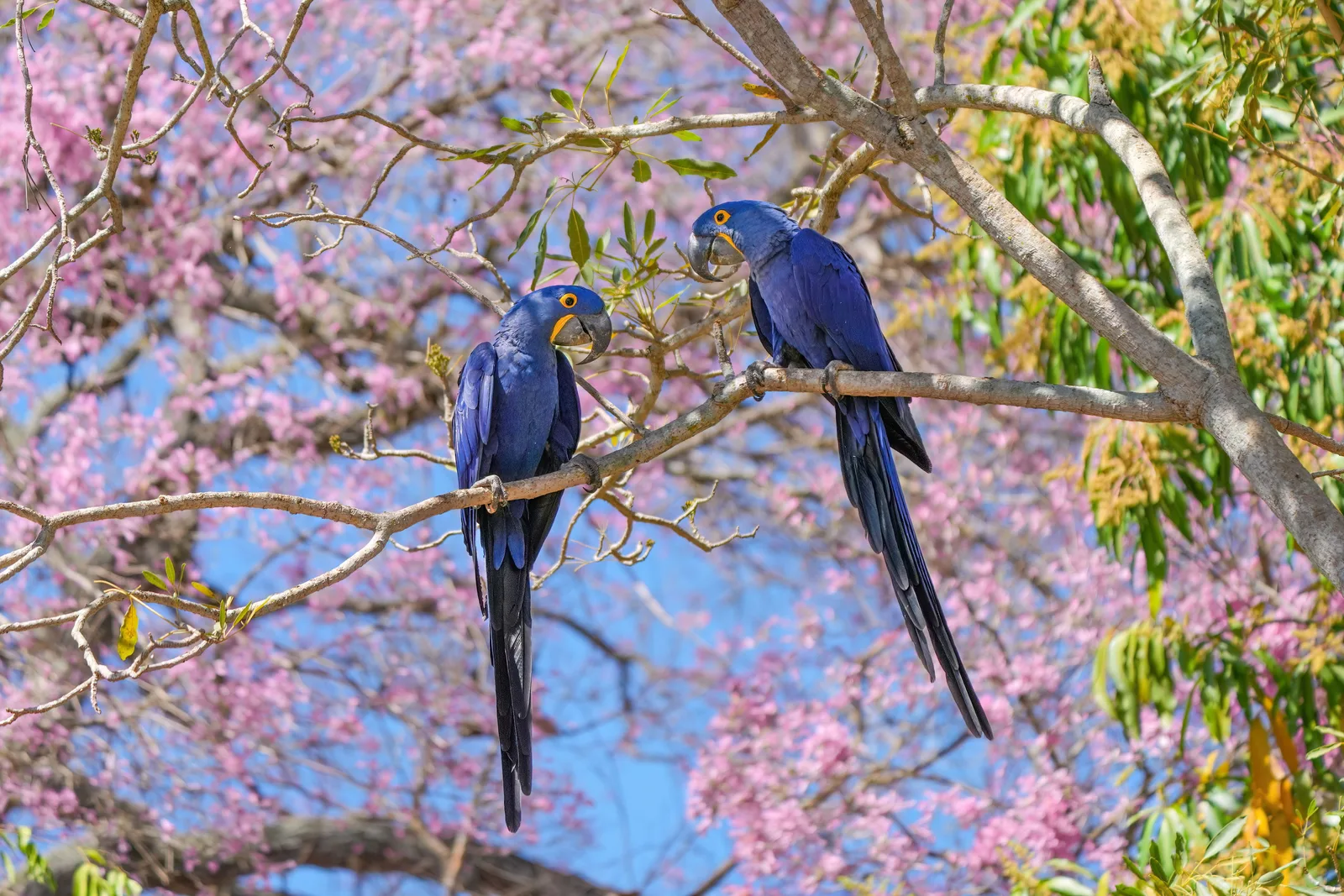
  • Two hyacinth macaws perched on the branch of a pink-flowering ipê tree against a blue sky

    The whole road · any morning

    Hyacinth macaws in the ipê

    The largest flying parrot in the world, a meter long and cobalt blue, with a bill that opens palm nuts. Trapping for the pet trade cut the Pantanal population to about 1,500 birds in the 1980s; a nest-box program running since 1990 helped bring it back to roughly 5,000 — most of the 6,500 left in the wild — and Brazil took the species off its national endangered list in 2014. They nest in manduvi trees along this road and are seen daily.

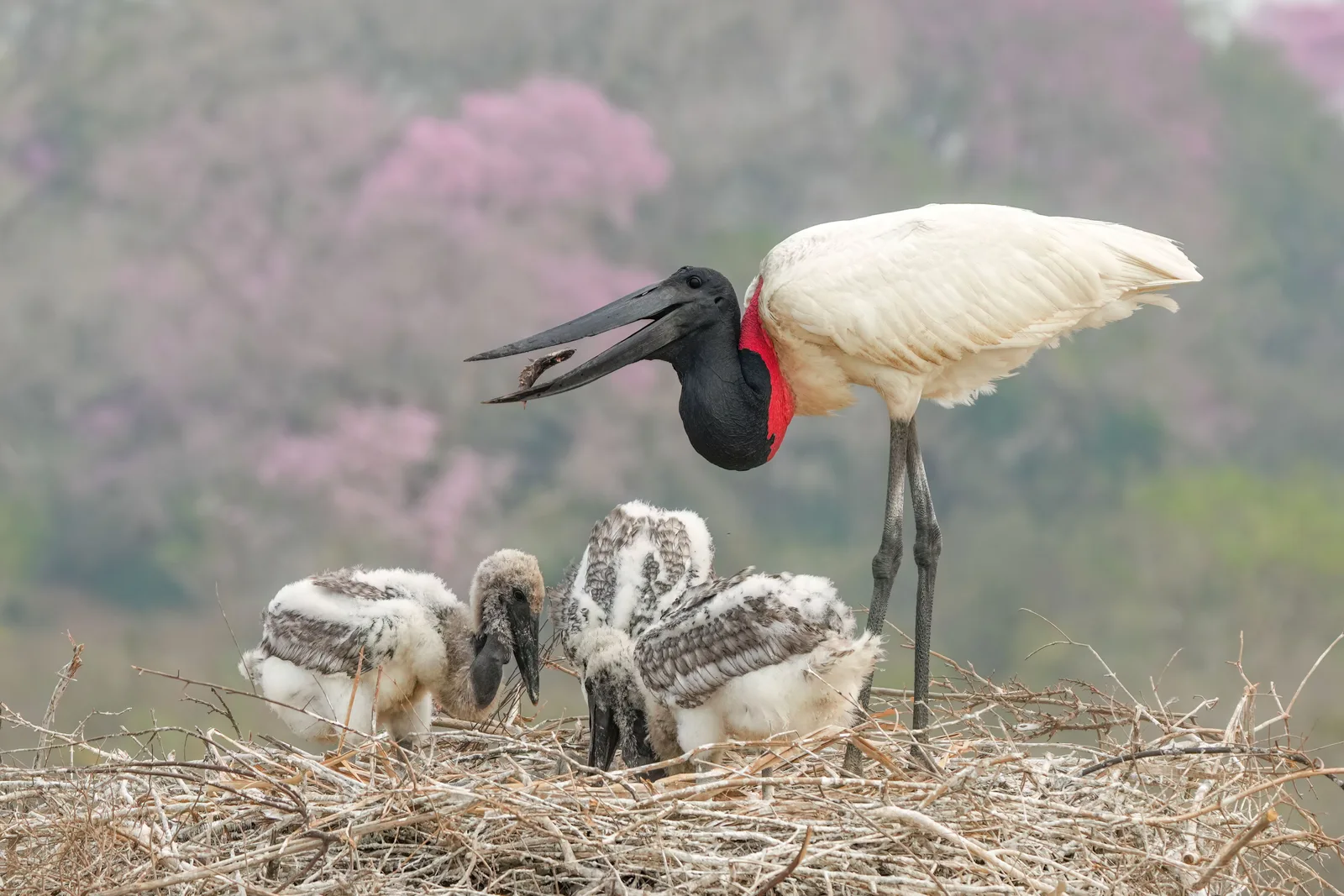
  • An adult jabiru stork standing over three downy gray chicks in a large stick nest, a pink-flowering tree blurred behind

    The whole road · any time

    Jabiru nests along the road

    The tuiuiú is the symbol of the Pantanal and the tallest flying bird in the Americas — 1.4 meters standing, a 2.6-meter wingspan, white with a bare black head and a red band at the base of the neck. Pairs build enormous stick nests in the tallest trees along the causeway and return to the same one for years, so the nests are landmarks, and from July there are chicks in them.

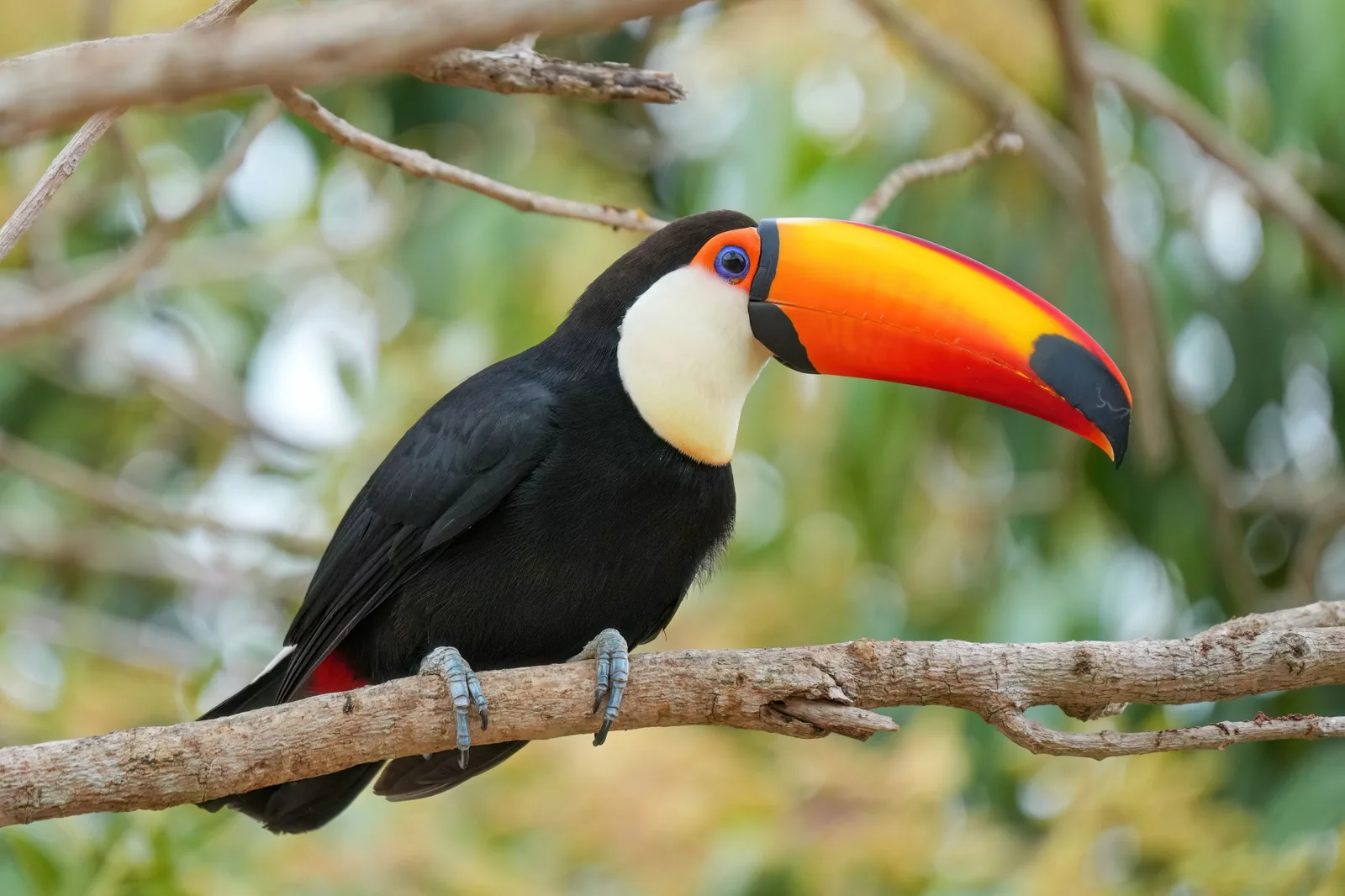
  • A toco toucan perched on a bare branch in profile, its huge orange bill against a soft green background

    Lodge gardens and river edges · any morning

    Toco toucans in the gallery forest

    The biggest toucan, and the one on the cereal box. They are common along the wooded strips beside the rivers and around lodge gardens, where fruiting trees pull them in at close range in the first hour of light. The bill is mostly air — a lattice of bone struts used to reach fruit and to dump heat.

After dark

  • A gray crab-eating fox with rust-colored inner ears lying in profile on a pale sandy road surface, head up and alert

    From a lodge · 2 hours

    Night drive on the Transpantaneira

    An open 4x4 with a hand-held spotlight, out after dinner. The animals change completely: crab-eating foxes trotting the verges, ocelots, tapirs coming down to drink, giant anteaters, nightjars sitting on the warm road surface, and the low red shine of a few hundred caiman eyes on the water. Most lodges include one.

  • An ocelot standing on a thick sloping branch and looking directly at the camera, its spotted coat pale against green leaves

    Lodge grounds and night drives · 2 hours

    Looking for ocelots

    The Pantanal has six cat species and the ocelot is the one you have a real chance of seeing after the jaguar — a spotted cat about twice the size of a house cat, mostly nocturnal, hunting along river edges and forest margins. Several lodges have resident individuals that pass through the grounds at night and are watched from a respectful distance without bait.

Where to stay

How far down the road you sleep.

There is one road and four places on it to spend a night, and the only real variable is distance from the jaguars. Most trips use two of these rather than one: a night on the road on the way down, then the far end. Everything here is sold on full board with guided outings included.

Drag and zoom to explore.

Tap an area to open it and see it on the map

  • Best for: The night either side of the trip

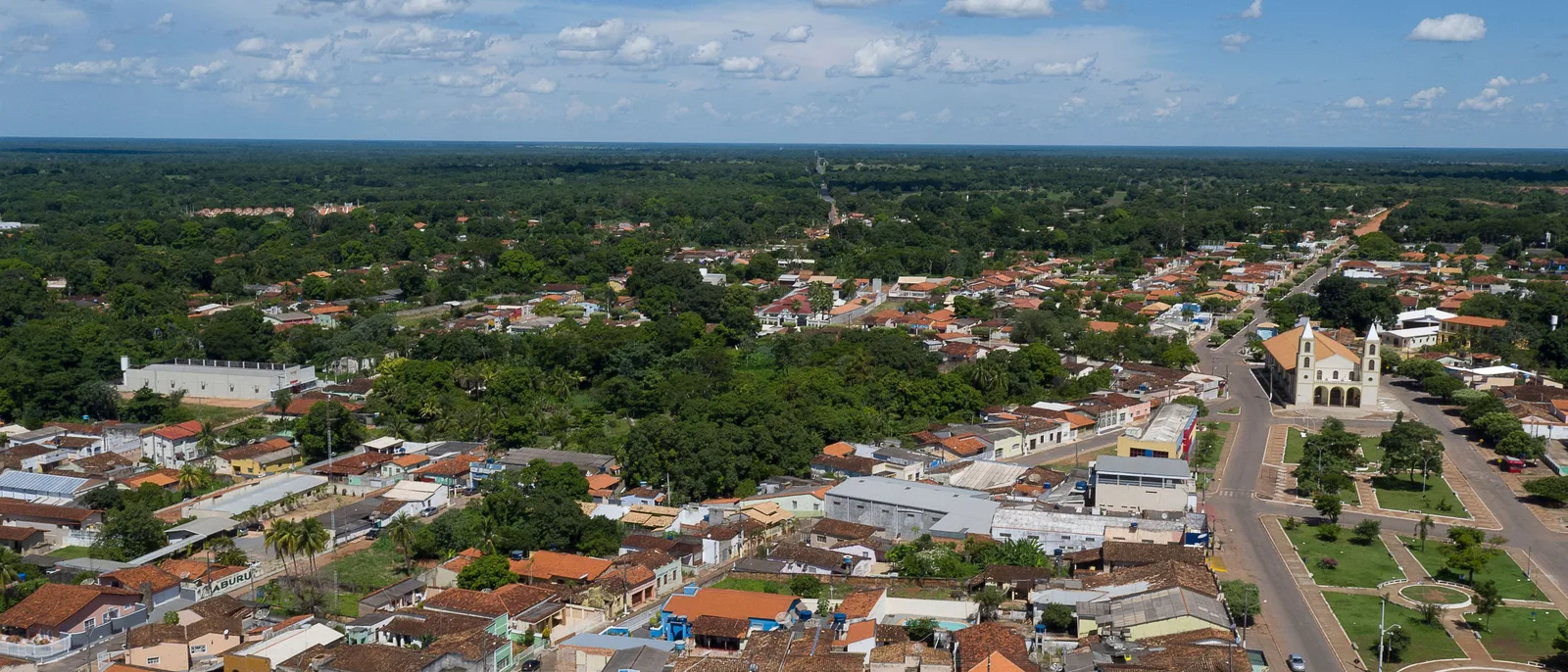
    Aerial view of a small town of red-tiled roofs and low buildings around a church, with green countryside running to the horizon

    Cuiabá is a working state capital with ordinary hotels, restaurants that are not full board and an airport, and Poconé is a small town at km 0 with simple pousadas and the last fuel and pharmacy. Neither is a Pantanal experience. Both are useful for a late arrival or an early flight, and Poconé specifically saves you starting the dirt road at dusk.

    • Airport
    • Ordinary hotels
    • Last supermarket
    • No wildlife
  • Best for: Everything except jaguars

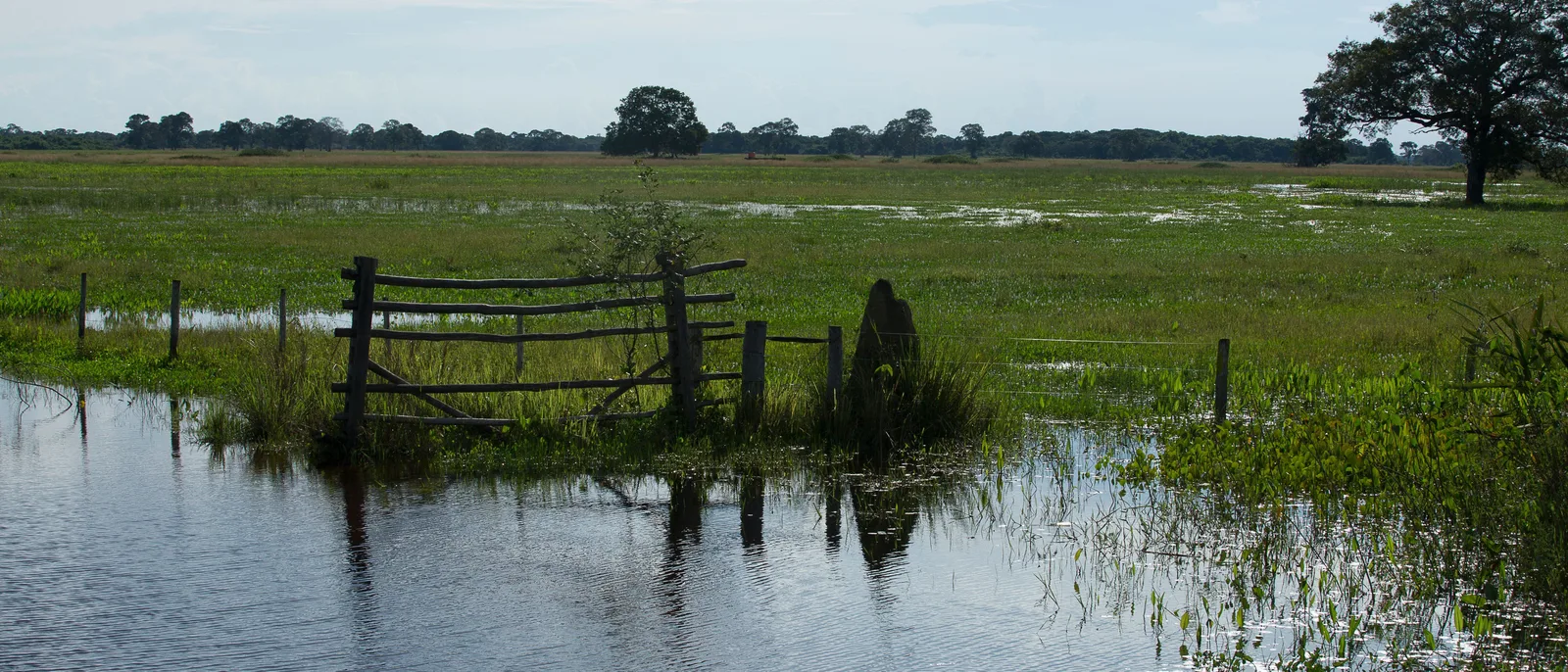
    A broken wooden fence and a dark conical termite mound standing in shallow floodwater on a flat green plain, with one big spreading tree on the horizon at the right

    Twenty or so pousadas and ranch lodges strung between about km 10 and km 110, thickest around the Rio Pixaim at km 62. This is where the land wildlife is — anteaters, tapirs, deer, macaw nests, night drives, horses and towers — and where the rooms cost half what they do at the far end. The trade is real: Porto Jofre is still two to three hours further on, so a jaguar day from here is a very long day.

    • Ranch lodges
    • Horseback
    • Night drives
    • Best value
  • Our pick

    Best for: Jaguars, and nothing else

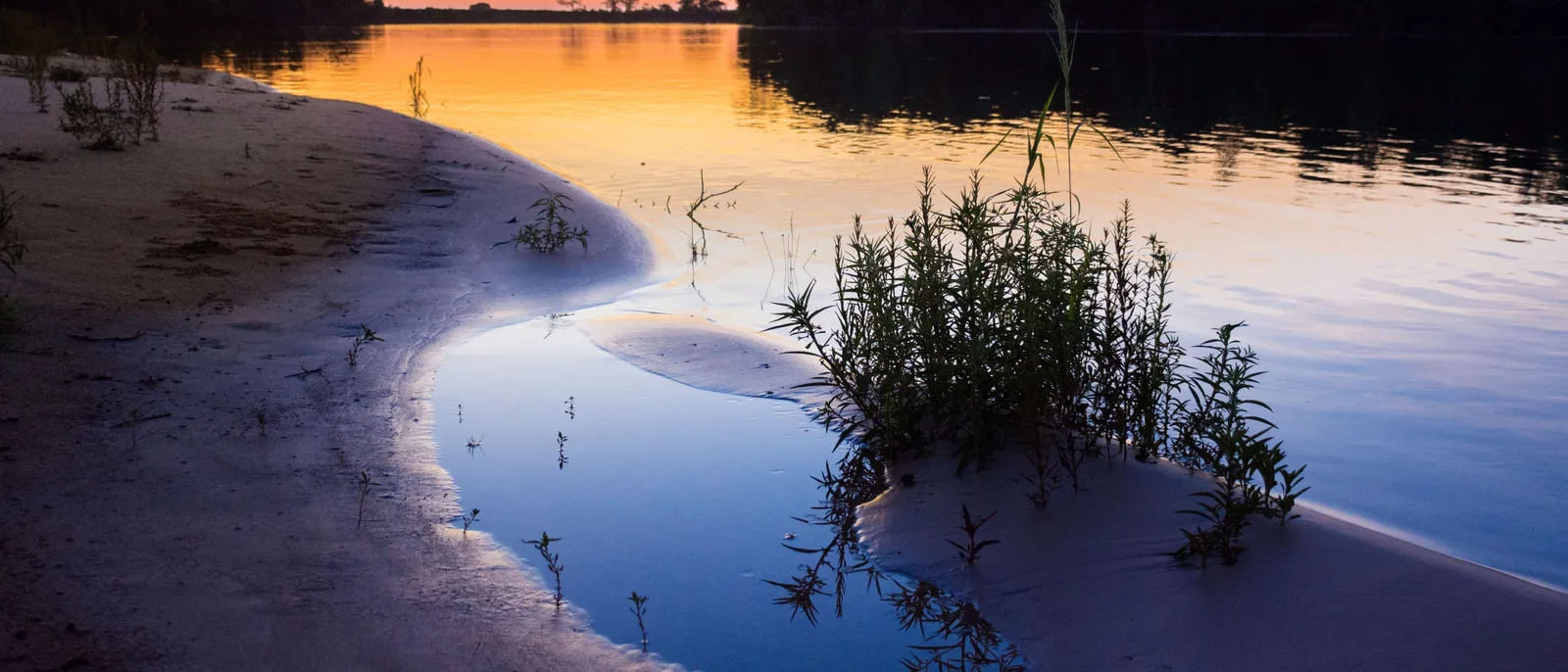
    A river bend at sunset with a curving sandbar, orange sky reflected in still water and low shrubs in the foreground

    The handful of lodges at km 147, a few minutes from the landing. Staying here is the difference between being on the water at sunrise and arriving at 10:00am behind everyone else, and on a two-day jaguar plan that is the whole trip. It is also the most expensive corner of the Pantanal, there is nothing to do on land, and much of it shuts in the wet season.

    • On the landing
    • Dawn starts
    • Most expensive
    • Dry season only
  • Best for: Waking up already in jaguar country

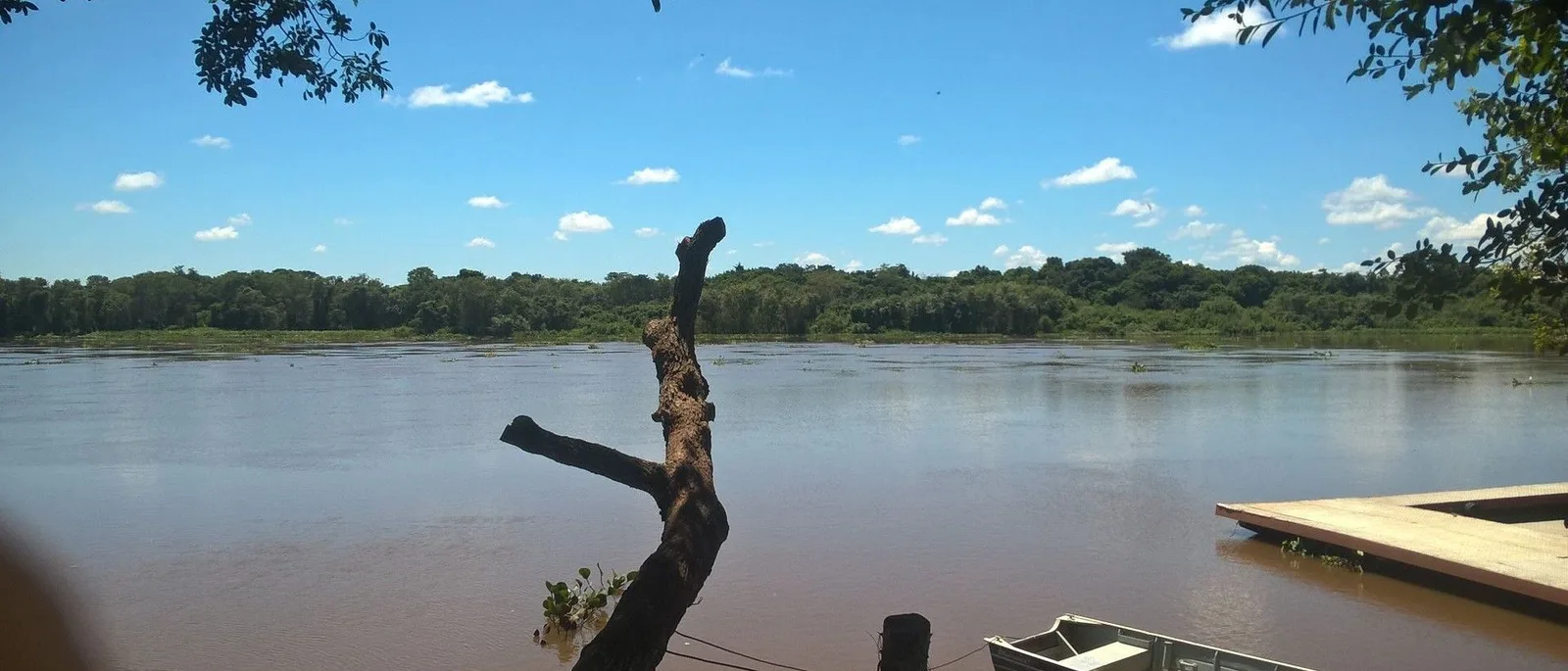
    A wide brown river with a small aluminum boat moored at the near bank, a bare dead tree standing in the shallows and forest along the far shore

    Moored barges and small ships with air-conditioned cabins, anchored on the Cuiabá north of Porto Jofre. Some stay put and some move upriver each night, which puts you in a different set of side channels every morning with no transit time at all. Cabins are small, the boat is your whole world for three or four days, and it is the closest thing here to a private safari camp.

    • Cabins on the river
    • No transfer time
    • Small and full board
    • Book far ahead

A working plan

Four days, one road, two days on the water.

The shape almost every good northern Pantanal trip takes. It is built around a simple constraint: the drive from Cuiabá is six hours each way, so the only way to get two full days in the boat is to sleep at the far end.

  1. 01
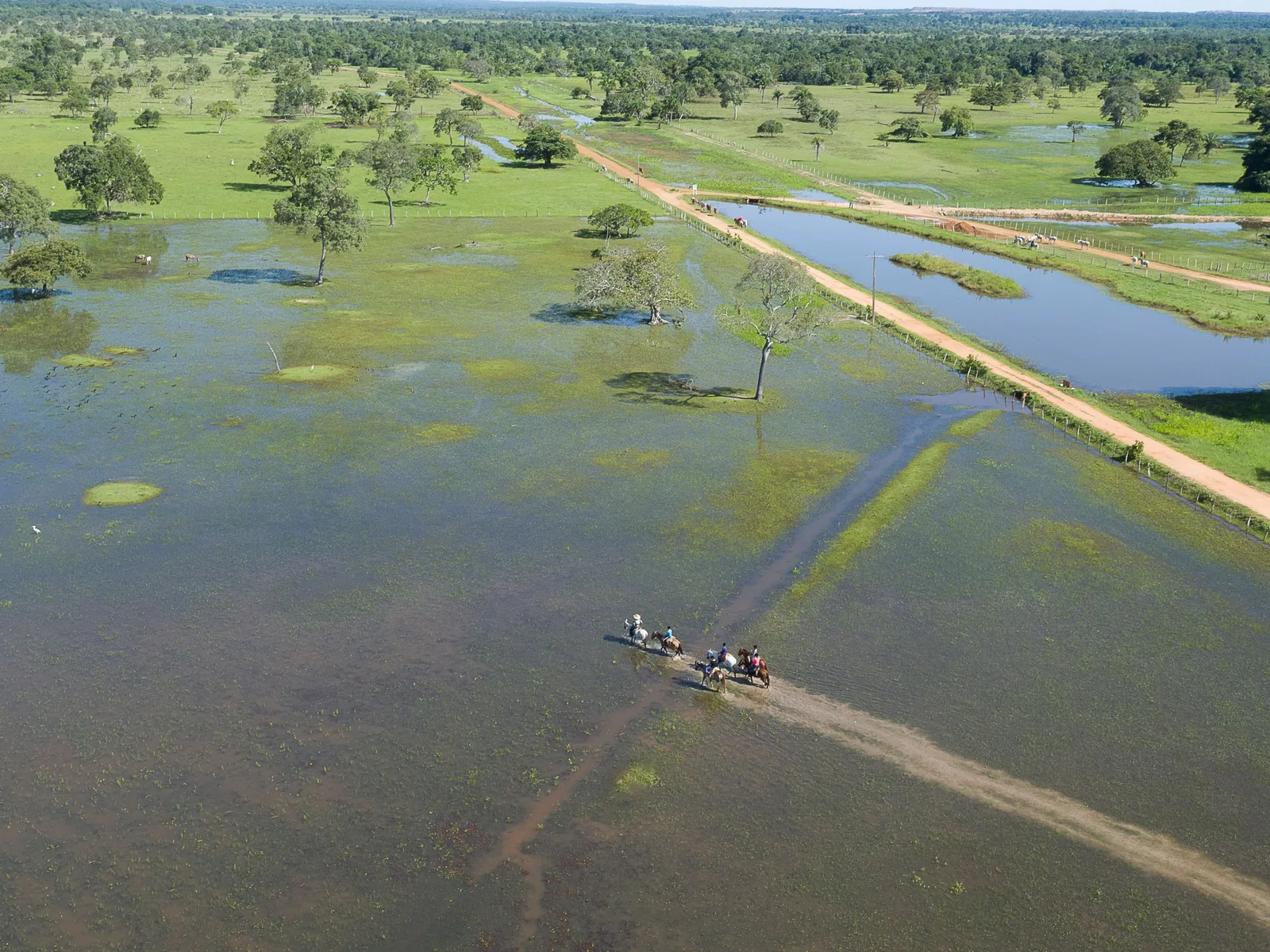
    Aerial view of a raised dirt road crossing a broad flooded plain, with a small group of riders on horseback fording the shallow water below it and bare trees standing in the flood

    Cuiabá → Poconé → the Transpantaneira

    Down the road, slowly

    Land at Cuiabá, drive the hour and a half to Poconé, and start the dirt road before the afternoon heat. Stop at every bridge. Sleep at a lodge around the Pixaim with a night drive after dinner.

  2. 02
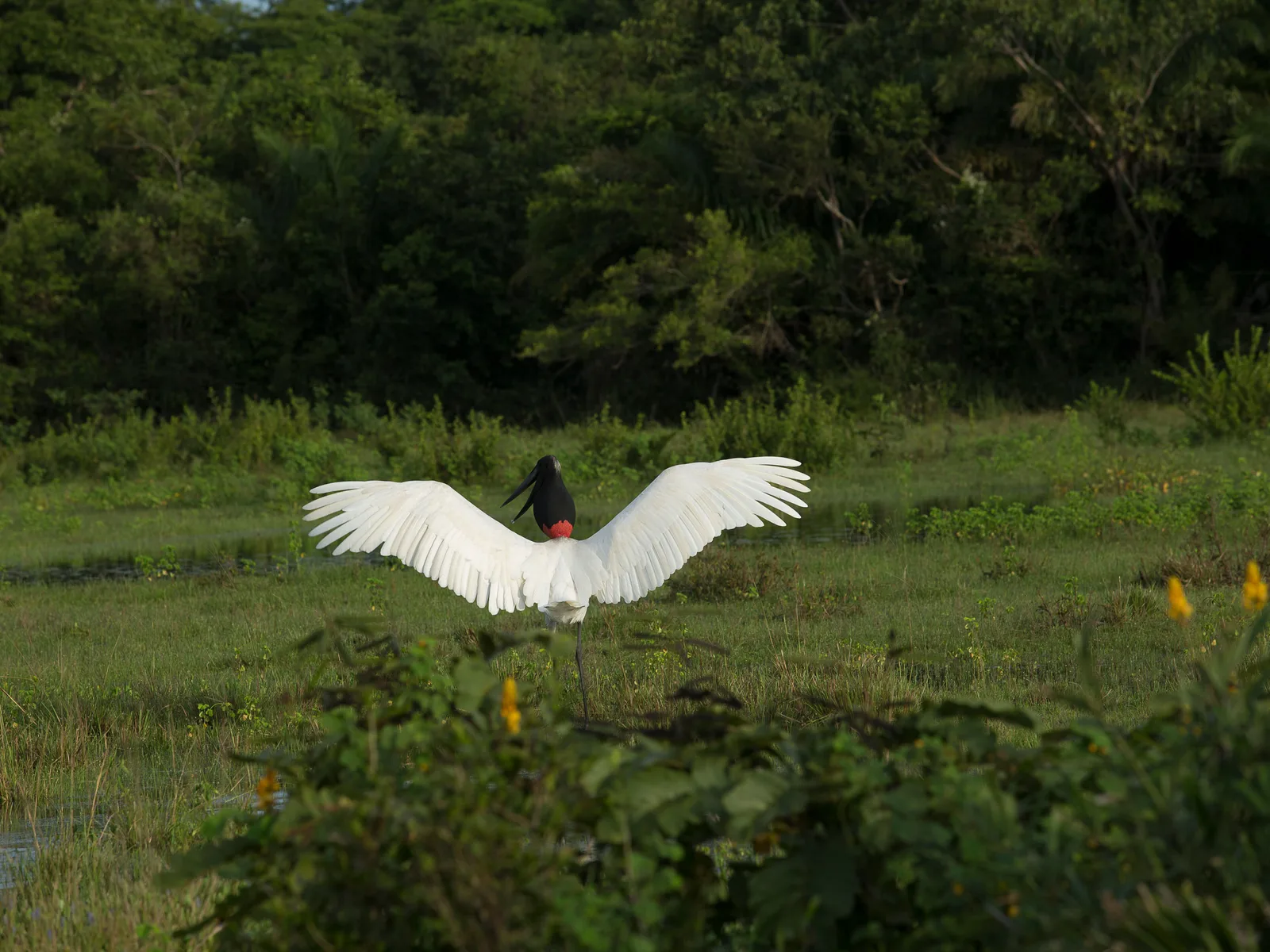
    A jabiru stork standing in green grass with its wings fully spread, white body, bare black head and a red band at the base of the neck

    Rio Pixaim → Porto Jofre

    The middle of the road, then on

    A dawn boat on the Pixaim for giant otters and kingfishers, breakfast, then the last 85 kilometers to Porto Jofre in the early afternoon. An hour on the water at dusk if there is light left.

  3. 03
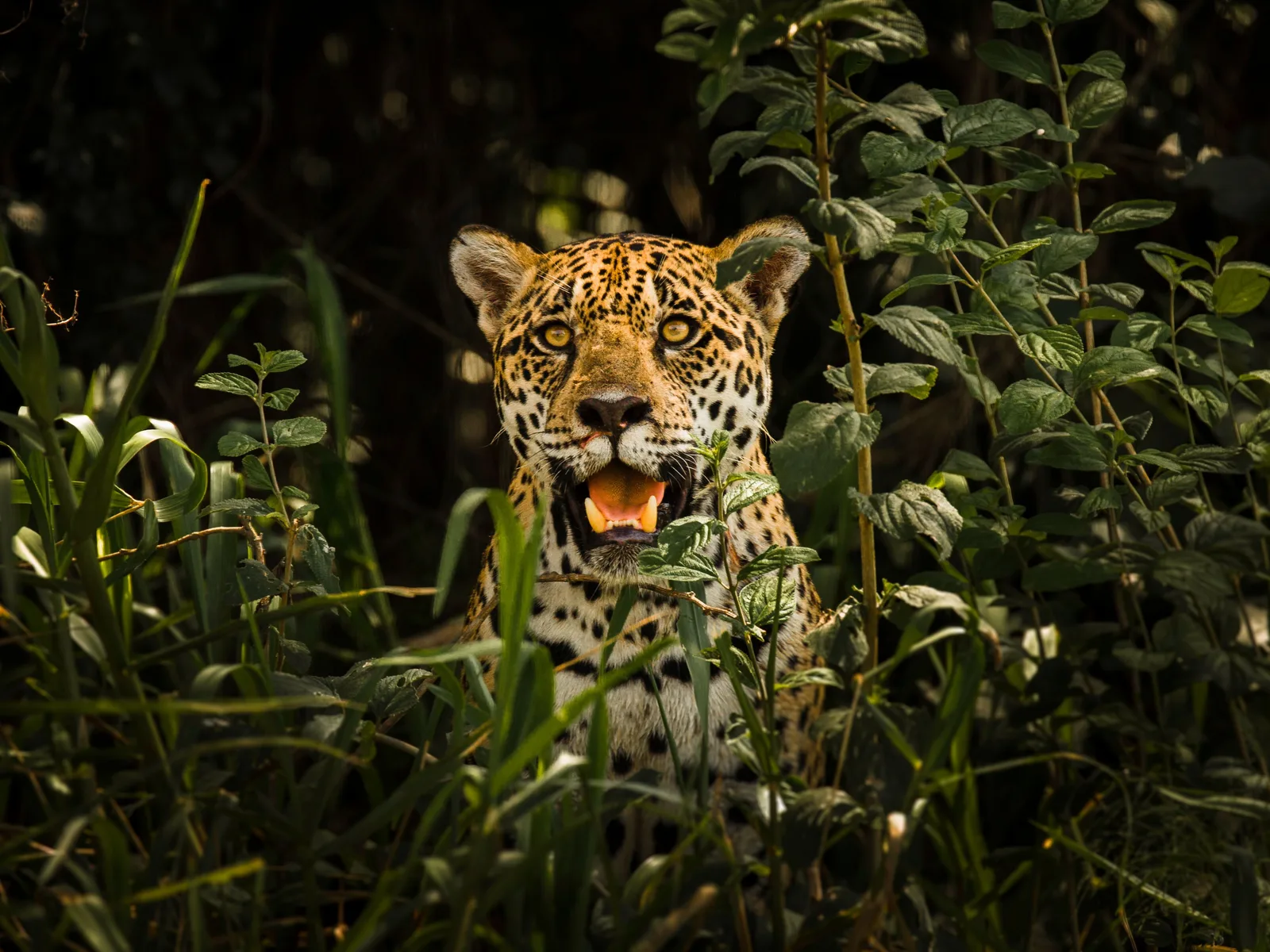
    A jaguar’s face among dense green foliage, mouth slightly open and eyes fixed on the camera

    Encontro das Águas State Park

    The full day in the boat

    Out at first light, lunch aboard, back at dusk — eight or nine hours working the Cuiabá, the Piquiri and the Três Irmãos. This is the day the whole trip is built around, and it is why you slept here.

  4. 04
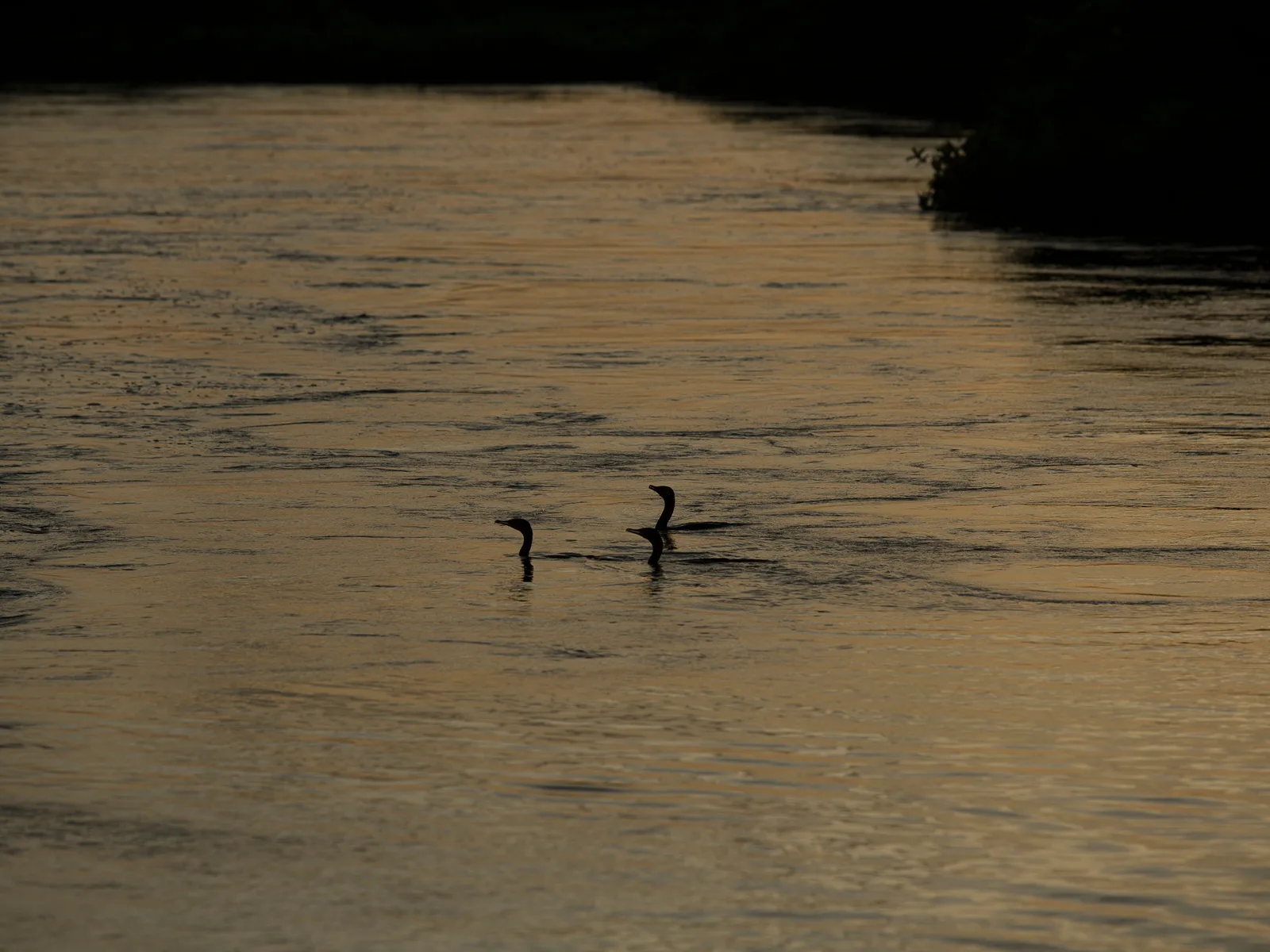
    Two cormorants swimming on golden water at dusk, a dark bank behind them

    Porto Jofre → Cuiabá

    Dawn on the water, then north

    A short sunrise run — the best light of the trip, and often the best sighting — then breakfast and the drive back up the Transpantaneira in safari mode. Cuiabá by mid-afternoon for an evening flight.

This is a starting shape, not a fixed departure — we rearrange it around your dates. Have it built for you

Timing

The water decides, and it decides for you.

Most destinations have a best season. The Pantanal has a mechanism. Water arrives in November, spreads the animals across an area the size of a small country, and closes the far end of the road; it drains away from May, and through the dry season it pulls everything back onto the rivers until the wildlife has nowhere else to be. That is why the calendar below is so lopsided, and why the jaguar months are the ones the whole industry is built around.

How hot, how wet and how good each month is in the northern Pantanal. Choose a month for its average air temperature, rainfall and what the wetland is doing then.

January

Trade-offs
Air
24–33°C 75–91°F
UV
10 Very high
Rain
16 days 238 mm / 9.4 in

Peak wet season. Rain on sixteen days, the plain flooding, the animals scattered and much of the far road under water.

February

Trade-offs
Air
24–33°C 75–91°F
UV
11 Extreme
Rain
15 days 262 mm / 10.3 in

The wettest month by volume. Spectacular skies and birdlife; the worst month for mammals.

March

Trade-offs
Air
24–33°C 75–91°F
UV
10 Very high
Rain
15 days 233 mm / 9.2 in

Still fully wet, water near its peak. Green, hot and hard to move around in.

April

Trade-offs
Air
23–33°C 73–91°F
UV
9 Very high
Rain
8 days 113 mm / 4.4 in

Rainfall halves and the road starts drying, but the plain is still flooded and the wildlife still spread out.

May

Good
Air
20–32°C 68–90°F
UV
7 High
Rain
4 days 53 mm / 2.1 in

The dry season begins. Four wet days, the water receding fast and the lodges reopening. Coolest nights start here.

June

Good
Air
18–32°C 64–90°F
UV
6 High
Rain
1 day 20 mm / 0.8 in

Effectively dry, and the mildest days of the year — nights in the high teens. The road is good and jaguar season is starting.

July

Best
Air
17–32°C 63–90°F
UV
7 High
Rain
1 day 10 mm / 0.4 in

The pick: ten millimeters of rain across one wet day, the sunniest month of the year, and the coldest nights of it. Strong jaguar season, and Brazilian school holidays fill the lodges.

August

Good
Air
19–35°C 66–95°F
UV
8 Very high
Rain
2 days 13 mm / 0.5 in

Level with July on rain at 13 mm, with the water still low and the animals on the banks, and the heat building sharply: afternoons go from 32 to 35°C.

September

Good
Air
22–36°C 72–97°F
UV
8 Very high
Rain
5 days 51 mm / 2.0 in

Still excellent for jaguars and now genuinely hot: 36°C most afternoons, with the ipês in flower and haze from dry-season fires possible.

October

Good
Air
24–35°C 75–95°F
UV
10 Very high
Rain
9 days 129 mm / 5.1 in

The rains return and the heat holds. Jaguar season runs to the end of the month, then the water starts spreading again.

November

Trade-offs
Air
24–34°C 75–93°F
UV
11 Extreme
Rain
11 days 195 mm / 7.7 in

Wet season proper. The plain begins refilling, animals disperse and lodges at the far end start closing.

December

Trade-offs
Air
24–33°C 75–91°F
UV
10 Very high
Rain
14 days 200 mm / 7.9 in

Rain on fourteen days and rising water. Beautiful and green; the wrong month if you came for a jaguar.

  • Best The one or two peak months
  • Good A real recommendation
  • Trade-offs Workable, with a catch
See Pantanal on the Brazil calendar

UV is the monthly average of the daily peak, 2022 to 2025, calculated from Copernicus Atmosphere Monitoring Service data. Weather data by Open-Meteo.com, CC BY 4.0.

For jaguars

July–October

Low water, and the animals pinned to the riverbanks. The one peer-reviewed study of Porto Jofre puts the chance of a sighting at 0.94 in the high season against 0.52 in the low, but names no peak month, so neither do we. July is the pick on the weather: 10 mm across a single wet day, the sunniest month of the year, and the last one before the afternoon heat climbs past 35°C.

For birds and green

December–March

The wetland full, the light dramatic and the birdlife at its best — but the mammals are dispersed, the far end of the road is difficult, and many lodges close.

Book earliest for

July–September

Brazilian school holidays fill July and the dry season fills August and September. Porto Jofre rooms and boats go months ahead.

About the rain

The numbers above are INMET 1991–2020 normals for Cuiabá, the nearest station with a long record and the airport you fly into. The floodplain an hour south runs a degree or two cooler by day and follows the same rainfall pattern. What they show is a genuinely binary climate: February takes 262 mm across fifteen days, July takes 10 mm across one. There is no shoulder season worth arguing about.

Heat is the thing to plan around rather than rain. From August the afternoon high climbs past 35°C with no shade on the water and none on the road, which is why every lodge on this road runs its outings at dawn and again from about 3:00pm and leaves the middle of the day alone. June and July are the only genuinely comfortable months, and they are also when it can drop to 15°C before sunrise — bring one warm layer for the dawn boat, because nobody expects to be cold in the Pantanal and everybody is.

The dates worth planning around

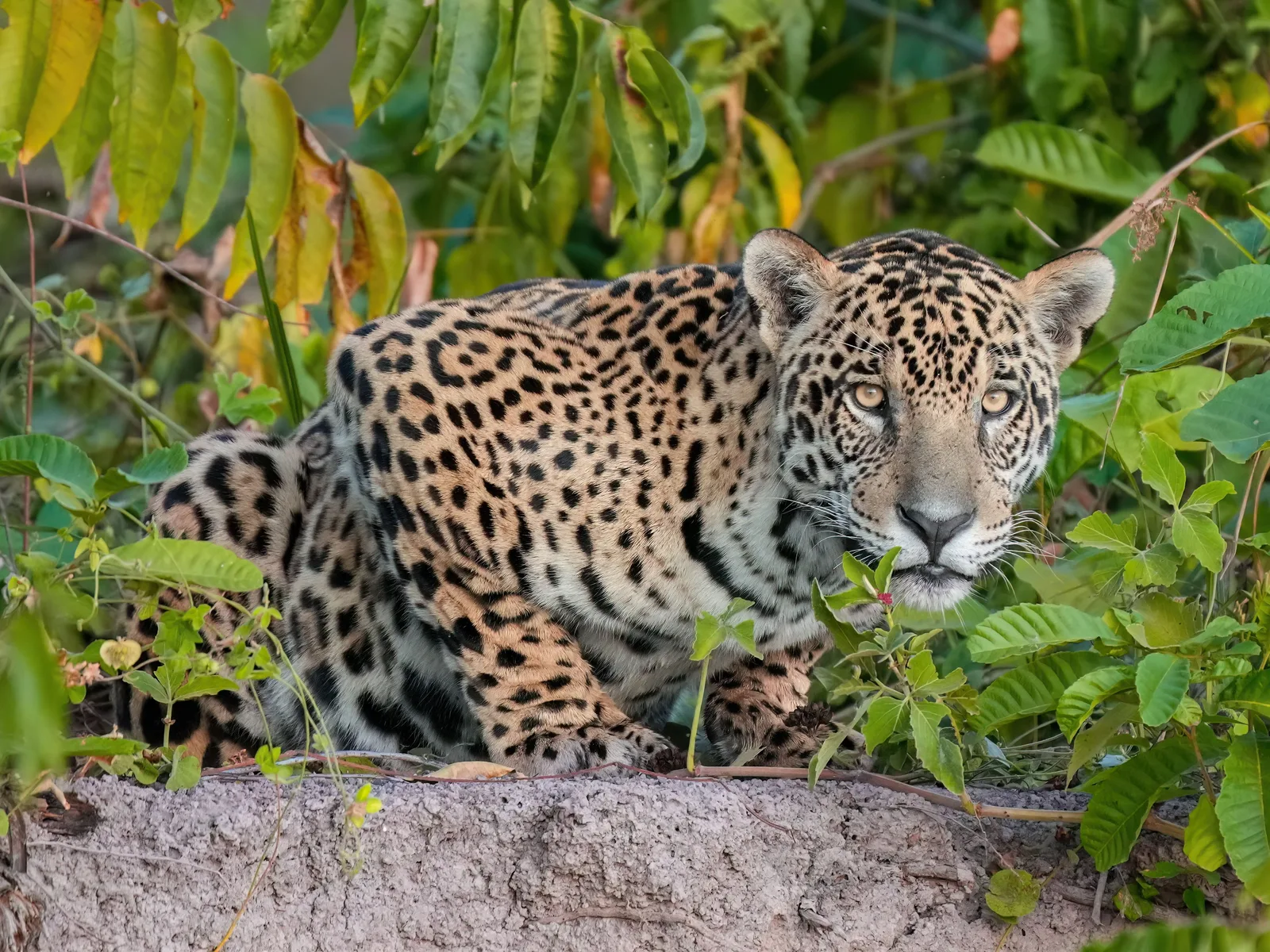
A jaguar lying on a mound of bare earth among green leaves with its front paws stretched forward, looking at the camera

Jaguar season

July to October, peaking in August and September

Not an event, but the closest thing the Pantanal has to one. As the water drops, the cats come down to hunt the caiman and capybara concentrated on the banks, and the entire tourism economy of Porto Jofre runs on those four months. Jaguar watching here is worth an estimated $6.8 million a year and has turned an animal ranchers used to shoot into the reason the land is worth more standing. Book accordingly: this is when the boats and the rooms sell out.

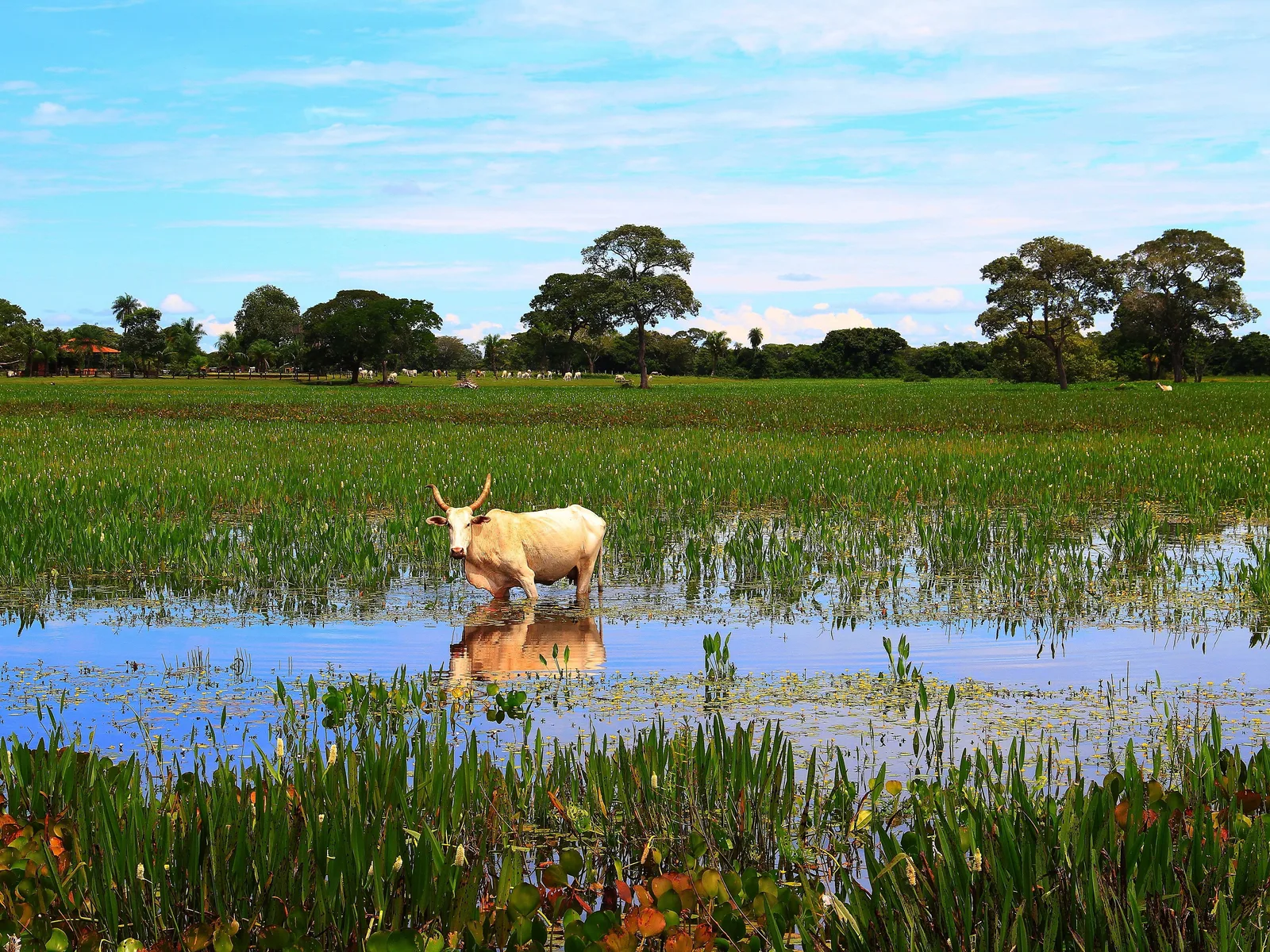
A white Nelore cow standing knee-deep in a flooded green plain of flowering marsh grass, with more cattle grazing under trees along the horizon

The flood and the drawdown

Water rises from November, peaks around February–April, drains May to October

The single most important thing that happens here, and it happens every year. The rains fall in the highlands to the north and take months to work down through a basin with almost no slope, so the flood arrives late and leaves slowly — rivers up two to five meters, about 80 percent of the plain underwater, and then the whole thing running back out again. Every lodge opening date, every road condition and every wildlife sighting on this page is downstream of that cycle.

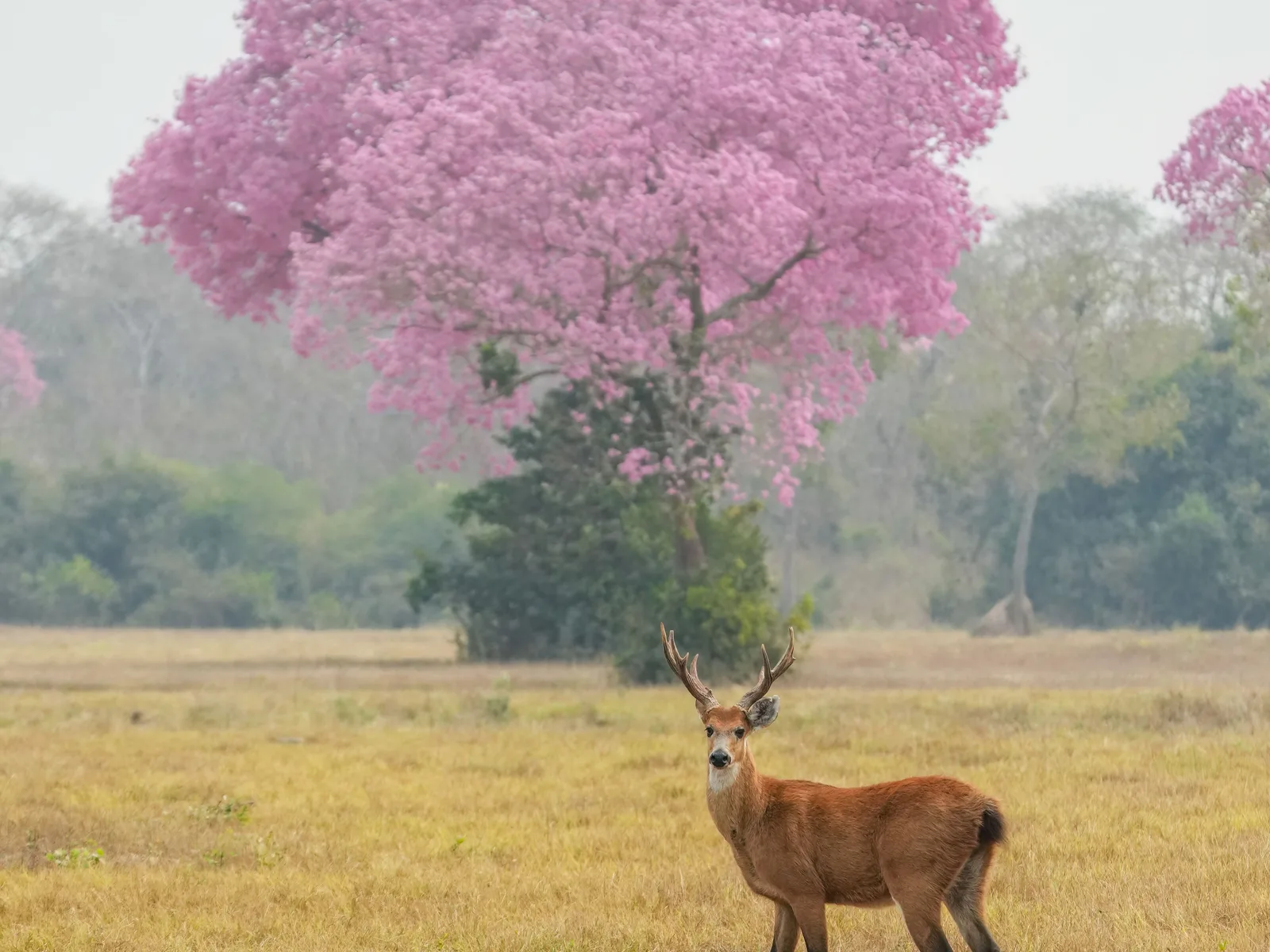
A deer standing in dry golden grass with a large pink-flowering ipê tree behind it in soft morning haze

The ipê bloom

July to September

In the middle of the dry season, when the plain has gone to straw, the ipê trees drop their leaves and flower — pink, purple, yellow and white, in bare crowns visible for kilometers across flat country. The pink ones are the piúva, the Pantanal’s signature tree, and along the Transpantaneira the show is at its best from August into September. It falls in the middle of the July-to-October jaguar window, which is the single luckiest piece of scheduling in Brazilian travel.

Good to know

Before you come

Northern or southern Pantanal — which one should I go to? +

This page is the northern half: Mato Grosso, the airport at Cuiabá, and the Transpantaneira down to Porto Jofre. Come here if the jaguar is why you are going. Nowhere else on earth offers sighting odds like the Encontro das Águas in August, and the trip is simple — one flight, one road, two days in a boat. The southern Pantanal, in Mato Grosso do Sul, is reached from Campo Grande and is a different kind of trip: bigger working fazendas, the best birding in the wetland, the spring-fed rivers around Bonito for snorkeling, and a longer, more varied stay for less money. Jaguar sightings there are real but far less predictable. Most people should pick one. If you have two weeks and a serious wildlife habit, do both, in that order.

Will I actually see a jaguar? +

In the high season, very probably. A 2024 study in Scientific Reports, led by Fernando Tortato, put the chance of a sighting over a three-day trip at 94 percent, and the number of individually known cats that tolerate boats rose from 29 in 2013 to 130 in 2023 — they have learned that an outboard is not a threat, and they hunt in daylight along cut banks where a boat can see them. Two full days on the water in August or September and you would be unlucky to see none, and normal to see several. What is not guaranteed is a good sighting: a cat asleep in shade 40 meters back is a very different photograph from one walking the sandbar. That is what the second day is for. Outside July to October the odds fall away quickly, and in the wet season they are ordinary jungle odds.

How many days do I need? +

Four, which is why the itinerary above is built that way. The drive from Cuiabá is six hours each way, so a four-day trip spends one day getting down the road, two nights at Porto Jofre with two mornings on the water, and one day coming back — and the coming back is itself a game drive. Three days works but buys only one jaguar day, which turns the whole trip into a single roll of the dice. Five or six lets you add a proper stay at a Transpantaneira lodge for the anteaters, tapirs and night drives, which are genuinely a different trip from the boat days and are what most people say they would go back for.

Can I drive the Transpantaneira myself? +

In the dry season, yes, and plenty of people do. From June to October the surface is compacted dirt, the bridges are increasingly concrete, and an ordinary car with decent clearance reaches Porto Jofre — a high-clearance SUV is more comfortable and worth the extra R$60 or so a day. Drive it in daylight only, fill up in Poconé because there is nothing after it, expect no phone signal, and be aware that a breakdown at km 120 is a long wait. In the wet season, do not: the far end floods and gets very difficult. The larger question is whether you want to. Lodges and operators run transfers that turn the drive into a guided game drive with someone watching for animals instead of watching the road, and on a short trip that is usually the better use of six hours.

Pantanal or Amazon — or both? +

They are not substitutes, and people who expect them to be come away disappointed with one of them. The Amazon is a forest: you are inside it, the canopy is above you, and the wildlife is heard far more often than seen. The Pantanal is open country with water through it, sightlines of hundreds of meters, and animals that stand in the open — it is the one in Brazil that behaves like an African safari, and it is where you go if you want to actually see large mammals. Together they are the classic Brazilian wildlife pairing and they connect easily by air through Cuiabá and Manaus. If you can only do one and you came for animals, come here. If you came for scale, silence and river life, go north.

Keep going

Where the Pantanal fits in a bigger trip.

A Pantanal trip is four days out of an itinerary, reached by a domestic flight from somewhere else. These three are the places that flight most often comes from or goes to.

Free · 29 pages

Free guide

Beginner's Guide to Brazil

A free 29-page guide to everything a first-time visitor should know before landing: visas, safety, money, getting around, where to go, and what to eat.

We'll email you a link to confirm your address. Click it and the guide opens right away.

See what's inside
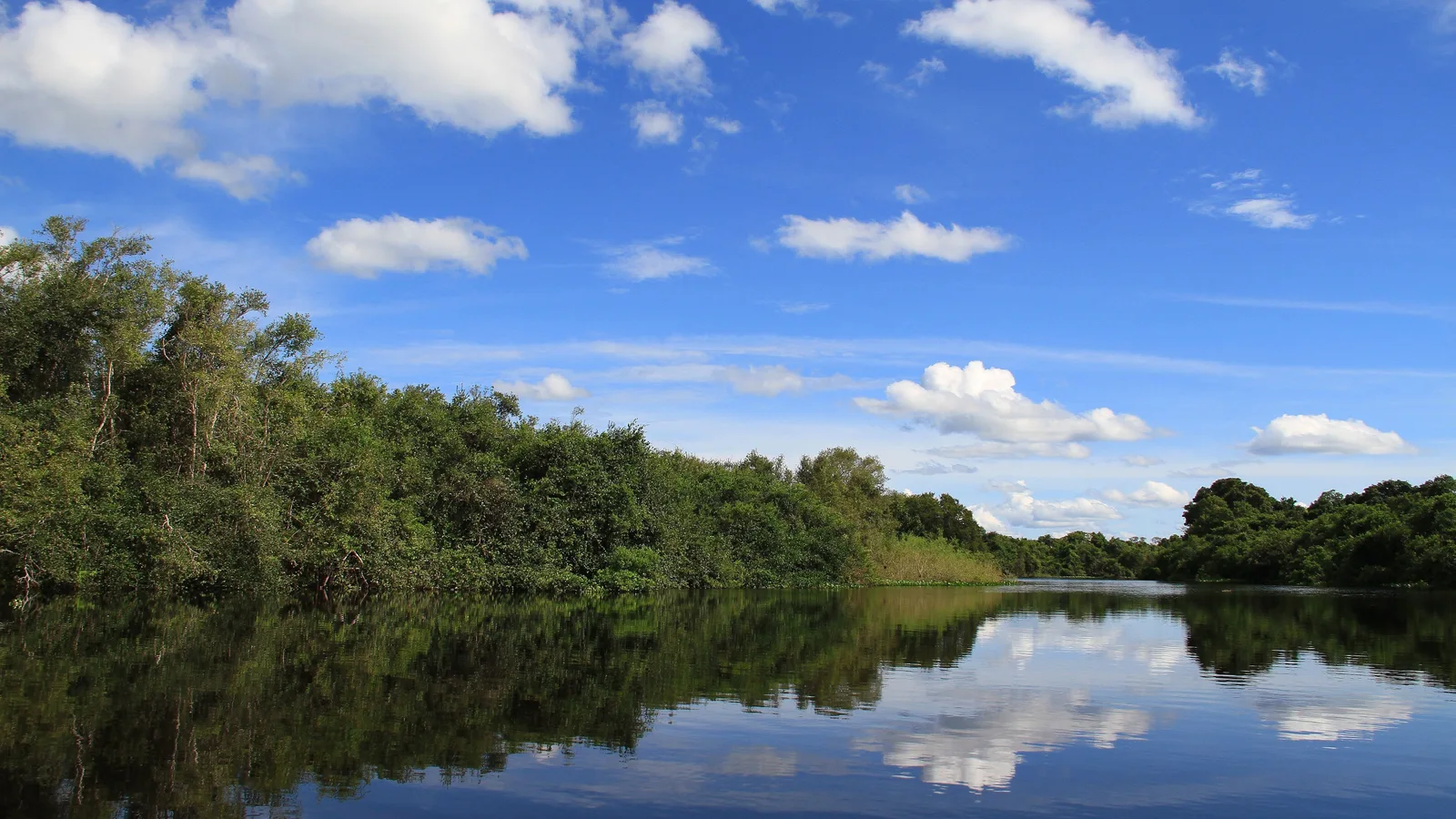
A calm river reflecting a blue sky full of tall white clouds, dense green forest along both banks

Skip the planning

Get the jaguar days right, and the rest follows.

Tell us your dates and whether you want the boat, the road or both. We will shape a private northern Pantanal trip around exactly that — the right lodges for what you came to see, the boat days booked before the season fills, and transfers timed so you are on the water at sunrise rather than behind everyone else.

  • One person, living in Brazil, replying to you directly
  • A reply within one business day — no call center, no bots
  • No cost to plan, and no obligation to book
  • Built around your dates, not a fixed departure